Thanks to all of our wonderful poll workers at PS 217 yesterday. We served 1050 voters efficiently with our great team. I am so proud of our work for our Island residents. Thanks our our Early votng team who were in the RIVAA Gallery last week who served 1690 voters!!!! Judith Berdy
What’s Underneath the Barthman Sidewalk Clock in NYC?!
Wednesday, November 5, 2025
Untapped New York
Issue #1568
Get a behind-the-scenes, or rather under-the-sidewalk, look at this beloved hidden gem in Manhattan’s Financial District!
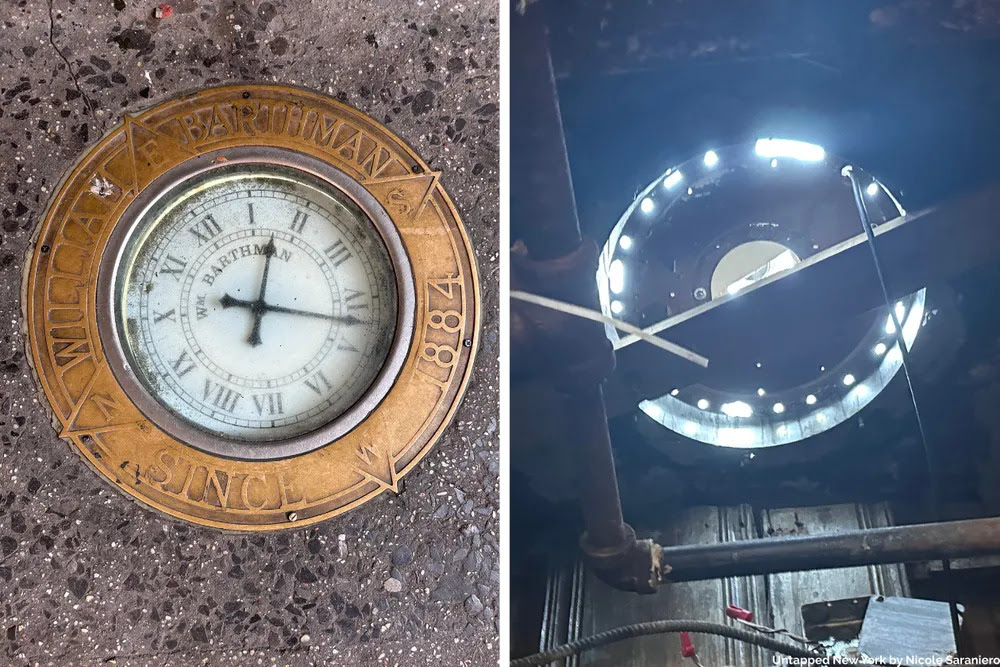
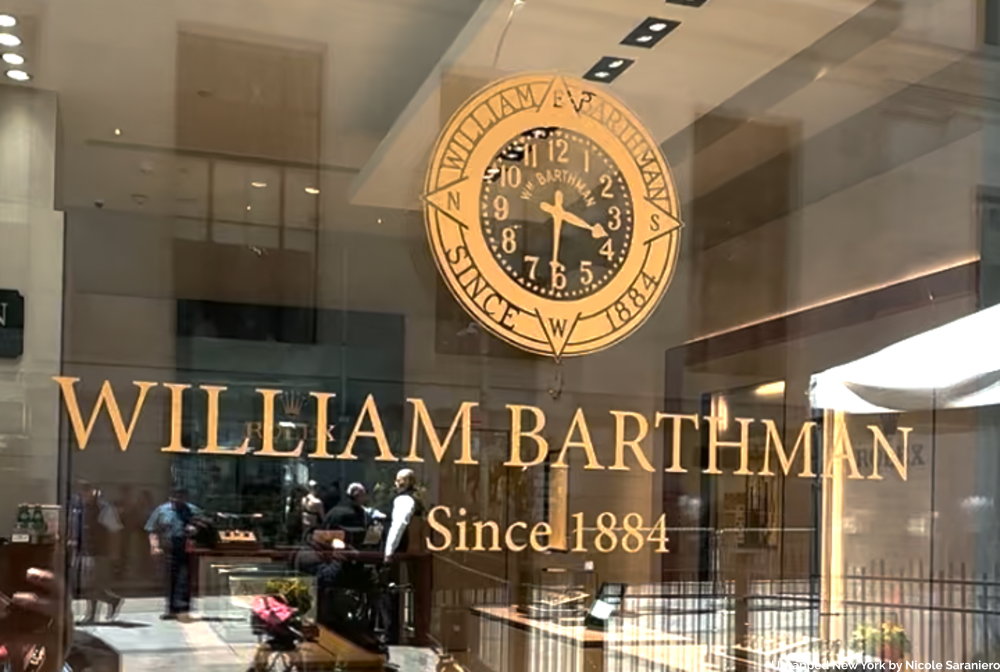
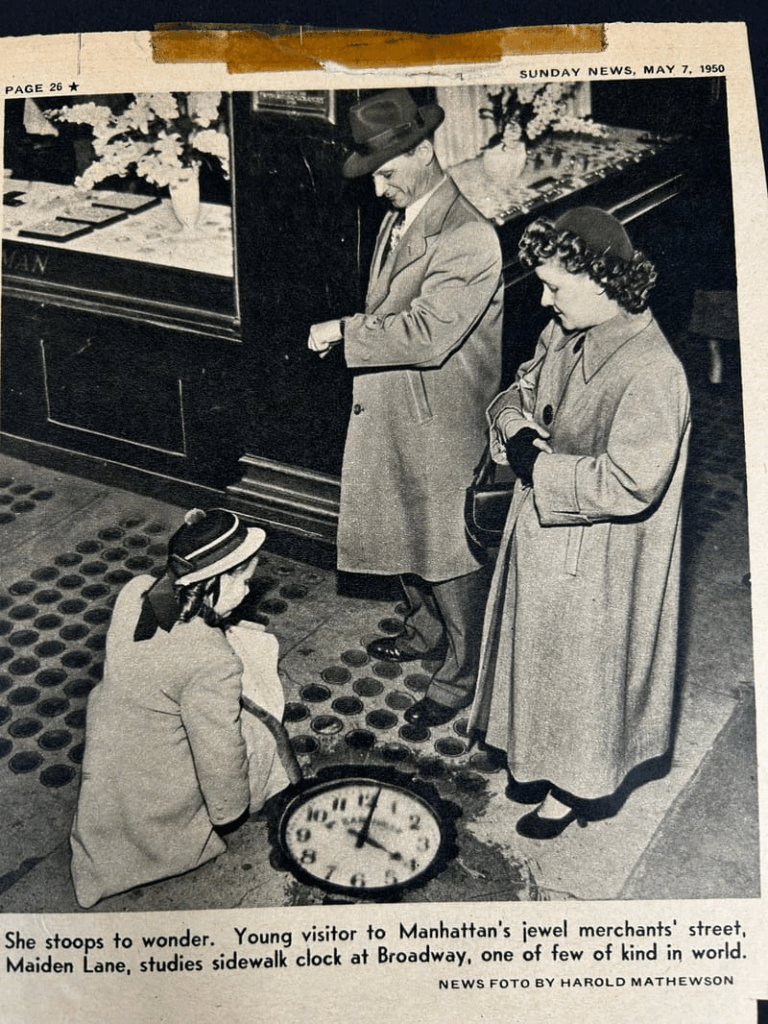
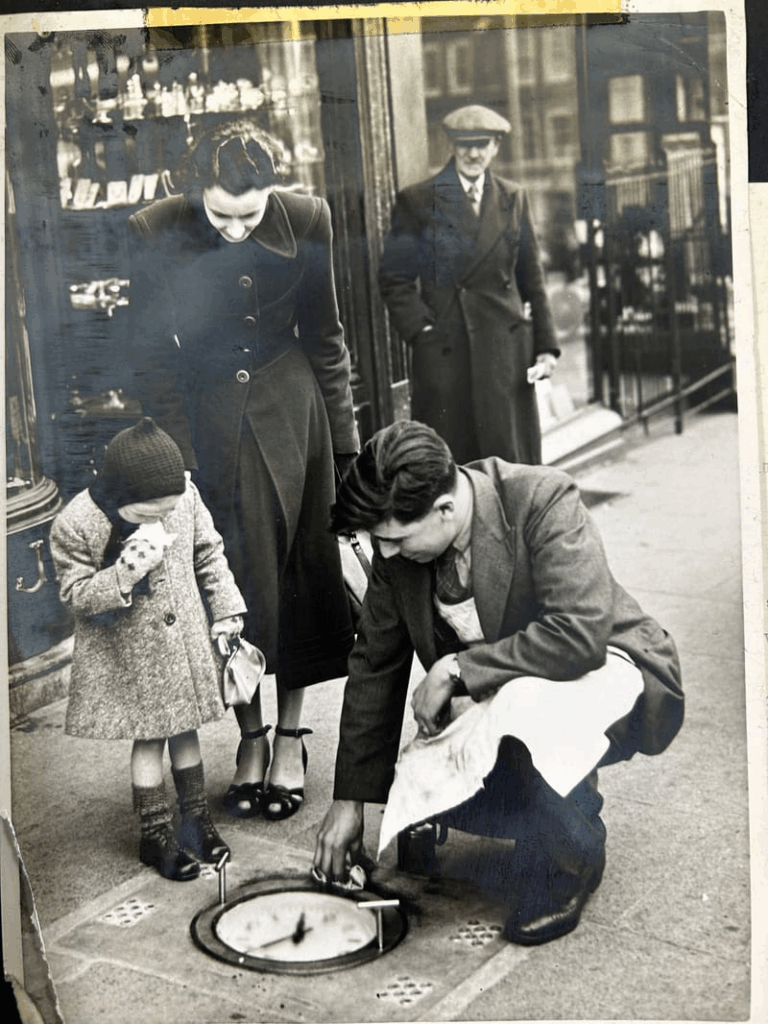
The Barthman Sidewalk clock has been keeping time underneath New Yorkers’ feet for over 100 years. This quirky piece of sidewalk ornamentation has long fascinated the Untapped New York team, and this fall, our Chief Experience Officer, Justin Rivers, and Director of Content, Nicole Saraniero, got to see its inner workings from below the sidewalk and meet the master jeweler who keeps the clock ticking!
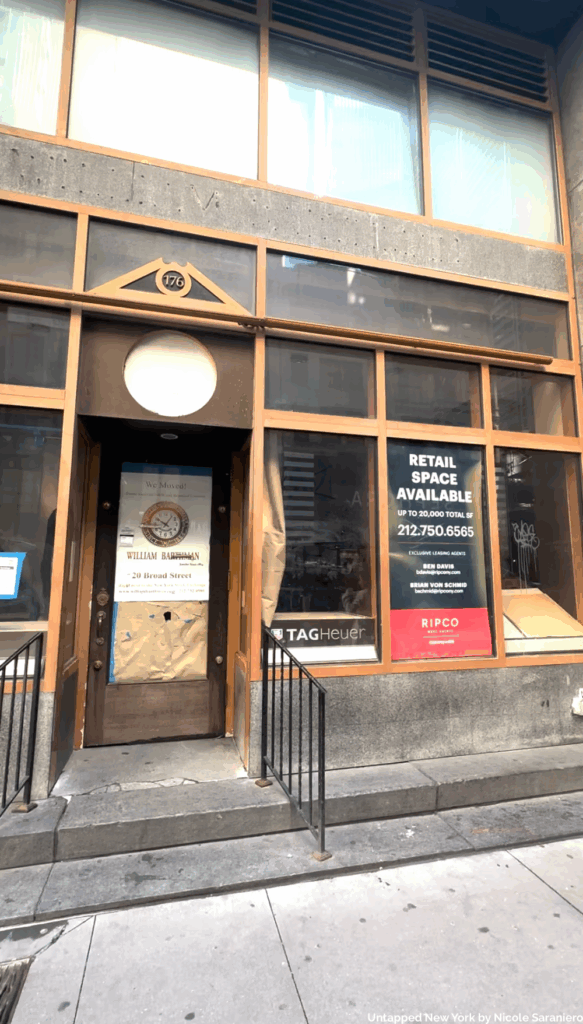
For more than 120 years, Barthman employees have cared for the clock, even after moving out of the Broadway storefront in 2006. The company now operates at 20 Broad Street in Manhattan and 1118 Kings Highway in Brooklyn.
When Untapped New York was tasked with creating a video about the Barthman sidewalk clock for NYC Tourism’s Object Lessons series, we reached out to the Barthman team, hoping for a peek below the sidewalk and more information on this beloved artifact. They delivered.
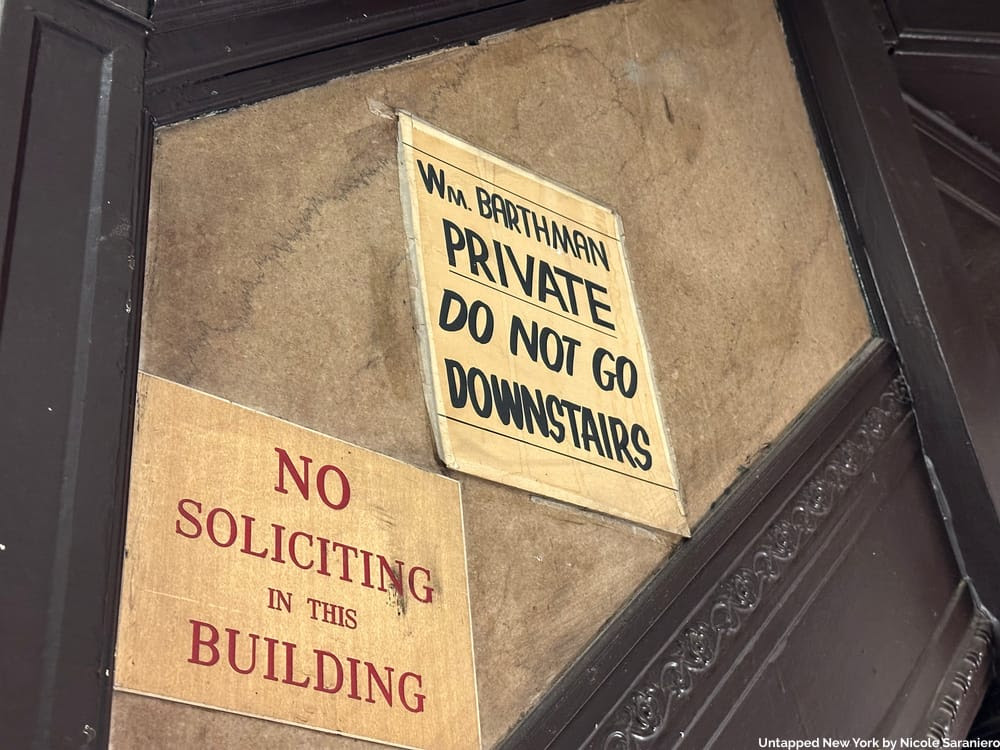
On a cool September morning, we met Brianna and Kirk from the William Barthman marketing team at the clock on the corner of Maiden Lane and Broadway. As Brianna pointed out vestiges of the old storefront, including a crack in the facade from 9/11 and a Barthman ghost sign, Kirk retrieved the keys to the basement from a current tenant of the building.
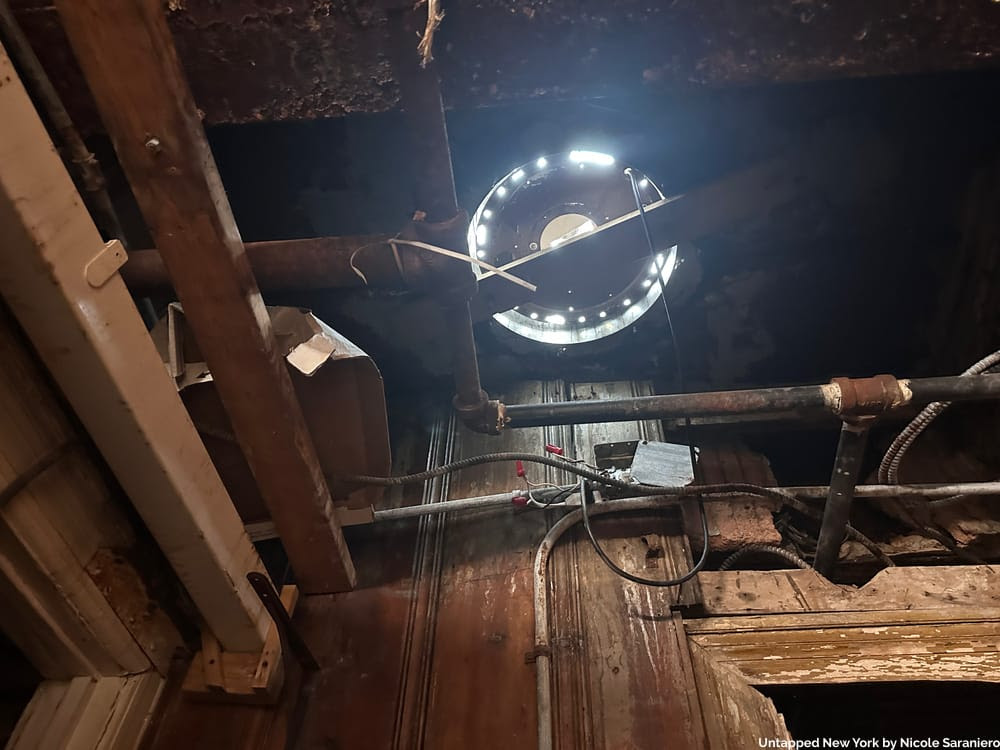
Keys in hand, we walked down a spiral staircase and into a basement space that once served as the Barthman lunch room and the former workshop of the clock’s current caretaker, master jeweler Guillermo “Guilo” Vintimilla. Today, this tiny, dusty space is used for storage, and it is where Guilo can reach the underside of the sidewalk clock above for maintenance and repairs.
Of course we climbed up the old wooden ladder for a closer look at the bottom of the clock! While in the basement, feeling the rumble of the 4 and 5 subway trains passing by, Kirk and Brianna called our attention to another crack caused by the 9/11 attacks, this time on the floor. A giant safe that’s too heavy to move sits in an adjoining room. Once satisfied with our basement adventure, we walked over to the storefront on Broad Street to meet with Guilo.
In 2024, Guilo gave the sidewalk clock a full restoration, adding a new clock face, new hands, and fresh lights. He polished the brass compass that surrounds the clock and the sapphire crystal that covers it. The strong sapphire crystal was an important addition, since the material is strong enough to handle the New York City traffic that travels over the clock face.
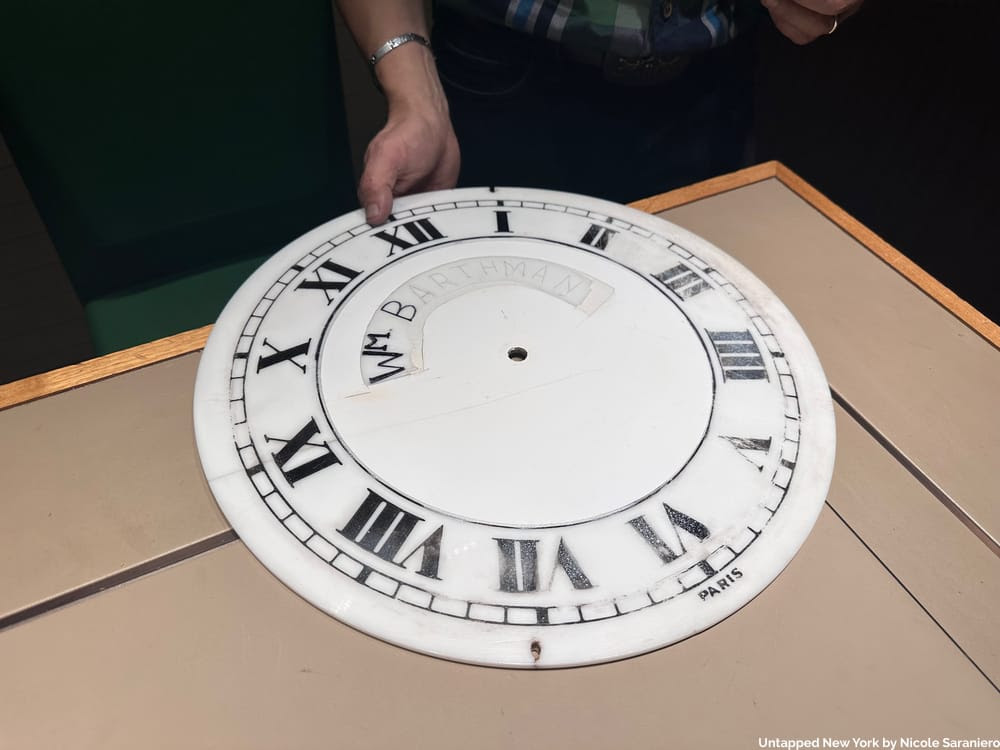
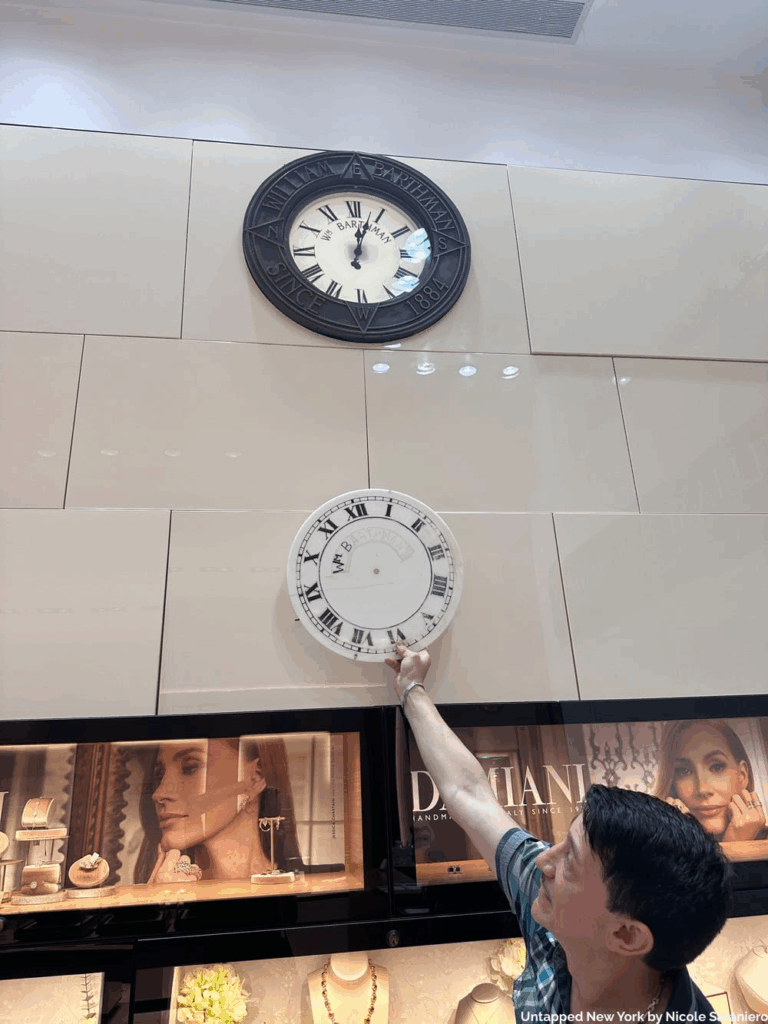
During our visit, Guilo went up to his workshop and brought down another treat: one of the former clock faces! The clock face still bears a crack from 9/11 and was covered in patchwork repairs. Another tiny detail Guilo pointed out is that the numeral for four on the old face is four lines (IIII), whereas today that number is written as “IV.”
Though the Barthman family sold the business in the 1980s, current owner Jerry Natkin has kept the Barthman legacy and love for the sidewalk clock alive. The clock is the company’s logo!
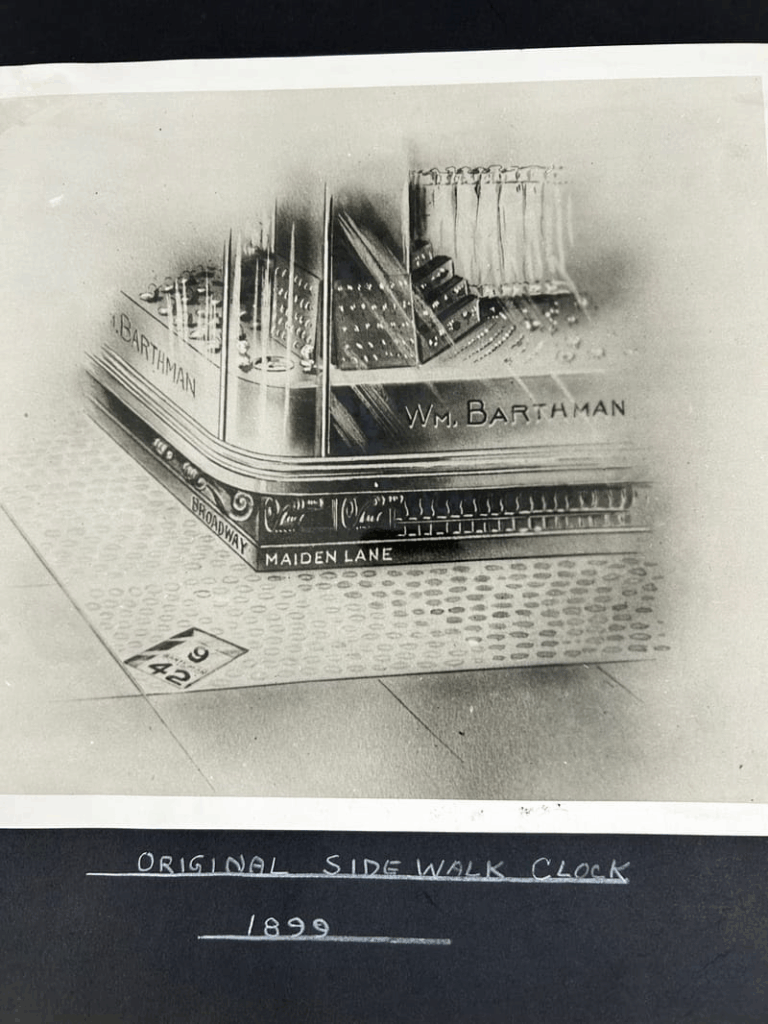
Inside the Broad Street storefront, a replica clock on the wall, tying the new location to the original. At the Brookyn storefront, Brianna tells us there are scrapbooks full of historical images like those she shared with us for this article.
Historical Images Courtesy of William Barthman Jewelers
Thanks to Guilo and generations of caretakers before him, the Barthman clock still ticks on — precise and adjusted for daylight savings! Next time you find yourself at the corner of Maiden Lane and Broadway, look down and check the time rather than looking at your phone.
Guilo holds an old sidewalk clock face up to the replica at the Broad Street store
Credits
Untapped New York
All image are copyrighted (c) Roosevelt Island Historical Society unless otherwise indicated THIS PUBLICATION FUNDED BY DISCRETIONARY FUNDS FROM CITY COUNCIL MEMBER JULIE MENIN & ROOSEVELT ISLAND OPERATING CORPORATION PUBLIC PURPOSE FUNDS.
If your idea of New York comes from action flicks or film noir, then you might think shadowy, mysterious alleys teeming with criminals lurk all over the cityscape.
The criminals, that’s a different story. But the reality is that Gotham never had many alleys, and the ones that escaped the bulldozer over the centuries are almost entirely below Canal Street.
Why so few alleys? It all comes down to the exorbitant value of New York City real estate.
In 1811, when city officials established the street grid that would guide the expansion of Manhattan, they maximized the amount of land available for development by leaving out space for alleys. The surviving alleys that still exist actually predate the street grid.
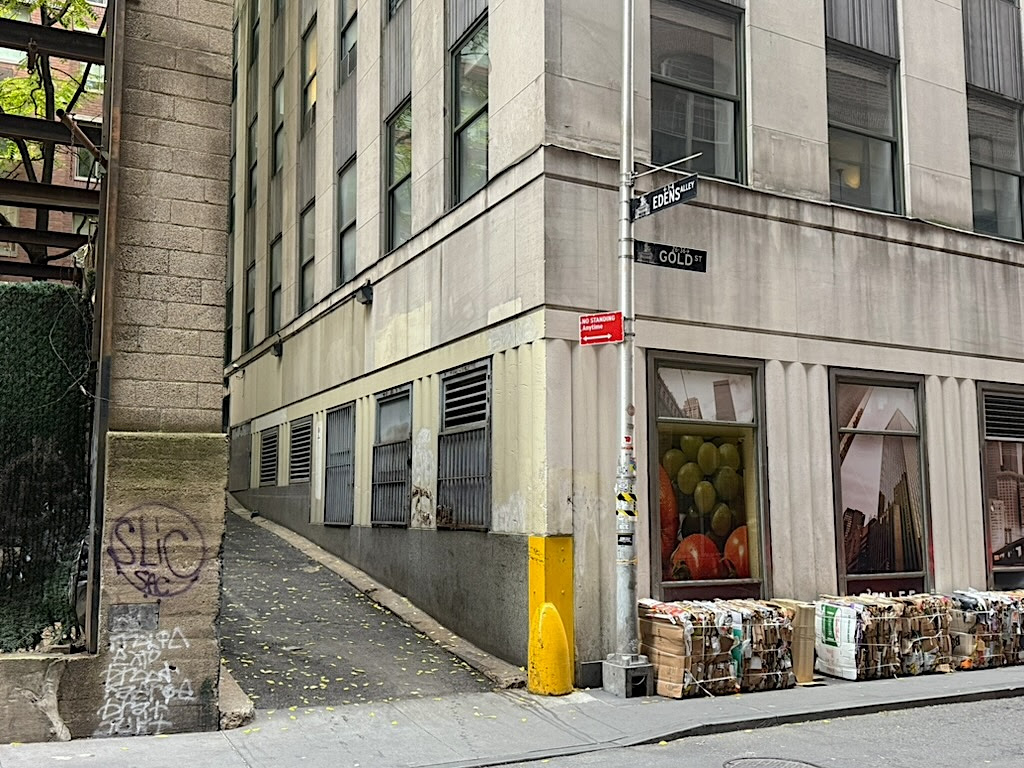
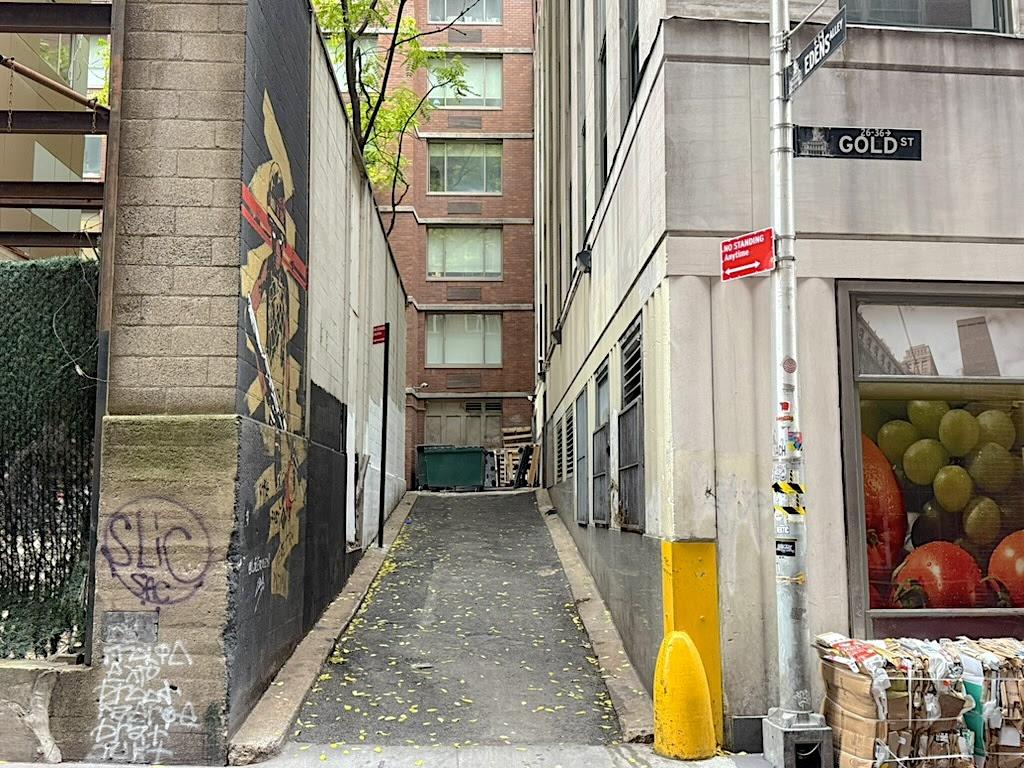
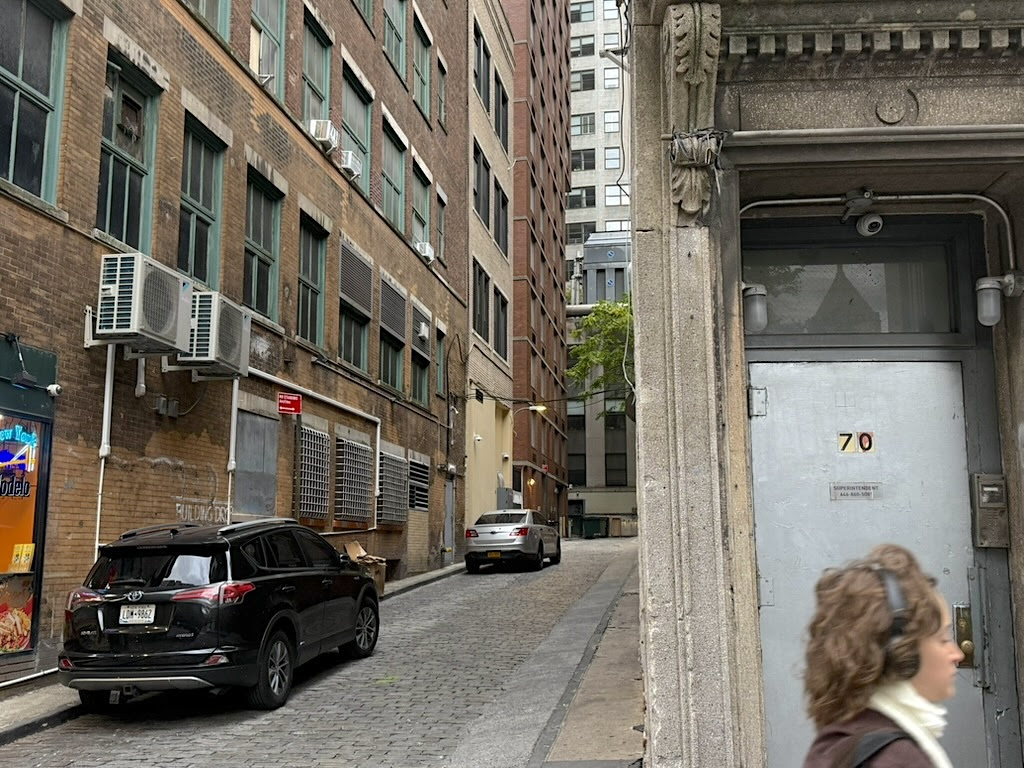
Because of the dearth of alleys, it’s something of a thrill to come across one on a random walk through Lower Manhattan. That’s how I felt when I encountered the entrance to a slender drive called Edens Alley off Gold Street, in the middle of the former cow paths and cart lanes of pre-Revolutionary War New York.
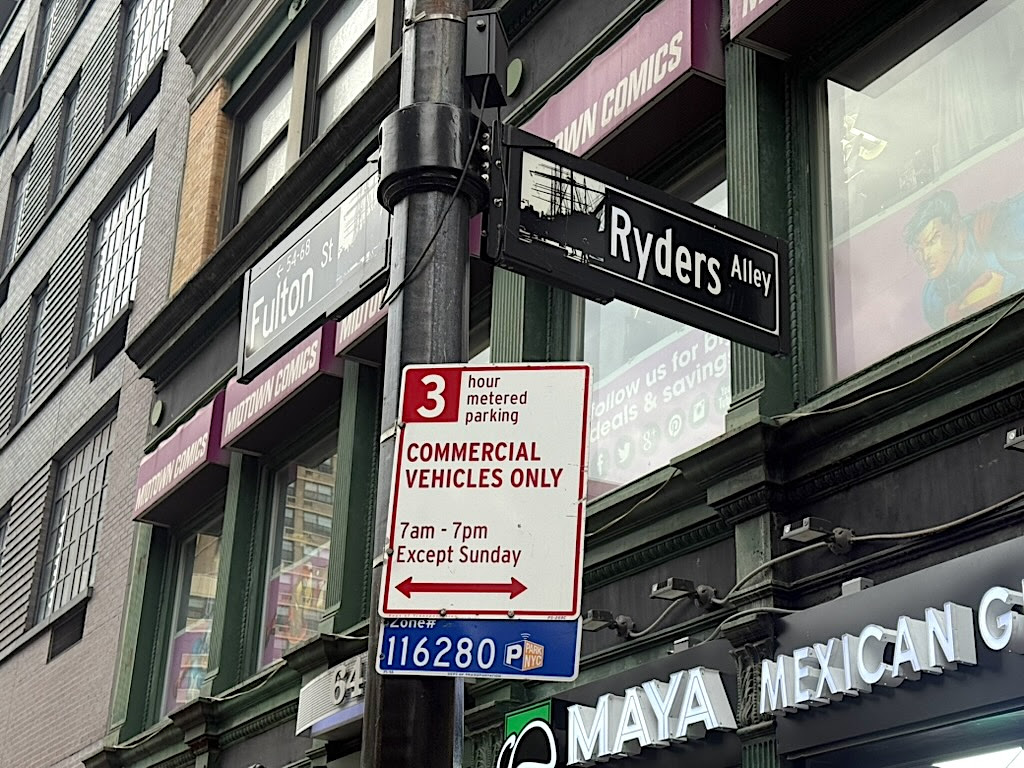
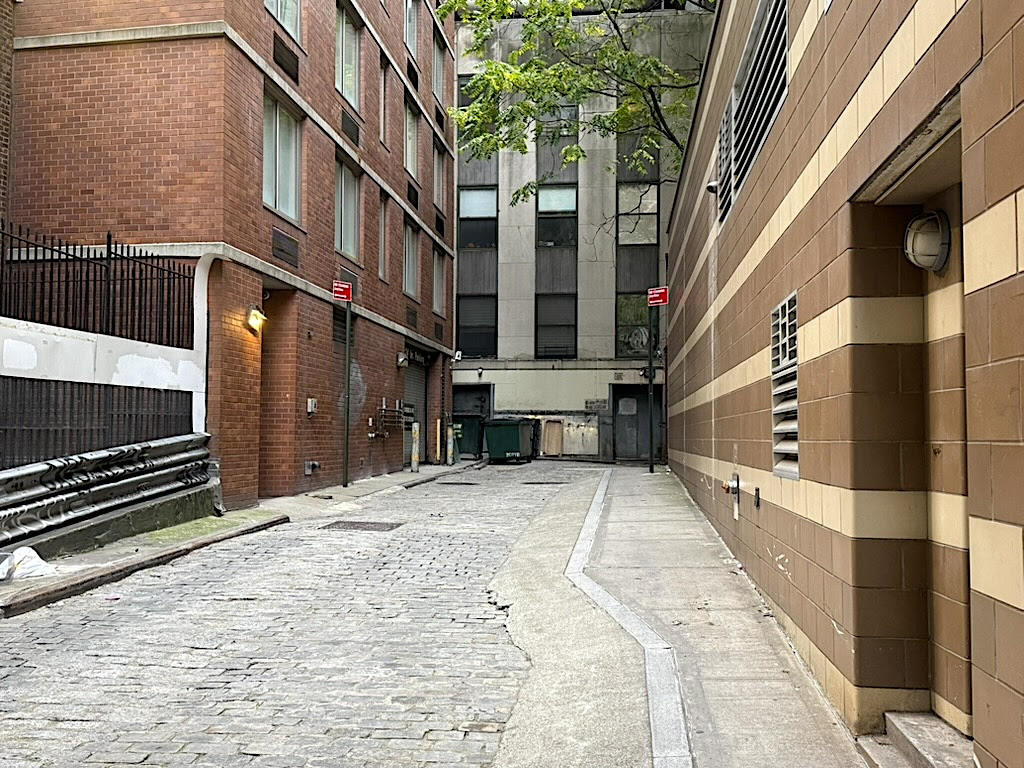
Bordered by unremarkable buildings, Edens Alley is a sliver of asphalt leading to a dumpster. It then makes a sharp angle and ends at Fulton Street, where it takes the name Ryders Alley.
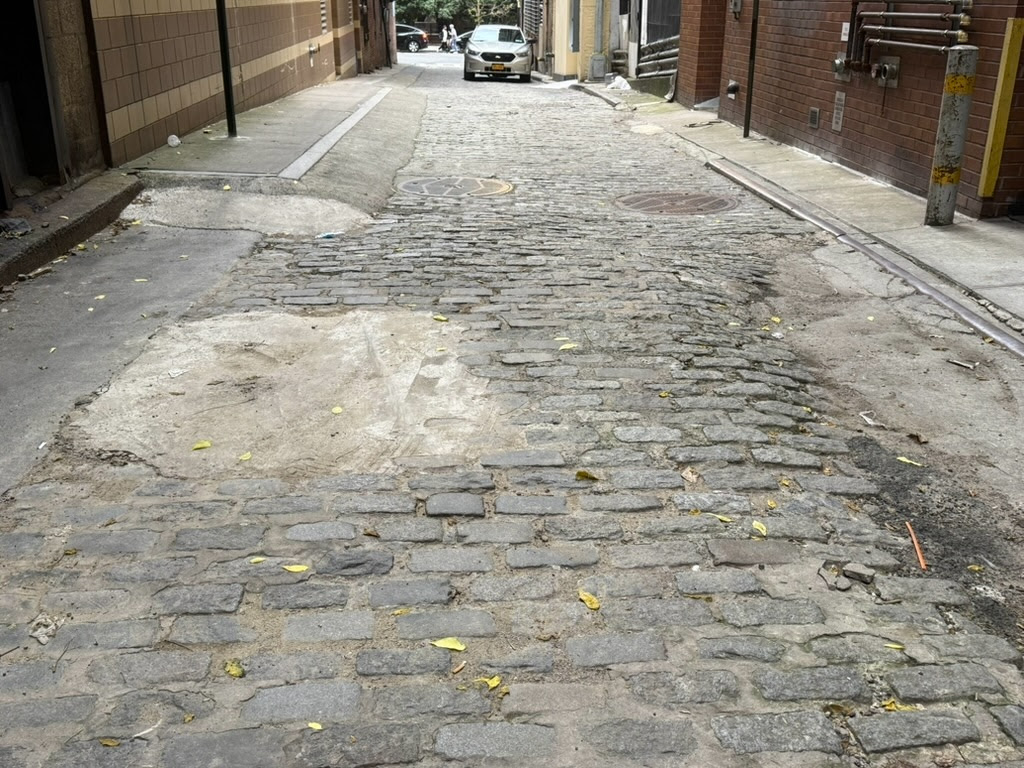
The Ryders Alley end of this elbow-shaped lane is longer and more cinematic, with Belgian block paving and a lone streetlight. (Apparently Belgian blocks existed on Edens Alley until they were recently paved over.) On my late afternoon visit, both ends looked abandoned and dreary.
So what’s the backstory of this two-name alley—a forgotten remnant of ye olde New York or pointless waste of real estate, depending on your view—hidden amid the skyscraper canyons of the financial capital of the world?
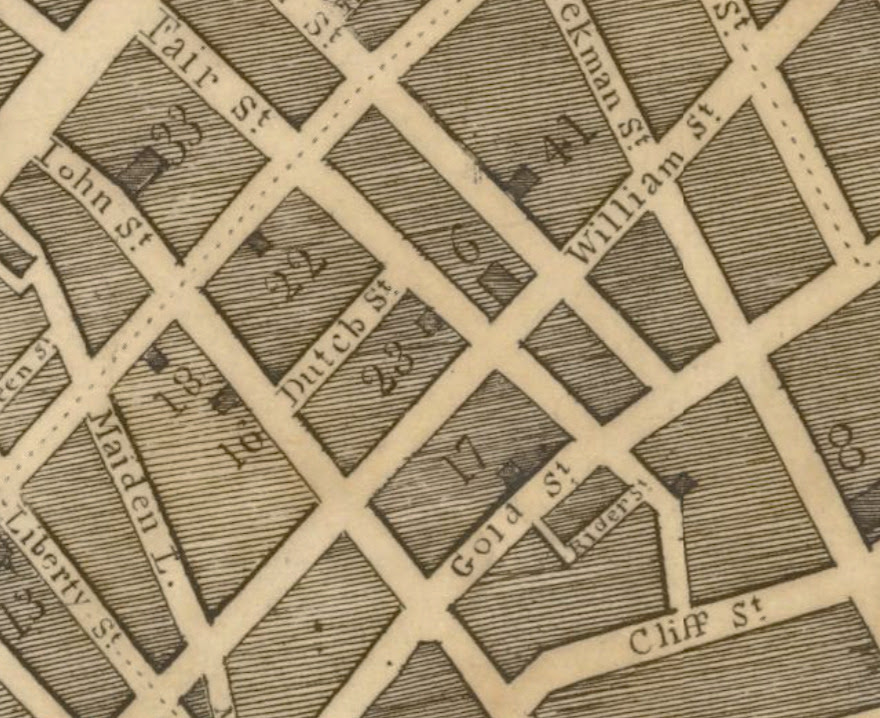
What became Ryders Alley appeared on maps as early as the 1740s; the map below from 1799 has it by name as Rider Street. Its namesake might be British-born lawyer, John Rider, according to Robert Sullivan in his 2004 book Rats: Observations on the History and Habitats of the City’s Most Unwanted Inhabitants.
Rider Street and Rider Alley made it into city newspapers in the early 1800s. The Evening Post announced in 1804 the sale of three lots of land “with a dwelling house on each” situated “in front on Gold Street, in the rear by Rider Street, by one side on a lane called Rider Alley.”
At this post-Revolution time, Rider Alley was likely an appealing place to live. “When called Ryder Street, Dr. James Hardie and several of our most respectable citizens lived in it,” stated the 1885 book, The Old Merchants of New York City.
But development and population density began to change the face of downtown New York. An 1825 Evening Post ad notes that a corner lot was for sale at Fulton and Rider Streets. By 1850, Rider’s Alley has become Ryder’s Alley on at least one Manhattan map. The distinction of a separate Rider Street seem to disappear from city records.
Wait, what about Edens Alley? Though I couldn’t find any maps using this name, references to an Eden’s Alley in the exact location as Ryders Alley go back to 1799—with newspaper articles listing the names of Eden’s Alley residents killed in the yellow fever outbreak at the dawn of the 18th century.
Before yellow fever felled thousands of New Yorkers, Eden’s Alley got its name from Medcef Eden. Born in Yorkshire UK, Eden brewed ale on Gold Street. He’s recalled in this 1920 New York Times real estate article as “a visionary figure among the great landowners in the city following the Revolution.”
The Times article listed all the property Medcef Eden purchased across Manhattan before his death in 1798. The Eden Farm occupied today’s Times Square; Eden also owned land in Harlem, on John Street, on Bowery Road, as well as several houses and lots on Rider’s Alley.
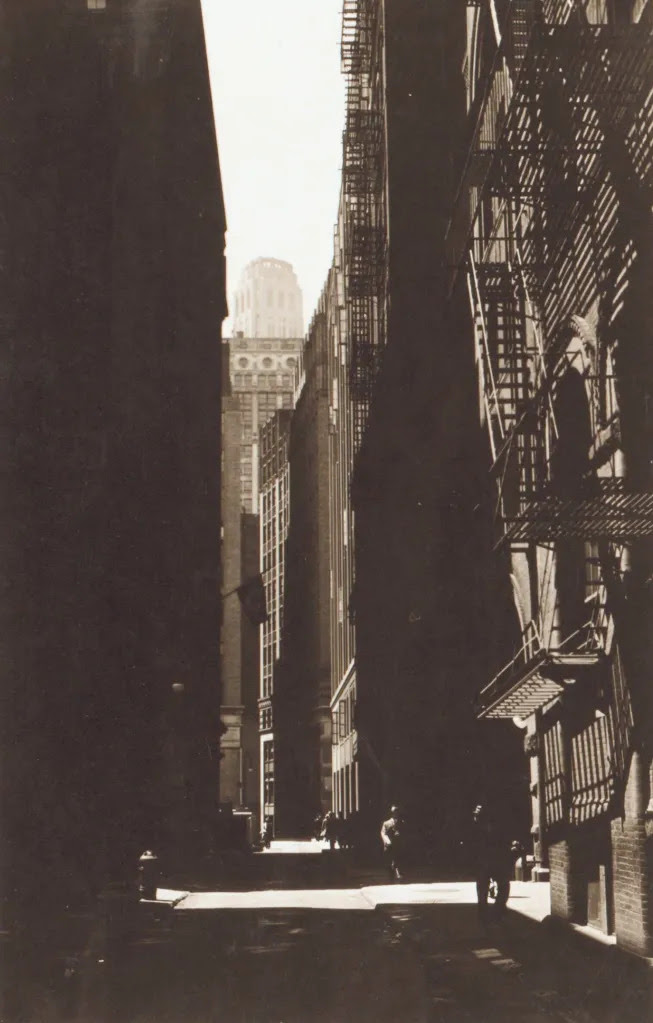
The Times seems to clear up the confusion about the name of the alley. (Above photo from 1932, with the light on the left coming through the crack that is Ryders Alley)
“This latter and smaller section of the tiny alley appears in the early directories, and as late as 1833 as Eden’s Alley,” reported the Times. “It led into Riders Alley, but the two sections are now known by the latter name.”
So Riders Alley, and then Ryders Alley, became the name of the entire crooked passageway. Not even useful as a pedestrian cut-thru, the alley became a real-estate afterthought.
A “genteel eating house” opened on the corner of Fulton Street in 1837; a tin plate concern took up residence in 1900. A deli currently occupies the corner at Fulton Street, with a comics store upstairs
Seemingly forgotten as office towers rose in the early 20th century and a revitalized South Street Seaport in the 1980s brought in tourists, Ryders Alley did get a contemporary upgrade: The Downtown Alliance installed new black and white street signs indicating its landmark background.
The Alliance also split the alley into its historically accurate two sections—with the Edens Alley sign on the corner of Gold Street and Ryders Alley sign at the Fulton Street end.
No residences or stores have their front doors on either leg of the alley. But that doesn’t mean it’s uninhabited. In his book about New York’s rat population, Sullivan nicknames this passageway “rat alley” and notes the numerous rats who roam the alley during his visits.
I didn’t see any rats on my trip. But if you decide to check out this humble remainder of colonial-era New York City, watch out! Instead of film noir bad guys, you’re more likely to encounter New York’s longtime rodent enemy.
All image are copyrighted (c) Roosevelt Island Historical Society unless otherwise indicated THIS PUBLICATION FUNDED BY DISCRETIONARY FUNDS FROM CITY COUNCIL MEMBER JULIE MENIN & ROOSEVELT ISLAND OPERATING CORPORATION PUBLIC PURPOSE FUNDS.
Text by Judith Berdy Thanks to Bobbie Slonevsky for her dedication to Blackwell’s Almanac and the RIHS Thanks to Deborah Dorff for maintaining our website Edited by Deborah Dorff All image are copyrighted (c) Roosevelt Island Historical Society unless otherwise indicated
Google Images (c)
ALL IMAGES ARE SUBJECT TO COPYRIGHT (C)
FUNDING PROVIDED BY ROOSEVELT ISLAND OPERATING CORPORATION PUBLIC PURPOSE GRANTS CITY COUNCIL REPRESENTATIVE JULIE MENIN DISCRETIONARY FUNDING THRU DYCD
Beloved Public Art Piece in Battery Park City Will Be Demolished
Upper Limit
Ned Smyth’s sculptural art piece, Upper Room, has been deaccessioned and will be removed in the coming weeks.
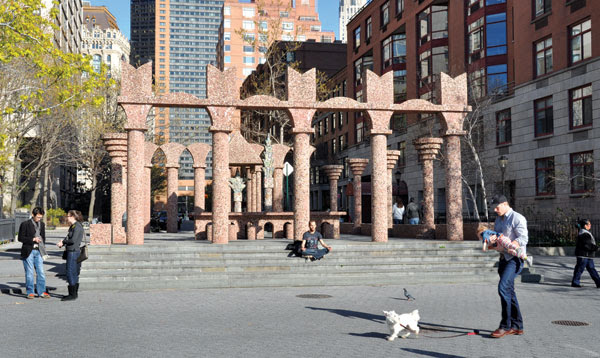
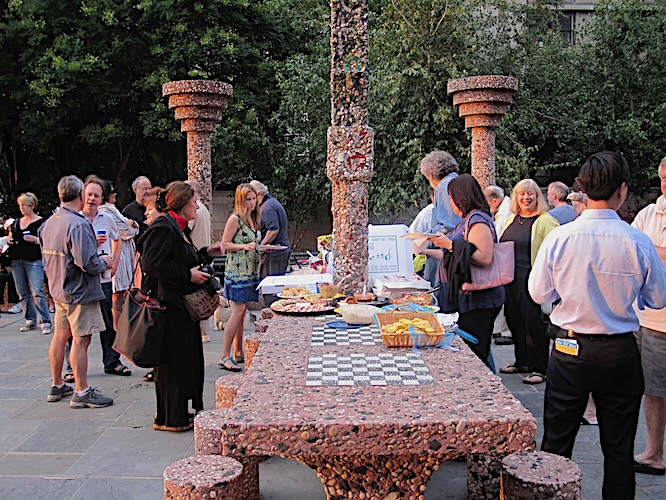
Battery Park City’s first public art piece, “Upper Room,” has been closed and is slated to be demolished soon. The sculptural court at the intersection of Albany Street and the Hudson River esplanade debuted in 1986 and has long been a favorite venue for birthday parties, chess games, and impromptu potluck suppers.
The Upper Room was the vision of sculptor Ned Smyth. He created it as part of Battery Park City’s renowned public art program, a central element of the overall design of the neighborhood. Mr. Smyth recalls that the art panel advising the BPCA “selected my proposal because they thought would be more than an object. It might become a destination where people would hang out. It was meant to be more of an environment, rather than a single sculpture.”
Upper Room has been a favorite venue for impromptu potluck dinners.
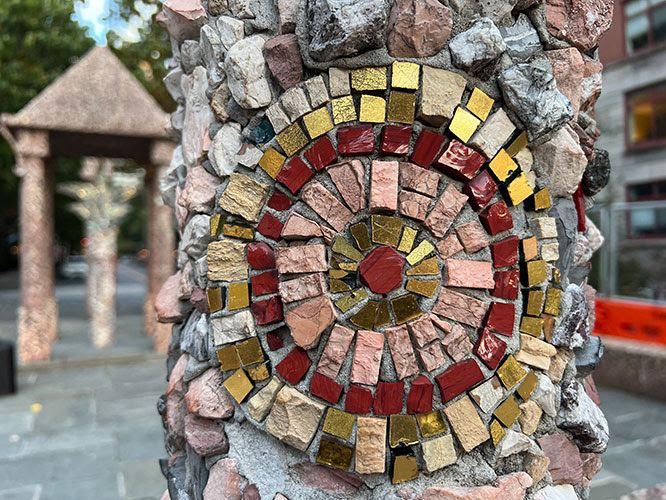
Perched on an elevated platform, 70 feet from east to west and 40 feet along the esplanade, Upper Room was indeed an environment unto itself. Surrounded by 20 columns of cast concrete inlaid with mosaics of pink stones, the salmon-hued fantasia evoked Roman, Greek, Egyptian, and Byzantine architectural motifs, while exuding the ambience of an ancient ruin. Along with tables and benches, it featured a miniature pyramidal temple at its center, sprouting a stone palm frond.
Soon after its unveiling, Upper Room was described by The New York Times as “one of the city’s most popular works of public art. A magnet for Wall Street brown-baggers, it is also a favorite resting place for strollers along the esplanade, one of the choicest waterfront walks in the city.”
Mr. Smyth, who lived for many years in Tribeca, would regularly stroll to Battery Park City to view his handiwork and the reactions it inspired. “There were small kids, pretending and performing,” he recalls. “Once a woman who lived nearby came out and told me, ‘I hate this sculpture.’ I asked why and she said, ‘because the Hell’s Angels, whose clubhouse is on the Lower East Side, come here every weekend and play loud music and I can’t stand it.’ And I said, ‘really? The Hell’s Angels like it? That’s so cool.’”
Local resident Rosalie Joseph recalls, “when my nieces were young, they always wanted me to take them this make-believe palace where they could pretend to be a princess and a queen. During all my years here, before September 11, 2001, and since, I’ve probably hosted dozens of spontaneous group dinners there. I would just call friends and say, ‘everyone bring something to the stone tables.’ And we would share the space with families celebrating birthdays and anniversaries.”
Ms. Joseph says that with the onset of the Covid pandemic in 2020, Upper Room became even more important, even in the coldest months. “When we couldn’t gather indoors, that became the communal table and an outdoor dining room where friends stayed connected with each other, and the community.”
In 2019, when the BPCA appraised its public art collection for insurance purposes, Upper Room was valued at $1.5 million. Recently, however, planners for the Authority’s North/West Resiliency project designated the western end of Albany Street as the location for a large underground tide gate, which would have to be buried directly beneath Upper Room.
Mr. Smyth says, “they called me in and said, ‘we’ve got to put in flood gates and these have to go right where the steps come down.’ I asked why they can’t move it to another area. To me, it is shocking that they are going to get rid of it.” When the BPCA announced a public farewell ceremony for Upper Room last week, Mr. Smyth declined to attend. “I’m not satisfied with information they’ve provided about this, because they’re not telling people it will be torn down,” he says.
The BPCA responds that Upper Room was built in a way that makes relocation impossible without extensive damage, and its large size severely limits other sites that could hold it. The Authority says this is the only piece in its collection that will need to be demolished.
A spokesman for the agency says, “Upper Room unfortunately must be removed for flood mitigation work necessary to protect lives and property in Battery Park City and beyond, about which we’ve been in discussions with the artist and community for more than a year. We thank Mr. Smyth for such a meaningful contribution to the public art of Battery Park City, and will continue to keep the community updated as we proceed with this vital construction work.”
Abby Ehrlich, who retired in June after decades of service at the BPCA, most recently as the director of community partnerships and public art, said, “Ned Smyth’s Upper Room is the foundation on which all the public art that has followed and flourished in Battery Park City for 40 years was built. It was commissioned by BPCA through a committee of New York City visionaries, such as Agnes Gund, Amanda Burden, and others, who had championed an open, full-throttle embrace of the essential role in healthy communities and society of art and artists. Upper Room literally opens to the heavens and the Hudson River, connecting people with earth, water and air, with a sense of quiet grandeur. This is why anyone of any age who experiences Upper Room feels its grace and power, and is reminded of our own.”
Matthew Fenton
Credits
THE BROADSHEET
Though I do not live or work in BPC, I am sad to see this artwork gone in the name of resiliency. I have always admired the promenade and art at BPC and am sad that this favorite piece will soon be dust. Judith Berdy
All image are copyrighted (c) Roosevelt Island Historical Society unless otherwise indicated THIS PUBLICATION FUNDED BY DISCRETIONARY FUNDS FROM CITY COUNCIL MEMBER JULIE MENIN & ROOSEVELT ISLAND OPERATING CORPORATION PUBLIC PURPOSE FUNDS.
Did You Know There Was a Movie Theatre in Grand Central for 30 Years?
FRIDAY, OCTOBER 31, 2025
6SQFT
&
UNTAPPED NEW YORK
Issue #1565
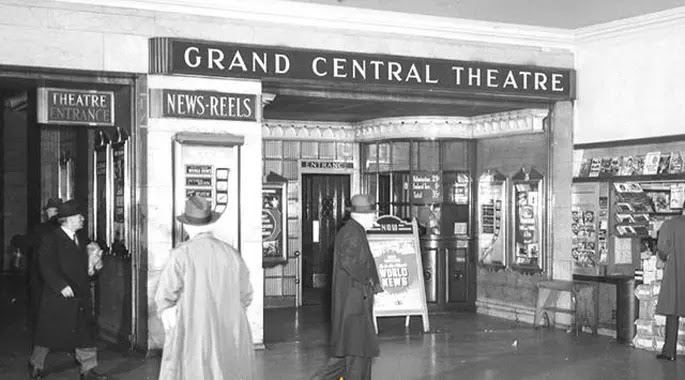
Grand Central Terminal is one of New York City’s most beloved landmarks, and over the years this historic transportation hub has stood the test of time. While the majority of the structure has remained intact, the businesses inside the station have seen their fair share of changes since first opening in 1871. But one of the station’s more notable and less widely known tenants includes a special movie theatre designed specifically for travelers.
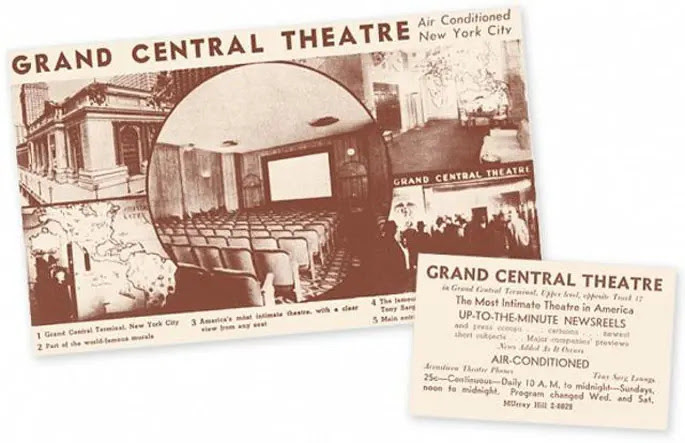
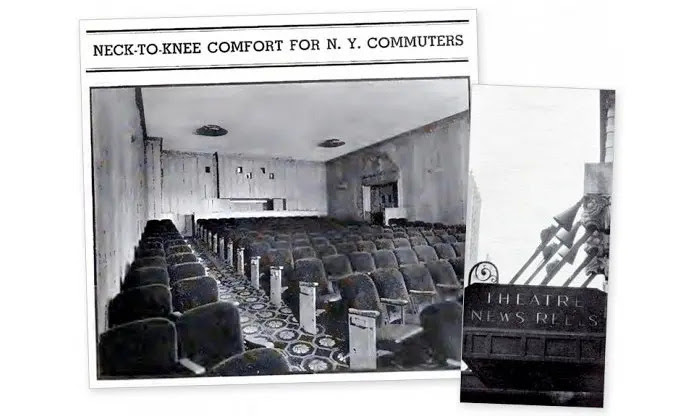
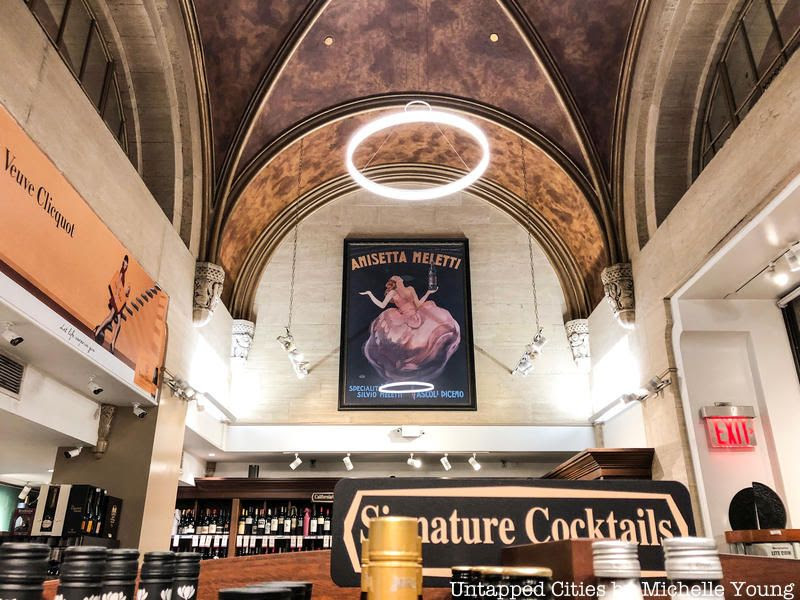
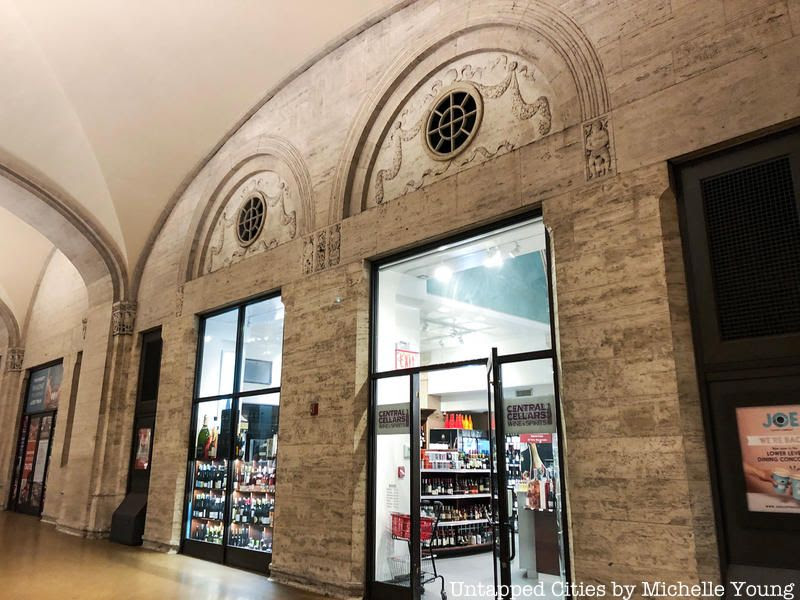
The Grand Central Theatre first opened in 1937, and showed short films curated specifically for commuters including news reels, documentaries and cartoons. The theatre housed approximately 242 seats and operated for three decades before being gutted and replaced by a retail location. It is now home to the Grande Harvest Wine shop located next to Track 17. The space was also previously occupied by a photo shop.
Installed inside the theater was an early version of stadium-style seating, as well as an illuminated clock that clearly displayed the time for busy travelers. The rear of the theatre was kept clear to allow for standing room, and also had a small bar for patrons looking to wet their whistle while they waited
FROM UNTAPPED NEW YORK
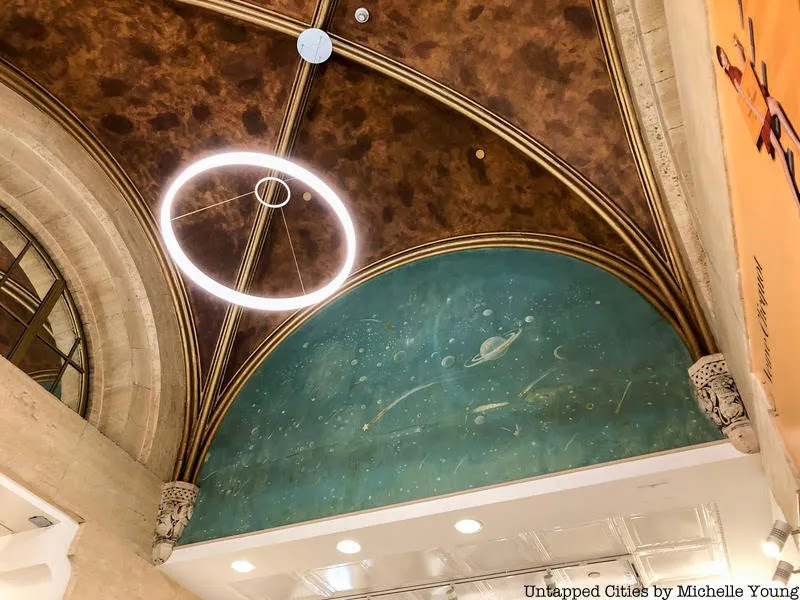
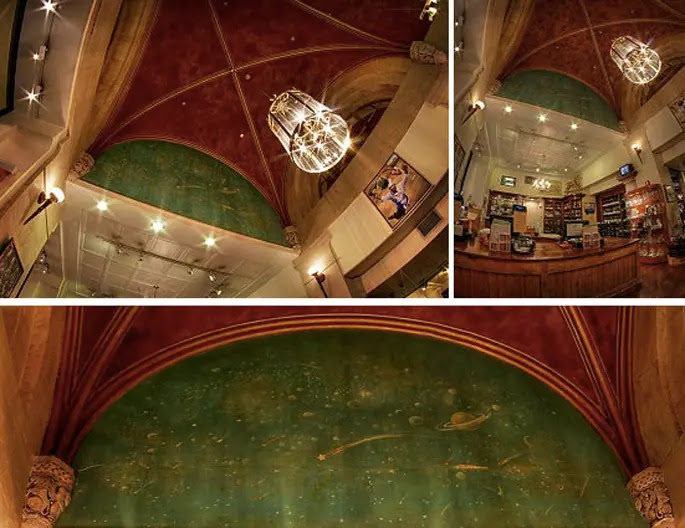
Grand Central Terminal once had a movie theater and remnants of it can be seen in the train hub today. Grand Central Theatre, which opened in 1937 (possibly earlier), showed newsreels, shorts, and cartoons. The 242-seat theater operated for three decades and then was gutted for retail. Today it’s Central Cellars wine shop next to Track 17. Previous tenants were the Grande Harvest Wine store and a photo shop. Renovations to the terminal in the 1990s revealed the ceiling, that stylistically matches the one in the main terminal, along with other historical details and ornamentations.
Another fun tidbit is that the theater was designed by Tony Sarg, the same person who created the first balloons for Macy’s Thanksgiving Day Parade, including Felix the Cat! According to Johnny, a knowledgable employee at Central Cellars, Sarg was also running this movie theater and using all of his creative earnings to support it. “You might call him America’s first lifestyle guru,” Johnny told us in an interview. “He did covers for the Saturday Evening Post. He invented the balloons for Macy’s Parade…He did textile patterns and place settings…he was a marionette builder.”
Johnny believes the theater extended into what is now Grand Central Market, and that the area where the wine shop is now was both a bar and a place to screen newsreels. You can still find the projection box in the wine store today. “It’s not the HVAC system,” he told us. The mural is likely the last remaining from the movie theater, but there would have originally been more. “He caught the color perfectly,” Johnny describes, comparing it to Grand Central’s main terminal ceiling, but adds “It’s not intended to be the same as it is out there. It’s kind of like a fantasy space scene.”
Renovations that took place in the 1990s revealed a ceiling mural similar to the one found in the main terminal. The mural was painted by artist Tony Sarg, who’s also responsible for designing the very first balloon ever to be included in Macy’s Thanksgiving Day parade. In addition to the starry adornments, Sarg also painted illustrated maps, that, according to the Times, had no political significance.
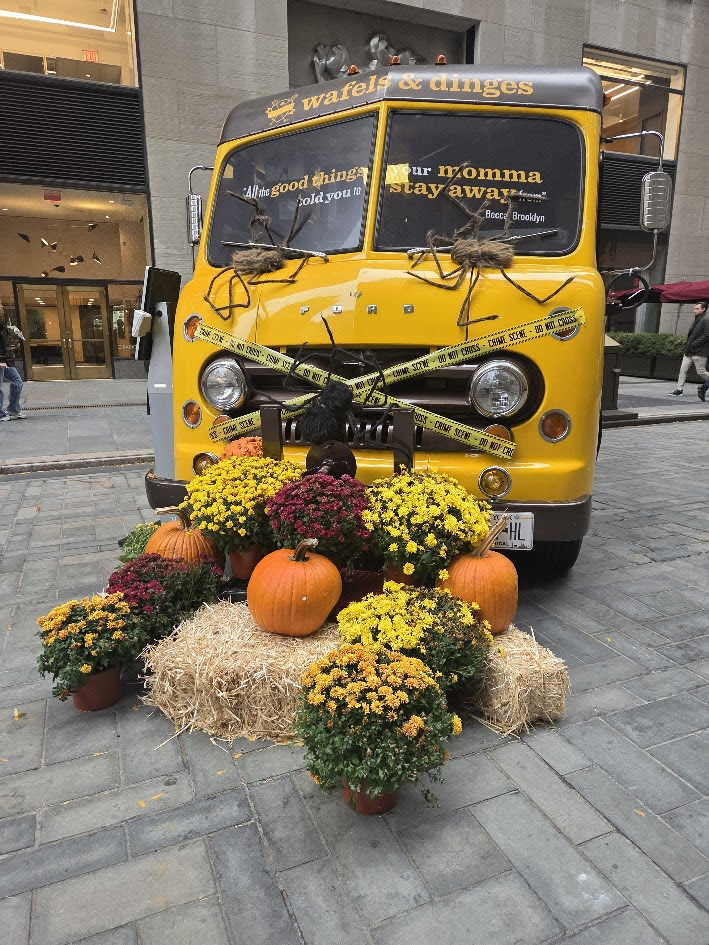
HAPPY HALLOWEEN FROM ROCKEFELLER CENTER
Credits
6SQFT
UNTAPPED NEW YORK
All image are copyrighted (c) Roosevelt Island Historical Society unless otherwise indicated THIS PUBLICATION FUNDED BY DISCRETIONARY FUNDS FROM CITY COUNCIL MEMBER JULIE MENIN & ROOSEVELT ISLAND OPERATING CORPORATION PUBLIC PURPOSE FUNDS.
In New York City’s earliest days, Wall Street was the site of a wall constructed to keep the British out, Canal Street was a canal, and the rest of the Island was the countryside. As the City expanded northward, it enveloped and urbanized its rural backyard. However, the bucolic landscape of Manhattan was not the only thing to be overtaken by the encroaching City. The Island’s cemeteries were also evicted, ever northward, and finally banished to the outer boroughs.
1. Madison Square Park
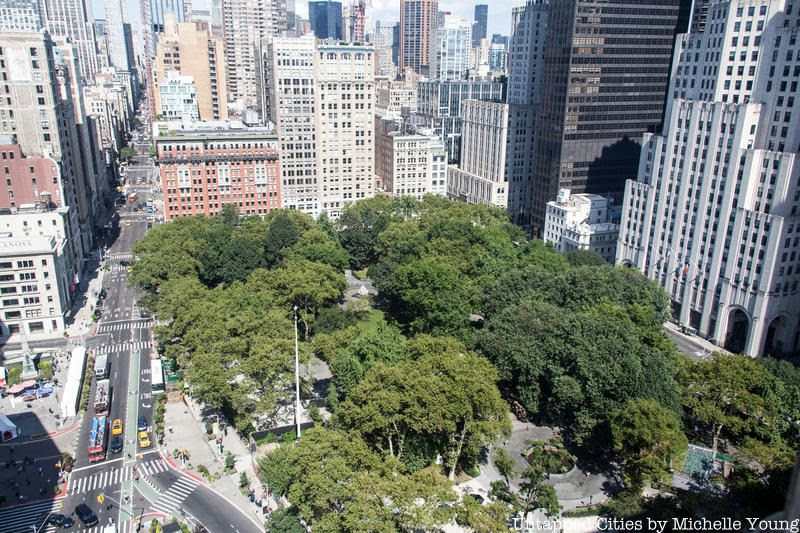
Madison Square Park, named after James Madison, was opened to the public in 1847. The land was home to a military parade ground, a United States Army Arsenal, and a House of Refuge for juvenile delinquents. Between 1794 and 1797, the land was also home to a potter’s field (a common burial ground for those unable to afford burial in another cemetery or for those who died unknown), after which it moved to Washington Square Park.
2. Washington Square Park
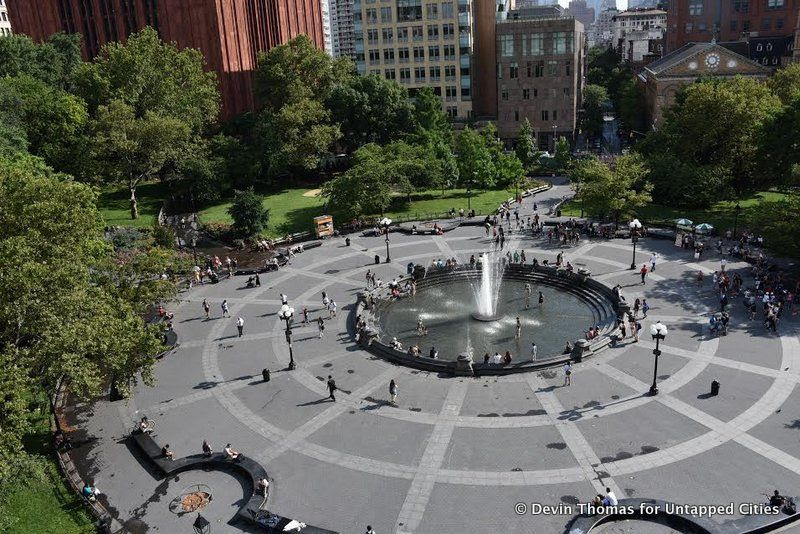
Washington Square Park became a public park in 1827. The park, located in the Village and surrounded by NYU, was once home to a graveyard. In 1797, the land was acquired by the Common Council for use as a potter’s field and a place for public executions. Some historians think that the land might also have been used as a cemetery for one of the adjacent churches, as headstones have been unearthed in the park. According to the Bowery Boys, over 20,000 people are likely still buried in the Park out of as many as 125,000 people who might have been buried there.
3. Union Square Park
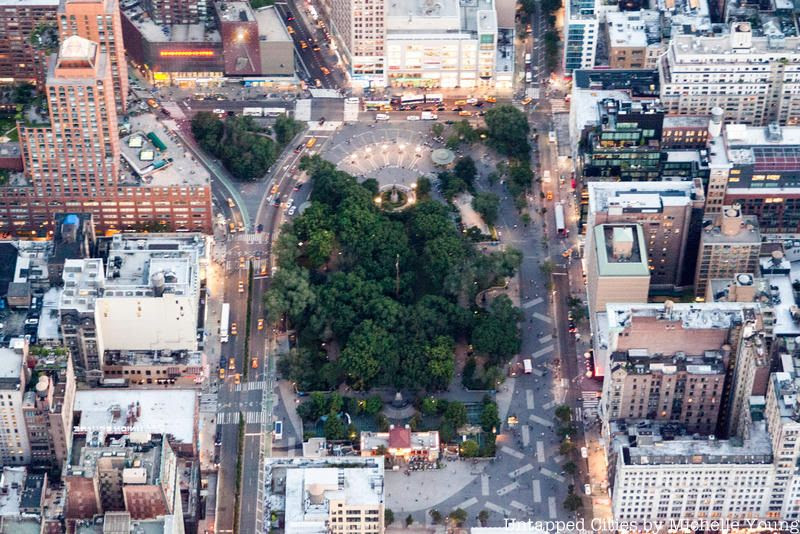
Union Square Park has had an illustrious past. The completion of the Croton Aqueduct was celebrated there, the funeral processions of Presidents Andrew Jackson and Abraham Lincoln passed through, and the first Labor Day parade was held there. Prior to becoming a park at the union of Bloomingdale Road (Broadway) and the Bowery (Fourth Avenue), the land served as a potter’s field until 1807. It is possible that when the Commissioner’s grid was being planned, it created Union Square out of the remains of that potter’s field.
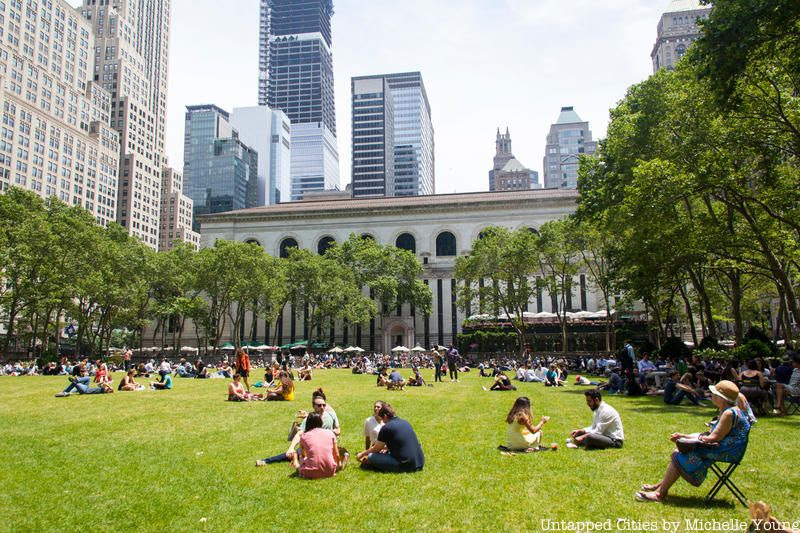
4. Bryant Park
Designated a public space since the seventeenth century, Bryant Park became a potter’s field in 1823. It remained a burial ground until 1840, when the space was transformed into the Croton Distributing Reservoir, whose remnants can still be seen inside the main branch of the New York Public Library. In 1884, the land was renamed in honor of William Cullen Bryant, the noted poet, abolitionist, the New York Evening Post editor, and naturalist.
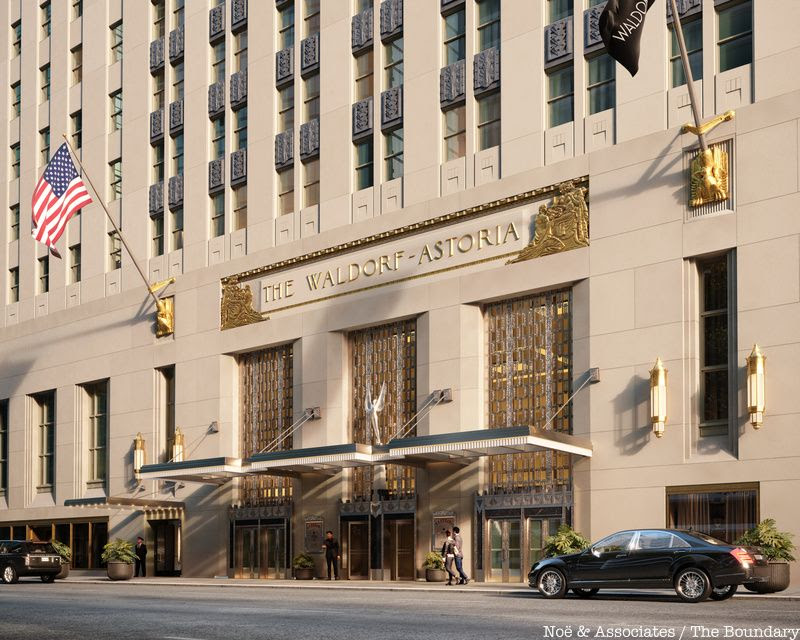
5. Waldorf Astoria
The land on which the Waldorf-Astoria hotel now sits was the City’s potter’s field, after its former location at Bryant Park was co-opted by the Croton Distributing Reservoir. When the land on Park Avenue was granted to the Women’s Hospital in 1857, over 100,000 remains were transferred to Ward’s Island. (From there the potter’s field was moved to Hart Island where it still exists today). The Waldorf-Astoria hotel was later constructed on the site in 1931.
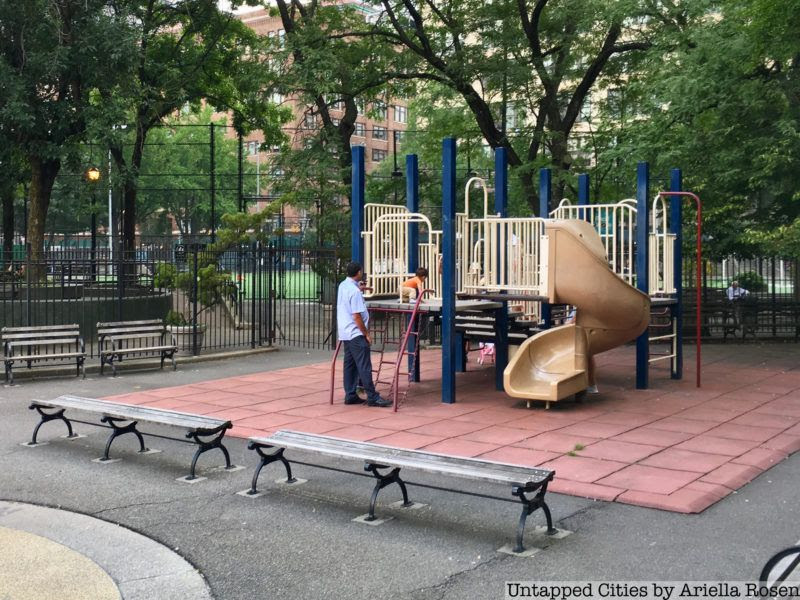
6. James J. Walker Park
James J. Walker Park (or Jimmy Walker Park) in the West Village today features recreational fields and courts. In a previous incarnation, the park contained a beautiful Italianate sunken garden, lagoon, and gazebo, all designed by the firm Carrere and Hastings. Before becoming a park, the land was once St. John’s Cemetery, the burial ground for Trinity Church. While the graves were supposedly relocated to 155th and Broadway, the Daytonian in Manhattan blog claims that most were not: “Under the feet of scores of children playing ball and frolicking in a water spray, approximately 10,000 bodies lie forgotten.”
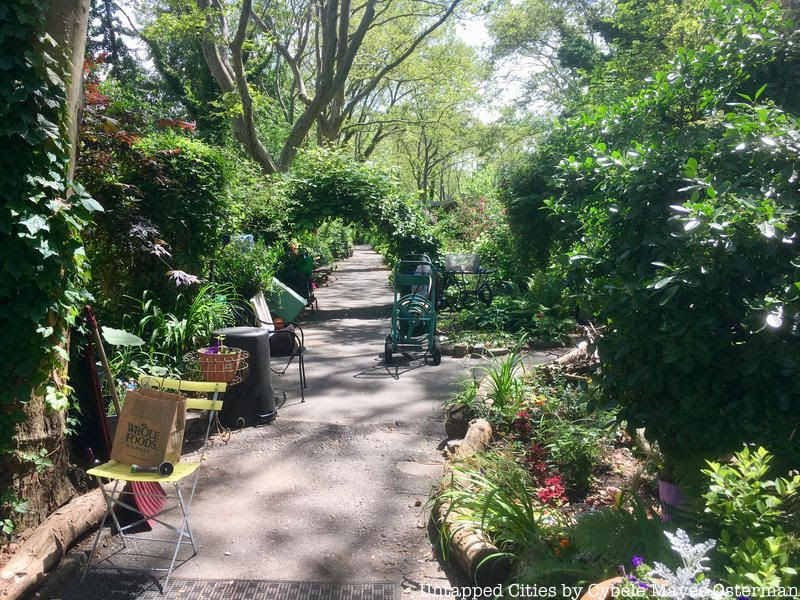
7. Sara Delano Roosevelt Park
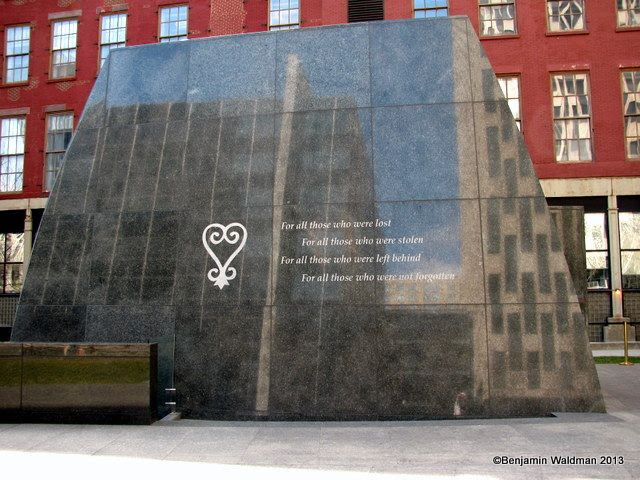
In 1929, New York City purchased the land on the Lower East Side where Sara Delano Roosevelt Park is now located to widen Chrystie and Forsythe Streets and to construct low-cost housing. That plan was never realized, and in 1934, a park was constructed and named after Franklin Delano Roosevelt’s mother. Today, the park contains the M’Finda Kalunga Garden. The garden was named in memory of an African American burial ground that was located adjacent to the park on Chrystie Street, between Rivington and Stanton Streets. The land served as the City’s second African American burial ground between 1794 and 1853 when the remains were disinterred.
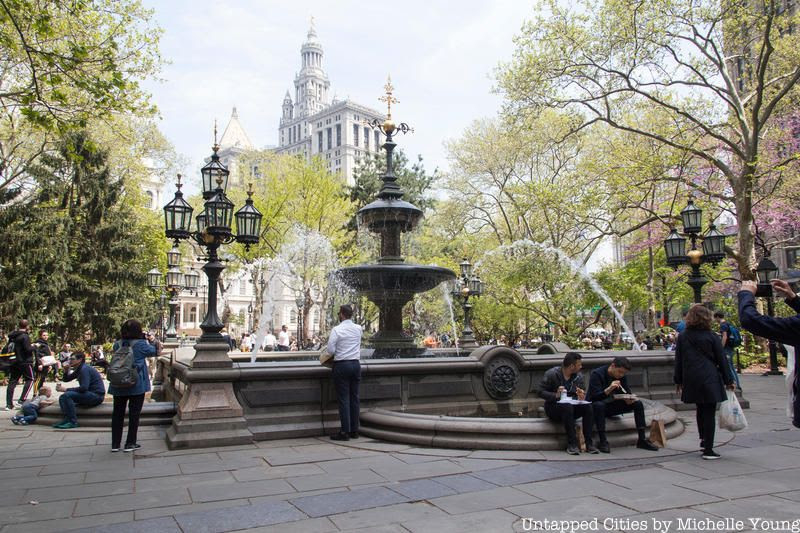
8. City Hall Park
In the seventeenth and early eighteenth centuries, gallows were erected in what is now City Hall Park and countless executions occurred there. During the 1999 restoration of the Park, archaeological excavations uncovered burials and led to the belief that City Hall Park was also once home to a potter’s field. These buried are commemorated with a plaque near the statue of Horace Greeley.
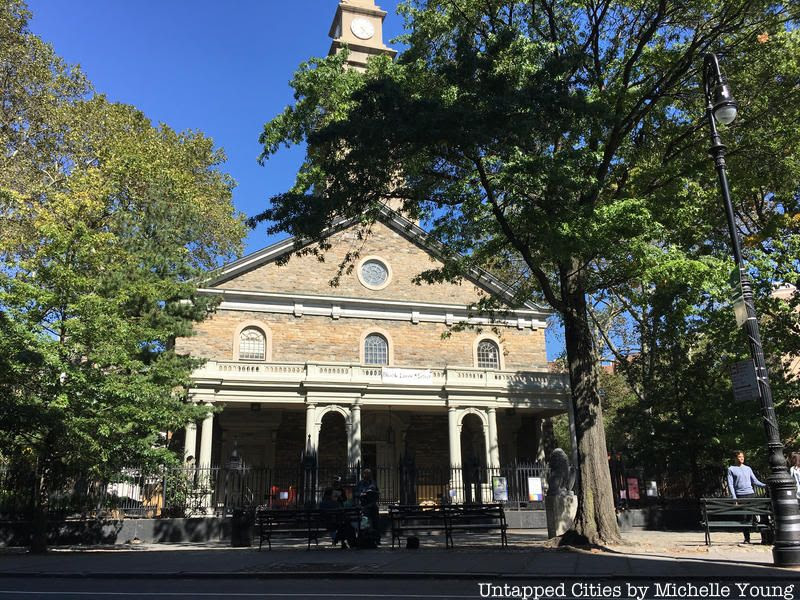
9. St. Mark’s Church in the Bowery
St. Mark’s Church in the Bowery is the oldest site of continuous worship in New York City and the second-oldest church in Manhattan. In 1803, Peter Stuyvesant IV donated a plot east of Second Avenue (between Eleventh and Twelfth Streets) for use as a cemetery. The burial ground was used until 185,1 and in 1864, the bodies were reinterred in Evergreens Cemetery in Brooklyn. In the 1920s, Frank Lloyd Wright was commissioned to design three high-rise apartment towers to rise over the grave of Peter Stuyvesant, which never left the drawing board.
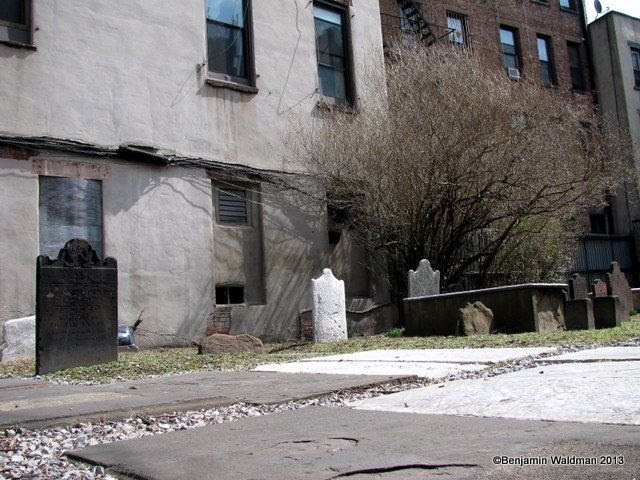
10. Spanish Portuguese Cemeteries
Congregation Shearith Israel (Remnant of Israel), informally known as the Spanish and Portuguese Synagogue, was founded in 1654. It was the first Jewish congregation to be established in North America. The synagogue was first located in rented quarters in Mill Street and its first cemetery was possibly located in a corner of the African Burial ground, though no one is completely certain where it was located. In 1682, the synagogue purchased land at Chatman Square. Over the years, segments of the graveyard were taken by adjacent developments. For example, in 1855, 256 graves had to be moved to make room for the expansion of the Bowery.
In 1823, Eleventh Street became the Synagogue’s next cemetery location. By 1830, the grid reached Eleventh Street and the cemetery fell victim to the surrounding development. The Synagogue moved its cemetery to Twenty First Street just west of Sixth Avenue, in 1829. In 1851, the New York City prohibited burial in Manhattan below 86th Street and the Synagogue’s cemetery emigrated to Queens. Today, remnants of three of the cemeteries can still be seen.
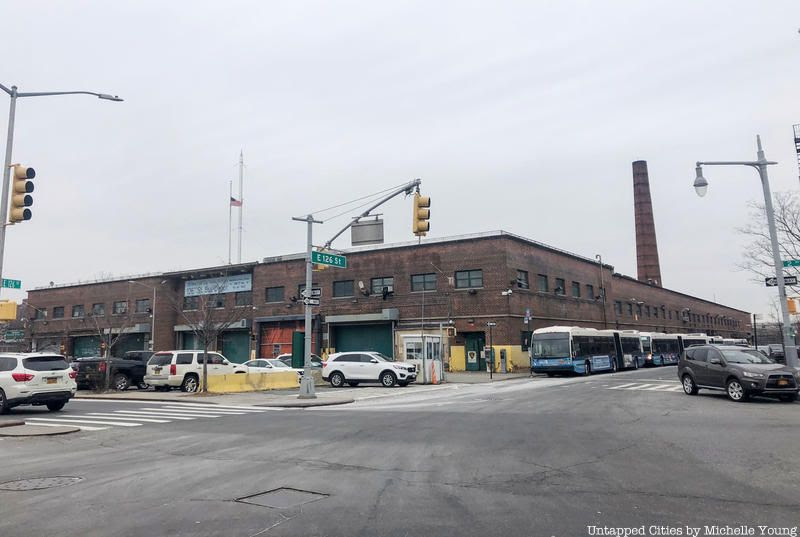
11. 126th Street Depot
In 2008, when the New York City Department of Transportation was working on the Willis Avenue Bridge, construction workers discovered body parts while digging. The land was once part of the Elmendorf Reformed Church’s Cemetery. The site is currently occupied by the MTA’s 126th Street Bus Depot, which was originally built by the Third Avenue Railway in 1947.
The Harlem African Burial Ground Task Force was formed a year later to advocate for recognition of the site’s historical significance. A memorial and mixed-use development project is currently in the works.
12. African Burial Ground
In 1991, during the construction of a new federal office building at 290 Broadway, workers uncovered human remains. The General Services Administration was faulted for not liaising with the local community and continuing construction. Eventually, as a result of the direct intervention of Congress, the GSA revised its plans. In 2006, President George W. Bush designated the site the 123rd National Monument. The African Burial Ground National Monument was created to preserve the memory of the 6.6 acre burial ground located on that site from about the 1690s until 1794. At that time, the site was located outside the boundaries of the City.
13. 1440 Forest Avenue in Staten Island
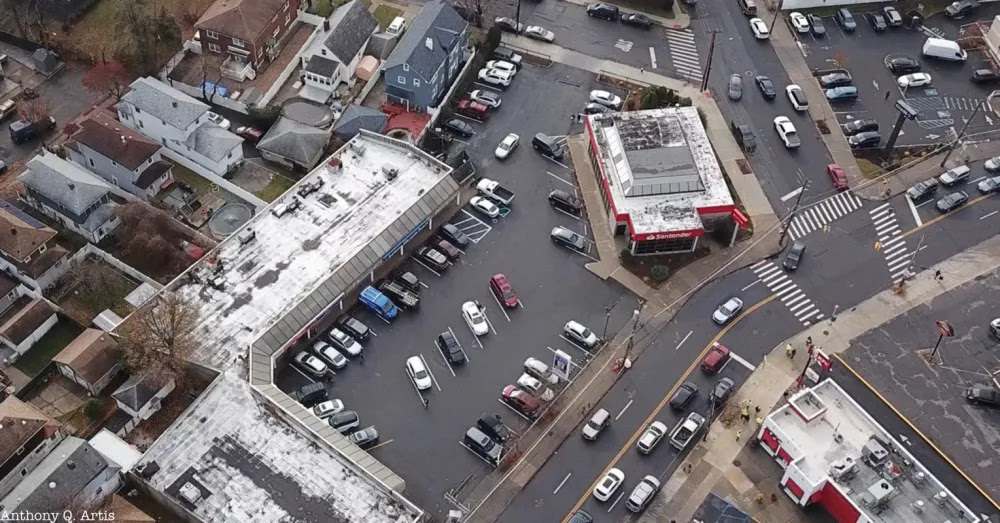
Nearly 1,000 men, women, and children are believed to rest below the pavement of the parking lot at 1440 Forest Avenue in Staten Island. Before being paved over in the 1950s, this area was the site of the Second Asbury AME Church and accompanying Cherry Lane Cemetery, an African burial ground that served as the final resting place of local African American residents and former slaves. Long forgotten in the records of history, Cherry Lane received overdue recognition in 2023 when Livermore Avenue in Port Richmond was co-named Benjamin Prine Way.
Benjamin Prine was the last living person on Staten Island to have been born into slavery. He was reportedly 106 years old at the time of his death in 1900. Though forgotten in the afterlife, he was a well-known figure in the 19th century. When he died, he received an obituary in theNew York Times and in newspapers in other states.
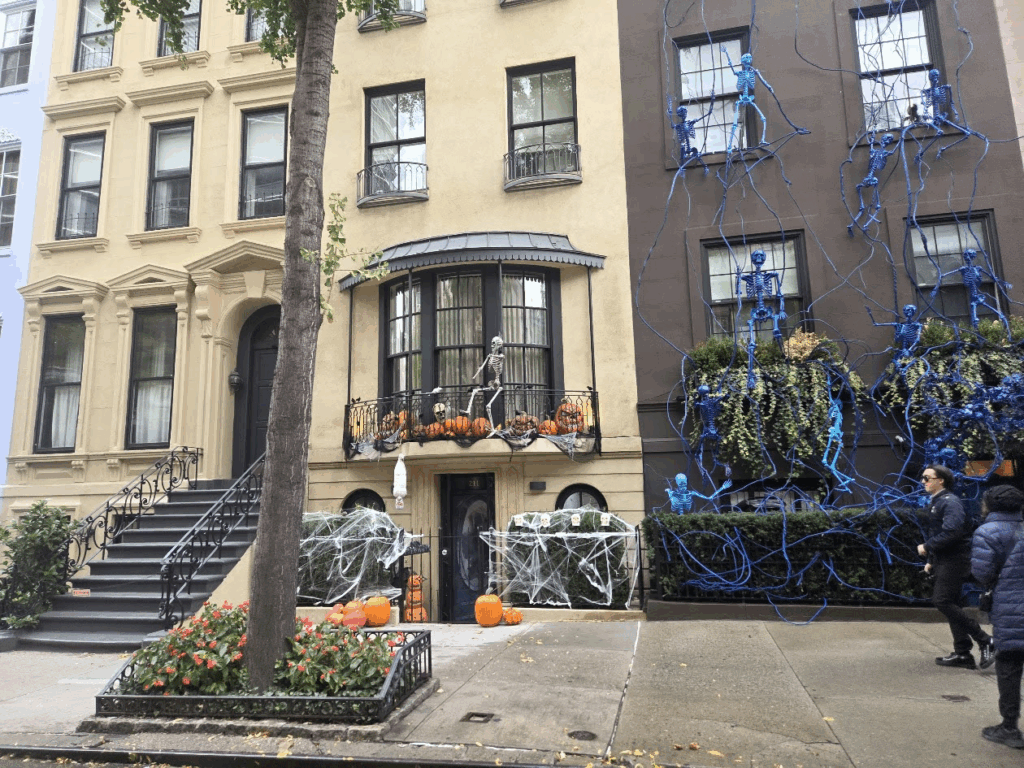
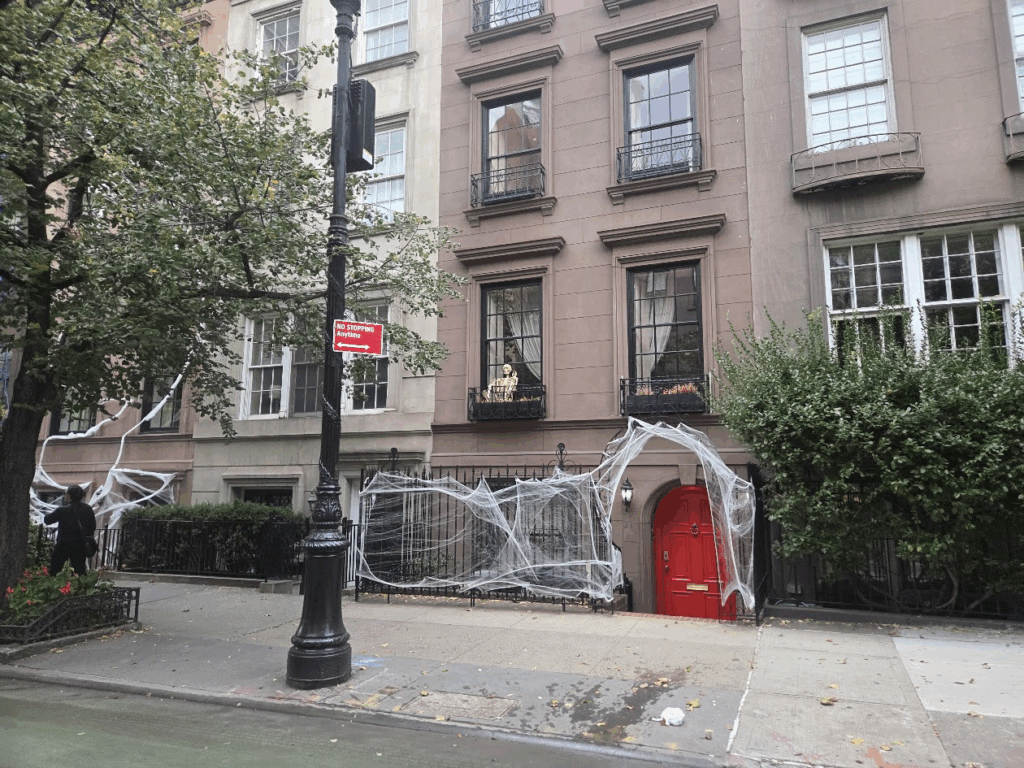
SCAREY CREATURES ON EAST 61st STREET
SPPOOOOOKS ON THE UPPER EAST SIDE
Credits
UNTAPPED NEW YORK
All image are copyrighted (c) Roosevelt Island Historical Society unless otherwise indicated THIS PUBLICATION FUNDED BY DISCRETIONARY FUNDS FROM CITY COUNCIL MEMBER JULIE MENIN & ROOSEVELT ISLAND OPERATING CORPORATION PUBLIC PURPOSE FUNDS.
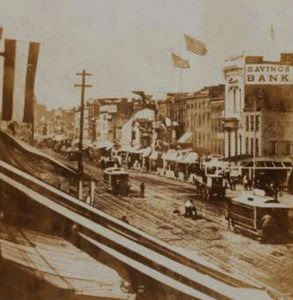
The Bowery is one of Manhattan’s oldest “streets,” dating back to the Dutch days of New Amsterdam. It runs along the path Director-General Peter Stuyvesant took from his home at the tip of the island to his farm, which the Dutch called his bouwerij.
In the 1870s, it ran about a mile from Printing House Square to 8th street. Printing House Square was the heart of the city’s newspaper business, where Park Row is today.
Back then, the Bowery was the place visitors to New York could see the patricians who cornered all the elegance, wealth, and condescension of the city rub elbows with the vermin who scraped crumbs out of the sewers. Silver spoons and filthy fingers alike dipped into its fleshpots.
It was definitely a cosmopolitan place. The rich Irish brogue and the sweet German accent dominated. But one also saw Black Americans, Spaniards, Portuguese, Italians, Frenchman, Mexicans, Asians and many others.
One of the first “Heathen Chinee,” as Chinese (and other Asian people) were dubbed in the prejudices of the day, was Wah Kee. He operated a grocery and curio shop at the Bowery’s lower end. In 1872, he was one of 12 Chinese people living in the area.
Groceries and curios didn’t make him much money though. His serious profits came from his gambling operations and opium den on the second floor.
Word of his prosperity got back to the home country and a rival opened his own opium den. Others followed and by 1880, 700 Chinese people lived in the area. More kept coming, 10 to 15 thousand by 1910, and Chinatown was born.
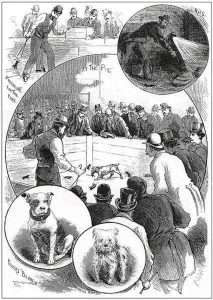
Opium dens were only one sign of alleged depravity on the Bowery. As you headed up the street, you could find lots of gamblers leaning over pits, betting on dogs fighting, cocks too, and prize fights between men. One of the more popular of the pit sports was rat baiting.
Dogs were chasing rats, seeing how many they could kill in the shortest amount of time. Entry to a pit could run as high as five bucks if good dogs were chasing a lot of rats. One enterprising pit owner offered a hundred dollar purse to the most vicious terrier of the evening, double if he killed a hundred rats in a quarter hour.
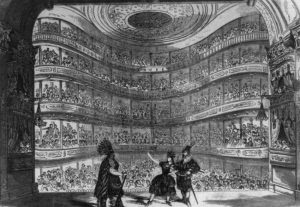
Heading further north, you would pass several theaters, of which the Old Bowery Theater was one of the most notorious. Like Wall Street though a lot less respectable, these theaters were male worlds. If a fellow wanted to watch the show, he had best take a seat in one of the first two tiers.
The upper tier of Bowery theaters was where prostitutes plied their trade. One writer said you could view more depravity and degradation in the gallery of a Bowery theater than anywhere else in the city.
Back on the street, next door to the Old Bowery you would find the Atlantic Garden, one of many German beer halls, seating a thousand. The beer halls were respectable places where extended families would head on Sundays to spend the day drinking large mugs of beer at a nickel apiece, listening to music and dancing, playing cards or dominos, billiards or bowling.
All that was illegal – no establishments were allowed to serve beer on Sunday. But as one congressional candidate in the largely German 8th District said, “Just as the religious American has the privilege of going to his church, so must the Germans have the right to seek their recreation on Sunday, specifically to drink your glass of lager beer in peace and quietness so long as you do not disturb the public order.”
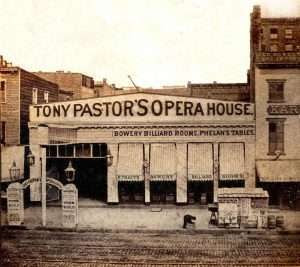
Further up at the corner of Prince Street, you found one of the most respectable places on the Bowery: Tony Pastor’s Opera House. This was the impresario’s first theater. As an innovative entrepreneur, he aimed for a broad respectable audience, if not the fashionable set attending performances on Broadway.
He announced his place as a beautiful Temple of Amusement, The Great Family Resort of the City, where heads of families can bring their ladies and children to witness unexceptionable entertainment that will please the most fastidious.
If you’d had enough of the Bowery after you went a few blocks further north, you could escape left onto Bleecker Street and enter New York’s Little Bohemia.
AUTUMN SHADES FROM PANORAMA ROOM
Credits
Illustrations, from above: The Bowery Looking North from Houston Street, 1870 (NYPL); A Rat Pit on the Bowery (source unknown); Inside the Bowery Theater (Library of Congress); and Tony Pastor’s Opera House (Metropolitan Museum of Art).
All image are copyrighted (c) Roosevelt Island Historical Society unless otherwise indicated THIS PUBLICATION FUNDED BY DISCRETIONARY FUNDS FROM CITY COUNCIL MEMBER JULIE MENIN & ROOSEVELT ISLAND OPERATING CORPORATION PUBLIC PURPOSE FUNDS.
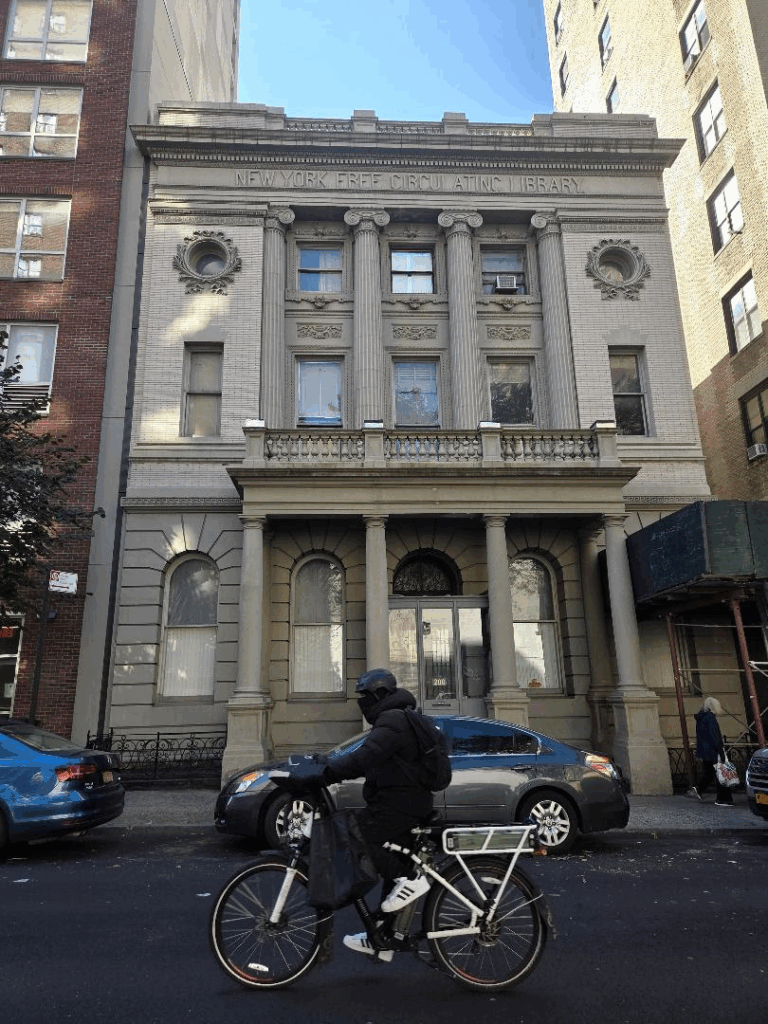
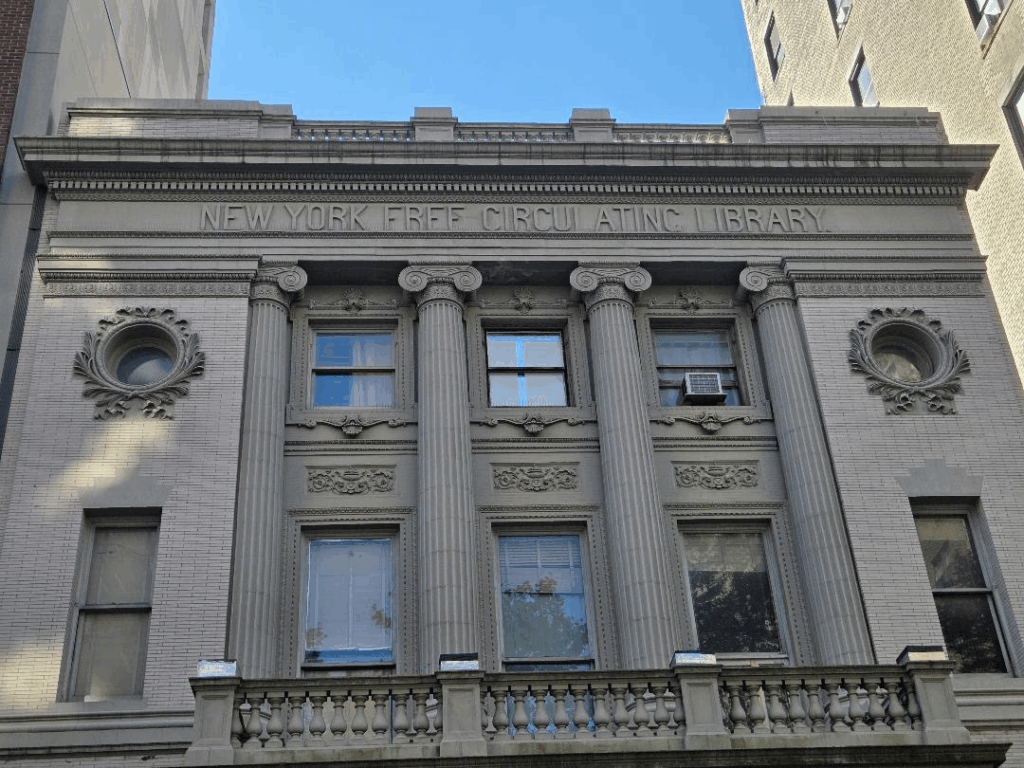
WHILE WALKING ON WEST 99TH STREET I SPOTTED THIS BUILDING AT #206 AND DISCOVERED THE HISTORY.
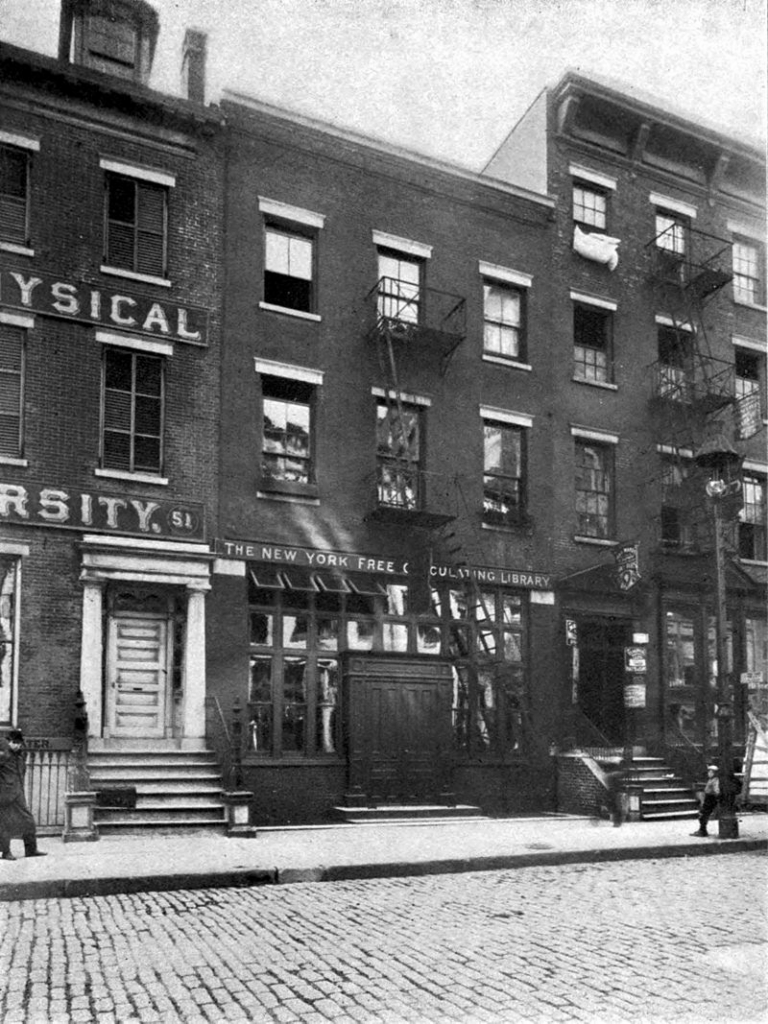
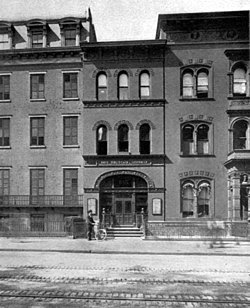
49 Bond Street (opened 1883) where the first branch of the NYFCL settled for most of its existence.
The New York Free Circulating Library (NYFCL) was founded in 1879 and incorporated in 1880. Its aim was to supply free reading material and reading rooms to the people of New York City. Over its lifetime, it expanded from a single location to eleven locations and an additional traveling department. It was notable for the large part women played in its administration and staffing. In 1901, the system became part of the New York Public Library. Origins During the 1870s and 1880s, the need for an adequate system of home circulation of books was frequently mentioned in New York City papers and government. Most discussions of such a system never got beyond the talking stage, but they were an indication of public appreciation of the need.
Early in 1879, six girls belonging to a sewing class at New York City’s Grace Church were waiting for their teacher, and whiled away the time by listening to a sensational story read from a cheap paper by one of their number. The story was overheard by the teacher on her arrival, and she was thus led to inquire regarding the children’s reading material, and to make efforts to improve it. The paper was gladly given up in exchange for a book, and each of the girls was offered one such book a week as a loan, on condition that she would never again buy a sensational story paper.[1]
Other women became interested, about 500 books were collected, and a room at 13th Street, east of 4th Avenue, was obtained for library use. The facility was advertised by telling the children to bring their friends, and although at first the room was open only once a week for two hours at a time, the attendance was soon so great that the sidewalk was blocked during the library hours, and on one occasion only two volumes were left in the room.
At the end of the first year about 1,200 volumes, all gifts, were on the shelves, and about 7,000 had been given out to the public. According to the Evening Post for March 18, 1880, patrons included children and men of 60 or 70 years of age, and their dwellings were scattered widely across the city. After wider consultations, and some study of library conditions both in New York and in other large cities, the conclusion was reached that the special needs of the city at this time would be met by the establishment of a library for the circulation of books among the very poor.
First incorporation
With this aim in view, a certificate of incorporation was filed in March 1880. The incorporators named in the certificate were Benjamin H. Field, Philip Schuyler, William W. Appleton, Julia G. Blagden, and Mary S. Kernochan. The object of the society was stated to be the furnishing of “free reading to the people of the City of New York by the Establishment (in one or more places, in the City of New York,) of a Library or Libraries with or without Reading Rooms; which Library or Libraries and Reading Rooms shall be open (without payment) to the public.”
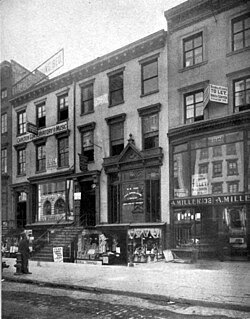
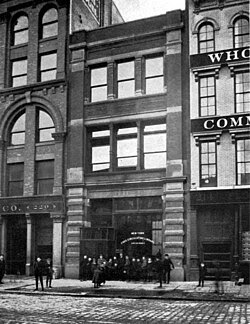
From the room on 13th Street, the library was moved to 36 Bond Street where two rooms were rented in a private house and refitted and furnished as a library. Circulation was begun at this location on March 22, 1880, with 1,837 volumes on the shelves. During April, the first full month, the number of volumes taken for home use amounted to 1,653, and this number grew steadily month by month, that for October being 4,212 volumes. Card holders numbered 712 on March 22, and reached 2,751 on November 1. Of the 22,558 volumes circulated between March and November, 71% were fiction and juveniles; 18% history, biography, and travel; 3% foreign books; 4% science; and 4% poetry, religion, periodicals, and essays. The average daily circulation amounted to about 200 volumes.
In this same period, volumes on the shelves increased from 1,837 to 3,674, the increase consisting of 271 purchases and 1,566 gifts. The gifts included a large amount of material deemed useless, and the library committee concluded that it was “impossible to secure the best and most desirable books from the donations of private households. . . . Of the 3,674 volumes on our shelves, fully one-third are of such a character as to be rarely, if ever, called for.” The committee thought what was needed were “standard works of fiction, popular and reliable books of travel and history, particularly those relating to our own country, and, above all, the better class of books for boys and girls.”
A reading room was opened on June 1, from 4 to 9 p.m. (Sundays included), and appreciation of this service was shown by the number of 1,988 readers, to whom 2,361 periodicals were issued. A card catalog of the library was made for official use and copied for the public. In May the librarian wrote a catalog of the books then on the shelves, about 2,500 volumes, and from this twelve copies were run off by the “chierograph.” In September a printed catalog of the thousand volumes added during the summer was issued in an edition of 200 copies.
In the Library Journal for January 1881, Charles A. Cutter characterized the first report of the library committee as “in some respects the most important that we have ever received. It marks the inception of a movement. The penetration of the free-library idea into a city of the magnitude of New York, is a very important step in its progress. . . . A New Englander or a Westerner from any of the larger cities who goes to New York to live, feels at once that there is something wanting, and says so. The press, too, both daily, weekly, and monthly, is awake to the need — we might also say to the disgrace.” He expressed the hope that resources would increase beyond those “suitable to a small country town.”
Once established, growth in use and circulation was limited only by growth of stock of books, and this in turn only by fiscal resources. The subsequent history of the institution was a record of efforts towards a larger income and administrative development. A public statement of work done and an appeal for subscriptions were made by a meeting held in the hall of the Union League Club on January 20, 1882, attended by some 350 persons. Mayor William R. Grace presided, and addresses were made by John Hall, Joseph H. Choate, Henry C. Potter, and George William Curtis. On February 4, 8, and 11 following, Edward A. Freeman, then in the country on a lecture tour, gave a series of lectures on “The English People in their Three Homes,” in Chickering Hall on behalf of the library. By means of these meetings and by individual solicitation the treasurer was able to report at the annual meeting in November 1882 that the permanent fund amounted to some $34,000.
This fund enabled the trustees to purchase premises at 49 Bond Street on June 9, 1882, and to fit it up for library purposes at a cost of $15,500 for the lot and $13,774.92 for alterations. The books were removed from the rented quarters at 36 Bond Street on May 1, 1883, a change welcomed by readers no less than by librarians, appreciation being shown by a growth in circulation from the 69,280 volumes reported in the first full year of operation (November 1880 – October 1881), to 81,233 volumes in 1882-83.
An interesting tribute to the part taken by women in the establishment of the library and in its administration came in shape of a letter from the board of managers of the Female Christian Home on April 17, 1882, enclosing a check for $1,700 (subsequently increased to $2,000 by additional contributions) representing the balance of the funds of the Home after settling its affairs. This donation was made with request that the “amount be kept as a fund to be called the ‘Women’s Fund,’ and that the income from it shall be used for the employment of women in the Free Library or for the purchase of books.”
The Ottendorfer Branch, 1884, the first branch designed and built for library purposes
Second incorporation and an added location
The limitations expressed in the terms of the original incorporation eventually rendered the possibilities of growth and effective work too small. To overcome this difficulty, “An Act to incorporate the New York Free Circulating Library” was passed by the state legislature at Albany on April 18, 1884. The first fruit of this new freedom from restriction as to its property holdings came to the library in shape of a letter dated May 12, 1884, from Oswald Ottendorfer, editor of the New Yorker Staats-Zeitung.
Ottendorfer wished to give the NYFCL a branch library at 135 2nd Avenue (near 8th Street) with about 8,000 volumes, half of which were in the German language, the others in the English language. The location was to be leased by the German Hospital and Dispensary to the NYFCL. The gift included $10,000 in 7% railroad bonds and furnishings for the branch, which was to include a reading room. An accompanying condition was that the reading material in German be maintained sufficiently, and German-speaking staff be in attendance. A fire-proof vault was provided in the basement for preserving valuable documents and books of the library, and for the preservation of the records and papers of importance of interested German societies.
This gift and its terms were accepted by the trustees on May 16, 1884, and the same day a lease was executed. Lower 2nd Avenue at that time was the center of a community composed largely of German-speaking people. The Ottendorfer Branch — so named by the trustees in their minute accepting the gift on May 16 — was opened for circulation on December 8, 1884, with 8,819 volumes on its shelves, of which 4,035 were German and 4,784 were English.
Maturity
Funding
The NYFCL had now passed beyond its experimental stage. The need for its existence was patent to the most superficial observer. That the library — limited only by its monetary resources — had the organization and the machinery for supplying this need was made plain by the success of its two locations. Support for the library from the taxpayers’ money was certain to come eventually, in part at least. Until it came, however, money for current expenses and for extension of the work had to be found in contributions from people of means, and few of this class had personal knowledge of the field or of the need. Once interested, though, few lost interest or failed in their annual contributions.
Meetings, public and private, were held, at which the needs and opportunities of the work were presented by men of standing and influence in the community. A meeting of May 2, 1885, was presided over by J. F. Kernochan and addresses were made by Andrew Carnegie and William Woodward, Jr. On Washington’s birthday, 1886, Levi P. Morton presided over a meeting held in Steinway Hall and Henry E. Howland, Chauncey M. Depew, and Frederic R. Coudert spoke. In 1890, Benjamin H. Field, president of the board of trustees, presided over a gathering in Chickering Hall on March 6, at which Howland spoke again, and moving appeals were made by ex-President Cleveland, Seth Low, Joseph H. Choate, and Andrew Carnegie. The last of these public meetings in behalf of the library was held in Chickering Hall in 1896, when Mayor Strong presided and addresses were made by Judge Howland, Carnegie, John Lambert Cadwalader, and Bourke Cockran.
Besides appeals made in this fashion, personal letters were addressed to members of various professions setting forth the needs of the library, the work it was doing, and asking support at least in shape of membership contributions. In 1886 circulars were sent to members of the stock exchange, the railroad service, and the dry-goods trade, each signed by half a dozen of the leading men in each of the businesses mentioned. Lawyers and physicians, members of the cotton and other exchanges, the book trade, uptown retail merchants, and other professions and occupations as widely different as the above named were also called upon. In 1896 the number of such letters sent out was reported as 950, in 1897 as 5,000.
The first step towards public funding came in the passage at Albany on July 15, 1886, of “An Act to encourage the growth of free public libraries and free circulating libraries in the cities of the State.” The encouragement consisted in the grant of permission to local authorities to aid free circulating libraries by annual appropriation of funds bearing some ratio to their volumes circulated. From 1887 to 1900, appropriations to the NYFCL made by New York City in accordance with this act totaled $417,250. For seven years, operating funds from private sources and from the City appropriation were about equal, and for the last seven years the City appropriation was several times larger than the income from donations or investments. The City money depended to a certain extent on the volume of circulation — the maximum permissible by statute being ten cents per volume circulated.
Character of reading material
The library committee continued the initial interest in the character of reading material made available, stating in its report for 1886/7 that it was “attempting to improve the character of the reading, or at least to retain the present high standard for a library of this class” and “therefore refrained from the purchase of many books of an ephemeral or trivial nature, and have not duplicated books of fiction in which the interest might be considered transitory.”
Growth of branches
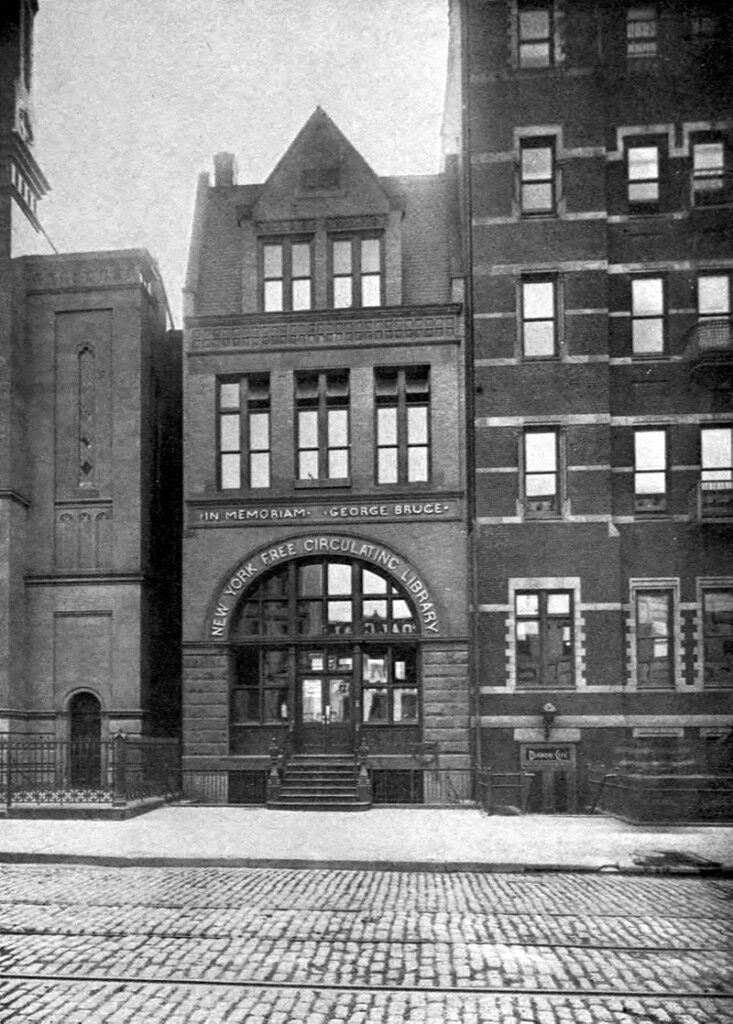
The Bond Street Branch and the Ottendorfer Branch constituted the plant of the NYFCL for nearly three years. In 1888, the number of branches doubled with the opening of the George Bruce Branch and the Jackson Square Branch. On January 17, 1887, Catherine W. Bruce had given $50,000 for erection and maintenance of a branch to be known as the George Bruce Branch. This branch was erected at 226 West 42nd Street as a memorial to the donor’s father, George Bruce, a type founder. Money was set aside as an endowment fund, and by subsequent gifts Catherine Bruce increased the endowment fund for this branch until at the time of consolidation with the NYPL it amounted to $40,000. The building was opened for circulation on January 6, 1888, with about 7,000 volumes on its shelves. The Jackson Square Branch was opened on July 6, 1888, at 251 West 13th Street, the lot, building, and stock of books being the gift of George W. Vanderbilt.
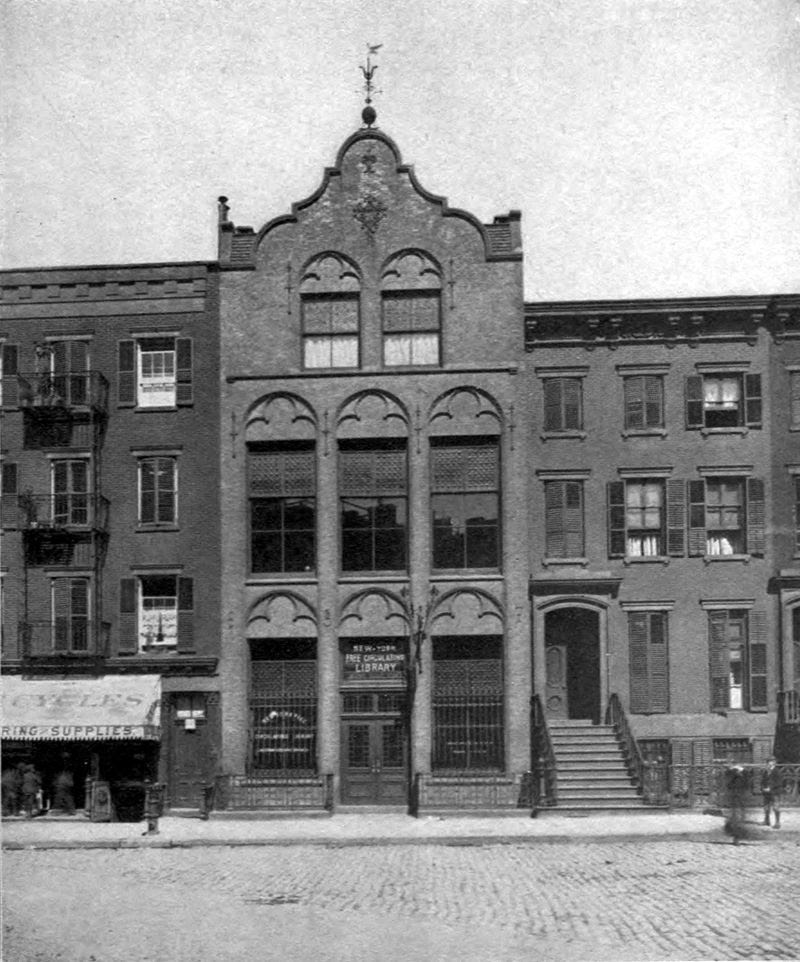
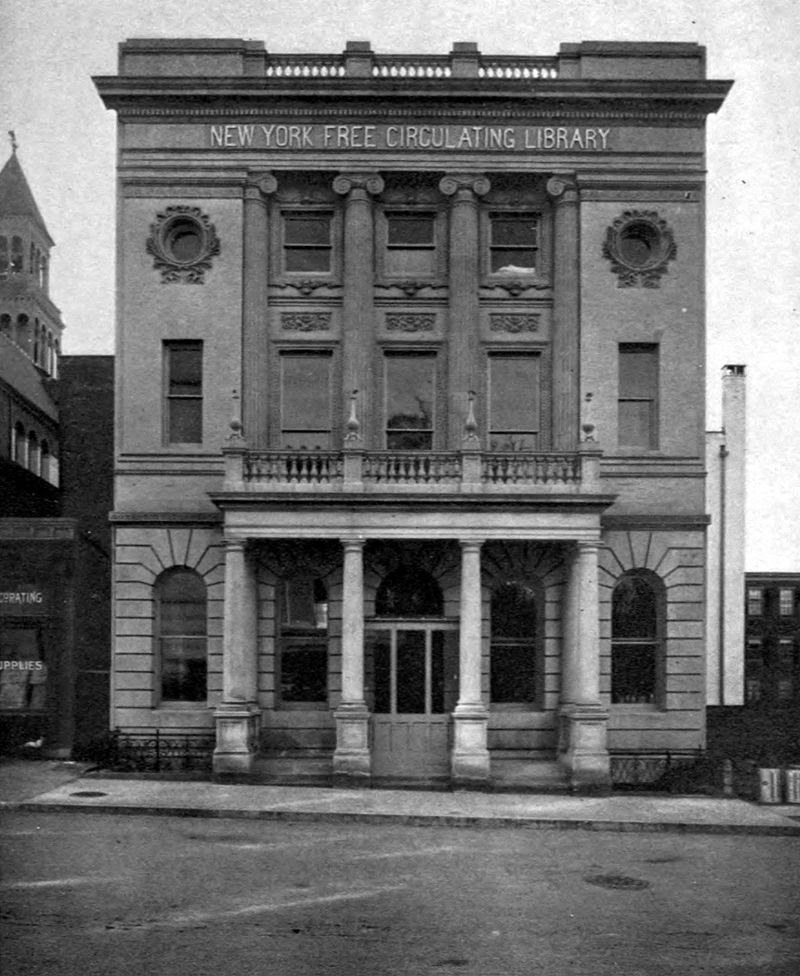
The fifth or Harlem Branch developed from the opening on July 7, 1892, of a small distributing station in part of a room at 2059 Lexington Avenue on the corner of 125th Street, between five and six hundred volumes being drawn off from Bond Street and Jackson Square Branches. During the lifetime of the NYFCL it moved from there, to two rooms at 1943 Madison Avenue, to 18 East 125th Street (July 1895) and finally to 218 East 125th Street (May 1899). A sixth branch of the system was opened on February 25, 1893, in the parish house of the Church of the Holy Communion at 49 West 20th Street, and was named the Muhlenberg Branch in memory of the first rector of the church, William Augustus Muhlenberg (1796-1877). Before taking up his ministry among the poor in 1845, Muhlenberg had been a nationally known educator (college preparatory schools). The seventh branch also found its first outside support from a church. This was the Bloomingdale Branch, opened on June 3, 1896, at 816 Amsterdam Avenue. In 1898, the Bloomingdale Branch moved to the first building to be constructed with NYFCL funds.
Two new branches and the equivalent of a third were established in 1897. The Riverside Branch opened at 261 West 69th Street on May 26, 1897; the Yorkville Branch opened at 1523 Second Avenue, on the corner of 79th Street, on June 10; and the Traveling Library department was established in April of that year at the George Bruce Branch. The Riverside Branch opened using the books of the Riverside Association, which had been operating as an independent library since 1894. This was the first branch to use an open shelf system. The Yorkville Branch was located in a thickly populated section, Germans and Bohemians forming a large portion of the non-English readers. So great were the demands during its first summer that adequate service could scarcely have been given had not librarians and assistants in other branches voluntarily given their services to support the local staff.
George Burce Branch Jackson Square Branch Muhlenberg Branch Bloomingdale Branch Harlem Branch
The nucleus of a traveling library system had existed in the practice adopted by the NYFCL at an early period of its history by which it furnished to clubs, schools, or any responsible group of persons, a stock of books suitable for their needs, to be kept as long as needed. This work had become so extensive by 1897, that it was felt advisable to withdraw the issue for such purposes from the various branches and to concentrate it into a separate department. This was done in April 1897, the librarian of the George Bruce Branch undertaking it in addition to her duties as librarian in charge of that branch. In 1898 it was given a separate staff and was moved to the Ottendorfer Branch. In 1899 it was moved to the Bloomingdale Branch where the third floor was set aside for its needs.
The tenth branch building was opened on June 6, 1898, in rented quarters at 215 East 34th Street, in a remodelled dwelling house, where it occupied the whole building except the basement. The circulation room was located on the first floor, the reading room on the second, and the staff room and janitor’s quarters on the third floor. The branch opened with 3,710 volumes on its shelves. For the first five months its circulation was 26,645 volumes, and the number of readers 1,045, three fourths of this number being children.
The use of the library by children was so marked that a separate room was set aside for them, and the success of the experiment here soon led to the establishment of separate children’s rooms — long desired by every branch — at Ottendorfer, Bloomingdale, the new Harlem building, and the new Chatham Square Branch.
The last branch established by the NYFCL was opened on July 5, 1899, at 22 East Broadway in a remodelled dwelling house just off Chatham Square from which square it took its name. The general circulation room was located on the first floor and the children’s room on the second. Each of these two departments had about 3,000 volumes at the time of opening, but of the 46,339 volumes circulated by the branch in the first four months 37,914 were taken out by the children. In memory of her friend Emily E. Binsse, lost in the shipwreck of La Bourgogne in July 1898, Susan Travers gave $1,000 for books for the children’s room at Chatham Square and in addition she provided six interesting casts of sculpture.
With the increase in branches, circulation increased from 69,000 volumes during the first full year in the two small rooms at 36 Bond Street to 1,600,000 volumes for the eleven branches two decades later.
Staffing
One of the most noteworthy facts is the part taken in the history of the NYFCL by women. The first president, the first secretary, the first chairman of the committee on ways and means, the first chairman of the building committee, and the first librarian were women. Of the forty trustees that served from 1880 to 1901, nineteen were women. The working staff was almost entirely feminine.
Ellen M. Coe (1881–1895)
Arthur E. Bostwick (1895–1899)
Norris Wing (1899–1900)
The staff was put on a graded basis in March 1897, four classes, A, B, C, and D being formed, ranking downwards from A that for the librarians in charge of branches or departments. Promotion from lower to higher grades was made as result of examinations and of routine work. No formal examinations were required for admission to the staff, their place being taken in large measure by the answers to the questions called for on the application blank signed by the inquirer.
To provide a supply of trained assistants for the lower grades, an apprentice class was begun in February 1898. Applicants for positions were required to sign and fill in a blank form on which they gave a statement of their previous training and education and promised to give the library forty-five hours a week in return for the systematic training provided by this class. After a few weeks’ preliminary work in instruction the apprentice was sent about from branch to branch, doing her share of the regular work, becoming familiar with local needs and customs, giving each librarian in charge an opportunity to observe her work. When a paid substitute was needed, she was taken from the apprentice class. When a vacancy on the permanent force was filled, the choice fell upon the best fitted apprentice. There was no seniority: the successful applicant sometimes showed her superior fitness by an apprenticeship of two weeks, sometimes service of months was required. A member was at liberty to leave at any time without notice, and one evidently unfitted for the work was so notified as soon as her unfitness was unmistakably evidenced.
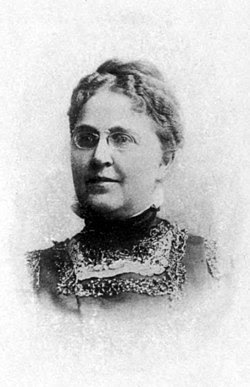
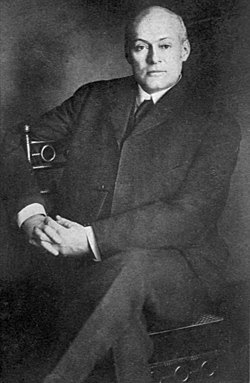
There were four chief librarians during the 21 years of the life of the NYFCL. The first librarian, Mary J. Stubbs, combined the offices of librarian and housekeeper. With her sister, she lived in the building from March 1, 1880, to May, 1881, when ill health forced her to go home to Maine. She died in the autumn, and her sister served as acting librarian. Late in 1881, Ellen M. Coe was appointed librarian, and she filled the post for about 14 years, resigning in February 1895. Under her administration, five branches were added, and circulation grew from 69,000 to 650,000. On April 1, 1895, Arthur E. Bostwick, was appointed chief librarian. He left on March 8, 1899, and his successor, J. Norris Wing, was appointed April 7. Wing died December 20, 1900, and the position remained vacant until the NYFCL became part of the New York Public Library.
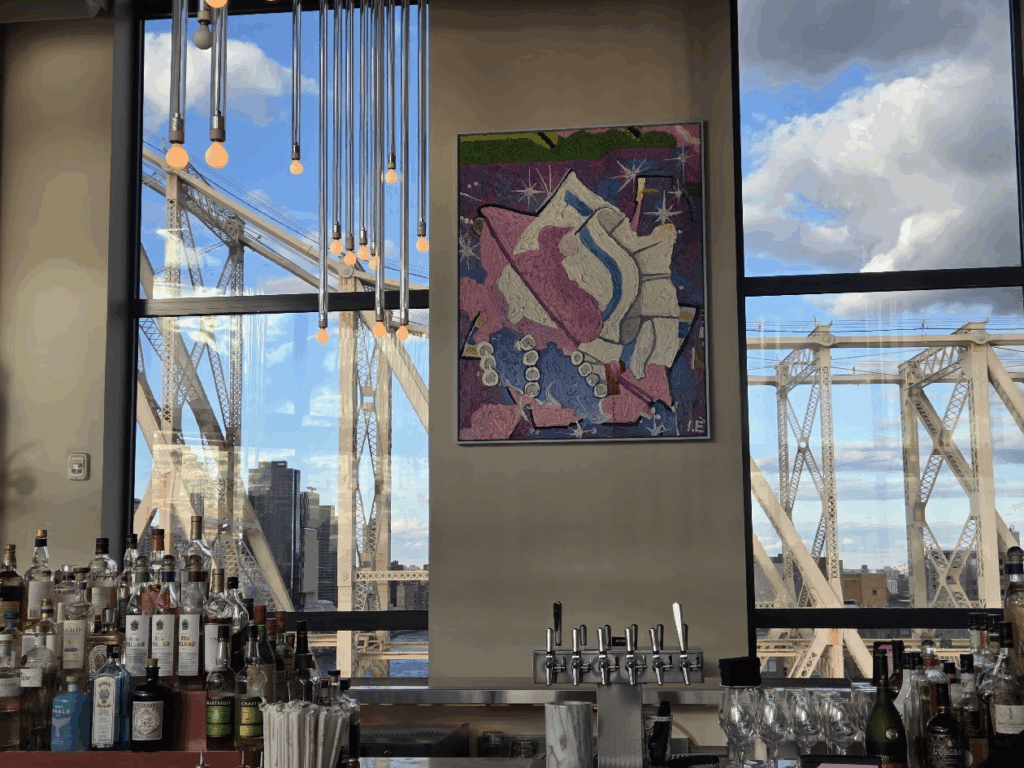
TIME FOR A DRINK AT THE PANORAMA ROOM
Credits
WIKIPEDIA
All image are copyrighted (c) Roosevelt Island Historical Society unless otherwise indicated THIS PUBLICATION FUNDED BY DISCRETIONARY FUNDS FROM CITY COUNCIL MEMBER JULIE MENIN & ROOSEVELT ISLAND OPERATING CORPORATION PUBLIC PURPOSE FUNDS.
I AM WORKING EARLY VOTING ON THE UPPER WEST SIDE. HERE ARE ARTICLES ON A NEW NEIGHBORHOOD.
SEE YOU AT PS 217 ON ELECTION DAY, TUESDAY, NOV. 4th.
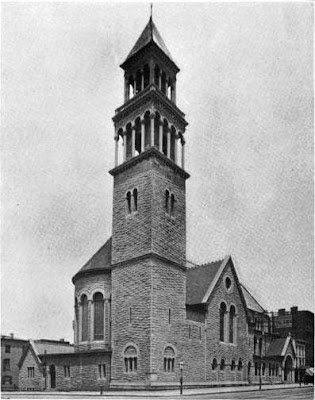
photo nyc-architecture.com
As the 18th century turned into the 19th, St. Mark’s in the Bowery was the northernmost church in Manhattan. Not until the traveler would reach Yonkers would he find another place of worship. It was a problem for wealthy New Yorkers who dotted the upper island with their grand and extensive country estates.
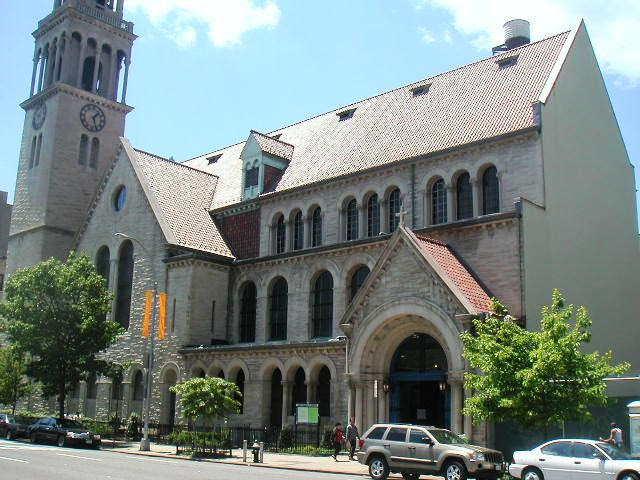
In 1806 several of the gentlemen, most of whom worshiped at Trinity Church, laid plans to build an Episcopal church in the country. Oliver H. Hicks donated the site and Trinity Church promised financial aid. On July 27, 1807 Bishop Moore consecrated the completed building at what today is Amsterdam Avenue and 99th Street.
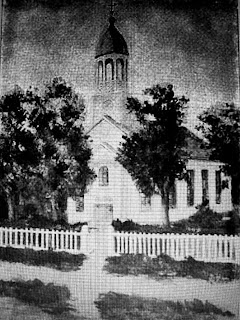
An early watercolor depicts a charming rural church. Wooden and painted white, it featured the open belfry, grassy lawn and picket fence expected in a countryside church erected by well-to-do families. The list of members included New York’s most prominent families: Elizabeth Hamilton, widow of Alexander Hamilton; the Schermerhorns, the De Peysters, the Schieffelin and the Lawrence families among them.
The 1807 wooden church — Churchman magazine 1907 (copyright expired)
The little church may have appeared quaint, yet it was anything but inexpensive. The cost of the first St. Michael’s was $4,959.72—around $90,000 today—of which Trinity Church gave $2,000. The first pew rents were around $200 per year (about $3,500). Money was apparently not a great problem for St. Michael’s and in 1827 it was resolved to discontinue the morning and evening collections “as interrupting the solemnity of divine worship and generally unpleasant to the congregation.”
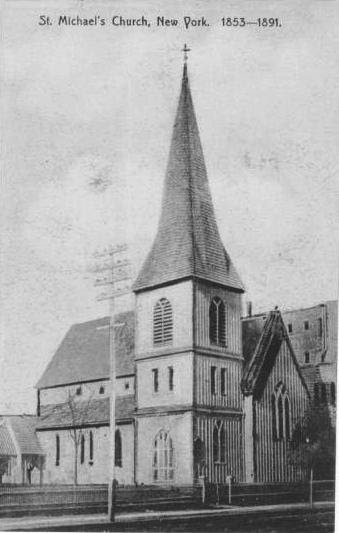
In 1853 the pew rents were abolished altogether. The same year the wooden church building was destroyed by fire. A second building costing $12,611.70 was quickly built on the same site—also of wood and slightly larger. The new church could seat 400, double the number of worshipers as the former church.
In the meantime the neighborhood was experiencing more development. In 1859 there had been 21 baptisms at St. Michaels, in 1863 there were 199. In 1864 gas lighting was introduced and the rector’s salary was increased to $3,500 due to the “increased cost of living.”
The 1854 Carpenter Gothic church was twice the size of the earlier building.
When the Civil War broke out, St. Michael’s was shuttered and locked, not to be reopened until the end of the conflict. The work of the church, however, continued through outreach programs and work with the needy and sick. St. Michael’s was the first church to provide Christian burial for the poor and its Charity School became the first public school on the West Side of Manhattan. The Churchman, in 1907, would remember “The work of the Church among the miserable and abandoned in the hospitals, the almshouses, the asylums and the prisons of New York, the work of the Church in the slums, the rescue for the fallen women, and forsaken children, all of these began in St. Michael’s.”
As the century drew to a close, Amsterdam Avenue had become a major thoroughfare and the Upper West Side experienced an explosion of new homes and businesses. The arrival of the elevated railway in 1879 made the area conveniently accessible. By 1889 a new church building was imperative. Robert W. Gibson was awarded the commission for the structure and he delivered a surprising yet remarkable design.
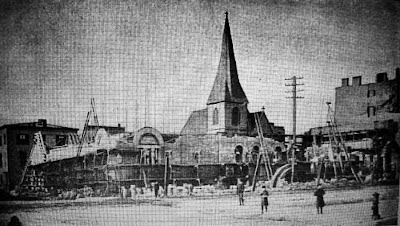
The cornerstone was laid by Bishop Potter on St. Michael’s Day, September 29, 1890. The walls began rising around the still-standing older church over the old cemetery. The day after the cornerstone laying, The New York Times noted that “In the excavations for the foundations a number of old vaults have been brought to light. The doors of three of these were to be seen yesterday in a bank of earth just back of the platform surrounding the cornerstone. It is intended to preserve these vaults, it was said yesterday, and to build the church over them.”
The new church begins rising around the still-standing 1854 St. Michael’s — Churchman magazine 1907 (copyright expired)
The building was expected to be completed in September 1891; however that date came and went and work dragged on. Finally, on December 15 the still-unfinished church was consecrated. The New York Times remarked on the status of construction. “While the church was still far from being complete, the rood-screen not being in place for the consecration services, the pulpit, lectern, and altar being but temporary structures, the organ being only partially finished, the walls undecorated, and the windows wanting in memorial gifts, sufficient was nevertheless disclosed to make it assured that the new Saint Michael’s…will eventually be one of the finest houses of worship in this vicinity, if not in the country.”
photo by America’s Roof
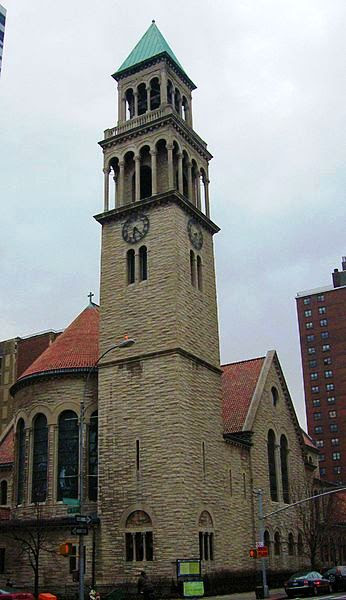
Clad overall in rough-cut Indiana limestone it harmoniously combined historic styles. The Romanesque Revival, bowed chancel section on 99th Street nestles against a soaring Florentine campanile 160 feet tall. Unlike nearly every other Romanesque building of the time, which were built of brownstone or red brick, St. Michael’s gleamed in its white stone. When completed at a cost of $183,000 including furnishings the church could seat up to 1,600.
King’s Handbook of New York City called the new building “a noteworthy instance of modern intelligent ecclesiastical architecture.”
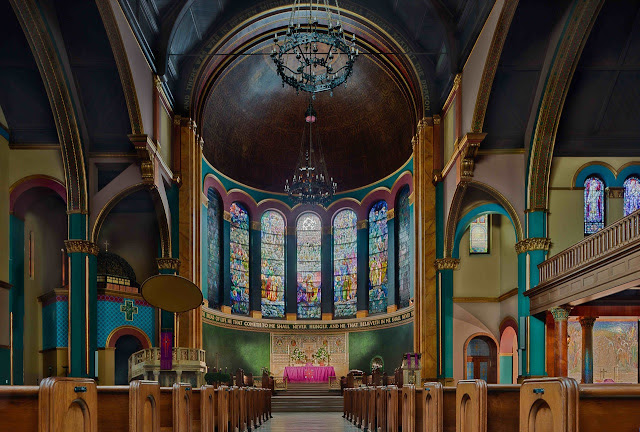
The “walls undecorated” that The Times made mention of would be worth the wait. Tiffany Glass and Decorating Company was given the job of decorating the interior and the project would be a long one. Between 1893 and 1907 the firm headed by Louis Comfort Tiffany lavished the chancel area with mosaics, a Vermont marble altar, the pulpit, altar rail and glass reredos.
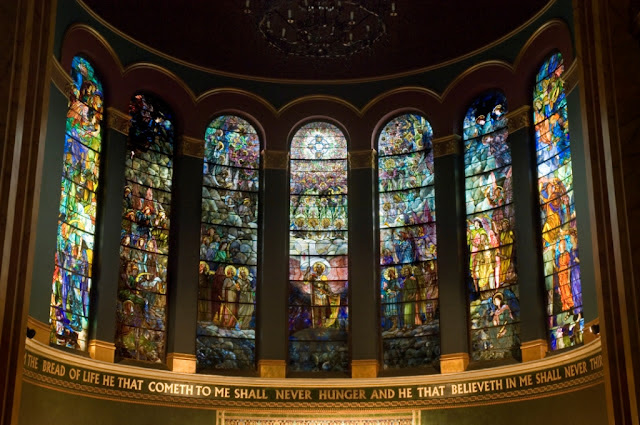
The magnificent chancel window in seven sections, each twenty-five feet high, depicted “St. Michael and all the Host of Heaven.” Executed by Tiffany artisans Edward P. Sperry, Joseph Lauber, Louise J. Lederle and Clara W. Parrish, Palette; Bench magazine termed the group “the most important window in the country.”
But Tiffany’s work ground to a halt and the main sanctuary was left unadorned. In 1922 the firm was called back to decorate the Chapel of the Angels. A large mosaic mural behind the chapel altar was installed, as well as two additional stained glass windows. It was the end of Tiffany’s work at St. Michael’s, leaving the drab main sanctuary in marked contrast to the vivid Tiffany sections.
The Upper West Side continued to grow and in 1899 the Third Avenue Railway Company began plans to lay train tracks up the center of Amsterdam Avenue alongside an already-existing set. Pastor Dr. John P. Peters would not have it.
Peters raised money and recruited what The Outlook magazine termed “a few conscientious anti-monopolists” in a lawsuit against the railroad. The magazine insisted that “New York City has not in years been so stirred by an anti-corporation campaign as by the present one.” Peters intended to fight against “turning the attractive street into a dangerous car-yard.”
In March 1899 the Supreme Court of New York heard the case of “The St. Michael’s Protestant Episcopal Church in the City of New York, Plaintiff, v. The Forty-Second Street, Manhattanville and St. Nicholas Avenue Railway Co., Defendant.” The feisty preacher won.
St. Michael’s in 1895 – Nickerson’s Illustrated Church, Musical and School Directory of New York and Brooklyn (copyright expired)
One of the wealthy parishioners of St. Michael’s in the first years of the 20th century was Margaret E. Zimmerman. The widow of John E. Zimmerman and an heiress in her own right –her father William Ponsonby Furniss was known as the “West Indian merchant prince”–she had a falling out with her family.
When Margaret’s father died in 1871 he left his three sons and three daughters his fortune, including over 200 undeveloped lots in the Riverside Drive area. By the early 20th century that land was highly valuable as mansions began rising along the newly-finished Riverside Park. In 1916 only the 84-year old Margaret, now an invalid, remained alive among the heirs, having inherited their shares as each died.
When relatives insisted on an accounting of the original trust funds, the referee concluded that Margaret’s sisters had made unauthorized investments under the law and charged Margaret $257,838 in fines.
Margaret Zimmerman was not pleased.
When the rich woman died in her apartment at 400 Park Avenue in 1918, her relatives discovered they had all been ignored in her will. Instead the Metropolitan Museum of Art received the valuable paintings and works of art, charities were given hefty amounts of money and St. Michael’s Church received more than $1 million in real estate and $50,000 in cash.
The money, no doubt, made Tiffany’s decoration of the Chapel of the Angels less burdensome.
On November 10, 1921 the Rev. Dr. John Punnett Peters died of a heart attack. Although he was noted as a civic reformer (not only had he battled the Amsterdam Avenue train tracks, he was Chairman of the Committee for the Extension of Transfers on Street Car lines and the President of the Transit Reform Committee of One Hundred and a crusader against “commercialized vice”) he was much more.
In addition to heading St. Michael’s Church, he had been a noted archaeologist, Hebrew scholar and expert on Babylonian excavations. It was Dr. Peters who discovered and excavated the ancient city of Nippur and led the first archaeological expedition of the University of Pennsylvania to Babylonia.
After nearly a century of use, St. Michael’s Church embarked on a three-year restoration in 1989. Nicholson & Galloway, Inc. cleaned and repointed 20,000 square feet of the limestone façade. The church bells and the timber supports of the belfry were removed and restored. The entire Spanish tiled roof was removed and 18,000 square feet of original tile was replaced with matching Ludowici clay tiles.
But inside something daring was going on. Fine Art Decorating of Manhattan restored the Tiffany interiors and then went a step further. Because plans for the rest of the church were never completed by Tiffany, the firm carefully designed decorations in the Tiffany spirit.
Costing over half a million dollars, the result is dazzling. The sanctuary that for nearly a century had moped in drab neutral colors now exploded in vivid primary colors with gold accents. The entire space was now cohesive, perhaps as the renowned decorating firm had originally envisioned.
St. Michael’s Church was listed on the National Register of Historic Places and the New York State Register of Historic Places in 1997.
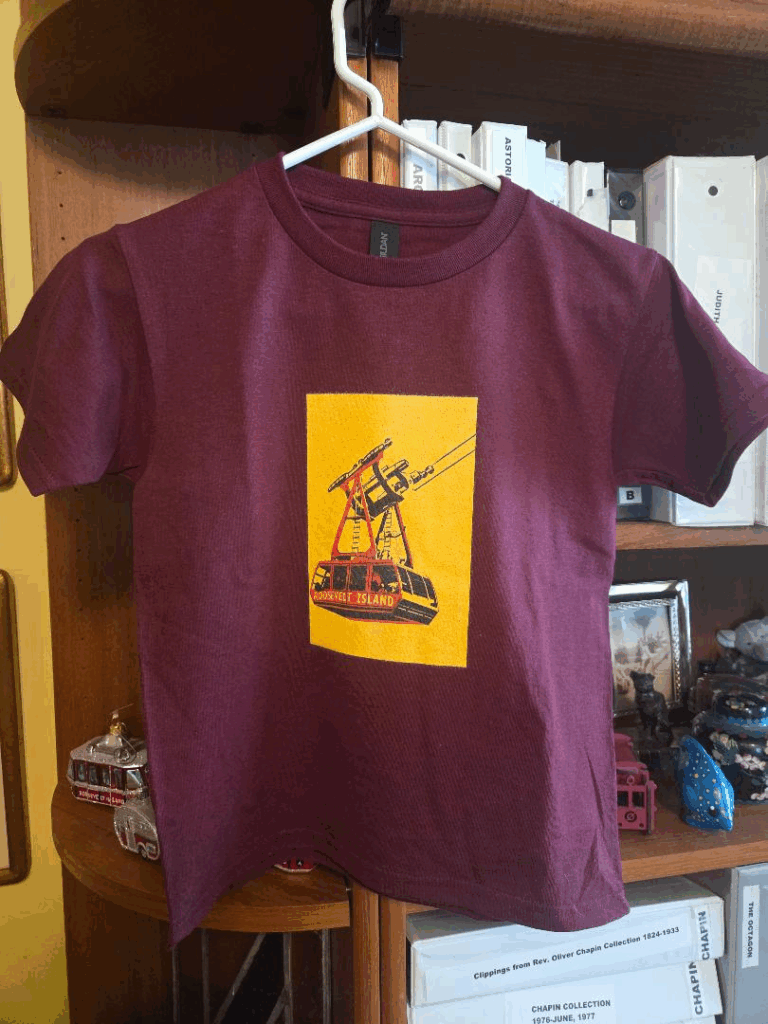
KID SIZE TEE SHIRTS ON SALE NOW AT ROHS VISITOR CENTER KIOSK SIZES XS S M L XL $20-
CREDIT TO
DAYTONIAN IN MANHATTAN
All image are copyrighted (c) Roosevelt Island Historical Society unless otherwise indicated THIS PUBLICATION FUNDED BY DISCRETIONARY FUNDS FROM CITY COUNCIL MEMBER JULIE MENIN & ROOSEVELT ISLAND OPERATING CORPORATION PUBLIC PURPOSE FUNDS.
Collection of the Museum of the City of New York (c)
Issue #1562
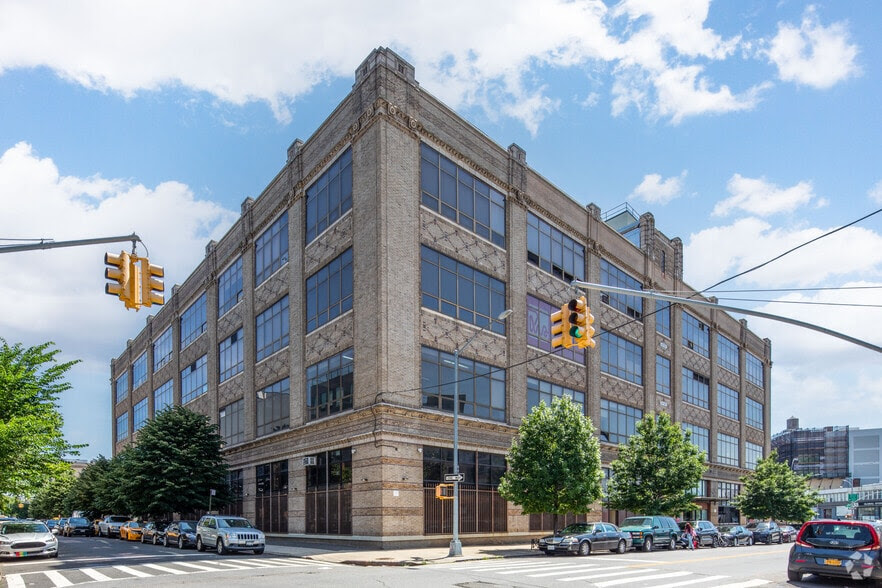
34-01 38th Avenue. Pierce Arrow Building 1921 MCNY (C)
The building today on the corner of Northern Blvd. (Check out the cars in both photos)
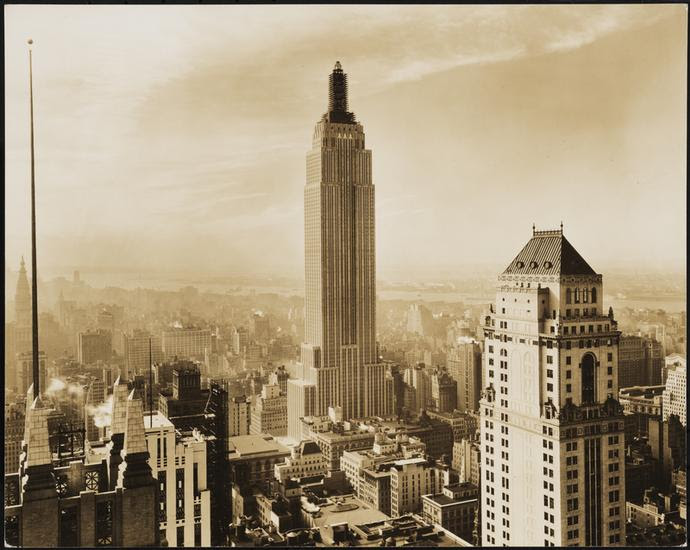
350 Fifth Avenue. Empire State Building, view of from Lincoln Building, East 42nd Street
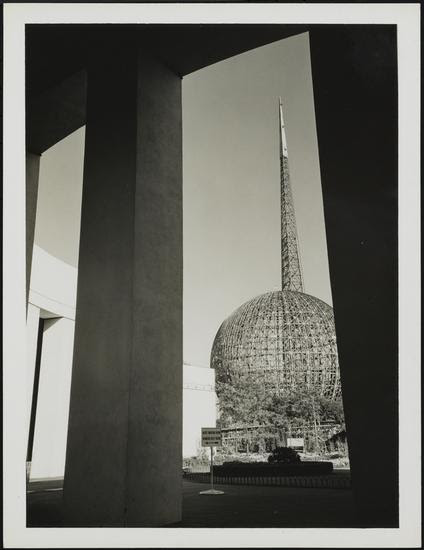
New York Worlds Fair. Perisphere and Trylon steel frame 1938 MCNY (C)
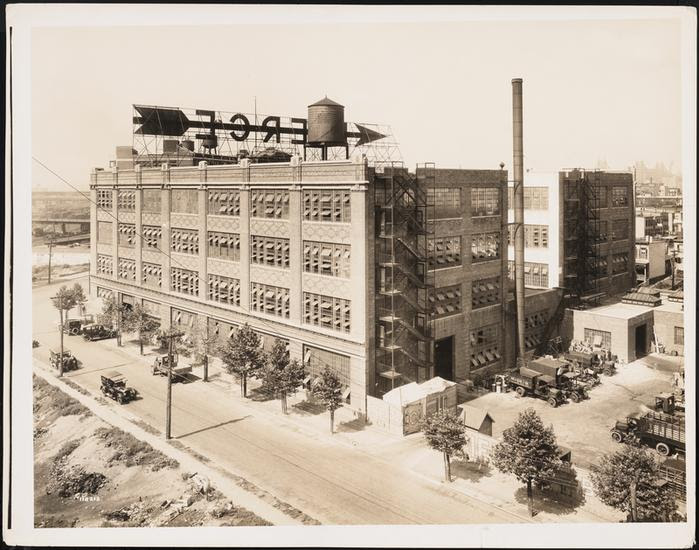
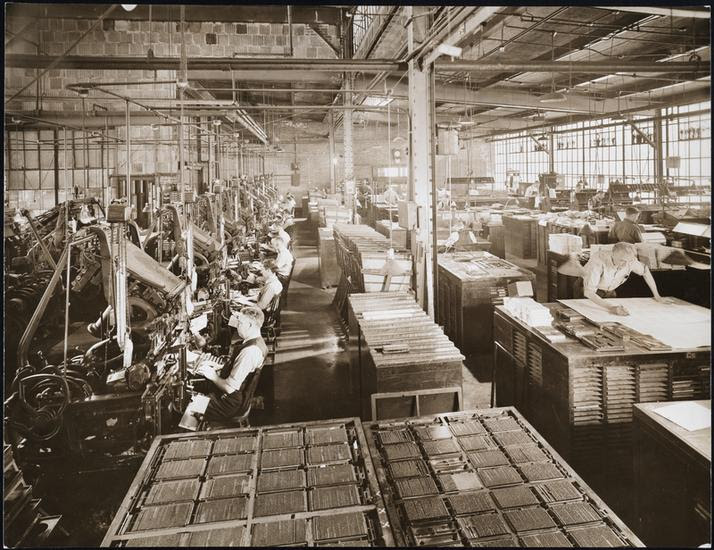
Description: Possibly Metropolitan Printing Plant. Dated ca. 1910-1935 MCNY (C)
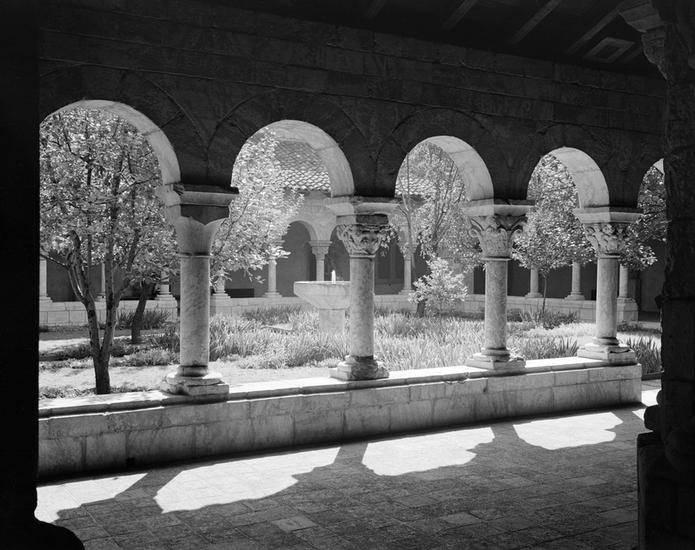
Courtyard at the Cloisters. 1935 MCNY (C)
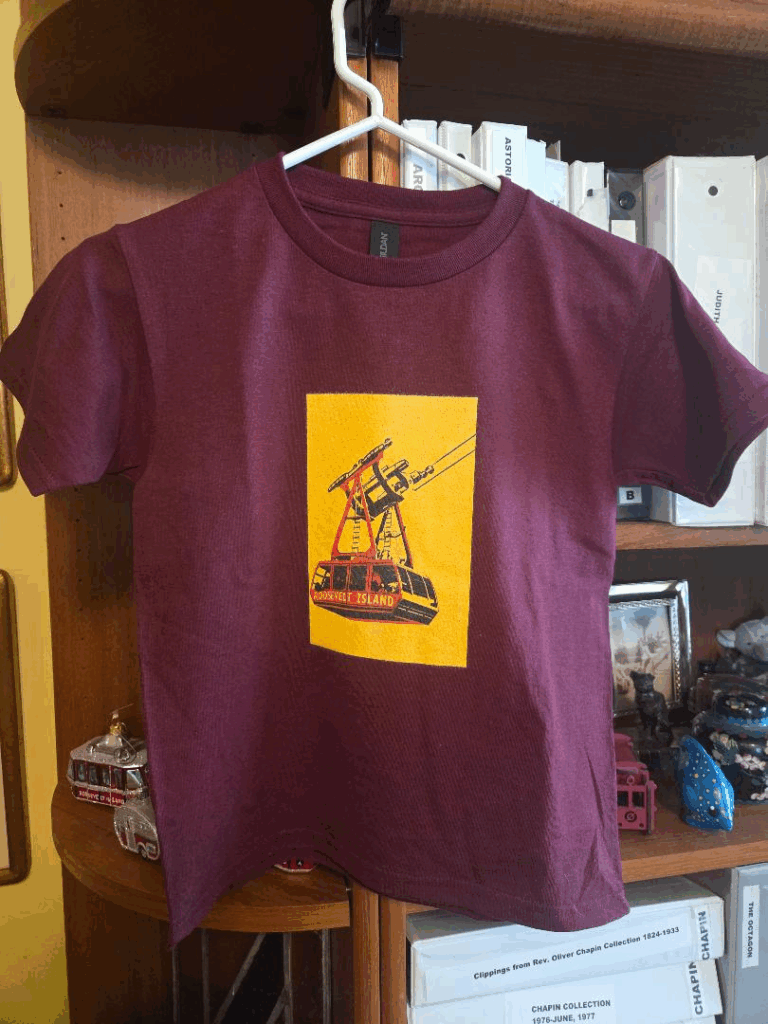
KID SIZE TEE SHIRTS ON SALE NOW AT ROHS VISITOR CENTER KIOSK SIZES XS S M L XL $18-
Credits
ALL WURTS BROS. PHOTOS COPYRIGHT MUSEUM OF THE CITY OF NEW YORK (C)
All image are copyrighted (c) Roosevelt Island Historical Society unless otherwise indicated THIS PUBLICATION FUNDED BY DISCRETIONARY FUNDS FROM CITY COUNCIL MEMBER JULIE MENIN & ROOSEVELT ISLAND OPERATING CORPORATION PUBLIC PURPOSE FUNDS.