Historic Marker Dedication & Roosevelt Island History Quest
Roosevelt Island Historical Society Roosevelt Island Operating Corporation Roosevelt Island Youth Center
Monday, April 27, 2026
ISSUE #1670
OOPS: WE INADVERTANTLY PLACED THE WRONG LAST NAME FOR RIOC CEO B.J.JONES.. ACCEPT OUR APOLOGY. JUDY BERDY
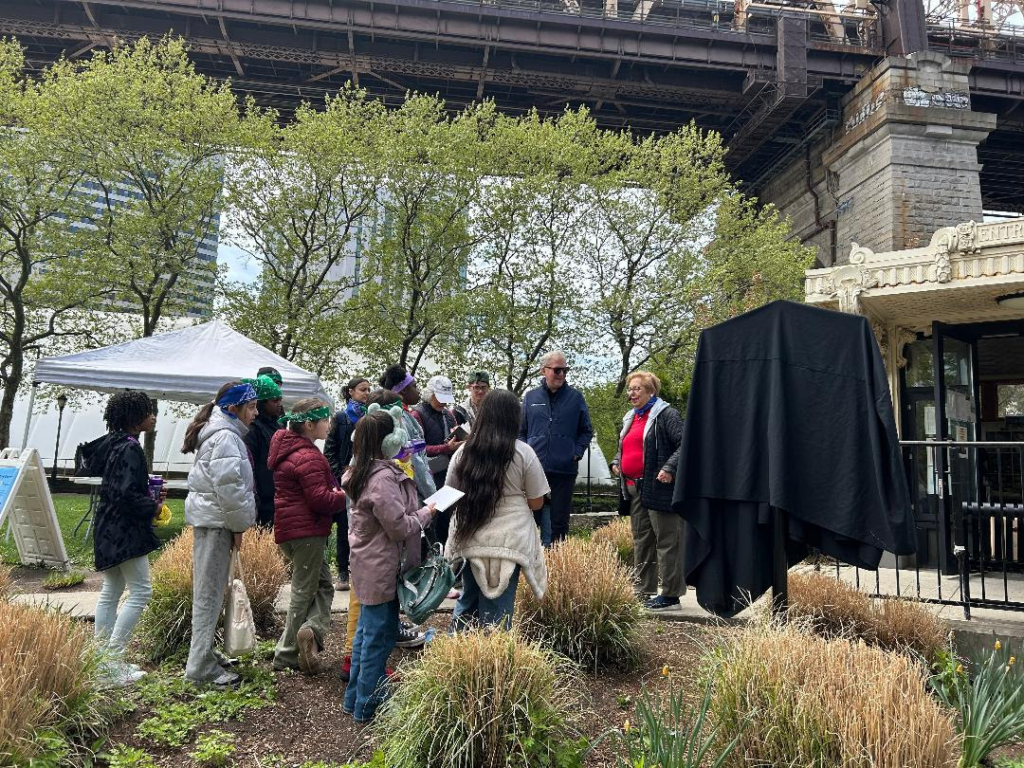
Getting ready to reveal the marker
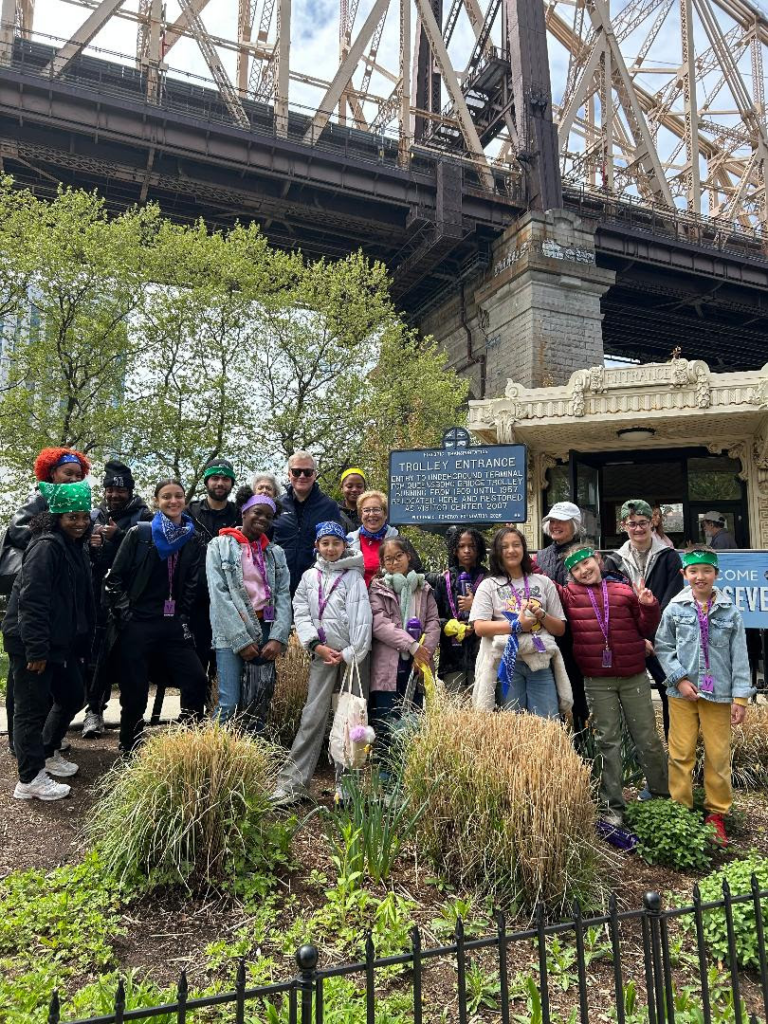
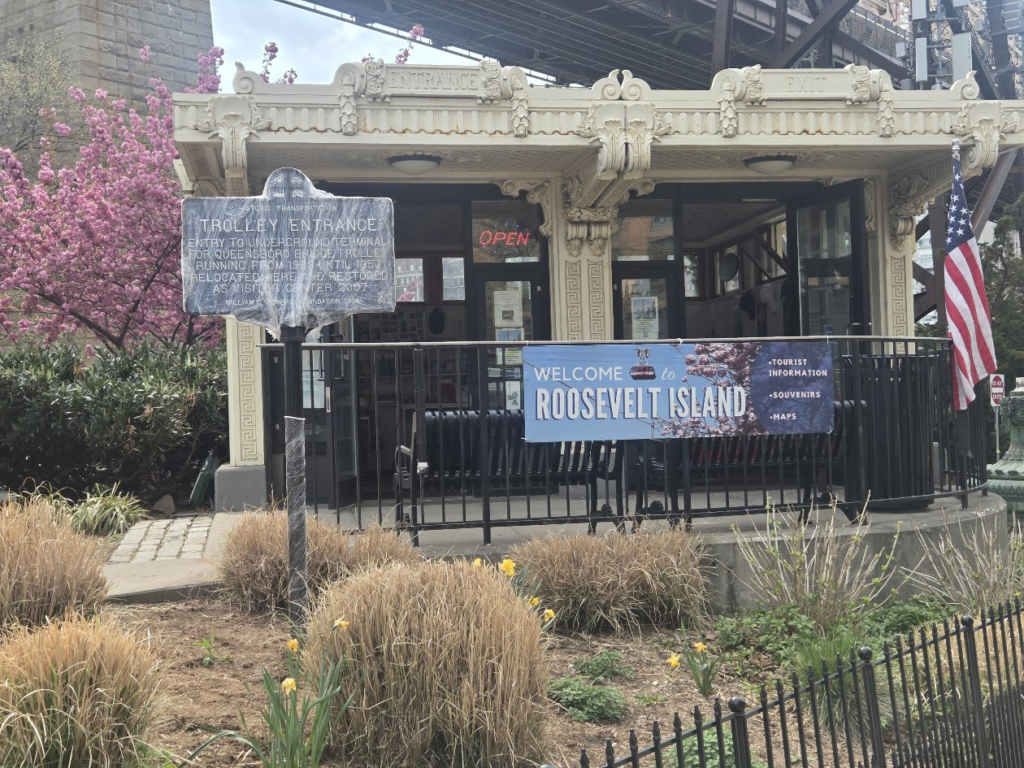
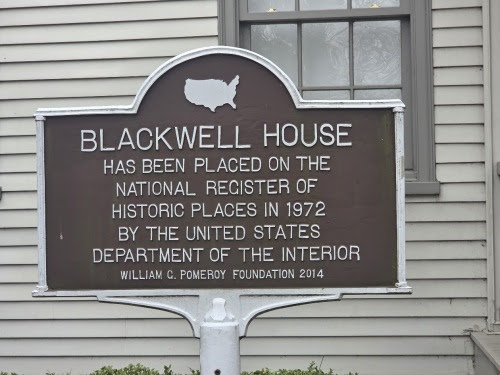
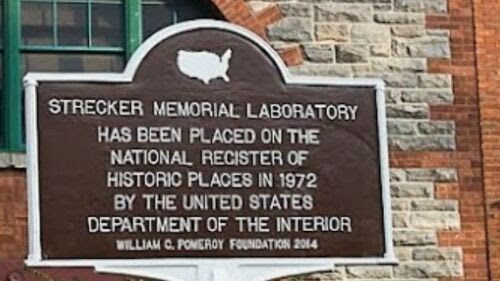
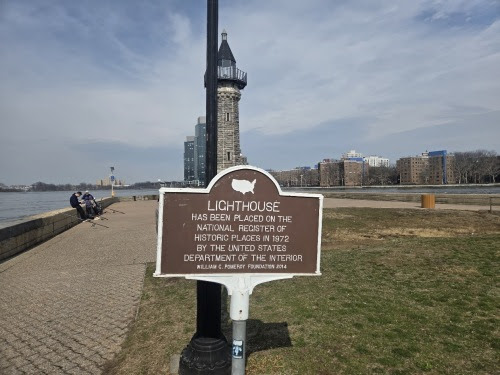
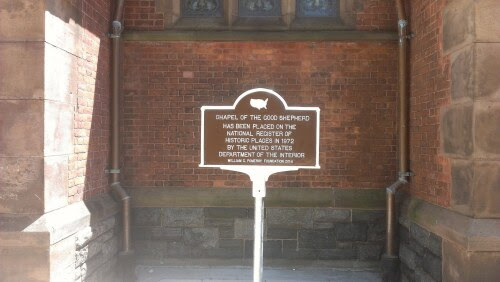
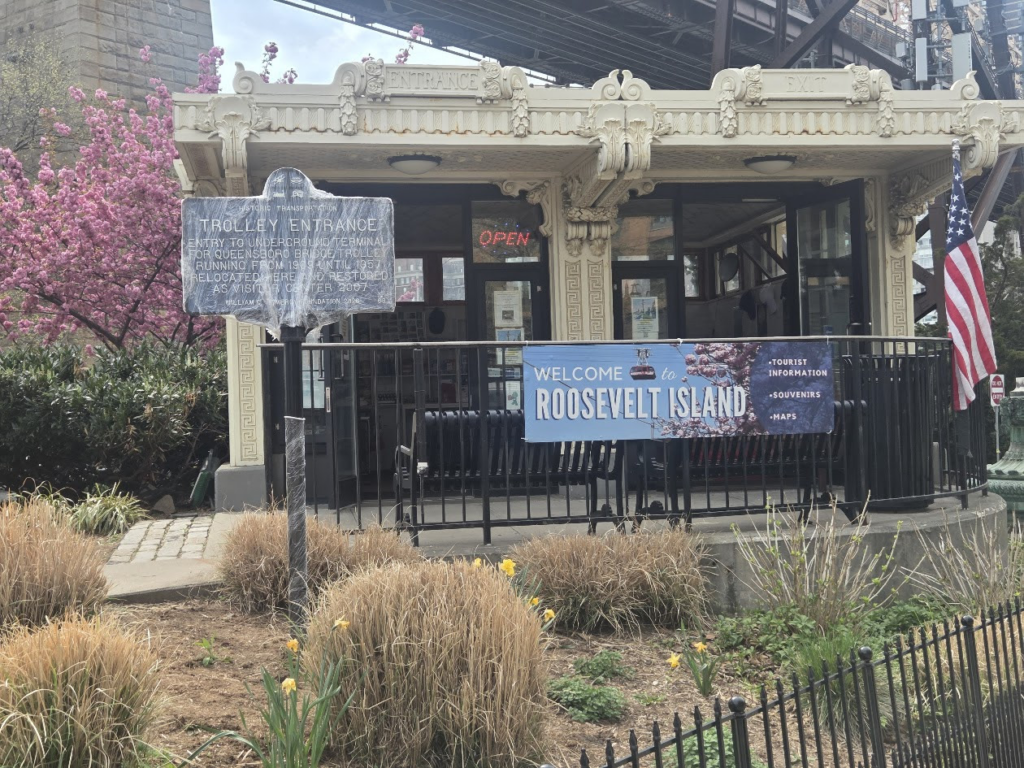
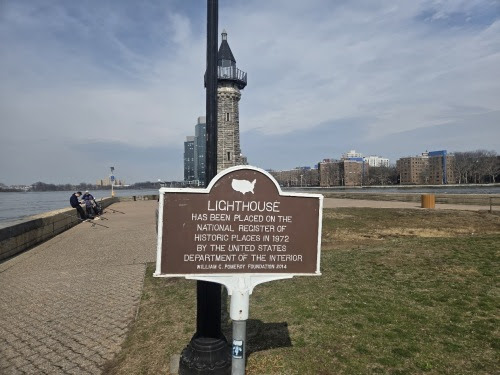
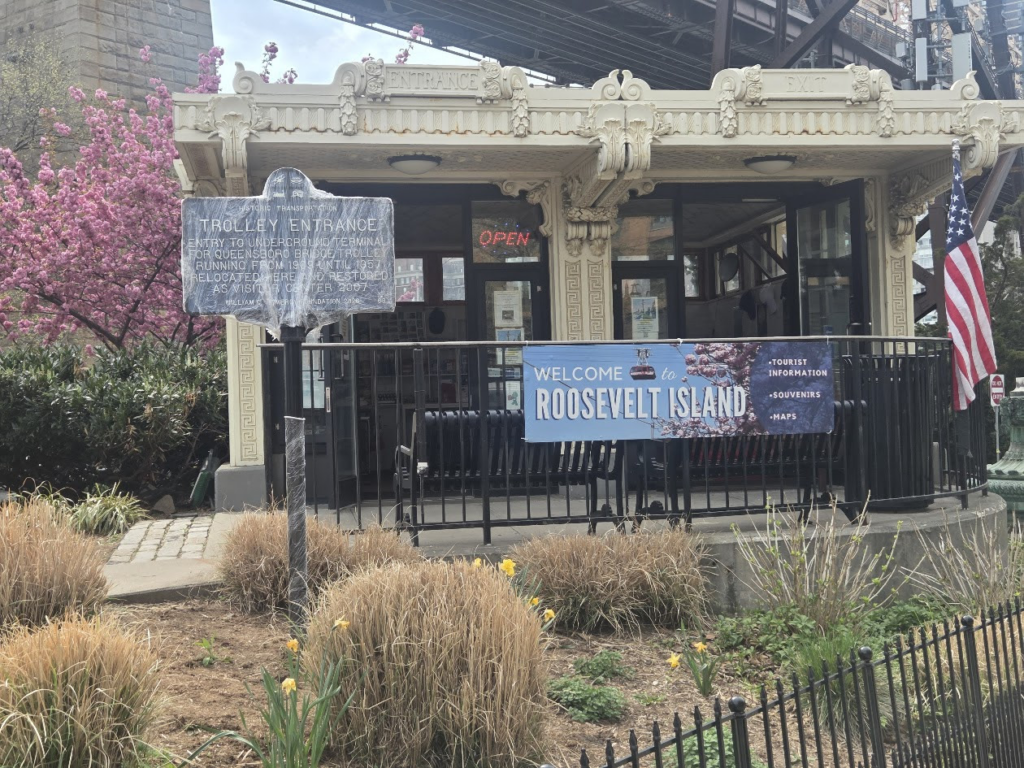
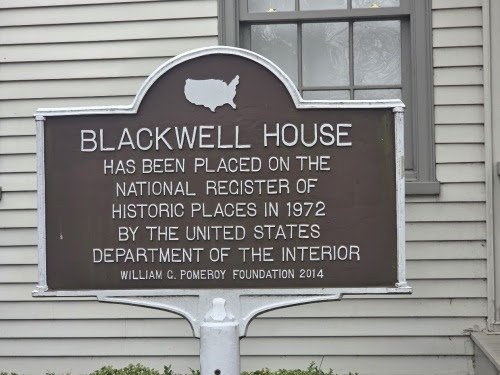
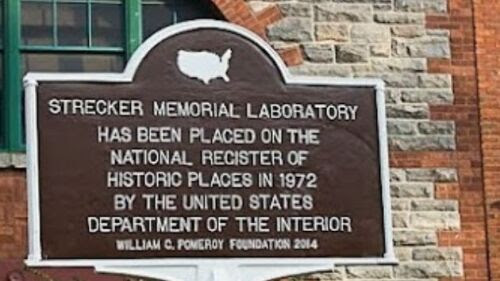
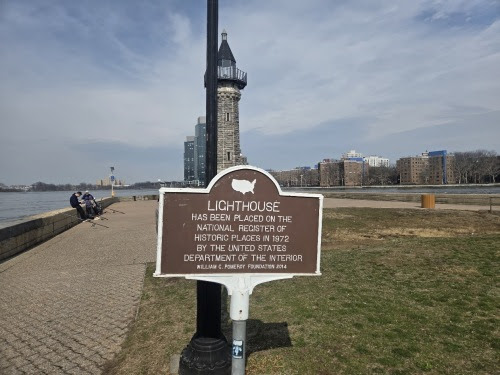
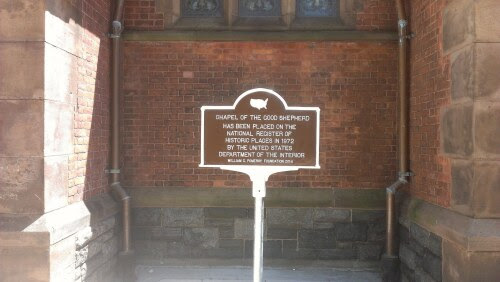
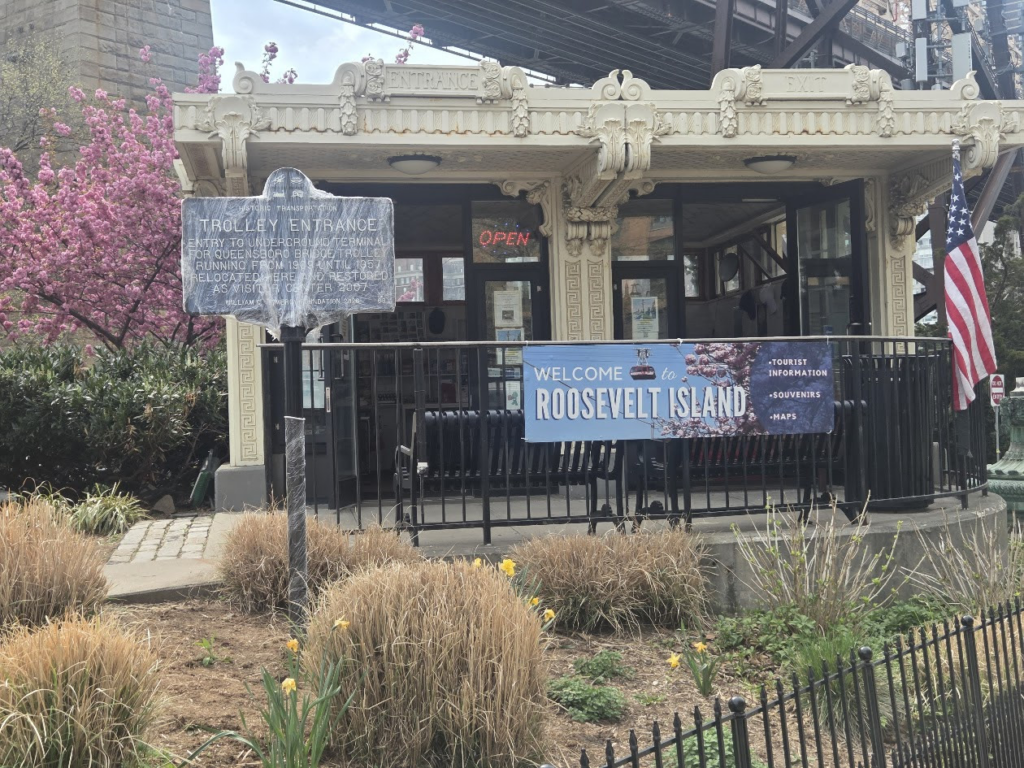
On Sunday morning members and staff of the RI Youth Center, RIOC and RIHS gathered to unveil the new historic marker at the Visitor Center. “This is such an exciting event, long time in the making. The RIHS worked with the Pomeroy Foundation and RIOC to bring this maker to the Island. The Pomeroy Foundation has donated five other historic makers on the Island celebrating landmark structures. This marker celebrates historic transportation sites. The visitor center was the entrance to the Trolley station on 59th street and Second Avenue, from 1907 to 1957.
It was a pleasure to work with RIOC to get the authozation to install the marker and their staff stored and installed it on the site. Special thanks to BJ Johnson and Bryant Daniels who joined us to make the day special.
The ceremony included members and staff of the Youth Center who offially pulled the cover off the beautiful blue and white marker.
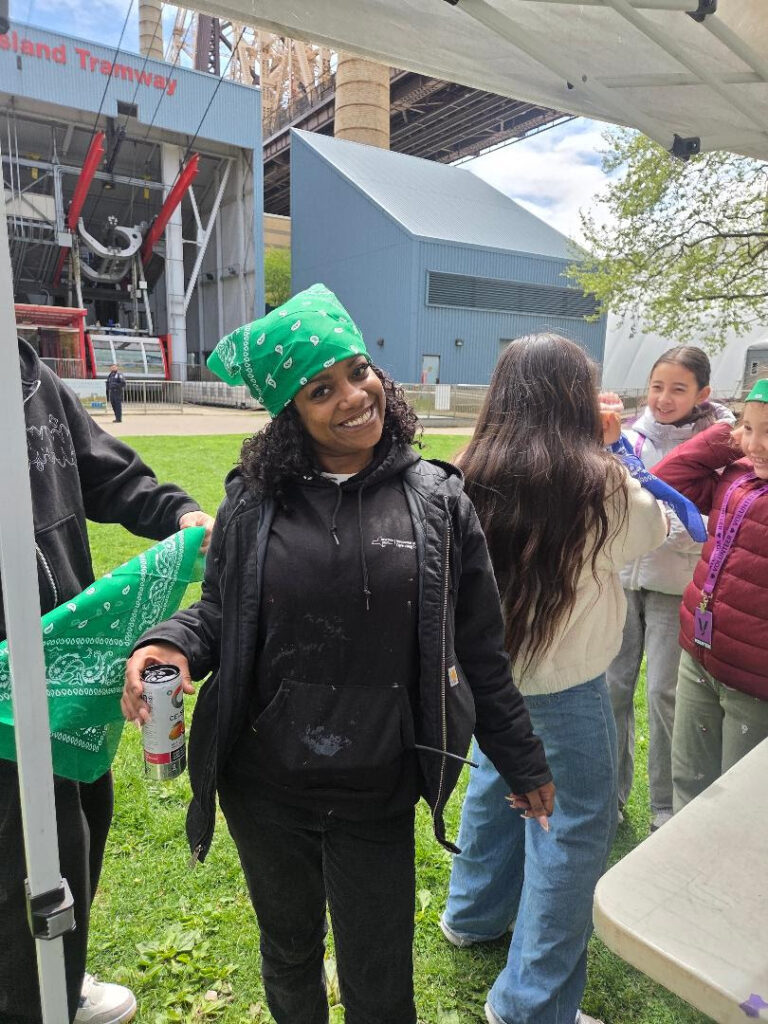
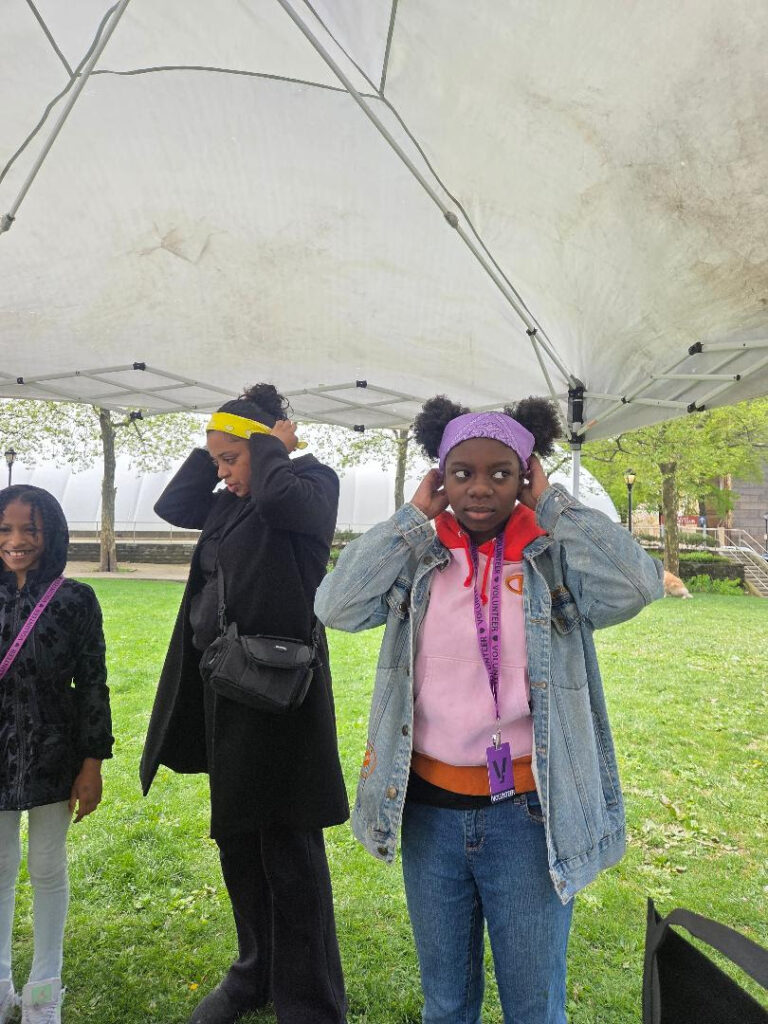
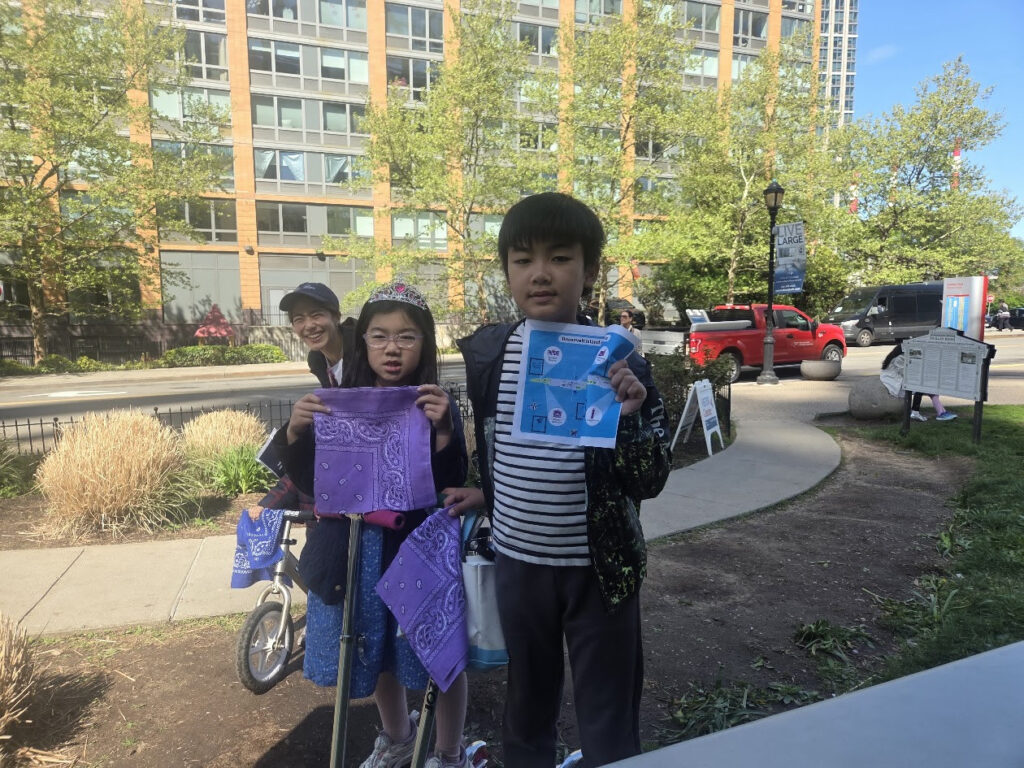
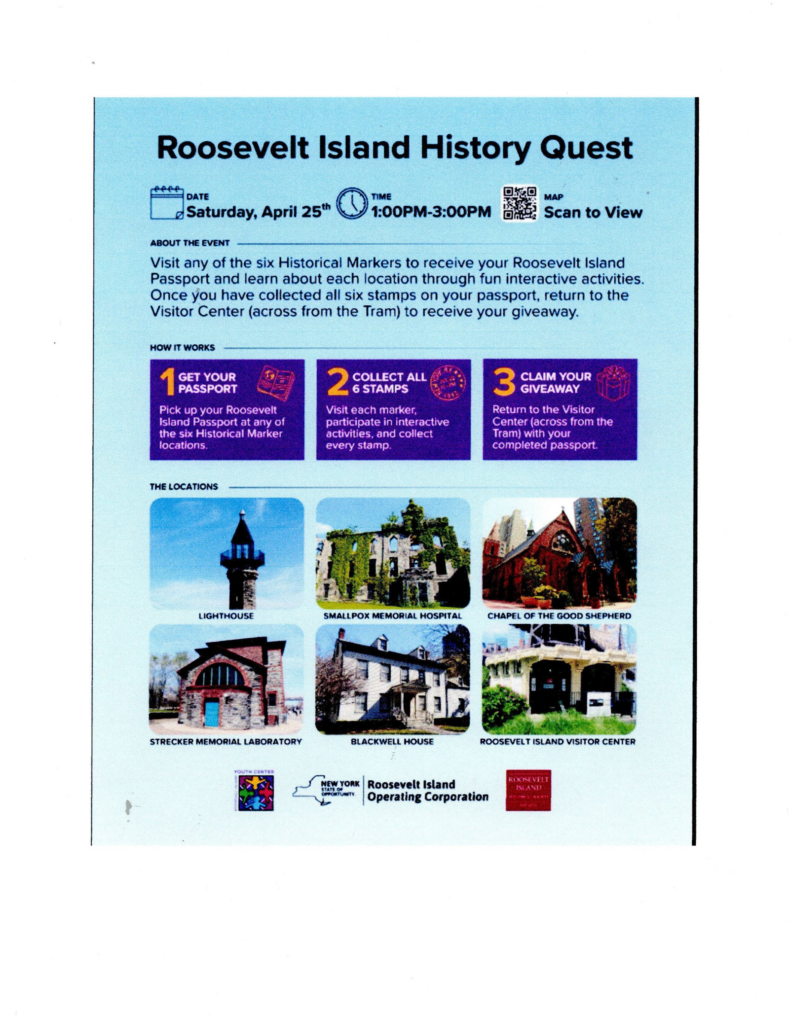
After the ceremony six teams from the Youth Center prepared to set up stations at our landmark. Every team member wore a bandana and were ready to meet visitors. They were prepared with 3 panel displays of each site and could tell the stories of our history.
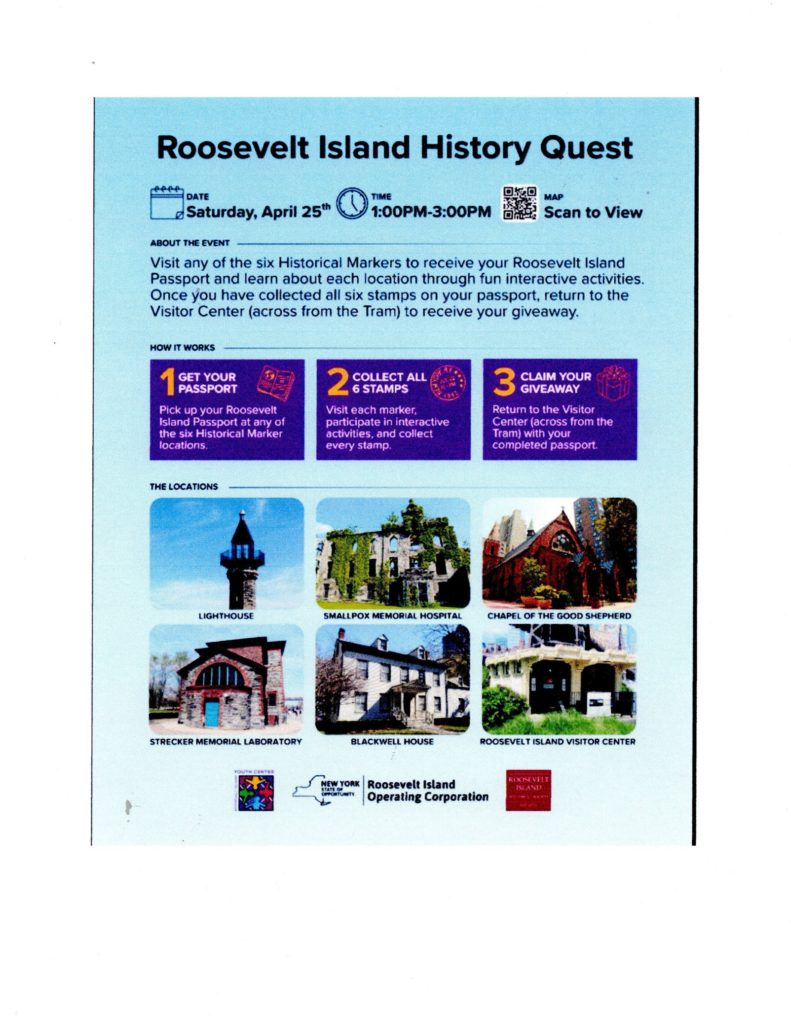
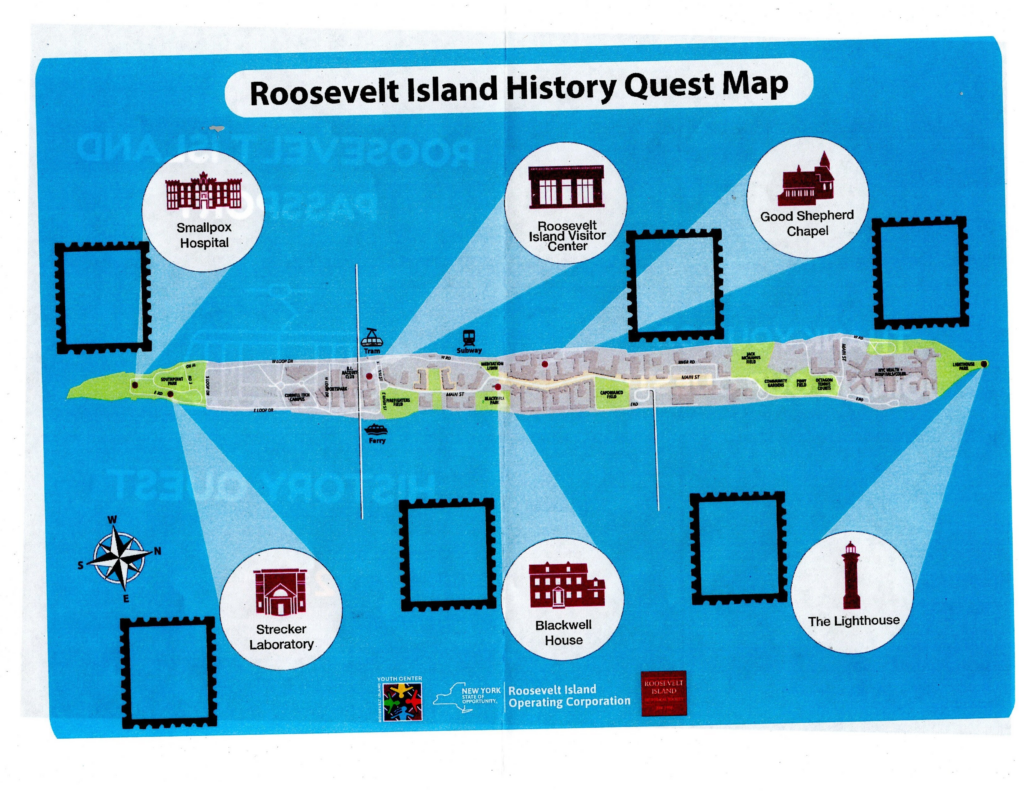
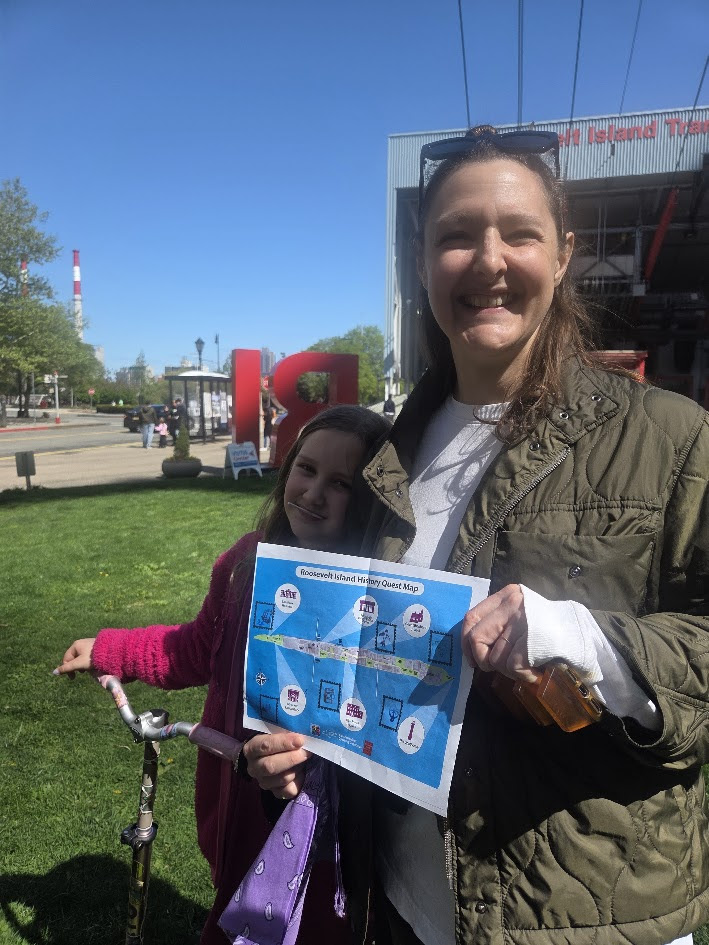
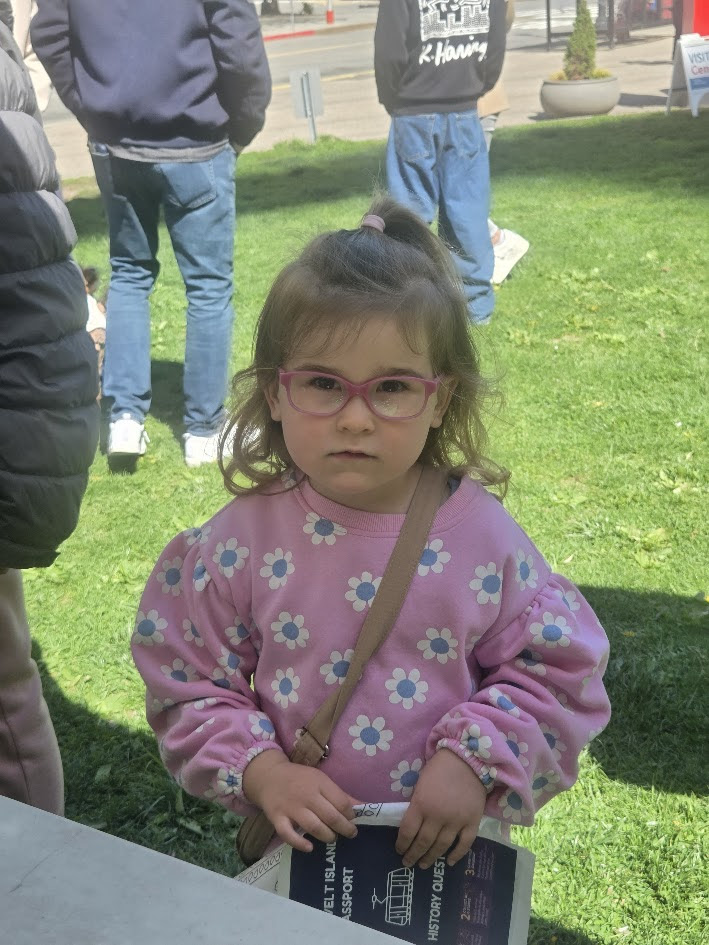
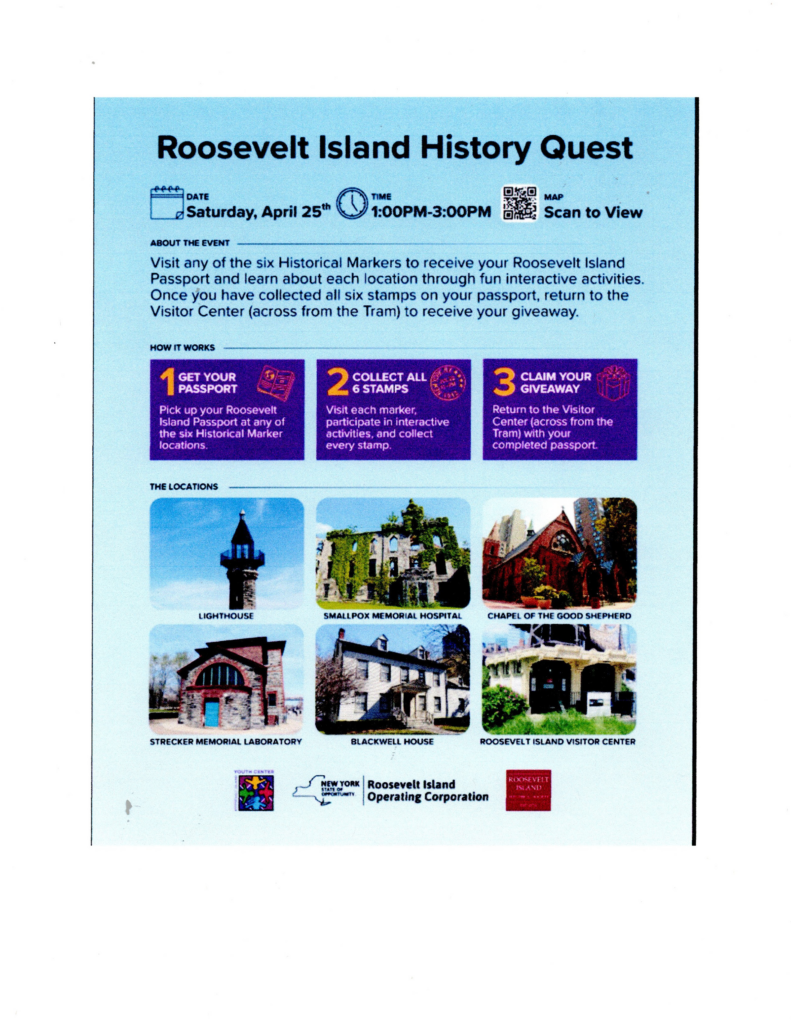
Each visitor was given a History Quest Passport and when they stopped at each site, the Youth Center members would stamp their passports.
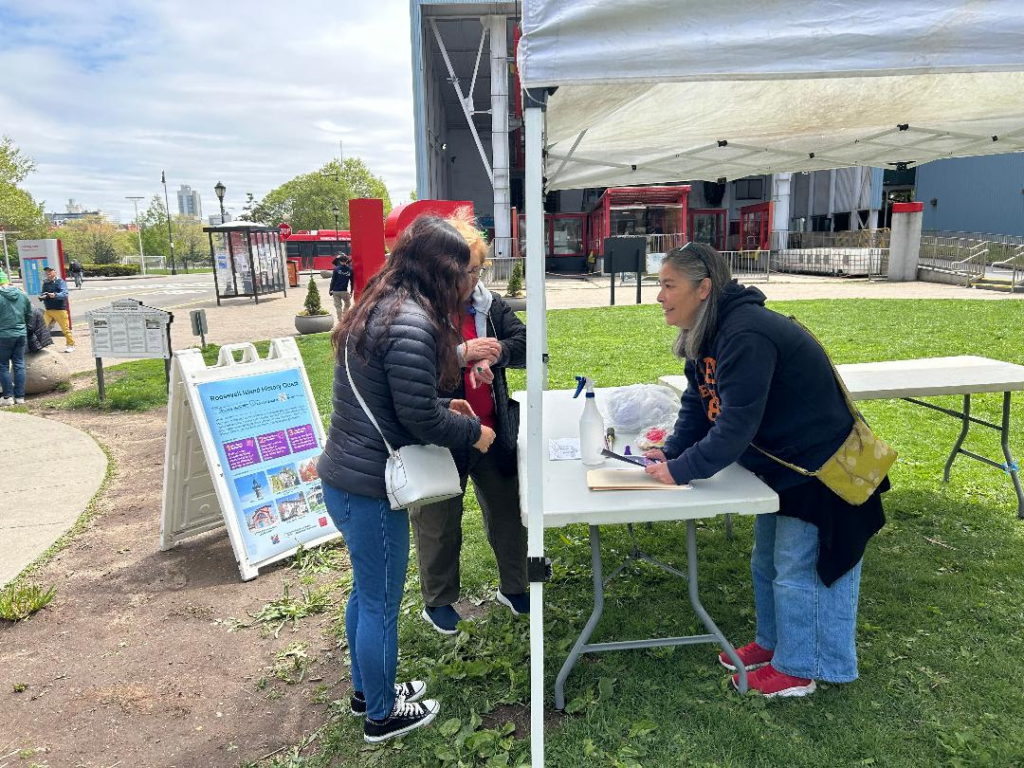
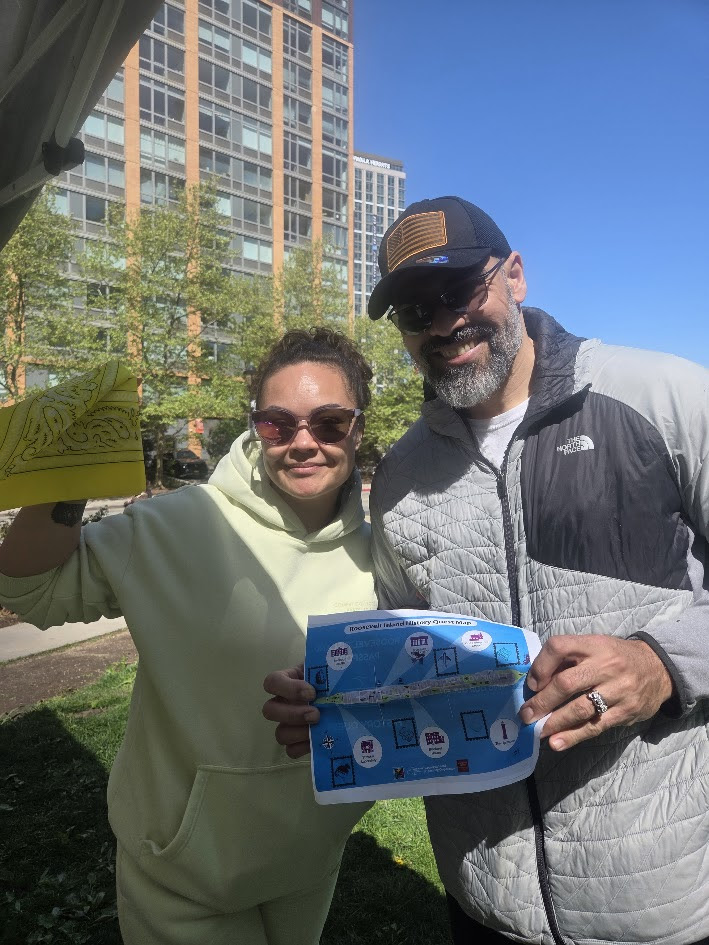
Sign in to get your Passport and map.
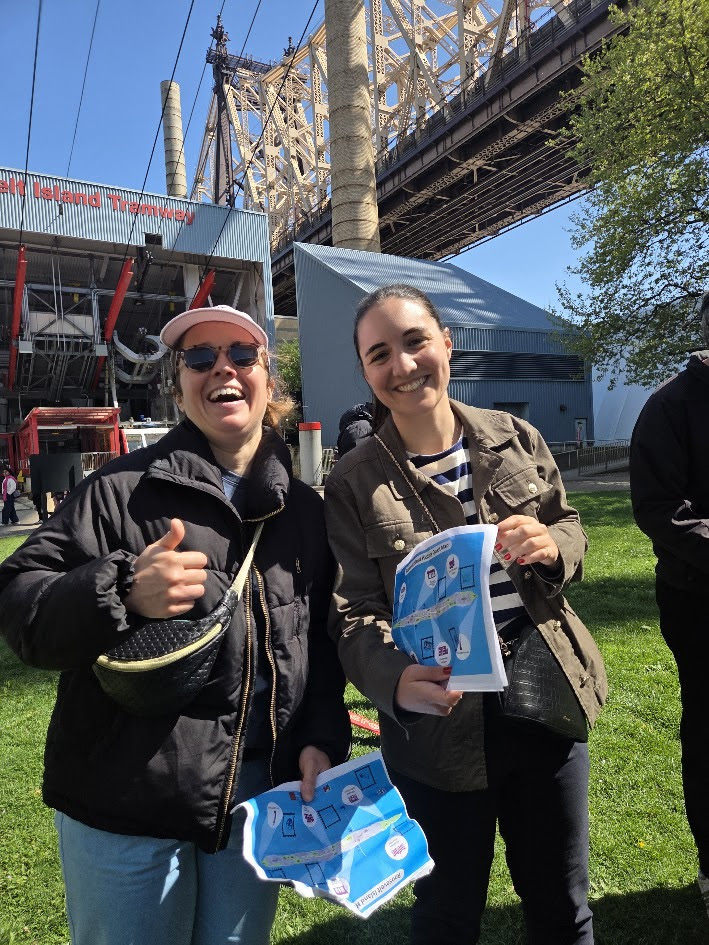
Visitors stopped by the visitor center to pick upo their passports and maps and set off to visit the sites. There was only about two hours to get all the site stamps in your passport.
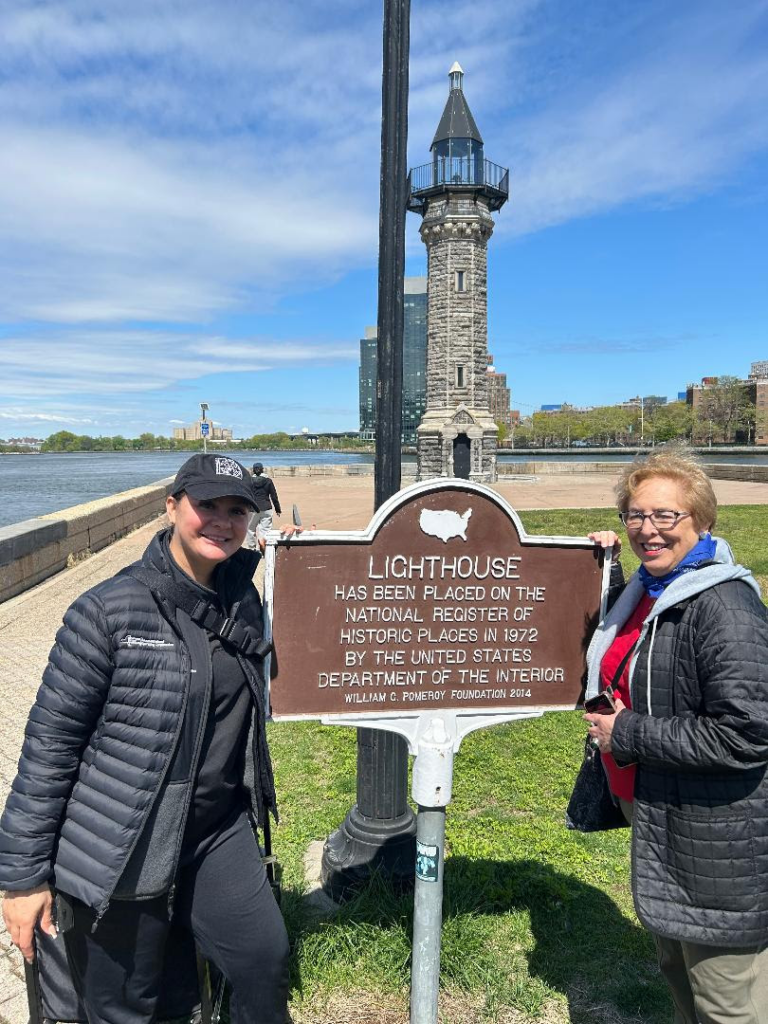
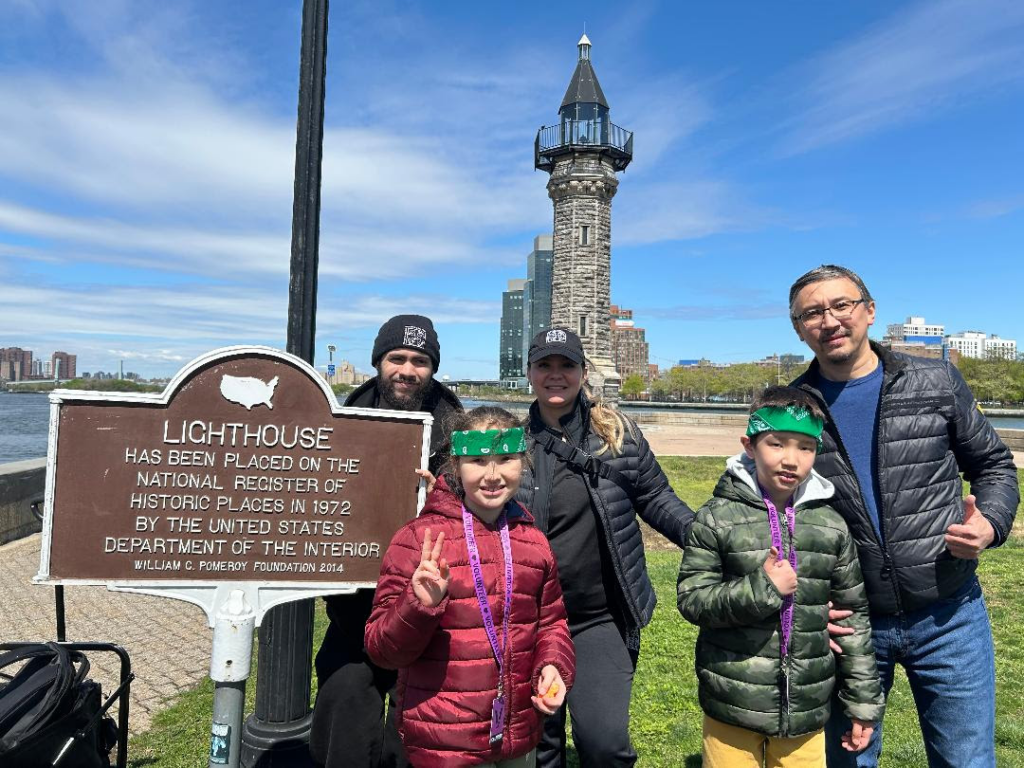
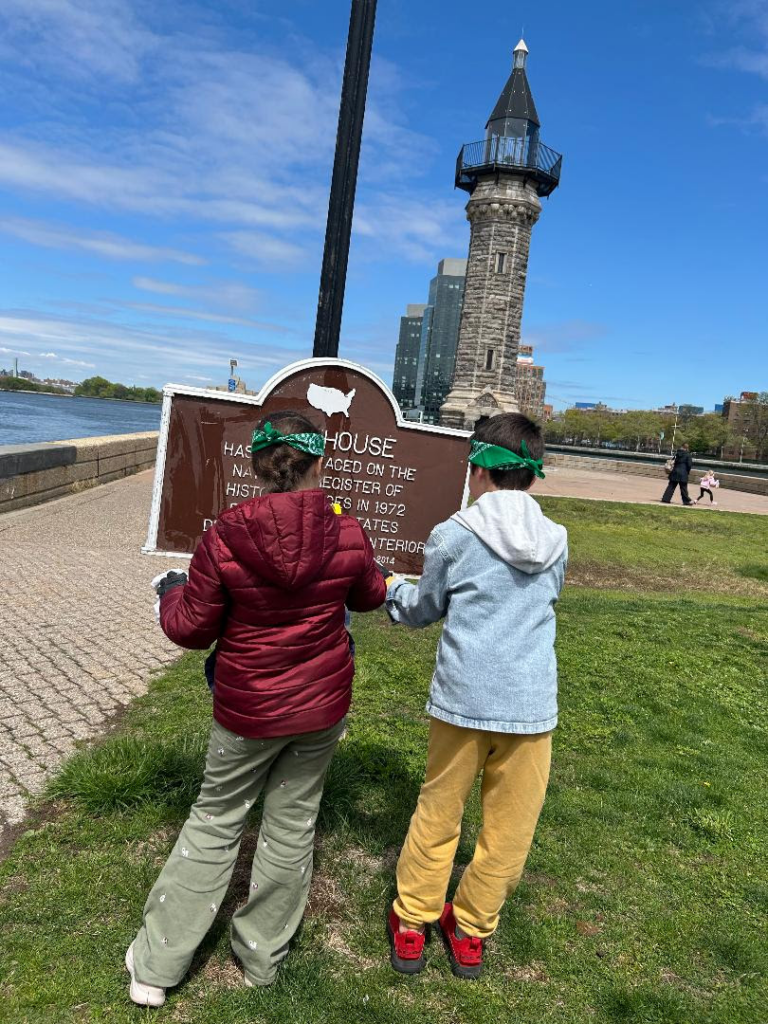
AT THE LIGHTHOUSE
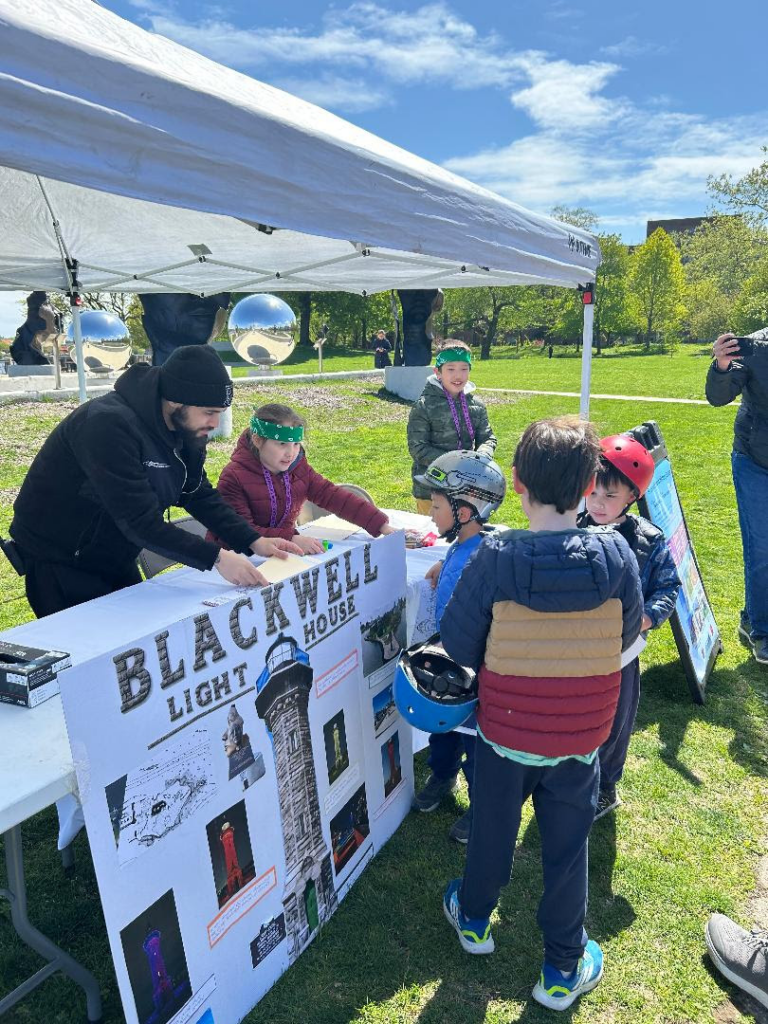
Youth Center Volunteers at the Lighthouse
Using Coloring pages to remember the landmarks and learning about the history that the members had learned while preparing the materials.
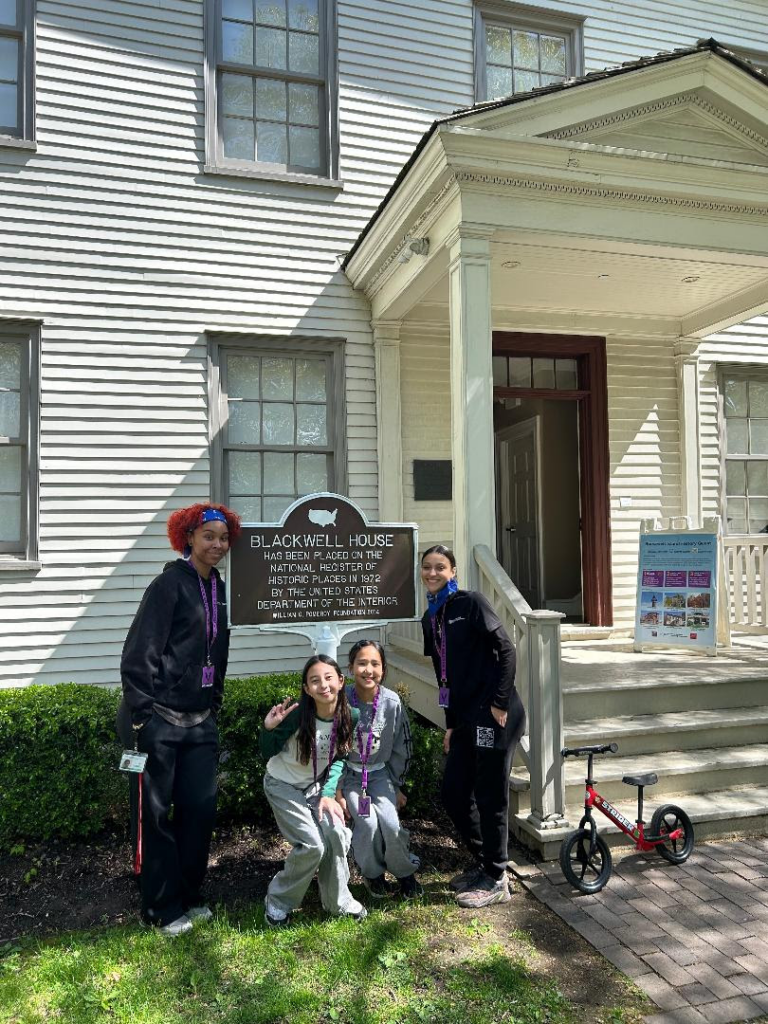
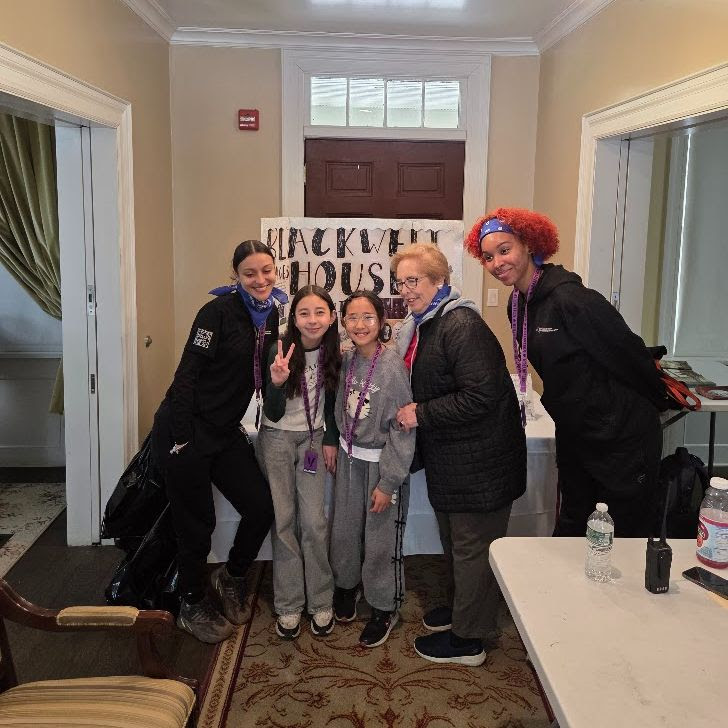
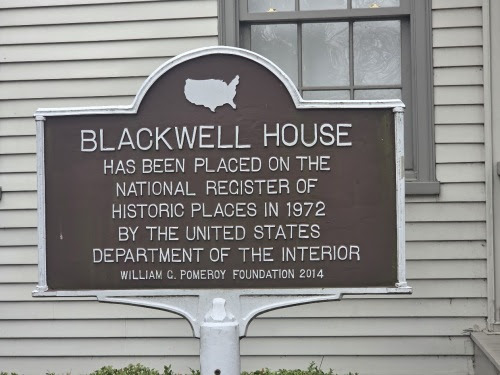
BLACKWELL HOUSE
Everyone was excited to see inside Blackwell House, and to learn the history by the enthusiastic volunteers.
Visitors were thrilled to come into the house and see how much history is displayed there.
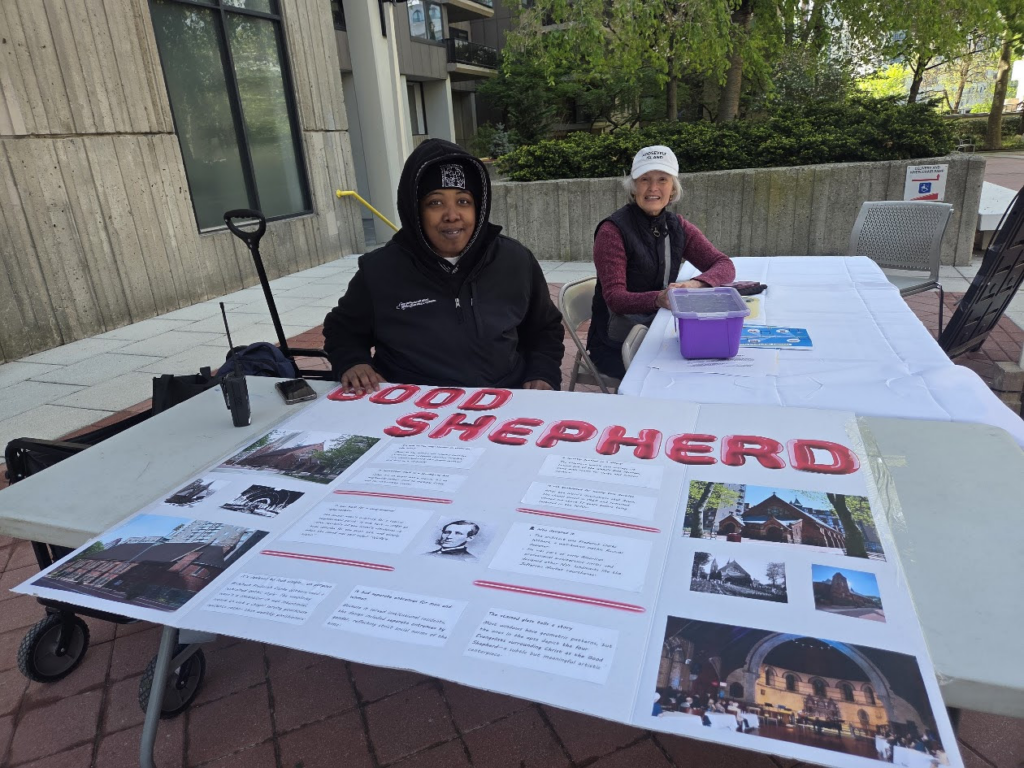
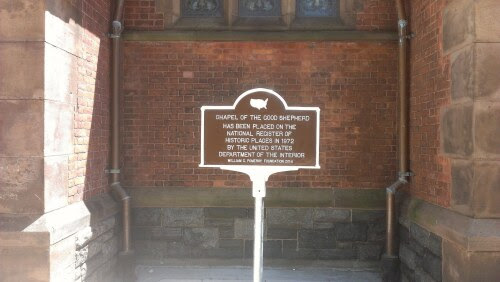
CHAPEL OF THE GOOD SHEPHERD
Our volunteers by the Chapel busy with lots of visitors .
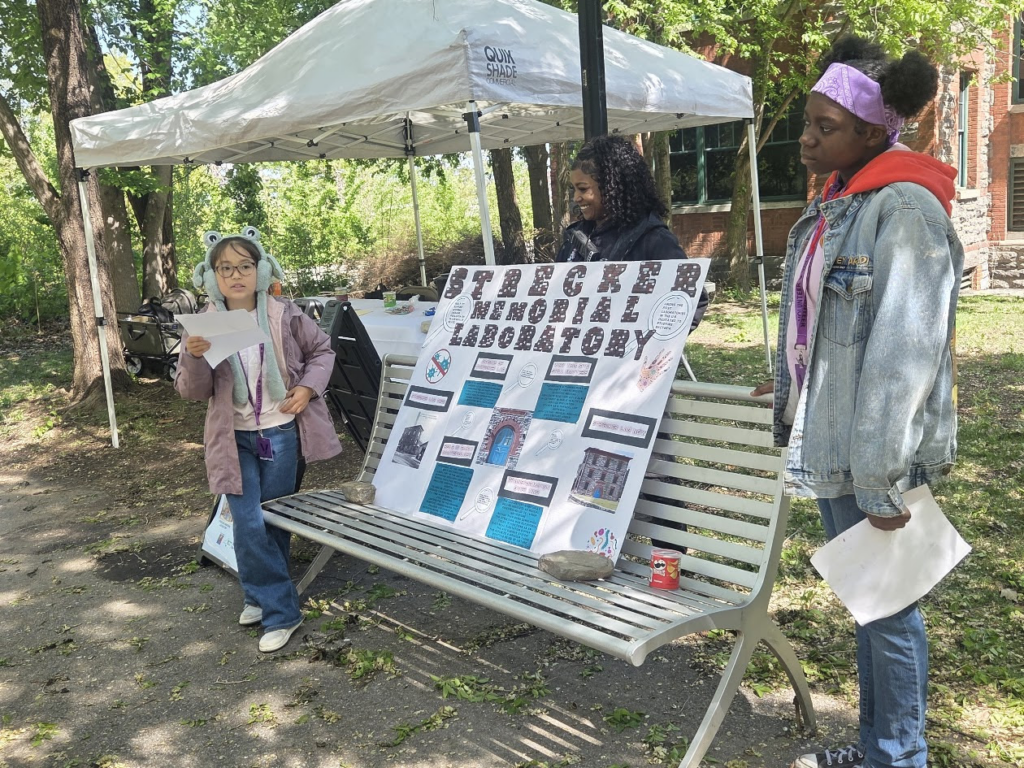
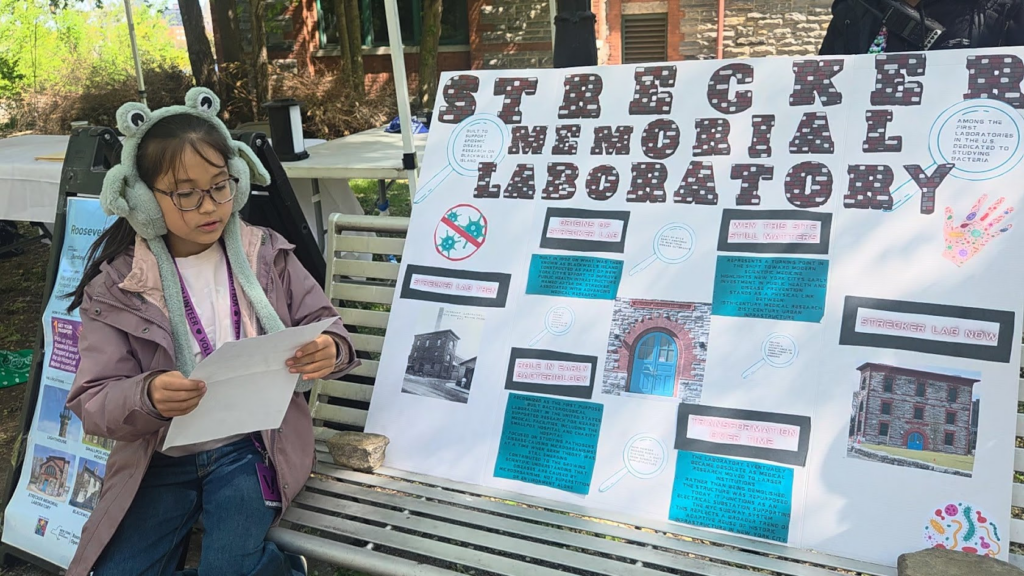
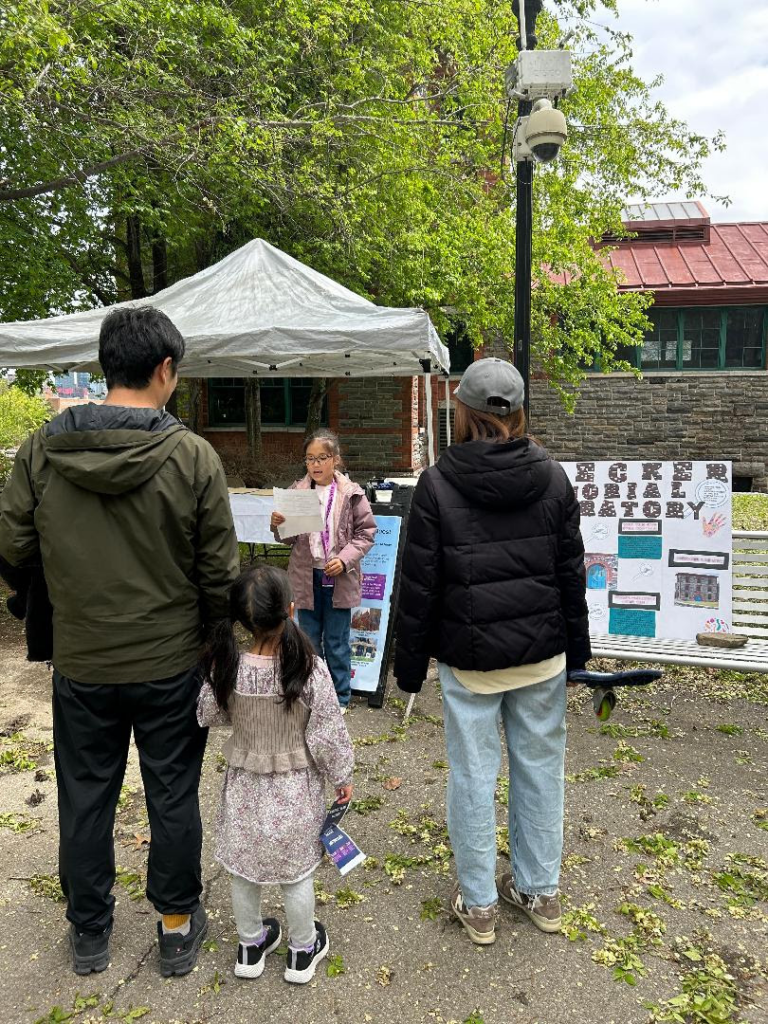
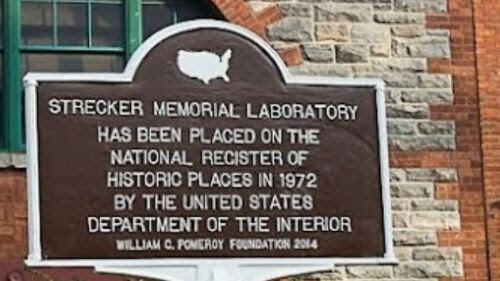
STRECKER LABORATORY
The Strecker team had a formal presentation along with images of germs to describe the buildings history.
Lots of scientic information was available at Strecker!!!!
SMALLPOX HOSPITAL
Enthusiasm was great at the Smallpox site.
BACK TO THE VISITOR CENTER TO GET YOUR BANDANA GIFT!!!
THANKS
This Sunday was truly special, thanks to Ana Medina and her dedicated Youth Center team. Their hard work and enthusiasm made the event flawless. Sunny skies and happy participants added to the joy, making it a memorable day for all who volunteered, visited, participated, and explored our historic island.
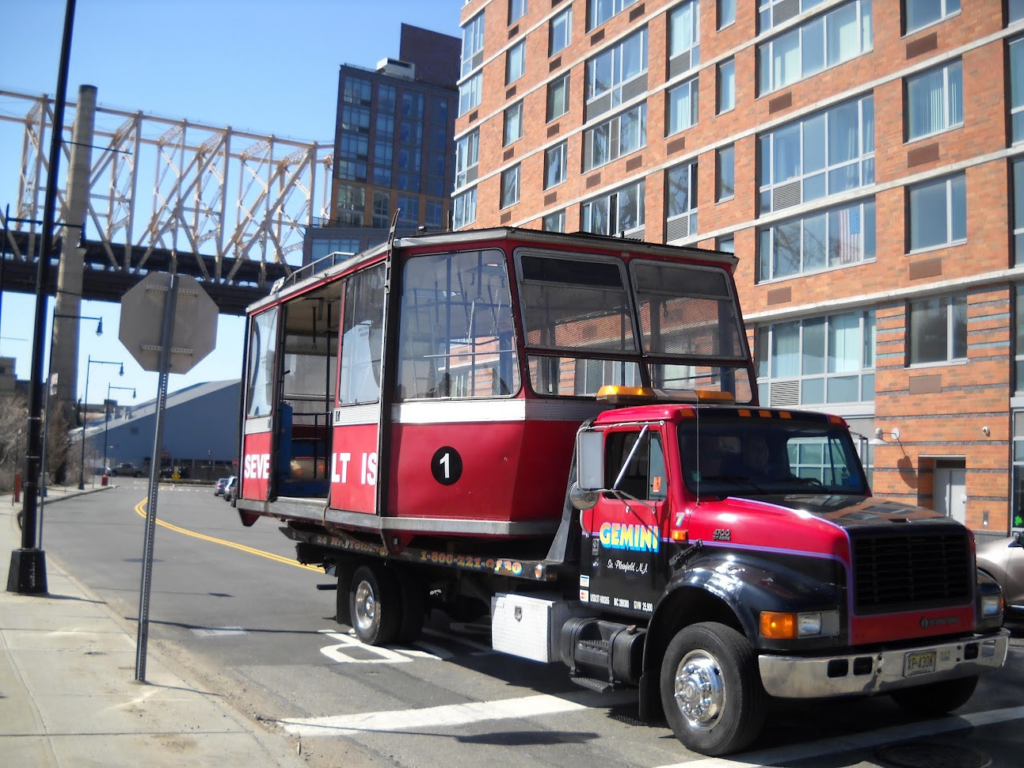
HISTORIC PHOTO OF THE DAY 2010 MOVING THE TRAM
CREDITS
Ana Medina Bryant Daniels Judith Berdy
All image are copyrighted (c) Roosevelt Island Historical Society unless otherwise indicated THIS PUBLICATION FUNDED BY DISCRETIONARY FUNDS FROM CITY COUNCIL MEMBER JULIE MENIN & ROOSEVELT ISLAND OPERATING CORPORATION PUBLIC PURPOSE FUNDS.
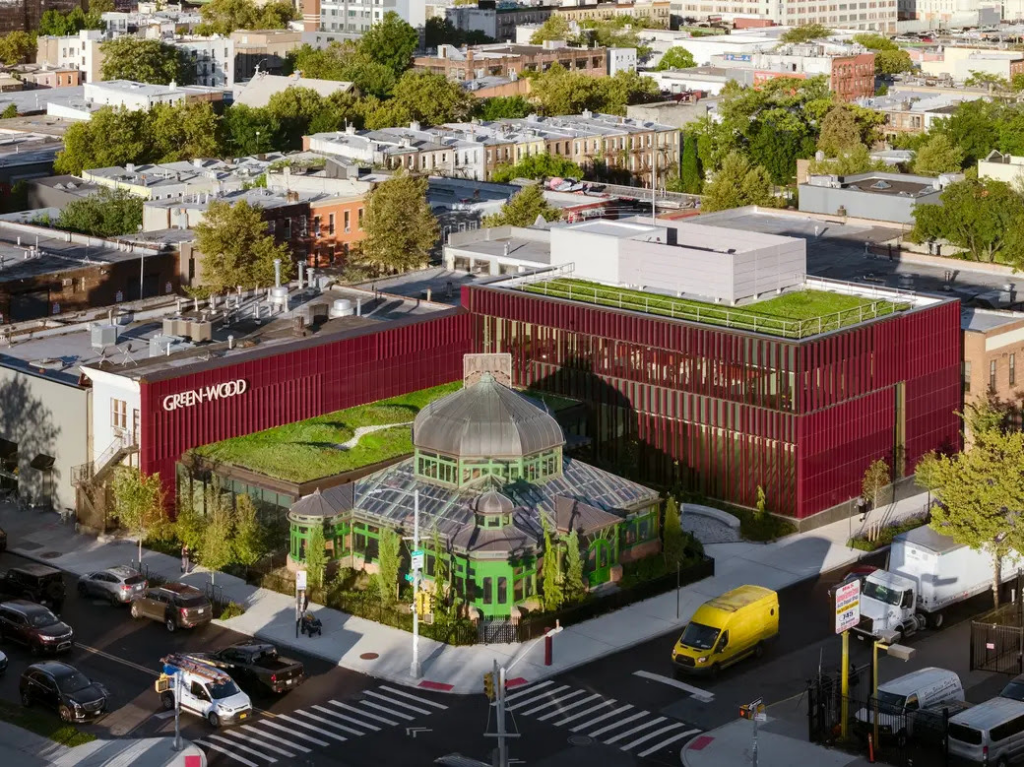
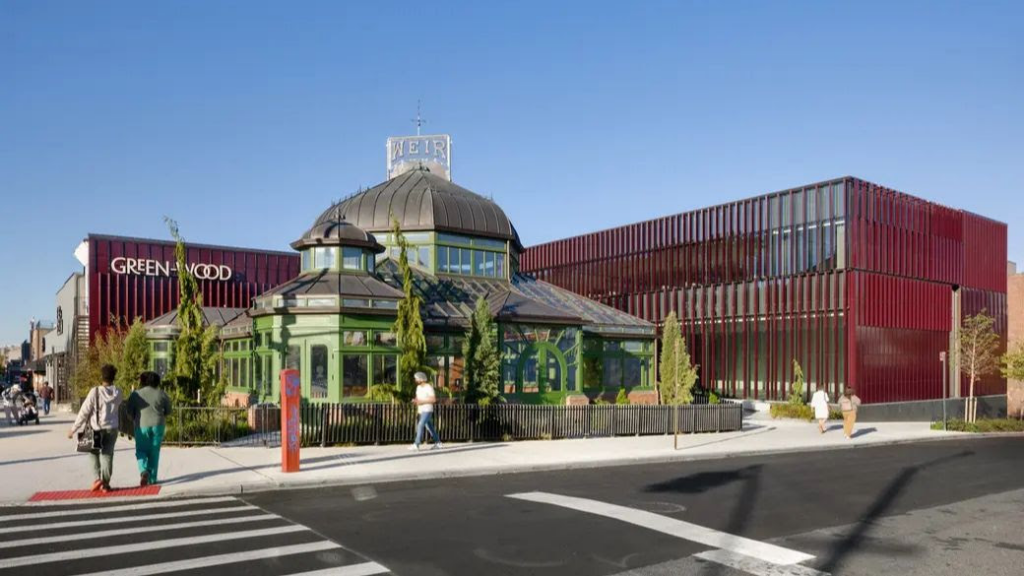
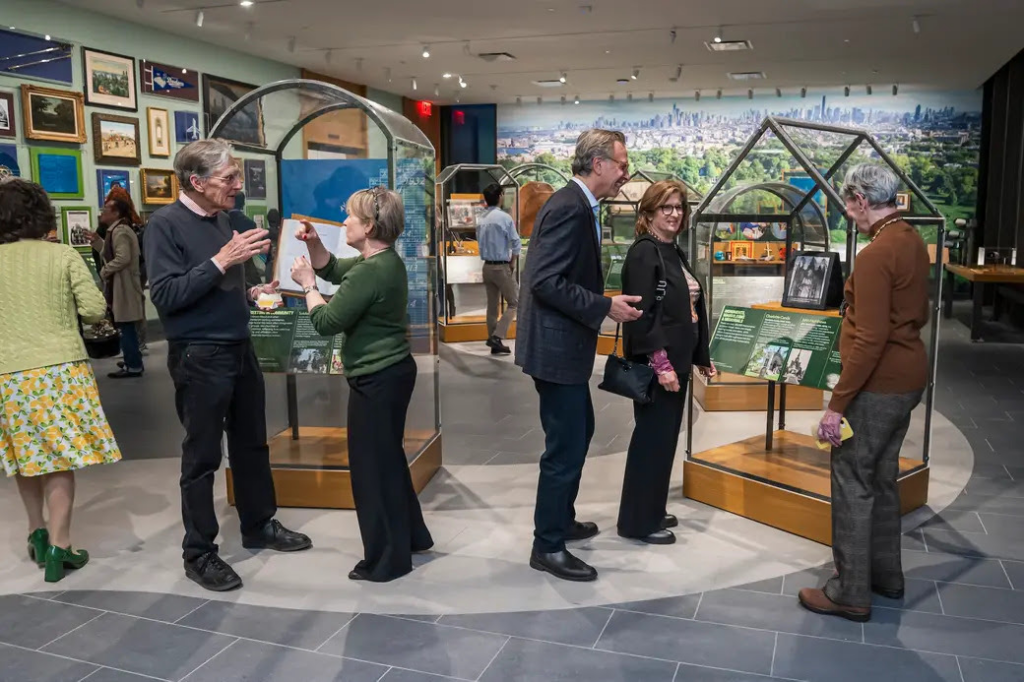
Though some 583,000 people are buried there, the 478-acre Green-Wood Cemetery has always been more than a burial ground. The Brooklyn cemetery served as a verdant 19th-century escape, and it has since been a unique destination for events, nature study, and more. This weekend, the cemetery will officially open the Green-House at Green-Wood, a new $43 million welcome center that wraps around the renovated 1895 Victorian greenhouse. Designed by Architecture Research Office (ARO), the new L-shaped building, clad in glazed terra cotta and topped by a green roof, will help visitors navigate the cemetery’s sprawling grounds. The new center will also serve as a venue for events, starting with a free grand opening weekend program and a MoonFest celebration in May.
Located just across from the main entrance at 25th Street and Fifth Avenue in Brooklyn, the center will be free to enter and open all year.
“The Green-House opens the door to Green-Wood for a new generation of visitors while giving longtime fans, families, and neighbors a welcoming place to begin their visit,” Meera Joshi, president of The Green-Wood Cemetery, said.
“Just outside the front gates, the Green-House will offer visitors a deeper understanding of Green-Wood’s role as a place of remembrance, a historic landmark, and a green space that brings communities together, all before they step inside to experience it firsthand.”
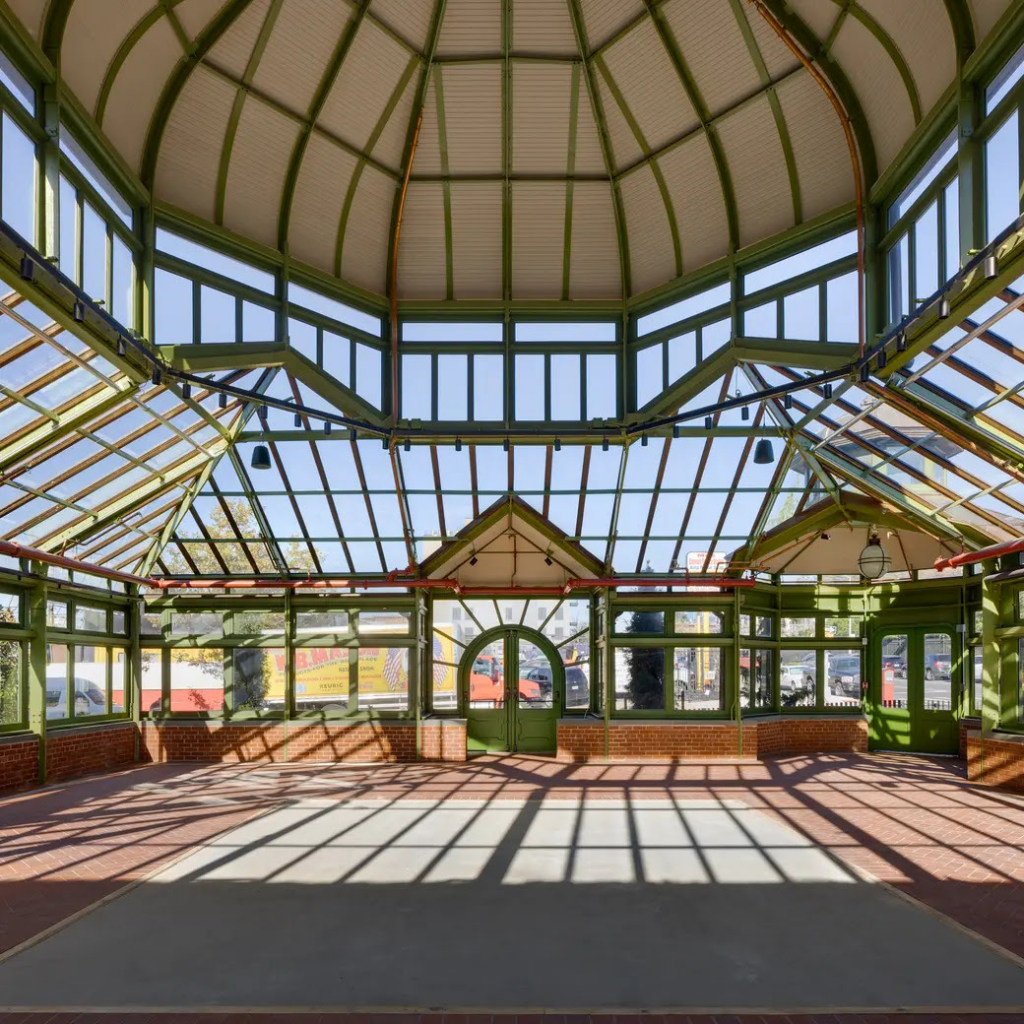
Green-Wood purchased the crumbling, landmarked greenhouse, one of the only surviving Victorian greenhouses in New York City, in 2012 for $1.6 million. The architecture firm of Architecture Research Office was tasked with adding a modern terra-cotta-clad L-shaped building to the existing structure. Construction began in 2023, as 6sqft previously reported.
The new center was designed to further the cemetery’s founding mission of providing a public resource to the city’s residents. In an interview with the New York Times, Joshi said, “It was a place both for people who lost their loved ones as well as for the general public to have some green space and some peace. Now, it’s kind of come full circle.”
The new building measures 17,000 square feet and wraps around the historic greenhouse. As the architects describe, a one-story volume abuts one edge of the greenhouse, and a new entry courtyard separates the 19th-century structure from the two-story volume along the west end of the site.
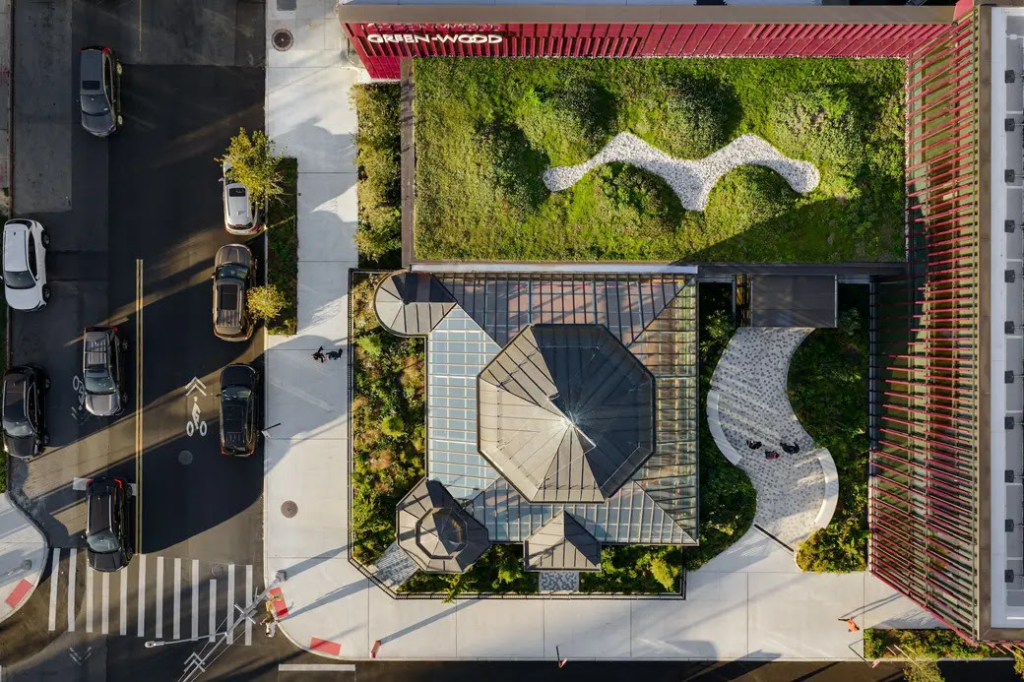
The second floor overlooks the Civil War-era main entrance arch designed by Richard Upjohn and a landscaped green roof designed by Michael Van Valkenburgh Associates.
The facade features a custom glazed burgundy terra cotta, a reference to the brownstone of Upjohn’s arches. The building is certified LEED Gold and is all-electric.
“Our goal was to create a new front door to Green-Wood—one that orients visitors and prepares them for the remarkable experience across the street,” Kim Yao and Stephen Cassell, principals of ARO said.
“The new building frames the historic greenhouse and the views toward the Cemetery, with a sculpted green roof and glazed terra cotta facade that echo the character of its landscape and Gothic entrance.”
The new visitor center will offer free maps and guidance to the cemetery’s most scenic vistas and notable monuments, a new exhibition gallery featuring artifacts from Green-Wood’s history, and a modern classroom for both children and adult programs. There will also be a Center for Research offering access to rarely seen archival material and digital stations to help guests find any grave at Green-Wood.
The $43 million project was funded by city, state, and federal funds as well as private donations, with additional funding provided by Green-Wood, according to the Times. The cemetery is free to enter, but fees for gravesites and services (graves start at $21,000; mausoleums start at $50,000) are used for upkeep and maintenance.
The exhibition hall will feature items from Green-Wood’s history, including handwritten records that date back to its founding in 1838 as one of America’s first rural cemeteries. One wall will be dedicated to the lives of 46 notable Green-Wood residents, with the exact locations of their graves displayed on digital screens.
The Center for Research will offer “An Inside Look,” a collection of stories preserved in Green-Wood’s climate-controlled Archives and Collections.
The Green-House at Green-Wood is free to visit and will be open from Thursdays to Mondays, from 10 a.m. to 6 p.m., starting Saturday, April 18. Opening weekend festivities will include workshops, explorations, and more.
Highlights include:
“Tokens of Remembrance” is a card-making workshop that offers a chance for visitors of all ages to create a handmade card for someone special.
“Celadon Landscape” by Jean Shin centers around two large vessels, formed from thousands of discarded celadon shards; visitors are invited to write the names of loved ones on paper “shards,” contributing to the artwork.
Another notable event on the horizon at Green-Wood is MoonFest, the newest addition to the cemetery’s after-hours programming. Created to celebrate our collective fascination with the moon, MoonFest will harness the inventive spirit of scientists, historians, artists, and stargazers for one night only, to focus on the moon’s influence on all of us.
Topics will include the pull of time and tide, moon mythology and the future of humans in space, addressed through guided moonlight tours, expert lectures, stargazing, and immersive art. The free event happens on May 1st from 6 p.m. to 11 p.m. Check the event page for more details.
THIS SUNDAY
12 NOON AT RIOSK DEDICATION OF NEW PLAQUE 1 P.M. AT LANDMARKS HISTORY QUEST AT LANDMARKS
HISTORIC PHOTO OF THE DAY
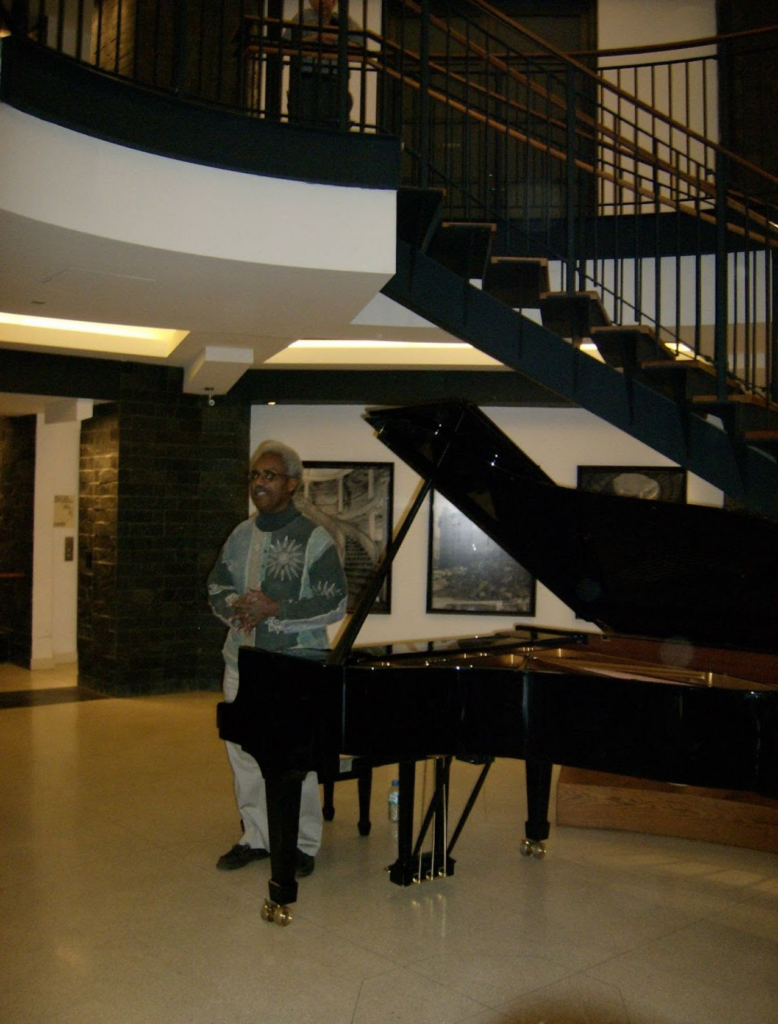
OCTOBER, 2006 ROY EATON IN CONCERT AT THE OCTAGON ROTUNDA.
CREDITS
6SQFT RAFAEL GAMO GREEN-WOOD CEMETERY Judith Berdy
All image are copyrighted (c) Roosevelt Island Historical Society unless otherwise indicated THIS PUBLICATION FUNDED BY DISCRETIONARY FUNDS FROM CITY COUNCIL MEMBER JULIE MENIN & ROOSEVELT ISLAND OPERATING CORPORATION PUBLIC PURPOSE FUNDS.
STARTS AT 12 NOON AT RIHS VISITOR CENTER FOR HISTORY PLAQUE DEDICATION
ISSUE #1668
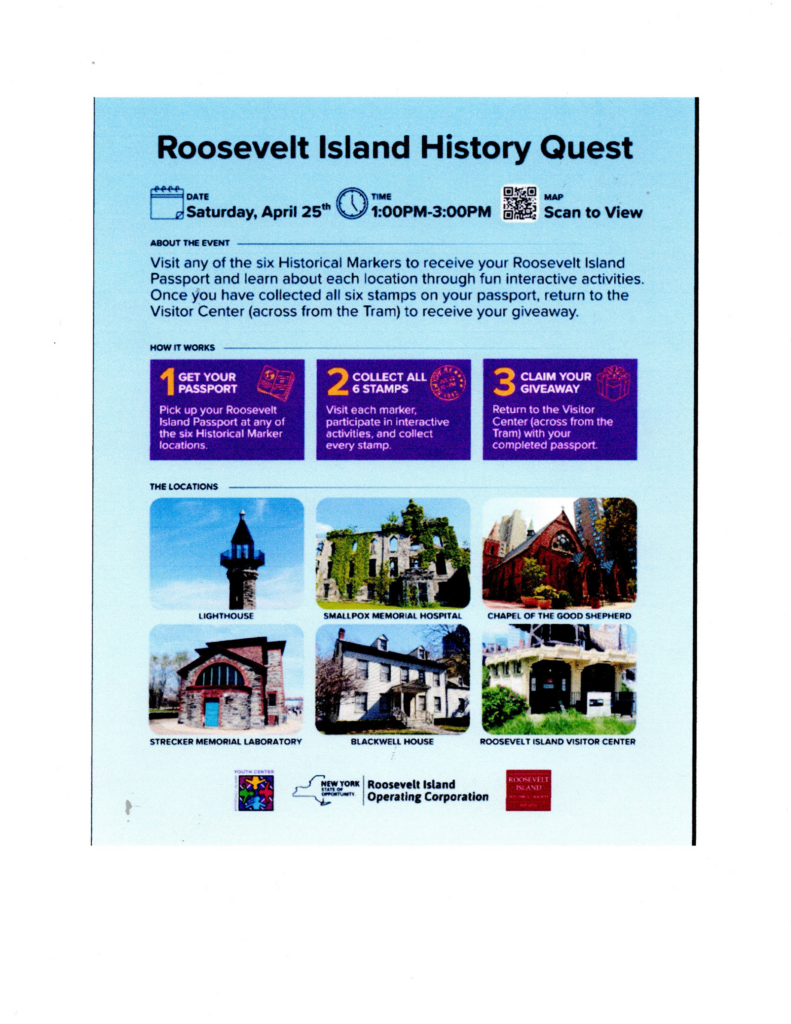
JOIN US FOR THE DEDICATION OF THE NEW PLAQUE AT THE VISITOR CENTER AT 12 NOON
JOIN US FOR A FAMILY FUN
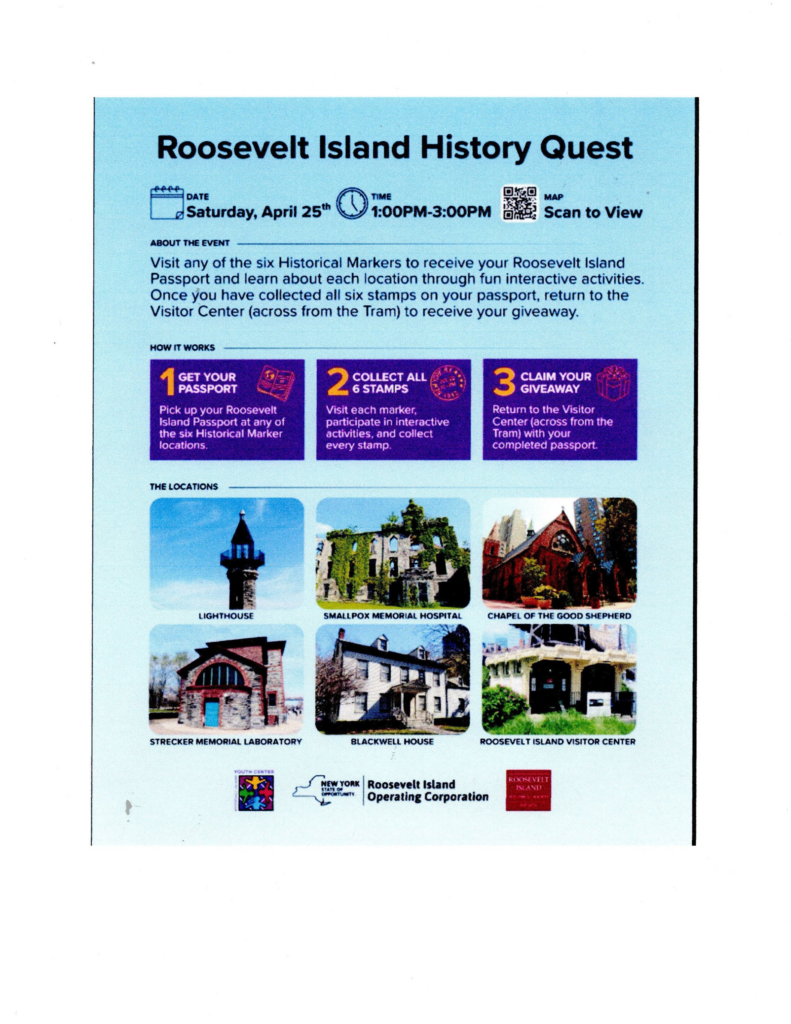
AFTERNOON VISITING OUR HISTORIC MARKERS. *ENJOY THE ACTIVITIES AT EACH SPOT. *GET YOUR PASSPORT STAMPED **RETURN TO VISITOR CENTER FOR A GIVEAWAY
BLACKWELL HOUSE
STRECKER LABORATORY & SMALLPOX HOSPITAL
LIGHTHOUSE PARK
CHAPEL OF THE GOOD SHEPHERD
Information is the same as below. Only the date has changed!!!
CREDITS
PROGRAM SPONSORED BY ROOSEVELT ISLAND YOUTH CENTER ROOSEVELT ISLAND HISTORICAL SOCIETY ROOSEVELT ISLAND OPERATING CORPORATION. Judith Berdy
All image are copyrighted (c) Roosevelt Island Historical Society unless otherwise indicated THIS PUBLICATION FUNDED BY DISCRETIONARY FUNDS FROM CITY COUNCIL MEMBER JULIE MENIN & ROOSEVELT ISLAND OPERATING CORPORATION PUBLIC PURPOSE FUNDS.
Born in 1883 the child of a single mother, Fred Fillmore French grew up in poverty in the Bronx. The New York Times would recall, “Still a child, he peddled papers, ran errands, washed windows, and mowed lawns.” By the early 1920s, he was among the foremost real estate developers in New York City and on December 17, 1925 announced the Tudor City plan–the largest housing project ever undertaken in mid-Manhattan.
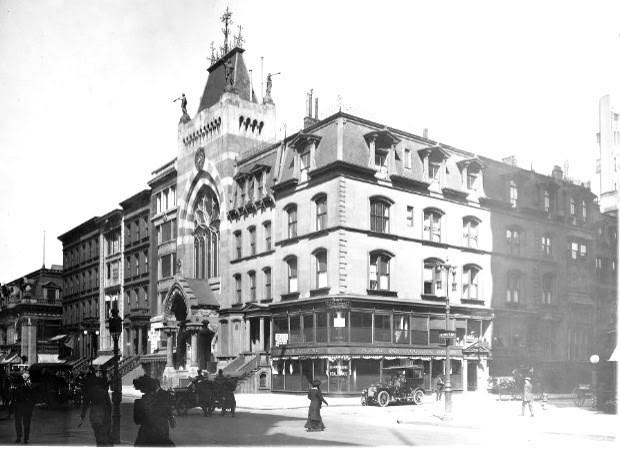
Four months earlier, in August 25, the Fred F. French Operators, Inc. filed plans for a 38-story office building to be erected at the northeast corner of Fifth Avenue and 45th Street. On the site stood the 1869 Church of the Heavenly Rest and two former mansions.
from the collection of the New York Public Library
On February 1, 1926, Buildings and Building Management said, “The Fred F. French Company is the architect.” The article explained that the firm’s in-house architect H. Douglas Ives would lead the project and “John Sloan, of Sloan & Robertson, New York, is the consulting architect.” It added, “the facades of the four lower stories will be of Indiana limestone.”
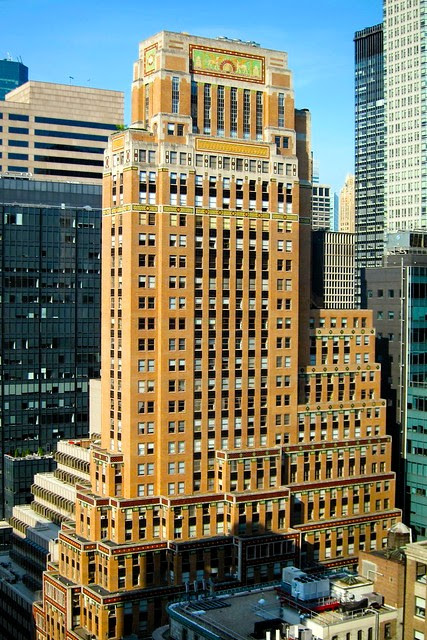
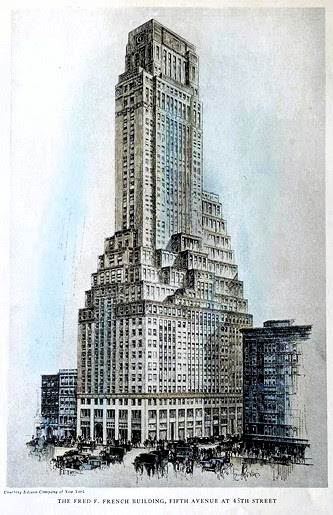
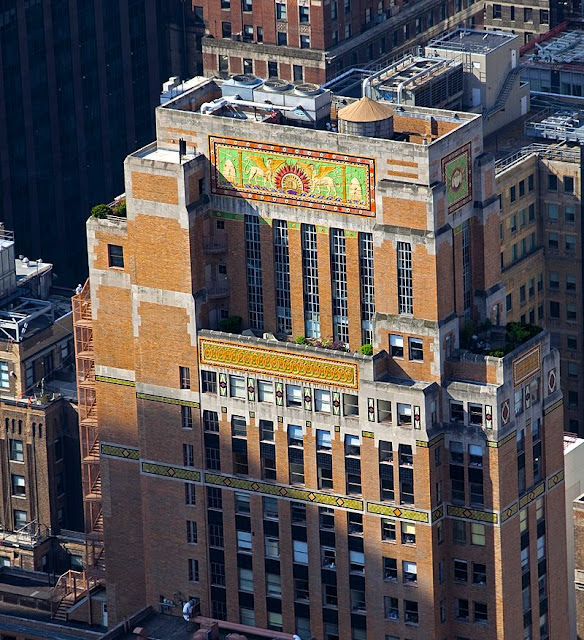
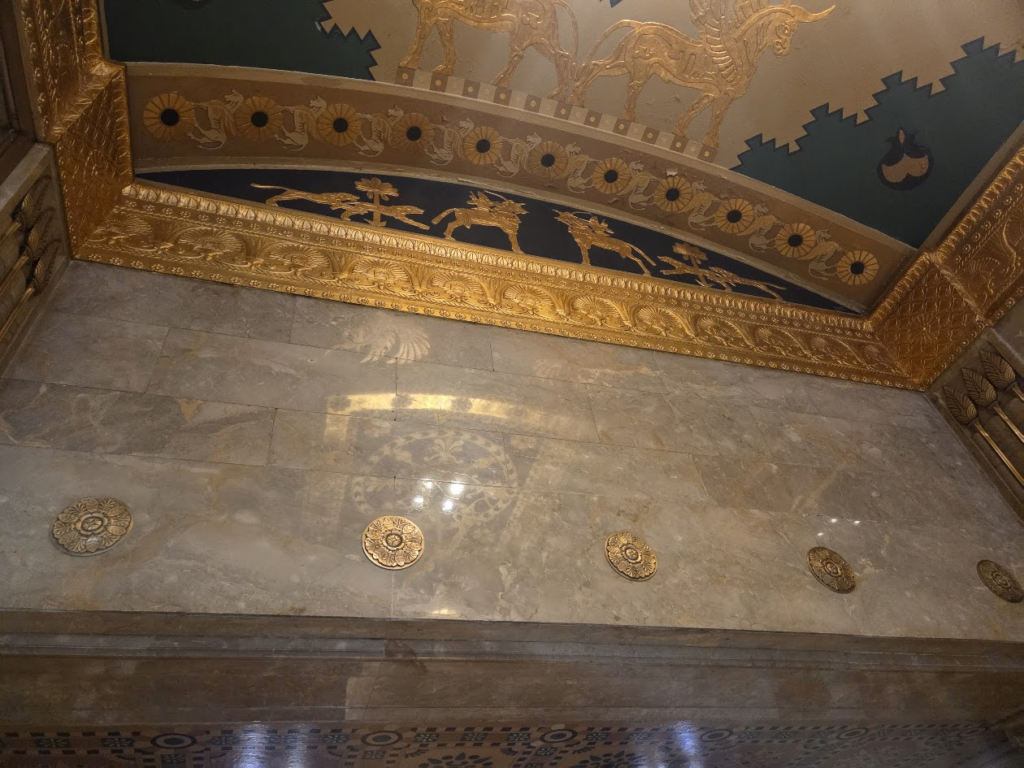
Ives and Sloan created a striking anomaly in Art Deco architecture. The building’s dramatic series of setbacks were enhanced by its highly unusual rectangular form. The architects emblazoned the sandy-colored brick with spectacular polychromed terra cotta ornaments drawn from ancient Mesopotamia. (In fact, H. Douglas Ives described the design as “Mesopotamian.”)
The architects’ water-color washed rendering was released in 1929 (copyright expired)
Some of the massive terra cotta panels were four-feet long. Ives explained to reporters that the sunburst images stood for “progress,” the Assyrian-style griffins represented “integrity and watchfulness,” and the heads of Mercury were meant to spread “the message of the French plan.” The ground floor was trimmed with bronze panels depicting Assyrian winged lions.
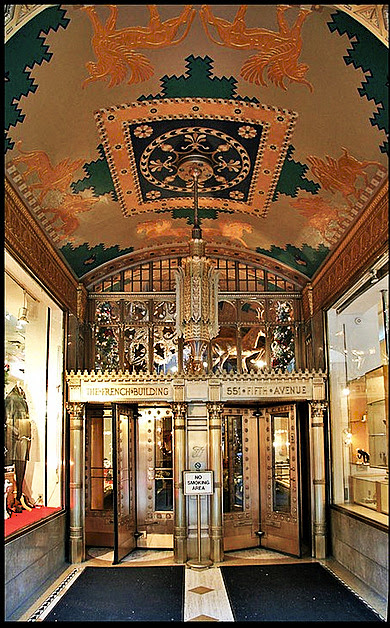
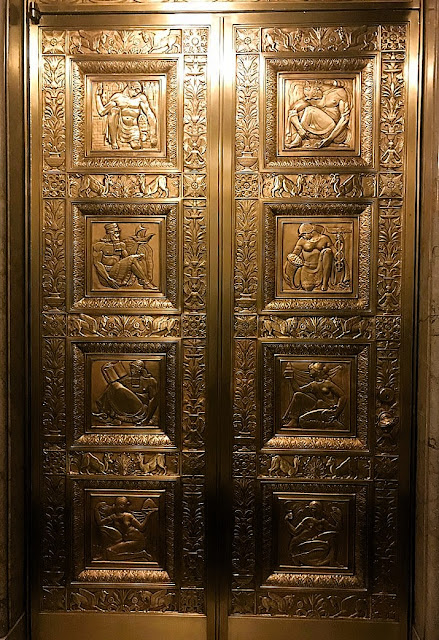
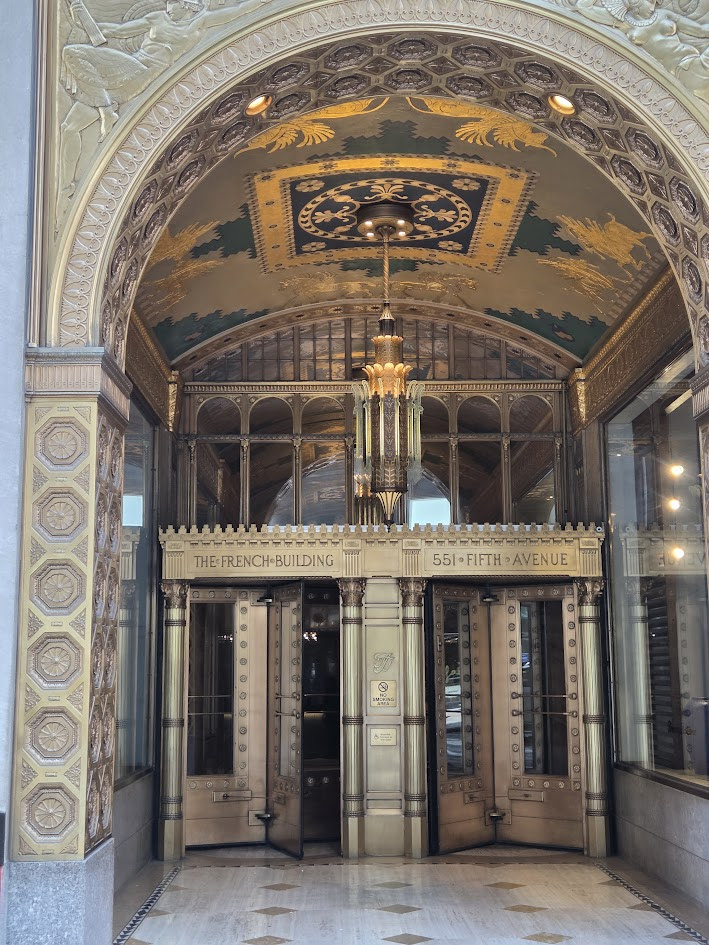
The architects brought the Near Eastern motif into the lobby. The vaulted ceiling was decorated with polychrome designs. The panels of the 25 guilt-bronze doors depicted bearded Mesopotamian genii and women engaging in various aspects of commerce and industry. John Sloan designed the eight crystal chandeliers and even the griffon-decorated bronze maildrop.
Completed in 1927, the Fred F. French Building filled with a wide variety of tenants, among the first being Seligsberg & Co., brokers; the Chicago-based James P. Marsh Company, makers of pressure gauges; and the newly-formed Photomaton, Inc., “engaged in the operation of the automatic camera,” according to The New York Times. In 1928 the American Broadcasting Company moved in.
In addition to those business concerns, organizations leased space. Groups that signed leases in 1928 included the World Anti-Narcotic Union; the American Union of Decorative Artists and Craftsmen; and the Aviation Country Clubs, Inc. (all three of which were newly-formed); as well as the Netherland-America Foundation; and the John Simon Guggenheim Memorial Foundation.
The lobby elevator doors depict women and Mesopotamian men engaged in commerce. image by Bebgsurg
The Colonial Sand Company, the offices of which were on the 31st floor, was an initial tenant. Its president was Generoso Pope, who most often Anglicized his first name to Gene. On September 30, 1928, The New York Times reported that Pope had purchased Il Progresso Italo-Americano, “said to be the oldest and largest Italian daily newspaper published in this country.” Pope announced, “that the policies and personnel of the paper would remain the same.”
Another initial tenant was Van Heusen Products, Inc., founded by John M. Van Heusen. Starting out working in a bank, Van Heusen had an inventive bent. He quit his bank job after inventing a non-slip shoulder strap for female lingerie and a non-slip men’s garter. He invented several shoemaking innovations before perfecting a semi-soft collar for men’s shirts. He founded his Van Heusen shirt company in 1921.
Two years after the Fred F. French Building opened, the Great Depression crippled the nation. It prompted certain otherwise respectable businessmen to turn to crime. Walter E. Pruzan’s office was here in 1931. The 51-year-old had been president of the Boyish Form Corset Corporation until its collapse in 1929. Now, he dealt in real estate. The New York Times said that former business associates of Pruzan “said he was virtually penniless, although before his corset business went into bankruptcy he was estimated to be worth $250,000.” Pruzan’s problems worsened when he and his wife separated on November 19, 1931. He moved into the Hotel Lincoln (today the Milford Hotel).
The following month, on December 7, Pruzan and Lario Legnani, a former priest, walked into the office of Weingarten, Eisenman & Co., also in the French Building, and attempted to cash a $6,700 B. M. T. stock certificate. The firm, of course, checked the certificate’s serial number. The New York Times reported, “The number, according to the police, is one of twenty-four certificates lost or stolen about a year ago.” Pruzan and Legnani were arrested for forgery of a stock certificate.
Pruzan was released on $1,500 bail. Almost a month to the day later, on January 4, 1932, Pruzan shot and killed himself in his office here. He left a note that said in part,
Only God can help men who have fallen financially, because friends turn their heads away from you and their backs to you…It is easy to slide down, but very difficult to climb back when you are more than 50 years old.
On April 3, 1930, The New York Times reported that the 39-year-old Generoso Pope “was honored by the Italian Government on Monday when he received the official honorary title of Grande Ufficiale of the Crown of Italy.” The article noted, “The award is among the highest conferred by the Government of Italy.”
Two years later, in the spring of 1932, Generoso Pope notified authorities that he was receiving threatening letters from racketeers. Detective Eugene Canevari was assigned to guard him. On May 21, Pope’s secretary, Salvatore Pino answered a call from a man who demanded $1,000. Pino suggested that he come to the office to receive the cash. Shortly afterward, Nathan Robinson and Michael Comparetto arrived and Pino showed them into Pope’s office, where Detective Canevari was hiding.
One of them said, “We need $1,000. I have a brother who has been locked up by the police for carrying a revolver, and I want $1,000 to help him.” He paused and said, “Of course you know who we are; we’re racketeers.”
The New York Times reported, “Canevari popped out of his hiding place and the conversation was over.” As it turned out, the men were not gangsters. Robinson was a chauffeur and Comparetto was a salesman.
Political upheaval overseas prompted new tenants in 551 Fifth Avenue. On August 29, 1933, The Daily Worker reported on Professor Alfons Goldschmidt’s arrival in America. The newspaper called him the, “noted German economist exiled by the Nazi regime.” It said, “He will lecture throughout the country under the auspices of the American Committee Against Fascist Oppression in Germany, whose offices are at 551 Fifth Avenue.” A similar organization operating from the building the same year was the American Committee for the Relief of Victimized German Children.
Evelyn Bower was employed as a stenographer in the 25-floor office of Dr. Philip G. Cole in 1938. The 39-year-old arrived 15 minutes early on November 13 that year in order to type a note to Cole’s secretary, Mabel Bennett. It read, “The keys for the office and another note will be found in my pocketbook in my desk.–E.” The Evening Post said, “Then she removed a glass ventilator from a window, opened it and jumped.”
Mabel arrived a few minutes later. A second note in Evelyn’s handbag, “disclosed that she had decided to commit suicide two months ago but waited until her death would cause the least possible inconvenience in the work of her office,” said The Evening Post. Readers might have rolled their eyes when The Standard-Star reported, “Police investigated to determine whether her death was accidental.”
The Fred F. French Building continued to attract a variety of tenants. In 1950, the California Texas Oil Company signed a lease for the eighth through eleventh floors. Other tenants in the early 1950s were the Jamaica Tourist Board and the Italian Diplomatic Office’s Consulate General Commercial Attaché.
In 1990, a two-year restoration of the Fred F. French Building was initiated, supervised by Wiss, Janney, Elstner Associates. Senior architect on the job, Diane Kaese, told The New York Times columnist Christopher Gray that the colorful panels were “some of the biggest pieces of terra cotta I’ve ever seen in my life.” Gray commented, “If the large panels look like small bursts of color from afar, they are cascades close up,” noting the “glazes of plum, orange, yellow, gold, [and] tropical green.”
As it was in 1927, the Fred F. French Building is a unique Midtown architectural presence–its colorful panels with ancient iconography like nothing else in the city.
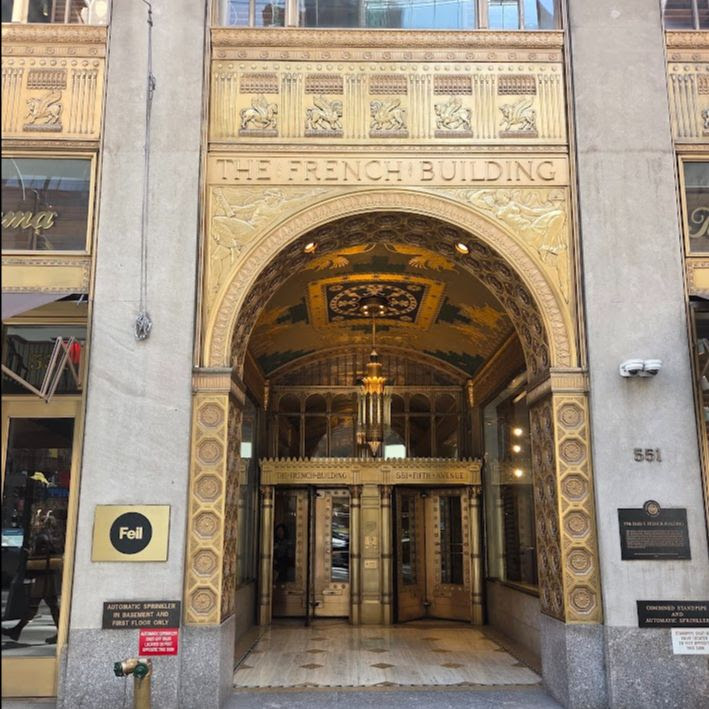
Happily, it is an individual NYC landmark, and its lobby was designated a landmark in 1986. It was added to the National Register of Historic Places in 2004.
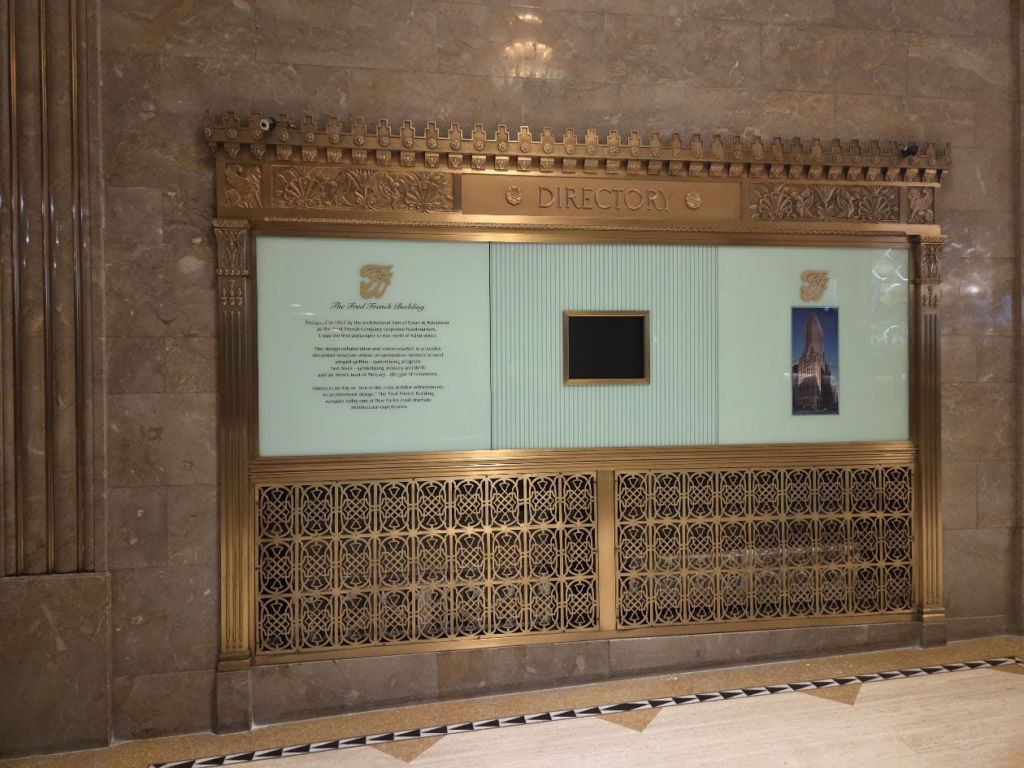
I walked into the Fred F. French Building yesterday and found a glorious lobby and entrance.
In the Neighbohood
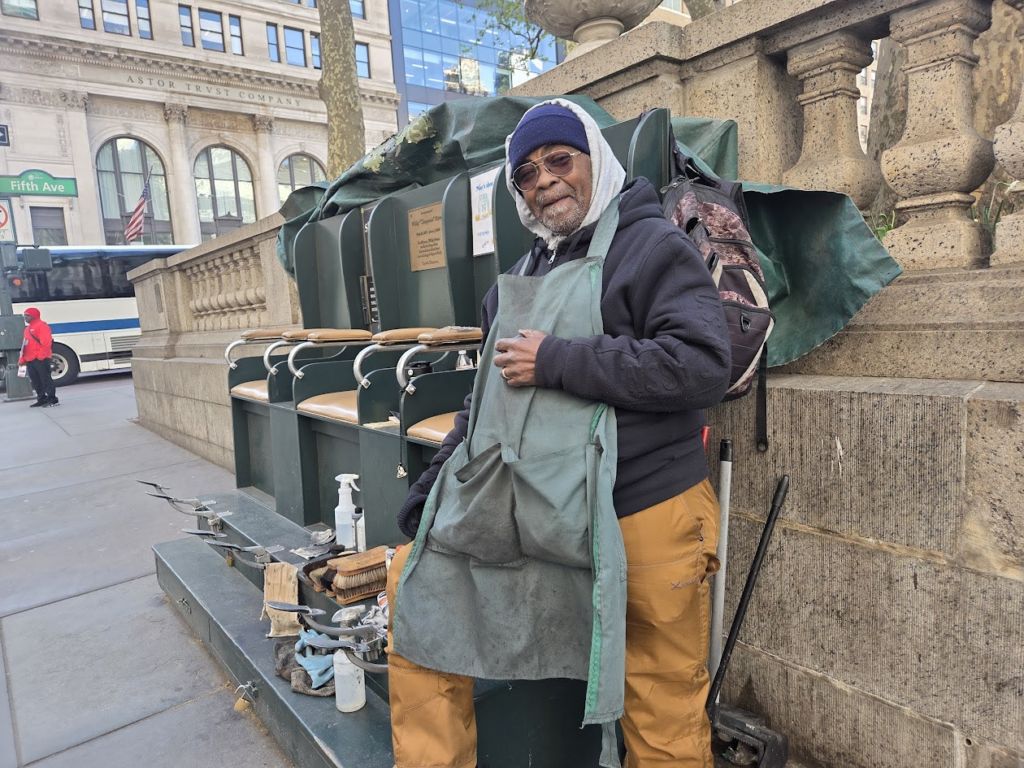
Mac has been shining shoes on the corner of 42nd and Fifth Avenue for over 20 years
A LONG SERVICE ON ROOSEVELT ISLAND
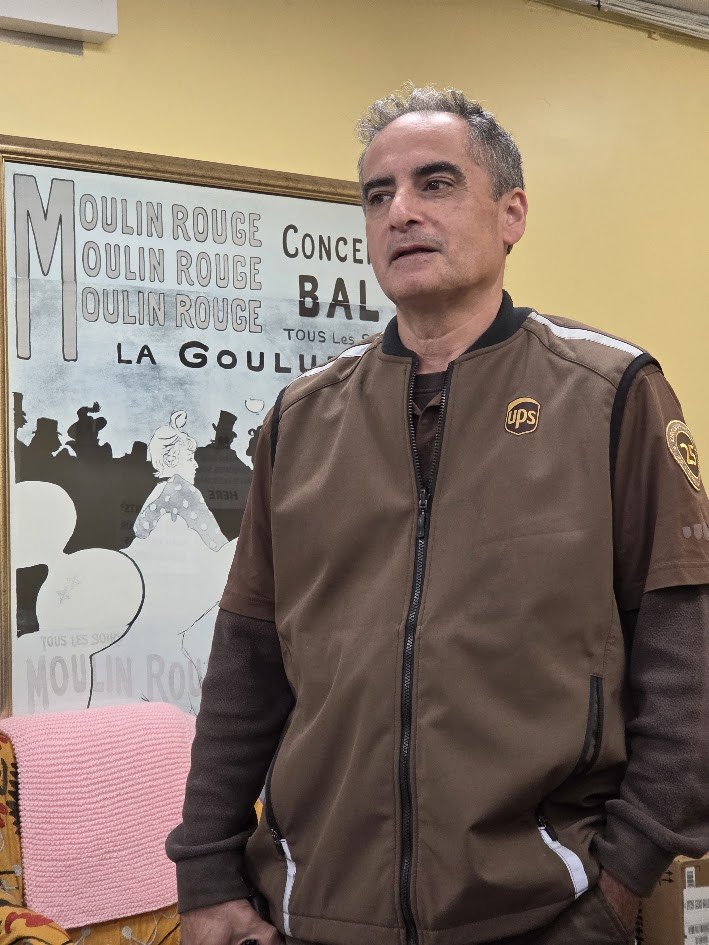
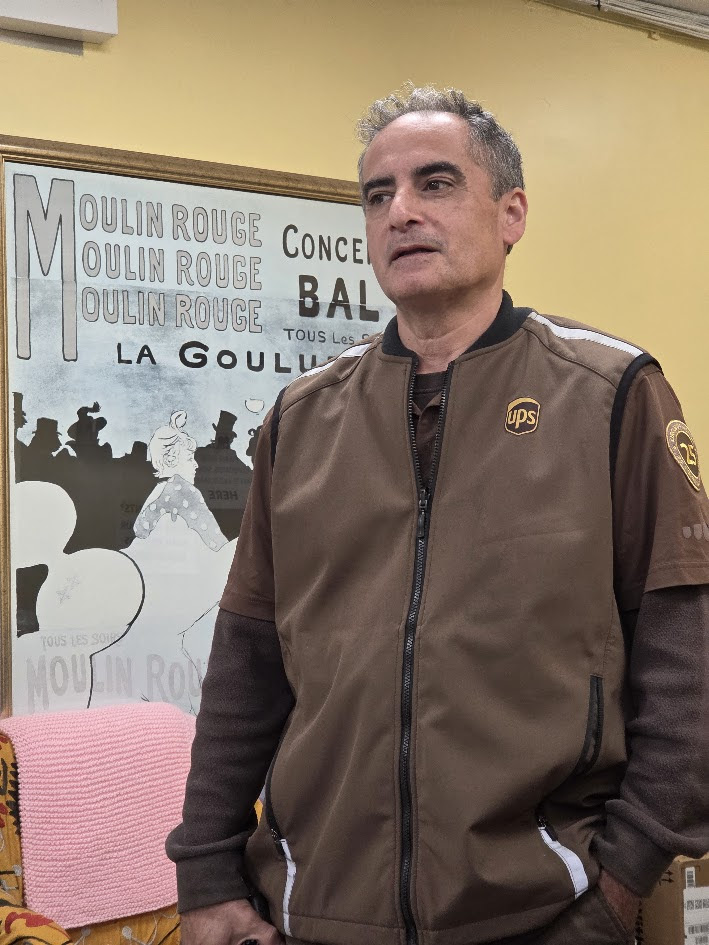
EDWARD BURNEO HAS BEEN OUR UPS DELIVERY PERSON FOR 20 YEARS. HE IS RETIRING THIS WEEK AFTER 35 YEARS WITH UPS.
THANKS FOR ALWAYS DELIVERING FOR US.
YOUR ROOSEVELT ISLAND FRIENDS
CREDITS
Daytonian in Manhattan JUDITH BERDY
All image are copyrighted (c) Roosevelt Island Historical Society unless otherwise indicated THIS PUBLICATION FUNDED BY DISCRETIONARY FUNDS FROM CITY COUNCIL MEMBER JULIE MENIN & ROOSEVELT ISLAND OPERATING CORPORATION PUBLIC PURPOSE FUNDS.
After being rejected by Robert Moses and leaving his mark in cities around the world, Noguchi secured his own legacy in NYC. A new exhibit celebrates it.
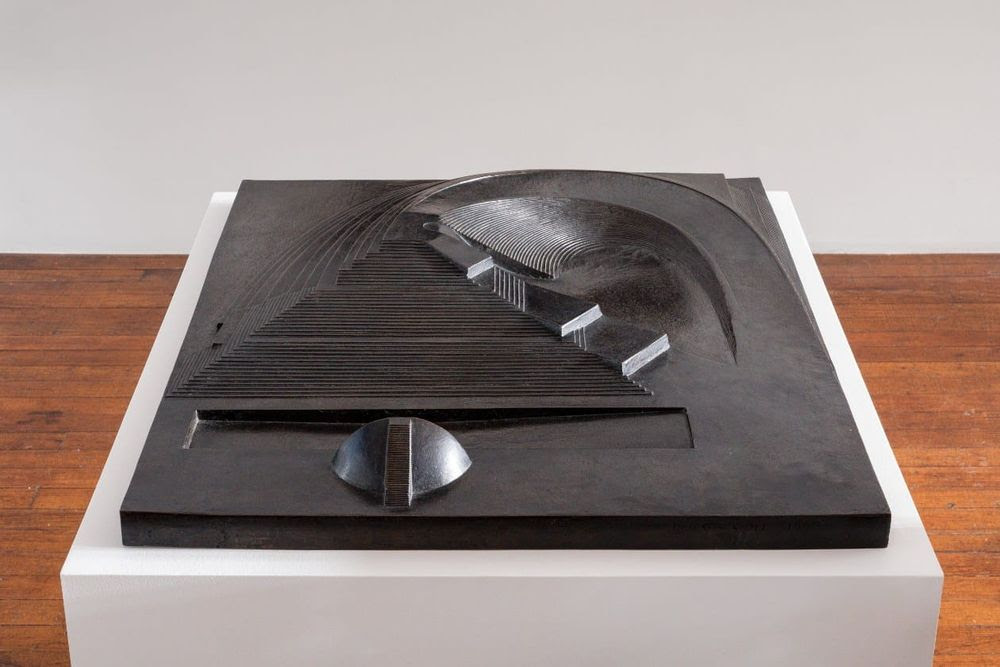
“I traveled around the world six times over like a homeless waif. New York is the center from which ideas radiate all over the world,” renowned sculptor Isamu Noguchi told The Village Voice in 1959. Like Robert Rauschenberg’s New York uptown at the Museum of the City of New York, the Noguchi Museum exhibit, Noguchi’s New York, compresses the work of a great and productive artist into his obsession with his home city. And it’s a delight, well worth the trip to Long Island City.
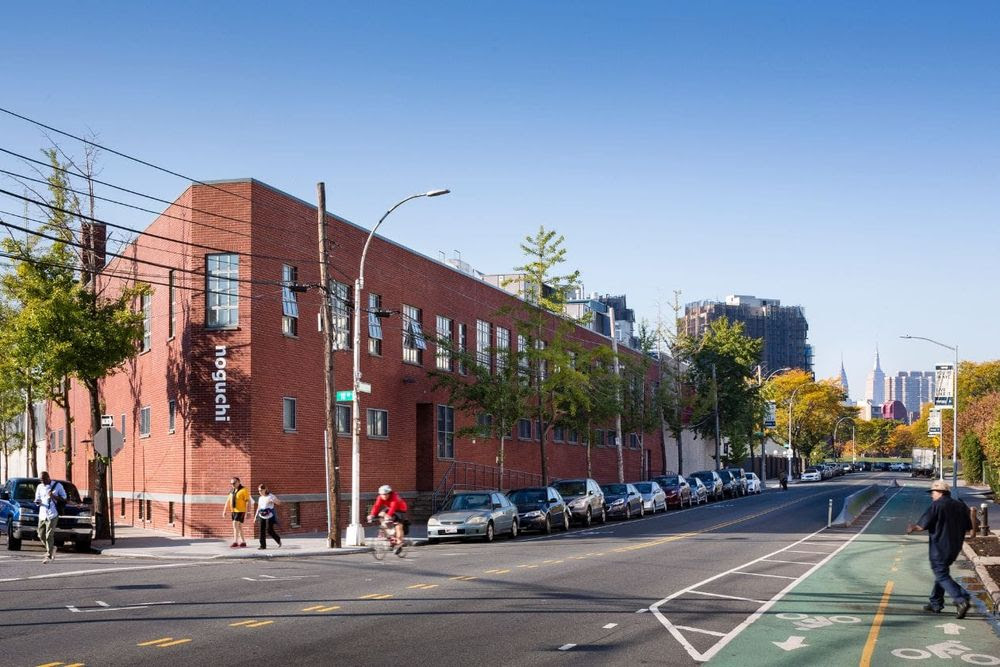
The far-from-easy to find Noguchi Museum in an industrial area of Queens—facing a Costco Wholesale store on one side and decrepit manufacturing buildings on another—was sited, designed, and built by Noguchi himself. Opened in 1985, it was the first museum in the United States founded by a living artist to show the artist’s work.
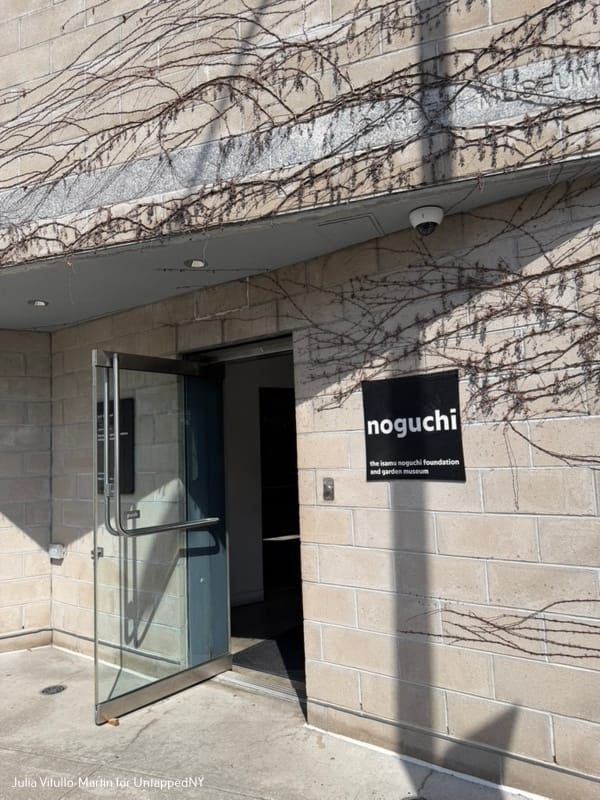
It has one of the most unconventional entrances of any museum in New York.
(Left) Photo by Nicholas Knight
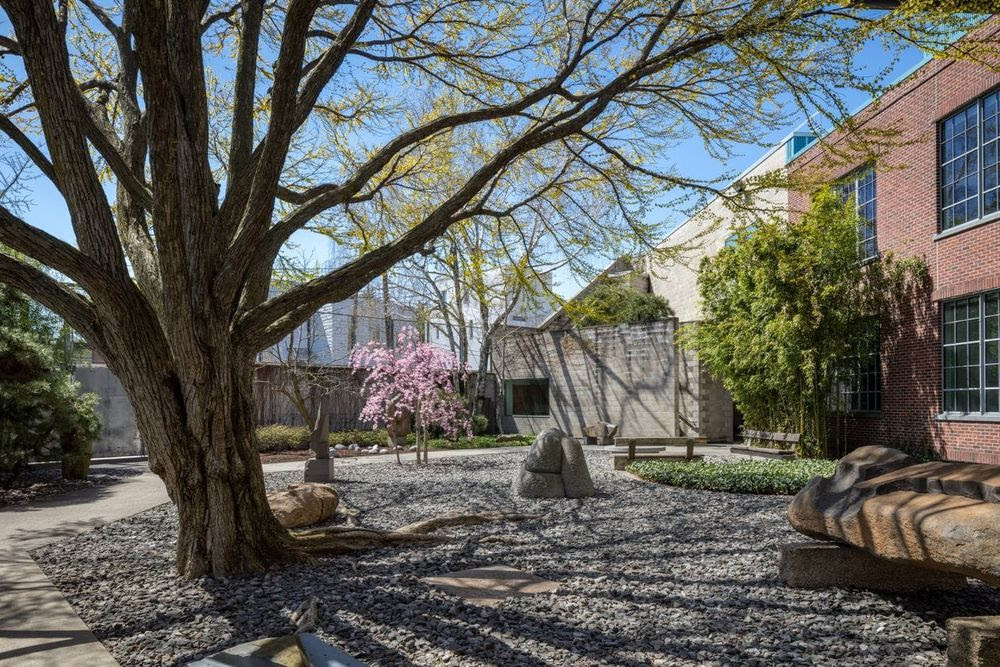
You enter through a small-ish Alice-in-Wonderland type door on 133rd Road, and are immediately greeted by museum employees, who gesture towards a second door that takes you to an outdoor space full of Noguchi sculptures—some bold, some modest, some intimidating, all engrossing. Explanations are few. The art work stands on its own. As you walk through the sculptures you’ll see the garden, still austere from winter and wonderfully Noguchi-like. He liked pebbles.
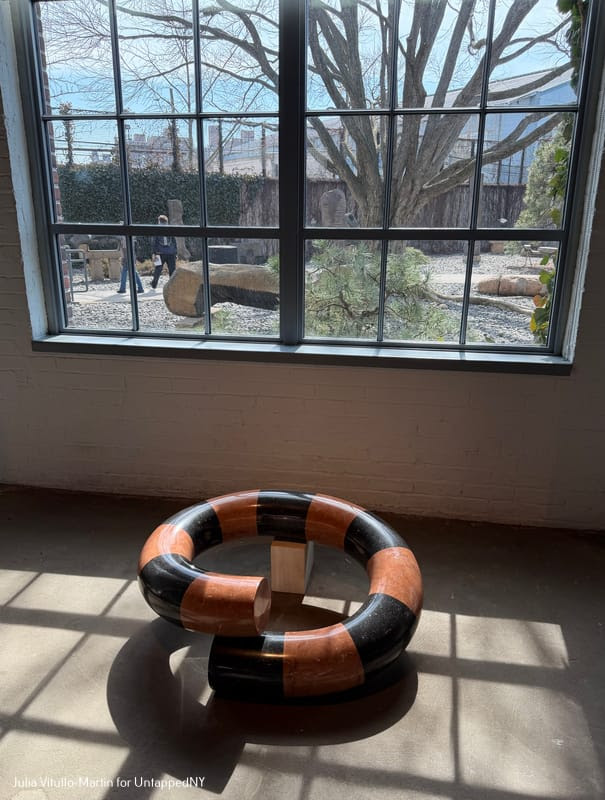
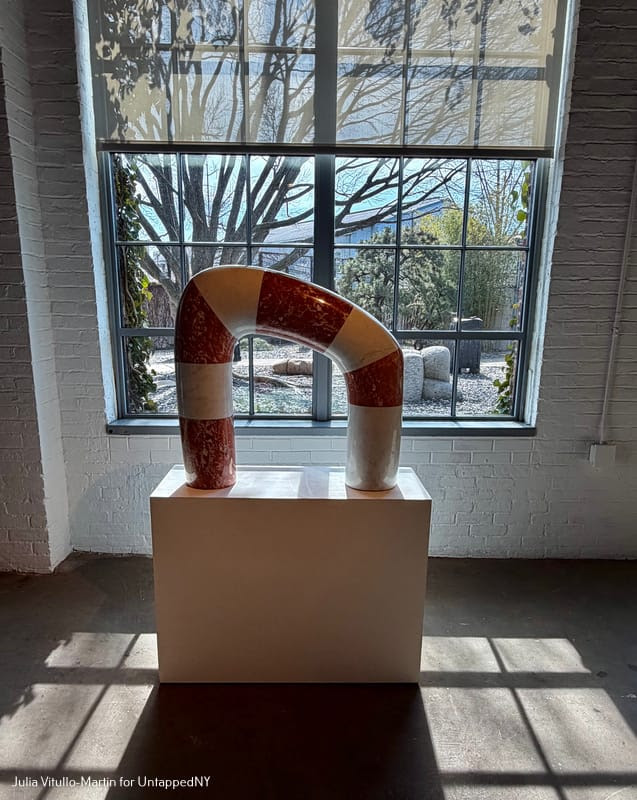
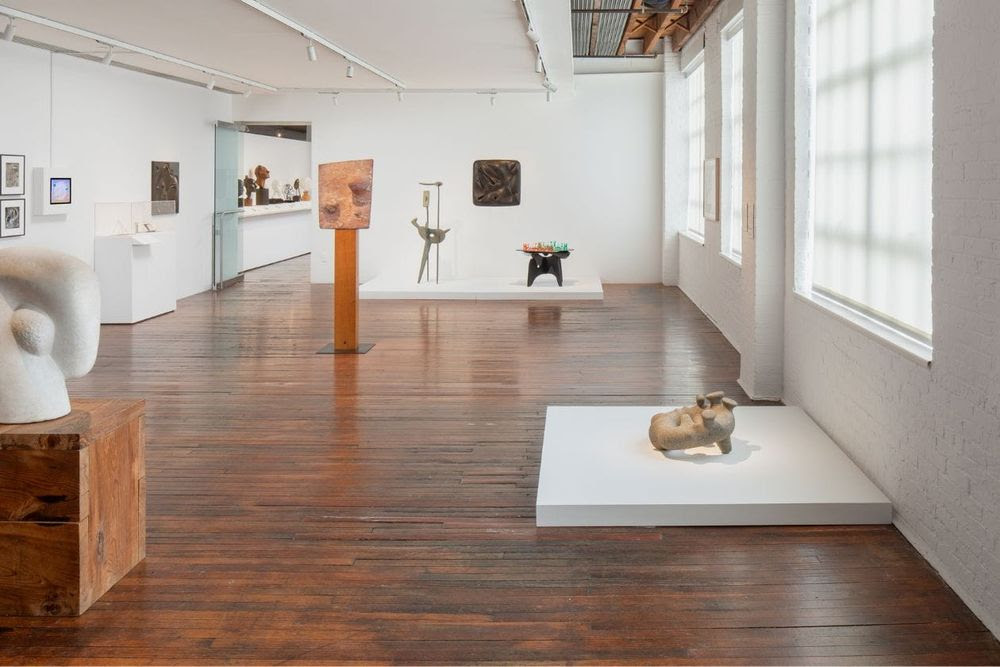
Noguchi converted the original prefab factory building into an expansive museum to showcase his work, placing many of his sculptures in front of windows looking into the garden.
(Left) “Downward Pulling #2” (1972) is made of Spanish Alicante marble and Marquina marble. (Right) “The Opening” (1970) is made of French rose marble and Italian white marble. Surviving Projects in New York “I’m really a New Yorker. Not Japanese, not a citizen of the world, just a New Yorker who goes wandering around like many New Yorkers,” said Noguchi late in life. He had moved to New York at age seventeen in 1922, and lived here between travels around the world. Hoping to make his city a better place, he proposed thirty known projects over the years, from monumental earthworks and playgrounds to plazas and gardens. Most were never realized, according to the Noguchi Museum.
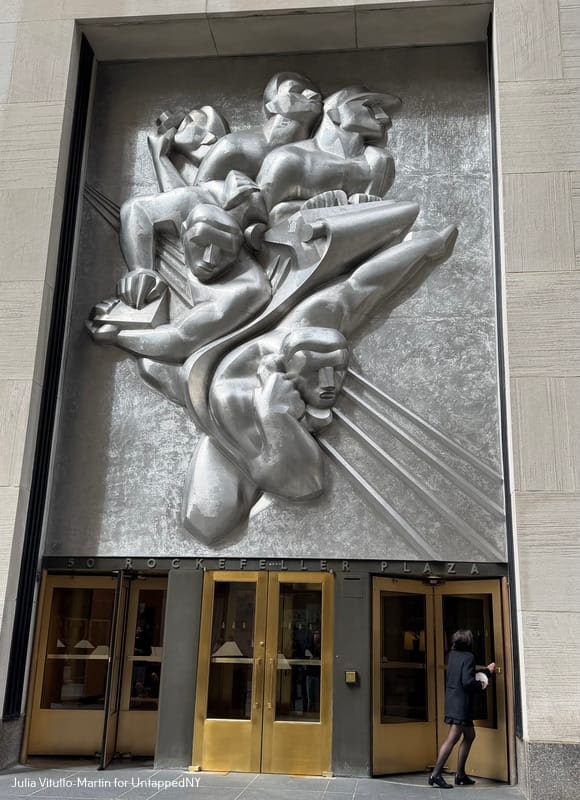
Noguchi worked on his tribute to journalism, entitled “News,” from 1938 to 1940.
AP had run an international contest to select the best design for this important space in midtown Manhattan. Noguchi, who won, was described in 1940 by Time Magazine as a “muscular, California-born, Japanese-Irish sculptor, who submitted a small-scale plaster model depicting five symbolic figures (editor, reporter, photographer, teletype and telephoto operators) straining eyes and ears for news.”
Noguchi spent a year sculpting a full-scale plaster model (17 by 22 feet), which took up his entire studio from floor to roof. He shipped the model in five pieces to Boston’s General Alloys Co. to be cast into stainless steel. William H. Eisenman, secretary of the American Society for Metals, concluded, “It is easily the outstanding achievement of the decade in American foundry practice, probably an all-time high.”
In its guide to the art in its complex of buildings, Rockefeller Center says, “Soaring above the entrance to 50 Rockefeller Plaza, this dynamic plaque symbolizes the business of the building’s former tenant, the Associated Press. One of the major Art Deco works in the Center, it depicts five journalists focused on getting a scoop. AP’s worldwide network is symbolized by diagonal radiating lines extending across the plaque. Intense angles and smooth planes create the fast-paced rhythm and energy of a newsroom. News is the first heroic-sized sculpture ever cast in stainless steel and the only time Noguchi employed stainless steel as an artistic medium.”
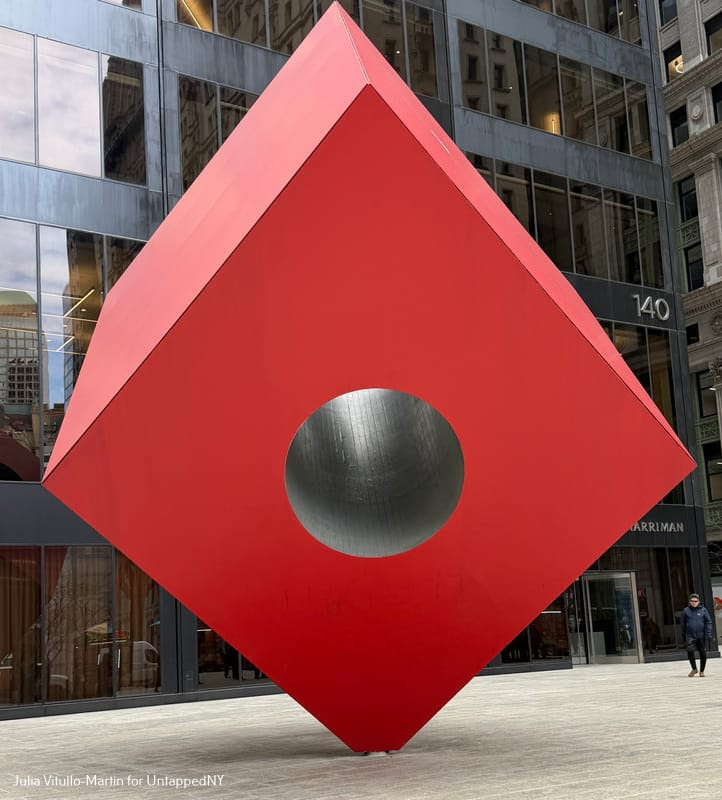
A second sculpture still standing is Red Cube, an immense steel rhomboid punctured by a distinctive hole and standing in front of the Marine Midland Bank at 140 Broadway.
Noguchi’s Red Cube, installed in 1968
The Noguchi Museum notes that, “What initially seems to be a fairly straightforward design, this commission from Skidmore, Owings & Merrill is a carefully articulated response to both the surrounding towers of the Financial District and open plaza spaces nearby. Noguchi’s elongated rhomboid mass in painted red steel offers its viewer a subliminal tool to harmonize the man-made canyon surroundings.” The gleaming aperture has an effect similar to a Nikon camera: you look through and up to the building captured in the lens.
The other three surviving works are the Sunken Garden at Chase Manhattan Bank Plaza, the Unidentified Object now in front of the Met Museum on Fifth Avenue, and the museum itself.
Noguchi’s Friends and Colleagues in New York and Abroad
Noguchi did not belong to any particular movement, says the museum, but he collaborated with artists working in a range of disciplines and schools. One of his most dramatic collaborations was with Diego Rivera and Frieda Kahlo in Mexico City. His first public commission came from the Mexican government in 1936.
With post-revolutionary fervor in the 1920s the government had urged artists to inspire the nation with nationalist pride and visions of historical achievement. A dramatic result was Mexican muralism, virtually its own school of painting.
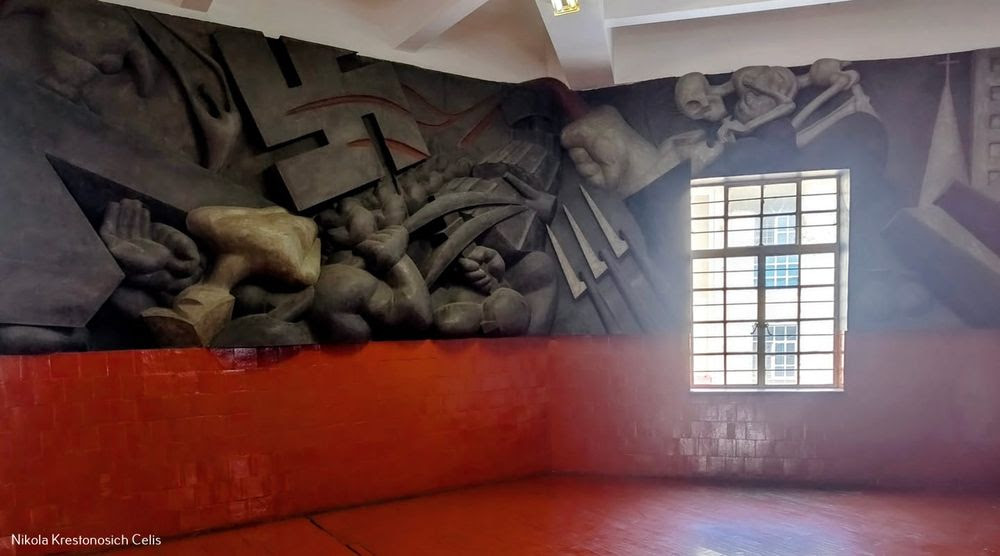
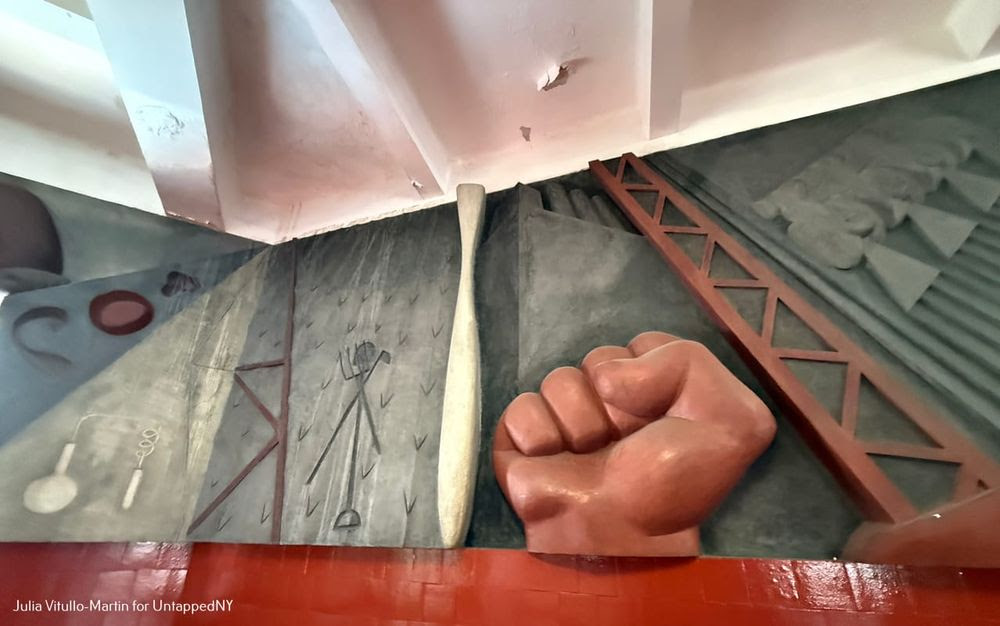
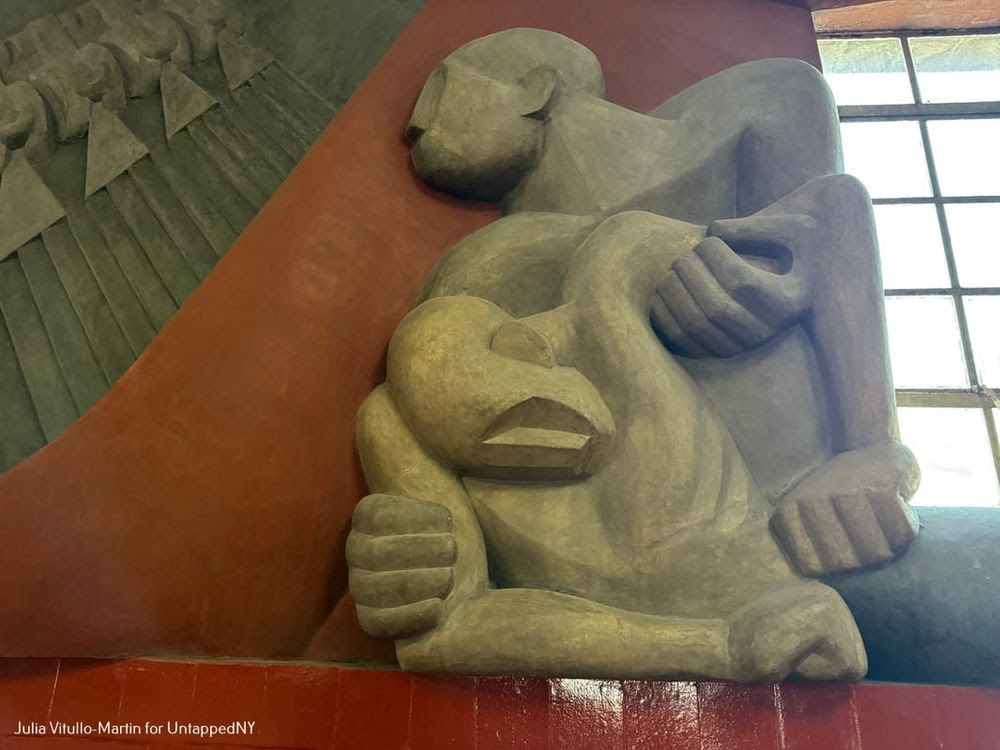
History Mexico is not only Noguchi’s first realized public artwork, four years before his Rockefeller Center sculpture, it is still extant and magnificent. Located on the second floor of the Mercado Abelardo L. Rodriguez in Mexico City’s historic center, it remains astonishingly vivid and dominant, its composition of concrete and pigmented cement as alive today as in 1936.
History Mexico was commissioned by the Mexican government, which paid Noguchi $88.
Alex Ross, Managing Editor of The Isamu Noguchi Catalogue Raisonné, callsHistory Mexico “one of the great anti-fascist works of the last century.”
Despite his profound sympathy for the struggles of the working classes, Noguchi himself became uncomfortable with his use of obvious symbolism, for example the huge red fist of labor in the center. But in an interview at the time with the publication, New Masses, he said aspirationally, “Capitalism everywhere struggles with inevitable death—all the machinery of war, coercion, and bigotry are as smoke from the fire. Labor awakens with the red flag. And youth, through education, will see the world creatively more abundant, with equal opportunity for all.”
Later, in 1979, he wrote that his art in Mexico had been inspired by love and “the affection that surrounded me” (an affair with Frida Kahlo), and that “Diego chased me twice with a gun, but fortunately did not shoot.”
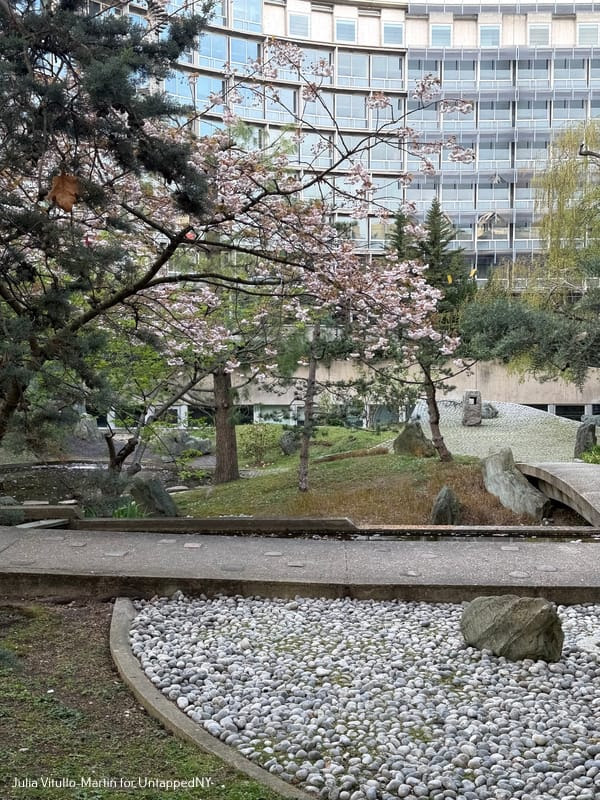
A very different public commission came from UNESCO, which commissioned Noguchi in the mid-1950s to plan a garden in Paris outside its main building that had been designed by architects Marcel Breuer, Pier Luigi Nervi, and Bernard Zehrfuss. Rock formations collected from different sites in Japan along with ponds and plantings form the core of the garden, which he called “The Peace Garden.”
Noguchi’s Peace Garden for UNESCO in Paris, photographed through the fence
Back in New York
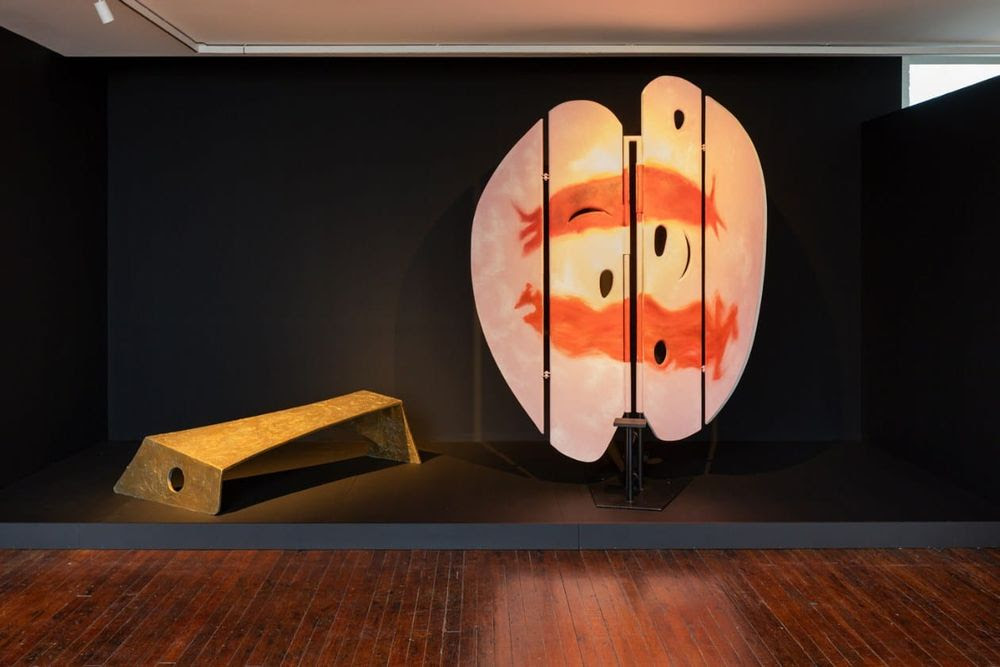
Noguchi had created stage sets as early as 1935 for Martha Graham, as well as for Merce Cunningham, composer John Cage, and choreographers Erick Hawkins and George Balanchine.
(left to right) Isamu Noguchi, Bed for Martha Graham’sPhaedra’, 1962 (fabricated 2021). Canvas, plaster, wood, paint. Shrine of Aphrodite for Martha Graham’s ‘Phaedra’, 1962 (fabricated 2021). Paint, canvas, wood, metal. The Isamu Noguchi Foundation and Garden Museum, NewYork, 552-EC1-1;552-EC1-3
After his travels Noguchi had hoped to return to Greenwich Village, where he had lived from 1942 to 1949. His biographer, Hayden Herrera, wrote that on MacDougal Alley in the Village Noguchi “had two brick buildings that once closed off the alley’s end. Number 33 included not only his studio, but also a garden with a large tree and a flagstone path flanked by shrubbery and even a small fishpond.”
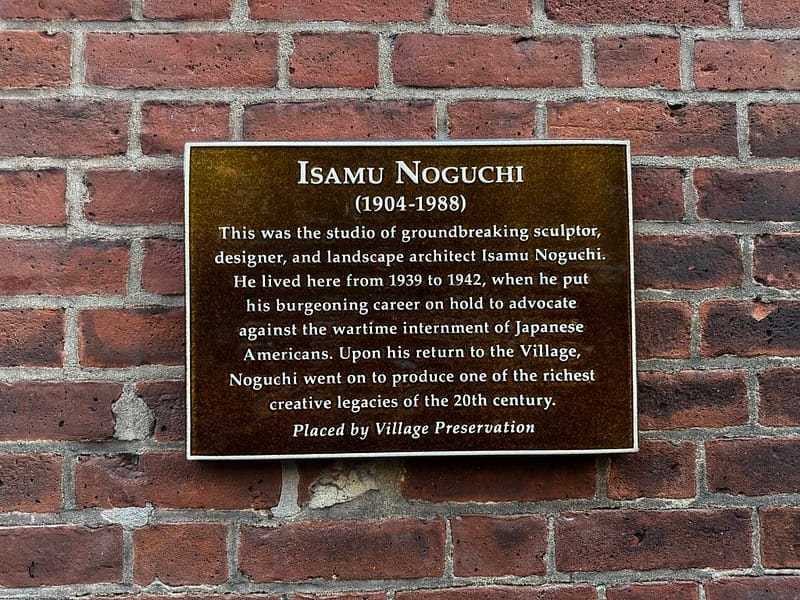
A plaque honoring Noguchi’s residence was installed by Village Preservation on the facade of 52 West 10th Street and unveiled in a special ceremony this week.
Photo Courtesy of Village Preservation
Masayo Duus, another biographer, wrote in Journey without Borders that during a brief affair with Noguchi the French-American diarist Anaïs Nin had written in her diary, “Noguchi’s studio in MacDougal Alley, is one of the loveliest places in New York. The houses are small, the streets are of cobblestones, there are gas lanterns. It is an echo of English or French streets. At the closed end is a wall with trees behind. The houses and streets are each different in shape and decoration. It is intimate and mysterious.”
Such real estate riches would be astonishing today. He called his haven a “sign of providence.” He was surrounded by artists, including Europeans who had fled the war.
Yet when he returned to New York a decade later he found himself priced out of the Village, and started thinking about moving to the far cheaper waterfront area of Queens. In 1961, he relocated to a 3,200-square-foot warehouse in Long Island City.
And that, Dear Reader, is why we have the sublime Noguchi Museum in Queens.
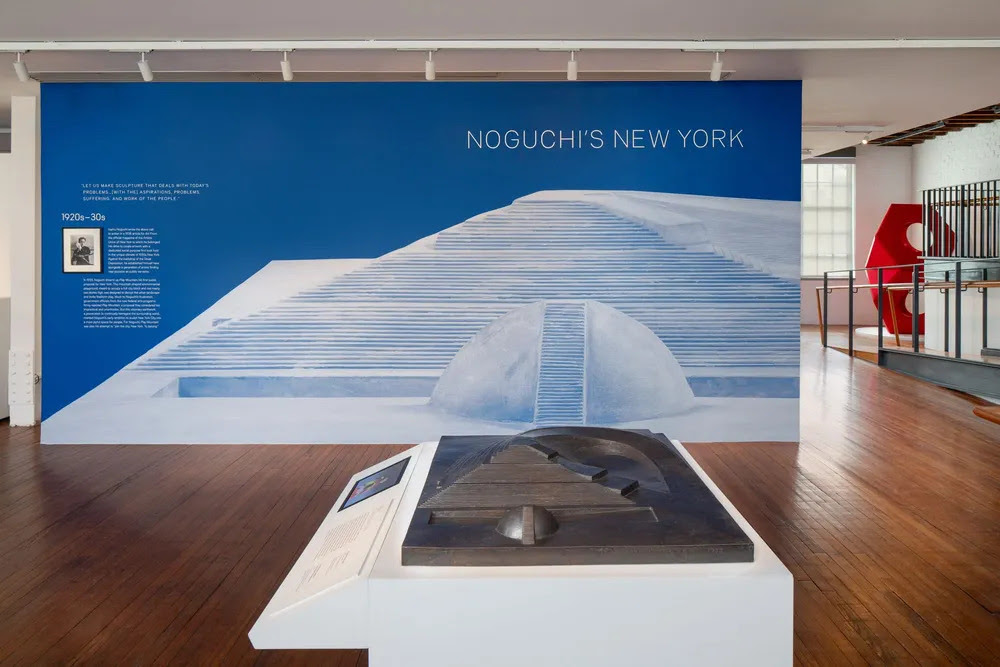
Noguchi’s New York
On the way to the stairs leading to the second floor, you’ll see this wonderful quote of Noguchi’s:
Like a lot of New Yorkers, I was one of those bitten by some kind of an idealism … New Yorkers after all felt a special relationship to the world. They were on this island looking out on the whole damn world, which they had to do something about. My way was not the way of words, but the way of doing things, making something which might sort of approach that which one felt the world could be. Little spots here and there, so that instead of going to the moon, you bring the moon to you. – Isamu Noguchi, 1980
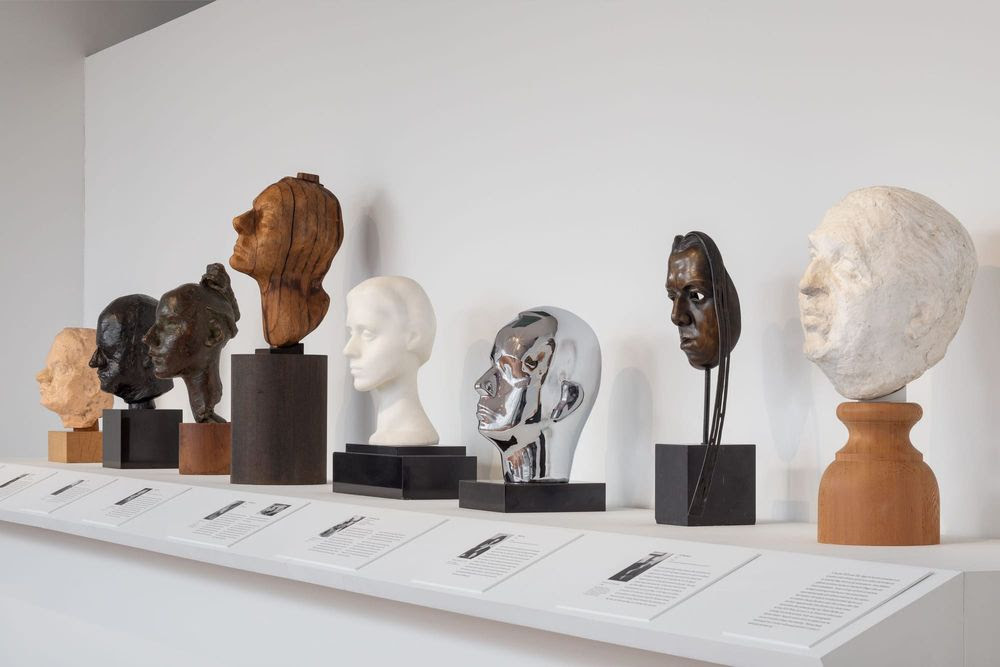
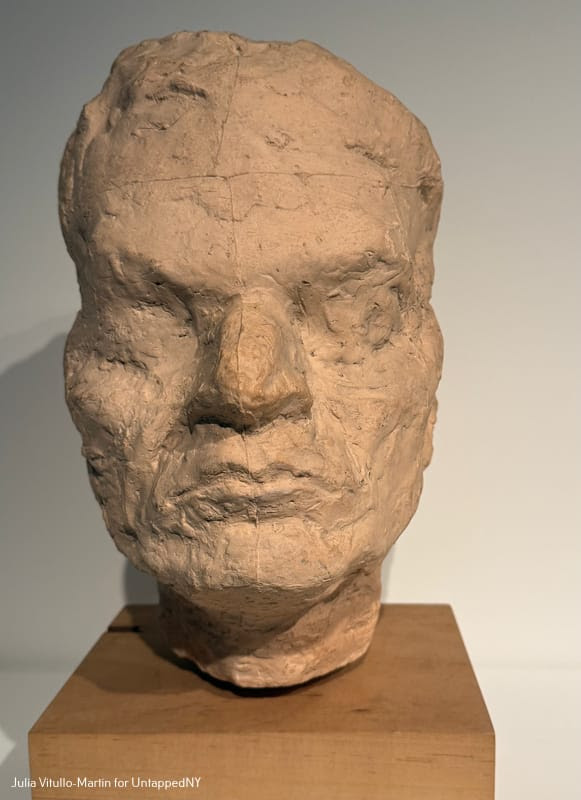
Works from Isamu Noguchi’s MacDougal Alley studio period, 1940s
Four decades later, the Museum remains one of Noguchi’s greatest sculpted environments. It also embodies his decades-long effort to sculpt the urban landscape of New York into a more humane, natural space for connection and creativity. For an artist whose civic ambitions were often blocked by the formidable New York city planner Robert Moses—who scorned Noguchi’s unconventional plans—the Museum’s opening represented a triumph over city politics.
Asked how he felt about the achievement, Noguchi replied, “I feel I’ve outsmarted Mr. Moses, is what I feel.”
A LONG SERVICE ON ROOSEVELT ISLAND
EDWARD BURNEO HAS BEEN OUR UPS DELIVERY PERSON FOR 20 YEARS. HE IS RETIRING THIS WEEK AFTER 35 YEARS WITH UPS.
THANKS FOR ALWAYS DELIVERING FOR US.
YOUR ROOSEVELT ISLAND FRIENDS
CREDITS
UNTAPPED CITIES The Isamu Noguchi Foundation and Garden Museum 9-01 33rd Road (at Vernon Boulevard) Long Island City, New York 11106 718.204.7088 info@noguchi.org JUDITH BERDY
All image are copyrighted (c) Roosevelt Island Historical Society unless otherwise indicated THIS PUBLICATION FUNDED BY DISCRETIONARY FUNDS FROM CITY COUNCIL MEMBER JULIE MENIN & ROOSEVELT ISLAND OPERATING CORPORATION PUBLIC PURPOSE FUNDS.
New York Martin guitars are rare and worth a fortune. My wife bought me a (Nazareth) Martin for my 60th birthday, my pride and joy. I also have a traveling-size Martin given to me by Peter Yarrow (of Peter, Paul and Mary fame) at the behest of our own Ethel Romm. I met Chris Martin IV at Rudy’s music shop some years ago and he gave me a Martin tee shirt which I wear proudly. M
All image are copyrighted (c) Roosevelt Island Historical Society unless otherwise indicated THIS PUBLICATION FUNDED BY DISCRETIONARY FUNDS FROM CITY COUNCIL MEMBER JULIE MENIN & ROOSEVELT ISLAND OPERATING CORPORATION PUBLIC PURPOSE FUNDS.
STARTS AT 12 NOON AT RIHS VISITOR CENTER FOR HISTORY PLAQUE DEDICATION
ISSUE #1665
JOIN US FOR THE DEDICATION OF THE NEW PLAQUE AT THE VISITOR CENTER AT 12 NOON
JOIN US FOR A FAMILY FUN
AFTERNOON VISITING OUR HISTORIC MARKERS. *ENJOY THE ACTIVITIES AT EACH SPOT. *GET YOUR PASSPORT STAMPED **RETURN TO VISITOR CENTER FOR A GIVEAWAY
BLACKWELL HOUSE
STRECKER LABORATORY & SMALLPOX HOSPITAL
LIGHTHOUSE PARK
CHAPEL OF THE GOOD SHEPHERD
CREDITS
PROGRAM SPONSORED BY ROOSEVELT ISLAND YOUTH CENTER ROOSEVELT ISLAND HISTORICAL SOCIETY ROOSEVELT ISLAND OPERATING CORPORATION. Judith Berdy
A NOTE FROM A READER
Matthew Katz wrote:
New York Martin guitars are rare and worth a fortune. My wife bought me a (Nazareth) Martin for my 60th birthday, my pride and joy. I also have a traveling-size Martin given to me by Peter Yarrow (of Peter, Paul and Mary fame) at the behest of our own Ethel Romm. I met Chris Martin IV at Rudy’s music shop some years ago and he gave me a Martin tee shirt which I wear proudly. M
All image are copyrighted (c) Roosevelt Island Historical Society unless otherwise indicated THIS PUBLICATION FUNDED BY DISCRETIONARY FUNDS FROM CITY COUNCIL MEMBER JULIE MENIN & ROOSEVELT ISLAND OPERATING CORPORATION PUBLIC PURPOSE FUNDS.
The Lombardy city of Cremona is the birthplace of the violin. The name of Antonio Stradivari became a metaphor for perfection, and his presence sparked a cult of Cremonese violins.
Born in 1644, he continued a lengthy line of local luthiers who since the sixteenth century had produced fine instruments.
The town of Markneukirchen in Saxony’s Vogtland was the unofficial capital of a German and Czech cross-border region known as the “Musikwinkel” (music corner).
For its production of stringed instruments, the town enjoyed the reputation of a “German Cremona.” Immigrants from the region carried a rich tradition with them and, over time, would upgrade America’s musical landscape. Cremona calls for classical music; Markneukirchen stands for the modern age.
Music & Migrants
After the Thirty Years War, Bohemian Protestants from the Catholic town of Graslitz (Kraslice) fled their homes during the Counter Reformation and settled over the border. They brought the art of violin making with them.
In 1677, twelve refugee craftsmen came together and founded the Violin Makers’ Guild (Germany’s oldest continuous trade union). They codified standards of workmanship and turned the town into a hub of excellence. Over time, bow makers and string producers settled there as well.
At the same time, a start was made with guitar and zither production. Makers of woodwind instruments and French horns settled in the region at the turn of the eighteenth century. Almost the entire range of orchestral instruments became available in a single town.
Craftsmen worked from home, instructed apprentices, and sold their goods to wholesale dealers. With the march of industrialization, the manufacture of instruments largely kept its character as a cottage industry.
Rather than making entire instruments, artisans would concentrate on single parts such as fingerboards or tailpieces and supply them to an expert for completion. The region developed a range of specialisms.
The nineteenth century marked a peak in output. London’s 1851 World Exhibition put Markneukirchen on the export map. The American market took notice and there was a diplomatic effort to encourage trade relations.
In 1893, a Consular Agency was set up in the town, serving the instrument trade (until its closure in 1916) by easing the import processes for giant retailers like Sears Roebuck or Montgomery Ward.
Manufacture expanded rapidly. In 1913, the “Musikwinkel” produced forty percent of the world’s string instruments, totaling over 150,000 violins a year. Until the Second World War, it was one of the largest global centers of instrument making.
While many of its violins were affordable, Markneukirchen also maintained the benchmarks for quality instruments, being home to prominent dynasties like Heberlein, Hamm, and Roth.
King of Guitars
Vogtland’s violin making was regulated by guilds. In the early 1800s, the guitar was a relatively recent instrument, and most producers were members of the Cabinet Makers’ Guild.
Violin makers claimed exclusive rights to the manufacture of stringed instruments and the guild exercised its privilege to prevent their rivals from producing guitars.
Christian Frederick (Friedrich) Martin was born on January 31, 1796, in Markneukirchen into a family of woodworkers. He learned his trade in Vienna as an apprentice to leading guitar maker Johann Georg Stauffer.
Returning to Saxony, Martin joined the Guild of Cabinet Makers and soon clashed with violin makers who tried to stop him from applying his trade. Unwilling to accept the locality’s confining rules, Martin moved to the city of New York.
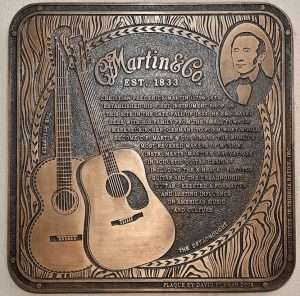
In 1833 he opened a workshop at 196 Hudson Street in Manhattan’s Lower West Side, producing instruments modeled after those of his Viennese mentor. The original building at the corner of Hudson and Vestry Streets has not survived, but a bronze plaque commemorates the site where this immigrant built his first American guitars.
In 1839 he moved to Nazareth, Pennsylvania, where he set up a workshop at the corner of Main and North Streets. Once settled there, his guitars evolved in shape and quality, whilst his reputation grew.
By the late 1840s, he had abandoned the Stauffer characteristics and developed a style of his own. During the Civil War sales increased as Martin’s portable “parlor” guitar became a means of relaxation for the troops.
Martin’s main distributor was Charles A. Zoebisch & Sons, a firm also known for producing brass instruments. Its founder Carl August Zoebisch, born in 1824, was an immigrant from Saxony too, arriving in New York in January 1842.
Having started his business in Mott Street, he traded from 1866 onward at 46 Maiden Lane, Lower Manhattan. The link between the companies endured until 1898, when Martin took on its own distribution.
By the end of his working life (he was succeeded by his son in the family firm), clients hailed Martin as the undisputed king of the acoustic world. Despite its European roots, he had transformed the guitar into an iconic American instrument that gave shape and substance to the nation’s modern musical landscape.
Spanning all genres, from country, R & B, or folk to rock & roll, the legends of song have endorsed Martin’s guitars. Hank Williams, Johnny Cash, Willie Nelson, Elvis Presley, Bob Dylan, John Lennon, Neil Young, Paul Simon, Eric Clapton, Ed Sheeran, and many other performers have strummed his creations.
The company stuck to its main mission throughout the decades: building acoustic guitars, never tempted to sell its soul to the electric market.
Mandolins, ukuleles, and electric guitars have featured in the company’s catalogues, but to connoisseurs the word “Martin” simply meant a classic flat-top acoustic guitar. America made music on Saxon-inspired instruments.
Civil War
During the 1850s Saxony’s instrument makers, primarily from Markneukirchen, emigrated to escape restrictive guild practices and political unrest, carrying their specialized skills to the United States.
Rudolph Wurlitzer was born on February 1, 1831, in nearby Schöneck where his father ran a family business of music distribution. The family had a long history of producing and selling (stringed) instruments, stretching back to the seventeenth century when Nicholas Wurlitzer began making lutes.
Little is known of Rudolph’s life (there is no biography). He joined the family firm after leaving school, but it is unclear why he made the decision to emigrate. Twenty-two-year-old Rudolph boarded a transatlantic liner in Bremen (the immediate reason to leave may have been a dispute with his father) and docked in Hoboken, New Jersey, in June 1853.
He arrived penniless and with no knowledge of English. Having started work in a New York City grocery shop, he quickly made his way up. He then moved to Cincinnati where he became part of the city’s large German-speaking immigrant community and set up his own company. Ambitious, energetic, intelligent, and frugal, he concentrated on what he knew best – the trade in musical instruments.
At the time, most instruments were expensive imports from Europe, and the business model involved a long supply chain and high transaction costs.
Rudolph’s connections gave him a competitive advantage as a was able to exclude the middlemen. He bought instruments directly from Saxon producers (and family members) and made them available for retail at relatively low prices.
The relationship was one of mutual advantage. Wurlitzer profited from his commercial networks in the “Musikwinkel,” while his home region benefited economically from his presence as a major American importer.
On September 19, 1868, Rudolph married Leonie Farny, an immigrant from Alsace, at Cincinnati’s Lutheran Church. Making their home on Franklin Street, the family kept a strong German identity and, at the same time, integrated fully into American society (he had been a naturalized citizen since October 1859).
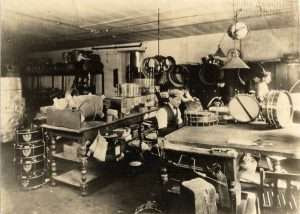
His contracts with the army during the Civil War and the Spanish-American War were signs of mutual respect. Drums, trumpets, and bugles played by United States soldiers during the Civil War bore Wurlitzer’s name.
The Rudolph Wurlitzer Company went from strength to strength with America’s growing passion for music and entertainment. The company offered a wide selection of instruments in its 200 page-long catalogues, mostly focused on “conventional” instruments.
Towards the end of the century, the firm became increasingly aware of public interest in mechanical music devices. The leisure industry began making new demands.
Mighty Wurlitzer
The development of automatic instruments gathered pace. Barrel organs took over Manhattan’s streets and fairs; coin-operated pianos played ragtime in packed saloons. With the craze for silent movies came the introduction of “orchestrions,” mechanical organs that imitated the sounds of a complete orchestra.
Eugene de Kleist was born Eugene von Kleist in Düsseldorf in 1853 (of Prussian noble stock), but changed his name after spending time in London where he built barrel organs for merry-go-rounds.
Wurlitzer would become the sole distributor of his products, including the 1899 “Tonophone,” a commercially successful coin-operated piano played by a pinned cylinder. When De Kleist withdrew from business, Wurlitzer took over his factory.
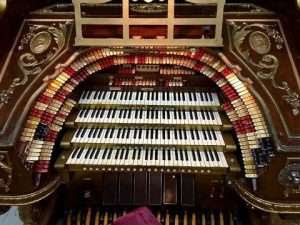
In 1910, the company bought an insolvent enterprise owned by the eccentric Cheshire-born Robert Hope-Jones. A pioneer in applying electrical technology, he sold his patent for what would become the company’s greatest triumph, an organ that went down in the history of cinema as the “One Man Orchestra.”
Otherwise known as the “Mighty Wurlitzer,” the organ was equipped with trumpets, tubas, clarinets, oboes, chimes, xylophones, drums, and other sound effects.
With the advent of silent movies in the 1920s, it became an international success. The introduction of sound (“talkies”) spelled the end for silent film. Organs were replaced by speaker systems. The “Mighty Wurlitzer” went out of fashion.
The company (and the music industry in general) survived the Great Depression thanks to the jukebox. Its rise coincided with the end of Prohibition and then reopening of countless bars and clubs. “Put a nickel in it” was the slogan – and dance away.
Early jukeboxes used heavy and fragile shellac 78-rpm records. Rival companies competed to improve the mechanism, leading to the so-called “Battle of the Speeds.”
Introduced by RCA in March 1949, the invention of the 45-rpm vinyl record accelerated the spread of the jukebox. It improved sound quality, increased capacity (100 selections), and lowered production costs. The 45s became synonymous with the “single,” featuring a hit on the A-side and an added song on the B-side.
The root of the word “jukebox” goes back to the coastal plain and Sea Islands of South Carolina, Georgia, and northern Florida where “Gullah,” a creole of West African languages and English, was spoken by enslaved people brought to the region in the eighteenth century.
The word “jook” meant disorderly or rowdy. A “jook joint” was a dance hall, gaming room, and brothel, all rolled into one. Early boxes were known as “nickel-in-the-slot machines,” until around 1937 when Time magazine popularized the nickname jukebox.
A novelty in the 1920s, the jukebox transformed into a post-war cultural icon. Omnipresent, the vogue was associated with an emerging youth culture. Located in diners, coffee bars, roadside cafés, soda fountains, and amusement arcades, these boxes provided a hub where teenagers could spend time together, dance, and socialize.
They allowed them to control their choice of music at their own chosen venues. Wurlitzer was the market leader, its name almost synonymous with the machine. Stylish and colorful designs added to their popularity both in America and Europe.
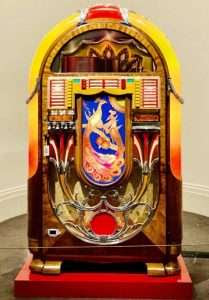
Wurlitzer’s vanguard role was enhanced by the participation of Paul Max Fuller (born in Corisca in 1897; and died in Buffalo in 1951), the most talented box designer of the era.
The company stopped producing jukeboxes in 1974; by that time, the firm had sold more than 750,000 of them. New electronic music devices caused the company’s decline. Japan took the lead instead.
C. F. Martin and Rudolph Wurlitzer were young immigrants who made a career in music, showing a commitment to traditional quality and artistry that was emblematic for their enterprises. The former provided uniquely American acoustics for over a century of contemporary music, while the latter supplied the soundscape of entertainment that shaped popular culture.
One stood for the creation of music, the other served its dissemination and consumption. Within their own realms, both men represented a Saxon creative versatility they brought to the United States, securing a niche of professional esteem for themselves in the nation’s diverse musical history.
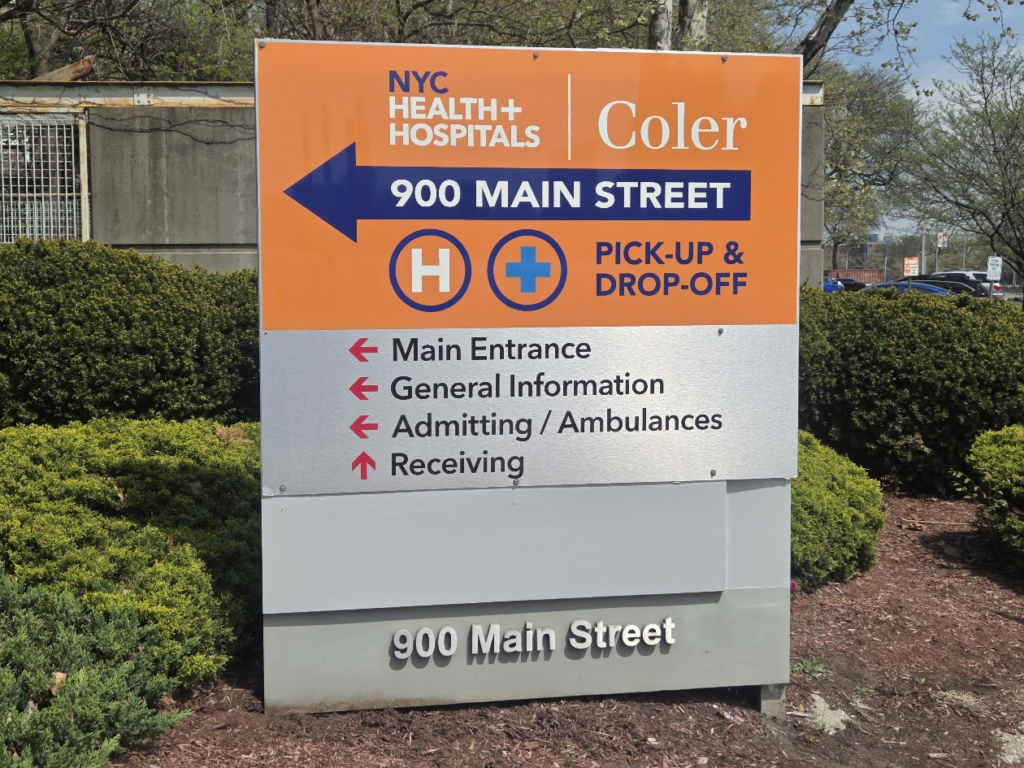
AN EASY WAY FOR DRIVERS TO FIND COLER HOSPITAL ENTRANCE
(MORE DIRECTIONAL SIGNS ARE ON THE WAY)
CREDITS
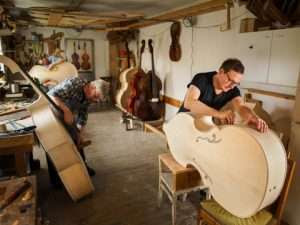
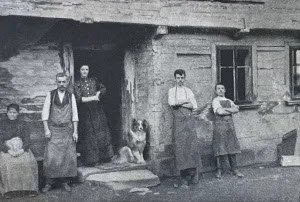
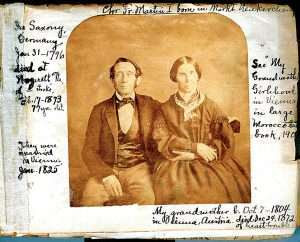
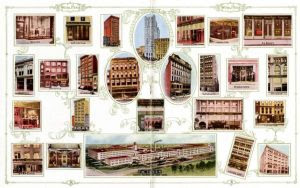
NEW YORK ALMANACK llustrations, from above: A modern European instrument shop; “A Typical Family of Violin-Makers Outside Their Cottage” in Markneukirchen, ca. 1900; C.F. Martin Sr and his wife Otilia from a scrapbook page (courtesy Martin Guitar Museum); C.F. Martin bronze plaque at the intersection of 196 Hudson Street and Vestry Street; Making Drums for the Spanish American War in the Wurlitzer Cincinnati Factory, 1898; Wurlitzer 4/26 orchestral organ, 1928 (LIU Paramount Theater, Brooklyn); Wurlitzer Stores and Factory 1916; Paul Max Fuller designed Wurlitzer jukebox model 850 “Peacock” design, 1941. Judith Berdy
All image are copyrighted (c) Roosevelt Island Historical Society unless otherwise indicated THIS PUBLICATION FUNDED BY DISCRETIONARY FUNDS FROM CITY COUNCIL MEMBER JULIE MENIN & ROOSEVELT ISLAND OPERATING CORPORATION PUBLIC PURPOSE FUNDS.
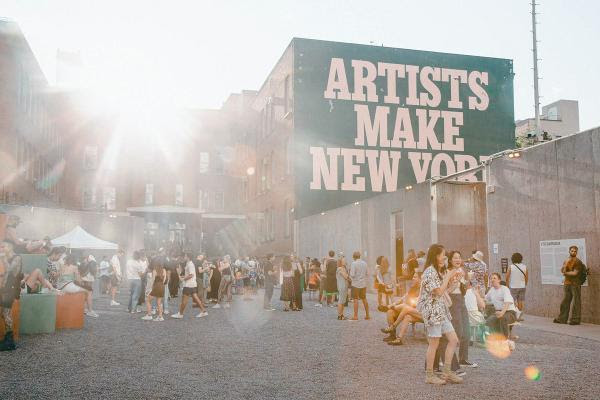
During the opening weekend of Greater New York, join us for MoMA PS1’s 50th Anniversary Block Party, a free celebration with our community partners featuring curator-led gallery talks, family activities, local food vendors, and music sets across the museum’s public plaza, courtyard, and galleries. The day features activations by artists, musicians, and local organizations including Asian American Arts Alliance, Discolocas NYC Fiesta Club, FAD Market, Flushing Town Hall, Lady Pink, Make the Road, M Wells, Malikah, Nuevayorkinos, Queens Botanical Garden, Queens Night Market, Queensboro Dance Festival, Queensbridge Photo Collective, Red Canary Song, St. James Joy, and Teen Art Salon. PS1 is your place for the best of the borough.
Online reservations have ended. Walk-up registration will be available on the day of the event; we encourage you to arrive early to make the most of the day.
GREAT PROGRAMS ON SATURDAY
Block Party Schedule
Opening Weekend: Greater New York All Day, Galleries Our signature survey of artists living and working in the NYC area returns for its sixth edition, coinciding with MoMA PS1’s 50th anniversary. Spanning three floors of the museum, the exhibition brings into focus over 50 multidisciplinary artists in the formative years of their careers. Join us for curator-led spotlight talks throughout the day in the exhibition galleries.
Food Vendors Selected by Queens Night Market All Day, Courtyard
FAD Market All Day, 2nd Floor FAD Market will bring together a special lineup of 60+ local artists, makers, and creative entrepreneurs, including select artists featured in Greater New York 2026. The market brings together independent creators working across art, design, and craft, on the museum’s second floor.
MoMA Kids ‘Once Upon an Artwork’ Screening 10 a.m.–2 p.m. Watch stories about art, told by kids and animated by artists. The series uses works of art in MoMA’s collection as a jumping-off point for children to imagine, play, seek adventure, and create worlds.
Family Workshops 10:30 a.m.–4 p.m., 1st Floor Quilting Circle with Queensbridge Photo Collective Extending their communal quilting practice, Queensbridge Photo Collective invites participants to sift through upcycled scraps, colors, and textures to collage portraits onto quilt squares.
Self-Defense Workshop with Malikah Through a variety of self-defense techniques, Malikah teaches a workshop to build mental strength, resilience, and community.
Mapping Home with NuevaYorkinos Inspired by NuevaYorkinos’ commitment to placekeeping, participants will collectively add to a map interpreting “home” through photos, drawings, and collage.
How To Take Up Space: A Mural Workshop with Lady Pink 10:30 a.m & 12:30 p.m., Courtyard Join legendary graffiti artist and painter Lady Pink for a hands-on mural workshop inspired by Foundations, her 2025 mural commissioned for the MoMA PS1 Plaza. In this workshop, she invites young artists, teens, and families to explore the power of taking up space through graffiti and mural-making techniques, using chalk spray paint to collaboratively create directly onto PS1’s courtyard walls. Learn more here. Additional RSVPs required.
DJ Set by Discolocas NYC Fiesta Club 12–3 p.m., Terrace This New York-based collective/club celebrates vinyl culture and storytelling through music led primarily by women. Guided by a strong feminine energy, Discolocas’ Block Party set features selectors La Lin & Loly Roots bringing funk, Latin house, salsa, Cumbia, and more to transform the dancefloor into a shared emotional space.
Dance Demonstrations by Queensboro Dance Festival 1–2 p.m. & 4–5 p.m., Terrace Join Queensboro Dance Festival on the dance floor with popup salsa demos (1–2 p.m.), and a house dance exhibition battle (4–5 p.m.). Queensboro Dance Festival tours across Queens all summer with free programming featuring Queens dance artists.
Zine-Making Workshop 2–3 p.m., Artbook @ MoMA PS1 Bookstore Learn to create zines and books in this all-ages workshop led by educator and artist Lauren Simkin Berke, author of the forthcoming book Zine Making and Bookbinding: A Beginner’s Guide in 25 Projects. Separate RSVP required.
DJ Set: St. James Joy 3–6 p.m., Terrace Saint James Joy is a Clinton Hill, Brooklyn-based collective and cultural platform known for transforming public spaces into vibrant, community-driven dance floors. For our 50th Anniversary Block Party, they bring their signature energy—joyful, inclusive, and deeply connected to the spirit of New York City.
Red Canary Song presents Fly in Power 4 p.m., 3rd Floor On the occasion of Touch the Heart in Homeroom, attend a screening of Fly in Power, a film that follows the community of Asian and migrant massage parlor workers, sex workers, and allies in Red Canary Song. The screening runs 78 minutes and will be followed by a panel discussion between organizers from the collective and Centro Corona. Additional RSVPs required.
TO REACH MOMA P.S.1
TAKE THE Q102 BUS TO THE LAST STOP. MOMA PS.S IS A FEW BLOCK WALK AT 22-25 Jackson Avenue Queens, NY 11101
COME ON SATURDAY, APRIL 25th DEDICATION OF NEW LANDMARK SIGN AT KIOSK 12 NOON EVENT IN COORDINATION WITH R.I. YOUTH CENTER
CREDITS
PRINTED MATTER Judith Berdy
All image are copyrighted (c) Roosevelt Island Historical Society unless otherwise indicated THIS PUBLICATION FUNDED BY DISCRETIONARY FUNDS FROM CITY COUNCIL MEMBER JULIE MENIN & ROOSEVELT ISLAND OPERATING CORPORATION PUBLIC PURPOSE FUNDS.
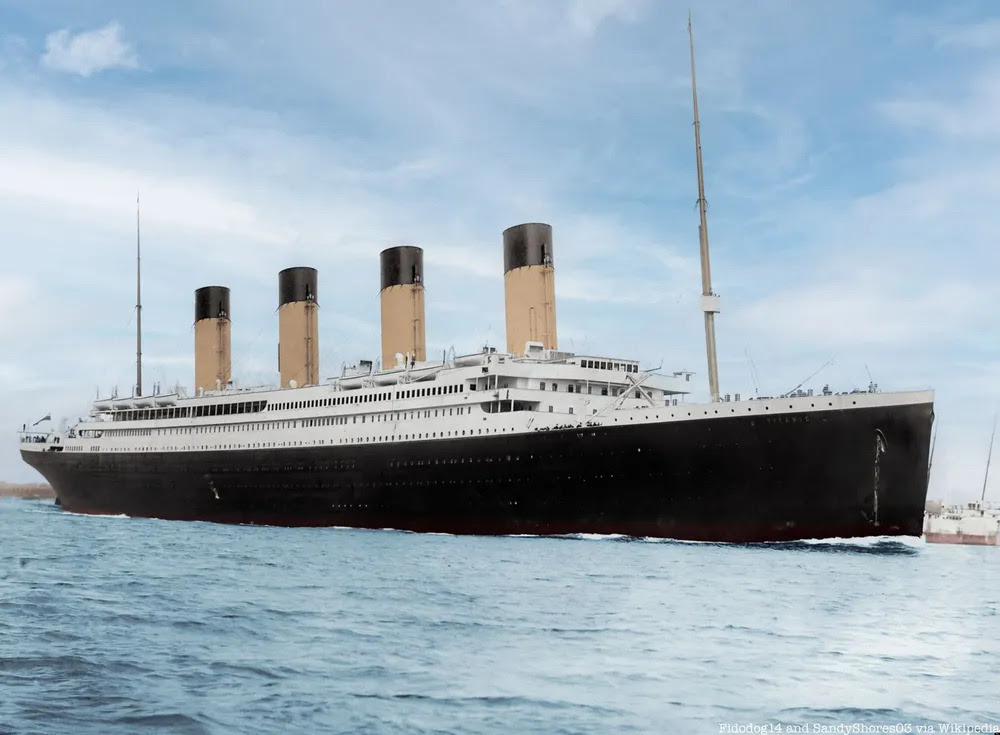
Just four days into its maiden voyage from Southhampton, England to New York City, the RMS Titanic, the “unsinkable ship,” hit an iceberg. The tragic sinking that followed, taking place over the final hours of April 14th into the early morning of April 15th, resulted in the loss of over 1,500 lives. While most of the passengers who set out for New York City didn’t make it to their final destination, just over 700 survivors eventually did make it to Manhattan.
New York City is inextricably linked to the infamous story of the Titanic and contains physical remnants of the incident. More than 110 years after the disaster, here are present-day sites that connect New York City to the history of the Titanic:
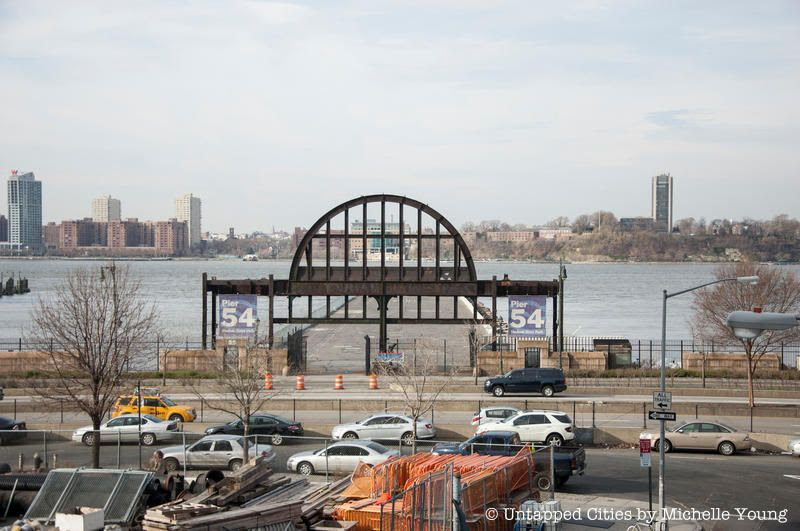
1. Pier 54
The shoreline of Manhattan was the intended destination for the Titanic‘sdoomed Atlantic crossing. The ship, run by the White Star Line, set sail from England and headed toward Pier 59 at Manhattan’s Chelsea Piers. In the 19th century, the Cunard and White Star Lines were the most popular ocean liner operators. The RMSCarpathia, run by the Cunard Line, had set sail from Manhattan just a few days before April 14th and was headed to Europe. On the fateful night of April 14th, it received the Titanic’s distress call. After retrieving over 700 survivors from the frigid icy waters of the Atlantic, the Carpathia reversed course and headed back to New York City.
On April 18th, the Carpathia did make a quick stop at Pier 59 to drop off the Titanic’s lifeboats, before docking at Pier 54 to let off its passengers. While the original pier building that once stood there was destroyed in 1991, a metal frame of the facade still remains to this day. You can even make out the words “Cunard White Star,” a remnant of when the two companies merged in the 1930s.
Now, the metal frame serves as an entryway to the newly constructed Pier 55 park, Little Island. Pier 54 had a bit of an unlucky streak. Just three years after the sinking of the Titanic, the Pier served as the starting point for the RMS Lusitania. Five days later, the ship bound for Liverpool was sunk by torpedoes from nearby German U-boats just off the coast of Ireland.
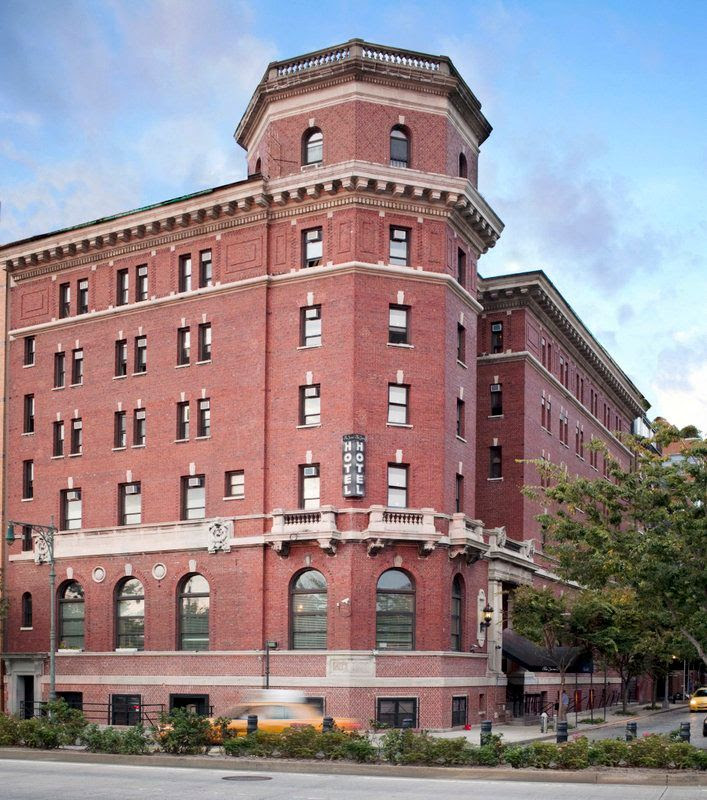
2. The Jane Hotel
Photo courtesy The Jane Hotel
The Jane Hotel, located at 113-119 Jane Street, was originally built in 1907-08 as the American Seamen’s Friend Society Sailors’ Home and Institute. The purpose of this facility was to welcome sailors arriving at the piers on the Hudson River and offer them an alternative place of respite instead of the seedy waterfront dives, saloons, and boardinghouses available. The Institute comprised a hotel, a home for indigent sailors, and amenities such as a swimming pool, a bowling alley, a concert hall, a library, a chapel, and billiard rooms. In April 1912, the Institute housed a special group of guests, survivors of the Titanic disaster.
After the survivors arrived at Pier 54, many different charitable organizations stepped in to help care for and house the survivors who didn’t have family in New York to take care of them. Crewmembers of the ship were given shelter, food, and clothing at the Sailors’ Home and Institute. They also received money from a collection that was drawn to help cover their lost wages. Four days later, the Institute held a memorial service for those lost in the tragedy. The building was run as a charitable facility for sailors until the 1940s, when it came under private ownership. Today, it is The Jane Hotel, a popular nightlife destination and hotel with budget-friendly rooms that still hold onto a nautical flair.
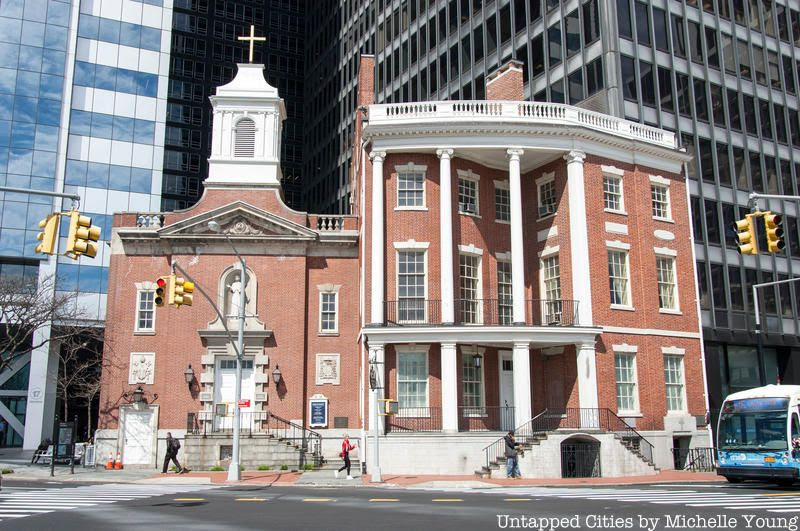
3. Mission of Our Lady of the Rosary
While crewmen went to the American Seamen’s Friend Society Sailors’ Home and Institute women from steerage were welcomed at the Mission of Our Lady of the Rosary for the Protection of Irish Immigrant Girls at 7 State Street, now called Our Lady of the Rosary Parish and the Shrine of St. Elizabeth Ann Bayley Seton. The Mission was founded by Charlotte Grace O’Brien and housed inside the former James Watson House. It served as a way station for young immigrant girls.
Many of the women in steerage on the Titanic were Irish immigrants. At the mission, the women were entertained with music to help lift their spirits. The thirty survivors housed the Mission at were also given $25 each from a collection for their benefit.
4. Titanic Memorial Lighthouse
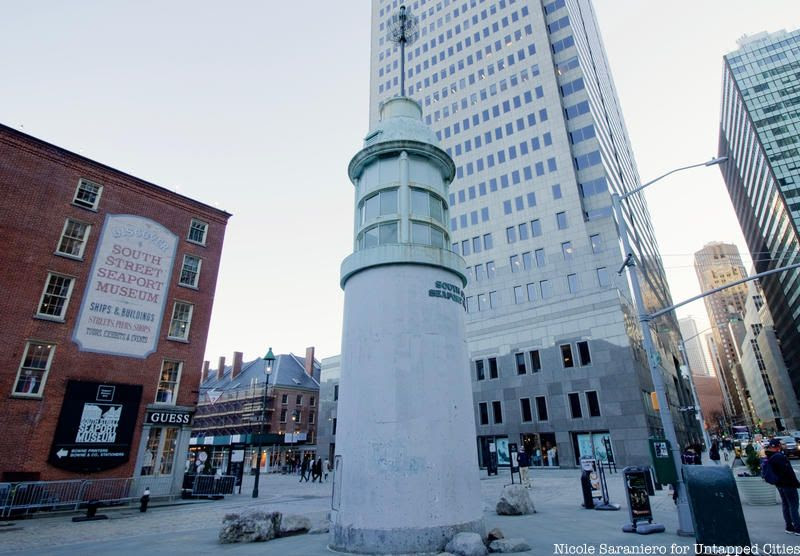
One of the most well-known connections to the Titanic disaster in New York City is the Titanic Memorial Lighthouse at the corner of Fulton and Pearl Streets in the South Street Seaport. The lighthouse originally stood atop the roof of the Seamen’s Church Institute at the corner of South Street and Coenties Slip (now Vietnam Veterans Plaza). It was always intended to be a memorial to the 1,500 lives lost in the tragic sinking of the RMS Titanic.
The landlocked lighthouse was designed by Warren & Wetmore (architects of Grand Central Terminal) and crowd-funded by New Yorkers from all classes. It was dedicated on April 15, 1913, one year after the sinking. What makes this landlocked lighthouse unique is the time ball on top which dropped every day at noon from 1913 until 1967. The lighthouse was last restored in 1976, and it is currently under restoration once again.
5. The White Star Office Building
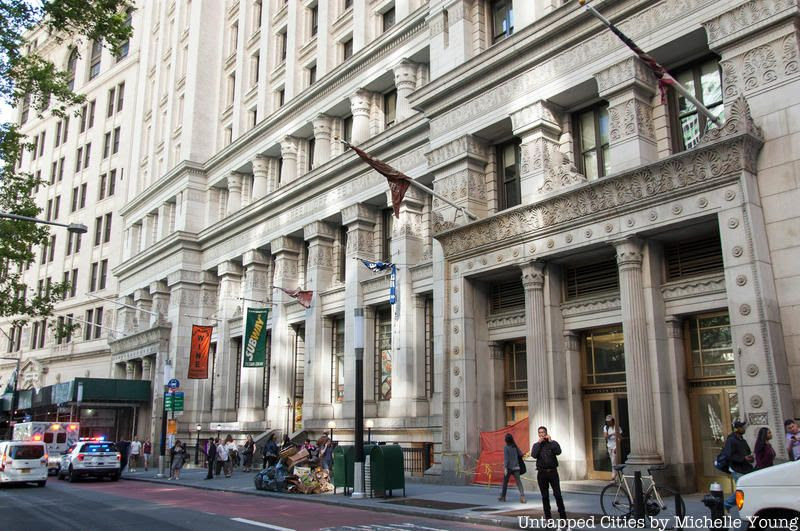
The offices at 5-11 Broadway were home to a variety of maritime businesses, including the White Star Line, the maritime company that owned the Titanic. Inside the grand Hellenic Renaissance-style building were offices for the American Line, the American Scantic Line, and other shipping businesses and firms, as well as the Merchant Marine and the Navy. Constructed between 1895 and 1898, its interior columns were reportedly made of ship masts. The landmark is now the Bowling Green Offices.
On April 15th, as news broke of the Titanic’s sinking, concerned family members of people on board crowded the entrances to the office building, hoping to hear news of their loved ones. There was a similar scene at the White Star offices in London, where the New York Times reported officials posted a list of names of known survivors
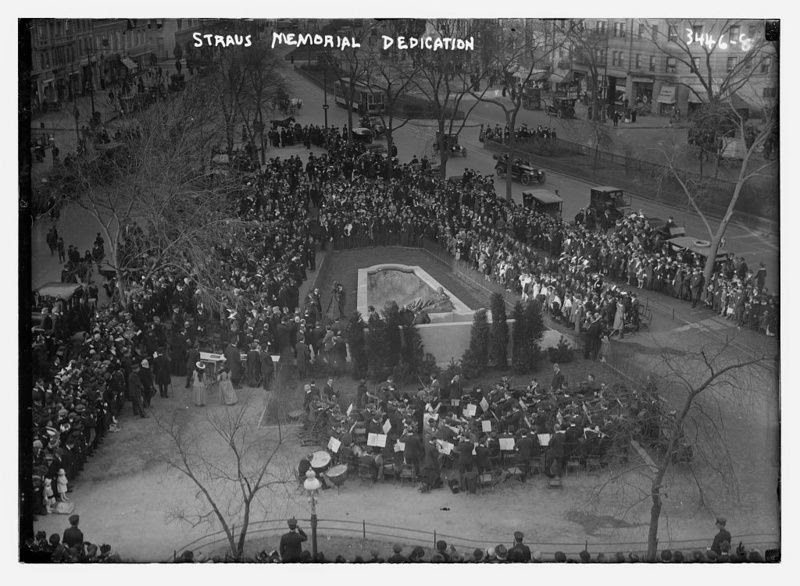
Many of the passengers on the ship were from wealthy and notable New York families such as the Astors. Henry Clay Frick, J.P. Morgan, and George Washington Vanderbilt had tickets but didn’t sail. Some of the more well-to-do families of victims lost in the sinking erected elaborate memorials across New York City. One such memorial can be found at Straus Park. There, visitors will find a memorial by sculptor Augustus Lukeman and architect Evarts Tracy dedicated to the memory of Isidor and his wife Ida Straus.
The memorial features the reclining figure of a mourning woman over a fountain and the inscription, “In memory of Isidor and Ida Straus who were lost at sea in the Titanic disaster April 15, 1912, Lovely and pleasant were they in their lives and in their death they were not divided.” Originally from Germany, the Strau family moved to America in 1854. In 1888, brothers Isidor and Nathan became owners of R.H. Macy & Co. and opened the world’s largest department store at Herald Square. Other memorials to victims can be found at Grace Church on West 10th Street and Broadway where there is a memorial to Edith Corse Evans, in Central Park at 91st Street and 5th Avenue where there is a memorial to journalist William T. Stead, and at the Cathedral of Saint John the Divine where a window is dedicated to John Jacob Astor IV.
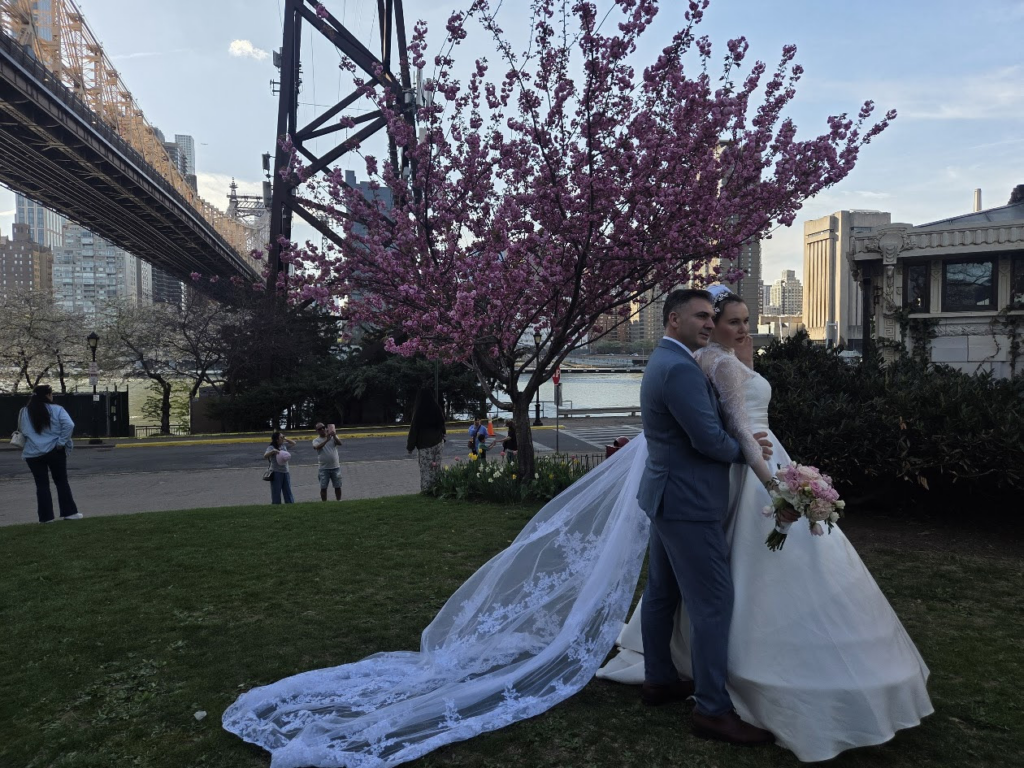
FAVORITE SITE FOR BRIDAL PHOTOS IS THE WONDERFUL KWANZAN CHERRY TREE OUTSIDE THE RIHS VISITOR CENTER
CREDITS
Untapped New York
Judith Berdy
All image are copyrighted (c) Roosevelt Island Historical Society unless otherwise indicated THIS PUBLICATION FUNDED BY DISCRETIONARY FUNDS FROM CITY COUNCIL MEMBER JULIE MENIN & ROOSEVELT ISLAND OPERATING CORPORATION PUBLIC PURPOSE FUNDS.