
Monday, July 21, 2025 – ENSLAVED WOMEN SEWED FOR THEIR ENSLAVERS
Women at the Center
Stitching Meaning:
Reflecting on the Themes of
Real Clothes, Real Lives
Monday, July 21, 2025
New-York Historical Society
Issue # 1489
Women at the Center
Stitching Meaning: Reflecting on the Themes of Real Clothes, Real Lives
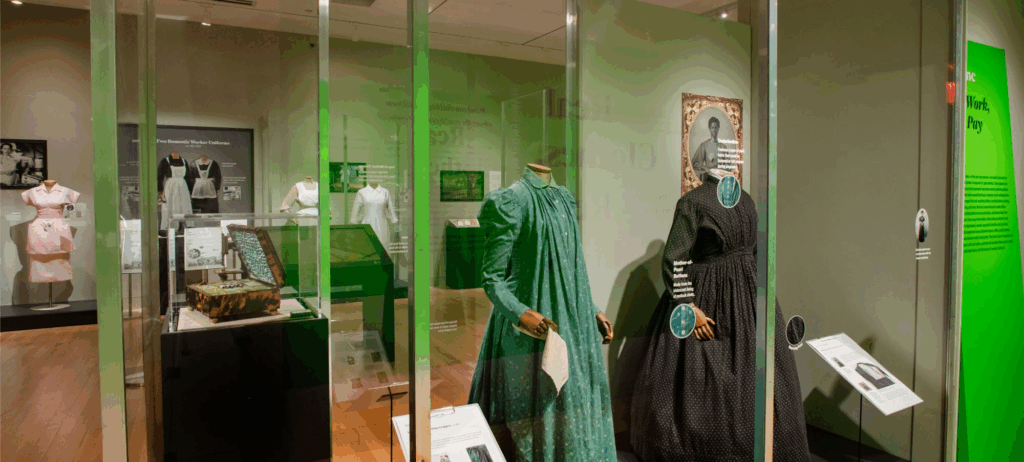
We recently said goodbye to Real Clothes, Real Lives: Two Hundred Years of What Women Wore, an exhibition of historic clothing from the Smith College Collection, on display from September 2024 to June 2025 in our Joyce B. Cowin Women’s History Gallery. The closing of this popular exhibition gives us the opportunity to reflect on some of the larger themes that it explored—in this case, the centrality of sewing to 19th-century American women’s lives, and the difference that race, class, and legal status made in the ways that women experienced this ubiquitous work.
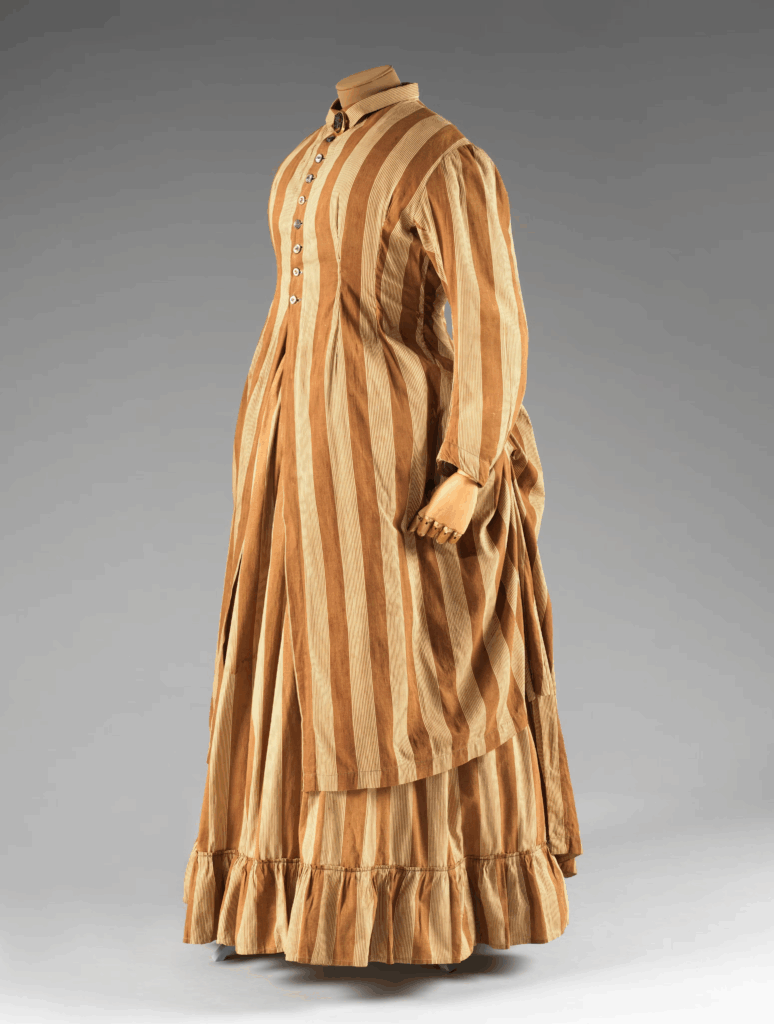
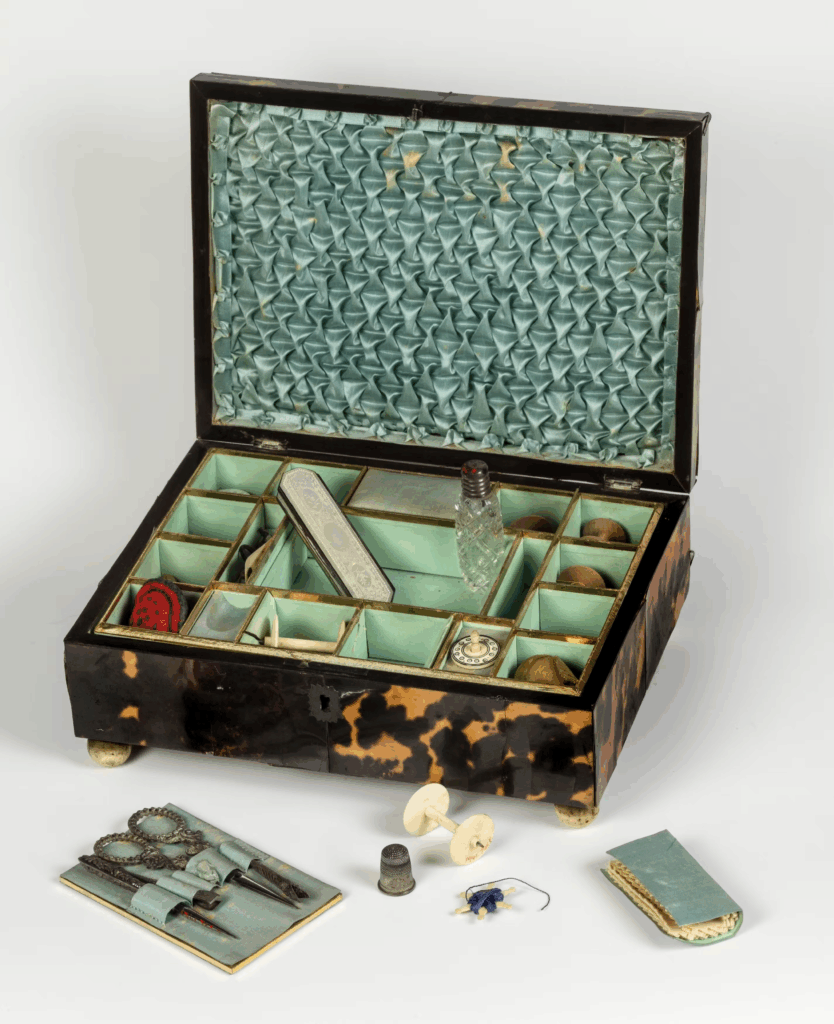
Women’s sewing encompassed a vast and varied culture in the early to mid-19th-century United States. While every woman was expected to sew, the function of women’s sewing could vary enormously. Some women worked hard piecing together plain clothes, while others spent their leisure time stitching ornamental and fancy embroidery. Sometimes highly skilled women were paid for their sewing work. Most often, however, they were not.
Prior to emancipation, many enslaved women were forced to sew for the women and families that enslaved them, for their fellow enslaved men, women, and children, and for their own families. Enslavers invested in, valued, and often advertised the sewing and seamstress skills possessed by the women they enslaved. For example, Ellen Thomas was taught the work of “fine sewing” while enslaved by Cornelia Kimball. Thomas commanded some of the most challenging sewing techniques, including how to add tucks and “back-stitch them in the front of men’s shirts.” This labor—the work of sewing—was integral to the foundation of American slavery, writes historian Alexandra J. Finley. Enslaved women “performed the day-to-day labor necessary to the functioning of the slave trade,” Finley argues, for it was “the ‘product’ of women’s labor–clean, healthy, and well-dressed bodies,” that “were put up for sale in horrifying ways.”
Hannah Jones, the granddaughter of an enslaved woman, recalled that her grandmother’s enslaver had forced her grandmother to sew 12 shirts just three days after she had given birth, demonstrating that free and enslaved women had vastly different relationships to sewing and to motherhood. Historian V. Lynn Kennedy notes that experiences like that of Hannah Jones’s grandmother reveal that “racial differences seemed to trump similarities in physical experiences” between women, “reaffirming rather than challenging social boundaries.”
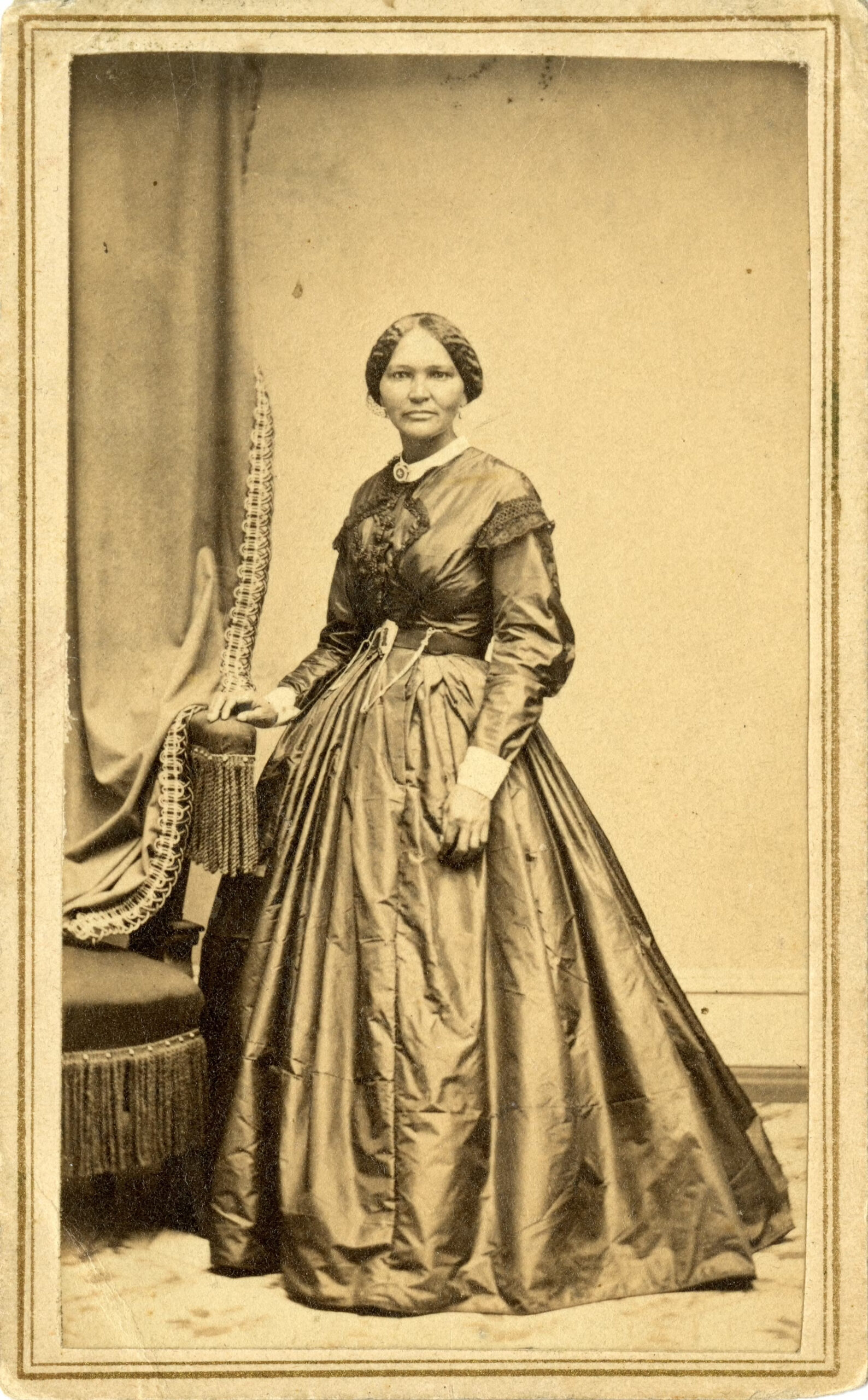
Some enslaved African American women became highly skilled and sought-after seamstresses, such as the famous Elizabeth Keckley—who started working as a seamstress for the wealthy white families of St. Louis to spare her mother from being “rented out.” Still enslaved by Ann Garland (her half-sister), Elizabeth Keckley was at first prevented from keeping her earnings. But with determination and donations from some satisfied customers, she was able to buy her and her son’s freedom in 1855. She went on to become one of the most successful seamstresses in Washington, D.C. (and likely the nation), making dresses for both Mary Todd Lincoln and Varina Davis (whose husband, Jefferson Davis, was president of the Confederacy during the Civil War).
Due to sewing’s ubiquitous and tedious nature, free women often socialized and even organized around the task, especially before the introduction of the sewing machine in the mid-century. Delia Locke, a recent migrant to California, and her husband had 13 children, which meant a lot of sewing. But it did not stop Delia from attempting to “improve” society around her through the introduction of a sewing circle. In 1857, she hosted “the ladies of the neighborhood” to organize the Mokelumne River Ladies’ Sewing Circle. Delia, who had written up a Constitution and Bylaws ahead of the meeting, was appointed chairman, and later Treasurer.
Sometimes these sewing circles plied their needles for benevolent causes, selling the articles they stitched to raise money for “charitable purposes.” These religious sewing societies offered opportunities to women who sought socially approved access to more intellectual, or even political, pursuits.
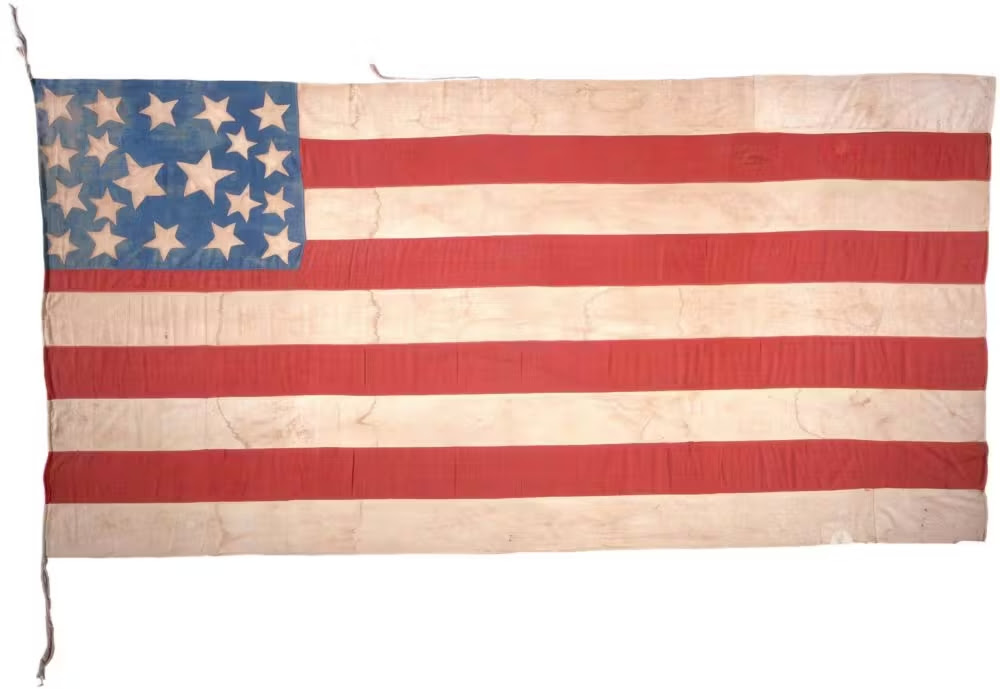
This abolitionist flag was created in Andover, Ohio, an abolitionist center. The flag has only 20 stars and nine stripes because the creator left out every state and original colony that continued to uphold the practice of slavery.
For example, antislavery and abolitionist women activists famously organized around sewing. The women in these groups sewed goods for sale at antislavery fairs, educated themselves by reading antislavery literature and tracts aloud as they sewed, and sometimes stitched garments for people attempting to self-emancipate. Anna Murray Douglass, wife of Frederick Douglass, appears to have contributed to the Lynn Anti-Slavery Sewing Circle. Frederick Douglass urged them on, saying, “I can only say, work on; your cause is good; work on; duty is yours—consequences are the Almighty’s.” During the Civil War, women made and donated objects to Sanitary Fairs across the nation, raising hundreds of thousands of dollars for the US Sanitary Commission, which was tasked with providing hospitals, nurses, and medical supplies to wounded soldiers.
Towards the end of the 19th century, as more and more women acquired sewing machines and could quickly and conveniently complete their sewing at home, women’s relationship to sewing changed again. By the turn of the 20th century, many working-class households had machines, and the social, benevolent, and organizational elements of handsewing fell by the wayside. Nonetheless, women continued to find ways to center clothing and fashion in their everyday lives and in their organizing and activism.
Stay tuned for the next exhibition to be installed in the Joyce B. Cowin Women’s History Gallery: The New York Sari, opening this fall!
PHOTOS OF THE DAY
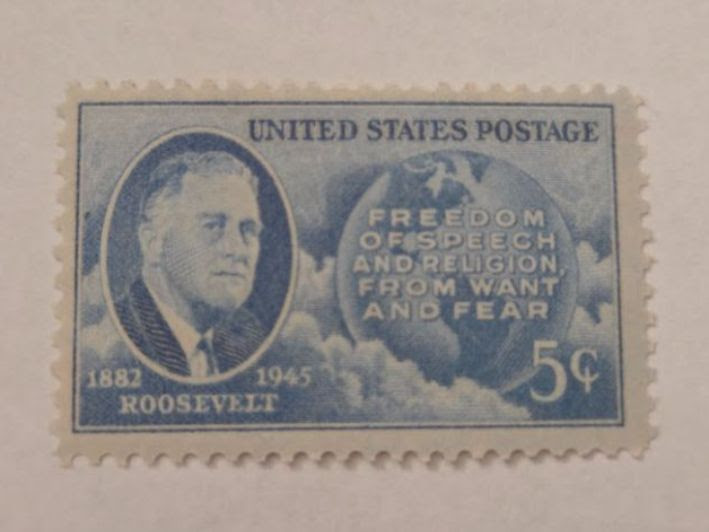
POSTAGE STAMP WITH FDR AND THE FOUR FREEDOMS
CREDIT TO
New – York Historical Society
Written by Hope McCaffrey, Andrew W. Mellon Predoctoral Fellow in Women’s History
All image are copyrighted (c) Roosevelt Island Historical Society unless otherwise indicated
THIS PUBLICATION FUNDED BY DISCRETIONARY FUNDS FROM CITY COUNCIL MEMBER JULIE MENIN & ROOSEVELT ISLAND OPERATING CORPORATION PUBLIC PURPOSE FUNDS.
Copyright © 2025 Roosevelt Island Historical Society, All rights reserved.Our mailing address is:
rooseveltislandhistory@gmail.com
Leave a comment