Tuesday, October 14, 2025 – Photos out of shop window brought real life images

The Upper East Side
Tailor who took Poetic Street Scene
Photos over Six Decades from his
Shop Window
Tuesday, October 14, 2025
Ephemeral New York
ISSUE #1553
John Albok saw much loss early in his life. Born in Hungary in 1894, he was drafted into war, then returned home to learn that two of his sisters died of starvation and his father had committed suicide
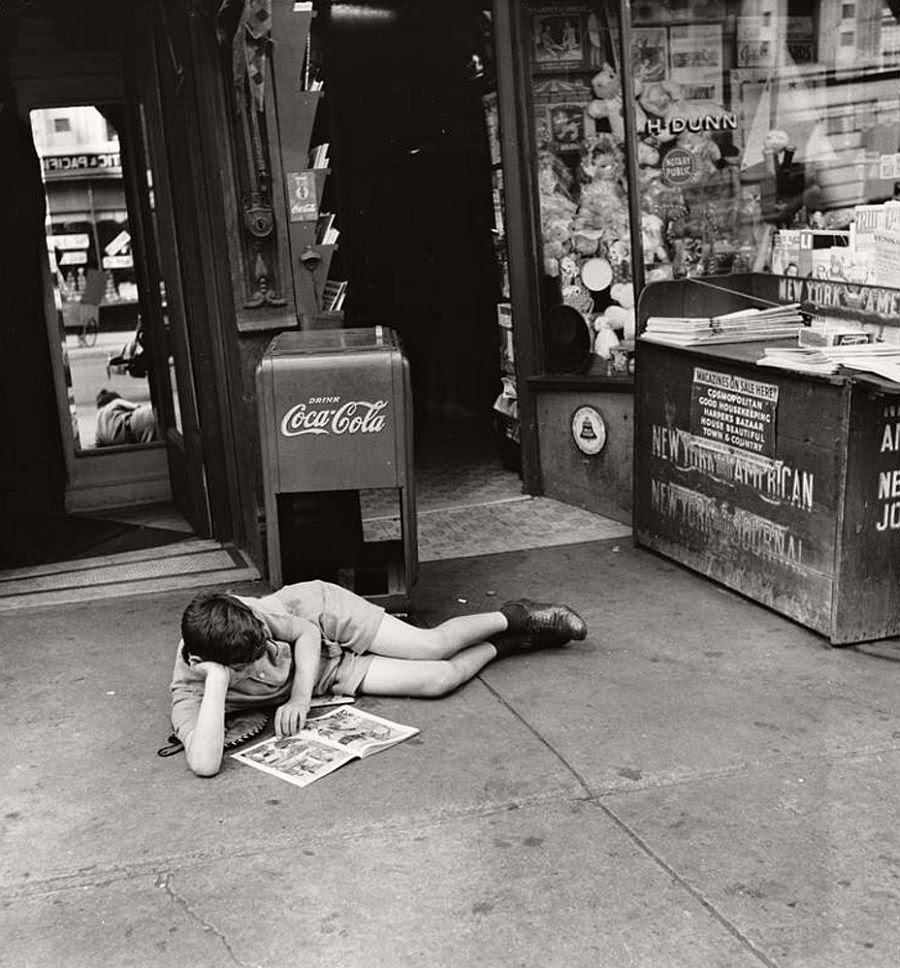
He may have been able to get through these tragedies by focusing on his passion: photography.
As a 12-year-old, he acquired his first camera, a Kodak Brownie. He took photos during his army years, documenting scenes from prisons and hospitals, according to New York University’s digital library. But his family had no funds to spend on art school. Instead he was apprenticed to a tailor.
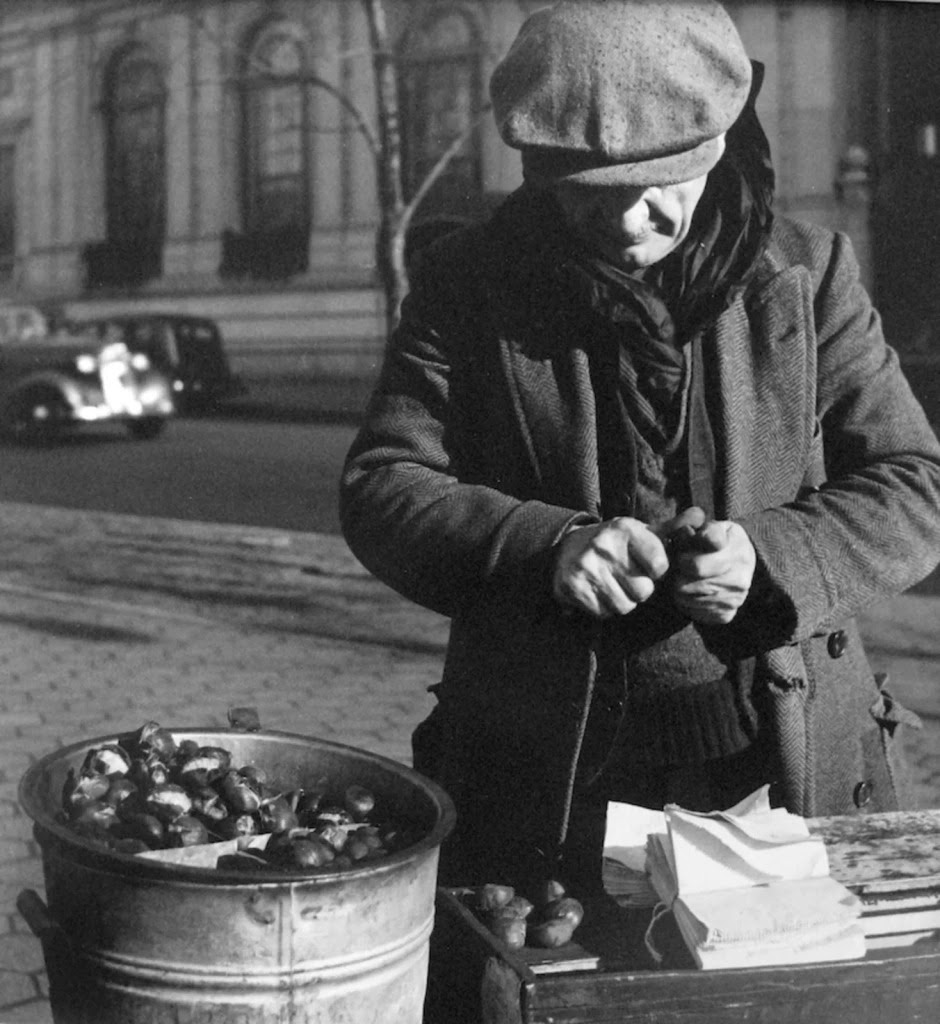
In 1921 he immigrated to New York City, opening a tailor shop at 1392 Madison Avenue, between 96th and 97th Streets. Now married, Albok, his wife, and his daughter lived in an upstairs tenement apartment for the next six decades, witnessing waves of demographic change on the border of the Upper East Side and East Harlem.
From his shop, he began taking pictures—turning a compassionate, sensitive eye toward the sidewalks and streets in all seasons outside his front window.
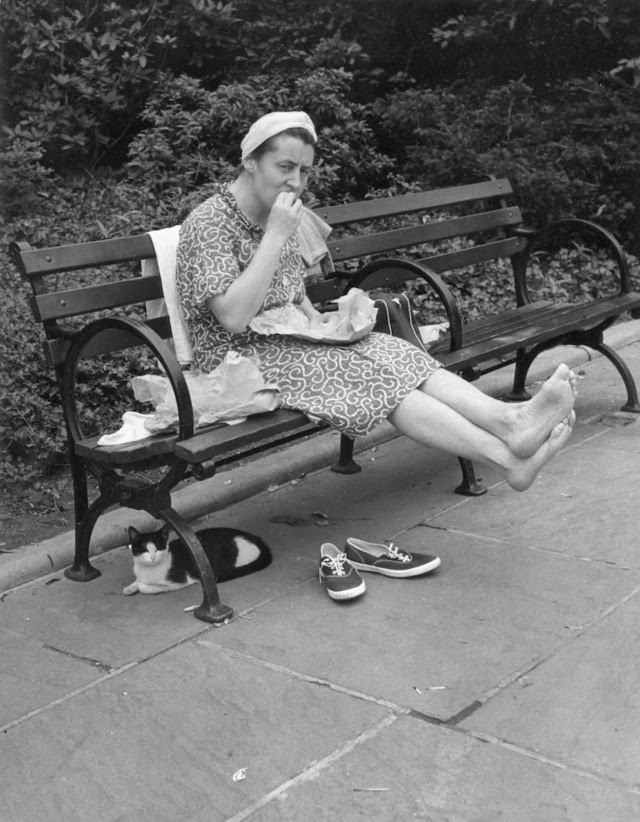
“For 60 years, using a 5 x 7 view camera and then a twin lens reflect camera, Albok took as his subject people and passersby outside his shop, and New York City life during the Depression, and World War II,” per NYU. “Central Park, children, street scenes, and people at leisure were also among his preferred subjects.”
He described his Depression-era photos as a way to combat the degradation of poverty. “I photographed many poor souls, trying my best to leave them their most precious heritage—their dignity,” he said. “There is nothing else left.”
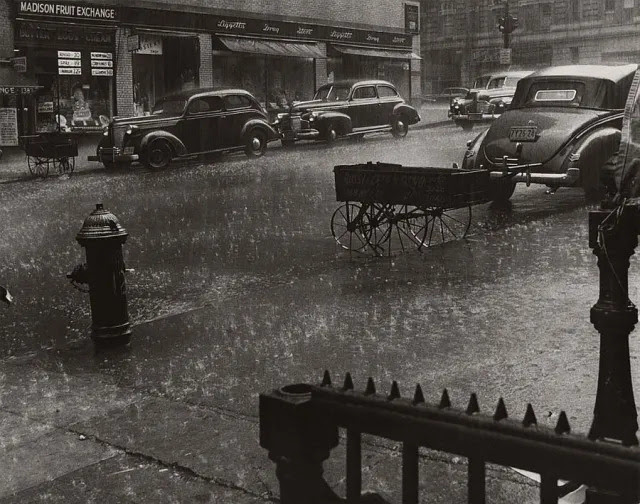
His work as a tailor occupied his days. “At night, he used the small shop as a darkroom to develop his pictures, many of them taken through the shop’s window,” wrote the New York Times.
Albok didn’t only capture images on Madison Avenue. He roamed the city for subjects, sometimes not returning home until early the next morning, much to the consternation of his wife. Labor protests and antiwar activism sparked his interest, as did day-to-day life among the Hungarian immigrant community then concentrated around East 79th Street.
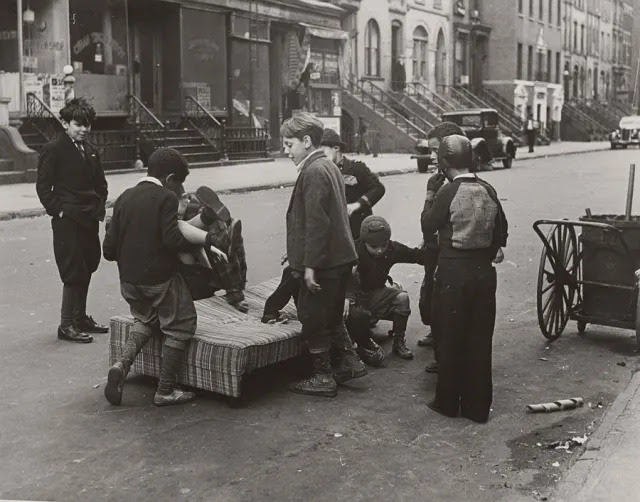
Critical acclaim for his images came in the late 1930s. A curator at the Museum of the City of New York (MCNY) mounted a solo exhibit titled “Faces of the City.”
Through the next decades he had occasional exhibits, published photos in art journals, and was the subject of two documentaries.
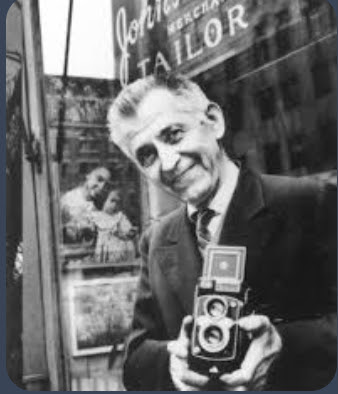
Framed photos he had taken also hung from the walls of his shop, “peeking out from behind the garments hanging from the ceiling,” reported the New York Daily News in 1968.
This gentle tailor (at right, in the 1970s) found himself and his work rediscovered in the early 1980s, per NYU.
Another MCNY show, “Tailored Images,” was put together. One day before this retrospective exhibit was to open in 1982, Albok died at age 87.
Albok was still residing in the tenement apartment above the shop that provided a window to the wonder and pathos of New York City life—glimpsed in these and thousands of other poetic images.
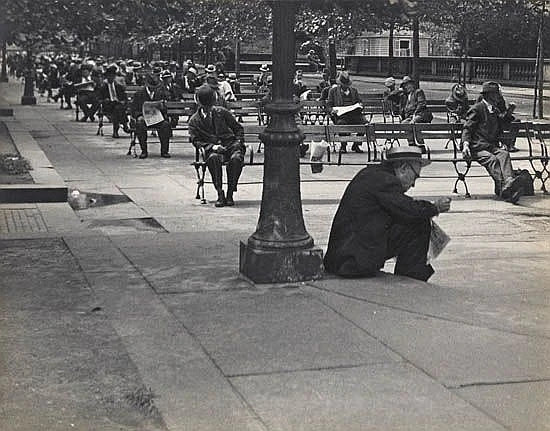
In a 1966 Daily News piece, he explained what might sum up his drive to chronicle the humanity in the city: “Wherever there is people there is pictures because there is life.”
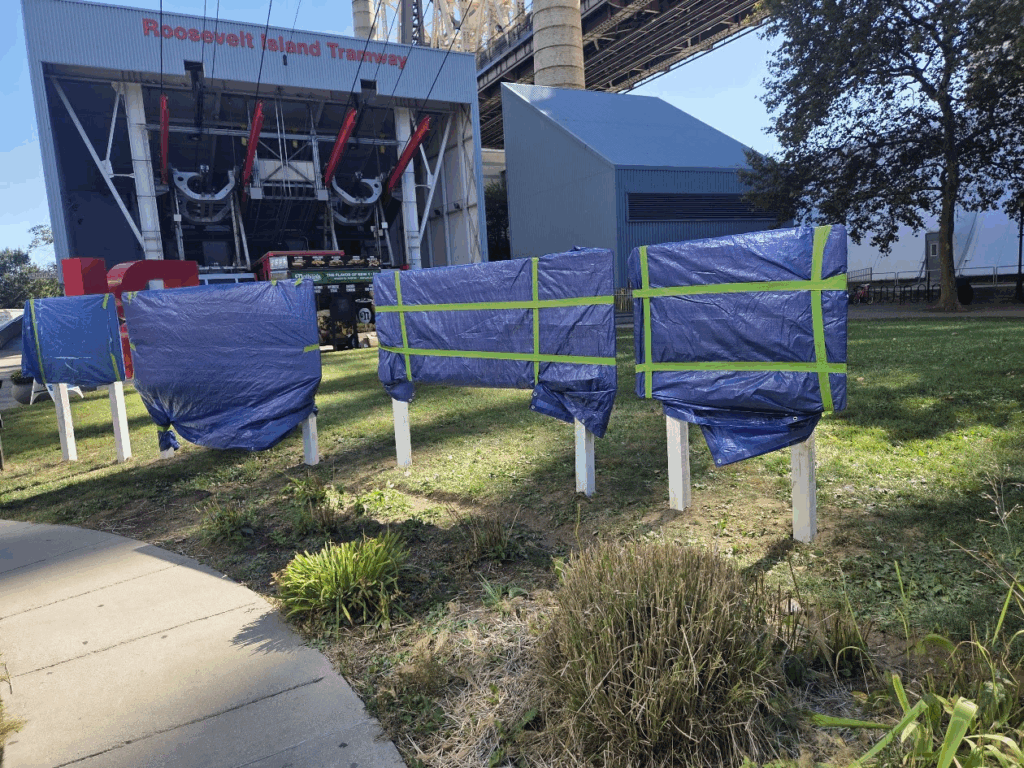
Back at the Tram Lawn the Map Project panels were installed and awaiting the reveal on Wednesday, October 15th at 1 p.m.
Come for the event and learn 50+ years of island history
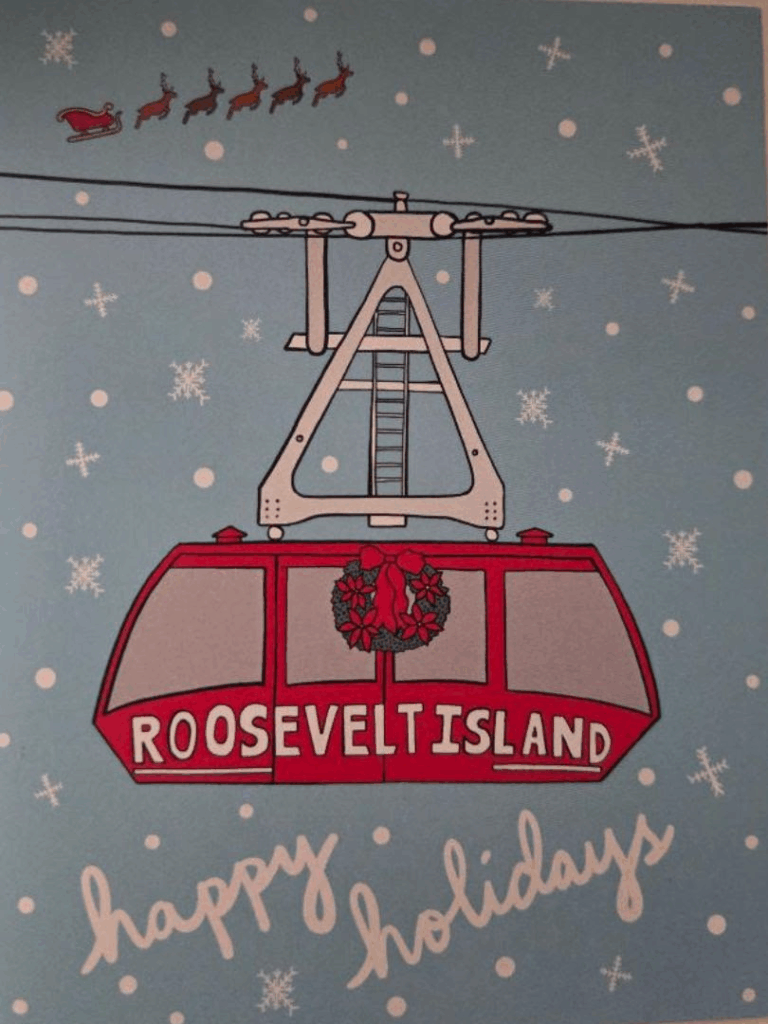
Our limited edition holiday card is available at a special early shopper price of 2 cards for $5-
While supplies last!
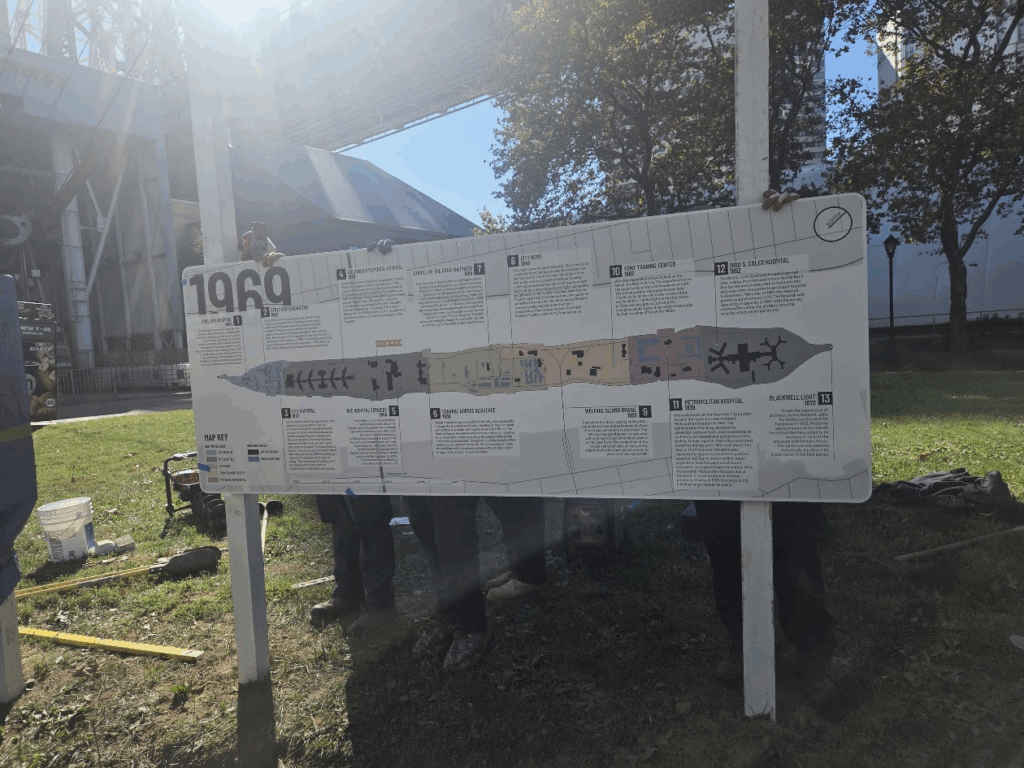
Save the Date
Wednesday, October 15th
1 p.m. at the Tram Lawn
for the Revealing of the
“Roosevelt Island
1969-2025 Maps and Images”
CREDIT TO
Ephemeral New York
All image are copyrighted (c) Roosevelt Island Historical Society unless otherwise indicated
THIS PUBLICATION FUNDED BY DISCRETIONARY FUNDS FROM CITY COUNCIL MEMBER JULIE MENIN & ROOSEVELT ISLAND OPERATING CORPORATION PUBLIC PURPOSE FUNDS.


Copyright © 2025 Roosevelt Island Historical Society, All rights reserved.Our mailing address is:
rooseveltislandhistory@gmail.com
Leave a comment