Wednesday, November 12, 2025 – A STATUE TO REMEMBER THOSE LOST


FROM THE ARCHIVES
WEDNESDAY, NOVEMBER 12, 2025
The most sorrowful
doughboy statue is in this
West Side park
ISSUE #1120/ 1573
EPHEMERAL NEW YORK
THIS IS A REPRINT FROM A VETERAN’S DAY
ARTICLE PUBLISHED IN 2023.
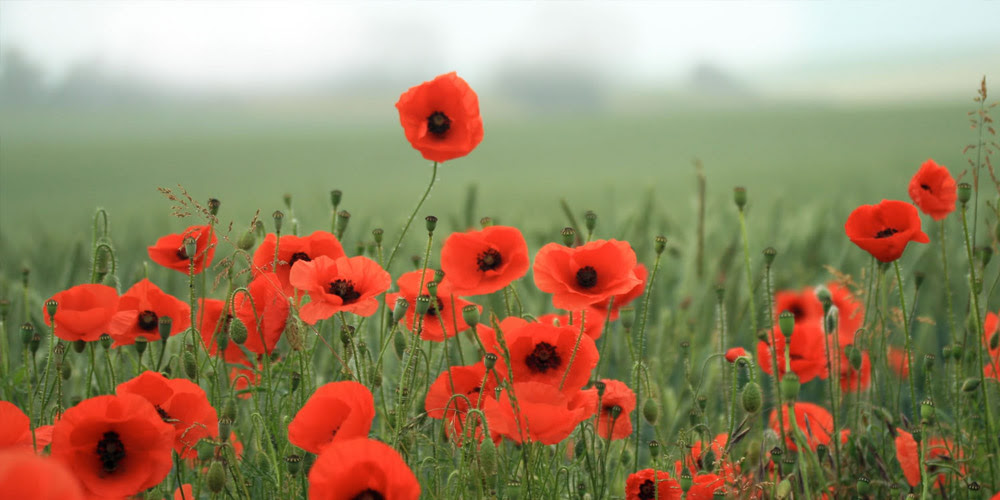
In Flanders Fields
BY JOHN MCCRAE
In Flanders fields the poppies blow
Between the crosses, row on row,
That mark our place; and in the sky
The larks, still bravely singing, fly
Scarce heard amid the guns below.
We are the Dead. Short days ago
We lived, felt dawn, saw sunset glow,
Loved and were loved, and now we lie,
In Flanders fields.
Take up our quarrel with the foe:
To you from failing hands we throw
The torch; be yours to hold it high.
If ye break faith with us who die
We shall not sleep, though poppies grow
In Flanders fields.
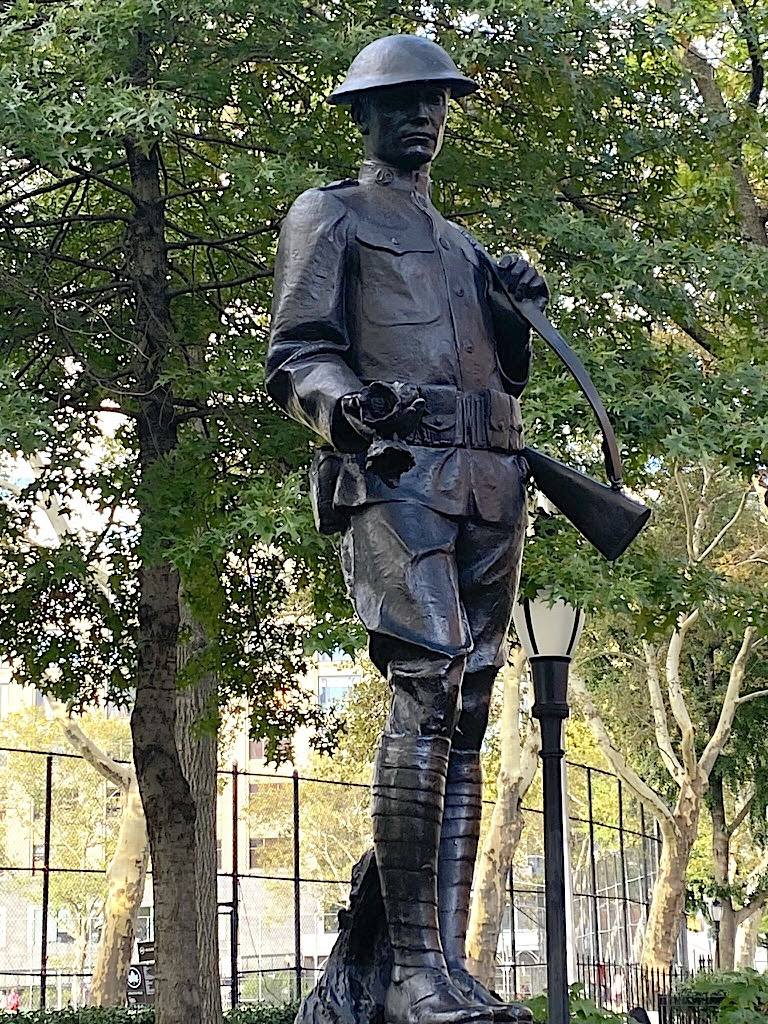
He’s a slight soldier, with the strap of his rifle slung
over his shoulder and a contemplative expression meant to engage us.
And unlike most statues depicting military men, he’s offering flowers. In this case, he’s holding poppies—a flower that signifies loss and remembrance.
The doughboy of De Witt Clinton Park has stood inside the Eleventh Avenue and 52nd Street entrance to this Hell’s Kitchen green space since 1930. Officially the monument is known as “Clinton War Memorial,” per NYC Parks.
It’s one of nine doughboy statue erected in city parks after World War I, when neighborhoods across New York sought to honor local residents who lost their lives on the battlefields of Europe. I’ve seen the doughboy statues in Chelsea, the West Village, Red Hook, and Washington Heights.
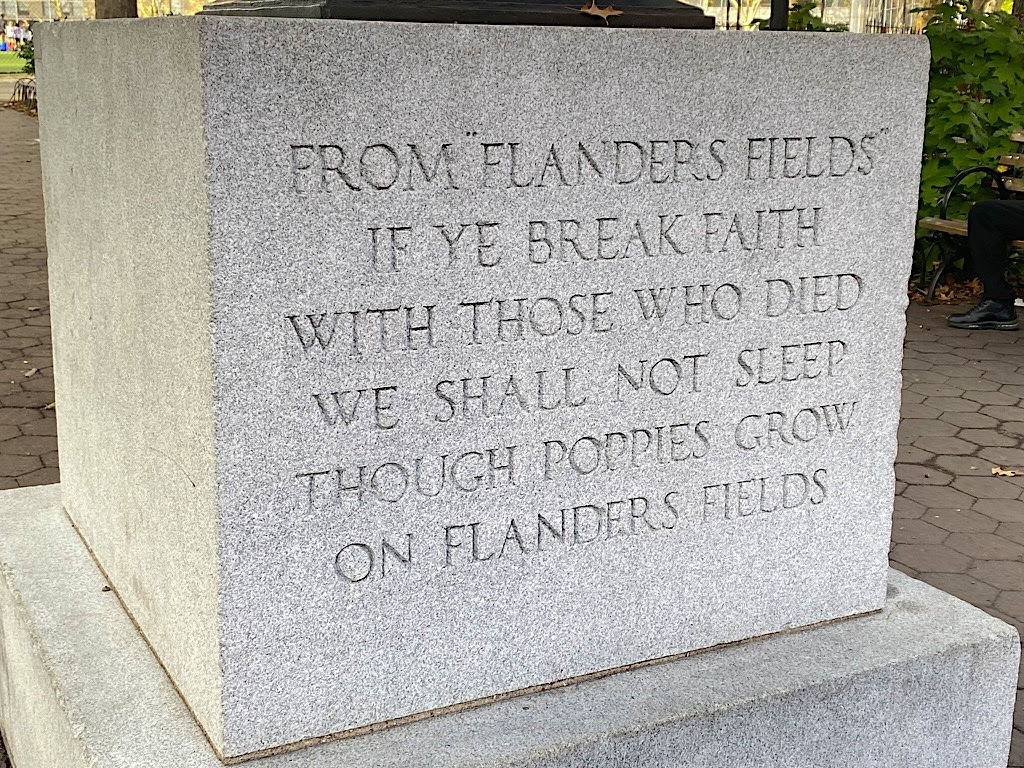
But what distinguishes this doughboy is that he’s standing on a granite pedestal inscribed with verse from “In Flanders Field”—the poem written by Canadian physician and lieutenant colonel John McCrae, who penned it after a fellow soldier perished during battle in 1915 in Belgium.
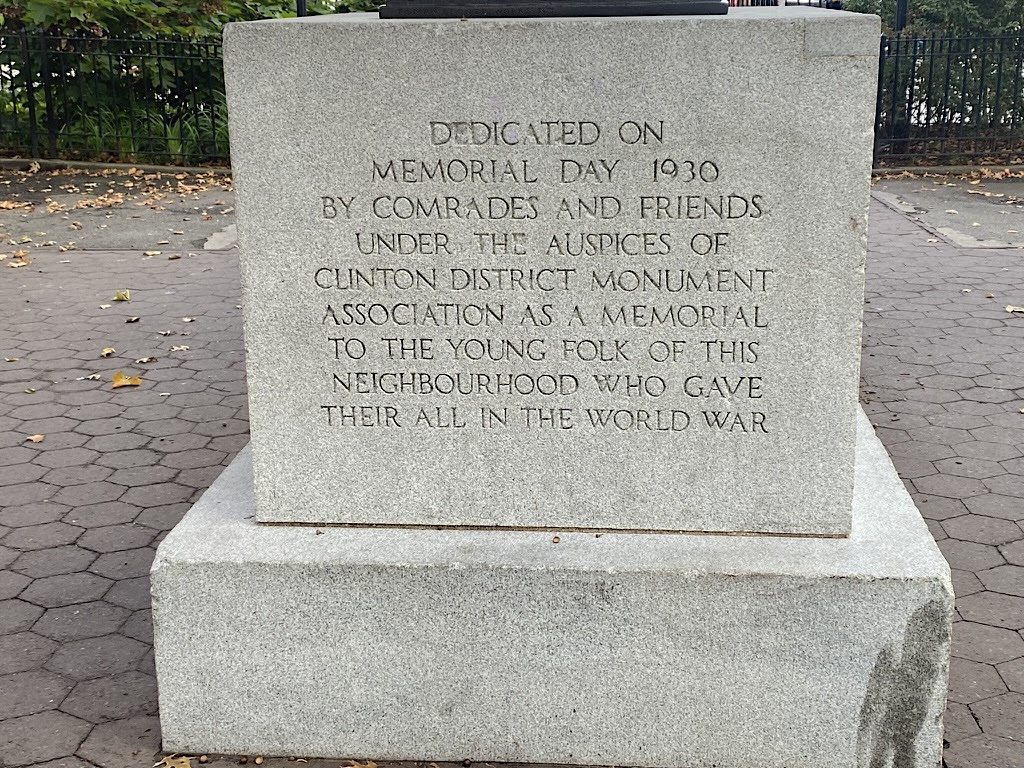
On the other side of the pedestal is an inscription from “comrades and friends” explaining that the monument is a memorial “to the young folk of the neighborhood/who gave their all in the World War.”
Though I couldn’t find an account of it, this statue was likely dedicated in a ceremony attended by thousands. “The doughboys were erected when parks and monuments were more important in the life of a neighborhood,” stated Jonathan Kuhn, curator of monuments for the Parks Department, in a New York Daily News article on the doughboys from 1993. “Also, there was a feeling that this was the last war, and Americans wanted to honor the ordinary heroes who fought the war that would end all wars.”
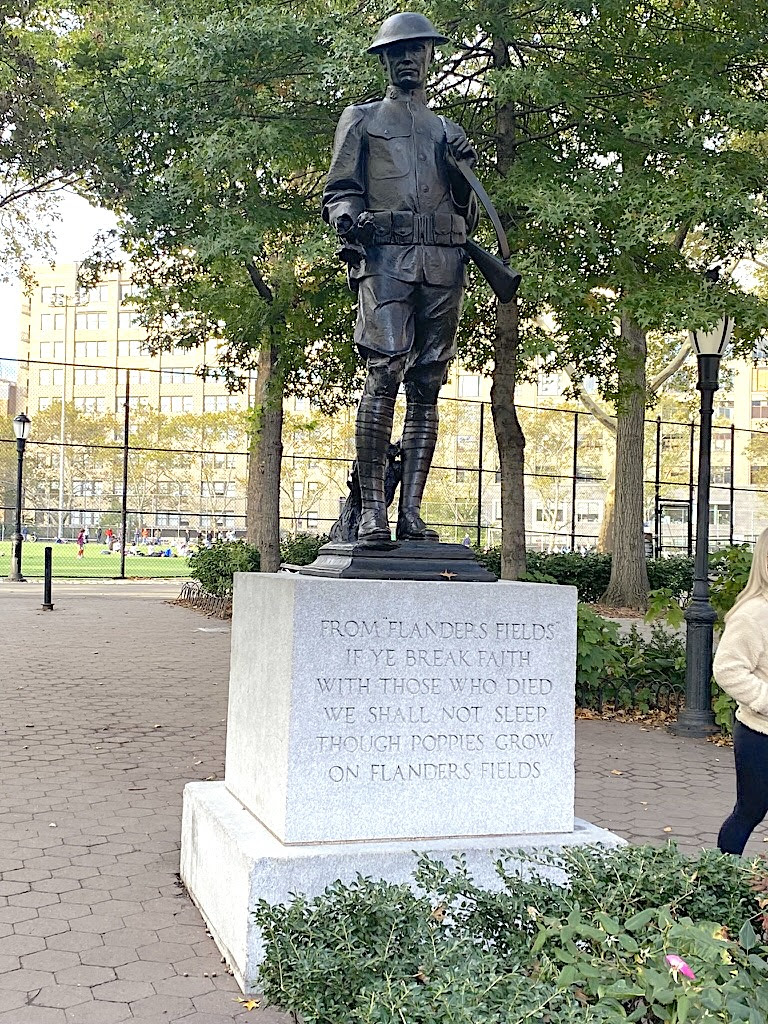
I can’t help but wonder if the De Witt Clinton Park doughboy was modeled on an actual local kid who went to war and never came back. If so, his identity is likely lost to the ages—and he speaks to us only through bronze and granite.
PHOTO OF THE DAY
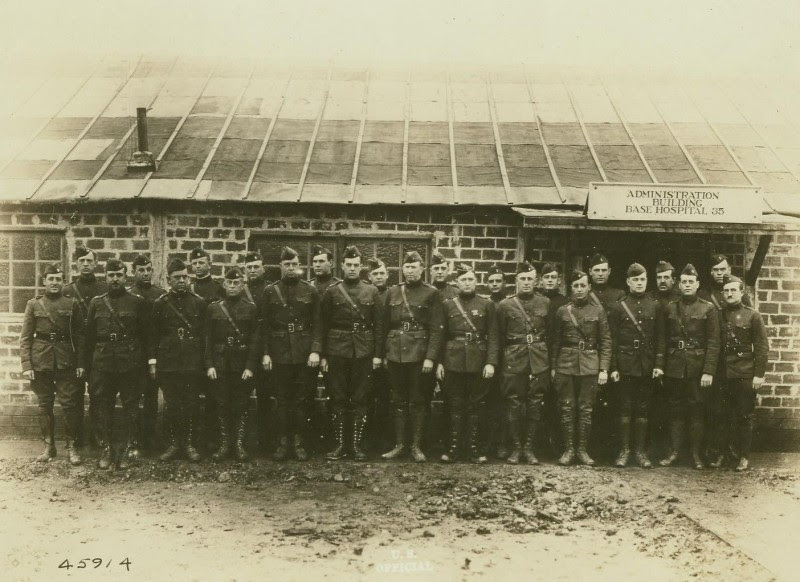
WORLD WAR 1 MEDICAL STAFF FROM METROPOLITAN HOSPITAL
PREPARING TO LEAVE BLACKWELL’S ISLAND TO SERVE
AT BASE CAMP 48, MARS SUR ALLIER, FRANCE DURING 1917 & 1918.
CREDITS
EPHEMERAL NEW YORK
SHORPY HISTORIC AMERICAN PHOTO ARCHIVE
JUDITH BERDY
All image are copyrighted (c) Roosevelt Island Historical Society unless otherwise indicated
THIS PUBLICATION FUNDED BY DISCRETIONARY FUNDS FROM CITY COUNCIL MEMBER JULIE MENIN & ROOSEVELT ISLAND OPERATING CORPORATION PUBLIC PURPOSE FUNDS.

Copyright © 2025 Roosevelt Island Historical Society, All rights reserved.Our mailing address is:
rooseveltislandhistory@gmail.com
Leave a comment