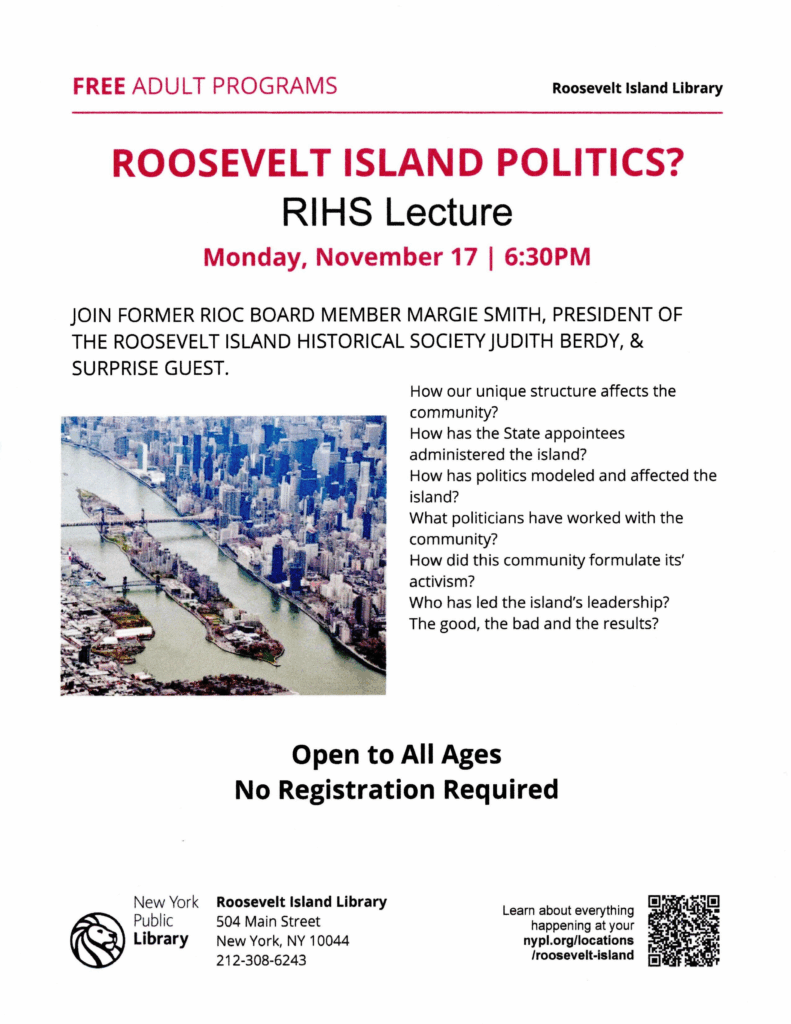
Full Board Meeting PUBLIC HEARING Wednesday, November 19, 2025 – 6:30 PM This meeting will be conducted hybrid in person and via Zoom Marymount Manhattan College, Regina Peruggi Room 221 East 71st Street (Between Third and Second Avenues)
Public Session – Those who wish to speak during the Public Session must register to do so by 6:45 PM.
Adoption of the Agenda
Adoption of the Minutes
Manhattan Borough President’s Report
Elected Officials’ Reports
Chair’s Report – Valerie S. Mason
District Manager’s Report – Ian McKnight
Election of Board Officers
Chair
First Vice-Chair
Second Vice Chair
Secretary
Committee Reports and Action Items
Old Business
New Business
Valerie S. Mason, Chair
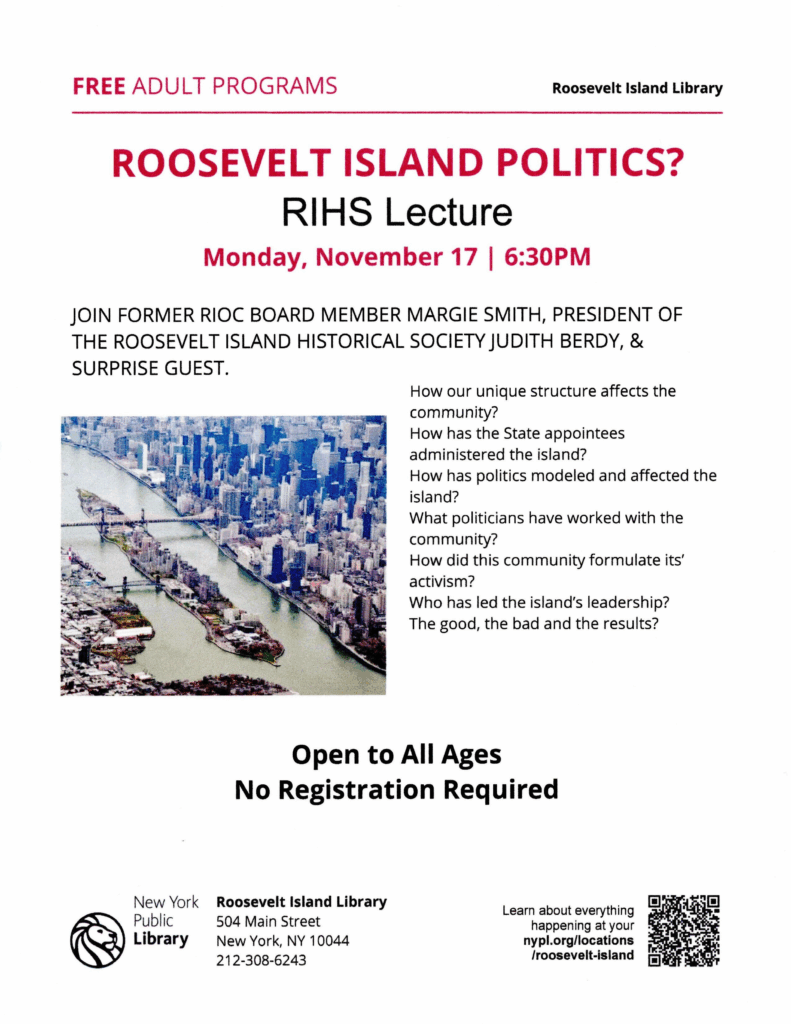
There is only one opportunity for the public to speak at this meeting. You must be on the website and register to speak by 6:45 p.m.
The issue of the proposed cannabis dispensary will be under Committee Reports, item 9 on the Agenda.
THURSDAY
This is the first of many community conversations. The future of Coler is being possibly being considered for redevelopment, though no options have been publicly discussed.
It is important the residents of Roosevelt Island be involved in making Coler remain on the island. You are welcome to attend this meeting at Coler on Thursday at 11 a.m.
PHOTO OF THE DAY
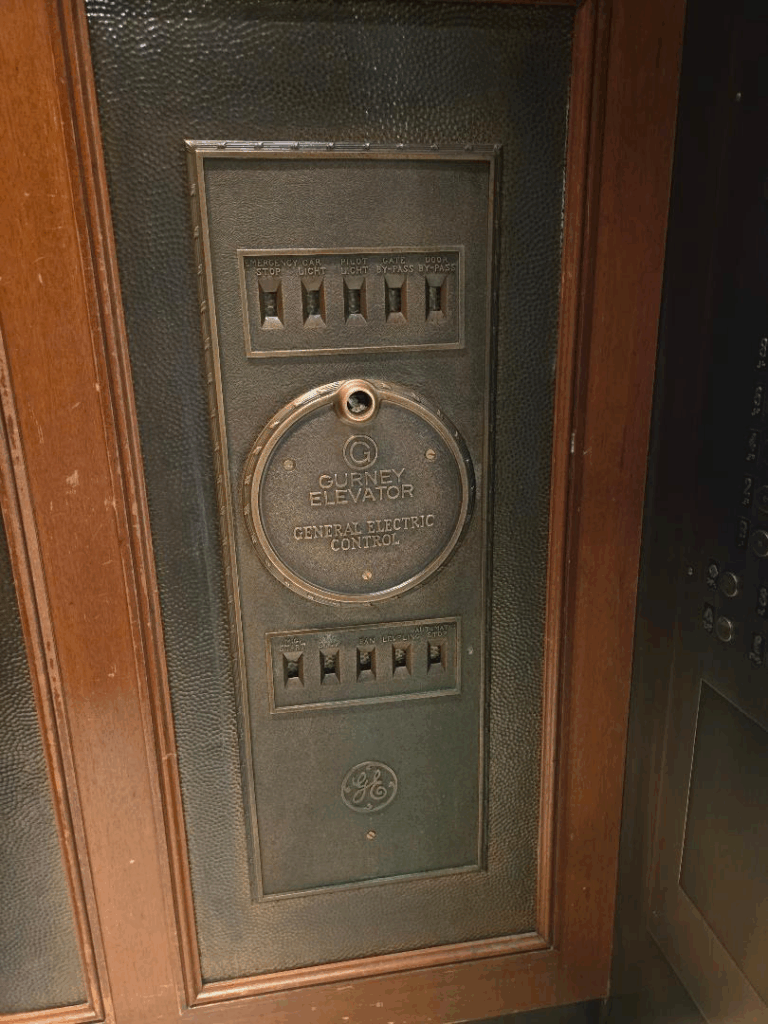
I was in Macy’s today and used this elevator on the 35th Street side of the Broadway building….”going up”. Seems that some things (such as the escalators with wooden steps) are to good to replace.
CREDITS
RIOC NYC Health+Hospitals COLER Judith Berdy
All image are copyrighted (c) Roosevelt Island Historical Society unless otherwise indicated THIS PUBLICATION FUNDED BY DISCRETIONARY FUNDS FROM CITY COUNCIL MEMBER JULIE MENIN & ROOSEVELT ISLAND OPERATING CORPORATION PUBLIC PURPOSE FUNDS.
Today’s battle over Christianity in American public schools has deep roots. In the nineteenth century it was an intramural struggle between Protestants and later-arriving Catholics.
But at Christmastime in 1905, when the Presbyterian principal of a Brooklyn elementary school urged his Jewish students to be more like Jesus Christ, Jews entered the fray in a big way.
It was just the trigger Jewish activist Albert Lucas had been waiting for. Fresh from battling Christian settlement houses brazen about their intent to convert Jewish children, Lucas accused the public schools of proselytizing and demanded limits on religious content in the schools.
After the Board of Education let the principal off with a slap on the wrist and declined to clarify the rules governing religion in the schools, the New York Jewish community staged a boycott of the 1906 school Christmas pageants, prompting widespread student absences.
The protest elicited policy changes, but the board’s concessions generated an enormous antisemitic public backlash. Jews were accused of waging war on Christmas and of being less than true Americans, and warned not to push the issue, lest it arouse more prejudice against them.
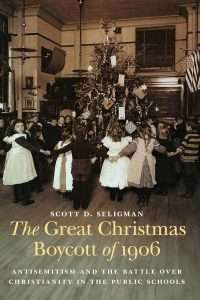
The Great Christmas Boycott of 1906: Antisemitism and the Battle over Christianity in the Public Schools (University of Nebraska Press, 2025) by Scott D. Seligman traces the Christmas celebration dispute to the present day and describes how Jewish organizations of the twenty-first century, persuaded that politics are unlikely ever to permit a victory, seem to have reconciled themselves to the status quo and moved on to other, more winnable issues.
Even as Hitler and his Nazi regime ran roughshod over Germany and Europe in the 1930s, there were those in America who championed their rise. And nowhere so much as on Long Island.
Camp Siegfried in Yaphank (a community in the south part of the Town of Brookhaven, Suffolk County) became a focal point for certain German Americans to gather and espouse the Nazi cause.
Building on racial and ethnic biases, lack of trust in government and a dose of conspiracies, the German American Bund was able to contribute to a growing American fascist movement promoting antisemitism, isolationism, and even the overthrow of the United States government.
Fueled partially by Nazi Germany’s financing of propaganda, thousands of New Yorkers embraced the ideals of an American Reich through retreats such as Camp Siegfried, which groomed Nazi sympathizers to be ready for the fascist overthrow of the American republic.
In opposition to Nazism, multiple local citizen groups fought to combat the Bund’s organized efforts to undermine America.
On the latest episode of the Long Island History Project podcast, Christopher Verga untangles the history of the German American Bund, Father Coughlin, the America First movement, and more.
His book documents a time of unrest in the country when militias, foreign agents, and even elected officials actively opposed the American government.
The Long Island History Project is an independent podcast featuring stories and interviews with people passionate about Long Island history. It is hosted by academic librarian Chris Kretz.
Soon after its unveiling, Upper Room was described by The New York Times as “one of the city’s most popular works of public art. A magnet for Wall Street brown-baggers, it is also a favorite resting place for strollers along the esplanade, one of the choicest waterfront walks in the city.”
Progressive Era Arts and Crafts Communities
In response to the trauma of industrialization and urbanization in the late-nineteenth century, the Arts and Crafts Movement took America by storm. Art exhibits, workshops, and societies dedicated to handicraft, worker dignity, and the production of beautiful art for the masses sprouted from California to Boston.
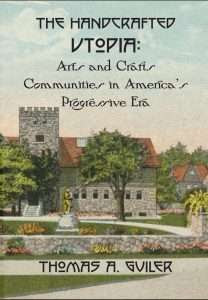
The Handcrafted Utopia: Arts and Crafts Communities in America’s Progressive Era (Couper Press, 2025) examines these utopian communities in the Arts and Crafts Movement.
Ralph Radcliffe Whitehead, Elbert Hubbard, and William Lightfoot Price were so enamored with the movement that they decided to build entirely new worlds — intentional communities — dedicated to pursuing those ideals.
Englishman Whitehead founded an art colony named Byrdcliffe in the Catskill Mountains. Hubbard, a former soap salesman, established an Arts and Crafts community business, Roycroft, outside Buffalo. Price, an architect, built the Rose Valley Association outside Philadelphia.
They endeavored to reform the economic and social inequalities of industrial capitalism through communal living, artistic development, craft, and the sale of finely crafted furniture, architecture, metalwork, and more. This was what they believed was living “the art that is life.”
For these community members, this meant producing and selling art with a social message as well as living everyday life as if it was a work of art.
In imagining a compromise between machine-dominated industry and handicraft, these artisans sought to critique industrial capitalism and carve out a space where craftspeople could once again flourish in community.
Rose Valley, Byrdcliffe, and Roycroft were total sensory installations of the Arts and Crafts Movement that stood as community-workshops that were an alternative to brutal industrialization.
Author Thomas A. Guiler (Ph.D., Syracuse University) is the director of museum affairs at the Oneida Community Mansion House in Oneida, New York. He was assistant professor of history and public humanities at the Winterthur Museum, Garden & Library in Wilmington, Delaware.
He also served at the president of the Communal Studies Association. He has published on the history and material culture of intentional communities such as Oneida and of the Arts and Crafts Movement
The 1969 publication that laid out the master plan is on one wall, showing how a master plan was developed by this first step.
PHOTO OF THE DAY
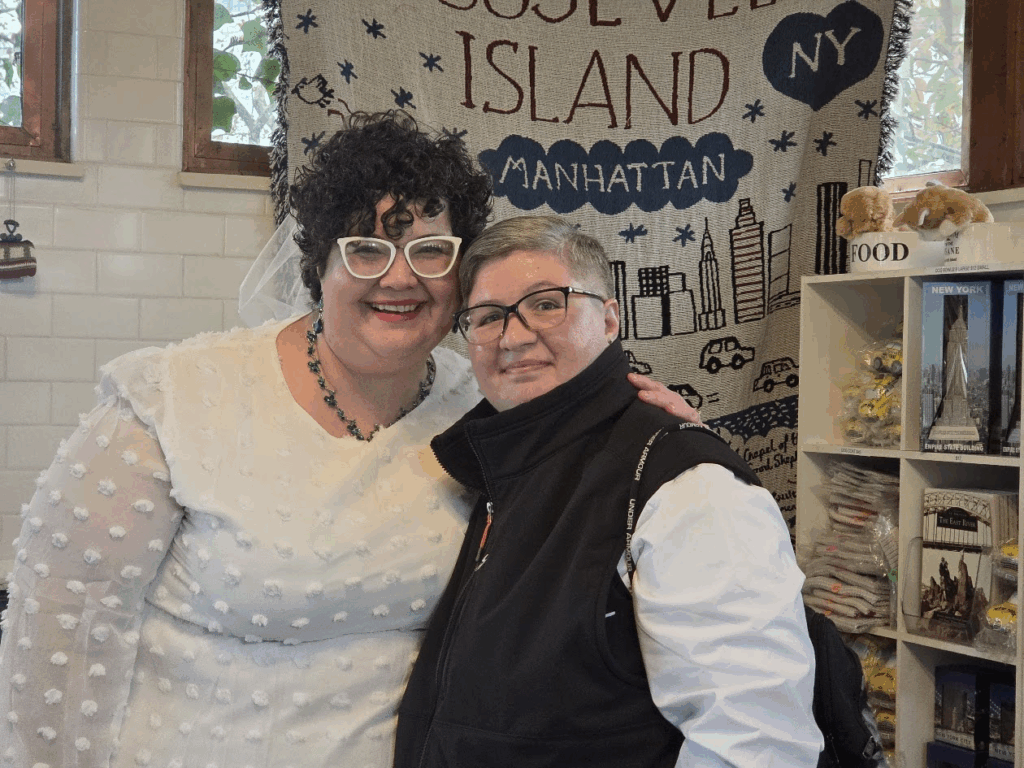
SONIA AND NADINE YEAGER WERE AT THE KIOSK TODAY ON THEIR WAY TO THE MARRIAGE LICENSE BUREAU, FOR THEIR WEDDING CEREMONY!
CREDITS
NEW YORK ALMANACK Judith Berdy
All image are copyrighted (c) Roosevelt Island Historical Society unless otherwise indicated THIS PUBLICATION FUNDED BY DISCRETIONARY FUNDS FROM CITY COUNCIL MEMBER JULIE MENIN & ROOSEVELT ISLAND OPERATING CORPORATION PUBLIC PURPOSE FUNDS.
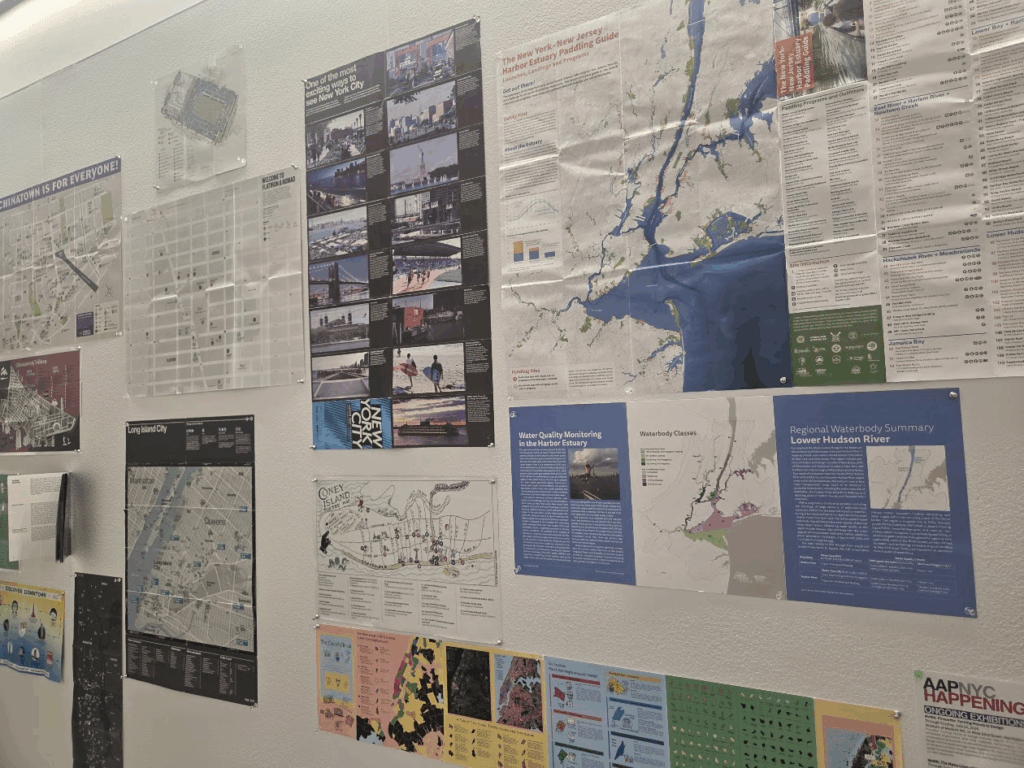
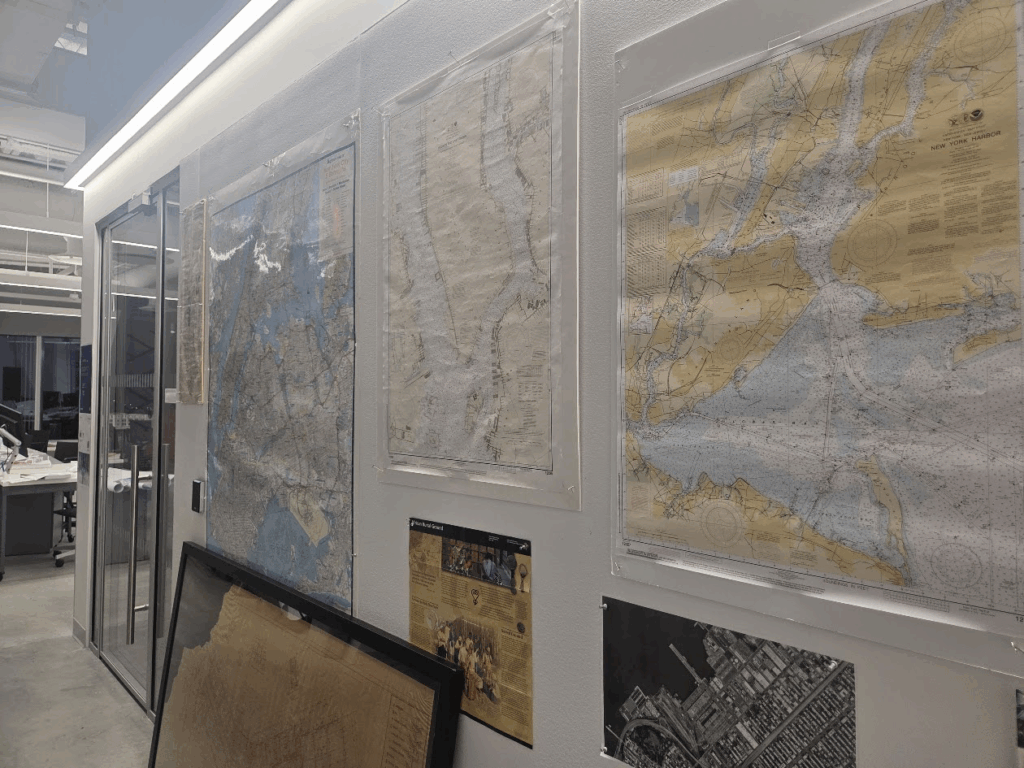
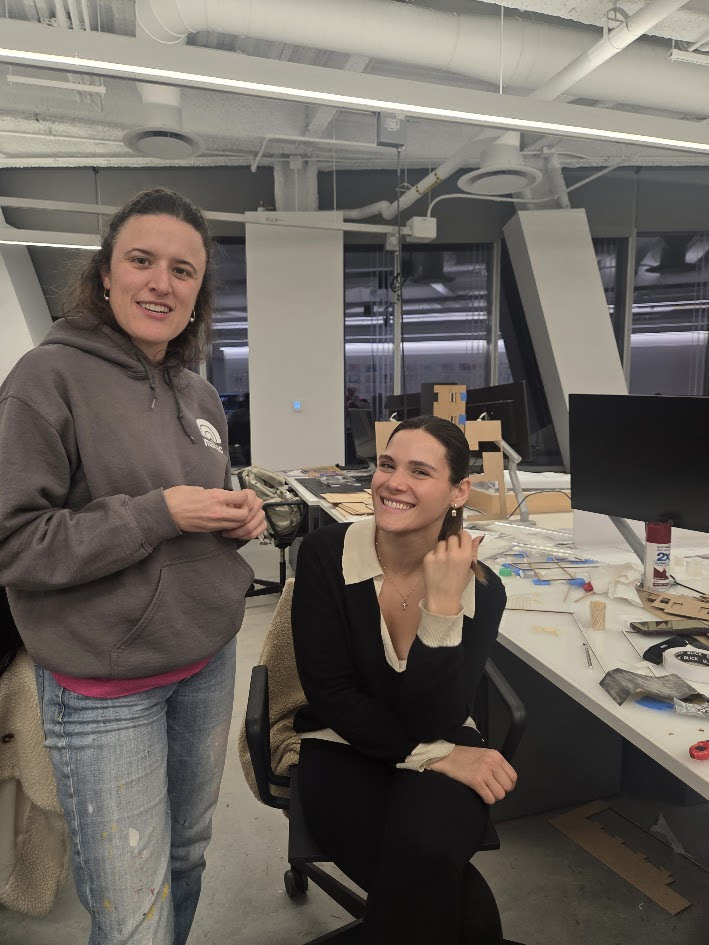
Tonight was my first opportunity to see the new Cornell AAP (Architecture, Art & Planning) space at Tata Innovation Center on the Cornell Tech Campus.
I saw the empty space this summer and today is a thriving architecture school with grand new facilities and walls full of maps, charts, designs, projects and ideas.
The discussion this evening was architects Peter Eisenman and Steven Holl. Both have long histories of contemporary design starting in the 1970’s.
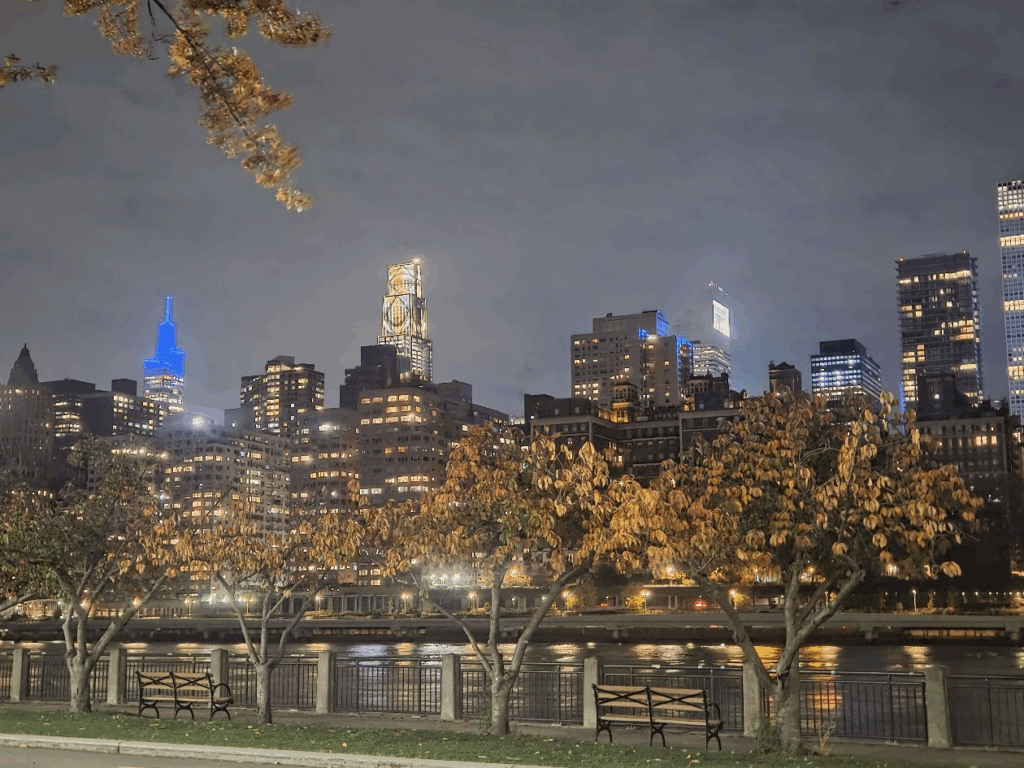
Holl and Eisenman with the skyline background.
The event was a sell out (reserve on line for the next program on Dec. 2nd.)
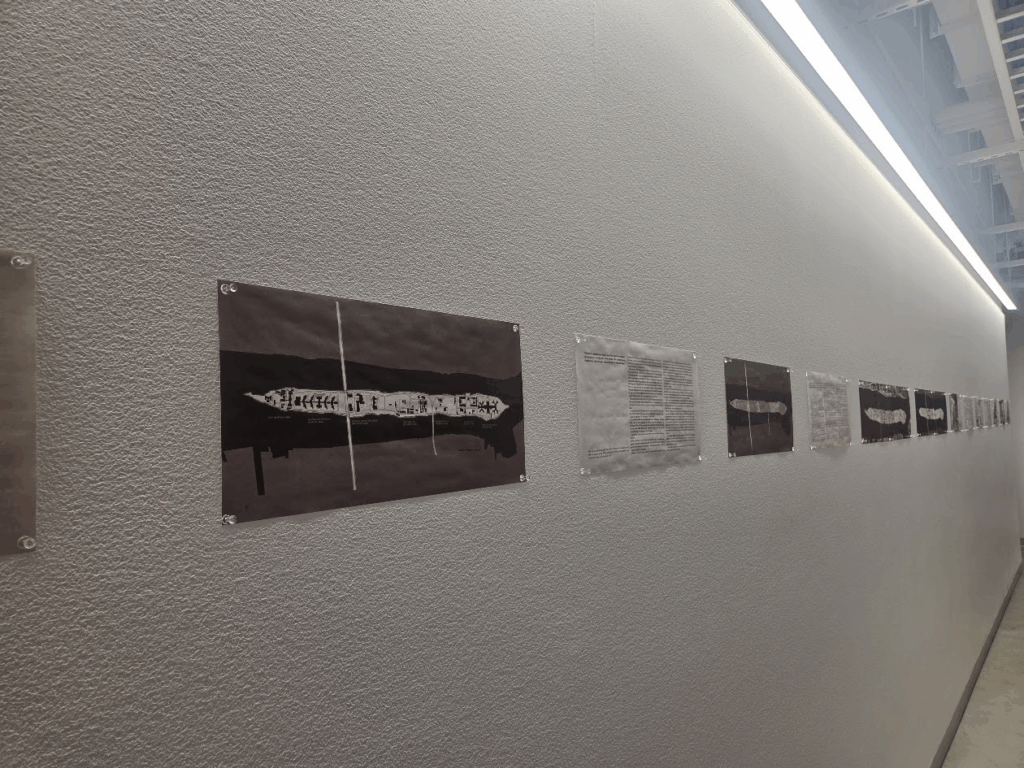
The walls are filled with all sorts of reference materials, including vintage maps, nautical charts and so much more.
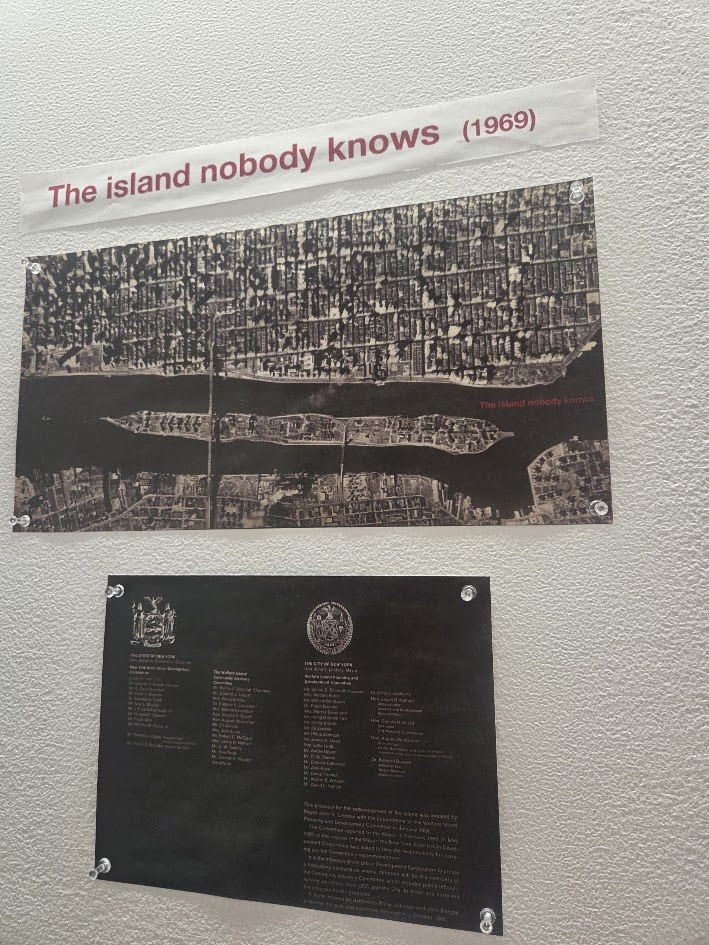
The 1969 publication that laid out the master plan is on one wall, showing how a master plan was developed by this first step.
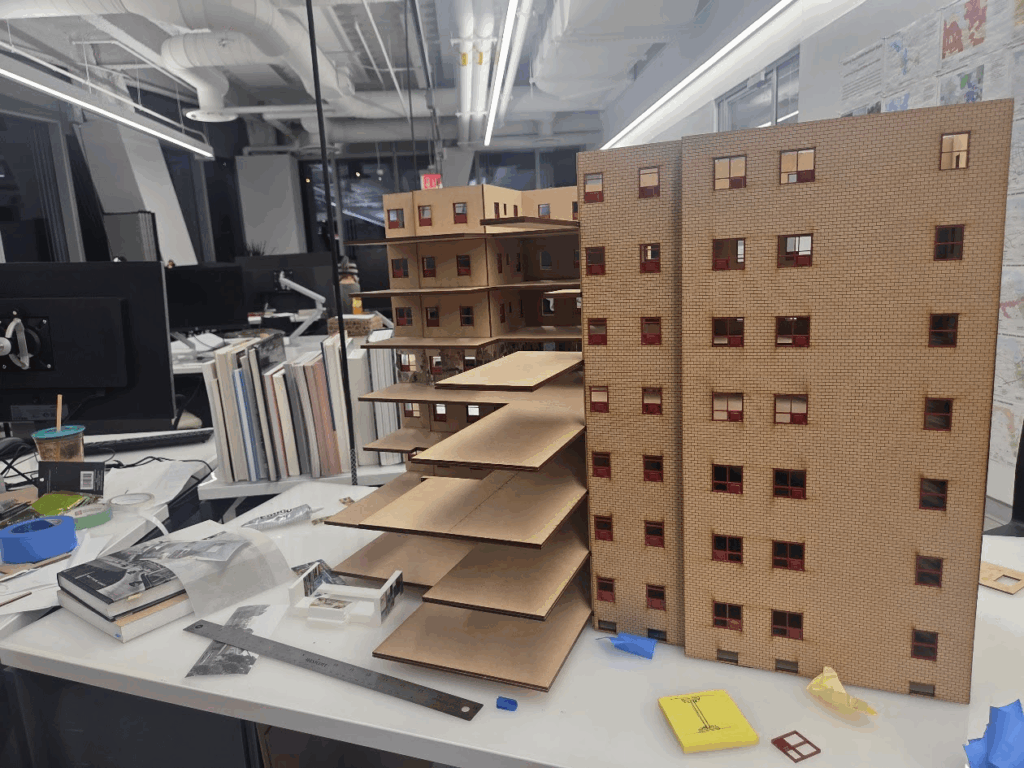
Student models are in many parts of the space.
Two third year students were working on a project to reimagine the Sotomayor Houses, located in the Soundview section of the Bronx.
The students have spacious desks and work areas, all with great view to work in.
A COMMENT
Cornell AAP brings the right brained to Cornell Tech. The vibrant collaborative atmosphere was evident with the students. I look forward to introducing them to the rest of our Island.
AAP is a great addition to Roosevelt Island. Thanks Bob Balder for introducing me to AAP!
Judith Berdy
CREDITS Judith Berdy
Credits
All image are copyrighted (c) Roosevelt Island Historical Society unless otherwise indicated THIS PUBLICATION FUNDED BY DISCRETIONARY FUNDS FROM CITY COUNCIL MEMBER JULIE MENIN & ROOSEVELT ISLAND OPERATING CORPORATION PUBLIC PURPOSE FUNDS.
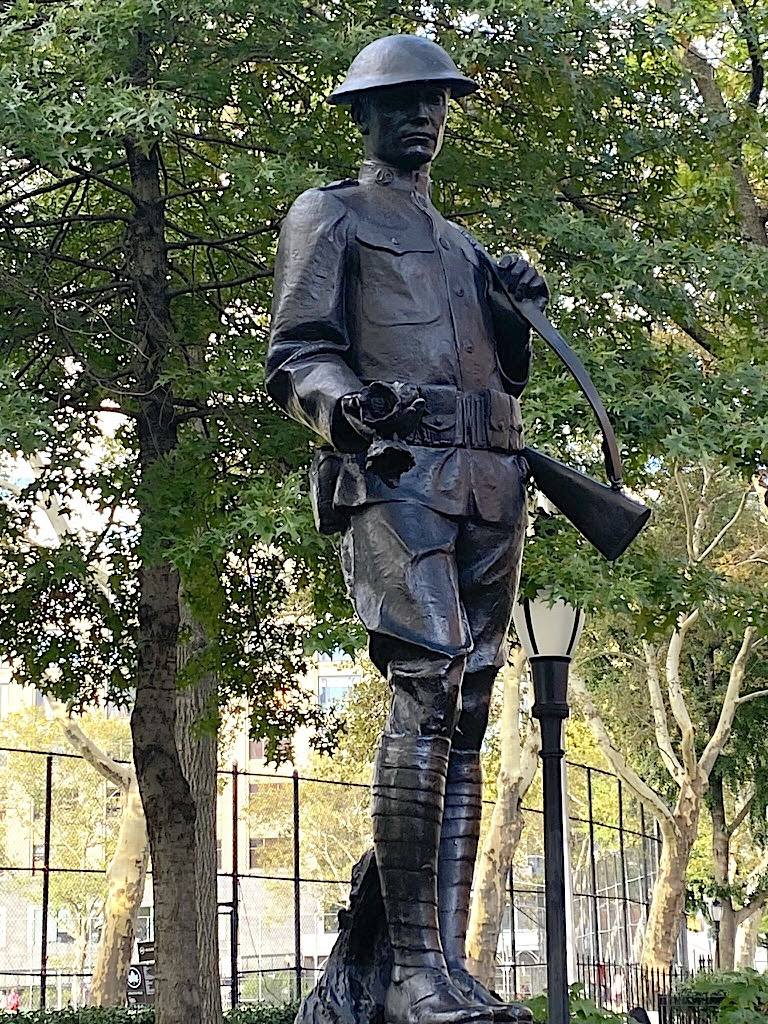
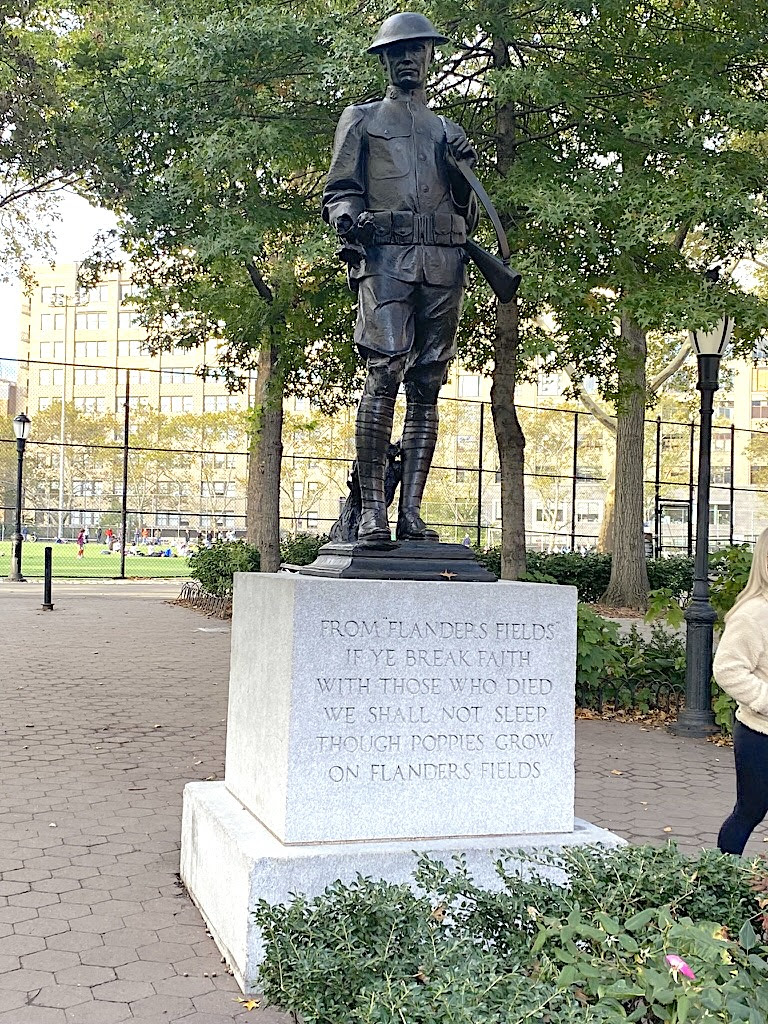
He’s a slight soldier, with the strap of his rifle slung over his shoulder and a contemplative expression meant to engage us. And unlike most statues depicting military men, he’s offering flowers. In this case, he’s holding poppies—a flower that signifies loss and remembrance.
The doughboy of De Witt Clinton Park has stood inside the Eleventh Avenue and 52nd Street entrance to this Hell’s Kitchen green space since 1930. Officially the monument is known as “Clinton War Memorial,” per NYC Parks.
It’s one of nine doughboy statue erected in city parks after World War I, when neighborhoods across New York sought to honor local residents who lost their lives on the battlefields of Europe. I’ve seen the doughboy statues in Chelsea, the West Village, Red Hook, and Washington Heights.
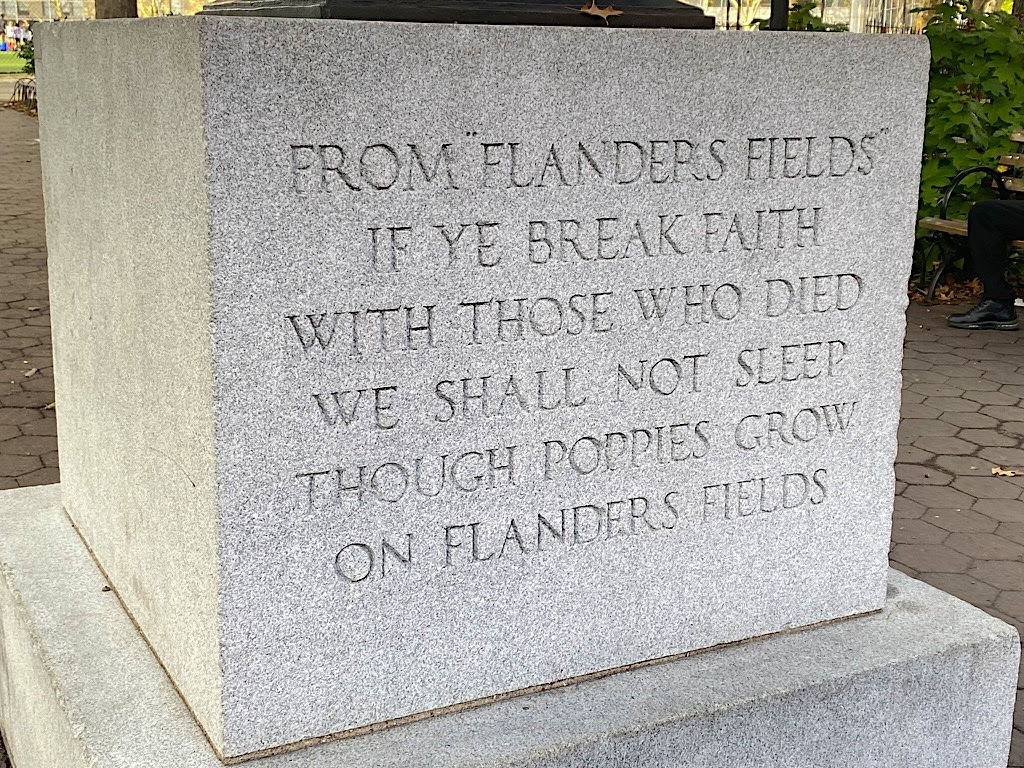
But what distinguishes this doughboy is that he’s standing on a granite pedestal inscribed with verse from “In Flanders Field”—the poem written by Canadian physician and lieutenant colonel John McCrae, who penned it after a fellow soldier perished during battle in 1915 in Belgium.
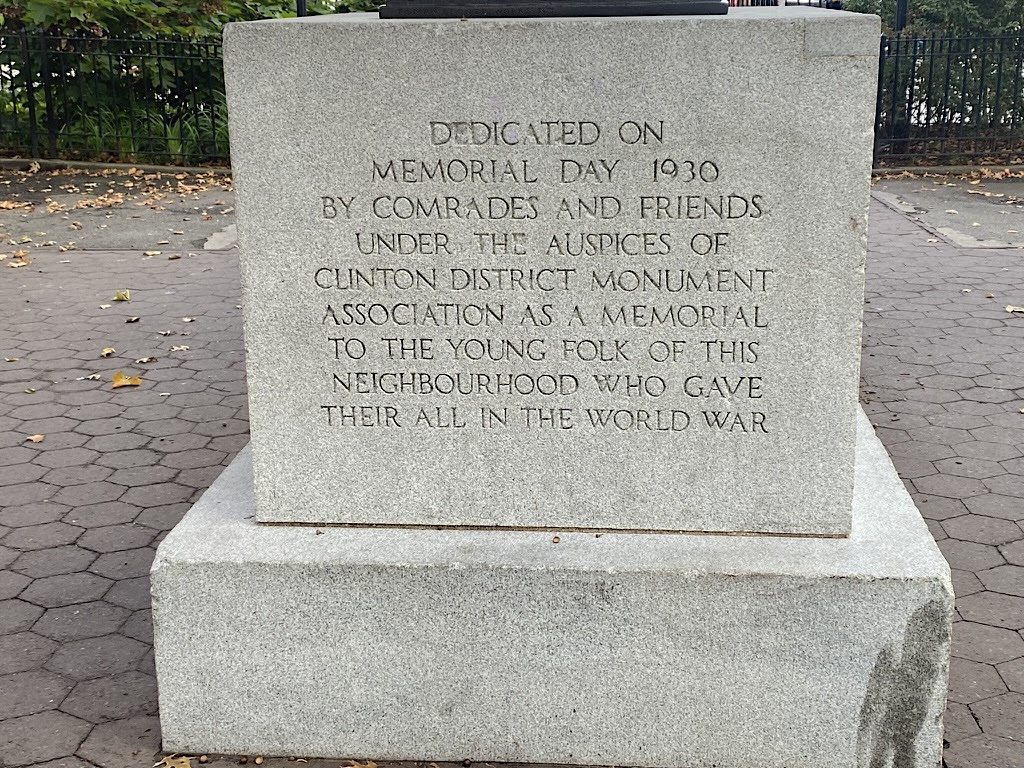
On the other side of the pedestal is an inscription from “comrades and friends” explaining that the monument is a memorial “to the young folk of the neighborhood/who gave their all in the World War.”
Though I couldn’t find an account of it, this statue was likely dedicated in a ceremony attended by thousands. “The doughboys were erected when parks and monuments were more important in the life of a neighborhood,” stated Jonathan Kuhn, curator of monuments for the Parks Department, in a New York Daily News article on the doughboys from 1993. “Also, there was a feeling that this was the last war, and Americans wanted to honor the ordinary heroes who fought the war that would end all wars.”
I can’t help but wonder if the De Witt Clinton Park doughboy was modeled on an actual local kid who went to war and never came back. If so, his identity is likely lost to the ages—and he speaks to us only through bronze and granite.
PHOTO OF THE DAY
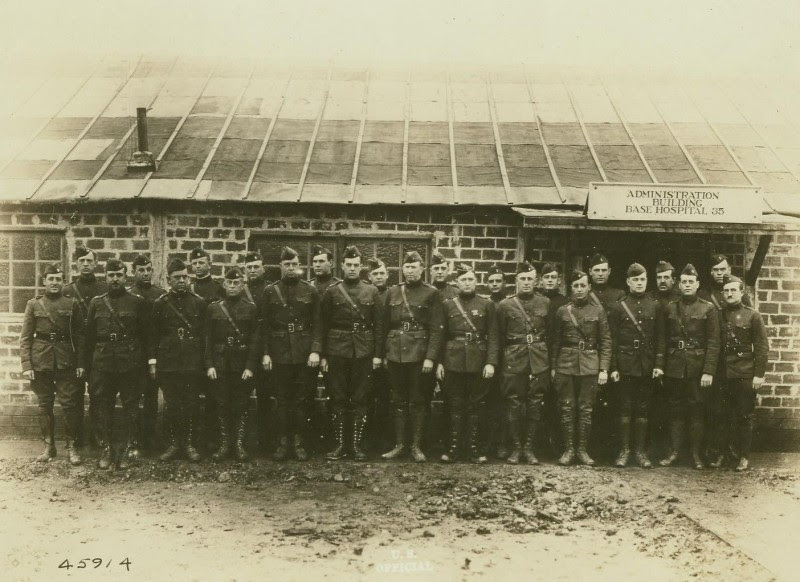
WORLD WAR 1 MEDICAL STAFF FROM METROPOLITAN HOSPITAL PREPARING TO LEAVE BLACKWELL’S ISLAND TO SERVE AT BASE CAMP 48, MARS SUR ALLIER, FRANCE DURING 1917 & 1918.
CREDITS
EPHEMERAL NEW YORK
SHORPY HISTORIC AMERICAN PHOTO ARCHIVE JUDITH BERDY
All image are copyrighted (c) Roosevelt Island Historical Society unless otherwise indicated THIS PUBLICATION FUNDED BY DISCRETIONARY FUNDS FROM CITY COUNCIL MEMBER JULIE MENIN & ROOSEVELT ISLAND OPERATING CORPORATION PUBLIC PURPOSE FUNDS.
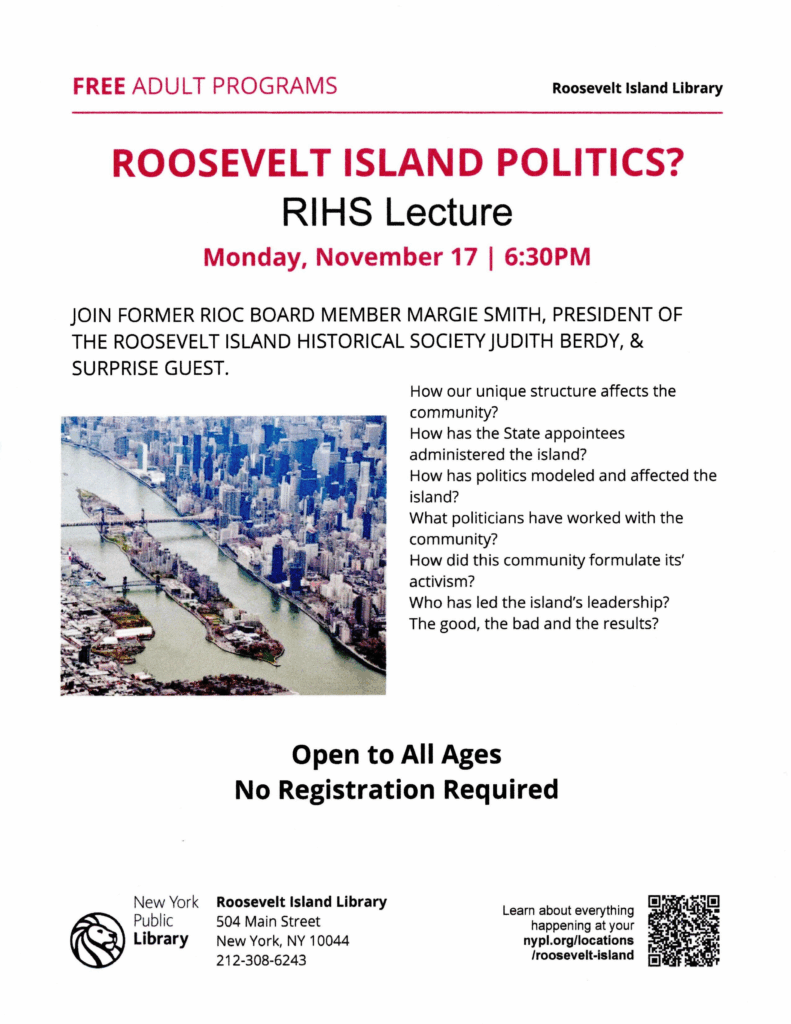
A Wonderful Opportunity for You — United States Navy Creator Charles Edwin Ruttan (1884-1939) Accession number 43.40.152 Unique identifier MNY1284 Description Ashore, On Leave. Dated c.1917
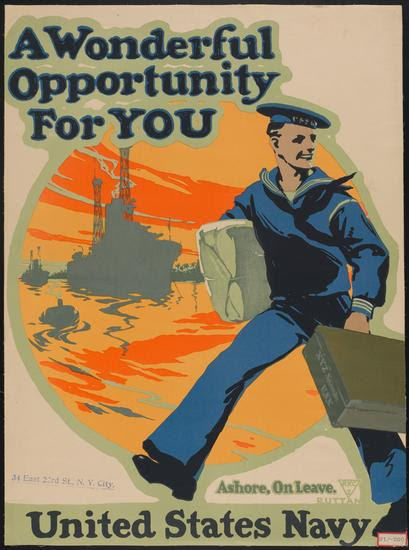
The U.S. Marines Want You Creator C. B. (Charles Buckles) Falls (1874-1960) Accession number 43.40.164 Unique identifier MN12306 Description Apply at 24 East 23rd Street, New York Dated 1917
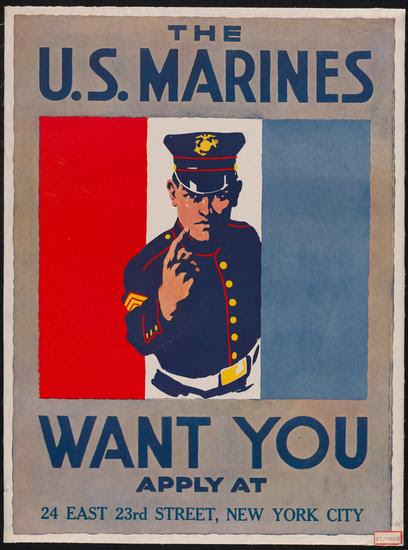
After the Welcome Home – A Job! Creator Edmund M. (Edmund Marion) Ashe (1867-1941), Heywood, Strasser & Voight Litho Co. (New York, N.Y.) Accession number 43.40.379 Unique identifier MNY15789 Description U.S. Employment Service Dept. of Labor Dated c.1917
After the Welcome Home – A Job! Creator Edmund M. (Edmund Marion) Ashe (1867-1941), Heywood, Strasser & Voight Litho Co. (New York, N.Y.) Accession number 43.40.379 Unique identifier MNY15789 Description U.S. Employment Service Dept. of Labor Dated c.1917
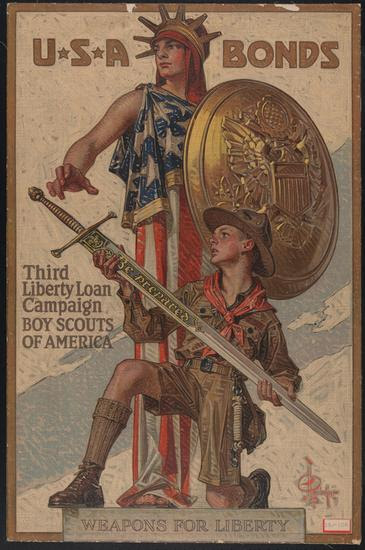
Third Liberty Loan Campaign Creator American Lithographic Co., J.C. (Joseph Christian) Leyendecker Accession number 43.40.31 Unique identifier MNY37495 Description Boy Scouts of America Dated
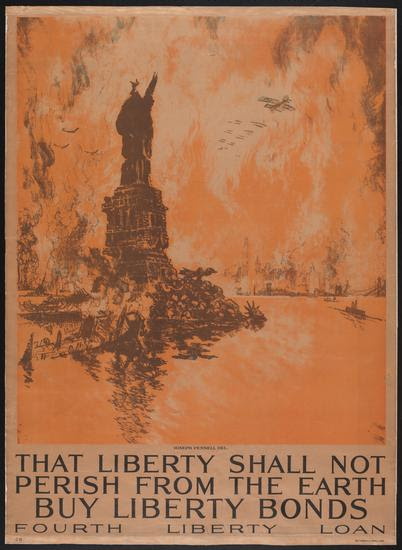
That Liberty Shall Not Perish from the Earth Creator Joseph Pennell (1857-1926) Accession number 37.278.9 Unique identifier MNY103391 Description Buy Liberty Bonds | Fourth Liberty Loan Dated 1918
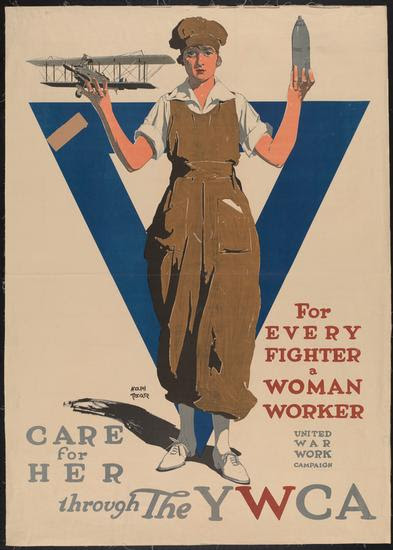
For Every Fighter a Woman Worker Creator Adolph Treidler (1886-), United States. Committee on Public Information. Division of Pictorial Publicity Accession number 43.40.123 Unique identifier MN12278 Description Care for Her Through the YWCA Dated 1918
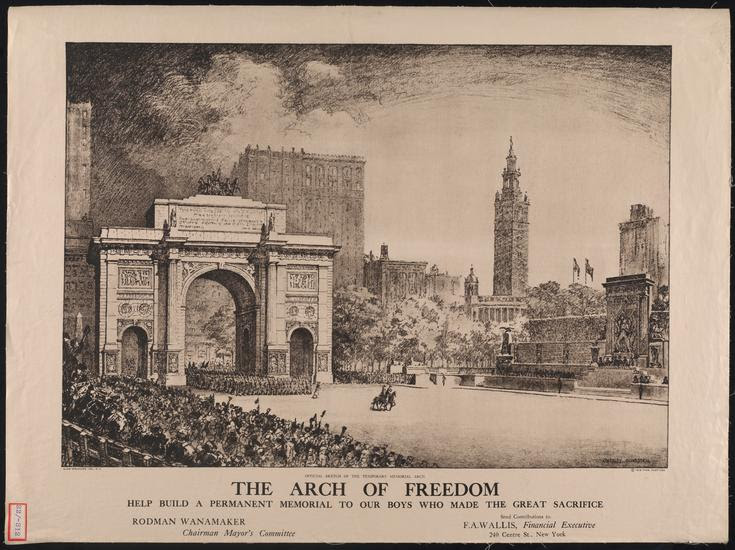
The Arch of Freedom Creator Chesley Bonestell Accession number 43.40.375 Unique identifier MN12499 Description Help Build a Permanent Memorial to Our Boys Who Made the Great Sacrifice Dated 1918
A COMMENT
Last evening the Street Life Committee of Commnity Board 8 held a meeting on the application for a canabis dispensary at 530 Main Street.
What is usually a standard hearing for liquor licenses, over 100 persons were on line for the last part of the evening, the discussion about the canabis dispensary. Over a dozen person testified about the negative aspects of having this business on Main Street.
The proposed proprietor stated that the front of the store would be a flower shop and the dispensary would be in another part of the former medical space.
One person testified in favor of the plan.
After requesting persons in favor of the plan, none came forward. The seven committee members voted against the application.
The next step is to present this application in front of the full Community Board on Wednesday, November 19th. The meeting will be in person and on Zoom. See www.cb8m.com for details.
CREDITS
MUSEUM OF THE CITY OF NEW YORK IMAGES (c) MCNY
All image are copyrighted (c) Roosevelt Island Historical Society unless otherwise indicated THIS PUBLICATION FUNDED BY DISCRETIONARY FUNDS FROM CITY COUNCIL MEMBER JULIE MENIN & ROOSEVELT ISLAND OPERATING CORPORATION PUBLIC PURPOSE FUNDS.
Bloomingdale’s early six-story store on Third Avenue and 59th Street, opened in the 1880s, was made of red brick, cast iron, and brownstone.
By 1930, this fashion emporium had expanded all the way to Lexington Avenue. Instead of sticking with the tired design materials of the last century, the final incarnation of this department store giant was built to be an Art Deco showpiece—a symbol of the modern machine age.
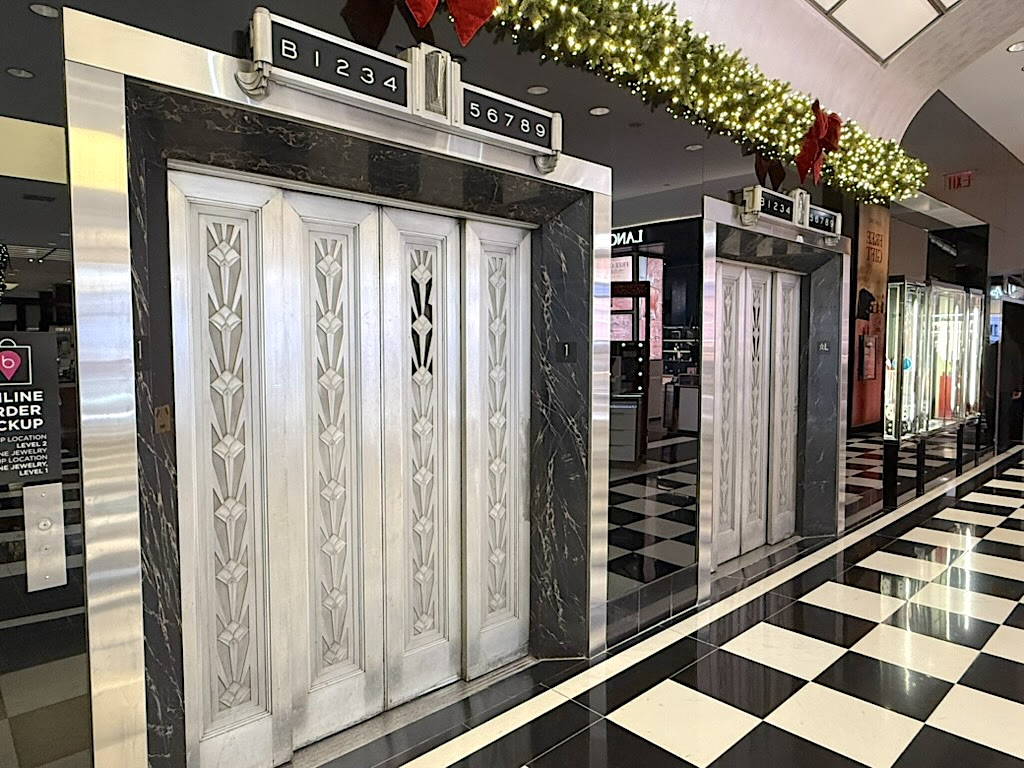
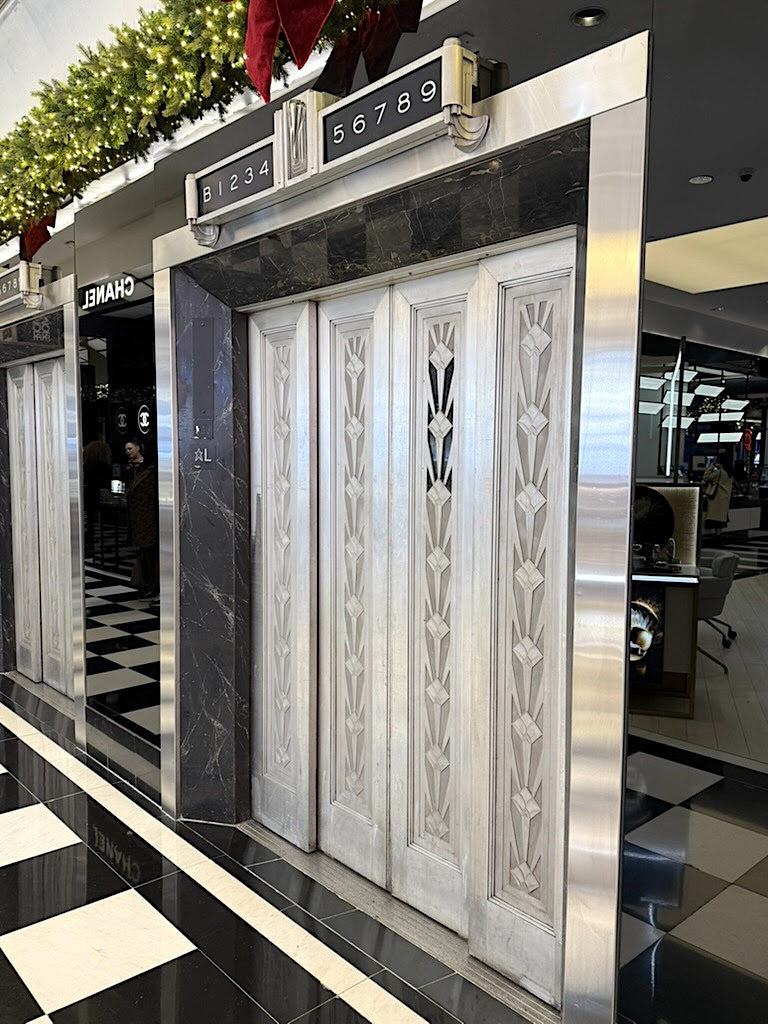
Through the decades, the store’s interior has been redone to suit the retail shifts of various eras. What hasn’t changed are the doors of the elevators that greet you when you enter via Lexington Avenue.
Sleek metal with bold geometric motifs and sans serif numerals, the elevators date back to 1930, when the flagship store was completed, according to this elevator database (though apparently they were modernized in some way over the years).
Art Deco is celebrating its 100th birthday this year, and it’s a powerful style that shaped the look and feel of Gotham during the Jazz Age and Depression years. Skyscrapers across the city exemplify Art Deco design—as do smaller, less significant places like elevators.
Or “sky carriages” as 19th century Bloomingdale’s called them. This retrospective of the company’s history states that Bloomingdale’s was the first department store in North America to install a sky carriage and in 1898 the company financed the invention of the “inclined elevator”…aka, the escalator.
CREDITS
Ephemeral New York
Nor rain…….will stop our visitors for suiting up to tour the island in our ponchos.
All image are copyrighted (c) Roosevelt Island Historical Society unless otherwise indicated THIS PUBLICATION FUNDED BY DISCRETIONARY FUNDS FROM CITY COUNCIL MEMBER JULIE MENIN & ROOSEVELT ISLAND OPERATING CORPORATION PUBLIC PURPOSE FUNDS.
Hudson Related Is Close To Signing Retail Lease For Cannabis Dispensary Tenant In Former Medical Office On Main Street Roosevelt Island Outrage, Approval Or Don’t Care? What Do Residents Think, A Cannabis Dispensary Or Not?
GO TO CB8M.COM HIGHLIGHT NOVEMBER 10 ON CALENDAR FOLLOW INSTRUCTIONS TO:
Street Life Committee PUBLIC HEARING Monday, November 10, 2025 – 6:30 PM This meeting will be conducted via Zoom
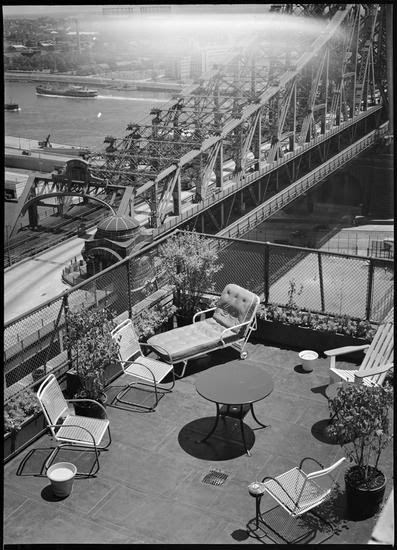
MUSEUM OF THE CITY OF NY (C) [Rooftop terrace of 400 East 59th Street.] Creator Wurts Bros. (New York, N.Y.) Accession number X2010.7.1.17332 Unique identifier
MUSEUM OF THE CITY OF NEW YORK (C) [Welfare Hospital for Chronic Disease.] Creator Wurts Bros. (New York, N.Y.) Accession number X2010.7.1.18305 Unique identifier MN117844 Dated ca. 1940
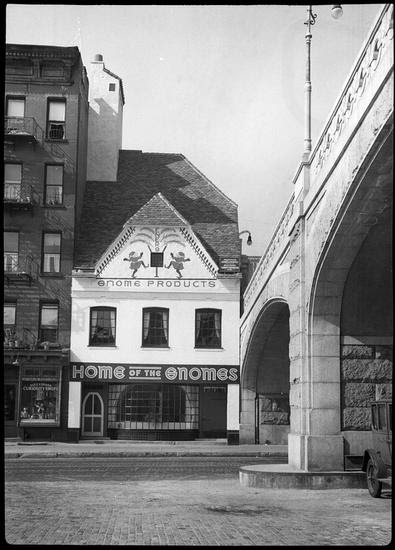
MUSEUM OF THE CITY OF NEW YORK (C) [Gnome Products building, 316 East 59th Street.] Creator Wurts Bros. (New York, N.Y.) Accession number X2010.7.1.17065 Unique identifier MN117052 Dated ca. 1935
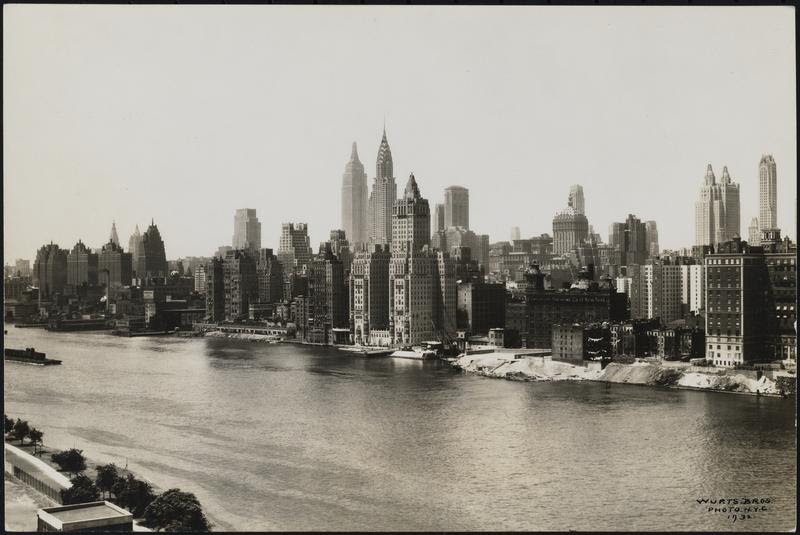
MUSEUM OF THE CITY OF NEW YORK (C) East 52nd Street to East 53rd Street at The East River. River House Apartments. View from Queensboro Bridge Creator Wurts Bros. (New York, N.Y.) Accession number X2010.7.2.5202 Unique identifier MNY324384 Dated 1932
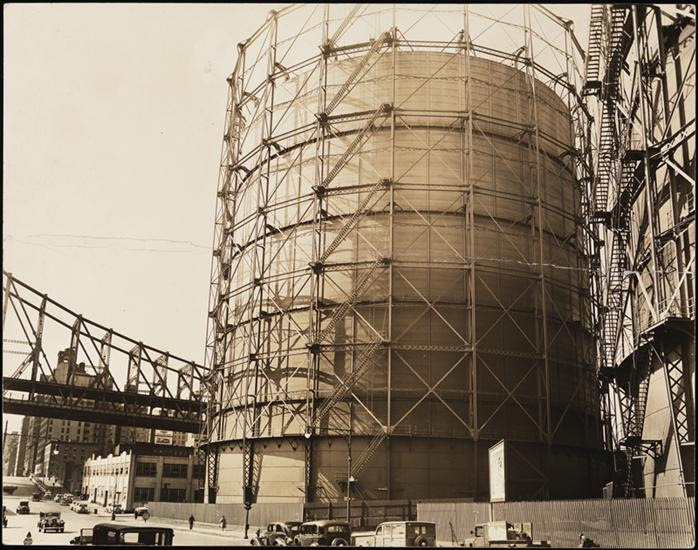
MUSEUM OF THE CITY OF NEW YORK (C) Gas Tank and Queensboro Bridge Photographer Berenice Abbott (1898-1991) Creator Federal Art Project Accession number 43.131.2.8 Unique identifier MNY202377 Description East 62nd Street and York Avenue. Dated October 9, 1935
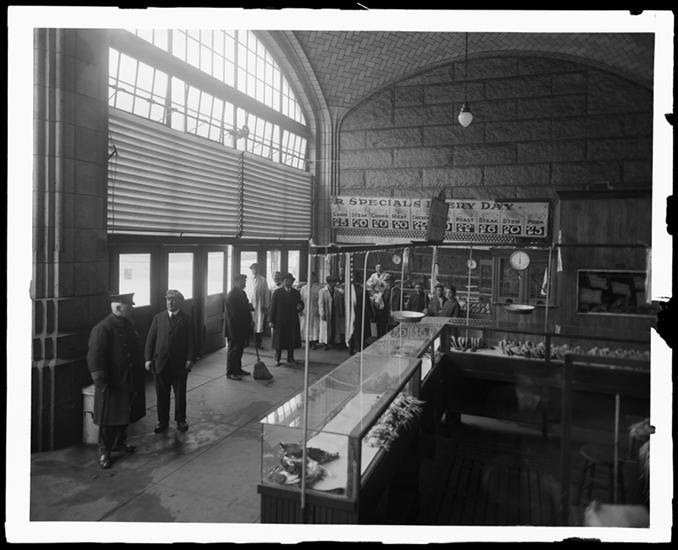
MUSEUM OF THE CITY OF NEW YORK (C) View of Ventilighter under Queensboro Bridge, in market. Creator Wurts Bros. (New York, N.Y.) Accession number X2010.7.1.5039 Unique identifier MNY238586 Dated ca. 1917
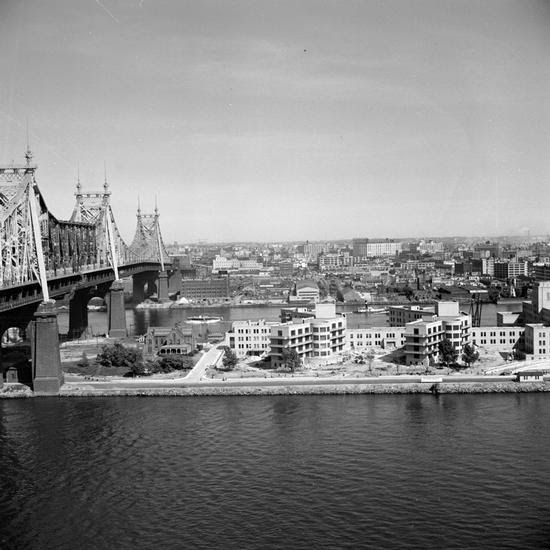
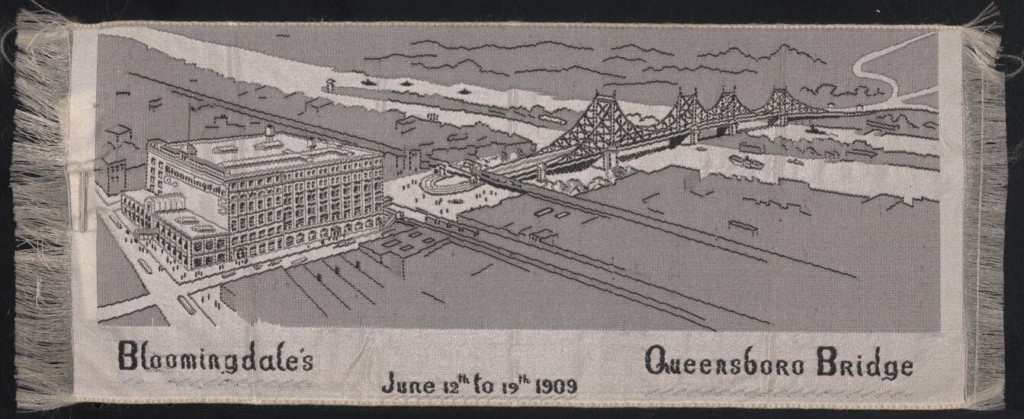
MUSEUM OF THE CITY OF NEW YORK (C) Queensboro Bridge Creator Bloomingdale’s (Firm) Accession number 36.100.6 Unique identifier MNY100719 Description June 12-19, 1909 Dated 1909
CREDITS
MUSEUM OF THE CITY OF NEW YORK ALL IMAGES (C) MCNY
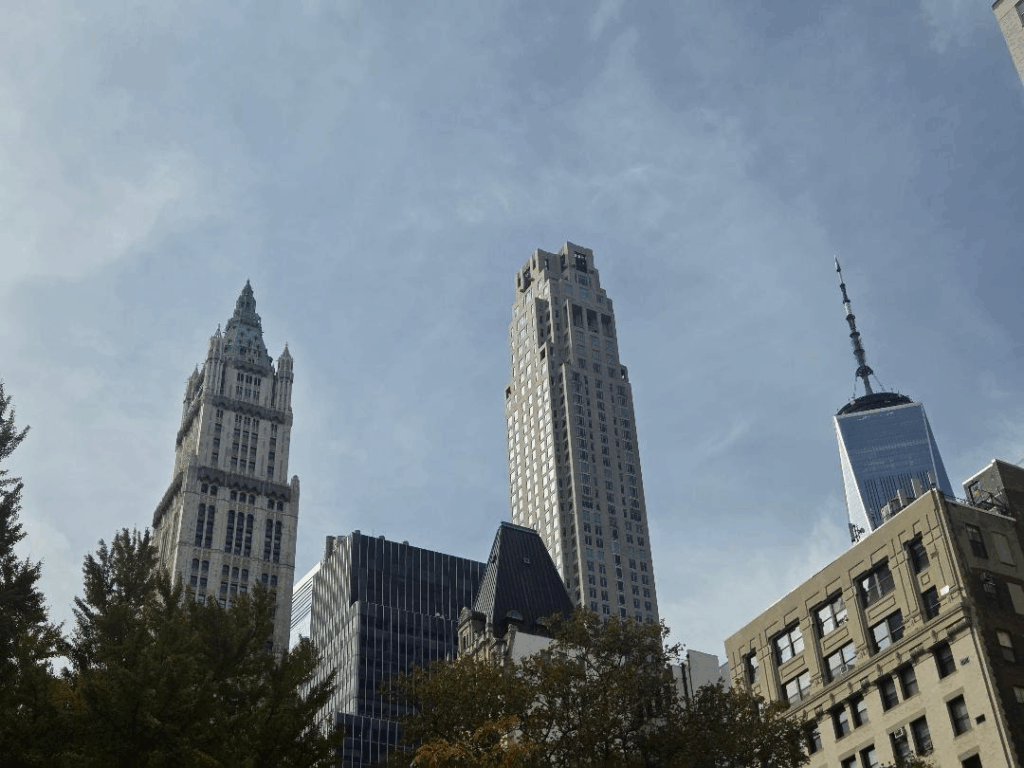
From the corner of Chambers and Church Streets
All image are copyrighted (c) Roosevelt Island Historical Society unless otherwise indicated THIS PUBLICATION FUNDED BY DISCRETIONARY FUNDS FROM CITY COUNCIL MEMBER JULIE MENIN & ROOSEVELT ISLAND OPERATING CORPORATION PUBLIC PURPOSE FUNDS.
Hudson Related Is Close To Signing Retail Lease For Cannabis Dispensary Tenant In Former Medical Office On Main Street Roosevelt Island Outrage, Approval Or Don’t Care? What Do Residents Think, A Cannabis Dispensary Or Not?
GO TO CB8M.COM HIGHLIGHT NOVEMBER 10 ON CALENDAR FOLLOW INSTRUCTIONSTO:
Street Life Committee PUBLIC HEARING Monday, November 10, 2025 – 6:30 PM This meeting will be conducted via Zoom
What follows is a article first published in Scientific American, December 23, 1871. The removal of obstructive rocks from the narrow East River strait of Hell Gate began in 1849 and was accelerated in 1851 when the U.S. Army Corps of Engineers led by General John Newton began a blasting and dredging operation which lasted 70 years.
We give this week some engravings illustrating the operations now in progress for the removal of the obstructions at Hallett’s Point, East River. Having often referred to this great work, our present notice will be rather historical and general than technical.
History of the Work
The following sketch of the origin and progress of the work is from The New York Times:
“Complete surveys of New York harbor have been made at different periods, as is well known, with the object of removing the obstructions to navigation, by Admirals [David Dixon] Porter and [Charles Henry] Davis, Commodore [Tunis] Craven, and the present able and successful topographical engineer General John Newton of the United States Army.
“In September, 1870, experimental blasts were made by General Newton,which proved to him beyond a doubt that the work he had undertaken, though a task of immense magnitude, could be accomplished, and at a comparatively trifling cost to the Government.
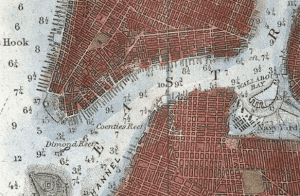
“Last May, General Newton commenced work with the steam drills on the dangerous rocks, in mid stream between Governor’s Island and the Battery, known as Diamond Reef. After laboring assiduously for over five weeks, and making repeated blasts, between 700 and 800 yards square of the reef were blown away.
“Surveys were made of three blasts, which disclosed at the bottom of the river a mass of crushed rock, innumerable detached boulders, and huge hillocks of sand, lying around, and over which was once Diamond Reef.
“A contract was soon made to have the debris removed, a work which has almost been finished, and which has demonstrated the fact that no additional blasts will be required, and that the dreaded Diamond Reef is no more.
“Soon after the work of the drills upon Diamond Reef was concluded, the drill scows were securely moored over Coenties Reef, and immediately commenced operations. The number of cubic yards of rock to be removed at Coenties Reef is roughly estimated at over 3,000, and much of this has already been blasted out by General Newton’s indefatigable workmen.
“Besides at Coenties Reef, General Newton’s drills are now at work on the Shell Drake, Way’s Reef, Hog’s Back, Pot Rock, at the Hell Gate, or Horll Gatt [sic] as the old Dutch navigators termed it [Helle Gadt was a name the Dutch once applied to the entire East River], and at Willett’s Point.
“The operations at the Hell Gate are the most extensive, the most important, and decidedly the most interesting. The Hell Gate, as every New Yorker knows, is a narrow, rocky passage in the East River, and in the old Knickerbocker times its raging current was the terror of the Dutch skippers and their heavy and unwieldy craft.
“Of late years, many improvements have been effected by blasting away the surface rock, and the most salient points of the jagged ridges; but only since August, 1869, has the United States Government commenced to deal with the dangers of Hell Gate in a measure corresponding with their importance.
“The operations undertaken by General Newton at Hallett’s Point, for the Hell Gate, involve the solution of an important problem of engineering as regards the most effective and economical process of submarine blasting. The modus operandi employed at Hallett’s Point is entirely different from the manner in which the work of removing the obstruction has been accomplished at Diamond and Coenties Reefs, and is what is technically termed tunnel blasting.
“At Hallett’s Point, in August, 1869, a coffer dam was commenced under the superintendence of General Newton, and was completed in October. The dam is an irregular polygon in shape, having a circumference of 443 feet and a mean interior diameter of about 100 feet. The darn is built between low and high water marks.
“The excavation of the shaft immediately followed the construction of the dam, and during the spring of 1870 the shaft was sunk to the depth of twenty-two feet below water.
“The theory of the mining operations contemplates the removal of as much rock as can be excavated with safety previous to the final explosion, the result of which will be the sinking of the remaining mass into the deep pit excavated for its reception.
“The mass of rock remaining for the final explosion will be supported by piers, each of which will be charged with nitro glycerin. These piers are simply a portion of the solid rock left still standing.
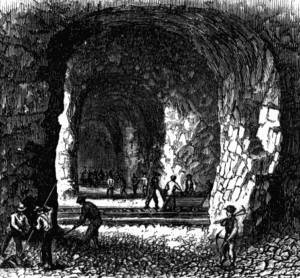
“From the bottom of the main shaft, tunnels proceed in all directions, and are ten in number. Each of the tunnels extends from 150 feet to 350 feet outward, and they are all connected together by cross galleries at intervals of twenty-five feet. The tunnels were begun towards the close of July, 1870, the shaft being at the same time sunk to a line nearly forty feet below low water mark.
“The tunneling is really an object of a great deal of interest, as much from the novelty as from any other feature. The tunnels are of various cross sections, some over twenty feet in height, and varying in width from ten to fifteen feet.”
The “Improved Drill” of the American Diamond Drill Company, recently illustrated and described in the Scientific American, has been recently introduced into one of the headings, and, we are informed by General Newton, gives prospect of affording efficient aid in hastening the completion of the work, which will take probably two or three years more continuous labor.
As the work advances, room is made for more miners, and therefore the rate of advance may increase with the progress of the excavation.
The liberal views of the Engineer in Chief, General Newton, are rendering this work important in another respect. He has made it a sort of engineering arena for the trial of different explosives and drilling machines; and the relative value of most of the mining appliances in market will be determined during the progress of the work.
In this way, important contributions to engineering science will be made, whose value will be second only to the splendid results anticipated by the removal of the obstructions from the Hell Gate passage. These out of the way, the upper end of the island will become a scene of busy thrift, scarcely; less prosperous than that which fills with unintermitting hum the lower part of the city.
Although from Virginia, General John Newton (1823-1895) served in the United States Army during the Civil War, and later as Chief of the Corps of Engineers. Newton oversaw improvements to the waterways around New York City, into Vermont, including the Hudson River above Albany. This work is covered in detail in Thomas Barthel’s Opening the East River: John Newton and the Blasting of Hell Gate (McFarland, 2021).
Credits
New York Almanack
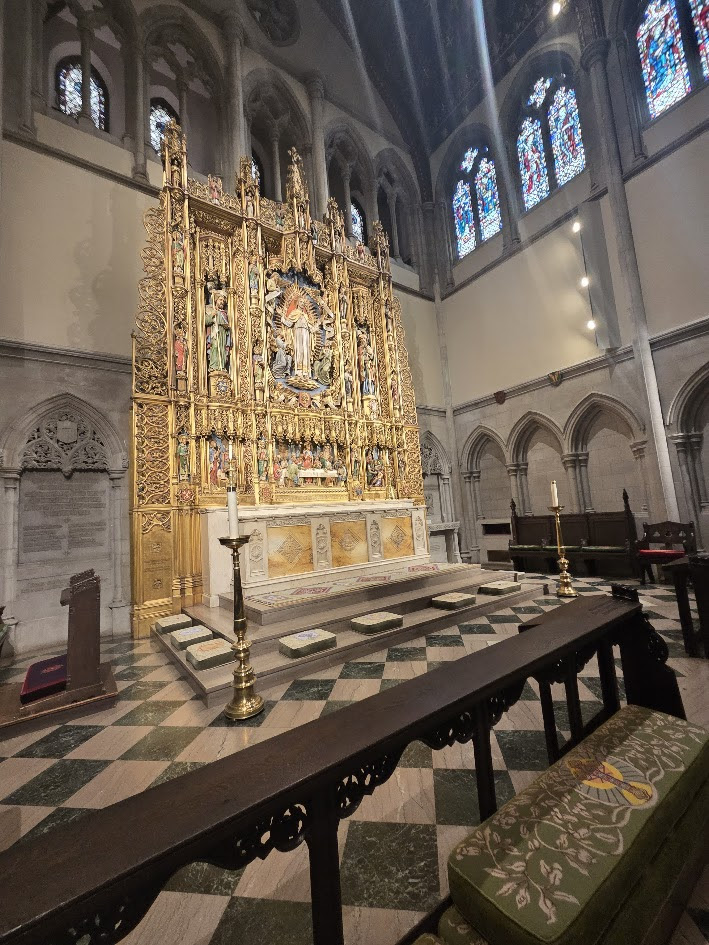
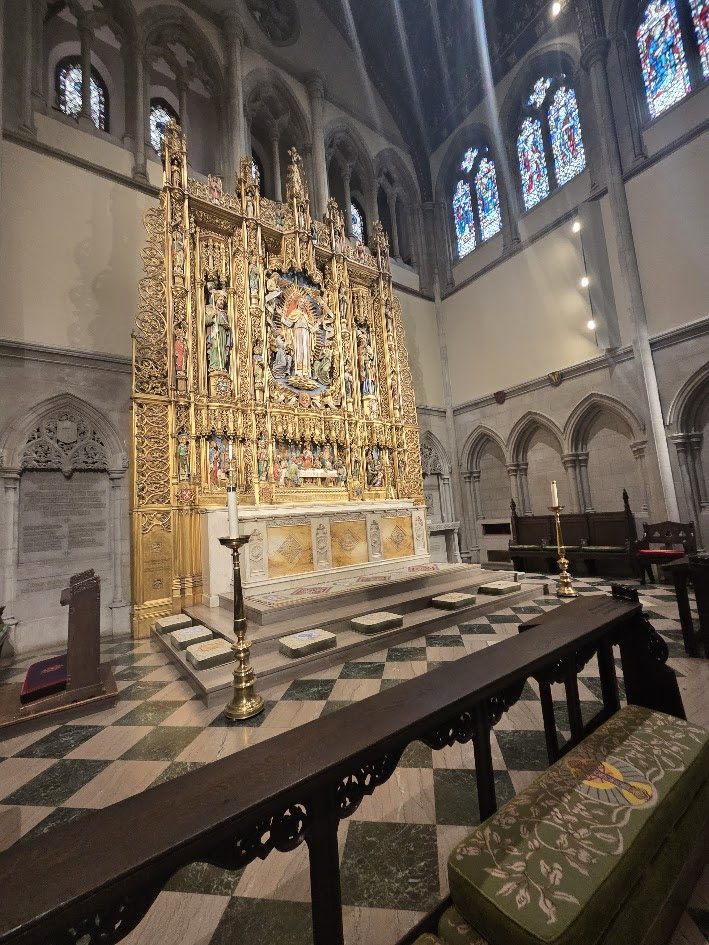
St. James Church Madison Avenue at 71 Street St. James was a supporter of Church of the Good Shepherd for many years
All image are copyrighted (c) Roosevelt Island Historical Society unless otherwise indicated THIS PUBLICATION FUNDED BY DISCRETIONARY FUNDS FROM CITY COUNCIL MEMBER JULIE MENIN & ROOSEVELT ISLAND OPERATING CORPORATION PUBLIC PURPOSE FUNDS.
Nursing, which as a profession has long been associated with women, offered opportunities not only for education and employment, but leadership. Long before American women could vote, they were able to influence public policy, often through professional organizations, such as those formed by nurses in the early 20th century.
Student Nurses in the Orrin Sage Wightman Collection
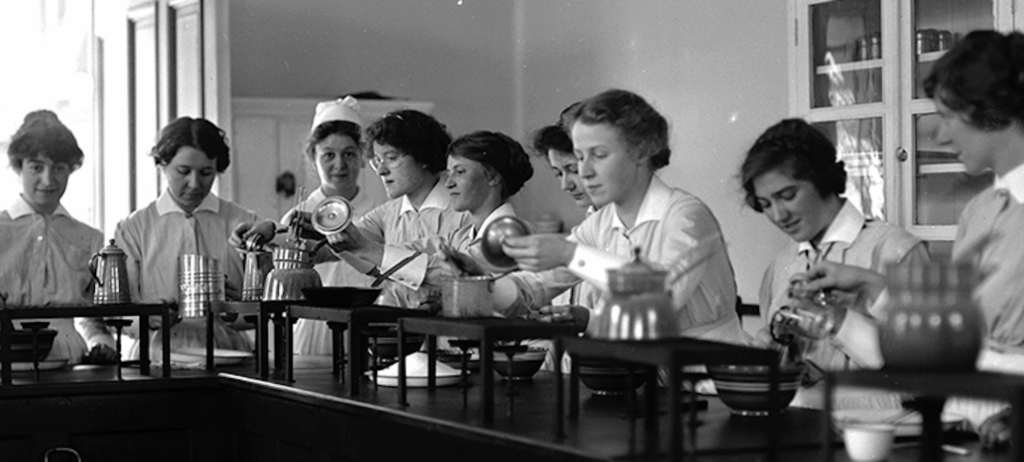
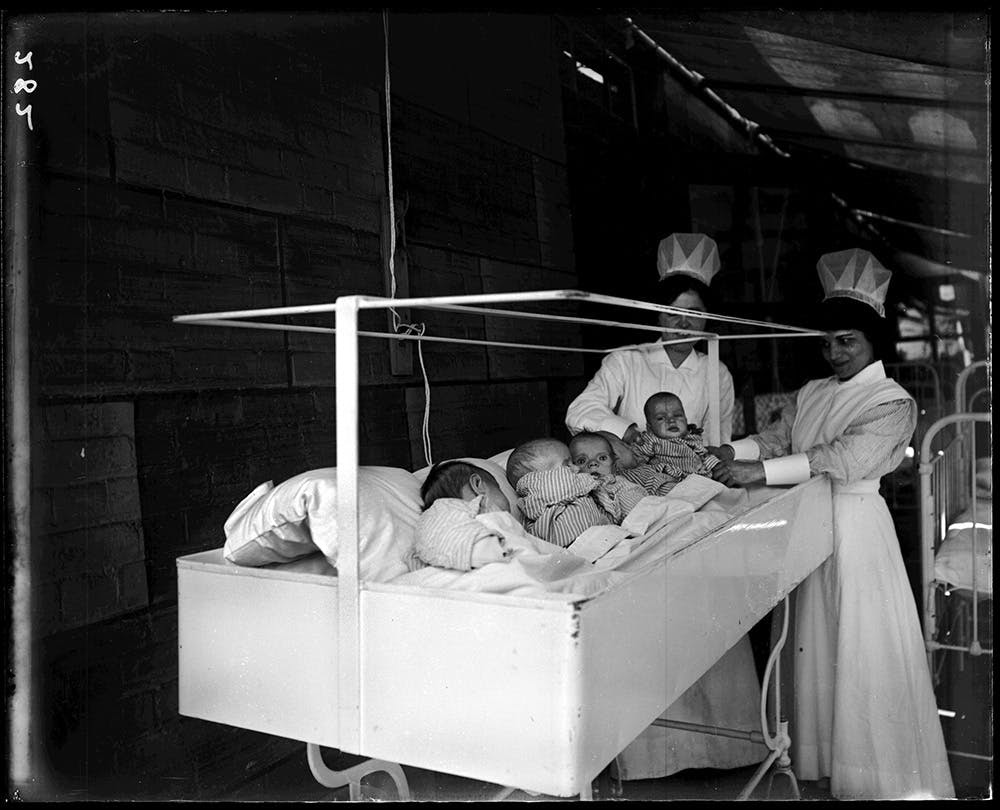
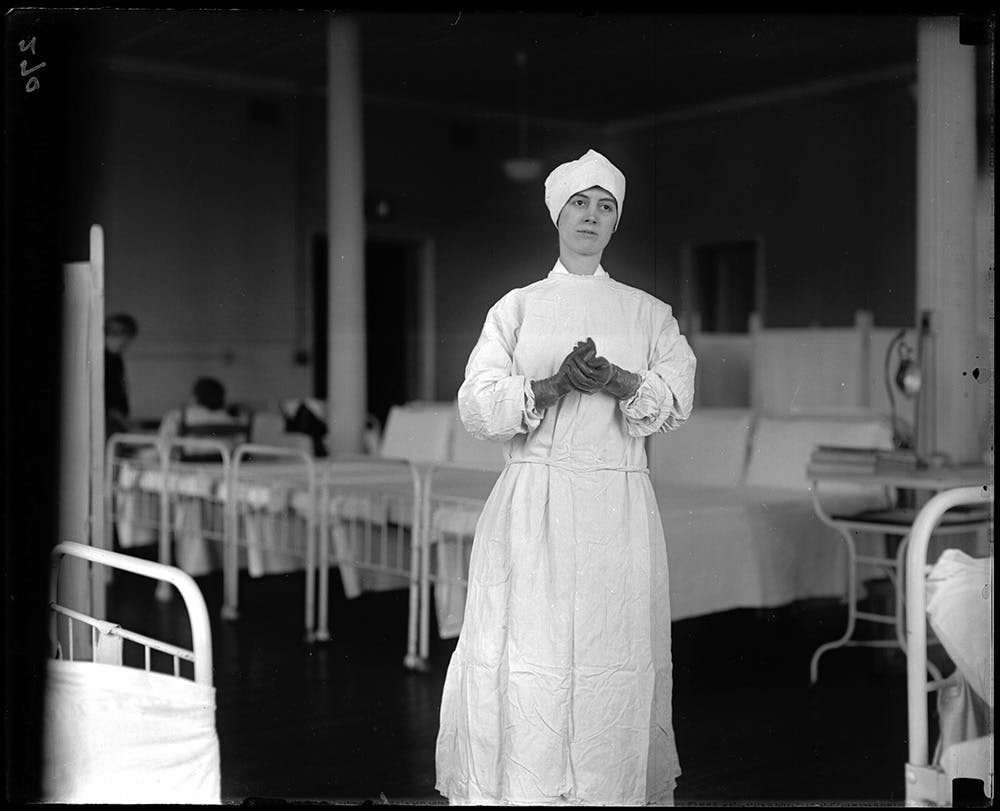
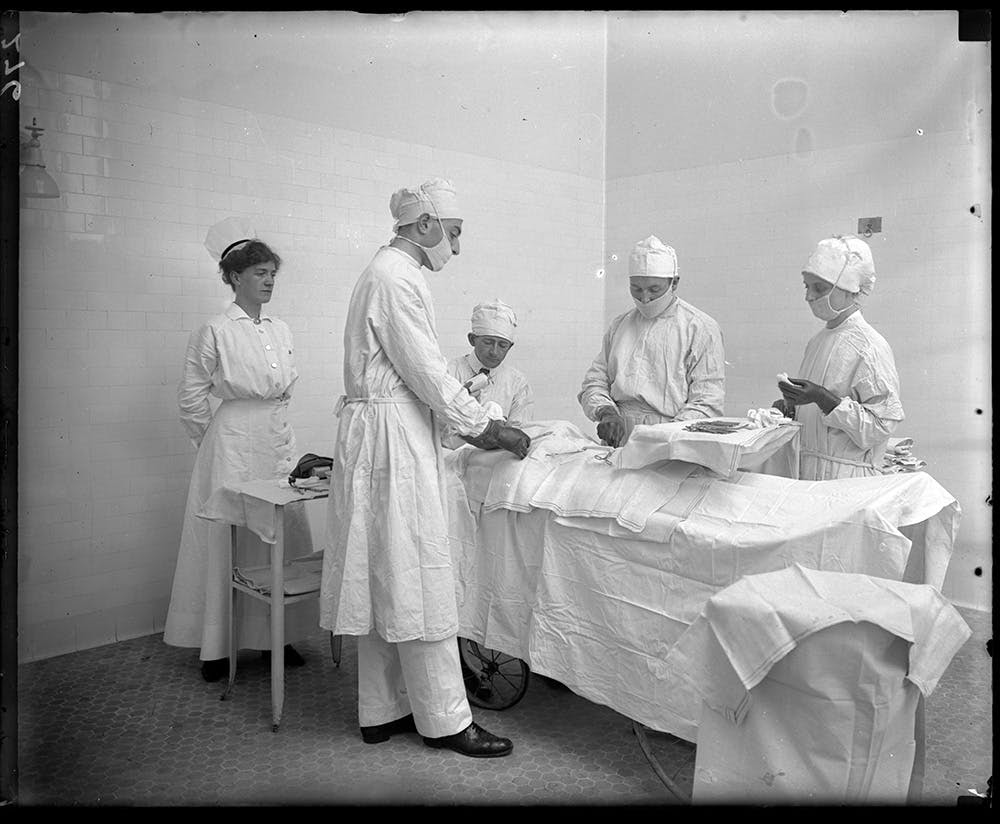
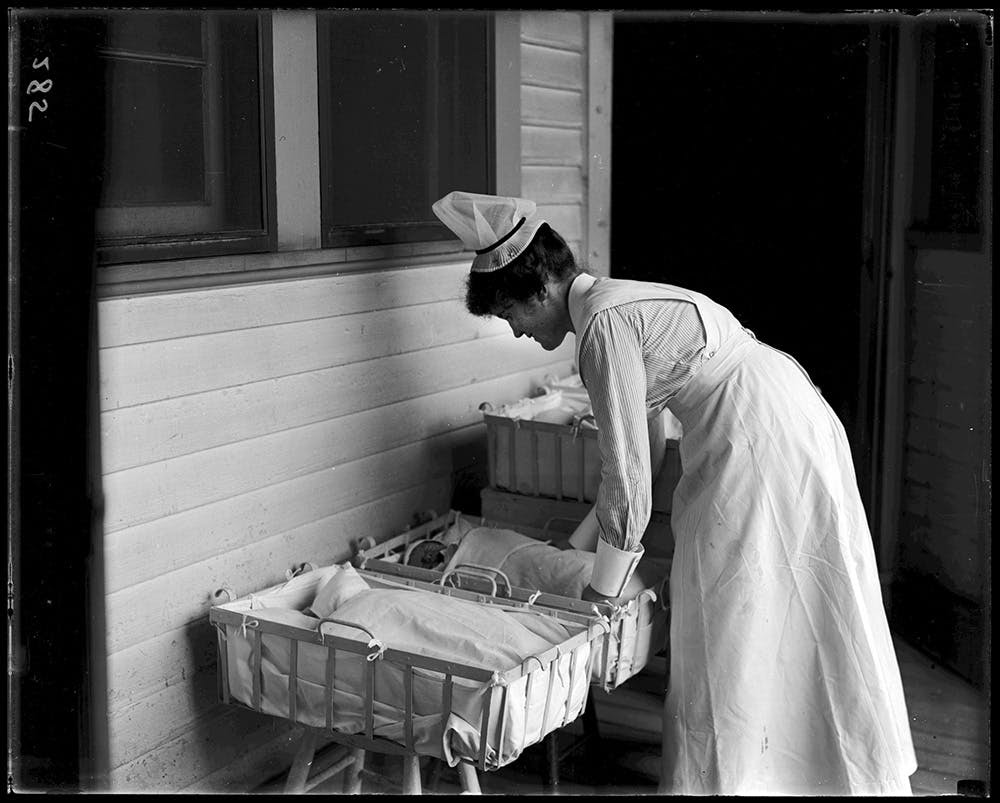
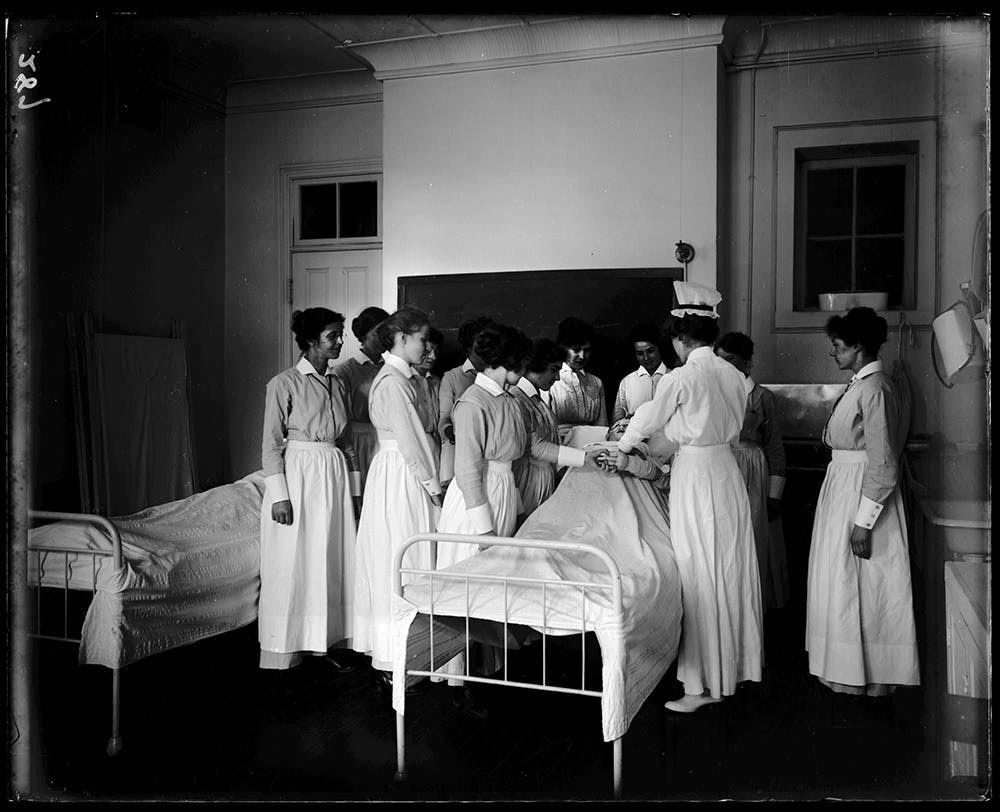
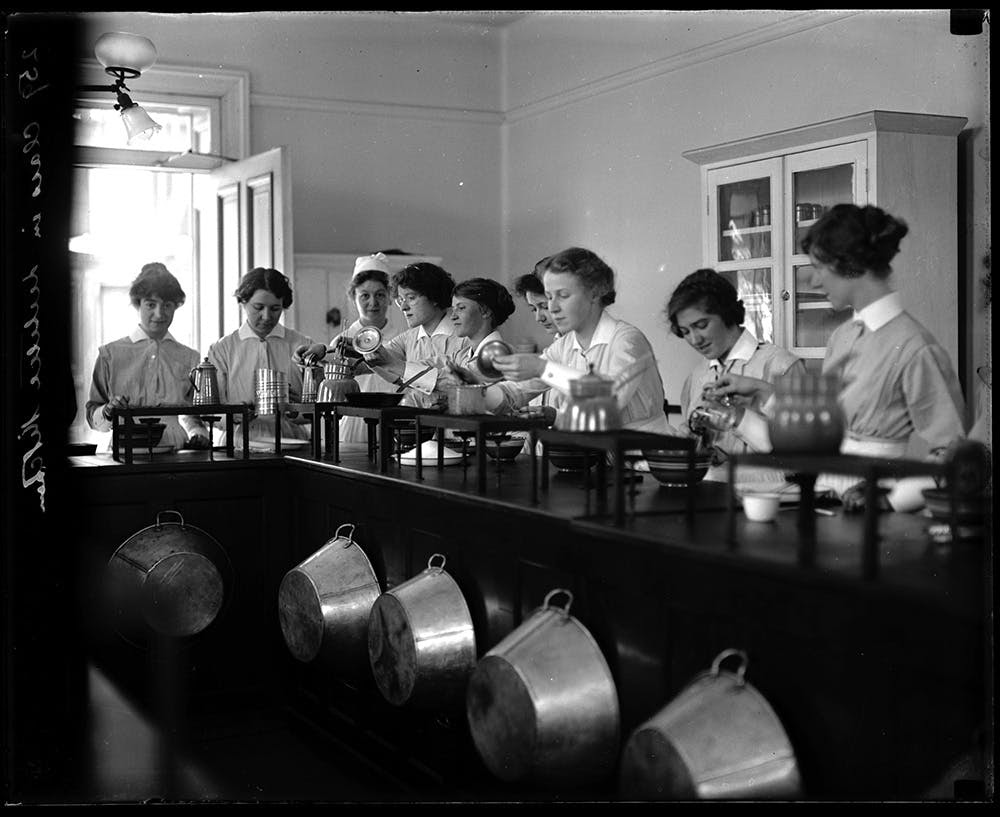
In 1916, Dr. Orrin Sage Wightman, internist and avid photographer, made a series of photographs showing student nurses from City Hospital at work on Blackwell’s Island. Dressed in tall pleated caps and long aprons, the young women take care of patients, weigh babies, assist surgeons, make beds, fill bottles, and take cooking classes. A fascinating window into one of America’s earliest hospital-based nurse training programs, the photos depict a nurse’s daily routine at a time when the nursing profession was adjusting to a series of momentous changes.
Student nurses tend to babies on Blackwell’s Island, 1916. Orrin Sage Wightman Collection. New-York Historical Society Library.
Nursing Education in New York City
Although professional nurses were nothing new (George Washington’s ledgers detail the fees paid to nurses during the Revolution), the overwhelming demands of the Civil War had demonstrated the country’s urgent need for nurses trained in hygiene and patient care. The demand for trained nurses remained acute after the Civil War was over. As more and more people flocked to dense urban centers, public hospitals strained to cope with growing populations of sick and impoverished patients. In response, philanthropist Louisa Lee Schuyler, founder of the State Charities Aid Association, helped institute and fund a Training School for Nurses at Bellevue Hospital in 1873–74, the first such program in the United States. When City Hospital (then called Charity Hospital) opened its own School of Nursing in 1877, it became the nation’s fourth.
Initially, nursing education consisted of two to three years of practical training in patient care and cleanliness. As Wightman’s pictures indicate, the student nurses provided valuable labor, but the hospitals they worked in rarely hired them as staff nurses once they had graduated.
A nursing student on Blackwell’s Island, 1916. Orrin Sage Wightman Collection, New-York Historical Society Library.
Nurses at Work in New York
While many graduates became private nurses—that is, nurses who were hired directly by patients on a temporary basis—by 1916 the range of job opportunities for nurses had increased. Lillian Wald, founder of the Henry Street Settlement, pioneered the field of public health nursing in 1893. (Wald is featured in our new women’s history film, WeRise, and her work in the settlement house movement is discussed in our Massive Open Online Course, Women Have Always Worked.) In 1901, the Army formally established its own Nurse Corps, and the Navy followed suit in 1908. Meanwhile, in 1902, Lina Roberts of New York City had become the first school nurse in the United States. Wald remained active into the 20th century: In 1909 she partnered with the insurance giant Metropolitan Life to employ home nurses to visit sick policyholders, and in 1912 she spearheaded a nationwide Public Health Nursing Service in partnership with the American Red Cross.
Student nurses observe a surgery on Blackwell’s Island, 1916. Orrin Sage Wightman Collection. New-York Historical Society Library.
In keeping with their professional training, New York’s nurses formed a professional association—the first for nurses in the country— in 1901. By 1902, the New York State Nurses’ Association began to press for a law that would establish uniform standards for nursing education and practice. The resulting Nurse Practice Act provided for state examination and certification of nurses, and created the title of Registered Nurse. The first states to pass nurse registration laws—New York, North Carolina, Virginia, and New Jersey—all did so in 1903.
In 1905, the president of the New York Nurse Board of Examiners, Sophia Palmer, wrote that the state required nurses to be trained and examined in medical and surgical nursing, obstetrical nursing, the nursing of sick children, and “diet cooking for the sick.” Wightman’s photographs show the student nurses engaged in just such activities during their training on Blackwell’s Island.
A nursing student tends to an infant on Blackwell’s Island, 1916. Orrin Sage Wightman Collection. New-York Historical Society Library
Nursing on Blackwell’s Island
In Wightman’s time, the city was about to rebrand Blackwell’s Island (today known as Roosevelt Island), which had a fearsome reputation, with the benign-sounding moniker “Welfare Island.” In the 19th century, the island had been the grim home of a penitentiary. Its former inmates included the infamous abortion provider known as Madame Restell and the equally infamous anarchist Emma Goldman, both featured in our Women’s Voices exhibit. The island also housed a smallpox hospital, a workhouse, and the city’s Lunatic Asylum. In 1887, the island’s asylum had been the subject of journalist Nellie Bly’s “Ten Days in a Mad-House,” a chilling exposé which detailed the inadequate food and clothing given to patients, overcrowding within the facility, and mistreatment from the nurses on staff. Bly’s investigation, part of a larger reassessment of how the city coped with problems of poverty and illness, helped spur desperately needed institutional reforms.
Nursing students at a patient’s bedside on Blackwell’s Island, 1916. Orrin Sage Wightman Collection. New-York Historical Society Library.
Nursing Reforms in City, State, and Nation
One reform that did not take place until the mid-20th century was desegregation. Until 1923, the privately funded Lincoln School for Nurses in the Bronx was the only institution in New York City that trained African American women. Founded in 1898, it was the first school of its kind in the United States. (Mary Eliza Mahoney, the country’s first professionally trained African American nurse, graduated from Boston’s New England Hospital for Women and Children in 1879 under a quota system that admitted one African American woman and one Jewish woman per class.) To press for the end of racial discrimination in the nursing profession, in 1908 fifty-two women formed the National Association of Colored Graduate Nurses in New York. However, it was not until World War II that severe nursing shortages caused state-level nursing associations to admit African American members, and it was not until the passage of the Civil Rights Act in 1964 that the federal government mandated desegregation in hospitals and nursing schools.
Student nurses on Blackwell’s Island, 1916. Orrin Sage Wightman Collection, New-York Historical Society Library.
Credits
New-York Historical
This post is part of our new series, “Women at the Center,” written and edited by the staff of theCenter for Women’s History.Look for new posts everyTuesday! #womenatthecenter
Top Photo Credits: Student nurses on Blackwell’s Island, 1916. Orrin Sage Wightman Collection, New-York Historical Society Library.
Can you name this church. It has a long-ago relationship to our island? Reply to jbird134@aol.com
All image are copyrighted (c) Roosevelt Island Historical Society unless otherwise indicated THIS PUBLICATION FUNDED BY DISCRETIONARY FUNDS FROM CITY COUNCIL MEMBER JULIE MENIN & ROOSEVELT ISLAND OPERATING CORPORATION PUBLIC PURPOSE FUNDS.
Thanks to all of our wonderful poll workers at PS 217 yesterday. We served 1050 voters efficiently with our great team. I am so proud of our work for our Island residents. Thanks our our Early votng team who were in the RIVAA Gallery last week who served 1690 voters!!!! Judith Berdy
What’s Underneath the Barthman Sidewalk Clock in NYC?!
Wednesday, November 5, 2025
Untapped New York
Issue #1568
Get a behind-the-scenes, or rather under-the-sidewalk, look at this beloved hidden gem in Manhattan’s Financial District!
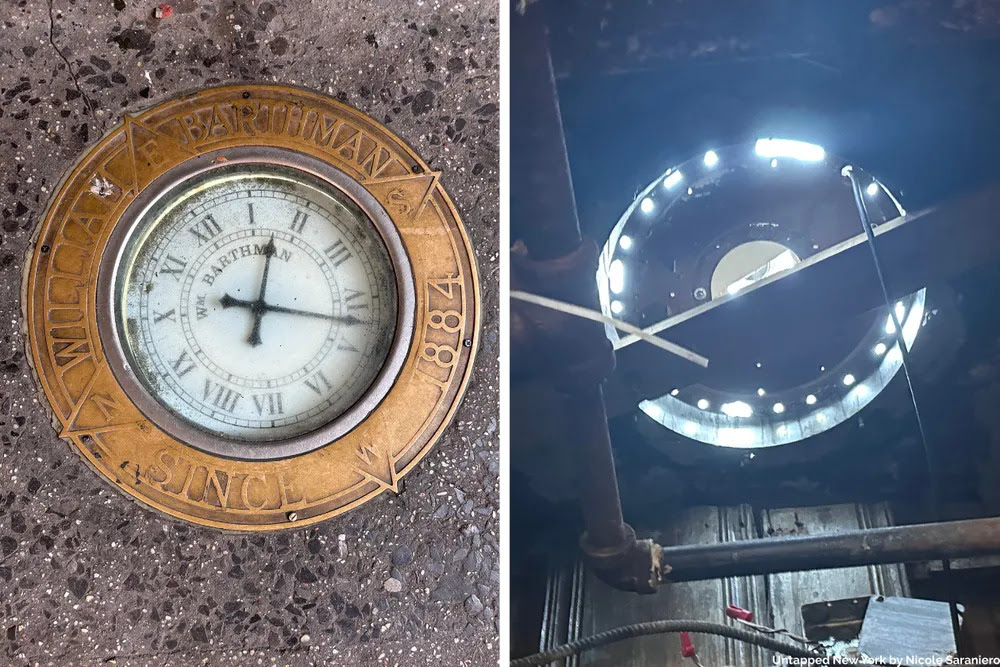
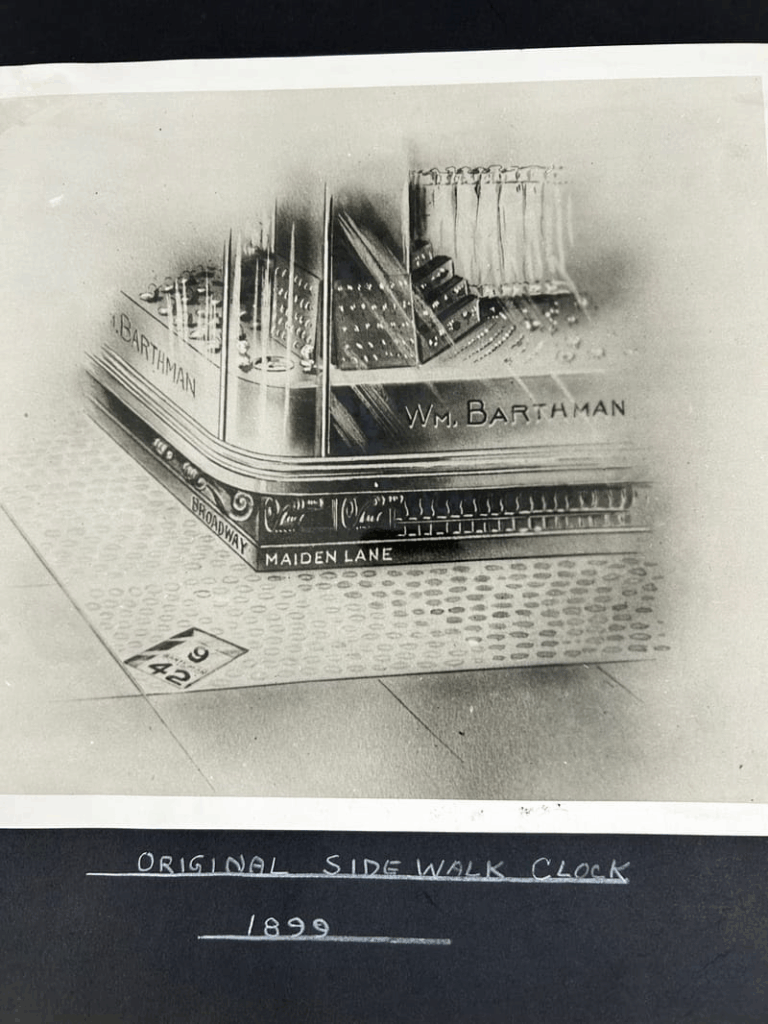
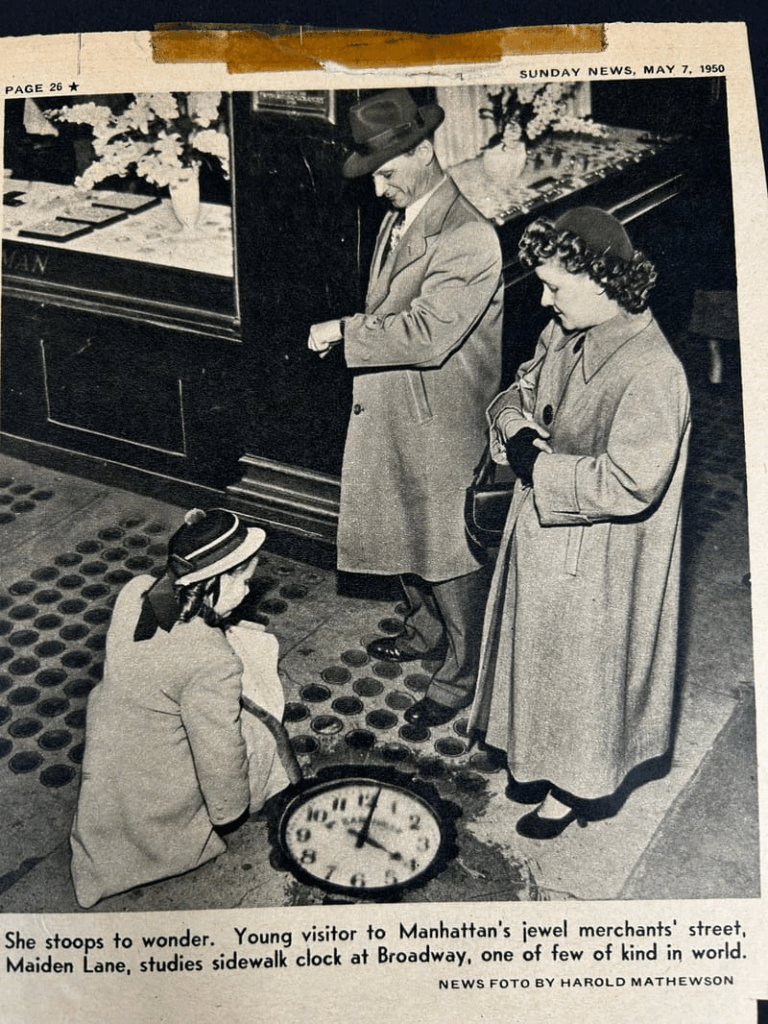
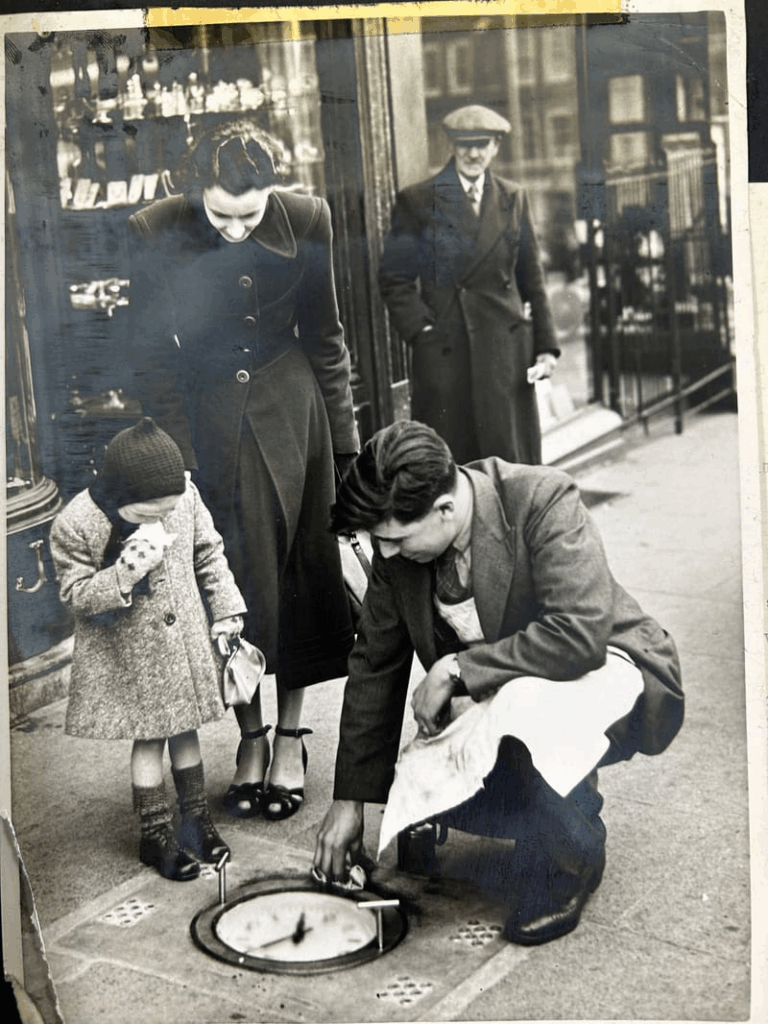
The Barthman Sidewalk clock has been keeping time underneath New Yorkers’ feet for over 100 years. This quirky piece of sidewalk ornamentation has long fascinated the Untapped New York team, and this fall, our Chief Experience Officer, Justin Rivers, and Director of Content, Nicole Saraniero, got to see its inner workings from below the sidewalk and meet the master jeweler who keeps the clock ticking!
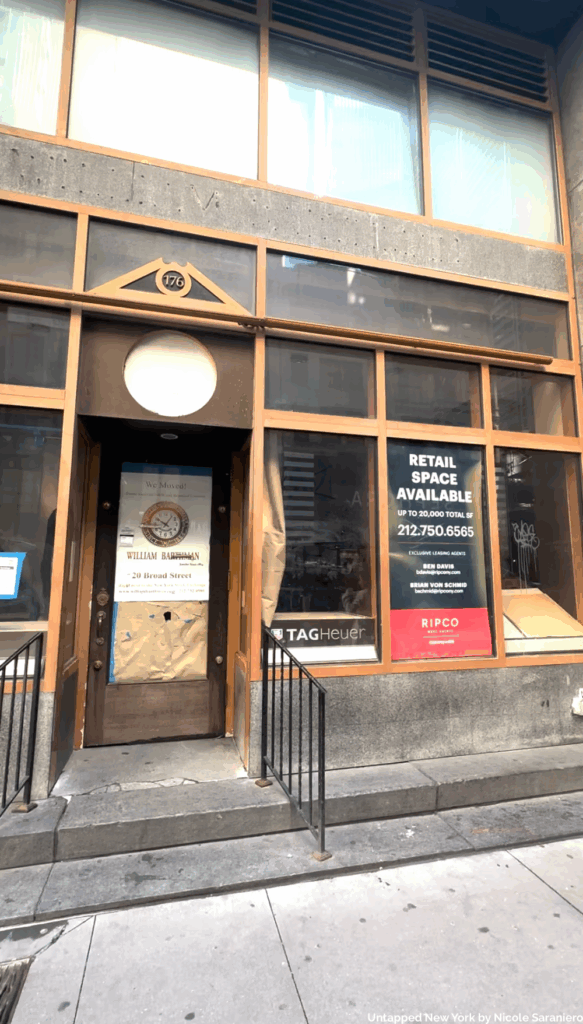
For more than 120 years, Barthman employees have cared for the clock, even after moving out of the Broadway storefront in 2006. The company now operates at 20 Broad Street in Manhattan and 1118 Kings Highway in Brooklyn.
When Untapped New York was tasked with creating a video about the Barthman sidewalk clock for NYC Tourism’s Object Lessons series, we reached out to the Barthman team, hoping for a peek below the sidewalk and more information on this beloved artifact. They delivered.
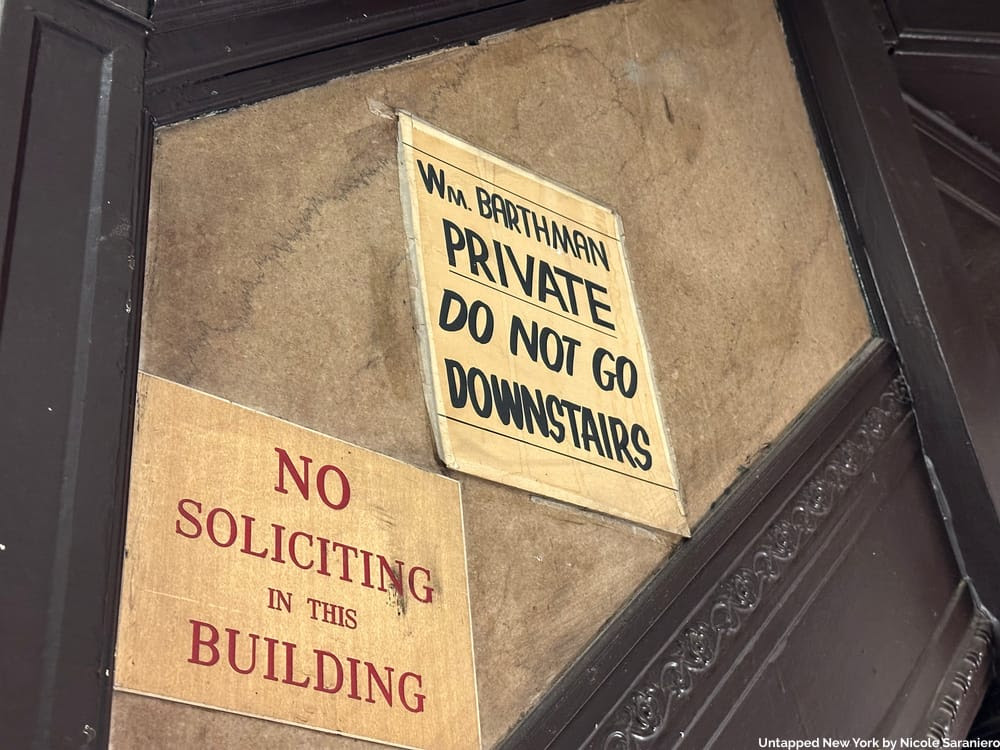
On a cool September morning, we met Brianna and Kirk from the William Barthman marketing team at the clock on the corner of Maiden Lane and Broadway. As Brianna pointed out vestiges of the old storefront, including a crack in the facade from 9/11 and a Barthman ghost sign, Kirk retrieved the keys to the basement from a current tenant of the building.
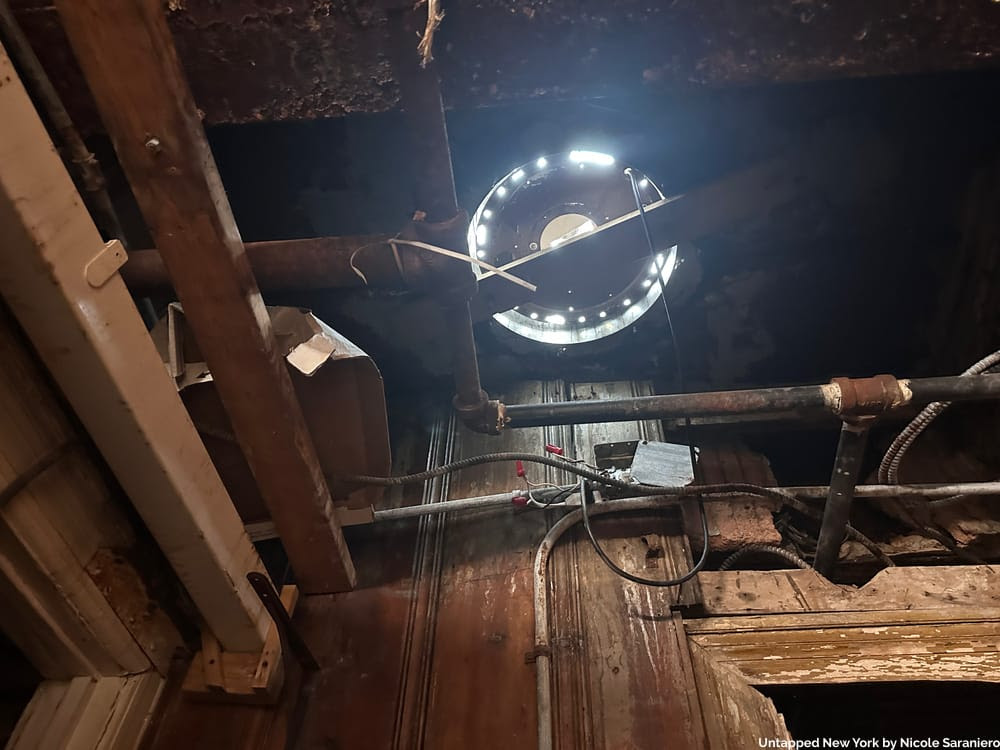
Keys in hand, we walked down a spiral staircase and into a basement space that once served as the Barthman lunch room and the former workshop of the clock’s current caretaker, master jeweler Guillermo “Guilo” Vintimilla. Today, this tiny, dusty space is used for storage, and it is where Guilo can reach the underside of the sidewalk clock above for maintenance and repairs.
Of course we climbed up the old wooden ladder for a closer look at the bottom of the clock! While in the basement, feeling the rumble of the 4 and 5 subway trains passing by, Kirk and Brianna called our attention to another crack caused by the 9/11 attacks, this time on the floor. A giant safe that’s too heavy to move sits in an adjoining room. Once satisfied with our basement adventure, we walked over to the storefront on Broad Street to meet with Guilo.
In 2024, Guilo gave the sidewalk clock a full restoration, adding a new clock face, new hands, and fresh lights. He polished the brass compass that surrounds the clock and the sapphire crystal that covers it. The strong sapphire crystal was an important addition, since the material is strong enough to handle the New York City traffic that travels over the clock face.
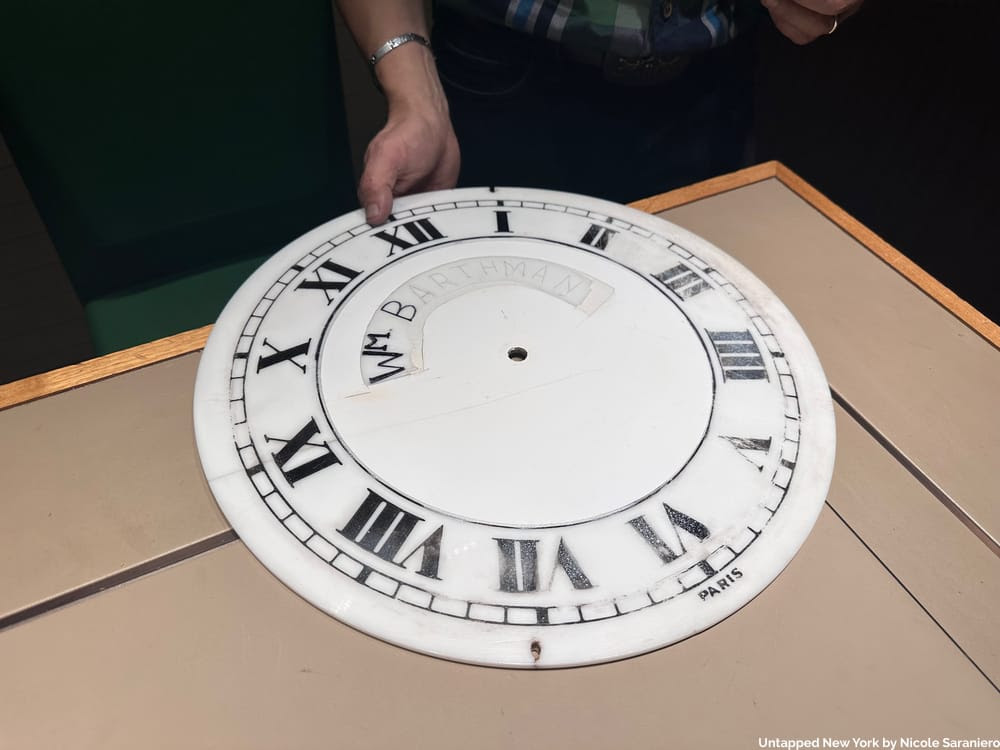
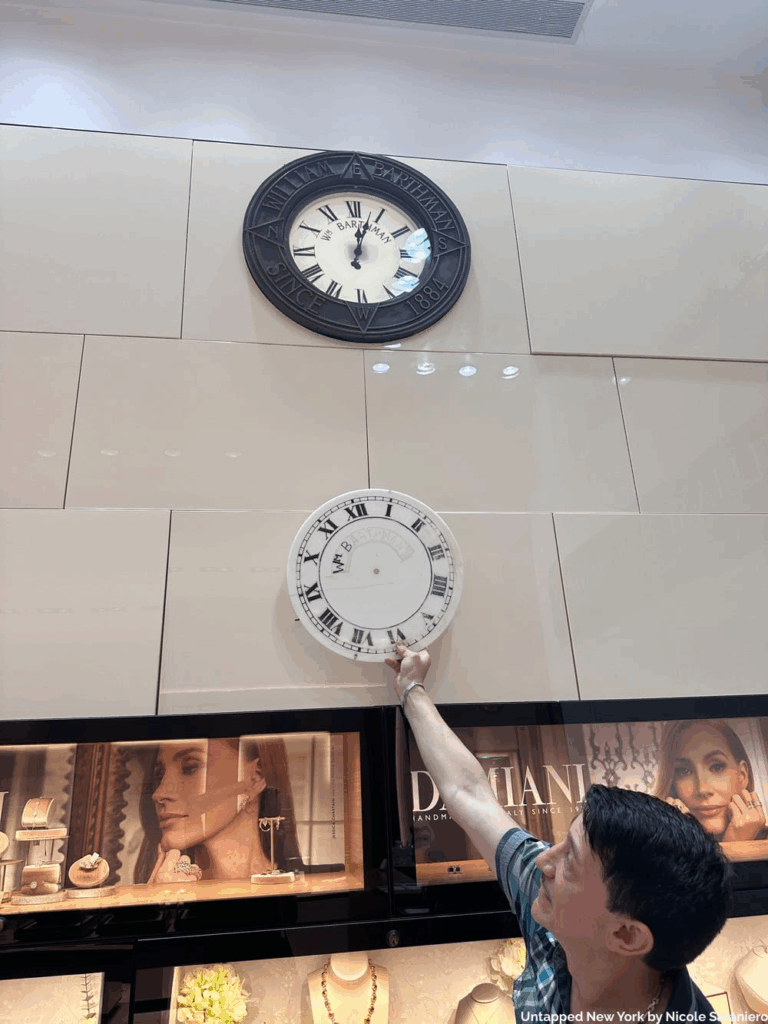
During our visit, Guilo went up to his workshop and brought down another treat: one of the former clock faces! The clock face still bears a crack from 9/11 and was covered in patchwork repairs. Another tiny detail Guilo pointed out is that the numeral for four on the old face is four lines (IIII), whereas today that number is written as “IV.”
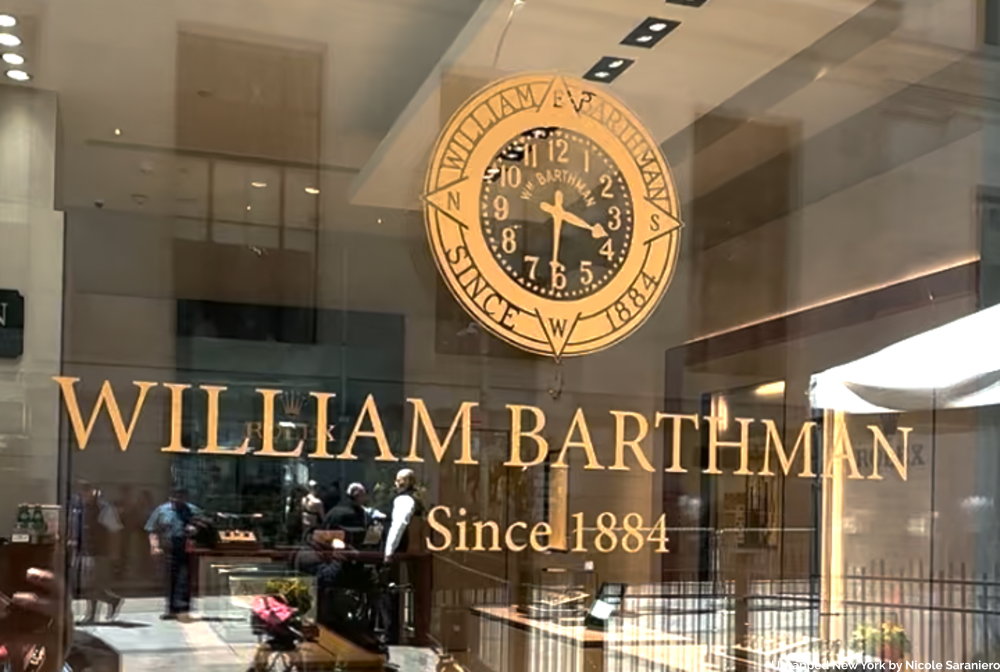
Though the Barthman family sold the business in the 1980s, current owner Jerry Natkin has kept the Barthman legacy and love for the sidewalk clock alive. The clock is the company’s logo!
Inside the Broad Street storefront, a replica clock on the wall, tying the new location to the original. At the Brookyn storefront, Brianna tells us there are scrapbooks full of historical images like those she shared with us for this article.
Historical Images Courtesy of William Barthman Jewelers
Thanks to Guilo and generations of caretakers before him, the Barthman clock still ticks on — precise and adjusted for daylight savings! Next time you find yourself at the corner of Maiden Lane and Broadway, look down and check the time rather than looking at your phone.
Guilo holds an old sidewalk clock face up to the replica at the Broad Street store
Credits
Untapped New York
All image are copyrighted (c) Roosevelt Island Historical Society unless otherwise indicated THIS PUBLICATION FUNDED BY DISCRETIONARY FUNDS FROM CITY COUNCIL MEMBER JULIE MENIN & ROOSEVELT ISLAND OPERATING CORPORATION PUBLIC PURPOSE FUNDS.