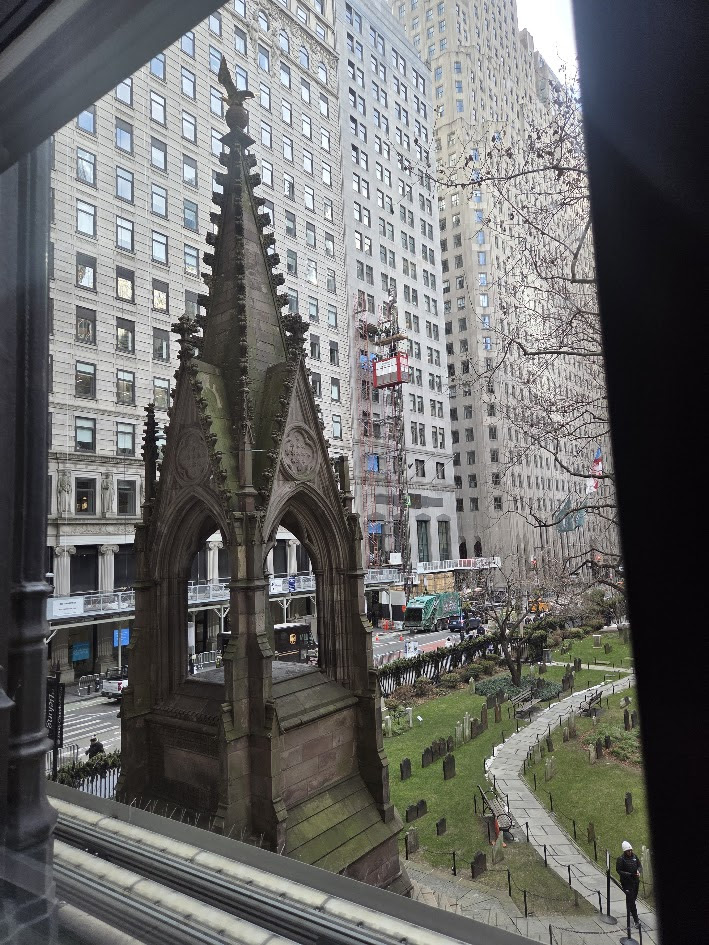
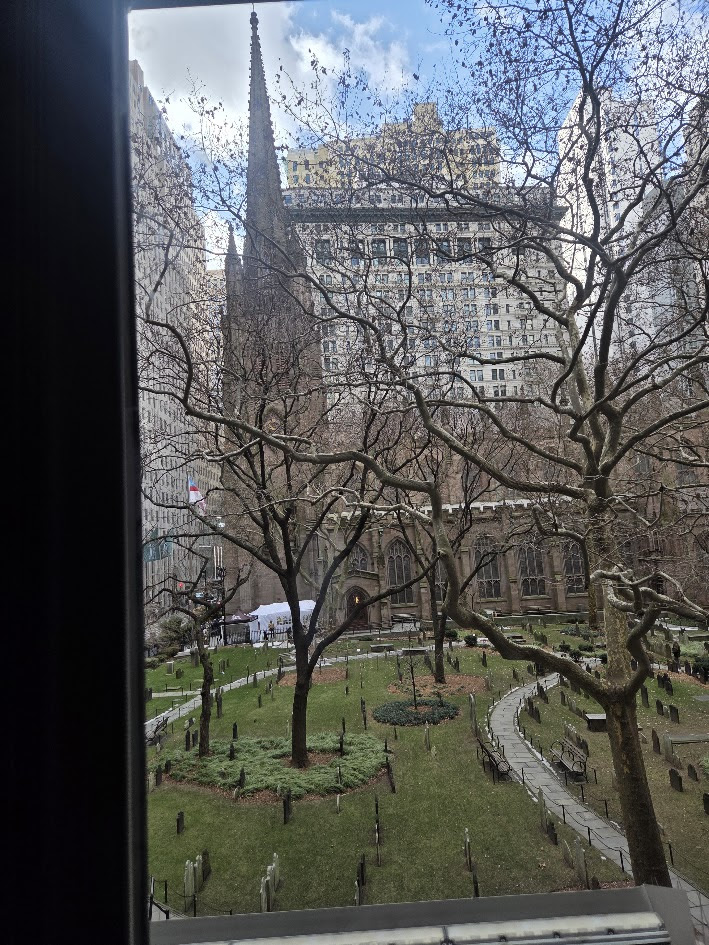
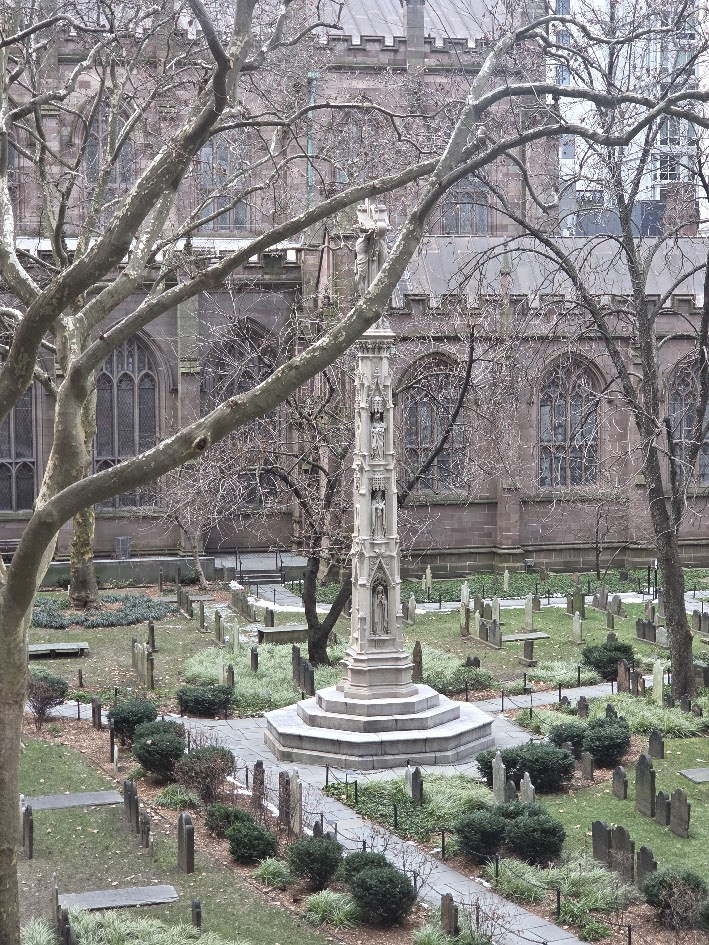
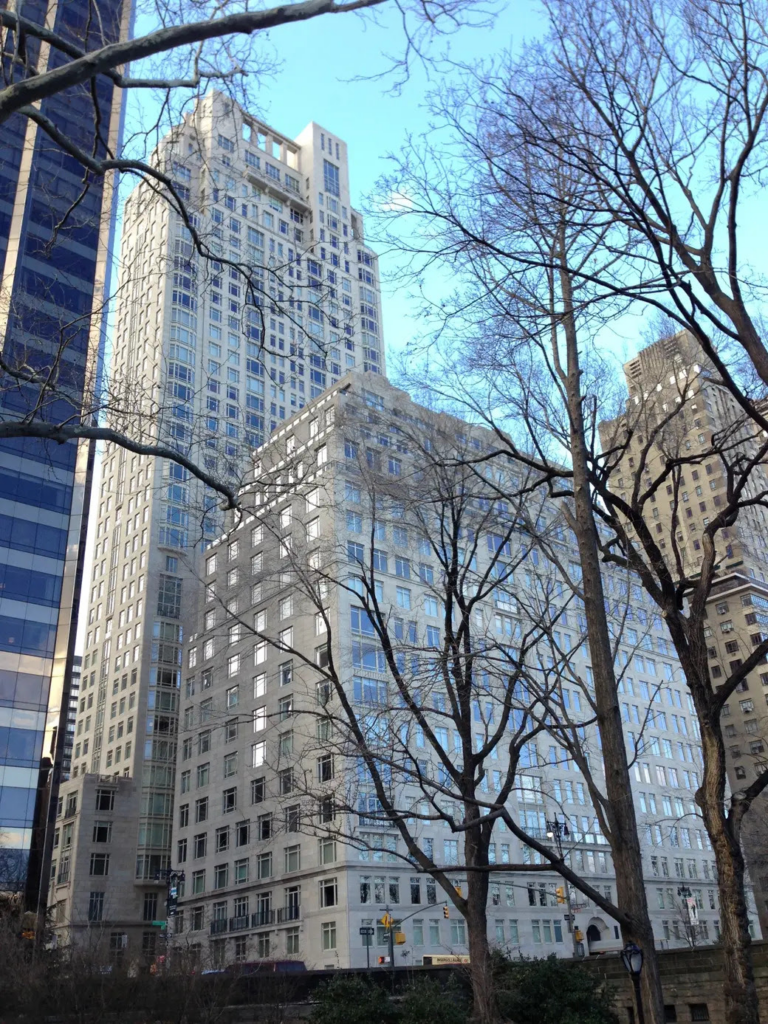
111 BROADWAY, I HAD THE UNIQUE OPPORTUNITY TO HAVE AN AERIAL VIEW OF THE TRINITY CHURCHYARD NEXT DOOR
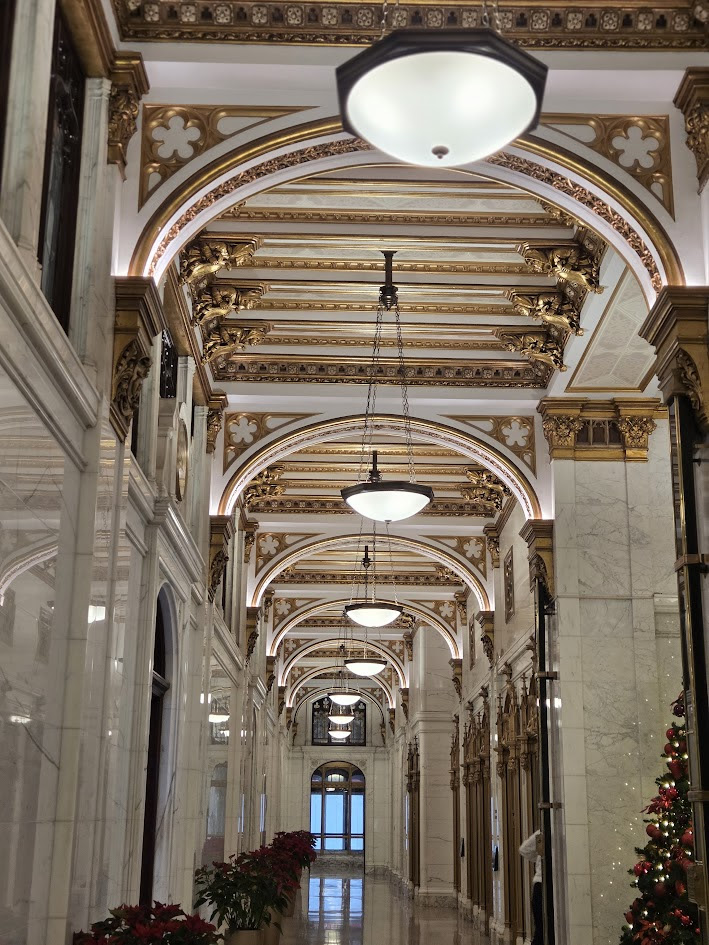
THE ENTRANCE TO 111 BROADWAY IS A MASTERPIECE
111 and 115 BROADWAY HAVE A LONG HISTORY
PHOTO OF THE DAY
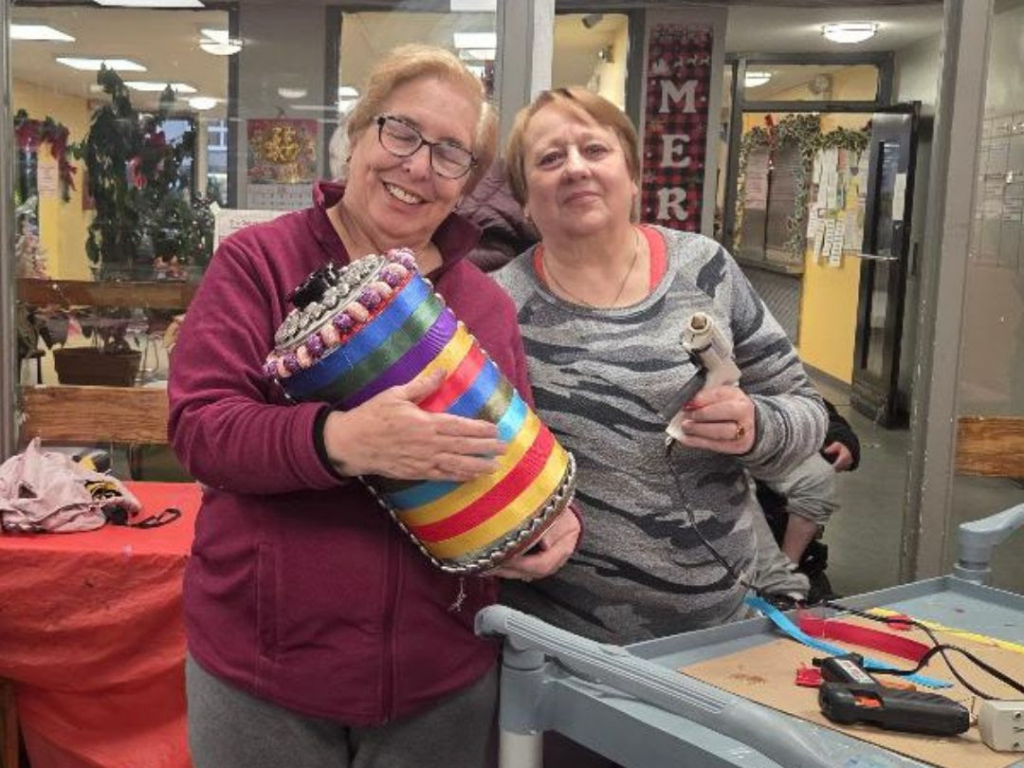
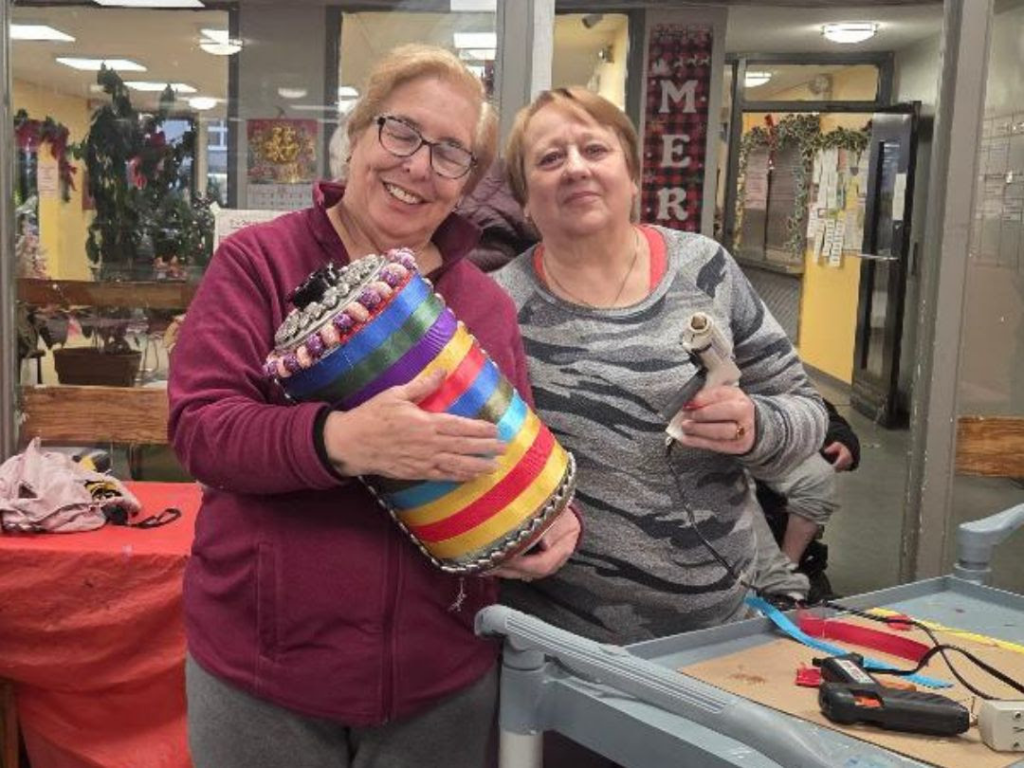
WHAT IS THIS OBJECT BEING HELD BY JUDY AND SOFIA? TAKEN AT THE “JEWELS WITH JUDY” CLASS AT CBN ADULT CENTER SEND YOUR IDEAS TO:ROOSEVELTISLANDHISTORY@GMAIL.COM
CREDITS
JUDITH BERDY
All image are copyrighted (c) Roosevelt Island Historical Society unless otherwise indicated THIS PUBLICATION FUNDED BY DISCRETIONARY FUNDS FROM CITY COUNCIL MEMBER JULIE MENIN & ROOSEVELT ISLAND OPERATING CORPORATION PUBLIC PURPOSE FUNDS.
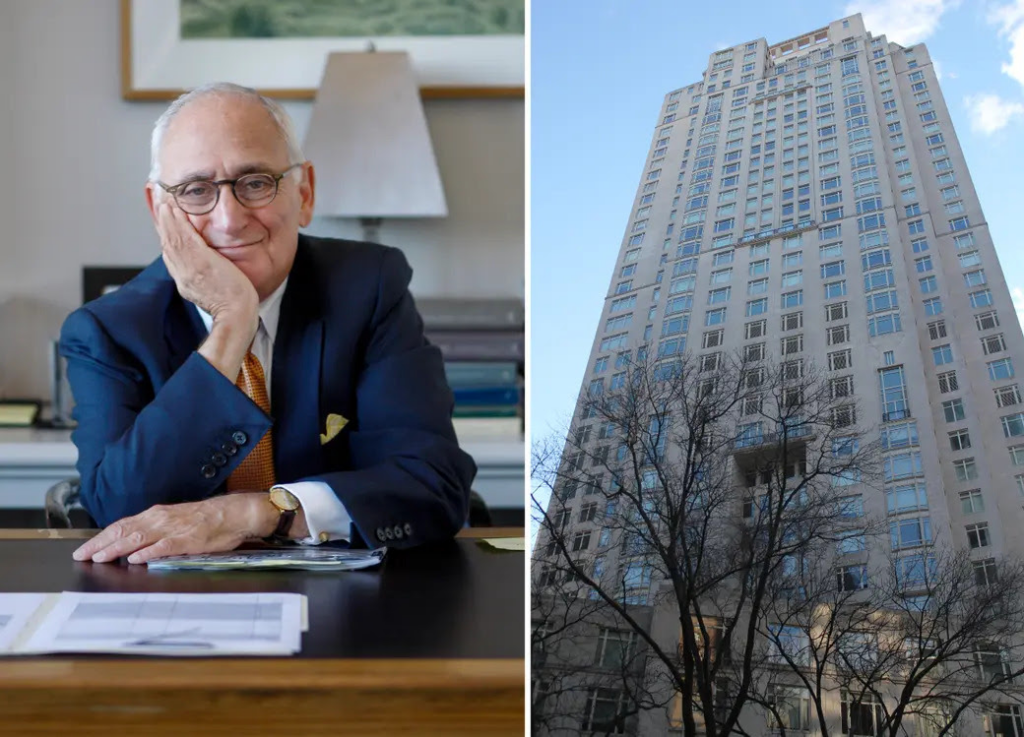
(L) Credit: RAMSA; (R) 15 Central Park West. Image via WikiCommons
Acclaimed architect Robert A.M. Stern, who over his career built one of the world’s most influential architecture firms and left an enduring mark on the New York City skyline, died last Thursday at the age of 86. The Brooklyn-born architect founded Robert A.M. Stern Architects (RAMSA) in 1969 and went on to build a portfolio that ranged from luxury residential buildings like 15 Central Park West to major institutional projects such as the expansion of the New York Historical. Stern served as dean of the Yale School of Architecture from 1998 to 2016. His son Nicholas told the New York Times that the cause of death was a brief pulmonary illness.
“Bob’s impact reverberates not just through RAMSA, but across the entire field of architecture,” Daniel Lobitz, partner and management committee chair at RAMSA, said. “His legacy will live on through the books he wrote, the students he mentored, and the people who inhabit his remarkable buildings.”
He added: “His vision, passion, and notoriously sharp wit became the foundation for a career that will not soon be forgotten, and a firm that is honored to continue the work he began.”
Born in Brooklyn in 1939, Stern began his architectural studies at Yale, graduating in 1965. He spent the next two years working in the city’s Department of Housing Preservation and Development under Mayor John Lindsay, and in 1969, he founded Robert A.M. Stern Architects (RAMSA). Around the same time, he also began teaching at Columbia University, according to Architectural Digest.
In 1984, Stern was appointed the first director of Columbia University’s Temple Hoyne Buell Center for the Study of American Architecture. He later became director of the M.Arch. Advanced Studio in 1990 and, a year after that, director of the university’s Historic Preservation Program.
From 1998 to 2016, Stern served as dean of the Yale School of Architecture, where he shaped and mentored generations of emerging architects. He also maintained a lifelong fascination with NYC’s architecture and urbanism, authoring numerous books between 1983 and 2025: “New York 1880;” “New York 1900;” “New York 1930;” “New York 1960;” “New York 2000;” and the most recent “New York 2020,” according to RAMSA.
To continue reading this article go to: https://www.6sqft.com/famed-architect-robert-a-m-stern-dies-at-86/
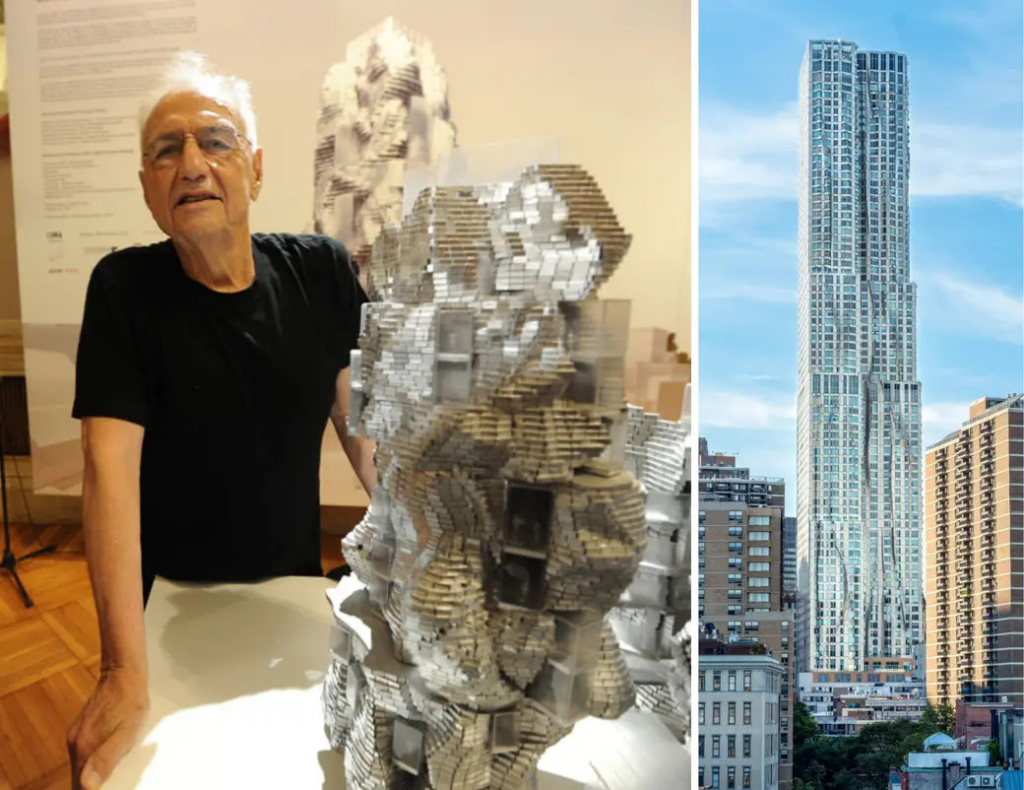
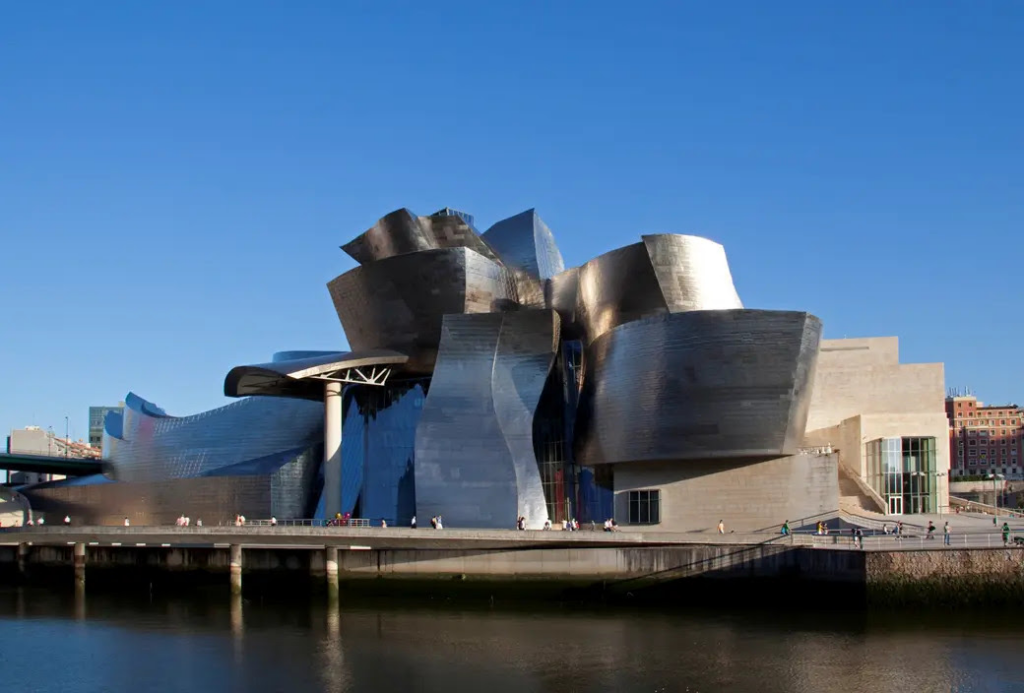
Frank Gehry, the visionary architect whose sculptural, undulating designs created some of the world’s most striking buildings, died last Friday at the age of 96. While maybe best remembered for his crowning achievement, the Guggenheim Museum Bilbao in Spain, Gehry also left a lasting mark on New York City, designing the eye-catching 8 Spruce Street in the Financial District, which opened as the tallest residential tower in the Western Hemisphere when it debuted in 2011, and Chelsea’s IAC Building. Gehry reportedly died at his home in Santa Monica, California, following a brief respiratory illness, according to the New York Post.
Born on February 28, 1929, in Toronto, Canada, Gehry first gravitated toward architecture “on a hunch,” enrolling in introductory courses at Los Angeles City College while driving a delivery truck to support himself. Encouraged by his teachers and inspired by a chance encounter with modernist architect Raphael Soriano, he soon became captivated by the possibilities of the field, according to the Academy of Achievement.
Winning scholarships to the University of Southern California, Gehry graduated in 1954 and began his architecture career at Victor Gruen Associates, where he had been apprenticing part-time while still in school, according to the Pritzker Architecture Prize.
Following a year in the military, Gehry was admitted to the Harvard Graduate School of Design to study urban planning, but returned to Los Angeles without completing his graduate degree. After a brief stint with the architectural firm Pereira and Luckman, he returned to Gruen before moving his family to Paris, where he spent a year working with French architect Andre Remondet and studying the works of modernist pioneer Le Corbusier.
Returning to Los Angeles in 1962, Gehry established his own firm, Gehry Associates—now Gehry Partners, LLP. Though he continued to work in the established International Style for several years, he was increasingly drawn to the avant-garde arts scene blossoming in the beach communities of Venice and Santa Monica.
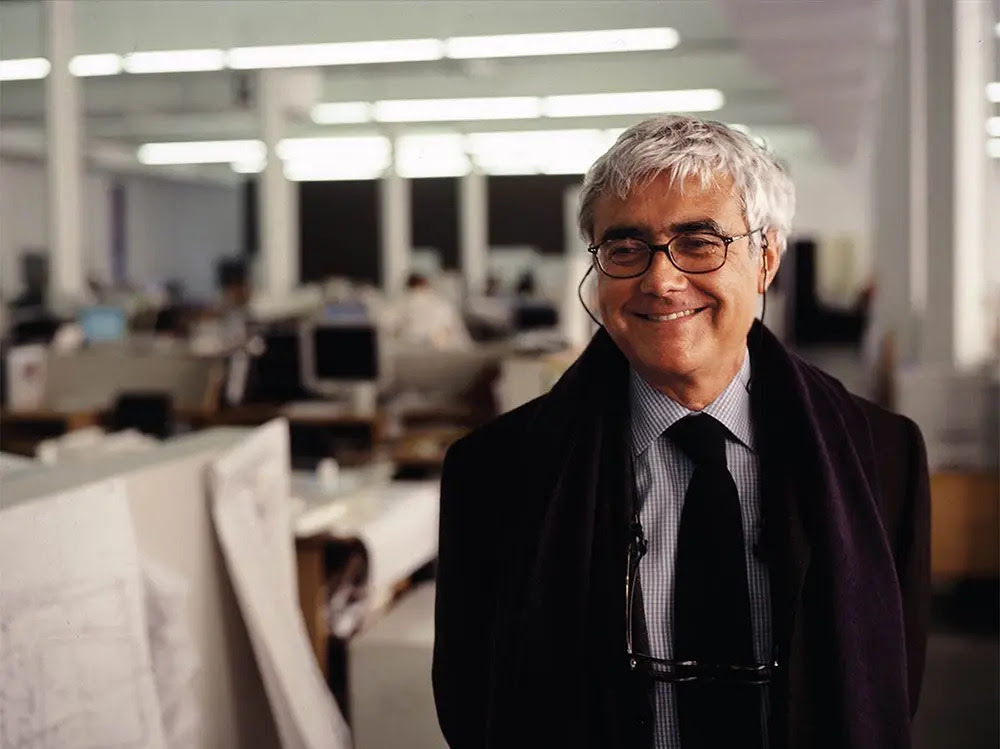
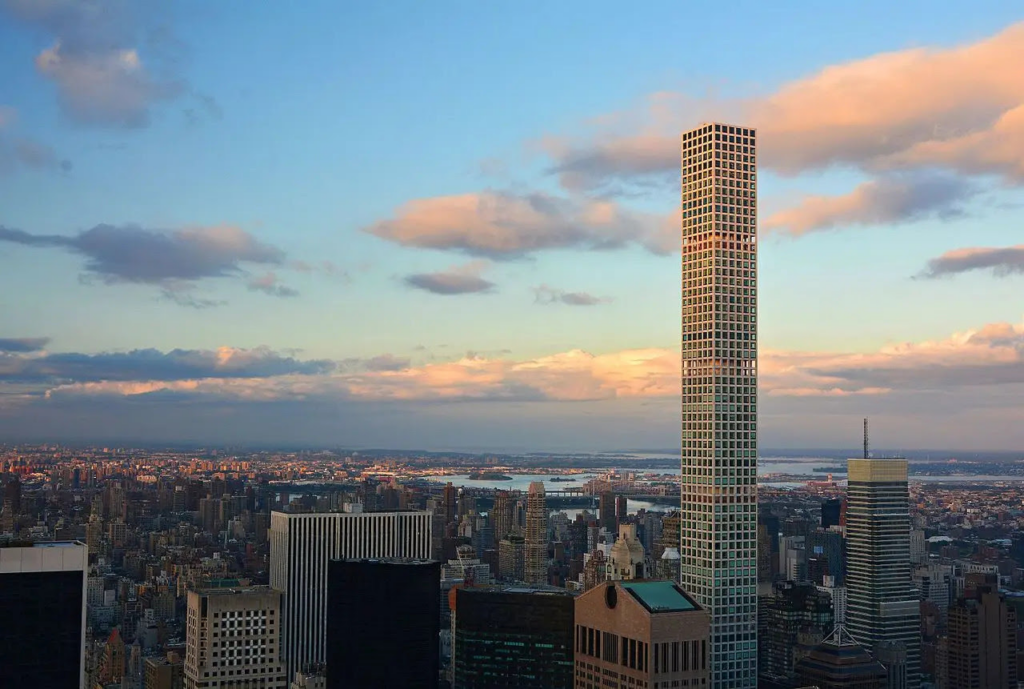
World-renowned architect Rafael Viñoly, known in New York City for his work on many commercial and landmark buildings, passed away last week in his Manhattan home at the age of 78. The modernist designer, best known to many New Yorkers for his work on the controversial 432 Park Avenue condo tower, succumbed to a brain aneurysm, according to the New York Times.
Born in Uruguay in 1944, Viñoly studied architecture in Argentina at the University of Buenos Aires. Before graduating, he had already started Estudio de Arquitectura Manteola-Petchersky-Sánchez Gómez-Santos-Solsona-Viñoly, a firm that eventually designed buildings throughout South America.
In 1978, Viñoly acquired a teaching position at Harvard University in order to escape persecution at the hands of Argentina’s militant government that had taken power in 1976. Viñoly and his family moved to New York in 1979 and established his design firm, Rafael Viñoly Architects, in 1983.
Over the course of his lengthy career, Viñoly became one of the only architects to have designed a building in all five city boroughs. His first project in NYC was reshaping an old, dilapidated high school into the new John Jay College of Criminal Justice, a design noteworthy for its use of cascading glass. The use of glass became a defining feature of Viñoly’s work.
In New York City, Viñoly may be best known for designing 432 Park Avenue, the 1,400-foot-tall condo tower along Central Park South once ranked as the tallest residential building in the world. Many of the tower’s residents ended up complaining about engineering and construction problems, including leaky plumbing and defective elevators, documented extensively in a 2021 New York Times article.
Some of his other NYC projects include the conversion of an old library into the City College of New York’s Bernard and Anne Spitzer School of Architecture, a new design for the Queens Museum of Art, and his design of the home for Jazz at Lincoln Center.
The esteemed architect worked on many projects throughout the United States, including a stadium at Princeton University, a new building for Chicago’s Booth School of Business that featured a striking glass atrium, and convention centers in Pittsburgh and Boston.
“On behalf of my family, my co-workers and our many partners throughout the world, I am saddened to report that my father, the founder and namesake of our firm Rafael Viñoly Architects, passed away unexpectedly yesterday, 2nd of March, at the age of 78,” Román Viñoly, the late architect’s son and a director at the family’s firm, said in a statement. “He was a visionary who will be missed by all those whose lives he touched through his work.”
Román Viñoly added: “He leaves a rich legacy of distinctive and timeless designs that manifested in some of the world’s most recognizable and iconic structures, among them the Tokyo International Forum, the Cleveland Museum of Art, Carrasco Airport in Montevideo, and 20 Fenchurch Street in London. The firm’s partners and directors, many of whom have collaborated with him for decades, will extend his architectural legacy in the work we will continue to perform every day.”
Viñoly was said to be working on a renovation of the San Rafael Hotel in Punta del Este, Uruguay at the time of his death, according to Archinect. He also designed the recently opened The Ritz-Carlton New York, Nomad and the under-construction tower at 125 Greenwich Street.
Viñoly is survived by his son Roman, his wife Diana, his stepsons Nicolas and Lucas, a granddaughter, and three step-grandchildren.
CREDITS
JUDITH BERDY
6sqft
PHOTO OF THE DAY
WHAT IS THIS OBJECT BEING HELD BY JUDY AND SOFIA? TAKEN AT THE “JEWELS WITH JUDY” CLASS AT CBN ADULT CENTER SEND YOUR IDEAS TO:ROOSEVELTISLANDHISTORY@GMAIL.COM
All image are copyrighted (c) Roosevelt Island Historical Society unless otherwise indicated THIS PUBLICATION FUNDED BY DISCRETIONARY FUNDS FROM CITY COUNCIL MEMBER JULIE MENIN & ROOSEVELT ISLAND OPERATING CORPORATION PUBLIC PURPOSE FUNDS.
Municipal Archives’ Conservation staff recently completed a major project to conserve the Brooklyn Bridge drawings collection, which consists of more than 11,000 drawing plans. With the support of a three-year Save America’s Treasures grant from IMLS and a one-year grant from the New York State Library, conservators worked diligently over a nearly five-year period to stabilize and photograph the collection. As part of the project, the Archives’ Conservation Unit collaborated with the Metropolitan Museum of Art’s Scientific Research Department to conduct scientific analysis of selected drawings to determine the composition of media and paper, causes of degradation, and to use infrared imaging techniques to enhance faded writing and drawing in graphite.
East River Bridge, “The Brooklyn Bridge Up Close.” Photograph by Elena Carrara, Metropolitan Museum of Art.
The successful collaboration also prompted the Met to mount an exhibition of seven important drawings from the collection in a joint special installation with their Education Department, which opened on December 8th. On view until February 22nd, the installation displays, for the first time since 1983, several of the large-scale presentation drawings created by John and Washington Roebling and Wilhelm Hildenbrand. The longest drawing in the collection, which depicts the full span of the bridge and measures more than 25 feet long, has never been exhibited before. Thus, the exhibition offers a rare opportunity to see these exquisite drawings in an equally exquisite setting.
In conjunction with the exhibition, the Met invited me to participate in an “Expert Talk” on December 9th along with Marco Leona, the David Koch Scientist in Charge at the Met, and Met Curator, Elena Carrara. Open to the public, the panel spoke about the history and preservation of the collection, the scientific work performed by the Met, and the exhibition process.
Given the size of the collection, not to mention the colossal size of many individual drawings, preserving and exhibiting the collection presented numerous challenges. The Met may in fact be one of few institutions in the world that could successfully mount an exhibition on such a scale. In addition to size, the condition issues the drawings presented posed challenges for conservation, framing, and transport.
Lindsey Hobbs speaking at the Metropolitan Museum of Art on December 9, 2025.
Prior to their accession by the Municipal Archives, the drawings spent the better part of a century in a dusty carpenter’s workshop beneath the Williamsburg Bridge under the purview of the Department of Transportation and its various historical iterations, where they were often consulted by City engineers for bridge repairs and renovations. Subjected to water leaks, mold, exhaust fumes from surrounding traffic, and rough handling, the drawings took a great deal of abuse. The primary condition issues we encountered included deteriorated paper supports, discoloration, tears and abrasions, local staining, faded media, and damage from mold and degraded adhesives.
To help us better understand how the drawings were created and what specific materials and media we were dealing with, I reached out to the Met’s Scientific Research Department in July 2023 and proposed a collaboration. The Met’s scientists often collaborate with smaller institutions via their Scientific Research Partnerships program to share their extensive analytical capabilities. Their enthusiastic yes to the proposal led to several visits between our institutions and a very productive partnership.
New York Approach, East River Bridge. “The Brooklyn Bridge Up Close.” Photograph by Elena Carrara, Metropolitan Museum of Art.
The Met’s findings confirmed the presence of certain pigments, such as vermillion, Prussian blue, earth pigments, and smalt, which helped to direct the methods used in our treatment of the drawings. Awareness of the presence of specific pigments also supports guidelines for light exposure given their known light sensitivity. Other findings revealed potential agents of deterioration in the paper substrates of some of the drawings, including rosin and kaolin. Infrared imaging allowed us to read for the first time some of the many notations written by Washington Roebling on the drawings and give a clearer view of intricate details. The imaging and analysis conducted by the Met not only supported our recent treatment efforts and understanding of drawings but will continue to support preservation of the collection in the future.
The work of Archives’ conservators along with the generous support of the Met’s Scientific Research and Education Departments have yielded insights into the Brooklyn Bridge plans that would not have otherwise been possible. The collaboration has been a wonderful opportunity to support a more nuanced approach to the drawings’ treatment and to expand the Archives’ audience for this remarkable collection.
All image are copyrighted (c) Roosevelt Island Historical Society unless otherwise indicated THIS PUBLICATION FUNDED BY DISCRETIONARY FUNDS FROM CITY COUNCIL MEMBER JULIE MENIN & ROOSEVELT ISLAND OPERATING CORPORATION PUBLIC PURPOSE FUNDS.
KIOSK OPEN TODAY 12 TO 5 P.M. (WEATHER PERMITTING)
CREDITS
JUDITH BERDY
All image are copyrighted (c) Roosevelt Island Historical Society unless otherwise indicated THIS PUBLICATION FUNDED BY DISCRETIONARY FUNDS FROM CITY COUNCIL MEMBER JULIE MENIN & ROOSEVELT ISLAND OPERATING CORPORATION PUBLIC PURPOSE FUNDS.
Novelist Hedwig “Vicki” Baum was born in January 1888 in Vienna into a Jewish family. She attracted international attention in 1929 with her novel Menschen im Hotel which started off a vogue for the “hotel novel.” It was staged as a play in Berlin by the great director Max Reinhardt that same year.
Translated into English as Grand Hotel, the story was turned into an Academy Award winning film produced by Metro-Goldwyn-Mayer in 1932, starring Greta Garbo. The author had moved to Los Angeles whilst writing the screenplay, but the rise of fascism stopped her from returning to Europe. By 1935 the Nazis had banned her work. She became an American citizen three years later and began writing in English rather than in German.
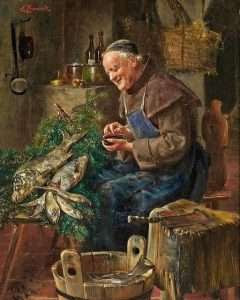
In 1941 Baum published The Christmas Carp, a story set in Vienna that evokes a nostalgic image of past family festivities with memories of home baked cookies and a Christmas dinner that had carp as its highlight. Austrian painter Ernst Novak had captured a similar theme early in the century in a picture entitled “Cooking the Christmas Carp.”
Fish Migration
The wild ancestor of the common carp (Cyprinus carpio) originated in the Black, Caspian, and Aral Sea drainages. From there the species dispersed east into China and Japan and swam west as far as the Danube and Rhine Rivers.
The Romans were among the first to farm it in specially built ponds. The skill of building and maintaining piscinae (pools or ponds) was preserved in monasteries. Religious restrictions on eating meat made fish an important food source.
Salmon, trout, lampreys, shad, sturgeon, and other species characteristic of unpolluted running water featured in medieval meals. In parts of Eastern Europe carp became a staple food.
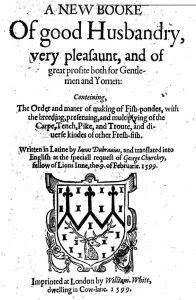
Czech cleric and humanist scholar Janus Dubravius, Bishop of Olomouc, penned Libellus de piscinis et piscium (Booklet about fishponds and fish) in 1547. Its publication coincided with a rise in aquaculture in South Bohemia, the country’s “lake district.”
Carp became part of the national cuisine and still is the key ingredient of a traditional Christmas meal today (as it is in Slovakia, Poland, and in parts of Hungary and Croatia).
Carp figured strongly in Jewish cuisine. Gefilte fish was traditionally prepared on Rosh Hashanah, the religion’s New Year holiday. Balls made of minced carp were blended with seasoning and matzah (an unleavened flatbread).
In Galicia, Southern Poland, they were sweetly flavored; in the north the balls had a spicy seasoning. This dividing line of sweet versus spicy regions was known as the “gefilte fish border.”
The geographical sources of the Danube and Rhine Rivers are close to each other. The Rhine once consisted of extensive flood plains and plant-rich channels that were suitable for the recruitment and reproduction of carp. At some time in the tenth or eleventh century carp migrated from the Danube to the Rhine basin, making its way from there into the Low Countries.
The first written evidence of carp in the Rhine dates from 1158 when the Benedictine abbess Hildegard von Bingen (the “Sybil of the Rhine”) composed her Physica in which she discussed the “therapeutic” virtues of plants, animals, and metals. She found stocks of carp in the Rhine-Meuse delta.
The enjoyment of carp meals was at first restricted to the gentry and clergy. During the Middle Ages and early modern period, carp à la broche (spit roasted carp) was served in Europe at aristocratic banquets. Cooking fish on a skewer over an open fire was a common technique at the time.
By the fourteenth century carp had become part of the culinary trade in the Low Countries. During the early seventeenth century carp appear in Flemish and Dutch still life painting.
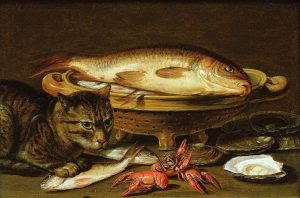
Antwerp-born Clara Peeters was prominent among the painters who shaped the traditions of ontbijtjes (breakfast pieces) with plain food and simple vessels, and banketjes (banquet pieces) with stylish cups and crockery. Her 1611 still life of a carp and cat is a fine example.
Ponds & Fishmongers
Carp appeared on London tables towards the end of the fourteenth century. Refugees from the Low Countries were running the fish farms. In 1381, locals attacked a Flemish lessee of fishponds in Southwark and wrecked his property. These merchants had become a target as they were associated with privilege.
Throughout the 1370s, Flemish settlers were accused of seeking unfair economic advantage over English-born workers and they became victims of xenophobic rioting at the time. It did not hamper the industry’s growth. By the mid-fourteenth century there were various plots known as “The Stews” on the southern bank of the River Thames created for the cultivation and fattening of carp. Operated by professionals, it heralded the start of commercial fish keeping.
East Anglia has a long history of connections with the Low Countries. Not surprisingly, the first mention of an English carp pond goes back to 1462 on the Duke of Norfolk’s estate. By the late sixteenth century, carp had become the nation’s most popular freshwater fish. Dubravius’s book was translated in 1599 as A New Booke of Good Husbandry and sparked interest (mentioned by Robert Burton in The Anatomy of Melancholy).
John Taverner in his capacity as surveyor of the King’s woods was the first author to extol the virtues of rearing carp in a book on Certaine Experiments with Fishe and Fruite (1600). Carp was associated with the Crown. If any fish escaped from the Royal rearing ponds into local waterways, Henry VIII offered rewards to those who returned the “carpes to the King.”
The presence of carp was reported in Ireland soon after its arrival in England as monastic orders or members of the gentry introduced the non-native species to the country. It was food meant for the landowning nobility as distinct from the common Irish staple diet of grains, milk, and potatoes. Ponds stocked with carp signified wealth. At elaborate dinners, guests enjoyed carp alongside game and meats.
Although detailed records of consumption are scarce, they do point at intervention from the Low Countries. Peter de Latfewr was an Amsterdam-based merchant who, in 1626, supplied eight carp to Richard Boyle, Earl of Cork, for his fishponds at the Doneraile Estate on the banks of the Awbeg River, County Cork. Several years after its introduction, carp had bred sufficiently to allow Boyle to supply family and friends across Ireland with samples for their respective ponds, principally for food but also for ornamental purposes.
Gradually the fish reached middle class plates and palates. In 1653, Izaak Walton lauded carp as the “Queen of Rivers” in chapter nine (“Observations of the Carp”) of his famous treatise The Compleat Angler.
Cultivating carp became a commercial success. Professional fish farmers praised its hardiness and rate of fattening as compared to other freshwater species.
We Do Not Want You Here
Carp reached England and Ireland from Europe through human intervention as was its introduction to the United States during the mid-1800s. Newly arrived immigrants could scarcely believe that there was no carp in this vast continent.
Whilst in many European countries the fish was on the menu at weddings, birthdays, Christmas and New Year, in their new home settlers were deprived of a delicacy that tasted of a past they had left behind them.
Some settlers made attempts to start its culture. In 1831, imported carp was raised in New York City ponds or stocked in the Hudson River throughout the 1840s. Local entrepreneurs lacked the experience of fish culture and public demand completely outstripped supply.
There was some success elsewhere. Berlin-born fish farmer Julius Poppe succeeded in expanding a stock of five common carp imported in 1872 from Reinfield, Germany, into a thriving farm at Sonoma, California, within a period of five years.
The availability of carp remained limited and excluded to the rich. Celebrated as a delicacy, expensive hotels and restaurants in New York City served carp as a festive offering. The luncheon menu of April 16, 1902, at Manhattan’s Waldorf-Astoria hotel offered “Carp in Rhine Wine Sauce.”
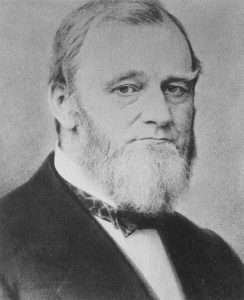
When in 1876 Pennsylvanian naturalist Spencer Fullerton Baird (1823-1887) took on the post of director of the newly formed Commission of Fish and Fisheries, he received countless requests for the importation of carp.
At the same time, he struggled with the challenge that enormous quantities of native species netted from the Illinois, Mississippi or Ohio rivers were shipped to markets of cities along the East Coast. Baird agreed to the introduction of carp into the nation’s lakes and rivers as a replacement of flagging stocks.
Carp would supplement traditional supplies and serve as an inexpensive source of protein for the benefit of the whole nation. The market was extensive and receptive; soon there was carp in abundance. Natives and newcomers snatched up carp from fish stalls in New York, Boston, Chicago, and elsewhere.
For urban fishing enthusiasts, there were plenty of common carp thriving in local outlets. New York City’s Reservoirs and Manhattan’s Central Park lakes (The Lake, Harlem Meer, or The Pond) made angling both a pastime and a means of (illegal) family food supply. The experiment seemed a success, but the love affair with carp would not last.
Carp tends to destroy vegetation in shallow wetlands and dominate distressed aquatic environments, crowding out other fish. In America, the species became a pest. Running a pond was no longer a workable enterprise as commercial anglers were hauling carp in from public waters that had been stocked intentionally or accidentally. Prices plunged. Fish farmers gave up the trade in carp.
The Asian carp added to the problem. Introduced in North American waterways to control algae blooms in aquaculture facilities, many of them escaped either through human mismanagement or natural events (flooding). Their numbers exploded, disrupting ecosystems especially in the Mississippi and Great Lakes region, endangering native species such as yellow perch, bluegill, or black and white crappie.
In the South hunger had been major issue since the collapse of the plantation cotton economy. As protein-rich carp was plentiful, many African American and other struggling families consumed it.
In the cities of the northeast, it became a staple for immigrants and poor minorities. Public perception connected hardship and low social status with carp which became a metaphor for poverty.
Many consumers rejected “poor man’s fish” as a cheap replacement of proper food driven forward by the federal government’s support for fish farming (much like the European introduction of the potato had once been an alternative for bread).
Dislike of carp coincided with growing unease about both the rate of mass immigration and the resistance against Black integration. The four-letter “carp” word expressed social and cultural disharmony.
In America at least, its association with Christmas was fading from memory.
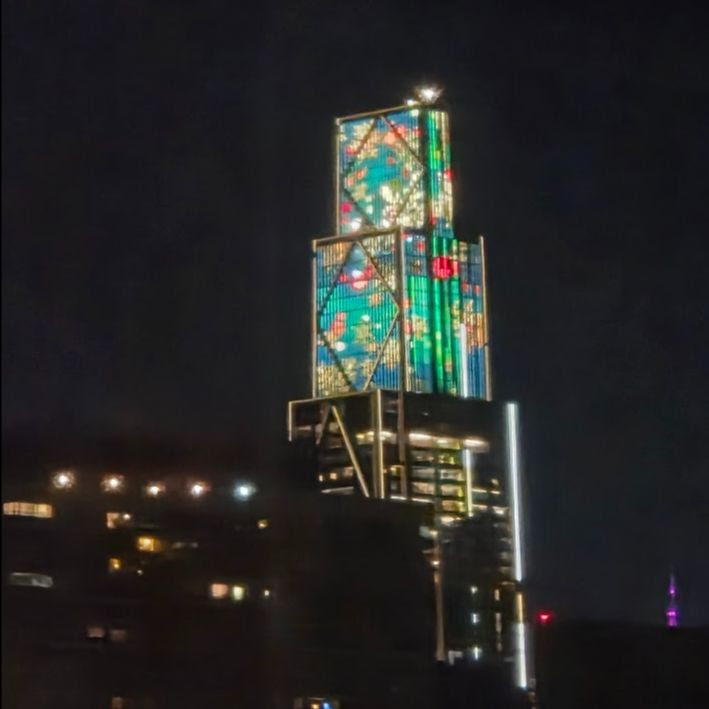
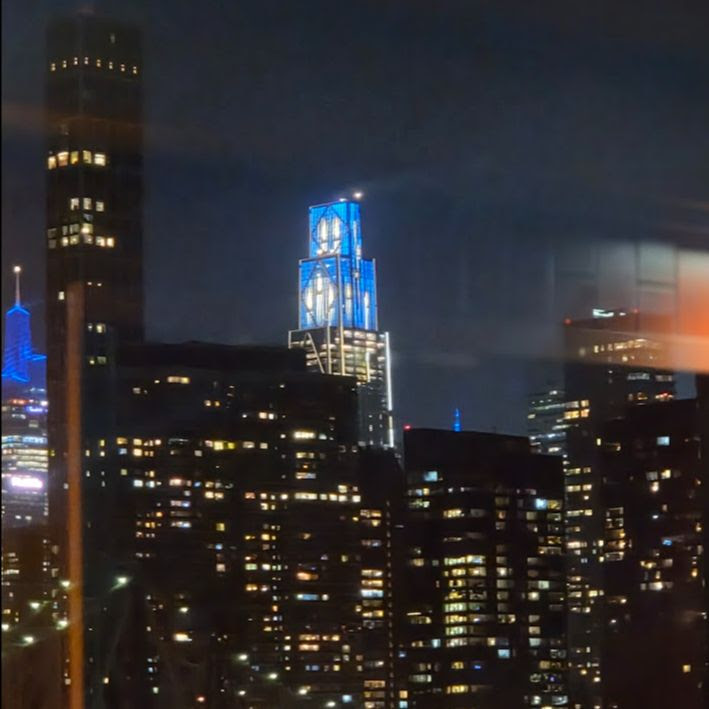
NOTHING IS BETTER THAN WATCHING THE ART ON THE NEW JP MORGAN CHASE BUILDING
CREDITS
NEW YORK ALMANACK
JUDITH BERDY
All image are copyrighted (c) Roosevelt Island Historical Society unless otherwise indicated THIS PUBLICATION FUNDED BY DISCRETIONARY FUNDS FROM CITY COUNCIL MEMBER JULIE MENIN & ROOSEVELT ISLAND OPERATING CORPORATION PUBLIC PURPOSE FUNDS.
SUPPORT THE R.I.H.S. SHOP THE KIOSK TODAY,SATURDAY 12 NOON TO 5:30 P.M.
NYC’s Forgotten
‘War on Christmas Trees’
WEEKEND, DEC. 20-22, 2025
ISSUE #1597
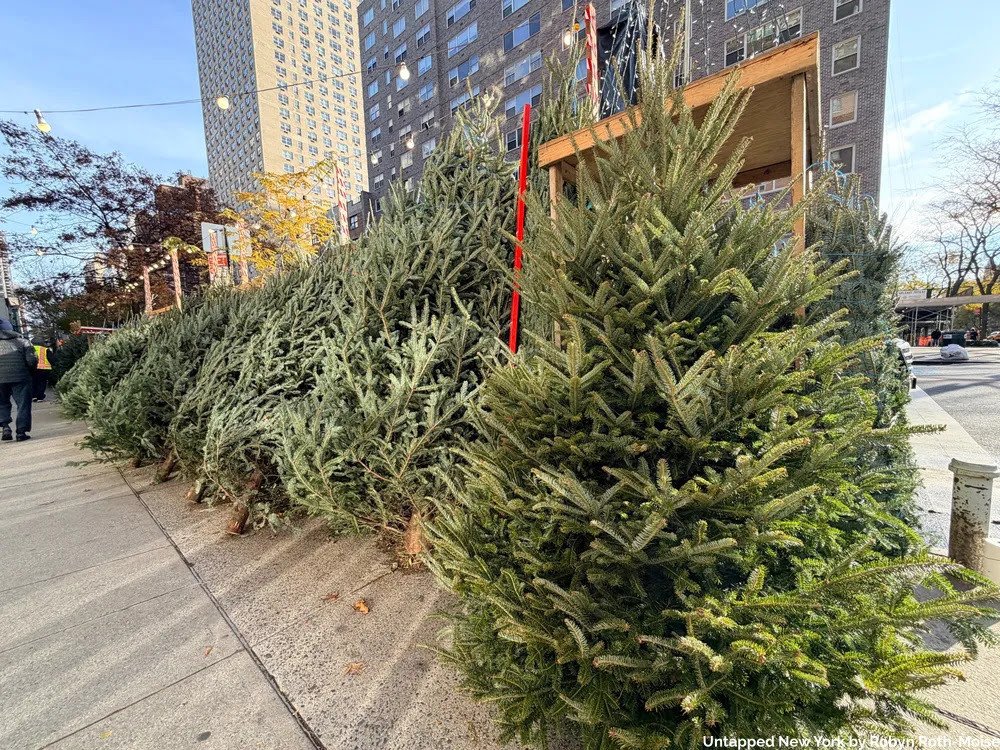
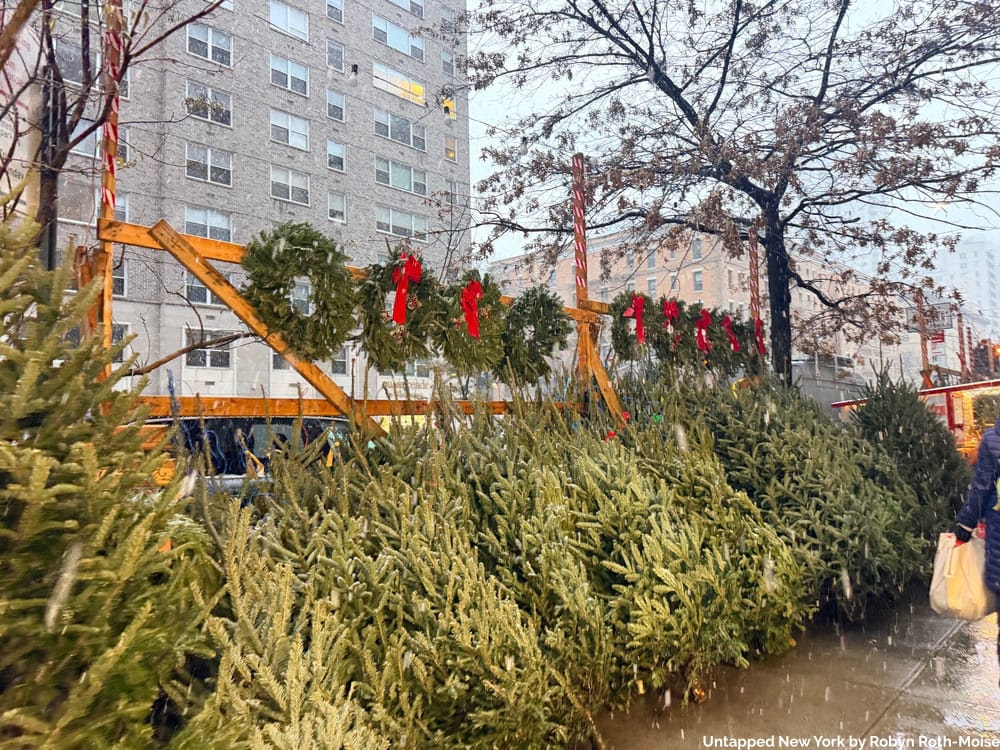
One of the best parts of Christmastime in New York City is being enveloped in the festive scent of pine as you walk past Christmas tree vendors on the sidewalk. These stands of fluffy evergreens signal that the holiday season has arrived…but they were almost outlawed!
Mayor Fiorello LaGuardia notoriously disliked street vendors clogging up New York City’s roadways. During the early years of his mayoral term, which coincided with the Great Depression, there was a proliferation of unlicensed pushcart vendors as out-of-work New Yorkers tried to make ends meet by selling vegetables, fruits, meats, and other goods on the streets (and skirting pushcart permit fees). Declaring pushcarts “a menace to traffic, health, and sanitation,” LaGuardia made it his mission to get those vendors off the streets.
LaGuardia used WPA funds to construct indoor retail markets, such as the Essex Street Market and Arthur Avenue Market, where vendors could sell their wares in a new, clean environment, and leave the streets open for traffic. Along with the opening of those municipal markets came an ordinance that banned all unlicensed pushcarts from operating on the streets…including vendors selling Christmas trees!
The public (and the tree vendors) did not like this. How would New Yorkers get their trees for the holiday season?! In response to the ill-advised ban, the City Council passed an exemption to LaGuardia’s pushcart ordinance, overriding the mayor’s veto.
Dubbed the “coniferous tree exception,” the law specifically allowed Christmas tree vendors to operate their stalls on the street without a license, but only in December. That law is still on the books today! It’s NYC Admin Code Sec. 19-136 (a)(4).
The law states that “storekeepers and peddlers may sell and display coniferous trees during the month of December and palm branches, myrtle branches, willow branches, and citron during the months of September and October on a sidewalk.” The caveats are that the seller must have “permission of the owner of the premises fronting on such sidewalk,” and must keep a clear passageway for “the free movement of pedestrians.”
So it’s thanks to an obscure Depression-era law that we get to enjoy the refreshing aroma of Christmas trees as we stroll the city streets every holiday season!
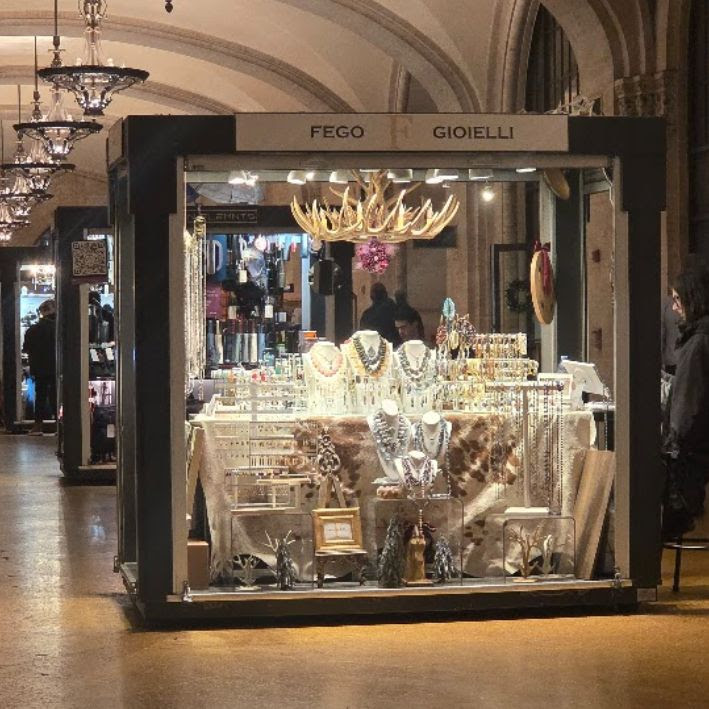
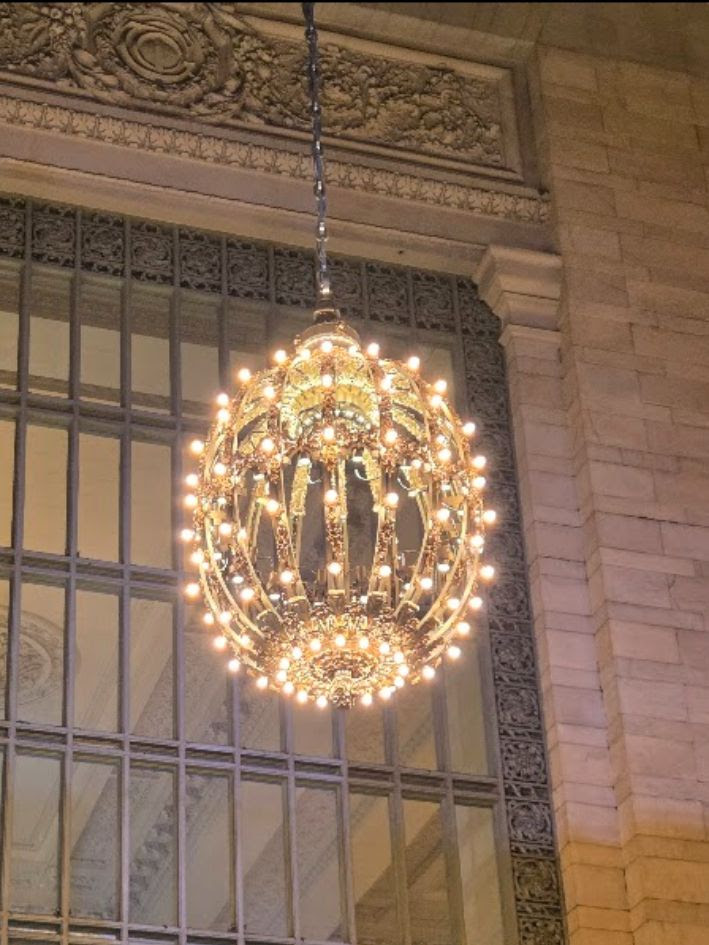
NOTHING IS BETTER
THAN GRAND CENTRAL TERMINAL DECORATED FOR THE HOLIDAYS
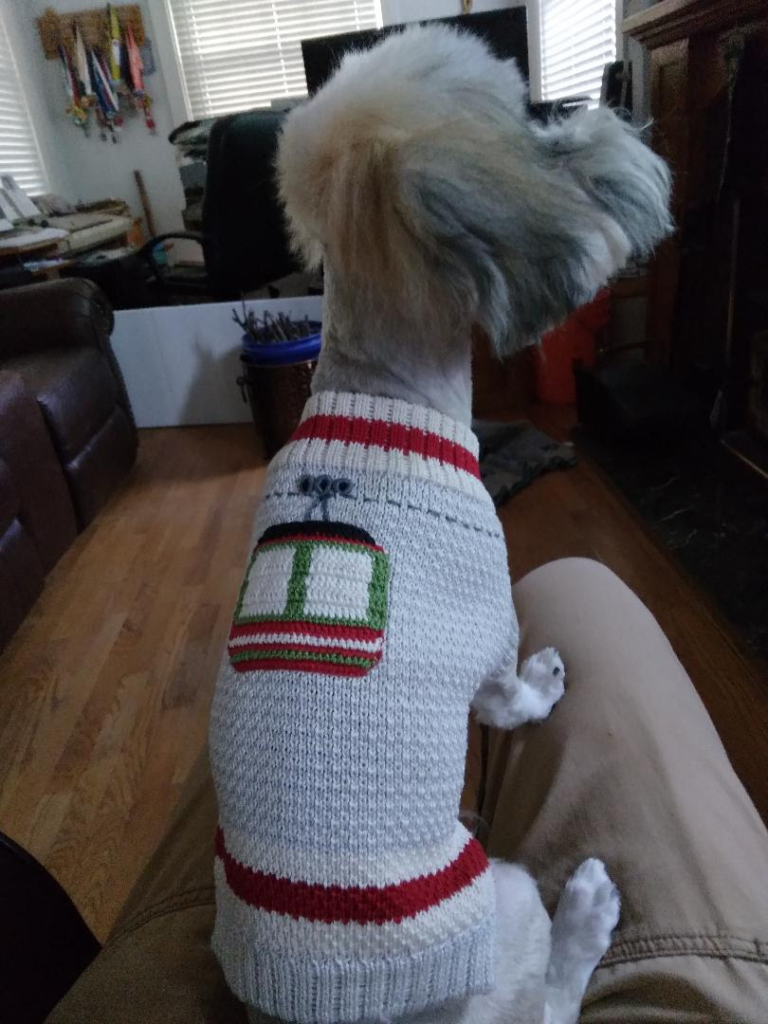
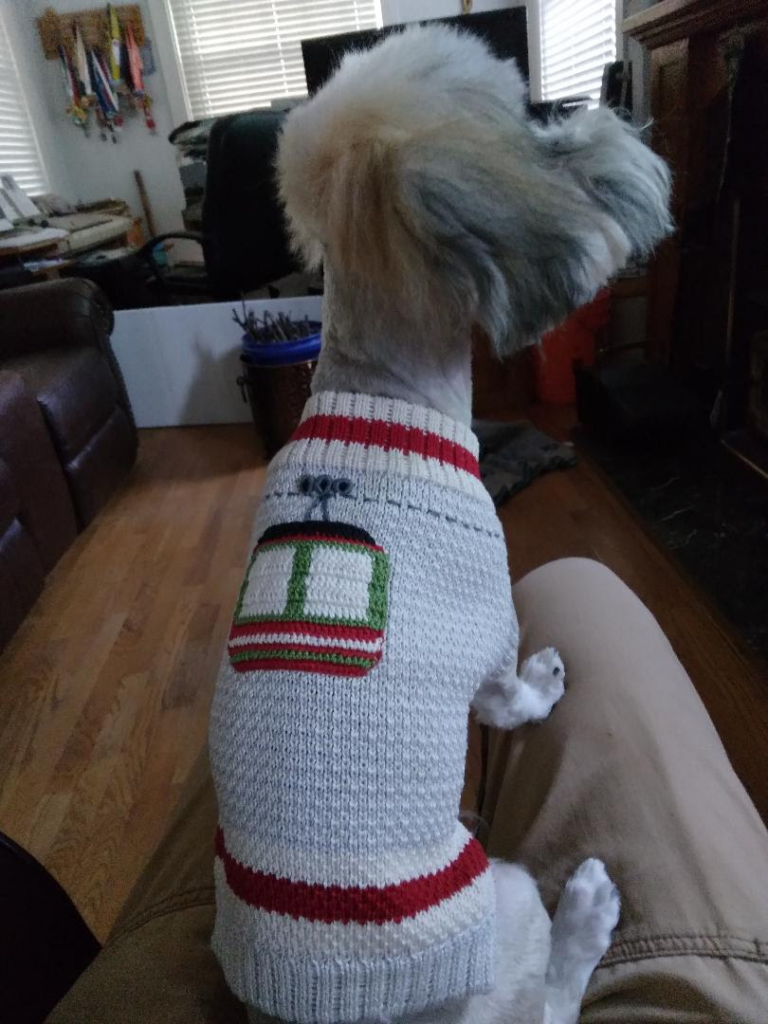
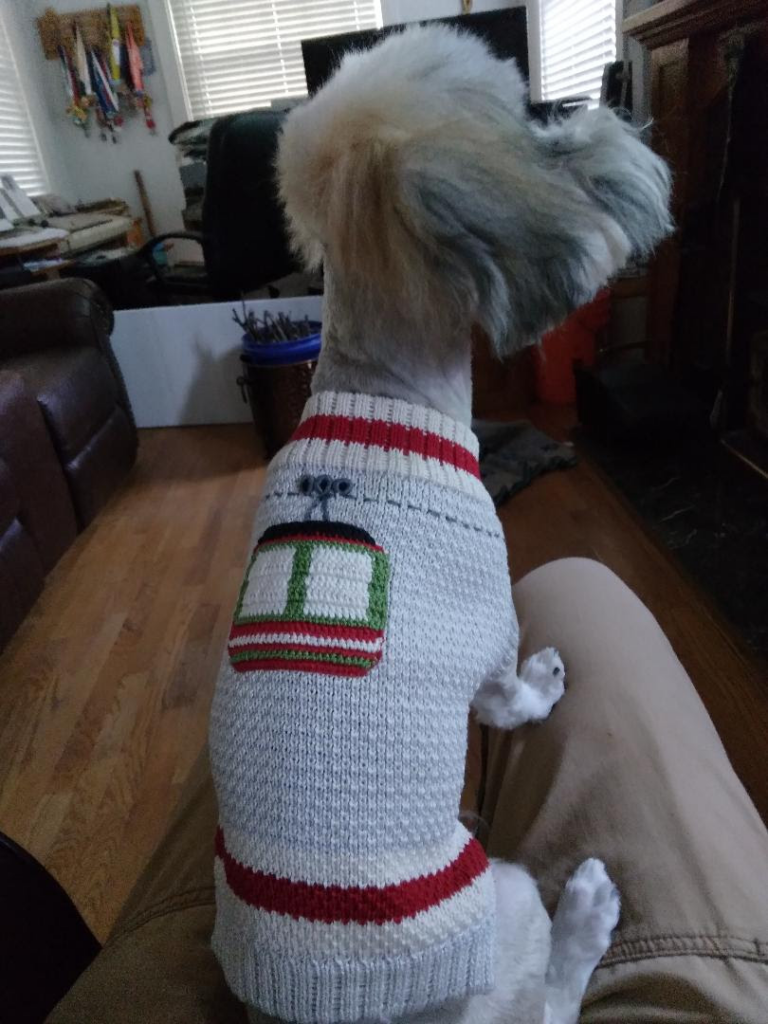
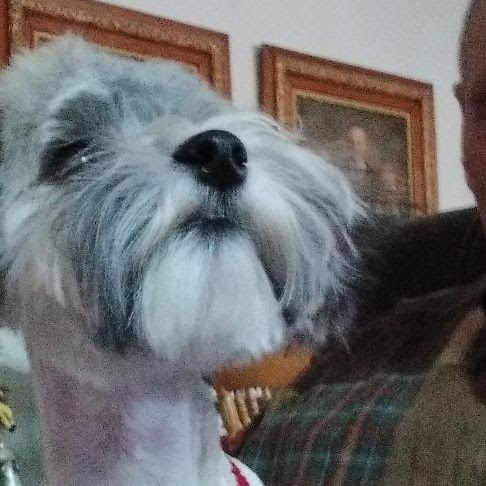
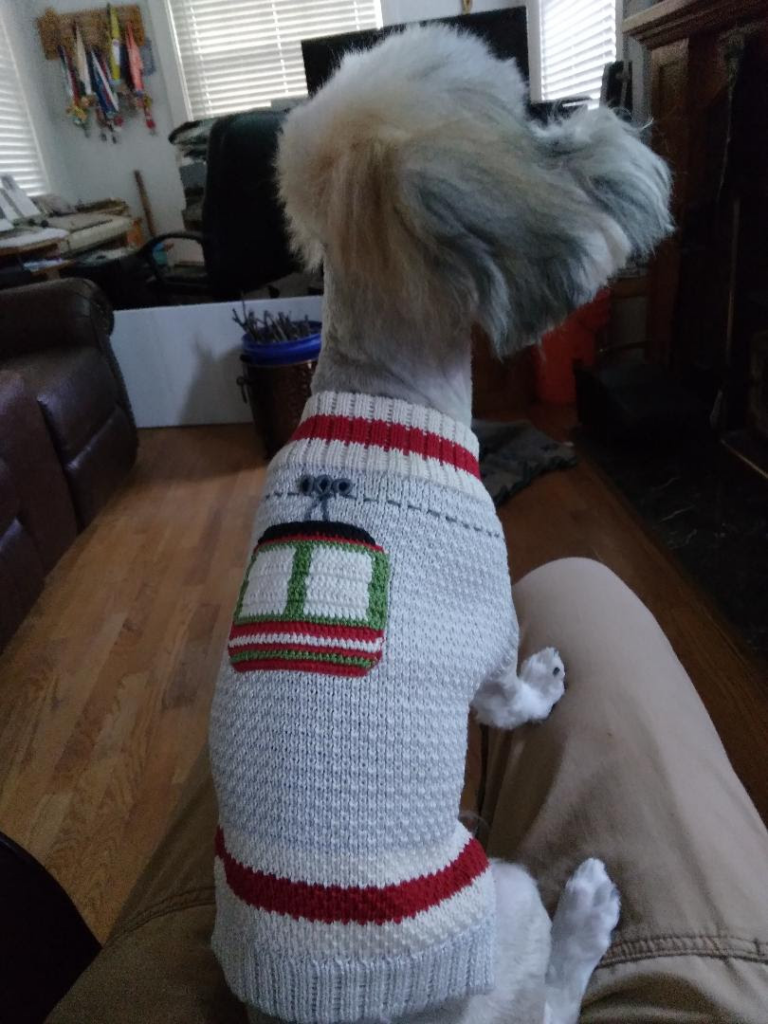
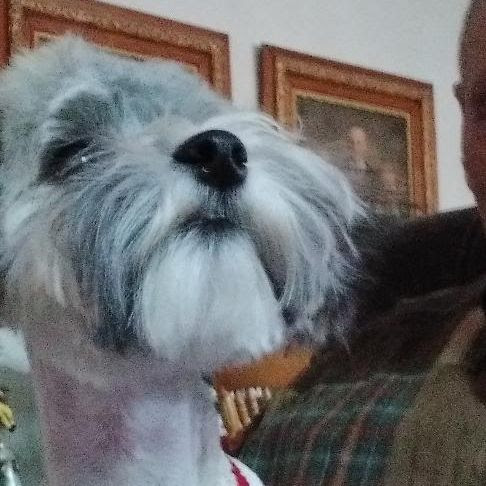
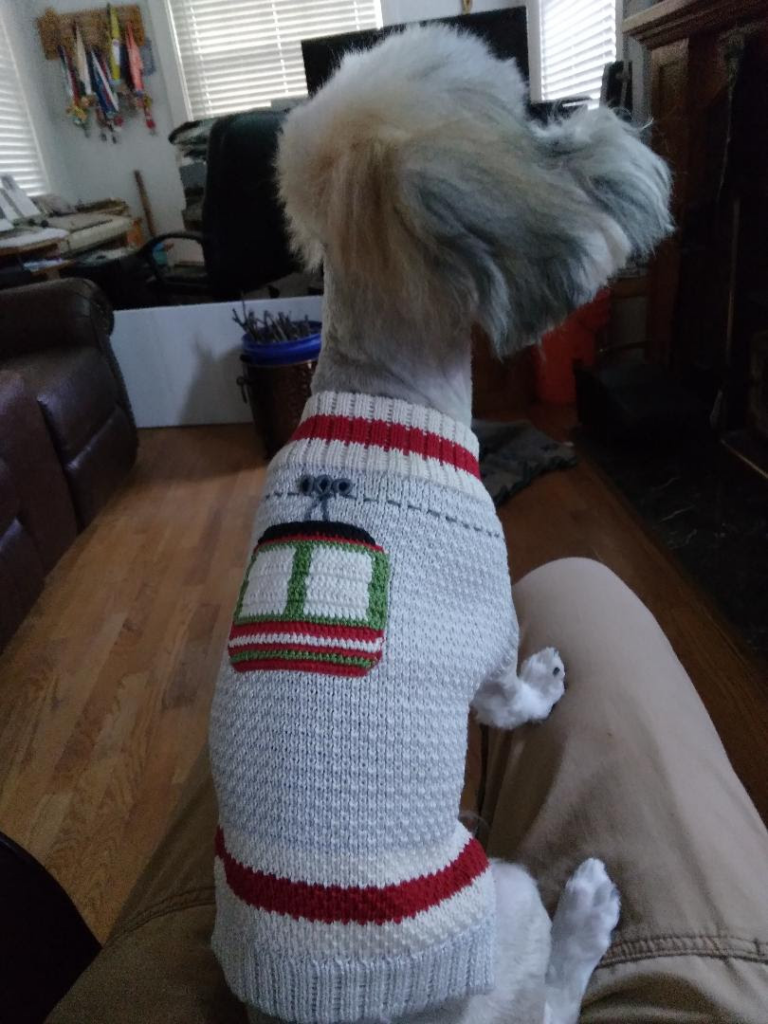
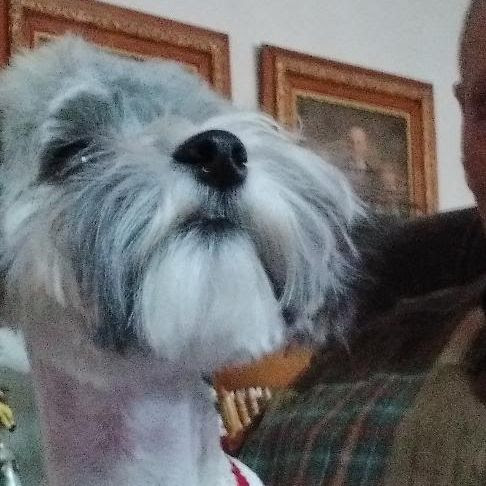
PHOTO OF THE DAY OSCAR AND HIS NEW COAT
YOUR DOG CAN DRESS LIKE OSCAR. DOG COATS AVAILABLE IN 3 SIZES AT THE RIHS VISITOR KIOSK.
All image are copyrighted (c) Roosevelt Island Historical Society unless otherwise indicated THIS PUBLICATION FUNDED BY DISCRETIONARY FUNDS FROM CITY COUNCIL MEMBER JULIE MENIN & ROOSEVELT ISLAND OPERATING CORPORATION PUBLIC PURPOSE FUNDS.
PROBABLY THE LARGEST MENORAH IN THE CITY AT THE JP MORGAN CHASE BUILDING
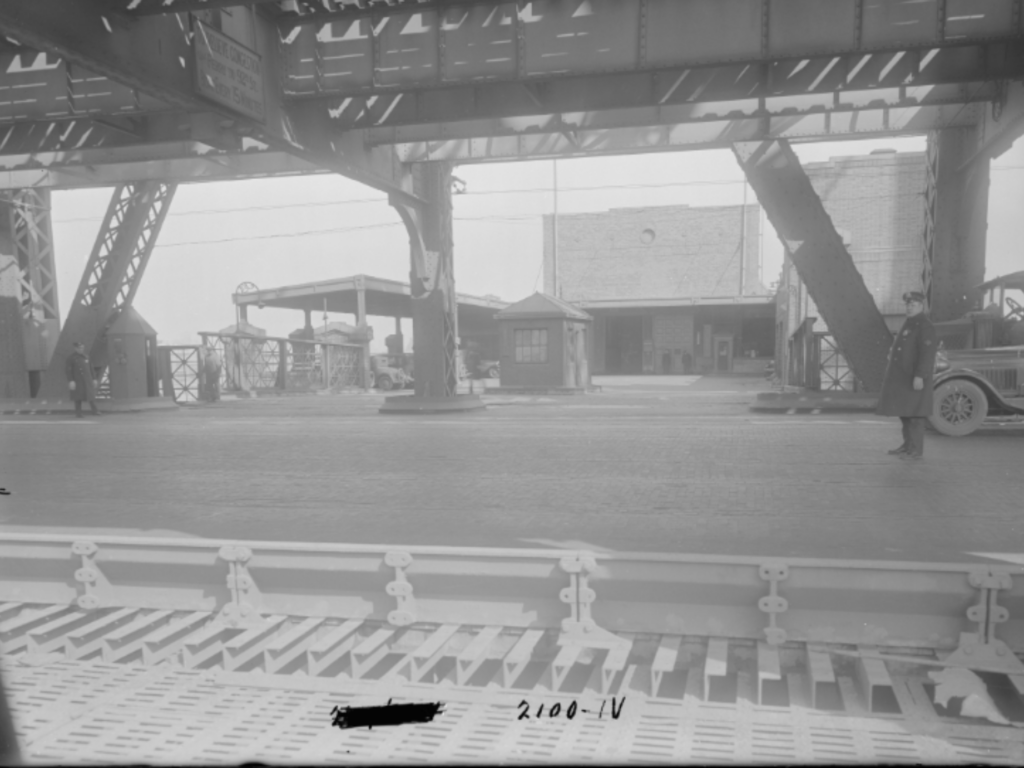
FROM THE ARCHIVES
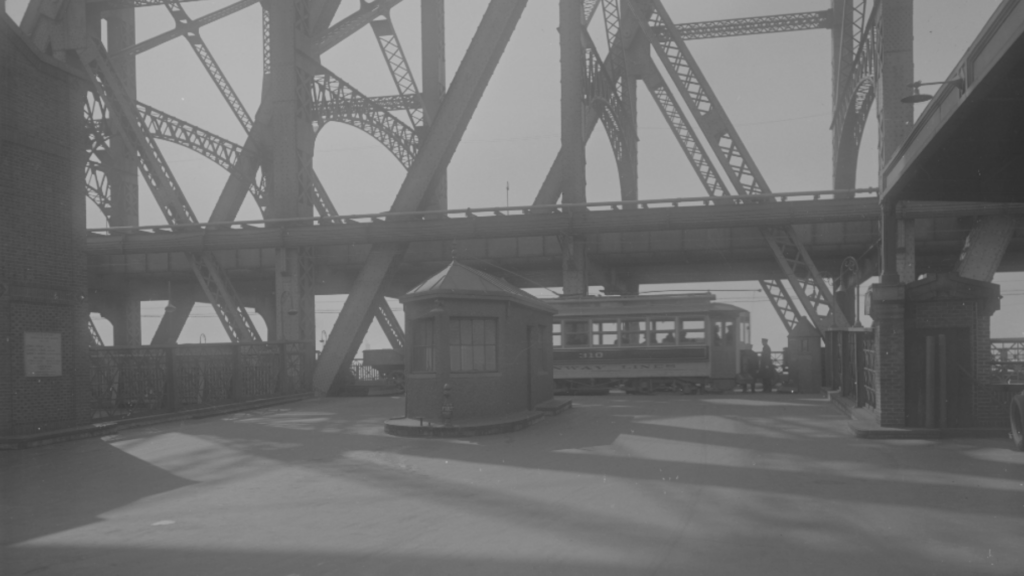
THE LOWER LEVEL ROADWAY OF THE QUEENSBORO BRIDGE SHOWING ROOM ACCESS ON STOREHOUSE BUILDING WITH TROLLEY IN BACKGROUND.
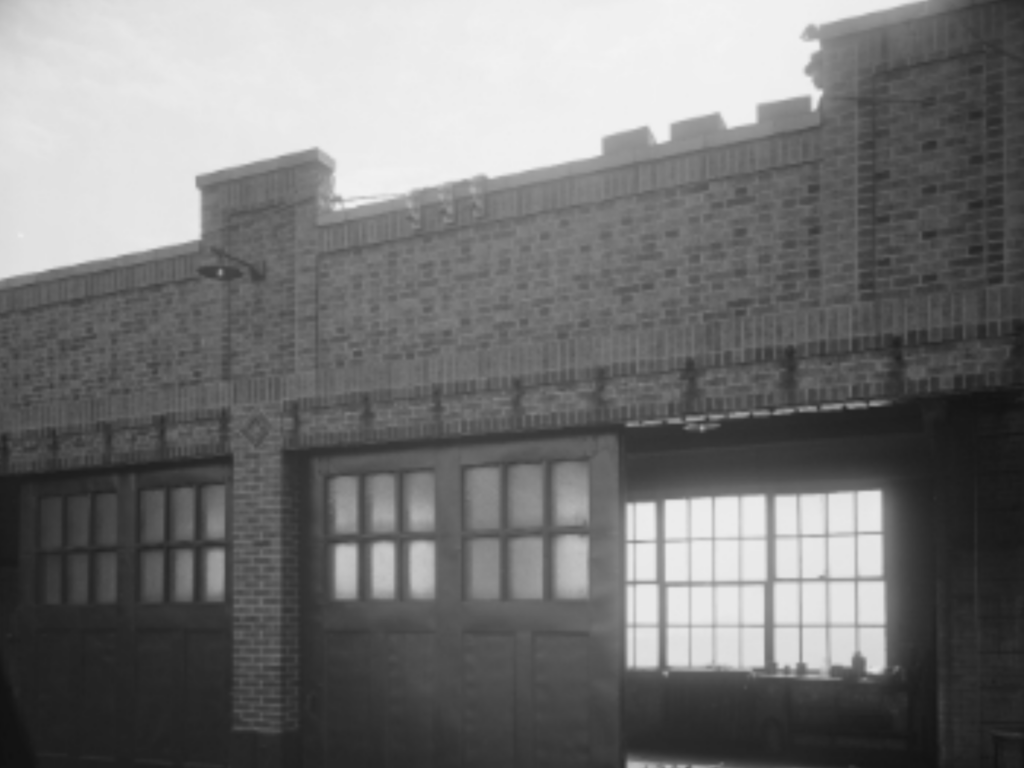
THE LOWER LEVEL ROADWAY OF THE QUEENSBORO BRIDGE SHOWING ROOM ACCESS ON STOREHOUSE BUILDING FROM LOWER LEVEL ROADWAY.
ROOFTOP OF ELEVATOR STOREHOUE BUILDING
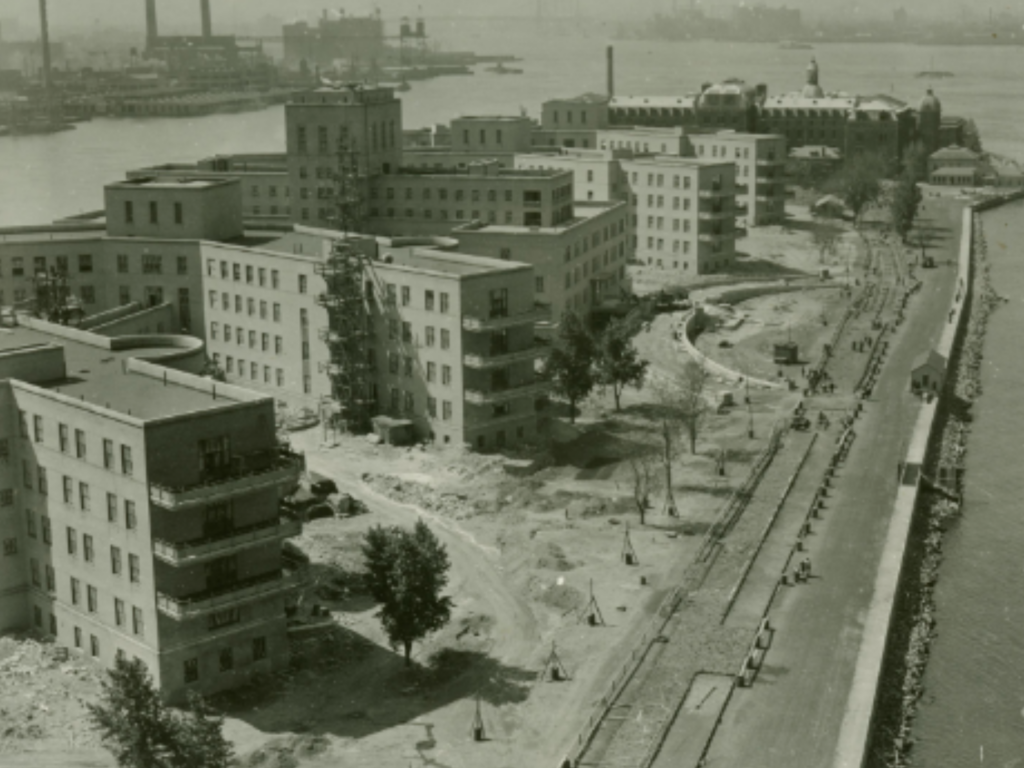
NEWLY CONSTRUCTED GOLDWATER HOSPITAL WITH CITY HOSPITAL IN BACKGROUND
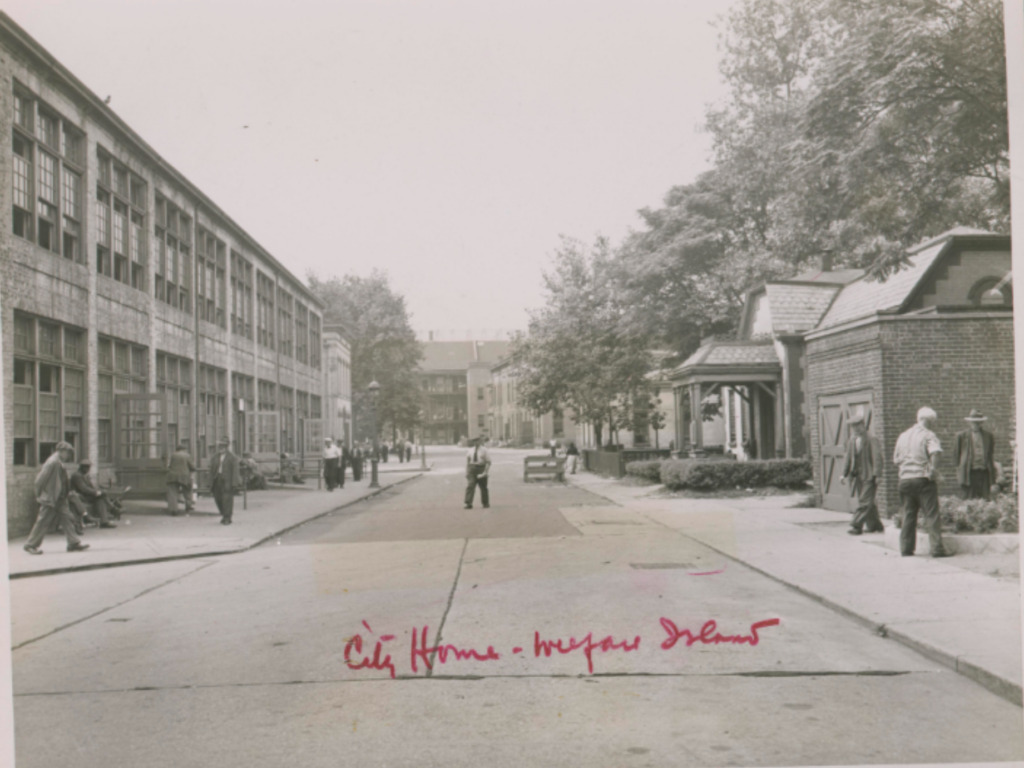
THE “MAIN STREET” WITH THE CITY HOME BUILDINGS.
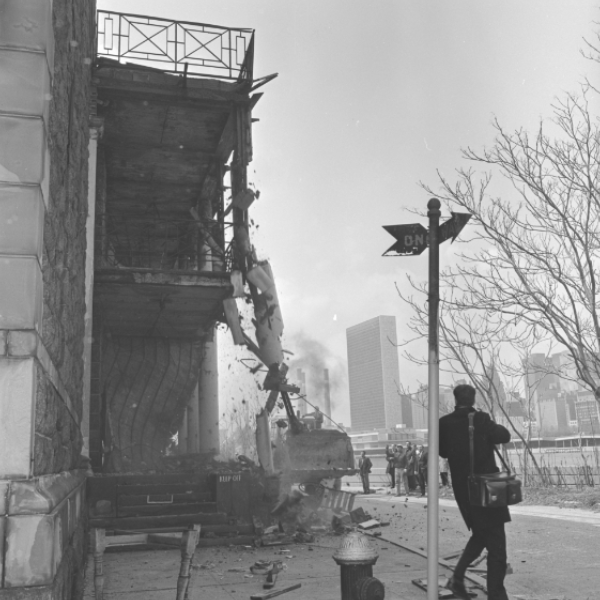
DEMOLITION OF FORMER NURSES QUARTERS IN EARLY 1970’S
PHOTO OF THE DAY OSCAR AND HIS NEW COAT
YOUR DOG CAN DRESS LIKE OSCAR. DOG COATS AVAILABLE IN 3 SIZES AT THE RIHS VISITOR KIOSK.
USUALLY $ 45- NOW ON SALE FOR $35-
CREDITS
NYC MUNICIPAL ARCHIVES
All image are copyrighted (c) Roosevelt Island Historical Society unless otherwise indicated THIS PUBLICATION FUNDED BY DISCRETIONARY FUNDS FROM CITY COUNCIL MEMBER JULIE MENIN & ROOSEVELT ISLAND OPERATING CORPORATION PUBLIC PURPOSE FUNDS.
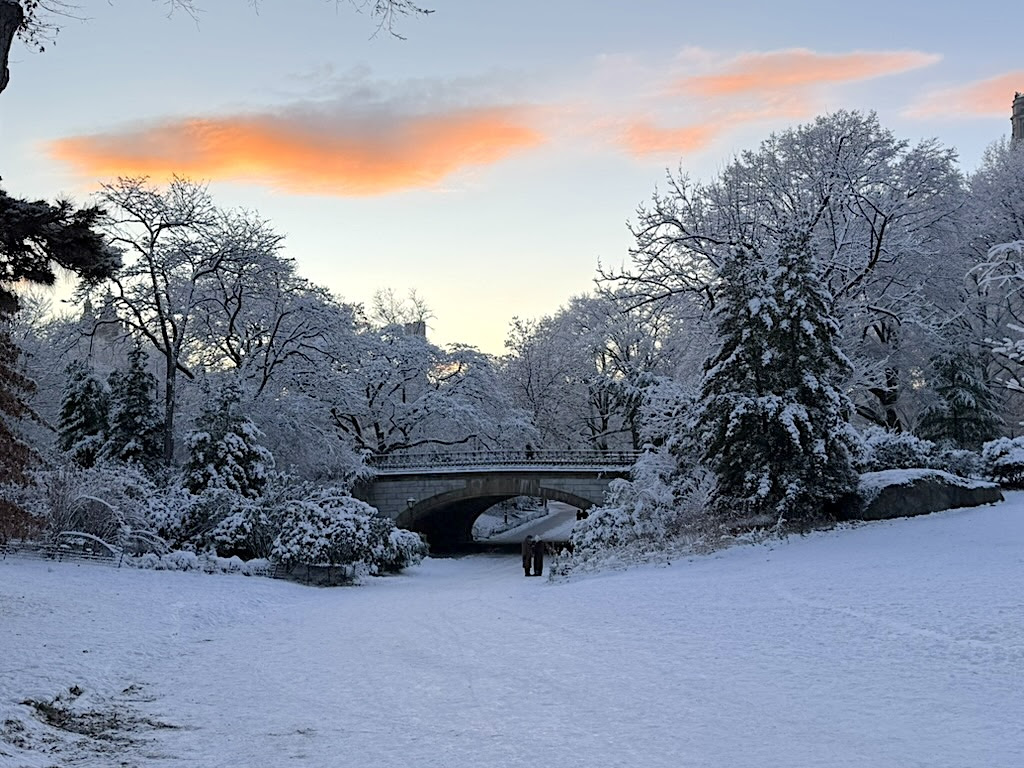
Central Park after a snowfall has always been magical—trees frosted white, soft tufts blanketing hills, and New Yorkers treading carefully across icy pathways, taking in the luminous enchantment.
In the 1850s, the designers of Central Park, Frederick Law Olmsted and Calvert Vaux, seemed to anticipate this wintertime beauty. They gave thought to park features that could enhance the charms of frigid temperatures and convince New Yorkers to enjoy the park in all seasons.
The skating pond Olmsted and Vaux created accomplished this. It was a smash hit when the pond opened in 1858, not long after the two designers got the go-ahead to build their vision of a park. The pond attracted an estimated 30,000 people to try out this new form of recreation.
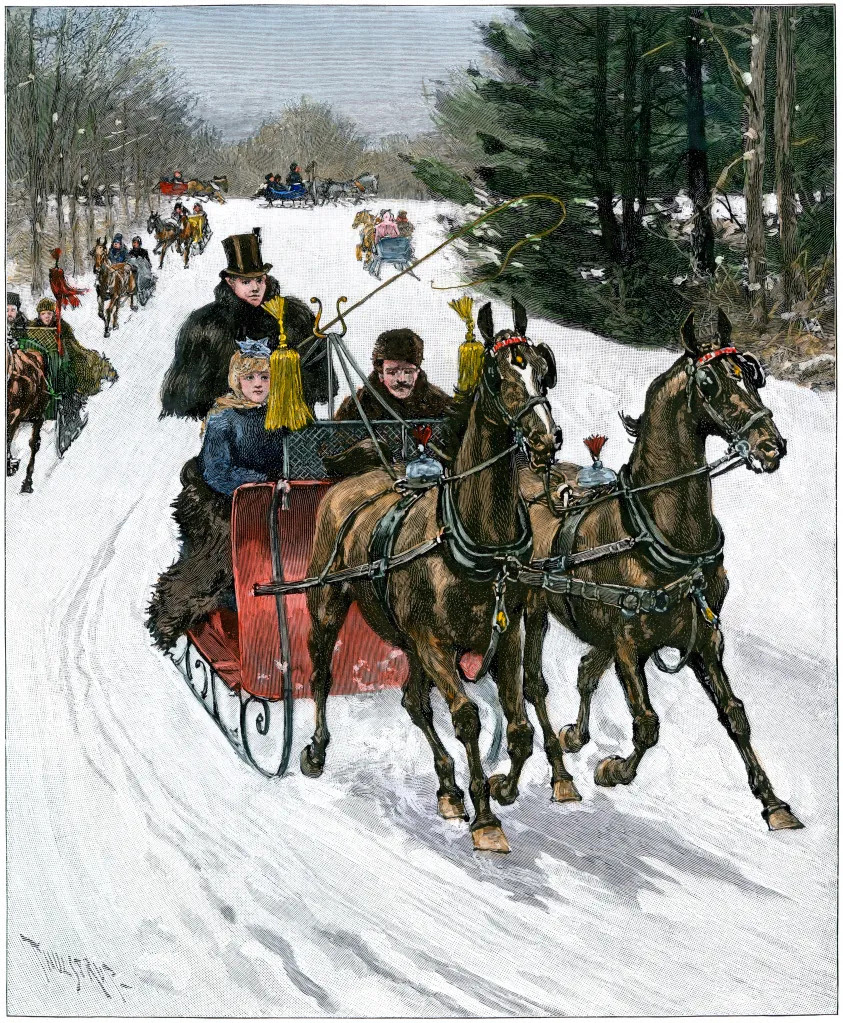
Their other idea was more atmospheric: a long scenic road spanning 72nd to 102nd Street “along the low grounds west of the reservoirs,” according to an 1858 New York Times story. This appropriately named road was called the “Winter Drive.”
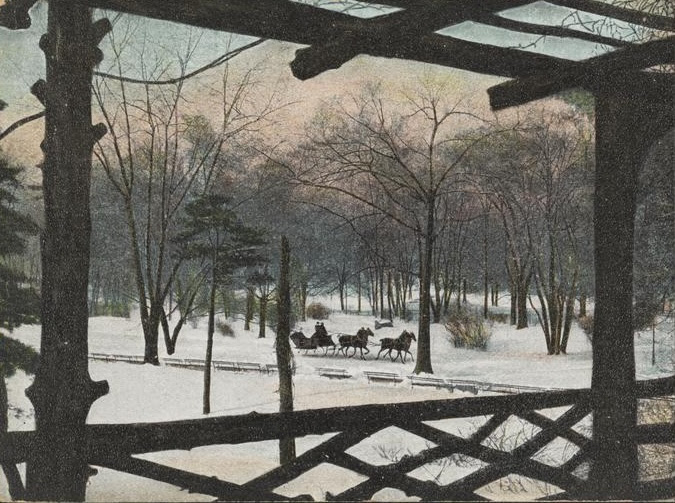
The Winter Drive would consist of a mile and a half of thick rows of evergreens, so sleigh riders would feel like they were in snow-covered conifer countryside, not an urban park.
“Large open glades of grass are introduced among these plantations of evergreens, as the effect aimed at is not so much of a drive through a thick forest, crowded with tall spindling trees, as through a richly wooded country, in which the single trees and copses have had plenty of space for developing their distinctive characteristics to advantage.”
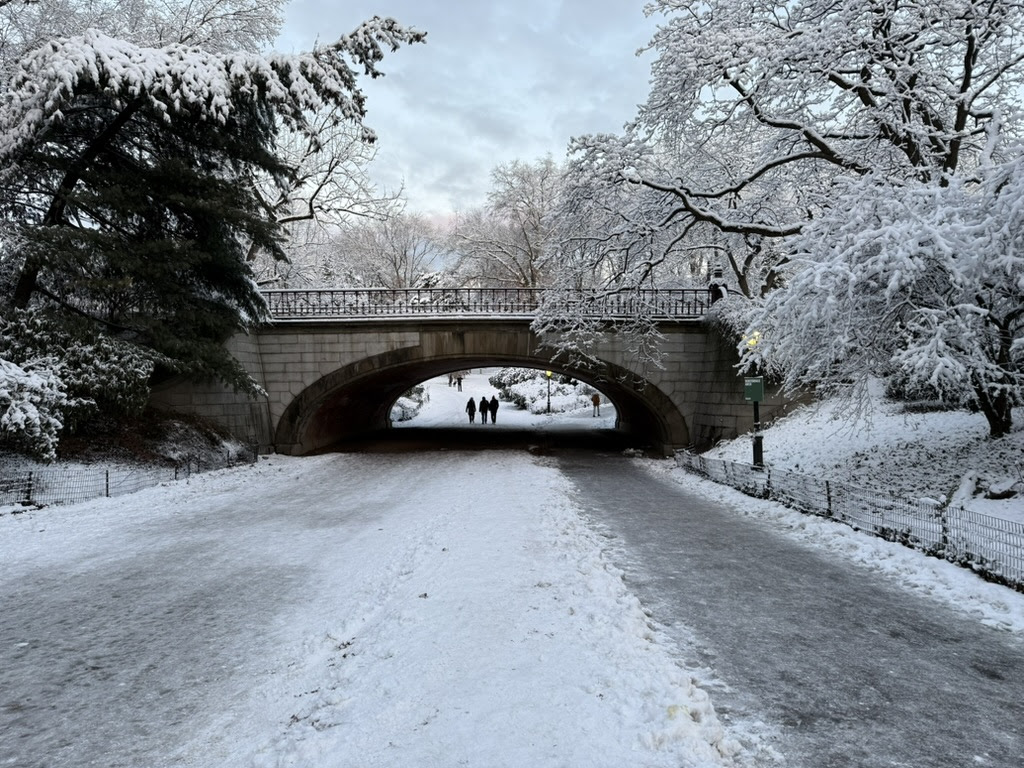
The Winter Drive would be marked by its own bridge near West 82nd Street, Winterdale Arch. This graceful stone bridge, constructed in 1861, “is named for its location on the Winter Drive, between Seventy-Second Street and 102nd Street,” states a post from NYC Department of Records & Information Services.
“When planning the west side of the park, Olmsted and Vaux intended for this section to be planted with a variety of evergreens, to add color throughout the winter for carriage- and sleigh-riders,” per the department.
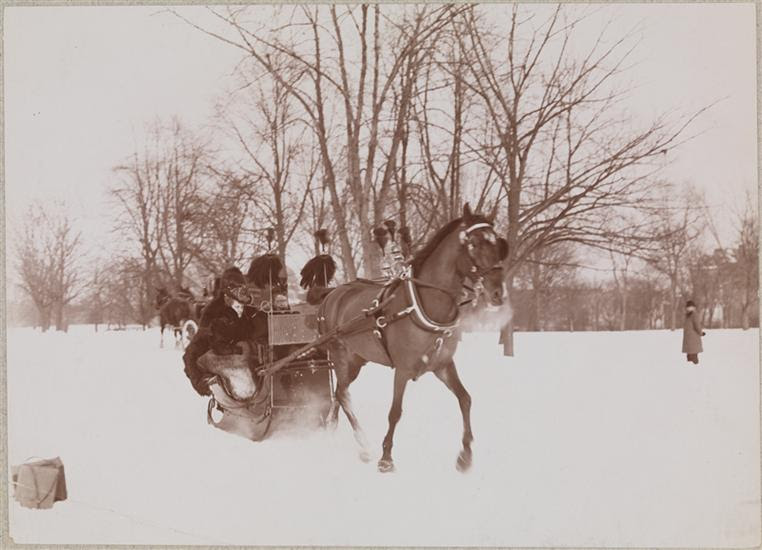
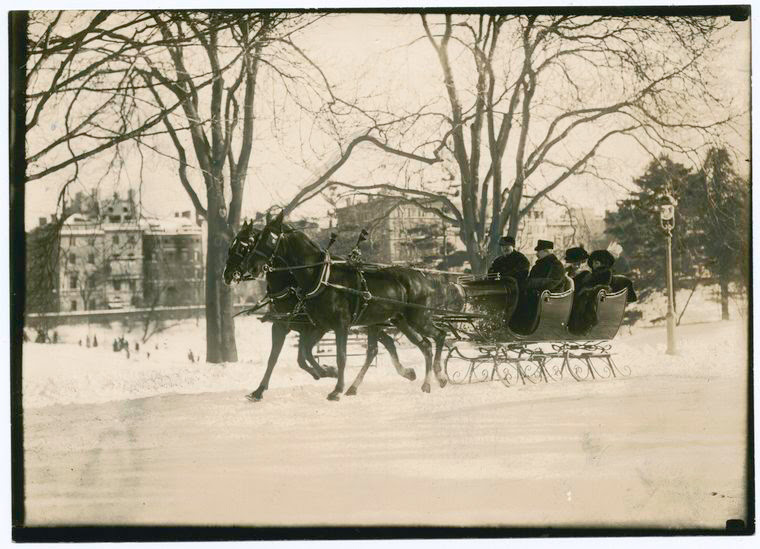
In the early years, the Winter Drive was put to good use. Sleigh riding for leisure was a popular winter activity in the 19th century city, and a drive on steel rails must have been a thrilling way to experience this 843-acre green space wonderland.
Unfortunately, all the conifers Olmsted and Vaux planted along the Winter Drive in 1861 were lost by the end of the century, states the Central Park Conservatory.
Over time, it seems that the Winter Drive name was forgotten. Winter Drive was absorbed into West Drive, which winds along the west side of the park.
Walk along the West Drive today, however, and you’ll see conifer trees similar to those that would have lined the drive in the post-Civil War era.
In the 1970s, “philanthropist Arthur Ross returned pine trees to the area, funding the planting of the Arthur Ross Pinetum just to the north,” states the Central Park Conservatory.
“Additional evergreen plantings by the Central Park Conservancy have also returned the look and feel of the ‘Winter Drive’ to this area of the Park.”
It might be hard to find a sleigh these days. But walk along this stretch of Central Park after a snowfall, and you’ll see the newer conifers laden with fluffy snow—part of a lovely winter landscape park visitors in the 1860s to 1890s would have well recognized.
PHOTO OF THE DAY OSCAR AND HIS NEW COAT
YOUR DOG CAN DRESS LIKE OSCAR. DOG COATS AVAILABLE IN 3 SIZES AT THE RIHS VISITOR KIOSK.
USUALLY $ 45- NOW ON SALE FOR $35-
CREDITS
EPHEMERAL NEW YORK
[Second image: hand-colored woodcut of a Thulstrup illustration; third image: MCNY, 93.1.1.17790; fourth image: MCNY, F2011.33.922; fifth image: NYPL Digital Collections]
All image are copyrighted (c) Roosevelt Island Historical Society unless otherwise indicated THIS PUBLICATION FUNDED BY DISCRETIONARY FUNDS FROM CITY COUNCIL MEMBER JULIE MENIN & ROOSEVELT ISLAND OPERATING CORPORATION PUBLIC PURPOSE FUNDS.
When you think of a canal, images of the romantic waterways of Venice and Bruges might come to mind.
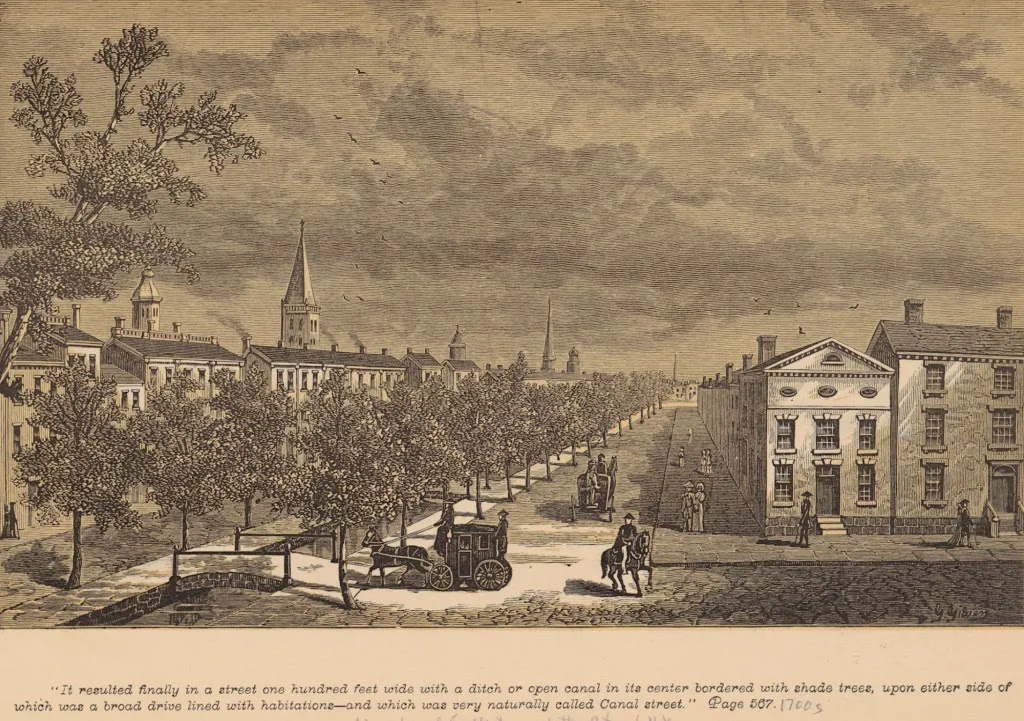
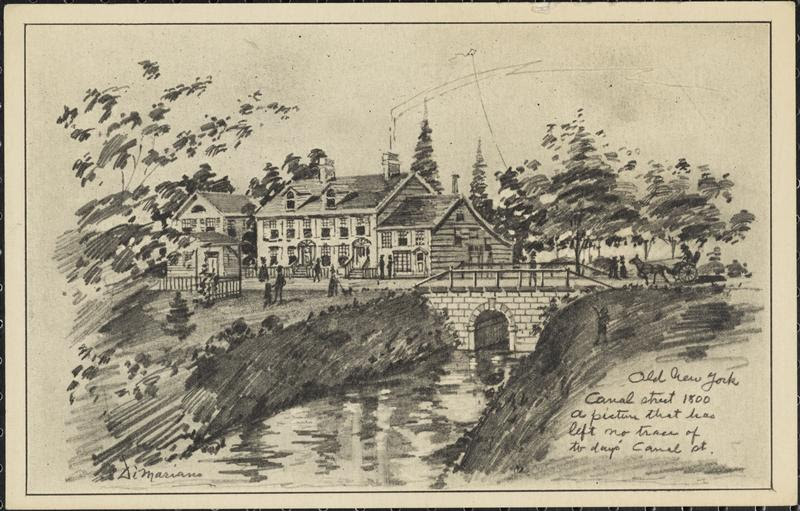
But Canal Street in New York City? It doesn’t exactly conjure up romance. True, an actual canal did exist here in the early 1800s. It was pleasantly designed—surrounded by trees, crossed by a footbridge dubbed the “kissing bridge,” and flanked on either side by tidy houses.
But whatever positive feelings New Yorkers may have had about the canal at first disappeared quickly. The water it carried was fetid, the ditch became an open sewer, and the residents of the newly opened Canal Street were relieved when it was permanently covered over.
The story of this short-lived canal starts in the 1790s, when New York City was grappling with a serious drinking water problem.
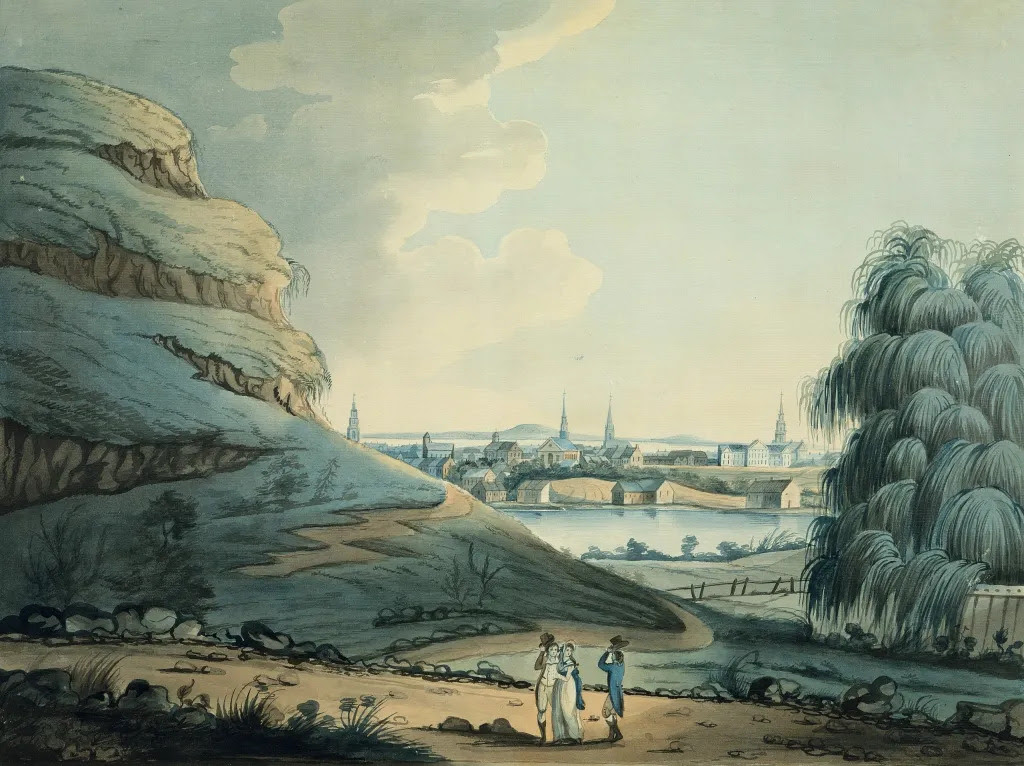
During its days as a Dutch colonial outpost, residents got their water from the many streams that crossed Lower Manhattan. By the time the English occupied Manhattan, a freshwater pond known as Collect Pond (above), roughly centered in today’s Chinatown, became a main source of safe water.
Collect Pond was picturesque, 60 feet deep, and fed by an underground spring, according to NYC Parks. Families picnicked beside its shore, and when the pond froze in the winter, skaters would take to the ice.
But as the 18th century progressed, industry began using the pond as a dumping ground. Waste from tanneries, slaughterhouses, breweries, and other manufacturers eventually transformed Collect Pond into a foul-smelling body of water that bred disease.
In the early 1800s, the city decided to drain this former water source, then fill it in and turn the new land into useable real estate. To properly drain the pond, a wide ditch needed to be built that would carry away the foul waters to the Hudson River.
By 1810, city officials began engineering “a plank-sided canal eight feet wide following a straight line from Centre Street to the Hudson, with a roadway on both sides,” wrote Oliver E. Allen in a 2013 article in the Tribeca Trib.
The canal had a promising start, with its charming footbridge and tree-lined promenade, states NYC Parks. “The canal was popular among the residents of what was by now a lively neighborhood surrounding it,” wrote Allen. That neighborhood would have been on the outskirts of the city center.
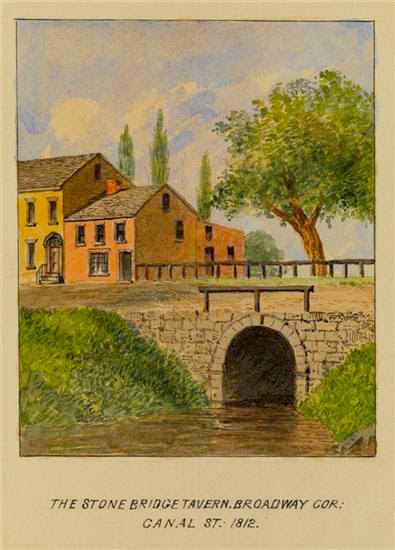
But thanks to sluggish water flow, the canal (above in 1811, at Broadway) became more like a cesspool. Stagnant water and rancid odors made nearby residents disgusted and angry.
By 1820, the decision was made to cover the canal and bury it under the street. Residents complained that it still emitted a foul smell, which makes sense, because the former canal was never actually filled in. Enclosed in a brick-arched tunnel, it became the city’s first sewer, according to New York water ecology organization NYCh2o.org.
As time went on, Canal Street’s fortunes didn’t change. Thanks to its proximity to the Five Points slum—built on the marshy land of the former Collect Pond—the street developed a rougher edge. Property values plunged, though commercial activity kept Canal Street a main business artery.
These days, Canal Street serves as kind of Lower Manhattan demarcation line. On one end, it’s the southern border of SoHo and the northern end of Chinatown. On the other end, it divides SoHo and Tribeca.
Each end of Canal Street still has a handful of early 19th century residences, the kind that would have lined the street when the canal existed. The canal is history, but the houses that once flanked it have been standing for roughly two centuries.
All image are copyrighted (c) Roosevelt Island Historical Society unless otherwise indicated THIS PUBLICATION FUNDED BY DISCRETIONARY FUNDS FROM CITY COUNCIL MEMBER JULIE MENIN & ROOSEVELT ISLAND OPERATING CORPORATION PUBLIC PURPOSE FUNDS.
OUR HEARTS ARE SADDENED BY THE TRAGEDY AT BONDI BEACH, NSW, AUSTRALIA. OUR SUPPORT TO ALL THOSE TOUCHED BY THIS HORRIBLE DEATH.
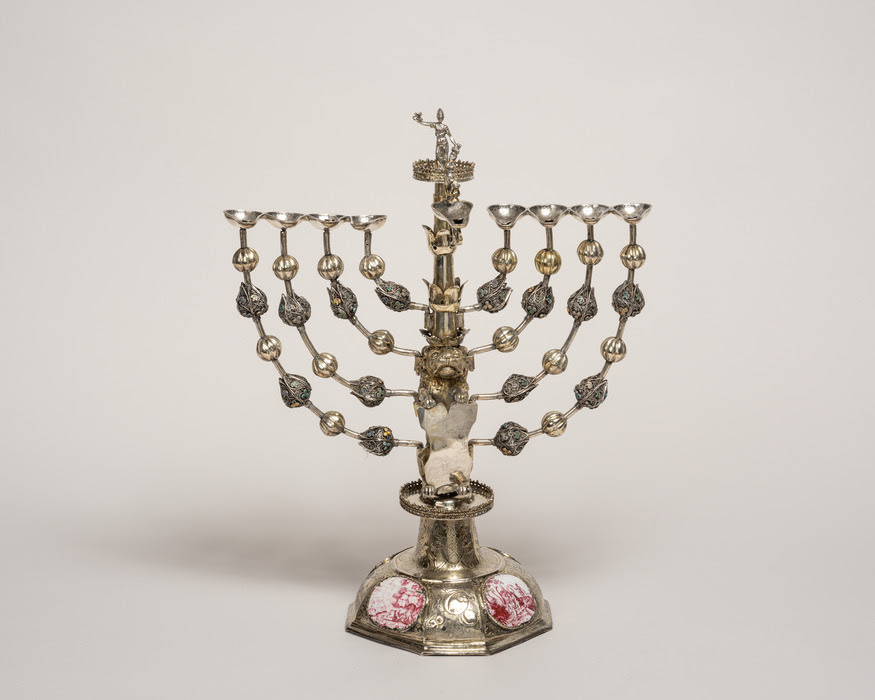
Johann Adam Boller, Hanukkah Lamp, Frankfurt am Main (Germany), 1706–32, silver: cast, filigree, cloisonné enamel, engraved, traced, punched, and parcel-gilt; enamel inlays on copper alloy, 17 3/8 × 14 1/8 × 7 1/8 in. (44.1 × 35.9 × 18.1 cm). The Jewish Museum, New York. Gift of Frieda Schiff Warburg, S 563
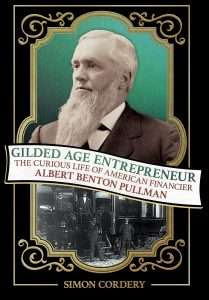
The influential but little-known older brother of George Pullman (1831-1897) and the craftsman of the family, Albert designed the first luxurious Pullman railroad cars and hosted promotional trips to show them off. In those heady early days, he met national business and political leaders and hired the first Pullman porters.
For the earliest of it’s 100 years (1867-1968) the Pullman Company was known for its sleeping and dining cars. These were designed after the Erie Canal packet boats the Pullmans’ saw in their youths in Albion, NY, the county seat canal town of Orleans County.
Around 1800 the Pullman family had migrated from New England to New York and found their way to Onondaga, where new settlers were exploiting the salt springs on former Onondaga land.
The brothers’ parents Lewis (a carpenter) and Emily Caroline Minton Pullman were married id briefly in Auburn, NY, on Owasco Lake, one of the Finger Lakes in Central New York’s Cayuga County, where Albert was born. They moved to Albion after the Erie Canal was well established, probably to avoid the higher costs in the boom-town of Auburn.
Palace Cars, Pullman Porters, and Great Strikes
Albert and George’s first grand “palace car,” named (as a canal boat would be) The Pioneer, was finished in 1864 in Chicago. In 1867, the Pullmans introduced a “hotel on wheels,” the President, a sleeper with an attached kitchen and dining car. The food and service were said to have rivaled the best restaurants of the day.
As sales exploded, their labor force grew. They built a company town near Chicago following the Great Railroad Strike of 1877. That ultimately led to the national 1894 Pullman Strike over high company town rents and low wages, which occurred the year after Albert died, and three years before George died.
Notably, that strike engulfed Buffalo, NY, where the American Railway Union (ARU) local joined the nationwide boycott of Pullman cars. They halted rail traffic which led to clashes and federal intervention. The strike was one of the inspirations of Labor Day as a national holiday.
No biography of the company’s founders can fail to mention the Pullman Company was also widely known for it’s use of Black American workers as “Pullman Porters,” who were themselves American cultural icons. They performed luxury services for wealthy white travelers on trains, who often derisively called them all “George” or other epithets.
Despite severe racism, long hours and low wages, the job was seen as one of the best opportunities for Black men due to its stable income and culminated in the formation of the first successful Black labor union, the Brotherhood of Sleeping Car Porters, founded in 1925, long after the death of the Pullman brothers.
Albert and George Pullman made a formidable team, they supported Republican candidates and took advantage of workers and their political connections and contracts.
But as the Pullman Company grew along white American workers’ resistance to exploitation nationally, Albert Pullman’s role shrank. His self-interest inspired more close association with the returning power of the Democratic Party. He turned to his own investment portfolio, often with disastrous results.
Beginning with the industrial laundry that cleaned sleeping-car linens, Albert appeared before the U.S. Supreme Court after a catastrophic insurance investment, ran afoul of federal banking regulations, and failed in an attempt to corner wheat futures.
With evermore unsuccessful speculations, Albert was tempted by illegal land sales and entered exploiting silver mines.
Finally, his own family in crisis and his relationship with George shattered, Albert Pullman launched into one last round of adventurous investments – including both the early electricity and telephone industries – with mixed results.
Although it largely misses his role in the labor and race struggles of the era, Gilded Age Entrepreneur does instead focuses on the idea that Albert Pullman embodied the small-time investors who were legion after the Civil War.
“From banking and insurance to manufacturing and mining, a host of hopeful dreamers like Albert Pullman fueled the circulation of capital by forging political connections, creating and losing businesses, issuing shares, and longing for profit,” the book press materials say.
Although much of this history is focused on Chicago (where he made significant arts investments with his wealth), the book is well-placed on a New York bookshelf as a biography of those against whom New York workers and Black Americans struggled for dignity in the late 19th and early 20th centuries.
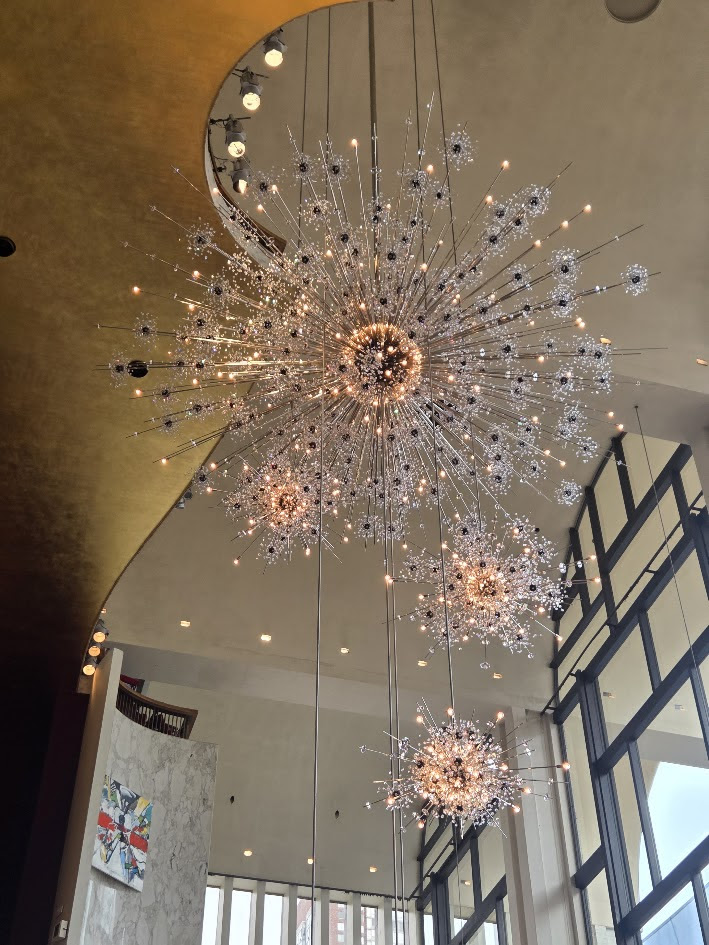
SPARKLING AT THE MET OPERA
PHOTO BY JUDITH BERDY
CREDITS
NEW YORK ALMANACK JUDITH BERDY
Book Purchases made through this Amazon link support the New York Almanack’s mission to report new publications relevant to New York State.
All image are copyrighted (c) Roosevelt Island Historical Society unless otherwise indicated THIS PUBLICATION FUNDED BY DISCRETIONARY FUNDS FROM CITY COUNCIL MEMBER JULIE MENIN & ROOSEVELT ISLAND OPERATING CORPORATION PUBLIC PURPOSE FUNDS.