Sunday, December 7, 2025 – ALL NATURAL MATERIALS REPLICATE STEEL AND CONCRETE


Guide to the
NYBG Holiday Train Show,
An Annual Love Letter to NYC
PART 1
Untapped New York
SUNDAY, DECEMBER 7, 2025
ISSUE #1587
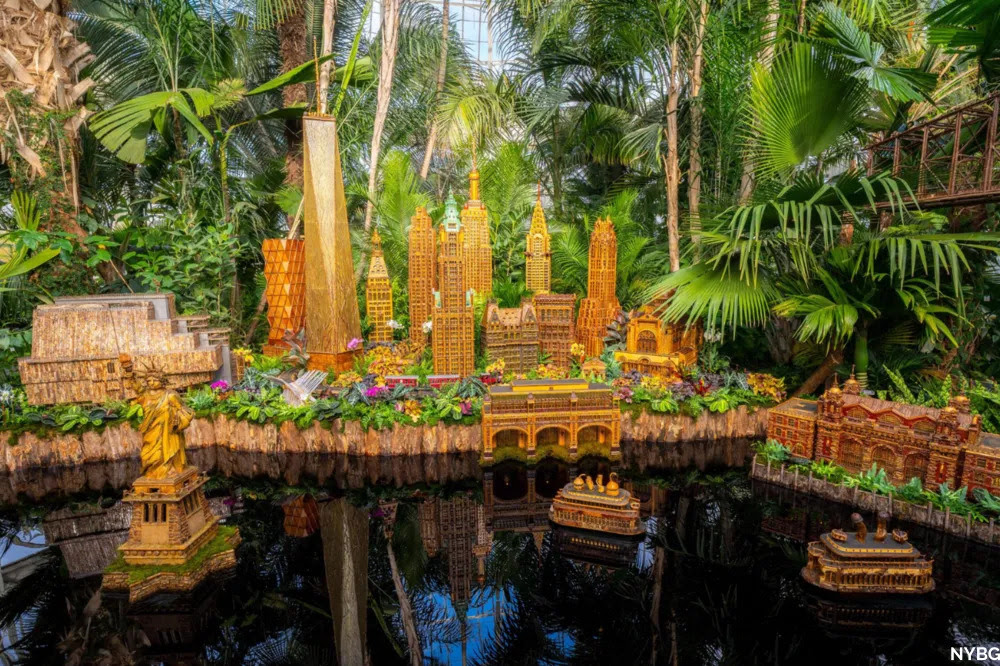
There’s nothing on the planet quite like the New York Botanical Garden’s Holiday Train Show, which replicates our city’s most treasured buildings, recreating them as botanical masterpieces. Limestone, marble, iron, wood, glass, and steel are replaced with evergreens, twigs, hollies, moss, pine cones, bark, and tree roots. Among and between the nearly 200 buildings, trains chug and glide on 1,200 feet of track, reminding us that New York was once a great train city. And now, in the Bronx, it is once again.
The original genius who created the first train show in 1992—and who invented the term “botanical architecture”—is landscape architect Paul Busse. One of his designers, sculptor Annette Skinner, says that her boss “has a unique concept that requires integration of the natural world with traditional G-scale model railroad layouts.” Founder of the firm Applied Imagination, Busse is a train buff as well as a lover of the forests around his headquarters in Alexandria, Kentucky, 14 miles down the Ohio River from Cincinnati. Those forests provide much of the material to fabricate New York’s skyscrapers and mansions.
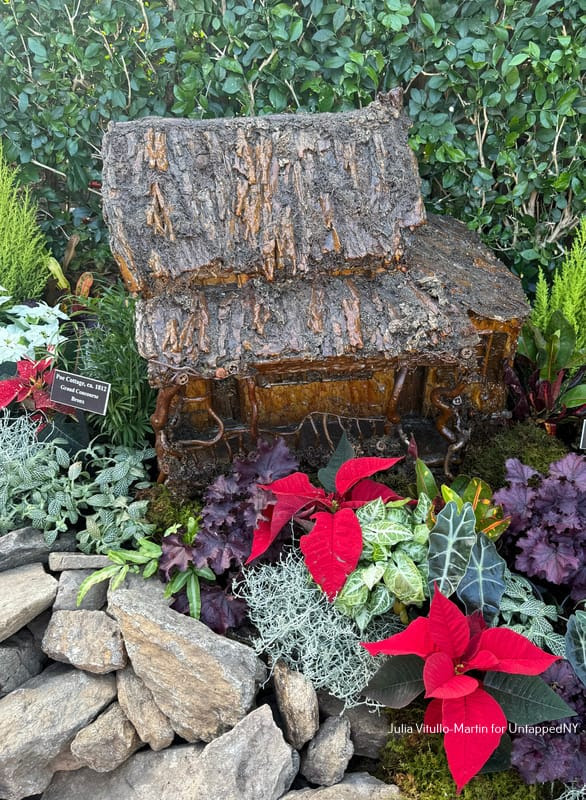
Busse’s first building for NYBG was what his daughter, Laura Busse Dolan, calls a “sample:” Poe Cottage. The original cottage, built in 1812, is situated a few blocks away from the Botanical Garden in the Bronx. There Edgar Allan Poe wrote “The Bells,” inspired by the church bells ringing at neighboring Fordham University’s bell tower, and “Annabel Lee,” one of his greatest poems.
- Paul Busse’s “sample” construction, Poe Cottage, where Edgar Allan Poe lived in the 1840s.
Poe Cottage is far plainer than the magnificent building that Busse replicated next: St. Patrick’s Cathedral in Manhattan. Busse’s botanical St. Pat’s looks remarkably like the real one standing majestically on Fifth Avenue. Designed by James Renwick, Jr., one of the nineteenth century’s finest architects, St. Patrick’s is the largest Neo-Gothic Roman Catholic cathedral in the country. Dolan, who now heads Applied Imagination, says she isn’t sure why her father chose St. Patrick’s as his first major botanical building. But she notes that one huge plus in addition to its fame is its sumptuously decorated facade.
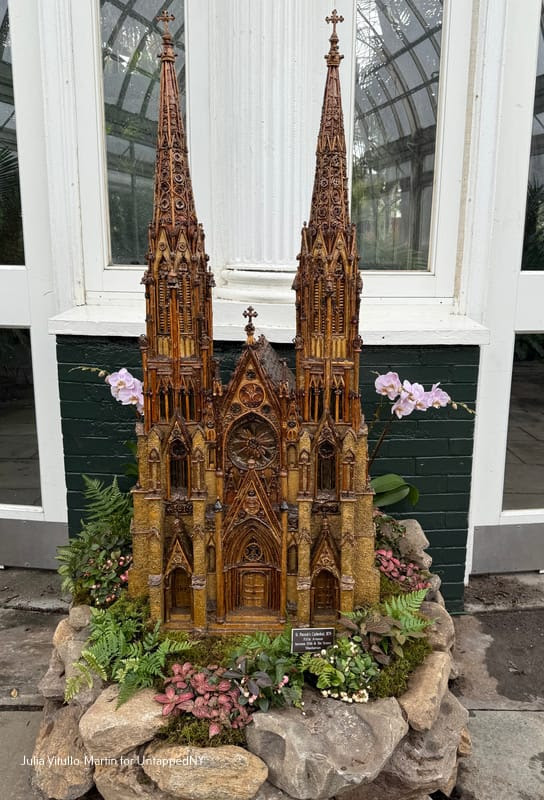
The botanical model of St. Pat’s required three artists working hundreds of hours to complete, using 60 different plant parts overall. Its rose window is composed of eucalyptus pods, pine cone scales, grapevine, poppy seeds, and Siberian iris seed pods.
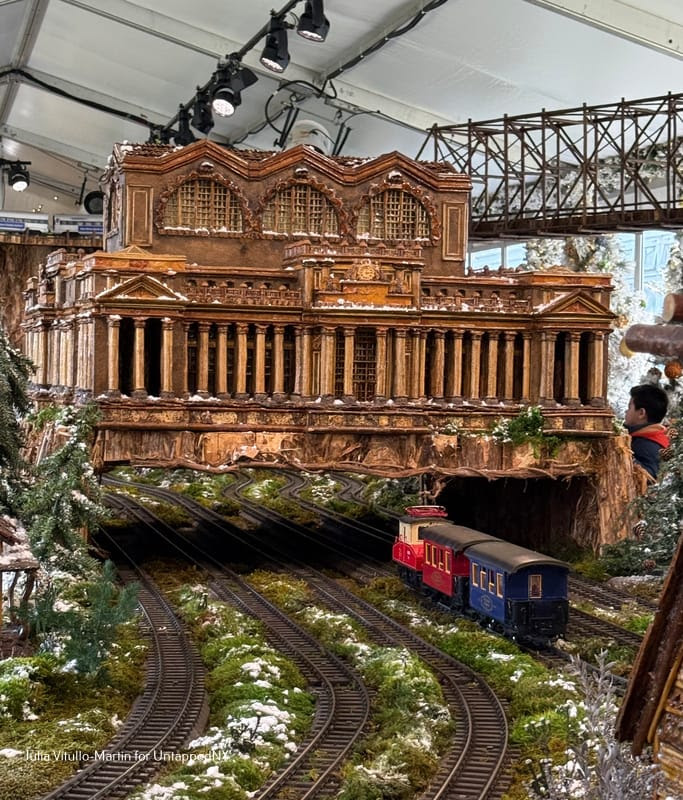
The Train Show offers two extraordinary train headquarters: the tragically demolished Penn Station and the still-standing, formidable Grand Central Terminal.Demolished in 1963 by its owner, the Pennsylvania Railroad, Penn Station was spectacular.
Penn Station’s botanical building materials, according to NYBG, include “columns made of honeysuckle, façade trim of sea grape leaves, peppercorns, viburnum, willow, and oak bark, and railings of screw pod, burning bush, willow, and acorn caps. The roof is magnolia, and pine cone scales, and the sky lights are burning bush and basket reed. The adorning eagles have white pine cone bodies, hemlock clove feet, magnolia bud feathers, and acorn cap wings. The clocks are birch bark and wheat seeds, and the statues have pistachio bodies and cedrela wings.”
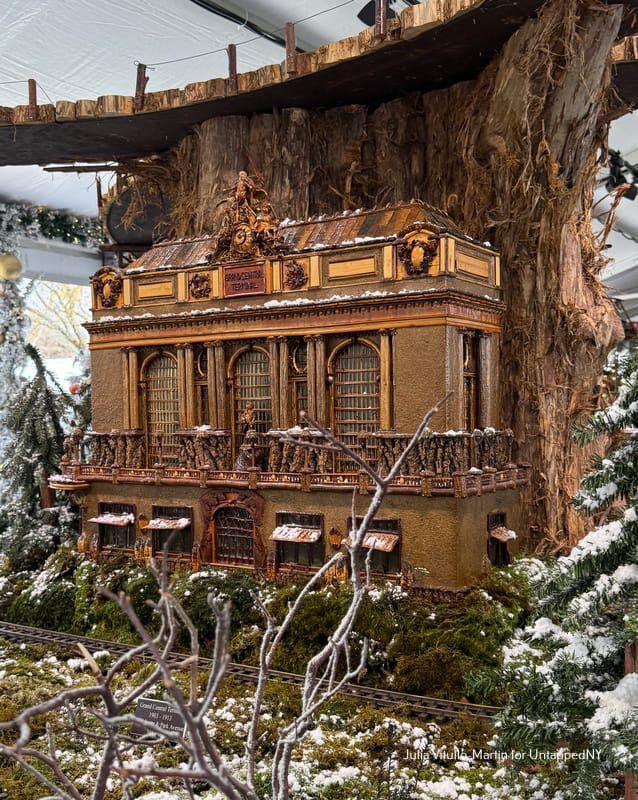
Similarly, the replica of Grand Central has columns of sticks, stone walls mimicking limestone, huge rounded windows, and three detailed statues of Hercules, Mercury, and Minerva, representing strength, commerce, and wisdom.
MORE IMAGES TOMORROW…
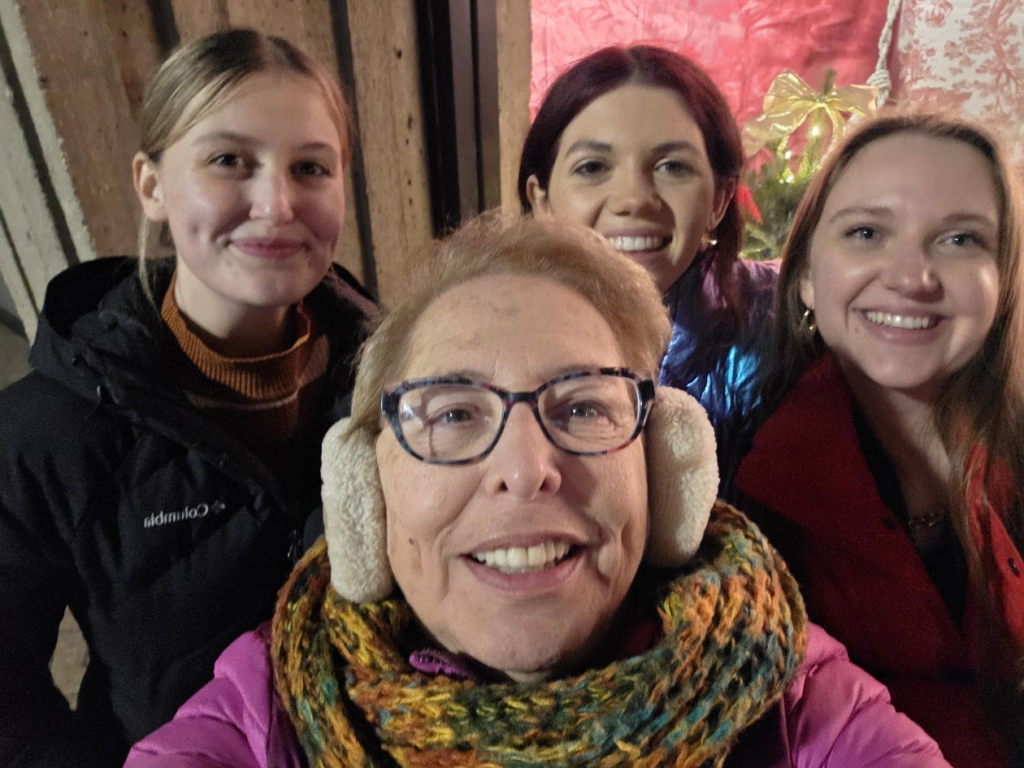
SHAYLA, ARIEL AND MAGGIE JOINED JUDY BERDY CELEBRATING OUR HOLIDAY WINDOWS. THE LADIES VOLUNTEERED TO DO A GRAND JOB DECORATING THE RIVERCROSS WINDOWS!
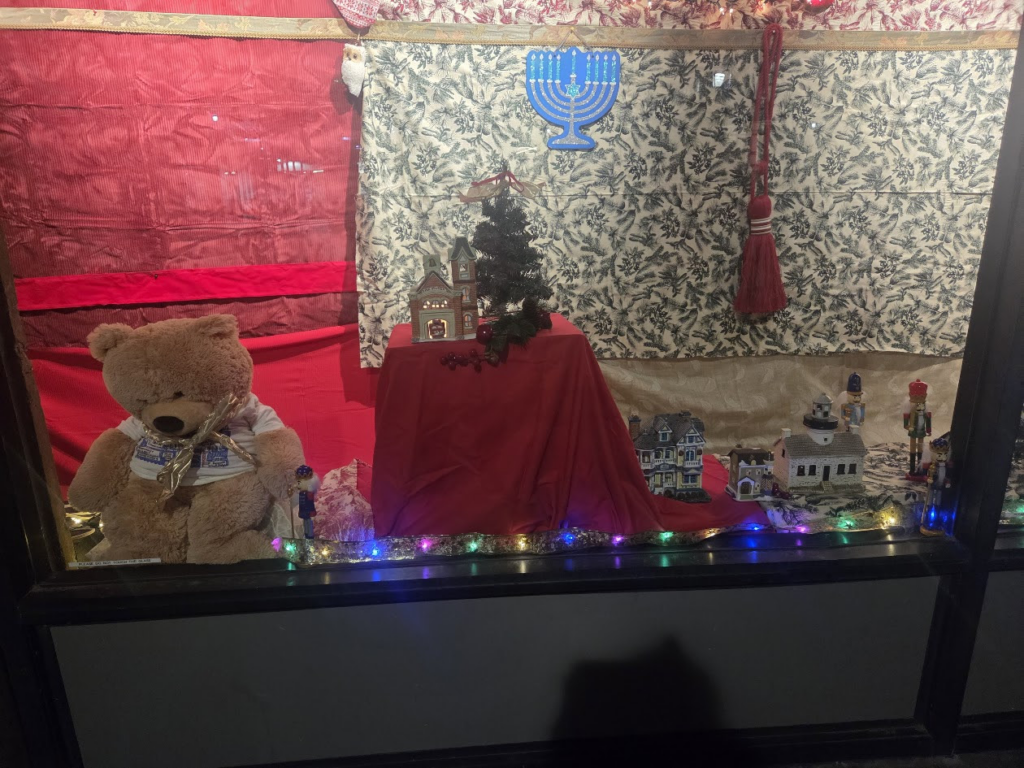
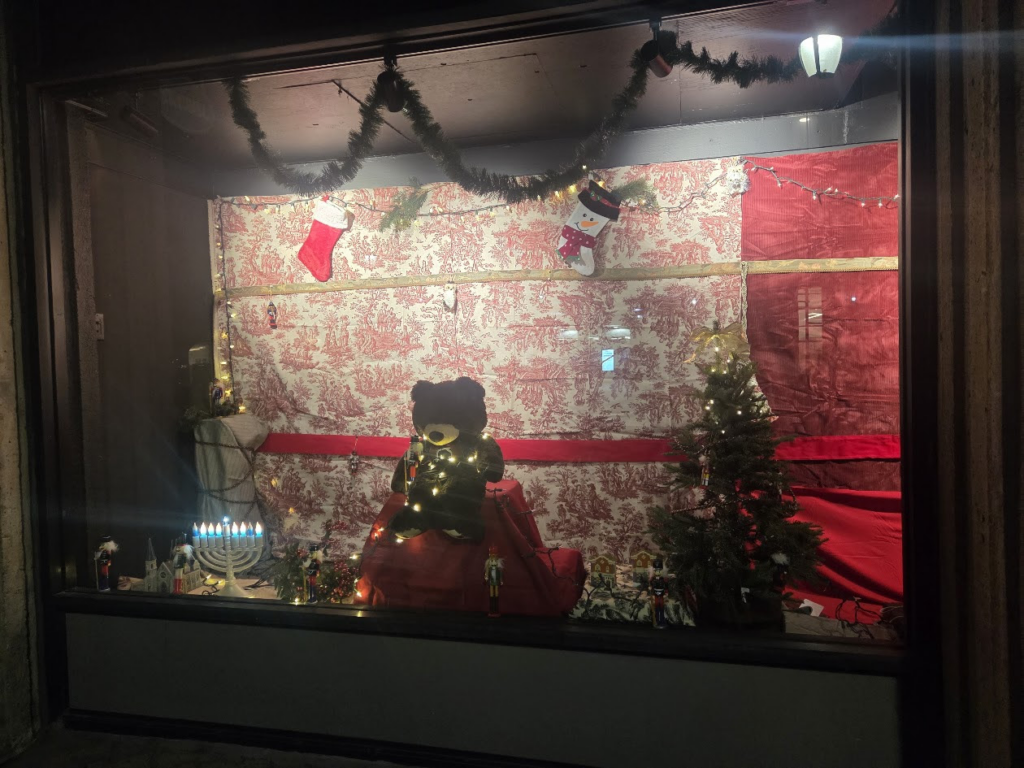
PHOTO OF THE DAY
TODAY IS THE DAY FOR
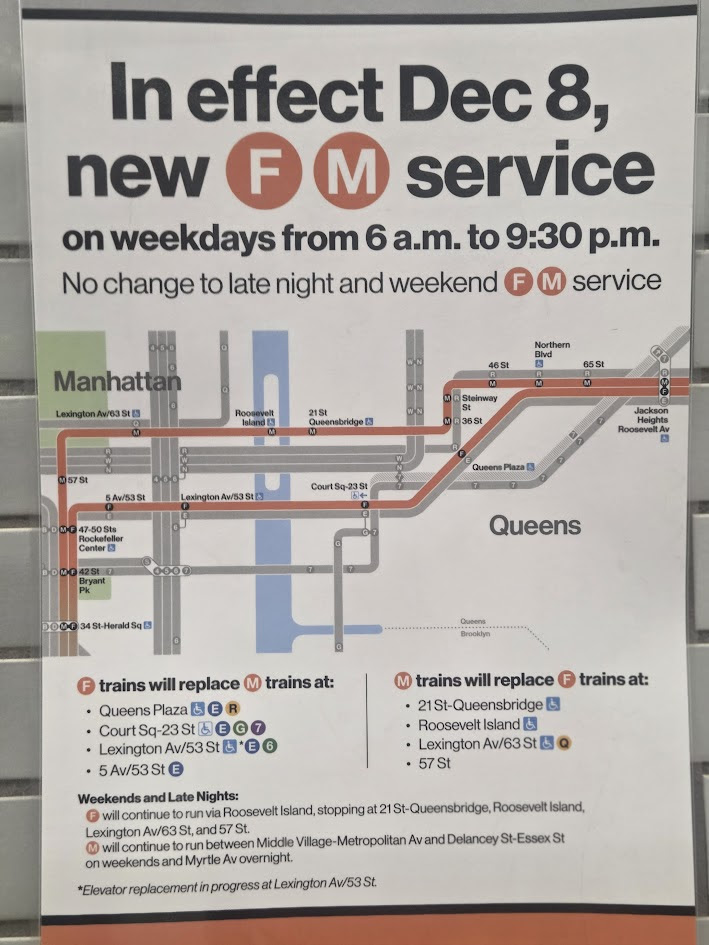
MONDAY COMMUTE
ON THE M TRAIN
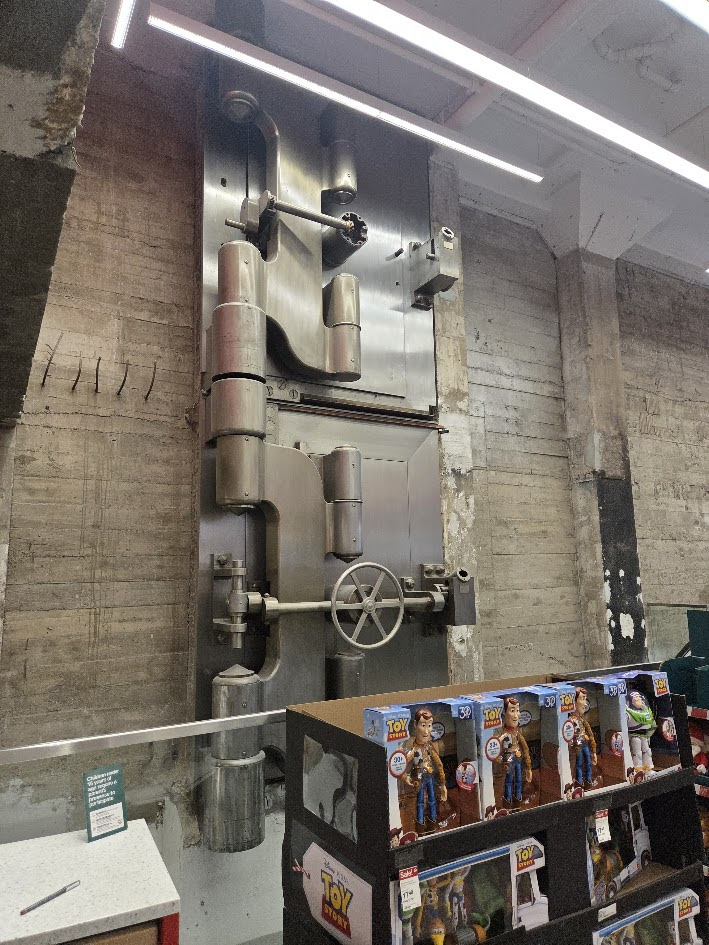
MYSTERY PHOTO. CAN YOU LOCATE THIS SITE?
CREDITS
UNTAPPED NEW YORK
All image are copyrighted (c) Roosevelt Island Historical Society unless otherwise indicated
THIS PUBLICATION FUNDED BY DISCRETIONARY FUNDS FROM CITY COUNCIL MEMBER JULIE MENIN & ROOSEVELT ISLAND OPERATING CORPORATION PUBLIC PURPOSE FUNDS.


Copyright © 2025 Roosevelt Island Historical Society, All rights reserved.Our mailing address is:
rooseveltislandhistory@gmail.com
Leave a comment