Weekend, February 28 – March 1, 2026 – Visit Key Black History Sites in Our City
Black History Sites
to
Discover in NYC
Part 1
UNTAPPED NEW YORK
WEEKEND FEBRUARY 28-MARCH 1, 2026
ISSUE #1636
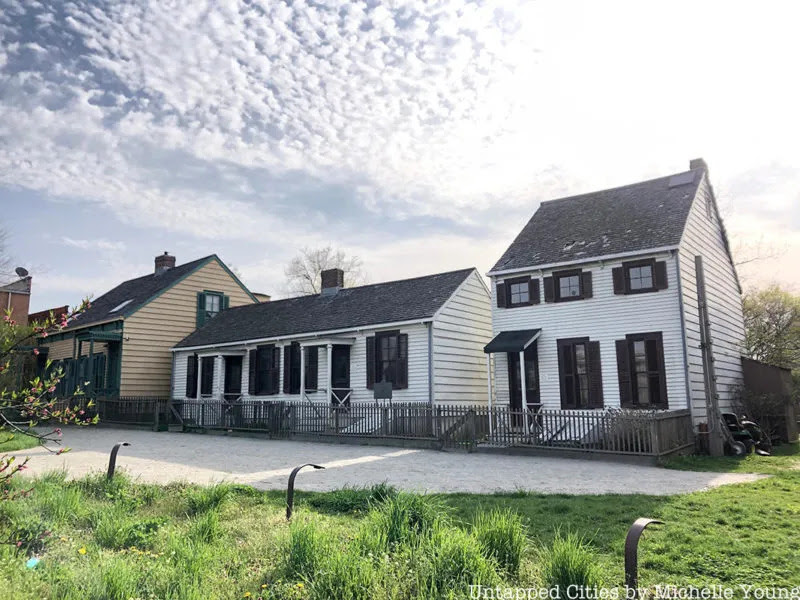
For the last few hundred years, New York City has been one of the country’s epicenters of African-American and Black culture, from early free Black settlements in the 1820s to musical icons in the 1930s to modern-day Black activists. All throughout the city there are historic sites where influential Black figures lived and practiced their craft, from the Lewis Latimer House in Flushing to the Claude McKay Residence in Harlem. According to writer Laura Itzkowitz (an Untapped New York contributor and former managing editor) in her article for Architectural Digest “When Architecture and Racial Justice Intersect,” only 2% of the nearly 95,000 entries on the National Register of Historic Places focus on the experience of Black Americans, but you don’t have to search hard to find an abundance of sites connected to Black history around New York.
New York City is fortunate enough to have many relics of African-American struggles and victories preserved as landmarks. Yet there are many others, especially in the Bronx, that are forgotten or at best, commemorated only by a plaque. Here is our guide to Black historic sites in New York City across the five boroughs, including both landmarked and un-landmarked sites. Some have historic plaques, others do not.
We have organized the locations by date first built, but in some cases the connection to Black history may have occurred later than when the building was originally built, started in an earlier building that has been demolished, or have been connected to the site since the very beginning. This is by no means an exhaustive list, but we attempted to highlight here sites that should be known to the public as well as those that have slipped under the radar.
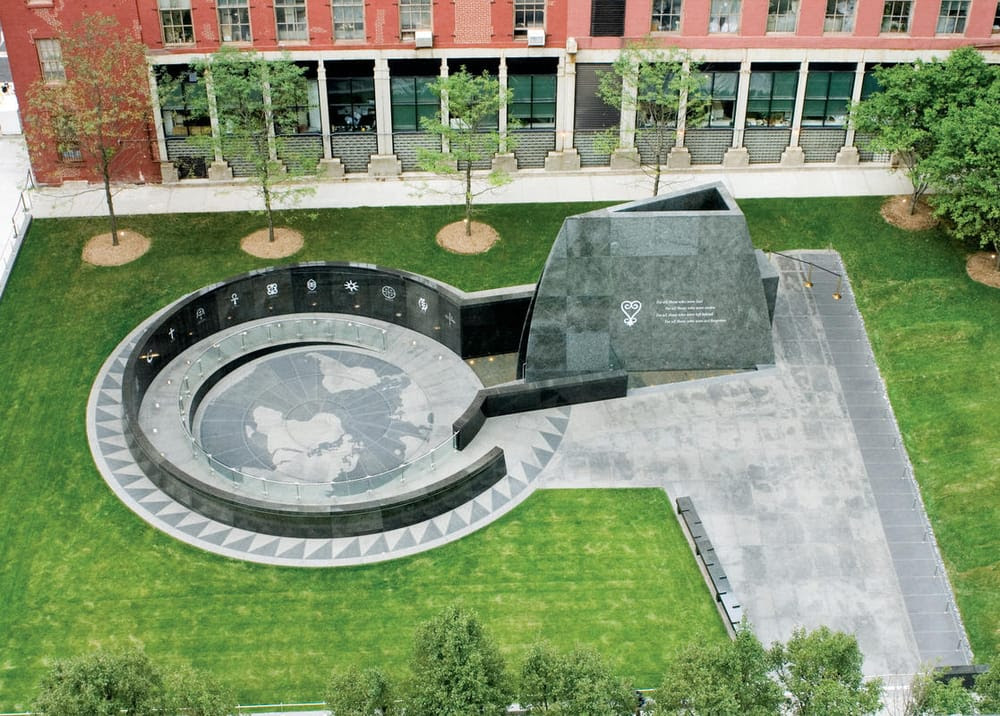
The African Burial Ground National Monument is found in the Civic Center area of Lower Manhattan that contains the remains of more than 419 Africans from the 17th and 18th centuries. It is estimated that there were as many of 10,000 to 20,000 burials in the 1700s, and it is considered New York’s oldest African-American cemetery.
In the 1600s, the Dutch West India Company brought over slaves from Angola, Congo, and Guinea, and by the mid-17th century, a village called the Land of the Blacks saw 30 African-owned farms in modern-day Washington Square Park. It was estimated that 42% of households in New York had slaves, which eventually totaled about 2,500 by 1740. Slavery was ultimately abolished on July 4, 1827, yet only one-third of the city’s blacks were free in 1790. The site was initially labeled on old maps as “Negro Burying Ground,” and the first recorded burials for people of African descent occurred in 1712, but it is speculated that the burial ground was in use two decades earlier.
Some of the bodies of the deceased were illegally dug up for dissection, which sparked the 1788 Doctors’ Riot. The city shut down the cemetery in 1794, and urban development began taking place over the burial ground. The land remained largely forgotten until bones were discovered in 1991 during an archaeological survey by the General Services Administration. Protests occurred just a year later after it was discovered that the GSA had damaged some of the burials and took little care in excavation efforts. George H.W. Bush signed a law to redesign the area and to install a $3 million memorial, which was dedicated in 2007 to commemorate the role of Africans and African Americans throughout New York City’s history. In 1993 the African Burial Ground was designated a New York City Landmark and a National Historic Landmark. It is also a National Historic Monument.
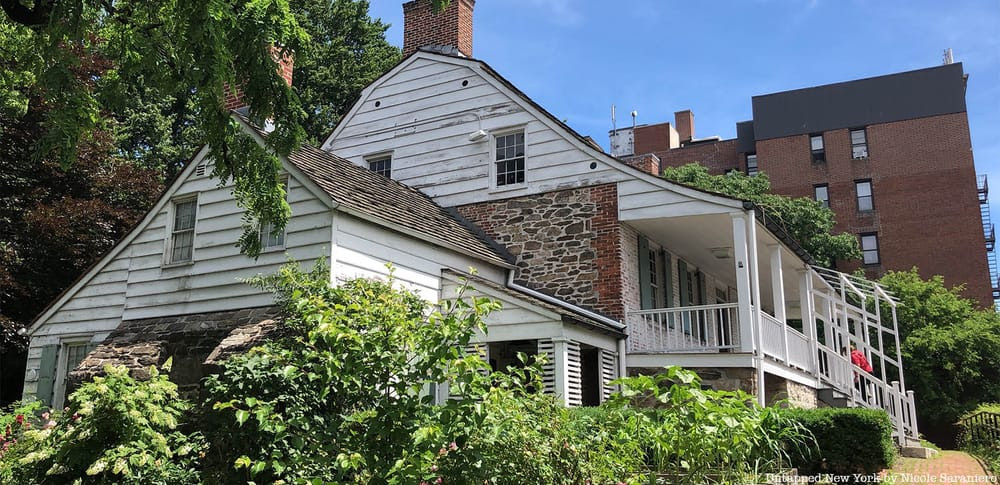
The Dyckman Farmhouse is Manhattan’s oldest remaining farmhouse, built around 1785 in the Dutch Colonial style. The home is situated in a small park in Inwood on the corner of Broadway and 204th Street, and today it serves as a New York City Landmark and a National Historic Landmark. William Dyckman, who constructed the home, died just three years after constructing the farmhouse, yet his son Jacobus would later inherit the house along with his wife Hannah, his eleven children, and a number of slaves and free blacks. Today, Inwood is home to a forgotten slave cemetery believed to have the remains of a number of the Dyckman family’s slaves.
As part of the DyckmanDISCOVERED initiative, the museum has investigated the stories of those enslaved by the Dyckman family. In 1820, a free black woman, a free black boy, and an enslaved man inhabited the home, and it is estimated that seven or eight slaves lived in the house when it opened. It was believed that freed blacks and enslaved workers would have used the house’s Summer Kitchen, a small one-and-a-half-story building adjacent to the farmhouse. A free black woman named Hannah worked as a cook for the Dyckmans and was born between 1784 and 1794. Although it was believed that the home housed a number of enslaved workers, the only one fully identified was Francis Cudjoe, who was set free in 1809. An official document stated:
“Recorded for and at the request of Francis Cudjoe this 11th day of January 1809. Know all men by these present that I Jacobus Dyckman of the City of New York on consideration of motive of humanity and sum of one dollar to me in hand paid Do hereby manumit and set free a Black man named Francis Cudjoe aged about Forty years. In witness whereof I have hereunto subscribed had my name and affixed my seal this eleventh day of January Anno Dominis one thousand eight hundred and nine. Jacobus Dyckman, Witness Peter.”
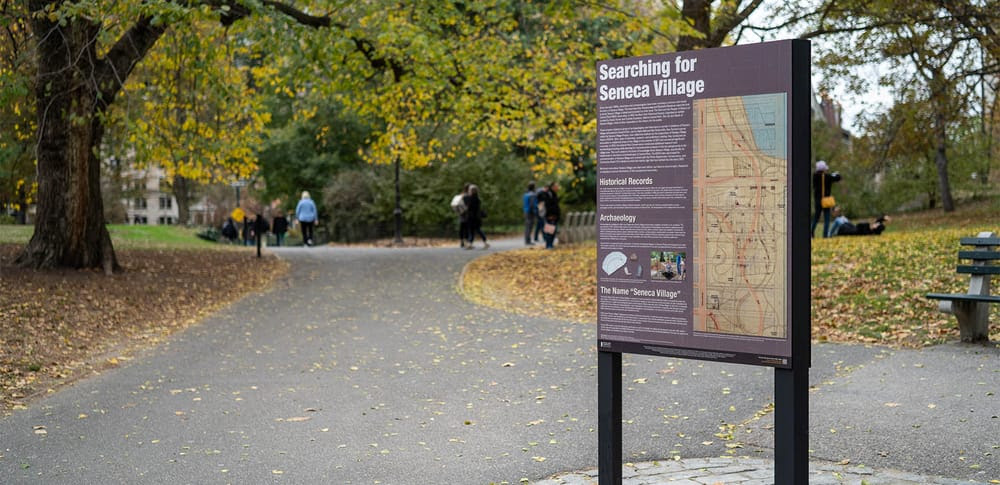
Seneca Village was a settlement in the 19th-century in present-day Central Park, founded in 1825 by free blacks. With a population of around 250 residents at its peak, the village featured three churches, a school, and two cemeteries. Bounded by 82nd and 89th Streets, Seneca Village would exist for over three decades before villagers were ordered to leave due to the construction of Central Park.
A white farmer named John Whitehead bought the land in 1824 and sold three lots of it to an African American man named Andrew Williams and twelve lots to the AME Zion Church. After the outlawing of slavery, many African Americans began to move into the village from downtown. A number of Irish immigrants fleeing the Potato Famine also settled in the village. Most of the homes were well-constructed, two-story buildings, the Central Park Conservancy tells us, rather than shanties which were in the minority of the buildings. Workers typically were employed in construction and food service, with many women working as domestic servants. The African Union Church in Seneca Village was one of the city’s first black schools, named Colored School 3.
The Seneca Village Project, founded in 1998, was created to raise awareness of the settlement’s history as a middle-class, free black community. Today, a plaque commemorates the site where Seneca Village once stood. There have also been recent archaeological excavations to uncover traces of Seneca Village, and in 2011, researchers discovered foundation walls of the home of William Godfrey Wilson, who was a sexton for All Angels’ Church in the village. 250 bags were filled with artifacts during the digs, including the leather sole of a child’s shoe. Central Park recently celebrated the history of Seneca Village through new historic signage as well as free tours during Black History Month, of which Untapped New York partnered with the Conservancy to offer a special tour to our Insiders members.
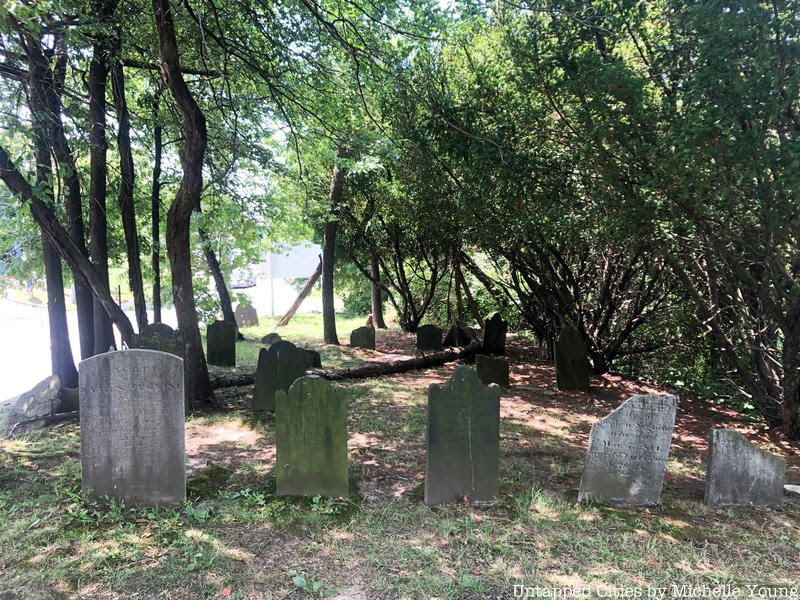
Sandy Ground was a community in Rossville, Staten Island, that was founded by free African Americans around the year 1828. Only a few months after slavery was abolished in New York City, an African American man named Captain John Jackson purchased land in the area, and the area quickly became a center of oyster trade. Many settlers would harvest and sell oysters at the nearby Prince’s Bay.
Sandy Ground was also an important stop on the Underground Railroad, and the settlement is currently considered one of the oldest continuously settled free black communities in the U.S. A church, a cemetery, and three homes from the settlement are today designated as New York City landmarks, yet most of the original houses were destroyed in a 1963 fire. Today, the Sandy Ground Historical Museum is home to the largest collection of documents detailing Staten Island’s African-American culture, history, and freedom.
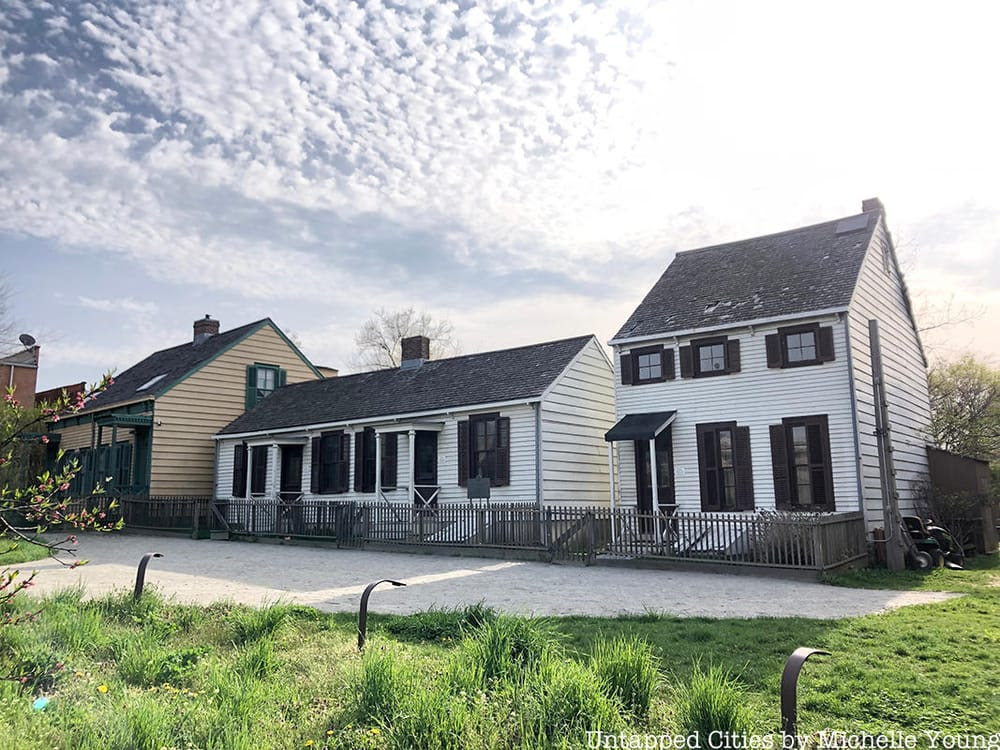
Like Seneca Village, Weeksville was a neighborhood that was founded by free African Americans, situated in modern-day Crown Heights, Brooklyn. Weeksville was founded in 1838 by James Weeks, an African-American longshoreman who bought land from Henry C. Thompson, a free African American land investor. The land was previously owned by an heir of John Lefferts, a member of the U.S. House of Representatives.
By the 1850s, Weeksville’s population had surpassed that of Seneca Village, with upwards of 500 residents from across the East Coast, with over a third of residents born in the south. Weeksville was home to two churches, a school (Colored School No. 2), and a cemetery, as well as the Howard Colored Orphan Asylum. Weeksville also had one of the first African-American newspapers called the Freedman’s Torchlight and served as headquarters of the African Civilization Society. Additionally, the area was a refuge for many African Americans who left Manhattan during the 1863 Draft Riots. Four historic houses dating back to the time of the village collectively make up the Hunterfly Road Houses, listed on the NRHP in 1972. The discovery of these houses led to the creation of the Weeksville Heritage Centerdedicated to the preservation of Weeksville.
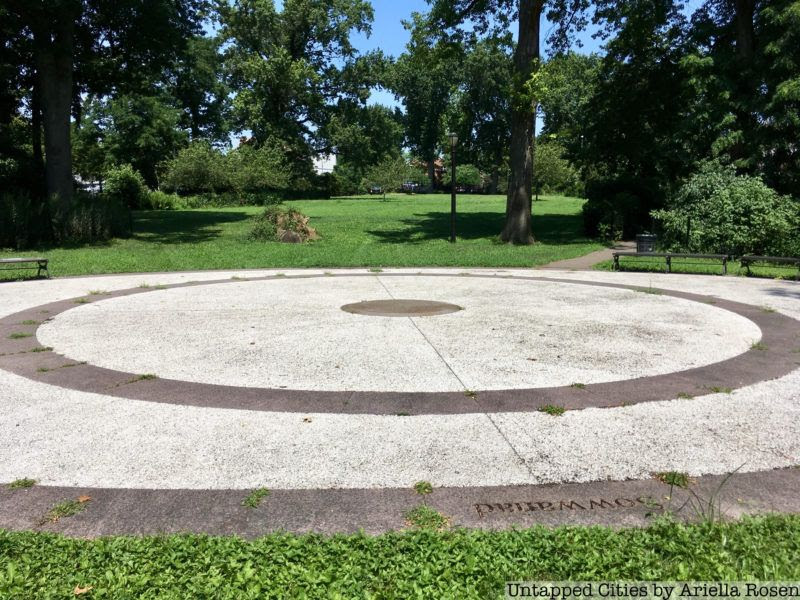
The Olde Towne of Flushing Burial Ground is a small burial ground alternatively known as the “Colored Cemetery of Flushing.” A large circular monument notes the burial of 500 to 1,000 people, primarily African Americans, Native Americans, and victims of four major epidemics of cholera and smallpox in the mid-1800s. Acquired by the town of Flushing in 1840 from the Bowne family, the burial ground contains the bodies of slaves and servants of the Flushing elite, as well as members of the African Methodist Episcopal Church. Death certificates issued in the 1880s confirm that more than half of the buried were children under the age of five. About 62 percent of the buried were African American or Native American.
In 1936, Parks Commissioner Robert Moses decided to build a modern playground on the site of the burial ground. Local activist Mandingo Tshaka halted plans of renovating the cemetery to preserve its history. The Queens Department of Parks commissioned a $50,000 archaeological study in 1996 of the burial ground. In 2004, $2.67 million was allocated to this site, leading to the creation of a historic wall engraved with the names from the only four headstones remaining in 1919.
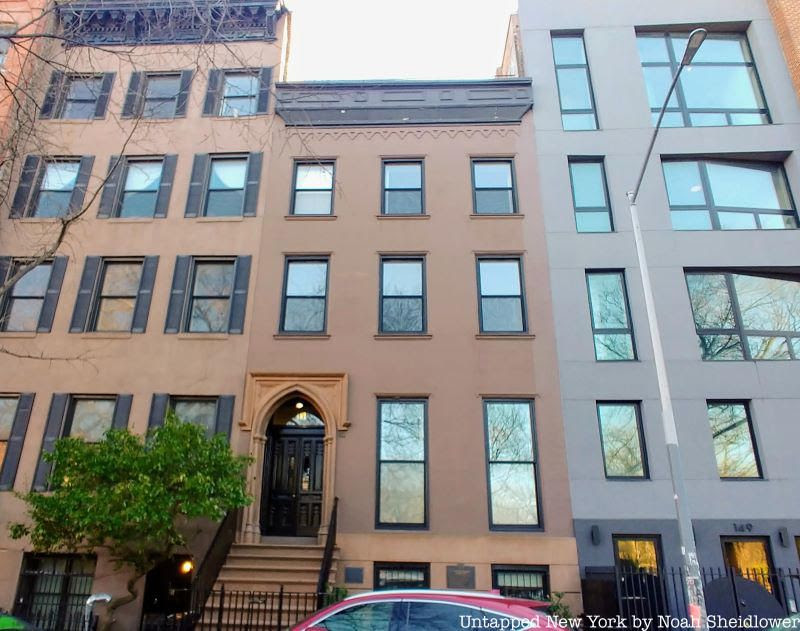
The Charlie Parker Residence at 151 Avenue B is a Gothic Revival-style rowhouse that served as the home of the legendary saxophonist from 1950 to 1954. Built in 1849, the rowhouse stands four stories tall and faces Tompkins Square Park. Parker lived on the ground floor with his wife Chan Richardson and their three children. By the time he moved, Parker had achieved great fame for helping to develop bebop with Dizzy Gillespie and for releasing standards such as “Ornithology” and “Yardbird Suite.”
He continued performing with jazz groups large and small while living at the home, releasing the album Bird and Diz in 1952. He notably performed at Massey Hall in Toronto in 1953 with jazz greats including Charles Mingus and Max Roach, resulting in the album Jazz at Massey Hall. Though, not all was smooth sailing at the rowhouse; he continued using heroin, and his health started to deteriorate. He spent time in a mental hospital after the death of his daughter in 1954 from cystic fibrosis and pneumonia. Parker died in 1954. In 1992, Avenue B between 7th and 10th Streets was renamed Charlie Parker Place. The Charlie Parker Jazz Festival is held annually at Tompkins Square Park.
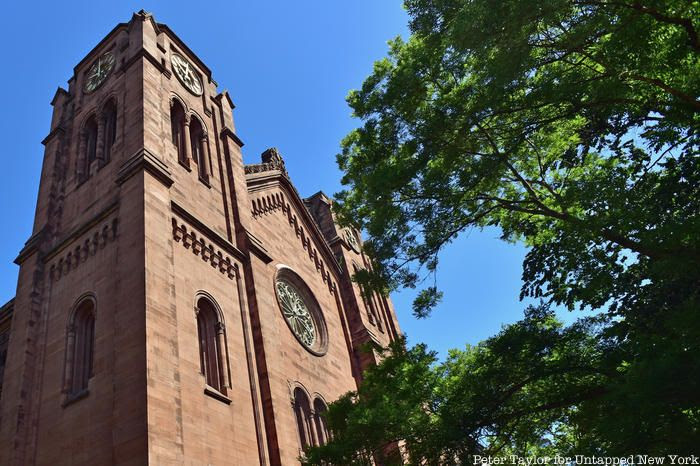
St. George’s Episcopal Church, a National Historic Landmark, is located in Stuyvesant Square and is designed in the Early Romanesque Revival style. The original church was located near Trinity Church from 1752, and this new church was constructed from 1846-1856 by Charles Otto Blesch and Leopold Eidlitz, the latter of whom worked on the New York State Capitol Building.
Although not a predominantly African-American church, St. George’s is perhaps best known for having among its congregants Harry Thacker Burleigh, a Black composer and baritone. He was one of the first African-American composers to incorporate spirituals into much of his music. He was accepted to the National Conservatory of Music in New York and was known for his compositions like his versions of the spiritual “Deep River” and songs like “Little Mother of Mine.” Burleigh was hired as a soloist at St. George’s, at the time an all-white church, and the deciding vote in this decision was made by J.P. Morgan. Burleigh would go on to teach composer Antonín Dvořák “Negro melodies” and Native American music, which Dvořák would later incorporate into his famous Symphony From the New World and his American String Quartet.
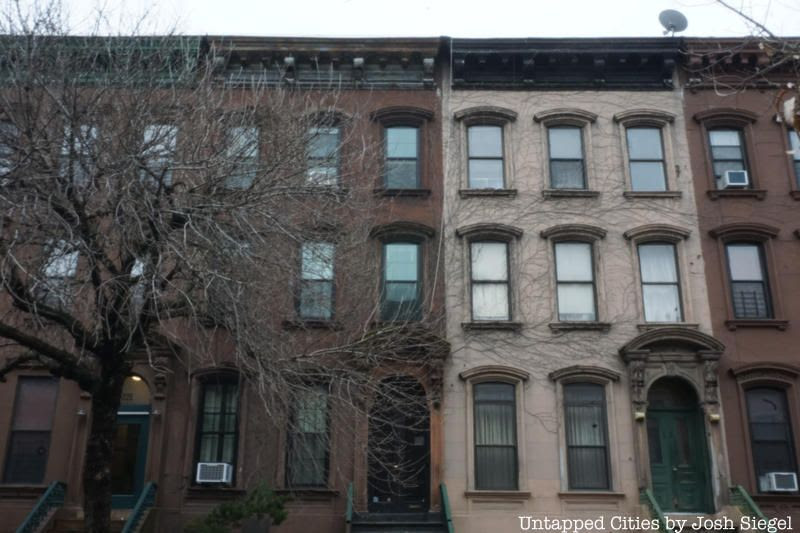
The Langston Hughes House on East 127th Street in Harlem was the home of Harlem Renaissance poet Langston Hughes where he wrote works like “Montage of a Dream Deferred” and “I Wonder as I Wander.” Built in the Italianate style in 1869, the house is a three-story building added to the NRHP in 1982.
Hughes used the top floor as his workroom for the last 20 years of his life. In 2019, the home received a National Trust for Historic Preservation grant, and today this home is the base of the I, Too, Arts Collective nonprofit, which preserves Hughes’s legacy and supports emerging underrepresented artists.
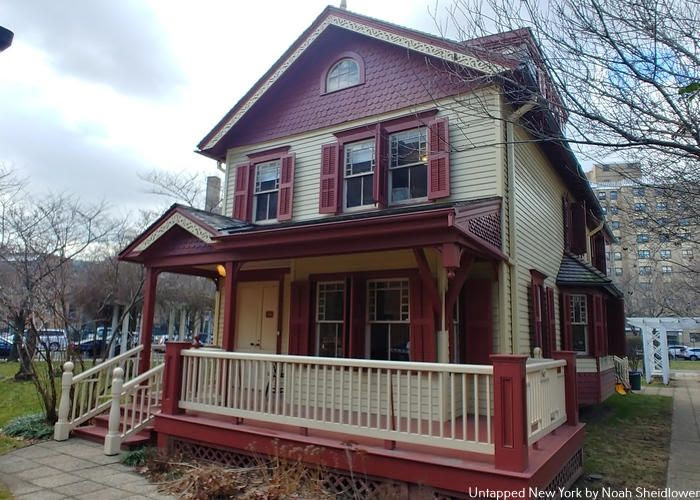
The Lewis Latimer House in Flushing, a red and white Victorian home, honors Lewis Howard Latimer, an African-American inventor and humanist born to fugitive slaves who lived in the home from 1903 until his death in 1928. Latimer was one of the founders of the Unitarian Universalist Congregation in Queens, and he was known for his work with figures like Hiram S. Maxim, Thomas Edison and Alexander Graham Bell. The red and white house, which dates back to around 1889, contains a museum dedicated to Latimer’s work and the achievements of other black scientists.
George Latimer, his father, escaped from Virginia to Boston before his subsequent capture and imprisonment. Abolitionists like Frederick Douglass strove to grant George freedom through a publication called “The Latimer Journal, and the North Star.” Growing up in the Antebellum period, Lewis Latimer joined the Union Navy in 1864 and later became an expert draftsman while working at a patent law office. After learning about physics and engineering, Latimer would work with Edison, under whom he invented and patented the carbon filament, which improved the production of the incandescent lightbulb. He also authored “Incandescent Lighting,” the foundation for modern electrical engineering theory. He would also go on to draft drawings for Bell’s invention of the telephone.
CREDITS
UNTAPPED NEW YORK
PHOTO OF THE DAY
A NEW WAY TO FIND 900 MAIN STREET
Many Coler residents and visitors have been misdirected
by APPsthat lead them to the back of Coler instead of the
Main Entrance at 900 Main Street.. While the APPs are being modified, new clear signage is being posted at the north end.
THANKS TO COLER ADMINSTATION AND NYC H+H FOR HELPING SOLVE THIS.
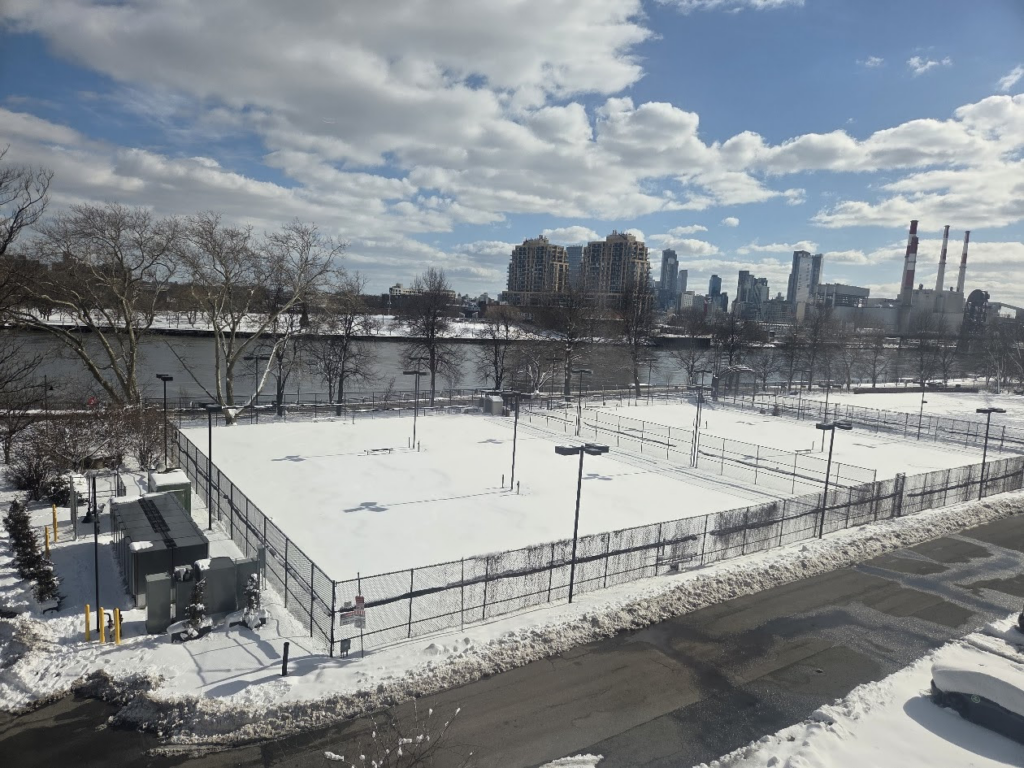
All image are copyrighted (c) Roosevelt Island Historical Society unless otherwise indicated
THIS PUBLICATION FUNDED BY DISCRETIONARY FUNDS FROM CITY COUNCIL MEMBER JULIE MENIN & ROOSEVELT ISLAND OPERATING CORPORATION PUBLIC PURPOSE FUNDS.

Copyright © 2026 Roosevelt Island Historical Society, All rights reserved.Our mailing address is:
rooseveltislandhistory@gmail.com
Leave a comment