Wednesday, March 3, 2021 –

WEDNESDAY, MARCH 2, 2021
THE 301st EDITION
FROM OUR ARCHIVES
THE WONDERFUL
26 BROADWAY
FROM EPHEMERAL NEW YORK
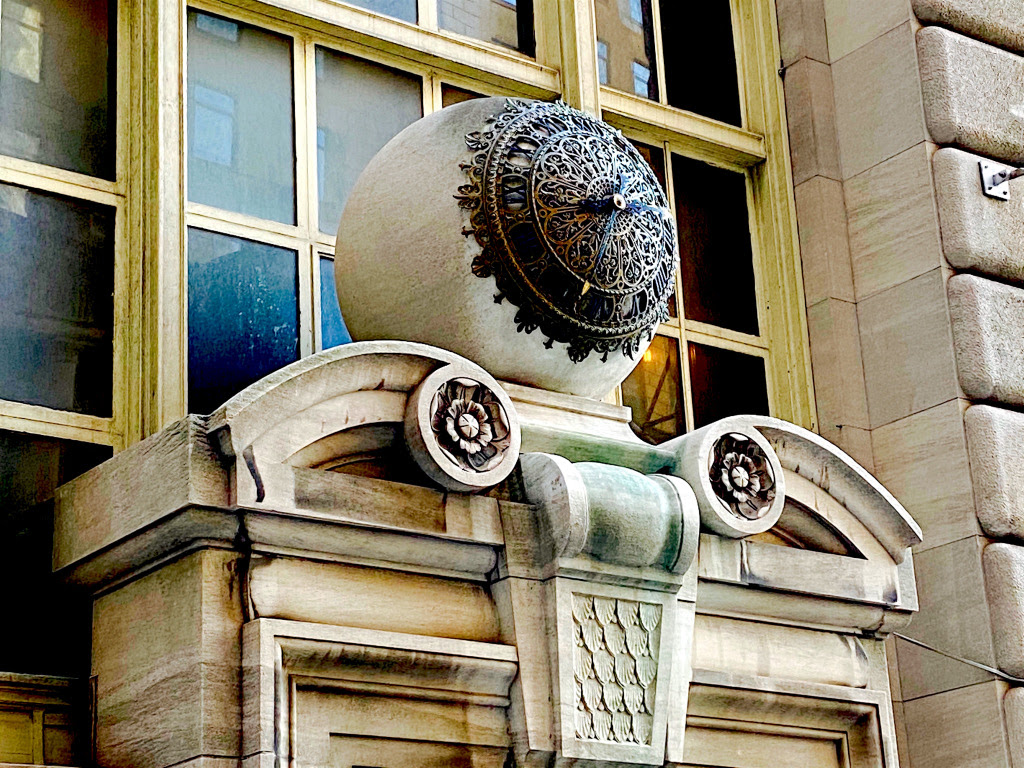
An Art Nouveau clock on a downtown skyscraper
March 1, 2021
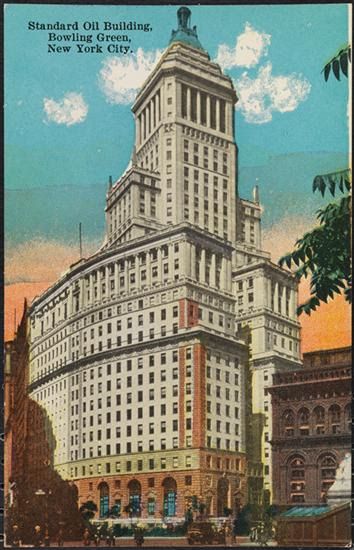
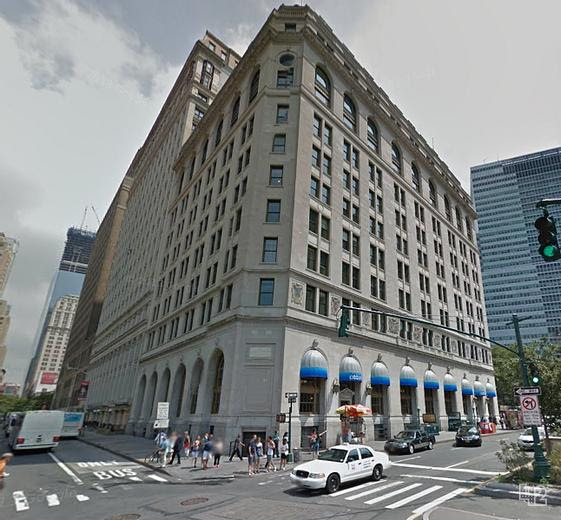
The Standard Oil Building at 26 Broadway (officially its address spans 10-30 Broadway) has been part of the downtown skyline for almost a century. At street level, the building follows the 17th century contours of lower Broadway, while the 480-foot tower adheres to the city street grid.

Built to serve as the headquarters for this Rockefeller-run company, the 1928 skyscraper also incorporates Standard Oil’s original building, constructed on the same spot in the 1880s.
But there’s something curious at the building’s second entrance at 28 Broadway: a beautifully designed, possibly Art Nouveau-inspired clock.
What’s the backstory on this unusual clock—a timepiece of Roman numerals as well as tendrils and petals similar to the two stone-carved florals below it?
The 1995 Landmarks Preservation Committee report notes the clock briefly: “The two secondary entrances in the Broadway facade are interposed on large arched window openings, both of which are in pedimented door surrounds with clocks mounted above,” the report states.
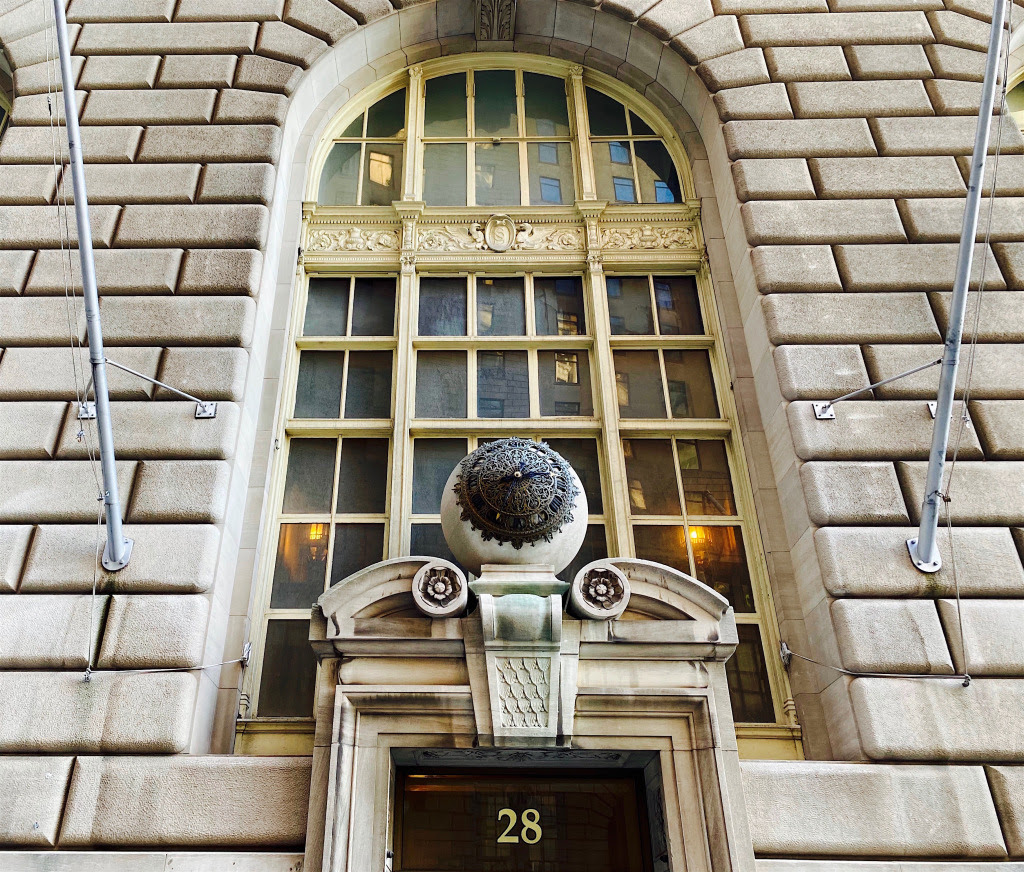
Could the clock in question have come from the original building—or perhaps it has some significance to Standard Oil? Or maybe it’s just a stunningly designed naturalistic timepiece that added a nice contrast with this dignified corporate headquarters.
[Third image: MCNY x2011.34.1129]
MARK YOUR CALENDARS FOR OUR EVENTS
UPCOMING PROGRAMS ON ZOOM
Registration will be available before each event
All events are at 7 p.m.
Tuesday, March 16 “Abandoned Queens”
Author Richard Panchyk takes us on a journey through Queens’ past. Revealing haunting reminders of the way things used to be, he describes fascinating, abandoned places, including the chilling Creedmoor Psychiatric Center, the meandering remains of the country’s first modern highway, a defunct airport reclaimed by wilderness, an eerie old railroad line in Forest Hills, and a destroyed neighborhood in the Rockaways.
Tuesday, April 20 “Mansions and Munificence: the Gilded Age on Fifth Avenue”
Guide, lecturer, author and teacher of art and architecture, Emma Guest-Consales leads a virtual tour of the great mansions of Fifth Avenue. Starting with the ex-home of Henry Clay Frick that now houses the Frick Collection, all the way up to the former home of Andrew Carnegie, now the Cooper-Hewitt Museum, she takes us through some of the most extravagant urban palaces the city has ever seen.
Tuesday, May 18 “Saving America’s Cities” Author and Harvard History Professor Lizabeth Cohen
Provides an eye-opening look at her award-winning book’s subtitle: Ed Logue and the Struggle to Renew Urban America in the Suburban Age. Tracing Logue’s career from the development of Roosevelt Island in the ‘70s, to the redevelopment of New Haven in the ‘50s, Boston in the’60s and the South Bronx from 1978–85, she focuses on Logue’s vision to revitalize post-war cities, the rise of the Urban Development Corporation.
EXCLUSIVE NYC MAP DESIGN MASKS AND ZIPPER POUCHES
MASKS $18-, ZIPPER POUCHES $12-
AT RIHS VISITOR KIOSK


WEDNESDAY PHOTO OF THE DAY
Can you identify this photo from today’s edition?
Send you submission to
ROOSEVELTISLANDHISTORY@GMAIL.COM
TUESDAY PHOTO OF THE DAY
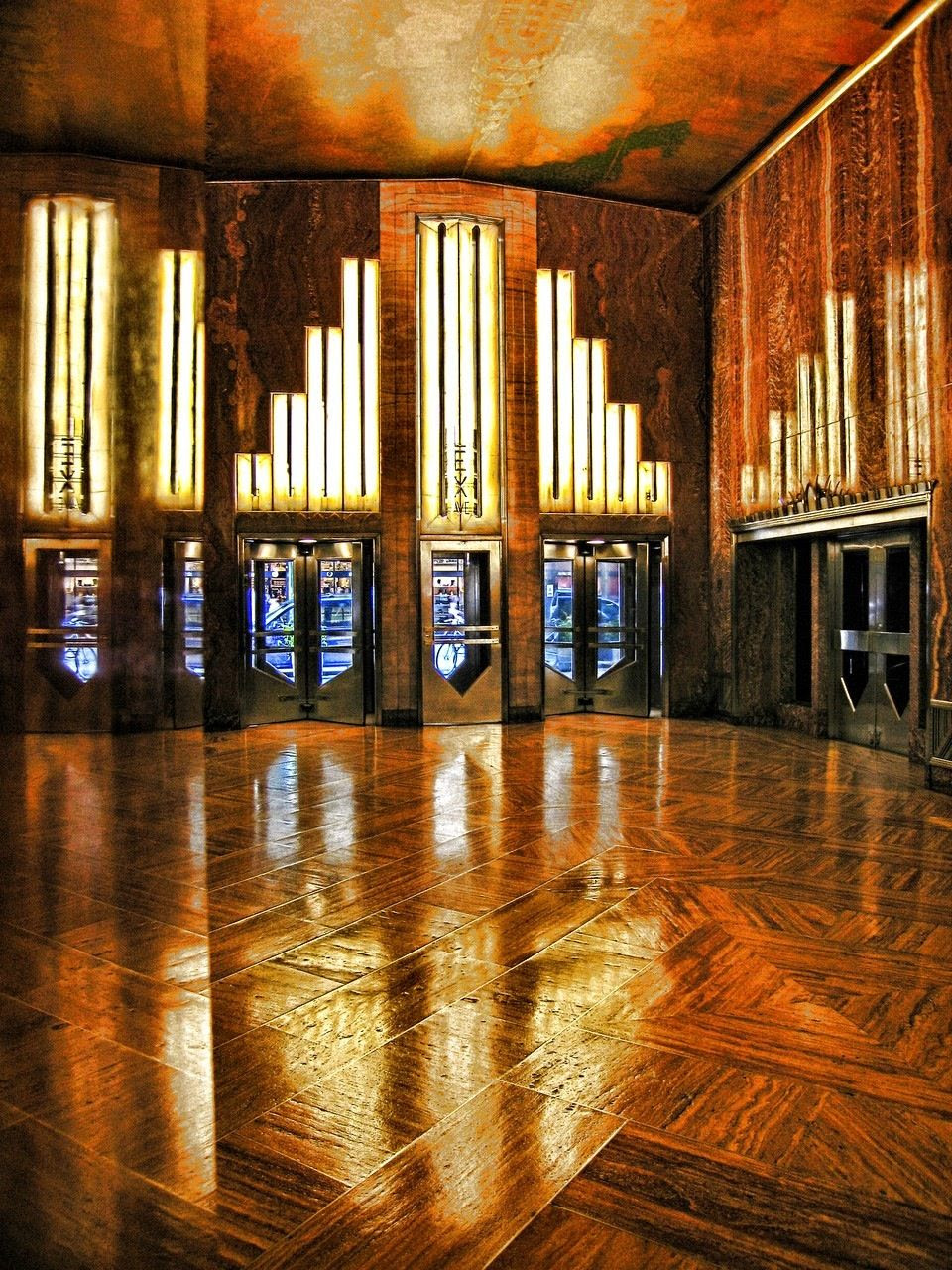
CHRYSER BUILDIG LOBBY
HARA REISER, JAY JACOBSON, NINA LUBLIN , GLORAI HERMAN,
VERN HARWOOD GOT IT.
A NOTE FROM JAY JACOBSON
I think is the street level entrance to the Chrysler Building.
And a personal remembrance of the office space in the top of the Chrysler Building. In early 1970, a client in the paper distribution business occupied a full industrial building between 17th and 18th streets and 7th and 8th Avenues in Manhattan. The landlord of the building was not providing heat. Employees were clad in outside clothing. More important, the client’s paper was growing colder by the hour. Printers in the City who were customers of the client could not print on very cold paper. The time it took the printer to warm the paper so that it would run smoothly on the printing presses made the printers late in delivering magazines, catalogues, books and the like. Customers who were receiving printed material late were not paying their bills from the printer. And the printers who were getting cold paper from our client were not paying our client. So our client came to the firm at which I was the junior person for help.
The firm’s seniors thought that a meeting with the landlord of the building was the best first step. (I cannot recall the name of the landlord, but it was a partnership with extensive metropolitan real estate holdings and publicly reported connections to organized crime.). The client’s building superintendent and I were assigned to meet the landlord.
The landlord’s office was in the Chrysler Building and in the space from you watched Luccio paint. An elevator operator took me and the client up to the top floor. An elegant dining club was located on that floor, available for use only by Chrysler Building tenants. From there, a small private elevator took us to the floor you were on.
We exited the private elevator directly into the office suite of the people we were coming to see. “Good afternoon, we’re here to see Mr. X.”
“I’m sorry but Mr. X is not in just now,” said a receptionist.
“Ok,” I said. “We’ll wait for him. “
We took seats and waited. Phones rang. Messengers appeared bringing large envelopes in and taking large envelopes out. From time to time, employees came through the reception area and went into an office. We waited.
An hour passed. My client was getting antsy. After another forty minutes, he and I were getting quite annoyed.
Suddenly, the door to the office blasted open, and a very large man with a very large cigar came out. His overcoat was more wool cape than conventional coat. He looked at me and my client, and bellowed “You people ever show up here again you’ll be out that &&&/- window!!”
“Good evening, Mr. X”, said the receptionist.
(NOTE: THE WINDOWS DO OPEN TO THIS DAY)
Text by Judith Berdy
Thanks to Bobbie Slonevsky for her dedication to Blackwell’s Almanac and the RIHS
Thanks to Deborah Dorff for maintaining our website
Edited by Deborah Dorff
All image are copyrighted (c)
EPHEMERAL NEW YORK
FUNDING PROVIDED BY ROOSEVELT ISLAND OPERATING CORPORATION PUBLIC PURPOSE GRANTS CITY COUNCIL REPRESENTATIVE BEN KALLOS DISCRETIONARY FUNDING THRU DYCD

Copyright © 2021 Roosevelt Island Historical Society, All rights reserved.Our mailing address is:
rooseveltislandhistory@gmail.com
Leave a comment