Friday, December 5, 2025 – AN ENCLAVE JUST OVER THE RIVER FROM THE ISLAND


The Mysterious Origins of
Mitchell Place,
Possibly Manhattan’s Most Obscure
one-Block Street
Ephemeral New York
FRIDAY, DECEMBER 5, 2025
ISSUE #1586
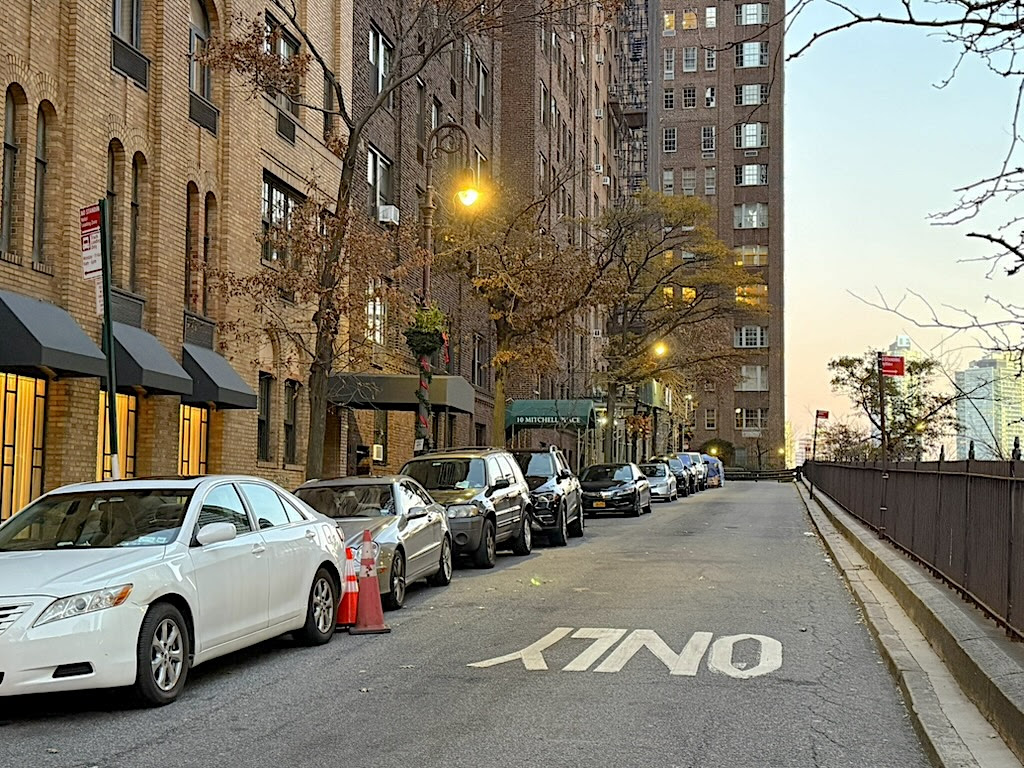
Is it ever possible to get tired of exploring Manhattan’s little-known lanes and dead-end side streets?
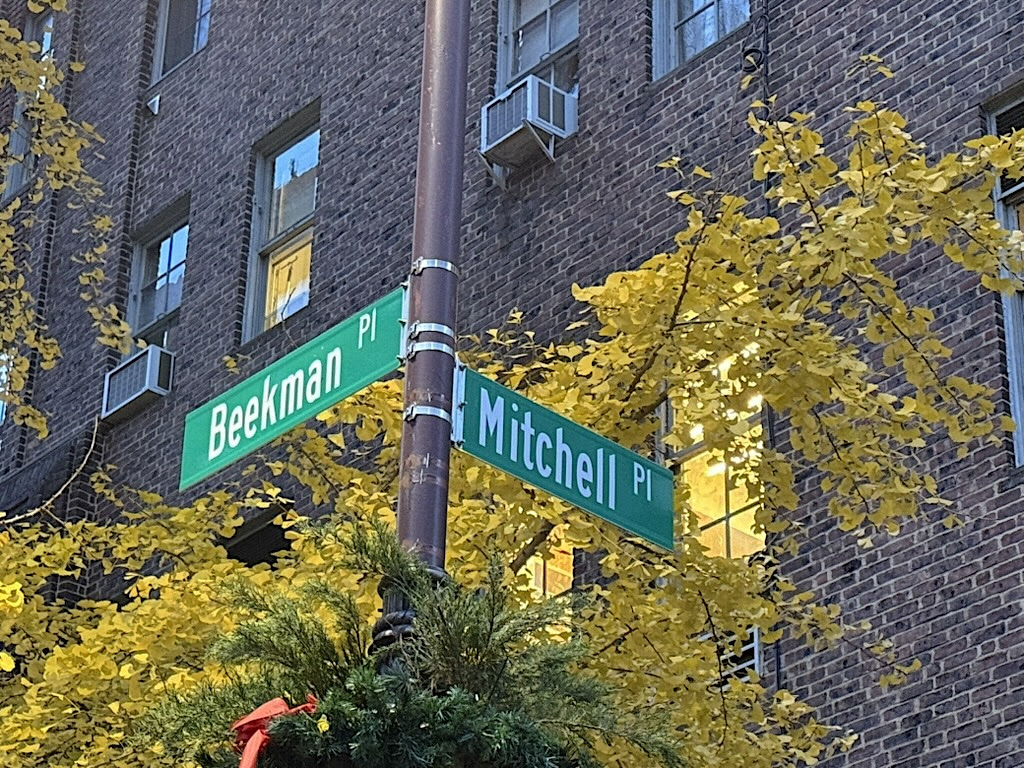
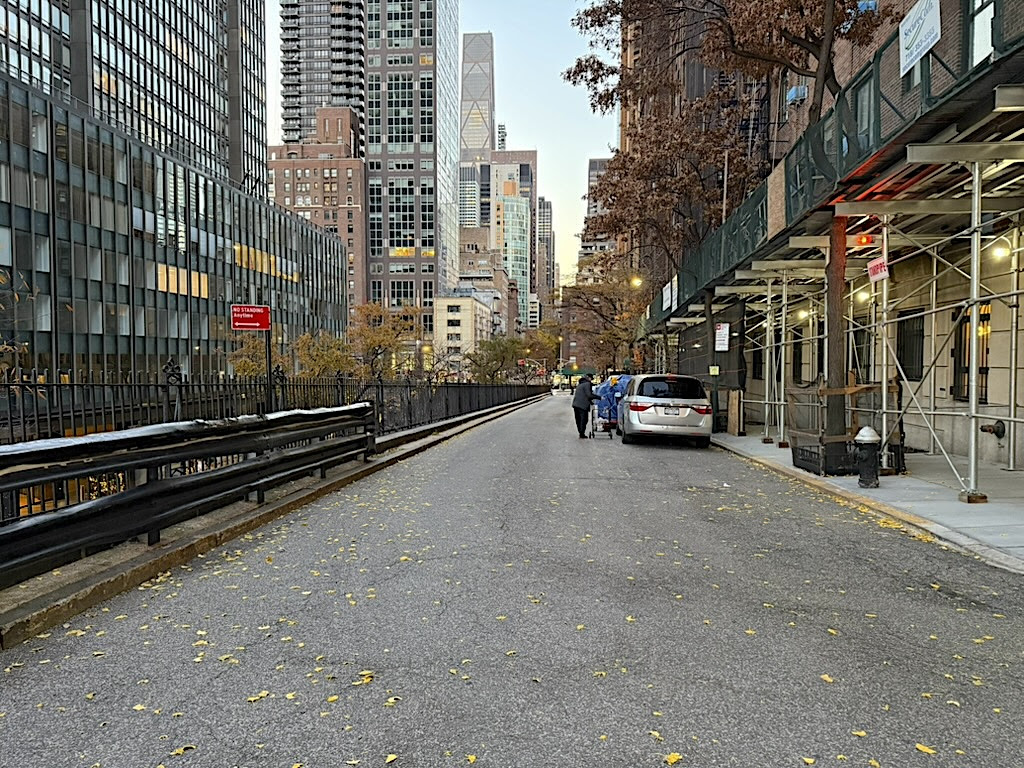
Mitchell Place is an oddity. It isn’t a continuation of East 49th Street, which runs across First Avenue to the East River at a lower level. Mitchell Place is an entity of its own on an incline flanked by 20th century residential buildings on one side and an iron fence on the other.
Quiet and with almost no foot traffic, Mitchell Place is surrounded by the modern city, from the United Nations to the south to the FDR Drive on the east to the buses and taxis jostling their way out of the traffic tunnel on First Avenue.
But dial your imagination back to the mid-19th century before Mitchell Place began appearing on street maps. It’s not aligned to the city street grid, so why did it emerge, and who lived there?
The best guess is that it came out of the destruction and carving up of the Colonial-era Beekman family mansion and estate.
This landmark house (below), built in 1763-1764 by wealthy and prominent merchant James Beekman, served first as a family country home, then the British headquarters during the Revolutionary War after the Beekmans fled. (George Washington reportedly stopped in after the Battle of Brooklyn and warned the Beekman family about the impending invasion.)
Known as Mt. Pleasant, the house was abandoned again by the Beekmans during a cholera epidemic in 1854. It was demolished two decades later, not long after the Beekmans created a new street, Beekman Place, on the grounds of their estate.
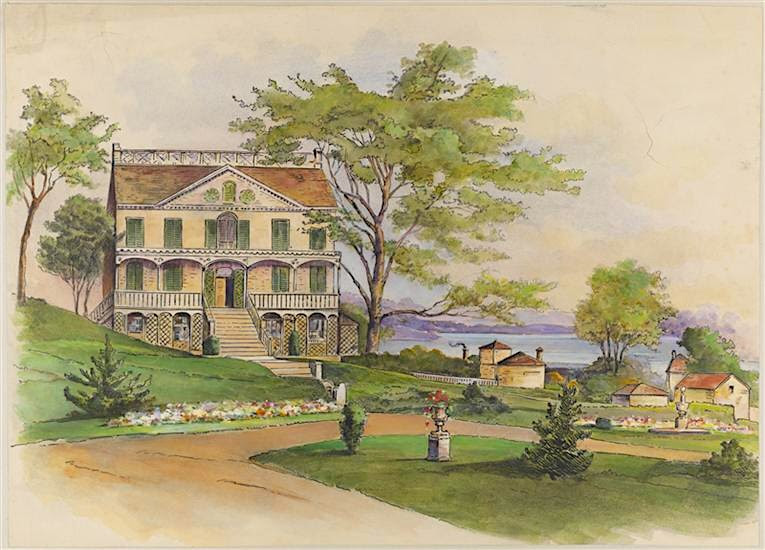
The land from the estate was sold to developers, who built brownstones for well-to-do families. Likely to maximize real estate potential, two streets were cut between Beekman Place and First Avenue. One, Dunscombe Place, became East 50th Street, according to Valentine’s Manual of Old New York. The second was Mitchell Place.
The Mitchell name is another mystery. According to Henry Moscow’s The Street Book, Mitchell Place takes its moniker from esteemed 19th century jurist William Mitchell (below right). The presiding justice of the New York State Supreme Court, Mitchell retired in 1857, states Moscow, and the street took his name in 1871.
Mitchell made his own home miles away on West Ninth Street, per his 1886 obituary in the New-York Tribune. Perhaps Mitchell traveled in the same elite circle as the Beekmans, and they named the street. Or it honors another Mitchell, a family name dating to 18th century New York City.
To confuse things further, references to real estate dealings on Mitchell Place (below) began appearing in city newspapers in the 1860s, years before the street was supposedly named.
Through the later decades of the 19th century, Manhattan’s East Side changed, and Mitchell Place changed with it. Working-class residents employed by the area’s factories and slaughterhouses replaced more elite homeowners. Brownstones were carved up into flathouses with stores on the ground floor.
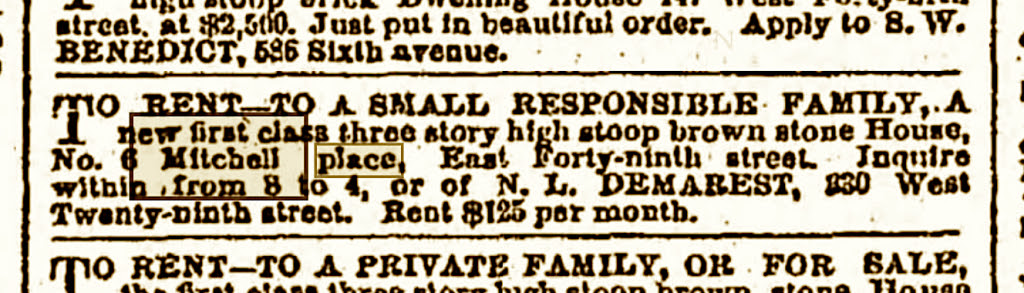
And then something weird appeared in the press in 1896. Apparently, the city had no record of Mitchell Place and did not recognize it as an actual Manhattan street, several papers reported.
“Found a new street in this city,” read a New York Times front-page headline. “The Board of Street Openings and Improvements discovered a new street yesterday whose existence had not before been known to this board.”
Mitchell Place was described by the Times as a private street. “When they examined the matter, it was found that not one of the persons who own the street is assessed anything by the Tax Commissioners,” continued the Times.
Residents started paying taxes, Mitchell Place went public (if it was really private to begin with), yet it suffered from neglect. The street “was guiltless of paving blocks or macadam,” reported The World in 1897, which added that it “is the dumping ground of all the rubbish in the vicinity.”
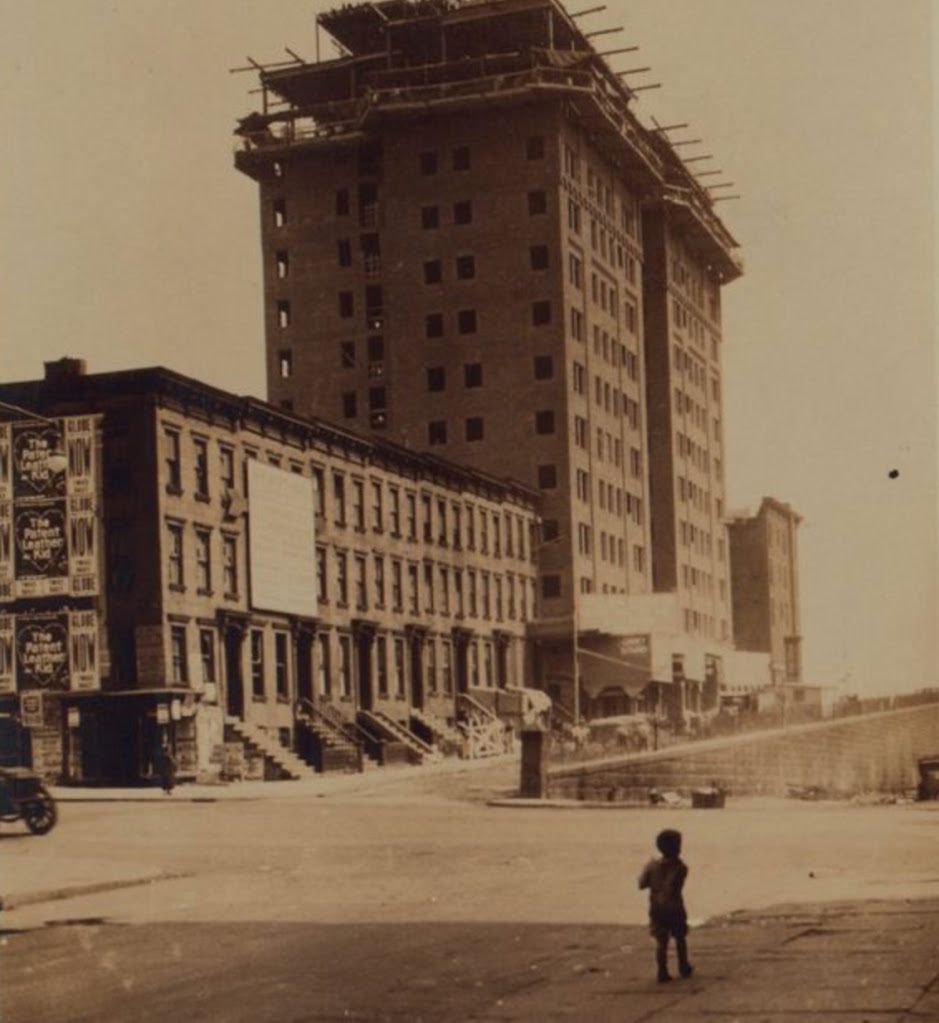
What changed Mitchell Place’s fortunes? The early 20th century renovation of Beekman Place back into a fashionable enclave, with fancifully restored townhouses and elegant apartment residences.
As an even smaller lane adjacent to Beekman Place, Mitchell Place saw the fall of its shabby brownstones and the rise of new real estate (above photo).
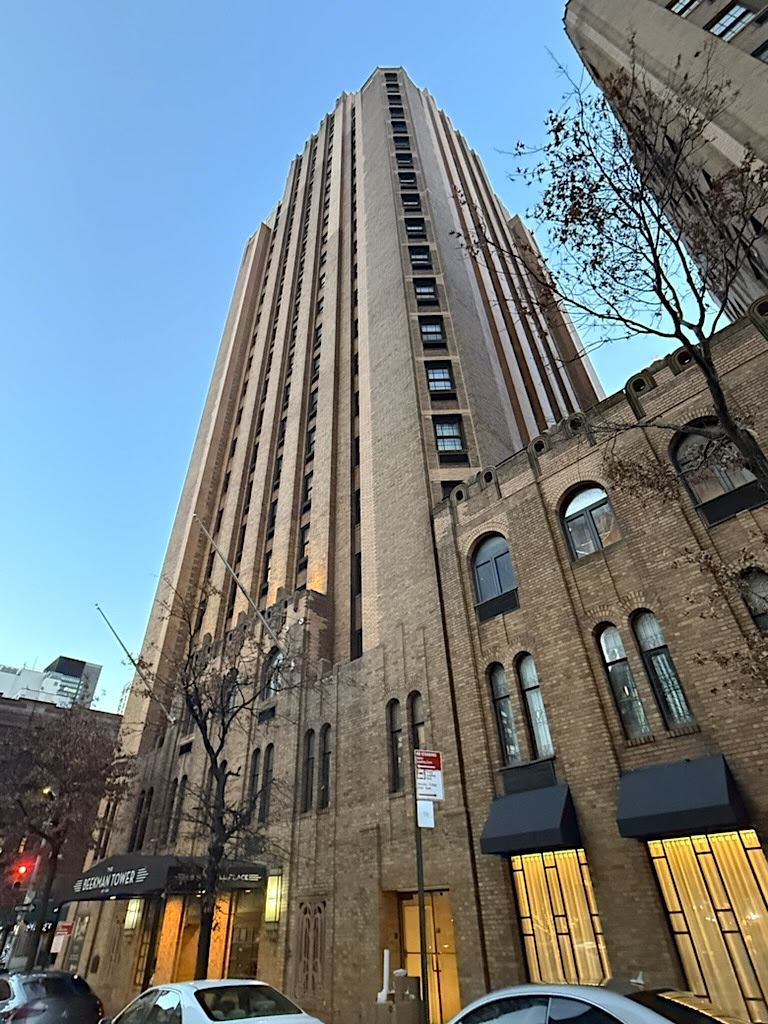
Since the 1920s, only two buildings actually carry a Mitchell Place address. The first is the apartment house at Number 10, formerly known when it was completed in 1928 as Stewart Hall. French Modernist painter Henri Matisse was known to spend time there.
The second is the Panhellenic Tower, now the Beekman Tower, which went up between 1927-1929 (above). Originally a female-only apartment house for college graduates, this Art Deco skyscraper has served as a suites hotel in recent years with a rooftop nightspot.
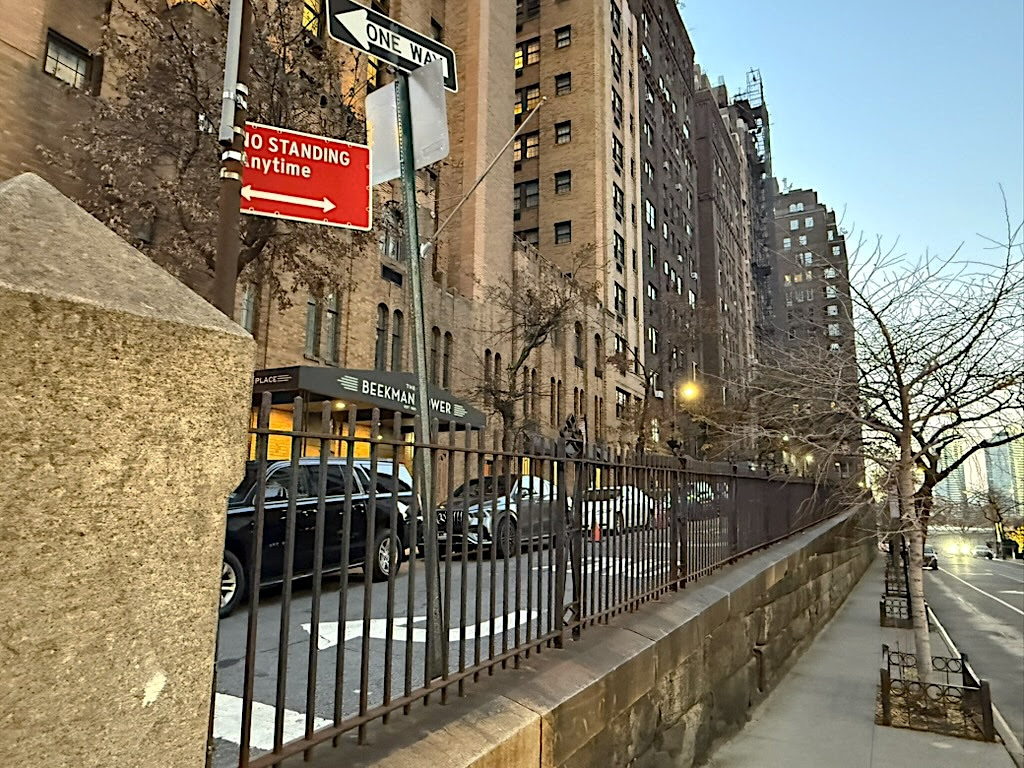
Few New Yorkers would have a reason to find themselves on this narrow, almost hidden street elevated above the hustle of contemporary Manhattan.
But if you do, take in the incredible view of the East River and the 1920s vibe of its few buildings, born from a country estate in the wilds of colonial-era Turtle Bay.
PHOTO OF THE DAY
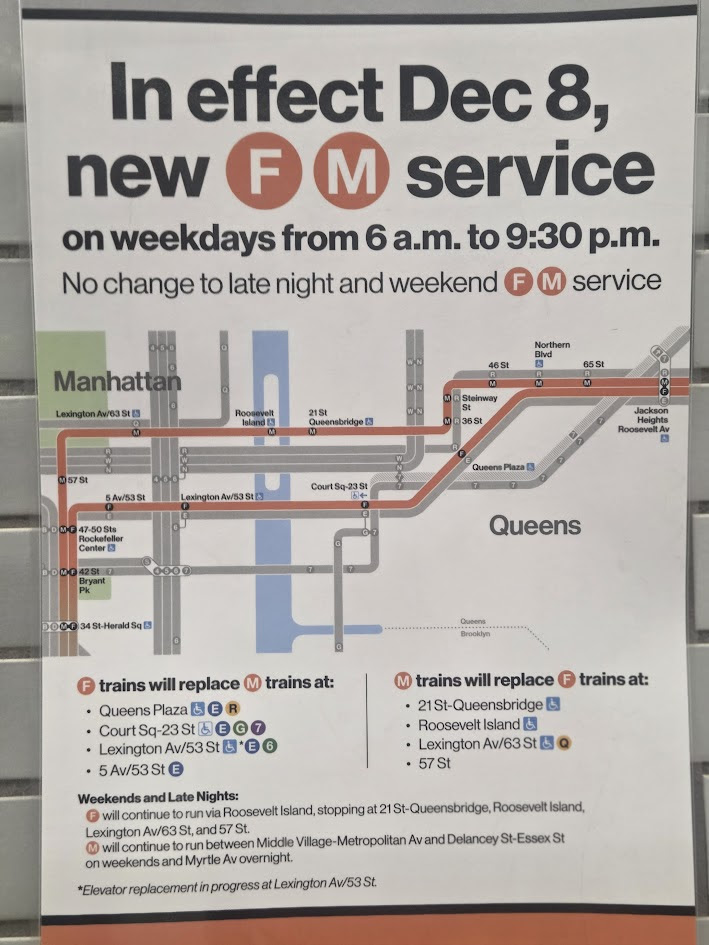
BE PREPARED FOR
MONDAY COMMUTE
ON THE M TRAIN
Credits
EPHEMERAL NEW YORK
[Fourth image: MCNY, MNY136286; fifth image: The Street Book; sixth image: New York Herald; seventh image: NYPL Digital Collections]
Tags: Beek, Beekman Estate Mount Pleasant, History of Mitchell Place Manhattan, Mitchell Place Beekman Place, Mitchell Place in the 19th Century NYC, Mitchell Place Turtle Bay, NYC small lanes and alleys, Obscure lanes and alleys Mitchell Place NYC
Posted in Beekman/Turtle Bay, Transit
All image are copyrighted (c) Roosevelt Island Historical Society unless otherwise indicated
THIS PUBLICATION FUNDED BY DISCRETIONARY FUNDS FROM CITY COUNCIL MEMBER JULIE MENIN & ROOSEVELT ISLAND OPERATING CORPORATION PUBLIC PURPOSE FUNDS.


Copyright © 2025 Roosevelt Island Historical Society, All rights reserved.Our mailing address is:
rooseveltislandhistory@gmail.com
Leave a comment