
Wednesday, January 21, 2026 – MYSTICAL VILLAS OVERLOOKING THE HUDSON

The story of the
Villa Charlotte Bronte,
a Magical 1920s Cliffside
co-op High Above the Hudson
Wednesday, January 21, 2026
Ephemeral New York
ISSUE #1611
Once upon a time, on winding Palisade Avenue in the once isolated Bronx neighborhood of Spuyten Duyvil, there were three beautiful sisters—sister apartment buildings, that is.
The oldest sister, the Villa Rosa Bonheur, was completed in 1924. Fancifully named after a 19th century French painter and with only seven apartments, this sprawling cottage featured gorgeous views of the Harlem River looking toward Manhattan—until it met the bulldozer in 2021.
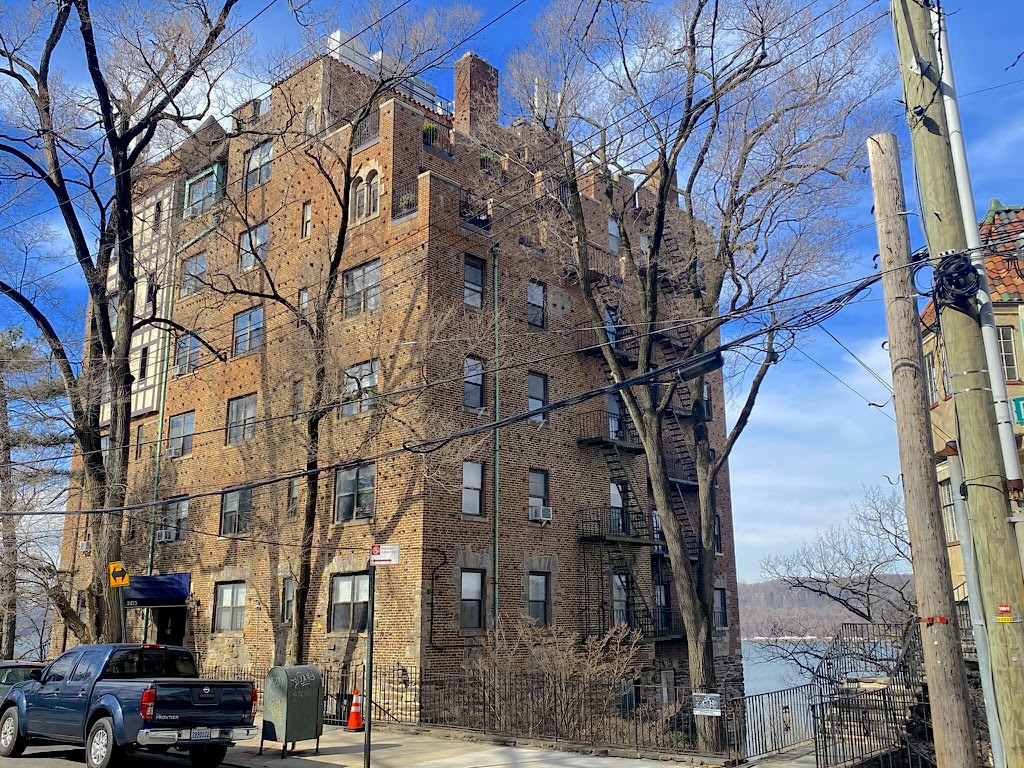
The youngest sister building, the Villa Victoria, went up in 1927. Not quite as dramatic as the Rosa Bonheur, the Victoria continues to exude Tudor loveliness on a steep cliff with sweeping Hudson River vistas (third photo).
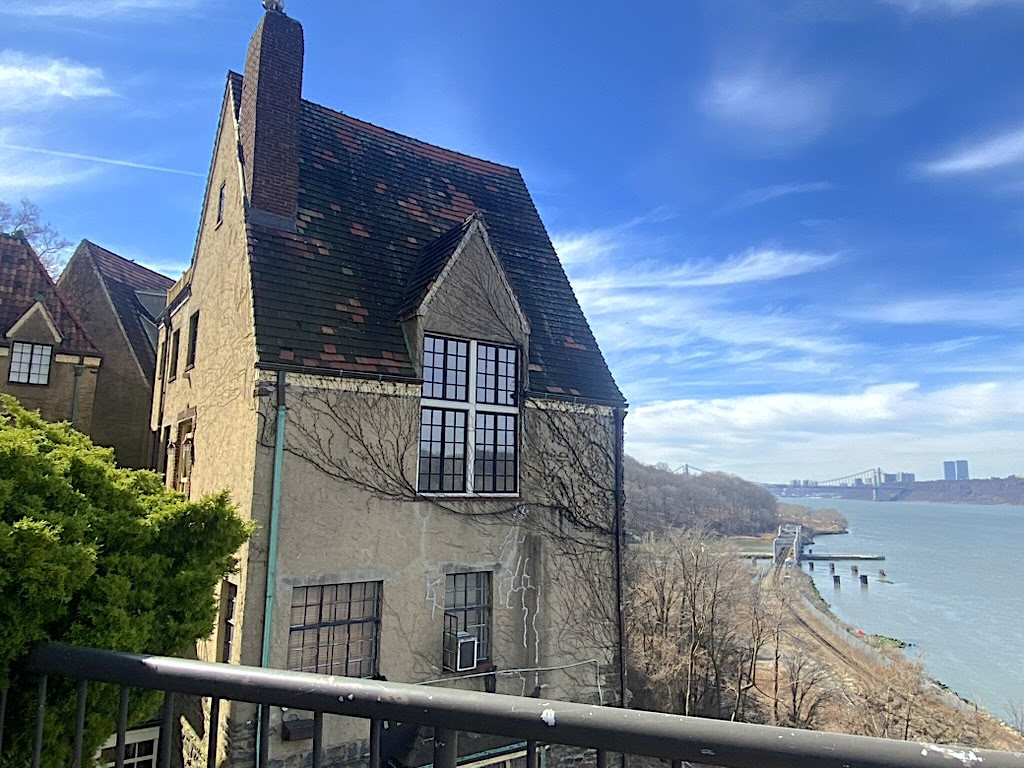
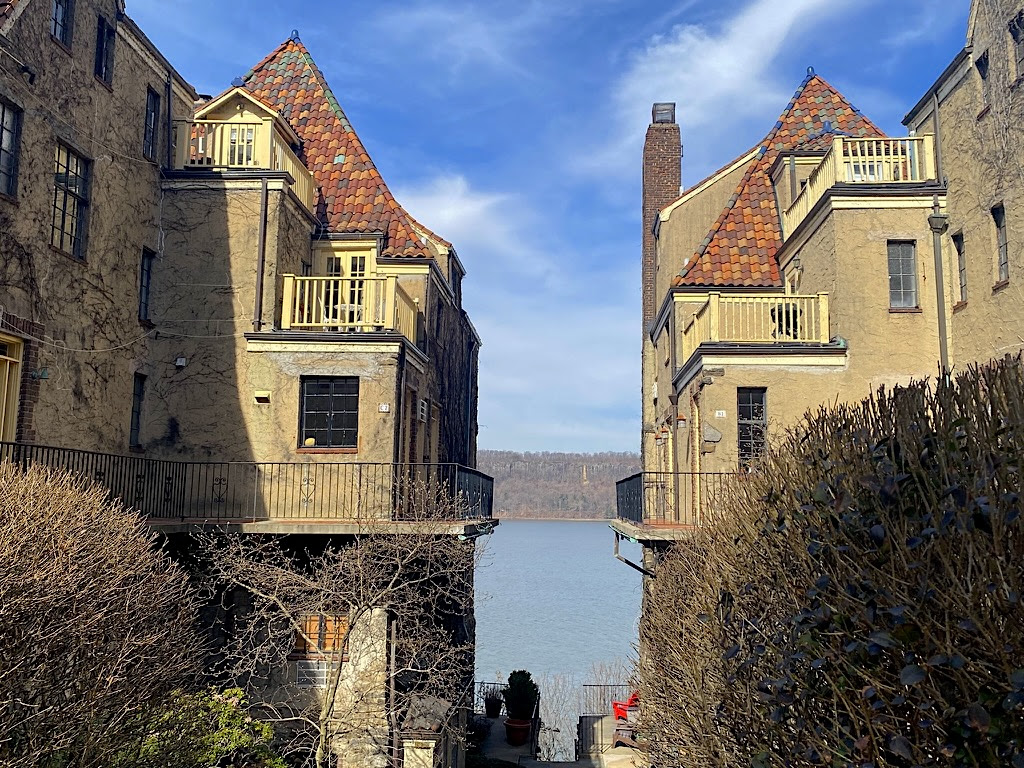
But it’s the middle sister building, the Villa Charlotte Bronte, that stole the show. Built in 1926 next door to the Villa Victoria, the Charlotte Bronte is a romantic fantasy that features two twin buildings bisected by a central sunken courtyard high above the Hudson River.
It’s an enchanting apartment residence designed in a style New York had never seen before.
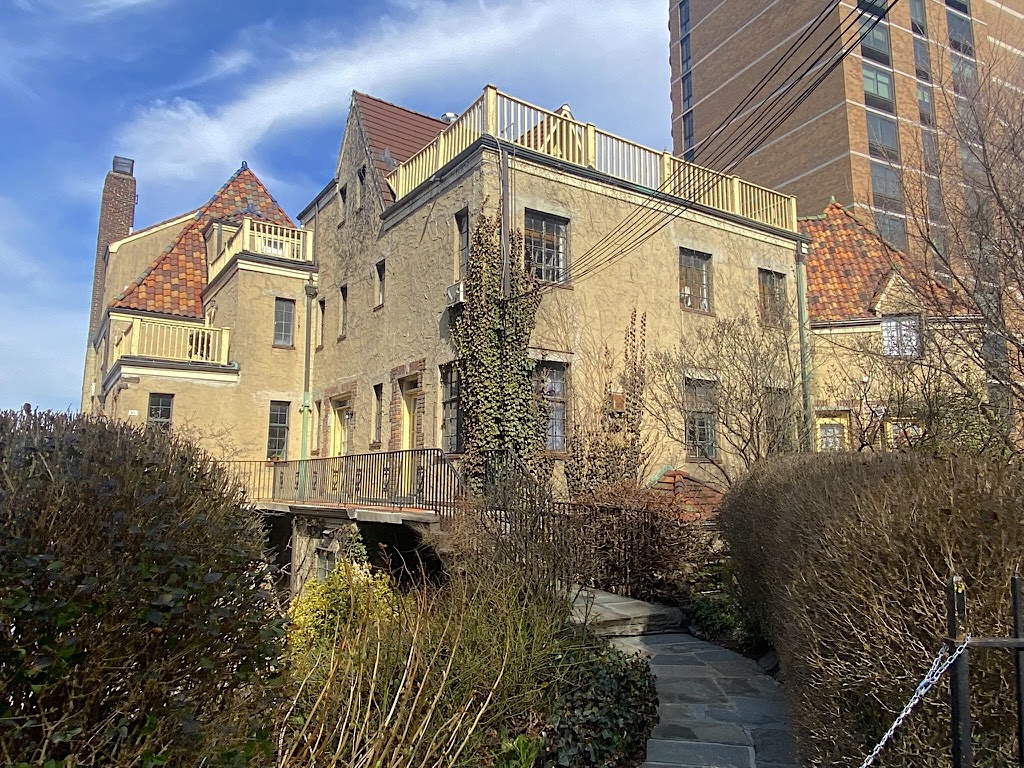
“Each wing is a carefully irregular composition of tiled roofs, protruding bays, balconies, and casement windows,” wrote David Bady on Lehman College’s Bronx Architecture website. “Together they house seventeen apartments, no two exactly alike.”
The Charlotte Bronte has been described in various ways: like an Italian villa, Gaudi-esque, a pastiche inspired by a fairy tale.
“The exterior is made from stucco, featuring brick and stone ornamentation and multi-colored tiled roofs,” according to a writeup on Curbed. Each apartment had a wood-burning fireplace and varying views of the river; landscaped paths and walkways thread the villa into a cohesive unit.
As much of an showpiece as it is, the Charlotte Bronte and her sisters, all co-ops at their beginning, were built not to lure Manhattanites to the Bronx but to keep the “city ugly” of Manhattan from spoiling Spuyten Duyvil.
Their backstory begins in the 1910s, when residents of this formerly sleepy enclave became alarmed by the encroachment of urban development. The pace of urbanization in Northern Manhattan and the Kingsbridge section of the Bronx was swift, and the community realized that Spuyten Duyvil could be the next area to be carved up and sold to speculators.
Residents pushed back on urbanization, “lest it should jump the Harlem and Spuyten Duyvil Creek and spoil the romantic spot where nature still ran riot among the trees and flowers,” the New York Times reported in 1910.
To deter developers, some residents began buying up lots themselves and laying out plans for “houses of a more expensive character,” per the Times. The goal was to put up new residences (and turn a profit) while keeping the small-scale charm and character of Spuyten Duyvil.
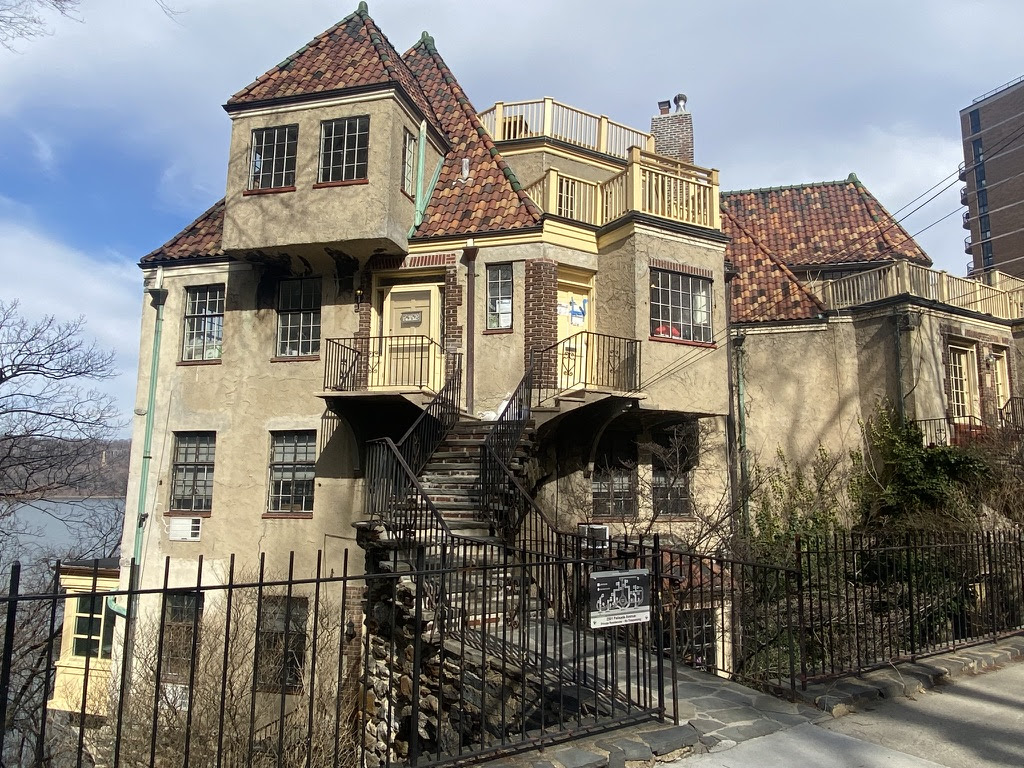
One of these residents, lawyer and businessman John J. McKelvey, had lived in Spuyten Duyvil since the 1890s. At first, he tried his hand at building and selling individual homes, according to Christopher Gray in a 2006 New York Times article.
By the 1920s, he turned his imagination to co-ops. It was McKelvey who built the three sisters and gave them their delightful names. They are considered to be the first apartment houses in Riverdale. “These were not tenements, but ‘villas’ made up of individually owned duplex and triplex ‘studio homes,’” wrote Bady.
Architect Robert Gardner made unusual design choices for the Charlotte Bronte that distinguish it from the hundreds of elegant yet cookie-cutter apartment buildings lining Manhattan’s upper class avenues in the 1920s.
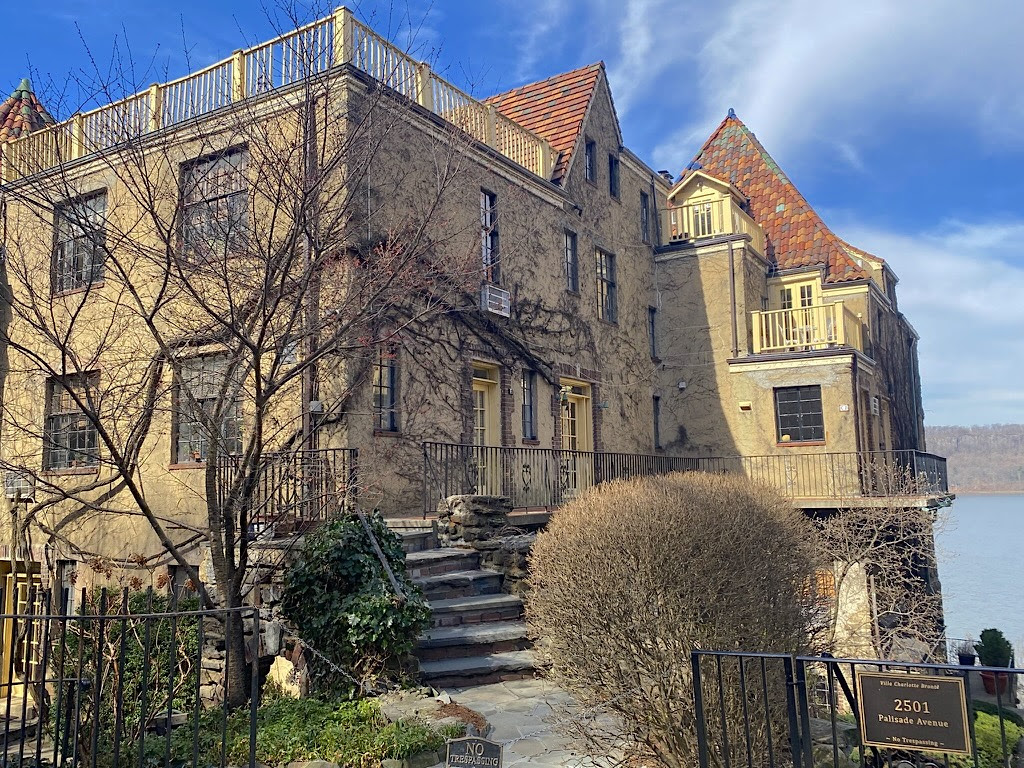
“To get to one apartment, you have to go down two flights toward the Hudson, then turn right and go up two flights to the front door. Another front door is behind a small arched grotto,” explained Gray.
“A third is at the end of a thin, high-flying concrete walkway with a skinny iron railing, cantilevered out over a long and nasty drop to the railroad tracks below.”
At first, the sister buildings attracted elite tenants; one newspaper listed some of the “well known” New Yorkers who planned to make the Villa Victoria their home. But the sisters soon fell on hard times.
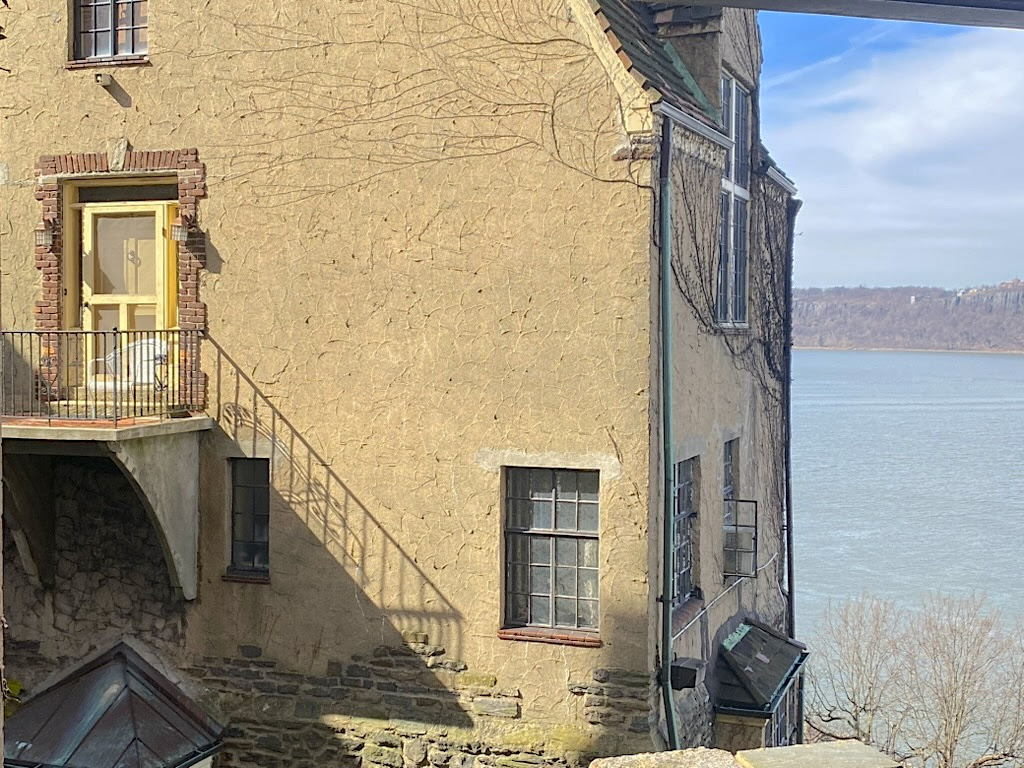
“In 1933, Mr. McKelvey lost Villa Victoria in foreclosure, and the Rosa Bonheur co-op failed in 1941,” wrote Gray. The Villa Rosa Bonheur held on for decades as a private home, then in the 2010s was sold to a developer who tore it down—inciting much anger from the community.
Today, the Villa Victoria appears to be a rental building, while the Villa Charlotte Bronte remains a spectacular co-op residence with rarely available units. Spuyten Duyvil gained some apartment towers over the years, but much of this hilly enclave retains a small-town feel high above the bluffs.
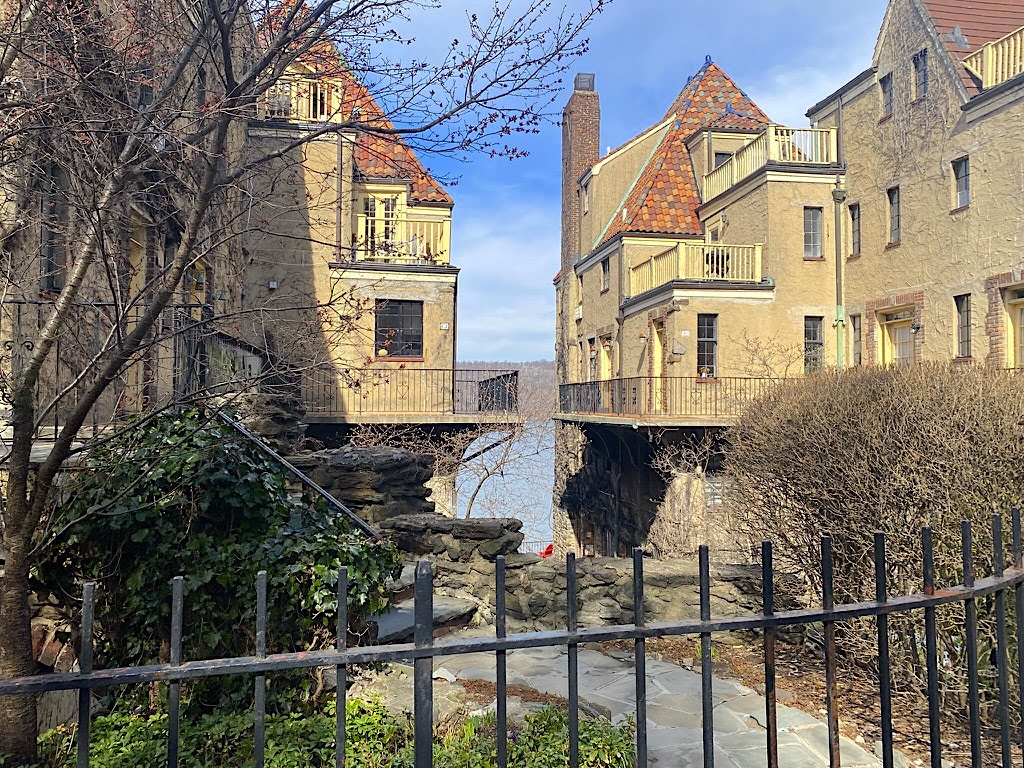
Two apartments in the Charlotte Bronte actually came up for sale in 2023. A New York Post article captured the historic interiors of each, both of which were priced at $1.3 million.
CREDITS
Ephemeral New York
Related
A towering memorial to Henry Hudson that stands in “magnificent isolation” on a Bronx hilltopMarch 31, 2025In “Bronx and City Island”
Where exactly Is Marble Hill?February 11, 2010In “Bronx and City Island”
The strange and stunning renaissance-style villa that fronts a historic Bronx row house blockJune 23, 2025In “Bronx and City Island”
Tags: Charlotte Bronte Bronx, Charlotte Bronte Spuyten Duyvil, Most Beautiful Apartments in the Bronx, Most Photographed Apartment Building in NYC, Spuyten Duyvil, Villa Charlotte Bronte, Villa Rosa Bonheur, Villa Victoria Bronx
PHOTO OF THE DAY
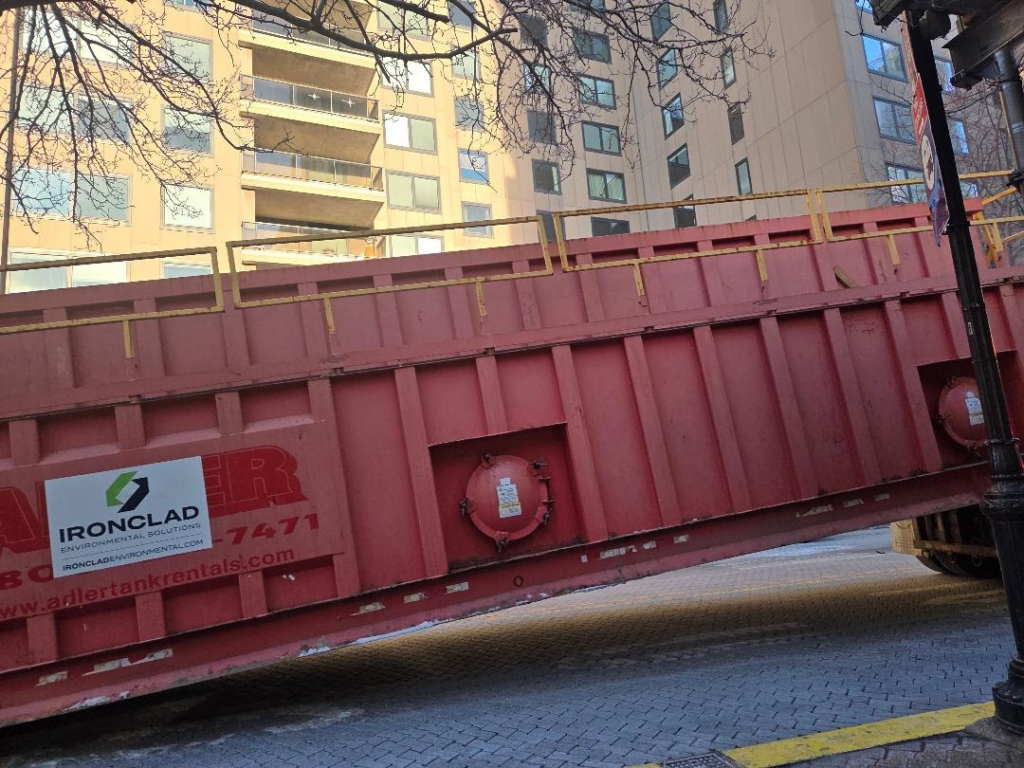
MONSTER DUMPSTER REMOVING DEBRIS
FROM STEAM PLANT.
WHAT HAPPENED TO BARGING?
\WHAT HAPPENED TO COMMUNITY INVOLVMENT?
All image are copyrighted (c) Roosevelt Island Historical Society unless otherwise indicated
THIS PUBLICATION FUNDED BY DISCRETIONARY FUNDS FROM CITY COUNCIL MEMBER JULIE MENIN & ROOSEVELT ISLAND OPERATING CORPORATION PUBLIC PURPOSE FUNDS.


Copyright © 2026 Roosevelt Island Historical Society, All rights reserved.Our mailing address is:
rooseveltislandhistory@gmail.com
Leave a comment