Tuesday, February 3, 2026 – THE CHAPEL BENEATH THE BUILDING WITH A SKI SLPOPE ROOF

The sacred stone box of a church beneath a finance company’s 1970s Midtown skyscraper
Tuesday February 3, 2026
ISSUE #1619
The Sacred Stone Box of a
Church Beneath a Finance Company’s
1970s Midtown Skyscraper
Ephemeral New York
Tuesday February 3, 2026
ISSUE #1619
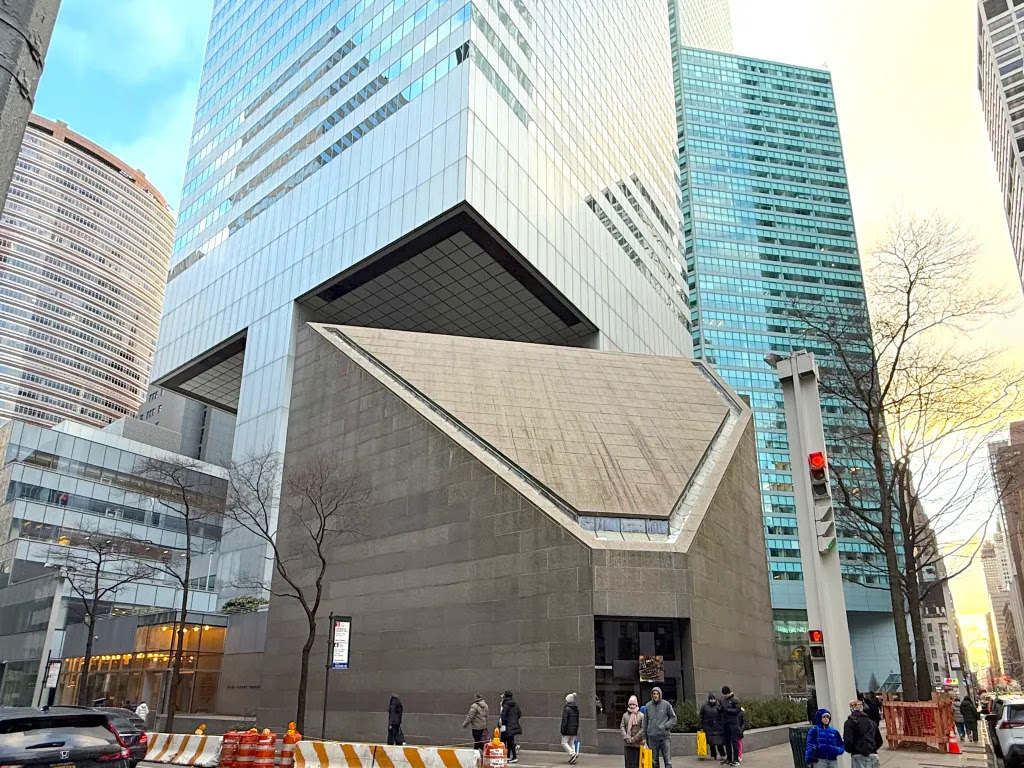
In October 1977, the 59-story Citicorp Center (now known as the Citigroup Center) made its debut on a shabby stretch of East Midtown marked by aging apartment houses, massage parlors, and hair salons.
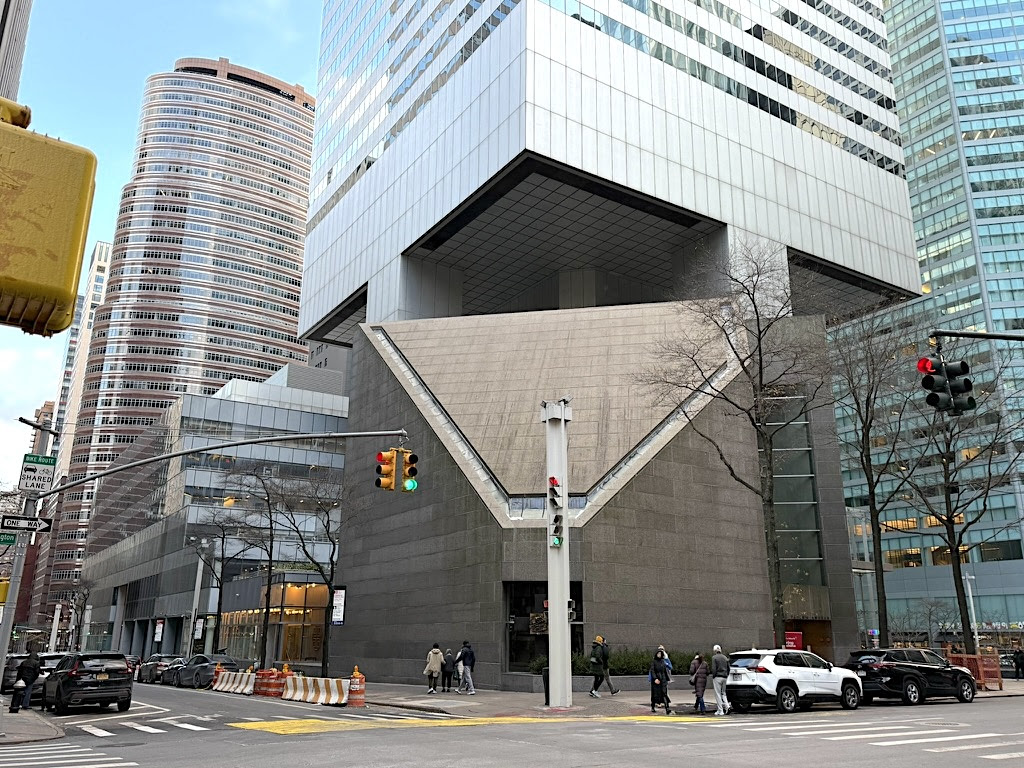
Hugh Stubbins’ cantilevered design spanned Lexington Avenue between East 53rd and East 54th Streets. It included a sunken plaza, new subway station access, retail shops, and an iconoclastic triangular roof that sloped at a 45 degree angle (below photo).
The bold design, plus the four raised columns located in the center of the building’s base rather than the corners, awed many architectural critics.
“The building starts nine stories above ground, raised on four colossal square columns and a central core in one of the most impressive—if somewhat disquieting—architectural acrobatic acts in the world,” wrote Ada Louise Huxtable in the New York Times, four months before the tower officially opened.
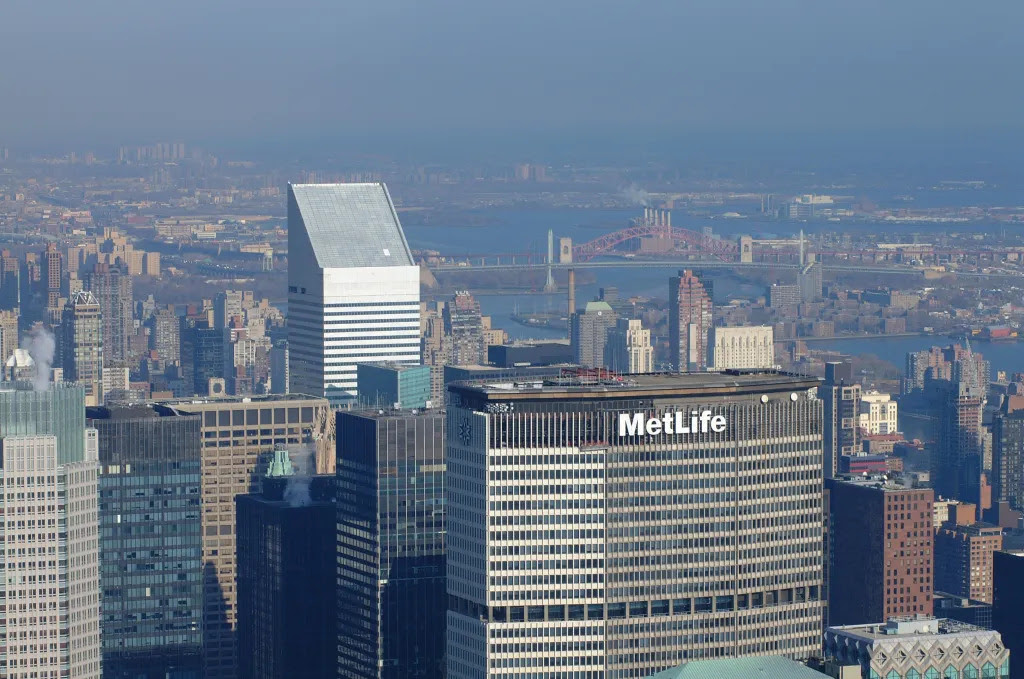
“I am not ever going to ask what Citicorp’s steel cost,” continued Huxtable. “But all that brute strength is now encased in the thinnest, flattest, sleekest panels of softly glistening, silvery aluminum, alternating with horizontal bands of glass. It is steel muscle in a silken glove.”
Not everyone loved the design. But at a time when the city almost went bankrupt and few skyscrapers were being built to reshape the skyline, Citicorp Center could be viewed in hindsight as a sign that New York City was not down for the count.
Yet the Citicorp Center wasn’t all about the new. Nestled amid all this steel and glass is a remnant of the New York of old.
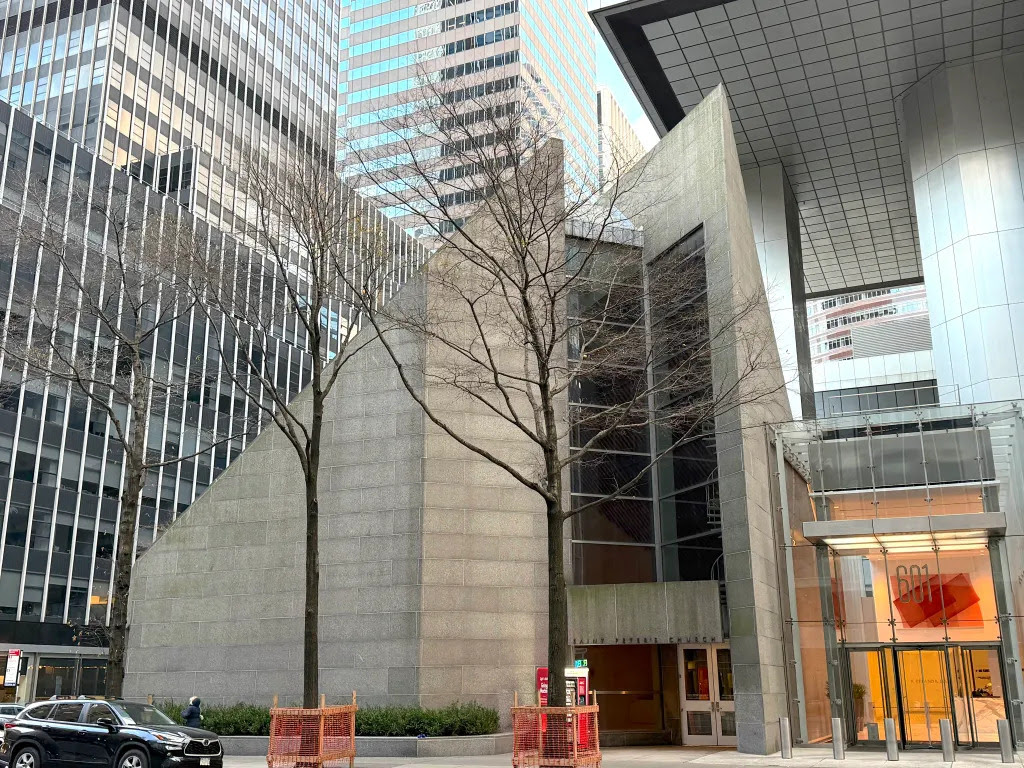
Beneath the mid-wall columns that hold up the tower sits St. Peter’s Church. Clad in granite at the corner of East 54th Street, it’s an unorthodox surprise in the sleek skyscraper canyon that Lexington Avenue has become.
The story of how this Modernist church ended up here has to do with a 19th century German congregation, the value of land in postwar East Midtown, and an unusual agreement that resulted in part of a skyscraper overhanging a brand-new church sanctuary.
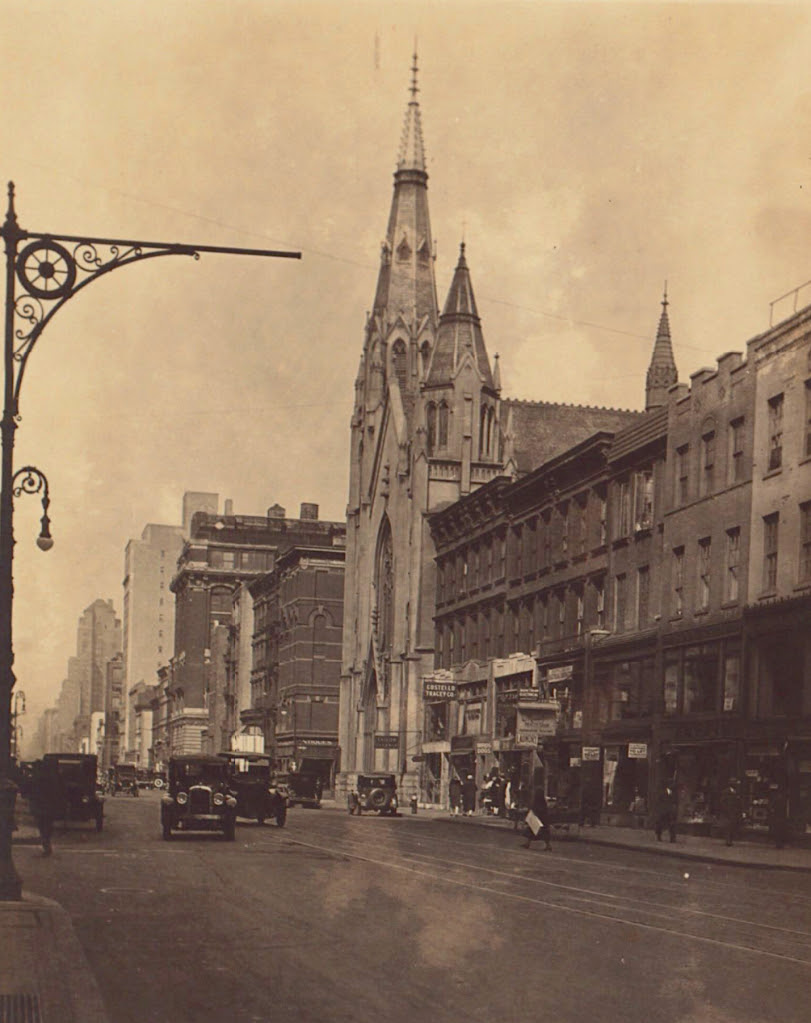
Dial back to 1862 with the founding of St. Peter’s German Lutheran Church five blocks to the south. “Worship services in the German language began in a loft above a feed and grocery store at the corner of 49th Street and Lexington Avenue,” states nycago.org.
The congregation moved to a vacated church building on Lexington Avenue and 49th Street in the 1890s. That church was soon purchased by the New York Central Railroad and marked for demolition to make way for Grand Central Terminal. The congregation then built a new Gothic-style church on Lexington Avenue and 54th Street (above, in 1928), which opened in 1905.
Over the decades, the church evolved, adding English-language sermons. More than a thousand people belonged to St. Peter’s earlier in the 20th century, but in the postwar years the congregation faced a more commercial Lexington Avenue and a dwindling number of parishioners.
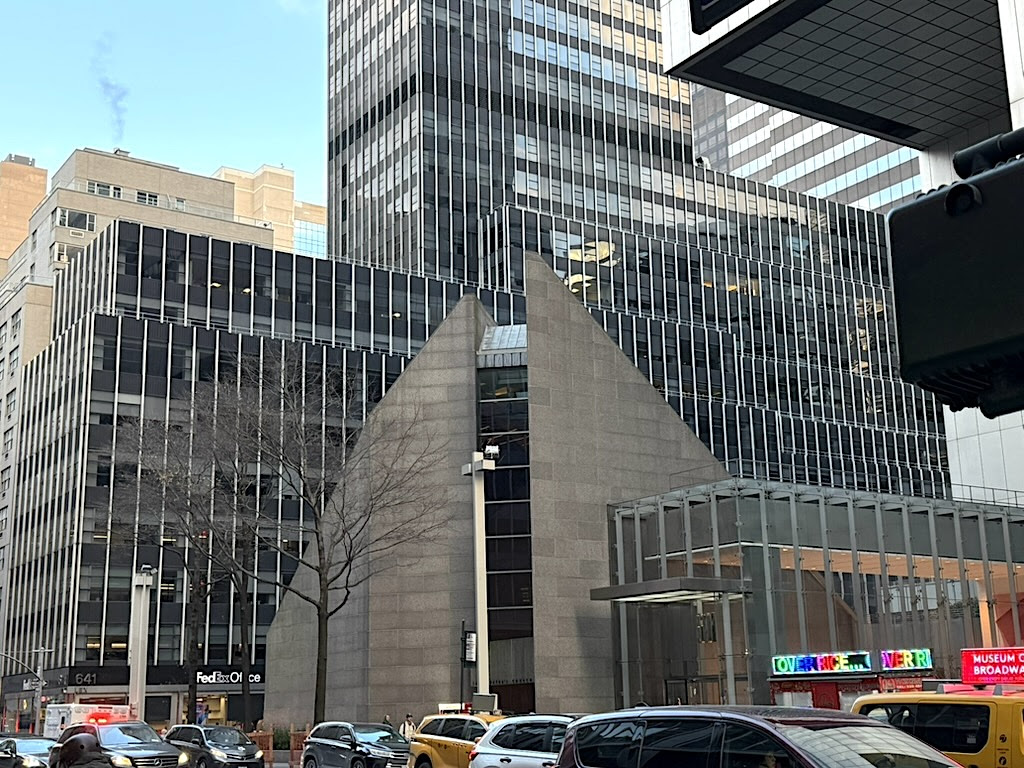
Then in 1969, church leaders were approached by a real estate broker who was buying up nearby parcels of land along Lexington Avenue to offer as a whole for development.
St. Peter’s, now a church that welcomed a more artistic group of parishioners—including the jazz musicians at the clubs along 52nd Street—struck a deal. The congregation would vacate the Gothic building, which would be demolished. In exchange, a new church would be built beside any new development, of which the congregation would be given partial ownership.
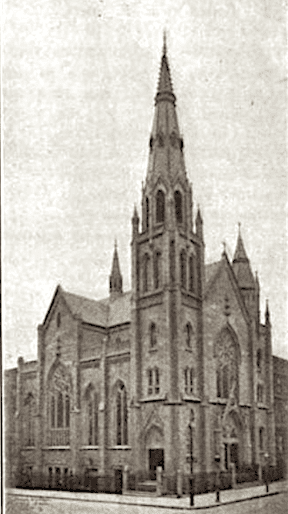
The congregation approved the sale in 1971, and ground broke on Citicorp Center in 1974. “St. Peter’s was promised that ‘at least 63 percent of the perimeter’ of the church would be ‘freestanding—that is, with nothing built above it,’” states the Landmarks Preservation Commission (LPC) report.
“This was accomplished by raising the office tower above the ground and by placing it far from the corner, where the [new] church was built,” continued the LPC report.
The new St. Peter’s opened in December 1977, two months after the opening of Citicorp Center, which hangs over the church on the northwest corner.
During the dedication ceremony, Stubbins, who was the architect of the church as well, compared the steel-framed structure to “hands held up in prayer,” according to the LPC report. New York Times architecture critic Paul Goldberger called it a “great granite tent sitting beneath the Citicorp tower.”
The stone and geometric exterior belies the warmth of St. Peter’s Modernist sanctuary. While it looks like a gray jewel box from 54th Street, the space rises to two triangular points joined by a walls of windows on Lexington Avenue.
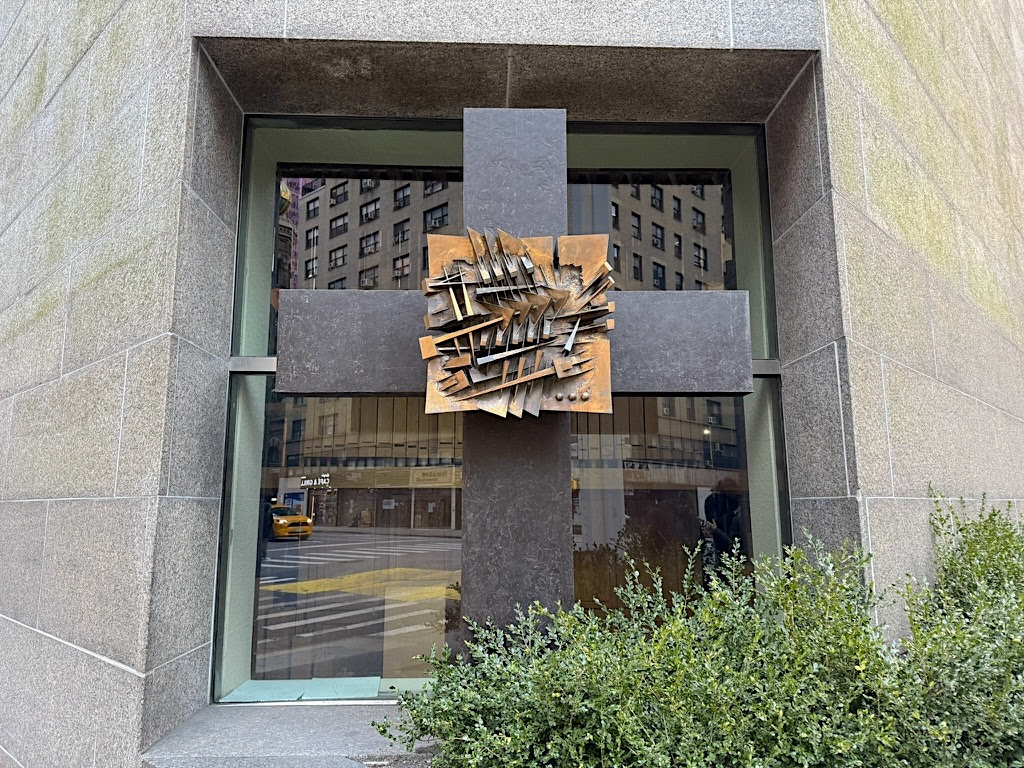
The unique Chapel of the Good Shepherd was designed by Louise Nevelson, who created a peaceful “sculptural environment” within St. Peter’s. And the exterior of the church is marked by the untraditional Cross of the Resurrection (above), by Italian sculptor Arnaldo Pomodoro.
In the past half-century, Citicorp Center has undergone transformations. Less than a year after it opened, a design flaw was discovered that put the tower at risk of toppling over due to high winds, which set off a panicked effort to stabilize the tower before hurricane season without alarming tenants.
The switch to a new name, Citigroup Center, and then landmark designation followed in the new century. In 2021, a fashionable food hall—er, “culinary collective”—and event space debuted on the lower level of the tower.
It’s appropriately named The Hugh, after the architect of both the tower and the sacred space that sits beneath it.
CREDITS
The switch to a new name, Citigroup Center, and then landmark designation followed in the new century. In 2021, a fashionable food hall—er, “culinary collective”—and event space debuted on the lower level of the tower.
It’s appropriately named The Hugh, after the architect of both the tower and the sacred space that sits beneath it.
[Second image: Alamy; fourth image: NYPL Digital Collections; sixth image: Luther League Review, 1904]
PHOTO OF THE DAY
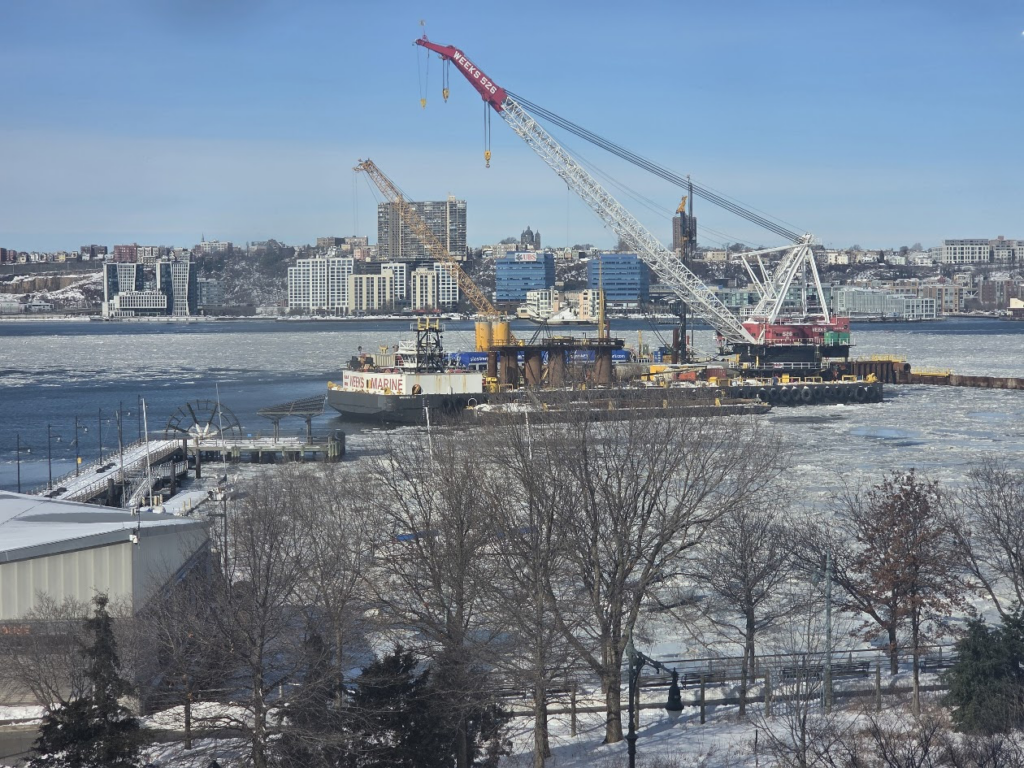
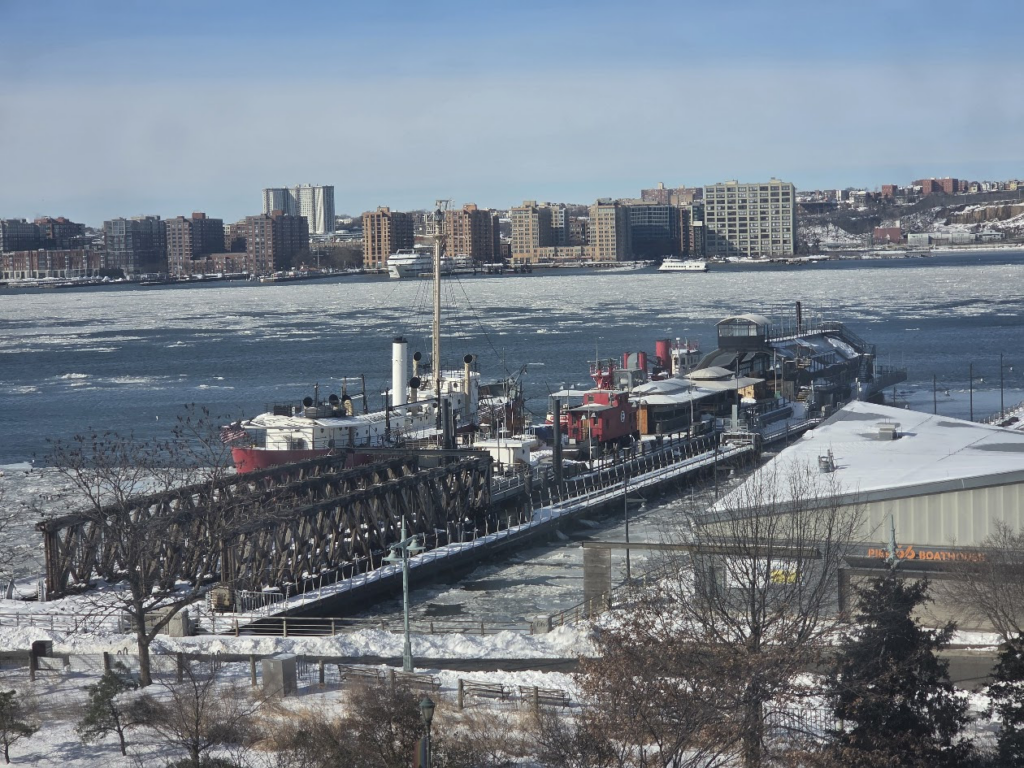
THE VIEW FROM 12th AVENUE
OF THE FROZEN HUDSON RIVER.
THE CONSTRUCTION IS THE TUNNEL FOR
AMTRAK AND OTHER RAIL TRAFFIC
All image are copyrighted (c) Roosevelt Island Historical Society unless otherwise indicated
THIS PUBLICATION FUNDED BY DISCRETIONARY FUNDS FROM CITY COUNCIL MEMBER JULIE MENIN & ROOSEVELT ISLAND OPERATING CORPORATION PUBLIC PURPOSE FUNDS.


Copyright © 2026 Roosevelt Island Historical Society, All rights reserved.Our mailing address is:
rooseveltislandhistory@gmail.com
Leave a comment