Lost in the Pandemic: Inside New York City’s Mass Graveyard on Hart Island
By William Hennigan 11/18/2020 – Time Magazine
No one knows who will be carried across the water to Hart Island on the next waves of the dead. No one knows who will be brought back from its anonymous earth by shovel-bearing workers in hazmat suits. This summer, TIME was granted unprecedented access to Hart Island to observe burial and exhumation operations and, on June 26, witnessed the retrieval and formal reburial of casket 40-3 and its occupant, Ellen F. Torron.
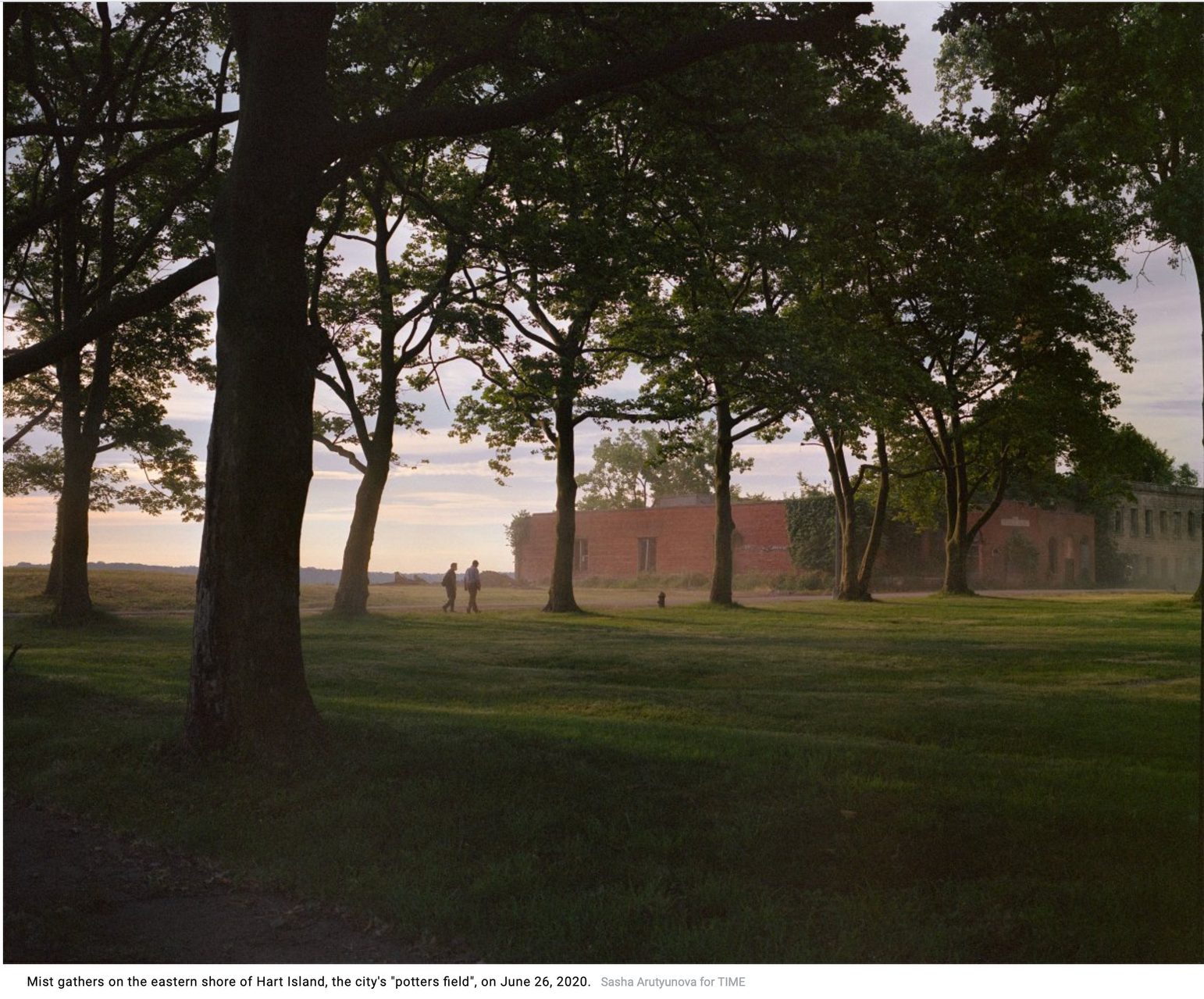
The sun has barely risen above the glassy surface of Long Island Sound. A breeze sweeps over an island half a mile from the Bronx where 15 workers watch a backhoe remove the layer of soil that separates a mass grave from the outside world. There are 1,165 identical pine caskets stacked three high, two wide in this football-field-size pit. The men are here to find and dig up casket No. 40-3. The backhoe churns up a layer of gray sand, a sign that the caskets are close. Already sweating in their hazmat suits, the workers climb 10 ft. down into the hole, shovels in their gloved hands. The grave is more than two months old. The smell seeps through their protective masks. As they dig, three coffins come into view, identifying numbers bored into the pine at one end. “Four-zero-dash-three,” one of the men shouts over the noise of the diesel engine. They set about retrieving the box, and its occupant, from the anonymous earth. Hart Island is a graveyard of last resort. Since 1869, New York City has owned and operated this potter’s field—the largest in the country. City workers put unidentified or unclaimed corpses in simple wooden coffins, load them onto a ferry and entomb them in trenches across the island. The homeless, indigent and stillborn all lie within eyesight of the hyper-kinetic, high-rolling inhabitants of the Manhattan skyscrapers across the water. “Hart Island is like a shadow of New York City,” says Justin von Bujdoss, 45, the cemetery’s chaplain. “It reflects the lives of people who live on the margins—the homeless, the sickly, the neglected, the forgotten and overworked.” Over a century and a half, more than a million people have been buried in unmarked graves on the island, including from past epidemics like tuberculosis, the 1918 flu and AIDS.
“No one lives their lives believing it will end here,” von Bujdoss says.
But nine months into the pandemic that has killed more than 250,000 Americans, one lesson is clear: no one escapes the virus. It infects paupers and Presidents alike. Even those who don’t get it have been affected as the disease crushes economies, strains our health care system and pulls comfortable families back into hardship. Hart Island is once again reflecting this latest dark truth: many who thought they were immune to America’s inequalities are vulnerable in this pandemic.
At the height of the outbreak last spring, New York’s hospital morgues and mortuaries became overwhelmed, and the mass graves on Hart Island emerged as an expedient option for the city’s fast-rising number of dead. More coffins were stacked aboard the ferry dispatched to the dock here. More trenches were dug. Through the end of October, 2,009 New Yorkers have been buried on Hart Island in 2020, more than double last year’s total of 846.
No one knows how many of the people arriving here died of COVID-19. At points, the city was so overwhelmed that bodies were sent to the island before authorities had a chance to determine their cause of death or track down next of kin. Some families chose to have their loved ones buried here. Some families had no other option. And some families weren’t aware their relative had died in the first place. “We figured that most of them would be disinterred because we were moving so quickly,” says Alex Mahoney, 55, executive director of facilities at the city’s department of correction (DOC), which oversees operations at the cemetery.
Not all of them were forgotten. Social workers, government employees and families have worked to identify people lost in the chaos of the COVID-19 crisis, and now, where once the ferry ride to Hart Island was usually a one-way crossing, dozens of those interred here this year are expected to make the trip back. So far, 32 bodies buried in 2020 have been claimed and removed from the graveyard.
As infections spike this fall, New York City is bracing for another wave of death. The coroner’s office has once again readied the temporary morgues and box trucks that hold the dead before they head for the potter’s field. In October alone, 360 corpses were buried on Hart Island, more than four times as many as in the same month last year. As they prepare for the next crisis, city officials anticipate more family members will come forward to exhume their loved ones.
No one knows who will be carried across the water to Hart Island on the next waves of the dead. No one knows who will be brought back from its anonymous earth by shovel-bearing workers in hazmat suits. This summer, TIME was granted unprecedented access to Hart Island to observe burial and exhumation operations and, on June 26, witnessed the retrieval and formal reburial of casket 40-3 and its occupant, Ellen F. Torron. This is her story.
The first sign of trouble came when tenants of the red brick Queens apartment building complained about a lingering smell on the fifth floor. Their calls went to Enis Radoncic, 43, a hardworking Bosnian immigrant, who is the building’s porter. He thought it might be a plumbing problem and that it would dissipate. But it didn’t.
Radoncic ultimately traced the stench to the unit next to the elevator, 5G, which belonged to Ellen Torron, a slight 74-year-old woman with short gray hair and piercing dark brown eyes who had lived alone in the building for more than 20 years. She tended to shy away from small talk and appeared to be something of a germaphobe, covering her hands with surgeon’s gloves and her face with a mask—even before the pandemic.
It didn’t surprise Radoncic when she didn’t answer his knocks at the door nor the letter he slid underneath it. But after calls to her cell phone went unanswered, he called the police. “We thought she barricaded herself inside because she was scared of the virus,” Radoncic says.
At around 2 p.m. on March 16, Radoncic watched as a locksmith picked the nickel-plated dead bolt to allow New York police officers inside her apartment. The odor swept over them, forcing their hands to their noses. When the dull gray door swung open, it revealed a floor-to-ceiling mess inside the 800-sq.-ft. studio apartment.
Torron was a hoarder. Discarded Stouffer’s micro-wave dinner boxes, empty SkinnyPop chip bags, mismatched suitcases, bags of trash, clothes, books, magazines and paperwork were tangled together, waist-high. The police pushed inside, following a narrow path carved among the thousands of things packed tightly from the front door to her twin bed and from there to her adjoining bathroom. In the bathtub, they found Torron’s body under the murky water. She had been dead for days, possibly weeks.
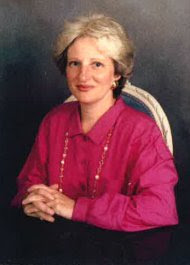
An undated photo of Ellen Torron discovered by investigators at her Queens apartment unit.
Courtesy Queens County Administrator’s Office
Cable news droned away on her flat-screen television. The letter from building management remained unopened at the foot of the door. There were no signs of struggle or injury, and police ruled out foul play. After Radoncic identified Torron’s bloated body, a transport team from the office of the chief medical examiner zipped her into a body bag and drove her in a black truck to the morgue at Queens Hospital Center. No friends or family came forward to claim the remains. Radoncic and neighbors did not know of any spouse or children. The job of settling her estate fell to the Queens County public administrator, an obscure agency that identifies unclaimed persons’ financial assets and next of kin. On a cursory look around the apartment, investigators found Torron’s birth certificate. But the pandemic’s crush of cases and enforced lockdowns prevented investigators from returning to her apartment to rummage for evidence of a burial plot, any life savings or a will. So Torron’s last wishes remained unknown as her body lay inside a refrigerated drawer at the morgue for the next 24 days. An autopsy determined her cause of death was arteriosclerotic cardiovascular disease. The medical examiner couldn’t tell whether or not she had contracted COVID-19, but she died just as the disease was beginning to ravage New York City. In March and April, the death count mounted to more than 27,000, or six times the normal level, and the city’s death care system was overwhelmed. The influx of corpses forced municipal morgues to free up space. With room running out, Torron’s body was placed inside a pine box and prepared for passage to Hart Island. Just after dawn on April 9, a white box truck carrying Torron’s body and 23 other dead New Yorkers rolled onto the 58-year-old steel ferry, the Michael Cosgrove, for the half-mile voyage from a fenced-off pier on City Island. It’s a 10-minute trip. Once the boat makes its way across the water, it slows to a putter near the dock. Two crew members jump out and begin pulling steel chains that lower a short mechanical dock into place, inch by inch.
The truck lurches forward onto the island and turns east down a gravel road below a lane of willows, scattering a family of deer. It rumbles past crumbling, abandoned brick buildings once used to house a mental hospital, a tuberculosis sanitarium, a drug addicts’ workhouse, a boys’ reformatory and a host of other Dickensian operations since the Civil War. The cemetery run on the island has always been part of this place.
Potter’s field is a biblical term from the New Testament that refers to land purchased by Jewish high priests with the 30 pieces of silver returned by a repentant Judas. The clay-heavy land was unsuitable for farming, so it would instead be used to bury “strangers.” In New York City, these strangers have always been a cross section of America’s down-trodden and overlooked: poor workers of all races and backgrounds, criminals, the mentally ill and any unidentified person with no one to claim them.
A cemetery, especially one with more than 1 million bodies, is a place where you would expect people to gather to celebrate many lives lived. Not here. Hart Island may be a rather easy place to reach if you’re deceased but not if you’re among the living. Family-member graveside visits are allowed only twice a month, require weeks of careful planning and must be authorized by the DOC, which for much of the past 151 years has been responsible for providing the labor and oversight for the burials at Hart Island. The bodies are buried over 131 acres of rolling meadows. The only signs of the dead are 3-ft. white posts stuck in the ground every 25 yd. or so. Each marker signifies 150 bodies below, and they are every-where on the island. Quiet reigns on Hart Island, except for the occasional jangle of a nearby bell buoy afloat in the water. Sailboats glide along in the distance. Seagulls wheel overhead and nibble atop rocks half submerged in the receding tide. Bones are sometimes found jutting from the coastline where erosion has washed away the soil. Hart Island is a uniquely New York phenomenon. In other cities, the indigent are cremated or buried at a traditional cemetery. Here, they’re buried together on an island inaccessible to most city residents. Although most New Yorkers are oblivious to its existence, Hart Island is a necessary by-product of a sprawling metropolis—not everyone can afford a formal funeral. And to people who oversee the graveyard, burial is a more sensible option than cremation. “What if someone is sent by mistake?” says Captain Martin Thompson, 59, of the city’s DOC, who has overseen operations on Hart Island for 15 years. “You can’t reverse a cremation.” When Torron arrived, COVID-19 was triggering the biggest shift in operations on the island in a century and a half. The week beginning April 6, 138 people were buried there as a result of COVID-19 because morgues were overfilled; at one point, the rate of burials went from roughly 25 a week to around 25 a day. “This trench was supposed to last us the whole year,” Thompson says, looking over the mass grave. “Instead it was full within two months.” That same week, the city for the first time also stopped using incarcerated workers for Hart Island burials. An outbreak of the coronavirus among prisoners was ultimately passed to every correction officer on the island, including Thompson, who was ill for nearly two months. At first, the city tried to replace the inmate labor with city employees who normally fill potholes. That didn’t work out. They were uncomfortable with the grim task. Then the city turned to contract laborers. On the first day, there were 40 workers who showed up for work, not knowing what the job entailed. When they found out the task at hand, 28 people left. “The remaining guys have stuck around ever since,” says Keron Pierre, 35, a laborer from Brooklyn. “We just have to try and think of it as any other job.” When the truck carrying the caskets pulls to a stop at the foot of the trench, the laborers hold back from assembling for prayer with the staff chaplain. That’s when the reality of the day’s task becomes most clear. With each delivery since the onset of the pandemic, von Bujdoss, the head chaplain from the DOC, climbs atop the truck’s rear liftgate, stands over the coffins and reads out the names of those set to be buried, along with a Buddhist blessing and a few prayers. “Though I walk through the valley of the shadow of death, I will fear no evil: for thou art with me; thy rod and thy staff they comfort me,” he says, his voice resounding inside the cargo hold.
Once von Bujdoss concludes, the laborers emerge from a white and blue bus wearing hazmat suits, work gloves and protective masks. Some stay to off-load the truck while others plod into the trench. The first task is to write the names of the dead and their corresponding burial numbers in black chalk on the coffins’ lids and sides. Then the burial numbers are bored into the wood with a router to ensure they can be identified as the chalk fades over time.
Two coffins are removed from the truck and placed on the front bucket of the skid-steer loader, then driven into the trench, where workers pull them off and force them into position, side by side in stacks of three. They fill the spaces between rows with shovelfuls of dirt. Correction officers dressed in crisp navy blue uniforms stand on the trench’s rim, 10 ft. above the hole.
On June 26, more than two months after Torron has been placed in Plot 401, the same team of workers stands near the grave, watching a black Grand Caravan approach from the end of the deserted gravel road. Behind it, the dust whips away like smoke. When the van arrives, funeral director James Donofrio steps out, smiling. “Good morning, Captain,” he says in a Brooklyn accent, offering Thompson paperwork that shows he’s authorized to take custody of Torron’s exhumed coffin.
City investigators hadn’t been able to thoroughly search Torron’s apartment back in April, but they did happen to discover a birth certificate that showed she was born at the Jewish Maternity Hospital in Manhattan. The Queens County public administrator’s office knew that was enough proof for Hebrew Free Burial Association (HFBA), a 132-year-old nonprofit that offers low-cost and free burial for indigent Jews.
Donofrio, 61, was sent by the association to retrieve Torron’s body. He came prepared. To guard against the stench, he brought a second casket, large enough to accommodate Torron’s casket, which the workers lower into place. Then Donofrio spreads two 8.8-oz. packets of espresso coffee between the two. “If there’s a better way to soak up the smell, I haven’t seen it,” he says. After the crew helps squeeze the oversize coffin into the van, Donofrio sets off on a 37-mile trip to the opposite side of the city to bury Torron for a second time
As the Grand Caravan pulls under the arches of HFBA’s Mount Richmond Cemetery on Staten Island, Donofrio is greeted by Rabbi Shmuel Plafker, 70, an Orthodox chaplain, who directs him to a squat one-story building nearby. Inside, Donofrio, Plafker and a group of men don head-to-toe protective gear, and Donofrio uses a power drill to remove the 12 screws holding the lids onto each of the two coffins. When the second lid is removed, Donofrio leaves the men to the ritual.
.
None of the men left behind in the sterile, windowless room had met Torron in life, none knew her religious convictions, and none have mortuary training. They voluntarily undertake the ceremony pursuant to Jewish law. Torron’s corpse is stripped of clothes and dressed in eight separate pieces of white linen clothing, including a bonnet, shirt, pants, gown and belt. She’s then placed back inside both coffins and secured with the screws and carried out the building feet-first.
The men lift the coffin into the back of a flatbed truck and make the short walk to Torron’s new burial plot, in Section 91 of the cemetery. The small group passes mounds of dirt piled atop freshly dug graves. They pass hundreds of tombstones, including 22 victims of the 1911 Triangle Shirtwaist Factory fire, Holocaust survivors and Soviet Union refugees who sought asylum in the U.S.
When they arrive at the empty grave, the workers from HFBA slowly lower Torron inside. Plafker, dressed in a cream-colored panama hat and gray suit jacket, opens a prayer book and begins reciting prayers in Yiddish:
Go in peace, rest in peace and arise to your lot at the end of days
May the omnipresent console you among the other mourners of Zion and Jerusalem
May they blossom forth from the city like grass of the earth
Remember that we are but dust
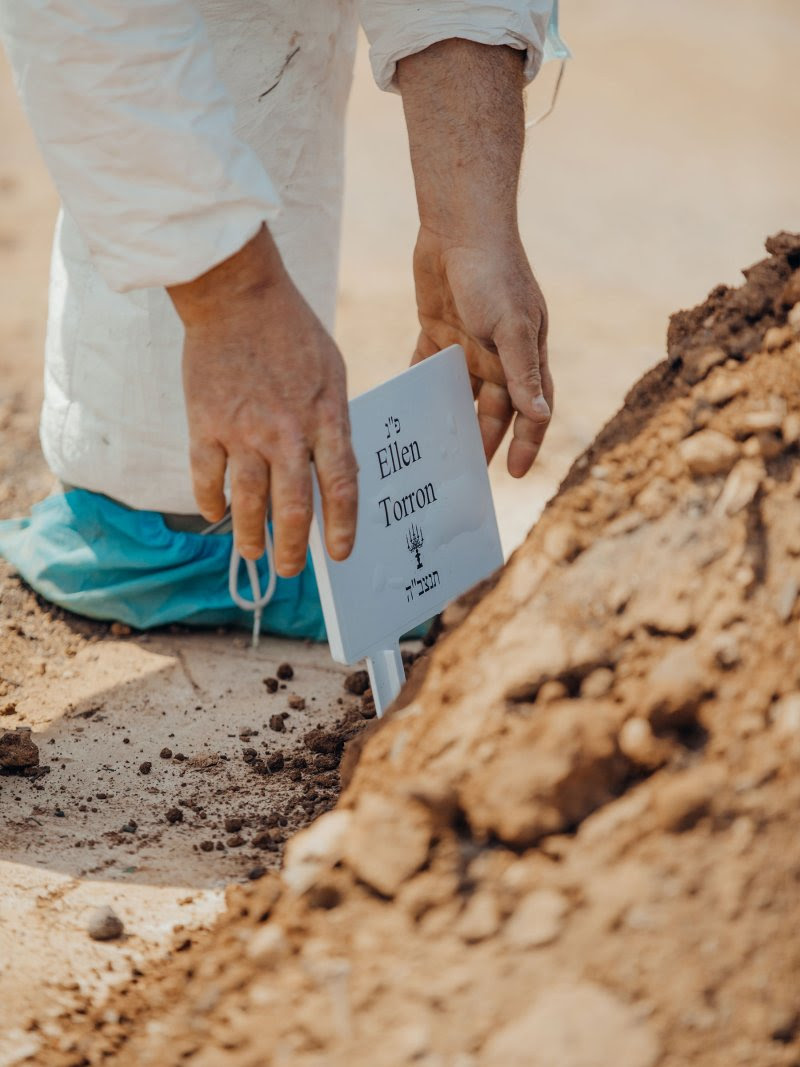
He throws a shovelful of soil into the grave. It lands on Torron’s coffin with a thump.
About a month after Torron was finally put to rest, Rhoda Fairman, 83, was at her West Village apartment when she spotted something on her kitchen table that took her breath away. A brochure from HFBA was open and facing up. Within the leaflet were the names of the 333 people the association had buried through the first six months of the year. “It’s the way it fell on my table—second page up—that I was able to see Ellen’s name,” she says.
The two women had worked together for more two decades as legal secretaries at the high-powered Milberg law firm in Manhattan in the 1990s and 2000s but had fallen out of touch. Most of the other 20 or so secretaries from the firm had kept tabs on one another over the years through Facebook. Torron, however, never created an account. Fairman always wondered what had happened to her.
Not many people managed to get close to Torron, but Fairman did. They’d share lunch breaks, go out shopping or schedule occasional museum outings. They were together on 9/11 when they witnessed the second plane hit the south tower from the 49th-floor office of One Penn Plaza.
Torron was born in Manhattan on Jan. 19, 1946, the only child of Polish and Lithuanian immigrants. She had lived on her own since she was 18 years old, and in her 40s, she put herself through school, attending Hunter College and graduating in 1988 with a double major in English and classical studies. Fairman says Torron was the sort of woman who should’ve been born in another era because she’d likely have been a lawyer herself. “She was a victim of the times, honey,” she says.
As far as Fairman or anyone knew, Torron never married. She claimed to have a daughter who lived in Brazil, but no one in the office ever met her or even saw a picture. “Ellen was a bit of a mystery,” says Sanford Dumain, a lawyer for whom Torron worked for more than two decades, until her retirement in 2015. “I thought she might’ve been a Russian spy.”
He was only half joking. Torron was seen as something of a loner around the office but also known to be intelligent and well traveled—though she also traveled alone. TIME joined Queens County public administrator investigators when they visited her unit in July. Amid the disorder, her bookcases were tidy and lined with shelf after shelf of language and travel books.
These items were of little interest to the two men hunting for clues on settling Torron’s estate. To them, finding a will was more valuable than finding a suitcase of cash. Yet no will turned up. They resorted to requesting that the post office forward her mail, but nothing significant came in eight months. Torron received 401(k) returns, bank statements, a lot of junk mail, but not a single letter from family or friends. Nor was there a sign she had a daughter, despite what she had told co-workers.
Investigators did discover that Torron had a total of $56,148.85 in two Chase banking accounts and an estimated $2,560 worth of jewelry, including a pearl necklace, silver brooches and ruby-diamond earrings. By law, the Queens County public administrator’s office must attempt to track down next of kin to distribute the estate. The only family that the public administrator has identified thus far are several first cousins once removed, the furthest relatives eligible to lay claim to an estate.
One of those cousins is Meryle Mishkin-Tank, a 56-year-old paralegal who lives in the San Francisco area. Not only has Mishkin-Tank never met Torron—she didn’t even know she existed. Now most days after work and on weekends, she’s trying to uncover details about Torron’s life and death. She’s learned of—and contacted—five new cousins and an aunt through genealogy research. “It doesn’t sound like any of the cousins knew anything about Ellen,” she says. “It’s just sad.”
Though she grew up in Manhattan, Mishkin-Tank didn’t know much about Hart Island or Mount Richmond Cemetery, where Torron was buried in June. Through her research, however, she found that Torron’s paternal grandfather, Zelman, and grandmother and likely namesake, Elka, are also buried at Mount Richmond. In fact, their graves are located a short walk away from their granddaughter’s plot.
—With reporting by Currie Engel/New York
Finally at rest at Mount Richmond Cemetery
MONDAY PHOTO OF THE DAY
WEEKEND IMAGE
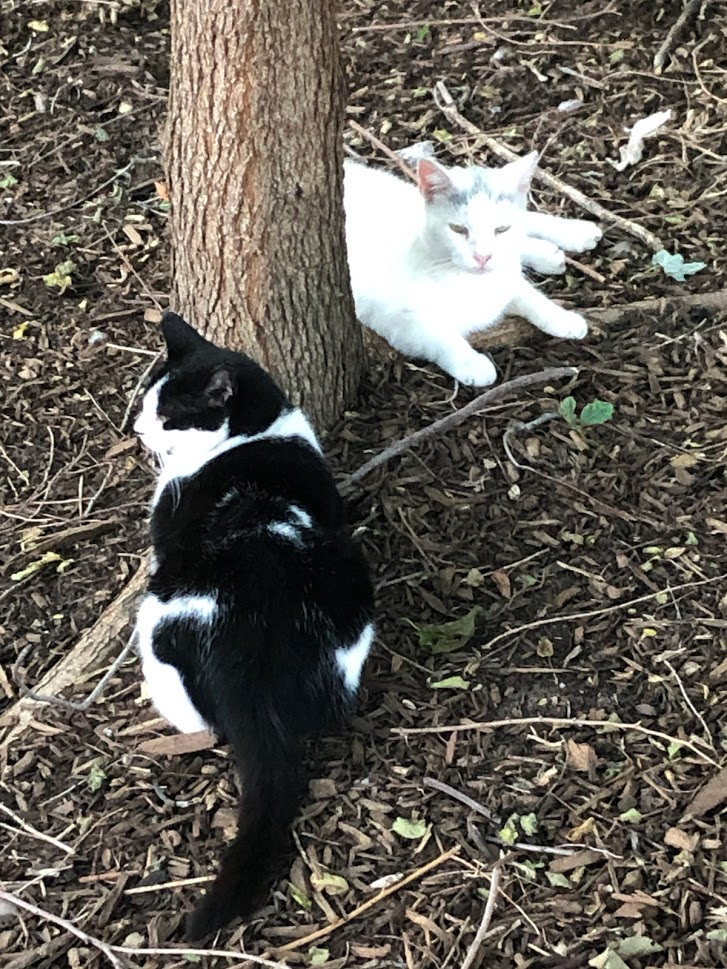
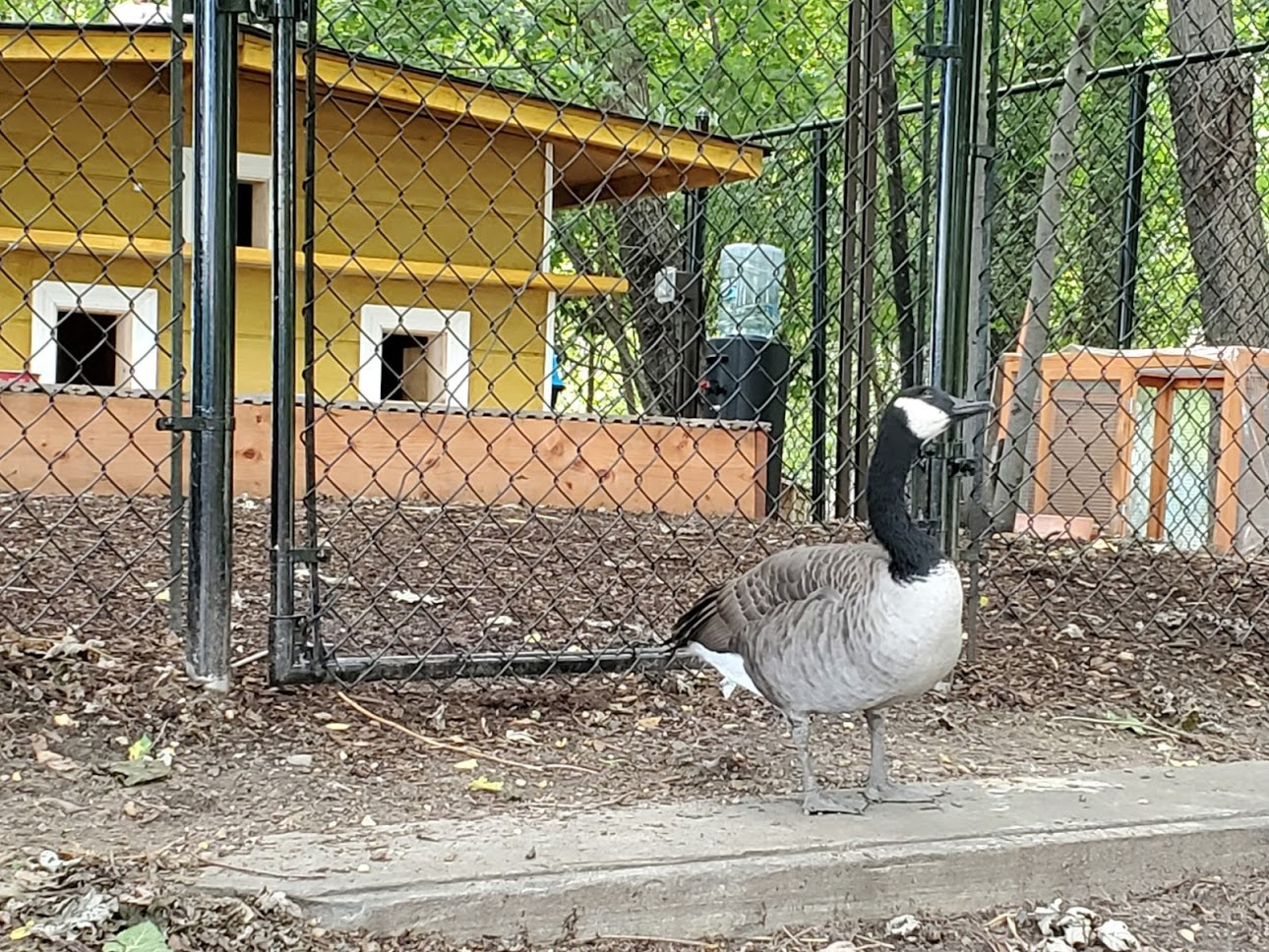
Cookies and Luna Two resident felines at the WWP Sanctuary in Southpoint Park Clara Bella guessed the location!!! Did You?
Text by Judith Berdy Thanks to Bobbie Slonevsky for her dedication to Blackwell’s Almanac Thanks to Deborah Dorff for maintaining our website Edited by Melanie Colter and Deborah Dorff All materials in this publication are copyrighted (c)
TIME MAGAZINE(C)
MATERIAL COPYRIGHT WIKIPEDIA, GOOGLE RIHS ARCHIVES AND MAY NOT BE REPRODUCED WITHOUT PERMISSION (C)
FUNDING PROVIDED BY ROOSEVELT ISLAND OPERATING CORPORATION PUBLIC PURPOSE GRANTS CITY COUNCIL REPRESENTATIVE BEN KALLOS DISCRETIONARY FUNDING THRU DYCD
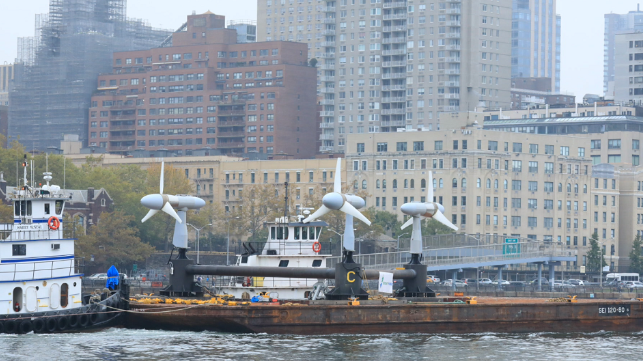
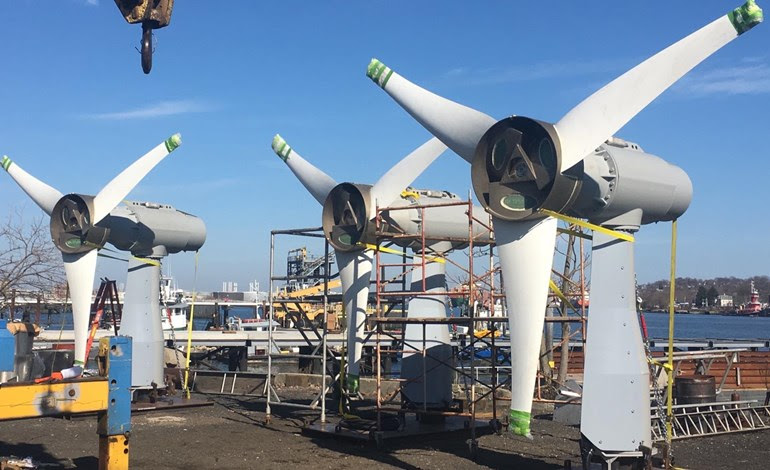
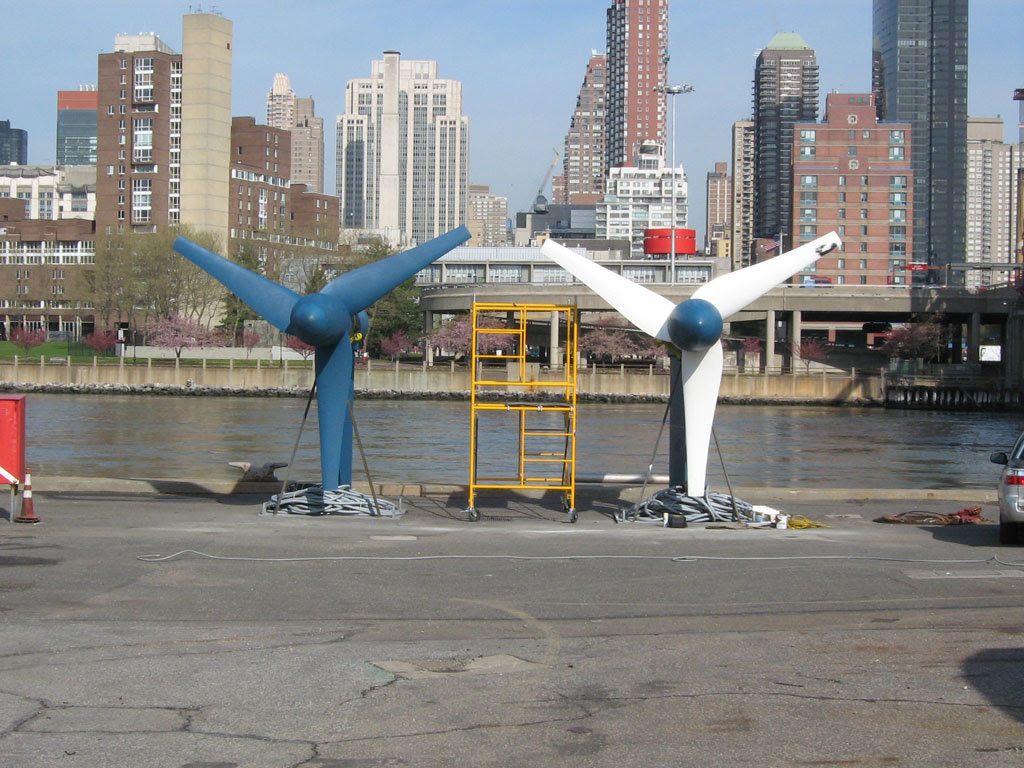
On Thursday, renewable energy company Verdant Power installed an array of three tidal power turbines off Roosevelt Island in New York City’s East River.
Verdant’s Roosevelt Island Tidal Energy (RITE) site is the first U.S.-licensed tidal power project, and it is a pre-commercial testbed for the company’s fifth generation of turbine arrays. Its first version began operation in 2013, and the latest features heavy-duty marinized components. The three-turbine, steel-frame design is intended for scalability to larger sizes for deployment in deeper, faster-moving waters. It is also intended for economical installation: with one hoistable frame holding three five-meter turbines, the amount of on-the-water work per turbine is reduced, according to Verdant Power CEO John T. Banigan.
RITE is grid-connected, and its operation will give the New York-based company more experience and data on system performance. After six months, the frame will be lifted out of the water and one of the three turbines will be removed for inspection. The full test is scheduled to last for one year, and if all is satisfactory, Verdant hopes to scale up to a 10-meter diameter turbine for commercial sale.
“We are proud to be the first licensed tidal power project in the U.S,” said Banigan. “Today we are demonstrating clean power from the tidal currents and that tidal power is a viable energy resource advancing our industry in the U.S. and globally.”
RITE will operate under a pilot project license from the U.S. Federal Energy Regulatory Commission (FERC) – according to Verdant, the first commercial license for a tidal power project in America. The project will provide electricity to Roosevelt Island through a connection to Con Edison’s local grid. It is underwritten by the New York State Energy Research and Development Authority and the U.S. Department of Energy, along with New York-based private equity investor
Tidal Energy and Roosevelt Island
The Roosevelt Islander recently carried an interesting article on Verdant Power’s Roosevelt Island Tidal Energy (RITE) Project.
This note provides additional background on the project.
To begin, we’re talking about the white things you see sticking out of the East Channel of the East River just off the Parking Garage, north of the RI Bridge. These are the tops of turbines fixed to the bottom of the river. The East River, as many know, is not a river. It is a salt water tidal estuary connecting Long Island Sound with the Atlantic Ocean in New York Harbor. And as you probably have observed, this is a very active stretch of water. From the junction just north of Roosevelt Island where the Sound turns south (and becomes the East River) and where the Harlem River (also not a river!) joins in, it is narrow, deep (that’s why we go down so far when we take the F train) and often turbulent. The junction where all three combine has long been known as “Hell Gate” – not because of the violence of the water but from the Dutch Hellegat meaning either “bright strait” or “clear opening”. This was a particularly treacherous stretch of water. Tides from the Long Island Sound, New York Harbor and the Harlem River meet there, making it difficult to navigate, especially because of the number of rocky islets which once dotted it, roughly 12 islets and reefs in all, all of which led to a number of shipwrecks, including HMS Hussar, a British frigate that sank in 1780 while supposedly carrying gold and silver intended to pay British troops. In the 1870s, Hell Gate was cleared of rocks and widened. (The story of how many of these islands were blown up to make the waterway easier is another good story, carried in an article in The Wire, August 7, 2007) Even more, and still today, because the tide tables of the Sound and the Harbor differ, the East River changes direction several times a day, and the incoming tide rushes north or south in a great flurry of currents. (From Lighthouse Park, you can see the power of this movement as the water swirls in a huge whirlpool.) Because the East River is so narrow and so deep, an enormous amount of water moves at high intensity. That’s the energy the RITE project seek to capture: The project generates clean Hydrokinetic energy from the natural East River’s tidal flow – that is energy generated by the movement of a body of water. Tidal stream generators (think underwater flat windmills) make use of the kinetic energy of moving water to power turbines, in a similar way to wind turbines that use the kinetic energy of wind to power turbines. These, however, are entirely submersed, thus avoiding concerns over the impact on the natural landscape. Tidal energy is one of the oldest forms of energy used by humans. Indeed, tide mills, in use on the Spanish, French and British coasts, date back to the 8th century. Tide mills consisted of a storage pond, filled by the incoming (flood) tide through a sluice and emptied during the outgoing (ebb) tide through a water wheel. The tides turned waterwheels, producing mechanical power to mill grain. We even have one remaining in New York – which worked well into the 20th century. Tidal power is non-polluting, reliable and predictable. Tidal barrages, undersea tidal turbines and machines harnessing undersea currents are under development. Unlike wind and waves, tidal currents are entirely predictable. In February 2012 the federal government announced an agreement with Verdant to install 30 tidal turbines in the channel of the East River. The turbines were projected to begin operations in 2015 and are supposed to produce 1.05 megawatts of power. The RITE Project would be the first commercially-licensed tidal power plant in the United States. Phase One, installed now, is an array of three Gen5 Free Flow System turbines on a TriFrame™ mount, generating 105 kW of power for delivery to the New York City grid. That is, three turbines, each with its blades, are set on a single frame on the bottom of the River. Free Flow means that turbines generate electricity no matter which way the river is flowing. The idea is that the installation will demonstrate the advanced Gen5 system and allow for analysis of the TriFrame™ as a cost-effective solution for the installation, operations, and maintenance of tidal energy systems. Funding support is being provided by the US Department of Energy’s Water Power Technologies Office and the New York State Energy Research & Development Authority (NYSERDA). This isn’t the first time Verdant has tried to extract power from the East River. Some 15 years ago, it announced plans to install hundreds of turbines in the East River to harness tidal energy and generate zero-emission electrical power. In December 2006, Mayor Michael R. Bloomberg formally dedicated the opening of the project as six turbines were placed in the river (capable of supplying 1,000 daily kilowatt hours of power and serving the then Gristedes market). Just several weeks later, the project was halted because of the massive amount of energy they were dealing with – that is, the strength of the river flow. Currents proved so strong that the turbine propellers were sheared off, and stronger replacements were hampered by insufficiently strong bolt connections to the turbine hubs. The first round of turbines were temporarily removed.
What is Verdant? It’s a young and highly focused company. Its website tells us that the company was founded in 2000, and that its “mission is to help build sustainable communities through a holistic approach focused on clean energy generation as well as advancing partnerships and hybrid platforms to make significant impacts at the water-energy nexus.” It is privately held with around 20 employees. Verdant Power “develops technologies and projects that generate village- and utility-scale energy from the free-flowing currents of tides, rivers, and canals, referred to as ‘marine’ or ‘marine & hydrokinetic (MHK)’ energy. Marine energy systems are next-generation clean energy technologies that can provide electricity in a predictable manner for populations near water currents.” The website mentions other projects, but its RITE project is certainly the most important. At one point, KeySpan was said to be partnering with Verdant Power in its East River project but there is no evidence that Verdant has any current business partners. The company seems to be a true trailblazer. In 2005, when it first sought permission from the Federal Energy Regulatory Commission (FERC) to test turbines off Roosevelt Island, there were no U.S. regulatory processes for this type of marine energy technology. Eventually, Verdant received FERC approval for the world’s first demonstration of tidal turbines and the company began to gather data to apply for a larger system and commercial permit at the same site. In 2012, Verdant received the country’s first commercial license for a tidal power project, to install up to one megawatt of power off Roosevelt Island. And this summer, this next phase of the RITE project was set in motion. Verdant’s position in the evolving maritime energy industry is important. Most others in the field focus on ocean energy and as such are extremely large, with much greater generating capacity. But to do this, they must operate in deep waters, far offshore, requiring long transmission lines and highly specialized installation equipment and supporting infrastructure. Verdant’s primary differentiating factor is that it’s specifically designed for shallow waters and its unique design is scalable for locations around the world. In addition to the current, the project faced several other issues. One has been the impact on fish in the river. Here, the company is clear that its studies have shown that fish are careful to avoid the rotors – which do not spin at speed like airplane engine propellers. Another issue, is competition. Tony DePalma, writing in the NYTimes, said that Verdant was facing the prospect of competition — not so much from giants like KeySpan but from other alternative energy start-ups. One company, Oceana Energy, had been granted a federal permit to install turbines in the East River just north of Roosevelt Island. There seem to have been some exchange between the companies, but nothing more has appeared. The most serious recent problem has been, of course, coronavirus which has slowed down current plans. In all, good for us. Roosevelt Island remains in the center of the search for clean energy. Stephen Blank RIHS November 1, 2020
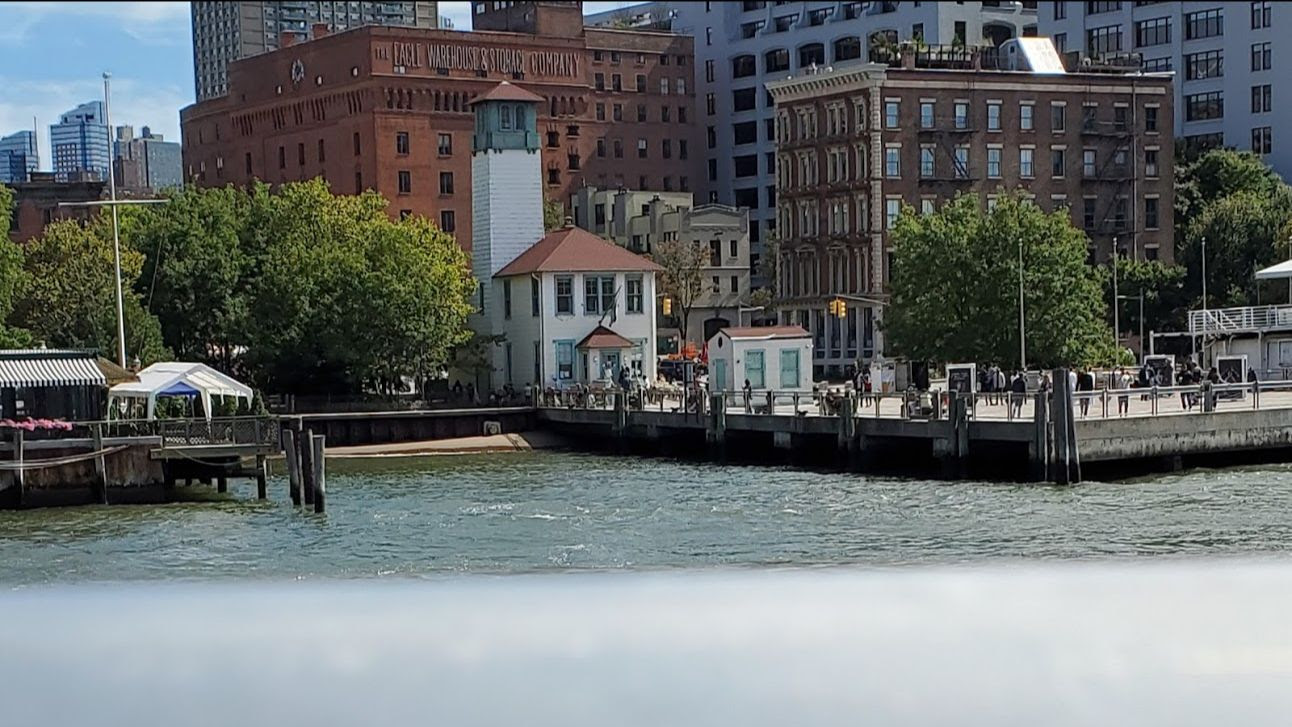
Ferry House at Brooklyn Bridge Park Lisa Fernandez, Gloria Herman, Susan Rodetis and Alexis Villefane all got it right
Funding Provided by: Roosevelt Island Operating Corporation Public Purpose Funds, Council Member Ben Kallos City Council Discretionary Funds thru DYCD Edited by Deborah Dorff ALL PHOTOS COPYRIGHT RIHS. 2020 (C)
Rooseveltislanderblogspot.com
The Maritime Executive
Google Images
PHOTOS IN THIS ISSUE (C) RIHS
EDITORIAL
Wonderful new art has arrived at Coler.
Details in Monday’s edition
Judith Berdy
FUNDING PROVIDED BY ROOSEVELT ISLAND OPERATING CORPORATION PUBLIC PURPOSE GRANTS CITY COUNCIL REPRESENTATIVE BEN KALLOS DISCRETIONARY FUNDING THRU DYCD
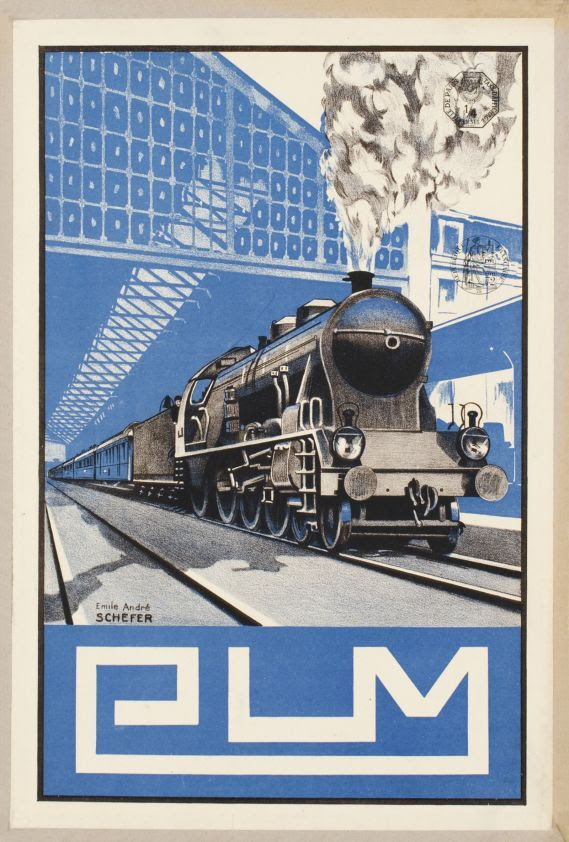
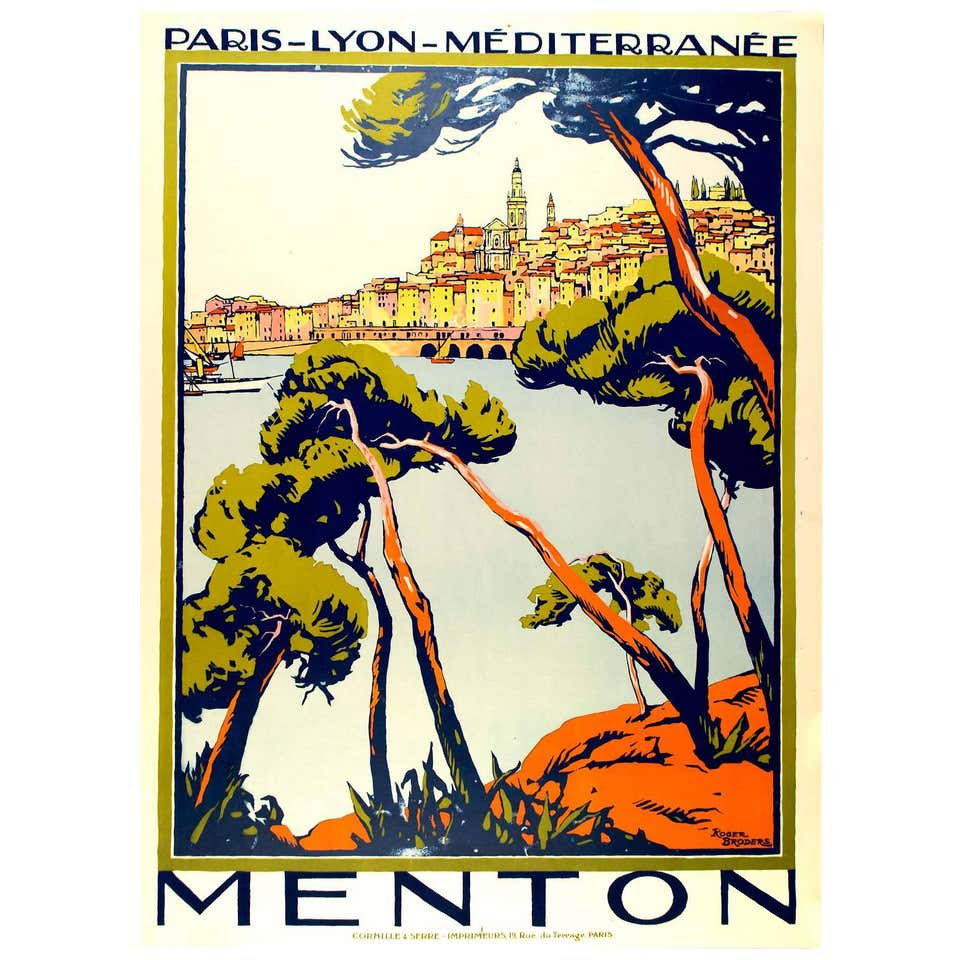
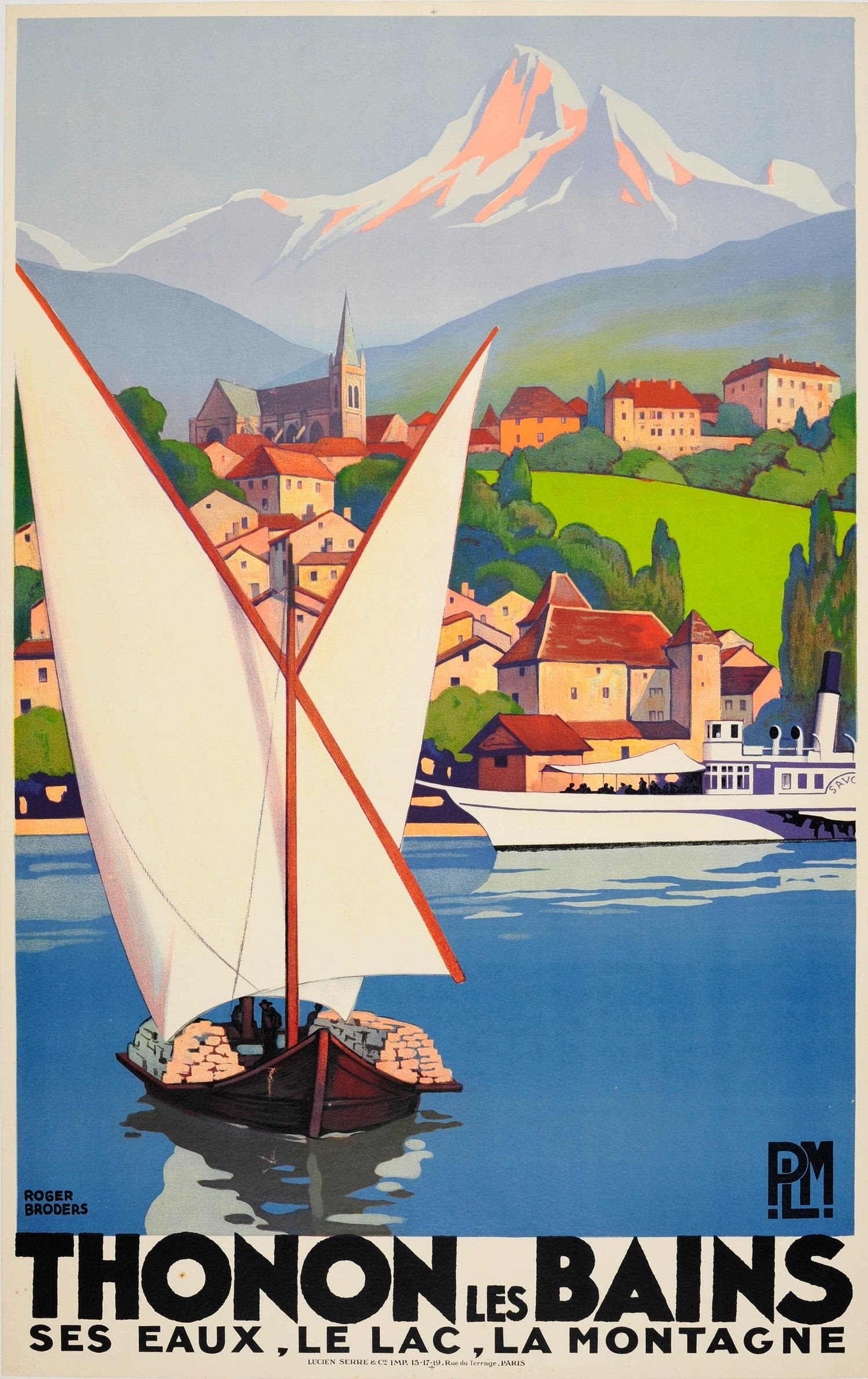
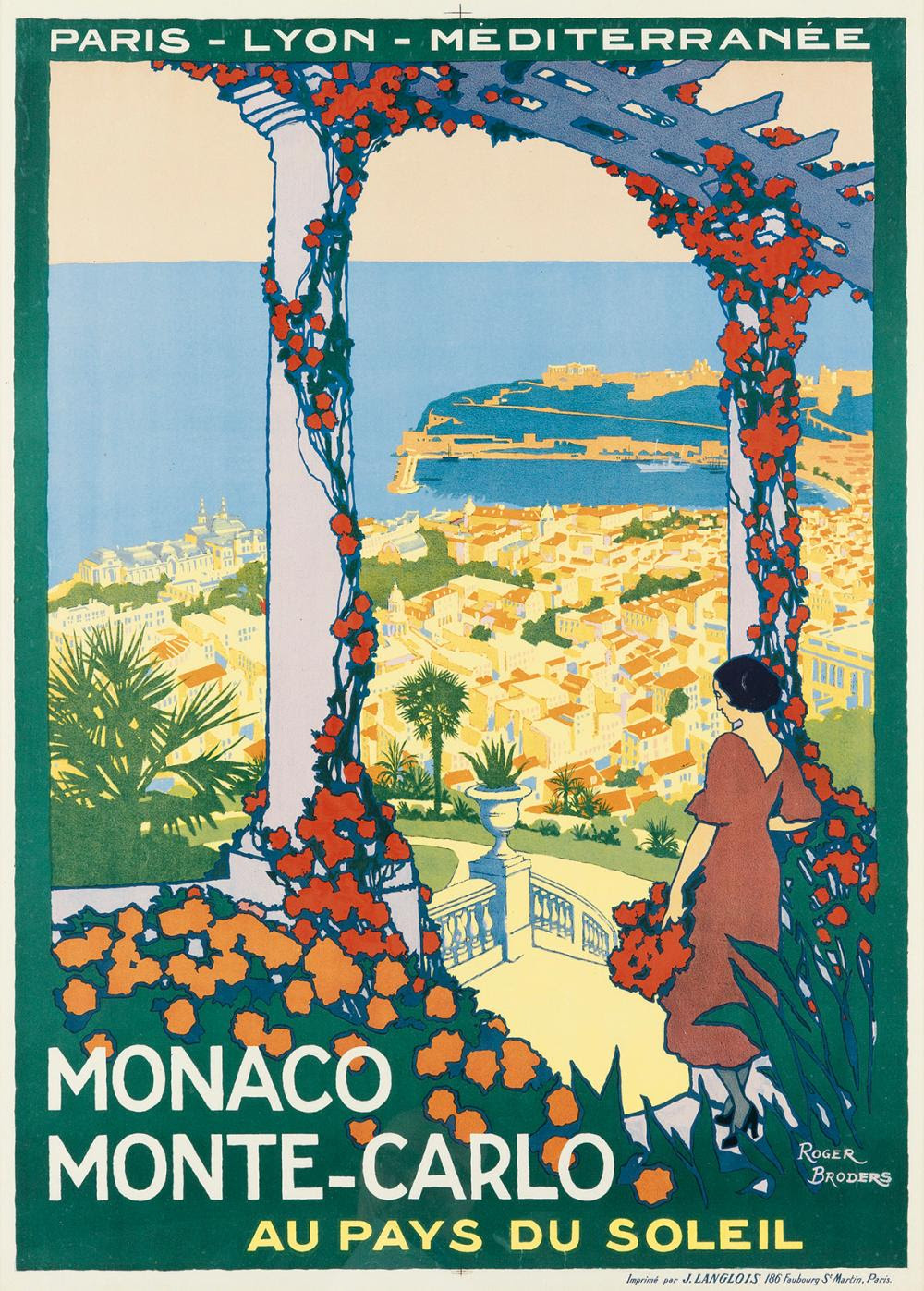
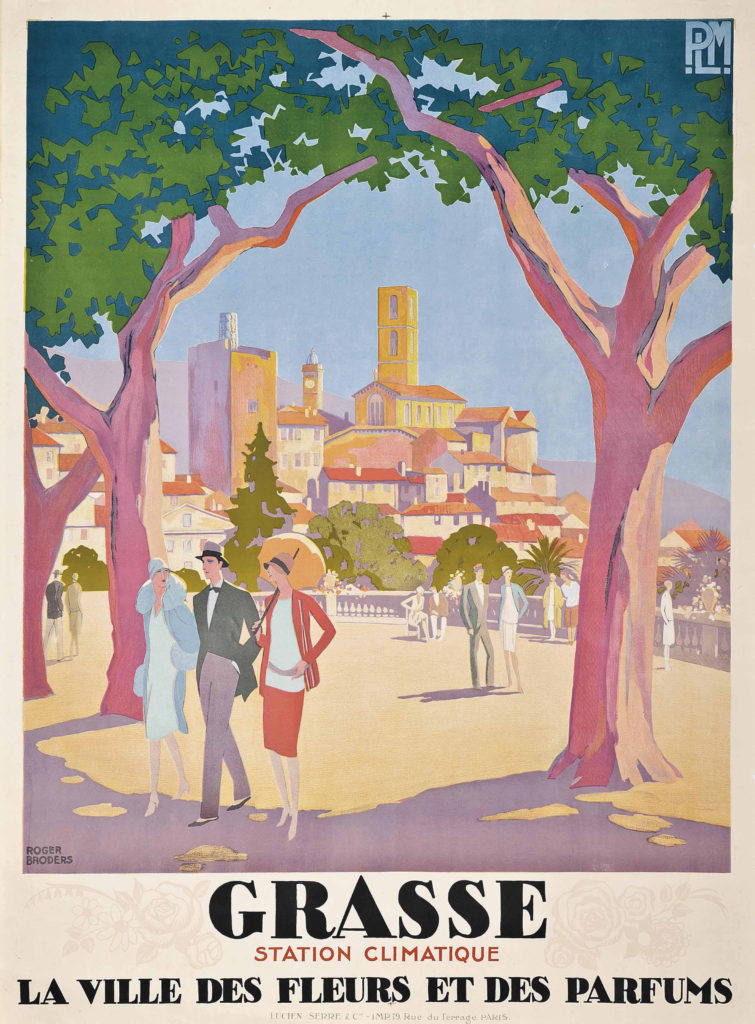
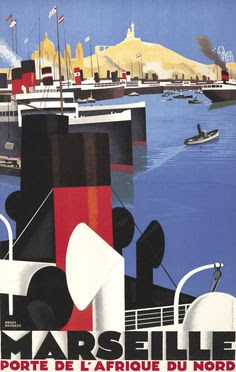
Roger Broders (born Paris, France, 1883, died, Paris, 1953) was a French illustrator and artist best known for his travel posters promoting tourism destinations in France, typically fashionable beaches of the Côte d’Azur and skiing resorts in the French Alps in the early 20th century. Broders’ illustrations were distinctive for their simple lines and bold, flat areas of color, combined with noticeable graphical perspective showing the featured mountains and seascapes in the background. Broders’ illustrations depicting people show active elongated figures wearing elegant, contemporary clothes. His posters were simply and boldly lettered identifying the destination, and were supplemented with a brief slogan. The Paris Lyon Mediteranée Company (PLM), a railway, commissioned Broders’ poster art, sponsoring his travel so he could visit the subjects of his work. From 1922 to 1932, Broders fully dedicated himself to poster art, though overall he produced fewer than 100 posters. Lithographs of Broders’ travel posters are still available commercially. See for instance Christie’s London Ski Sale on 21 January 2010. Others are shown in the book about Railway Posters, published in Munich in 2011 and listed below.
Paris Lyon Mediteranée Company (PLM),
New York Skyline at William J. Jenack Estate Appraisers & Auctioneers in 2016
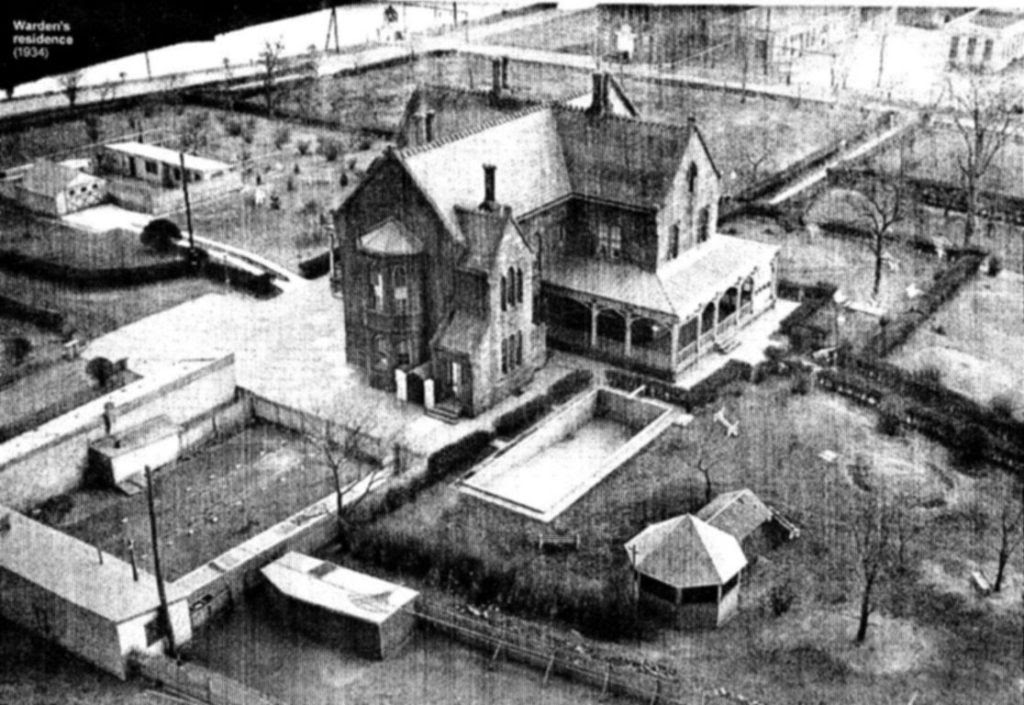
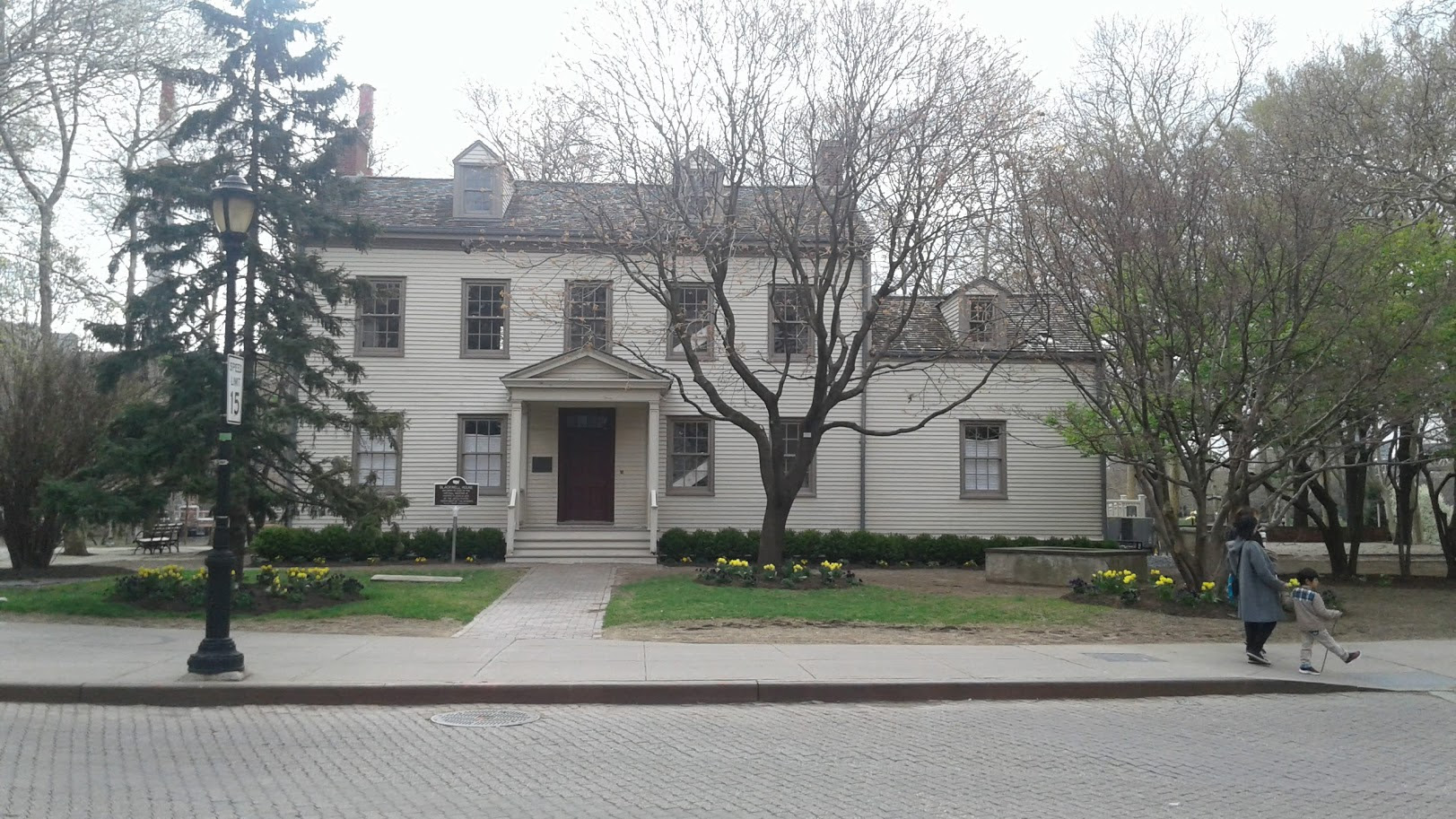
This was more grand than the Blackwell House. The warden of the Blackwell’s Island Penitentiary had this grand home with an in-ground swimming pool. The house was located just south of the Queensboro Bridge. The penitentiary administration was notoriously corrupt and I am sure there was some intrigue here.
FUNDING PROVIDED BY ROOSEVELT ISLAND OPERATING CORPORATION PUBLIC PURPOSE GRANTS CITY COUNCIL REPRESENTATIVE BEN KALLOS DISCRETIONARY FUNDING THRU DYCD
EDITORIAL
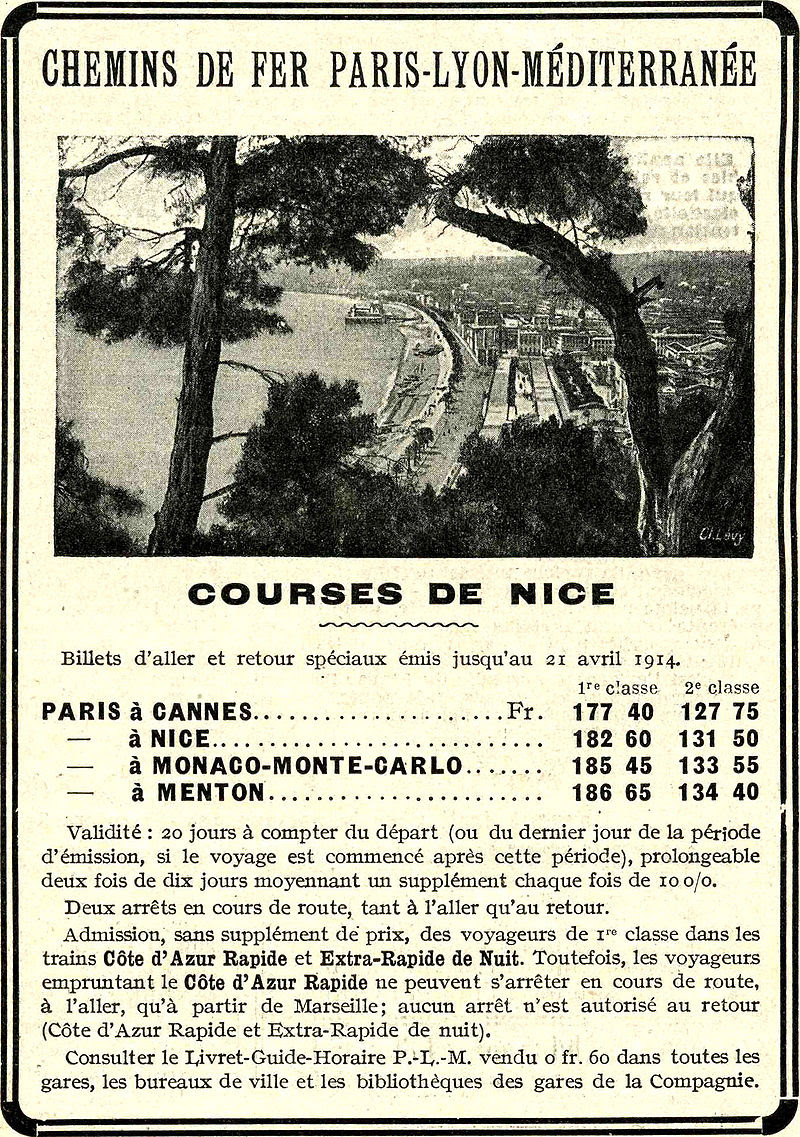
The thought of a pandemic and staying home for almost a year reminds me of the good life I had as a travel agent and the few trips I took to the French Riviera. Maybe the illusion of the joyful life will cheer our long winter ahead.
Judith Berdy
Text by Judith Berdy Thanks to Bobbie Slonevsky for her dedication to Blackwell’s Almanac and the RIHS Thanks to Deborah Dorff for maintaining our website Edited by Melanie Colter and Deborah Dorff Roosevelt Island Historical Society
MATERIALS USED FROM:
WIKIPEDIA GOOGLE IMAGES
FUNDING PROVIDED BY ROOSEVELT ISLAND OPERATING CORPORATION PUBLIC PURPOSE GRANTS CITY COUNCIL REPRESENTATIVE BEN KALLOS DISCRETIONARY FUNDING THRU DYCD
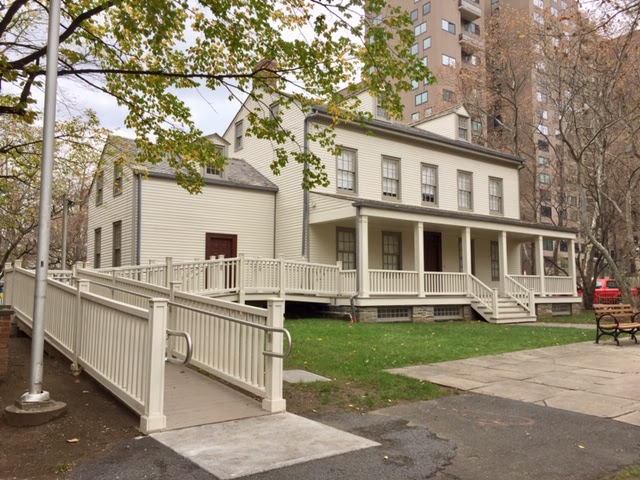
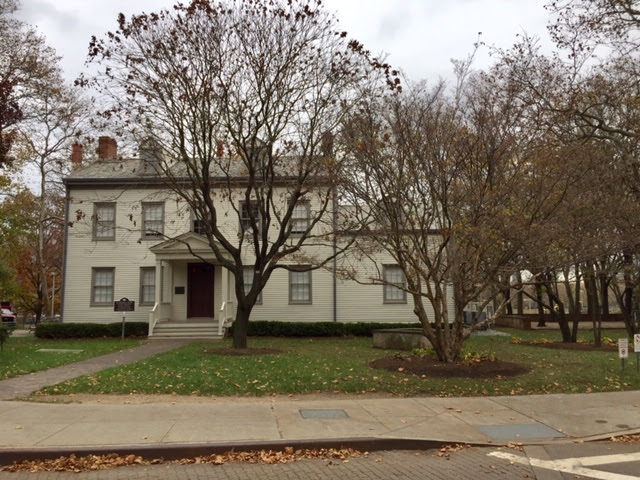
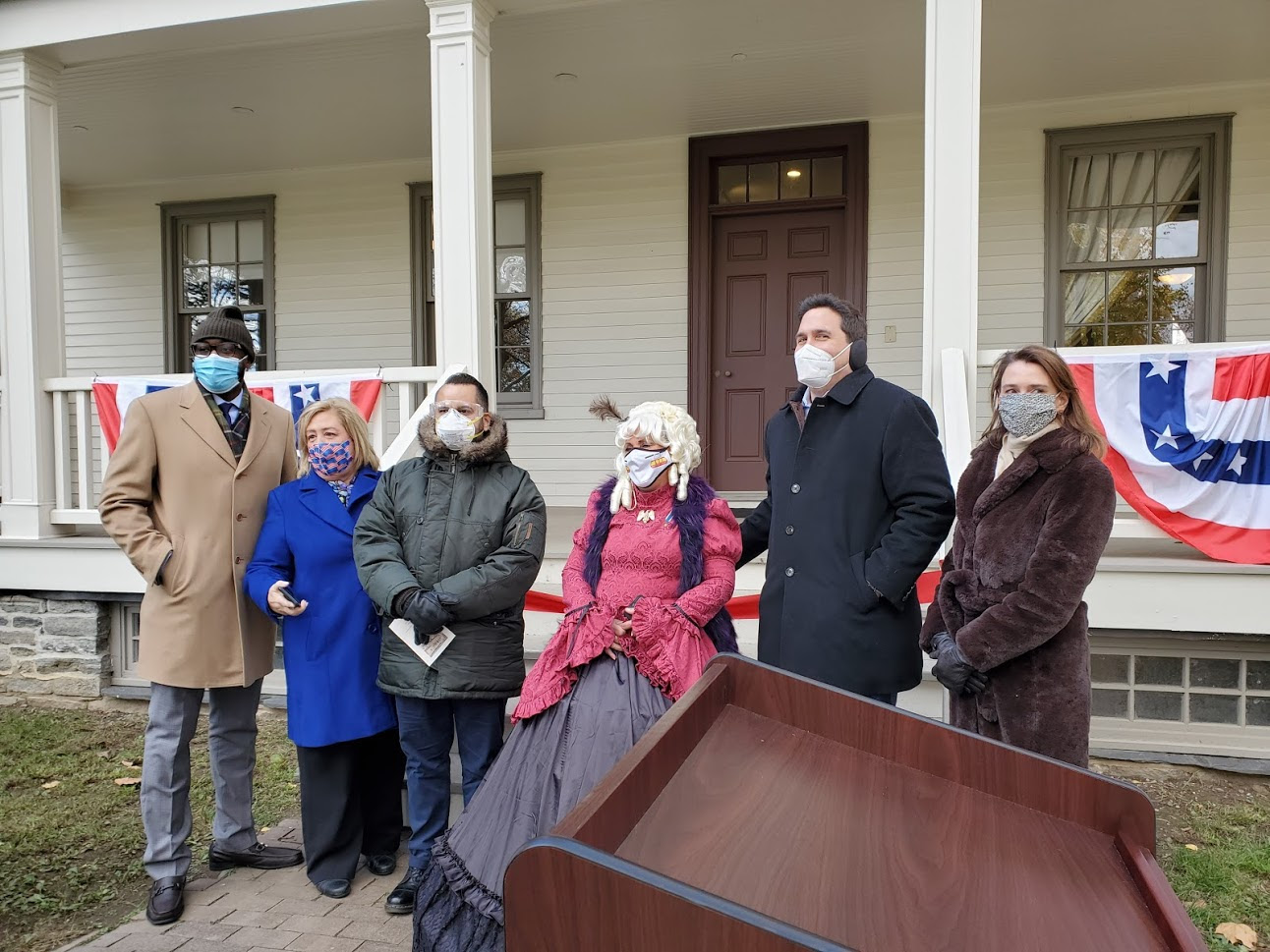
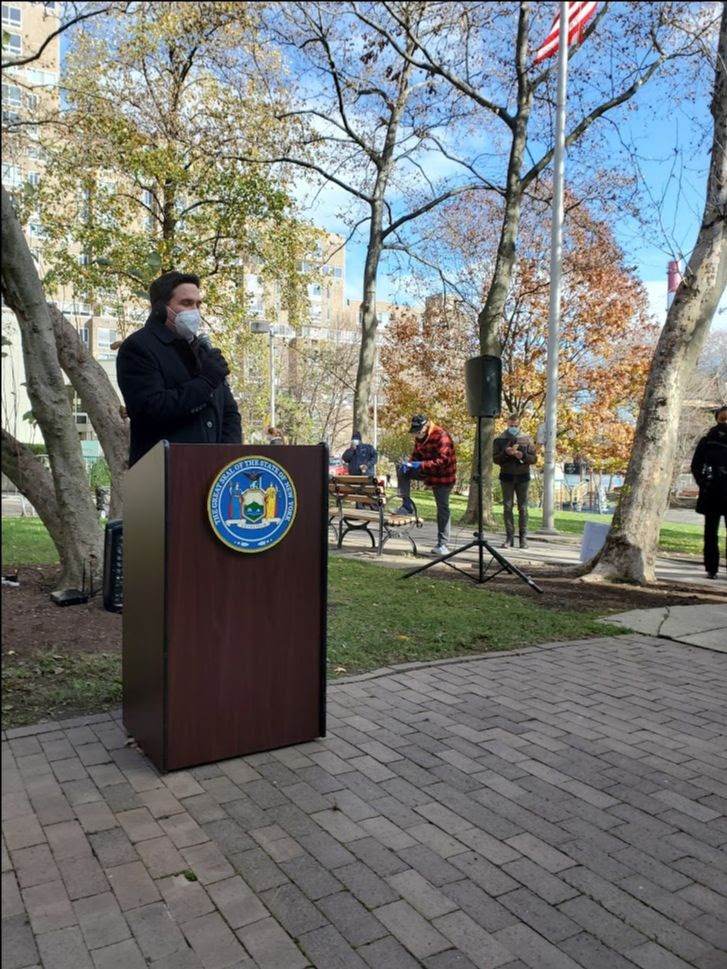
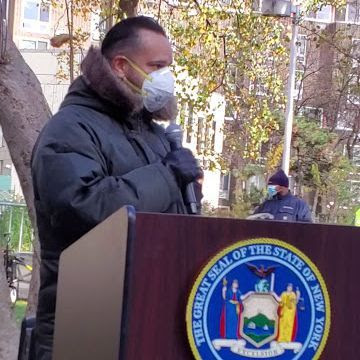
After years of delays the official ribbon cutting was held today at Blackwell House. The newly repaired and restored house will be the site of community events hosted by the Roosevelt Island Historical Society and other island organizations.
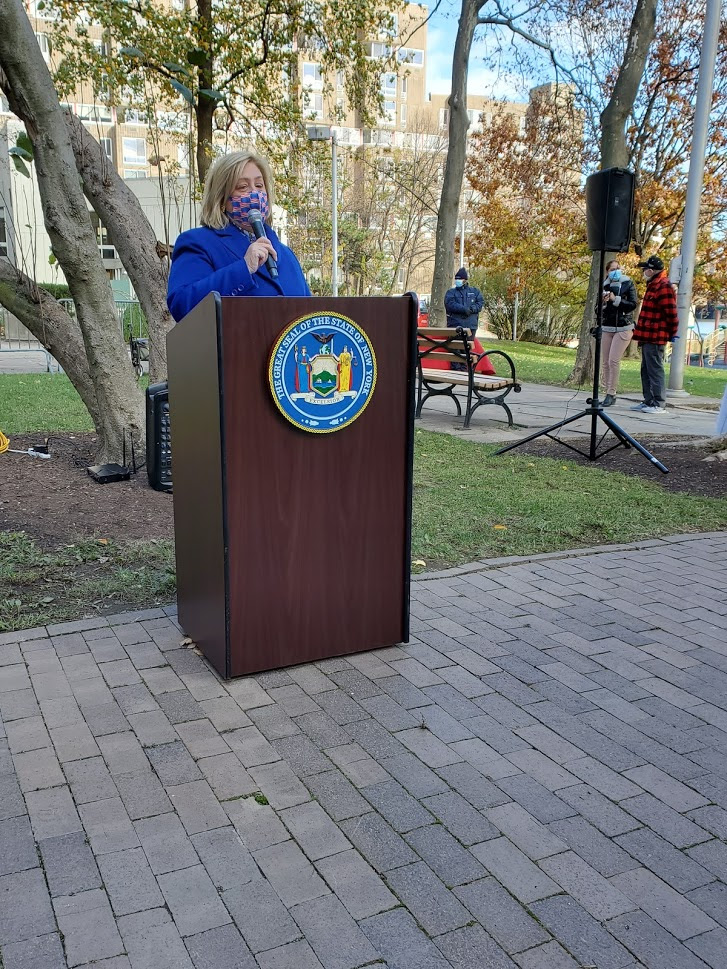
Shelton Haynes, Rebecca Seawright, Jose Serrano, Lynne Shinozaki, Ben Kallos and Jessica Lappin before cutting the ribbon. Ms. Lappin obtained funding for the house restoration in 2007!
A bitter cold day to make a speech behind a mask.
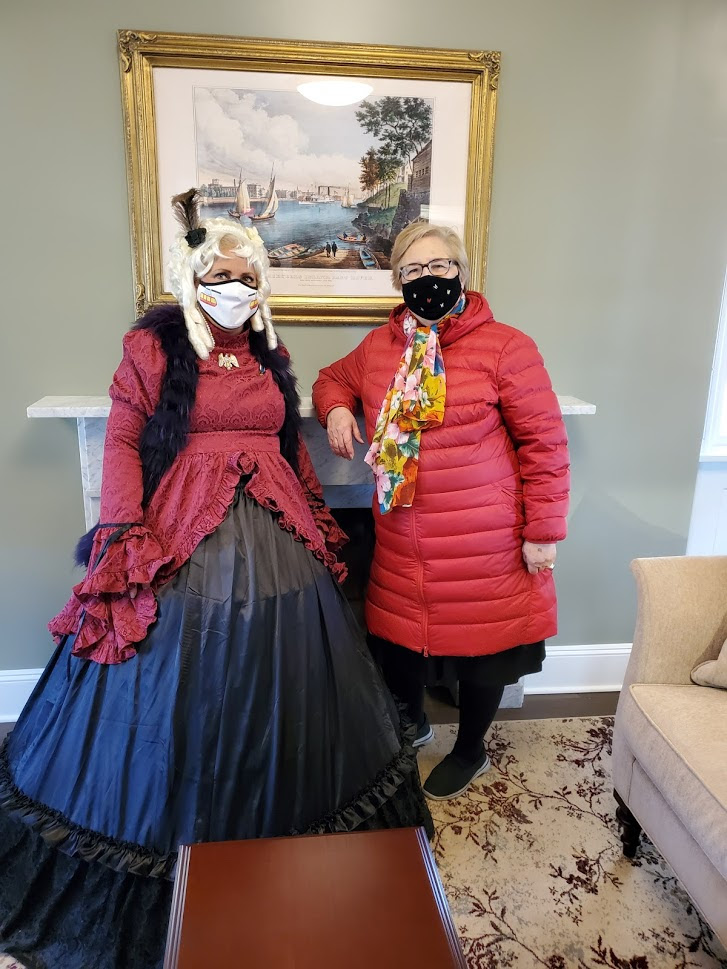
Lynne Shinozaki, in Colonia attire, joins RIHS President Judith Berdy in the warmth of the hearth.
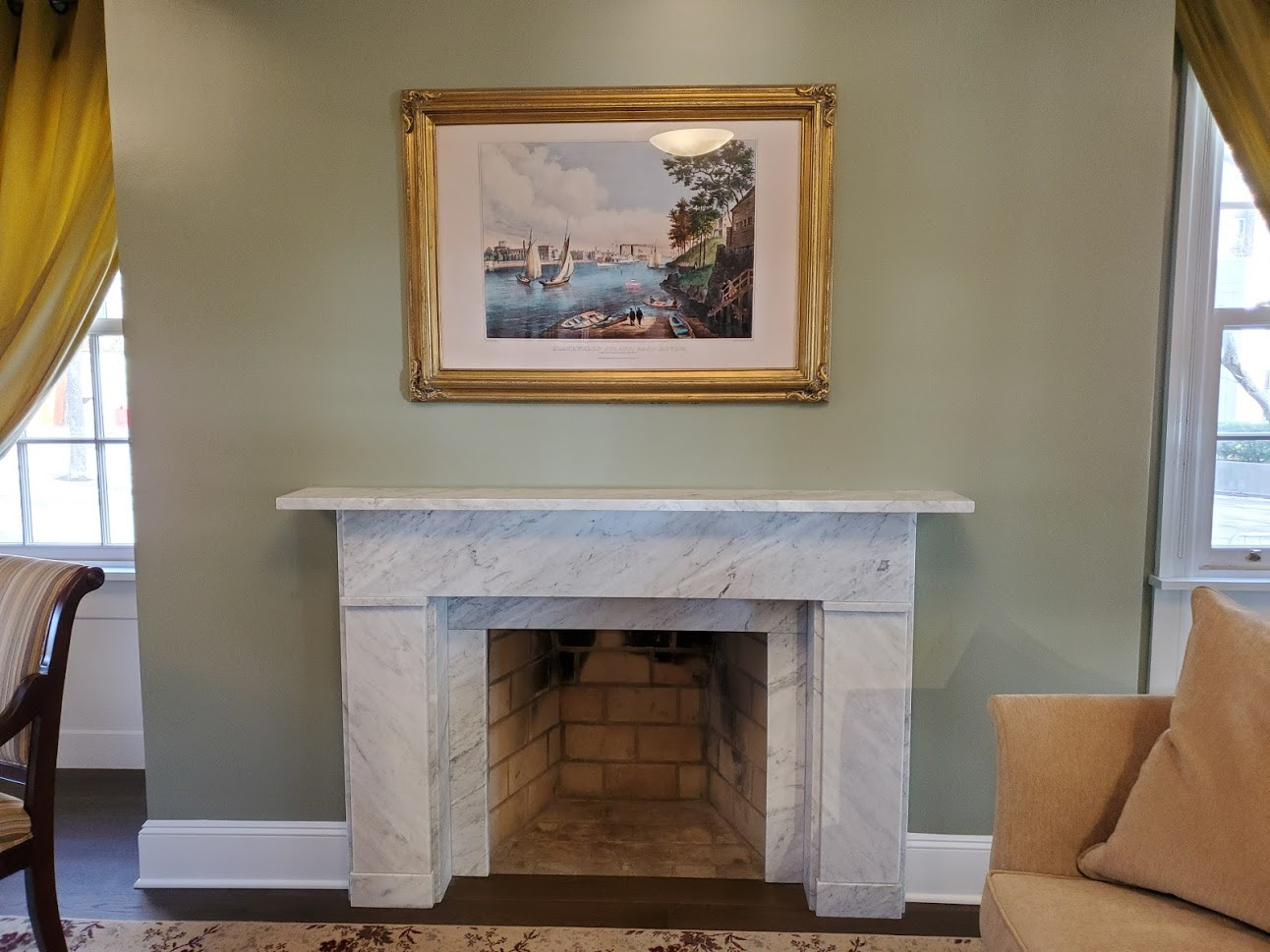
The Living Room where small groups can gather for social and meeting events
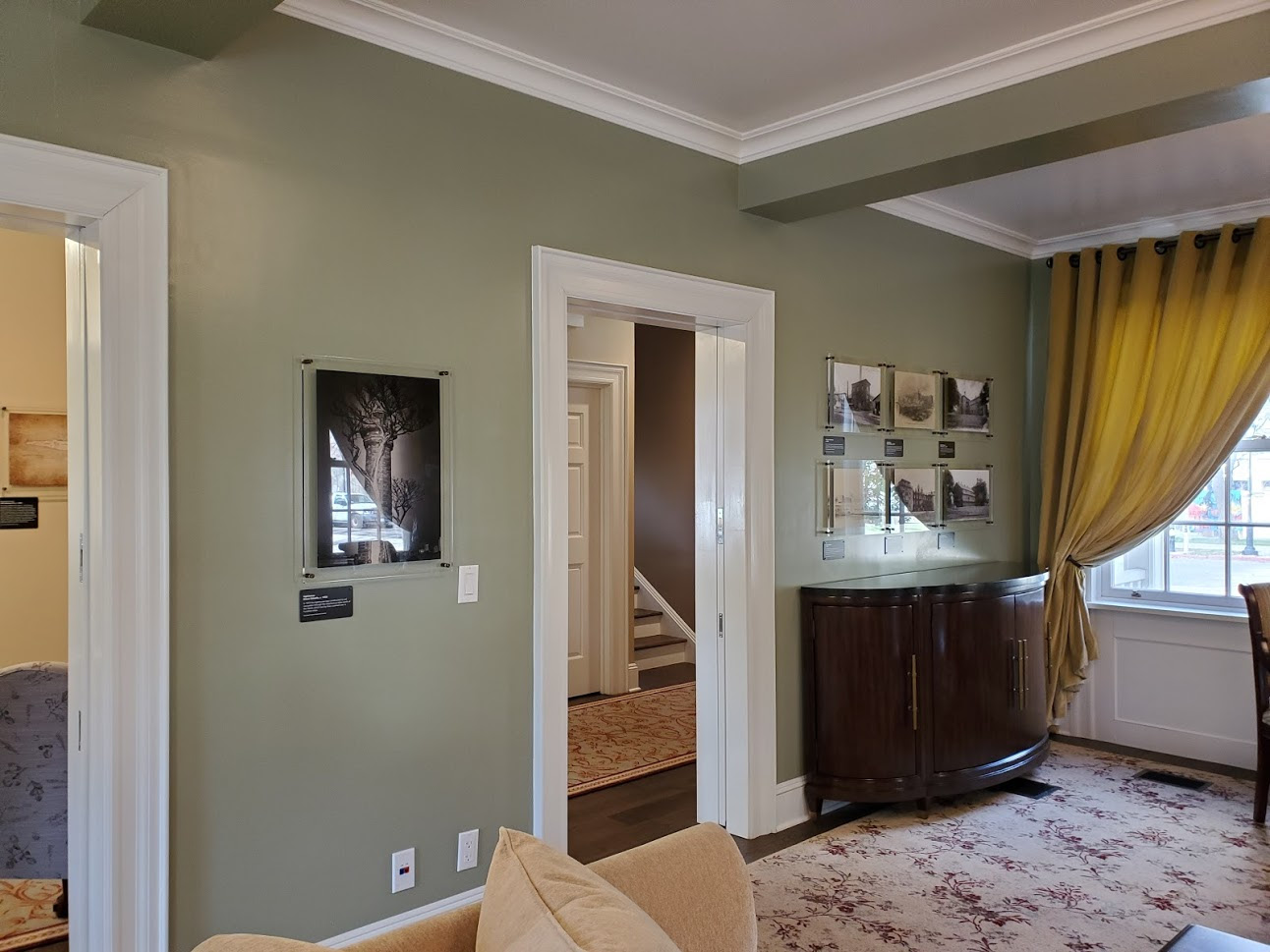
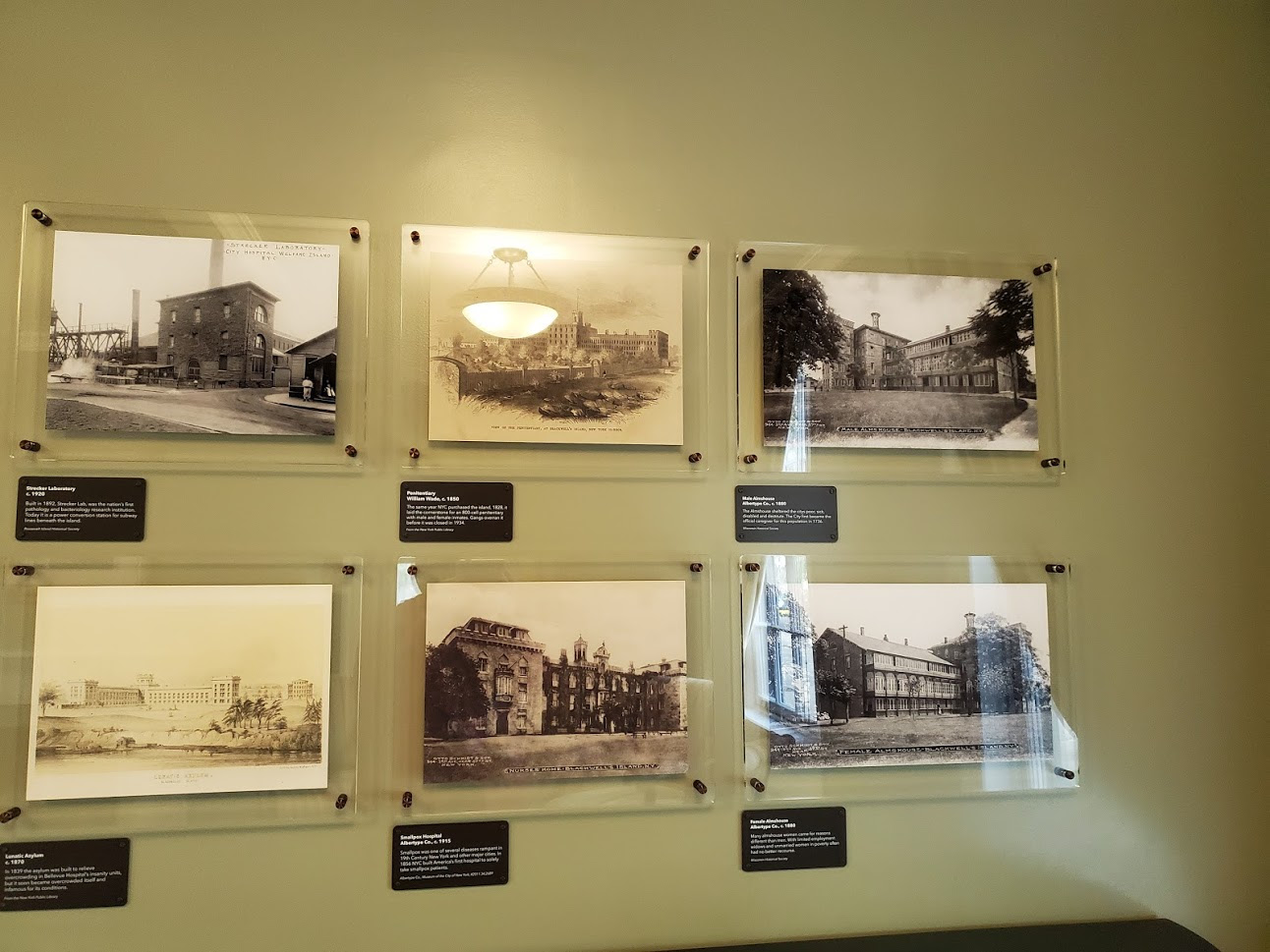
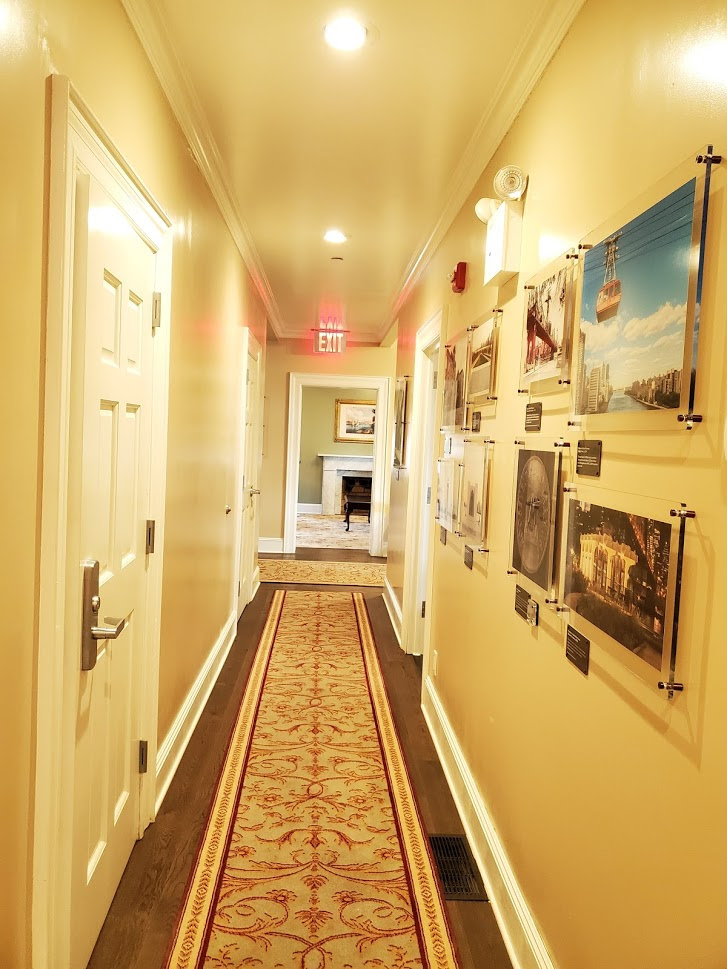
Images featuring the island history are located in all areas of the main floor.
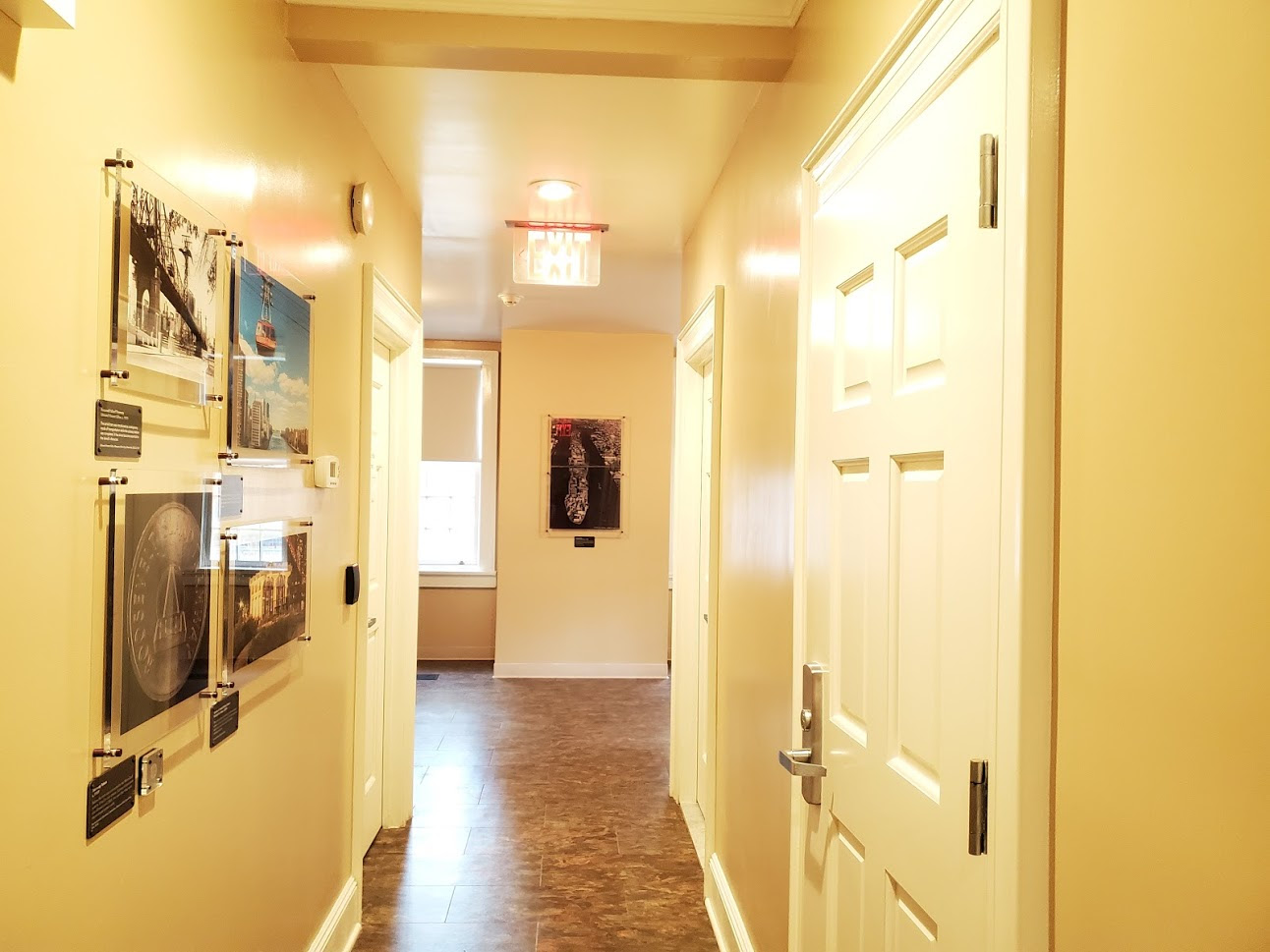
The corridor has a time-line of contemporary island images
The kitchen wall features a great aerial image of the island in the 1920’s
A photo is worth a thousand words. All I can say is thank goodness Blackwell House is back and soon it will be welcoming islanders and guests. My special thanks to Janet Fasano who was the designer of the interior and made this historic building a warm and friendly gathering place. Thanks to Shelton Haynes and all the RIOC staff who brought this great day to happen so successfully.
Judith Berdy
Text by Judith Berdy Thanks to Bobbie Slonevsky for her dedication to Blackwell’s Almanac and the RIHS Thanks to Deborah Dorff for maintaining our website Edited by Melanie Colter and Deborah Dorff All image are copyrighted (c)
FUNDING PROVIDED BY ROOSEVELT ISLAND OPERATING CORPORATION PUBLIC PURPOSE GRANTS CITY COUNCIL REPRESENTATIVE BEN KALLOS DISCRETIONARY FUNDING THRU DYCD
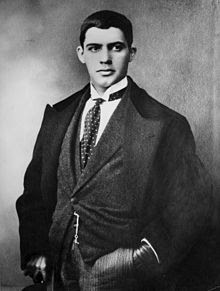
Born 14 November 1887 Mancelos, Amarante, Portugal Died 25 October 1918 (aged 30) Espinho, Portugal Nationality Portuguese Known for Painting Movement Futurism, Modernism
The leap of the rabbit Amadeo de Souza-Cardoso Date: 1911 Style: Expressionism Genre: animal painting Media: oil Location: Art Institute of Chicago, Chicago, IL, US
Amadeo de Souza-Cardoso was born in Manhufe (Amarante) and died in Espinho, north of Portugal. In 1906, he left for Paris where he began working as a draughtsman and caricaturist. He became acquainted with frontline artists such as Modigliani, Brancusi, Juan Gris, Max Jacob, Sónia and Robert Delaunay, among others. In 1913 he integrated the famous exhibition Armory Show in New York and exhibited in Galeria Der Sturm, in Berlin. Amadeo was among the most commercially successful exhibitors at the Armory Show, as he sold seven of the eight works he showed there. Amadeo met with Antoni Gaudí in Barcelona in 1914, and then left for Madrid, where the shock of World War I was already underway. He then returned to Portugal where he married Lucie Meynardi Peccetto. He maintained contact with many of the most prominent Portuguese artists and poets such as Almada Negreiros, Santa-Rita Pintor and Teixeira de Pascoaes. Between 1915 and 1916 he became friends with the Sonia and Robert Delaunay who sought exile in Portugal and, by this time, he became an active member of the Portuguese avant-garde group Orpheu . During this period he exhibited in Lisbon and in Porto. In his oeuvre, there are evident influences of artistic movements emerging during this time, such as cubism, dadaism, abstractionism and expressionism. On October 25, 1918, at the age of 30, he died in Espinho, of Spanish flu. Even considering his very short life span, Souza-Cardoso was an artist who left an indelible milestone on the history of modern art in Portugal, thanks to his committed and prolific activity, as well as his embrace of the fresh ideas in the art scene of the time, having been inspired by many of the leading art movements of his time.
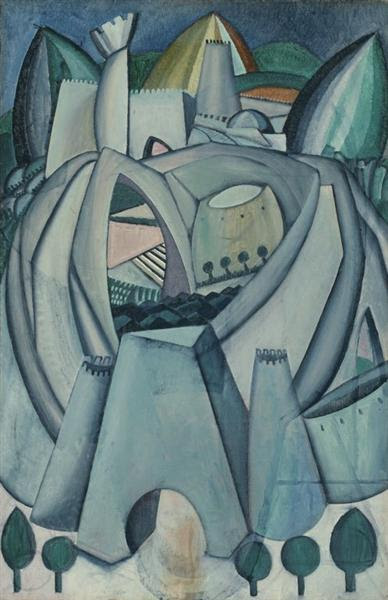
Stronghold Amadeo de Souza-Cardoso Date: 1912; Portugal Style: Cubism Genre: landscape Media: oil
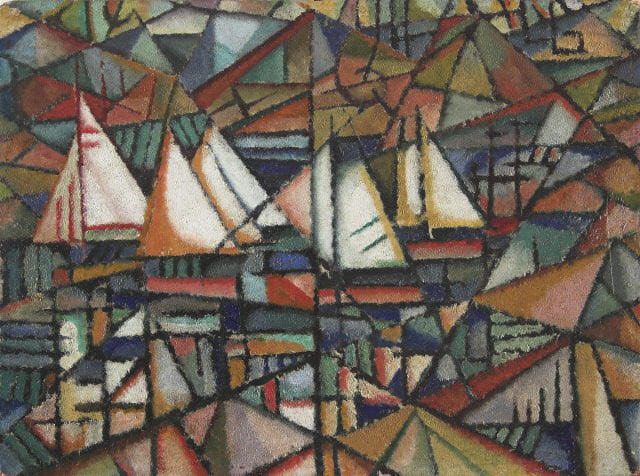
Untitled (boats) Amadeo de Souza-Cardoso 1913; Portugal Cubism marina : wood
Corpus Christi procession Amadeo de Souza-Cardoso Date: 1913 Style: Cubism Genre: genre painting Media: oil
EDITORIAL
While watching “ANTIQUES ROADSHOW” I saw the art of Amadeo de Souza Cardoso. An artist of the early 20th century, He exhibited at the famed Armory show in New York in 1913. Enjoy his brilliant use of color. (The pieces on Antiques Roadshow were worth over $100,000.) He died at the age of 30 in the 1918 influenza pandemic.
WEDNESDAY PHOTO OF THE DAY
TODAY IS THE RIBBON CUTTING FOR THE RESTORED BLACKWELL HOUSE JOIN US AT 11:30 A.M. TO CELEBRATE THE LONG AWAITED RETURN OF THE HOUSE TO THE COMMUNITY.
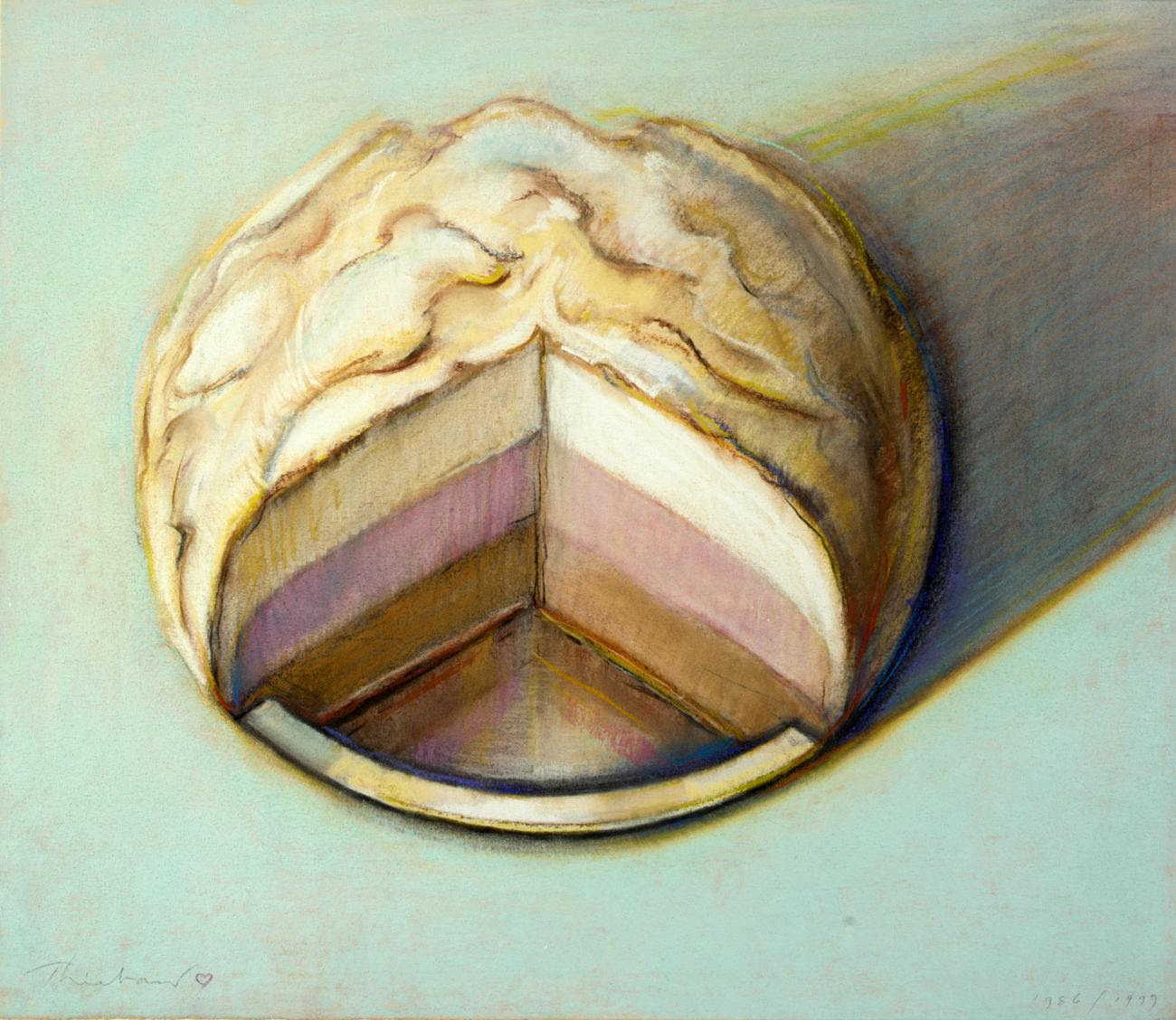
TUESDAY’S PHOTO OF THE DAY Wayne Thiebaud
On November 15, Wayne Thiebaud, the cherished American painter of cakes and sweets, hits an impressive milestone: his 100th birthday. Born November 1920 in Mesa, Arizona, and raised in California, Thiebaud remains busy and productive even on the eve of his centenary. We featured the delicious art of Wayne Thiebaud in August. Laura Hussey guessed correctly
SUPPORT THE RIHS AND SHOP THE KIOSK
OPEN WEEKENDS 12 NOON TO 5 P.M. ORDER ON-LINE BY CHARGE CARD
ROOSEVELTISLANDHISTORY@GMAIL.COM
CLARIFICATION WE ARE HAPPY TO GIVE WINNERS OF OUR DAILY PHOTO IDENTIFICATION A TRINKET FROM THE VISITOR CENTER. ONLY THE PERSON IDENTIFYING THE PHOTO FIRST WILL GET A PRIZE. WE HAVE A SPECIAL GROUP OF ITEMS TO CHOOSE FROM. WE CANNOT GIVE AWAY ALL OUR ITEMS,. PLEASE UNDERSTAND THAT IN THESE DIFFICULT TIMES, WE MUST LIMIT GIVE-AWAYS. THANK YOU
FREE COVID TESTING NYC HEALTH + HOSPITALS METROPOLITAN HOSPITAL WALK IN COVID-19 TESTING 1901 First Avenue, New York, NY 10029 at 97th Street call (844) 692-4692 9AM-3:30PM Daily Free Diagnostic Testing (Third-party Verified) Screening Required No appointment needed
Text by Judith Berdy Thanks to Bobbie Slonevsky for her dedication to Blackwell’s Almanac and the RIHS Thanks to Deborah Dorff for maintaining our website Edited by Deborah Dorff All image are copyrighted (c) Roosevelt Island Historical Society unless otherwise indicated
Google Images (c)
Wiki-Arts Wikipedia
FUNDING PROVIDED BY ROOSEVELT ISLAND OPERATING CORPORATION PUBLIC PURPOSE GRANTS CITY COUNCIL REPRESENTATIVE BEN KALLOS DISCRETIONARY FUNDING THRU DYCD
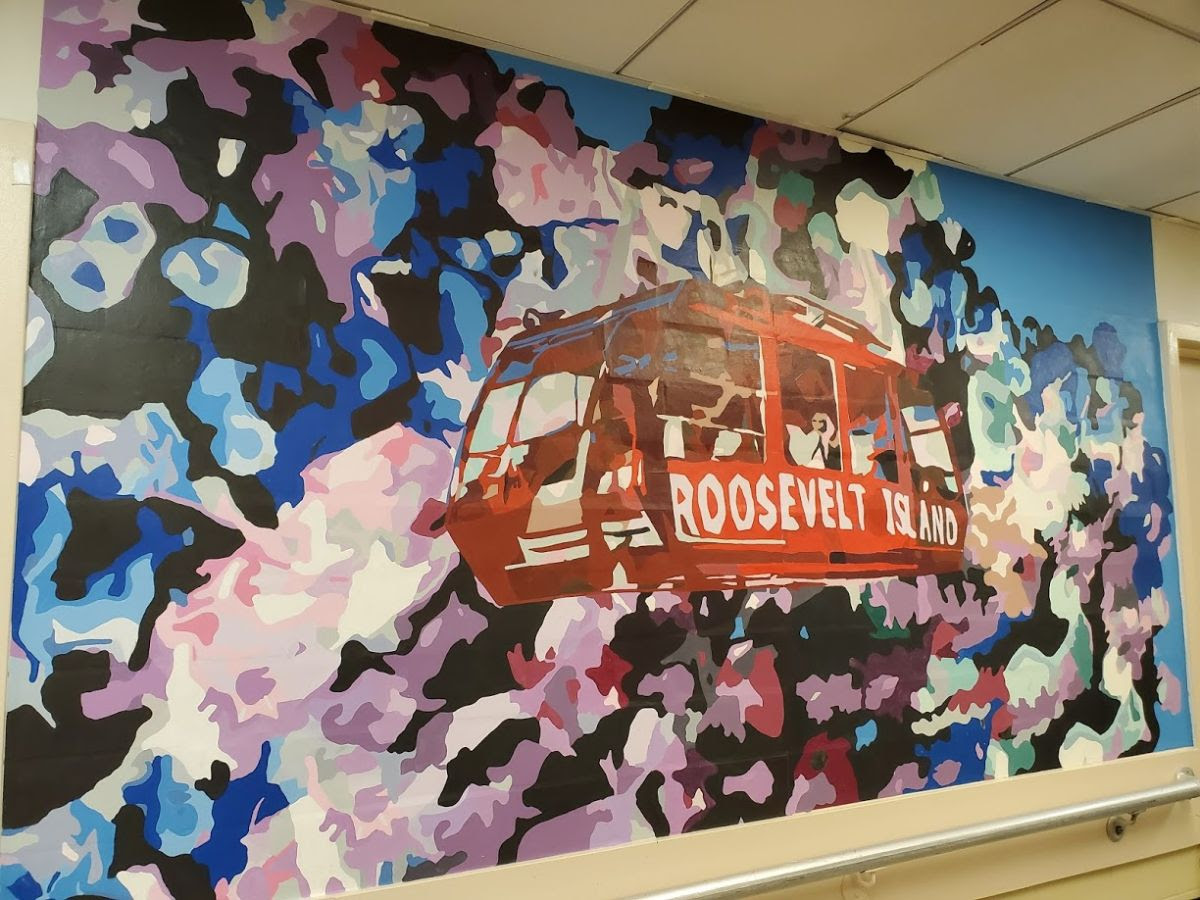
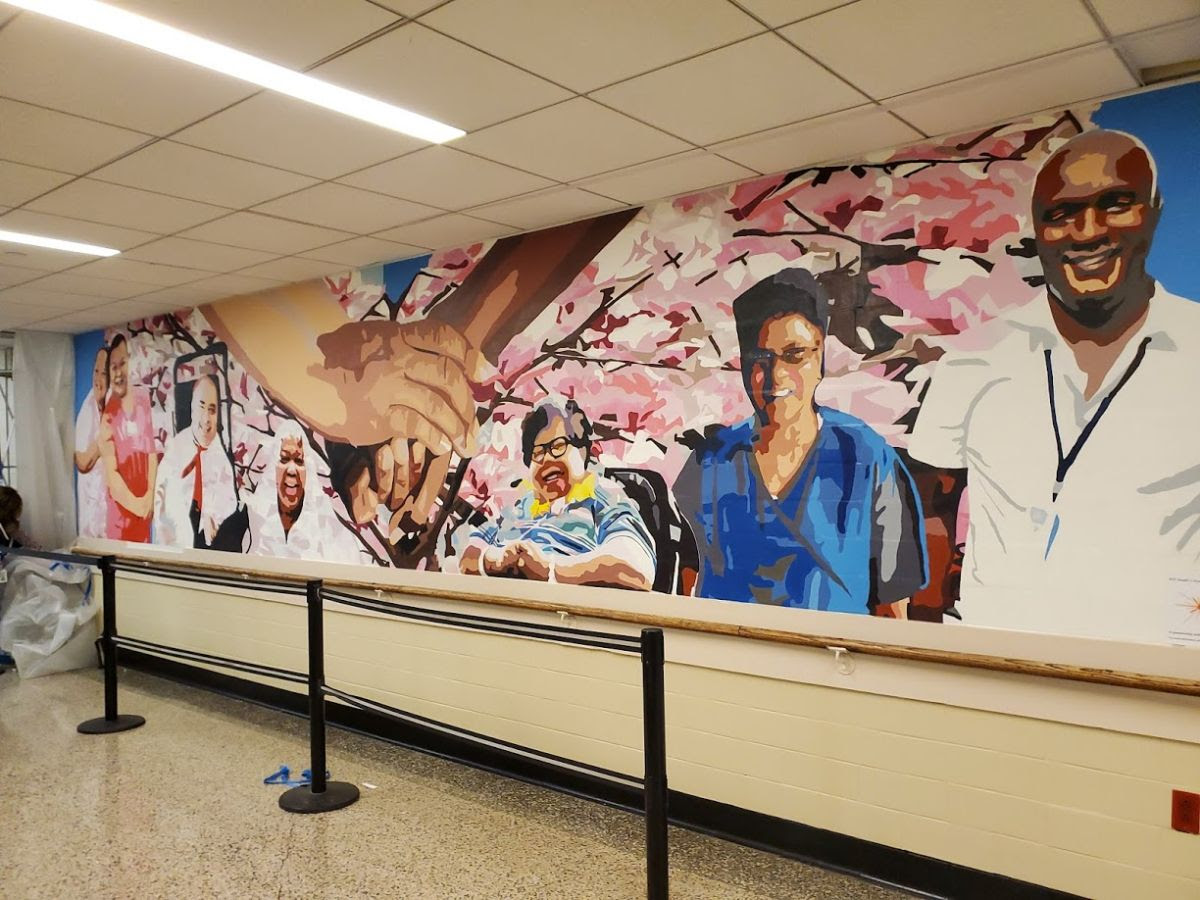
Using the Arts – visual art collection, art-making, music, dance, literature, architecture and more – to enhance patience experience and outcomes as well as the resiliency of medical professionals, family members and other caregivers in clinical settings.
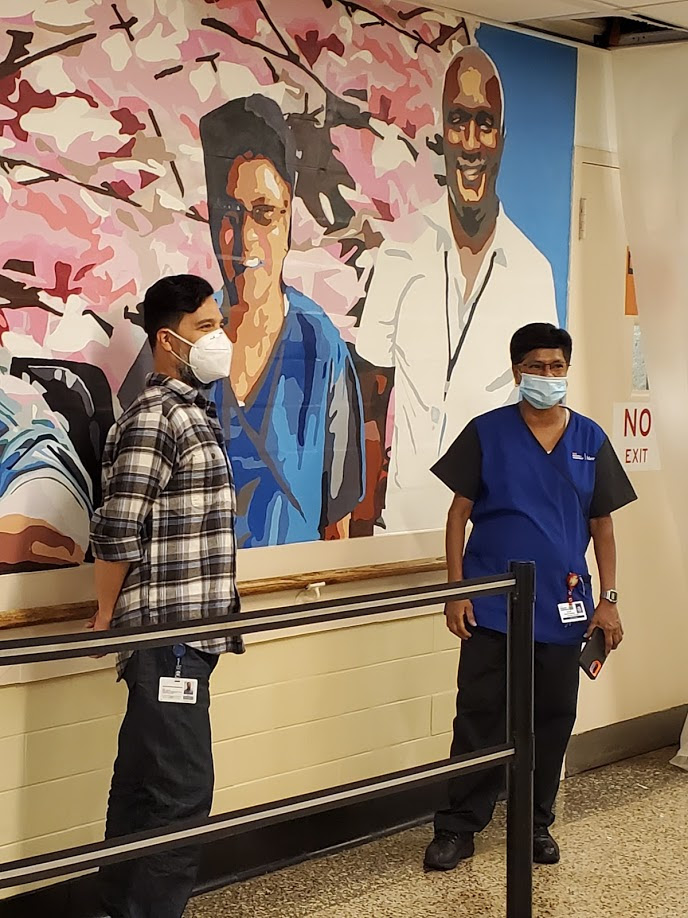
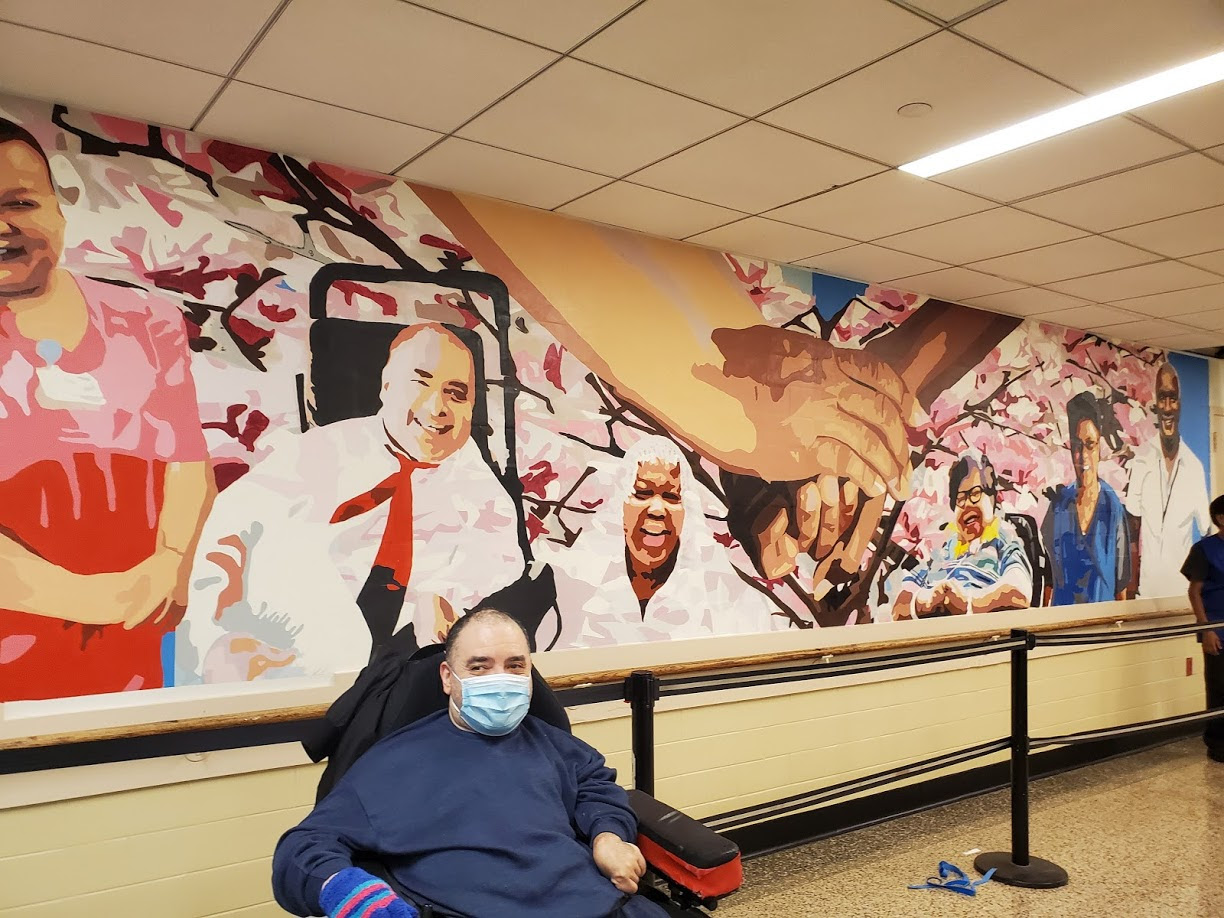
IMAGES OF COLER STAFF AND RESIDENTS ARE REPRESENTED IN THE MURAL
ARTIST FRANK PARGA AND STAFF MEMBER
JAVIER, ONE OF THE COLER RESIDENT ARTISTS IS REPRESENTED ON THE MURAL
ABOUT THE ARTIST FRANK PARGA
Frank Parga is an artist currently living and working in Brooklyn, NY. He received a Bachelor of Fine arts degree in Painting with a minor in Sculpture from the University of Texas at El Paso. He received a Master of Fine Arts degree in Studio Art from NYU in 2002. Frank is a professional Artist and Muralist who works as an educator and mentor for youth from elementary schools to the university level. Frank is currently Director of Education at One River School of Art and Design in Larchmont, NY.
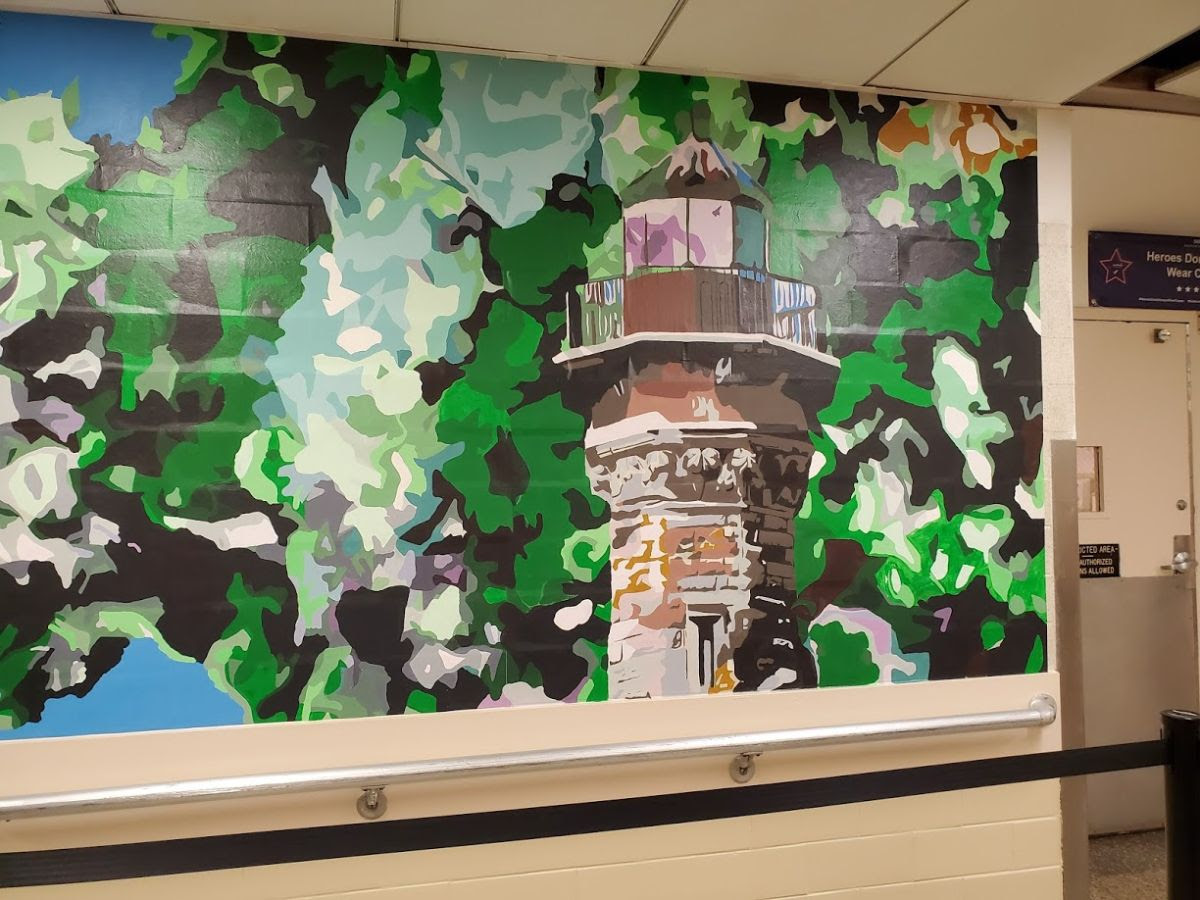
THE LIGHTHOUSE BEAMS OUT IN THE HALLWAY
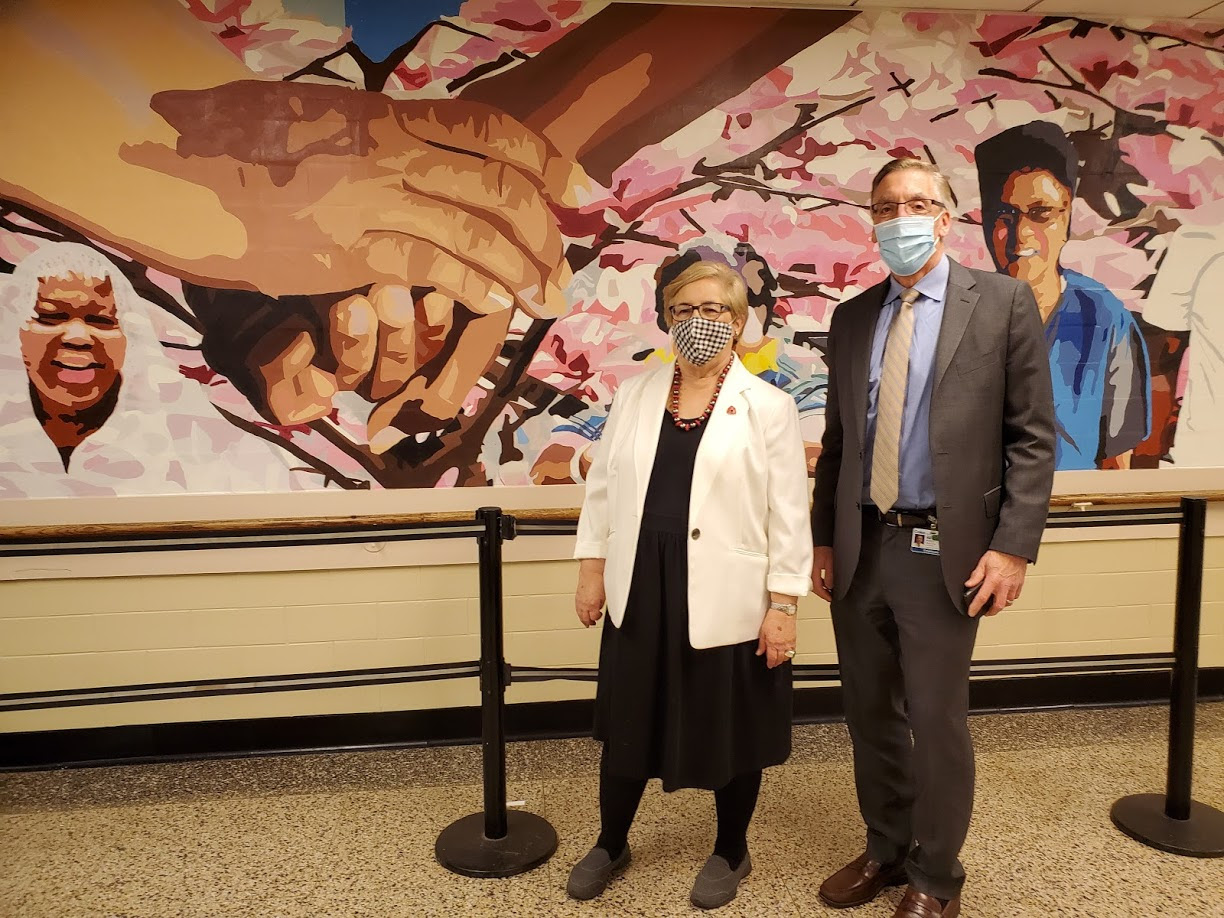
HEALING HANDS ARE REPRESENTED ON THE MURAL. JUDITH BERDY AND ROBERT HUGHES AT THE EVENT
PART OF EACH OTHER’S LIVES
The mural created alongside staff and residents NYC Health +Hospitals Coler is reflective of their sense of unity and extended family as well as Roosevelt Island itself. The larger wall shows some of the staff and residents that exemplify the caring compassion that is displayed everyday. It is a safe haven for residents with outdoors spaces, a garden and magnolia trees (which are in the background of the large wall). The is a real sense of unity at Coler which is represented by the large “Helping Hands” in the center The hands are the people all representative of the diversity that exists at Coler. As stated by one of the residents “Coler is home to many. We are like a big extended family.”
The other two walls incorporate iconic landmarks from Roosevelt Island . The first is the lighthouse located at the northern end of the island. The second is the aerial tramway that connects Manhattan to the Island. Both images are surrounded by and at times disappear into a background of trees and leaves. This is representative of nature on the island and can give a sense of outdoors while inside.
The mural Incorporated a wide range of colors. This is intended to brighten the space as well as represent the trees and flowers of the island. These bold colors are also reflective of the diversity of the staff and residents.
MONDAY PHOTO OF THE DAY
SEND YOUR SUGGESTION TO ROOSEVLTISLANDHISTORY@GMAIL.COM WIN A SMALL TRINKET FROM THE RIHS VISITOR CENTER KIOSK. WE CAN ONLY ACKNOWLEDGE 3 WINNERS EVERY DAY. THANKS, EVERYONE WHO IS NOT MENTIONED. WE APPRECIATE YOUR INTEREST
MOMO, Coler’s healing hound was an eager member of the audience. She will be glad to accept your donation of $20- for a mug with her image.
WEEKEND IMAGE
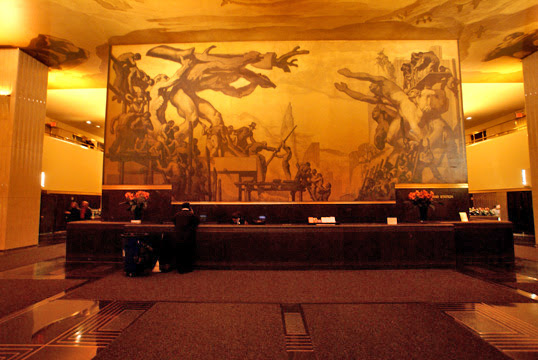
LOBBY OF 30 ROCKEFELLER PLAZA
THOM HEYER, ALEXIS VILLEFANE AND JAY JACOBSON ARE THE WINNERS
EDITORIAL
I was excited to be invited to be included in an initial focus group for the new Coler mural. Today the final murals are finished and now in the main hallway for all to see.
This is a wonderful addition to the Department of Therapeutic Recreation where staff and residents will see new visions of our unique Coler and RI. It comes to Coler at a time in our history and that of Coler has been challenged and daily must be reminded of the world beyond our garden. At a time of year when the leaves are falling and autumn is setting in, this joyous expression will be even more appreciated in winter.
Coler serves as a home for 500 New Yorkers It is a place of healing, restoration and engagement. The mural will become a hub of socially distanced socializing.
The joy of bright colors and the intimacy of the artwork will remind all of the wonderful community Coler is located in. From the historic lighthouse, just a few yards north to our wonderful tram that brings so many to discover the island.
The Coler community welcomes this mural and our thanks again are to the Laurie Tisch Illumination Foundation.
Text by Judith Berdy Thanks to Bobbie Slonevsky for her dedication to Blackwell’s Almanac Thanks to Deborah Dorff for maintaining our website Edited by Melanie Colter and Deborah Dorff All materials in this publication are copyrighted (c)
JUDITH BERDY – Photos NYC Health + Hospitals Laurie Tisch Illumination Foundation Robert Hughes, Executive Director, Coler
MATERIAL COPYRIGHT WIKIPEDIA, GOOGLE RIHS ARCHIVES AND MAY NOT BE REPRODUCED WITHOUT PERMISSION (C) FUNDING BY ROOSEVELT ISLAND OPERATING CORPORATION PUBLIC PURPOSE FUNDING
DISCRETIONARY FUNDING BY COUNCIL MEMBER BEN KALLOS THRU NYC DYCD
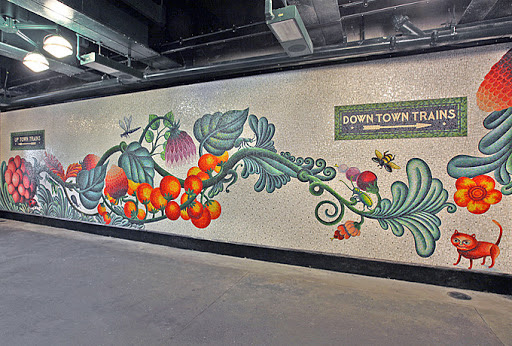
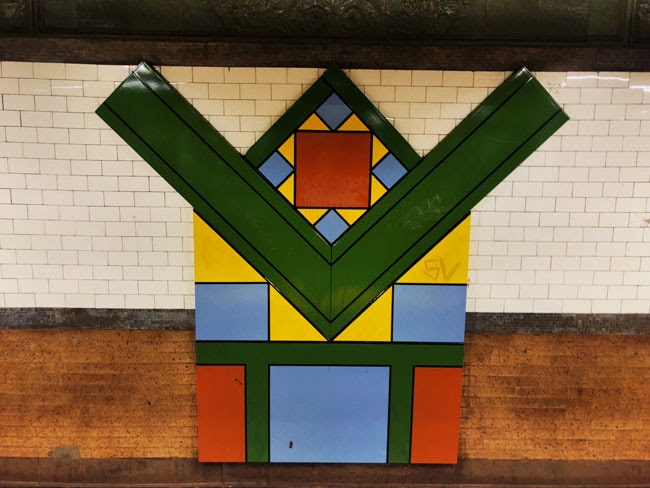
We wouldn’t blame you if stopping to stare at this mural within the Bedford Park Blvd station made you miss your 4 train. Andrea Dezsö’s piece, “Community Garden,” is a sumptuous mosaic creation using thousands of pieces of colored tile. Dezsö’s work often features nature, and this is no different, though it’s likely more vibrant than the gardens above-ground.
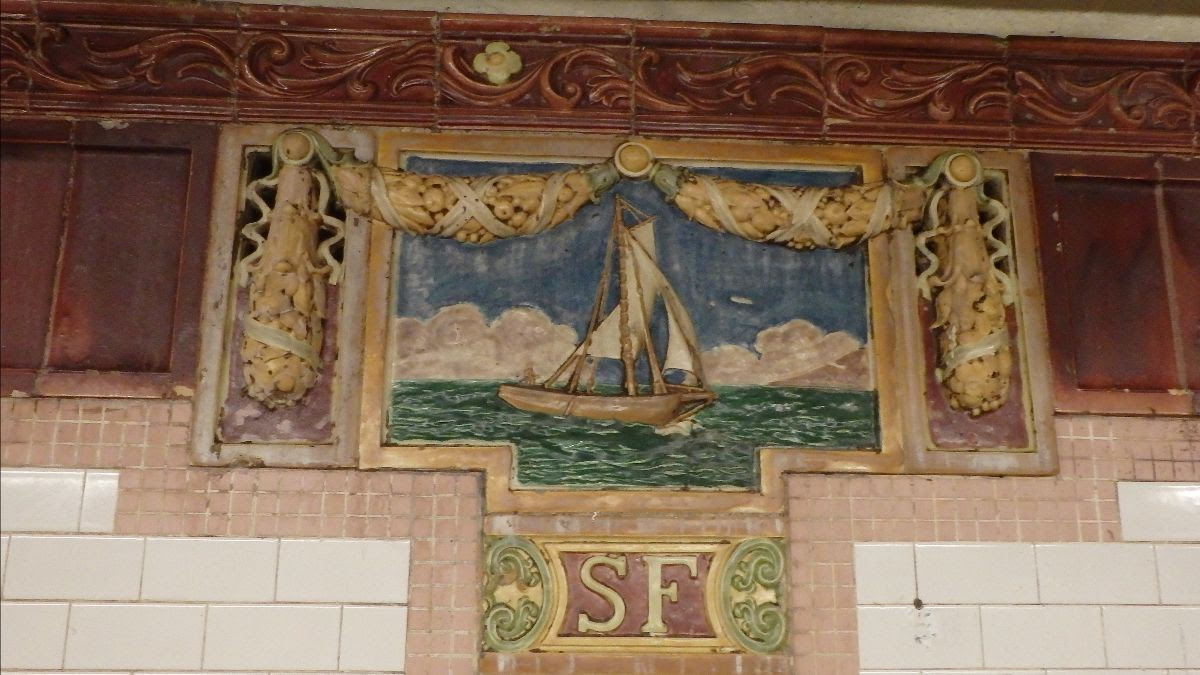
SOUTH FERRY (1) Sadly, the new South Ferry station—you know, the one that was basically destroyed during Hurricane Sandy—was home to an incredible tile piece that’s no longer able to be viewed by the public. In the old South Ferry station, however, there’s some incredible—if less monumental—tile to be found, in the form oh ceramic ships that were the work of subway architects George Heins and Christopher LaFarge.
Old City Hall
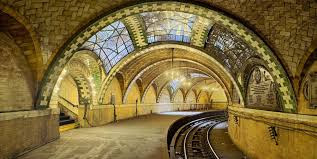
Okay, this one’s a bit of a cheat, since you can only access the station on tours led by the New York Transit Museum. But the old City Hall subway stop, closed since 1945, was arguably the prettiest subway station of its time—thanks, in large part, to the tile work by Rafael Guastavino. But those exiting the current Brooklyn Bridge-City Hall station can still get a peek at the Spanish master’s handiwork: the open plaza near the entrance to the Manhattan Municipal Building is covered by an atrium that features an undulating Guastavino ceiling.
Bleecker St (6)
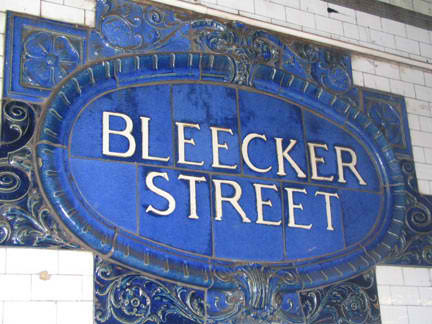
The Bleecker Street 6 station is part of the original IRT line that opened in 1904, and the tile work shows its age: Heins and LaFarge, the architects of the stops along that line, commissioned the ceramicists at the Grueby Faience Company to create Beaux Arts-inspired signage for the station, including the rich blue station marker seen here. When the station was refurbished in 2012, the lovely tile work was, thankfully, preserved.
Astor Pl (6)
Heins and LaFarge were also responsible for the Astor Place station, and it too features the handiwork of the Grueby Faience Company, notably the beaver tiles found throughout. (Those were a nod to the Astor family, which got rich off of beaver trading. Who knew?) But there’s also a more modern mosaic in the station, completed by legendary designer Milton Glaser in 1986. He took inspiration from the existing station architecture for his tiled murals, and placed large porcelain panels throughout in random patterns, so they would “take on the appearance of a puzzle,” as Glaser told the MTA.
Lexington Ave-59th St (4/5/6/N/R/W)
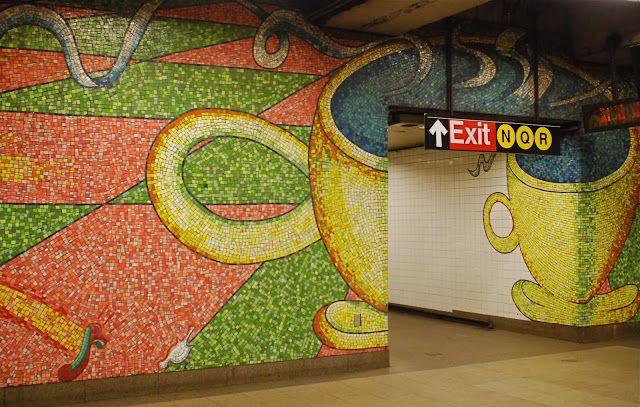
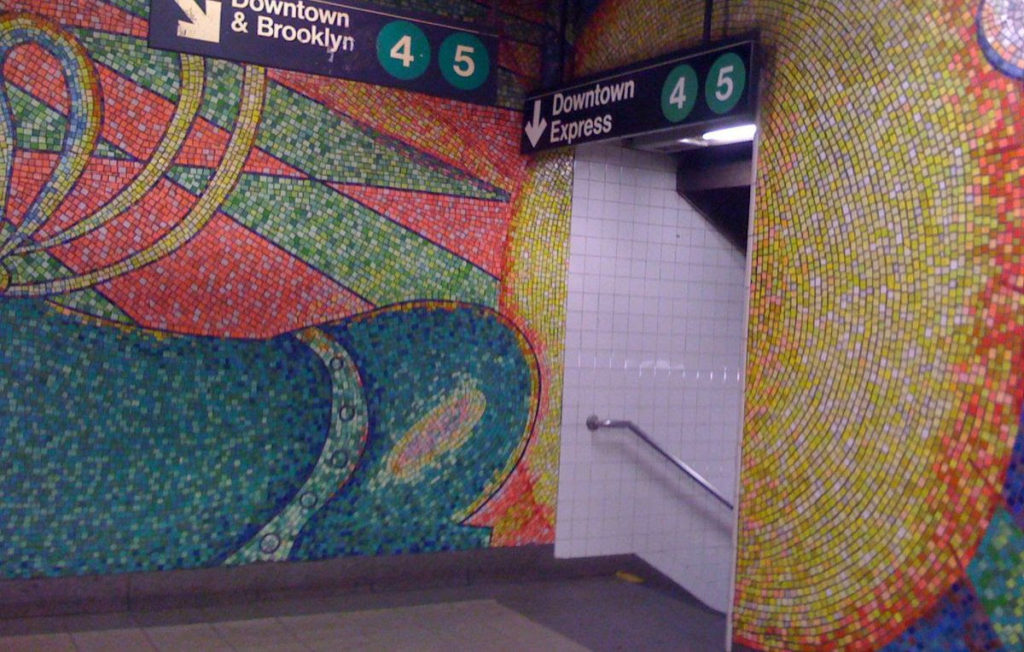
The Lexington Avenue/59th Street Station’s dreamy glass mosaic murals by Elizabeth Murray used Bloomingdale’s, right above the station, as a jumping point. Titled Blooming, the mosaic mural cascades around corners and down different tunnels to “stimulate thoughts about passage,” the artist notes. Lines of poetry by William Butler Yeats and Gwendolyn Brooks also work their way into the art, which first premiered in 1996.
Sheepshead Bay (B/Q)
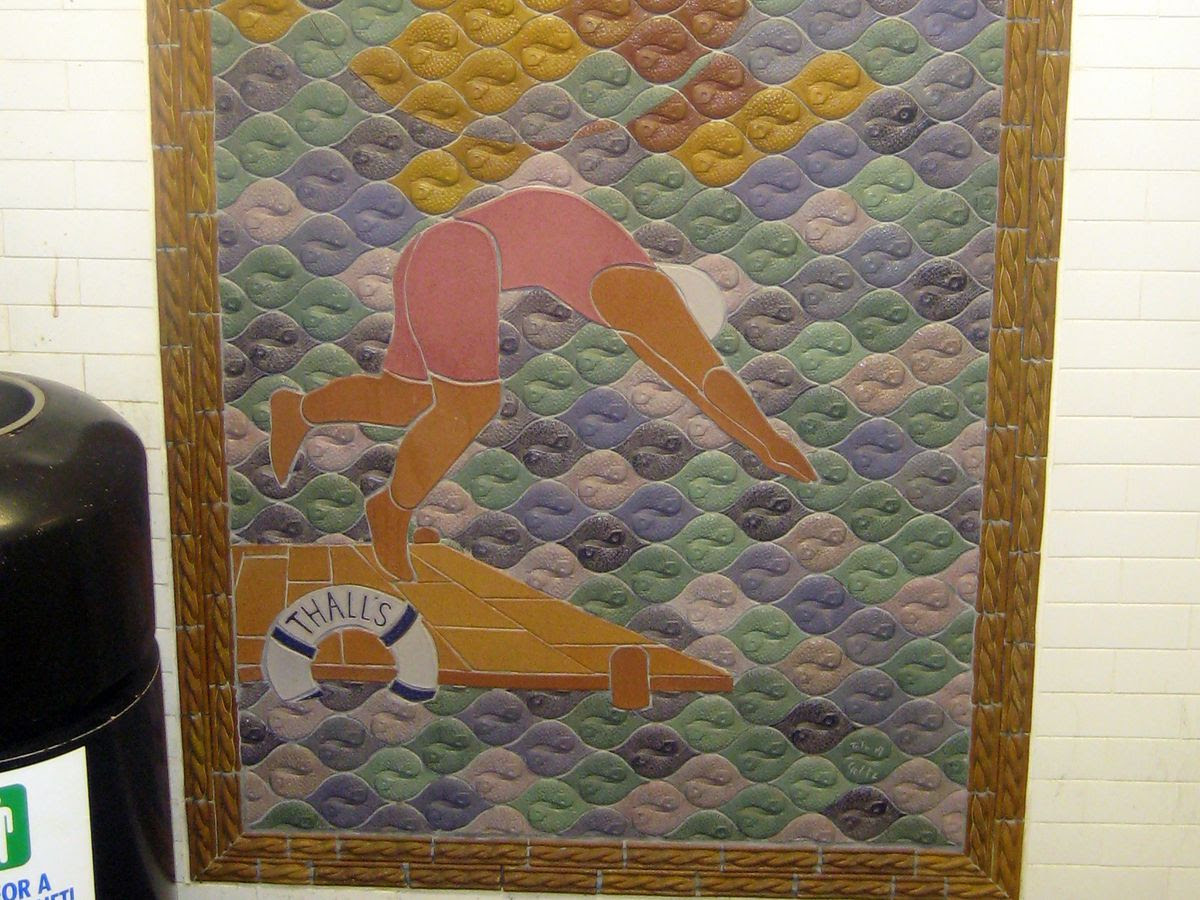
A popular tourist destination at the turn of the 20th century, the art of Sheepshead Bay’s B/Q station plays with that reputation. In her 1998 installation Postcards From Sheepshead Bay, DeBorah Goletz captures recreational moments from the time-period, drawing from old postcards. One mural allows visitors to stick their heads through for photographs, emulating an old boardwalk attraction. One mural even features sheepshead fish, after which the onetime village was named.
Buhre Ave (6)
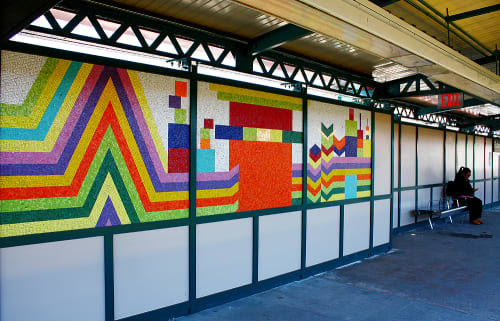
The title of Soonae Tark’s Arts for Transit piece, found inside the Buhre Avenue station in the Bronx, is simple: “Have a Happy Day.” And it’s impossible not to—the geometric shapes, rendered in colorful glass tile (courtesy of Miotto Mosaic Art Studio), are meant to “inspire commuters and the people of the neighborhood with positive energy and uplifting feelings,” according to the MTA. Mission accomplished.
Flushing-Main St (7)
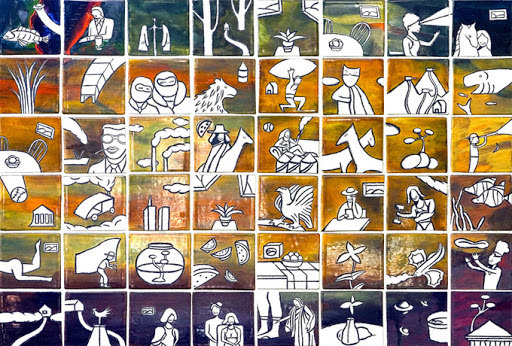
Artist Ik-Joong Kang was inspired by Flushing for this composition, which hangs inside the Main Street stop at the end of the 7 line. Each of the installation’s 2,000 ceramic tiles is printed with a unique design that reflects some aspect of the community, whether it’s a pizzaiolo tossing a pie into the air, or a baseball heading toward an unknown destination.
Eastern Parkway-Brooklyn Museum (2/3)
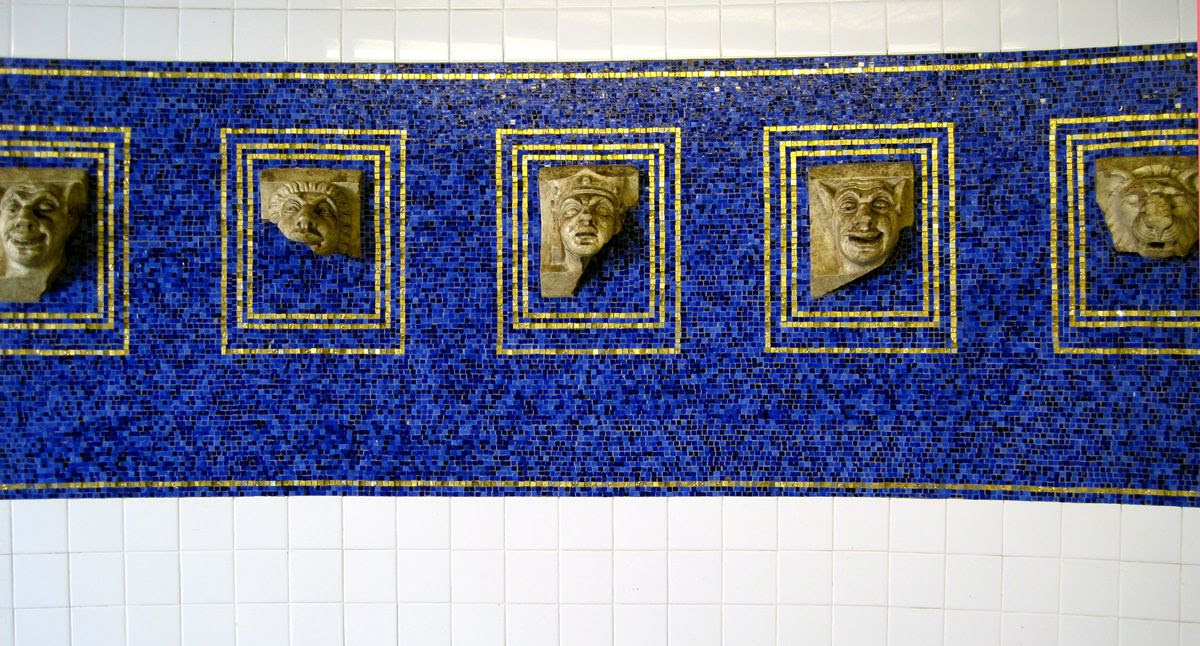
Eastern Pkwy Brooklyn, NY Visit Website The art within the Eastern Parkway subway stop reflects the institution that bears its name: MTA’s Arts for Transit collaborated with the Brooklyn Museum to bring a bit of its collection underground. Each of the pieces found in the station comes from a demolished building. Tile comes in for the framing; each piece is surrounded by a mosaic of rich blues, with gold tile evoking the feel of a gilded frame you’d find in a museum.
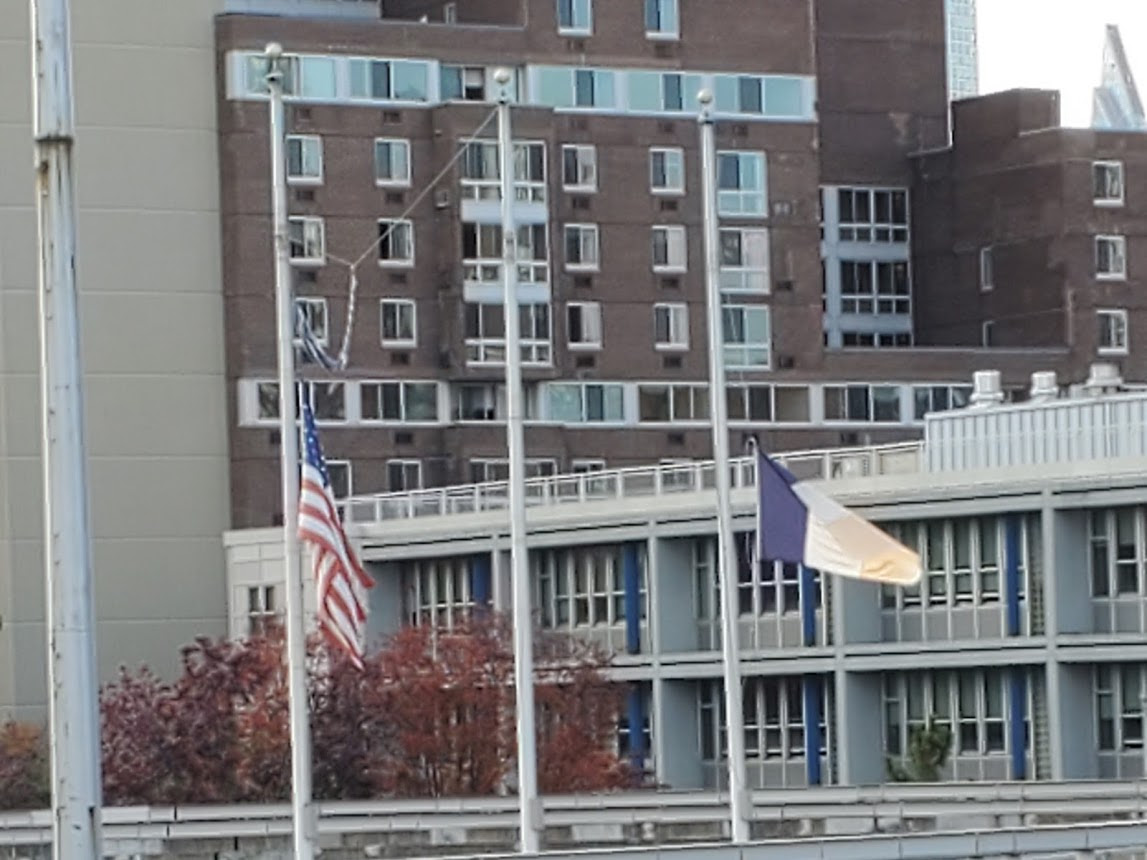
FLAGPOLES ON THE ARRIVAL DECK AT THE HELIX LEADING DOWN TO MAIN STREET
Funding Provided by: Roosevelt Island Operating Corporation Public Purpose Funds, Council Member Ben Kallos City Council Discretionary Funds thru DYCD Edited by Deborah Dorff ALL PHOTOS COPYRIGHT RIHS. 2020 (C)
FROM CURBED NEW YORK (c) By Amy Plitt@plitter
ARTS FOR TRANSIT MTA.NYC TRANSIT PHOTOS IN THIS ISSUE (C) JUDITH BERDY RIHS
A YOUNG READER TELLS US OF HIS IMPRESSION OF VIEWING A VICKER’S PAINTING AT THE VASSER ART MUSEUM.
Frances Lehman Loeb Art Gallery, Vassar College, Gift of the Shepherd Gallery Associates, New York and purchase, Lydia Evans Tunnard, class of 1936, Fund 1993.4
MORE ABOUT SQUIRE J. VICKERS
Robin Lynn and Nathan Steckman
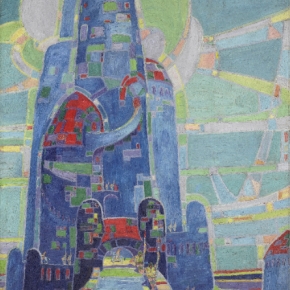
On November 9th, 2020, I interviewed my 10-year old grandson Nathan about an oil painting by Squire J. Vickers (1872-1947) which he said was his favorite work at the Frances Lehman Loeb Art Gallery at Vassar College, near his home.
I wanted to know why he liked this particular oil painting and learn about the artist who painted it. Little did I know that Vickers was not only a painter, but the chief architect of the NYC subway system and designed its stations and signs while working there for a very long time between between 1906 and 1942. Vickers decisions and choices for signage are still visible today as we ride the rails.
I told Nathan about what I had learned about Vickers from a New York Times article, Underground Renaissance Man: Watch the Aesthetic Walls, Please, August 3, 2007:
“As the architect of perhaps three quarters of the subway system, Vickers also lived what he preached, taking three forms of public transportation every day from his home in Grand View-on-Hudson in Rockland County to his office in Manhattan: a train to a ferry to a subway. His house and painting studio overlooking the Hudson, an Arts and Crafts cottage that he designed, was one of his life’s other great passions. He called the estate Over Joy, and he painted there prodigiously, often producing canvases of fantastical, almost science-fiction-like city scenes with geometric motifs that echoed the subway’s designs.
” Robin: What’s the title of the picture?
Nathan: “Fantasy Castle with Man on Zebra.”
Robin : What attracted you to it?
Nathan: The castle is tall with rounded shapes and bunches of different colors.
Robin: Do you think Vickers was thinking of subways while painting?
Nathan: Yes, I think so because the painting has a subway look. Once I saw the road underneath it, I thought it could be a railroad track. And the zebras could be the trains. I think the station could be under the castle. You could hop on a zebra and ride away.
Robin: And the sky?
Nathan It looks like there are bridges in the background. They’re white. The sky has many colors.
Robin: But it’s a fantasy scene, right? What did you dress up as at Halloween?
Nathan: A ranger from Ranger’s Apprentice.
Robin: Is that a fantasy figure?
Nathan: Yes
Robin: What is a fantasy?
Nathan: A fantasy can be make-believe. Here, it’s something that the painter thought of by himself and is not real. Although some things can be real. The castle could be real. But probably not. The road could be real.
Robin Could the Wizard of Oz be on that road?
Nathan: Yes, that could be perfect. Could be like the emerald city.
Robin: Do you know what year Vickers painted the picture?
Nathan: No.
Robin: It was 1923. Vickers could have been thinking about the Wizard of Oz (published in 1900).
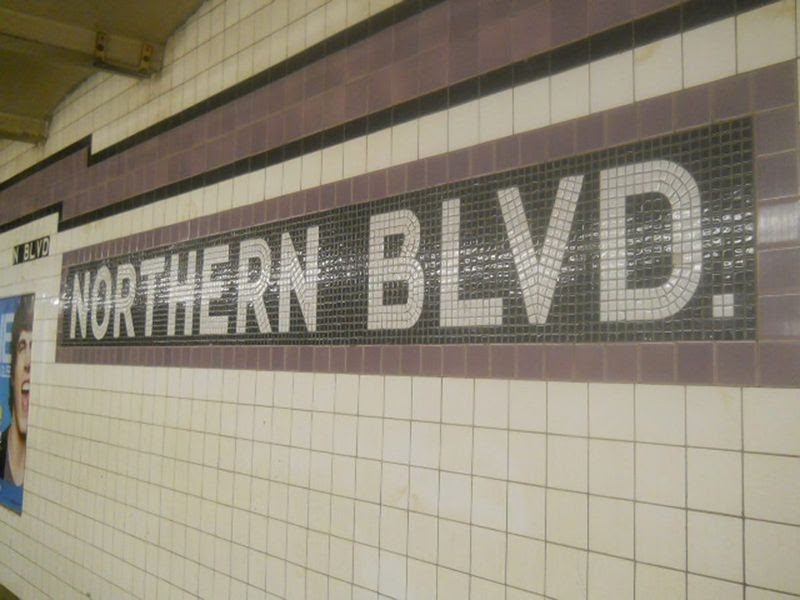
I showed Nathan a picture of the smooth, no-nonsense Northern Blvd. sign made out of colored mosaics surrounded by a brown band which we still see today on the IND line, and is its original sign from 1933 when the station opened. I asked him to compare the painting and the subway sign.
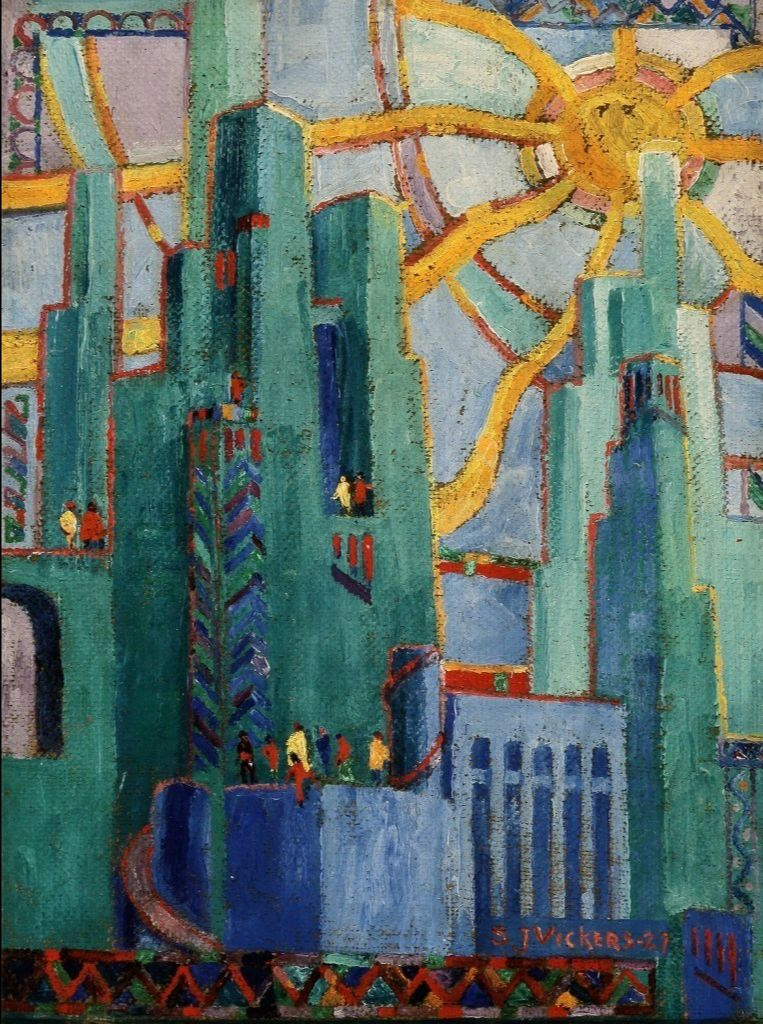
Nathan: They both have a mosaic quality to them. The sky (in the painting) looks like oil on a rough surface. If we could feel the tiles, they might feel the same as the rough paper of the painting. The painting could be a real scene because there’s a city sky, but the buildings are green. The sun is a color you don’t normally see in a regular sun. The buildings are different colors – blue, orange, yellow.
Robin: So is the scene real or a fantasy?
Nathan: A fantasy.
Robin: What about the Northern Blvd. sign?
Nathan: It’s real. It would be in a subway station.
Robin: Can you make up an alternative name for the painting?
Nathan: “Train Tracks under a Blue Castle with Men on Zebras.” The zebras can be the railroad cars. Yes, Vickers could have been thinking of a subway system; probably that’s where the idea for the road came from.
Robin: What do you think is on the other side of the castle?
Nathan: A train ready to go to a bridge or another fantasy castle where there are men on elephants. Elephants are for Republicans. Donkeys for Democrats. The zebras could be democracy.
Robin: Do you think this work is abstract?
Nathan: Yes.
Robin: Do you think the sign is abstract or is it precise?
Nathan: Precise.
Robin: Don’t you think it’s interesting that during his weekday job, he’s precise, and when he paints he’s abstract.
Robin: What are some words you’d use to describe how the work makes you feel?
Nathan: It makes me feel entertained. There are different colors everywhere. My eyes began darting back and forth. I would jump on the zebra.
Robin: Do you want a pen name if your interview is published? You know, that’s a name that’s not yours but you use when you’re being published.
Nathan: I guess. You could call me Squire J. Vickers, Jr.
PAINTINGS BY JOSEPH SQUIRE VICKERS
SQUIRE J. VICKERS American (1872–1947)
CITYSCAPE WITH SUN 1927
Oil on burlap Museum purchase Museum of Fine Arts St. Petersburg
2011.3.2
Vickers studied architecture at Cornell University and was Chief Architect for the New York Subway System (1906–1942). He was also a painter. After the 1913 Armory Show, which introduced European modernism to America, Vickers was inspired to move away from naturalistic representation towards abstraction. As seen here, he began to use the simplified forms of Cubism and the expressive, non-naturalistic color of the Fauvists to capture the energy of New York City. During the 1920s, many artists sought to represent the rapidly-changing city, which was developing in construction, communications technology, and industry. Playing an instrumental role in the city’s mass transportation system, Vickers had an intimate knowledge of urban development, and was keen to express it in his paintings.
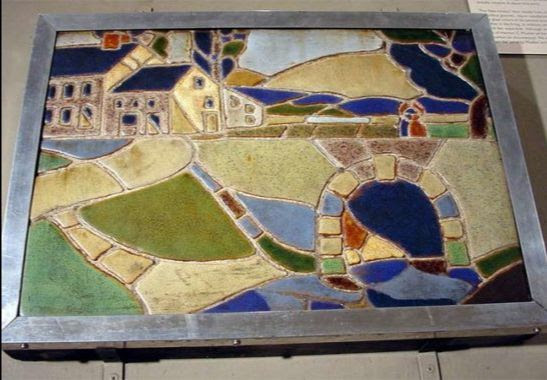
SQUIRE J. VICKERS American (1872–1947)
COTTAGE WITH TUNNEL Museum of Fine Arts St. Petersburg
c. 1920 Oil on burlap
Museum purchase
2011.3.1
Vicker’s inspiration, aside from European Modernism, was the Arts & Crafts Movement, which also informed the subway’s architectural embellishments that he was responsible for: their flattened designs often incorporated tiles by such makers as Grueby and Rookwood. Further, the patterned roof tiles of his Arts & Crafts home recall those found in his fantasy landscapes like this.
New York Skyline at William J. Jenack Estate Appraisers & Auctioneers in 2016
CANAL STREET STATION AND TIMES SQUARE STATION MOSAICS
FRIDAY PHOTO OF THE DAY
SOME NEW FLAGS ON THE THREE FLAGPOLES ARE COMING SOON
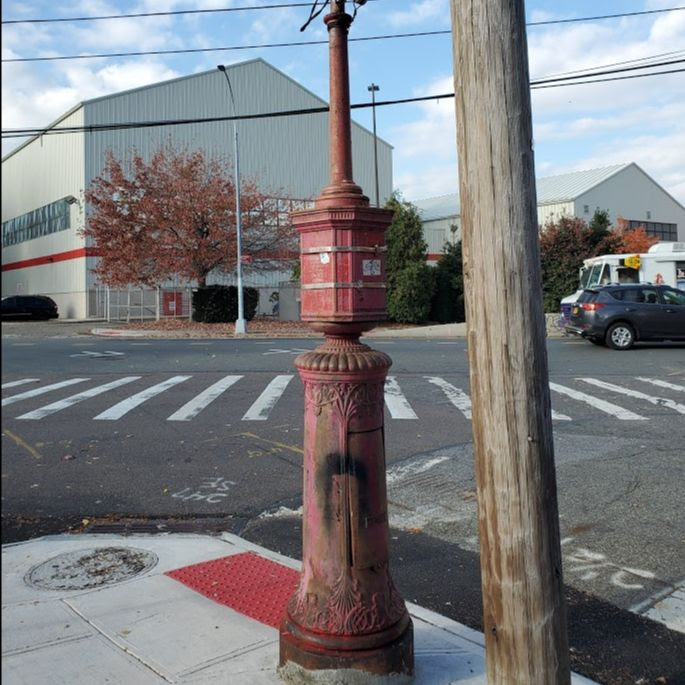
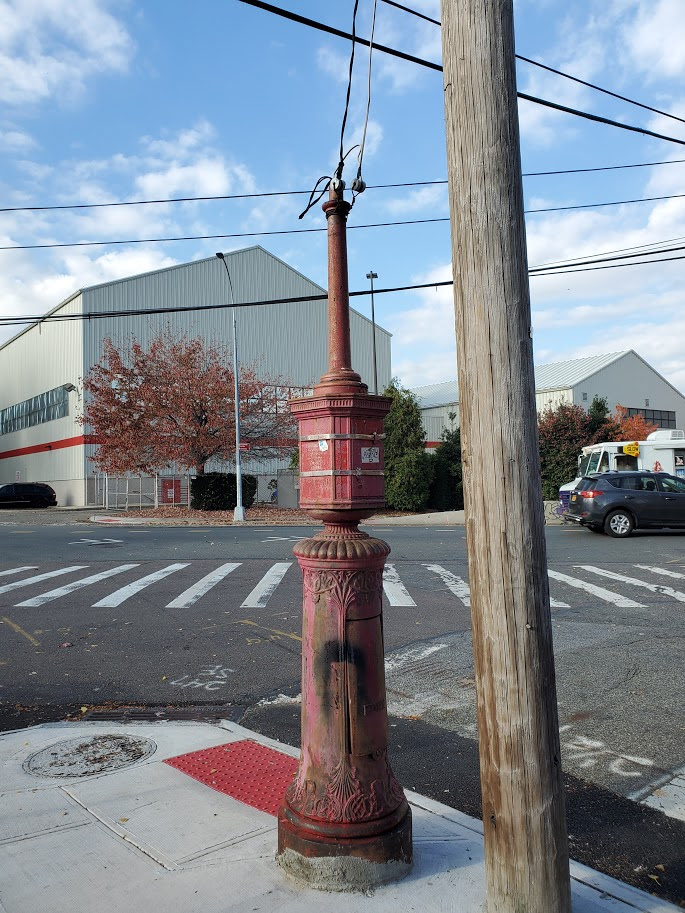
Vintage Fire Call Box at the Corner of Vernon Blvd and 33rd Avenue Still Connected to Overhead Wiring JOAN BROOKS, ARLENE BESSENOFF, VICKI FEINMEL WERE THE WINNERS
Text by Judith Berdy Thanks to Bobbie Slonevsky for her dedication to Blackwell’s Almanac and the RIHS Thanks to Deborah Dorff for maintaining our website Edited by Melanie Colter and Deborah Dorff Roosevelt Island Historical Society MATERIALS USED FROM:
The story of Squire Vickers, the man behind the distinctive look of the New York City subway
By KERI LAKINGER NEW YORK DAILY NEWS |(C) JUN 30, 2016 AT 8:15 AM
FUNDING PROVIDED BY ROOSEVELT ISLAND OPERATING CORPORATION PUBLIC PURPOSE GRANTS CITY COUNCIL REPRESENTATIVE BEN KALLOS DISCRETIONARY FUNDING THRU DYCD
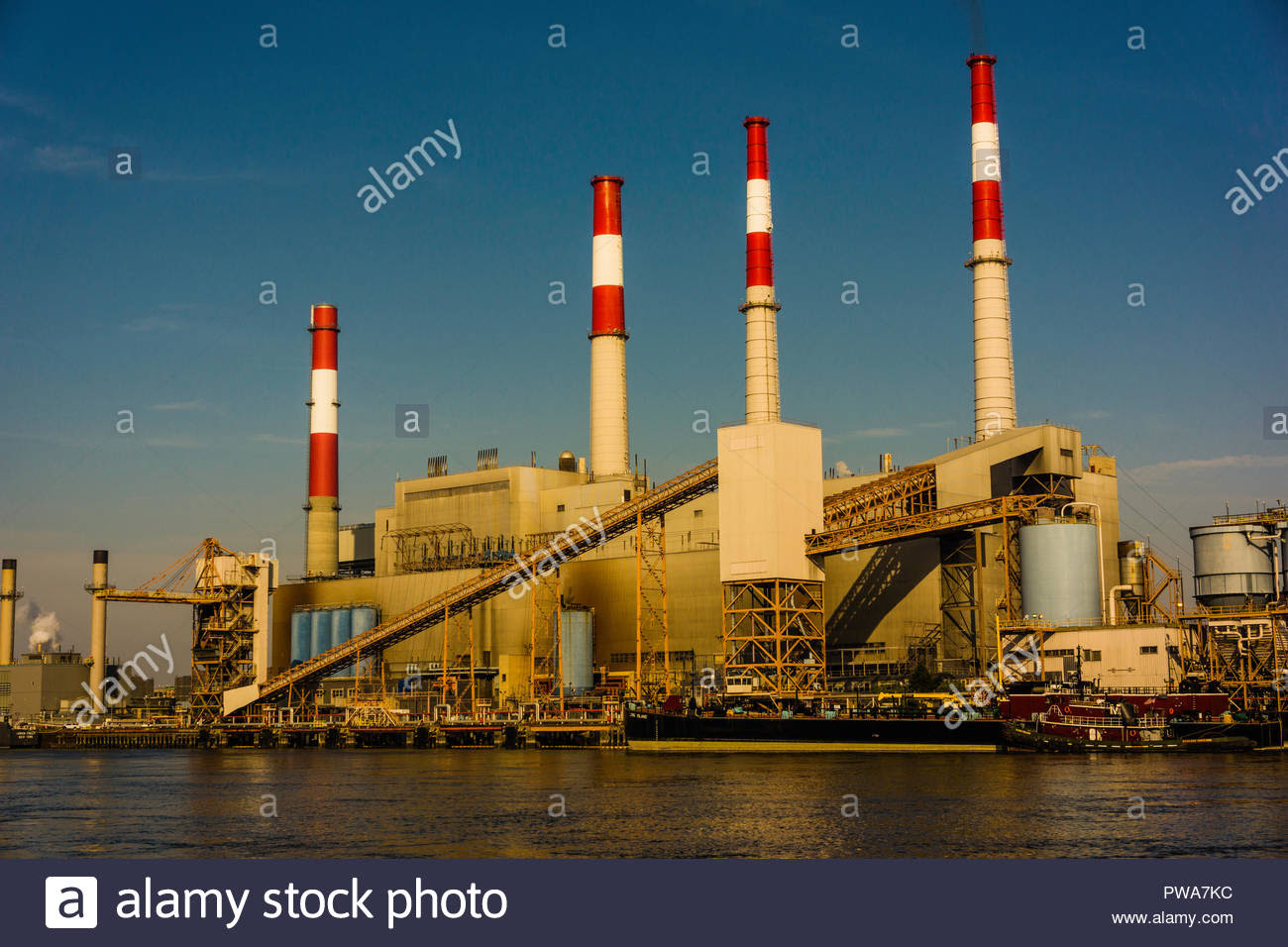
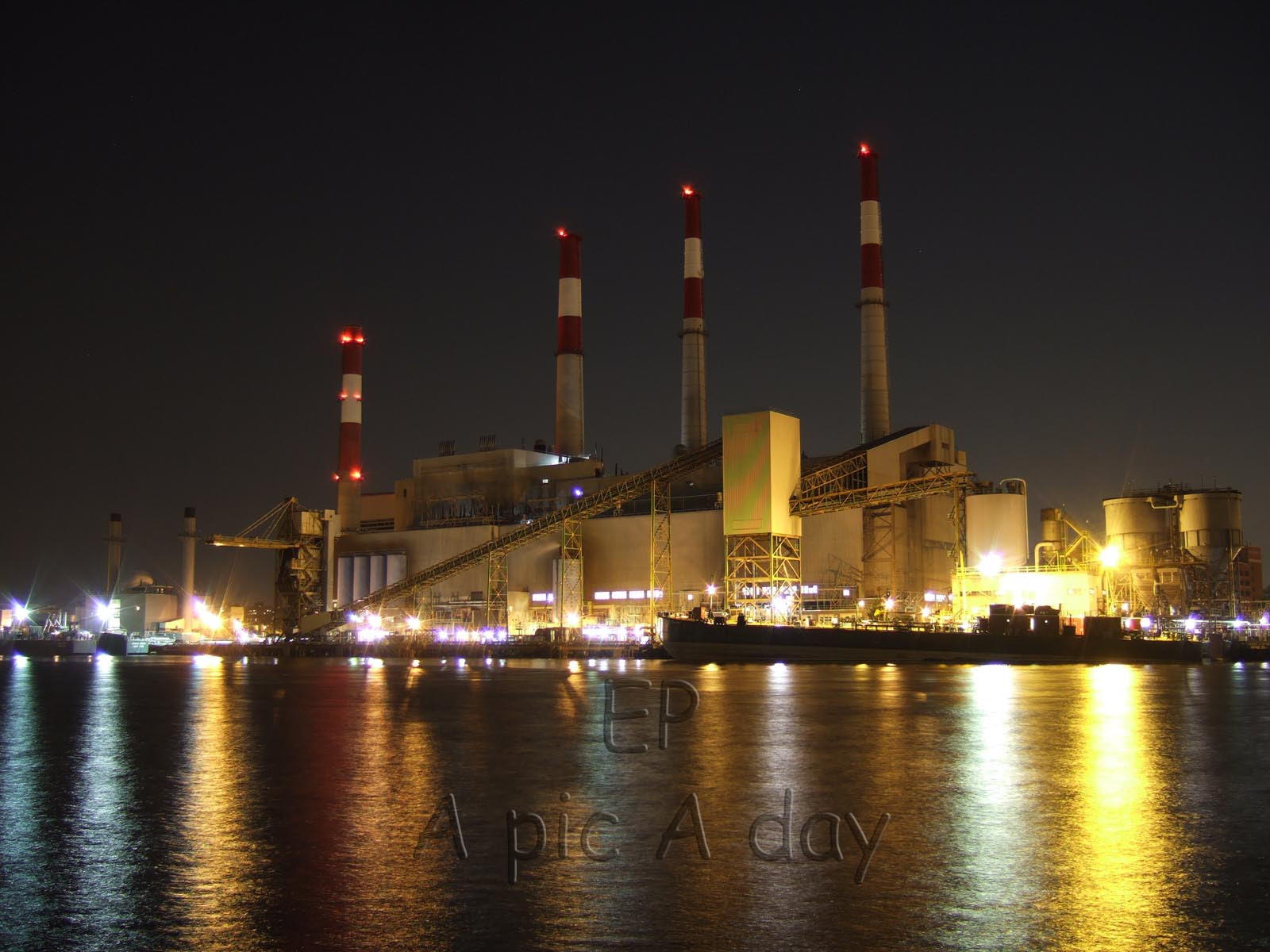
That grand pile in Queens across the river. The big thing with four towering red and white stacks – the Ravenswood Generating Station, to be precise. “Peaker” will come a bit later: read on.
It’s big. Ravenswood was the world’s first million kilowatt power plant. It was one of the largest power generating stations in New York, with the capacity to supply 21% of all the electricity used in New York City.
Some (early) history
We learn from an article in the Brownstoner magazine that the plant sits on the former site of the Jacob Blackwell Mansion, built in 1744. Blackwell was a latecomer, of course — the Dutch were well established along this coast by the 1650s. Jacob was one of 12 children of Robert Blackwell (who, you recall, came to own our island when he married the daughter of its former owner, Robert Manning). Jacob Blackwell became the owner of a Ravenswood house – not yet “the Mansion” – in 1717. At that time, Ravenswood became a neighborhood of fine riverside estates – now “the Mansion”. Soon, however, the wealthy moved eastwards on Long Island. Their mansions were left behind and by the late 1870s many ended up as orphanages and asylums. As the LIRR moved in along Newtown Creek, hundreds of small factories sprang up in Ravenswood which prospered along the busy East River. Finally, during the 1930s and 40s, vast tracts of public housing (and Queensbridge Park) were erected and the recognizable shape of modern Ravenswood was formed.
The Ravenswood plant was initially designed to be a nuclear generator!
Richard Gentilviso writes in a June 20, 2012 article in The Gazette that about the same time – summer, fall 1962 – the Japanese decided to allow Tokyo Electric to build a nuclear plant in Fukushima and Con Ed was about to go online at Indian Point, Con Ed also applied to the Atomic Energy Commission to build a 1,000-megawatt nuclear generating station at the Ravenswood generating station. This would have been the world’s largest nuclear plant, with a capacity greater than all existing nuclear power plants in the U.S. at the time.
Local opposition quickly coalesced against the proposal and succeeded in stopping the threat of a nuclear power plant in the Ravenswood area’s back yard. Expert views were conflicted. In April 1963, Con Ed Chairman Harland C. Forbes told a Congressional committee any concerns were “rather silly” and that “one or two people have raised some question about the genetic effects of radiation and so forth”. But in testimony to the same Congressional committee, David E. Lillenthal, a former chairman of the Atomic Energy Commission, said, “I would not dream of living in the borough of Queens if there were a large atomic power plant in that region because there is an alternative—a conventional thermal power plant to which there are no risks.”
On Jan. 6, 1964, Con Ed withdrew its application for the nuclear power plant at Ravenswood.
But, writes Gentilviso, the nuclear story wasn’t over. Con Ed proposed another plan in 1968 to build a nuclear reactor not more than several hundred feet from the Ravenswood plants below an abandoned hospital site on Welfare Island (now Roosevelt Island). A nuclear plant on our island!!! They made a third proposal in 1970 for nuclear plants built on man-made islands located several miles off Coney Island in Brooklyn and Staten Island. Neither plan went far.
At the end of the day, said J. Samuel Walker, a historian of the U.S. Nuclear Regulatory Commission, “Ravenswood was kind of a test case…” After Ravenswood, he said, the commission “agreed on kind of an informal rule: They wouldn’t allow a [nuclear] plant any closer to the city than Indian Point.
The Great Blackout of 1965: “Big Allis”
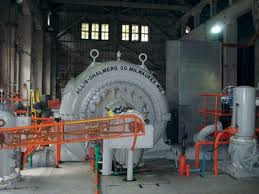
Con Ed’s first two Ravenswood units constructed in 1963 were Ravenswood 10 and 20, each having a generating capacity of approximately 385 megawatts. Then, in 1965, Cen Ed commissioned Ravenswood 30. It was built by Allis Chalmers which announced that Con Ed had ordered the “world’s first MILLION-KILOWATT unit…big enough to serve 3,000,000 people.” This sheer scale helped the plant become popularly known as “Big Allis”.
Big Allis played a role in the Great Blackout of 1965. The blackout – which affected many communities in the Northeast and Canada, began at a misprogrammed protective relay on a transmission line on the Beck power station in Queenston, Ontario, near Niagara Falls. The safety relay was set to trip if other protective equipment deeper within the Ontario Hydro system failed to operate properly. On a particularly cold November evening, power demands for heating, lighting, and cooking were pushing the electrical system to near its peak capacity. Transmission lines heading into southern Ontario were heavily loaded. The safety relay had been programmed incorrectly, and it did what it had been asked to do: disconnect under the excess loads it perceived. Bear in mind that at this time, all of these power generators scattered across the two countries were interconnected with few firewalls between them. The idea was that it would be easier to share power as required.
As a result of this failure, a small variation of power originating from the Robert Moses generating plant in Lewiston, New York caused the relay there to trip, disabling a main power line heading into Southern Ontario. Instantly, the power that was flowing on the tripped line transferred to the other lines, causing them to become overloaded. Their own protective relays, which are also designed to protect the lines from overload, tripped, isolating Beck station from all of southern Ontario.
With nowhere else to go, the excess power from Beck then flowed east, over the interconnected lines into New York State, overloading them as well. The Beck generators, with no outlet for their power, were automatically shut down to prevent damage. The story goes on, but basically a ”tsunami of power” was heading south. In New York City, as monitoring dials went wild, a crucial operator at the main power control station made frantic phone calls upstate instead of preemptively shutting down the city’s system to protect it. Automatic shutoffs took over and suddenly closed down the Con Ed system for the first time in its history, causing damage to the power system.
I was told (which means that I cannot confirm this) that people at Ravenswood hoped the Big Allis would withstand the oncoming load and keep the City’s power on. Alas, it was not to be. Big Allis’ burned up its bearings – because the device that kept the bearings oiled ran on the power generated by Big Allis – so Big Allis went down too.
Ultimately the 1965 power failure covered 80,000 square miles and affected about 25 million people. (But the Blackout Baby Boom turns out to have all been a myth.)
Who Owns Ravenswood?
Ravenswood was originally built and owned by Con Ed. Due to New York State’s energy market deregulation, Con Edison was required to sell all of its “in-city ” generating stations in New York City including Ravenswood. In 1999, Con Edison transferred ownership of Ravenswood to KeySpan Energy. In 2004, KeySpan constructed a new unit, Ravenswood 40, using combined cycle technology with generating capacity of 250 megawatts. National Grid plc acquired KeySpan in 2007 but due to its involvement in electrical transmission, the New York Public Service Commission required National Grid to sell Ravenswood to ensure competition in the market. On August 26, 2008, Ravenswood was sold by National Grid to TransCanada Corporation for $2.9 billion. Trans Canada sold Ravenswood to LS Power/Helix Energy Solutions Group with Ethos power running it. In 2018, Helix Generation LLC filed a lawsuit against TransCanada Facility USA Inc. for allegedly fraudulently misleading Helix prior to the sale.
And today – Peaker Plants
Ravenswood is not now of 16 operating Peaker plants in New York City that fit into the New York Power Authority’s market and send their energy to the city’s power grid. Peakers are run to provide power to the grid to meet peak demand. They were intended to be used only once or twice a year, but they now run in New York City on a more regular basis to meet the city’s growing energy demands, particularly in the evening when more lights and devices are turned on.
Peakers may be run only a relatively few hours in the year, but they often tend to be among the most polluting assets on the electrical grid. Reasons are they are older and they are fed by the most polluting fuel oil. Clean energy groups contend that the reductions in greenhouse gases are tremendous, when Peaker plants are replaced with renewables-plus-storage.
Peaker plants are also expensive. A new report (“Dirty Energy, Big Money,” published by the PEAK Coalition, which consists of New York City environmental justice groups NYC-EJA, UPROSE, and The Point CDC, as well as New York Lawyers for the Public Interest and Clean Energy Group) found that New Yorkers over the last decade have paid more than $4.5 billion in electricity bills to the private owners of the city’s Peaker plants, just to keep those plants online in case they’re needed—even though they only operate between 90 and 500 hours a year. Even at the upper limit, that’s less than three weeks. This all means that the price tag for peak electricity in the Big Apple is 1,300 percent higher than the average cost of electricity in the state. The report also found that about 85 % of the last decade’s peak electricity payments were funneled to three private, out-of-state firms—a Boston hedge fund, a Houston fossil-fuel generation company, and a New Jersey private equity firm—that own a large share of the oldest New York City Peaker plants.
In July 2019, the New York State Energy Research & Development Authority study identified Peaker plants in the state that could be replaced with battery storage, and Ravenswood was identified as a candidate to have an 8-hour battery storage facility that can power 250,000 homes. The report concluded that most of the Ravenswood transition could be completed by March 2021, and this transformation would be a new sustainable model for the city to transition other Peaker plants to zero emissions.
The Ravenswood plant would be the largest battery-run plant in the state, considered the first of its kind in the region, and would fall in line with Governor Cuomo’s Green New Deal goals of 1,500 MW of storage in New York by 2025 and 3,000 MW of storage by 2030. The state recently finalized new pollution restrictions that would drive the most polluting plants into retirement. Still, batteries are only as environmentally friendly as the sources of the power that recharge them. The Ravenswood battery would continue to be charged in part by existing fossil fuel infrastructure.
In this past October, the New York Power Authority (NYPA) said that it had agreed with a coalition of clean energy and environmental justice groups to assess how NYPA can “transition” the Peaker plants in its service area to “utilize clean energy technologies”. According to the NYPA and PEAK Coalition, the available options could include “battery storage and low to zero carbon emission resources and technologies”. As well as lowering greenhouse gas emissions and other pollutants, the transition plan is aimed at improving air quality. The NYPA-PEAK Coalition release emphasized that plans to transition NYPA’s six Peaker plants in New York City and one on Long Island, which have been in operation since 2001, must maintain the electric system’s reliability and resiliency requirements while helping the state meet its policy goal of achieving zero carbon electricity statewide by 2040.
Under New York’s groundbreaking climate law passed last year, the Climate Leadership and Community Protection Act, the state must reform this system to achieve a carbon-free electricity generation system by 2040. But many argue that there is no need to wait that long – the technology exists to transform the system – and that what is needed now is a commitment to prioritize the health and resilience of our hardest-hit neighborhoods.
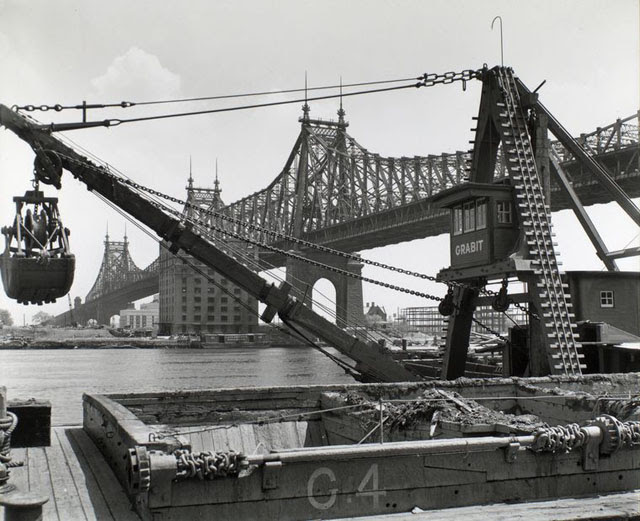
QUEENSBORO BRIDGE FROM MANHATTAN WITH ELEVATOR STOREHOUSE BUILDING BY BERENICE ABBOTT No one guessed this one
FROM A READER
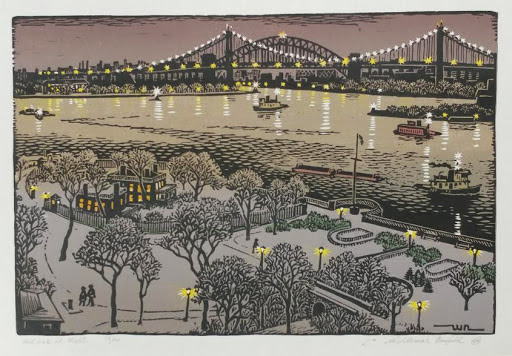
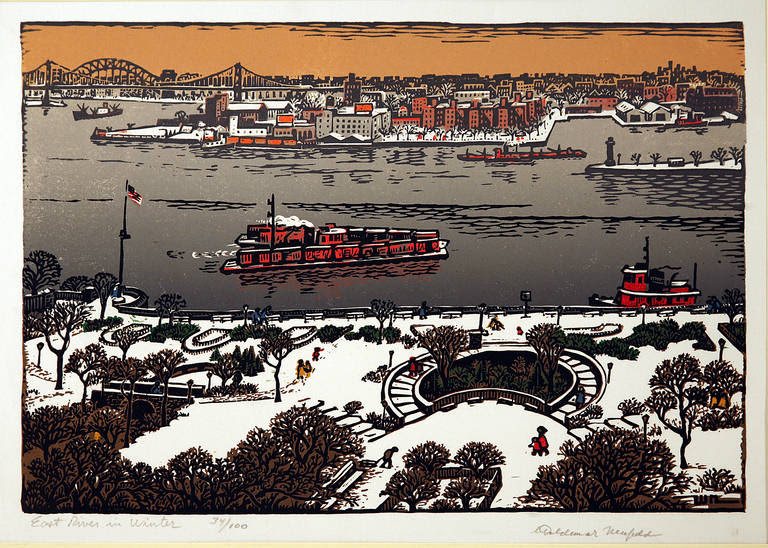
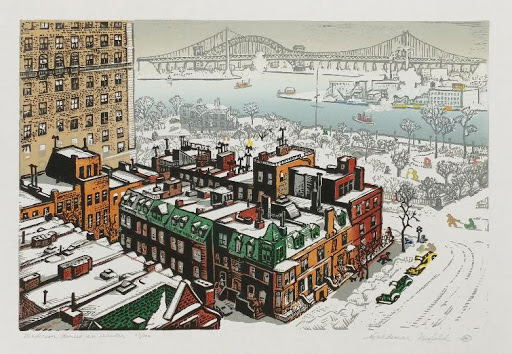
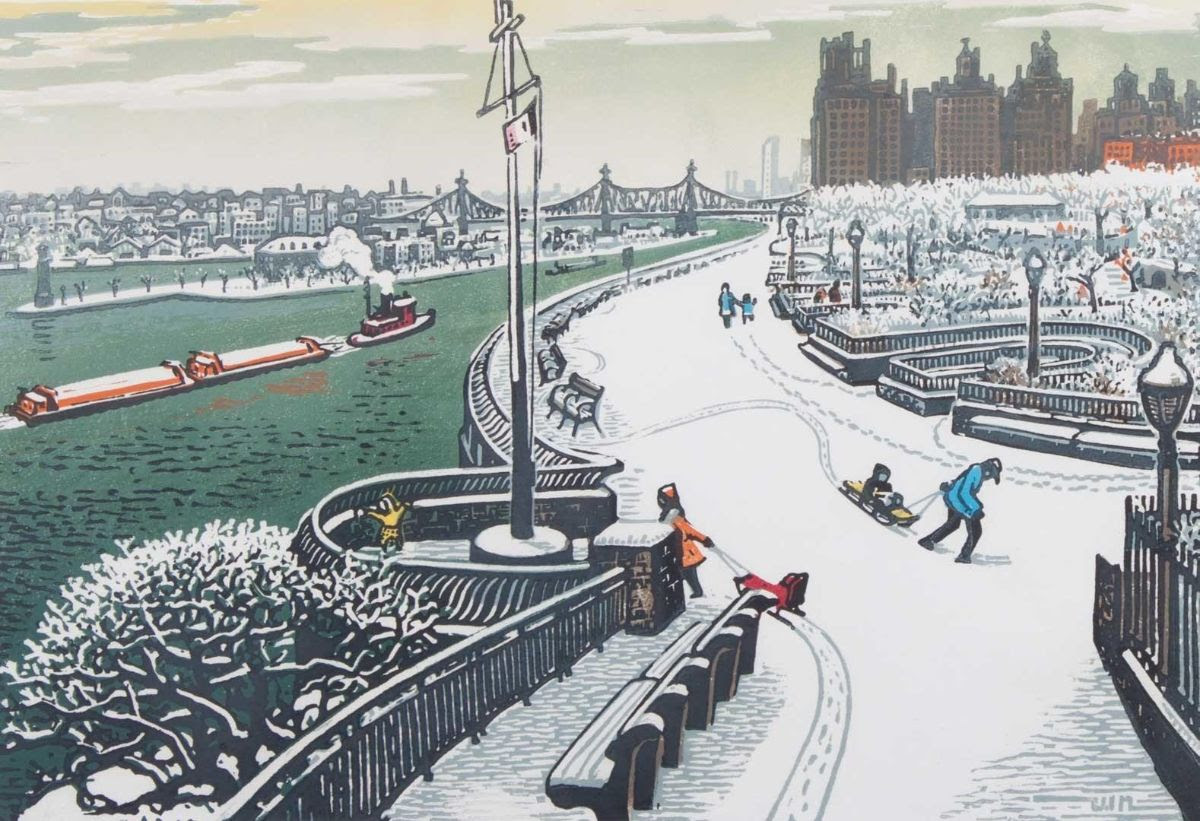
Hi Judy, I just saw the newsletter about Wodemar, and scrolling down I got a surprise–I have two of Woldemar’s prints, in your newsletter (versions of the two, I should say). I bought them more than 50 years ago, when I lived a few blocks from Gracie Mansion (in an old tenement walkup) and could barely afford art. They are quite large, and their colors are slightly different from the ones you show. Both are winter scenes, and show at least part of Roosevelt Island. They were something of a premonition of my future, at a time when I never imagined I would marry or move out of Manhattan. My dream then was to live in one of those East Side buildings that look out on these scenes.
I never knew anything about Woldemar Neufeld, so I thank you for the information. I don’t know why I never looked him up–the prints, which have the look of original woodcuts or linoleum prints–have been with me for so long, and I did buy them before there was internet or google. I have had them in my summer place in Maine for many years, because I like to have Roosevelt Island to look at while I’m away from here. I hope they’re ok–I haven’t been back to Maine this year and it’s unlikely that I’ll see my prints until next summer if we’re all lucky.
Susan Lees
Text by Judith Berdy Thanks to Bobbie Slonevsky for her dedication to Blackwell’s Almanac and the RIHS Thanks to Deborah Dorff for maintaining our website Edited by Melanie Colter and Deborah Dorff All image are copyrighted (c)
The Miriam and Ira D. Wallach Division of Art, Prints and Photographs: Photography Collection, The New York Public Library. “Queensboro Bridge: I. From 63rd Street Pier, Manhattan.” The New York Public Library Digital Collections. 1937. https://digitalcollections.nypl.org/items/510d47d9-4f4c-a3d9-e040-e00a18064a99
FUNDING PROVIDED BY ROOSEVELT ISLAND OPERATING CORPORATION PUBLIC PURPOSE GRANTS CITY COUNCIL REPRESENTATIVE BEN KALLOS DISCRETIONARY FUNDING THRU DYCD
TODAY IS VETERANS DAY, WHEN WE HONOR THOSE WHO SERVED AND DIED FOR OUR COUNTRY
Wednesday, November 11, 2020
OUR 207th ISSUE
OF
FROM THE ARCHIVES
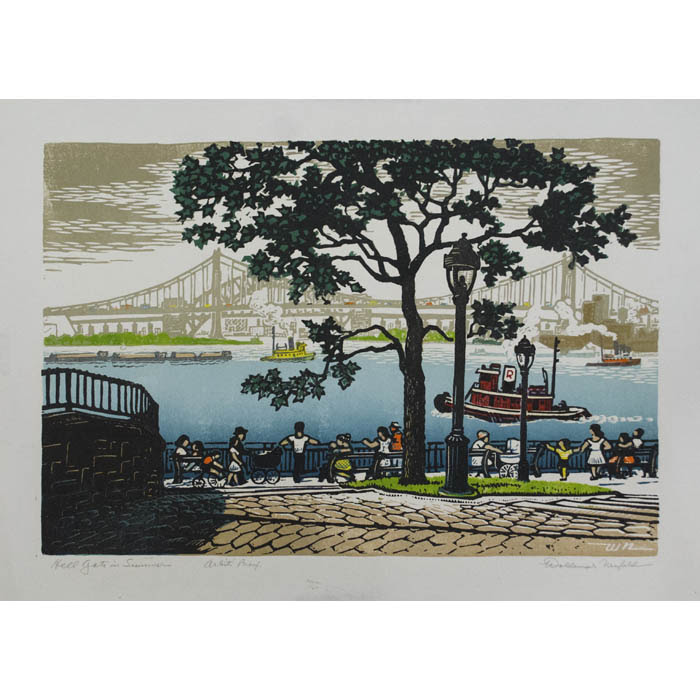
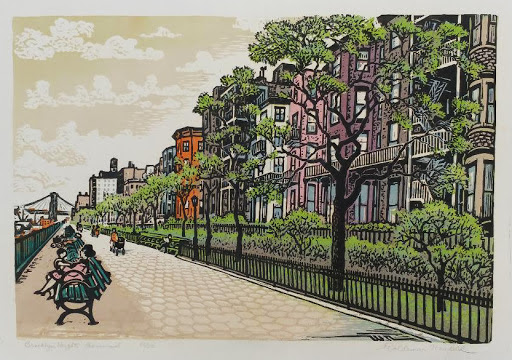
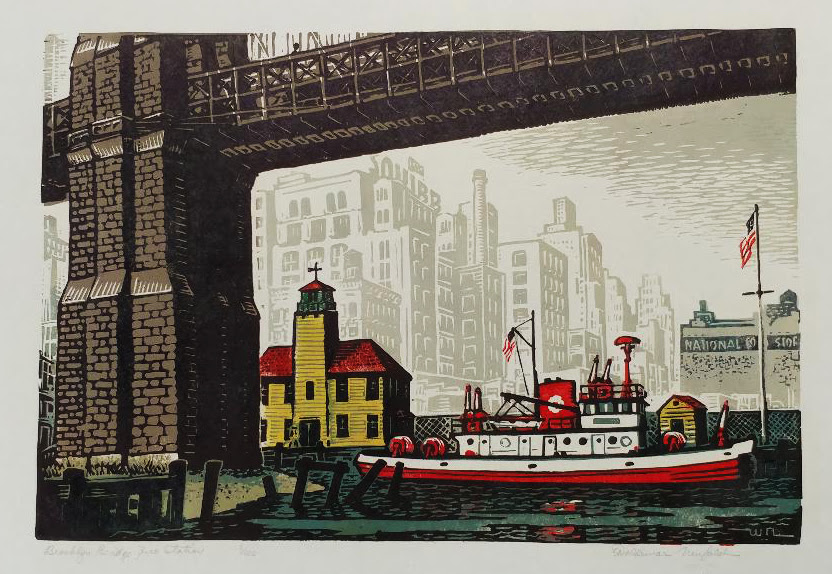
WOLDEMAR NEUFELD
View, New York City, Upper East Side, Woldemar Neufeld, Hell Gate in Summer, George Glazer Gallery
Neufeld, Woldemar, Artist
Artist description:” This is where I wheeled my children uncountable times in buggies and strollers. It was really good and satisfying on these outings with my children because I could observe the tug boats from close up. Note the East River bridges against the background.”
Woldemar Neufeld (1909 – 2002) Born of German-speaking Mennonites in Waldheim, Russia, Woldemar Neufeld immigrated to Canada in 1924, arriving with hope that the “new world” would welcome him with opportunity. At age 15 Neufeld settled in Waterloo, Ontario. Eager to erase his immigrant identity, Neufeld plunged into the Canadian way of life by rapidly learning the Pennsylvania-German dialect that was spoken by many inhabitants locally, and by learning English at school.
Neufeld’s parents were insistent that their son receive serious training in religion and German, as he would have received at a Mennonite school in Russia. Enrollment at Waterloo College (now Wilfrid Laurier University) meant a strict education given by Lutheran Seminarians – Neufeld relished the degree of seriousness with which art was taught. A visit to Homer Watson’s studio in the village of Doon, a few miles from Waterloo, proved to have a significant influence on Neufeld’s future career. Watson, then a well-known Canadian painter, insisted that, should he ever pursue formal studies, Neufeld should remain true to his own vision and style.
Upon graduation from the college school in 1930, Neufeld enjoyed a career as an independent artist, living and working in Waterloo, Toronto and Vancouver. He helped found the Art Society of Kitchener, an artist collective that still exists today. He began taking ambitious sketching trips to northern Ontario, and short visits to see his sister in the United States. During one of these visits, Neufeld decided to enroll at the Art Institute in Cleveland, Ohio, and so came to spend the rest of his career in the U.S.A.
After spending a decade chronicling the area surrounding Cleveland in his paintings, Neufeld moved to New York City in 1945. Settling into a studio on the Upper East Side, Neufeld established himself as an artist and instructor along the city’s East River. The bridges, boats and shorelines became prominent as his subjects for oils, watercolours and block prints. He devoted himself to documenting the area, working with children in settlement houses and serving as an art director.
In 1949, the artist moved to an eight-acre farm among the hills, lakes and forests of Connecticut, just 80 miles north of New York City. Here, at New Milford – with Homer Watson’s ambitious studio as his inspiration – Neufeld turned his 140-year-old stone house and barn into a home, gallery and summer art school.
New Milford proved to be a further inspiration for the maturing artist. He discovered a passion for the surrounding landscape and subject matter and he chronicled the area in numerous paintings. Delighted with the similarities between this newest home and Waterloo, his first home in North America, Woldemar Neufeld chose to settle in New Milford, the last stop on his artistic journey.
Woldemar Neufeld died on November 24 from complications of Parkinson’s disease, shortly after his 93rd birthday.
JOAN BROOKS, VICKI FEINMEL AND LAURA HUSSEY GUESSED RIGHT BEFORE 7 A.M. CARLA BELLA WAS CORRECT TOO
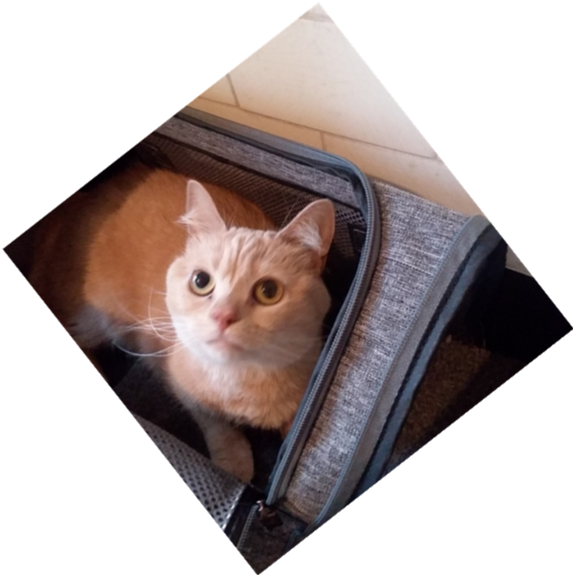
FROM A LOYAL READER Dominique. Better known as Nikita or The Cat. My human takes care of the other stuff. Have you not heard? Dogs have masters. Cats have staff.
CLARIFICATION WE ARE HAPPY TO GIVE WINNERS OF OUR DAILY PHOTO IDENTIFICATION A TRINKET FROM THE VISITOR CENTER. ONLY THE PERSON IDENTIFYING THE PHOTO FIRST WILL GET A PRIZE. WE HAVE A SPECIAL GROUP OF ITEMS TO CHOOSE FROM. WE CANNOT GIVE AWAY ALL OUR ITEMS,. PLEASE UNDERSTAND THAT IN THESE DIFFICULT TIMES, WE MUST LIMIT GIVE-AWAYS. THANK YOU
Text by Judith Berdy Thanks to Bobbie Slonevsky for her dedication to Blackwell’s Almanac and the RIHS Thanks to Deborah Dorff for maintaining our website Edited by Deborah Dorff All image are copyrighted (c) Roosevelt Island Historical Society unless otherwise indicated
Google Images (c) WILFRED LAURIER UNIVERSITY PERMANENT ART COLLECTION ALL IMAGES ARE SUBJECT TO COPYRIGHT (C)
The Miriam and Ira D. Wallach Division of Art, Prints and Photographs: Photography Collection, The New York Public Library. “Queensboro Bridge: I. From 63rd Street Pier, Manhattan.” The New York Public Library Digital Collections. 1937. https://digitalcollections.nypl.org/items/510d47d9-4f4c-a3d9-e040-e00a18064a99 FUNDING PROVIDED BY ROOSEVELT ISLAND OPERATING CORPORATION PUBLIC PURPOSE GRANTS CITY COUNCIL REPRESENTATIVE BEN KALLOS DISCRETIONARY FUNDING THRU DYCD