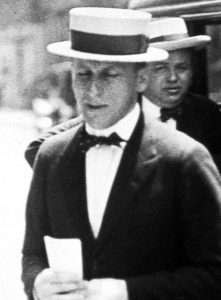
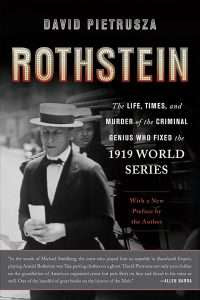
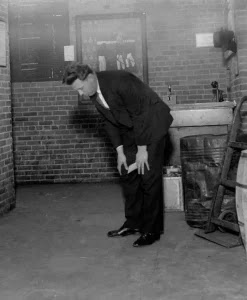
Arnold Rothstein was of the most famous of America’s 20th century criminal masterminds, and for more than 20 years, the New York City native spent his summers in Saratoga Springs, gambling on the horses by day – and just plain gambling by night.
He first started coming to Saratoga on a regular basis in 1904, when he was 22 years old, and he largely gave up on Saratoga after 1925 – by then, he was able to make so much money bootlegging liquor that he no longer spent much time gambling at the Saratoga Race Course.
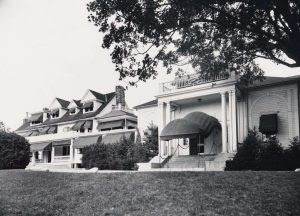
In his gambling, he never minded doing things to tweak the odds in his favor – and his most audacious tweak, the fixing of the 1919 Chicago White Sox-Cincinnati Reds World Series, was at least discussed at his famous and exclusive private club in Saratoga, The Brook.
Rothstein was variously known as “The Brain” or “The Big Bankroll” – he was said to have never made a mistake with numbers. He was always thinking a step ahead and was a ready source of cash, though always with repayment at high interest.
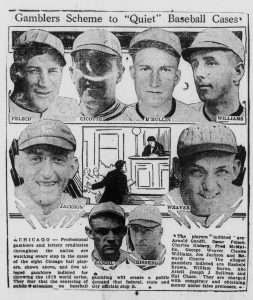
It was that reputation that led to his involvement in the White Sox’s 1919 Chicago World Series scandal, which would have the team forever after known as the “Black Sox,” though none of the involved players was ever convicted of a crime, and neither were any of the gamblers.
Rothstein denied involvement, though there’s no question that his name was being thrown around by nearly everyone.
The one person the scandal couldn’t have happened without, though, was Charlie Comiskey, the owner of the White Sox, and builder of the legendary Comiskey Park, demolished in 1991.
The White Sox, with Shoeless Joe Jackson (1887-1951) as one of their leading hitters, were one of the great teams of all time, but Comiskey was known as a cheapskate who paid his players poorly, taking advantage of the “reserve clause,” a major league baseball policy that bound a player forever to the team that first signed him, unless he was traded.
During the 1919 season, when star pitcher Eddie Cicotte (1884-1969) reached 29 wins, Comiskey ordered the manager to bench him, to avoid having to pay a $10,000 bonus promised if he won 30 games.
Not surprisingly, many of the players hated him. With Cicotte among their leaders, they begin thinking about whether they could make a lot more money from gamblers by agreeing to lose the World Series to the Reds, even though the White Sox were the much better team.
The gamblers would be able to get a big payoff by betting on the long-shot Reds, secretly knowing that the Reds were going to win.
The White Sox were well-secured in first place in August, when the rich, the sports gamblers, and the mob were mixing in Saratoga Springs, even though the World Series was many weeks away.
At Rothstein’s club, The Brook, there would later be testimony that a Chicago gambler and wire service operator, Mont Tennes, was talking about having inside information that the World Series was going to be fixed.
Tennes told wealthy restaurateur and recreational gambler Charles Weeghman, who until recently had owned the Chicago Cubs, that he had heard the rumors from Rothstein himself, and from other gamblers including Nat Evans and Abe Attell.
Weeks later, it would be Attell – a former lightweight boxer turned professional gambler – who made actual contact with the White Sox players.
The players – eight to ten of them – wanted $10,000 each to throw the series. The fix was going to cost $100,000. Only one person in the underworld, Rothstein, had that kind of money, so it made sense that Attell turned to him.
One of the enduring questions is whether Attell turned to Rothstein for the money, or Rothstein was the fix’s mastermind who sent Attell to Chicago.
In any event, the players saw almost none of the promised payoffs. Cicotte was given $1,000 after the Cubs lost the first game, but few if any of the other promised payoffs came through.
Rumors about the series being fixed started almost immediately, and Rothstein was at the center of the rumors. In the end, the Reds won the World Series in eight games (the World Series was a nine-game series at that time.)
After the series was over Monte Tennes saw Weeghman in a Chicago barbershop, and reminded him of the conversation they’d had earlier in Saratoga Springs.
Weeghman remembered; he would later testify that he just didn’t believe it was possible to fix the World Series.
Eventually, in 1920, there would be a Chicago grand jury investigation. Weeghman testified to what he heard in Saratoga; by then, three players, including Cicotte and Jackson, had made police confessions.
On the advice of his New York City lawyer, Rothstein went before the grand jury, and denied any knowledge of the fix. In the end, eight players were indicted, as were Attell and several other gamblers.
Rothstein wasn’t indicted. By the time the case went to trial, the player confessions and much of the other grand jury testimony had somehow disappeared from the district attorney’s files. The remaining evidence was unpersuasive, and everyone was acquitted.
If the series was fixed, no one was ever held legally responsible.
The Brook, out Church Street, near the corner with West, was the finest and best-known clubs in Saratoga Springs during its brief life. Rothstein knew that the gambling odds always favored the house, and believed running a house that appealed to richest visitors would be best for his business.
The food at The Brook was excellent, but there were no prices listed on the menu; his clientele was meant to be the sort who didn’t need to worry about such things.
Rothstein almost certainly was doing his best to manipulate horse races, including the 1921 Travers, which was won by a Rothstein-owned horse, Sporting Blood.
Arnold Rothstein was murdered in New York City in 1928 at age 46, but his Saratoga legacy lasted decades longer.
Editorial Notes on Upstate New York Crime Syndicates
Arnold Rothstein, Lanksy and his compatriot Bugsy Siegel (1906-1947) took part in pragmatic alliances with the dominate Italian crime syndicates operating in upstate New York.
In 1936, Luciano was convicted for his prostitution racket by the District Attorney Thomas E. Dewey and sentenced to 30-50 years in prison. Thanks to a deal made by Lansky, he was released after providing naval intelligence during the Second World War, and deported to Italy. His body was returned to the United States for burial.
Arnold Rothstein was also a mentor to Frank Costello (1891-1973), boss of Luciano’s crime syndicate . Costello spent several years in prison before retiring in 1957, following an assassination attempt ordered by Vito Genovese (1897-1969).
Rothstein is believed to have been killed over a poker debt in a game he thought was fixed, or possibly by Dutch Schultz in retaliation for the killing of his friend and associate Joey Noe by another Rothstein protege, Jack “Legs” Diamond (1897-1931).
Diamond was murdered in 1931 (probably by Schutlz’s orders) in Albany, NY on the evening of his acquittal in Troy, NY on kidnapping charges.
Dutch Schultz was killed at the Palace Chop House in Newark, New Jersey four years later, in 1935, after disobeying an order not to put a hit on Thomas Dewey.
JOIN US ON THURSDAY, MAY 28TH AT 3 P.M. TO CELEBRATE THE TRAM’S 50TH BIRTHDAY PARTY
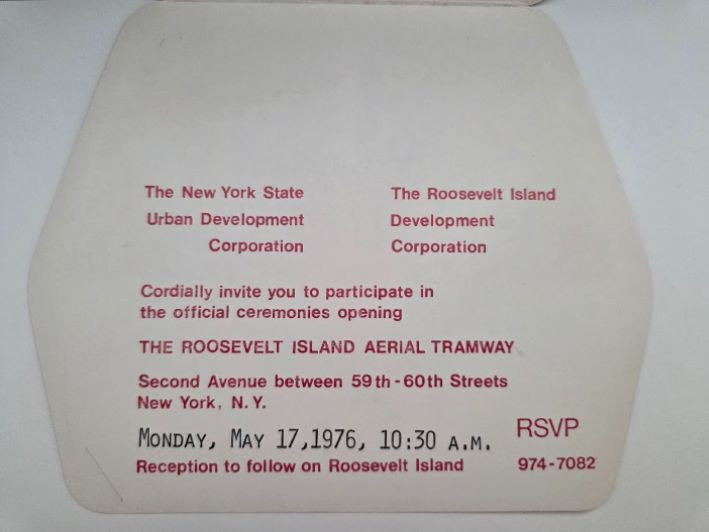
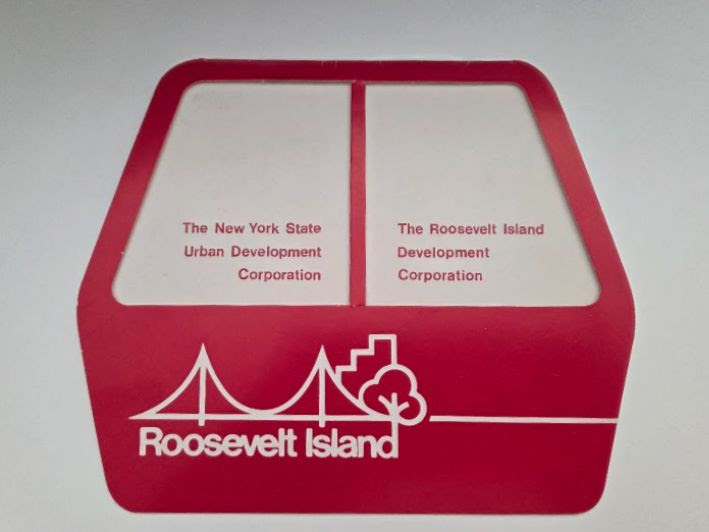
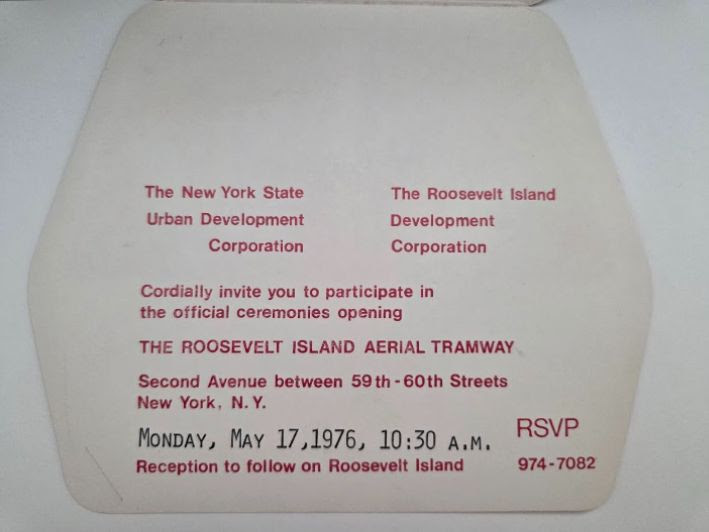
The invitation with the date stamped in, just in case.
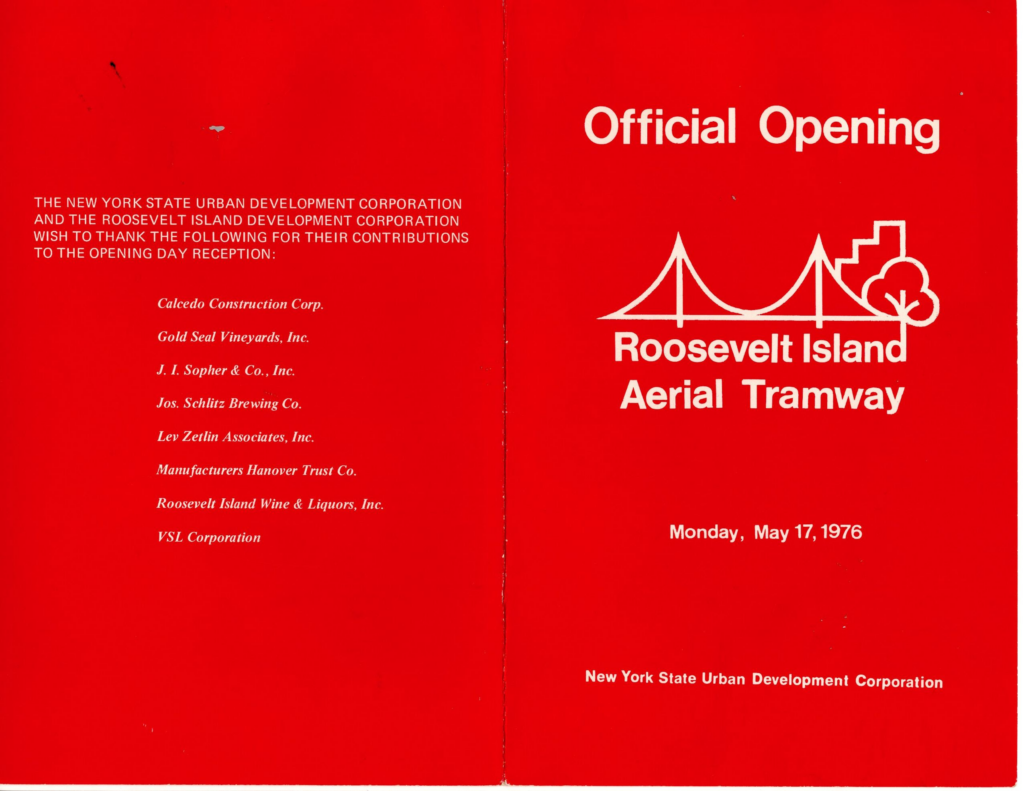
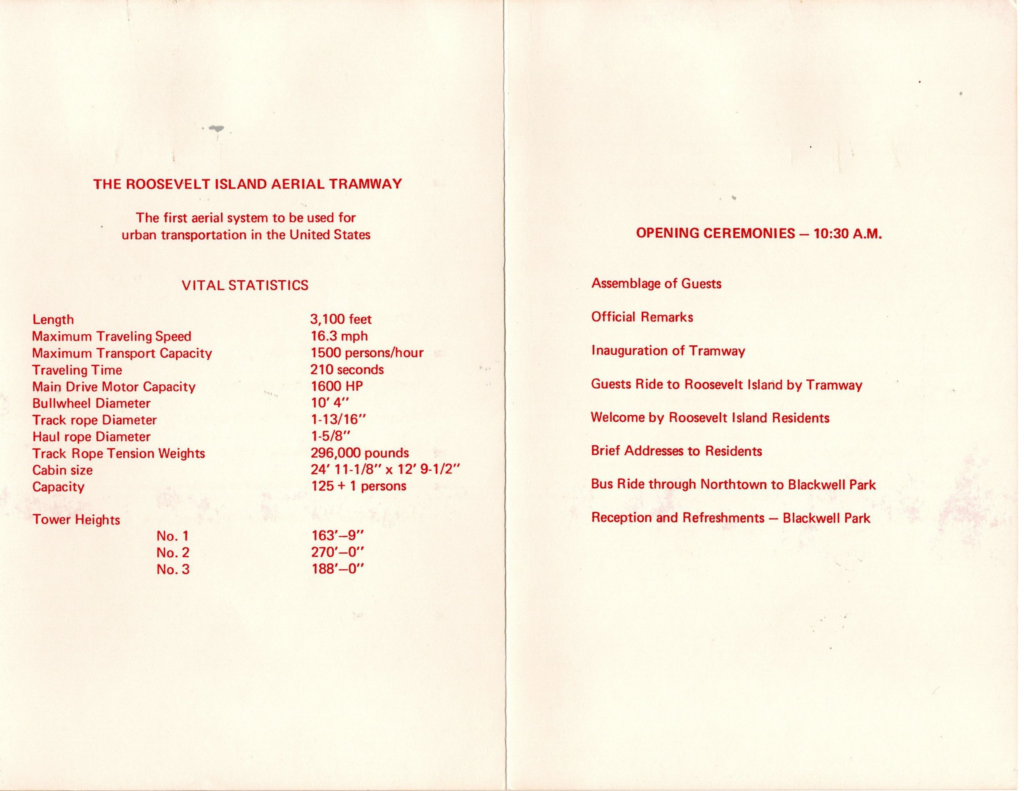
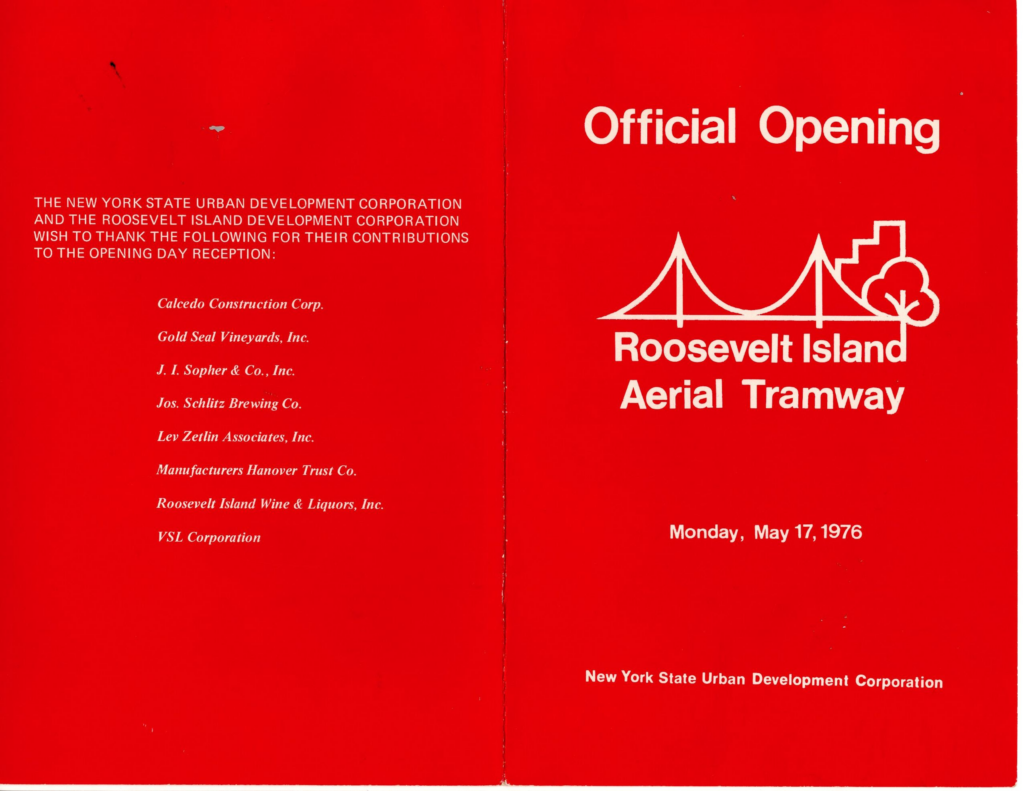
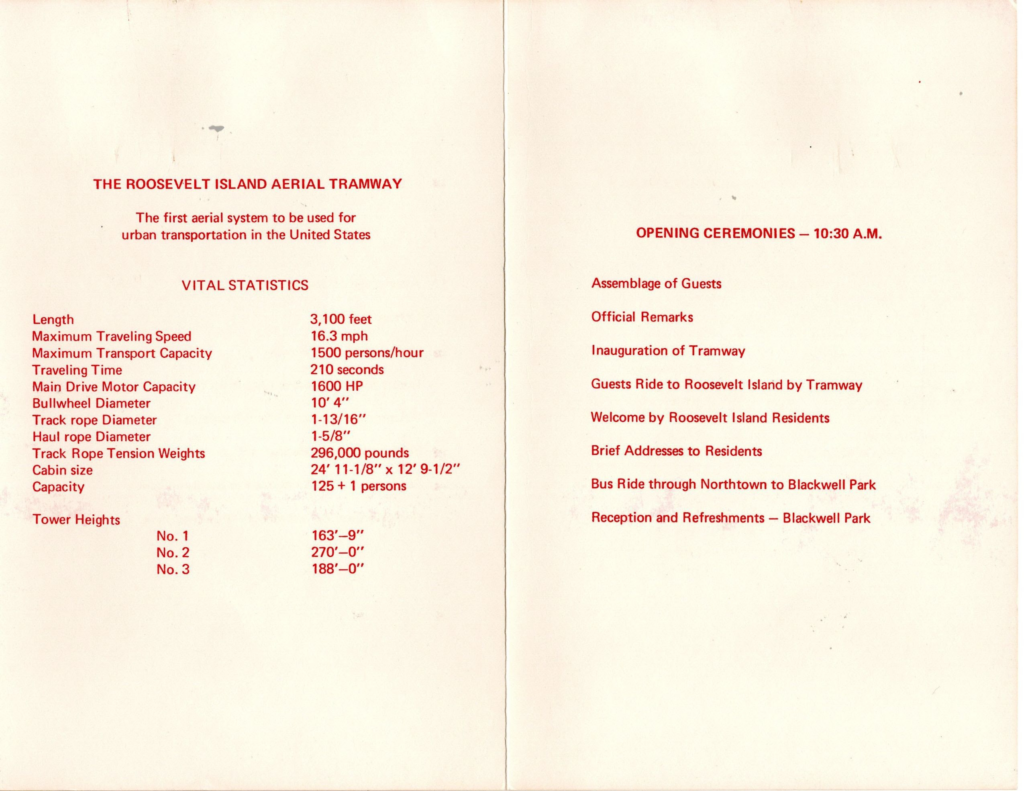
The Program for the Opening Ceremony
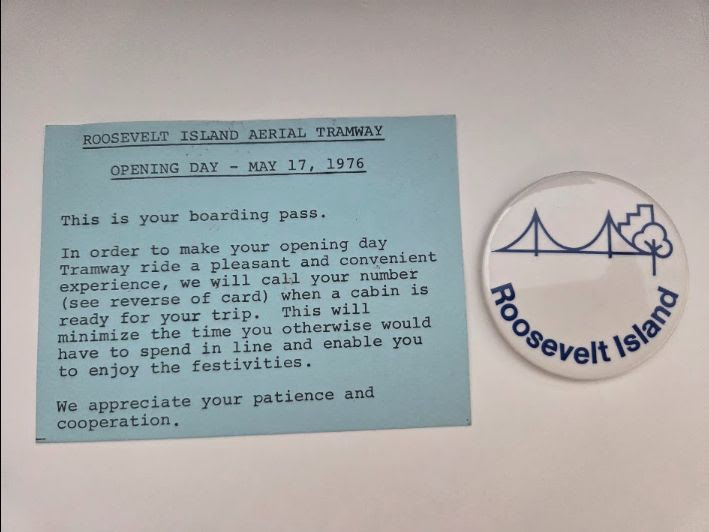
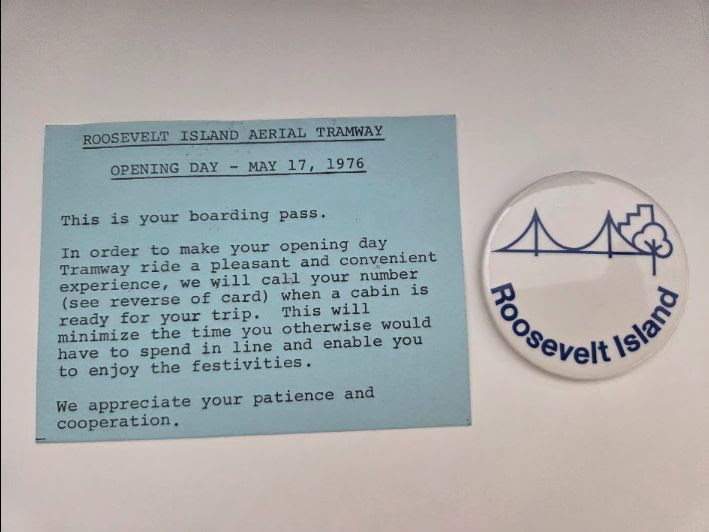
A Boarding Pass for Opening Day
I has watched Welfare Island for many years since I was a student working at the Goldwater Hospital in 1967. When I heard the Tram was opening, I walked over from my home at 65th Street on the evening of March 17th, 1967 and took my first ride that day.
ROOSEVELT ISLAND HISTORICAL SOCIETY ARCHIVES JUDITH BERDY
All image are copyrighted (c) Roosevelt Island Historical Society unless otherwise indicated THIS PUBLICATION FUNDED BY DISCRETIONARY FUNDS FROM CITY COUNCIL MEMBER JULIE MENIN & ROOSEVELT ISLAND OPERATING CORPORATION PUBLIC PURPOSE FUNDS.
Archives of the Rooservelt Island Historical Society
Issue #1680
The invitation with the date stamped in, just in case.
The Program for the Opening Ceremony
A Boarding Pass for Opening Day
I has watched Welfare Island for many years since I was a student working at the Goldwater Hospital in 1967. When I heard the Tram was opening, I walked over from my home at 65th Street on the evening of March 17th, 1967 and took my first ride that day.
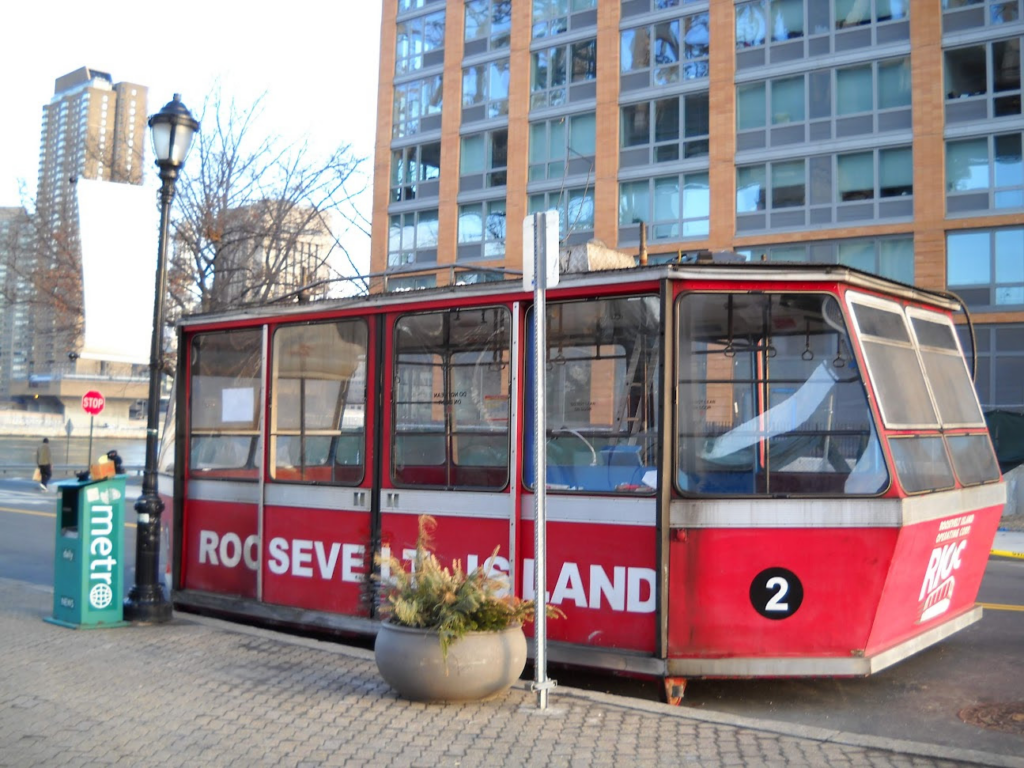
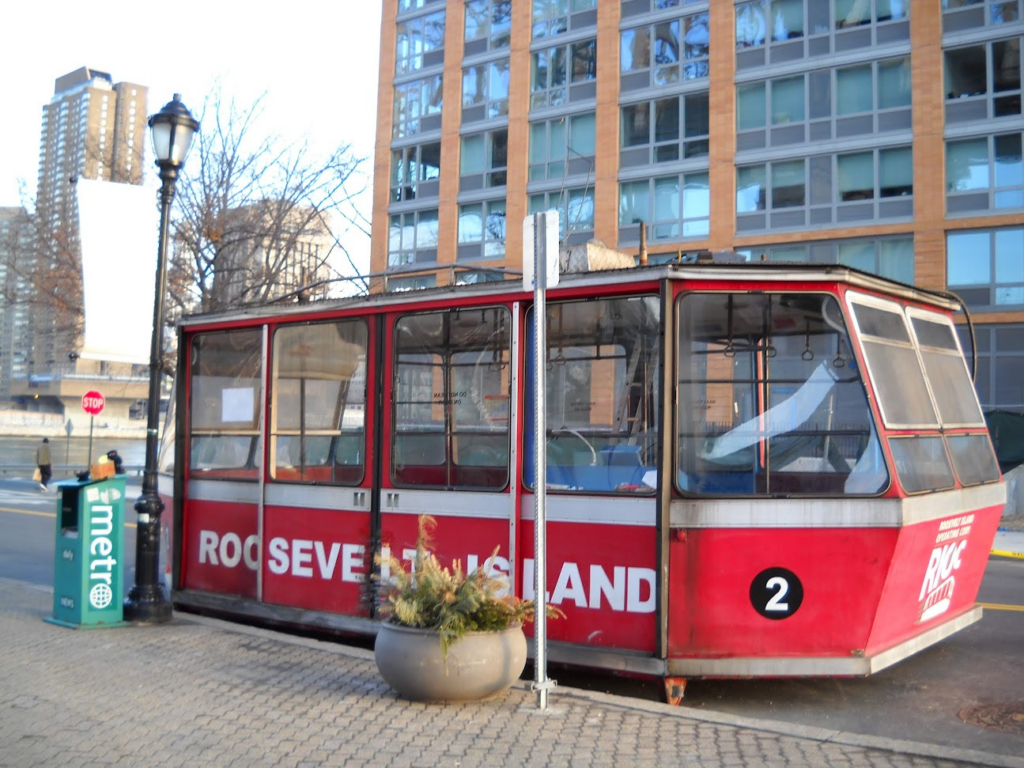
TRAM AT BUS STOP MARCH, 2010
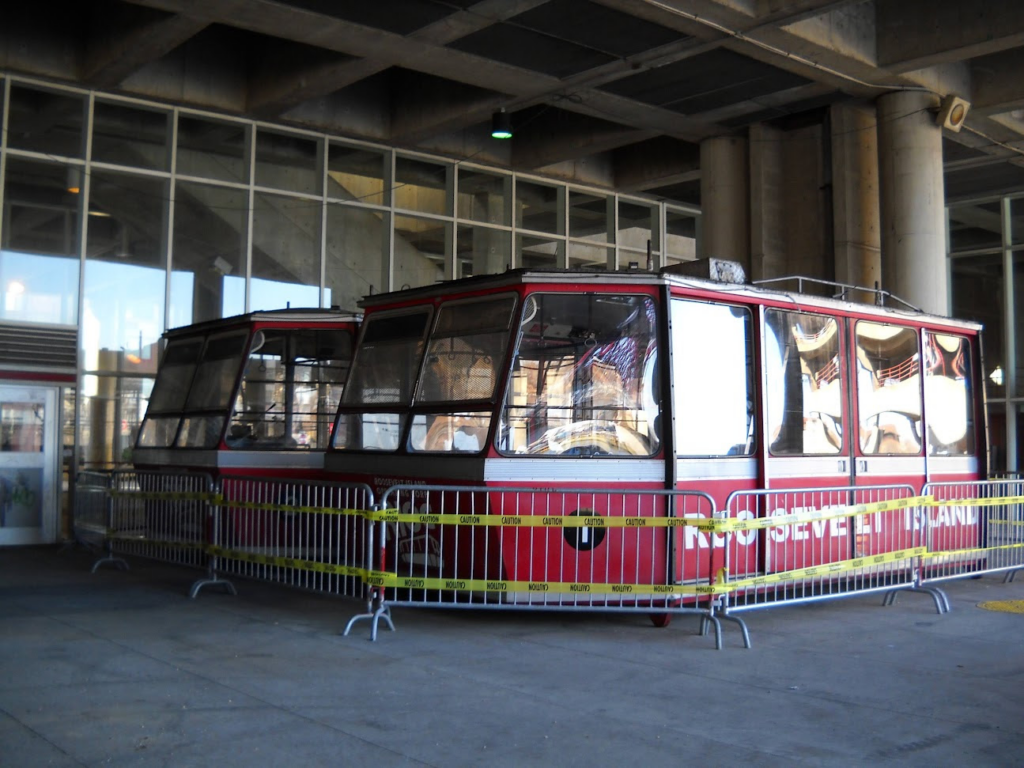
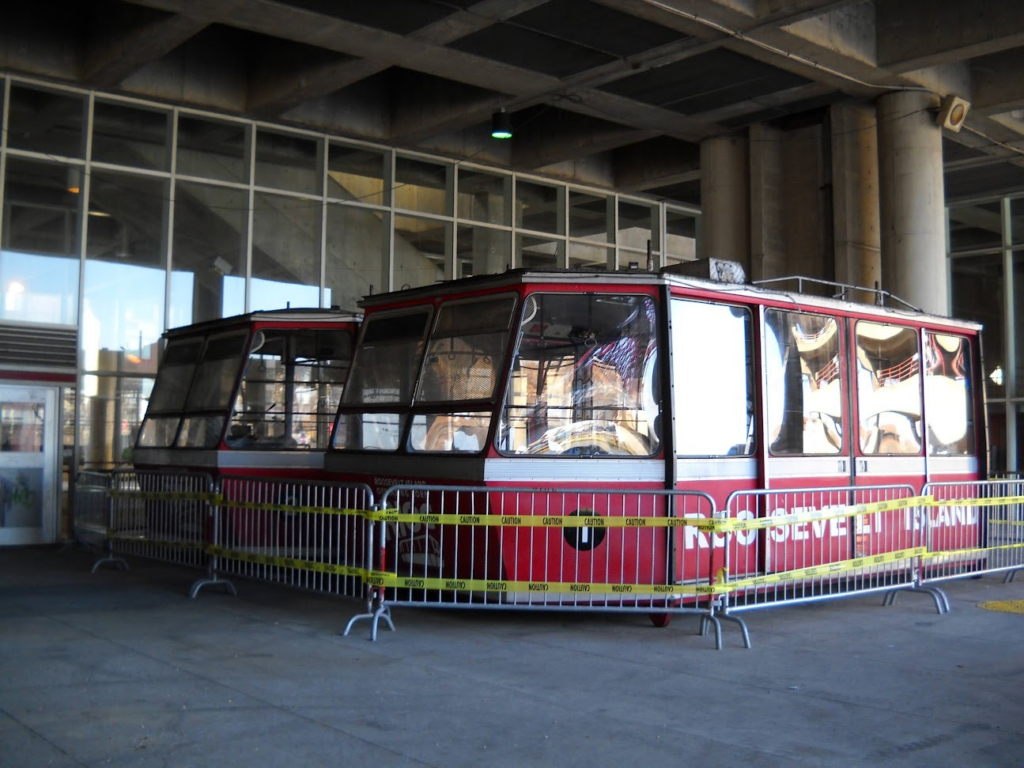
TRAM AT MOTORGATE STORAGEFOR 16 YEARS
Finally, maybe a use?
CREDITS
ROOSEVELT ISLAND HISTORICAL SOCIETY ARCHIVES JUDITH BERDY
All image are copyrighted (c) Roosevelt Island Historical Society unless otherwise indicated THIS PUBLICATION FUNDED BY DISCRETIONARY FUNDS FROM CITY COUNCIL MEMBER JULIE MENIN & ROOSEVELT ISLAND OPERATING CORPORATION PUBLIC PURPOSE FUNDS.
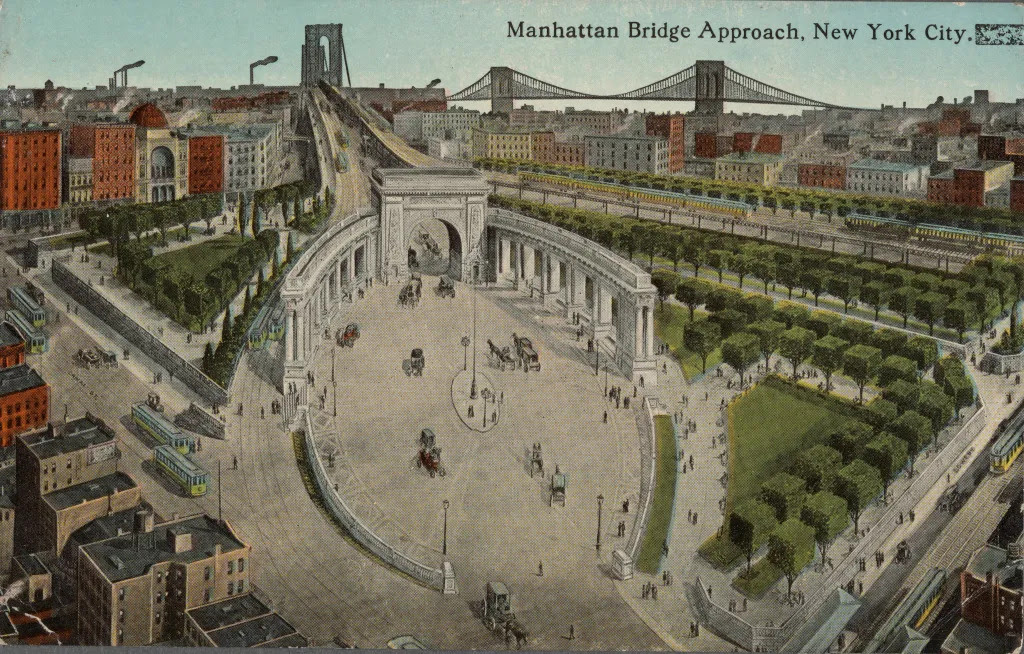
A 1913 or so postcard showing the Manhattan end of the Manhattan Bridge, looking east towards Brooklyn:
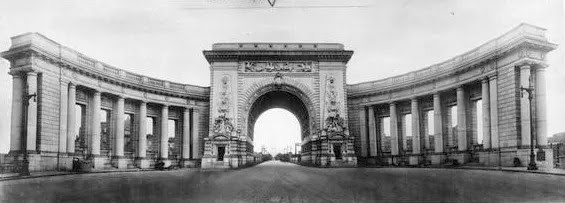
If that looks a bit more Parisian than you remember Chinatown as being, you’re not wrong. This is a fantasy in part, and some pleasantly-misguided design optimism in part. The colonnade is real, designed by Carrère and Hastings (the architects of the New York Public Library) and still there. Here’s an early photo of it, from the center of the bridge approach off Canal Street:
It’s a bit much.
If you look at the postcard, you can see that vehicular traffic got the grand arch in the center of the colonnade, while the streetcars wend behind the columns to the outer portion of the bridge deck. The bridge opened in 1909, streetcars started crossing it in 1912, and the BMT subway began crossing in 1913. The trains depicted on the right side, beyond the cube trees, are not accurate in their location or elevation: the subway dives underground as soon as it’s off the bridge.
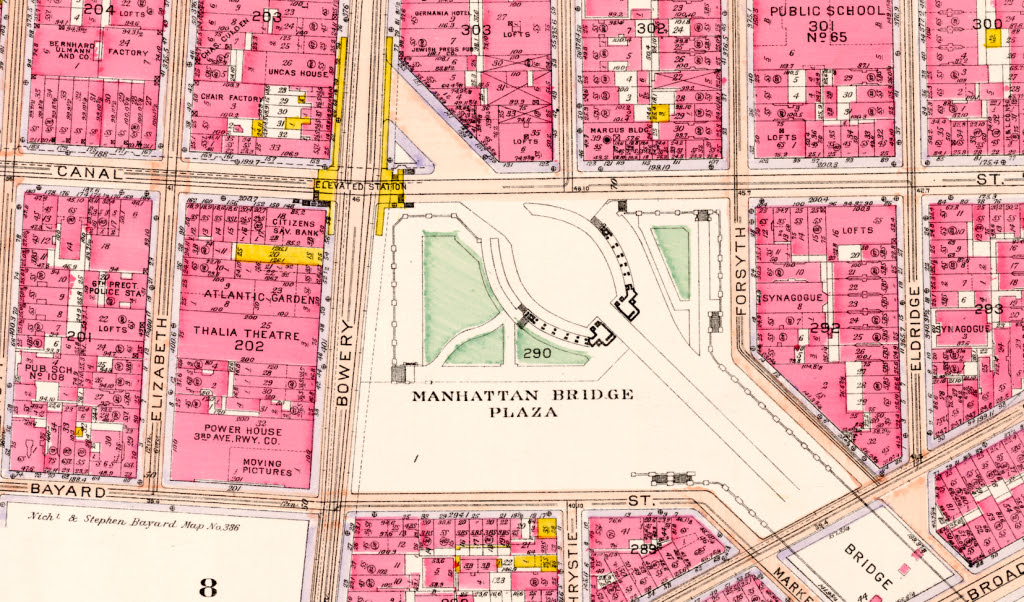
The growth of vehicular traffic, and the eventual removal of streetcars form the bridge, meant that there were now cars on both faces of the colonnade, swerving around it as it interrupts the straight line from Canal Street to the bridge. The calm scene shown here did not last. Meanwhile the big open square that was created during the bridge construction by demolishing everything in the area bounded by Bayard Street, Canal Street, Forsythe Street, and the Bowery remained bereft of cube trees. 1916:
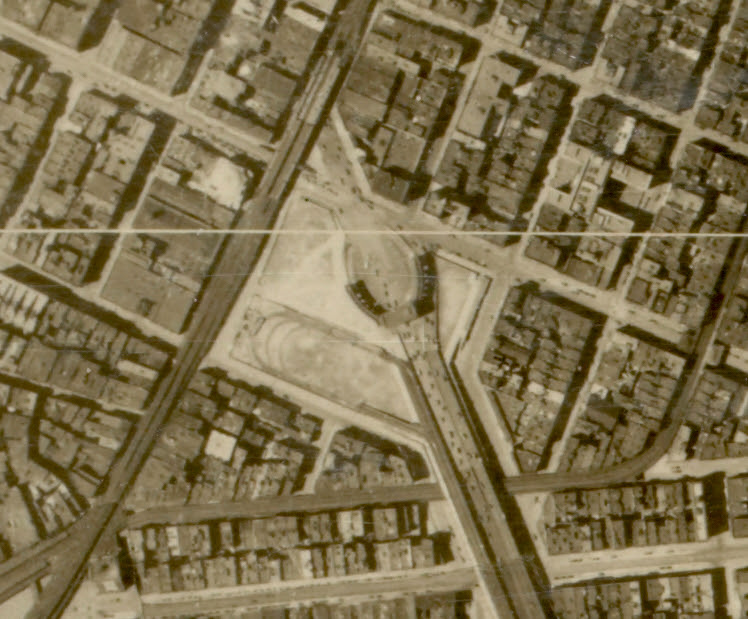
As far as I can tell from the 1924 aerial survey, there were some turn-around or storage tracks for the streetcars and not much else:
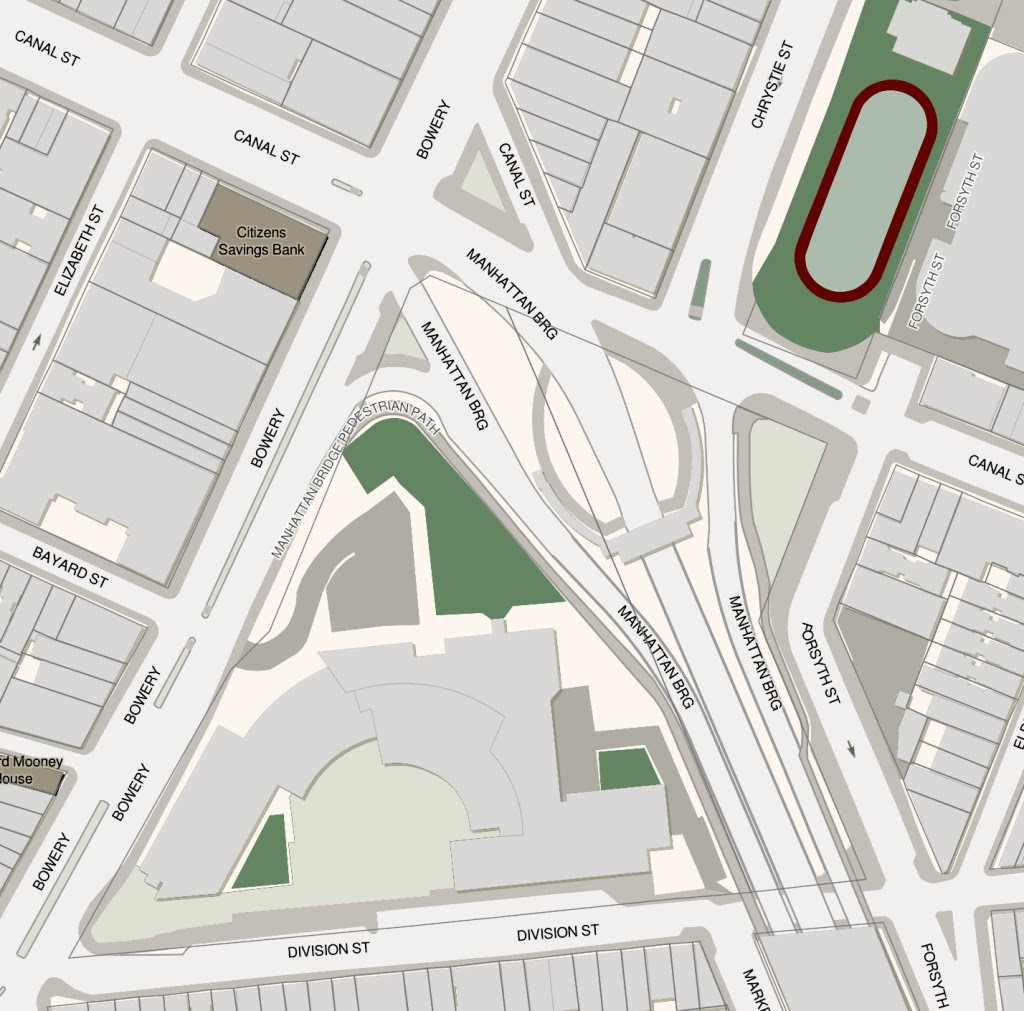
In 1975, Confucius Plaza, a complex including a high-rise apartment house, a public school, and shopping, opened in the south half of the square, and the rest was given over to traffic improvements:
It’s worth remembering that the bridge was constructed at the height of the City Beautiful movement in the US, and it was not completely insane to think that maybe a piece of Manhattan could be made to look like Paris. It didn’t work at the bridge plaza, and nearly all of the movement’s plans in NYC fell apart, but it’s hard to argue that wasteland and some storage tracks were better than a French garden landscape would have been.
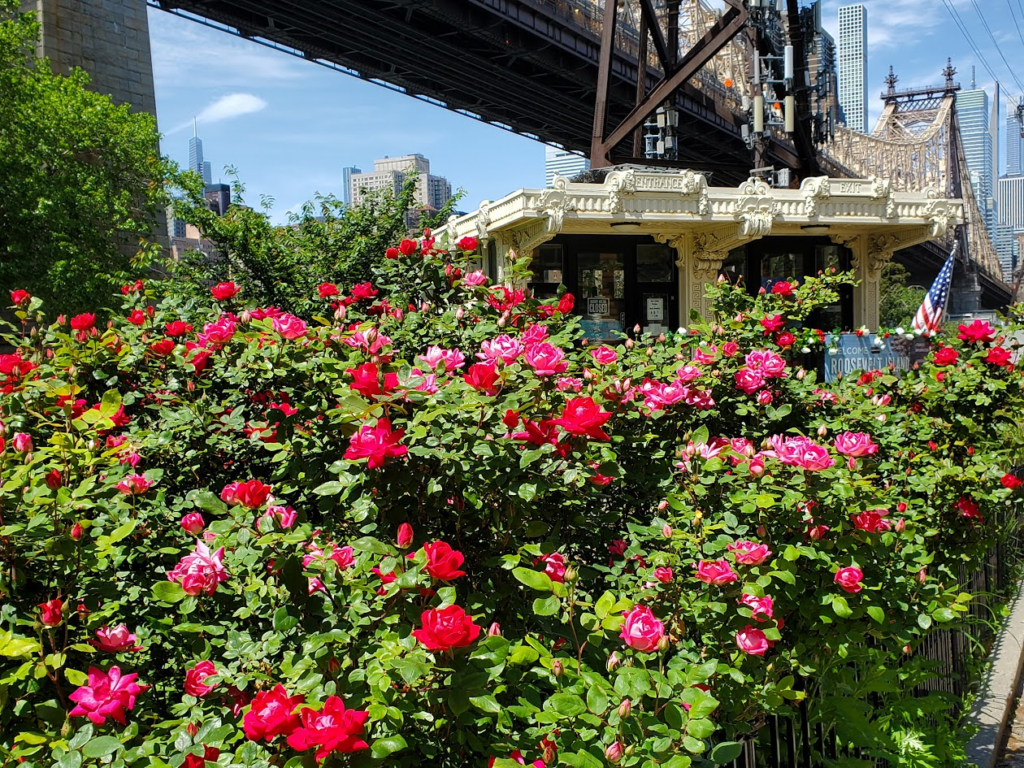
ISLAND IN BLOOM
CREDITS
OLD STRUCTURES ENGINEERING JUDITH BERDY
All image are copyrighted (c) Roosevelt Island Historical Society unless otherwise indicated THIS PUBLICATION FUNDED BY DISCRETIONARY FUNDS FROM CITY COUNCIL MEMBER JULIE MENIN & ROOSEVELT ISLAND OPERATING CORPORATION PUBLIC PURPOSE FUNDS.
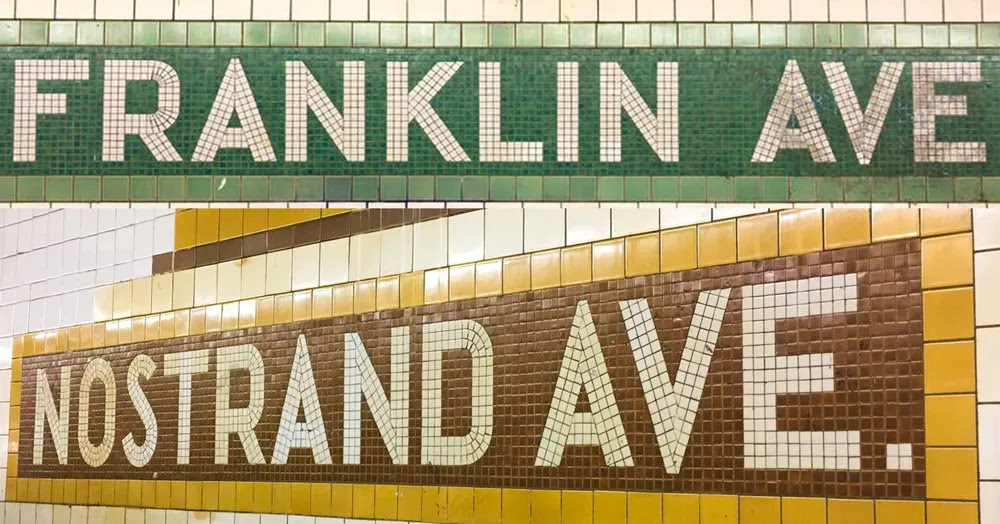
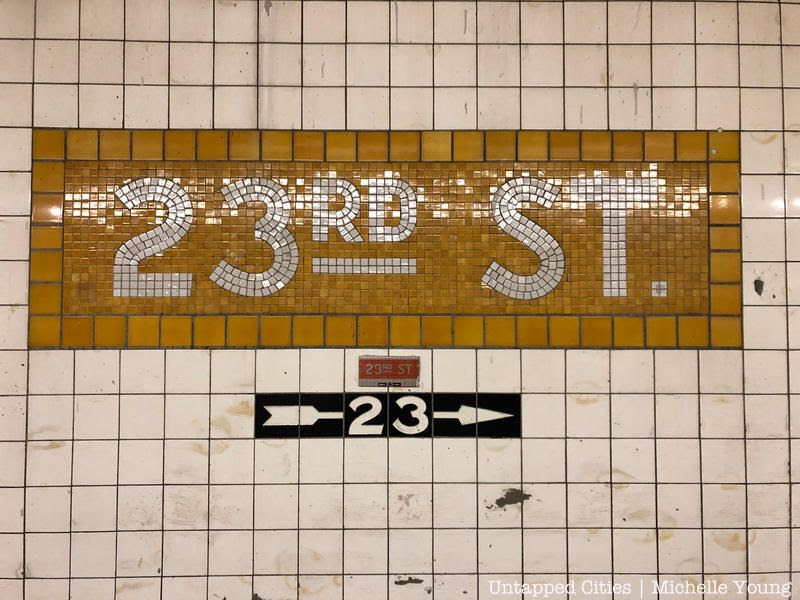
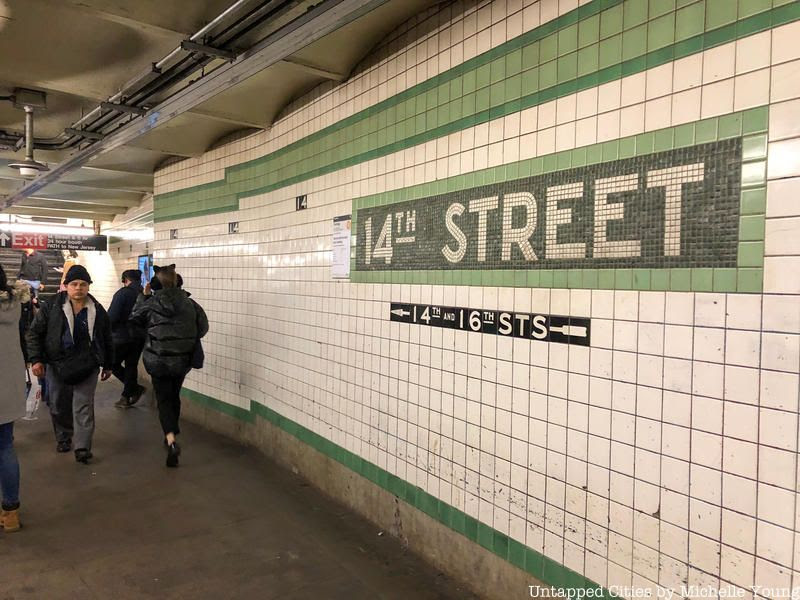
Standing on the platform waiting for your train, did you ever think, “What do the NYC subway colors mean?” Is there a reason the colored bands of subway tiles that run along the platform wall are yellow at 23rd Street but green at 14th Street and red at Penn Station? These colored tiles are the remnants of a coded system from the Independent Subway, one of the three original subway systems that competed in the early days of New York City’s subterranean transit system. Today, we associate the colors of the subway – blue, red, orange, yellow, green, purple, grey, and brown – with their respective routes, but before the 1970s when a unified color coordination system was adopted, things were a little more complicated. New York Transit Museum curator Jodi Shapiro helps us break it down for you!
The Interborough Rapid Transit Company (IRT) was the first subway system to open in New York City in 1904. The first stop was the now-abandoned City Hall Station. The Brooklyn-Manhattan Transit Cooperation came along in 1923 after acquiring the Brooklyn Rapid Transit Company (BRT). The Independent Subway, the first city-owned system, opened in 1932. Each of these systems operated independently of each other until 1940 when the city took over operations of all lines. Before the systems were merged, each had their own wayfinding and identification systems.
The IRT used numbers to identify their lines, many of which have stayed the same to this day. The design of the stations by architects Heins and Lafarge under the direction of chief engineer William Barclay Parsons incorporated elaborate ornamentation including intricate terra-cotta mosaics. These mosaics, notes New York City Transit Museum curator Jodi Shapiro, may have been a piece of wayfinding in the IRT system. The unique mosaics at each stop related to the history or landmarks of the ground above. For example, at the Wall Street station, the mosaics depict the old wall erected at the northern border of Dutch New Amsterdam, at Columbus Circle, you see mosaics of ships Christopher Columbus sailed on. The BMT also used numbers to identify their routes, even going into double digits. Just as in the IRT Stations, the BMT stations boasts fanciful ornamentation.
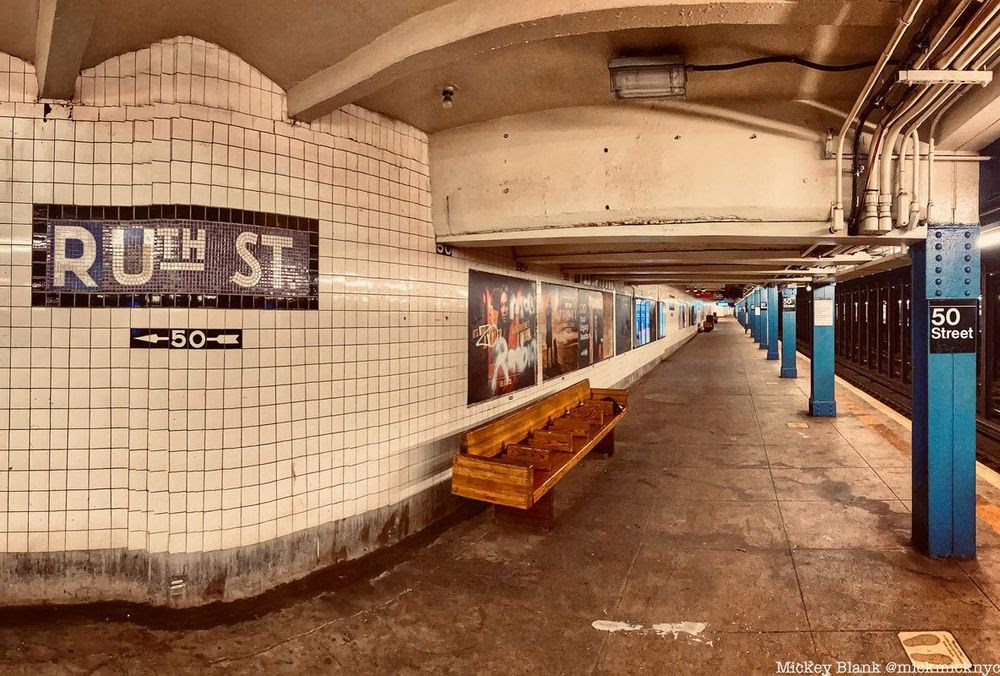
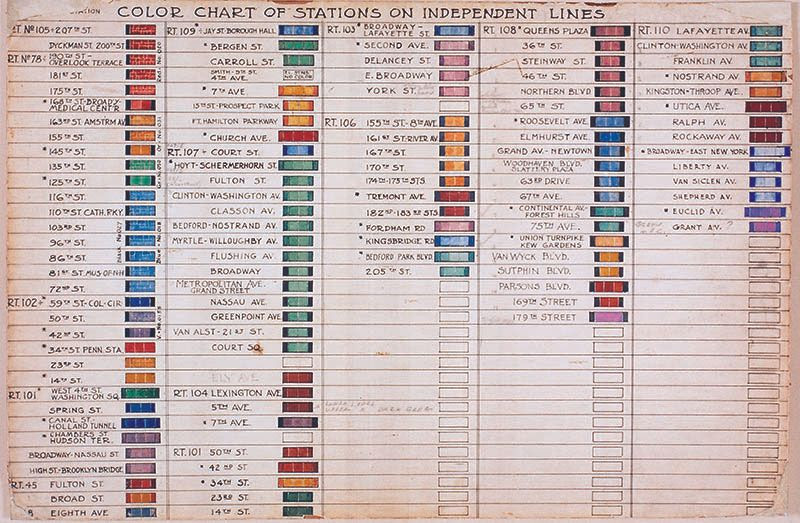
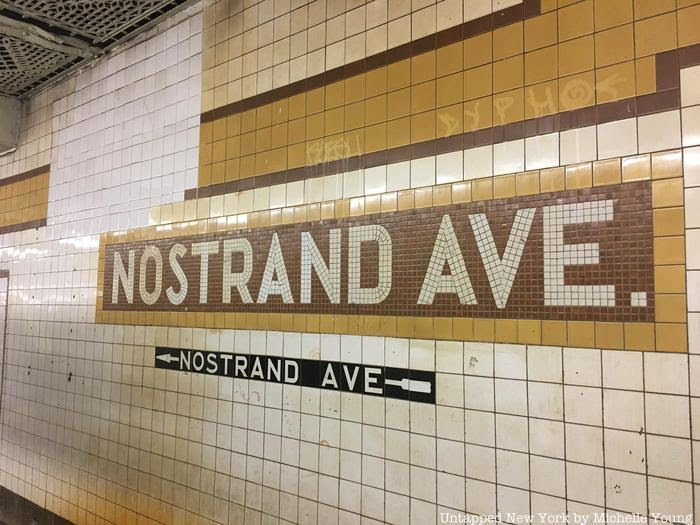
The IND system identified its routes with letters and assigned colors to its stations to distinguish between local and express stops. The colors are signified in a band of tiles that run along the platform wall and provide the background for the station name. At every express stop, the color changes, rotating between five primary color families of red, yellow, green, blue and purple. These color shifts would signify to passengers where they could switch from an express to a local train. At express stations, the color is darker and the band of tiles is wider than at local stops. At local stops, the color is lighter.
There is no definitive answer as to why IND architect Squire J. Vickers chose the color-coordinated system he employed. New York Transit Museum curator Jodi Shapiro says it is one of the most common questions she gets asked. One popular theory is that the colors helped non-English speaking riders, or people who couldn’t read at all, navigate the system. “There isn’t anything that we were able to find that says definitively ‘This is the reason why we are doing that,” notes Shapiro, “It does make sense, and that’s part of the reason for the iconography used in the IRT stations and BMT stations.” Though there is no known document where Vickers explains himself yet, “It might be out there,” says Shapiro, “There may be some diaries of his that we don’t have where he runs down that logic. I hope we find it one day.”
Here’s how Vicker’s system worked. Let’s say you are in Queens riding west from Northern Boulevard which is purple. The next stop is 65th Street, another local stop, so it is also purple. Next, Jackson Heights-Roosevelt Ave., an express station. Here, a new color comes in, dark blue. The next five stations are all local, so they are a lighter shade of blue. At the next express stop, Forest Hills-71 Ave., the color changes green and all subsequent local stops are light green until the express stop at Union Turnpike-Kew Gardens. At Union Turnpike, the station colors change to yellow. You can see the assignment of station colors in the chart below, and compare them to the Pantone colors used in today’s station which can be found on the MTA website.
Squire Vickers’ subway color chart. Image courtesy of New York Transit Museum.
The IND stations have a minimalist aesthetic compared to the ornate IRT and BMT stations. Vickers had worked with architects Heins and Lafarge on IRT and BMT stations. The city-owned IND opened during the Great Depression, meaning the expensive ornamentation found in the stations of the former two systems just simply couldn’t be afforded. “City Hall was meant to be a showpiece,” notes Shapiro, but by the time of the IND, the system needed to be more utilitarian and cost-effective. The whole aesthetic was pared-down. The font used in IND stations is a machine-age san serif in heavy capitals, as opposed to the variety of fanciful fonts found in IRT and BMT stations.
There is no expensive terra-cotta, but instead visually clean tiles, that are also easy to physically clean. With artificial light, the minimal design helped make the stations appear bigger and brighter. “Maybe that played into the color choices also,” says Shapiro, Vickers likely chose “colors that would be discernible in artificial light and also not look dingy and have some kind of cheerful effect. There are yellows, greens, and blues, there are some reds. Yellow, green and blue are very natural colors: yellow like sunlight, green like grass, blue like water. I don’t think that’s an accident.” Another theory concerning color choice, maybe those colors are just what was available in large quantities from the manufacturer.
After the three subway systems merged in 1940, new stations were no longer designed according to the IND color system. It took decades for all of the color, letter, and number wayfinding systems to get organized into one cohesive network. “There was a huge amount of information being imparted to riders via signage and not only that, now you have to figure out how to manage all of these different routes,” Shapiro says of riding the subway after the merge. Perhaps most confusing were the route identification numbers and letters. You could get on a subway labeled 4, but depending on if it was an IRT or BMT 4, you’d either end up in the Bronx or Coney Island. Some riders relied on their knowledge of a hold-over from the elevated railroad systems, marker lights on the front of the subway car. Depending on the combination of white, red, yellow, or green lights, you could decipher where the train was headed.
By the 1950s, riders had had enough. The transit authority was inundated with complaints about the confusing signage and jumbled routes. It didn’t help that there were also no official subway maps. Until the first official subway map produced by the transit authority came out in 1958, maps were produced by private companies who could skew the information to their own advantage, such as a hotel making its location most prominent.
The first step to clarify and declutter subway information was the release of the Official New York Subway Map and Guide in 1958. This map assigned one color – black, red, and green – to each of the former systems, the IND, IRT, and BMT. The routes were superimposed onto a simplified map of the five boroughs. While this was a good first step, it only clarified the system on paper. In the stations themselves, people were still scrambling to find their way.
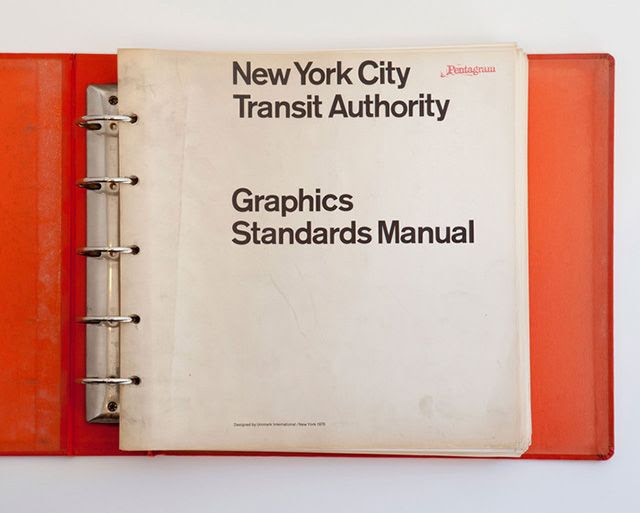
The Chrystie Street Connection, which opened in two phases in 1967 and 1968, rerouted eleven existing lines and threw the system into further chaos. Shapiro told Untapped New York that at least one operator took his car on the wrong track! In 1967, the New York City Transit Authority hired Unimark to finally overhaul the subway’s wayfinding. Unimark is an international design firm that at the time was headed by Massimo Vignelli and Bob Noorda. The company did its own research about graphical communication and studied other transit systems. They were also likely to influenced by the work of George Solomon, Stanley Goldstein, and Raleigh D’Adamo, three men who created maps, books, and studies suggesting ways to fix the subway. The Unimark system would need to be applied to not only the subway, but also New York City buses, the LIRR, and eventually the Metro-North.
Image via The Standards Manual/Pentagram
Vignelli and Noorda produced in 1970 what Shapiro refers to as “the Bible,”the Graphic Standards Manual. The manual is an exhaustive volume that instructs how every sign everywhere in the subway, bus, and train systems should look: inside a subway car, outside a subway car, inside a bus, outside a bus, hanging in a station, and on and on. The san serif font Vignelli and Noorda chose for signage provided “the easiest legibility from any angle whether the passenger is standing walking or riding.” They chose a rainbow of 22 different colors to assign to each subway line and gave the routes new names. While this was a major improvement, the system was still complicated and required a certain level of subway literacy to navigate. Vignelli and Noorda employed double letter names, such as the EE and GG, and colors were sometimes shared by different routes.
In 1979, instead of having a different color assigned to each separate route, colors were reassigned based on “trunk routes.” The trunk route is the portion of subway tracks that go through Manhattan. All trains that share a trunk route are the same color. For example, Lexington Ave’s 4,5,6 routes are all green, and Broadway’s N, Q, R, W routes are all yellow, regardless of their terminal destinations. G doesn’t go through Manhattan at all, and the 7 and L don’t share any trunk routes, they have their own colors. This is the color system we use today! However, it wasn’t until 1985 that all double letter routes were renamed.
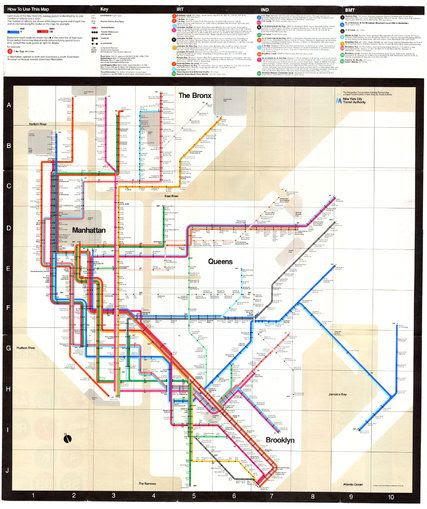
Vignelli’s 1972 subway map, Map from the Metropolitan Transit Authority
While the colors are set now, the subway map is still evolving. New proposed designs were put on display in August 2020 in Bay Ridge, Brooklyn. The simplified design was based on the beloved Vignelli map of the 1970s. In April 2025, a new map, or more ccurately a new diagram, was officially adopted. We spoke with map maker John Tauranac, who lead the design of the 1979 subway map, about his reaction to the new design.
Today, the mix of all three original subway lines along with changing architectural trends, new technology and works of art created for MTA’s Arts for Transit Program, make every subway station unique. “New York’s subway stations don’t look like subway stations anywhere else in the world, says Shapiro, “There is still some of the older stuff in there and its part of the charm of our system. If our system had been built all in one shot, by one group of people, it wouldn’t look as beautiful as it does. I think our system is beautiful, even though it is very idiosyncratic. There are so many cool things to look at.”
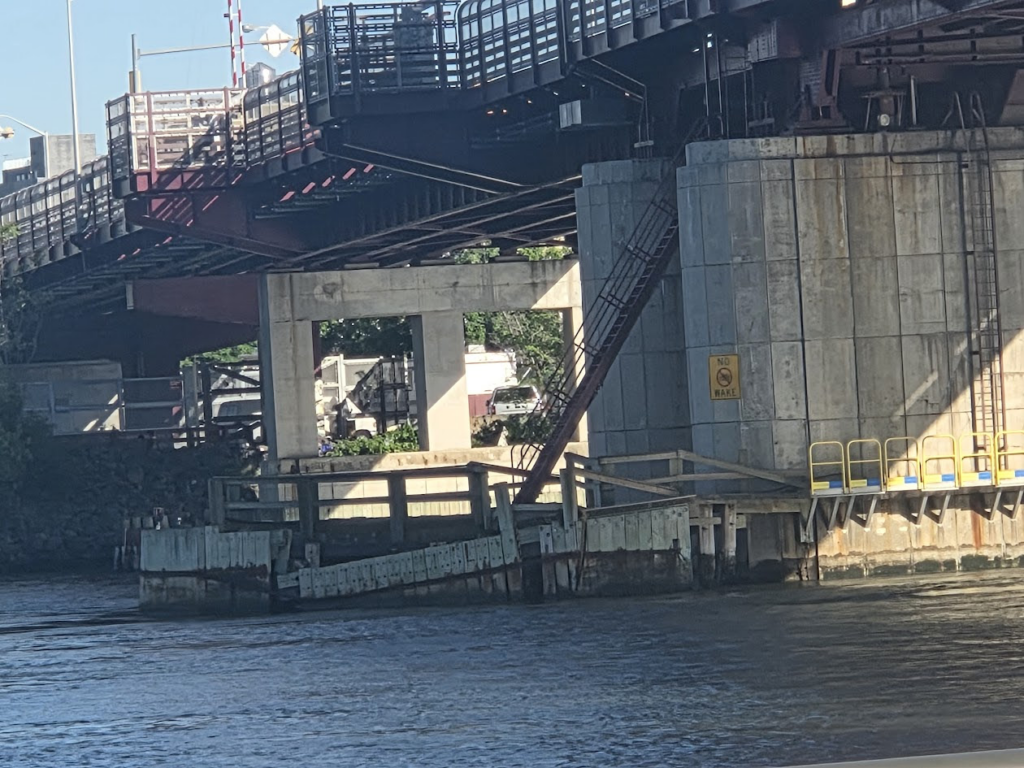
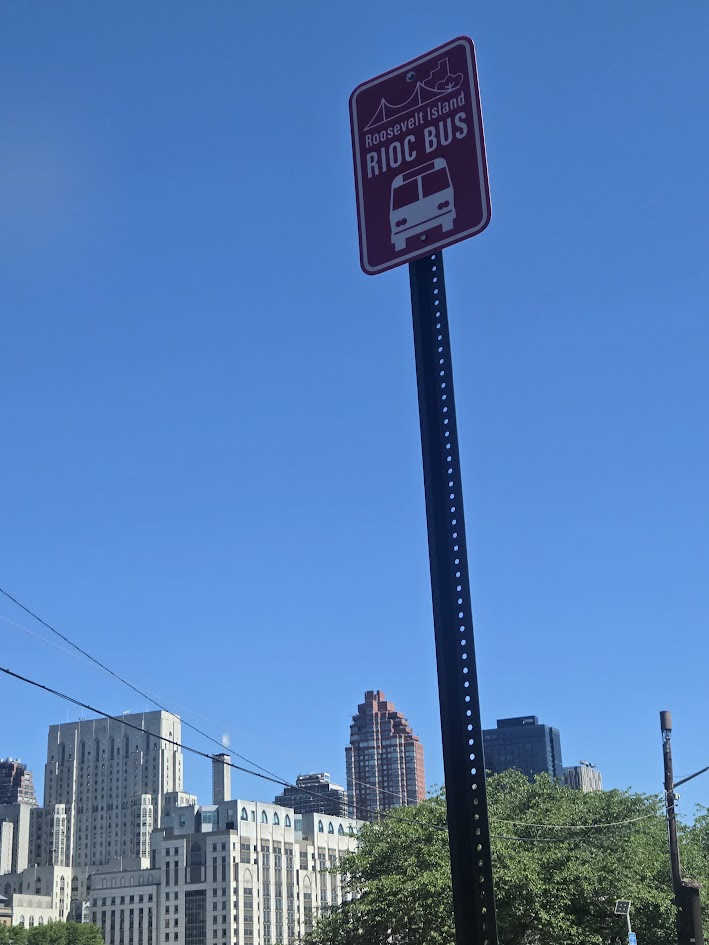
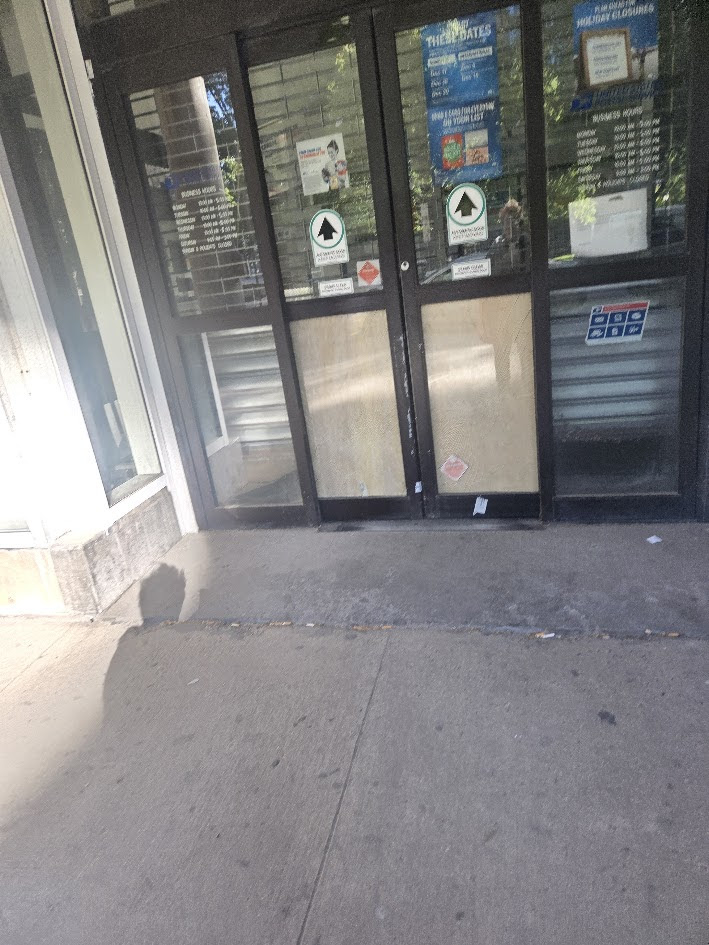
WHAT IS GOING ON HERE???
Protective wood is falling apart under the RI Bridge…DOT, time to wake up and see the damage
Sky high placement of Bus Stop signs. Are we an island of giants? Whose idea was it to place signs 10 feet in the air?
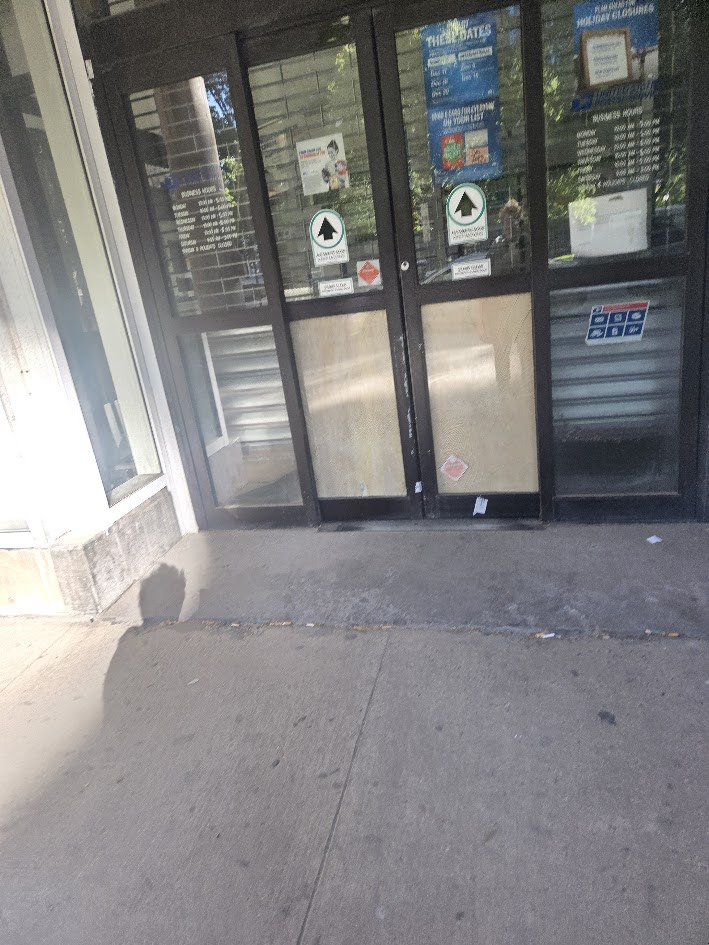
Two broken door windows at our deteriorating Post Office. The post office is in terrible conditon and neglected by the agency. Don’t blame the staff but complain upwards to negligent management.
CREDITS
UNTAPPED NEW YORK JUDITH BERDY
All image are copyrighted (c) Roosevelt Island Historical Society unless otherwise indicated THIS PUBLICATION FUNDED BY DISCRETIONARY FUNDS FROM CITY COUNCIL MEMBER JULIE MENIN & ROOSEVELT ISLAND OPERATING CORPORATION PUBLIC PURPOSE FUNDS.
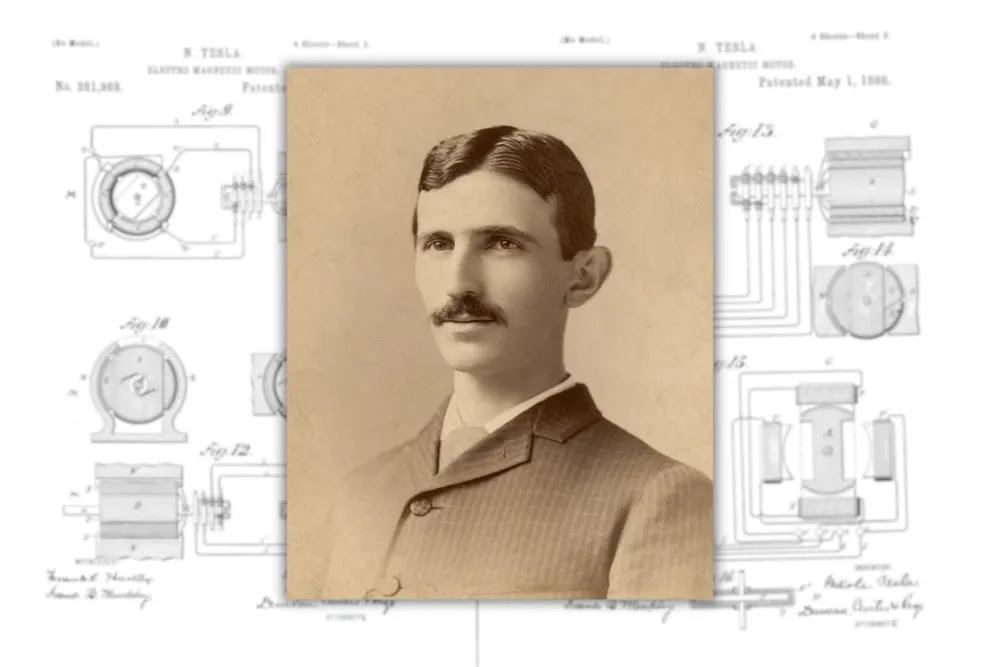
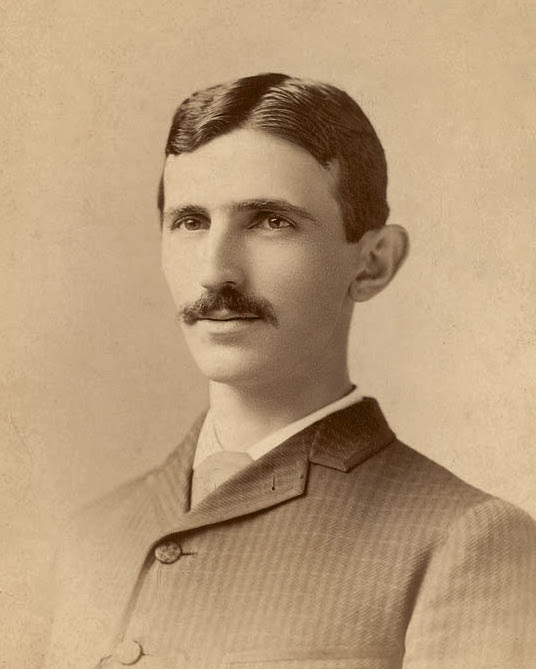
At a nondescript building on Liberty Street, Tesla invented a ground breaking machine. But does anyone remember?
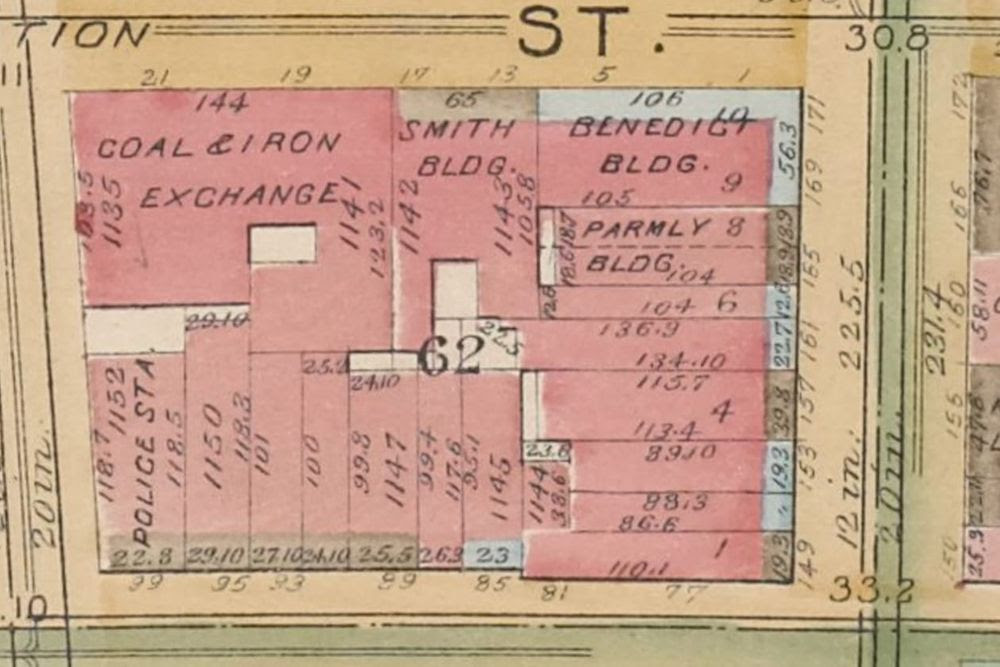
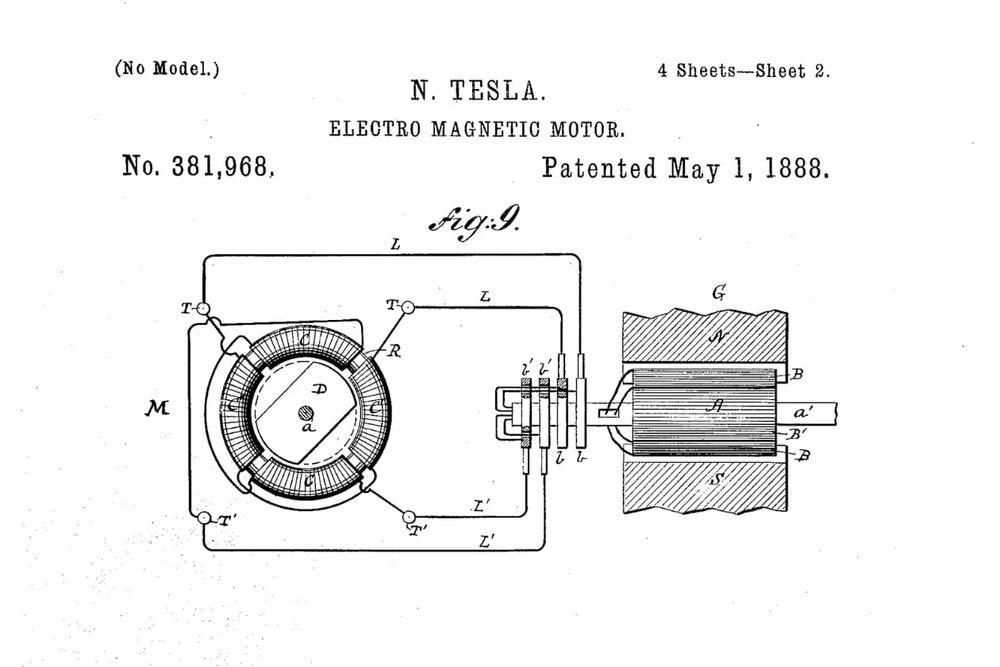
One of the most important inventions of the electrical age was invented at 89 Liberty Street in Lower Manhattan, but there is no marker of this site’s significance. In the 1880s, Nikola Tesla’s first laboratory occupied the second floor of a four-story commercial building at the site. It was here that the great inventor built and patented the first alternating current motor, an innovation that would enable the construction of the modern electric grid.
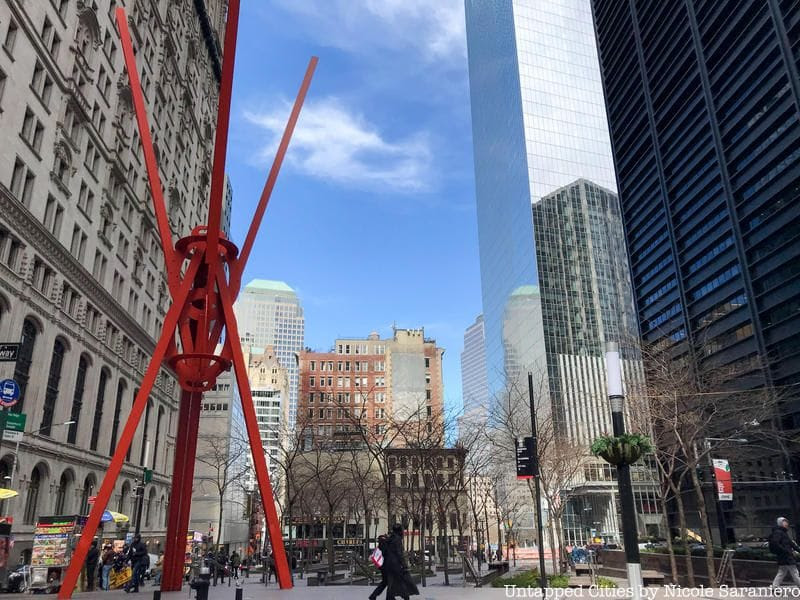
With the original building now long gone, Zuccotti Park is the perfect place to mark this achievement. The park is directly across the street from One Liberty Plaza, and an invention of this magnitude deserves to be recognized in a prominent public place.
But why was Tesla’s invention so important? We all have some familiarity with the “War of the Currents,” i.e., the competition over which was better: alternating or direct current. Most people, however, do not know what Nikola Tesla accomplished to turn the tide in favor of alternating instead of direct current.
The Early Days of Electric Lighting In 1878, fresh from inventing the incandescent light bulb, Thomas Edison announced to the press that he would build the first commercial electric distribution system in New York City. Edison planned to use direct current because, among other reasons, it was the scientific consensus at the time that only direct current was feasible. The construction of an alternating current motor was deemed impossible.
While Edison initially built his system for lighting, all knew that electric motors would become even more important. Why build an electric system based on alternating current if it could not supply motors?
That same year, 1878, Nikola Tesla was in an electric engineering class in Graz, Austria. His professor explained the scientific consensus that an alternating current motor was a physical impossibility. Tesla responded by declaring that he would build such a motor. Even though the professor ridiculed him in front of the class, Tesla never gave up on his goal.
Tesla in New York City On June 6, 1884, Nikola Tesla walked off a boat in New York City with a letter of introduction to work for Edison. He had previously worked for an Edison affiliated company in Paris. Edison, now known as the “Wizard of Menlo Park,” was world famous, and his electric company had successfully started up the world’s first commercial electric distribution grid on September 4, 1882, in lower Manhattan.
Tesla, eleven years younger than Edison, was just getting started. In his autobiography, My Inventions, Tesla writes that he impressed Edison from the start and that, because being Serbian was unusual at that time in New York City, Edison referred to him as “my Parisian.” While Edison’s letters from that time make no reference to Tesla, there is one document showing that Tesla was a highly paid Edison employee. While Edison must have recognized Tesla’s talent, Tesla admits in his autobiography that he chickened out and never asked to collaborate with him on developing an alternating current motor.
After a dispute over pay, Tesla left Edison to strike out on his own. He failed miserably. He fell in with Wall Street swindlers who left him penniless. In desperation for money to survive, Tesla became a ditch digger for the Western Union company. There he convinced the foreman of his crew that he was an electric genius. The foreman took him to see two Western Union executives, Alfred Brown and Charles Peck, who decided to finance him.
Tesla’s First Laboratory on Liberty Street Brown and Peck rented a room for Tesla on the second floor of 89 Liberty Street. They chose that building because there was a printing press on the first floor and at night Tesla would be able to use the steam that ran the printing press to work on his inventions.
While at 89 Liberty Street, Tesla first had to convince Brown and Peck that they should finance his project to develop an alternating current motor. They were skeptical of alternating current and were more interested in their own scheme to use differential ocean temperatures to create steam to run electric generators. It is notable that even then there were investors dreaming of a way to make electricity from renewable sources.
Tesla convinced them by copying a Christopher Columbus legend. According to this legend, Columbus overcame his critics in the Spanish court by challenging them to balance an egg on one end. After they were unable to do so, Columbus made the egg stand upright by lightly cracking it on one end. Tesla said he did a form of this by copper plating an egg and then making it both stand on its edge and spin on top of a table by placing a primitive form of his alternating current motor under the table.
Peck and Brown were duly impressed and agreed to allow Tesla to work on this project. Tesla both perfected his model and developed his patents for this motor while working at 89 Liberty Street. He also wrote six other patents on how to operate an alternating current electric system.
In 2018, the Institute of Electrical and Electronics Engineers declared this motor was “the most significant invention of the electrical age.” But Tesla was pure inventor and no businessperson. Peck, however, convinced Tesla to give a lecture and demonstration about his motor at Columbia University on May 16, 1888. That is how George Westinghouse learned of the invention.
Westinghouse was interested in developing an alternating current electric system to compete with Edison’s system but knew he needed a working alternating current motor to develop such a system.
Westinghouse’s chief technical personnel visited Tesla’s office at 89 Liberty Street several times during June and July 1888. They became convinced that Tesla had developed a working alternating current motor even though one Westinghouse employee told Westinghouse that he could not understand Tesla’s explanation of how it worked. Westinghouse bought the patent rights in July 1888 and hired Tesla to work for him. The rest is history.
Westinghouse won the “war of the currents” because an alternating current transmission system is more efficient than direct current, and there was now a working alternating current motor.
89 Liberty Street Today
The Singer Company demolished the lab building at 89 Liberty Street to make way for its famous skyscraper, the tallest building in the world from 1908 to 1909. The U.S. Steel Corporation in turn destroyed the Singer Building in the late 1960s to build its headquarters, which is now One Liberty Plaza.
Zuccotti Park, a privately-owned-public-space (POPS) located on the opposite side of Liberty Street was created in 1968. Most famous for serving as the base of the Occupy Wall Street protests in 2011, the park offers a bustling public space where a marker to Tesla’s achievements could easily be discovered by passersby, steps away from the forgotten site where his breakthrough invention was made.
Recognizing Tesla’s Contributions
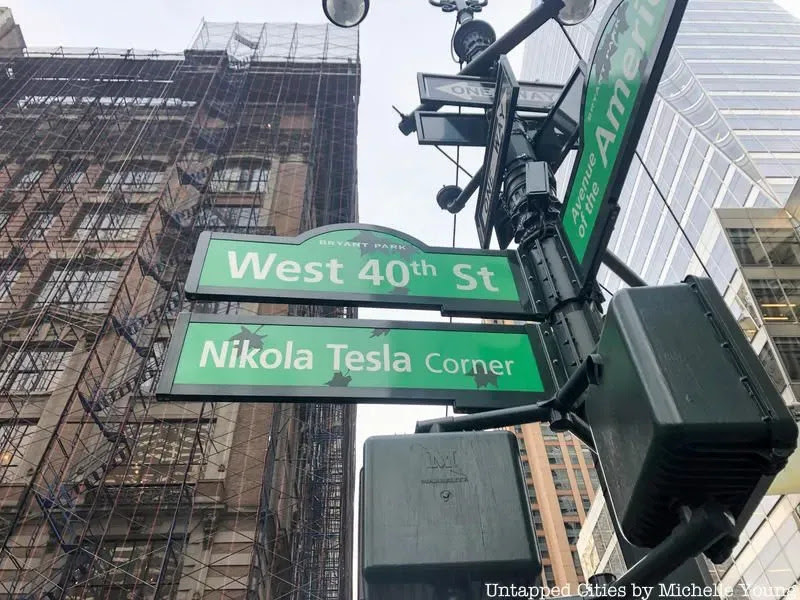
There is a Nikola Tesla way at 40th Street and 6th Avenue, near where he lived out his last years at the New Yorker Hotel (at 34th Street and 8th Avenue). He also spent much of his time in Bryant Park with the pigeons there. But that sign does not commemorate the most world changing invention of one of the world’s greatest scientific geniuses.
A plaque in Zuccotti Park would commemorate the early days of Tesla’s classic immigrant story, the days when he was a striver who solved the Rubik’s Cube of how to build an alternating current electric system—a feat that the greatest minds of the time said was impossible—and proved that he could compete with Edison’s direct current system.
WHAT IS GOING ON HERE???
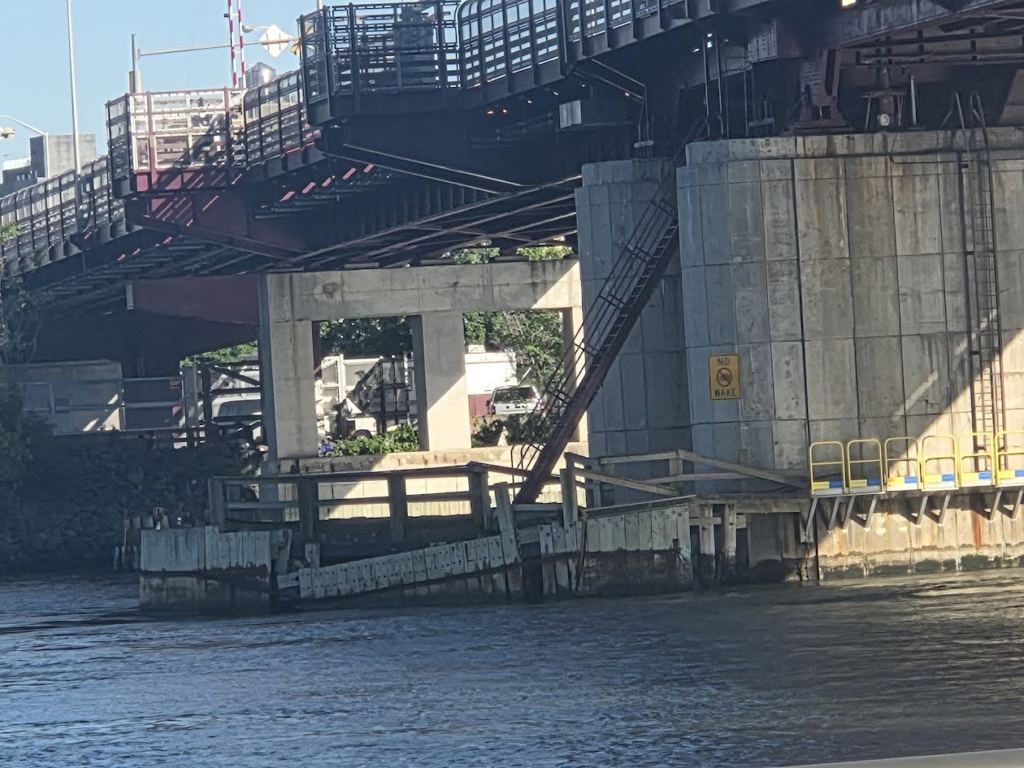
Protective wood is falling apart under the RI Bridge…DOT, time to wake up and see the damage
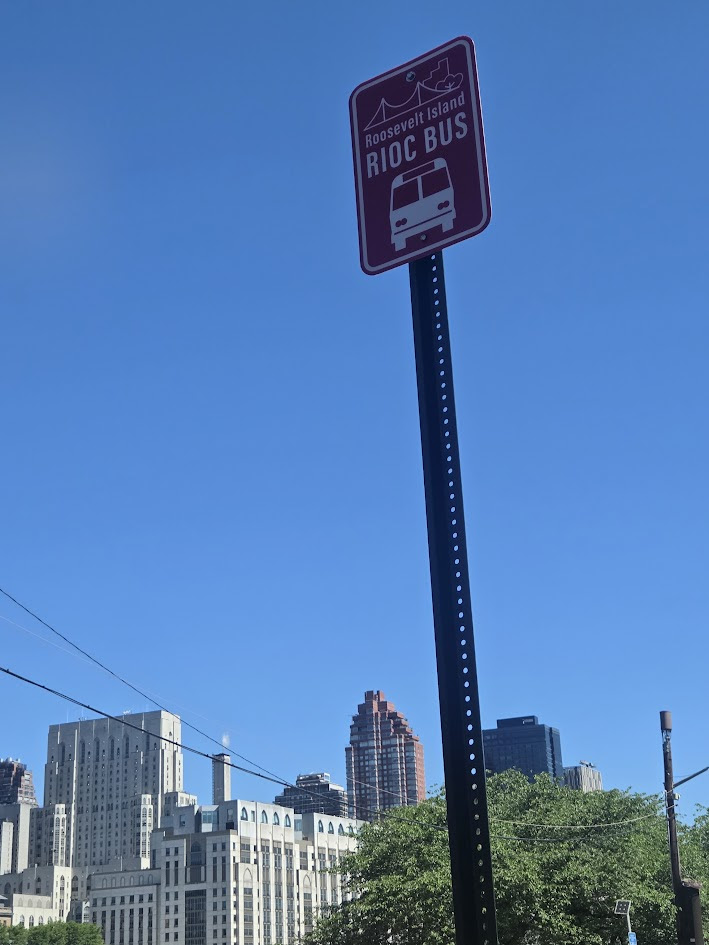
Sky high placement of Bus Stop signs. Are we an island of giants? Whose idea was it to place signs 10 feet in the air?
Two broken door windows at our deteriorating Post Office. The post office is in terrible condition and neglected by the agency. Don’t blame the staff but complain upwards to negligent management.
CREDITS
UNTAPPED NEW YORK JUDITH BERDY
All image are copyrighted (c) Roosevelt Island Historical Society unless otherwise indicated THIS PUBLICATION FUNDED BY DISCRETIONARY FUNDS FROM CITY COUNCIL MEMBER JULIE MENIN & ROOSEVELT ISLAND OPERATING CORPORATION PUBLIC PURPOSE FUNDS.
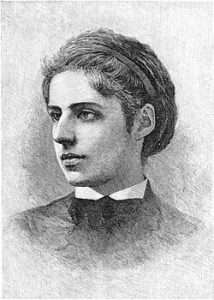
Poet Emma Lazarus was active from the mid-1860s until her death in 1887. She descended from a well-established Sephardic family in Manhattan. Her presence coincided with the arrival of waves of Ashkenazi refugees from Eastern Europe. Their customs, Yiddish language, and political activism were distinct from the assimilated Sephardic community.
Emma created two contrasting sonnets on immigration, both dated 1883. Set against the socio-political background of their time of publication, these poems highlight some of the historical and continuous controversies surrounding the issue.
Recife & New Amsterdam
During the seventeenth century, the scattering of Jewish communities reached a global dimension. When in 1630 the Dutch West India Company (WIC) took the Brazilian coastal state of Pernambuco from the Portuguese, Sephardic (Iberian) refugees living in Amsterdam and elsewhere in the Dutch Republic were encouraged and supported by the WIC to settle there.
New Christians (“conversos”) who had returned to Judaism joined them. Many settled in the capital Recife. Enjoying freedom of worship and civil equality, they established a synagogue there in 1636/7, the first one in the New World.
The community’s economic activity in Recife was significant. As the region’s humid tropical climate made the cultivation of sugarcane profitable, Jewish merchants developed the sugar industry. They owned the slave-based plantations and ran trading networks between Recife and Amsterdam. Their activities fostered a period of prosperity.
When in 1654 the Portuguese retook the colony, Jewish settlers scattered. Some returned to Europe, whilst others moved within the Americas, forming Jewish communities in the Caribbean that helped launch the sugar trade in Barbados.
In early September that year, twenty-three Jewish refugees fleeing Recife, landed in New Amsterdam on board the French barque Sainte Catherine (later referred to as the “Jewish Mayflower”). Upon arrival, the ship’s captain Jacques de la Motthe sued his passengers for the cost of the journey, leaving them destitute.
Although governor Peter Stuyvesant resisted their reception, fearing that the New Netherland colony would be torn apart by the presence of multiple religious groups, he was vetoed by the directors of the WIC in Amsterdam who ruled that these Portuguese Jews “shall have permission to sail and trade in New Netherland and to live and remain there provided the poor among them shall not become a burden to the Company, or the community.”
The first permanent Jewish congregation to settle in New Amsterdam, its members founded “Shearith Israel” in 1654.
Emma Lazarus was born on July 22, 1849, in the city of New York into a wealthy family. Her father was a sugar merchant who descended from the early Portuguese Jews in New Amsterdam. Her ancestors had cemented assimilation of the Sephardic tradition into the city’s socio-religious life, giving the dynasty considerable status in metropolitan circles.
Growing up in the city, Emma received a “classic” European education by private tutors. Her father backed the publication, at the age of seventeen, of her Poems and Translations (1866). Ralph Waldo Emerson appreciated her work and became the young poet’s mentor.
Throughout the 1870s and early 1880s, her work appeared in various magazines reaching a mixed audience, but social and political circumstances were deteriorating. Acts of antisemitism, even directed towards assimilated Jews, were on the increase.
In 1881, Tsar Alexander II was murdered in St Petersburg. Ashkenazi Jews, already compelled to live in a restricted region (the “Pale of Settlement”), were held responsible. Their persecution by the Romanov government started a process of mass movement to America.
Elite Sephardic families in New York tried to stay clear of indigent Yiddish-speaking immigrants, but Emma was determined to offer help. She taught English at the Young Men’s Hebrew Association; volunteered for the Hebrew Emigrant Aid Society on Ward’s Island; and joined Henry Leipziger’s Hebrew Technical Institute to provide vocational training to young immigrants.
During these years, she created the “Songs of a Semite” (1882), in which she rallied uncommitted American Jews. She also became a contributor to American Hebrew newspaper. After publishing her “Songs,” the paper’s editor invited her to write a column called “An Epistle to the Hebrews.”
In fifteen letters (1882/3), she challenged New York Jews to acknowledge their privileged social status and support refugees from Eastern Europe. At the same time, she warned about Jewish vulnerability, even in the United States. She knew antisemitism to be a “very light sleeper” (a phrase attributed to Irish politician Conor Cruise O’Brien), lying just beneath the surface and ready to spring up at any time.
More than a decade before Theodor Herzl made the Zionist case in Der Judenstaat (The Jewish State, 1896), she spoke of Jewish “repatriation” in Palestine. Deeply concerned about developments, she transformed from a poetical observer into a committed activist, trying to unify her Sephardic community with that of Ashkenazi refugees.
Your Huddled Masses
In June 1865, Édouard de Laboulaye invited some liberal friends for dinner at his home in Paris. A Professor of Law at the Collège de France, he was the author of a three-volume Histoire des États Unis (History of the United States) and translator of Benjamin Franklin’s autobiography.
The party celebrated the end of American slavery with the imminent ratification of the 13th Amendment. In his word of welcome, the host proposed that the French people should present America with a monument to honor the values of liberty and abolition. There was no mention of immigration or refuge.
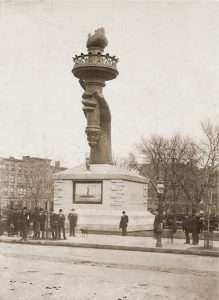
Political upheaval delayed the project, but work started in Paris with the construction of the Statue of Liberty’s torch-bearing arm which, in May 1876, was on display at Philadelphia’s Centennial Exhibition. The parts were then moved to Madison Square Park, before returning to Paris.
Between 1882 and 1884, the statue was assembled in a foundry at Rue de Chazelles where Parisians were astonished to see a colossal female figure appearing above buildings surrounding the workshop. American participants in the project agreed to finance its pedestal.
Emma Lazarus must have been impressed by seeing the exhibit in Manhattan. In 1883 she composed her poem “The New Colossus,” hoping to raise funds for the pedestal.
In this sonnet, she contrasted the bronze “brazen giant of Greek fame” on the island of Rhodes (one of the Seven Wonders of Antiquity) with the Statue of Liberty, defining her as the “Mother of Exiles.”
The ancient male Colossus intended to overwhelm and intimidate; Emma’s Lady evoked hope and anticipation. She redefined a statue that stemmed from the spirit of liberal French Republicanism as one that stood for a humanitarian mission: to welcome the poor immigrant.
The poem was included in the “Catalogue of the Pedestal Fund Art Loan Exhibition” at Manhattan’s National Academy of Design. Emma lent her voice to stress the Statue’s role as a symbol of compassion. It called for “your tired, your poor, your huddled masses yearning to breathe free,” in reference to destitute refugees.
Her words soon faded away. When the Statue of Liberty was dedicated, the poem did not figure. More than fifteen years after her death in November 1887, composer Georgina Schuyler commissioned a plaque with the text of the sonnet inside the pedestal as a tribute to her late friend.
During the 1930s, an era of quotas and immigration hysteria, the sonnet gained new relevance. In 1949 Irving Berlin, who himself had arrived as a five-year old with his Russian-Jewish family at Ellis Island in 1893, set it to music in “Give Me Your Tired, Your Poor” as part of the Broadway musical Miss Liberty.
A Two-Faced Year
Within days of writing “The New Colossus,” Emma penned a parallel poem entitled “1492.” This sonnet reflected on her Sephardic heritage, linking the expulsion of Iberian Jews in 1492 to that of the mass of new arrivals settling on American soil. History books tend to remember the year for Christopher Columbus’s transatlantic voyage, rather than for the tragic fate of Spanish Jews.
Until the late fifteenth century, the Iberian Peninsula had been a center of Jewish life. On March 31, 1492, the “Catholic Monarchs” Isabella and Ferdinand II signed an edict ordering all Jews living in Castile and Aragon to convert or leave. New Christians suspected of holding on to their faith were persecuted by the Inquisition.
An exodus followed. Small groups of Jews settled in port cities such as Livorno, Antwerp, or Amsterdam, but most of them moved to Portugal. In 1497 King Manuel I decreed, under Spanish pressure, that all Jews had to convert to Christianity or leave Portugal.
In “1492,” Emma Lazarus explored the “two-faced” nature of that year, contrasting the face of the Inquisition’s “zealous hate” with the “smiling” welcome of the “virgin world.” She personified the year as a “Mother of Change and Fate” for Jews, a turning point from persecution to freedom.
With Europe closed to them at “every gate,” the New World opened “doors of sunset” in a dark age of persecution. The tone of the poem is more upbeat than that of “The New Colossus,” as if the poet is challenging her community to rise to the task.
The poem may be a celebration of refuge and sanctuary, but political developments were moving in an opposite direction. In May 1882, President Chester Arthur had signed into law the Chinese Exclusion Act, the first federal law to restrict immigration and the only one to single out a specific nation, fueling racial discrimination.
At the Statue of Liberty’s dedication on October 28, 1886, politicians on that rainy day showed little concern with welcoming any huddled masses.
Headlines were stark. The recent Haymarket bombing in Chicago had killed eleven people. The culprit was never identified, but eight men were convicted for conspiracy – six of them newcomers. For many, immigration meant terror.
America for the Americans
A gate marks passage, but also limitation or denial of access. As a metaphor, it is often used to advocate or justify immigration policies, framing a nation as a bounded space with borders (gates), controlling entrance and exit. When Emma Lazarus applied the metaphor, her Jewish background was relevant.
In Judaism, the imagery of gates is embedded in religious tracts and liturgical practices. Traditionally, the city gate was a place where traders met and from where news was circulated. In ancient Israel, elders and judges sat at the city gates to hear legal cases and administer justice.
On a spiritual level, the gate was central in the relationship between man and God. The final service of Yom Kippur (Ne’ilah) symbolizes the “closing of the gates of Heaven,” regarded as the penitent’s last chance at redemption. The gate was the threshold between the known and unknown, between past and future.
The gate entered the nativists’ rhetoric too. In the July 1892 issue of The Atlantic Monthly its editor Thomas Bailey Aldrich published a long poem entitled “Unguarded Gates.” Structured in three parts, the narrative moves from the country’s former unspoiled landscape to demographic invasions, ending in a plea for preclusion.
The poem’s first line is a leitmotiv: “Wide open and unguarded stand our gates!” Overrun by a “wild motley throng” of incomers, socio-cultural identity is at peril:
“In street and alley what strange tongues are loud, Accents of menace alien to our air, Voices that once the Tower of Babel knew!”
The concluding section of the poem raises a question that reads as a polemical response to the image of Lady Liberty painted by Emma Lazarus: “O Liberty, white Goddess! is it well / To leave the gates unguarded?”
Aldrich merged his anti-immigration stance with the notion of Anglo-American superiority. Many contemporaries shared this view.
Writing to a friend in 1892, the author said that he drafted the poem in anger after being subjected to a robbery. He abhorred an America that would be the “cesspool of Europe,” concluding with the xenophobic statement “I believe in America for the Americans.”
Reflecting nativist fears and prejudices, Aldrich voiced a tendency of intolerance towards racial and social diversity. Attacking the “open gate” reality, he called for exclusionary measures.
The poem became part of the political debate. Two years after its publication, the Immigration Restriction League was founded in Boston by Harvard graduates, a nativist organization that campaigned for strict laws to curb the influx of “inferior” southern and Eastern Europeans.
To them, the symbolism behind Lady Liberty’s statue was contentious. She was wrong embracing the world’s poor and huddled masses. In their vision, the chains at her feet should be interpreted as deportation tools in defense of the nation’s broken identity and fractured self.
CREDITS
Illustrations, from above: “Come Unto Me Ye Opprest!,” a nativist, anti-Italian and anti-Anarchist cartoon by James “J.P.” Alley published in the Memphis Commercial Appeal, July 5, 1919; Jewish owned sugar mills and slave labor in Dutch Brazil; The First Mill Street Synagogue in the City of New York, 1730; Portrait of Emma Lazarus, ca. 1872; The Statue of Liberty’s hand and torch on view in Madison Square. (Museo Bartholdi Colmar); The original 1883 manuscript of “The New Colossus”; and an anti-immigration cartoon featuring the Statue of Liberty by F. Victor Gillam, 1890 (from the cover of Judge magazine).
All image are copyrighted (c) Roosevelt Island Historical Society unless otherwise indicated THIS PUBLICATION FUNDED BY DISCRETIONARY FUNDS FROM CITY COUNCIL MEMBER JULIE MENIN & ROOSEVELT ISLAND OPERATING CORPORATION PUBLIC PURPOSE FUNDS.
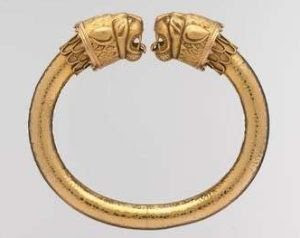
In September 1887, in broad daylight, a robbery took place at New York’s Metropolitan Museum of Art (the Met). The thieves got away with a pair of ancient bracelets described in a New-York Tribune crime report as “solid gold, about four inches in diameter, richly carved and studded with all manner of precious gems.”
The police did not recover the items, but Tiffany & Co. created fine replicas (the firm acted as “sole agents” for the reproduction of the Museum’s works of art). Originating in Cyprus, the bracelets were part of the Museum’s “Cesnola Collection,” the formation of which itself was a story of mass thievery.
Diplomats & Other Vandals
The disclosure of early civilizations was a nineteenth century adventure tale. Royals and politicians visited excavation sites in Italy, Greece, or Egypt; newspaper headlines announced the latest digs; and thousands flocked to visit exhibitions of artifacts from distant millennia.
These were the pioneer days of digging, the rush for ancient treasures, when excavators employed hundreds of workers in a frenzied search for hidden riches. Out of this mania, archaeology was born.
Over the decades, passion for the past deteriorated into concerted theft and vandalism, erasing rather than illuminating the past.
The spade was in the hands of greedy diggers. The legal issues surrounding the retention of looted property are fought out in courtrooms to this day.
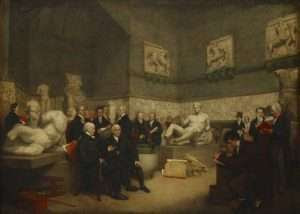
In the early 1800s agents working on behalf of the diplomat Thomas Bruce, Lord Elgin, shipped the “Elgin Marbles” from the Parthenon in Athens to the British Museum in London.
Ironically, the French added a newly coined word “elginisme” to the vocabulary, referring to an act by which antiquities are torn out of their cultural and spatial context.
In comparison to the extent of Napoleon’s art sackings, British public opinion regarded Elgin’s “purchase” of the Marbles as an entirely honorable transaction.
As looting (euphemistically called “acts of seizure”) in occupied territories was acceptable under international norms at the time, museums stacked their exhibition rooms with displaced objects.
The appointment of “collectors” such as Henry Salt (1780-1827) or the notorious Turin-born tomb raider Bernadino Drovetti (1776-1852) to Consular posts in British and French services respectively, as well as state-sponsored expeditions to secure antiquities for national collections, led to the mass export of stolen art works to Europe’s major museums. Cultural imperialism was in full swing.
Museums were the creation of plunderers; chauvinists pushed the concept of a National Museum. Europe’s great powers asserted their claim to pre-eminence by amassing vast collections of colonial objects.
In 1818, the British Museum acquired the colossal bust of Ramses II from the Abu Simbel Temple, Upper Egypt. Not to be outdone, three years later the Louvre obtained the “Dendera Zodiac,” a bas-relief taken from a chapel dedicated to Osiris in a temple complex on the Nile.
An international mob of early archaeologists stripped Egypt of its treasures in an insane rivalry for possession between the British Museum and the Louvre.
When France signed the Treaty of Amiens in March 1802, one of the British conditions of surrender was the handing over of antiquities Napoleon had removed during his campaign in Egypt, including the “Rosetta Stone.”
Egyptology was a competitive encounter between France and Britain in which passionate feelings of national pride and imperial prestige were at stake. The United States would join the circus later.
The Met
During the summer of 1866, several prominent Americans living in Paris put on a Fourth of July festival to celebrate the nation’s ninetieth birthday.
In his speech, lawyer and attorney John Jay II (1817–1894) pointed out that New York was ready to compete with Europe’s great cities by creating its own museum. He called for the foundation of a National Gallery of Art. As President of New York’s exclusive Union League Club, he actively rallied civic leaders, artists, and philanthropists to the cause.
The Met was incorporated on April 13, 1870, opening to the public in the Dodworth Building at 681 Fifth Avenue. The first object the Museum received was a Roman marble sarcophagus dug up in Tarsus, modern day Turkey, in 1863. The treasure was donated by J. Abdo Debbas, the American vice-consul in the region.
Collection formation at the Met started with the abuse of diplomatic privilege to smuggle a work of art out of its country of origin. Legal immunities eased such illicit movement. The Museum gained its reputation as a repository of antiquities after the acquisition of the Cesnola Collection of Cypriot Art.
Luigi Palma di Cesnola was born in July 1832 in Rivarolo Canavese, near Turin, then part of the Kingdom of Sardinia. His family was of minor Piedmontese nobility and Luigi embarked upon a military career.
In 1848, he served (and suffered defeat) in the Sardinian army fighting against Austrian forces in the First Italian War of Independence (1848-1849); he then volunteered in the Crimean War (1853-1856) on the side of the British.
In 1858 he settled in New York, founded a training school for army officers, and married the daughter of the 1812 naval war hero Samuel Chester Reid.
At the outbreak of the Civil War, he joined the Fourth Cavalry Regiment of New York with the rank of Colonel. In 1863, leading a charge of his troops at the Battle of Aldie in Virginia he was wounded and captured. Following his distinguished service, Luigi received the Medal of Honor for gallantry.
For his military credentials and multilingual abilities (fluent in Italian, French, and English), President Abraham Lincoln appointed the United States Army veteran in 1865 as Consul at Larnaca, Cyprus, then under Ottoman occupation.
His duties were light and, with plenty of spare time, he joined in the hunt for ancient treasures which had become a diplomatic pastime on the island. He was one of several amateur “gentlemen” diggers who plundered and pillaged the island’s antiquities.
Although academic interest in the history of Cyprus as one of the oldest civilizations in the eastern Mediterranean was deepening, adventurers, tomb robbers, and dodgy dealers exploited Ottoman indolence towards its heritage.
Cesnola was not bothered about scholarly considerations, nor did he show much respect for the socio-historical context of the objects he accumulated. His operations were a commercial venture. The past was for sale. As there were no institutional rules of provenance ethics nor any norms on dealings with cultural heritage, he used his consular office to collect some 35,000 antiquarian items.
By 1870, the scale of his activities had alarmed the authorities. He was denied permission to remove his treasures from the island. Using diplomatic levers, he was able to bypass custom officers and ship 360 large cases to Alexandria. For a while, the collection’s destination remained uncertain.
Negotiations took place with Napoleon III, who wanted the collection for the Louvre; Russian officials discussed a transfer to the Hermitage Museum at St Petersburg. Soon afterward, Cesnola transported the collection to London where its exhibition aroused interest.
At that point (1872), the Met intervened and bought the collection. Cesnola himself supervised its installation. In 1877, after his duty as Consul in Cyprus had ended, he took a seat on the Museum’s board of trustees and served as its first Director from 1879 until his death in 1904.
When in March 1880, the Museum moved to its permanent site at Fifth Avenue and 82nd Street the collection of over 6,000 works occupied a prime location on the first floor. He pushed for the publication of (unreliable) catalogues, including the six-volume, richly illustrated Atlas of Cypriot Antiquities and oversaw the arrangement of his artifacts in dedicated galleries.
Its display was trumpeted as an asset to the city, outdoing similar collections in London or Paris.
Treasure of Curium
Discovered in 1875, Cesnola unearthed the Curium antiquities at the site of Kourion, an ancient Greek city-state on the southwestern Cypriot coast.
They were added to the Museum’s earlier collection and enhanced its reputation – for a while at least. In 1877, Luigi “documented” his excavations and procurements in Cyprus: Its Ancient Cities, Tombs, and Temples.
Controversy started soon after publication when experts began fact checking the story lines. The “Cesnola Scandal” exposed his corrupt morals, crude methods, and unauthorized removals. His geographical descriptions were unmasked as either wildly inaccurate or completely fictional.
Archaeologists accused him of forging provenances and fabricating dates and/or locations; newspapers called him a liar and a looter.
Theft was a family affair. Luigi’s younger brother Alessandro also served in the military, before emigrating to America in the 1860s where he claimed citizenship. In 1873, he was appointed honorary American vice-consul in Paphos, a position that allowed for his involvement in archaeological activities on the island.
Between 1876 and 1878, in partnership with his father-in-law, the London financier Edwin Lawrence, Alessandro excavated many artifacts (by whatever means), principally from around Salamis.
His attempts to flout the ban on private excavations instituted by the first British High Commissioner following Britain’s occupation of Cyprus in July 1878, resulted in his expulsion from the island and the confiscation of part of the collection. He disposed of the bulk of the material at various auctions in London between 1883 and 1892.
Luigi’s projects were overseen by a character named Beshbesh, a Turkish fixer who contracted local vandals to plunder sites without record or documentation. He also bought objects from local dealers, inventing excavation narratives to justify his expenditure.
The Consul himself rarely visited the digs; he simply retold the stories and published them as factual accounts. This explained the extraordinary mixture of periods in the Curium treasure. The collection was not properly classified until 1914 by Oxford professor John Myres (1869-1954).
A pompous character, Cesnola remained unmoved by the tsunami of criticism directed against him. He died in 1904 at his apartment in the elegant Seymour Hotel on West 45th Street.
With the controversy raging over the acquisition of antiquities, their fraudulent restorations and illegal export, the collection became an embarrassment to the museum.
The Cesnola Collection was quietly dissolved over the decades, except for the most authentic pieces. When the Met opened new galleries in 2000, a reduced number of six hundred pieces was on display at its Department of Greek and Roman Art.
Agents of Displacement
Western museums were displacement agents of classical art and sculpture, either through the physical removal of artifacts, or through the misrepresentation of their original appearance.
Objects were adapted to fit European aesthetic taste, presenting Greek and Roman sculptures as pure white. All traces of coloring were scrubbed off to enhance the “marmoreal gleam,” fostering a false association between whiteness and beauty.
It was the wealth of our heritage that allowed for “cultural terrorism” to occur. Abundance provokes carelessness. If ancient treasures had been scarce, the alertness to protect them would have been more acute.
Cesnola is a comprehensive collection of Cypriot art, highlighting a blend of Greek, Egyptian, and Near Eastern influences that were at play throughout antiquity, but key issues surrounding the acquisition history of items stay unresolved.
While Cypriot officials acknowledge the collection’s importance for international study, there have been (sporadic) calls for the repatriation of “plundered” works.
There seems to be a resigned acceptance that the Cesnola treasures, like the Elgin Marbles, were removed with consent of the Ottoman regime, making a legal challenge of ownership complicated. The charge of “colonial theft” would be difficult to prove.
The black market of antiquities is still rampant as the looting of archaeological sites in conflict-ridden regions like the Middle East and North Africa continues.
As of early 2026, ongoing conflicts and political instability in countries such as Syria, Iraq, Libya, Yemen, and recently Iran have resulted in the widespread pillaging of archaeological sites.
That situation has prompted attempts to exert international control over the illicit trade. The joint fight against the trafficking of cultural objects may encourage a trickier conversation on the status and presentation of museum collections.
To reduce ancient histories to a dreary display of exhibits removed from their original context and deprived of their spiritual essence, is meaningless. Rather than telling a coherent tale, museums impose a sense of lost history and forgotten cultural identities upon its visitors – mental fatigue rather than inspiration.
Restitution is the return of a cultural object to its rightful owner from which it was wrongfully taken. That is an obligation under the law and, therefore, a legally binding duty.
Repatriation is more complex. It implies the return of a significant object to its community of origin for historical, cultural, or spiritual reasons.
At present, this is a voluntary “ethical” choice, not an enforceable requirement. However sensitive and complicated proceedings might (and will) be, the discussion on repatriation must continue.
Apart from fostering restorative justice, the process will restore historical context by allowing communities of origin to reconnect with their heritage and rewrite Western-centric narratives. History itself will be the winner.
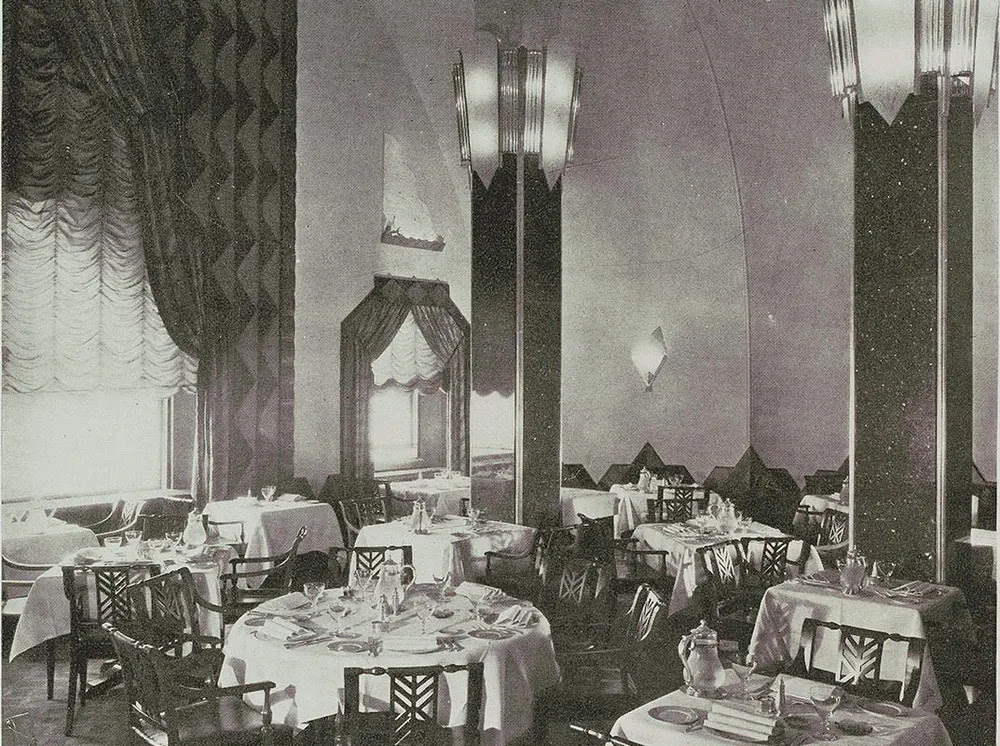
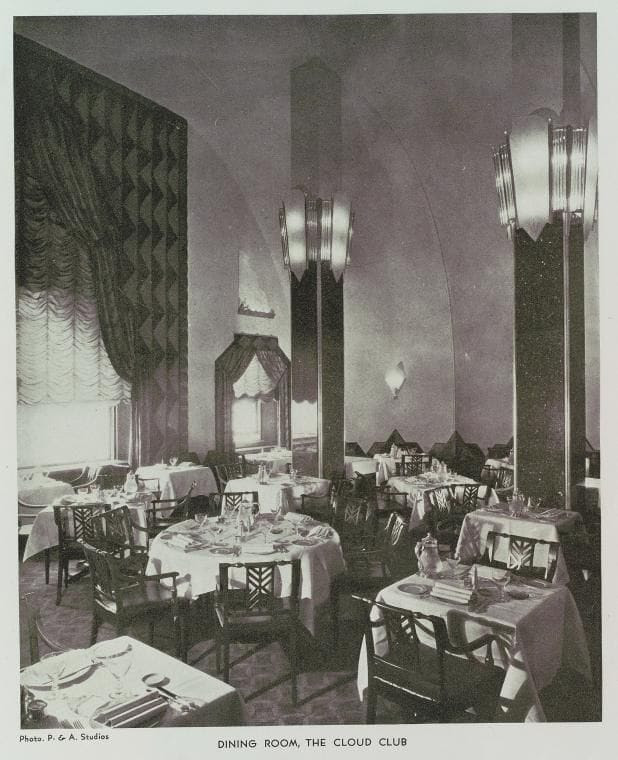
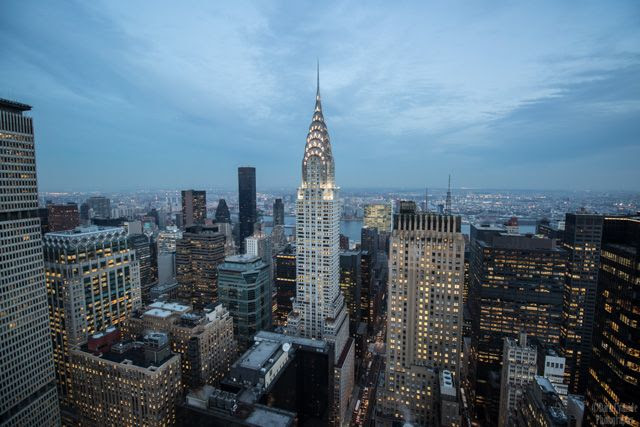
Once located on the 66th to 68th floors of the Chrysler Building, The Cloud Club belonged to a group of mile-high power lunch spots in New York City, atop the city’s most distinctive skyscrapers. The New York Times calls The Cloud Club “the inspiration for many of the others.” It was initially designed for Texaco, which occupied 14 floors of the Chrysler Building, and used as a restaurant for executives. It opened with 300 members of New York City’s business elite and only men were allowed to enter for many decades.
From the New York Public Library The Cloud Club was designed by William van Alan, and had an eclectic mix of design, ranging from Futurist in the main dining room, Tudor for the lounge, and an Old English grill room. Perhaps because of its decor, or its original function, it never became hip and stylish like the Rainbow Room but it did have amenities like a barber shop, a humidor, lockers for members to store their own alcohol of choice, and a wood-paneled bar that was used to hide alcohol during Prohibition. There was a stock ticker for the high powered financiers who frequented the club.
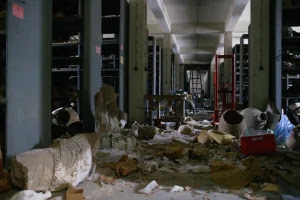
The Cloud Club closed in the 1979. The New York Times reported in 2000 that there were “various attempts in the early 1980’s to fill the three floors with everything from a nightclub to a disco to a lunch club for bankers” but they all failed. As of 2000, the marble and bronze staircase was still in the space, however, and the club had been “ravaged by time, neglect, water and vandalism.”
The club was later gutted to accommodate both potential office and hospitality tenants but according to the New York Post, potential restaurant operators were scared off by the “impractical layout.” As of the early 2010s, several, if not all floors were empty, but in recent years, AMA Capital Partners, a merchant bank focused shipping and energy, moved into the former Cloud Club floors.
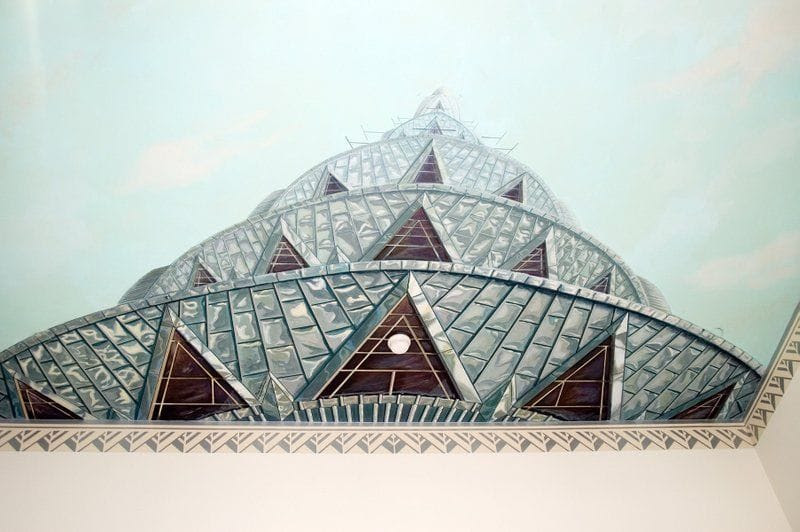
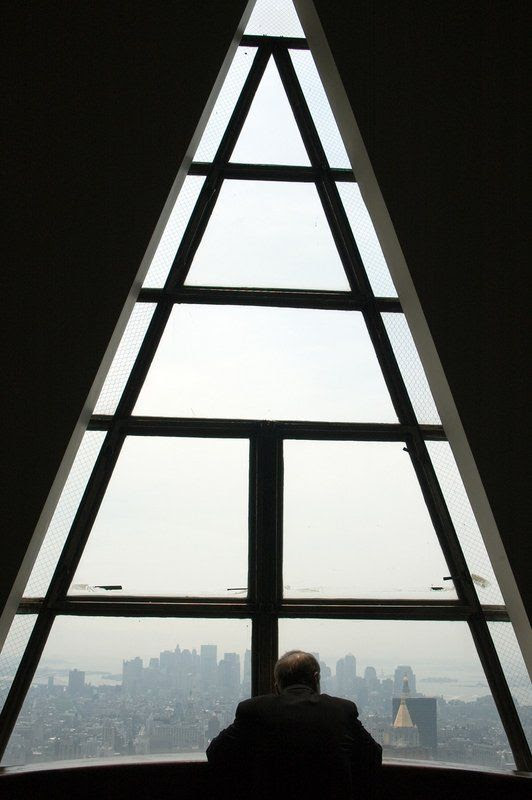
In 1931 when the Chrysler Building opened, it also had an observatory called the “Celestial” in the spire on the 71st floor. You could take in views of the city from all four sides for fifty cents. The star-themed observation deck closed down in 1945 and according to Moses Gates in his book Hidden Cities, it’s now occupied by a private firm. On a visit to the observatory in 2006, our Untapped New York Insider, Klaus-Peter Statz told us there were leftovers of a bar, with a bar, stools, and little tables, but not much else left
A mural of the Chrysler Building that was once in the observatory hallway, before entering the bar area. Photo by Klaus-Peter Statz
In fact, when Aby Rosen of RFR Holdings purchased the Chrysler Building in spring of 2019, he told the New York Post he was considering bringing back an observation deck. The Post reported that he was in discussion with Major Food Group and Stephen Starr about creating new restaurant spaces that “could rival the Cloud Club,” in hopes to revitalize the struggling ground floor.
One of the triangular windows inside the observatory. Photo by Klaus-Peter Statz.
Rosen got a great deal on the building, which is known to be a difficult business operation, paying $151 million to the Abu Dhabi Investment Fund, which had bought a 90% stake in the building for $800 million back in 2008. Tishman Speyer had bought the building in 1997 for $225 million but sold it’s finals takes in 2019. Reports from early 2026 indicate the company may be eyeing the building again, after it went up for sale in 2025.
Time will only tell if anything comes of the grand plans to bring back an observation deck. Rumblings of a new skydeck for the Chrysler Building surfaced in 2022, according to Curbed New York. The observation deck, which some estimate will cost up to $40 to enter, would allow access to the currently private building. Though there are no finalized construction plans for the Chrysler Building’s new observation deck, the Landmarks Preservation Commission approved its construction in 2020.
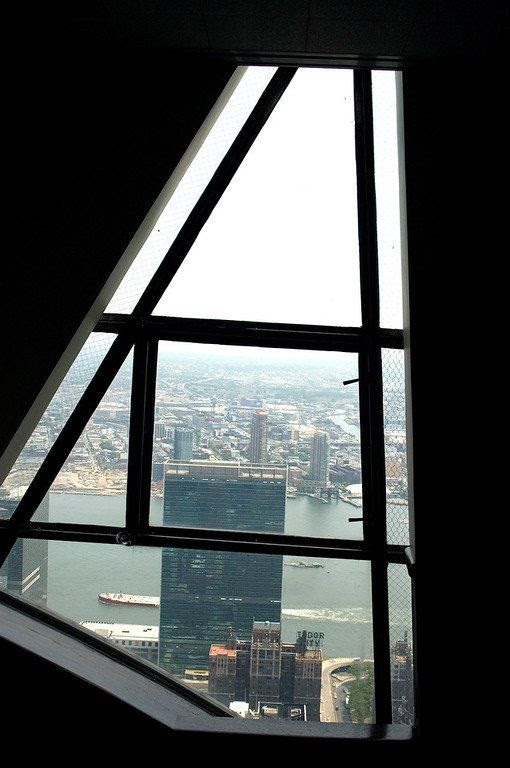
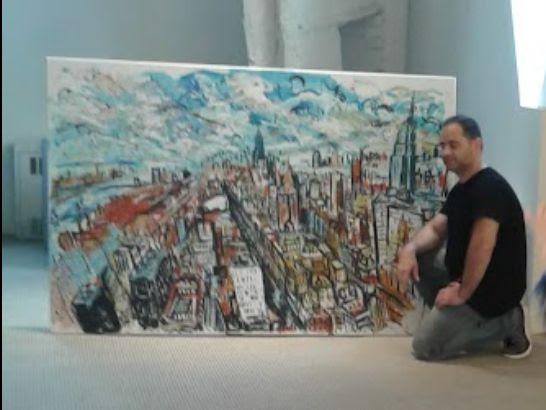
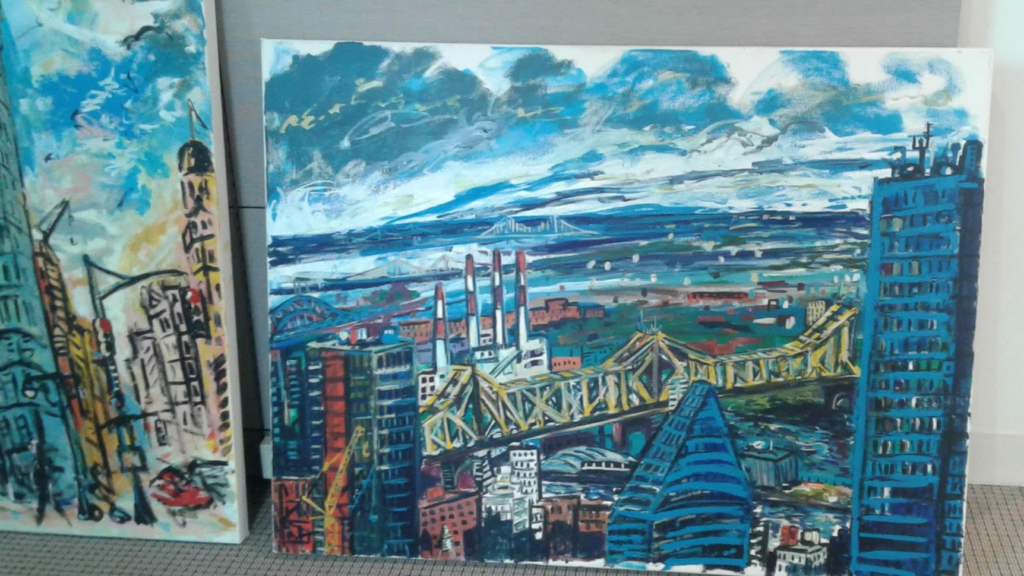
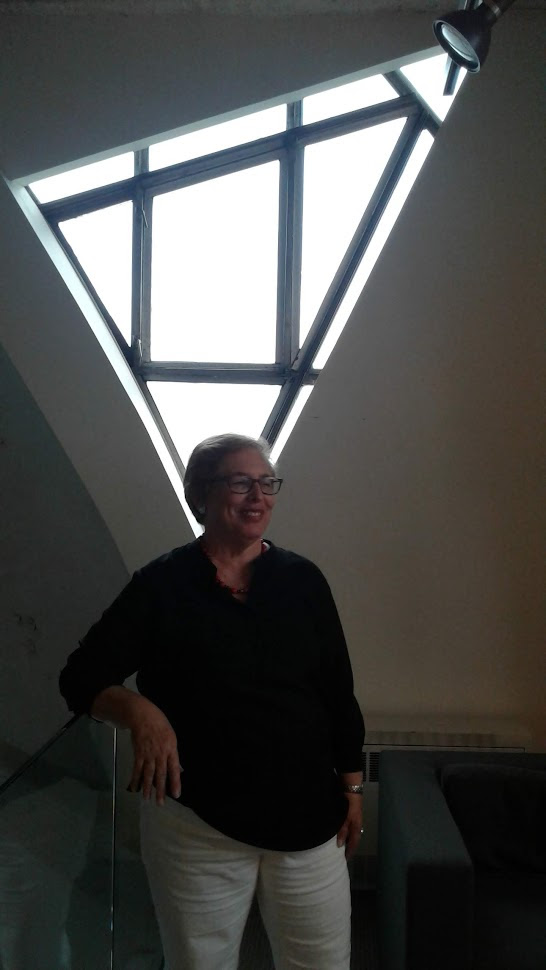
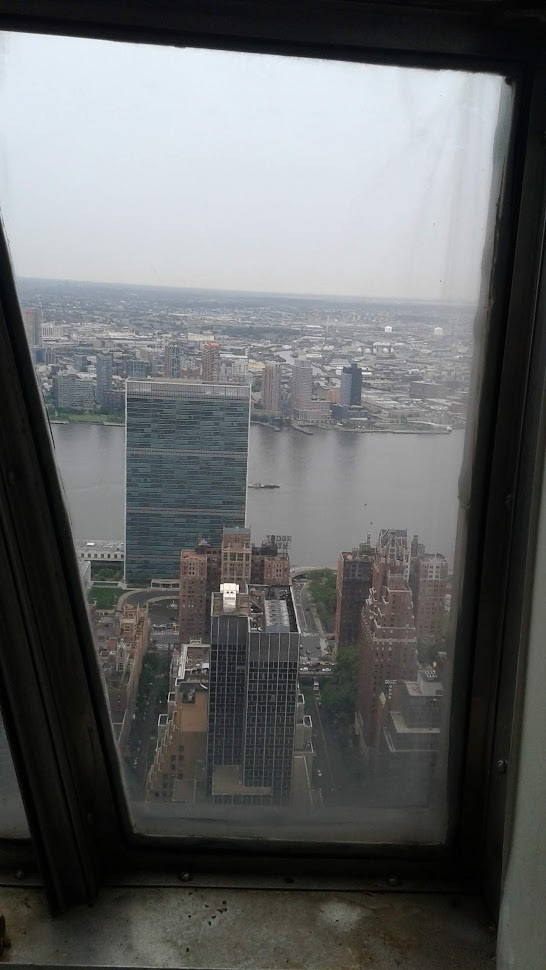
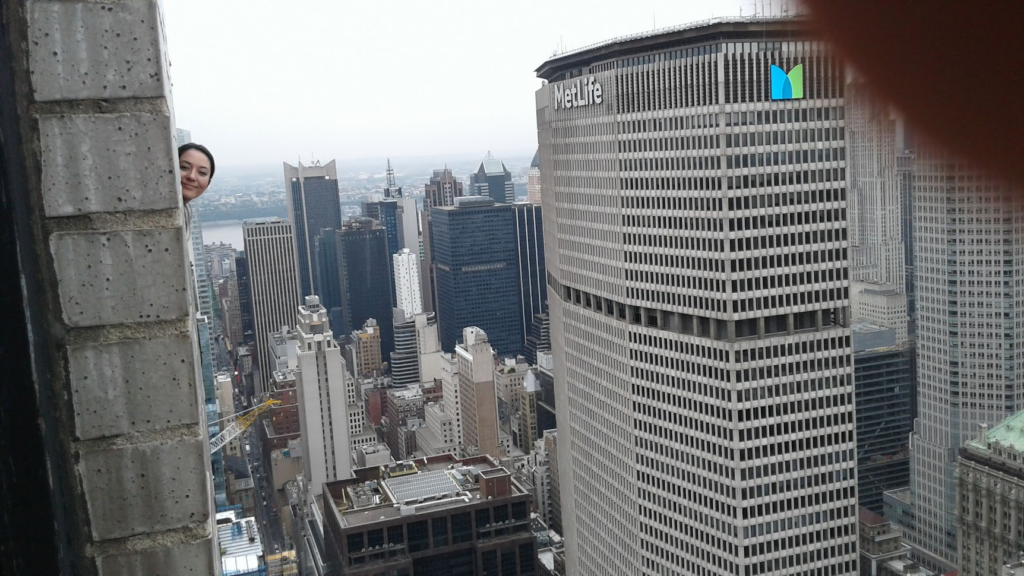
On a summer day in May 2018, Melanie Colter and I were invited to visit an office on the 65th floor of the Chrysler Building. Australian artist Marco Luccio had been using the space to paint views of the city. The space was rented by a maritime company and offered a great view of the infrastructure.
Marco Luccio’s paintings from the Chrysler
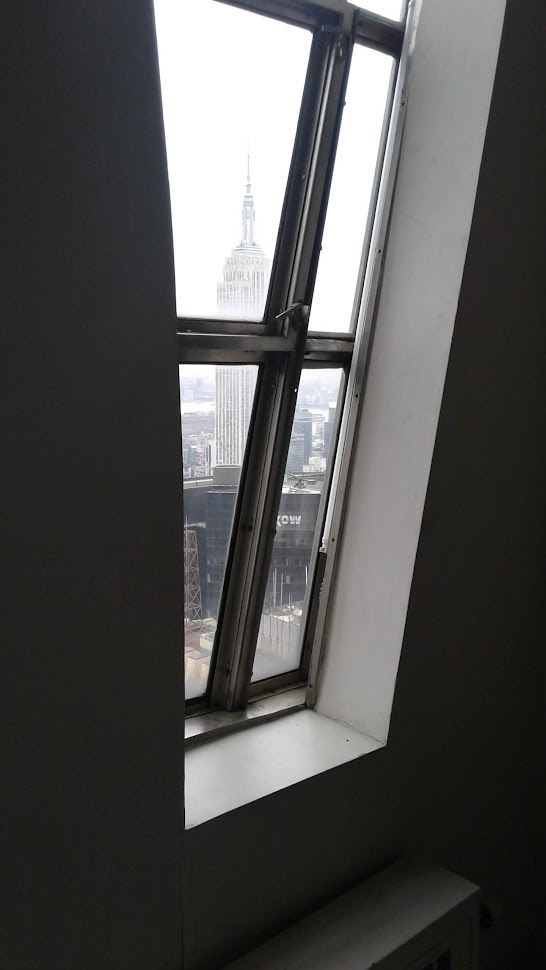
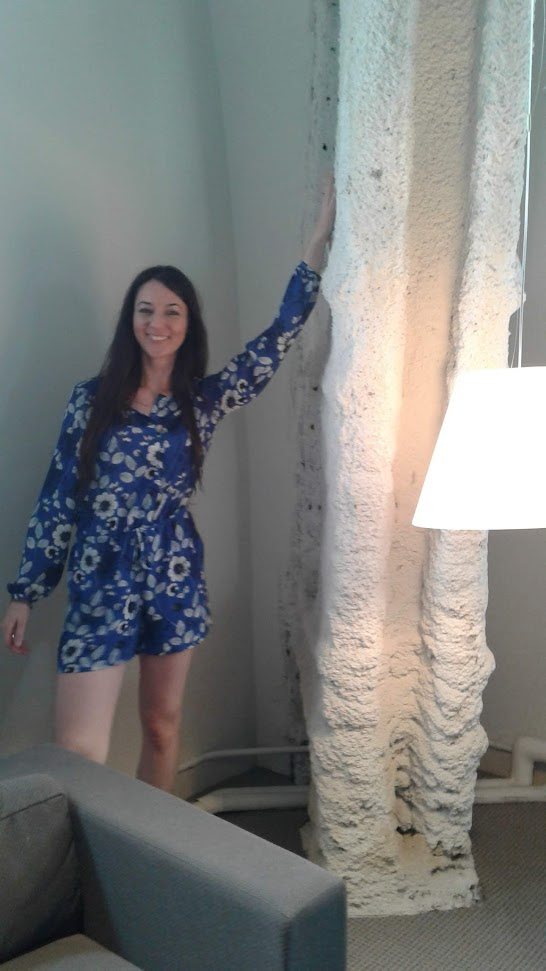
These triangular window have handles and open.
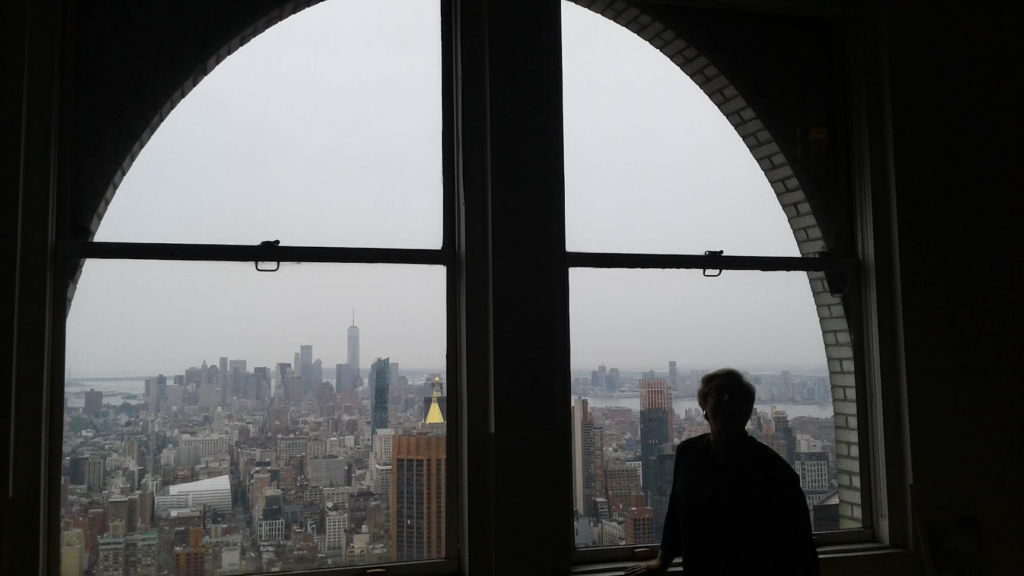
The beginning of LIC development from the window in 2018.
The big sister architectural masterpiece from the window
Melanie peeped ouf from an open window.
The support colums are clearly evident.
Imagine if this space with the windows, views and structure could be open to view.
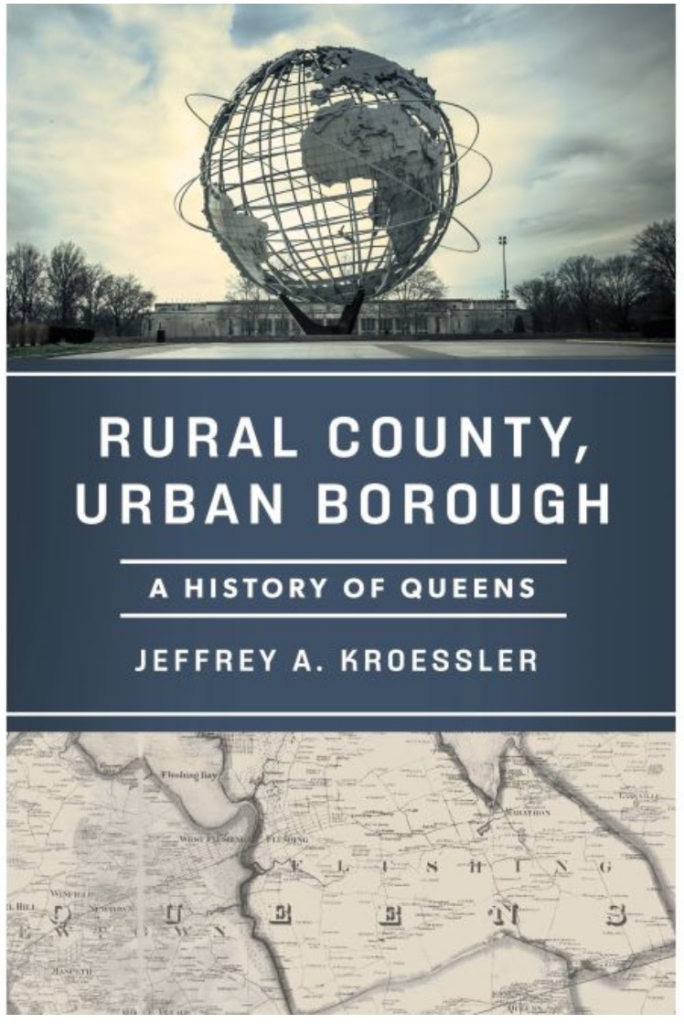
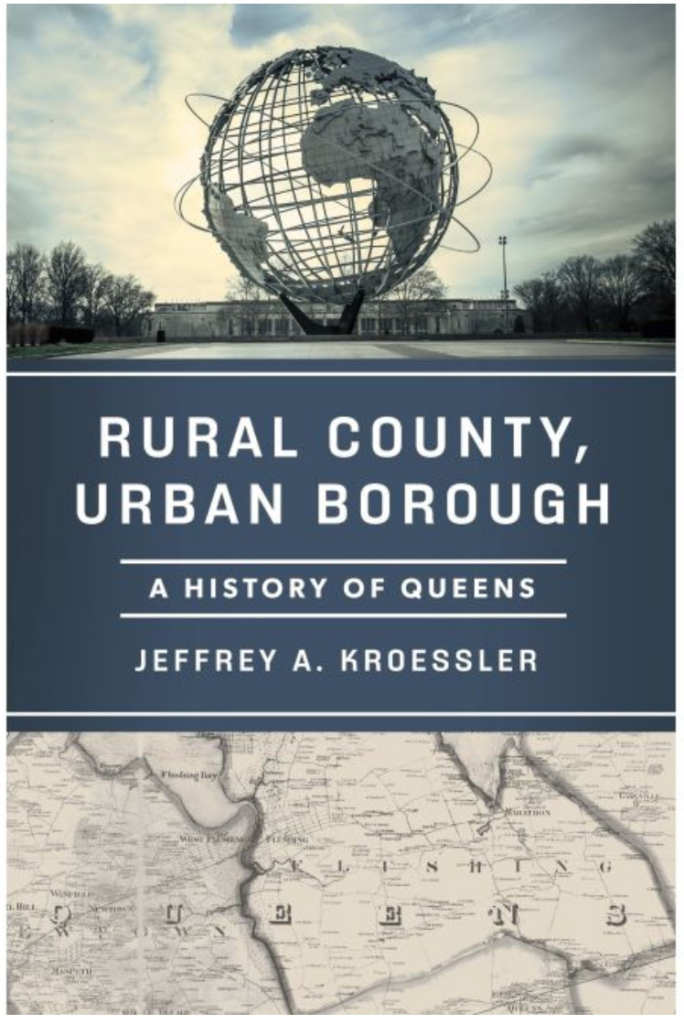
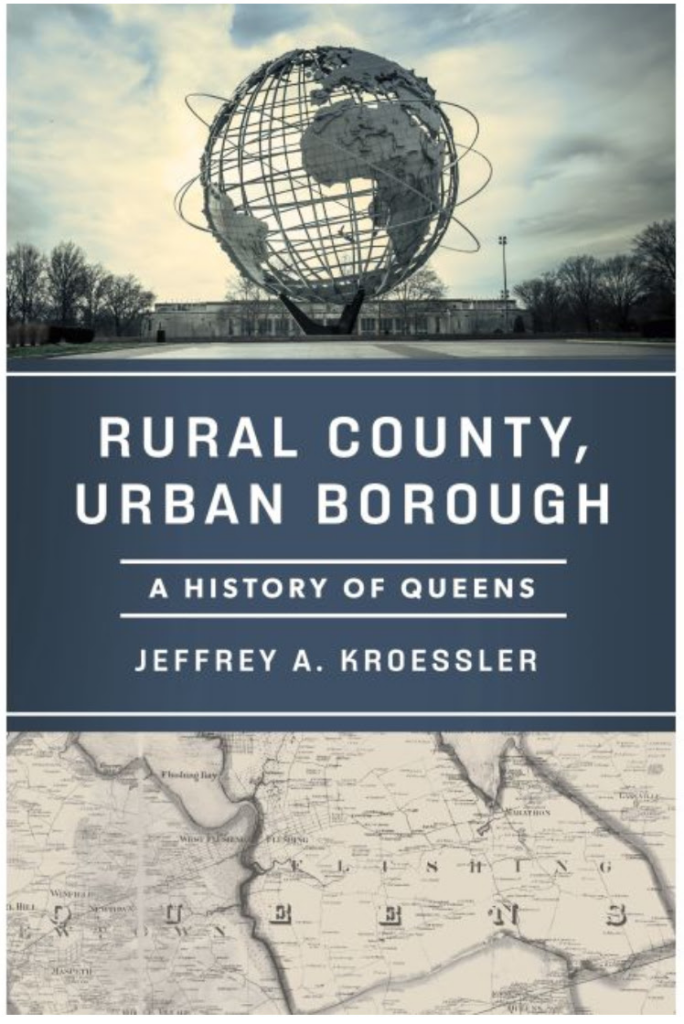
The borough of Queens is the largest of New York City’s five boroughs. It holds more people than Chicago or Los Angeles. And thanks to immigration, it is today home to a population of extraordinary ethnic, religious and linguistic diversity. Queens is also the subject of a new book by Jeffrey Kroessler, Rural County, Urban Borough: A History of Queens, published by Rutgers University Press.
Kroessler, an expert on the history and preservation of Queens, was working on the final edits for Rural County, Urban Borough when he died in 2023. His wife, the architect Laura Heim, took up the work of moving the book through the publication process. She selected and placed the images in the book and wrote its Preface and Acknowledgements.
Rural County, Urban Borough is a history with a strong sense of place. Covering the the history of Queens from European settlement to the present, Kroessler charts centuries of change in the landscape. He shows how politics, industry, transportation, government and real estate interests all shaped the borough. Linking Queens to New York City and the wider world, Kroessler illuminates important elements of American metropolitan history.
CREDITS
New York Almanack
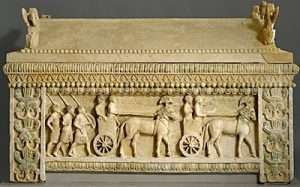
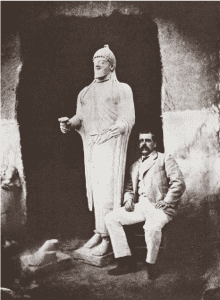
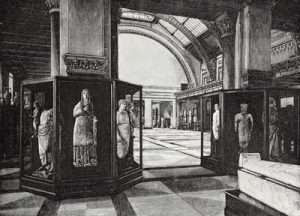
llustrations, from above: Tiffany reproduction of Cypriot bracelet from the Curium collection of the Met; Archibald Archer’s “The Temporary Elgin Room in 1819” with portraits of British Museum staff, a trustee and visitors. (British Museum); The Amathus sarcophagus from the Met Cesnola Collection; Luigi Palma di Cesnola, American consul in Cyprus and first director of the Met (Cultural Centre of the Popular Bank Group); Sculpture from the ‘Cesnola Collection’ on display at the Met (Harper’s New Monthly Magazine, May 1880); and the ransacked Iraq National Museum in 2003, during the Iraq War (photo by Patrick Robert).
Untapped New York
Judith Berdy
All image are copyrighted (c) Roosevelt Island Historical Society unless otherwise indicated THIS PUBLICATION FUNDED BY DISCRETIONARY FUNDS FROM CITY COUNCIL MEMBER JULIE MENIN & ROOSEVELT ISLAND OPERATING CORPORATION PUBLIC PURPOSE FUNDS.
Text by Judith Berdy Thanks to Bobbie Slonevsky for her dedication to Blackwell’s Almanac and the RIHS Thanks to Deborah Dorff for maintaining our website Edited by Deborah Dorff All image are copyrighted (c) Roosevelt Island Historical Society unless otherwise indicated
Google Images (c)
ALL IMAGES ARE SUBJECT TO COPYRIGHT (C)
FUNDING PROVIDED BY ROOSEVELT ISLAND OPERATING CORPORATION PUBLIC PURPOSE GRANTS CITY COUNCIL REPRESENTATIVE JULIE MENIN DISCRETIONARY FUNDING THRU DYCD
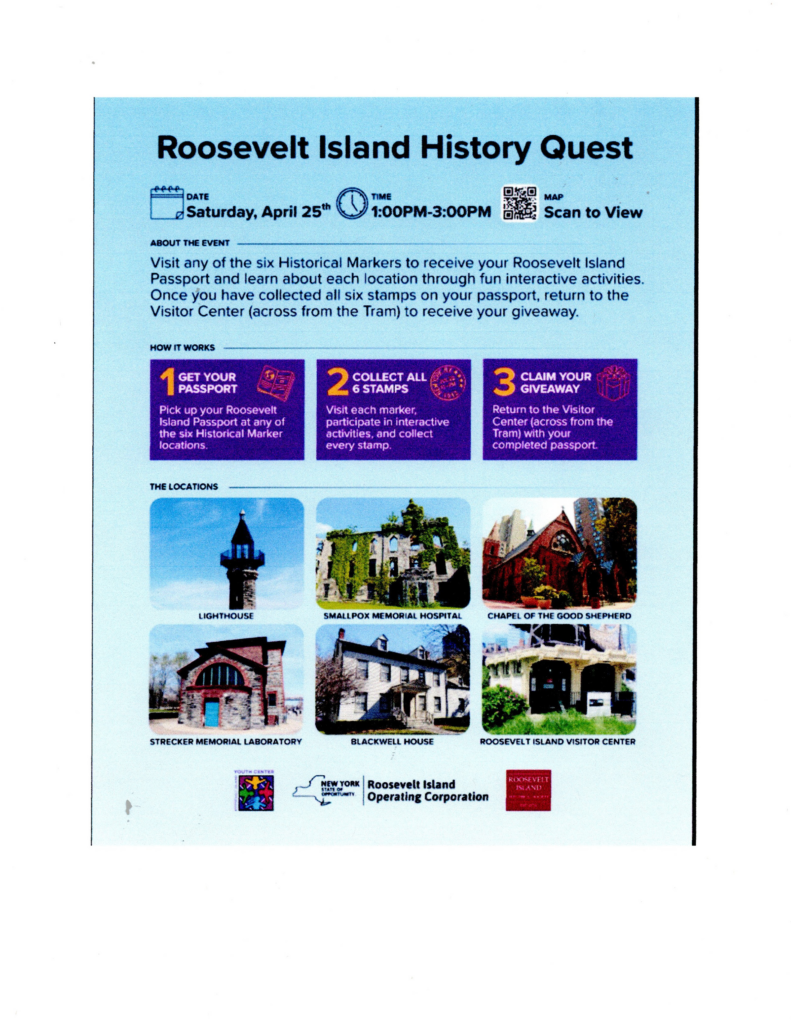
Historic Marker Dedication & Roosevelt Island History Quest
Roosevelt Island Historical Society Roosevelt Island Operating Corporation Roosevelt Island Youth Center
Monday, April 27, 2026
ISSUE #1670
OOPS: WE INADVERTANTLY PLACED THE WRONG LAST NAME FOR RIOC CEO B.J.JONES.. ACCEPT OUR APOLOGY. JUDY BERDY
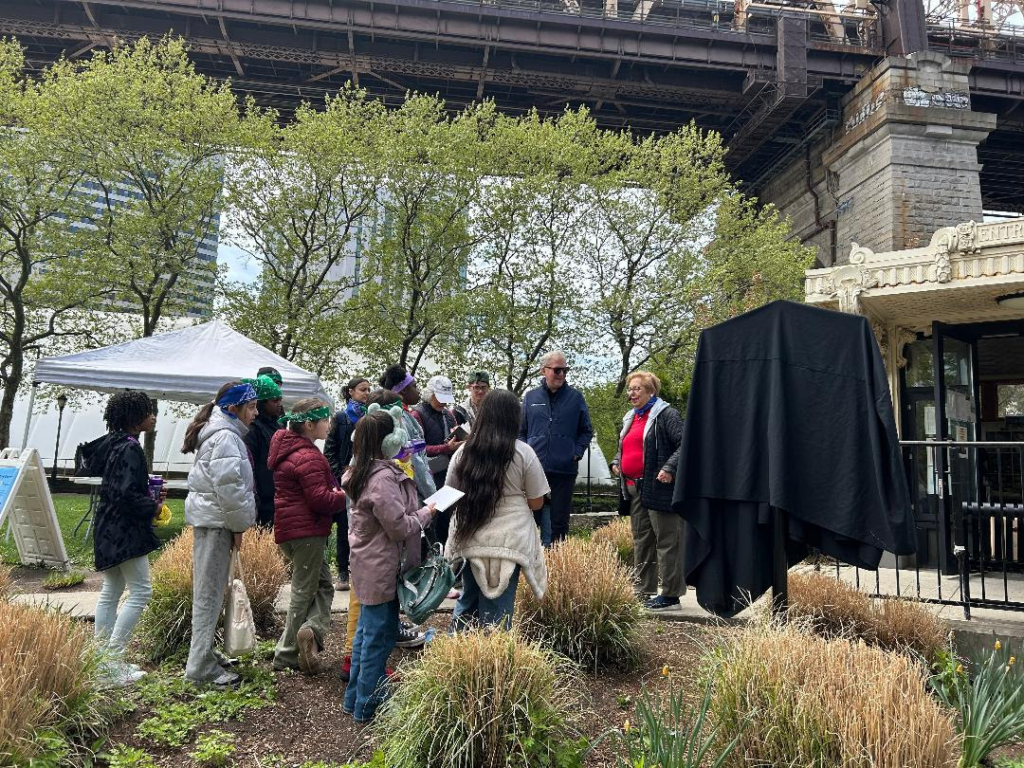
Getting ready to reveal the marker
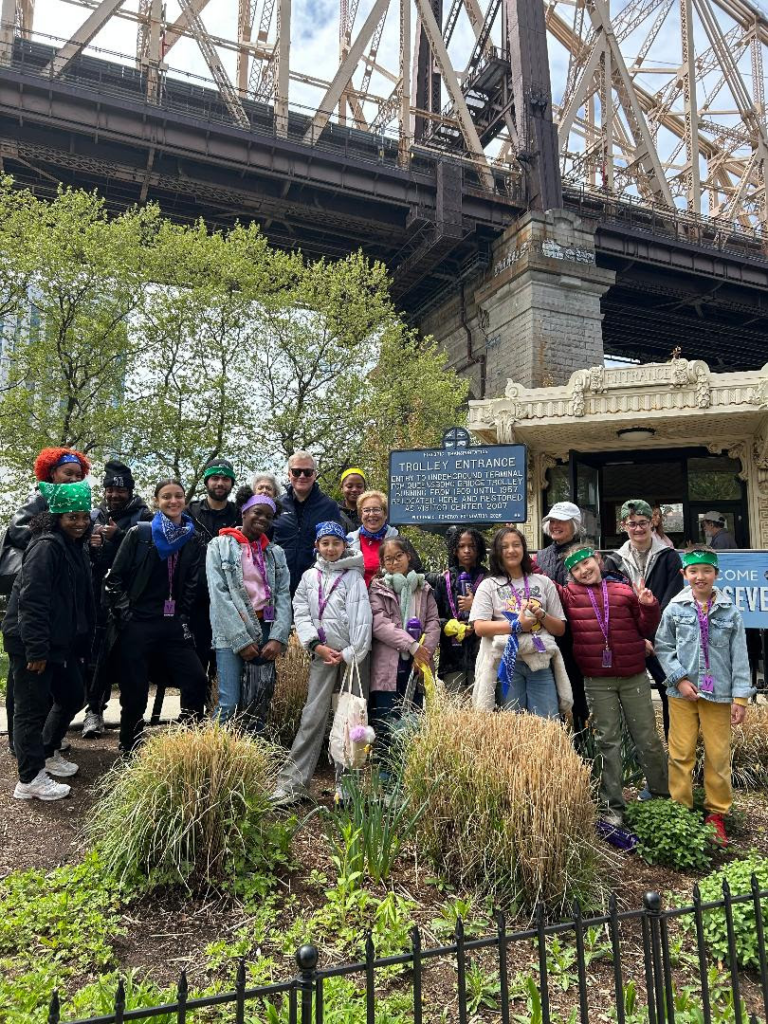
On Sunday morning members and staff of the RI Youth Center, RIOC and RIHS gathered to unveil the new historic marker at the Visitor Center. “This is such an exciting event, long time in the making. The RIHS worked with the Pomeroy Foundation and RIOC to bring this maker to the Island. The Pomeroy Foundation has donated five other historic makers on the Island celebrating landmark structures. This marker celebrates historic transportation sites. The visitor center was the entrance to the Trolley station on 59th street and Second Avenue, from 1907 to 1957.
It was a pleasure to work with RIOC to get the authozation to install the marker and their staff stored and installed it on the site. Special thanks to BJ Johnson and Bryant Daniels who joined us to make the day special.
The ceremony included members and staff of the Youth Center who offially pulled the cover off the beautiful blue and white marker.
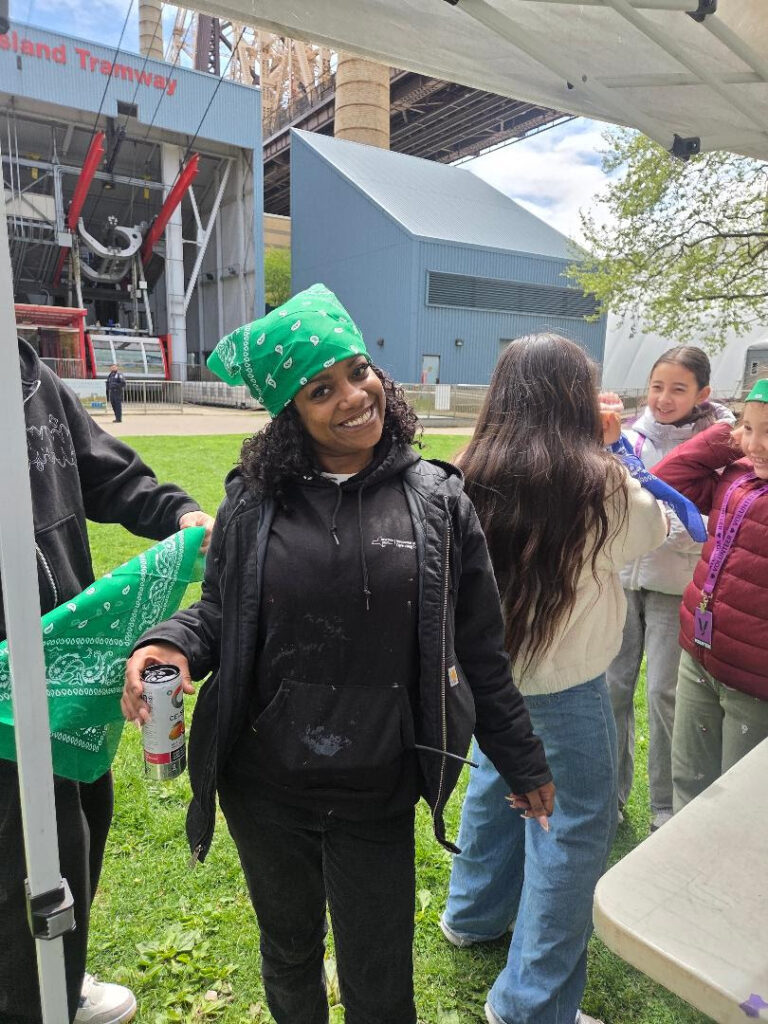
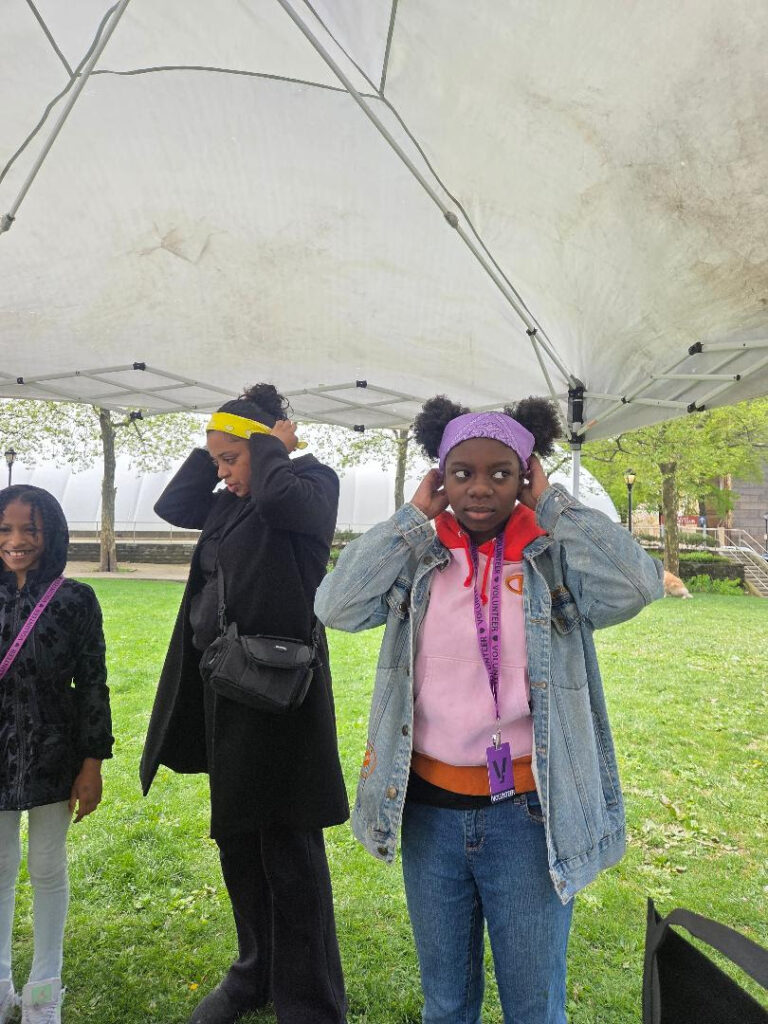
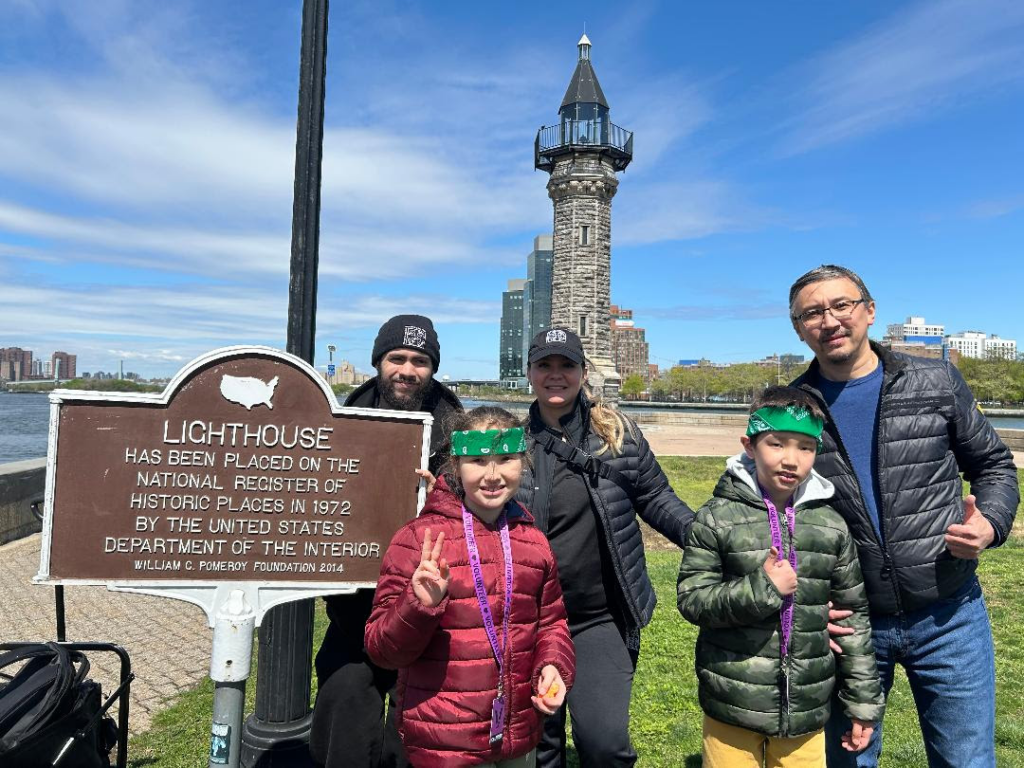
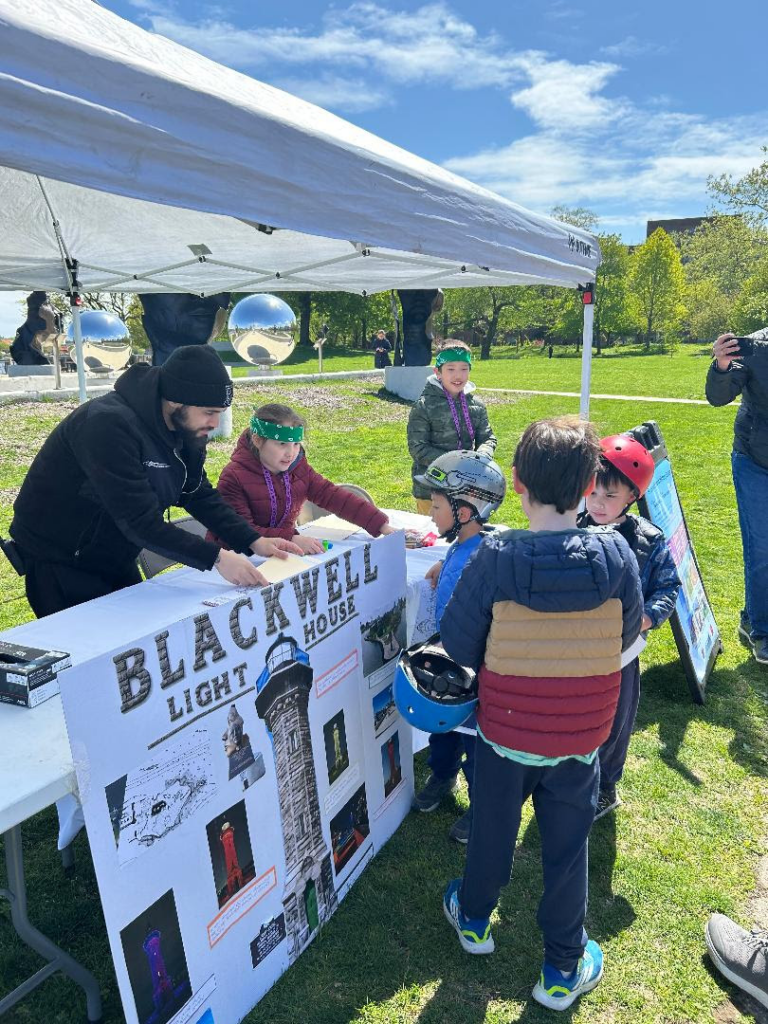
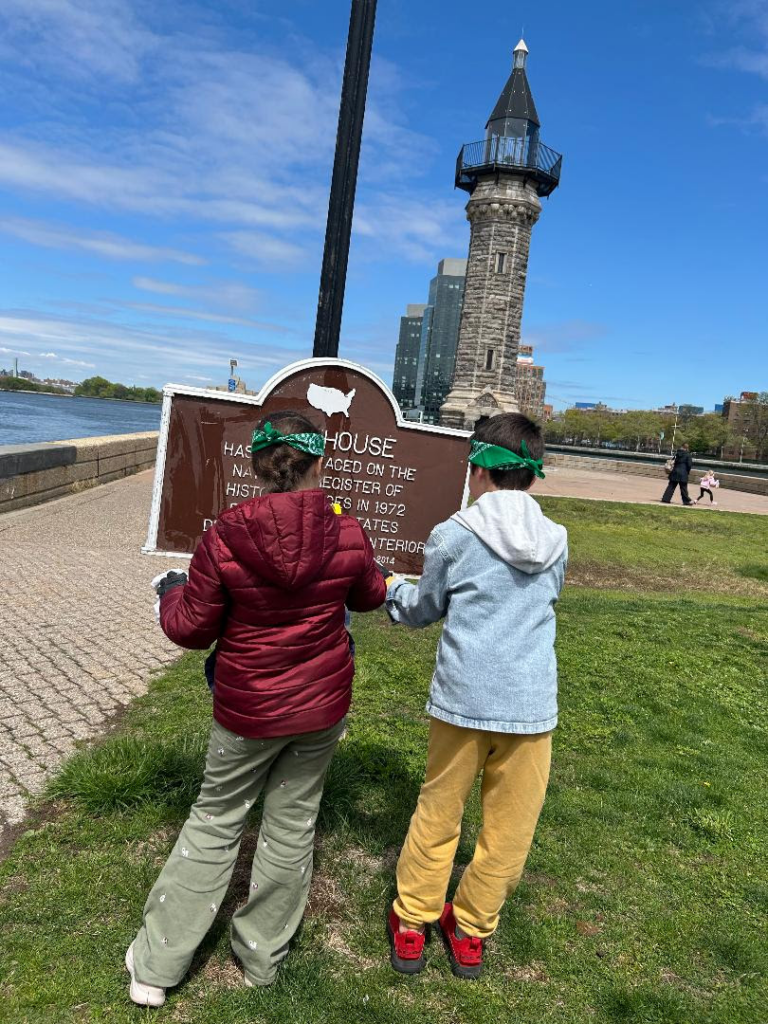
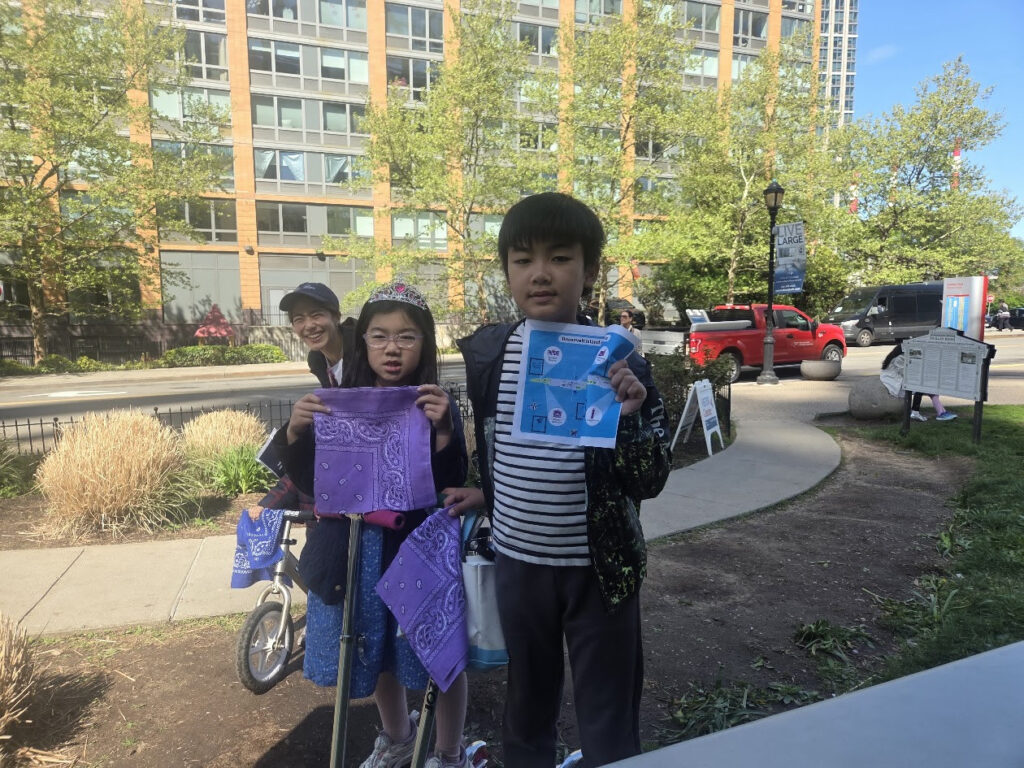
After the ceremony six teams from the Youth Center prepared to set up stations at our landmark. Every team member wore a bandana and were ready to meet visitors. They were prepared with 3 panel displays of each site and could tell the stories of our history.
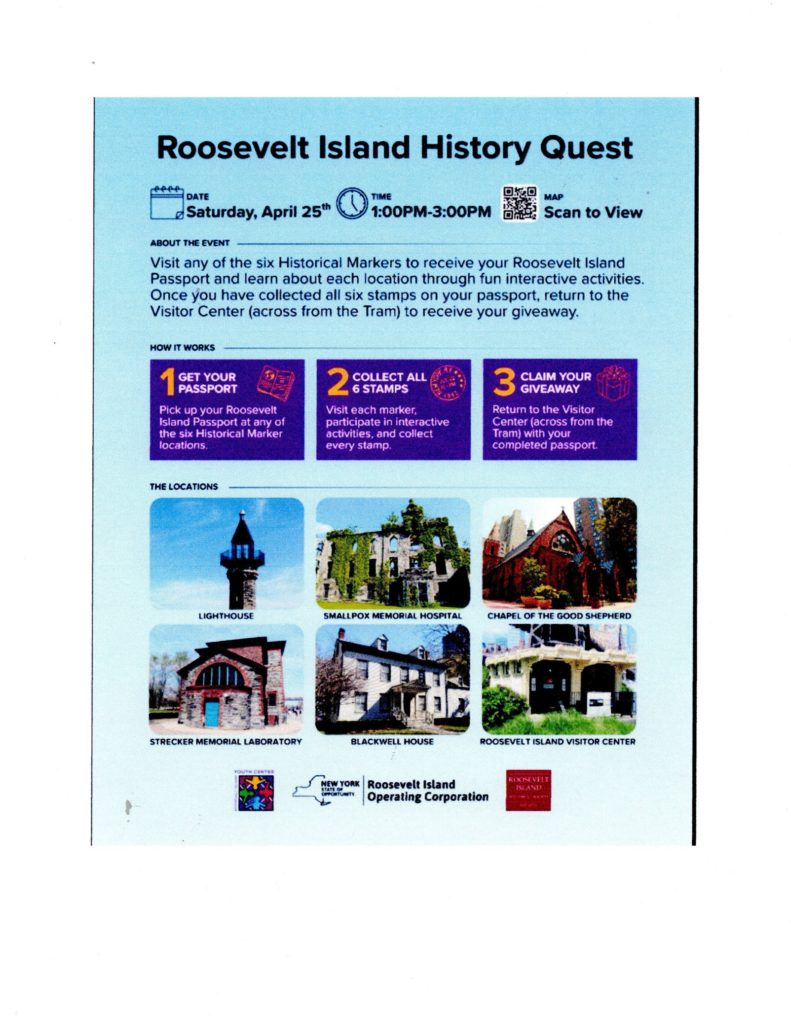
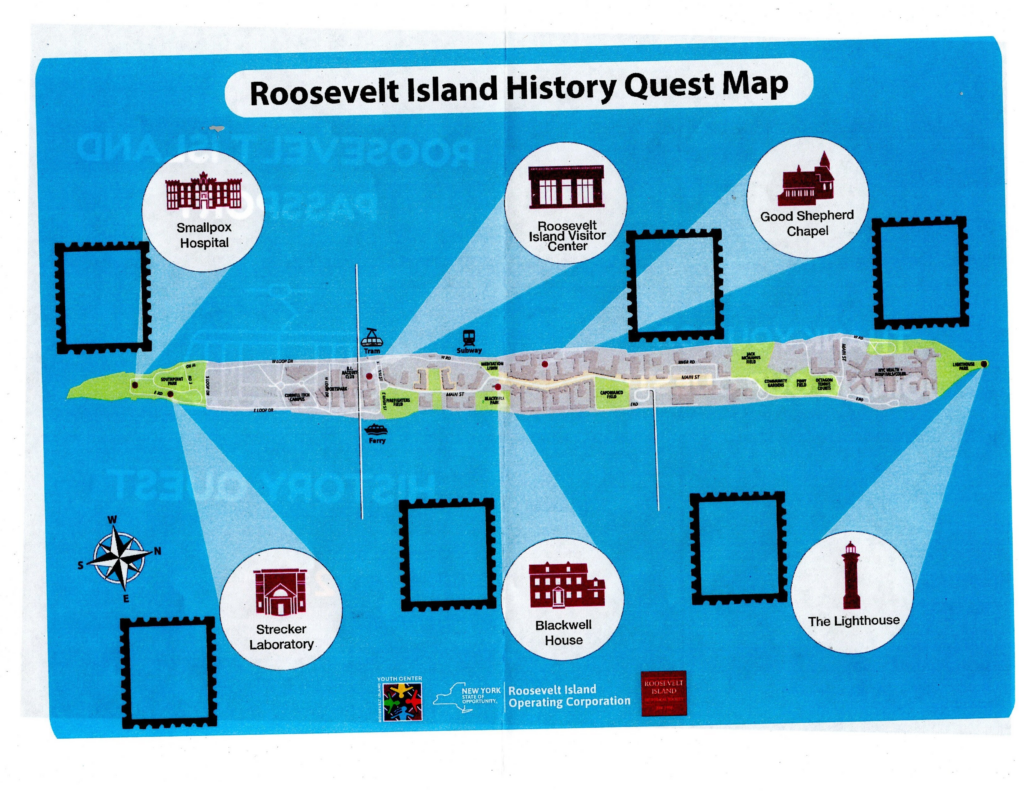
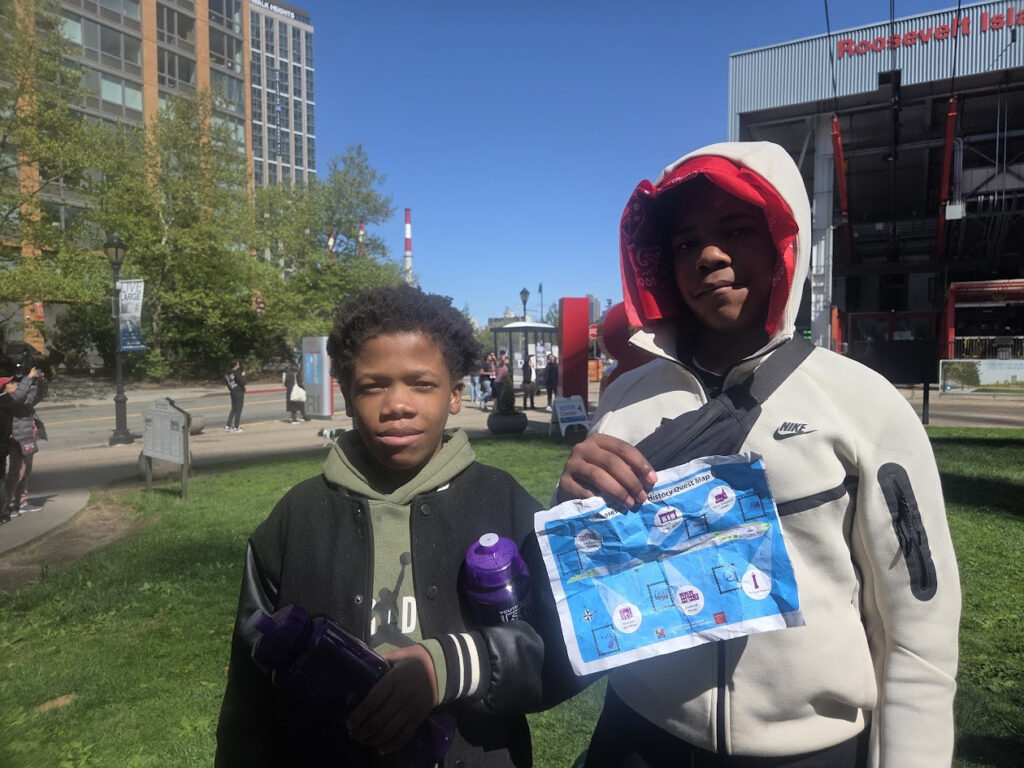
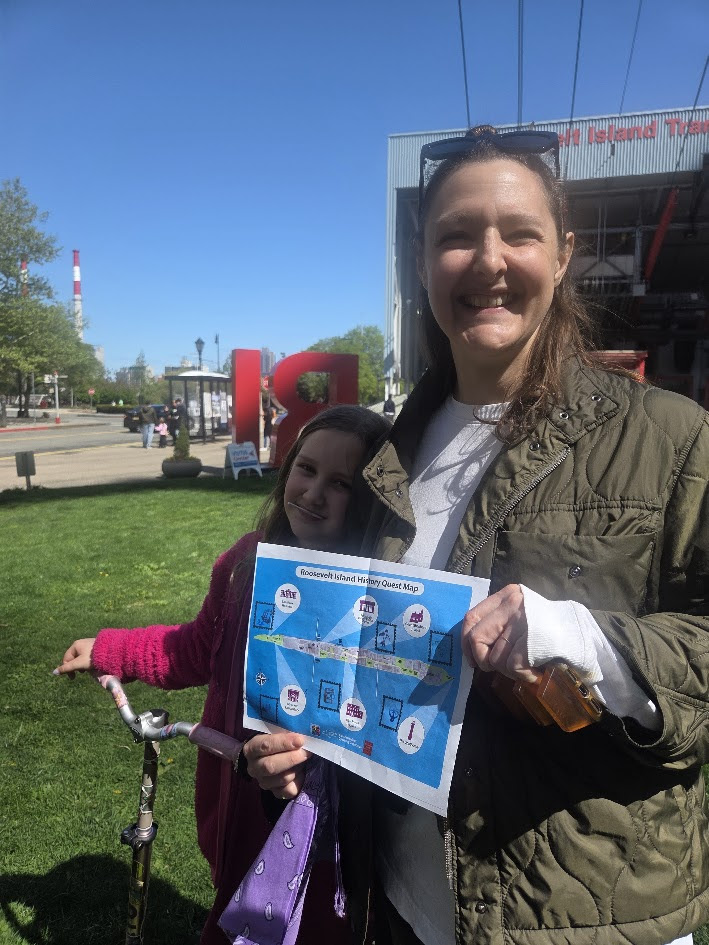
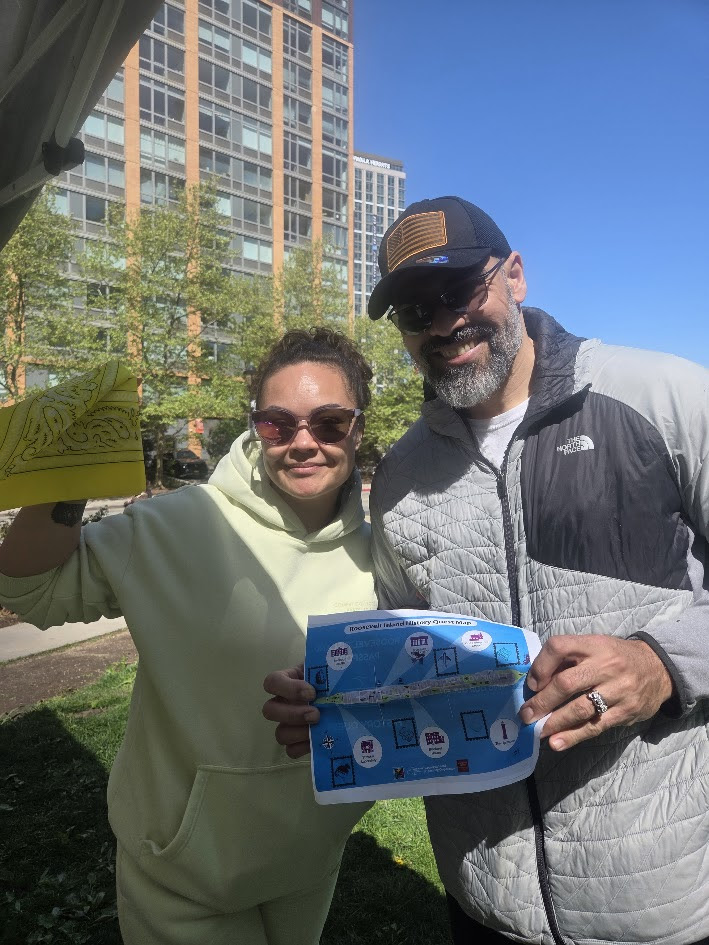
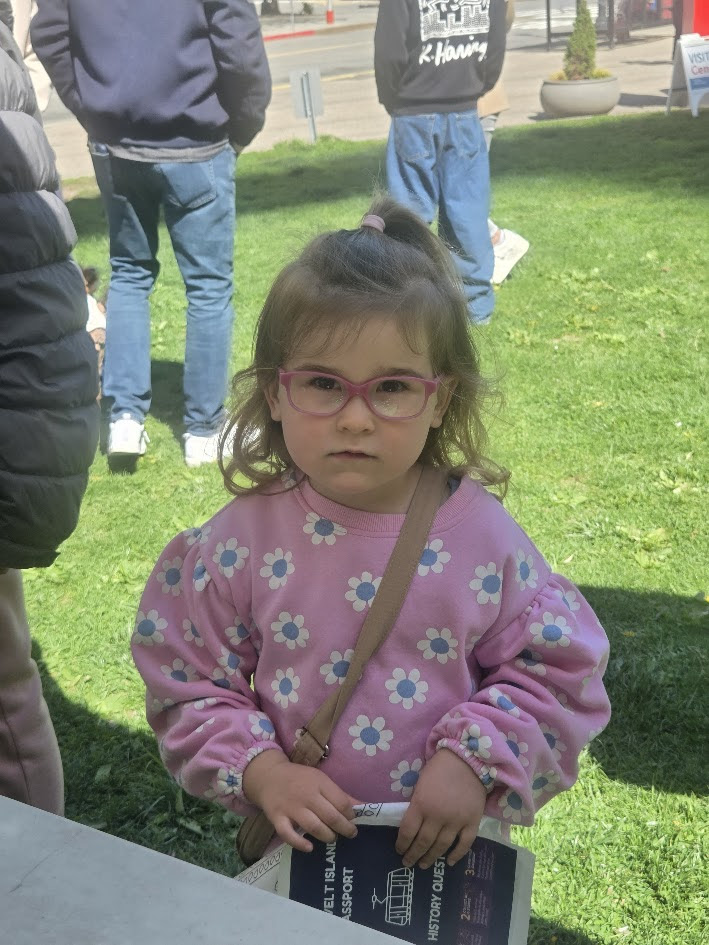
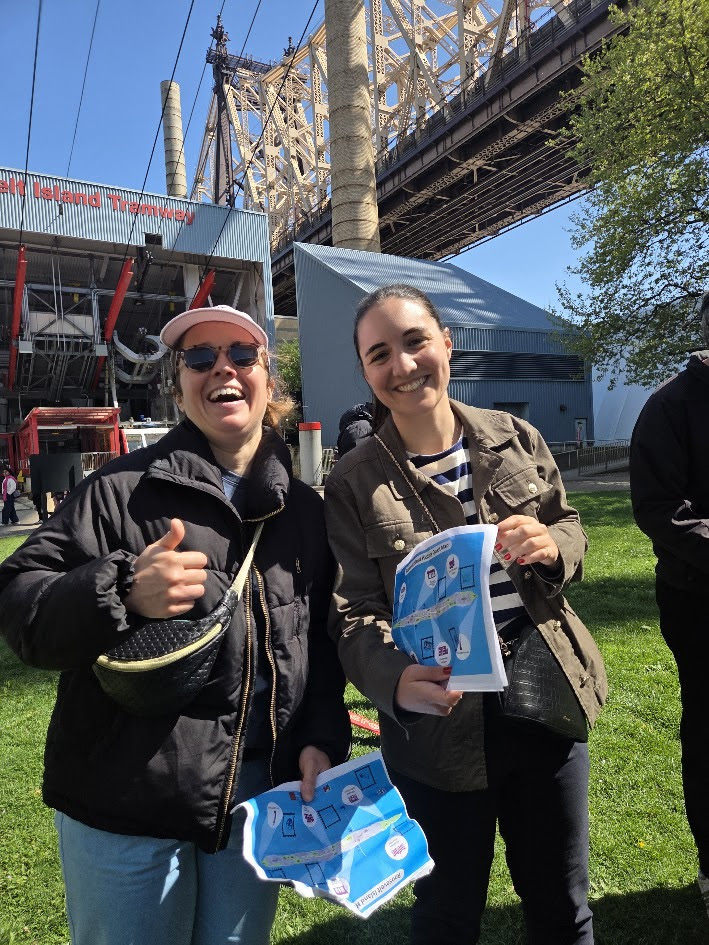
Each visitor was given a History Quest Passport and when they stopped at each site, the Youth Center members would stamp their passports.
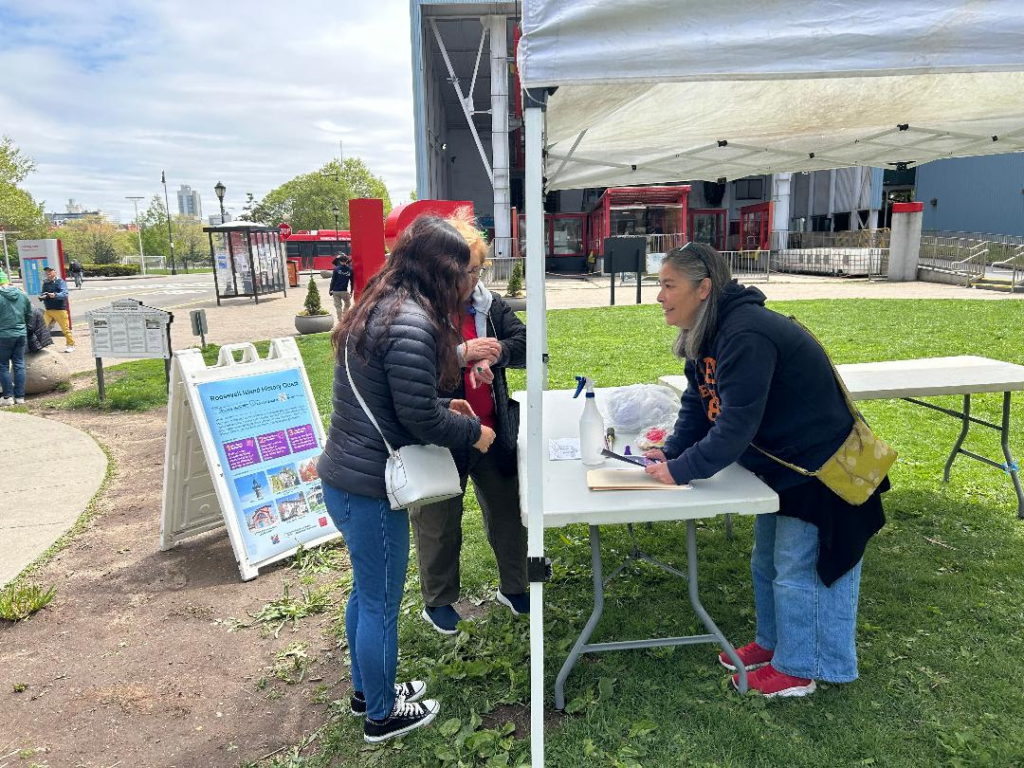
Sign in to get your Passport and map.
Visitors stopped by the visitor center to pick upo their passports and maps and set off to visit the sites. There was only about two hours to get all the site stamps in your passport.
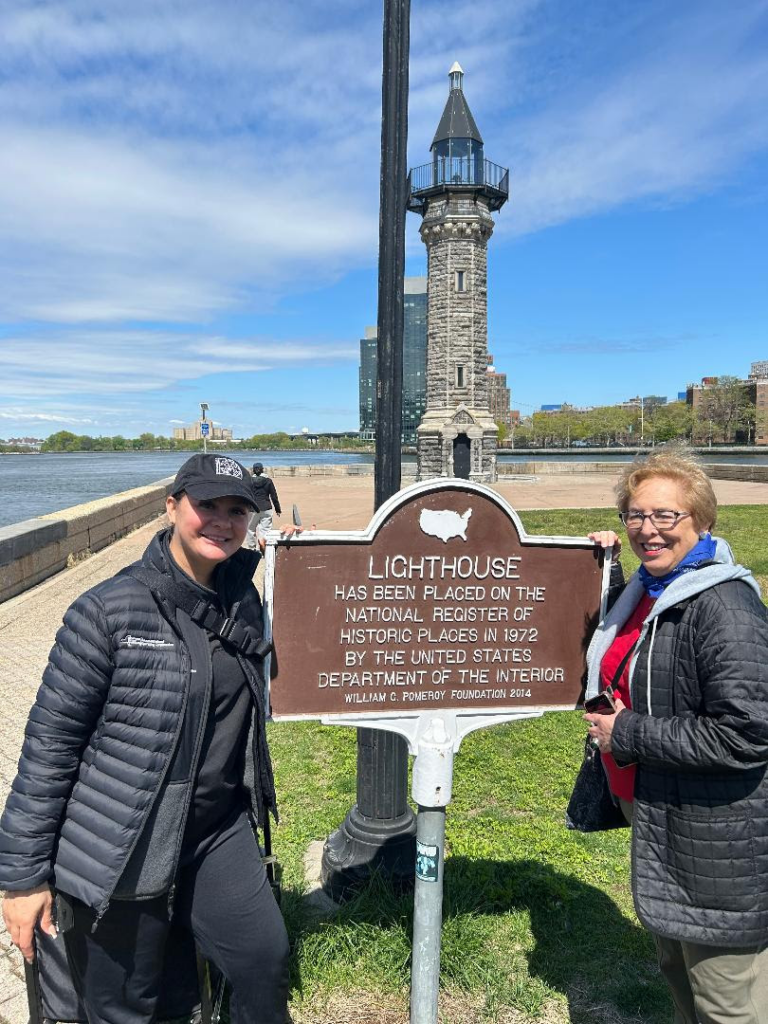
AT THE LIGHTHOUSE
Youth Center Volunteers at the Lighthouse
Using Coloring pages to remember the landmarks and learning about the history that the members had learned while preparing the materials.
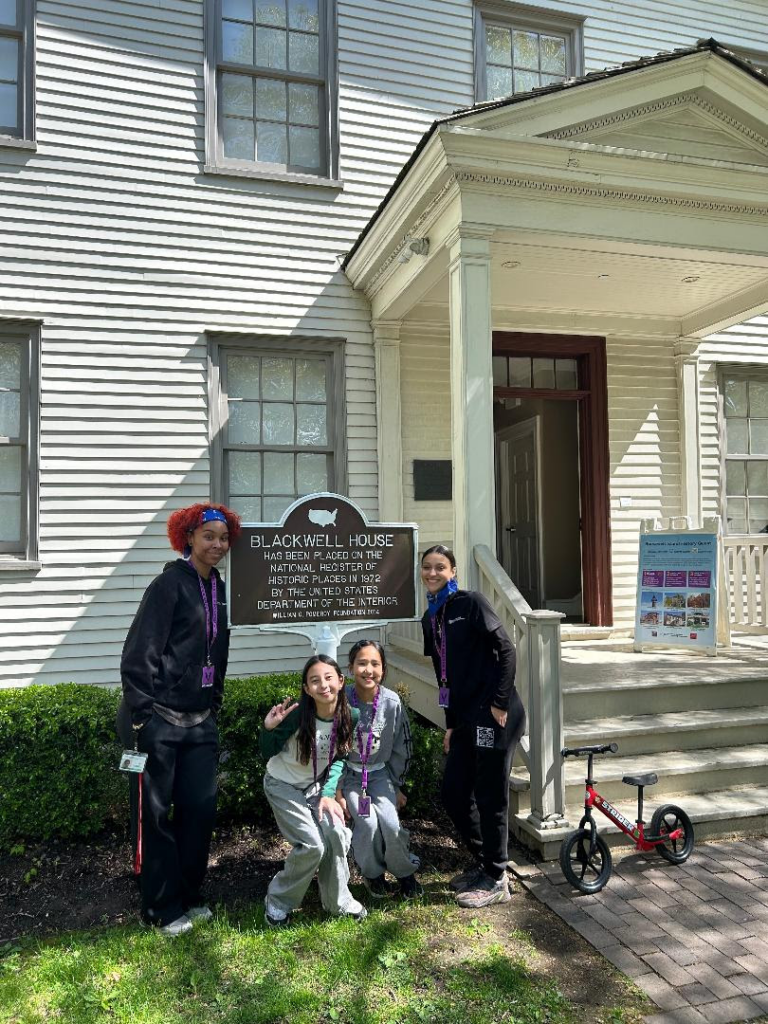
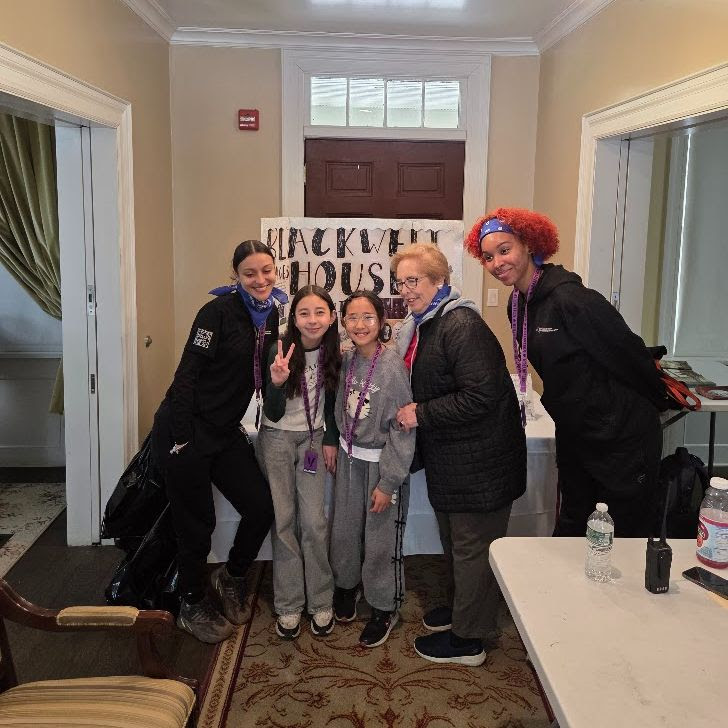
BLACKWELL HOUSE
Everyone was excited to see inside Blackwell House, and to learn the history by the enthusiastic volunteers.
Visitors were thrilled to come into the house and see how much history is displayed there.
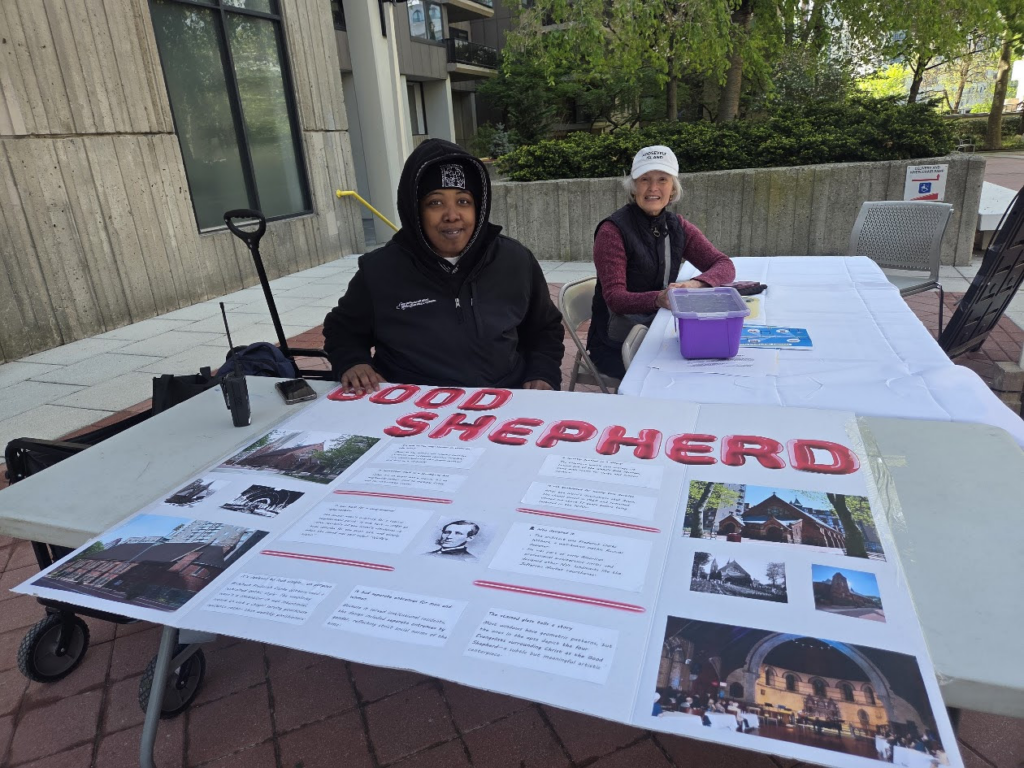
CHAPEL OF THE GOOD SHEPHERD
Our volunteers by the Chapel busy with lots of visitors .
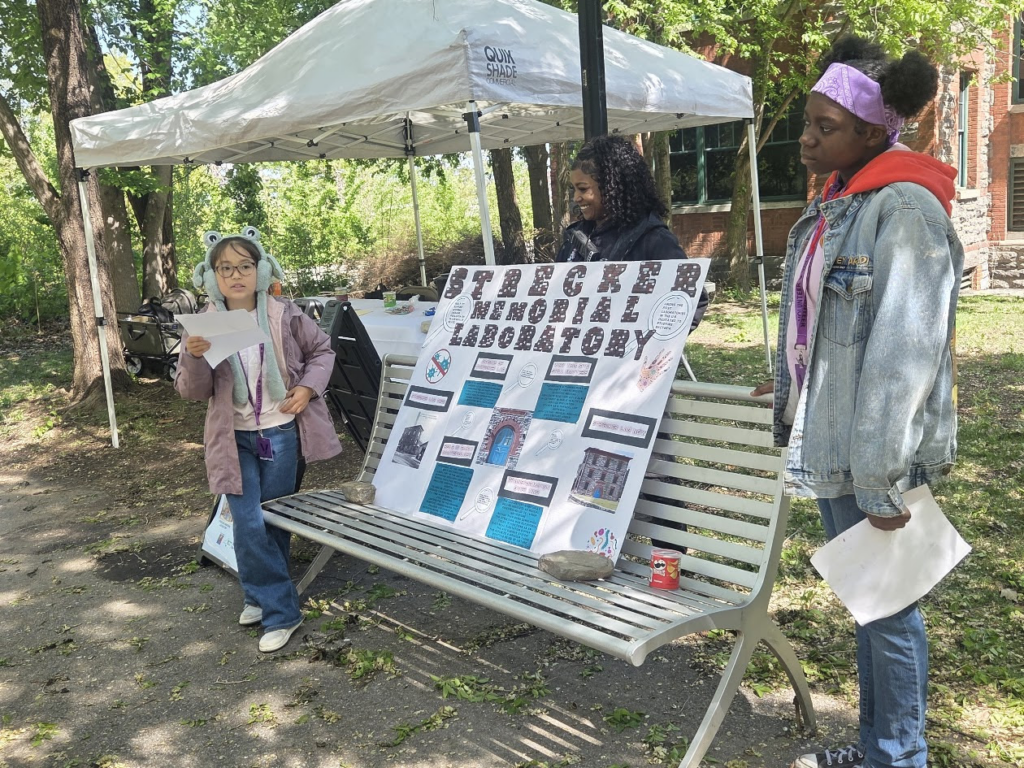
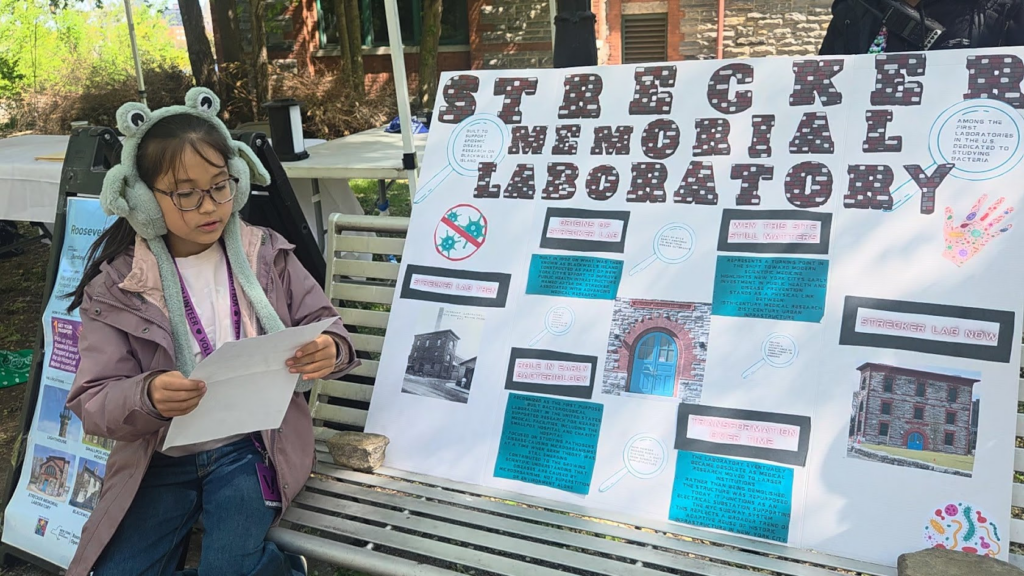
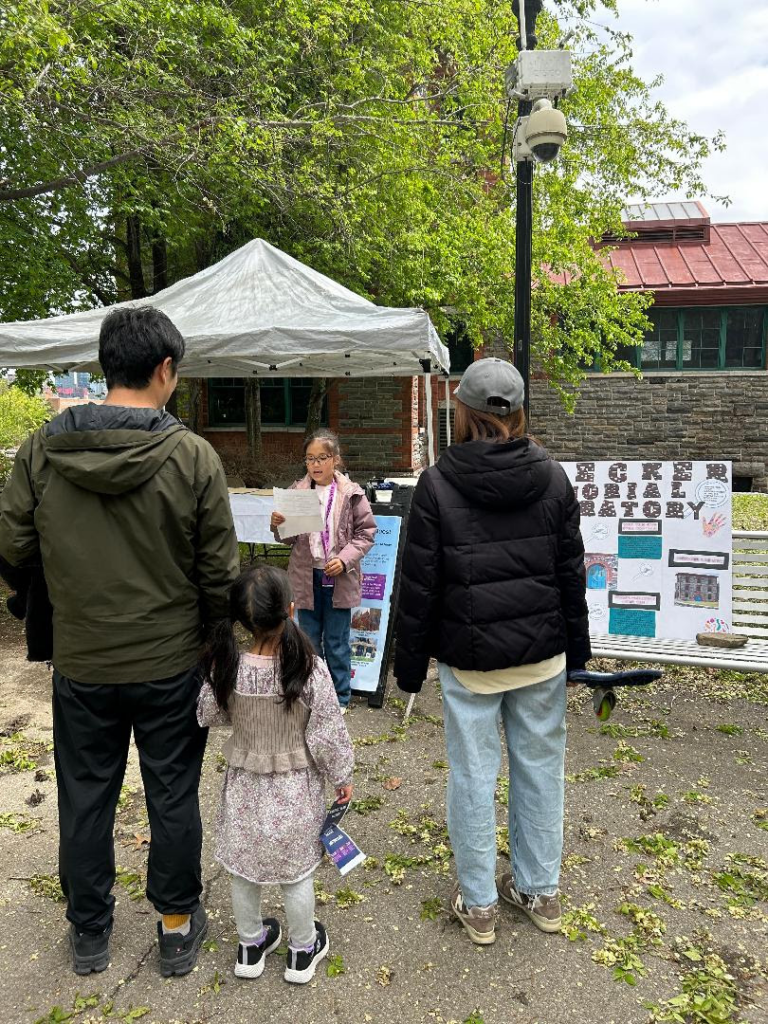
STRECKER LABORATORY
The Strecker team had a formal presentation along with images of germs to describe the buildings history.
Lots of scientic information was available at Strecker!!!!
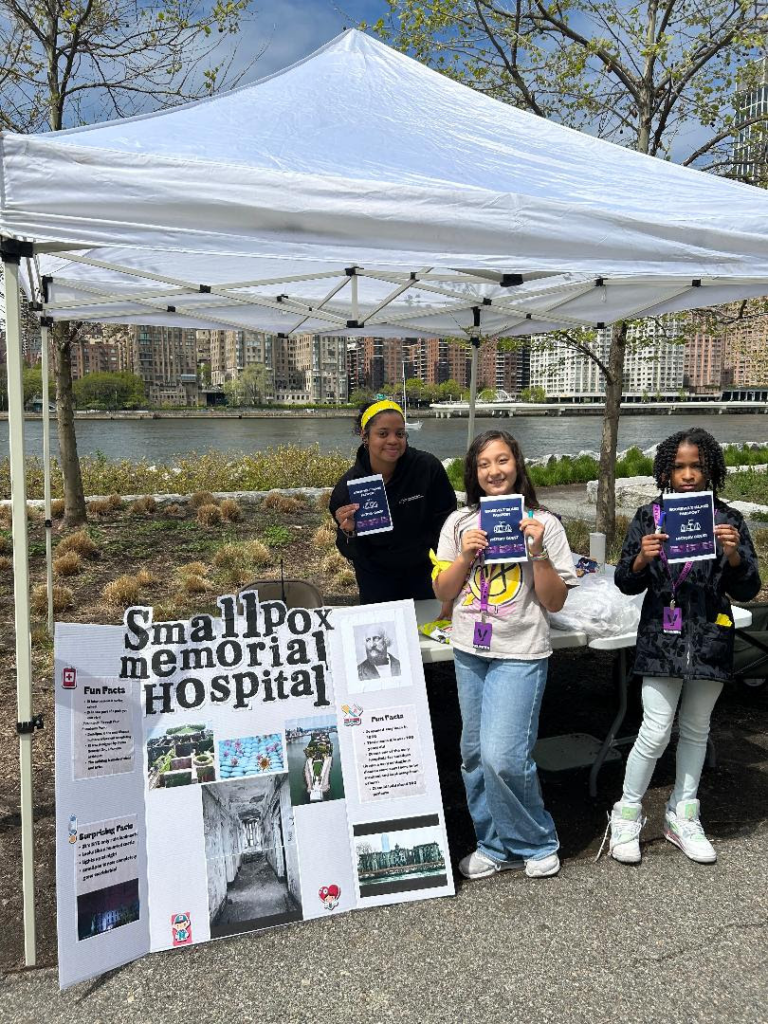
SMALLPOX HOSPITAL
Enthusiasm was great at the Smallpox site.
BACK TO THE VISITOR CENTER TO GET YOUR BANDANA GIFT!!!
THANKS
This Sunday was truly special, thanks to Ana Medina and her dedicated Youth Center team. Their hard work and enthusiasm made the event flawless. Sunny skies and happy participants added to the joy, making it a memorable day for all who volunteered, visited, participated, and explored our historic island.
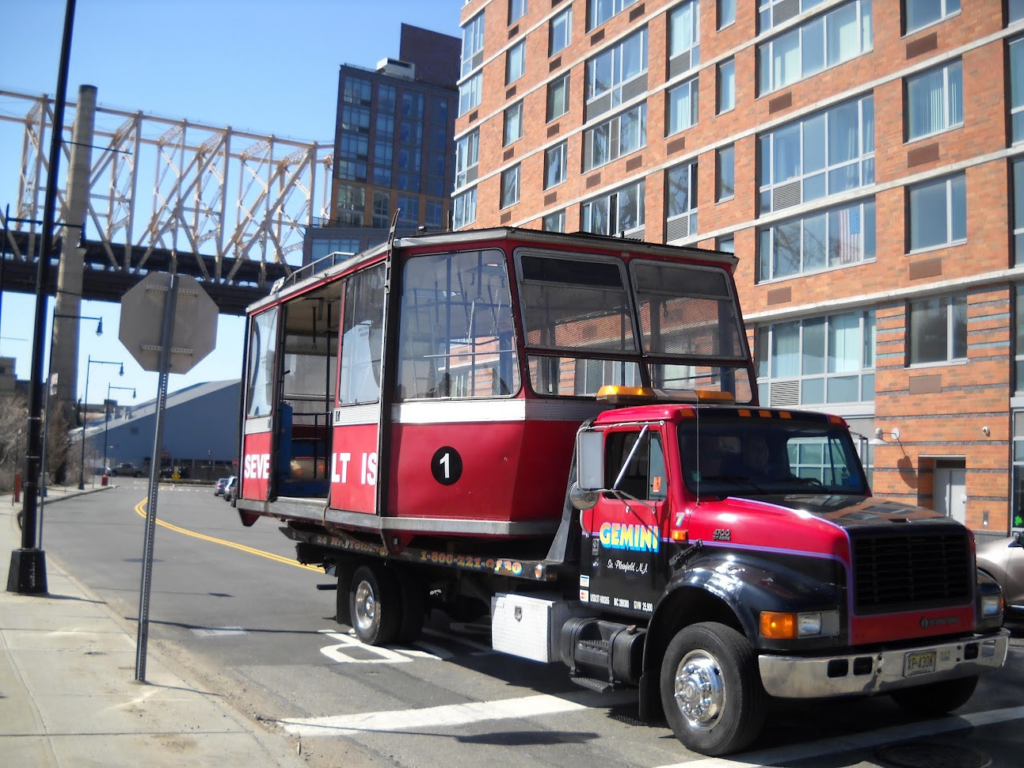
HISTORIC PHOTO OF THE DAY 2010 MOVING THE TRAM
CREDITS
Ana Medina Bryant Daniels Judith Berdy
All image are copyrighted (c) Roosevelt Island Historical Society unless otherwise indicated THIS PUBLICATION FUNDED BY DISCRETIONARY FUNDS FROM CITY COUNCIL MEMBER JULIE MENIN & ROOSEVELT ISLAND OPERATING CORPORATION PUBLIC PURPOSE FUNDS.
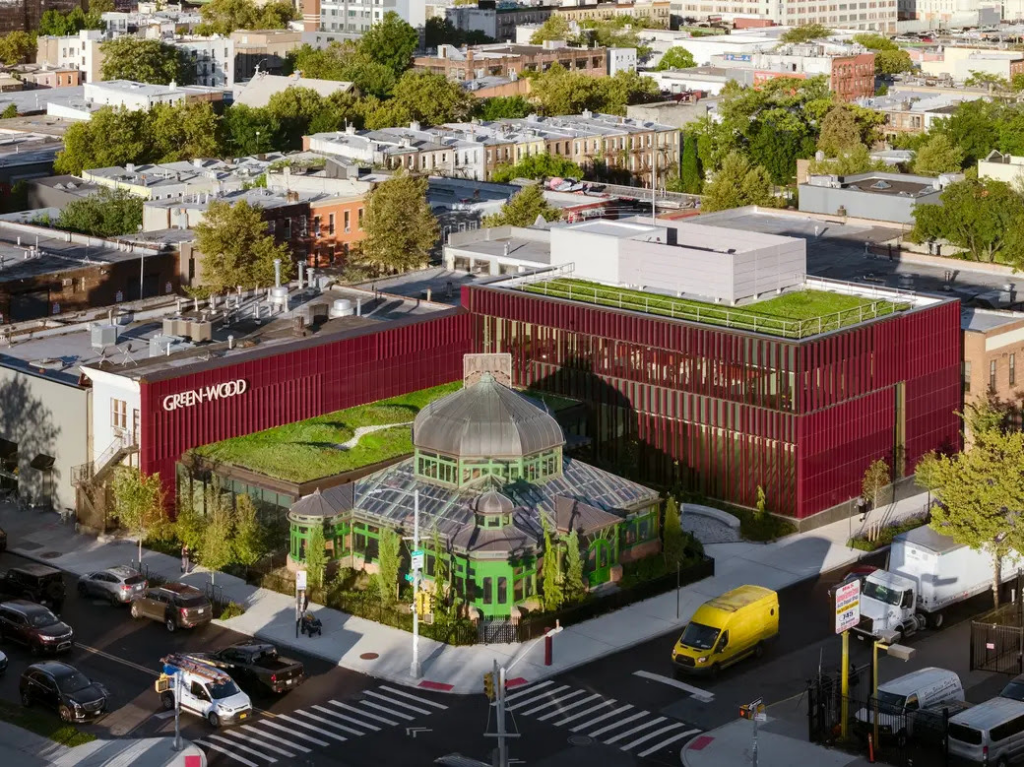
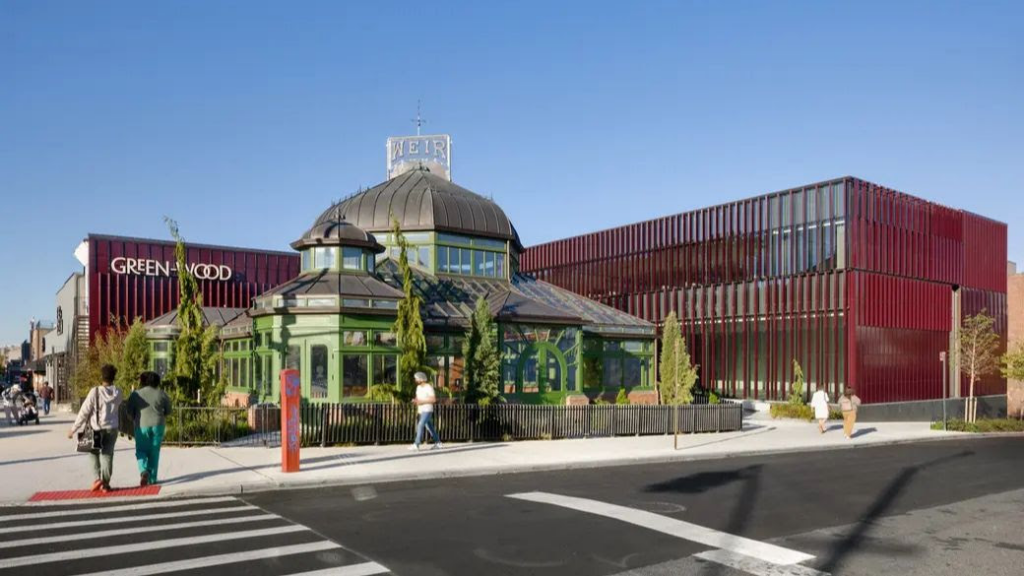
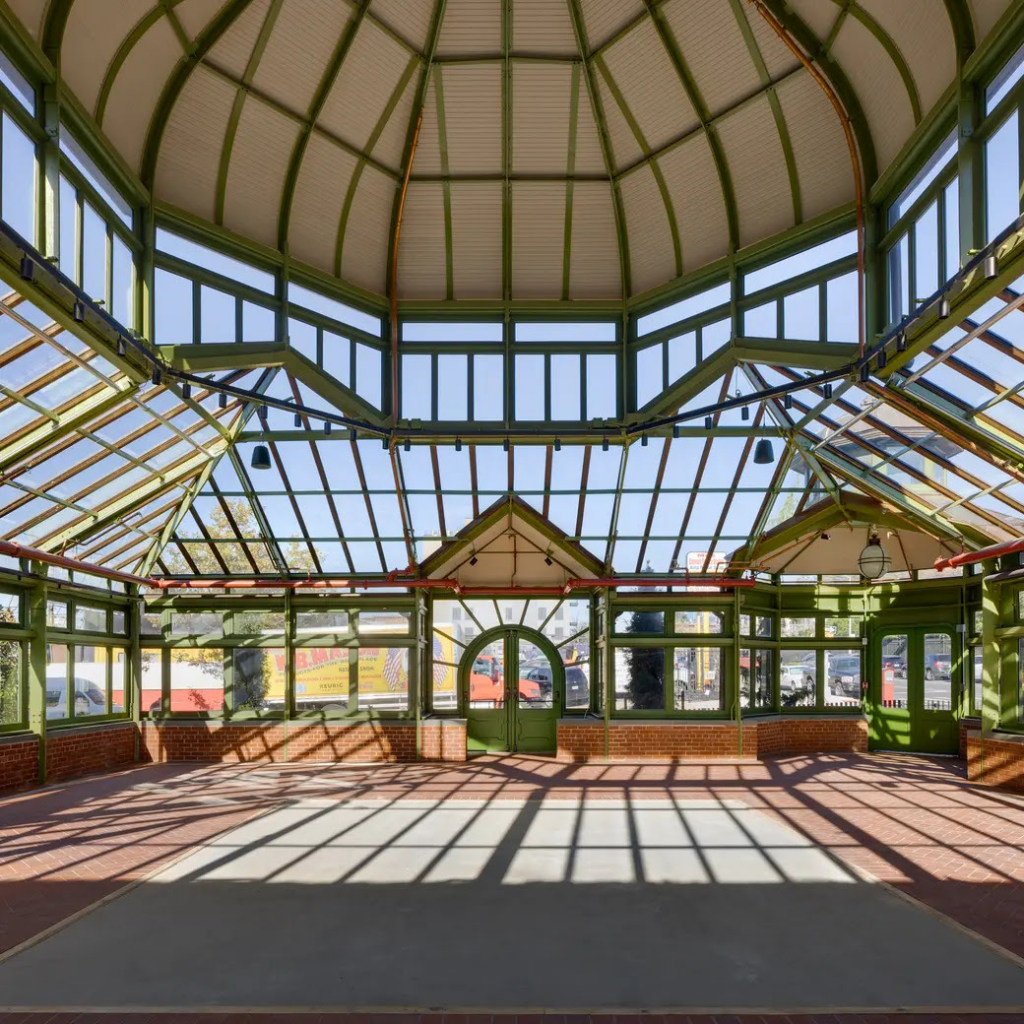
Though some 583,000 people are buried there, the 478-acre Green-Wood Cemetery has always been more than a burial ground. The Brooklyn cemetery served as a verdant 19th-century escape, and it has since been a unique destination for events, nature study, and more. This weekend, the cemetery will officially open the Green-House at Green-Wood, a new $43 million welcome center that wraps around the renovated 1895 Victorian greenhouse. Designed by Architecture Research Office (ARO), the new L-shaped building, clad in glazed terra cotta and topped by a green roof, will help visitors navigate the cemetery’s sprawling grounds. The new center will also serve as a venue for events, starting with a free grand opening weekend program and a MoonFest celebration in May.
Located just across from the main entrance at 25th Street and Fifth Avenue in Brooklyn, the center will be free to enter and open all year.
“The Green-House opens the door to Green-Wood for a new generation of visitors while giving longtime fans, families, and neighbors a welcoming place to begin their visit,” Meera Joshi, president of The Green-Wood Cemetery, said.
“Just outside the front gates, the Green-House will offer visitors a deeper understanding of Green-Wood’s role as a place of remembrance, a historic landmark, and a green space that brings communities together, all before they step inside to experience it firsthand.”
Green-Wood purchased the crumbling, landmarked greenhouse, one of the only surviving Victorian greenhouses in New York City, in 2012 for $1.6 million. The architecture firm of Architecture Research Office was tasked with adding a modern terra-cotta-clad L-shaped building to the existing structure. Construction began in 2023, as 6sqft previously reported.
The new center was designed to further the cemetery’s founding mission of providing a public resource to the city’s residents. In an interview with the New York Times, Joshi said, “It was a place both for people who lost their loved ones as well as for the general public to have some green space and some peace. Now, it’s kind of come full circle.”
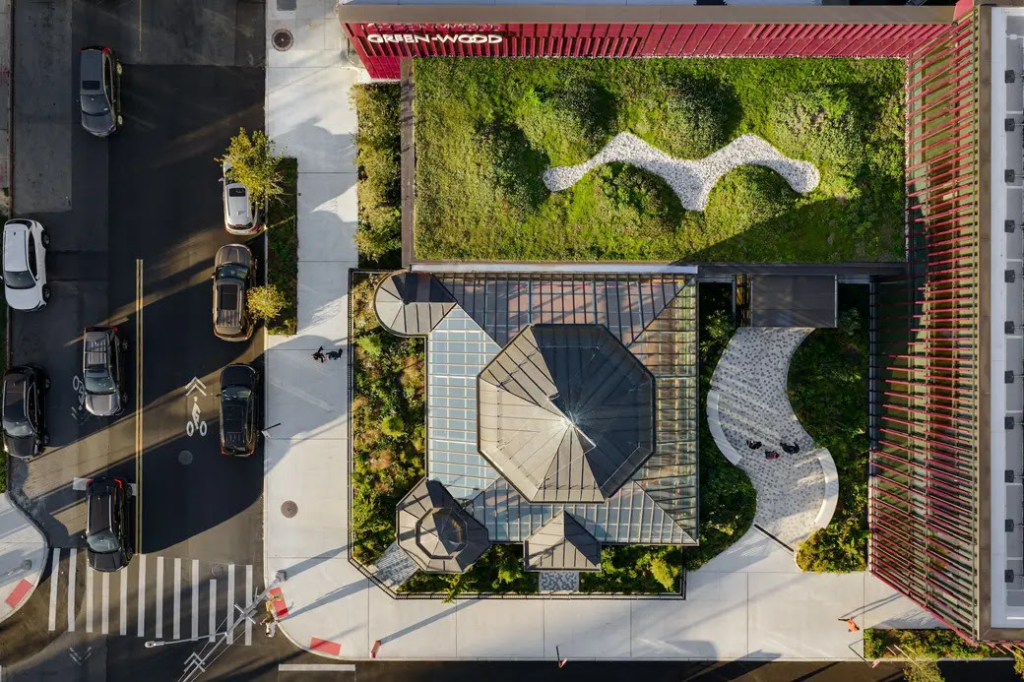
The new building measures 17,000 square feet and wraps around the historic greenhouse. As the architects describe, a one-story volume abuts one edge of the greenhouse, and a new entry courtyard separates the 19th-century structure from the two-story volume along the west end of the site.
The second floor overlooks the Civil War-era main entrance arch designed by Richard Upjohn and a landscaped green roof designed by Michael Van Valkenburgh Associates.
The facade features a custom glazed burgundy terra cotta, a reference to the brownstone of Upjohn’s arches. The building is certified LEED Gold and is all-electric.
“Our goal was to create a new front door to Green-Wood—one that orients visitors and prepares them for the remarkable experience across the street,” Kim Yao and Stephen Cassell, principals of ARO said.
“The new building frames the historic greenhouse and the views toward the Cemetery, with a sculpted green roof and glazed terra cotta facade that echo the character of its landscape and Gothic entrance.”
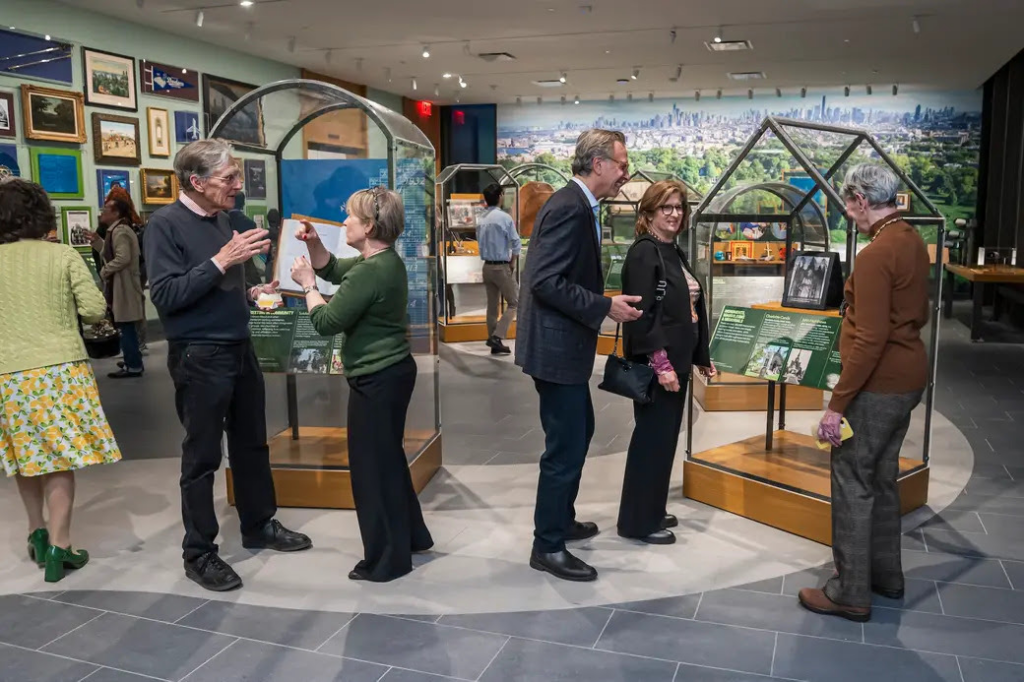
The new visitor center will offer free maps and guidance to the cemetery’s most scenic vistas and notable monuments, a new exhibition gallery featuring artifacts from Green-Wood’s history, and a modern classroom for both children and adult programs. There will also be a Center for Research offering access to rarely seen archival material and digital stations to help guests find any grave at Green-Wood.
The $43 million project was funded by city, state, and federal funds as well as private donations, with additional funding provided by Green-Wood, according to the Times. The cemetery is free to enter, but fees for gravesites and services (graves start at $21,000; mausoleums start at $50,000) are used for upkeep and maintenance.
The exhibition hall will feature items from Green-Wood’s history, including handwritten records that date back to its founding in 1838 as one of America’s first rural cemeteries. One wall will be dedicated to the lives of 46 notable Green-Wood residents, with the exact locations of their graves displayed on digital screens.
The Center for Research will offer “An Inside Look,” a collection of stories preserved in Green-Wood’s climate-controlled Archives and Collections.
The Green-House at Green-Wood is free to visit and will be open from Thursdays to Mondays, from 10 a.m. to 6 p.m., starting Saturday, April 18. Opening weekend festivities will include workshops, explorations, and more.
Highlights include:
“Tokens of Remembrance” is a card-making workshop that offers a chance for visitors of all ages to create a handmade card for someone special.
“Celadon Landscape” by Jean Shin centers around two large vessels, formed from thousands of discarded celadon shards; visitors are invited to write the names of loved ones on paper “shards,” contributing to the artwork.
Another notable event on the horizon at Green-Wood is MoonFest, the newest addition to the cemetery’s after-hours programming. Created to celebrate our collective fascination with the moon, MoonFest will harness the inventive spirit of scientists, historians, artists, and stargazers for one night only, to focus on the moon’s influence on all of us.
Topics will include the pull of time and tide, moon mythology and the future of humans in space, addressed through guided moonlight tours, expert lectures, stargazing, and immersive art. The free event happens on May 1st from 6 p.m. to 11 p.m. Check the event page for more details.
THIS SUNDAY
12 NOON AT RIOSK DEDICATION OF NEW PLAQUE 1 P.M. AT LANDMARKS HISTORY QUEST AT LANDMARKS
HISTORIC PHOTO OF THE DAY
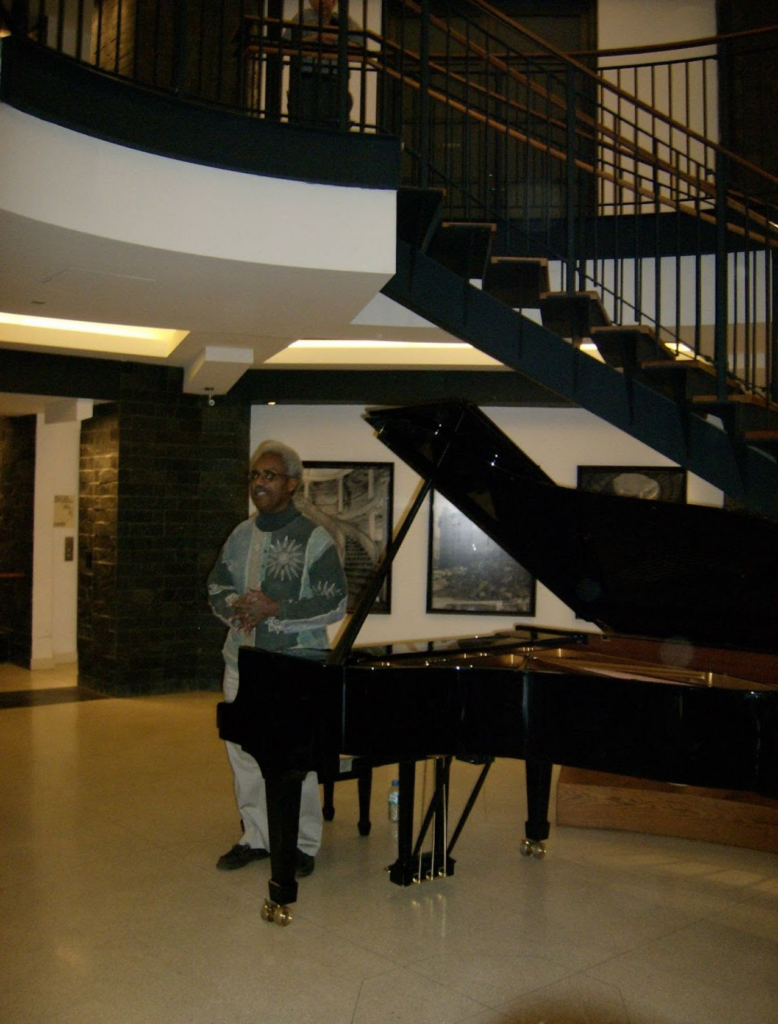
OCTOBER, 2006 ROY EATON IN CONCERT AT THE OCTAGON ROTUNDA.
CREDITS
6SQFT RAFAEL GAMO GREEN-WOOD CEMETERY Judith Berdy
All image are copyrighted (c) Roosevelt Island Historical Society unless otherwise indicated THIS PUBLICATION FUNDED BY DISCRETIONARY FUNDS FROM CITY COUNCIL MEMBER JULIE MENIN & ROOSEVELT ISLAND OPERATING CORPORATION PUBLIC PURPOSE FUNDS.