A midcentury printmaker celebrates machine age New York City
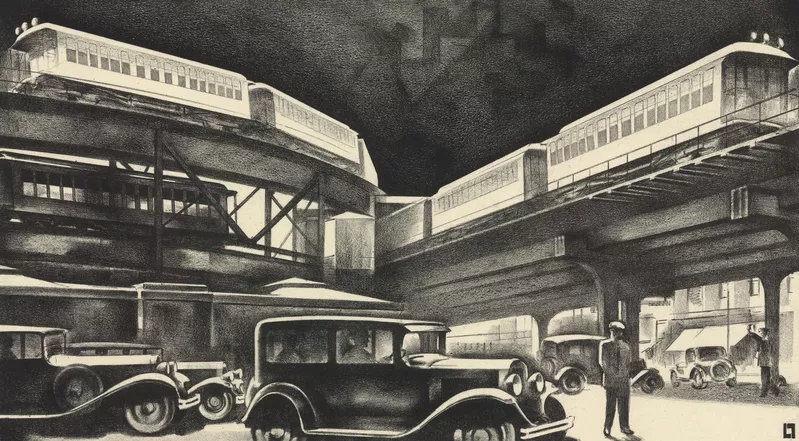
As the machine age took hold in the United States in the early 20th century, some artists took a darker view of the mechanization of urban society—seeing isolation and alienation amid skyscrapers, automobiles, and steel bridges. Painter and printmaker Louis Lozowick, however, found something to celebrate.
“Allen Street,” 1929
Lozowick isn’t a household name, but his backstory will sound familiar. Born in Ukraine in 1892, he immigrated to New York City in the early 1900s, according to Artnet. He took classes at the National Academy of Design, studying with Leon Kroll, a painter and lithographer who often depicted the industry of Manhattan from the city’s bridges and rivers.
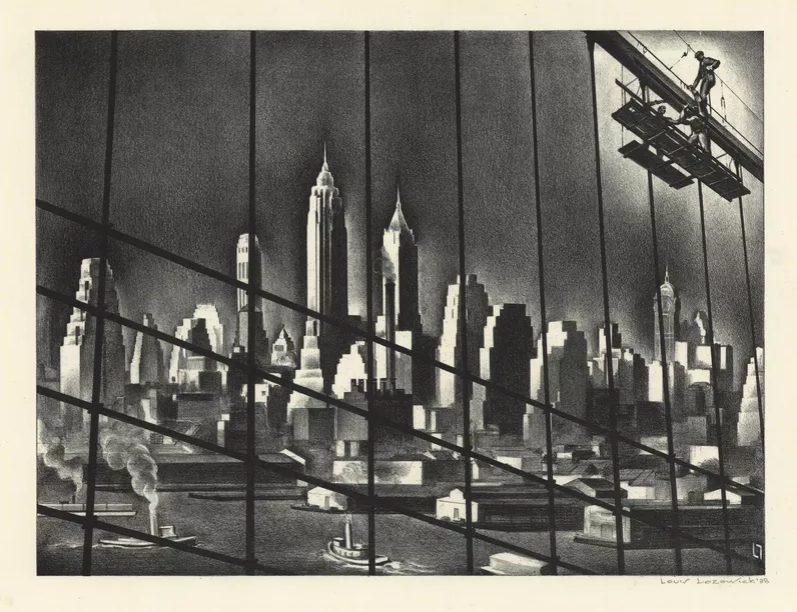
Through Brooklyn Bridge Cables,” 1938
After traveling in Europe, Lozowick returned to New York in 1926 and worked as an illustrator for the leftist social reform periodical, New Masses. Influenced by Bauhaus and precisionist artists, he was also producing his own photorealistic, sometimes Art Deco style works—many of which heralded “the power of men and machines,” as the National Gallery of Art put it.
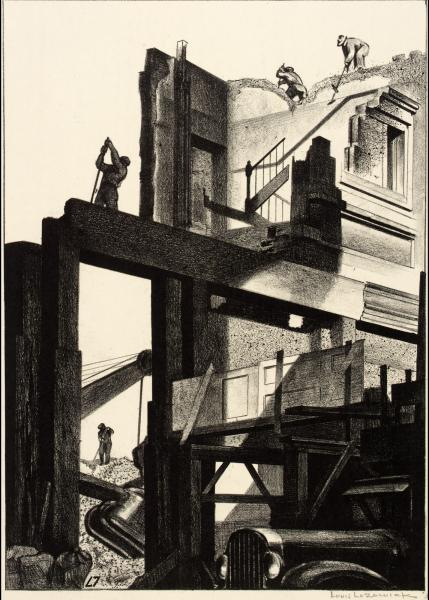
Slum Clearance,” 1939
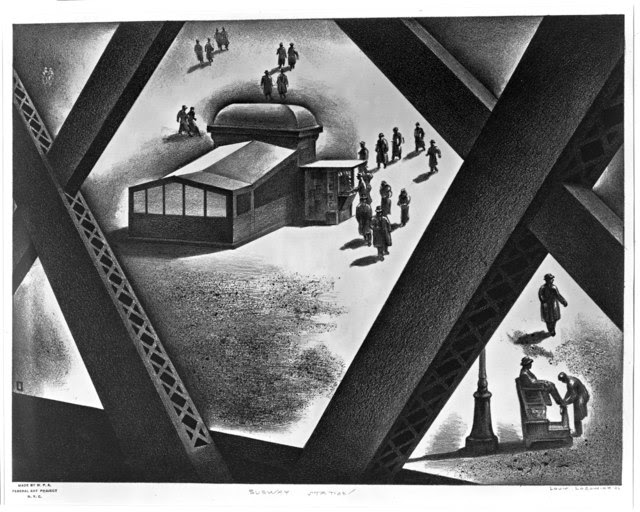
Lozowick gives us a majestic city from soaring vantage points—the Brooklyn Bridge and the Third Avenue El—as well as forgotten pockets and corners under elevated tracks and along Manhattan’s industrial edges, where the new and old New York sometimes collide.
Though his focus is on how machines transformed the look and feel of the city, Lozowick doesn’t lose sight of the humanity driving the trucks and trains, powering the factories, and building the skyscrapers.
Traffic,” 1930
Of all the images in this post, only “Third Avenue” includes no human form. But humanity is there; someone is at the controls of the train.
Louis Lozowick Subway station.tif A 1936 lithograph by Louis Lozowick. Retained by the New York Public Library.
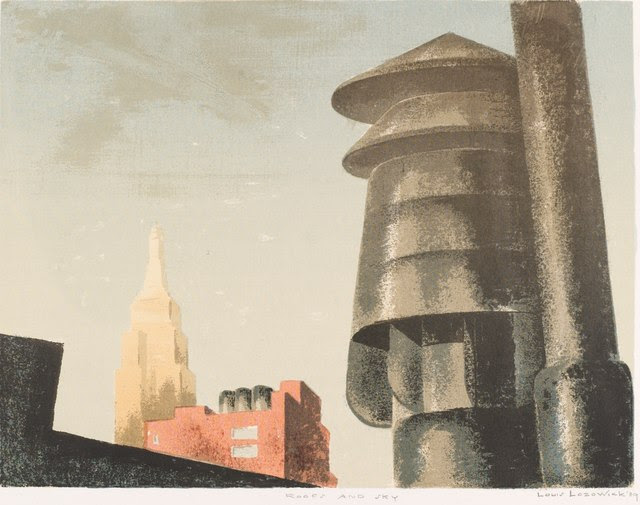
Louis Lozowick’s 1939 lithograph Roof and Sky. Created as part of the Works Progress Administration. Retained by the New York Public Library. Cropped to remove archival photo implements.
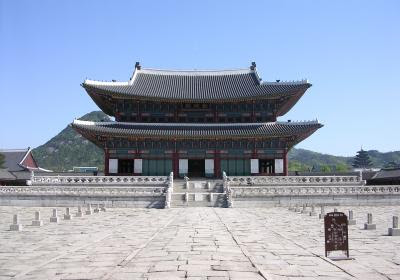
One of the buildings in the Gyeongbokgung royal palace complex in northern Seoul. The palace was first constructed in 1394 and reconstructed in 1867, it was the main and largest palace of the Five Grand Palaces.
LAURA HUSSEY GOT IT RIGHT!!
Text by Judith Berdy Thanks to Bobbie Slonevsky for her dedication to Blackwell’s Almanac and the RIHS Thanks to Deborah Dorff for maintaining our website Edited by Melanie Colter and Deborah Dorff
All image are copyrighted (c) Roosevelt Island Historical Society unless otherwise indicated
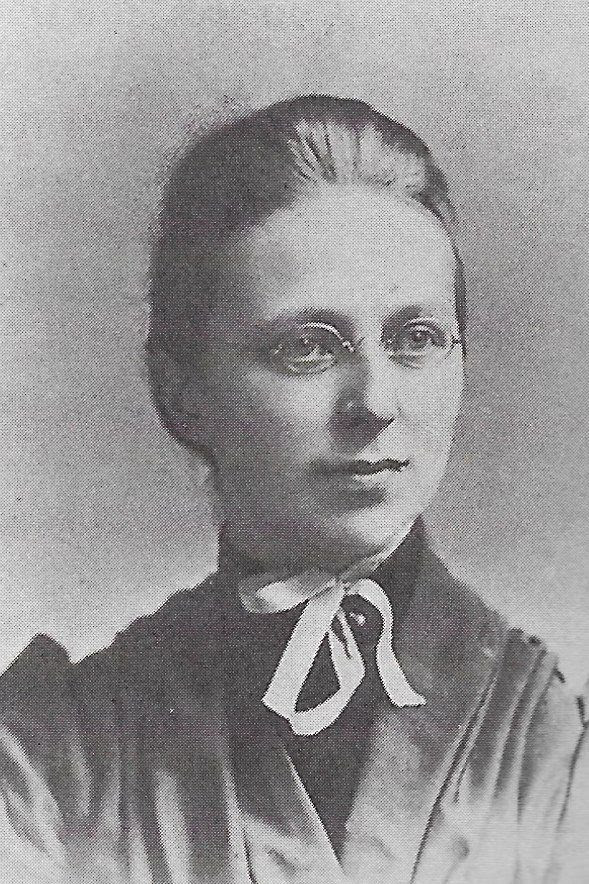
Dr. Rosetta Sherwood Hall was born in Liberty in Sullivan County, NY on September 19th, 1865, grew up on the family farm and attended the Chestnut Ridge School and the Liberty Normal Institute.
After receiving her teaching degree from Oswego, she taught in local schools for a few years before entering the Women’s Medical College of Pennsylvania, graduating in 1886, and becoming a missionary doctor in Korea in 1890.
Women’s Medical College
Her pioneering work with deaf and blind Korean children and her founding of what eventually became the Korea University College of Medicine in Seoul.
In the middle part of the 19th century, Liberty’s Walnut Mountain was commonly referred to as Mount Sherwood, and Fanton Sherwood owned it and much of the land in its vicinity. According to the July 5th, 1895 edition of the Sullivan County Record newspaper, Fanton Sherwood gave his son, Roosevelt Rensselaer Sherwood, “50 acres of land, along with a yoke of oxen, horse, sheep and a year’s provisions valued at $1,000” when he reached 21 years of age, and Roosevelt began to farm the land, eventually marrying three times and fathering seven children, the youngest of which was Rosetta.
Rosetta’s mother, Phoebe Gildersleeve Sherwood, was a devout and active member of the Methodist Episcopal Church in Liberty, and Rosetta was raised with strong ties to the religion, so it was no surprise that she became involved with the United Methodist Women, working in a clinic they ran in Manhattan.
It was while she was working in the clinic that she met a Canadian medical doctor, William Hall, whom she married in 1892. By that time, the couple was two years into what was supposed to be a five year mission to Korea.
It turned out to be considerably more than that, and although it was difficult for her to say good bye to her family and leave the comfort of her Liberty home, Rosetta Sherwood did just that in August of 1890.
“I was up at 5 a.m. and dressed,” she wrote in her diary that day. “Miss Lewis of the New York Deaconess Home and I ate a lunch, and then it was time to say goodbye, that long goodbye, for five years or and perhaps longer. Mother and I said it out in the kitchen, as we kissed each other with tears in our eyes — and hearts too, I feel. Then came Father, and I couldn’t say one word. He hoped I would be happy in my work and asked me to remember him in my prayers.”
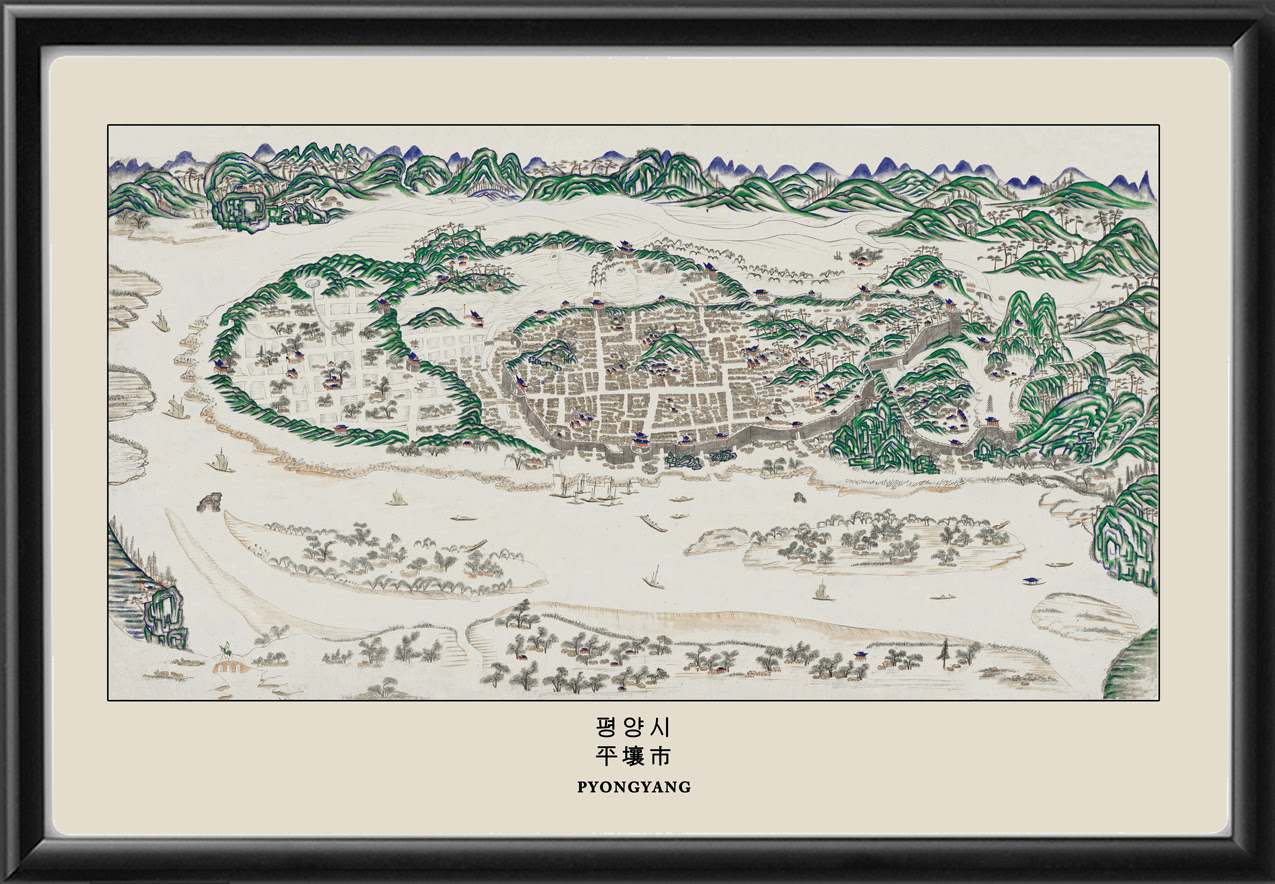
During the couple’s work in the Korean city of Pyongyang, Dr. William Hall contracted typhus and died in 1894, leaving Rosetta alone to raise their son, Sherwood, believed to be the first Caucasian child ever born in Korea, and an at that time still unborn daughter.
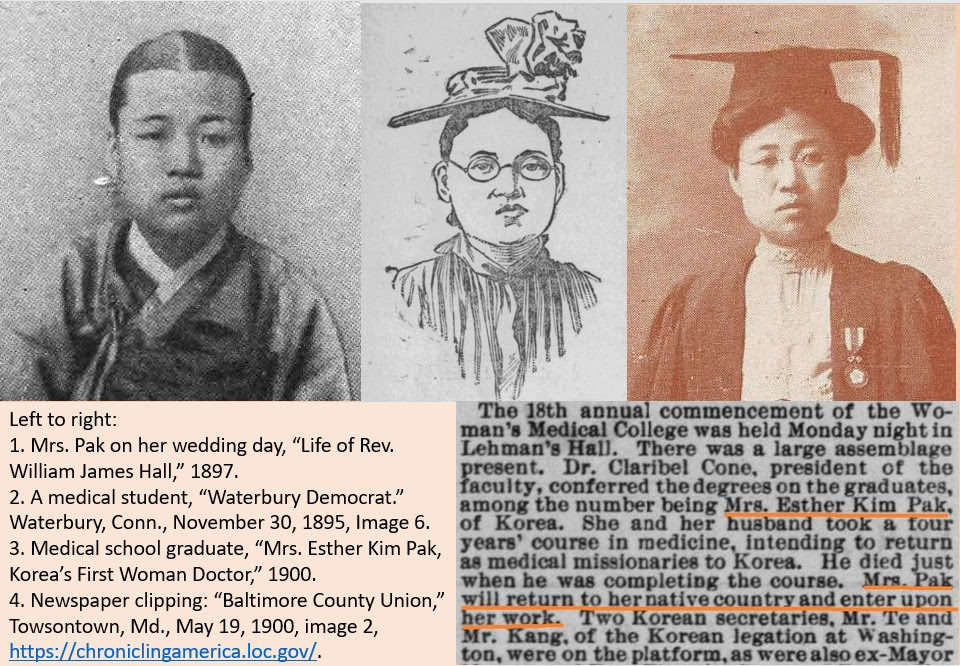
After burying her beloved husband, Rosetta returned to New York with her infant son and a daughter in her womb,” Hyun Sue Kim wrote in the introduction to the 2015 publication of the “Diary of Rosetta Hall 1890.” “While in the states, she furthered the work she undertook in Korea. She oversaw the education of Esther Pak Kim, Korea’s first female doctor of medicine, who received her M.D. degree in 1900 at the Baltimore Woman’s Medical College; she raised funds and established the Hall Memorial Hospital in Pyongyang in February, 1897; and she published a biography of her husband in August 1897. It was during this time that Rosetta visited the New York Institute for the Blind and drew from New York Point to begin development of Korean Braille.”Dr. Hall returned to Korea in 1897, and went to work again in the mission in Pyongyang where she and her late husband had served before. Unfortunately, not long after she arrived at the mission, her daughter, Edith Margaret, died of dysentery.“In the summer of 1901, Dr. Rosetta Hall returned to New York for the second time, physically and mentally exhausted. After recuperating at the Castile Sanatorium for eight months, she again returned to Korea in the spring of 1903. Until her retirement in 1933, she remained steadfast in her work,” Kim wrote. “She founded the Women’s Medical Training Classes in Pyongyang and Seoul; her class in Seoul would later become the Women’s Medical Institute, the precursor to Korea University’s College of Medicine. She established four hospitals: the Baldwin Dispensary in Seoul (1892), The Woman’s Hospital of Extended Grace in Pyongyang (1894), the Hall Memorial Hospital in Pyongyang (1897), and the Chemulpo Women’s Hospital (1921).”In addition, Dr. Hall’s work with the blind and deaf in Korea was groundbreaking, and many advances were made through her efforts. She was instrumental in establishing the first Convention on the Education of the Blind and Deaf of the Far East, in 1914, as well as the Children’s Welfare Clinic in Seoul and the Edith Margaret Children’s Wards in Pyongyang. In all, she spent 44 years in Korea, effectively revolutionizing medical care there, particularly for children and the disabled.Rosetta Sherwood Hall died on April 5th, 1951. She is buried in the Yanghwajin Foreign Missionary Cemetery in Seoul.Photo of Dr. Rosetta Sherwood Hall.
We do not know the fate of the medical facilities in Pyongyang, now North Korea.
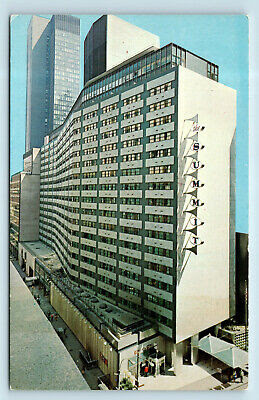
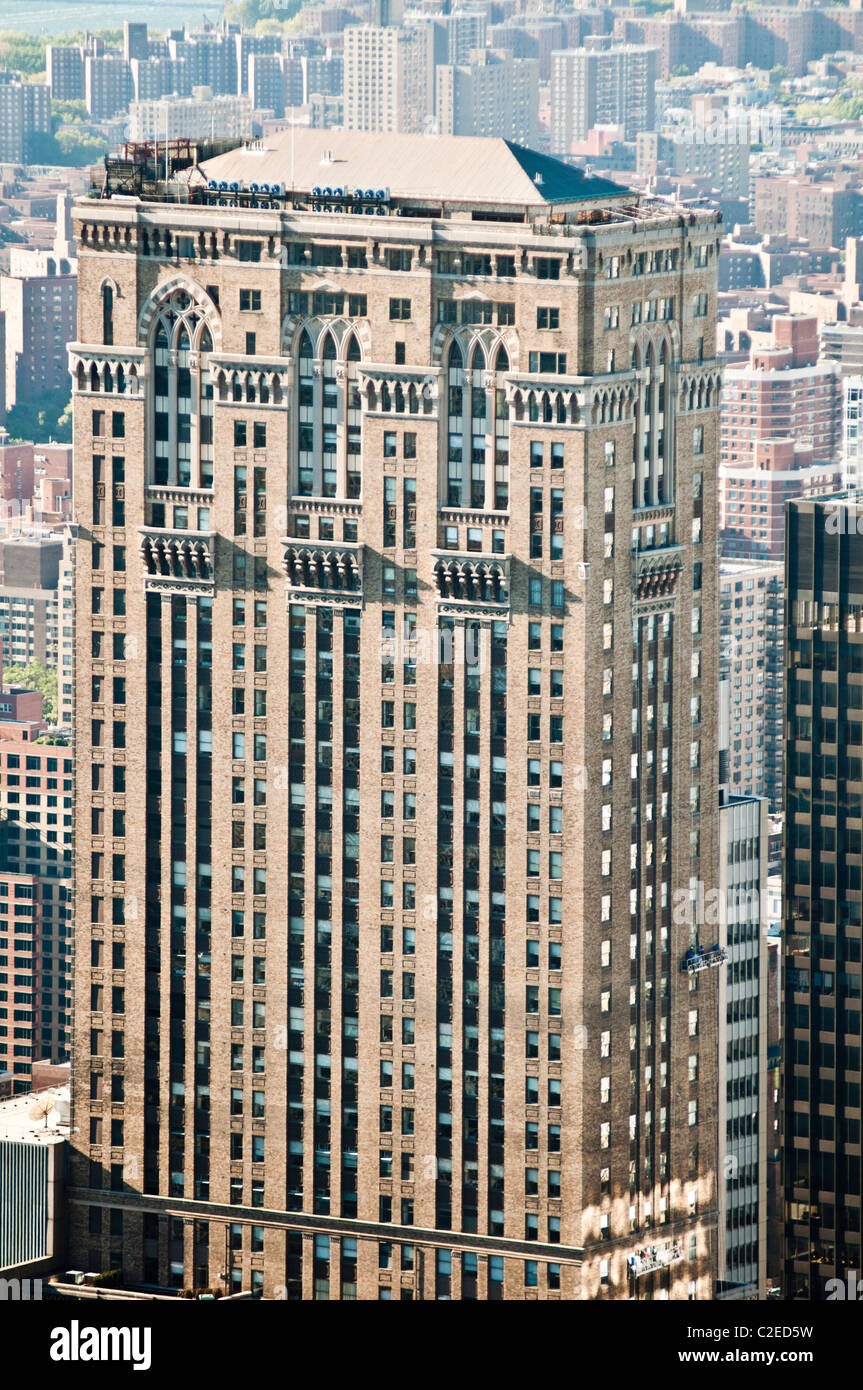
Summit Hotel on Lexington Avenue ED LITCHER, ANDY SPARBERG, LAURA HUSSEY AND ARON EISENPREISS GOT IT RIGHT
Sources
New York Almanack
Edited by Deborah Dorff ALL PHOTOS COPYRIGHT RIHS. 2022 (C) PHOTOS IN THIS ISSUE (C) JUDITH BERDY RIHS
FUNDING PROVIDED BY ROOSEVELT ISLAND OPERATING CORPORATION PUBLIC PURPOSE GRANTS CITY COUNCIL REPRESENTATIVE BEN KALLOS DISCRETIONARY FUNDING THRU DYCD
LOST FRIDAY MORNING BETWEEN RIVERCROSS AND 546 MAIN STREET
BLACK CANVAS BAG WITH GOLD DESIGN
CONTAINS CALENDAR BOOK, PHONE CHARGER AND LEGAL PAD
PLEASE CALL 212 688 4836, CALL OR TEXT 917 744 3721
THESE ITEMS ARE URGENTLY NEEDED.
REWARD OFFERED
FROM THE ARCHIVES
WEEKEND, APRIL 16-17, 2022
THE 651st EDITION
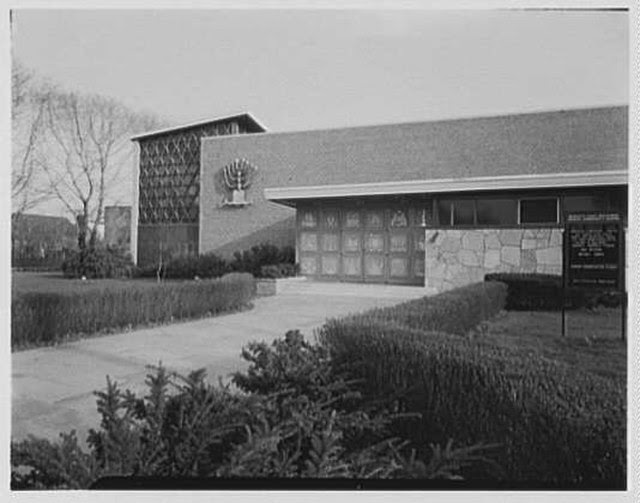
HEWLETT EAST ROCKAWAY
JEWISH CENTER
JUDITH BERDY WIKIMEDIA COMMONS
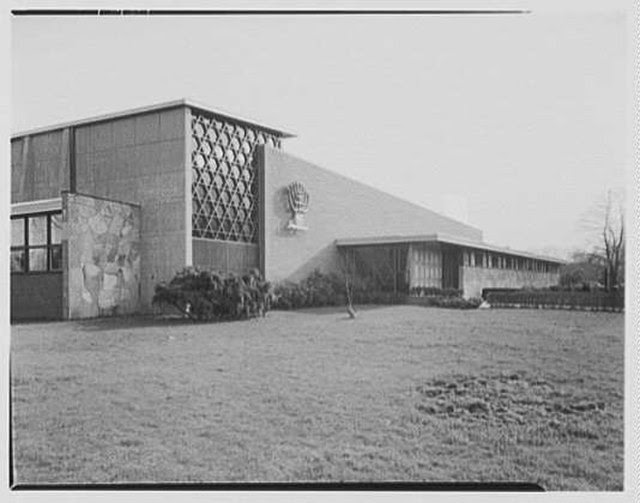
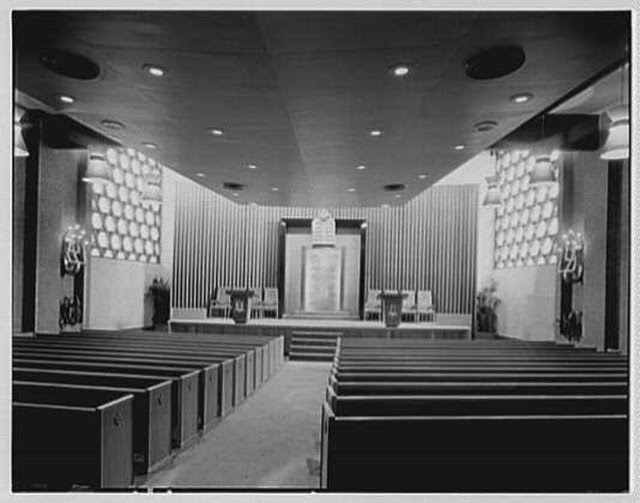
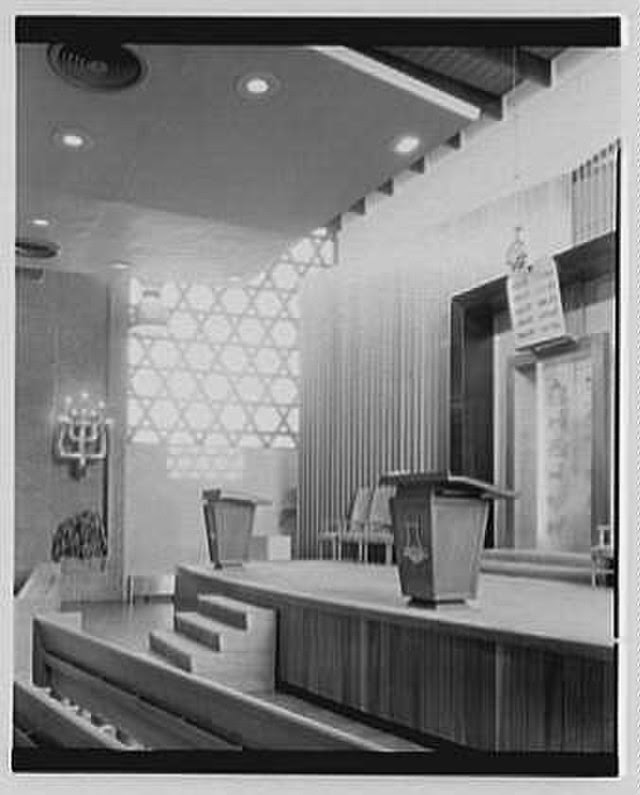
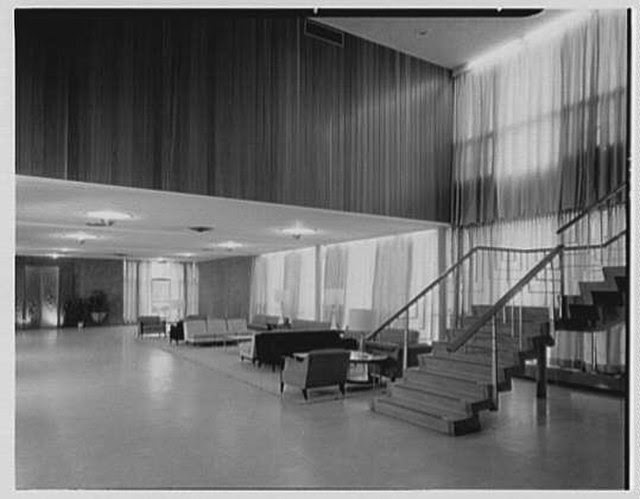
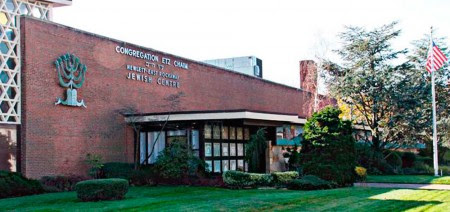
For some years during my childhood my family lived in East Rockaway in Nassau County. Our synagogue was designed by Morris Lapidus, better known for Miami Beach hotel designs of the 1950’s. The building has grown and I have not returned to see it recently. I decided to check out the design of 60+ years ago from Wikimedia Commons. How about the house of worship from your childhood ? Send us an image or two.
Title: Hewlett-East Rockaway Jewish Community Center, 295 Main St., East Rockaway, Long Island.
Abstract/medium: Gottscho-Schleisner Collection (Library of Congress)
Most of the exterior has been preserved.
MORRIS LAPIDUS, ARCHITECT EXTRAODINAIRE
Morris Lapidus,an architect long derided and later praised for designing some of South Florida’s gaudiest, glitziest and most glamorous hotels in the 1950’s and 60’s, died yesterday at his home in Miami Beach. He was 98 and lived in a white high-rise he designed that stands near three of his most glittering creations, the Fontainebleau, Americana and Eden Roc hotels.
Lapidus’s style was mockingly called Miami Beach French, and critics scorned the ”obscene panache” with which he created what they called his palaces of kitsch, many of which have been razed or remodeled. But as Miami Beach underwent a renaissance, becoming an trendy place for the jet set, the critical winds blew in his direction. After being shunned by architecture critics and architects for much of his long career, he and his work are now referred to with respect by a new generation of writers and postmodernist architects — among them Rem Koolhaas and Philippe Starck. He had been, several critics decided, ”a postmodernist long before the term existed.”
Mr. Lapidus was steeped in classical architecture, but he created an eye-catching mixture of French Provincial and Italian Renaissance — with whiplash-curve facades and a splashy use of color — and he lavished ornament upon ornament. His most famous work was the Fontainebleau, built in 1954 and still a South Florida landmark. Its interiors combined 27 colors. It had what was called a staircase to nowhere that actually led to a modest cloakroom, so that dinner guests could leave their coats and parade down in their sparkling jewelry and decolletage to the delighted stares of the crowds in the hotel’s lobby.
Architectural understatement was not his style. He put live alligators in a terrarium in the lobby of the Americana, he said, so that guests would ”know they were in Florida.” One writer described his designs as ”emblems of tail-fin chic.” A critic called his dramatic decorative style, which flouted the popular, ubiquitous and understated ideas of Bauhaus Modernism, ”the epitome of the apogee.”
The Fontainebleau was once called ”the nation’s grossest national product.” The architecture critic Ada Louise Huxtable wrote in 1970 that a purple-and-gold Lapidus-designed bellhop uniform at the Americana hit the eye ”like an exploding gilded eggplant.” Another critic suggested that his appeal was to the ”great mass of people who don’t know the difference between architecture and Coney Island.” When he designed the Summit Hotel (now the Loews New York) on Lexington Avenue in New York, the joke was that it was too far from the beach. Now getting the last laugh, the hotel is undergoing a $17 million renovation, to reopen as the Metropolitan next year.
Did you know you can share 10 gift articles a month, even with nonsubscribers? Share this article. Mr. Lapidus dismissed the jibes. He proudly referred to the Fontainebleau as ”the world’s most pretentious hotel.”
”I wanted people to walk in and drop dead,” he said of his celebrated hotel lobbies. His work, he said, ”set new standards, and a lot of old-line critics didn’t agree with me.” By the 1980’s, though, he said, that had changed, ”because everyone is doing the unusual now.”
And he was right. His works, critics have said recently, have deservedly become renegade popular landmarks. In an open letter in the Italian design magazine Domus in the 1980’s, the designer Alessandro Mendini gushed over Mr. Lapidus’s ”acrobatic virtuosity.”
He Created the First Known Movie. Then He Vanished. Whatever the critical reception, Mr. Lapidus made a lot of money. Over the decades he designed hundreds of buildings (200 of them hotels, he said) and he calculated that between 1943, when he went out on his own, and 1984, when he retired, he earned more than $50 million in fees.
Many of his innovations in the use of lighting, fabric and color have become staples of American design, and critics have noted that his work exerted enormous influence over the design of one of the biggest and most-visited American tourist attractions — modern-day Las Vegas.
Mr. Lapidus’s faux-French Fontainebleau ”and the sluggish crocodiles in the equally faux jungle under the Americana’s lobby stairs have evolved into the breath-stopping extravaganzas of Caesar’s Palace with its heroic Styrofoam statuary and the Luxor’s sphinx and mirror-glass pyramid,” Ms. Huxtable wrote.
Morris Lapidus (pronounced LAP-i-dus) was born on Nov. 25, 1902, in Odessa, Russia. His family left for the United States the next year and settled in Brooklyn. He attended Boys High School, New York University and Columbia University’s architecture school. He began work as an architect in 1927 and two years later married his Brooklyn sweetheart, Beatrice Perlman. She died in 1992. He is survived by his sons, Richard L., a lawyer in Florida, and Alan H., an architect in the New York area; three grandchildren; and three great-grandchildren.
In his autobiography, ”Too Much Is Never Enough” (Rizzoli, 1994), Mr. Lapidus traced his populist style to a childhood influence — his first vision as a Russian immigrant to Coney Island’s Luna Park. It was, he said, the first time he felt ”an emotional surge” about architecture.
”I was standing on the elevated platform just as dusk was falling,” he recalled, ”and the lights went on. To me it was the most beautiful sight I’d seen. Of course, I knew it was hanky-pank, a circus and showmanship. But to a child of 6 it was all the wonders of the world. I never outgrew it.”
At Columbia he planned on becoming a stage designer, but he began his career instead in retail design, pioneering the use of bright colors, lights and sweeping curvilinear forms to sell merchandise.
He developed an ability to make money while many other architects were searching for work. During these years, working for several firms and later for himself, he supervised the construction of more than 500 stores, storefronts and showrooms for Lerner, Bond’s, Howard Clothes and such shoe chains as Florsheim, Baker and A. S. Beck.
”I put merchandise in the open where customers could go over and touch it,” Mr. Lapidus told Daniel F. Cuff in The New York Times in 1981. ”Before that, the customer needed a salesman to get the items out for him. There were counters and heavy cabinets. ‘Let’s open it all up,’ I said.”
He worked for 20 years before designing a building. It was his connection with A. S. Beck that led to his big break. ”A company architect,” Mr. Lapidus told The Times, ”had a friend in the hotel business in Florida who didn’t like what the local architect was doing. My friend told him about me, about my innovative ideas, and I met with him. What experience did I have in hotels? he asked. ‘I have none,’
I told him. ”But I gave him my theories. Get rid of corners. Use sweeping lines. Use light to create unusual effects, Use plenty of color. Try to get drama. Keep changing the floor levels. Keep people moving and excited at all times.”
The Florida hotel man, Ben Novack, hired Mr. Lapidus as associate architect of the Sans Souci. That led to a half-dozen jobs in Miami Beach as an associate architect, including work for the Nautilus, the Algiers and the Biltmore Terrace.
”When Ben Novack announced that he was building the Fontainebleau, it appeared in the New York papers that I was to be the architect,” Mr. Lapidus told The Times. ”But when I called him he said I wasn’t chosen, that I never did a whole hotel and that he just needed a name at the time. It took me a year to convince him. I moved heaven and earth to get that job. ‘If there’s one thing I’m going to do,’ I told myself, ‘I’m going to do the Fontainebleau.’
”And I got it. My first building after 20 years. I did everything — the logos, bellhop uniforms. It was the chance of a lifetime. It brought me instant success. A few years later I wouldn’t touch a shop.”
The 560-room, 14-story Fontainebleau was completed in 1954. Critics used words like splashy, colossal, gaudy and opulent. The Italian-style Eden Roc and the Americana (now the Sheraton Bal Harbour), built with a 40-foot-high terrarium in its lobby, quickly followed.
At the Eden Roc in 1955, to satisfy the developer Harry Muffson, Mr. Lapidus had a copy made of the Winged Victory of Samothrace. When the statue was uncrated, however, Mr. Muffson was outraged. ”Where’s the head?” he demanded. ”For 10 grand, I want a head!”
Fred Trump, the New York builder and father of Donald, admired Mr. Lapidus’s work. ”He liked what I did at Sans Souci,” Mr. Lapidus recalled. ”He said, ‘I want you to do a lobby in an apartment house in Queens. Name any fee you like. You’re my architect, design everything.’ ”
The building, the Edgerton, was in Jamaica Estates, Queens. Mr. Lapidus did the entranceway and lobby and then did several other projects for the Trump organization and for many other clients, among them the Trump Village, Cadman Plaza and Presidential Towers apartments in New York; resort hotels in Jamaica, Switzerland and Aruba; stores; hospitals; office buildings; synagogues (Temple Share Zion in Brooklyn); and nonresort hotels, such as the 50-story Americana (now the Sheraton Center) in New York.
Through it all he developed a flamboyant visual lexicon, using woggles (amoebalike shapes), cheese holes (recessed circular lights in walls and ceilings), beanpoles (ornamental metal rods) and those flying stairways to nowhere.
He also designed 100 condominiums in Florida, and lived his later years in a Miami Beach apartment in a building he designed in the 1960’s. The apartment overlooked Biscayne Bay and was filled with Lucite, gold and mother-of-pearl. In his dining room was an oval Lucite-topped table for 10 that he designed. On the ceiling was one of his famous glittering chandeliers. The table, set with gold-plated flatware, was surrounded by curvaceous walls completely covered with translucent Capiz shells. The table was set off by a semicircle of decorative gold-leafed, fluted columns, which he called beanpoles.
Mr. Lapidus often said that he could not abide a straight line. ”A staircase isn’t a staircase unless it’s curved,” he said. And he expounded upon what he called his moth theory, that people are attracted to light.
But despite his theory, he often acknowledged that he was not really an innovator. ”I wasn’t the founder of a style,” he said. ”I’m just an architect who happened to be carried away by his emotions.”
”I wanted people to feel something,” he said. ”If two people were walking by one of my buildings and one said to the other, ‘Did you notice that building?’ and the other said, ‘What building?’ I’ve failed. But if he looks at it and says, ‘Oh my god,’ or ‘That monstrosity,’ I was glad. Because he noticed me.”
A version of this article appears in print on Jan. 19, 2001, Section C, Page 11 of the National edition with the headline: Morris Lapidus, an Architect Who Built Flamboyance Into Hotels, Is Dead at 98
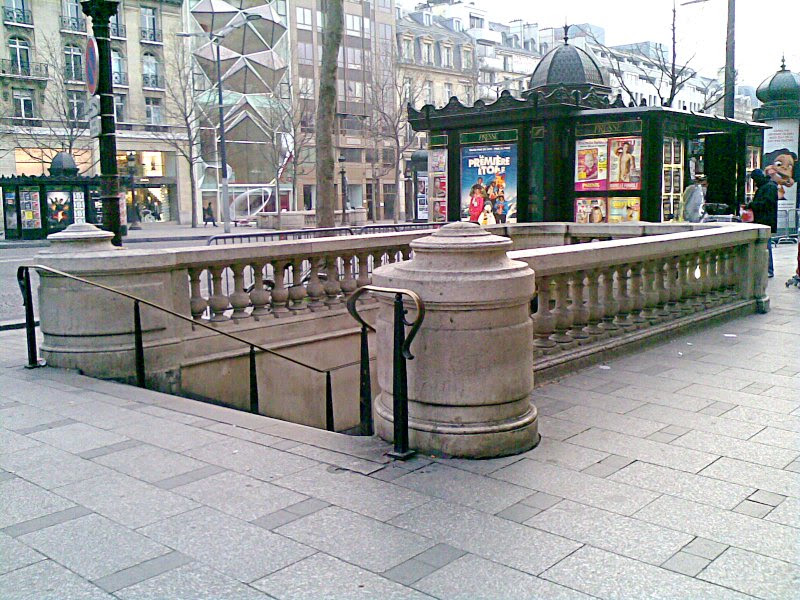
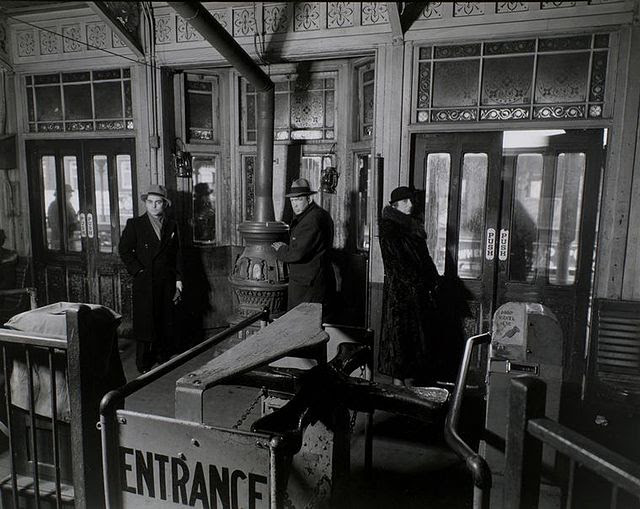
Entrance to Franklin D. Roosevelt station in classical Greek-Roman style
HARA REISER AND ALEXIS VILLAFANE GUESSED IT RIGHT!
SOURCES
WIKIMEDIA COMMONS NEW YORK TIMES
Funding Provided by: Roosevelt Island Corporation Public Purpose Funds Council Member Ben Kallos City Council Discretionary Funds thru DYCD Text by Judith Berdy
Edited by Deborah Dorff ALL PHOTOS COPYRIGHT RIHS. 2022 (C) PHOTOS IN THIS ISSUE (C) JUDITH BERDY RIHS
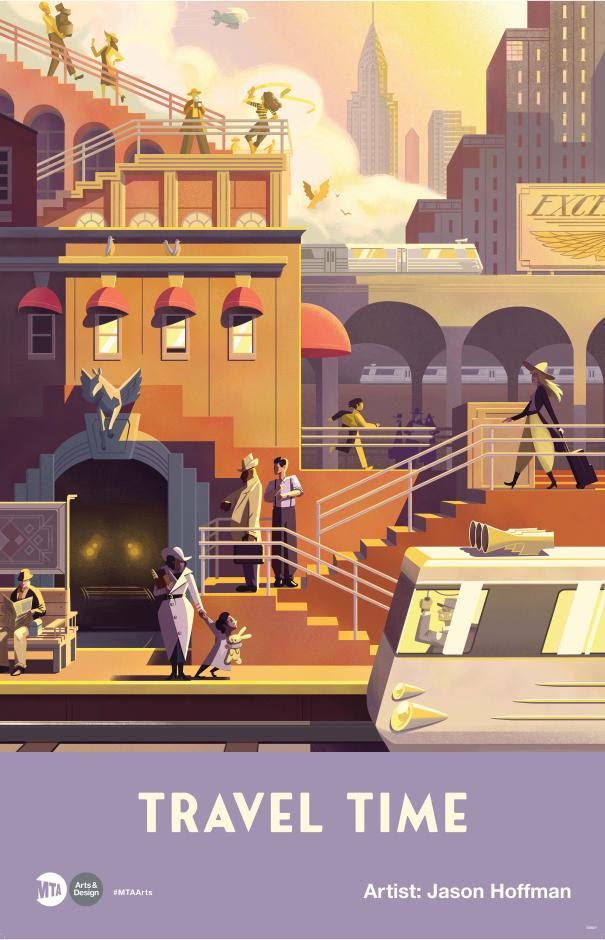
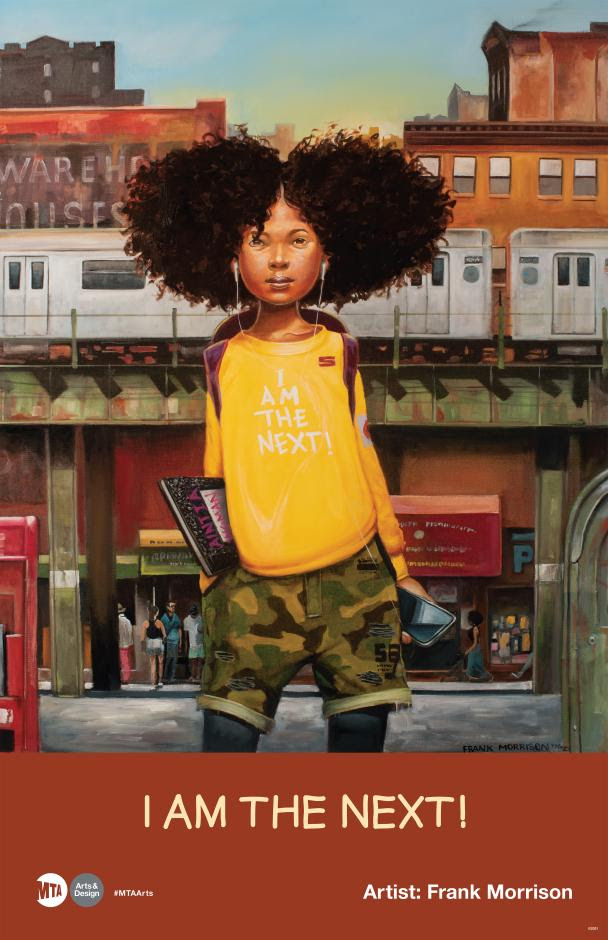
Through the Graphic Art Program, MTA Arts & Design commissions five to six artists each year to create transit-related artwork for Poster and Art Card production.
The popular Graphic Art poster program was established in 1991 to celebrate the diverse communities that make up the New York region. The commissioned work by painters, printmakers, and illustrators touches upon transit-related subjects and the places that can be discovered using the mass transit system. Posters are randomly displayed in unused advertising space on subway platforms throughout the 472 subway stations and on subway cars and buses. Printed posters are available for sale to the public through the New York Transit Museum Stores. Revenue from sales from the posters help to support the educational and exhibition programs at the non-profit museum.
The program offers illustrators and other artists the opportunity to reach a broader public, and provides the public exposure to incredible artists and visionaries who create a respite of engaging visual art.
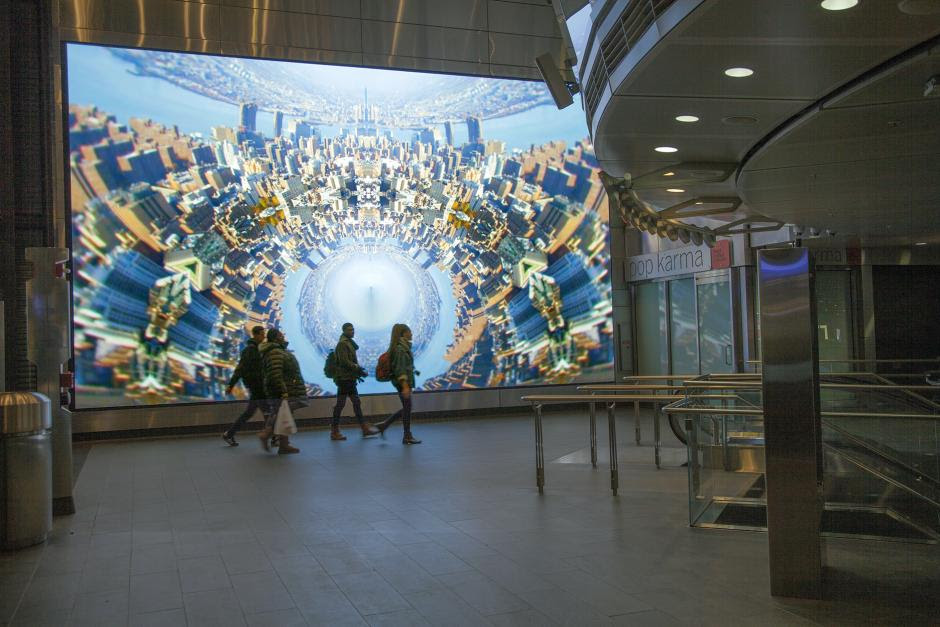
About Digital art viewed from a multitude of display screens creates an immersive experience that engages transit customers with an impactful visual moment. MTA’s digital media network offers new opportunities to present art in digital form and introduce new media artists to public space and the MTA ridership. In November 2014, Arts & Design launched the Digital Art program in the digitally integrated Fulton Center Complex, which connects to 11 subway lines and the World Trade Center PATH station. The digital display network in Fulton Center has 52 screens on various levels, illuminating and transforming the Center into a welcoming contemporary environment. These range from 55-inch LCD screens that line the passageway on the mezzanine concourse level, to the massive LED walls measuring 31.5 feet by 18.9 feet at street level. Presented by MTA Arts & Design with technical support from Westfield Properties and ANC Sports, the 52-channel digital artwork can be seen for two minutes at the top of each hour simultaneously in the Fulton Center complex. Digital artwork can also be seen throughout the MTA system.
PHOTOGRAPHY
Vantage Points
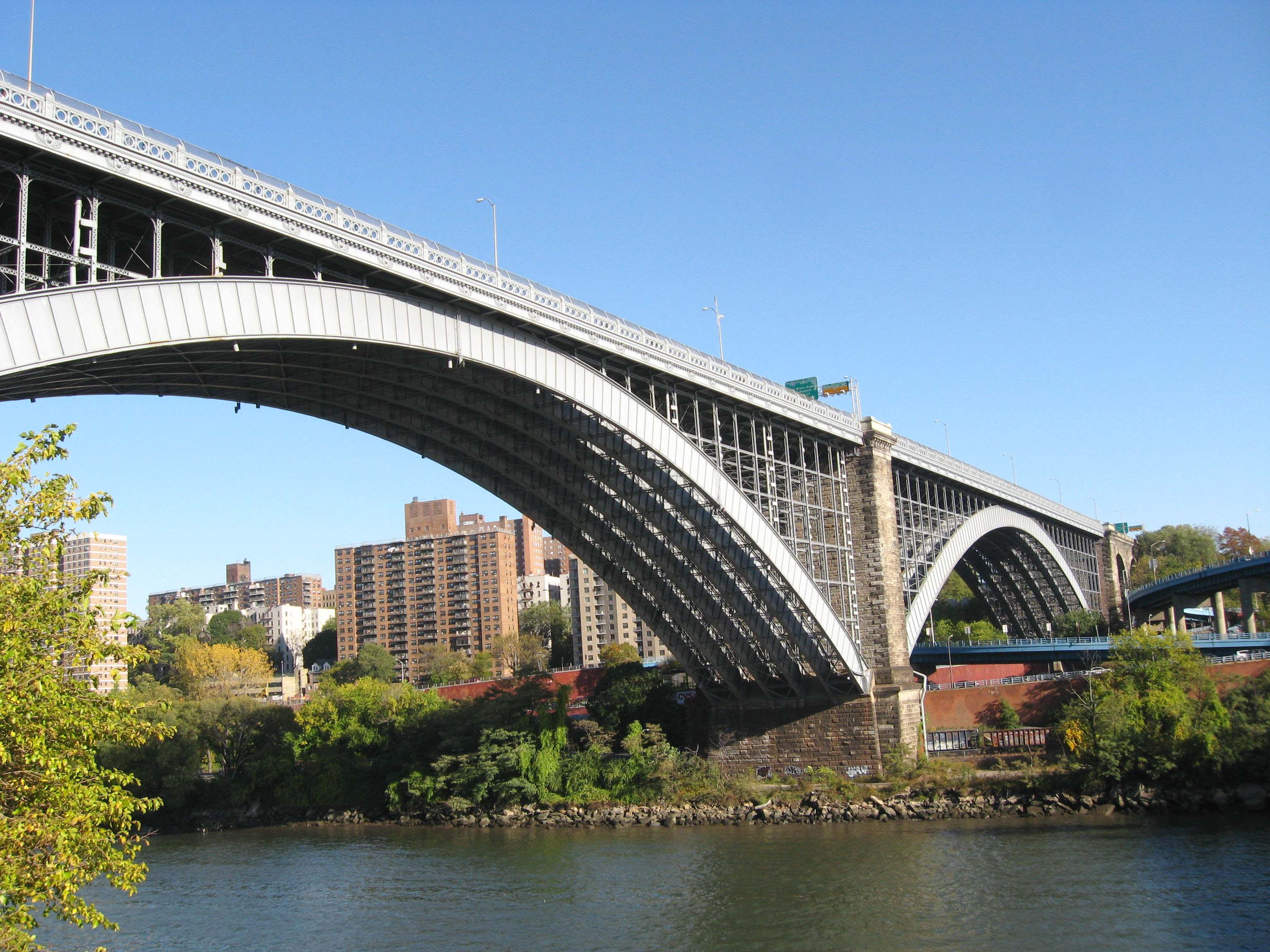
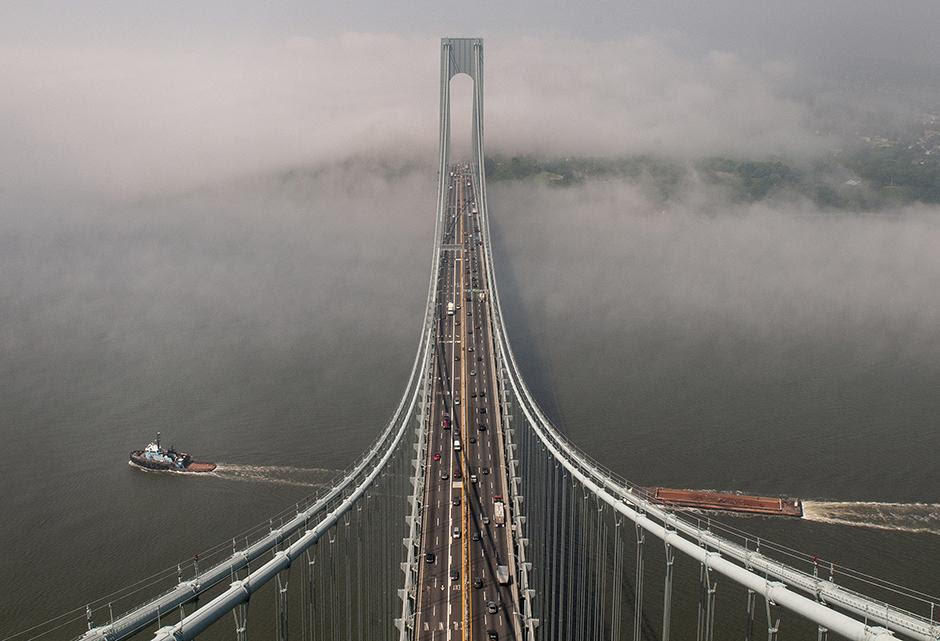
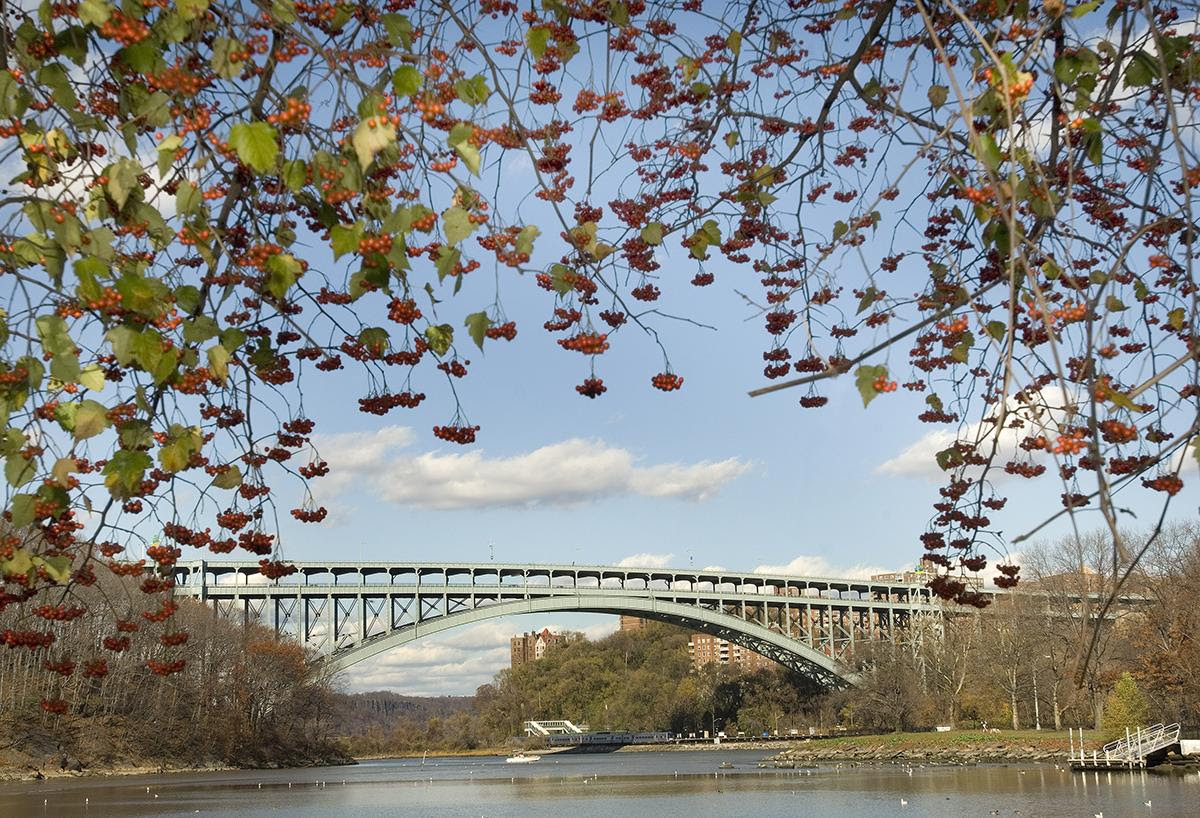
Patrick Cashin About the project Patrick Cashin’s images in the photography exhibition on view at the Bowling Green station offer a glimpse into the singular perspective of an individual who spent 20 years immersed in every aspect of the transit system, visually documenting MTA locations, projects, and milestones. The seven large-scale photographs in this exhibit trace Cashin’s photographic journey, from his ascent to the highest points of the city’s bridges to the green pastures of the Metro-North Railroad region. “Vantage Points” is a special opportunity to showcase Cashin’s distinct photographic eye and unique subject matter in a public space. Some of his most striking images come from the quiet moments with nature, like the graceful arch of the Henry Hudson Bridge framed by the fall leaves of Inwood Hill Park, or views from areas of the system that were off-limits to most people, like the top of the Brooklyn Tower of the Verrazano-Narrows Bridge, where he captured an intimate encounter with a falcon. In describing his experience climbing atop the 138th Street Bridge, something usually reserved for maintenance workers, he said, “I took my time there because I knew I probably wasn’t going to get up there again.” Cashin approached each scenario not just as a documentary opportunity but also by artfully bringing a human connection and two decades of experience to each image, capturing the details, climate, and environment of his surroundings. The exhibition was generously sponsored by Griffin Editions and Kodak Professional.
About the artist
Patrick Cashin was born in Brooklyn, New York and attended Automotive High School. His interest in photography began while in the U.S. Navy, after which he joined Newsweek magazine, where he worked for 16 years, photographing worldwide. Cashin was the esteemed staff photographer for the New York State Metropolitan Transportation Authority (MTA) from 2000-2020. His photography has appeared in countless publications such as the New York Times, The Sunday Times, New York Daily News, The Weekly Flickr, Channel 13’s Metro Focus, and MTA brochures and ads.
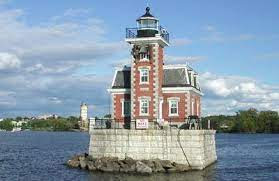
Current Structure: Construction began in 1873, light was lit in 1874 Former Structures: None Other Names: Hudson City Lighthouse Owning Organization: Hudson-Athens Lighthouse Preservation Society Location: Center-east side of the Hudson River, just south of the Middle Ground Flats, between Athens, NY and Hudson, NY.
SUSAN RODETIS, ALEXIS VILLAFANE, LAURA HUSSEY GOT IT RIGHT.
All image are copyrighted (c) Roosevelt Island Historical Society unless otherwise indicated
MTA Arts & Design
Sandra Bloodworth Director
RIHS (C) FUNDING PROVIDED BY ROOSEVELT ISLAND OPERATING CORPORATION PUBLIC PURPOSE GRANTS CITY COUNCIL REPRESENTATIVE BEN KALLOS DISCRETIONARY FUNDING THRU DYCD
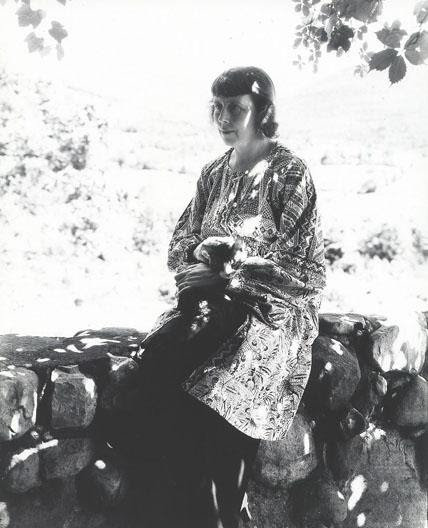
http://Georgina Klitgaard, Peter A. Juley & Son Collection, Smithsonian American Art Museum J0022187
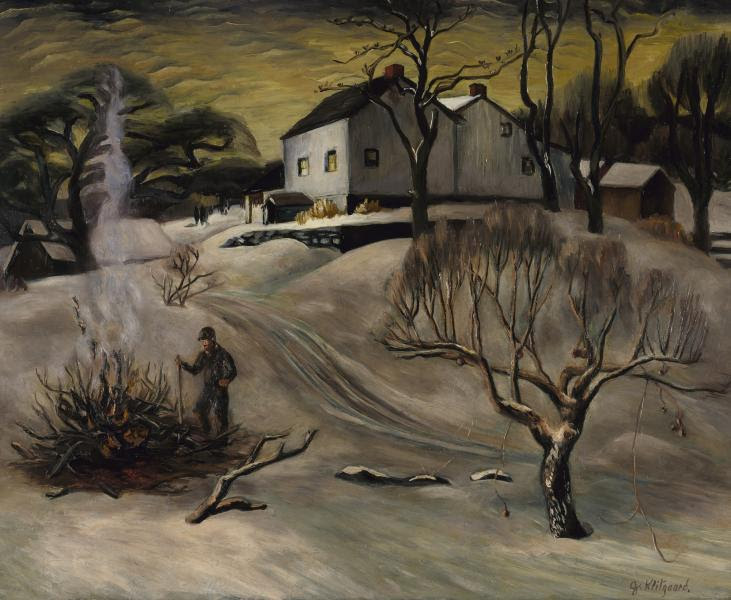
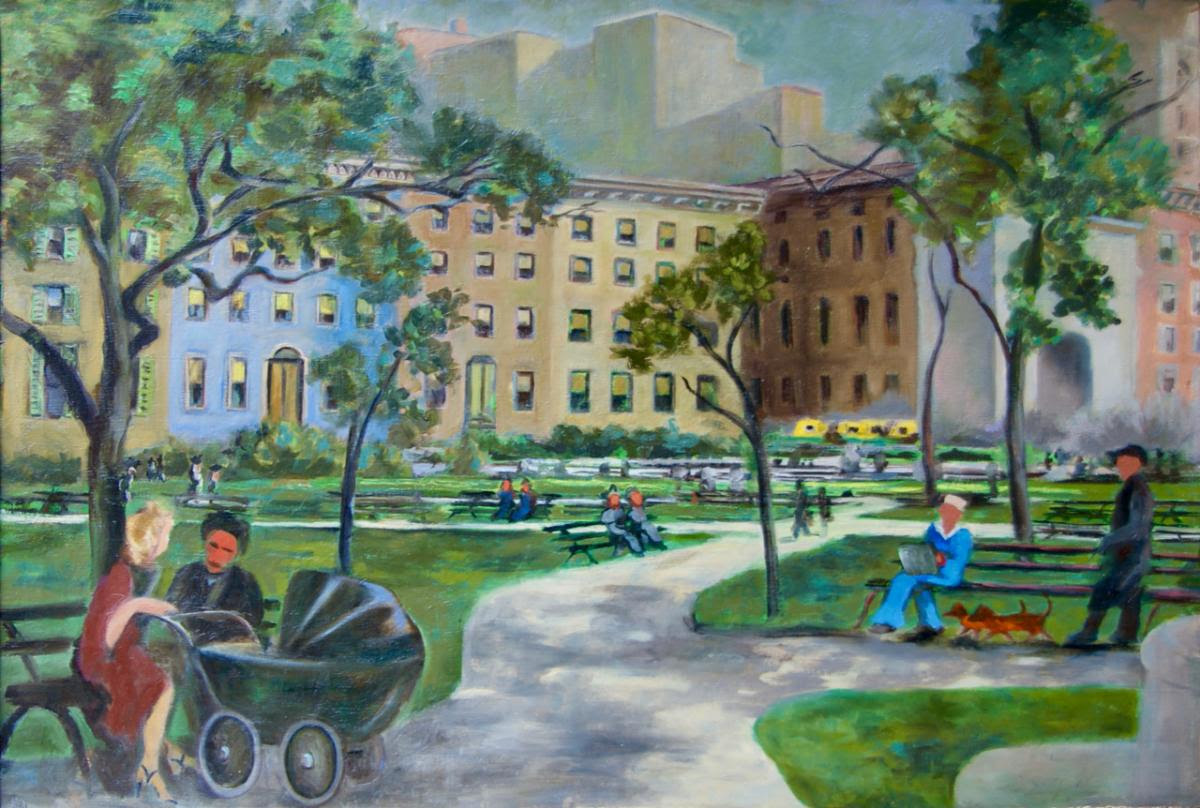
Name Georgina Klitgaard Born Spuyten Duyvil, New York born Spuyten Duyvil, NY 1893-died 1976 Active in Bearsville, New York Nationalities American Linked Open Data Linked Open Data URI After graduating from Barnard College, Georgina Klitgaard studied art at the National Academy of Design. In 1919 she married the Danish writer Kay Klitgaard, and for much of her career they lived in Bearsville, New York, only two miles from Woodstock’s lively artists’ colony. Klitgaard was known for her panoramic bird’s-eye views of the rural New York landscape. A California critic wrote that her Woodstock landscapes looked like “Currier and Ives lithographs … with little clouds and precise arrangements of facts” (Millier, “New Spirit in Western Art”, Los Angeles Times, April 14, 1929). During the Great Depression, the Works Progress Administration commissioned her to create murals for three United States post offices. This work helped her survive and allowed her to further her career. For the next forty years she exhibited her work widely.
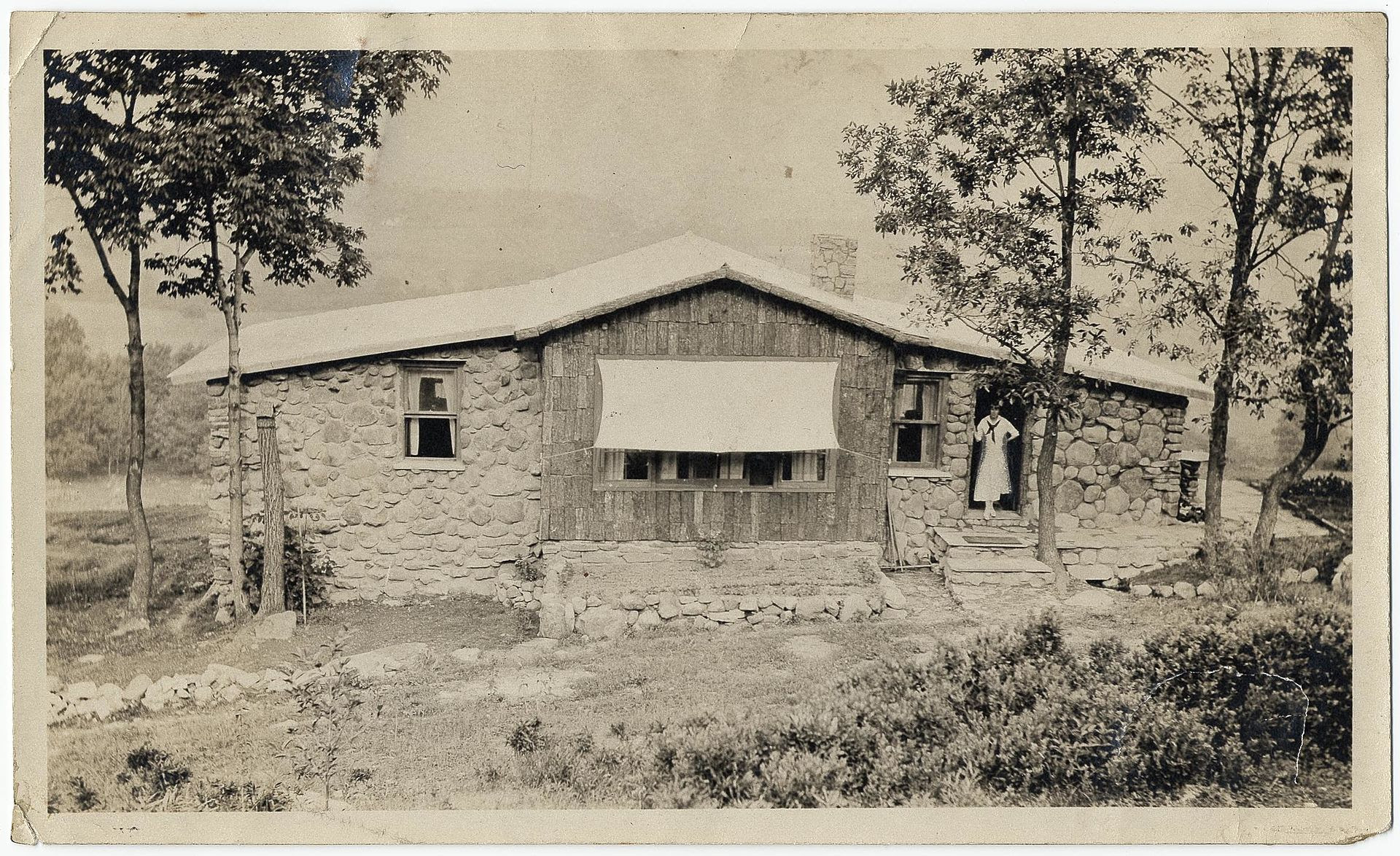
Description: Identification on verso (handwritten): Georgina Klitgaard. Klitgaard standing in the doorway of a rustic house. Klitgaard, Georgina, 1893-1976 Creator/Photographer: Unidentified photographer Medium: Black and white photographic print Dimensions: 9 cm x 14 cm Date: c. 1920 Persistent URL: www.aaa.si.edu/collections/images/detail/georgina-klitgaa…Repository: Archives of American ArtCollection: Forbes Watson Papers, 1900-1950 Accession number: aaa_watsforb_3599
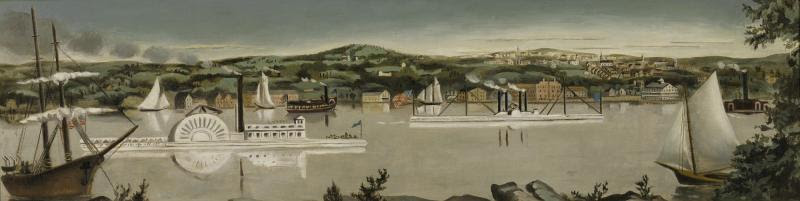
Georgina Klitgaard, View of Poughkeepsie in 1840 (mural study, Poughkeepsie, New York Post Office), ca. 1940, oil on canvas, Smithsonian American Art Museum, Transfer from the U.S. Department of the Interior, National Park Service, 1965.18.55
Georgina Klitgaard and two other artists won a government competition to design a mural for the Poughkeepsie, New York, post office. It was an important project and a lot was at stake. President Roosevelt, a native of Dutchess County, took great interest in this particular New Deal-sponsored mural project, and even helped choose the artists. He wanted the murals to convey the history and heritage of the area, and specified that Klitgaard’s view of the Hudson River’s west shore date to 1840, when the river traffic was at its height. Klitgaard took great care to comply with the president’s demands, visiting the Poughkeepsie library on several occasions to study maps and surveys from the mid-nineteenth century. This image is a final study, showing a view of the river dotted with ships carrying cargo from Albany to Manhattan past the busy waterfront town. The Vassar Brewing Company, warehouses, and hotels line the shore, highlighting the area’s community and industry. Roosevelt approved her design only after she had added College Hill in the distance, and Klitgaard received $2000 for the finished work. (Correspondence between Georgina Klitgaard and Edward Rowan, SAAM curatorial file)
Georgina Klitgaard, Winter Afternoon, 1934, oil on canvas, Smithsonian American Art Museum, Museum acquisition, 1969.194
Georgina Klitgaard (1893 – 1976) War Brides, Wash Sq NYC 30 x 40 inches Oil on canvas, c. 1942 Signed lower right Helicline Fine Art
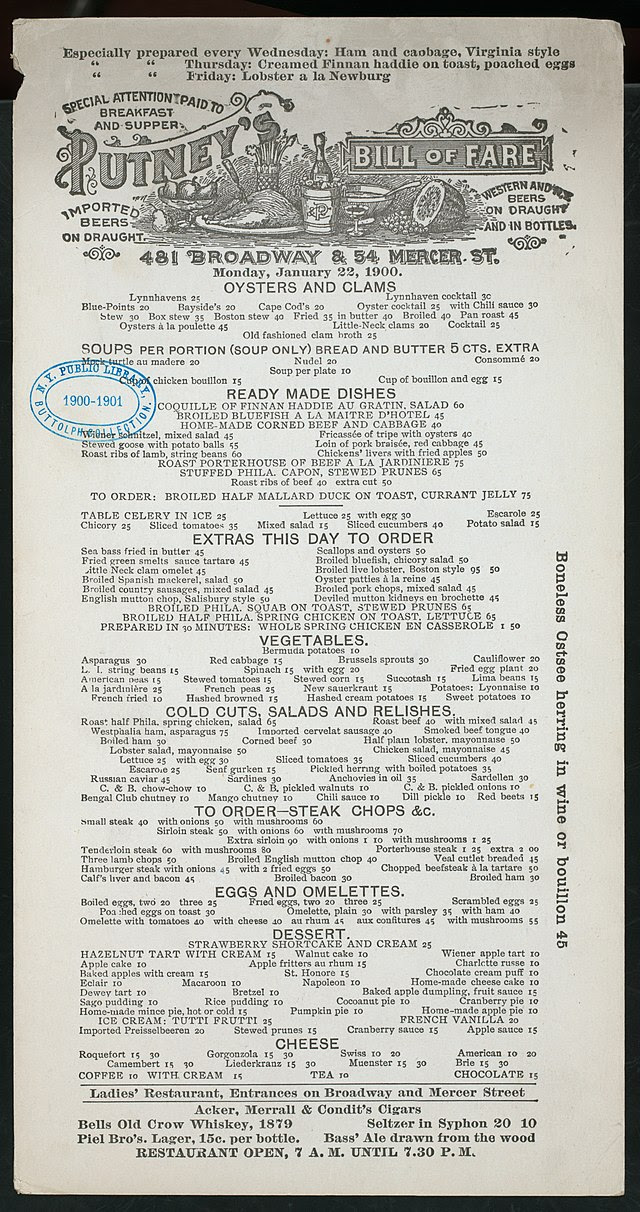
SEE BERENICE ABBOTT PHOTO OF BROADWAY AND MERCER STREET ALLEY.
JAY JACOBSON & ED LITCHER GOT IT RIGHT!!
Text by Judith Berdy Thanks to Bobbie Slonevsky for her dedication to Blackwell’s Almanac and the RIHS Thanks to Deborah Dorff for maintaining our website Edited by Deborah Dorff All image are copyrighted (c)
Sources SMITHSONIAN AMERICAN ART MUSEUM WIKIMEDIA COMMONS
FUNDING PROVIDED BY ROOSEVELT ISLAND OPERATING CORPORATION PUBLIC PURPOSE GRANTS CITY COUNCIL REPRESENTATIVE BEN KALLOS DISCRETIONARY FUNDING THRU DYCD
ALL IMAGES IN ARE IN THE PUBLIC DOMAIN WIKIMEDIA COMMONS
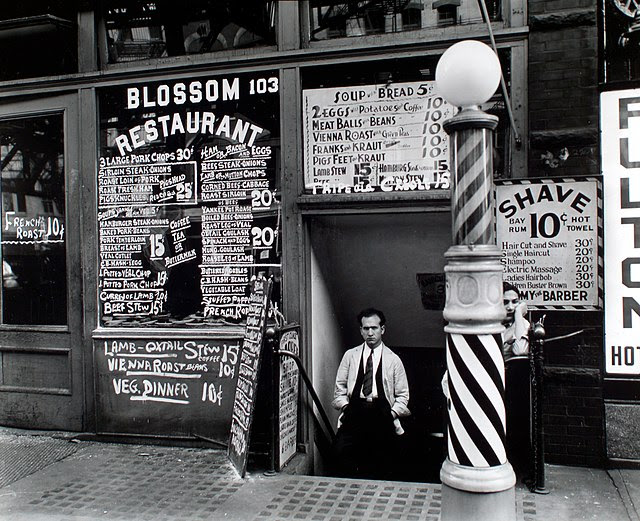
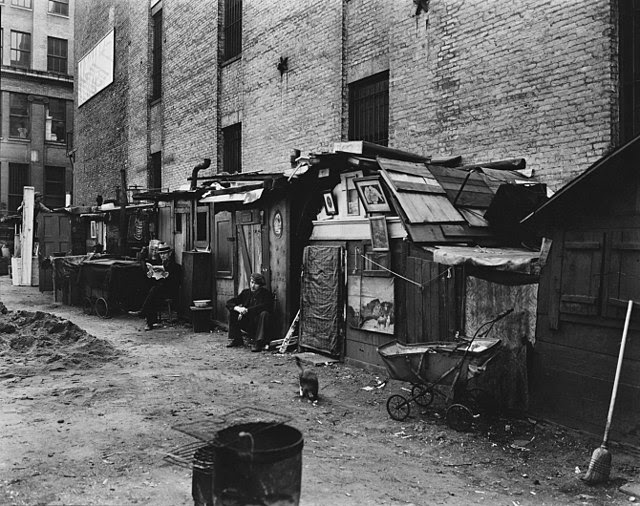
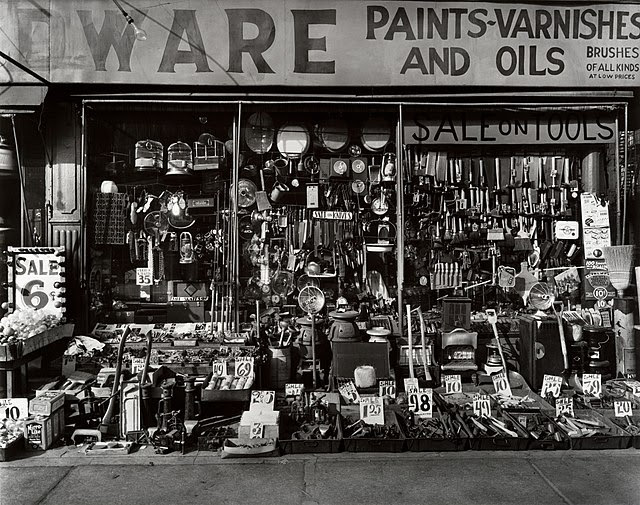
Blossom Restaurant; 103 Bowery. Oct. 3, 1935; by Berenice Abbott (1898-1991) from her “Changing New York” Works Progress Administration/ Federal Art Project
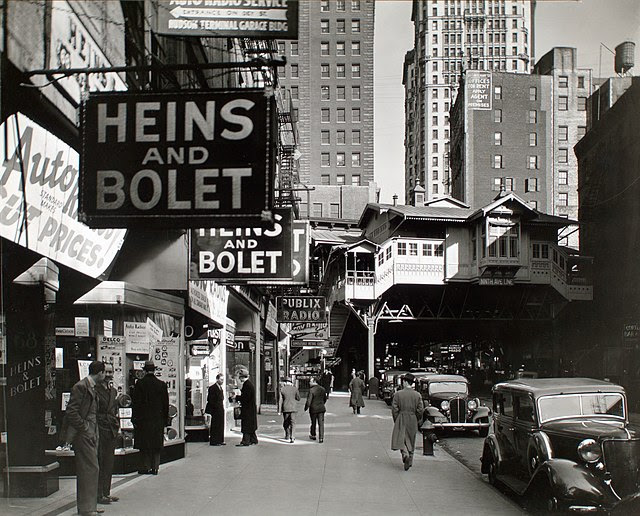
Photograph of Radio Row, looking east along Cortlandt Street towards Greenwhich Street,[1] by Berenice Abbott (1898-1991) from her “Changing New York” Works Progress Administration/ Federal Art Project.
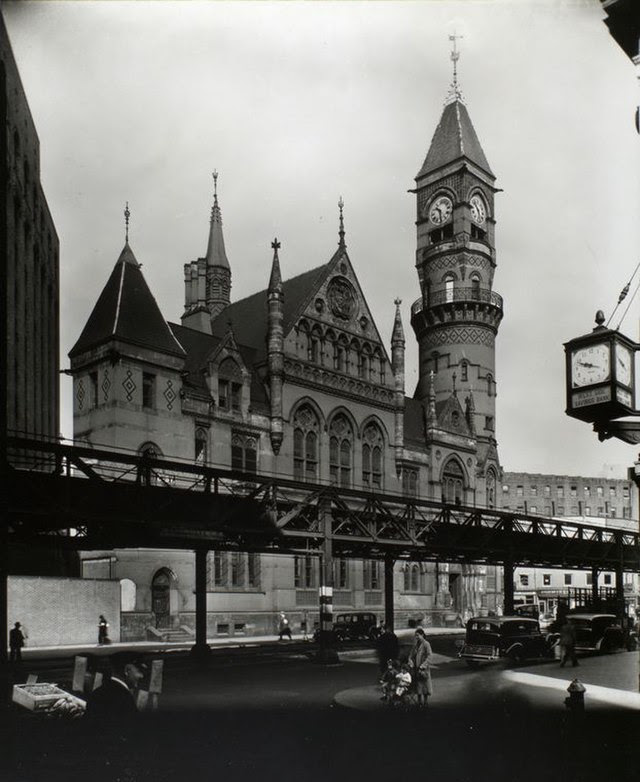
Digital ID: 482552. Jefferson Market Court, southwest corner of Sixth Avenue and West 10th Street, looking north from southwest corner of Sixth Avenue and West 9th Street, Manhattan.. Abbott, Berenice — Photographer. October 21, 1935
Notes: Code: I.A.1. Jefferson Market Court, with Sixth Avenue elevated railroad in front of it, West Side Savings Bank clock, right, pedestrians, traffic.
Source: Changing New York / Berenice Abbott. (more info)
Repository: The New York Public Library. Photography Collection, Miriam and Ira D. Wallach Division of Art, Prints and Photographs.
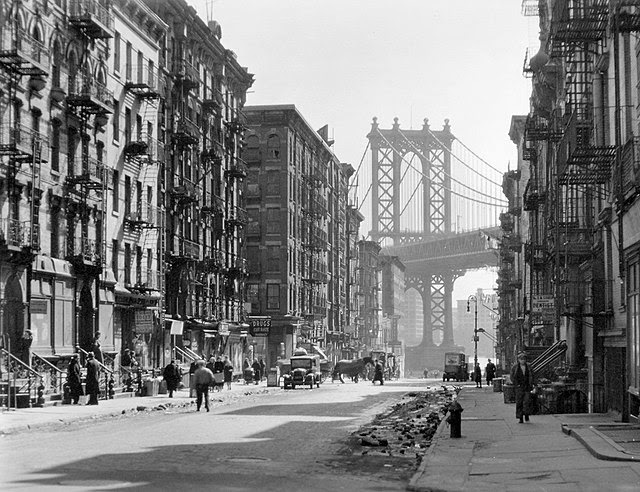
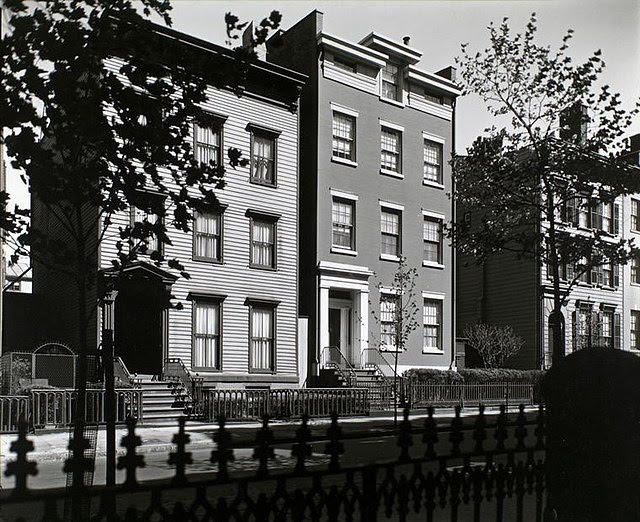
Wood frame houses built circa 1840, Willow Street, nos. 131-137, Brooklyn NYC. In 1956 they were demolished. More info about this photo and site here on the website of the Museum of the City of New York
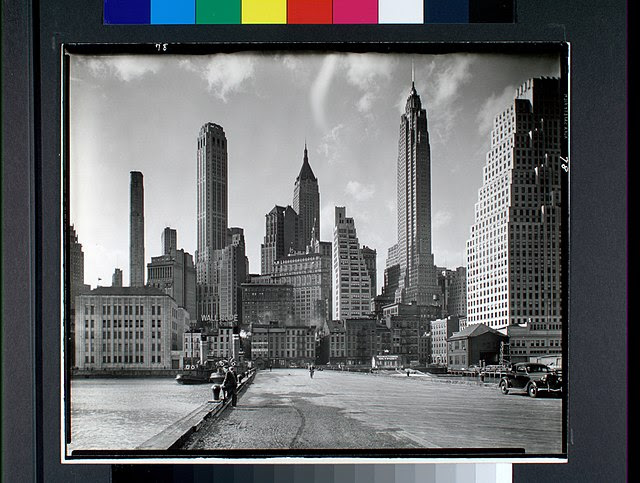
Manhattan Skyline: I. South Street and Jones Lane from East River Pier 11, Manhattan. 120 Wall Street far right; American International bldg right, 40 Wall St pointy top in center.
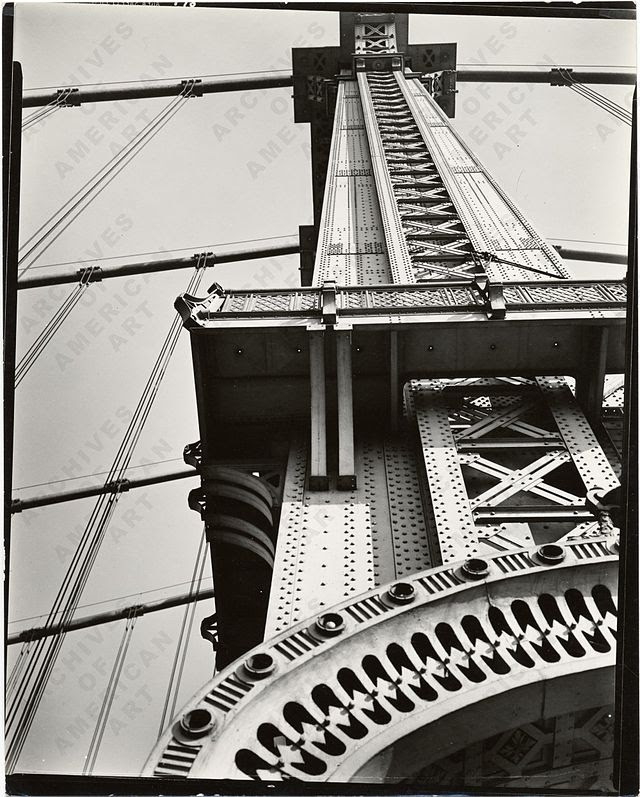
MANHATTAN BRIDGE LOOKING UP by Berenice Abbott in 1936.jpg MANHATTAN BRIDGE LOOKING UP
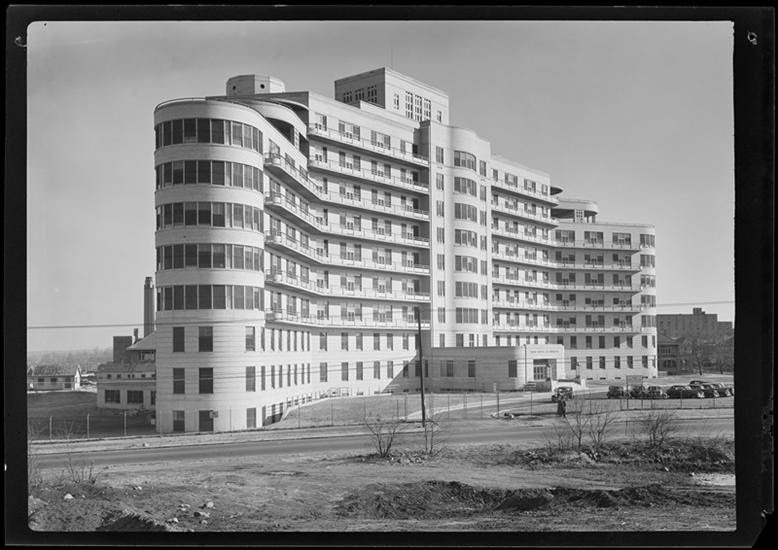
TRIBORO HOSPITAL, NOW BEING CONVERTED TO AFFORDABLE HOUSING JUST ACROSS THE STREET FROM PARKWAY VILLAGE.
CLARA BELLA, ANDY SPARBERG AND ED LITCHER GOT IT!!!
Text by Judith Berdy Thanks to Bobbie Slonevsky for her dedication to Blackwell’s Almanac and the RIHS Thanks to Deborah Dorff for maintaining our website Edited by Melanie Colter and Deborah Dorff
All image are copyrighted (c) Roosevelt Island Historical Society unless otherwise indicated:
WIKIMEDIA COMMONS
FUNDING PROVIDED BY ROOSEVELT ISLAND OPERATING CORPORATION PUBLIC PURPOSE GRANTS CITY COUNCIL REPRESENTATIVE BEN KALLOS DISCRETIONARY FUNDING THRU DYCD
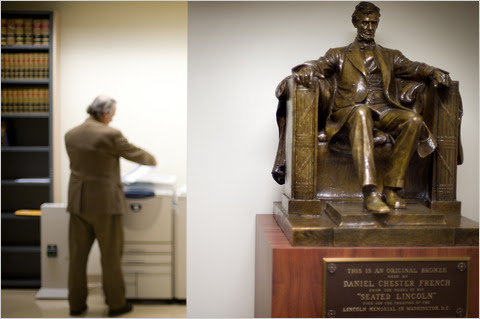
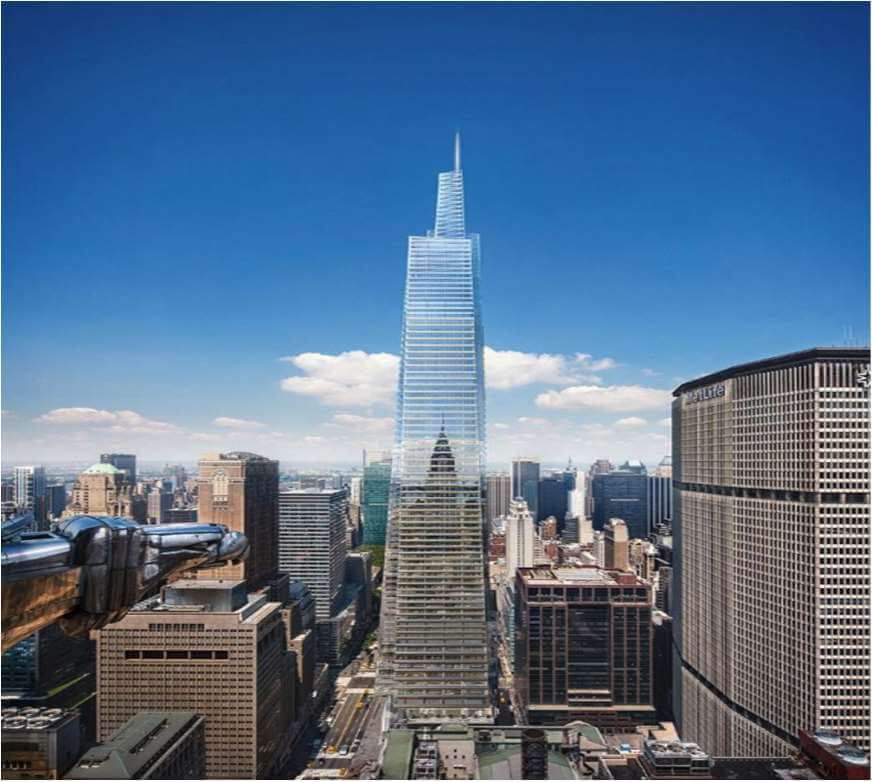
For some years I worked in the Lincoln Building at 60 East 42nd Street. Every day Abe Lincoln sat in his grand bronze chair in the lobby looking down at all who entered.
Not only has the building lost it’s name and now Abe is relegated to the Law Library which may be appropriate for his retirement.
Only in the New York real estate market we can sell a president to the highest bidder.
Lincoln Loses a Tower, but He Still Has the Tunnel
By Sam Roberts
Think “Lincoln” and “New York,” and the juxtaposition would most likely conjure up the tunnel or the performing arts center. Until this year, it might have also evoked the majestic Lincoln Building at 60 East 42nd Street.
No longer.
With barely a nod to the former president, the owners of the 53-story tower, which opened 80 years ago, changed the name to One Grand Central Place, removed the bronze plaques on which the Gettysburg Address and his second Inaugural Address were immortalized, and evicted Daniel Chester French’s sculpture of the “seated Lincoln,” the model for the Lincoln Memorial, from the lobby.
The makeover occurred last year, the bicentennial of Lincoln’s birth, and after much talk that elevated President Obama to the former president’s soul mate. (Mr. Obama hardly discouraged the connection: he recited the presidential oath of office a year ago with his hand on the same Bible that Lincoln used at his inauguration in 1861.)
“First they replaced Lincoln’s Birthday with Presidents’ Day, and now this,” said Harold Holzer, a Lincoln scholar. “If this landlord took over the Lincoln Memorial, would he rename it the Temple on the Mall? The trend to the generic is not only an insult to our intelligence, it also threatens to erase national memory when perhaps we need it most.
“Lincoln talked at Gettysburg about ensuring that heroes did not die in vain. Apparently he spoke too soon.
” Image The Lincoln statue that once graced the lobby of the former Lincoln Building on 42nd Street. The Lincoln statue that once graced the lobby of the former Lincoln Building on 42nd Street.
Joshua Bright for The New York Times
If the name change means Lincoln has been supplanted as a marketing tool, the good news is that neighbors now want to share in Grand Central Terminal’s revival as not only a transit hub, but also a destination.
Fred C. Posniak, senior vice president of W & H Properties, announced the change, saying, “It confirms the building’s reputation as the premier prewar trophy property within the Grand Central district, as well as its unsurpassed location directly across from Grand Central Terminal.
” The Lincoln statue was apparently purchased by Lawrence A. Wein, who bought the building in the early 1950s. He was the father-in-law of Peter L. Malkin, the chairman of W & H Properties, which now owns it.
Anthony E. Malkin, president of W & H, said the statue was moved to improve traffic flow and installed in the building’s law library off the lobby “in respect of a president who was himself a lawyer, and as a more befitting spot in our building for a noted work of art.”
Mr. Malkin also pointed out that “when it was completed in 1930, the building was not actually named after Mr. Lincoln; it was named after the Lincoln Storage Company.”
Sort of.
The site was occupied by the Lincoln Storage Company and the Lincoln National Bank, which never shied away from its association with the former president. When the bank opened in 1882, a portrait of Lincoln, presented by his son Robert, hung in the bank president’s private office
In 1909, the building was festooned with bunting for the celebration of the centennial of Lincoln’s birth. As recently as 1992, his birthday was celebrated in the lobby with a cake, a concert and even a Lincoln impersonator.ock
Red brick, white stone and cast iron combine in handsome contrast — photo by Alice Lum
“The foundation will be of hard quarry stone and brick,” said the article, “and the walls three feet in thickness. The front will be of dressed brick, with Ohio sand-stone trimmings. The floors will be of yellow pine, sustained by double iron columns…The building, exclusive of the lot, will cost $275,000. The architects are Messrs. J. W. and Geo. E. Harney.”
George Harney produced a five-story store and factory building of red brick with contrasting stone trim. The architect borrowed from several styles. Groups of Romanesque arched openings were supported by brick, stone or cast iron columns. Between the second and third floors, Eastlake detailing was carved into the stone course and enormous, decorative iron tie plates accented the broad, brick pilasters between the third and fourth stories.
THE FORMER TRIBORO HOSPITAL WHICH IS NOW BEING RENOVATED INTO AFFORDABLE AND SUPPORTIVE HOUSING.
Text by Judith Berdy Thanks to Bobbie Slonevsky for her dedication to Blackwell’s Almanac and the RIHS Thanks to Deborah Dorff for maintaining our website Edited by Melanie Colter and Deborah Dorff
Sources
NEW YORK TIMES
FUNDING PROVIDED BY ROOSEVELT ISLAND OPERATING CORPORATION PUBLIC PURPOSE GRANTS CITY COUNCIL REPRESENTATIVE BEN KALLOS DISCRETIONARY FUNDING THRU DYCD
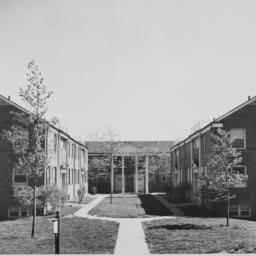
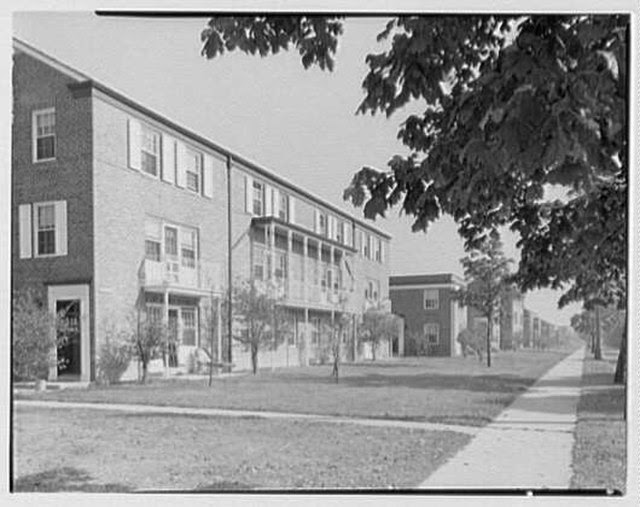
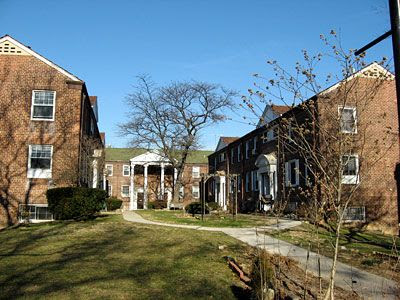
Parkway Village is a garden apartment complex with 675 residential units, located on 35 acres (14 ha) in the Briarwood section of Queens in New York City. It was completed in 1947 to house United Nations employees and delegates, many of whom had faced racial discrimination when they sought housing in other areas.
When the United Nations began operations in the New York City area in 1946, people from all over the world came to the area to work for the fledgling international organization, including many persons of color. Almost all real estate in the area was racially segregated, and this along with a national housing shortage made housing options for non-white people particularly limited. In an attempt to surmount this shortage, the UN had contracted for housing in Fresh Meadows and Peter Cooper Village, both new apartment complexes owned by the Metropolitan Life Insurance Company, but these contracts still allowed the company to deny housing to prospective residents on the basis of race. Although it had not articulated a discriminatory policy, in fact both complexes’ residents were exclusively white at the time (and for decades thereafter). Many UN employees protested this situation, and the UN backed out of its contracts with the complexes. Still needing housing near the UN building for its employees, the organization then signed a lease with Parkway Village, which was under construction at the time.[3][4]
As the initial lessee of most of the apartments, the UN could allocate housing to its employees without regard to race or origin. This made Parkway Village an unusually integrated community for its time. The location was convenient to the UN’s temporary headquarters, the present Queens Museum building erected for the 1939 New York World’s Fair, where many thought the organization would build its permanent headquarters, which ultimately was completed in 1952 in Manhattan. Though the UN’s involvement in the property ended the same year that the Manhattan headquarters opened, many of its employees continued to live there, and they comprised about a quarter of all residents three decades later.[5]
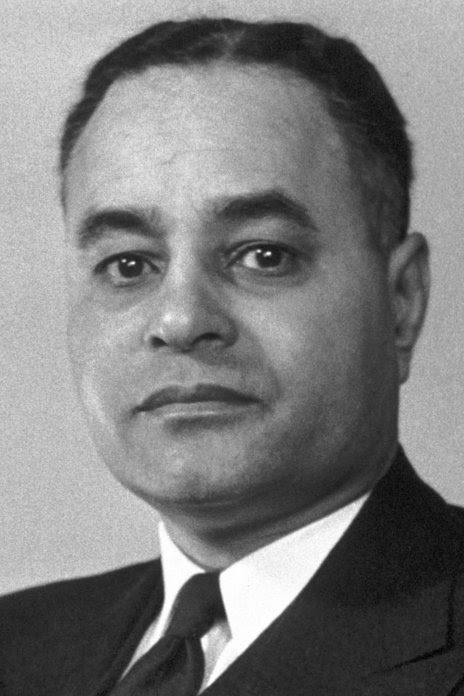
Ralph Bunche, an African Americandiplomat who was instrumental in the UN’s formation, and who won the Nobel Peace Prize in 1950, lived at Parkway Village from 1947 to 1952. Bunche was one of the employees who protested the UN’s initial involvement with segregated apartment complexes. After leaving Parkway Village, Bunche moved to a private house nearby that is a National Historic Site. Around this time, two prominent residents without UN connections were attracted to the community by its unique international character: civil rights leader Roy Wilkins and labor (and later feminist) activist Betty Friedan both lived at Parkway Village in the early 1950s.[3]
Description and Architects
The complex consists of 109 buildings, which together take up only 16% of the land area, surrounded by landscaped grounds. Each are each two or three stories tall and are faced with red brick. Their style is described as neo-Georgian or “modernized Colonial”. The architect was Leonard Schultze, who in prior decades was known for designing luxury hotels (notably the Waldorf-Astoria), but who in the 1940s had turned his attention to large middle-income apartment complexes for the Metropolitan Life Insurance Company, including Parkmerced in San Francisco, Park La Brea in Los Angeles, and Parkfairfax in Alexandria, Virginia.
The landscape designer was Clarence Combs (1892-1958), who had previously worked on many other projects associated with Robert Moses, including the well-known Jones Beach State Park. Moses, a politically powerful parks commissioner and the driving force behind the construction of Parkway Village, had helped to arrange the project’s financing and lease with the UN. He likely recommended Combs for the landscaping role.[3]
Owing to both its architectural significance and its historical associations, the complex was listed on the National Register of Historic Places in 2012.[3]
Ralph Bunche The Nobel Peace Prize 1950
Born: 7 August 1904, Detroit, MI, USA
Died: 9 December 1971, New York, NY, USA
Residence at the time of the award: USA
Role: Acting Mediator in Palestine, 1948, Director, division of Trusteeship, U.N., Professor, Harvard University Cambridge, MA
Prize motivation: “for his work as mediator in Palestine in 1948-1949.”
Prize share: 1/1
Peace Negotiator in the Middle East
Ralph Bunche was the first African American to be awarded the Peace Prize. He received it for having arranged a cease-fire between Israelis and Arabs during the war which followed the creation of the state of Israel in 1948.
Ralph Bunche was a social science graduate and before World War II studied colonial policy in West Africa. He joined the staff of the Swedish social scientist Gunnar Myrdal, who was studying racial segregation in the USA. In World War II, Bunche became the first Afro-American to hold a top job in the State Department.
I WILL BE AWAY FOR A FEW DAYS SO YOU HAVE MORE TIME TO CONTEMPLATE YOUR ANSWERS TO THE PHOTO OF THE DAY.
Text by Judith Berdy Thanks to Bobbie Slonevsky for her dedication to Blackwell’s Almanac and the RIHS Thanks to Deborah Dorff for maintaining our website Edited by Melanie Colter and Deborah Dorff
All image are copyrighted (c) Roosevelt Island Historical Society unless otherwise indicated
FUNDING PROVIDED BY ROOSEVELT ISLAND OPERATING CORPORATION PUBLIC PURPOSE GRANTS CITY COUNCIL REPRESENTATIVE BEN KALLOS DISCRETIONARY FUNDING THRU DYCD
Wherever rich New Yorkers built their homes in the 19th century, they also built private stables for their expensive horses and carriages—with upstairs living quarters for a coachman or groom.
So when Upper Fifth Avenue along Central Park became the city’s new Millionaire Mile during the Gilded Age, certain Upper East Side blocks to the east of Park Avenue were turned into unofficial stable rows.
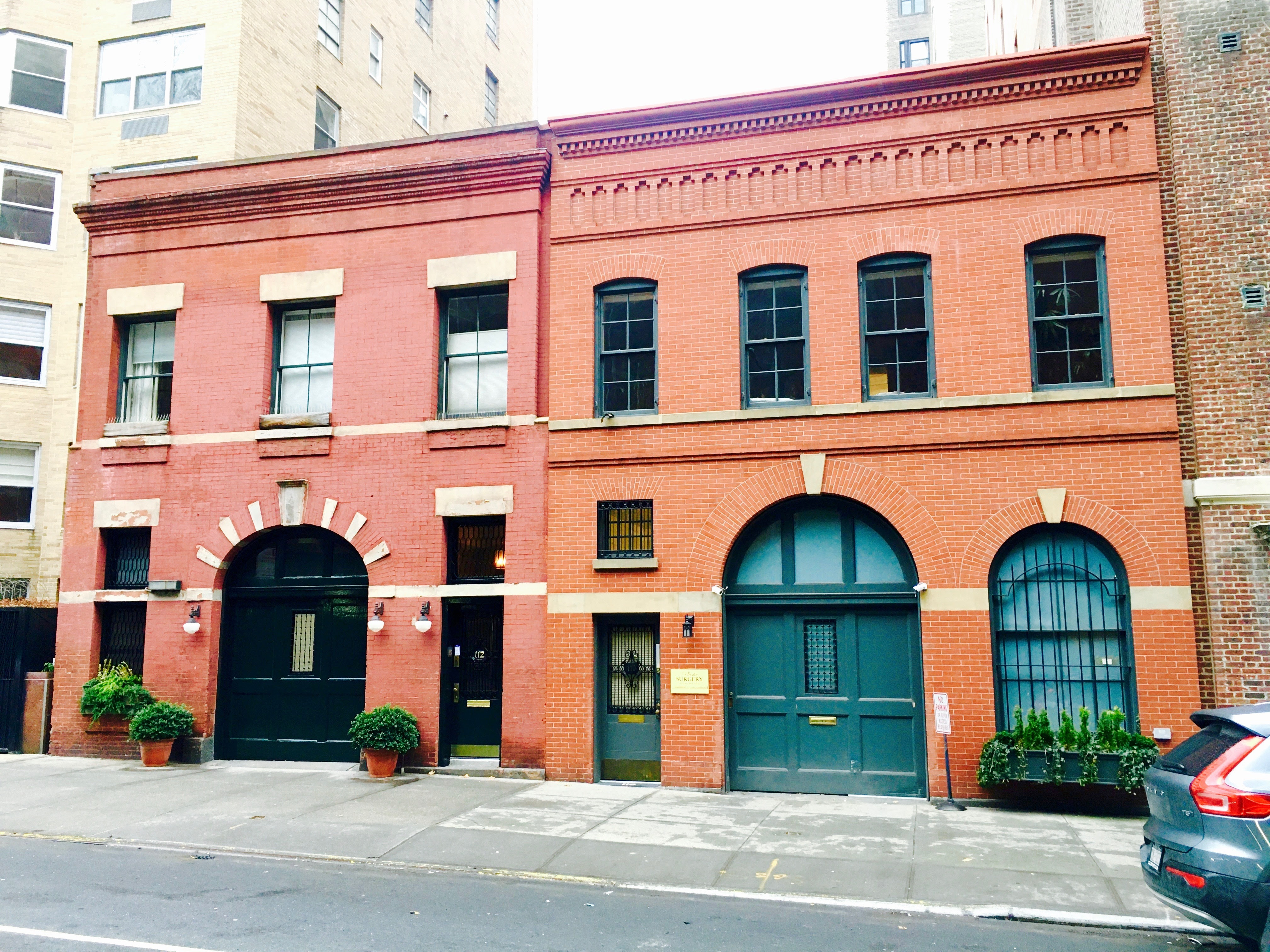
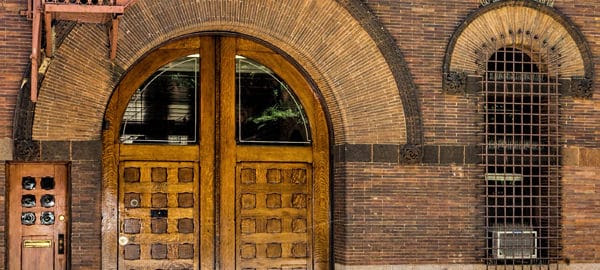
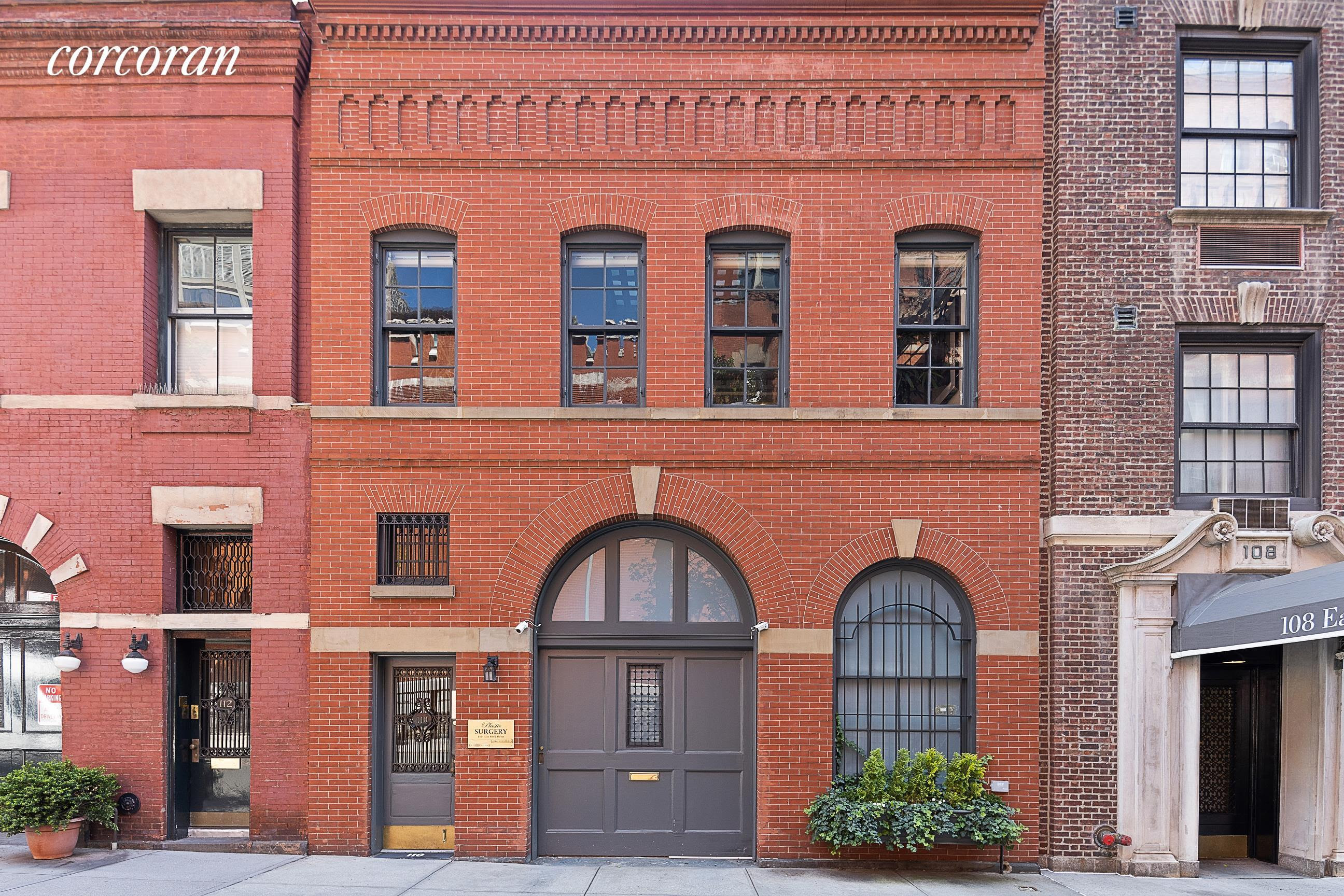
East 66th Street between Park and Lexington Avenues is one of these former stable rows, with three spectacular restored carriage houses surviving today.
The extraordinary details of the carriage house.
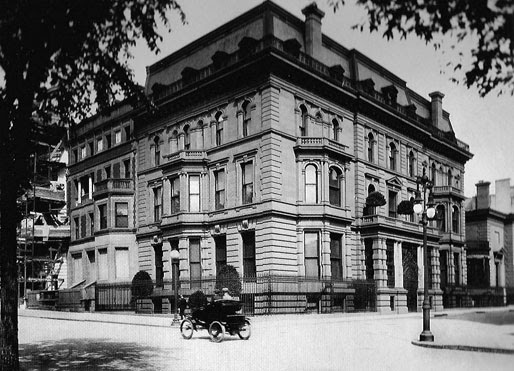
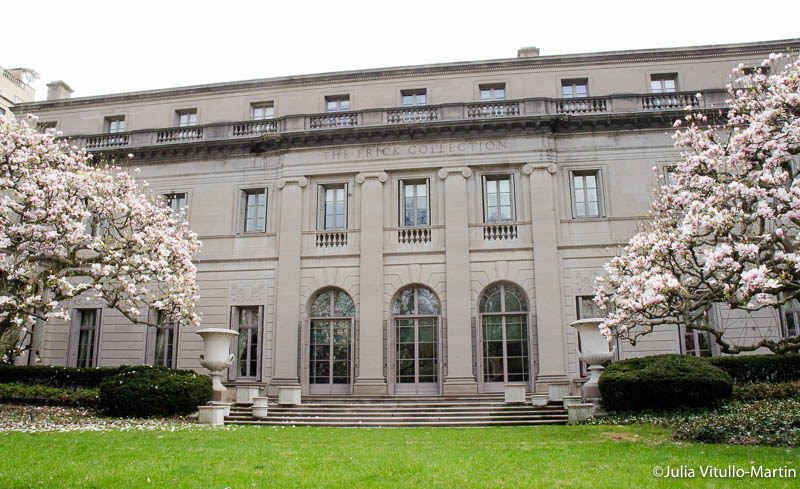
Built in 1890, these two Romanesque Revival carriages houses were purchased eight years later by William C. Whitney, who lived a few blocks away in a mansion at East 68th Street at Fifth Avenue (above)..
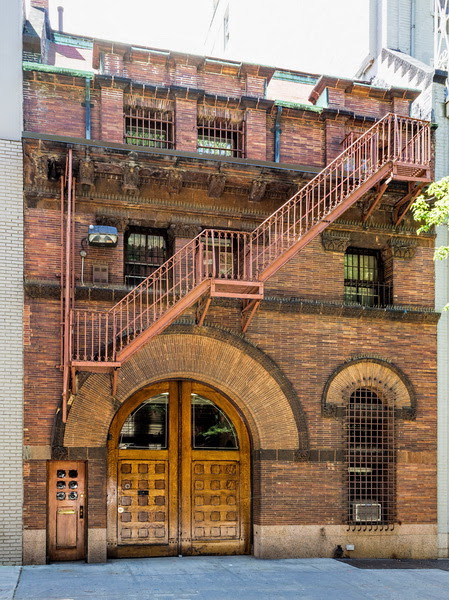
Down the block at number 126 East 66th Street is what remains of another delightful carriage house, also with a Whitney connection. This one is three stories, and it too reflects the Romanesque Revival style, according to the LPC report.
Number 126 was commissioned in 1895 by sugar baron Henry O. Havemeyer, whose mansion residence stood at One East 66th Street.
After it was completed, Havemeyer sold it to businessman, yachtsman, and Standard Oil trustee Col. Oliver Hazard Payne, who happened to be Havemeyer’s neighbor as well as the brother-in-law of William C. Whitney.
A 1902 article in Outing magazine called the Havemeyer-Payne carriage house “always as clean as a new pin, with space enough for every style of pleasure vehicle that a gentleman’s fancy can picture.”
More than a century later, 110 East 66th Street is home to a plastic surgeon’s office, while 112 appears to be a single-family dwelling.
Number 126 was partly demolished at some point in the 20th century. Even without its other half, what remains is still something special.
The Upper East Side is home to more former stable rows with enchanting carriage houses, such as East 73rd Street between Lexington and Third Avenues.
Funding Provided by: Roosevelt Island Corporation Public Purpose Funds Council Member Ben Kallos City Council Discretionary Funds thru DYCD Text by Judith Berdy THRU DYCD
Edited by Deborah Dorff ALL PHOTOS COPYRIGHT RIHS. 2022 (C) PHOTOS IN THIS ISSUE (C) JUDITH BERDY RIHS
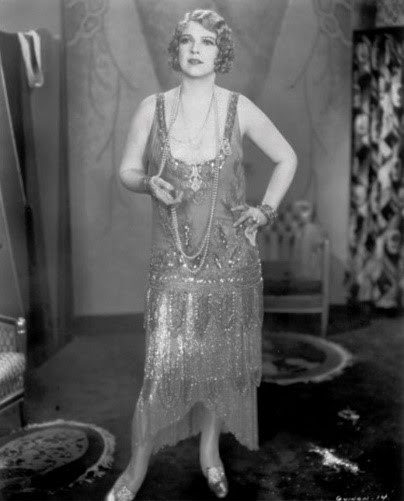
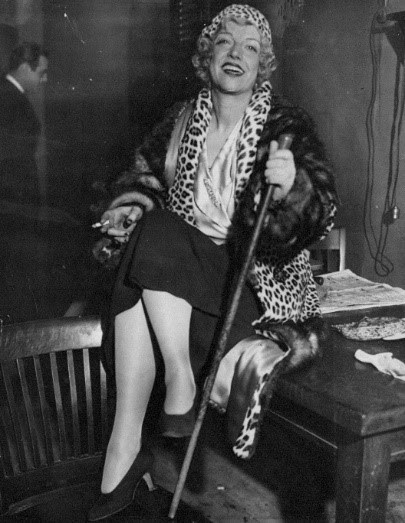
Texas Guinan was “Queen of the speakeasies” – Prohibition era joints (and high-class taverns) that ladled out illegal booze in a city awash in it. One admirer wrote: “She was a female P.T. Barnum and Mae West seductress rolled into one. A talented singer, actress and notorious bullshitter. She had a gift of gab and a talent with a well-landed insult. ‘Hello suckers,’ was how she greeted millionaires and gangsters alike.” Like Babe Ruth, Lucky Lindy and Jimmy Walker, Texas Guinan defined the 1920’s in New York City.
Born in an immigrant family in Texas in 1884, Mary Louise Cecilia Guinan (“Texas” came later) was an actress, an entertainer, active in the early film business, a pitchman and hostess at nightclubs-cum-speakeasies. She appeared in movies and movies were made about her. She palled around with affluent swells and gangster low lives and had not infrequent brushes with the law. (“I like your cute little jail,” Texas cooed after a night in the West 30th Street slammer, “and I don’t know when my jewels have seemed so safe.”) And she’s barely remembered today.
Looking at her life in a world of powerful forces of change from the Victorian era in which she was born though huge technological advances, a world at war, the social revolution of the 1920s and the emergence of a new urban culture – there were few opportunities for a bright, aggressive, “brassie broad”. Perhaps today, she would have been a lawyer, a politician, a venture capitalist. Texas didn’t take the marriage route which was the only escape path for many young women of the era. She was married briefly and was linked to many men, but she traveled solo. “It’s having the same man around the house all the time that ruins matrimony,” she cracked. For much of her life in New York, she lived with her parents.
Guinan shed an early husband and moved to New York, became a chorus girl and changed her name to Texas. She scored leads singing and acting in shows and got good press. In 1913, she licensed her name and image for a weight-loss plan which turned out to be a fraud. (As a result, she was banned from receiving mail through the postal service!) She continued on stage, but figured it was time to get out of Dodge and headed west to join up with the new California film industry.
In a film career that began in 1917, she became part of a young industry in which women were key players. As an actress, she created a new role – the female cowpoke, a six-gun western heroine who was as skilled and tough as the cowboys. Guinan was billed as “the female Bill Hart” – film’s first Western star.
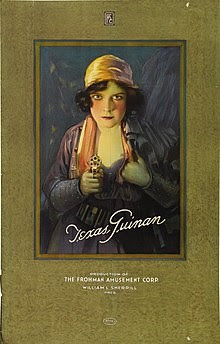
Advertisement for Frohman Amusement Corp featuring Texas Guinan
Acting wasn’t enough for Texas, and she soon pushed into the production end of filmmaking, as a unit department head in one company, and then created her own Texas Guinan Productions in 1921 and issued several films. She continued to be involved in films until her death.
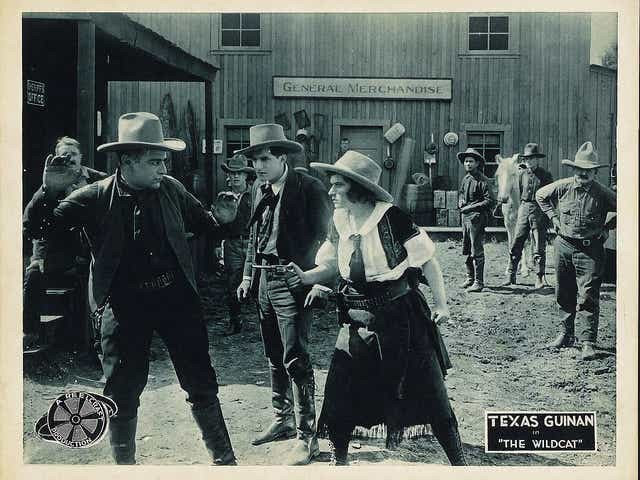
Guinan in The Wildcat
By now, Prohibition had come to town, driving many of New York’s fancy restaurants out of business, and illegal booze joints were in – and Texas had a new career. She was hired to sing at the Beaux Arts speak, at a whispered huge salary – probably puffed up for the papers by Texas. Her give-and-take chatter with the customers inspired one producer to put together a full floor show with Guinan presiding as emcee for a bunch of Ziegfeld Follies chorus girls. Bootleg huckster Larry Fay struck a deal with them to feature the show at his El Fey Club on West 47th Street in Manhattan. Fay had run taxicabs before and hired Westside mobsters to eliminate his competition, becoming chummy with Owney “The Killer” Madden, boss of Hell’s Kitchen Gopher Gang and reputed lover of Mae West. (You really can’t make this stuff up.) Guinan became the hostess and MC at Fay’s El Fey club, one of the city’s most infamous speakeasies. The club, on 46th Street near Broadway, opened from midnight to 5 a.m. Guinan glowed and glittered and in return for drawing in the wealthy and powerful, pocketed 50% of the profits. Pleasure-seeking patrons, respectable and not, elbowed one another for the privilege of having Texas and Fay empty their wallets. From well-heeled Wall Streeters and Ivy League collegians savoring big-city high life to famous athletes, and prominent politicians – good-time Charlies from every walk of life converged on El Fay to whoop it up with Texas and her chorus girls. We’re told that Babe Ruth, Charles Lindbergh, Charlie Chaplin, Rudolph Valentino, Clara Bow, Gloria Swanson, England’s Lord Mountbatten and Edward Prince of Wales all showed up, plus the usual crew of gangsters and other seedy types. Ruby Keeler, Barbara Stanwyck (both Ziegfeld girls) and George Raft (a tap dancer) were discovered by talent scouts while working as dancers at the club.
“Never give a sucker an even break,” she said, charging a steep cover charge and outrageous sums for liquor, $25 for a bottle of rum, $2.00 for water. Texas didn’t drink.
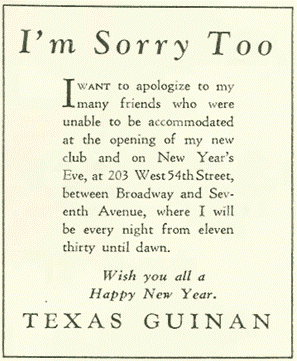
After cops closed El Fey, Guinan and Fay opened Texas Guinan’s Club on West 48th Street, and when police closed it, they returned to the old location. She left Fay (Owney Madden convinced Fay to let her go) and opened her own place, Texas Guinan’s 300 Club, on West 54th Street.
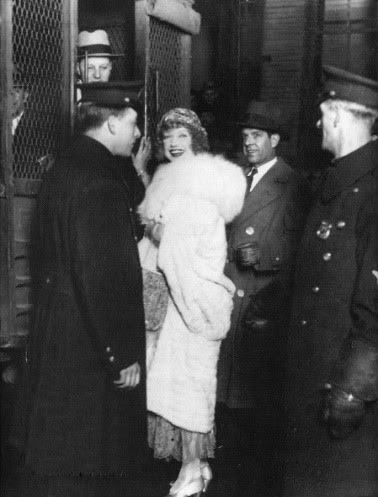
Guinan was arrested in 1927 at the 300 Club on suspicion of a Volstead violation. While at the police station, she sang the “Prisoner’s Song” before cops, Prohibition agents and reporters. At trial, she insisted she was only a hostess and a jury found her not guilty.
Cops and the Depression wore down the industry and Texas took her show on the road. But it would end. In 1933, Texas was touring with her Too Hot for Paris show when she contracted amoebic dysentery. She died a mere month before Prohibition was repealed.
Guinan was a fabled liar. A gullible press bought a wholly mythical account of her youth – that she had ridden broncos, single-handedly rounded up cattle on a 50,000-acre ranch, attended the elite Hollins Finishing School in Virginia, and run off to join a circus—all pure hokum. She claimed, too, that when the United States entered World War I, she hurried off to France to divert American boys before they faced the enemy. She claimed she received a medal from General Joffre, the French commander during the Battle of the Marne. Of course, she had never left America.
How famous was she? The writer Edmund Wilson described Guinan as “a formidable woman, with her pearls, her prodigious gleaming bosom, her abundant yellow coiffure, her bear trap of shining white teeth.” Journalist Lois Long wrote about her in the October 9, 1920, issue of The New Yorker: “Mind you, there is one woman who gets away with vulgarity. And that, of course, is Texas Guinan . . . . The club is terrible. It is rowdy, it is vulgar, it is maudlin, it is terrifically vital . . . . At any rate, the place, after two o’clock, is always jammed to the doors . . . . Oh, it is a tough and terrible place, but everybody should go once in a lifetime.”
Even in death, Texas was larger than life. Guinan’s death was mourned by thousands. Her funeral was attended by 7,500 people. She is buried in New York that made her wealthy. The casket was open at Guinan’s request, “so the suckers can get a good look at me without a cover charge.” We’re told that as Texas lay on her deathbed, she said, “I would rather have a square inch of New York than all the rest of the world.” It’s a good closer and, if she said it, she surely would have meant it, for New York gave Mary Louise Cecilia the kind of life she wanted. And her life in turn has become part of the city’s storied past. It was a lot of fun, while it lasted.
GLORIA HERMAN, CLARA BELLA. M. FRANK, HARA REISWER, ED LITCHER, LAURA HUSSEY, ALL GOT IT RIGHT.
Text by Judith Berdy Thanks to Bobbie Slonevsky for her dedication to Blackwell’s Almanac and the RIHS Thanks to Deborah Dorff for maintaining our website Edited by Melanie Colter and Deborah Dorff
All image are copyrighted (c) Roosevelt Island Historical Society unless otherwise indicated
FUNDING PROVIDED BY ROOSEVELT ISLAND OPERATING CORPORATION PUBLIC PURPOSE GRANTS CITY COUNCIL REPRESENTATIVE BEN KALLOS DISCRETIONARY FUNDING THRU DYCD