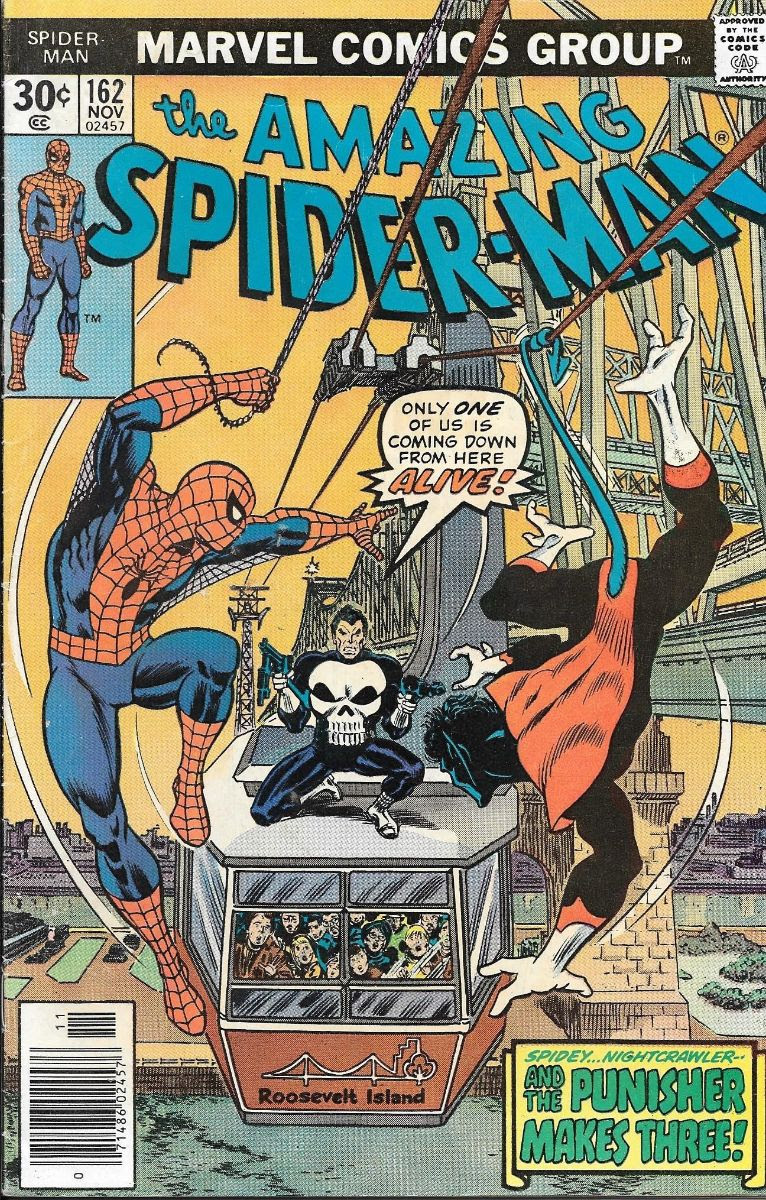
THESE DAYS WE FEEL WE NEED SPIDERMAN TO CONQUER COVID-19 (c) Marvel Comics Group November, 1980
FROM THE ARCHIVE
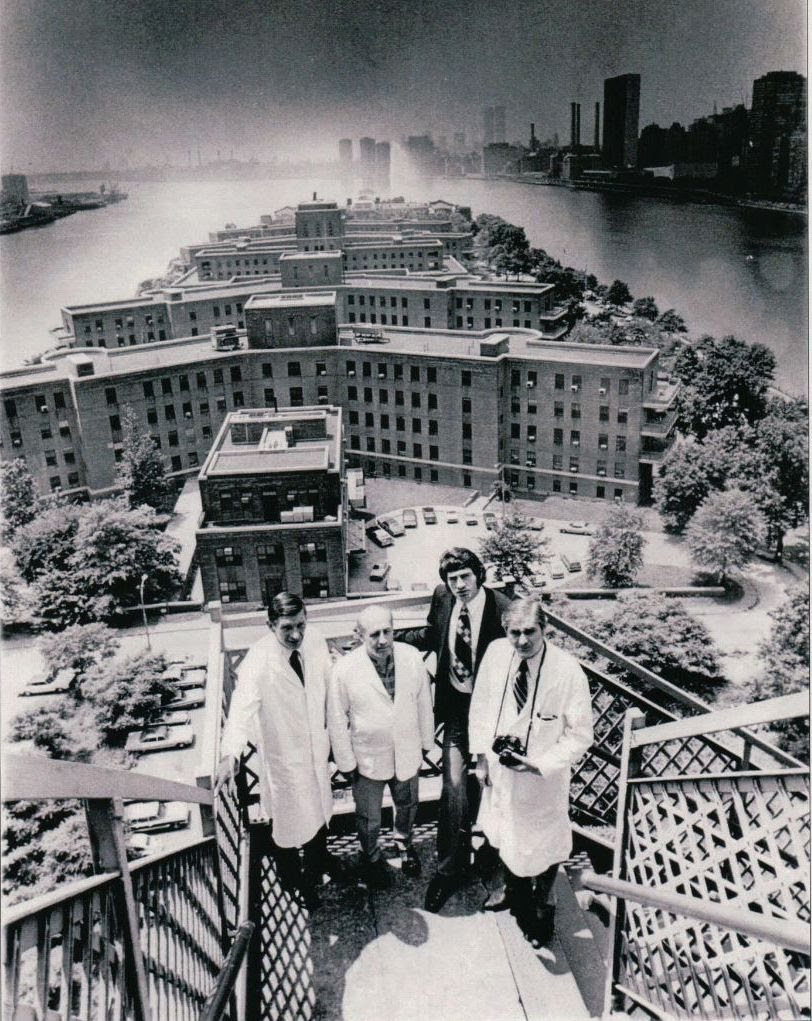
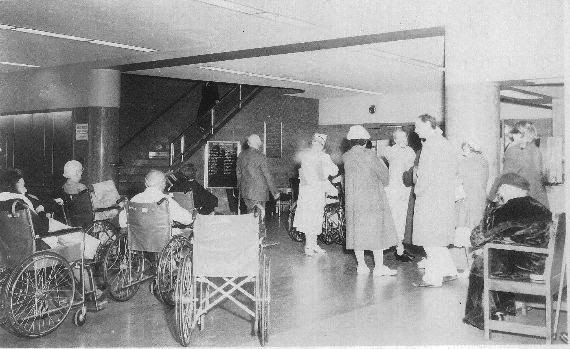
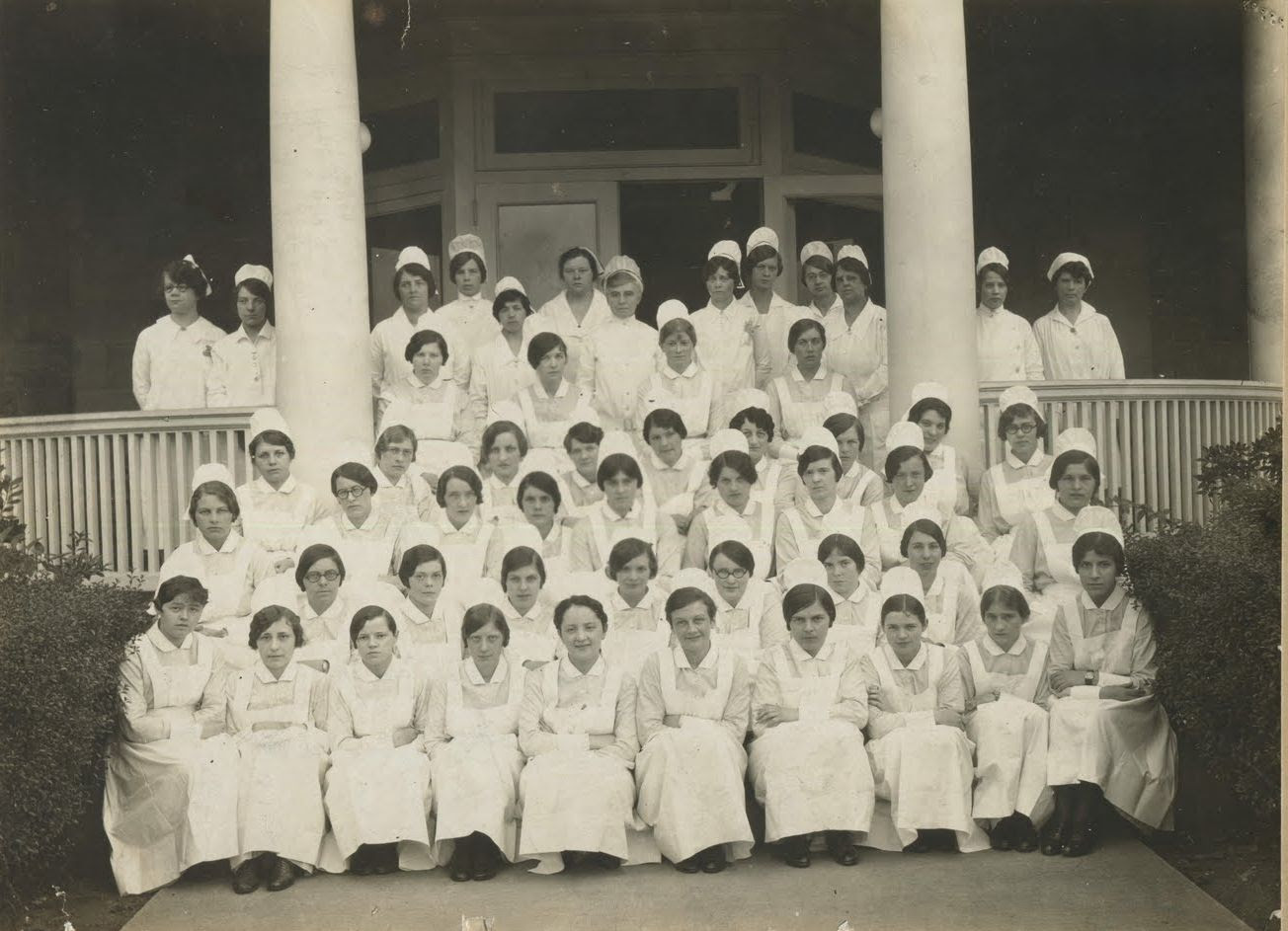
IMAGE: MEDICAL STAFF FROM GOLDWATER HOSPITAL/ 1970’s (c) RIHS
Founding Fathers of NIH (including a Nobel Prize winner) hailed from Roosevelt Island by Dottie Jeffries
With the National Institutes of Health (NIH) much in the news these days (think Anthony S. Fauci, MD, NIAID Director who is a lead in the White House briefings on COVID-19) , RIHS recalls the Island’s extraordinary history with the National Institutes of Health and with medical research at large. The early career experiences of these medical leaders on Roosevelt Island were seminal to their later accomplishments.
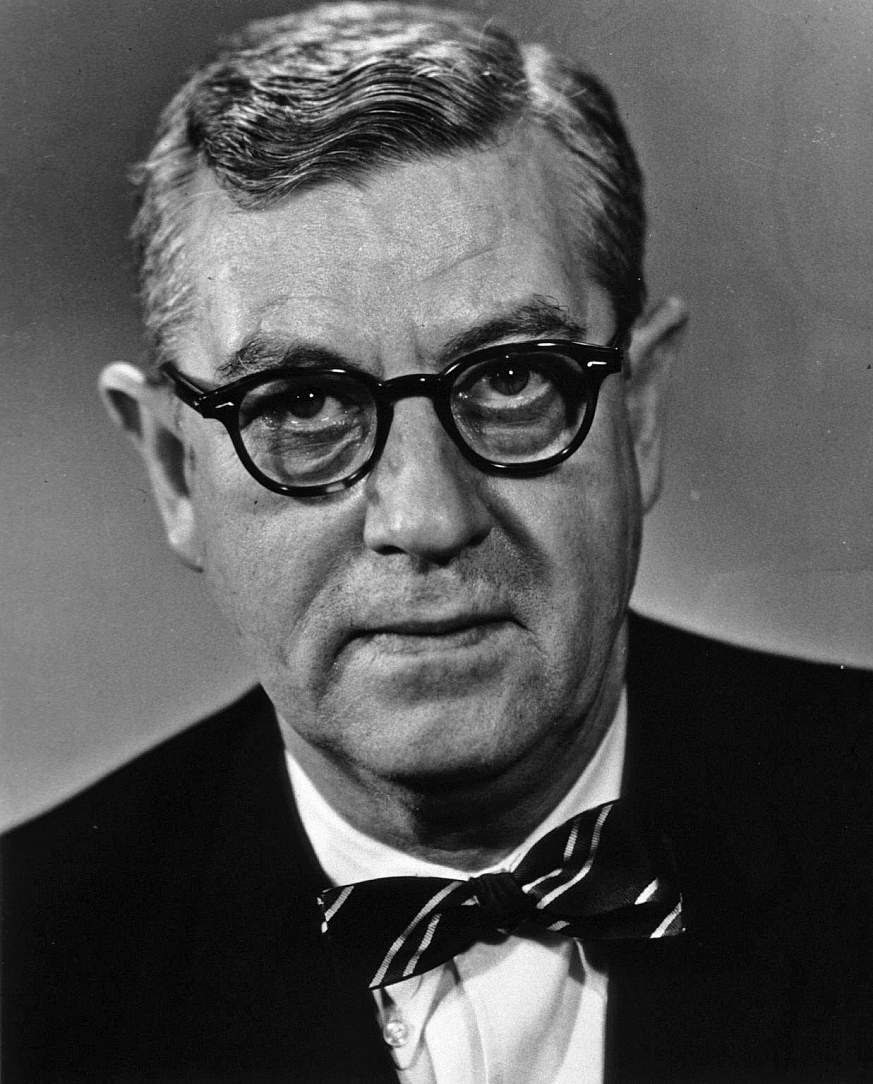
James Augustine Shannon, MD (1904-1994) who served as NIH Director from 1955-1968 had previously directed research at Roosevelt Island’s Goldwater Memorial Hospital (then affiliated with New York University) from 1940-1945. Dr. Shannon had first arrived at NIH in 1949, recruited from Roosevelt Island, as Associate Director in charge of research in the National Heart Institute and then went on to become NIH Director. Dr. Shannon was recognized for his original research in kidney function, chemotherapy, and malaria. Throughout his career, he was devoted to medical research, teaching, and public service.
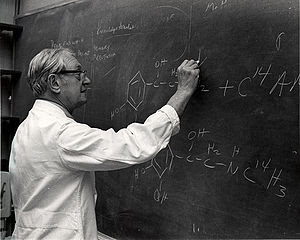
Julius Axelrod, PhD (1912-2004) was a biochemist who also did research at Goldwater Hospital. In 1946, Dr. Axelrod began work under a leading drug researcher of the time, Bernard Brodie, PhD. The research experience and mentorship Axelrod received from Brodie would launch Axelrod on his research career. In 1949, Axelrod was recruited to work at the National Heart Institute, forerunner of the National Heart, Lung, and Blood Institute (NHLBI), part of the NIH. Dr. Axelrod won a share of the Nobel Prize in Physiology or Medicine in 1970 along with Bernard Katz, MD and Ulf von Euler, MD.
Medical Science Born of this Island By: Judith Berdy
This Island has always been a hub of medical and science research. Strecker Memorial Laboratory opened under the auspices of the Russell Sage Institute. The laboratory did pathological studies, research attached to the City Hospital, which was located adjacent to the lab. The building was closed in the 1950’s as a research facility.
In a history of Goldwater Hospital in 1950 we find that in 1935 The Research Council of the Department of Hospitals issued a general order to”foster medical research in the Department’s Hospitals”
When Goldwater Hospital opened under the name “Chronic Disease Hospital” in 1939, separate wards were designated for study of patients. The participating institution were Columbia University and NYU. The units located in the northernmost building adjacent to the research laboratories. After World War ll, it became know that Goldwater participated in secret research on malaria chemotherapy and other government authorized studies.
Among the projects was one studying marijuana for a small group of women. No results were published in this report.
Under the direction of Dr Howard Rusk, ground-breaking rehabilitation physician a 50 bed female and 50 bed male unit were set up for rehabilitation including a gymnasium and physical therapy division.
Goldwater was also accredited to maintain internships in medicine, neurology, pathology, physical medicine , anesthesiology and surgery. Dental internships an residencies were provided along with training for practical nurses
One challenge of the hospital was admitting patients with chronic disease and not custodial care. Many admissions were for polio patients and their treatment.
SUGGESTIONS + COMMENTS W E L C O M E
What other topics would you like to learn about? We have many items having to do with the island’s history in our archive and would love an opportunity to share this information with you. Please submit suggestions to Judith Berdy
This is the fifth in a series of historical excerpts from the Archives of the RIHS
Copyright RIHS 2020 (c).
CHECK OUT our newest graphic @ the RIHS Visitor’s Center Kiosk!
FROM THE ARCHIVE
THE IMAGES BELOW WERE DONATED TO THE RIHS FROM DICK LUTZ, EDITOR OF THE MAIN STREET WIRE, UPON HIS RETIREMENT.
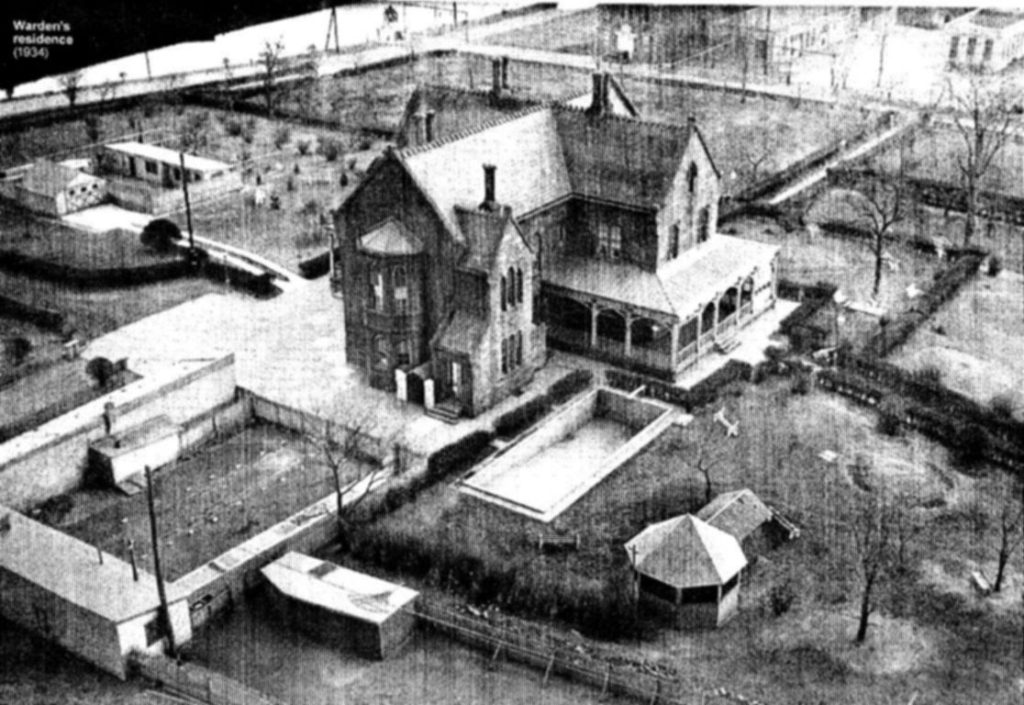
THE WARDEN’S HOME // BLACKWELL’S ISLAND, 1934 IMAGE FEATURED IN IMAGES OF ROOSEVELT ISLAND (CLICK TO ORDER OUR BOOK, WHICH SUPPORTS OUR PUBLIC MISSION AND PROGRAMS)
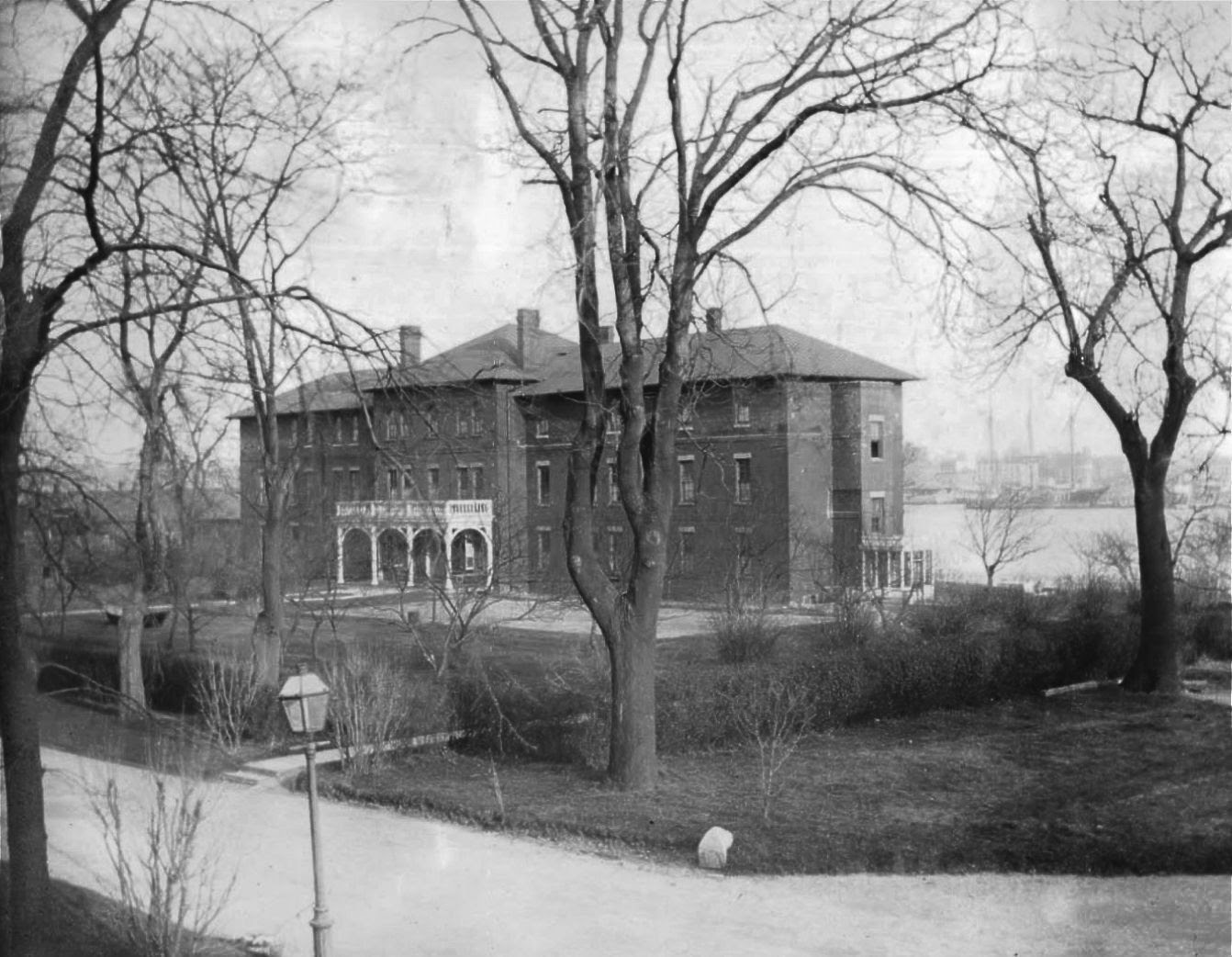
One of our favorite photographs is that of the Warden’s House, located just north of the former Penitentiary, which is now site of the Sports Park. Just south of the house were the walls of the prison.
Note the in-ground swimming pool and diving board. These extravagant features make it evident that the administration was used to living in luxury, and undoubtedly a factor in their notorious corruption. Mayor Fiorello opened a corruption investigation into the administration, and eventually closed the Penitentiary in 1936.
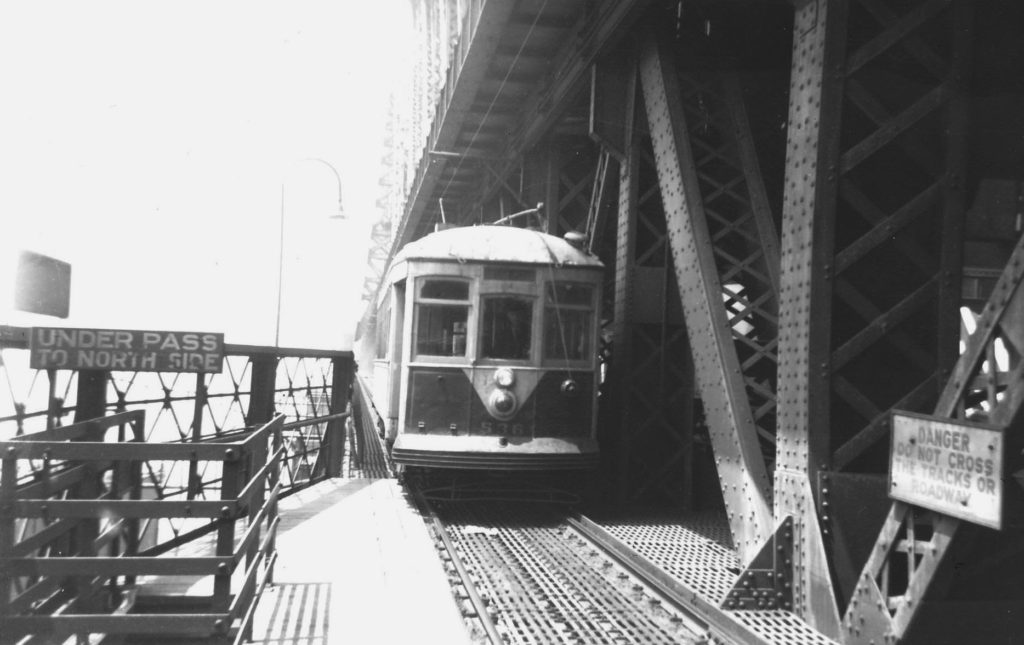
THE QUEENSBORO BRIDGE TROLLEY // WELFARE ISLAND IMAGE FEATURED IN IMAGES OF ROOSEVELT ISLAND (CLICK TO ORDER OUR BOOK, WHICH SUPPORTS OUR PUBLIC MISSION AND PROGRAMS)
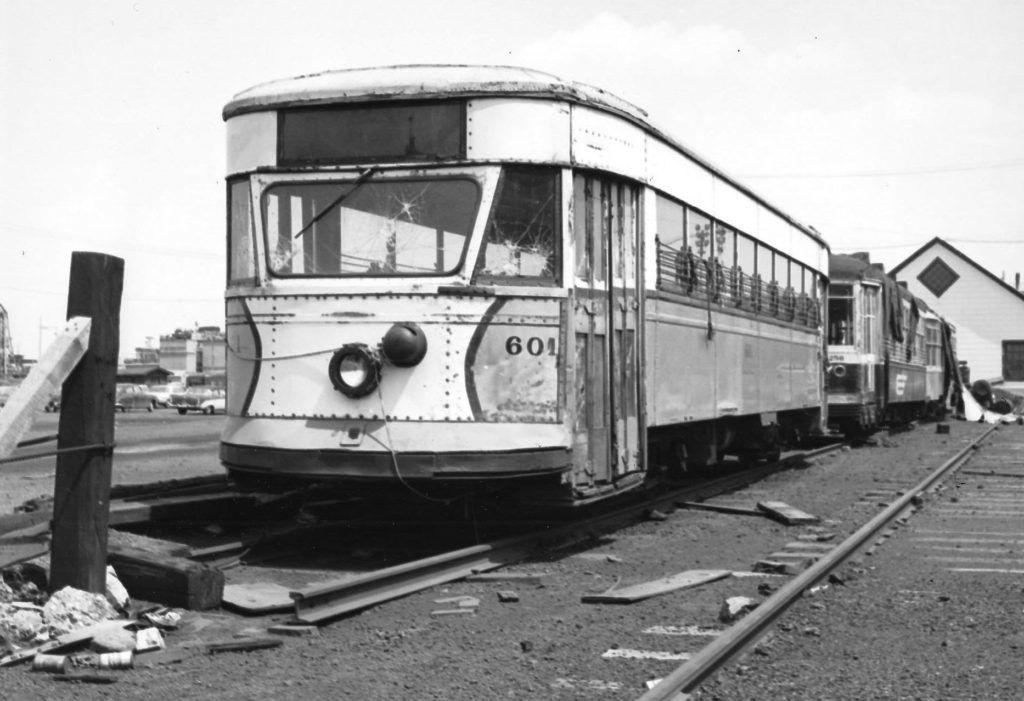
From 1916 to 1957 the trolley rolled over the lower level outer roadways and over the Queensboro bridge, stopping mid-bridge to discharge and pick-up passengers.
ABANDONED TROLLEYS // WELFARE ISLAND IMAGE FEATURED IN IMAGES OF ROOSEVELT ISLAND (CLICK TO ORDER OUR BOOK, WHICH SUPPORTS OUR PUBLIC MISSION AND PROGRAMS)
In 1957 the trolley service was discontinued. And with the opening of the Welfare Island Bridge, the trolley cars were abandoned. The last trolley car #602 was sent to the Kingston, NY Trolley Museum where it was scrapped for parts.
EDITORIAL
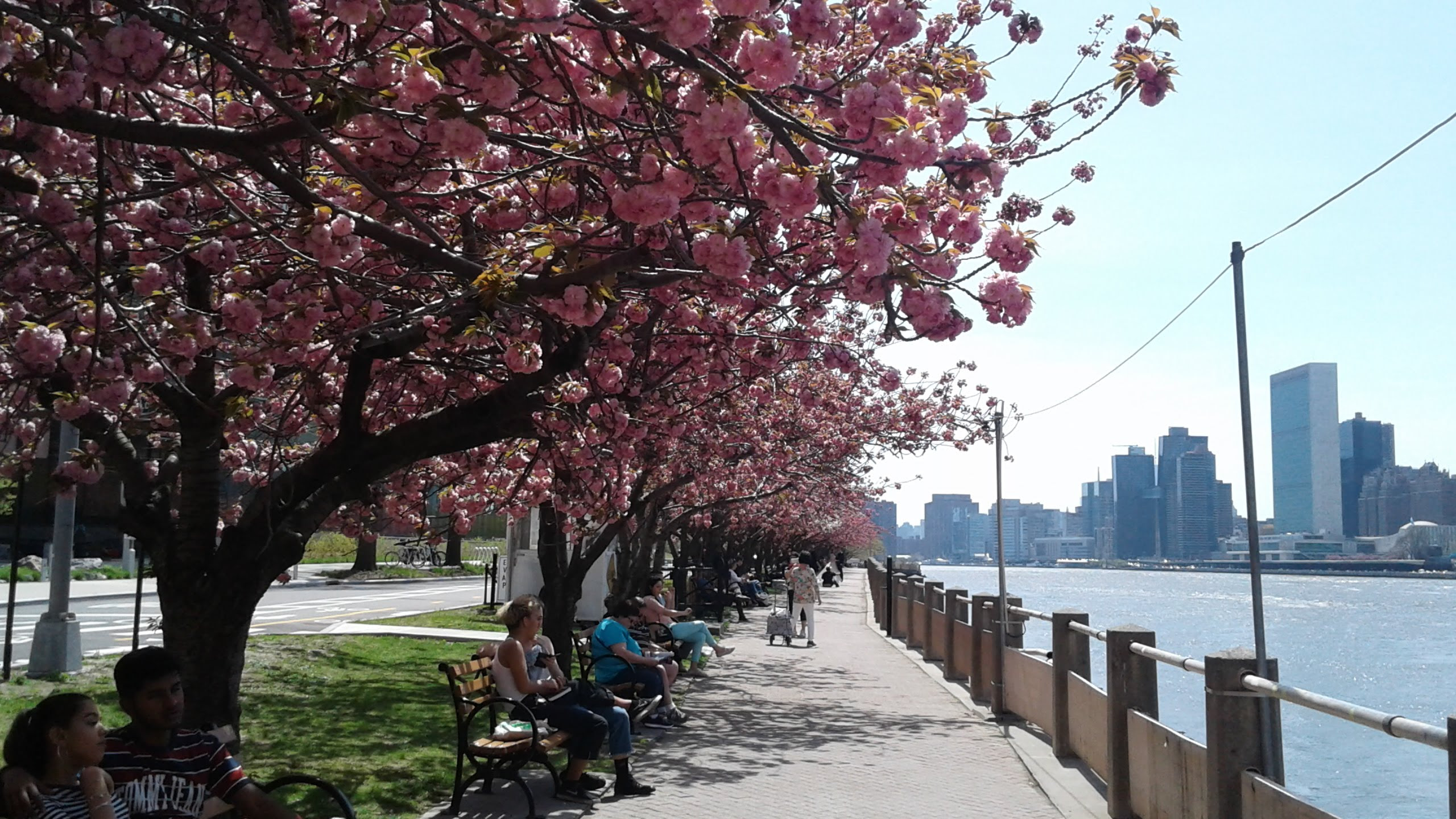
It was a crisp spring day today and perfect to visit Southpoint Park. There were many folks walking through the park.
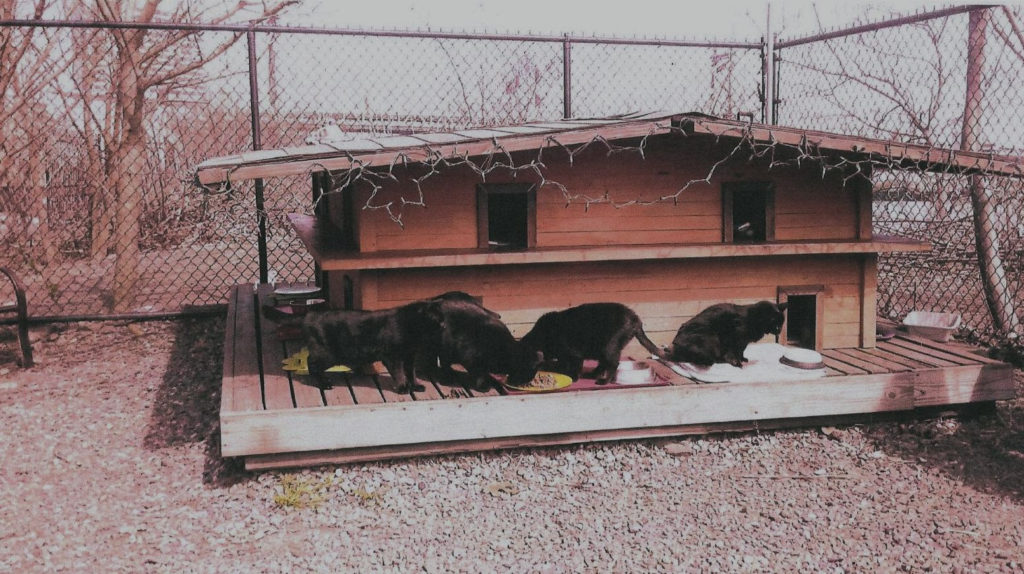
I stopped by the Wildlife Freedom Foundation Cat Sanctuary. The feline residents were enjoying their meal, completely oblivious to social separation.
SPECIAL EDITION MARCH 21, 2020 CELEBRATING OUR ISLAND
This is the fourth in a series of historical articles
Wonders of Roosevelt Island Stephen BlankMember of the Board, Roosevelt Island Historical Society January 8, 2020
When Lynn and I arrived on Roosevelt Island 43 years ago, we were fascinated by this new urban community recently linked to the “mainland” by an aerial tramway. With its Main Street, diverse population, shops, network of new organizations, odd school system (two grades housed in each of the 5 residential buildings) and hearty band of pioneers, it seemed like another world. And beautiful: The view from the Island compared with Naples, Haifa or Hong Kong. Simply wonderful.
The view was indeed wonderful, but in 1977, little was left intact on the once crowded island where many medical and social institutions serving New York’s poor, afflicted and criminal were once found, including the infamous Blackwell’s Island Penitentiary and the iconic Insane Asylum. (A word of explanation. Our island was inherited by the Blackwell family in 1685 and known as Blackwell’s Island for the next 250 years. In 1921, the name was changed to Welfare Island, for obvious reasons. Finally in 1973, Welfare Island was renamed Roosevelt Island.) At that point, there were few functional buildings – including the 5 WIRE residential buildings, the Chapel of Good Shepherd and Goldwater and Bird S. Coler hospitals.
Blackwell’s Island’s population had begun to decline at the end of the 19th century. In the 1930s, Robert Moses wanted to tear down everything that remained and make a great public park here. Another idea floated about the same time was to create a new hospital park on the island. The Central Nurses Residence opened in 1939 (the empty building was demolished in 2002) and Goldwater hospital opened in 1938, replacing the Blackwell Island penitentiary. Bird S. Coler Hospital opened in 1952, the last of the pre-Roosevelt Island constructions. These hospitals joined two older facilities – City Hospital at the southern end of the island and Metropolitan Hospital at the northern end. The fire training facility and laundry were operating and nurses training went on.
So, in the early 1950s, parts of Welfare Island were still functioning. But much of it had been allowed to deteriorate. Soon, only Goldwater and Coler would remain. Most of the island’s buildings were left to ruin. Welfare Island, over the years between the early 1930s and the early 1970s, wrote Judy Berdy in her Images of America volume on Roosevelt Island, “became a haunted, desolate landscape full of wonderful, abandoned buildings…”
We pioneers learned only later how our children played in the ruins. Actually, not just children. Lynn and I tried to figure a way to drag the enormous pews out of the half collapsed Catholic church. The neglect was painful. We watched the old City Hospital that stretched from east to west across the island burn and the glorious interior of the old insane asylum was trashed. But on each July 4th, we were permitted walk down to the southern tip of the island to watch the Macy fireworks, through a field of milled stones from former medical buildings
Welfare Island had once been well manicured. There were gardens and lawns. But decades before the first new Roosevelt Island building began, much of the island had gone to seed and the remains of many buildings of Welfare Island were overgrown. No one recalls precisely what was growing here in the 1950s or ‘60s, but photos from this period show open fields and stands of trees. Native as well as non-native flora repopulated the island. The cover was surely similar to what would grow unmanaged across this part of New York. We know that there were some fine trees – American elms that would die in the 1950s because of Dutch elm disease as well as pin oaks, London plane trees, red maples and the invasive Norway maples some of which continue to survive today. Some wildlife had found their way to the island. There are reports of pheasants roaming around, a yellow fox, maybe even a turkey living on the southern end of the island.
**** From the beginning, efforts to restore Welfare Island (and create Roosevelt Island) focused on the built environment.
****
In October 1969, a team headed by Philip Johnson and John Burgee prepared a report on “the Island Nobody Knows”, one of the first steps taken toward the redevelopment of the island. The report concentrated on the remarkable buildings – or remains of buildings – found on the island, its “important landmarks”. It laid out splendid ideas for “docks and harbors for water buses and taxis of the sort that have long and efficiently served Venice… and two glass-tower elevators for pedestrian access from the 59th St Bridge.” The danger is, the authors write, that if steps are not taken quickly, these remarkable assets will be forgotten. We live today with several of these assets – the Chapel of Good Shepherd remains a central community resource, the Octagon has been rebuilt and the Smallpox Hospital remains – but with an uncertain future.
*** There are other remarkable assets on our island, assets we look at every day but rarely see. These are our natural treasures – what grows here and lives here and visits here. The natural environment is as vital in our island’s past and to its future as the built environment.
***
A grand change that has taken place over the past decades is the island’s setting in the East River. When we arrived in 1977, the East River was dirty – really dirty – and while we were told fish skulked at the bottom, that was hard to believe. Today, natural life has re-emerged. The Audubon Society says that more than a dozen species of water birds have returned to the area since the 1970’s, including eight species of heron and egret alone. There’s much more life in the water. Hard to believe: Whale sightings in New York City waters – out to sea, not in the harbor! – have jumped from 5 to 272 since 2010. This is not due solely to cleaner water. Climate change is important, too, as are longer-term efforts to restore several strains of bird life. But the NYC Department of Environmental Protection reports that NY harbor is cleaner today than it’s been in nearly 110 years.
The East River if not quite drinkable, is much cleaner, enough so that kayakers and jet skiers no longer draw a startled look. Our island’s setting has been transformed over the past few decades, and our river setting is more in touch with the natural world than has been the case in decades – or more.
In creating the new Roosevelt Island, from the Lighthouse Park in the north to the FDR Memorial in the south, most of the wild vegetation that had grown up since the 1930s was destroyed. A Survey of Trees on Roosevelt Island was carried out in 2012, and counted some 1500 trees of all types including more recently planted linden and ginkgoes along Main Street. We do not know what was cut down in the original WIRE construction, but we know that 107 trees were lost when the Cornell campus was built and 137 were destroyed by Hurricane Sandy. Some older trees do remain and some creative landscaping has been done – for example, the planting of native plants in Southpoint Park, such as the ironweed, Joe Pye, and switchgrass at the northern entrance. Roosevelt Island, especially in the moment of Cherry Blossoms, is a very beautiful place.
There’s more aquatic life, and the wildfowl are remarkable. If you walk on the island you will see much more life. Gulls, of course, and other fowl – and, no, not just the ubiquitous Canada geese many of which no longer migrate. Rossana Ceruzzi, Executive Director of the Wildlife Freedom Foundation, the island’s licensed wildlife expert, says that the island now hosts swans, herons, cormorants, as well as other variants of migratory geese which visit us en route in spring and fall. She tells us that a whole zoological garden of critters live here, too: raccoons, opossums (probably brought here and abandoned) and even small brow bats (which few of us actually see) as well as the ever energetic eastern grey squirrels and their mutant black cousins.
In this era, “no one thought of natural space,” says Michael Feller, a naturalist and educator who regularly brings his School of Visual Arts students to Roosevelt Island. The Johnson and Burgee report suggested the creation of a 25 acre “ecological park” stretching southward from the Octagon (which was to be preserved and rehabilitated). “Here there would be reconstructed”, the report said, “all the innumerable environmental conditions that exit in our part of the country, to enable visitors, young and old, to study the interaction of natural organisms with their man-made surroundings.” This park would be “unique, not only in this country but throughout the world.” But the idea here was a built park, not to preserve the wild growth that had emerged in the previous decades.
***
One wild area one the island dating back to the 1930s-‘50s does survive.
***
Our remaining wild area is the fenced-off east and west shoreline of Southpoint Park. These areas have been largely neglected since the development of the Park which opened in August, 2011 (although they were used as dumps for materials gathered from the southern end of the island). A positive aspect of this human inattention has been that wildlife has found safe, welcoming habitat along the shore and within these two small areas (estimated to be about 1.4 acres in total), because human presence is restricted by fencing along the interior boundaries.
Our friend and fellow Roosevelt Islander, the naturalist Jack Burkhalter tells us that many native and migratory birds have found homes or feed and rest here. On the western shoreline Canada geese nest and rear their goslings, who often trail their parents throughout the Park, to the delight of visitors. In addition, the shoreline habitat has been home to Mallard ducks and their ducklings. In the fall, white-throated sparrows and song sparrows have been seen eating the seeds of native switchgrass while perched on the tall grass stems. On the eastern shoreline, the thicket of trees, saplings, and forbs provides shelter and food for many native species of birds, including the black-crowned night heron, tufted titmice, gray catbirds, Northern mockingbirds, house finches, song sparrows, among others. The tree nests of American robins and mockingbirds have been sighted as well. Insect life provides diversity and food for birds. Monarch butterflies, milkweed bugs, and milkweed tussock moth caterpillars have been observed there. Native trees such as silver maple, cottonwood, green ash, and red mulberry live here, and native plants growing in this shoreline habitat include New England aster, common milkweed, fleabanes, white snakeroot, and goldenrods. The area is also home to invasive species such as Japanese knotweed and rampant field bindweed.
These small areas host a wide array of plants and provide habitats for birds and insects. More, they provide our island with an irreplaceable link to its past.
*** In many ways, the island project has done well. Our unique urban community, the aerial Tram, the new Cornell Tech Campus, our famous cherry blossoms and the FDR Memorial have made Roosevelt Island a lovely place to live and an attraction for visitors from around the world.
But crucial questions remain affecting our island’s treasures, our vital ties to the island’s past and its fragile heritage. At the southern end of the island in particular: What will happen with the Smallpox Hospital? How will the Island’s sea wall be restored? And what will happen to our few remaining wild spaces?
EDITORIAL
Little things My desk is a mess I cannot master Mailchimp I made 12 containers of chicken soup Looking out of the window at peaceful Queens No traffic on the Queensboro Bridge Watching Beano the cat sleep Being welcomed at Shoprite by an exhausted, yet enthusiastic staff Finding lots of Entenmenns cakes to take for distribution at Coler for residents coffee hour Being on an island of blooming daffodils, remembering many were planted after 9/11 Keeping in touch with friends and family I think I will miss the NYC Ferries passing by my window soon A bright and beautiful sunrise tomorrow morning beaming into my window
This is the third in a series of historical excerpts from the Archives of the RIHS
Ms. Agatha Zeh interview Continued
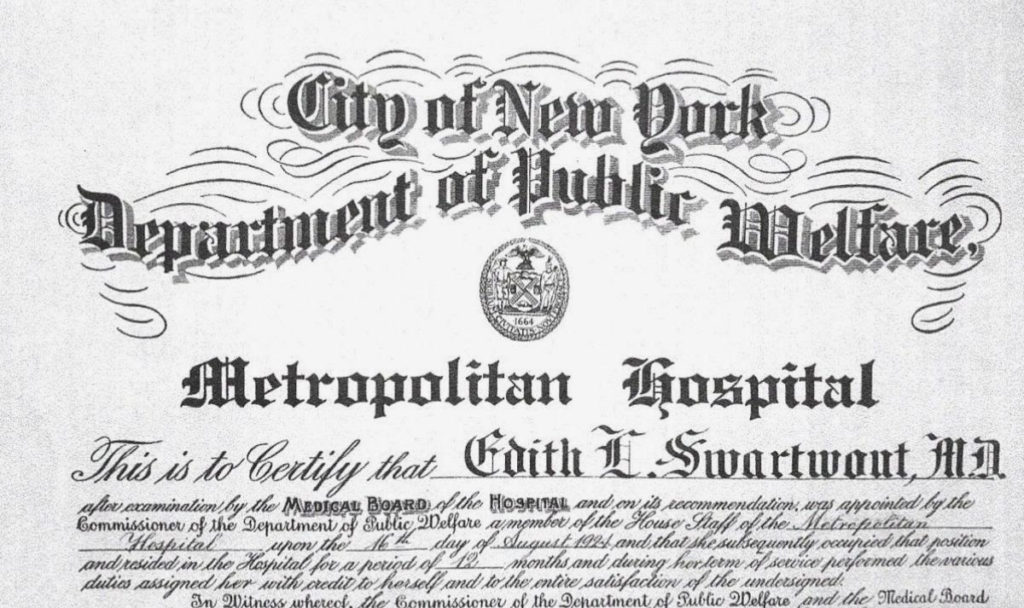
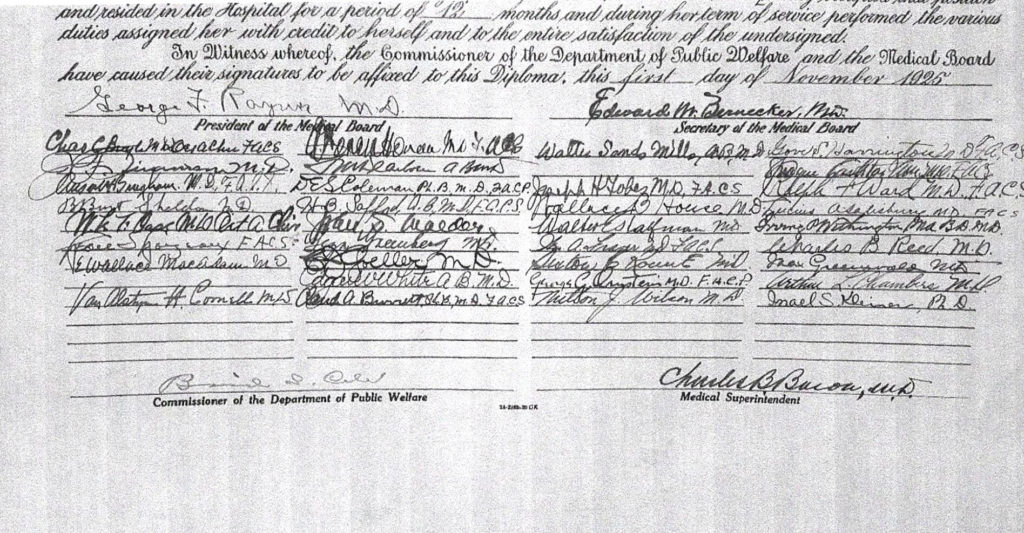
In yesterday’s edition we recounted an interview with Ms. Agatha Zeh, a nurse who served on Blackwell’s Island in 1920. During that time, Ms. Zeh recalled that there was a female physician at City Hospital — a rare thing for that period. Coincidentally, we remembered that in 2017 the RIHS acquired a Certificate from City Hospital for Edith L. Swartwout, MD for her completion of a one year residency at Metropolitan Hospital in August of 1924. Was Dr. Swartwout the person Ms. Zeh remembered? Coincidence or true story?
Long Career and Life of HOPE CLARK REID, MD
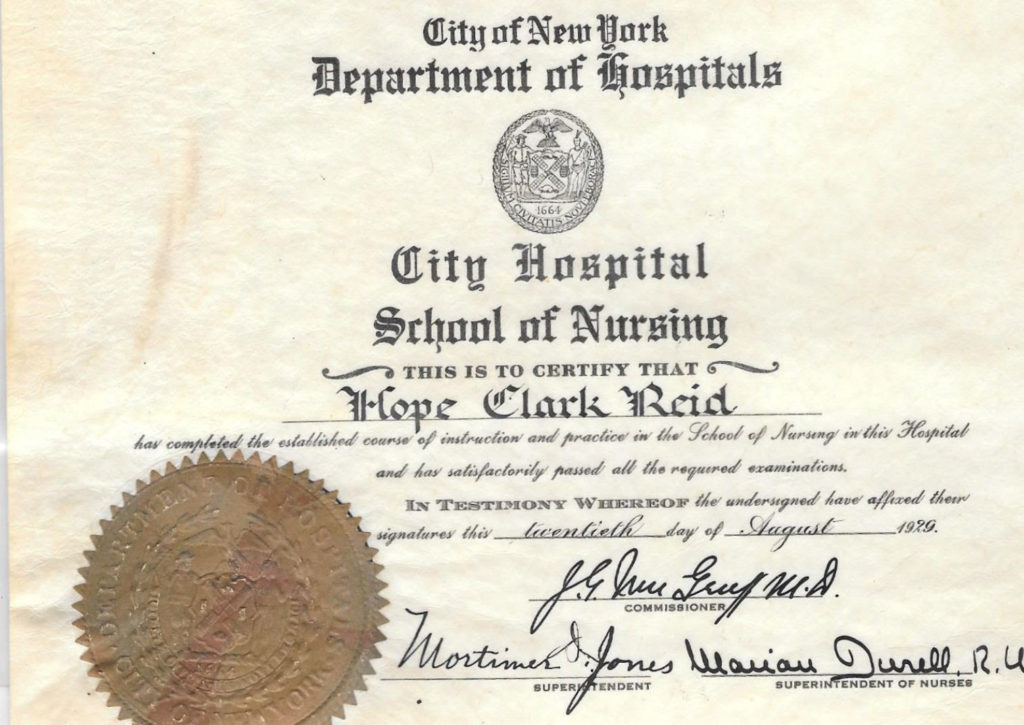
A few years ago, Mrs. Paula Timmerman found the RIHS was the perfect place to share her mother’s story. She has donated her mother’s professional papers to the RIHS, including her nursing cap, photos, elevator pass for Queensboro Bridge and other memorabilia.
Mrs. Timmerman remembers a child visiting her mother on the island (Hope Clark Reid) in the summer and living off island during the school year. Hope Clark Reid came to the Welfare Island in 1926 to study nursing at the City Hospital School of Nursing, graduating in 1929.
Over the years she earned a Certificate of Teaching Home Nursing from NYU, worked in Personnel Administration at NYU, received her Certificate in Midwifery for Registered Nurses and earned her Bachelors degree in Science in Nursing Education from Hunter College.
For eight years, she worked at City Hospital as a staff nurse, head nurse, Supervision and Assistant Superintendent of Nurses.
In 1952 she was appointed the Superintendent of Nurses at the new Bird S. Coler Hospital. During those 5 years, she was also Chief Civil Defense Nurse for the City of New York. Fascinatingly, she was also trained in the event of Atomic Disaster.
She retired from Coler in 1957 after seeing the opening of the hospital with a capacity of over 1,800 residents. From the information I received, it was clear Dr. Reid lived in the City Hospital Nurses residence. When the Central Nurses Residence opened, she lived there until retirement.
In 2000, Mrs. Timmerman visited the island and Coler. Most of her memories are faded but her joy of visiting the site where her mother spent her entire career was rewarding and allowed the RIHS to record and share another fascinating career medical professional’s life and story.
Judith Berdy
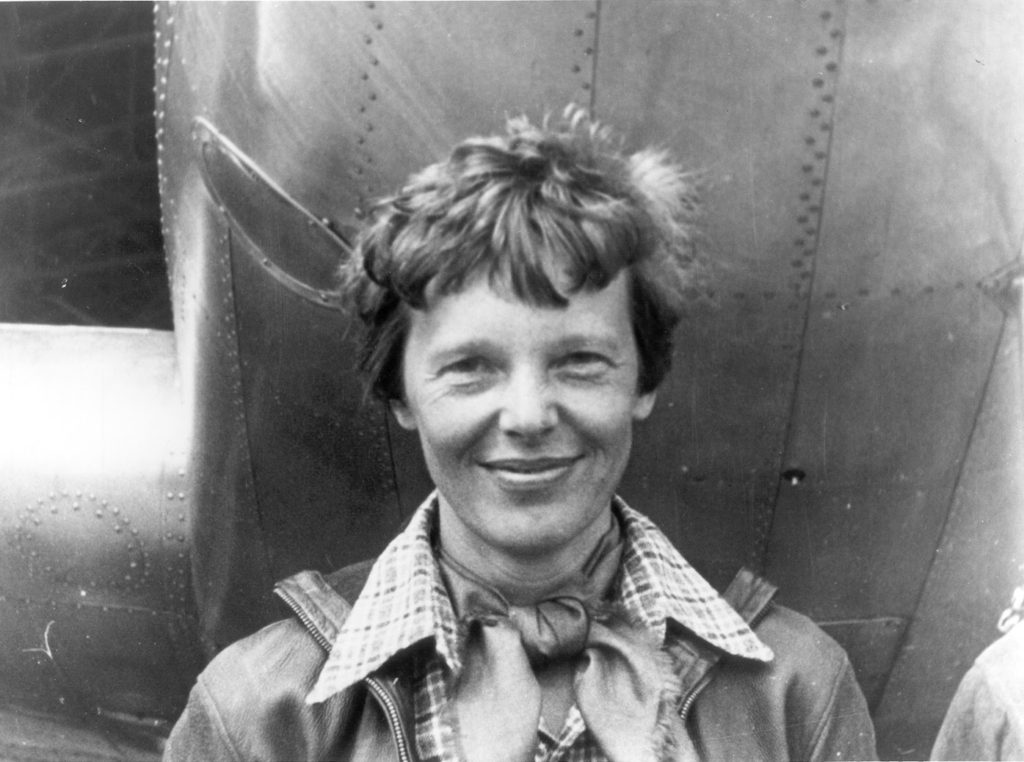
Excerpt from the New York Times (c): FEB. 29, 1929 “MISS EARHART TALKS TO ISLAND PRISONERS”
Amelia Earhart, first woman to fly across the Atlantic became yesterday the first woman to address the Sunday afternoon lecture at the workhouse on Welfare Island. Her listeners deluged her with the greatest number of questions yet asked in a series of talks that began last November.
Miss Earhart was obliged to tell among other things whether gliders and autogiros were practical, why airplane radios seem to go out of commission more than others, what air pockets were, whether a huge parachute attached to a plane would guarantee the safety of the occupants and what was the “safest” plane made.
In her first answer Miss Earhart explained that gliders were practical in “pointing” the way to make airplanes more efficient and that the autogiros would undoubtedly be more practical when their speed and carrying capacity were increased. The plane parachute was not yet a workable device. The “more interesting” possibility she thought was that the pilot sliding away the bottom of the plane, which overcame the difficulty of getting persons equipped with parachutes to jump by merely “bouncing them out.”
As for the “safest” plane, Miss Earhart said “I might get into difficulties with the manufacturers if I mentioned names , but the safest of all planes is undoubtedly the one that will crash and let you get out and walk away from it.”
Everyone seemed to agree.
At the close of the forum the speaker and her husband, George Palmer Putnam were conducted around the island.
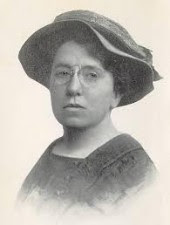
Emma Goldman was an activist who spent a year at the Penitentiary on Blackwell’s Island. Click here to read on about a chapter of her life on the Island from her autobiography, “Living My Life.”
Editorial
In this time of crisis and illness, my heart is torn by the conditions we are being put through. I have lived on the island for 42 years. In the 1960’s, I was a dental assisting student and was sent to Goldwater Hospital to have chairside experience. From that time, the island fascinated me. The first persons I met here were the residents of Goldwater. Coler and Goldwater have always had a soft spot in my heart.
We live in a wonderful community with a history, no matter how sad and tragic, that has sheltered those in need.
Let us keep our hearts and home open to all in need and thank every medical worker weather doctor, nurse, aide, housekeeper or custodian in our thoughts.
Coler will welcome 350 new “islanders” this week. Let’s welcome them and those who tend to them in our best way. Judith Berdy, Editor
Special thanks to Melanie Colter for her skills and helping publish this daily. She will teach me all of Mailchimp one day.
This is the second in a series of historical excerpts from the Archives of the RIHS
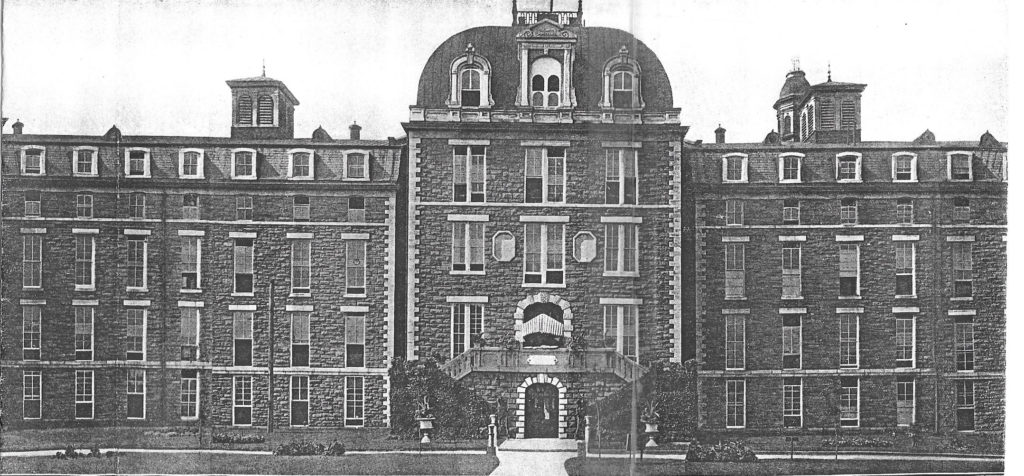
The image above is Metropolitan Hospital in the early 20th century. Now known as the Octagon, Metropolitan Hospital housed over 1,000 patients from its opening as a homeopathic hospital in the 1890’s until it closed in 1955. (The building had previously housed the notorious Lunatic Asylum.) The Hospital still exists as a municipal hospital on 97th Street and First Avenue.
In our archives are the collections of Reverend Oliver Chapin. One of the multitude of documents is a five-page, handwritten interview with Agatha Zeh, R.N., Metroplitan Hospital School of Nursing Class of 1920.This is part of her handwritten account of working at Metropolitan Hospital in that year.
____________
“The Woman Doctor” I’ve forgotten her name but as I remember the other interns treated her with respect. I think she was a little older than the other interns. I don’t know anything about her after she left the hospital.
“Drugs” We had a Pharmacist and Pharmacy in the basement. We did have drug addicted who were trying to be cured of the habit by each week having the dosage reduced unit they were supposedly cured. They were mostly males and females from the prison and workhouse. They were counted each night and each morning. I do not remember any incident where anyone was injured from any one of them trying to steal a drug. Apparently what dose they were given satisfied their desire for the drug.
(Image Above: Metropolitan Hospital Nurses’ Home)
For rubbing backs and cleaning wounds our alcohol was 95% alcohol. I do remember one occasion when one of the ambulatory patients was feeling pretty gay and not walking very steadily. Upon questioning he admitted to drinking a good bit a bottle of rubbing alcohol which he swiped from the medicine closet which someone neglected to lock. There were probably incidents of the same kind.
The answer to the next question will answer how some problems were handled. We had police officer on duty in the rotunda 24 hours a day and he was called if necessary. He also checked people entering the hospital. There was also an emergency room at the dock on 86th Street (Manhattan) and a police officer stationed there and since everyone had to come to the island by ferry there wasn’t that many people around who didn’t belong.
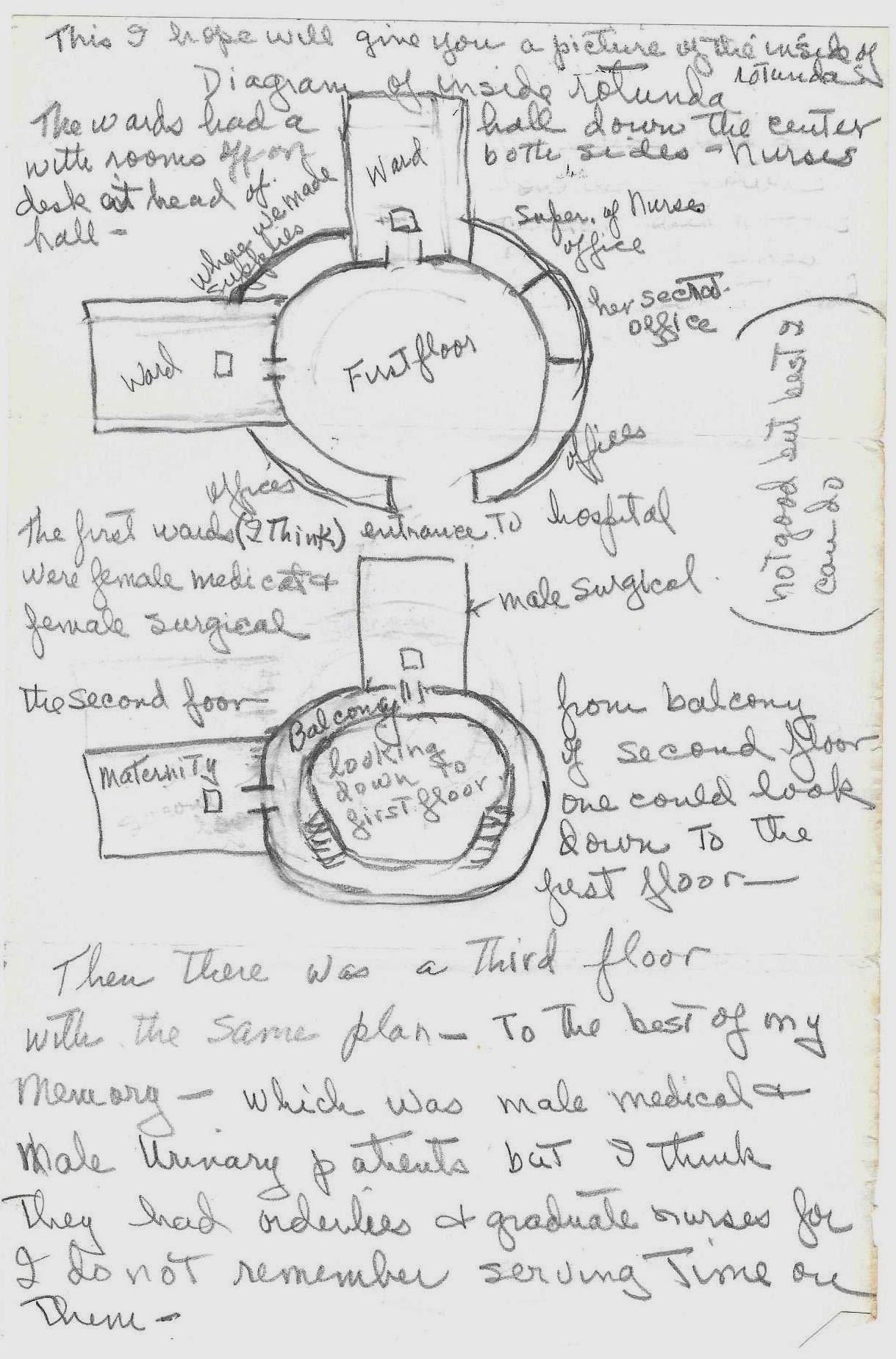
“Offices” There were offices around about 1/2 of the rotunda-I remember of course the Superintendent of Nurse’s office and her secretary’s office and slightly remember a business office and I think a Paycheck office.
Image Above: Metropolitan Hospital Floor Plan Sketch and Description
There was a basement that contained the Admitting Ward, the Pharmacy and storage supply rooms and maybe others I do not remember
“Light in Lighthouse” I don’t think so. I don’t remember one. Maybe The Blackwell’s did at one time.
I don’t remember ever seeing anyone swimming or fishing off the island-maybe a prisoner tried to escape by swimming but not any other person of the Hospital. For one thing the water was too deep, to try it and I think not too clean for I looked out of your living room window I was disappointed not to see more ships . I seem to think there was more traffic in the river in the twenties.
The Metropolitan Hospital at that time was a Homeopathic Institution (a system of medical treatment based on the theory that certain diseases can be cured by giving small doses of drugs which in a healthy person and in large doses would produce symptoms like those of the disease). A few drops of medicine would be added to a glass of water and the patient receive a teaspoon or two every hour. With some of the patients the glass of medicine would be left on the bedside table and taken by the patient. But homeopathy went our shortly after the First World War – and I do not remember it being used afterwards. The only drugs that come to mind are Iodine and Belladonna and I’m not sure of them. ..Of course insulin he yet to be discovered then and diabetics died as also many pneumonia and strep and TB and other infected cases for there were no antibiotics and few vaccines.
The was a Polio epidemic the year before I went to training and the older nurses told us it was worse than the Flu epidemic. I don’t remember as many cancer cases and maybe fewer heart cases.
We did have morphine to alleviate pain.
Operations – appendectomy – many of who died from infections (I had my appendix remove in 1930 and I was very sick. I was 88lbs. when I got out of bed, but I was one of the lucky ones for I recovered).
Gall bladders removed -many bone operations due to Tuberculosis and streptococcus infections. These would drain for months and perhaps some never entirely healed – abscesses opened – amputations caused by infections – Lung abscesses after Pneumonia – Abdominal tumors and of course fractures set and casts applied.
Many died, who would not have died in the same conditions today. Curing patients has improved so tremendously in 50 years (1970), it is hard to believe there was a time when so little could be done for the sick. What a blessing new discoveries have been. I think the history of medicine over 50-50 years is fascinating- I’m looking forward to your finishing your book*, so I can read it for at 78 years old time runs short.
Best wishes, Agatha Zeh
Reverend Chapin passed away in 1999 and never completed his book. Most of his archives were donated to the RIHS.
UPDATE
Coler Long Term Care and Rehabilitation Named Site of Expanded Hospital Beds
Since 1952 Coler Hospital has served the City of New York. At its peak, Coler had over 750 patients and long term care residents. In recent years Coler specialized in long term care and many of its units were closed. In this time of health crisis the City will re-activate over 300 beds for acute medical cases. Per a teleconference with the administration, two aspects of care and safety were emphasized:
The current residents of Coler are being cared for by the Coler staff and extreme measures are being taken as to preventing the Coronavirus from entering the facility. All staff are monitored upon entering the building. No visitors are permitted. All activities that involve congregating residents are canceled.
THE SAFETY OF THE STAFF, RESIDENTS, COMMUNITY AND ALL OF ROOSEVELT ISLAND IS OF UTMOST IMPORTANCE TO THE CITY, STATE AND HEALTH+HOSPITALS.
The new units which are not near current patient areas are being prepared to be acute hospital areas. Acute care staffing will be provided for these patients. The type of patients being admitted to Coler is not known yet. The units are being prepared by contractors and emergency preparedness personnel who can do the work with sped and have vast knowledge in emergency preparedness.
Reminder: Coler was flooded by Hurricane Sandy in 2012 and most of the residents were safe and sheltered in place. The City of New York has spent about $93,000,000 to upgrade and improve the building.
Personally, I have been a member of the Coler Community Advisory Board for over 15 years and am currently the President of the Coler Auxiliary.
There are many islanders who are on Coler committees such as OPEN-DOOR, volunteers, Advisory Board, Auxiliary and in many departments and we miss serving our neighbors and hope to be back soon.
Judith Berdy, President Roosevelt Island Historical Society
There is much news to report: Blackwell House is complete and waiting for the last permit to have a grand re-opening.
The Transit Authority has come up with an acceptable architectural plan for a platform adjacent to the Strecker Laboratory.
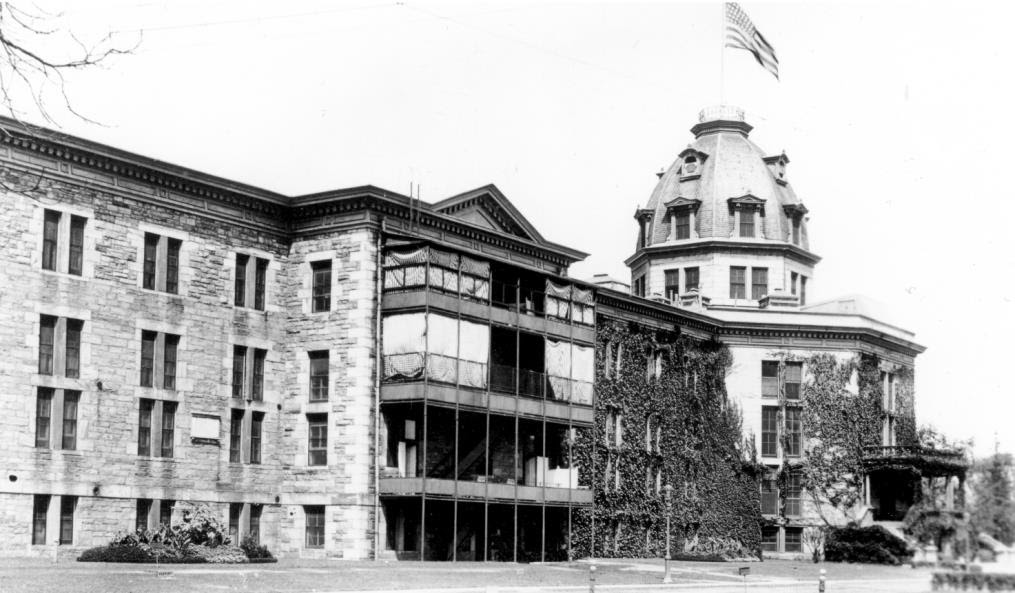
Image of City Hospital located at the north end of the now Southpoint Park. Closed in 1955 when hospital was reloated to Elmhurst, Queens. Demolished in 1992. The serpentine fence encircling parts of Southpoint Park is made from the walls of the hospital. The stone was quarried on the Island by the Penitentiary inmates at the quarry located where 465 Main Street is located. The iron columns at Southpoint Park entrance are from the interior of City Hospital.
This is first in a series of historical excerpts from the Archives of the RIHS. This biographical story is of a person who was hospitalized at City Hospital on our Island in 1901. It is signed “A GRATEFUL PATIENT”
If you have a New York Times subscription go to Times Machine for Aug. 4, 1901 “Life at the City Hospital”
UPDATE
Coler Long Term Care and Rehabilitation Named Site of Expanded Hospital Beds
Since 1952 Coler Hospital has served the City of New York. At its peak, Coler had over 750 patients and long term care residents. In recent years Coler specialized in long term care and many of its units were closed. In this time of health crisis the City will re-activate over 300 beds for acute medical cases. Per a teleconference with the administration, two aspects of care and safety were emphasized:
The current residents of Coler are being cared for by the Coler staff and extreme measures are being taken as to preventing the Coronovirus from entering the facility. All staff are monitored upon entering the building. No visitors are permitted. All activities that involve congregating residents are canceled.
THE SAFETY OF THE STAFF, RESIDENTS, COMMUNITY AND ALL OF ROOSEVELT ISLAND IS OF UTMOST IMPORTANCE TO THE CITY, STATE AND HEALTH+HOSPITALS.
The new units which are not near current patient areas are being prepared to be acute hospital areas. Acute care staffing will be provided for these patients. The type of patients being admitted to Coler is not known yet. The units are being prepared by contractors and emergency preparedness personnel who can do the work with sped and have vast knowledge in emergency preparedness.
Reminder: Coler was flooded by Hurricane Sandy in 2012 and most of the residents were safe and sheltered in place. The City of New York has spent about $93,000,000 to upgrade and improve the building.
Personally, I have been a member of the Coler Community Advisory Board for over 15 years and am currently the President of the Coler Auxiliary.
There are many islanders who are on Coler committees such as OPEN-DOOR, volunteers, Advisotyr Board, Auxiliary and in many departments and we miss serving our neighbors and hope to be back soon.
Judith Berdy, President Roosevelt Island Historical Society
Roosevelt Island Historical Society Lecture Series at the
NY Public Library
524 Main Street
Thursday, February 13, 2020 6:30 p.m.
Presents
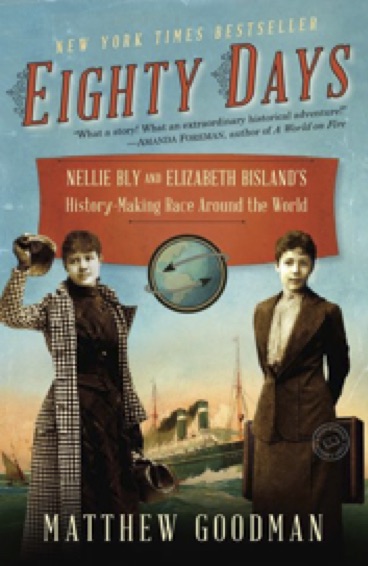
Matthew Goodman
“Eighty Days: Nellie Bly and Elizabeth Bisland’s History-Making Race Around the World”
Matthew Goodman is the
New York Times-bestselling author of four books of nonfiction: The City Game:
Triumph, Scandal, and a Legendary Basketball Team; Eighty Days: Nellie
Bly and Elizabeth Bisland’s History-Making Race Around the World; The Sun and the Moon:
Hoaxers, Showmen, Dueling Journalists, and Lunar Man-Bats in Nineteenth-Century
New York ; and Jewish Food: The
World at Table
All programs are free and open to the public. These programs are funded by: Amalgamated Bank, RIOC Public Purpose Funds, NYC Council Member Ben Kallos through the Department of Youth and Community Development.
ROOSEVELT ISLAND HISTORICAL SOCIETY, P.O.BOX 5, NY NY 10044 WWW.RIHS.US