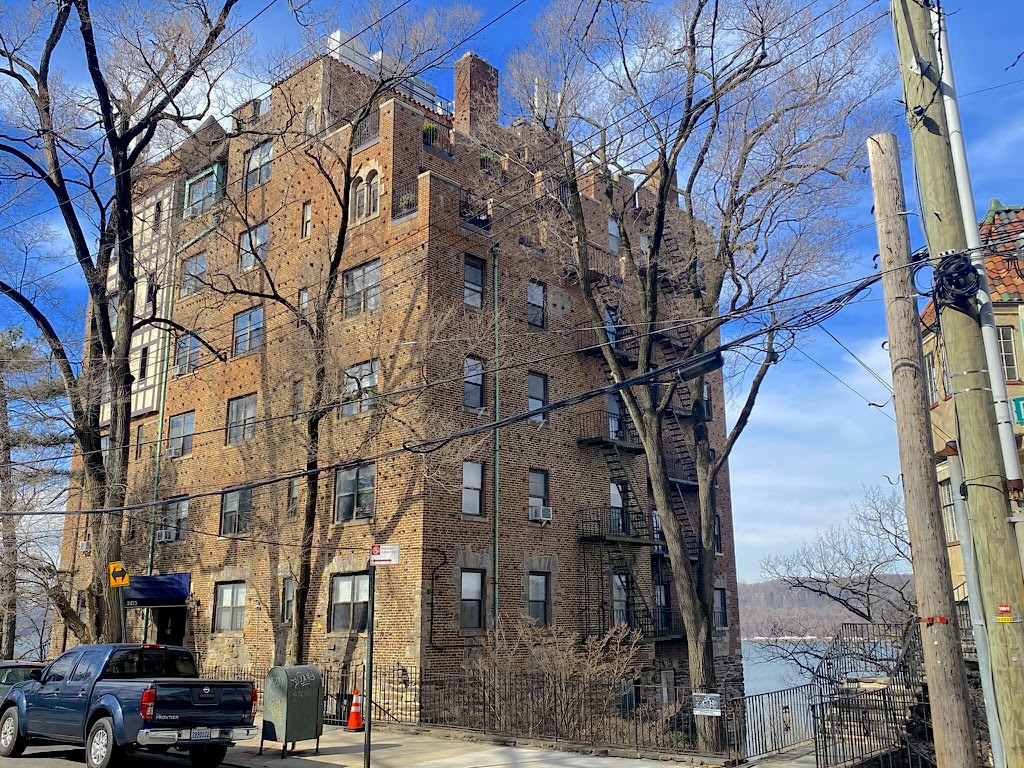
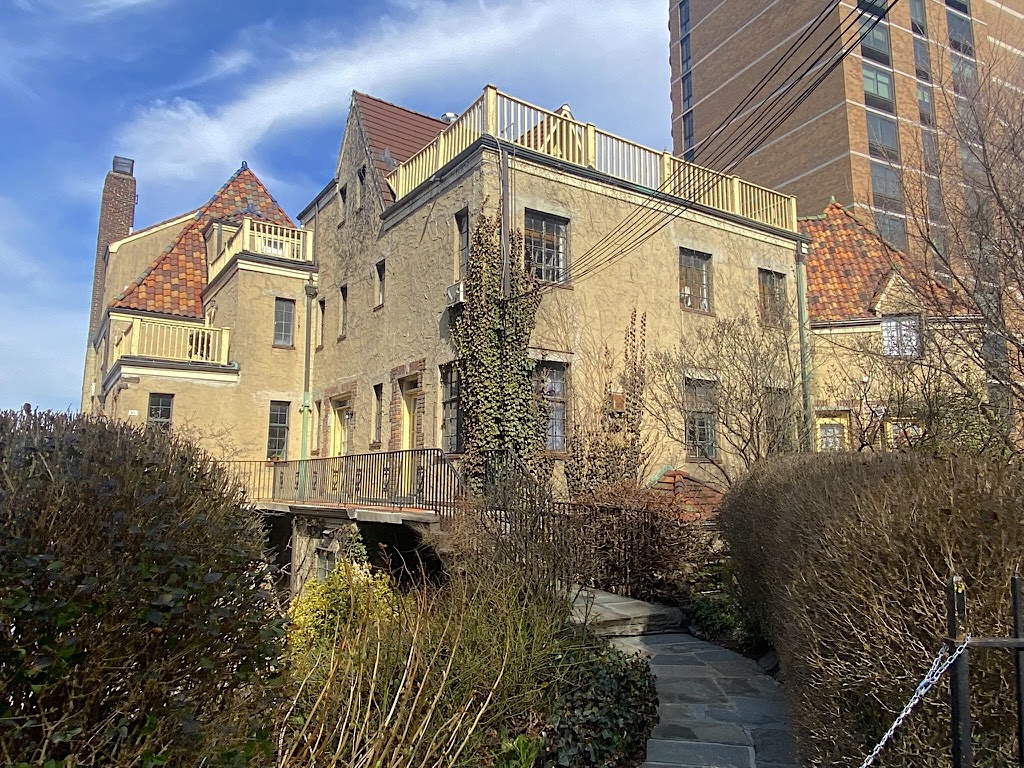
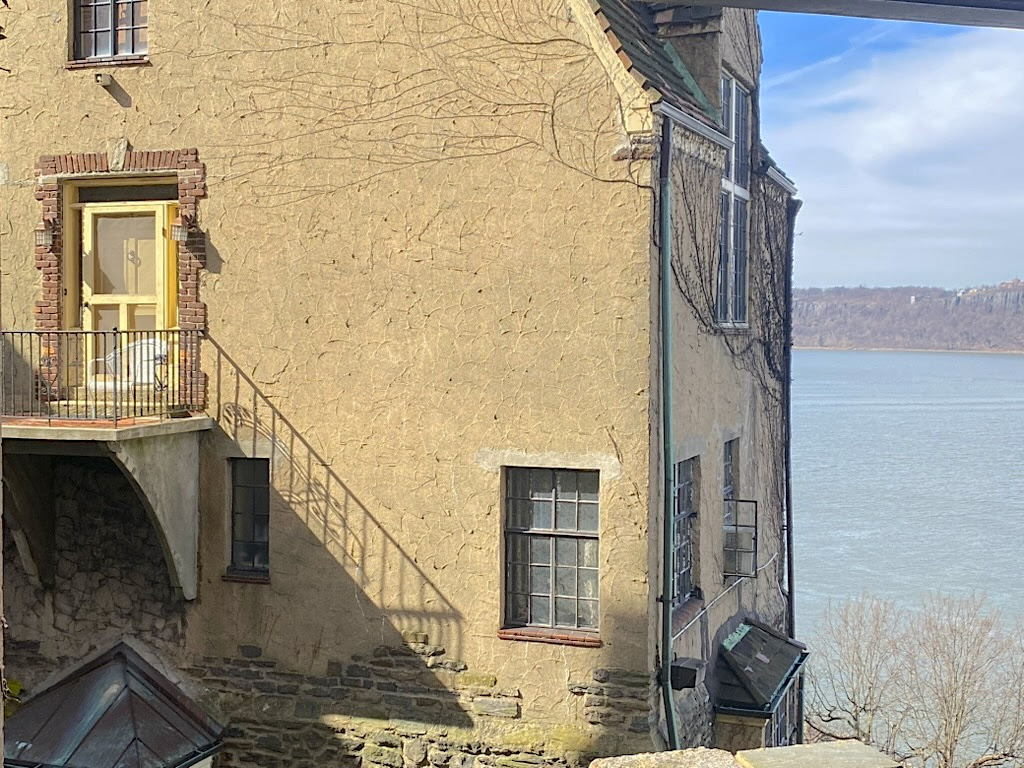
Once upon a time, on winding Palisade Avenue in the once isolated Bronx neighborhood of Spuyten Duyvil, there were three beautiful sisters—sister apartment buildings, that is.
The oldest sister, the Villa Rosa Bonheur, was completed in 1924. Fancifully named after a 19th century French painter and with only seven apartments, this sprawling cottage featured gorgeous views of the Harlem River looking toward Manhattan—until it met the bulldozer in 2021.
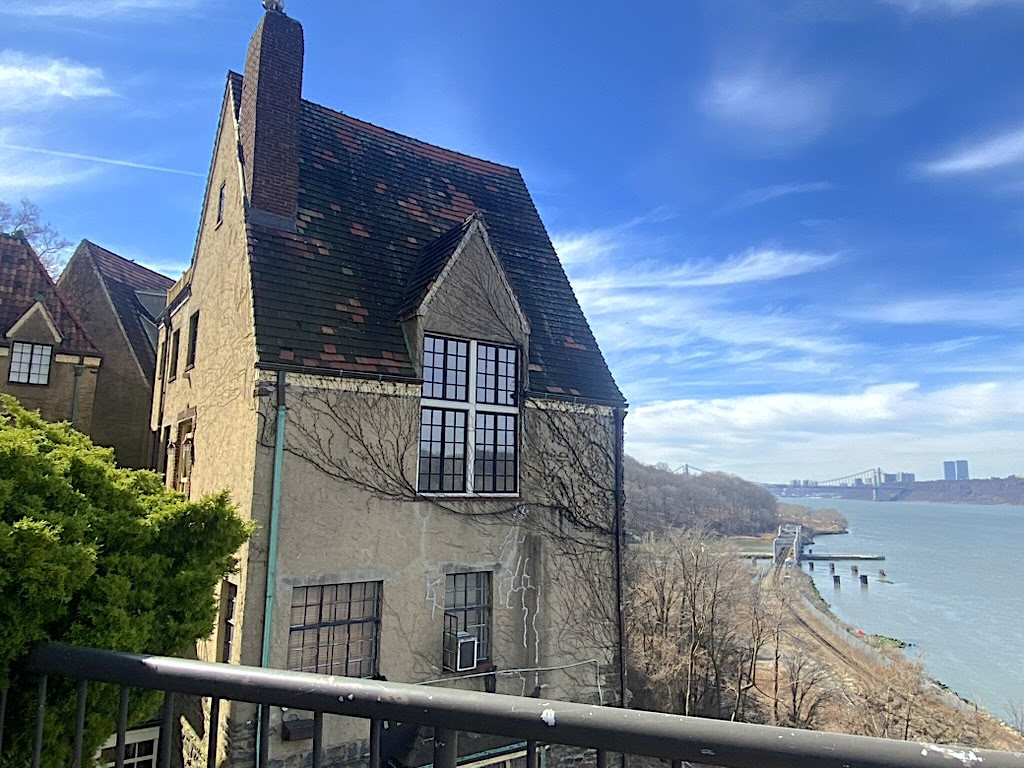
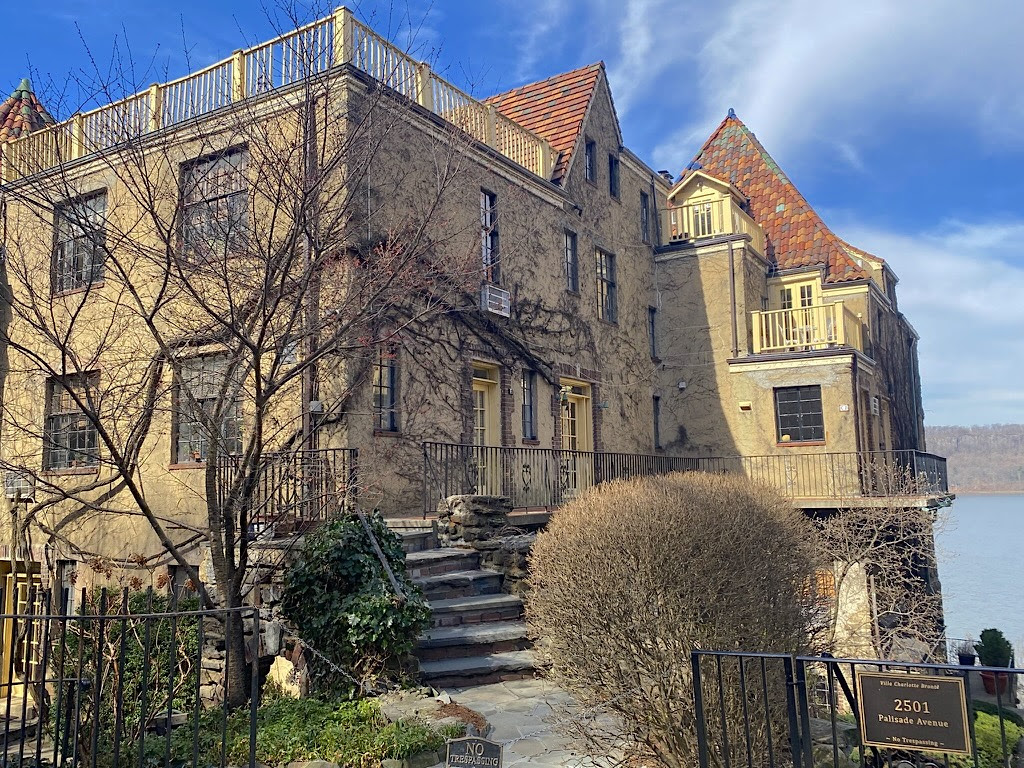
The youngest sister building, the Villa Victoria, went up in 1927. Not quite as dramatic as the Rosa Bonheur, the Victoria continues to exude Tudor loveliness on a steep cliff with sweeping Hudson River vistas (third photo).
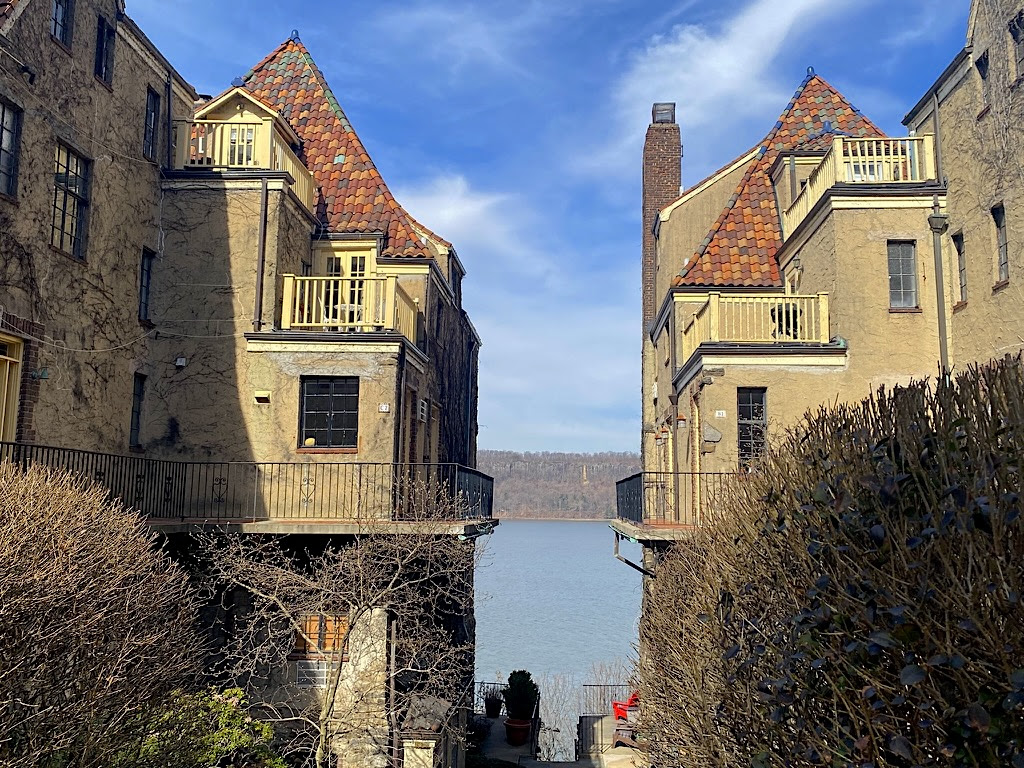
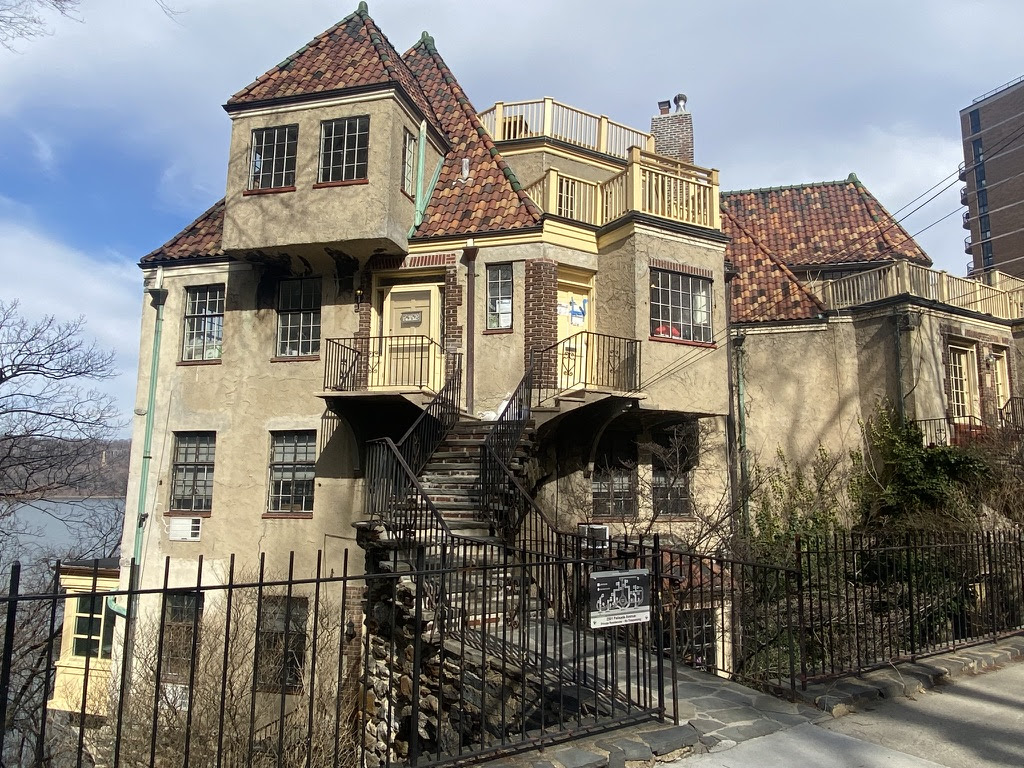
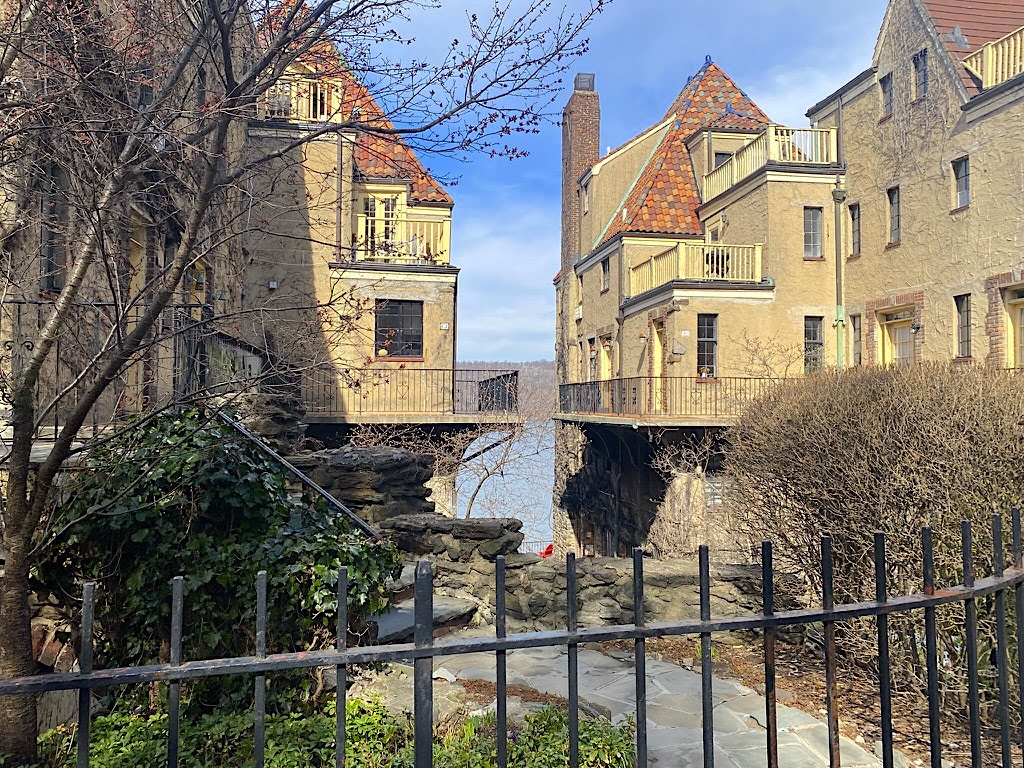
But it’s the middle sister building, the Villa Charlotte Bronte, that stole the show. Built in 1926 next door to the Villa Victoria, the Charlotte Bronte is a romantic fantasy that features two twin buildings bisected by a central sunken courtyard high above the Hudson River.
It’s an enchanting apartment residence designed in a style New York had never seen before.
“Each wing is a carefully irregular composition of tiled roofs, protruding bays, balconies, and casement windows,” wrote David Bady on Lehman College’s Bronx Architecture website. “Together they house seventeen apartments, no two exactly alike.”
The Charlotte Bronte has been described in various ways: like an Italian villa, Gaudi-esque, a pastiche inspired by a fairy tale.
“The exterior is made from stucco, featuring brick and stone ornamentation and multi-colored tiled roofs,” according to a writeup on Curbed. Each apartment had a wood-burning fireplace and varying views of the river; landscaped paths and walkways thread the villa into a cohesive unit.
As much of an showpiece as it is, the Charlotte Bronte and her sisters, all co-ops at their beginning, were built not to lure Manhattanites to the Bronx but to keep the “city ugly” of Manhattan from spoiling Spuyten Duyvil.
Their backstory begins in the 1910s, when residents of this formerly sleepy enclave became alarmed by the encroachment of urban development. The pace of urbanization in Northern Manhattan and the Kingsbridge section of the Bronx was swift, and the community realized that Spuyten Duyvil could be the next area to be carved up and sold to speculators.
Residents pushed back on urbanization, “lest it should jump the Harlem and Spuyten Duyvil Creek and spoil the romantic spot where nature still ran riot among the trees and flowers,” the New York Times reported in 1910.
To deter developers, some residents began buying up lots themselves and laying out plans for “houses of a more expensive character,” per the Times. The goal was to put up new residences (and turn a profit) while keeping the small-scale charm and character of Spuyten Duyvil.
One of these residents, lawyer and businessman John J. McKelvey, had lived in Spuyten Duyvil since the 1890s. At first, he tried his hand at building and selling individual homes, according to Christopher Gray in a 2006 New York Times article.
By the 1920s, he turned his imagination to co-ops. It was McKelvey who built the three sisters and gave them their delightful names. They are considered to be the first apartment houses in Riverdale. “These were not tenements, but ‘villas’ made up of individually owned duplex and triplex ‘studio homes,’” wrote Bady.
Architect Robert Gardner made unusual design choices for the Charlotte Bronte that distinguish it from the hundreds of elegant yet cookie-cutter apartment buildings lining Manhattan’s upper class avenues in the 1920s.
“To get to one apartment, you have to go down two flights toward the Hudson, then turn right and go up two flights to the front door. Another front door is behind a small arched grotto,” explained Gray.
“A third is at the end of a thin, high-flying concrete walkway with a skinny iron railing, cantilevered out over a long and nasty drop to the railroad tracks below.”
At first, the sister buildings attracted elite tenants; one newspaper listed some of the “well known” New Yorkers who planned to make the Villa Victoria their home. But the sisters soon fell on hard times.
“In 1933, Mr. McKelvey lost Villa Victoria in foreclosure, and the Rosa Bonheur co-op failed in 1941,” wrote Gray. The Villa Rosa Bonheur held on for decades as a private home, then in the 2010s was sold to a developer who tore it down—inciting much anger from the community.
Today, the Villa Victoria appears to be a rental building, while the Villa Charlotte Bronte remains a spectacular co-op residence with rarely available units. Spuyten Duyvil gained some apartment towers over the years, but much of this hilly enclave retains a small-town feel high above the bluffs.
MONSTER DUMPSTER REMOVING DEBRIS FROM STEAM PLANT. WHAT HAPPENED TO BARGING? \WHAT HAPPENED TO COMMUNITY INVOLVMENT?
All image are copyrighted (c) Roosevelt Island Historical Society unless otherwise indicated THIS PUBLICATION FUNDED BY DISCRETIONARY FUNDS FROM CITY COUNCIL MEMBER JULIE MENIN & ROOSEVELT ISLAND OPERATING CORPORATION PUBLIC PURPOSE FUNDS.
Manhattan started extending its land mass back in the colonial era, using construction debris, sunken ships, ashes, ballast, and other waste to reclaim land and enlarge the island.
Pearl Street used to be the southern boundary; Greenwich Street was at the edge of the Hudson River. Manhattan continued to grow in the 19th century, but by the early 1900s—with almost all of Manhattan urbanized—civil engineers were considering new ways to create more real estate.
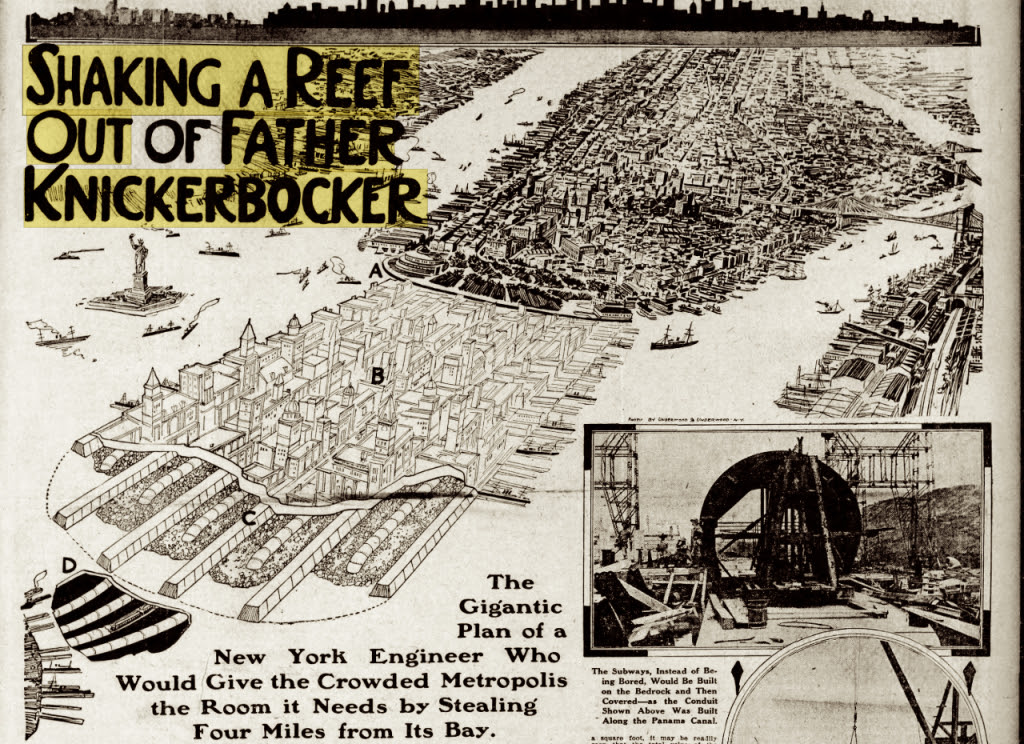
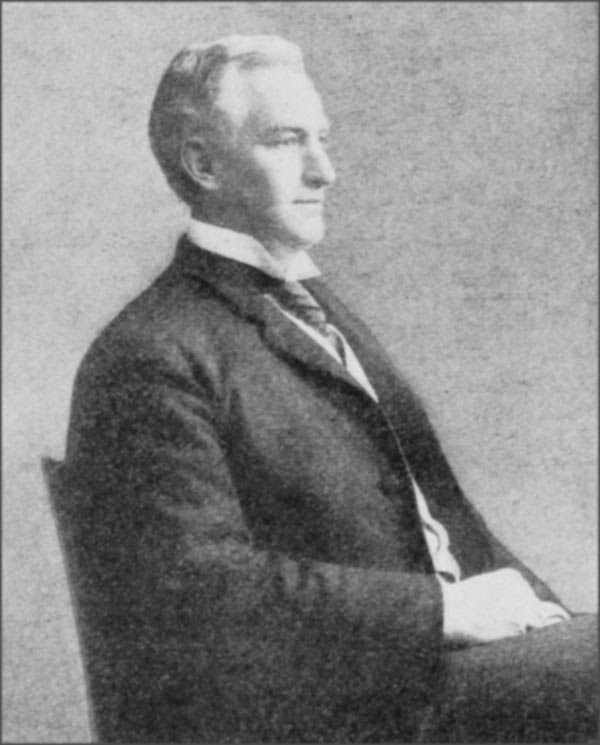
Enter a highly esteemed and successful engineer of bridges and skyscrapers named T. Kennard Thomson.
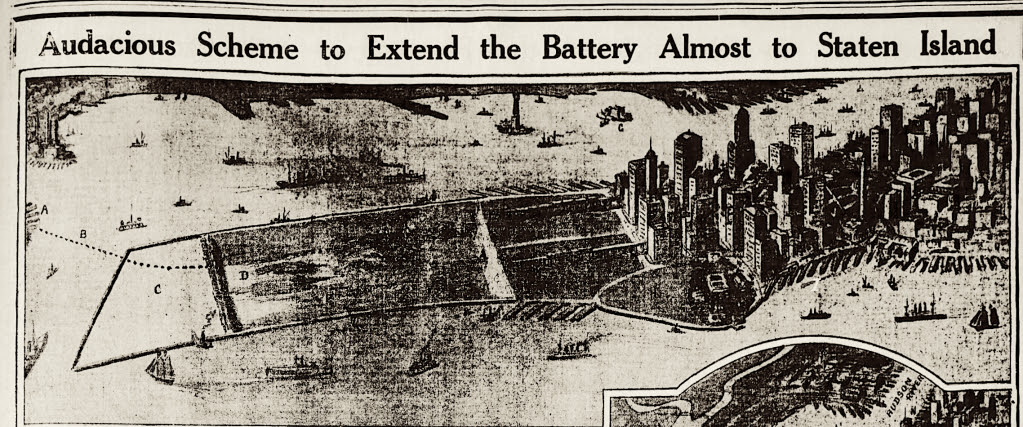
His proposal, popularized in a nationally syndicated newspaper article in June 1911, was to extend Manhattan four miles into New York Harbor, adding 4,100 acres to New York City’s most populated borough.
“The method of reclamation to be followed is extremely simple,” he told a reporter. “I would merely erect concrete seawalls from the Battery toward Staten Island for the desired length, and then fill them in.”
Thomson made his case by focusing on the taxes that could be collected on the additional land. But he was especially concerned with the journey ships took from the harbor to the docks in Manhattan.
Extending the island into the harbor while preserving a narrower ship canal above Staten Island would make it easier for ships to complete their voyage, he believed. The more ships that dock in Manhattan, the more enriched city coffers become.
Part of his proposal involved building a “six-track subway all around Manhattan Island, including the new extension. The subway would be built underneath the present dock line of the city.”
Visionary or pipe dreamer, Thomson was grounded enough to know that he needed city officials to get on board with his plan. The article states that his proposal was “under consideration, and other engineers who have looked into the matter regard it as entirely feasible.”
You can imagine what City Hall must have thought of this massive, likely quite expensive plan. But Thomson wasn’t finished coming up with new ideas for enlarging Manhattan.
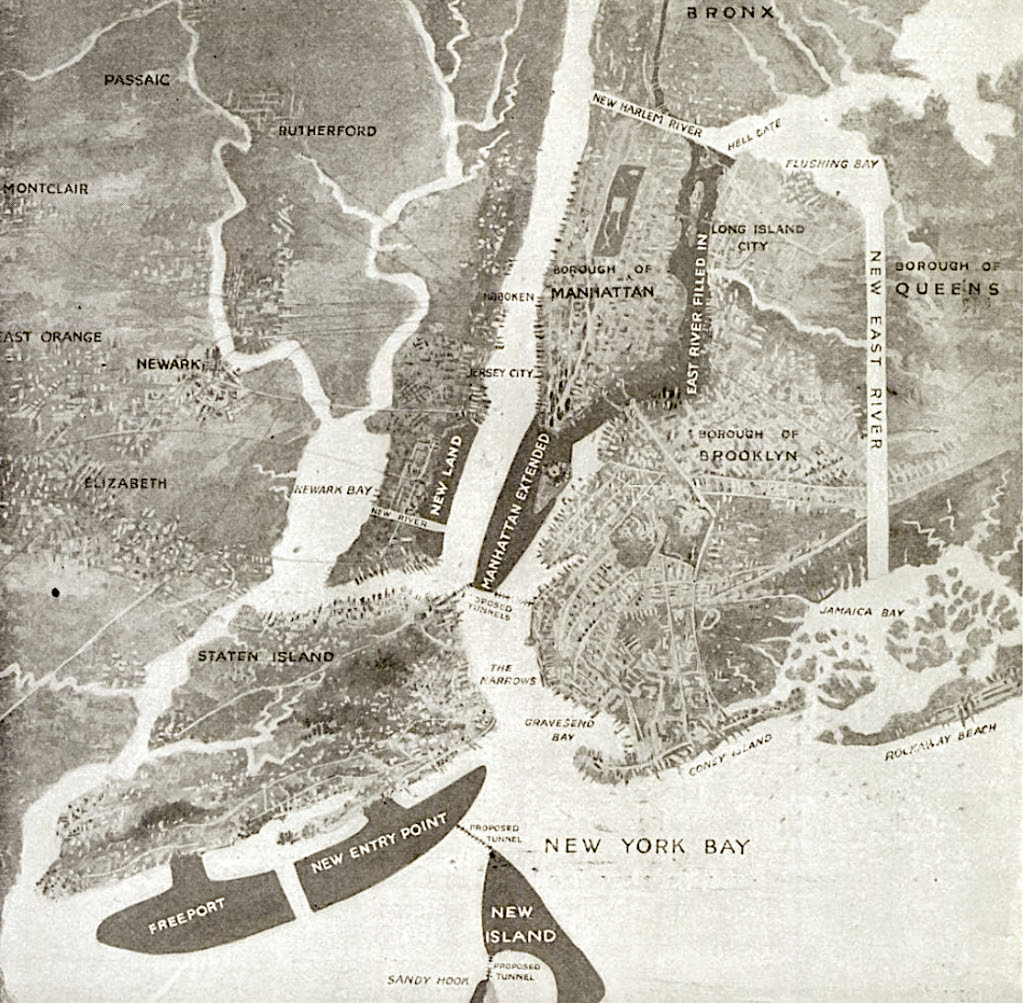
In 1916, he published a proposal in Popular Science not only to build into New York Harbor but to fill in the entire East River (third image), which would reclaim 50 square miles and create “a really greater New York.”
You know the end of this story. Like so many other fantastical ideas that never came to pass, Thomson’s second proposal never came to fruition.
[Top image: The Atlanta Journal; Second image: Geographicus.com; third image: Popular Science; Fourth image: New York Tribune]
All image are copyrighted (c) Roosevelt Island Historical Society unless otherwise indicated THIS PUBLICATION FUNDED BY DISCRETIONARY FUNDS FROM CITY COUNCIL MEMBER JULIE MENIN & ROOSEVELT ISLAND OPERATING CORPORATION PUBLIC PURPOSE FUNDS.
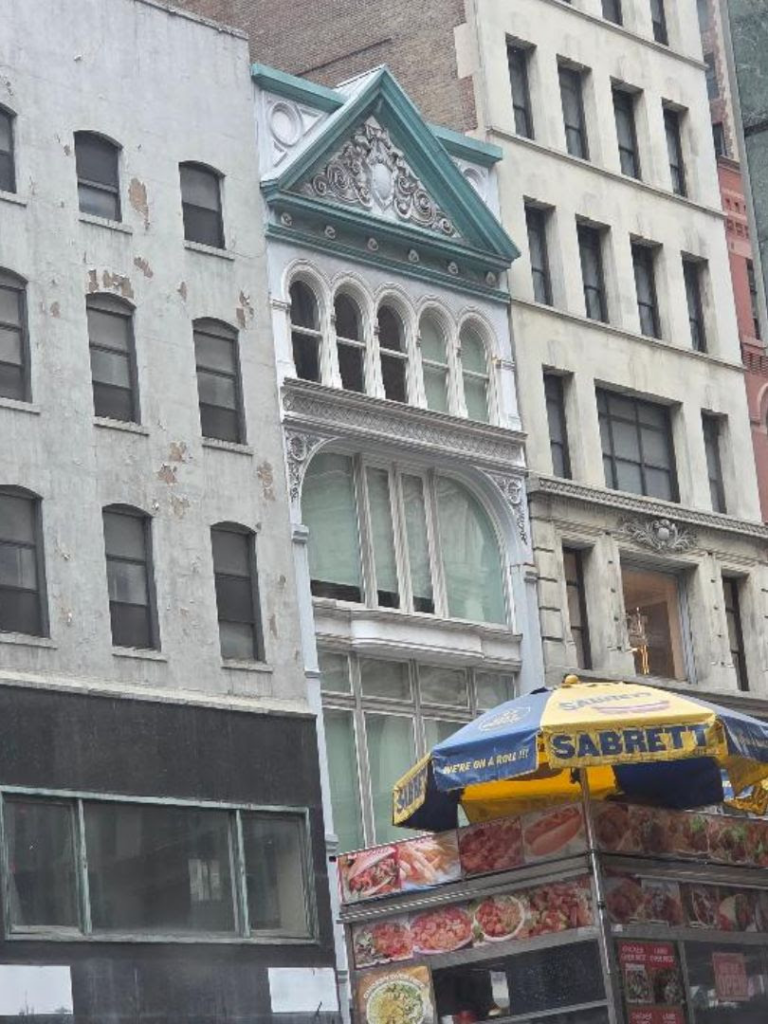
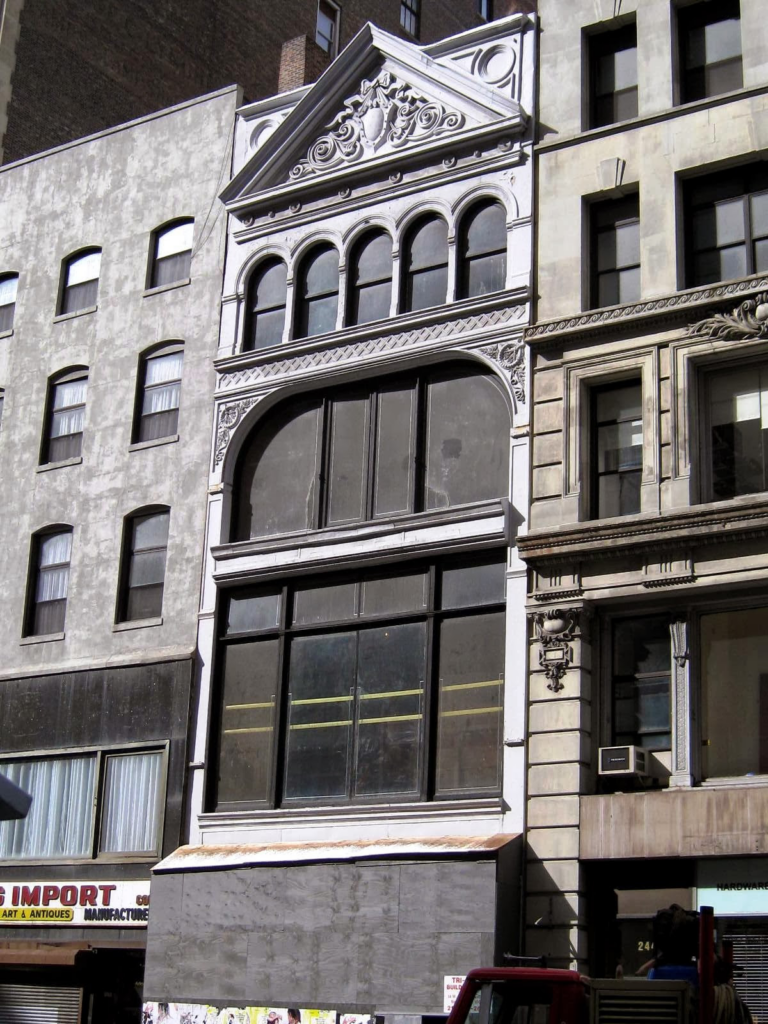
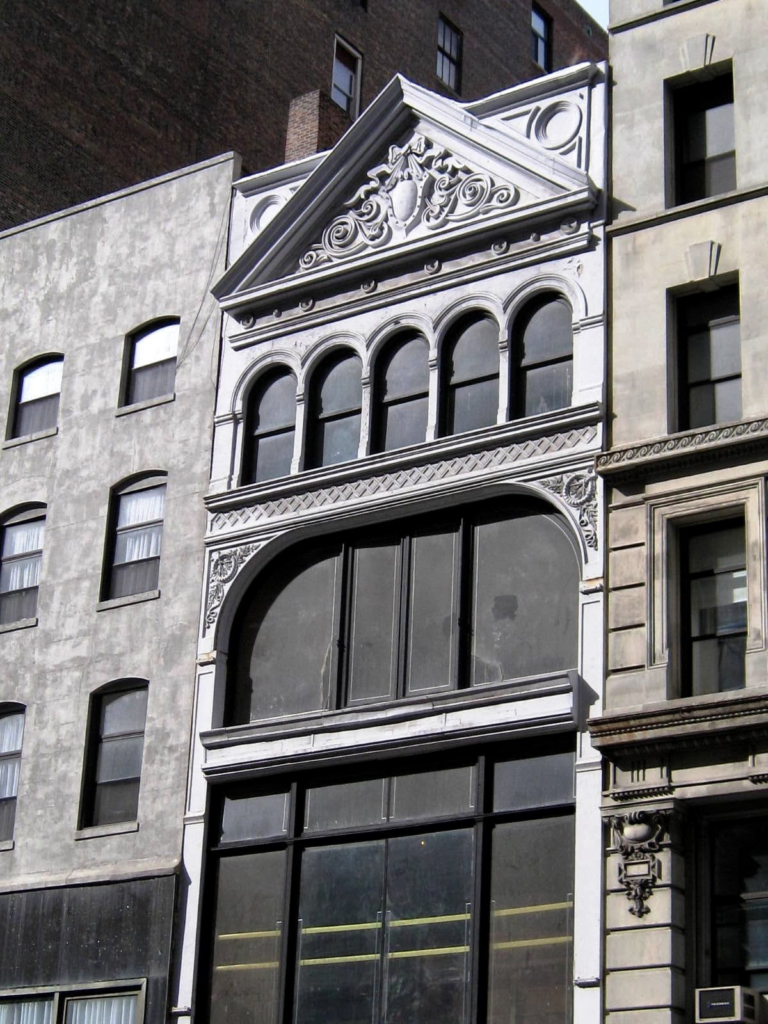
This morning I passed by 242 Fifth Avenue and sensed there must be a story about this lovely building between 27 and 28th Streets. There are many stories as you will read. (My photo from a cab, below)
There was some unpleasant business at City Hall in 1883 when it was discovered that city clerks and a few wealthy New Yorkers had committed fraud. John B. Carroll lined his pockets with graft while about $12,000 of taxes and water rents went unpaid. Another of the moneyed businessmen indicted was John C. Ely.
The New York Times reported on September 29 that year that “Mr. John C. Ely, who is mentioned in the indictment, is a large real estate owner in the north western part of the City. He has an office at No. 191 Broadway, and resides at No. 242 Fifth-avenue, a handsome brown-stone residence, near Twenty-eighth-st.”
The “handsome brown-stone residence” was typical of the neighborhood near Madison Square. Soon after the park opened in 1847 high-end homes began lining the surrounding streets. By 1870, when the park was re-landscaped, the northward-flowing tide of mansions had reached 28th Street. Frederick C. Colton, treasurer of the New York Bible Society lived in No. 242 at the time.
But now, in 1883 Manhattan’s millionaires had continued inching up the avenue and commerce was beginning to engulf the area. It would seem that the tax-evading Ely leased the house from Lucy Slade; but in any case soon after his name appeared in the newspapers he was gone.
The Presidential Election pitting Democrat Grover Cleveland against James G. Blaine was nearing and on June 26, 1884 The New York Times noted that the Republican National Committee had leased No. 242 Fifth Avenue the day before. The newspaper said “the building will be opened for the campaign as soon as possible. It is four stories in height and spacious enough to accommodate the army of clerks and employes which will be required to aid the committee. It is within easy reach of the hotels which cluster around Madison-square.”
The new committee headquarters was opened, symbolically no doubt, on the Fourth of July. Two weeks later the zeal of the Republicans caused no small bit of annoyance and inconvenience to neighbors. B.F. Jones decided that a huge banner with the portraits of Blaine and his vice-presidential candidate, Logan, should be stretched across the avenue for all to see. The owner of the house directly across the avenue refused to allow the banner to be bolted to his mansion; so it had to be erected diagonally across the thoroughfare to an apartment house.
On July 28 The Sun reported that “At 8:35 last night a sudden gust of wind slapped the Republican candidates in the face, pulled the iron fastening of the banner out of the apartment house wall, and brought things down with a crash on the electric light wires that cross the street. Mr. B. F. Jones’s wire cut half through the electric line. The cut wire sputtered like a blue light an instant, and then all the tall globed burners in the avenue from Madison square up to Forty-second street went out with a puff, and left the street nearly pitch dark.”
An engineer from the electric company worked on the dynamos until around midnight trying to correct the problem; then sent out an inspector. The cut wires could not be repaired until morning. “Meantime policemen did patrol duty in the dark, and pedestrians couldn’t make out any of the house numbers,” complained The Sun.
When the election was over and the committee gone, the estate of Lucy Slade conceded to the commercialization of the district and hired architect George Harding to convert the mansion for business. The brownstone façade and stoop were stripped off to be replaced by an up-to-date Queen Anne cast iron front.
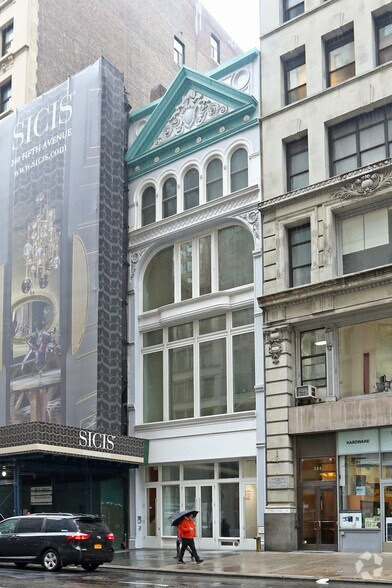
Completed in 1885, Harding’s handsome design focused on appropriate space for the high-end retailers now filling this section of Fifth Avenue. The street entrance featured modern multi-paned arcade windows below a deep panel of glass tiles. Immense expanses of glass, made possible by the cast iron, flooded the showrooms of the second and third floors with sunlight. Above a small cornice and arcade of five openings sat an exuberant parapet featuring a deep pediment filled with intricate ornamentation tied up with a cast iron bow.
The building would become a favorite with exclusive decorating firms, art dealers and auction houses. On March 25, 1886 The Times reported that “Several windows and other pieces of stained glasswork, designed and manufactured by Mr. John La Farge, are on exhibition at No. 242 Fifth avenue. The fine effect of color in these pieces are evidence of progress in America in this branch of art.”
The exclusive antiques and decorating firm of H. B. Herts & Son moved here from the Washington Square area. Stanford White would visit the store as he was furnishing the Metropolitan Club, completed in 1893. Among his purchases were several clocks and a sideboard that came from the Newport cottage of E. D. Morgan.
Around the corner, at No. 6 West 28th Street, was another high-end antiques dealer, E. J. La Place. Two years before Stanford White would shop for the Metropolitan Club’s furnishings, both stores were hit by a smooth jewel thief.
Nettie Kirby Hamburger was the wife of alleged diamond thief Ralph Hamburger, alias Robert Howe, alias De Ford. While Ralph Hamburger was locked up awaiting arraignment in 1891, his wife was busy on her own. Nettie browsed through the expensive items in the shops on Fifth Avenue and the neighboring streets. The well-dressed woman then dropped by pawnshops with valuable jewelry and other items as merchants realized they were missing stock.
A suspicious Detective Cottrell shadowed Nellie and recovered thousands of dollars of stolen merchandise including diamond earrings, a diamond brooch, two silver-mounted cologne bottles, a heart with nine large diamonds and other pieces. Among the loot was a gold chatelaine watch for which H. B. Herts & Son had paid $900—over $22,000 today. The Sun reported on July 29, 1891 that E. J. La Place was among the merchants who identified Mrs. Hamburger.
By now H. B. Herts & Son was operated by brothers Maurice A. and Jacques H. Herts. Upstairs architect Charles De Rahm had his offices.
In April 1901 H. B. Herts & Sons advertised “A Great Public Sale” at the American Art Galleries on Madison Square South. The firm had signed a lease for a smaller space which would not be ready until the fall “and being compelled to vacate their present building on May 1st” had to liquidate their entire stock.
The inventory list hinted at not only the firm’s expensive stock; but at its carriage trade customers. Included were Chippendale, Adam, Empire, Louis XV and XVI, Sheraton, English, Dutch and Colonial furniture; “rare old tapestries, English and Dutch silver, ivories, enamels, bronzes, beautiful clocks and clock sets, silks and brocades.”
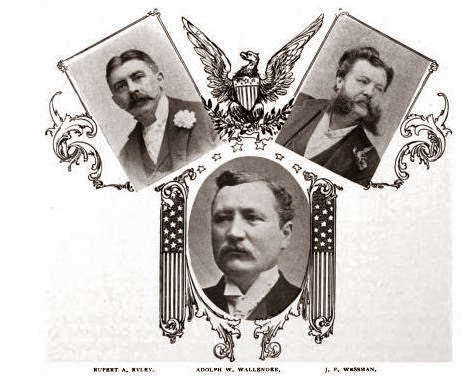
For several years, at least from 1902 through 1909, Rupert A. Ryley “men and women’s tailor,” operated from the building. Tailors on Fifth Avenue in 1902 catered only to the upper classes and Ryley and his wife summered in their own Newport cottage. The “merchant tailor” held memberships in the Manhattan, Democratic and New York Athletic Clubs and was active in Republican events.
A dashing Rupert A. Ryley (upper left) was possibly wearing a suit he created — photo from “The Great Sound Money Parade,” 1897 (copyright expired)
In May 1902 as his customers prepared for the warmer months, Ryley advertised “golfing, sporting and outdoor costumes. Riding habits and suits for men and women a specialty.”
Interestingly, in 1903 Auctioneers James P. Silo and A. W. Clarke advertised their sales here as being in the “Rupert A. Ryley Building.” At the same time The Yale & Towne Mfg. Co. opened its showroom in the building. The firm dealt in “artistic hardware of higher grades.” In 1903 it invited is customers, “especially architects and their clients,” to avail themselves “of the improved facilities thus offered for the selection of locks and hardware for buildings of all classes.”
The fashionable address may have been ill-fitted for a hardware showroom, for Yale & Towne seems to have quickly moved on.
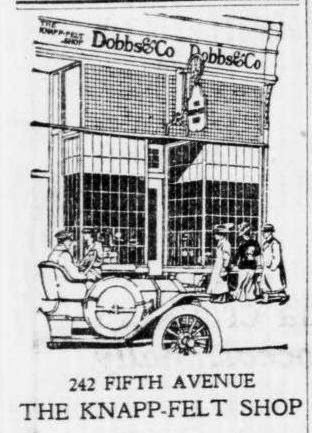
Haberdashery Dobbs & Co. moved into the building in 1908, taking the ground floor retail store. Best known for their gentlemen’s hats, the firm offered items like “silk hats, opera hats, caps, canes and umbrellas.” In the fall of that year Dobbs & Co. promised in an advertisement “The quality is superb and the styles are of unquestionable taste and propriety.”
A Dobbs & Co. advertisement in the New-York Tribune on September 30, 1911 shows the arcade entrance — copyright expired
As automobiles began replacing carriages and the wealthy accepted the new trend, Dobbs & Co. was quick to cash in. On April 19, 1909 an advertisement in the New-York Tribune offered “Owners’ watertight cloth coats and chauffeurs’ complete outfits, together with many practical novelties in Automobile Apparel.” But it reminded customers of what had made it so successful: hats. “Derbies and Soft Hats $6, $4, in a variety of smart shapes in exquisite taste and of superb quality.” The $6 derby would cost about $150 today.
Dobbs & Co. moved next door to No. 244 Fifth Avenue around 1914. In its place, Edmond P. La Place, who, with Herts & Son, had been robbed by Nettie Hamburger years before, moved in. In announcing its new home, E. P. La Place listed “period furniture and faithful reproductions, Sheffield plate, antiques, interior decorations—curios, prints, period mirrors, oriental porcelain, tapestries, etc.”
E. P. La Place antiques would remain here until Edmond La Place’s retirement in 1921. The entire collection was auctioned off on Wednesday, April 13 of that year.
In the meantime, Darling & Co. auctioneers was operating from the building. The firm was renowned for liquidating the estates of the wealthy and famous. On May 27, 1919 The Evening World reported that “Thousands of dollars’ worth of gifts, including rare bronzes curios and period furniture, as well as diamonds and other jewels, belonging to the late “Pommery” Bob Vernon, sportsman, horseman and champagne agent” would go under the hammer here the following day.
The first day of that auction netted $11,698 and the Tribune noted that “Evelyn Nesbit Thaw bought several Chinese vases, silver, rugs and trophies.”
The expansive windows exhibited valuable furnishings and artwork–just no nudes.
A month later Darling’s prepared to auction the estate of Princess de Chimay (who was Clara Ward of Detroit before her marriage). The princess had married violinist Rigo “who was dear to the princess after she fled from her prince husband,” explained the Washington Times on June 27. Rigo was the beneficiary of her estate and “it was announced that he will play his fiddle on the last day of the sale.”
The auction included about $200,000 of the princess’s personal effects, including furnishings from her “splendid home in Paris and in Egypt on the Nile.” But it was her portraits that got Darling’s into trouble.
The Washington Times reported “Half a dozen portraits in the nude of the late Princess de Chimey…were placed on sale at auction yesterday…Louis Van Brink, the auctioneer, was quite unhappy because he could not exhibit these works of art in the window and draw a larger crowd.”
When the auctioneer had placed one of the portraits in the window (which Van Brink complained was “not so very nude either, for the princess was wearing a green girdle”) the vice society agents made a visit. The auction house was informed that the painting would have to be removed from public sight if the managers “wanted to avoid trouble.”
In 1920 playboy millionaire Joseph Browne Elwell, whist expert and turfman, was found murdered in his home. A pistol was found at the scene, along with a woman’s kimono. Elwell’s housekeeper told detectives that the kimono “was the property of a woman who made occasional visits to the Elwell house.” They were also interested in a life-sized painting of a “beautiful woman” that hung in the house who was unidentified.
The furnishings, artwork and personal effects of the Elwell mansion were auctioned at Darling’s in October 1920. Somewhat astoundingly, at least to 21st century minds, the evidence in the still-unsolved murder mystery was included in the sale.
On October 2 the New-York Tribune reported “A high-backed upholstered chair and a silk kimono, embroidered in blue and black after a Chinese design, made their appearance yesterday in the show window of Darling & Co., auctioneers, 242 Fifth Avenue, and of all the hastening thousands who glanced casually at the rugs and porcelains and figures that formed the remaining decorations of the window there were few who even noticed that the chair and the kimono had been added to the collection.
“Fewer still knew that they constituted chapters in a murder mystery which set New York by the ears less than four months ago—perhaps the opening and the closing chapters.”
The chair was the one in which Elwell had been sitting when a bullet was fired into his head. The Tribune mentioned both the kimono and the revolver, as well. “The identity of its owner is as much of a mystery as that of the owner of the revolver with which Elwell was shot. It was found in a room reserved for women who came to visit Elwell. No one ever has claimed it and it is listed among his belongings which Darling & Co. are to sell at public auction.”
Although the Elwell auction included priceless items, like a Rembrandt, it was the evidentiary pieces that drew attention. Following the auction the New-York Tribune reported that the kimono had sold for $423.50, and the painting of “the woman in gray” was sold to a man from Fort Worth, Texas for $335 (about $3,300 today).
Following the death of Oscar Hammerstein in August of that year, his widow placed an enormous amount of furnishings and artwork in the hands of Darling & Co. Along with “magnificent home furnishings” were Carrara marble statuary, sterling silver tea and coffee services, Napoleonic drawing room furnishings and rare bronzes and works of art. Mrs. Hammerstein included some of her husband’s invaluable possessions. “Among the articles on view will be a score of ‘Lucia’ in manuscript form, said to be a copy penned by the composer, Donizetti; an old violin, a Chinese vase eight feet tall and a life size bronze statue of Faust and Marguerite, listed as having won first prize at an exhibition at Le Brousse,” said The Sun on August 11, 1920.
A year later more of the impresario’s collection was auctioned here. The Evening World reported on September 14, 1921 “A Steinway concert grand opera piano is one of the relics that are to come under the hammer. It may have been the instrument upon which Mr. Hammerstein once composed an entire opera at a single sitting.
“A gold watch presented by the attaches of the Harlem Opera House, on May 8, 1890, has a catalogue number in the same sale.” There was a massive two-handle sterling silver cup that had been presented to Hammerstein by the Manhattan Grand Opera Company on April 20, 1907. It bore the signatures of the most illustrious opera figures of the day. Included in the 28 signatures were those of Campanini, Melba, Calve, Bassi, Giaconia and Muzzio.
By now the high-end jewelers and art dealers had moved further north; taking over Fifth Avenue’s grandest mansions and pushing its millionaires even further up along Central Park. The days of expensive antiques and artwork were coming to an end for No. 242 Fifth Avenue.
In 1922 the G. L. B. Manufacturing Company was operating here, manufacturing dresses. Three years later the ground floor was updated and the charming arcade windows were removed. The second floor was slightly altered at the same time.
Further ground floor alterations would occur in the 20th century and in the 1980s Bank Leumi operated a branch here. Then around the turn of the 21st century the building was boarded up. For a decade the structure sat empty and neglected.
Finally, in 2012 a group of investors, “the Pan Brothers,” purchased the building and announced intentions to convert it into four luxurious residential units above the first floor commercial space. Work commenced in 2013 when the boards were pulled off and the rusting cast iron façade was restored.
Above street level George Harding’s 1885 transformation of the old brownstone mansion is essentially intact. And the wonderful cast iron bow in the triangular pediment is fresh again.
CREDITS
Daytonian in Manhattan
PHOTO OF THE DAY
A SNOWY AFTERNOON
All image are copyrighted (c) Roosevelt Island Historical Society unless otherwise indicated THIS PUBLICATION FUNDED BY DISCRETIONARY FUNDS FROM CITY COUNCIL MEMBER JULIE MENIN & ROOSEVELT ISLAND OPERATING CORPORATION PUBLIC PURPOSE FUNDS.
Photos courtesy of the Flatiron NoMad Partnership by Bizi Media
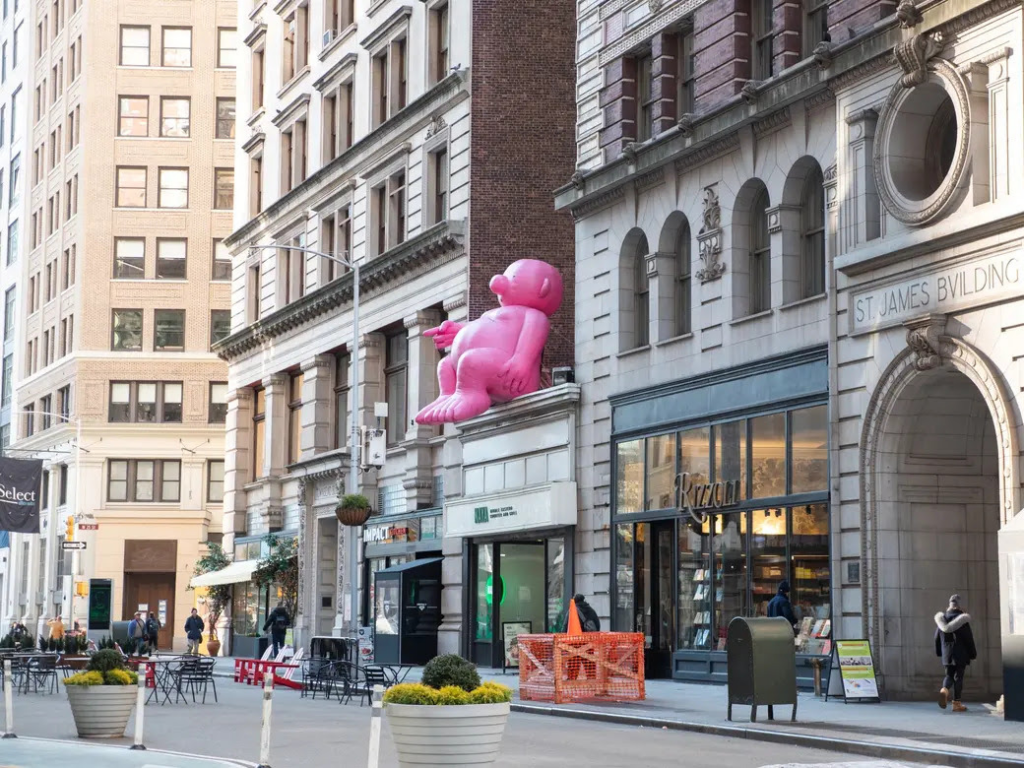
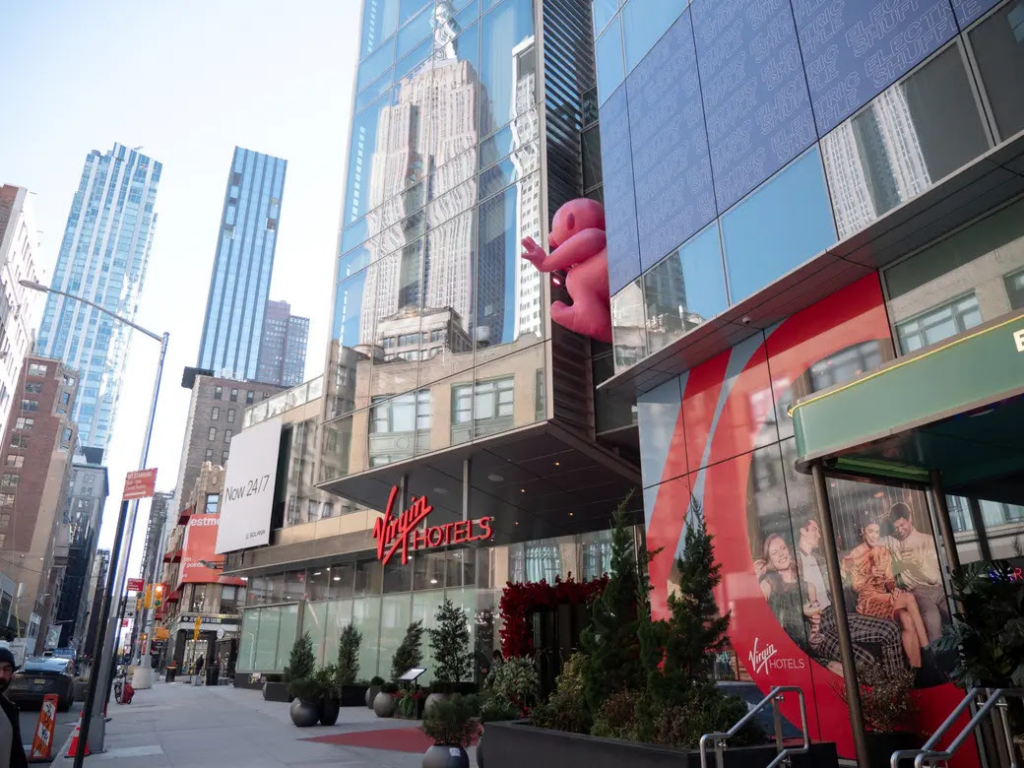
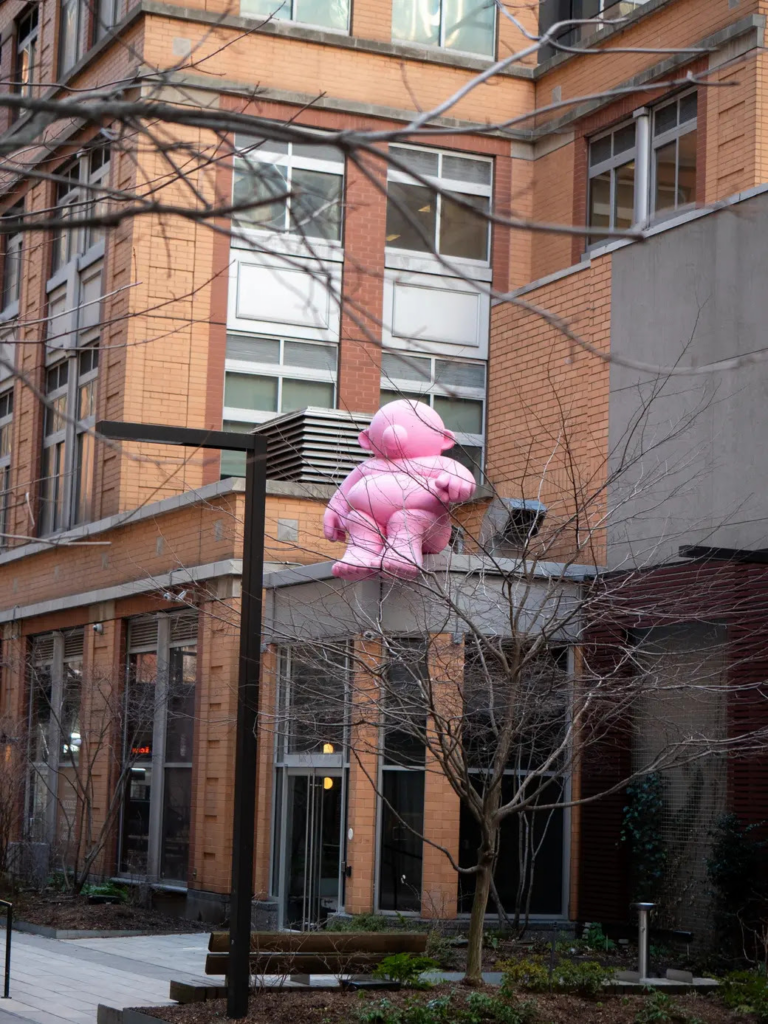
You’re not seeing things—there is, in fact, a rosy-colored man lurking around Flatiron and Nomad. Known as Mr. Pink, the quirky character is part of Flatiron NoMad Glows Pink, a public art trail composed of 10 illuminated inflatable and resin sculptures perched on rooftops and in public spaces. Part of the Flatiron Nomad Partnership’s annual Winter Glow public art program, “Mr. Pink” is a “cuteism” sculpture by French artist Philippe Katerine, and Thursday marks the character’s first installation in New York City—it’s also the first time the sculptures will be illuminated.
Cuteism,” also known as “Mignonisme,” is a movement that embraces color, creativity, and playfulness in everyday life. From rooftops and public plazas, Mr. Pink invites New Yorkers to see their city in new ways, encouraging joy and connection while adding a burst of color to the streetscape during the colder months. Standing nine to 16 feet tall, each sculpture also provides a photo-ready moment for visitors.
“Mr. Pink is like all of us,” Katerine said in a press release. “He carries a scar on his heart—a reminder that we have all, at some point, been wounded. Like us, he seeks acceptance and a place to belong in the world. His rounded shape and wide-eyed expression invite playfulness, while the weight he bears hints at a gentle melancholy.”
He added, “Mr. Pink engages directly with those he encounters. If he waves, he asks for a response. If he opens his arms, he offers comfort. If he points the way, it is to remind us that there is always a direction, always a place where providence can be found. Encountering Mr. Pink in a city is never a coincidence.”
Mr. Pink will be here for six weeks, and his arrival kicks off with a celebration in the Flatiron North Plaza at 4:30 p.m. on Tuesday. During his stay in the neighborhood, visitors can embark on a self-guided art trail, and those who scan QR codes at all 10 installations will be entered into a raffle for prizes, including a complimentary two-night stay at Hotel Seville Nomad, which has also introduced a “Pretty in Pink” cocktail.
Other special offers include in-house experiences for guests at Virgin Hotels New York, free customization of select drinkware at YETI Flatiron, and limited-edition Mr. Pink keychains from Swingers Crazy Golf NYC. Additionally, the neighborhood will host a special Valentine’s Day activation at Flatiron North Plaza featuring themed installations and photo opportunities.
“By animating our rooftops and plazas with bold, joyful art, we’re supporting local businesses, energizing public space, and shining a light on what makes these districts so iconic,” James Mettham, president of the Flatiron NoMad Partnership, said.
Here’s where you can spot Mr. Pink:
Flatiron North Plaza, 23rd St. and Broadway
Flatiron Mini Plaza, 22nd St. and Broadway
Hotel Seville NoMad, 22 E 29th St.
Kew Management, 1129 Broadway
Porcelanosa, 202 Fifth Avenue (featuring two Mr. Pink structures)
The Capitol Plaza, 50 W 27th St.
The Church of the Transfiguration, 1 E 29th St.
Virgin Hotels New York, 1227 Broadway
BXP,200 Fifth Avenue
“Public art is essential to creating streets and public spaces that are welcoming and reflective of New York City’s creativity, especially when it invites people to linger, explore, support local business, and connect with one another,” former Department of Transportation Commissioner Ydanis Rodriguez said.
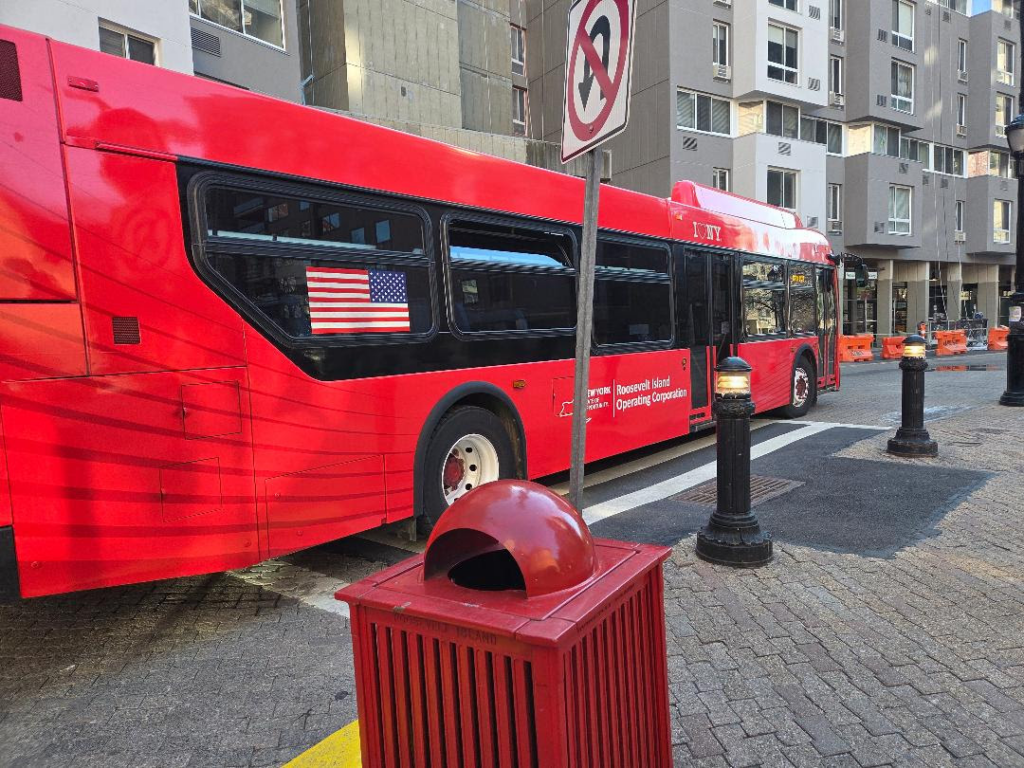
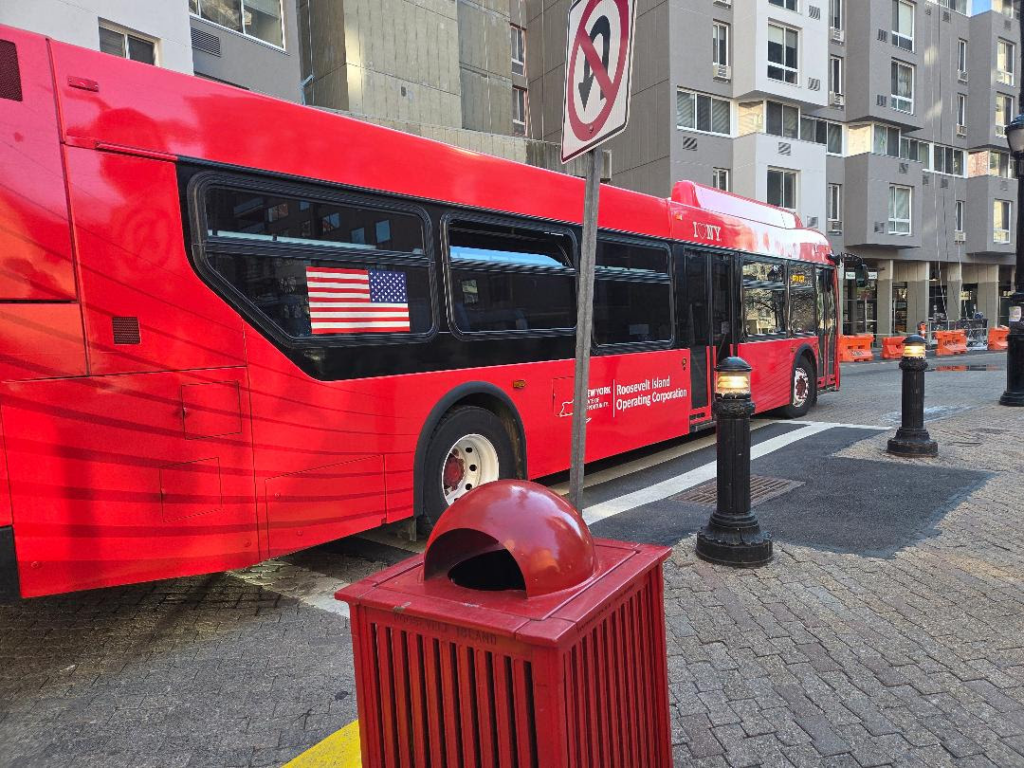
BRIGHT AND SHINY RIOC BUS #8 JUST BACK FROM A MAKEOVER WITH A NEW PAINT JOB!!!! WE LOVE THE BUSES WITH THE ON WALL SEATING!!!
All image are copyrighted (c) Roosevelt Island Historical Society unless otherwise indicated THIS PUBLICATION FUNDED BY DISCRETIONARY FUNDS FROM CITY COUNCIL MEMBER JULIE MENIN & ROOSEVELT ISLAND OPERATING CORPORATION PUBLIC PURPOSE FUNDS.
Every month this year, Untapped New York will release a new essay from Jo Holmes about the life and work of the late architect Richard Roth, Jr. of Emery Roth & Sons. Each essay explores a different building or developer from Richard’s career, intertwined with stories of his personal life and snippets of exclusive interviews conducted by Holmes and Untapped New York’s Justin Rivers (which can be viewed in our on-demand video archive). Check out the whole series here!
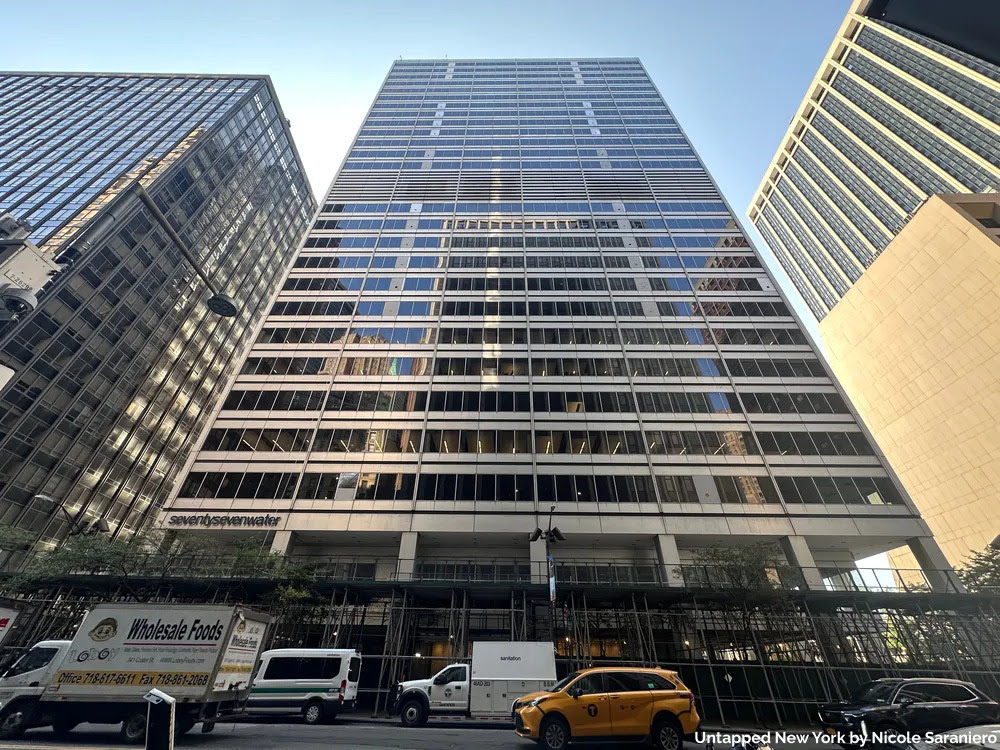
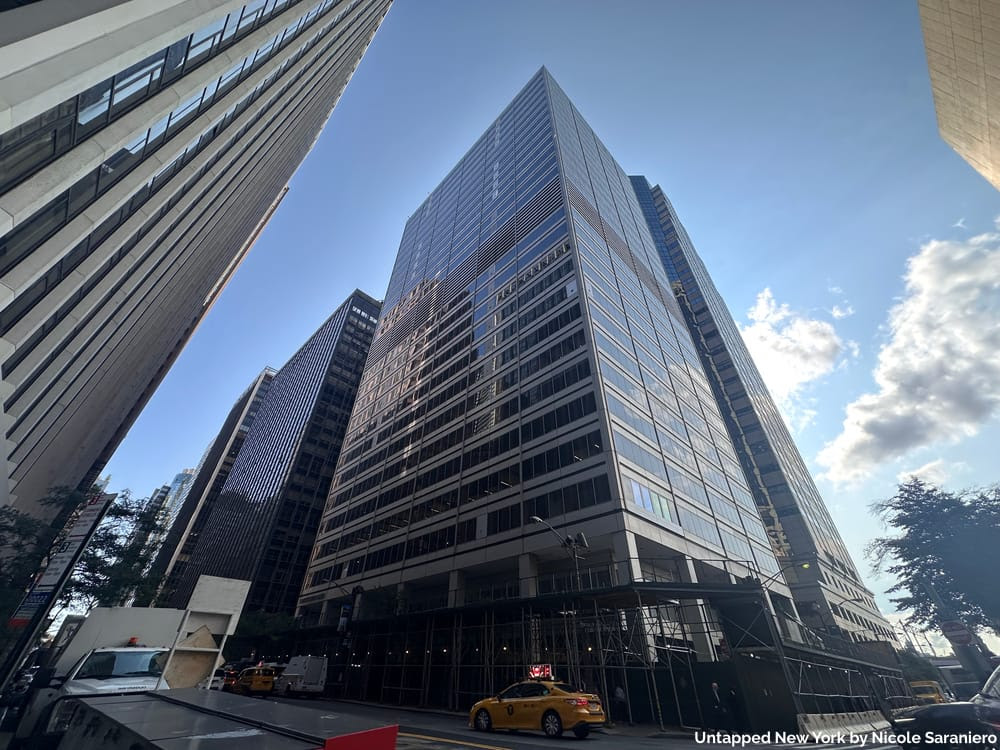
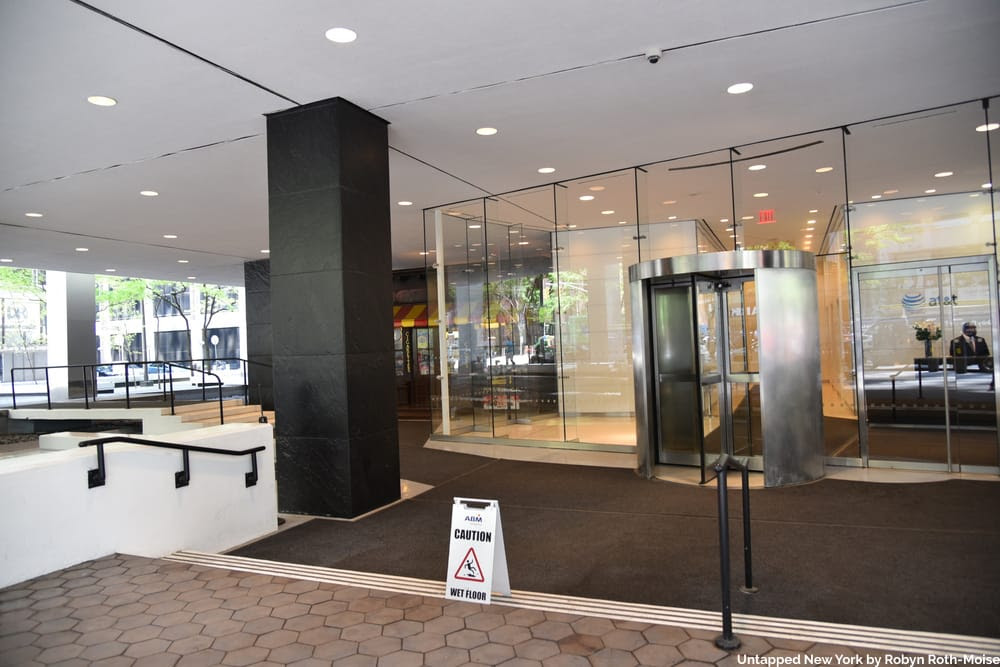
A Unique Persona 77 Water Street in lower Manhattan was the second project Richard Roth Jr. worked on with eccentric developer Mel Kaufman. The 26-story office building has some unusual features—the kind of visual ‘jokes’ which became Kaufman’s trademark. The two men became good friends through their work. Richard likened Mel, ten years his senior, to his ‘fairy godfather’ as the developer brought so many projects his way. That’s not to say it was all smooth sailing. It was surprising they ever got together in the first place.
An Unexpected Call That Richard and Mel ever worked together was an unlikely turn of events. During the New York building boom of the late 1950s, seven real estate family firms built 75-80% of the commercial properties in Manhattan. “Emery Roth & Sons worked with six of them, and we did all the buildings for three of them,” said Richard. “But we’d never worked with the William Kaufman Organization.”
Mel’s father, William, and Richard’s grandfather hadn’t gotten along very well, and Richard’s father and Mel didn’t get along either. In fact, Richard Sr. went so far as to say they couldn’t stand each other.
So, it came as a shock when Mel contacted Richard Jr. out of the blue.
“I went into my father and said, ‘Mel Kaufman just called, and he wants to interview us.’ And my father said ‘No, he doesn’t want to interview us, he wants to interview you…’”
So, the two men met. “We went through our brochure–I felt like I was selling clothes. He saw a building I had designed a couple of years before that never got built, for the Wilmington Bank & Trust Company in Wilmington, Delaware. It was kind of a Yamasaki-like building,” Richard described. Mel decided he wanted it for a lot at 437 Madison Avenue. Though the design comprised only ten stories, zoning rules allowed for another 20 to 30. Richard pointed out the shortfall. “Mel said, ‘Well, I’m sure you can do it.’ So, he hired me, and he liked the building, and I liked Mel.”
A Joint Venture
Richard recollected that things got off to an interesting start with 77 Water. “I sent Mel the contract. Now, our standard contract in the office was about 18 pages. Very simple, very direct. It basically said what we wouldn’t do. I got a contract back from Mel’s lawyer that was probably 200 to 300 pages. I called Mel up and I said, ‘Mel, your lawyer just sent me your contract…You’re not paying me enough money for me to read this,’ and he said, ‘I agree with you. I’ll sign your contract.’”
The building had what Richard described as a ‘Miesian-type skin’—in other words, a minimalist glass and steel exterior. So far, so ‘ordinary.’ But Mel decided to put something on the roof, visible only to people working on higher floors in surrounding taller buildings. He commissioned a life-size model of a World War I airplane (a Sopwith Camel). It was assembled off-site and lifted into position by crane.
The Plane as seen from a neighboring building circa 2015
The plane caused quite a headache for Richard as the building’s construction neared completion. “I got a call from our building department man one day, and he said we couldn’t get a temporary certificate of occupancy for the building because we’d got an open runway on the roof and that was illegal,” Richard explained. “I said: It’s not a real airplane. He said, ‘It still looks like a runway. It’s got a number on it.'” Richard suggested putting a cross on the runway would show it wasn’t in use. The building commissioner agreed. “He said, ‘Send me a plan with an ‘X’ and you’ll get your certificate of occupancy.’” It’s unclear whether there’s ever been an X on the roof itself…
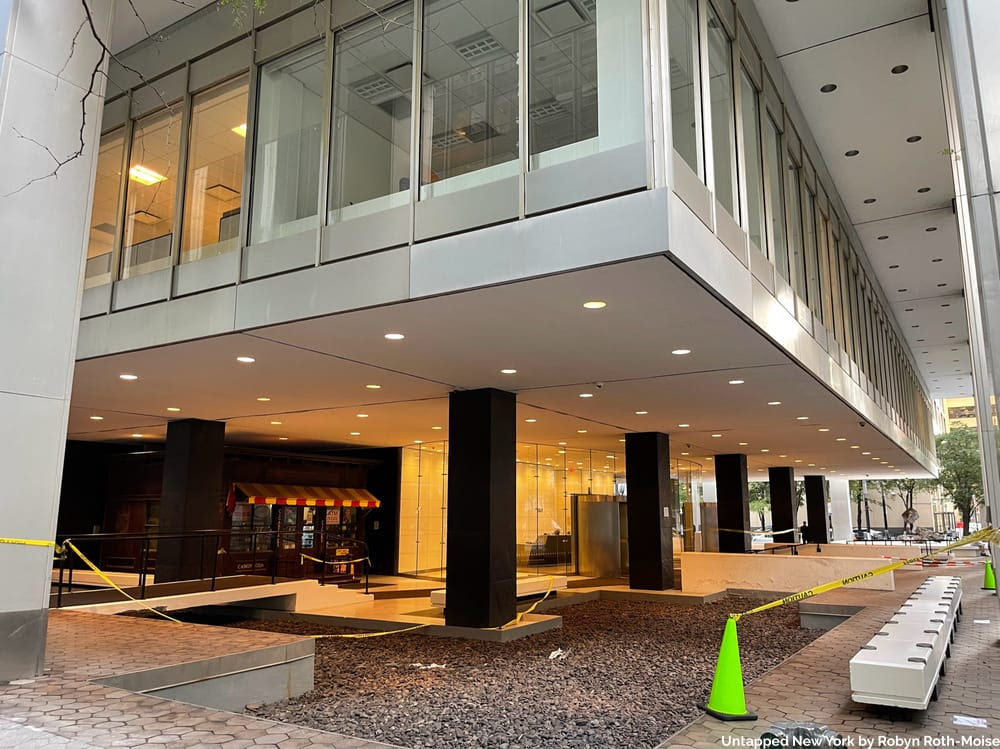
Mel wanted to entertain at ground level, too. He didn’t like retail space and especially disliked the trend of having marble and granite lobbies, tellingThe Times in 1971, “Marble and travertine mausoleums are bad for the living and terrific for the dead.” For 77 Water Street, he wanted a space open to the elements. Richard asked him what would happen in winter. Mel’s idea was to have revolving doors you could move in and out of, according to the season. (Following 9/11, it was necessary to enclose a lobby area.)
77 Water Street before recent construction
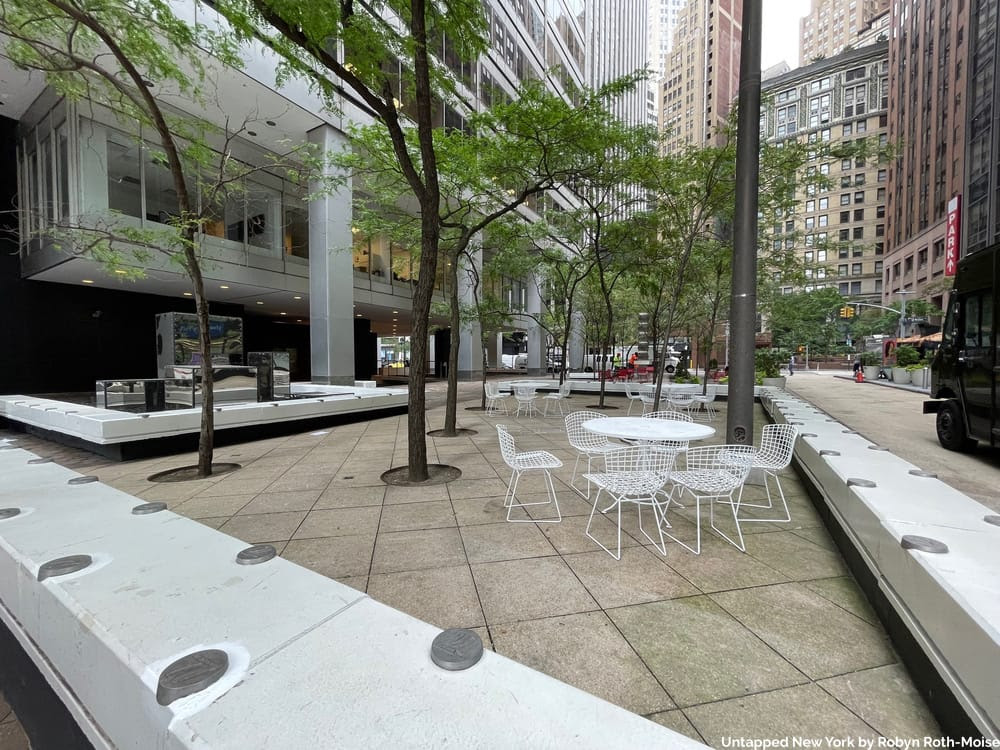
Having created a large plaza, Mel and Richard decided to soften it by planting nearly 60 trees. “The trees arrived on a Friday evening after everybody had gone home, and the only person there was a nightwatchman,” said Richard. “A second truck pulled up later, and the new truck driver said, ‘Thirty of the trees are diseased, we’ve got to take them back’. So, they took a bunch of the trees that had just been delivered and put them on the second truck and had the nightwatchman sign a piece of paper. Monday came, and somebody said, ‘Where are all the trees?'” Richard said the nightwatchman innocently explained they’d been taken away because they “weren’t any good.” The thieves were never traced.
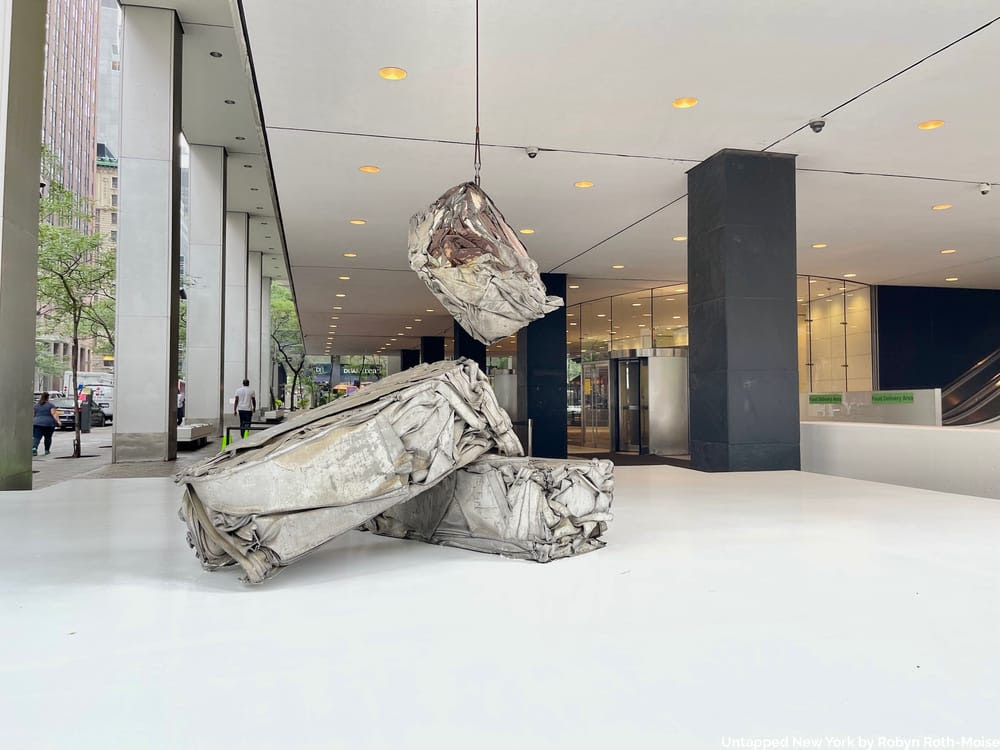
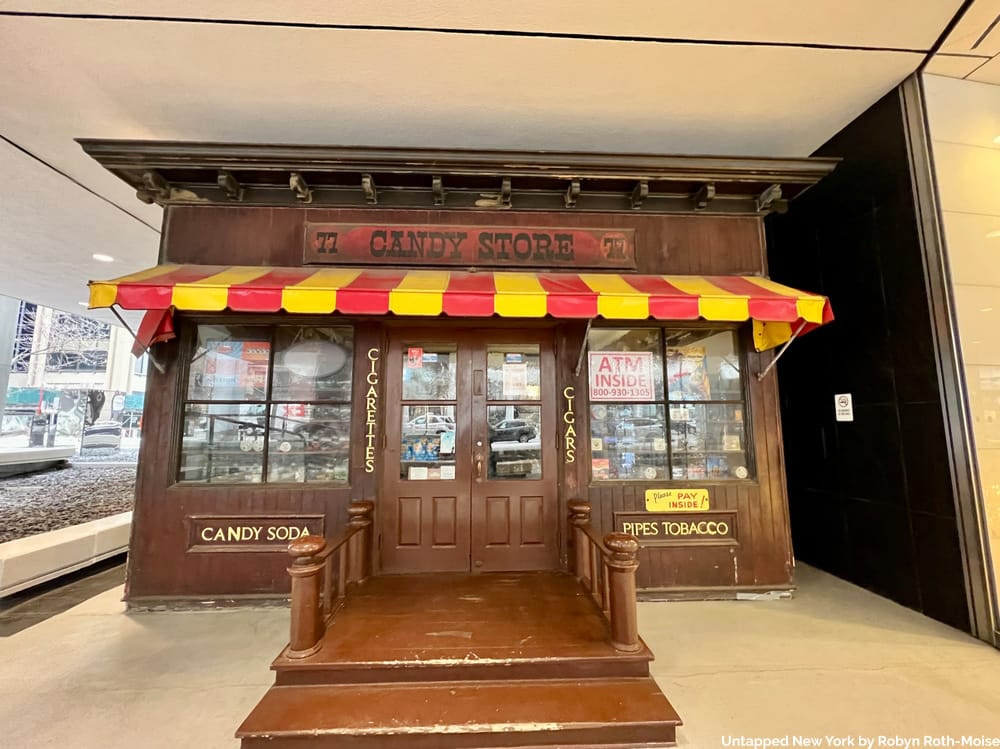
Other quirky features included an old-fashioned candy store, artificial streams, and footbridges. According to The Municipal Arts Society, Mel said his goal for 77 Water was “to make the building disappear…The scale of any large office building is impossible for a human being to relate to. Our plaza is inviting, exciting, warm, and friendly. It makes people forget they’re at an office building.”
77 Water Street’s Candy Store before construction. This store is now closed.
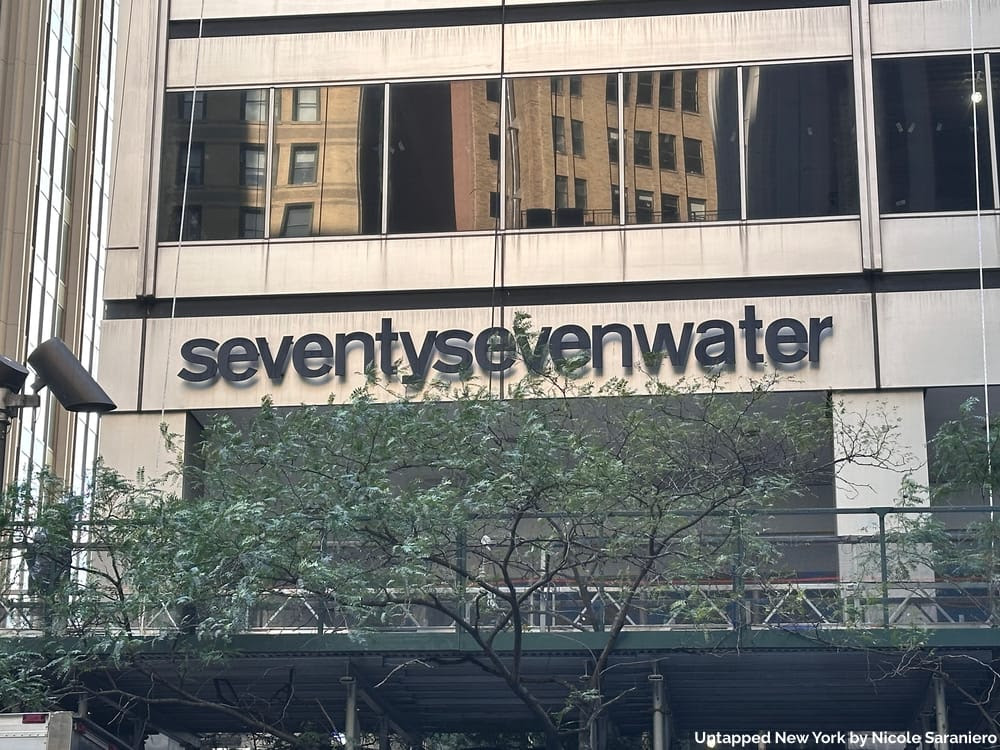
The office building is currently being transformed into roughly 650 rental apartments. From peeking through the construction barriers, it appears that all of the art installations at ground level have been removed, and when we visited the site in September, the inside of the store was empty and the lights were off.
A representative from Vanbarton, the building’s current owner, confirmed that the candy store has closed and the owner is operating a convenience store at another location. The airplane model on the roof has sadly been deconstructed. “As part of our redevelopment process, we carefully explored options to preserve or repurpose the rooftop plane model and the candy store,” Vanburton’s statement reads, “Unfortunately, both were in a very advanced state of deterioration, making restoration unfeasible…While they could not be saved in their original form, we appreciate the fond memories and community connection to them, and are committed to honoring the character and history of the building as we move it into its next chapter.”
Robyn Roth-Moise, Richard Jr.’s daughter, will miss the character of Kaufman’s buildings. “The novelty of his lobbies is all but gone, his crazy sidewalks that would bring a smile are all gone. He provided public art that amused and entertained,” she remembers. “It’s a shame that the plane was not taken care of. I know things can’t and don’t stay the same, but I mourn these losses.”
A Visual Joke
After 77 Water Street, Richard and Mel worked together on 747 3rd Ave. “Mel decided that everything that goes through the lobby, like the air conditioning and the plumbing, would be exposed. So, the lobby became like walking into some type of building workshop,” Richard said.
“We had two revolving doors, and when you walk through a revolving door, there’s a space between them.” Richard suggested putting a life-size nude in the space in between them. “Since you always go in the right one and you come out the left one, you’re always facing away from where the nude is.” He wasn’t serious, but Mel thought it was a great idea! And Richard’s theory worked. “A friend of mine, Bud, ended up working in that building. After he’d been there a year, I said ‘Bud, have you ever noticed the nude?’ He said, ‘What nude?’”
Courtesy of the Roth Family Archives
Mel wanted the plaza to have a ‘hilly’ landscape. Richard wasn’t happy. “I knew people would be tripping and falling…and suing. I said to him, ‘If you’re blind, you got big troubles here.'”
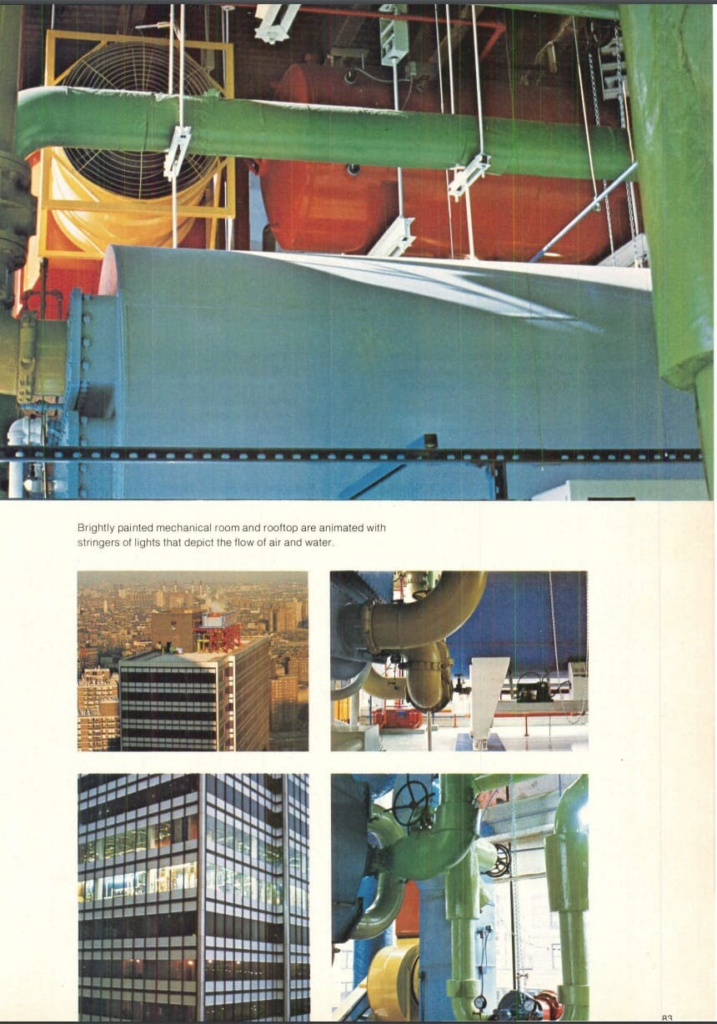
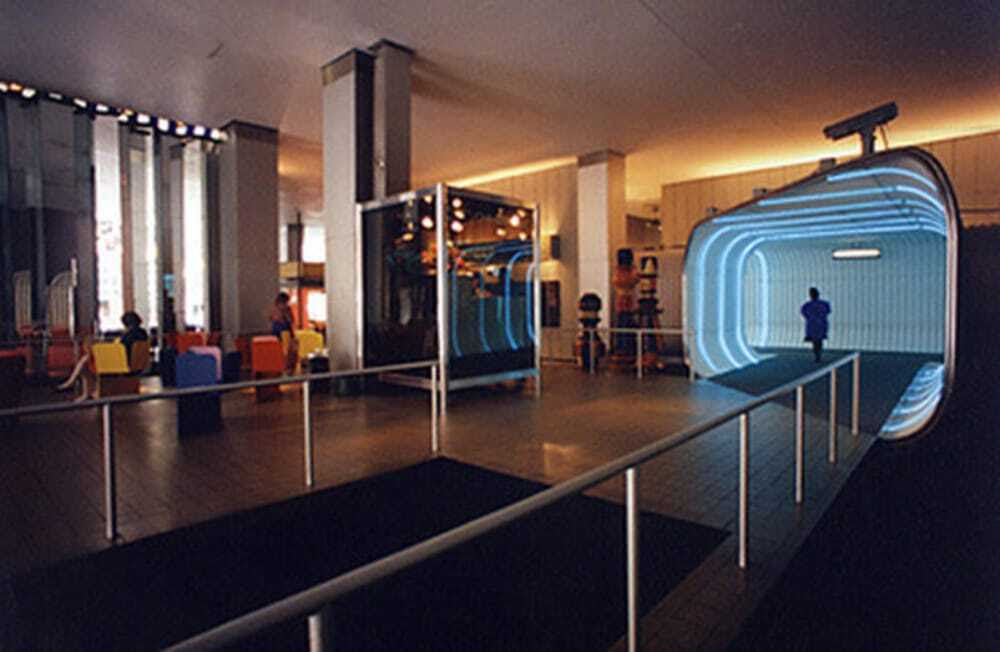
The next building the pair worked on together was at 127 John Street, or rather, 200 Water Street. Mel wouldn’t buy a site where he couldn’t have a ‘7’ in the address, so the main entrance was on Water, but the official address was around the corner. The lobby was like a Quonset hut and included a neon-lit tunnel and elevators. The mechanical floors were painted in wildly bright colors. And Mel had a sculpture of himself in a chair reading a paper installed on the plaza. “After the eighth or ninth time the 1st Precinct had been called about a dead person on the plaza, the NYPD asked Mel to please remove it,” laughed Richard. (The other features have long been updated, too.)
Courtesy of the Roth Family Archives
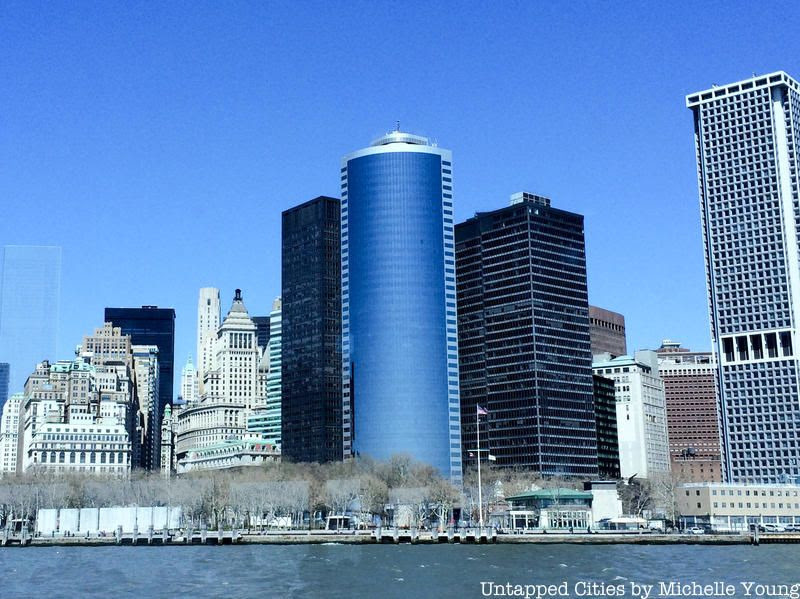
The last building Richard worked on with Mel was 17 State Street, which will be covered later on in this series. The building was, and is, distinctive for completely different reasons.
17 State Street at the Center
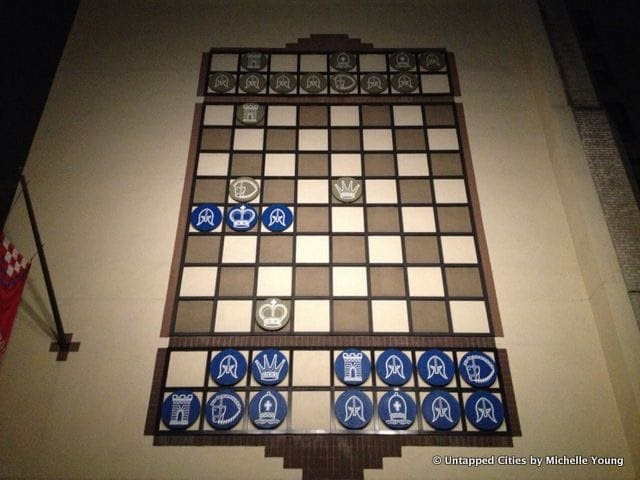
Richard said Mel really kept them interested. “He truly allowed you to think outside the box, when for most clients in New York, you had to think inside the box, because the buildings were basically boxes!” With a giant chess set, outsized swing, and futuristic clock among his unorthodox components, his buildings are useful ‘landmarks’ for New Yorkers.
A New Direction
Richard also got Mel involved in a project that would lead to a new role for the developer. Richard was teaching a class at Cornell. “I was the visiting critic in the 4th year class…And I decided it would be good for the kids to listen to somebody critique their designs besides an architect.”
Richard invited Mel to come up one day. “He kind of pooh-pooh-ed it, but then he said, ‘Why not?’ So, Mel came up, and we must have spent about eight hours there! Mel went out and bought pizza and beer for everybody. And had a ball.” Richard suggested Mel enjoyed having a captive audience. Mel then got a job at Pratt and other schools as a visiting critic. In this role, he met artists he commissioned to create pieces for his buildings, including lighting designer Howard Brandston, graphic designer Rudy de Harak, and sculptor Pamela Waters.
A Rapprochement
Exactly why Richard Roth Sr. was initially hostile towards Mel is unclear. Richard said his father could be somewhat ‘strait-laced’, and Mel was the opposite. “Mel had the foulest mouth,” said Richard. “The only person I knew who had a fouler mouth was Donald Trump.”
As time went on, things changed. “Mel was unique. A lot of people thought he was crazy (which is possible!). I mean, I loved the man. And he got to love my father. In fact, when my father was honored at a charity event before he retired, Mel was asked to do the dedication. He wrote the most beautiful, heart-warming speech about my father, calling him one of the great architects.” At the end of the day, though, Richard Jr. was keen to emphasise that Mel was his client. Not only that, but he was his favorite client.
CREDITS
JO HOLMES
PHOTO OF THE DAY
BRIGHT AND SHINY RIOC BUS #8 JUST BACK FROM A MAKEOVER WITH A NEW PAINT JOB!!!! WE LOVE THE BUSES WITH THE ON WALL SEATING!!!
CREDIT
UNTAPPED NEW YORK JO HOLMES JUDITH BERDY
All image are copyrighted (c) Roosevelt Island Historical Society unless otherwise indicated THIS PUBLICATION FUNDED BY DISCRETIONARY FUNDS FROM CITY COUNCIL MEMBER JULIE MENIN & ROOSEVELT ISLAND OPERATING CORPORATION PUBLIC PURPOSE FUNDS.
Every month, Untapped New York will release a new essay from Jo Holmes about the life and work of the late architect Richard Roth, Jr. of Emery Roth & Sons. Each essay explores a different building or developer from Richard’s career, intertwined with stories of his personal life and snippets of exclusive interviews conducted by Holmes and Untapped New York’s Justin Rivers (which can be viewed in our on-demand video archive). Check out the whole series here!
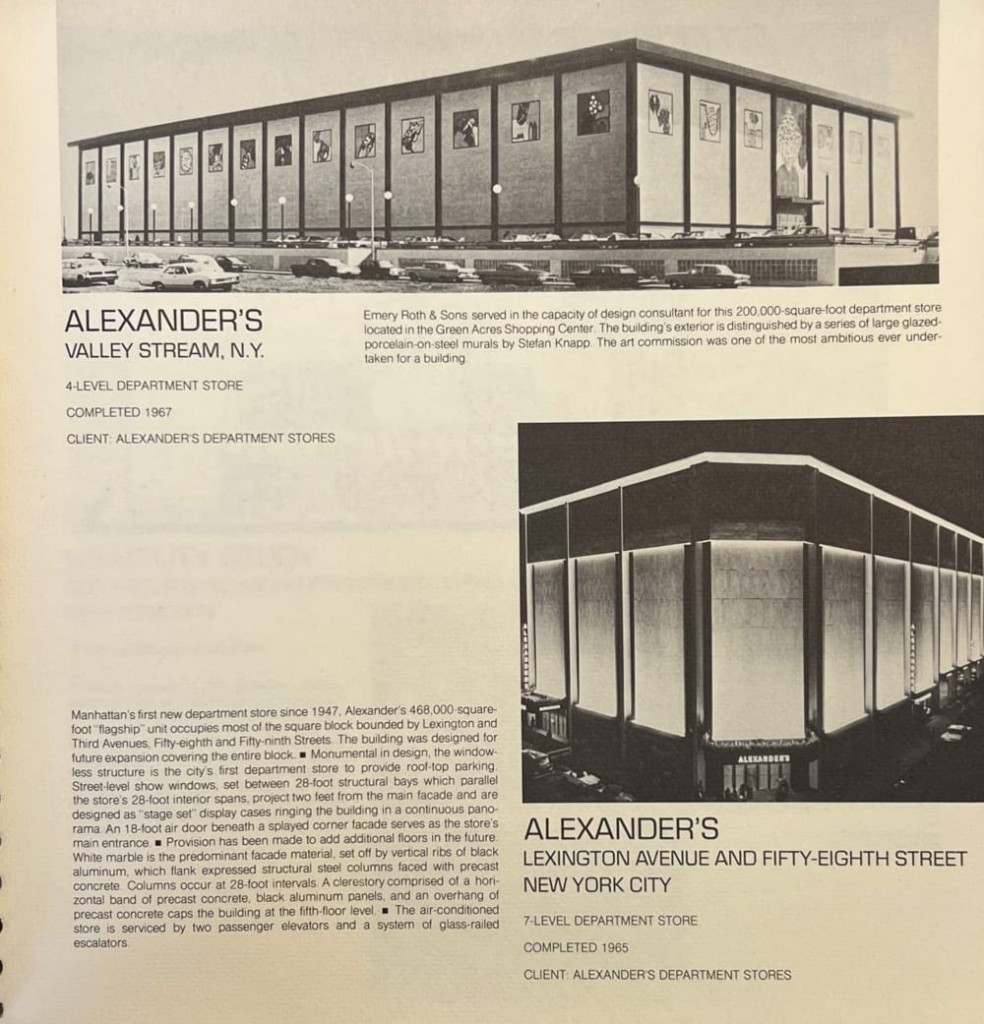
A Flagship Store Richard Roth Jr. was undoubtedly a people person. While he was proud of the work he did, he was also delighted by the relationships forged throughout his life. One such friendship grew from his involvement with Alexander’s department stores, specifically the flagship building in Manhattan. It was through that project that he met Op artist Stefan Knapp, who would become a lifelong family friend. In fact, many of Richard’s closest friends were artists. He found commissioning artworks for the lobbies and plazas of the buildings to be among the most gratifying parts of the job.
In 1963, Emery Roth & Sons ran a competition to design a building for popular retailer Alexander’s in Midtown Manhattan. It would become the flagship store. Until then, the main store had been in the Bronx, with an additional ‘out of town’ location in New Jersey. Subsequently, Richard designed Alexander’s stores in Valley Stream (1967) and Kings Plaza (1968), as well as the branch housed in the Mall at the World Trade Center (1974).
Image from the Roth Family Archives
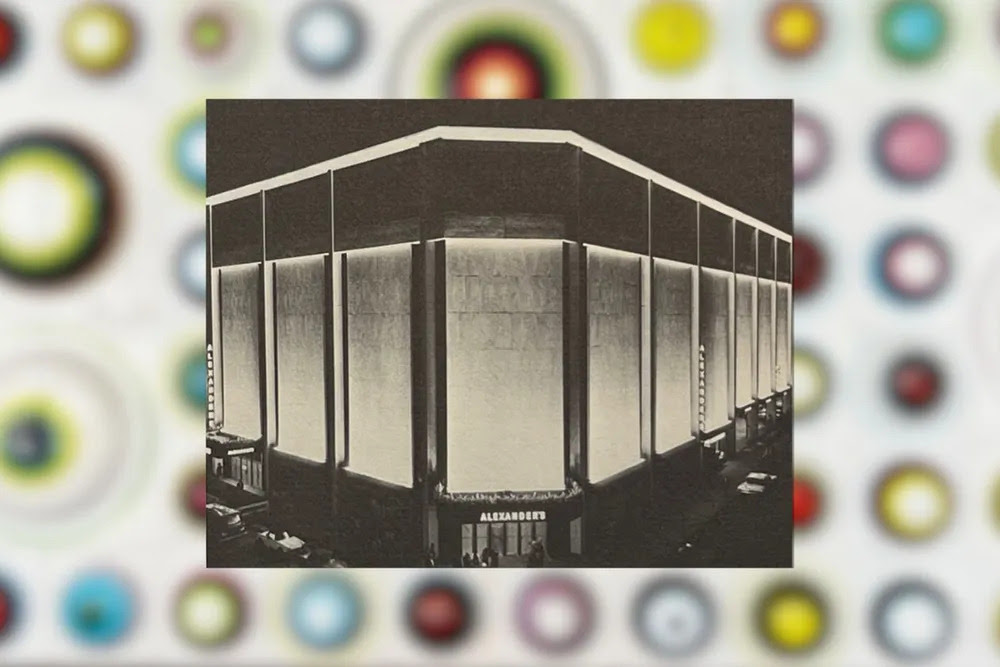
The winning design for the Midtown site at 731 Lexington Avenue (on the corner of 58th Street) incorporated room for a piece of artwork on the façade. Sandy Farkas, son of Alexander’s founder, George Farkas, wanted to use designs by Salvador Dali.
“Dali had done 17 murals which he’d sold at a sort of bargain basement price to Sandy,” Richard said. “Sandy wanted to transpose those murals onto the side of the building—he wanted to turn them into mosaics as he’d seen in Florence.” Richard was concerned by how long that process would take, given the sheer size of the murals. “It seemed Dali didn’t want to do it either,” Richard explained.
An Awkward Encounter
Sandy decided to ask another artist, Stefan Knapp, to recreate the Dali murals. Knapp was a Polish-born painter and sculptor who developed and patented a technique of painting with enamel paint on steel. He created a series of murals for London’s Heathrow Airport in 1959 (‘Murals 1959’) and for the New Jersey Alexander’s store. Unsurprisingly, Knapp was not thrilled to be asked to replicate another artist’s work—even Dalí’s.
“I walked into a meeting with Farkas at Alexander’s head office at 500 7th Avenue and found Dali there. Knapp, whom I had really just met the week before, was sitting outside. It was pretty awkward,” Richard remembered. “In the end, nobody did it—and the Farkas family sold the Dali pieces for a fortune!”
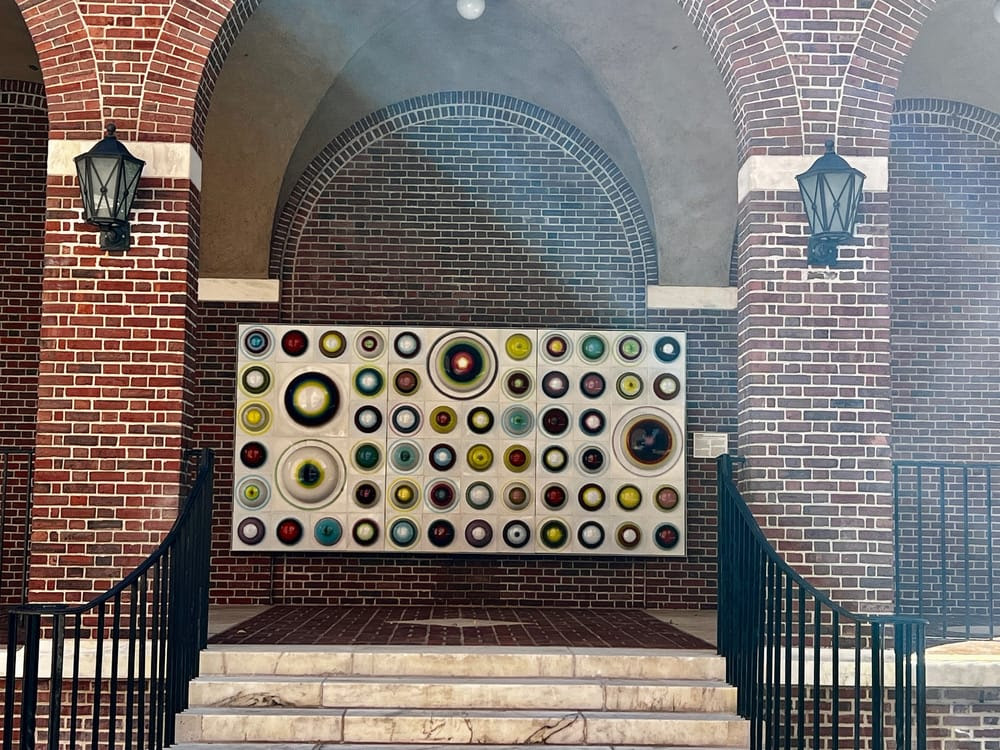
Instead, Alexander’s commissioned an original work by Knapp. The piece was composed of more thant 400 large white panels with rows of colorfully enamelled steel domes. Architecture critic Paul Goldberger wrote in The New Yorker that “the whole thing looked like a billboard filled with eyeballs or hubcaps or salad bowls. It was easily the most monumental piece of Op Art in New York.”
Op Art, or Optical Art is an abstract style that became popular in the 1960s. It is characterized by geometric shapes and high contrast colors that often create optical illusions that warp the viewer’s perception. In addition to Knapp, other artists working in this mode included Victor Vasarely, Bridget Riley, and Yaacov Agam.
A panel from Knapp’s mural on display at the Museum of the City of New York, Photo Courtesy of Robyn Roth-Moise
Alexander’s Manhattan store opened in 1965, shortly before the company went public in 1968. Founder George Farkas always purchased the land and property for his stores rather than leasing simply the storefronts, creating a valuable real estate portfolio. Interstate Properties took over the stores in 1980 to maximize the value of the company’s real estate.
Steven Roth (no relation to Richard) was at the helm of Interstate at the time and would later become the largest commercial landlord in New York City at the helm of Vornado Realty Trust. Donald Trump even held a significant stake for several years, but, having used it as collateral, was forced to hand it over to settle a loan in 1991.
The flagship store, along with all other Alexander’s locations, shut down in 1992 when the company was forced into bankruptcy. While the stores have disappeared, some of the artwork survives.
A New Lease of Life
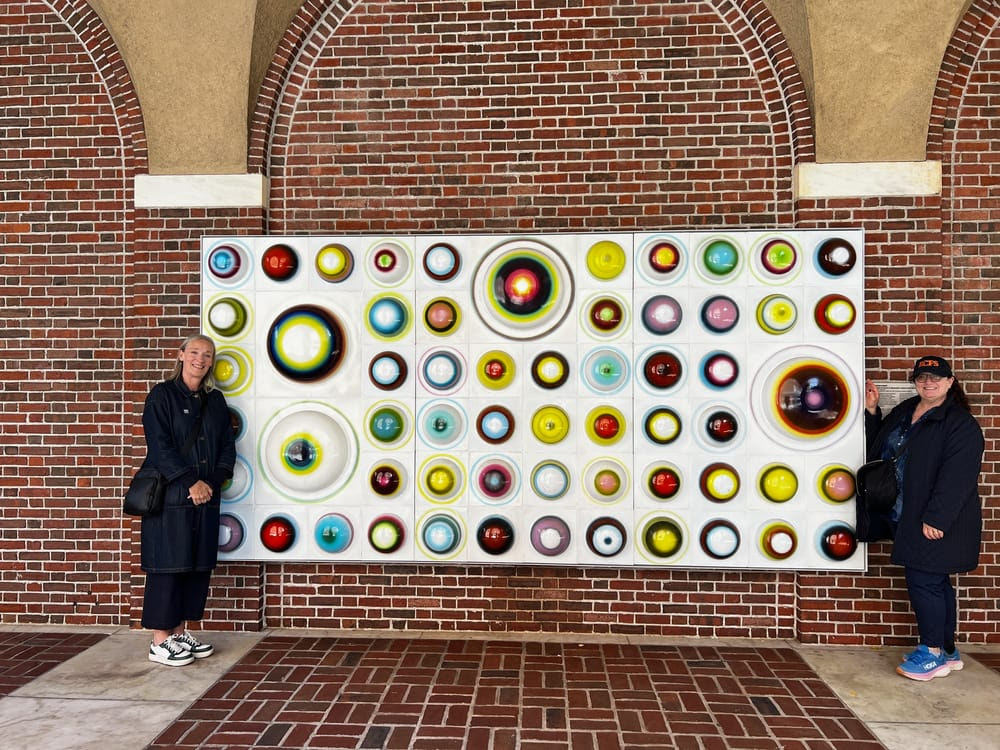
One of the Stefan Knapp panels from the Manhattan store is at the Museum of the City of New York. According to Paul Goldberger, writing in The New Yorker in November 2000, Manhattanite art collector Barbara Jakobsen acquired 80 of the domes from art dealer Mark Macdonald and reconstructed a panel in her garden. Macdonald got hold of the domes from the demolition contractor. The panels on display at MCNY were donated by Jakobsen and unveiled in 2023.
A few panels from a vast mural that once graced the New Jersey Alexander’s store have been restored and installed at the new Valley Hospital in Paramus. More of Knapp’s work can found in the collections of museums around the world, including at the Museum of Modern Art in New York, the Stedelijk Museum Amsterdam, and the Tate Gallery in London.
The author Jo Holmes (left) and Richard’s daughter, Robyn Roth-Moise (right), posing with Knapp’s work at the Museum of the City of New York
Over the course of the Alexander’s project, Knapp became a great friend of the Roth family. Richard was fascinated by Knapp’s life experiences. As a teenager, he had spent time in a Siberian gulag. Released in 1942, he ended up in the United Kingdom and joined the Royal Air Force, serving as an officer and Spitfire pilot. After the war, he stayed in London and studied at the Royal Academy and the Slade School of Fine Art.
“We were as close as two people could be,” said Richard. Knapp even lived in the Roth’s apartment for a time. Richard was Godfather to Knapp’s son Robin. Richard and his wife, Alene, spent many summers with Stefan and his wife, Cathy, when the Knapps had an apartment in Le Lavandou in the South of France.
Richard recalled a scary incident where Knapp had a life-threatening tooth infection. Richard remembered seeing a body bag in the hospital room. Thankfully, Knapp made a full recovery after a surgery performed by the head of dental surgery at Lenox Hill. (Shockingly, the surgeon himself was killed in a flying accident just a few hours after the operation.)
An Artistic Temperament Perhaps given his own artistic abilities, it’s no surprise Richard had many friends in the art world. “My friends were not so much in the architecture field. I had more friends who were artists…You know, we had a lot in common. We could talk. And I enjoyed their company.”
Occasionally, he would work in exchange for pieces of art. “One of my closest friends was Richard Anuszkiewicz, and he asked me to design his studio in New Jersey in exchange for a painting. I said yes, why not?”
Anuszkievic was an American painter, printmaker, and sculptor of Polish descent, one of the founders of Op Art. Life magazine described him as ‘one of the new wizards of Op’ in 1964. He exhibited at the Venice Biennale, Florence Biennale, and Documenta. His works are in permanent collections around the world.
“I was out there supervising it one weekend, and I noticed that people were digging underneath the foundation.” The studio was built on a hill behind the house. “I asked Anuszkievic what they were doing. He said, ‘My father’s doing that—he’s creating a basement.’ I said, ‘It’s gonna fall over!'” Anuszkiewicz’s father—then in his late eighties—was trying to create more space. “Luckily, I got up there before the whole thing just toppled down the hill!”
“I also designed the Fischbach Gallery on 57th Street in exchange for a painting,” Richard said. The Fishbachs were the largest electrical contractors in New York City at the time, and Richard had actually designed an extension for their house in Westchester. “And I designed an apartment for Harry Fischbach, the father, in exchange for getting electric work done in my apartment!”
Richard was good friends with gallerist Denise René. “She ran one of the leading modern art galleries in Paris. She represented all the optical art painters.” René was opening a gallery in New York, and Richard acted as an unpaid consultant. In return, Denise gave Richard and his family a number of items, including some small steel sculptures by Hungarian ‘cybernetic’ artist Nicolas Schöffer. A while later, Schöffer himself came to a gathering of artists at Richard’s New York apartment, where one of his pieces was on display on a coffee table. “All of a sudden, he turned it round. Apparently, we’d always had it back to front!” laughed Richard.
Another friend was the sculptor Art Brenner, who lived in France for a good many years. “Part of the fun of going to Paris was to see Art. He ended up living on a barge there. His original studio and apartment at 17 Rue d’Aboukir was around the corner from Les Halles, and it was wonderful,” described Richard. He was thrilled to have experienced the famous market before it was demolished in 1973.
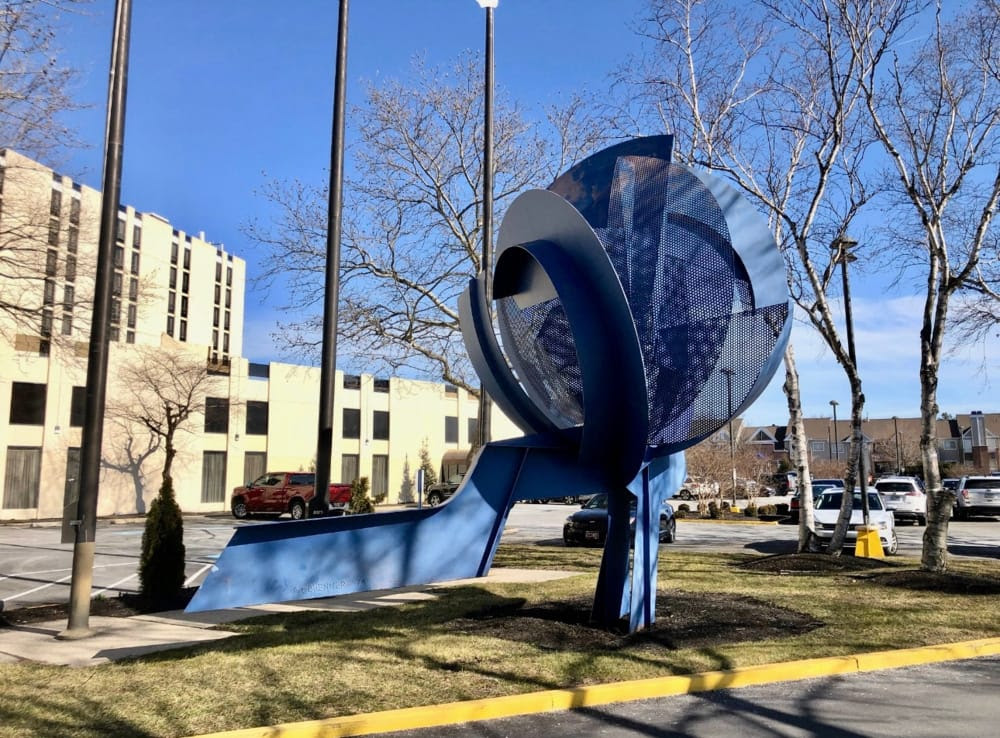
In 1974, Richard commissioned Art to create a large sculpture to sit outside a hotel near the Philadelphia airport. Unfortunately, Richard’s clients had altered his designs for the hotel. “They decided to cheapen the façade,” said Richard. “So, I said, ‘Art, I want you to make something as big as possible because they’ve screwed up the building and I wanna hide the building as much as possible.’ So, he did this huge thing about 30 feet by about 20 feet in height. And it was orange, so your eyes go right to it.” The sculpture, which Brenner called ‘Atlas X,’ has since been moved to another nearby hotel’s parking lot and painted blue—likely to coordinate with the Hilton branding. Richard had a small maquette of the sculpture.
Atlas X by Art Brenner, Photo by Robert Morbeck
A Lifelong Passion
As someone who had contemplated a career as an artist, Richard instinctively took a keen interest in any artwork planned for his buildings. One of the reasons he enjoyed working with maverick developer Melvyn Kaufmann was Kaufmann’s passion for incorporating ‘decorative’ features. For 77 Water Street, they worked with lighting designer Howard Brandston, graphic designer Rudy de Harak, and sculptor Pamela Waters.
Richard was especially excited by the installations at The Pan Am building, including the sculpture ‘Flight’ by Richard Lippold and a large mural by Josef Albers. He loved the ‘dandelion’ fountains he’d commissioned for the plaza at 1345 Avenue of the Americas, formerly Burlington House. “They really were beautiful and, when it was hot, and the wind would blow, people would sit to the lee of them so the water would spray on them.”
CREDITS
JO HOLMES
PHOTO OF THE DAY
BRIGHT AND SHINY RIOC BUS #8 JUST BACK FROM A MAKEOVER WITH A NEW PAINT JOB!!!! WE LOVE THE BUSES WITH THE ON WALL SEATING!!!
PHOTO OF THE DAY TUESDAY
NCL CRUISES PRIVATE ISLAND GREAT STIRRUP CAY BAHAMAS
CREDIT
NEW YORK ALMANACK JUDITH BERDY
All image are copyrighted (c) Roosevelt Island Historical Society unless otherwise indicated THIS PUBLICATION FUNDED BY DISCRETIONARY FUNDS FROM CITY COUNCIL MEMBER JULIE MENIN & ROOSEVELT ISLAND OPERATING CORPORATION PUBLIC PURPOSE FUNDS.
Spread over an archipelago of islands nestled amongst the marshes of the northern Adriatic coast, Venice was founded in the fifth century AD by refugees who fled the “barbarian” onslaught after the collapse of the Western Roman Empire.
In 811 its seat of government transferred from the island of Malamocco (one of the earliest settlements) to an area corresponding to present St Mark’s Square which was less vulnerable to attacks from sea.
The move marked the start of a grand engineering experiment. Settlers dredged marshes to create land fit for cultivation. They dug canals, drained swamps, and reclaimed land.
The “floating” city symbolized man’s ability to control his surroundings. Jacopo Sansovino (1486-1570), Andrea Palladio (1508-1580) and other master-builders turned Venice into an architectural jewel.
First Italian American
In 1630 Venice suffered a serious outbreak of the bubonic plague. The disease was spread by rats and fleas which made this trading hub vulnerable. The city suffered dreadful losses; almost a third of its residents died during the epidemic. The decline in population would contribute to Venice’s eventual downfall as Europe’s leading political and commercial power.
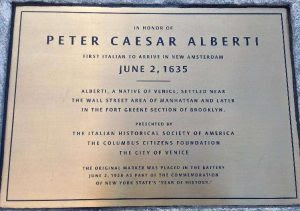
Pietro Caesar Alberti was born on Malamocco in 1608 at the height of Venice’s might. A successful merchant, he decided to leave the devastated city in 1635 and seek a new career elsewhere. He traveled to the Dutch Republic where he converted to Protestantism. Having signed on as a merchant mariner aboard Den Coninck David (The King David), he set sail in July 1634 to cross the Atlantic.
Alberti made New Amsterdam his home. Even though the situation in the city was worsening as the West India Company (WIC) neglected its duty of governance, Peter Caesar Albertus (his newly adopted name) integrated quickly into the settlement’s multi-lingual environment.
In 1639, he negotiated with Pieter Janse Montfoort (a Walloon immigrant) to cultivate part of the former’s plantation on the Long Island shore of the East River. Four years later, he secured the deed of ownership. By then he had married Judith Manje (Magnée) in the Dutch Reformed Church. Born in Amsterdam in 1620 into a family of French-speaking Walloon refugees, she had arrived in the colony with her parents some years previously.
The couple first lived on Broad Street, Manhattan, before moving to the plantation in 1646. They had seven children, all of them born and baptized in the colony (one of them died in infancy). Both were killed by Native Americans on their plantation in November 1655, casualties of Willem Kieft’s ill-conceived “Indian War.”
The Dutch authorities appointed a guardian to look after the orphaned children and records show that all of them prospered. Over the centuries, the Alberti family name recurred with variations in spelling.
Some Americans bearing the surnames Alburtis or Burtis can trace their ancestry back to Pietro Caesar Alberti. A marker in his memory stands at The Battery, Manhattan. The first Italian settler in New York State was a Venetian.
Venetian Inspiration
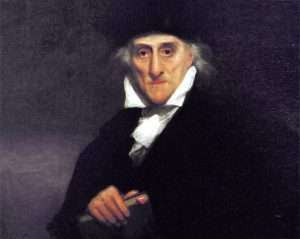
A Venetian immigrant sparked New York’s passion for opera. Lorenzo Da Ponte (1749 – 1838) was born Emanuele Conegliano on March 10, 1749, at Ceneda in the Republic of Venice. Jewish by birth, his widowed father (a leather merchant) converted to Roman Catholicism in 1764 as he planned to remarry.
Having studied at Ceneda’s Seminary, Lorenzo was ordained a priest in 1773 and then moved to Venice where he became a poet and language teacher. A friend of Giovanni Casanova (1725-1798), he lived a life of scandal.
Once defrocked, he fled to Vienna and wrote the words for Mozart’s three celebrated operasDon Giovanni, Le nozze di Figaro, and Così fan tutte. With the death of his patron Emperor Joseph II and the passing of his creative partner Mozart, Da Ponte’s career took a dive.
Forced to leave Vienna, he moved to London (via Trieste). Fearing arrest for indebtedness, he fled to the city of New York by way of Philadelphia in 1805, lived for seven years in Sunbury, Pennsylvania, and returned to Manhattan where he remained until his death.
The story of Da Ponte’s adventures (a libretto in itself) has obscured the contribution he made in transposing European Enlightenment ideals from Europe to America. He was the first Professor of Italian Studies at Columbia College; he welcomed the first Italian opera troupe to the United States; and he founded the New York Opera House, the nation’s first company dedicated to opera.
Venice also manifested itself in Manhattan’s building history. Palladian architecture (in the style of Andrea Palladio) is renowned for its elegant balance and classical elements. While its roots lie in sixteenth-century Venice, its design principles have been relevant throughout the ages, both in Europe and America.
Having established trading links with Venice, Flemish merchants reported the magnificence of “La Serenissima” (the most serene) to citizens in Bruges. Their accounts fired the local ambition to create a “Venice of the North.” When Amsterdam began to prosper, ambitions were unleashed to combine style with functionality. The concept of a “city beautiful” entered the urban consciousness.
Venetian Gothic dominated English architecture from around 1850, a vogue championed by John Ruskin in The Seven Lamps of Architecture (1849) and The Stones of Venice (1851).
There were Manhattan architects who worked in this mode too. Born and raised in New York City, Peter Bonnett Wight admired Ruskin’s ideas. His blueprint for the National Academy of Design at the northwest corner of Fourth Avenue and 23rd Street drew attention.
It was one of the designs selected for the New-York Sketch-Book of Architecture (1874), featuring twelve issues of plates with explanatory text. He played a leading role in the introduction of High Victorian Gothic in New York.
Although few Venetians lived in New York, social observers pointed at parallels between the two island-like port cities built by immigrants. This affinity found expression in architecture.
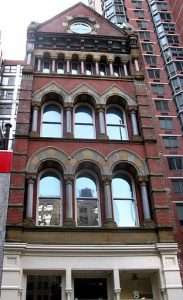
Designed in 1876 by the New York City firm of Jarvis Morgan Slade, the five-story surviving property at 8 Thomas Street between Broadway and Church Street functioned as a store for soap manufacturer David S. Brown. Built in brick with columns, arched windows, a gabled roof and an oculus on top, the slender building was three bays wide and ornamented with a variety of colors and patterns.
Manhattan once boasted numerous similar examples of Venetian Gothic, but few have survived.
Venetian Skyscraper & Magic Marble
In the late 1880s, the Metropolitan Life Insurance Company evacuated its headquarters in Lower Manhattan and moved uptown to a newly erected eleven-story building at Madison Square and 23rd Street.
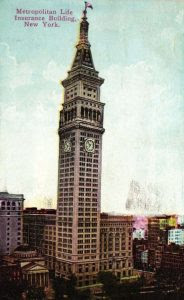
Having acquired the entire block by 1907, the company’s president John Rogers Hegeman commissioned a tower that would symbolize its success as the world’s largest insurer. Its architect Napoleon LeBrun (of French Catholic descent) modeled his design of the Metropolitan Life Insurance Tower after the Renaissance bell tower (“campanile”) of San Marco in Venice.
The iron-built tower held classical details and a massive chiming clock on each of its four sides. The pitched roof had a cupola on top and a lantern that flashed a signal to ships at sea (the “light that never fails”).
In 1909, the “Venetian skyscraper” was the world’s tallest office building. Ruthless restoration during the 1960s ruined its ornate presence by removing the classical features. Limestone panels replaced Tuckahoe marble.
Venetians had a passion for marble. Due to soggy ground, architects designed buildings with light-weight bricks on top of wooden piles. Marble was too heavy for structural use and applied as cladding only or for ornamental elements.
Venice imported a variety of marbles from across the Mediterranean, including porphyry from Egypt, Carrara from Italy, Parian and Pentelic white, and green-veined marble from Greece and Anatolia. This diverse sourcing contributed to the cosmopolitan look of Venetian buildings.
New York City could boast its own quarries. Until the early nineteenth century the village of Tuckahoe was part of Eastchester. It was then that stone cutter Alexander Masteron, an immigrant from Forfar, Scotland, discovered high-quality reserves along the Bronx River.
Manhattan was covered in marble. The Metropolitan Life Insurance Tower had been preceded by other landmarks such as St Patrick’s Cathedral in 1878. Built in 1895, the Arch in Washington Square Park is one of Manhattan’s iconic monuments.
Standing at the base of 5th Avenue, it was made of Tuckahoe marble quarried just over twenty miles away. After a near century the precious reserves were finally exhausted, causing production to end.
Lewis Hine’s “Sky Boys”
Mass Italian immigration into Manhattan began in the 1880s, establishing Little Italy (Piccola Italia) as a buzzing district. Most of the newcomers came from the poverty-struck southern regions and settled in Manhattan according to the regions they came from.
Neapolitans concentrated around Mulberry Street, Sicilians chose Elizabeth Street, and residents of Calabria and Puglia formed their enclaves around Mott Street. These close-knit communities kept their home traditions (social structures, festivals, and celebrations).
Most men worked in transportation, manufacture, or construction; others were street vendors (musicians) or shopkeepers. While a minority of migrants came from northern parts of Italy, few of them descended from the Venice region.
In October 1929, the demolition was set in motion of the Waldorf – Astoria, the world’s largest hotel, laying the foundations for the Empire State Building. Started during the Great Depression, the pace of construction was phenomenal.
The Art Deco project was under immense time pressure, with workers building approximately four floors per week to meet the deadline. Completed in 1931, it became an enduring symbol of New York City’s resilience and a tribute to immigrant labor.
The workforce of around 3,500 men featured large numbers of Italian and Irish migrants. The participation of Mohawk iron workers (“men of steel”) from the Kahnawake First Nations reserve near Montreal was crucial.
Experts in working at great heights, these skilled iron workers were employed in building the city’s landmarks since the 1920s. Ever since the building of a bridge over the St. Lawrence River in the mid-1880s, these Mohawk we workers had gained a lasting reputation for their skill and bravery.
Born in Wisconsin, Lewis Wickes Hine’s political views were honed at Chicago University. He brought this belief in progress and reform to New York when, in 1901, he began teaching at The Ethical Culture School at West 54th Street (founded in 1880 by Felix Adler as the Workingman’s School and reorganized in 1895 under the new name).
Around this time, he took to photography convinced that images could be more striking than words. He first carried his camera to Ellis Island to document the waves of immigrants that arrived there. He also dedicated a series of photographs to the horror of child labor.
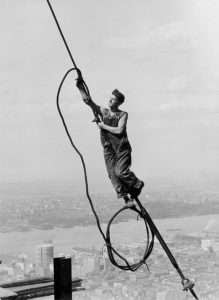
In March 1930 he was asked to produce a visual record of the Empire State Building’s construction. In a project lasting six months he followed the “sky boys” engaged in the perilous job of erecting the steel and concrete structure.
Several iconic photographs, taken from enormous heights, were published in his book Men at Work (1932).
One remarkable shot shows a worker in mid-air connecting two cables which he gave the title “Icarus atop Empire State Building,” a reference to the Greek mythological character who flew too close to the sun and fell to his death.
It was an implicit warning of “titanic” human hubris. The alert was ignored. Manhattan became defined by slender skyscrapers (“pencil towers”) with a Venetian legacy.
Venetian Blinds
Venetian blinds date back to the ancient Egyptians who tied reeds together as coverings to shield their windows from the harsh desert sun. In China and Japan slatted bamboo designs had been in use for similar reasons. The Romans are credited with the creation of the first fabric versions. Blinds with horizontal slates were (probably) developed in Persia and introduced to Venice by merchants trading in the Middle East. In France, they were known as les persiennes.
By the eighteenth century blinds had spread to America. Venetian wooden slats first appeared stateside in 1761 when St Peters Church in Philadelphia used them to complement their large windows.
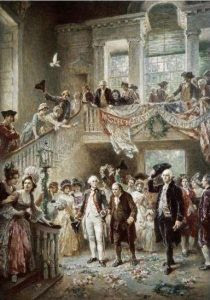
Six years later London immigrant John Webster began trading venetian blinds from his upholstery shop in Arch Street, Philadelphia. Blinds seemed to have first appeared in paint in 1787 when Jean-Leon-Gerome Ferris depicted “The Constitutional Convention” at the time of the signing of the Declaration of Independence.
By the early 1900s, Venetian blinds had been introduced into public buildings. After completion in 1933 of the former RCA Building at Rockefeller Plaza, the first American skyscraper to use them for light and air control, they became a fixture of New York City architecture.
The Empire State Building boasted a profusion of windows, allowing for vast amounts of natural light to enter. The challenge to designers was to master the fierce glare of light during separate times of the day. Versatile blinds were a solution for controlling light variation, a feature that proved essential for the functionality of a skyscraper.
The Burlington Venetian Blind Company was a prominent Vermont manufacturing business set up in 1884 and running until 1953. In 1931 the Company received an order to supply shades for the Empire State Building, the largest request for Venetian blinds ever placed in history.
It safeguarded Burlington from the horrors of the Great Depression. The industry boomed: in 1936, manufacturers sold $210 million worth of blinds in New York City alone. Venice had conquered the Manhattan skyline.
Read more about architecture in New York.
I am sailing out of our harbor tomorrow, so enjoy the joys of the City until I return.
CREDITS
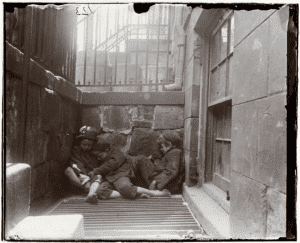
Illustrations, from above: A gondola ride in Central Park, with the iconic San Remo apartment building in the background; Venice, Italy, ca. 1735, by artist Canaletto; Peter Caesar Alberti marker in The Battery, Manhattan; Lorenzo Da Ponte portrait by Samuel Morse at the New York Yacht Club, ca. 1830; Designed by Jarvis Morgan Slade, the five-story Venetian-inspired building at 8 Thomas Street between Broadway and Church Street; Metropolitan Life Tower, postcard 1912; “Street Arabs in Mulberry Street, Little Italy” by Jacob Riis, 1889; Lewis Wickes Hine’s “Icarus, high up on Empire State,” 1931; and Jean Leon Gerome Ferris, “The Constitutional Convention,” 1787.
PHOTO OF THE DAY
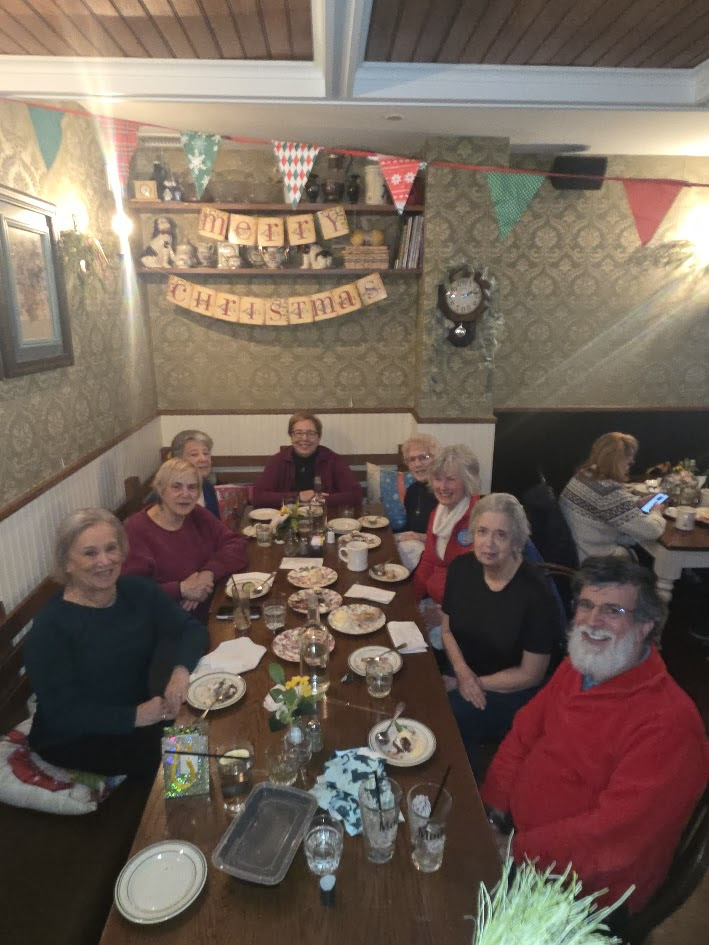
KIOSK STAFF & FRIENDS CELEBRATES THE NEW YEAR AT GRANNY ANNIES MIRELLA, BARBARA, BOBBIE, JUDY, ARLENE, GLORIA, ELLEN AND DAVID (PAT WAS UNABLE TO ATTEND)
PHOTO OF THE DAY
NAME THE LOCATION OF THIS LIGHTHOUSE. NOT AS CLASSIC AS OUR.
CREDIT
NEW YORK ALMANACK JUDITH BERDY
All image are copyrighted (c) Roosevelt Island Historical Society unless otherwise indicated THIS PUBLICATION FUNDED BY DISCRETIONARY FUNDS FROM CITY COUNCIL MEMBER JULIE MENIN & ROOSEVELT ISLAND OPERATING CORPORATION PUBLIC PURPOSE FUNDS.
Alice Mabel Allen (1886-1976) grew up in the village of Adams in Jefferson County, NY. Her father, William Jarvis Allen, published the weekly Jefferson County Journal. He saw to it that all three of his daughters went to college. Mabel, as she was known, first attended Stanford University and later Syracuse University. In 1908, while at Syracuse, she kept a diary in which she described the joys and travails of college life 115 years ago. Each week throughout the year New York Almanack will publish entries from Mabel’s diary.
Friday, January 3
This morning I left Adams on the 7:11 train for Syracuse. It was scarcely light when Jimmie came to the house for me. Edna [her older sister] went with me to the station. On the train I learned Prince Hal’s speech in Henry IV “I know you all” — and have now discovered it to be a wrong passage. Was somewhat late for Eng. VII. Did not prepare Latin lesson and was required to write a synopsis of chapter. Unpacked my trunk and in it found a Christmas present from Jean – this diary. I was much pleased. Harriet came this afternoon. Am reading ‘Emma’ to-night. I wish I were glad to be back. Fire in city.
Saturday, January 4
Slept late this morning and did not go down for breakfast. After English I went over to library and learned poems: Milton’s on his blindness being one. Read ‘Emma’ this afternoon and did up Christmas gifts packed in my trunk. Later went down in laundry and washed with Lu. After tea Harriet and I went down to see about my trunk. Found order had not been written down. They refunded the money. Did errands for Jean. Took Harriet into Schrafft’s. Alice Rhodes called while we were away. Harriet sleeps with me.
Sunday, January 5
Harriet and I slept late and did not go down for breakfast. Read ‘Emma’ in Harriet’s room while Lu had gone to church. Sang in the parlor after dinner. Read this P.M. Went to Vespers at St. Paul’s with Lu, Harriet and Miss Seidler. Late for lunch. Read to-night and wrote home. Grace Gatchell and Clara B. came back. Ate shortcake cookies and apples in the girls’ room. Eyes have given much trouble all day. Jean was to have ‘Slam’ club in or rarebit to-night but headache prevented.
Monday, January 6
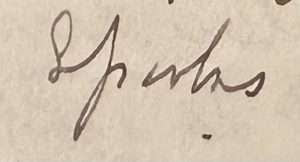
Last night I slept downstairs with Fuzzy. It was impossible to keep warm. Studied Latin with Fuzzy this A.M. Had a phone call from Sparks [? see photo] who just came back this morning. Was called on to recite in Latin to-day. Came home and read and went down with Edith and Miss Baker to meet Alma. Waited, seemingly, a long time before her train came. She goes back to-morrow. Went over to library with Lu and Miss Thomas. Too sleepy to study long. Harriet in to tell me about her initiation. Letter this A.M. from mother. Miss Wright here to tell me about Katherine’s illness.
Tuesday, January 7
Went to math without my lesson but luckily was not called upon. Called on in Eng. VII for first time. Saw one of K.K.G. girls who said they were much worried about Katherine. Studied geometry one period with Miss Beattie. After dinner studied Latin with Jessie Barnes; finished ‘Emma’, went in Jean and Ethel’s room, wrote to Tina and Mary Searles and rewrote Eng. theme on Philippine assembly. Harriet gone to initiation to-night. Fuzzy up to study math. Lu will sleep with me if I can persuade her. Snowing hard and blowing outside. Fuzzy says we had salmon for supper. This is important.
Wednesday, January 8
It snowed so hard during the night that the banks were heaped high this morning. Called on to recite in math. Letter from Herbert Jenkins. Quiz this A.M. in Eng. VIII. Forgot some of memory passages. At about 5 went over after Lu to go walking. Stopped to call on Miss Minch and then walked down to the corner bakery to buy cup cakes. Miss Beattie over to-night to study algebra and we joined Mr. Lindsay’s tutoring class with Fuzzie. Slept to-night with Isabel Rea who is ill. Katherine better.
Thursday, January 9
Paid tuition to-day. Had conference with Prof. Eaton. Went to see Prof. Pratt about math after twelve and so had a late dinner. Almost went to sleep on Lu’s cot because tired from last night. Isabel is up and dressed to-day. Went for short walk with Lu before supper. Miss Beattie over to study math and Fuzzie was up. Copied Roman History notes. Staid up late to study Latin with Jessie Barnes. Stormed this afternoon and grows colder. Father has changed [his newspaper’s] publication day to Wednesday.
Friday, January 10
Came home from math with Fuzzie and found letters from mother and Jessie Legg and a postal from Alma. Jessie wrote a dear note for the book of poems I sent her. After Latin met Miss Minch in chapel and we did math in room 53. Miss Arnold joined us later. Fuzzie and I after supper went to a tutoring class in algebra. Studied Shakespeare in Lu’s room when I returned. Received a belt which mother bought in New York and had sent to me here; postmarked October 16.
Saturday, January 11
Did not go down for breakfast. After English went over to library and studied math. Came back at 11 and Edith came for me to go for a short walk. Came back and learned Shakespeare. After dinner went in Jean’s room and ate caramels, swept and dusted, ironed and at 3 walked downstreet with Lu and Harriet. Exchanged Edna’s brush and bought some handkerchiefs for her birthday. Bought some tan kid gloves and baked stuff at Park bakery. After supper went to math class with Miss McLight [?]. Later went down with Lu after cream at Jem store.
Sunday, January 12
Grace Gatchell slept with me last night because Cassie’s sister was here. Harriet, Lu and I had breakfast in my room. It all tasted so good to us. Went and called for Miss Minch. We attended the First M.E. Church. Walked home. Late for dinner. Lu not well and lay on the bed in my room. Wrote to the people [her parents] and Lillian. Dressed in my voile for lunch. Lillian came back unexpectedly. Her brother, who has had pneumonia, is better. Learned some Shakespeare and was going early to bed.
I am sailing out of our harbor tomorrow, so enjoy the joys of the City until I return.
KIOSK STAFF & FRIENDS CELEBRATE THE NEW YEAR AT GRANNY ANNIES MIRELLA, BARBARA, BOBBIE, JUDY, ARLENE, GLORIA, ELLEN AND DAVID (PAT WAS UNABLE TO ATTEND)
CREDIT NEW YORK ALMANACK JUDITH BERDY
All image are copyrighted (c) Roosevelt Island Historical Society unless otherwise indicated THIS PUBLICATION FUNDED BY DISCRETIONARY FUNDS FROM CITY COUNCIL MEMBER JULIE MENIN & ROOSEVELT ISLAND OPERATING CORPORATION PUBLIC PURPOSE FUNDS.
New York has always been a city that loves a party. But perhaps no residents of Gotham celebrated quite like the New Year’s Day revelers in the 17th century trading outpost of New Amsterdam.
Forget lavish Christmas dinners and over-the-top gift giving. In the Dutch colonial era, New Year’s Day was the bacchanalia of the year—with the town’s population of roughly 5,000 people drinking, dancing, carousing with neighbors, and enjoying the festive feel of the first of January.
Of course, tables laden with rich foods and copious spirits were a prominent part of the day.
“The women of New Amsterdam on New Year’s Day decorated their houses with all the skill at their command, and in silk and taffeta welcomed the dignitaries of the town,” wrote Rufus Rockwell Wilson in his 1902 historical study, New York Old and New.
Meanwhile, the men went calling, walking or riding their carriages to visit these decorated homes. There they would be treated to “a mighty punch bowl well reinforced by haunches of cold venison and turkeys roasted whole, and ornamented with cakes, comfit, confectionery, silver tankers, and bekers filled with rare Madeira and foaming ale,” according to The Story of the City of New York, published in 1888.
Indulging was all part of the fun. Outdoors in the January chill, “much drunkenness and other insolence” occurred, including the celebratory firing of guns by citizens welcoming the new year. Unfortunately, the gunshots sometimes hit other residents.
With this in mind, Director General Peter Stuyvesant outlawed this “unnecessary waste of powder” in 1655, though the custom of firing a gun on New Year’s has remained in place.
After the British took over the colony in 1664, citywide New Year celebrations continued, perhaps with more restraint. On January 1, 1790, George Washington received callers at his mansion on Cherry Street between 12 and 3 p.m., as he noted in his diary, adding that “a great number of gentlemen and ladies visited Mrs. Washington on the same occasion.”
As the 19th century commenced and New York’s population diversified, Christmas eventually supplanted New Year’s as the city’s major December holiday.
Yet the tradition of calling continued. In his autobiography, sculptor James E. Kelly recalled going calling as a boy in the 1860s, when “the glow and tingle of the walk was heightened by the gust of warm spice-laden air that greeted us, and as our pretty little girl schoolmates received us at the doors in all their holiday finery.”
Another child, a 10-year-old whose diary chronicles her privileged girlhood in the Greenwich Village of 1849 and 1850, remembered that the family received 139 callers at their Ninth Street home on January 1, and guests were served “oysters and coffee and cake.”
“The gentlemen keep dropping in all day and until long after I have gone to bed; and the horses look tired, and the livery men make a lot of money,” wrote little Catherine Havens in her diary.
By the Gilded Age, calling was on its way out. On January 3, 1888, the New York Times wrote that “few carriages were observed bearing the gentlemen about on a pilgrimage of good wishes, and as a matter of fact the ladies themselves did not even deem it necessary to inform their friends that they should not receive.”
“Neither the Astors nor the Vanderbilts were at home yesterday, and none of New York’s prominent ladies can be properly said to have received calls.”
With these old New Year’s traditions dwindling, nostalgia for the celebrations of colonial days took over.
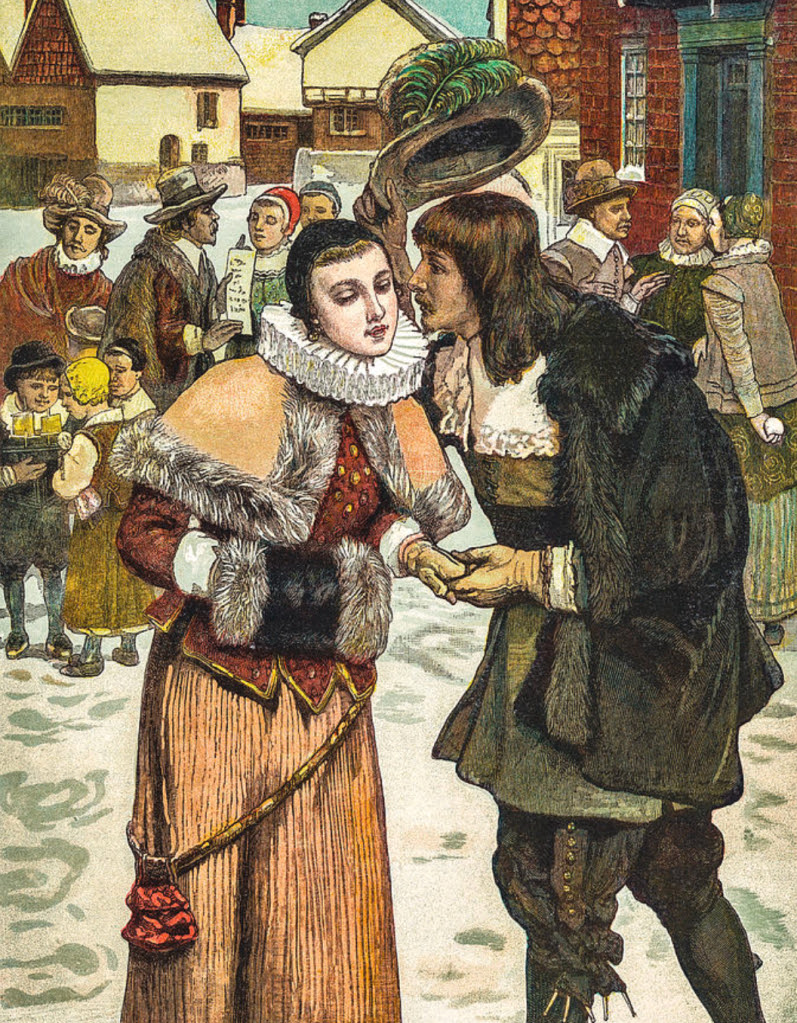
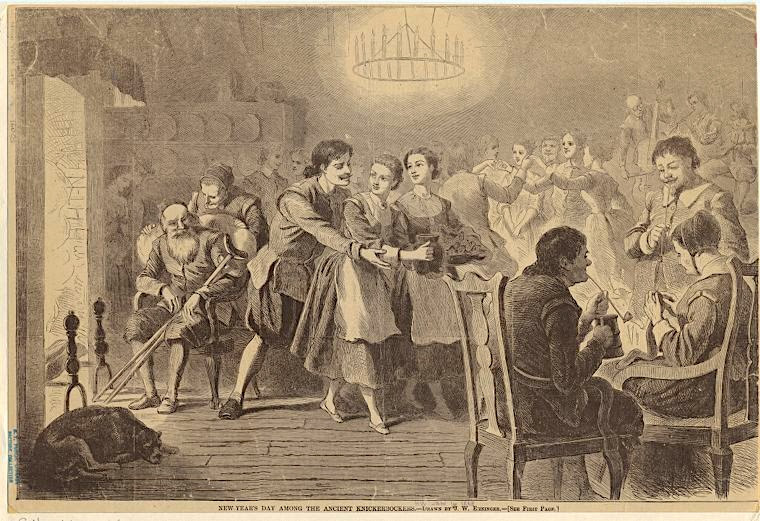
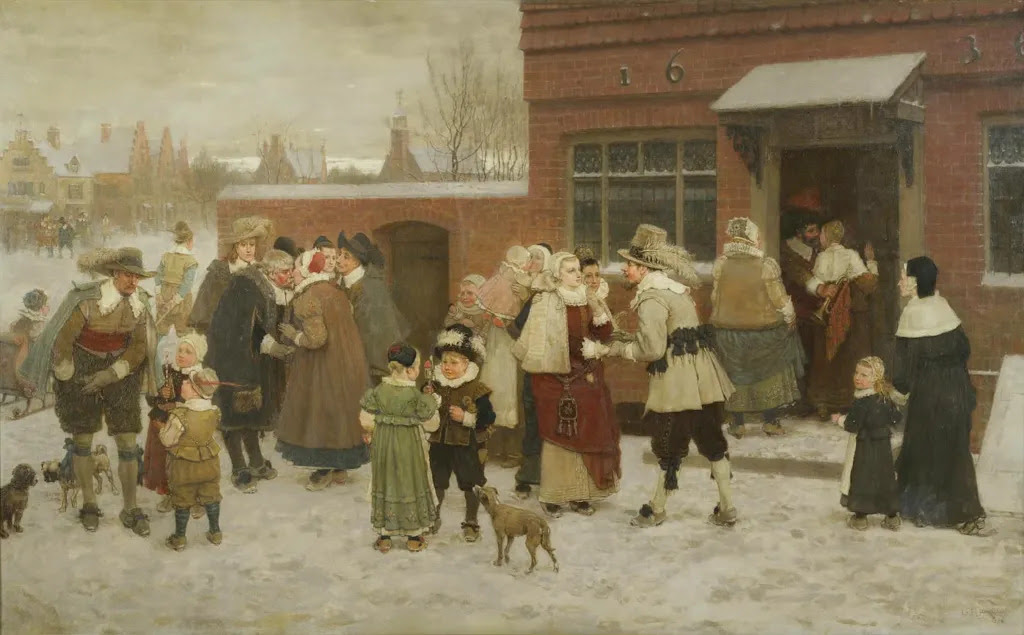
Periodicals published illustrations that imagined the merriment and good cheer of New Year’s Day in the 17th century. One example is in the image at the top of this post—a color-printed wood engraving of the New York of 1675, made from a late 19th century illustration by British artist George Henry Boughton.
Boughton also created the third image of Dutch colonists celebrating the holiday in New Amsterdam in 1636, with Dutch-style gabled roofs in the background.
And the middle black and white image comes from an 1868 illustration by painter John Whetten Ehninger, who imagined a New Year’s Day of dancing, flirting, and pipe smoking among what he called the “Ancient Knickerbockers.”
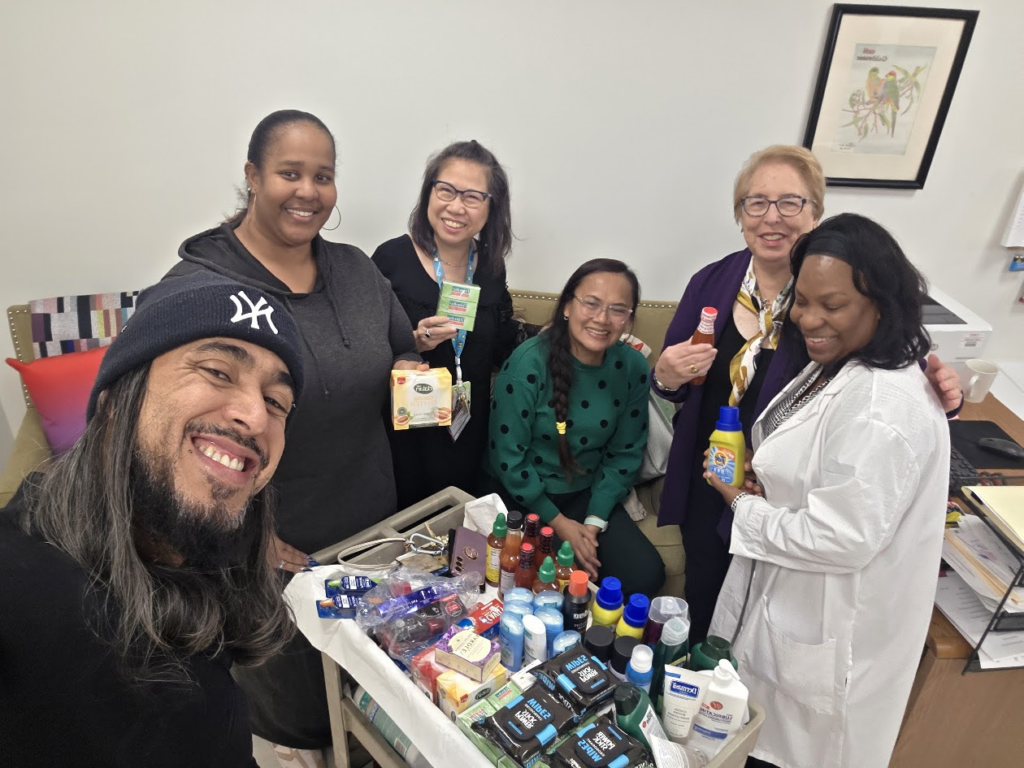
COLER THERAPEUTIC RECREATION STAFF GETTING READY TO DISTRIBUTE HOLIDAY GIFTS TO RESIDENTS.HEALTH AND BEAUTY GOODIES ARE DONATED BY GOOD SHEPHERD PARISH TO THE COLER AUXILIARY ANNUALLY
CREDIT JUDITH BERDY
All image are copyrighted (c) Roosevelt Island Historical Society unless otherwise indicated THIS PUBLICATION FUNDED BY DISCRETIONARY FUNDS FROM CITY COUNCIL MEMBER JULIE MENIN & ROOSEVELT ISLAND OPERATING CORPORATION PUBLIC PURPOSE FUNDS.
111 BROADWAY, I HAD THE UNIQUE OPPORTUNITY TO HAVE AN AERIAL VIEW OF THE TRINITY CHURCHYARD NEXT DOOR
THE ENTRANCE TO 111 BROADWAY IS A MASTERPIECE
111 and 115 BROADWAY HAVE A LONG HISTORY
PHOTO OF THE DAY
WHAT IS THIS OBJECT BEING HELD BY JUDY AND SOFIA? TAKEN AT THE “JEWELS WITH JUDY” CLASS AT CBN ADULT CENTER SEND YOUR IDEAS TO:ROOSEVELTISLANDHISTORY@GMAIL.COM
CREDITS
JUDITH BERDY
All image are copyrighted (c) Roosevelt Island Historical Society unless otherwise indicated THIS PUBLICATION FUNDED BY DISCRETIONARY FUNDS FROM CITY COUNCIL MEMBER JULIE MENIN & ROOSEVELT ISLAND OPERATING CORPORATION PUBLIC PURPOSE FUNDS.