Monday, August 8, 2022 – NEW LEGISLATION WILL BRNG US MORE WIND POWER


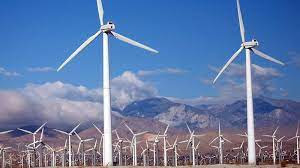
Renewable energy is coming. Sooner or later; sun and wind. So far, New York has not done much with wind energy. Big changes are now occurring. But many possible slips exist between windmills and wires. Blow on…..
New York is ranked as a windy state (Albany?) but was only 11th in the US at the end of 2013 for installed wind power capacity, with 1,722 megawatts (MW) installed. In 2016, wind power provided 2.94% of in state energy production. This increased to 3.66% in 2019.
Our wind power has come from onshore wind farms, the first of which, Madison Wind Farm in Madison County, with a generating capacity of 11.55 MW, came online in in 2000. Soon to follow were the 6.6 MW Wethersfield Wind Farm (Wyoming County) and the 30 MW Fenner Wind Farm (Madison County). Good, but these are still small projects.
FROM THE ARCHIVES
MONDAY, AUGUST 8, 2022
THE 748th EDITION
WIND POWER
IN
NEW YORK
STEPHEN BLANK
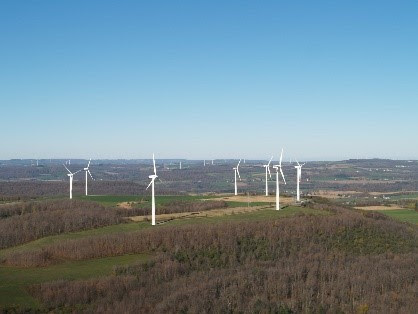
Expanding this production faces lots of problems. One is that wind farms take up a lot of real estate. Another is that while some people think the turbines are beautiful, at least from a distance, few people want to live next door to them. And the generated power must be transformed and distributed along wires. Transformation infrastructure is big and, if more distribution capacity isn’t created, then a growing percentage of newly generated power will be “bottled up” – undeliverable. But no one wants to live next to large new transformer stations or under new, long electric lines that would be needed to carry more wind generated power.
Offshore wind farms deal with some of these issues.
In 2009, state utilities such as the New York Power Authority and Long Island Power Authority explored the possibility of large-scale offshore facilities, either in the ocean or in the Great Lakes. In 2011, The New York Power Authority cancelled the Great Lakes Offshore Wind project and now, the focus would be on offshore generation in the Atlantic Ocean.
Lots of difficulties must be overcome. Aside from enormous technological hurdles, the siting of large facilities in New York state generates controversy, a problem accentuated by a catalog of diverse municipal efforts to zone or ban wind farms. (Remember the fuss over turbines off Cape Cod, which disturbed the view of many wealthy residents.) Such conditions helped to produce in summer 2009 a Code of Conduct promulgated by Andrew Cuomo, then state Attorney General, and embraced by wind developers responsible for most of the state’s facilities. In a significant reform aimed at encouraging investment in clean energy technology, Governor Andrew Cuomo on August 4, 2011, signed the Power New York Act of 2011, establishing a unified siting review process for major electric generating facilities; that is, facilities with a generating capacity of 25 MW or more.
Spurred by a $4.37 billion federal auction of more than 488,000 acres of offshore leases in the New York Bight (basically the continental shelf), these wind farms will help New York realize its 2019 mandate to generate 70% of its electricity from renewable sources by 2030. Fourteen miles off the New York coast, vast fields of offshore wind turbines are planned.
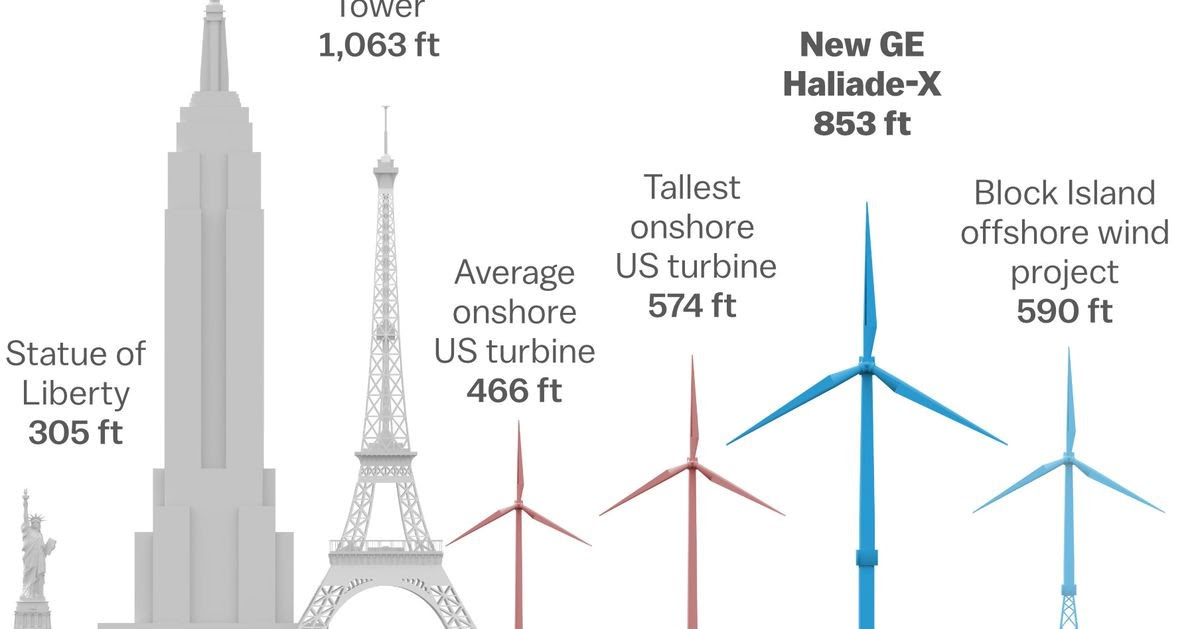
Before we go on, let’s look at these offshore turbines. They are really big! Wind turbine blades can be longer than a football field, and turbine towers can be 100 meters or taller – nearly twice as tall as the average onshore turbine and almost as tall as the Eiffel Tower. The specialized specialized boats that deliver and install turbines also have extendable legs that can measure 100 meters.
This past February, New York State broke ground on its first offshore wind farm. The South Fork Wind project off the Long Island coast is expected to be operational by the end of 2023. New York has the most offshore wind projects underway of any state, with five in active development. South Fork Wind is being billed as one of the first-ever commercial-scale offshore wind farms in North America. Once completed, it should be able to generate 130 MW of power — enough to power 70,000 homes in nearby East Hampton.
That alone amounts to a major scaling up of offshore wind capacity in the US. The nation so far only has two operational wind farms along its coasts — off the coasts of Rhode Island and Virginia — with a combined capacity of just 42 MW.
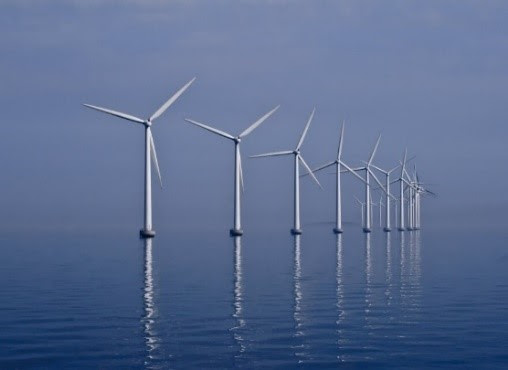
That’s set to change dramatically over the next few years. Ørsted and Eversource, the energy companies developing South Fork, have an even bigger project in the works nearby: Sunrise Wind, a 924-MW wind farm that’s expected to break ground next year.
Altogether, the offshore projects under development in New York state’s current portfolio total over 4,300 MW of clean energy. By 2035, the state hopes to harness more than twice as much renewable energy from offshore wind. To get there, Governor Kathy Hochul in January announced $500 million in funding to build up manufacturing and supply chain infrastructure for offshore wind. The money will also go towards updating the state’s ports to prepare for the boom in wind farms.
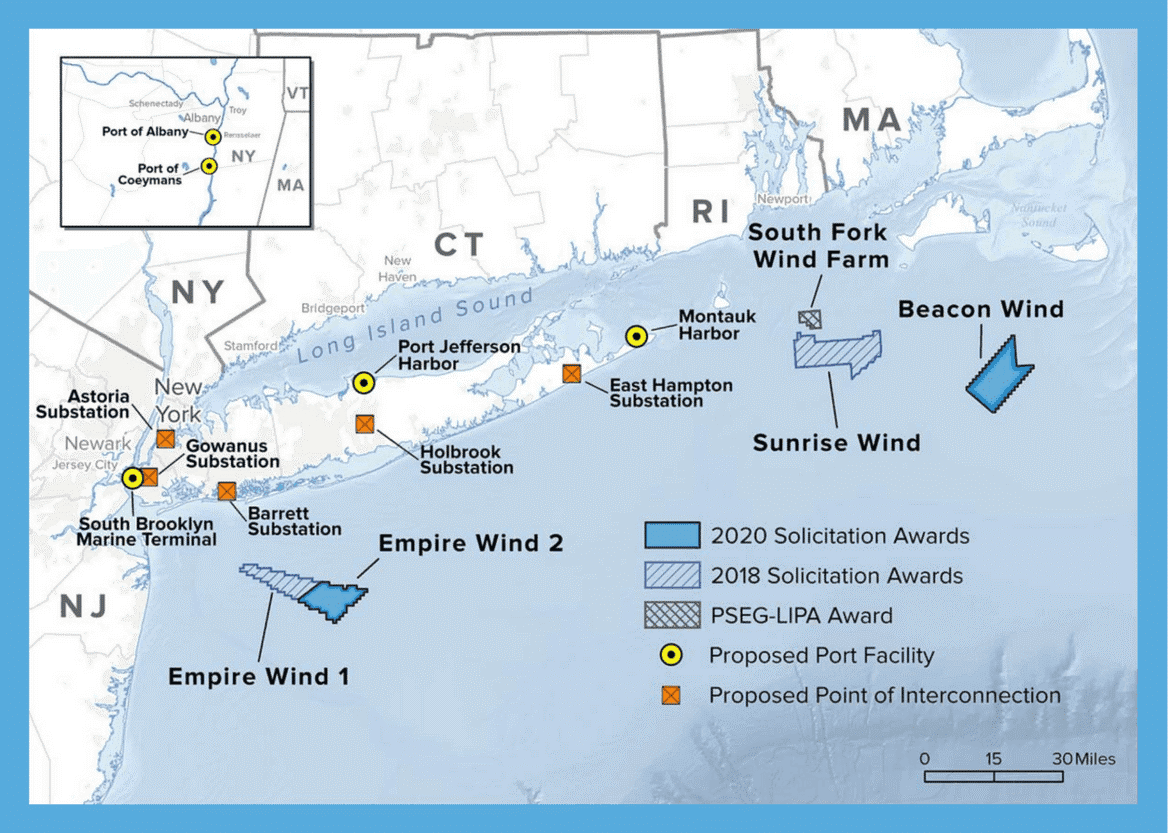
Five offshore wind projects totaling 4.3 GW are in active development in New York state, though only South Fork Wind is nearing construction. https://www.canarymedia.com/articles/wind/new-york-takes-early-lead-as-large-scale-offshore-wind-starts-rolling-in-the-us
New issues have arisen – fear that the turbines will disrupt maritime life and interfere with ship traffic. Studies have shown that these new constructions will not harm maritime life – and, around the large underwater bases, may support it. The Coast Guard says offshore wind turbine grid designs will not require changes to shipping routes nor will projects interfere with radar. But these remain constant concerns.
Also, while turbines lie offshore, the whole operation depends on onshore infrastructure. Offshore power needs an elaborate infrastructure onshore to assemble and maintain the turbines and then to distribute the power over existing – or new – lines. Growing an offshore wind industry will require the transformation of the shoreline to construct and maintain the giant turbines.
The two city sites under development for this lie along the Arthur Kill on Staten Island, a shipping channel with direct access to the Atlantic, and are part of a larger plan to develop an offshore wind supply chain network in New York City. Both proposed sites – the Rossville Municipal Site and the Arthur Kill Terminal – have the acreage needed to build the enormous components of offshore wind turbines. Both are also home to wild woodlands and marshes that have grown undisturbed for decades, becoming home to vultures, deer, geese and other wildlife. These would be replaced by enormous new port facilities, for manufacturing and assembling wind turbine components.
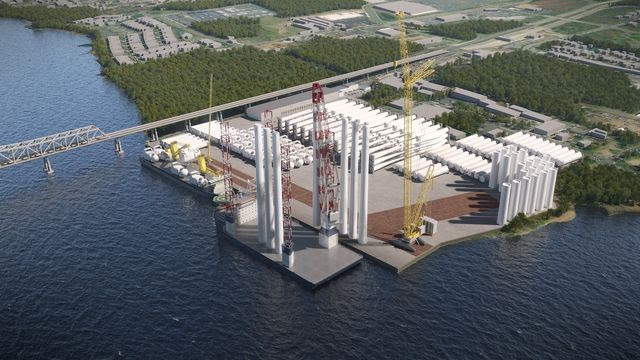
A conceptual rendering of the Arthur Kill Terminal layout. COURTESY OF ATLANTIC OFFSHORE TERMINALS
To support the construction of near-ocean turbine ports, the City created a plan in September 2021 that would invest $191 million to repurpose publicly and privately owned marine terminals, piers, shipyards and vacant waterfront lots. These areas would be transformed into new manufacturing facilities, ports and assembly stations, where thousands of workers can build and service the enormous wind turbines.
If completed, the two Staten Island sites would join the city’s first onshore facility designed to support offshore wind farms at the South Brooklyn Marine Terminal in Sunset Park. This city-owned property will be renovated by Equinor, a Norwegian state-owned energy company, and BP, a British oil and gas company. The site will also be a power interconnection site, where underwater cables will deliver the electricity generated at the seabound wind farms.
New York aims to build 9 gigawatts of offshore wind capacity by 2035, enough to meet about 30% of the state’s total electricity needs. For densely populated areas like Long Island and neighboring New York City, the ocean represents one of the few available areas for installing large amounts of renewable energy capacity to meet demand from millions of households. More than 4.3 gigawatts of offshore wind projects are already under development, including the planned 1.2-gigawatt Beacon Wind farm and the 2.1-gigawatt Empire Wind project, which is divided into two phases.
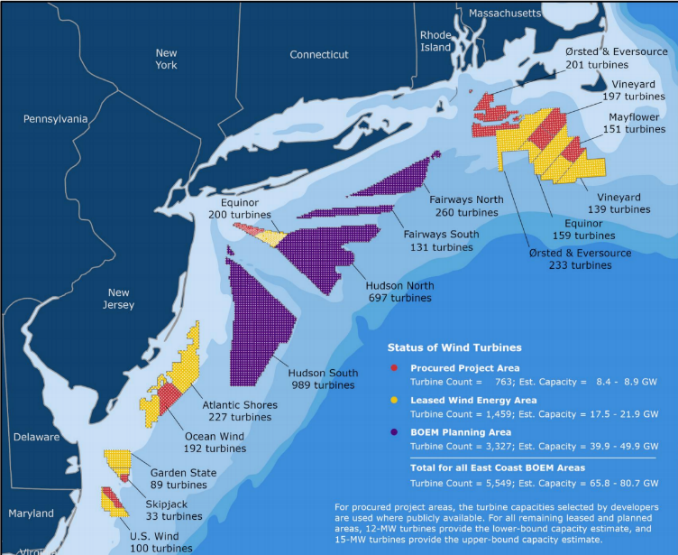
Planned offshore wind developments in southern New England and New York Bight waters are shown here, along with areas under consideration for future wind leases (in purple). Tufts University School of Engineering image.
Generating clean energy is one thing, moving it is another. Expansive dreams about renewable energy bump up against the reality of a power grid that cannot handle the new demands. The dirty secret of clean energy is that while generating it is getting easier, moving it to market is not.
New York State’s electrical transmission network, we understand, can add up to 8,000 MW of wind energy without affecting reliability. But this looks at the State as a whole. New wind energy is not distributed evenly across the network. The issue is will network capacity be available where new power is delivered onshore? Moreover, the power grid is balkanized, with many miles of power lines divided among many owners. Big transmission upgrades often involve multiple companies, many state governments and numerous permits. Every addition to the grid provokes fights with property owners.
Finally, the State’s goal of generating 9 gigawatts of wind energy seems far larger than what the network can absorb, even given that much of this will replace existing fossil power. Given the new geography of wind power production, it’s hard to think that this will not demand an extensive remodeling of the state grid.
A footnote. A Times article today notes that seven Bitcoin companies use some 1,045 MW of power in their cryptomining business. Jes notin’…
Keep cool.
Stephen Blank
RIHS
July 18, 2022
MONDAY PHOTO
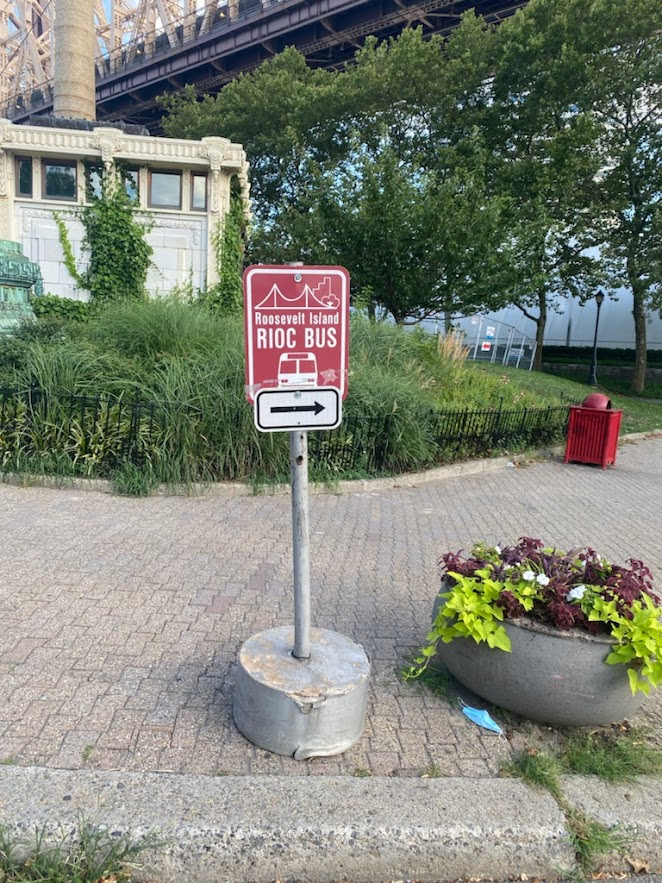
PLEASE EXPLAIN THIS TO TRAM AND RED BUS PASSENGERS
Send your response to:
rooseveltislandhistory@gmail.com
WEEKEND PHOTO
ED LITCHER:
Skyline Ceremony in Brooklyn : [Brooklyn Heights Promenade Dedication] October 7, 1950
HARA REISER ALSO GOT IT RIGHT

Text by Judith Berdy
Thanks to Bobbie Slonevsky for her dedication to Blackwell’s Almanac and the RIHS
Thanks to Deborah Dorff for maintaining our website
Edited by Deborah Dorff
All image are copyrighted (c)
STEPHEN BLANK
Sources
https://www.wshu.org/long-island-news/2022-01-17/long-island-based-energy-company-inks-first-construction-contract-for-the-south-fork-wind-farm
https://www.theverge.com/2022/2/14/22933095/new-york-offshore-wind-farm-south-fork-long-island-construction
https://www.canarymedia.com/articles/wind/new-york-takes-early-lead-as-large-scale-offshore-wind-starts-rolling-in-the-us
https://gothamist.com/news/giant-wind-turbine-ports-prepare-to-transform-nycs-coastal-woodlands
https://www.nytimes.com/2008/08/27/business/27grid.html
GRANTS
CITY COUNCIL REPRESENTATIVE BEN KALLOS DISCRETIONARY FUNDING THRU DYCD
Copyright © 2022 Roosevelt Island Historical Society, All rights reserved.Our mailing address is:
rooseveltislandhistory@gmail.com
Leave a comment