Thursday, April 9, 2026 – Iconic 1927 Art Deco Offices Turned Condos!
100 BARCLAY STREET
THE BARCLAY VESEY BUILDING
When constructed in 1927, the Barclay-Vesey Building at 140 West Street was one of the first examples of a new form of architecture that would soon define the next quarter-century of high-rise development in New York City and around the world. Shaped by the 1916 zoning law, which required setbacks to allow light and air to reach the street, this new style created by municipal regulation soon became an aesthetic, often accompanied by Art Deco ornamentation.
FORMER AT&T BUILDING
NOW PARTIALLY A CONDO
THURSDAY, APRIL 9TH
NYCURBANISM
ISSUE #1659
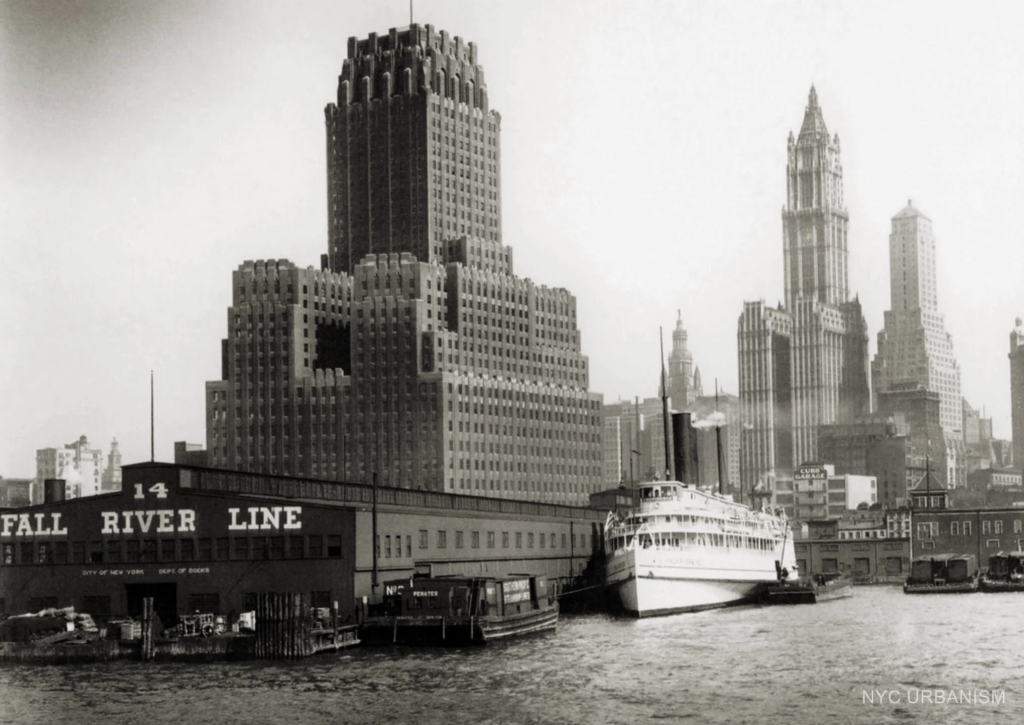
When constructed in 1927, the Barclay-Vesey Building at 140 West Street was one of the first examples of a new form of architecture that would soon define the next quarter-century of high-rise development in New York City and around the world. Shaped by the 1916 zoning law, which required setbacks to allow light and air to reach the street, this new style created by municipal regulation soon became an aesthetic, often accompanied by Art Deco ornamentation.
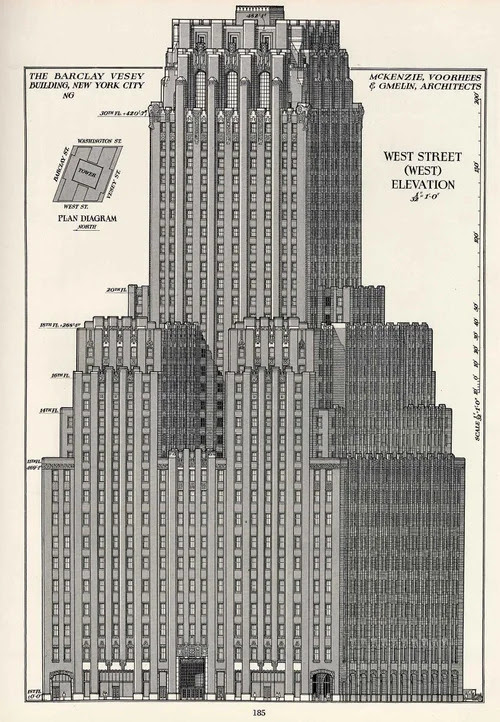
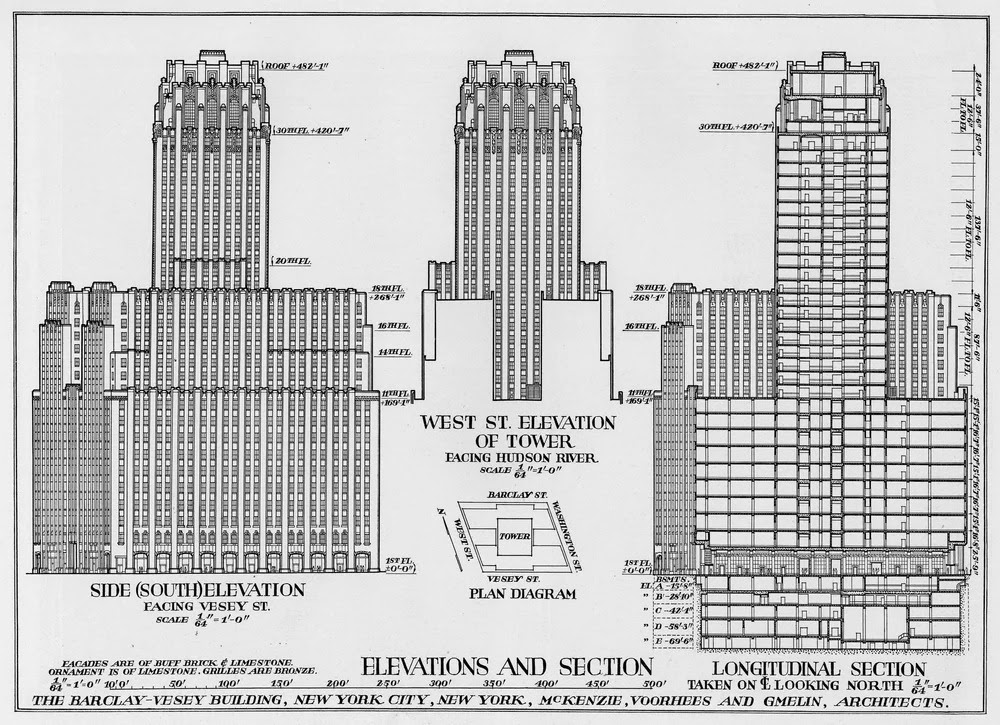
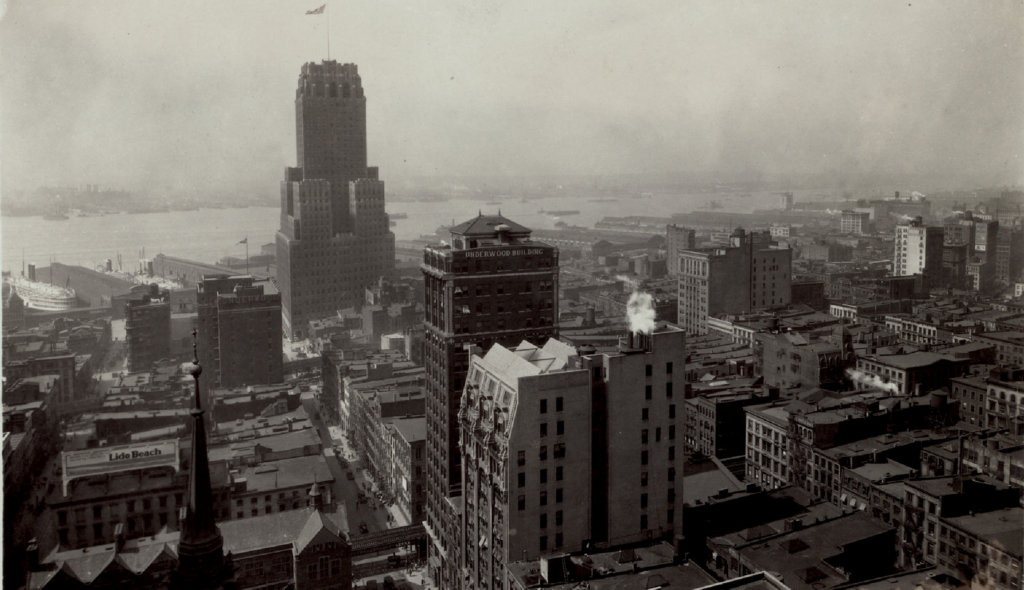
Designed in 1923 by Ralph Walker for the offices of the New York Telephone Company, the skyscraper was referred to the Barclay-Vesey Building due to its proximity between Barclay and Vesey Streets on the Lower West Side of Manhattan. At 498 feet, the skyscraper totaled over 1.2 million square feet of office space with five sub levels of telephone switching centers. When it opened in 1926 the structure was defined by its overwhelming monumentality, which was balanced through its ornamentation and form, giving the building individuality and human scale while also appearing solid and powerful.
The base of the building, shaped by the irregular block rises straight up from the sidewalk to the tenth floor, where dramatic setbacks reveal a square tower that continues before topping out at 32 floors. The cornice of each setback is adorned with ornament; elephant heads with their trunks dangling down the facade, foliage, and cherubs. As The Skyscraper Museum explains, the bulky base, rising directly up from the lot lines, “was only possible because of the switching machinery it contained; windows were unnecessary, so the entire internal core could be utilized. Ralph Walker used the mandated set-backs to create a well-lit office tower above the switching floors, beautifully matching form to function.”
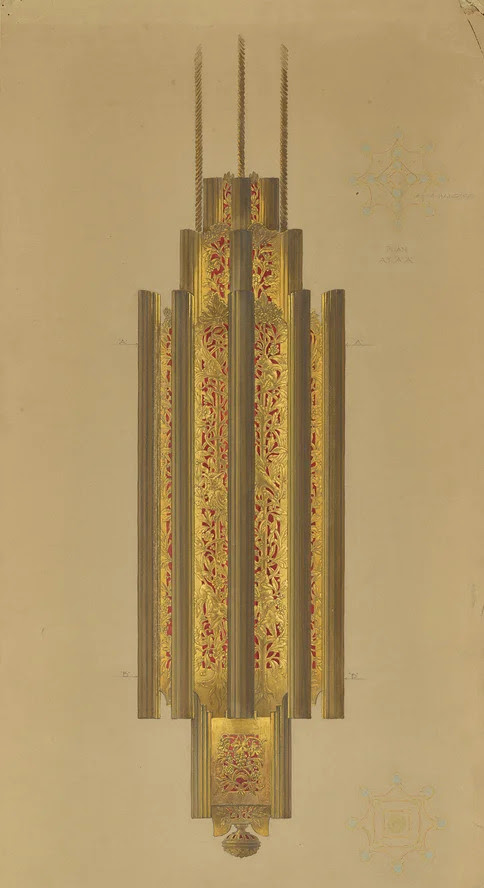
On the building’s south side, a Guastovino-tiled vaulted arcade enclosed Vesey Street, blending public and private space and offering protection and grandeur to passing pedestrians. Inside, a grand lobby forms a corridor the length of the building, with marble walls, travertine floors, and bronze medallions, topped with exquisite murals illustrating advances in communications.
Walker’s design was massively influential, pushing other architects to adopt the form in their work. Walker would go on to design other iconic New York City skyscrapers including One Wall Street, the Western Union Building (60 Hudson) and the AT&T Long Lines Building (32 Sixth Ave). In 1957 The New York Times would name Walker “Architect of the Century.”
Alice Austen House or Clear Comfort in 2002
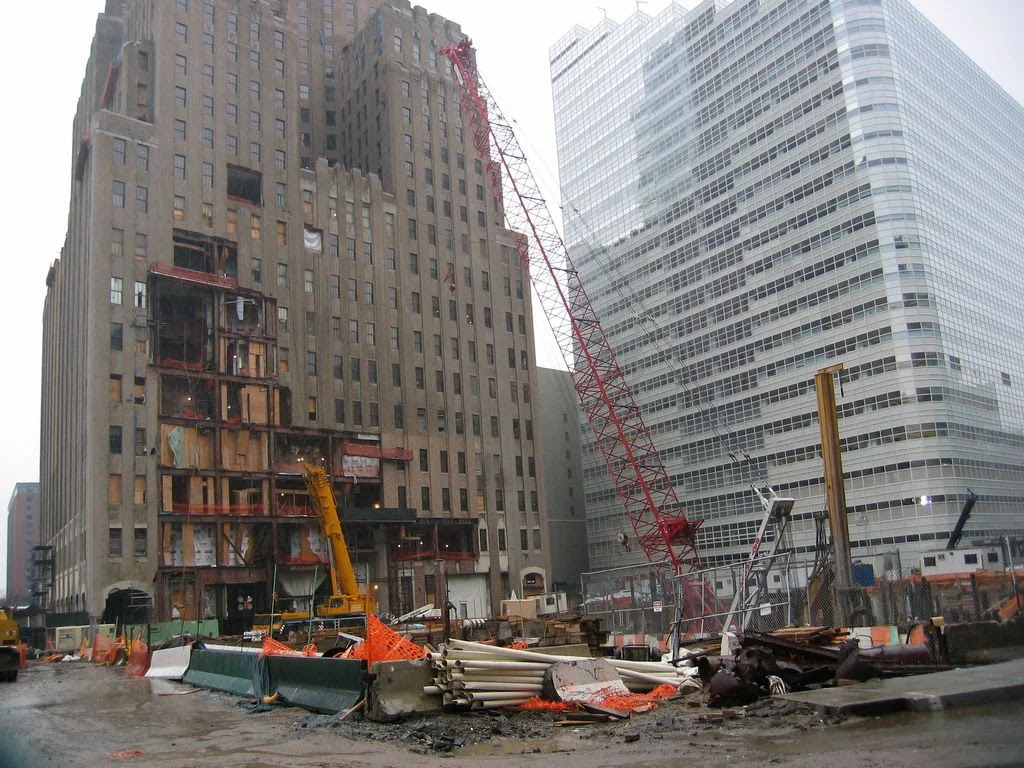
The skyscraper was in the path of destruction on 9/11, bordering the northern edge of the World Trade Center campus with close proximity to the Twin Towers, and next door to the collapsed 7 World Trade. Luckily, the building’s thick masonry exterior helped to shield it from much of the falling debris and absorb the energy from the collapsed towers with no interior fires. Still, the building experienced extensive damage with entire portions of the facade ripped off its steel skeleton. The underground Verizon cable conduits and infrastructure were also flooded and heavily damaged. In 2002, the New York Times detailed the damages to the building: “It took hits on two sides. First, the steel hurled from the collapsing towers smashed into the building’s south face, penetrating an underground vault containing thousands of telephone cables. Later that day, 7 World Trade Center, a 47-story skyscraper just to the east, came tumbling down, its ruins slumping like a slain giant against the Verizon Building’s east facade.The remains of the collapsed trade center buildings have been picked away, but the wounds they created are still visible. Two-foot-wide steel support columns at the east facade of the Verizon Building are bent inward like crumpled car fenders. A hole in this face of the building reaches as high as eight stories from the ground, and is covered by nothing more than white sheeting.”
The Times noted the repair bill would cost “three-quarters of the Chrysler Building’s estimated total value.”
Restoration following 9/11 was done by Tish.
In 2013 Verizon – New York Telephone’s successor – sold the top 22 floors to Magnum Real Estate Group, who converted the floors into loft residences under the name 100 Barclay. During the conversion, the lobby was completely restored with a new entrance on the Barclay Street side of the building.
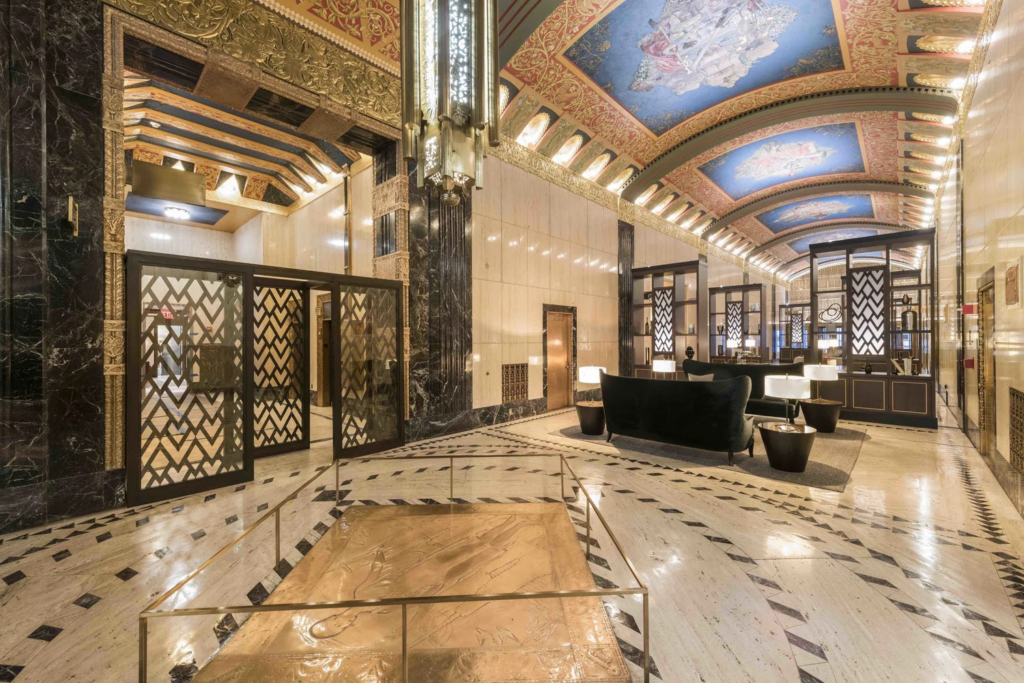
For those who may not make it up to see the residences, the breathtaking lobby is an interior landmark, which means it is open to the public. Covered in bronze, marble and travertine, with murals depicting communication through the ages, it is one of the most incredible interiors in the entire city – and in it’s original state. Peek inside to get an idea of how it looked when the Art Deco jewel first opened in 1927!
Presenting: Conversations in City History
Monday, April 13, 2026, 6:30 pm “Too Good to Get Married: The Life and Photographs of Miss Alice Austen” Author Bonnie Yochelson will discuss with moderator Judith Berdy about how a woman who grew up in the Gilded Age, when the term “lesbian” did not yet exist, challenged the conservative ideals of Staten Island high society. She will explain, as does her book, the role of photography in Alice Austen’s journey of self discovery, embrace of feminism and involvement in a loving lesbian partnership.
Monday, May 11, 2026, 6:30 pm “Rural County, Urban Borough: A History of Queens” When preservationist and author Jeffrey A. Kroessler passed away in 2023, his wife, architect Laura Heim, selected the images for his book and saw it through publication. She has generously agreed to be interviewed on this seminal historical work that charts how politics, industry, transportation, government and real estate interests all shaped New York’s borough of extraordinary ethnic, religious and linguistic diversity.
Monday, June 8, 2026, 6:30 pm “The Killing Fields of East New York” Author Stacy Horn (also writer of “Damnation Island,” about 19th-century Blackwell’s Island) has chronicled how the subprime mortgage scandal of the 1970s and a long history of white-collar crime slowly destroyed the Brooklyn neighborhood of East New York. She will share her compelling investigative journalism in a conversation about the area’s fair housing, race, violence and misplaced city priorities.
JUST ADDED:
Monday, September 14, 2026, 6:30 pm “Louis I. Kahn The Last Notebook
Edited By Sue Ann Kahn An intimate record of Kahn’s musings on design, coupled with preparatory drawings of his monumental last project
Published in honor of the 50th anniversary of his death in March 1974, this two-volume set contains a facsimile of the notebook in which Louis Kahn drew and wrote during his last year of life, alongside a second volume of scholarly commentary and transliterations of his musings. Anchored by a magnificent set of preparatory drawings for his monument to Franklin Roosevelt in New York City, the notebook provides an intimate glimpse into private sketches of Kahn’s final projects and his poetic reflections on thematic preoccupations, such as “Silence to Light,” “Form and Design,” “Society of Rooms” and “Desire to Express.” Each volume is in a vellum sleeve and both are housed together in a transparent slipcase.
Born in Estonia, Louis Kahn (1901-74) immigrated with his family to Philadelphia when he was four years old. Kahn received Beaux-Arts training at the University of Pennsylvania, under the French-educated Paul Philippe Cret, and then adopted his own idiosyncratic modernism, which would engender the heterogeneous “Philadelphia school.” His architectural career did not take off until later in life; he attained his first major commission to design Yale University’s Art Gallery in 1951. Upon its completion, Kahn received many international commissions, and he developed a signature style that was monumental, monolithic and transparent in its functionality. He was awarded the AIA Gold Medal and the RIBA Gold Medal.
THE ROOSEVELT ISLAND HISTORICAL SOCIETY
6:30 p.m. 504 Main Street
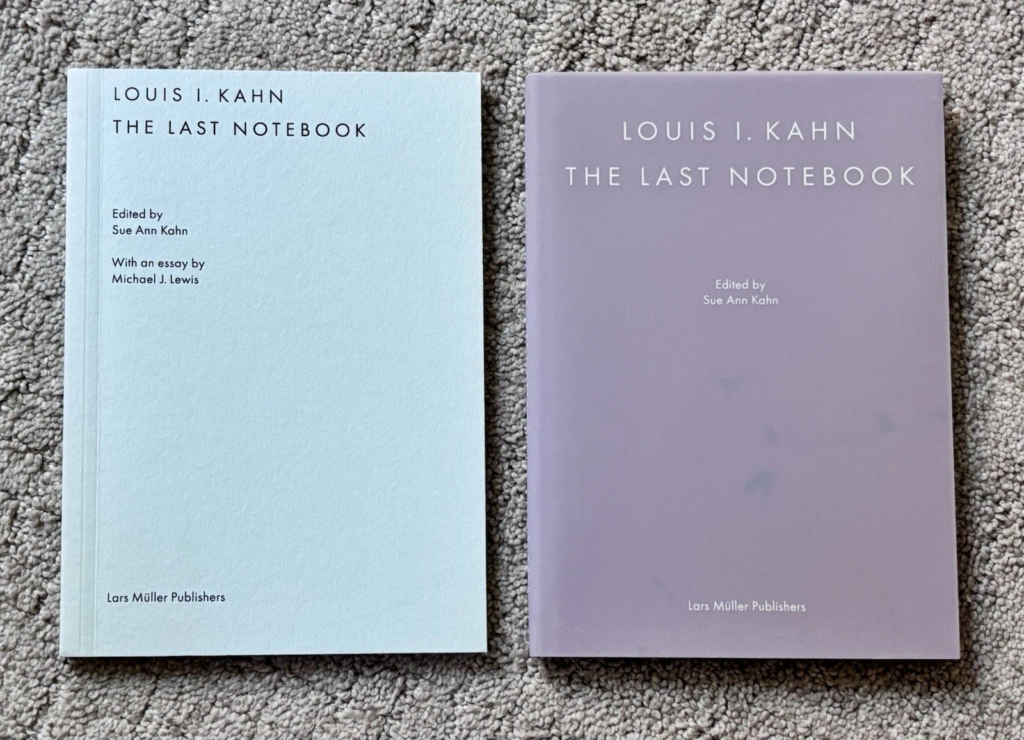
We had a tech error yesterdayAbove are the two volumes of “The Last Notebook”.
Great Volunteers Vicki Feinmel, Gloria Herman and Verna Firtzpatrick
at the Good Shepherd Parish food distribution twice a month on the first Sundays,.
Meals and bread are distributed at 10:30 a.m. first come, first served
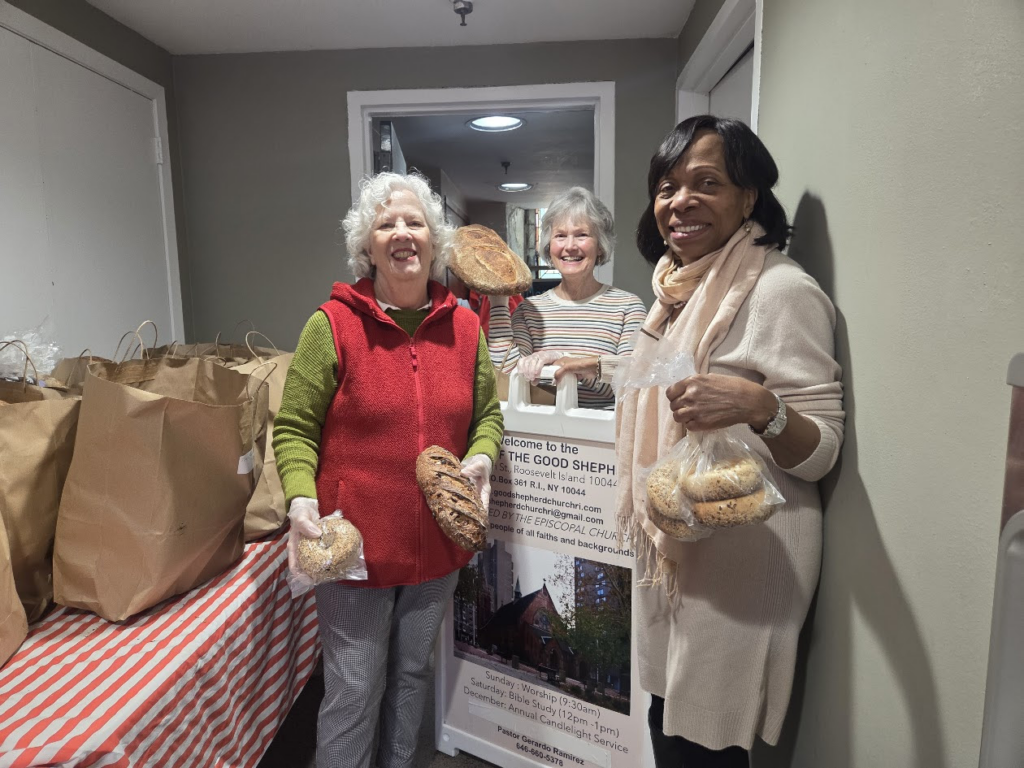
Photo Judith Berdy
CREDITS
Wikipedia
Judith Berdy
All image are copyrighted (c) Roosevelt Island Historical Society unless otherwise indicated
THIS PUBLICATION FUNDED BY DISCRETIONARY FUNDS FROM CITY COUNCIL MEMBER JULIE MENIN & ROOSEVELT ISLAND OPERATING CORPORATION PUBLIC PURPOSE FUNDS.

Copyright © 2026 Roosevelt Island Historical Society, All rights reserved.Our mailing address is:
rooseveltislandhistory@gmail.com
Leave a comment