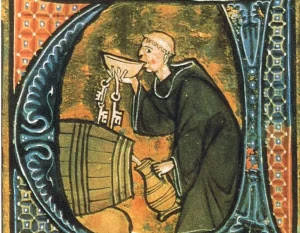
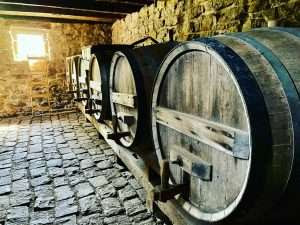
Christianity banned beer from the sacred domain as the Roman clergy continued the Latin habit of drinking wine. The opposition: Christian wine versus pagan beer, was upheld even in the north of Europe. Believers accepted wine’s sacramental role, whatever their climates, social habits, or drinking customs.
The Catholic Church was, at the same time, actively involved in the lucrative business of beer making. The Reformation was not just a schism that breached the unity of the Church, it was also a revolt against clergy-imposed customs that brought about a drastic change – from herbs to hops – in beer production and consumption.
First recorded in the late tenth century, the word “gruit” stems from the Low Countries and refers to a mixture of herbs and spices used for flavoring and preserving beer.
In the eleventh century, Holy Roman Emperor Henry IV awarded privileges of production and sale to different local authorities, creating competition and variety.
Until the Reformation, brewing was a Catholic monopoly. Monasteries controlled the gathering and taxation of ingredients. As hops were considered an unwanted (invasive) weed, they were not taxed. For Martin Luther and other reformers using (wild growing) hops to brew beer was an act of rebellion.
When Luther married the runaway nun Katharina von Bora (ca. 1499-1552) in June 1525, the Wittenberg town council presented the couple with a barrel of “Einbeck” beer (the hops used in this Lower Saxony brew made the drink popular throughout the region and beyond).
Katharina was a competent person. Running a large household, she also managed a brewery. Luther considered beer a blessing to be enjoyed but not abused (he condemned drunkenness).
The boycott of “gruit” led to a shift in brewing practice and taste preference in the Low Countries and those parts of Europe where the Reformation took hold. Hopped beer became the rage.
There was a valuable economic factor to the “Beer Reformation” as well: hops provided a natural preservative, allowing beer to be shipped and exported more readily.
Massachusetts & Manhattan
English ale was a malt brew made from barley. The habit of livening beer with hops was introduced by Flemish refugees during the fifteenth century. There was initial resistance.
Henry VIII instructed the court brewer to ignore hops, and it was not until 1552 that Edward VI passed legislation to allow its application. The use of hops became so widespread that the Flemish/Dutch word “brouwerij” (brewery) replaced the English “brew house.”
Puritan settlers in Massachusetts viewed beer as a daily staple. Due to the long journey, the quality of imported beer was poor. Colonists had brought brewing skills from home but lacked a steady supply of ingredients.
In 1629, the Massachusetts Company began transporting cultivated hops from Europe, but producing its own was a priority. By 1640, observers noted that hops grew “fair and large” in the colonies. Massachusetts stayed a hop supplier for well over a century before production shifted to New York State.
In early urban settings polluted water was a health hazard. People drank thin or small beer instead (heavier beers were consumed on special occasions).
Most European towns had their own breweries that supplied local demand and that of surrounding countryside. Brewing and beer exports laid a foundation for Amsterdam’s prosperity. Dug in 1585, the Brouwersgracht (Brewers’ Canal) was the focus of the city’s rapidly expanding beer industry.
Settlers in New Netherland had a thirst for hopped beer. Manhattan’s first brewery was set up in 1612 in a log house by Dutch explorers Adriaen Block and Hans Christiansen, but it would take another two decades before the start of a permanent industry in New Amsterdam.
In 1633, the West India Company set up the first of several breweries at a location that would become known as Brouwers Straet (Brewers’ Street), close to the Heere Gracht (Gentleman’s Canal), a timber-lined stream constructed in about 1646 that provided water from natural springs.
It ran through what is now Broad Street, extending from the East River up to Pearl Street, ending near Beaver Street, and was dug to drain marshland whilst allowing ships to transport goods from the docks into the heart of the trading post.
Pollution was a problem. The tidal canal was described as a “foul-smelling open sewer,” but it did not impede the flow of beer. Brouwers Straet became the focus of the brewing industry. Oloff Stevense van Cortlandt was a prominent participant.
According to legend, his horse-drawn carriages spread so much dust that locals petitioned for the street to be reconstructed with cobblestones. Completed in 1658, this was New York City’s first paved street (now known as Stone Street).
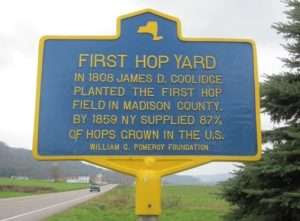
Early brewers produced hopped beers. With the expansion of New Amsterdam, demand for the ingredient grew. New York State would become the nation’s main hop producer, supplying the demand of brewing giants in New York City via the Erie Canal after its opening in 1825.
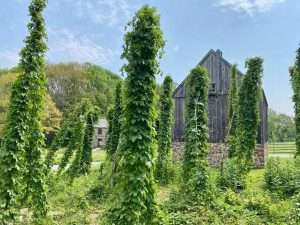
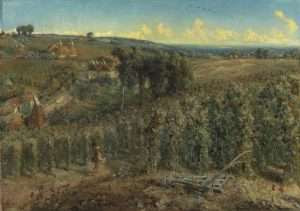
Activities were set in motion in 1808 when James Coolidge planted the first hop yard in Bouckville, Madison County, and thrived until Prohibition after which production shifted to the Pacific Northwest.
Vigne & Valenciennes
Located in the Hainaut region, Valenciennes was a center of early Reformation in the Spanish Netherlands. After the fall of the besieged city to the Duke of Alba’s army, French and Walloon Huguenots (Protestants) suffered severe repression under Habsburg rule.
Throughout the 1570s, as persecution intensified, refugees from Valenciennes and the surrounding Artois region fled in large numbers toward safer areas, including the Dutch Republic.
By the late sixteenth century, Amsterdam had developed into a hub of religious refugees and economic migrants. In a mix of Flemish Protestants, Walloon Huguenots, German Lutherans, and Iberian Jews, immigrants formed a significant part of the population.
Housing these newcomers was a burden to the city authorities. At the same time, the WIC had serious labor shortages in the colonies. Offering families “opportunities” in New Netherland was one way of alleviating the issue.
The original Company plan was to send a small group of men to set up a fur trading post on Manhattan Island. The arrival of displaced Huguenot families in Amsterdam brought about a change in planning the colony’s future.
These refugees either volunteered or were encouraged (pushed?) to make the long journey into the unknown. In 1614, Hoorn-born Cornelis Jacobson Mey captained the Fortuyn (Fortune), a ship that sailed along the coast of what is now New Jersey. Cape May is named in his honor.
In 1625, Mey took charge of the Nieu Nederlandt (New Netherland) and landed the first thirty Walloon families in the colony.
Amongst them were Joris Janszen Rapaelje and his family, refugees from Valenciennes. Sara Rapaelje was born in June 1625, the first European girl seeing life in New Netherland. Guillaume Vigne and his wife and daughters were another family selected by the WIC. They too originated from Valenciennes.
The Vignes established a farm along the East River. Not long after their arrival, Jean (Jan) Vigne was born. He was the first European male born in New Netherland.
Jean Vigne prospered as a farmer and brewer. He was a prominent resident which prompted Peter Stuyvesant to select him as a “schepen” (magistrate) of the New Amsterdam settlement. That appointment highlighted an ominous contradiction in the running of the colony that would impact upon its future.
Vigne was one of New Netherland’s foundational generation, many of whom had escaped persecution at home to search for socio-religious freedom in America. Peter Stuyvesant by contrast was a hard-line Calvinist who was tasked to restore order in the chaotic colony.
His opposition to New Amsterdam’s religious pluralism added to the challenge of ruling the city. Authority degraded into authoritarianism.
Stuyvesant’s Prohibition
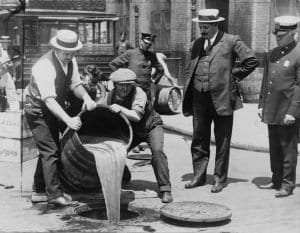
Prohibition refers to a ban on the manufacture and sale of alcoholic beverages and was in effect from 1920 to 1933 under the 18th Amendment. Its supporters formed an odd alliance.
Members of the evangelical clergy championed prohibition because of their faith; social reformers joined in because of the devastating effects of drunkenness on society; anti-liquor sentiments expressed by Ku Klux Klan sympathizers were rooted in the movement’s post-war hatred of (German) immigrants.
Conceived by Wayne Wheeler, leader of the Anti-Saloon League (ASL), the amendment aimed to reduce crime, alleviate poverty, and improve workplace efficiency. The complementary (Andrew) Volstead Act provided its enforcement guidelines. In America, the taps went dry.
The measure led to the rise of illegal bars (speakeasies) and bootlegging. It added a range of innovative terms to the US English vocabulary, but “prohibition” was not one of those linguistic inventions.
In fact, Peter Stuyvesant himself had introduced the term in his political and legalistic jargon, while trying to restrict activities that were believed to be a threat to the colony’s stability and/or the authority of the Dutch Reformed Church.
Director-General of New Netherland from 1647 to 1664, Stuyvesant began to collect taxes on the production and sale of beer, despite opposition from both brewers and residents.
In a crusade against drunkenness, he implemented draconian regulations to impose moral discipline in New Amsterdam. His policies focused on limiting alcohol consumption (banning the sale of liquor to Native Americans), restricting religious freedom, and enforcing strict Sunday observance.
He issued “prohibitions” against the settlement of Quakers whom he considered agitators. When residents of Flushing, Queens, challenged his authority (leading up to Flushing Remonstrance of 1657), he punished the town by implementing a “prohibition in future of all town meetings” without his permission.
Stuyvesant tried to dictate individual behavior by enforcing specific moral standards with acts and statutes (mandated morality) but ran into a wall of defiance. Even if the ends of his endeavor may have been acceptable to some, the means to achieve those were not.
Stuyvesant gave the word “prohibition” a negative connotation that lingered in the city’s collective memory.
Prohibition in New York City became a stand-off between federal law and individual liberty. New Yorkers rejected the ban of alcohol as an attack on personal freedom.
Immigrants, for whom local taverns and saloons served as hubs of mutual support, stood in the vanguard of protest. Many of them defied the law, demanding an end to the “Noble Experiment” (as Prohibition was nicknamed) by pointing out that its imposition hit the poor, the marginalized, and immigrant communities.
High rates of disobedience, mass consumption of illicit alcohol, rampant criminal activity, and the desperate need to increase tax revenue, caused the repeal of 18th by the 21st Amendment (ratified on December 5, 1933, the only Amendment to ever be repealed).
When the law took effect, an estimated 1.5 million barrels of beer were sold within the first twenty-four hours.
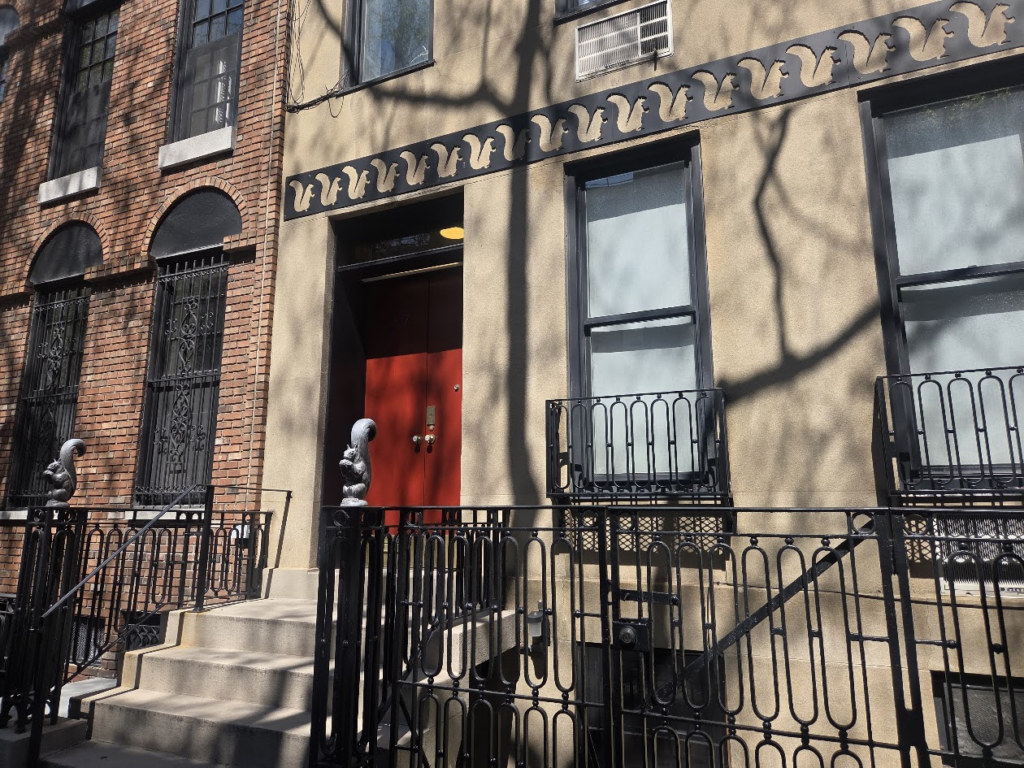
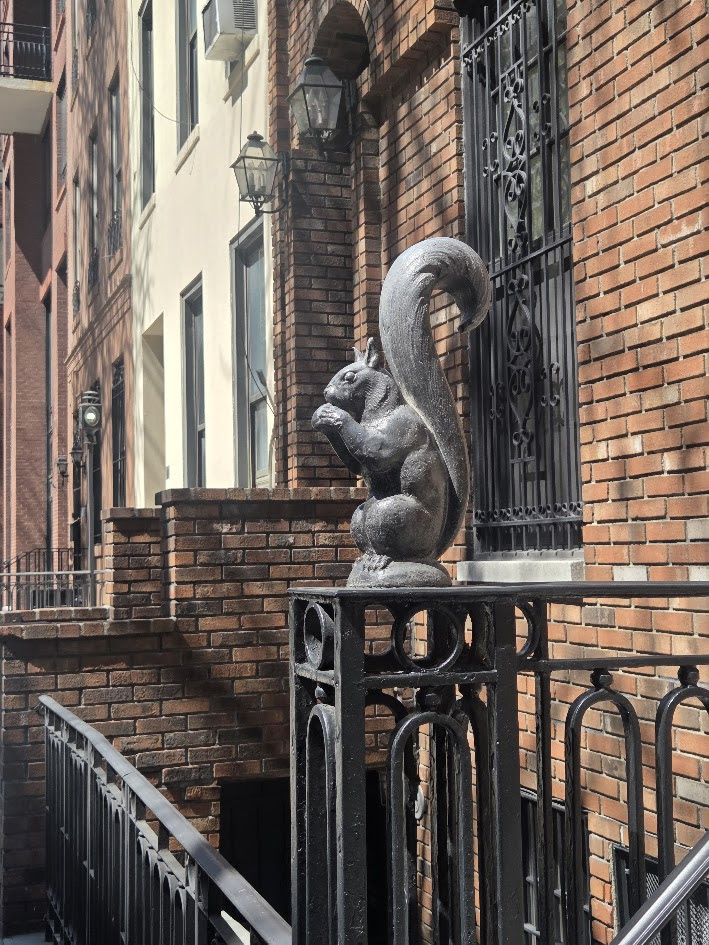
Squirrels Perched on East 74 Street
CREDITS
New York Almanack
Judith Berdy
All image are copyrighted (c) Roosevelt Island Historical Society unless otherwise indicated THIS PUBLICATION FUNDED BY DISCRETIONARY FUNDS FROM CITY COUNCIL MEMBER JULIE MENIN & ROOSEVELT ISLAND OPERATING CORPORATION PUBLIC PURPOSE FUNDS.
WELCOME HOME ARTIMIS CREW FROM SOMEONE WHO HAS WATCHED SPACE TRAVEL FROM ALAN SHEPHERD, JOHN GLENN, THE MOON AND BEYOND TO TODAY.
The 1894 Lexington Building –
151 East 25th Street
(aka 152 East 26th Street)
Weekend, March 11-13, 2026
Daytonian in Manhattan
ISSUE #1660
New Yorkers were served by a mélange of transportation options in the 19th century–horse-drawn street cars, cable and traction cars, and elevated trains. As the century drew to a close the numerous small firms were being rapidly consolidated as they were gobbled up by larger companies or merging.
On December 12, 1893 the Houston, the Broadway Railway and the South Ferry Railroad merged to form the Metropolitan Street Railway Company. Five months later the Lexington Avenue, the Pavonia Ferry Railroad and the Metropolitan Cross-Town Railway were added; and later in 1895 so was the Columbus and Ninth Avenue Railroad.
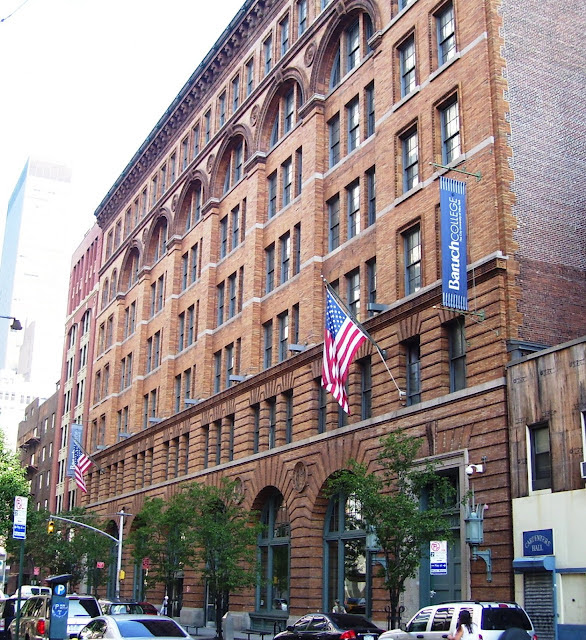
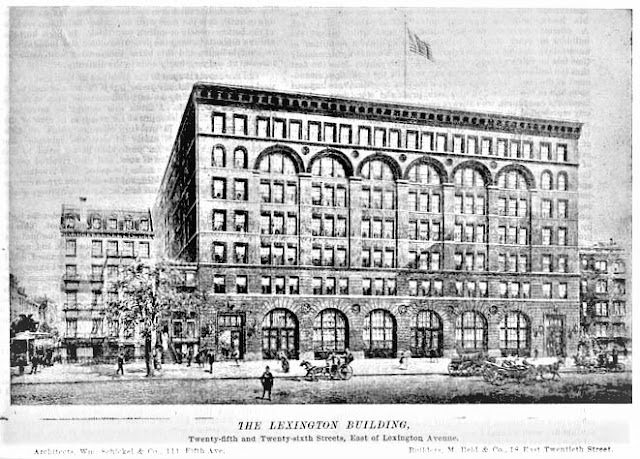
By then work was well underway for a power house to serve the firm’s gargantuan needs. The site engulfed nearly the entire block between East 25th and 26th Streets, between Lexington and Third Avenues. The well-known architectural firm of William Schicken & Co. had been commissioned to design what would be called the Lexington Building, completed early in 1896.
The Real Estate Record & Builders’ Guide, December 14, 1895 (copyright expired)
The architects created a dignified building that looked as much like a commercial structure as a power house. The Real Estate Record & Builders’ Guide called it “a monument of strength and beauty [which] marks the era of a new departure in modern and progressive building for that vicinity.” It described the “inviting facade” as being “as nearly perfect as the combination of stone, brick, steel and other fire-proof material would permit.”
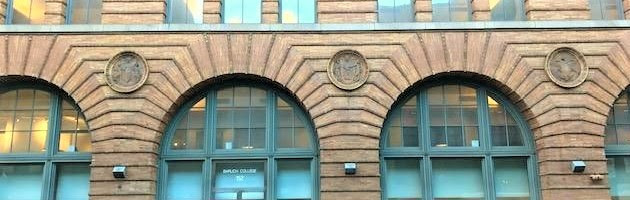
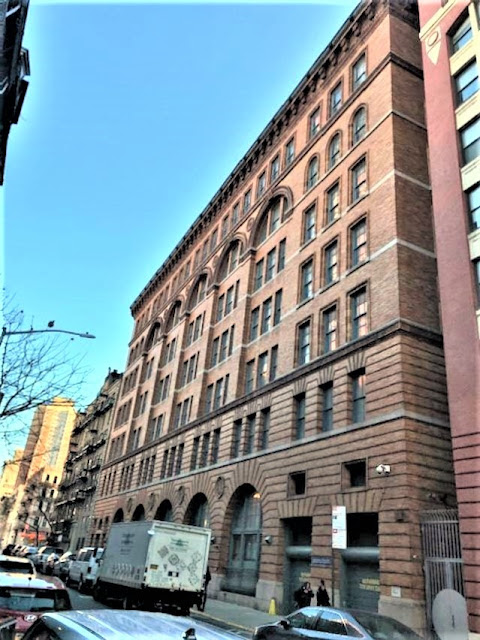
The Renaissance Revival style structure was clad in speckled “Pompeiian” brick and trimmed in limestone and terra cotta. The 25th and 26th Street elevations were essentially identical, with massive arched openings at the ground floor, four-story arcades at the third through sixth floors, and regimented, symmetrical balance throughout.
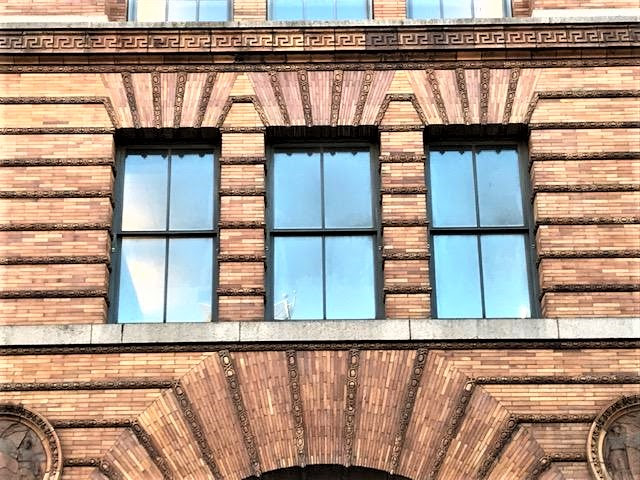
Close inspection reveals exquisite details, like the thin terra cotta bands between courses of brick.
To provide interior light and ventilation the building engulfed a large court paved in white bricks. The steam power plant itself took up only the basement and first floor levels; the upper floors were always intended to be leased as office and factory space. And it appears that printing firms had always been anticipated as tenants. The floors were constructed to uphold 325 pounds per square foot; easily strong enough to accommodate heavy printing presses.
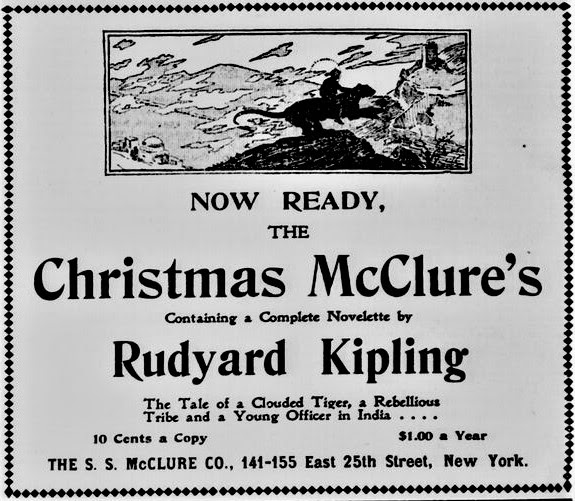
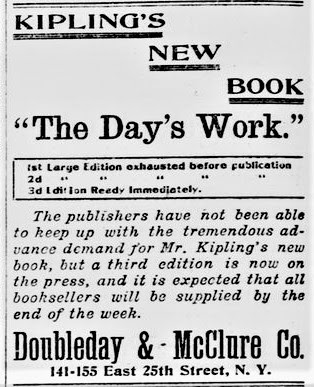
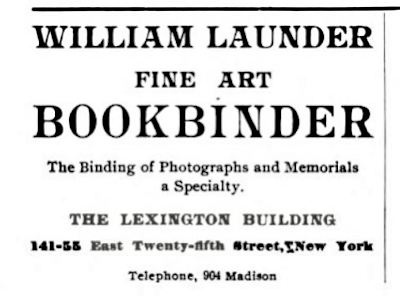
And, indeed, printing and publishing firms quickly moved in. Among the first were two bookbinding firms, Robert Rutter & Son, and William Launder. Publisher The S. S. McClure Co. also moved its gigantic operation into the building.
New-York Tribune, December 8, 1897 (copyright expired)
Founded by Samuel Sidney McClure in 1893, McClure’s Magazine was a favorite in American households. It was noted for serializing works by respected authors like Rudyard Kipling, Robert Louis Stevenson, Willa Cather, Jack London and many others.
McClure partnered with Frank Nelson Double to form the publishing firm Doubleday & McClure, which also took space in the Lexington Building.
New-York Tribune, September 30, 1898 (copyright expired)
The tenants were not all from the publishing field. The Hygiene Manufacturing Company made caps. An advertisement in The World on May 23, 1897 touted the waterproof “Common-Sense” wool cap.
Wheelmen [i.e., bicyclists], equestrians, lovers of outdoor sports, the tens of thousands who prefer to wear a cap all or a part of the time, and who have suffered from headaches, profuse perspiration and the debilitating effects of exercise under a torrid sun, will welcome with joy the announcement that inventive skill has at last come to their relief.
And in the first months of 1897 The Sterling Supply & Manufacturing Company moved its factory onto the third floor of the Lexington Building. The firm manufactured street railway supplies like insulators, brakes, indicators and such.
By 1908 The Magazine of History was published in the building. Its editor, William Abbott, made the newspapers in July that year when he caused an uproar on the uptown Madison Avenue street car line. The New York Times described the elderly, bearded man as “wearing a linen jacket and carrying a Bible” when a young stock broker named John E. Irwin got on board smoking a cigarette.
Abbott commanded the conductor to expel him from the car and when he did not, the two men got into “a heated argument.” The Times said that “the whole car soon joined.” Before it was over the offending smoker had spent fifteen minutes in a patrol wagon with other prisoners, two hours in a jail cell, and another hour in the West Side Court.
The Literary Collector, October 1901 (copyright expired)
In January 1906 the New York Interborough Railway and the Metropolitan Street Railway consolidated to form the Interborough-Metropolitan Company. A few days before, on December 30, 1905, the Record & Guide shrugged “The incident affords one more illustration of the often-repeated statement that this kind of service is a natural monopoly.”
The Financial Panic of 1907 devastated the public transportation system and the company and its subsidiaries went into receivership until 1912 when they were turned over to the control of the Interborough Consolidated Corporation.
The changes were being seen within the Lexington Building. On April 21, 1909 The Horseless Age reported on the establishment of The Lexington Garage which “occupies part of the ground floor of the Lexington Building…The balance of the building is used for lofts and as an electric power station, which formerly occupied the entire ground floor.” The Lexington Garage was used “only for the storage of electric commercial vehicles, and is operated by the New York Transportation Company in connection with its taxicab garage.”
In the meantime, printing and related firms continued to operate from the upper floors. Lithographers Seiter & Kappes were in the building by 1900 and The Schweinler Press was here by 1904. Pfister Book Binding Co. was listed in the Lexington Building as early as 1912.
Giant terra cotta roundels fill the spandrels between the ground floor arches.
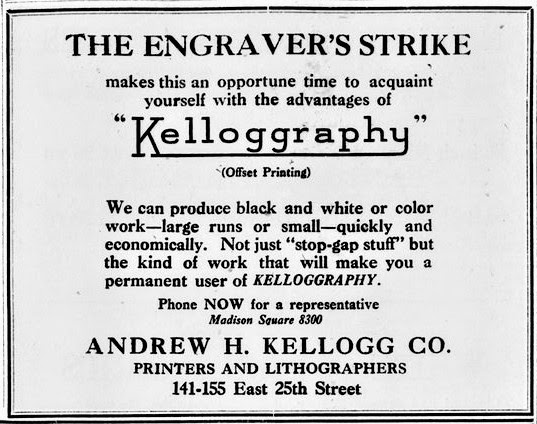
The year 1913 saw major tenants move in, including The Publishers’ Weekly and printing firm Andrew H. Kellogg Company. The Publishers’ Weekly had been at the same location downtown for around 40 years. Now an agreement between the two firms meant that Kellogg would be doing the printing of Publishers’ Weekly. The two firms shared the sixth floor of the Lexington Building.
Also moving in that year was the embossing firm Walcutt Brothers, which took the third floor, and Stuart Specialty Co., which took the fourth. Another large publishing and printing house to take space was Frank A. Munsey, publisher of the New York Press, Argosy Magazine and inexpensive novels.
At the time New York City, along with nearby areas like Brooklyn and northern New Jersey, was the center of the silent film industry. In August 1918 the Famous Players-Lasky Corp. leased the fifth floor of the Lexington Building. The Record & Guide noted it “will use the premises as headquarters for the distribution of advertising matter.”
The New York Herald, January 8, 1922 (copyright expired)
In 1925 Charles Schweisler Press purchased the building. Among the tenants it inherited was the Walker Engraving Company which had occupied the seventh floor for years. In 1915 Walker Engraving Company had employed a staff of 85 men. The shop was the scene of a terrifying accident on April 13, 1926.
The New York Sun reported “One workman was slightly injured and some 500 employees of various firms in the building were sent scurrying to the street to-day when acid exploded in the chemical room of the Walker Engraving Company.” Luckily David Levin only suffered burns on his left hand and the fire which resulted from the explosion was quickly put out.
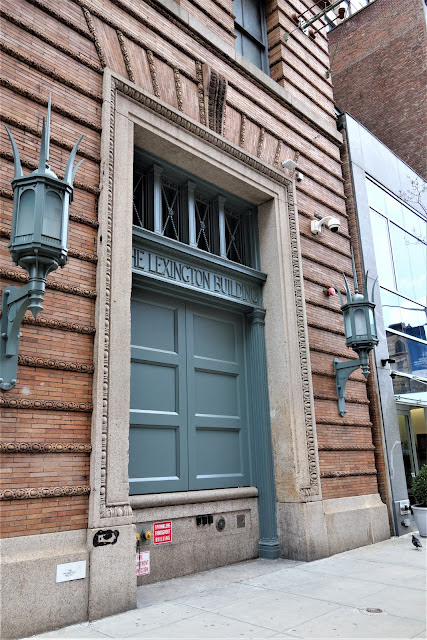
The former loading dock on East 25th Street still bears the name The Lexington Building. photograph by Tdorante10
The Walker Engraving Company would remain in the building into the 1940’s. Another firm occupying space in the building in the Depression years was the Ever Ready Label Corporation. Its president, Sidney Hollander, made a kind gesture to the employees in December 1936 when, according to the New York Post, he announced “that the company would make each employee a Christmas gift of his share of the society security tax for the coming year.”
Telecom Plus operated from the Lexington Building following its formation in 1983. Its tenancy would be short-lived, however. On September 12, 1986 The New York Times announced that Baruch College would acquire “the historic Lexington Building” among other property purchases. Baruch’s director of campus planning and facilities said that $50 million would be spent “to renovate the Lexington Building, which is to house the college’s library, computer center and administrative offices for student groups.”
The initial report developed by architects Davis Brody & Associates alarmed some because of its mention of possible “additional stories.” Jack Taylor, in a letter to the editor of The New York Times on May 14, 1989 warned that adding additional stories would “rob the building of its architectural and historic significance.” If that part of the report was ever seriously considered, it was soon dropped.
The 26th Street elevation is essentially a duplicate of the 25th.
William Schickel & Co.’s handsome 1894 power plant is today home to the Baruch’s William and Anita Newman Library. Its facade has been gently restored and the conversion from commercial to educational use sympathetically executed.
Presenting: Conversations in City History
Monday, April 13, 2026, 6:30 pm “Too Good to Get Married: The Life and Photographs of Miss Alice Austen” Author Bonnie Yochelson will discuss with moderator Judith Berdy about how a woman who grew up in the Gilded Age, when the term “lesbian” did not yet exist, challenged the conservative ideals of Staten Island high society. She will explain, as does her book, the role of photography in Alice Austen’s journey of self discovery, embrace of feminism and involvement in a loving lesbian partnership.
Monday, May 11, 2026, 6:30 pm “Rural County, Urban Borough: A History of Queens” When preservationist and author Jeffrey A. Kroessler passed away in 2023, his wife, architect Laura Heim, selected the images for his book and saw it through publication. She has generously agreed to be interviewed on this seminal historical work that charts how politics, industry, transportation, government and real estate interests all shaped New York’s borough of extraordinary ethnic, religious and linguistic diversity.
Monday, June 8, 2026, 6:30 pm “The Killing Fields of East New York” Author Stacy Horn (also writer of “Damnation Island,” about 19th-century Blackwell’s Island) has chronicled how the subprime mortgage scandal of the 1970s and a long history of white-collar crime slowly destroyed the Brooklyn neighborhood of East New York. She will share her compelling investigative journalism in a conversation about the area’s fair housing, race, violence and misplaced city priorities.
JUST ADDED: Monday, September 14, 2026, 6:30 pm “Louis I. Kahn The Last Notebook Edited By Sue Ann Kahn An intimate record of Kahn’s musings on design, coupled with preparatory drawings of his monumental last project
Published in honor of the 50th anniversary of his death in March 1974, this two-volume set contains a facsimile of the notebook in which Louis Kahn drew and wrote during his last year of life, alongside a second volume of scholarly commentary and transliterations of his musings. Anchored by a magnificent set of preparatory drawings for his monument to Franklin Roosevelt in New York City, the notebook provides an intimate glimpse into private sketches of Kahn’s final projects and his poetic reflections on thematic preoccupations, such as “Silence to Light,” “Form and Design,” “Society of Rooms” and “Desire to Express.” Each volume is in a vellum sleeve and both are housed together in a transparent slipcase. Born in Estonia, Louis Kahn (1901-74) immigrated with his family to Philadelphia when he was four years old. Kahn received Beaux-Arts training at the University of Pennsylvania, under the French-educated Paul Philippe Cret, and then adopted his own idiosyncratic modernism, which would engender the heterogeneous “Philadelphia school.” His architectural career did not take off until later in life; he attained his first major commission to design Yale University’s Art Gallery in 1951. Upon its completion, Kahn received many international commissions, and he developed a signature style that was monumental, monolithic and transparent in its functionality. He was awarded the AIA Gold Medal and the RIBA Gold Medal.
THE ROOSEVELT ISLAND HISTORICAL SOCIETY
6:30 p.m. 504 Main Street
We had a tech error yesterdayAbove are the two volumes of “The Last Notebook”.
CREDITS
DAYTONIAN IN MANHATTAN
Judith Berdy
All image are copyrighted (c) Roosevelt Island Historical Society unless otherwise indicated THIS PUBLICATION FUNDED BY DISCRETIONARY FUNDS FROM CITY COUNCIL MEMBER JULIE MENIN & ROOSEVELT ISLAND OPERATING CORPORATION PUBLIC PURPOSE FUNDS.
When constructed in 1927, the Barclay-Vesey Building at 140 West Street was one of the first examples of a new form of architecture that would soon define the next quarter-century of high-rise development in New York City and around the world. Shaped by the 1916 zoning law, which required setbacks to allow light and air to reach the street, this new style created by municipal regulation soon became an aesthetic, often accompanied by Art Deco ornamentation.
FORMER AT&T BUILDING
NOW PARTIALLY A CONDO
THURSDAY, APRIL 9TH
NYCURBANISM
ISSUE #1659
When constructed in 1927, the Barclay-Vesey Building at 140 West Street was one of the first examples of a new form of architecture that would soon define the next quarter-century of high-rise development in New York City and around the world. Shaped by the 1916 zoning law, which required setbacks to allow light and air to reach the street, this new style created by municipal regulation soon became an aesthetic, often accompanied by Art Deco ornamentation.
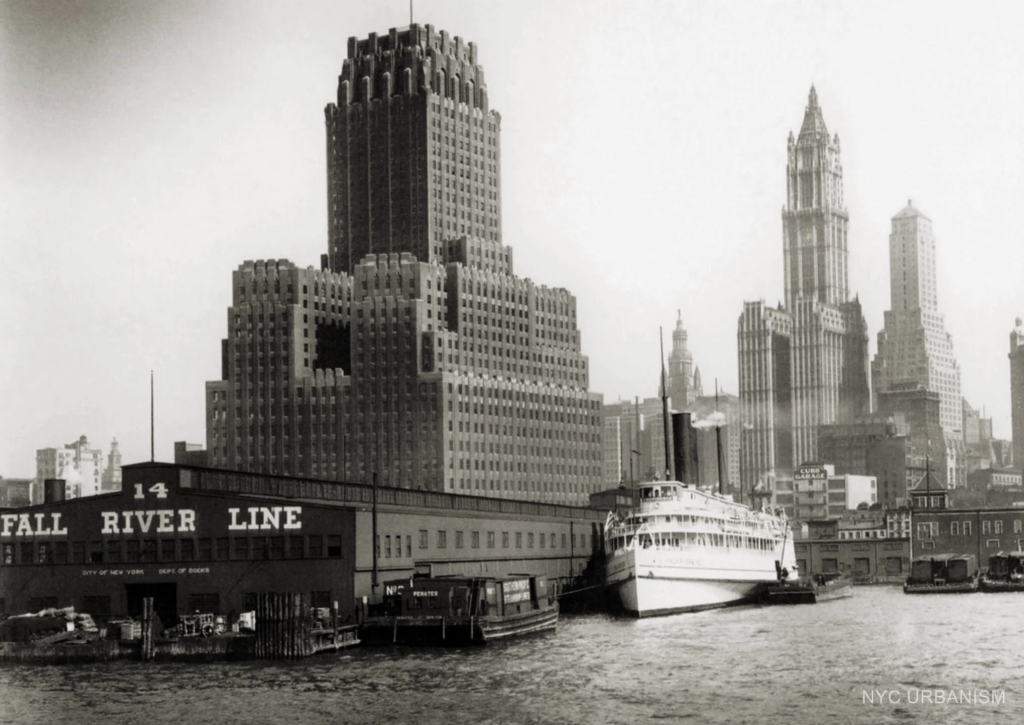
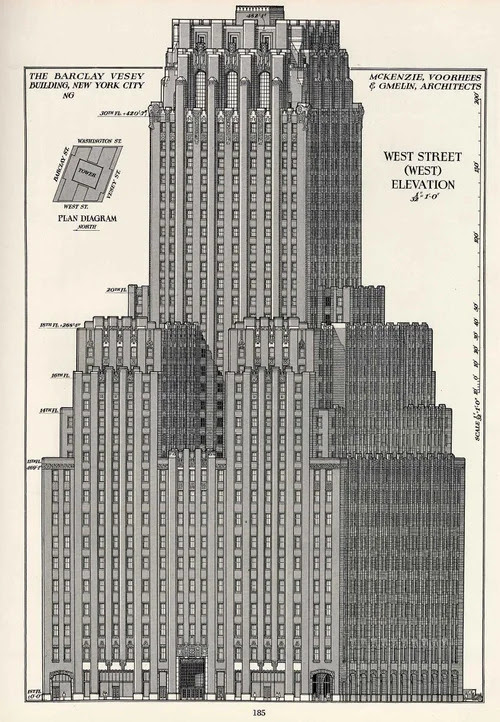
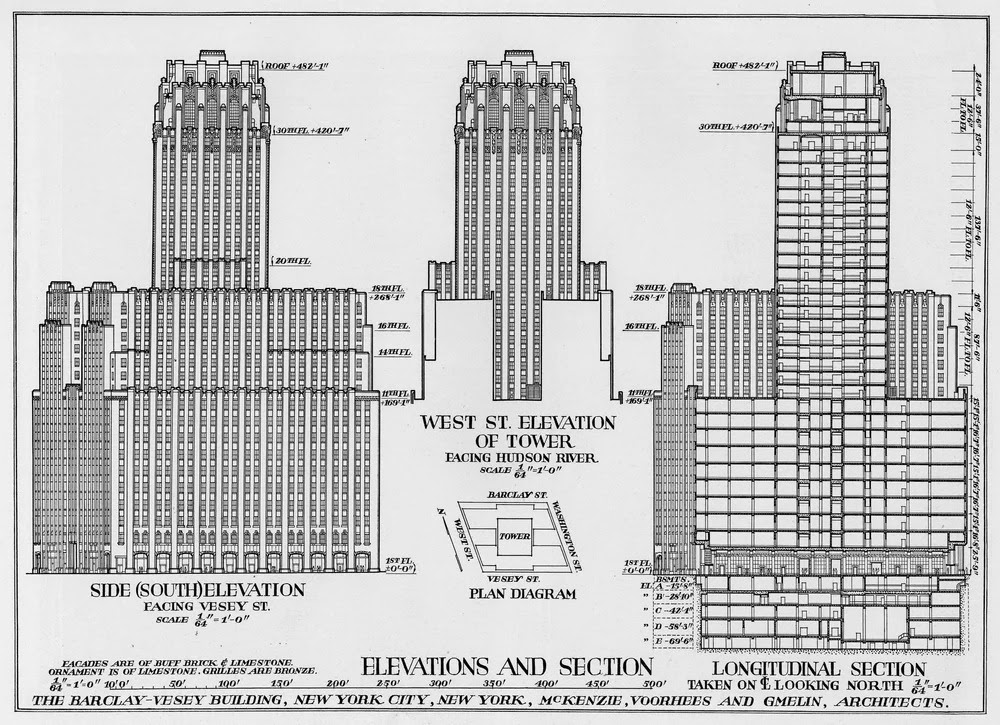
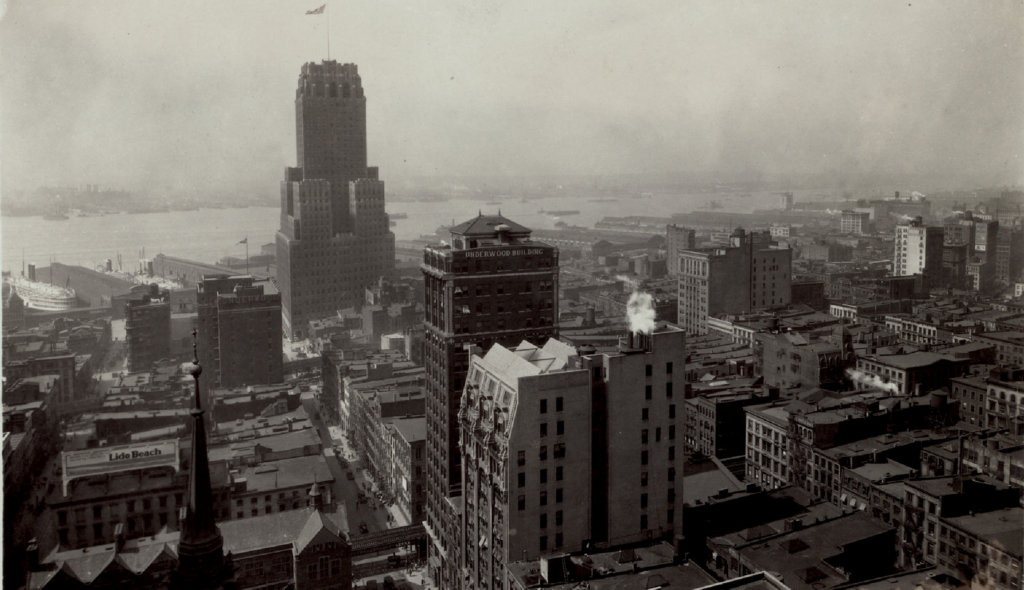
Designed in 1923 by Ralph Walker for the offices of the New York Telephone Company, the skyscraper was referred to the Barclay-Vesey Building due to its proximity between Barclay and Vesey Streets on the Lower West Side of Manhattan. At 498 feet, the skyscraper totaled over 1.2 million square feet of office space with five sub levels of telephone switching centers. When it opened in 1926 the structure was defined by its overwhelming monumentality, which was balanced through its ornamentation and form, giving the building individuality and human scale while also appearing solid and powerful.
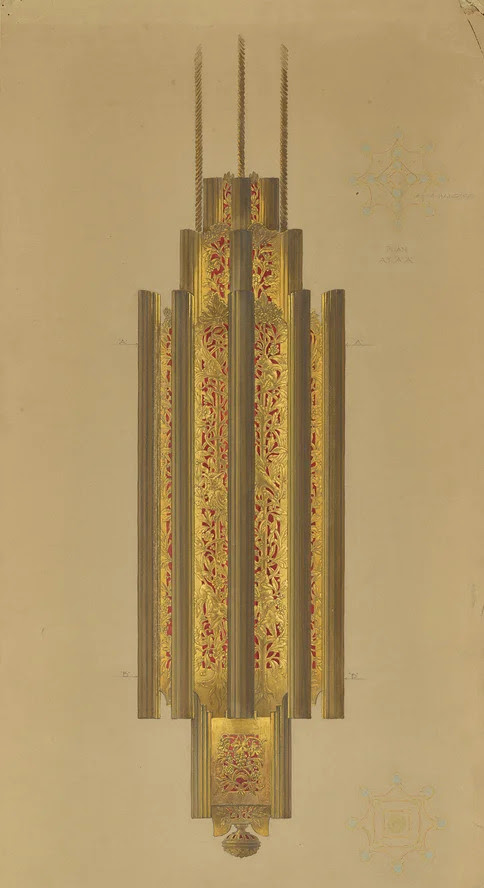
The base of the building, shaped by the irregular block rises straight up from the sidewalk to the tenth floor, where dramatic setbacks reveal a square tower that continues before topping out at 32 floors. The cornice of each setback is adorned with ornament; elephant heads with their trunks dangling down the facade, foliage, and cherubs. As The Skyscraper Museum explains, the bulky base, rising directly up from the lot lines, “was only possible because of the switching machinery it contained; windows were unnecessary, so the entire internal core could be utilized. Ralph Walker used the mandated set-backs to create a well-lit office tower above the switching floors, beautifully matching form to function.”
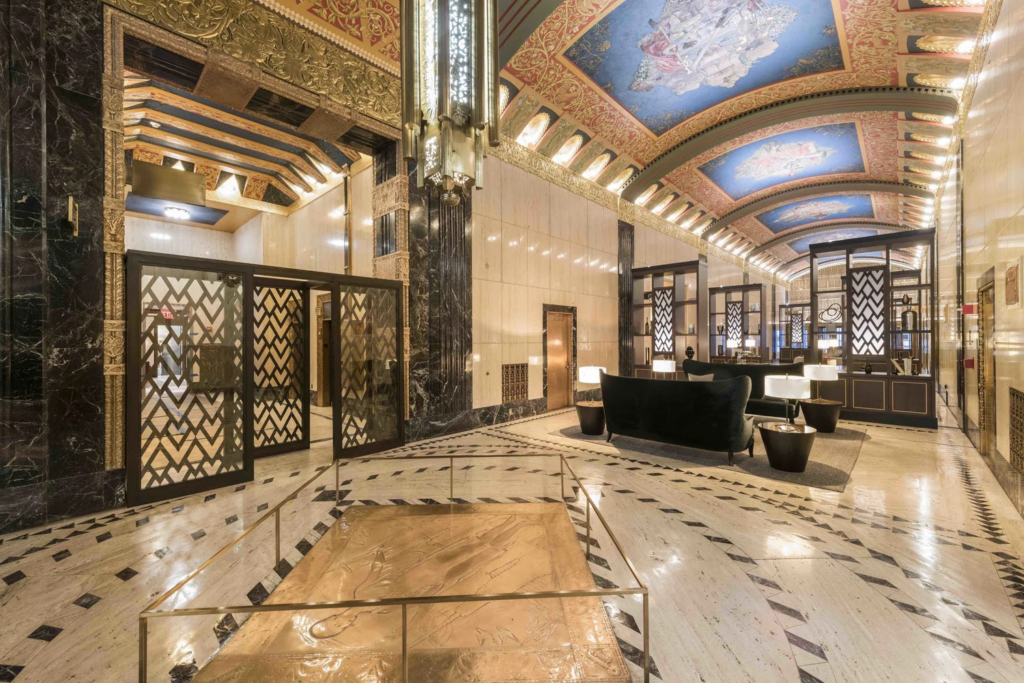
On the building’s south side, a Guastovino-tiled vaulted arcade enclosed Vesey Street, blending public and private space and offering protection and grandeur to passing pedestrians. Inside, a grand lobby forms a corridor the length of the building, with marble walls, travertine floors, and bronze medallions, topped with exquisite murals illustrating advances in communications. Walker’s design was massively influential, pushing other architects to adopt the form in their work. Walker would go on to design other iconic New York City skyscrapers including One Wall Street, the Western Union Building (60 Hudson) and the AT&T Long Lines Building (32 Sixth Ave). In 1957 The New York Times would name Walker “Architect of the Century.”
Alice Austen House or Clear Comfort in 2002
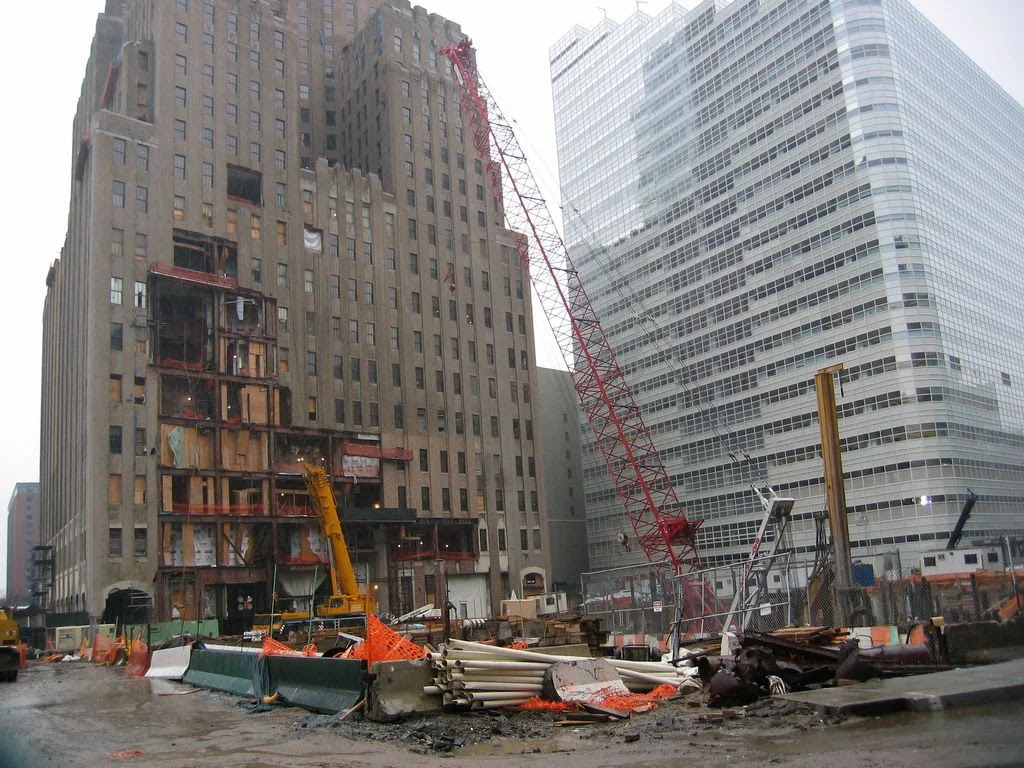
The skyscraper was in the path of destruction on 9/11, bordering the northern edge of the World Trade Center campus with close proximity to the Twin Towers, and next door to the collapsed 7 World Trade. Luckily, the building’s thick masonry exterior helped to shield it from much of the falling debris and absorb the energy from the collapsed towers with no interior fires. Still, the building experienced extensive damage with entire portions of the facade ripped off its steel skeleton. The underground Verizon cable conduits and infrastructure were also flooded and heavily damaged. In 2002, the New York Times detailed the damages to the building: “It took hits on two sides. First, the steel hurled from the collapsing towers smashed into the building’s south face, penetrating an underground vault containing thousands of telephone cables. Later that day, 7 World Trade Center, a 47-story skyscraper just to the east, came tumbling down, its ruins slumping like a slain giant against the Verizon Building’s east facade.The remains of the collapsed trade center buildings have been picked away, but the wounds they created are still visible. Two-foot-wide steel support columns at the east facade of the Verizon Building are bent inward like crumpled car fenders. A hole in this face of the building reaches as high as eight stories from the ground, and is covered by nothing more than white sheeting.”
The Times noted the repair bill would cost “three-quarters of the Chrysler Building’s estimated total value.”
Restoration following 9/11 was done by Tish.
In 2013 Verizon – New York Telephone’s successor – sold the top 22 floors to Magnum Real Estate Group, who converted the floors into loft residences under the name 100 Barclay. During the conversion, the lobby was completely restored with a new entrance on the Barclay Street side of the building.
For those who may not make it up to see the residences, the breathtaking lobby is an interior landmark, which means it is open to the public. Covered in bronze, marble and travertine, with murals depicting communication through the ages, it is one of the most incredible interiors in the entire city – and in it’s original state. Peek inside to get an idea of how it looked when the Art Deco jewel first opened in 1927!
Presenting: Conversations in City History
Monday, April 13, 2026, 6:30 pm “Too Good to Get Married: The Life and Photographs of Miss Alice Austen” Author Bonnie Yochelson will discuss with moderator Judith Berdy about how a woman who grew up in the Gilded Age, when the term “lesbian” did not yet exist, challenged the conservative ideals of Staten Island high society. She will explain, as does her book, the role of photography in Alice Austen’s journey of self discovery, embrace of feminism and involvement in a loving lesbian partnership.
Monday, May 11, 2026, 6:30 pm “Rural County, Urban Borough: A History of Queens” When preservationist and author Jeffrey A. Kroessler passed away in 2023, his wife, architect Laura Heim, selected the images for his book and saw it through publication. She has generously agreed to be interviewed on this seminal historical work that charts how politics, industry, transportation, government and real estate interests all shaped New York’s borough of extraordinary ethnic, religious and linguistic diversity.
Monday, June 8, 2026, 6:30 pm “The Killing Fields of East New York” Author Stacy Horn (also writer of “Damnation Island,” about 19th-century Blackwell’s Island) has chronicled how the subprime mortgage scandal of the 1970s and a long history of white-collar crime slowly destroyed the Brooklyn neighborhood of East New York. She will share her compelling investigative journalism in a conversation about the area’s fair housing, race, violence and misplaced city priorities.
JUST ADDED: Monday, September 14, 2026, 6:30 pm “Louis I. Kahn The Last Notebook Edited By Sue Ann Kahn An intimate record of Kahn’s musings on design, coupled with preparatory drawings of his monumental last project
Published in honor of the 50th anniversary of his death in March 1974, this two-volume set contains a facsimile of the notebook in which Louis Kahn drew and wrote during his last year of life, alongside a second volume of scholarly commentary and transliterations of his musings. Anchored by a magnificent set of preparatory drawings for his monument to Franklin Roosevelt in New York City, the notebook provides an intimate glimpse into private sketches of Kahn’s final projects and his poetic reflections on thematic preoccupations, such as “Silence to Light,” “Form and Design,” “Society of Rooms” and “Desire to Express.” Each volume is in a vellum sleeve and both are housed together in a transparent slipcase. Born in Estonia, Louis Kahn (1901-74) immigrated with his family to Philadelphia when he was four years old. Kahn received Beaux-Arts training at the University of Pennsylvania, under the French-educated Paul Philippe Cret, and then adopted his own idiosyncratic modernism, which would engender the heterogeneous “Philadelphia school.” His architectural career did not take off until later in life; he attained his first major commission to design Yale University’s Art Gallery in 1951. Upon its completion, Kahn received many international commissions, and he developed a signature style that was monumental, monolithic and transparent in its functionality. He was awarded the AIA Gold Medal and the RIBA Gold Medal.
THE ROOSEVELT ISLAND HISTORICAL SOCIETY
6:30 p.m. 504 Main Street
We had a tech error yesterdayAbove are the two volumes of “The Last Notebook”.
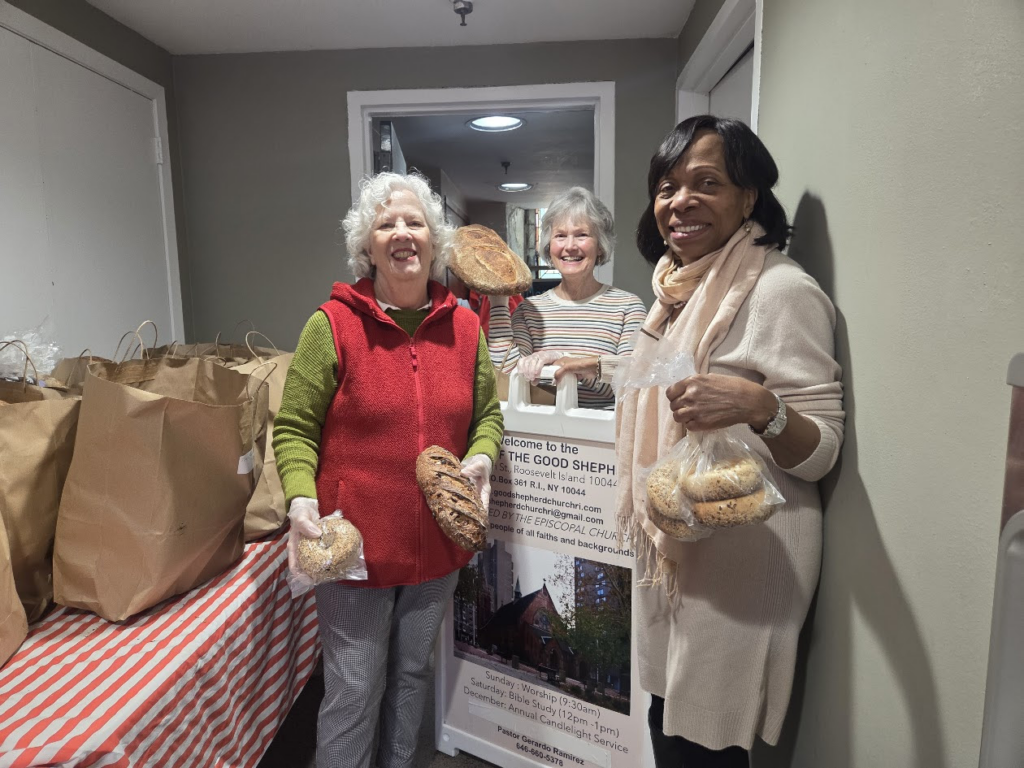
Great Volunteers Vicki Feinmel, Gloria Herman and Verna Firtzpatrick at the Good Shepherd Parish food distribution twice a month on the first Sundays,. Meals and bread are distributed at 10:30 a.m. first come, first served
Photo Judith Berdy
CREDITS
Wikipedia Judith Berdy
All image are copyrighted (c) Roosevelt Island Historical Society unless otherwise indicated THIS PUBLICATION FUNDED BY DISCRETIONARY FUNDS FROM CITY COUNCIL MEMBER JULIE MENIN & ROOSEVELT ISLAND OPERATING CORPORATION PUBLIC PURPOSE FUNDS.
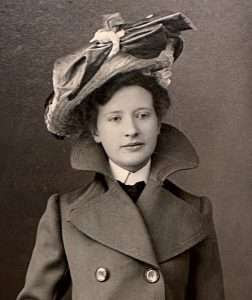
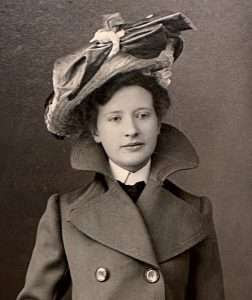
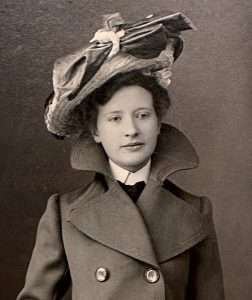
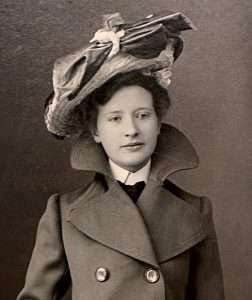
Alice Mabel Allen (1886-1976) grew up in the village of Adams in Jefferson County. In 1908, while attending Syracuse University Mabel, as she was known, kept a diary which New York Almanack is publishing each week.
Monday, February 24
Lu and I slept in Grace’s room last night as Cassie had gone home. Fuzzie slept with Lillian. I studied only a few minutes before breakfast but was all right for math as Mr. Pratt cut. Helen Beattie came back and studied Trig and Latin. At four walked with Fuzzie. She afterwards took me in for chocolate.
To-night Lu and I went to recital given by Mr. Mahr, cellist, and Mlle. Hinchey-Harden, vocalist. It was very classical yet I enjoyed it. Started report on part of Venn in Return of the Native.
Tuesday, February 25
After English went down and studied trig with Helen Beattie. Recited in Elocution this P.M. — Robert of Sicily. Came home and found letter from Edna with one from Dora [her older sisters] enclosed.
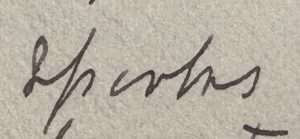
After dinner, Helen Beattie came. Telephoned [?see insert] to come over as it was her twenty-second birthday. Mine comes soon and I would ward it off for the restlessness each year brings. We went over to Hill’s for hot chocolate and I then walked a piece with her. After tea Lu and I walked. I wentdownstairs and watched the girls get ready for the carnival; then came up and studied until the lights went out.
Wednesday, February 26
In Trig I was called on for some angles which I guessed at and then forgot what I said before I could substitute. Received invitation from Jessie Torrey to attend graduation of nurses from St. Luke’s March 2. From 11 to 12 studied at Helen Beattie’s. Isabel made fudge down in Christine’s room. Leta and I made a raid on rooms for alcohol and at last I bought some of Miss Adams. After supper I went with Lu down to the Boys’ Club on Willow St. There were only a few boys there and only one came into the library. Am going to sleep with Lu until Harriet comes. She has been to a baby party.
Thursday, February 27
Katherine Arnold came home with me after Roman Hist and I persuaded her to stay to dinner. After she left I wrote my report and finished it to-night. Took a warm bath and then wrote theme for Eng. III. Studied well for me — the whole evening until the lights went out. To-day we had ice-cream and suet pudding “both at once.”
Friday, February 28
Studied math early and for once made a decent recitation. Helen Beattie came back and we studied 1 hour in Harriet’s room. Letter from mother. Says they are having a hardwood floor laid in the dining room. After Latin went over to see Katherine. She seemed much stronger.
Found that she never received the pot of daffodils I had ordered sent. Went over to the library and read the [?see insert] of The Wayfarers. To-night wrote up Roman Hist notes in Lu’s room. Jean came in. Went to sleep in there. Three of girls have gone home.
Saturday, February 29
Crawled into bed with Harriet and Lu, in spite of Harriet’s neuralgia. After breakfast studied Shakespeare. Straightened credits out with the registrar as I was not catalogued with advanced standing. Eng. VIII conference with Prof. Eaton. Came back and swept and dusted the room. After dinner Lu and I walked and then went downstreet. Bought eatables for a spread; blue and white handkerchief and picture frame. Walked both ways. Late to-night we had a spread in Lu’s room; cocoa and peanut butter sandwiches.
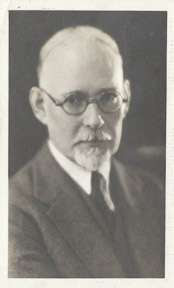
Professor H.A. Eaton
Sunday, March 1
After breakfast, washed fudge, or rather, spread dishes. Went to St. Mary’s Cathedral with Lillian, Harriet and Lu. Lenten regulations were read and I was much interested to hear them. Commenced to storm just after we reached home.
Read Richard Feverell after dinner. Collected material for Harriet to make fudge; took bath and put on blue waist for lunch. Mrs. Campbell joined us in singing afterwards. Miss Stevenson told our fortunes. Wrote letters to-night to the people [her parents] and Edna [her older sister].
Mabel Allen’s 1908 Diary: Math Trouble & A Barn Dance
Alice Mabel Allen (1886-1976) grew up in the village of Adams in Jefferson County. In 1908, while attending Syracuse University Mabel, as she was known, kept a diary which New York Almanack is publishing each week.
Monday, March 9
Called on in math and managed to make a recitation after much hesitation. Then came home to study. Had a long letter from Betty who is doing Y.W.C.A. work in Sacramento. After dinner Lu, Harriet and I finished the last orange. Went in Isabel’s room after Latin and she told me all about her travels home. Finished Richard Feverel. Lu and I went down to drugstore and bakery. Mailed white goods to mother and bought brown bread. Came back and found Jessie Barnes here. She is much thinner but hopes to come back after sanitarium treatment.
Tuesday, March 10
Celebrated with coffee and doughnuts this morning. Jean brot my mail up to Shakespeare class; three letters from Edna, Rollin and Earl Dunmore. Studied math at Helen’s. In elocution had to read [????]. After dinner Helen came and we tried to study math and Roman History but could not do either to advantage. Went up to Liberal Arts after tickets for Harvard concert. Miss Minch stopped for me to go down to hear Dr. Hearst speak on Miracles. I was eager to go, but he was not satisfactory, very. Walked home with her and discussed the Doll’s House. Lu & I walked down to drugstore after tea. Julia Marlow in As You Like It to-night.
Wednesday, March 11
Recited in math. I always want to put this down as a red letter day when I happen to be called on for something I know. Helen came back with me. After Latin went over to library and studied on Roman History until after six. Studied math in the evening. Harriet bought a plateful of cookies from Mrs. Campbell. They were not very good. Bea made some tea and I went down and drank some after lights went out. It was good but it kept me awake until after one. Bea and Christine were honored with a private interview because they talk across the way with one of the boys. Lillian is waiting on table in Ethel’s place. I cannot decide about answering the letter. Cassie pledged Alpha Gamma Delta.
Thursday, March 12
No Journal. Roman history quiz. Walked down after dinner a piece with Lu and Harriet who is going to the dentist’s. Stopped in to see Leta. Wrote in her birthday book. Helen came over to study for a math quiz. Afterwards went down in Fuzzie’s room and we lay on bed and talked. Bea came in asked us in to have some of her box; apples and cookies. After supper walked with Lu and Harriet. Studied Latin in Jean’s room. Ethel has gone home. Going to bed early as the tea last night kept me awake. Katherine went home yesterday.
Friday, March 13
Math quiz this morning but I got most terribly mixed. Came back and read the Journal. Mr. Smith cut English. Harriet had a fruit cake sent to her. Isabel made some good nut fudge. Went over to library to read for Shakespeare. Walked home with Miss Briggs with Fuzzie and Christine. After supper we danced and tried the Barn Dance. Went up to Liberal Arts with Lillian and climbed thru window into History seminar. Made fudge–under protestation.
Saturday, March 14
Letter from Father with check for $50 enclosed. He is troubled with rheumatism and was going up to see Dr. White. Studied or at least tried to study Trig down at Helen Beattie’s. Came home and swept the room. Walked with Lu after dinner and then walked downstreet with Jean, Grace Gatchell and Harriet. Took my black skirt to tailor to be mended. I tore it this morning making the bed. Went with the girls to the dentist. Saw [????] at the Five and Ten. Went over and left a note for Myrtle Heath to stay with me to-night. Sewed and started linen collar. Lillian gone away to-night.
Sunday, March 15
Myrtle staid for some time after breakfast and we had music in the parlor. Undressed to take a bath but had to wait for the water to heat. Wrote home and, later, to Mary. Isabel went down after mail and brot me a letter from mother. Thundered and lightened after dinner. Walked down to Harvard concert with Harriet, Lillian and Lu and then went to Vespers. Rode home. After lunch Christine and I went down and popped corn over the furnace. Went in Lu and Harriet’s room to eat it. Have to study Trig to-night.
Mabel Allen in Syracuse, 1908: St. Patrick’s Parade, Dancing & Preaching
Alice Mabel Allen (1886-1976) grew up in the village of Adams in Jefferson County. In 1908, while attending Syracuse University Mabel, as she was known, kept a diary which New York Almanack is publishing each week.
Monday, March 16
Went down early in Fuzzie’s room to study math but there was no light so I crawled into bed with her until the light came on. Put on my new white shirt waist. Math quiz on identities and I flunked about every example. Helen Beattie came back with me to study. Bought some sugar for Isabel to make fudge. Went over to library to write report. In place of Latin, attended a lecture on Sicily by Mr. Emerson. Wrote to Rollin and a birthday letter to Alice. Studied in Lu’s room. The girls filled out my room. Have been to sleep but will write in report now.
Tuesday, March 17
Late for Trig and had to hand in a blank for the example as time was called. Mrs. Campbell’s clock is about 10 minutes slow. Had a letter from Edna [her sister]. Went down to Helen Beattie’s to study Trig and staid during elocution period as Mrs. Butler is ill. After dinner embroidered on linen collar Myrtle Heath gave me. Helen Beattie came and afterwards I walked downstreet with Jean and bought a pot of tulips for Rita Cooper who is ill at hospital. Saw the St. Patrick’s parade. To-night wrote English report on Richard Feverel. Is not all that satisfactory. For a wonder I studied during entire evening.
Wednesday, March 18
Staid for a conference after Trig. After Eng. went down to Helen’s and studied until 12:30. Dining room was full of men when I ate dinner and the silence was oppressive. In Latin Dr. Bushnell wore a Prince Albert coat. We wondered if he were going to a pink tea. Read Roman history and learned poetry until Lu came at 4:30 for me to go to Vespers. Dr. Coddington spoke on the one besetting sin of each individual. To-night we danced after supper and then studied. I went to sleep but now am wide awake.
Thursday, March 19
After Roman History, I started my long story. Went over to the library early with Lu and wrote most of the afternoon. Came back and studied Latin down in Fuzzie’s room until supper. Danced, finished my Latin and copied my theme until 12 by Mary’s candle.
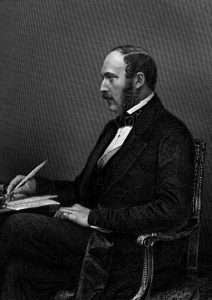
Prince Albert in his frock coat.
Friday, March 20
Letter from mother telling of Uncle David’s death. The funeral is to be Saturday, but I decided not to go home. She said he died very quietly, as one goes to sleep. I wonder where Cousin Fannie will go. In Latin I had to recite the last verse of the poem. At four I went downstreet with Lu and bought some blue prints, some sandals and material for an underwaist. We bought some peanut candy to eat on the way home. We were quite late for supper. Lu and Harriet came in and I fixed up my Roman history note book. I slept with Lu and Harriet with Cassie as Grace went home.
Saturday, March 21
Alice Jenkin’s birthday. Did not get up until 7:00 and Lu and I came in to awaken Harriet and Cassie who had not heard the rising bell. Had a long letter from Jessie Torrey who has finished her training course and is going out for herself. Studied Latin in Lu’s room and then swept and dusted our room. After dinner cut out a corset cover by Harriet’s and sewed on it most of the afternoon. Also ironed and starched my white waist. The girls went downstreet and Lu bought me some lace. After supper we danced; Lillian and I went down after Florence Signeur to stay all night with Lillian. A beautiful starlight night. I made or started some fudge which Lu finished while I took a bath. Laura sleeping with Cassie to-night. She is down in Bea’s room and Harriet is in here studying by candlelight. Uncle David’s funeral was this afternoon.
Sunday, March 22
Lu and Harriet piled into bed early this morning with Cassie and me. We started about half past nine, the four of us, to hear Rev. Hugh Black at the Fourth Presbyterian. He is wonderful, perfectly wonderful. He is tremendously intense and magnetic in his personality. His theme was our lack of responsibility for consequences. His face was so sad. I could have cried when the service was over and I would have given worlds to have shaken him by the hand. This afternoon he spoke on the Hill. We walked home this morning and heard some song sparrows. To-night we heard the robins and it was so encouraging. Took off heavy underwear.
Mabel Allen’s 1908 Diary: Invitation to Junior Prom
In 1908, while attending Syracuse University, Alice Mabel Allen (1886-1976) kept a diary which is being published each week. In this week’s entries, a suitor visits Syracuse and invites Mabel to the junior prom at his college
Monday, March 30
Slept with Fuzzie in her room. After Helen and I studied math I went down in Fuzzie’s room and (studied math) darned stockings–slightly different. Came home from Latin and found a letter from Herbert Jenkins. Walked downstreet with Grace, Fuzzie, Cassie and Blanche McGelligott. My shoe rubbed and I was pretty tired before I reached home. Met some frat sisters of Cassie who asked us to go to the basketball to-night between juniors & senior women. Cassie would not say a word and I accepted conditionally. The position I did not like to-night.
Tuesday, March 31
After English stopped after [older sister] Edna’s letter and went down to study math with Helen. Recited on “Cuddle Doon” in elocution. Had an Eng. conference and Mr. Smith asked if I cared to run my long theme in the weekly. I told him I was willing. Went down to library with Lu and learned poetry. Afterwards went to Vespers. Had to ride home on account of the rain. After supper danced the barn dance with Christine. Edith and Mrs. Hannahs over to-night. Mrs. H. told me Harriet Nott was to leave town. Lu’s box came to-day and in it were rocks and oatmeal cookies. Saw Mabel Hammond Griggs this afternoon.
Wednesday, April 1
“April Fool.” Recited in math but could not do the traverse function example. Staid afterwards. Prepared for a quiz on poems in Eng. VIII but did not have it. Met Mrs. Hammaker on the Hill. After Latin studied Shakspere. Lillian went over and bought some cookies. Started a letter to Della when Edith phoned for me to meet her and her mother at the Sterling. We had a delicious lunch together and then Edith and I went to the train. We stopped on the way home to look at hats. Went with Lu to Sophomore contest for women. Hazel Thomas received 2nd prize. Poured when we came home, so I took my rain coat and rubbers up to Lillian who ushered. Rooms of Haven Hall girls were stacked. Fooled Lillian this A.M. telling her Fuzzie had been sick.
Thursday, April 2
Cold, especially in this room. Read [Jefferson County] Journal after Roman history. After dinner studied Latin poems in Harriet’s room. Postal card from Rollin saying he would be here tomorrow. At three went down to see Mabel Hammond Griggs who is visiting on Genesee St. Blew and snowed hard. After supper, danced and then studied in Harriet’s room. Went to sleep.
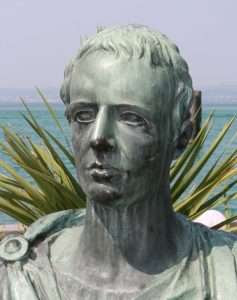
Gaius Valerius Catullus
Friday, April 3
Called on in math, much to my surprise. Helen came down. Discussed Markeim in Eng. III. In Latin we are reading Catullus’ poems. After Latin, studied Shakspere. Put on my gray for supper. Rollin T., who is visiting at the ɸ 𝜅 ψ House called me up and asked me to go to the debate between Wesleyan and Syracuse. Syracuse won and I am so glad because Russel D. sent a card saying they expected to trim Syracuse. Wesleyan’s speakers were readier and smoother.
Saturday, April 4
Letter from mother. Dr. Carter in Eng. read Sheridan’s play by [about?] Mr. Puff, an excellent satire on Shakspere’s dramatic style. Swept the room and studied Latin with Fuzzie. After dinner Rollin came and we walked over to see Rosina and Mr. Scoville. Rosina has a very pleasant home and a dear daughter. On the way home, Rollin asked me for the Junior Prom in May. After supper Lu and I walked. Rollin came over to-night, but I had to make peace with Mrs. C. because it was not calling night. Fooled upstairs.
Sunday, April 5
Of course I awoke at about 6 this morning. Got in bed with Harriet and Lillian went down with Mary and Clara and raised “rough house.” Walked to church with Rollin to Park Presbyterian. After dinner Cassie, Harriet, Lu, Miss Sanford and Helen Beattie and I went down to the Harvard concert. The orchestra played Schubert’s Unfinished Symphony which was fine. Went to Vespers, four of us, and had to ride home as it was raining. Wrote home, to Bina Legg and Herbert & now am going to bed.
Presenting: Conversations in City History
Monday, April 13, 2026, 6:30 pm “Too Good to Get Married: The Life and Photographs of Miss Alice Austen” Author Bonnie Yochelson will discuss with moderator Judith Berdy about how a woman who grew up in the Gilded Age, when the term “lesbian” did not yet exist, challenged the conservative ideals of Staten Island high society. She will explain, as does her book, the role of photography in Alice Austen’s journey of self discovery, embrace of feminism and involvement in a loving lesbian partnership.
Monday, May 11, 2026, 6:30 pm “Rural County, Urban Borough: A History of Queens” When preservationist and author Jeffrey A. Kroessler passed away in 2023, his wife, architect Laura Heim, selected the images for his book and saw it through publication. She has generously agreed to be interviewed on this seminal historical work that charts how politics, industry, transportation, government and real estate interests all shaped New York’s borough of extraordinary ethnic, religious and linguistic diversity.
Monday, June 8, 2026, 6:30 pm “The Killing Fields of East New York” Author Stacy Horn (also writer of “Damnation Island,” about 19th-century Blackwell’s Island) has chronicled how the subprime mortgage scandal of the 1970s and a long history of white-collar crime slowly destroyed the Brooklyn neighborhood of East New York. She will share her compelling investigative journalism in a conversation about the area’s fair housing, race, violence and misplaced city priorities.
JUST ADDED: Monday, September 14, 2026, 6:30 pm “Louis I. Kahn The Last Notebook Edited By Sue Ann Kahn An intimate record of Kahn’s musings on design, coupled with preparatory drawings of his monumental last project
Published in honor of the 50th anniversary of his death in March 1974, this two-volume set contains a facsimile of the notebook in which Louis Kahn drew and wrote during his last year of life, alongside a second volume of scholarly commentary and transliterations of his musings. Anchored by a magnificent set of preparatory drawings for his monument to Franklin Roosevelt in New York City, the notebook provides an intimate glimpse into private sketches of Kahn’s final projects and his poetic reflections on thematic preoccupations, such as “Silence to Light,” “Form and Design,” “Society of Rooms” and “Desire to Express.” Each volume is in a vellum sleeve and both are housed together in a transparent slipcase. Born in Estonia, Louis Kahn (1901-74) immigrated with his family to Philadelphia when he was four years old. Kahn received Beaux-Arts training at the University of Pennsylvania, under the French-educated Paul Philippe Cret, and then adopted his own idiosyncratic modernism, which would engender the heterogeneous “Philadelphia school.” His architectural career did not take off until later in life; he attained his first major commission to design Yale University’s Art Gallery in 1951. Upon its completion, Kahn received many international commissions, and he developed a signature style that was monumental, monolithic and transparent in its functionality. He was awarded the AIA Gold Medal and the RIBA Gold Medal.
THE ROOSEVELT ISLAND HISTORICAL SOCIETY
6:30 p.m.
504 Main Street
We had a tech error yesterdayAbove are the two volumes of “The Last Notebook”.
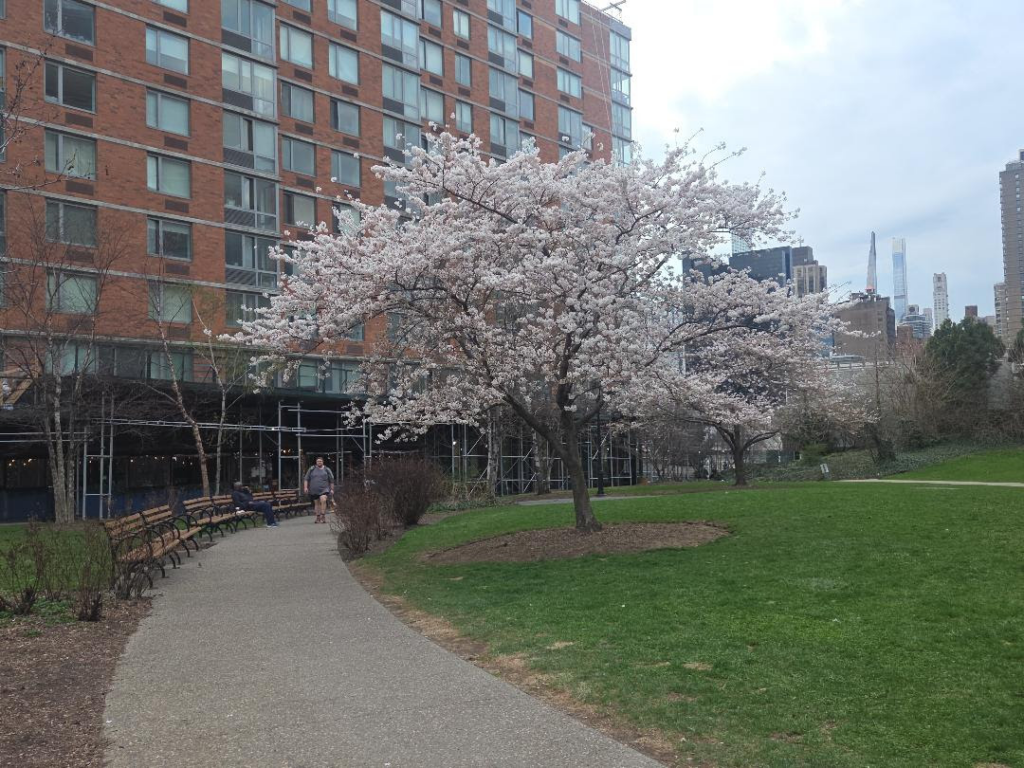
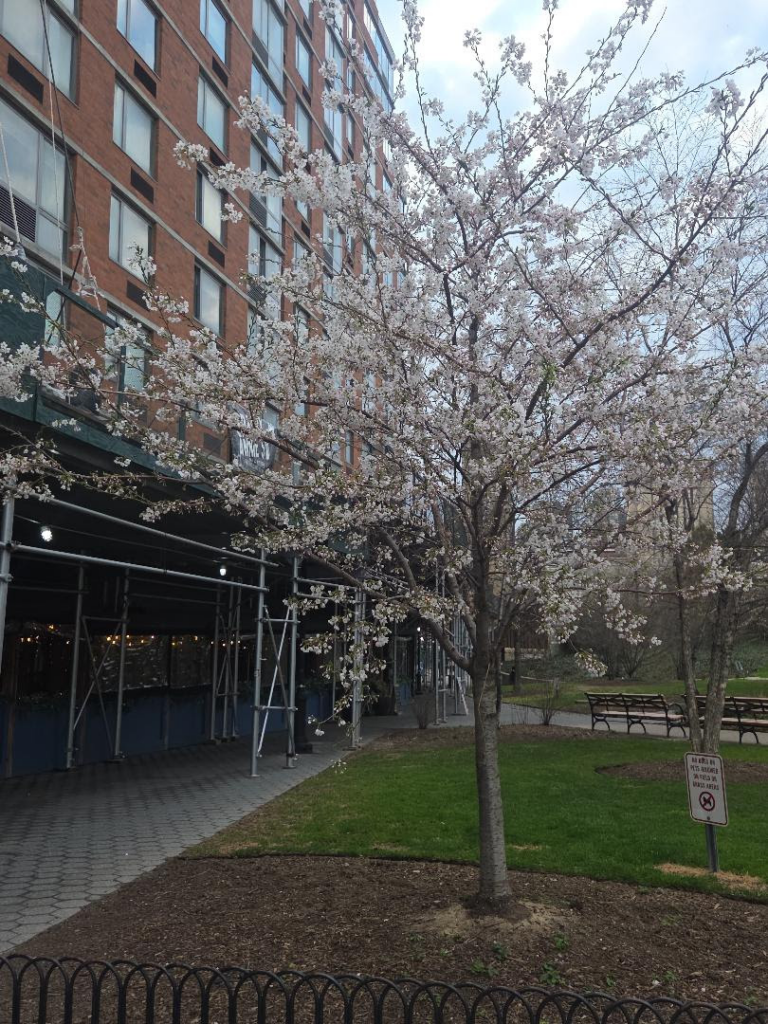
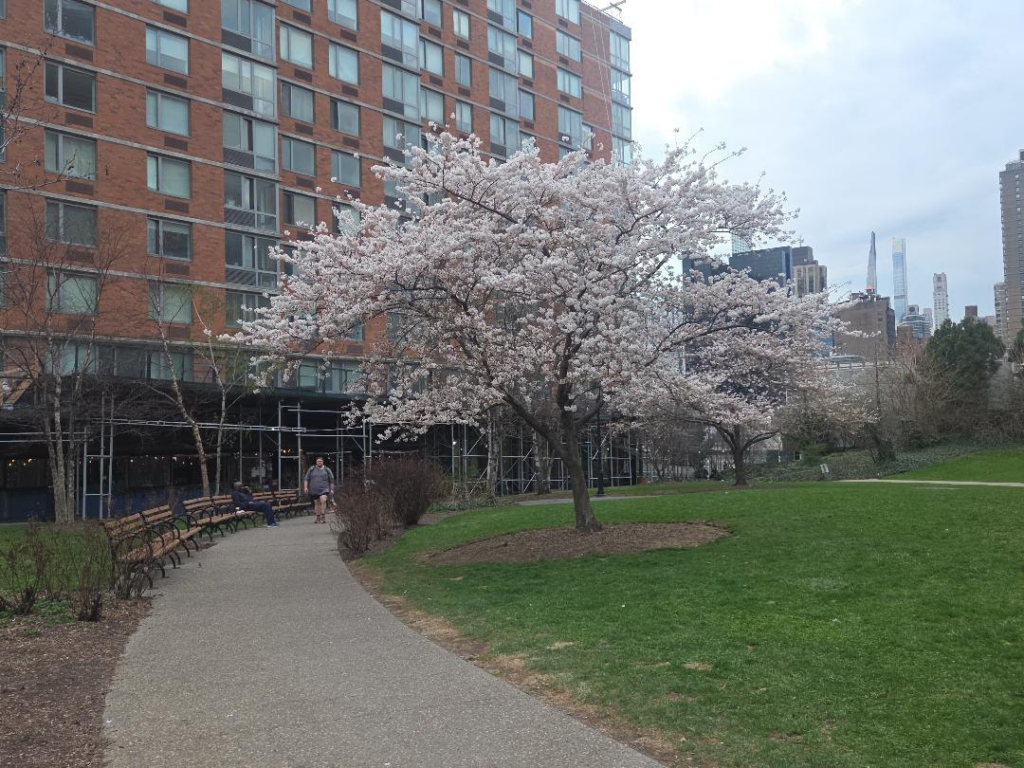
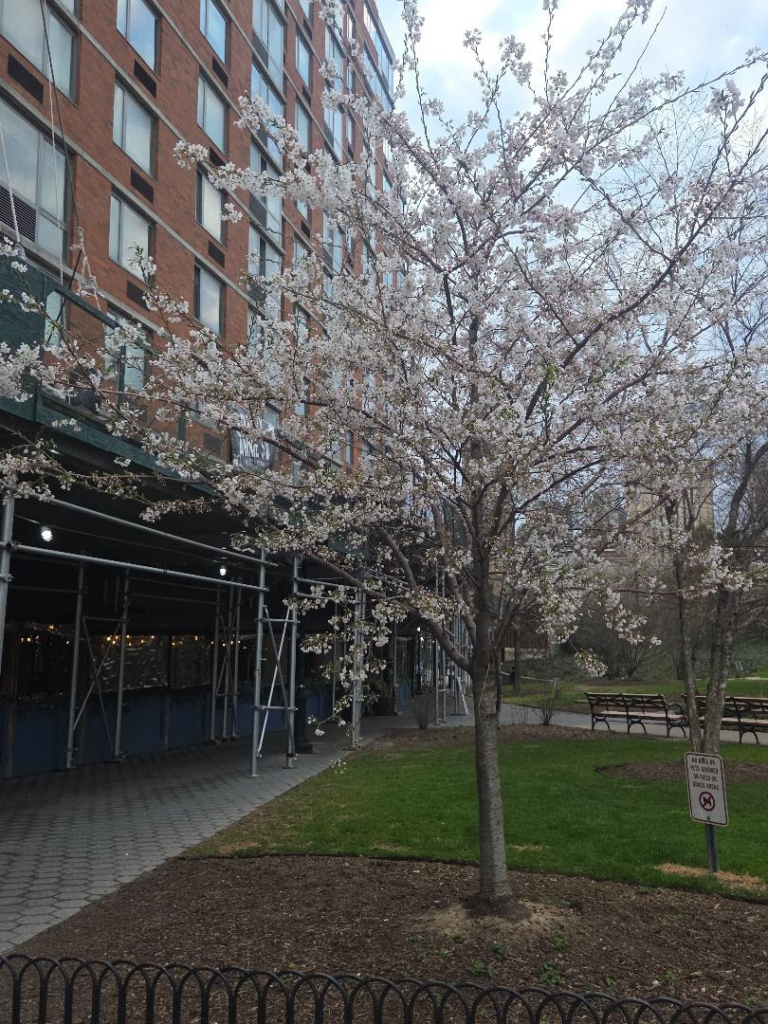
FIRST TO BLOOM RIVERWALK COMMONS CHERRY TREES
Photo Judith Berdy
CREDITS
NEW YORK ALMANACK
All image are copyrighted (c) Roosevelt Island Historical Society unless otherwise indicated THIS PUBLICATION FUNDED BY DISCRETIONARY FUNDS FROM CITY COUNCIL MEMBER JULIE MENIN & ROOSEVELT ISLAND OPERATING CORPORATION PUBLIC PURPOSE FUNDS.
Economic history is a tale of bubbles and booms in which assets such as commodities, land, or stocks, quickly inflate in price above their intrinsic value. Such sudden movements, driven by greedy investors and speculative hype, are invariably followed by a bust. Loss of confidence causes a collapse in prices, resulting in a crash of “panic selling.”
There are many such examples, most of them well-documented. Tulip-mania in the Dutch Republic during the 1630s was the first real financial bubble. Then there were the Mississippi and South Sea Bubbles (1720), both followed by a spectacular crash. More recently, we have seen the Dotcom Bubble, driven by mad speculation in internet-based stock.
While the assets may change over time, from tulips to technology, the factors of greed and fear are the ever-present psychological drivers of economic upheavals. Of all the bubbles known to historians, the “Plume Boom” is one of the more obscure tales.
Feather & Fan
Feather fans in Chinese culture date back to ancient times. The fan’s original use was functional as a cooling tool in the heat. The addition of bird feathers brought a level of elegance. Dignitaries began to carry feather fans as a sign of rank and status.
Once introduced to Japan from China, fans became part of the nation’s culture. They appeared in stage performances, helping to create visual and auditory effects (the fluttering of wings or the swaying of trees) to heighten the dramatic impact.
Feather fans arrived in Europe in the sixteenth century through expanding contacts with China and Japan. These early fans, made of ostrich or peacock feathers, were regarded for their exotic beauty and restricted to Royalty and aristocracy.
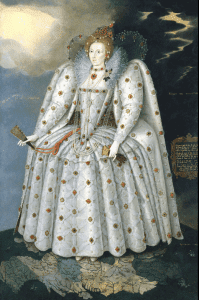
In England, they became fashionable during the Elizabethan era. In most painted portraits of Queen Elizabeth I, she holds a “fixed” fan (a fine handle with a variation of feathers). Originating in Japan, folding fans were developed later; by the end of the century, they had superseded fixed fans.
During the Renaissance and Baroque periods, feather fans enhanced the non-verbal theatrics of court life. A fan relayed secret messages on a “language” of over two dozen gestures (leaflets to master the code were available).
Holding it to cover one’s face showed shyness, fanning oneself vigorously signaled irritation. Fans were used to flirt or show contempt; their color was imbued with significance. White symbolized purity; red stood for passion; black represented mourning.
France was the center of éventaillistes (fan makers and designers) during the seventeenth century, and the craft involved Huguenot specialists. Following the 1685 Revocation of the Edict of Nantes, many Protestant artisans fled the country, taking their skills of silk weaving and other decorative arts to England and elsewhere.
Refugees boosted high-quality fan making in Spitalfields, East London, and turned the craft into a thriving enterprise of family-run firms. François (Francis) Chassereau and his descendants were prominent fan makers, running The Fan & Crown in Hanover Street, Long Acre, throughout the eighteenth century.
Funerals, Fashion & Feathers
In the sixteenth century, men used feathers to symbolize status and rank, notably in court attire and military regalia. Ostrich feathers adorned cavalier hats and military plumes. By the 1660s, French courtiers wore small hats adorned with feathers.
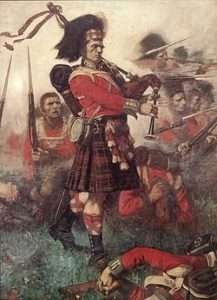
Military regiments used them too. The Scottish Highland Infantry worn a “feather bonnet” from about 1763 until the outbreak of World War One (now mostly worn by pipers in regimental bands). In the late Victorian era elaborate “fluffy” plumes were in vogue. They became an essential part of lavish funeral processions.
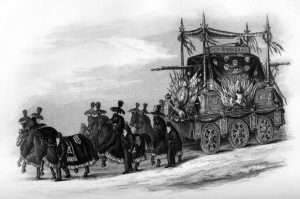
At the funeral of Arthur Wellesley, 1st Duke of Wellington, in September 1852, twelve black horses pulled a massive hearse, each sporting a plume of black ostrich feathers.
Their inclusion in the parade determined Victorian funereal customs. English mourning rituals were copied in the United States with the death of Abraham Lincoln.
After lying in state at both the White House and the Capitol, the President’s body was returned to his native Springfield, Illinois. The funeral train stopped in eleven cities along the way (including Albany).
The procession in New York City on April 25, 1865, was a massive event, drawing some one million people. The procession moved up Broadway to Union Square and then to the Hudson River Railroad Depot, featuring sixteen grey horses carrying large ostrich plumes pulling the hearse.
The fashion trade was by far the biggest market for ostrich feathers. In the 1860s the French elite began wearing colored feathers on hats, dresses, jackets, and boas. Where Paris went, the world followed and soon the demand for ostrich feathers outstripped supply.
Up until that time, ostrich feathers sold on the London market were plucked from wild birds hunted in South Africa and across the Sahara (until the “Arabian” ostrich was driven to extinction by excessive hunting). Live plucking was a particularly cruel process.
Pushed by the demand for feathers, farmers at the Cape began to domesticate the ostrich, plucking the bird twice a year without harming it. Experiments began in the Oudtshoorn region.
The invention in 1869 of incubators to hatch chicks was a breakthrough and the number of specialized farms expanded rapidly. By the 1880s ostrich feathers had become South Africa’s fourth largest export after gold, diamonds, and wool. Some traders built opulent properties, known as “feather palaces.”
London became the focus of the feather market. Huge crates would arrive each week from the Cape in addition to a smaller number of the Arabian subspecies. Warehouses owned by the East India Company at Cutler Street and Billiter Street, East London, displayed the wares for merchants to inspect before being auctioned in sale rooms at Mincing Lane. Feathers were big business.
Status & Elegance
In December 1882, a herd of twenty-two ostriches were sailed into New York Harbor, having arrived from Cape Town.
These creatures were the sole survivors of two hundred birds that had been sent to sea by Charles Sketchley, a South African ostrich exporter who had decided to expand his operations into America, thus avoiding the cost of shipping and skip the twenty percent duty charged on foreign feathers.
Once disembarked, the birds were loaded on a train destined for Anaheim where Sketchley had founded the California Ostrich-Farming Company, the nation’s first farm of its kind.
He did attract attention. The farm became a national curiosity, drawing journalistic reports in The New York Times, Harper’s Weekly, and Scientific American. Competitors rushed to set up their own farms throughout the southwest.
The economic future was an ostrich. The plume trade thrived as it stopped the slaughter of wild birds that had sparked the creation of the Audubon Society and the eventual passage of the 1918 Migratory Bird Treaty.
Ostrich feathers represented status and elegance in American society. By the 1890s, stylish women wore hats, boas and fans adorned with elaborate feathers. Dyeing them had become an art form.
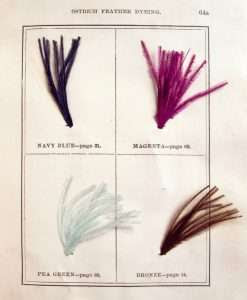
Manuals such as Alexander Paul’s The Practical Ostrich Feather Dyer (1888) set out methods for creating an extraordinary variety of colors including lemon, salmon, bronze, lavender, and olive, as well as more exotic tints such as gendarme blue, Russian green, Bismarck brown, terracotta, or seafoam, transforming natural feathers into fashion items.
The Plume Boom did not last as fashions changed. By the time of World War One, the price of ostrich feathers had plummeted, the market crashed, most farms went bust, but the ostrich would make a return in Montmartre and on Broadway in the post-war era.
Fan Dancers
Once the Great War was behind them, Parisians rebounded in a carnival of hedonism, an era referred to the années folles (crazy years). The period coincided with an influx of young Americans who embraced the city’s permissive morality and creative energy.
Feather fans became symbolic of those flamboyant years, blending luxury with the theatrical style of the flapper generation. Women carried fans attending jazz clubs, cabarets, or evening parties.
Fashion, feathers, and performance were in interlinked. So-called “fan dancers” used them as a means of revealing and concealing (hide-and-seek) body parts during their routines.
Parisian houses set the trend and manufactured refined and dramatically sized fans. Founded in 1827, Jean-Pierre Duvelleroy had revived the fashion after the French Revolution, becoming a supplier to European Royalty, including Queen Victoria.
Known in the 1920s for its Art Nouveau designs and creative collaboration with artists, the firm re-established its prime place in the industry.
On September 15, 1925, young Josephine Baker joined twenty-five black performers (thirteen dancers, twelve musicians) who set to sail for Cherbourg on Cunard’s SS Berengaria. Rehearsals for their Revue Nègre took place during the crossing.
The show opened at the Champs-Élysées on October 2nd and was a smash hit. Dancing with Senegalese partner Joe Alex, she performed a “Danse Sauvage” (wild dance) in which both performers were scantily clad with ostrich feathers and beads.
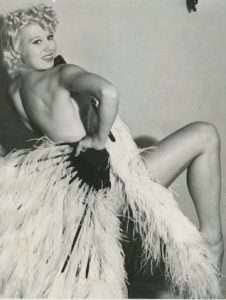
Dancers like Los Angeles-born Faith Bacon (1910-1956), who had begun her career in Paris, used large white plumed fans for her dramatic performances. Having returned to New York late in the decade, she appeared on Broadway in July 1930 as a “principal nude” in Earl Carroll’s revue Vanities.
The latter’s indifference to legal boundaries landed him in court several times on charges of public indecency which offered added publicity to his theater at 753 Seventh Avenue. The Feather Fan became synonymous with Broadway’s art of the burlesque.
As the moral climate changed, censorship in the late 1930s forced these “naughty” shows off stage.
While Manhattan stayed a hub of cultural innovation, the prevailing mood was one of anxiety and caution which filtered through to stage and screen productions. Even Broadway stuck to a restrictive moral code that called for traditional values, conservative policies, and a regime of law and order.
The immorality of feather fans was no longer tolerated. By 1937, Mayor Fiorello LaGuardia had ordered the closure of major burlesque houses, classifying them as “filth.” It finished off the feather fever.
Presenting: Conversations in City History
Monday, April 13, 2026, 6:30 pm “Too Good to Get Married: The Life and Photographs of Miss Alice Austen” Author Bonnie Yochelson will discuss with moderator Judith Berdy about how a woman who grew up in the Gilded Age, when the term “lesbian” did not yet exist, challenged the conservative ideals of Staten Island high society. She will explain, as does her book, the role of photography in Alice Austen’s journey of self discovery, embrace of feminism and involvement in a loving lesbian partnership.
Monday, May 11, 2026, 6:30 pm “Rural County, Urban Borough: A History of Queens” When preservationist and author Jeffrey A. Kroessler passed away in 2023, his wife, architect Laura Heim, selected the images for his book and saw it through publication. She has generously agreed to be interviewed on this seminal historical work that charts how politics, industry, transportation, government and real estate interests all shaped New York’s borough of extraordinary ethnic, religious and linguistic diversity.
Monday, June 8, 2026, 6:30 pm “The Killing Fields of East New York” Author Stacy Horn (also writer of “Damnation Island,” about 19th-century Blackwell’s Island) has chronicled how the subprime mortgage scandal of the 1970s and a long history of white-collar crime slowly destroyed the Brooklyn neighborhood of East New York. She will share her compelling investigative journalism in a conversation about the area’s fair housing, race, violence and misplaced city priorities.
JUST ADDED: Monday, September 14, 2026, 6:30 pm “Louis I. Kahn The Last Notebook Edited By Sue Ann Kahn An intimate record of Kahn’s musings on design, coupled with preparatory drawings of his monumental last project
Published in honor of the 50th anniversary of his death in March 1974, this two-volume set contains a facsimile of the notebook in which Louis Kahn drew and wrote during his last year of life, alongside a second volume of scholarly commentary and transliterations of his musings. Anchored by a magnificent set of preparatory drawings for his monument to Franklin Roosevelt in New York City, the notebook provides an intimate glimpse into private sketches of Kahn’s final projects and his poetic reflections on thematic preoccupations, such as “Silence to Light,” “Form and Design,” “Society of Rooms” and “Desire to Express.” Each volume is in a vellum sleeve and both are housed together in a transparent slipcase. Born in Estonia, Louis Kahn (1901-74) immigrated with his family to Philadelphia when he was four years old. Kahn received Beaux-Arts training at the University of Pennsylvania, under the French-educated Paul Philippe Cret, and then adopted his own idiosyncratic modernism, which would engender the heterogeneous “Philadelphia school.” His architectural career did not take off until later in life; he attained his first major commission to design Yale University’s Art Gallery in 1951. Upon its completion, Kahn received many international commissions, and he developed a signature style that was monumental, monolithic and transparent in its functionality. He was awarded the AIA Gold Medal and the RIBA Gold Medal.
THE ROOSEVELT ISLAND HISTORICAL SOCIETY
6:30 p.m.
504 Main Street
We had a tech error yesterdayAbove are the two volumes of “The Last Notebook”.
FIRST TO BLOOM RIVERWALK COMMONS CHERRY TREES
Photo Judith Berdy
CREDITS
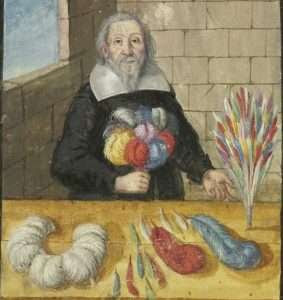
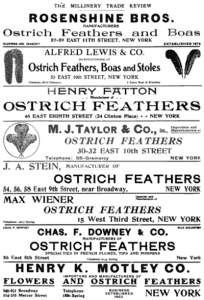
NEW YORK ALMANACK Illustrations, from above: Unknown artist, Portrait of the featherworker Johann Wurmbein, Nuremberg, 1667 (Stadtbibliothek im Bildungscampus Nürnberg); Marcus Gheeraerts the Younger, “Queen Elizabeth I,” ca. 1592 (National Portrait Gallery, London); William Lockhart Bogle painting of Piper Kenneth MacKay at the Battle of Waterloo in 1815, with feather bonnet; Funeral car at the Duke of Wellington’s funeral with feathers, 1852; Advertisements for ostrich feathers in the Millinery Trade Review, vol. 30, 1905; A selection of feathers from Alexander Paul’s The Practical Ostrich Feather Dyer (1888); and Faith Bacon posing with her ostrich feather fans.
All image are copyrighted (c) Roosevelt Island Historical Society unless otherwise indicated THIS PUBLICATION FUNDED BY DISCRETIONARY FUNDS FROM CITY COUNCIL MEMBER JULIE MENIN & ROOSEVELT ISLAND OPERATING CORPORATION PUBLIC PURPOSE FUNDS.
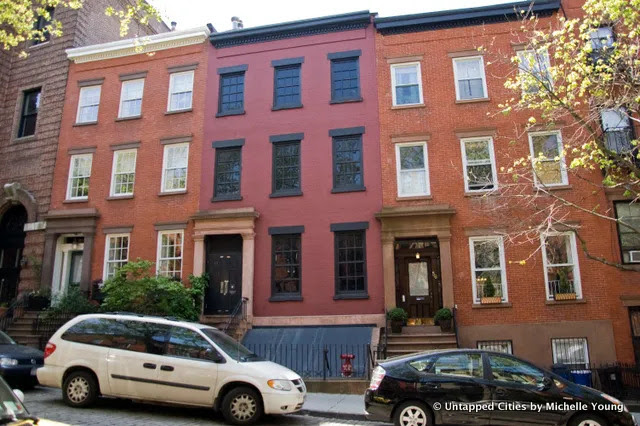
Infrastructure is an inevitable part of urban living. Subways and tunnels need ventilation, but the question is often–how to keep these functional spaces contained and away from the public eye? While many subway substations have been gutted and turned into apartments in New York City, other ventilation buildings have been concealed as residential townhouses. Here’s a roundup of these clever pieces of faux architecture in NYC, Paris, London, and Toronto:
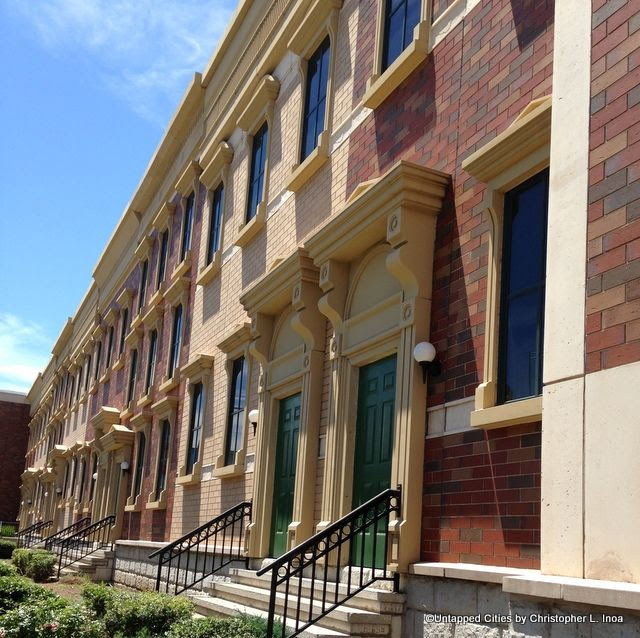
Everyday people in Mott Haven in the Bronx walk around and see these townhouses, but never see anyone go in or out. They must wonder who lives inside: Why are there never any open windows? Is this the first sign of gentrification to hit the Bronx? The answer to all those questions, ridiculous or otherwise, is that it is not a series of townhouses at all, but a substation run by Con Edison made to look like a small gated community.
Made to look like townhouses to appeal to the residents who were not happy with a substation being built in their neighborhood, Scouting NY reports that the substation was constructed in 2008 to meet energy needs for the neighborhood. It is one of many that Con Edison will be building around the city, due to the rise of commercial and residential buildings over the last decade.
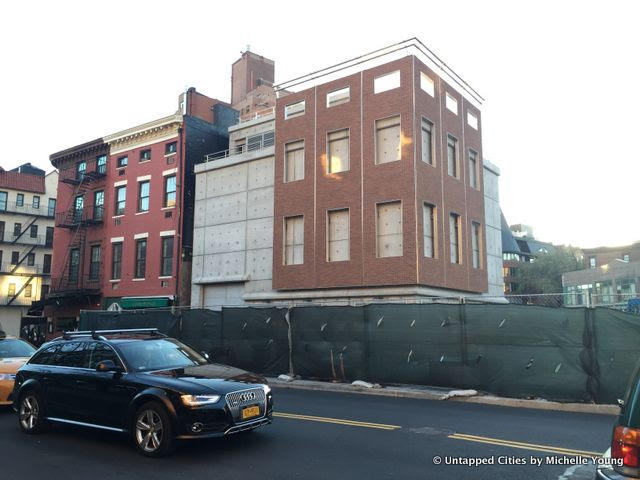
ventilation plant under construction in November 2015.
In 2011, the MTA proposed several designs for a facade to hide a future emergency ventilation plant at Mulry Square on Seventh Avenue and Greenwich Avenue, a famous plot of land known for its 9/11 memorial tiles. The proposals faced vigorous opposition from community groups, local politicians, and the Landmarks Preservation Commission, who deemed that a floating, “faux historic” facade was the wrong approach. The design went through many iterations since 2007, including a living wall, a concrete modern design, and some bland faux brick proposals. The structure was completed in 2016.
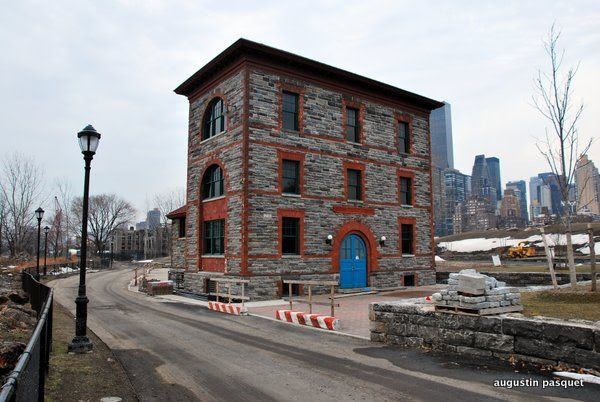
Strecker Memorial Laboratory in 2011
This stone structure was built in 1892 as a laboratory for the lost Charity Hospital on Roosevelt Island. Until 1958, it was used by scientists to conduct pathological and bacteriological work. After experiments ceased, the lab building fell into disrepair, but it did earn New York City landmark status from the Landmarks Preservation Commission in 1976. In the 1990s, it was purchased by the City’s transit authority and converted into a power substation that helps power subway lines.
International Fake Townhouses:
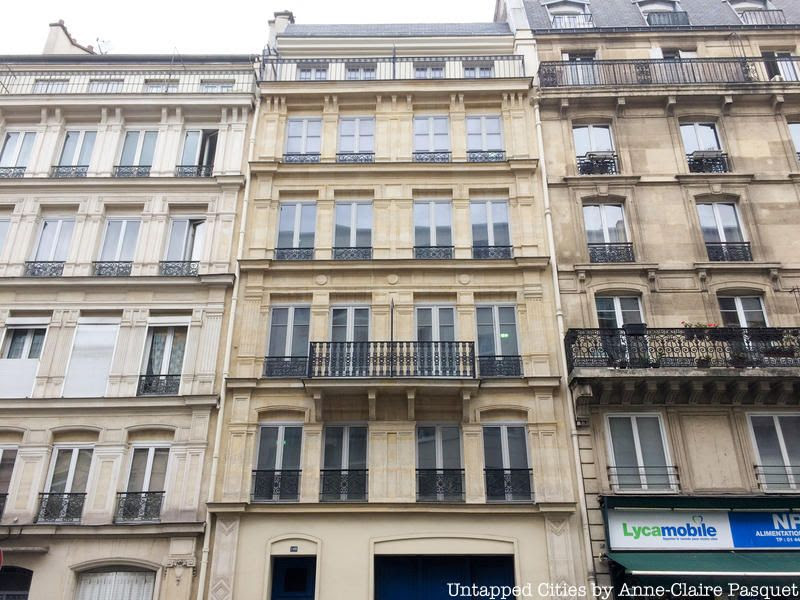
1. Paris Ventilation Chimney in Fake Haussmann BuildingIn the 10th arrondissement of Paris, on rue la Fayette, the windows are always dark on this Haussmann-style building. The door is there, and the balconies look just like their neighbors’, but they are hiding something unusual behind them. It turns out the façade is only a front with no building behind it. 145 rue la Fayette is a fake building hiding a ventilation chimney for the Paris métro.
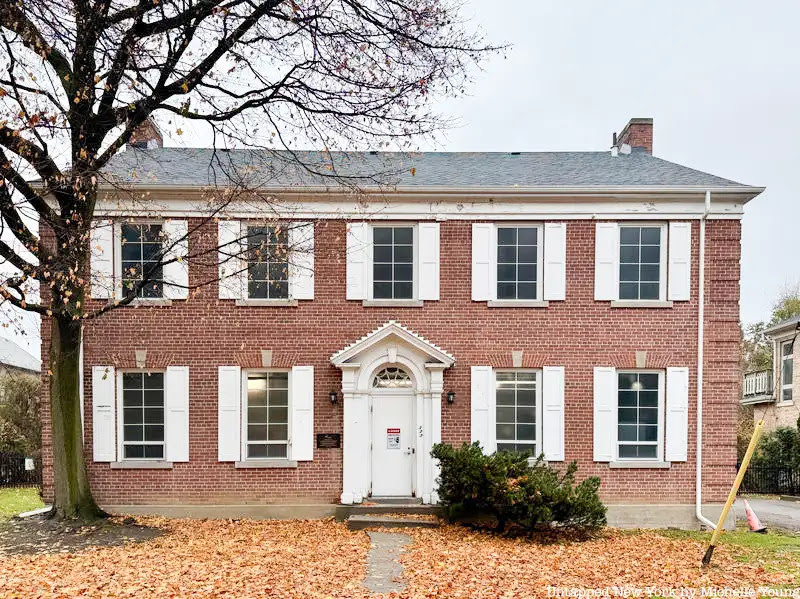
Toronto Hydro’s Fake Houses Canadian Utility company, Toronto Hydro has taken a more suburban approach, though no less historical, putting substations into what appear to be single family homes. There are nearly 300 of these structures, like the Georgian-style one above at 555 Spadina Road, which form a nice catalogue of changing architectural preferences over the last decades from neo-Georgian to Victorian to Art Deco to Modern. The only sign of something afoot is the warning sign on the door, the plaque to the left of the front door which made by the Toronto Hydro Corporation in dedciation ot one of its board of directors, L. Ross Cullingworth. 23-24 Leinster Gardens in London
Sladen (Right) Photo by Z22, Both via Wikimedia Commons
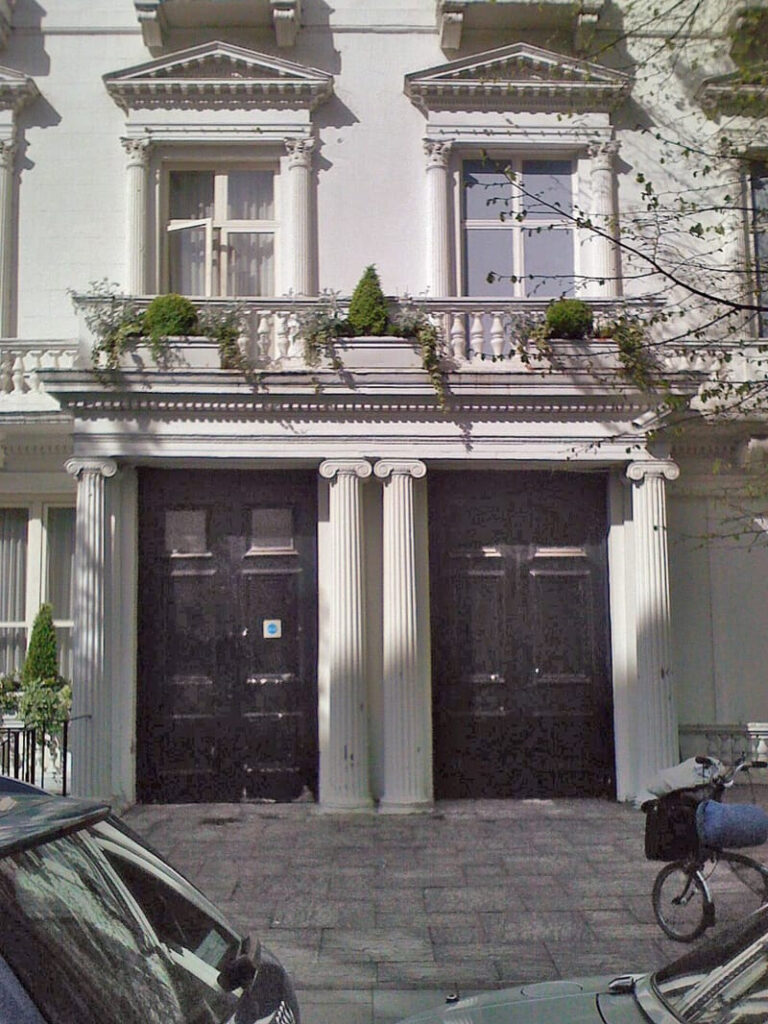
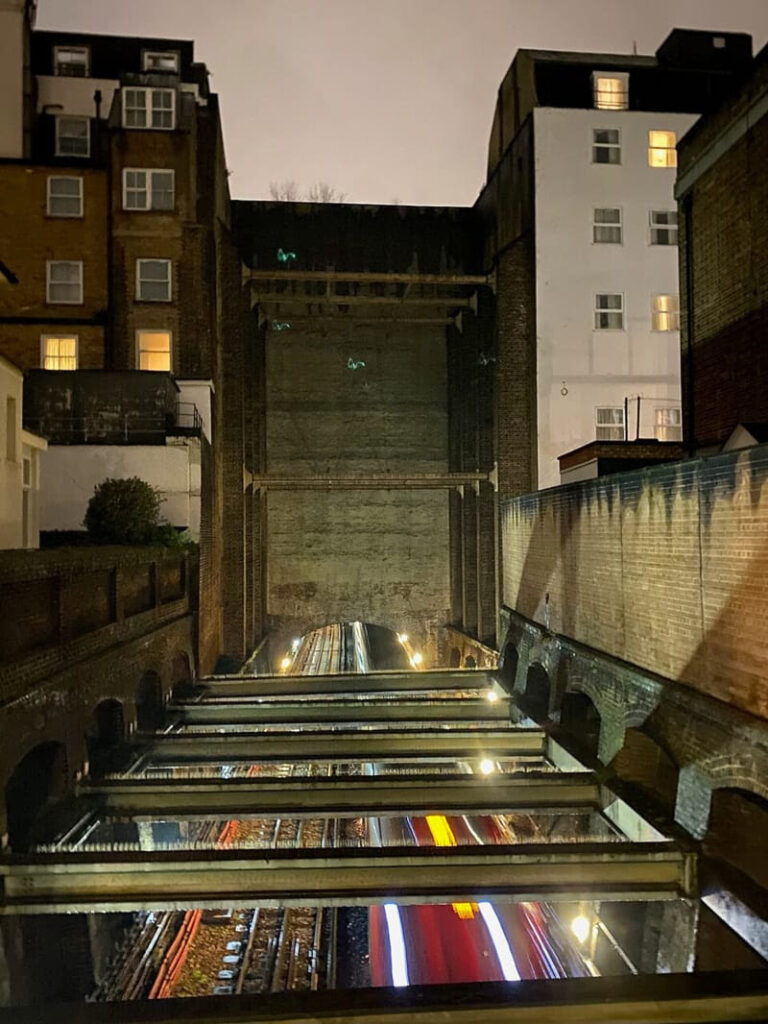
In London, at 23-24 Leinster Gardens, there is a little secret. The facade, which matches with the rest of the block (except for the perpetually gray windows) is the front to an empty lot. The original buildings were demolished to build the London Tube in 1863 and used in action as a ventilation location for steam produced by the locomotives. In the back however, you can still see the tube tracks of the Metropolitan Line.
All image are copyrighted (c) Roosevelt Island Historical Society unless otherwise indicated THIS PUBLICATION FUNDED BY DISCRETIONARY FUNDS FROM CITY COUNCIL MEMBER JULIE MENIN & ROOSEVELT ISLAND OPERATING CORPORATION PUBLIC PURPOSE FUNDS.





 the pot of daffodils I had ordered sent. Went over to the library and read the [?see insert] of The Wayfarers. To-night wrote up Roman Hist notes in Lu’s room. Jean came in. Went to sleep in there. Three of girls have gone home.