Monday, November 9, 2026 – Brooklyn Heights’ 200-Year-Old Treasure Lives On!

This 200-year-old House
on Cranberry Street
Bears Witness to the
Incredible Evolution of Brooklyn
Ephemeral New York
Monday, November 9, 2026
Issue # 1776
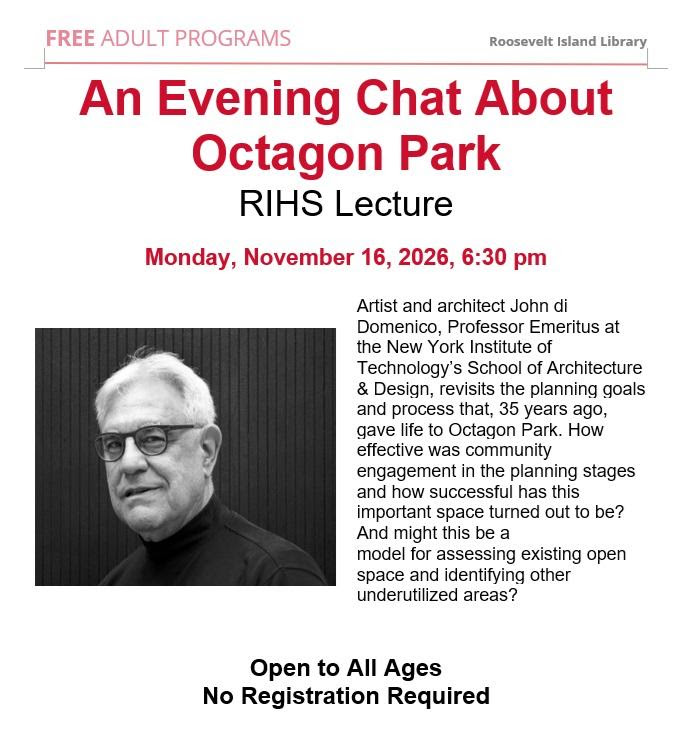
SAVE THE DATE, MONDAY, NOVEMBER 16th
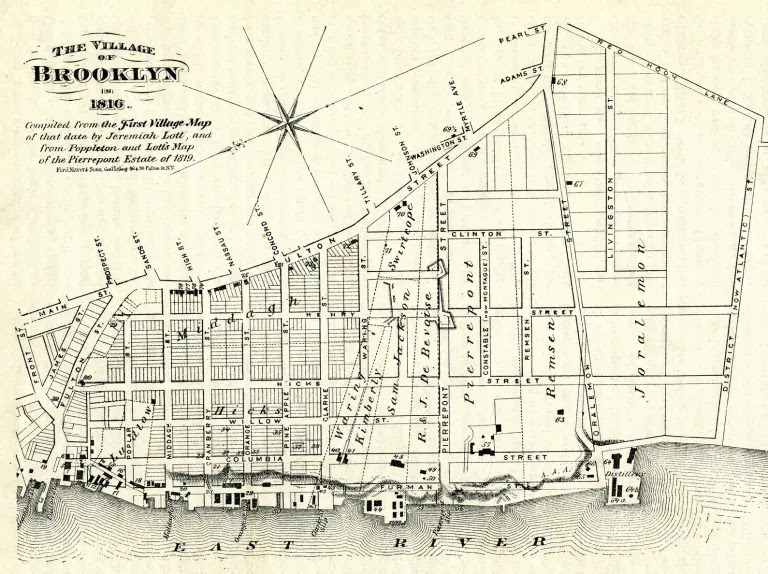
It’s 1822 in the village of Brooklyn, a recently carved out enclave on the high bluffs overlooking the East River in the Kings County town also known as Brooklyn.
Roughly 5,000 souls reside in this village, living and working amid a tidy network of streets mostly named for earlier landowners and new developers (like Jacob and John Middagh Hicks) and connected to Manhattan since 1814 by steam-powered ferries.
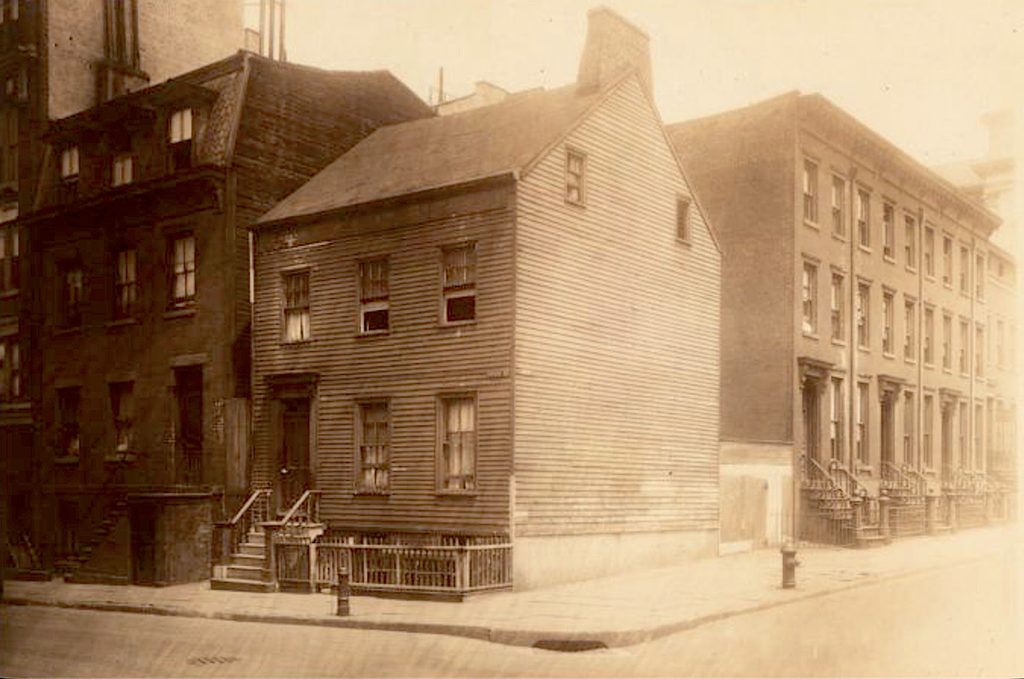
One of the residents, a cooper named John Rogers, decided to construct a new building at the corner of Cranberry and Hicks Streets. Coopers were skilled craftsmen who built barrels and casks out of wood.
What became 59 Hicks Street was completed that year. It was likely was occupied by a ground-floor workspace and shop, with domestic quarters upstairs and in the half-floor attic space.
The building probably wasn’t considered remarkable; 59 Hicks was a simple wood-frame structure with a peaked roof, similar to other buildings in the neighborhood of riggers, shoemakers, cabinet makers, and ferrymen.
What was life like for Rogers in the village, which joined forces with the town to form the city of Brooklyn in 1834?
“Rogers apparently fell on hard times, for in 1846 the household furniture was put up for auction,” noted Lost City in a 2013 post.
But like the city of Brooklyn, 59 Hicks was destined for bigger things. By the 1870s, Brooklyn had a population of about 400,000 and its own prestigious schools, churches, and theaters—as well as a booming commercial and industrial base of sugar refineries and shipbuilding.
The 1870s also saw building of the Brooklyn Bridge. The chief engineers, father and son John and Washington Roebling, made 59 Hicks their architectural office.
Washington Roebling (third image) actually supervised bridge construction from his home nearby at 110 Columbia Heights—stricken down by caisson disease three years after his father died of tetanus while surveying sites for the bridge towers.
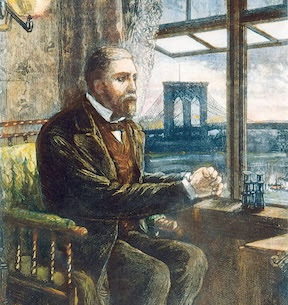
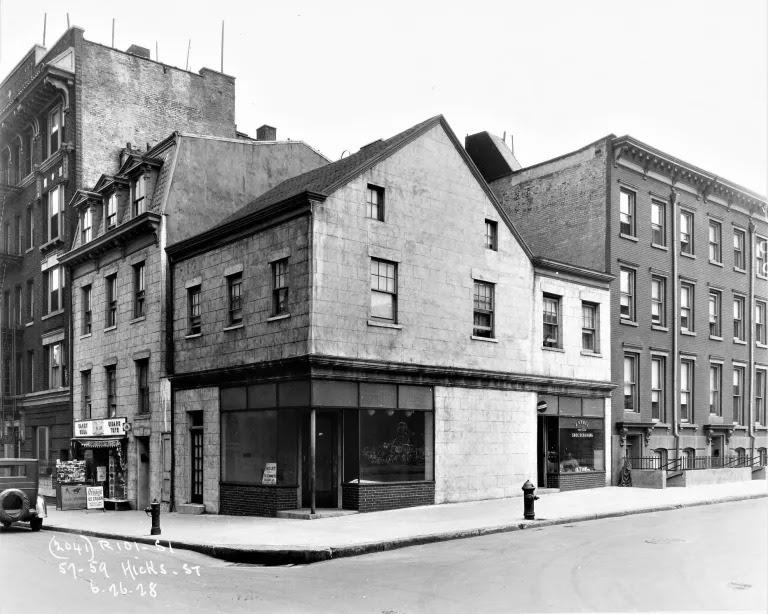
Roebling closed up shop in 1897, one year before Brooklyn ceased to be a city and transformed into a borough. The building was now up for rent at $35 per month, according to Lost City.
“In 1911, the trustees of Plymouth Church bought the property, with the intent of using it as an entrance to the nearby church,” continues Lost City. “They purchased it from Rev. Dr. Frank Halliday, who was for many years the assistant to Rev. Henry Ward Beecher, when the latter was pastor at Plymouth.”
Beecher was the 19th century abolitionist preacher whose passionate sermons attracted not just Brooklyn residents but people from Manhattan as well, who ferried over on Sundays in what were known as “Beecher boats.”
In 1928, shingle siding was added to the facade. A shoemaker occupied a rear section of the building, which was no longer an open alley or yard area but a two-story corniced addition.
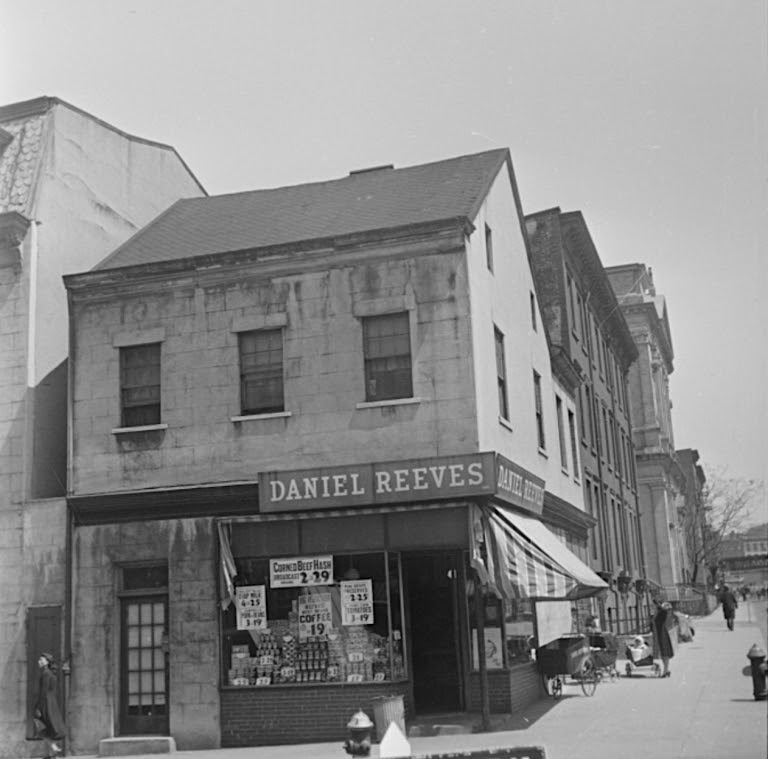
By the 1940s, with the neighborhood now known as Brooklyn Heights ready to claim its title as New York’s first suburb, a grocer took over the ground floor space (fifth photo, above).
“In 1937, a poor, hungry man named Anthony Gimenez was arrested for stealing eight loaves of bread (value: 64 cents) from the store,” stated Lost City. “It was next owned by Joe Kaplan, who repaired and altered Navy uniforms for seaman down at the Navy Yard.”
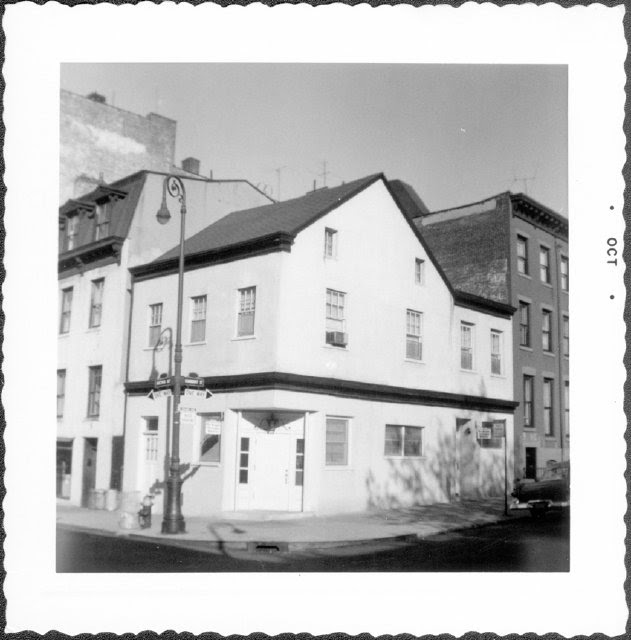
A veterinarian, Bernard Wasserman, bought 59 Hicks Street in 1957 (sixth image, above) and renovated it into an animal hospital. Eight years later, Brooklyn Heights became New York City’s first historic district, which helped attract city residents charmed by the serene streets and lovely early 19th century houses.
Dr. Wasserman and his wife continued living upstairs from the hospital after turning the practice over to to Dr. Richard Turoff in 1985. Veterinarian Heather Thomson leased the space for her practice in 2013.
“After painstaking renovations that uncovered a 200-year-old ‘lucky’ shoe hiding in the walls, the hospital was re-reopened in the spring of 2015 as the sparkling, modernized, beloved space we know today,” per the Brooklyn Heights Veterinary Hospital’s website.
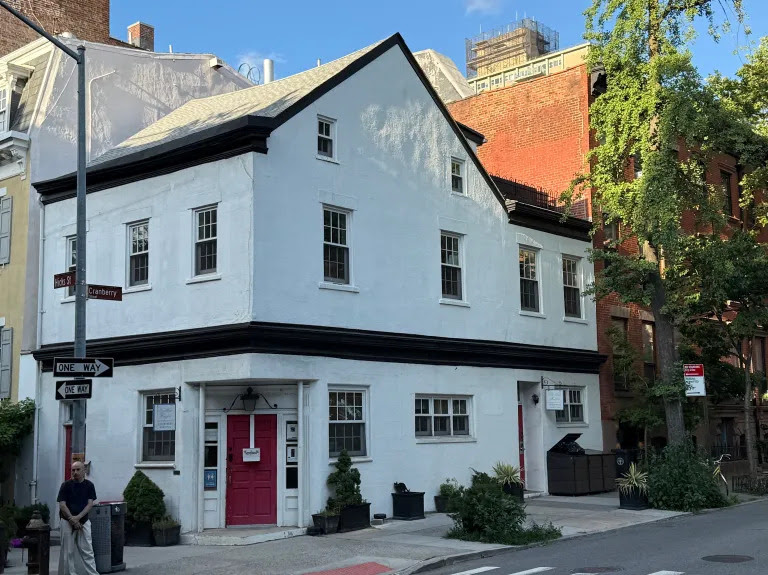
Currently 204 years old, with white stucco and black trim covering its wood facade, 59 Hicks is one of the oldest buildings in Brooklyn.
It’s witnessed the incredible transformation of this mighty borough—from a village of small businesses and artisans to a mighty industrial city and since 1898 part of Greater New York.
What will the future bring to this humble reminder of Brooklyn’s earliest uncertain days?
PHOTO OF THE DAY
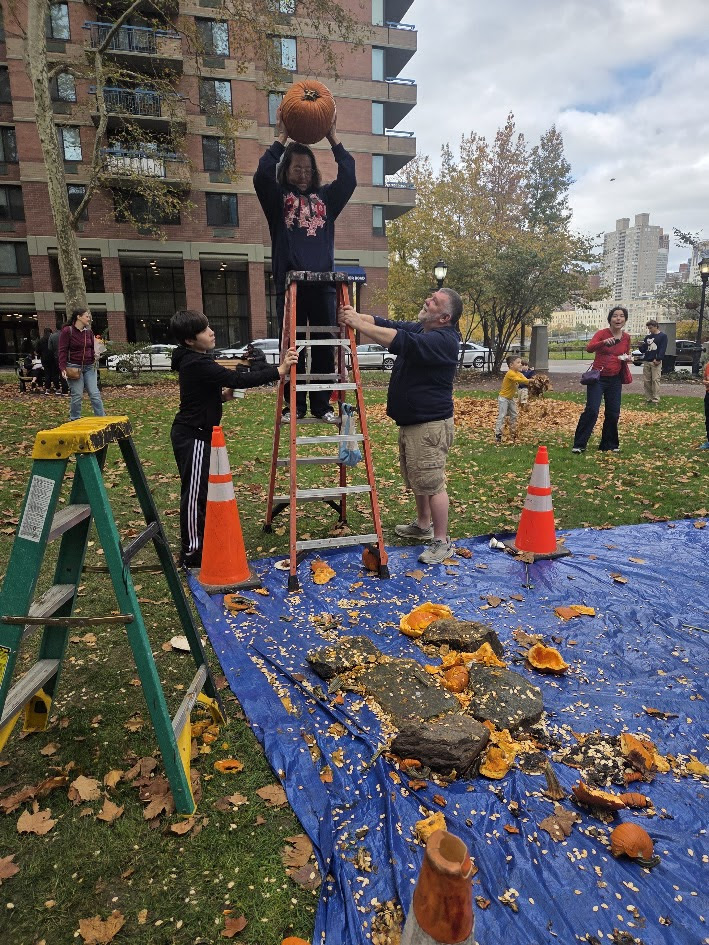
Maggie Messer drops a giant pumpkin to be crushed
at the event yesterday. Fun for all, except the pumpkins!
CREDIT
[Top image: NYPL Digital Collections; second image: Brooklyn Public Library; third image: Frank Leslie’s Illustrated Newspaper; fourth image: New York Transit Museum via The Heights on Film; fifth image: NYC Department of Records and Information Services; sixth image: Center for Brooklyn History]
Tags: 59 Hicks Street Brooklyn, Brooklyn in the early 19th century, Evolution of Brooklyn Heights, Hicks and Cranberry Street corner building Brooklyn, History of 59 Hicks Street Brooklyn Heights, How Old is 59 Hicks Street Brooklyn, Oldest Building in Brooklyn Heights, Oldest House Brooklyn Heights, What was early Brooklyn Heights like
Posted in Brooklyn, Houses of worship |
All image are copyrighted (c) Roosevelt Island Historical Society unless otherwise indicated
THIS PUBLICATION FUNDED BY DISCRETIONARY FUNDS FROM CITY COUNCIL MEMBER JULIE MENIN & ROOSEVELT ISLAND OPERATING CORPORATION PUBLIC PURPOSE FUNDS.


Copyright © 2026 Roosevelt Island Historical Society, All rights reserved.Our mailing address is:
rooseveltislandhistory@gmail.com
Leave a comment