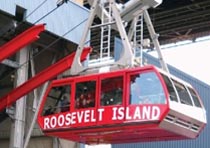
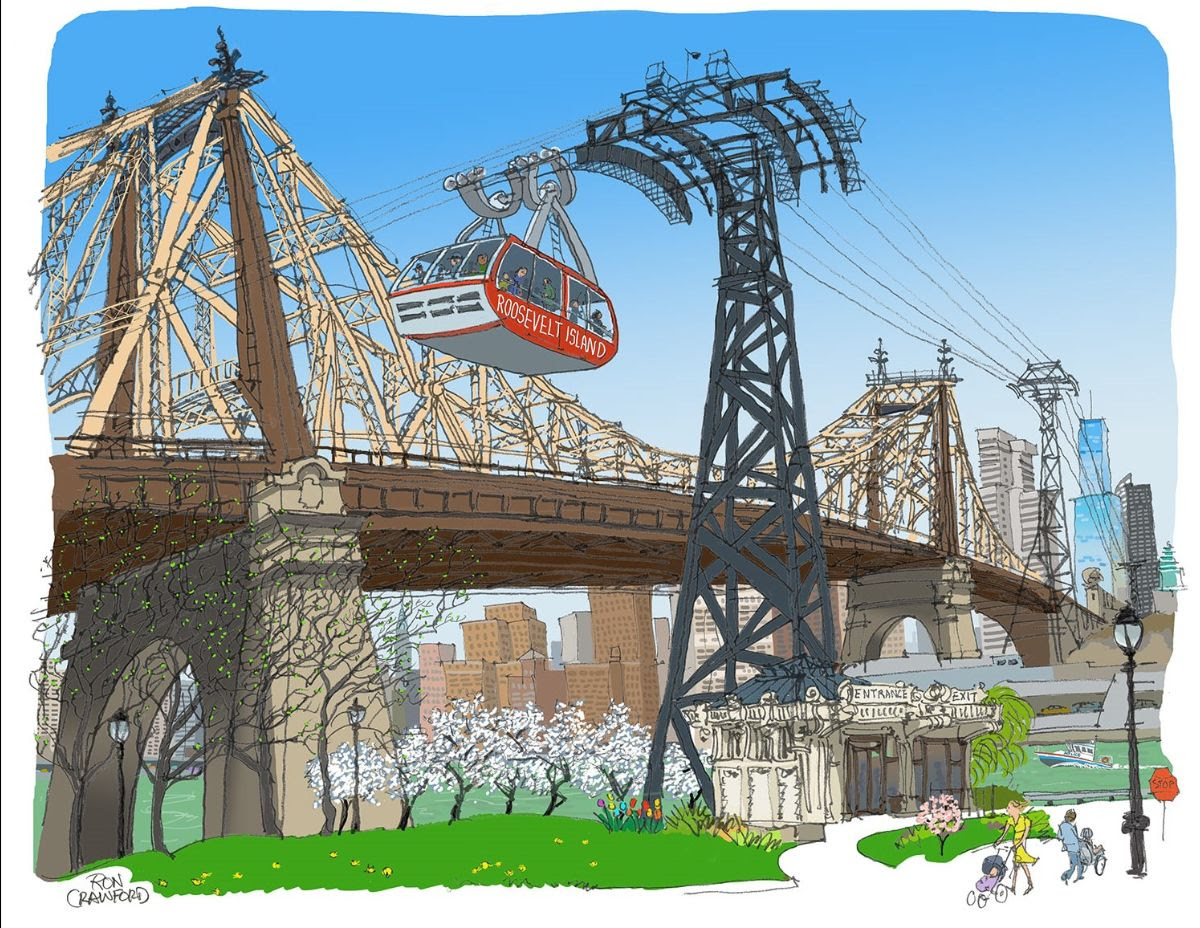
One day I spotted a man sketching outside the kiosk. It was Ron Crawford. He captured the scene so beautifully and we stock his artwork of the tram on prints and postcards. Special size orders are available. Enjoy more of his artwork. rondraw.com Text by Melanie Colter
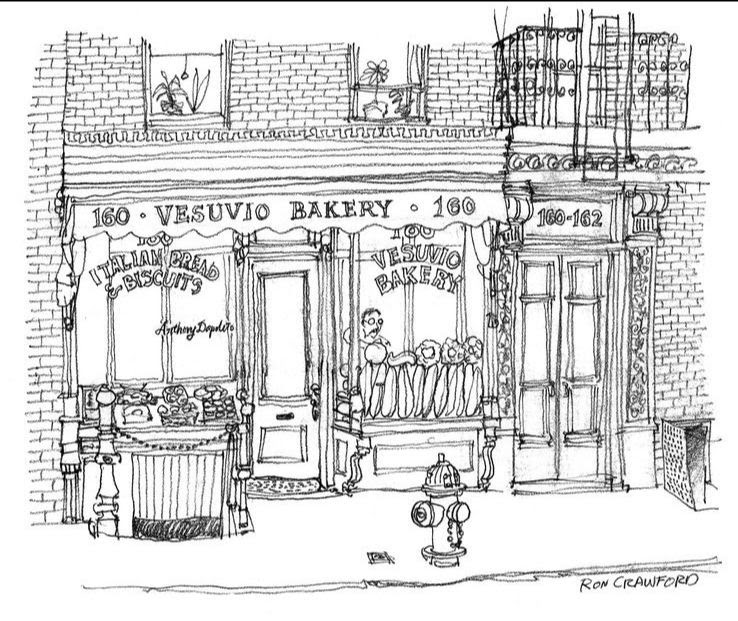
The illustration of Vesuvio Bakery, the 100-year-old Soho bakery that had just reopened in early March of this year after an 11-year closure, is emblematic of the struggle felt by small businesses during the COVID pandemic throughout the nation. Though the artwork portrays the bakery in happier times, it reminds us of the efforts that many restaurants in the city have made in order to adapt to the “new normal” and continue to feed their neighbors.
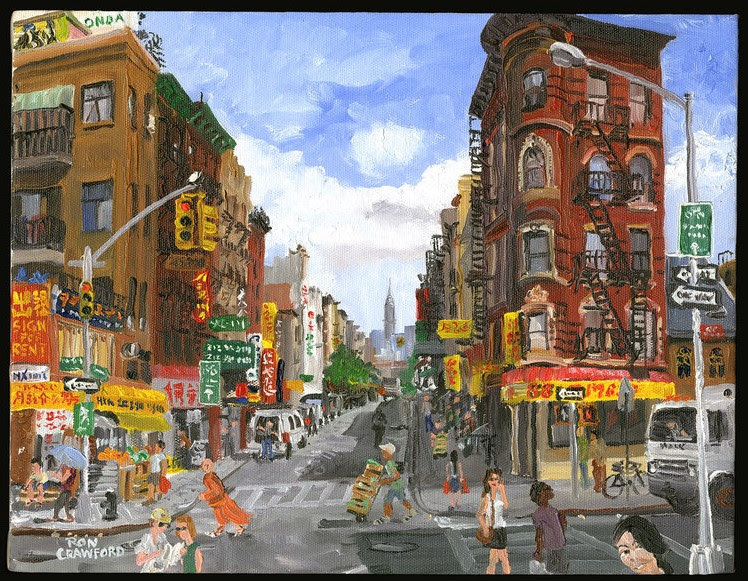
In contrast to the empty, bleak street scapes of the present, this colorful illustration at an undisclosed location (likely somewhere near Lex and Gramercy Park) shows a vibrant and bustling street scape in the foreground and a distant silhouette of the Chrysler on the horizon. Can you guess the cross streets?
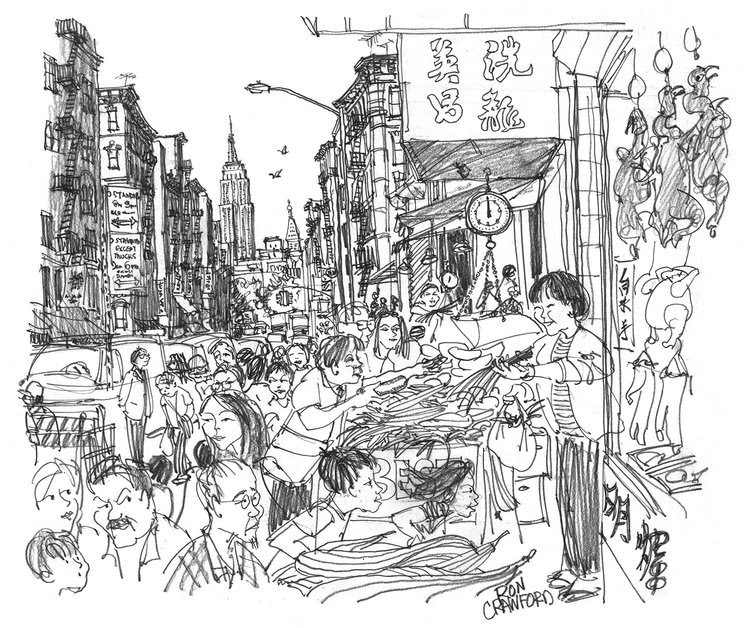
Shows a bustling Chinatown storefront with fresh poultry visible through the store window, and a bushel of veggies out front with shoppers grabbing items by the handfuls. This is a typical scene on any day of the week for most neighborhood grocers. If, however, you have spent a low-key December holiday season in the city, and ventured out of the home for a meal, you would come to find most places in the city are closed in observance — most places, except the vibrant and always-hustling Chinatown restaurants.
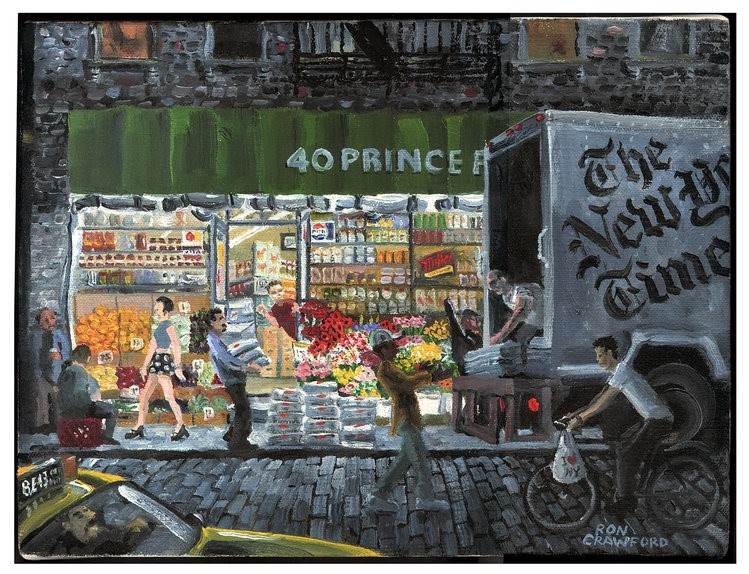
In the late evening on Saturdays, sections of the Sunday New York Times would be delivered to new-stands, delis and vendors. The whole staff or family would gather together to assemble the massive Sunday editions for early morning customers to pick up along with their fresh bagels. (Judy Berdy-old enough to remember)
MEMORIES OF EARLY RESIDENTS
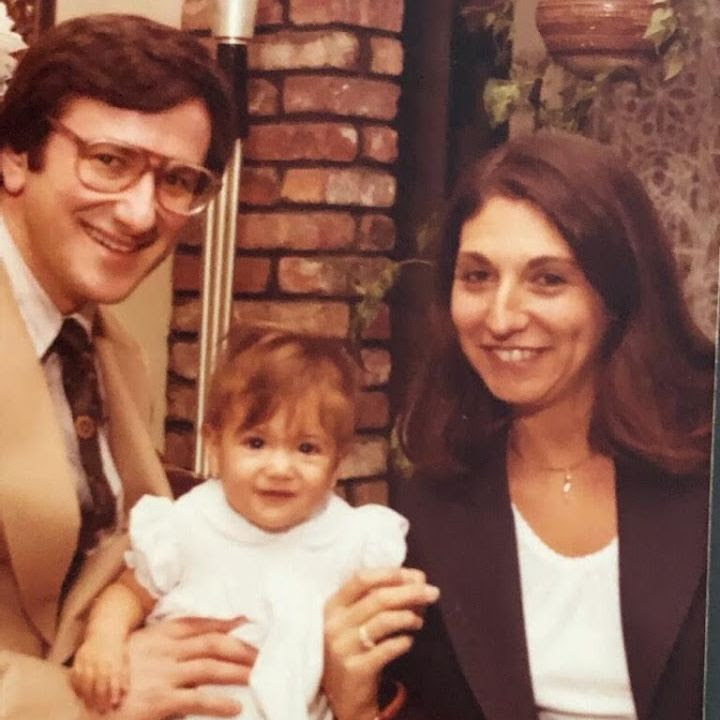
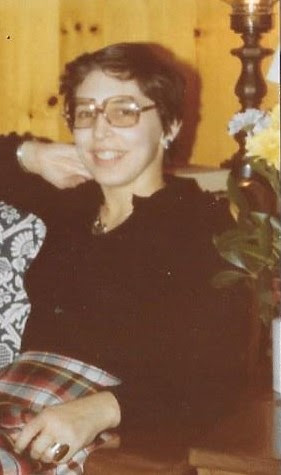
Joel, Barbara and Rachel Packer
Loved this issue – so fun to see the sales pitch, etc. Ours came from my dad, Sidney Rivkin. My dad was a major fan of RI, particularly the plans for a multi-ethnic, racial and economically diverse community. He was a consultant on commercial spaces on RI. He was involved in leasing to John of Bigelow Pharmacy, Larry Itskowitz, Sloan’s etc. to fill our small town’s needs. He also convinced Joel and me to tour the island (with two-month-old Rachel) when we were moving back to NY after Joel finished grad school in New Haven.
We despaired of finding a suitable and affordable apartment in Greenwich Village, our first choice. I remember driving from the city and going straight to Westview to look at a two-bedroom rental. It faced west and was larger than any two bedrooms we had seen in the city. We were thinking it could work. Joel suggested we walk south to get a feel for the island. As we pushed the stroller, walking on the cobble stones, looking at the “gas lamps” and the church, I felt as if I had stumbled onto a movie set, and that it would be torn down when the filming was completed.
Then we came upon Rivercross and the “model apartment sign” and Joel pushed me to go look. I was sure we couldn’t afford to buy something and didn’t want to be tempted. Thanks to Joel, we bought a two-bedroom in the orange wing and moved in on August 1, 1978. It’s still the best deal we ever made, not just the purchase but the incredible community we have loved and lived in these last 42 years.
I remember taking the ferry to Wall Street to meet my then boyfriend/now husband after work. He worked in the Wall Street area. More often than not, I was the only traveler on the ferry. I loved that! I enthusiastically ran up to the top level, enjoying the fact I had a whold ferry all to myself. thoroughly enjoyed the experience of the wind in my hair and the sea spray on my face, along with the excitement of meeting him for a drink and dinner at the then, very cool – South Street Seaport. That’s why i was so happy when they announced the new East River Ferry stop and service to/from Roosevelt Island. I was able to relive a bit of those memories – of the first ferry that didn’t make it.
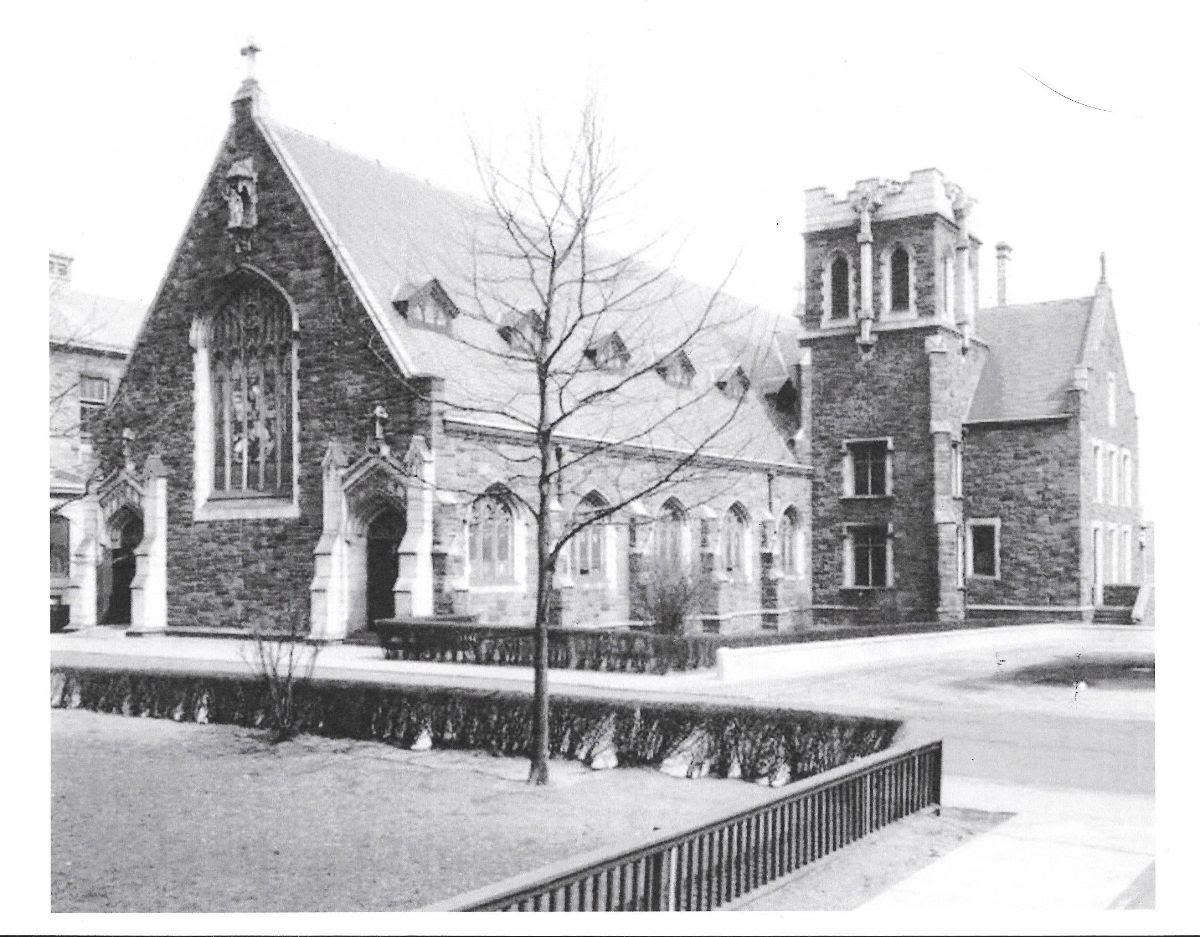
Thanks Judy for these emails – I am throughly enjoying them. So many building gone and forgotten. I do remember the church where the tennis courts are. What a beautiful church it was! There was also a building to the south of that church – I was told it was a leprosy house. It was just an open space with a dirt floor. Are there any pictures of the inside of the church or of the leprosy house? I remember there was a sale and/or give away of the contents of the church that included the pews and stained glass. I remember so wanting one of those church pews, but alas it was too big for our apartment and my parents gave me an emphatic ‘no’ to the request. Oh, I still wish I had one now. I also enjoyed the article about the few families that were living on the island, prior to the ‘new city’ being built. How absolutely lucky they were!
Thanks again Judy. Looking forward to more. Stay safe …
When I was a single woman working in New York City in 1969 I decided to take a night course at the New School on city planning, taught by a former city planning commissioner, Elinor Guggenheimer. One of her guest speakers was architect Philip Johnson, who described to the class his master plan for what was then known as Welfare Island. Johnson envisioned apartment buildings, office buildings, a marina, hotels, restaurants. It all sounded enchanting.
Five years later, after I had married and was pregnant with our first child, Mark and I were driving over the 59th Street bridge when I noticed construction equipment and major digging on the island under the bridge. Wow! This plan was actually going to happen. Within a few months, Mark and I got in touch with those who were marketing the housing that was being built on the Island. We were told that before we could sign up for a future apartment, we would need to meet with a lawyer representing the New York State Urban Development Corporation, the agency that was leasing the land and building the structures.
This lawyer kindly advised us that there was a good chance that the state agency could go bankrupt (this was the recession of 1975 after all), and so we might not ever live on the Island. This gloomy prognosis didn’t deter us in the least, nor the other participants that day, who included a young dentist coming to the Island to open his practice, Larry Ishkowitz. (Later we would learn that the very nice lawyer who talked with us that day was the father of Barbara Packer, who became our good friend when she moved to the Island.)
We moved into brand new Island House, the only building completed, on the last day of 1975. We were thrilled with our paradise island. Beautiful water and city views, lovely walkways, wonderful neighbors (numbering around 50 families—we got to know everyone). It didn’t matter that there were no stores, no mass transit. Two buses took commuters into the city in the morning and two buses brought them back at the end of the day. A shuttle bus took us into Queens to grocery shop. Within 6 months of our moving there the tram opened. At the time, the tram was thought to be a temporary measure, until the subway opened. But it took several more years for the subway to be finished, and by that time the tram was part of the Island DNA.
Some of my favorite early recollections: hearing the chapel bell ring each day, watching the 1976 big ship fleet of boats cruise past our building, being able to greet all my fellow residents by name, parking for free on Main Street (no Motorgate), celebrating the opening of the tram with speeches and refreshments and a free ride, shopping in our first grocery store (our first store!)—a few shelves and a counter in what is now the senior center. I also vividly recall the rip-roaring RIRA meetings, where the residents would shout, “WHEN is the subway opening??”
After one year, we left Roosevelt Island to move to England. We were back on the Island just one year later, this time moving into Rivercross on the last day of 1977. Words can’t describe the change the Island had undergone in that year. I no longer knew everybody! There were strangers living on the Island; the sidewalks seemed so crowded. More buildings were opening. Our pioneer sensibility was crushed. But I have to say that we did find our happy place in these new circumstances, and we came to cheer on the growth of the Island as we raised our family in this magical setting.
Jinny Ewald
HOW DID WE AND HOW DO WE GET OUR WATER PART IV BOBBIE SLONEVSKY
Bobbie Slonevsky
Part IV
How Did We and How Do We Get Our Water?
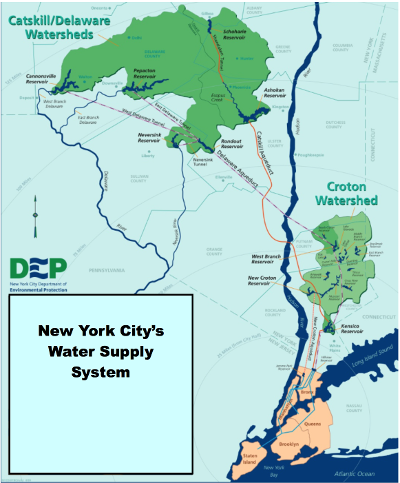
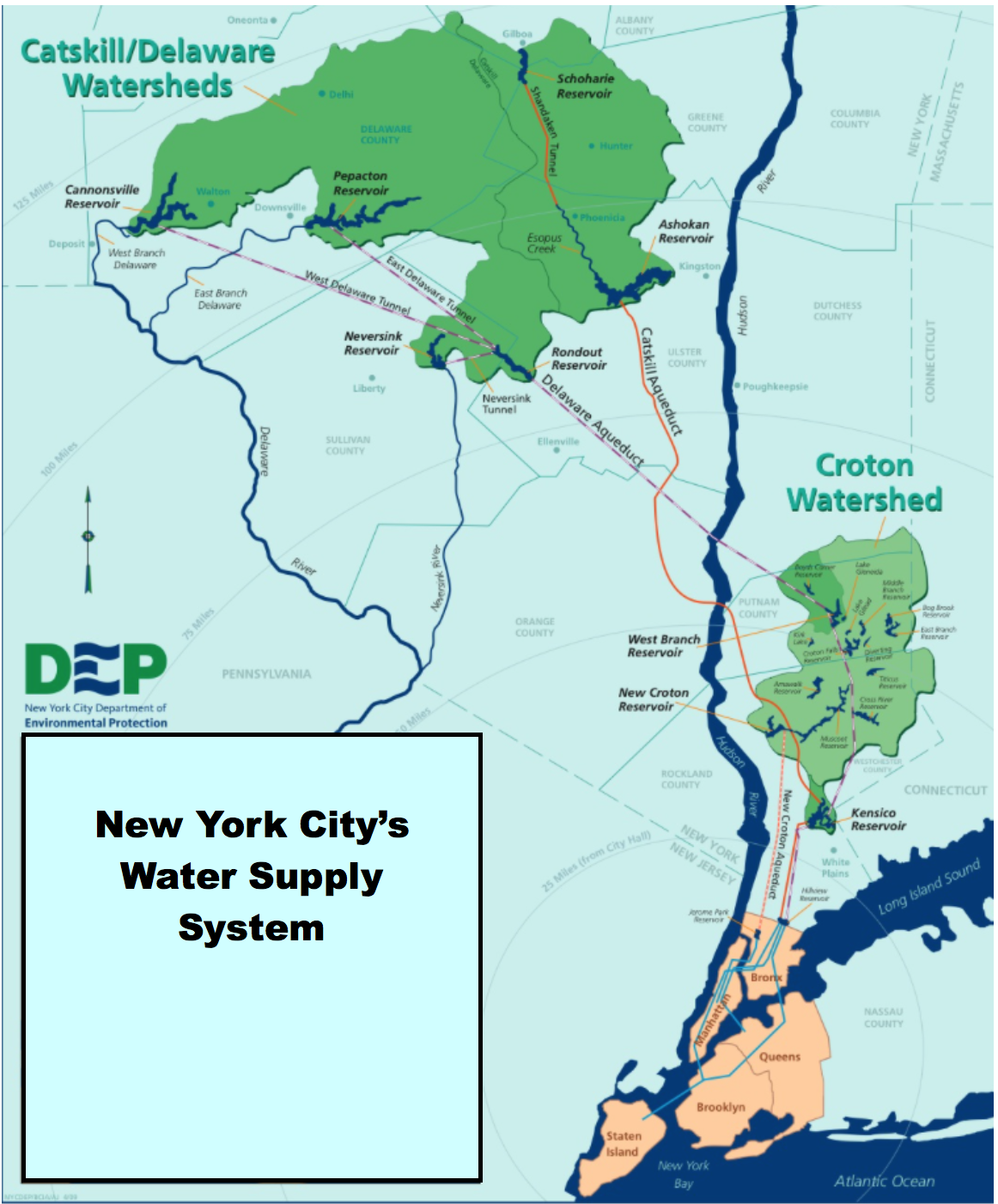
Catskill Region, Delaware River Once the Board of Water Supply decided on the Catskill and Delaware River plan, there was no stopping them. First they constructed the Ashokan Reservoir and impounded the waters of the Esopus Creek. By 1915, this water was being delivered to the city via the Catskill Aqueduct, and the entire system was turned over to the city for operation and maintenance.
Next came development of the Schoharie Reservoir and Shandaken Tunnel, completed in 1928. And this was followed by the appropriation of two other Catskill watersheds. As it turned out, the second half of the plan wasn’t quite so easy. The Board now turned its attention to the upper portion of the Rondout watershed and tributaries of the Delaware River that flowed within New York State. The project was approved in 1928, but the actual work was stymied: the State of New Jersey brought an action in the U.S. Supreme Court to enjoin New York City from claiming any portion of the river.
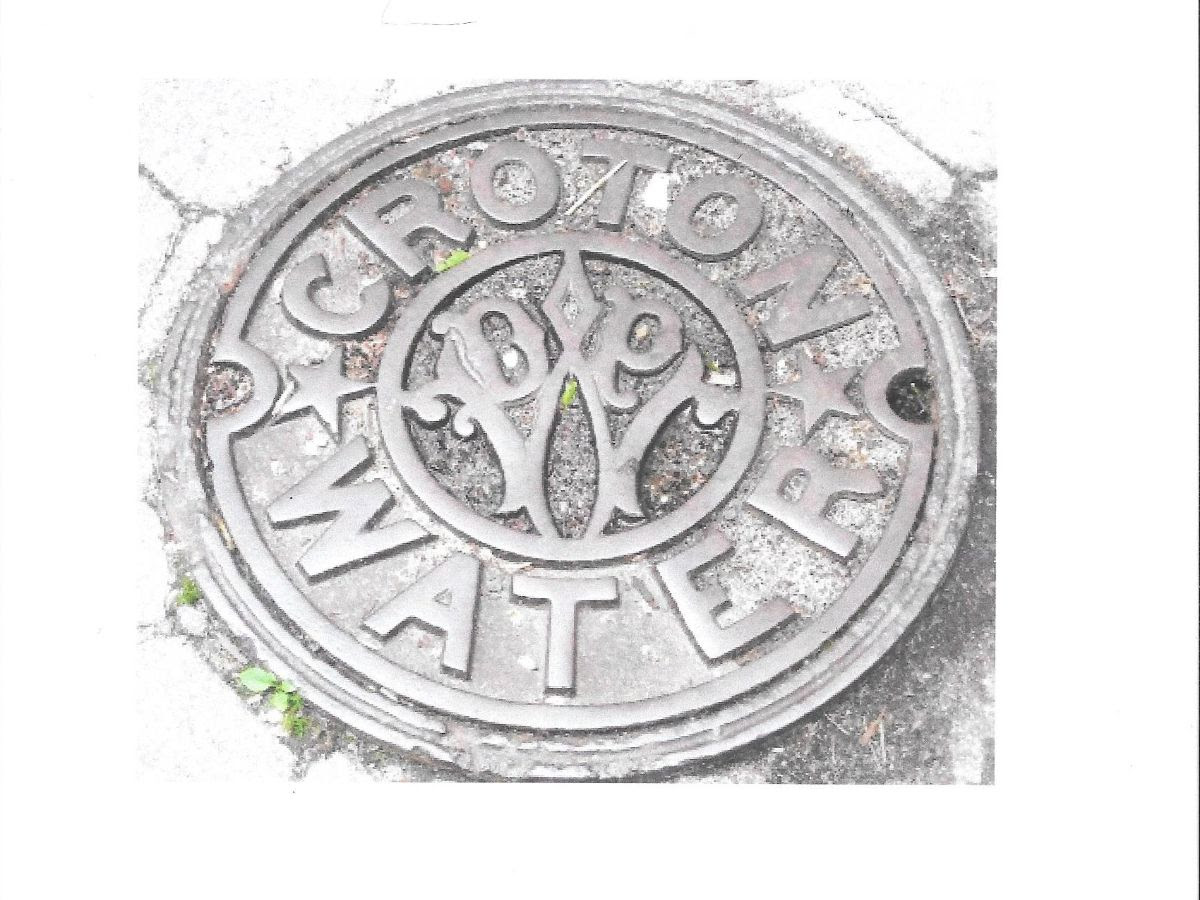
Fortunately for the thirsty citizens of the city, in 1931, the Supreme Court decided in favor of New York and construction was begun several years later. The Delaware system became operational in stages: the Delaware Aqueduct began service in 1944, while the Rondout and four other reservoirs were completed from 1950 to 1964. Over 55 years later, the same three upstate watersheds—Croton, Catskill and Delaware—constitute our water supply.
Today the water is impounded in 19 reservoirs and three controlled lakes, with a daily provision of over 1.2 billion gallons of drinking water and a total storage capacity of about 580 billion gallons. But performance does not depend on capacity alone. The overall system’s utility is further enhanced by its very practical design. The three collection systems are interconnected so that water can be exchanged among them. That means a localized drought can be relieved with excess water from another area.
What’s more, approximately 95% of our water is delivered by gravity, an enormous savings of energy that would otherwise be required for pumping. So, how does the water get to your home? Tune in tomorrow for Part V.
NUPTIALS
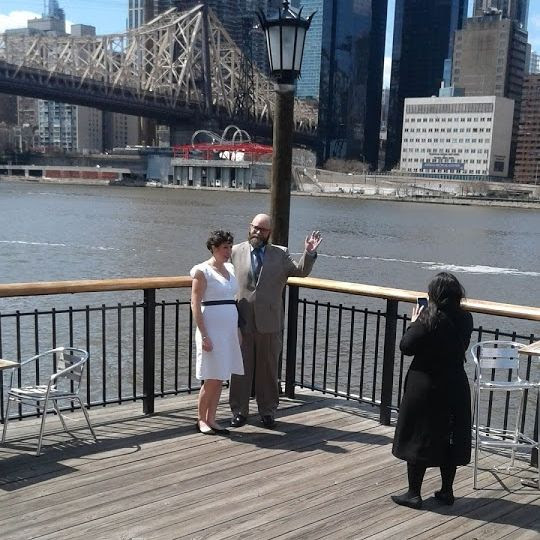
We met Erik and Jessica on Saturday having their pre-wedding photos taken at the pier. The are from Astoria and chose the Island on a spring day for their photos. They were heading to a park preserve upstate to have their ceremony. Best wishes to you on our marriage.
FROM COLER
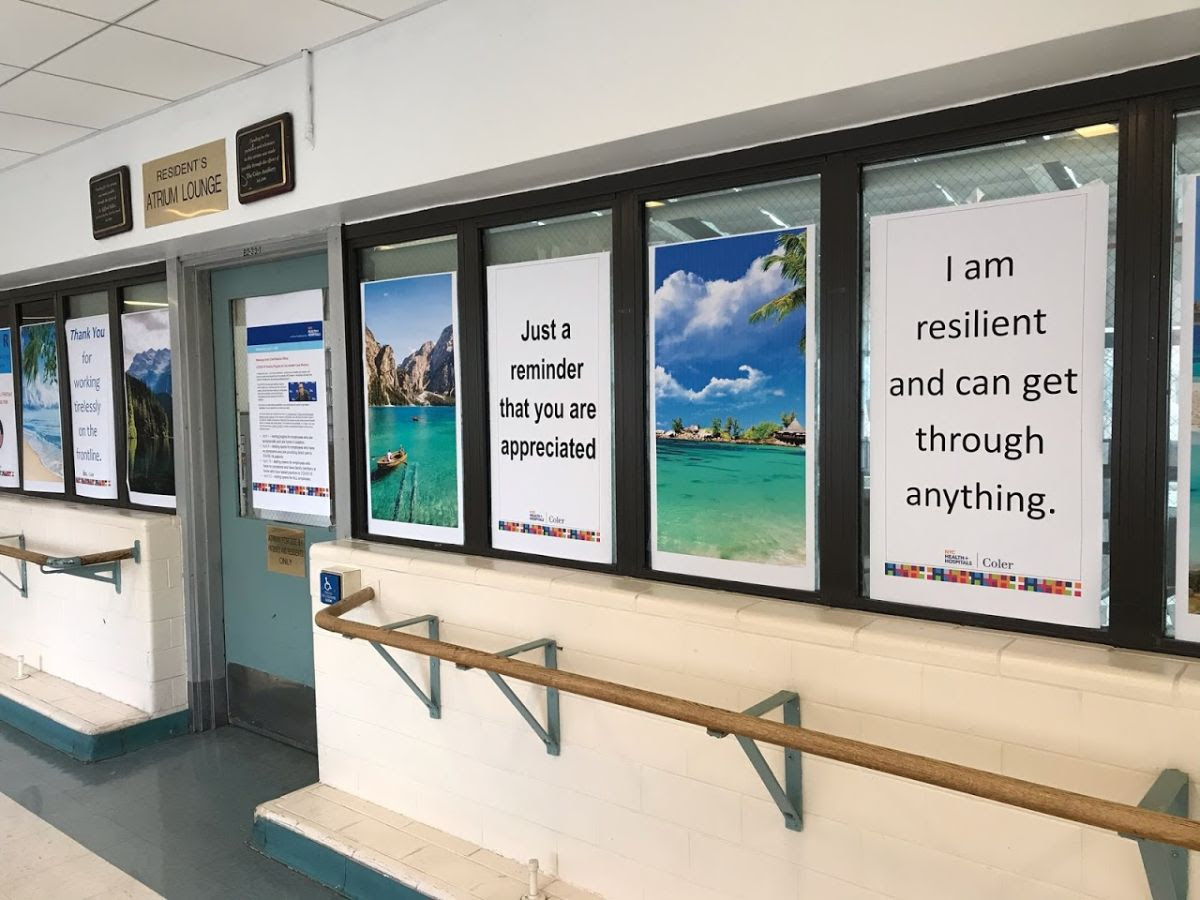
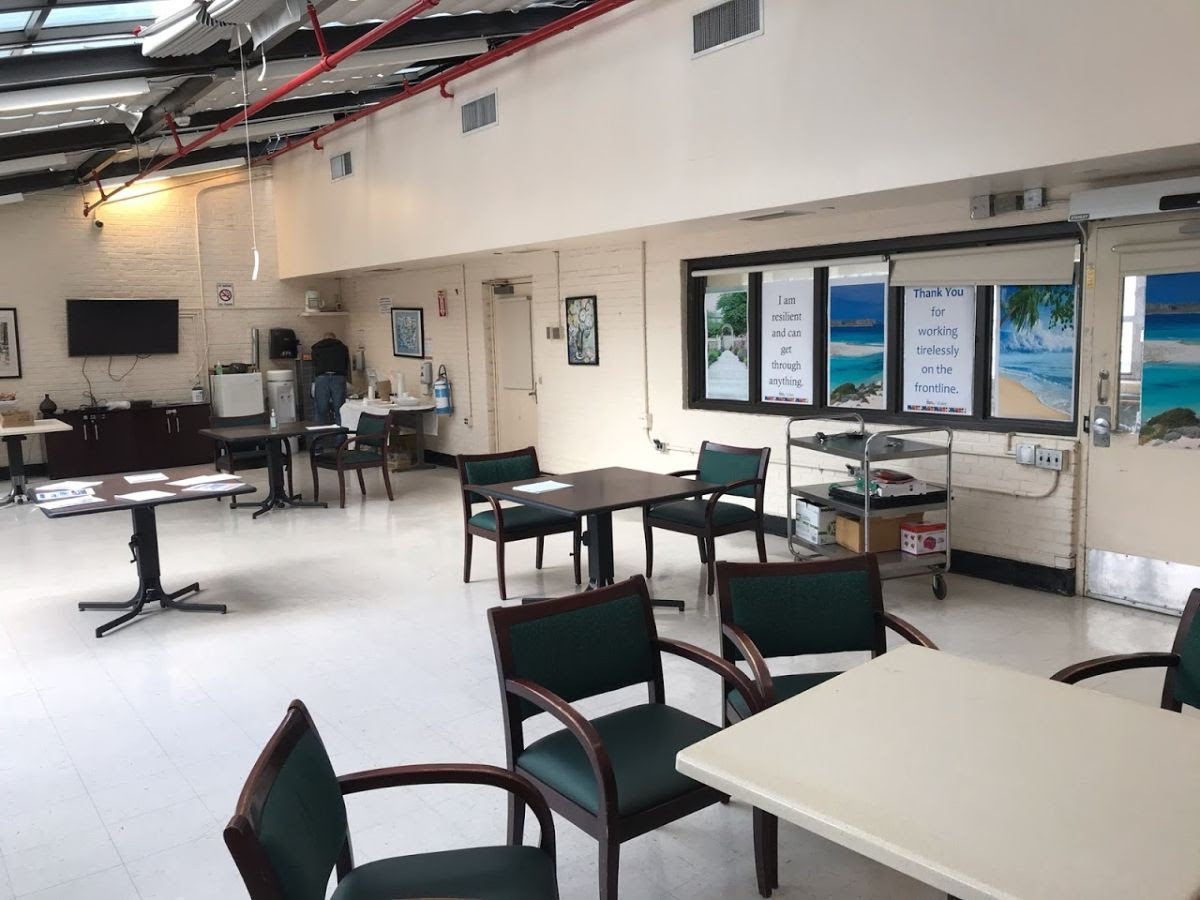
THE STAFF IS GRATEFUL FOR DONATIONS OF FOOD AND REFRESHMENTS. THE GOODIES ARE SERVED IN A BREAK ROOM WHERE STAFF TAKE A REST FROM LONG HOURS AND TOUGH WORK. THANKS SO MUCH TO OUR COLER STAFF!!
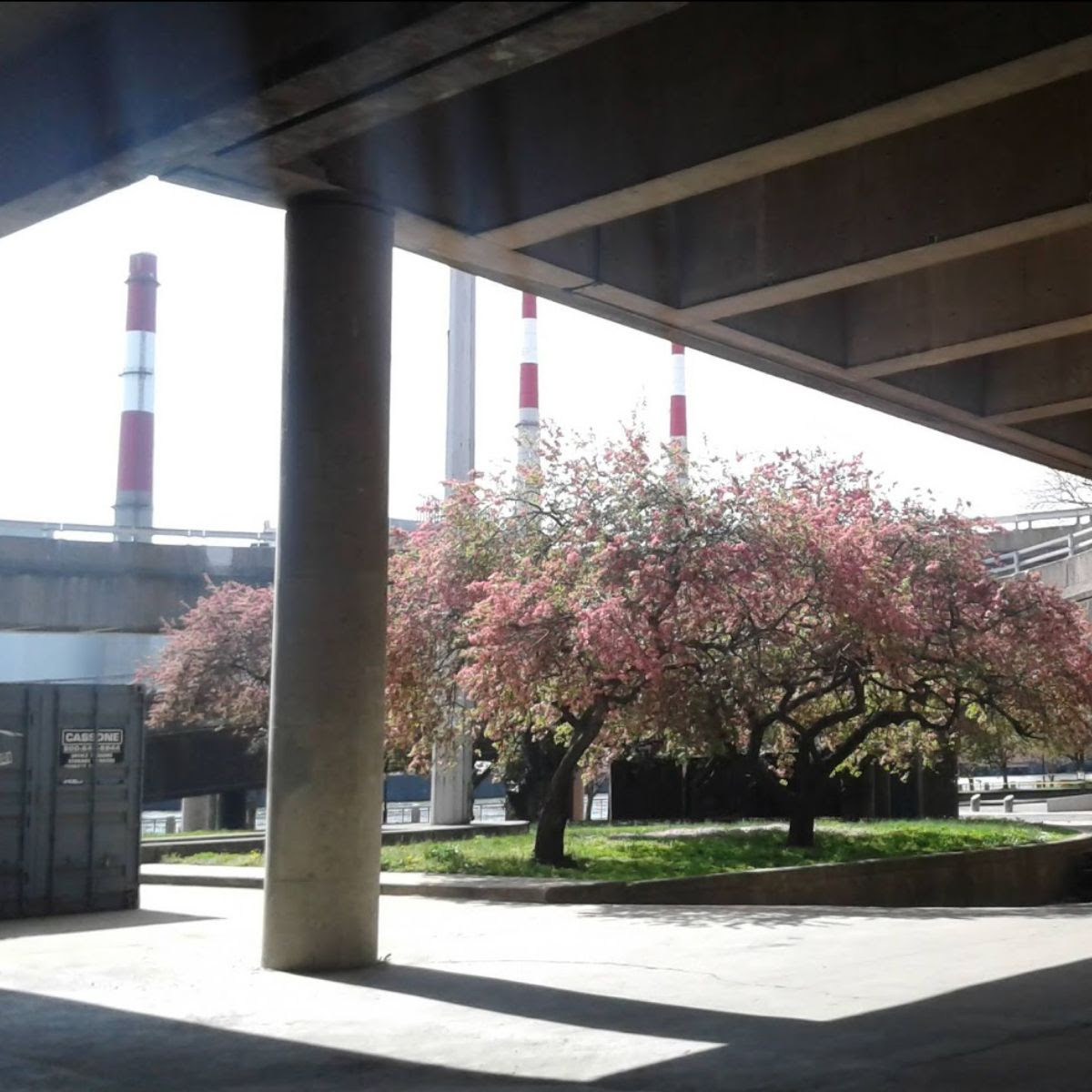
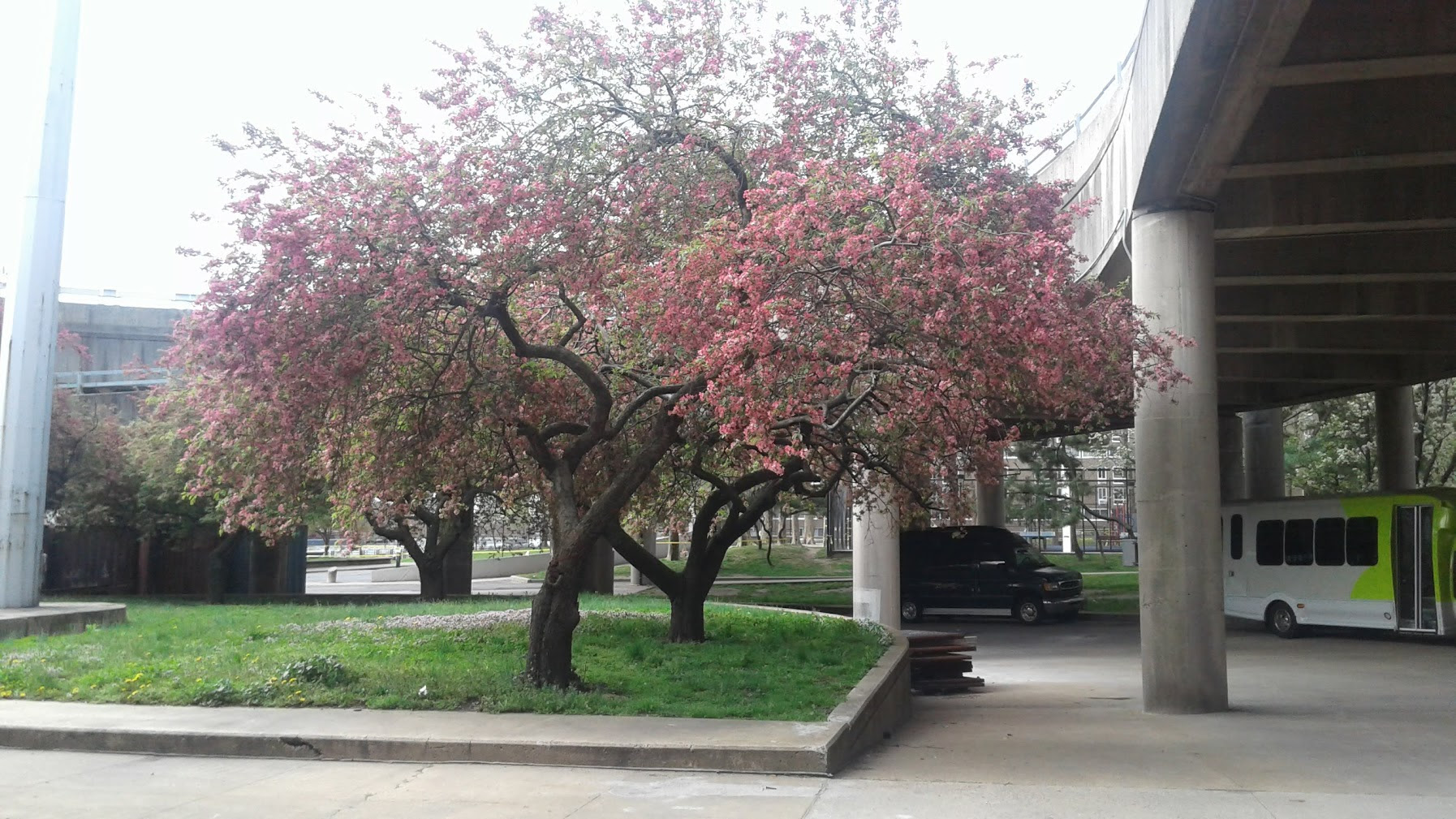
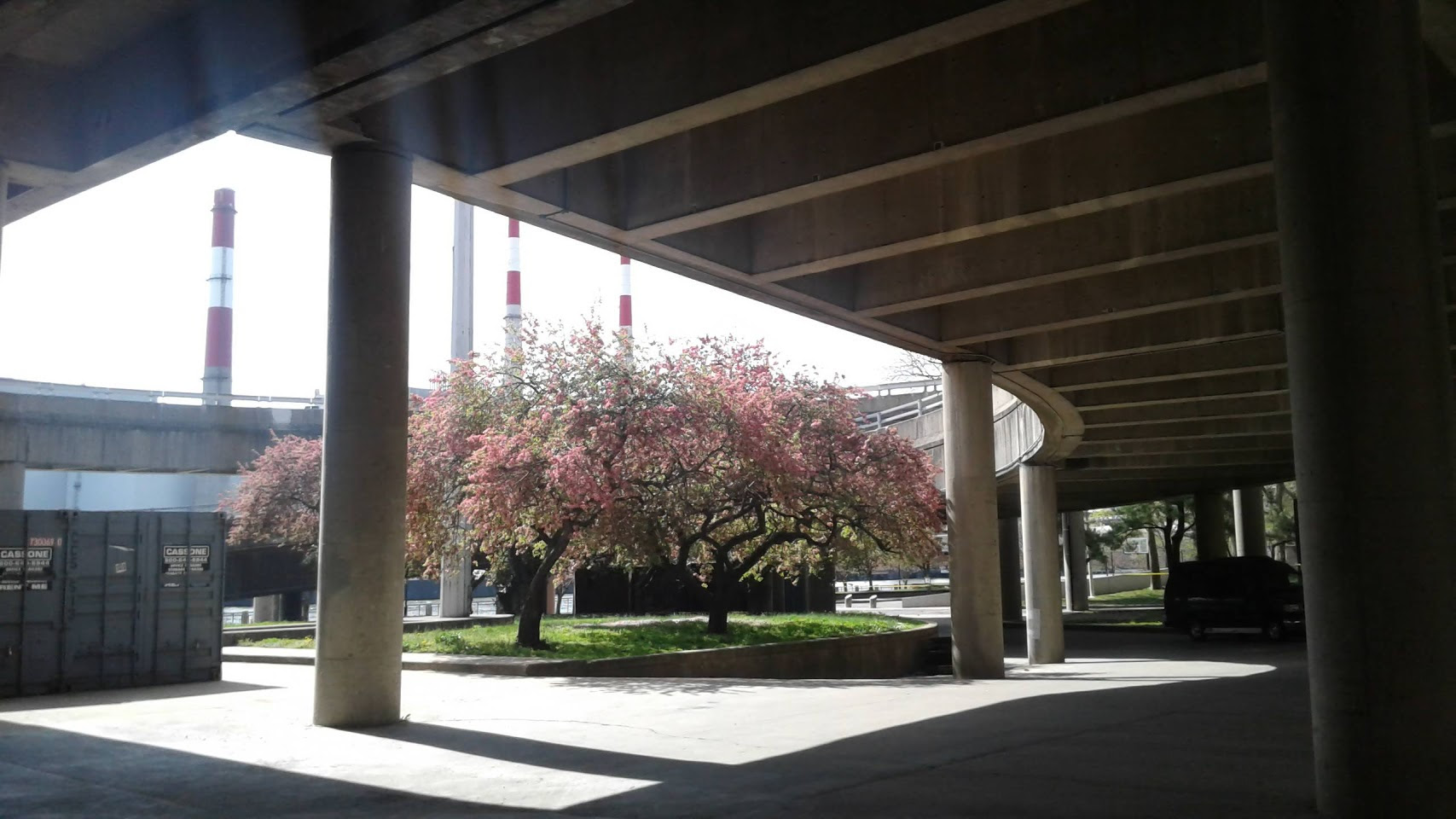
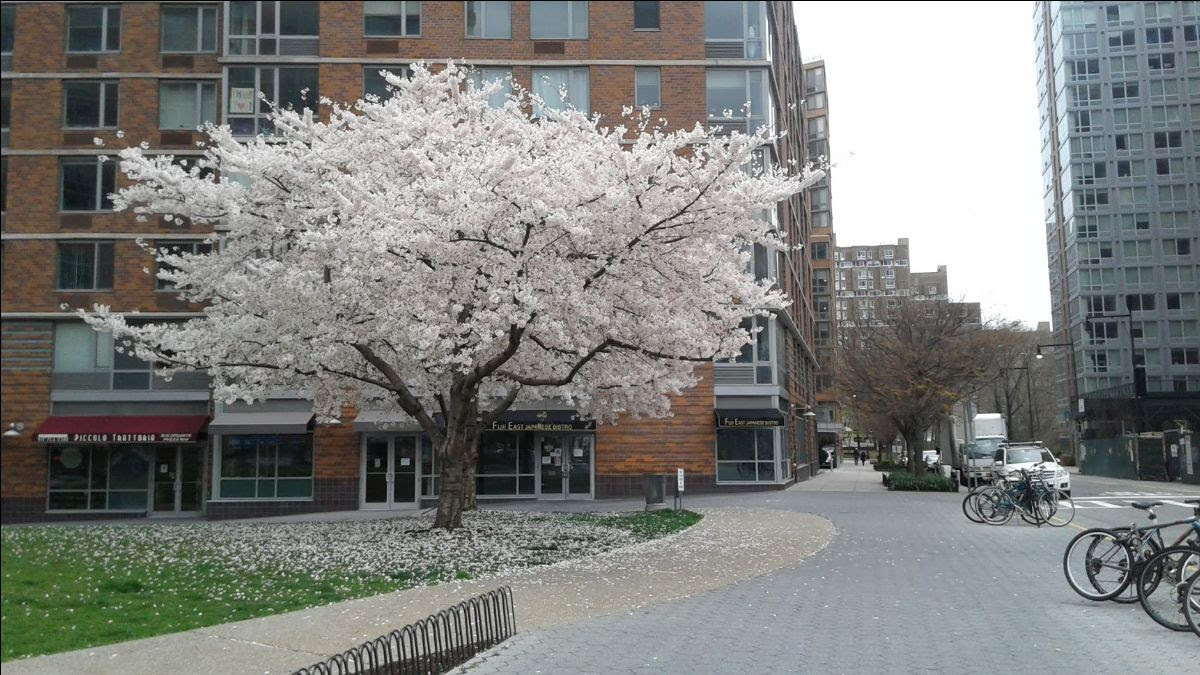
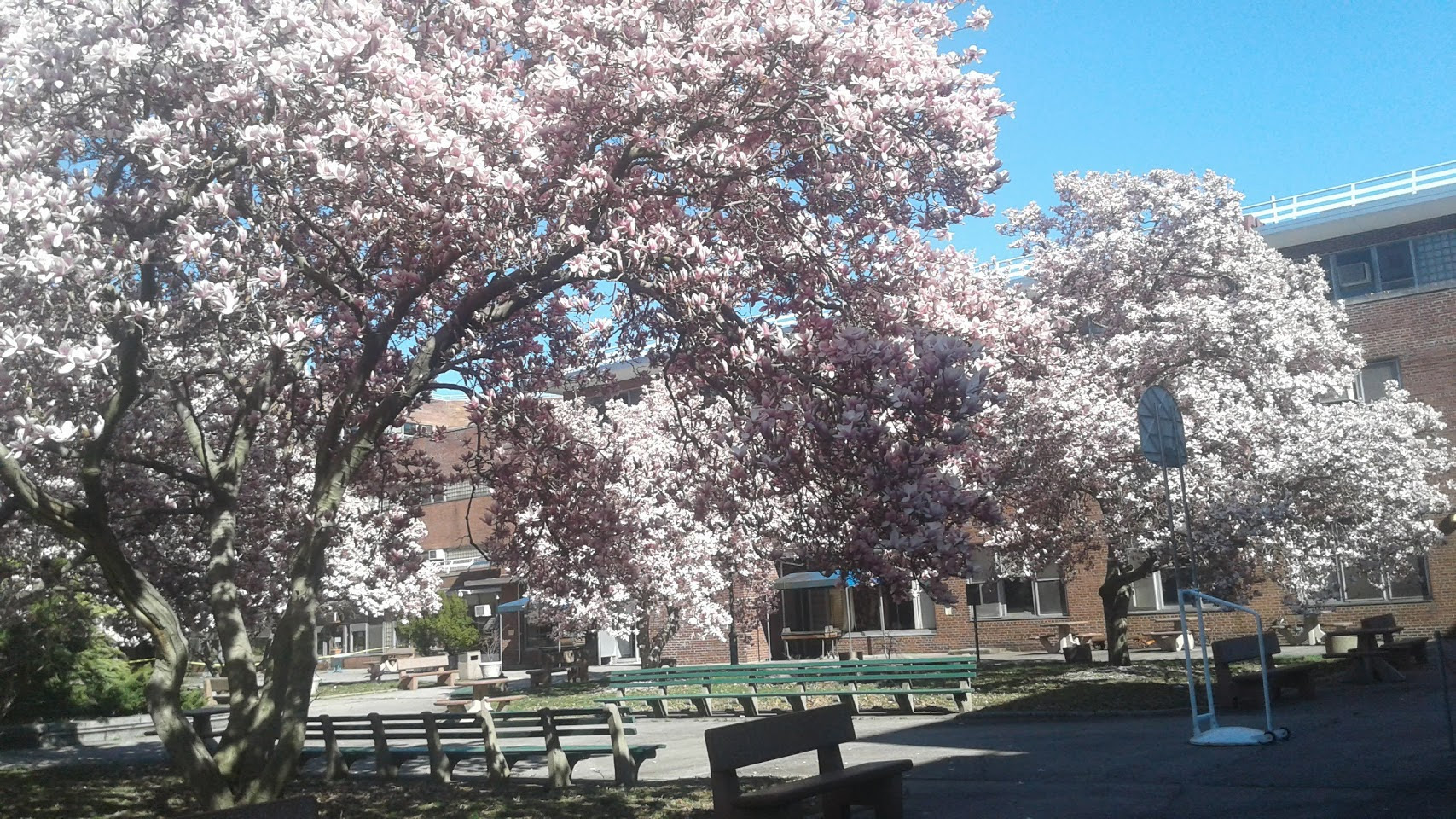
Blossoming trees outside Motorgate. These trees can be a tribute to our landmark design.
EDITORIAL A weekend of contrasts. A joyous moment was meeting this young couple on the pier, having their photo taken before their wedding ceremony.
The Packers, who have struggled with Covid-19 recounting their arrival on the island.
Watching “Sunday Morning” and seeing a familiar name, Michael McKInnell. He was part of a partnership with Gerhard Kallmann who designed Motorgate. He died of Covid-19.
Last night I zoomed my cousin’s Seder from Los Angeles. It is interesting to see and hear of the pandemic news from them. As always, New Yorkers seem more into the crisis and intimacy of our physically tight city. Our world is far from theirs.
I am not used to being in the kitchen. The dishwasher seems to be going every other day, and I am only one person (the cat washes her own dishes). I am lucky to receive food from the Senior Center. When we get boxes from one caterer all the veggies are fresh and the meals are made just for our delivery. We are truly grateful to be able to get good food from DFTA thru Carter Burden Senior Center. I share my boxes with neighbors. Nothing goes to waste.
Many of my neighbors snub the center, “for old people” NOT TRUE. There is a camaraderie there and even now that it is closed. they reach out to us to make sure all is well. The programming may have stopped but not the caring and commitment of the staff.(Lisa, Ulisa, Fred, Iris, Pat and Brenda).
I miss my Jewels With Judy classes. We get together make necklaces, chat and socialize. Maybe we can Zoom a beading class?
Text by Judith Berdy Thanks to Bobbie Slonevsky for her dedication to Blackwell’s Almanac and the RIHS Thanks to Deborah Dorff for maintaining our website and downloading to rihs.us daily Edited by Melanie Colter
LOST PHOTOS FOUND Courtesy of the P. Terrence Cultra Collection (c) *********
Greetings from MOMO, The Healing Hound
*********************
Weekend Edition Saturday and Sunday, April 11-12, 2020
23rd in our FROM THE ARCHIVES series
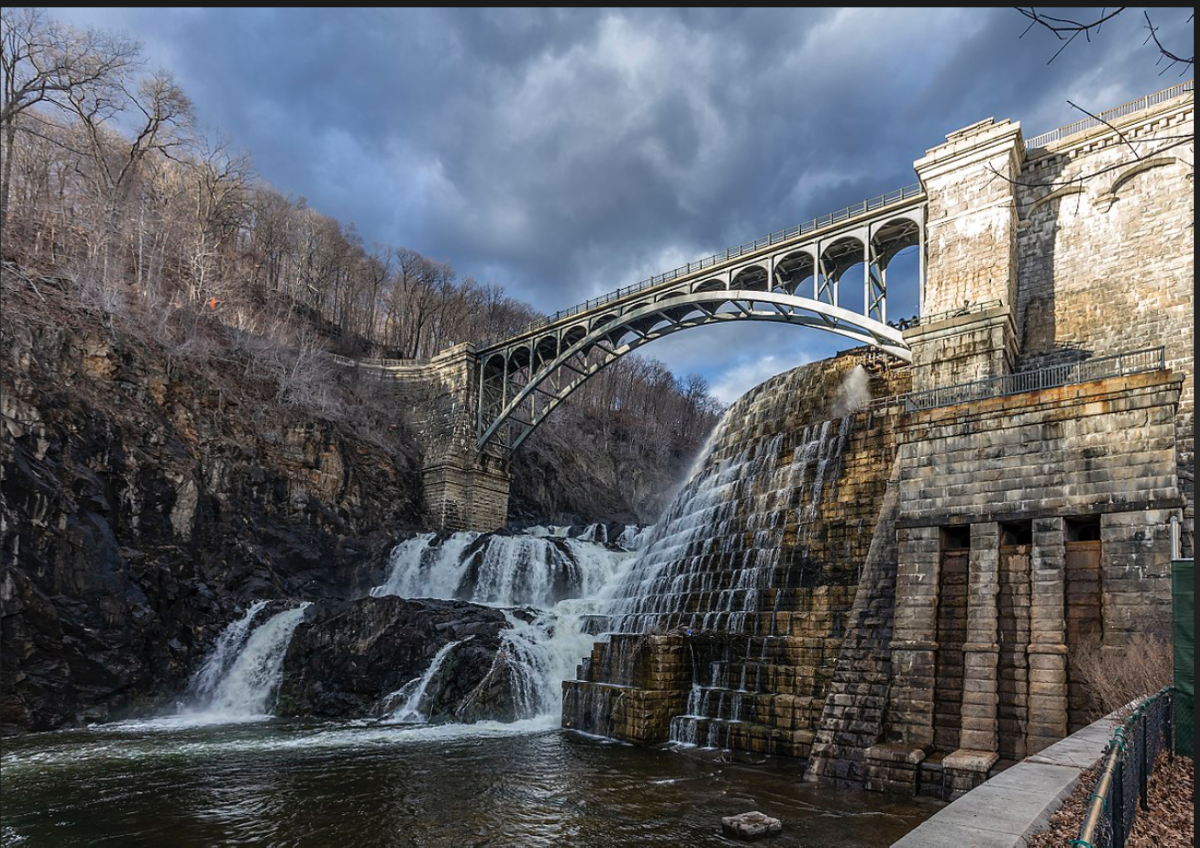
New Croton Dam
HOW DID WE AND HOW DO WE GET OUR WATER PART III
By: Bobbie Slonevsky
It seems that no matter what the city did, the water supply could never get ahead of demand. In the 1840s and 50s, and again in the 80s, the population continued to grow at a frantic pace. In addition, industry needed water, the Fire Department needed water, and the more accessible water became, the more people used it—culminating in a reported demand reaching 80 gallons per capita per day.
Time for a commission—which, between 1885 and 1893, built a second aqueduct from the Croton watershed, as well as additional storage reservoirs. The New Croton Aqueduct, as it was called, was constructed a few miles east of and more or less parallel to its predecessor. It had three times the original aqueduct’s capacity, potentially delivering some 300 million gallons of water per day. And so acute was the need that it was prematurely placed in service in 1890 while it was still under construction.
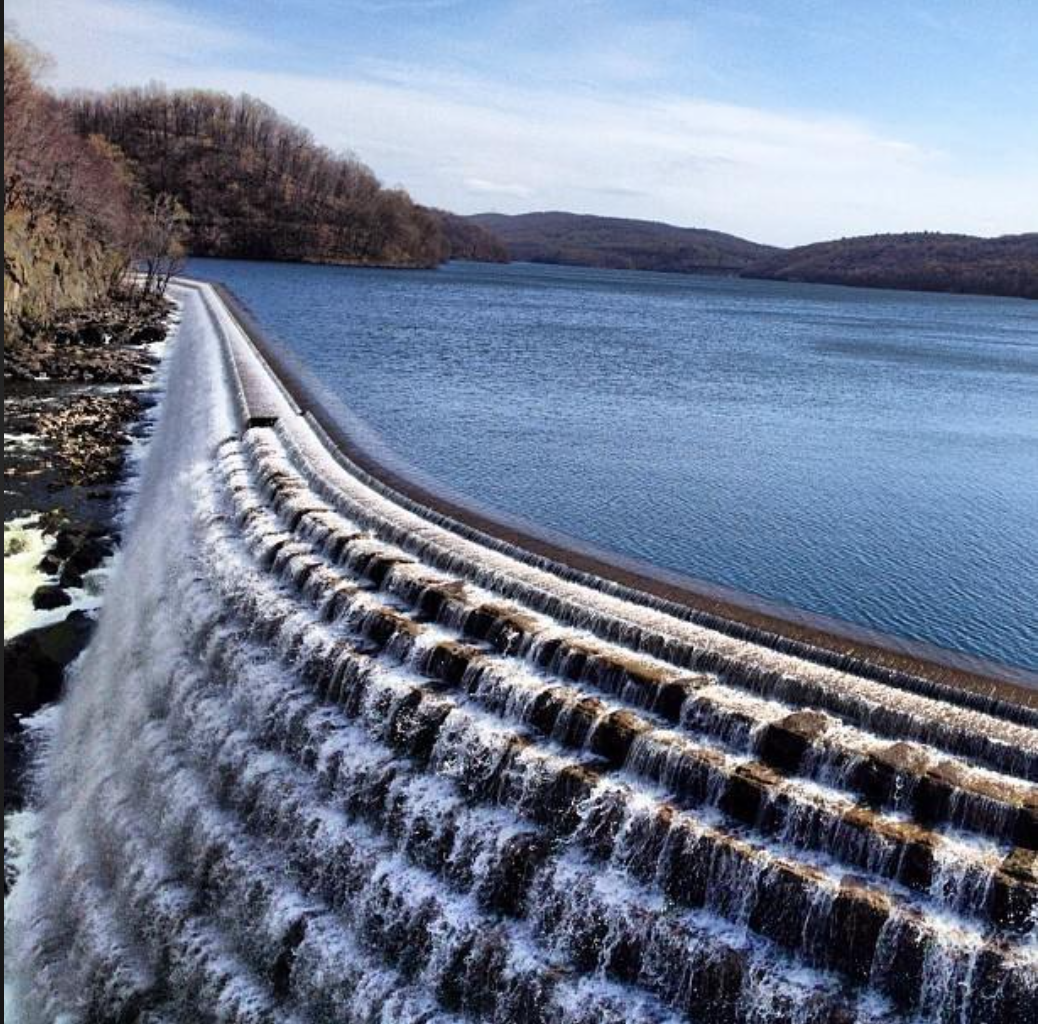
It wasn’t officially opened until 1910, by which time a New Croton Dam and Reservoir had been dug in Westchester County. This was and remains the largest reservoir in the New York City water supply system. It is approximately nine miles long, and can hold 19 billion gallons of water at full capacity. It is now the collecting point for water from all reservoirs in the Croton Watershed.
The new conduit carried water from the new reservoir to the Jerome Park Reservoir in the Bronx, then out for distribution. For many years (until the Old Croton Aqueduct was closed in 1955), the two systems worked in tandem. Fortunately, though, even before the second Croton conduit was inaugurated, political leaders had absorbed the lessons of the past. In 1905, the State created the Board of Water Supply to study the situation and develop plans for expanding water sources in the future.
The die had been cast: water resources outside the city limits were fair game. And over the next couple of decades, New York City targeted both the Catskill region and the Delaware River.
Tune in tomorrow for Part IV
LOST PHOTOS FOUND P. TERRENCE CULTRA FOUNDATION
In 2008 I received a letter from P.T. Cultra that he had acquired a collection of hundreds of images of Blackwell’s Island from a person who had worked on the Island. The collection that was sent to me was part of this major survey at the turn of the century. Enjoy this voyage thru the island community from years past. A few of the photos look like they may have been reproduced on the reverse side. ALL PHOTOS ARE COPYRIGHTED BY T. CULTRA FOUNDATION (C)
Ready to Serve
One of the Chapels before Permanent Buildings
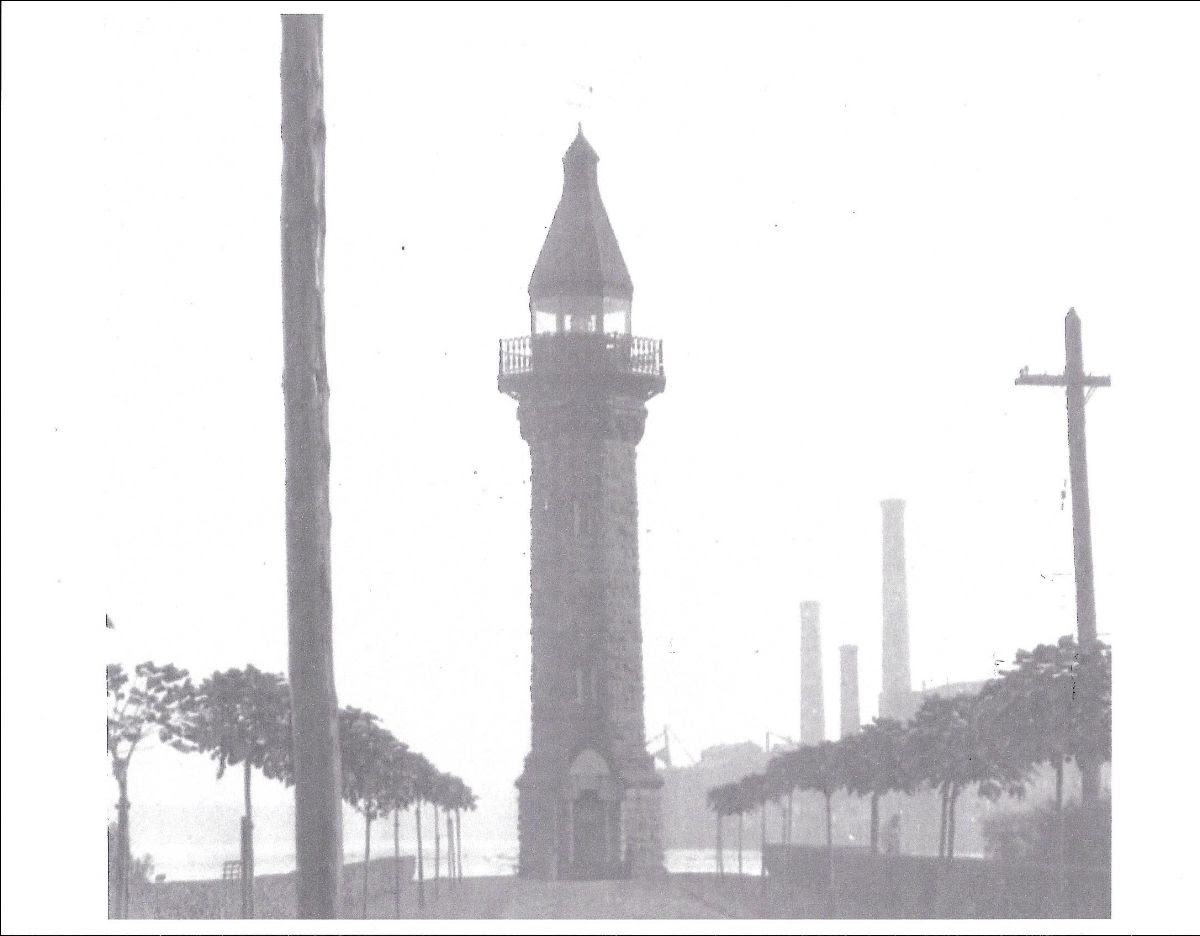
The lighthouse with its original top
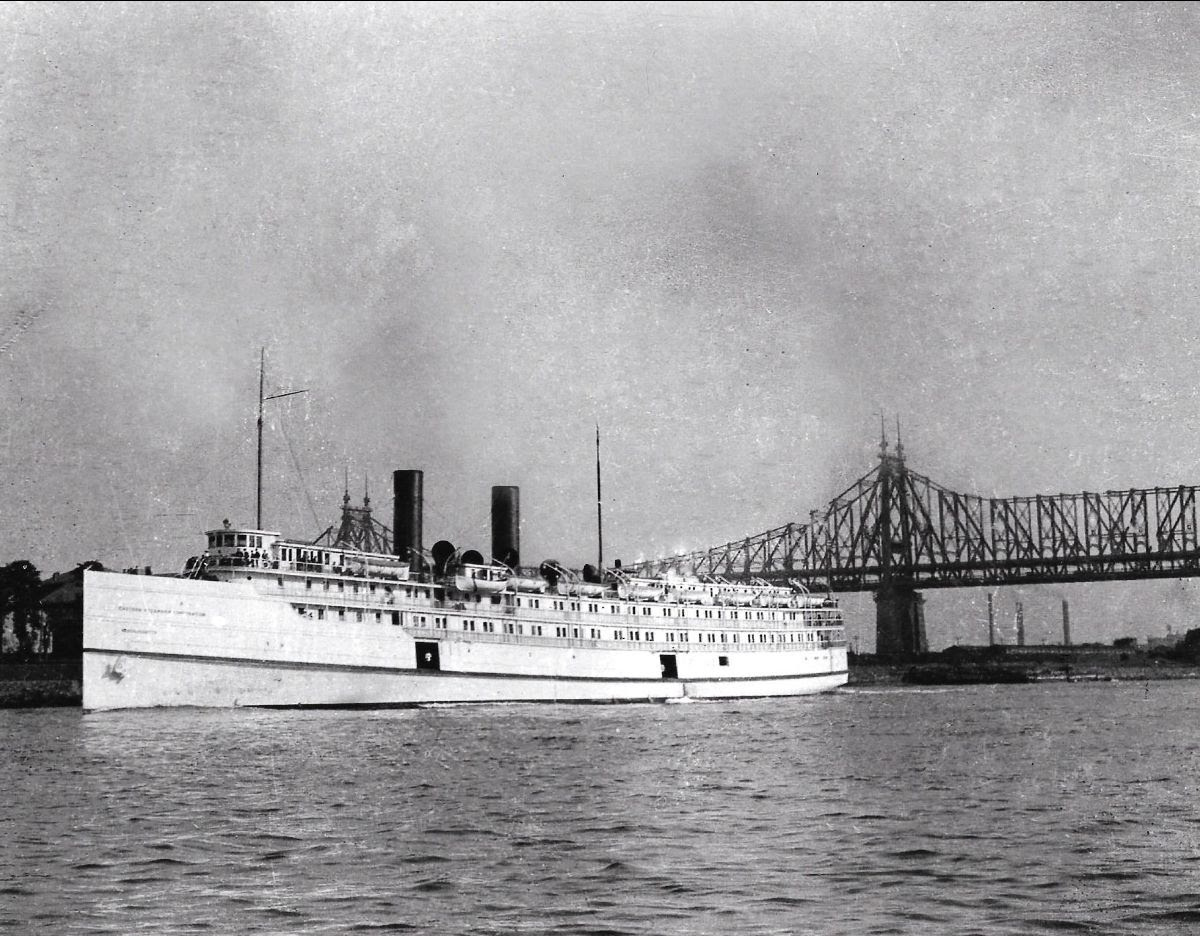
One of the steamers that passed the island daily
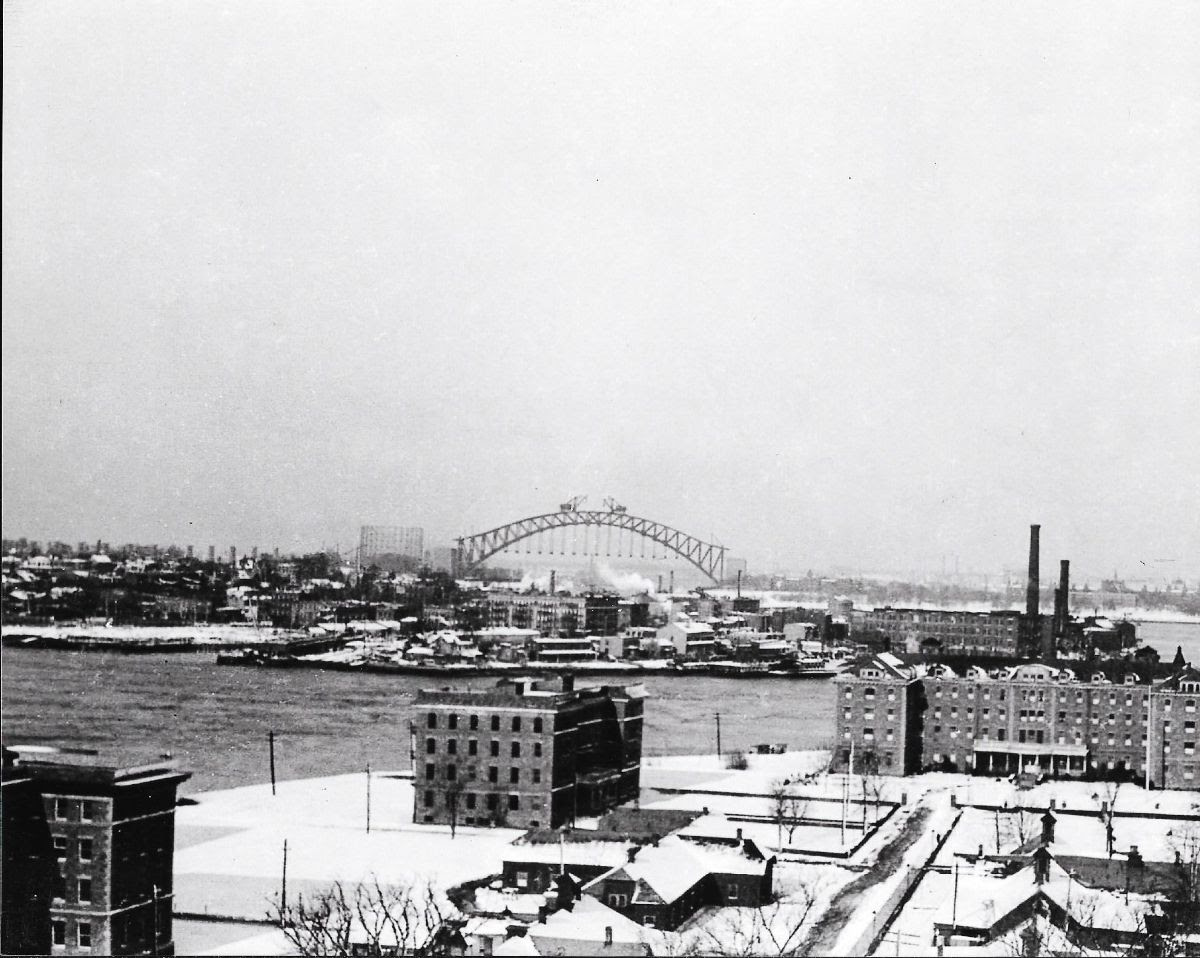
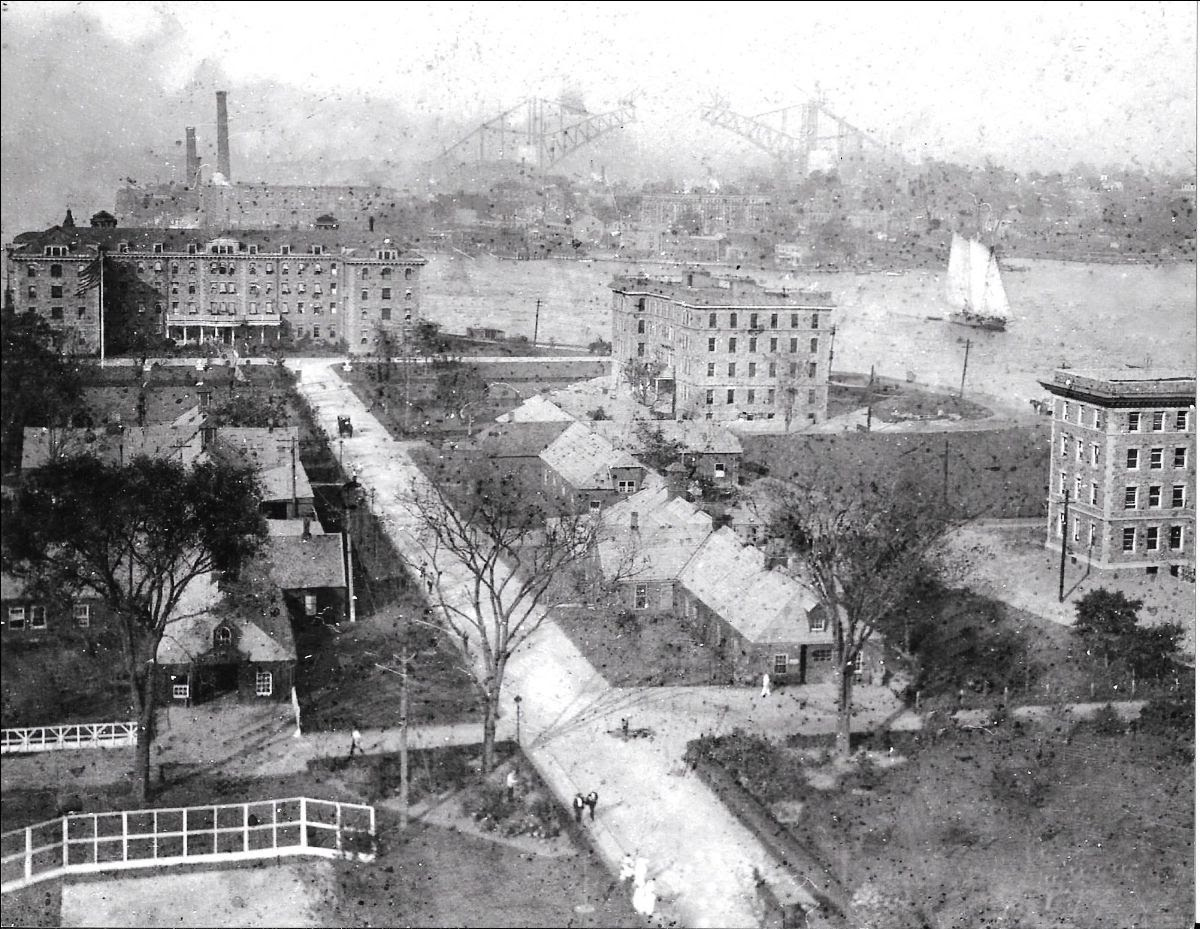
Hellgate Bridge under construction (photo in reverse, see next image) Draper Hall, Metropolitan Hospital Nurses’ Residence at northern tip of Island.
Hellgate Bridge under construction. 1908? Note: Tuberculosis wooden buildings along right side of street. Photo was probably taken from top of Metropolitan Hospital (Octagon) Draper Hall and Staff House pictured.
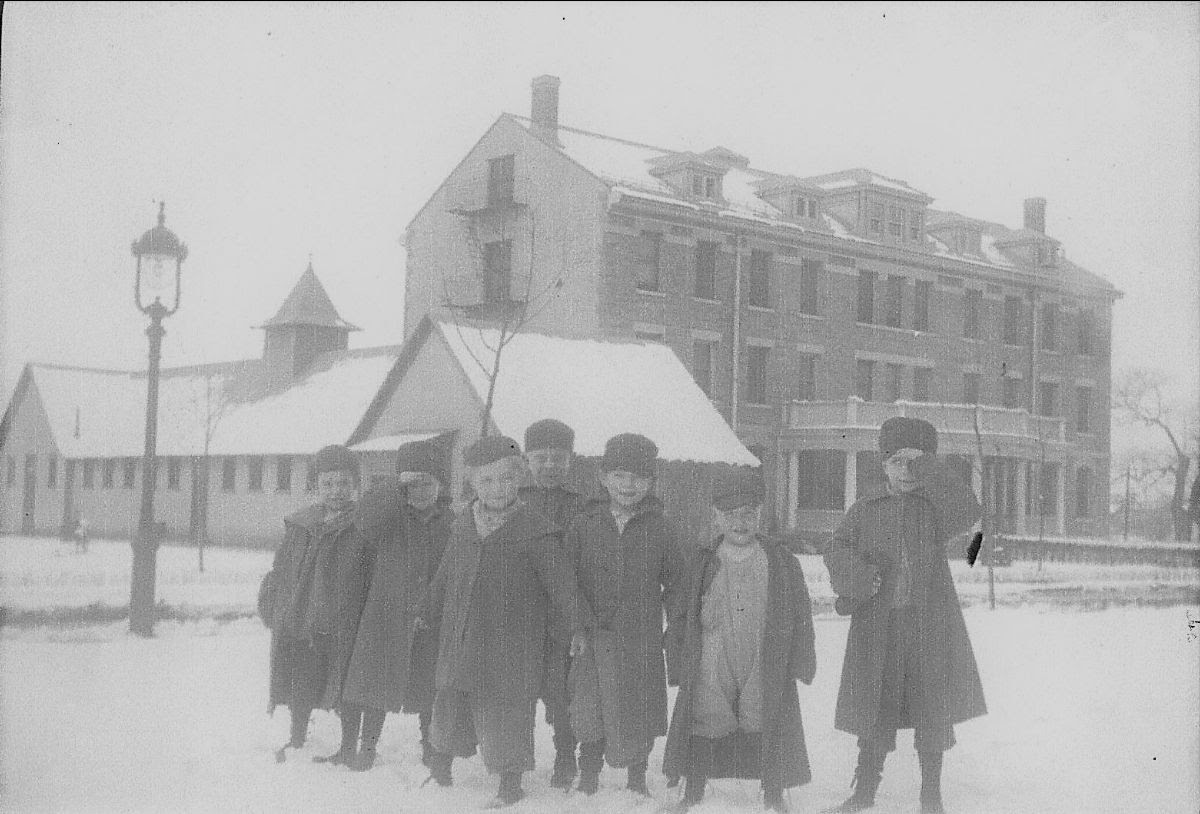
Island youth getting ready for a good snowball fight
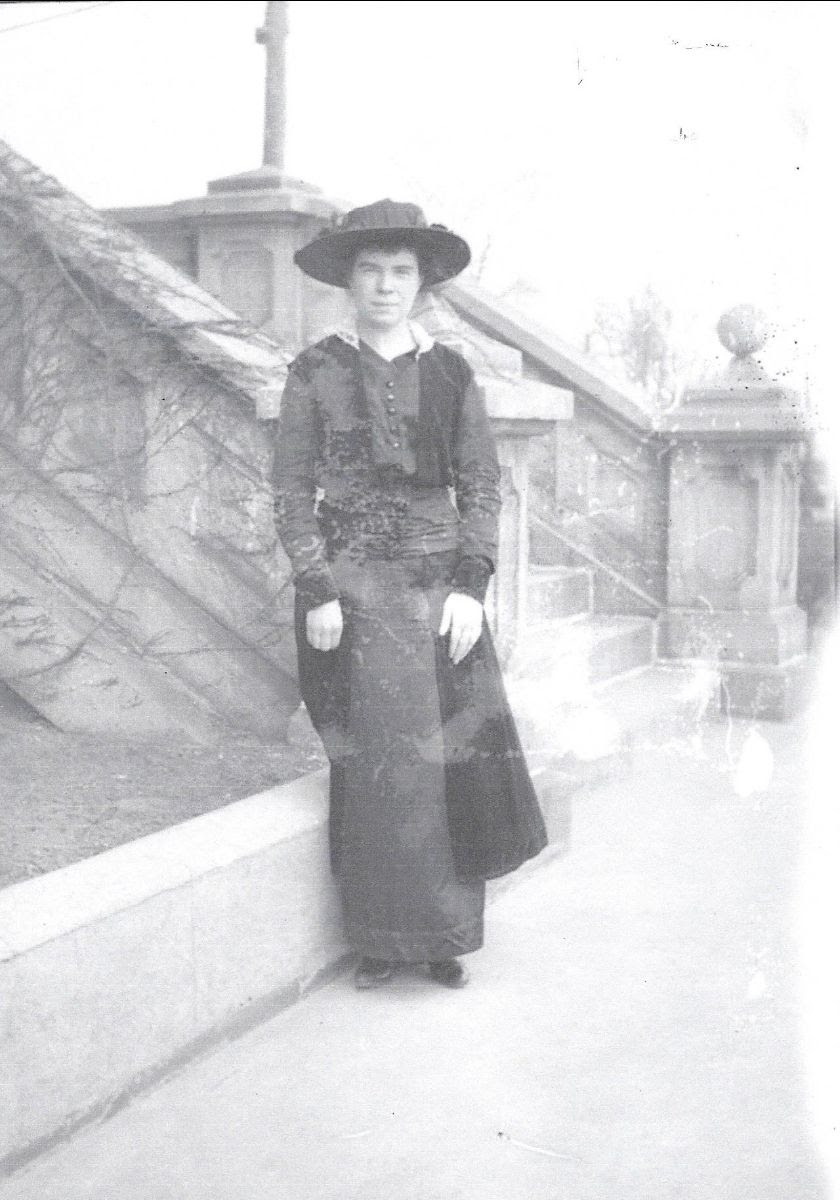
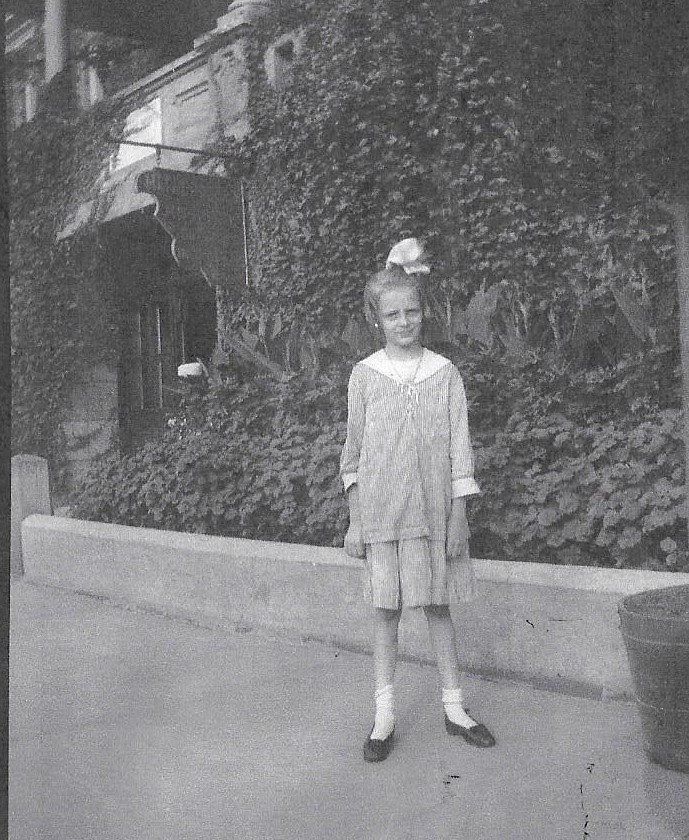
The proper way for a young lady to dress outside Metropolitan Hospital. You can do the same pose today.
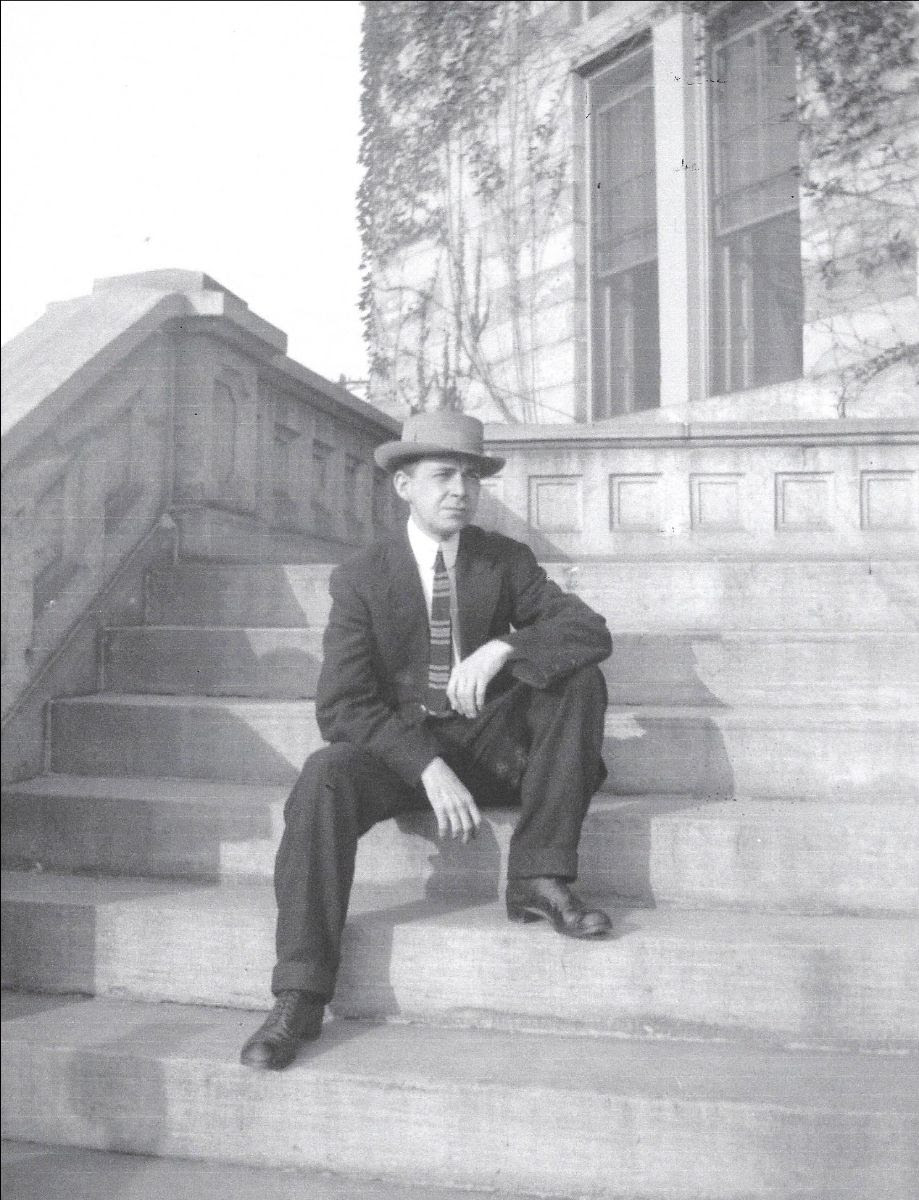
Dapper chap Is that his lady-friend on the other stairway?
Has this view changed in 100 years? The sign now says Octagon not Metropolitan Hospital.
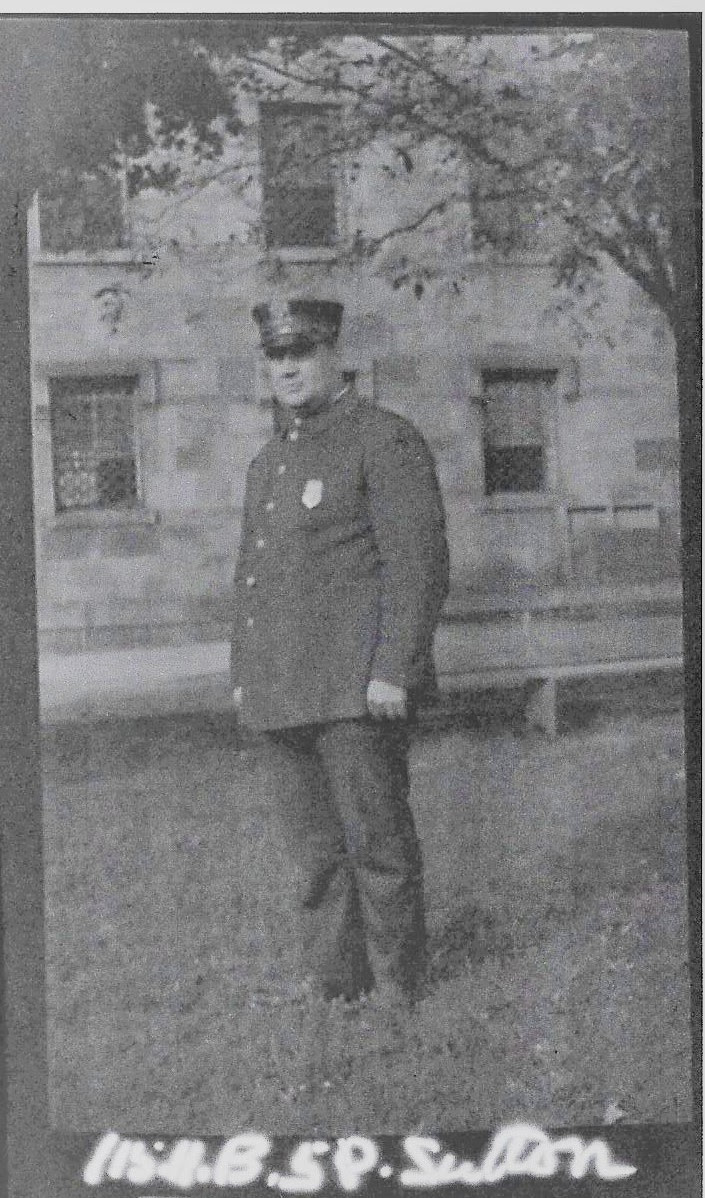
Officer Sutton outside Metropolitan Hospital
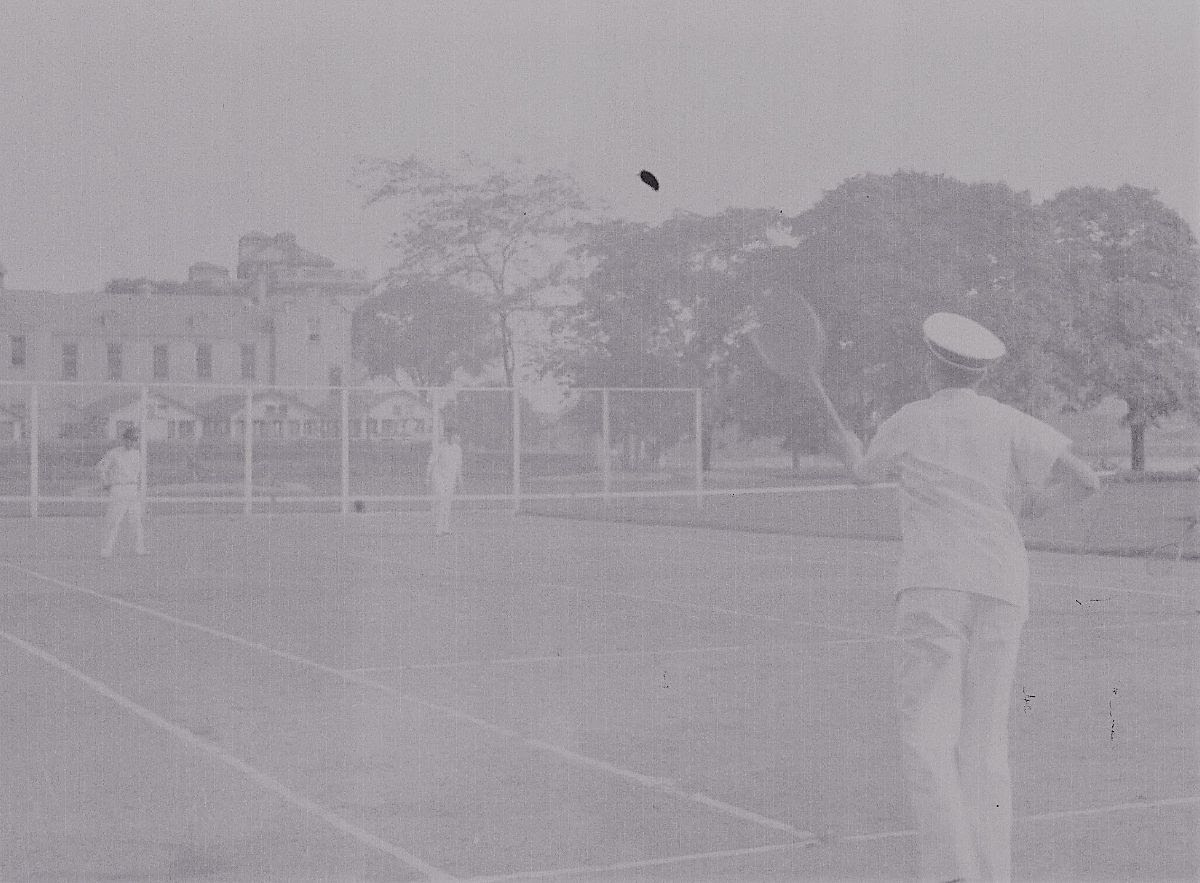
Tennis courts neat Metropolitan Hospital White tennis togs only
Hi FROM MOMO
Hi friends,
I am fine and having an interesting time at Coler. It is a bummer not to be able to visit some residents because of this human disease. I am spending my days walking around with my friends and making people smile. At night I go out with the Hospital Police on a long “patrol.” My favorite place is the garden where I can chase squirrels and run around like a pup again.
Thanks for all the goodies you have been sending the residents and staff. They are all appreciative of the refreshments. My favorite treat is Pup-Peroni, hint hint.
This weekend will be the first anniversary of Roosevelt Island’s largest social gathering. Yes, one year ago Saturday over 20,000 visitors crammed onto the island to look at flowers, cherry blossoms.
Bill Weiss and I were in the Visitor Center Kiosk all day selling any beverage and snack we could find. We had a great time with our visitors. Yes, there were problems with traffic, trains, tram service and just a crush of peaceful people coming to admire our island!!!
In these days of social isolation, we can admire our trees alone, with a separated partner or friend. I am sure some “outsiders” will visit too. Welcome to our wonderful island.
I have had some wonderful responses from early Islanders and will publish their recollections on Monday.
Text by Judith Berdy Thanks to Bobbie Slonevsky for her dedication to Blackwell’s Almanac and the RIHS Thanks to Deborah Dorff for maintaining our website Edited by Melanie Colter and Dottie Jeffries
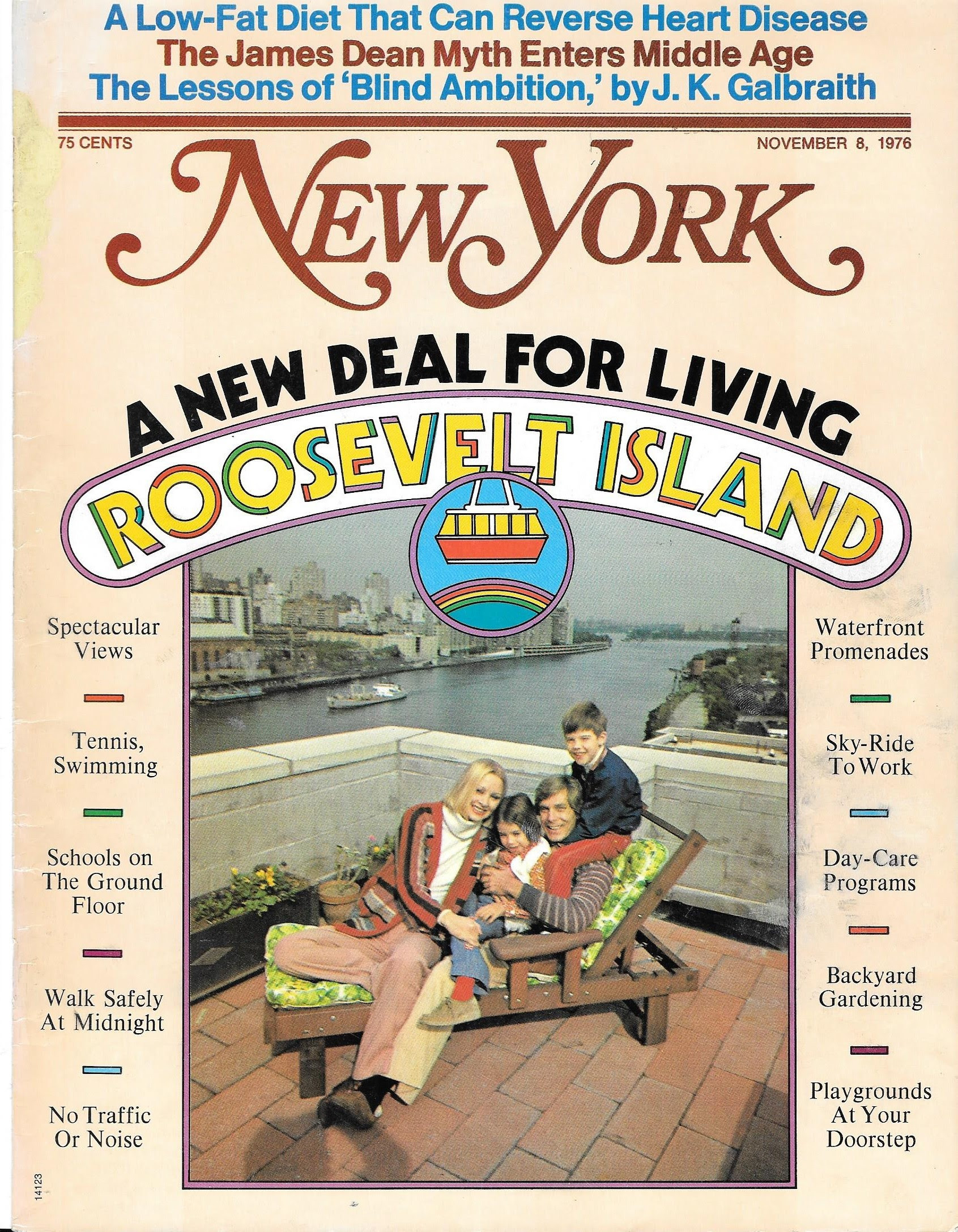
NEW YORK MAGAZINE COVER THAT ATTRACTED MANY TO THE ISLAND (C) RIHS
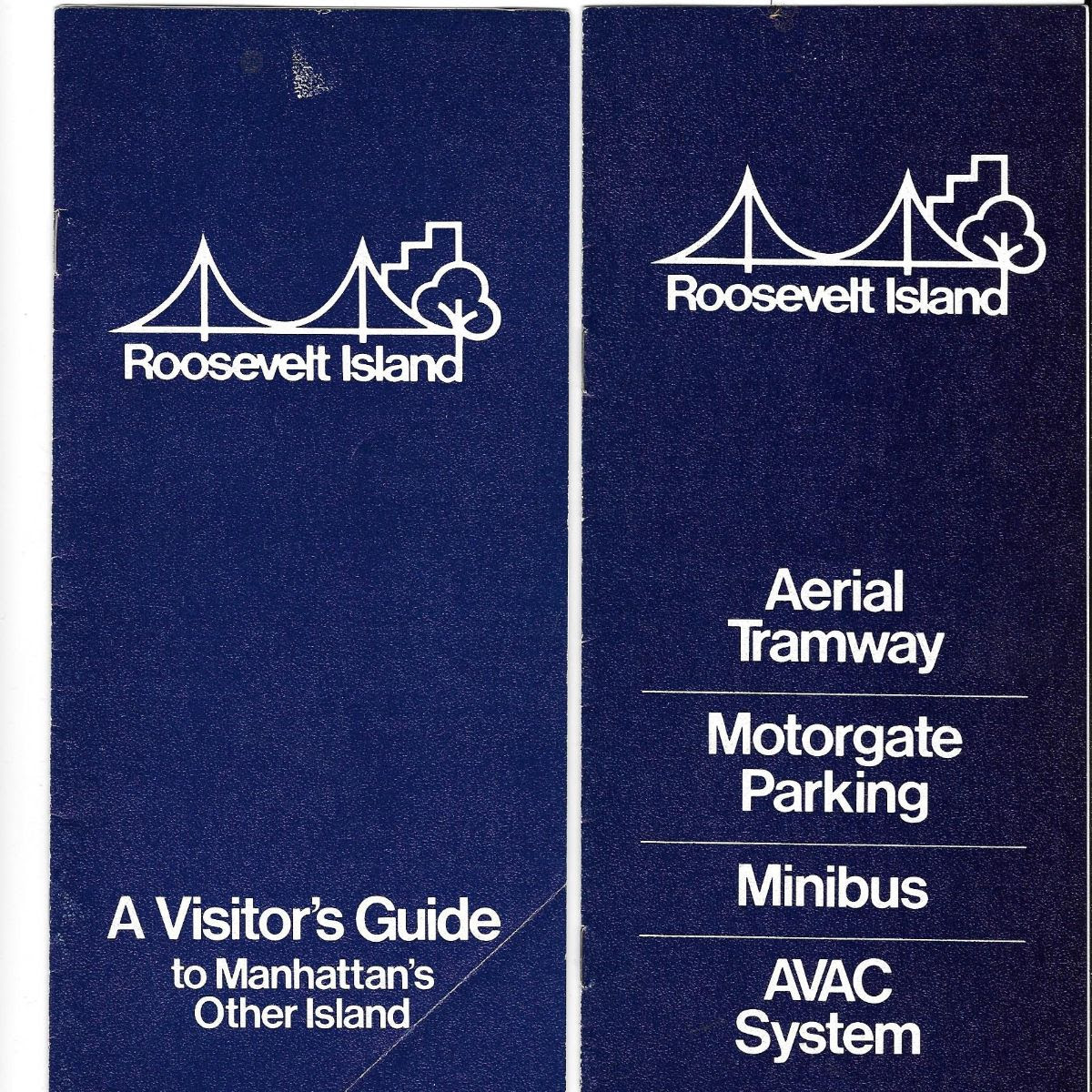
WELCOME BROCHURE GIVEN TO NEW RESIDENTS (C) RIHS
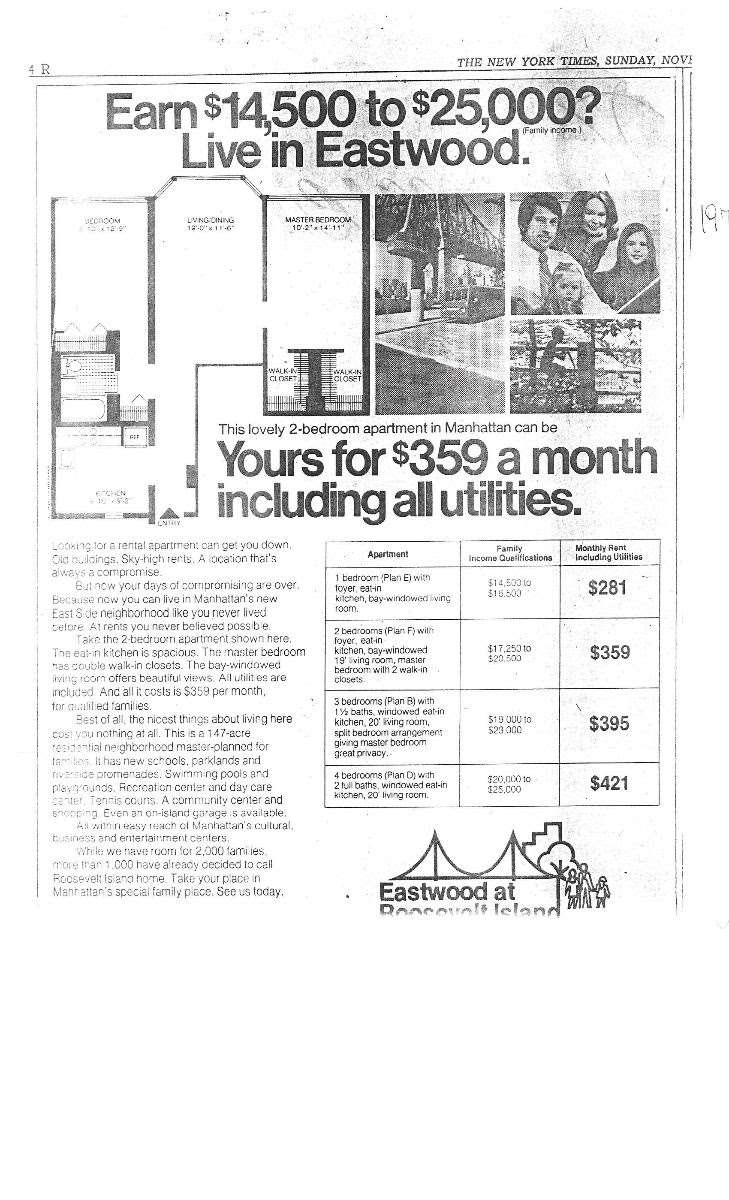
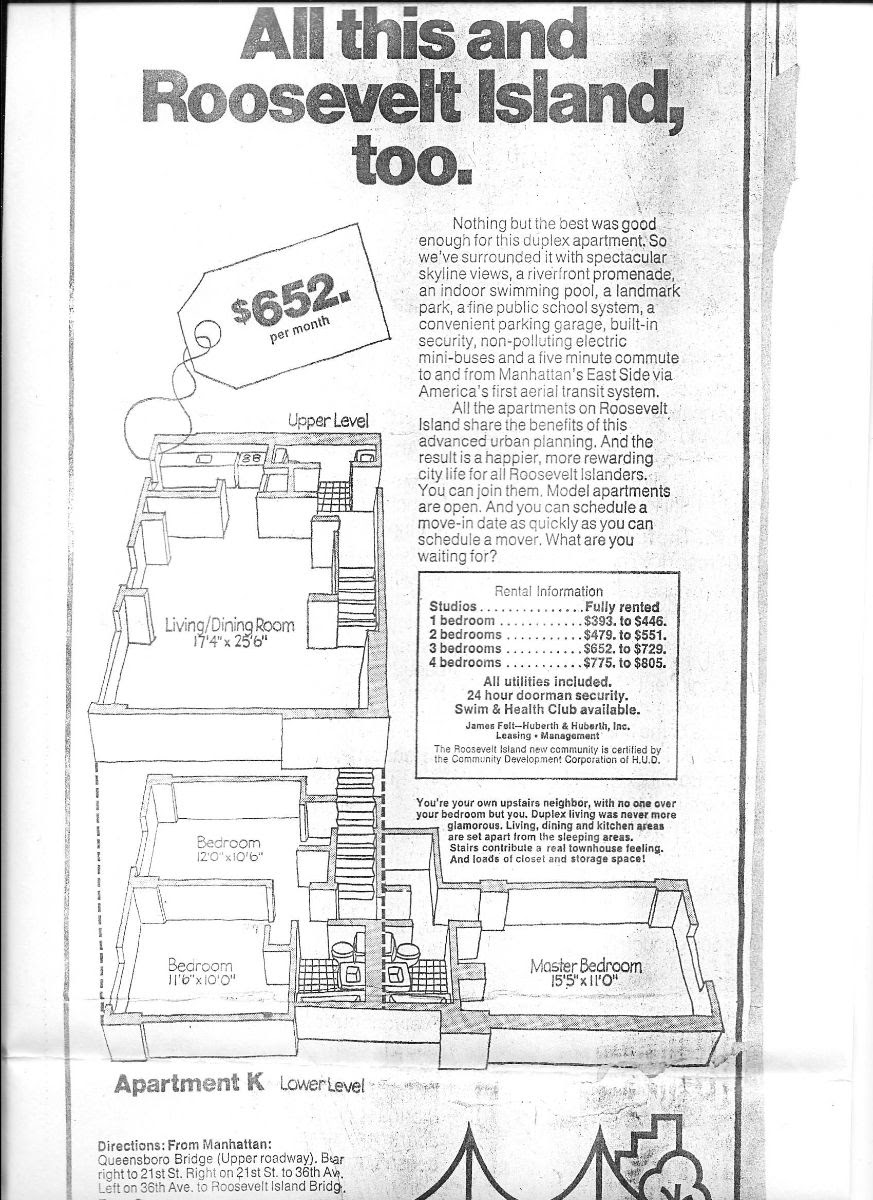
NEW YORK TIMES AD 1976 (C) RIHS
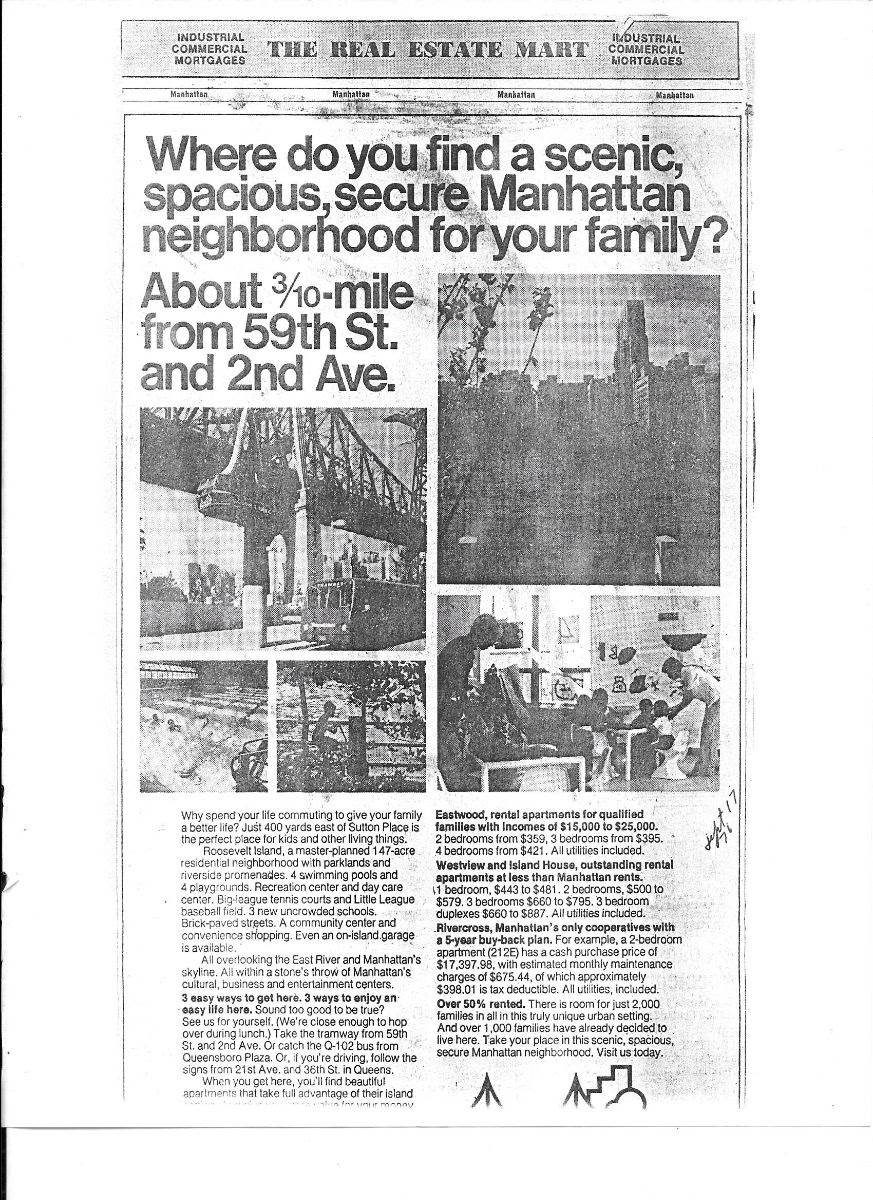
NY TIMES AD 1976 (C) RIHS
NY TIMES AD 1976 (C) RIHS
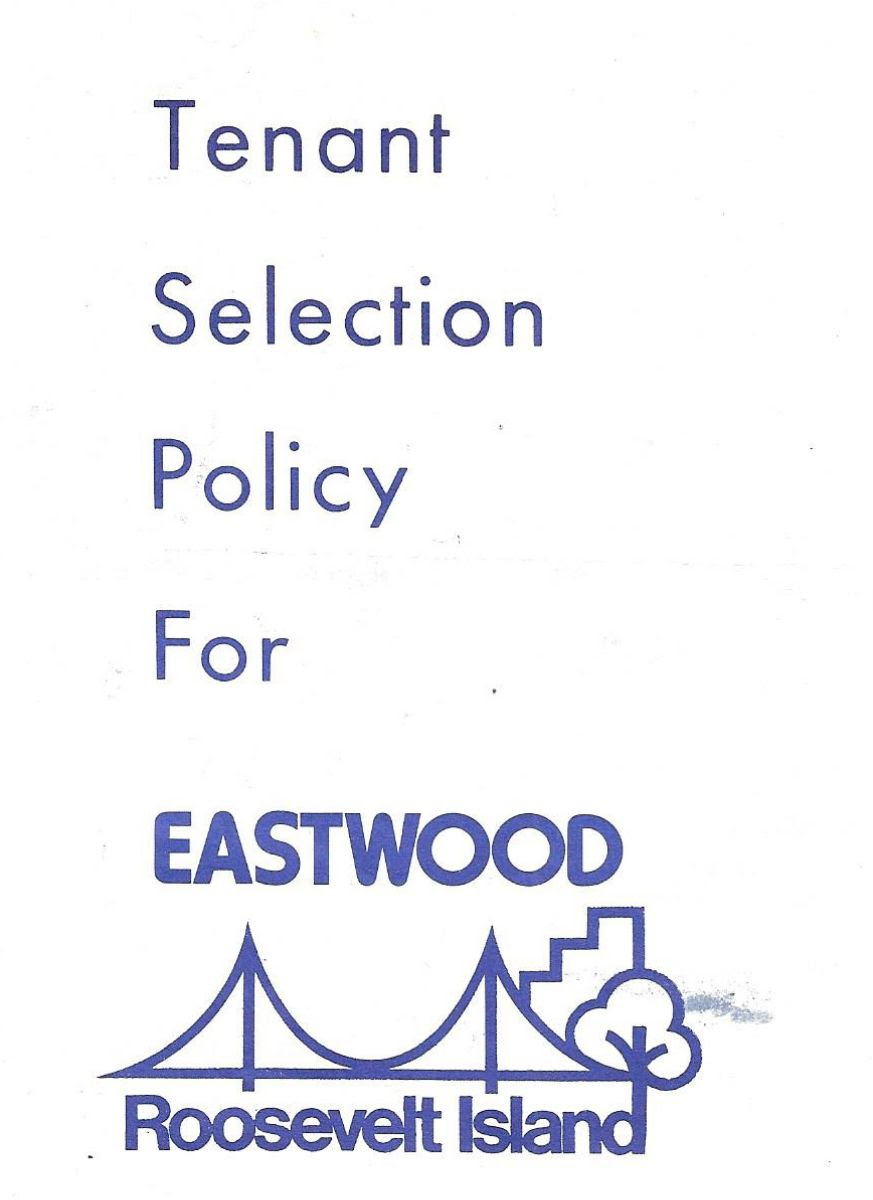
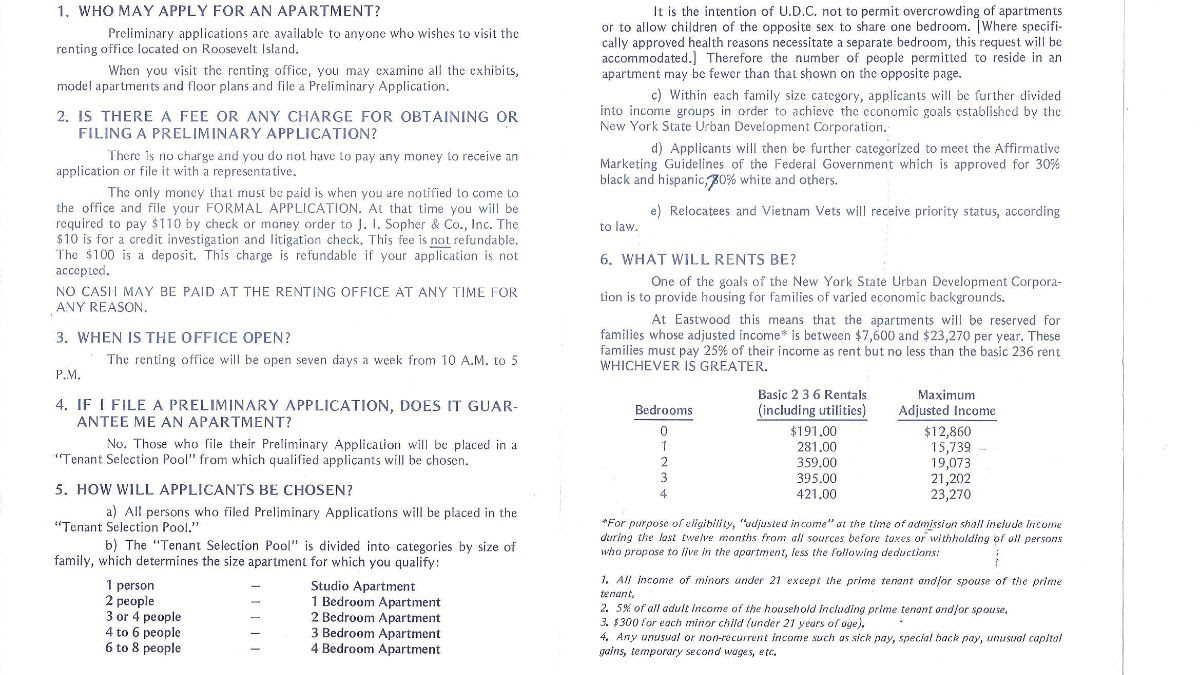
TENANT SELECTION POLICY FOR EASTWOOD (NOW ROOSEVELT LANDINGS) (C) RIHS
THERE WAS A FORMULA FOR EVERYTHING
A BOOKLET FOR MANY ISLAND FEATURES (C) RIHS
QUESTIONS?
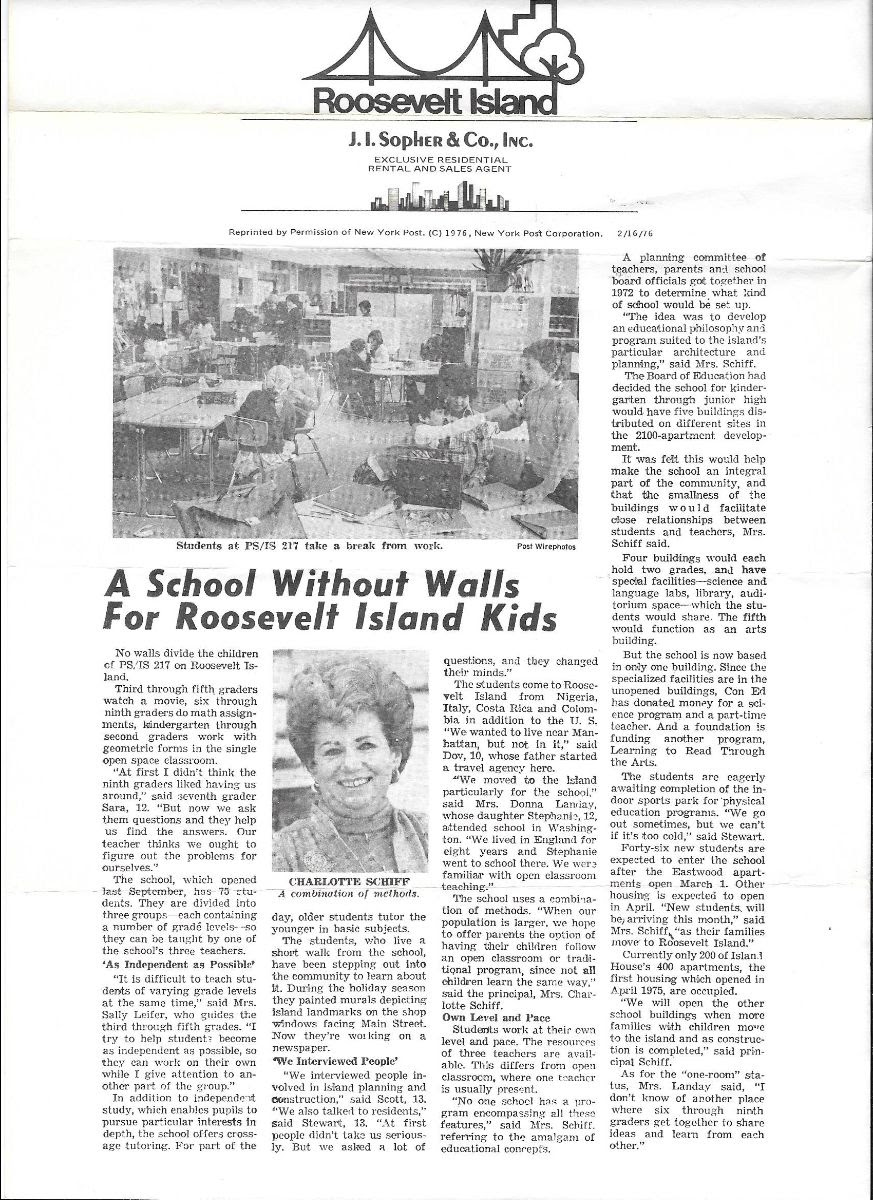
ONE FAILURE A SCHOOL WITHOUT WALLS WHAT WERE THEY THINKING?
REMEMBER MARTHA HAYES? WHERE WAS THE LIBRARY? WHO STARTED THE LIBRARY?
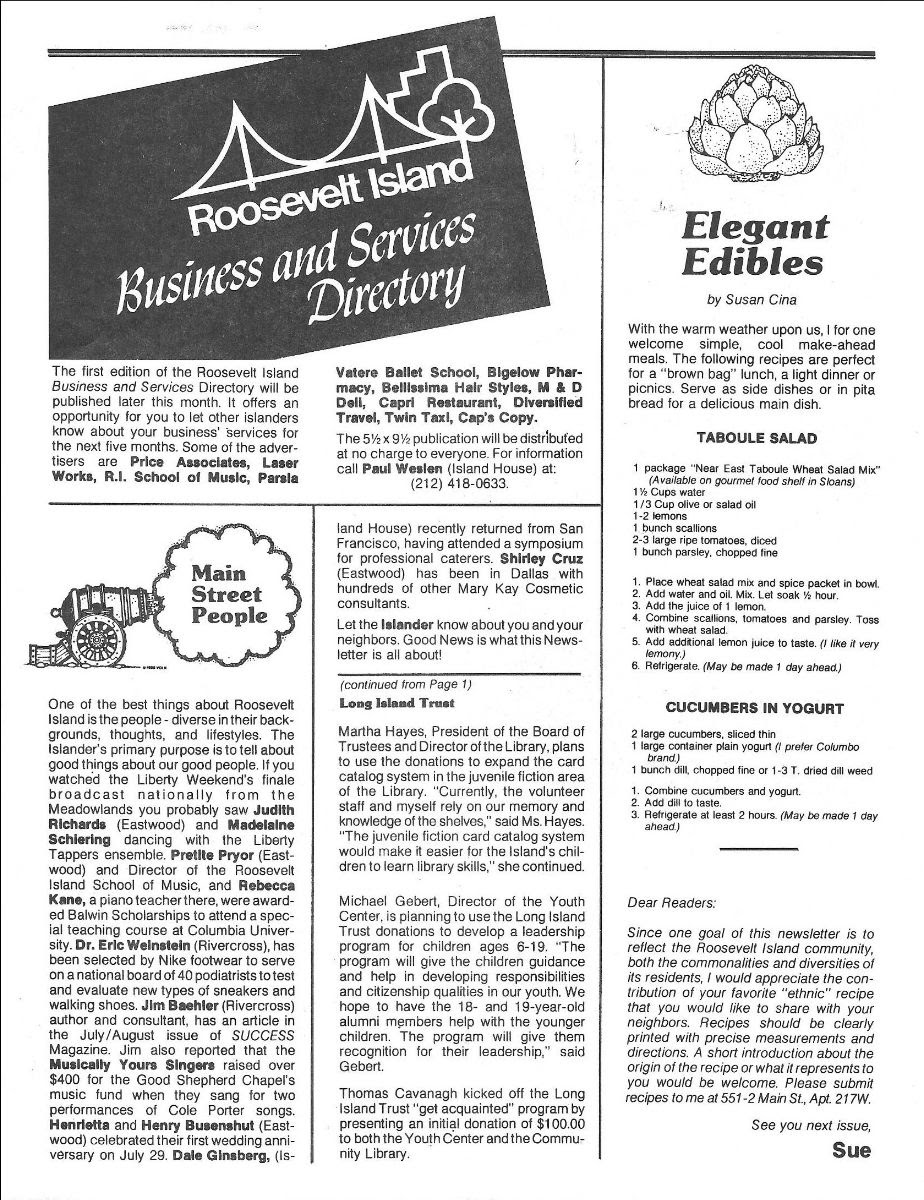
SUSAN CINA COOKING CLASSES SPINACH PIE, ECLAIRS, AND SO MUCH BUTTER
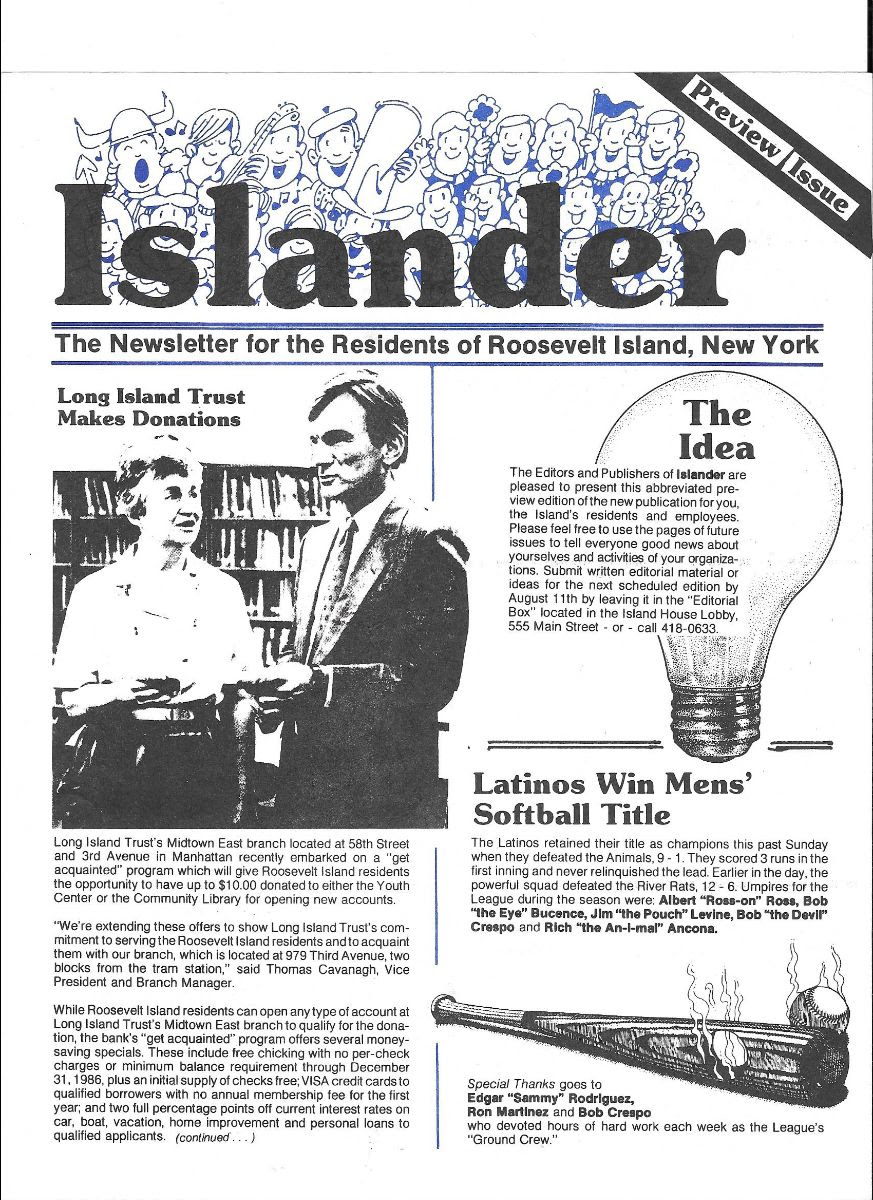
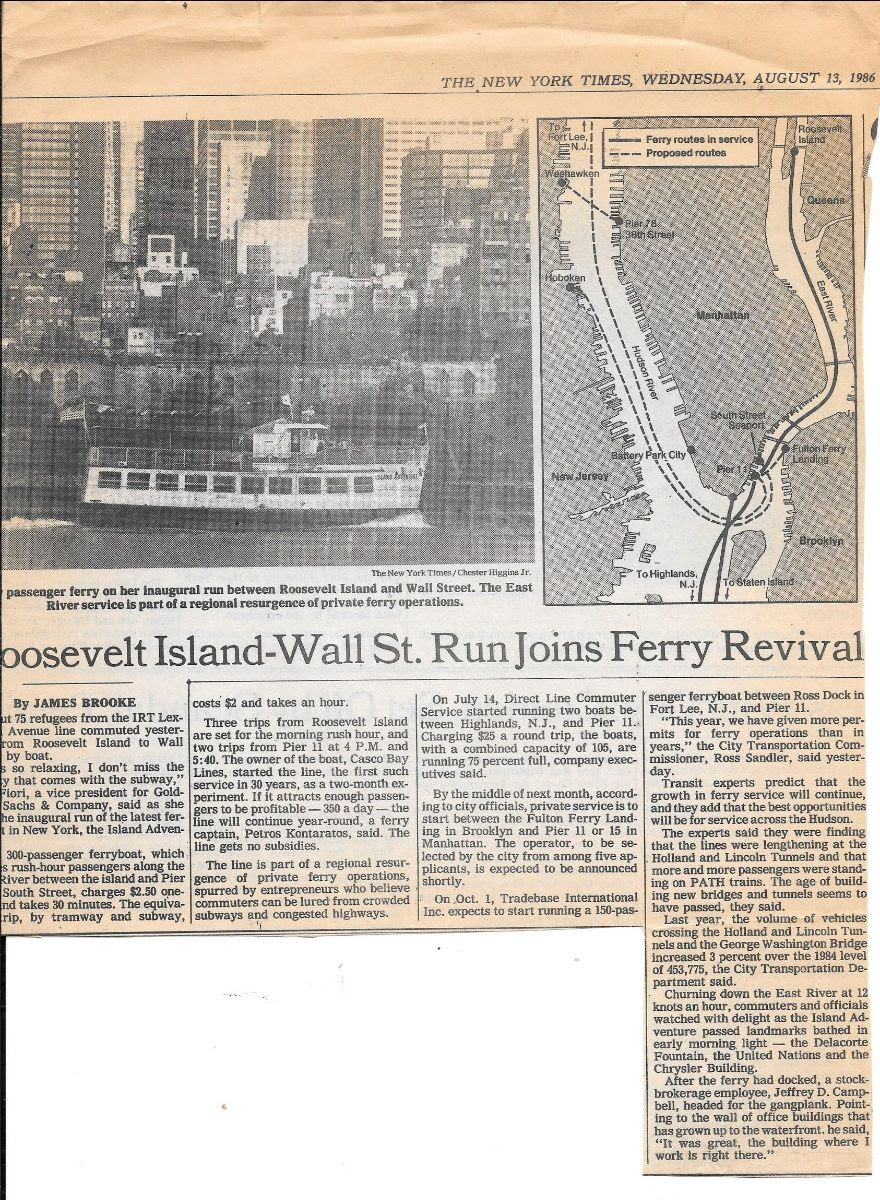
1986 FERRY TO WALL STREET THE LITTLE FERRY THAT COULD NOT MAKE IT
EDITORIAL
Someone contacted me yesterday and wanted to know about the beginnings of the community. I pulled out one looseleaf binder and found this treasure trove. It is fun to look thru the papers and ads to promote living on the island. The community was slow to be fully occupied. It took three years to fill the 2000 apartments. People were skeptical of the tram and no subway. The subway arrived in 1989.
What are your memories of the early days here?
This weekend, we relive the day when we were invaded one year ago by thousands here to admire our cherry trees.
Text by Judith Berdy Thanks to Bobbie Slonevsky for her dedication to Blackwell’s Almanac and the RIHS Thanks to Deborah Dorff for maintaining our website Edited by Melanie Colter and Dottie Jeffries
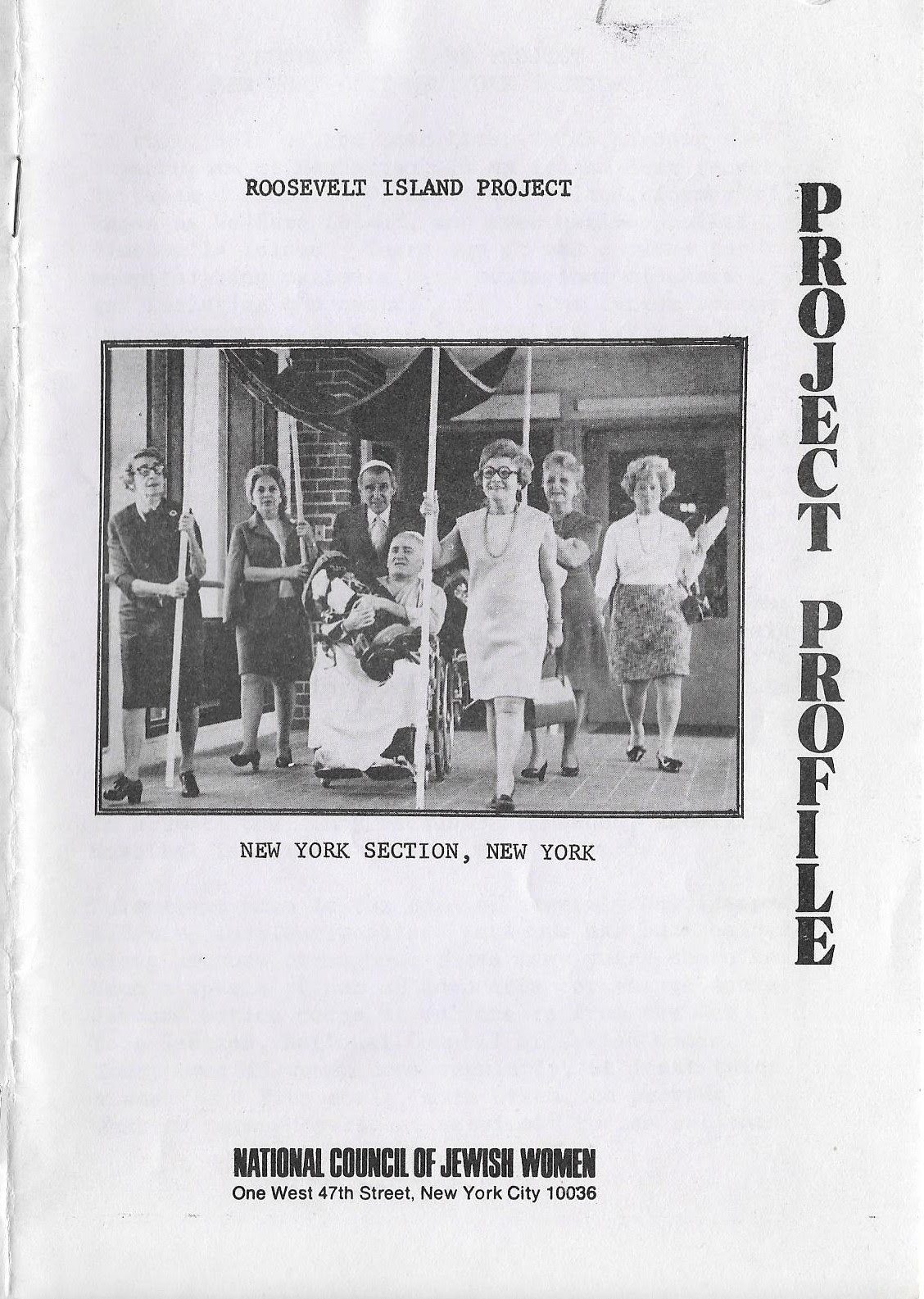
The Womens’ Service Group Who Made a Better Life National Council of Jewish Women
HOW DID WE AND
HOW DO WE GET OUR WATER? PART ll
Thursday, April 9, 2020
21st in our FROM THE ARCHIVES series
A LITTLE JEWISH HISTORY
& PASSOVER AT GOLDWATER
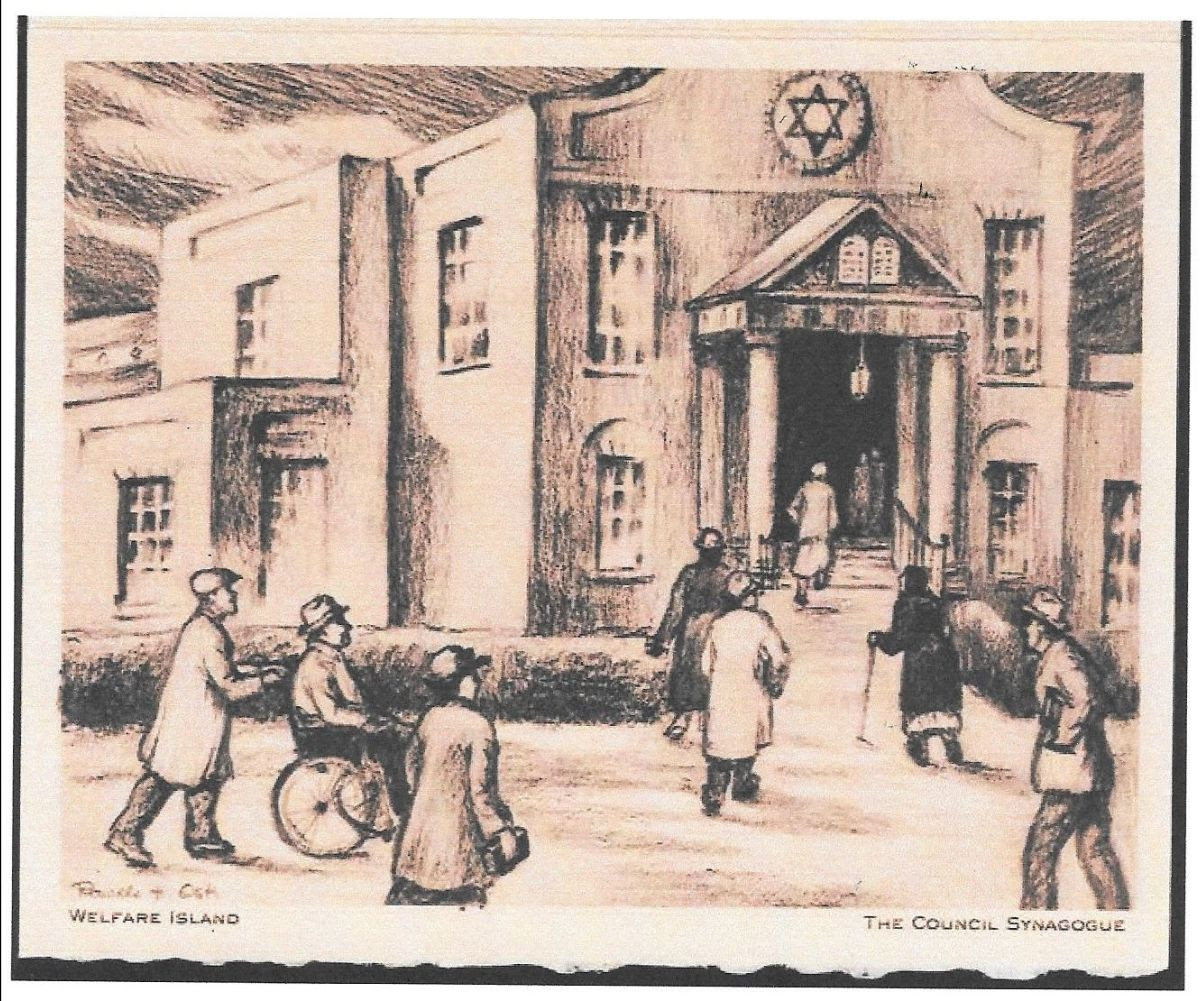
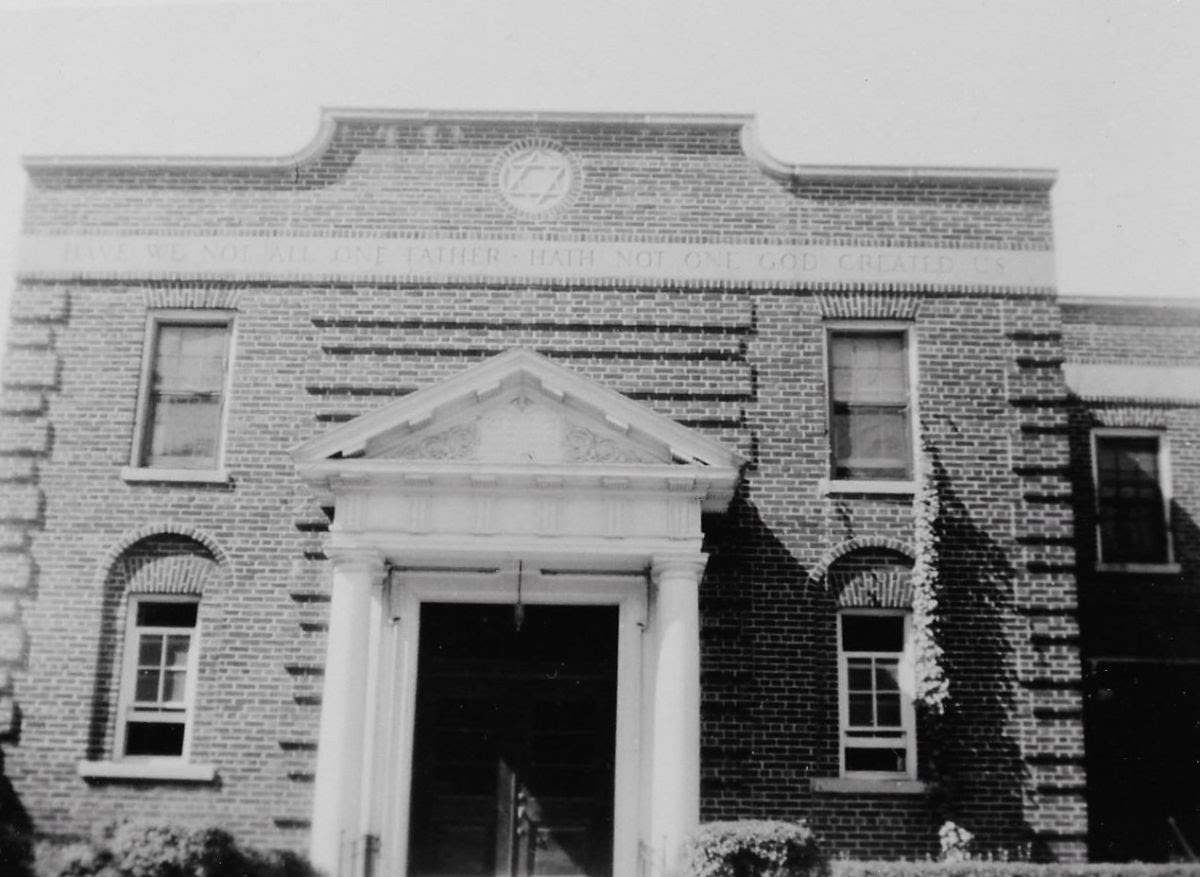
THE COUNCIL SYNAGOGUE, WELFARE ISLAND SOLICITATION GREETING CARD OF NATIONAL COUNCIL OF JEWISH WOMEN ROSELLE HELLENBERG OAK (1884-1954) MUSEUM OF THE CITY OF NEW YORK (C)
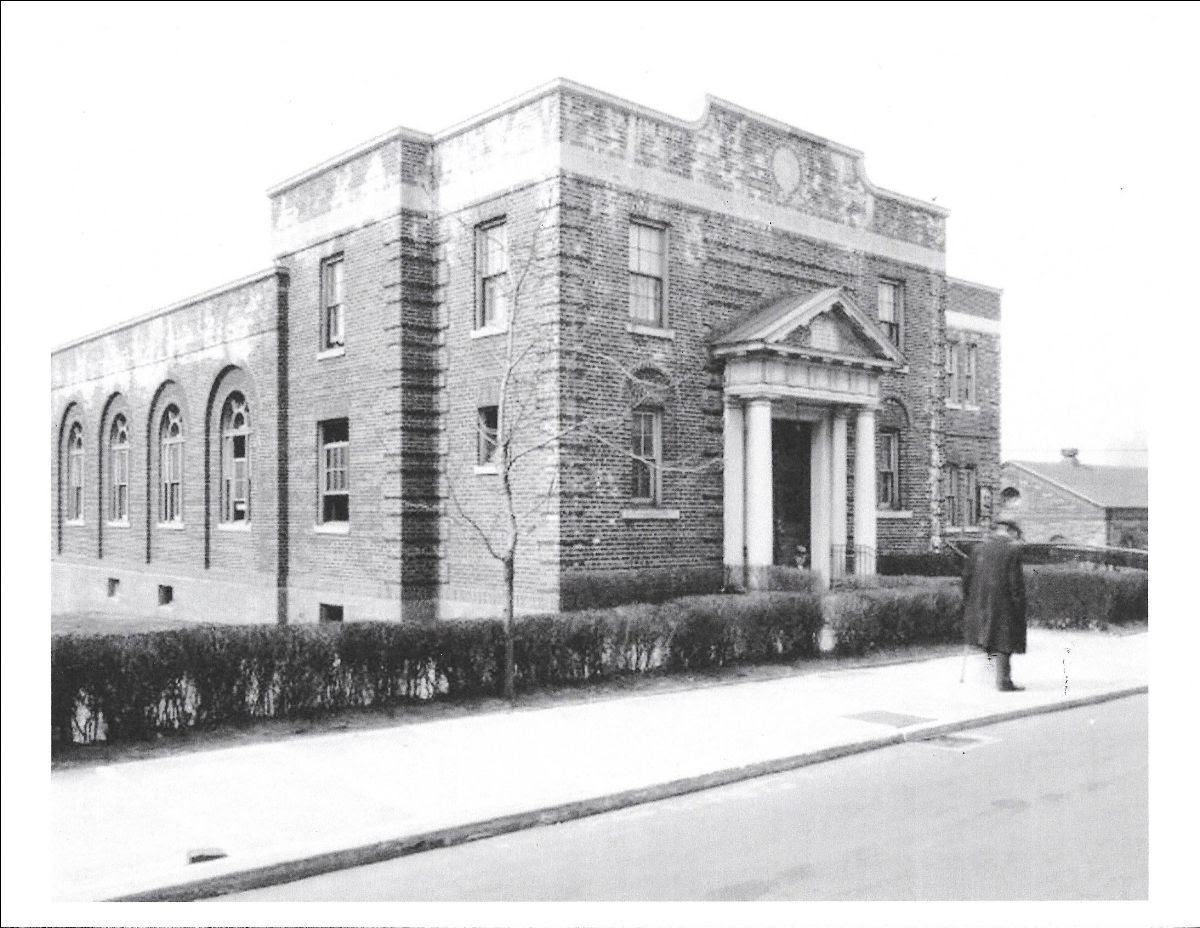
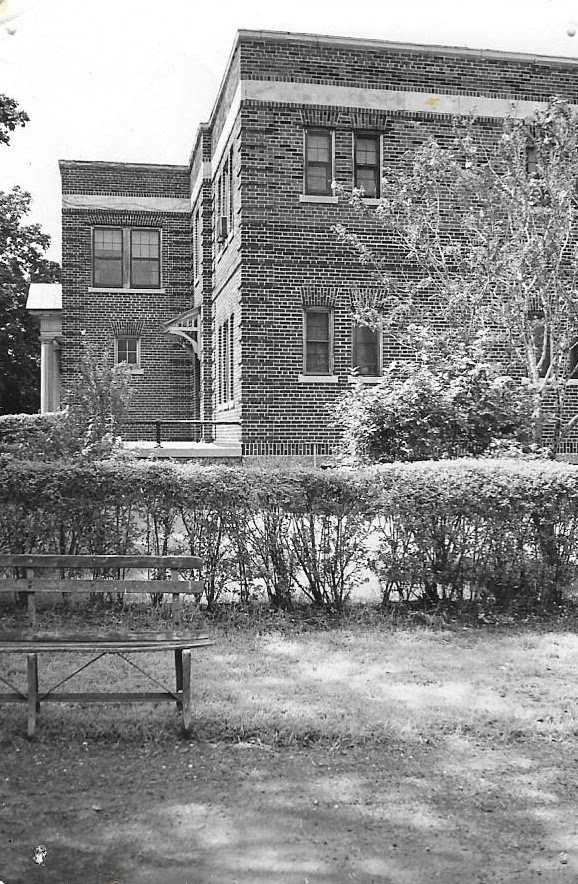
The Council Synagogue opened in 1927 to serve the Jewish population of Welfare Island. It was funded by the NCJW. Brown Brothers (c)
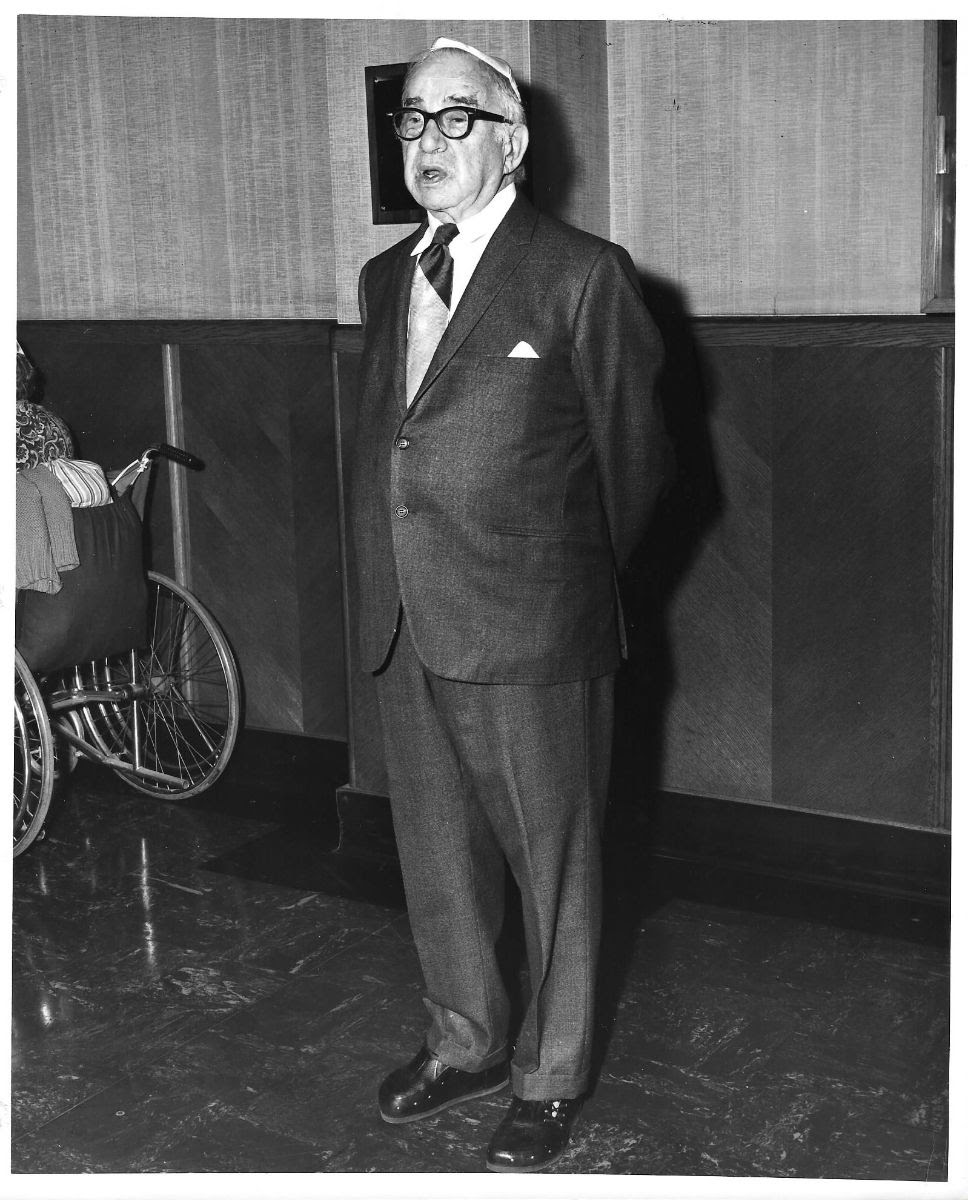
Rabbi Jacob Grossman, the Rabbi at Council Synagogue, Goldwater Hospital and Metropolitan Hospital served the island for 17 years. Chapin Collection RIHS Archives (c)
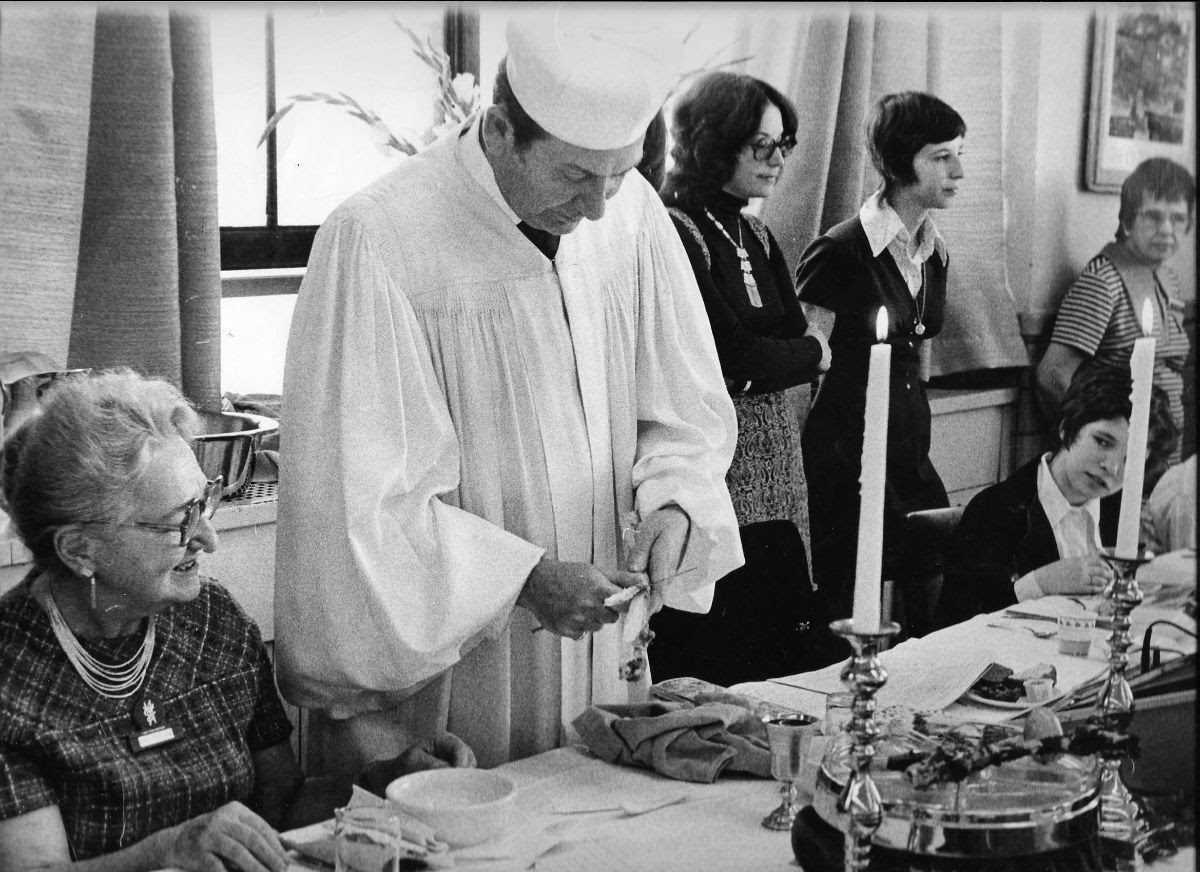
Rabbi Abraham M. Moseson preseding at Passover Seder at Goldwater Hospital in the 1960’s. Goldwater Collection RIHS Archives (c)
Goldwater Collection RiHS Archives (c)
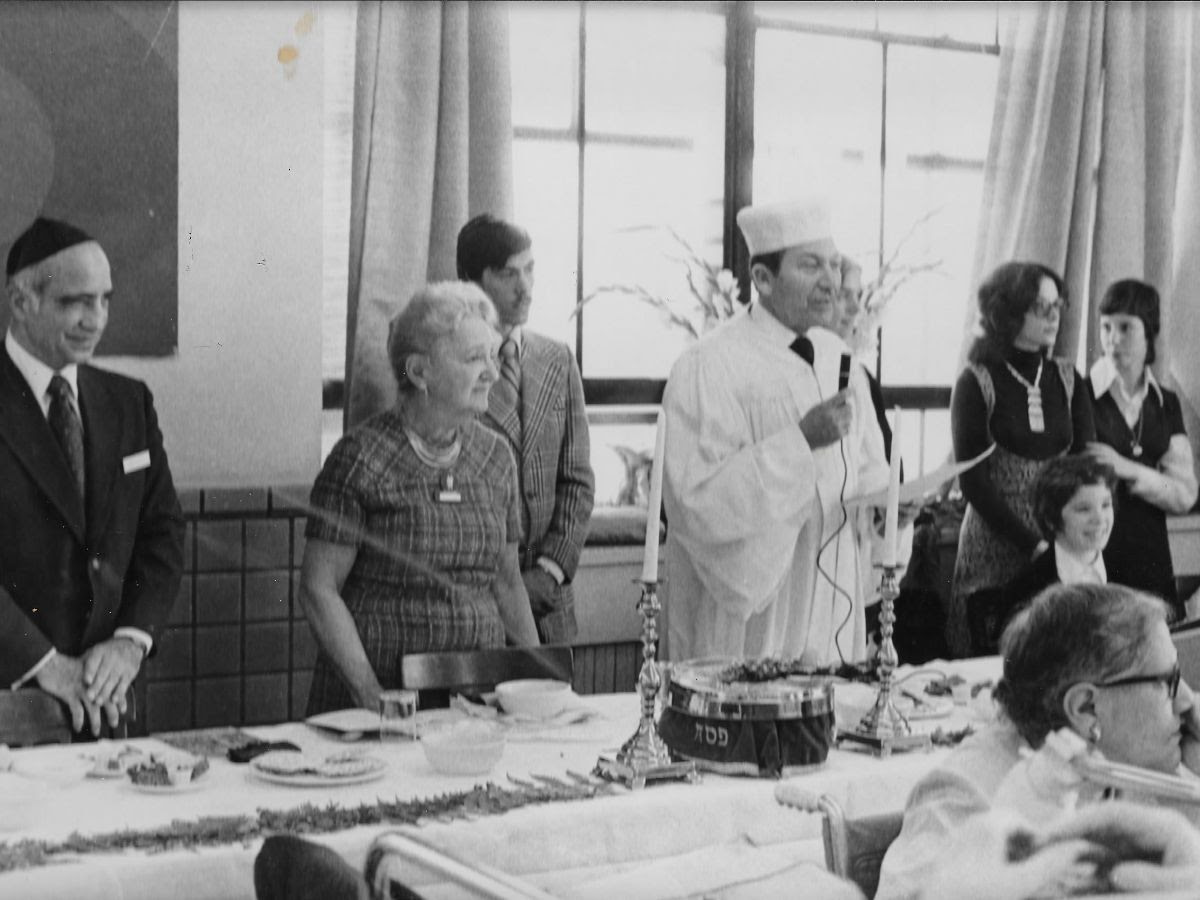
In 1907 a small group of women from the NCJW came to the island to serve the Jewish residents. They have served the island for decades as volunteers providing kosher food, ritual symbols and even built a synagogue. Photo shows ceremonial opening of new Jewish Chapel at Goldwater in 1971. RIHS Archives (c)
Text by Judith Berdy Thanks to Bobbie Slonevsky for her dedication to Blackwell’s Almanac and the RIHS Thanks to Deborah Dorff for maintaining our website Edited by Melanie Colter and Dottie Jeffries
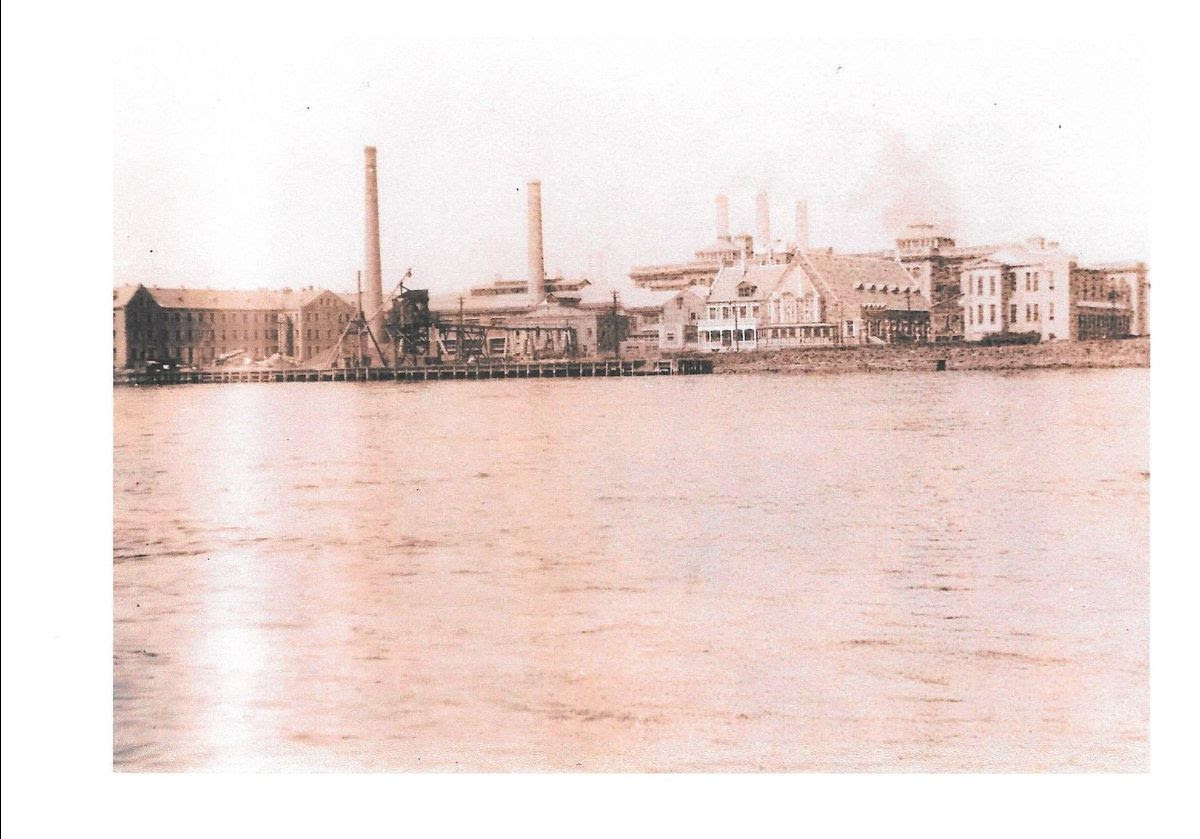
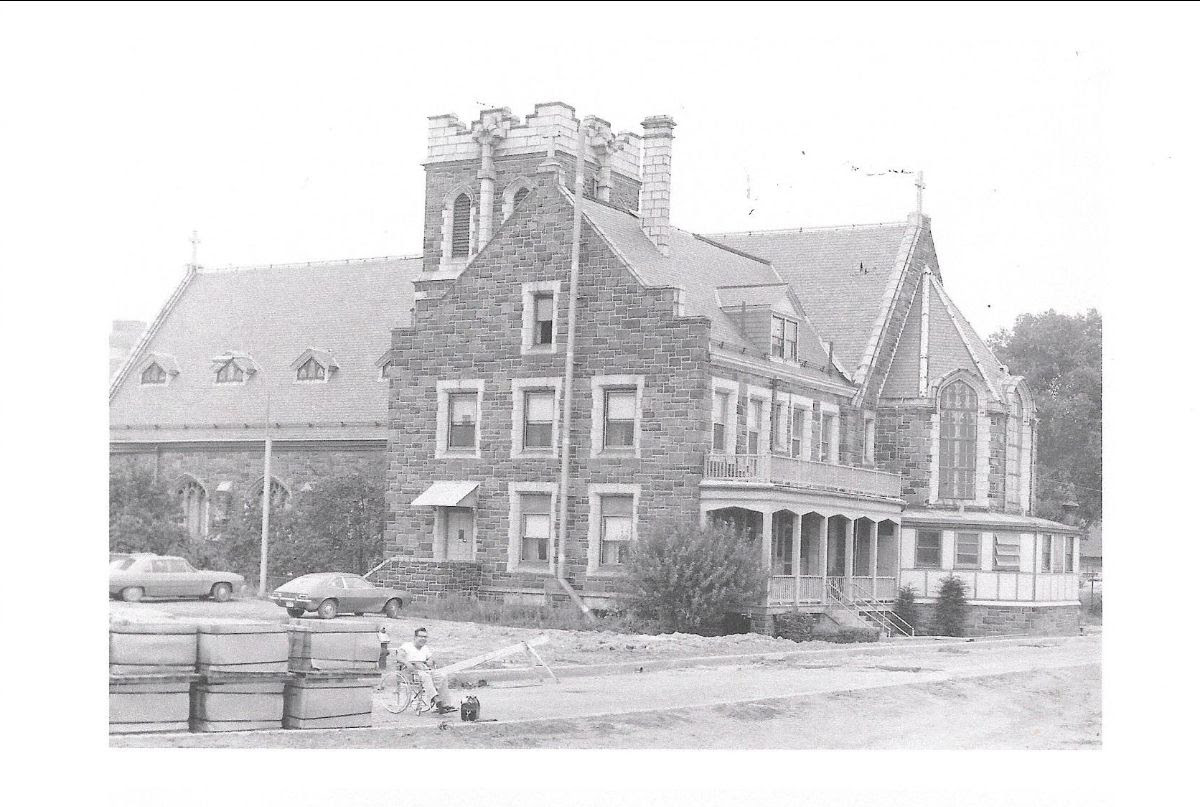
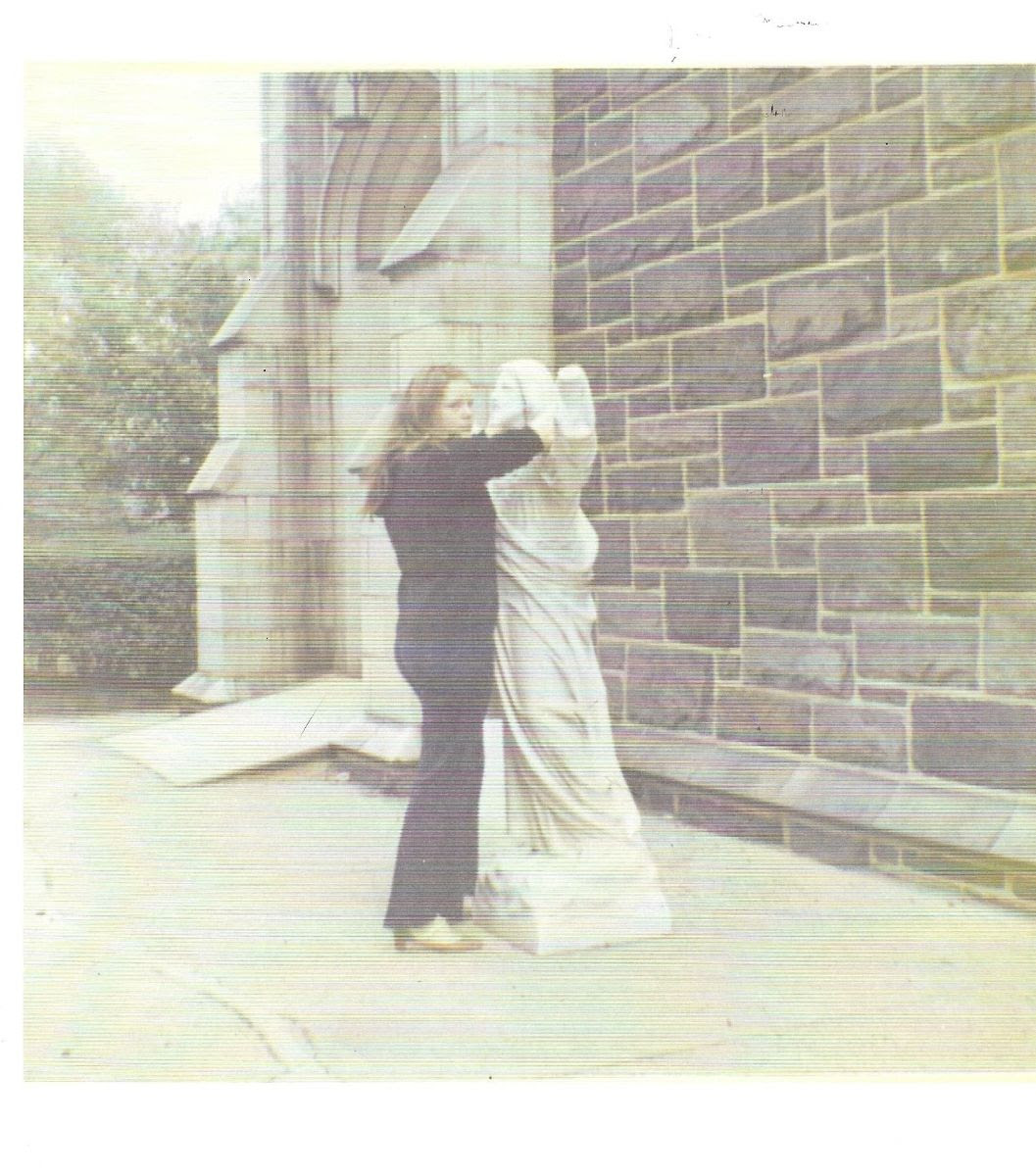
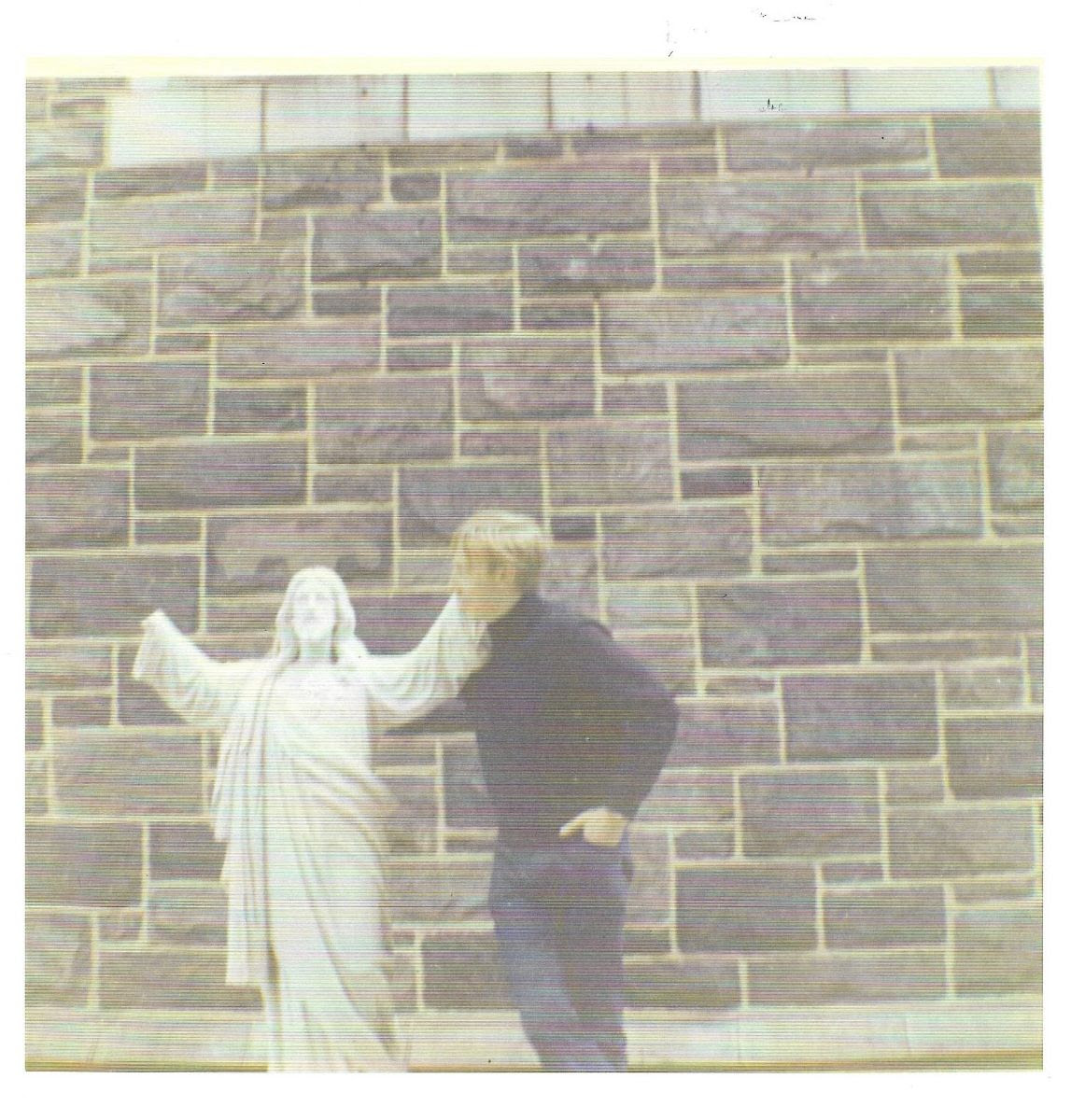
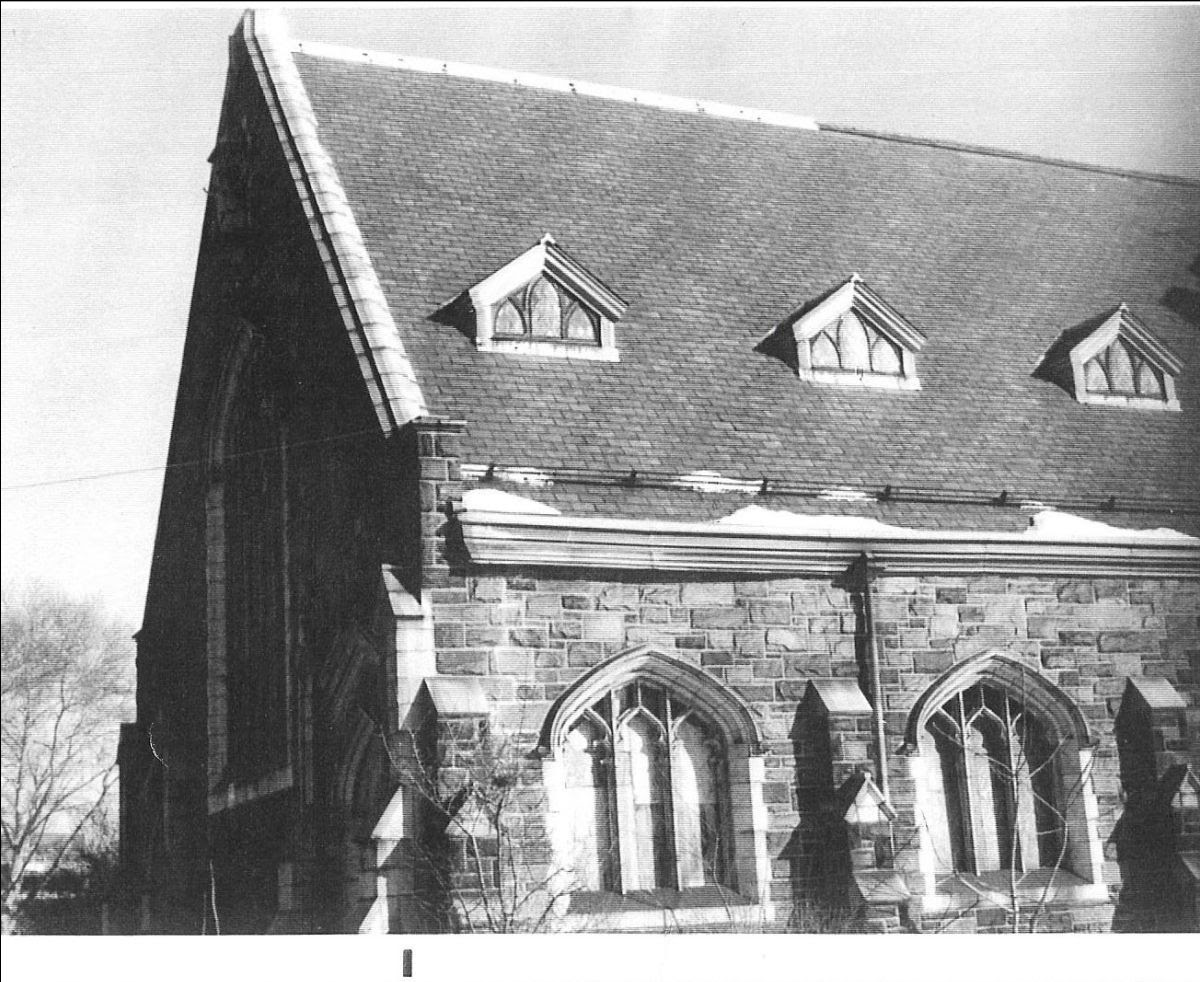
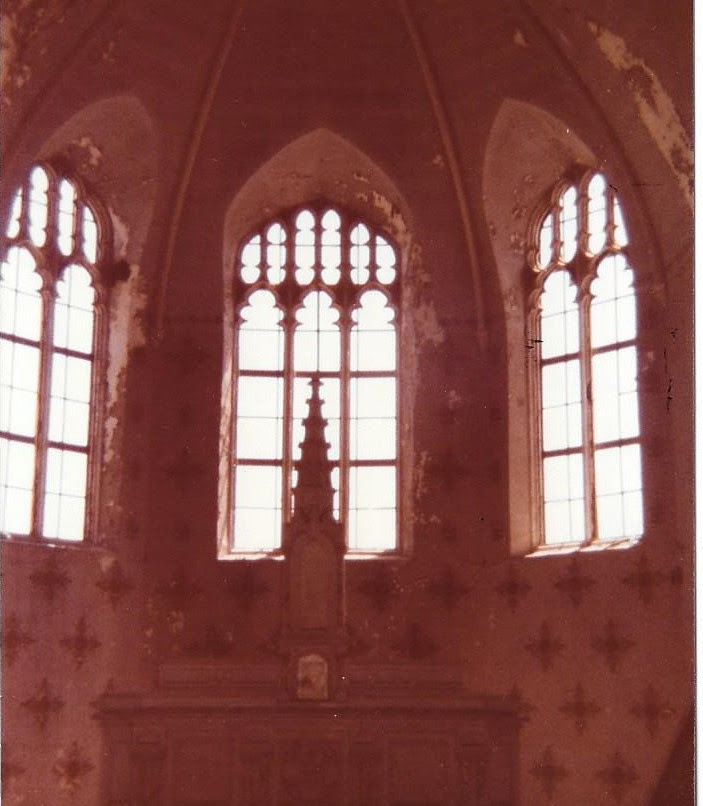
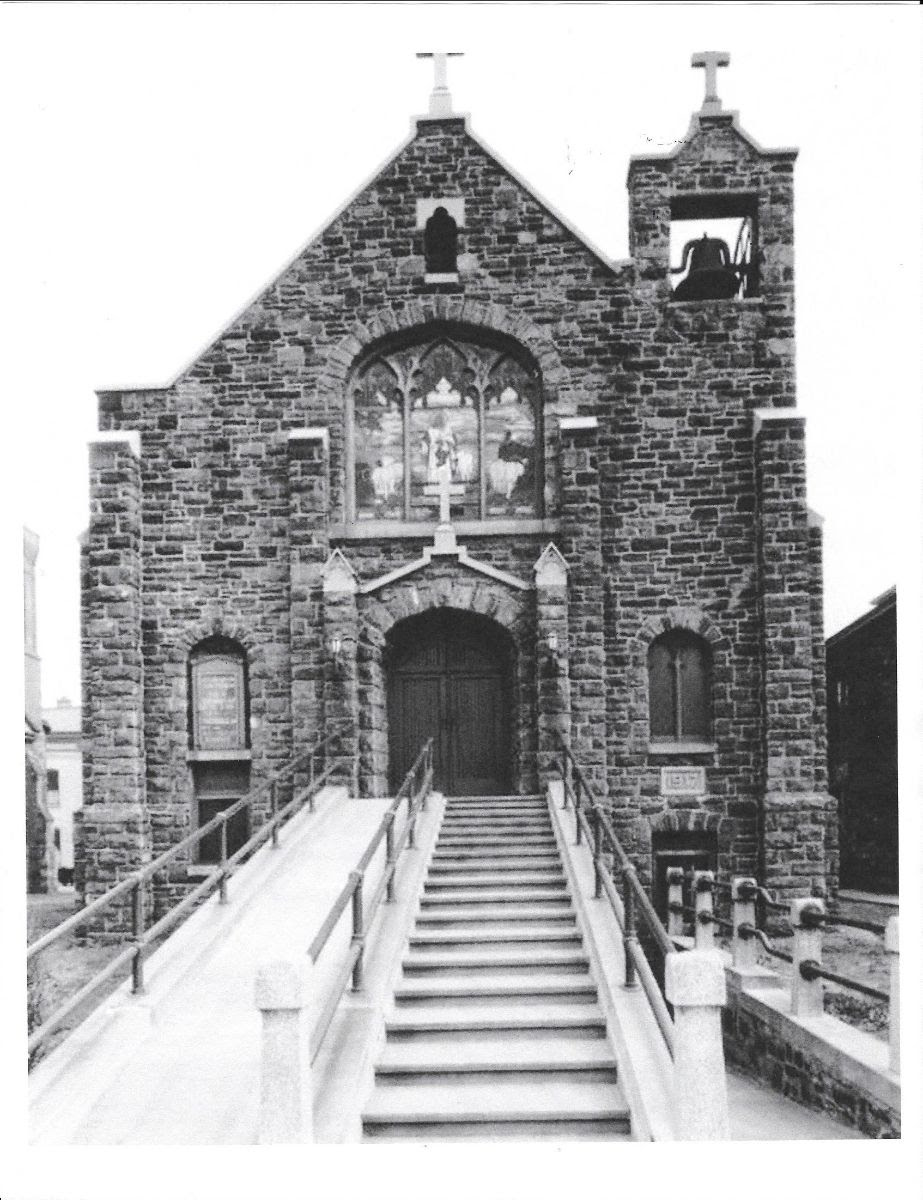
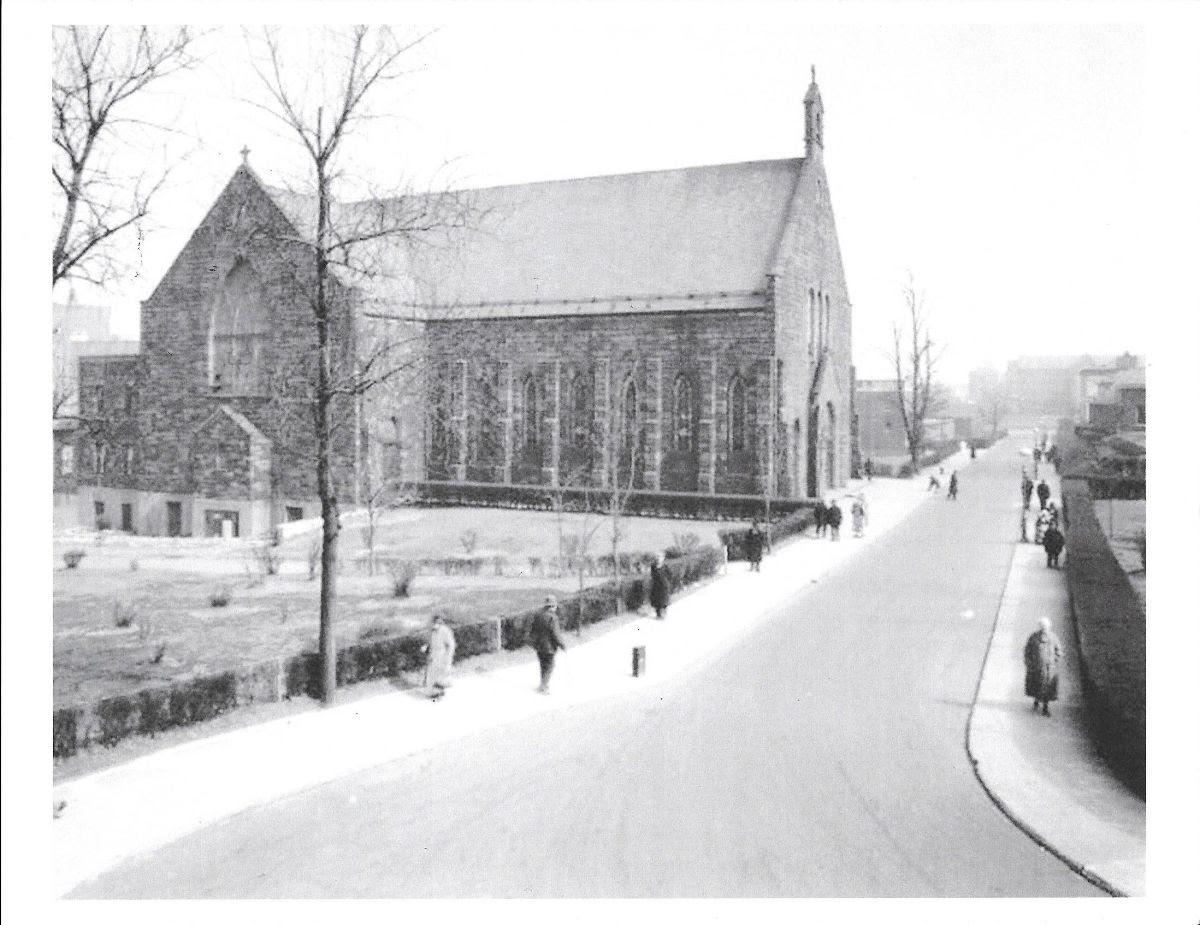
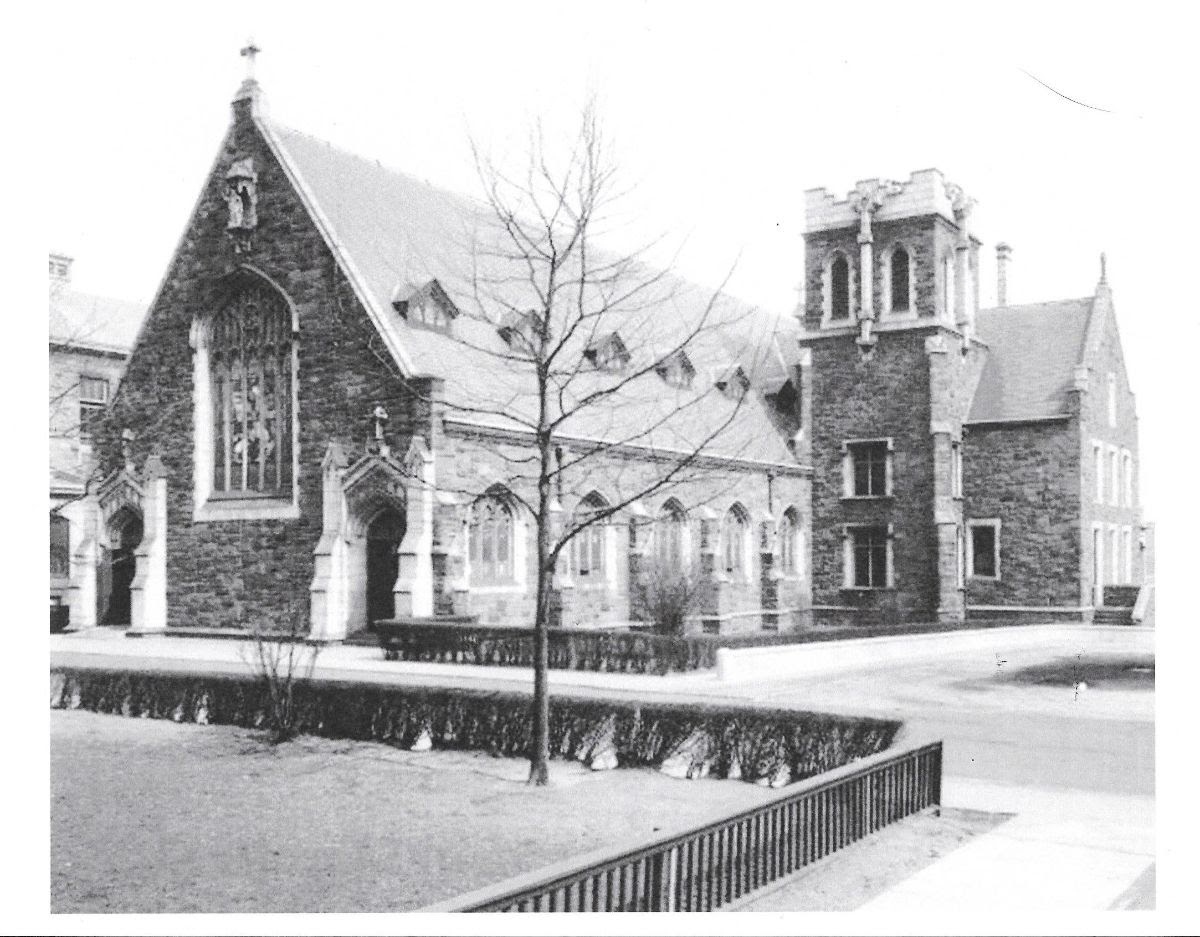
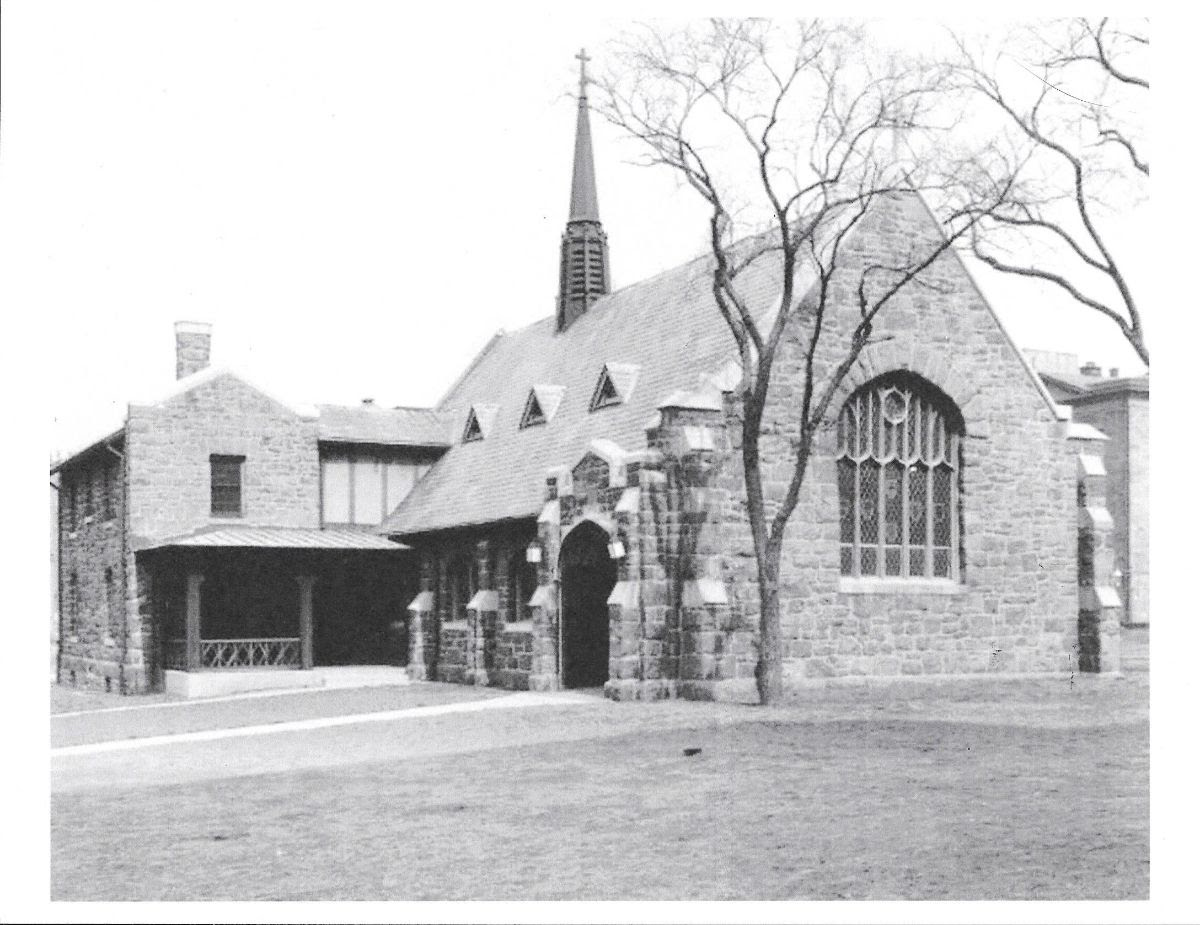
The sole remaining Roman Catholic Church on Welfare Island is the Church of the Sacred Heart, formerly know as St. Mary’s. This 8,000 square foot granite structure was built in 1912 by the Archdiocese of New York on land loaned to it by the city. It served as the Catholic Church for the old Metropolitan Hospital until the hospital closed about 1954 Today is serves as the mainly as the residence for the senior Catholic chaplain at Coler Hospital and three other priests who serve as chaplains at the new Metropolitan Hospital in Manhattan. One public mass is held in the church each week, attended by a few nurses from Central Nurses Residence, policeman who work on the island, and boys from nearby Riverview Juvenile Center. The building located on the western side of Metropolitan Hospital is generally in good condition.
Welfare Island Yesterday and Today 1968 (c)
VIEW OF THE EAST SIDE OF THE ISLAND WITH METROPOLITAN HOSPITAL AND CHAPEL OF THE SACRED HEART FACING THE RIVER. RIHS (C)
BROWN BROTHERS (C)
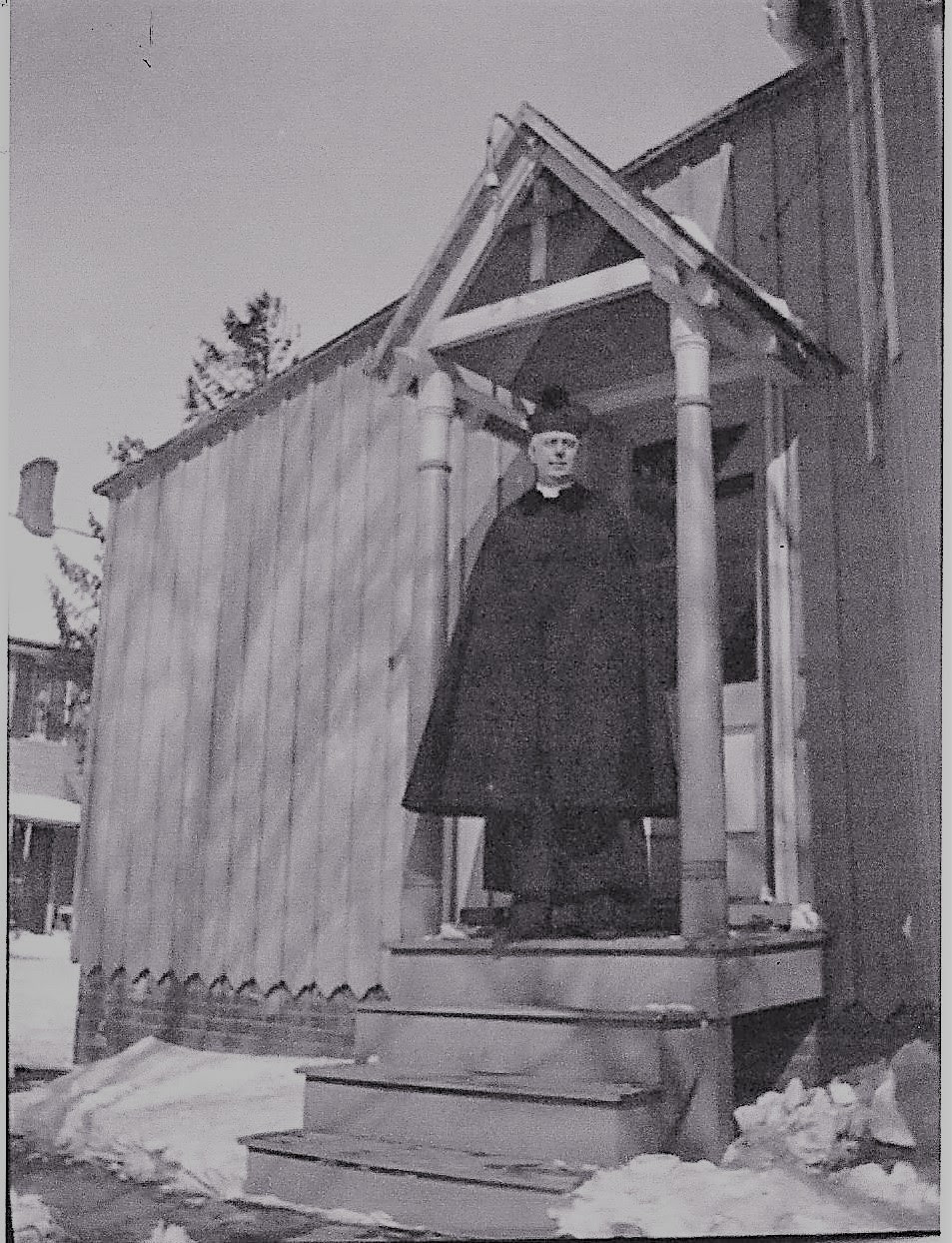
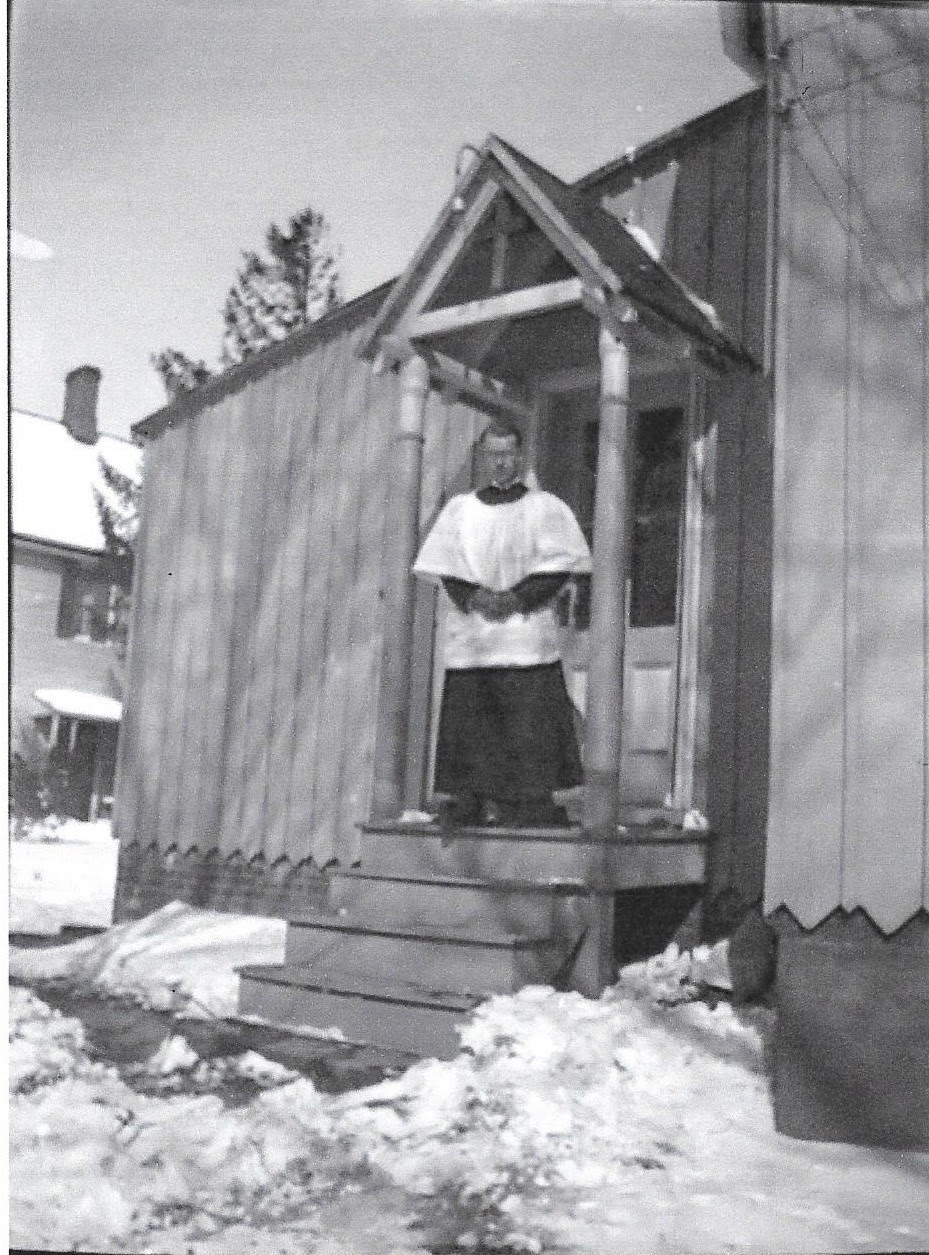
RECTORY WITH PORCH OF THE CHAPEL OF THE SACRED HEART
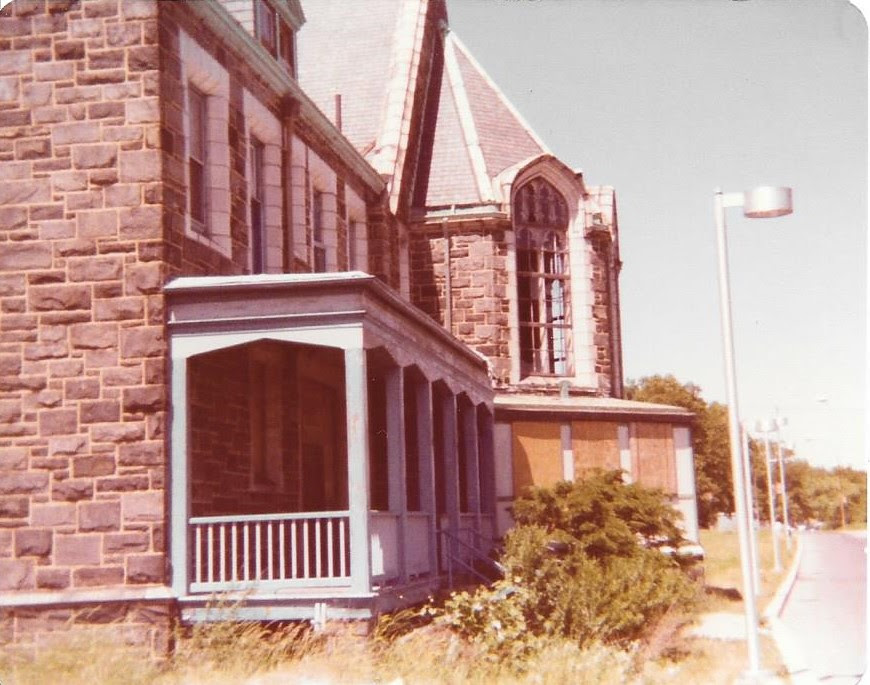
BOARDED UP RECTORY AND VANDALIZED WINDOWS 1978 RIHS (C)
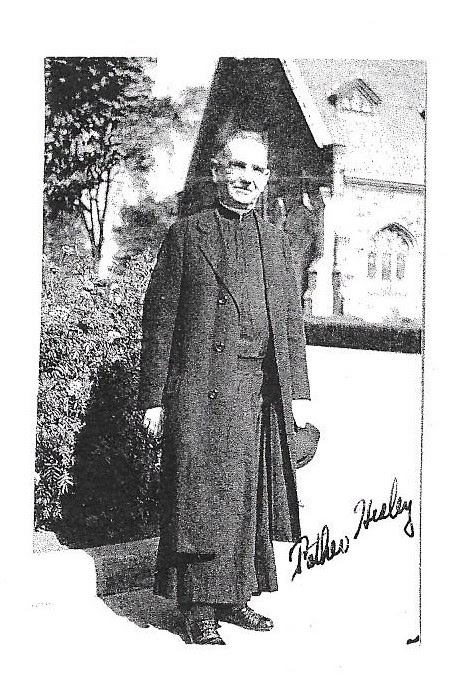
REVEREND JOSEPH L. HEALY, CATHOLIC CHAPLAIN AT METROPOLITAN HOSPITAL FOR 25 YEARS
ABOVE RELIGIOUS STATUARY OUTSIDE ABANDONED CHAPEL 1969 (C) SHARON STERN
BOARDED UP CHAPEL 1978 (C) RIHS
INTERIOR DAVID MICHAEL SANDERS, AN URBAN EXPLORER WHO PHOTOGRAPHED AND RECORDED THE STRUCTURE OF THE BUILDING AND THE RECTORY. (C)
EDITORIAL
Going To Foodtown where there was a great selection of fruits and veggies today. The meat section was rather empty today. Steve said only half the egg shipment arrived today and the wholesale price was up again.(Bad year to blame Easter and Passover).
The clerk in the post office was friendly and helpful along with the “passport” clerk. No where to go to need a passport.
Back in the apartment, lunch and my daily nap.
Just remembered that Pat our wonderful RIHS bookkeeper finished our report on how we spend RIOC PPF funds and took it to PSD.
Back home and time to finish this 20th edition.
(My neighbor just brought me chicken soup………….tomorrow I will have it with matzo balls!)
Text by Judith Berdy Thanks to Bobbie Slonevsky for her dedication to Blackwell’s Almanac and the RIHS Thanks to Deborah Dorff for maintaining our website Edited by Melanie Colter and Dottie Jeffries
ALL IMAGES ARE CREDITED TO THEIR AUTHORS, DONORS OR THE ROOSEVELT ISLAND HISTORICAL SOCIETY ARCHIVES. WE DO OUR BEST TO PROPERLY ACKNOWLEDGE OUR SOURCES.
Tuesday, April 7, 2020 19th in our series of FROM THE ARCHIVES
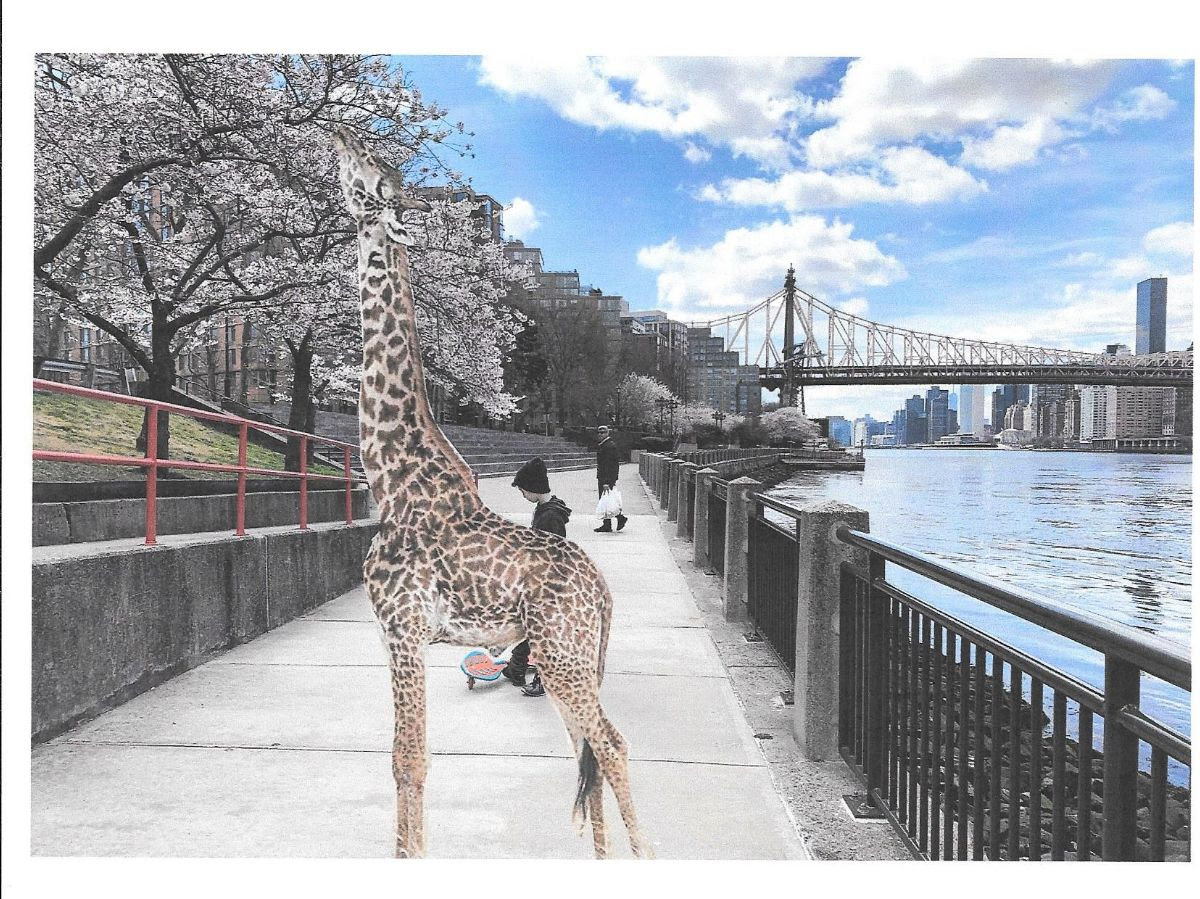
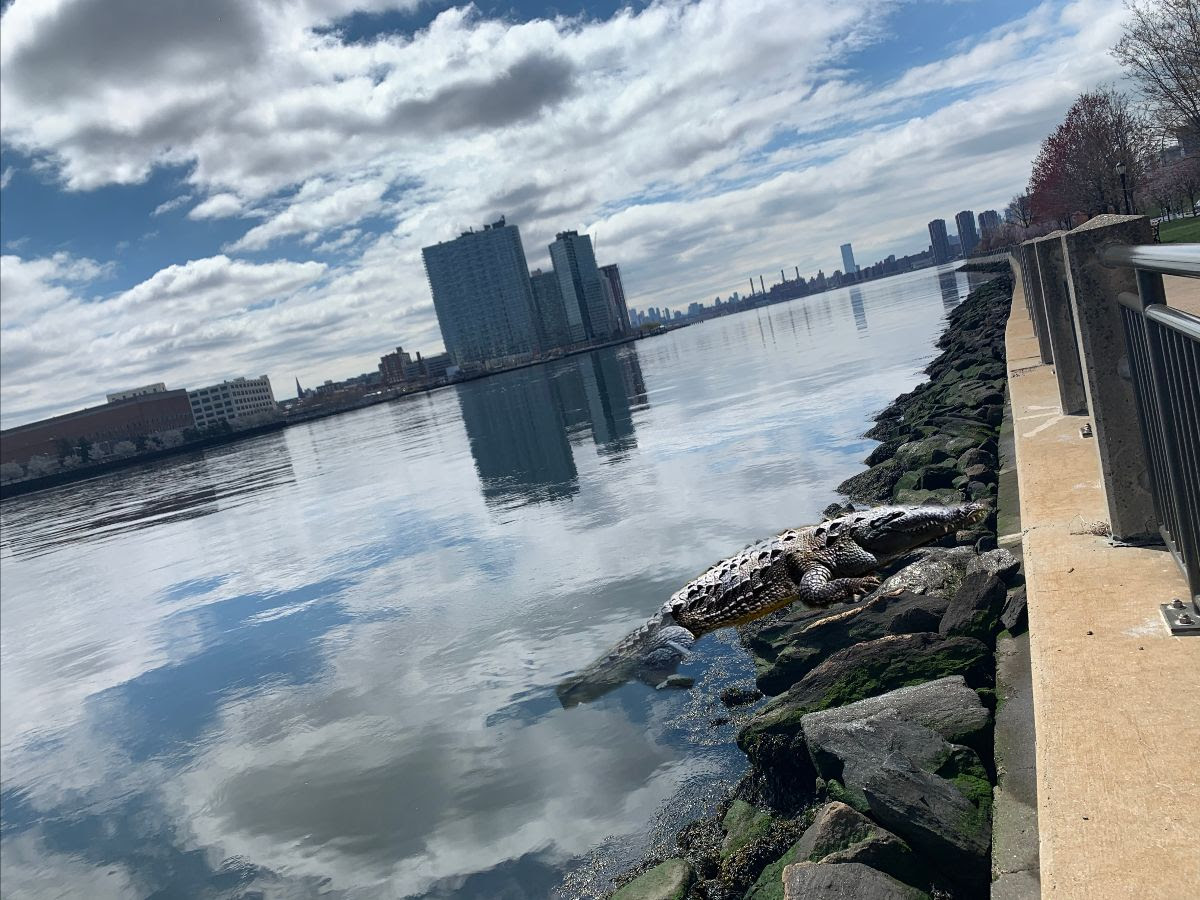
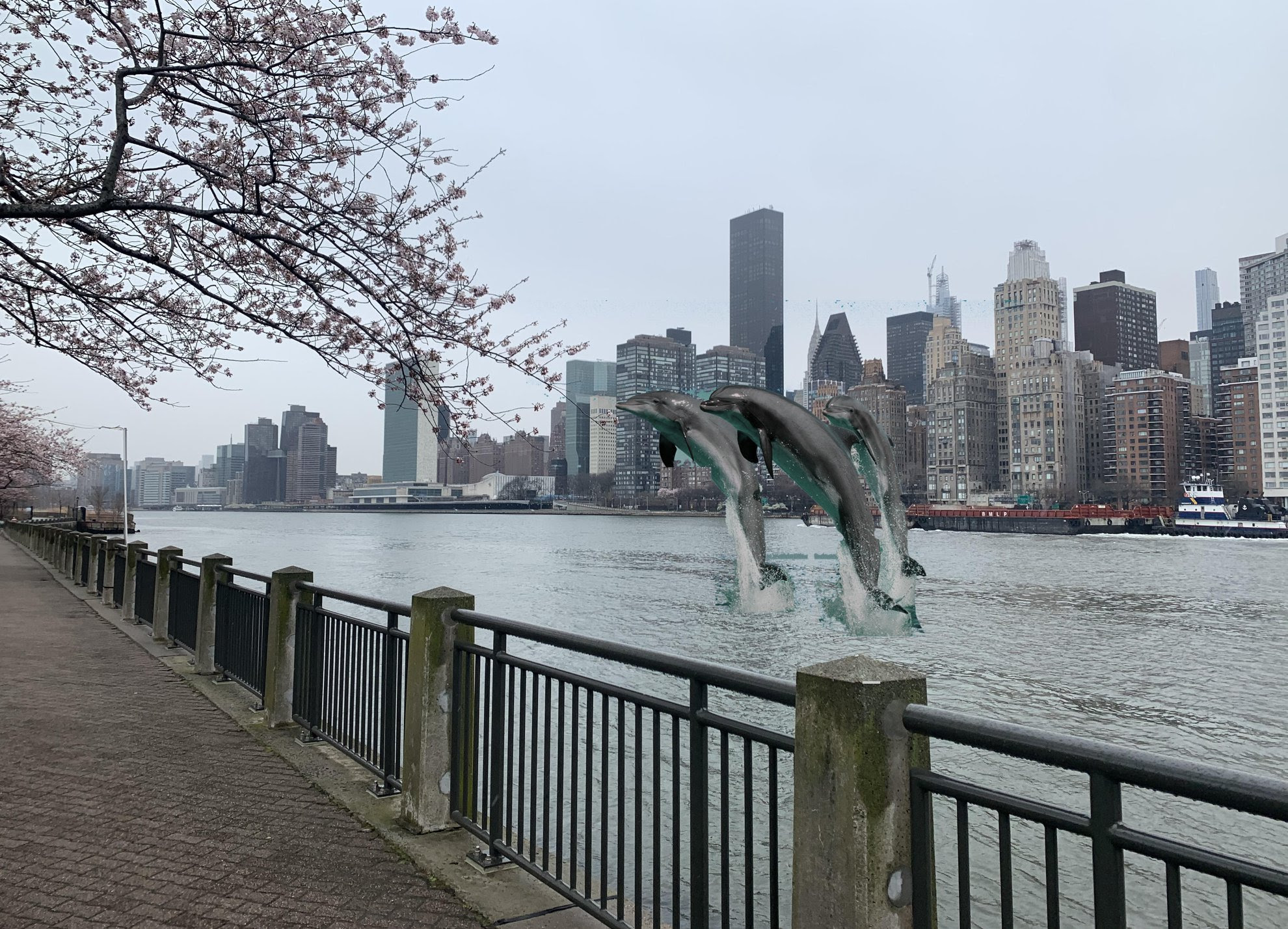
A giraffe has apparently decided to visit the island. He or she decided to invite some other friends to enjoy the island….
(c) Sharon Ayalon 2020
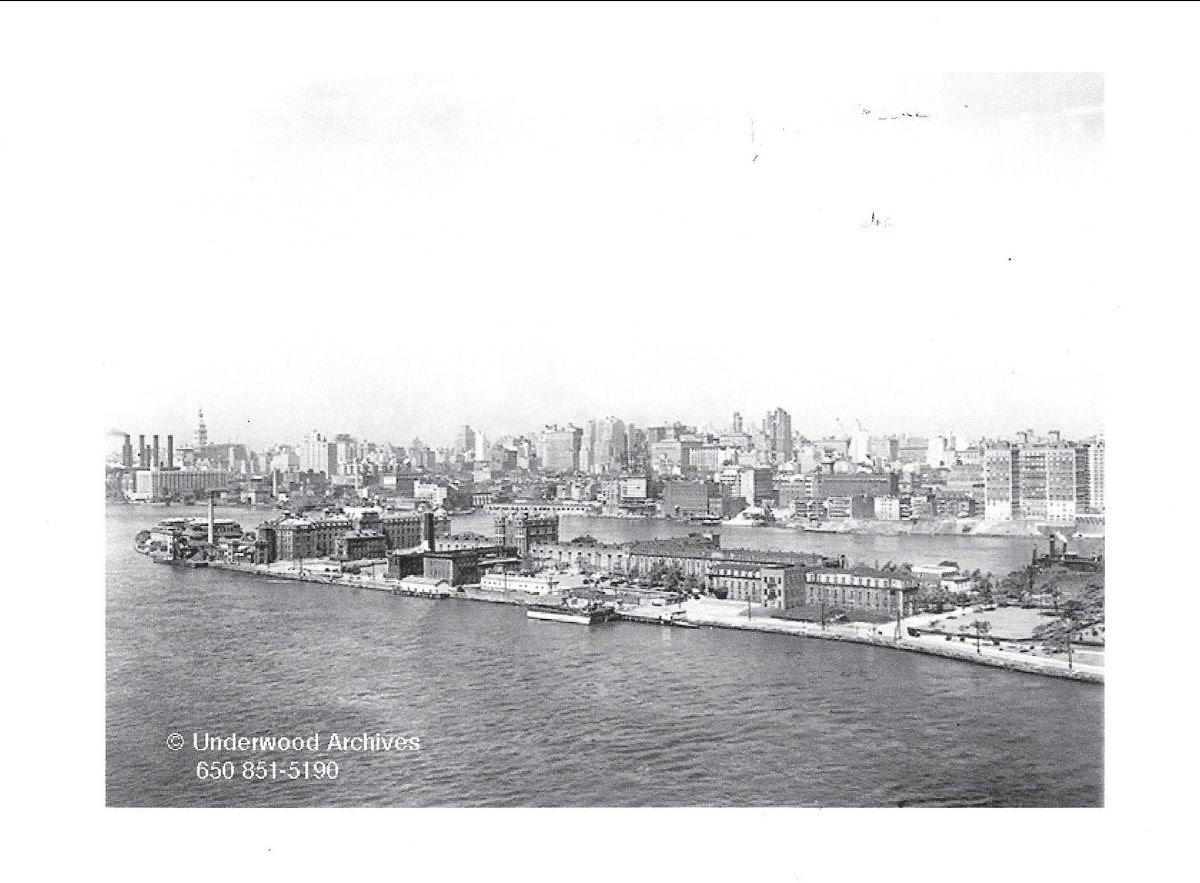
FROM THE ARCHIVES OF
UNDERWOOD & UNDERWOOD
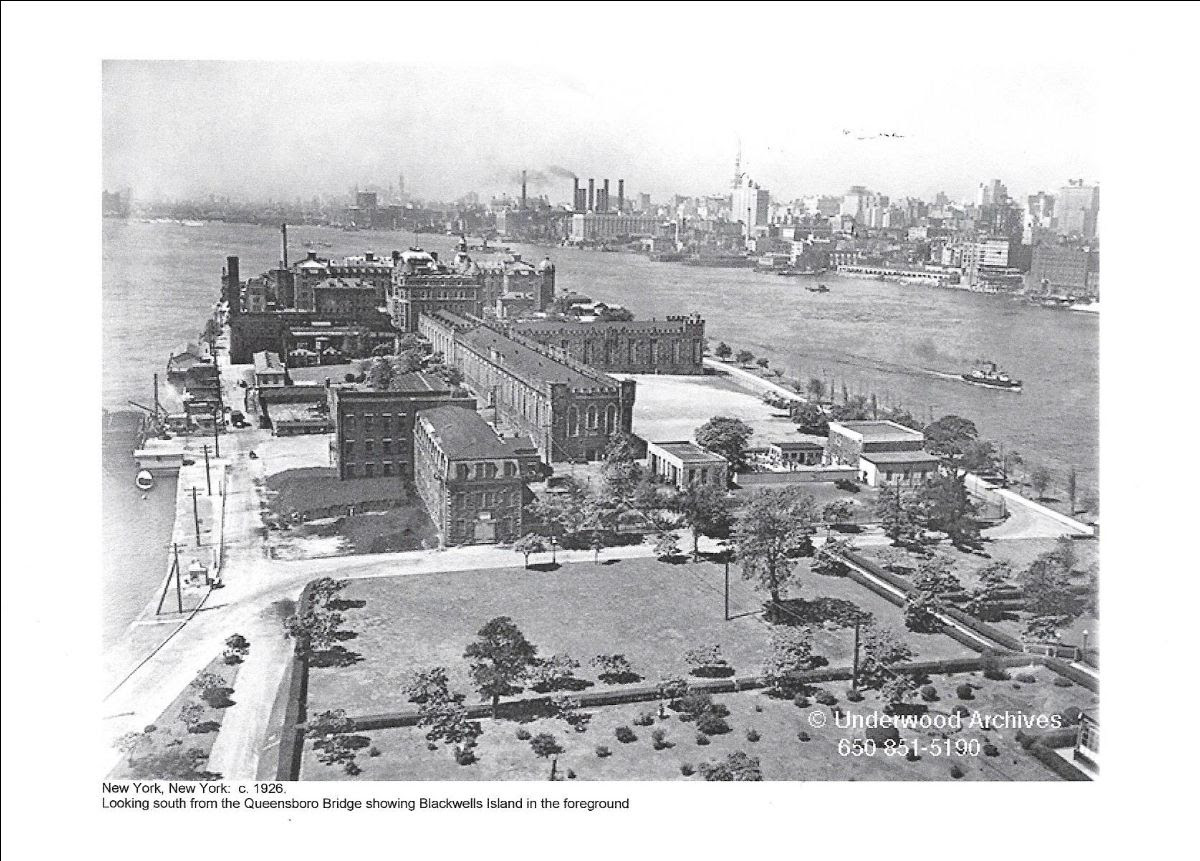
View of the Penitentiary and Manhattan from 1920’s. What two buildings were not built yet in Manhattan?
Southward view from the Queensboro Bridge of the Penitentiary and City Hospital in the far distance
Loot taken from prisoners after raid on the Penitentiary. What are those large containers? Who was the mayor?
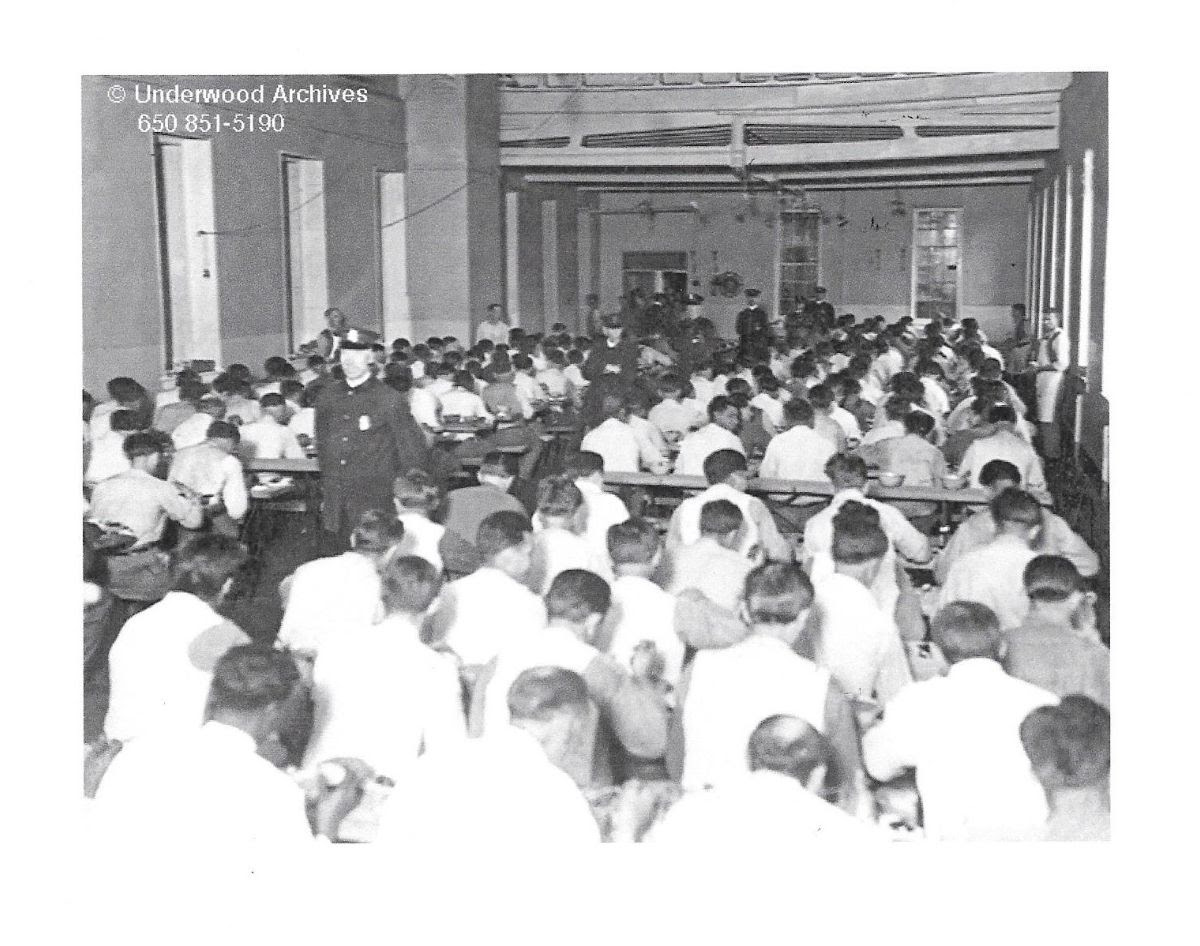
Dining Penitentiary style. How many officers can you see?
These two of the residents of the Penitentiary that Flew the Coop. What was their mission?
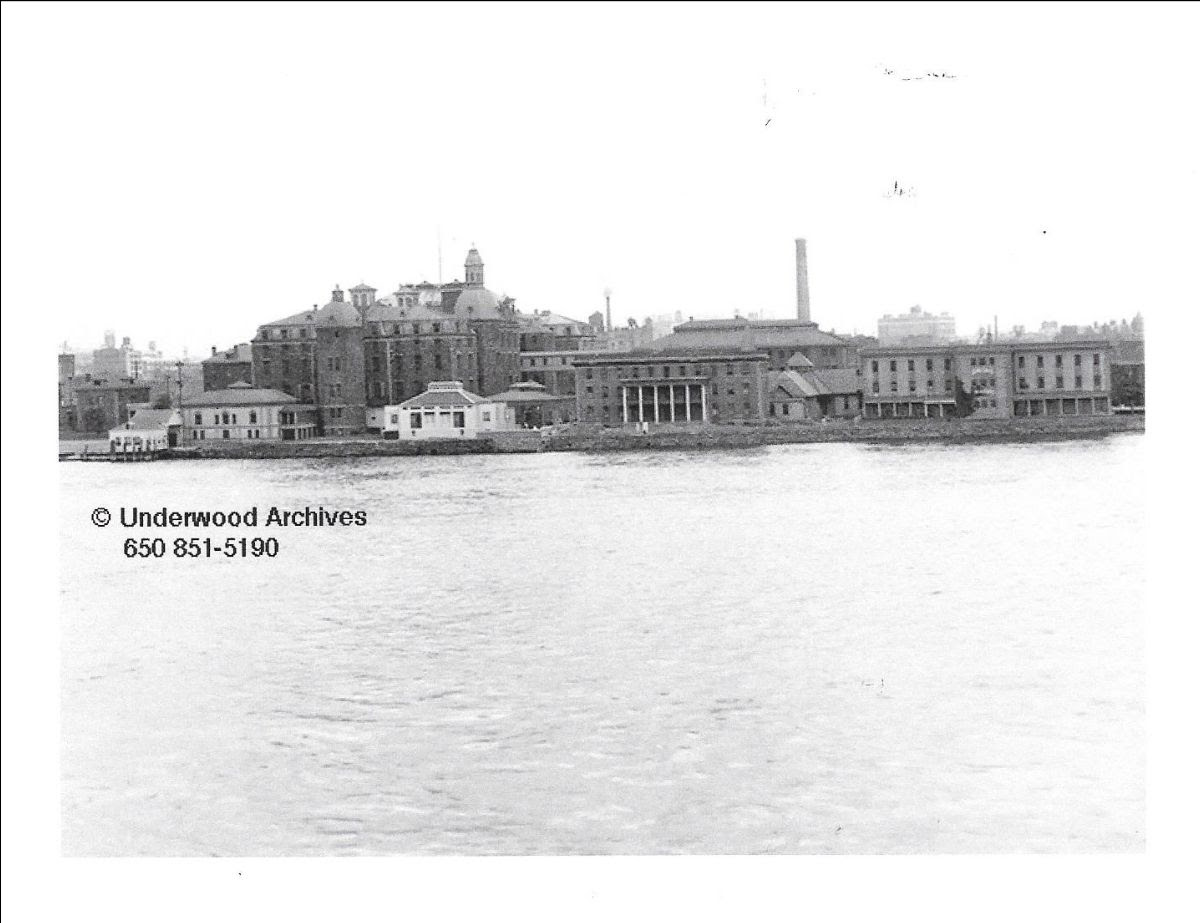
Scene of the south end of the island includes City Hospital, pier, Nursing school (building with columns)
Paved over area where quarry was located. Can you spot Blackwell House, Chapel and Octagon? Where was quarry located?
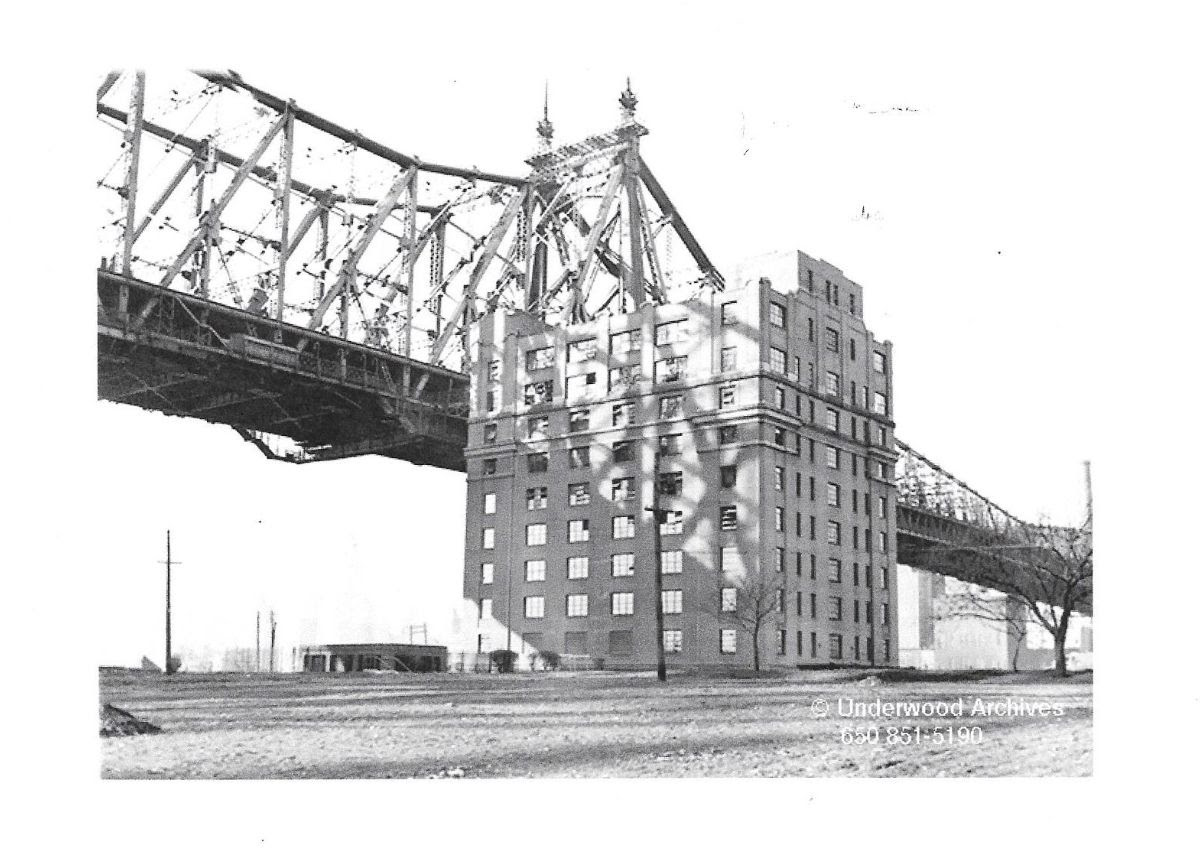
Elevator Storehouse building. Where was this building located?
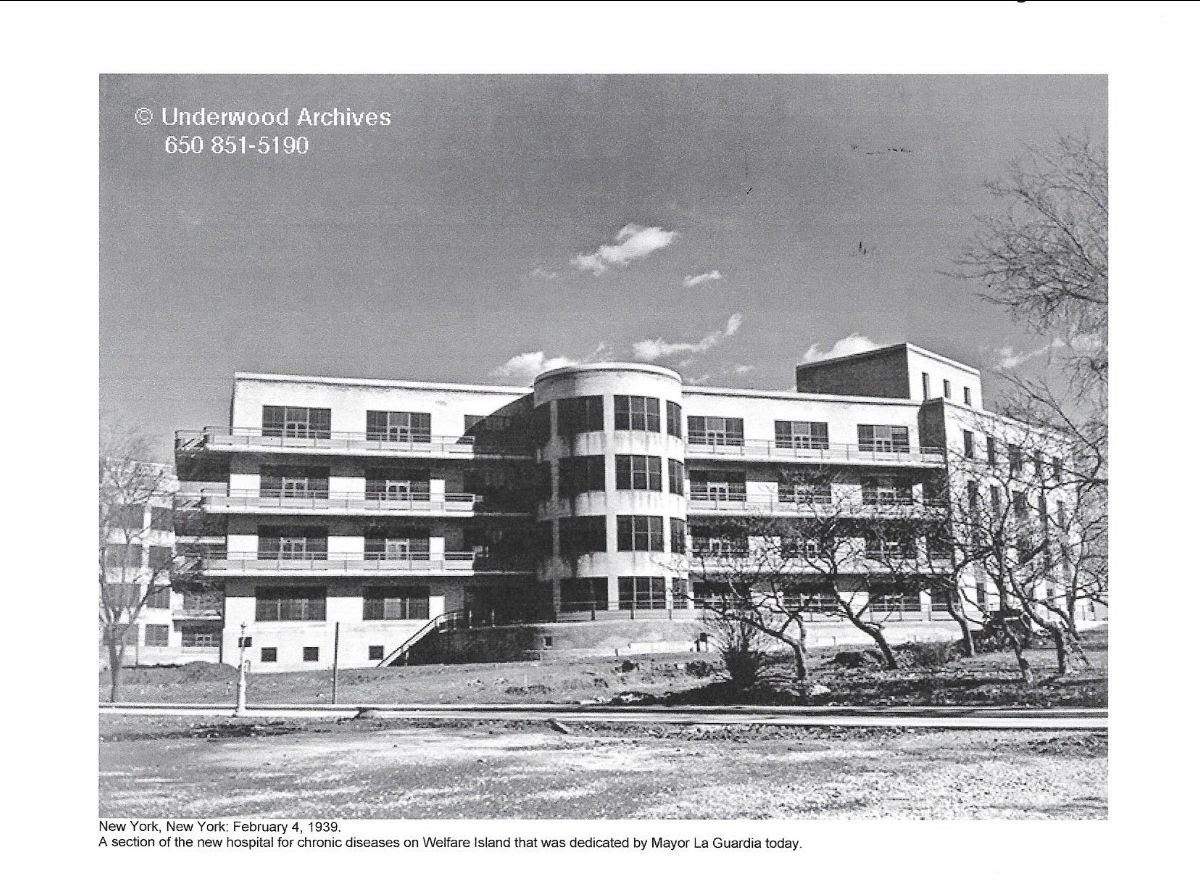
Goldwater Hospital on opening day in 1939
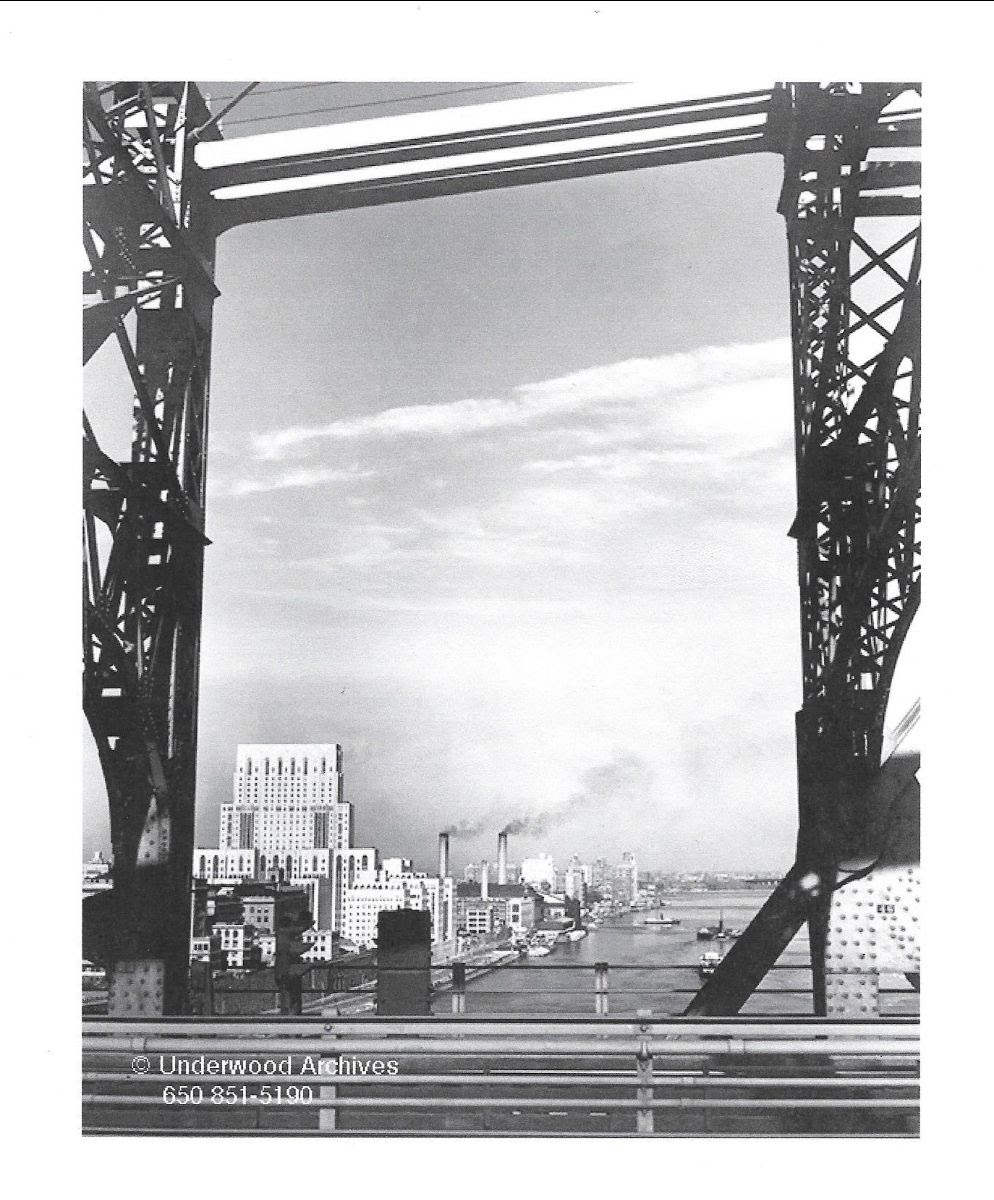
View from the upper level of the Queensboro Bridge
EDITORIAL
Today on my daily walk north or south I saw signs ALL PARKS CLOSED. I am so glad that our paths are wide and there are still plenty of places to spread out. I pity our neighbors who do not have our spaces to enjoy nature.
I looked across at NYP Hospital. Those white inserts in 30 windows are to make the isolation rooms negative pressure for Covid-19 patients.
I found a face mask in the GO BAG given out last year by NYC OEM. There was a presentation at the Chapel and everyone got a backpack with emergency supplies. One item was a face mask. It is very snug and secure.(Gives you protection with a duck bill profile).
I went by PS 217 to see what food was being distributed. There are pretzels, hummus, apple juice, chocolate milk, crackers, mimi-carrots and a few other items. You can be creative with the items to make meals more tempting. (When was the last time you drank chocolate milk?)
Tomorrow is Issue #20!! As long as there is material here, I will keep going…….
Text by Judith Berdy Thanks to Bobbie Slonevsky for her dedication to Blackwell’s Almanac and the RIHS Thanks to Deborah Dorff for maintaining our website Edited by Melanie Colter and Dottie Jeffries
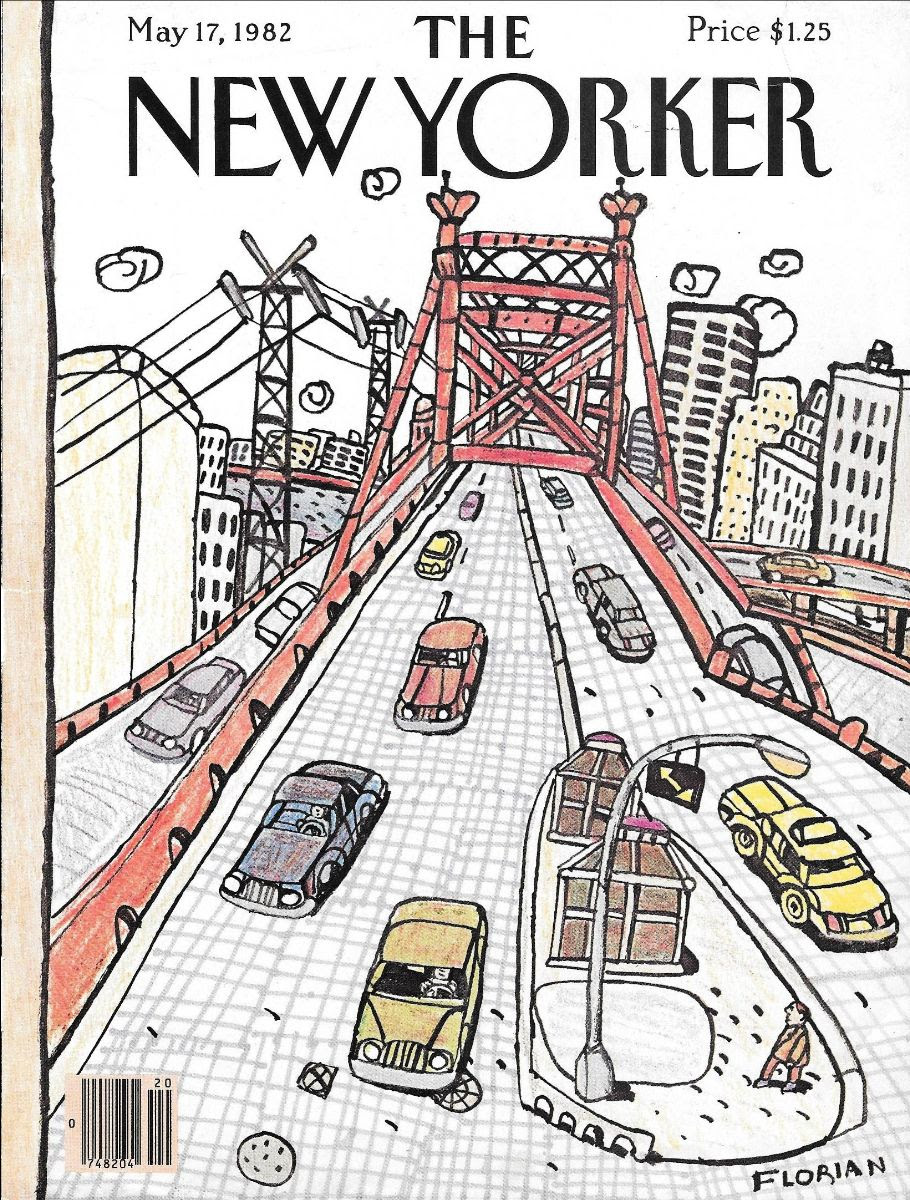
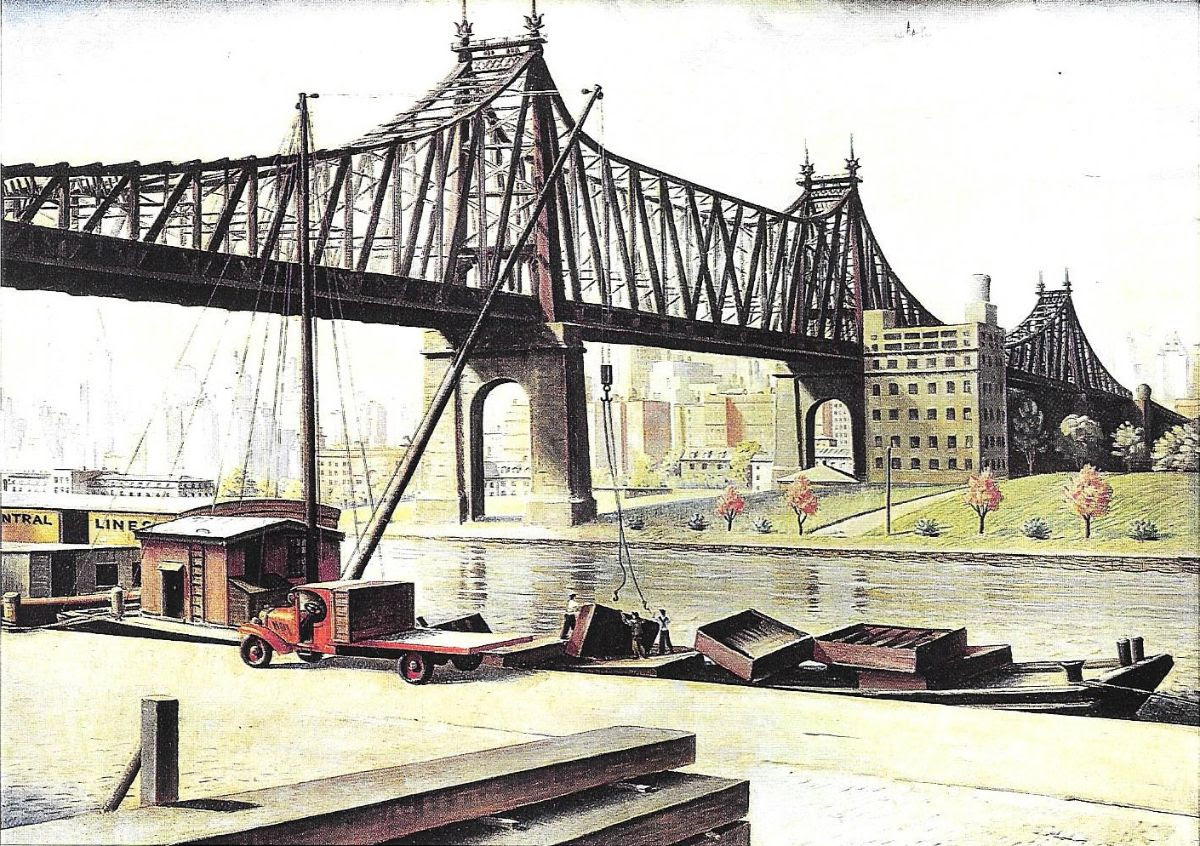
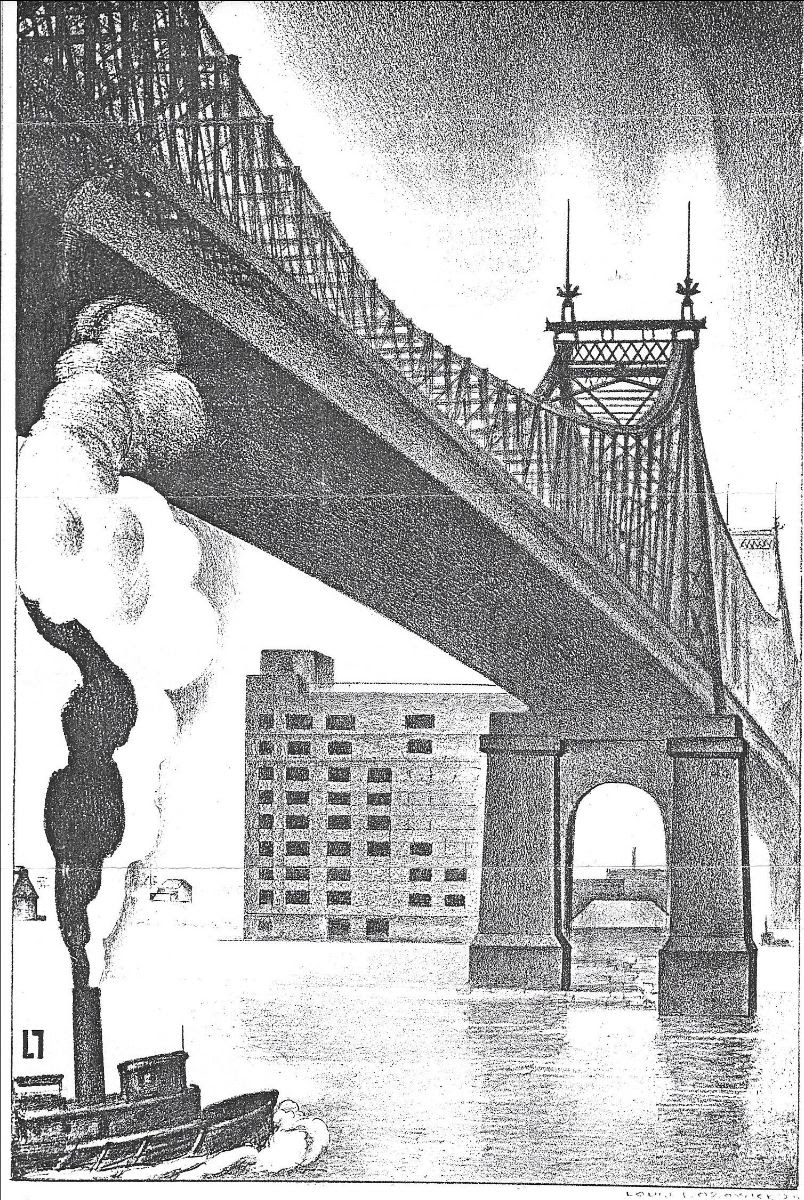
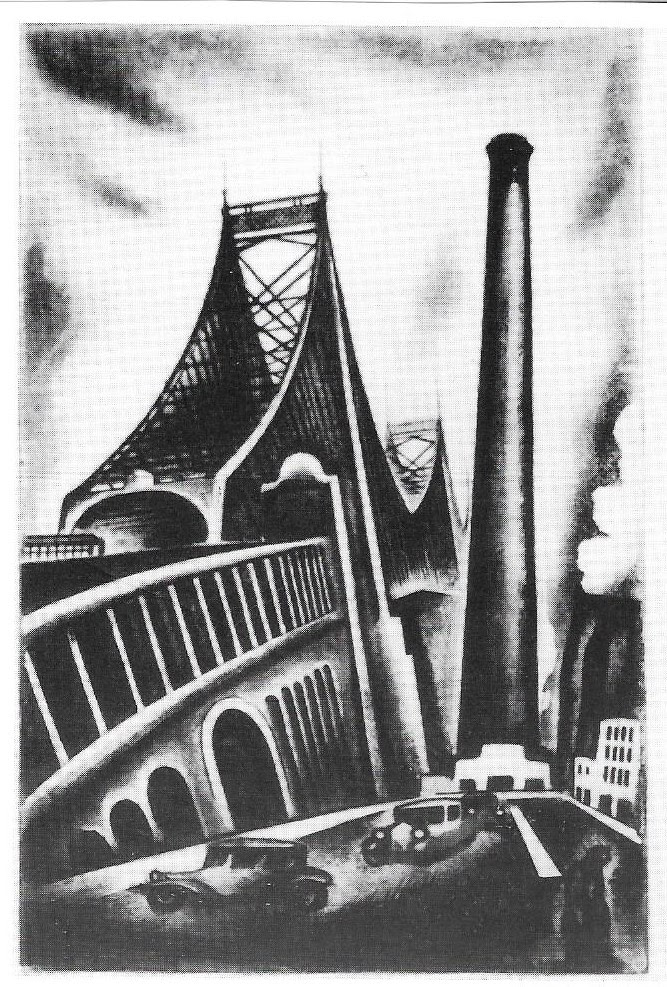
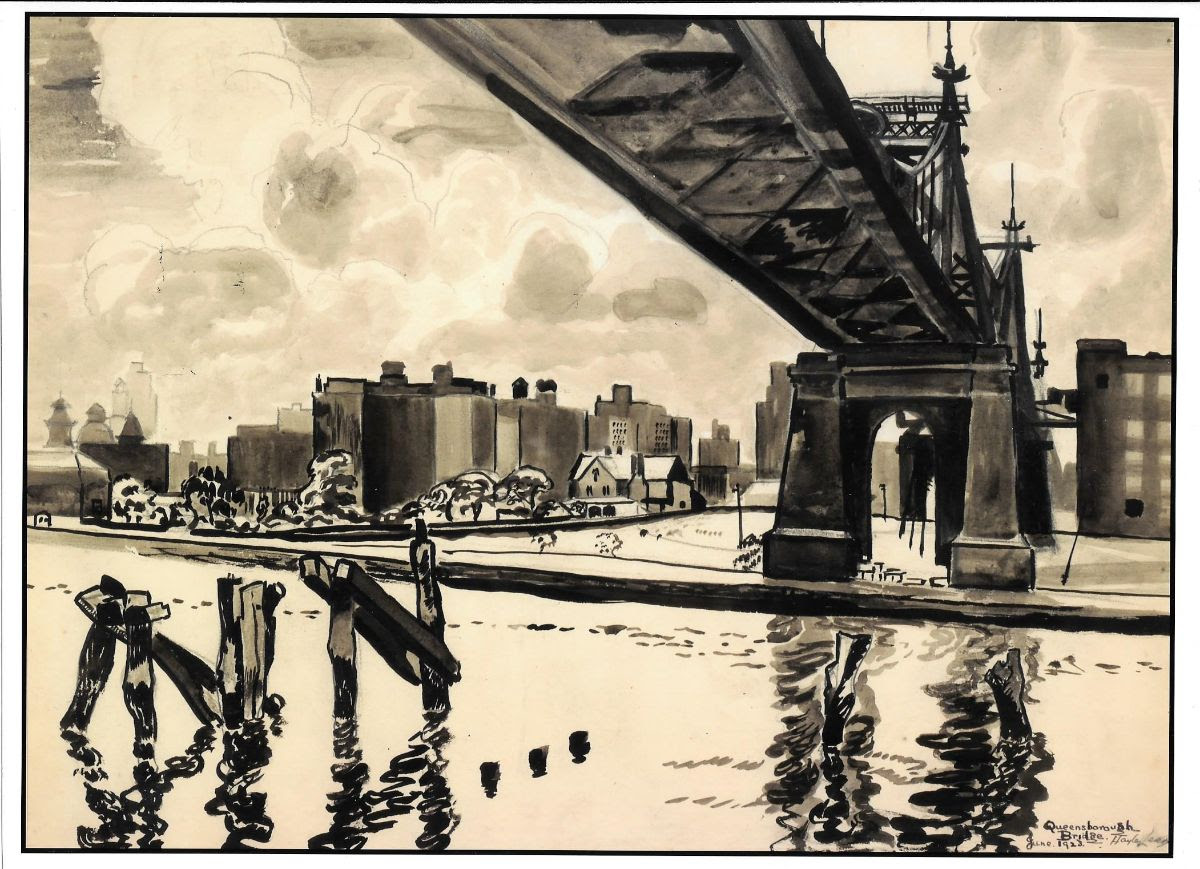
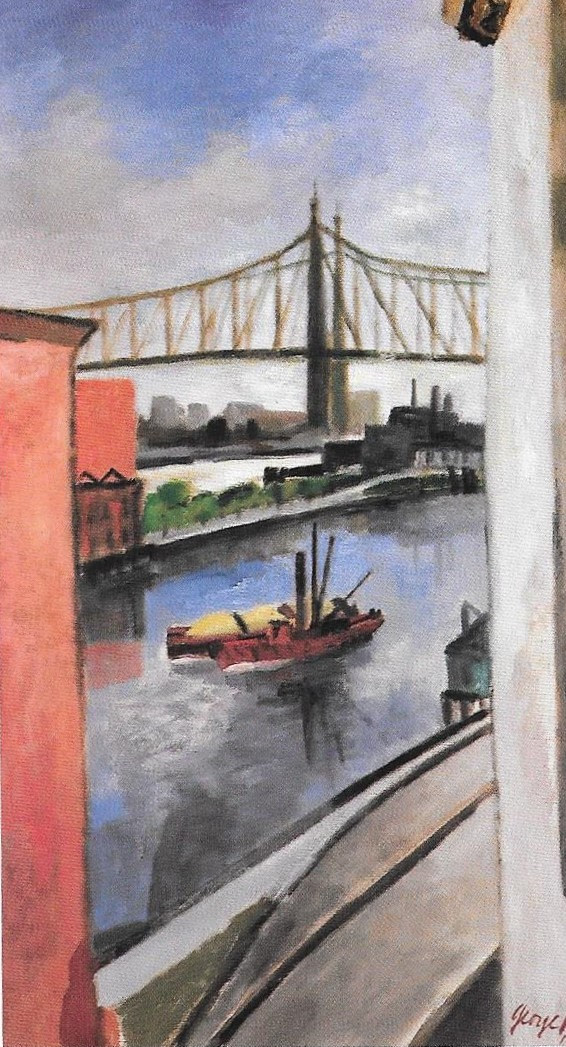
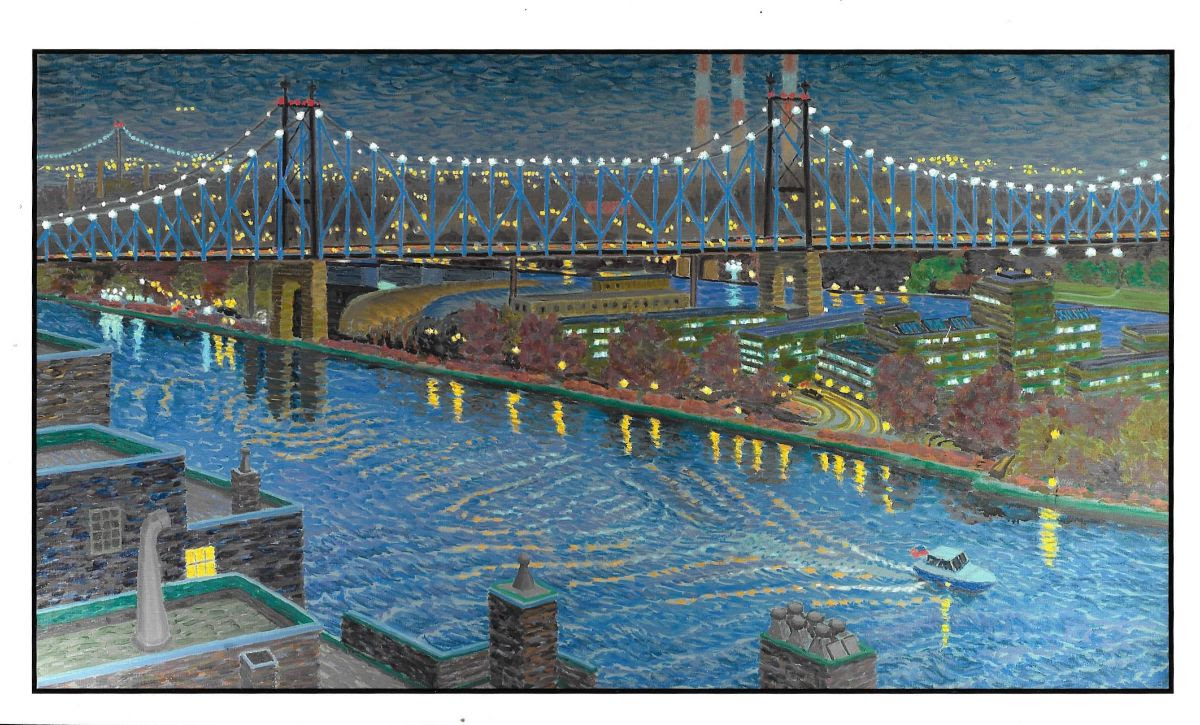
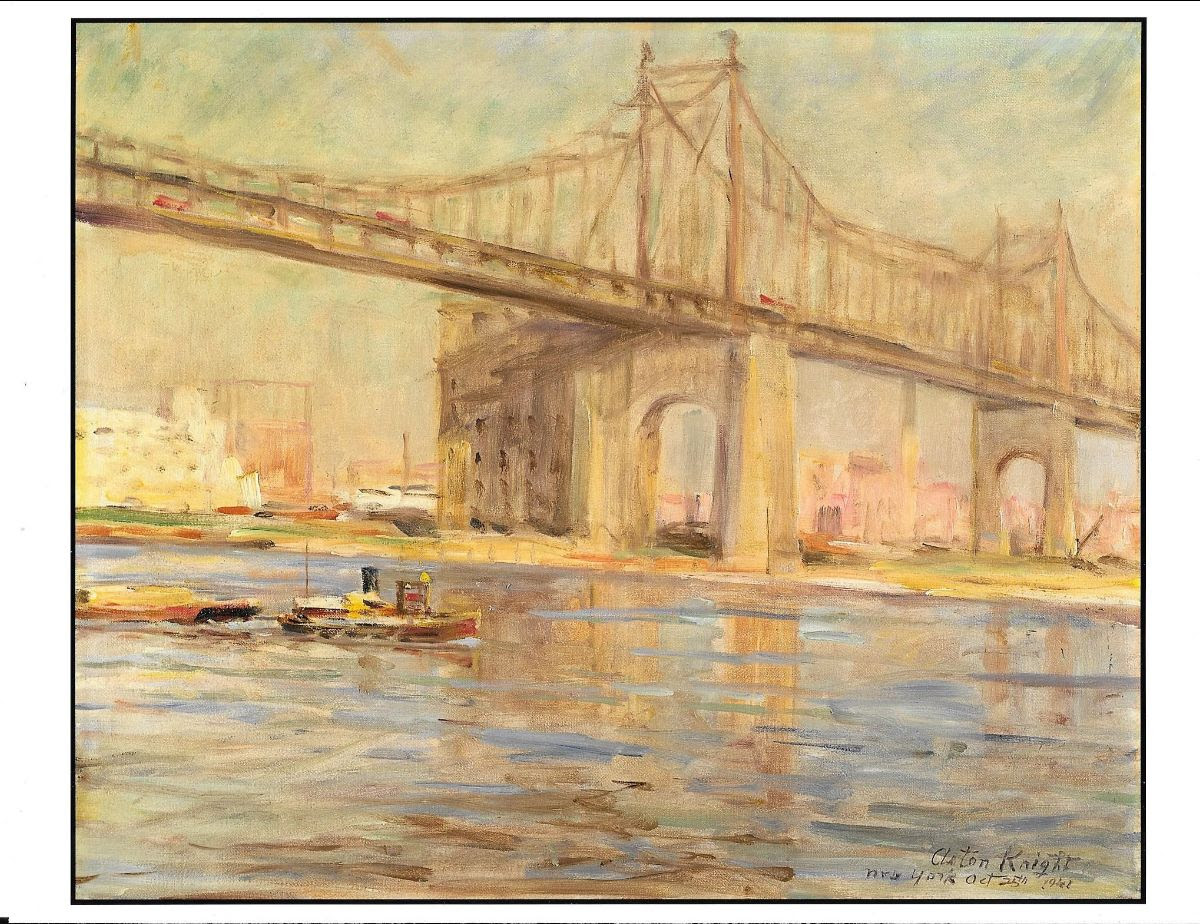
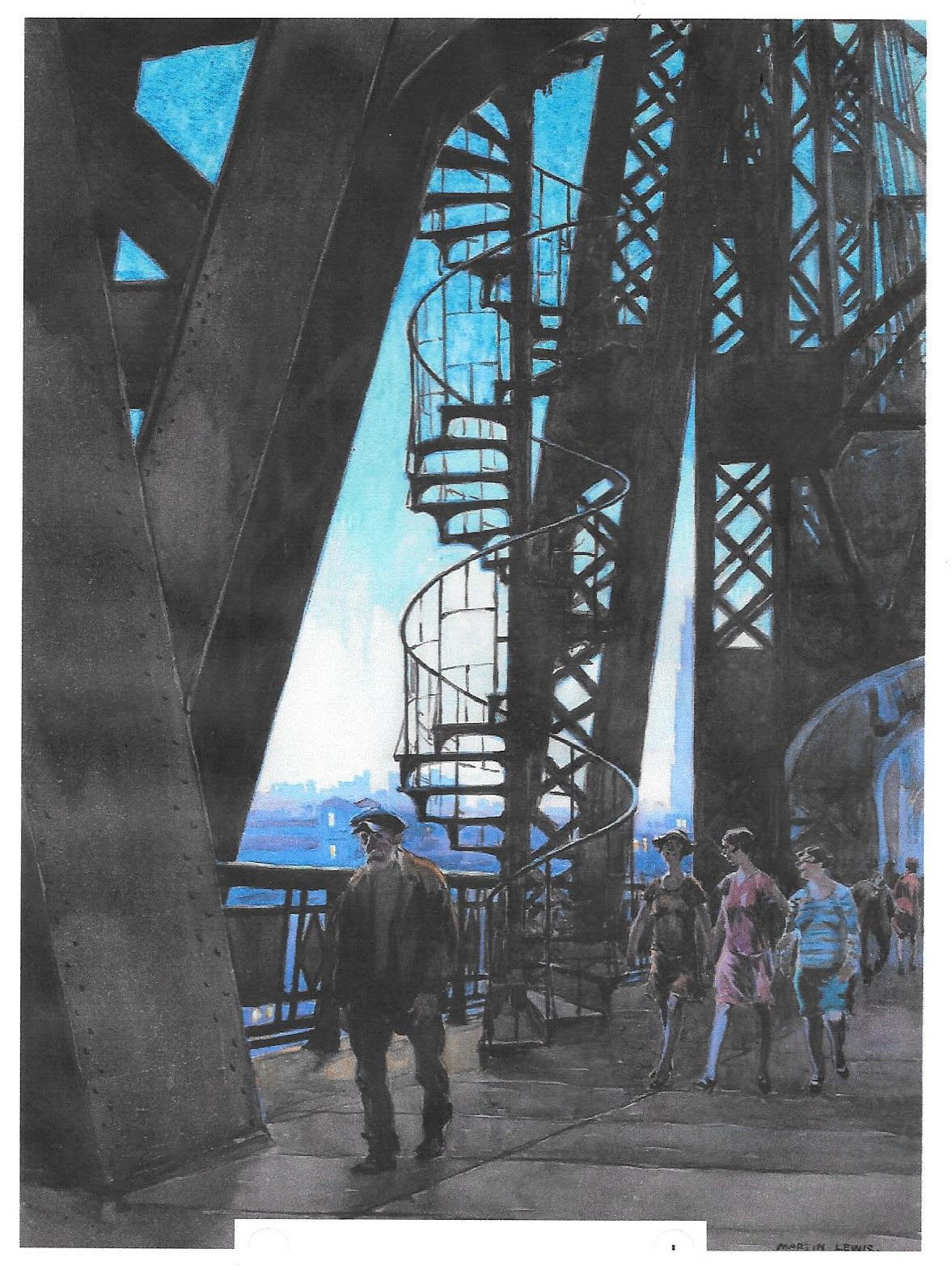
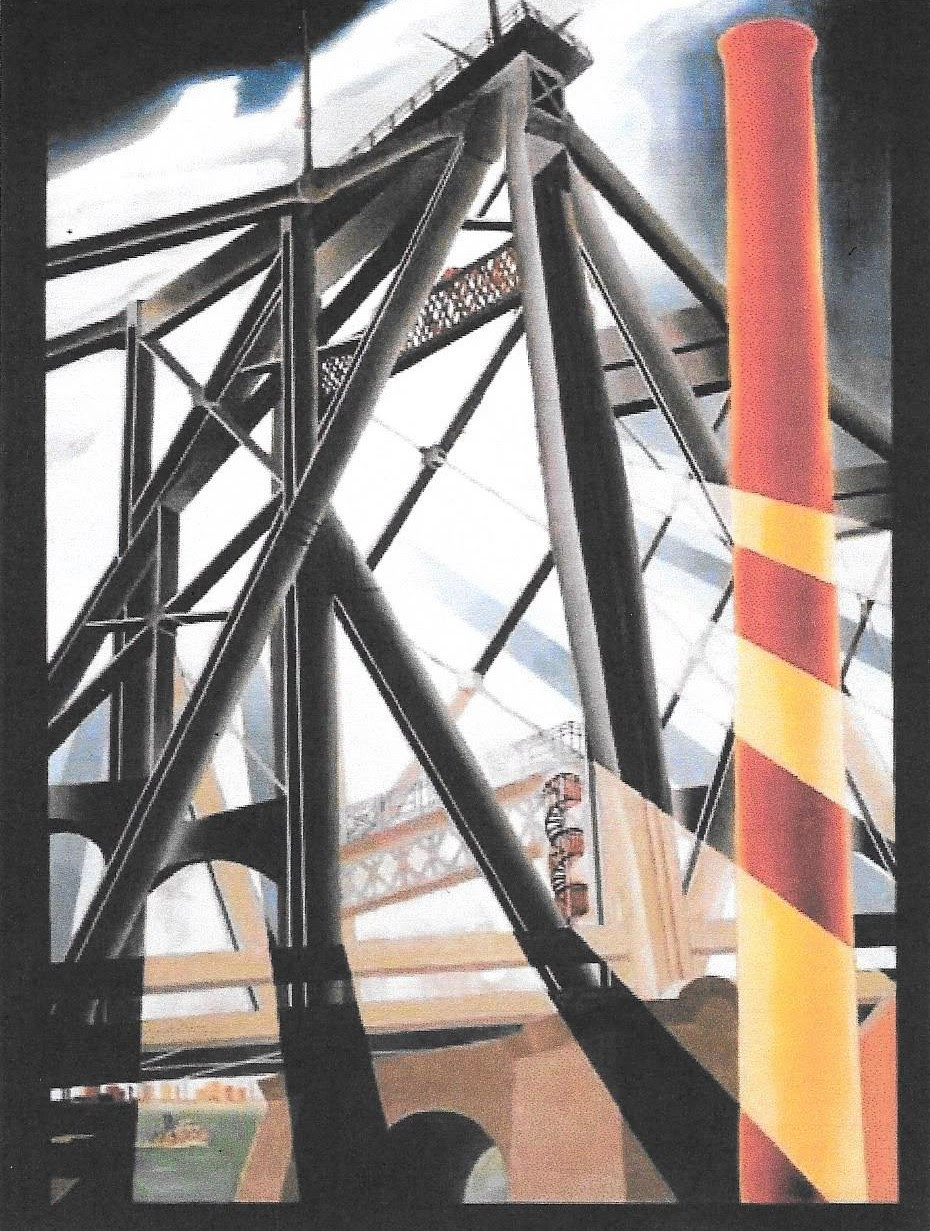
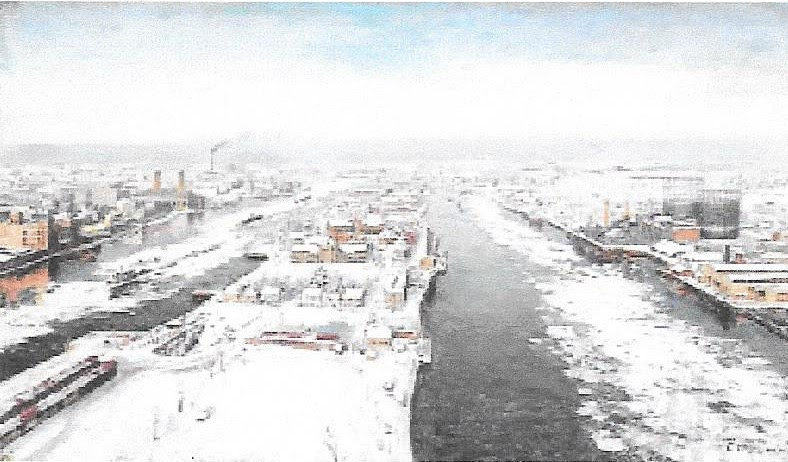
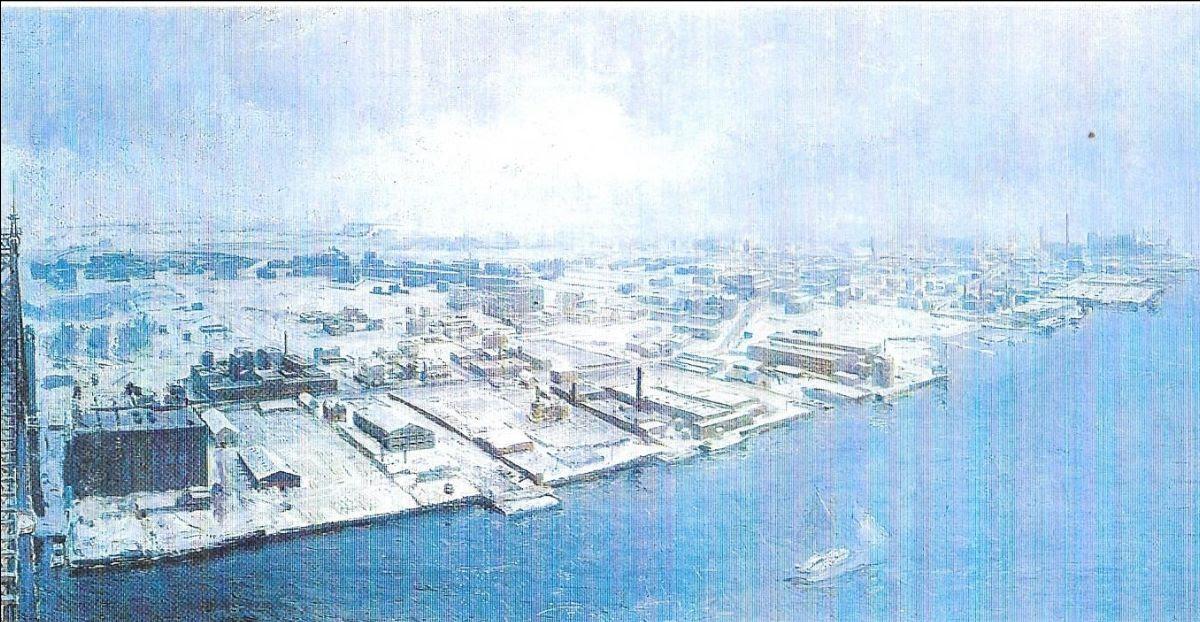
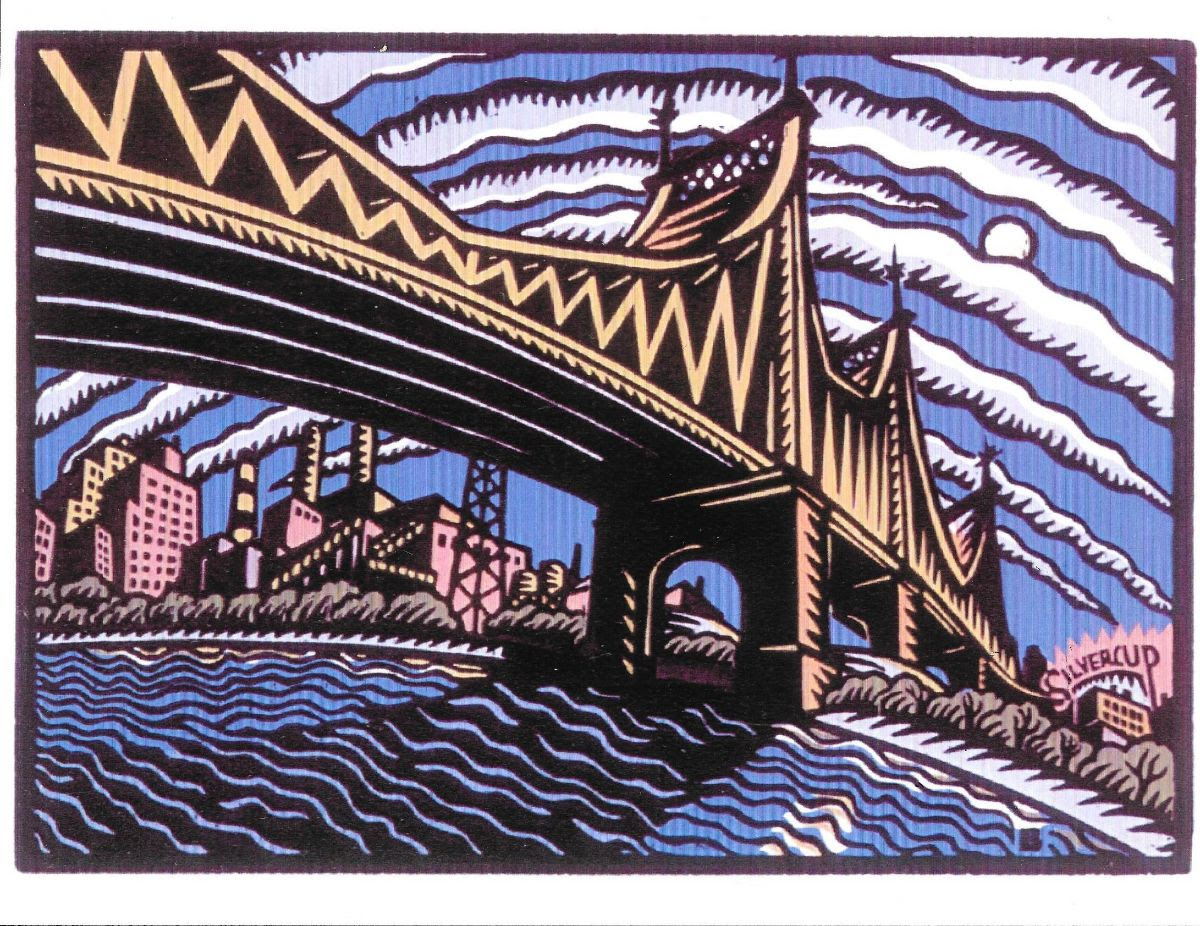
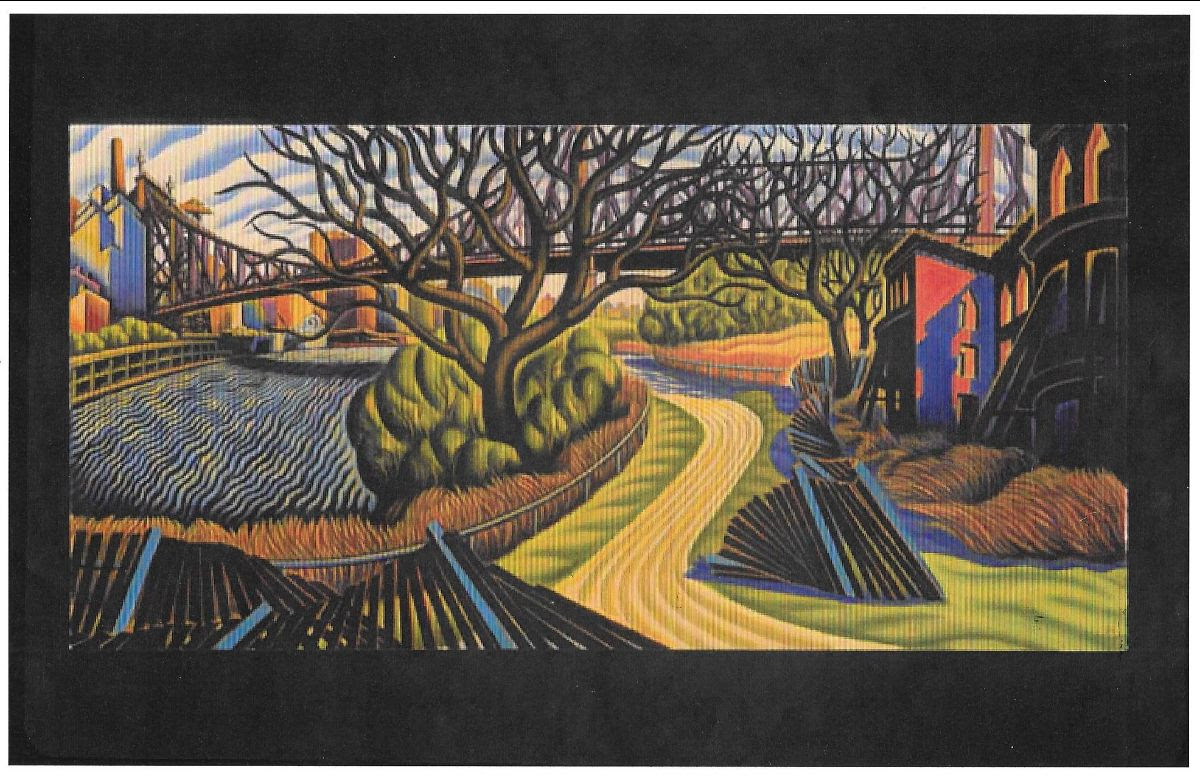
HOW THE BRIDGE OVER OUR ISLAND WAS INTERPRETED BY ARTISTS
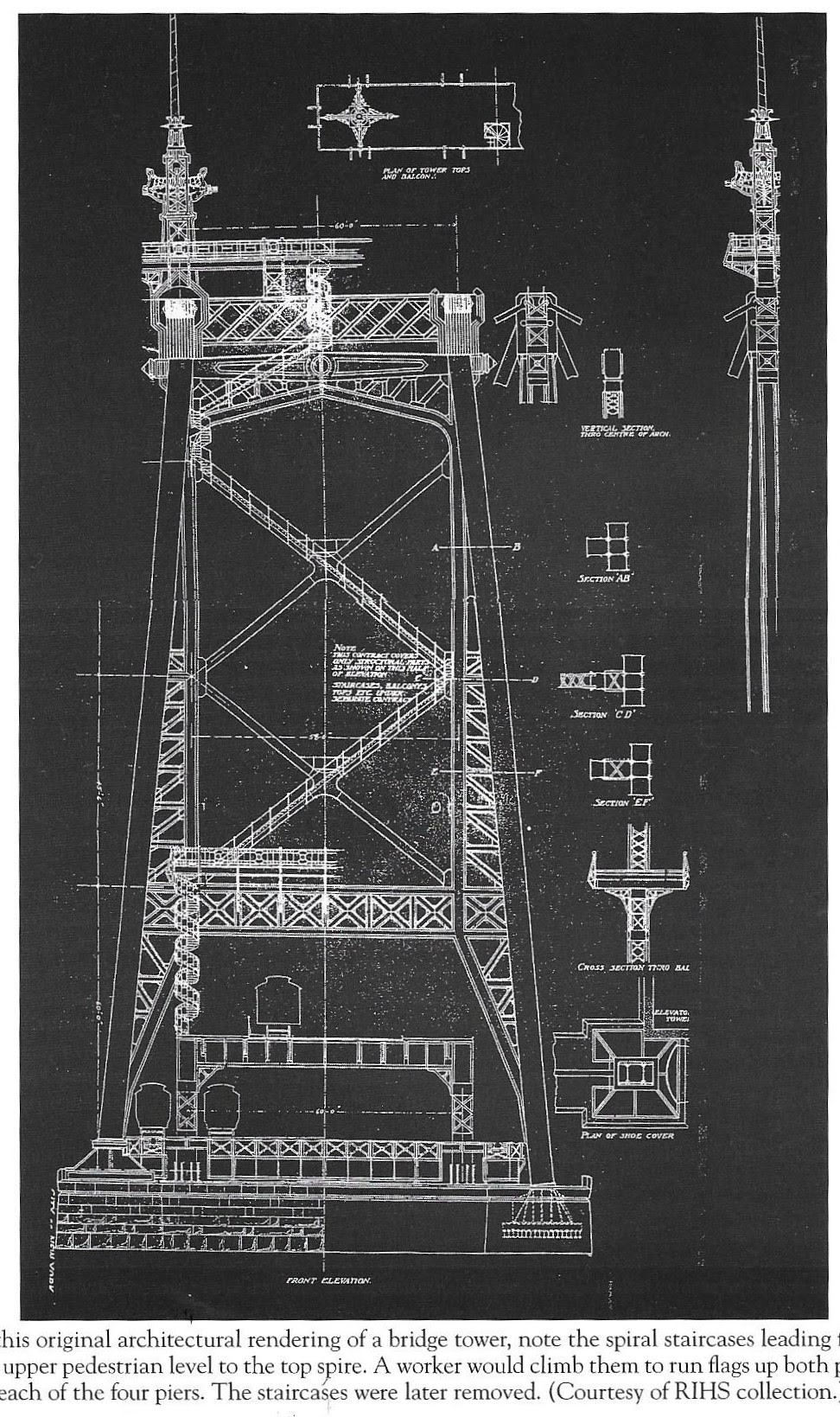
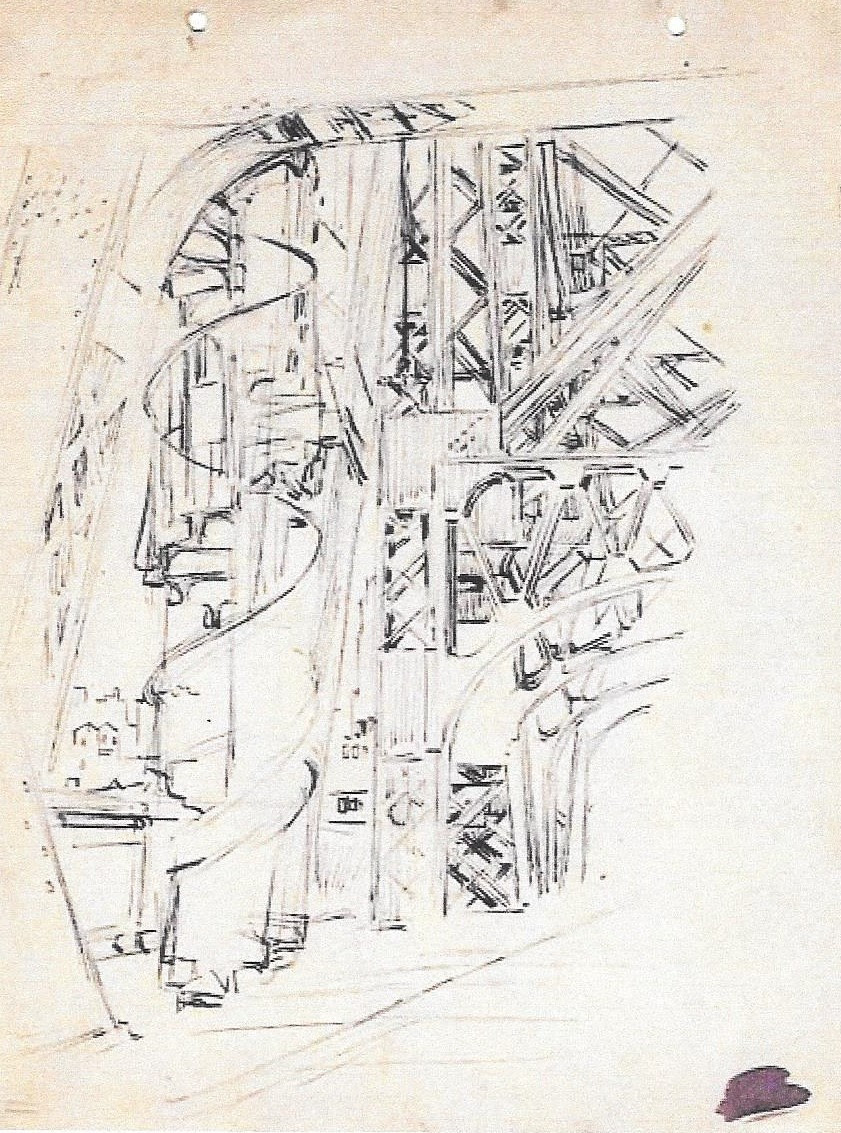
****** The Mysterious Spiral Staircase ******’
Painting on High
MONDAY, APRIL 6, 2020
18h in our FROM THE ARCHIVES Series
New Yorker (c)
RIHS Archives (c)
Louis Lozowick (c)
Queensboro Bridge Howard Cook etching (c)
Queensboro Bridge Hayley Lever 1928 (c)
East River Valley George Pitkin 1947
Queensborough Bridge, Autumn with a Police Boat Yvonne Jacquette 2002 (c)
The Queensborough Bridge Louis Ashton Knight 1941 (c)
One of the early features of the Queensboro Bridge was a set of spiral staircases leading from one side of the upper pedestrian roadway to the other. Find the staircases in the four illustrations below.
Study for Spiral Staircase Martin Lewis 1929 Pen and Ink (c)
Spiral Staircase Queensboro Bridge Martin Lewis (c)
Queensboro Bridge Elsie Driggs (c) Montclair Art Museum
Sebastian Cruset was an artist who climbed the spire of the Queensboro Bridge to paint the scenes below.
An eastward view of Queens from the Queensboro Bridge where Cruset viewed the scene from the spires.
Text by Judith Berdy Thanks to Bobbie Slonevsky for her dedication to Blackwell’s Almanac and the RIHS Thanks to Deborah Dorff for daily transferring our news to our website rihs.us Thanks to Kevin Dorff who keeps the tech stuff operating. Thanks to Melanie Colter and Dottie Jefferies. (who have better editing talents thank I do)
EDITORIAL
It is all in the spelling: QUEENSBORO QUEENSBOROUGH ED KOCH QUEENSBORO BRIDGE 59th STREET BRIDGE Take your choice. Legally, it is Ed Koch Queensboro Bridge that opened in June of 1909.
THOUGHTS AND RAMBLING STUFF For the last two weeks I have not watched TV shows from start to finish since the phone is ringing, texts, e-mails, questions, answers, volunteers and assorted friends and family.
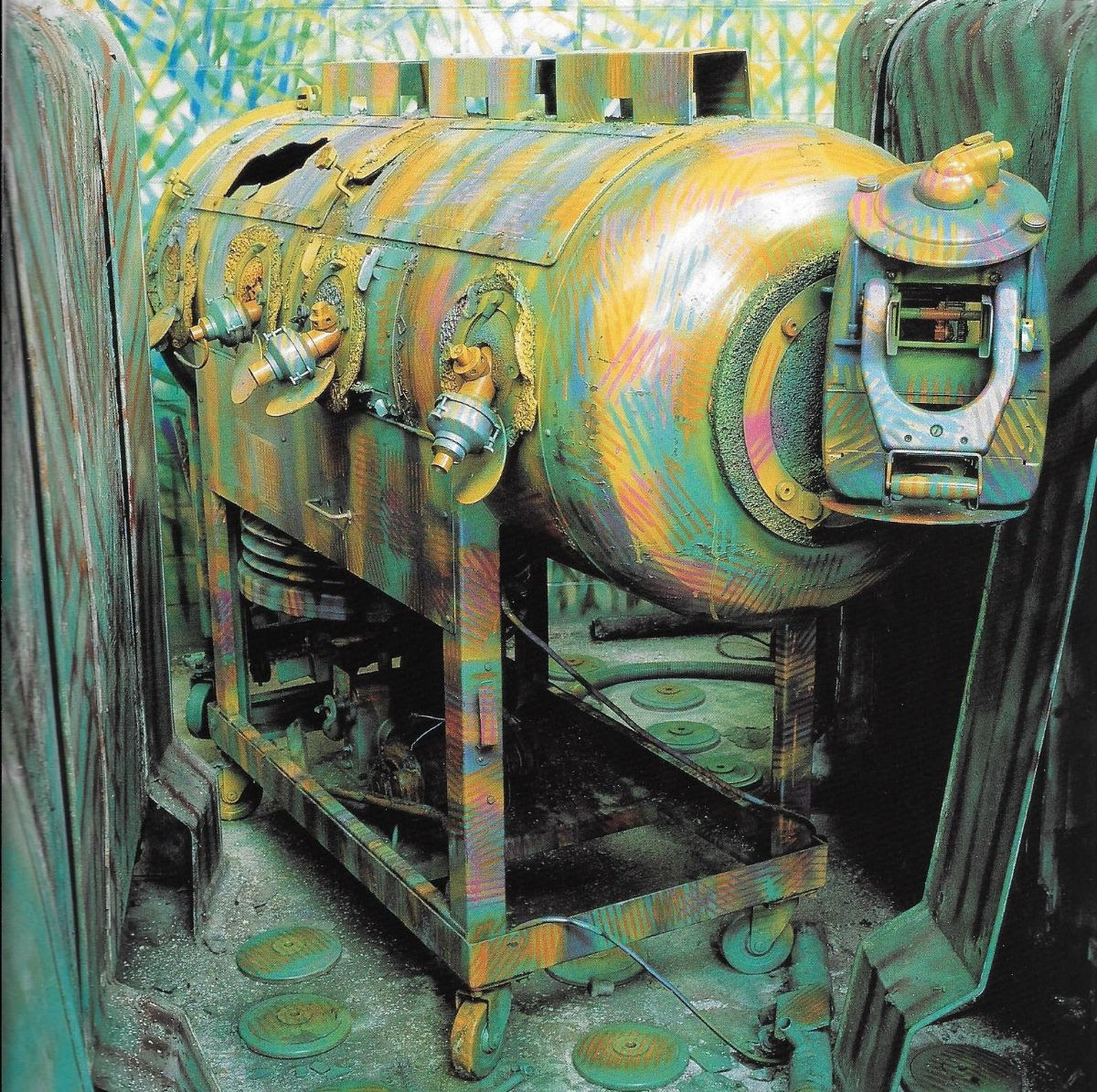
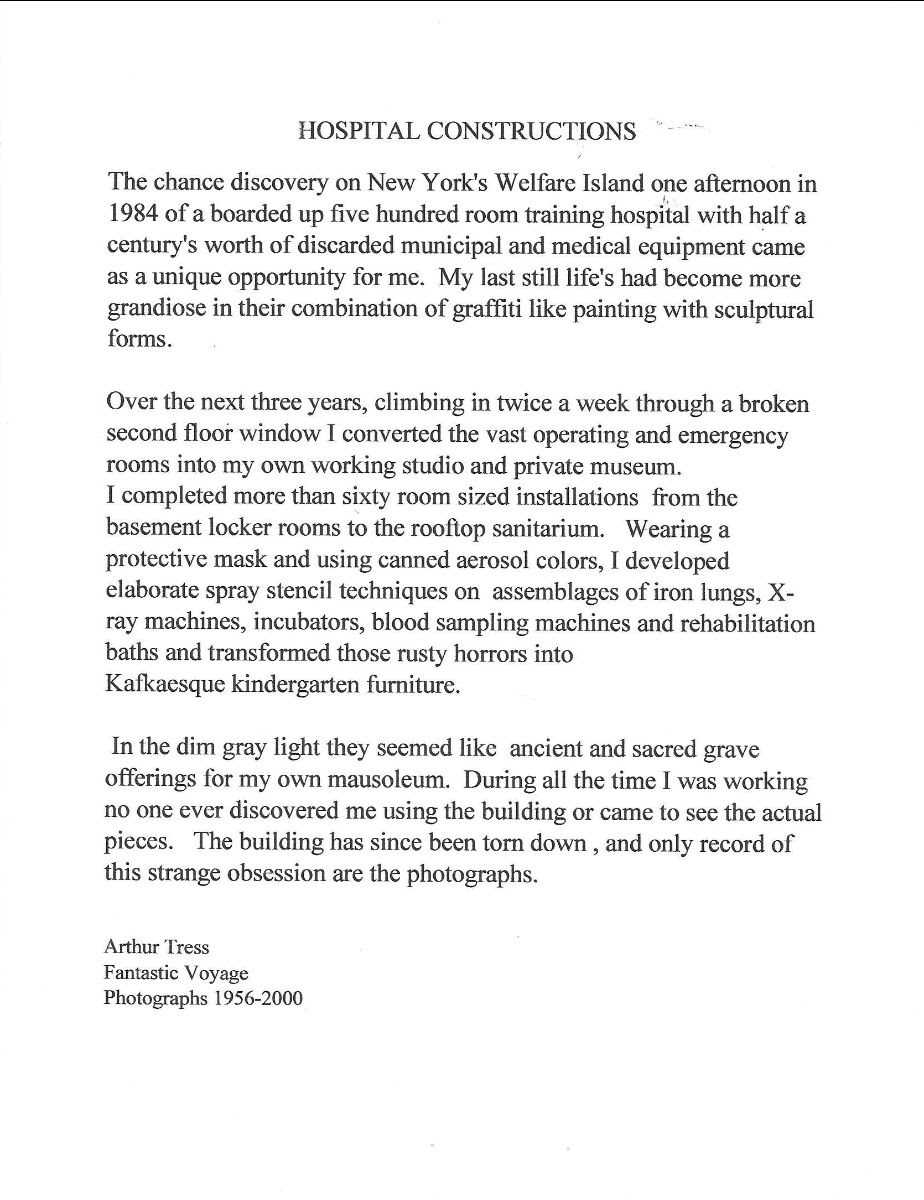
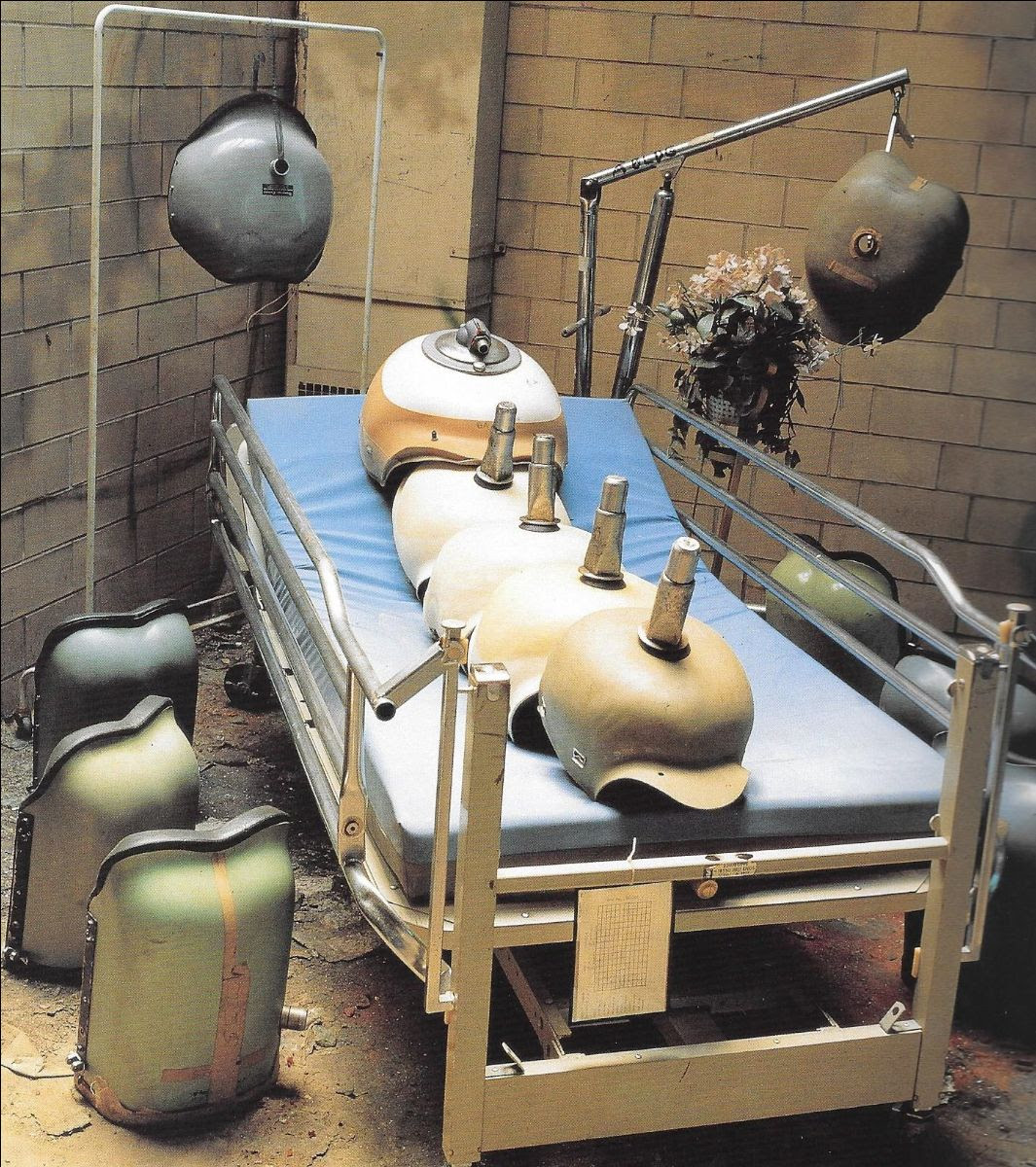
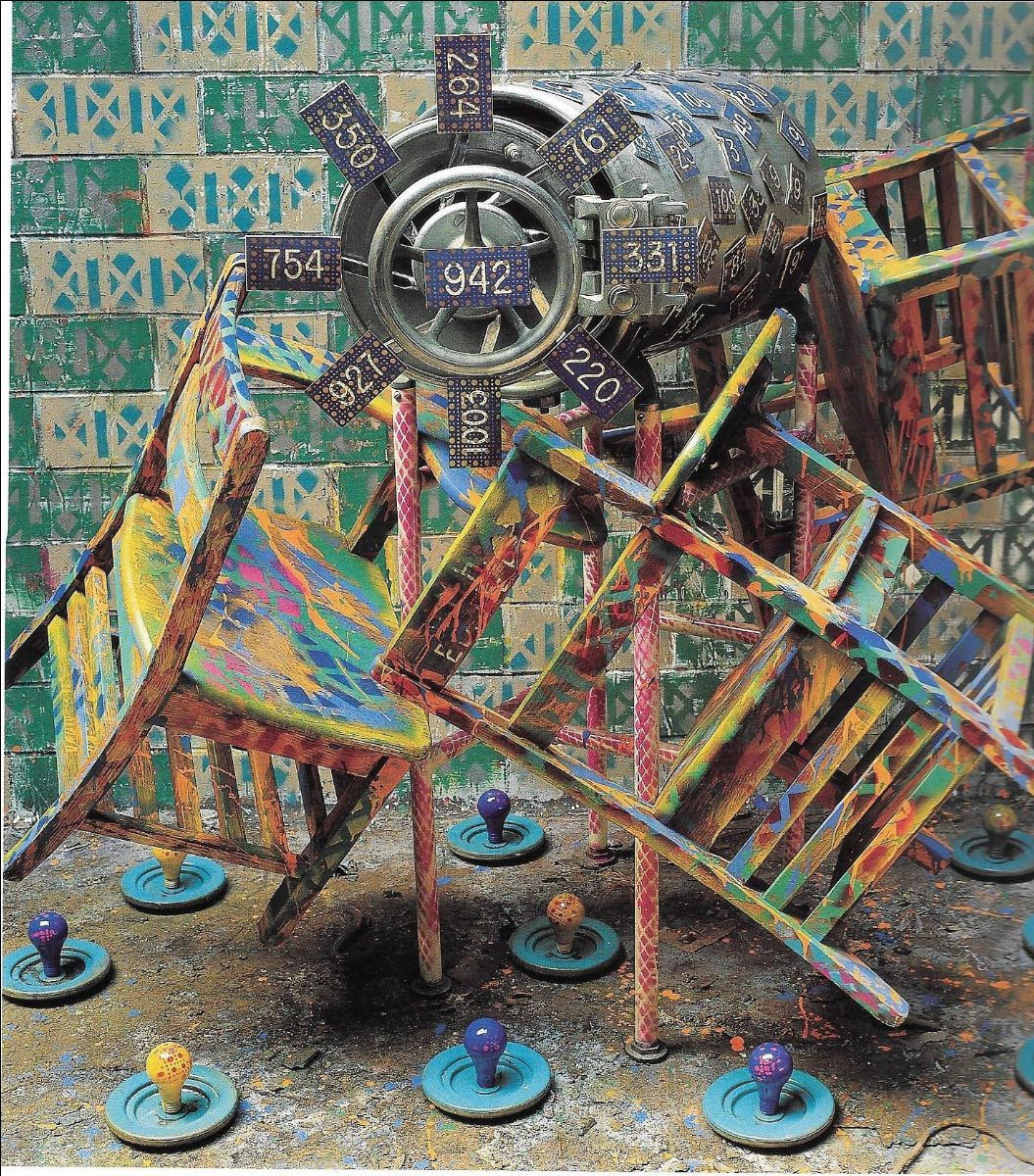
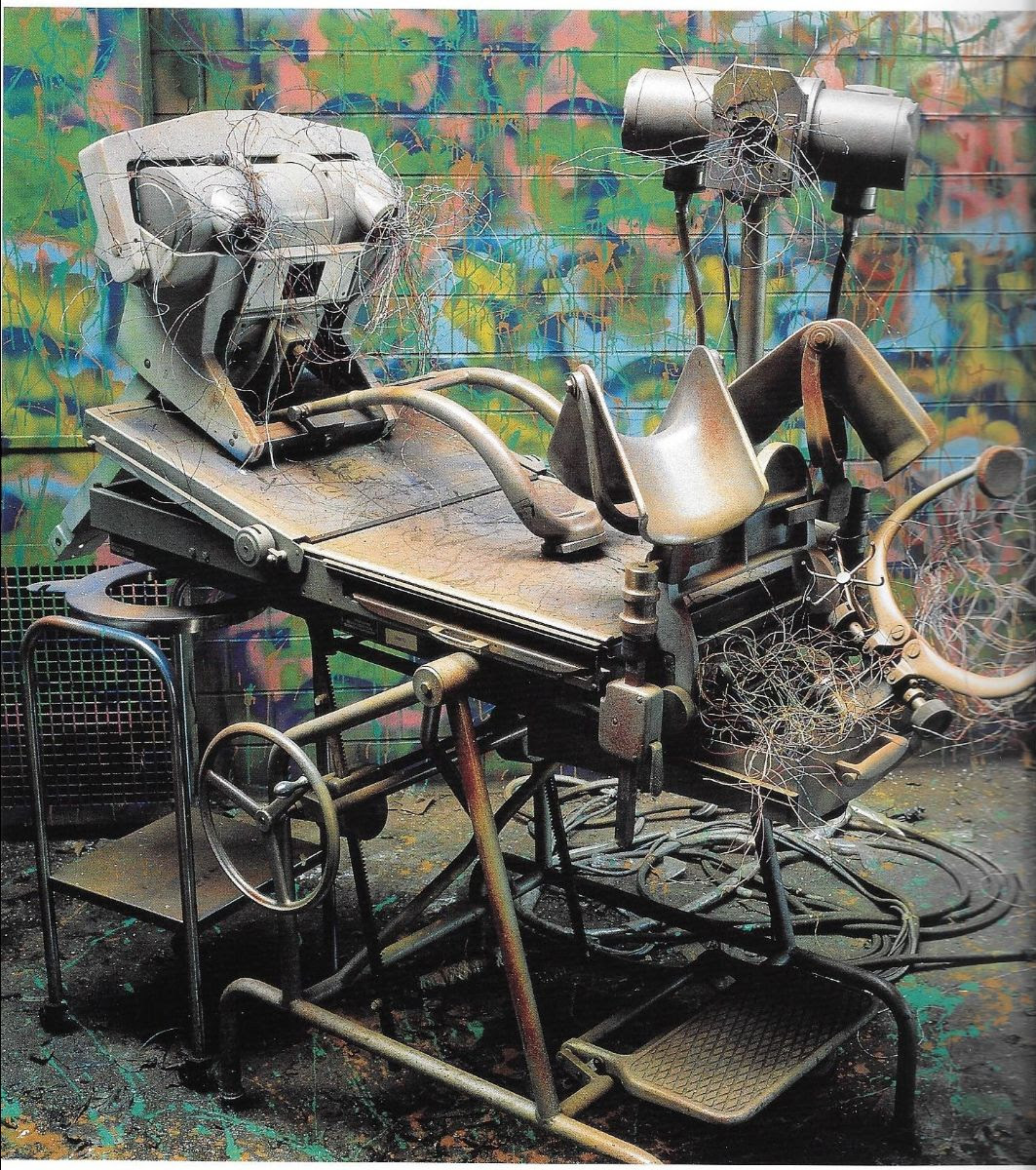
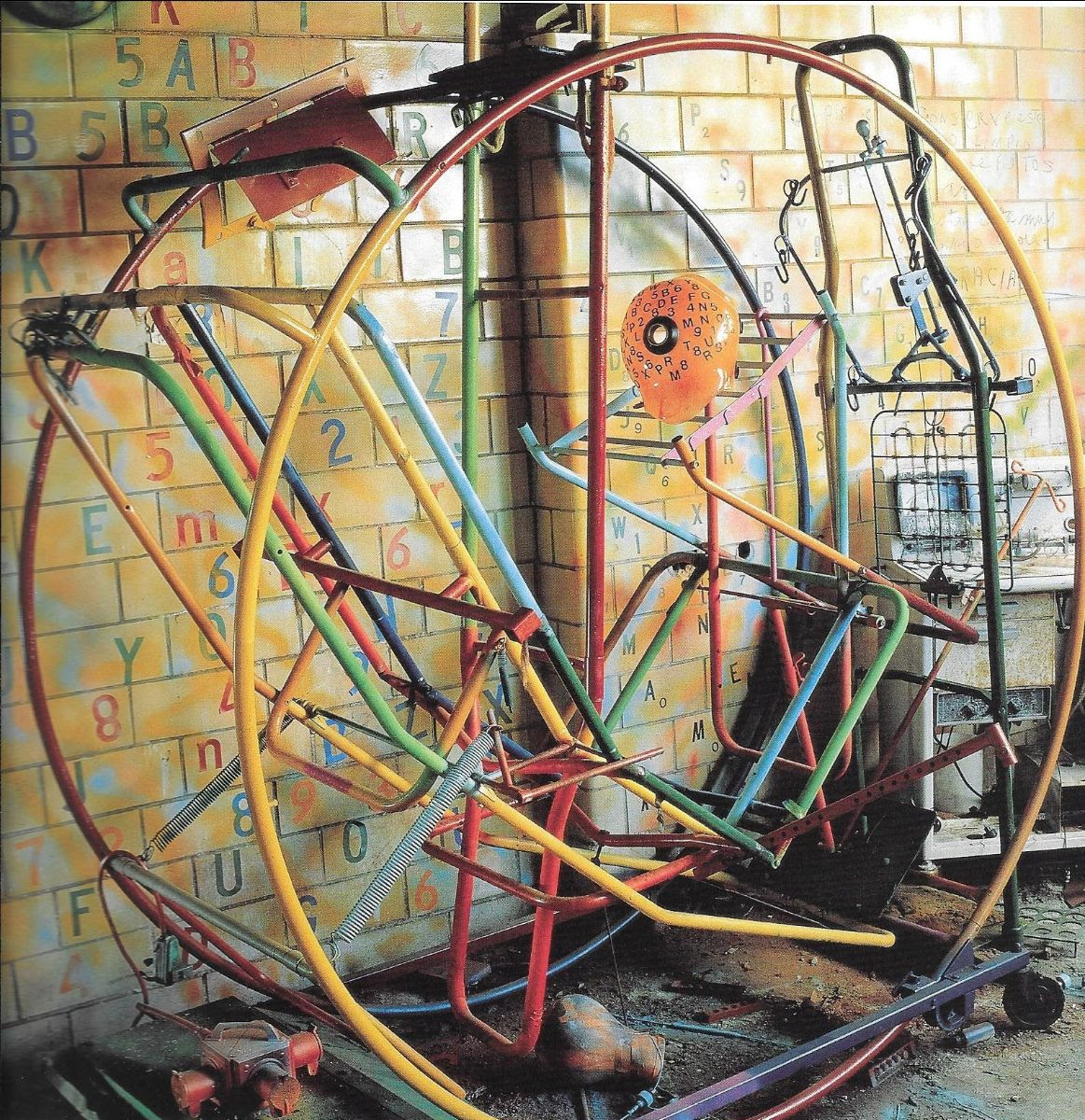
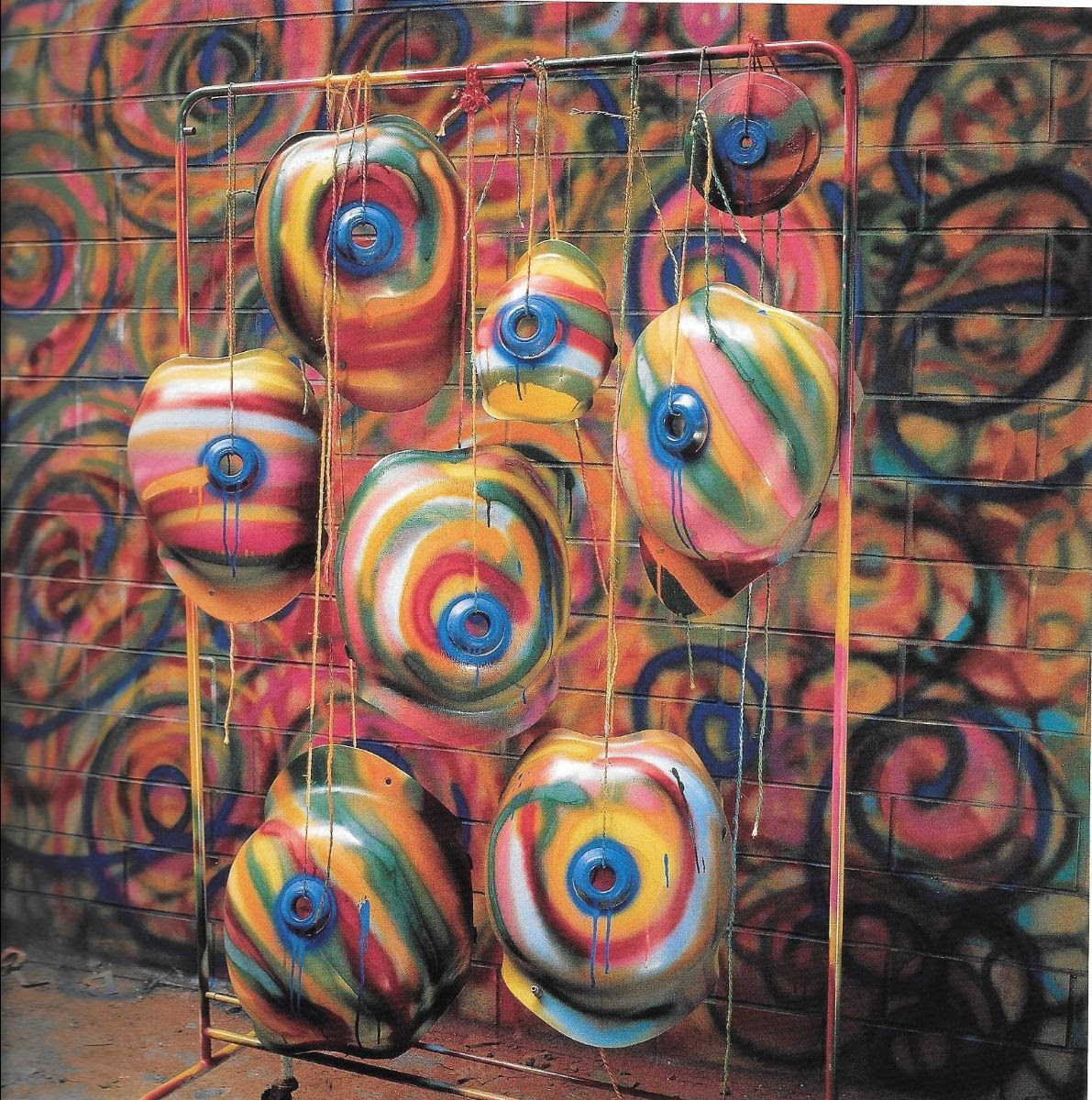
Mr. Tress states that he did this work in 1984. The only building that was standing at that time was the Central Laundry, across the street from the Tram Station. I visited the abandoned laundry and photographed some of the rooms. In one of the rooms the paint from one of Mr. Tress’ work was still on the walls The laundry building was demolished in the mid 1980’s so I assume this was the place with all the stored hospital and municipal equipment. Judith Berdy
The Napping Couch, New York 1984 (c)
Collegiate Roundabout, New York 1984 (c)
Robot Birth, New York 1987 (c)
The Politics of Language, New York 1984 (c)
Mother Matrix, New York (c) 1984
Can you identify the medical objects in these images? How many can you find? Send your answers, and the person with the most correct will get a free book of your choice at the RIHS Visitor Center Kiosk. Send your responses to JBIRD134@AOL.COM
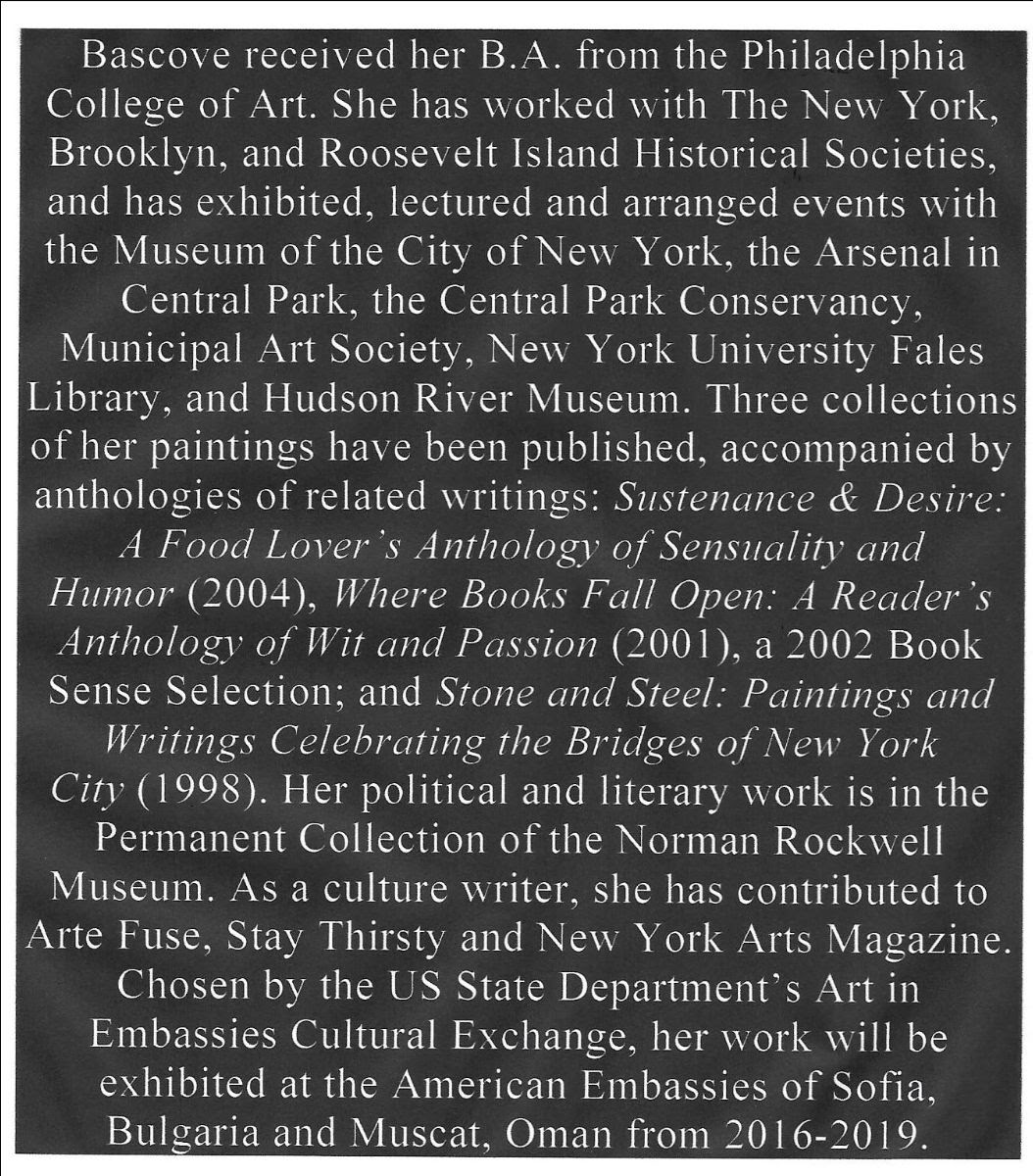
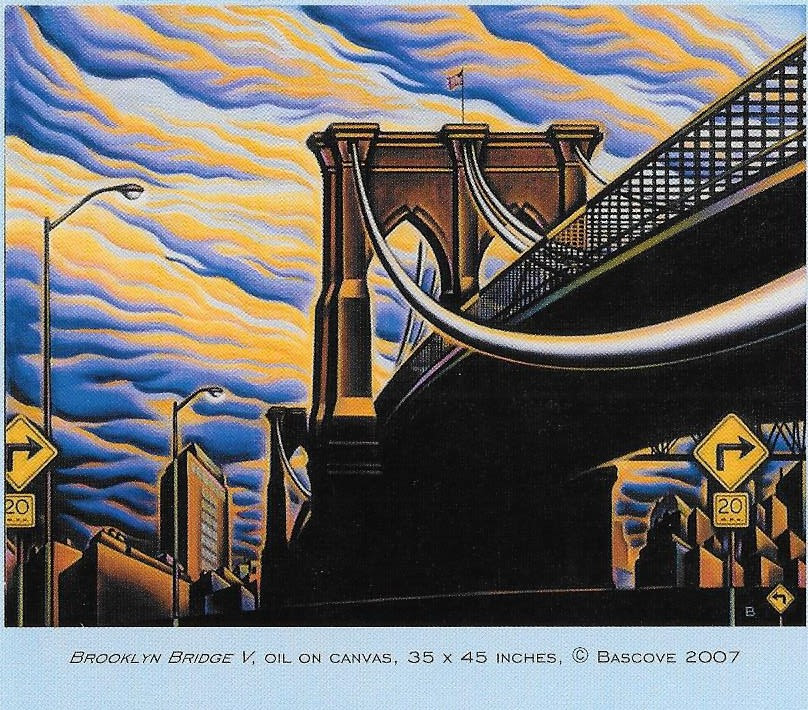
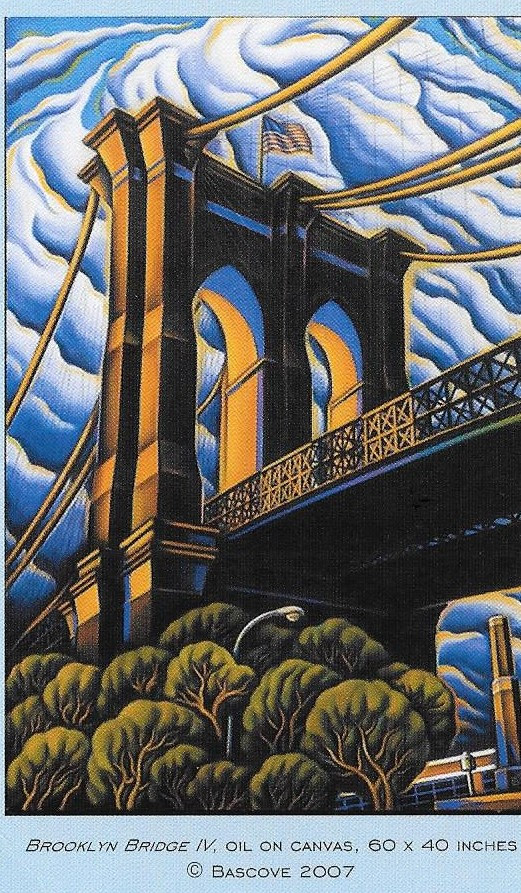
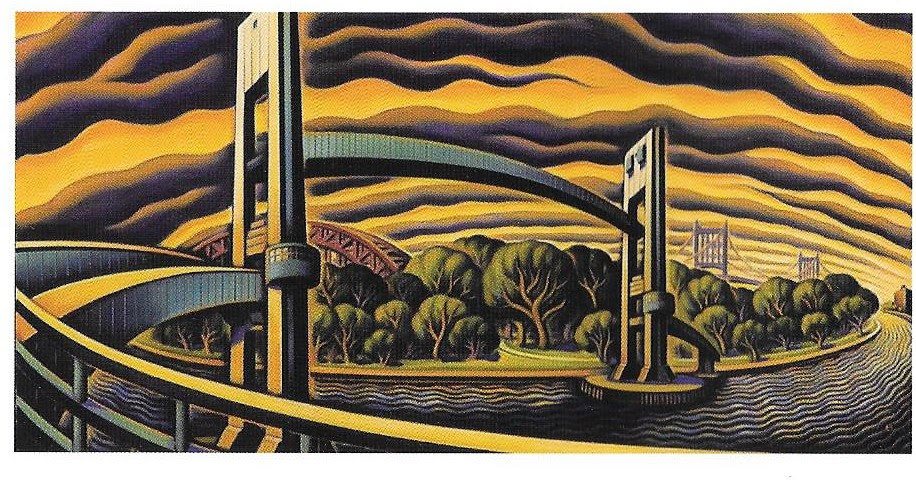
BASCOVE
Ward’s Island Bridge Oil on Canvas 26 x 52 inches (c) Bascove 2005
Smallpox Hospital with Queensboro Bridge Bascove (c) 2005
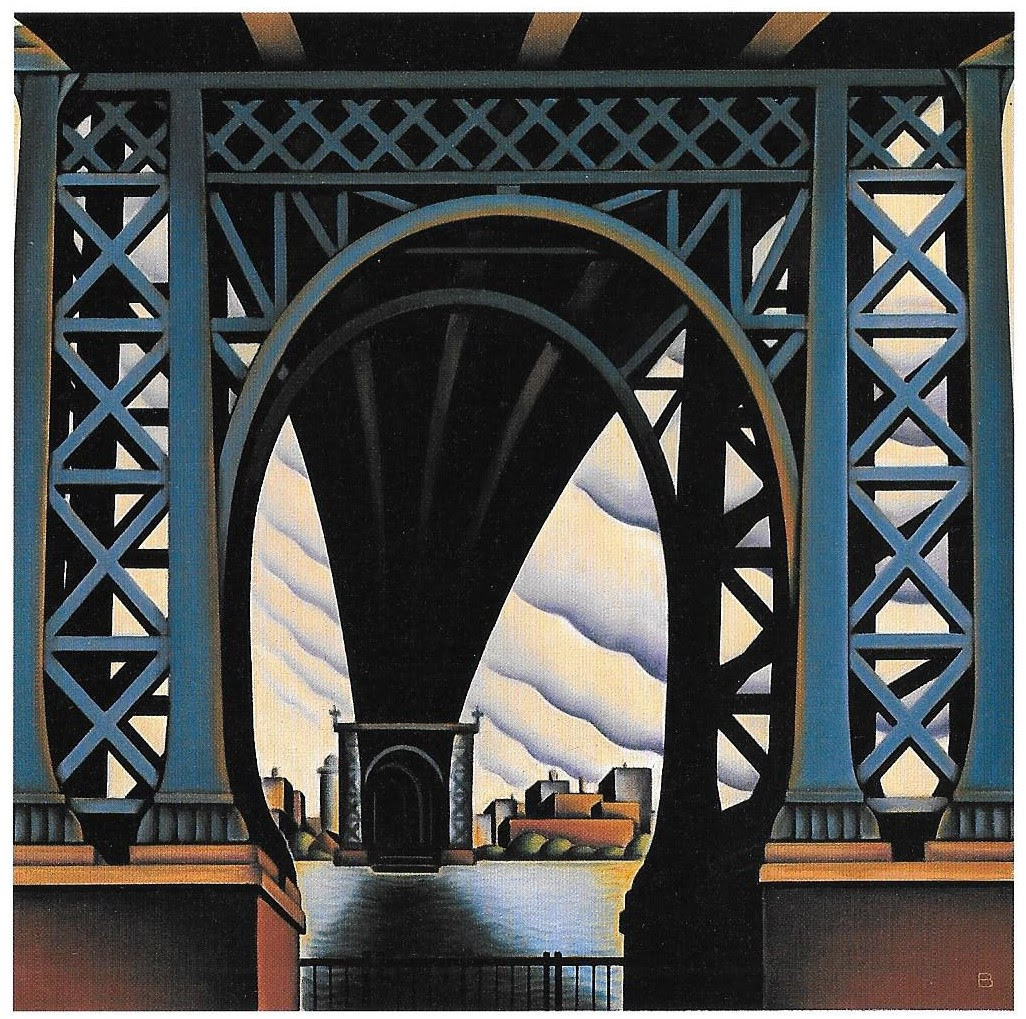
Williamsburg Bridge (c) Bascove 1995
LITIZIA PITIGLIANI
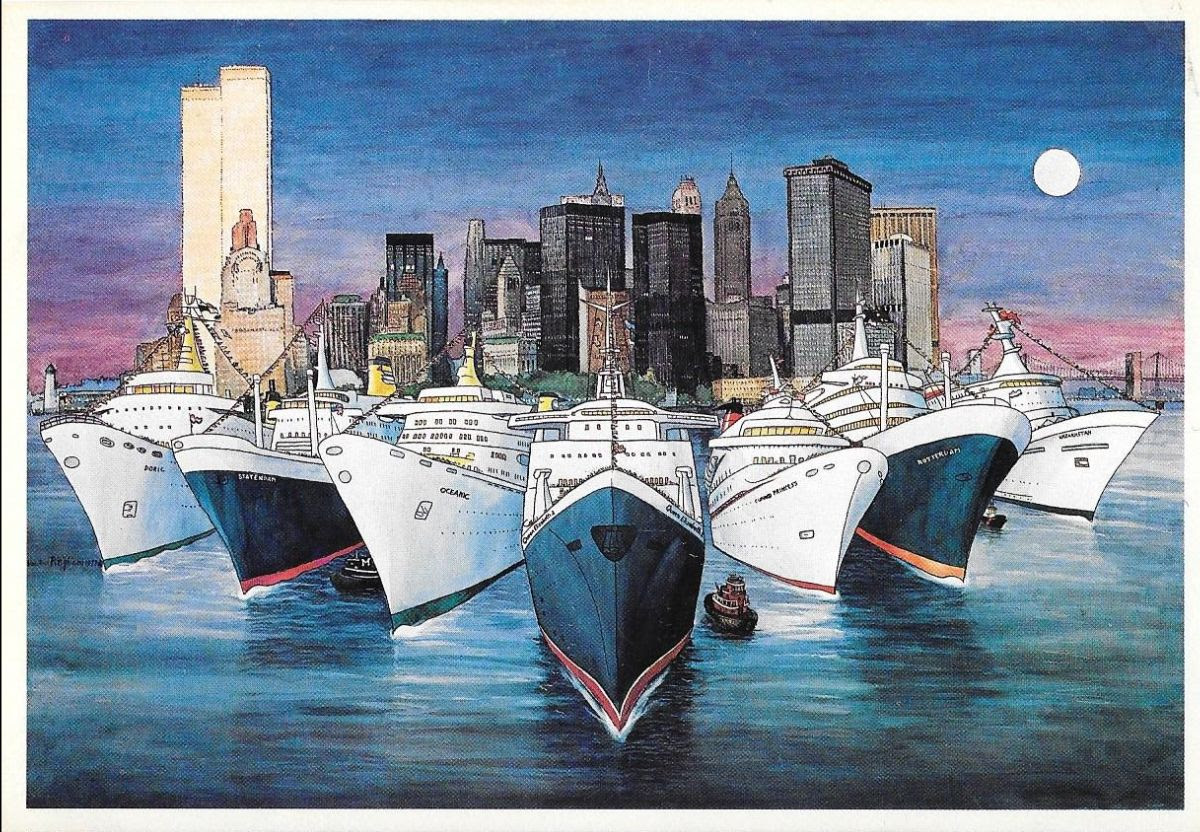
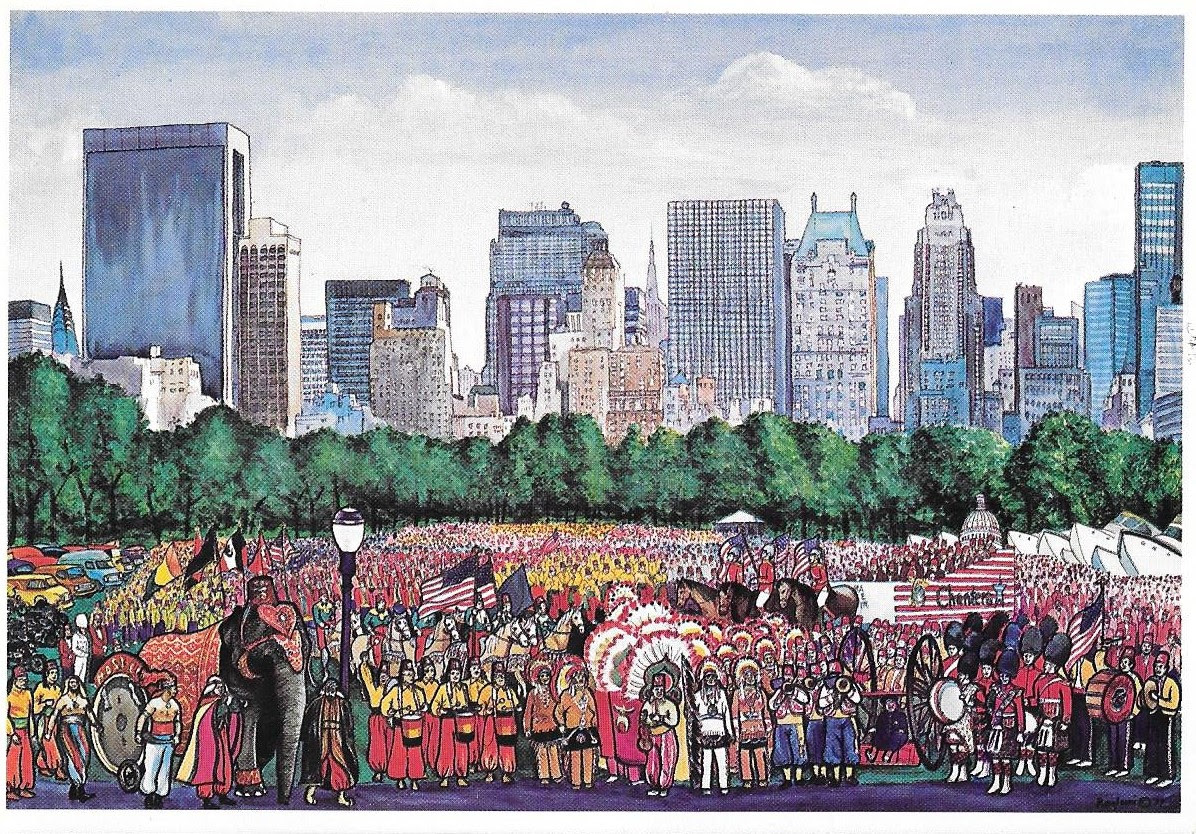
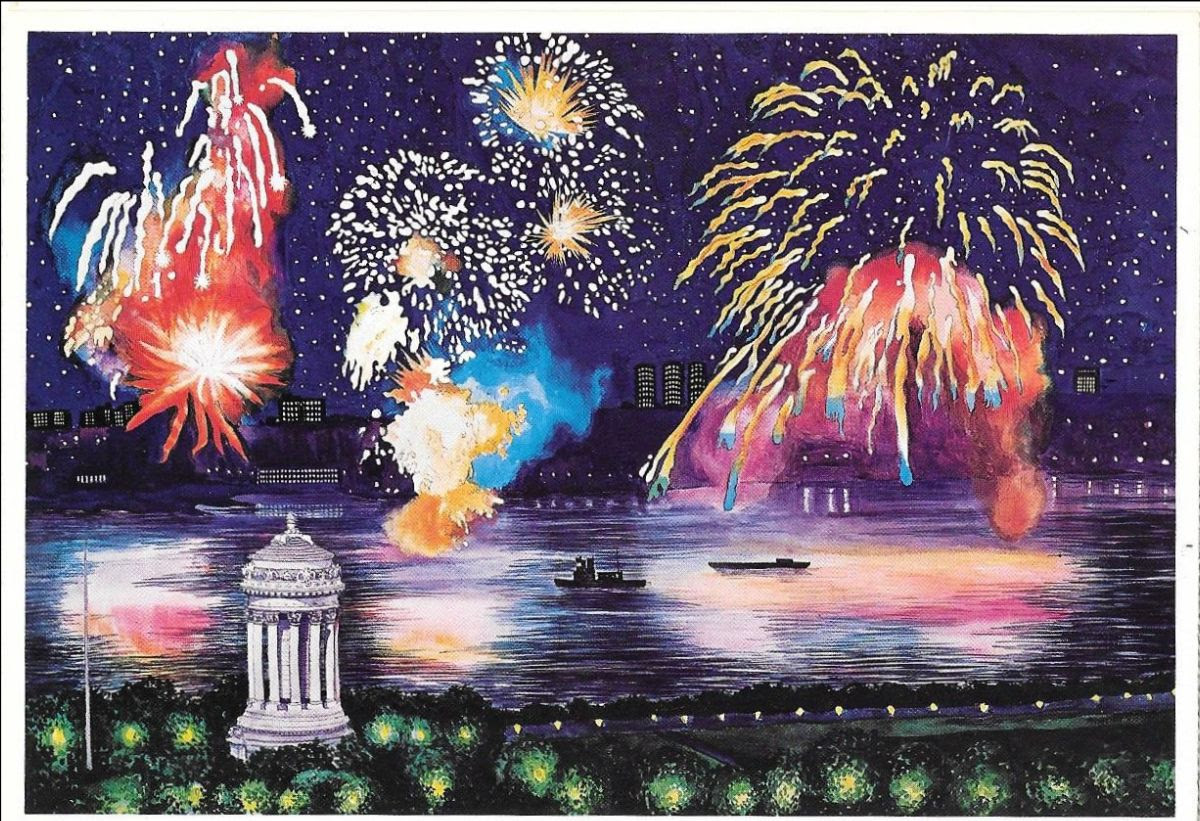
When I moved to Roosevelt Island on 7/7/77 I had a garden level apartment in 580 Main Street. I had lots of blank white walls. I had spotted the Op-Sail poster shown below and decided to purchase one. I had to have this subway poster sized (38 x 52″) artwork framed and managed to squeeze my precious art piece into the back of a Checker taxi.. I had to bribe my father to hang it on the wall for me. It hung on my wall for many years. As I grew away from acrylic furniture, day beds, director’s chairs to “real furniture” the poster was given away.
Looking at the on-line auction results, if I held on 35 more years I may have something “valuable.”
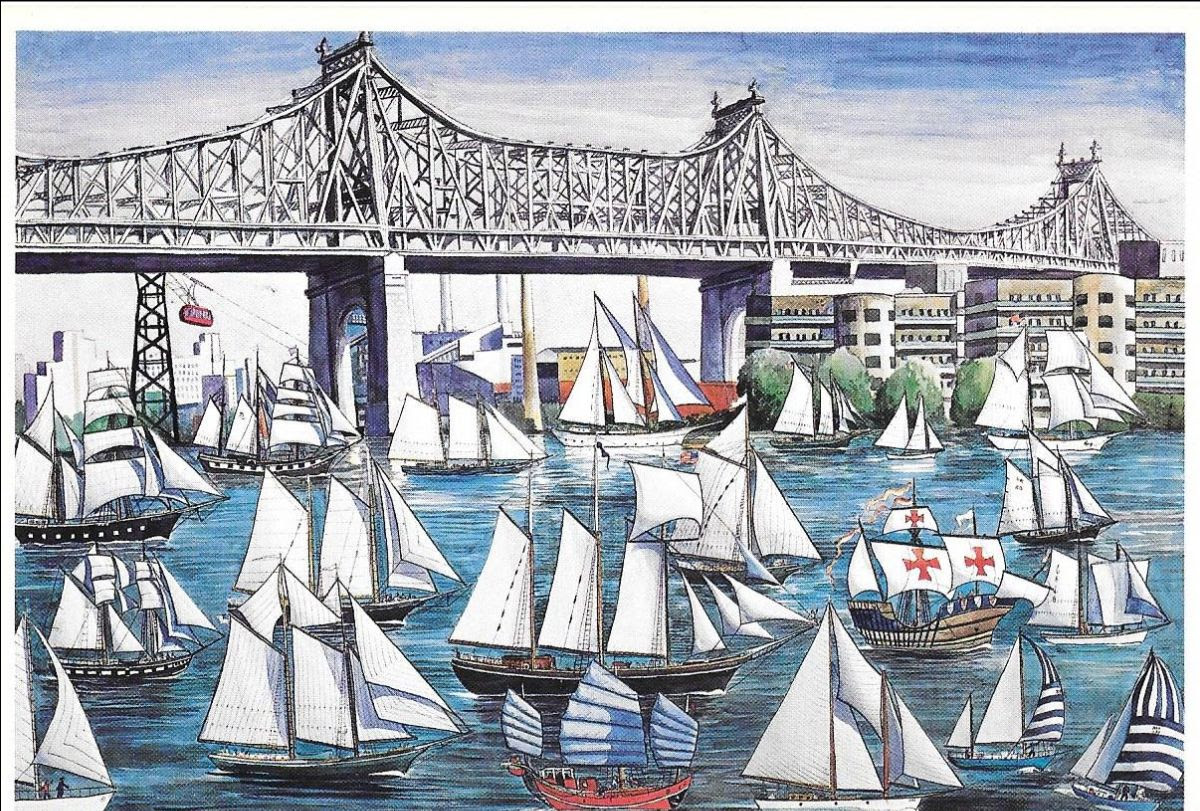
Parade of Sail 1977 New York (c) Litizia Pitigliana Association for a Better New York
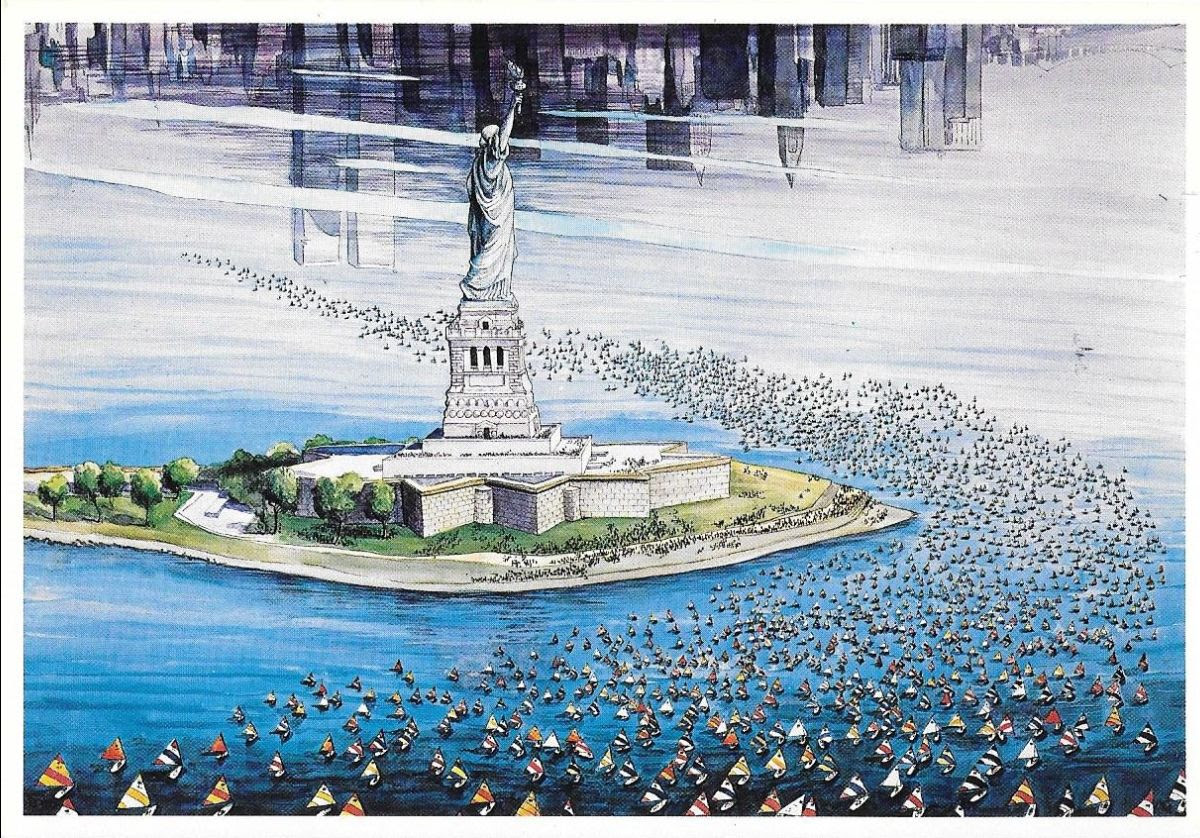
Sunfish Regatta Letizia Pitigliani New York 1977 (c)
Opliner (c) Litizia Pitigliani, New York 1977
Shriner’s Convention, Letizia Pitigliani New York 1977 (c)
Macy’s Fireworks Show on the Hudson Litizia Pitigliani New York 1977 (c)
EDITORIAL
After such a bleak week, here are the works of three artists. We never knew of the work of Arthur Tress while he was here, working most secretly in what I assume to be the old laundry building. I have known Bascove for years and I encourage you to see all her works on her website. You will be excited by her new post-bridge art pieces. Her site is bascove.com.
I have a wonderful book of the artwork of Litizia Pitigliani. I do not have a scanner that is large enough to scan these pieces.
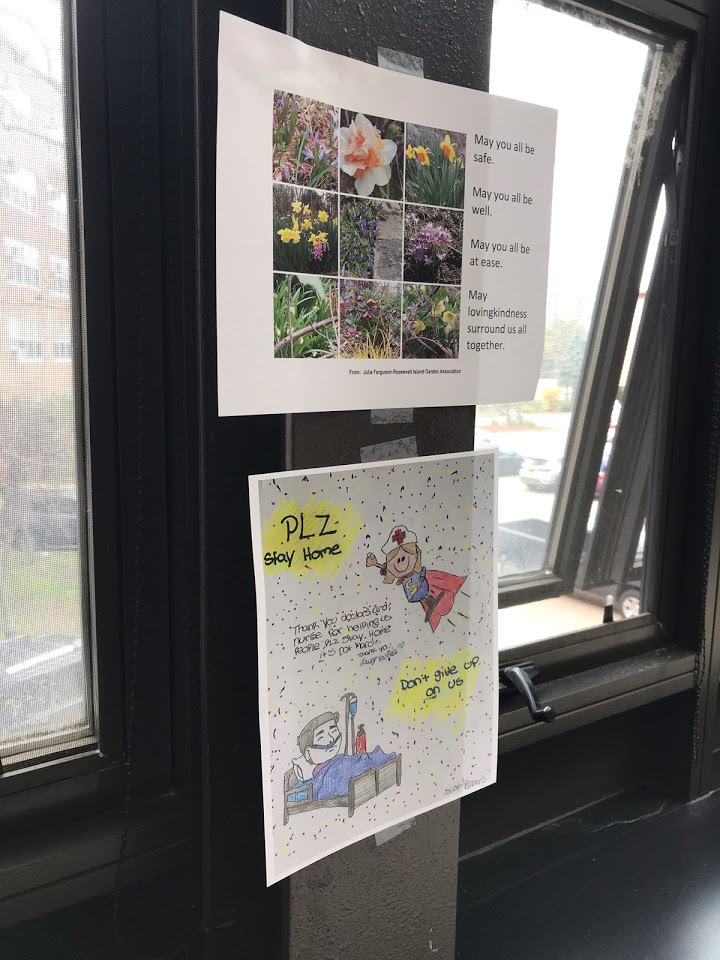
OUR NEIGHBORS AT COLER NEED YOUR GREETINGS, SUPPORT, ENCOURAGEMENT FOR THE RESIDENTS AND STAFF. DRAW A PICTURE MAKE A RAINBOW MAKE A PICTURE OF STARS MAKE A SMILEY FACE WRITE A NOTE OF SUPPORT LET’S KEEP OUR FELLOW ISLANDERS IS OUR THOUGHTS AND PRAYERS.
BROWN BROTHERS PHOTOGRAPHS A TREASURED COLLECTION (c)
Friday, April 3, 2020
16th in our FROM THE ARCHIVES series.
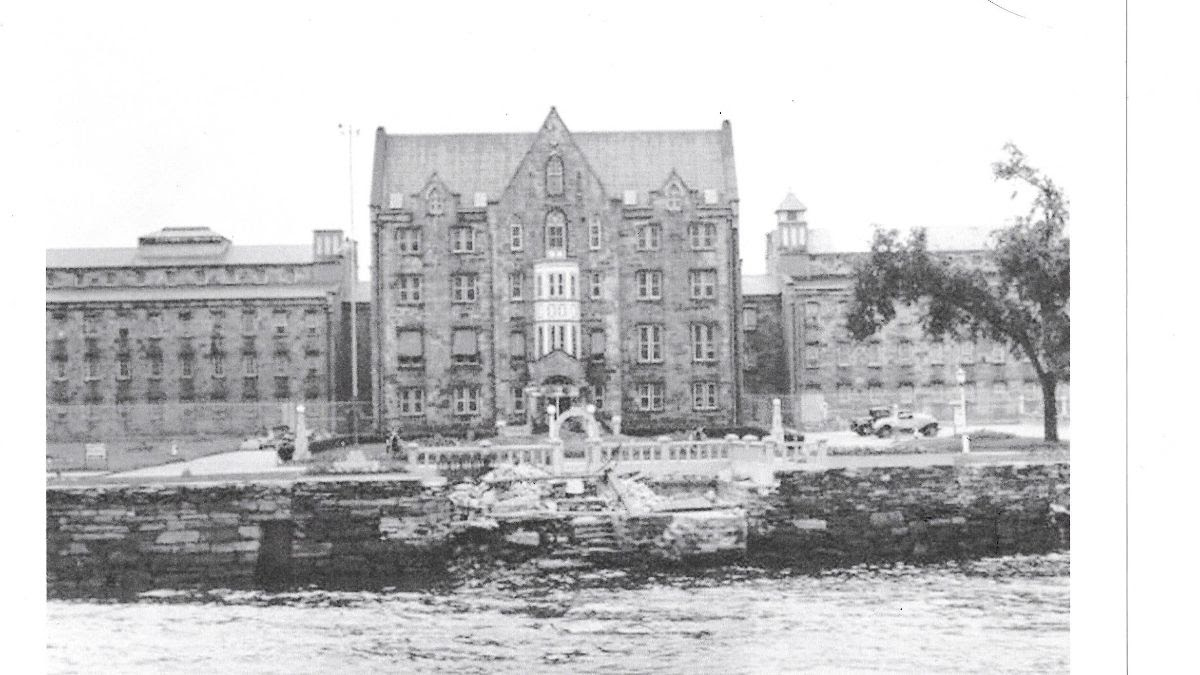
Entrance to Penitentiary (c) Brown Brothers
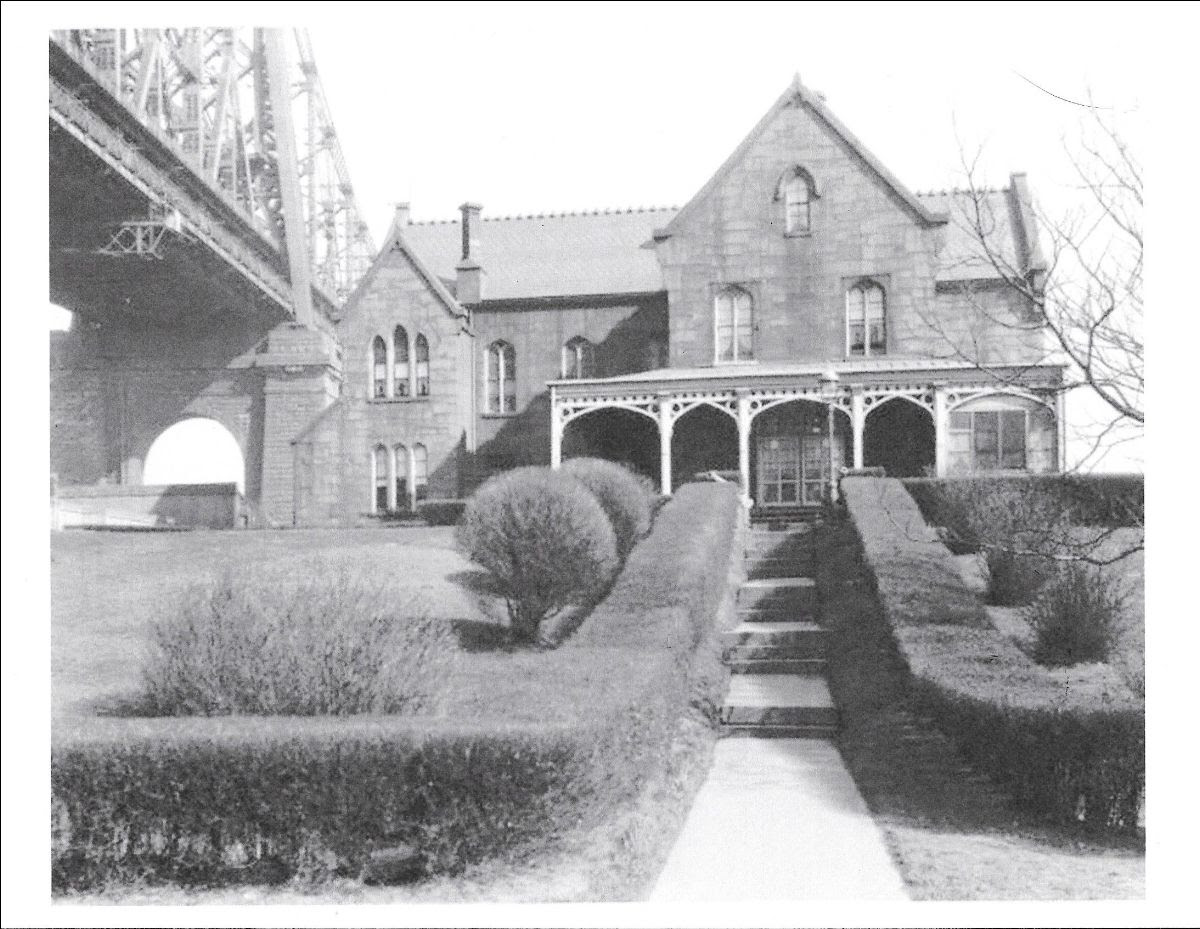
Warden’s house just south of the Queensboro Bridge, adjoining Penitentiary
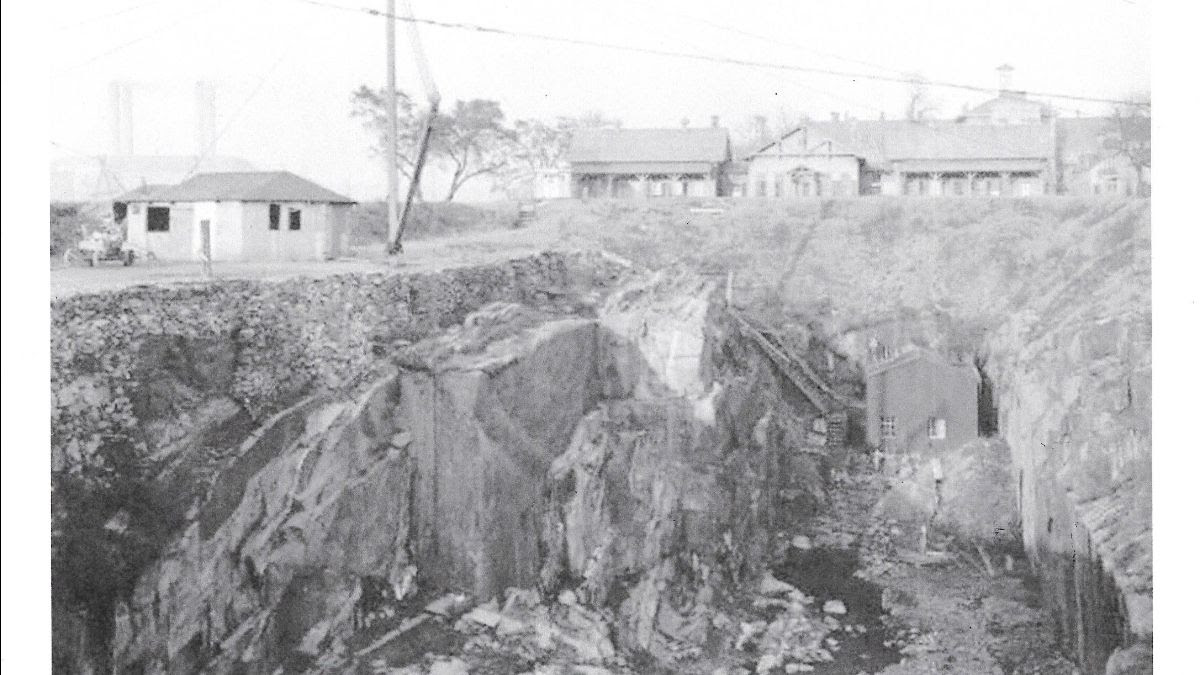
Quarry where prisoners excavated Fordham gneiss stone that is this the stone used on our structures. Quarry was located where 465 Main Street is today.
The Workhouse, located where 10 River Road is today. Persons serving short terms were incarcerated there.
Chapel of the Good Shepherd with Good Samaritan German Lutheran Church
Good Samaritan German Lutheran Church
Council Synagogue built for the Jewish residents of the City Home, located northwest of Good Shepherd
Our Lady Consoler of the Afflicted Catholic Church (demolished before 1970)
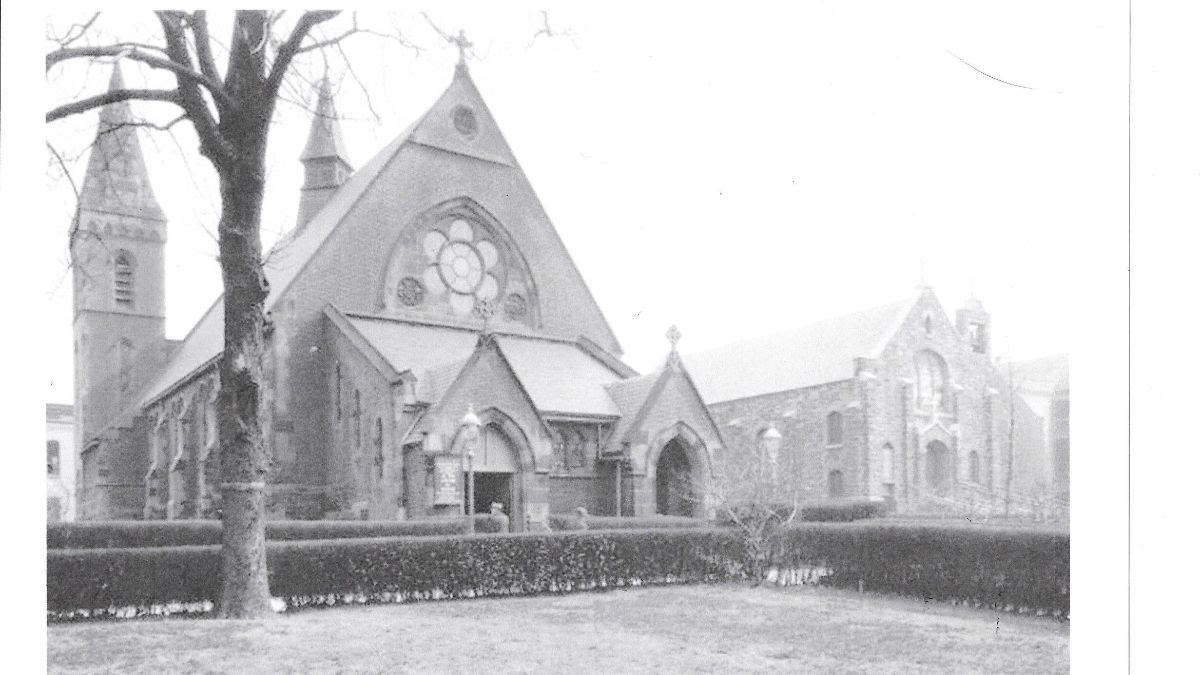
Sacred Heart Chapel (demolished 1980 for tennis courts)
Holy Spirit Chapel (Episcopal), today “The Sanctuary”
EDITORIAL
On my daily walk today I spotted some of our kiosk daffs in bloom. The kiosk looks great. The RIOC landscapers U-Arias gave us a good deal to clear the winter debris for our summer blooms to thrive.
Today has been challenging since Coler administration told me that many of the restaurants are not delivering to their staffs. The staff at Coler is working under challenging circumstances some unit quarantined, no visitors, short on staff and then being told that they do not qualify for a donated meal..
Thru the generosity of some islanders we hope to get some meals for the staff to the hospital each day.
The hospital auxiliary, which I am the president of can supply food and treats for the residents and not the staff.
If you want to help Coler, contact me and I will make sure the staff is supported by our community.
Text by Judith Berdy Thanks to Bobbie Slonevsky for her dedication to Blackwell’s Almanac and the RIHS Thanks to Deborah Dorff for maintaining our website Edited by Melanie Colter and Dottie Jeffries
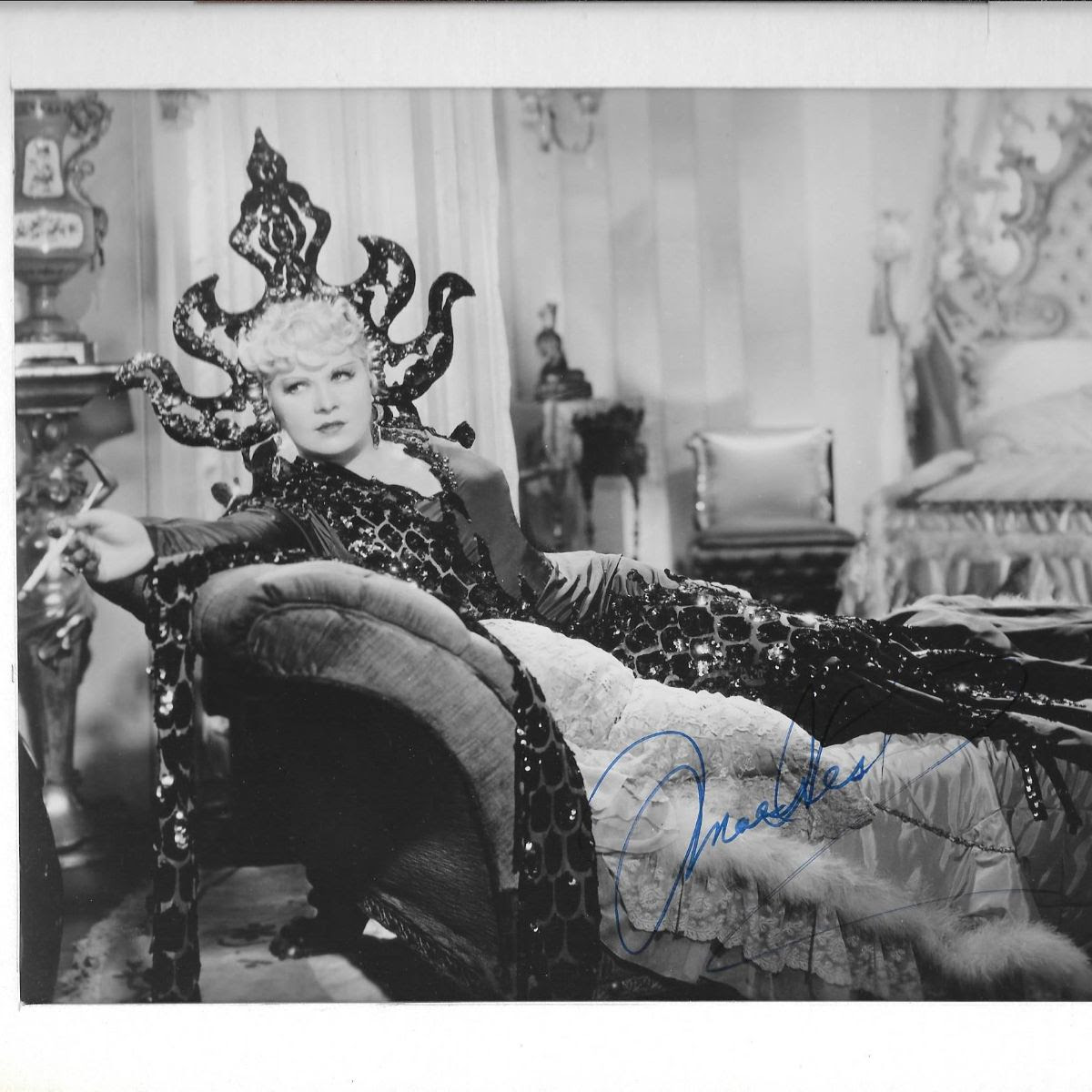
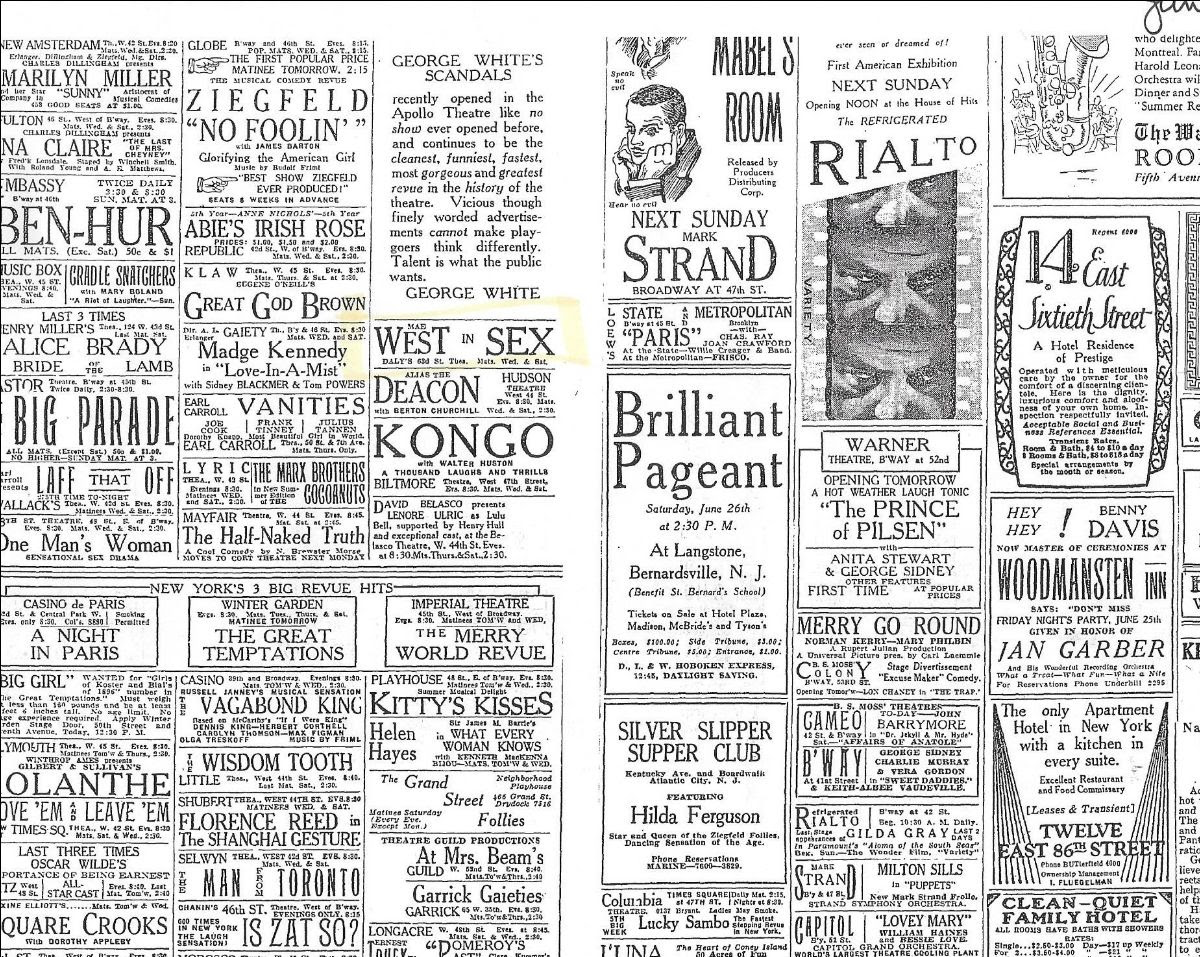
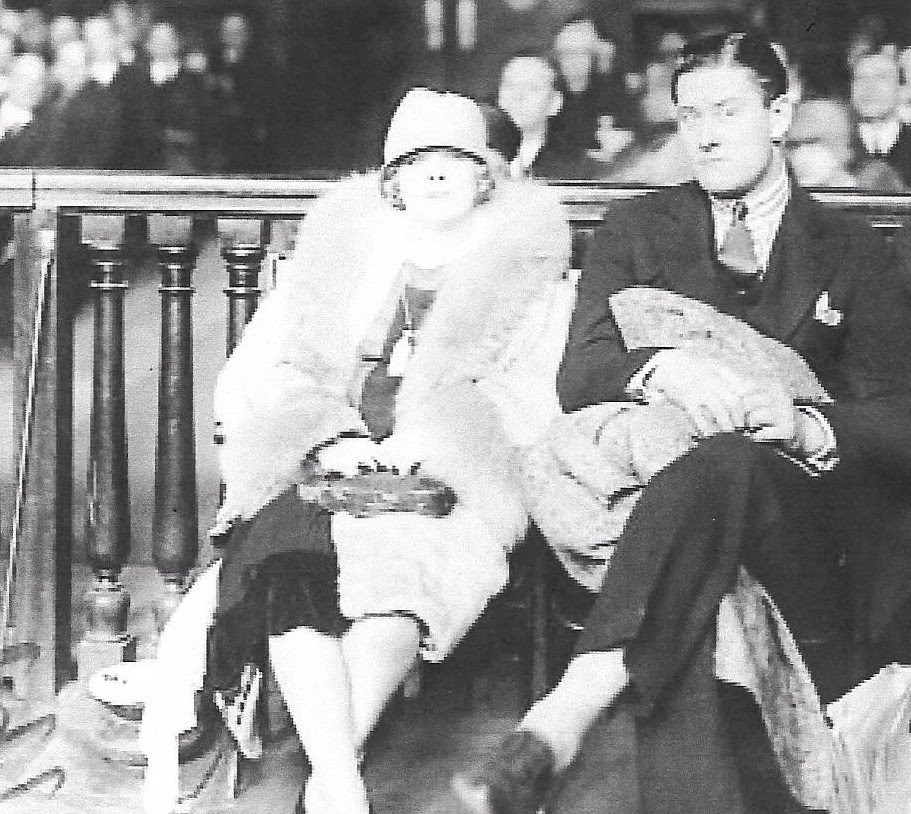
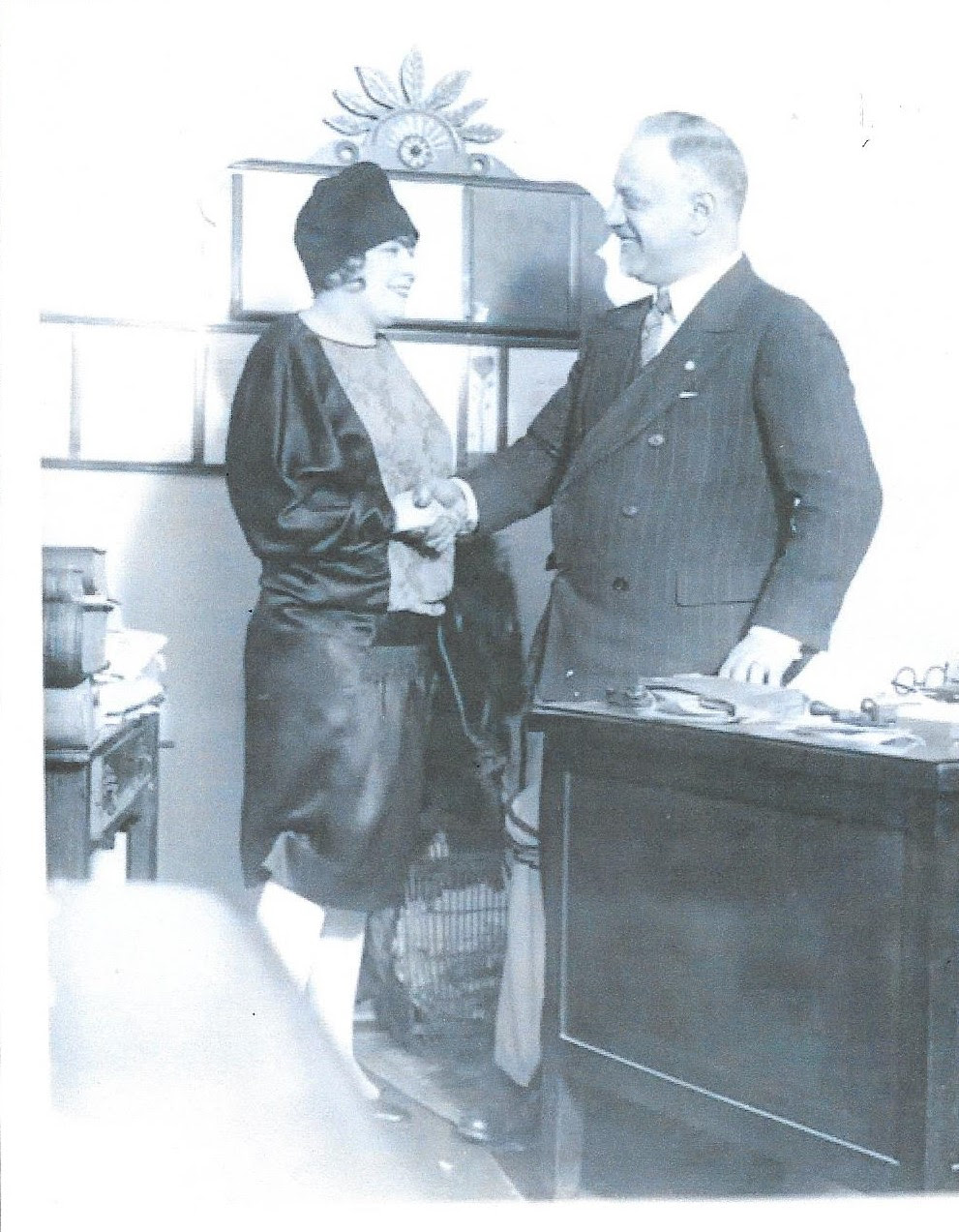
Advertisement for “SEX” in newspaper from 1926. When Mayor Jimmy Walker was out of town his deputy mayor had the show raided. The show had been on for many months prior to Miss West’s conviction and imprisonment.Mae Wet and Barry O’Neill, her co-star in the Broadway burlesques show “Sex” on trial for obscenity at Jefferson Market Courthouse in 1927. (c) The Villager/ RIHS ArchivesMiss West leaving the Woman’s Workhouse on Welfare Island with Warden Harry Schleth. Miss Westh had spent her time here, supposedly working it the library. This surgical kit was donated to the RIHS. We assume the instruments were used for neurological examinations. The kit is in very fragile condition. Property RIHS Archives
Today is Census Day!!
Without census records the RIHS and other historic preservation, genealogical and archival organizations would have little biographical information to work with.
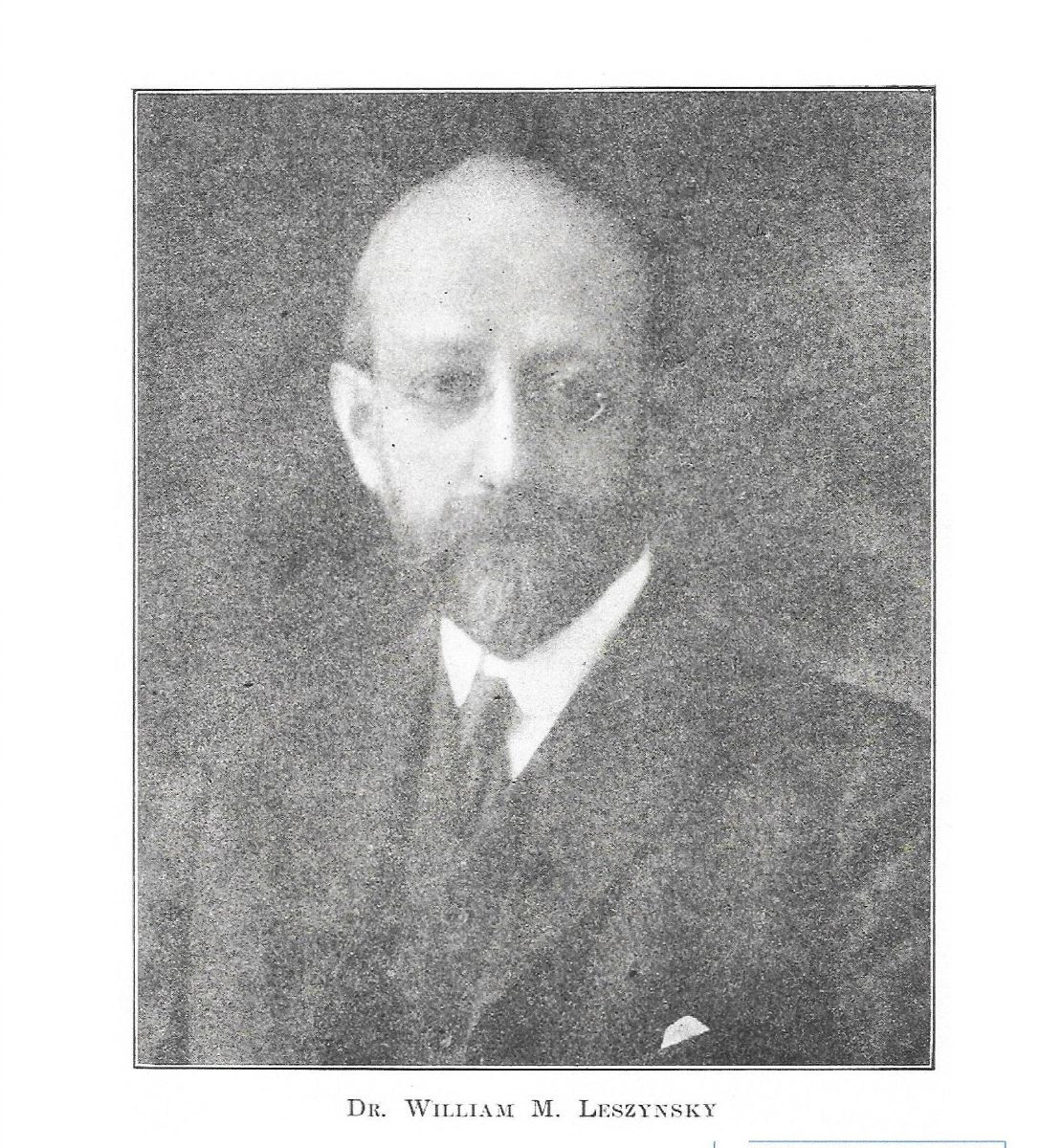
One person that I followed thru the census records was William Leszynsky, MD.
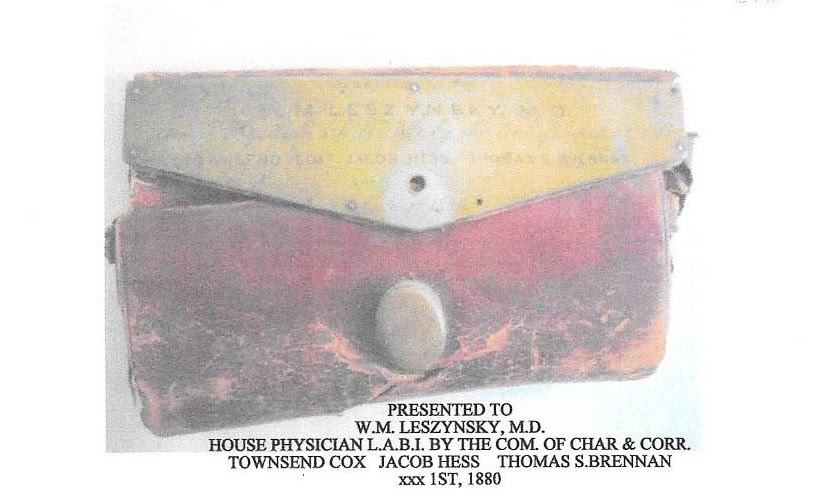
Dr. Leszynsky was a House physician at the Blackwells Island Lunatic Asylum . At one point of his work on the island he was presented with a leather and brass engraved surgical instrument set.
We tracked Dr. Leszynksy from census records.
In 1860 his mother Amelia was married to Henry and living in San Francisco In the 1870 William, 13 years old was one of 6 children of Henry and Amelia living in New York City In 1880 William, 25 was a physician living in New York City (His address is listed as the B.I. Lunatic Asylum) In 1900 William, 40 was married to Adele for 5 years and lived in Manhattan and listed as a physician. In 1910 William 52 and Adele lived in Manhattan and listed as a physician. In 1920 William, 62 and Adele were living in Manhattan listed as a Physician Neurology. In 1930 Adele (listed as Belle) was living in Manhattan, with a housekeeper Mary Cronin
(The ages do not add up by the years indicated)
It his Wikipedia listing Leszynsky graduated from University Medical College in 1878.(now NYU) . He died March 3, 1923. There are numerous papers listed on-line for him including one on “Coffee as a Beverage: It’s Deleterious Effects on the Nervous System.
EDITORIAL
Clutter seems to be growing these days. In the morning I stack up the materials I used the day before.
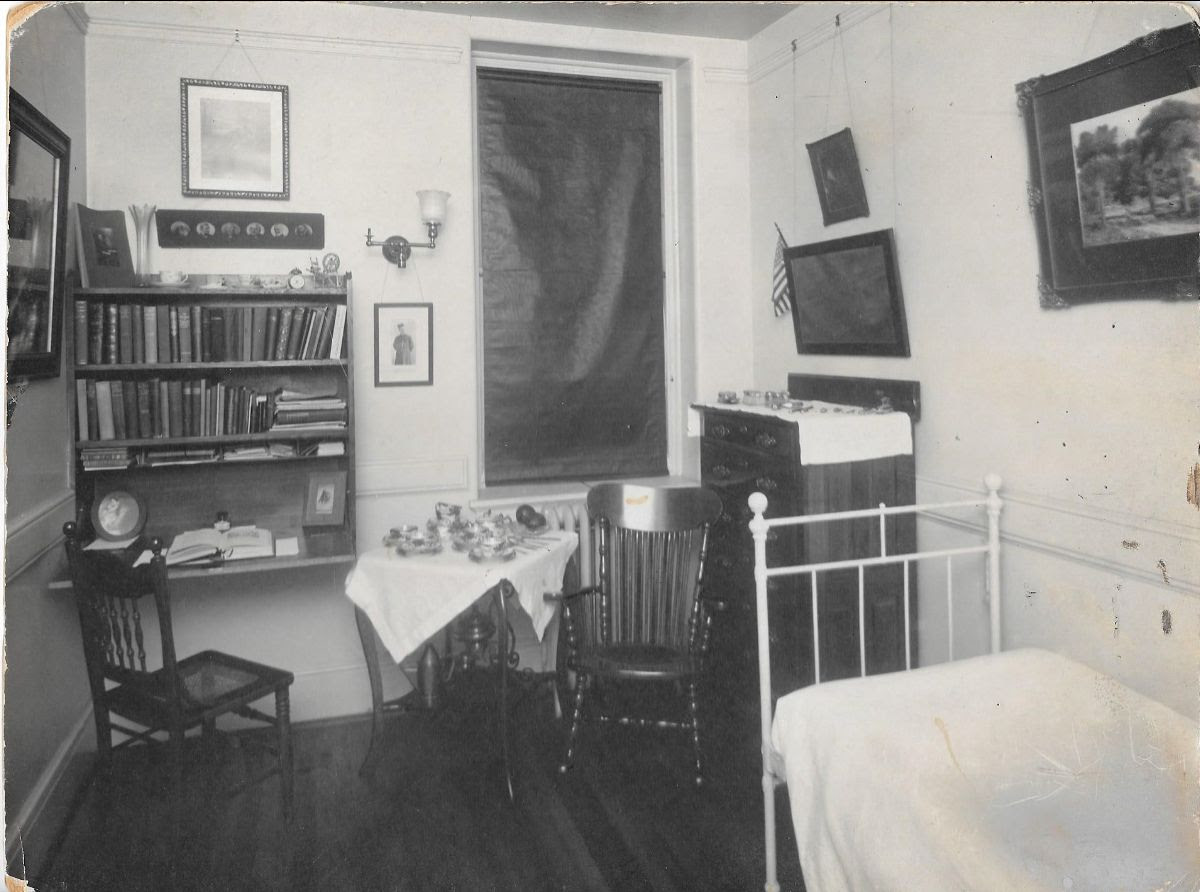
Some goes back in the shelf or folder. Other gets stacked higher and higher. Maybe it is the incomplete situation we are in with an indefinite date. No one is coming to a Seder. We do not have to clean the house for Passover, Easter or Ramadan, all of which are approaching.
Many of us are living with kids, aunts, uncles, in-laws in our homes now. Clutter is everywhere. The dining room table is desk, an office, schoolroom, movie studio and maybe even a pizza box is propped on the stack of stuff,
Below is a photo one of our Schools of Nursing dormitory rooms from the 1930’s. Enjoy you tea.
Judith Berdy
Text by Judith Berdy Thanks to Bobbie Slonevsky for her dedication to Blackwell’s Almanac and the RIHS Thanks to Deborah Dorff for maintaining our website Edited by Melanie Colter and Dottie Jeffries