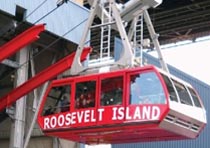
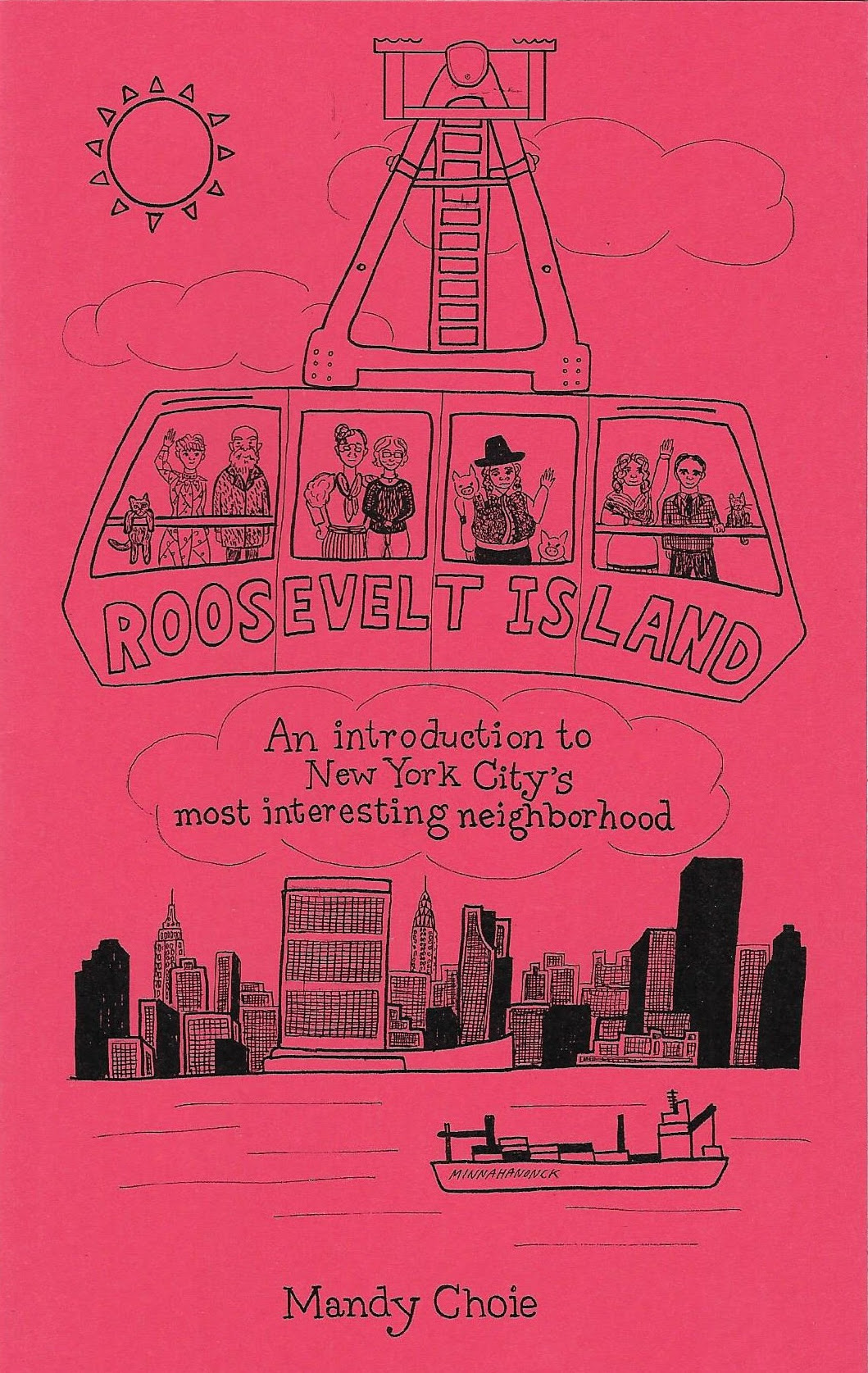
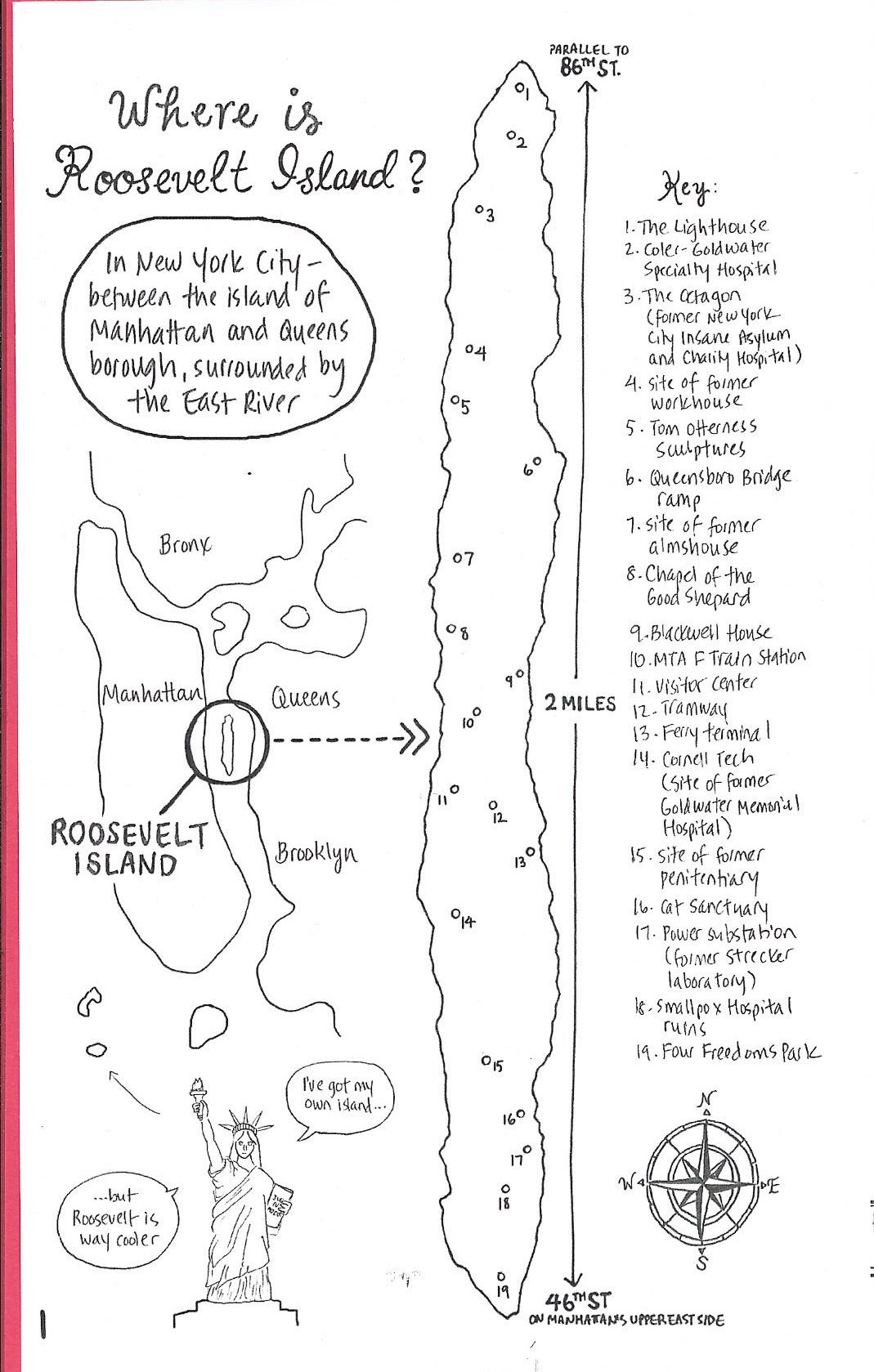
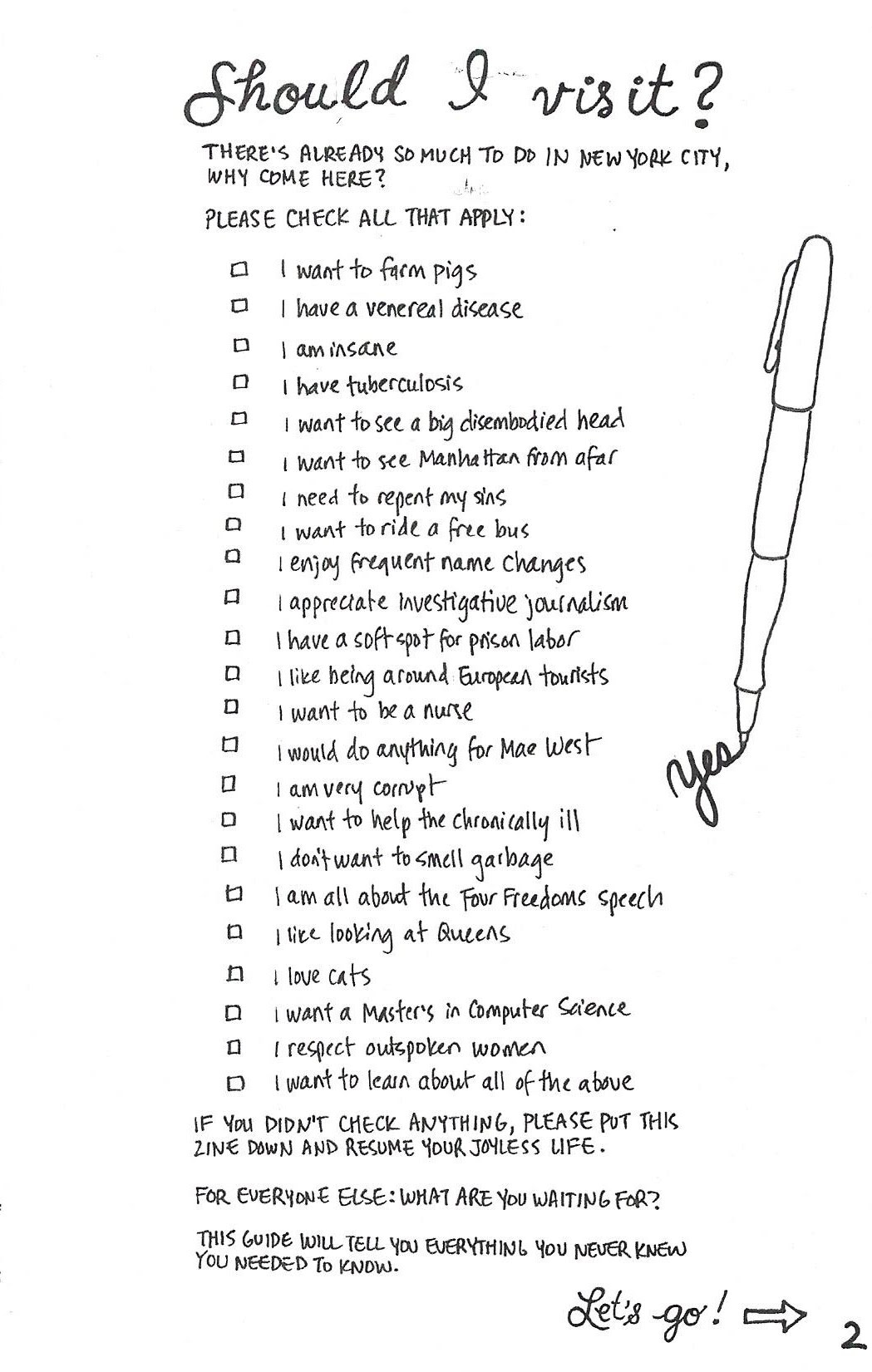
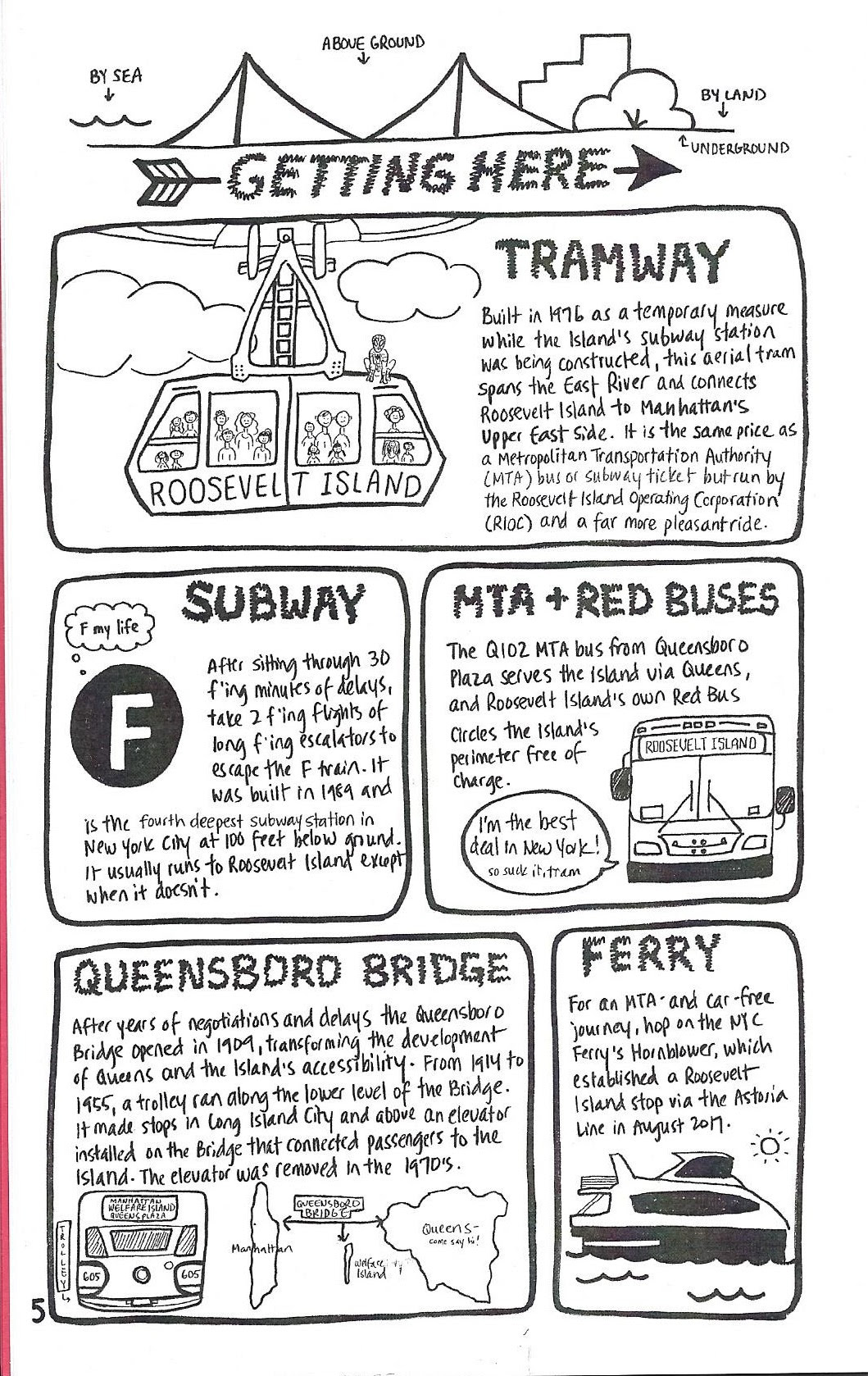
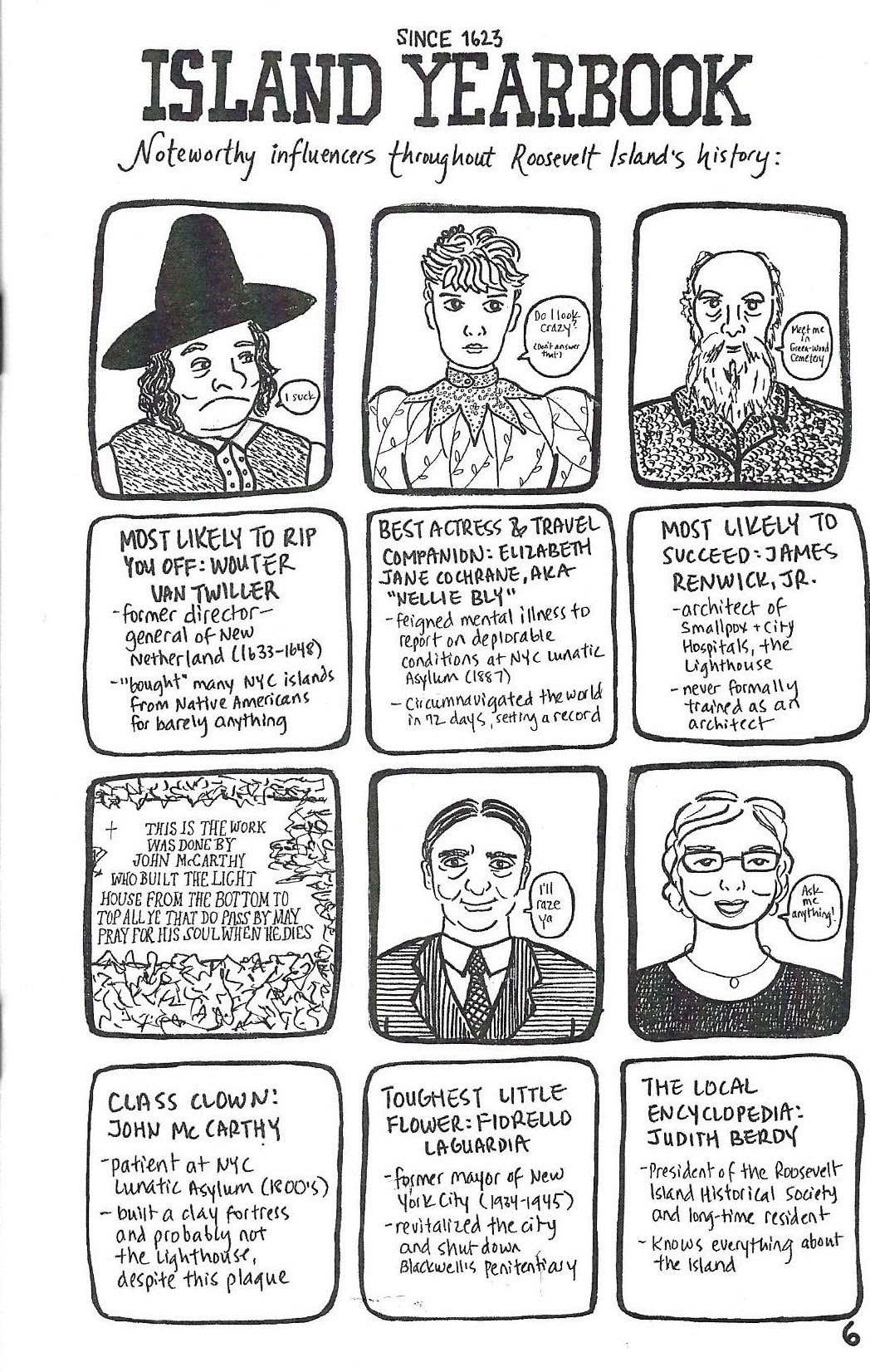
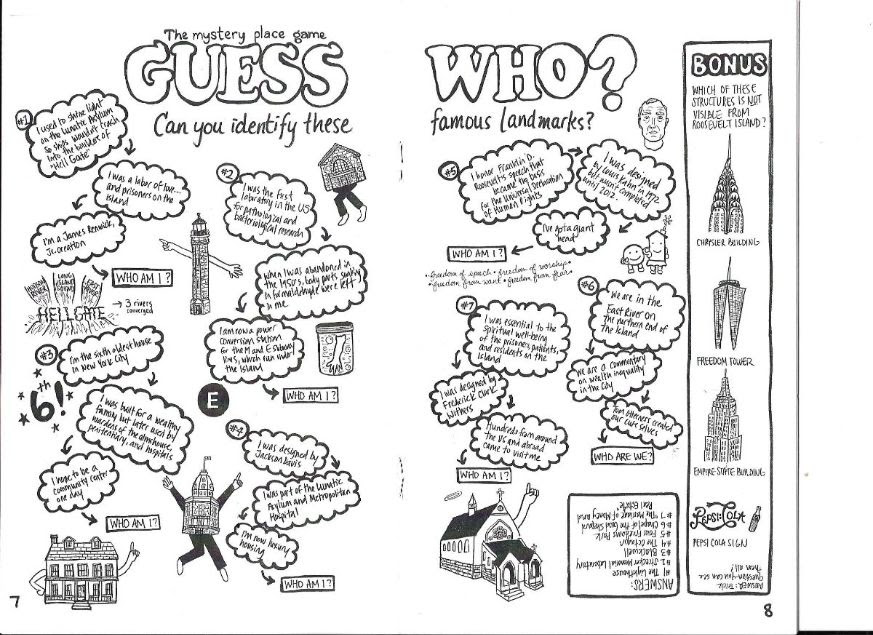
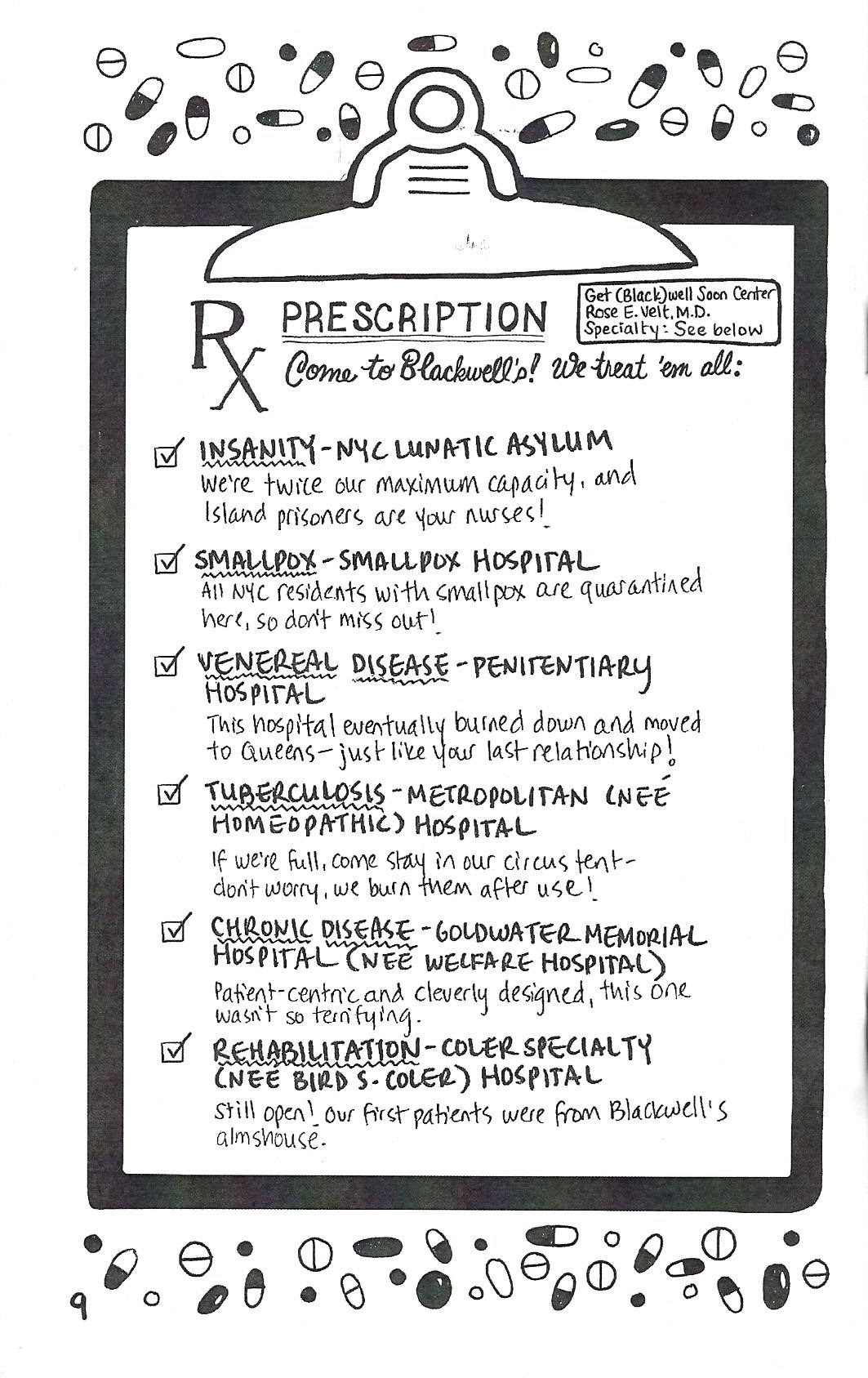
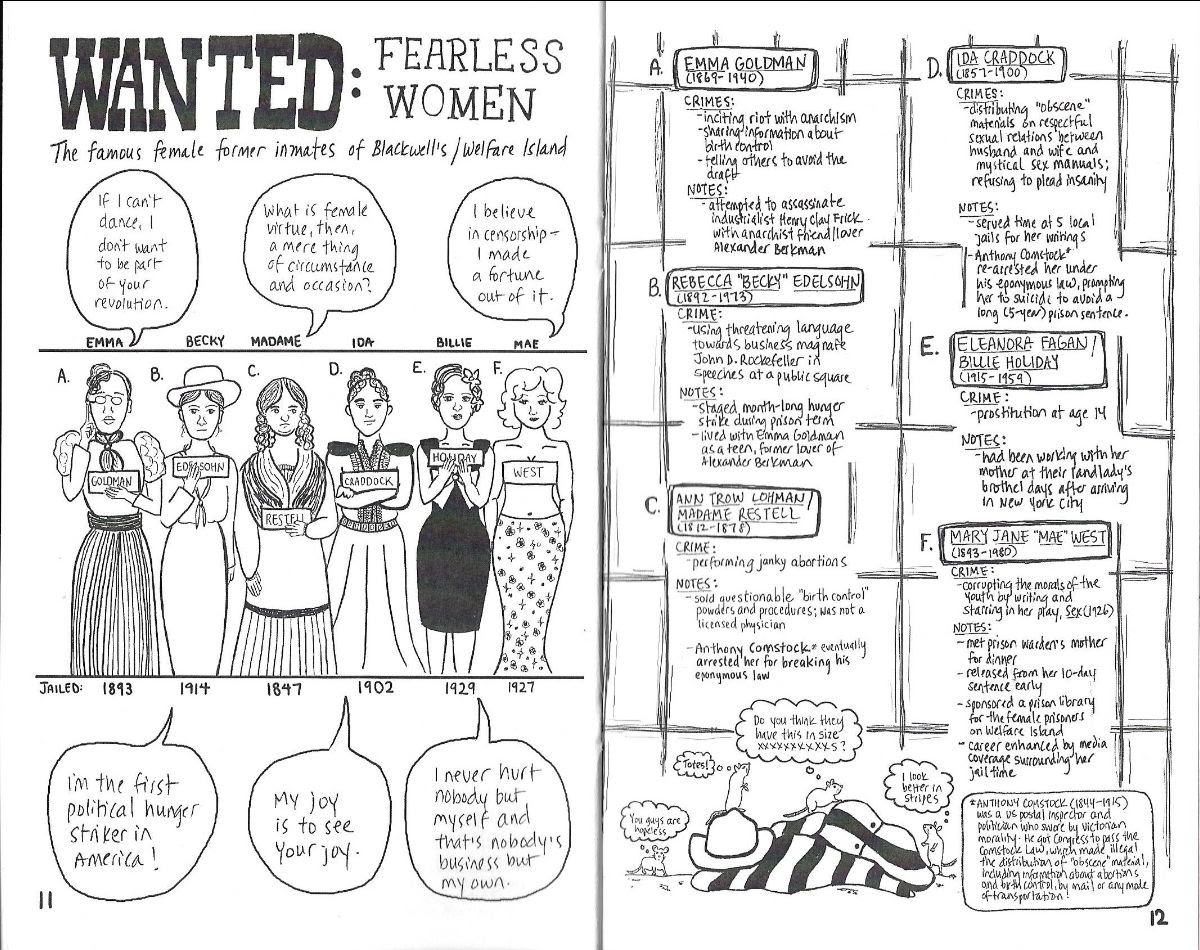
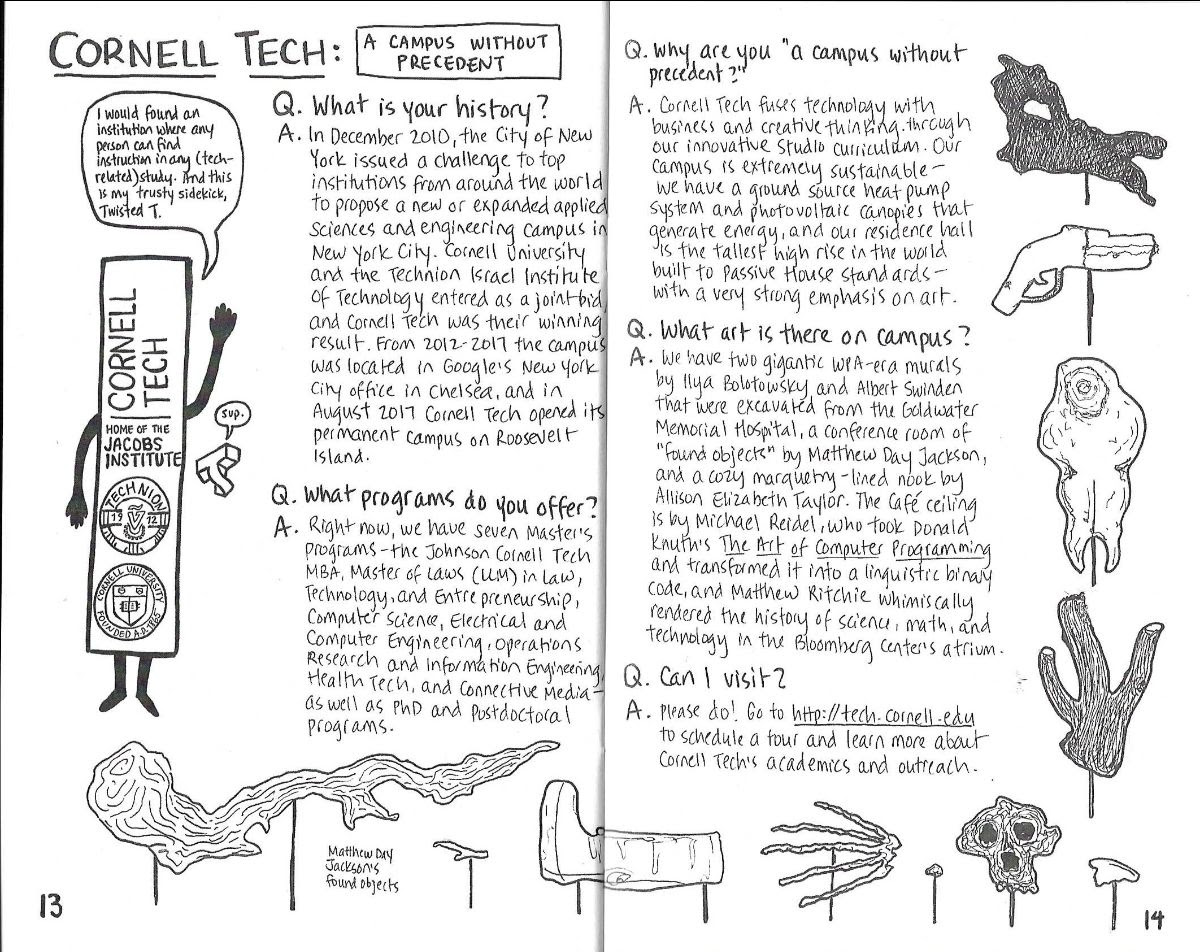
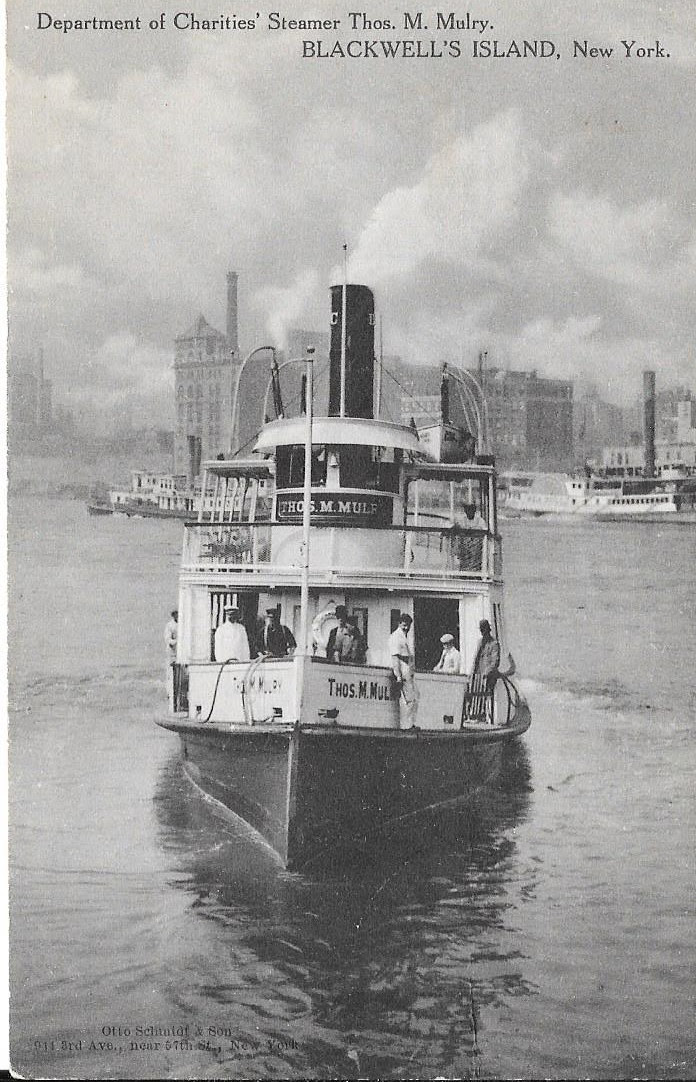
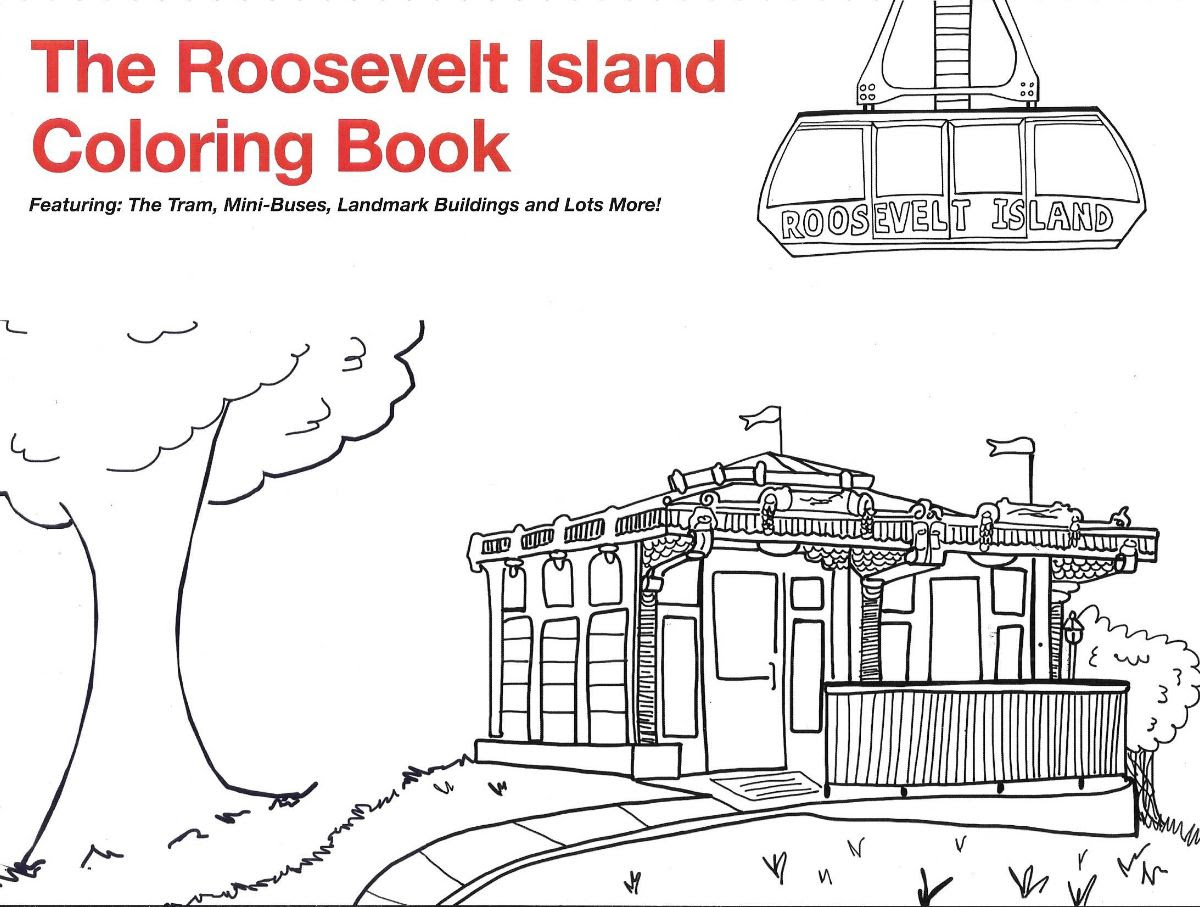
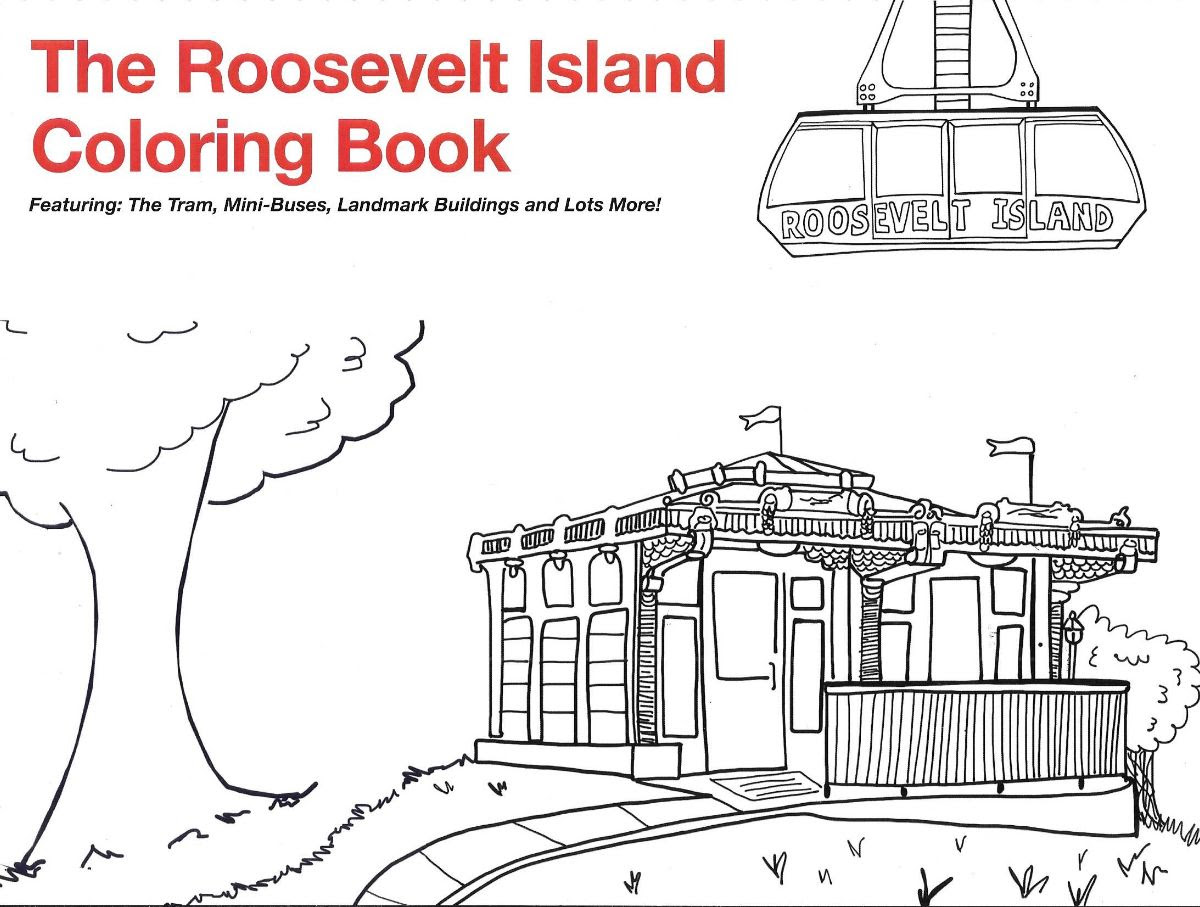
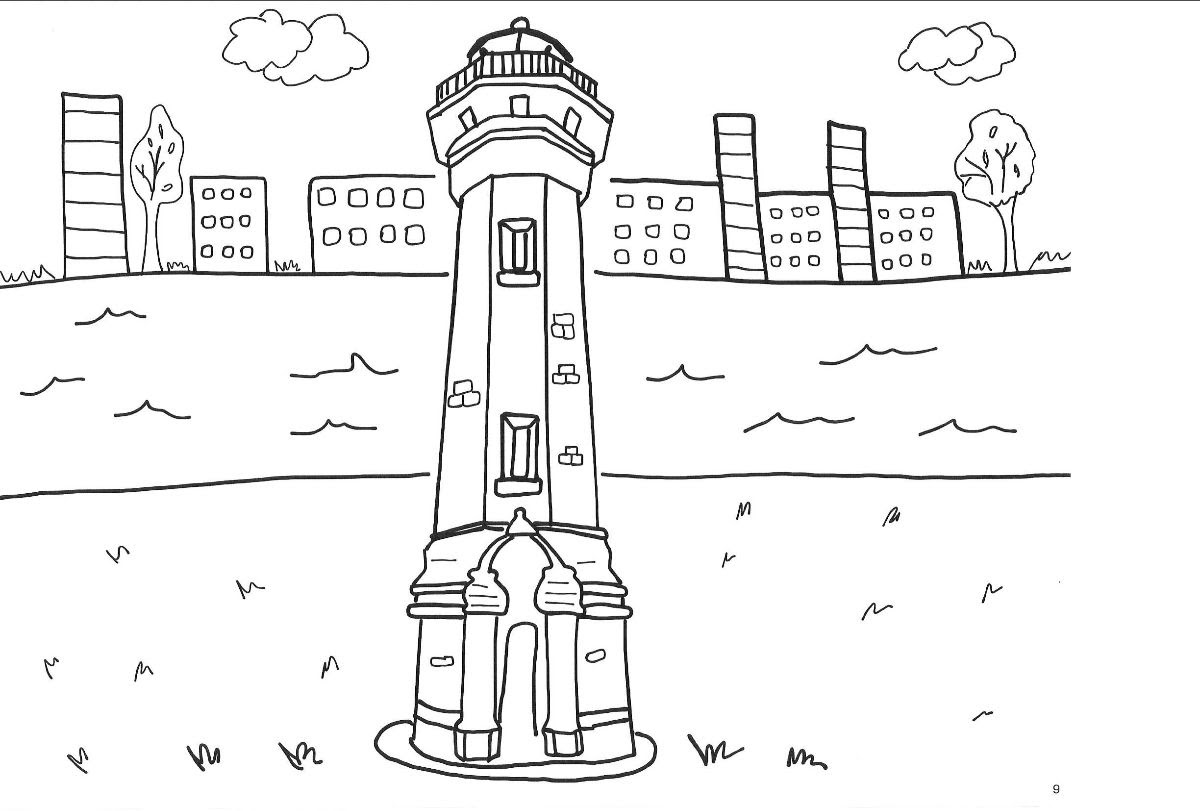
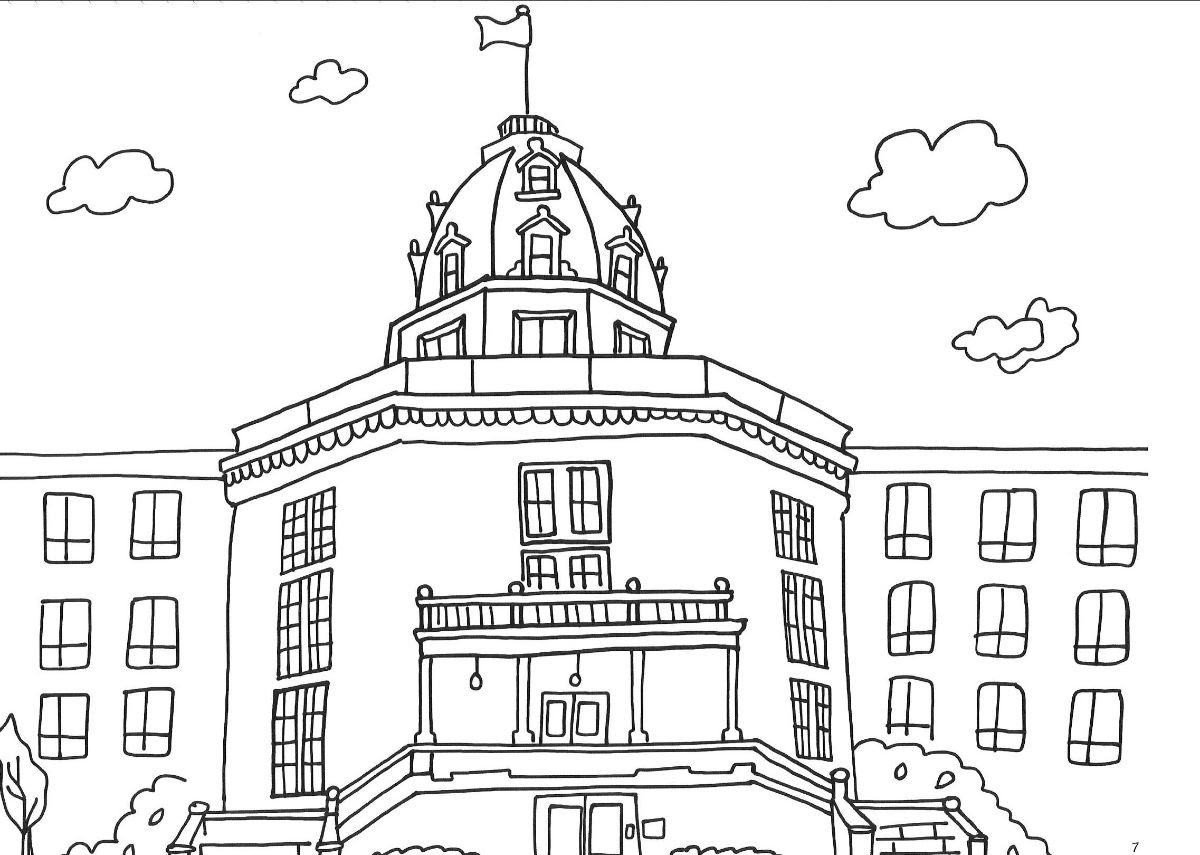
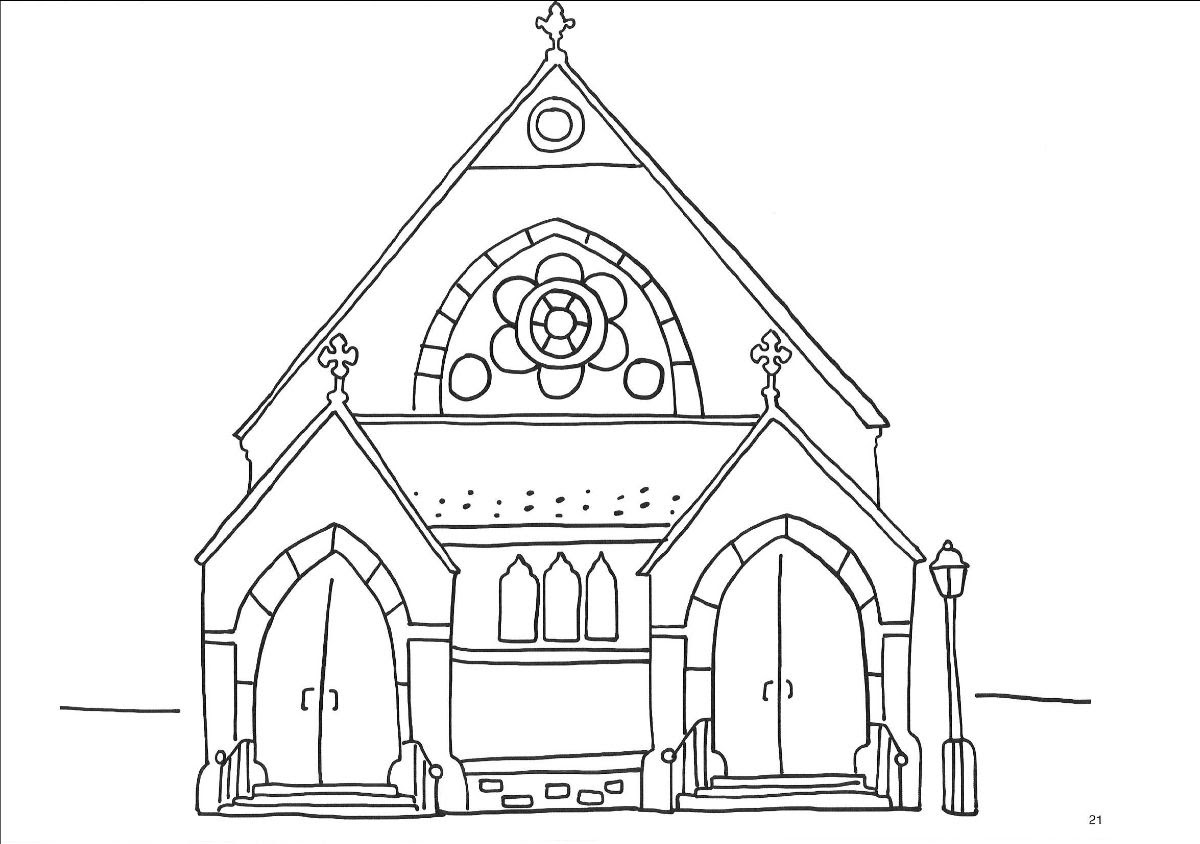
This weekend we are treating you to a special book on Roosevelt Island and its history. Written by Mandy Choi, who worked in the Admissions Office at Cornell Tech, it is a lighthearted look at the history and characters of the island!
Please respect the Copyright of this publication (c) Mandy Choi 2018 ALL RIGHTS RESERVED
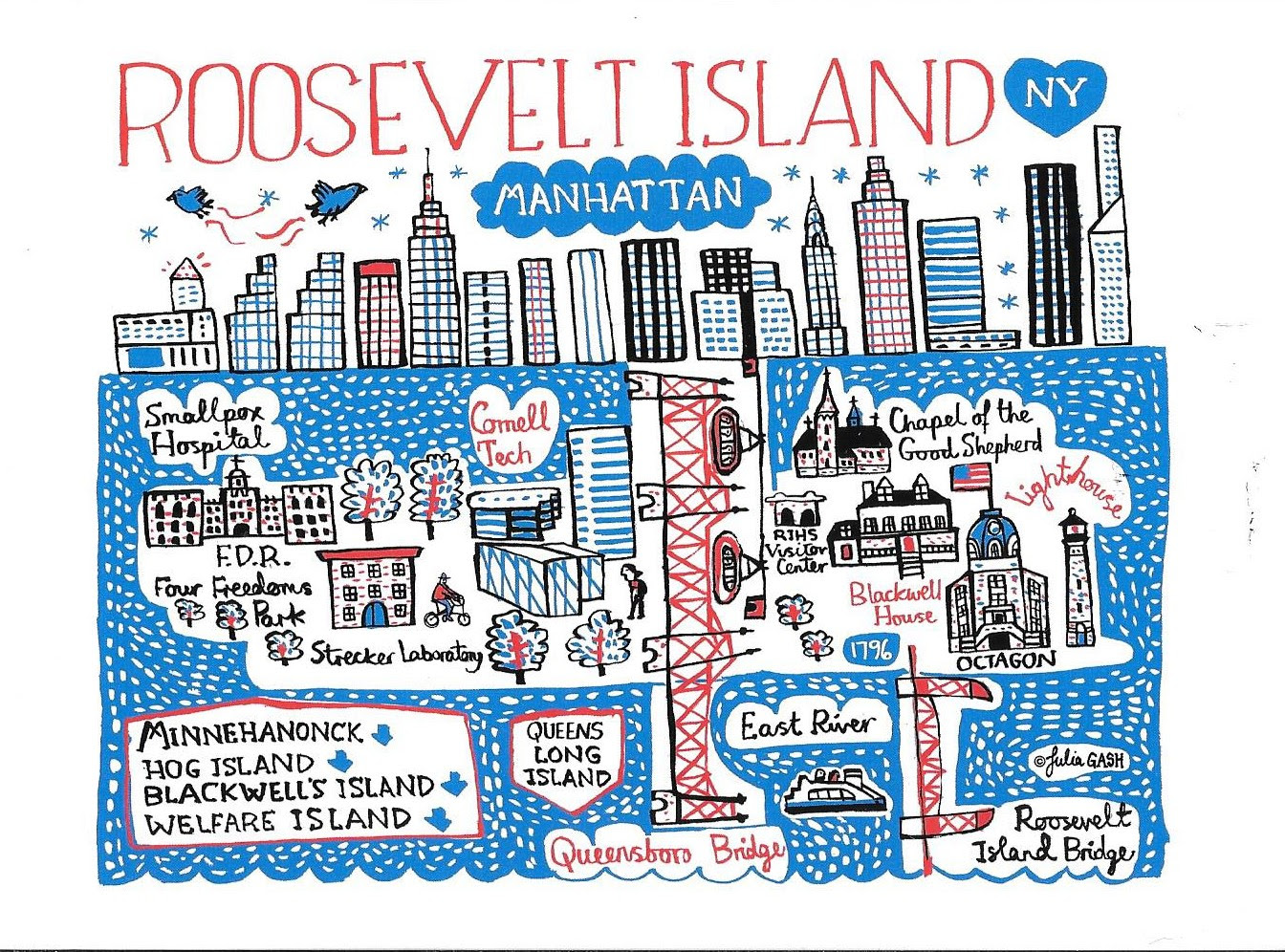
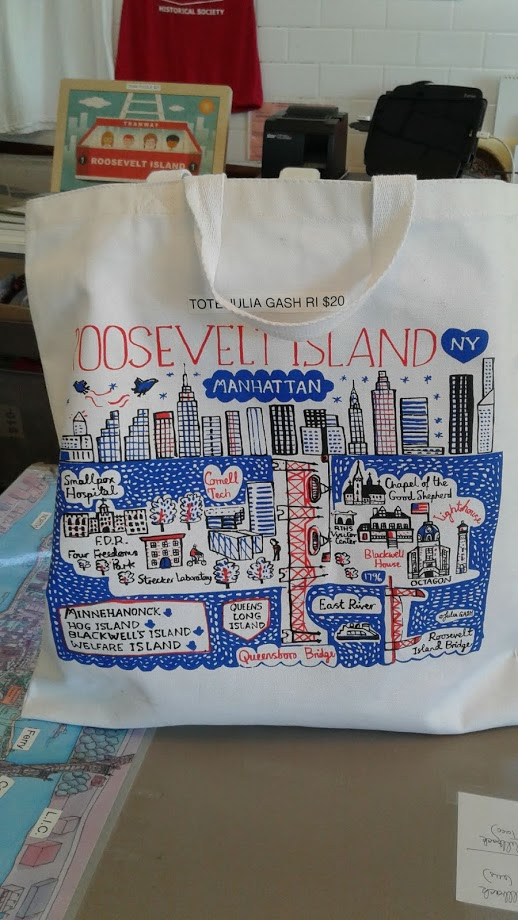
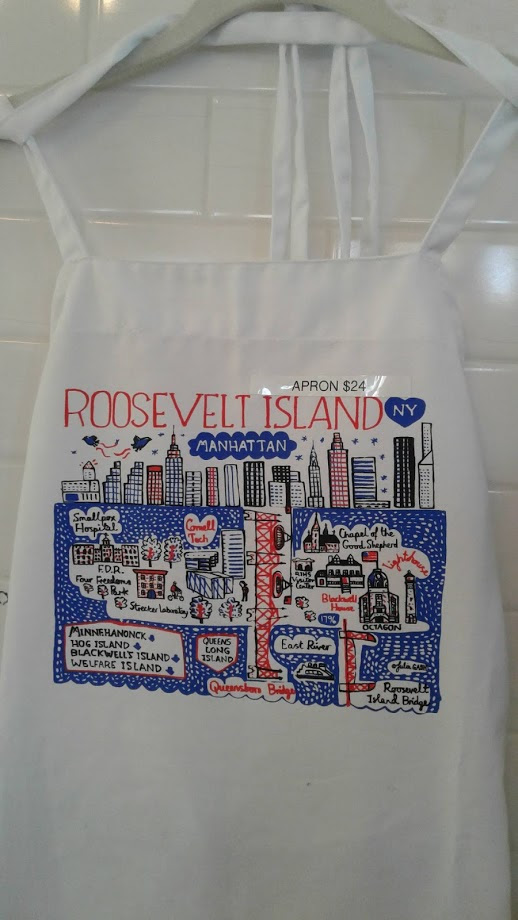
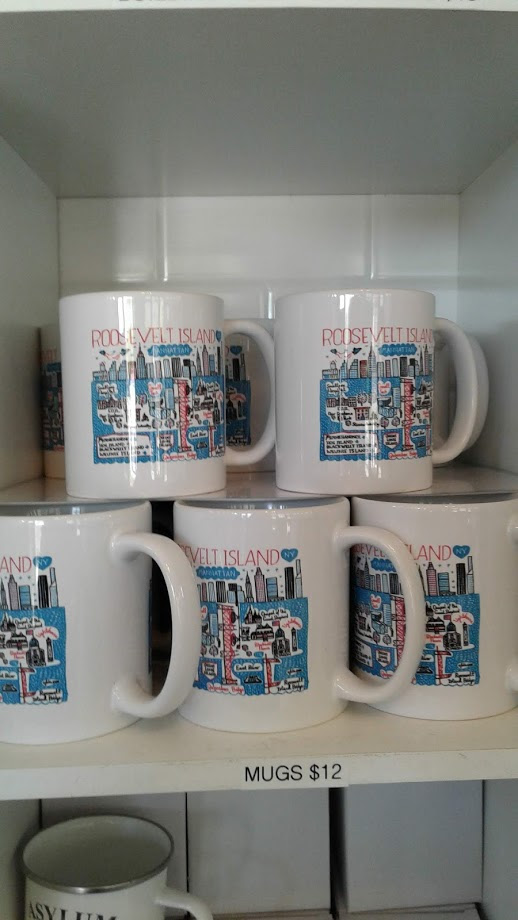
These are items that we sell in the kiosk by artist Julia Gash.(c) Contact us to purchase any of them.
We were introduced to Julia Gash and her wonderful art last year. Based in London, she designs artwork for dozens of cities worldwide. We love her Roosevelt Island designs on mugs, tee shirts, totes, towels and aprons.
EDITORIAL
One of the pages in this booklet is entitled Rx Prescription Come to Blackwell’s island! We treat ’em all;
Never did I expect to add a 21st century pandemic chapter to our history books.
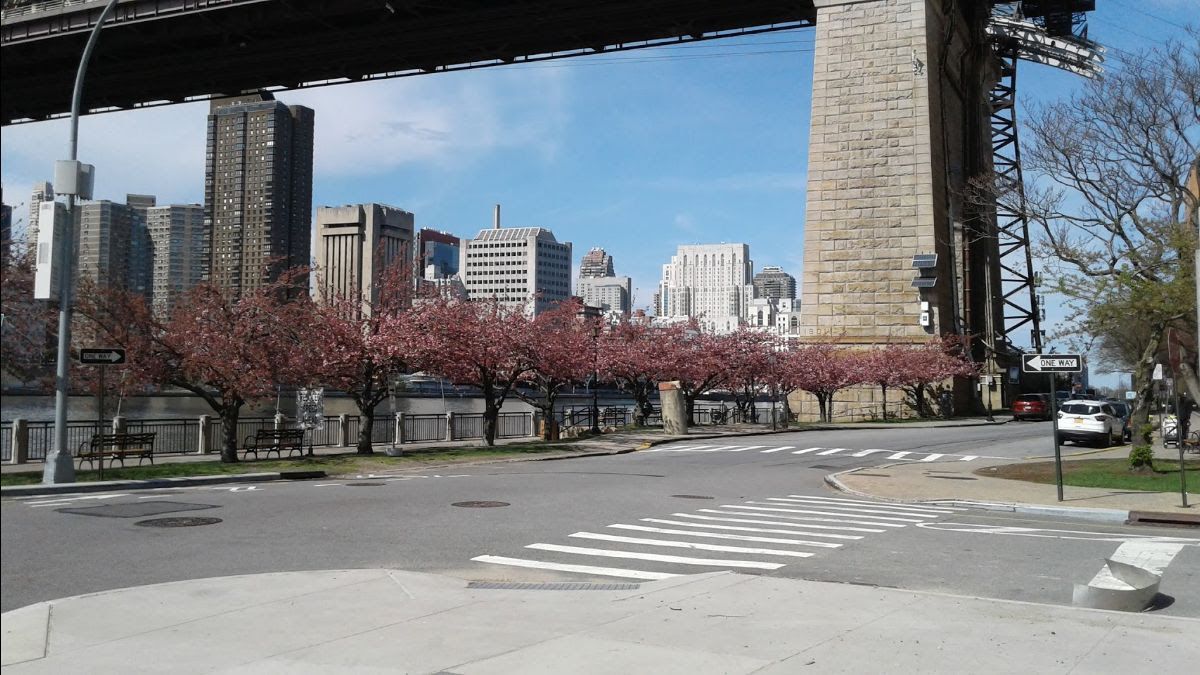
It is supposed to be sunny tomorrow, time to enjoy the cherry trees before the ground is carpeted in pink petals that float thru the air.
Maybe the clutter around my desk will flutter away into the right files!
Text by Judith Berdy Thanks to Bobbie Slonevsky for her dedication to Blackwell’s Almanac and the RIHS Thanks to Deborah Dorff for maintaining our website Edited by Melanie Colter and Deborah Dorff
************************************************************************ IF YOU MISS AN ISSUE GO TO WWW.RIHS.US FOR A COMPLETE COLLECTION OF ALL OUR ISSUES.
Our Neighbors Over the Bridge
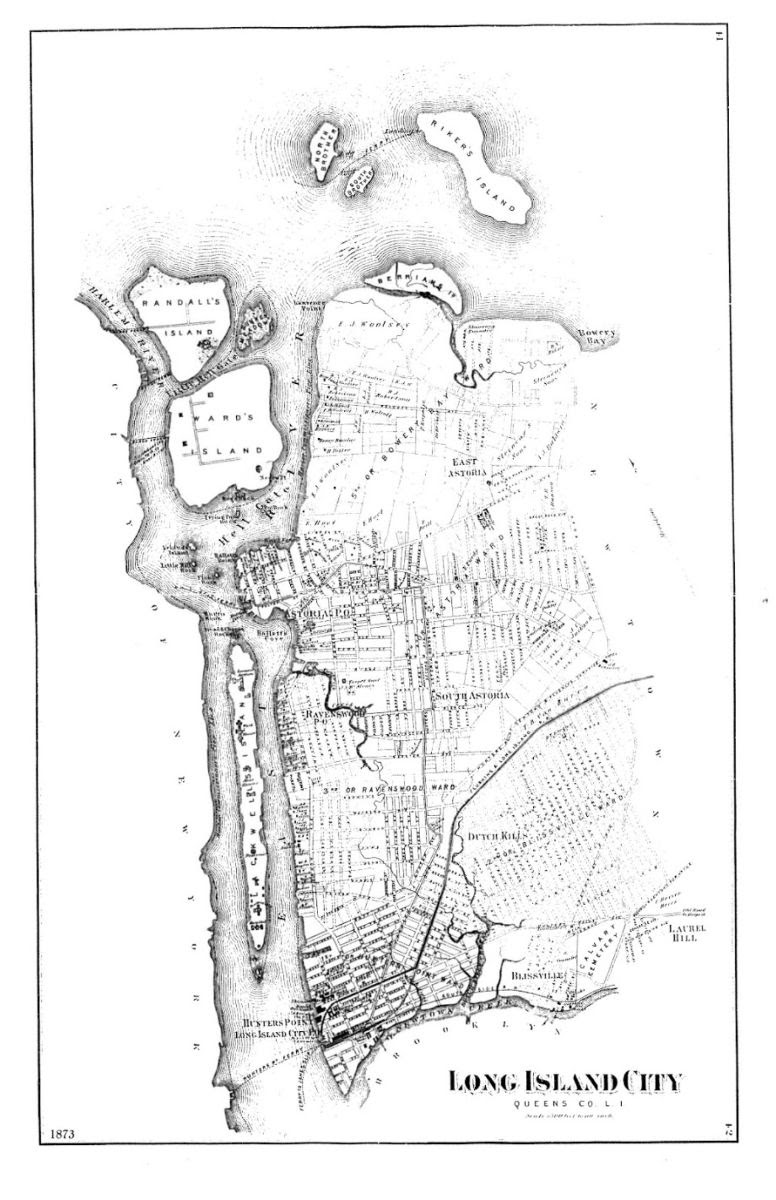
Long Island City to Astoria
A History Walk
Along Vernon Blvd and Neighboring Streets
This is a light look at the interesting structures and sites along Vernon Blvd and the neighborhood opposite the island. It is not meant to be a thorough guide book. I suggest checking on-line at The AIA Guide to New York City, NYC Parks Department, NYPL Digital Images, Friends of Terra Cotta, Google Images, Wikipedia and Google. Please respect the (c) copyrights of these publications.
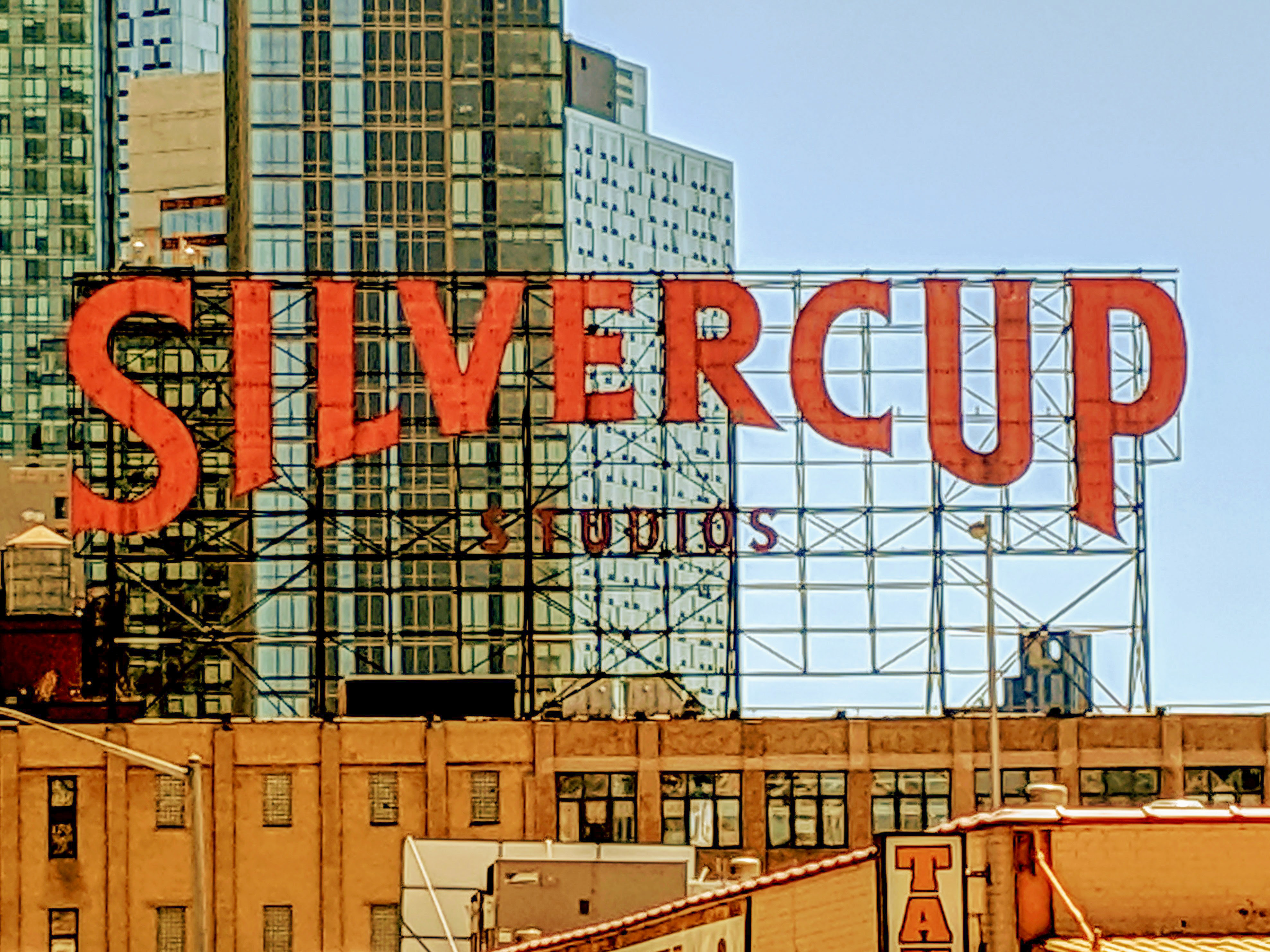
In years past Silvercup was a bread bakery. As you passed over the Queensboro Bridge the aroma of freshly baked bread wafted in the air.
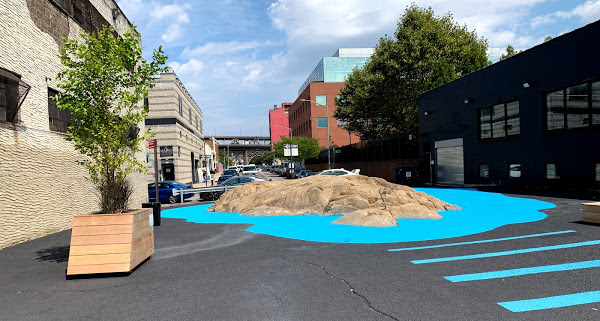
Ancient Glacier Rock 43-30 12th Street,LIC A surprise planted between to buildings. The rock has a bright blue “water’ art-piece surrounding it. (c) Judith Berdy RIHS
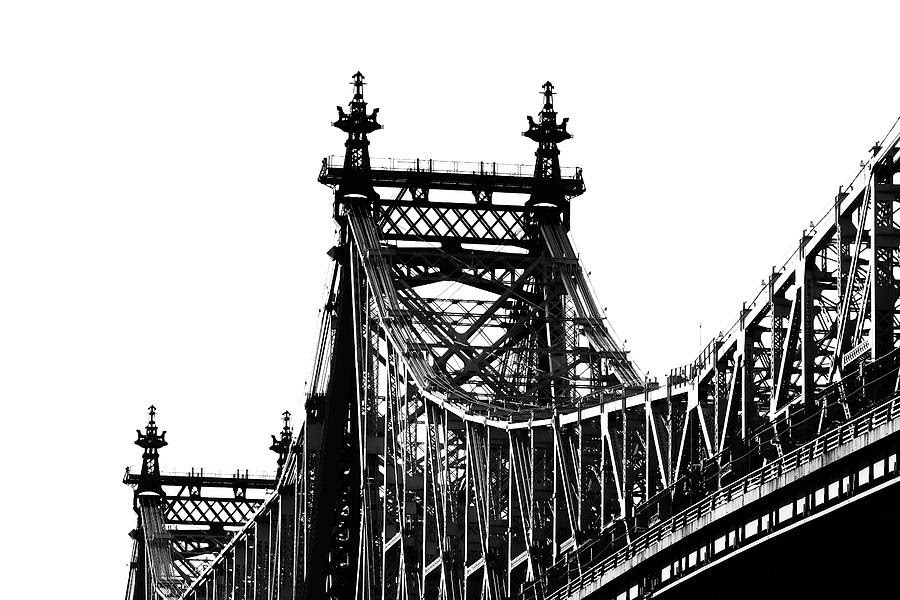
Look up and admire the superstructure of the bridge.
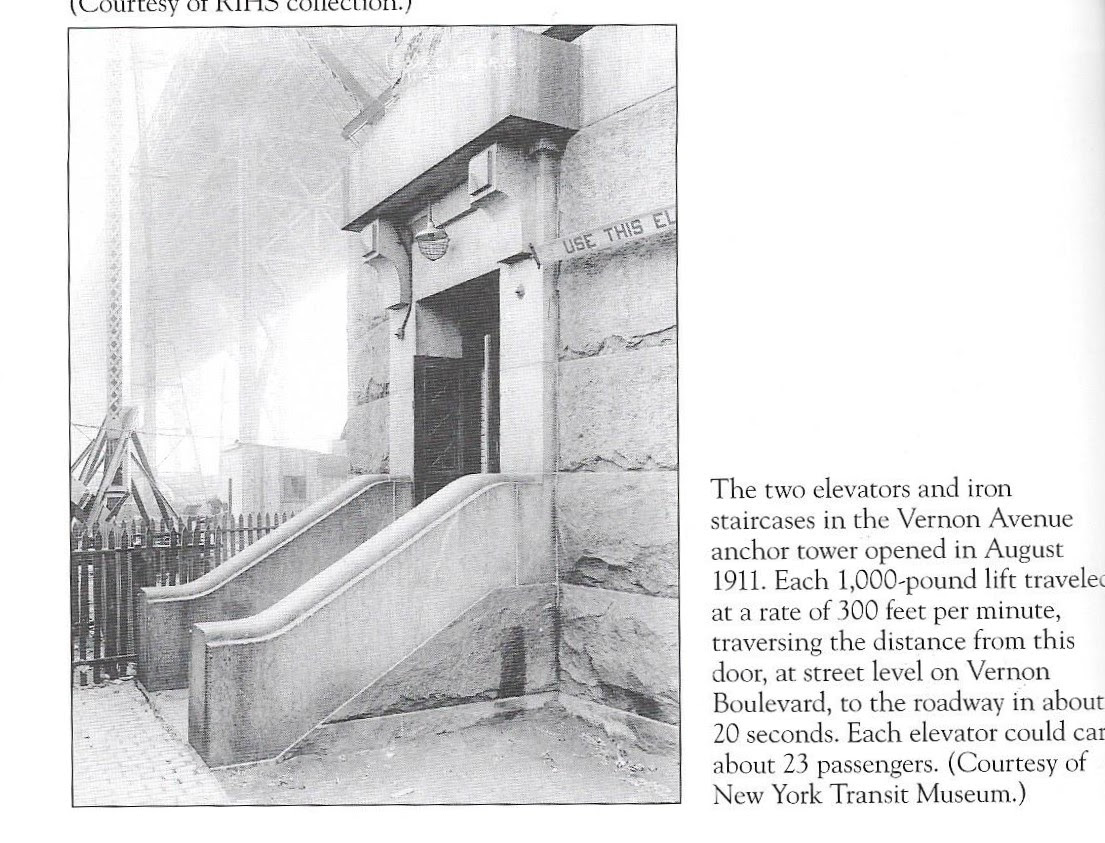
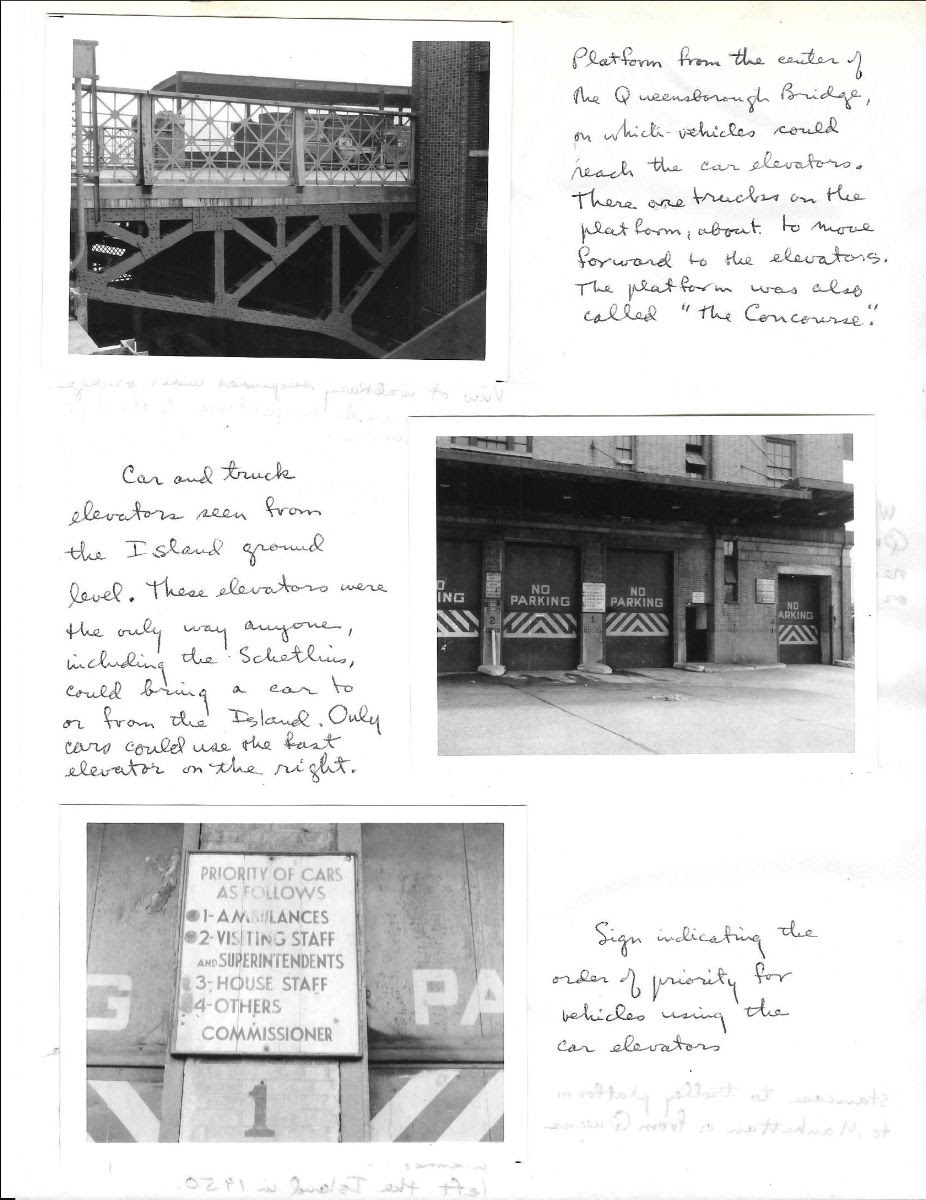
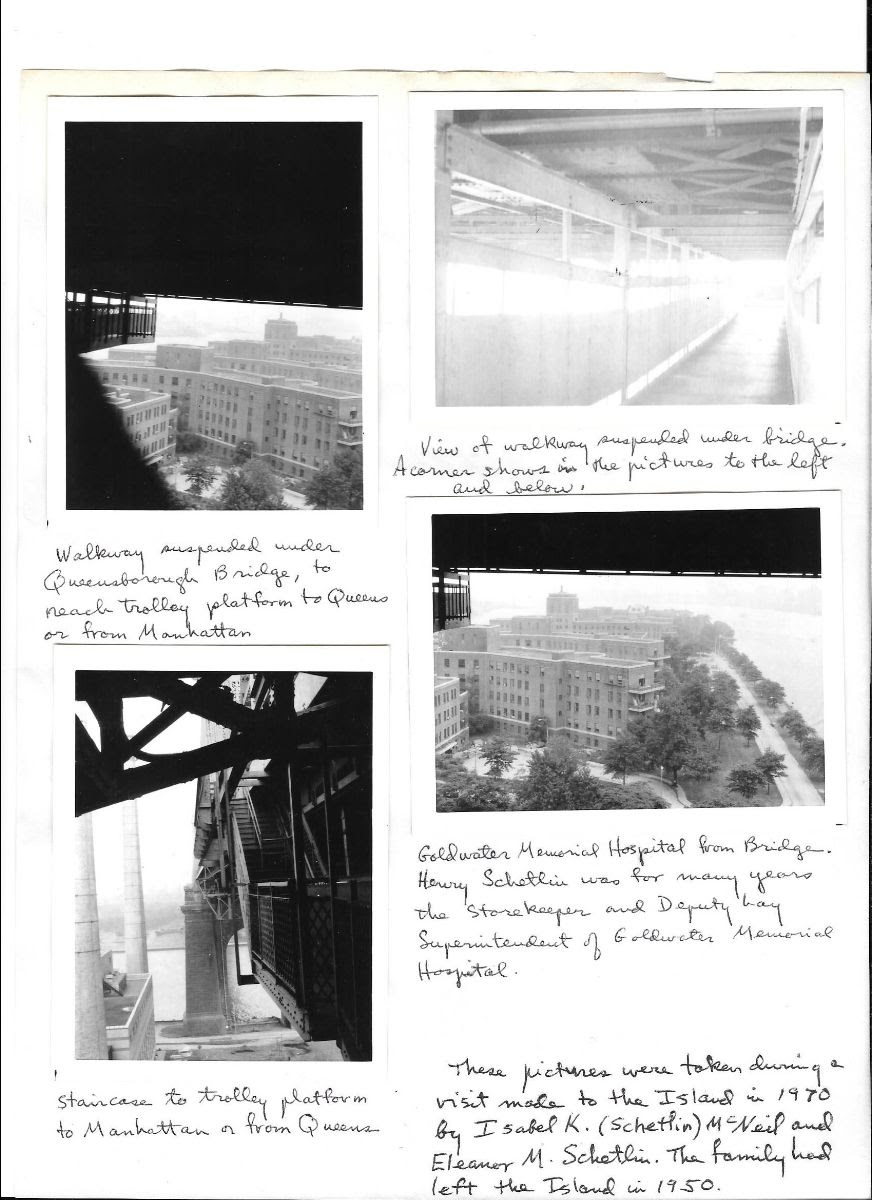
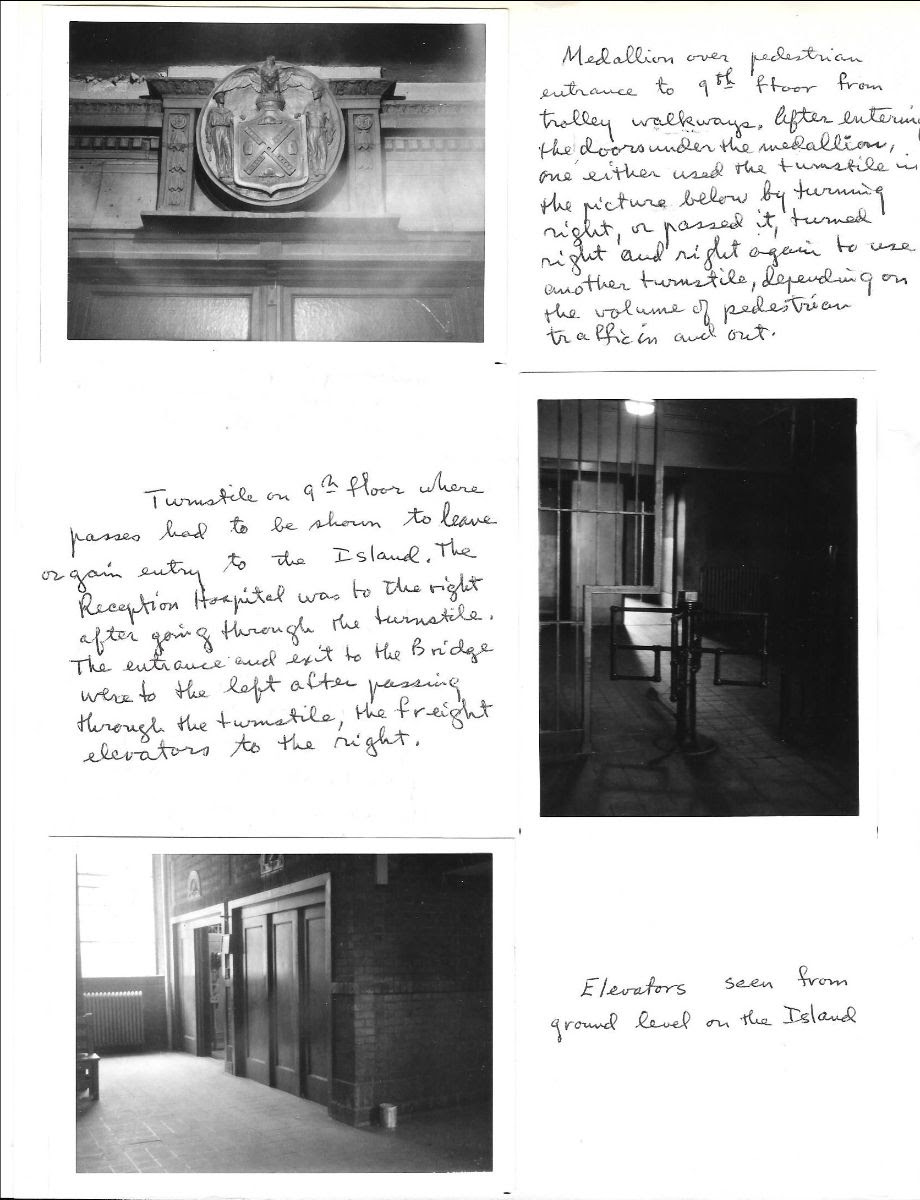
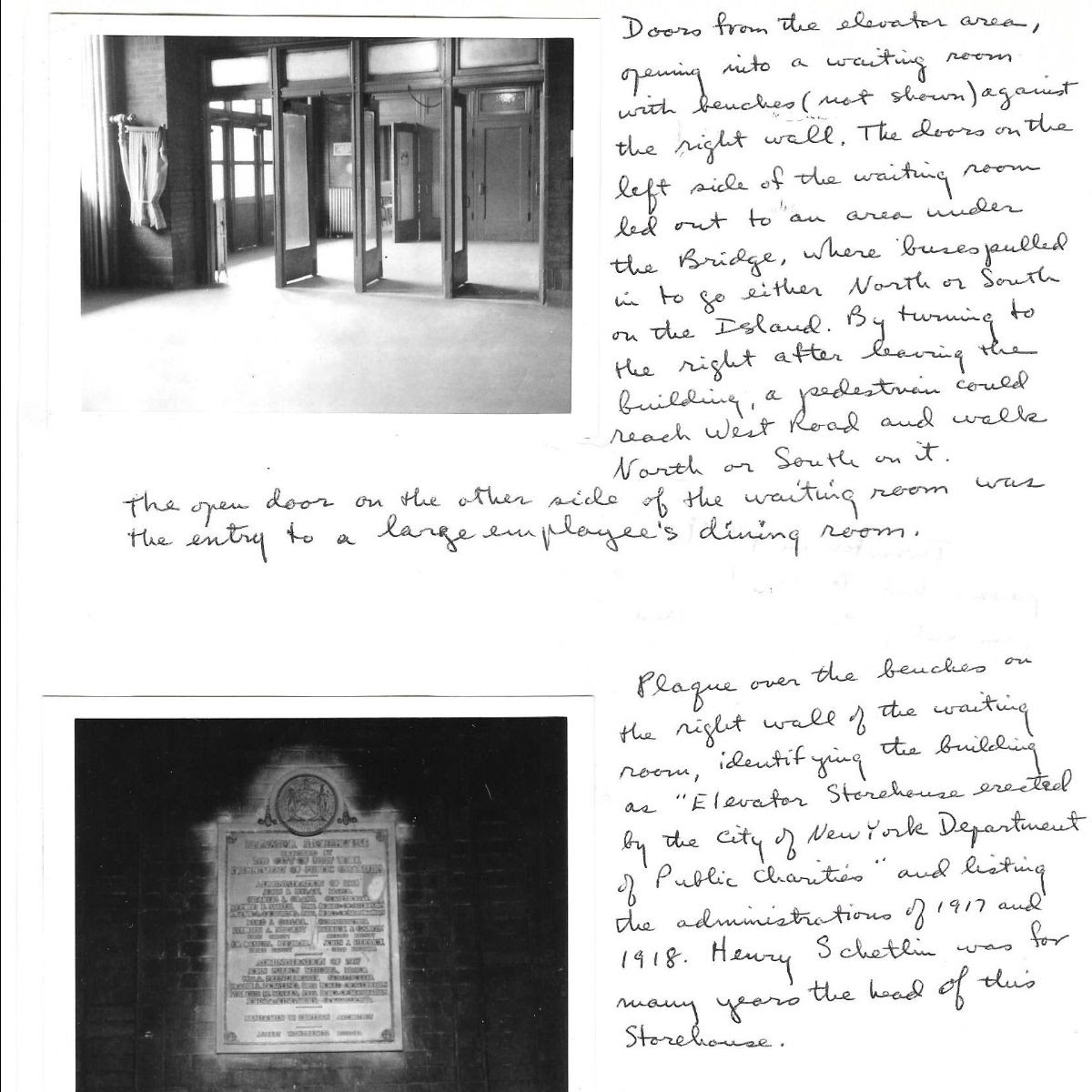
As you walk past the Queenboro Bridge support at Vernon Blvd. see the pedestrian entrance that was the elevator entry. There is also a set of elevator entries at 60th Street and First Avenue. (Sorry, the elevators were removed decades ago).
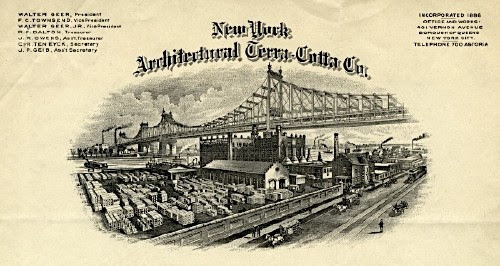
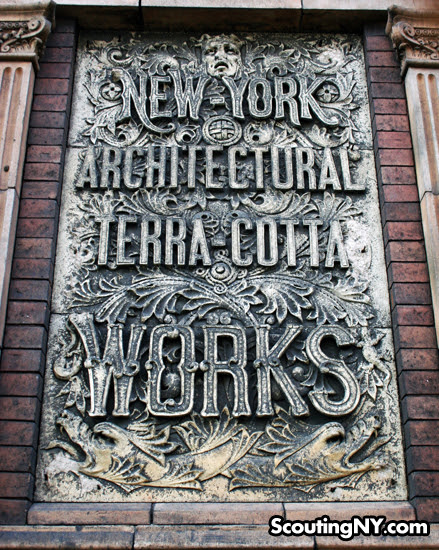
Letterhead from the 19th century
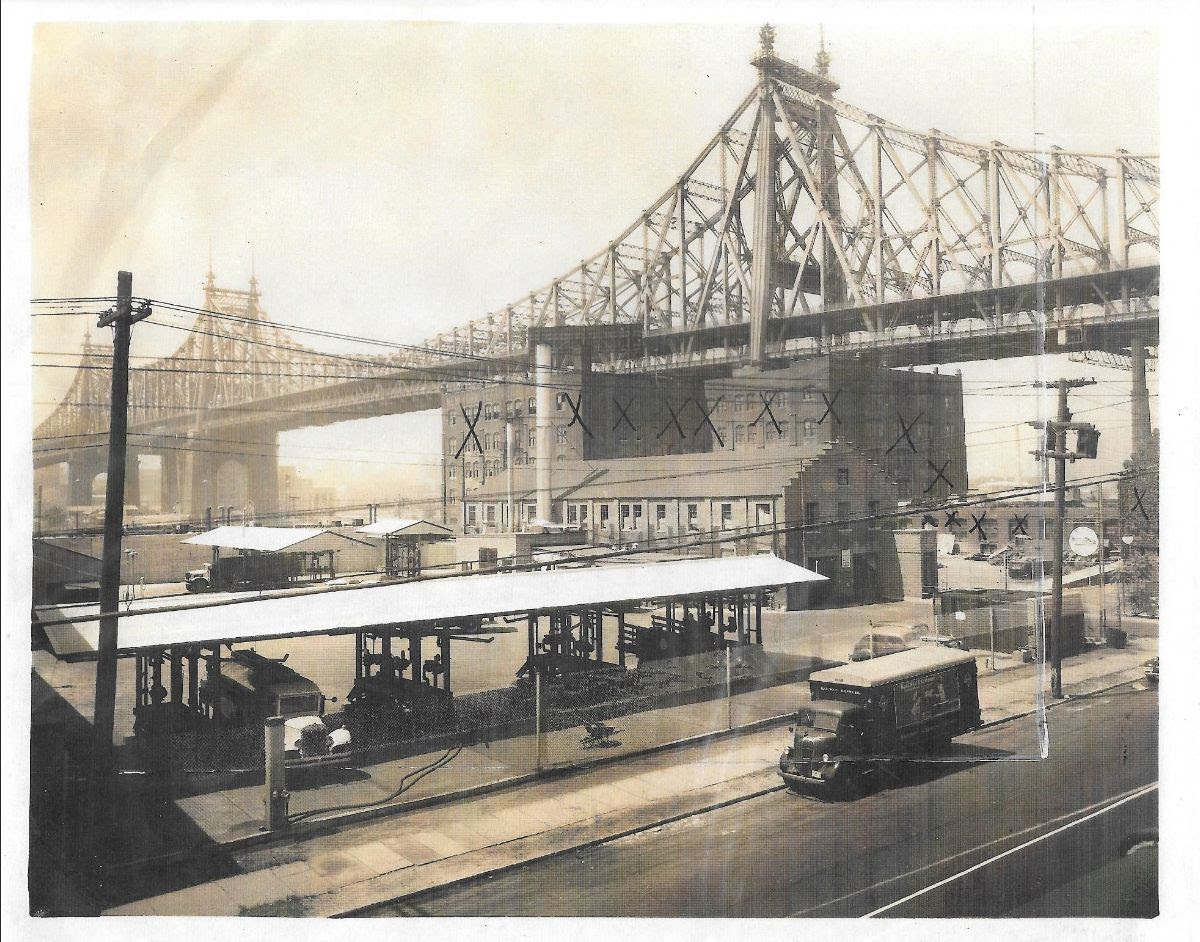
Image showing 1930’s oil depot next to Terra Cotta works. (c) RIHS Archives
Restoration was recently completed on this landmark building that was the office for the Terra Cotta works that was on the site overlooking the river. The waterfront site was recently cleaned of pollutants and the future of the waterside area has not been revealed. A great view of the site is from the NYCFerry.
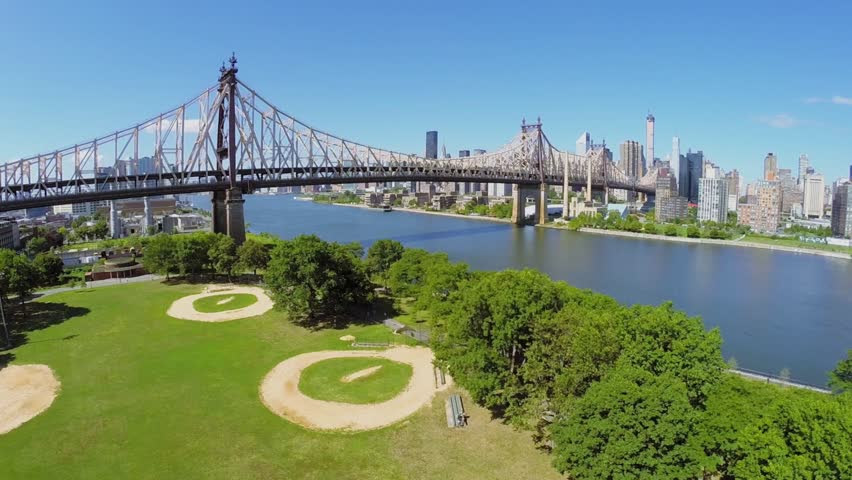
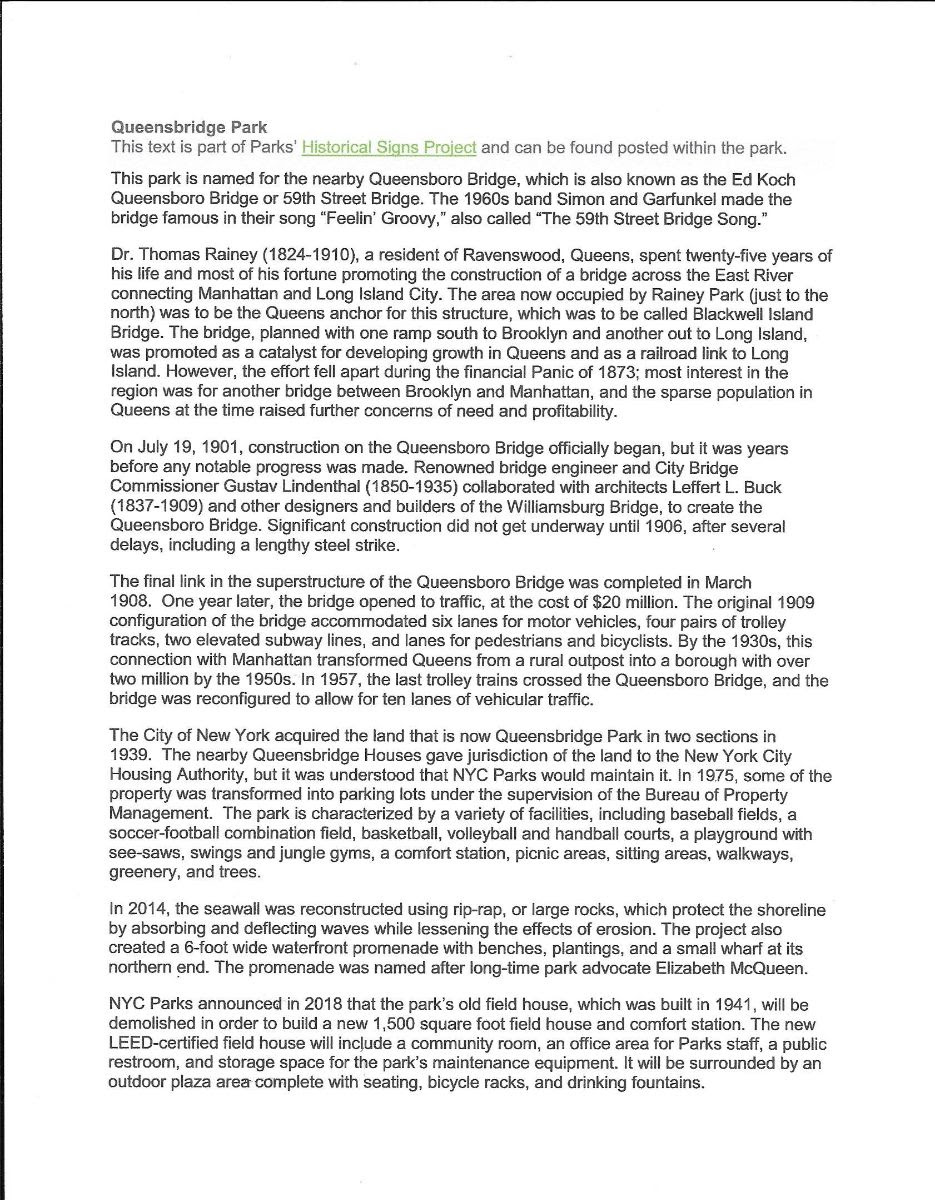
The view look familiar? A most popular site for films, TV shows and advertisements. Last summer it was the site of a carnival for the Big Red Dog Movie. Four baseball diamonds are awaiting the summer season! And a beautiful restored sea wall.
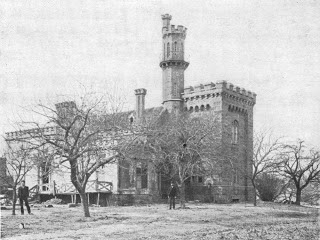
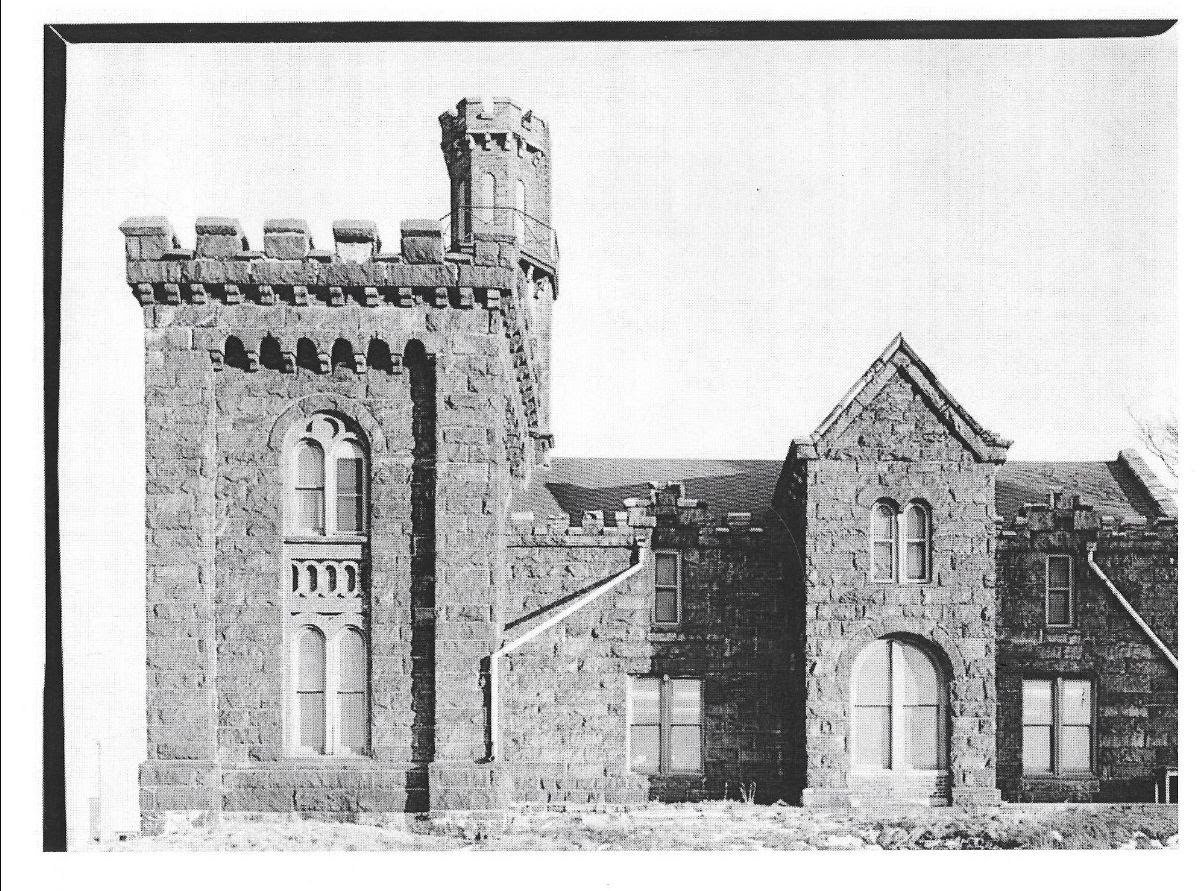
No, it’s not the Adams Family home. This was the famous granite castle built by John Bodine (1818-1887), a wealthy wholesale grocer. It was built in 1853, only 200 feet from the East River. Bodine ran for mayor of Long Island City — unsuccessfully — in 1876, but was made one of the first trustees of the Long Island City Savings Bank.
After the death of his wife in 1879 he lost interest in the home and rented it to Harold Larsen of the Long Island Paint Works. After Bodine’s death his son sold it to Young and Metzer’s paper bag company in 1893. Early in the 20th century it was bought by William Youngs and Brothers, who turned the property into a lumberyard and mill, using the house for offices. William Youngs (1892-1978) had a successful lumber operation as LIC was growing into an industrial city. Youngs never lived in LIC.
By the 1950s when the building boom ended he merged with another lumberyard and the firm became stronger as the Youngs-Esdorn Lumber Co. By 1962, an expanding Con Edison made him an offer he could not refuse.
In 1966 the Landmarks Preservation Commission, which usually doesn’t save anything outside Manhattan, sided with Con Edison that the castle was not valuable for landmark status. It was quietly demolished on May 11, 1966 without media attention or protests. Today the site is part of a high-tension switching station.
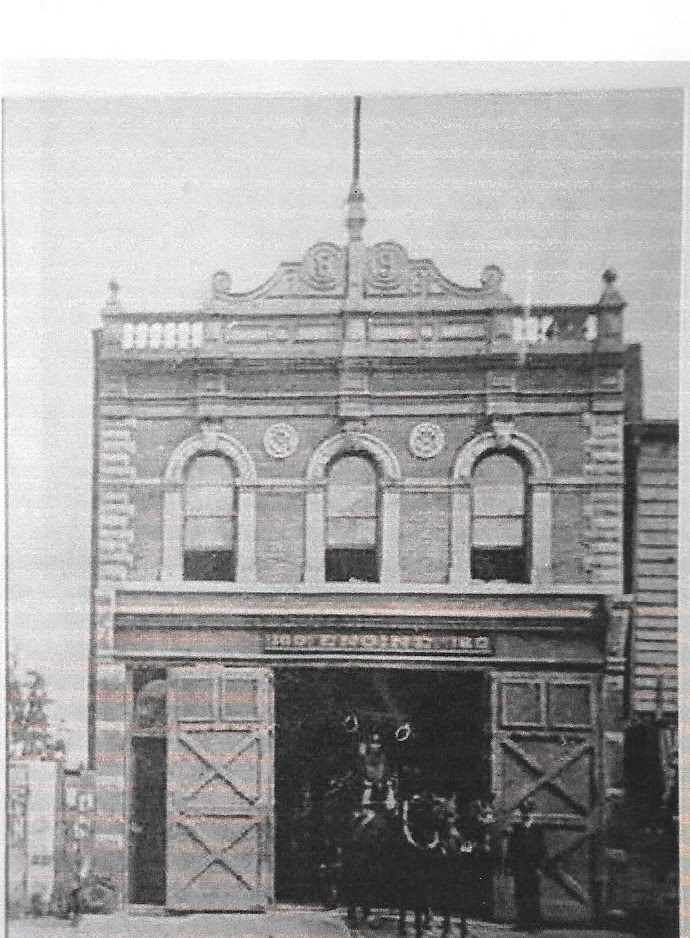
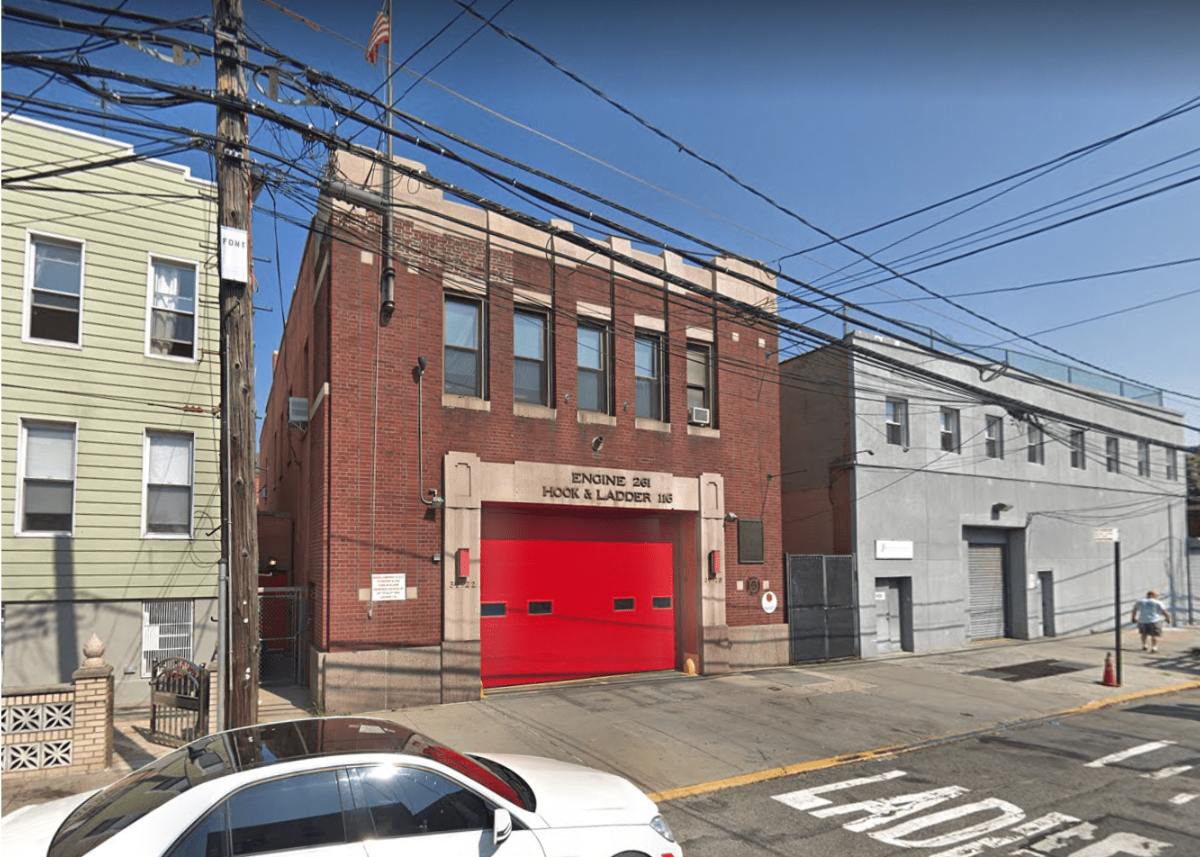
Original firehouse on Vernon Blvd. Note barn doors and horse drawn equipment.
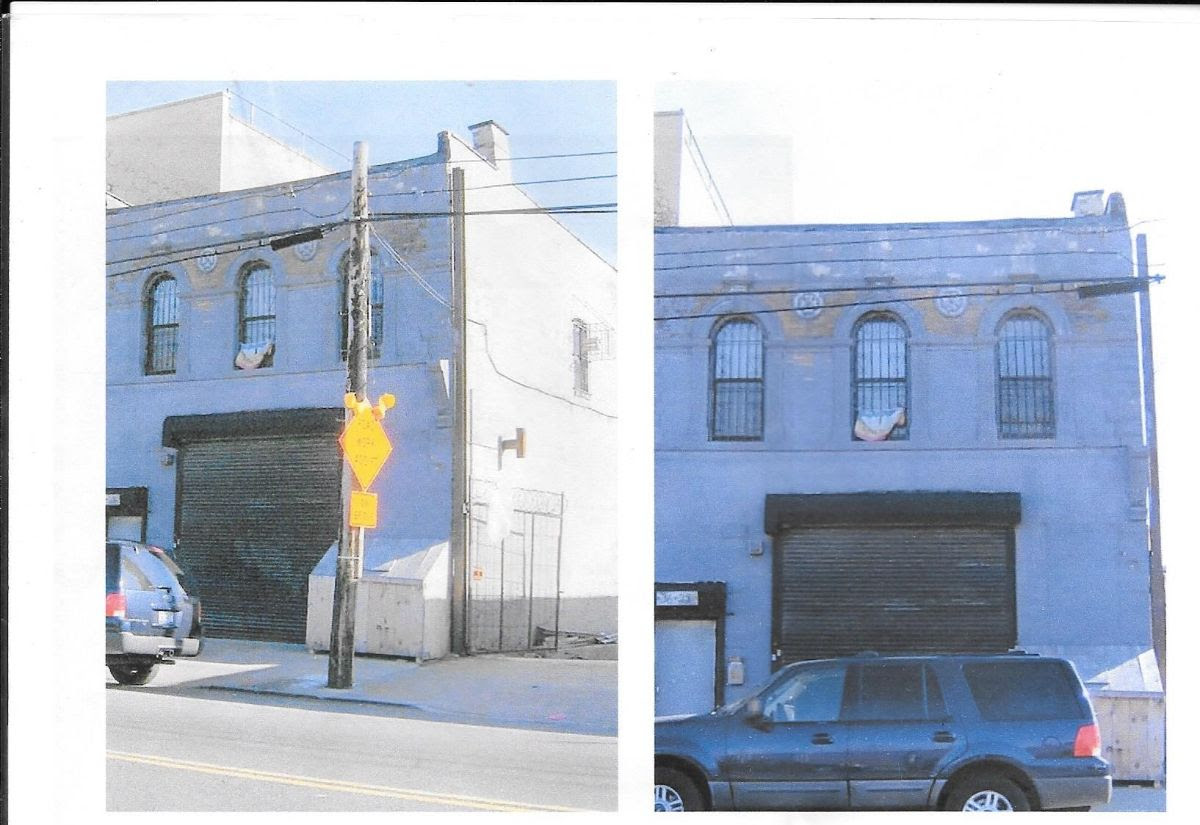
Firehouse today has not sign of its previous life. Barn door has been replaced by roll-down gate. Judith Berdy IRHS (c)
Current home of fire house around the corner on 37 Avenue,
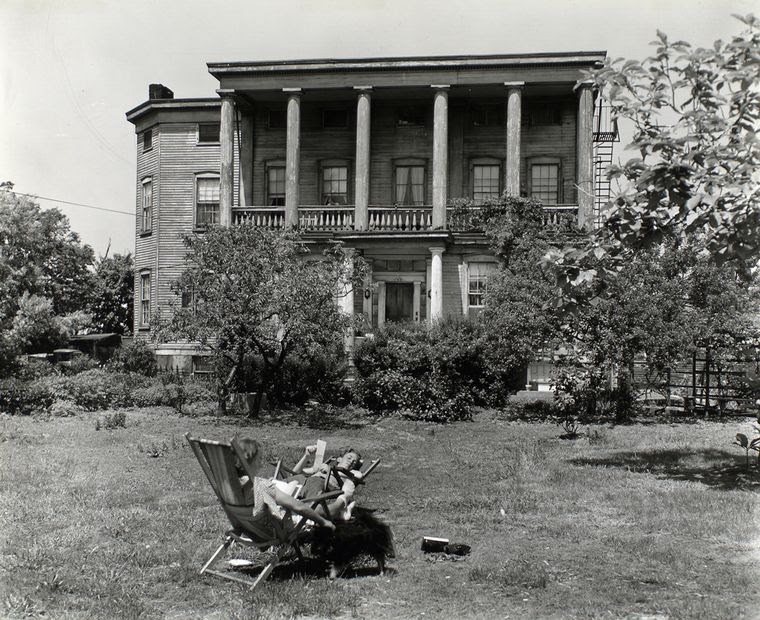
Photographed in 1937 House was located on 27th Avenue From Changing New York by Berenice Abbott: “This Astoria House was built circa 1850 for Josiah Blackwell a New York Dry goods merchant and descendant of Robert Blackwell who settled Blackwell’s Island.(now Roosevelt Island) in the seventeenth century. The house remained in the Blackwell family until 1921, when it was sold and converted to a boarding house with the addition of a fire escape. The young couple relaxes in beach chairs presents a distinctly modern rendition of bucolic contentment. Today the site is occupied by six story apartment building , adjacent to the much larger Astoria Houses , a public housing project built between 1944 and 1951.” (c) Berenice Abbott
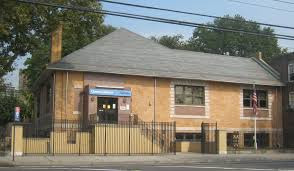
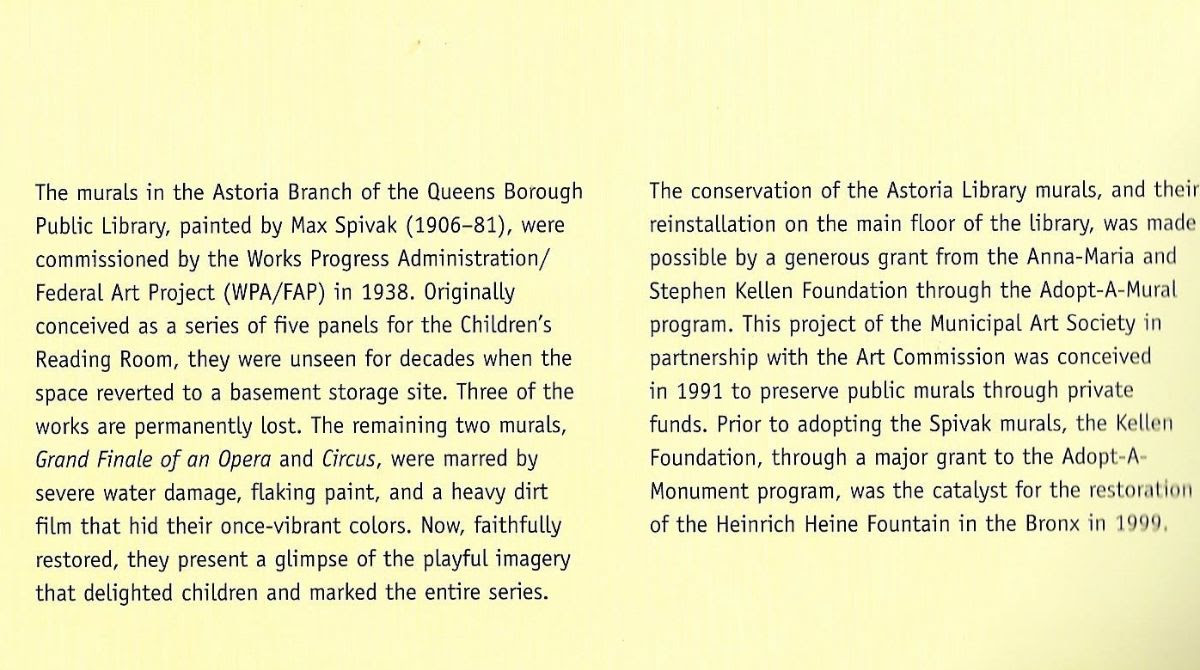
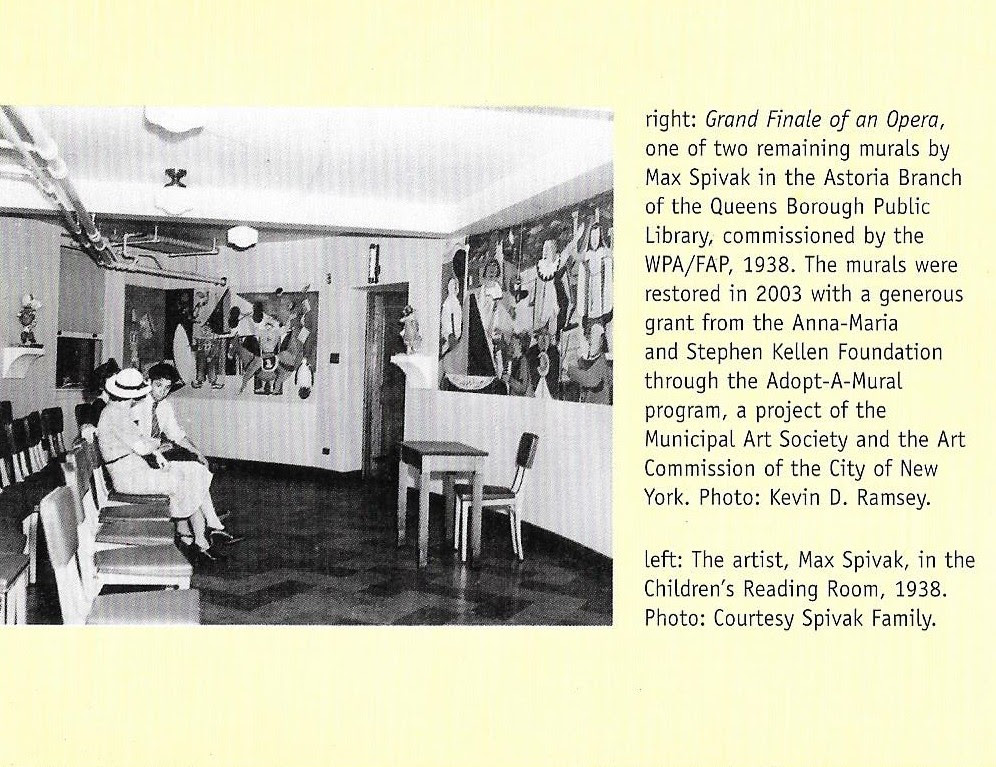
Astoria Branch located at 14-10 Astoria Blvd. (c0 NYPL
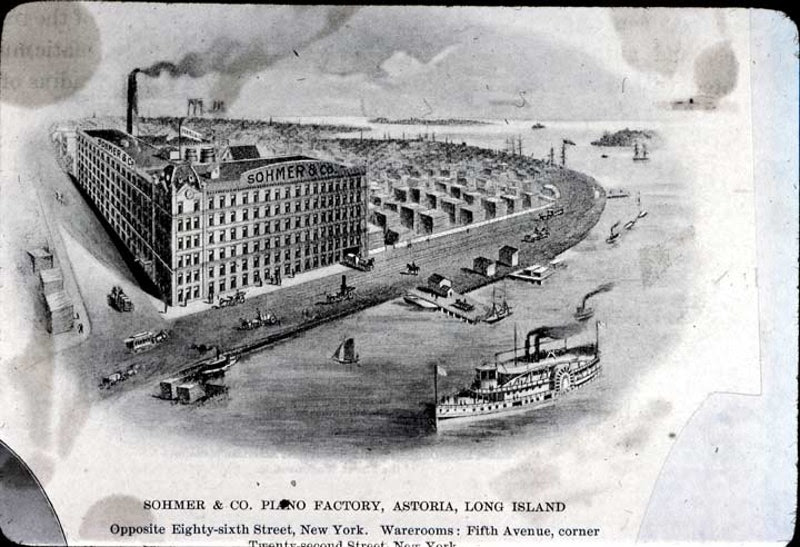
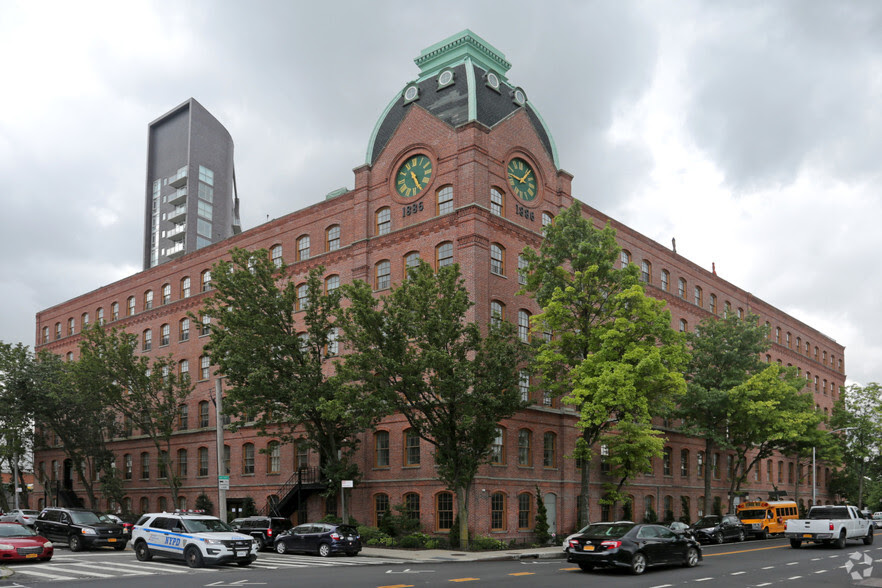
Originally the Sohmer Piano Factory, then a corporate furniture company and now a condo.
Can you tell me what time it is? The building in the background wins my LOSER award.
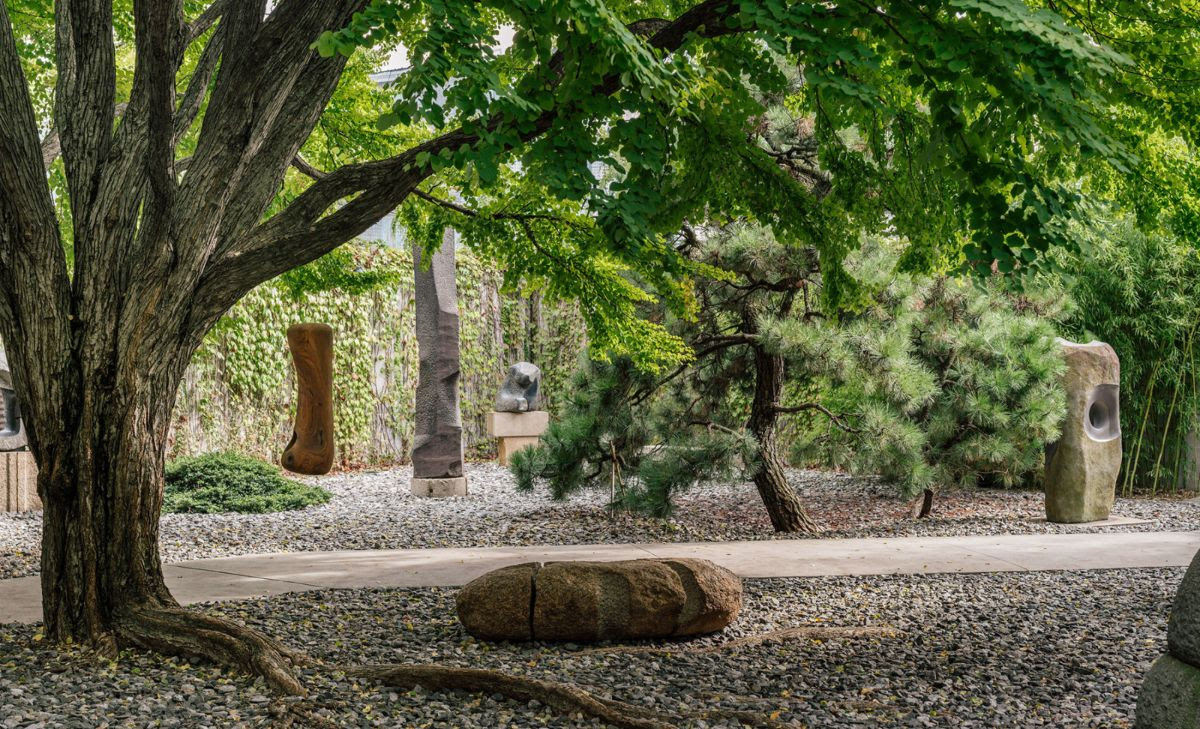
Located at 9-01 33rd Road. A tranquil oasis with the sculpture and art of Isamu Noguchi.
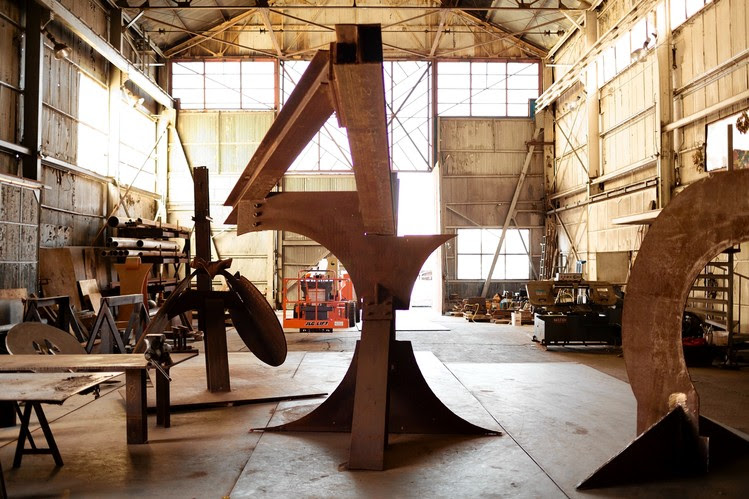
Adjoining Socrates Sculpture Park the studio of artist Mark Di Scuvero. (Not open to public)
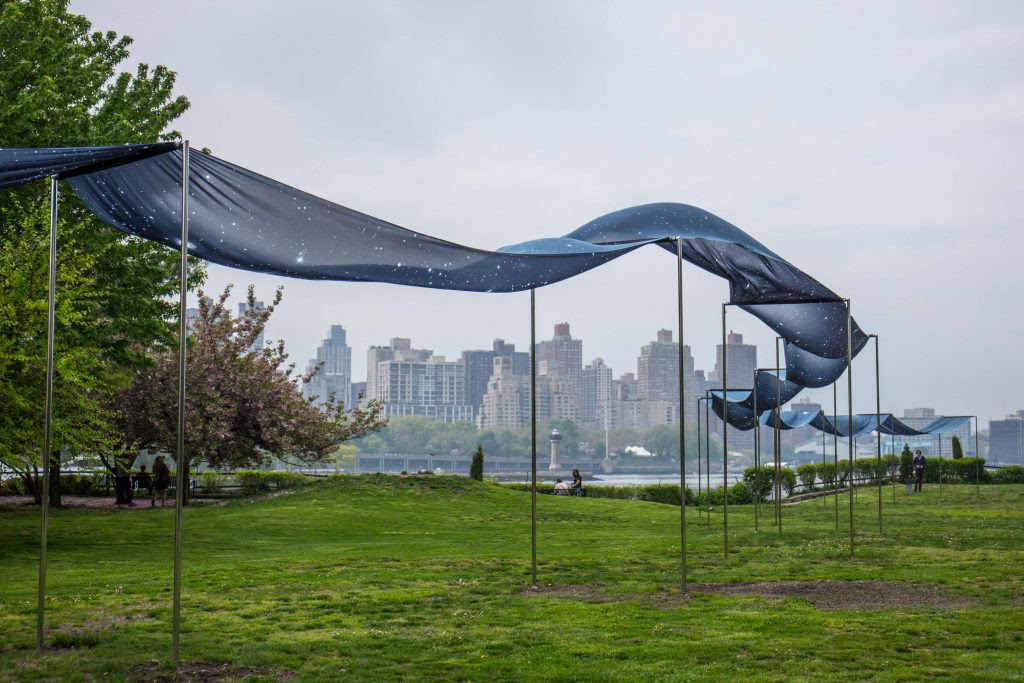
Socrates Sculpture Park holds wonderful events on this site overlooking our lighthouse.
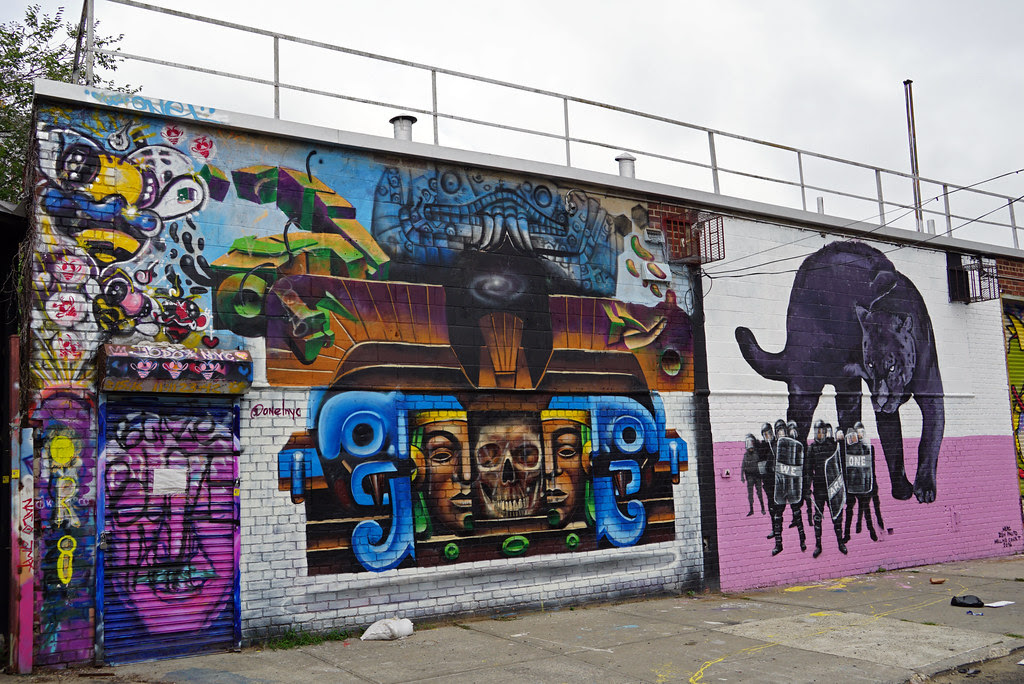
Welling Court Mural Project on walls in the neighborhood. Get there fast before the Walls disappear and condos rise. Just across the street from Astoria NYCFerry dock
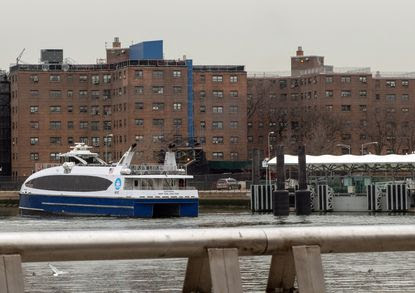
NYCFerry Dock at the Astoria Houses.
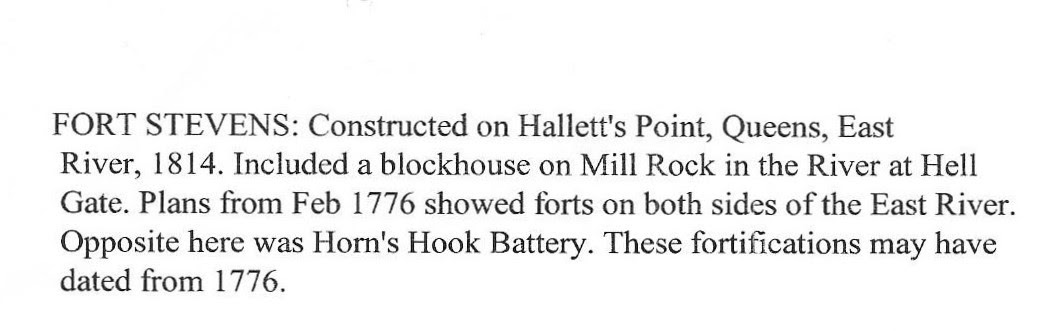
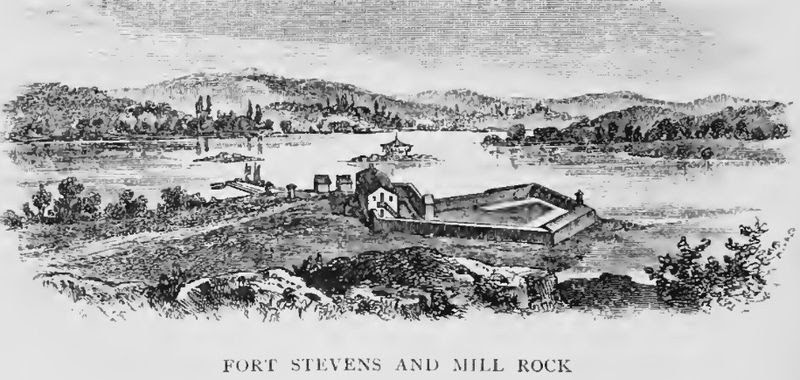
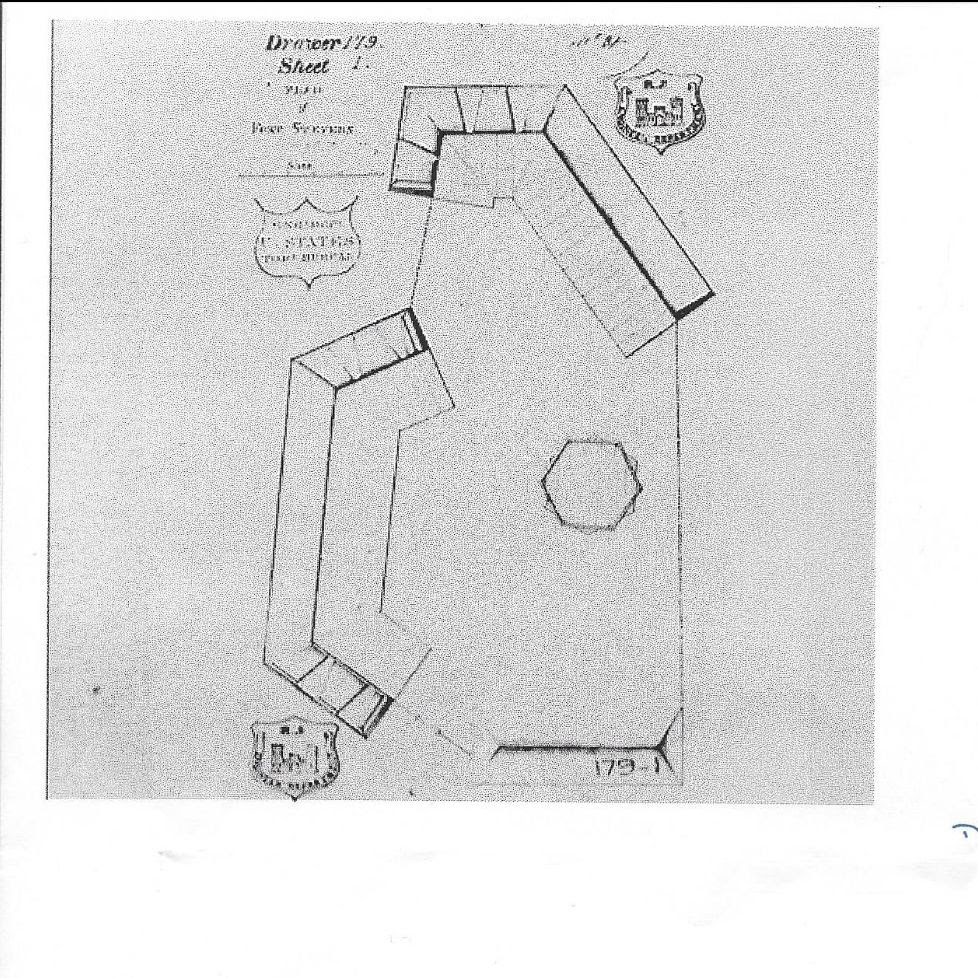
A War of 1812 coastal fort established in 1814 at Hallett’s Point, Queens County, New York. Named Fort Stevens after General Ebenezer Stevens. Abandoned as a fortification at the end of the war in 1815. Fort Stevens and the Mill Rock Blockhouse History of Fort Stevens Established in 1814 during the War of 1812 at Hallett’s Point guarding Hell Gate and the channels of the East River. Fort Stevens was an extensive work with stone walls enclosing a battery with 12 pieces of heavy artillery and a barracks.
This fortification was at the waters edge and vulnerable to landing parties. The fort was protected from the rear by a large stone tower known as Halletts Point Tower on Lawrence Hill commanding a wide section of land and water. The drawing above was probably as viewed from that tower. On the water side, in front of Fort Stevens, was a very strong blockhouse and battery on Mill Rock (a small island in front of the fort).
Other fortifications ringed this stretch of water, a fort at Horn’s Hook and redoubts at Rhinelander Point and the mouth of Harlem Creek. Some of these locations were also fortified during the Revolutionary War. This fortification was one of a line running diagonally across the northern end of Manhattan Island from Fort Laight in the north to the Halletts Point Tower in the south. Included in the line from north to south were Fort Laight, NYC Blockhouse No. 3, NYC Blockhouse No. 2, NYC Blockhouse No. 1, Fort Fish, Fort Clinton (4), Mill Rock Fort, Fort Stevens (5) and the Halletts Point Tower.
These fortifications were located on line of bluffs in the north that overlooked the landside approaches and the major roads into New York City. The southern end of the line guarded McGowans Pass along the Old Post Road and the back door water approach to New York City via a treacherous stretch of water known as Hell Gate. New York City Fortifications 1814 (click twice for full resolution) In addition to these major fortifications, a number of gun batteries and smaller redoubts were located at strategic points to reinforce and protect specific areas. Often these fortifications were connected by earth works and trenches.
and in the distance the Blackwell’s Island Light. Hope you enjoyed your walk thru the neighborhood.
EDITORIAL
Yesterday, it was Manhattan, today it is Queens. It is easy to look out my window at the power plant. Queensbridge Park and the bridge. When I moved to this apartment in 2005 all that there was to see was the Citicorp building. Now, I only see half of it. Seems some other building just rose in front of it overnight.
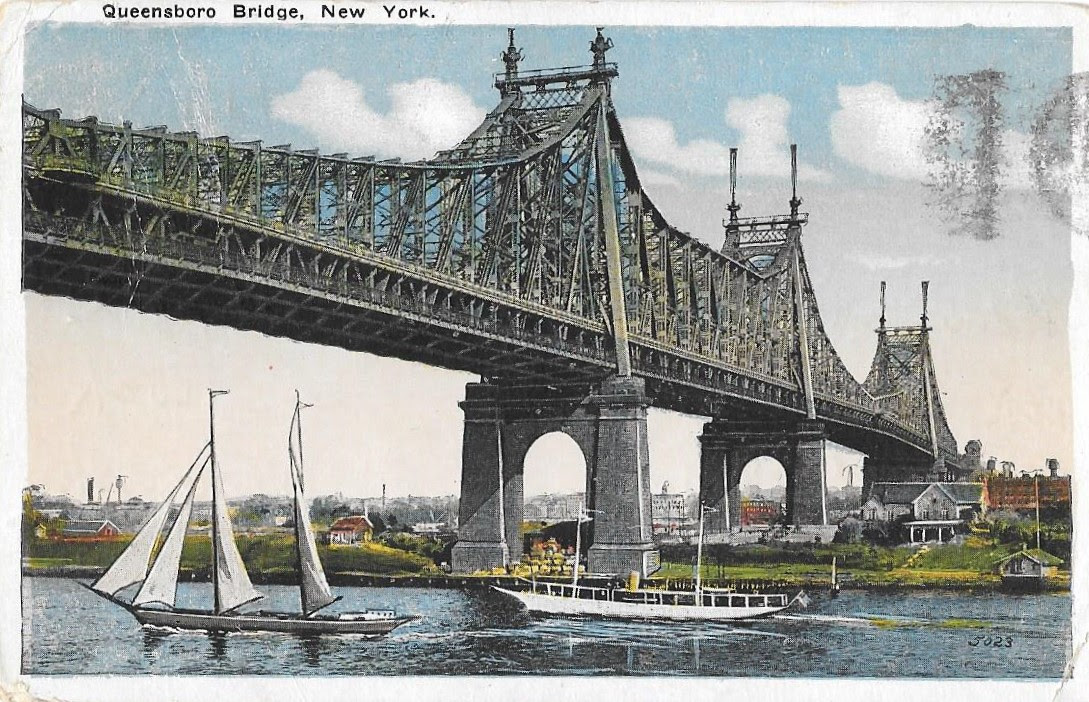
Queens was farmland until the bridge opened in 1909. When it opened farmers would bring their produce and foods to a giant market under the bridge. There were fresh food markets under most of our bridges in the early 20th century.
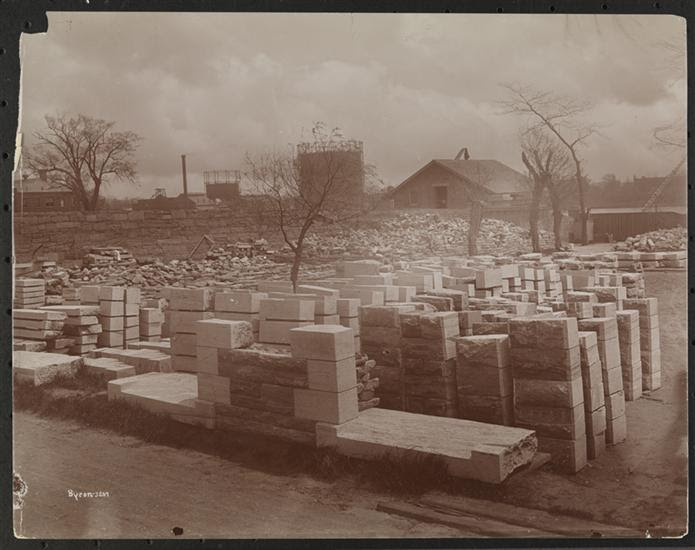
Vernon Blvd. was the capital of stone-cutting. I assume that ships carrying stone could dock alongside the plants. There are still stone and marble cutting operations along the boulevard. For a while in the 1980’s there was a stone cutting company that was cutting granite for the Cathedral of St. John the Divine. I remember visiting the plant and watching giant diamond stone wheel slowly working its way thru the stone. The operation is gone. They gave up on “finishing” the cathedral.
I did not write about other sites along Vernon Blvd. If you have a question, e-mail me.
Text by Judith Berdy Thanks to Bobbie Slonevsky for her dedication to Blackwell’s Almanac and the RIHS Thanks to Deborah Dorff for maintaining our website Edited by Melanie Colter and Deborah Dorff
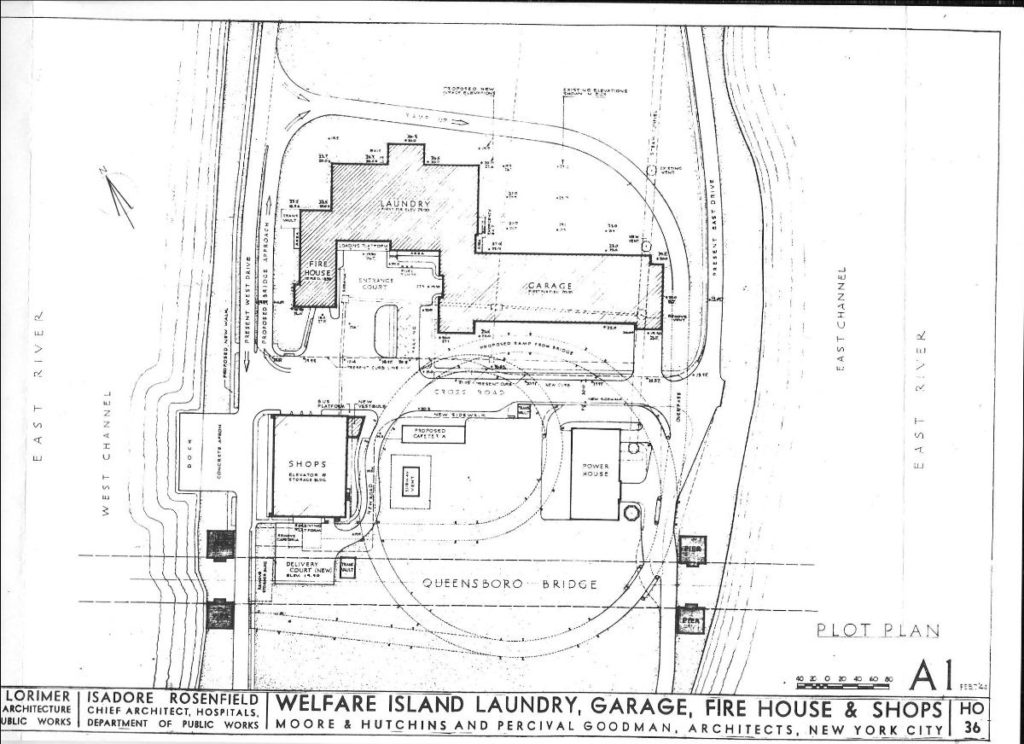
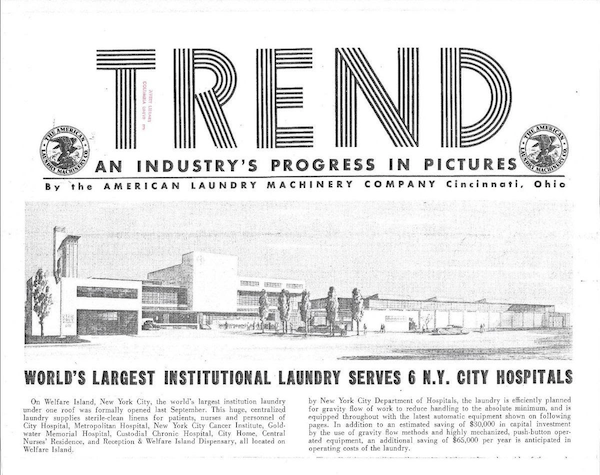
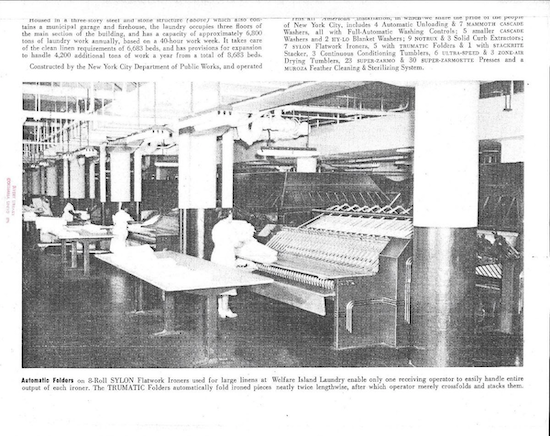
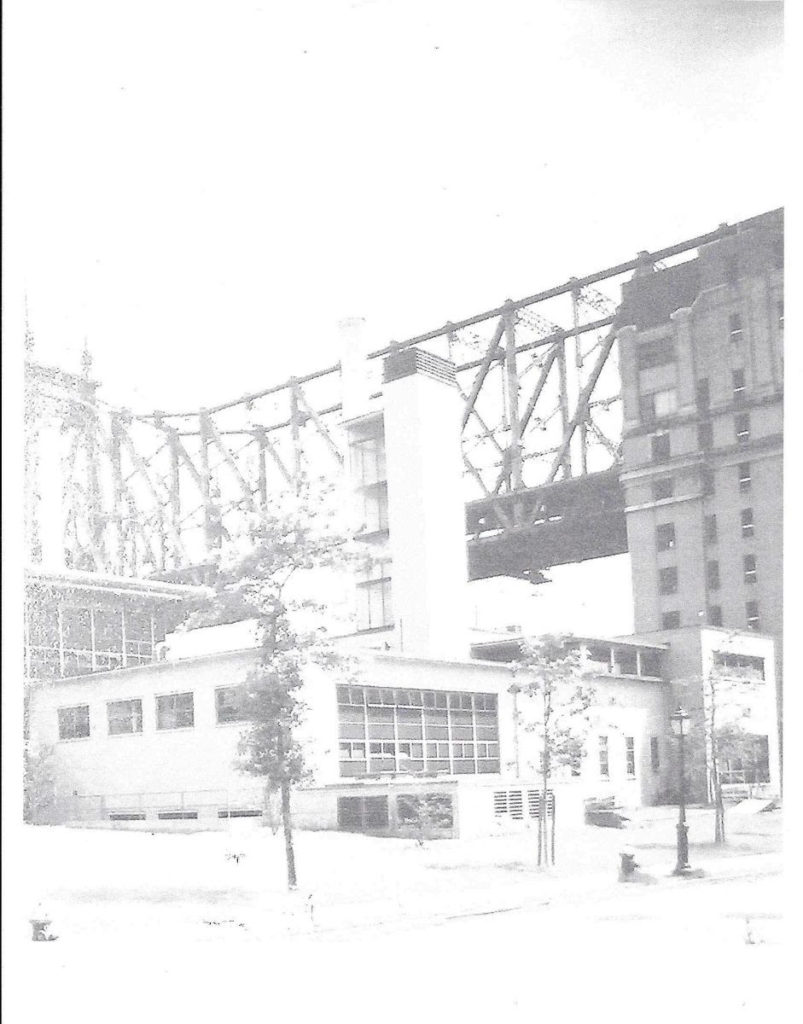
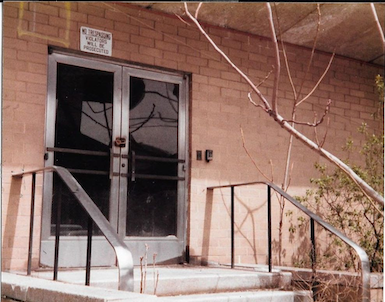
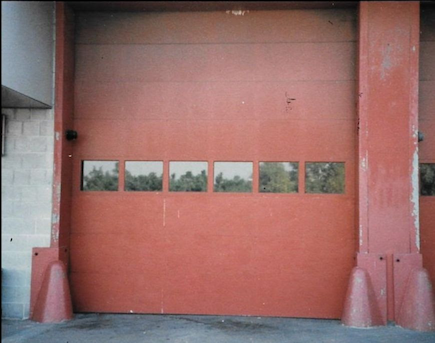
When I moved onto the island in 1977, the laundry was closed, the garage closed and only the firehouse was being used by the FDNY Mask Unit. This is a unit that would deploy canisters of supplemental air to firefighters on scene. Eventually, the Mask Unit left and it became the home of the tram office.
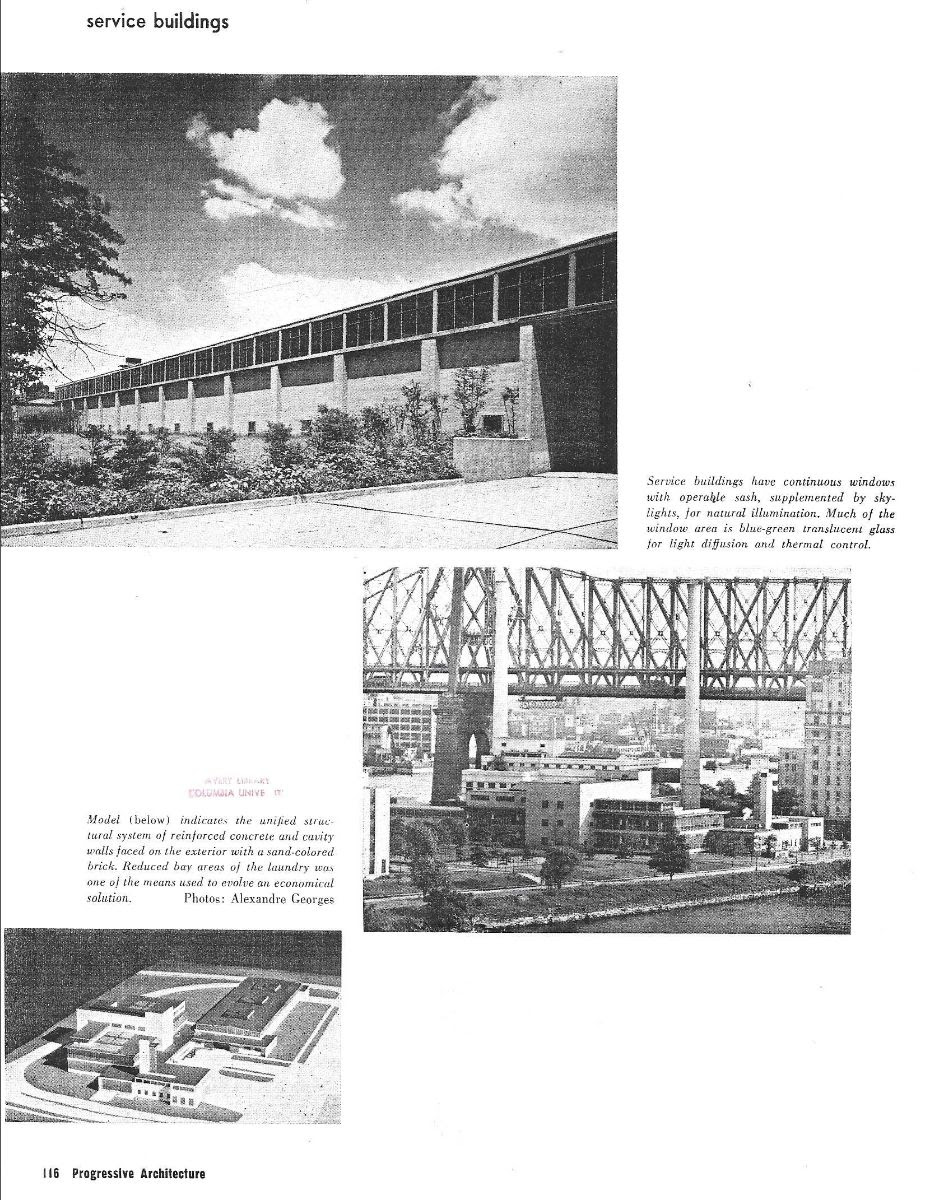
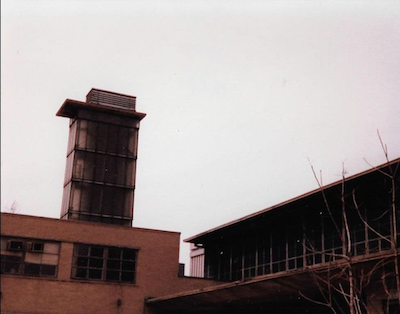
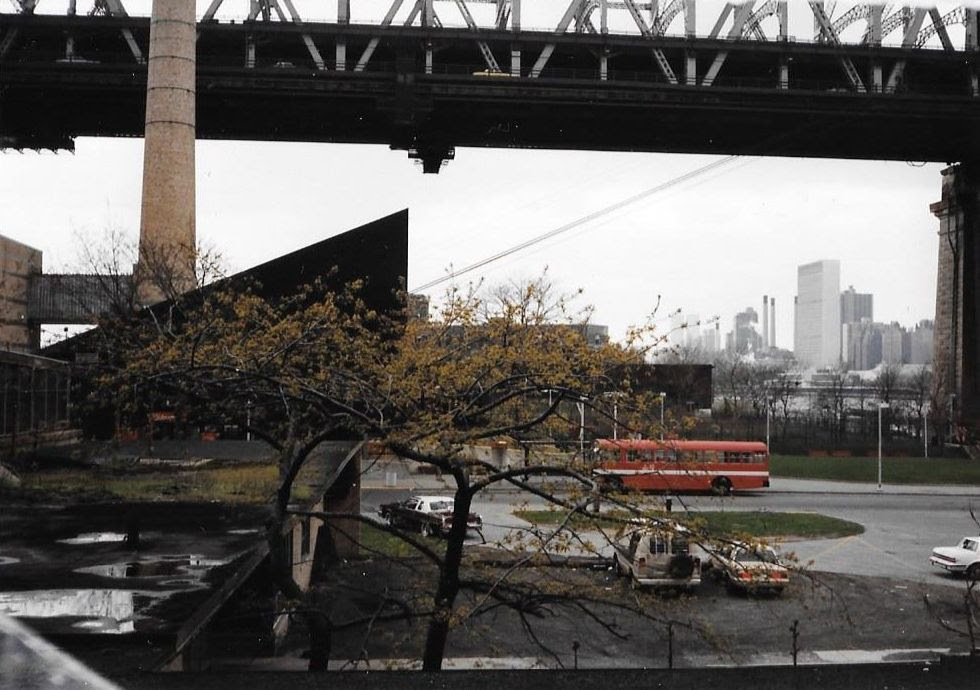
I always admired the building with the blue glass and the tower. It turns out the tower was for drying fire hoses. There was a terrace on the second floor overlooking the rivers.
I wondered why not entrepreneur came and made a destination restaurant there, with its light architecture and tinted blue windows. The window diffused the sunlight and gave a blue glow inside. The low slung look reminded me of mid-century and Frank Lloyd Wright architecture.
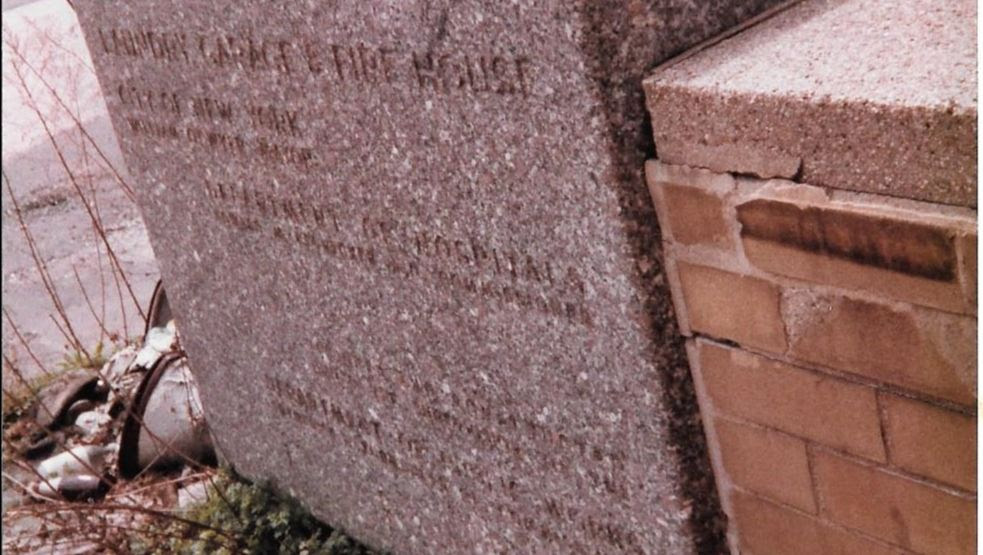
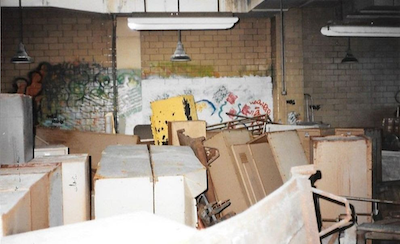
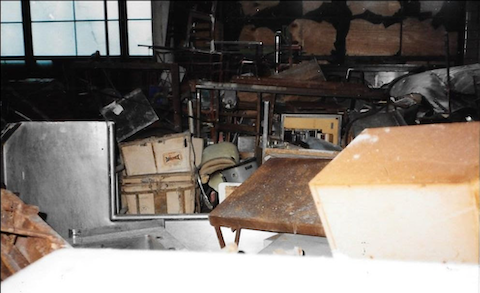
I photographed the cornerstone and wanted to see the interior. In the true spirit of the island I asked some teen age friends to show me around. It was pretty empty when I was upstairs, the laundry machinery gone. There were holes in the floors where the laundry chutes had been.
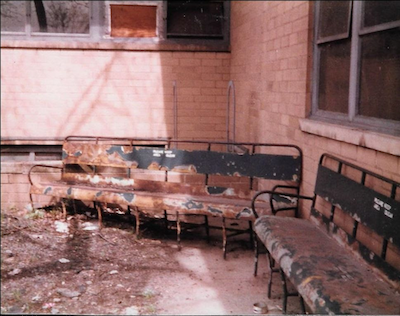
One one floor the walls were spray painted. It took many years to put together the story of Arthur Tress and his constructions from hospital furniture was what I was looking at.
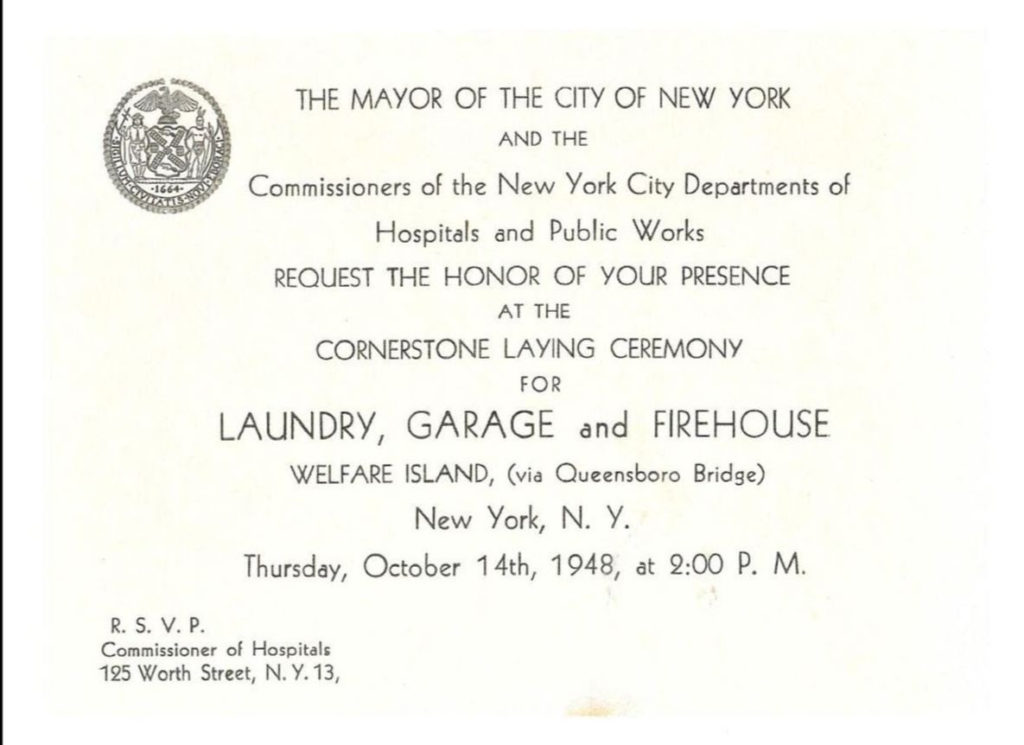
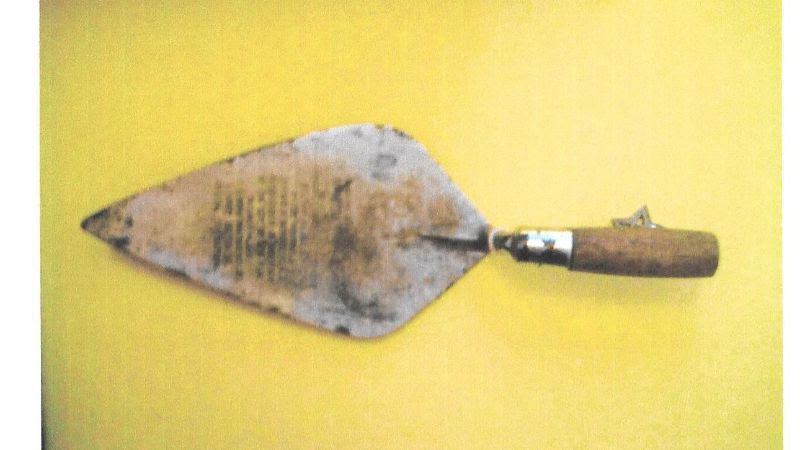
A few years later I bought on E-bay the ceremonial trowel used to place the cornerstone and somewhere I located an invitation to cornerstone laying.
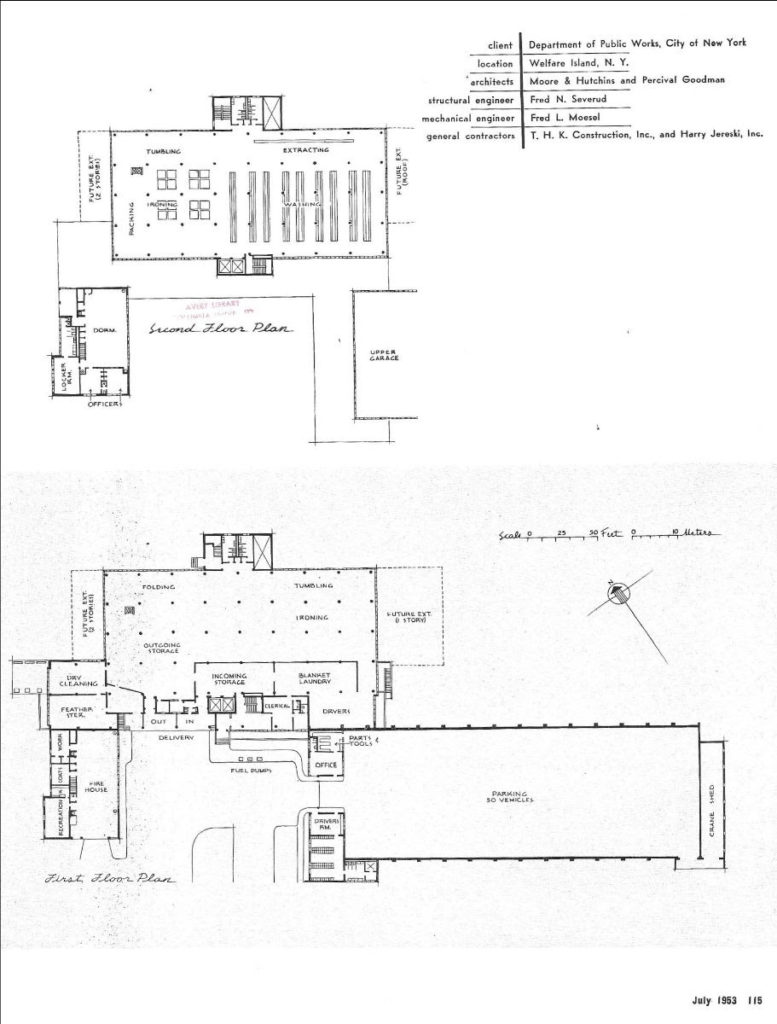
From the article in Wikipedia and books on Percival Goodman, I did not find any reference to this project. He did one more project on Welfare Island. It was to build over the island and call it Terrace Island. He is known for the modernist synagogues he designed in suburbs after World War II
The plans for Terrace Island and the laundry are at Avery Library at Columbia University.
Judith Berdy
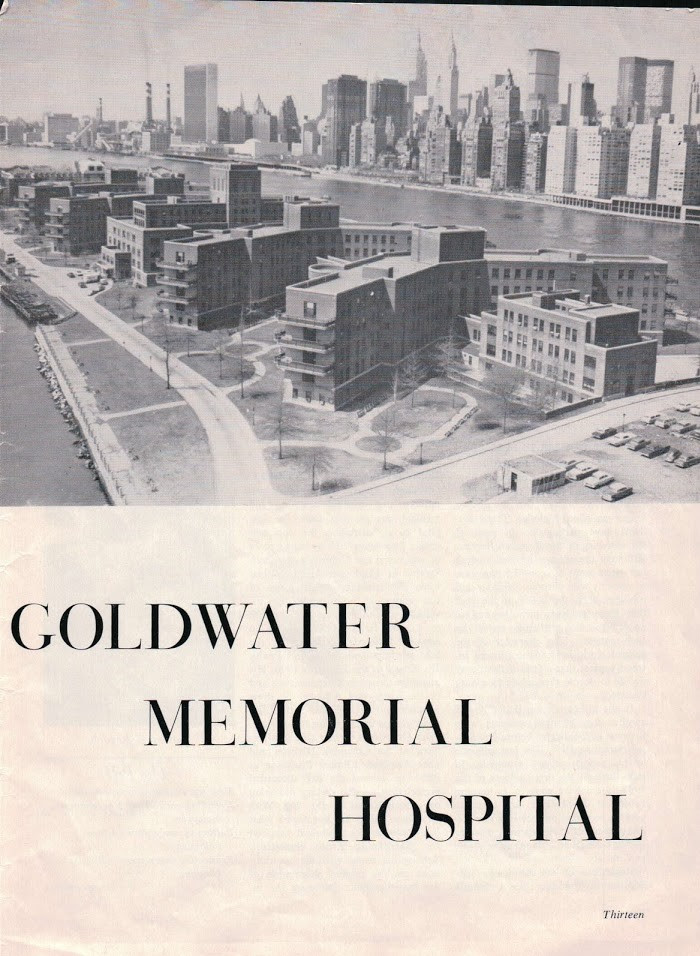
On October 14th, 1948 Chrisman Schiff, Medical Superintendent of Goldwater Memorial Hospital delivered a speech at the dedication of the Laundry, Garage and Firehouse on Welfare Island.
At that time the Island had many institutions including: Goldwater Hospital 1500 beds Metropolitan Hospital 1100 beds City Hospital 800 beds City Home 1850 beds Cancer Institute 219 beds Central Nurses Residence 555 beds
Below is the text of his speech:
Scale model of building
Illustrations from Progressive Architecture (c)
ABANDONMENT
EDITORIAL A month of being patient, going out occasionally and doing my errands has just past. An occasional trip on a sunny day to Cornell Tech for a cup of Bloomberg Cafe coffee sit outside and admire the red bud tares.
I feel for our neighbors at Coler most of whom live in units on lock down. It sounds like eternal confinement, and many feel that way. It is difficult to be at home for such a long period but being left alone living in a 4 bedded room and worrying if you hear a cough that person may have Covid.
In order to cheer the residents and make their days better please send artwork, cards, posters, pictures of rainbows, to cheer the residents. Coler is a nursing home and you know many of the residents that you see on the island, on the bus, shopping, dining out. That is not happening now.
I am the president of the COLER AUXILIARY, a charitable organization that supports the needs of the residents. We pay for Holiday parties, entertainments, holiday gifts, clothing, special meals and all sorts of things that the hospital cannot provide. Our goal is to make life at Coler more homelike and as comfortable as possible. Your donations will bring more activities into the building and more things that can make the days go faster.
Any donation is greatly appreciated. Please make checks payable to Coler Auxiliary, 900 Main St., NY 10044. We will be glad to discuss any donation you are considering.
Text by Judith Berdy Thanks to Bobbie Slonevsky for her dedication to Blackwell’s Almanac and the RIHS Thanks to Deborah Dorff for maintaining our website Edited by Melanie Colter and Dottie Jeffries
Included in this Issue: The Schetlin Story Conclusion Part VI •
A Recollection of Family Life on Balckwell’s/ Welfare Island Eleanor Schetlin 2002 PART VI •
The Florence Nightingale Pledge •
Eleanor Schetlin at the Central Nurses Residence 1956-1963 •
Eleanor, The Last Schetlin on the Island, Leaves the Island •
Eleanor and the Roosevelt Island Historical Society •
Background Report
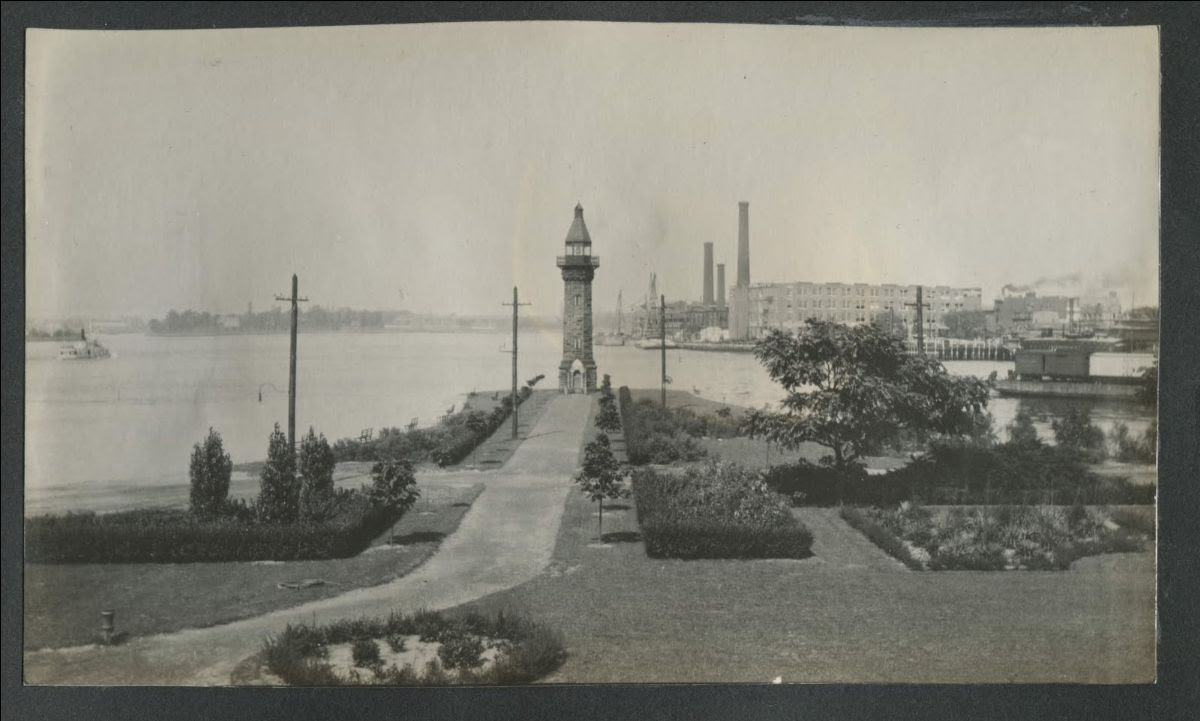
Draper Hall was accessible from the street or from the Lighthouse Park on the northern tip of the island
The orientation guide for student nurses. (Text available upon request)
Leisure time at the lighthouse
Artists rendering of CNR facing north.
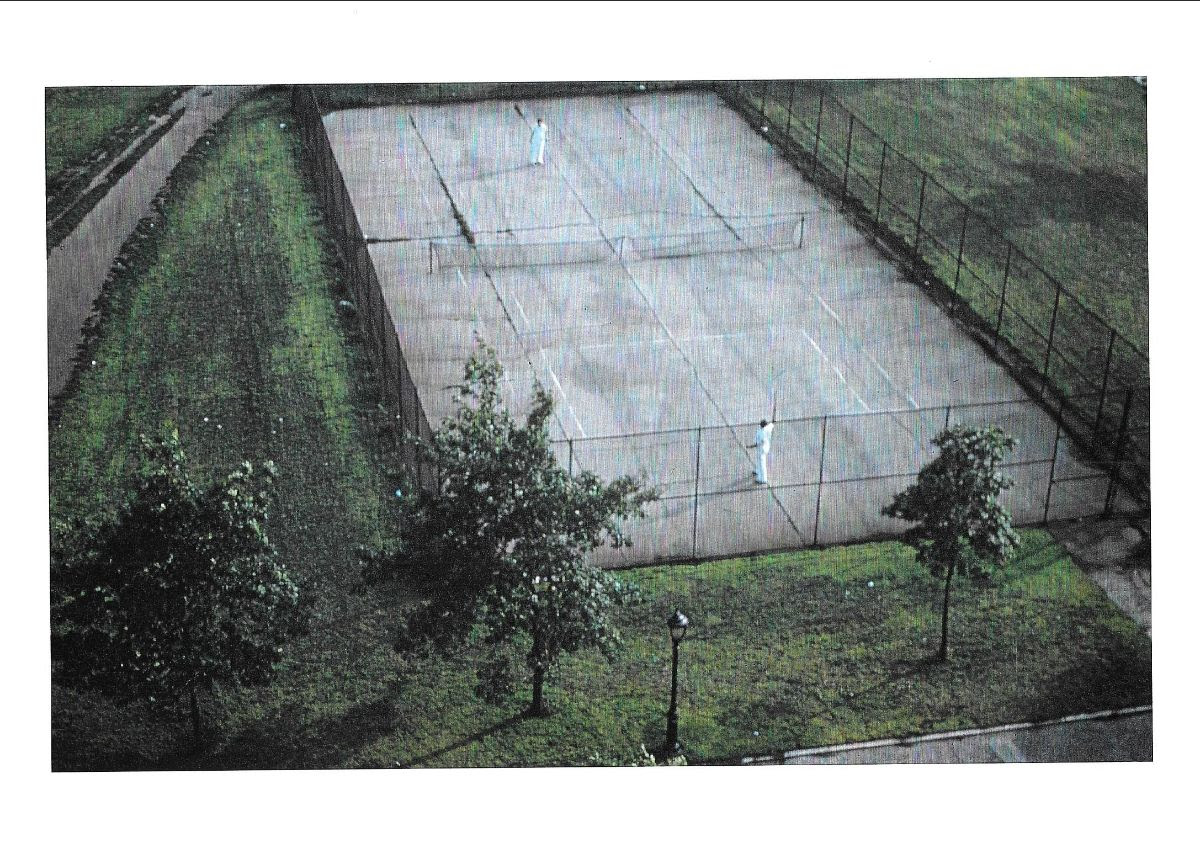
Rear of nurses residence with fencing for tennis courts
Tennis courts that later became our second community gardens.
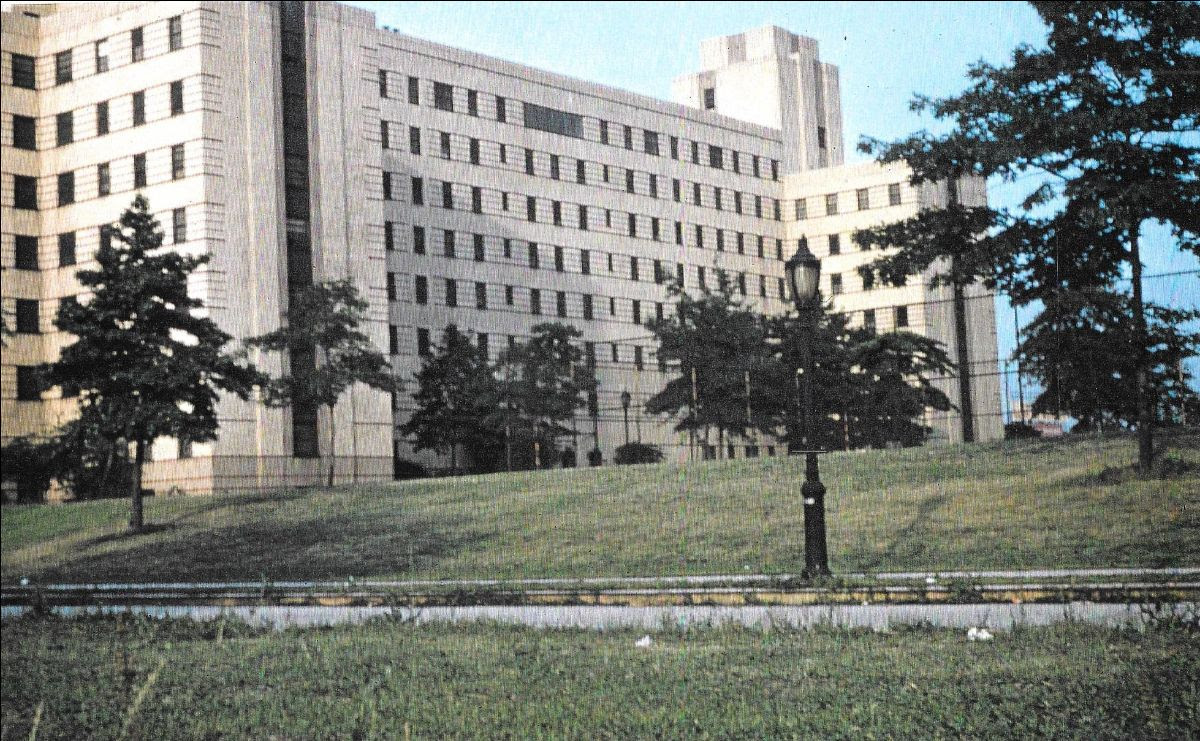
View of CNR and central laundry building in foreground
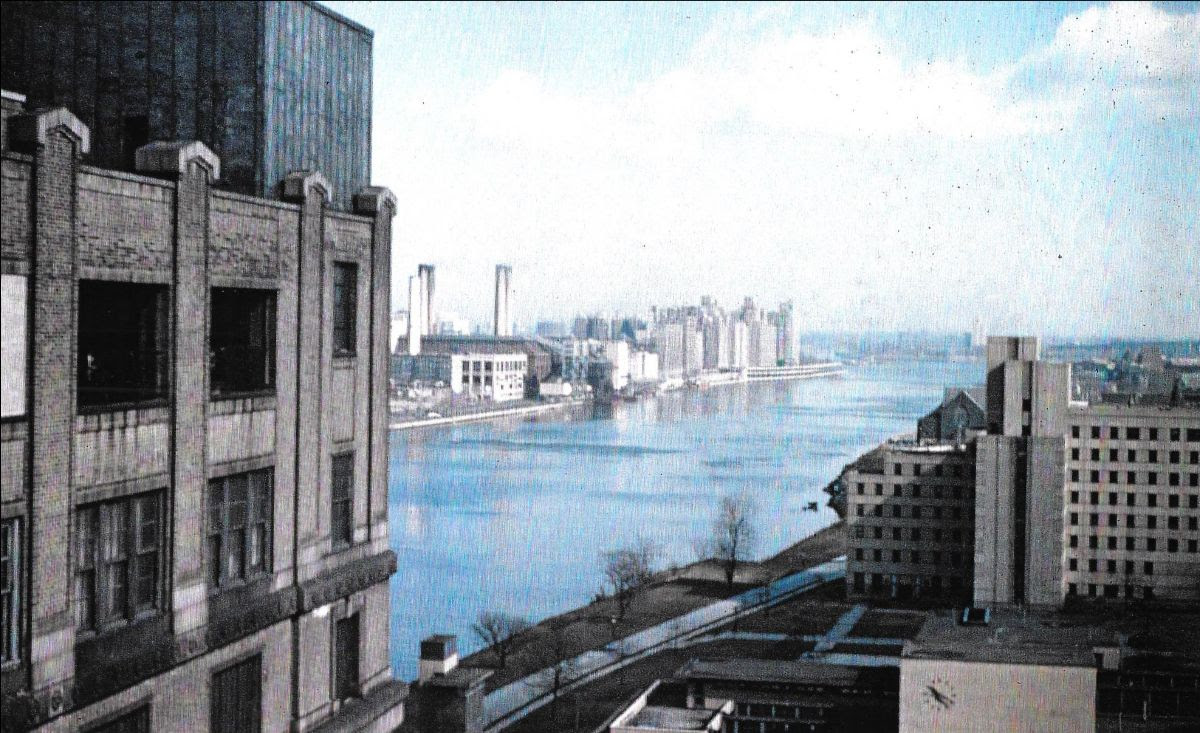
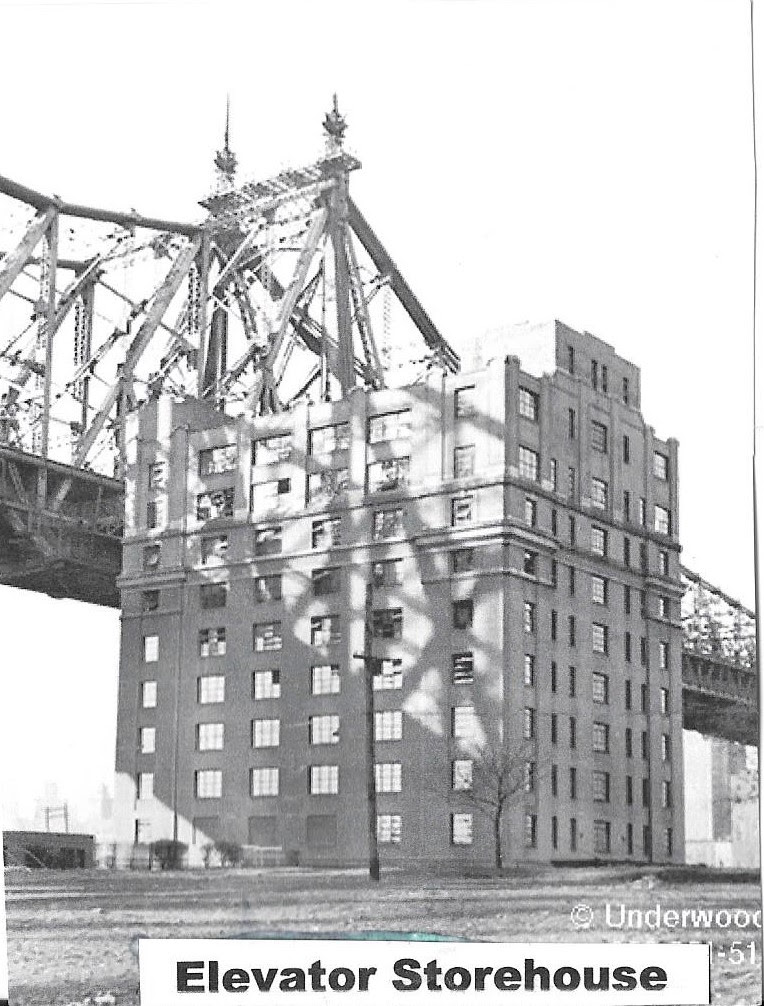
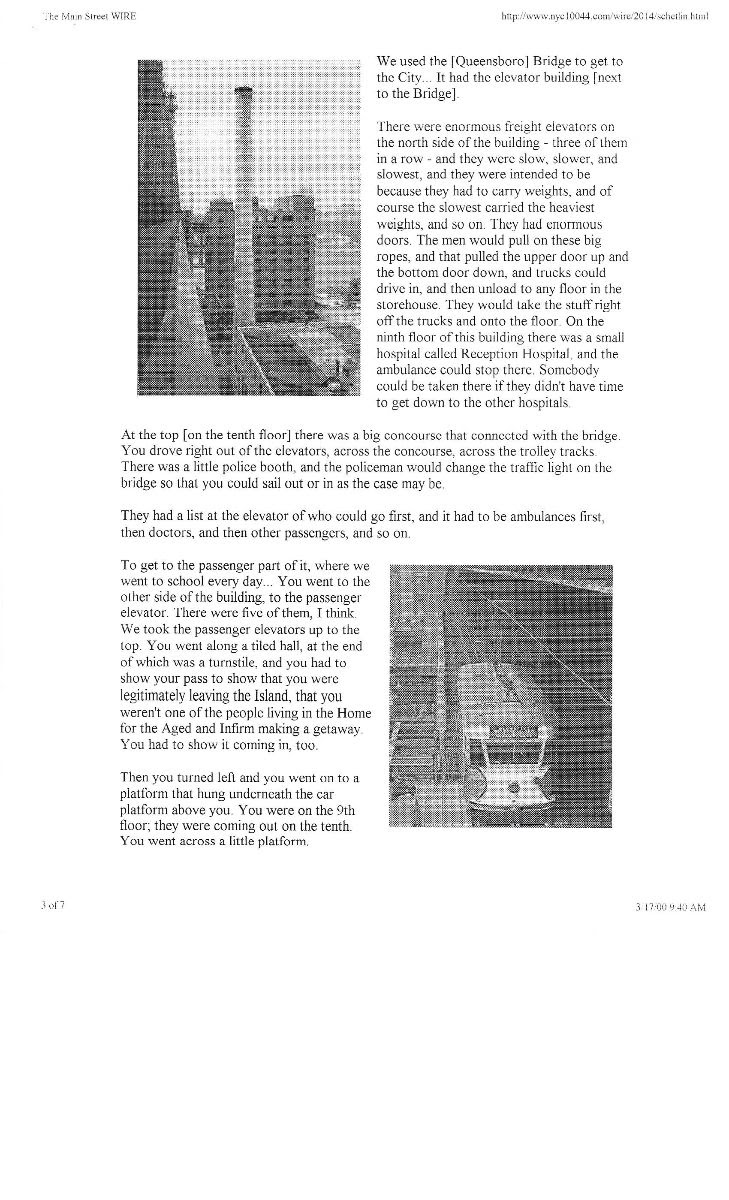
View looking north from Storehouse Elevator building
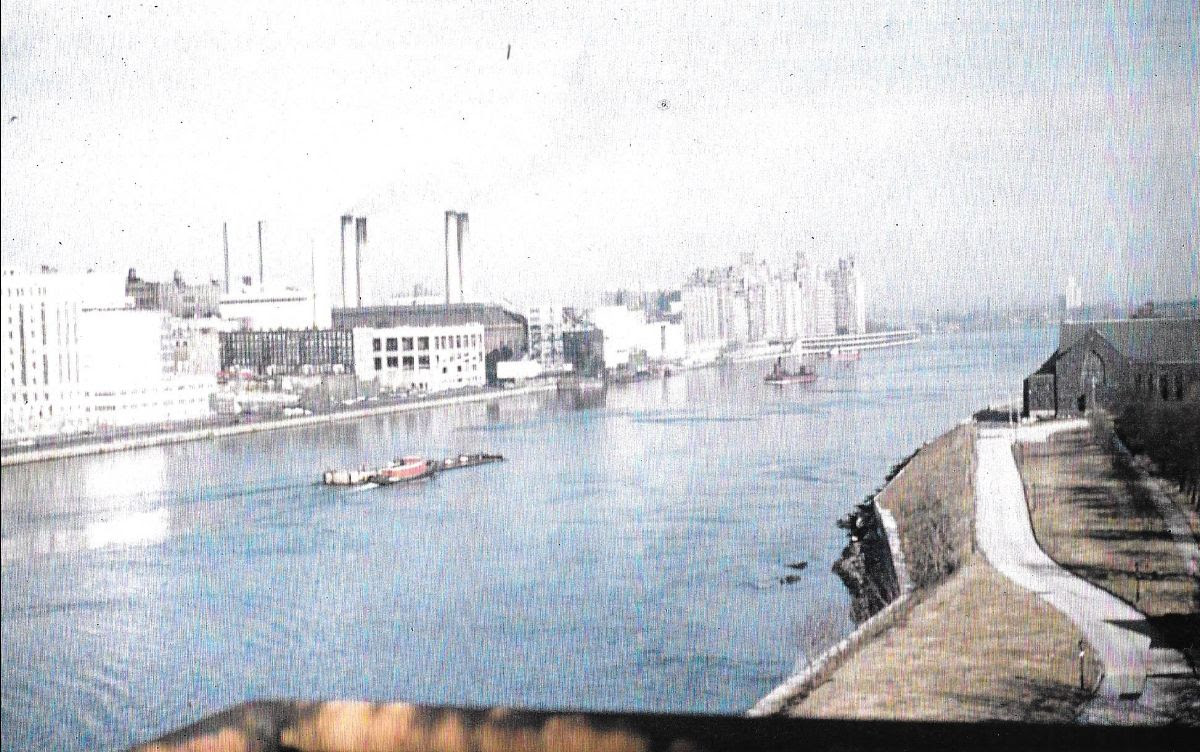
View from terrace at CNR with Chapel of the Afflicted in the distance.
Cement Batching Plant at East River Drive at 61 to 62 Street
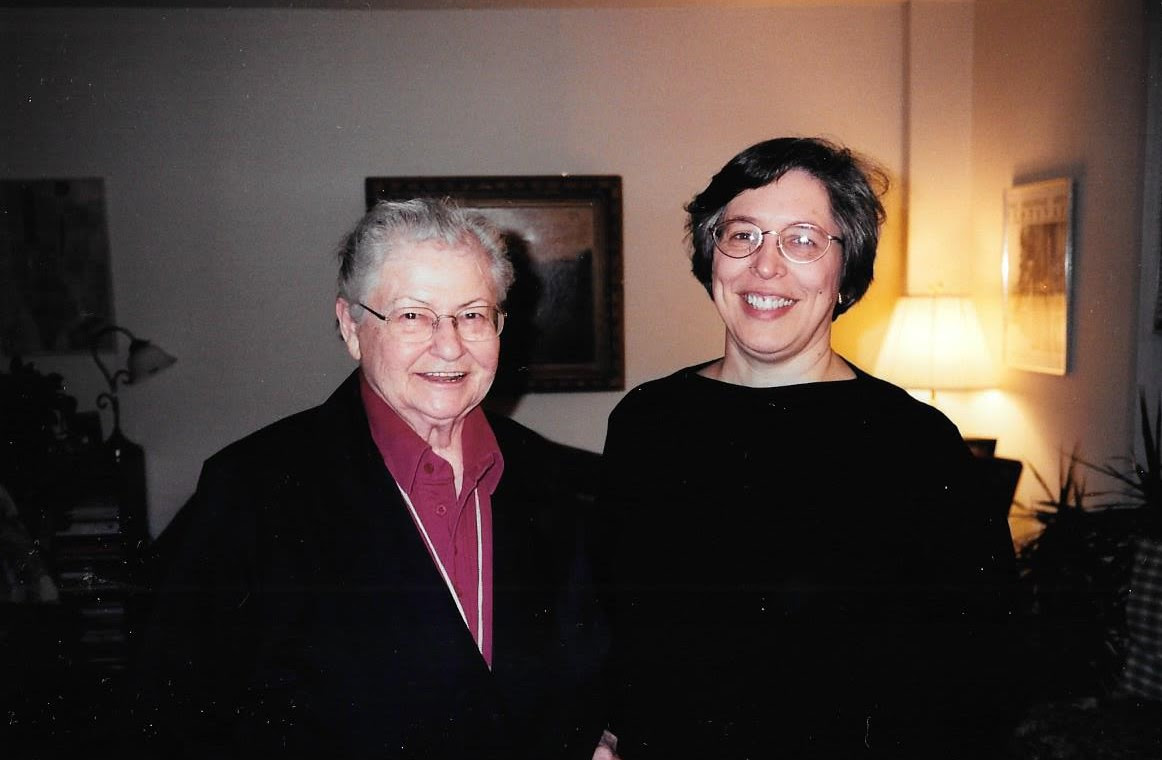
Eleanor and Judy at the time of her presentation at the RIHS in 2000.
Reading Eleanor’s story for the first time in years reminds me of the importance of paper archives and photographs. There is something about looking thru notebooks, binders, scrapbooks that brings the story to life. Eleanor visited our island again in 2006. We held a reunion at the newly opened Octagon apartments. Bruce Becker, the developer was a wonderful host to the women who studied and worked in the building. I have photos of that event but they are in the RIHS office in the Octagon.
I hope you have enjoyed this series. Please send me your comments.
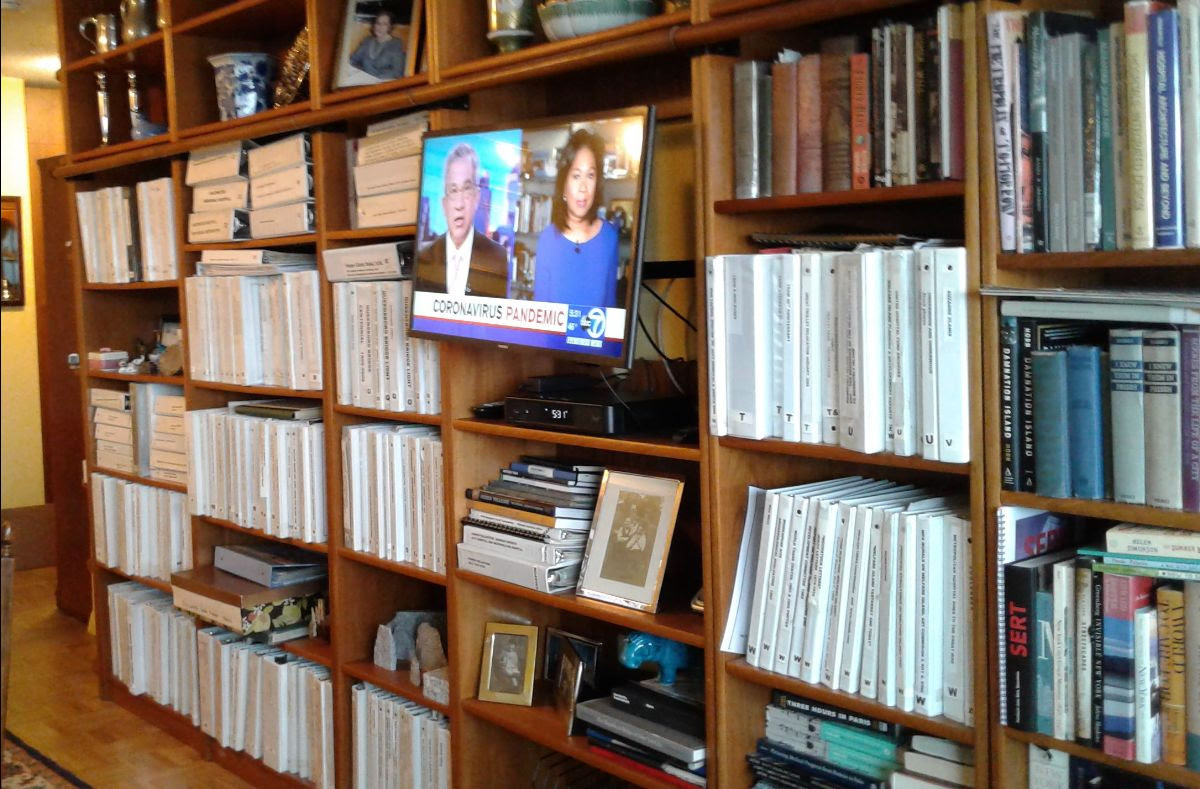
This list is only published books. Our archives have over 200 binders of individual subjects from Almshouses to Zoolander. Feel free to contact us for any information you need. If we don’t have it, we can point you in the right direction to find it.
Judith Berdy
Text by Judith Berdy Thanks to Bobbie Slonevsky for her dedication to Blackwell’s Almanac and the RIHS Thanks to Deborah Dorff for maintaining our website Edited by Melanie Colter and Dottie Jeffries
The Schetlins at Metropolitan Hospital 1921-1943 • “City in Itself” • Traveling by Ferry • The Schetlins return to the City Home Grounds 1943-1950 • The FDNY on Blackwell’s / Welfare Island From Blackwell’s Almanac FDNY Archives
_______________________
The Schetlins at Metropolitan Hospital 1921-1943
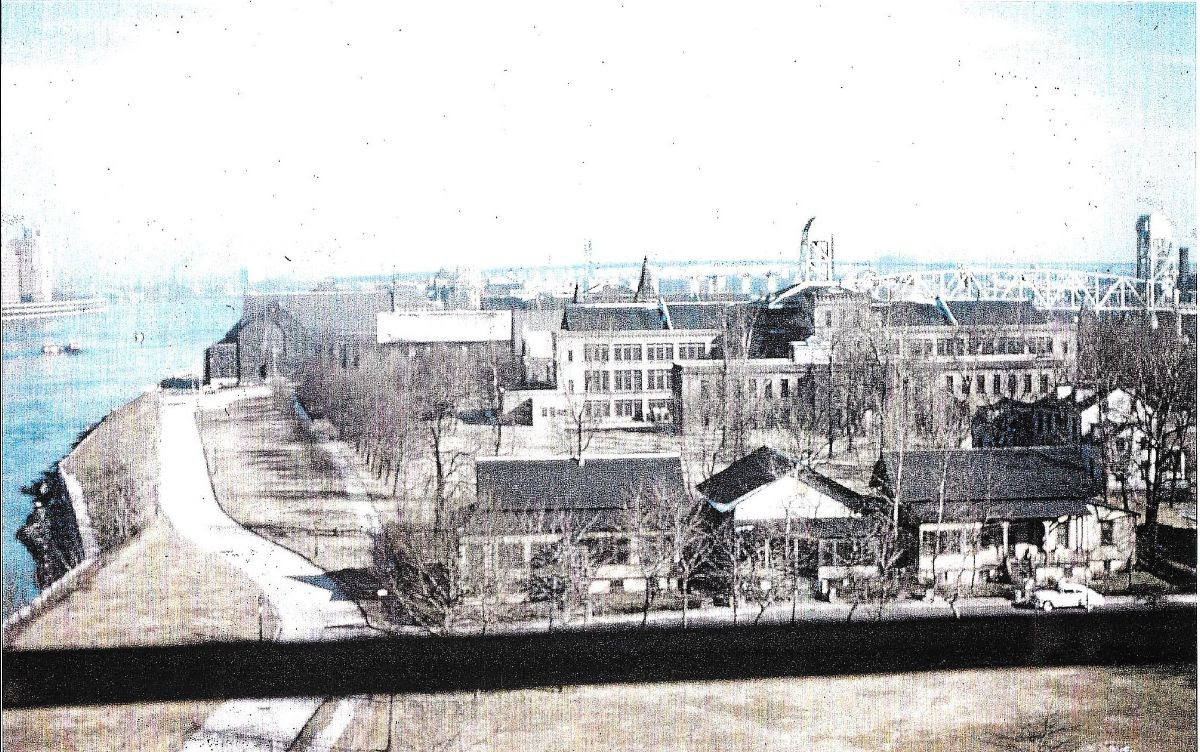
ABOVE: The Met with its’ tennis courts and areas for outdoor activities.
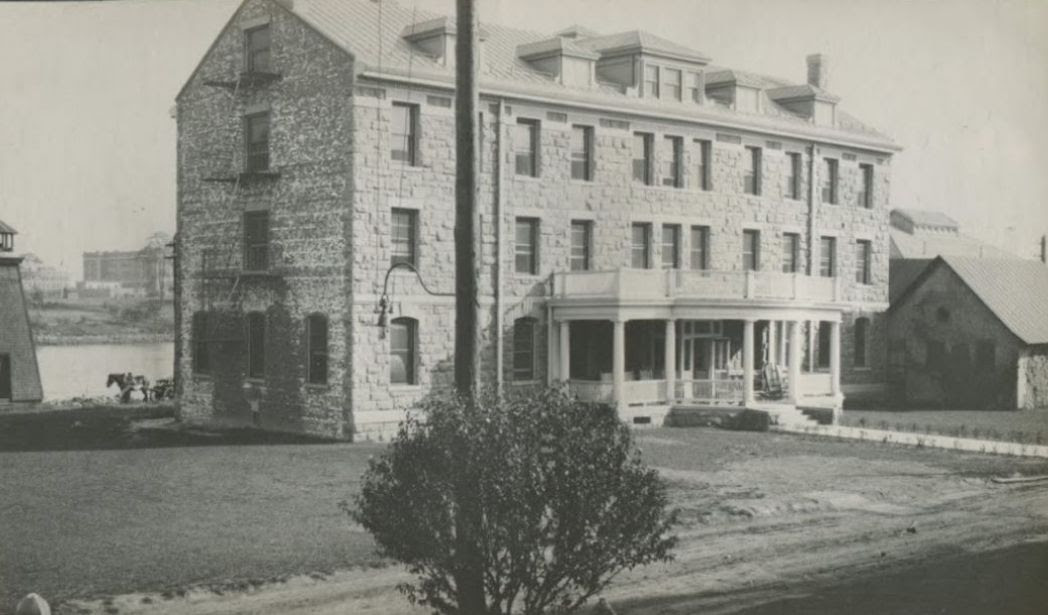
Building where Henry Schetlin worked at Metropolitan Hospital
This may be the staff house where the Schetlins lived while Henry worked at the Met.
The Lighthouse in the 1950’s
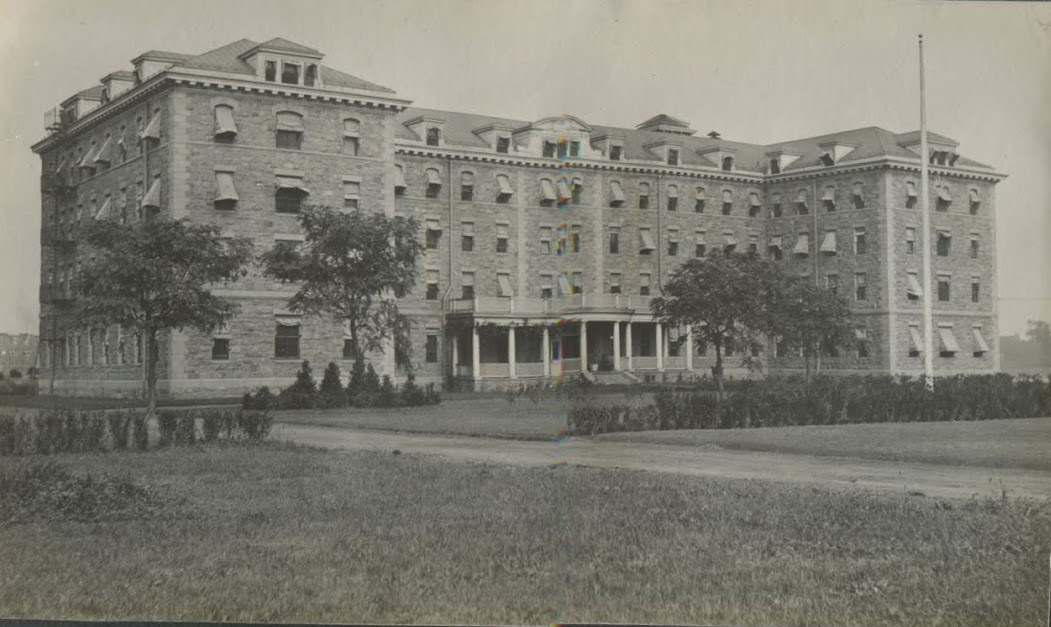
Draper Hall where the Metropolitan Hospital School of Nursing students lived and studied
Draper Hall
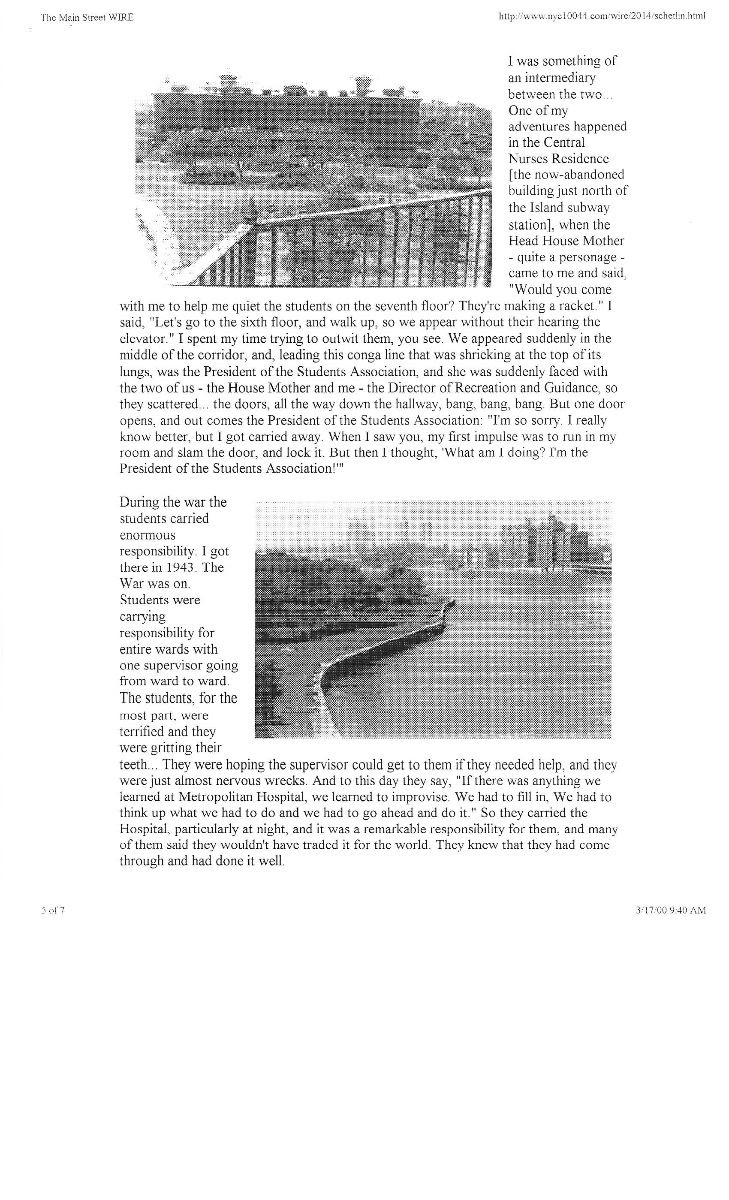
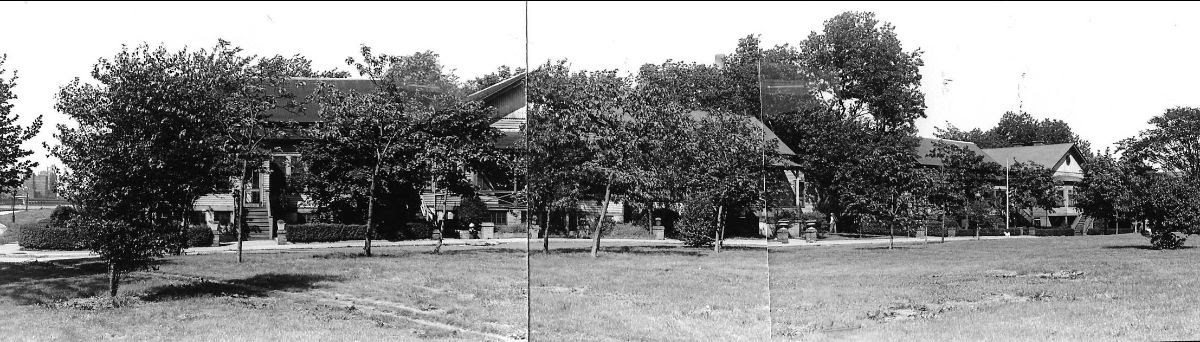
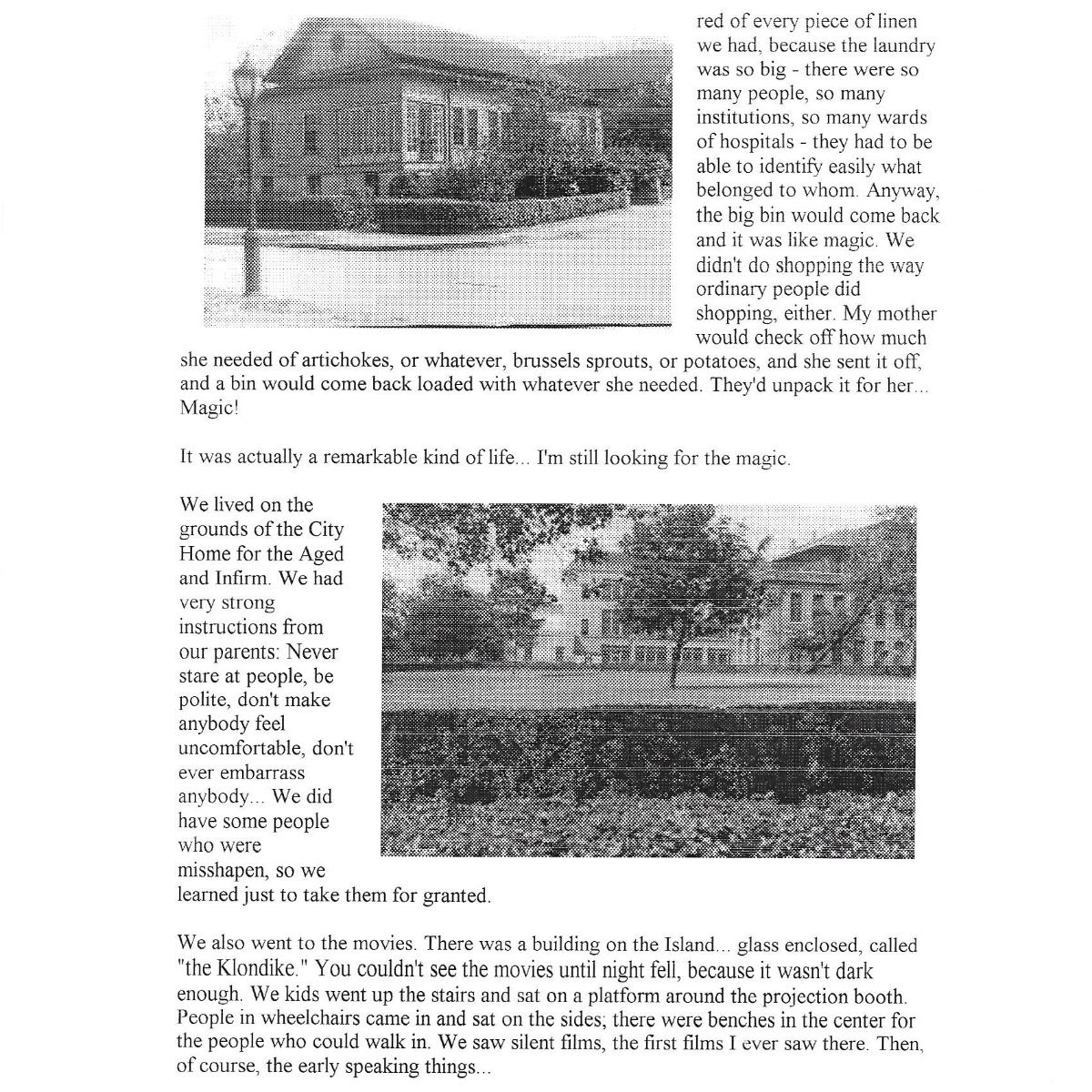
View of Cottage Row from Central Nurses Residence
The new Goldwater in the 1940’s.
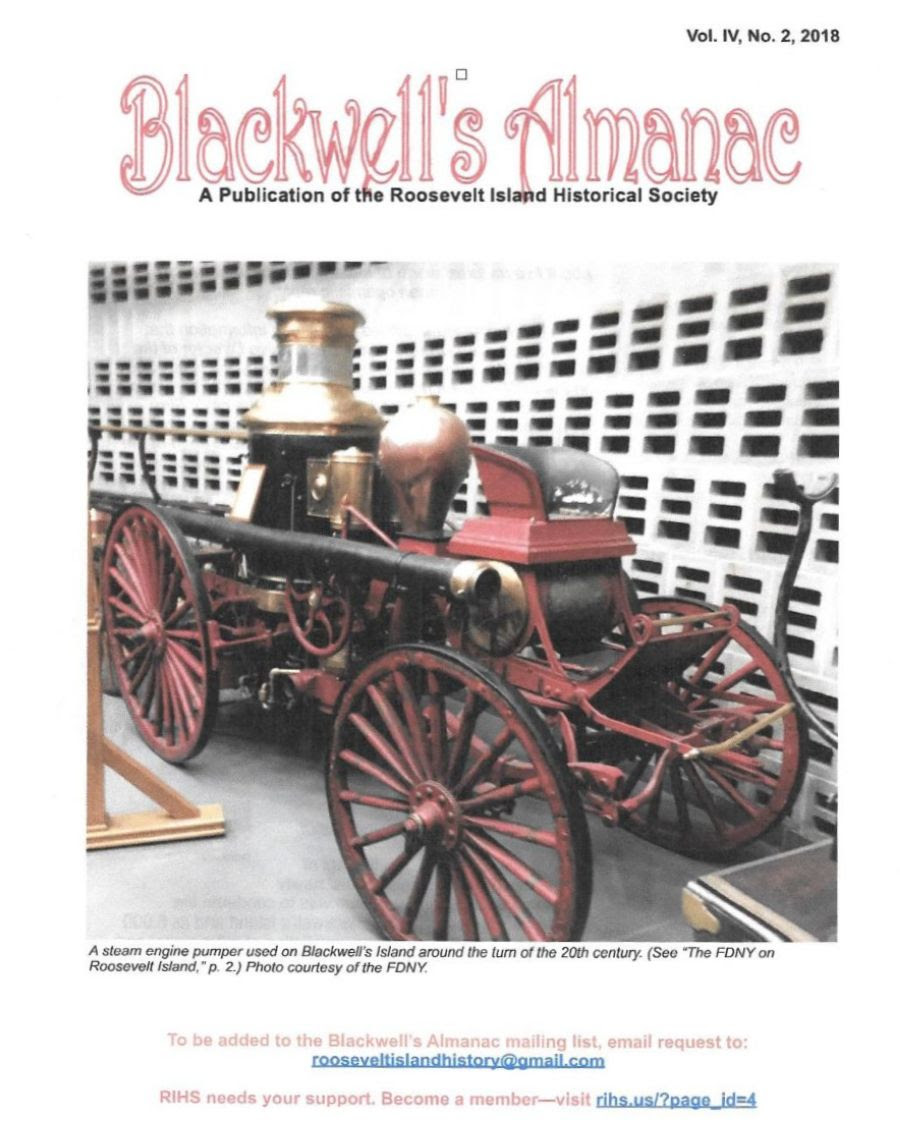
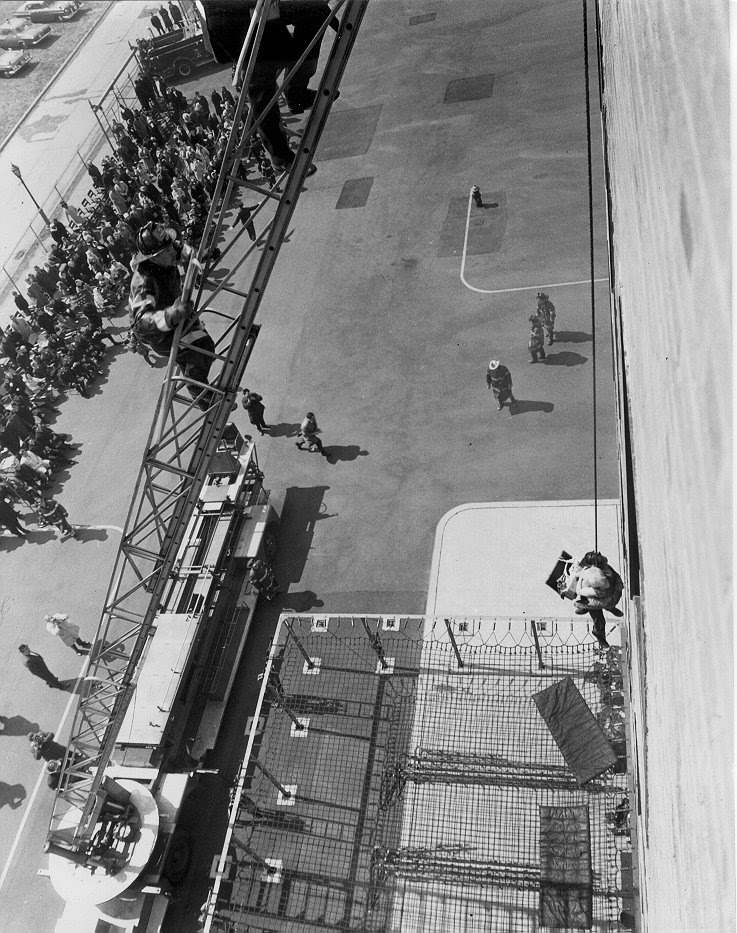
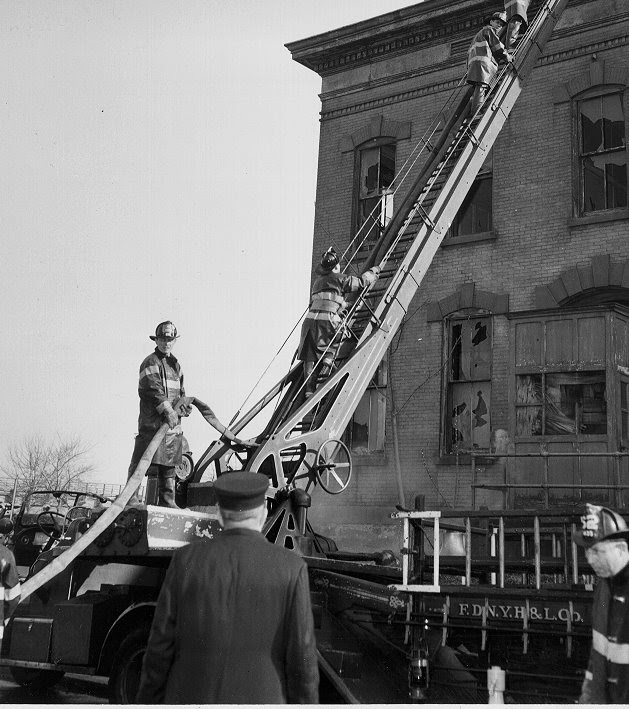
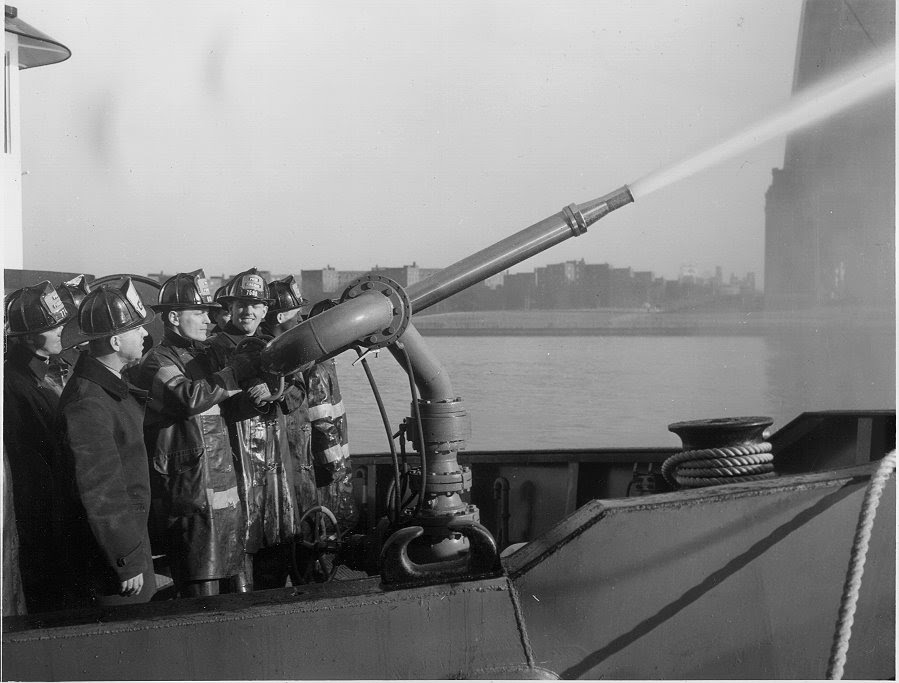
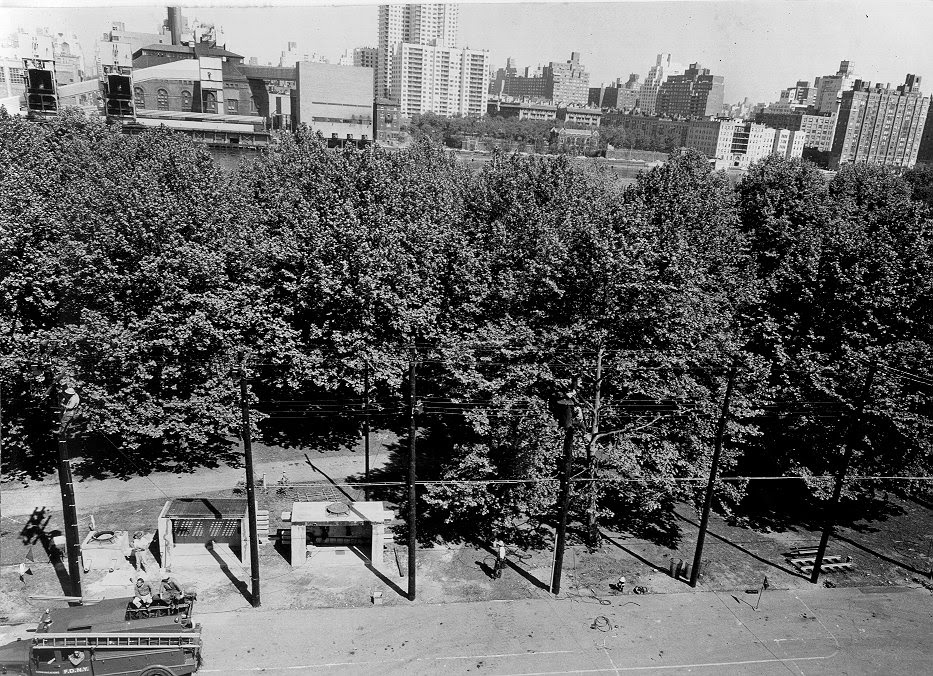
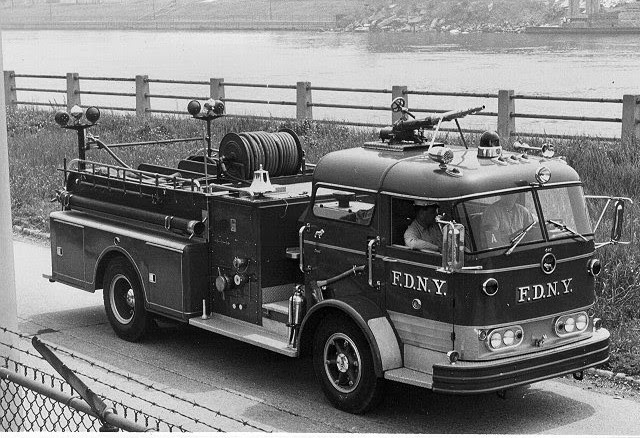
THE FDNY ON WELFARE ISLAND
From Our November, 2018 Edition by Anne Cripps
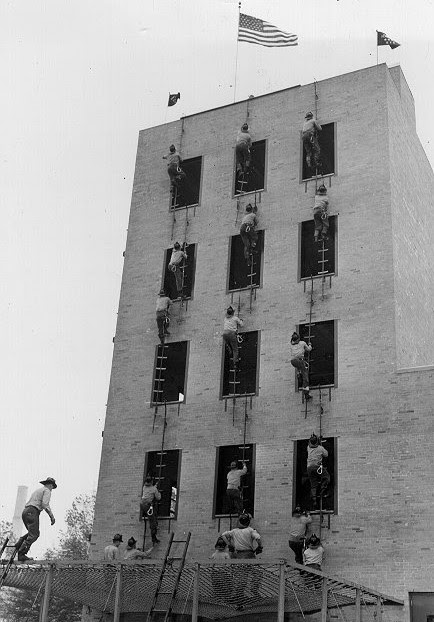
Additional Images of the FDNY Training Center Enjoy the Visions of Training in the 1960’s
Editorial
Judith Berdy
We have been thanking doctors and nurses for the last month. It is now time to thank every person who had worked thru this pandemic in a hospital or nursing home. These facilities only work with team spirit.
We start with the person who risked their health to bring you to the hospital, the porter there to clean the lobby, the hospital police to guide you, the admissions clerk to admit you, the transport person to take you to your room, the aide to help you, the nurse/PA/LPN to treat you, the kitchen staff to feed you, the engineer to warm or cool your room, the maintenance crew to remove hazardous materials, the lab person to take specimens, the social worker to guide you, the aide who makes you comfortable numerous times a day, the specialists to diagnose you, the therapist to move your body, the pharmacist to prepare your medications, the nice lady who brings you magazines, the cashier who sends your bill to insurance, the nurses who cheer as you leave and the ambulance staff that takes you home!
In our world of minimal medicine and ambulatory everything, we have forgotten what health care really is . It is CARE from every person.
All images used in FROM TH ARCHIVES are from the collection of the Roosevelt Island Historical Society. Please respect copyrights (c) and request permission for reproduction. We will advise original sources where available.
Thanks to all our neighbors who gave donations to feed the staff at Coler. Nisi has sent many meals for the staff with these funds. The last two funded lunhes will go to the staff this weekend.. Starting next week WORLD CENTRAL KITCHEN will be providing 3 meals a day for all staffs at all municipal hospitals and nursing homes. (Municipal hospitals are Bellevue, Kings County, Elmhurst, Queens, Woodhull,Metropolitan and more. Coler is a municipal nursing home). Thanks Bloomberg Philanthropies for funding these meals.
THE SCHETLIN STORY CONTINUES, PART IV
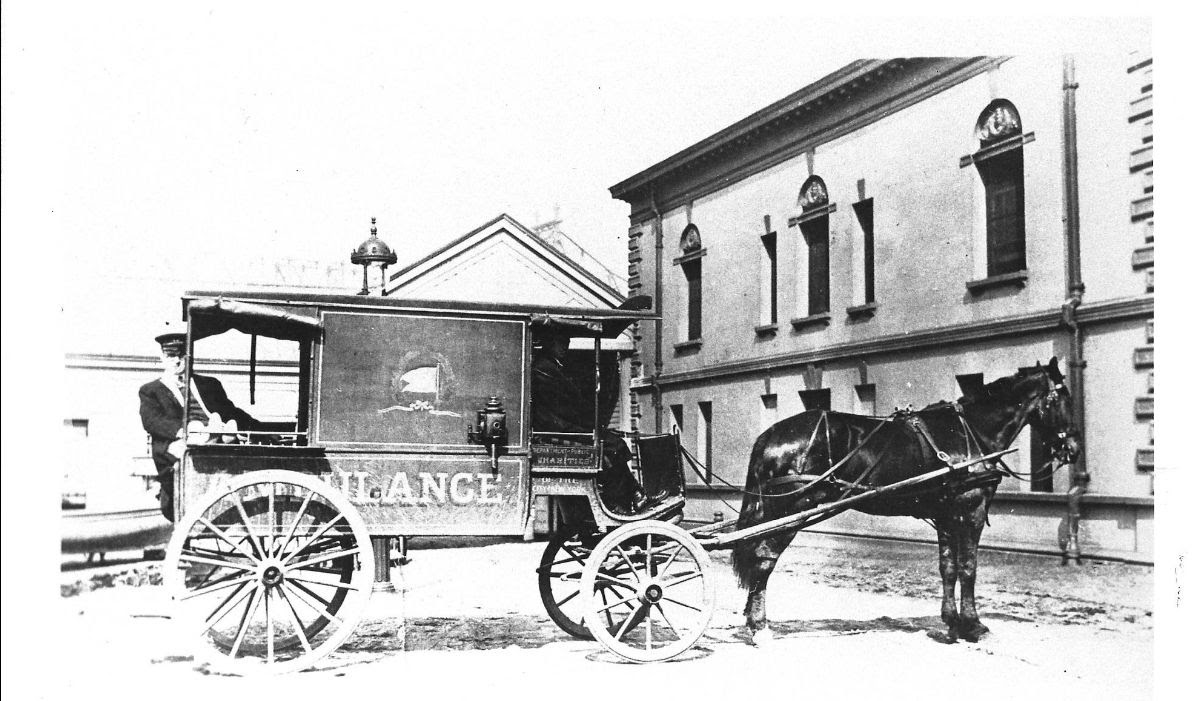
When Eleanor was a child this was the ambulances used.
SATURDAY & SUNDAY, APRIL 18-19, 2020
29th in our FROM THE ARCHIVES series.
A RECOLLECTION OF FAMILY LIFE ON BLACKWELL’S / WELFARE ISLAND ELEANOR SCHETLIN 2002 PART IV
Mr. Adams, The City Home Watchman
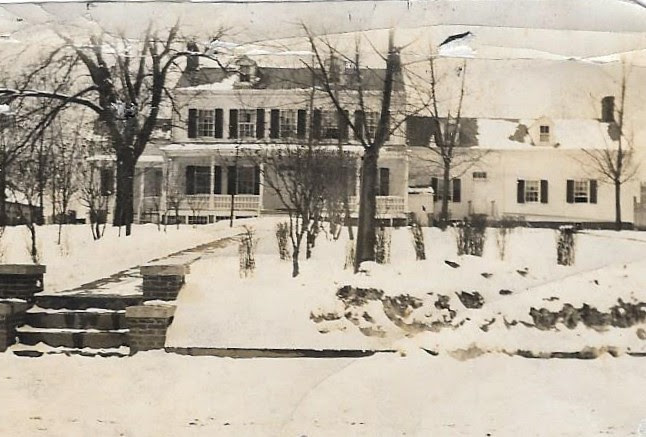
The House on Blackwell’s Island – 1939
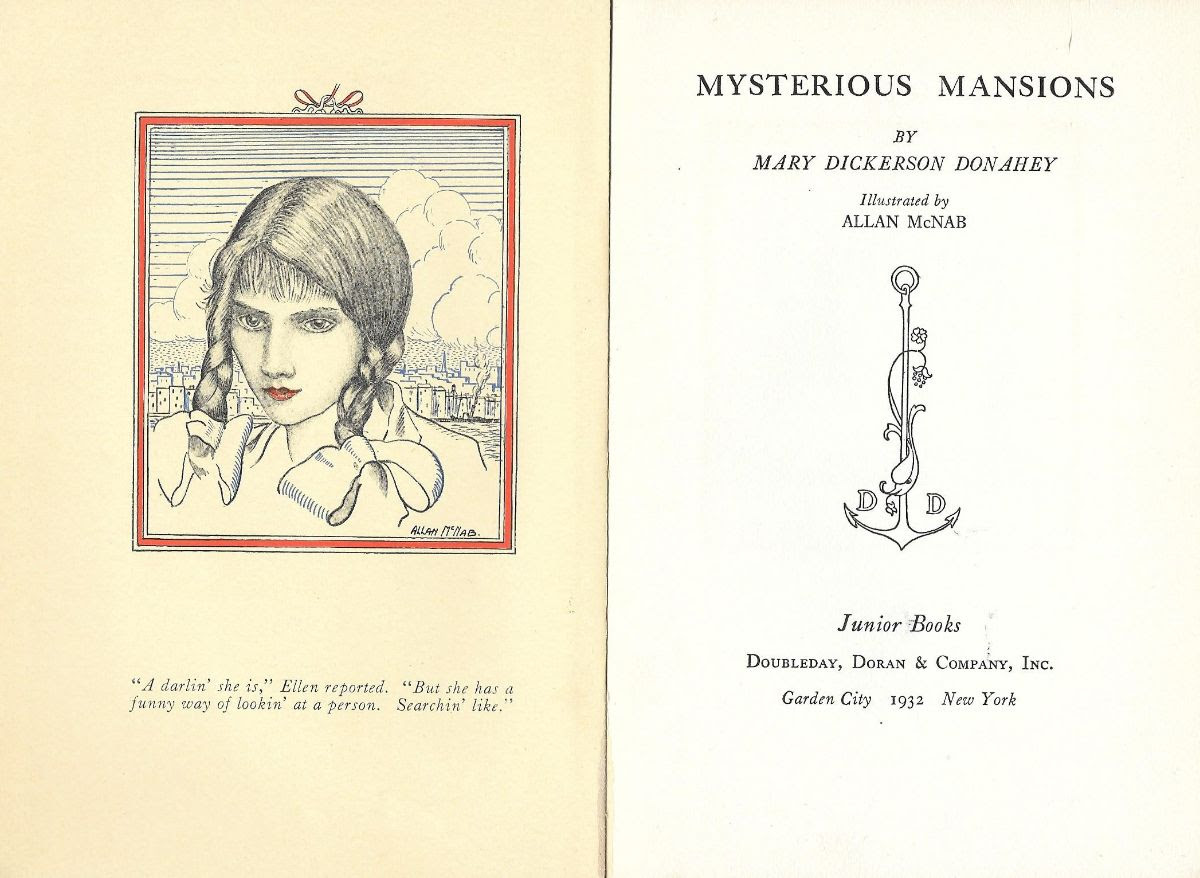
Mysterious Mansions
Cottage Row in back of the quarry. Can you spot the watchman’s shack on the bottom photo?
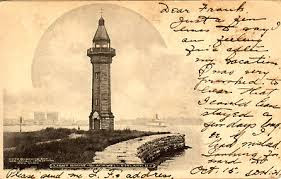
The lighthouse with its original top
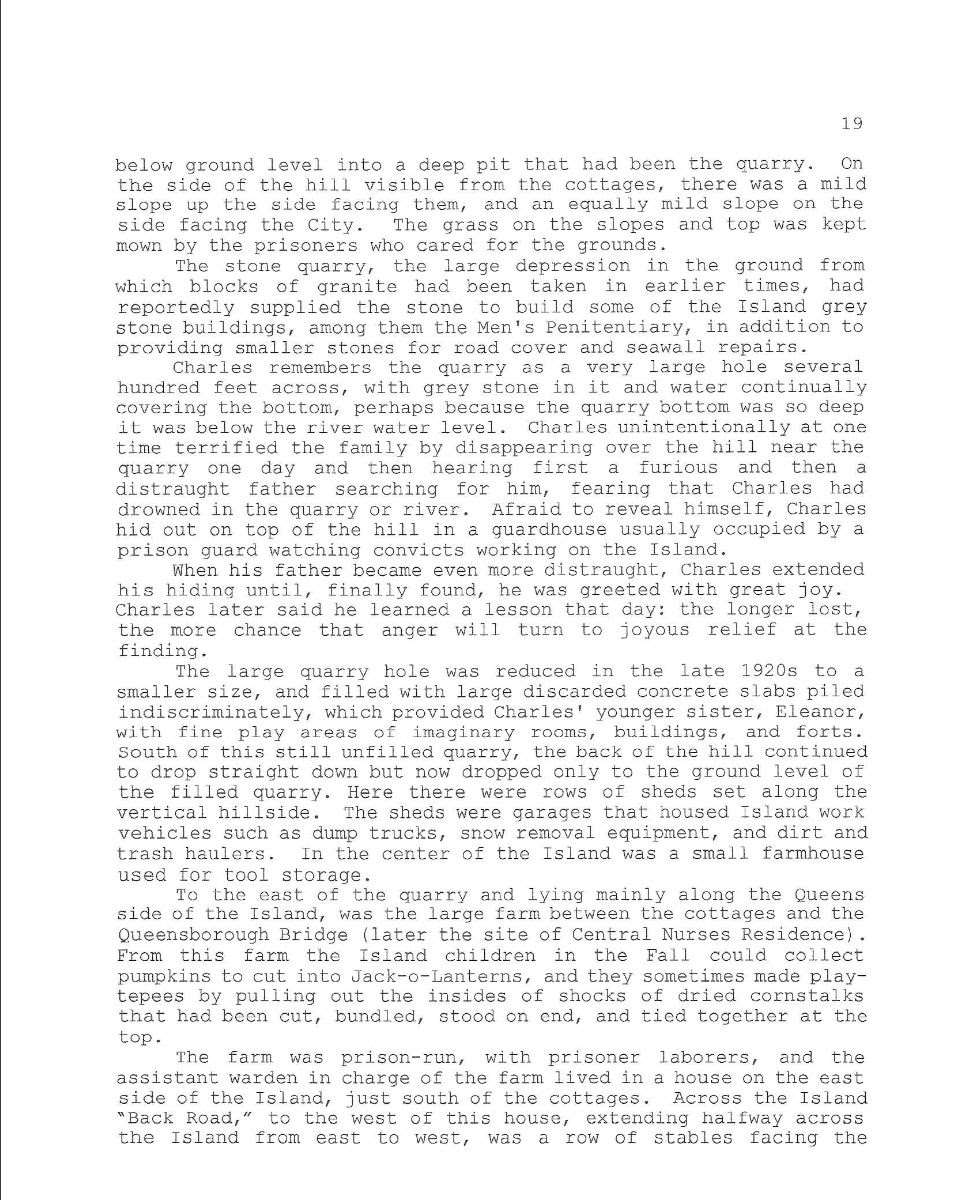
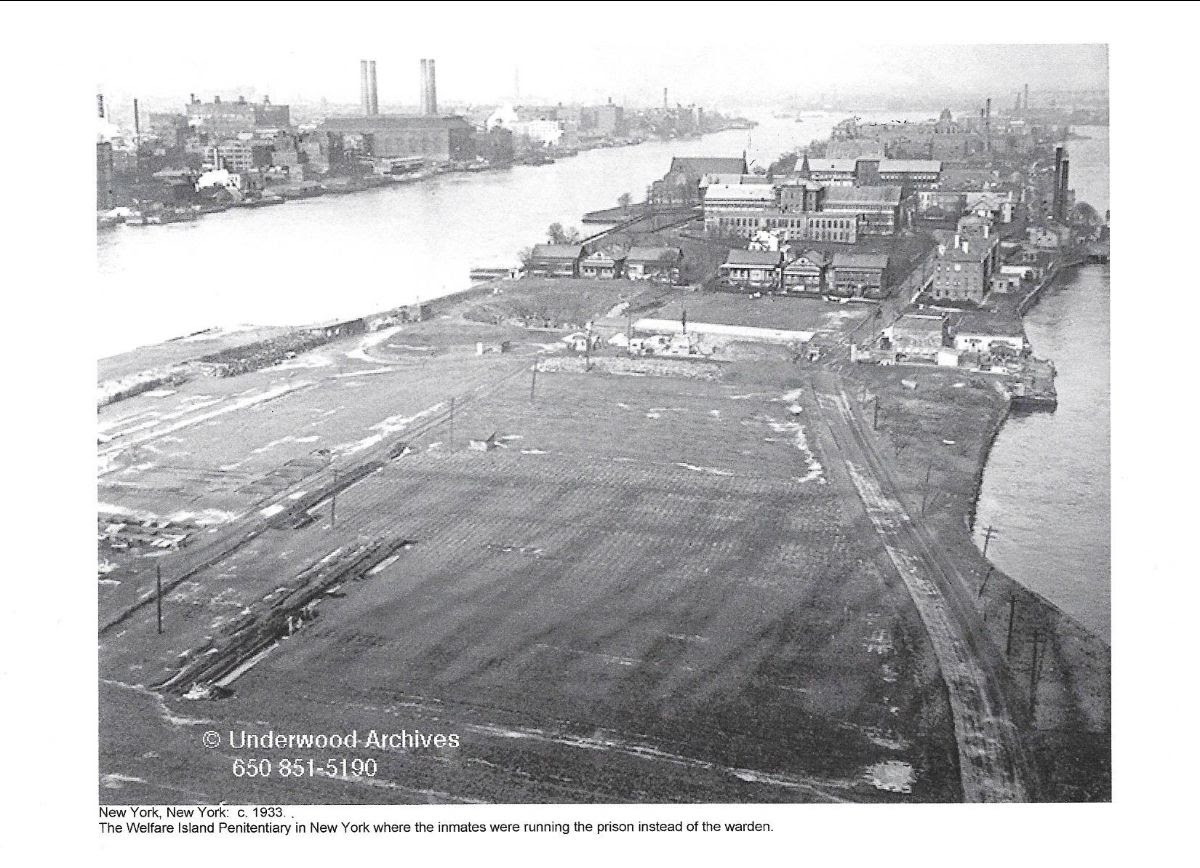
The quarry after it was closed and covered over
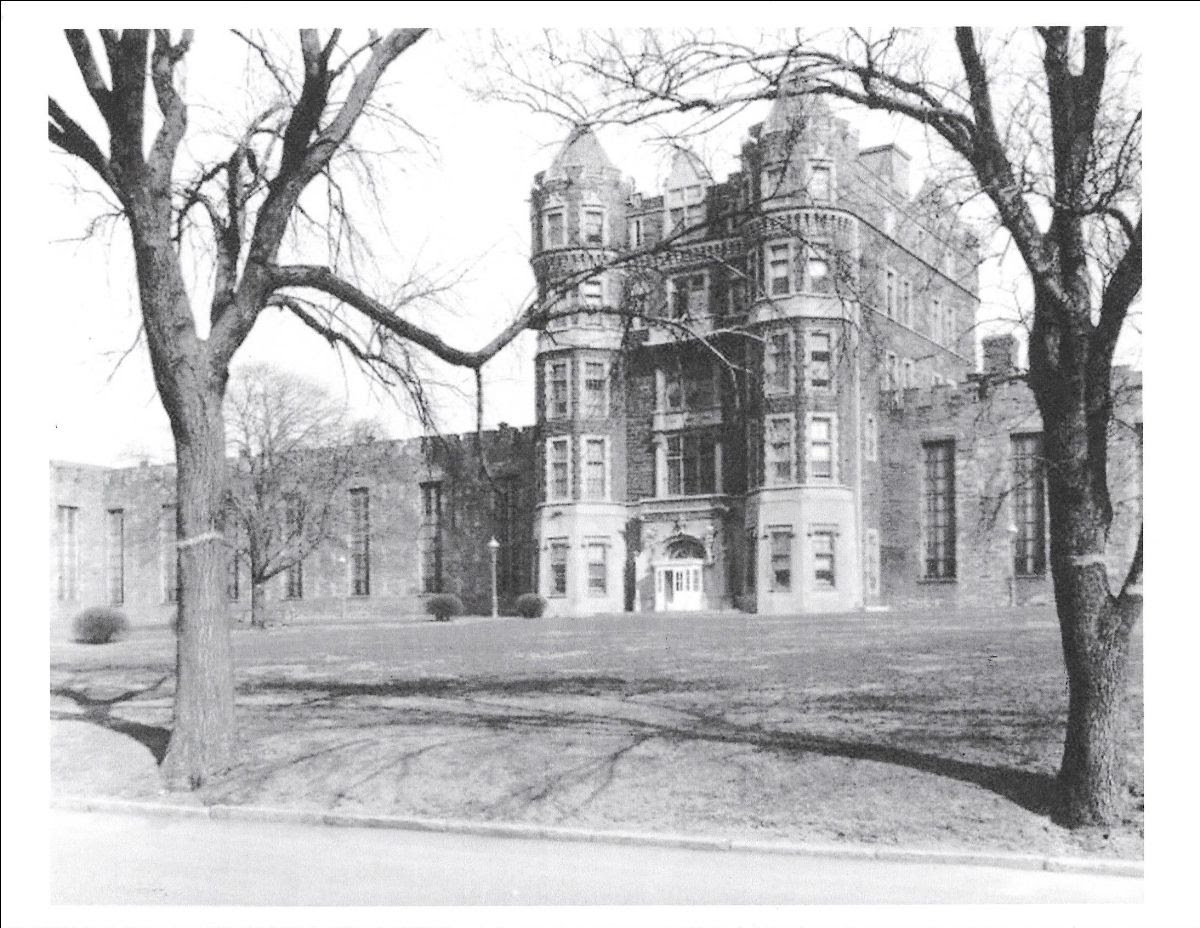
The neat and tidy appearance of the penitentiary
The title page and illustration
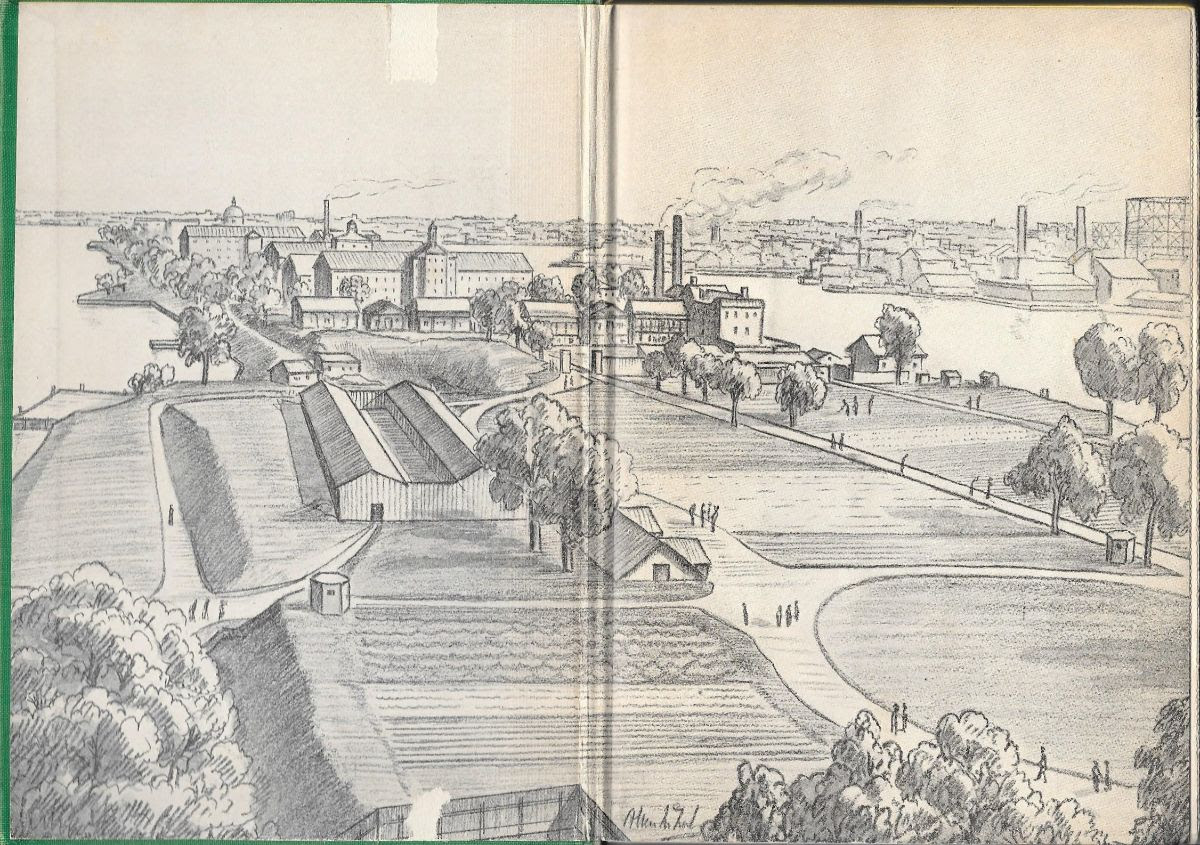
Inside the cover of MYSTERIOUS MANSIONS showing City Hospital in the distance with the Penitentiary in the foreground
Inside the cover of MYSTERIOUS MANSIONS showing covered over quarry in foreground and Cottage Row in the distance.
Please note that the author of Mysterious Mansions was the daughter of the island storekeeper that hired Eleanor’s father.
EDITORIAL
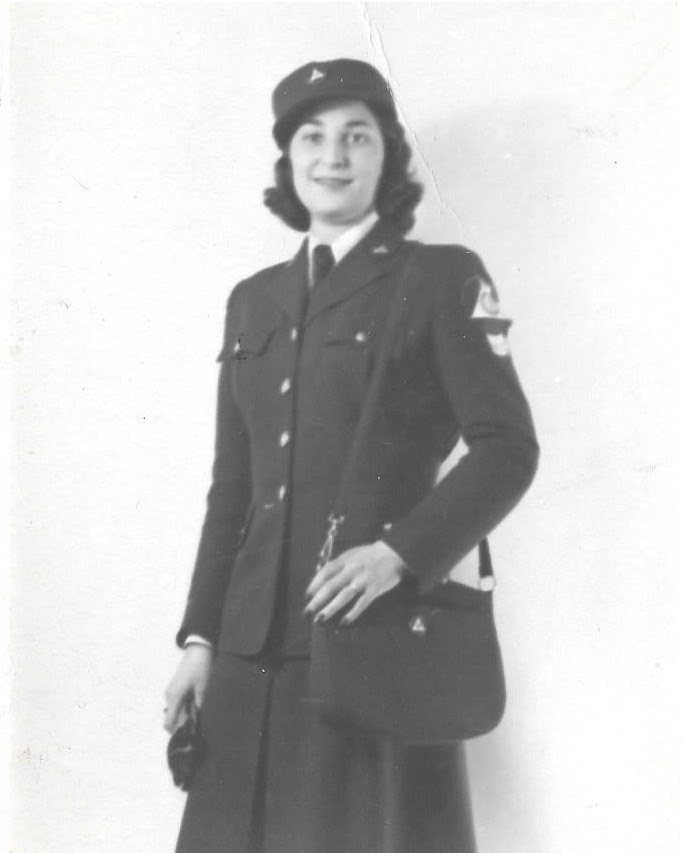
How did this epic start. Every issue is about 4 hours work. It is fun and goes fast. Tearing the apartment apart today, I found a photo of my mom in her WWII Civil Defense uniform.
Stories, memories, recollections seem to be a great way to escape the realities of our new life style. Some watch movies, some read books, some are in a fog. I get into these publications, dig out folders, files, photos and related items. (Trashy TV shows are on in the background, my favorite is “Parking Wars”).
I am lucky to sit at my desk watching the trees turn green in Queensbridge Park and the Silvercup sign in Queens. The sun will come out tomorrow!
A teaser for Monday, we move north to Metropolitan Hospital.
Next week we start a two parter on the FDNY on the Island.
Ruth Berdy, my mother, a Civil Defense Volunteer during World War II
Text by Judith Berdy Thanks to Bobbie Slonevsky for her dedication to Blackwell’s Almanac and the RIHS Thanks to Deborah Dorff for maintaining our website Edited by Melanie Colter and Dottie Jeffries
Are you bored? Do your kids need projects? Are you running out of ideas?
The RIHS Visitor Center has Empire State, Chrysler Building and Statue of Liberty 3D puzzles. They are brand new, in sealed packages. Small models $8- Large models $15- E-mail us and we will arrange pickup rooseveltislandhistory@gmail.com
EDITORIAL
Exhaustion seems to be setting in. I need a haircut. I need to loose weight. I need to get off this island.
I need to stop complaining. I have a comfy apartment, a cat that sleeps 22 hours a day, some money in the bank and wonderful neighbors.
Baby Oona is down the hall. She giggles at all things a one year old learns so fast. It is a new time for working mothers. Our young moms are discovering mommy-hood and watching your child grow up in front of you without babysitters, nannies or others. It is a tough job and I sympathize with them.
My mom stayed home with my much older (3years) brother and me. I am sure I was perfect. All I wanted to do was wear dresses and petticoats. It was suburbia 1950’s. Dad went to work, mom stayed home. We were out of the house all day and ran when the Good Humor truck came by, needing 25 cents for ice cream.
We watched Buffalo Bill and Howdy Doody. TV was black and white and never worked right for more than 10 minutes.
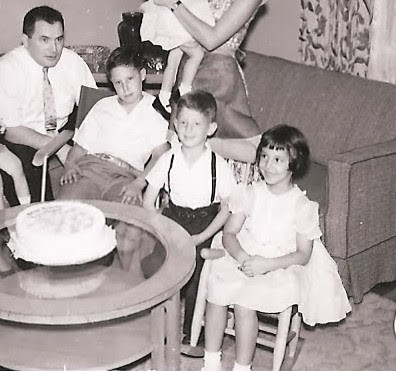
We were happy. Find my dad, brother and me in the photo below.
Text by Judith Berdy Thanks to Bobbie Slonevsky for her dedication to Blackwell’s Almanac and the RIHS Thanks to Deborah Dorff for maintaining our website Edited by Melanie Colter and Dottie Jeffries
The following is a statement from Susan G. Rosenthal, President and CEO of Roosevelt Island Operating Corporation about the passing of Jack McManus: “I was saddened to learn this morning of Jack’s passing during the night. For over two years, he fought cancer resulting from his extraordinary service as head of operations during the 9/11 aftermath. Over the past 5 years, I got to know the man. He loved Roosevelt Island and was committed to his job as Chief as much as he was committed to every position he ever held. I spoke to him last on Easter Sunday. When I told him about officer Fischer’s passing, his immediate response was to call the PSD officers closest to Fischer to ease their pain. That’s just who he was. At some point, he knew he wasn’t going to beat this cancer, but he continued with whatever treatment was available no matter how debilitating so he could live. He loved life and especially his family. Those on Roosevelt Island know how much he cared about our community. He spent endless hours talking to residents about their concerns or complaints. He brought peace, cooperation and respect to the relationship between PSD and our residents. I’m so pleased that we honored him at the community’s retirement party and we named Octagon Field for him so that he was able to experience being celebrated by us while he was alive.” Chief McManus’s implementation of community policing is credited for not only making Roosevelt Island one of the safest neighborhoods in New York City, but for improving the department’s relationship with the community. Please join the Roosevelt Island Operating Corporation, its Public Safety Officers and Jack’s family in mourning the loss of this exemplary public servant.
courtesy Rooseveltislander blogspot
EDITORIAL
Nursing homes are regulated by NEW YORK STATE DEPARTMENT OF HEALTH, an agency overseen by Governor Andrew Cuomo.
Where are State inspectors? Where are the people who make the rules?
Text by Judith Berdy Thanks to Bobbie Slonevsky for her dedication to Blackwell’s Almanac and the RIHS Thanks to Deborah Dorff for maintaining our website Edited by Melanie Colter and Dottie Jeffries
A RECOLLECTION OF FAMILY LIFE ON BLACKWELL’S / WELFARE ISLAND PART 1 Eleanor SCHETLIN 2002
TOMORROW;
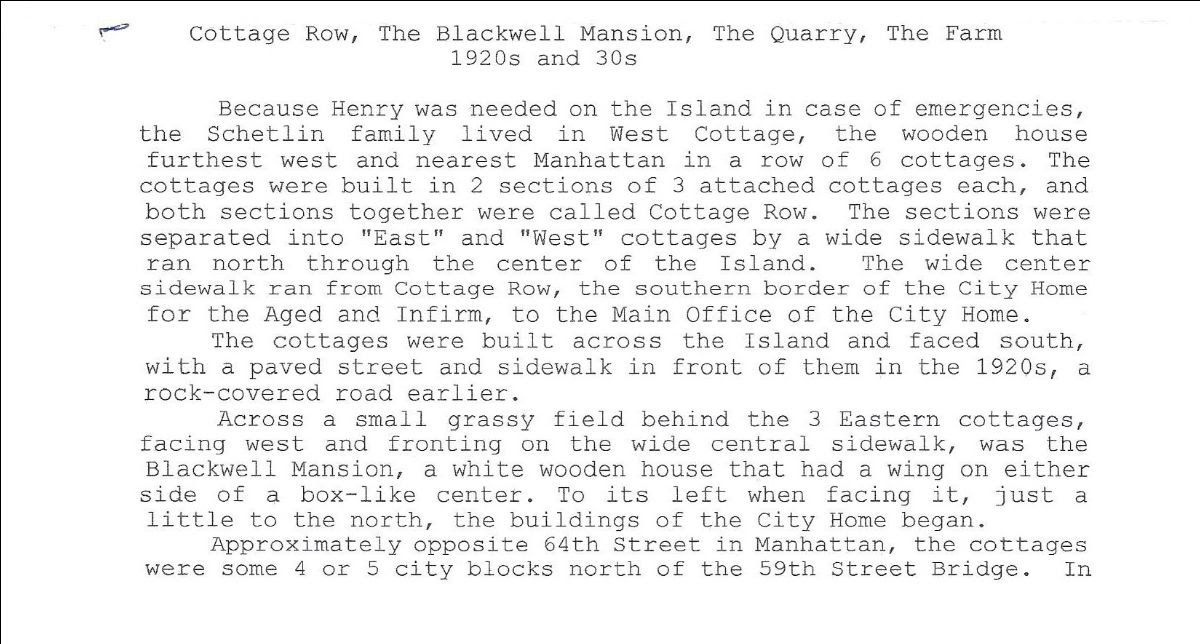
Cottage Row, The Blackwell Mansion, The Quarry, The Farm 1920’s and 1930’s
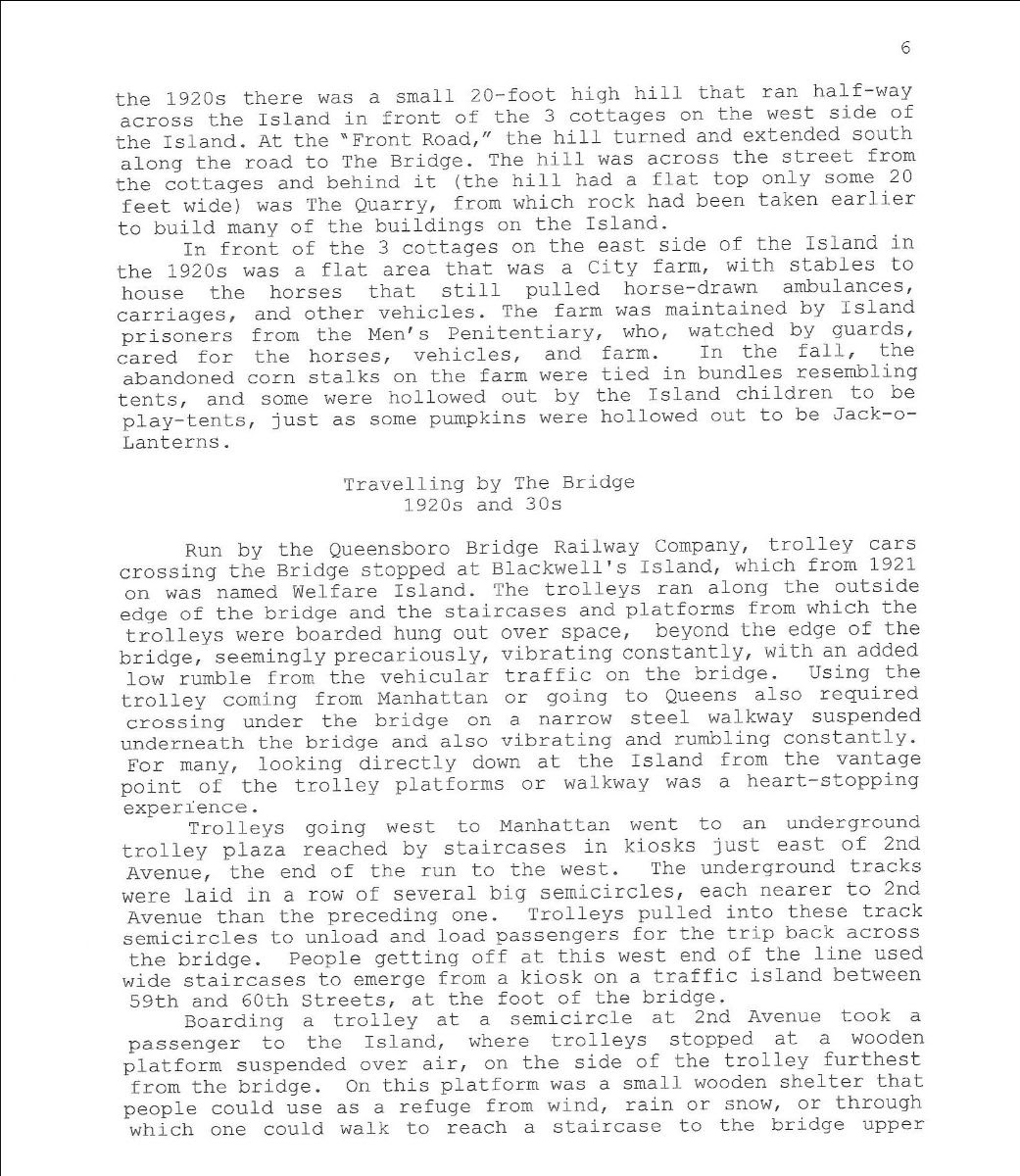
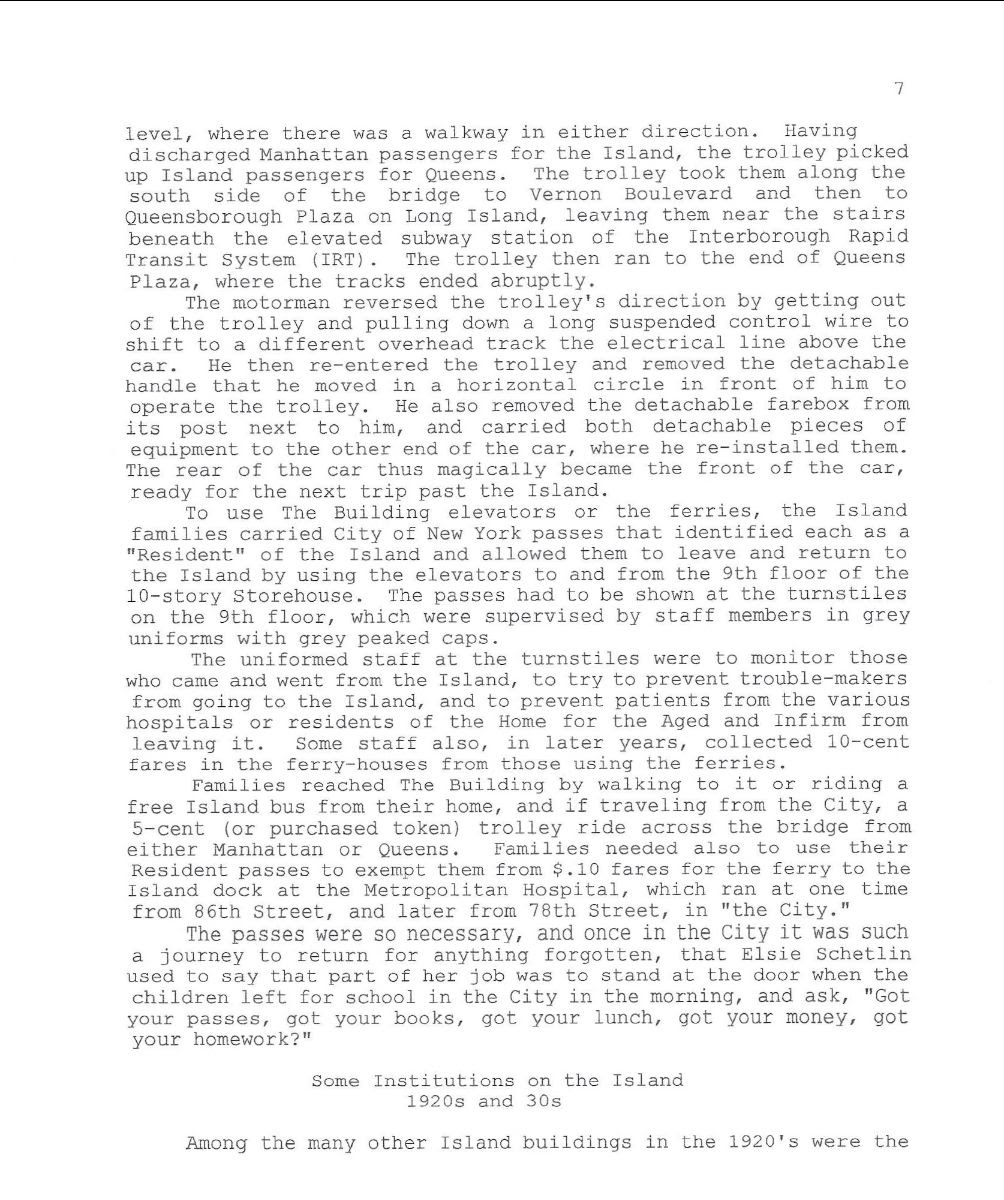
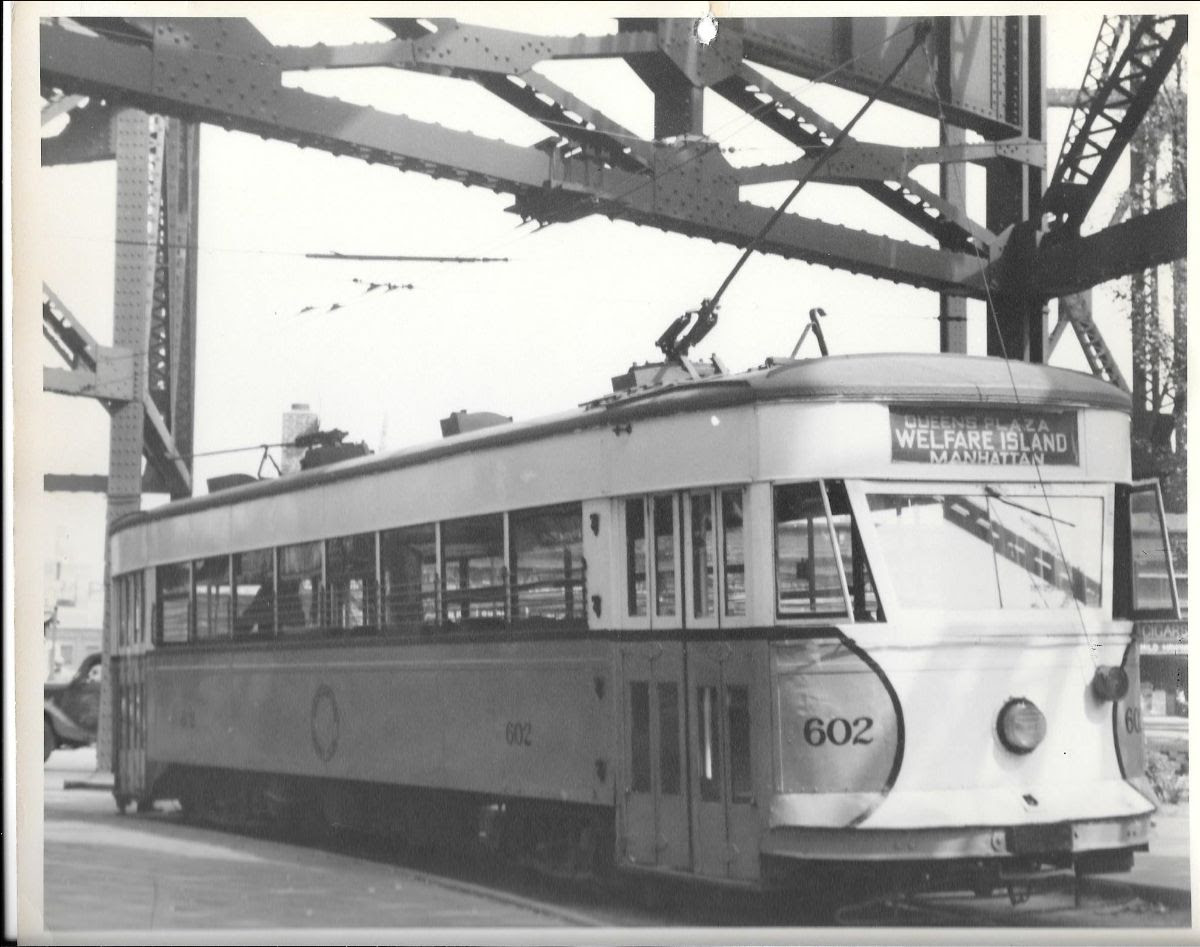
Traveling the Bridge
How Do We Get Our Water?
Part VI
Bobbie Slonevsky
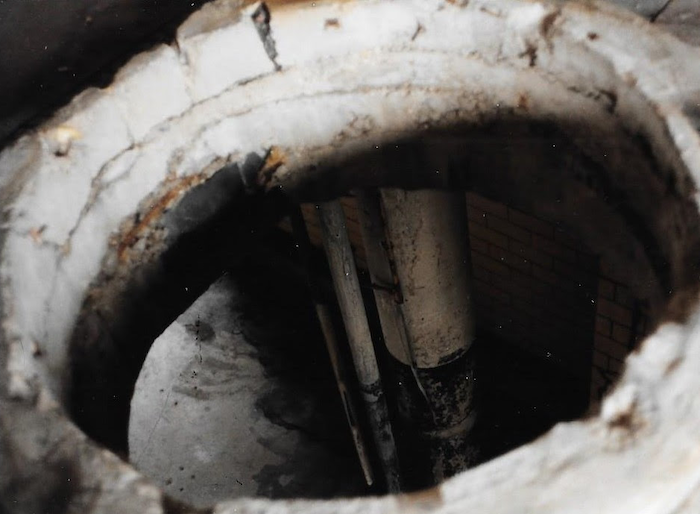
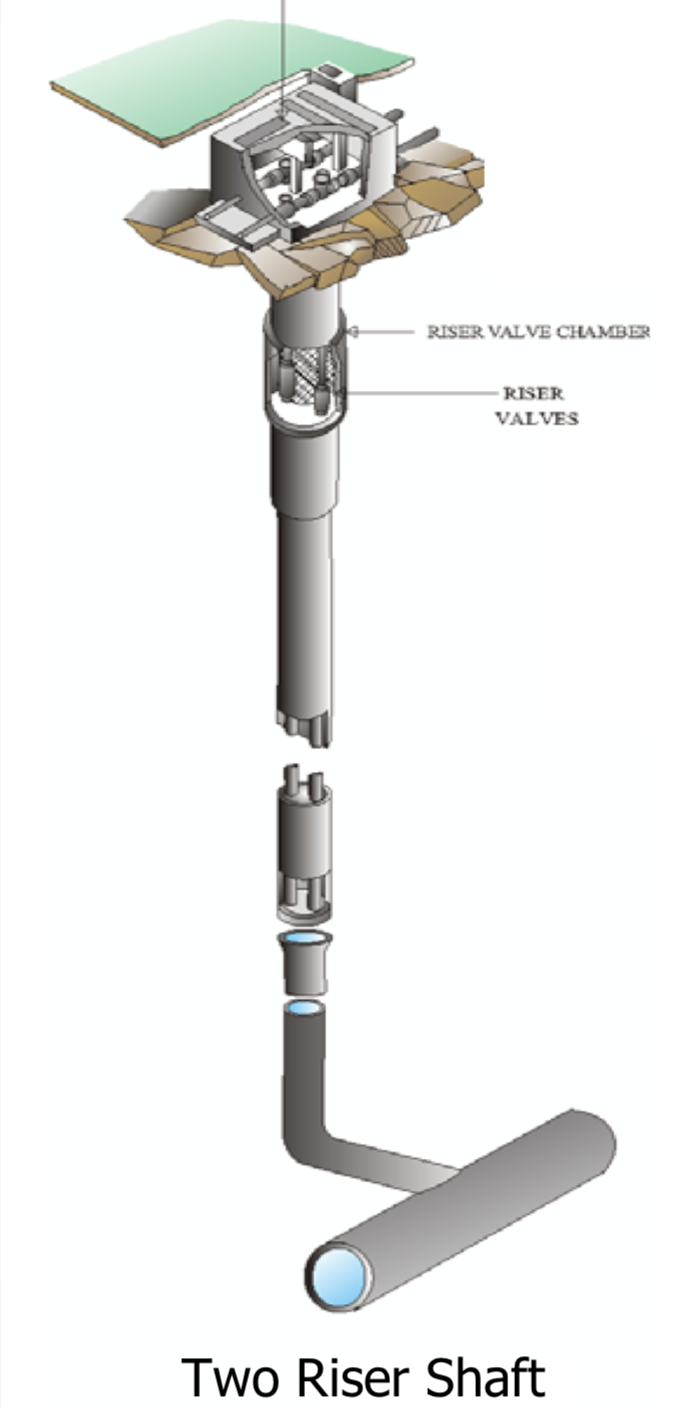
The Water Grid Connected to the city’s three water tunnels is an incredibly extensive and complicated network of shafts, trunks, and water mains. Shafts are vertical conduits spaced along the tunnels that bring our drinking water to a level just below the street. Natural pressure pushes the water up via risers, steel pipes encased in concrete. These days each shaft contains two risers for redundancy and valves that can control the flow of water into the trunk and water main distribution system.
The city currently has about 284 miles of trunk mains, typically ranging from 30 to 72 inches in diameter. (There’s one hiding under Third Avenue.) Distribution mains are smaller, measuring only 6 to 30 inches wide. The city has nearly 7,000 miles of those, enough—if one cared to—to send water to Seattle and back. We hear a lot about mains in the news. That’s because, unfortunately, they seem to be the most vulnerable part of the system; they periodically break and leak, as one did several months ago, flooding Lincoln Center and the west side subway. To help remedy the problem, the city recently announced a capital investment of $800 million over the next two years to install new water mains and related infrastructure. In addition, staff will be expanded to provide pro-active inspections that will identify and repair small leaks before they grow.
The project is part of a plan to replace approximately one percent (almost 70 miles!) of the system’s water mains annually. Mimicking the aqueduct system, the distribution system is also designed to be flexible. Water can be exchanged from one zone to another in order to meet varying demand and water pressure requirements. And because the mains ultimately connect to individual building service lines, those “demand and water pressure requirements” are us—over eight million people turning on the taps and consuming some 1.5 million gallons of water a day without giving it a second thought! As J. Waldo Smith, designer and chief engineer of the Catskill water system, famously said of New York City’s residents way back in 1905: “Drawing a bath is their birthright.” The End
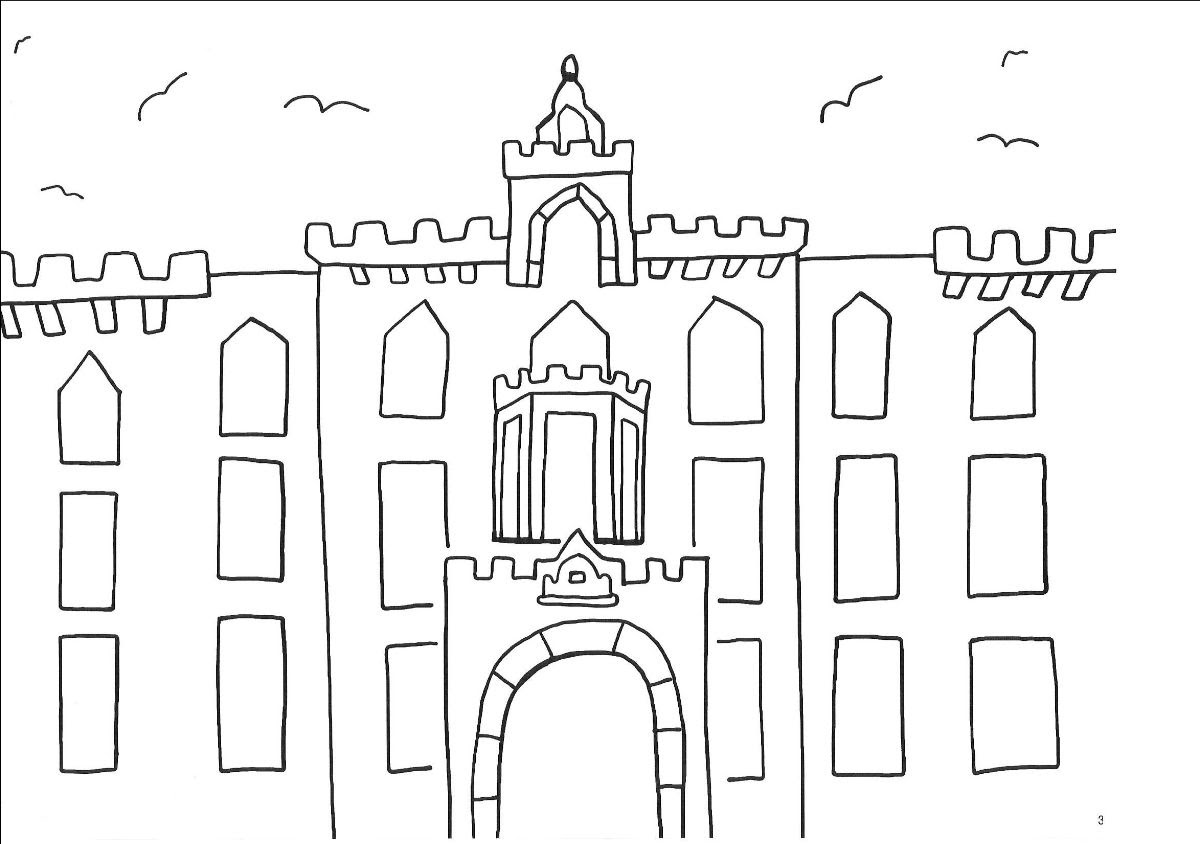
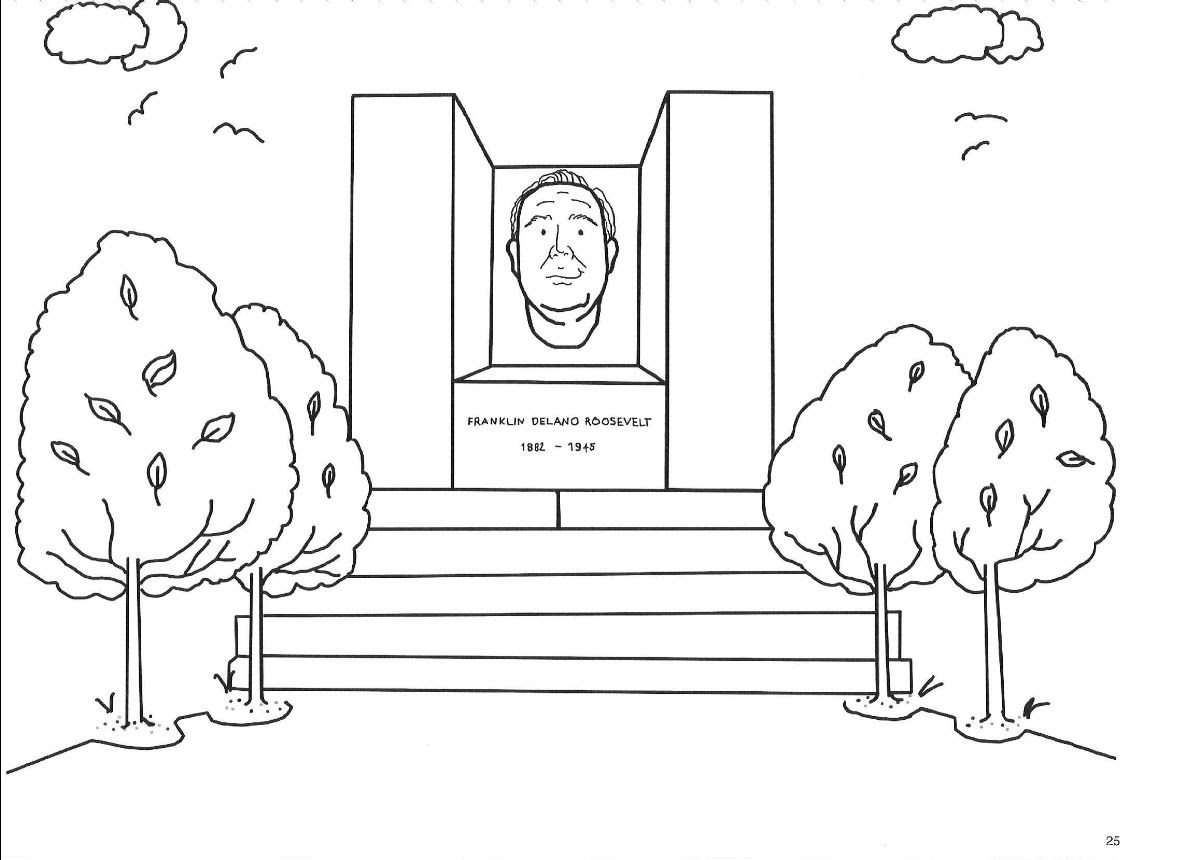
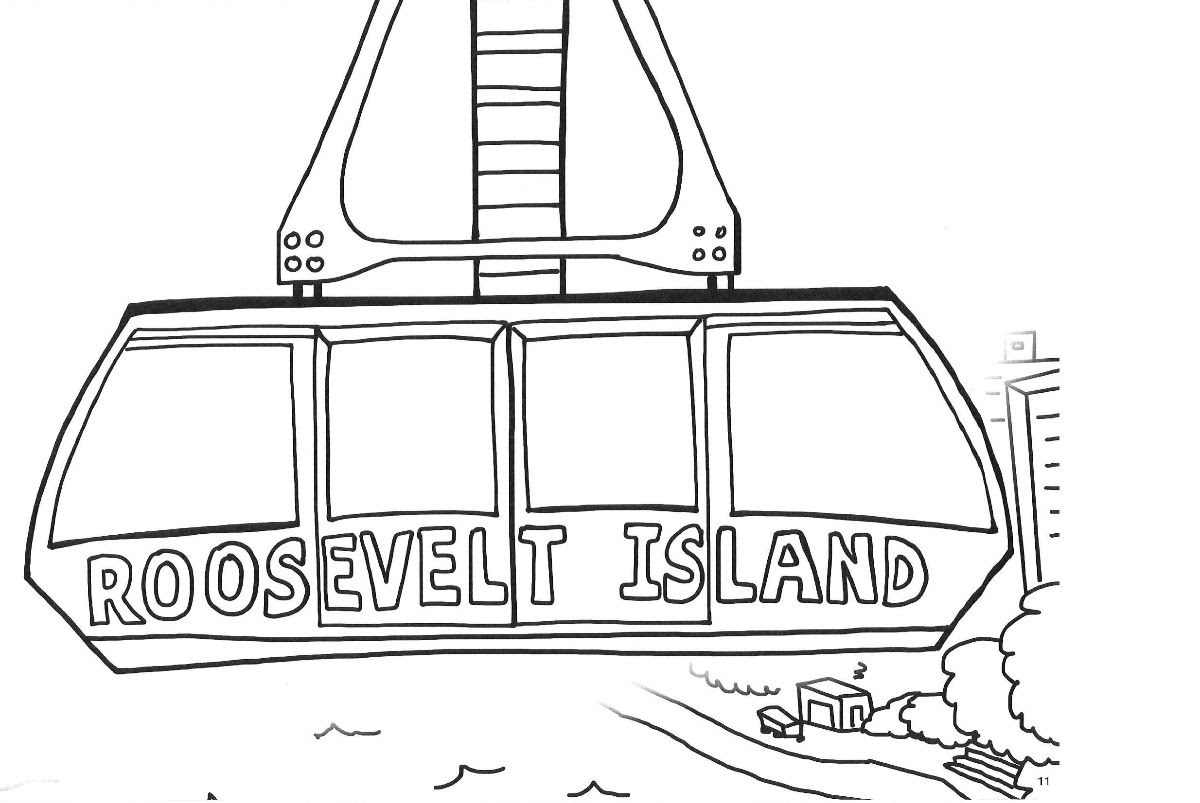
These images were the work of Autumn Ashley for the RIHS Coloring Book (c) RIHS 2016
Our Kwanzan cherry trees are in full bloom throughout the island. Enjoy the trees on your 6 foot apart walks on the island.
EDITORIAL
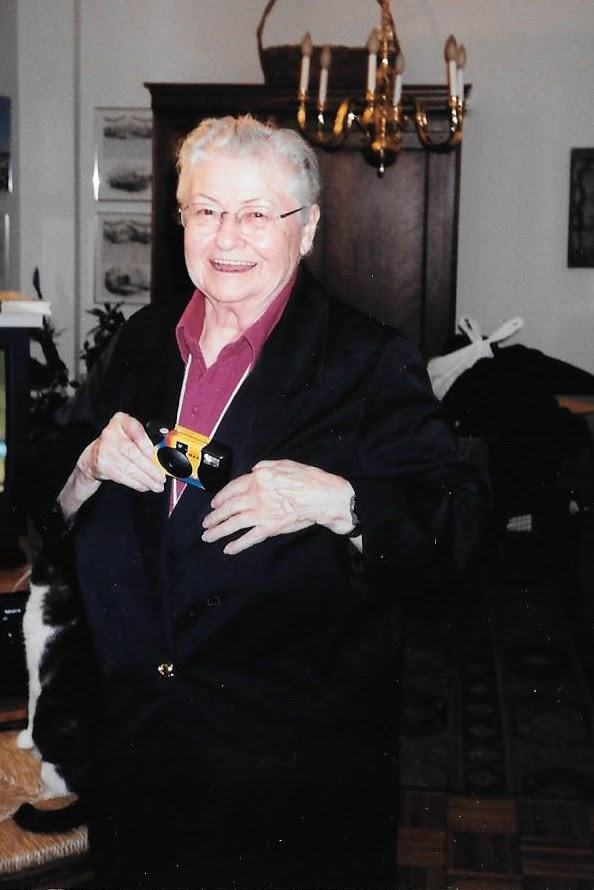
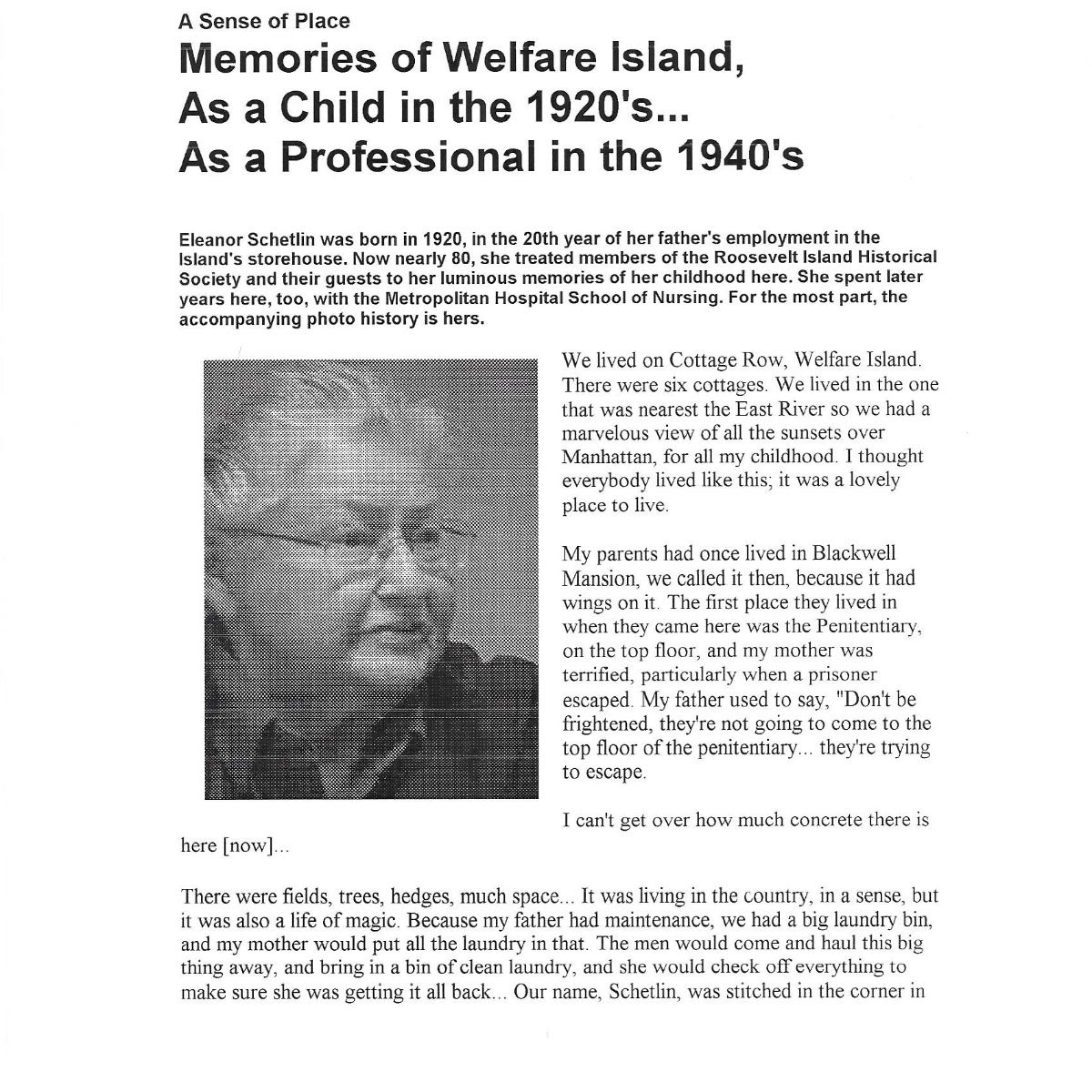
Yesterday we started our biography of Eleanor Schetlln. Today, you can read her historical story of her family and her life on the island. This story is 45 pages long, the most written, to my knowledge of any person who was a resident here. Eleanor kept in communication with me for many years and we have preserved her e-mails and all the materials she forwarded to the RIHS. This 3 inch thick notebook is a treasure trove of information, stories, legends, myths, tales and remembrances. Hope you enjoy the series.
Thanks to Bobbie Slonevsky for her series on our water supply. She has some time to write about Bisland and Bly for our May edition of Blackwell’s Almanac.
Sadly, we heard today on the passing of Jack McManus, the retired Director of R.I. Public Safety Department. We will have more information tomorrow.
Text by Judith Berdy Thanks to Bobbie Slonevsky for her dedication to Blackwell’s Almanac and the RIHS Thanks to Deborah Dorff for maintaining our website Edited by Melanie Colter and Dottie Jeffries
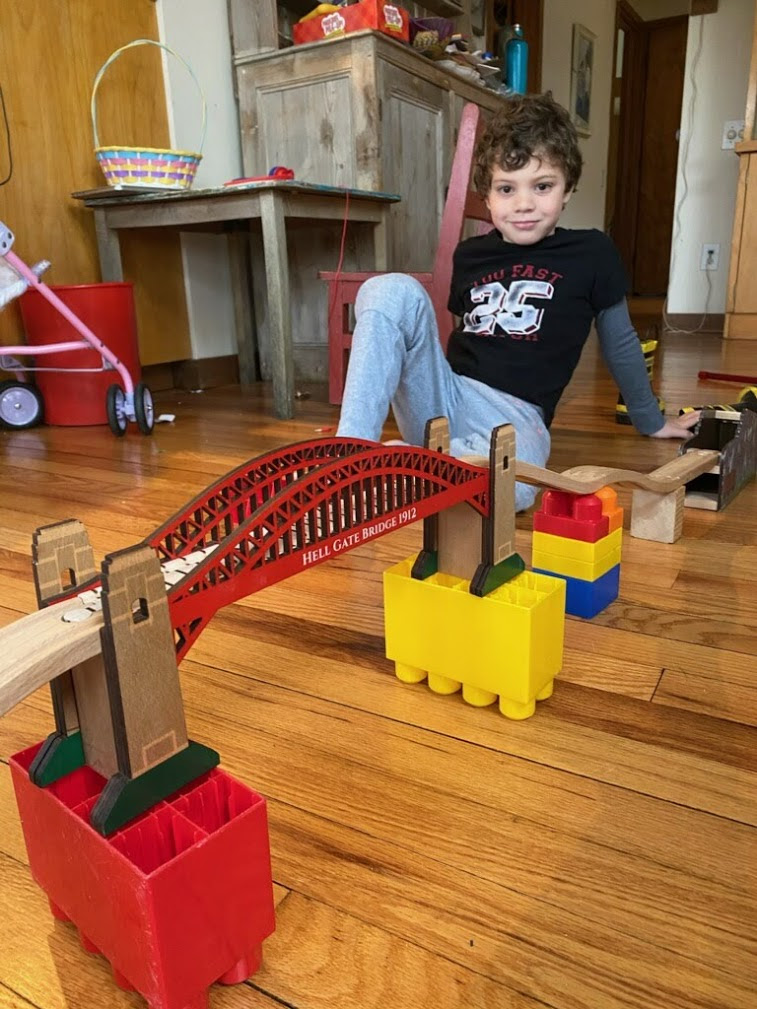
MASTER BRIDGE BUILDER RE- ASSEMBLES THE HELLGATE BRIDGE
HOW DO WE GET OUR WATER PART V
THE SCHLETLIN FAMILY ON OUR ISLAND
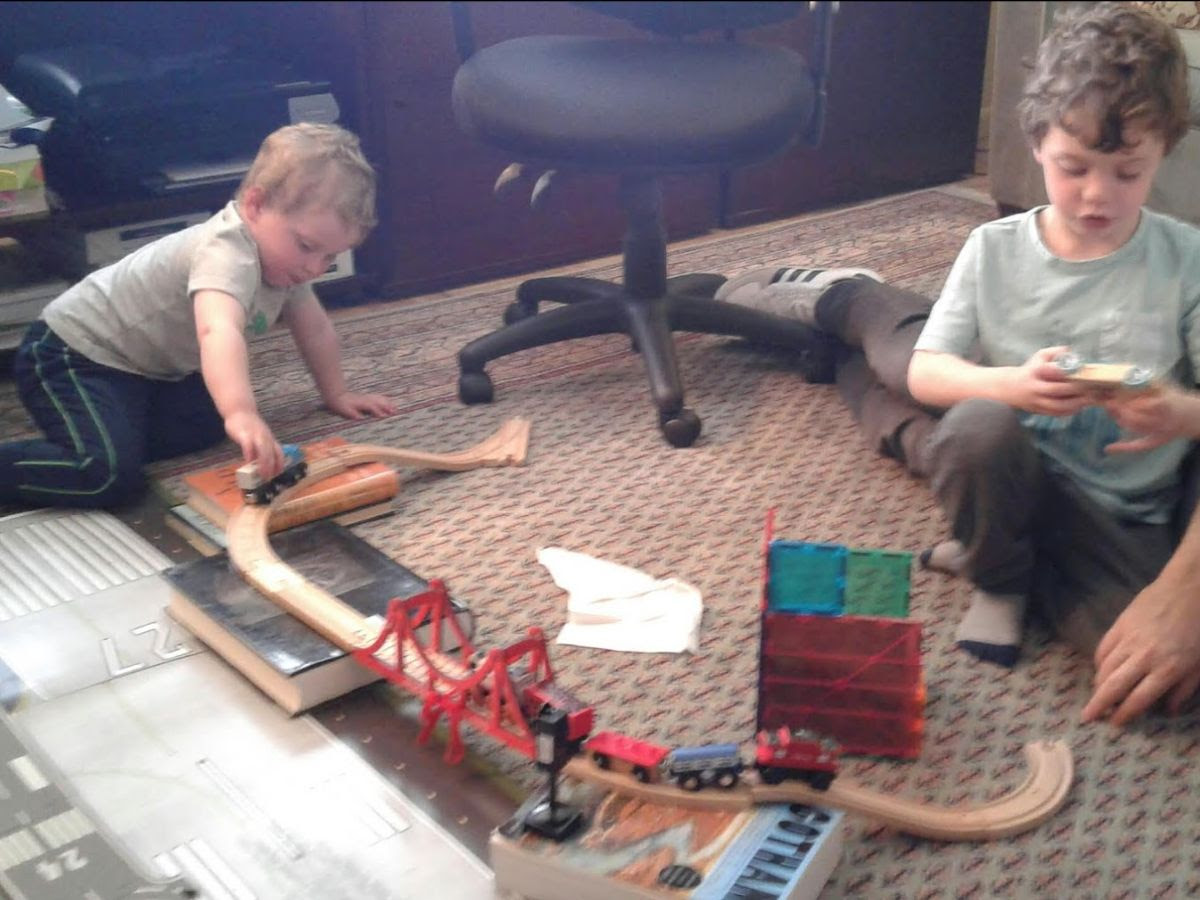
Henry Danzig (son of Marie Ewald and David Danzig) has constructed the first bridge project with his brand new Hellgate Bridge model. Henry is the first engineer to work with this bridge over the Lego River. (The model bridge is available from the RIHS Visitor Center.).
Henry and Deputy Bridge Builder Crosby during a previous project of constructing a railway over the Roosevelt Island Bridge.
How Do We Get Our Water?
Part V:
Our Water Tunnels
Bobbie Slonevsky
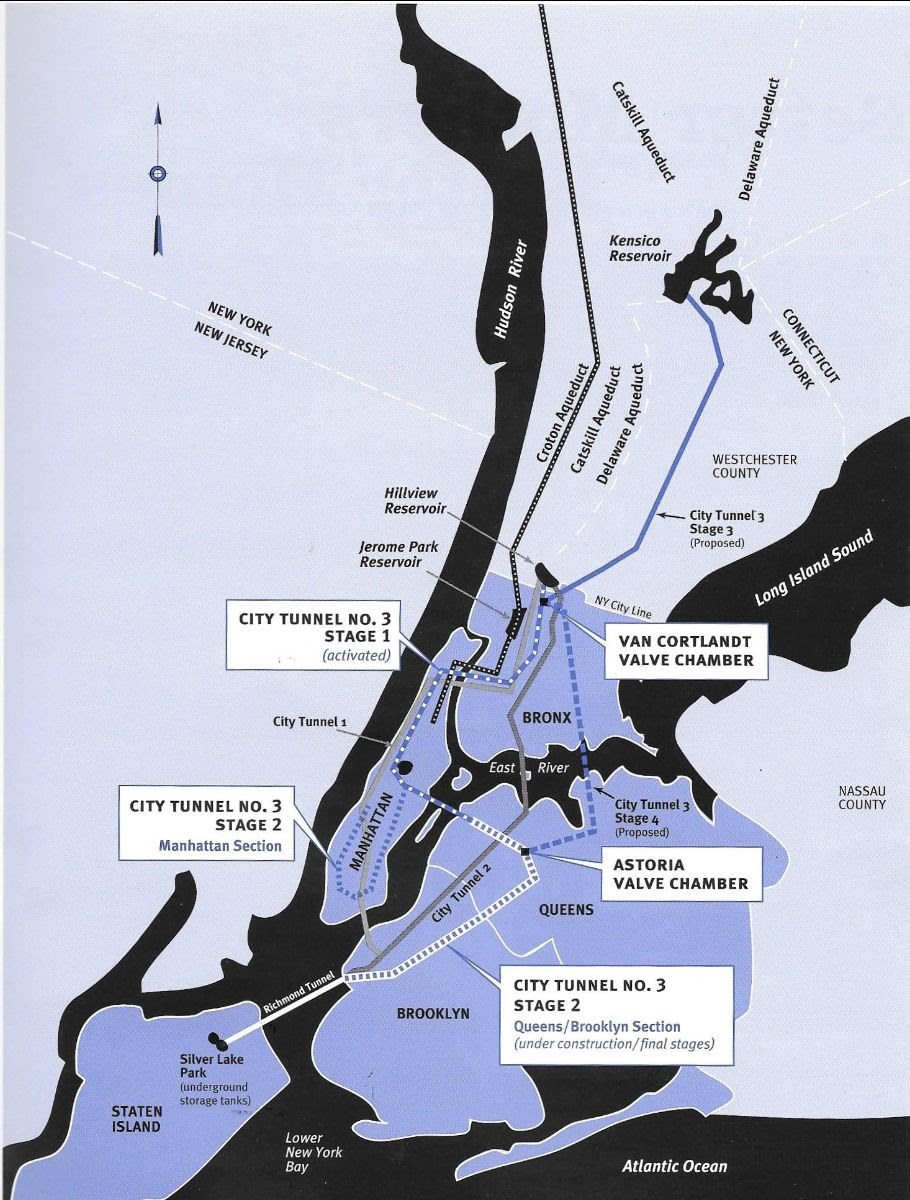
At the local end of our aqueducts and reservoirs are three humongous water tunnels. Water Tunnel No. 1, which stretches from the Hillview Reservoir in Yonkers down the West Side of Manhattan, across to the Lower East Side and into Brooklyn, was part of the original Catskill watershed construction. It was completed in 1917. Water Tunnel No. 2, also emanating from Hillview, descends through the East Bronx, under the East River and down through Queens and Brooklyn. It was opened in 1936. Water Tunnel No. 3, one of whose dig sites has been an iconic Roosevelt Island curiosity, is the single largest capital project ever undertaken by the city.
Begun in 1970, its purpose was only partially to expand our water supply; most important was to safeguard the existing supply. It offers distribution redundancy to Tunnels Nos. 1 and 2, neither of which has been maintained since they began service. They are so old, in fact, engineers have been fearful that once they close the ancient valves to shut the conduits down, they may not be able to open them again.
Nevertheless, inspection and repairs are on the way. Also beginning at Hillview, Stage 1 of No. 3 tunnel extends south through the Bronx, into Manhattan, across Central Park, eastward under the East River and Roosevelt Island into Astoria, Queens. It is concrete-lined and measures 24 feet, stepping down to 20 feet, in diameter. Stage 2 has two sections, also concrete-lined. One is situated to provide water to Queens and Brooklyn, hooking up with the Astoria tunnel on one end, and on the other end, with Staten Island’s previously constructed Richmond Tunnel. It’s diameter is 20 feet, stepping down to 16. The other section serves Manhattan and is 10 feet wide. There will also be Stages 3 and 4 (see schematic). When the total complex is complete, it will run for over 60 miles and will have cost more than $6 billion.
All three tunnels are constructed through bedrock—via blasting and drilling in the case of Nos. 1, 2 and stage one of No. 3, and via the newest technological innovation, giant boring machines, in the second stage of No. 3. Up to 50 feet long, these machines chip off sections of bedrock through the continuous rotation of a series of steel cutting tools. Now workers can excavate a 23-foot tunnel an average of 50 feet a day—twice the distance of previous methods and done much more quietly. Impressive! Right? But the tunnels alone are useless; they need to connect to an extensive grid of water mains and shafts. Tune in tomorrow for Part VI.
The story of the Schetlin family on Blackwell’s then Welfare island is being serialized this week on
FROM THE ARCHIVES
The first part today was originally published in the Main Street WIRE(c) in 2000.
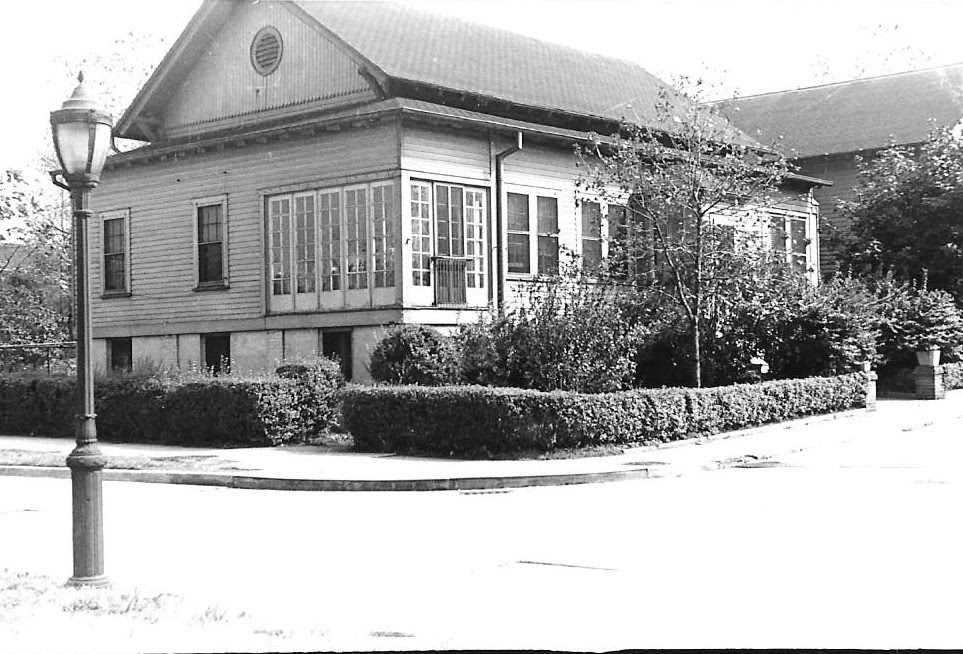
A better view of the Schetlin cottage on Cottage Row, a minutes walk from the Blackwell mansion.
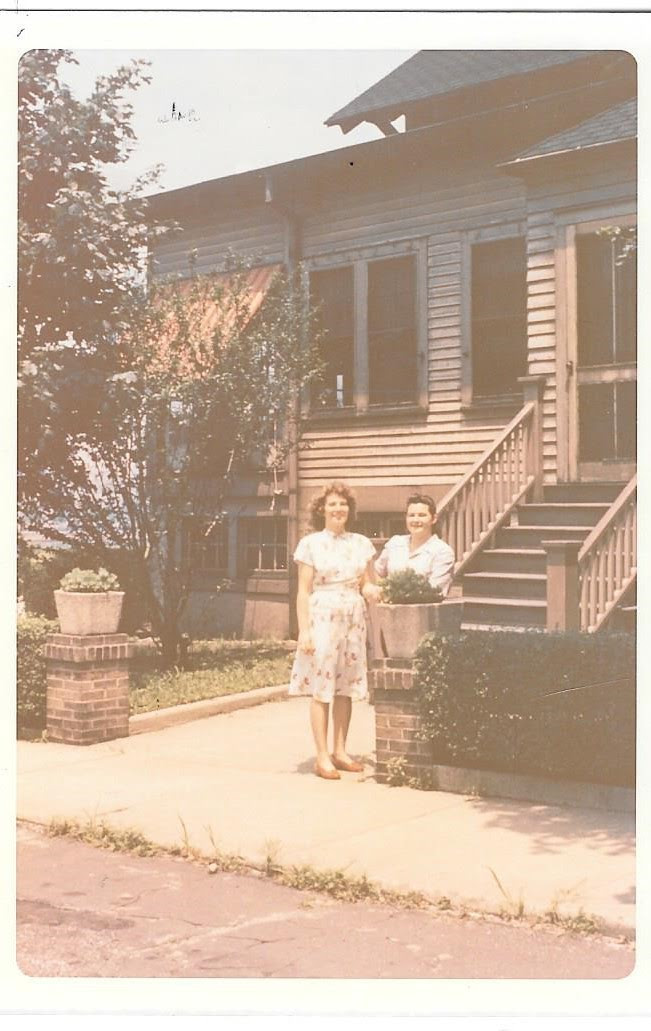
Eleanor and friend at Cottage Row house
The Schetlin Family
This is a scan. The above links are not active.
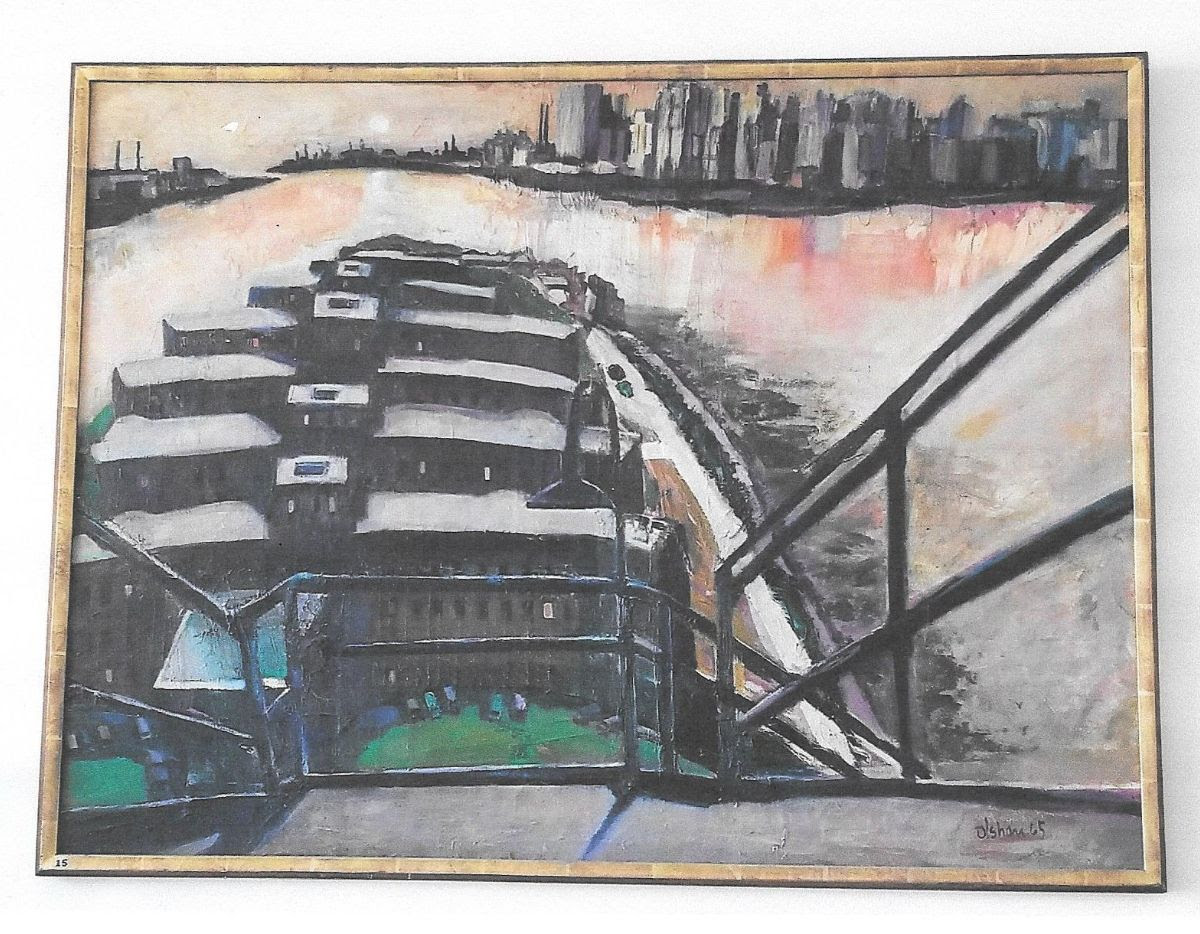
VIEW FROM QUEENSBORO BRIDGE LOOKING AT GOLDWATER HOSPITAL BERNIE OLSHAN
Bernie Olshan was a widely recognized and respected artist who won accolades from his peers and numerous prestigious awards over the course of his 70-plus year career. His crowning achievement as a professional artist was in 1997 when he was elected to the National Academy of Design. Bernie was as passionate as he was prolific. He was never without a pencil and sketchbook, ready to capture a random moment of inspiration. From Anonymous collector. Text Dr. Siskin (c)
EDITORIAL
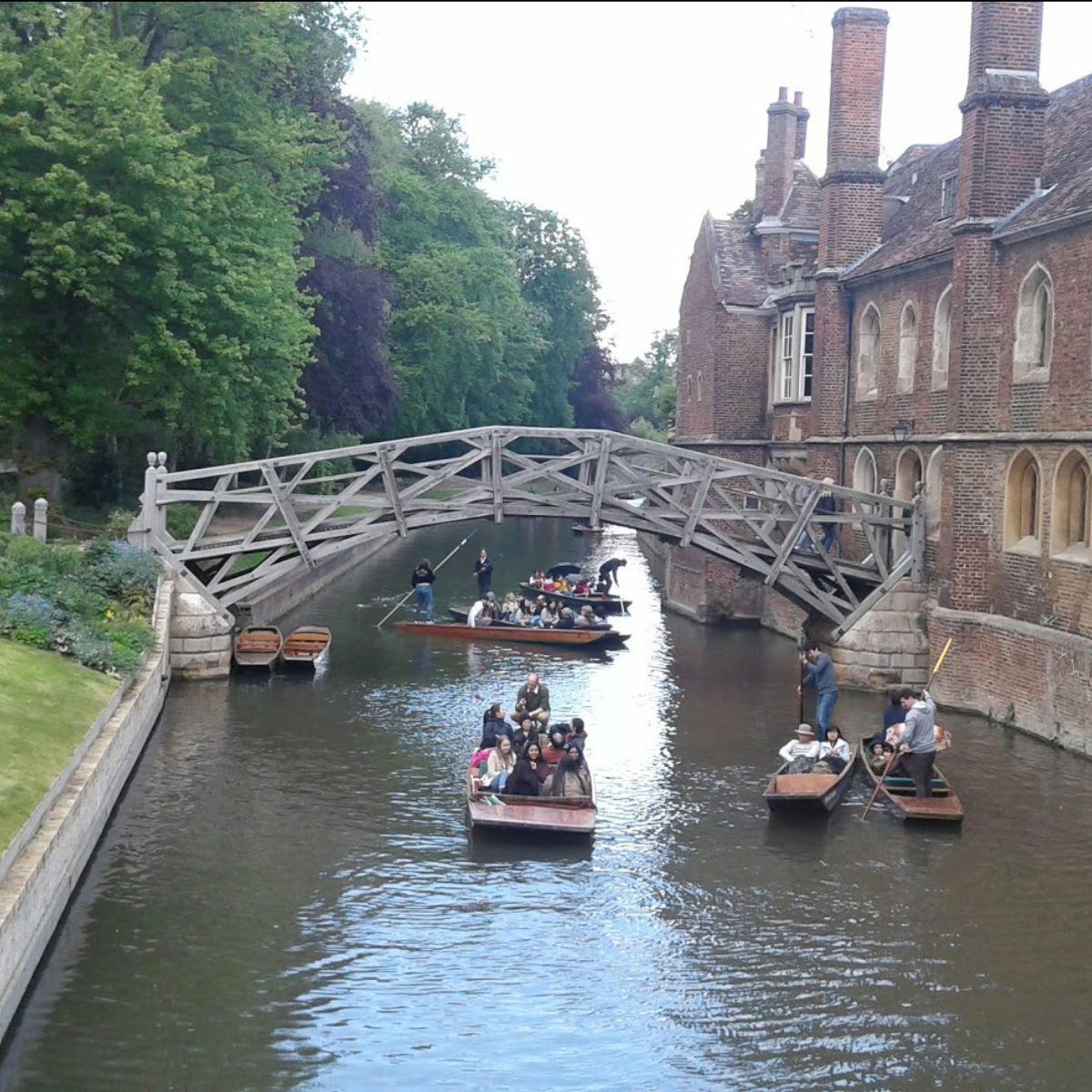
On this bleak day, I think of a trip to Cambridge, England last year. Another bridge to build!
I have been hesitant to attack the story of Eleanor Schletlin and her family on the island. We will continue telling her story this week. She wrote the story of her family and her island. It is great to have original source material to work with.
Bobbie Slonevsky continues with our water story. First it was going to be 3 parts, then 4. then 5 now 6. Maybe more?
Where has everyone gone? If you are hunkering down near of far, send us a photo of your family. Miss kids in the lobby, halls, courtyard and playgrounds.
Secret find: Someone strung up a hammock yesterday across the street and was swinging gently in the breeze. The hammock is gone til the next nice day.
Text by Judith Berdy Thanks to Bobbie Slonevsky for her dedication to Blackwell’s Almanac and the RIHS Thanks to Deborah Dorff for maintaining our website Edited by Melanie Colter and Dottie Jeffries