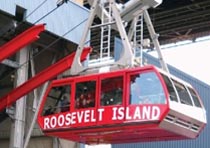
Monday, July 13, 2026 – ISLANDS WITH INSTITUTIONS FOR THE POOR, AND ILL OF THE SOCIETY

One writer’s melancholy visit to the
“island full of idiots”
in the East River in 1888
Ephemeral New York
Monday, July 13, 2026
Issue # 1712
If you were a New Yorker in the 19th century and found yourself to be poor, incurably sick, homeless, or convicted of a crime, you might have been herded into a ferry and confined to one of the “islands of the undesirables” in the East River.
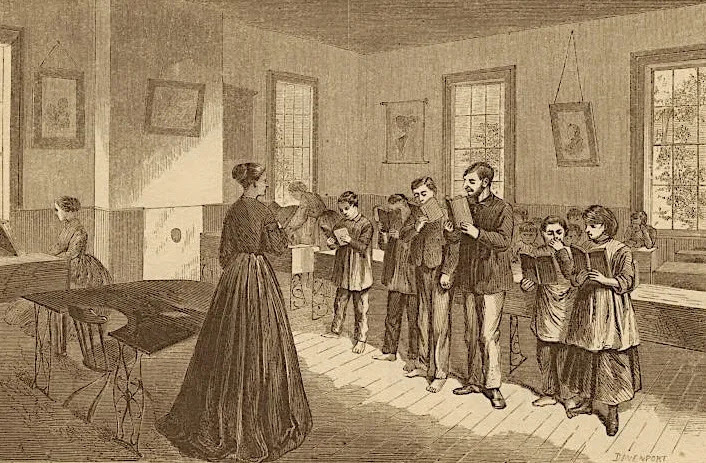
In the colonial era, these islands were privately owned spits of land used for farming, foraging, or as pasture for grazing animals. Throughout the 19th century, many became city property.
In the eyes of officials at the Department of Public Charities and Correction, these islands were ideal places to house—some would say warehouse—adults and children who were deemed to require specialized care or oversight.
Blackwell’s Island, today’s Roosevelt Island, was the island with the largest population, thanks to its infamous “Lunatic Asylum” as well as a penitentiary, almshouse, smallpox hospital, and other facilities.
North Brother Island was home to a quarantine hospital for people with incurable yet contagious diseases like typhoid and tuberculosis. (Typhoid Mary was forced to spend the last three decades of her life here.)
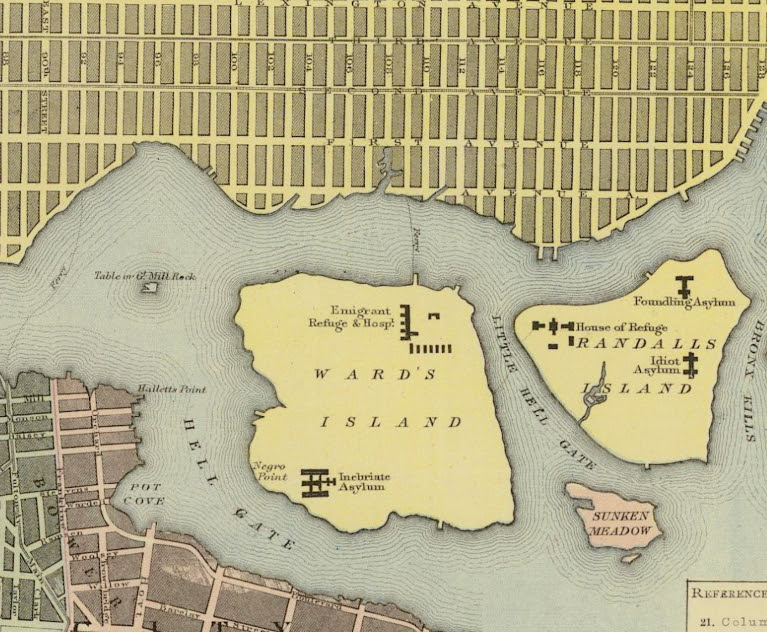
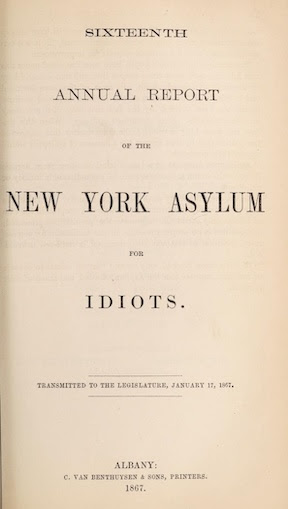
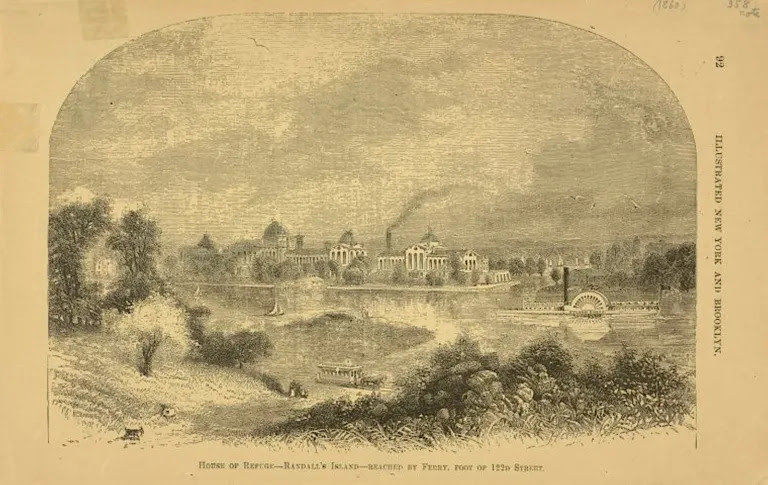
Randalls Island, meanwhile, hosted the House of Refuge for juvenile offenders, the Foundling Hospital that cared for the many babies abandoned in alleys and ash barrels, and an infamous facility known as the “Idiot Asylum.”
The story of the Idiot Asylum—”idiot” being the medical definition at the time for someone with an intellectual disability—has often been overshadowed by reports of the decrepit conditions of the Lunatic Asylum and Almshouse.
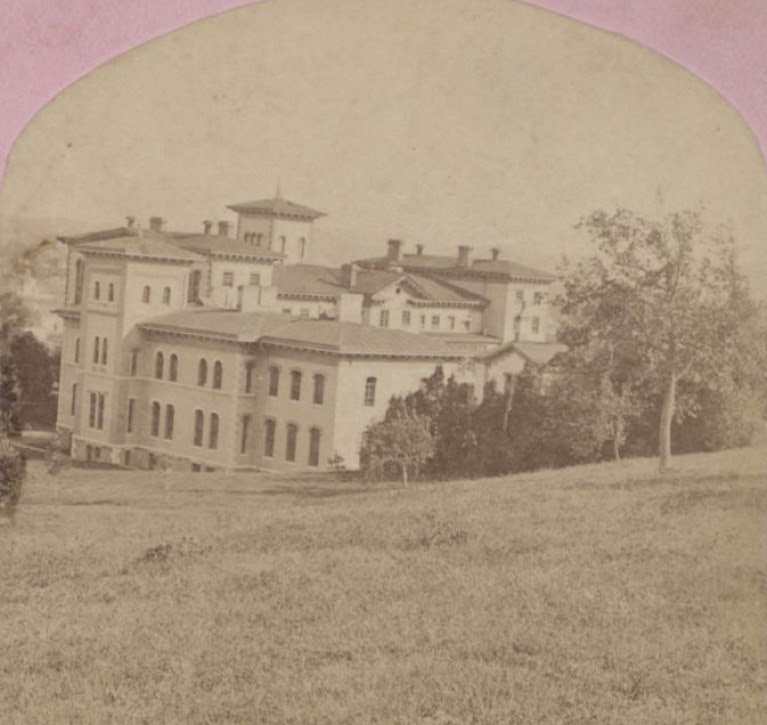
But one unnamed reporter at the New-York Tribune decided to pay the Idiot Asylum a visit. His writeup wasn’t the first telling of what life was like in “the walls of the forlorn houses,” as he put it.
With the stark title “An Island Full of Idiots,” however, and published on New Year’s Day in 1888, it might be the most affecting. His account is sad, strange, and heartbreaking.
“From the great cozy city, full of inspiring life, you are rowed across the East River to this desolation by a little, old, silent boatman,” the reporter wrote as he began his journey. “Then, as your feet crunch the frozen snow, you are aware of an oppressive loneliness.”
“And yet you are not alone. A sound of rhythmical scraping attracts your gaze, and it falls on a gang of men shoveling snow.”
“They are dressed alike in clothes striped with black and white. They exchange no words. A man in official uniform sharply watches their compulsory toil. Looking at them you feel lonelier than ever.”
The reporter goes on to describe the residents he sees inside as “members of the irresponsible classes” and “imbecile men and women, boys and girls, who would otherwise desolately drift through life to a miserable death.”
The Idiot Asylum featured a school. The staff taught higher-functioning residents to read, write, and “do a little figuring, so well as to warrant their return to the outside world, in which they will make better members of society than a good many folks who have, and others who think they have, all their wits about them.”
Others were taught simple skills like making mats. “Many of the teachable class make a progress toward intelligent usefulness which is astonishing and speaks volumes for the patient, unwearying care and skill of their instructors.”
Through a doorway he sees a group of residents singing and exercising. “The song shapes itself into a rough outline of some popular air. In a big bare room over a score of eccentric specimens of humanity are stomping around in an endless march.”
As he walks through the asylum, he encounters female residents. “Women in mature life join hands to play ‘Jingo-Ring’ and sing “Little Sally Waters’ with the glee of schoolgirls.”
Some of the residents he describes sound more like they fit the definition of autism, which was not yet an official diagnosis.
“There is also a large number of the women, as well as a few of the men, in whom an idiosyncracy, greatly developed, constitutes their mental weakness. Watch a group of them together, and you will see each oblivious to the others.”
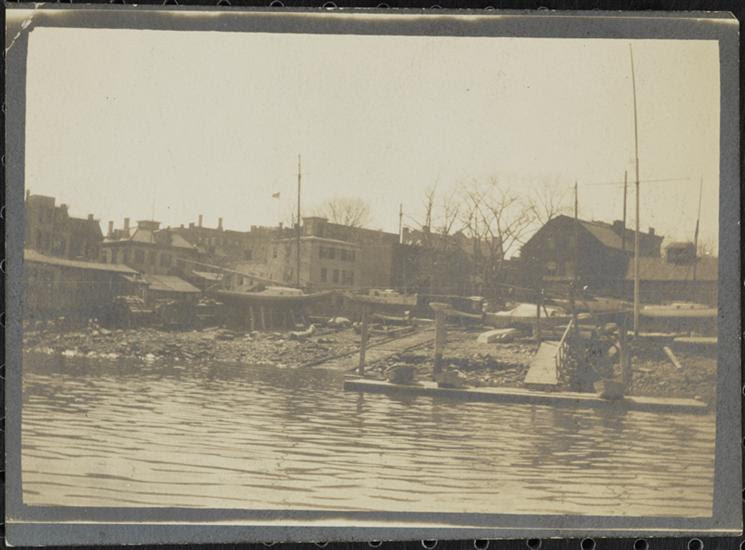
“Some rock themselves to and fro all day long. One rather pretty girl constantly brushes her long hair back from her brow. Some repeat snatches of merry tunes with no mirth in them. Some are over overwhelmingly vain, other overwhelmed in melancholy.”
How the 1888 article was received isn’t known. But four decades later, the Idiot Asylum was closed and demolished, along with Randalls Island’s other 19th century institutions. (The Manhattan Psychiatric Center, a hospital built in the 1950s, remains.)
Oversight of the island was transferred to NYC Parks in 1933 under the supervision of Robert Moses. In the ensuing decades, the island became a recreational space with ballfields and a sports stadium, now know as Icahn stadium.
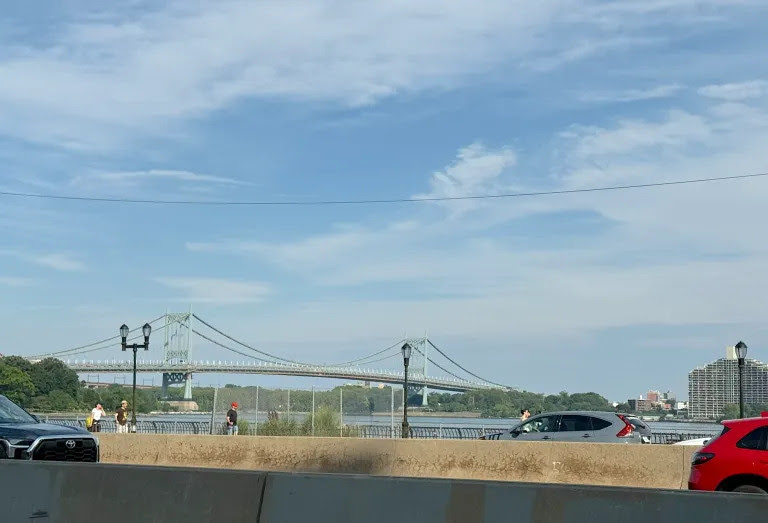
In the 1960s, the channel separating Randalls and Wards Islands was filled in. Now, Randalls and Wards Island constitutes one land mass reachable by the Triborough (Robert F. Kennedy) Bridge and a footbridge at 103rd Street.
Newspaper reporters in the Gilded Age visited and wrote what they saw. But I wonder if any of the inmates at the Idiot Asylum ever recorded the details of their experience—what they learned, how they spent their days, if they ever returned to their families in Manhattan.
CREDITS
EPHEMERAL NEW YORK
[Top image: NYPL Digital Collections; second image: Wikipedia; third image: NYPL Digital Collections; fourth image: Stuff Nobody Cares About; fifth image: MCNY, C2010.11.11766]
Tags: East River Islands of Undesirables, Foundling Hospital Randalls Island, Hospitals and Asylums in 19th Century NYC, House of Refuge Randalls Island, Idiot Asylum 19th Century New York City, Idiot Asylum Randalls Island NYC, Randalls Island History, Reporter Visits Idiot Asylum on Randalls Island
Posted in Disasters and crimes, Maps, Schools |
All image are copyrighted (c) Roosevelt Island Historical Society unless otherwise indicated
THIS PUBLICATION FUNDED BY DISCRETIONARY FUNDS FROM CITY COUNCIL MEMBER JULIE MENIN & ROOSEVELT ISLAND OPERATING CORPORATION PUBLIC PURPOSE FUNDS.


Copyright © 2026 Roosevelt Island Historical Society, All rights reserved.Our mailing address is:
rooseveltislandhistory@gmail.com
Leave a comment