Weekend November 14-15, 2026 – NEW SIGN COMMEMORATES CIVIL RIGHTS LEADER
Local Heroine
New Street Sign Evokes
Early Civil Rights Leader
Weekend, November 14-15, 2026
THE BROADSHEET
Issue # 1780
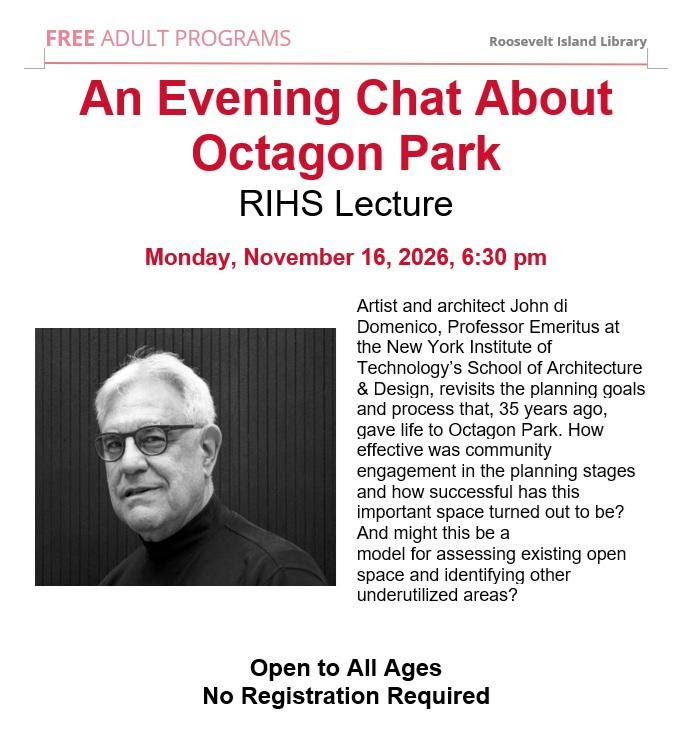
SAVE THE DATE, MONDAY, NOVEMBER 16th
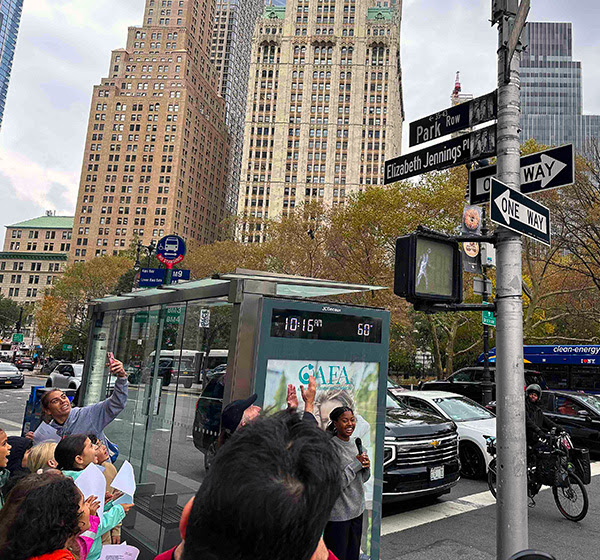
A new sign honoring civil rights pioneer Elizabeth Jennings was installed yesterday on Park Row. Below right, a portrait of Elizabeth Jennings from the 1850s.
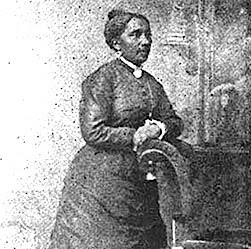
Yesterday morning (Thursday, November 12), leaders from the worlds of government, business, and academia gathered at the corner of Spruce Street and Park Row to honor Elizabeth Jennings, who helped to desegregate New York public transportation more than a century before the 1956 Montgomery bus boycott sparked by Rosa Parks.
A street sign honoring Ms. Jennings had been erected on Park Row (once known as Chatham Street) in 2006, but was taken down a few years later without official permission and never replaced. When Pace University students working on a research project pointed this out, the Downtown Alliance (which operates the local Business Improvement District) joined forces with City Council member Christopher Marte to have a new sign installed.
Mr. Marte said, “putting this sign back up will inspire future Pace students, future Council members, and future Mayors by telling them who Elizabeth Jennings was and what she did.”
Downtown Alliance president Jessica Lappin said, “when people think of Lower Manhattan they think of the American Revolution, or George Washington’s Farewell, or Alexander Hamilton founding the nation’s financial system. But this was all the home to first black newspaper in America, Freedom’s Journal, and an important hub for the Underground Railroad. And the story of Elizabeth Jennings reminds us that one person can really change history if you stand up with conviction for what you believe.”
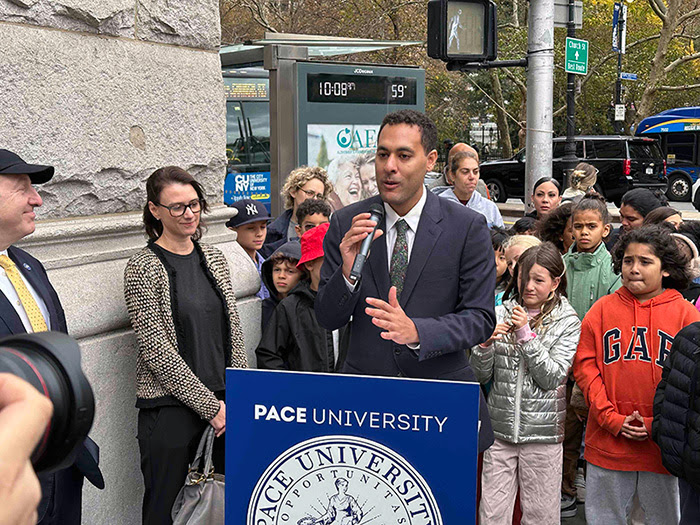
City Council member Christopher Marte: “Putting this sign back up will inspire future Pace students, future Council members, and future Mayors by telling them who Elizabeth Jennings was and what she did.”
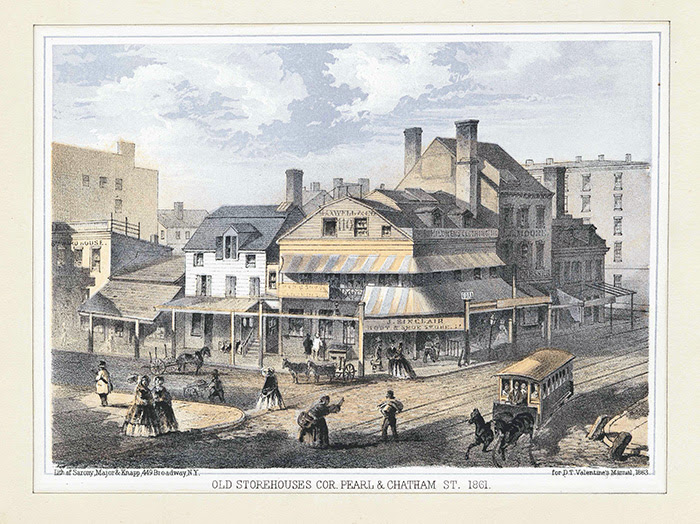
In July 1854, Ms. Jennings, a Lower Manhattan resident, was on her way to church, and boarded a horse-drawn street car on Chatham Street. Like much else in mid-19th century New York, street car service was segregated, with most coaches reserved for white riders, but some bearing signs that read, “Negro Persons Allowed in This Car.” And although Ms. Jennings did not intend to make a political point, she was running late for church, and boarded the first carriage that came to the stop where she was waiting. When the conductor ordered her off, brusquely insisting that she wait for a coach designated for African-American riders, she refused to move.
“He then told me that the other car… was appropriated for ‘my people,’” she wrote the following day, in a missive that captured the attention of the entire City. “I told him I had no people. I wished to go to church and I did not wish to be detained. He still kept driving me off the car; said he had as much time as I had and could wait just as long. I replied, ‘very well, we’ll see.’ He waited some minutes, when the driver becoming impatient, he said, ‘well, you may go in, but remember, if the passengers raise any objections you shall go out, whether or no, or I’ll put you out.’”
“I told him I was a respectable person, born and raised in New York, did not know where he was born, and that he was a good-for-nothing impudent fellow for insulting decent persons while on their way to church,” Ms. Jennings’s narrative continued. “He then said he would put me out. I told him not to lay hands on me. He took hold of me and I took hold of the window sash. He pulled me until he broke my grasp. I took hold of his coat and held onto that. He also broke my grasp from that. He then ordered the driver to fasten his horses and come and help him put me out of the cars. Both seized hold of me by the arms and pulled and dragged me down on the bottom of the platform, so that my feet hung one way and my head the other, nearly on the ground.”
The conductor, along with the driver, “thrust me out and then tauntingly told me to get redress if I could…. After dragging me off the car, he drove me away like a dog, saying not to be talking there and raising a mob or fight.”
The conductor, whose name was Moss, had tangled with the wrong woman. Elizabeth Jennings was not only educated, but had been raised with a strong sense of justice. And she was very well connected. Her family ranked among the African-American elite of 1850s New York. Her father, Thomas Jennings, was a successful businessman with ties to intellectual and cultural leaders, Black and white, throughout New York. His 1821 invention of the garment laundering process now known as dry cleaning (which he called “dry scouring”) earned him the first patent ever granted to an African-American, and made him independently wealthy. (He used much of his fortune to purchase the freedom of enslaved family members.)
Ms. Jennings promptly wrote out an account of her ordeal, and passed it along to the First Methodist Congregational Colored Church, located at the Bowery and Sixth Street – the house of worship to which she had been traveling that morning. Her letter was read aloud before many hundreds of attendees, who erupted into a spontaneous protest and rally. The text was then picked up and printed in full by Horace Greeley’s New York Daily Tribune and (more importantly), the North Star, a newspaper published by renowned abolitionist (and former slave) Frederick Douglass. This brought the case national attention.
City Council member Christopher Marte: “Putting this sign back up will inspire future Pace students, future Council members, and future Mayors by telling them who Elizabeth Jennings was and what she did.”
In July 1854, Ms. Jennings, a Lower Manhattan resident, was on her way to church, and boarded a horse-drawn street car on Chatham Street. Like much else in mid-19th century New York, street car service was segregated, with most coaches reserved for white riders, but some bearing signs that read, “Negro Persons Allowed in This Car.” And although Ms. Jennings did not intend to make a political point, she was running late for church, and boarded the first carriage that came to the stop where she was waiting. When the conductor ordered her off, brusquely insisting that she wait for a coach designated for African-American riders, she refused to move.
“He then told me that the other car… was appropriated for ‘my people,’” she wrote the following day, in a missive that captured the attention of the entire City. “I told him I had no people. I wished to go to church and I did not wish to be detained. He still kept driving me off the car; said he had as much time as I had and could wait just as long. I replied, ‘very well, we’ll see.’ He waited some minutes, when the driver becoming impatient, he said, ‘well, you may go in, but remember, if the passengers raise any objections you shall go out, whether or no, or I’ll put you out.’”
“I told him I was a respectable person, born and raised in New York, did not know where he was born, and that he was a good-for-nothing impudent fellow for insulting decent persons while on their way to church,” Ms. Jennings’s narrative continued. “He then said he would put me out. I told him not to lay hands on me. He took hold of me and I took hold of the window sash. He pulled me until he broke my grasp. I took hold of his coat and held onto that. He also broke my grasp from that. He then ordered the driver to fasten his horses and come and help him put me out of the cars. Both seized hold of me by the arms and pulled and dragged me down on the bottom of the platform, so that my feet hung one way and my head the other, nearly on the ground.”
The conductor, along with the driver, “thrust me out and then tauntingly told me to get redress if I could…. After dragging me off the car, he drove me away like a dog, saying not to be talking there and raising a mob or fight.”
The conductor, whose name was Moss, had tangled with the wrong woman. Elizabeth Jennings was not only educated, but had been raised with a strong sense of justice. And she was very well connected. Her family ranked among the African-American elite of 1850s New York. Her father, Thomas Jennings, was a successful businessman with ties to intellectual and cultural leaders, Black and white, throughout New York. His 1821 invention of the garment laundering process now known as dry cleaning (which he called “dry scouring”) earned him the first patent ever granted to an African-American, and made him independently wealthy. (He used much of his fortune to purchase the freedom of enslaved family members.)
Ms. Jennings promptly wrote out an account of her ordeal, and passed it along to the First Methodist Congregational Colored Church, located at the Bowery and Sixth Street – the house of worship to which she had been traveling that morning. Her letter was read aloud before many hundreds of attendees, who erupted into a spontaneous protest and rally. The text was then picked up and printed in full by Horace Greeley’s New York Daily Tribune and (more importantly), the North Star, a newspaper published by renowned abolitionist (and former slave) Frederick Douglass. This brought the case national attention.
While the street sign unveiled on Thursday restores a modicum of official acknowledgment to Elizabeth Jennings, it falls well short of a 2023 call by Community Board 1 to erect a full monument in her honor. The Board recommended two sites in Saint Andrews Plaza (located between the Municipal Building and Police Headquarters): one in front of the State Supreme Court building at Worth and Centre Streets, and another at the northeast corner of Park Row and Pearl Street, near Chatham Green. No official action has yet been taken on this proposal.
Matthew Fenton
PHOTO OF THE DAY
CELEBRATING THE CARTER BURDEN
PROM WITH LUELLA STREITZ
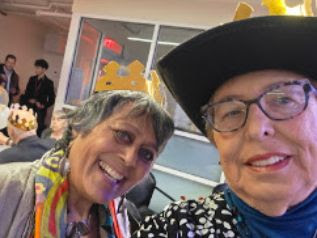
Judith Berdy
CREDIT
THE BROADSHEET
All image are copyrighted (c) Roosevelt Island Historical Society unless otherwise indicated
THIS PUBLICATION FUNDED BY DISCRETIONARY FUNDS FROM CITY COUNCIL MEMBER JULIE MENIN & ROOSEVELT ISLAND OPERATING CORPORATION PUBLIC PURPOSE FUNDS.
Copyright © 2026 Roosevelt Island Historical Society, All rights reserved.Our mailing address is:
rooseveltislandhistory@gmail.com
Leave a comment