
Friday, October 10, 2025 – PDATE ON OUR STORY ON THE HOUSE ON 36th AVENUE

How a Real Estate Story
Became One About
Betrayal of a Community
FRIDAY, OCTOBER 10, 2025
New York Times
By T.M. Brown
Published Sept. 30, 2025 Updated Oct. 1, 2025
ISSUE #1551
We first reported on this colorful house in our September 17th issue. Here is the update from the NY Times.

“An acid trip in house form.”
That was how my editor on the Real Estate desk, Matthew Oshinsky, described the “ridiculous” house in Astoria, Queens, that he was proposing I cover a few months ago.
The exterior of the home, I found out, was painted a painfully mismatched butter yellow and fire-engine red. A surrounding wrought-iron gate was emblazoned with metal flowers in the same mustard-and-ketchup color scheme. The interior was just as outlandish: sofas and chandeliers in all the colors of the rainbow and a fake cherry blossom tree sprouting from the living room floor.
I began my reporting by searching for the property owner’s name. Eventually, I found a name, Jasmin Bokhari, and it appeared she owned other properties across the borough. So I typed three words into Google: “Jasmin Bokhari Queens.”
The first result shocked me. It was a 2023 news release from the U.S. attorney’s office, Eastern District of New York, saying that someone named Rashidun Bokhari from Astoria had been convicted of embezzling more than a million dollars from three people, also Bengali Americans, in a real estate scam. Mr. Bokhari was ordered to serve 38 months in a federal prison facility and pay restitution of nearly $1.5 million to his victims. He is also Jasmin Bokhari’s husband.
I searched for both of their names and discovered a civil suit that predated the criminal trial by a year. In the suit, the plaintiff alleged that Ms. Bokhari had knowledge of her husband’s misdeeds, and that she had used an LLC she owned to obscure how the embezzled funds were being used. The civil case had been halted in 2022 while the criminal court process had played out.
I thought it was suspicious that a woman named in a pending lawsuit was trying to sell a property for $3 million while her husband claimed he couldn’t afford to pay back the people he had admitted to stealing from. I wanted to find out whether Mr. Bokhari’s victims were at risk of never being paid back, and if Ms. Bokhari was trying to sell these properties before the government could seize them.
Several properties owned by Ms. Bokhari had been passed back and forth among her, her husband and other family members over the past two decades. Nearly every deed transfer was done for “no consideration,” a real estate term for homes changing hands for free. I called a forensic accountant, who told me that people sometimes use this maneuver to hide assets and avoid scrutiny from law enforcement.
I called Neal Fellenbaum, the lawyer representing Aslam Ansari, the plaintiff in the civil suit, who said that the Bokharis had defrauded more than a dozen other people in the Bangladeshi community in Queens. Those people were reluctant to come forward because they were frightened of U.S. Immigration and Customs Enforcement actions across the country.
Convincing those unidentified accusers to be interviewed for my article was a delicate process. There was a fear of the government, sure, but many were also embarrassed and ashamed that they could be fooled by someone from their own tight-knit community. I assured them I would protect their identities, and I told them that this would be a way to tell their stories safely. When they finally agreed to being interviewed, we set up a meeting in Mr. Fellenbaum’s office
I arrived early with the photographer, Thea Traff, who would later shoot silhouetted portraits of each person. I wasn’t sure how many accusers would actually show up; I was anxious that it would only be one or two. But as we sat in the glass-walled conference room, a group of nine men and women walked into the office vestibule together.
“I am ashamed, I am a fool,” one man told me, his voice shaking. I sat across from him as he told me how he’d been deceived by someone he had known for decades.
I asked the group why they had decided to talk to me after suffering in silence for so long. A few said they’d been scammed by the Bokharis in the last few years, while others had money stolen a decade ago. “It’s a good question,” one man said. He paused for a moment. “I don’t have any hope left. I need my money back. I just want to be able to give something to my daughter.”
I worked on this article, which was published online on Sept. 16, for three months. In that time, I never had the opportunity to speak with the Bokharis or their lawyers, who refused to return my many calls. But I could sense that they knew something was happening. The price on the flamboyant home that Ms. Bokhari was selling was reduced by $500,000, from $3 million to $2.5 million. Then the government slapped a lien on both that house and another property in Jamaica, Queens, owned by Ms. Bokhari for the amount that Mr. Bokhari had been ordered to repay his victims.
After the article was published, Mr. Fellenbaum called me. He told me that the story had apparently caused a national sensation, albeit not in the United States. “It was all over the TV news in Bangladesh,” he said.
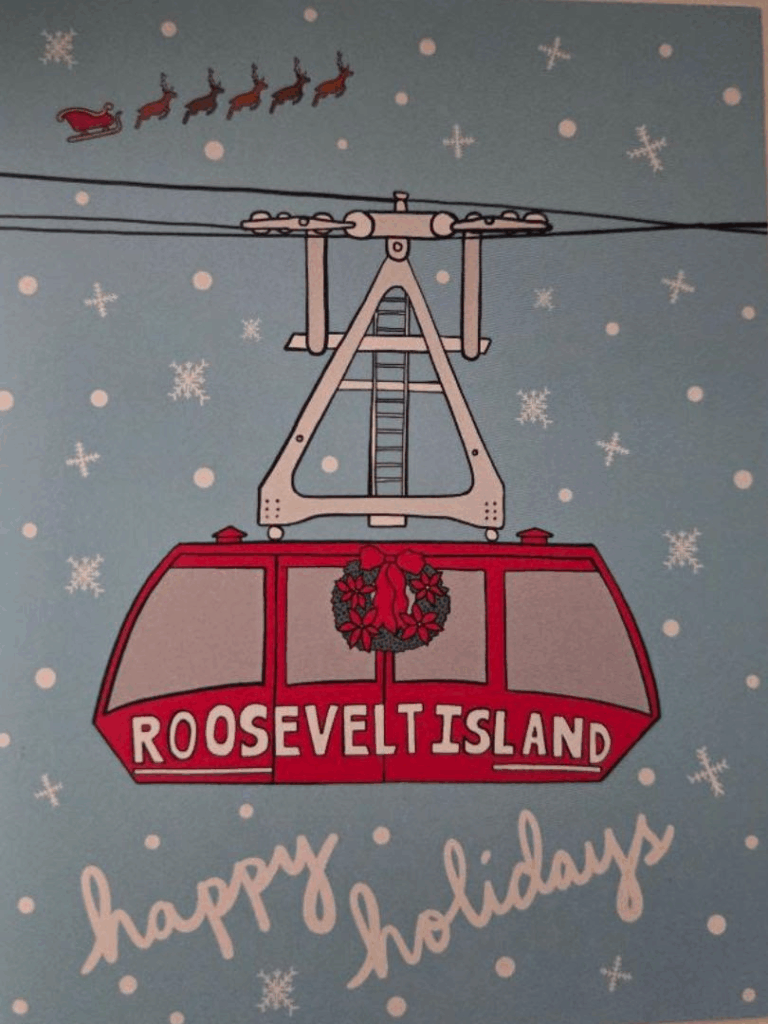
Our limited edition holiday card is available at a special early shopper price of 2 cards for $5-
While supplies last!
Save the Date
Wednesday, October 15th
1 p.m. at the Tram Lawn
for the Revealing of the
“Roosevelt Island
1969-2025 Maps and Images”

Credits
NY Times
Judith Berdy
All image are copyrighted (c) Roosevelt Island Historical Society unless otherwise indicated
THIS PUBLICATION FUNDED BY DISCRETIONARY FUNDS FROM CITY COUNCIL MEMBER JULIE MENIN & ROOSEVELT ISLAND OPERATING CORPORATION PUBLIC PURPOSE FUNDS.

Copyright © 2025 Roosevelt Island Historical Society, All rights reserved.Our mailing address is:
rooseveltislandhistory@gmail.com
Leave a comment