Friday, July 17, 2026 – Bronx Family Farm: A Piece of History

Surrounded by Concrete and
Apartment houses,
the Last Farm in Manhattan
was a Citywide curiosity
Ephemeral New York
Friday, July 17 2026
Issue # 1715
In colonial times, almost all of Manhattan was farmland. These farms—with hundreds of acres of vegetables, fruit orchards, and livestock, anchored by a clapboard farmhouse—were slowly given over to the development of the asphalt city.
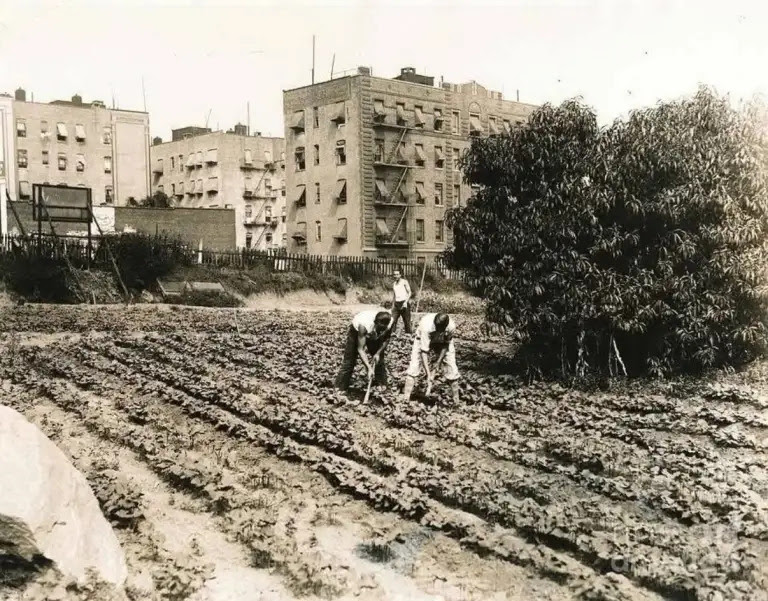
One unusual farm is considered the last holdout. The Benedetto Farm (sometimes spelled Benedeto), founded by an Italian immigrant family in Inwood, gets that honor, with the last tilling of the soil around 1940.
But the story of the Benedetto Farm doesn’t follow the narrative of a longtime farm family selling their land and developing it themselves, or getting squeezed out by rapacious speculators amid the northward march of urbanization.
For starters, the Benedetto Farm only began operating in 1924. Vincenzo Benedetto apparently wasn’t making enough money from his job delivering ice to apartment buildings from a horse-drawn wagon.
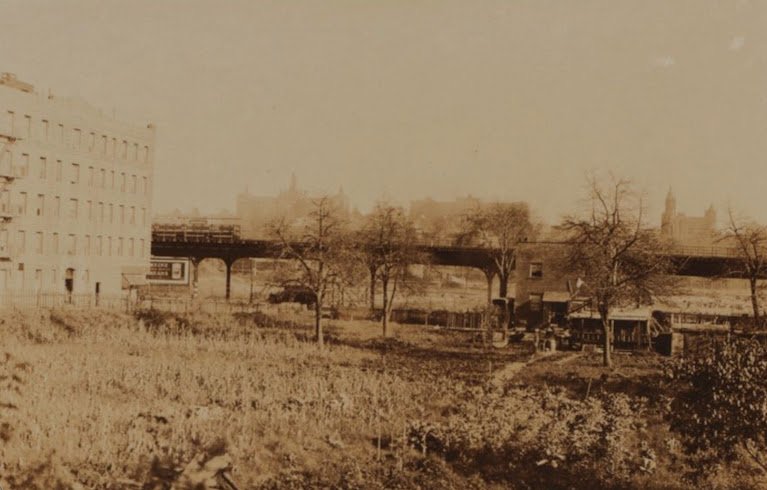
So Vincenzo and his wife, Mary, with help from their nine children, became farmers. For $30 a month they rented a two-acre parcel between Broadway, Tenth Avenue, 213th, and 214th Street, states Fran Leadon, author of Broadway: A History of New York City in Thirteen Miles.“They grew tomatoes, corn, string beans, carrots, beets, broccoli, radishes, and lettuce; peaches, cherries, pears, pumpkins, and squash; and raised chickens that laid both brown and white eggs priced at fifteen cents a dozen,” wrote Leadon.The crops and eggs were sold at a farmstand, recalled the youngest Benedetto daughter in a 1987 oral history referenced in a 2009 post on myinwood.net.
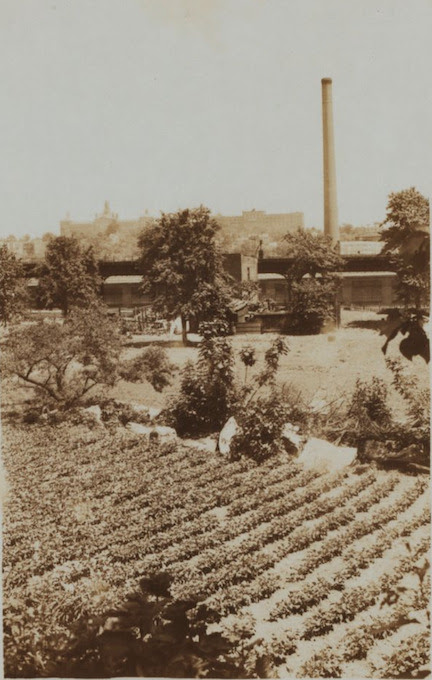
“It wasn’t a very big farm—only a city block,” stated Josephene Benedetto. “For me it was just a place to live. We moved there in 1924, when I was three. My father was an ice man until the Frigidaires came in and that went kaput.”
The family lived in a two-story brick house beneath the IRT elevated. “Our house didn’t have electricity or gas or anything,” said Josephene. “We had to bring everything in.”
Keep in mind that by the 1920s, much of Inwood had been transformed into concrete blocks of modern apartment houses and commercial spaces.
That made the Benedetto Farm something of an anomaly, a curiosity often featured in newspapers and magazines—which angered Vincenzo.
“Vincenzo di Benedetto, who enjoys a fame of sorts because he is the only farmer left in Manhattan, has his troubles,” reported one newspaper. “One is publicity. Contrary to the average run of Manhattanites, he doesn’t care for that. Nevertheless, reporters are always coming around and wasting his time by asking him questions.”
Annoying reporters were one thing. The Depression, however, put a major dent in profits. In 1930, Mary told Time that “things have not been very good for the farmer this year.”
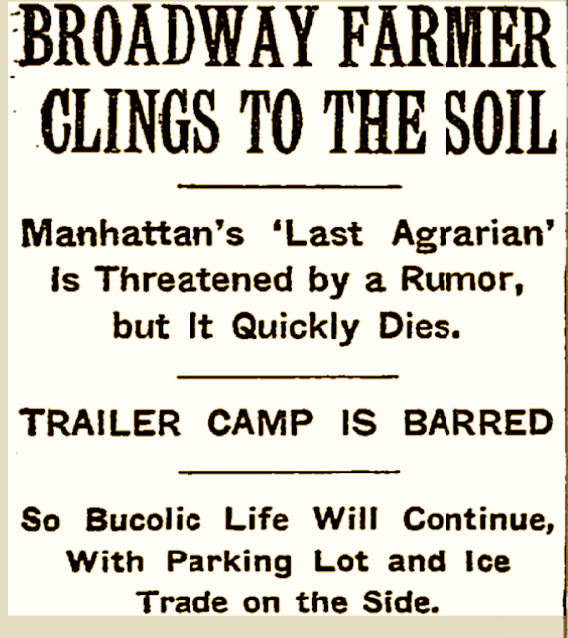
Rumors started that the owner of the property was planning to sell. Reporters came around asking questions about the farm’s demise. “I don’t know anything about it,” Vincenzo barked to the New York Times in 1936.
“The newspapers always publish a lot of lies about me. Now we’re going to bed. You better get out.”
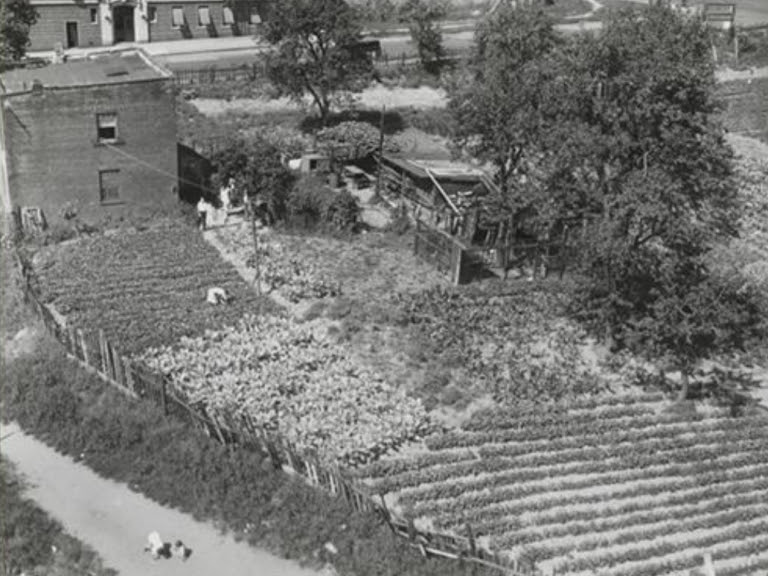
By 1940, “Vincenzo and Mary had sublet part of their farm to a used car lot and converted another section into a parking lot, leaving only one-third of the block for farming,” wrote Leadon. “That year, the farm sold only about $50 worth of produce.”
In 1943, Vincenzo died at age 58. The land was sold in 1954, stated Leadon. In place of the corn and pumpkins and chickens rose a New York Telephone Company building that still exists today—repurposed for a variety of smaller businesses.
“Let the last farm in Manhattan vanish under steel and brick,” eulogized the Brooklyn Eagle. “This is the city.”
PHOTO OF THE DAY
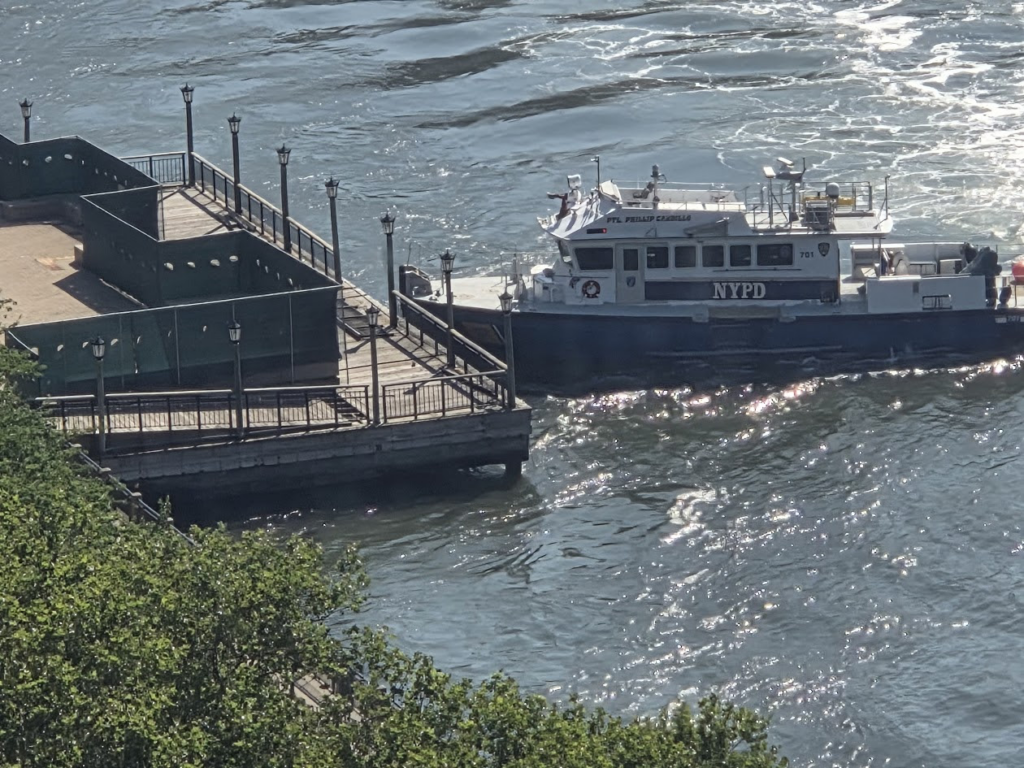
THE PIER SEEMS TO BE OPEN TO THE NYPD
ON FRIDAY
CREDITS
EPHEMERAL NEW YORK
[Top photo: Office of Work-Life at Columbia University; second and third photos: NYPL Digital Collections; fourth image: New York Times headline, 1936; fifth image, MCNY, X2010.12.145]
Tags: Benedetto Farm Inwood Broadway, Last farm in Manhattan, Last farm Inwood Benedetto farm, Last working farm in New York City, Manhattan’s Last Farm, Upper Manhattan in the 1920s, Vegetable Farm Upper Manhattan 1930s, Vincenzo Benedetto Last Farmer Manhattan
Posted in Upper Manhattan
All image are copyrighted (c) Roosevelt Island Historical Society unless otherwise indicated
THIS PUBLICATION FUNDED BY DISCRETIONARY FUNDS FROM CITY COUNCIL MEMBER JULIE MENIN & ROOSEVELT ISLAND OPERATING CORPORATION PUBLIC PURPOSE FUNDS.
Copyright © 2026 Roosevelt Island Historical Society, All rights reserved.Our mailing address is:
rooseveltislandhistory@gmail.com
Leave a comment