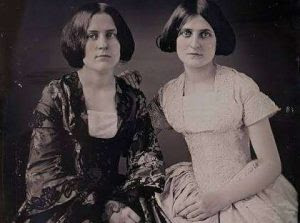
The first indication that the Fox Sisters had spiritualist talents occurred on the evening of March 31, 1848 when 11-year-old Kate and 14-year-old Maggie Fox claimed they heard knocking sounds coming from the east bedroom of their parents’ rented farmhouse in Hydesville, Wayne County, NY, about 30 miles east of Rochester.
The next night, the young ladies revealed this strange knocking spirit to their mother and older sister, Leah. The family’s excitement about communicating beyond the grave took no note that the inaugural demonstration had been staged on April first.
A few days later several neighbors were invited to hear the strange knockings. The neighborhood assemblage asked the source to guess the age of a close family friend and received the correct number of raps in return.
Mrs. Fox then asked, “If you are an injured spirit manifest it by three raps.” The knocking’s reply convinced everyone assembled that Maggie and Kate were communicating beyond earth’s mortal bonds.
Neighbors then searched the house and found strands of hair and fragments of bone in the cellar. The find prompted someone to remind the group that a peddler had disappeared, and was probably murdered in the Hydesville farmhouse.
Older sister Leah wrote a letter to Isaac and Amy Post, who were prominent members of Rochester’s spiritualist movement. The Posts invited Maggie and Kate to their home to demonstrate their talents before a group of spiritualist activists. There the knocking thumps produced an emotional reunion with the Post’s recently deceased daughter.
The Posts then rented a hall for a public demonstration that attracted four hundred spirit believers. After an arousing performance, the constable’s wife took the two girls off stage where they disrobed for examination. Finding no evidence of trickery, the constable and most of the evening’s attendees departed, convinced the sisters had been gifted a special talent.
At the time, Horace Greeley, editor of the New York Weekly Tribune, was backing a tour of Dr. Franz Mesmer’s disciples promoting Mesmer’s theory of universal magnetic fluid. Evening after evening, the touring disciples waved their hands over volunteers to induce a relaxed hypnotic state they called being “mesmerized,” many of whom reported visions of a departed loved one.
Greeley recognized a good story, and his newspaper quickly followed the Fox sisters’ Rochester demonstration with an enthusiastic article about their unique talents. He then invited the sisters to the city of New York, where they met another aspiring spiritualist, Andrew Jackson Davis (1826-1910).
Davis called himself the Poughkeepsie Seer, but his real expertise lay in marketing, and he knew just how to promote the cute young prodigies. The sales pitch: “Communicating with the dead teaches the living about heaven and hell, assuring salvation.”
After their successful New York debut, Davis managed Fox sister tours from New York to Cincinnati. Seance attendees paid one dollar each, but private sessions were available for a considerably larger fee. In advance of their arrival, Davis paid local newspapers to carry updated stories about the sisters’ special skills. His favorite story was one about the Fox Sisters conjuring Benjamin Franklin’s spirit.
Fox seances were limited to 21 attendees and followed a format standard to the spiritualist movement. The rooms were bathed in blue-shaded gaslight, and a table of food was set out with a little sign that read, “Please partake of this fare. The spirit you seek is drawn to nourishment and encouraged by your contentment. Like us, the spirits seek sustenance.”
As customers gathered, Maggie and Kate mingled, speaking in voices so soft they were difficult to hear. With each approach, they hugged their guests, held hands, and gave the impression of a very private conversation. They asked the reason for attending and what message the departed would like to hear. Maggie did most of the talking, but neither girl took notes.
Maggie and Kate asked about the individual’s death, then asked for one pleasant memory and one memory that only the spirit would know. These pre-interviews established an intimacy that even made skeptics long for friends and relatives who had passed on.
Once they had circulated, a chime sounded, directing attendees to their seats. The sisters retreated behind a curtain while Mr. Davis (or their older sister Leah) explained that it was critical to maintain a total number of occupants evenly divisible by three. Therefore, no one could leave the room until the seance was completed.
There was to be no talking unless specifically addressed by one of the sisters. The final instruction warned everyone that alcohol must not be consumed until the cock crowed at dawn on the next day.
At this point, another chime rang out, and the sisters emerged from behind the curtain to take their places sitting in straight-back chairs in front of a small oval table covered with a long black cloth on which sat a loaf of freshly baked bread and three candles. As they lit the candles, the lamps in the room dimmed.
Maggie began, “We are deeply saddened by the loss each of you have experienced and are privileged to share with you God’s unique gift so generously bestowed on us. Communicating with the dead is serious and frightening business for both the living and the dead. By our silence we show our respect for those spirits with courage to speak. So too, it is essential that everyone hold hands no matter what transgresses. Tears can be wiped away later. Breaking the circle frightens the spirit and extinguishes the communication.”
The sisters then broke the loaf of bread into thirds. Steam rose from the broken loaf, and its freshness filled the room. Each sister tore a bite from the center of the bread; they then closed their eyes and remained silent for several moments. Soon, they began a chant of unintelligible words.
Suddenly, Maggie unleashed a forceful voice, “Our beloved Silas Abrams (or the name of another attendee’s departed loved one), we bring you gifts for life unto death. Commune with us Silas Abrams, and move among us. Join our bond of good will. Fear not our intentions.”
In response, a loud rap seemed to arise from the floor. Maggie said, “You are welcomed among these assembled souls as a friend and messenger. We are all pleased by your presence and respectful of your great exertions. One rap confirms and two raps deny. Please be open to the limitations of the living and accept our attentions.”
Over the ensuing hour, several, but not all, attendees were provided the opportunity to speak with dead relatives or friends through the code of knocking sounds. With some embellishment, Maggie and Kate recited stories shared during the earlier conversations.
As the hour closed, Maggie thanked the spirits who chose to attend and suggested that those spirits not revealing themselves might be welcomed at another time. They then closed with a few more unintelligible chants.
Audiences included farmers, businessmen, and laborers. The sisters did two shows an evening, taking in $42 a night (worth about $1,000 in 2027 dollars). It was more than common laborers made in two months and eclipsed the five-cent admission charged by most traveling lecturers.
To non-believers, the Fox sisters were dismissed as the “Rochester Knockers and Rappers.” But local newspapers, including Buffalo’s Commercial Advertizer, covered the Fox sisters’ spiritualism as a serious religious marvel, reprinting the press releases written by Mr. Davis.
Physicians, at least those making strides to embrace the principles of science, were infuriated. They dismissed the magical thinking encouraged by the Fox sisters much as they did the medical quacks peddling false hope.
In 1851, the Fox sisters booked a meeting room in Buffalo’s Phelps House Hotel. It happened to be the residence of Dr. Charles Coventry, professor of physiology and medical jurisprudence at Buffalo Medical College.
The curious Dr. Coventry attended a performance and afterwards he wrote a letter to the Commercial Advertizer that concluded, “such spectacles must propel all men of science to discourage all further waste of time, money, and credulity on the folly perpetrated by the Fox sisters.”
At Dr. Coventry’s urging, the Erie County Medical Society appointed a committee of investigation comprising Dr. Coventry, Dr. Charles Lee, two community leaders with credentials in science, and Dr. Austin Flint as chairman. Flint published a letter in the Commercial Advertizer challenging the sisters to an inspection.
The Fox sisters responded by publishing their own letter, welcoming the medical society’s inquiry. In part, their letter claimed that, “the investigation will contribute to an understanding of the important and mysterious manifestations for which we are honored to serve as an exceptional and uncommon agent.” Both letters were reprinted in several newspapers across New York State.
Within the week, the inspection was scheduled at the same Phelps Hotel where the sisters had performed. Dr. Flint began by suggesting that the sisters assume positions that would best demonstrate their abilities.
The sisters chose to sit side by side on firm, upright chairs, but asked if another attendee might be invited to bring the total present to a number divisible by three. Coventry invited a “proper” lady known to reside at the Phelps.
Maggie and Kate lit three candles on a short table before them and began their incantations according to habit. They soon confirmed the presence of a chatty, rapping spirit. At the close of their initial demonstration, the sisters expressed their delight with how accommodating the Phelps was to spirits.
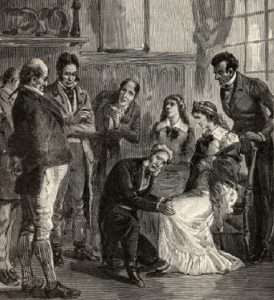
At this point, Dr. Flint placed the feet of both sisters on cushions that prevented solid contact with the floor. The table with the three candles was carefully rearranged, but the spirits proved unarousable. Maggie explained that the spirits likely found the presence of so many skeptics fatiguing.
Flint apologized and removed the cushion under Kate’s feet, still no spirits could be awakened. Now Flint removed Maggie’s cushions, and in very little time the spirits were revived and the knocking recurred.
In the last phase of the inquiry, the “proper” lady Dr. Coventry recruited was instructed to hold the younger Kate’s knees. After introductory incantations, the spirits returned. Flint then instructed the woman to firmly hold Maggie’s knees, at which time spirit communications could not be produced.
Clearly, the older sister, Margaret, was the source of the rapping. Kate’s role was to reinforce Margaret’s memory and add to the sing-song nature of their incantations, but otherwise she was entirely passive. With the source of the rapping revealed, Dr. Flint ushered in two women he knew to be capable of producing similar rapping sounds by flexing their knees and ankles.
The wooden Phelps Hotel floor produced results nearly as sonorous as Maggie’s well-practiced knocks. To Flint, the explanation was now obvious. In women with supple ligaments, the broad articular surfaces of the knee joint allow considerable lateral motion. When the foot was firmly planted, a sudden lateral force can generate a rather loud noise similar to cracking the knuckles of one’s hands.
Flint rushed the publication of the committee’s findings into the March 1851 issue of the Buffalo Medical Journal. In the article, Flint expressed sympathy for people who seek remedy from grief through spiritualist communications. He admitted that even men of science have fallen victim to deceptive reasoning and at least temporarily believe things that are later proven false.
Flint hoped that similar investigations would be conducted on the mechanisms used by the many other showmen then touring the United States. The article was signed by Austin Flint, MD, Charles A. Lee, MD, and C. B. Coventry, MD.
The sisters feigned protest. They claimed the committee was typical of non-believers, like those who once denounced Galileo’s planetary theories. The official statement from the Fox Sisters was:
“It is true that when our feet were placed on cushions stuffed with shavings, and resting on our heels, there were no sounds heard, and that sounds were heard when our feet were resting on the floor; and it is just as true that if our friendly spirits retired when they witnessed such harsh proceedings on the part of our persecutors, it was not in our power to detain them.”
The Fox Sisters relished the publicity. As one might expect, believers dismissed Flint’s paper as an attack rather than an enlightenment, emphasizing that doctors are not priests. Flint countered, “we have satisfactorily demonstrated the principal phenomenon [is] an imposition and fraud, I think it as well to leave such persons in their simplicity; for, in their anxious search after the marvelous and wonderful, I fear they would grasp at something still more absurd and ridiculous.”
Flint and his committee proved to be no match for the marketing skills of Andrew Davis. Now adding an unfair persecution bias to his promotional activity, Davis continued to promote the Fox Sisters for another twenty years. Eventually Maggie, Kate, and their older sister Leah went their separate ways, maintaining their lifestyles by holding private seances for wealthy patrons.
A Philadelphia philanthropist funded the Sybert Commission to investigate spiritualism in 1884-1887. When interviewing Maggie Fox, then a tottering alcoholic, the commission repeated Flint’s investigative method and again found the rappings failed to occur if Maggie’s feet were placed on pillows.
Finally, at the Academy of Music, on October 21, 1888, Maggie, with Kate sitting nearby, took the stage before a packed house and confessed forty years of deception. She then showed how she made the rapping sounds for the assembled audience. The story was reported in the New York Herald on October 24, 1888.
While in Paris in 1854, Flint was asked about the Rochester knockings. In his response he told of an examination he had conducted on the wife of a Buffalo physician who could produce the same intense sounds produced by Margaret Fox. This woman produced double clicks or single clicks and could adjust click volume by altering the speed with which she moved her knee.
The clicks could be heard for a distance of 100 feet and in the floor below, but required her feet to be firmly planted on a hardwood floor. Since the Fox Sister inquiry, Flint had encountered a number of women who could generate rapping sounds, though none claimed communication with the dead.
Flint concluded, “The extent with which spiritual rapping belief has prevailed in the United States offers a sad illustration of the credulity of mankind.”
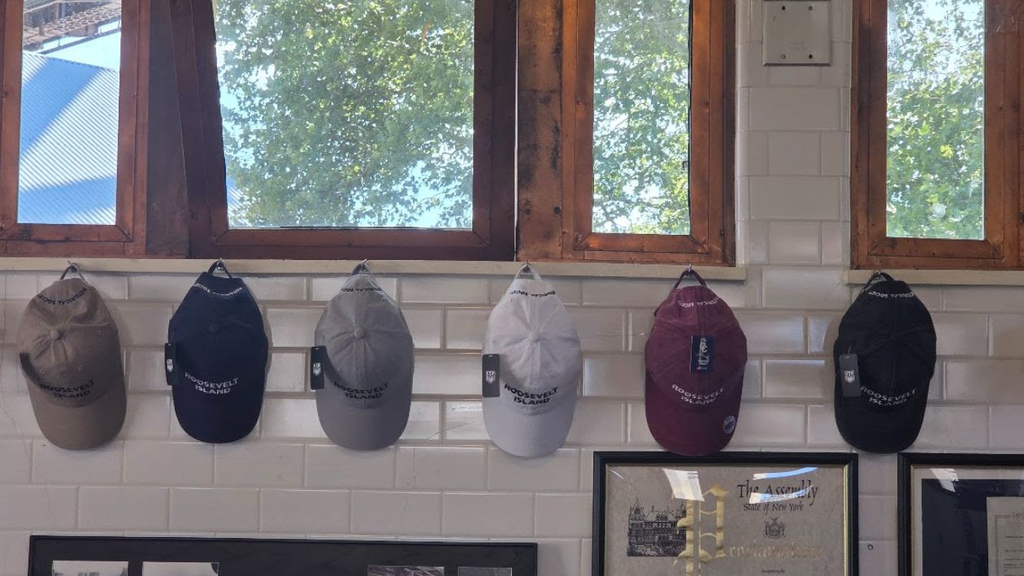
OUR NEW AUTUMN COLLECTION OF CAPS ARE AVAILABLE AT THE KIOSK NOW.
CREDITS
New York Almanac
All image are copyrighted (c) Roosevelt Island Historical Society unless otherwise indicated THIS PUBLICATION FUNDED BY DISCRETIONARY FUNDS FROM CITY COUNCIL MEMBER JULIE MENIN & ROOSEVELT ISLAND OPERATING CORPORATION PUBLIC PURPOSE FUNDS.
U Thant Island: The Quirky Story of NYC’s Smallest Island
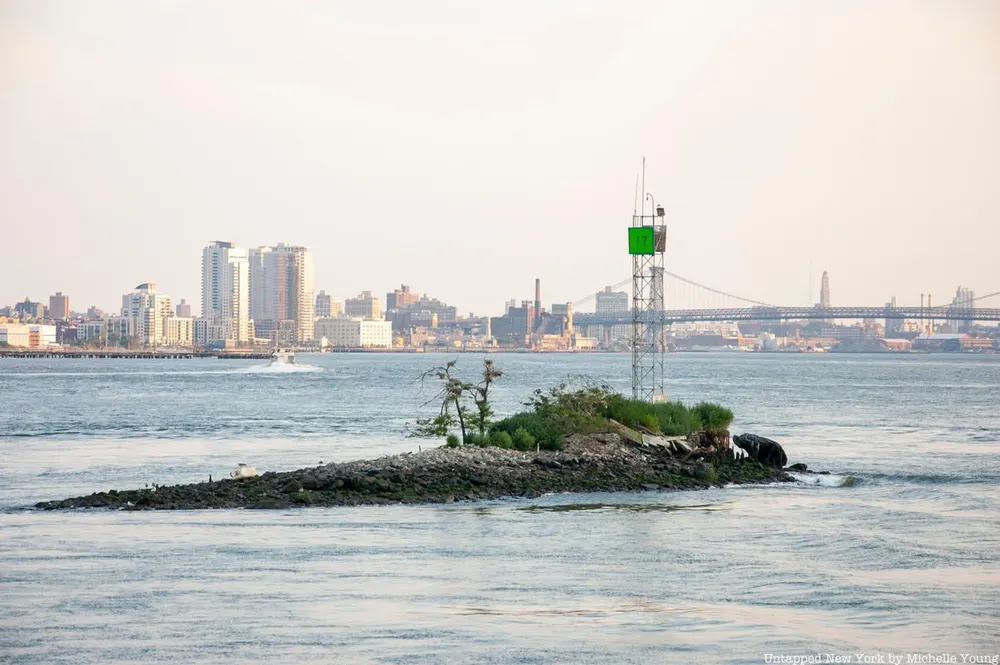
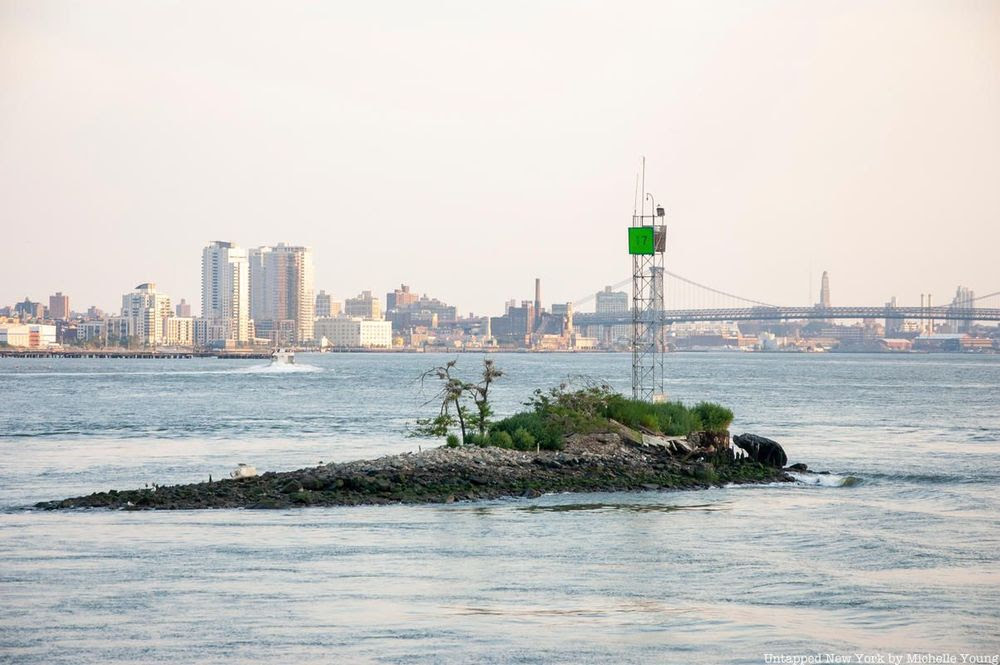
U Thant Island is located in the East River between the United Nations complex and Long Island City, named for the former UN Secretary General.
Situated halfway between the United Nations complex and Long Island City is a tiny 1/2 acre island that appeared in the East River in the 1890s. U Thant Island, as it is known, is nicknamed after former United Nations Secretary General from Burma — a story we will get into shortly.
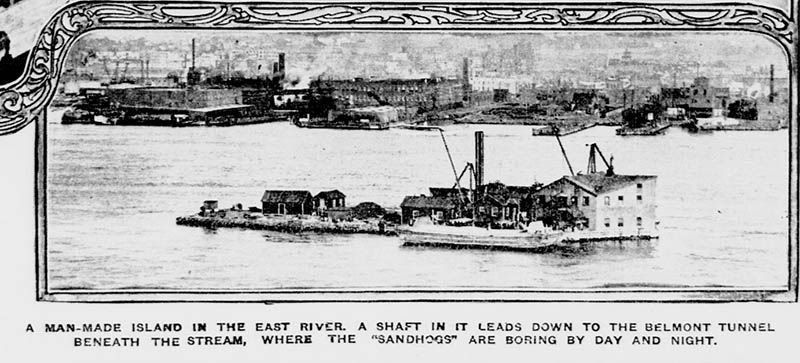
The island was created from materials excavated by piano manufacturer William Steinway in the attempt to build underwater trolley tunnels in the East River between Manhattan and his company town in Astoria, Steinway Village. Workers dug a shaft down through an outcropping of granite rock known then as Man-o’-War Reef and the excavated rubble formed the man-made island, officially known as Belmont Island.
October 14, 1906 New York-Tribune. Image from Library of Congress, Serial and Government Publications Division.
Steinway died in 1896 before the completion of the tunnels, which were finished a decade later under the auspices of the first subway line, the Interborough Rapid Transit (IRT). A historic photograph in the New-York Tribune from 1906 shows the newly created island packed with buildings and the mining shaft. Nobody lived here — it was intended for the equipment and activity connected to the mine and as an access point to the tunnels below. The caption reads: “A man-made island in the East River. A shaft it in leads down to the Belmont Tunnel beneath the stream, where the ‘sandhogs’ are boring day and night.” Those buildings remained on the island until around 1918.
The construction of the Steinway Tunnel was by no means a safe endeavor. Four workers died in an accident in the shaft in 1906. Much like the engineering feat that was the creation of the first East River tunnel just nearby in 1893, these large infrastructure projects were the products of ambitious, sometimes grandiose, visions of what the city could be. Today the tunnels are still used by the 7 line train, a testimony to the foresight of Steinway, Belmont and the early industrialists.
Belmont Island was named for August Belmont Jr. who was one of the main financiers of the IRT and its President. He was so important, he actually had his own private subway car that still exists today. How did it became known as U-Thant Island? In the 1970s, a group of employees from the United Nations who were followers of the guru Sri Chinmoy and called themselves the Peace Meditation at the United Nations unofficially named it for Chinmoy’s friend U Thant, the UN Secretary General from Burma. Chinmoy, who was born in British India (now Bangledesh) came to the United States in 1964 and lived in Jamaica, Queens. He was giving meditations twice a week at the United Nations, on invitation from U Thant.
The use of U Thant Island was a formal takeover, as the group leased the island from the State of New York and dedicated the island on September 16, 1977 to U Thant, who had died three years before. After New York Governor Hugh Carey stated his support of the initiative, the group “planted trees and flowers, and inaugurated its official lease of the island from the state,” according to Charlie Hailey in the book Spoil Island: Remaking the Makeshift Archipleago. There was even an award ceremony for the U Thant Peace Award that took place there.
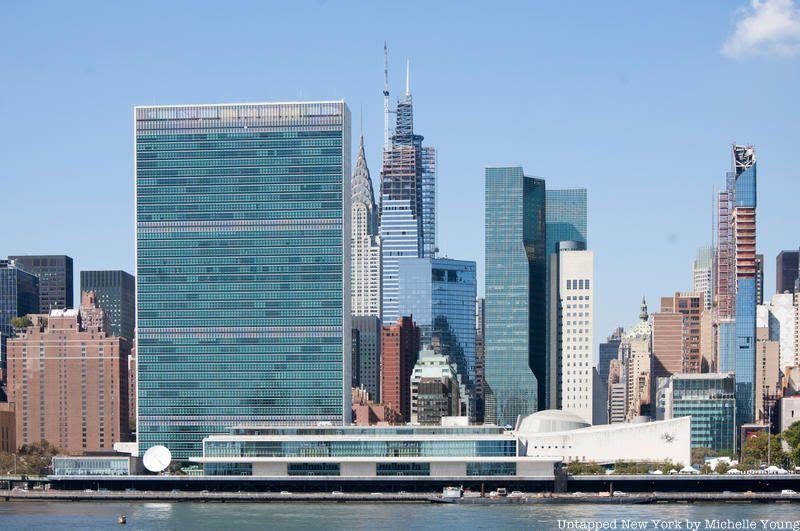
The United Nations from the East River
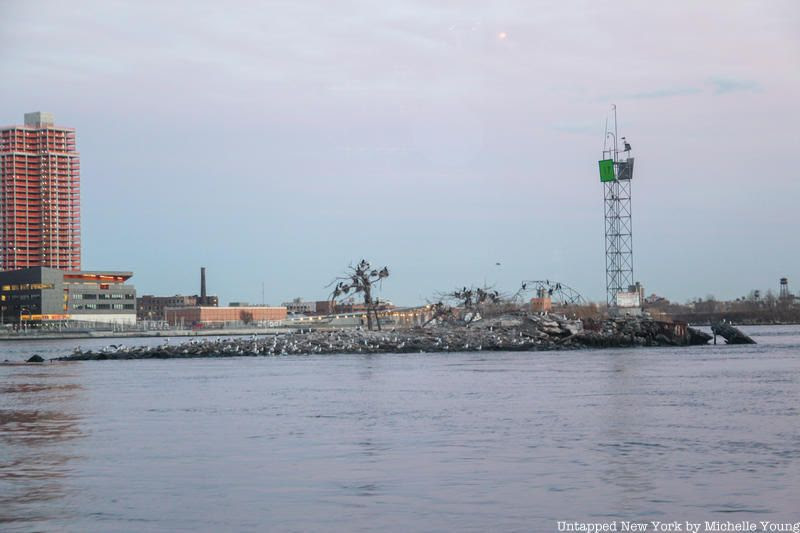
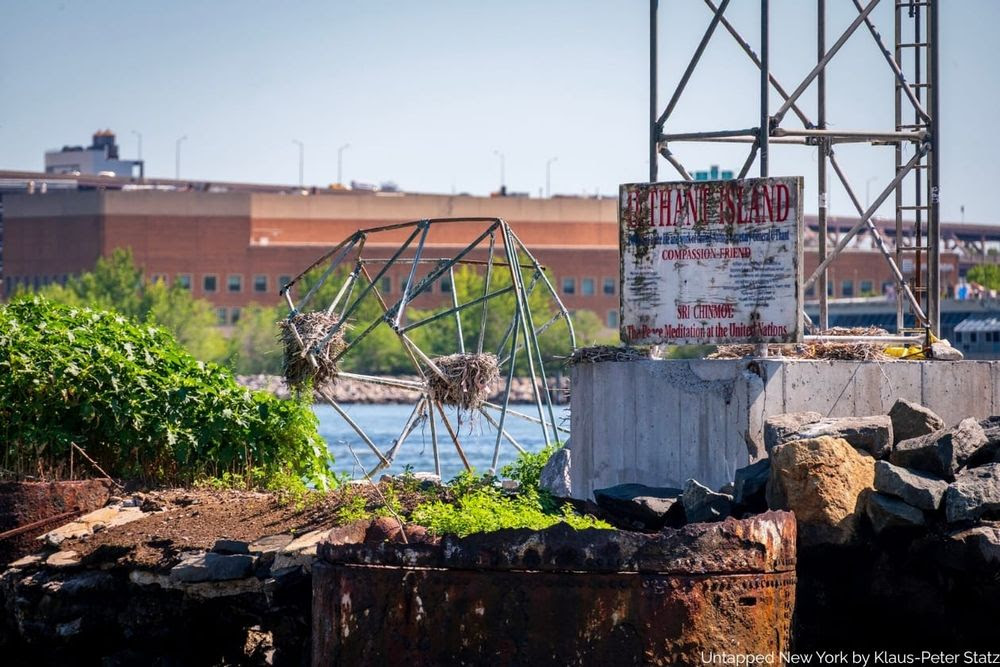
The group was allowed on U Thant Island once or twice a year to maintain the greenery they planted, but increased security pretty much ended visits by the mid 1990s. They left behind a 30-foot tall steel “Oneness Arch” which has a capsule buried below containing personal items and writings from U Thant.
Remnants of the arch are still there, next to U.S. Coast Guard beacon that also has a sign with the nickname of the Island, the UN logo, the words “U Thant Island: Compassion—Home. Dedicated to World Peace through Prayer and Meditation” and a quote by U Thant: “Every man or woman should not only ask himself or herself what he or she is going to do in the world, but also ask ‘Will there be a world in which I can live.’” We have not been able to confirm if the personal items are still there. It wasn’t the first or last takeover of U Thant Island. In 1972, activists occupied the island for 2 1/2 hours and declared it the “Soviet Jewry Freedom Island” in protest of a speech at the United Nations by Leonid Brezhnev, the long time Chairman of the Presidium of the Supreme Soviet and his announcement of the diploma tax that was enacted on graduates from the USSR who wished to emigrate.The occupation was led by Percy Sutton and Robert Abrams, the Manhattan and Bronx Borough Presidents respectively. Then in 2004, in protest of increased security in New York City for the Republican National Convention, the artist Duke Riley sailed to U Thant Island and proclaimed it a sovereign nation. Today, U Thant Island, said to be New York City’s smallest island, is considerably smaller than when it was being used in the excavation of the tunnels. The manmade platform and edges that were built up to support the various buildings and structures are long gone. Its impermanence fits the philosophies of Chinmoy and U Thant, as Hailey writes in his book: “It represents the precariousness as well as the triumphs of human intervention…Meditating on the artificial island, U Thant could contemplate human vulnerability and agency through a landscape element that was not only a tiny outcropping but also the waste of human activity. This residual nature made it a particularly compelling tool for understanding impermanence and instability.”
What remains of U Thant Island is a narrow rocky island about 50-100 feet x 200 feet in size with a Coast Guard beacon “Roosevelt Island Reef Light 17,” the collapsed relics of Oneness Arch, some shrubs and a few stubby trees. New York City has designated it an Recognized Ecological Complex, a protected site for migrating birds.
You’ll often find a large flock of seagulls and double-crested cormorants on the rocks, striped bass in the waters below, and we assume an occasional appearance of the seals who have been known to appear on a nearby rock off Roosevelt Island. Jurisdictionally, U Thant Island belongs to Manhattan and Community Board 6, which includes Stuyvesant Town – Peter Cooper Village, Gramercy, Kips Bay, Murray Hill, Tudor City, Turtle Bay, and Sutton Place
U Thant Island is a curious repository of many moments in New York City’s history: its natural geological origin as a reef, a site of industrial intervention and ingenuity at the turn of the 19th century, a place of both protest and contemplation during the early years of the United Nations, and finally a nature sanctuary seen by New Yorkers and tourists as the city’s waterways become a place of both transit and entertainment once again..
OUR NEW AUTUMN COLLECTION OF CAPS ARE AVAILABLE AT THE KIOSK NOW.
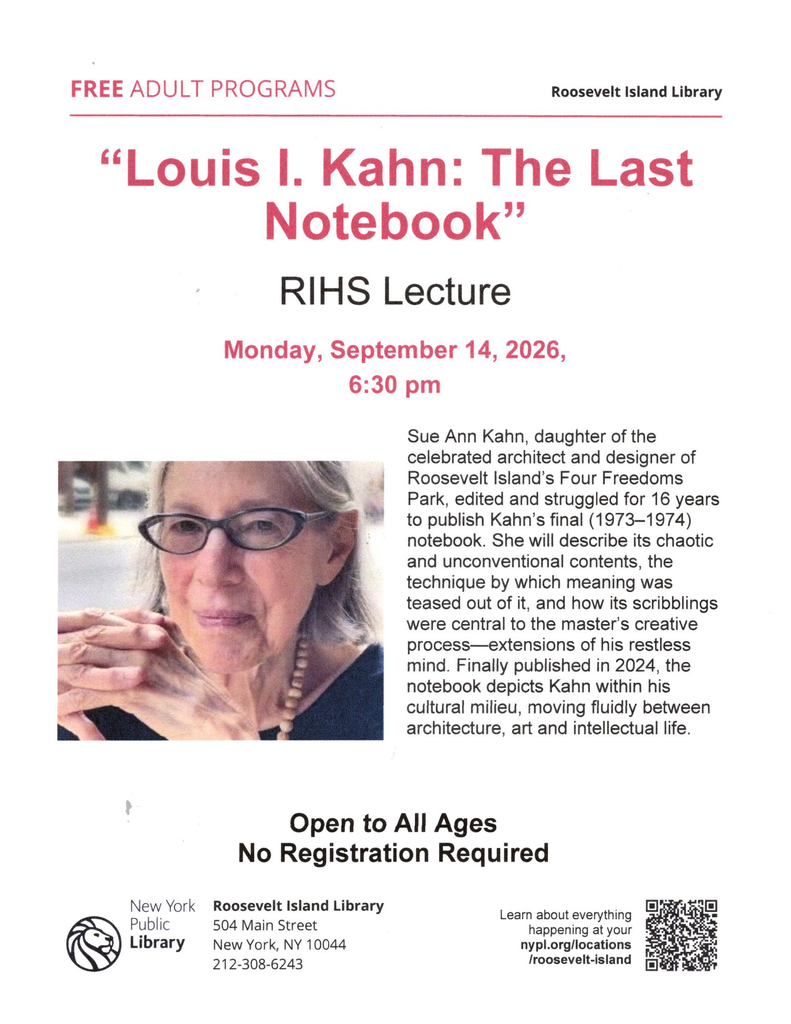
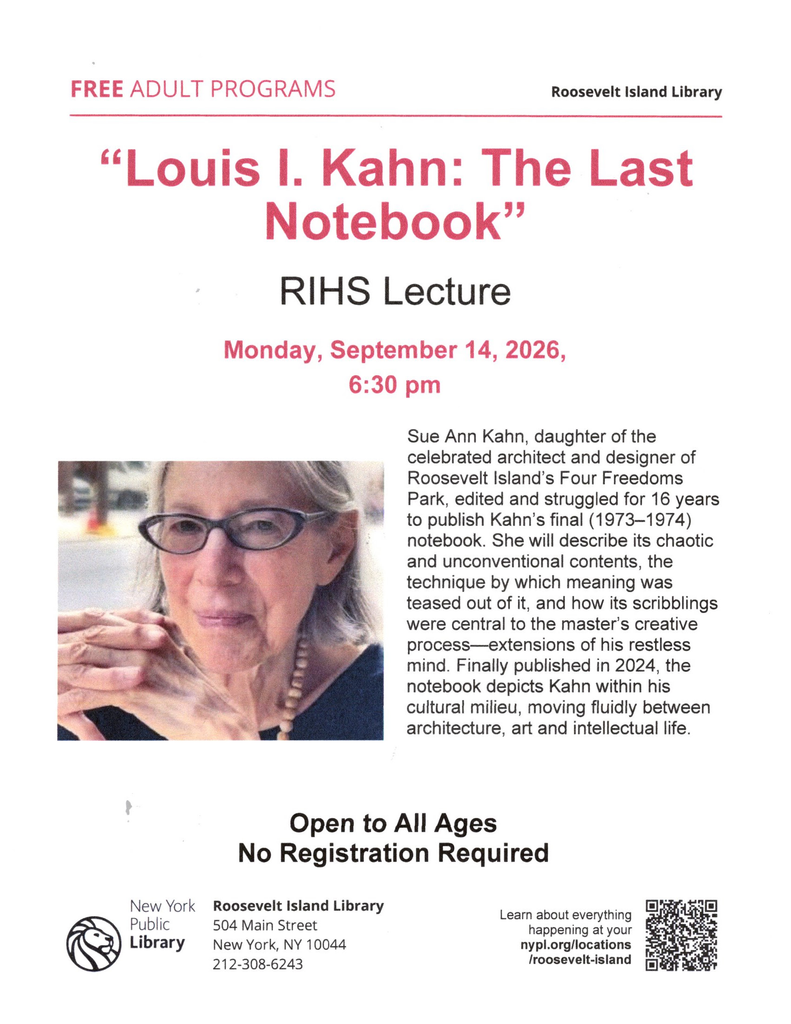
SAVE THE DATE FOR OUR FIRST NYPL PROGRAM
CREDITS
UNTAPPED CITIES Judith Berdy
All image are copyrighted (c) Roosevelt Island Historical Society unless otherwise indicated THIS PUBLICATION FUNDED BY DISCRETIONARY FUNDS FROM CITY COUNCIL MEMBER JULIE MENIN & ROOSEVELT ISLAND OPERATING CORPORATION PUBLIC PURPOSE FUNDS.
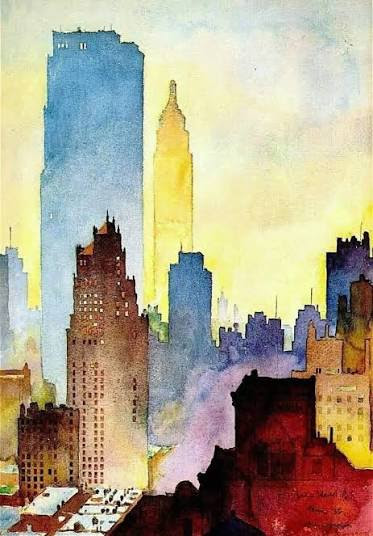
He’s hardly a household name today. But Utah-born John Held, Jr. helped create the popular imagery of the 1920s.
Held made Jazz Age icons out of bobbed-hair flappers, college guys in raccoon coats, sporty women wielding tennis rackets, and tuxedoed partygoers dangling cigarette holders from their lips.
His gently satirical drawings depicting a carefree and exuberant era appeared on dozens of national magazine covers as well as inside periodicals and newspapers. His distinct style of work even made it to the book jacket of F. Scott Fitzgerald’s Tales of the Jazz Age.
Then came the stock market crash. Held turned 40 in 1929, lost a lot of money, suffered a nervous breakdown, and found that his once-constant and highly lucrative artwork commissions had mostly dried up.
He was now free to do what he came to New York in 1912 for: to pursue the fine arts and become a watercolor painter.
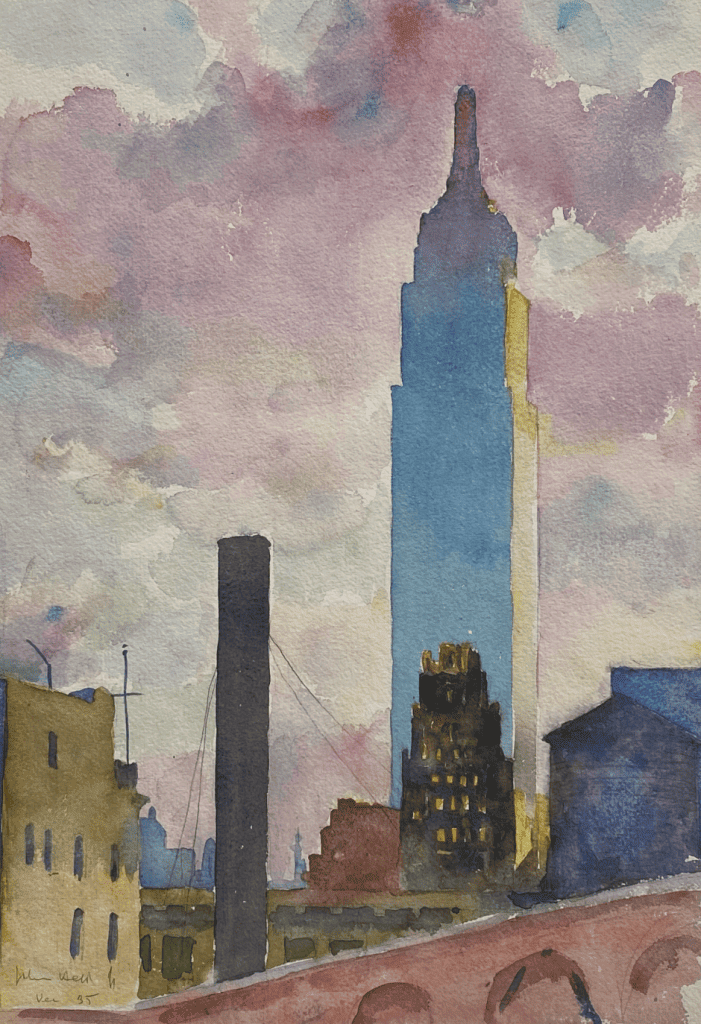
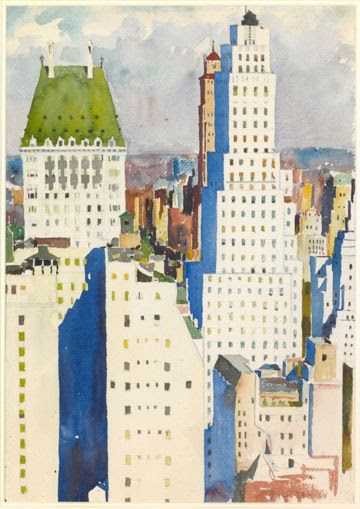
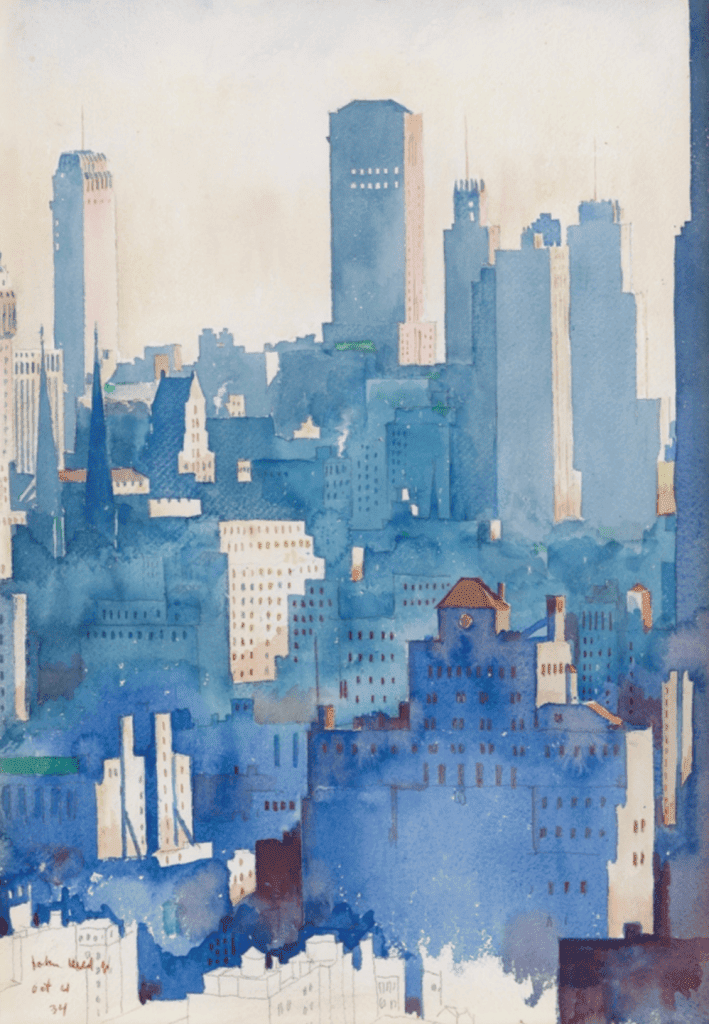
In the Depression of the 1930s, when the city’s new skyscrapers might look to some like tall gray husks, Held depicted them as magical and luminous—radiant under the lavender, pink, blueish-white skies of dawn and dusk.
They’re a radical departure from his work a decade earlier, which featured stylish youth drawn in exaggerated angular proportions that suggest motion and energy. His watercolors, on the other hand, depict no people at all.
“From 1934-1936, Held’s view of the world turned more sober,” states the art website Arthur.
“The upper stories of a building on Sixth Avenue near Central Park afforded Held a high vantage point. From this perspective, the artist transforms the massive New York skyscrapers into flat patterns of right angles and colored shadows.”
The writer behind the website describes Held’s work as wistful. I think wondrous might fit as well.
Held spent the last years of his life on a farm in Belmar, New Jersey and died from cancer in 1958. He returned to the city for good; he’s buried in Woodlawn Cemetery.
MICHAEL C.HALL, STAR OF DEXTER-THE INSURRECTION FILMING AN EPISODE AT THE TRAM PLAZA YESTERDAY
CREDITS
EPHEMERAL NEW YORK Judith Berdy
All image are copyrighted (c) Roosevelt Island Historical Society unless otherwise indicated THIS PUBLICATION FUNDED BY DISCRETIONARY FUNDS FROM CITY COUNCIL MEMBER JULIE MENIN & ROOSEVELT ISLAND OPERATING CORPORATION PUBLIC PURPOSE FUNDS.
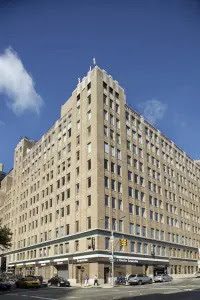
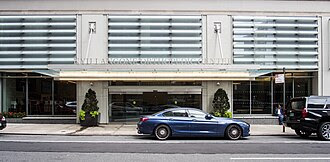
Yesterday, I had an appointment at a NYU Langone Health Orthopedic Center on East 38th Street. Nothing seemed unusual about the building, modern on the ground level and brickwork above. Once on the upper 4th floor I noticed enormous support columns on the spacious floor. I was sure no new building would have concrete columns and very high ceilings. There must be a story hiding in this structure. Time to consult Wikipedia.
333 East 38th Street is a 12-story commercial building in the Murray Hill neighborhood of Manhattan in New York City. Located on the west side of First Avenue between East 38th and 39th streets, the building was built in 1928 as a warehouse and distribution hub for the Eleto Company, which provided delivery services for merchandise sold by Lord & Taylor and James McCreery & Company. After the package deliveries for these department stores were contracted to United Parcel Service (UPS) in 1930, UPS became a major tenant in the building and the facility served as the company’s corporate headquarters and main depot in the New York metropolitan area. UPS vacated the site in 1964 and since then the building has mostly been used as commercial and medical office space.
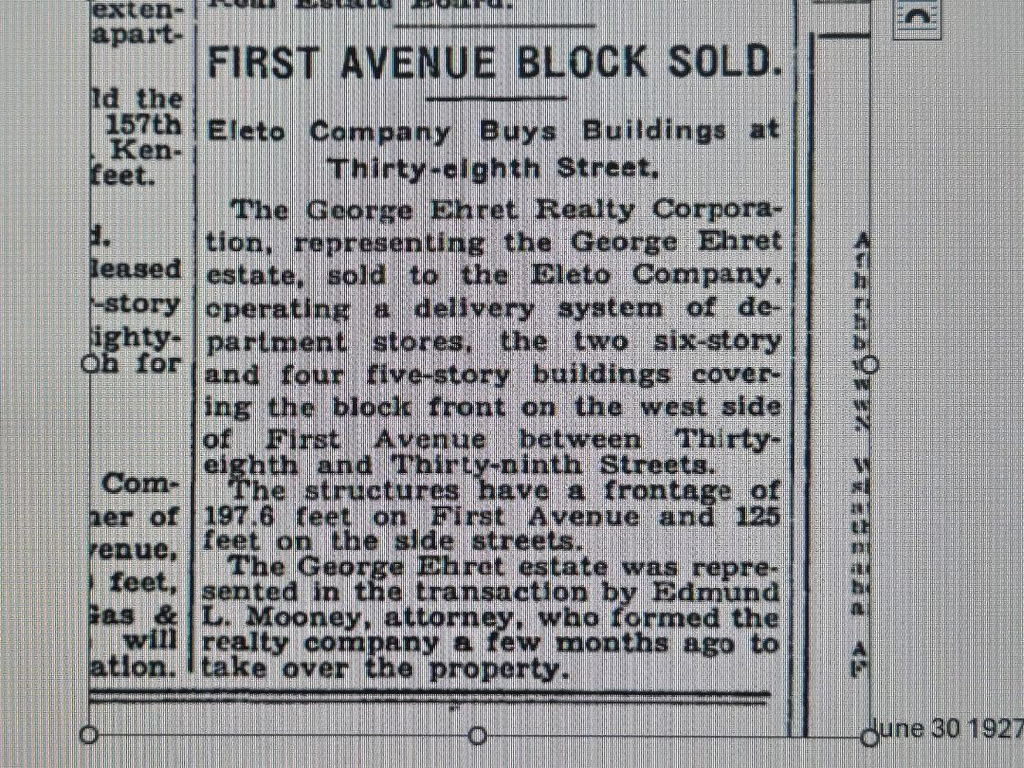
June 30, 1927 Electo Company purchases building site. NY TImes George Ehret was a millionaire real estate magnate and his family owned a beer brewery on the East River near Welfare Island.
Eventually George Ehret regained his property and fortune, but another hurdle was in store. On June 30, 1919 the Wartime Prohibition Act took effect, followed on October 28 by the Volstead Act which ushered in the Prohibition Era.
Production at the Hellgate Brewery came to an abrupt stop.
Luckily, George Ehret had invested heavily in New York real estate as his fortune accumulated; many of the plots purchased for the liquor business. He held 181 parcels of Manhattan realty including many valuable corner lots.
On April 6, 1925 one of the last great celebrations were held in the Ehret house on Park Avenue. The mansion was filled with “sons, daughters, grandchildren, and great-grandchildren, some of whom came from Germany” for George Ehret’s 90th birthday party, reported The New York Times.
The rumors and suspicions of only a few years earlier had been forgotten and George Ehret and his family were again accepted by New York. Two years later, on January 20, 1927, George Ehret died in his home at No. 1197 Park Avenue. A requiem mass was said in St. Patrick’s Cathedral two days later. He left an estate that was still valued at approximately $40 million.
From Wikipedia:
Eleto Company
In October 1927, the Eleto Company filed plans to construct a garage and warehouse facility on the west side of First Avenue between East 38th and 39th streets. The building was designed to accommodate the delivery services the company provided for department stores and a warehouse to replace its existing facility at 153 East 24th Street in Rose Hill.[5] A subsidiary of the Associated Dry Goods Corporation, the Eleto Company was organized in 1916 to handle the package deliveries of the Lord & Taylor and James McCreery & Company department stores, each of which previously had handled its own deliveries to retail customers.[1][8] The building was designed by Starrett & van Vleck*, an architecture firm whose works in the early twentieth century included a number of department stores such as the Lord & Taylor Building on Fifth Avenue between 38th and 39th streets.[5][9]
Property for the new building was acquired by the Eleto Company in June and July 1927; the land encompassed the entire blockfront along the west side of First Avenue and included 175 feet (53 m) of frontage on East 38th Street and 125 feet (38 m) of frontage on East 39th Street; these lots consisted of five- and six-story buildings.[10][11][12] The extended frontage on East 38th Street allowed for a loading dock and elevators to serve the upper warehouse floors without interfering with the delivery operations on the first two floors and basement level.[5]
Additional property was subsequently purchased on East 38th Street to increase the total frontage on the south side of the building to 225 feet (69 m).[13][14] Updated plans for the building were filed in February 1928 and the construction was awarded to the White Construction Company. The facility was constructed using reinforced concrete and facing along the three street fronts included granite, limestone, terra-cotta, and tapestry brick. Steel cores were used in interior columns the reduce the amount of space occupied by the structural elements on the floors.[6][15] The facility opened on April 17, 1929.[2] *Starett & Can Vleck architects of the Steam Plant
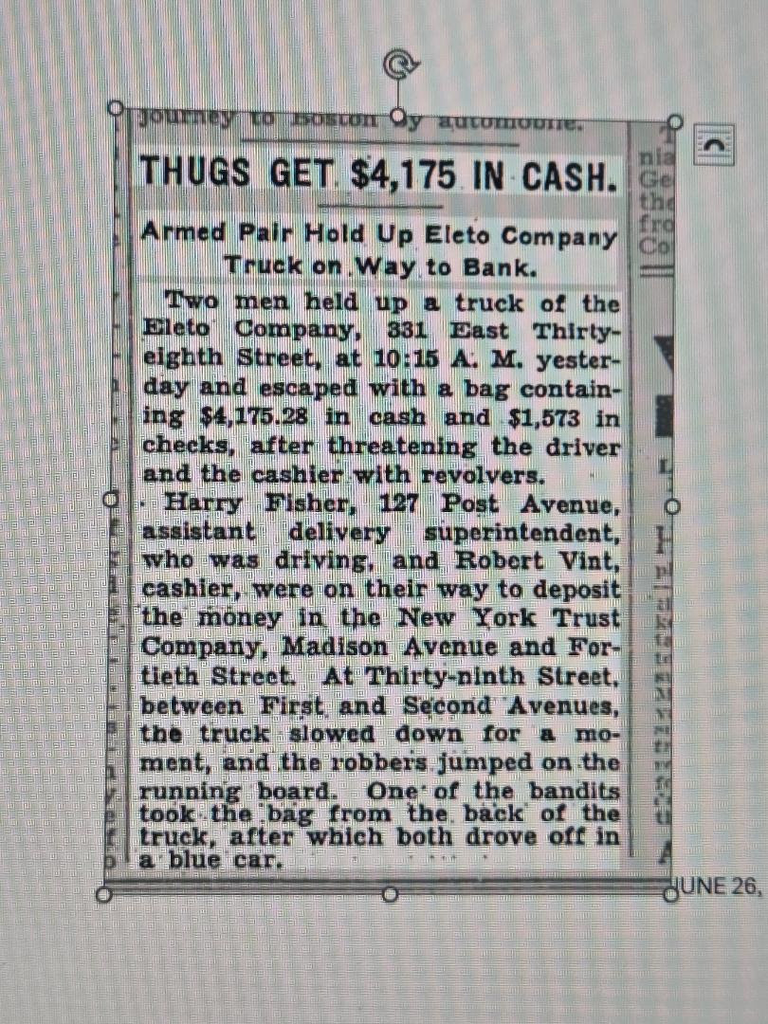
June 26, 1929
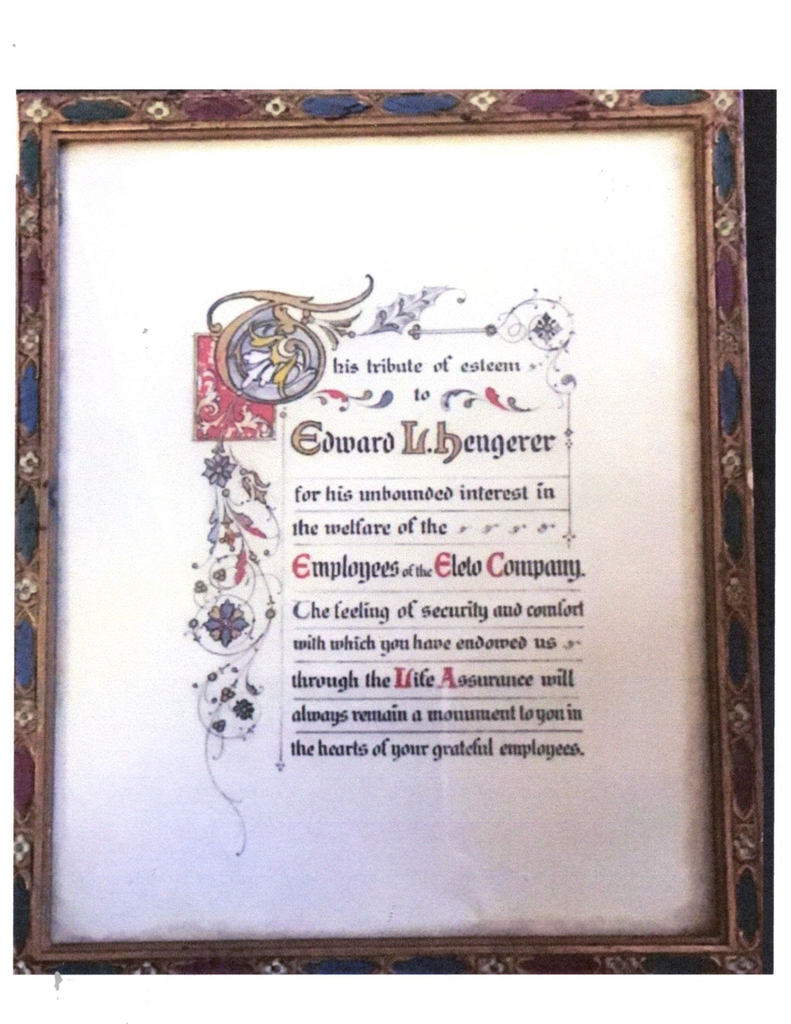
We don’t know what Edward L. Hengerer did for Eleto, but he was a great employee.
From Wiklipedia: United Parcel Service In July 1930, the package deliveries for department stores owned by the Associated Dry Goods Corporation, which included Lord & Taylor and James McCreery & Company in Manhattan and the Hahne and Company of Newark, were contracted to the United Parcel Service (UPS).[16][17] As a result, UPS would become a major tenant in the Eleto Company’s building.[1] Until then, UPS operations had been limited to the West Coast of the United States. With the expansion of services to New York City, UPS also moved its corporate headquarters to the floors above its main hub at 331 East 38th Street.[17][18][19]
With a decline in retail sales following the Wall Street Crash of 1929 and the ensuing Great Depression, other department stores and specialty shops chose to outsource their deliveries to UPS and eliminate the costs of operating their own in-house delivery services.[16][19] UPS expanded its operations to serve 158 stores within the New York metropolitan area within its first year. It began providing deliveries for Bloomingdale’s, Saks Fifth Avenue, and Gimbels in 1934.[20] In 1946, Macy’s and Bamberger’s were the last major department stores in the area to have their delivery services taken over by UPS.[21] The facility at 331 East 38th Street served as UPS’ primary depot in the metropolitan area and was used to collect goods picked up from stores and sorted for deliveries to retail customers and to over fifty sub-depots located in the five boroughs of New York City, Long Island, Westchester, southern Connecticut, and northern New Jersey.[16][22][23]
The building was sold by the Eleto Company to the Seebee Corporation in 1944, but continued to be occupied by UPS and function as a service building for Lord & Taylor and James McCreery & Company.[1] In 1955, a group of tennis players that lost their tennis courts on Sutton Place to the development of an apartment building formed Tennis Center, Inc., leased the rooftop of the building from the Seebee Corporation, and added three Har-Tru tennis courts plus a clubhouse. Membership in the tennis club was limited to sixty.[24] In later years, the tennis courts were also available for rent to the public by appointment.[25]
In 1959, UPS purchased property and filed plans to construct a new warehouse in Hell’s Kitchen on the block bounded by Eleventh Avenue, Twelfth Avenue and West 43rd and 44th streets.[26][27] The building on First Avenue was sold to a group of investors in 1961 and UPS vacated the facility in 1964.[28][29]
From Wikipedia: Other uses The group of investors that had purchased the building in 1961, which were organized as 673 First Avenue Associates, remodeled the structure to accommodate office and manufacturing uses.[30] Tenants that moved into the building after the departure of UPS included Buick,[31] Mercedes-Benz,[32] Railway Express Agency,[33] and UNICEF (United Nations International Children’s Emergency Fund).[34] The building was fully leased in 1966.[29]
The building’s former loading docks were converted into a new office lobby as part of the renovations in 1989
After the building became largely vacant in the mid-1980s, the net lease was acquired by S.L. Green and Philips International in 1988. The structure underwent a $12 million renovation by J.C.S. Design Associates and Lev Zetlin & Associates that began the following year.[3][35][36] The building’s loading docks on East 38th Street were converted to a new 3,000-square-foot (280 m2), two-story lobby and the freight elevator that had been used for trucks was converted into four passenger elevators. Other improvements included the installation of new electrical, plumbing, heating and air conditioning systems, modernization of the two existing passenger elevators, replacement of windows and repairs to and cleaning of the facade.[3][4]
The renovated building, which became known as 333 East 38th Street, was fully leased again in 1991. New tenants that moved into the building included New York Hospital and Newbridge Communications.[3]NYU Medical Center became a tenant in the building in 2006, opening an ambulatory surgery center for orthopedic procedures in 2009 and a center for outpatient musculoskeletal services in 2012.[37][38][39] SL Green sold its leasehold interest in the building to NYU Langone Medical Center in 2014.[39] The building currently houses NYU Langone Health’s Orthopedic Center (formerly the Center for Musculoskeletal Care) and Outpatient Surgery Center.[40][41]
MORE ON THE ROXY THEATRE FROM GUY LUDWIG:
The RKO Roxy Theatre had a checked history almost from the day it debuted – Mr. Rothafel was ill but still managed to be there opening night. Because there is so much turmoil in the story of the “other” Roxy, some of the notable triumphs which occurred there are overlooked. “King Kong” opened in Manhattan not only at the RKO Roxy but simultaneously at the Radio City Music Hall. The combined seating capacity of the two facilities was slightly less than 10,000 and yet – during the heart of the depression – both houses played to sold-out crowds.
The so-called “television” conversion of the subsequently named Center Theatre was also – notably – a RADIO conversion. In fact, the first NBC program to regularly emanate from “The Center” was “The Big Show” a 90 minute, Sunday evening, live RADIO program featuring Tallulah Bankhead as host with a 50 piece orchestra under the direction of Meredith Willson (who later wrote “The Music Man” and “The Unsinkable Molly Brown”). Other famous NBC shows became simulcasts in the house that Roxy built including “The Voice of Firestone” (radio, television and FM!) and Kate Smith’s daily mid-day program which aired in 1951. Wally Cox had a fondly remembered situation comedy called “Mr. Peepers” seen in those days on NBC television. It was broadcast alternately from both the Center and Studio 8H, the home today of Saturday Night Live.
Milton Berle had been on television since 1948, originating in the 30 Rockefeller Plaza studio now occupied by The Tonight Show (6B) … but in 1952 and ’53, most of his weekly shows came from the Center. Berle was to go through a spectacular decline in ratings during the late 1950’s but during this earlier period, his highest ratings – and in fact, some of the highest ratings for television EVER – occurred during his live, tuesday night broadcasts from the theatre on the corner of 49th and 6th.
Ironically, shortly after NBC dropped its very favorable lease at the Center, they were forced to go shopping for a similar venue to house a new weekly variety show hosted – in Living Color – by Perry Como. That show, housed at ten times the cost of Roxy’s place, five blocks north on 6th avenue at the Ziegfeld theatre continued through 1961. Had Perry instead moved into the Center, the theatre might well have been preserved.
guy ludwig Westview
CREDITS
Wikipedia TimesMachine Judith Berdy
All image are copyrighted (c) Roosevelt Island Historical Society unless otherwise indicated THIS PUBLICATION FUNDED BY DISCRETIONARY FUNDS FROM CITY COUNCIL MEMBER JULIE MENIN & ROOSEVELT ISLAND OPERATING CORPORATION PUBLIC PURPOSE FUNDS.
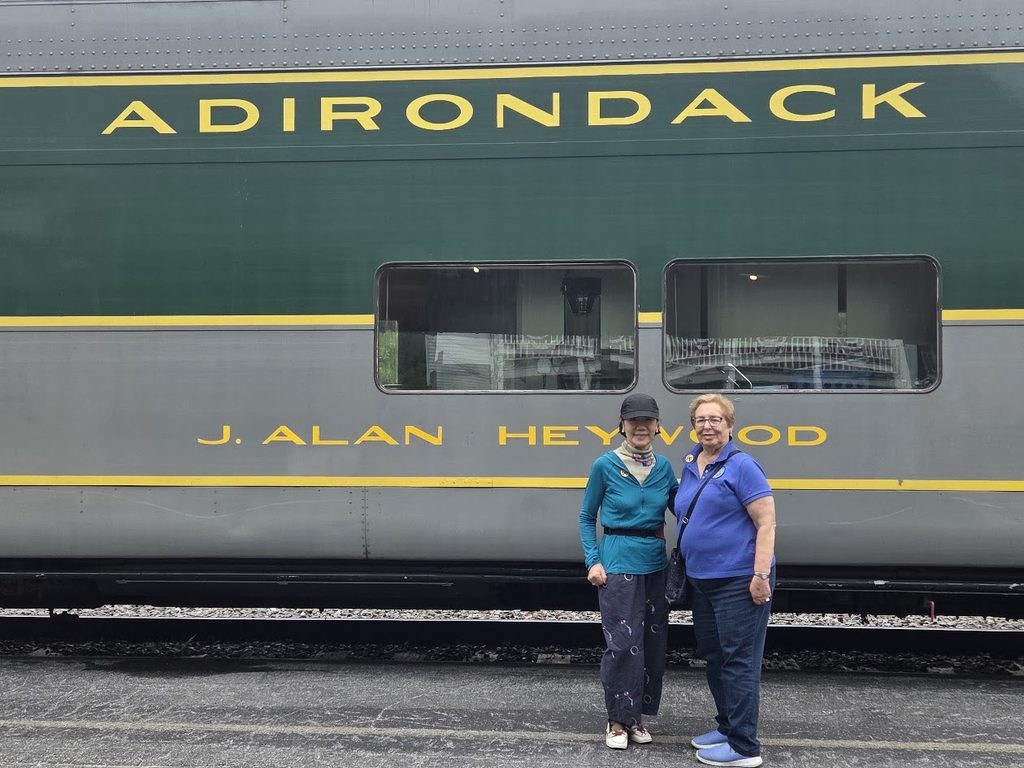
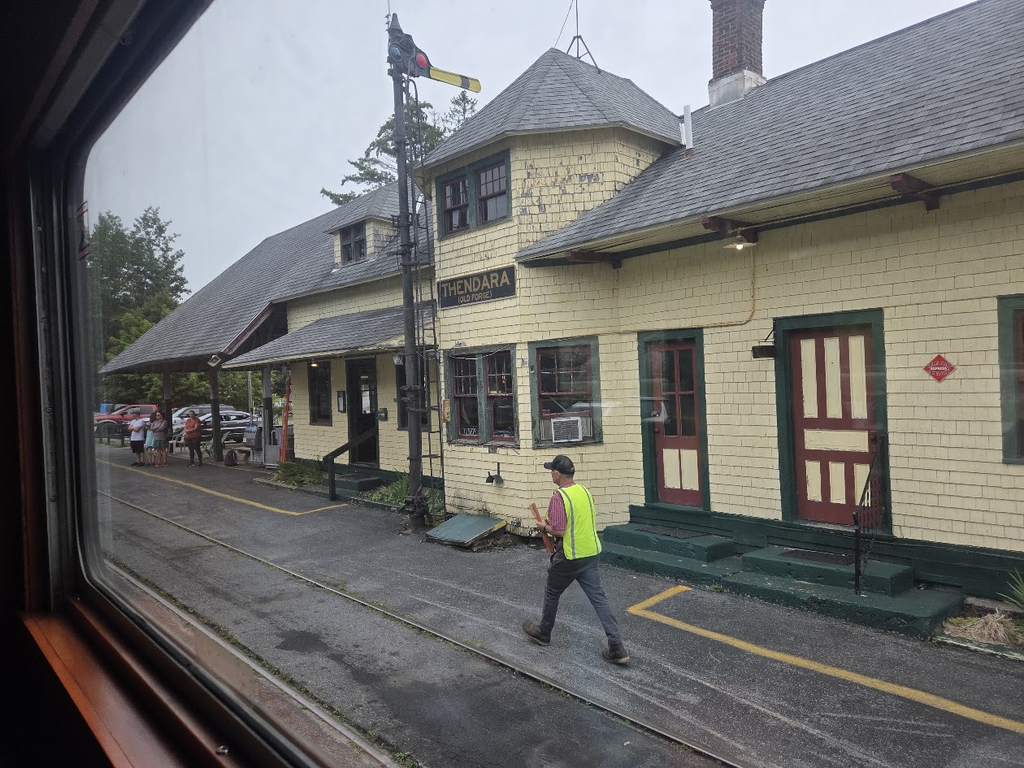
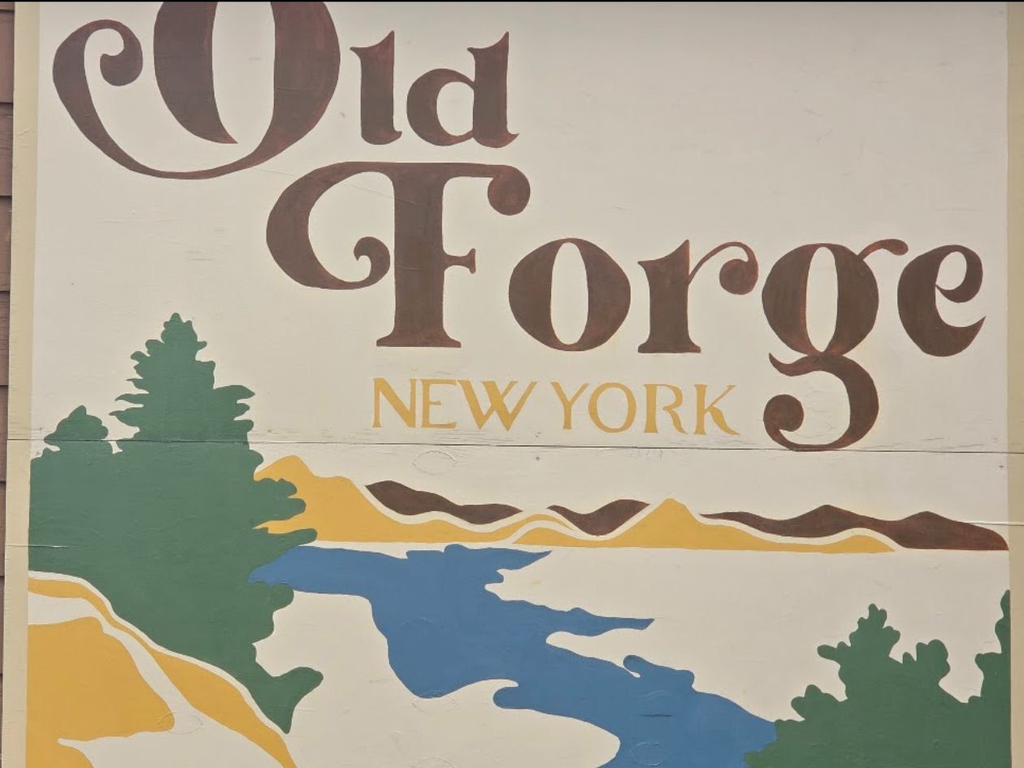
Day two took us miles away and above Utica to the town of Old Forge by vintage rail on the Adirondack Railroad
“Let the Adirondack Railroad help you discover the beauty of the Adirondacks by transporting you to Old Forge. The Utica to Old Forge Layover trip is truly unique experience and has several features that set it apart!
Travel through forests, over rivers and streams, spend a full afternoon in Old Forge enjoying the outdoors and visiting local shops and restaurants, and then let us take you home. Fun-filled outing for people of all ages! While you’re on the train, visit our café car and try the light and hearty fare as you ride the rails on the Adirondack Railroad!”
The train ride offers different classes of service from coach to club car with upper domed tables to comfy tables and chairs below. Great snacks and service with enthusiastic staff., The train ends at Thendara and you take a shuttle into Old Forge.
Thendara has a real old fashioned rail station with a showcase display of history and a real pot belly stove. Can imagine being in this mountain town in winter with an elevation of over 1,800 feet.
Located on a lovely lake the town is tor tourism hub for the region with lots of shopping, dining and a constant flow of campers, Jeeps, trailers, snow-mobiles and other out-of-door being hauled on its two lane main street. The traffic reminded me of another narrow corridor, the only way in and out of town.
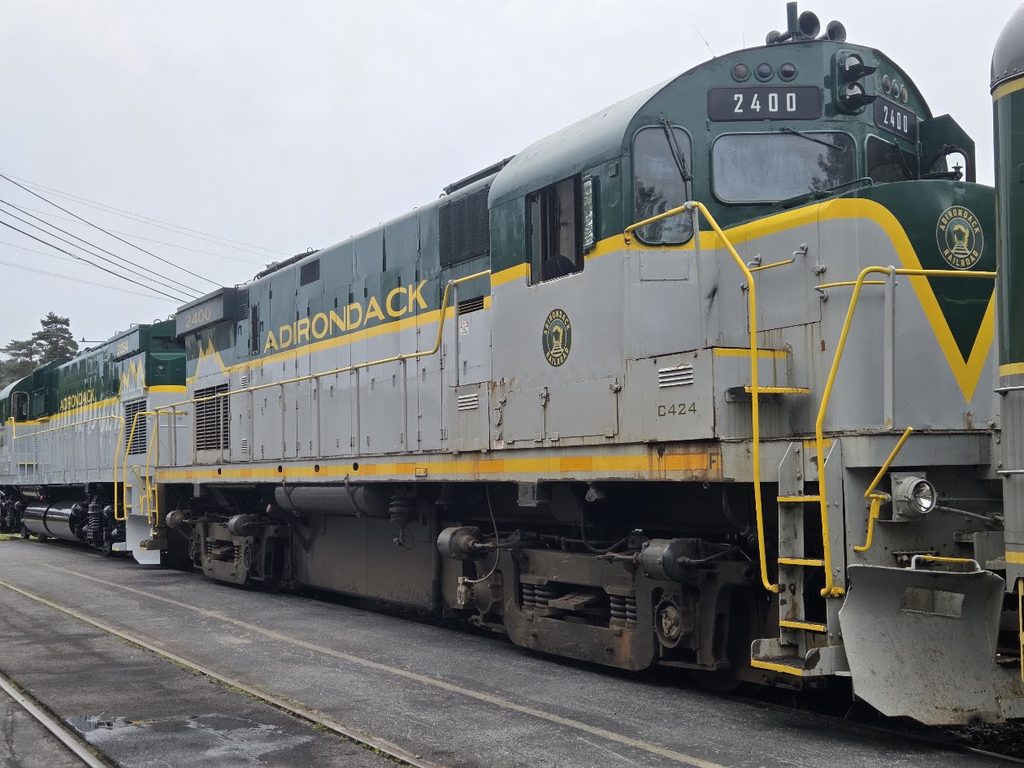
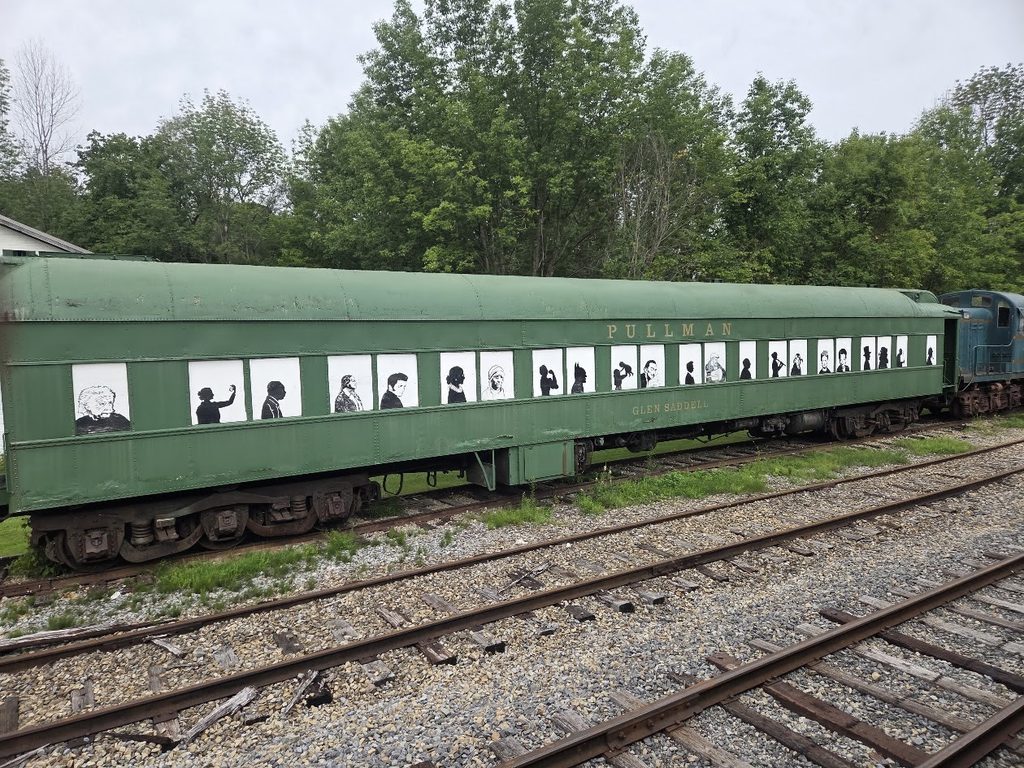
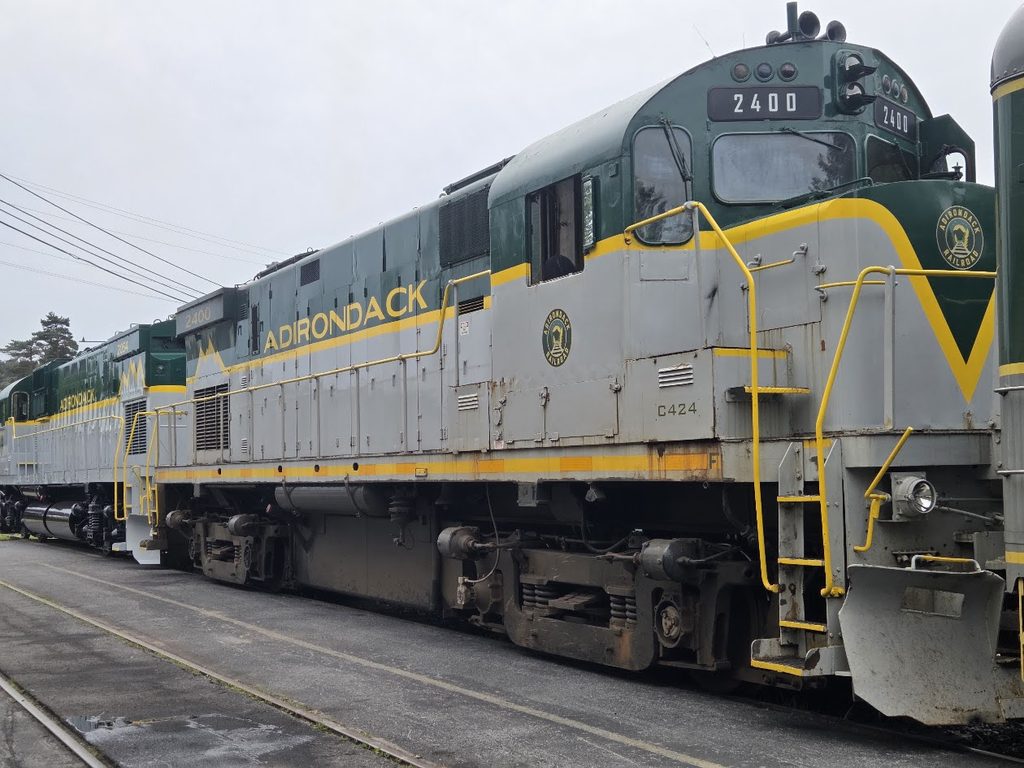
Northbound and homeward bound the scenery was magnificent with rivers, lakes and streams. Along the way was a vintage Pullman car with mystery story characters painted in each window. Our locomotive homeward bound was freshly painted and her diesel engine brought us back to Utica in comfort. We were met by Dianne, Mike and their daughter for a fun dinner at a great new restaurant Tailor and the Cook. The restaurant is located in a former dry goods supply company building.
Stay tuned…for day 3.
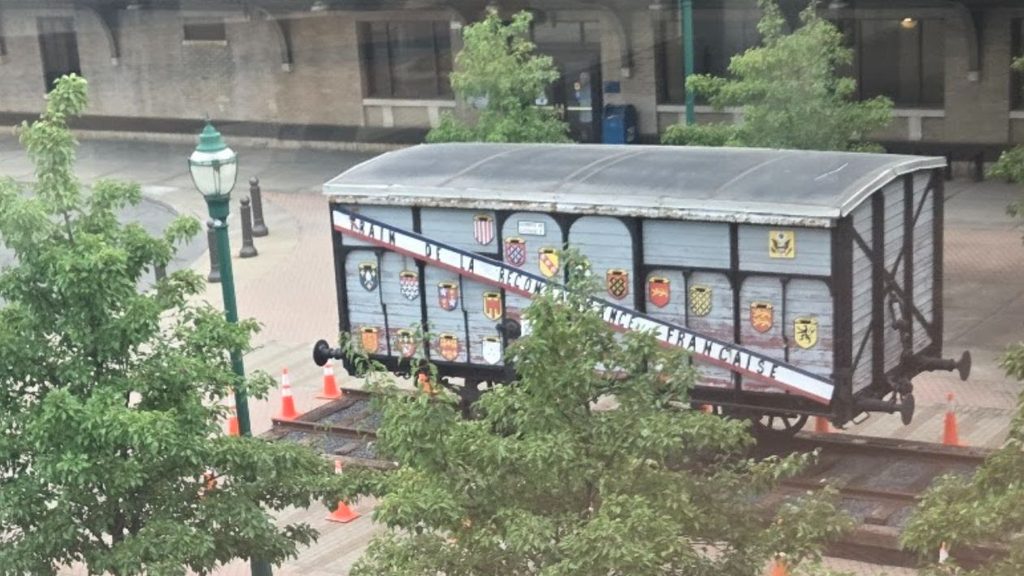
Parked Outside the Utica Railroad Station
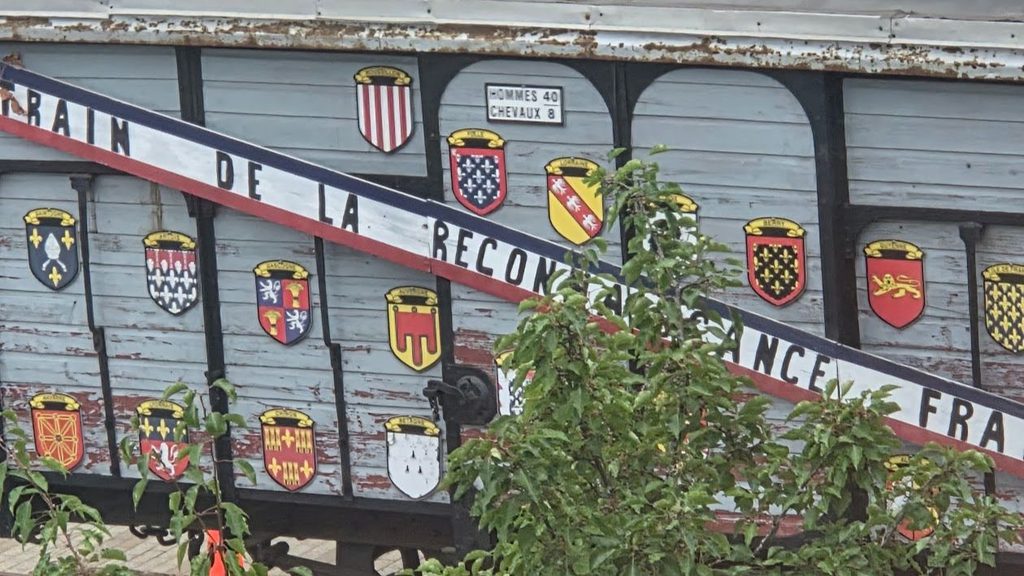
The Merci Train was a train of 49 French railroad box cars filled with tens of thousands of gifts of gratitude from at least that many individual French citizens. They were showing their appreciation for the more than 700 American box cars of relief goods sent to them by (primarily) individual Americans in 1948. The Merci Train arrived in New York harbor on February 2nd, 1949 and each of the 48 American states at that time received one of the gift laden box cars. The 49th box car was shared by Washington D.C. and the Territory of Hawaii. Parades and ceremonies of welcome were conducted in the state capitols and major cities of almost all the states. The largest and most attended was in New York City where more than 200,000 people turned out to welcome that state’s assigned box car.
CREDITS
JUDITH BERDY
All image are copyrighted (c) Roosevelt Island Historical Society unless otherwise indicated THIS PUBLICATION FUNDED BY DISCRETIONARY FUNDS FROM CITY COUNCIL MEMBER JULIE MENIN & ROOSEVELT ISLAND OPERATING CORPORATION PUBLIC PURPOSE FUNDS.
I do not remember what inspired and motivated me to visit Utica. It might have been learning about the Utica Asylum, the grand rail station or a vintage rail trip to Old Forge in the Adirondacks. My frequent travel companion Jeong and long-time friend decided to join me on this adventure.
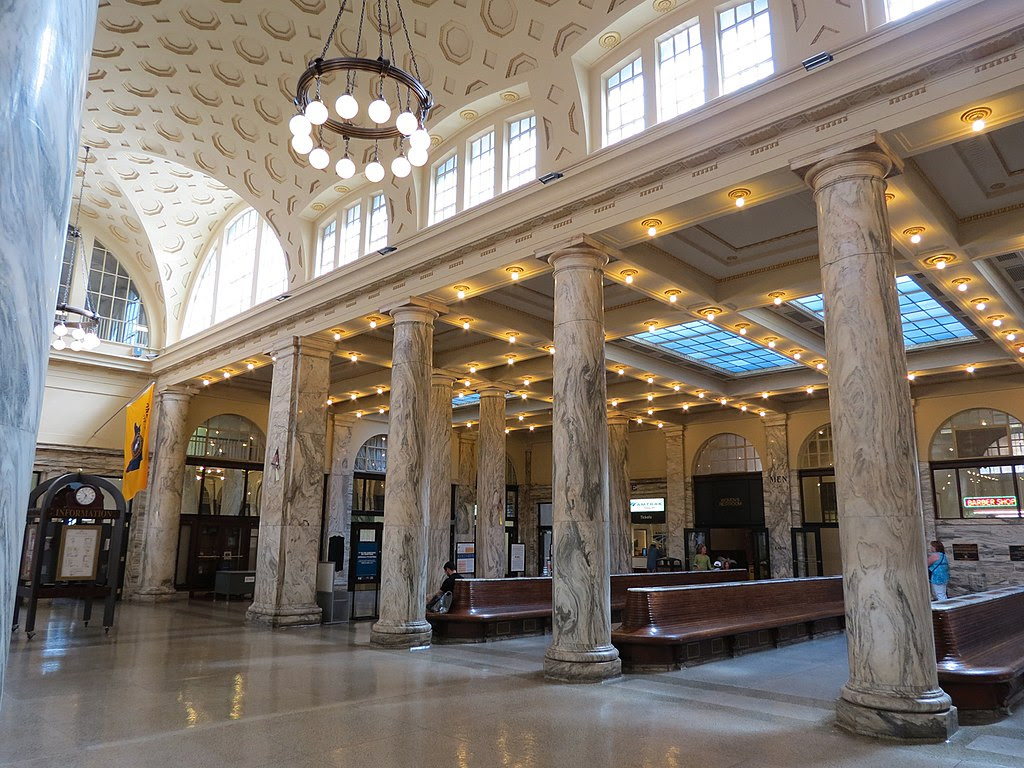
After a 4 1/2 hour Amtrak trip on the Maple Leaf (the train travels daily between New York and Toronto) we were at the wonderful vintage 1914 Utrica rail station. Marble columns and grand decor was a wonderful surprise. We met our guide Diane and her husband Mike and headed off on an afternoon of discovery. (I contacted the local historical society and Diane volunteered to show us her city).
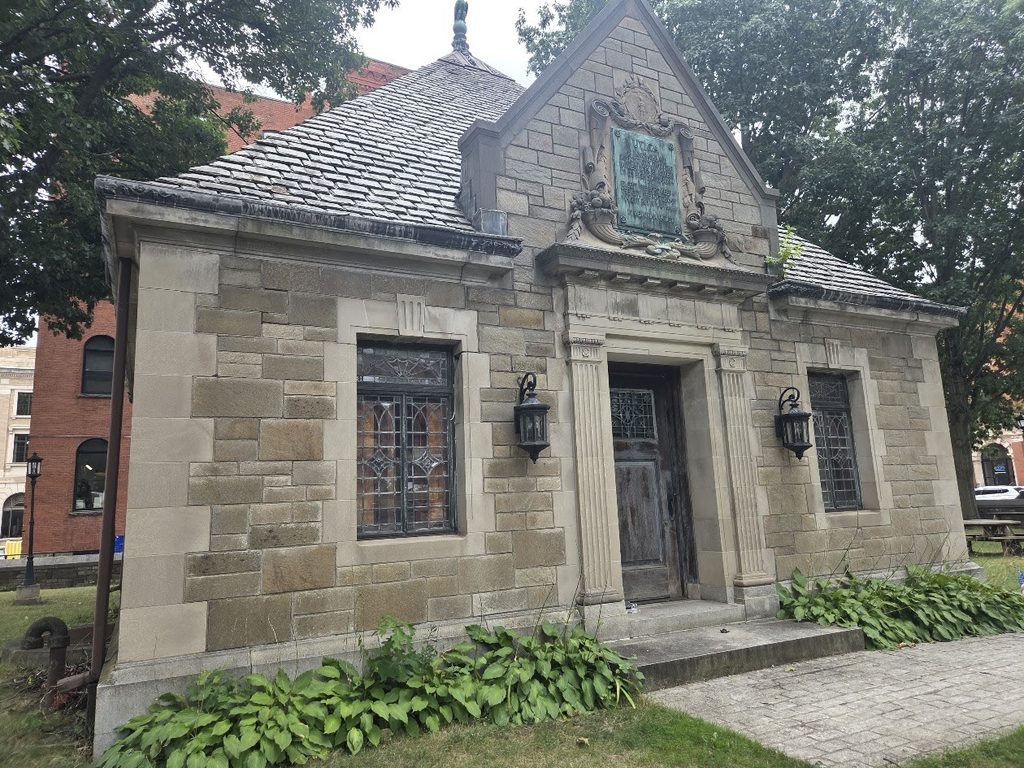
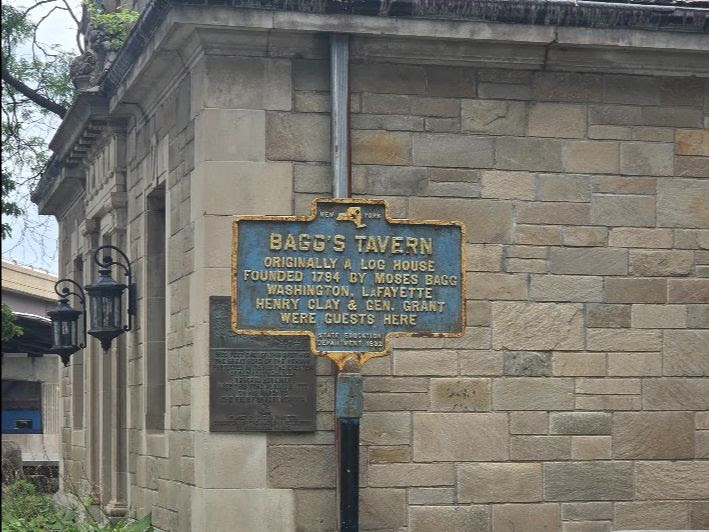
Outside the station was a charming reminder of the history of Utica, Baggs Tavern which has been on the site since the 18th century. (not serving any more).
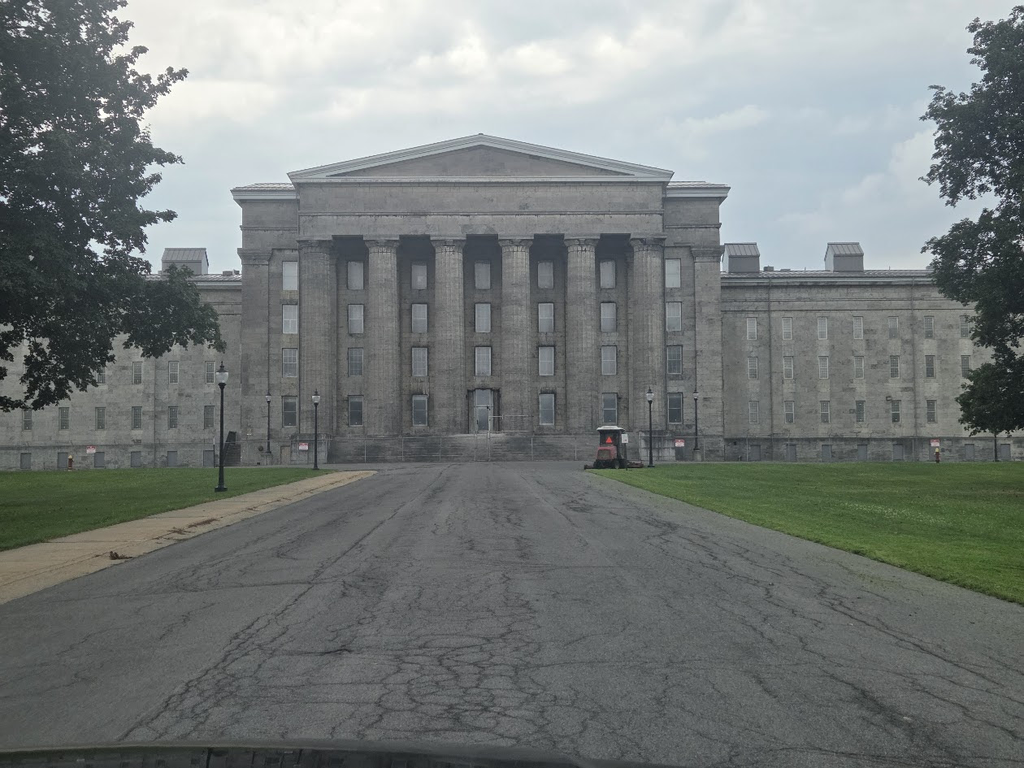
A few minutes from downtown is the Utica State Hospital, a former psychiatric hospital nicknamed Old Main. The massive building closed it the 1970’s and many of the surrounding buildings are now used by other organizations. In contrast to closed institutions in our area, this one is maintained and seems to be in good condition and not an eye-sore..
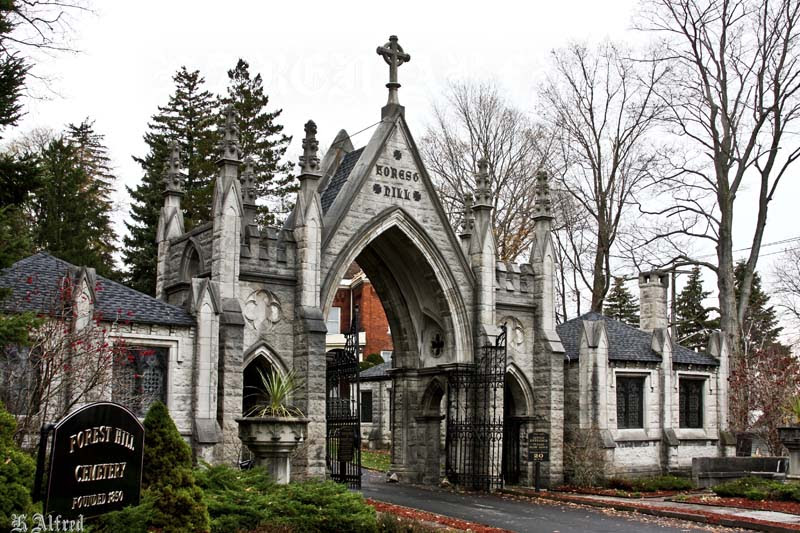
Forest Hill Cemetery is located on a meandering hillside overlooking the city. It is designed in the same style as Green-Wood in Brooklyn. The ride thru the grounds is most impressive. There is a New York connection: ” A simple lodge was erected for the keeper, with a tower in which was placed a bell purchased from Greenwood Cemetery to summon workmen to and from their labors and to toll at funerals. A receiving tomb was cut into the abrupt northern front of the hill.”
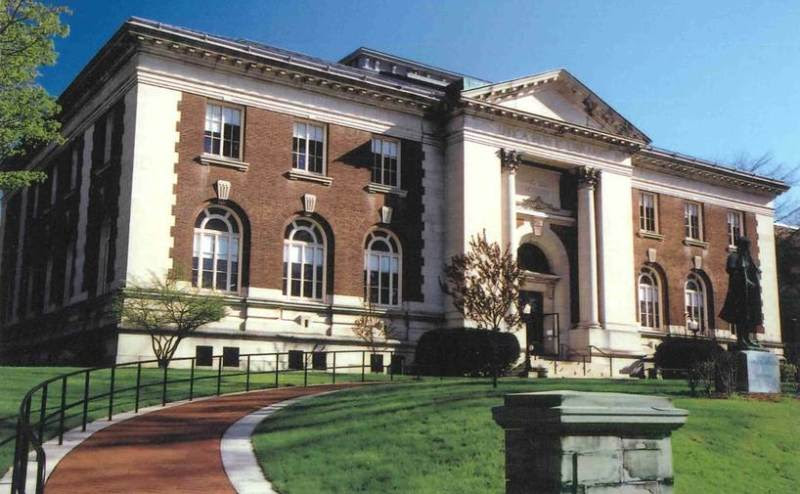
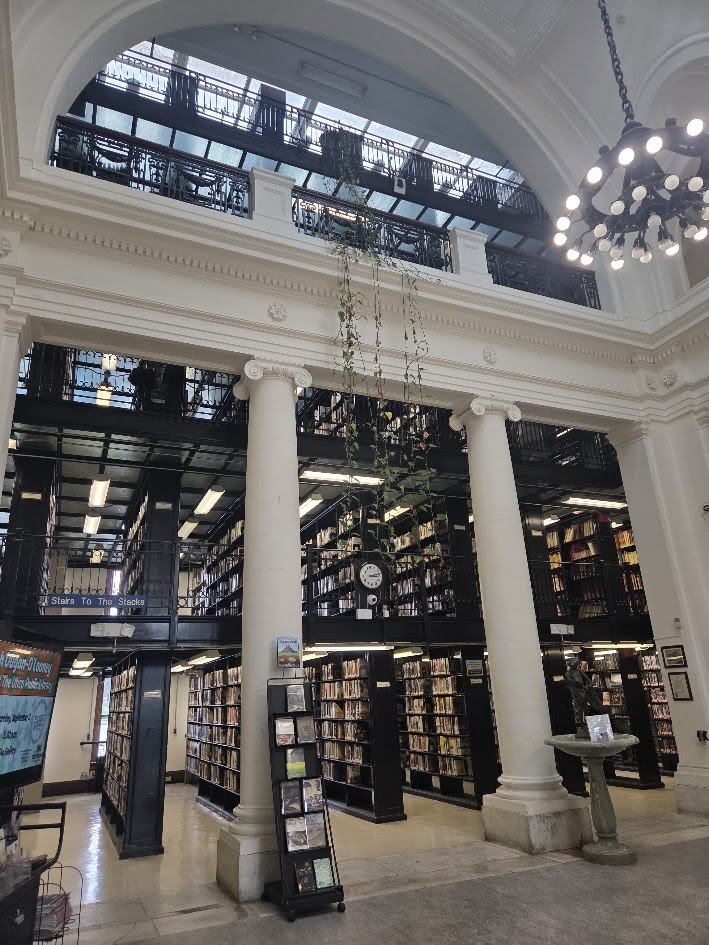
The Utica Library is a most impressive structure with the open stacks that have glass floors and celings to bring light into the area. We spotted a notice about a lecture on the Erie Canal that evening. We returned to learn more about the canal from a local historian. There was an original canal that opened in 1825 and over the years it was expanded and relocated. So many of the streets in the city were once part of the Erie Canal. Learning of the importance was interesting and to realize that the canal starts in New York City. It was a fun day with Diane and Mike, learning about their city and the pride they have in it. We met their daughter Alexis who works the local professional ice hockey team, the Utica Comets an affiliate of the New Jersey Devils, and took a tour of the ice arena. There an ice center with 3 areas for sports in the Utica University. We had dinner at a local Asian restaurant and walked back to the Doubletree Hotel, which was a few blocks away., Being a car focused town, almost no pedestrians on the street!
Off tomorrow on our trip on the Adirondack Railroad.
Stay tuned We had dinner at a local Asian restaurant and walked back to the Doubletree Hotel, which was a few blocks away., Being a car focused town, almost no pedestrians on the street!
Off tomorrow on our trip on the Adirondack Railroad.
Stay tuned
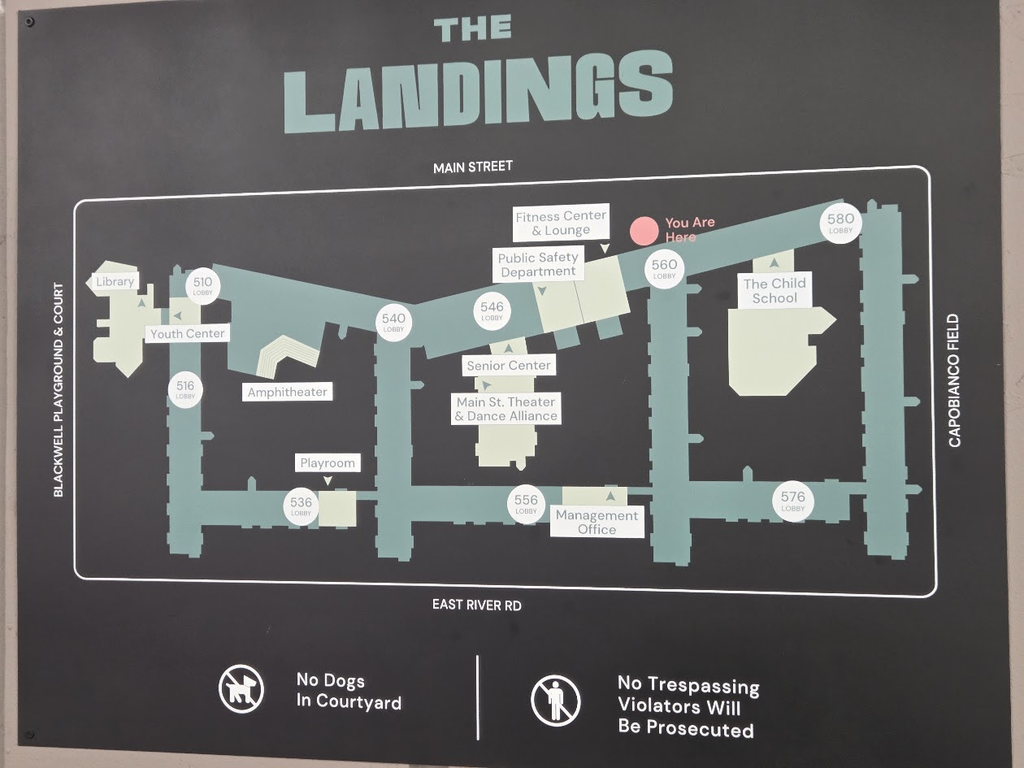
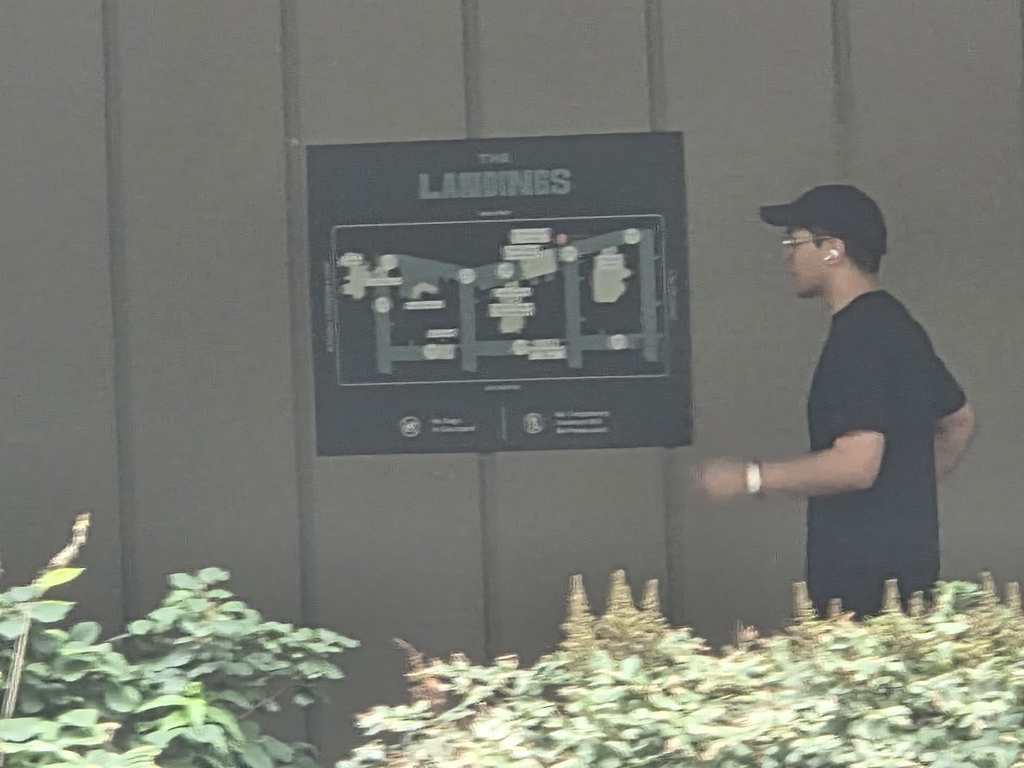
OOPS
SOMEONE POSTED NEW DIRECTIONAL SIGNS ON THE “LANDINGS” EXTERIOR. ONE LOOK AND I RELIZED THEY WERE PRINTED TO BE ON THE OPPOSITE WALL. TAKE A LOOK AND SEE THE MAP HAS 510 TO THE NORTH ON 580 TO THE SOUTH END OF MAIN STREET.
Let’s see how long it takes for correct signage to appear.
CREDITS
JUDITH BERDY
All image are copyrighted (c) Roosevelt Island Historical Society unless otherwise indicated THIS PUBLICATION FUNDED BY DISCRETIONARY FUNDS FROM CITY COUNCIL MEMBER JULIE MENIN & ROOSEVELT ISLAND OPERATING CORPORATION PUBLIC PURPOSE FUNDS.
Second President of the United States John Adams held the post of envoy to the Netherlands from 1780 to 1782. He secured the States General’s recognition of American independence in April 1782, the second country in the world to do so, after France; obtained a five million guilders loan (carrying an interest rate of five percent) from a consortium of Amsterdam bankers; and signed a “Treaty of Amity and Commerce” between the two nations. While his wife Abigail remained in America, he had brought his sons John Quincy and Charles with him, living in the heart of Amsterdam at Keizersgracht 529.
Unhappy with the educational progress of his sons, he took them to Leiden because of the city’s academic prestige, low cost, and pure air. In January 1781, the brothers enrolled at Leiden University. Adams wrote to his wife that he had sent the boys to that city to “to pursue their Studies of Latin and Greek under the excellent Masters, and there to attend Lectures of the celebrated Professors in that University.”
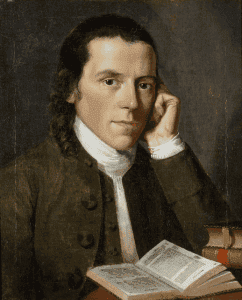
In Leiden, Adams met an American medical student named Benjamin Waterhouse who helped him find lodgings for his sons near to the university at Langebrug 45. Waterhouse interacted closely with the teenage brothers.
John Quincy Adams’ studies were cut short later that year when he was asked to travel to Catherine the Great’s Russia as a secretary and (French) translator for the Massachusetts diplomat Francis Dana when only fourteen years of age (he completed his law degree at Harvard in 1787 and returned to the Netherlands in 1794 for a three-year spell as ambassador).
In August 1781, Waterhouse traveled back home aboard the South Carolina, the largest American warship in operation during the Revolutionary War. Leased from the French and captained by Commodore Alexander Grillon (born in Rotterdam into a Scottish Presbyterian family and fluent in Dutch), the frigate had recently been launched in Amsterdam.
Upon his return, Benjamin would keep a lifelong correspondence with the Adams family. Who then was this medical student and what role did he play in the development of health teaching in America? Why did he choose Leiden University for his studies?
Medical Science in Leiden
Benjamin Waterhouse was born on March 4, 1754, in Newport, Rhode Island, into a Quaker family. After a local apprenticeship in medicine, Benjamin traveled to Europe to continue his studies. Aged twenty-one, he spent time in London and Edinburgh, before crossing the Channel to matriculate at Leiden University on October 28, 1778.
The eighteenth century marked a shift in medical science and the treatment of patients. While traditional therapies relied on purging and bleeding, professional attention moved towards clinical observation and “bedside” teaching. After Carl Linnaeus (1707-1778) had introduced plant classification, naturalists systematically explored medicinal flora, laying the groundwork for pharmacology and clinical practice.
Chemistry became integrated too, advancing the use of mineral-based compounds. Controlled production of powders and ointments improved the consistency of medication. Vaccination experiments tested targeted immunological defense methods over symptom management. Medicine was revolutionized.
The foundation of Leiden University was a reward by William the Silent (Willem de Zwijger), Prince of Orange, for the bravery of the town’s citizens during the Spanish siege of 1574. The official opening took place on February 8, 1575. Up to that time, Louvain (Leuven) was the only city in the Low Countries to host a university.
Founded in 1426, it was a Catholic institution: each student had to sign a “declaration fidei,” an adhesion to the faith. Leiden had Protestant origins but admitted students of other religions. It became the first “open” university. Students from far and wide flocked to the city to study in its various faculties.
In 1673, the Test Act closed the universities of Oxford and Cambridge to students who did not belong to the Church of England. Protestant dissenters, Jewish and Catholic students had to travel elsewhere for their academic education.
Leiden was a logical choice for many of them. A truly cosmopolitan city, its university (and associated printing and publishing houses) attracted talent from Europe and beyond, united academically by a common Latin language.
Leiden University soon got an international reputation for its medical teaching, overtaking both Padua and Bologna as centers of excellence in the field. The first medical student who matriculated in Leiden in 1578 was Hampshire-born John James, formerly of Trinity College, Cambridge. He would become Royal physician at Queen Elizabeth I’s household in November 1595.
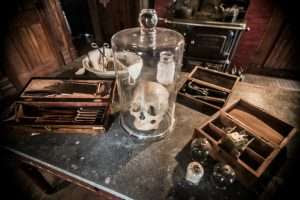
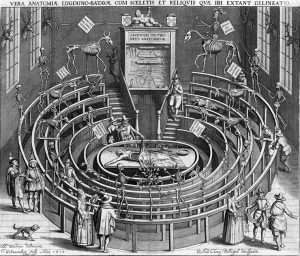
What distinguished Leiden University from its rivals was a commitment to research while most other European universities stuck to teaching textbook curriculums. The university had an anatomical theater, a chemical laboratory, a botanical garden, a well-stocked library, as well as large collections of medical curiosities (later brought together in the university’s Anatomical Museum).
These distinct parts formed an indivisible whole, a “theatrum sapientiae.” In addition, academics offered students private tutorial sessions (at a fee) to discuss the latest research and carry out chemical experiments or anatomical dissections.
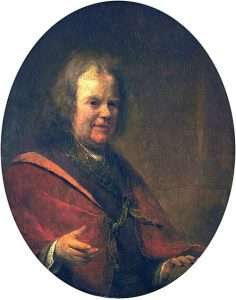
In 1701, the university appointed Herman Boerhaave (1668-1738) to lecture in medicine. Eight years later, at the age of forty-one, he became a professor. Although there was limited space for clinical teaching, Boerhaave demanded that his students attended the clinic for practical and observational training. From that there, he transformed medical education.
His students spread his methods to European courts and capitals, defining the Enlightenment era of medicine. Swiss anatomist Albrecht von Haller, a former pupil, described his mentor as “communis Europae praeceptor” – the teacher of the whole of Europe.
Waterhouse’s Leiden Education
Once his fame spread, English-speaking students arrived in numbers to fill the crowded classrooms and listen to the “Batavian Hippocrates.” More than a third of Boerhaave’s students during his professorship (between 1709 and 1738) came from Britain, many graduating on return to their respective home universities. When Benjamin Waterhouse began his studies at Leiden University’s medical faculty, the memory of Boerhaave’s presence was ubiquitous.
Born in Heidelberg on July 9, 1729, Johannes David Hahn studied medicine at Leiden where he absorbed Boerhaave’s clinical principles. After graduating, he taught at Utrecht University and became Professor of Botany and Chemistry in 1759. He was elected a member of the American Philosophical Society in 1770. His appointment as Professor of Medicine at Leiden University came five years later. He stayed there until his death in March 1784.
Hahn promoted the empirical integration of chemistry, toxicology, and medicine. He argued that understanding chemical reactions was vital for practitioners to diagnose illness and prescribe treatments. Departing from purely theoretical lectures, he popularized public experiments and clinical demonstrations. In his lectures, he stressed “epistemic virtues,” that is, the rigorous observation and notation of medical data.
This intellectual climate Waterhouse absorbed when matriculating in October 1778. Johannes Hahn became his mentor; surviving archival letters prove that the two men remained in touch, building a “transatlantic bridge,” a link between clinical standards promoted at Leiden University and the construction of an early medical infrastructure in America. Benjamin often wrote about the splendid tradition Boerhaave had started.
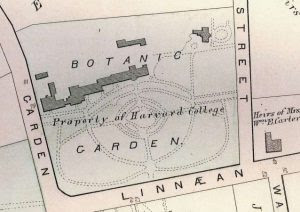
Harvard Medical School
Having received his doctorate on April 19, 1780, Waterhouse returned to the United States, a well-educated, idealistic, and ambitious academic. In 1782, twenty-nine-year-old John Warren was nominated Professor of Anatomy and Surgery at Harvard University. Former head of the Boston Army Hospital, he introduced its students to their first formal instruction in medicine.
Benjamin Waterhouse joined him to teach the Theory and Practice of Physic (Medicine). Harvard Medical School was officially opened in 1783. What did Waterhouse bring to the school? In how far did his Leiden experience shape Harvard’s development as a medical center?
Harvard adopted educational methods that emphasized observational investigation rather than memorizing dogmatic theories. Its curriculum was modeled after the University of Edinburgh’s Medical School, founded by former students of Boerhaave (including John and Alexander Monro). Waterhouse was the first to deliver lectures on botany and mineralogy.
In 1799, Waterhouse received a copy of Edward Jenner’s Inquiry into the Causes and Effects of the Variolae Vaccinae in which the latter used his own observations (and those of predecessors) on cowpox to prove that a mild bovine variant triggered immunity.
Eager to start his own experiments, Waterhouse approached the English country doctor requesting some specimens of thread impregnated with the vaccine matter.
In July 1800, he tested those on his own children and servants. Waterhouse published the results of his project shortly after in A Prospect of Exterminating the Small Pox, advocating vaccination to erase smallpox (the “devouring monster”).
Having sent a copy of his publication to Vice-President Thomas Jefferson, the latter celebrated cowpox vaccination as a breakthrough in the battle against a cruel disease.
Waterhouse sent vaccine thread and matter to Virginia. Jefferson coordinated vaccinations for his family and enslaved household members at Monticello, as well as for others in the community. By sharing precise medical observations with Waterhouse, Jefferson helped cement the credibility of the vaccine and its role in American public health.
As the third President of the United States, Thomas Jefferson kept an interest in the practice of medicine, promoting public health measures and encouraging scientific research that was free of political or religious interference (some forethought!).
In 1819, he founded the School of Medicine at the University of Virginia, Charlottesville, drawing heavily from the Boerhaave model of science-based professional education. The legacy had spread across the Atlantic through a direct lineage: from Herman Boerhaave and Johannes Hahn in Leiden to Benjamin Waterhouse at Harvard and Thomas Jefferson in Virginia.
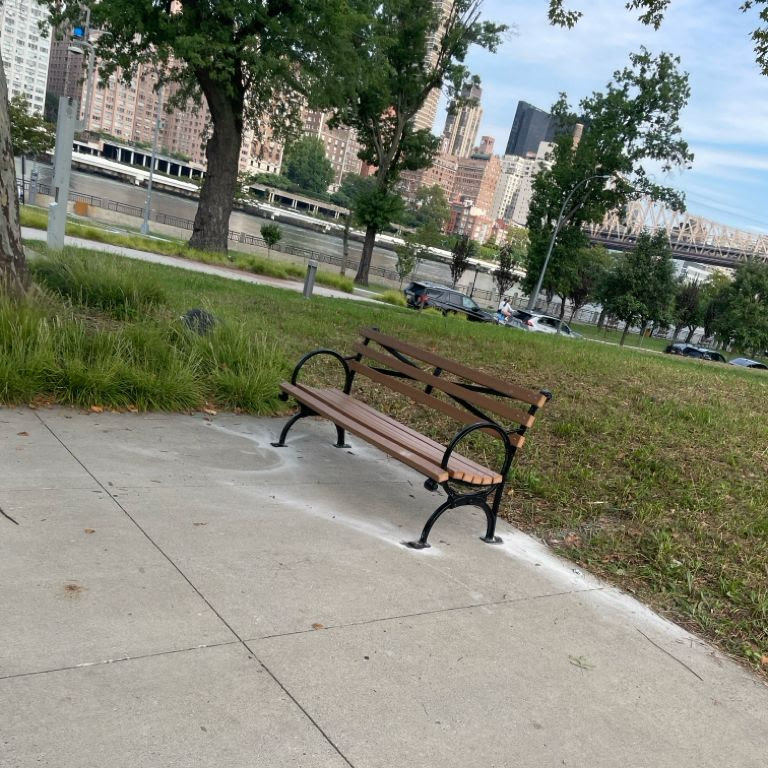
Report a Problem to RIOC
and a bench is now at the Southpoin Park bus stop. After watching tired visitors and residents wait for the red bus, I went on the RIOC website and reported a problem.. It took a few months, but last we the bench was installed. (Photo courtesy of RIOC)
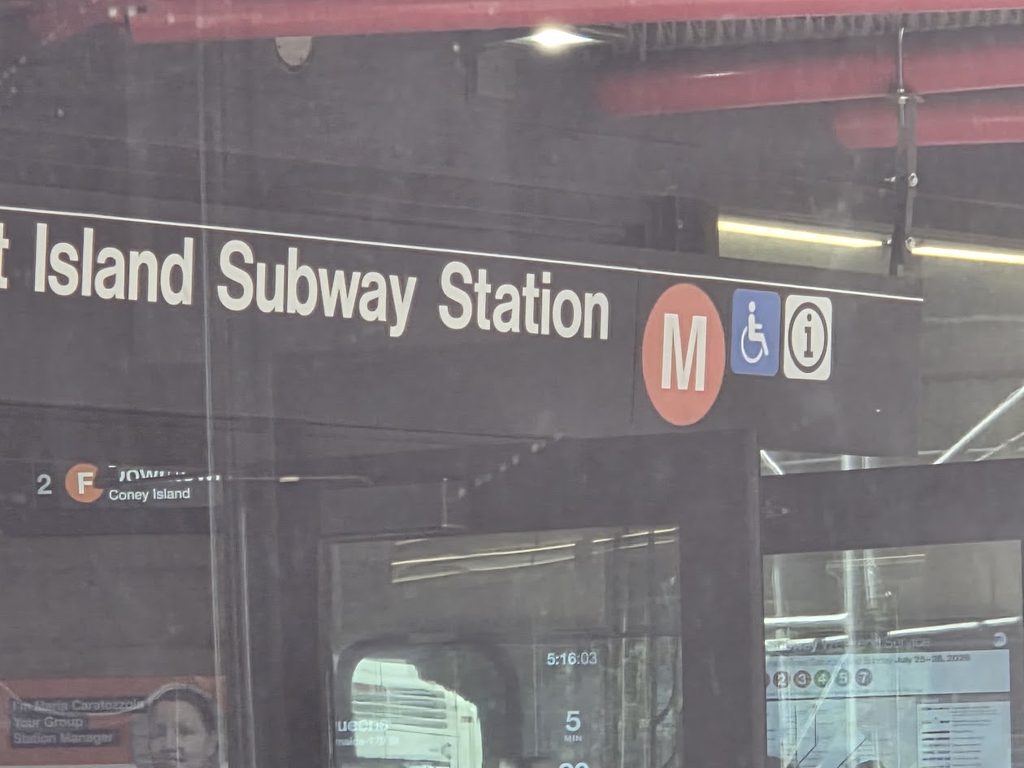
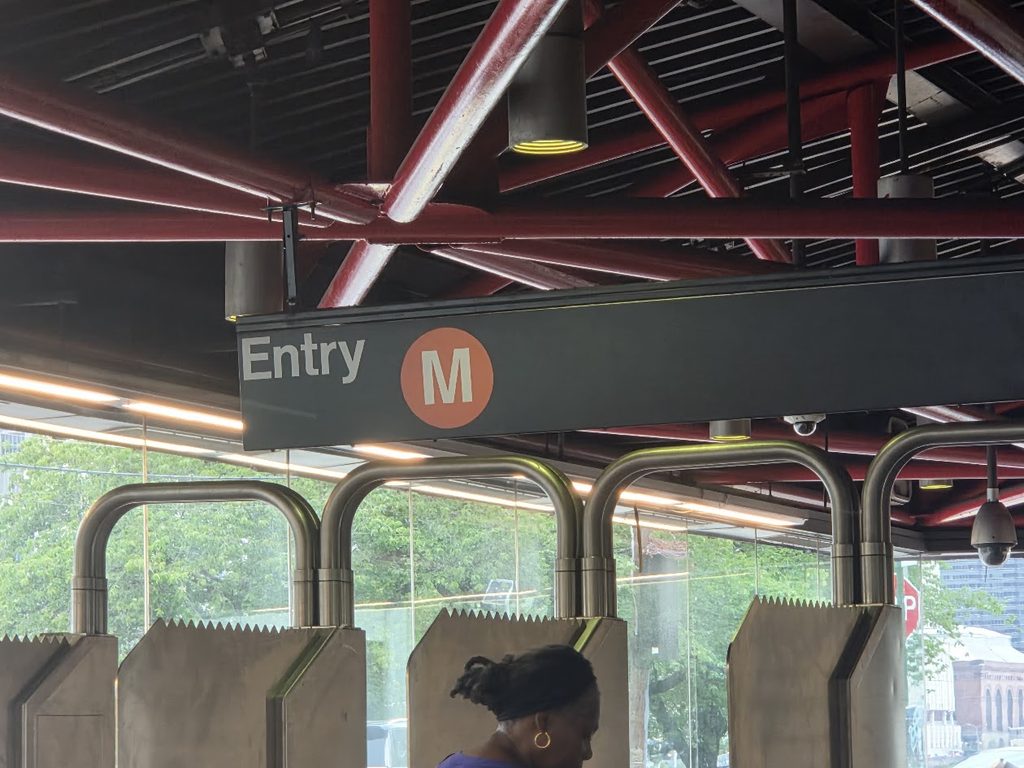
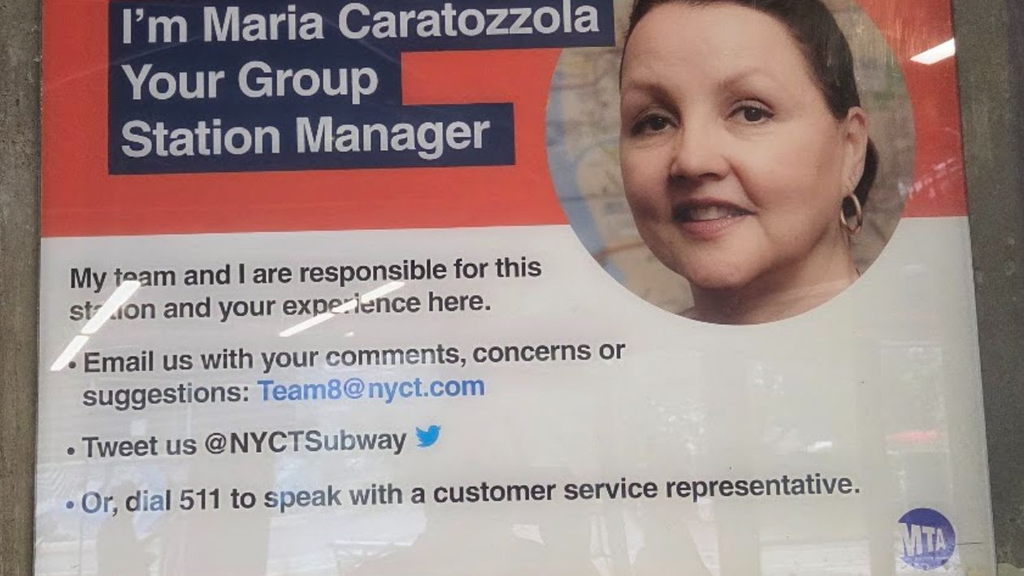
A BIG PROBLEM WITH THE MTA NEW YORK TRANSIT
Our station sign says only the “M” Train Apparently the MTA does not know the “F” Train operates nightly and weekends. WAKE UP MTA or someone will post correct signs!
Send an e-mail to the above. She does reply.
Maybe this will wake up the MTA
CREDITS
NEW YORK ALMANACK JAAP HARSKAMP RIOC MTA JUDITH BERDY
All image are copyrighted (c) Roosevelt Island Historical Society unless otherwise indicated THIS PUBLICATION FUNDED BY DISCRETIONARY FUNDS FROM CITY COUNCIL MEMBER JULIE MENIN & ROOSEVELT ISLAND OPERATING CORPORATION PUBLIC PURPOSE FUNDS.
Gertrude Ederle: The Queen of the Waves Hits a Speed Bump
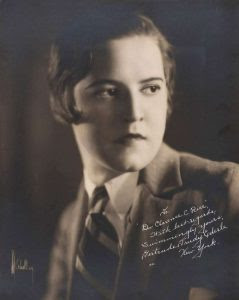
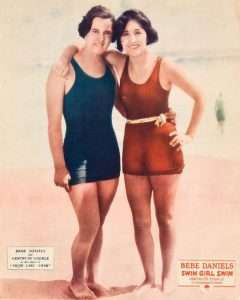
August 14, 2026 by Randall WhitestoneLGertrude Ederle led a long and amazing life. Born in New York City in 1905 to German immigrant parents who ran an Upper West Side butcher shop, Ederle became an Olympic swimming champion at age 19 in 1924, and in August 1926, a century ago this month, became the first woman – and the fifth person – to successfully swim the English Channel.
Henry Ederle promised his daughter a red roadster if she did it, and in a companion boat he and Trudy’s sister shouted reminders about the car as encouragement on the turbulent route from France to England.
At the behest of New York Mayor Jimmy Walker, her hometown soon honored Ederle with a ticker tape parade attended by an estimated two million delirious Gothamites. “City Booms Welcome to ‘Trudy’” blared The Brooklyn Citizen.
Grover Whelan, longtime chair of the city’s reception committee, recalled that “After the official ceremony Mayor Walker escorted Trudy to the front steps of City Hall in response to the request of the press for a picture.
“They did not tarry there long, however. A tidal wave of citizenry burst upon them. One burly patrolman rushed to Trudy’s rescue, lifted her bodily, and carried her back inside City Hall.
“Two other policemen ran interference for the slim Mayor, one on either side of him, and finally got him back into the building.”
Trudy’s record for speediest women’s channel swim, at 14½ hours, stood for a quarter century. But the adored national hero drew a different kind of speed-focused attention less than two years after her ticker-tape triumph.
In February 1929, hurrying to a doctor’s appointment, presumably in her bright red Buick roadster, she was ticketed for going 35 miles an hour on Riverside Drive, at a time when city speed limits were generally 15 miles an hour.
The problem? The “Queen of the Waves” failed three times to appear in court to answer the summons, resulting in issuance of a warrant.
According to the contemporary New York Times account, Trudy explained in traffic court that she knew nothing of the warrant, learning of it only when she read about it in the newspaper the previous evening at a friend’s Highlands, Jersey Shore home, where she was recuperating from an illness.
According to the Times, she told Magistrate Abraham Rosenbluth that “traffic had been light at the time, her speedometer had not registered the thirty-five miles an hour and that she had been in a hurry to see her physician… She added that her hearing had been defective since she swam the Channel.”
Stature apparently outweighed excuses, and Rosenbluth issued a suspended sentence, due to “your plea of guilty and because you did so much for your country.” The Times reported that the courtroom erupted in applause, though a court attendant was forced to shout at Trudy to make her understand the judge’s decision.
Just months later, the nautical and land-based speedster was in trouble again. This time, she was cited for traveling 50 on Riverside Drive. Her attorney, saying Trudy was “indisposed” at her Bronx home, entered a guilty plea on her behalf, resulting in a fine of $50 (about $970 in 2026).
Gertrude Ederle toured the vaudeville circuit, including a stint in Billy Rose’s Aquacade, a swimming, dance, and music show, but health issues continued to dog her. A 1933 fall down the steps of her apartment building resulted in a twisted spine, leaving her bedridden for several years.
Poor hearing remained an issue stemming in part from swimming and childhood measles, and by the 1940s, she was mostly deaf. Trudy spent decades as a swimming instructor for deaf children, and in 1975 dedicated a park in her own name in Highlands, where she had summered since youth.
The center is just two blocks from the site of her former doctor’s office, the destination she’d been rushing toward 84 years earlier.
NEW CUTIE KEYCHAINS AVAILABLE AT KIOSK NOW. $ 6 – EACH
CREDITS
NEW YORK ALMANACK
All image are copyrighted (c) Roosevelt Island Historical Society unless otherwise indicated THIS PUBLICATION FUNDED BY DISCRETIONARY FUNDS FROM CITY COUNCIL MEMBER JULIE MENIN & ROOSEVELT ISLAND OPERATING CORPORATION PUBLIC PURPOSE FUNDS.
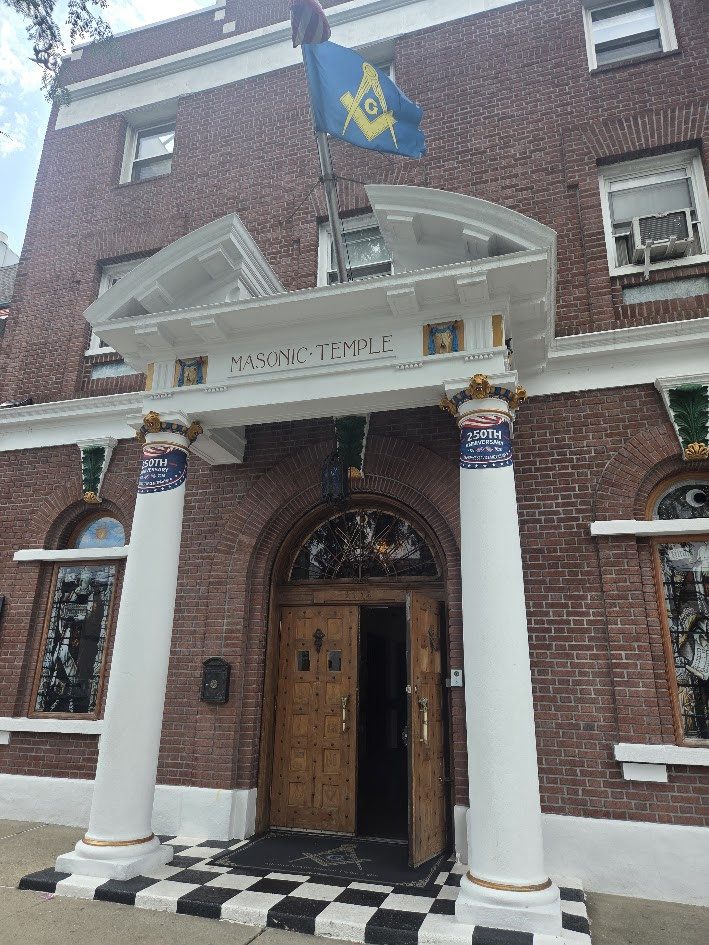
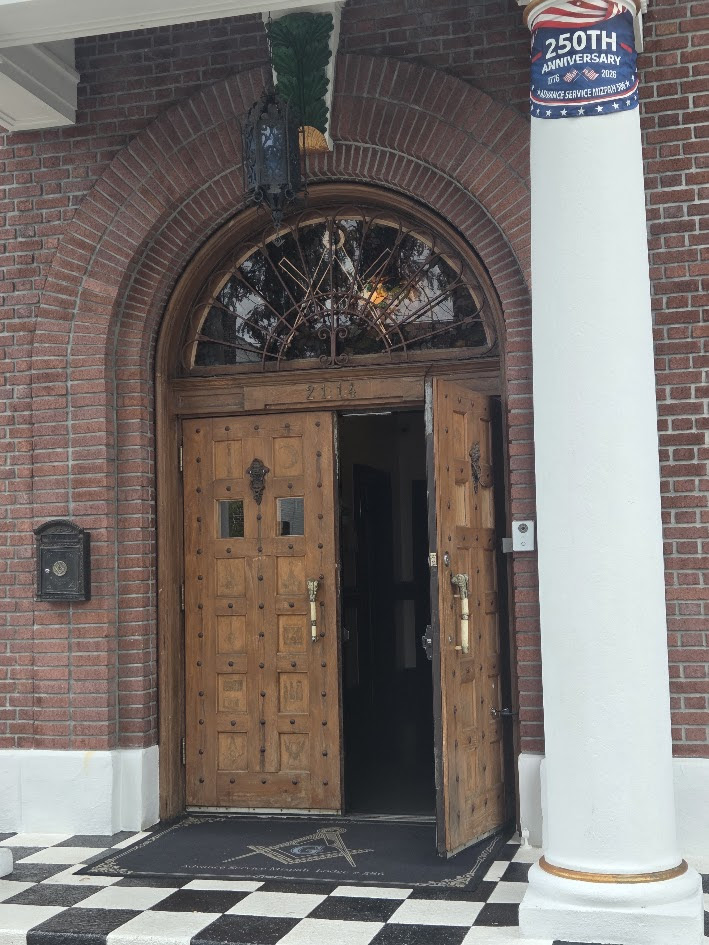
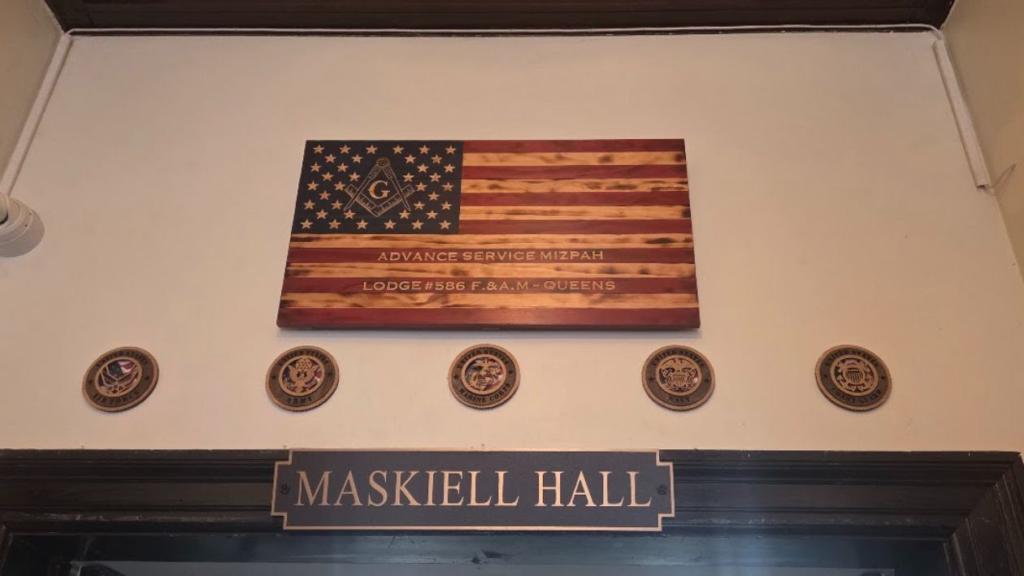
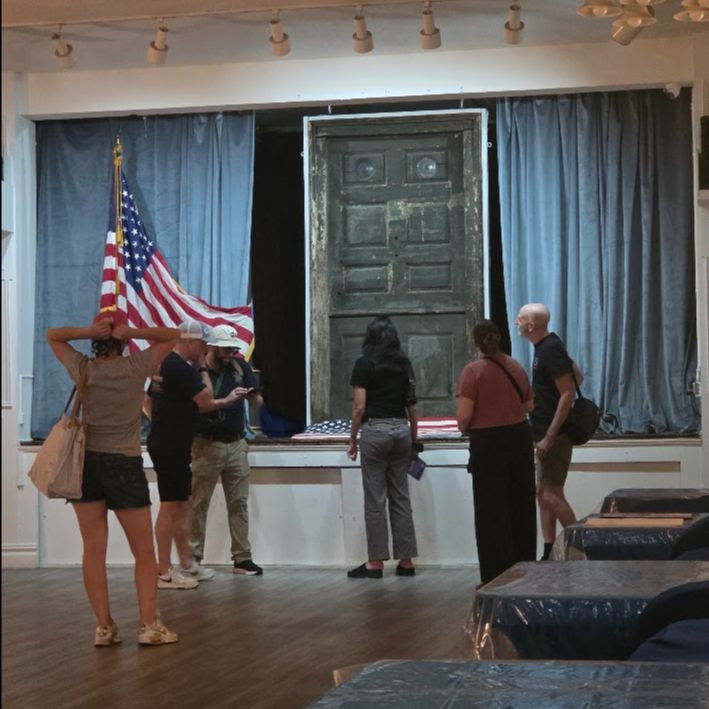
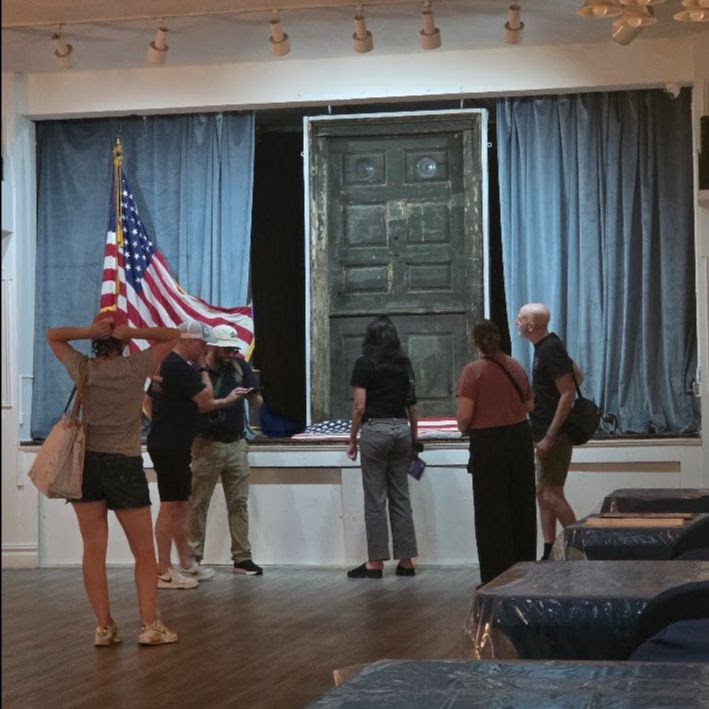
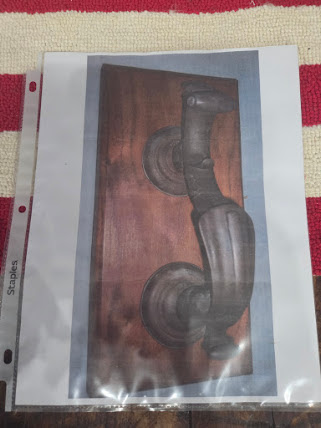
The notice announced that you could see the door to a Blackwell House this Sunday at the Advance Service Mizpah Lodge No. 586, 21-14 30 Avenue, Astoria.
I had see the door once before when it was displayed at the former Greater Astoria Historical Sociey headquarters. The society has moved and the door is on temporary loan ato the Masonic Temple, until August 30th.
An easy drive and I was in front of a whiote columned building.
The temple has a grand entrance with a majestic doorway.
The temple is a communtiy asset with space available to groups looking for venue. Inquiries are welcome and on their websire at https://www.astoriamasons.org/
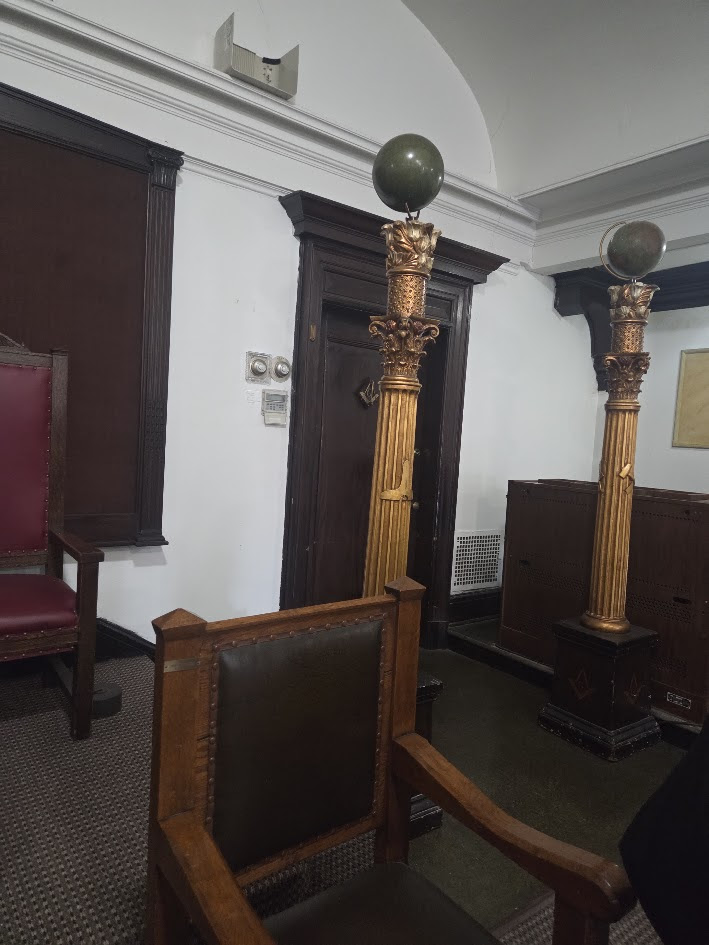
On the Main Floor is a large meeting room and on a stage the door was in plain view.
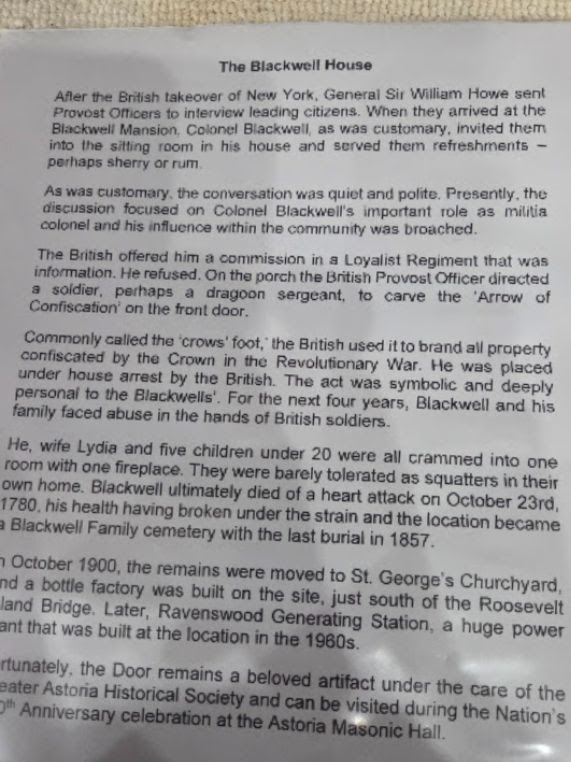
A history of the door is on site and time to review some history.
There a series of owners, the bronze door knocker ended up at the FDR Library in Hyde Park, New York, far from the door in Astoria.
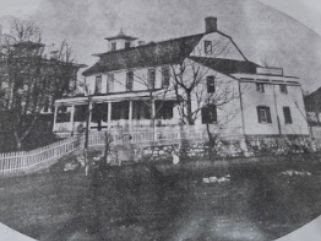
The Blackwell home was located on what is now 37th Avenue near Vernon Blvd.
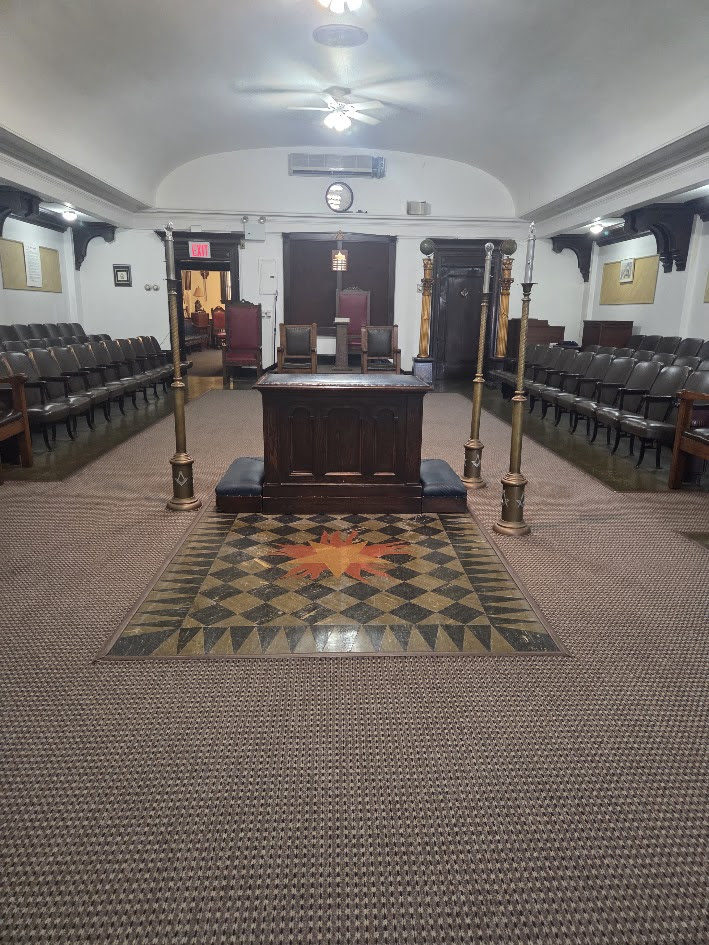
Advance Service Mizpah Lodge No. 586
Meetings for members take place on the second floor.
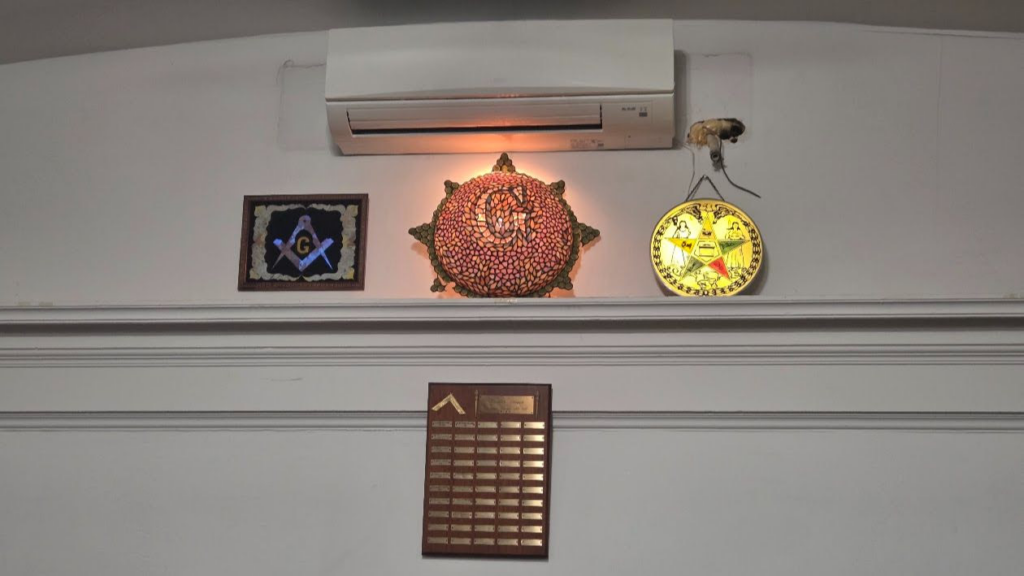
The room is filled with important symbols of freemasonry.
The Temple is open to the public and has very imformative members who offer the educational tours. The news is that this Temple has a growing membership of young candidates.
Part two of our book sale is coming.
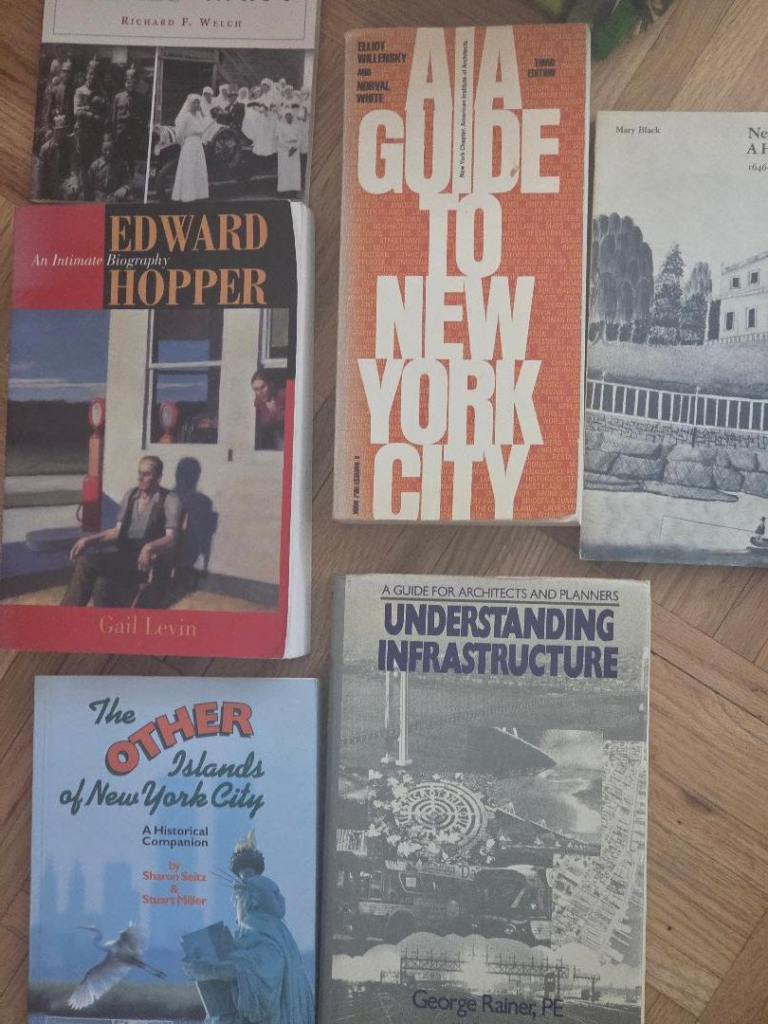
Our booksale yesterday was most successful. If you missed it, we will probably have Part 2, next weekend. Watch for details.
Judy Berdy
CREDITS
Judith Berdy
All image are copyrighted (c) Roosevelt Island Historical Society unless otherwise indicated THIS PUBLICATION FUNDED BY DISCRETIONARY FUNDS FROM CITY COUNCIL MEMBER JULIE MENIN & ROOSEVELT ISLAND OPERATING CORPORATION PUBLIC PURPOSE FUNDS.
NYC HISTORY NYC GEOGRAPHY BIOGRAPHIES GUIDE BOOKS ARTS BOOKS COFFEE TABLE BOOKS WORLD WAR 1 BOOKS ARCHITECTURAL BOOKS AND MUCH MORE
FREE OR SMALL DONATION REQUESTED
SEEN ON THE ISLAND
CITIBIKE WAS NOT MADE WITH A KIDDIE BASKET
CREDITS
JUDITH BERDY
All image are copyrighted (c) Roosevelt Island Historical Society unless otherwise indicated THIS PUBLICATION FUNDED BY DISCRETIONARY FUNDS FROM CITY COUNCIL MEMBER JULIE MENIN & ROOSEVELT ISLAND OPERATING CORPORATION PUBLIC PURPOSE FUNDS.







&mc_cid=8f2539dab4&mc_eid=UNIQID)