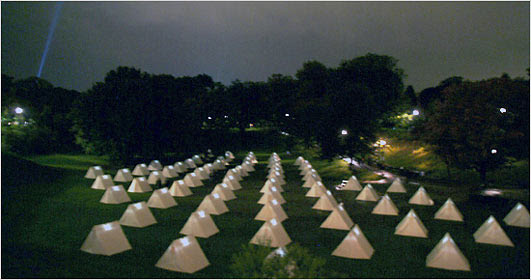
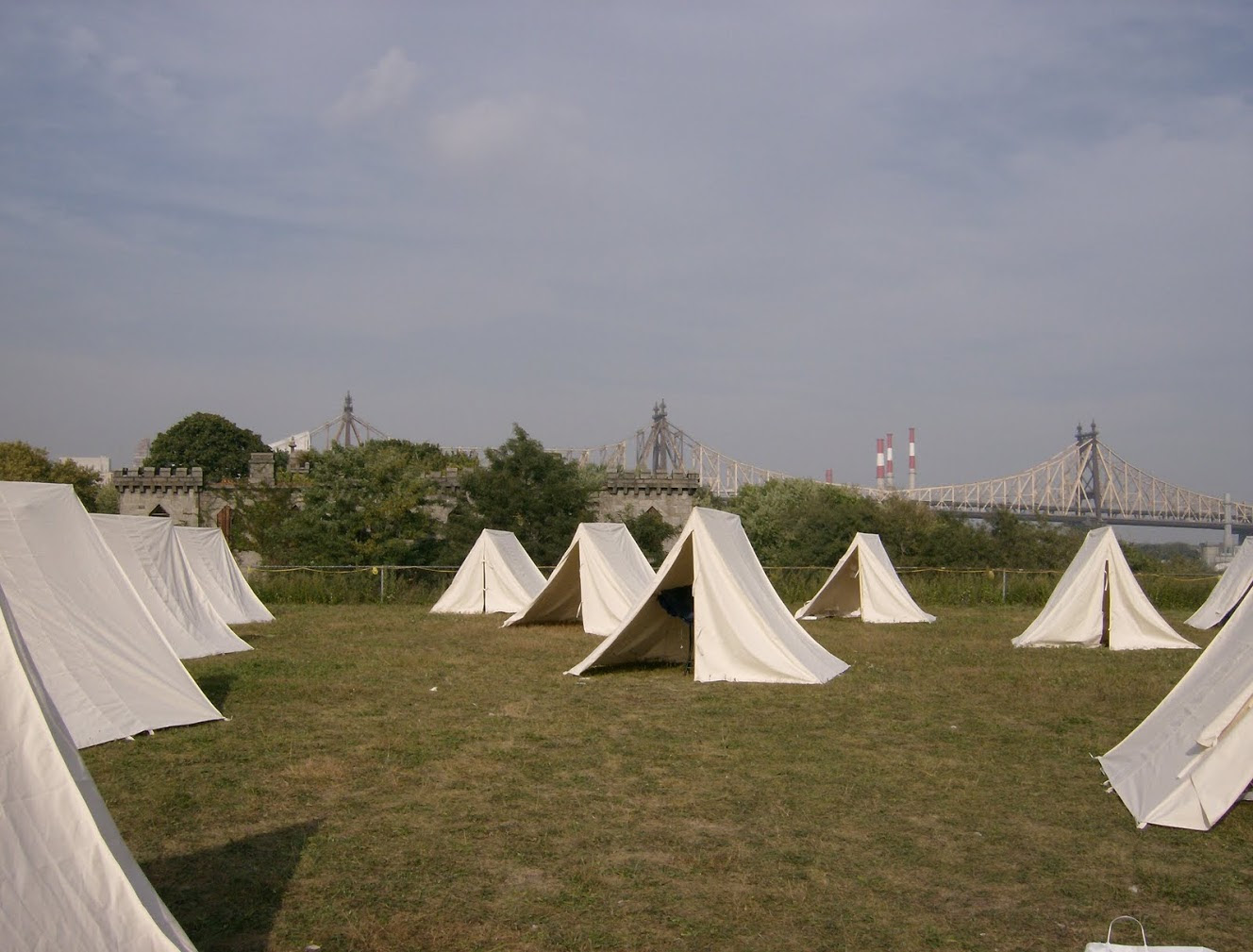
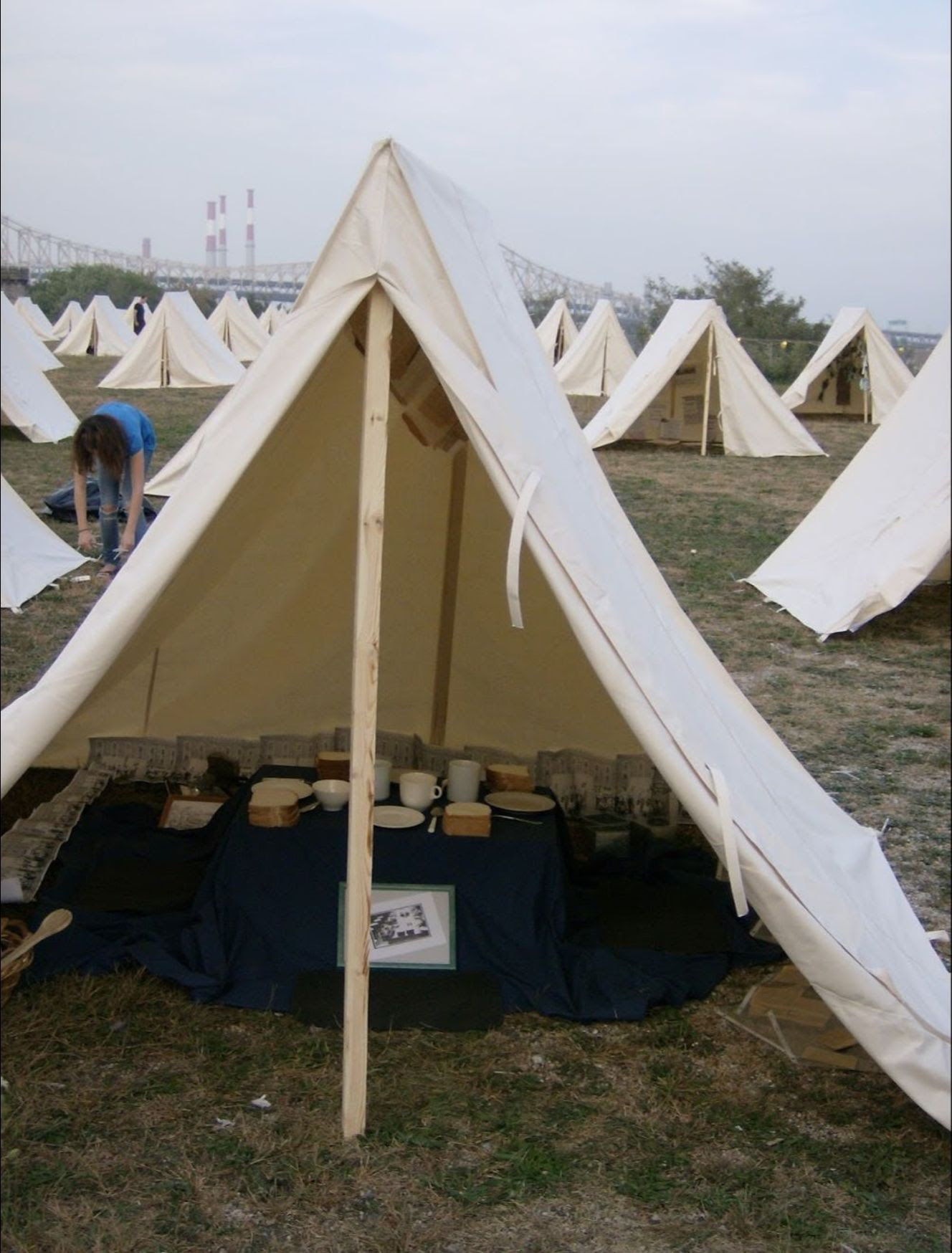
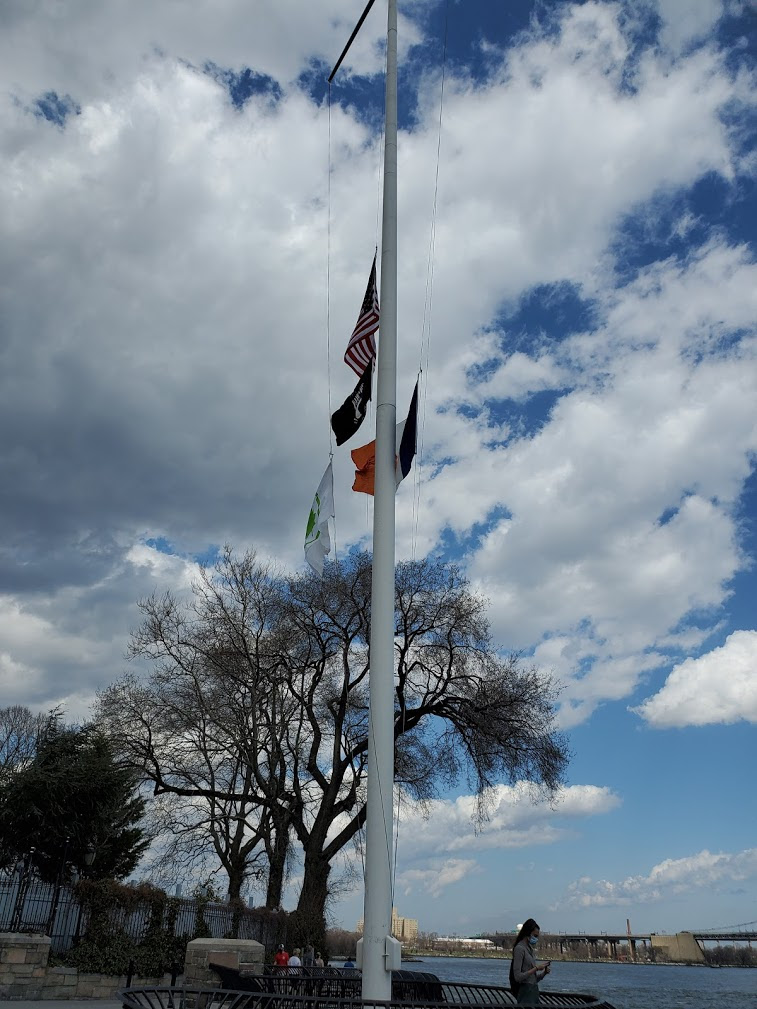
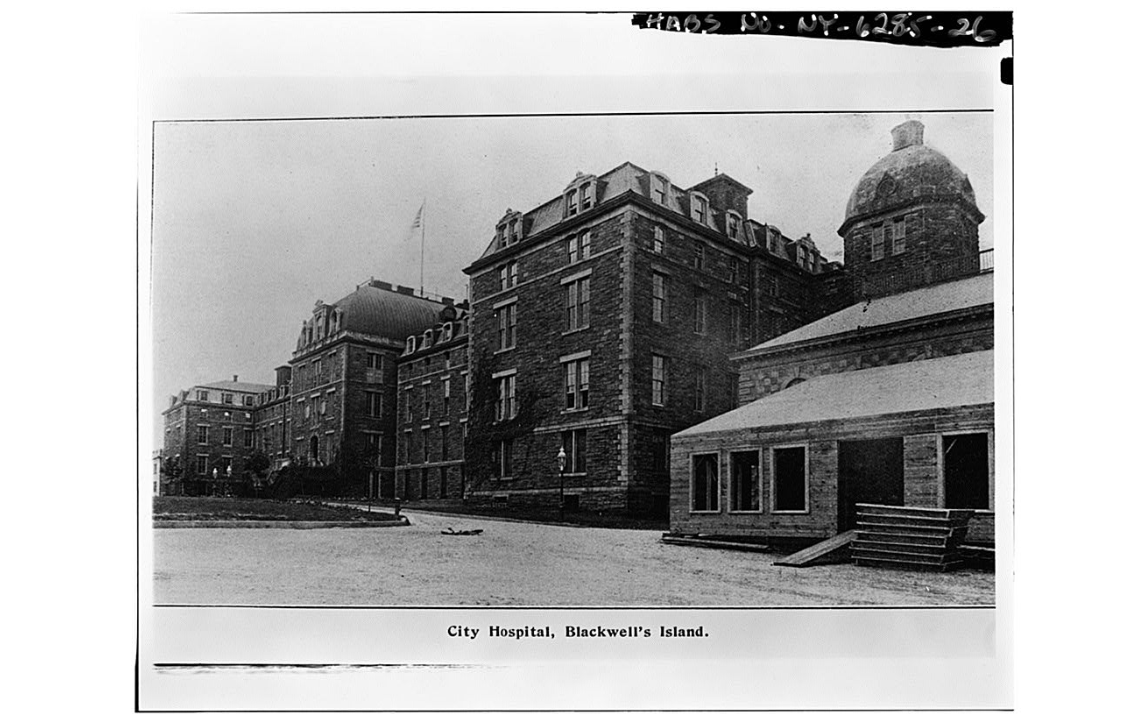
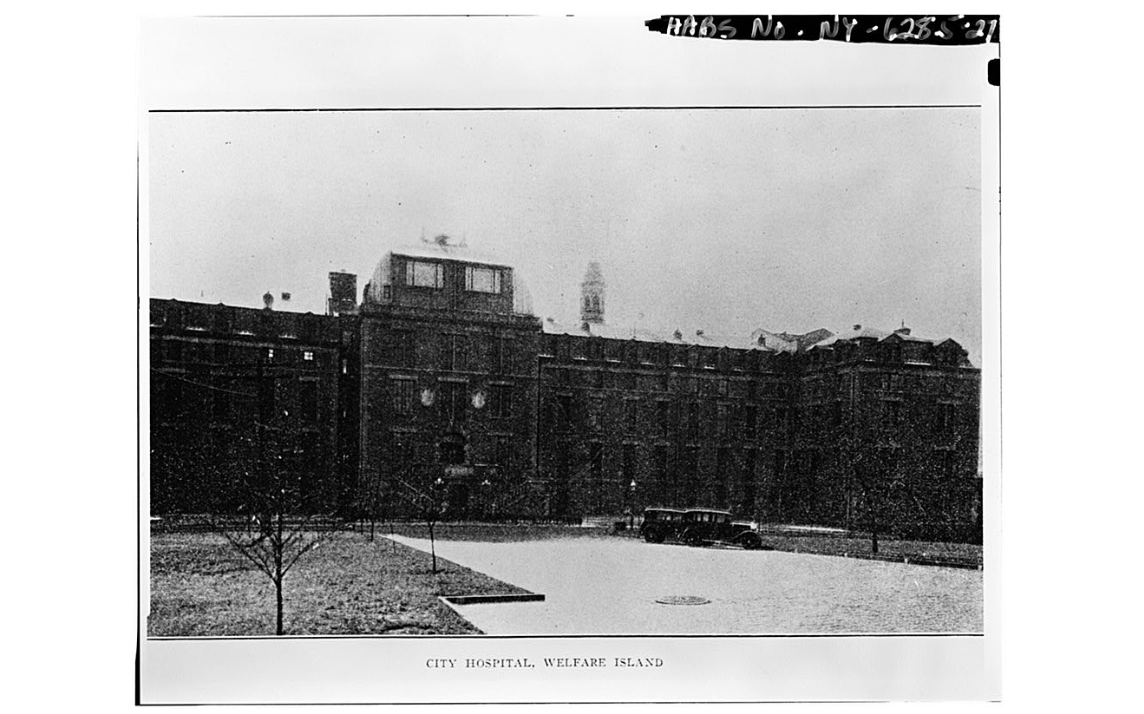
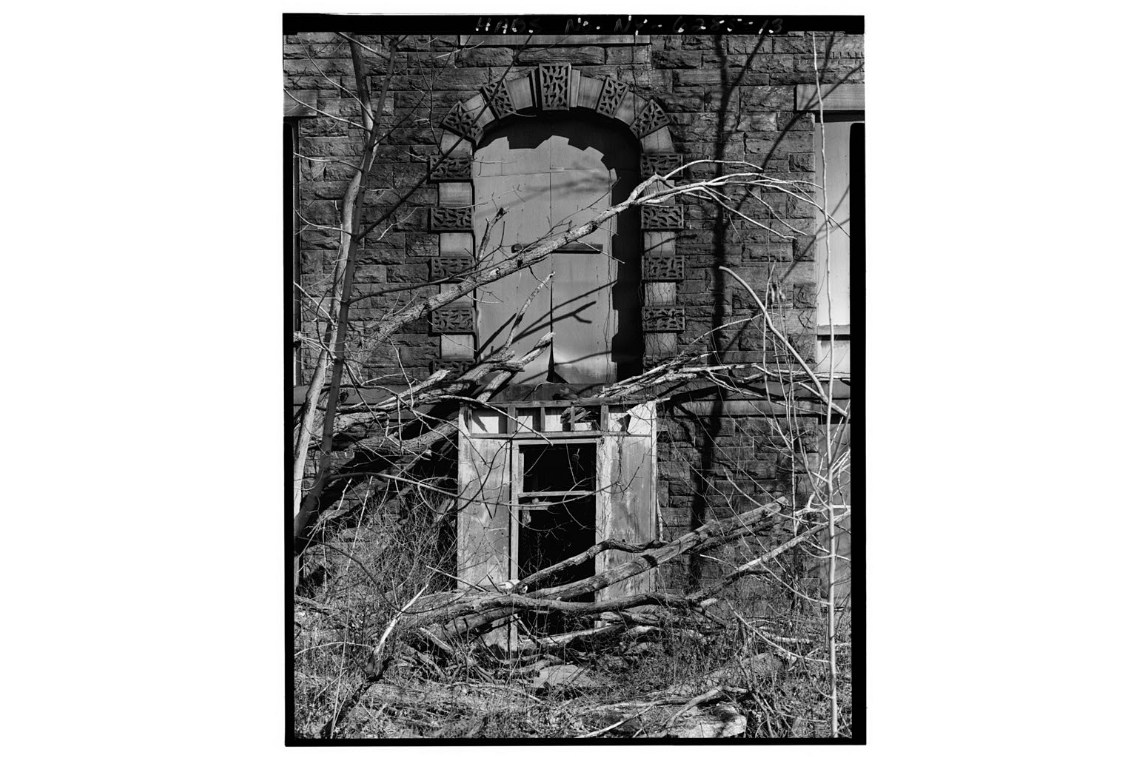
IN 2007, ARTIST THOM SOLOLOSI BROUGHT A UNIQUE ART AND HISTORY PROJECT COMPOSED OF 100 TENTS CONTAINING STORIES OF THOSE LOST IN THE WORLD OF MENTAL ILLNESS, PRISONS AND ASYLUMS.
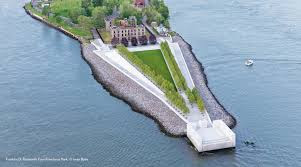
THE SITE WAS SOUTHPOINT PARK, WHICH WAS ONLY A HILL OF GRASSY AND DUSTY LAND. THE FDR AND SOUTHPOINT PARKS WERE NOT BUILT AND THIS VAST OPEN SPACE LED TO A GRAND VISUAL SITE.
THE PROJECT TOOK MONTHS TO PLAN. THE EXECUTION TOOK PLACE IN A FEW DAYS AND THE ENCAMPMENT WAS OPEN TO THE PUBLIC FOR JUST A LONG WEEKEND.
2007 WAS A DIFFERENT TIME AND THE ISLAND FLOURISHED WITH MANY ART PROJECTS AND LESS CONSTRAINTS OF THESE LATTER YEARS.
Artwork, Assembled at the Last Minute, Explores the Long Ago
The New York Times (c)
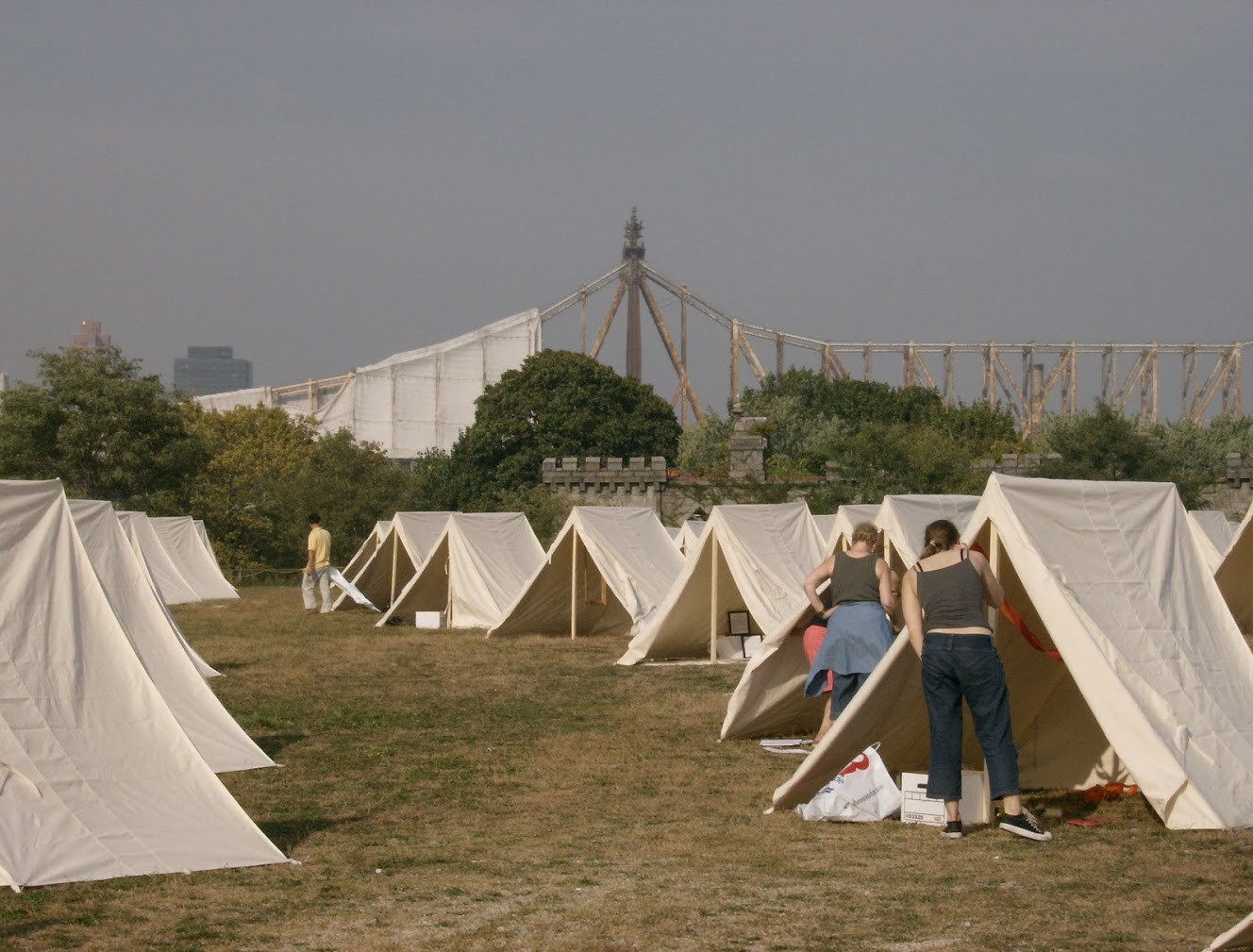
Thom Sokoloski’s installation artwork, “The Encampment,” has been assembled on the southern tip of Roosevelt Island.Credit…Robert Bennett for The New York Times
At about 7 last night, “The Encampment,” an installation of 100 19th-century-style tents by the Canadian artist Thom Sokoloski, was to open in an empty field at the southern tip of Roosevelt Island.
A year in the making, the tents represent the patients who once lived in the island’s smallpox hospital, the remains of which loom nearby. Inside each, volunteers would arrange artifacts to memorialize patients and other island residents. As a final touch, the tents were to be illuminated from within, so “The Encampment” would be visible from both sides of the East River, a glowing link to the area’s history.
But first, it had to be finished.
In the 80-degree weather of yesterday morning, a dozen volunteers showed up to help; most encountered a locked gate. Though Mr. Sokoloski spent months assembling the proper permits, security had been a constant issue: the site, part of what will become Southpoint Park, is usually closed to the public. Homeland Security officials were on high alert because of the United Nations General Assembly meeting just across the East River, and the police threatened to shut things down because of a miscommunication.
By noon only a dozen tents had been set up, and few were filled. Mr. Sokoloski’s partners, Jenny-Anne McCowan, a choreographer and outreach coordinator, and John McDowell, a composer, busied themselves marshaling the volunteers.
Even the construction supervisors — four Canadian military re-enactors, with extensive experience in putting up tents — were sweating. The exhibition, part of the annual Openhousenewyork weekend, was several hours behind schedule.
But Mr. Sokoloski, a Toronto-based artist who seems younger than his 57 years, remained calm. A former theater director (he worked at La MaMa in the 1980s) and location scout for movies, he is adept at making big projects work, like an opera he staged in Toronto’s main train station in 1992.
“It’s one thing after another, but you get used to it,” Mr. Sokoloski said. “You just keep going till the last moment, because who knows what will happen tomorrow?”
“The Encampment” is the second in a series of tent-based installations Mr. Sokoloski has planned. A smaller-scale version was erected in Toronto last year for Nuit Blanche, an arts festival, and he hopes to create a larger version elsewhere in Canada next year. Each project is devoted to exposing an urban past that’s usually kept hidden: the history of mental health and addiction treatment in Toronto, the confinement and isolation of the many sanitariums that once dotted Roosevelt Island.
The idea, Mr. Sokoloski said, was to create “an archaeological dig into the collective memory of a space.” To enhance that collective spirit, he enlisted about 70 “creative collaborators” — artists, students and patients from the island’s Coler-Goldwater Memorial Hospital — to research and compile art for the tents.
The tents ready to be filled with memories.
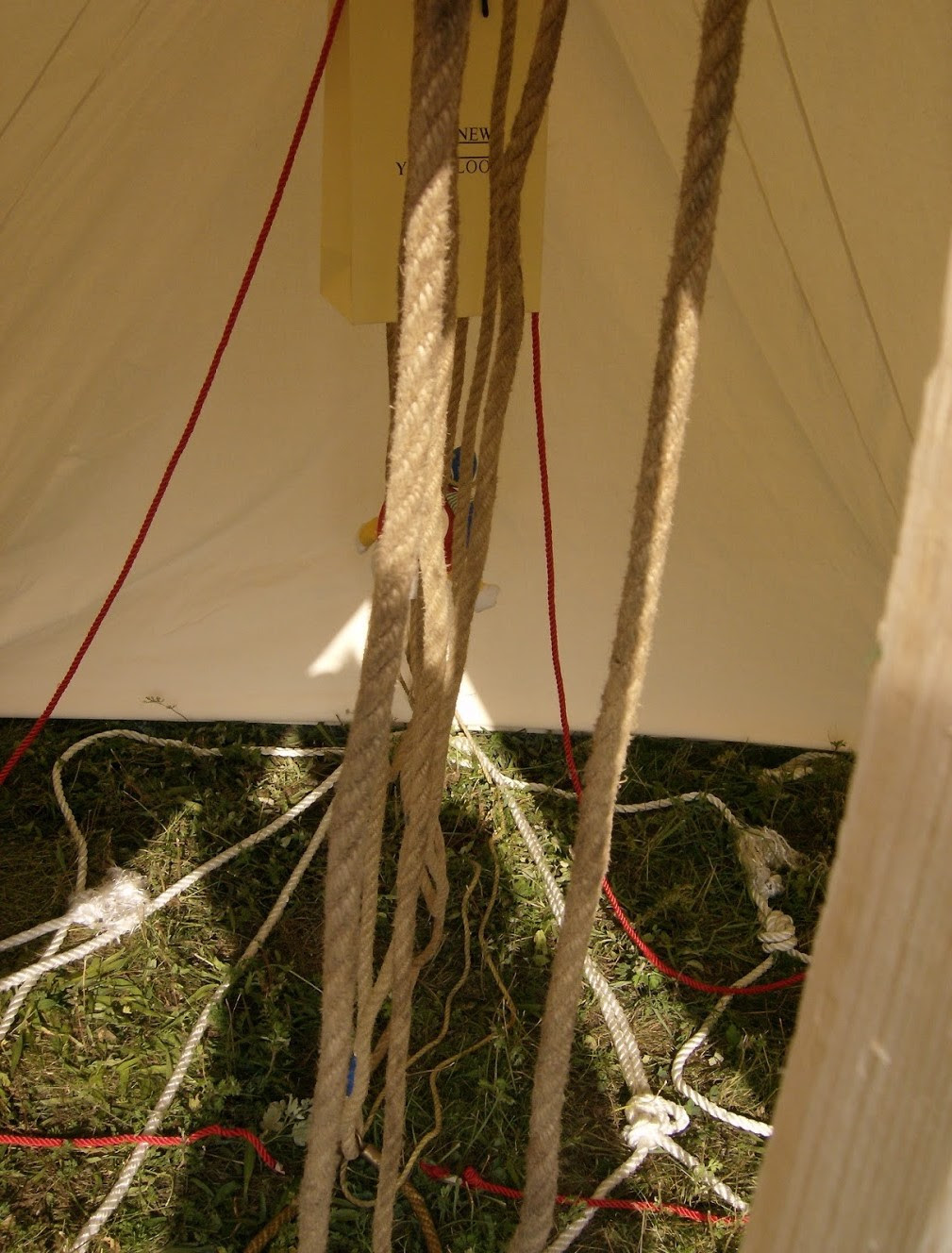
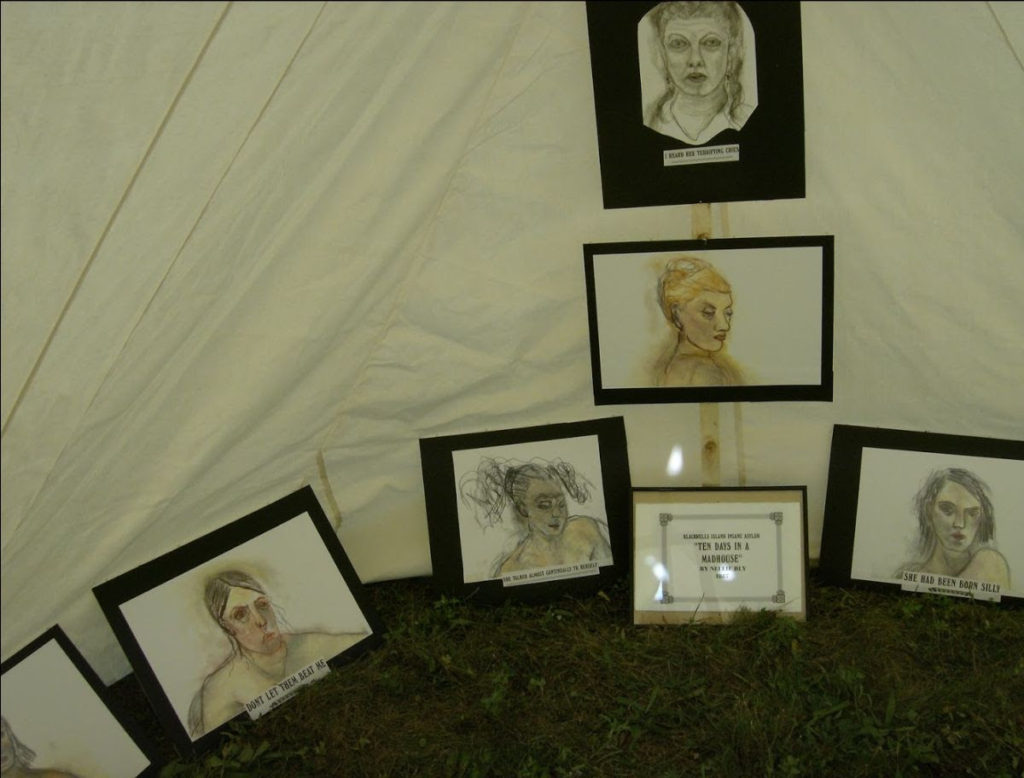
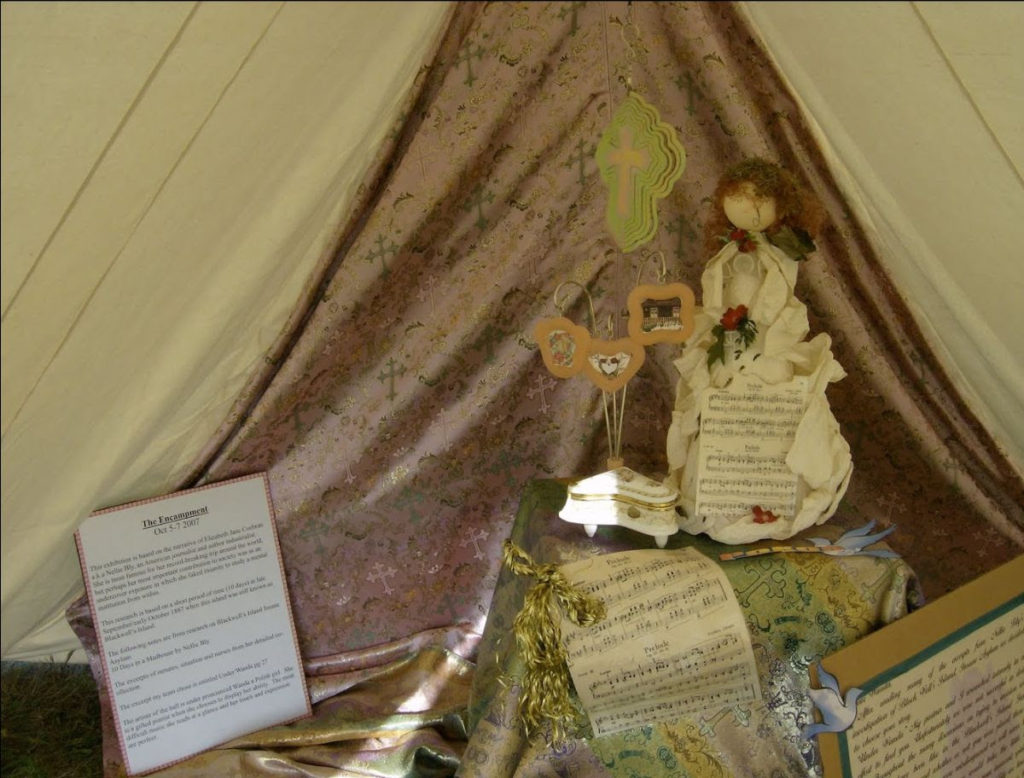
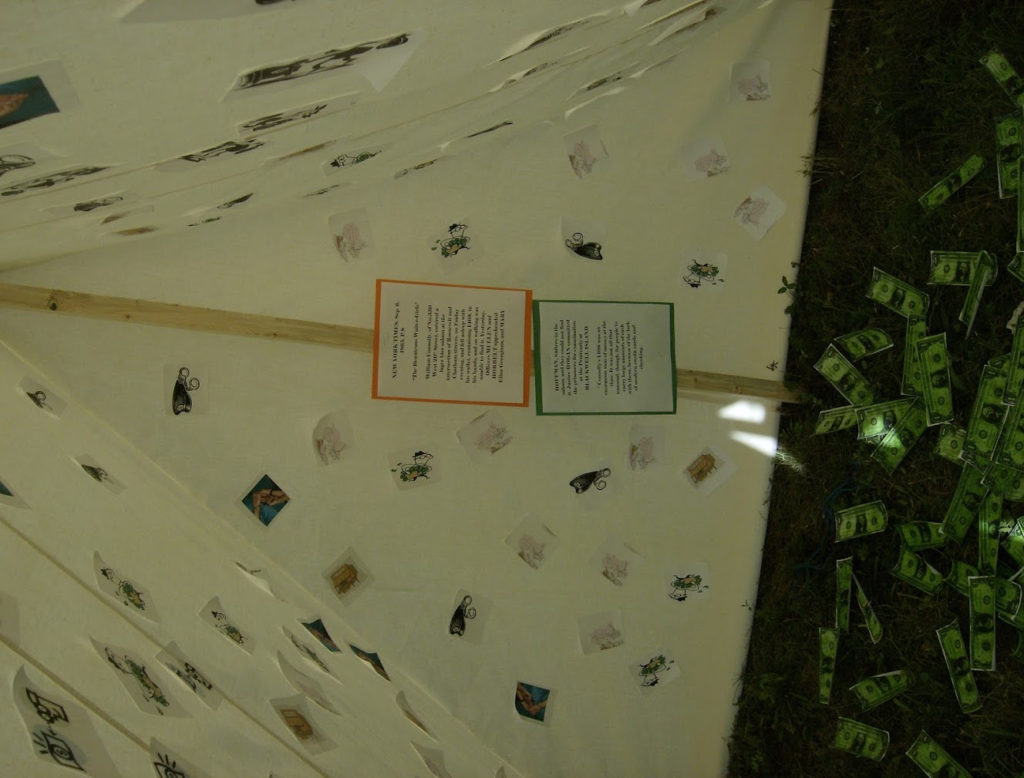
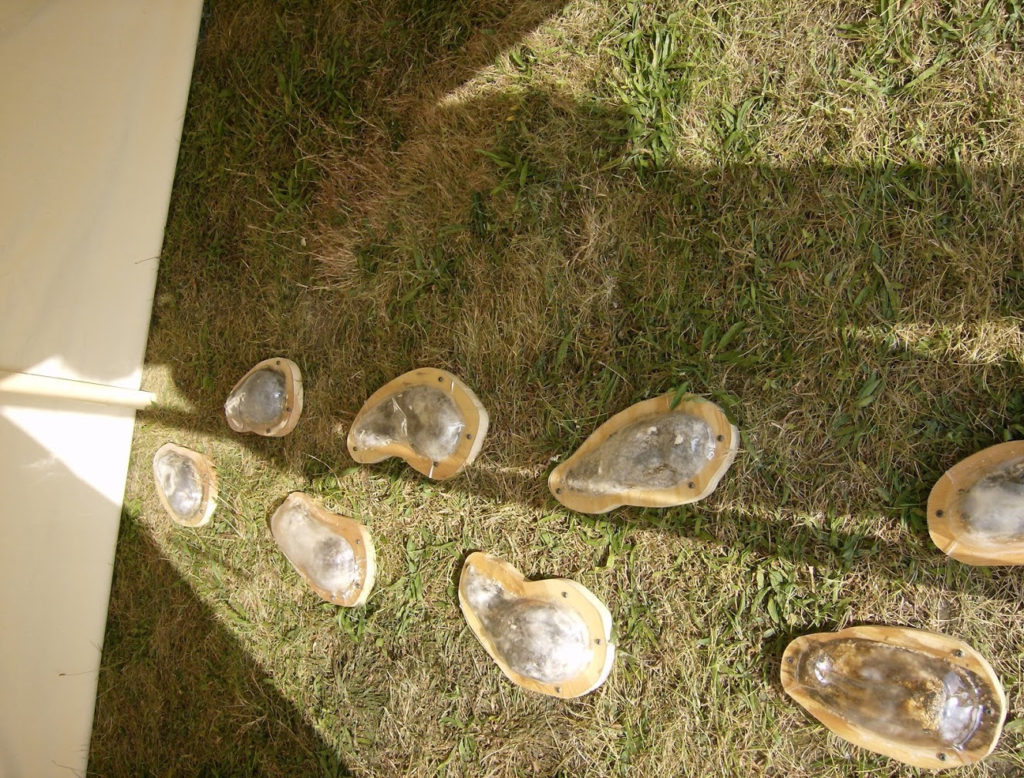
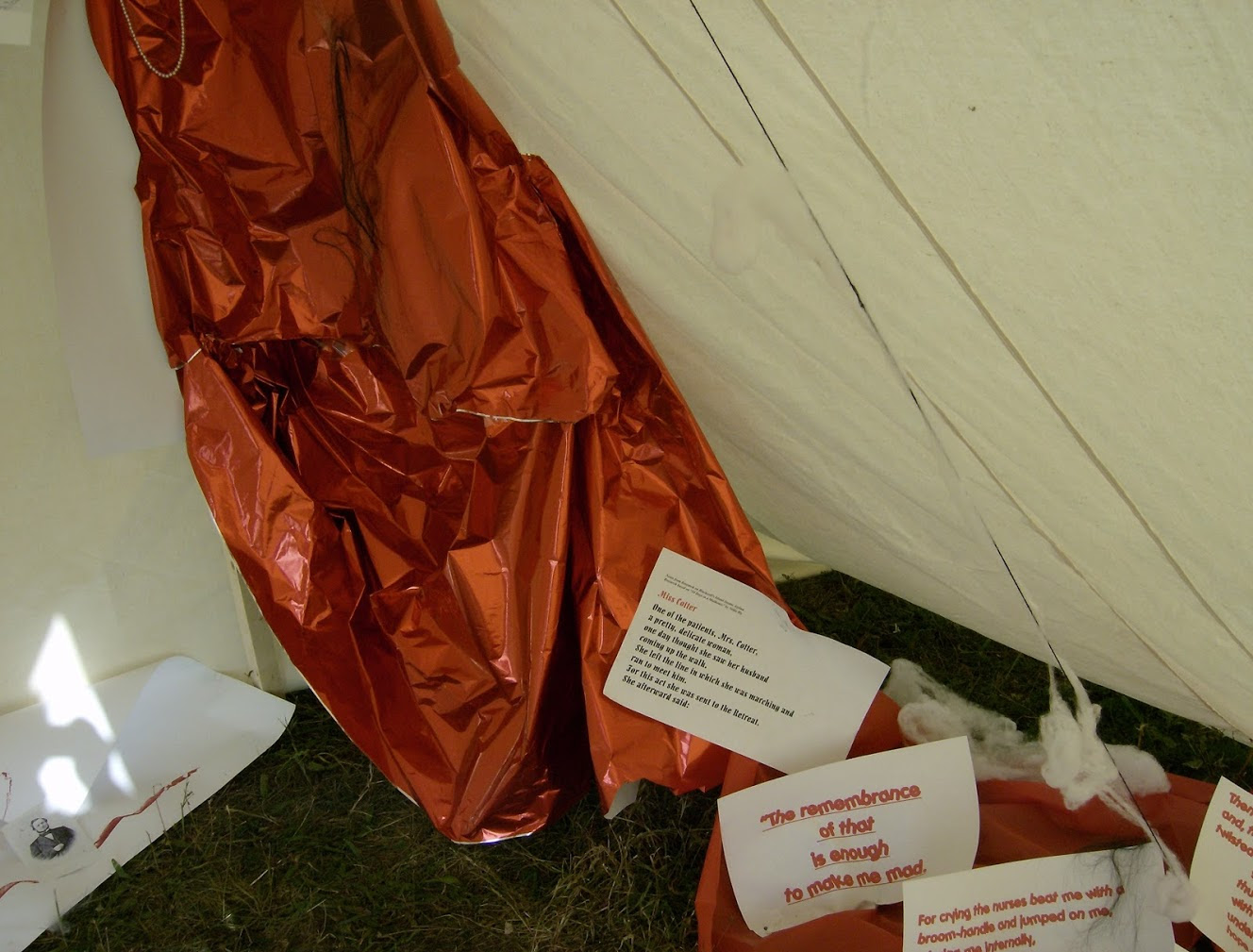
Below: Sketches of asylum inmates from “Ten Days in a Madhouse” Doll and piano represent musical memories Small images on the fabric of the tent with piles of money on the ground Oysters, commonly found in the East River
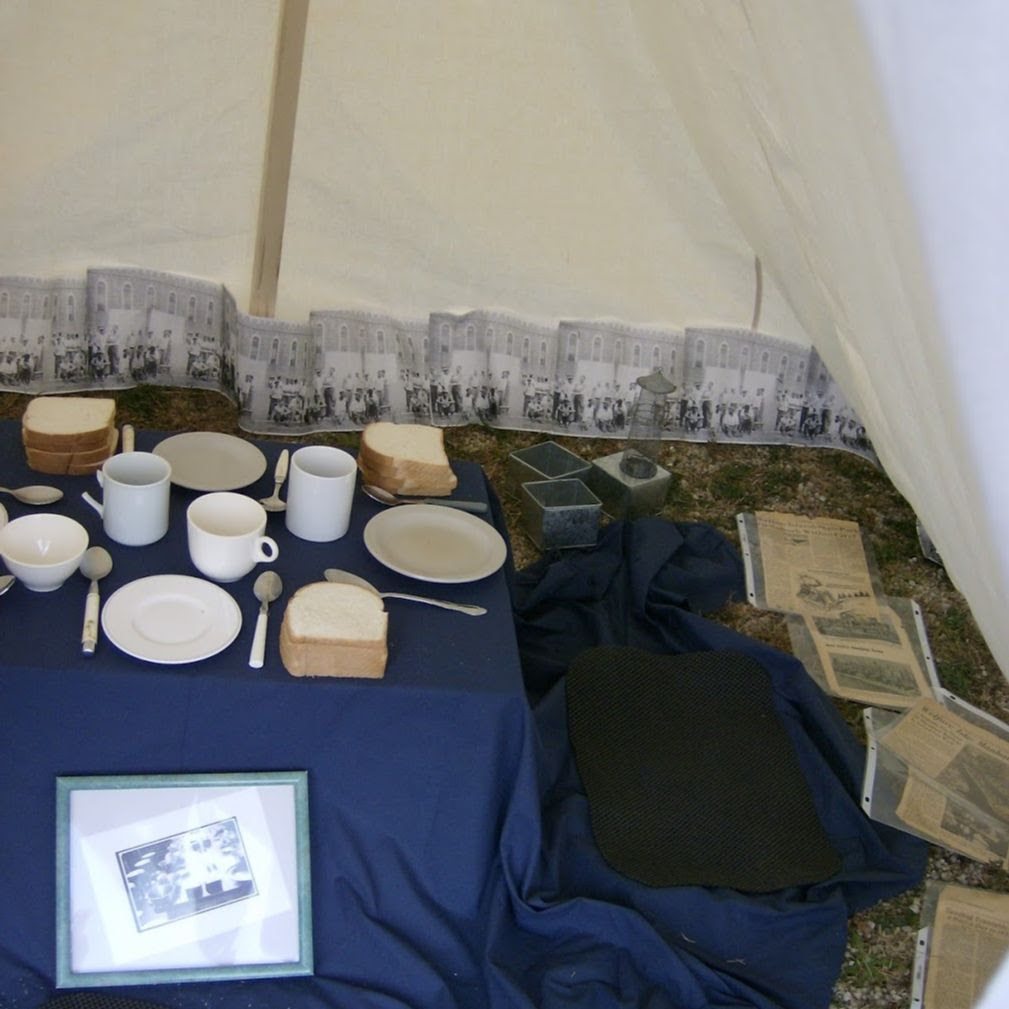
Some people took on more than one tent. The interior objects — drawings, dioramas, mannequin heads, flowers — had to be small enough to be boxed up, though Mr. Sokoloski was not to know what they were.
The volunteers had only two hours to install their work. Ronit Muszkatblit, 32, a theater director from the East Village, was inspired by the story of Ernest Otto, an asylum patient who died in 1894 after choking on rice and bread. Her installation included a human silhouette buried in rice. “I love site-specific work,” Ms. Muszkatblit said before dragging a cart laden with props to her tent.
“The energy, the adrenaline, the rush of the last moment, the not sleeping and carrying everything back and forth.” Mr. Sokoloski knows all about it. On Wednesday the tents — seven-foot-long canvas A-frames — were still at the manufacturer, the Fall Creek Suttlery, of Lebanon, Ind., which usually supplies tents for military re-enactments, because Mr. Sokoloski didn’t have the money to pay for shipping
By the time the funds materialized, he needed the tents shipped overnight— at a cost of about $4,000. “I said, ‘I can’t pay that much,’” Mr. Sokoloski recalled. (“The Encampment” cost about $150,000, financed mostly by him, Ms. McCowan and donations.) He asked Andy Fulks, the company’s owner, for a cheaper alternative.
Mr. Fulks came up with one: a guy named Wayne. So Wayne, a local resident, packed the 100 tents into his pickup and drove straight through from Indiana to New York, delivering the tents at 2:30 on Thursday afternoon. Then he turned and drove home.
The construction cavalry — Canadian re-enactors who specialize in the War of 1812 — arrived early Friday morning, hauling a trailer filled with 100 pounds of 10-inch nails and 300 beams to erect the tents. But the beams were the wrong size. So hours before opening, volunteers had to cut them to fit, using the trailer’s fender as a sawhorse.
Mr. Sokoloski savored the momentum. “I find there’s a kind of excitement when you do it this way,” he said of his last-minute art. “It’s not a Cartesian way to achieve results. But there’s this other level of energy, of spontaneity.”
In the end they were able to erect only 90 of the tents on Friday. (Ten more will follow today.) But the lights went on just after 7.
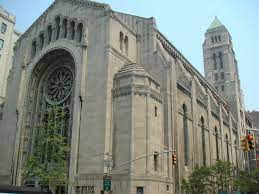
Temple Emanu-El One East 65th Street Gloria Herman, Aron Eisenpreiss, Jay Jacobson, Vicki Feinmel and Arlene Bessenoff got it right
Text by Judith Berdy Thanks to Bobbie Slonevsky for her dedication to Blackwell’s Almanac and the RIHS Thanks to Deborah Dorff for maintaining our website Edited by Melanie Colter and Deborah Dorff All image are copyrighted (c)
RIHS ARCHIVES JUDITH BERDY NEW YORK TIMES (C)
FUNDING PROVIDED BY ROOSEVELT ISLAND OPERATING CORPORATION PUBLIC PURPOSE GRANTS CITY COUNCIL REPRESENTATIVE BEN KALLOS DISCRETIONARY FUNDING THRU DYCD
The Women’s Service Group Who Made a Better Life National Council of Jewish Women
Thursday, April 9, 2020 WEDNESDAY, MARCH 31, 2021
21st in our FROM THE ARCHIVES series.
325th ISSUE
A LITTLE JEWISH HISTORY
& PASSOVER AT GOLDWATER
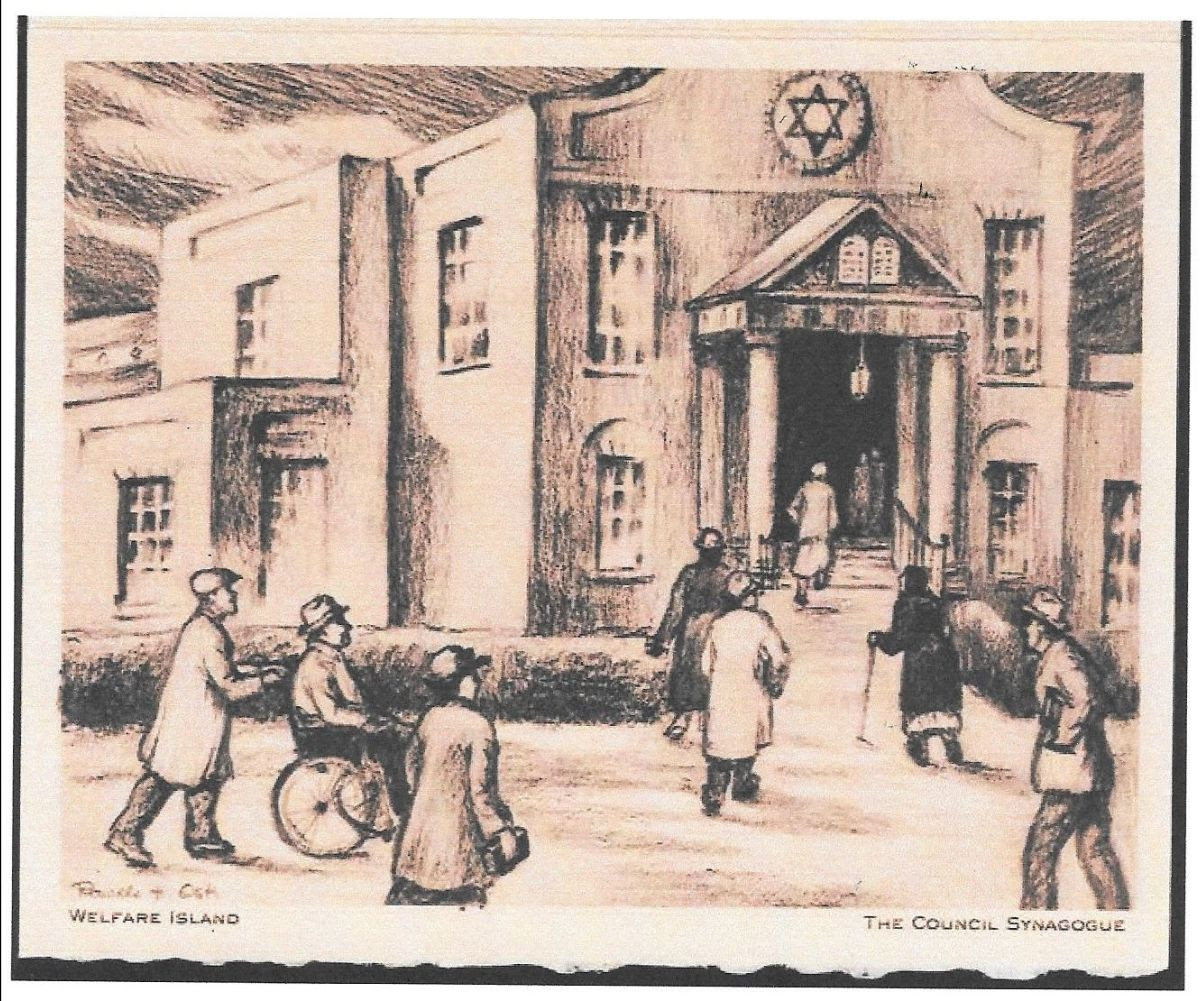
THE COUNCIL SYNAGOGUE, WELFARE ISLAND SOLICITATION GREETING CARD OF NATIONAL COUNCIL OF JEWISH WOMEN ROSELLE HELLENBERG OAK (1884-1954) MUSEUM OF THE CITY OF NEW YORK (C)
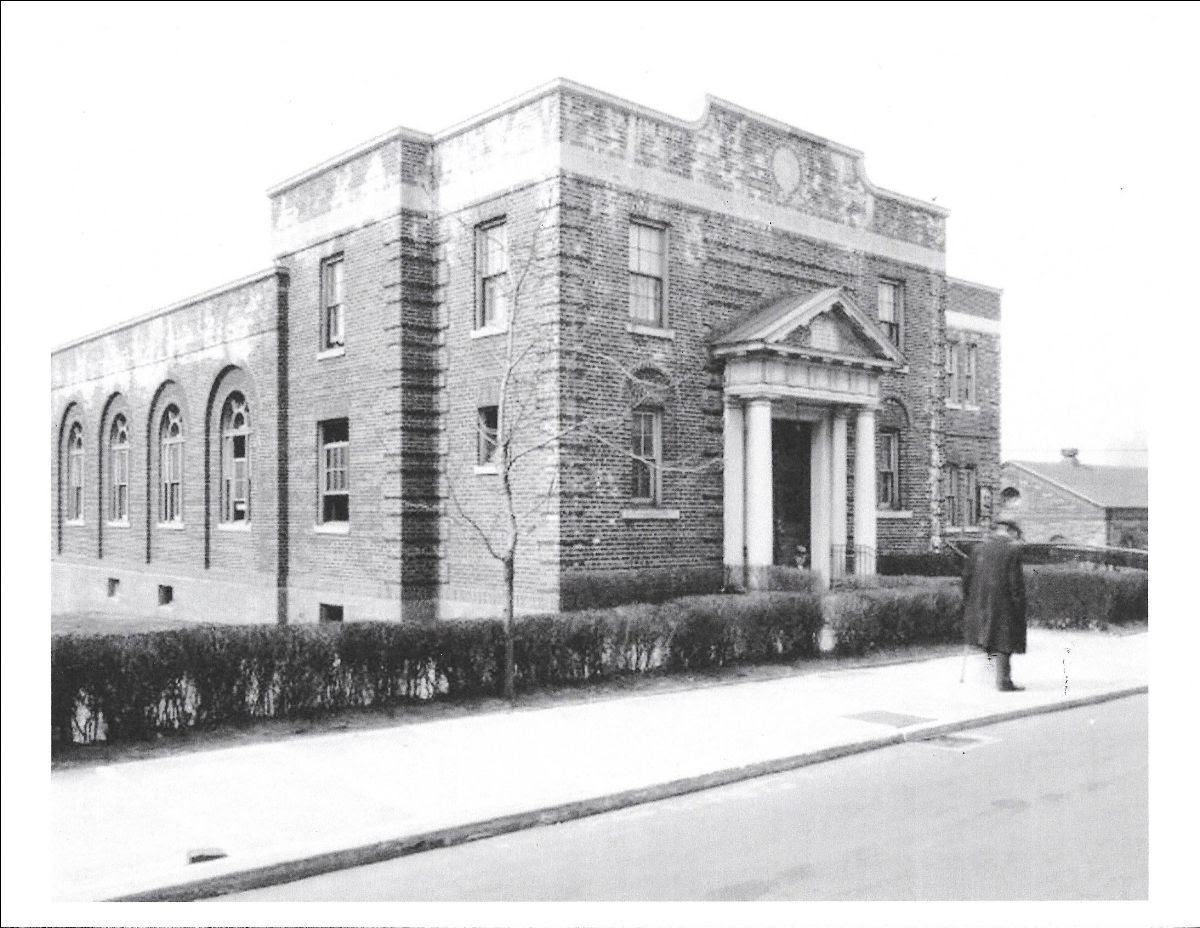
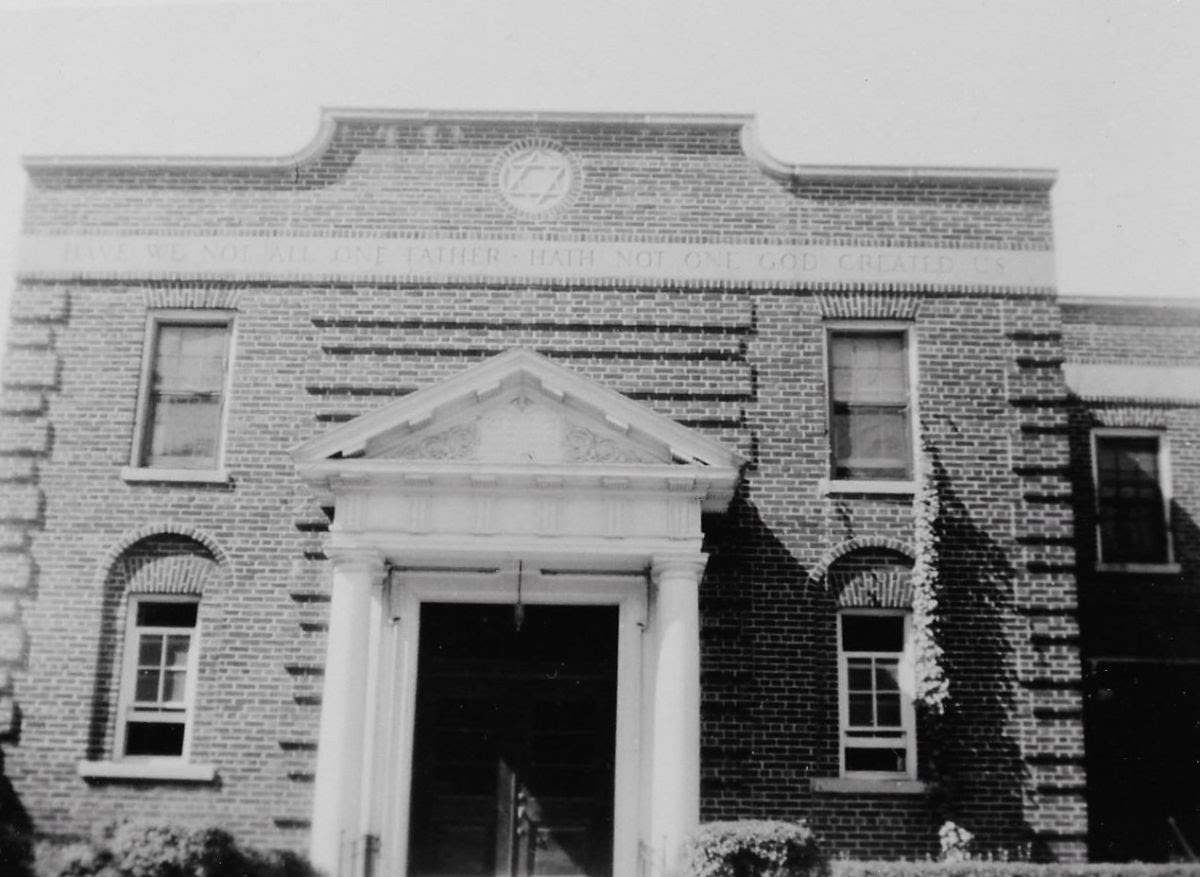
The Council Synagogue opened in 1927 to serve the Jewish population of Welfare Island. It was funded by the NCJW. Brown Brothers (c)
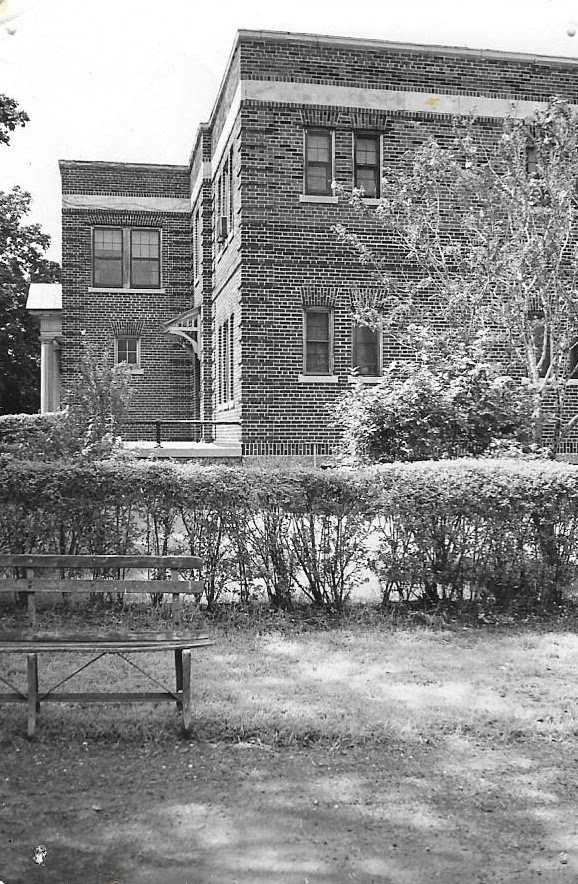
Photo of Central Synagogue Shaton Stern (c)Rabbi’s Residence adjoining synagogue. RIHS Archive (c)
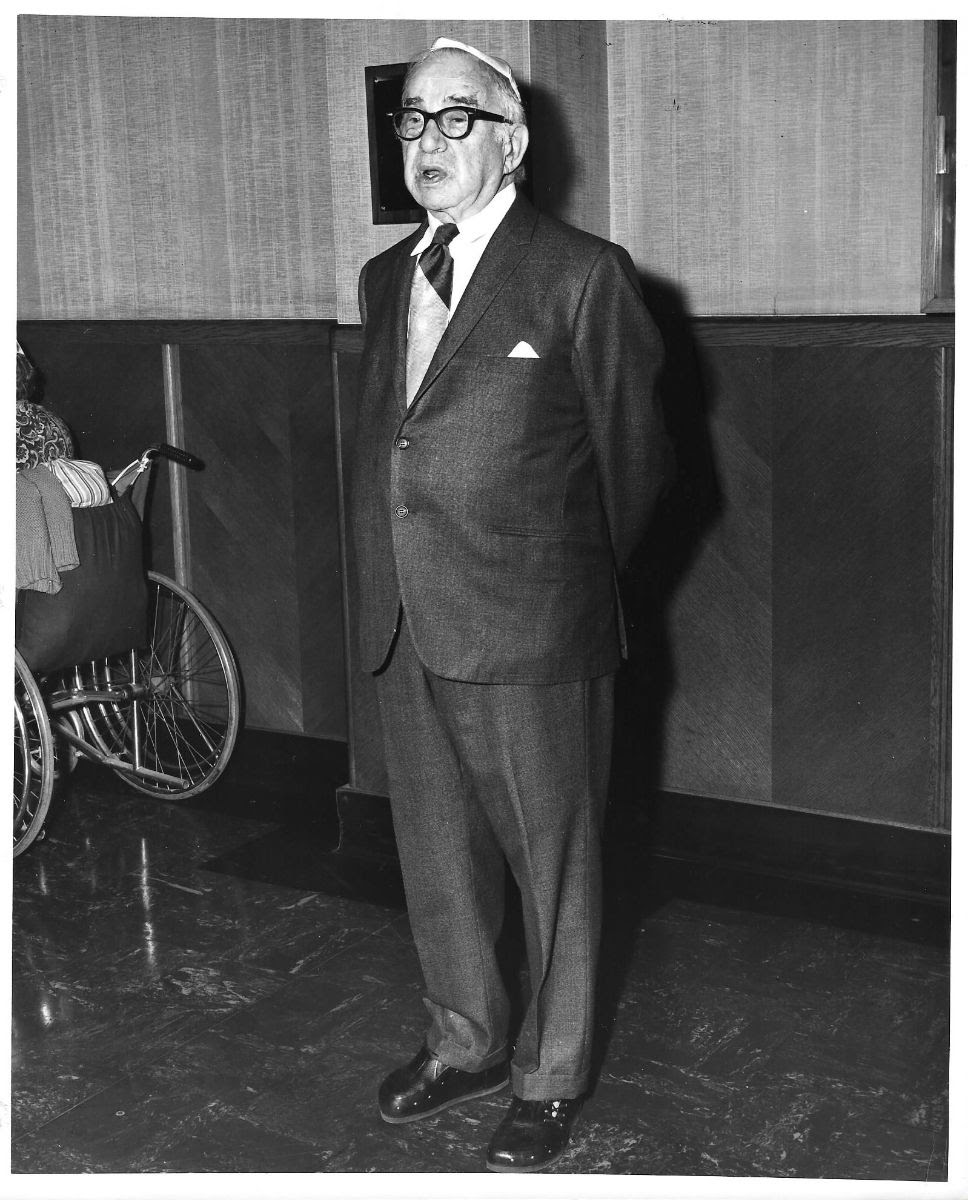
Rabbi Jacob Grossman, the Rabbi at Council Synagogue, Goldwater Hospital and Metropolitan Hospital served the island for 17 years. Chapin Collection RIHS Archives (c)
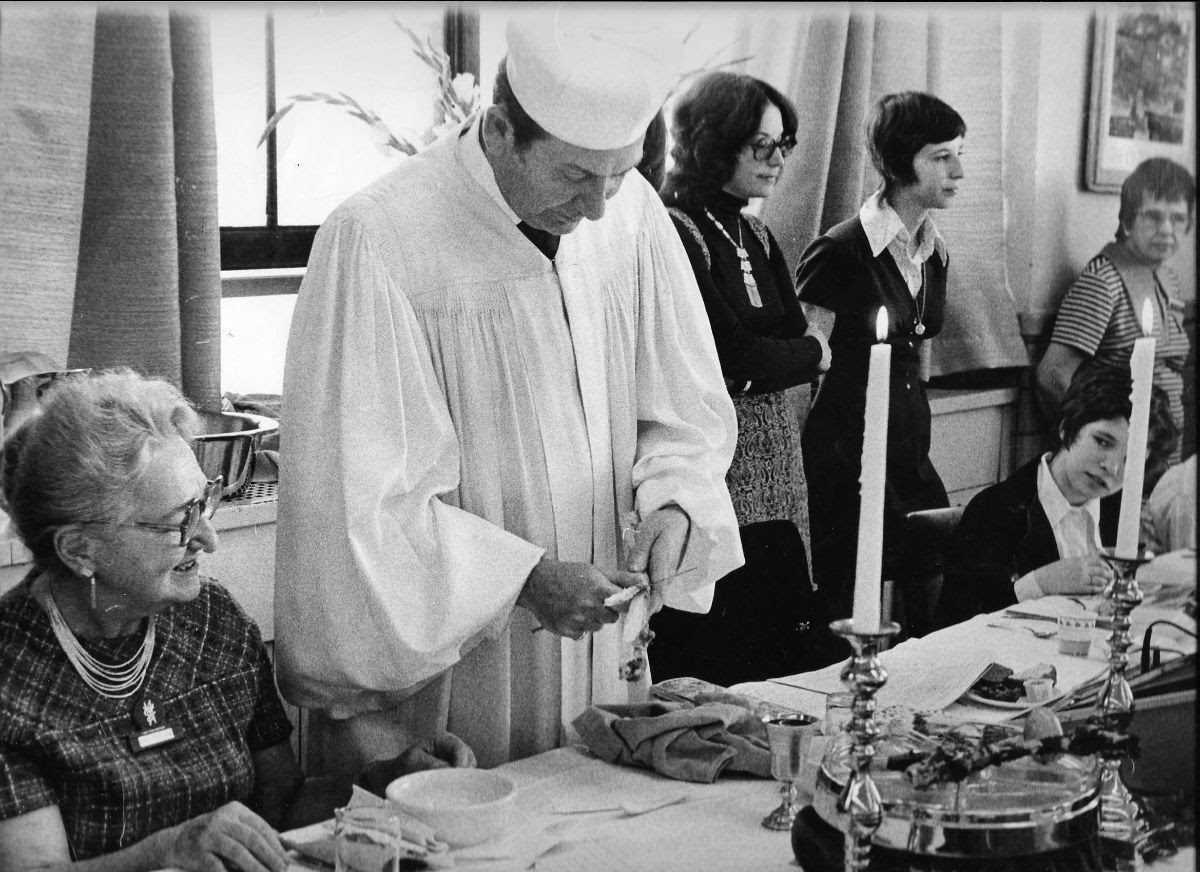
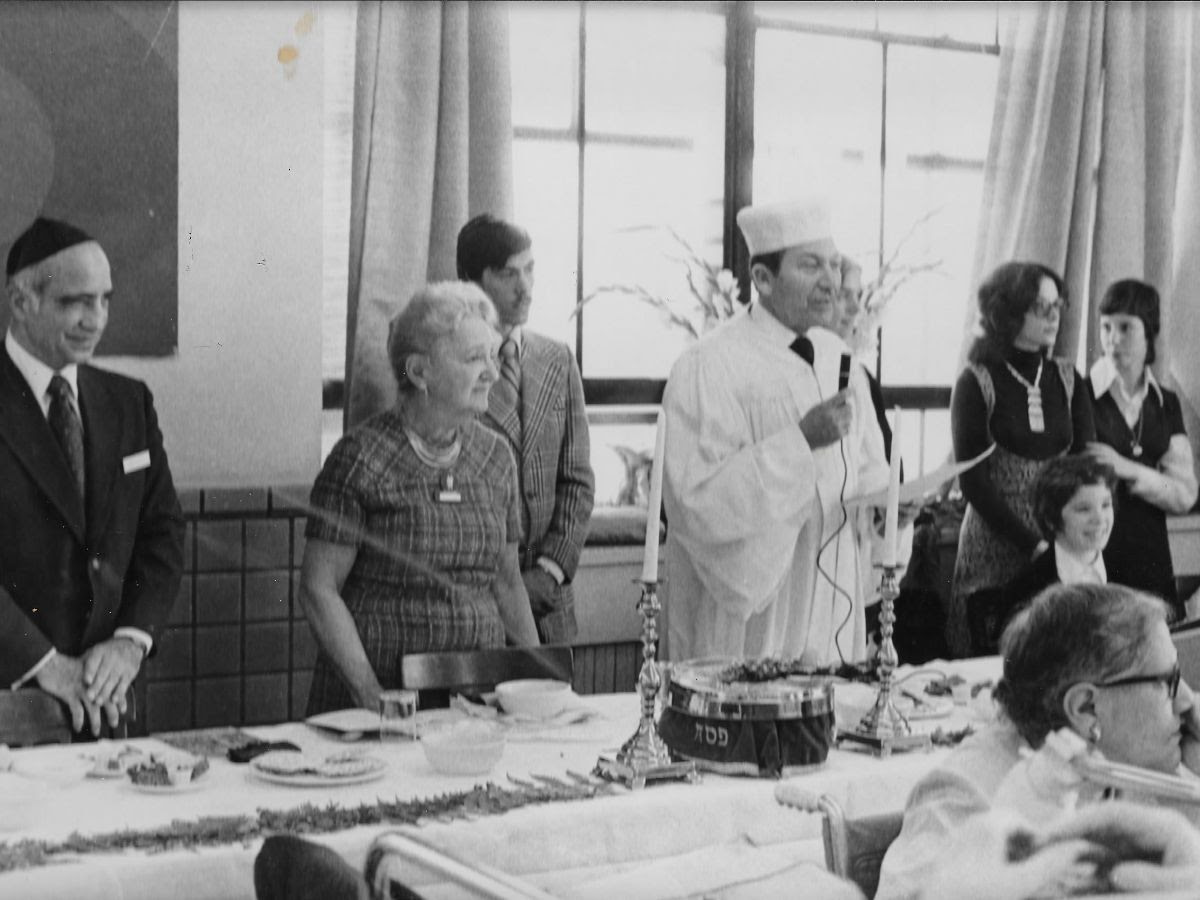
Rabbi Abraham M. Moseson presiding at Passover Seder at Goldwater Hospital in the 1960’s. Goldwater Collection RIHS Archives (c)Goldwater Collection RiHS Archives (c)
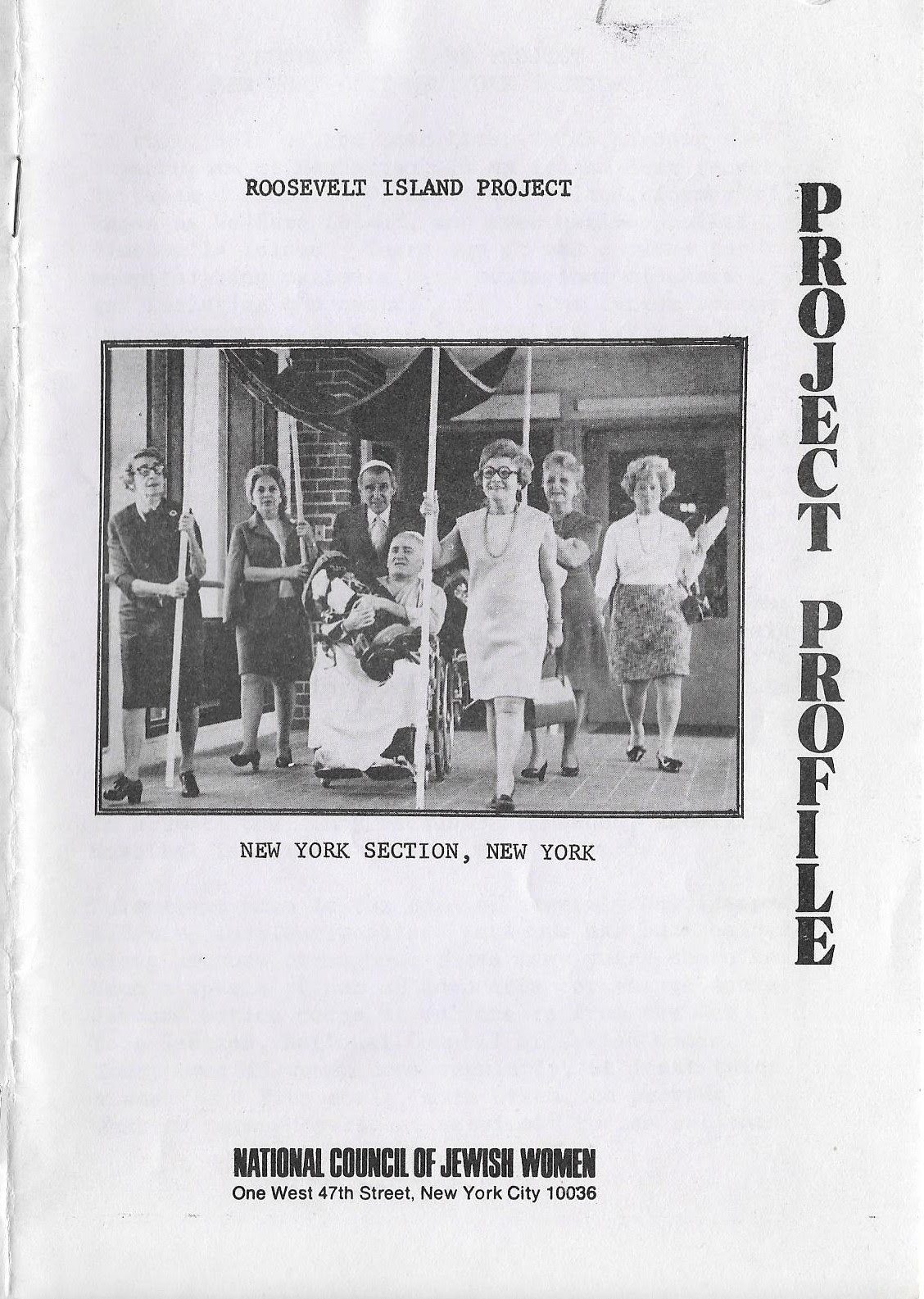
In 1907 a small group of women from the NCJW came to the island to serve the Jewish residents. They have served the island for decades as volunteers providing kosher food, ritual symbols and even built a synagogue. Photo shows ceremonial opening of new Jewish Chapel at Goldwater in 1971. RIHS Archives (c)
EDITORIAL
This afternoon I received and e-mail from a neighbor. He had looked thru the April 9th, 2020 issue of FROM THE ARCHIVES. One of the women in a photo may be his grandmother. I will research more historical photos to find out the information.
This week we are celebrating Passover with (a few) friends and family. No one last year would have believed that 51 weeks later we would still be quarantining and socially distancing.
I was at the Visitor Center Kiosk today and hundreds of families are visiting the Island from the Orthodox communities. The tram is at capacity of 55 riders per trip and there are long lines waiting to ride.
Perhaps, it will be possible to have NEXT YEAR IN JERUSALEM!
Judith Berdy
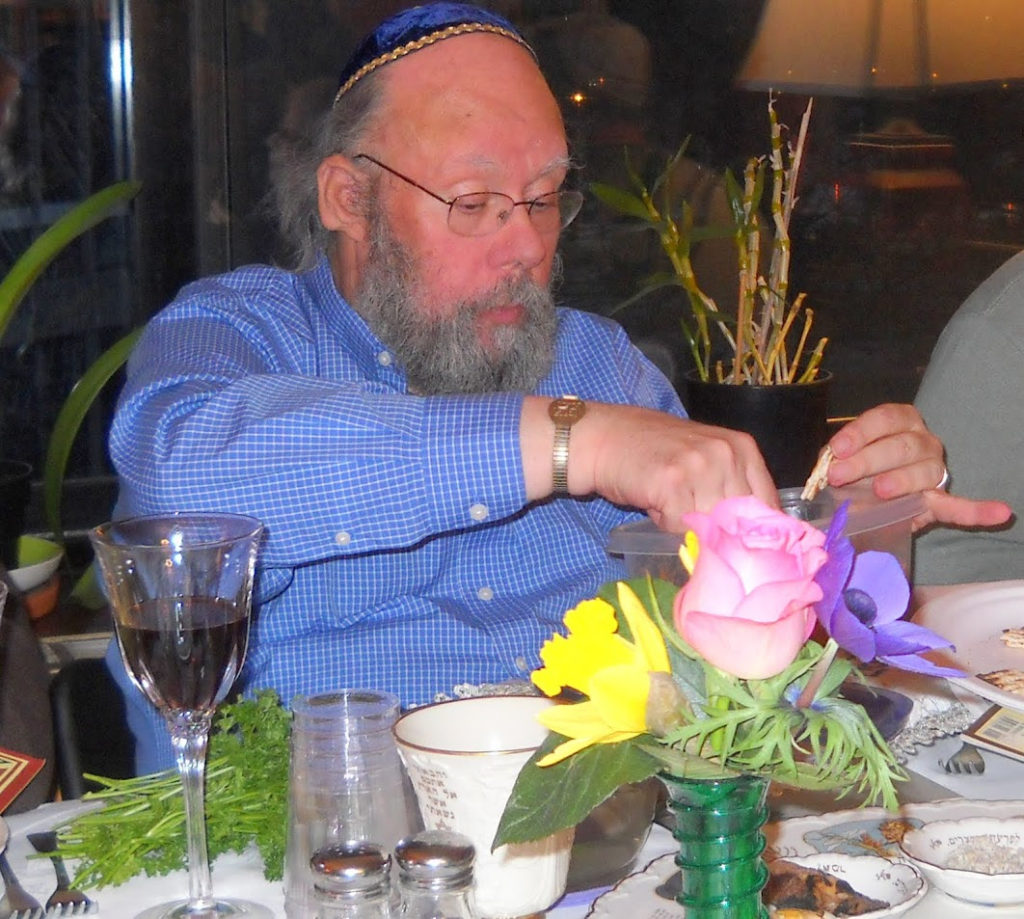
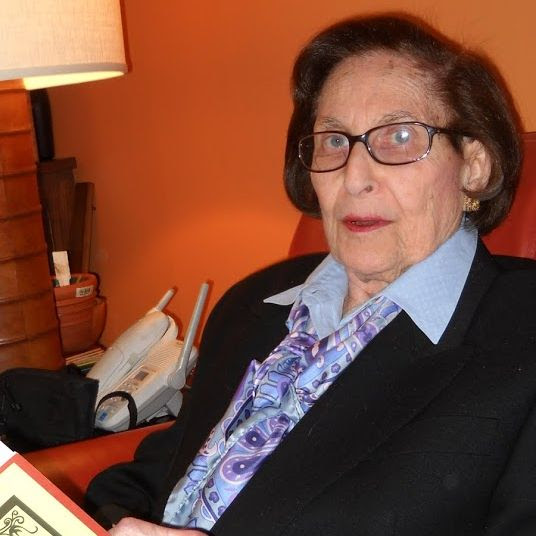
These are lost family and friends that we celebrated Passover with in 2011. Mike Schwartzberg, Ruth Berdy, Fay Vass, Howie Leifer May we remember the good times with them.
Jay Jacobson, Aron Eisenpreiss and Andy Sparberg got it right
Text by Judith Berdy Thanks to Bobbie Slonevsky for her dedication to Blackwell’s Almanac and the RIHS Thanks to Deborah Dorff for maintaining our website Edited by Melanie Colter and Deborah Dorff
All image are copyrighted (c) Roosevelt Island Historical Society unless otherwise indicated
RIHS ARCHIVES GOLDWATER HOSPITAL ARCHIVES NATIONAL COUNCIL OF JEWISH WOMEN
FUNDING PROVIDED BY ROOSEVELT ISLAND OPERATING CORPORATION PUBLIC PURPOSE GRANTS CITY COUNCIL REPRESENTATIVE BEN KALLOS DISCRETIONARY FUNDING THRU DYCD
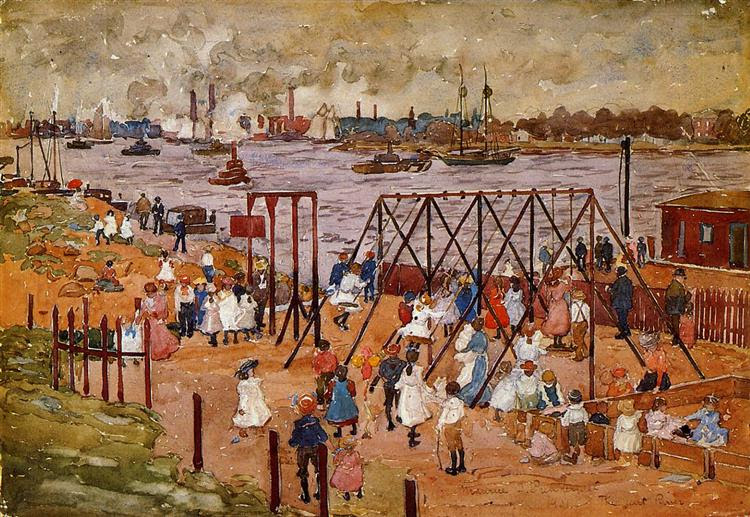
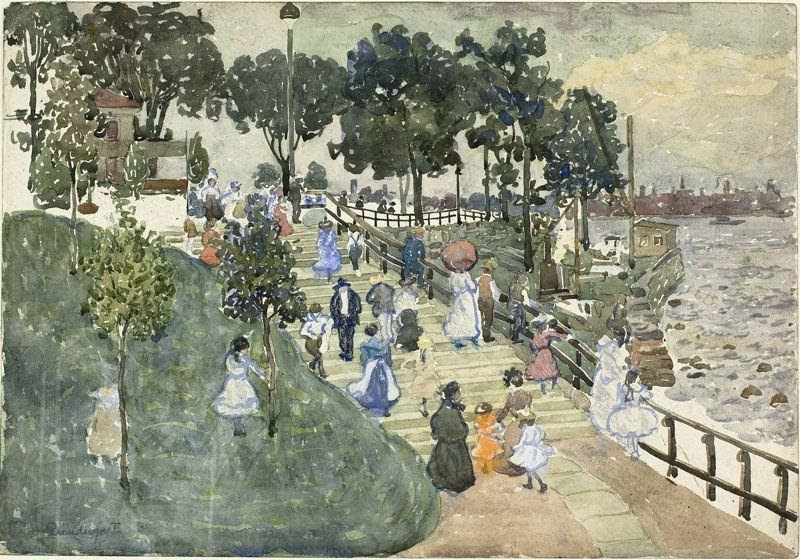
The East River, Maurice Prendergast. c.1901, Museum of Modern Art (MoMA), New York City, NY, US
Maurice Prendergast 86th Street and East River
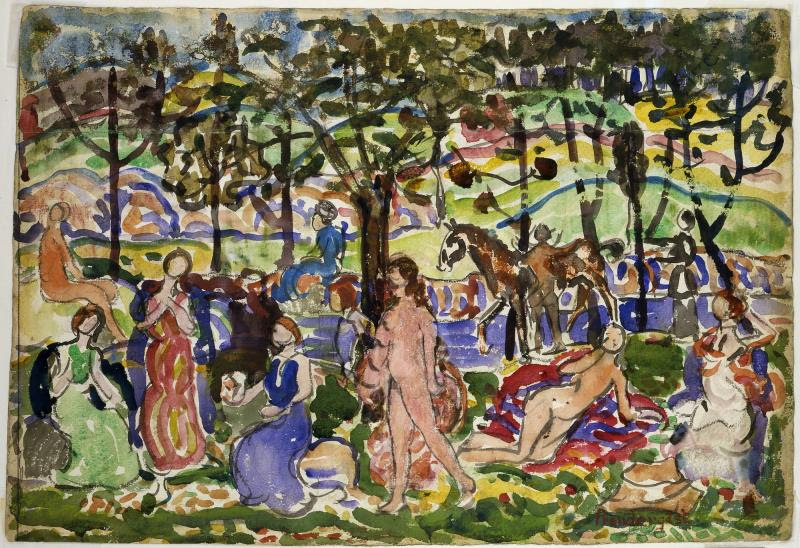
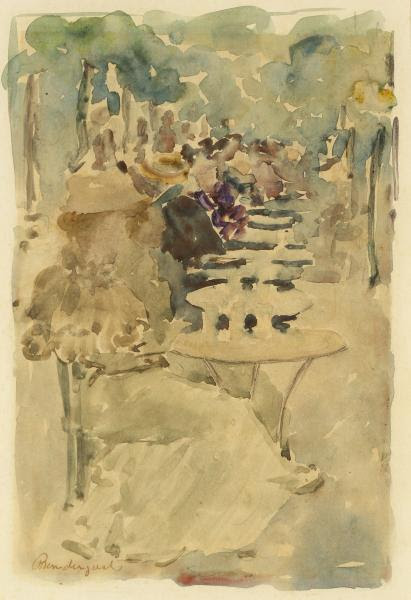
Maurice Prendergast, Park Scene, ca. 1915-1918, watercolor on paper, Smithsonian American Art Museum, Gift of Mrs. Charles Prendergast, 1968.122
Maurice Prendergast was born in St. Johns, Newfoundland, but with the failure of his father’s subarctic trading post the family moved to Boston. There young Maurice was apprenticed to a commercial artist and at the outset was conditioned to the brightly colored, flat patterning effects that characterized his mature work. For many years thereafter loosely handled watercolor remained his favored medium and gave his work vibrant spontaneity.
A shy and retiring individual, he remained a bachelor throughout his life, closely attached to his artist brother Charles, who was also a successful frame maker. For three years Maurice studied in Paris at the Atelier Colarossi and the Académie Julian. During one of his early stays in Paris he met the Canadian painter James Morrice, who introduced him to English avant-garde artists Walter Sickert and Aubrey Beardsley, all ardent admirers of James McNeill Whistler. Prendergast’s aesthetic course was set. A further acquaintance with Vuillard and Bonnard placed him firmly in the postimpressionist camp. He developed and continued to elaborate a highly personal style, with boldly contrasting, jewel-like colors, and flattened, patternlike forms rhythmically arranged on a canvas. Forms were radically simplified and presented in flat areas of bright, unmodulated color. His paintings have been aptly described as tapestry-like or resembling mosaics. A trip to Venice in 1898 exposed him to the delightful genre scenes of Vittore Carpaccio and encouraged him toward even more complex and rhythmic arrangements. He also became one of the first Americans to espouse the work of Cézanne and to understand and utilize his expressive use of form and color.
In 1907, Prendergast was invited to exhibit with the Eight, colleagues of Robert Henri and exponents of the Ashcan school. Prendergast and the romantic symbolist Arthur B. Davies seem oddly mismatched to these urban realists, but all were united in an effort to stir the American art scene out of its conservative lethargy.
In 1913 he was invited to participate in the famed Armory Show, which was largely arranged by his friend Davies. Not surprisingly, Prendergast’s brilliantly unorthodox offerings were decried as resembling “an explosion in a paint factory.” On the same occasion Marcel Duchamp’s Nude Descending a Staircase (1912) was similarly deplored as “an explosion in a shingle factory,” suggesting either a failure of critical imagination or a case of collegial plagiarism. But of the Americans represented there, Prendergast’s works were the most thoroughly modern and postimpressionist.
Who can now pass a playground teeming with brightly dressed children or wander through a public park where the varicolored garb of its occupants does not call to mind the stirring images Maurice Prendergast has left us? As Oscar Wilde once ventured, “Life imitates art far more than art imitates life.”
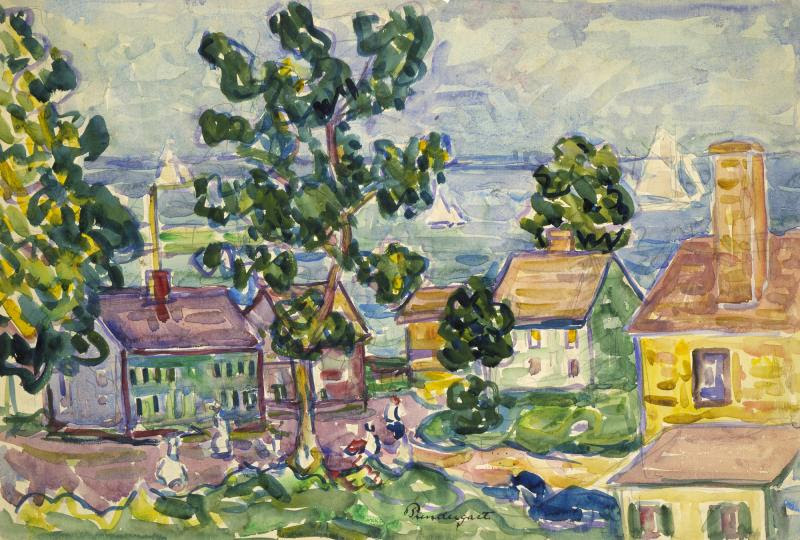
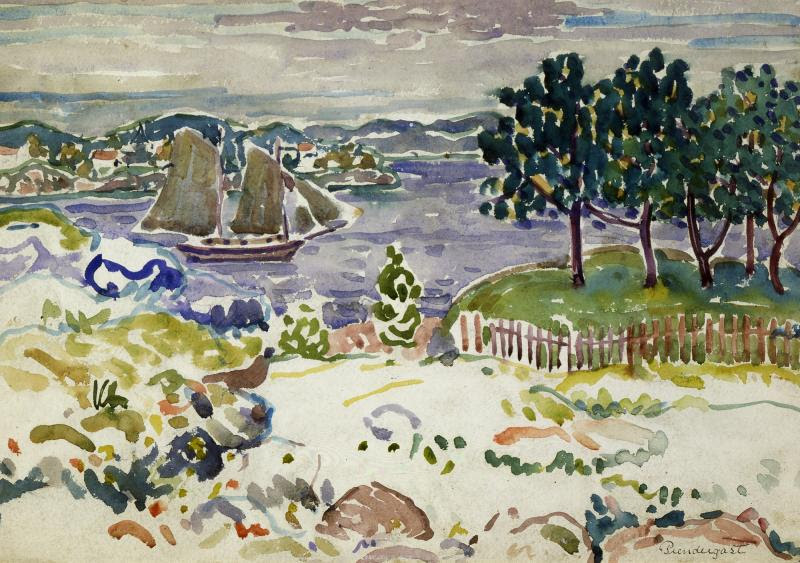
Maurice Prendergast, New England Coastal Village, ca. 1915-1918, watercolor and pencil on paper, Smithsonian American Art Museum, Gift of Mrs. Charles Prendergast, 1985.83
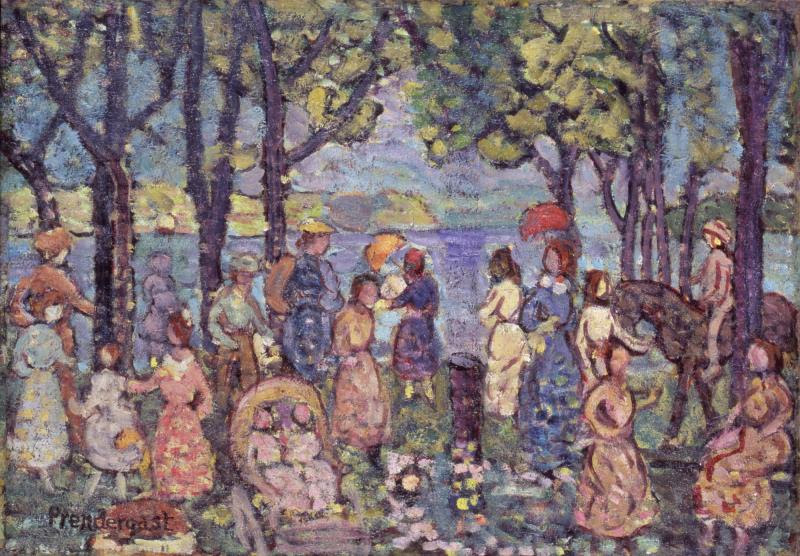
Maurice Prendergast, Summer, New England, 1912, oil on canvas, Smithsonian American Art Museum, Gift of Mrs. Charles Prendergast, 1976.124
Maurice Prendergast, Outdoor Cafe, ca. 1892, watercolor and pencil on paper, Smithsonian American Art Museum, Gift of Dr. R.A. Kling, 1965.43
Maurice Prendergast, Inlet with Sailboat, Maine, ca. 1913-1915, watercolor and pencil on paper, Smithsonian American Art Museum, Gift of Robert Brady, 1981.171A
EDITORIAL, UPDATE
Yesterday, RIOC announced that the Comfort Station at Southpoint Park was closed for an unknown time period. No explanation!!
We get requests for all kinds of visitor information the FDR FFP, Cornell, Blackwell House, the Asylum, where to eat, etc.
Unfortunately one common request is WHERE IS THERE BATHROOM?
RIOC HAS PUBLIC BATHROOMS JUST INSIDE THE ENTRANCE TO SPORTSPARK. IT IS TIME THAT THESE WERE OPENED TO THE PUBLIC.
The lack of public restrooms here is disgraceful. Why should Cornell be the easiest to reach toilet. Under Susan Rosenthal, Related agreed to build a comfort station at Firefighters Field. This was recently canceled or delayed.
Spring and Passover are coming with thousands of visitors arriving on the island and no public bathrooms. RIOC is responsible to have pubic bathrooms.
Text by Judith Berdy Thanks to Bobbie Slonevsky for her dedication to Blackwell’s Almanac and the RIHS Thanks to Deborah Dorff for maintaining our website Edited by Deborah Dorff All image are copyrighted (c)
FUNDING PROVIDED BY ROOSEVELT ISLAND OPERATING CORPORATION PUBLIC PURPOSE GRANTS CITY COUNCIL REPRESENTATIVE BEN KALLOS DISCRETIONARY FUNDING THRU DYCD
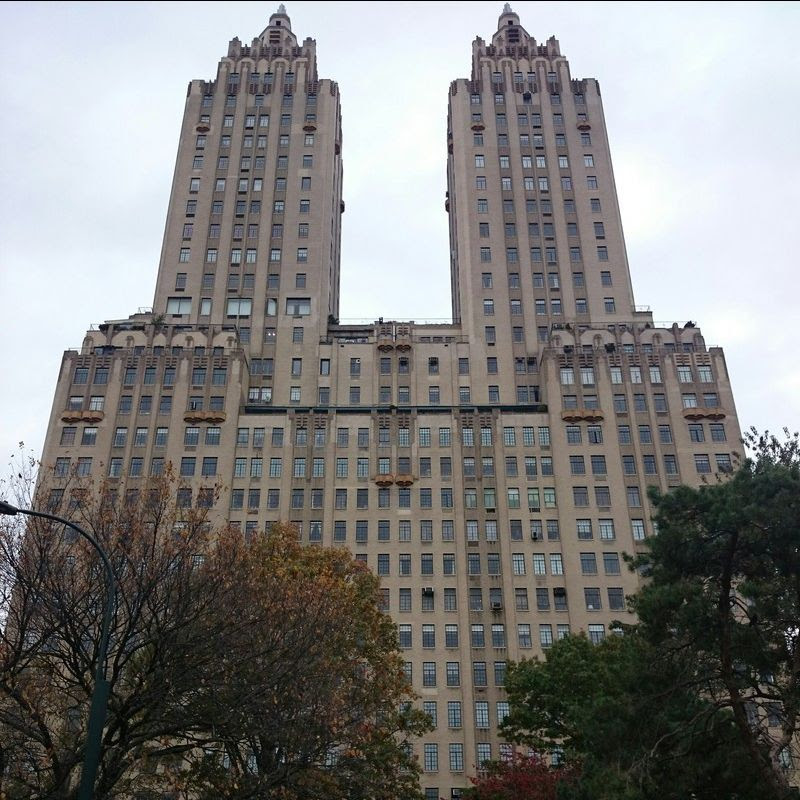
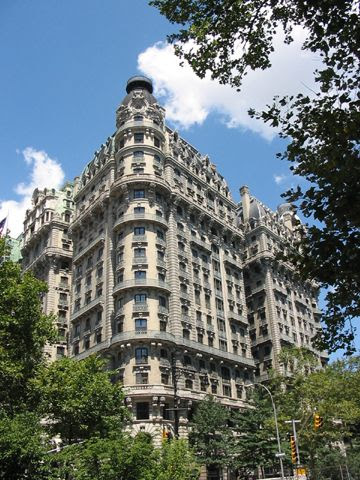
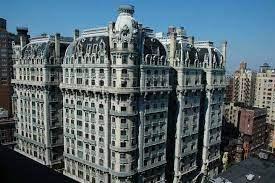
The Ansonia is a building on the Upper West Side of Manhattan in New York City, located at 2109 Broadway, between West 73rd and West 74th Streets. It was originally built as a residential hotel by William Earle Dodge Stokes, the Phelps-Dodge copper heir and shareholder in the Ansonia Clock Company, and it was named for his grandfather, the industrialist Anson Greene Phelps. In 1897, Stokes commissioned French architect Paul Emile Duboy to design the grandest hotel in Manhattan.[2]
Stokes listed himself as “architect-in-chief” for the project and hired Duboy, a sculptor who designed and made the ornamental sculptures on the Soldiers’ and Sailors’ Monument, to draw up the plans. New Orleans architect Martin Shepard served as draftsman and assistant superintendent of construction on the project. The assignee of the contractor proceed against Stokes in 1907, suing for $90,000. But Stokes defended himself, explaining that Duboy was in an insane asylum in Paris, and it was his belief that he was insane when, in 1903, he signed the final certificate on the plans, and should not have been making commitments in Stokes’s name concerning the hotel.
In what might be the earliest harbinger of the current developments in urban farming, Stokes established a small farm on the roof of the hotel, where he kept farm animals next to his personal apartment. There was a cattle elevator, which enabled dairy cows to be stabled on the roof.
Stokes had a Utopian vision for the Ansonia—that it could be self-sufficient, or at least contribute to its own support—which led to perhaps the strangest New York apartment amenity ever. “The farm on the roof,” Weddie Stokes wrote years later, “included about 500 chickens, many ducks, about six goats and a small bear.” Every day, a bellhop delivered free fresh eggs to all the tenants, and any surplus was sold cheaply to the public in the basement arcade. Not much about this feature charmed the city fathers, however, and in 1907, the Department of Health shut down the farm in the sky.
The Ansonia was a residential hotel. The residents lived in “luxurious” apartments with multiple bedrooms, parlors, libraries, and formal dining rooms that were often round or oval. Apartments featured views north and south along Broadway, high ceilings, “elegant” moldings, and bay windows. There were three thousand rooms. Arrangements could be made to rent a suite varying in size from a room and a bath to thirty rooms. Some of these suites were rented for $14,000 a year,[9] the equivalent of more than $400,000 in 2018. The smaller units, with one bedroom, parlor, and bath, lacked kitchens. There was a central kitchen and serving kitchens on every floor, so that the residents could enjoy the services of professional chefs while dining in their own apartments. Besides the usual array of tearooms, restaurants, and a grand ballroom, the Ansonia had Turkish baths and a lobby fountain with live seals.
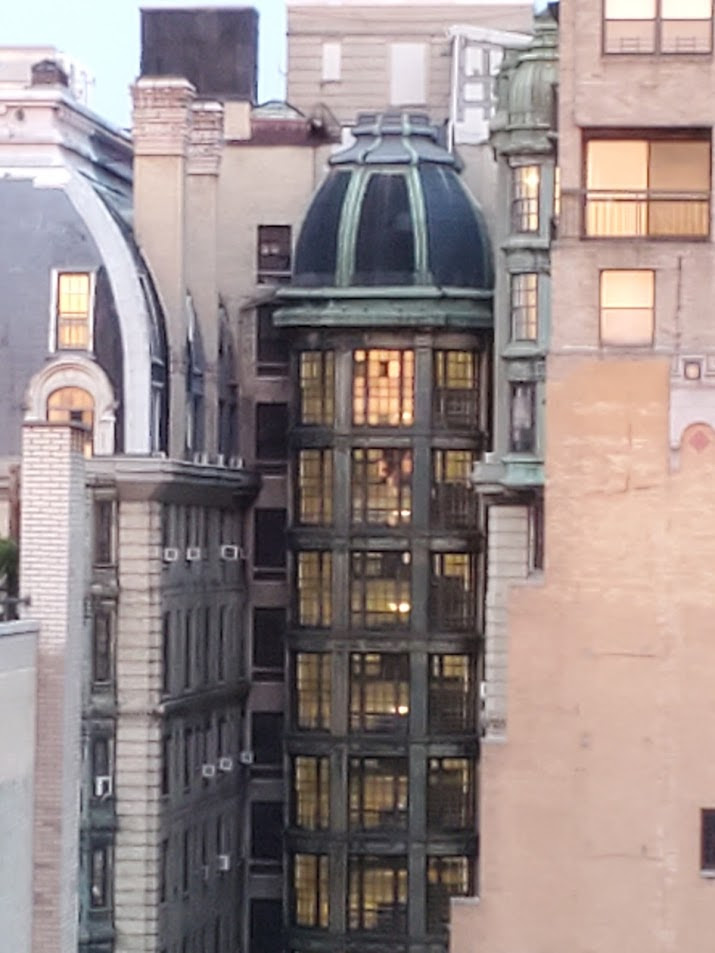
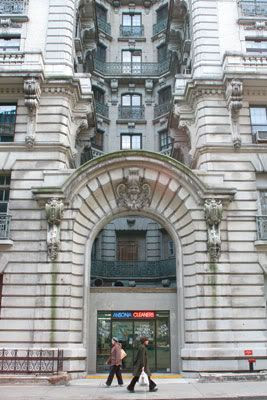
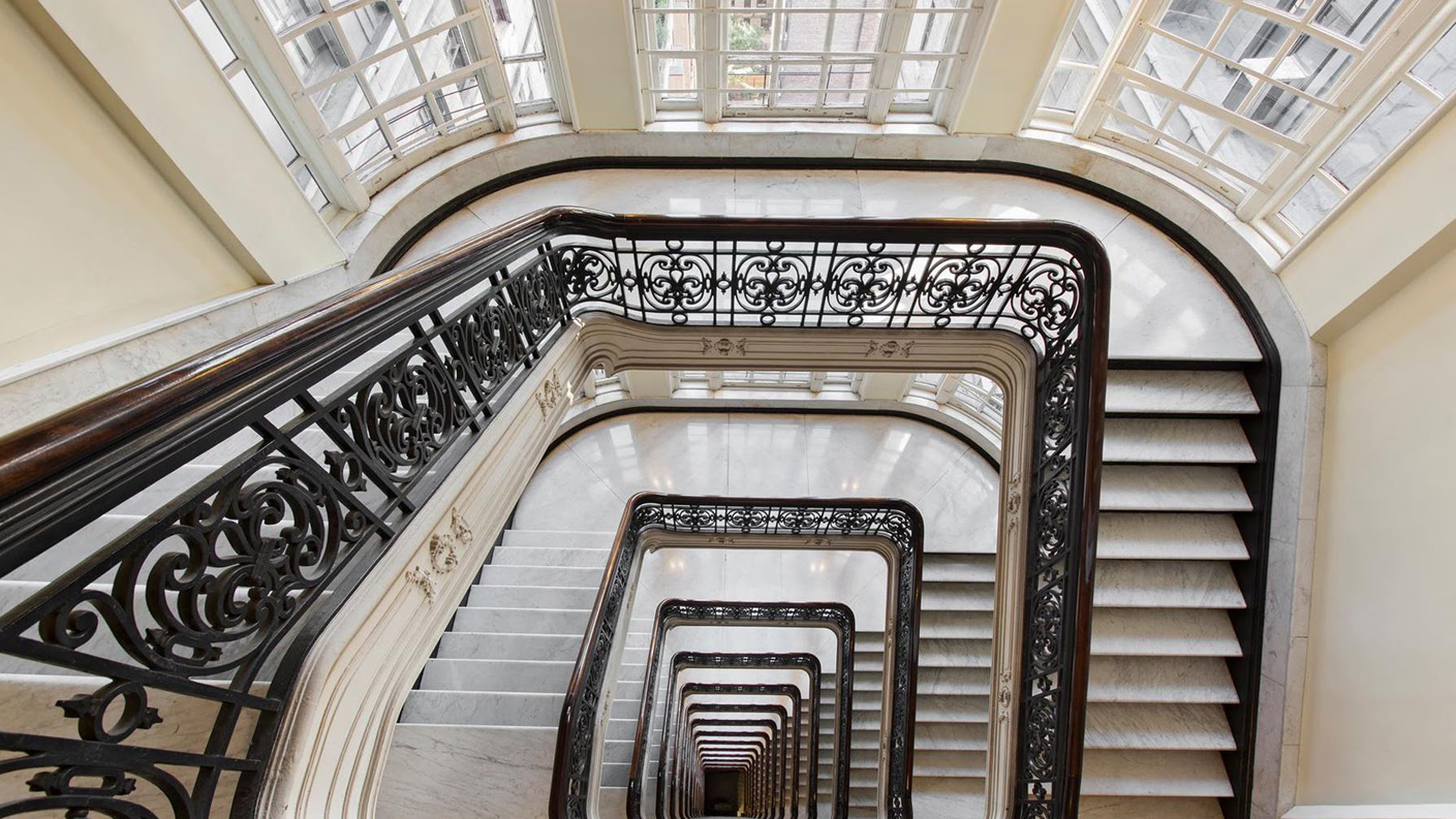
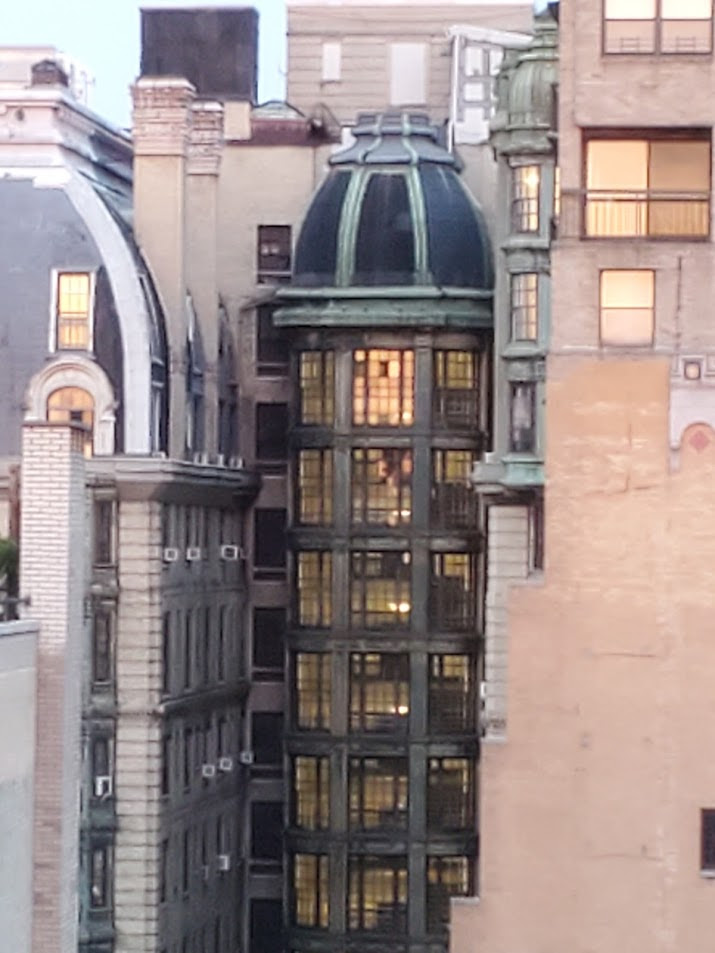
Erected between 1899 and 1904, it was the largest residential hotel of its day and the first air-conditioned hotel in New York. The building has an eighteen-story steel-frame structure. The exterior is decorated in the Beaux-Art style with a Parisian style mansard roof. The Ansonia features round corner-towers or turrets and an open stairwell that sweeps up to a domed skylight.
Ansonia Hotel The building’s copper cornices were removed during World War II and melted down for the war effort.
The Ansonia has had many celebrated residents, including baseball player Babe Ruth; writer Theodore Dreiser, in 1912; the leader of the Bahá’í Faith `Abdu’l-Bahá; Nobel prize winner in literature Isaac Bashevitz Singer; conductor Arturo Toscanini; composer Igor Stravinsky; fashion designer Koos van den Akker; and Italian tenor Enrico Caruso.
By the mid-twentieth-century, the grand apartments had mostly been divided into studios and one-bedroom units, almost all of which retained their original architectural detail. After a short debate in the 1960s, a proposal to demolish the building was fought off by its many musical and artistic residents.
From 1977 until 1980, The Ansonia Hotel’s basement was home to Plato’s Retreat, an open door swinger sex club. Prior to Plato’s Retreat, the building housed the Continental Baths, operated by Steve Ostrow, a gay bathhouse where Bette Midler provided musical entertainment early in her career, with Barry Manilow as her accompanist.
In 1980, the building was inducted to the National Register of Historic Places.
In 1992, the Ansonia was converted to a condominium apartment building with 430 apartments. By 2007, most of the rent-controlled apartment tenants had moved out, and the small apartments were sold to buyers who purchased clusters of small apartments and threw them together to recreate grand apartments.
The Ansonia is home to part of the New York campus of the American Musical and Dramatic Academy.
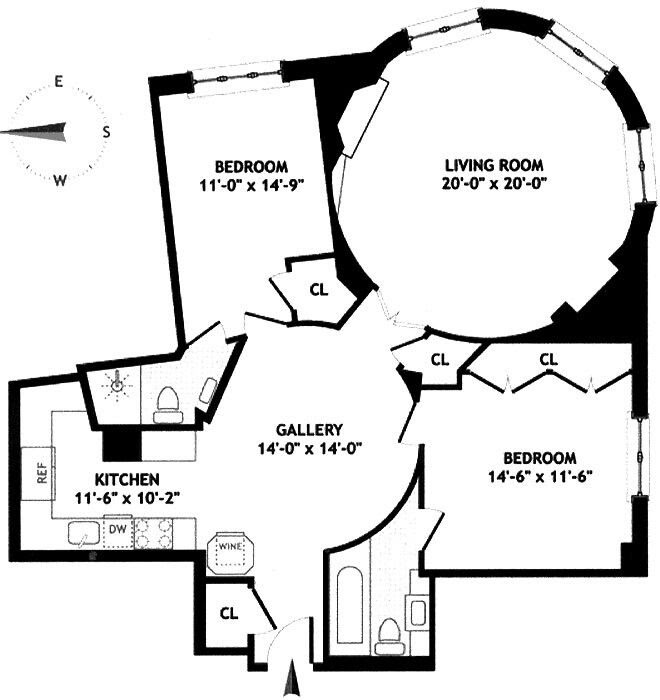
The unique round design makes many interesting layouts for the apartments.
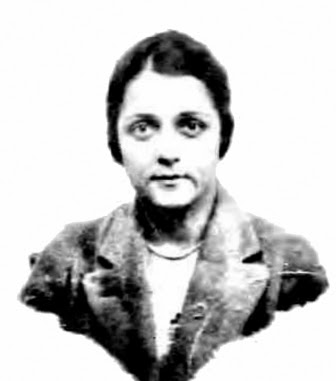
Helen Godman (1919) calling herself “Alice” In 1916, the Ansonia was the scene of a blackmail plot. Edward R. West, Vice President of the C. D. Gregg Tea and Coffee Company of Chicago, had checked into the hotel with a woman known to him as Alice Williams. Alice Williams was an alias of Helen Godman, also known as “Buda” Godman, who acted as the “lure” for a blackmail gang based in Chicago. West and Godman were together in their room at The Ansonia when two male members of the gang, impersonating Federal law enforcement agents, entered the room and “arrested” West for violation of the Mann Act.[14] After transporting West and Godman back to Chicago, West was coerced into paying the two “agents” $15,000 in order to avoid prosecution, and avoid embarrassment or soiling the reputation of “Alice.” West reported the incident after becoming suspicious that not everything was as it seemed. Several of the male blackmailers earned prison terms, but “Buda” Godman was released on $10,000 bail. Skipping bail, she disappeared for many years, but was eventually caught and charged for trying to fence the Glemby Jewels taken in a 1932 robbery.[
A key player in the 1919 Black Sox Scandal, the Chicago White Sox first baseman Chick Gandil had an apartment at the Ansonia. According to Eliot Asinof, in his book Eight Men Out, Gandil held a meeting in the Ansonia apartment with his White Sox teammates to recruit them for the scheme to intentionally lose the 1919 World Series.
Willie Sutton, the bank robber, was arrested for the sixth time (of eight) two days before Thanksgiving, 1930, while having breakfast at Childs Restaurant in the Ansonia.
TODAY’S PHOTO IS A PREVIEW OF AN UPCOMING ISSUE ON THE ANSONIA APARTMENTS. STAY TUNED
Text by Judith Berdy Thanks to Bobbie Slonevsky for her dedication to Blackwell’s Almanac and the RIHS Thanks to Deborah Dorff for maintaining our website Edited by Melanie Colter and Deborah Dorff
Sources
WIKIPEDIA
FUNDING PROVIDED BY ROOSEVELT ISLAND OPERATING CORPORATION PUBLIC PURPOSE GRANTS CITY COUNCIL REPRESENTATIVE BEN KALLOS DISCRETIONARY FUNDING THRU DYCD
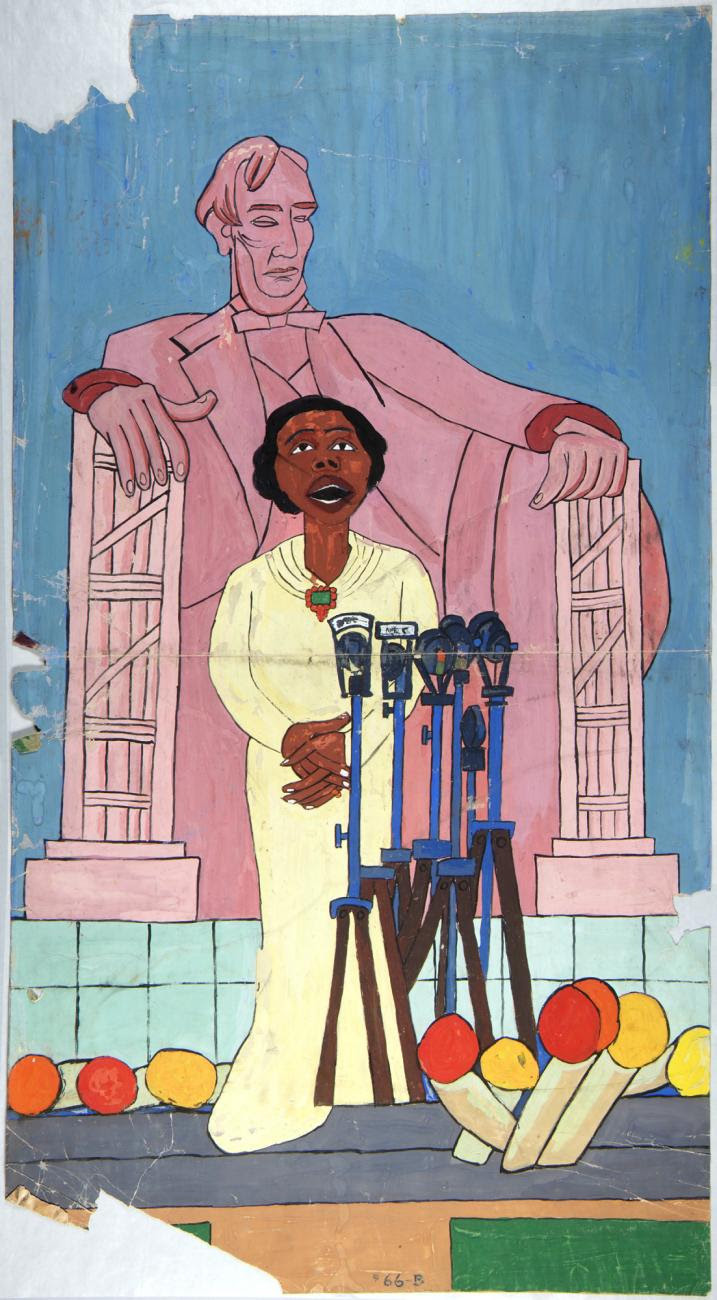
I’ve been thinking a lot about Marian Anderson lately, the great contralto whose concert on Easter Sunday seventy-one years ago at the Lincoln Memorial brought the nation together in the name of civil rights. When Anderson was denied the use of DAR Constitution Hall because she was black, First Lady Eleanor Roosevelt famously resigned from the DAR, while members of the Roosevelt administration, notably Harold Ickes, rallied around the Philadelphia-born singer and arranged for her to perform on the steps of the memorial. On the afternoon of April 9, 1939, tens of thousands of people attended the concert, while others listened using their radios at home.
That same year, African American artist William H. Johnson created Marian Anderson #1, which speaks to the hope of that event with a childlike ease. The bright colors are optimistic. The lights seem to grow out of the ground like fairy-tale mushrooms, while the tall and slender microphones could be her back-up singers. In the background, President Lincoln reclines a bit like he has just eaten a large meal. His right hand almost seems to be giving the thumbs-up sign of approval to Anderson; he’s clearly proud. Anderson, on the other hand, is beaming. You can almost hear her deep honey voice pouring out of her open mouth. The image belies the fact that when she arrived in Washington, D.C., from Philadelphia earlier that morning, she and her mother were denied a hotel room because of their skin color.
Johnson and Anderson were both born in the United States but continued their studies overseas. In Paris, Johnson fell in love with and married Danish artist Holcha Krake. At home, Anderson was restricted by Jim Crow laws, segregation, and prejudice. In Europe, she flourished and became a star. She was a huge success all over Europe, but her concerts in Scandinavia in the 1930s were history-in-the-making. I wonder if Marian, William, and Holcha met in Europe when they were young and starting out.
William H. Johnson, Going Out, ca. 1939-1942, gouache, pen and ink and pencil on paper, Smithsonian American Art Museum, Gift of the Harmon Foundation, 1967.59.1088
A mother and daughter, dressed to the nines, are ready for a night on the town, likely in Harlem. The mother is distinguished by her red beret, bright red lipstick, and high-heeled shoes, and the daughter by the bow in her hair, her white dress, and abstracted flowers. Johnson reveals a sense of humor in two flower forms that also suggest lollipops and breasts. Graphic Masters II: Highlights from the Smithsonian American Art Museum, 2009
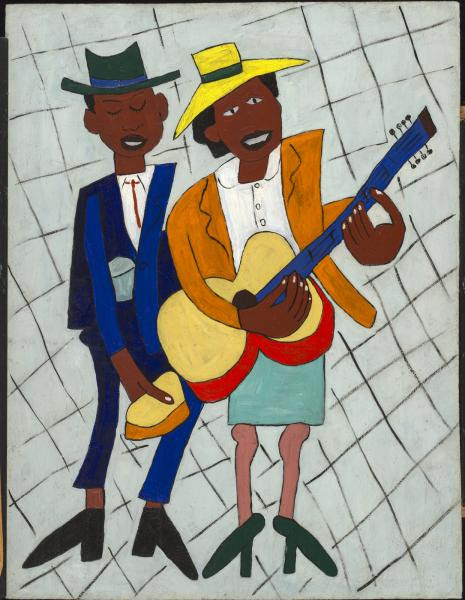
William H. Johnson, Blind Musician, ca. 1940, oil on plywood, Smithsonian American Art Museum, Gift of the Harmon Foundation, 1967.59.670
William H. Johnson’s paintings of African Americans were often based on scenes he remembered from his life in South Carolina and later in Harlem. Johnson may have based Blind Musician on such singers as Blind Boy Fuller, Sister Rosetta Tharpe, or the Reverend Gary Davis (Powell, Homecoming: The Art and Life of William H. Johnson, 1991). These performers attracted notice in the South and made their way to Chicago and New York City, where their recordings helped make the blues tradition familiar to mainstream audiences. The background of crosshatched lines signals that these itinerant musicians belong in no particular place, and must make their way with only their voices, guitar, and tambourine
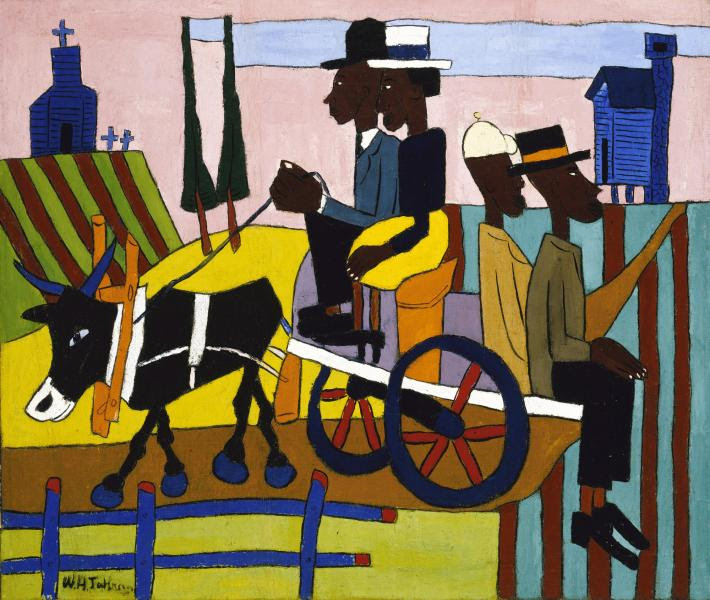
William H. Johnson, Going to Church, ca. 1940-1941, oil on burlap, Smithsonian American Art Museum, Gift of the Harmon Foundation, 1967.59.1003
William H. Johnson painted rural scenes inspired in part by his memories of growing up in South Carolina. A family of four ride on an oxcart toward a distant hill, where three crosses mark their physical destination as well as their spiritual home on Calvary. The flat composition, comprised of clashing hues arranged in stripes and color blocks, recalls the story quilts made of scraps pieced together by African American women.
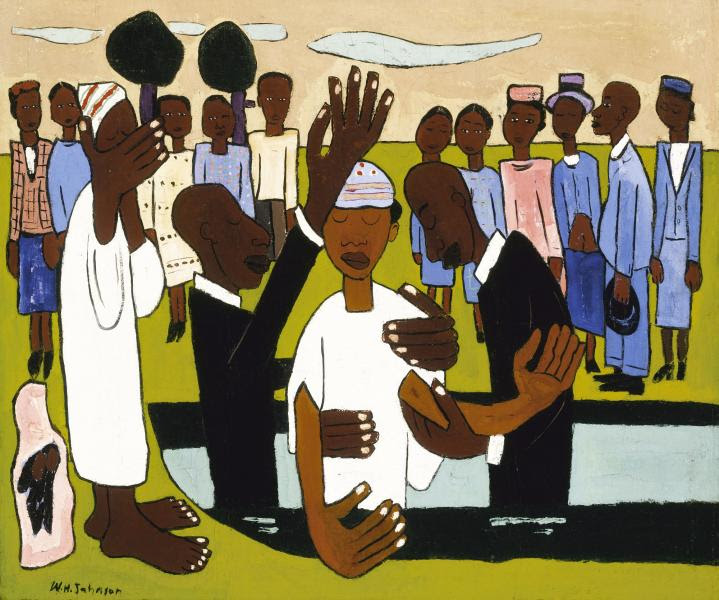
William H. Johnson, I Baptize Thee, ca. 1940, oil on burlap, Smithsonian American Art Museum, Gift of the Harmon Foundation, 1967.59.977
In the background of this painting, Sunday suits and best dresses evoke a Baptist congregation in a rural community. Nearer the viewer, however, the strong profiles, closed eyes, and exaggerated hands and feet recall African art and older rituals of faith. The preacher and congregants stand in a creek or a pond to symbolize crossing the River Jordan into a new life. This symbolism applied as well to the dramatic change in William H. Johnson’s career when he returned to America in 1938. He abandoned his European painting styles and subjects and vowed to paint the authentic spirit of “his own people.”
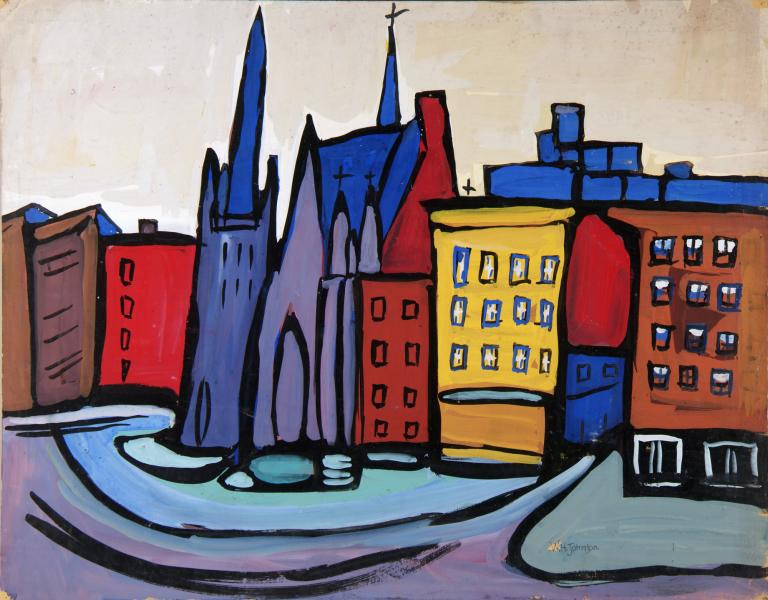
William H. Johnson, Harlem Cityscape with Church, ca. 1939-1940, tempera on paperboard, Smithsonian American Art Museum, Gift of the Harmon Foundation, 1967.59.289
JAY JACOBSON, VICKI FEINMEL, & GLORIA HERMAN GOT IT RIGHT
Text by Judith Berdy Thanks to Bobbie Slonevsky for her dedication to Blackwell’s Almanac and the RIHS Thanks to Deborah Dorff for maintaining our website Edited by Deborah Dorff Roosevelt Island Historical Society
Sources SMITHSONIAN AMERICAN ART MUSEUM
FUNDING PROVIDED BY ROOSEVELT ISLAND OPERATING CORPORATION PUBLIC PURPOSE GRANTS CITY COUNCIL REPRESENTATIVE BEN KALLOS DISCRETIONARY FUNDING THRU DYCD
SEE BELOW FOR SEASONAL JOBS AT FDR FOUR FREEDOMS PARK
Rockefeller University Stephen Blank
I admit it. I think the new structure across the river looks like a 1950s bus station. Or a train. But behind it lies one of the most interesting institutions in New York City, Rockefeller University. So, a quick tour of our neighbor over the river.
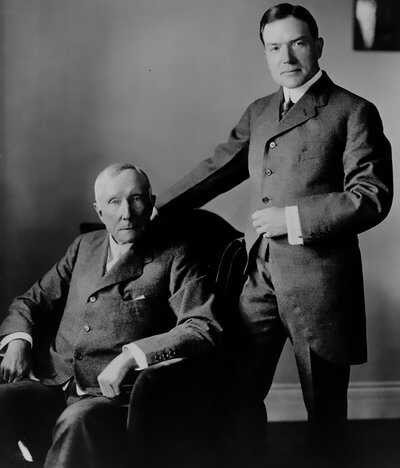
Rockefeller University began as The Rockefeller Institute for Medical Research. The Institute was founded in 1901 by John D. Rockefeller in collaboration with his only son, John D. Rockefeller Jr. “Junior” as he was known, and Junior’s youngest son, David, had much to do with the institution over the years. So, more about them later.
After his grandson died from scarlet fever in January 1901, Rockefeller Senior formalized plans to establish the research center he had discussed with his adviser Frederick Gates and Rockefeller Junior. Infectious diseases such as tuberculosis, diphtheria, and typhoid fever were seen as the greatest threats to human health. New research centers in Europe were successfully applying laboratory science to learn more about them. “…it seemed to me,” Gates later wrote, “an institute of medical research ought to be established in the United States. And here was an opportunity for Mr. Rockefeller to do an immense service to his country and perhaps the world.” The Institute was the first institution in the United States devoted solely to biomedical research and to understand the underlying causes of diseases.
The Institute was one of the first of the Rockefellers’ great philanthropic foundations. With it, they sought to “attack misery through the weapon of research.” “Don’t be in a hurry to produce anything practical,” Junior advised its staff. “If you don’t, the next fellow will. You, here, explore and dream.”
In 1954 the institute assumed the status of a graduate university and in 1965 it was named the Rockefeller University.
The Institute housed many discoveries. One example: The research of one Institute leader, Oswald Avery, led to the development of the first vaccine for pneumococcal pneumonia, but it also led him and colleagues to make an unexpected discovery in 1944 – that DNA is the substance that transmits hereditary information, a finding that would set the course for biological research for the rest of the century.
Today, approximately 250 graduate students are enrolled in the program, offering doctoral degrees in biomedical sciences, chemistry, and biophysics. Laboratory research is the primary focus and students can meet degree requirements by participating in any combination of courses. In partnership with neighboring Memorial Sloan Kettering Cancer Center and Weill Cornell Medicine, Rockefeller participates in the Tri-Institutional MD–PhD Program as well as a Tri-Institutional chemical biology Ph.D. program.
It’s one special place. Among its 82 member faculty are 37 members of the National Academy of Sciences, 17 members of the National Academy of Medicine, 7 Lasker Award recipients, and 5 Nobel laureates. Most impressive, as of October 2020, 38 Nobel laureates have been affiliated with Rockefeller University.
John D. and father. (Rockefeller Archives)
The Rockefeller Family and Philanthropy
J.D. Senior’s interest in philanthropy came later in his life, but Junior’s philanthropic commitment arrived earlier. Junior resigned from positions in Standard Oil and U.S. Steel in 1910 at 36 to try to “purify” his ongoing philanthropy from commercial and financial interests. From then on, he (and his children) devoted much of their lives (and fortunes) to philanthropic activities. This commitment was deepened in the wake of the “Ludlow Massacre” that occurred in a violent clash between miners and mine owners (of which Junior owned a controlling interest) occurred at a tent camp occupied by striking miners. At least 20 men, women, and children died in the slaughter. Junior – and the Rockefellers in all – were much vilified as a result and Junior struggled, successfully it is largely agreed, to shed this burden and to help right some of the wrongs in the clash.
Junior remained involved in various financial activities – including taking a leading role in the creation of Rockefeller Center – but these were overshadowed by his philanthropy. In just the area of culture and art, he played a leading role in the creation of the Museum of Modern Art (founded by his wife), the Met’s Cloisters and Colonial Williamsburg. He took a leading role in the restoration of major buildings in France after World War I, such as the Reims Cathedral, the Château de Fontainebleau and the Château de Versailles. He also liberally funded the notable early excavations at Luxor. He was a founder of the Asia Society and sponsored the creation of The Council on Foreign Relations.
Junior treated his children as frugally as he had experienced. (It’s said that he was forced to wear his older sisters’ hand-me-downs as a young person.) His children were not permitted to spend their entire allowances. One third had to be donated and one third saved, and all expenses had to be recorded. (In Preston Sturges’ wonderful Palm Beach Story, Rudy Vallee plays a Rockefeller duplicate and records every expenditure – mainly a wardrobe for Claudette Colbert – in his little notebook.)
Rockefeller University Campus The campus looked to me like many other in the Northeast, with older buildings, graceful trees and well-kept lawns. Much was done in 1958 to mark the transition to a public university. The aim, the University said was “to create an academic oasis in the city.” This is the campus we know (at least until the recent construction), and this is how the University described it: “The fourteen-acre campus, located in Manhattan along the East River opposite Roosevelt Island, is perched upon two broad terraces. The upper terrace adjacent to York Avenue is a leafy mall with Modernist buildings designed by architect Wallace K. Harrison, while the lower terrace includes the campus’s older neoclassical buildings… (the aim) was to revitalize the campus core, integrating the historic campus into this new design.”
Founder’s Hall was the first building built on the campus between 1903 and 1906 and is still being used for university offices. A steel-framed five story building, its exterior is finished in gray brick with limestone trim. It has Classical Revival styling, with broad pilasters separating groups of window bays, and an entrance with a portico supported by Ionic columns. The Caspary Auditorium, a 40-foot-high, 90-foot round geodesic dome, was erected in 1957 and hosts a variety of concert series and lectures – including the weekly lunchtime concert series that many of us attend regularly.
Scandal It’s New York City and no institution is without some shame in the closet. In this case, Dr. Reginald Archibald, an endocrinologist at the university from 1948 to 1982, allegedly abused dozens or hundreds of boys during his time at the University while studying growth problems in children, including molestation and photographing them naked. Officials at Rockefeller University knew of the legitimacy of the claims for years before notifying the public. The university and hospital issued a statement confirming that Archibald had “engaged in certain inappropriate conduct during patient examinations” and that they “deeply regret[ted]” any “pain and suffering” the former patients felt. This led New York State to pass a law (the Child Victims Act) which created a one-year window for civil suits brought by former child victims, allowing them to make cases against the university.
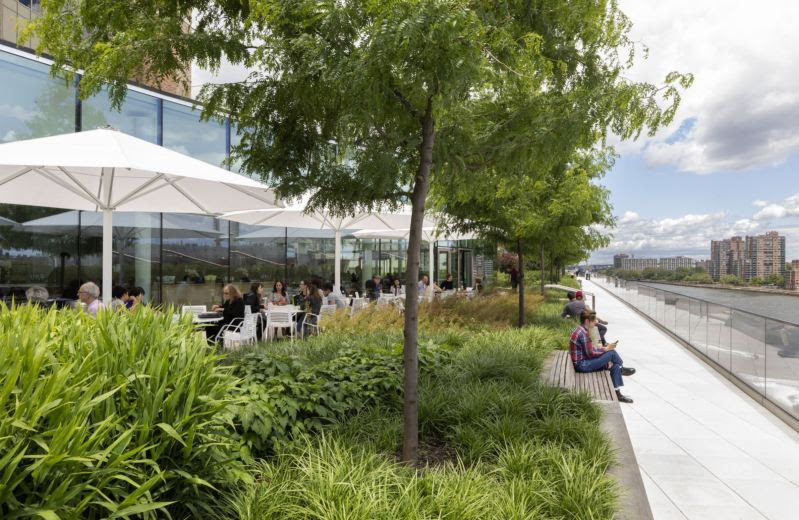
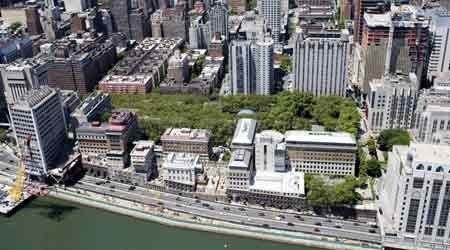
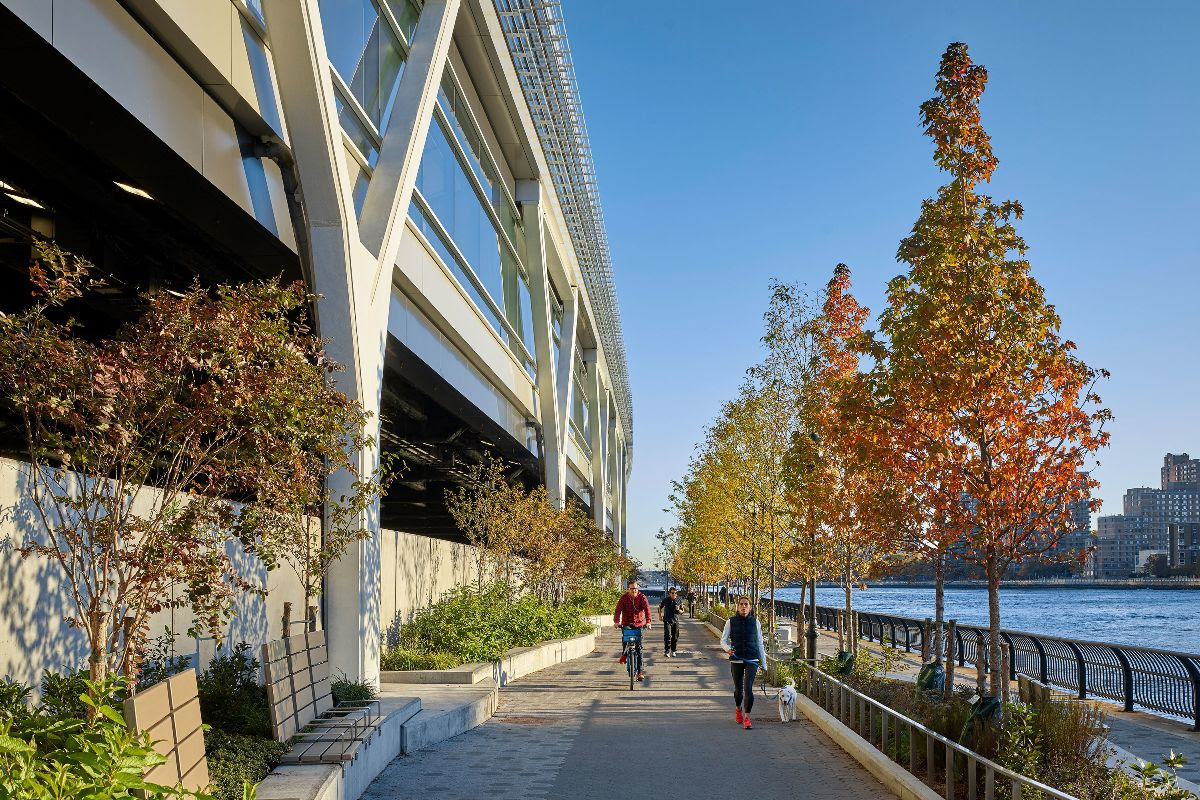
Stavros Niarchos Foundation–David Rockefeller River Campus The completion of the Stavros Niarchos Foundation–David Rockefeller River Campus in 2019, built along the East River over FDR Drive, added two acres to Rockefeller’s footprint. The new campus adds four buildings, expansive laboratory space, new landscaping, and inspiring East River views to Rockefeller University’s existing 14-acre campus. The University achieved this feat by using Rockefeller’s air rights over the FDR Drive and constructing the Marie-Josée and Henry R. Kravis Research Building, the centerpiece of the new campus, above the Drive.
Construction involved highly sophisticated engineering, off-site fabrication, and hair-raising acrobatics. During the summer of 2016, 19 prefabricated steel-framed modules, each unique and weighing up to 800 tons, were lifted from a river barge out over the roadway onto already placed columns and foundations.
And the interior, we are told, is terrific. Floor-to-ceiling glass gives the scientists a view of the East River’s constantly changing surface and reflections, and, because the ceiling heights step up from 8 feet at the west to 18 feet near the river, daylight penetrates deep into interior.
Granted. But to me, from Roosevelt Island, it still looks like a 1950s bus station. Thanks for reading. Stephen Blank RIHS March 19, 2021
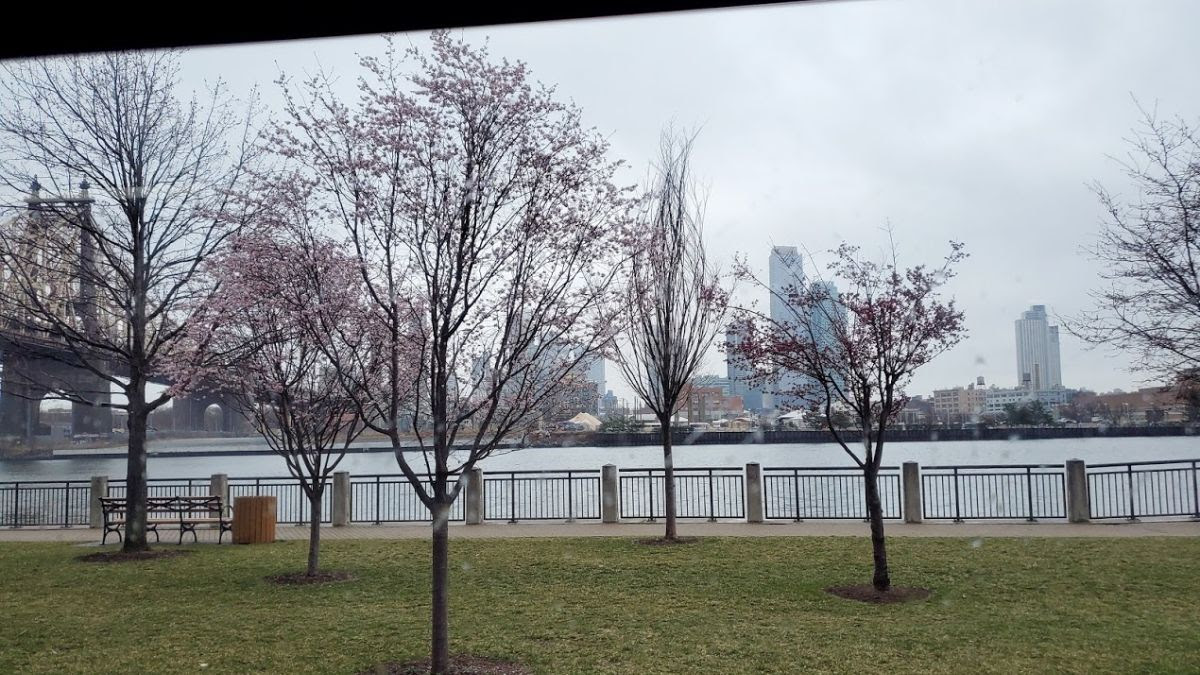
YOUNG FLOWERING TREES ON EASTERN PROMENADE BY CORNELL TECH
HARA REISER, VERN ARWOOD, GLORIA HERMAN, JAY JACOBSON & VICKI FEINMEL GOT IT RIGHT.
EDITORIAL When the pandemic ends you will once again be able to visit the campus during OPEN HOUSE NEW YORK WEEKEND (hopefully) and walk around the campus and the great new dining area overlooking some island.
Four Freedoms State Park is now hiring Seasonal Park Recreation Aides. This is an hourly, 40-hour per week position.
StateJobsNY – Public Information: Review Vacancy Duties Description • Under the direction of higher-level park operations staff, the Seasonal employee is responsible for general facility maintenance, customer service functions, and programming support; • Employee maintains the park to ensure a clean and safe environment, including use of a variety of hand and power-driven mechanical equipment such as mowers, blowers, and line trimmers; statejobs.ny.gov Minimum Qualifications: One-year experience in grounds keeping, customer service, or park operations. Operational needs: Applicant must be physically able to perform medium to heavy physical labor; Ability to effectively communicate with park patrons and partners; Applicants may be required to have and maintain a valid U.S. drivers license; Employees must be able to operate and perform routine maintenance on a variety of power-driven mechanical equipment including trucks, mowers, line trimmers;
Rate: $15 per hour Please submit your resume and application to NYCVacancies@parks.ny.gov using the subject line “Seasonal Employment 2021” . Please indicate your preferred work location in your email and on your application i.e. Four Freedoms State Park Contact Information Personnel 212-866-3578 NYCVacancies@parks.ny.gov 163 West 125th Street, 17th Floor New York, NY 10027
Text by Judith Berdy Thanks to Bobbie Slonevsky for her dedication to Blackwell’s Almanac and the RIHS Thanks to Deborah Dorff for maintaining our website Edited by Deborah Dorff Roosevelt Island Historical Society
Wikipedia Rockefeller Archives TCLF.org NY Times
FUNDING PROVIDED BY ROOSEVELT ISLAND OPERATING CORPORATION PUBLIC PURPOSE GRANTS CITY COUNCIL REPRESENTATIVE BEN KALLOS DISCRETIONARY FUNDING THRU DYCD
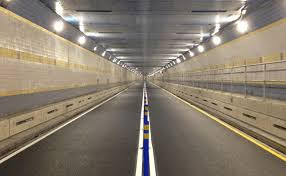
QUEENS MIDTOWN TUNNEL THOM HEYER, ANDY SPARBERG, MITCH HAMMER, NINA LUBLIN GOT IT RIGHT. IT WAS TRICKY SINCE MOST TUNNELS ARE SIMILAR
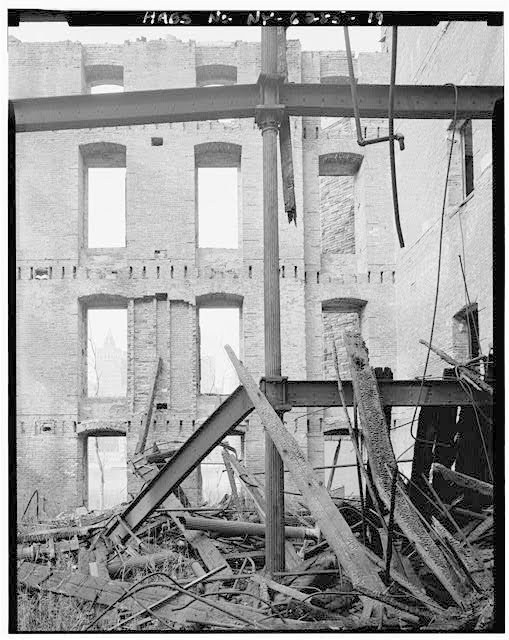
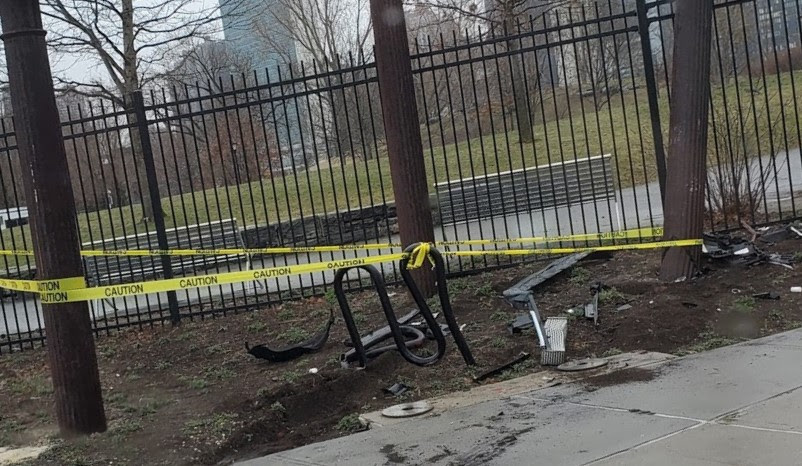
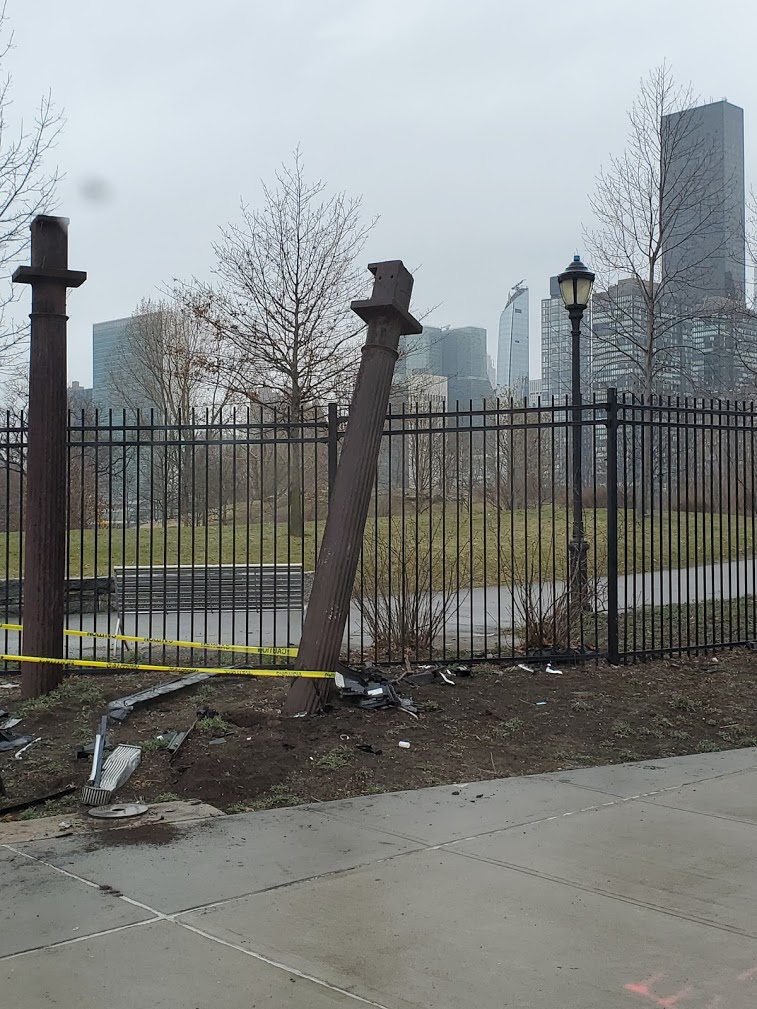
EDITORIAL My dear friend Rosanna keeps me updated on all things that are historical around here. Today, she called to tell me that one of the columns outside Southpoint Park was hit by a vehicle. I found out that it was hit last night by an Infiniti SUV, which must have been going at a high rate of speed to fracture the cast iron column. There have been many accidents at the south end of the island with speeding vehicles and our parks, landmarks and property are all the victims.
RIHS ARCHIVES JUDITH BERDY LIBRARY OF CONGRESS
Text by Judith Berdy Thanks to Bobbie Slonevsky for her dedication to Blackwell’s Almanac and the RIHS Thanks to Deborah Dorff for maintaining our website Edited by Deborah Dorff All image are copyrighted (c)
FUNDING PROVIDED BY ROOSEVELT ISLAND OPERATING CORPORATION PUBLIC PURPOSE GRANTS CITY COUNCIL REPRESENTATIVE BEN KALLOS DISCRETIONARY FUNDING THRU DYCD
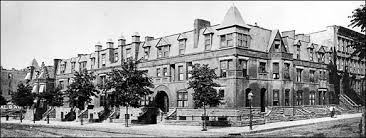
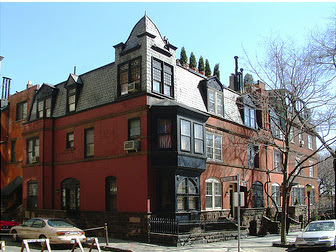
John C. Henderson was a successful businessman in 1880, having made his fortune in the hat, fur,“straw goods” and other businesses. As the neighborhood known as Yorkville began developing he saw an opportunity to increase that fortune.
Yorkville was established in the first half of the 19th Century by German immigrants, later joined by a substantial Hungarian population. Approximately five miles north of the city, it was surrounded in the pre-Civil War period by sprawling, bucolic country estates of wealthy New Yorkers like John Jacob Astor and Archibald Gracie.
By the second half of the century the area was becoming increasingly developed as families sought to escape the congested city. In response, Henderson purchased approximately one half acre of land between 86th Street and 87th Street at East End Avenue where he planned a quaint, dead-end street lined with uniform homes “for persons of moderate means.”
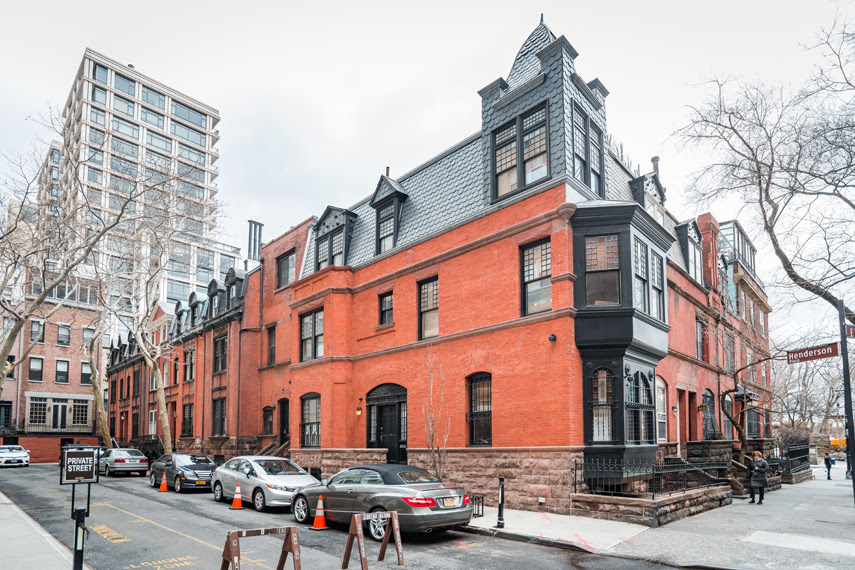
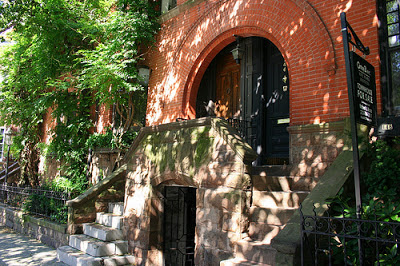
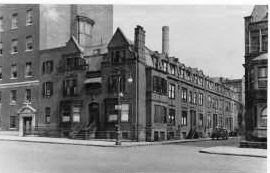
He commissioned the firm of Lamb & Rich to design his houses — thirty-two in all — that would comprise a charming mini-village. Completed in 1882, the architects produced two rows of Queen Anne houses of red brick and terra cotta that romantically mix architectural bits of Elizabethan, Flemish and classic styles. Turrets and gables, towers and arches blend to create the feel of a unified, storybook enclave. While each house shares similar details, like the fish-scale slate mansard roofs with dormers; each is distinctly individual.
The houses sat back from the sidewalk just enough to permit tiny yards for shrubs and flowers.
Despite The Real Estate Record & Guide’s assertion that the little dead-end street would give residents “the disagreeable feeling of living in what the French call a bag’s end,” Henderson’s speculative project was a success.
His modest three-story houses were quickly sold or rented (yearly rent being about $650). The quaint charm of Henderson Place, however, soon caused his plan to backfire. The homes which he intended for families of “modest means” attractived those of far higher incomes. By the middle of the 20th Century well-to-do families populated Henderson Place. Mr. and Mrs. Samuel Morse Lane lived at No. 6 in 1958 when their daughter, Pamela, made her social debut; while Mr. and Mrs. John Drayton Depew made their home at No. 16 in addition to a home in Rye, New York. Alfred Lunt and Lynn Fontanne lived here, as did the Duchesse de Richelieu and renowned educator and early feminist, Mrs. Millicent McIntosh.
Tragically, eight of the houses were razed in the 1940s to make way for a high rise apartment building. The surviving 24, however, are amazingly intact with very little alteration and an astounding state of preservation and maintenance.
One of the most charming hidden corners of Manhattan, Henderson Place was designated a New York City Landmark in 1969. At that time the New York City Landmarks Commission called the street “an exceptionally attractive group of houses with individual front yard plantings and trees” and “they have remarkable charm and dignity for houses which were built for ‘persons of moderate means.’”
SNIFFEN COURT
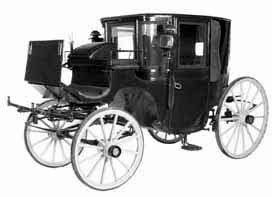
Private stables presented a problem to developers and moneyed families in the 19th century. The unavoidable odors, flies and noises made them unwelcome neighbors to high-end homes. Therefore “stable blocks” were often established, shared only by carriage houses. But in 1863, as Murray Hill was emerging as one of Manhattan’s most exclusive residential neighborhoods, three ambitious speculators came up with a novel idea.
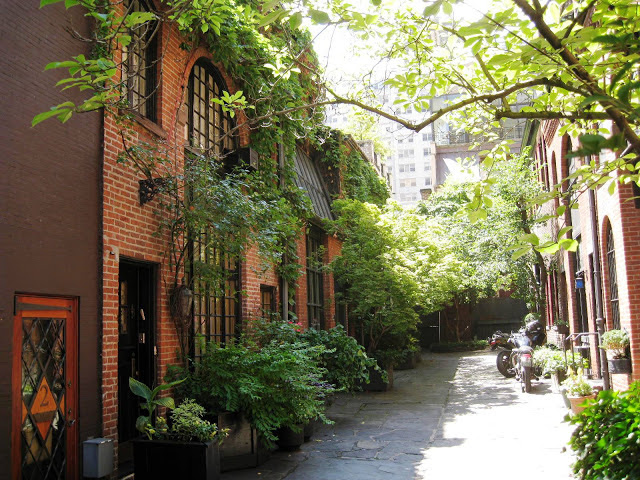
John E. Wylie was a broker, Caleb B. Knevals was a wholesale grocer and director in the newly-formed Domestic Sewing Machine Co., and James D. Smith was a merchant, partner in the firm of Smith & Garvin. The three purchased land on East 36th Street between Lexington and Third Avenues and laid out a cul-de-sac of ten 19-foot wide stables. The ingenious design was not only an economic use of space, but sought to remove the disagreeable smells and noises from directly on the street.
Builder John Sniffen may have also acted as the architect of the two-story Romanesque Revival style structures. But whether he did or not, the three investors named their mews after him: Sniffen’s Court. (Popular usage changed the name simply to Sniffen Court by the 1880’s.)
Completed in 1864, there were five stables on either side; Nos. 1 through 5 on the western side and Nos. 2 through 10 on the eastern. Within a three-month period from May to July that year they were all sold. In April 1869 the owner of No. 9 offered his. for rent. His advertisement gives a striking glimpse inside. It listed in part “well lighted and ventilated; stalls for four horses and room for three carriages; coachman’s rooms, &c.”
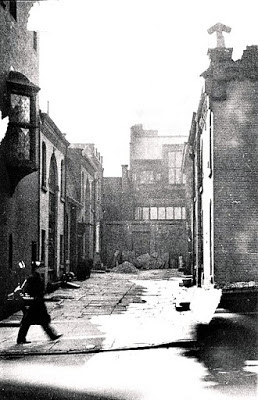
In 1916 piles of flagstones lay against the rear wall. No protective fencing was deemed necessary yet. photo from the collection of the New York Public Library.
The renovations foreshadowed a much more extensive re-make five years later. Architect Leon N. Gillette purchased the former stable, now renumbered 156 East 36th Street in April 1919. He was a partner in the well-known firm of Walker & Gillette and his wife, Sybil Kane Walker, was a decorator.
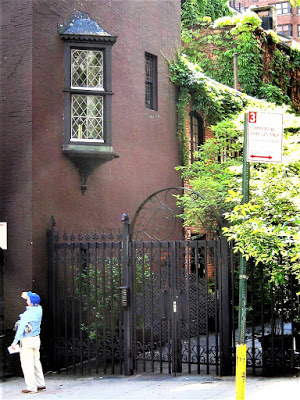
The Gillettes combined Nos. 156 and 158 into a single residence. Two floors were added along with picturesque details like a tiled roof, a whimsical oriel to the side, and multi-paned bay windows flanking the entrance.
The Gillette family remained at No. 156 for decades. On April 16, 1939 they announced the engagement of daughter Jeanne Baptise Gillette to Thomas Eugene Lovejoy, Jr. The fashionable wedding took place in Larchmont, New York, where the family had their country home.
The Gillettes were still living here in May 1945 when Leon N. Gillette died at the age of 67. By now Sniffen Court had significantly changed.
In 1901 Randolph Guggenheimer had sold Nos. 7 and 9 to Lewis C. Ledyard, who made renovations to the combined structures. He sold the property to Henry Clews in 1910, who continued to use it as a stables/garage. But after banker and railroad mogul Charles W. Lanier purchased the building in 1921, The New York Herald announced he intended to remodel “the old stable property” into “a dwelling for his own occupancy.” The article added “Practically all of the pretty studio dwellings in this sequestered thoroughfare are converted stables.” The New York Times chimed in saying “These changes have made Sniffen Court one of the characteristically attractive small residential thoroughfares on Manhattan Island.
Tragedy had occurred on the opposite side of the court a few months earlier. Julian Dick and his wife, Elizabeth, occupied a studio in No. 4 where they hosted a New Year’s Eve party on December 31, 1920. The 34-year old Dick was a member of the New York Cotton Exchange and a member of the stock brokerage firm of E. F. Hutton & Co. He had graduated from Princeton in 1908.
Among the guests that night was Dick’s closest friend, George Bruce Brooks. The Maryland newspaper The Daily Banner, said the two were “the closest of friends, their intimacy having begun more than ten years ago with their first meeting and ripened in subsequent years which found them fighting side by side in France, both as Capts. of artillery.”
At 6:00 a.m. all the guests had gone home except for Brooks and George Ridgley. Brooks noticed that his army revolver was lying on a table, where he had absent-mindedly left it during an earlier visit. He picked up the weapon and started to remove it from the holster when it discharged. Julian Dick cried out, “I am shot.”
In reporting on the bizarre accident, The Daily Banner digressed to describe Sniffen Court. “The apartment of Mr. and Mrs. Dick is in one of a group of half a dozen one and two story buildings facing on a small court running north and south on the south side of East Thirty-sixth street. The buildings were formerly stables and were converted into studio apartments of two and three rooms, which subsequently attracted a small colony of painters, sculptors and literary folk. “
The doors of the little buildings are hung with heavy brass knockers, on which the names of the occupants are engraved. At the sides of the doors are lights of quaint design. Evergreens deck the window ledges and the general setting suggests some of the small streets of old Italian cities.”
Julian Dick died on January 3, 1921. But the tragedy did not end with his death. Elizabeth left Sniffen Court, taking an apartment nearby at No. 116 East 36th Street. She never recovered from the incident, suffering from what doctors called “melancholia.” When her maid arrived at the apartment on December 22, 1930, she found her 38-year old employer dead. Elizabeth had opened the gas jets of the range and then calmly sat on a kitchen chair waiting for the end to come.
The “colony of painters, sculptors and literary folk,” referenced by The Daily Banner followed the lead of artist Malvina Hoffman. On June 22, 1919 The Sun said “Miss Malvina Hoffman, the sculptor, is given credit for ‘discovering’ Sniffen Court.” She lived in a studio for four decades and decorated the rear courtyard wall with bas relief sculptures of Greek horsemen.
The Sun described the average layout. “The interiors are equally picturesque, consisting usually of one big room on the ground floor with a fireplace, a kitchenette, and a mezzanine floor divided into sleeping quarters, maid’s room and baths. They rent from $1,200 up to $2,500.” The highest rent would equal about $3,000 per month today.
The newspaper admitted that Sniffen Court “is, for the most part, passed by unnoticed.” But it insisted “It is the sort of thing that F. Hopkinson Smith would have revelled [sic] in and written of and illustrated in his own delightful way.” (Francis Hopkinson Smith was an engineer by training, but wrote and illustrated travelogues and novels.)
The article added “In the group is the Comedy Club, and the rest are occupied by artists, a sculptor and a small coterie of army and navy folk.” A year earlier The Amateur Comedy Club, Inc. had purchased No. 1 and it was the only stable not renovated for residential use.
The group was formed in April 1888 when a number of the performers in Mrs. James Brown Potter’s Madison Square Dramatic Organization broke away. Meyer Berger, writing in The New York Times on January 21, 1959, explained they were “sickened by endless weepers” and “swore to give only comedies.”
The male-only troupe was limited to 30 members and performed only for charities. Should a play include a female role, “young women from old New York families have always been brought in,” said Meyer. Some of those went on to professional careers–including Clare Booth Luce, Elsie De Wolf, Julie Harris and Mildred Dunnock.
SEASONAL JOBS AT THE FDR FOUR FREEDOMS PARK
Four Freedoms State Park is now hiring Seasonal Park Recreation Aides. This is an hourly, 40-hour per week position. Link: https://statejobs.ny.gov/public/vacancyDetailsView.cfm?id=84944 StateJobsNY – Public Information: Review Vacancy Duties Description • Under the direction of higher-level park operations staff, the Seasonal employee is responsible for general facility maintenance, customer service functions, and programming support; • Employee maintains the park to ensure a clean and safe environment, including use of a variety of hand and power-driven mechanical equipment such as mowers, blowers, and line trimmers; statejobs.ny.gov
MARK YOUR CALENDARS FOR OUR EVENTS
UPCOMING PROGRAMS ON ZOOM Registration will be available before each event All events are at 7 p.m.
Tuesday, April 20 “Mansions and Munificence: the Gilded Age on Fifth Avenue” Guide, lecturer, author and teacher of art and architecture, Emma Guest-Consales leads a virtual tour of the great mansions of Fifth Avenue. Starting with the ex-home of Henry Clay Frick that now houses the Frick Collection, all the way up to the former home of Andrew Carnegie, now the Cooper-Hewitt Museum, she takes us through some of the most extravagant urban palaces the city has ever seen.
Tuesday, May 18 “Saving America’s Cities” Author and Harvard History Professor Lizabeth Cohen Provides an eye-opening look at her award-winning book’s subtitle: Ed Logue and the Struggle to Renew Urban America in the Suburban Age. Tracing Logue’s career from the development of Roosevelt Island in the ‘70s, to the redevelopment of New Haven in the ‘50s, Boston in the’60s and the South Bronx from 1978–85, she focuses on Logue’s vision to revitalize post-war cities, the rise of the Urban Development Corporation.
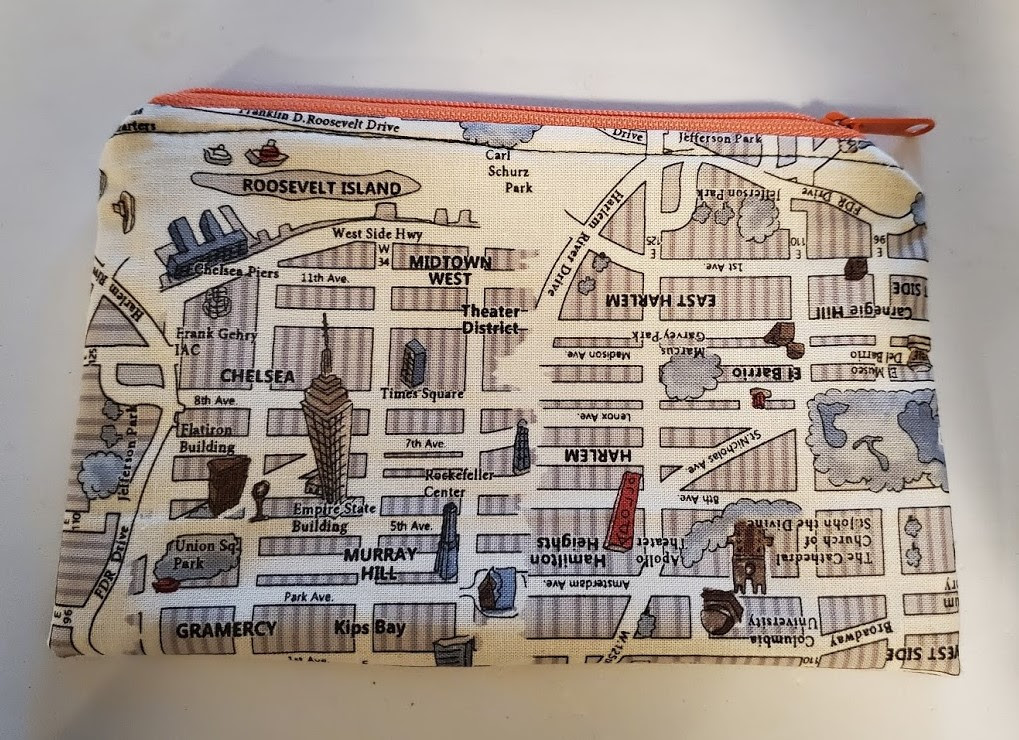
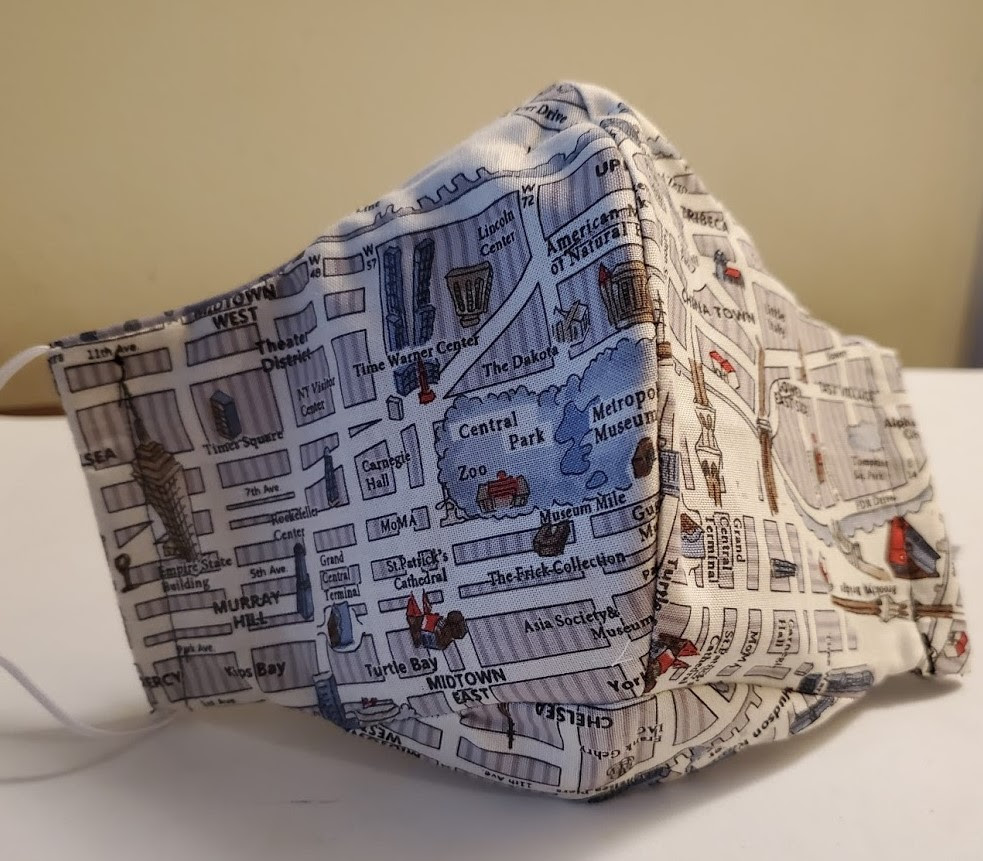
EXCLUSIVE NYC MAP DESIGN MASKS AND ZIPPER POUCHES
MASKS $18-, ZIPPER POUCHES $12- AT RIHS VISITOR KIOSK
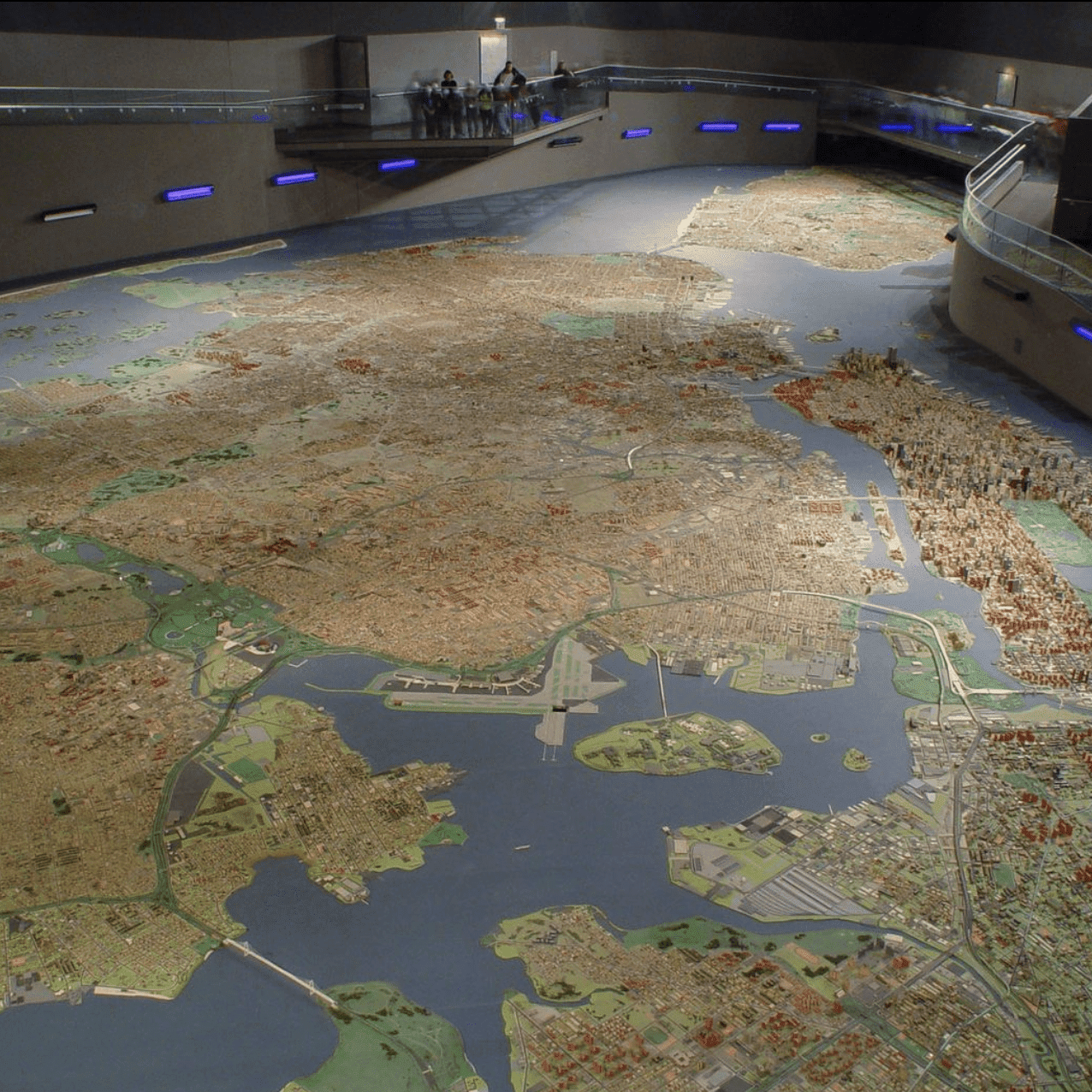
NYC PANORAMA AT THE FORMER NY PAVILION 1939 WORLD’S FAIR, NOW QUEENS MUSEUM FLUSHING MEADOW PARK
ANDY SPARBERG, ALEXIS VILLEFANE, THOM HEYER, MITCH HAMMER, ARON EISENPREISS, M. FRANK, ROBIN LYNN, BILL SCHIMOLAR, JAY JACOBSON, ED LITCHER, NINA LUBLIN, ARLENE BESSENOFF, ALL GOT IT RIGHT!!!
Text by Judith Berdy Thanks to Bobbie Slonevsky for her dedication to Blackwell’s Almanac and the RIHS Thanks to Deborah Dorff for maintaining our website Edited by Deborah Dorff All image are copyrighted (c)
DAYTONIAN IN MANHATTAN HISTORIC DISTRICTS COUNCIL WIKIPEDIA
FUNDING PROVIDED BY ROOSEVELT ISLAND OPERATING CORPORATION PUBLIC PURPOSE GRANTS CITY COUNCIL REPRESENTATIVE BEN KALLOS DISCRETIONARY FUNDING THRU DYCD
Astoria in the 19th century was a riverfront neighborhood of expansive estates and houses, as well as a country-like destination for Manhattan residents seeking open space and East River breezes.
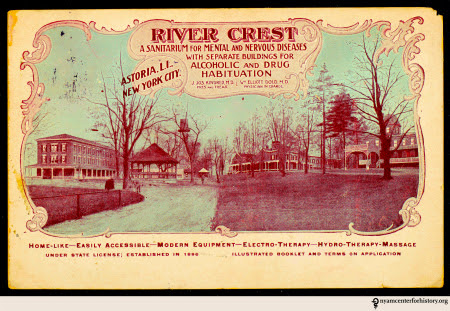
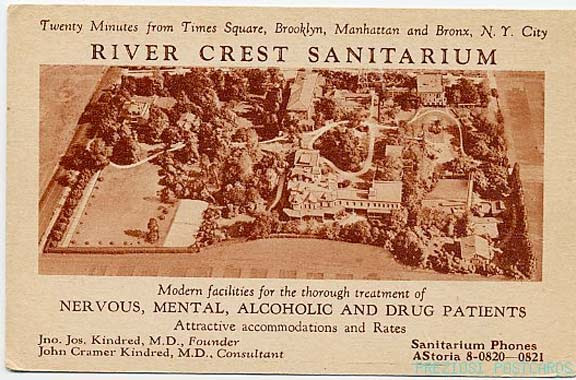
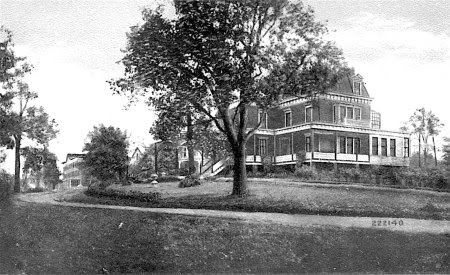
Dr. John Kindred’s River Crest Sanitarium launched in 1896. The spacious institution consisted of eight separate buildings at today’s Ditmars Boulevard and 26th Street.
Built on land once known as the Wolcott Estate, the private sanitarium advertised itself as a place for people with “mental and nervous diseases” and alcohol and drug addiction, according to Long Island City, by the Greater Astoria Historical Society.
Dr. John Kindred’s River Crest Sanitarium launched in 1896. The spacious institution consisted of eight separate buildings at today’s Ditmars Boulevard and 26th Street.
Built on land once known as the Wolcott Estate, the private sanitarium advertised itself as a place for people with “mental and nervous diseases” and alcohol and drug addiction, according to Long Island City, by the Greater Astoria Historical Society.
Dr. John Kindred’s River Crest Sanitarium launched in 1896. The spacious institution consisted of eight separate buildings at today’s Ditmars Boulevard and 26th Street.
Built on land once known as the Wolcott Estate, the private sanitarium advertised itself as a place for people with “mental and nervous diseases” and alcohol and drug addiction, according to Long Island City, by the Greater Astoria Historical Society.
A mental hospital and rehab facility may not sound too unusual to contemporary New Yorkers. But this kind of place was novel in the 1890s. At the time, psychology was in its infancy, and mental issues were usually viewed as more of a morals problem, not a brain disorder.
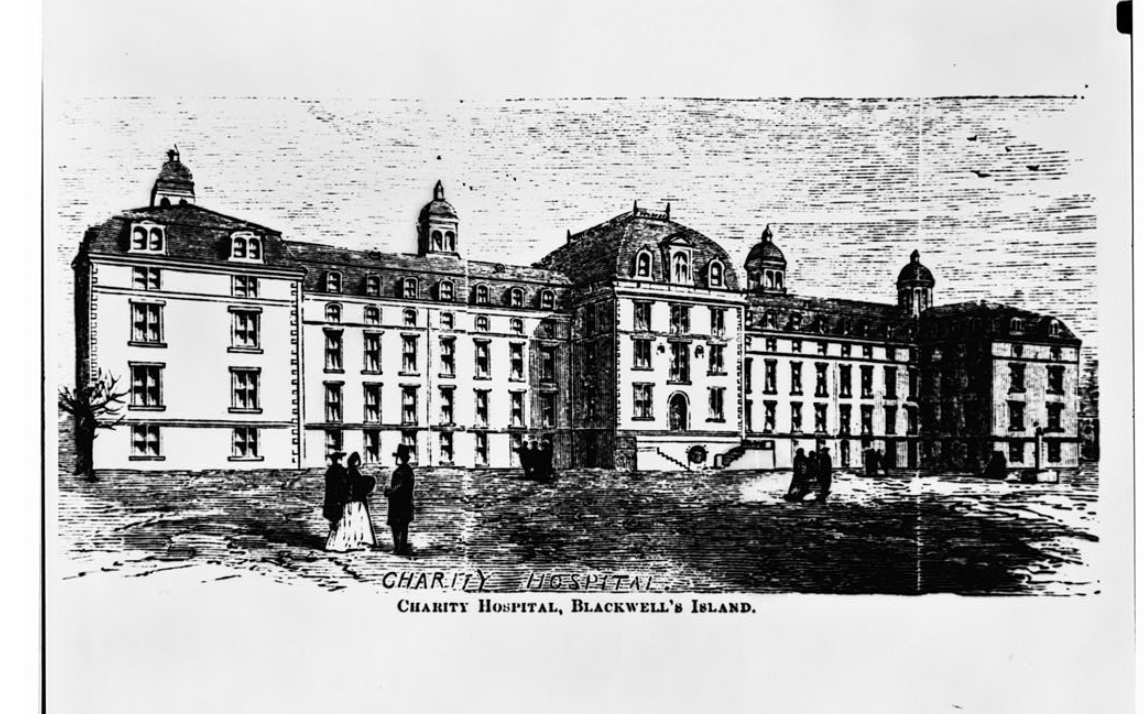
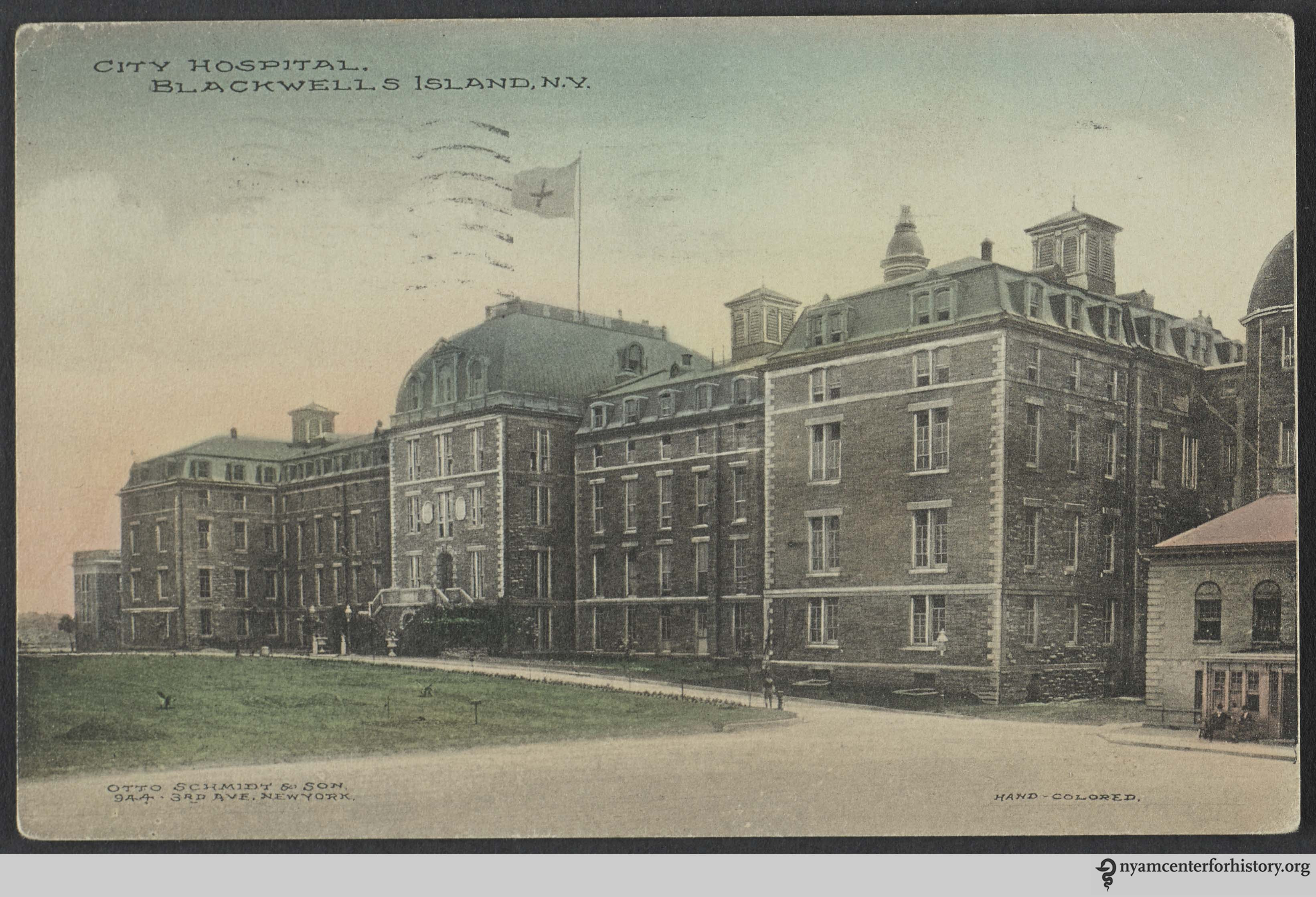
People suffering from mental illness had few options. There was always the Lunatic Asylum on Blackwell’s Island—which had to eventually close after Nelly Bly exposed its horrific conditions in 1887.
Private sanitariums like River Crest filled the void, if you could afford it. While it’s unclear what it would cost to undergo “electro-therapy” or “hydro-therapy-massage,” as the postcard advertises, the place seems geared toward the wealthy.
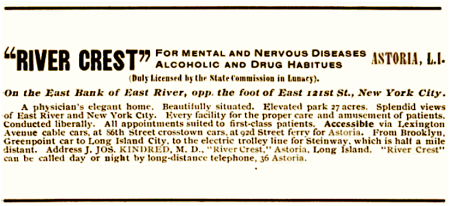
The above ad emphasizes River Crest’s “splendid views” of the East River for “first-class patients.” The facility even had an early phone number: 36 Astoria. Dr. Kindred had some training in psychology, though it’s unclear how effective his sanitarium was. Old newspaper articles reference patients who were there for everything from cocaine addiction to “temporary mental aberration.” Articles also note several escapes, suicides, and people committed against their will.
Long Island City states that patients were cared for at River Crest until the 1920s. Forgotten New York has it that River Crest closed in 1961, and a high school now occupies the space.
Forgotten New York also pointed out in 2009 that a ramp and two gateposts from River Crest are still at the site—apparently all that remains of a facility with a peaceful name that must have seen its share of trauma.
[Top image: Wikipedia/Greater Astoria Historical Society; second image: New York Academy of Medicine/Robert Matz Hospital Postcard Collection; third image: Brooklyn Daily Eagle; fourth image: Medical Record; fifth image: Wikipedia/Greater Astoria Historical Society]
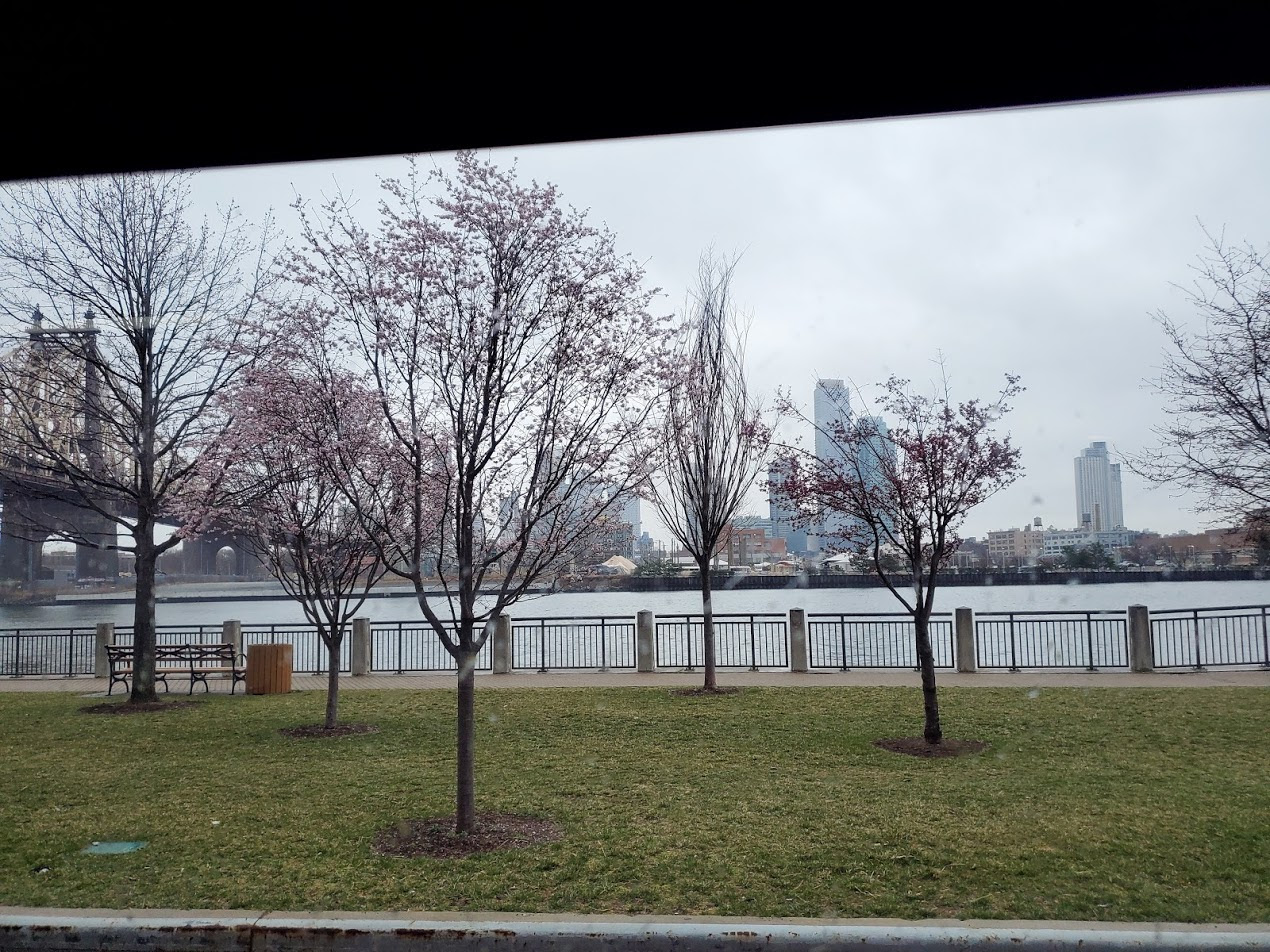
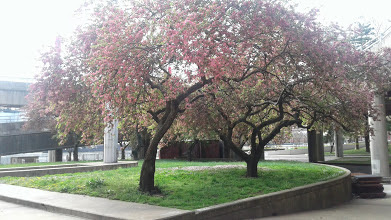
ENDANGERED TREES BY HELIX, WHICH RIOC CLAIMS ARE DISEASED, SO THEY CAN BE REMOVED FOR A COMPLETELY UN-NEEDED BIKE RAMP INSIDE THE HELIX
NINA LUBLIN, SUSAN BERK-SELIGSON, ALEXIS VILLEFANE AND ARLENE BESSENOFF KNOW THESE BEAUTIFUL BLOOMING TREES
Text by Judith Berdy Thanks to Bobbie Slonevsky for her dedication to Blackwell’s Almanac and the RIHS Thanks to Deborah Dorff for maintaining our website Edited by Deborah Dorff All image are copyrighted (c)
EPHEMERAL NEW YORK (C)
FUNDING PROVIDED BY ROOSEVELT ISLAND OPERATING CORPORATION PUBLIC PURPOSE GRANTS CITY COUNCIL REPRESENTATIVE BEN KALLOS DISCRETIONARY FUNDING THRU DYCD
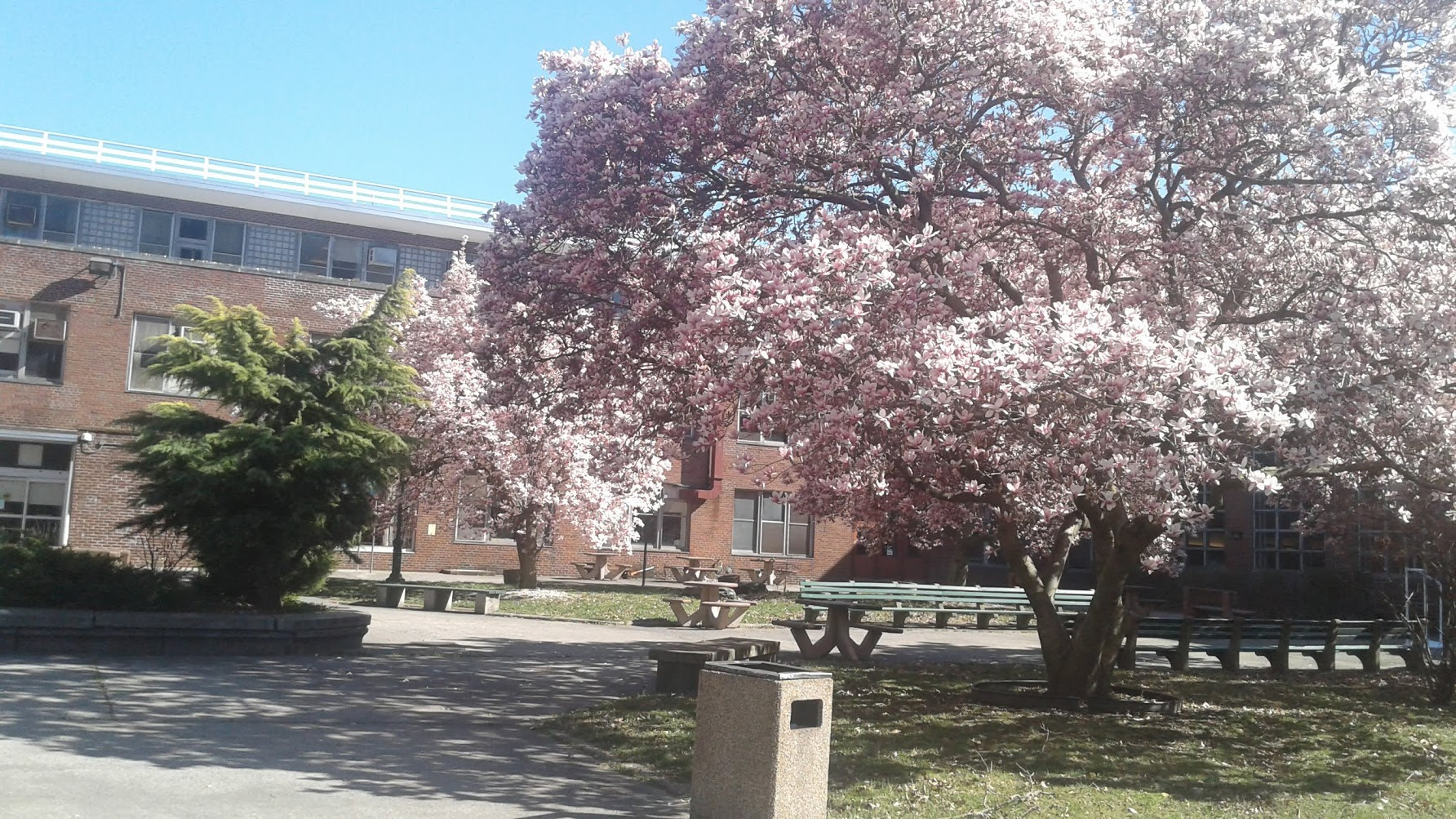
AFTER A LONG WINTER, CHECK OUT THE BUDS THAT WILL SOON ERUPT INTO BEAUTIFUL BLOSSOMS
William H. Johnson, Blossoming Trees, ca. 1935-1938, oil on burlap, Smithsonian American Art Museum, Gift of the Harmon Foundation, 1967.59.931
William Henry Holmes, Cherry Blossoms, n.d., watercolor, Smithsonian American Art Museum, Gift of Dr. Anna Bartsch Dunne, 1962.4.17
William H. Johnson, Flowers, 1939-1940, oil on plywood, Smithsonian American Art Museum, Gift of the Harmon Foundation, 1967.59.602
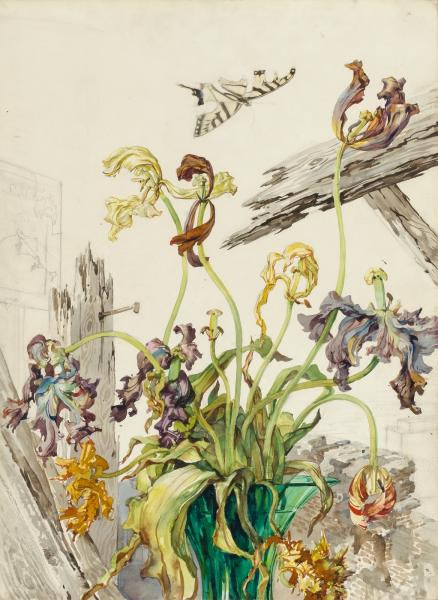
Andrey Avinoff, Tulips, ca. 1949, watercolor and pencil on paperboard, Smithsonian American Art Museum, Gift of Elizabeth Shoumatoff, 1956.11.6
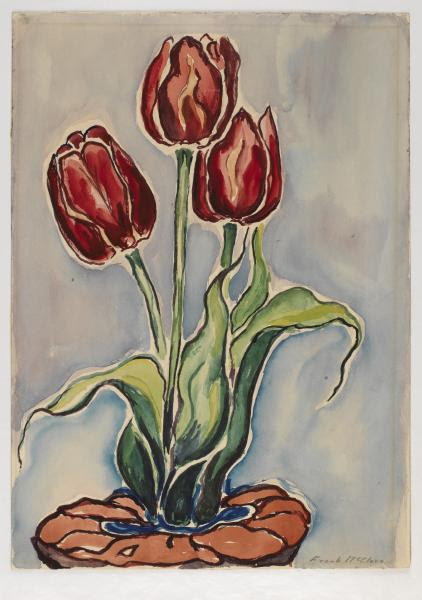
Frank McClure, Tulips, watercolor, Smithsonian American Art Museum, Bequest of Frank McClure, 1979.98.356
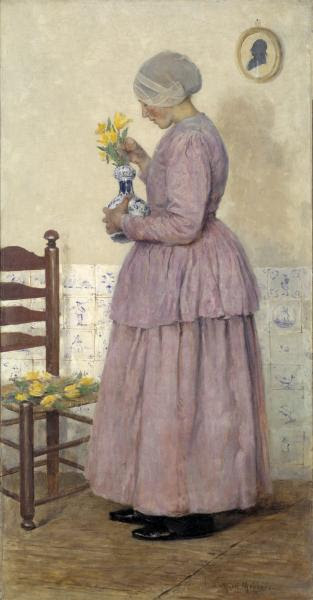
Gari Melchers, Arranging the Tulips, before 1928, oil on canvas, Smithsonian American Art Museum, Gift of John Gellatly, 1929.6.73
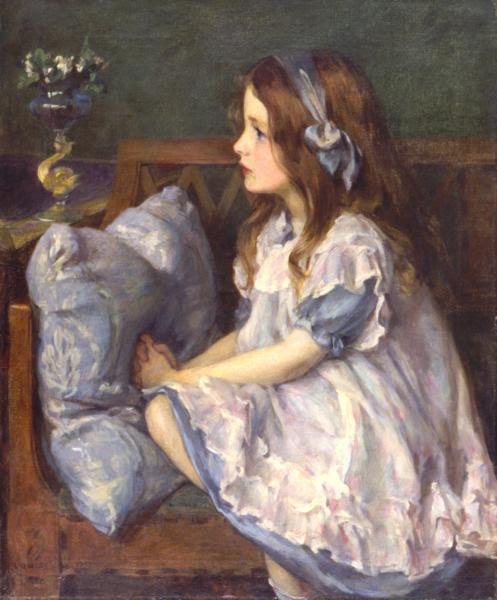
Louise Cox, May Flowers, 1911, oil on canvas, Smithsonian American Art Museum, Gift of William T. Evans, 1911.6.1
This little girl, whose name was Mary, sits with her hands and knee pressed against the pillow, admiring the flowers. The loose brushwork and the informal pose enhance the casual feel of the portrait. Louise Cox was known for her images of children and her ability to work with young, fidgety sitters. In a letter to the buyer of this painting, Cox wrote, “I think the name ‘May Flowers’ would suit the little picture.”
V. G. Van Dalinda, House and Garden, 1939, oil on canvasboard, Smithsonian American Art Museum, Gift of Herbert Waide Hemphill, Jr. and museum purchase made possible by Ralph Cross Johnson, 1986.65.156
House and Garden depicts an intimate view of a residential garden at its peak. Bright flowers, ferns, and various small shrubs fill the stone flower beds. Slender tufts of grass pop up between the pavers that create the walkway to the modest home. House and Garden represents an idyllic scene absent of people and symbols of modern life. The artist even included a small bluebird in the background, further emphasizing the idea of the garden as a place of beauty and respite.
EDITORIAL
Today, Sunday I spent time in the RIHS Visitor Center Kiosk. Being a lovely spring day we were busy with lots of visitors.
We get requests for all kinds of visitor information the FDR FFP, Cornell, Blackwell House, the Asylum, where to eat, etc.
Unfortunately one common request is WHERE IS THERE BATHROOM?
We send people to Bloomberg Center or all the way down to Soutpoint Park.
The lack of public restrooms here is disgraceful. Why should Cornell be the easiest to reach toilet. Under Susan Rosenthal, Related agreed to build a comfort station at Firefighters Field. This was recently canceled or delayed.
Spring and Passover are coming with thousands of visitors arriving on the island and no public bathrooms.
Shelton Haynes, as CEO of RIOC it is your responsibility to have pubic bathrooms.
LISA FERNANDEZ, ARON EISENPEISS, ED LITCHER AND ANDY SPARBERG GOT IT!!!
Text by Judith Berdy Thanks to Bobbie Slonevsky for her dedication to Blackwell’s Almanac and the RIHS Thanks to Deborah Dorff for maintaining our website Edited by Deborah Dorff All image are copyrighted (c)
Sources:
SMITHSONIAN AMERICAN ART MUSEUM WIKIPEDIA
FUNDING PROVIDED BY ROOSEVELT ISLAND OPERATING CORPORATION PUBLIC PURPOSE GRANTS CITY COUNCIL REPRESENTATIVE BEN KALLOS DISCRETIONARY FUNDING THRU DYCD