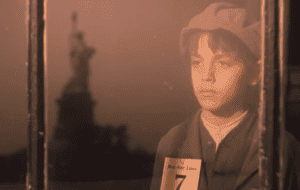
This is the gripping fictional opening scene of The Godfather II, although considerable artistic license was taken by its producer and director Francis Ford Coppola.
The “windjammer” was built in 1904 by William Hamilton & Company on the River Clyde on behalf of a German company. Named Kurt, it was used for bulk transport (coal or grain), not the transfer of migrants.
In Ellis Island’s Great Hall a nine-year-old boy named Vito Andolini, alone and lost, is hustled through a chaotic mass of new arrivals. In front of an impatient attendant and against the noisy background of many different languages, he does not speak at all.
The youngster is assigned the surname Corleone, the town he had fled to escape his family’s Mafia enemies.
Suspected of carrying smallpox, Vito is quarantined for three months on the island. Kept in isolation, he can only look out from his window to see the distant contours of New York City across the water.
The future Godfather had arrived in America, not realizing that at the time of his confinement fellow Sicilian and Italian immigrants were treated harshly by local authorities as they were held responsible for a smallpox epidemic in the metropolis.
Speckled Monster
Early researchers agreed that this “modern disease” (unknown to the Ancients) had been brought in the eleventh century from Northern Africa into Europe by Islamic invaders or returning crusaders.
Identified as an “import,” smallpox was carried on by European explorers into non-immune indigenous populations, particularly in the Americas.
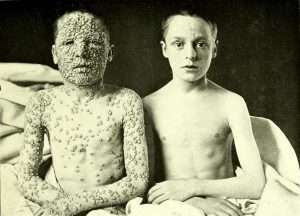
Once infected, a patient began showing flu-like symptoms. By day four, pustules or “pocks” appeared in the mouth, throat and nasal passages. Within twenty-four hours, a skin rash surfaced.
For some, this rash turned inward, hemorrhaging beneath the skin and through the mucous membranes. These patients died quickly.
For most, the pustules pushed to the surface; scabs started to form late in the second week. By week three, fever subsided and scars replaced scabs. Survivors were now immune, but pockmarks remained. The course of the disease took about a month.
The “speckled monster” of smallpox was regarded with terror. About three out of ten patients died a harrowing death. There was no cure.
The disease was castigated for being “doubly cruel.” It did not just herald imminent death, but disfigured victims by “pitted” scars which often led to complications.
Scottish poet Thomas Blacklock was left blind as a result of corneal scarring after ulceration (a leading cause of blindness).
Potter Josiah Wedgwood contracted smallpox as a child in 1742. He survived, but suffered a secondary infection in his right knee which would lead to an amputation.
Retrospectively gathered clinical evidence suggests that smallpox left some male survivors impotent.
Other than the plague, smallpox was responsible for more deaths than any other health calamity. For those who watched the gruesome symptoms from close by, the disease seemed to confound the powers of description.
Whereas the plague gave rise to a wealth of artistic representations, smallpox has no such history. Artists were reluctant or unable to deal with the theme. Very few painters dared to portray a patient – with one notable exception.
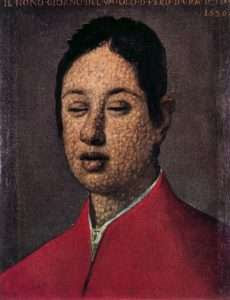
Antwerp-born Justus Sustermans was court painter to the Grand Dukes of Tuscany in Florence. The family was struck by a smallpox outbreak in the region in the autumn of 1626 with five members falling ill.
In October 1626, the artist painted two portraits of Ferdinand II de’ Medici, aged sixteen, at two stages of the disease (days seven and nine). Although Ferdinand recovered, the patient’s grotesque and repulsive painted images were received with shock and horror.
Job’s Boils
Smallpox came to America with the arrival of the first Europeans. It devastated generations of Native Americans (and helped assure the Spanish conquest of the Aztec and Inca Empires), created disastrous loss of life amongst enslaved Black people and was an existential threat to the colonies.
There were two means of combating the disease: quarantine and inoculation. When employed efficiently, isolation helped to stop it from spreading out of control. In the colonial period, the method was used by colonists and Native Americans alike.
Inoculation was introduced to the West in the early 1700s at London’s Royal Society, the leading scientific institution of the era. It caused fierce debate.
Based on Enlightenment principles of inquiry and observation, Voltaire (who learned about the process when living in London between 1726 and 1728) and like-minded thinkers championed inoculation as a triumph of empirical research over superstition and cheered its potential of improving public health.
In the summer and fall of 1721, smallpox ravaged Boston. The epidemic began when the British naval vessel HMS Seahorse arrived on April 22 with infected crew members on board. Although they were quarantined, the virus spread quickly, prompting residents to flee the city.
Boston had experienced outbreaks before. Just prior to 1721 a quarantine hospital had been constructed, but in spite of preventative measures over eight hundred residents died during the epidemic.
Having survived smallpox himself, Rev. Cotton Mather rejected the Church’s opposition to inoculation, arguing that medical science was God’s gift to mankind.
He encouraged Boston’s physicians to take up inoculation. They declined. Only surgeon Zabdiel Boylston inoculated his son and two members of an enslaved Black family in his household. These were the first three recorded cases in America.
The public’s response was hostile. Unease about inoculation lingered as opponents denied its safety and efficacy. The technique itself was unpleasant.
It involved the deliberate infection of an individual with the virus (“controlled exposure”), usually through an incision in the hand.
Inoculated smallpox was less virulent than its natural form. Although survivors gained lifelong immunity, they were still at risk of infecting others. The danger epidemic outbreaks remained.
Many Christians believed that God had allowed smallpox to spread among people as a punishment for their sins. Inoculation constituted interference with God’s will.
In 1767, the Mozart family was in Vienna where smallpox had crippled the city. Leopold Mozart refused to have his children inoculated, preferring (as he wrote to a friend in February that year) to “leave the matter to the grace of God.”
Young Mozart went down with the disease, but fortunately recovered. Poets (like William Blake) and theologians used the metaphor “Job’s boils” in relation to the symptoms of smallpox (the Old Testament tale of Job being subjected to a series of trials to test his faith, including an affliction of boils from head to toe).
Others described themselves as “conscientious objectors,” arguing that any imposed practice violated their free will. Physicians were accused of “collaborating” with government. Their intentions were questioned.
Speculation spread that doctors performed new procedures for personal gain. Activists viewed their anti-inoculation campaign as a righteous cause, one that was dedicated to shielding the public from a perceived threat.
Boston & Quebec
War and disease have a long and wretched history. In the colonies during the late-eighteenth century, smallpox was spread by troop movements. The British army had an advantage.
In England, the disease had long been endemic and most of soldiers had experienced smallpox in childhood and were therefore immune. By contrast, colonists as well as Native and Black Americans were vulnerable.
Signs of smallpox became evident during the early days of the American rebellion. Isolated incidents had occurred around Boston in 1774; soon after, the disease took hold of the city itself.
The first armed battle took place in April 1775 and smallpox festered through the summer while the Continental Army was entrenched around Boston. General George Washington feared that the disease could decimate his forces.
If smallpox would spread, he wrote to the Massachusetts House of Representatives in late 1775, it would be “disastrous & fatal to our army and the Country around it.”
This anxiety pushed him into decisive action. Washington had personal experience of smallpox and understood the danger of the disease.
In the autumn of 1751, aged nineteen, he had accompanied his half-brother Lawrence who was suffering from tuberculosis on a “healing” trip to Barbados.
Endemic in the Caribbean at the time, smallpox had been fairly uncommon in George’s Virginia. He had not contracted the disease as a child and was infected during the trip. Having survived the ordeal, he gained immunity. The fearful memory lasted.
Washington realized that it was impossible for his troops to gather in numbers without smallpox running rampant. Quarantine had some impact, but at times of military action such intervention was not feasible. He and his medical team decided to oversee a campaign of inoculating the entire army. It was arguably the most drastic decision that General Washington ever took.
The effort to control smallpox amongst his soldiers in Boston did pay off. The situation in Quebec was much worse. Throughout the siege of the Canadian city, American troops had to contend with an outbreak of smallpox.
On May 6, 1776, after a five-month fruitless battle, more than 1,500 soldiers fled up the St. Lawrence River as British regulars disembarked to relieve the Quebec garrison. In a chaotic withdrawal, all precautions to fight off the disease were ignored.
Five days later, soldiers began arriving at Sorel, a town where the Richelieu River enters the St. Lawrence. The presence of so many diseased men was a terrifying sight.
The approach of British troops forced what was left of the “Northern Army” to continue its retreat along the Richelieu River, eventually pausing at Île aux Noix, a small island near the north entrance of Lake Champlain.
The shattered army spent ten days there; most men were infected, there were few health care providers and no facilities to treat the diseased. Two mass graves were dug where more than nine hundred smallpox victims were buried.
The island was hell on earth. The bitter memory would last and impact an urgent search for ways of fighting the disease.
Foreigners tend to be held responsible for epidemics or pandemics. In the 1800s, Irish immigrants were blamed for bringing cholera to the United States, Italians for polio, and Jews for tuberculosis.
During the 1900s, Chinese incomers were accused of spreading the bubonic plague in San Francisco. This blame-game seems timeless and is played today in discussions on the origin of COVID.
Panic about epidemics caused scapegoating with the associated consequences of prejudice, social exclusion and discrimination.
George Washington’s approach succeeded as it decreased the mortality rate amongst soldiers and restored his army’s ability to continue the battle. His policy of forced inoculation may have paved the way for modern vaccination policies, but the practice created a new set of problems.
The idea of compulsory vaccination met with strong opposition. Washington’s intervention worked because it was restricted to a specific group in a specific military setting. Applied in wider society, it was inevitable that minority groups would be targeted.
An epidemic of infectious disease proved not just to be a challenge to the medical system, it also provoked social stigma as it secluded groups of individuals from mainstream society.
Racism played its part. Minority groups, mostly African-Americans or immigrants, were blamed for epidemics. The geographic concentration of segregated racial groups enabled coercive targeting programs.
Smallpox (according to a retrospective investigation) was imported into Kentucky from Honduras in the summer of 1897. At the outset, the disease was noted as limited to the “colored” race.
The first case in the town of Middlesboro was identified early in December that year. Intervention failed due to a lack of medical facilities, denial by the authorities, and ignorance amongst the local population.
The disease spread rapidly, resulting in the most severe epidemic the State had ever known.
Measures were driven by panic. Groups of police and health officials entered an African-American section of town to forcefully vaccinate men and women. Those who resisted were treated at gunpoint. Such smallpox raids were not unusual.
Blauvelt in Italian Harlem
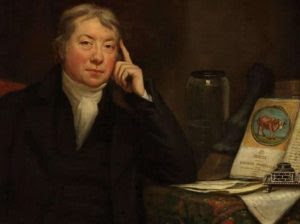
Although the first vaccine was developed in May 1796 by Edward Jenner, an English country doctor (the “Godfather of Vaccination”), smallpox remained rampant and was responsible for as many as 300 million deaths in the twentieth century alone.
An epidemic was the Apocalypse made real. It divided communities, disregarded boundaries and shattered social cohesion.
In 1901, New York City experienced an outbreak of smallpox, particularly affecting immigrant communities in Italian Harlem. The city’s health department responded with aggressive measures and singled out these districts of dense immigrant populations as “suspect.”
On a Friday night in February of that year, more than two hundred police officers and health officials led by Alonzo Blauvelt, Chief Inspector of the Board of Health, blocked the roofs, entrances and backyards of every tenement block in East Harlem’s over-populated Italian neighborhood between 106th and 115th Streets.
In a carefully planned raid, they entered every apartment without warning, preventing terrified tenants from running away.
If in good health, residents were forcefully vaccinated. Those who showed symptoms of infection, be they children or adults, were separated from their families and transported to the East River docks.
From there they were ferried to North Brother Island, just south of the Bronx, where a complex of quarantine hospitals had been erected. The island was associated with the notion of the “pest house.” Mere mention of the name made New Yorkers freeze with anxiety.
During the nineteenth century hospitals were not equipped to deal with contagious diseases. Patients were quarantined in isolation buildings known as pest houses.
Numerous stories were reported of mothers fighting with health officials to keep their sick children in their own care, rather than have them be taken away. Pest houses were associated with the horrors of suffering and death.
To this day, the term functions as a potent (literary) metaphor for various societal ills, connoting contamination, exclusion, isolation and social breakdown.
Although a vaccine had been developed for smallpox, many citizens did not heed warnings, refused to get vaccinated, or were unable to access facilities. From the very start of organized vaccination campaigns, there had been public resistance.
Blauvelt and his colleagues continued their task systematically. Tenants of homeless shelters, factory workers, members of the police force were all called out to be vaccinated. The approach was ruthless; the means applied were controversial.
Good ends can be achieved only by the employment of appropriate means. In his crusade for restoring public health, Blauvelt confused the means with the end.
His campaign deteriorated into actions that were cruel and oppressive. Brute intervention led to mistrust of public health measures, fueling “vaccine hesitancy” which, in turn, increased the risk of preventable disease outbreaks.
Other factors such as disinformation, unclear evidence, lack of access to health services, religious beliefs and/or individual prejudices contributed to this uncertainty.
In May 1980, the World Health Organization (WHO) declared smallpox to be eradicated, the first time in history that a deadly human disease was wiped out. For many social historians, it was a public health triumph.
Today, vaccination skepticism has become a topic of renewed controversy in American politics.
Fostering trust in public health efforts remains therefore imperative, as is the urgent need to find a way of putting government mandates in practice without compromising individual liberties.
[Editor’s Note: Florida Republicans announced Wednesday that they will “work to phase out all childhood vaccine mandates in the state” according to the Associated Press. “On the vaccines, state Surgeon General Dr. Joseph Ladapo cast current requirements in schools and elsewhere as an ‘immoral’ intrusion on people’s rights bordering on ‘slavery,’ and hampers parents’ ability to make health decisions for their children.”]
NEW DOORS ARE COMING TO THE SUBWAY STATION
AFTER YEARS OF BROKEN DOORS, HELD OPEN BY SAFTEY TAPE, THE MTA IS INSTALLING NEW DOORS THIS WEEKEND.
Illustrations, from above: Young Vito Corleone in smallpox isolation on Ellis Island staring at the Statue of Liberty (still from The Godfather II); Justus Sustermans, “Portrait of Ferdinando II de’ Medici on the ninth day of smallpox,” 1626. (Galleria Palatina, Florence); Detail of James Northcote’s “Portrait of Edward Jenner,” 1803 (National Portrait Gallery, London); and one of the boys was vaccinated in infancy; the other was not (Photograph by Allan Warner)
All image are copyrighted (c) Roosevelt Island Historical Society unless otherwise indicated THIS PUBLICATION FUNDED BY DISCRETIONARY FUNDS FROM CITY COUNCIL MEMBER JULIE MENIN & ROOSEVELT ISLAND OPERATING CORPORATION PUBLIC PURPOSE FUNDS.
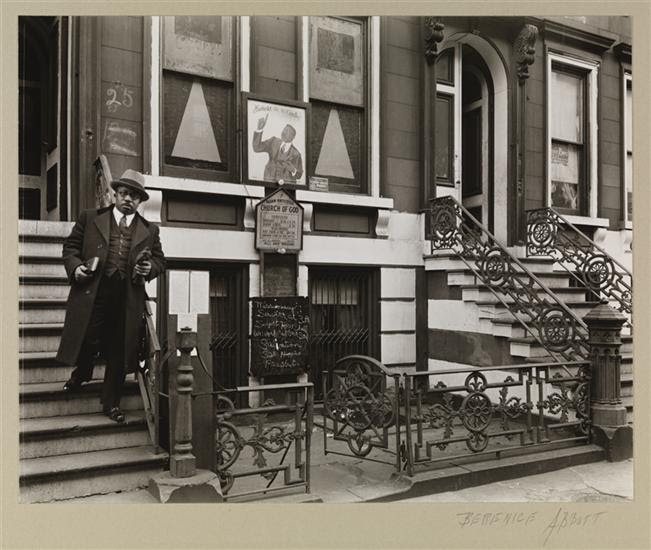
Photographer Berenice Abbott (1898-1991) Creator Berenice Abbott (1898-1991) Accession number 49.282.42 Unique identifier MNY12153 Description 25 East 132nd Street.
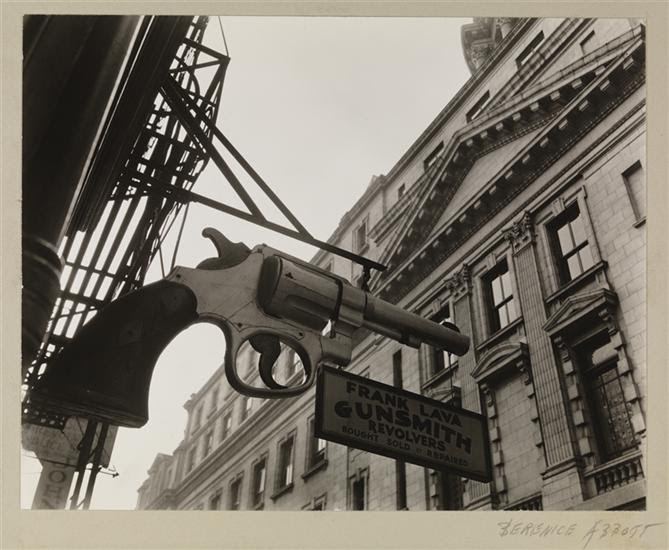
Photographer Berenice Abbott (1898-1991) Creator Berenice Abbott (1898-1991) Accession number 49.282.113 Unique identifier MNY15349 Description 6 Centre Market Place and 240 Centre Street. Dated February 4, 1937 Object Type photograph
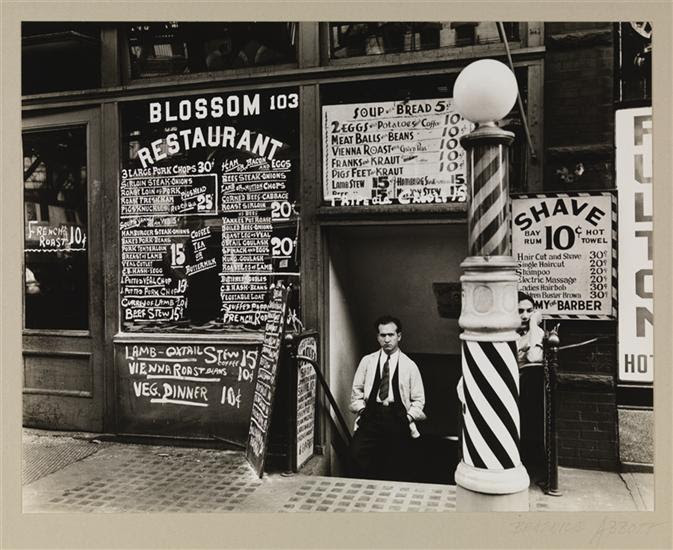
Photographer Berenice Abbott (1898-1991) Accession number 40.140.10 Unique identifier MNY18125 Description The window of the Blossom Restaurant, occupying the ground floor, and Jimmy’s Barber Shop, occupying the basement, of the Boston Hotel, a flophouse at 103-105 Bowery. Dated October 24, 1935 Object Type photograph Inscription / technical details Federal Art Project stamp and title, location, date and Abbott number inscribed in ink, mount verso bottom right.
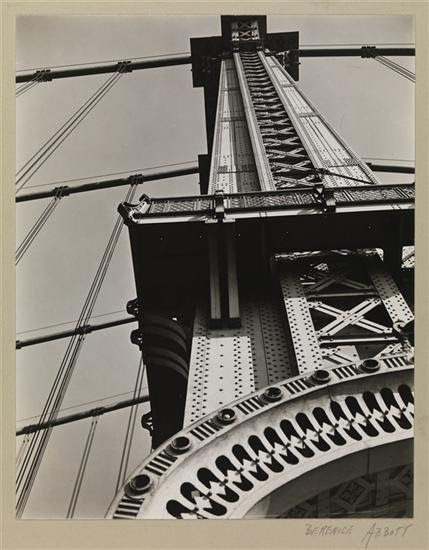
Photographer Berenice Abbott (1898-1991) Creator Berenice Abbott (1898-1991) Accession number 49.282.115 Unique identifier MNY20323 Description Looking straight up one of the Manhattan Bridge’s supporting piers, taken from the southern pedestrian walkway. Dated November 11, 1936 Object Type photograph Inscription / technical details “173” inscribed in red ink on mount verso, top left. | Abbott stamp on mount verso, bottom right. | Federal Art Project stamp on mount verso, center. | Title, location, date and Abbott number inscribe
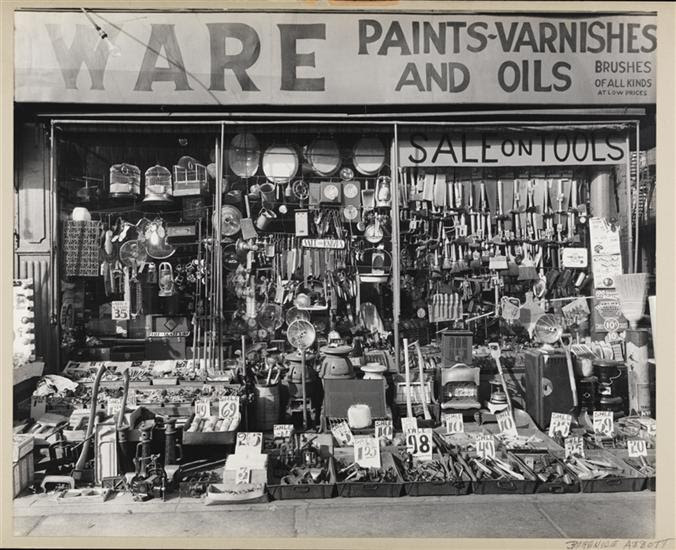
Photographer Berenice Abbott (1898-1991) Accession number 40.140.138 Unique identifier MNY9401 Description 316-318 Bowery at Bleecker Street. Dated January 26, 1938 Object Type photograph Inscription / technical details Federal Art Project stamp and title, location, date and Abbott number inscribed in ink, mount verso bottom right.
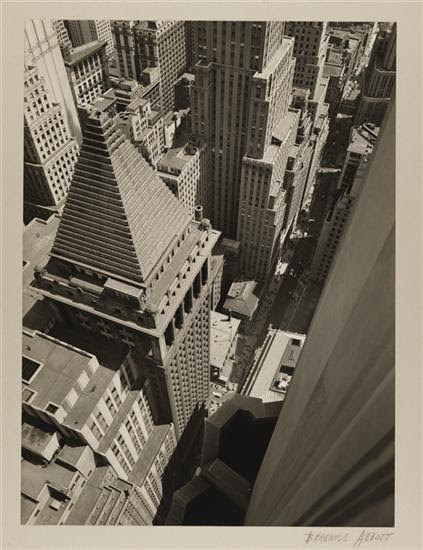
Photographer Berenice Abbott (1898-1991) Accession number 40.140.274 Unique identifier MNY24321 Description Wall Street with the East River beyond taken from the roof of One Wall Street. The pyramidal Bankers Trust Buiding is in the foreground. Dated May 4, 1938 Object Type photograph Inscription / technical details Federal Art Project stamp and title, location, date and Abbott number inscribed in ink, mount verso bottom right.
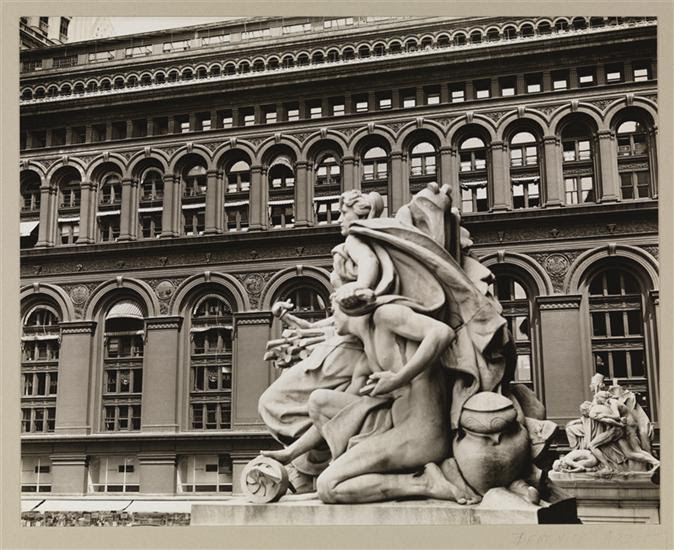
Photographer Berenice Abbott (1898-1991) Accession number 40.140.51 Unique identifier MNY30849 Description The U.S. Custom House Statues taken from the steps of the of the Custom House looking toward the Victorian Produce Exchange. Bowling Green at the foot of Broadway. Dated July 23, 1936 Object Type photograph Inscription / technical details Federal Art Project stamp and title, location, date and Abbott number inscribed in ink, mount verso bottom right.
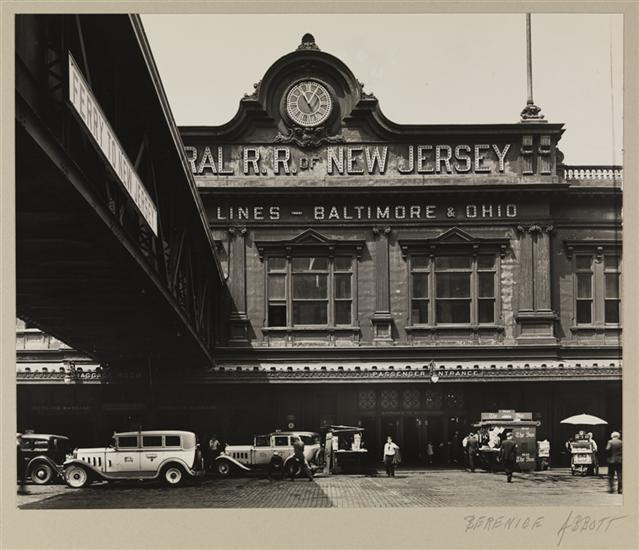
Photographer Berenice Abbott (1898-1991) Accession number 40.140.79 Unique identifier MNY32771 Description Foot of Liberty Street. Dated August 12, 1936 Object Type photograph Inscription / technical details Federal Art Project stamp and title, location, date and Abbott number inscribed in ink, mount verso bottom right.
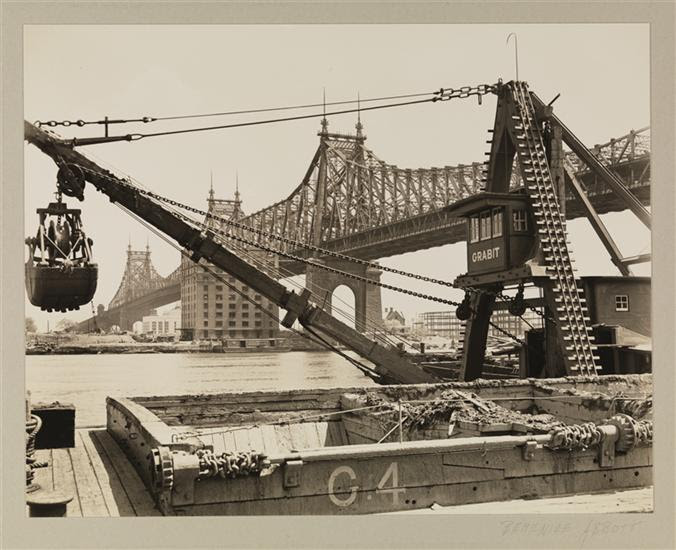
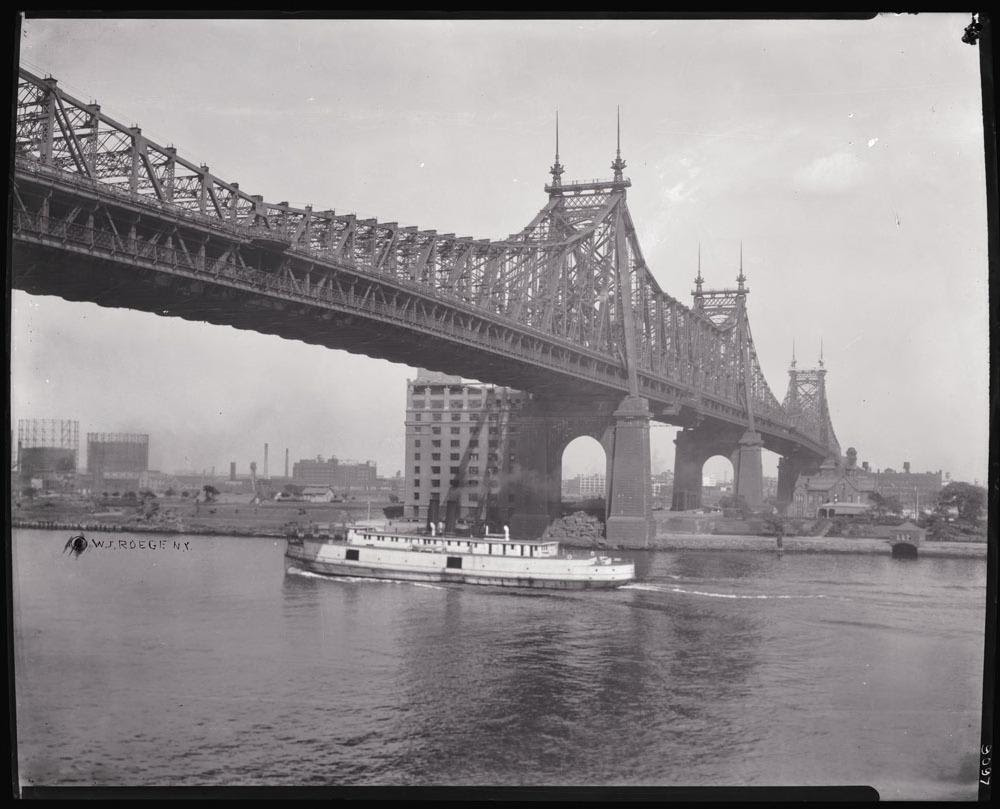
Queensboro Bridge I Photographer Berenice Abbott (1898-1991) Accession number May 7, 1937 40.140.204 Unique identifier MNY15955 Description The Queensboro Bridge taken from the 63rd Street Pier in Manhattan. Welfare Island with the Welfare Hospital for Chronic Disease is visible. Dated Object Type photograph Inscription / technical details Federal Art Project stamp and title, location, date and Abbott number inscribed in ink, mount verso bottom right.
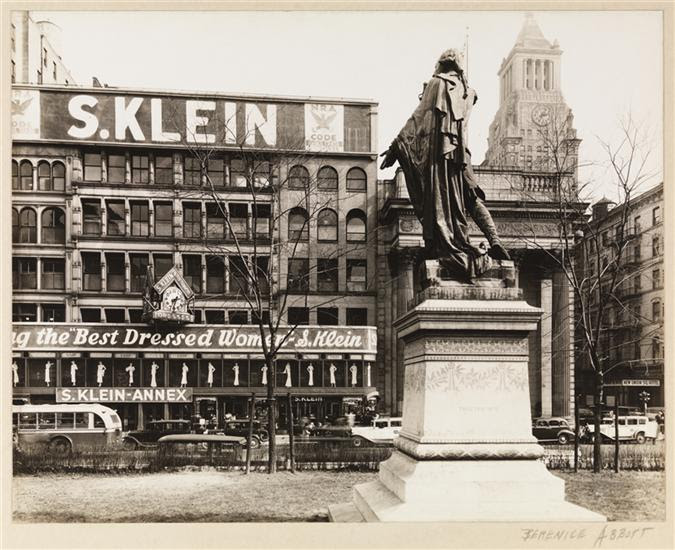
Photographer Berenice Abbott (1898-1991) Creator Berenice Abbott (1898-1991) Accession number 89.2.2.16 Unique identifier MNY201961 Description Fourth Avenue between East 15th and 16th Streets. The Lafayette Statue at Union Square with the discount department store, S. Klein, the Union Square Savings Bank and the tower of the Consolidated Edison Building in the background. Dated March 20, 1936 Object Type photograph Inscription / technical details Federal Art Project stamp and title, location, date and Abbott number inscribed in pencil on mount verso, bottom left. | Federal Art Project sticker adhered to mount verso, bottom right.
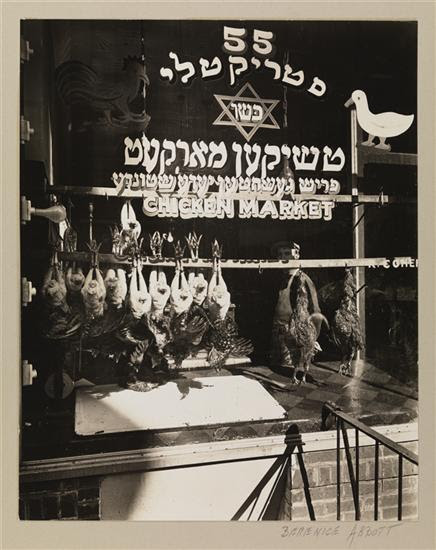
Photographer Berenice Abbott (1898-1991) Accession number 40.140.31 Unique identifier MNY11669 Description 55 Hester Street between Ludlow and Essex Streets. Dated February 11, 1937 Object Type photograph Inscription / technical details Federal Art Project stamp and title, location, date and Abbott number inscribed in ink, mount verso bottom right.
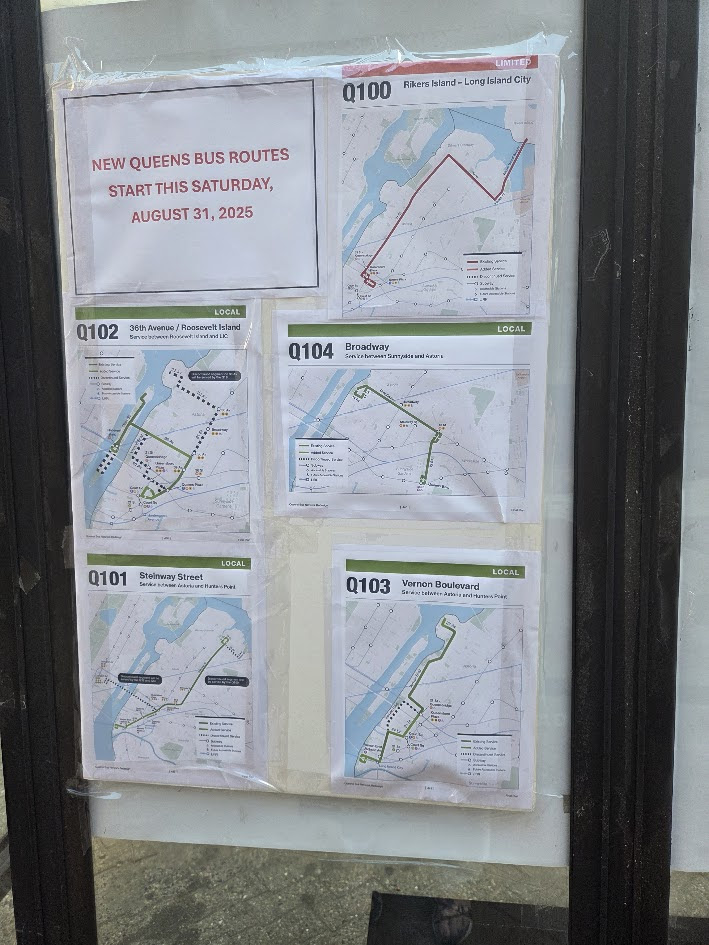
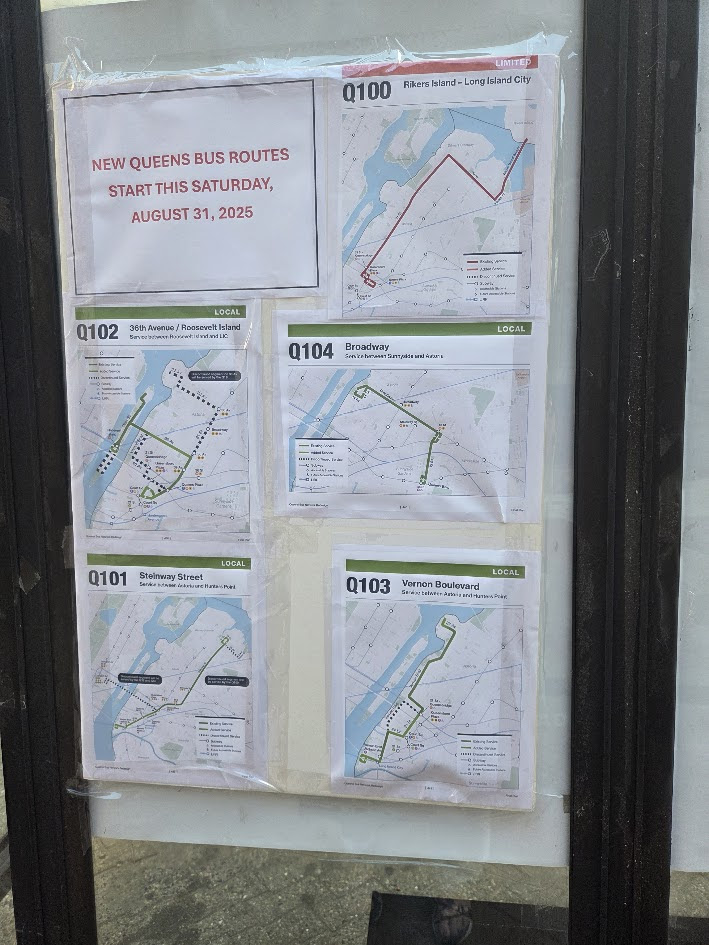
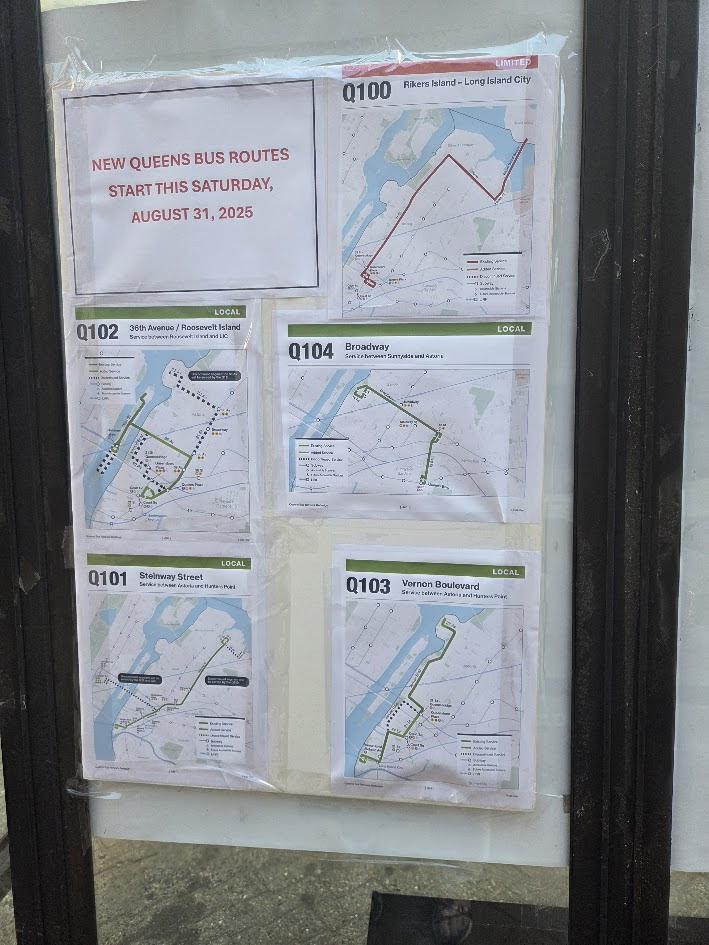
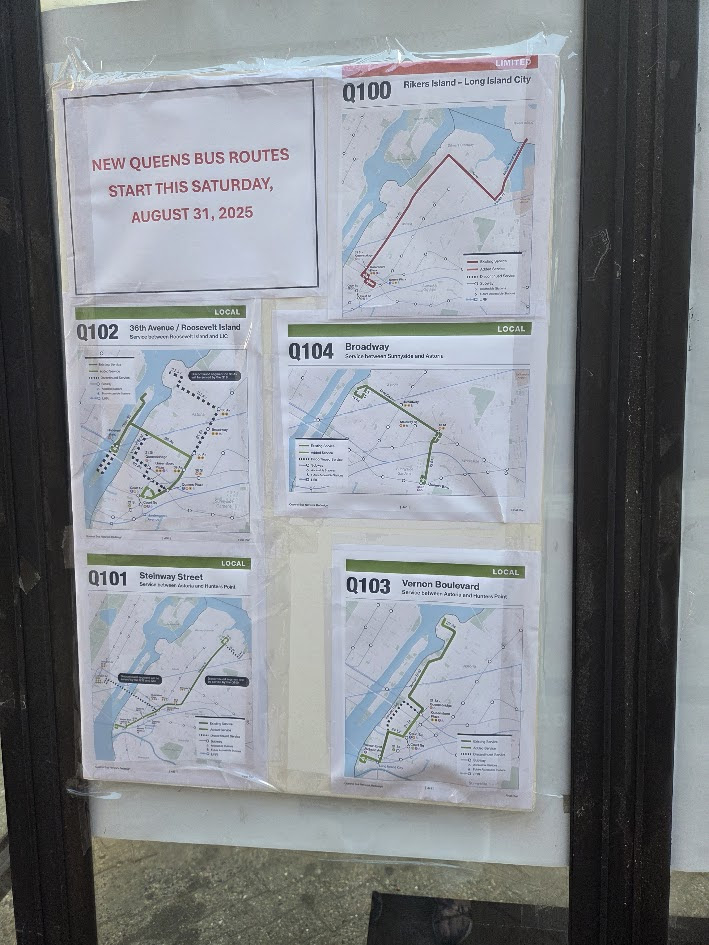
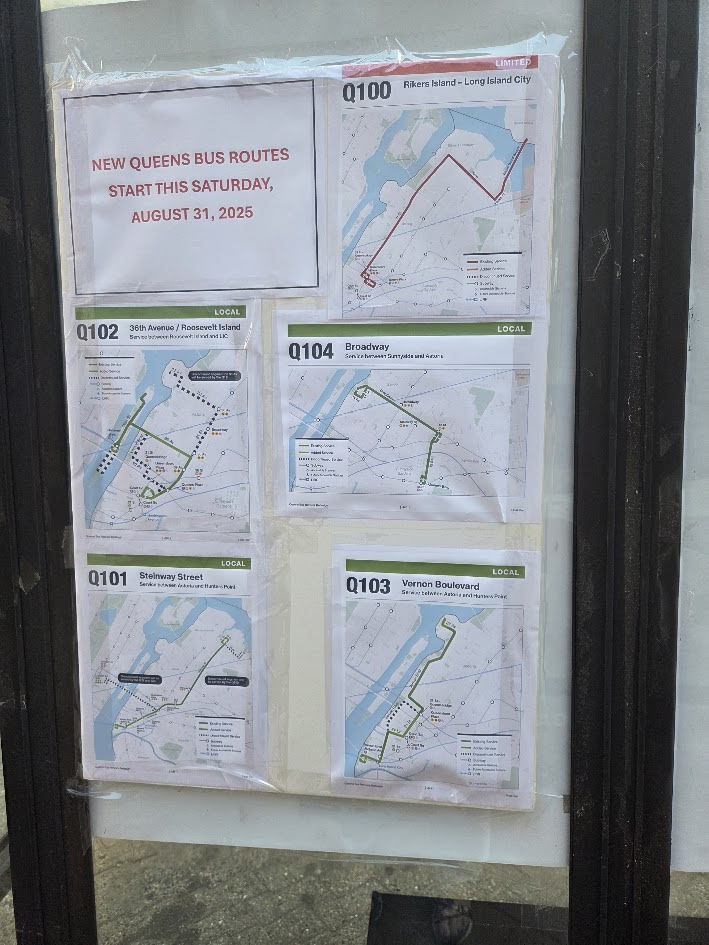
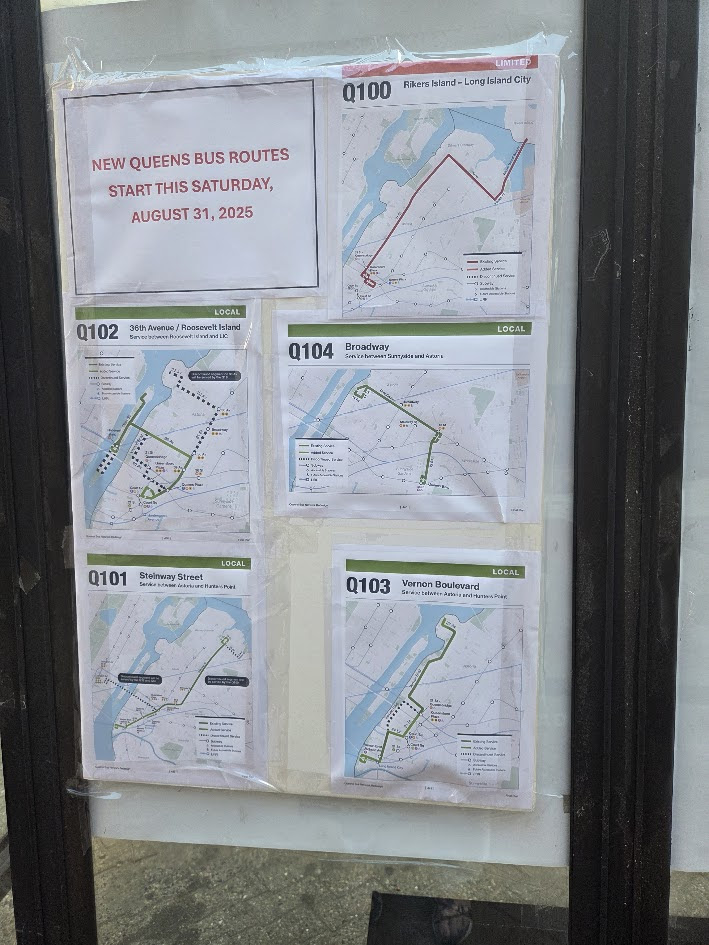
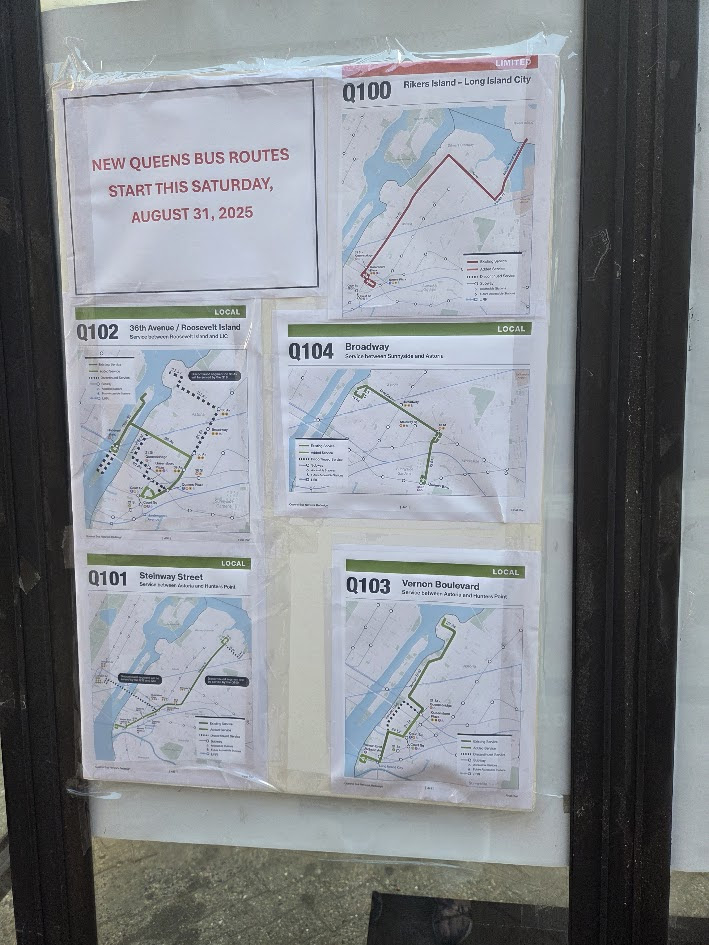
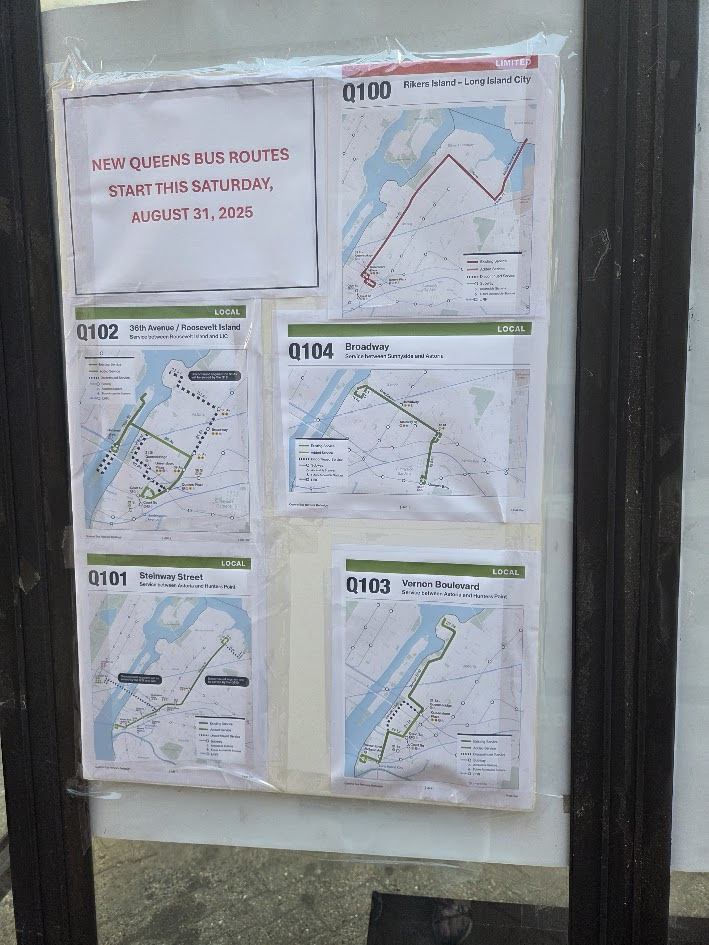
OUR QUEENS BUS ROUTES WE HAVE POSTED THE NEW ROUTE MAPS ON THE BACK OF THE CHAPEL BUS SHELTER
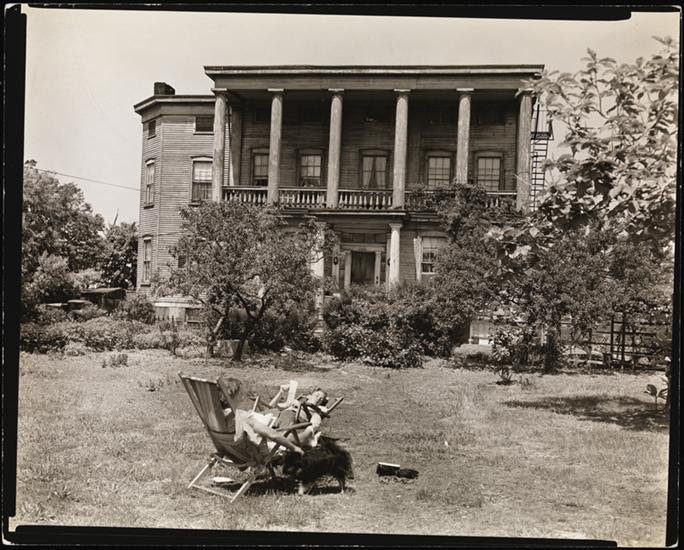
PHOTO OF THE DAY HOME IN ASTORIA ONCE THE HOME OF THE BLACKWELL FAMILY
FROM THE MUSEUM OF THE CITY OF NEW YORK 27th Avenue, no. 805, Astoria Photographer Berenice Abbott (1898-1991) Accession number 89.2.1.227 Unique identifierMNY70750 Dated May 25, 1937 Object Type photograph Inscription / technical details Abbott stamp on print verso, center. | Federal Art Project stamp and title, location, date and Abbott number inscribed in pencil on print verso, center.
Credits
MUSEUM OF THE CITY OF NEW YORK
JUDITH BERDY
All image are copyrighted (c) Roosevelt Island Historical Society unless otherwise indicated THIS PUBLICATION FUNDED BY DISCRETIONARY FUNDS FROM CITY COUNCIL MEMBER JULIE MENIN & ROOSEVELT ISLAND OPERATING CORPORATION PUBLIC PURPOSE FUNDS.
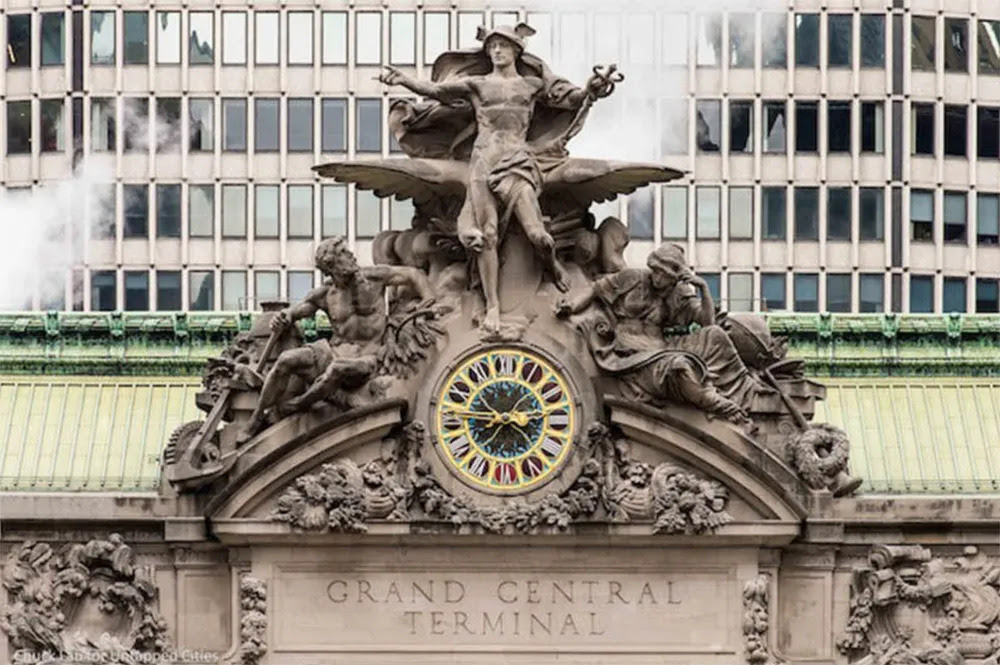
Long before everyone checked the time by glancing at their cellphones, many decorative clocks were installed to help New Yorkers keep track of time. While some were built as art pieces in more recent years, other clocks have often been recognized as essential pieces of “street furniture,” along with lamp posts, sign posts, and benches.
They have also been utilized in cities all over in order to maintain and enhance the quaintness of neighborhoods. In this piece, we highlight a few of New York’s most iconic time pieces you may or may not have noticed. Of course, this is only a sampling of the various fixtures you can find across the five boroughs. If you know of any others, leave us a comment below:
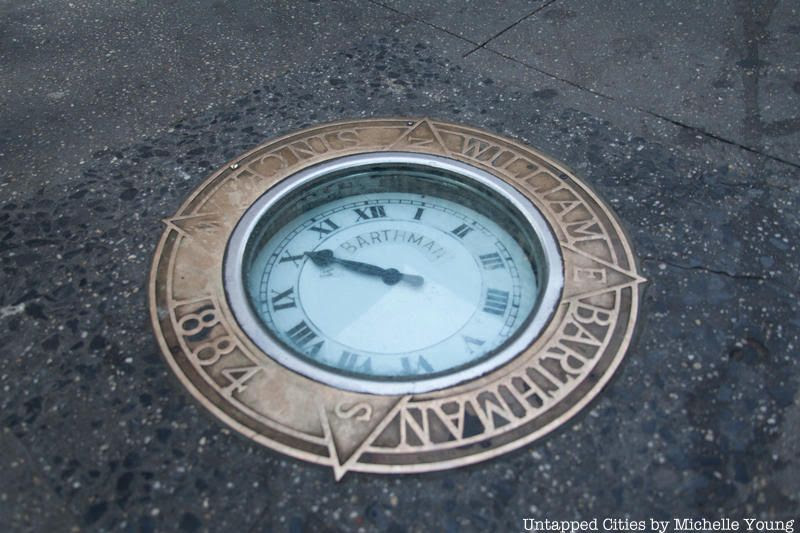
Located along the intersection of Maiden Lane and Broadway, outside the old location of Barthman Jewelers in Lower Manhattan, a clock occupies a small break in the sidewalk. It’s been located in that spot since 1896, originally installed by Barthman and one of his employees, Frank Homm.
The clock is an ode to the district’s prominence in the jewelry trade and was created to lure customers into the Barthman store over other jewelers. The only time the clock stopped working was during the Depression of the 1930s, and temporarily after Hurricane Sandy. The signature time piece was maintained from a mechanical room that is only accessible by going underground. Barthman Jewelers has since moved a few doors down from their original location. The clock mysteriously disappeared after passersby noted that it had been in disrepair, but it has thankfully been restored!
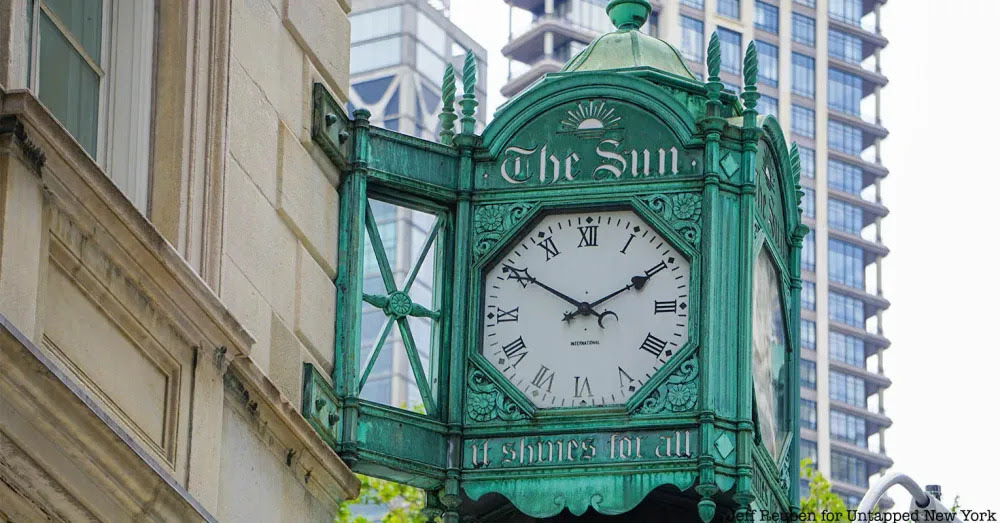
Located at 280 Broadway, The Sun newspaper’s former headquarters features a large clock and thermometer projecting from the facade of the building. The clock is inscribed with the paper’s name and motto: “It Shines for All.”
For those who don’t know, The Sun was a New York newspaper that was published from 1833 until 1950. It was the conservative rival to The New York Times and the New York Herald Tribune. Costing just one penny to purchase, The Sun was the first newspaper to report on crime and stories of ordinary citizens, making it a popular newspaper choice for the working class. Today, its former headquarters serves as the central offices for the New York City Department of Buildings. Originally, however, it housed the A.T. Stewart dry goods emporium, regarded as the first department store in New York. The Sun building is just one example of the many former locations of newspaper headquarters in New York City. It’s also full of many interesting and historical secrets, which you can read here.
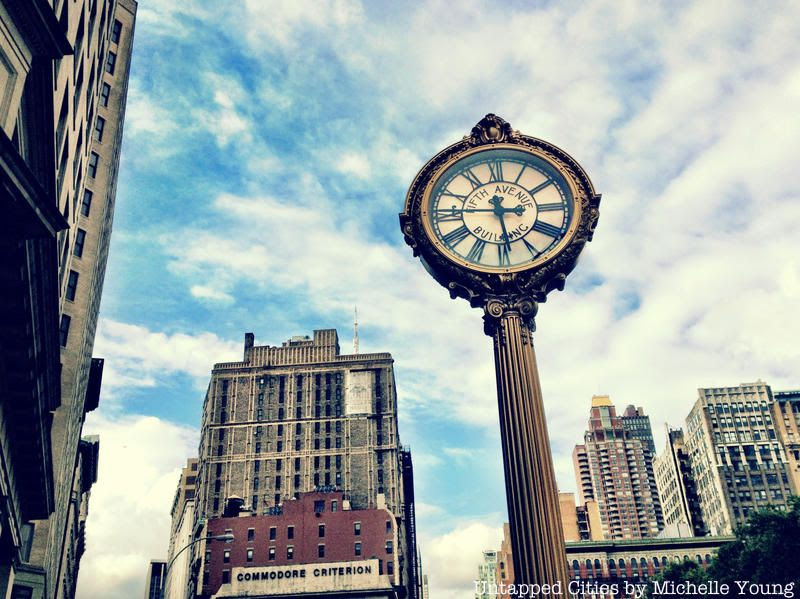
Located directly in front of New York City’s beloved Eataly, a decorative cast-iron sidewalk clock is situated next to a subway entrance, a newsstand, a telephone booth, a mailbox, lamppost, and numerous planters. The clock was manufactured by Hecla Iron works and is composed of an ornamented base and an Ionic column. Roman numerals on its face are also framed by wreaths of oak leaves and crowned by a cartouche.
Many people easily walk past this clock on a daily basis, but it’s been a fixture in the neighborhood since 1909, when it replaced an earlier clock that had accompanied the elegant Fifth Avenue Hotel. In an effort to preserve the historic importance and artisanship of cast-iron clocks, the city designated the clock an individual landmark in 1981. It’s one of seven sidewalk clocks designated as such. Three other ones are in Manhattan – in front of the Sherry Netherland Hotel, at 1501 Third Avenue and at 522 Fifth Avenue. There are also two in Queens, one at 16-11 Jamaica Avenue, thought to have been installed by Busch’s Jewelers and a Wagners Jewelers Clock at 30-78 Steinway Street. Lastly, there’s one in Greenpoint, the Bomelsteins Jewelers clock, at 753 Manhattan Avenue
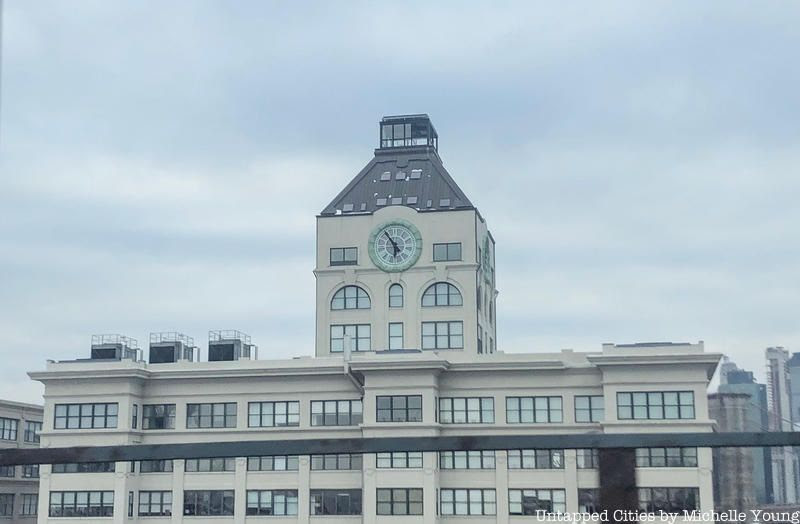
Located at the top of the 124-condominiums are four giant clocks, designating the residential building to be named “The Clock Tower.” Located in DUMBO, the tower is known for its iconic architectural qualities and the sweeping, unobstructed views it provides for its residents.
The clock tower was originally built in 1914 and received a total conversion in 1998. One of its most notable features is the penthouse at the top of the building, with transparent four 14-foot windowed working clocks surrounding the living area. The penthouse closed for $15 million last year, which earned itself the title of being the most expensive condominium sale ever in the borough.
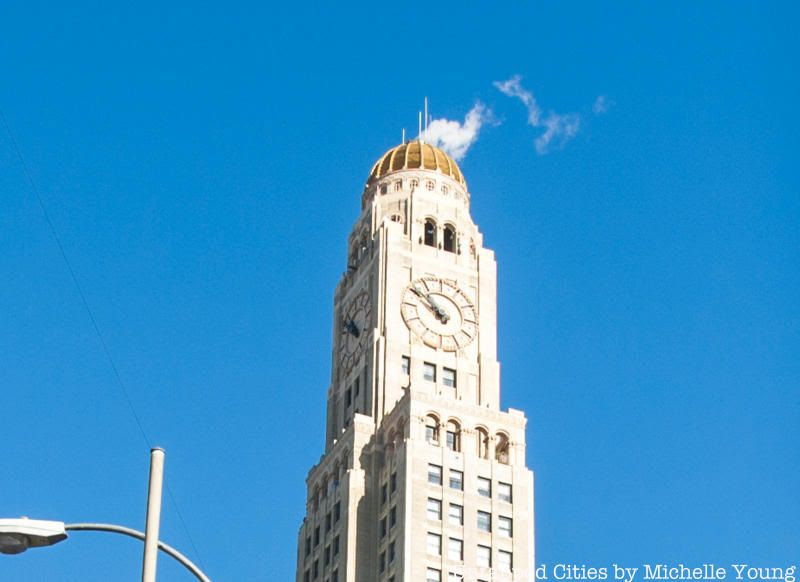
Built in 1927, the Williamsburgh Savings Tower is one of Brooklyn’s architectural icons due to its clocks located at the top of the building. The structure itself is among the tallest four-sided clock towers in the world, with each of the clock faces measuring 17 feet in diameter. At the time of their installation, they were the largest clock faces in the world, and the building was the tallest building in the borough — titles that have now been surpassed.
Originally built as the new headquarters for the Williamsburgh Savings Bank, the building has since been converted to luxury condominium apartments. It was declared a New York City landmark in 1977, and its clocks continue to make it one of the most recognizable towers in Brooklyn.
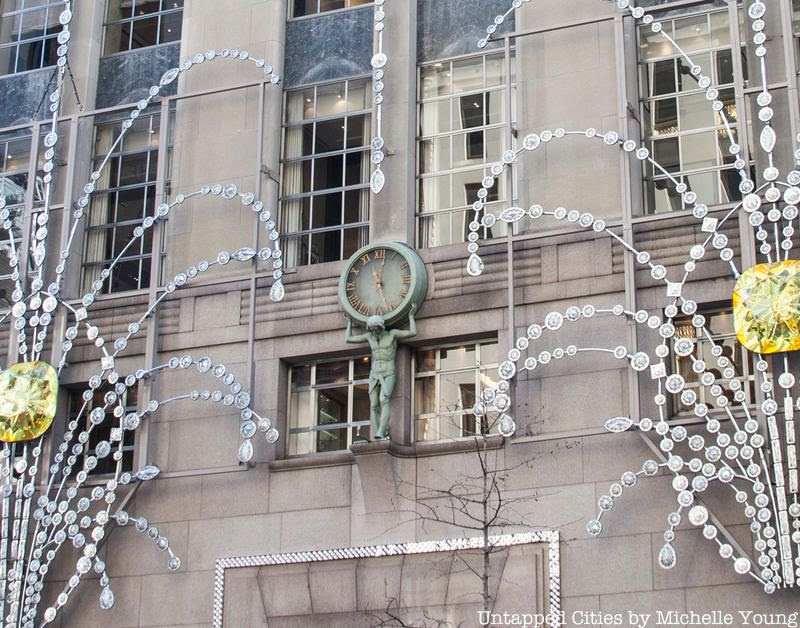
Another example of a major player in the golden age of Manhattan’s jewelry, Tiffany & Co. lured customers in with its decorative entrances. In 1853, the company built an impressive new building at 550 Broadway embellished with a beautiful clock.
To create the piece, Charles Tiffany commissioned dear friend and renowned sculpter, Henry Frederick Metzler. Standing at nine feet in height and four feet in diameter, the clock is held up by Atlas, the Greek Titan God and known as the bearer of the heavens. Over time, as Tiffany & Co. moved flagship locations, it transported the clock with them. Finally in 1940, Tiffany & Co. moved to their famous location on Fifth Avenue, and the sculptural clock continues to reside there today.
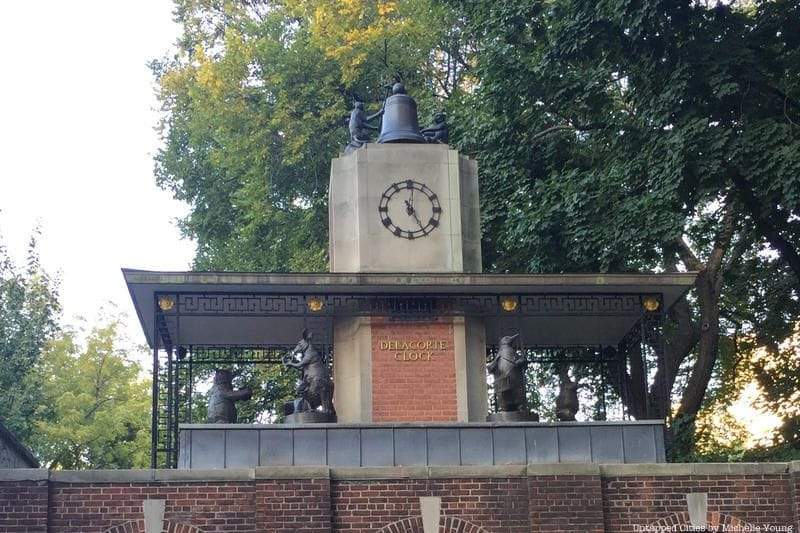
Located above the arcade between the Wildlife Center and the Children’s Zoo, Central Park Zoo’s iconic timepiece known as the Delacorte Clock has established itself as one of the most beloved monuments within the green space. The clock is dedicated to George T. Delacorte, the publisher and philanthropist who gifted the fixture to the park in 1965.
Everyday between 8am and 6pm, the digitally programmed clock plays one of thirty-two nursery rhyme tunes on the hour. It also features sculpted animals, including a penguin, kangaroo, bear, elephant, goat, and hippo that parade around the clock. Additionally, two sculpted monkeys with mallets strike the bell on the hour. The full list of songs, which can be seen here, are divided into four seasonal categories; Christmas songs, for instance, are programmed to play from December 1-25. For more fun facts and secrets of the Central Park Zoo, click here.
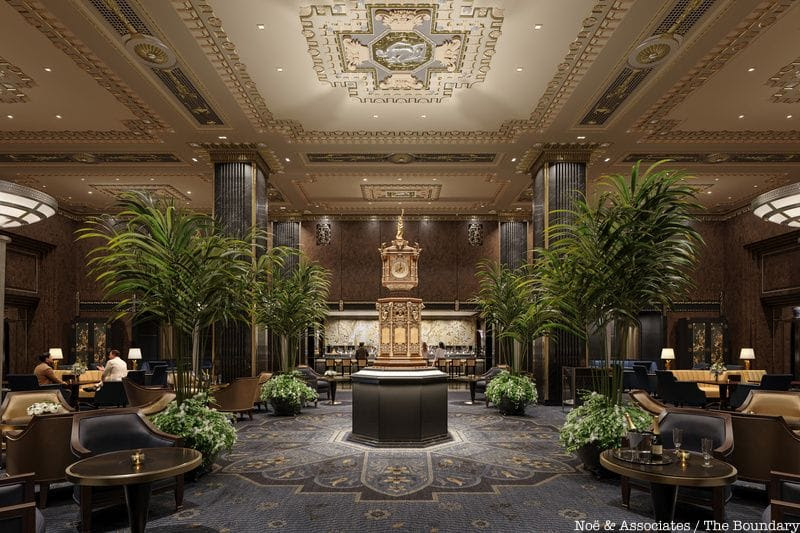
Queen Victoria commissioned this stunning clock to show off fine English craftsmanship at the 1893 World’s Columbian Exposition (akak The Chicago World’s Fair). John Jacob Astor IV later purchased the clock for display in the original Waldorf-Astoria Hotel on Fifth Avenue and 34th Street. It moved to the current Waldorf Astoria in 1931. During hotel renovations and its conversion into condomoniums, the famous clock underwent an extensive year-long restoration of its own and made a brief appearance at The New York Historical. Now that the hotel is once again open for bookings, guests can see the clock inside.
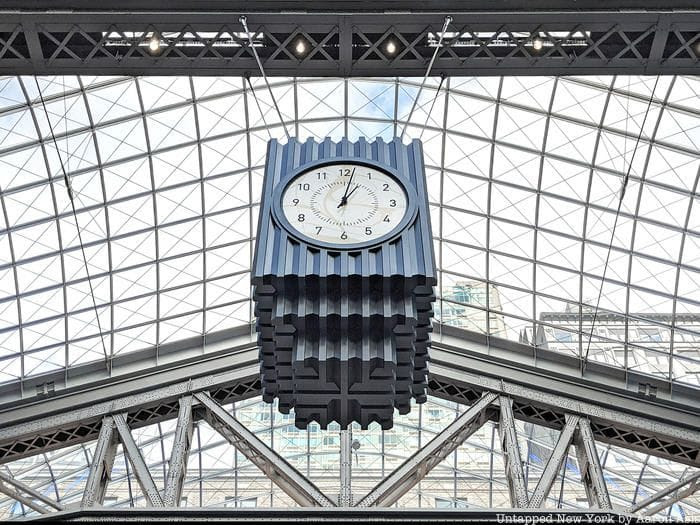
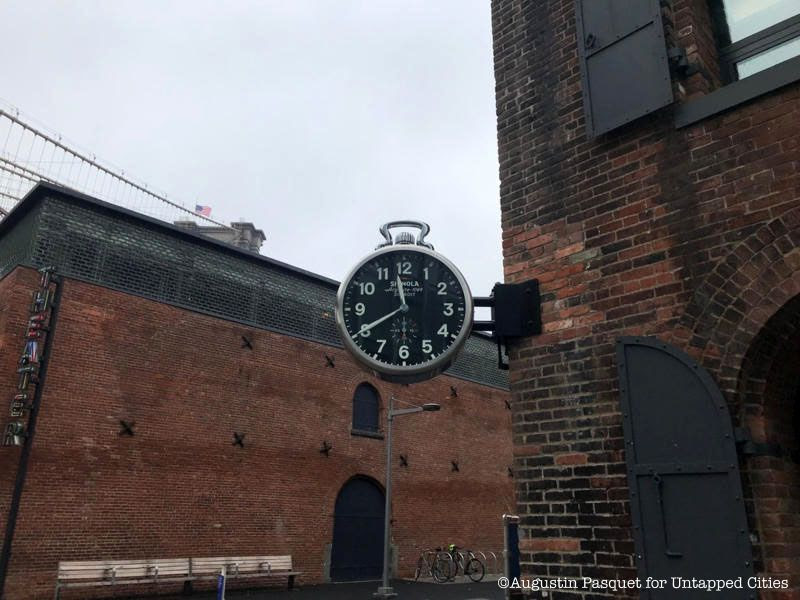
Although this is one of the newer clocks we’ve spotted around New York City, we appreciated the design and thought it was worth special mention. You can find the double sided, personalized time piece mounted on the outside of Shinola, a Detroit-based watch and accessories store located within the Empire Store’s waterfront shopping complex in DUMBO. Shinola also has another location in Tribeca.
Shinola has all of its clocks custom made by Electric Time Company, a legendary company in Medfield, Massachusetts. Originally founded in 1928, Electric Time Company is currently a manufacturer of tower and street clocks marketed worldwide. Its products can be found anywhere from New York City to the Magic Kingdom in Disney World, with each clock designed and installed on the premises of the location. They’re made to order and usually take up to three months to complete.
OUR QUEENS BUS ROUTES WE HAVE POSTED THE NEW ROUTE MAPS ON THE BACK OF THE CHAPEL BUS SHELTER
All image are copyrighted (c) Roosevelt Island Historical Society unless otherwise indicated THIS PUBLICATION FUNDED BY DISCRETIONARY FUNDS FROM CITY COUNCIL MEMBER JULIE MENIN & ROOSEVELT ISLAND OPERATING CORPORATION PUBLIC PURPOSE FUNDS.
I was off to test the new Q102 route from the Island to Court Square. On weekends there are just 2 buses an hour leaving the subway station at 15 and 45 minutes past the hour. The bus stops at the 546 Main Street stop. The 12:45 bus arrived with just one other passenger on it.
Proceeding east on 36th Avenue, the second stop is at 12th Street. This is a great location to get off and make a donation to the Hour Children Thrift Shop.
Being a holiday most shops were closed. Just before turning onto 31st Street, we passed Flowers by Lunelly, a great florist that has supplied wonderful and creative arrangements for many island events.
Being a holiday, the intersection between Northern Blvd, Queens Plaza and the bridge entry was quick. This intersection will be a challenge weekdays.
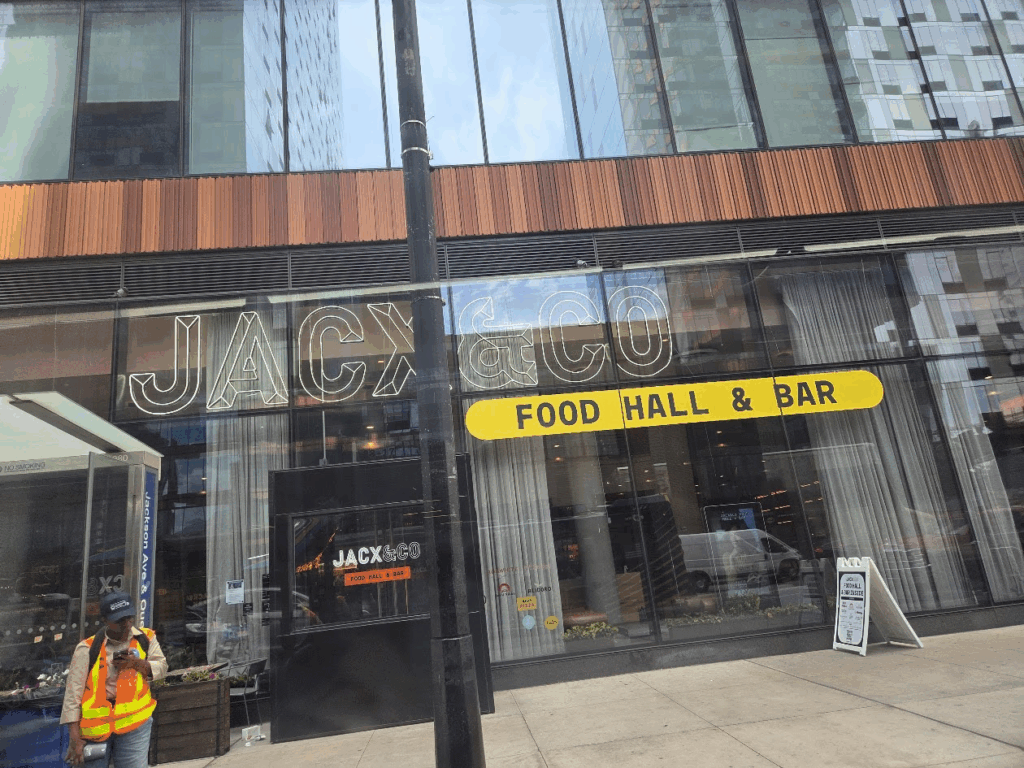
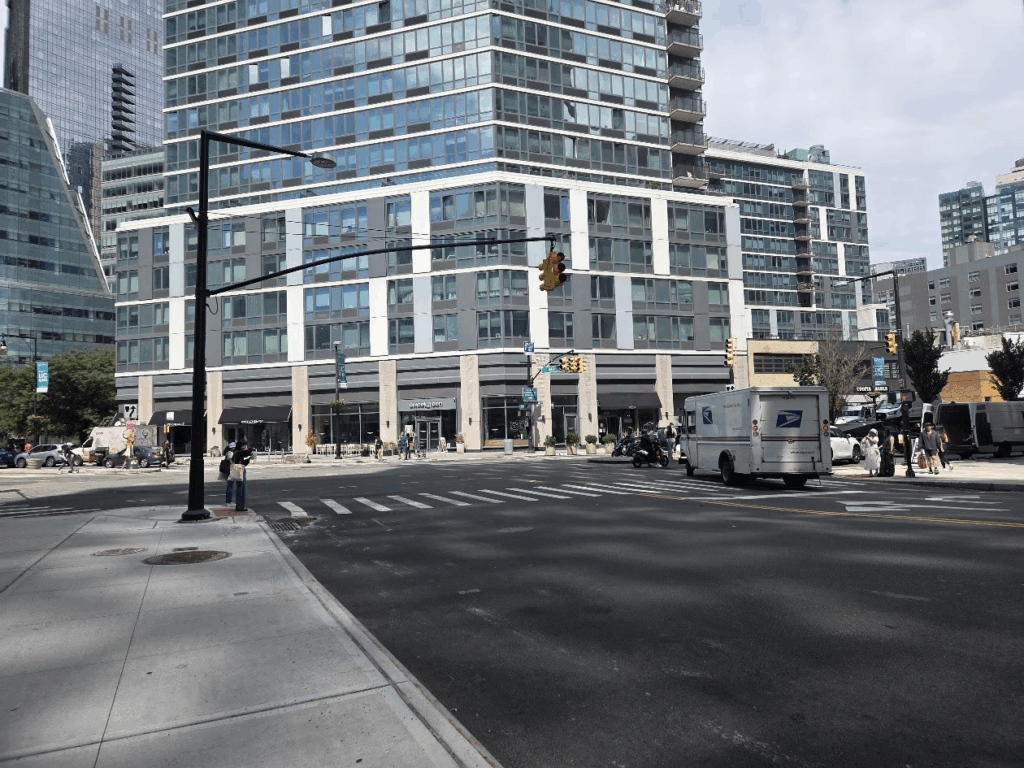
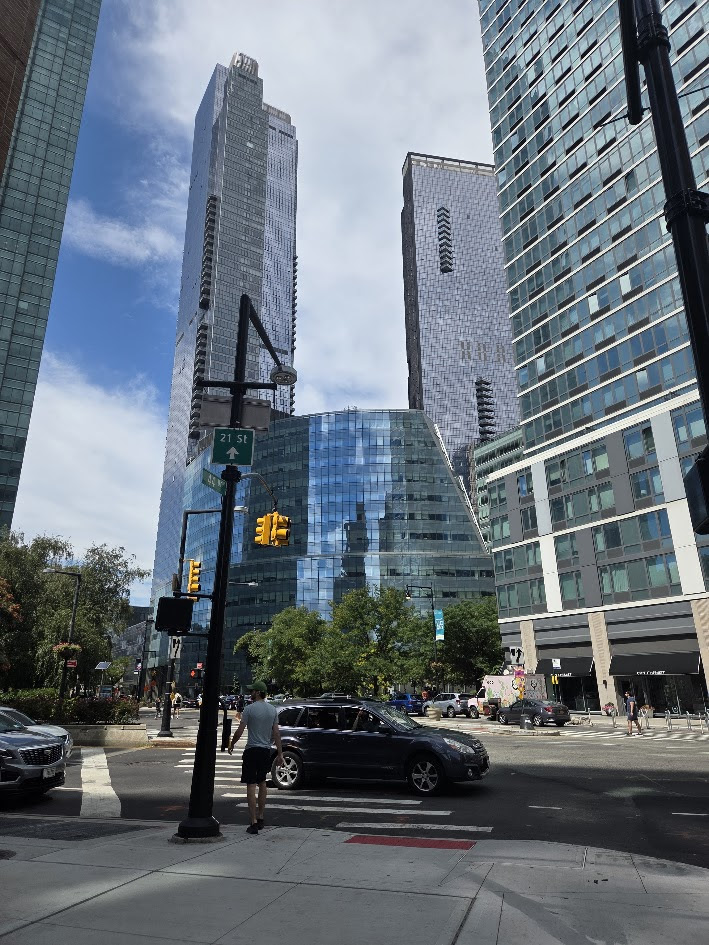
The 7 train is a few block walk from the N & R train at Queens PlazaOnce on Jackson Avenue, we were in the new skyscraper world of Long Island City. Jacx & Co, a giant food hall is the first dining spot on the avenue. Accross the street is al Murray’s Cheese, Serafina and a Chipolte. No longer an industrial area there are multiple dining spots may Asian.
The bus route ends at 44th Drive and Jackson Avenue. (The return starts at 43rd Avenue and Jackson Avenue)
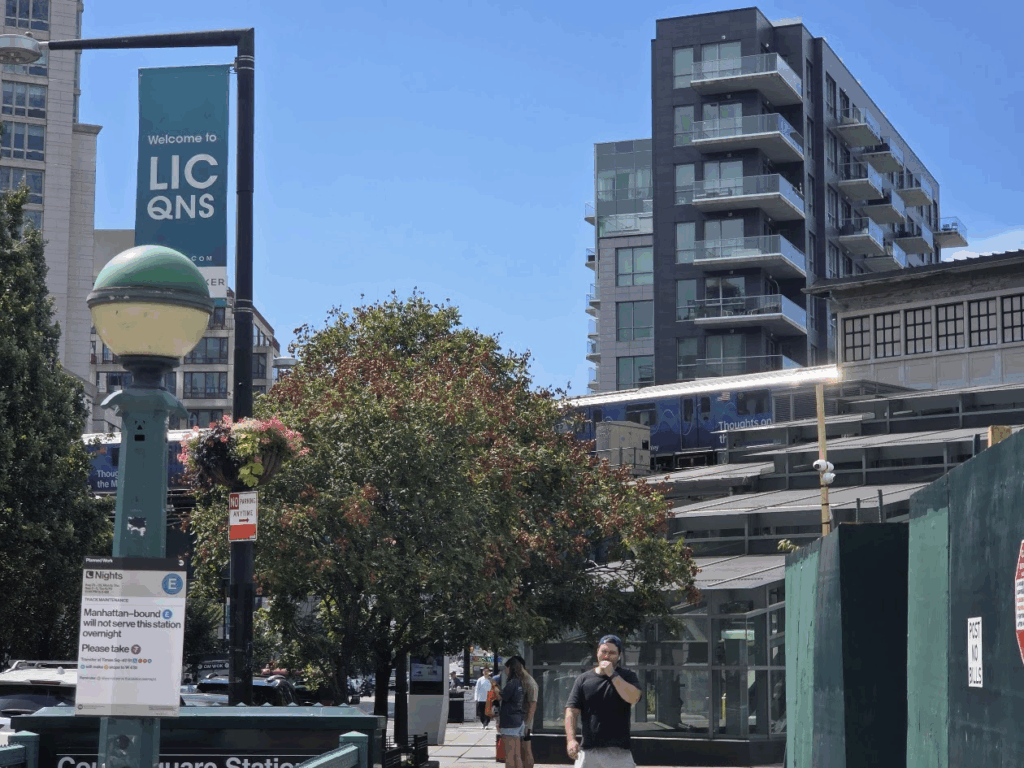
It takes time to adjust to the neighborhood. Until recently the only hi-rise was Citi-Corp, now it is surrounded by other buildings. There is still a park in front of the building. There is a Target store on the other side of the building.
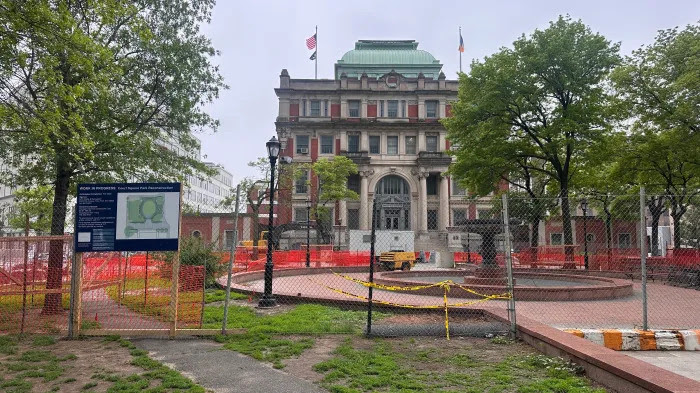
The grand courthouse is accross the street partially hidden by construction on the plaza outside the building.
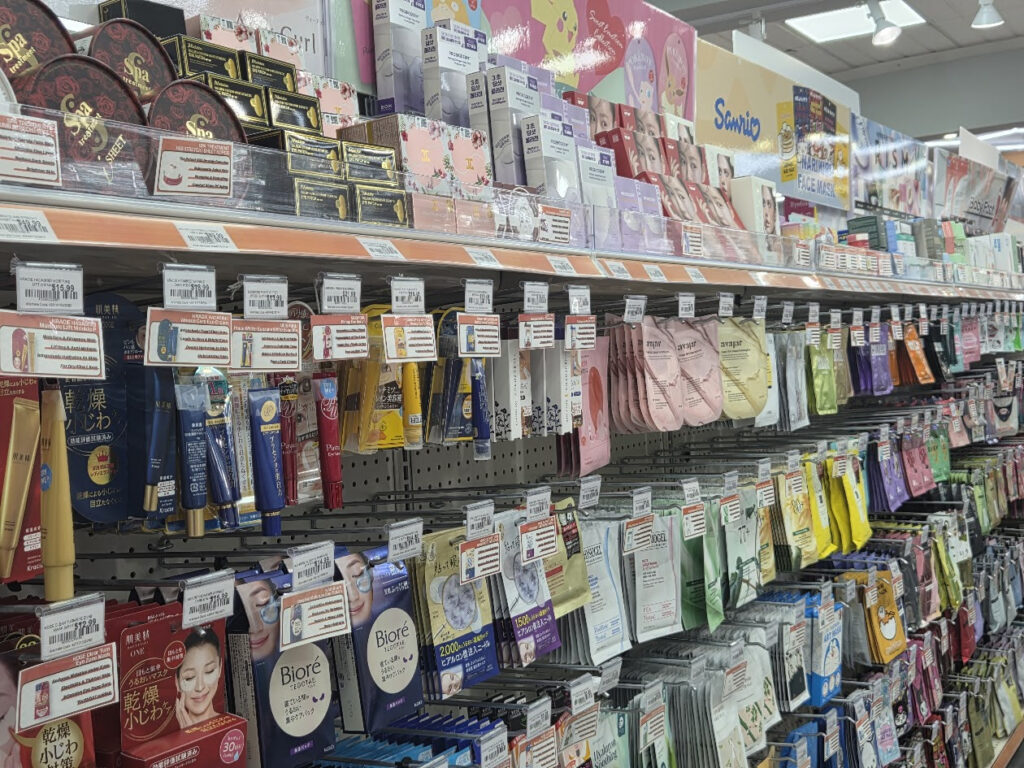
On the next block is Teso-Life, (from Google)Teso is a Japanese lifestyle store owned by a Chinese entrepreneur, as reflected in the presence of Chinese characters throughout the store. They carry a wide selection of Korean and Japanese skincare, haircare, makeup, and food.
The E train station is on the corner.
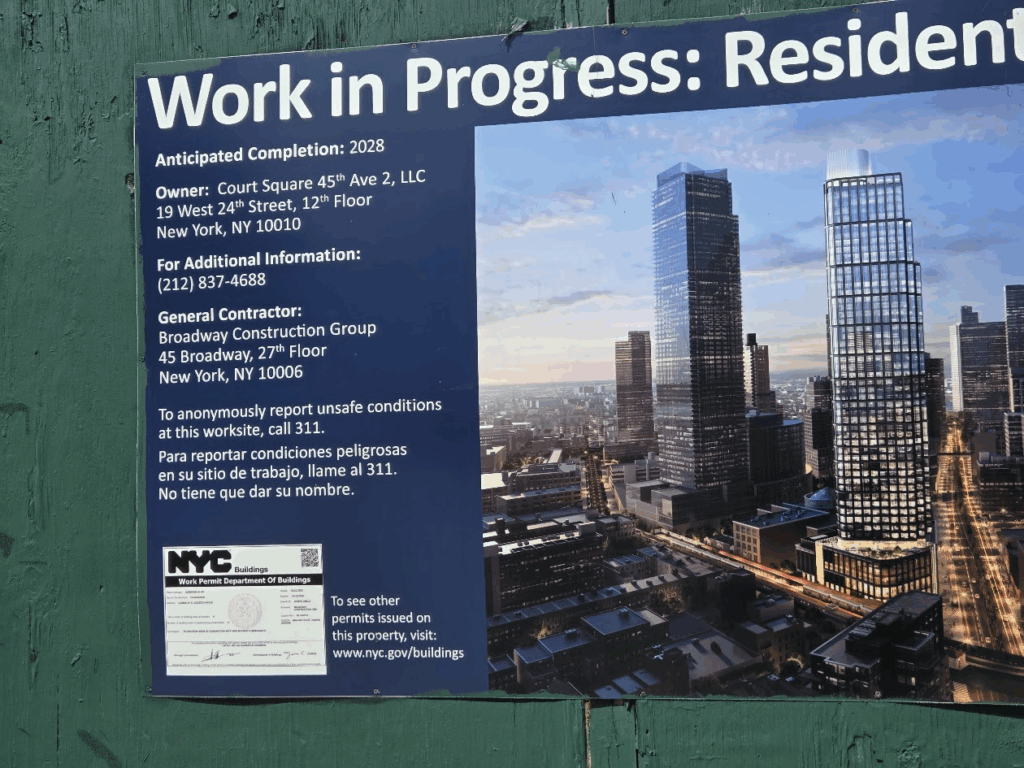
One of the few vacant areas has a sign posted that another monster hi-rise will soon appear. (Is there any planning or zoning in Queens?)
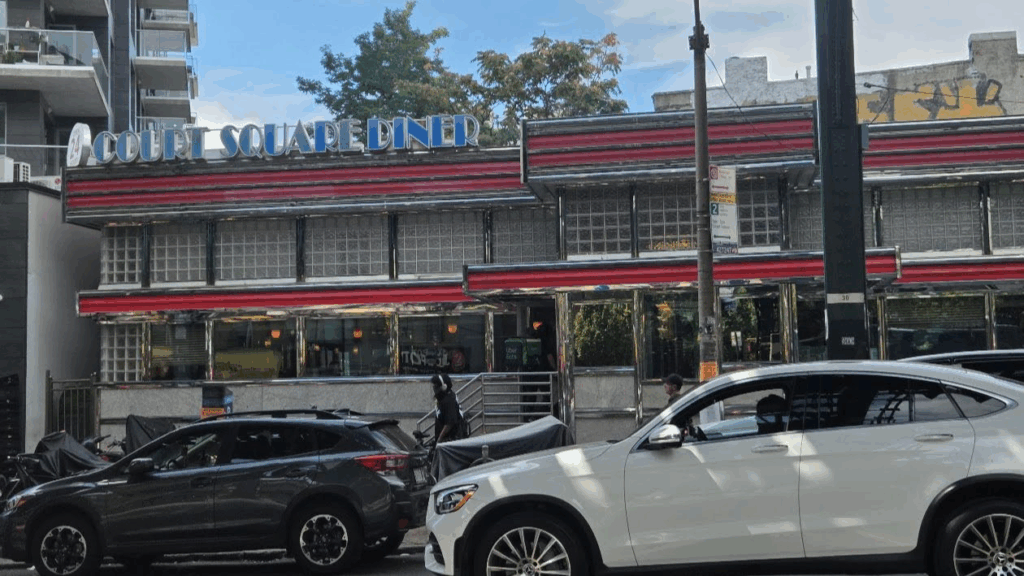
One remnant of old LIC remains on the corner 23rd Street.
Next to the G train station and my destination was reached after a 10 minute walk from the bus stop. The store was crowded, but still easy to be in and out in less than an hour. An Uber ride seemed the best idea to bring my purchases home.
OUR QUEENS BUS ROUTES WE HAVE POSTED THE NEW ROUTE MAPS ON THE BACK OF THE CHAPEL BUS SHELTER
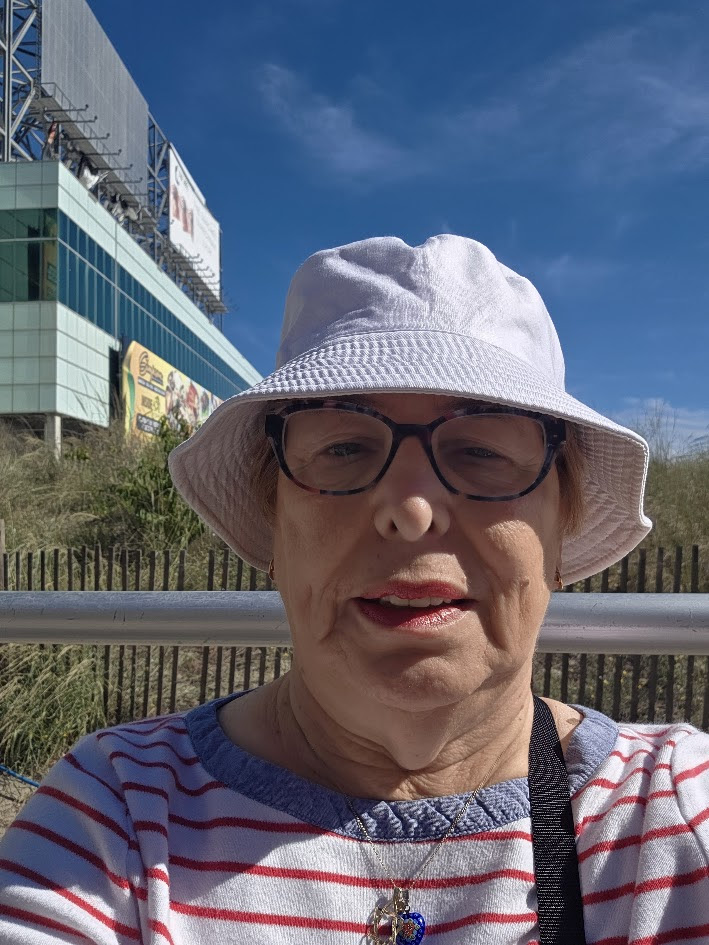
Saturday was escape day to Atlantic City with a group from our CBN Center. Trip was sponsored by RIDA. A day of fun in the sun!!
Credits
Judith Berdy
All image are copyrighted (c) Roosevelt Island Historical Society unless otherwise indicated THIS PUBLICATION FUNDED BY DISCRETIONARY FUNDS FROM CITY COUNCIL MEMBER JULIE MENIN & ROOSEVELT ISLAND OPERATING CORPORATION PUBLIC PURPOSE FUNDS.
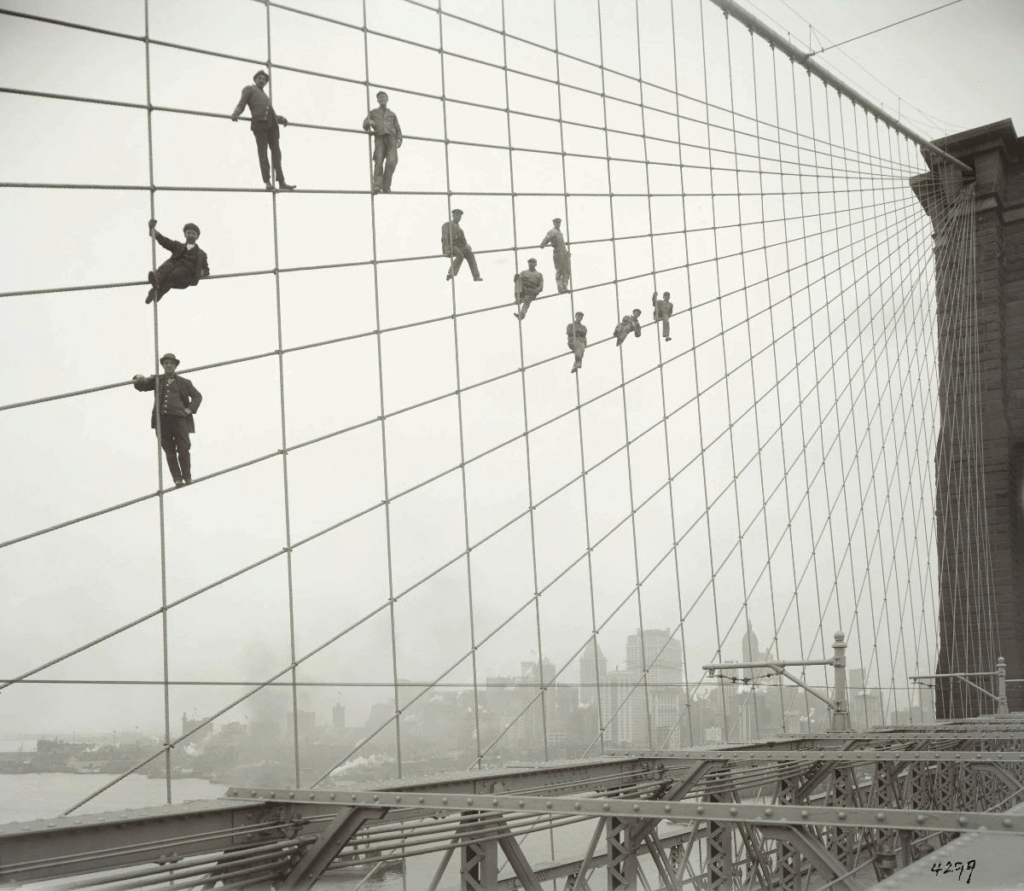
Brooklyn Bridge, showing painters on suspenders, October 7, 1914. Photo by Eugene de Salignac, Department of Bridges/Plant & Structures Collection. NYC Municipal Archives.
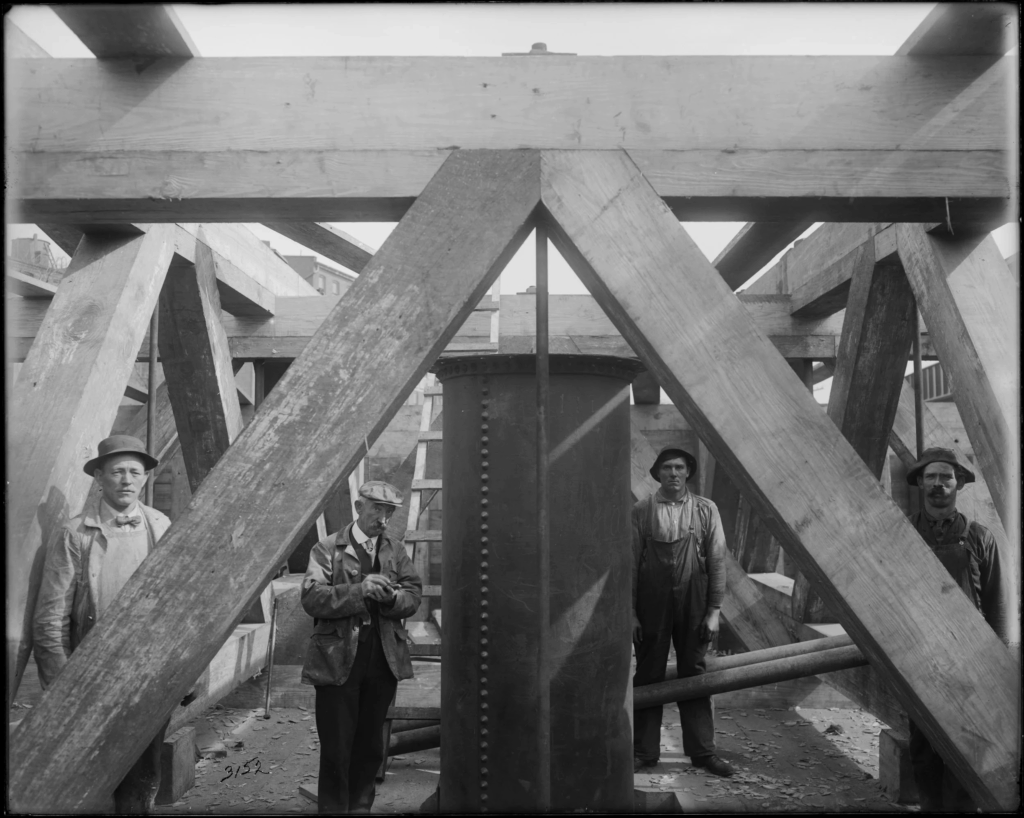
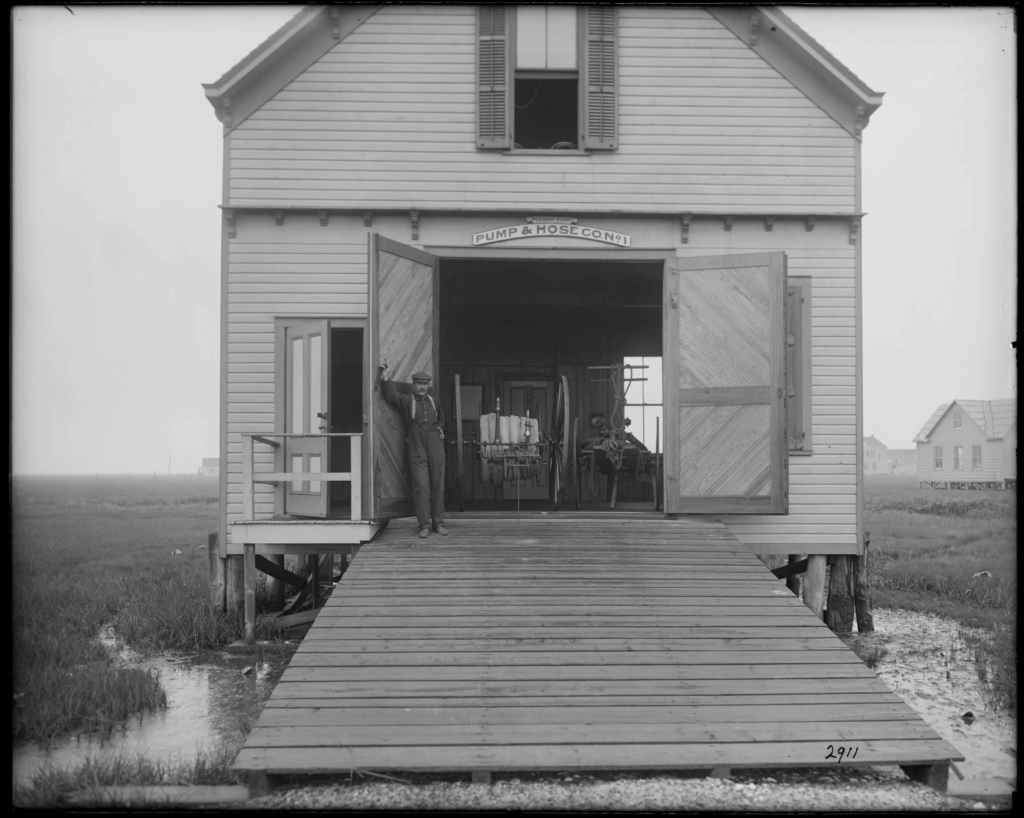
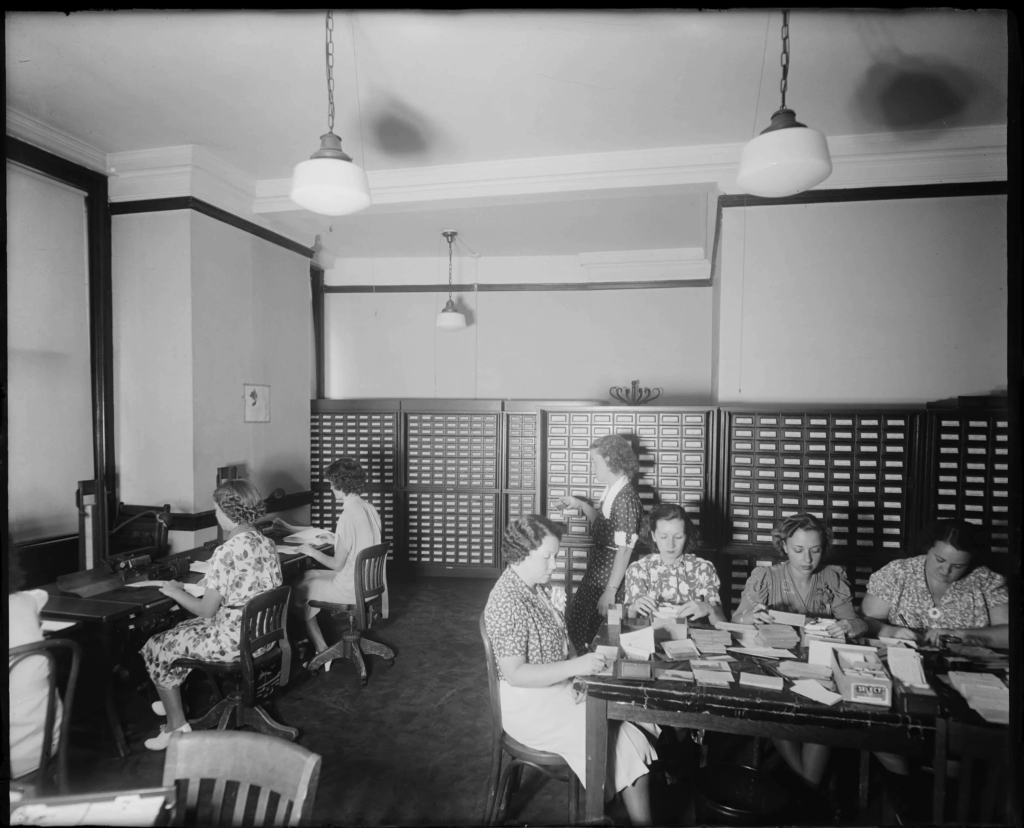
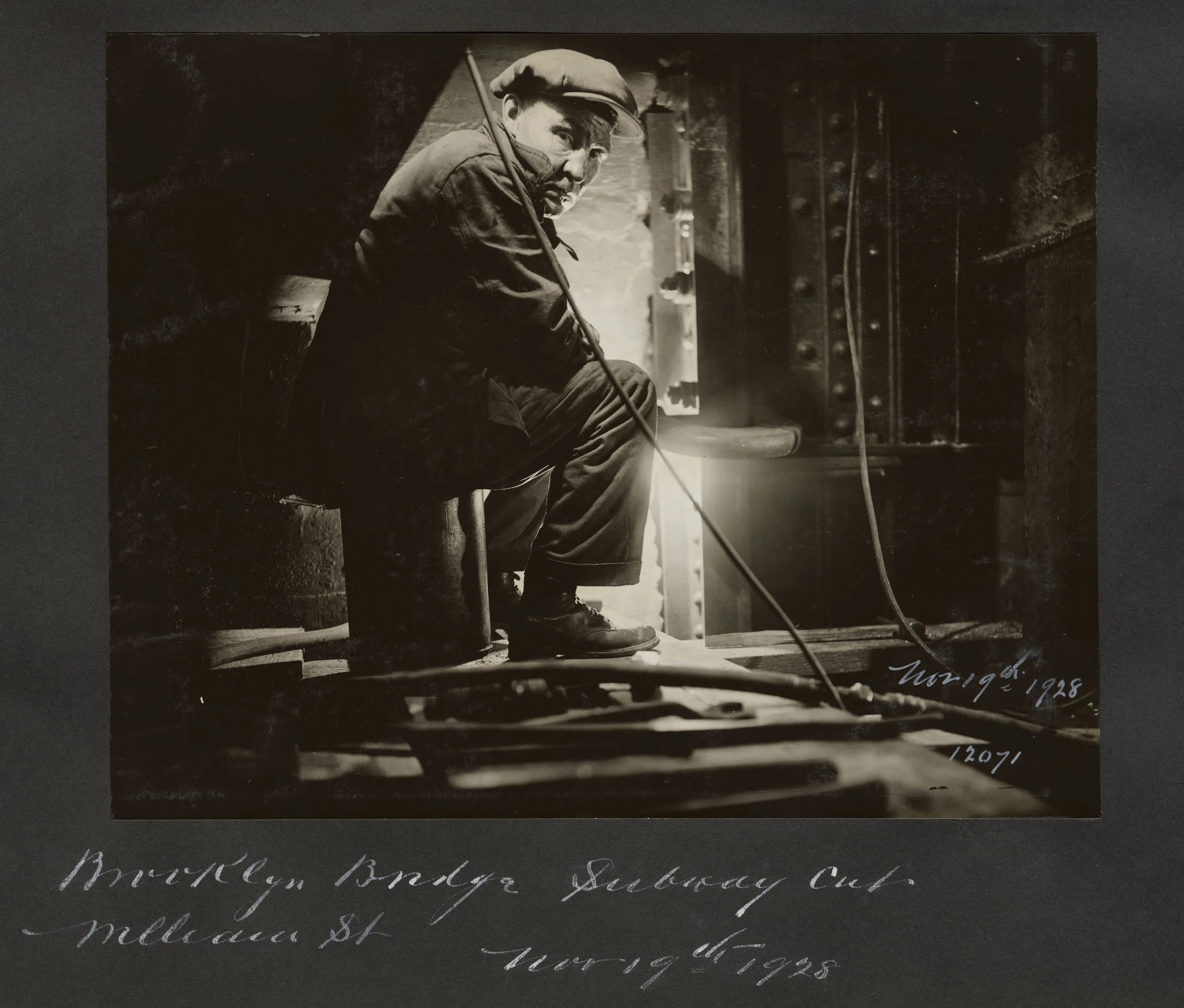
For Labor Day, we thought For the Record would look back on Eugene de Salignac’s photographs of workers. His most famous photograph is, of course, of workers on the Brooklyn Bridge, but many of his photographs emphasize labor. Some of de Salignac’s most intriguing photographs are his portraits, limited in number, but often stunning. Most are of City workers engaged in (or just pausing from) their daily tasks, be that welding, chiseling stone, giving radio broadcasts or filing paperwork. There is often an ease to his subjects that suggests de Salignac’s rapport with them. He frequently caught them in unguarded moments, often in the distinctive settings of their work sites and with the tools that epitomize their labor. Some, like the portrait of the worker in the subway cut, transcend time to become iconic American types. This was the great age of industrialized labor and de Salignac would have known that the City’s transformation would not be possible without the sweat of the City’s vast and varied workforce.
De Salignac himself was also a City worker, who from 1906 to 1934 was the sole photographer for the Department of Bridges/Plant & Structures. Some of the images reproduced here are from his rarely seen photo albums, which were organized around specific projects or themes.
Queensboro Bridge, motor room, Penn Steel Plant, Blackwell’s Island, April 22, 1907. Photo by Eugene de Salignac, Department of Bridges/Plant & Structures Collection. NYC Municipal Archives.
Queensboro Bridge, pin in place, upper deck, northeast, May 2, 1907. Photo by Eugene de Salignac, Department of Bridges/Plant & Structures Collection. NYC Municipal Archives.
Williamsburg Bridge, Caisson #2, general view of workers, October 14, 1911. Photo by Eugene de Salignac, Department of Bridges/Plant & Structures Collection. NYC Municipal Archives.
Williamsburg Bridge, Caisson #2, interior view at airlock, October 14, 1911. Photo by Eugene de Salignac, Department of Bridges/Plant & Structures Collection. NYC Municipal Archives.
Williamsburg Bridge, burning nut at base of column, September 10, 1915. Photo by Eugene de Salignac, Department of Bridges/Plant & Structures Collection. NYC Municipal Archives.
Pump and Hose Company, Jamaica, Queens, June 26, 1911. Photo by Eugene de Salignac, Department of Bridges/Plant & Structures Collection. NYC Municipal Archives.
Comptrollers Office sales tax division, August 19, 1938. Photo by Eugene de Salignac, Department of Bridges/Plant & Structures Collection. NYC Municipal Archives.
Riveter, Brooklyn Bridge, new William Street Subway cut, November 19,1928. Photo by Eugene de Salignac, Department of Bridges/Plant & Structures Collection. NYC Municipal Archives.
OUR QUEENS BUS ROUTES ARE CHANGING THIS SUNDAY, AUGUST 31ST
WE HAVE POSTED THE NEW ROUTE MAPS ON THE BACK OF THE CHAPEL BUS SHELTER
All image are copyrighted (c) Roosevelt Island Historical Society unless otherwise indicated THIS PUBLICATION FUNDED BY DISCRETIONARY FUNDS FROM CITY COUNCIL MEMBER JULIE MENIN & ROOSEVELT ISLAND OPERATING CORPORATION PUBLIC PURPOSE FUNDS.
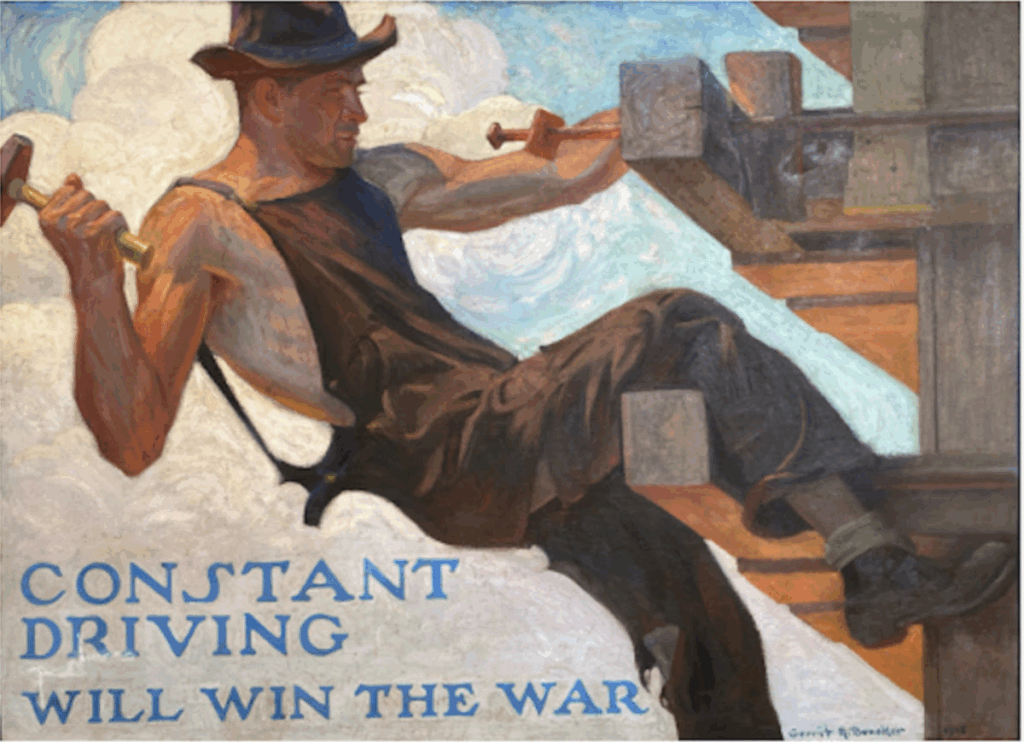
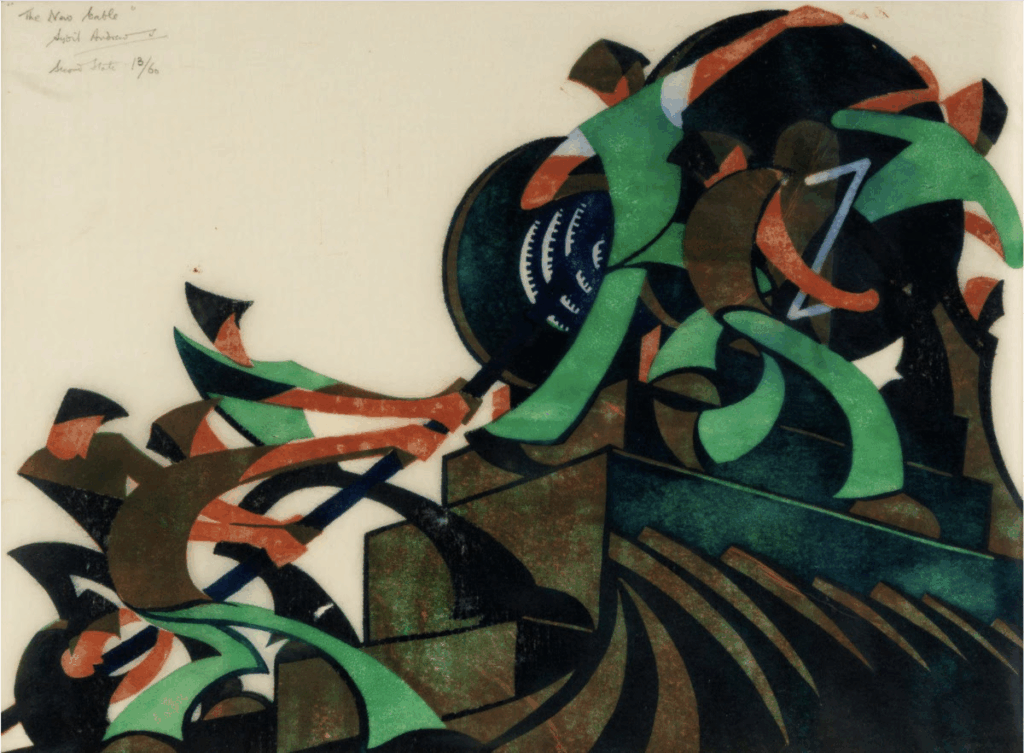
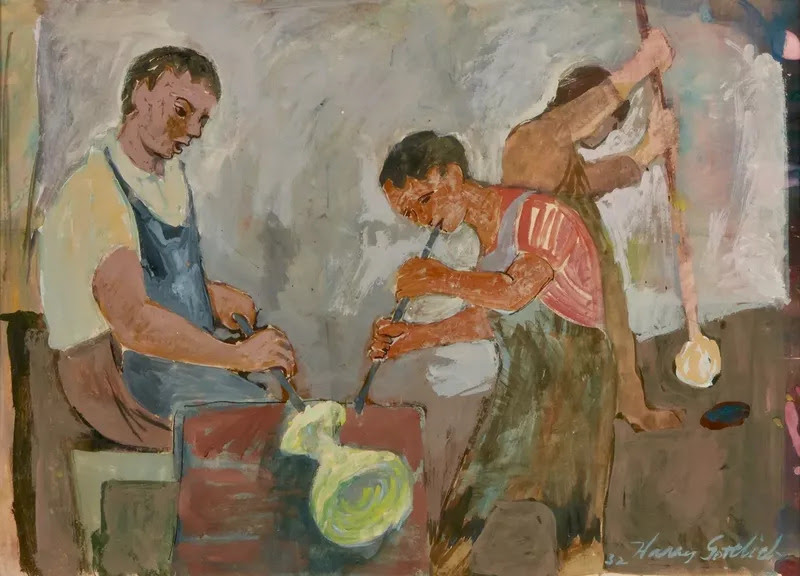
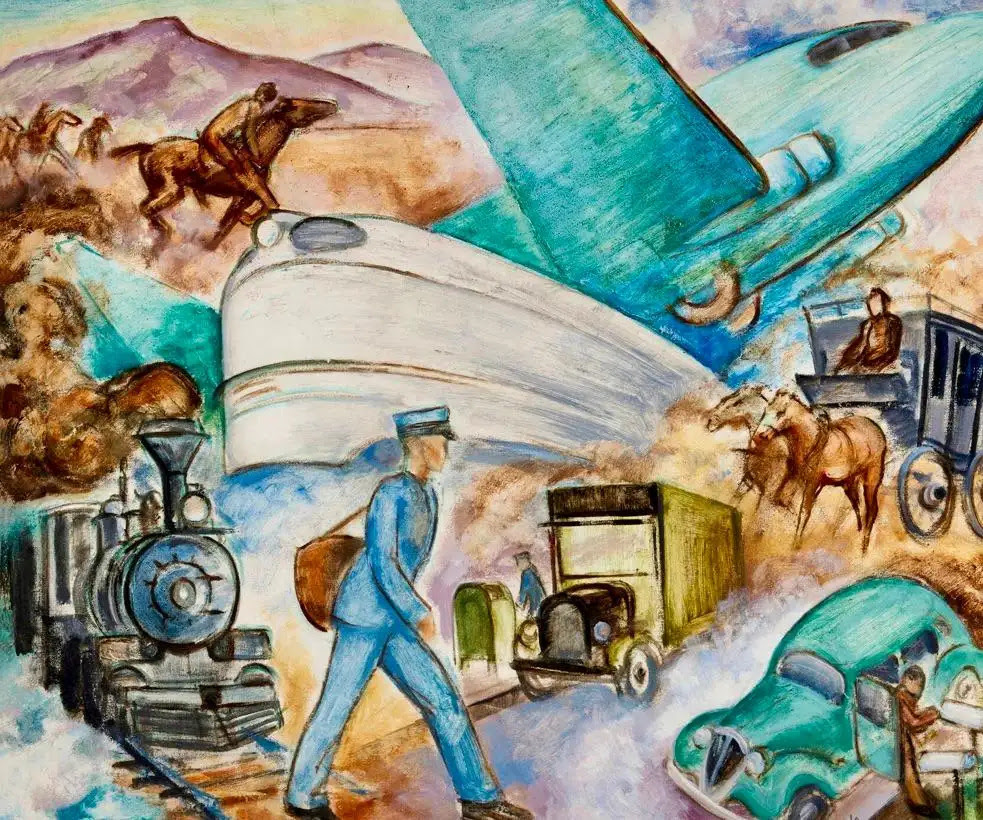
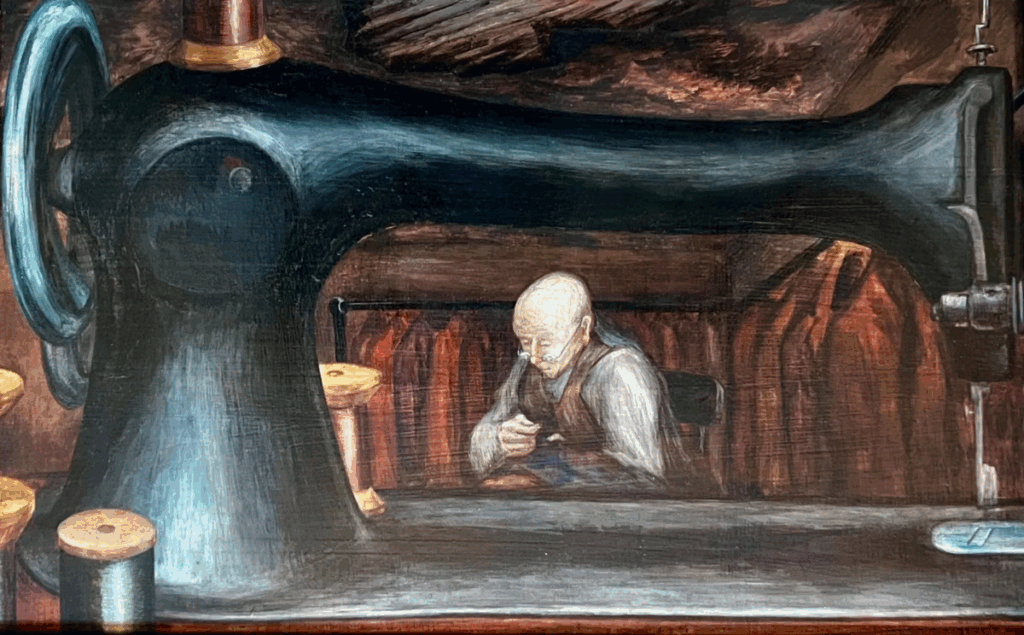
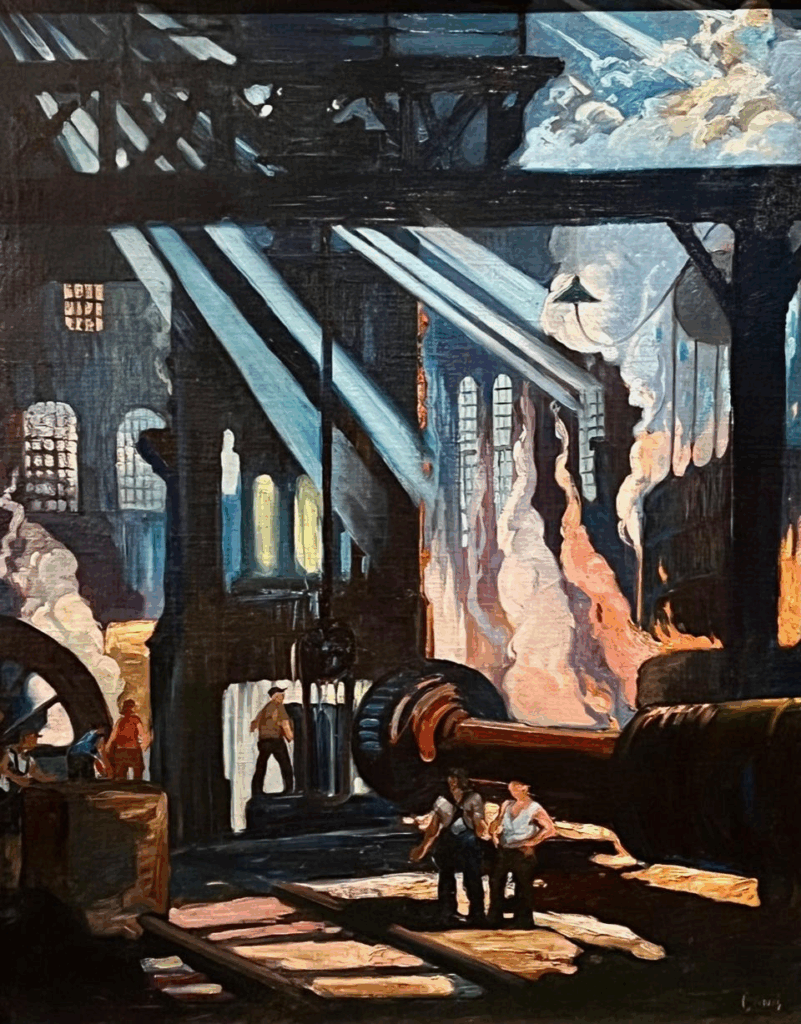
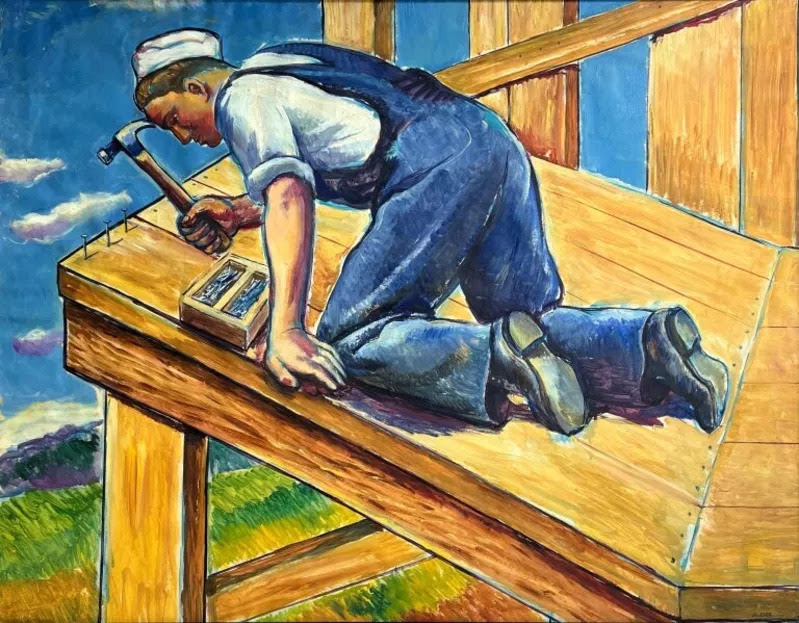
As we head into the Labor Day Weekend we have labor on our minds. People at work. Labor has long been at the heart of modern art, nowhere more so than in the powerful WPA era, when artists set out to honor the dignity, strength, and resilience of working people.
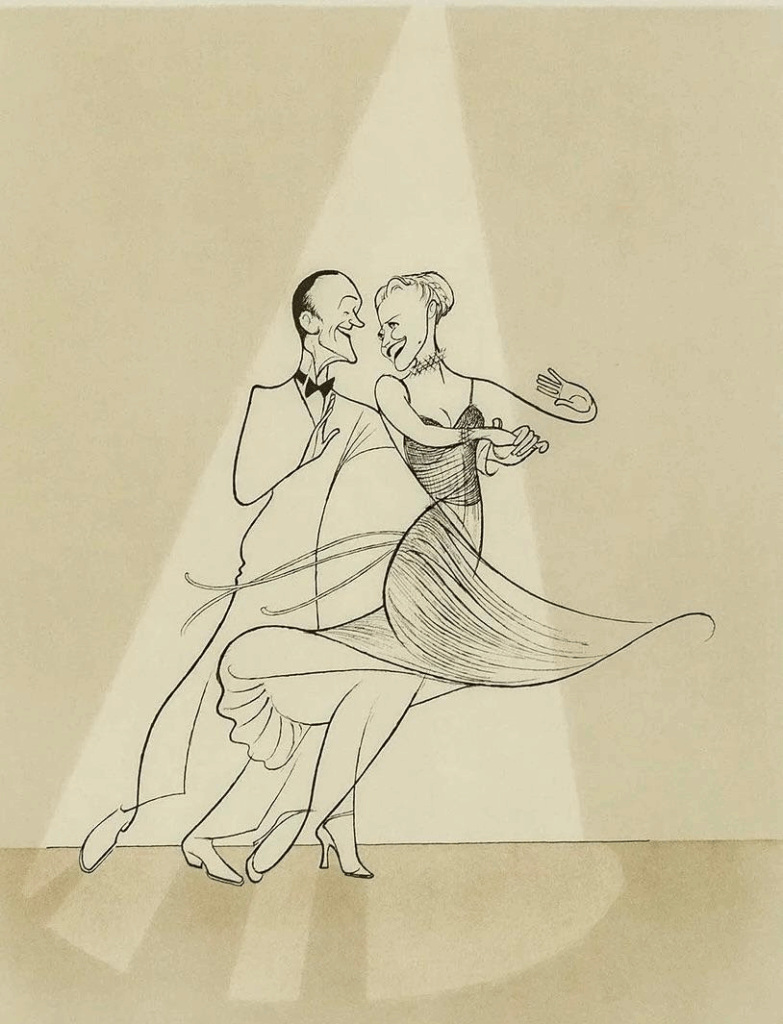
And because labor comes in many forms, our final featured piece today shifts from the job site to the stage: Fred Astaire and Ginger Rogers, captured in an iconic drawing by Al Hirschfeld. With a few elegant lines, Hirschfeld shows us a different kind of work – the art of performance, the labor of grace.
This lithograph offers a glimpse into our next exhibition: HIRSCHFELD: STROKES OF GENIUS. We can’t wait to share the exciting details next week.
This Labor Day, we celebrate the art of work — in every form. Scroll down to see how artists have captured its power and beauty across time.
All image are copyrighted (c) Roosevelt Island Historical Society unless otherwise indicated THIS PUBLICATION FUNDED BY DISCRETIONARY FUNDS FROM CITY COUNCIL MEMBER JULIE MENIN & ROOSEVELT ISLAND OPERATING CORPORATION PUBLIC PURPOSE FUNDS.
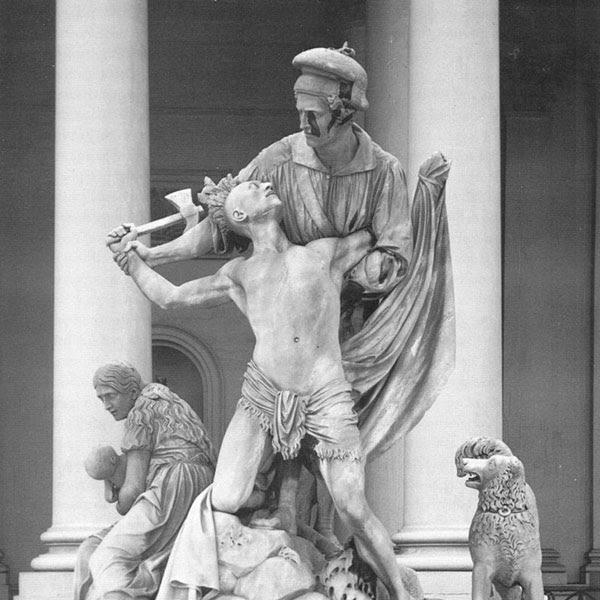
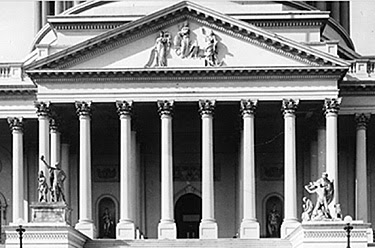
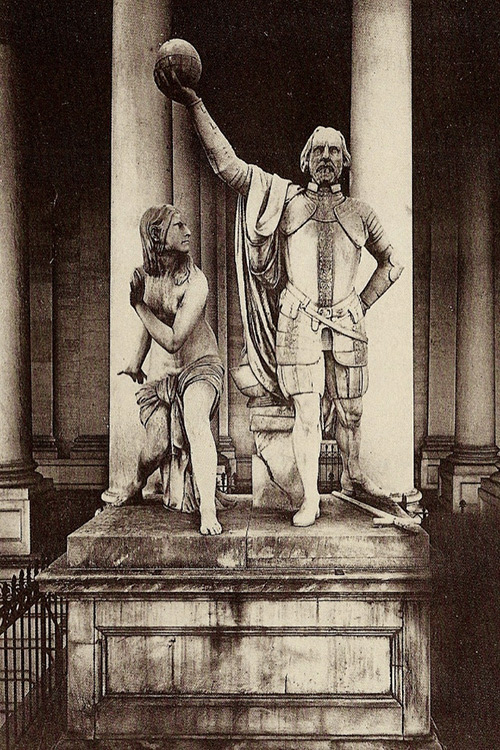
The placement and eventual removal of two statues in front of the U.S. Capitol building in Washington, D.C. is an oft-forgotten piece of American history, pertinent to our observance of Native American Heritage Month. The Rescue and The Discovery of America both included harmful stereotypes of indigenous people next to white figures in positions of power. For nearly a century, members of Congress walked past these statues to enter the Capitol. But due to the criticism of advocacy organizations like the National Congress of American Indians and individual activists like Leta Myers Smart, these statues were both taken down—a powerful example of indigenous activism in the mid-20th century.
In 1836, future president James Buchanan (then a Senator from Pennsylvania) headed a movement to commission two statues to flank the entrance to the Capitol building. Selected was Luigi Persico, an Italian-born sculptor who already created several statues for the exterior of the Capitol. Some members of Congress expressed dissent at the prospect of a non-American artist creating such important work; thus American-born Horatio Greenough was selected to sculpt the companion piece. In the following months, a proposal worked its way through Congress and to then President Martin Van Buren, who authorized Persico and Greenough to create the statues.
Persico’s Discovery of America was finished and installed in front of the Capitol by 1844. It depicted a triumphant Christopher Columbus holding up a globe next to a cowering American Indian woman. Symbolically, Columbus was shown confidently taking a step forward, while the Indian woman appeared intimidated and rooted in place, in a defensive stance.
On the other side of the staircase, Greenough’s The Rescue featured a more explicitly violent altercation between indigenous people and white settlers. The centerpiece of the statue depicted a calm, strong frontiersman towering over an American Indian warrior with a tomahawk. Behind them, a frightened woman clasped a small child, and nearby, a dog looked on in horror. The implication is that the Indian threatened the lives of this small pioneer family, and the patriarch stepped up to protect them. The emotion on the Indian’s face revealed fear, while the frontiersman is in complete control. Greenough himself wrote that the statue was meant “to convey the idea of triumph of the whites over the savage tribes.”
The central theme of these sculptures ultimately promoted the idea of Manifest Destiny; that Americans were destined to take control and civilize the lands that became the United States. These false and offensive depictions of white men as more powerful and capable than indigenous people reflected and reinforced the belief that violence in the name of westward expansion was justified. At least one member of Congress was conscious of the connection between these statues and their promotion of manifest destiny. James Belser, a representative from Alabama, said, “Let gentlemen look on the two figures which have so recently been erected on the eastern portico of the Capitol and learn an instructive lesson…The artist, when he made Columbus the superior of the Indian princess in every respect, knew what he was doing.” Whether consciously or
subconsciously, this idea no doubt permeated through some members of Congress as they discussed the annexation of Texas, Oregon, and California in order to spread American influence across the West.
For their part, American Indian groups always opposed the creation and installation of these statues. Their dissent became even more vocal in the 1950s under the leadership of Smart, a member of the Omaha Tribe of Nebraska. She became active in Native political organizations (such as the National Congress of American Indians) after her negative experiences with the Office of Indian Affairs, which participated in the forceful assimilation of Native children in boarding schools. During this period, she began a campaign that called for the removal of The Rescue and The Discovery of America by writing open letters to magazines and organizations like the National Sculpture Society. Her criticisms drew attention to the physical and sexual violence depicted in the statues, as well as the cultural violence they promoted. She knew that only a legislative act could remove the sculptures and, therefore, submitted petitions to Congress that stated that the statues were “misleading to the general public in that they fail to portray the true character of the American Indian.”
everal indigenous activist groups and individual members of Congress supported Smart’s petitions. Many thought, however, it was impossible to persuade Congress to pass legislation to remove the sculptures. But in 1958, the Capitol building underwent an extensive renovation project, which provided the necessary vehicle to achieve that end.
The decision on whether to retain the statues was taken away from the larger Congress and given to the five-man ‘Commission for the Extension of the United States Capitol,’ made up of the Vice President, the Speaker of the House, the minority leaders of both chambers, and the Architect of the Capitol. This small group made the determination that year to remove the statues in accommodation with the extension of the building. The campaign to remove the statues was the most important factor. But the statues had also deteriorated significantly after being exposed to the elements during their century-long display along the steps of the Capitol. Restoration would be very expensive. So, while the dog from The Discovery of America is on display in the Middlebury College Museum of Art, the rest of the statues remain in storage.
The success of Smart and her allies speaks to the determination of American Indians to ensure a place of dignity for themselves in our nation’s capital. Indigenous people always lived in the land that is now Washington, D.C. The cultural narrative authored by colonialism attempted to rewrite their role into weak, submissive, incapable bystanders, as depicted in the two statues discussed. The removal of these statues was a meaningful step that put indigenous stories back under the control of indigenous people.
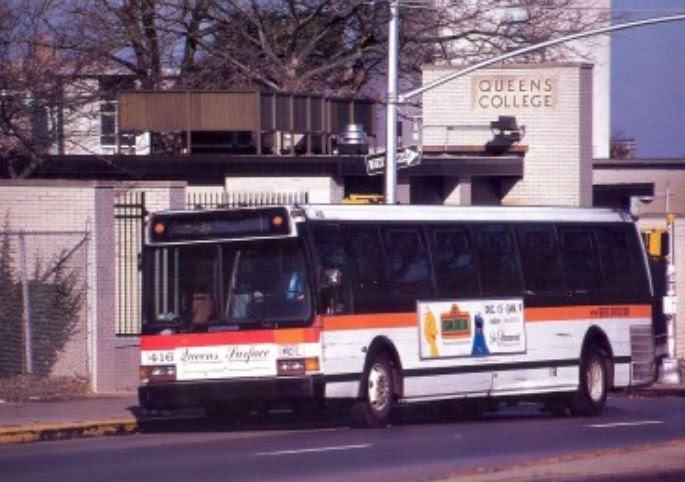
Queens Surface offered little reliable schedules and was replaced by the MTA in200-5, a vast improvement over the privately operated system.
WHERE IS THE MTA? OUR QUEENS BUS ROUTES ARE CHANGING THIS SUNDAY, AUGUST 31ST
MTA AND RIOC HAVE NOT POSTED ANY SIGNAGE INFORMING THE PUBLIC
WE HAVE POSTED THE NEW ROUTE MAPS ON THE BACK OF THE CHAPEL BUS SHELTER
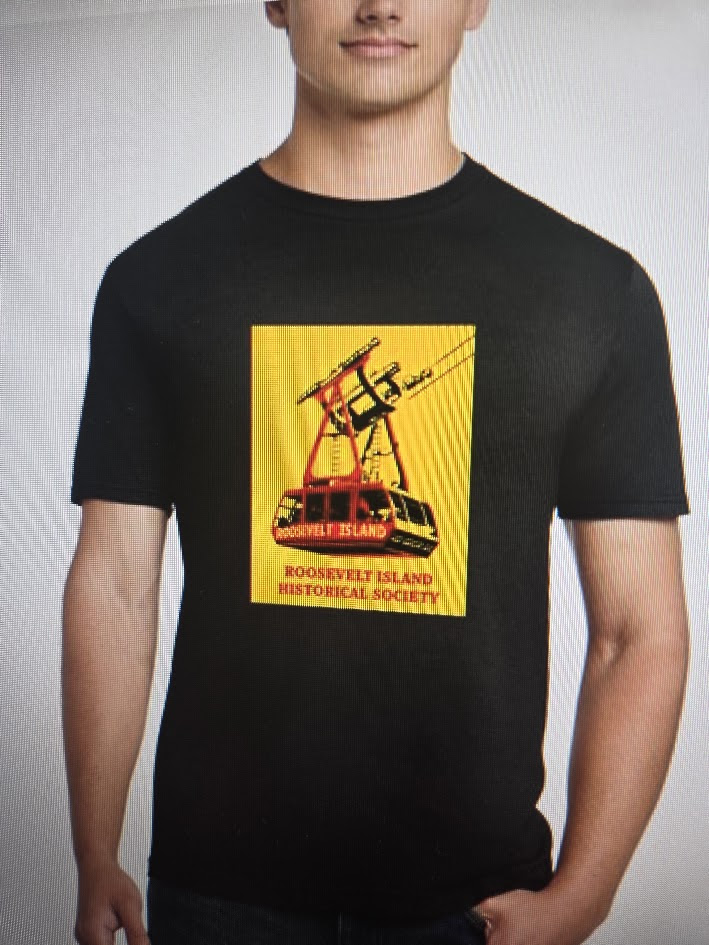
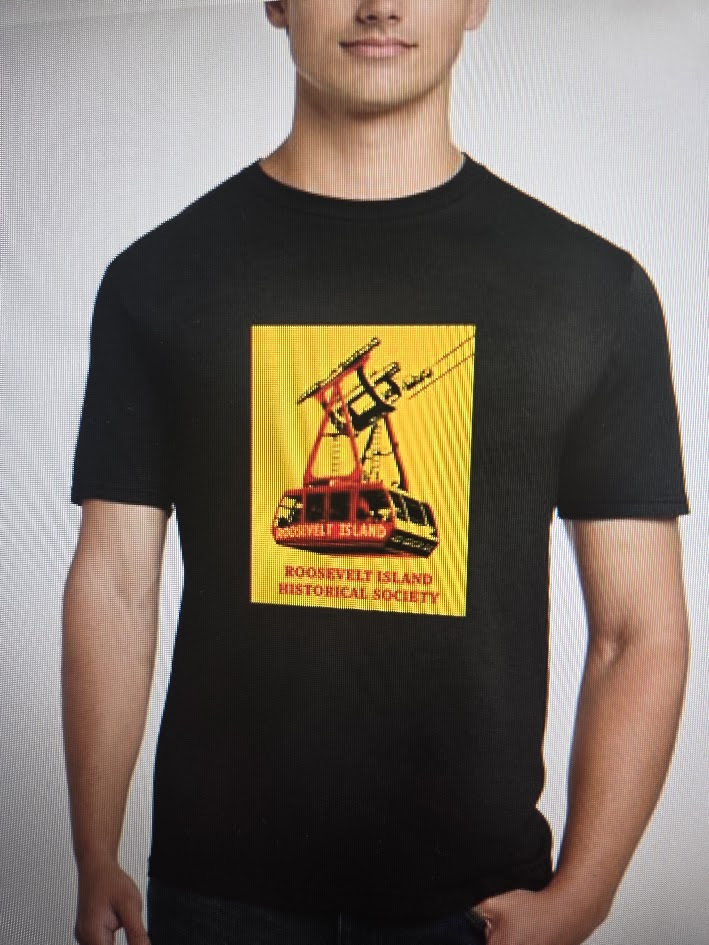
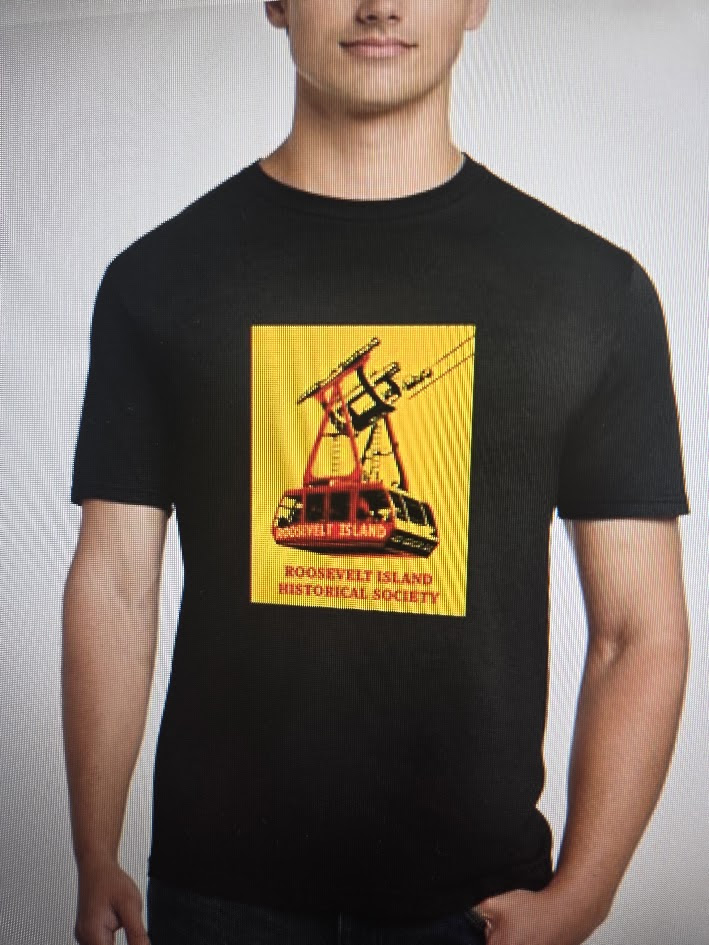
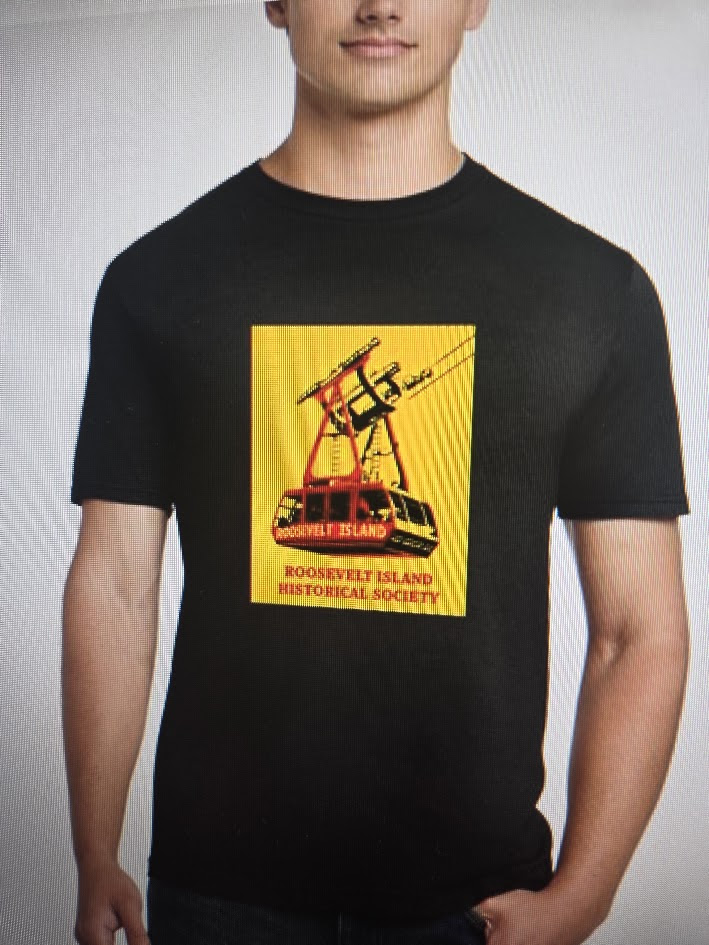
STOP BY OUR VISITOR CENTER FOR YOUR NEW RTIHS TEE SHIRT (ADULT SIZES)
Credits
Written by guest contributor Kate Ashman, a senior at Brigham Young University majoring in American Studies. Edited by U.S. Capitol Historical Society staff.
All image are copyrighted (c) Roosevelt Island Historical Society unless otherwise indicated THIS PUBLICATION FUNDED BY DISCRETIONARY FUNDS FROM CITY COUNCIL MEMBER JULIE MENIN & ROOSEVELT ISLAND OPERATING CORPORATION PUBLIC PURPOSE FUNDS.
Orion VII OG HEV Orion VII NG HEV New Flyer Xcelsior XD40
Start
Roosevelt Island, Manhattan – Coler-Goldwater Hospital
Via
Northern Boulevard, Steinway Street, 20th Avenue, Roosevelt Island Bridge
End
Astoria – 27th Avenue and 2nd Street
Length
TBA
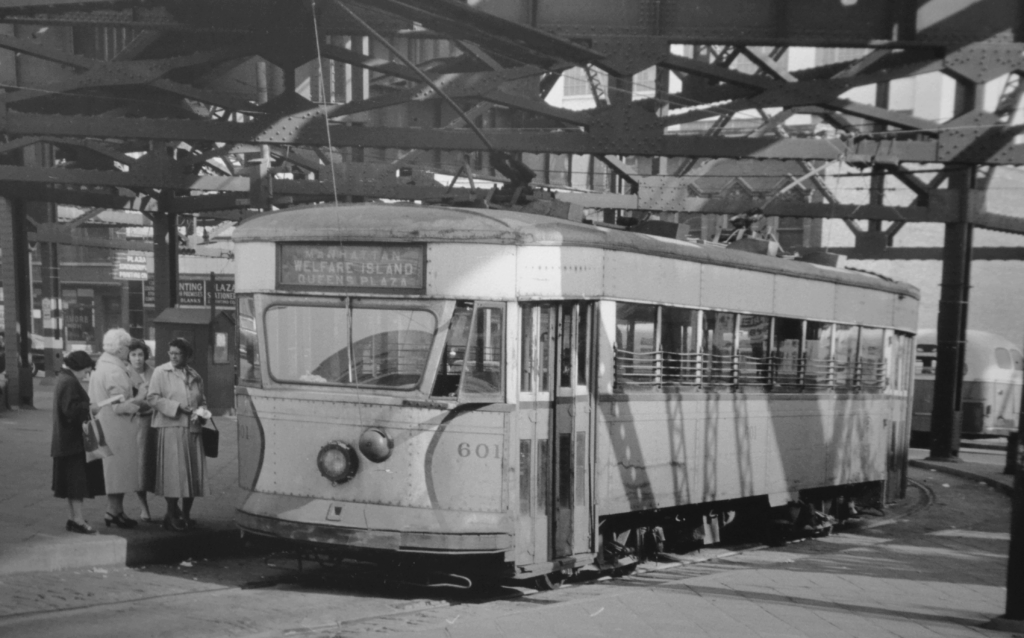
The Q102 consitutes a bus route in Queens, New York running primarily on Northern Boulevard, Steinway Street, 20th Avenue, between Roosevelt Island, Manhattan and Astoria, Queens. Formerly a streetcar route, it was operated by Steinway Transit until 1988 and then Queens Surface Corporation until MTA takeover in 2005.
The Q102 begins at 27th Avenue and 2nd Street, and goes on the avenue until it turns to 8th Street and then 30th Avenue. It then continues on 30th Avenue until it turns to 31st Street. It then then goes on the street until it heads to Jackson Avenue, while eastbound buses use 28th Street, 42nd Road, and Jackson Avenue to access Northern Boulevard. It then continues on Queens Plaza until it turns to 21st Street, 41st Avenue, and then Vernon Boulevard. It then continues on the boulevard until it turns right to 36th Street and accesses the Roosevelt Island Bridge, and after the bridge, it turns right onto Main Street. It then goes on until it uses the Bird S Coler Hospital Roadway, and loops around to head to the loop road, and continues on Main Street until it uses the East, South, and West Loop Road, where it ends there. For buses heading to Queens, they use the West Loop Road to go on Main Street and then the Roosevelt Island Bridge.
History
Streetcar service
On 1869, a horscar service opened from the 34th to 92nd Street Ferries. It was known as the Dutch Kills or 31st Street Line. It was the first horsecar line in Queens, and was operated by the Astoria and Hunter’s Point Railroad. On November 27, 1877 a person named Patrick Gleason leased the Astoria and Hunter’s Point Railroad, operating the 31st Street line for an annual rental of $4,000.
On 1901, a line was authorized in 31st Street along its whole length. Part of this was used in 1910 after the New York and Queens County Railway gave up the crooked Jane Street to Academy Street to Lockwood Street routing of the old 31st Street Line that had existed since 1865, and operated the cars in a direct line along 31st Street from Jackson Avenue to 35th Avenue.
The opening of the Queensboro Bridge caused a change in the 31st Street Line. The old route through Jane Street and 29th Street and the private right of way, still one track with turnouts, was outdated and cut directly across the new bridge plaza. Therefore, on December 4th, 1908, the New York and Queens County Railway secured a franchise to operate straight down 31st St. from 35th Ave. to Jackson Avenue, and on July 2nd, 1909 the Public Service Commission approved the abandonment of the old route. The new 31st Street Line opened on December 4th, 1909.
Bus service
Beginning in the 1920s, many streetcar lines in Queens and in the rest of the city were replaced by buses, particularly after the unification of the city’s three primary transit companies in June 1940. The bus service started on September 29, 1939 to replace the 31st Street streetcar route. The bus route was initially operated by Steinway Transit.
The bus company would become Queens-Steinway Transit Corporation in 1986, and Queens Surface Corporation in 1988.
MTA takeover
On February 27, 2005, the MTA Bus Company took over the operations of the Queens Surface routes, part of the city’s takeover of all the remaining privately operated bus routes.
Starting on April 18, 2010, all service began traveling through Roosevelt Island in the same direction and some closely spaced bus stops on the island were discontinued.
Newtown Avenue, Crescent Street, and Astoria Boulevard segment was discontinued in favor of operating via 30th Avenue on June 29, 2014.
In December 2019, the MTA released a draft redesign of the Queens bus network. As part of the redesign, the Q102 bus would have been replaced with the QT78, a “neighborhood” route that would run between Roosevelt Island and Middle Village, and the QT79, also a “neighborhood” route that would have run between Rikers Island and Hunter’s Point. The redesign was delayed due to the COVID-19 pandemic in New York City in 2020, and the original draft plan was dropped due to negative feedback.
The trolley operated over the Queensboro Bridge until the RI Bridge opened in 1957, bringing direct bus service to the island.
Queens Surface offered litte reliable schedules and was replaced by the MTA in200-5, a vast improvement over the privately operated system.
WHERE IS THE MTA? OUR QUEENS BUS ROUTES ARE CHANGING THIS SUNDAY, AUGUST 31ST
MTA AND RIOC HAVE NOT POSTED ANY SIGNAGE INFORMING THE PUBLIC
WE HAVE POSTED THE NEW ROUTE MAPS ON THE BACK OF THE CHAPEL BUS SHELTER
STOP BY OUR VISITOR CENTER FOR YOUR NEW RTIHS TEE SHIRT (ADULT SIZES)
CREDIT TO
Fandom
All image are copyrighted (c) Roosevelt Island Historical Society unless otherwise indicated THIS PUBLICATION FUNDED BY DISCRETIONARY FUNDS FROM CITY COUNCIL MEMBER JULIE MENIN & ROOSEVELT ISLAND OPERATING CORPORATION PUBLIC PURPOSE FUNDS.
STOP BY OUR VISITOR CENTER FOR YOUR NEW RTIHS TEE SHIRT (ADULT SIZES)
CREDIT TO
NEW YORK HISTORICAL
All image are copyrighted (c) Roosevelt Island Historical Society unless otherwise indicated THIS PUBLICATION FUNDED BY DISCRETIONARY FUNDS FROM CITY COUNCIL MEMBER JULIE MENIN & ROOSEVELT ISLAND OPERATING CORPORATION PUBLIC PURPOSE FUNDS.
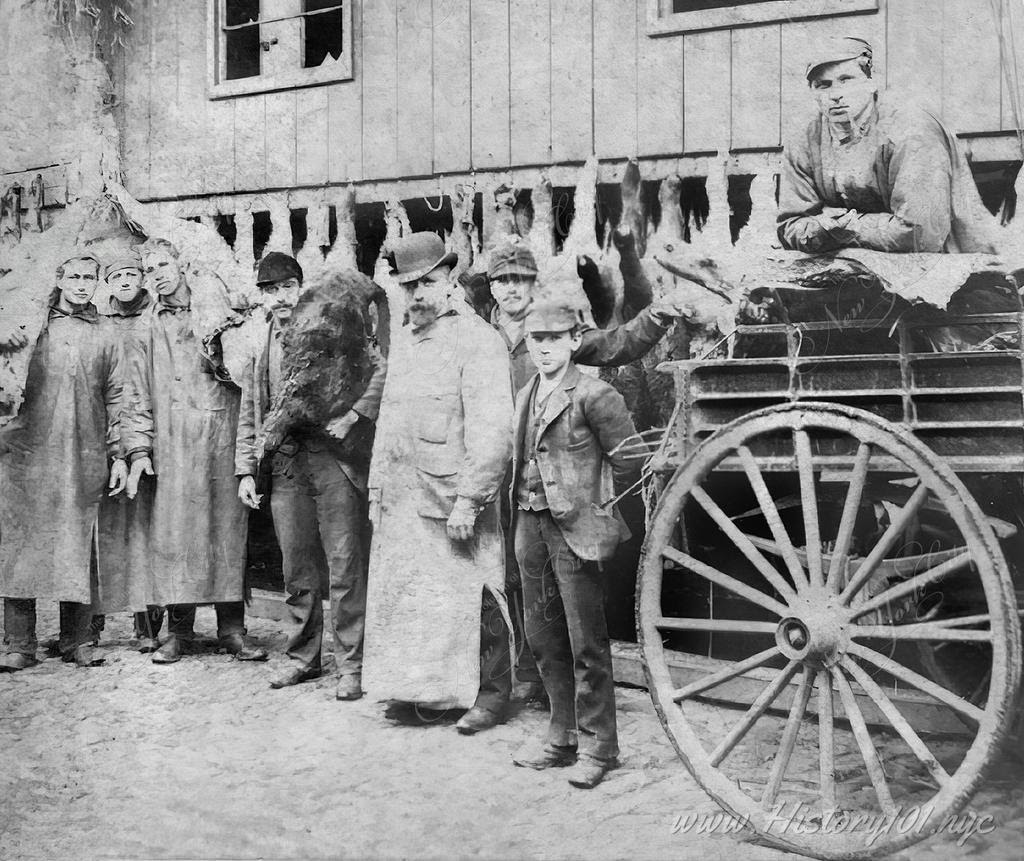
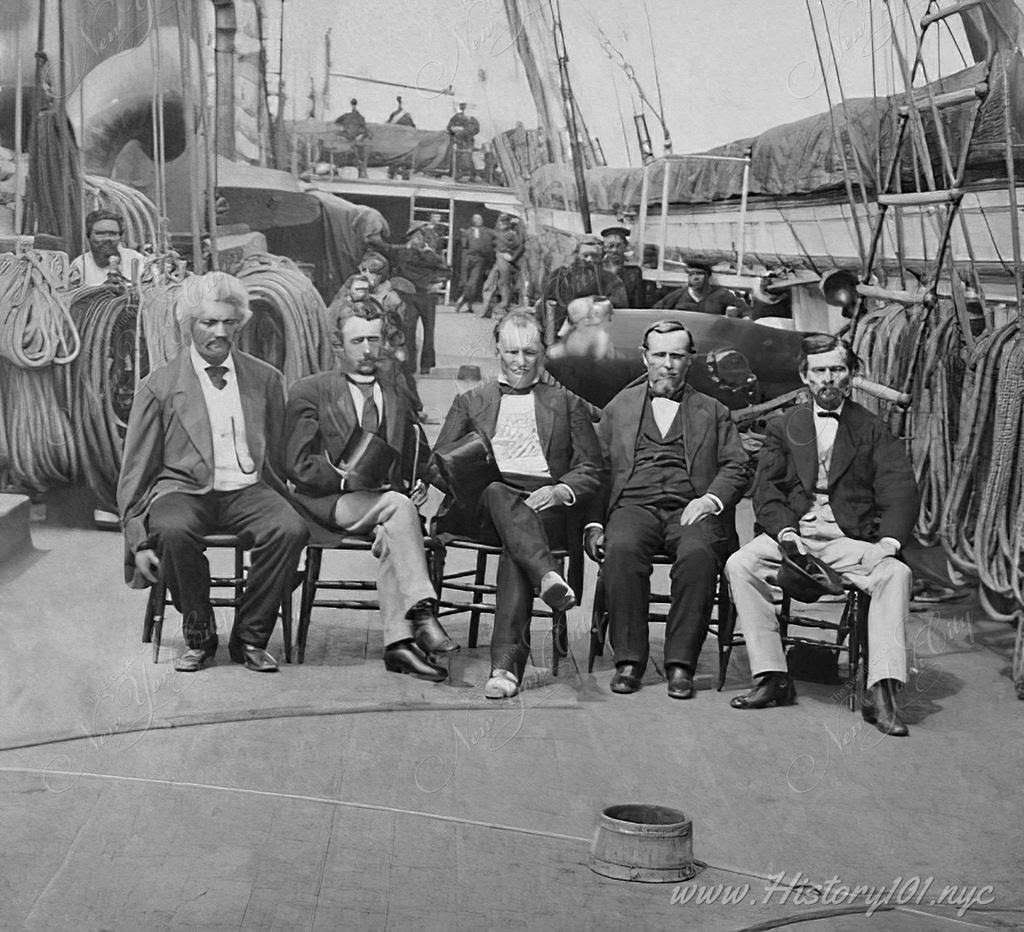
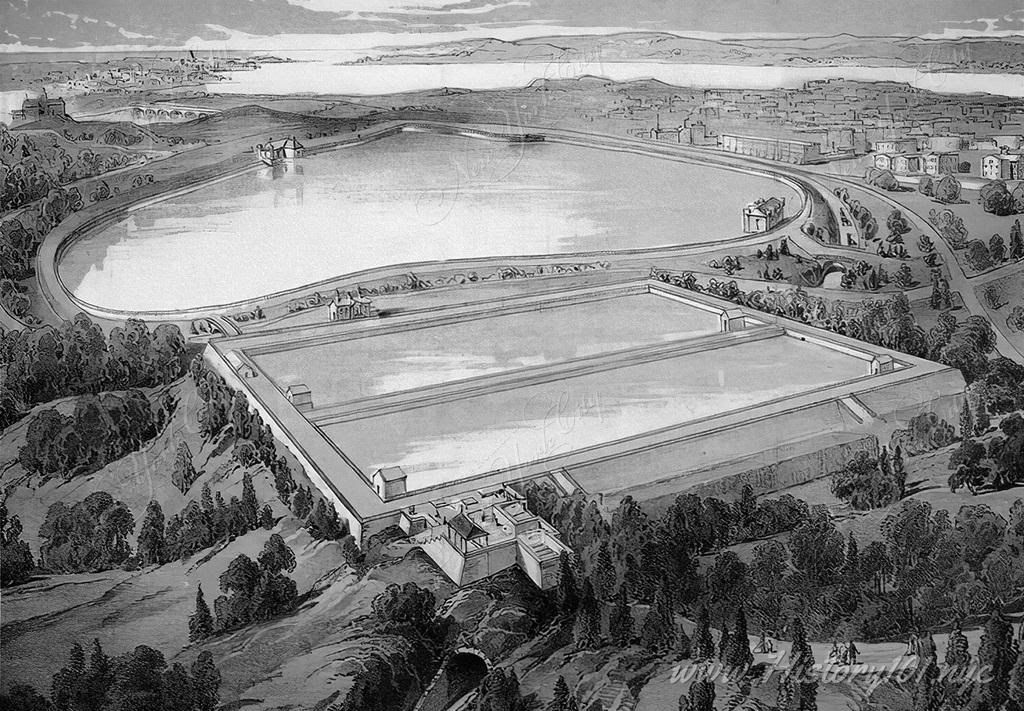
The 1870s marked a pivotal decade of transformation for New York City during the Gilded Age, initiating its evolution toward modern urbanization. This period was defined by groundbreaking infrastructural developments, most notably the commencement of the Brooklyn Bridge construction. This engineering marvel symbolized innovation and showcased the city’s progressive vision, setting the stage for New York City’s future as a global metropolis. The Gilded Age also laid the foundation for the cityscape we recognize today, with the emergence of new architectural styles and the expansion of the city’s geographical boundaries.
Culturally, New York City thrived with enriched diversity, driven by a surge in immigration during the 1870s. The city became a vibrant mosaic of cultures, languages, and traditions, significantly enhancing its social fabric. This influx of new inhabitants brought a wealth of cultural influences, reshaping New York City’s societal and cultural landscape.
During this time, New York City also faced challenges linked to rapid urban expansion, including housing shortages, sanitation issues, and the growing need for efficient public transportation. These challenges spurred extensive urban planning and public works projects, laying the groundwork for the modern New York City we recognize today.
In summary, the 1870s were a crucial period for New York City, characterized by remarkable infrastructural advancements and significant cultural transformation. The developments of this decade were instrumental in shaping the city’s future in terms of both architecture and society. The legacy of this period remains a pivotal chapter in New York City’s history, offering valuable insights into its evolution into a renowned global metropolis.
Timeline of New York City’s History in the 1870s Discover surprising historical facts about The City That Never Sleeps—explore fun, educational insights into its history, population, iconic landmarks, and more, perfect for students, history enthusiasts, and anyone curious about NYC’s rich heritage.
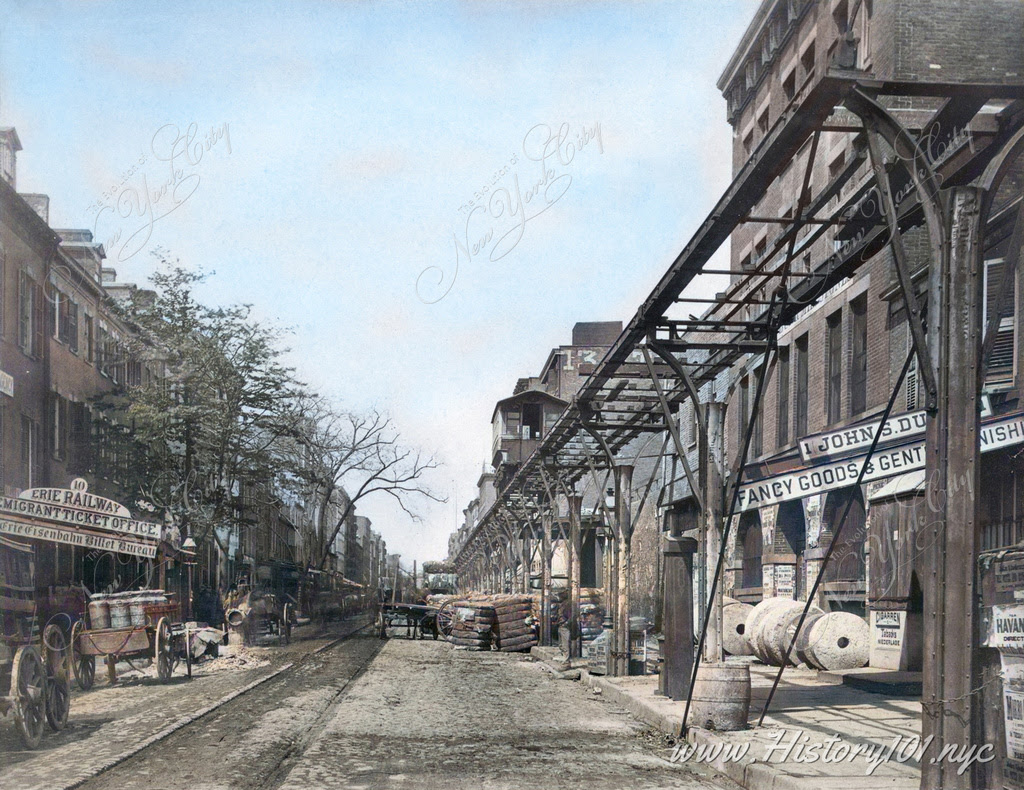
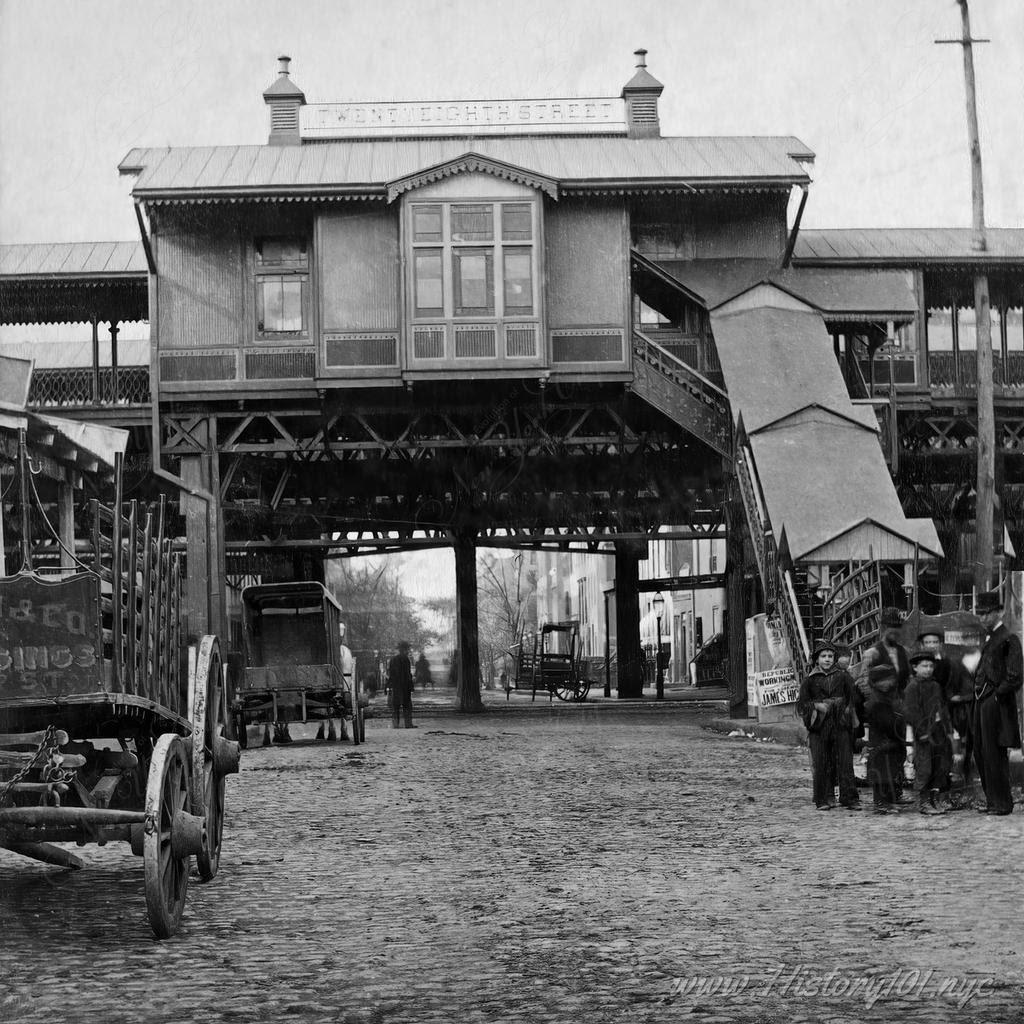
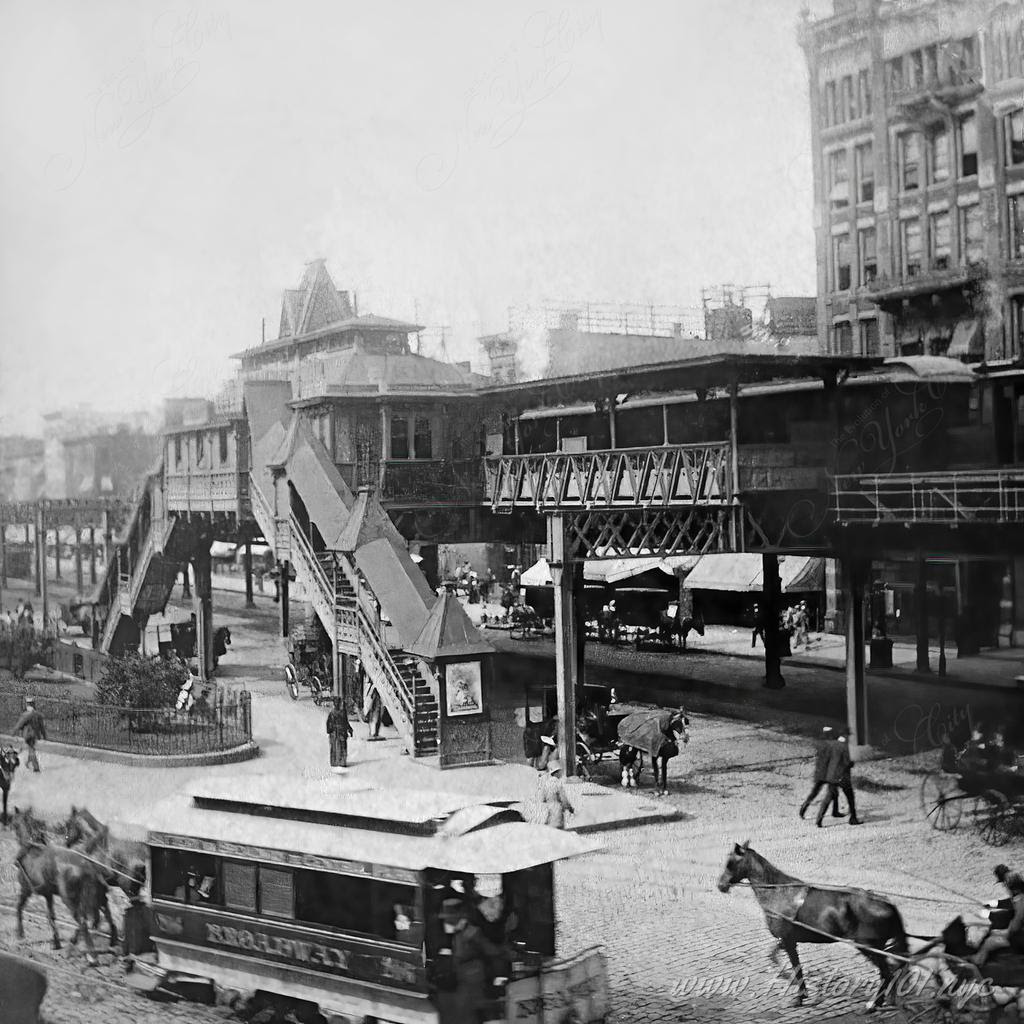
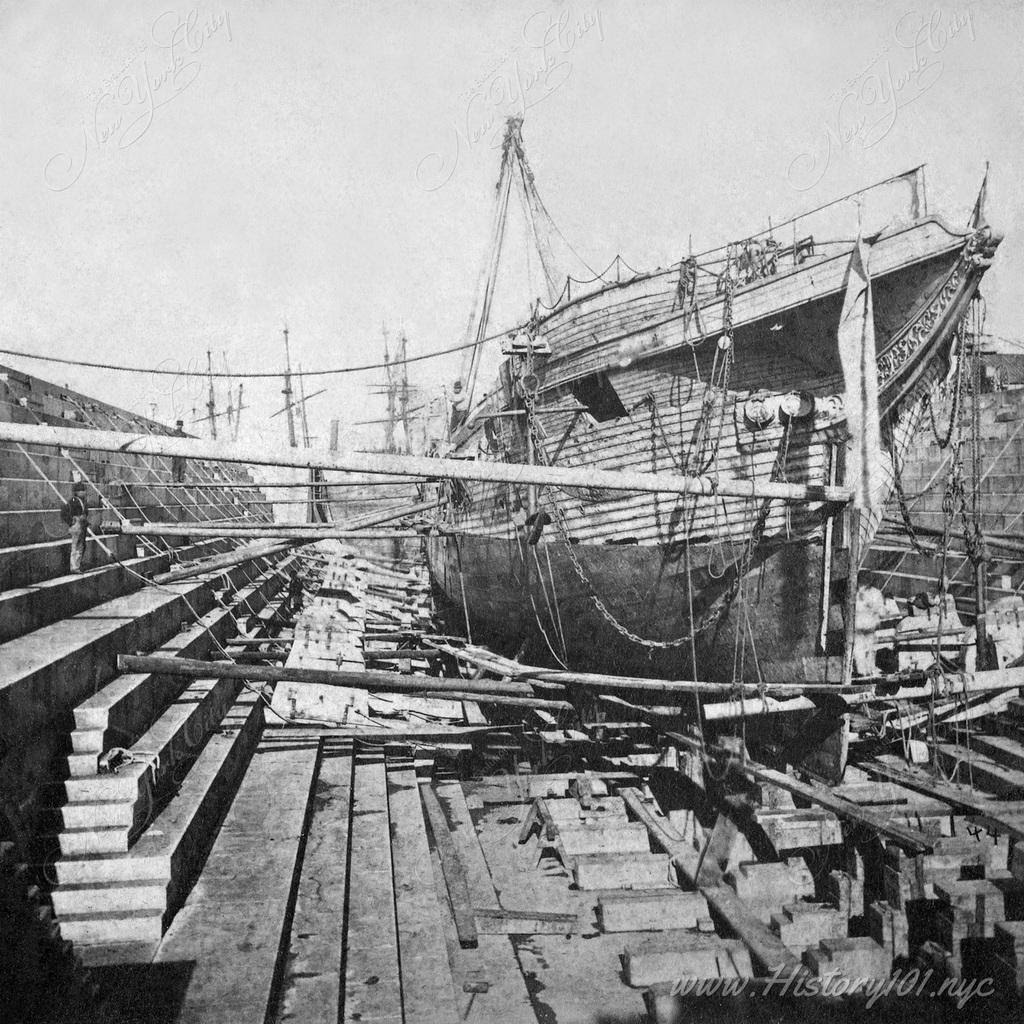
In the 1870s, Greenwich Street in New York City was a bustling hub of activity, with the Erie Railway Migrant Ticket Office and the elevated rail line adding to the vibrant atmosphere.
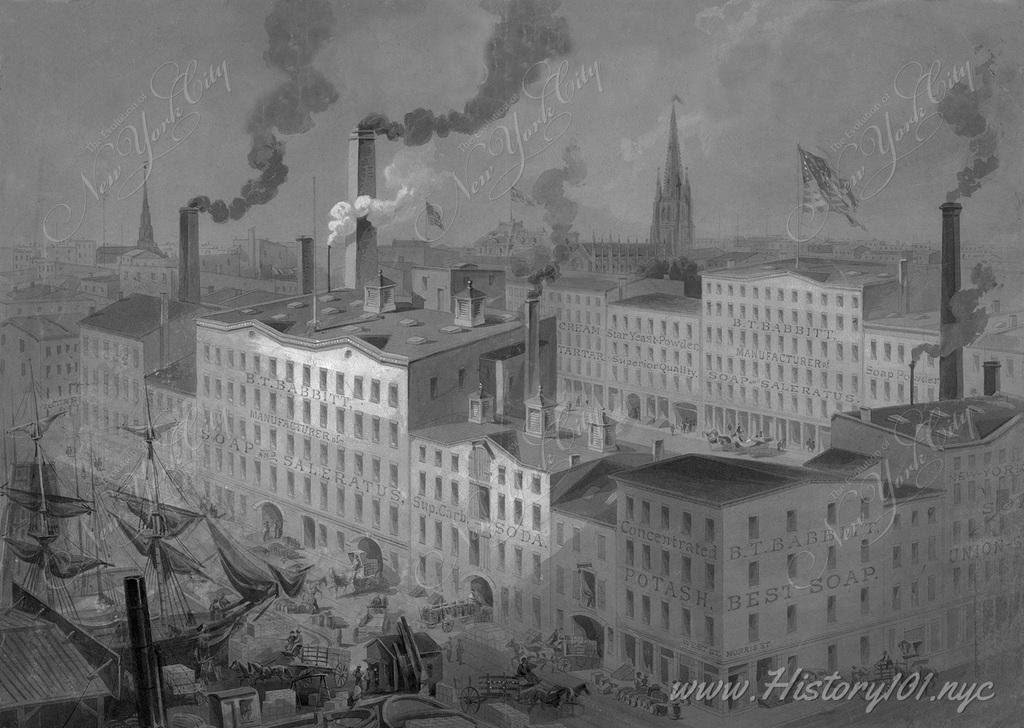
Drawing by James A. Shearman featuring a soap factory in lower Manhattan, from West St. looking northeast, with the Equitable Building in the background.
All image are copyrighted (c) Roosevelt Island Historical Society unless otherwise indicated THIS PUBLICATION FUNDED BY DISCRETIONARY FUNDS FROM CITY COUNCIL MEMBER JULIE MENIN & ROOSEVELT ISLAND OPERATING CORPORATION PUBLIC PURPOSE FUNDS.