Tuesday, June 16, 2026 – Celebrate Art: Water Colors Meet Natural Beauty

What a 19th Century Painter
of the
Natural World Saw From Her
Carroll Gardens Front Yard and
Rooftop
Tuesday June 16 2026
Ephemeral New York
ISSUE # 1699
When Fidelia Bridges moved to 93 First Place in Brooklyn in 1854, her neighborhood was an enclave of recently built brownstones set back from the street with roomy front gardens.
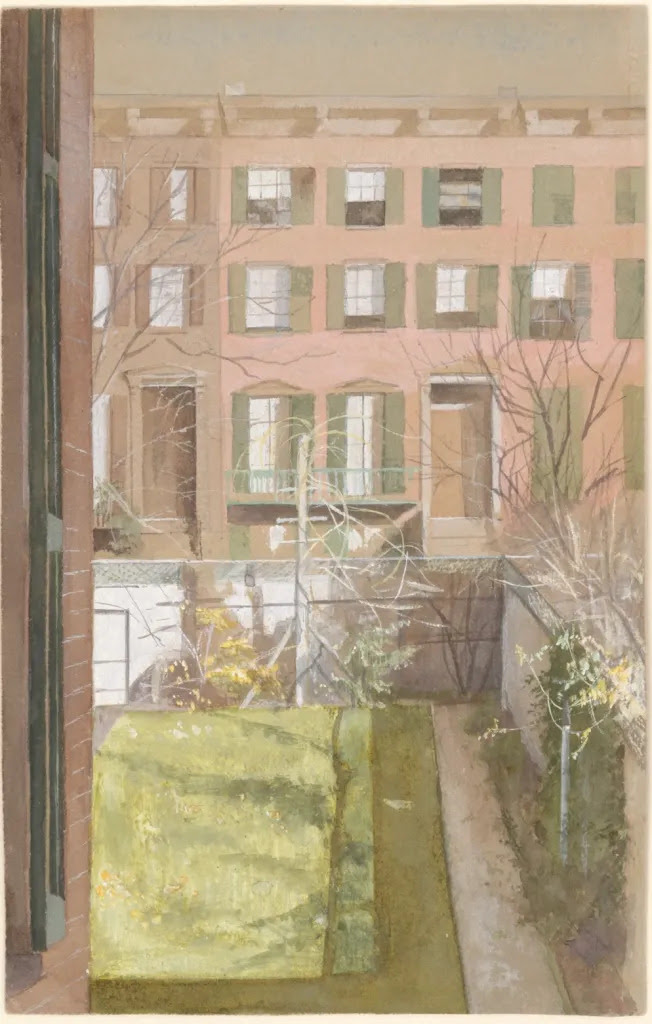
Years later, in 1867, something compelled her to paint that front garden. Perhaps it was the contrast between the delicate yellow buds on bushes, the still-bare trees, and the fortress of stone houses across First Place.
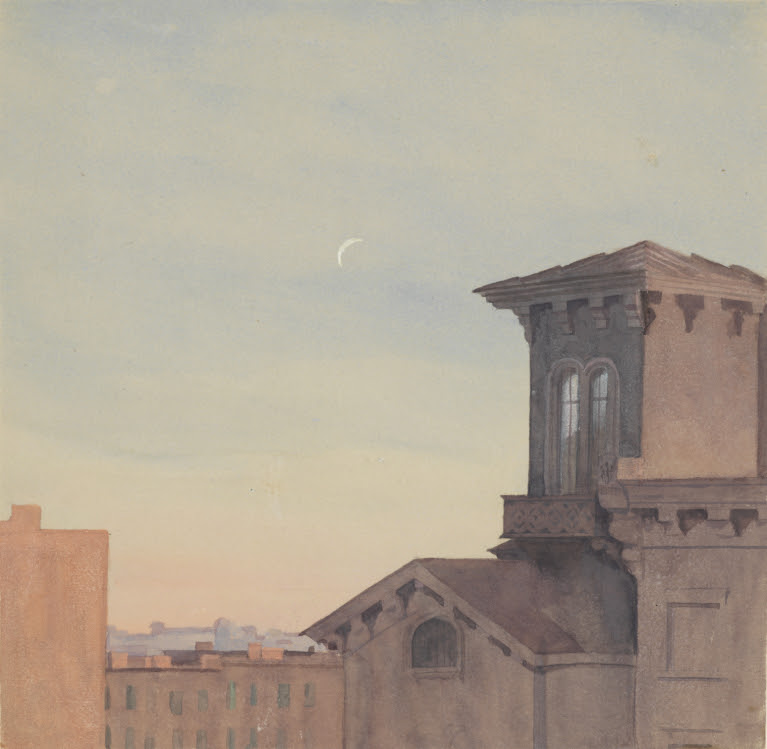
That same year, she also captured the early evening view from her top-floor window, centering a crescent moon against the muted skies over sparsely developed Brooklyn.
Both are unusual paintings, as streetscapes didn’t become popularized until the Ashcan artists arrived at the end of the 19th century, according to the Metropolitan Museum of Art. But in Civil War-era Brooklyn, Bridges was an unusual person.
Born in Salem, Massachusetts in 1834, Bridges was orphaned at 15. Traumatized by her parents’ deaths, she spent time in the country, staying in bed and drawing, as “her artistic talents became apparent,” according to a 2024 New York Times story.
She soon came back to Salem to teach, take art classes, and become a governess in the household of William August Brown, a well-to-do shipowner.
When the Browns relocated to Brooklyn in 1854, Bridges came with them. Her drawing must have impressed the family; in 1860, they funded her enrollment at the Philadelphia Academy of Fine Art.
Three years later, she returned to Brooklyn, taking a top-floor studio in the Brown family brownstone and launching her career as a noted and celebrated painter.
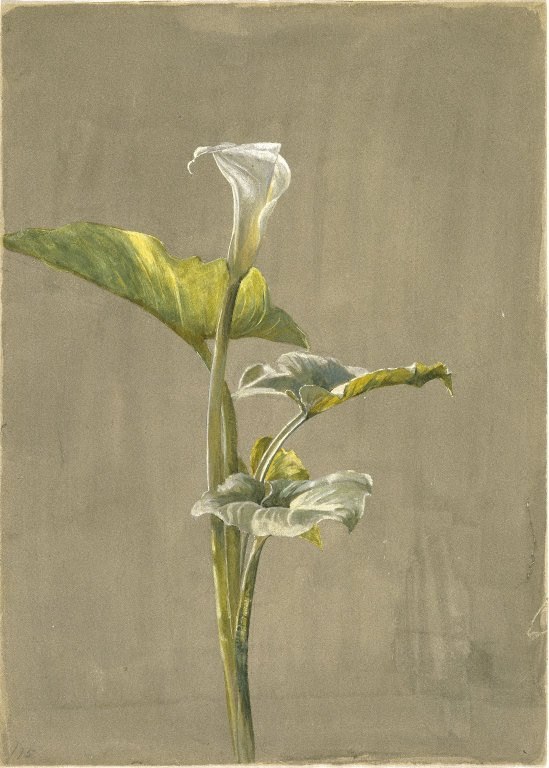
Bridges almost exclusively painted watercolors of natural images. Her delicate, exquisite works of botanicals and birds brought her acclaim, especially after the Civil War, when nature scenes had broad appeal.
“A close observer of nature and an admirer of Asian art and design, she turned scenes of local flora, birds and butterflies into graceful, affecting compositions,” stated the New York Times.
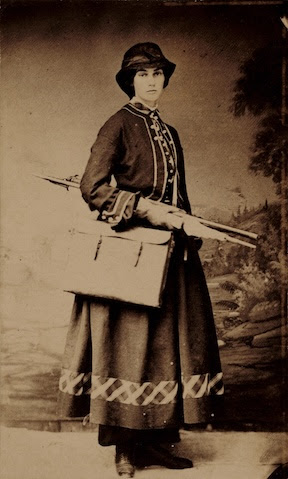
Dedicated to her art, Bridges worked 10-hour days, per the New York Times. Opting out of a life that included marriage and children, she exhibited her paintings and becoming the second woman to be elected into membership in the National Academy of Design.
Her career spanned 50 years, and she passed away in her home in Canaan, Connecticut in 1923.
Her sensitive depictions of the natural world—and the two paintings done from her top-floor studio—are part of the collections of major museums.
But like so many talented artists, Bridges has mostly been forgotten. 93 First Place, however, still stands in today’s Carroll Gardens.
LET’S PUT MAPS ON BUSES
THE RED BUSES HAVE MOSTLY EMPTY
PLACES WHERE WE
CAN PUT EASY TO READ
ISLAND MAPS
CREDITS
[Top image: Metropolitan Museum of Art; second image: Metropolitan Museum of Art; third image: “Calla Lily,” 1875, Brooklyn Museum via Wikipedia; fourth image: The New York Times]
Tags: Female artists in New York City 19th century, Fidelia Bridges 93 First Place Carroll Gardens, Fidelia Bridges Brooklyn painter, Fidelia Bridges painter, Watercolor painters NYC 19th century
Posted in art, Brooklyn
All image are copyrighted (c) Roosevelt Island Historical Society unless otherwise indicated
THIS PUBLICATION FUNDED BY DISCRETIONARY FUNDS FROM CITY COUNCIL MEMBER JULIE MENIN & ROOSEVELT ISLAND OPERATING CORPORATION PUBLIC PURPOSE FUNDS.


Copyright © 2026 Roosevelt Island Historical Society, All rights reserved.Our mailing address is:
rooseveltislandhistory@gmail.com
Leave a comment