Friday, November 13, 2026 – Discover How Mosaic Art Transformed Subway Stations!

ORIGINAL ART IN NYC
SUBWAY STATIONS
Part 2
Untapped New York
Friday, November 13, 2026
Issue # 1779
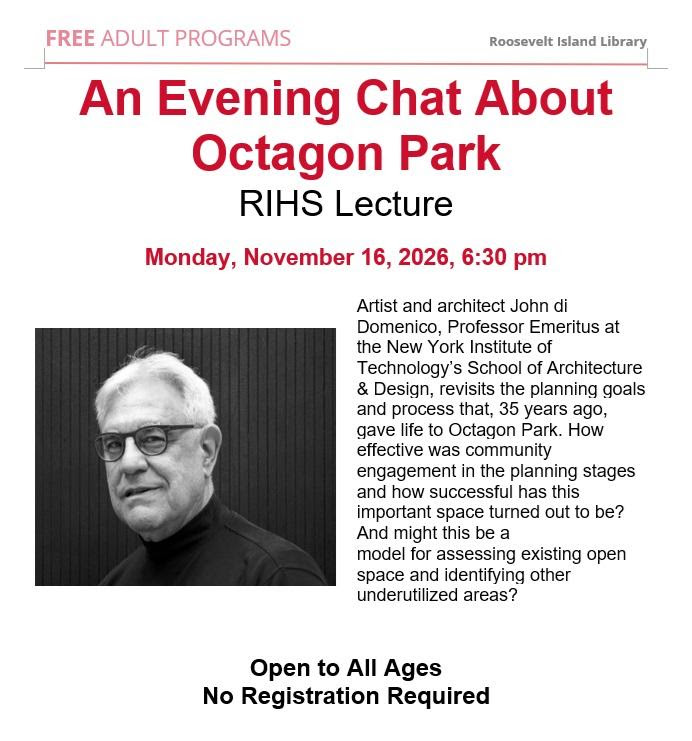
SAVE THE DATE, MONDAY, NOVEMBER 16th
137th Street (IRT) Station
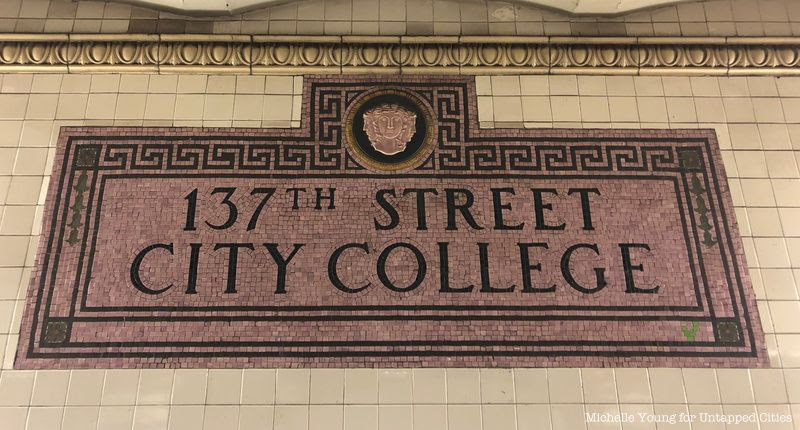
The 137th Street Subway Station is decorated with an image of Janus or some type of three faced woman. It appears to relate to the motto of CCNY (City College of New York) which is located just east of the station. CCNY’s motto is Respice, Adspice, Prospice in Latin, which means Look behind, look here, look ahead and relates to the three provinces of scholarship.
Court Street (BMT) Station
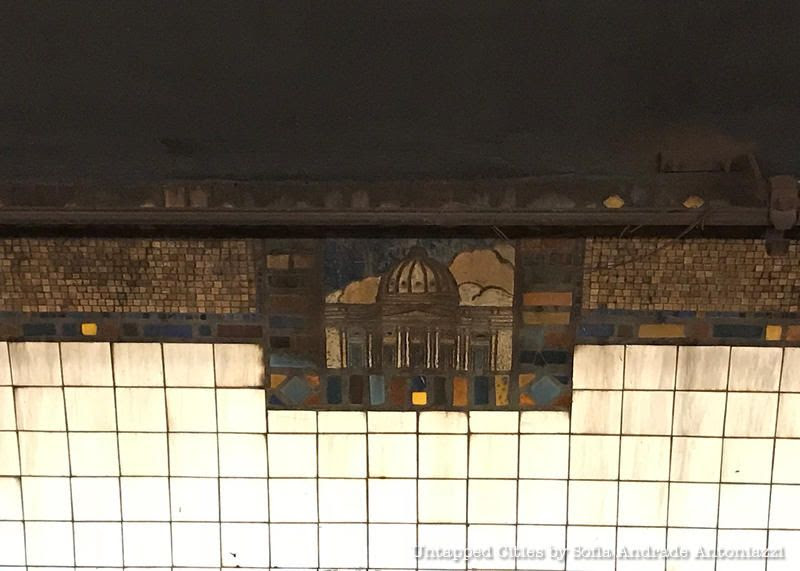
The domed Kings County Courthouse was completed in 1865 and was the ninth iteration of the Kings County Supreme Courthouse. It was designed by the firm of Kellum and King, comprised of John Kellum and Gamaliel King. Kellum was also responsible for designing Manhattan’s Tweed Courthouse. The courthouse, which was demolished in the middle half of the twentieth century, has been all but forgotten except for those few individuals who are cognizant of what the Court Street Subway Station images represent.
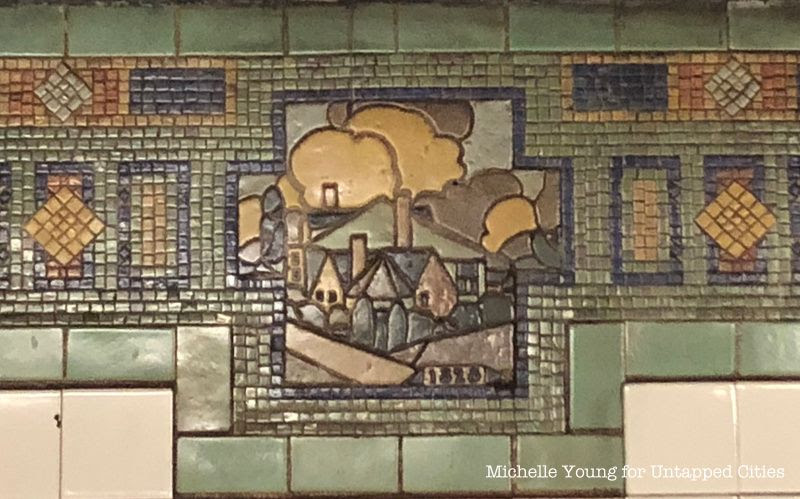
Union Square (BMT) Station
The Union Square BMT Subway Station’s terra cotta is stands out for reproducing a drawing, ‘Junction of Broadway and the Bowery Road, 1828.” The drawing originally appeared in the New York Common Council Manual of 1865 and depicts the sites of Johnson & Faulkner and Ferguson Bros., on the site that would become Union Square.
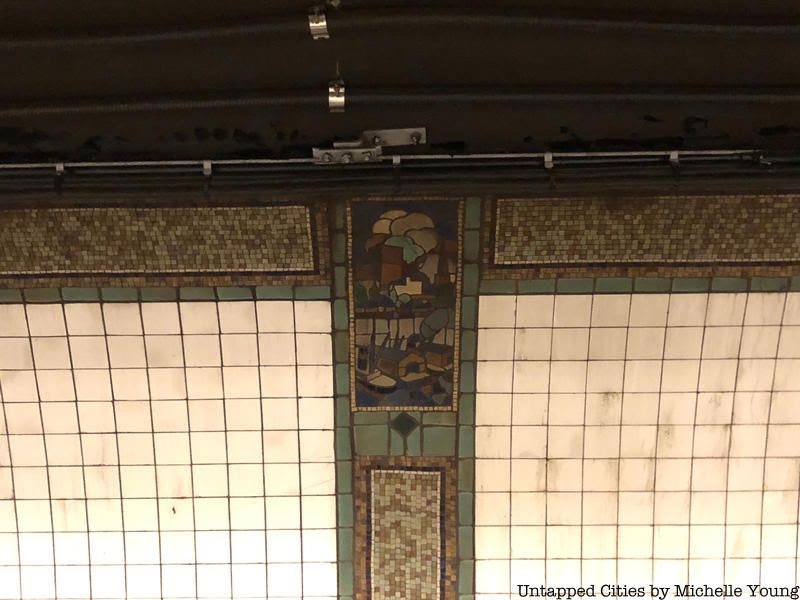
Clark Street (IRT) Station
The terra cotta images that decorate the Clark Street Subway station are the largest such images in the subway system. They depict the ships that frequented the once busy East River docks. It appears to be a more of a generalized view of what the neighborhood was once like and does not seem to have any historically significant ships or buildings. The Clark Street subway station also goes down as one of the most unique entrances in the system, located in the former lobby of the Hotel St. George.
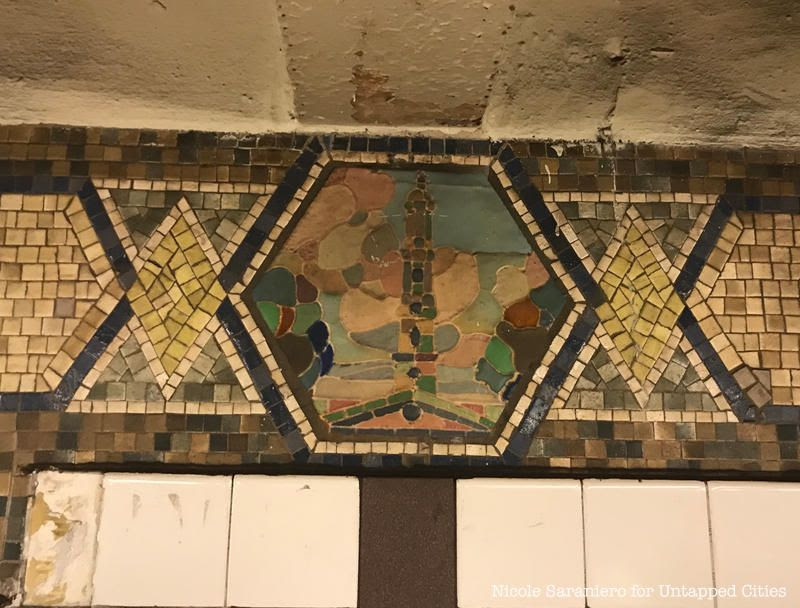
Canal Street (IRT) Station
The spire of St. John’s Chapel dots the walls of the Canal Street Subway Station. St. John’s Chapel was constructed in 1803 and was designed by John McComb Jr. (who was also responsible for designing City Hall, Hamilton Grange, and St. Mark’s Church in-the-Bowery amongst others). It was modeled on London’s St. Martin-in-the-Fields. The chapel was demolished in 1918 and was considered to be one of the early losses of the proto-preservation movement in New York City.
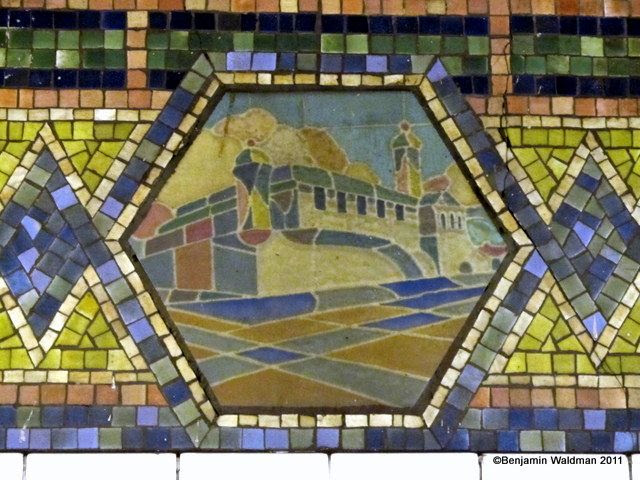
Christopher Street (IRT) Station
The Christopher Street Subway Station depicts the first prison that was “up the river.” It was the first prison complex in New York State. Newgate was not its official name, but it was referred to colloquially after the prison of the same name in London. In contrast to its predecessor, Newgate was influenced by the ideals of social reformers, who turned it into a house of corrections. It stood there from 1796 to 1829, when the City sold the land and relocated the prison to Sing Sing. The street grid has since been extended and the shoreline further filled in. Originally, the penitentiary had its own wharf.
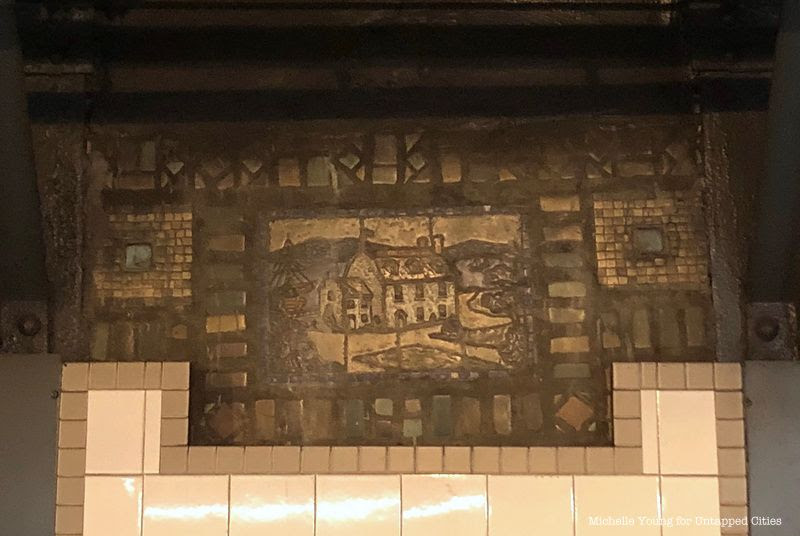
Whitehall (BMT) Station
The terra cotta tiles in the Whitehall Subway Station depict the eponymous Whitehall. White Hall was erected in 1658 as Governor Peter Stuyvesant’s house on what is now the corner of Pear and Whitehall Streets. The house acquired its name from the English Governor General Thomas Dongan, who derisively called it White Hall because of its whitewashed walls. The house, which is now remembered in this subway station and street name was destroyed by fire in 1715.
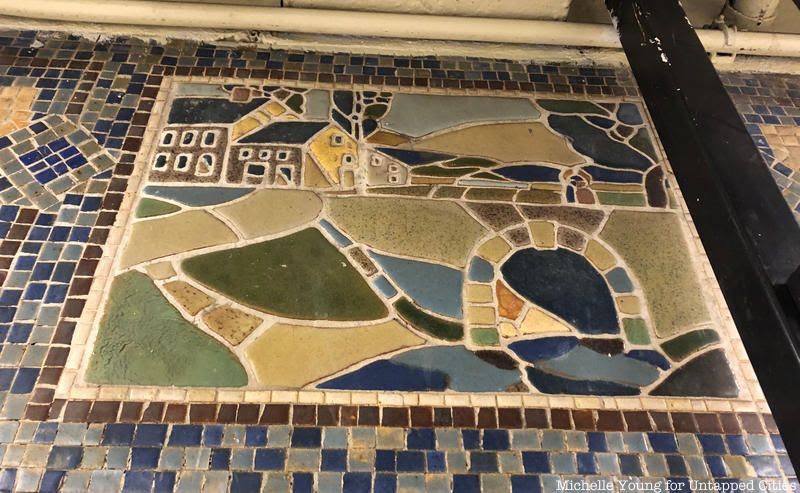
Canal Street (BMT) Station
The Canal Street Subway Station depicts the Stone Bridge Tavern and Stone Bridge. Next to no information exists about either. One of the only references it comes from an 1886 New York Times article which describes the area as it was in 1805-1806. It was the northern most point at which Broadway was paved and “a famous resort for…schoolboys. It was considered ‘out of town’-all north beyond as well as the immediate vicinity was country, post and rail fences dividing the land into different sized parcels. This bridge spanned a small stream which conveyed water from the Collect on the east side of Broadway (where now stands the Tombs) to the west side, where was an extensive meadow covering most of the ground from Broadway to the North River and from Lispenard-street to Spring-street.”
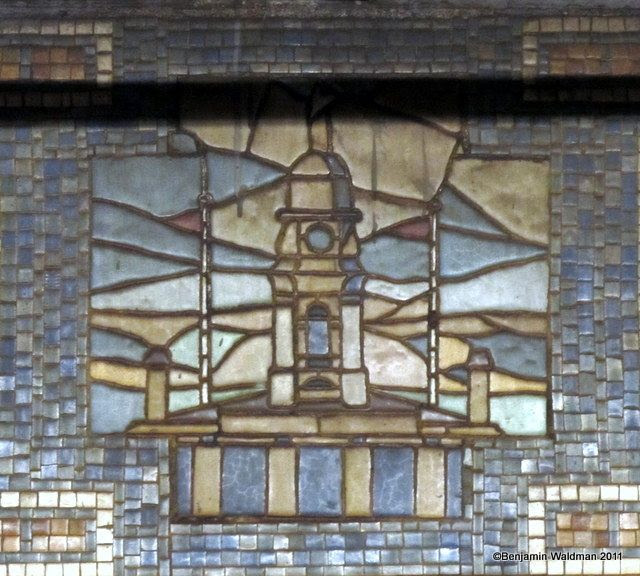
City Hall (BMT) Station
The City Hall Subway station possesses terra cotta tiles depicting New York City Hall’s original spire. This spire was destroyed by fire. It was the second time that the statue, cupola, dome, and roof were damaged by fire. The first fire, in 1858, was caused by fireworks celebrating the laying of the Atlantic Cable, and the second fire, in 1917, was caused by burning charcoal left unattended by workmen.
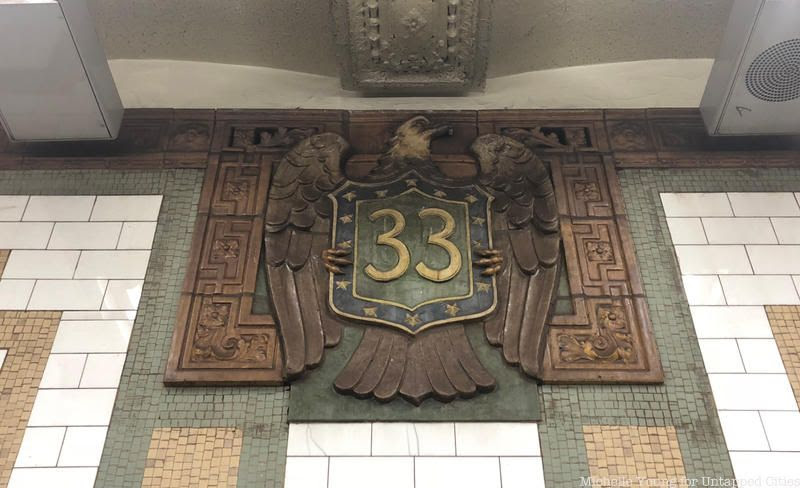
Bonus: The Eagles of Brooklyn Bridge, 33rd Street, and 14th Street Subway Stations
The 33rd Street Subway station is decorated with eagles in recognition of the Seventy-First Regiment Armory. In 1894, the armory relocated to the southeast corner of 33rd Street and Park Avenue. That building burned down in 1902 and was rebuilt in 1905. It was modeled after the Palazzo Pubblico, Sienna’s Town Hall, and designed by Clinton and Russell. The armory was sadly demolished in the 1960s, but the eagles remain as a tribute. Since the eagles also appear in the 14th Street Subway Station and the Brooklyn Bridge Subway Station some people assume that this was because armories were located in the vicinity of those stations as well. However, this was not the case. According to Tracy Fitzpatrick in her book Art and the Subway: New York Underground, the eagles were merely recycled thereby confusing their meanings.
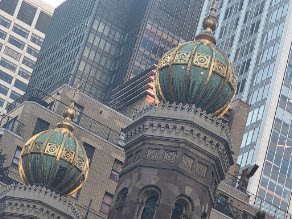
PHOTO OF THE DAY
Can you name this site?
Send reply to: Rooseveltislandhistory@gmail.com
CREDIT
UNTAPPED NEW YORK
BENJAMIN WALDMAN
All image are copyrighted (c) Roosevelt Island Historical Society unless otherwise indicated
THIS PUBLICATION FUNDED BY DISCRETIONARY FUNDS FROM CITY COUNCIL MEMBER JULIE MENIN & ROOSEVELT ISLAND OPERATING CORPORATION PUBLIC PURPOSE FUNDS.

Copyright © 2026 Roosevelt Island Historical Society, All rights reserved.Our mailing address is:
rooseveltislandhistory@gmail.com
Leave a comment