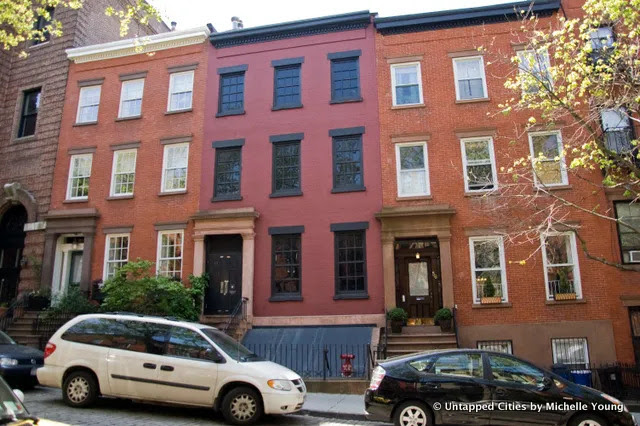
Infrastructure is an inevitable part of urban living. Subways and tunnels need ventilation, but the question is often–how to keep these functional spaces contained and away from the public eye? While many subway substations have been gutted and turned into apartments in New York City, other ventilation buildings have been concealed as residential townhouses. Here’s a roundup of these clever pieces of faux architecture in NYC, Paris, London, and Toronto:
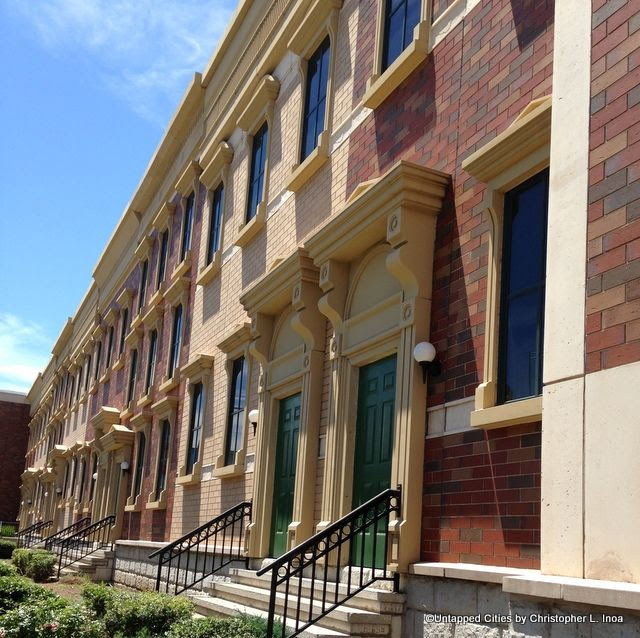
Everyday people in Mott Haven in the Bronx walk around and see these townhouses, but never see anyone go in or out. They must wonder who lives inside: Why are there never any open windows? Is this the first sign of gentrification to hit the Bronx? The answer to all those questions, ridiculous or otherwise, is that it is not a series of townhouses at all, but a substation run by Con Edison made to look like a small gated community.
Made to look like townhouses to appeal to the residents who were not happy with a substation being built in their neighborhood, Scouting NY reports that the substation was constructed in 2008 to meet energy needs for the neighborhood. It is one of many that Con Edison will be building around the city, due to the rise of commercial and residential buildings over the last decade.
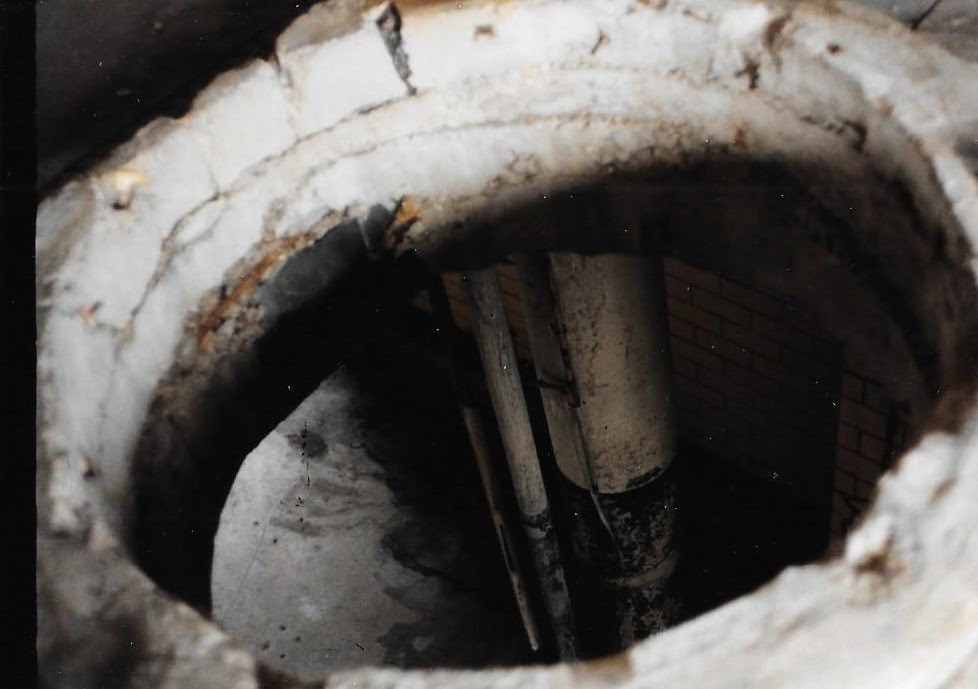
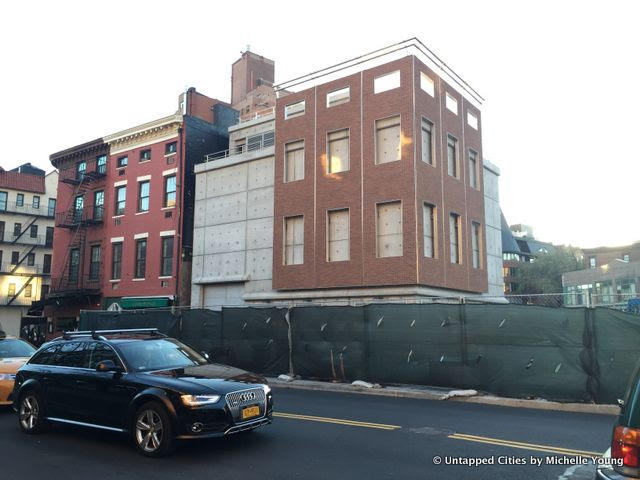
ventilation plant under construction in November 2015.
In 2011, the MTA proposed several designs for a facade to hide a future emergency ventilation plant at Mulry Square on Seventh Avenue and Greenwich Avenue, a famous plot of land known for its 9/11 memorial tiles. The proposals faced vigorous opposition from community groups, local politicians, and the Landmarks Preservation Commission, who deemed that a floating, “faux historic” facade was the wrong approach. The design went through many iterations since 2007, including a living wall, a concrete modern design, and some bland faux brick proposals. The structure was completed in 2016.
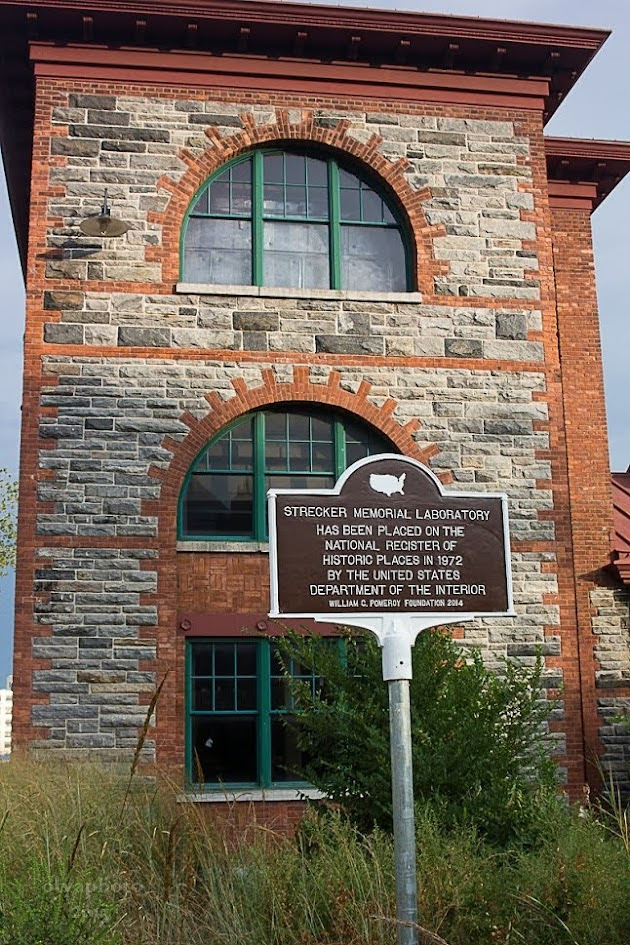
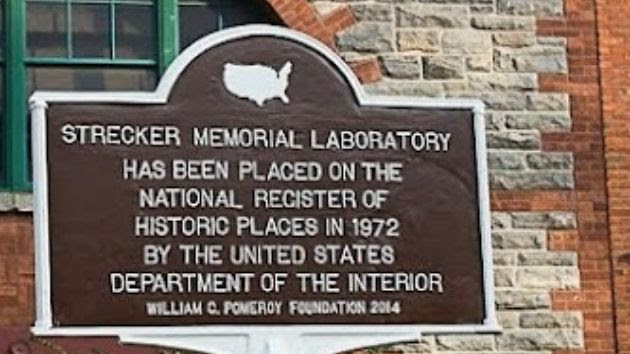
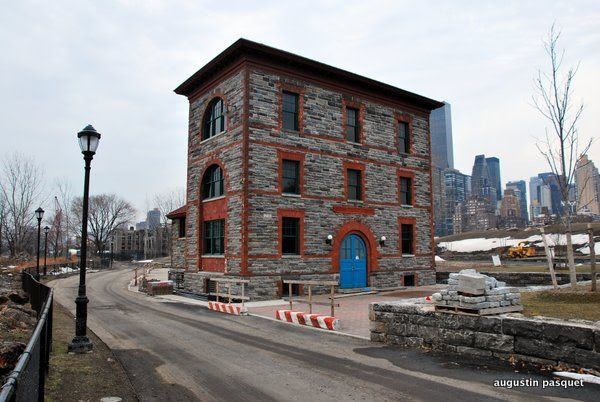
Strecker Memorial Laboratory in 2011
This stone structure was built in 1892 as a laboratory for the lost Charity Hospital on Roosevelt Island. Until 1958, it was used by scientists to conduct pathological and bacteriological work. After experiments ceased, the lab building fell into disrepair, but it did earn New York City landmark status from the Landmarks Preservation Commission in 1976. In the 1990s, it was purchased by the City’s transit authority and converted into a power substation that helps power subway lines.
International Fake Townhouses:
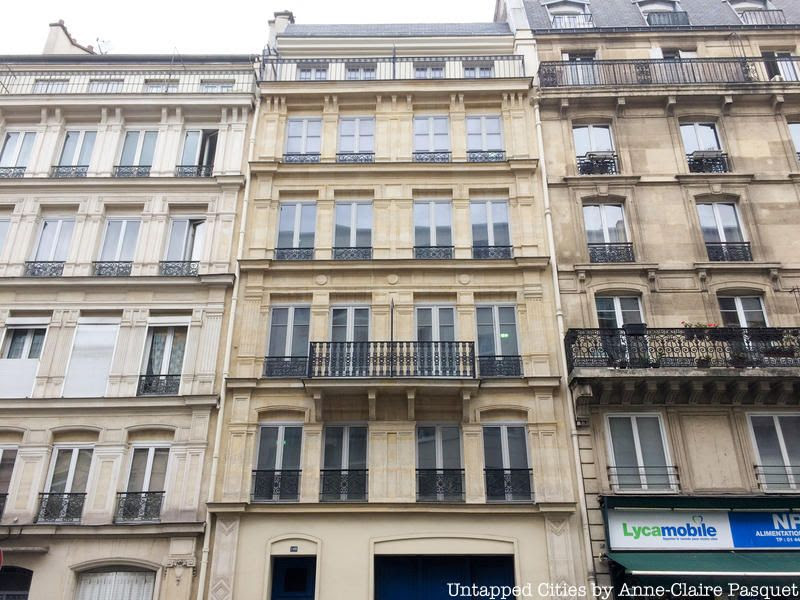
1. Paris Ventilation Chimney in Fake Haussmann BuildingIn the 10th arrondissement of Paris, on rue la Fayette, the windows are always dark on this Haussmann-style building. The door is there, and the balconies look just like their neighbors’, but they are hiding something unusual behind them. It turns out the façade is only a front with no building behind it. 145 rue la Fayette is a fake building hiding a ventilation chimney for the Paris métro.
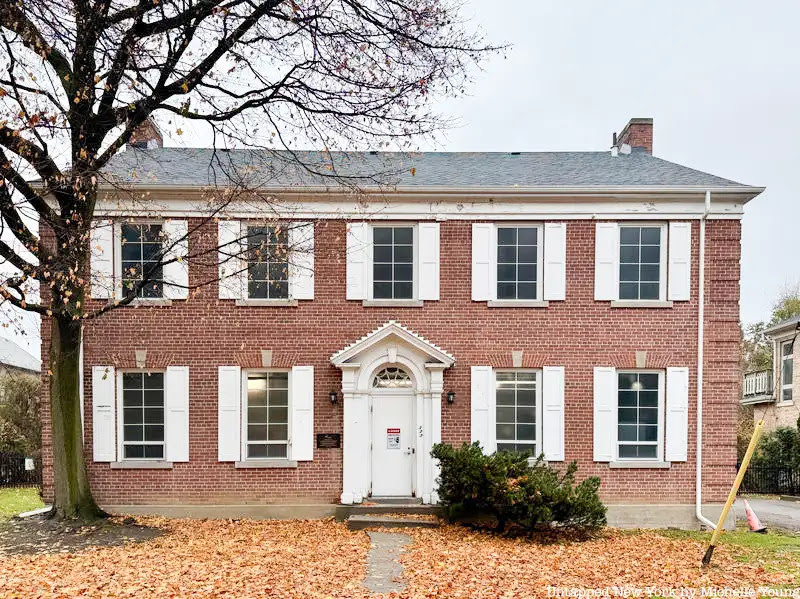
Toronto Hydro’s Fake Houses Canadian Utility company, Toronto Hydro has taken a more suburban approach, though no less historical, putting substations into what appear to be single family homes. There are nearly 300 of these structures, like the Georgian-style one above at 555 Spadina Road, which form a nice catalogue of changing architectural preferences over the last decades from neo-Georgian to Victorian to Art Deco to Modern. The only sign of something afoot is the warning sign on the door, the plaque to the left of the front door which made by the Toronto Hydro Corporation in dedciation ot one of its board of directors, L. Ross Cullingworth. 23-24 Leinster Gardens in London
Sladen (Right) Photo by Z22, Both via Wikimedia Commons
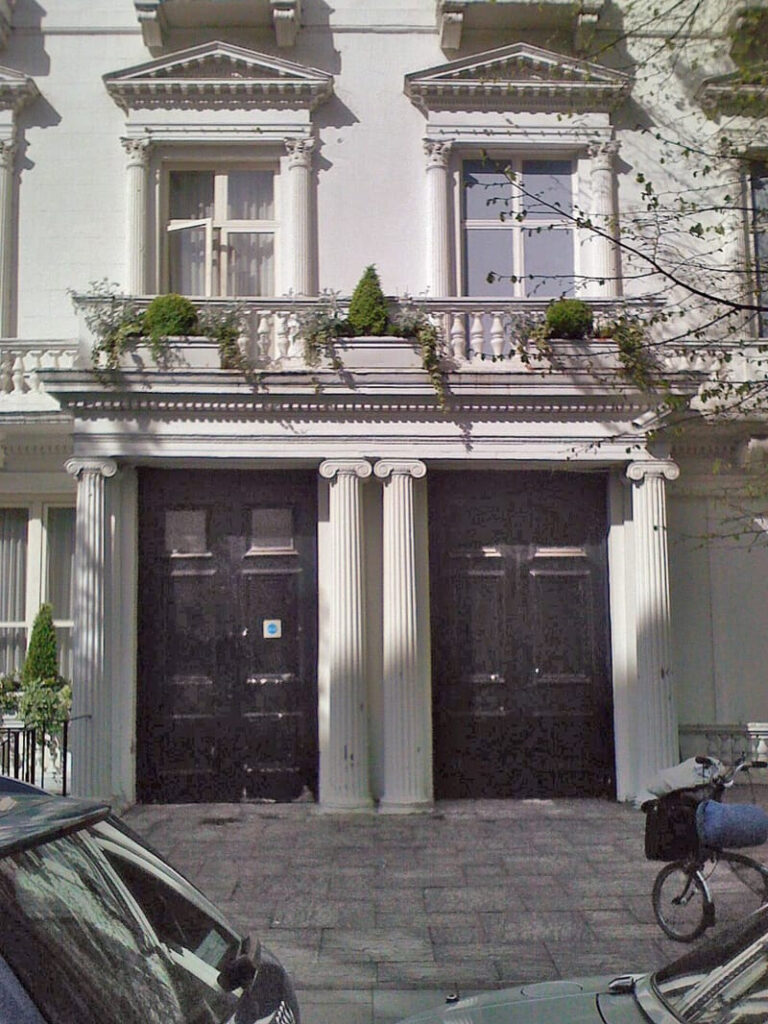
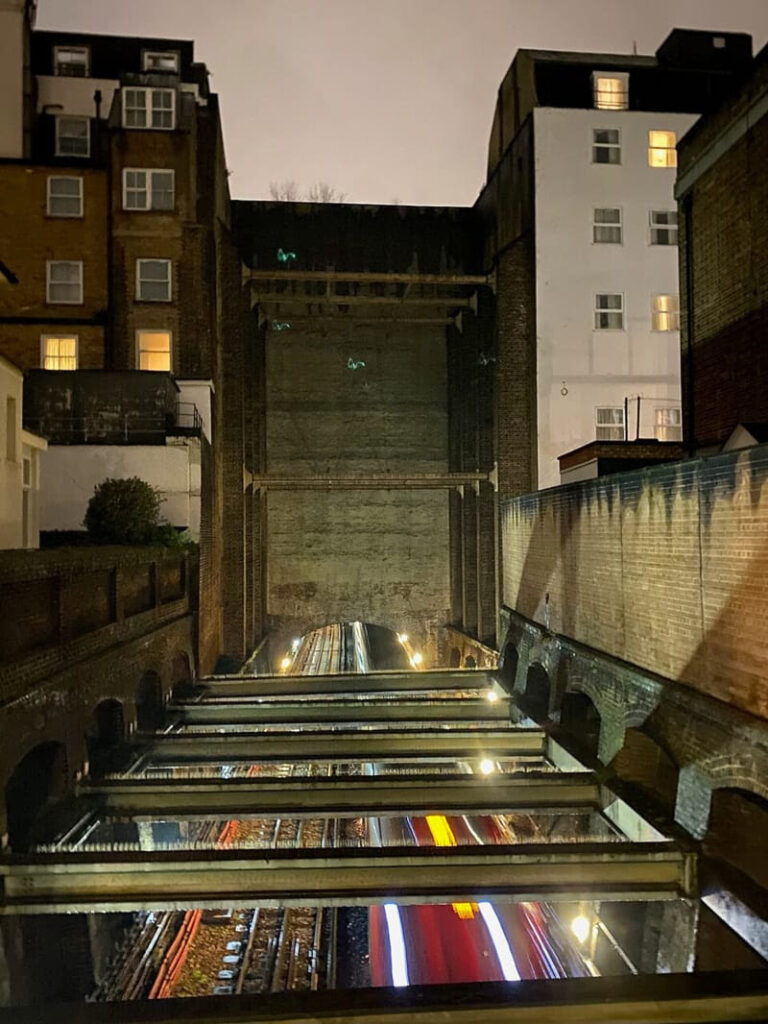
In London, at 23-24 Leinster Gardens, there is a little secret. The facade, which matches with the rest of the block (except for the perpetually gray windows) is the front to an empty lot. The original buildings were demolished to build the London Tube in 1863 and used in action as a ventilation location for steam produced by the locomotives. In the back however, you can still see the tube tracks of the Metropolitan Line.
All image are copyrighted (c) Roosevelt Island Historical Society unless otherwise indicated THIS PUBLICATION FUNDED BY DISCRETIONARY FUNDS FROM CITY COUNCIL MEMBER JULIE MENIN & ROOSEVELT ISLAND OPERATING CORPORATION PUBLIC PURPOSE FUNDS.
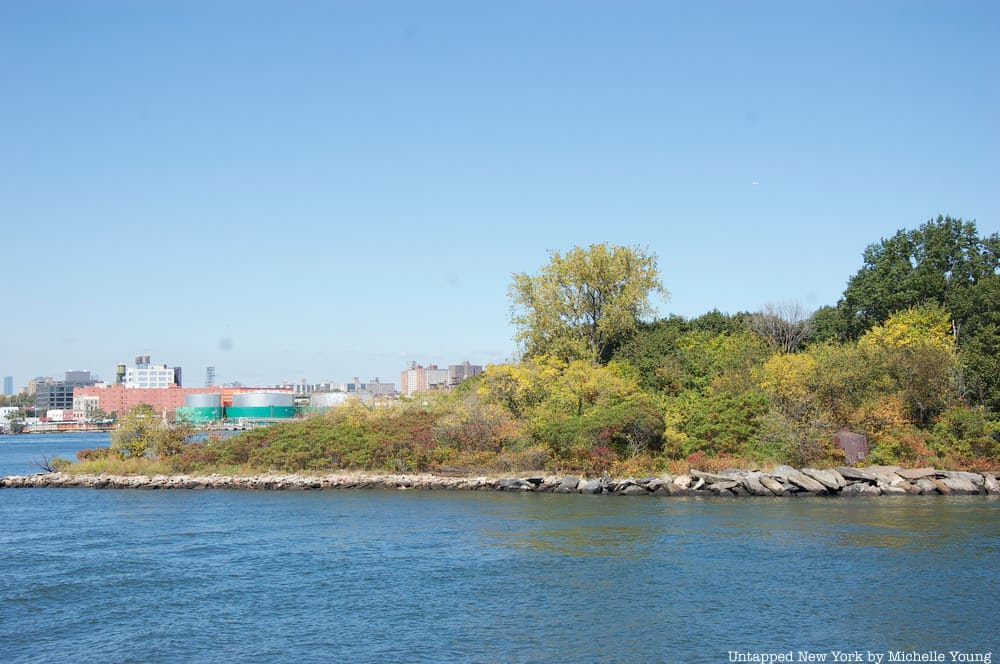
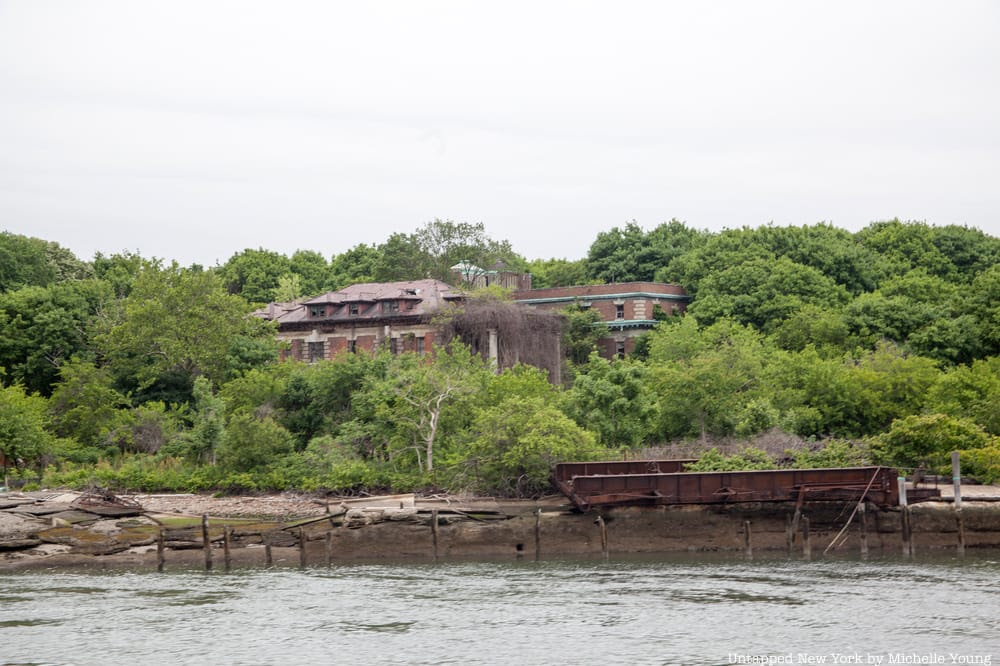
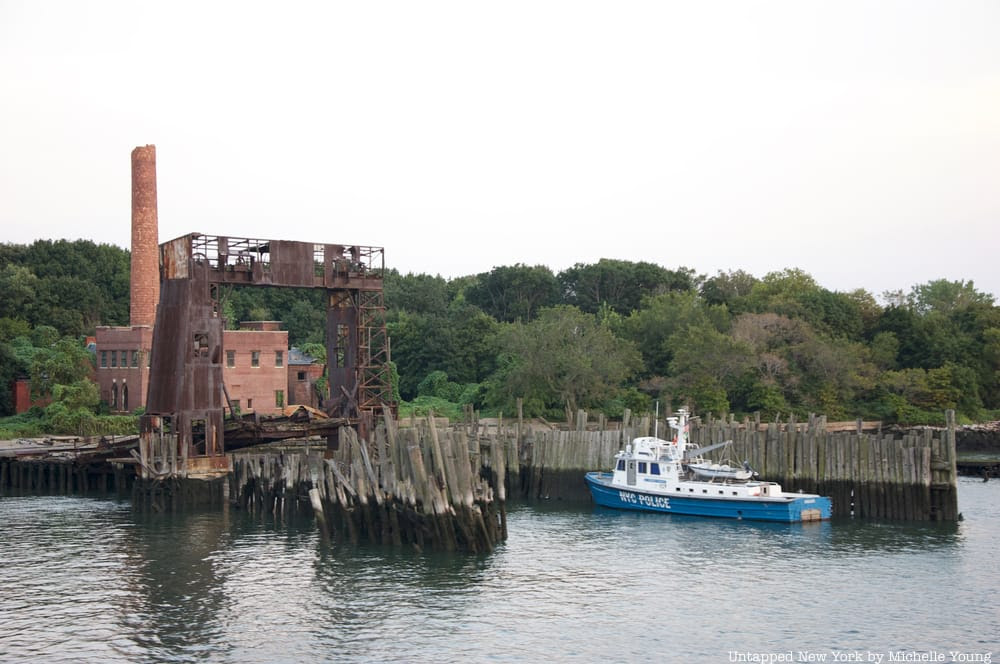
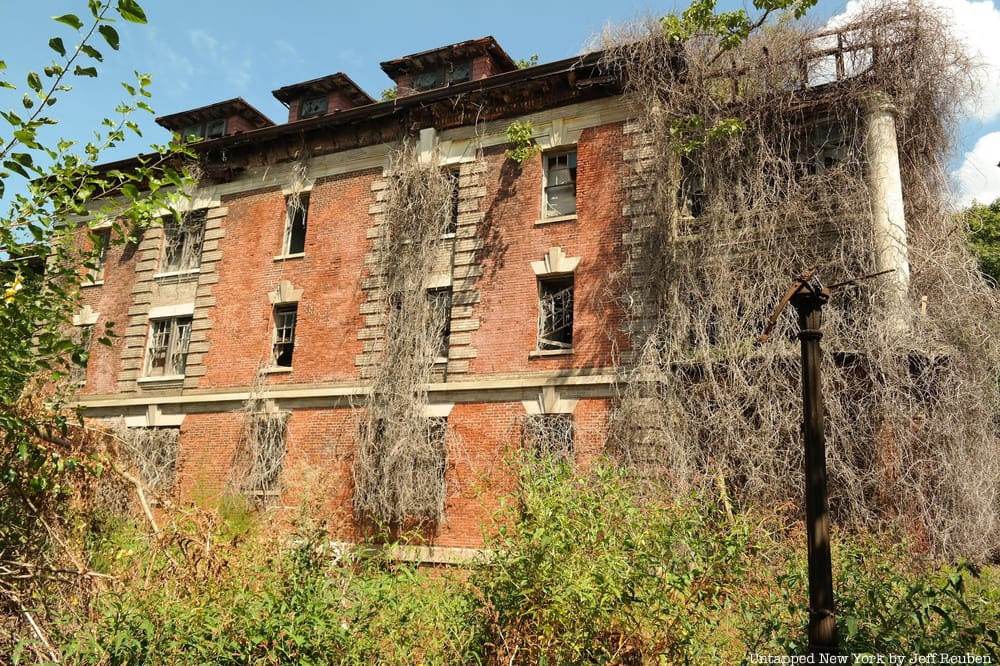
North Brother Island has been off-limits for more than 60 years.
Once home to Typhoid Mary, World War II veterans, and an early owner of the Yankees, visits to the island are now strictly prohibited. Find out what the island is used for now and more surprising stories from its past:
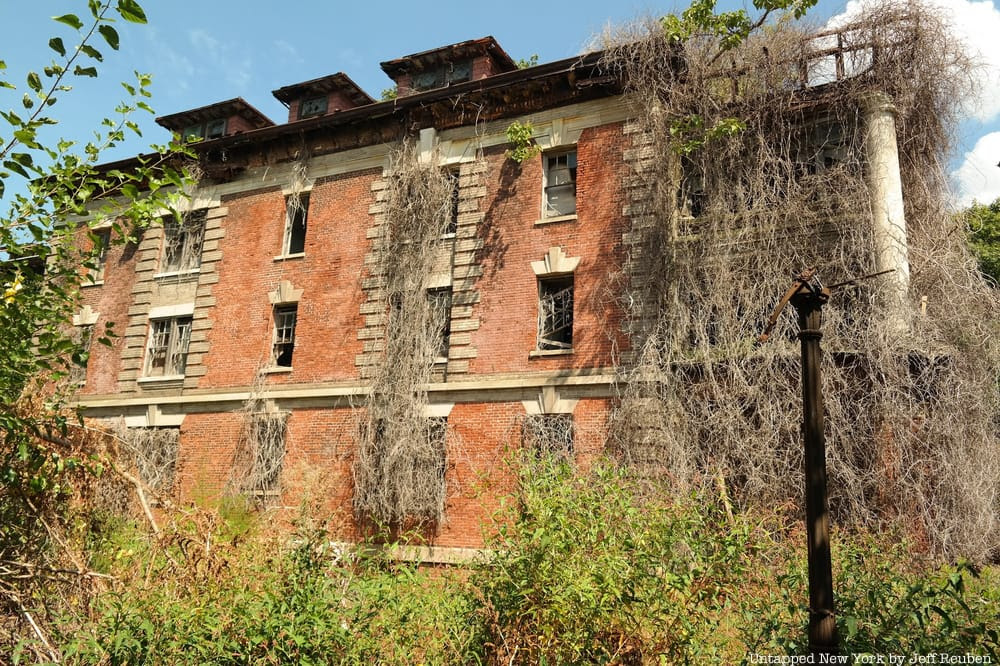
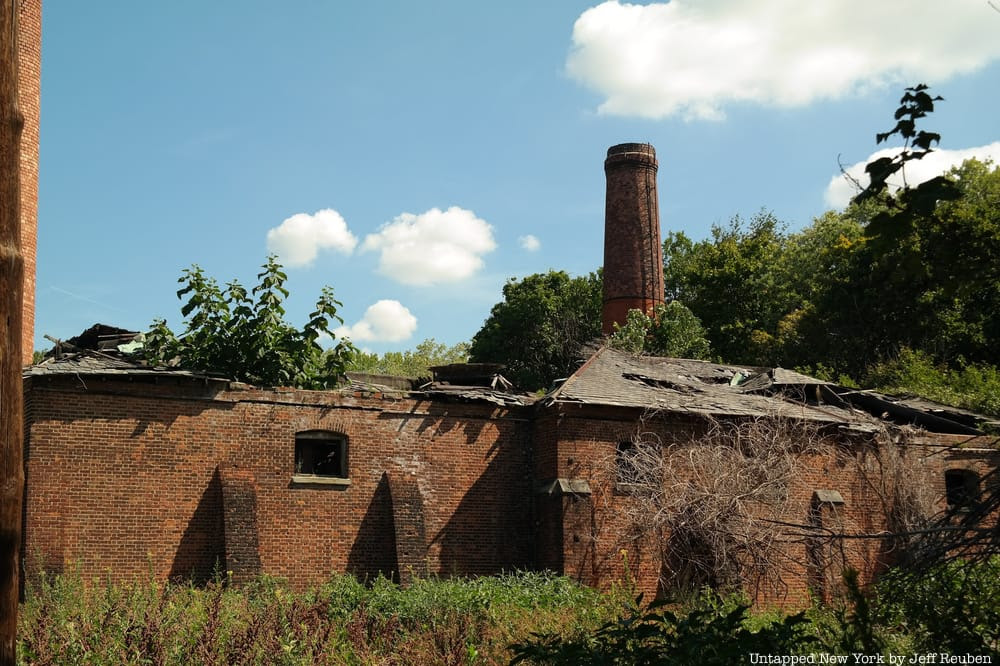
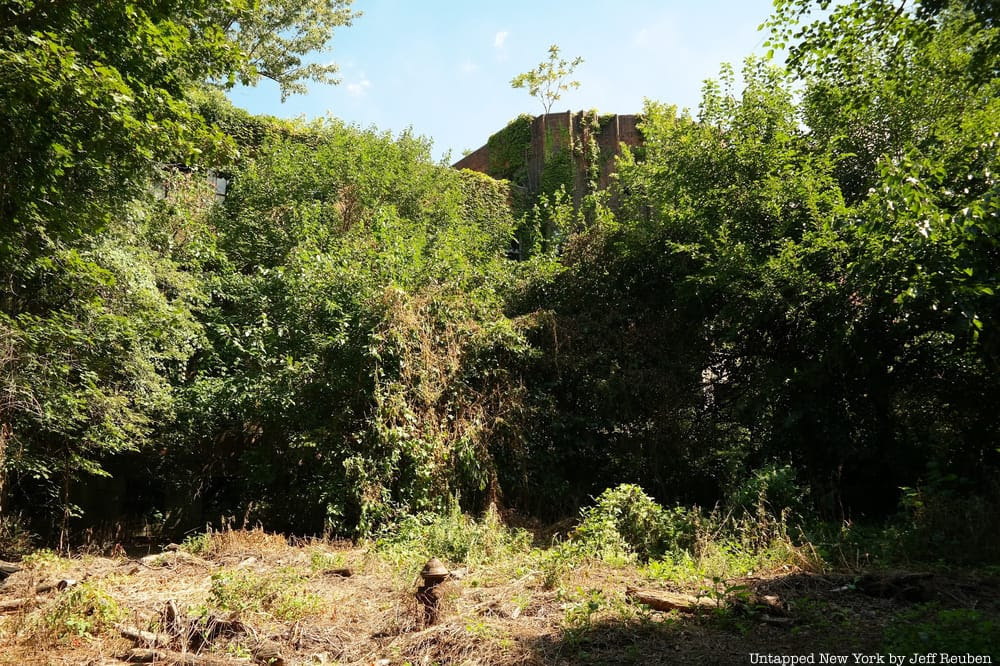
North Brother Island is most famous today for the beautiful photographs of its crumbling state, but its history and secrets are what give the place its mythical status in New York City. In 2015, there was a study that explored opening North Brother Island to public access, but access to the island is still forbidden. Here, we explore our favorite secrets of this off-limits island in the East River, many of which were sourced from the great book North Brother Island, The Last Unknown Place in New York Cityby Christopher Payne and Randall Mason.
10 North Brother Island and South Brother Island Were Known as the “Two Brothers” Islands
In 1791, the Two Brothers Islands were put up for sale at an auction at the Merchants Coffee House, where all business and politics seemed to take place in the early days of the colony. In the print advertisement, it was offered as an “eligible situation for a pilot or a house of entertainment,” due to its location along the river, and noted that already extant on the North Brother Island was a “dwelling house, barn, orchard, and a variety of fruit trees, with a quantity of standing firewood and timber.”
Initially, North Brother Island was part of the Bronx, which was part of Westchester. In 1881, a bill transferred North Brother Island to New York City, which was just Manhattan at the time (as the consolidation of the boroughs did not take place until 1898). Thus, other early short-term structures built on North Brother Island were temporary hospitals by Westchester County in the mid-19th century.
9 An Early Owner of the Yankees Was the Last Inhabitant Before the Parks Department took ownership of the island in 2007, it was privately owned. One of the earliest former owners was Jacob Ruppert, also an early owner of the Yankees baseball team. Ruppert had a summer home on the island, but it sadly burned down in 1909. No one has lived there since.
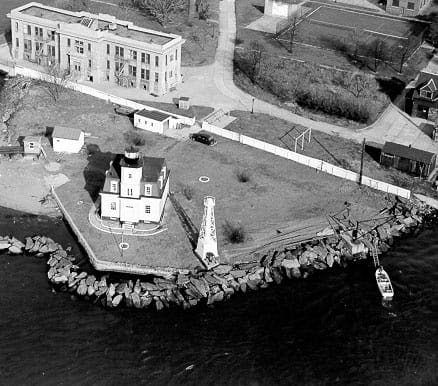
In 1868, after failed attempts to establish a lighthouse in 1829 and 1848 (the landowners refused to sell), a piece of land on the southern tip was acquired in 1868 by the federal government. The lighthouse built here was the first long-term structure built on the island. According to Randall Mason in North Brother Island, The Last Unknown Place in New York City, the small lighthouse had a mansard roof and an octagonal tower. Today, Mason rates, “traces of the lighthouse and federally owned property remain.”
7 North Brother Island Was Considered a Success For Infectious Disease Control
Nurse’s residence By 1881, plans were underway to create an infectious disease hospital on North Brother Island. This new hospital would take on the operations of Riverside Hospital, an existing hospital on Blackwell’s Island (now Roosevelt Island). It treated ailments such as typhoid fever, tuberculosis, and smallpox.
While there was controversy over the practices of the institution, both medically and socially, Mason writes, “North Brother Island worked. It protected the city from pestilence. The threat and fear of infectious diseases were great, and Riverside Hospital was essential to treating it in terms of the new science and policies of public health.”
Cities like Philadelphia looked at New York City’s solution as an example. Photographer and reformer Jacob Riis was also a supporter of the undertakings at Riverside Hospital, finding it peaceful and effective, and felt, as Mason writes, “exile to North Brother Island was necessary to protect the city and well worth the cost, both social and financial.”
6 Typhoid Mary Died on North Brother Island
After the initial success in controlling epidemics in New York City, North Brother Island “soon became a place of moral compromise, lax care, and anti-immigrant discrimination,” Mason writes. The infamous Typhoid Mary (aka Mary Mellon) was a figure who epitomized the island’s challenges and forthcoming decline. She was a healthy carrier of typhus and worked as a cook for the upper classes of New York.
She infected more than twenty people and was first sent to North Brother Island from 1907 to 1910. She was released on the condition that she would not work as a cook, but she continued to do so under an alias and infected more people. She was sent back for life from 1915 until her death in 1938. She lived in a small house built just for her so that she could be in complete isolation. In the book Fever, Mary Beth Keane writes, “I really believe that, if she had infected a tenement with hundreds of people in it, and far more deaths had been the result, she wouldn’t have been put in the position she was in, working as she did for a wealthy family.”
5 In the Early 1900s, 25% of the Island Was Landfill
Four acres of land were added to the eastern side of North Brother Island in 1909, accounting for 25% of the total island. Dormitories and other buildings were constructed on top of this fill. As Christopher Payne tells us, he finished shooting photography for the bookshortly after Hurricane Sandy, when much of the landfill eroded away.
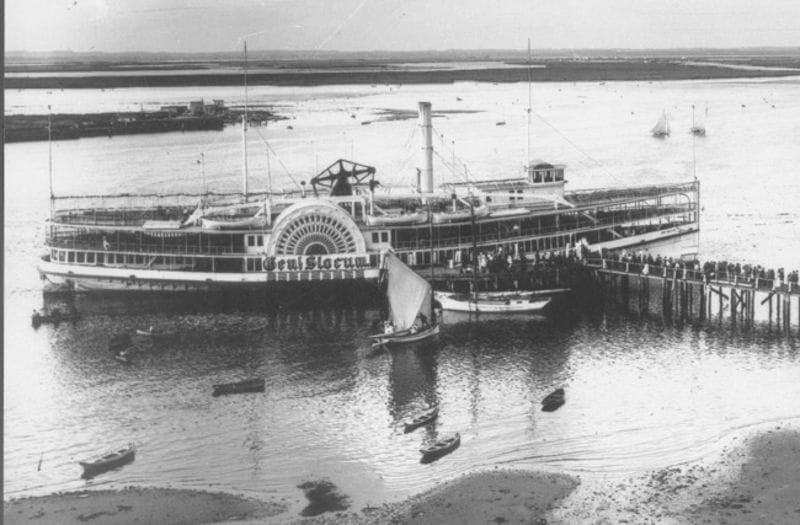
4 The General Slocum Sunk Offshore Causing the Largest Loss of Life Until 9/11
Until the events of September 11th, the sinking of the General Slocum was responsible for the largest loss of life in New York City. The tragedy forever changed the composition of the Lower East Side. On June 15, 1904, St. Mark’s Evangelical Church chartered a boat, the General Slocum, to take 1,358 members of its German-American congregation for a fun-filled day on the water and on a Long Island beach.
Not far from shore, a fire burst out on board and quickly consumed the ship. The combination of faulty lifeboats and life jackets, a panicked crowd of non-swimmers, and a cowardly crew that sought their own escape first led to mayhem and death. The crisis was made worse by the captain’s refusal to bring the burning ship to shore, ostensibly to prevent the fire from spreading. The unfortunate timing of the fire occurred while the boat was in Hell Gate’s notoriously rough waters.
The General Slocum sank just off North Brother Island, with victims and debris washing up on shore. The staff of the hospitals of the island served as rescue staff for the event. 1,021 people died either by fire or drowning that day, with only a few hundred surviving. The disaster also devastated the large German-American population on the Lower East Side.
3 North Brother Island Served as Post-WWII Housing for Veterans
North Brother Island had declined in importance as a medical institution as scientific advancements and new ideas for care emerged in the years leading up to World War II. Faced with the housing crisis following the war, the government leased land and buildings on the island to house returning veterans. It should also be noted that after World War I, North Brother treated veterans with drug addictions. A ferry system was set up to bring veterans to the city’s universities to complete their education or for work.
A small village emerged, replete with amenities like a grocery store, library, and movie theater – not too dissimilar from Governors Island later, which had a Burger King and a motel. About 500 people lived on North Brother Island, and Mason writes that the “island population may have reached 1,500 at its peak in the late 1940s.”
Those who lived here during this time, some who came to speak to Christopher Payne and share their mementos after the release of his book, say it was an idyllic time. This was not to last, however.
2. North Brother Island Was a Drug Treatment Facility
In the 1950s and 1960s, drug abuse came to the forefront as a major public health issue. In 1952, the Tuberculosis Pavilion and other buildings were repurposed as drug treatment facilities, with isolation returning as a preferred method of treatment. Graffiti that can still be seen on the walls of buildings today showcase the difficulty of patients on the island during this time.
1. It is Now a Bird Sanctuary It’s an urban explorer’s dream to get to North Brother Island, which now serves as a bird sanctuary. Both North and South Brother islands make up the Harbor Herons Preserve, part of a “nationally recognized complex of uninhabited islands and expansive marshes essential for shorebirds, located right here in New York City.”
The islands are managed by the New York City Parks and Recreation Department. If you aren’t part of the lucky few who have gained access for research or other reasons directly through the Parks Department, your chances of (legally) getting onto the island are slim. We got lucky on a canoe trip back in 2015 and were brought ashore by a surprise stop with an Urban park Ranger. Check out our photos here!
Bonus: In the 1970s, Casinos Were Proposed for North Brother Island According to Robert Sullivan, two city councilmen in 1971 proposed to build “The Vegas of the East” on North Brother Island. Other suggestions have included prisons and every so often, architecture students dream up visionary plans for the island. A 2015 study, announced by New York City councilman Mark Levine and undertaken by PennPraxis, was the closest to restoring public access.
Presenting: Conversations in City History
Monday, April 13, 2026, 6:30 pm “Too Good to Get Married: The Life and Photographs of Miss Alice Austen” Author Bonnie Yochelson will discuss with moderator Judith Berdy about how a woman who grew up in the Gilded Age, when the term “lesbian” did not yet exist, challenged the conservative ideals of Staten Island high society. She will explain, as does her book, the role of photography in Alice Austen’s journey of self discovery, embrace of feminism and involvement in a loving lesbian partnership.
Monday, May 11, 2026, 6:30 pm “Rural County, Urban Borough: A History of Queens” When preservationist and author Jeffrey A. Kroessler passed away in 2023, his wife, architect Laura Heim, selected the images for his book and saw it through publication. She has generously agreed to be interviewed on this seminal historical work that charts how politics, industry, transportation, government and real estate interests all shaped New York’s borough of extraordinary ethnic, religious and linguistic diversity.
Monday, June 8, 2026, 6:30 pm “The Killing Fields of East New York” Author Stacy Horn (also writer of “Damnation Island,” about 19th-century Blackwell’s Island) has chronicled how the subprime mortgage scandal of the 1970s and a long history of white-collar crime slowly destroyed the Brooklyn neighborhood of East New York. She will share her compelling investigative journalism in a conversation about the area’s fair housing, race, violence and misplaced city priorities.
JUST ADDED: Monday, September 14, 2026, 6:30 pm “Louis I. Kahn The Last Notebook Edited By Sue Ann Kahn An intimate record of Kahn’s musings on design, coupled with preparatory drawings of his monumental last project
Published in honor of the 50th anniversary of his death in March 1974, this two-volume set contains a facsimile of the notebook in which Louis Kahn drew and wrote during his last year of life, alongside a second volume of scholarly commentary and transliterations of his musings. Anchored by a magnificent set of preparatory drawings for his monument to Franklin Roosevelt in New York City, the notebook provides an intimate glimpse into private sketches of Kahn’s final projects and his poetic reflections on thematic preoccupations, such as “Silence to Light,” “Form and Design,” “Society of Rooms” and “Desire to Express.” Each volume is in a vellum sleeve and both are housed together in a transparent slipcase. Born in Estonia, Louis Kahn (1901-74) immigrated with his family to Philadelphia when he was four years old. Kahn received Beaux-Arts training at the University of Pennsylvania, under the French-educated Paul Philippe Cret, and then adopted his own idiosyncratic modernism, which would engender the heterogeneous “Philadelphia school.” His architectural career did not take off until later in life; he attained his first major commission to design Yale University’s Art Gallery in 1951. Upon its completion, Kahn received many international commissions, and he developed a signature style that was monumental, monolithic and transparent in its functionality. He was awarded the AIA Gold Medal and the RIBA Gold Medal.
THE ROOSEVELT ISLAND HISTORICAL SOCIETY
6:30 p.m. 504 Main Street
We had a tech error yesterdayAbove are the two volumes of “The Last Notebook”.
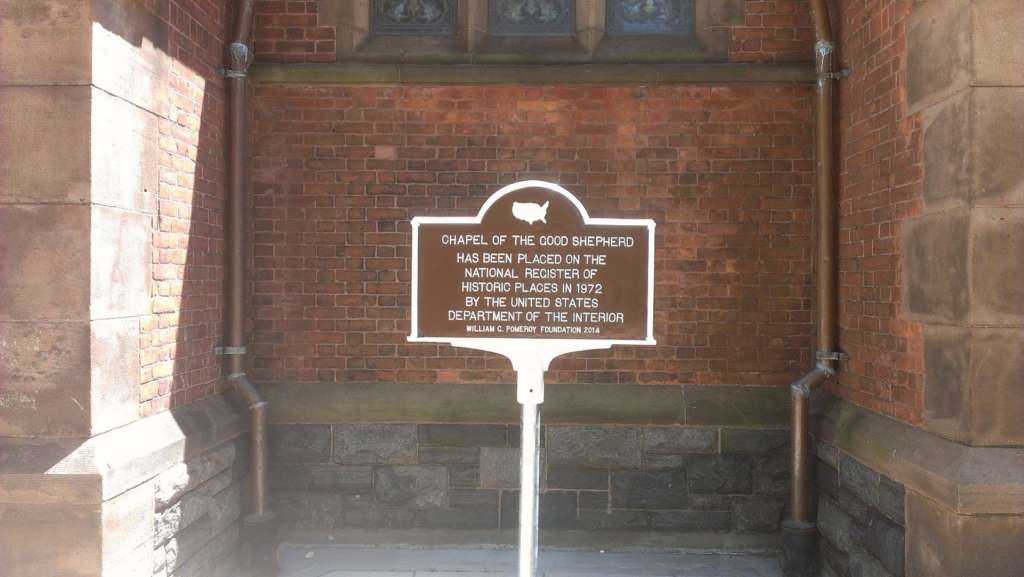
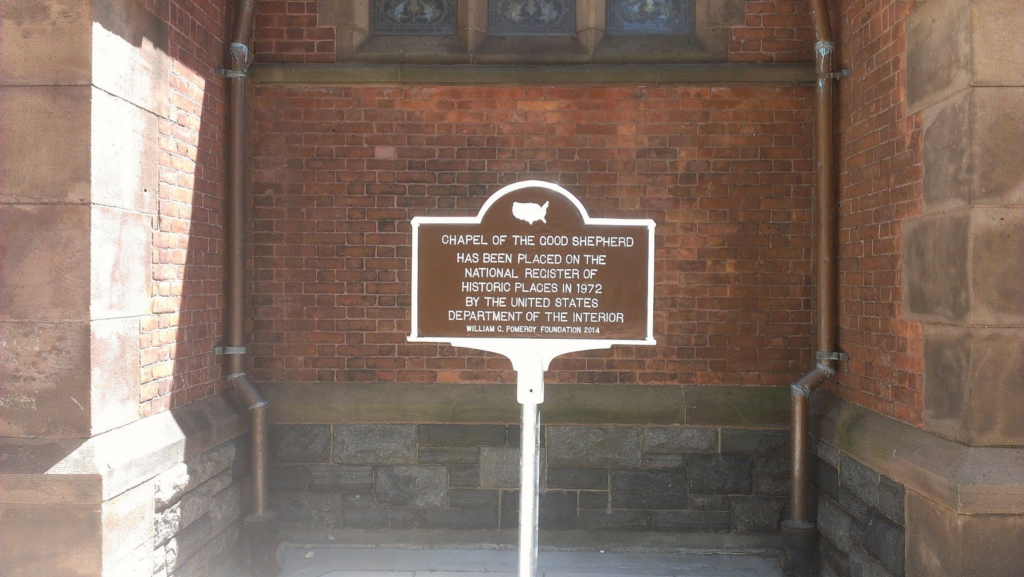
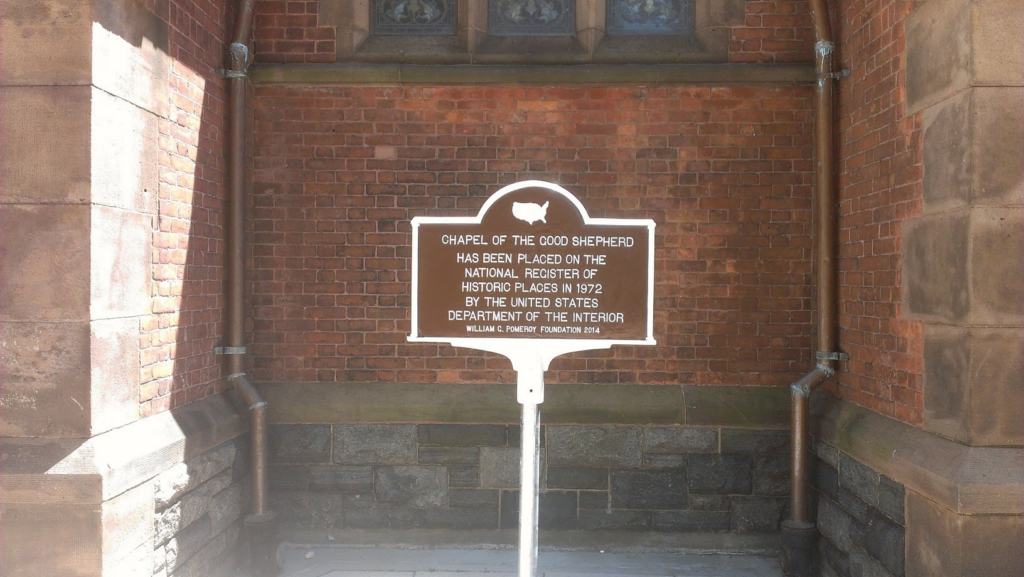
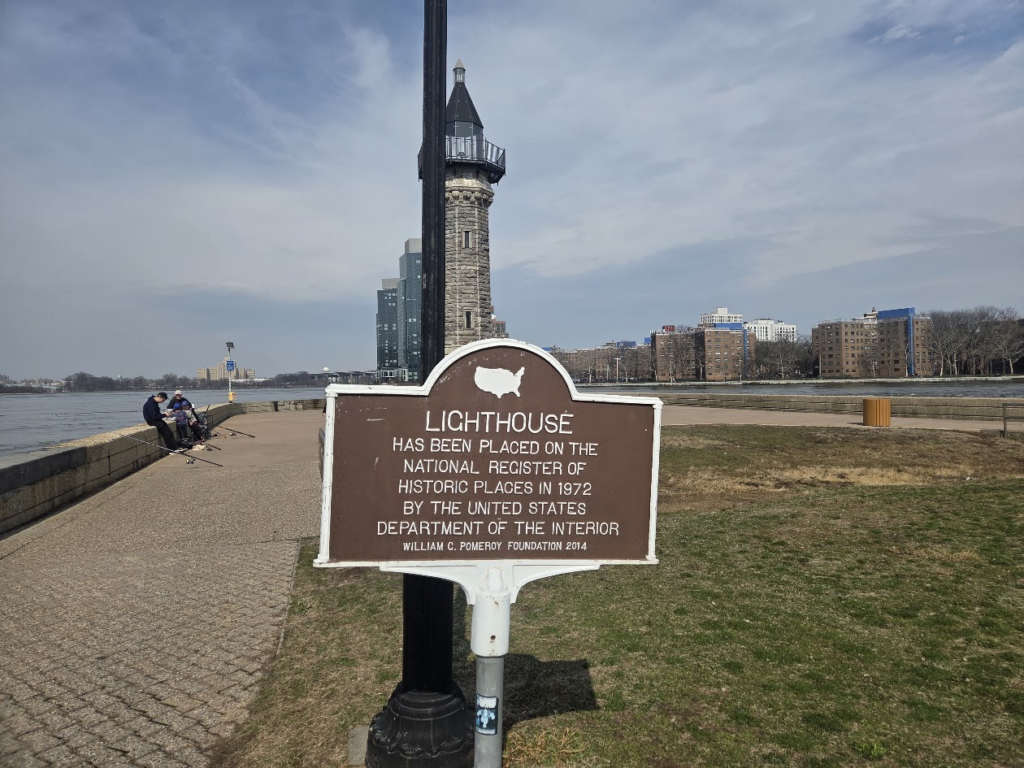
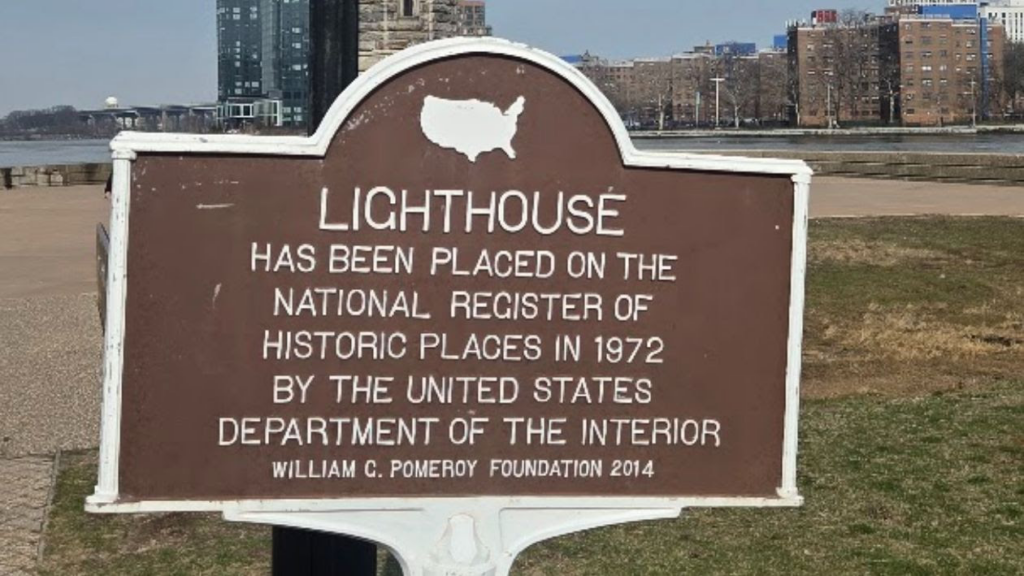
Save the Dates April 25-26 POMEROY FOUNDATION HISTORIC MARKER WEEKEND CELBRATION
Photo Judith Berdy
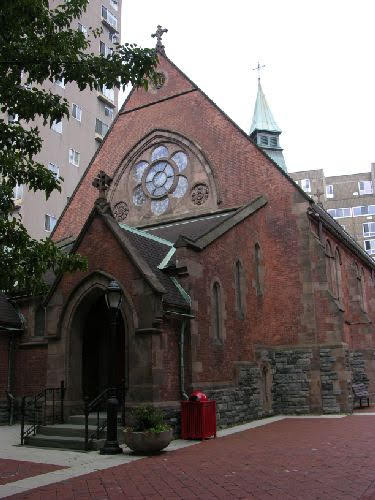
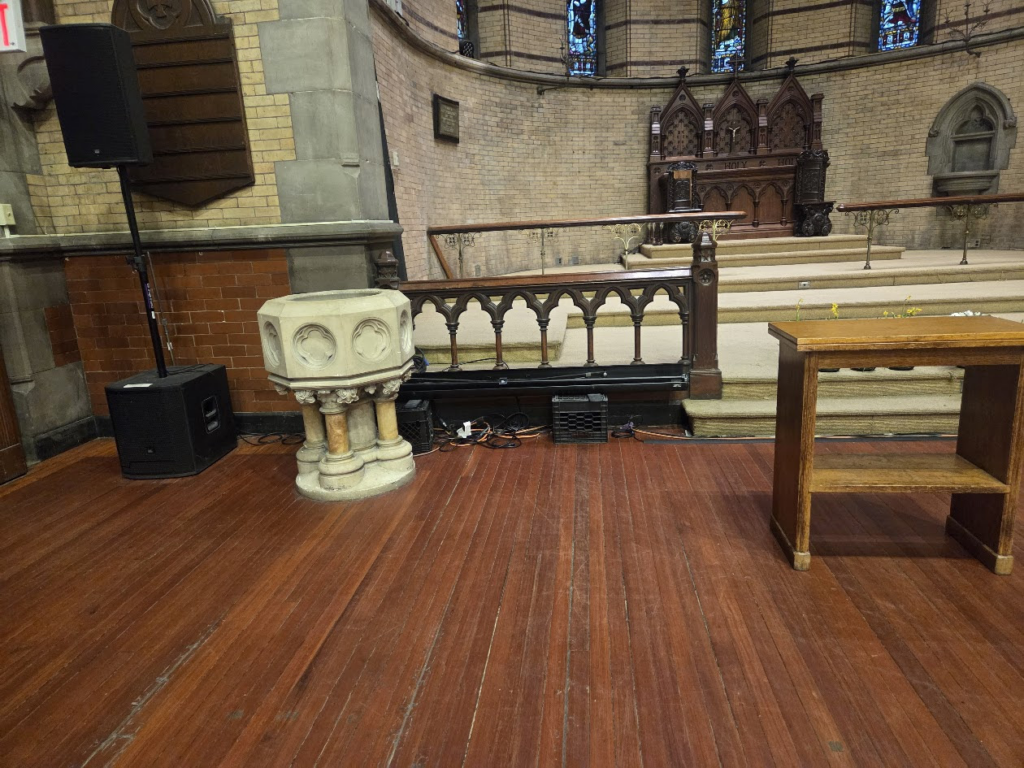
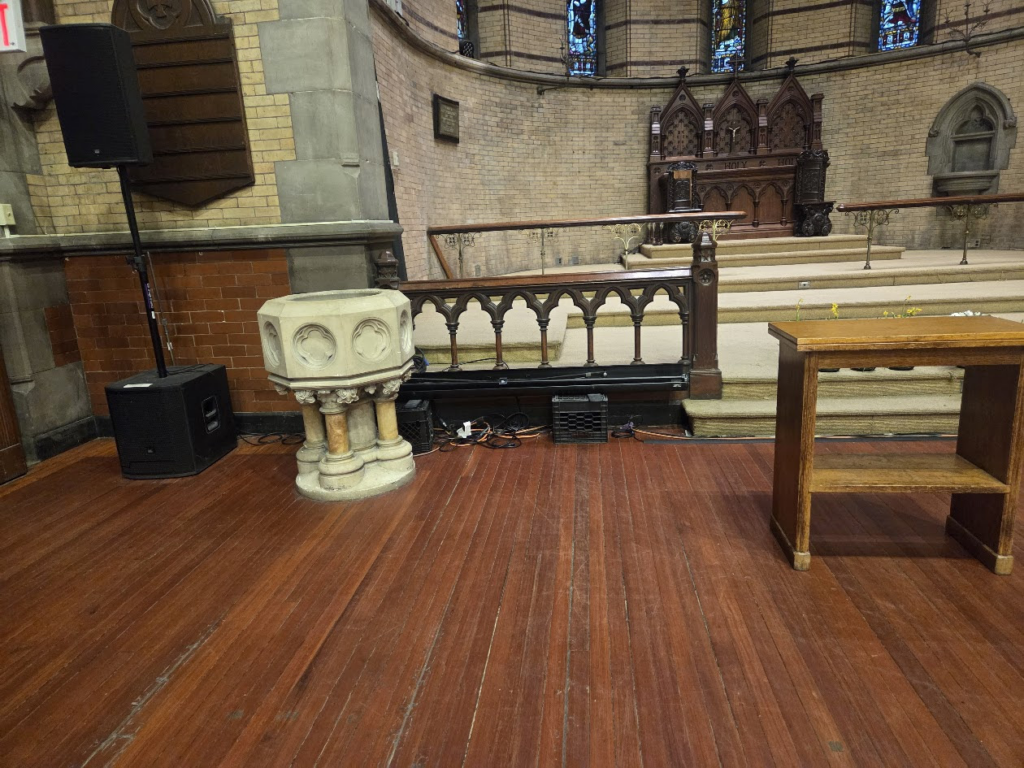
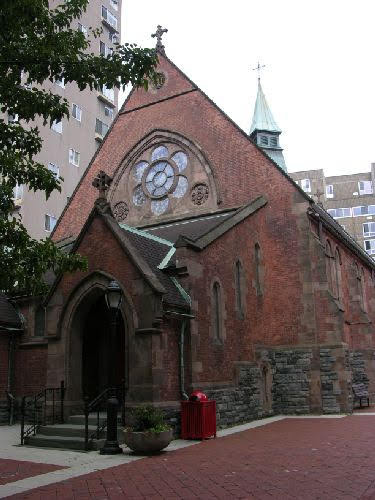
OUR CHAPEL IS IN TERRIBLE CONDITION
BROKEN CHAIRS, PATCHED UP FLOORS,WIRES OVER THE PLACE, MILK CARTON STORAGE!
THE CONDITION OF THE CHAPEL IS DISGRACEFUL.
RIOC IS A POOR GUARDIAN OF OUR HISTORIC CHAPEL.
THE LOWER LEVEL IS ALSO IN NEED OF MAJOR REPAIRS
LET’S GET GOING AND THOROUGHLY CLEAN AND REPAIR OUR LANDMARK BUILDING.
CREDITS
JUDITH BERDY UNTAPPED NEW YORK
All image are copyrighted (c) Roosevelt Island Historical Society unless otherwise indicated THIS PUBLICATION FUNDED BY DISCRETIONARY FUNDS FROM CITY COUNCIL MEMBER JULIE MENIN & ROOSEVELT ISLAND OPERATING CORPORATION PUBLIC PURPOSE FUNDS.
Monday, April 13, 2026, 6:30 pm “Too Good to Get Married: The Life and Photographs of Miss Alice Austen” Author Bonnie Yochelson will discuss with moderator Judith Berdy about how a woman who grew up in the Gilded Age, when the term “lesbian” did not yet exist, challenged the conservative ideals of Staten Island high society. She will explain, as does her book, the role of photography in Alice Austen’s journey of self discovery, embrace of feminism and involvement in a loving lesbian partnership.
Monday, May 11, 2026, 6:30 pm “Rural County, Urban Borough: A History of Queens” When preservationist and author Jeffrey A. Kroessler passed away in 2023, his wife, architect Laura Heim, selected the images for his book and saw it through publication. She has generously agreed to be interviewed on this seminal historical work that charts how politics, industry, transportation, government and real estate interests all shaped New York’s borough of extraordinary ethnic, religious and linguistic diversity.
Monday, June 8, 2026, 6:30 pm “The Killing Fields of East New York” Author Stacy Horn (also writer of “Damnation Island,” about 19th-century Blackwell’s Island) has chronicled how the subprime mortgage scandal of the 1970s and a long history of white-collar crime slowly destroyed the Brooklyn neighborhood of East New York. She will share her compelling investigative journalism in a conversation about the area’s fair housing, race, violence and misplaced city priorities.
JUST ADDED: Monday, September 14, 2026, 6:30 pm “Louis I. Kahn The Last Notebook Edited By Sue Ann Kahn An intimate record of Kahn’s musings on design, coupled with preparatory drawings of his monumental last project
Published in honor of the 50th anniversary of his death in March 1974, this two-volume set contains a facsimile of the notebook in which Louis Kahn drew and wrote during his last year of life, alongside a second volume of scholarly commentary and transliterations of his musings. Anchored by a magnificent set of preparatory drawings for his monument to Franklin Roosevelt in New York City, the notebook provides an intimate glimpse into private sketches of Kahn’s final projects and his poetic reflections on thematic preoccupations, such as “Silence to Light,” “Form and Design,” “Society of Rooms” and “Desire to Express.” Each volume is in a vellum sleeve and both are housed together in a transparent slipcase. Born in Estonia, Louis Kahn (1901-74) immigrated with his family to Philadelphia when he was four years old. Kahn received Beaux-Arts training at the University of Pennsylvania, under the French-educated Paul Philippe Cret, and then adopted his own idiosyncratic modernism, which would engender the heterogeneous “Philadelphia school.” His architectural career did not take off until later in life; he attained his first major commission to design Yale University’s Art Gallery in 1951. Upon its completion, Kahn received many international commissions, and he developed a signature style that was monumental, monolithic and transparent in its functionality. He was awarded the AIA Gold Medal and the RIBA Gold Medal.
THE ROOSEVELT ISLAND HISTORICAL SOCIETY
6:30 p.m.
504 Main Street
Save the Dates April 25-26 POMEROY FOUNDATION HISTORIC MARKER WEEKEND CELBRATION
Photo Judith Berdy
OUR CHAPEL IS IN TERRIBLE CONDITION
BROKEN CHAIRS, PATCHED UP FLOORS,WIRES OVER THE PLACE, MILK CARTON STORAGE!
THE CONDITION OF THE CHAPEL IS DISGRACEFUL.
RIOC IS A POOR GUARDIAN OF OUR HISTORIC CHAPEL.
THE LOWER LEVEL IS ALSO IN NEED OF MAJOR REPAIRSLET’S GET GOING AND THOROUGHLY CLEAN AND REPAIR OUR LANDMARK BUILDING. CREDIT
JUDITH BERDY
All image are copyrighted (c) Roosevelt Island Historical Society unless otherwise indicated THIS PUBLICATION FUNDED BY DISCRETIONARY FUNDS FROM CITY COUNCIL MEMBER JULIE MENIN & ROOSEVELT ISLAND OPERATING CORPORATION PUBLIC PURPOSE FUNDS.
In 1903, Ashkenazi Jews in Ukraine suffered systemic discrimination and severe poverty. Brutally enforcing residency laws, officers conducted nighttime raids and expelled those who lacked proper paperwork. A wave of (state-sanctioned) antisemitic attacks throughout the Russian Empire caused panic and displacement.
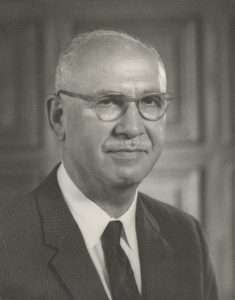
Born in Lysianka, near Kyiv, Bern Dibner (1897-1988) was the youngest of eight children. He was seven years old on arrival in Manhattan.
That same year Stuyvesant High School opened its doors in the East Village, Manhattan’s first “manual training” school for boys. Once set up at its permanent location at 345 East 15th Street (where it stayed until 1992), it was New York’s first high school to focus on the sciences.
Many sons of first-generation immigrants were taught at the Stuyvesant which offered them a gateway of opportunity to overcome language barriers, qualify, and make their way into society.
Bern Dibner was one of those students, before continuing his schooling at the Hebrew Technical Institute.
Born in Manchester in December 1854, Henry Marcus Leipziger was an educator whose family (of German origin) had emigrated to America in his childhood.
Having studied at City University and Columbia, he founded the Hebrew Technical Institute in January 1884 and acted as its director until 1891.
The school aimed at providing vocational education for Jewish immigrants. Starting at 206 East Broadway, and after several relocations, the school finally moved to premises at 34/6 Stuyvesant Street.
There is some irony in the fact that Peter Stuyvesant’s name is associated with two institutions that helped Jewish integration.
In 1654, the Governor had tried to prevent access to a group of Sephardic refugees into New Amsterdam after their escape from Recife following the Portuguese reconquest of Dutch Brazil (Nieuw Holland).
This marked the end of a brief 24-year period from 1630 to 1654 of religious freedom under Dutch rule, during which the first synagogue in the Americas, Kahal Zur Israel, was established in Brazil.
After working as an electrician and being injured, he used a small settlement to continue his studies. He matriculated at the Polytechnic Institute of Brooklyn, graduating in 1921 with a cum laude degree in electrical engineering.
Dibner started his career at the Adirondack Power & Light Company, a major utility with operations in Amsterdam, NY, featuring large infrastructure projects.
In 1923, the Electric Bond & Share Company employed him for an assignment to unify Cuba’s system on a single grid. He developed and patented a connector to link previously incompatible transmission lines.
A year later he set up a partnership with his brother-in-law, naming it Burndy (“Bern D.”) Company with a small office at Fifth Avenue and 43rd Street. Business took off rapidly; the Burndy Corporation was eventually listed on the New York Stock Exchange.
Financially secure, Dibner retired from active management to pursue scholarly interests. Reading a chapter on Leonardo da Vinci in Stuart Chase’s Men and Machines (1929), he became intrigued by this extraordinary dual talent of creator and engineer.
In 1930 he enrolled at the University of Zurich where he studied history with a focus on Renaissance culture and technology.
Why Zurich? The University had been the intellectual home of Jacob Burckhardt (1818-1897), the greatest Renaissance scholar of his time and the legacy endured. Dibner received the spark.
The History of Science discipline had manifested itself during the late nineteenth century by charting the modern world’s rise as driven by technology.
The word “scientist” has an equally brief history. In 1834, Cambridge academic William Whewell put the word into print when reviewing Mary Somerville’s study On the Connexion of the Physical Sciences.
He argued that the unity of science, and hence knowledge of the material world, had fragmented with the splintering of research into specialisms. He proposed the introduction of the word “scientist” (an analogue to “artist”) to bring back linguistic cohesion into scholarship.
In Britain, academics resisted the idea and stuck to the (gendered) term “man of science.”
Whilst the British debate endured into the twentieth century, in America the term “scientist” was adopted much quicker. By the 1870s it was in routine use.
In fact, the word was so common that many linguists assumed it to be an Americanism. Proof to purists that the term was illegitimate.
Collector & Legacy
Bern’s passionate curiosity led to a love for manuscripts and rare books as physical records of scientific progression. Over the years he assembled what became the pre-eminent American collection of materials on the history of science.
Available to scholars and bibliophiles, the volumes were stored in dedicated rooms at the Burndy Corporation’s headquarters in Norwalk, Connecticut, and later in the specially designed Burndy Library.
In 1955, Dibner selected two hundred titles to highlight achievements in technology, biology, and medicine. That year he published Heralds of Science, a catalogue of “epochal books and pamphlets… in the Burndy Library that were instrumental in establishing our age of science.”
The book celebrated the 500th anniversary of the invention of printing from moveable type by Johannes Gutenberg.
Although aimed at a wide audience of non-historians, the scholarship that went into annotating his selection of titles showed the depth of Dibner’s historical knowledge. In his introduction he admitted that his choice was, inevitably, arbitrary.
In the following years, Dibner donated parts of the collection to various institutions, gradually dissolving the Burndy Library.
A considerable number of books went to the Smithsonian where a wing was named for him, while another part moved to the Huntington Library, California.
Dibner also supported his alma mater, the Polytechnic Institute of Brooklyn, which in turn created the Bern Dibner Library of Science and Technology, serving today as a resource for New York University’s Tandon School of Engineering.
Manuscripts & Incunabula
The Smithsonian was the main beneficiary of Dibner’s generosity, receiving some ten thousand rare books and manuscripts in 1974, including most of the Heralds of Science, except for those already held at the institution.
The gift contained an astonishing 320 incunabula (documents produced with movable type at the transition from manuscript to printed book), including such landmarks as Pliny’s Historia naturalis (Venice 1469), considered the first printed science book; De re militari (Verona 1472) by Valturius, the first printed book to contain scientific illustrations; and Aristotle’s Organon, (Venice 1495/8), the first edition of his complete works in Greek.
Dibner stressed the importance of manuscripts as research tools in addition to printed literature. Whether hand-copied texts of ancient learning, letters exchanged between scientists, or lecture notes, they all contribute to the scope of scholarly research.
He assembled a diversity of documents associated with Isaac Newton, Galileo Galilei, Benjamin Franklin, Alessandro Volta, or Wilhelm Conrad Röntgen.
As a collector, he literally “hunted” for materials. By acquiring the collection of Czech engineer Armin Weiner, he secured Alfred Einstein’s handwritten summary of the Theory of Relativity.
He also bought the library of Vito Volterra, the outstanding Italian mathematician, physicist, and Mussolini-opponent. His interest went beyond just manuscripts or books: in 1965 he added a hundred early light bulbs to his monumental collection.
Although a prominent entrepreneur and intellectual, the past came back to haunt him. In the post-war period, the American Jewish community and other minorities faced discrimination in higher education.
In 1948 Brandeis University at Waltham, Massachusetts, was founded as a non-sectarian research university, welcoming students of all backgrounds and beliefs.
Named for Louis Dembitz Brandeis, the first Jewish justice of the Supreme Court, the institution focused on undergraduate education, while building a pioneering research enterprise.
Dibner took a personal interest in the formation of its library and became a major contributor. Donations included materials related to the work of Leonardo da Vinci as well as 150 documents chronicling scientific discoveries over the centuries.
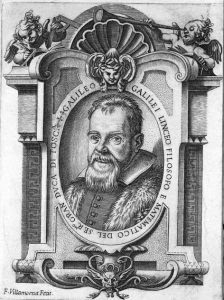
Among these rare texts was a 1613 edition of Istoria e dimostrazioni intorno alle macchie solari, Galileo Galilei’s treatise on sunspots published in Rome which includes forty-four full-page illustrations and a fine portrait of the author by Assisi-born engraver Francesco Villamena.
Two Cultures
The traumatized child who had fled with his Jewish parents from Kyiv to Manhattan facing a foreign language and an alien socio-cultural environment, made his way up the economic ladder from a simple electrician to the founder of a major company actively involved in building New York City’s modern infrastructure.
Inspired by Leonardo da Vinci and Renaissance ideals, he also pushed forward a debate about the balance – or lack thereof – between the humanities and sciences (what physicist and novelist C.P. Snow would name the dichotomy of “Two Cultures”).
Intellectual life divided into two hostile camps, humanities versus sciences, prevents effective action on global problems and issues. The discussion today is more urgent than it has ever been.
Having started his life in an underprivileged and marginalized segment of Manhattan’s population, Dibner would eventually outsmart the nation’s “best and brightest.”
He considered his career a “gift to the nation” which had granted him education and opportunity. This is what should direct our reflections on immigration, but the reality is different.
In December 2025 antisemitic slurs and symbols as well as racist graffiti targeting other minorities were found in a study room at Brooklyn’s Dibner Library. The concrete walls of division are re-erected under our eyes.
Save the Dates April 25-26 POMEROY FOUNDATION HISTORIC MARKER WEEKEND CELBRATION
Photo Judith Berdy
First sign of spring A Robin outside the Kiosk
CREDITS
NEW YORK ALMANACK
All image are copyrighted (c) Roosevelt Island Historical Society unless otherwise indicated THIS PUBLICATION FUNDED BY DISCRETIONARY FUNDS FROM CITY COUNCIL MEMBER JULIE MENIN & ROOSEVELT ISLAND OPERATING CORPORATION PUBLIC PURPOSE FUNDS.
Coler’s Memory Care Units are such special places. These untis have won many awards for the care provided and the approach taken to residents with various memory needs. I will be sending information on how to visit Coler and learn more about the Memory Care Units.
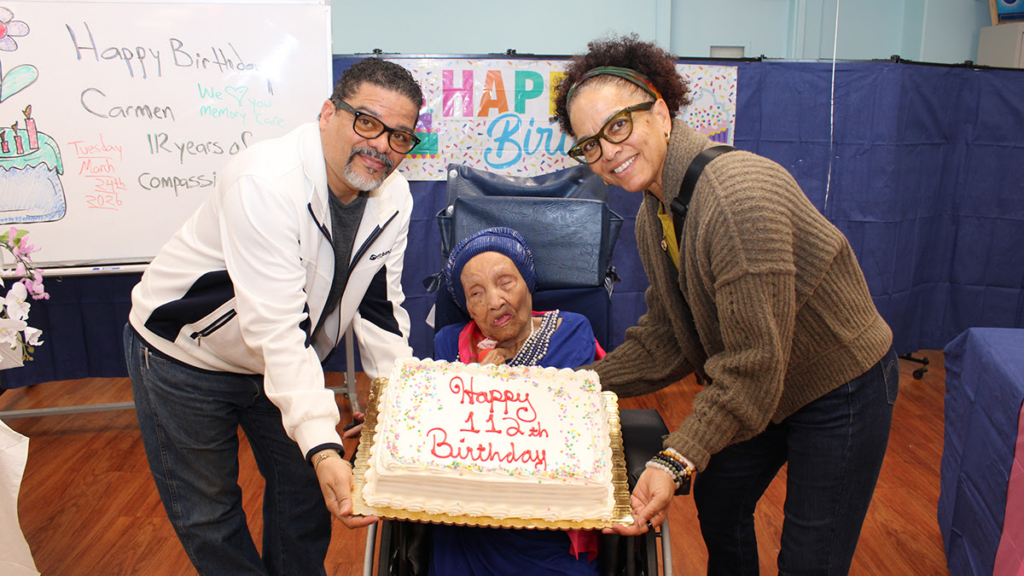
NYC Health + Hospitals/Coler Memory Care Unit celebrates the 112th Birthday of Resident Carmen Augustin, along with family members.
NYC Health + Hospitals/Coler honored Carmen Augustin marking her 112th birthday celebration. Augustin is the oldest long-term care resident across the health system’s five skilled nursing facilities, and among the city’s oldest living New Yorkers. Born 1914 in Port-au-Prince, Haiti, Augustin spent most of her early adulthood managing a local market and teaching young children after school. She immigrated to the United States in 1984, joining her sister in Queens, New York.
Augustin has lived through significant historical events from the rise of aviation, the Spanish flu pandemic, World Wars, 19 United States Presidents, the transformative advancements of the phone, computer, artificial intelligence, among many others. In 2010, Augustin was welcomed to NYC Health + Hospitals/Coler and has resided there ever since. She enjoys singing in French and Creole with the residents and staff in its award-winning memory care unit, and spending time with her family.
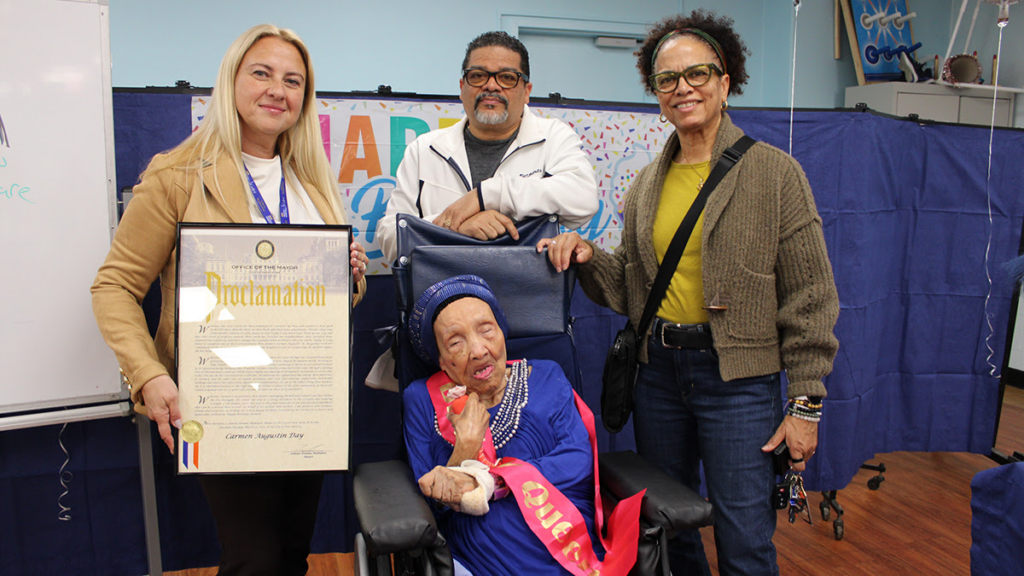
Coler CEO Nataliya Yakovleva presents mayoral proclamation to Carmen Augustin and family
As part of the celebration, Ms. Augustin received a special message from the Office of New York City Mayor Zohran Mamdani recognizing her as one of the City’s oldest living New Yorkers and proclaiming March 24, 2026, as “Carmen Augustin Day”:
“Carmen is an authentic New Yorker, embodying the bold and radiant soul that defines the five boroughs. She stands not only as a living testament to the strength and enduring triumph of the human spirit, but also to the great pinnacle of joy and personal fulfillment that can be achieved here as well.”
“In her lifetime, Ms. Augustin has touched the lives of so many generations and built an inspiring legacy rooted in love and resilience. Our Coler Memory Care community is proud to be among her many chapters, and we look forward to more singing, dancing, and celebrating future birthdays,” said NYC Health + Hospitals/Coler Chief Executive Officer Nataliya Yakovleva, LNHA, LMSW.
Grandnephew Joseph Baron and Grandniece Marie Baron present birthday cake to Carmen Augustin.
“Celebrating Carmen Augustin’s remarkable 112th birthday is a powerful reminder of the strength, resilience, and rich life experiences that define our communities. From her early years in Haiti to building a life here in New York, Carmen’s story reflects the enduring spirit of generations who have shaped our city. As Chair of the Assembly Committee on Aging, I am deeply committed to ensuring that every older New Yorker is treated with dignity, respect, and the highest quality of care. I am especially grateful to the dedicated staff at NYC Health + Hospitals/Coler for providing compassionate, person-centered care that allows residents like Carmen to continue to thrive, connect, and celebrate life’s milestones. We honor Carmen today not only for her longevity, but for the joy, culture, and legacy she shares with all of us,” said New York StateAssembly Member Rebecca Seawright, Chair of the Assembly Committee on Aging.
“Carmen has been surrounded by the unwavering care and compassion of the Coler Memory Care Unit (MCU) team, who have developed a profound and heartfelt connection with her,” said NYC Health + Hospitals/Coler Associate Director of Nursing Deepa Vinoo, DNP, RN. “Their dedication and warmth make her 112th birthday even more remarkable, and they are deeply honored to celebrate this incredible milestone alongside her.”
“At 112 years young, Carmen reminds us every day why individualized engagement matters,” said NYC Health + Hospitals/Coler Activity Therapist Christopher Wittman, CDP. “By focusing on the music and activities she loves, we create a therapeutic space that honors her life-long journey. Our award-winning approach to memory care is built on the belief that honoring a resident’s unique spirit is the key to true resilience.”
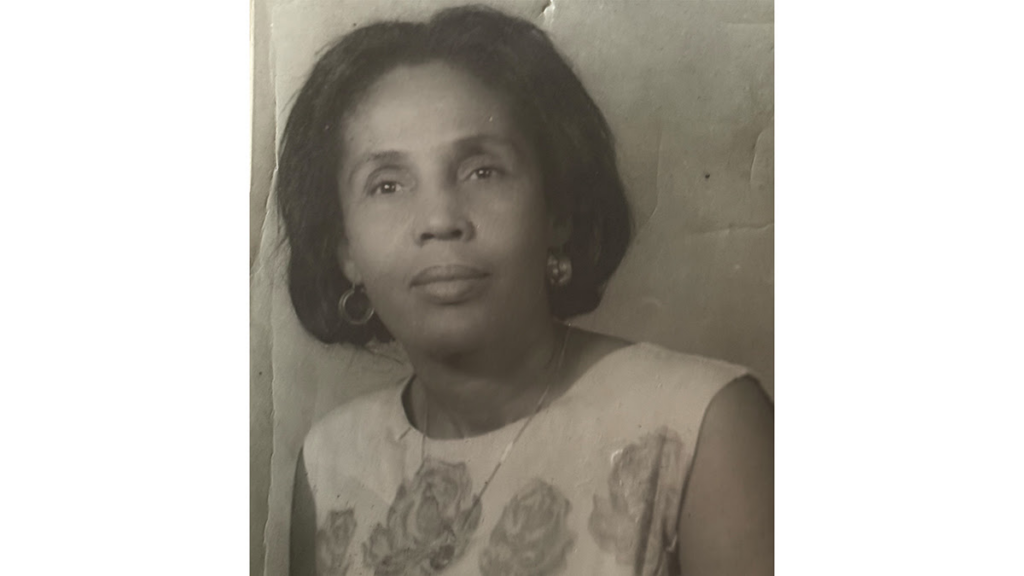
Carmen Augustin c. 1960 (Photo Credit: Baron Family)
“Today, we celebrated my aunt’s 112th birthday, which is a testament to her strength and love for life. She would always tell us that her goal was to reach 115 years, and we’re confident she will get there with the love and support of those around her,” said Marie Baron, Grandniece of Resident Carmen Augustin.
Save the Dates April 25-26
POMEROY FOUNDATION HISTORIC MARKER WEEKEND CELEBRATION
All image are copyrighted (c) Roosevelt Island Historical Society unless otherwise indicated THIS PUBLICATION FUNDED BY DISCRETIONARY FUNDS FROM CITY COUNCIL MEMBER JULIE MENIN & ROOSEVELT ISLAND OPERATING CORPORATION PUBLIC PURPOSE FUNDS.
IN 1986, I REMEMBER WATCHING THE CLASS B TALL SHIPS SAIL PAST ROOSEVELT ISLAND ON THE DAY BEFORE THE TALL SHIPS SAILED ON THE HUDSON. IT WAS A GREAT EXPERIENCE AND ONE I REMEMBER.
PLAN TO BE ON THE ISLAND TO WATCH THIS FUN SAIL-BY. JUDY BERDY
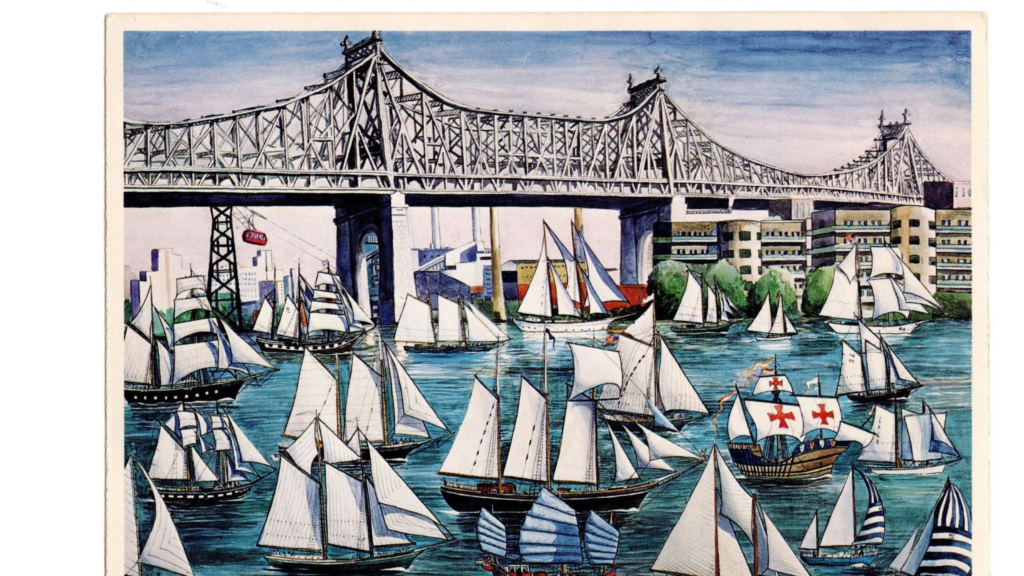
NEW YORK HARBOR FESTIVAL “77 PARADE OF SAIL PAINTING BY LETIZIA PITIGLIANS ASSOCIATION FOR A BETTER NEW YORK PRESS RELEASE SENT LAST OCTOBER:
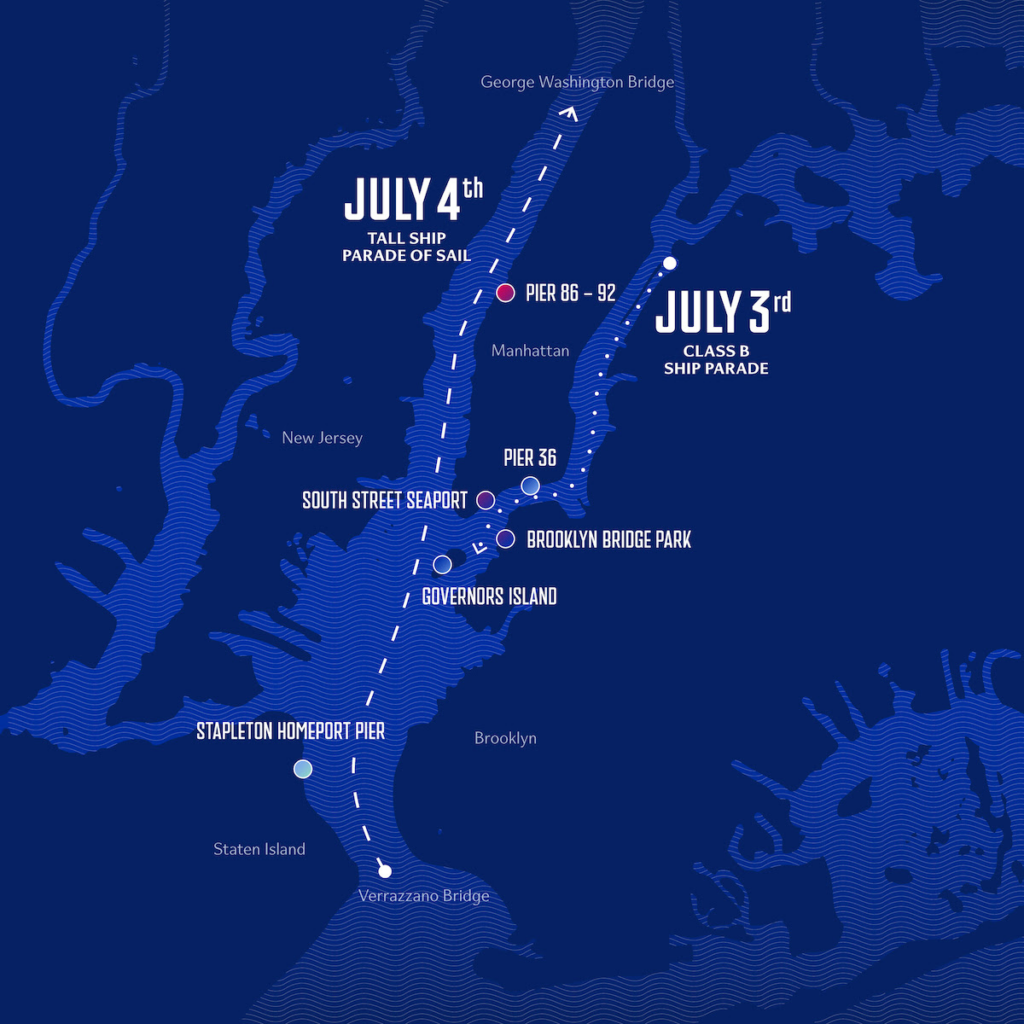
America’s 250th, Over 50 Class A and Class B Tall Ships From 30 Nations Set to Sail Into New York Harbor July 3-4, 2026 In what is shaping up to be the most significant maritime event in the nation’s history, more than 50 Class A and Class B tall ships from 30 countries have committed to participate in the NY/NJ region’s plans to mark the nation’s 250th anniversary. These majestic sailing vessels will join another 50 allied and U.S. gray-hulled ships, the Queen Mary 2, and thousands of pleasure boats, on the water from the Verrazzano Bridge to the George Washington Bridge for Sail4th 250.
The Class A tall ships, which are used by foreign governments as Naval training vessels and goodwill ambassadors, will hail from all corners of the globe. They include ships from Argentina, Canada, Chile, Colombia, Ecuador, France, Germany, India, Indonesia, Italy, Marshall Islands, the Netherlands, Peru, Poland, Portugal, Romania, Spain, Sweden, Uruguay, and America’s own USCG Barque Eagle (pictured above), which will lead the Parade of Sail on July 4, 2026. Other nations are still expected to dispatch their tall ships to New York for this historic, maritime spectacle.
“We expect the Semiquincentennial celebration in New York to surpass the previous historic OpSail events from 1964,1976, 1986, 1986, 1992, 2000, and 2012,” noted Chris O’Brien, president of Sail4th 250, the non-profit, non-partisan organization behind New York and New Jersey’s on-the-water plans for the 250th. “With 250 days to go, we’re in excellent shape to mount what will certainly be a highlight of the many celebrations taking place around the nation. I’d like to thank I LOVE NY and NYC Tourism + Conventions for their continued support.”
Ross Levi, Executive Director of the New York State Division of Tourism at Empire State Development said, “Sail4th is going to be a tentpole in America’s commemoration of its 250th anniversary, and the anticipation here in New York is only growing with just 250 days to go to this once in a lifetime event. I LOVE NY is proud to be supporting the flotilla and continues to make the invitation to visitors from across the globe to come be a part of Sail4th and all the other America 250 events happening statewide that will show guests that everything they love is waiting for them here in New York State.”
The New York celebration calls for a July 3rd parade of the smaller, but equally impressive Class B tall ships down the East River. The next morning, the majestic Class A international tall ships will sail from the Verrazzano Bridge, past the Statue of Liberty, up the Hudson River to the GW Bridge and beyond.
Eight million spectators are expected to line the shores of New York and New Jersey. They will also witness an International Naval Review (INR250) featuring the gray-hulled vessels, an unprecedented aerial review led by the U.S. Navy’s Blue Angels, and the massive Macy’s fireworks display that evening. The U.S. Navy’s Fleet Week will be moved to coincide with the six-day celebration in New York.
An NYC Economic Development Corp (EDC) study projects a $2.85 billion windfall for New York City from direct, indirect, and induced impacts from both event operations and visitor spending. Sail4th 250 is supported through a Market New York grant awarded by Empire State Development and I LOVE NY, New York State’s Division of Tourism.
NBCUniversal Local is a media partner of Sail4th 250. Through the partnership, NBC- and Telemundo-owned stations will present Sail4th 250 content across TV, streaming and digital platforms nationwide, highlighted by live coverage of the International Parade of Sail on July 4, 2026, which will also be featured during NBC’s TODAY and on Telemundo’s national morning programming.
“As we reach another significant milestone counting down to America’s 250th anniversary, the anticipation for our national celebration continues to expand, along with the expectations for the maritime festivities being organized by Sail4th 250 in New York,” said Valari Staab, Chairman of NBCUniversal Local. “We are proud to partner with Sail4th 250 and excited to bring this momentous spectacle to audiences nationwide in July.”
Once the Tall Ships are berthed in and around New York City, they will be open for free public visitation until July 8. Visitors should note that stepping aboard one of these international Naval vessels is akin to stepping on foreign soil. Passports, however, will not be required.
About Sail4th 250
Sail4th, the New York and New Jersey component of Sail 250, a five-port consortium creating tall ship events in New Orleans, Norfolk, Baltimore and Boston, is the official high-profile international tall ship and government project formed to celebrate the 250th birthday of the United States. As a major component of a nationwide endeavor, Sail4th 250 will host tall ships over the weekend of July 4, 2026. The six-day celebration will be the culmination of a multi-year platform of storytelling, events and diverse celebrations around the nation.
Save the Dates April 25-26 POMEROY FOUNDATION HISTORIC MARKER WEEKEND CELBRATION
Photo Judith Berdy
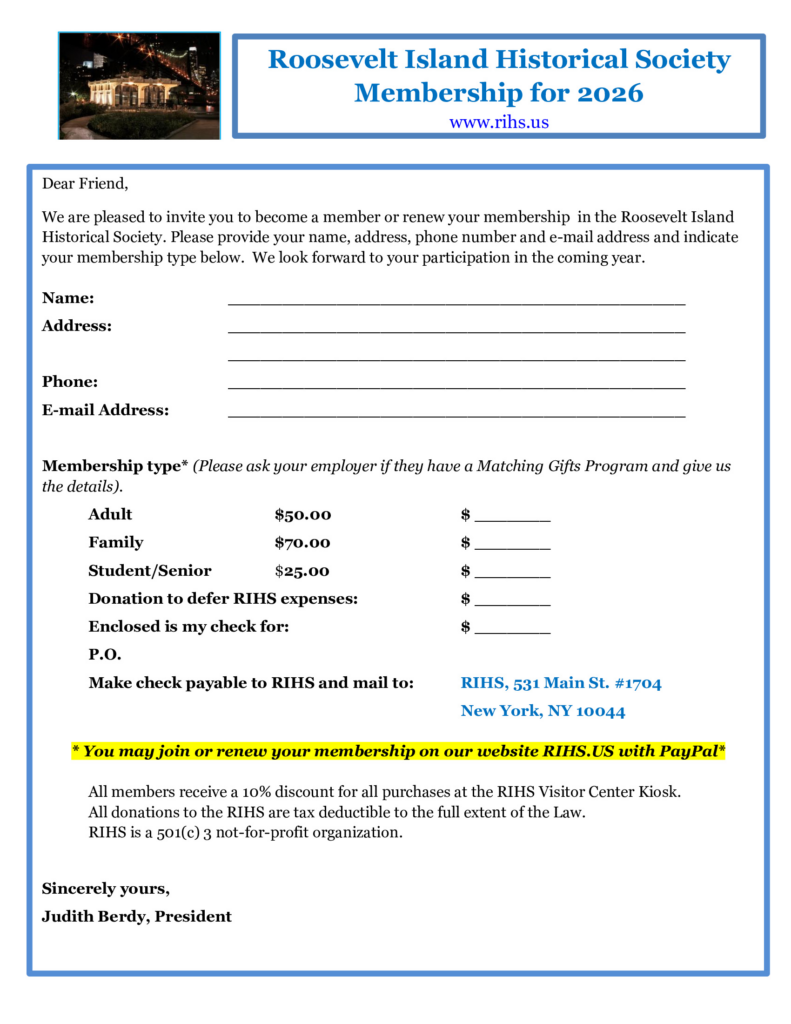
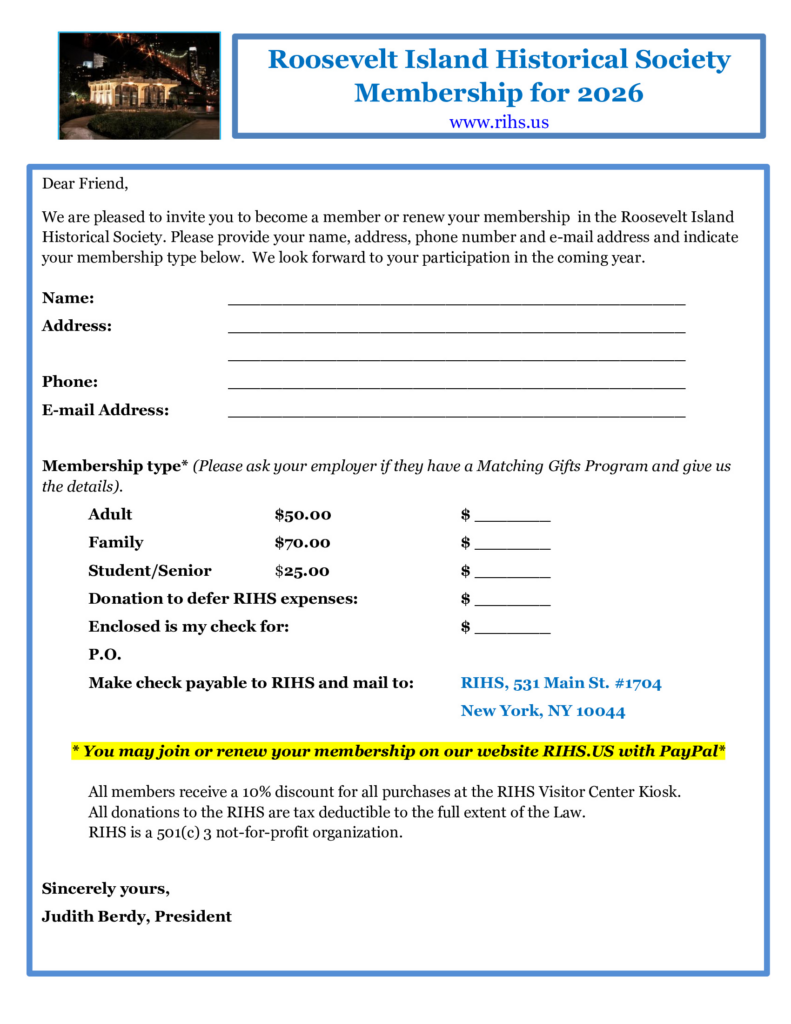
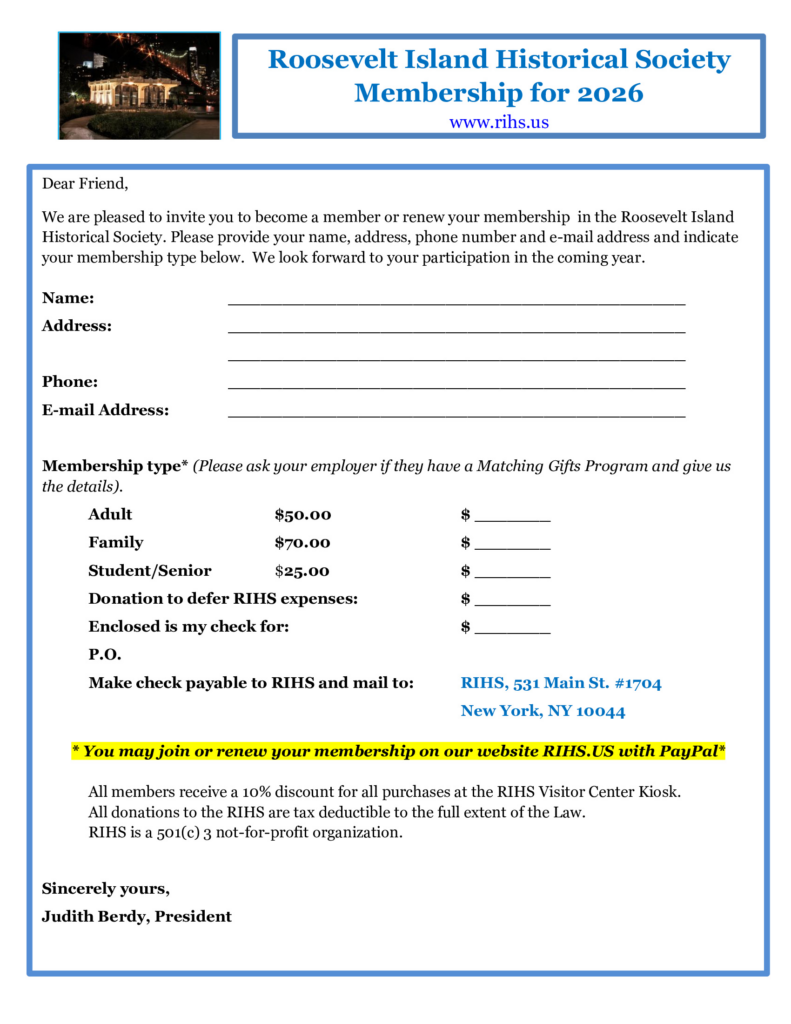
Support the RIHS With Your Membership Fill out form below or join online at: RIHS.US with Paypal
All image are copyrighted (c) Roosevelt Island Historical Society unless otherwise indicated THIS PUBLICATION FUNDED BY DISCRETIONARY FUNDS FROM CITY COUNCIL MEMBER JULIE MENIN & ROOSEVELT ISLAND OPERATING CORPORATION PUBLIC PURPOSE FUNDS.
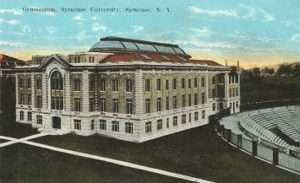
In 1908, while attending Syracuse University, Alice Mabel Allen (1886-1976) kept a diary which is being published each week. In this week’s entries Mabel and her friends play college pranks on each other. She also remarks on the laying of the cornerstone of the Archibold Gymnasium and the impending execution of Chester Gillette for murder.
Monday, March 23
Had examples in equalities and I only did one and did not even finish that. I have not been able to do any of them and will probably get about a zero on the work. Helen came down to study but we both felt too tired. After dinner sewed lace on corset cover and finished it to-night. Lu and I went downstreet at 4:30; did some errands and went to Vespers. Bought chocolates for Jean and ate some of them on way home. Paid tuition to-day. Lu in drawing library plan. Learned Shakespeare passages to-day.
Tuesday, March 24
A letter from Edna, so I wrote to her this afternoon. After English I went over to the library and studied Trig with Helen Beattie. During that period the corner stone to the new gym was laid. Elocution to-day. Studied Latin this afternoon. Pressed my black skirt. Studied Shakespeare and went down to the castle with Miss Minch. Dr. Hearst spoke on the relation of morality to religion, saying that religion must be moral. After supper we danced and I walked around the block with Cassie. I have not been able to study at all to-night.
Wednesday, March 25
Staid after math for conference. Did not get up early this morning. Have not had any letters this week but the Journal comes to-morrow. After dinner Lu and I had a light hand to hand contest. At 4:30 she and I walked downstreet. Went to Vespers at St. Paul’s. After supper we danced and Cassie and I stacked Christine and Fuzzie’s room. We hid in Leta’s room and listened thru the register. They all mistrusted me at once. We went for a walk and then met the girls and went up to the mass meeting for baseball. It was not particularly inspiring. I bought some peanuts and Lu came in while we ate them.
Thursday, March 26
Letters from Mary Wick, Rollin, one from mother this afternoon, and the paper [Jefferson County Journal]. Did not feel well–achy all over. Wrote up Roman History notes, studied Latin. Lu came in and we lay down together. Dressed for dinner and while eating Fuzzie stacked the room. Pulled everything out of the closet, the clothes off the bed and emptied some of my drawers. I cleaned it up and have not said a word about it. After supper Grace, Harriet, Cassie, Lu and I went walking. Was faint when I came back and could not study.
Friday, March 27
Did not do math until after Eng. III. After Latin went over to the library and studied Hamlet. Lost track of the time and was late for supper. Danced. Went in Jean’s room to study Shakespeare but did not accomplish much. Took a warm bath and tried to finish studying in here but the girls came in and piled onto the bed. Fuzzie had some fudge and we all fooled around in the hall until late. For some reason, I was wide awake.
Saturday, March 28
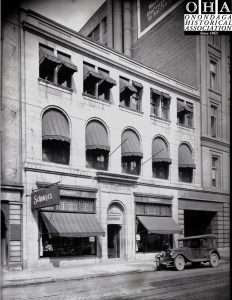
Quiz in Shakespeare which I thot was fair but I found out afterwards most people thot it was stiff. Had a dandy letter from [older sister] Dora, the first in a long time. She told about the battle between [Stanford] students and town [?] over carousing, Cleaned the room and changed furniture about. After dinner washed and went with Leta Osgoodby over to West Genesee hospital. She took me into Schrafft’s and then we walked home. After supper I walked with Fuzzie and Lillian. Lillian bought caramels and so I ate and studied Latin. Went to sleep, however. Slept alone.
Sunday, March 29
Harriet came in and we read the Ladies’ Home Journal in bed. Sang in parlor after breakfast. At the table we had quite a discussion about the Shaw and Gillette cases. Wrote letters home, to Alma and Dora. Harriet in here to make bulletins. Read this afternoon and went down to Vespers with Lu and Harry. The usher took us way up front and we had a funny time. After lunch Lu and I went for a long walk. Now I am going to bed and Lillian will hear me say poems. My eyes are getting bad again.
[The Gillette case refers to the highly publicized execution of Chester Gillette
Save the Dates April 25-26 POMEROY FOUNDATION HISTORIC MARKER WEEKEND CELEBRATION
Photo Judith Berdy
Support the RIHS With Your Membership Fill out form below or join online at: RIHS.US with Paypal
CREDITS
nycurbanism
All image are copyrighted (c) Roosevelt Island Historical Society unless otherwise indicated THIS PUBLICATION FUNDED BY DISCRETIONARY FUNDS FROM CITY COUNCIL MEMBER JULIE MENIN & ROOSEVELT ISLAND OPERATING CORPORATION PUBLIC PURPOSE FUNDS.
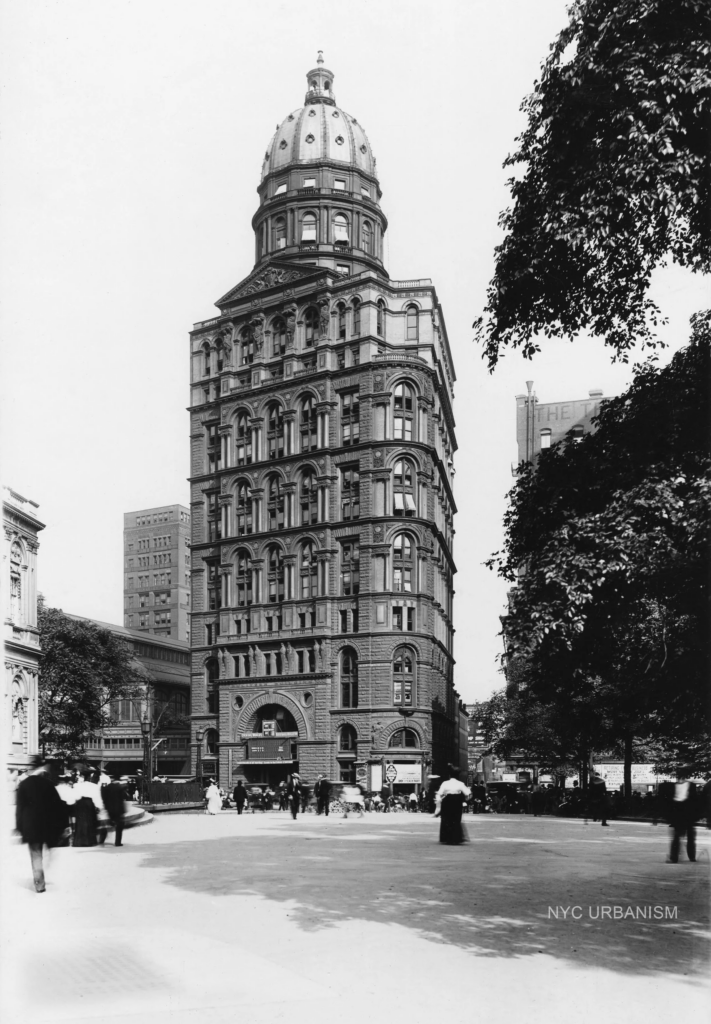
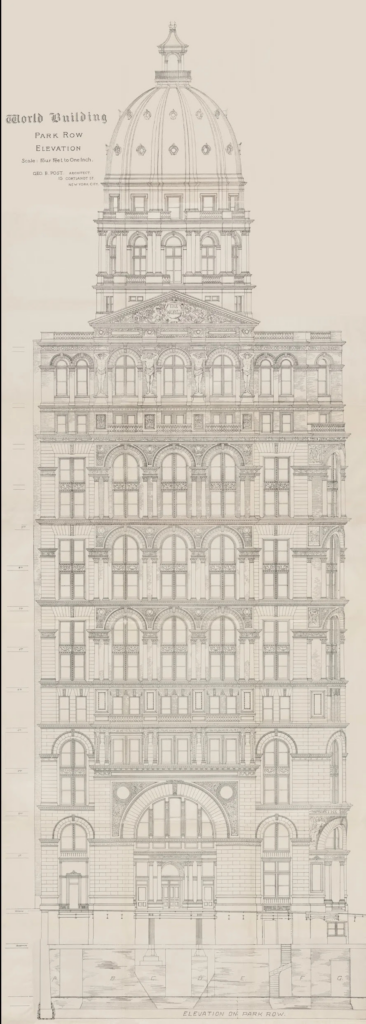
The 309-foot New York World Building (officially known as the Pulitzer Building) was the tallest skyscraper in the world when it opened in 1890. Located on Newspaper Row (today’s Park Row) across from City Hall and next to the Tribune, Times, Herald, and Sun newspaper buildings, it served as an office building and vertical factory, with newspaper production starting in the tower’s dome – under the publisher Joseph Pulitzer’s direction – with photoengraving, editorial and reportorial staff meeting and compiling photographs and news stories in the sun-light upper floors. Production then traveled down to the linotype composing room, then to the giant presses in the cellar, where newsprint paper making machines printed 48,000 8-page papers per hour. Paperboys waited outside on the curb for the cut, pasted and folded papers to be distributed.
Designed by architect George B. Post (NY Stock Exchange) the skyscraper featured an ornate red sandstone facade. The dome at the top of the world housed a public observation deck where visitors could ascend a flight of stairs to a cupola where they would be greeted with a 360-degree view of the city.By the mid-19th Century, the newspaper buildings had moved from Park Row, with the Herald going to 34th Street (Herald Sq) and the Times going to 42nd Street (Times Sq). But in January of 1953, the New York Times reported the fateful news for the World Building, which neighbored the entrance to the Brooklyn Bridge: “The doom of the historic World Building at 63 Park Row was forecast yesterday as the City Planning Commission approved a $5,266,000 plan drafted by Manhattan Borough President Robert F. Wagner Jr. for rearrangement and reconstruction of the street system at the Manhattan plaza of the Brooklyn Bridge.”
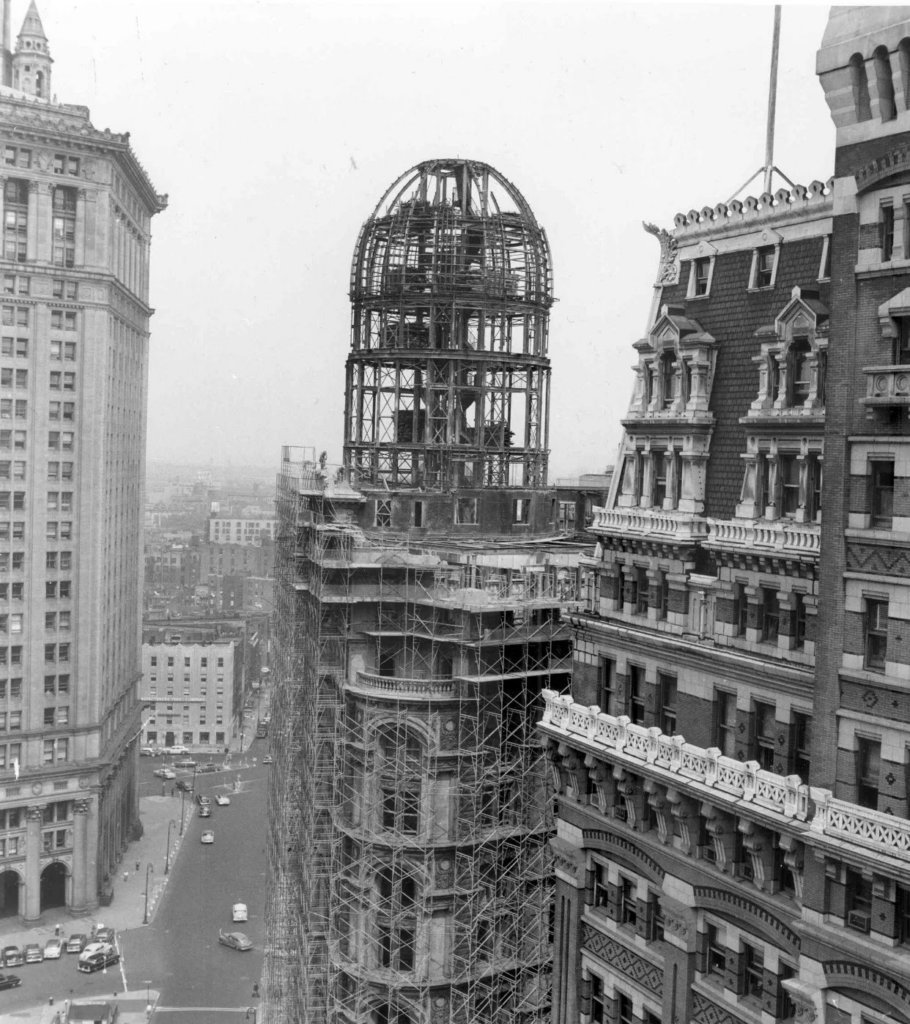
In 1955 the building was demolished to make way for an on-ramp to the Brooklyn Bridge. The iconic Tribune Building next door would also be demolished to make way for the Brutalist Pace University.
World Building elevation drawing
World Building demolition, 1955. Tribune Building on the right before demolition.
Save the Dates
April 25-26 POMEROY FOUNDATION HISTORIC MARKER WEEKEND CELBRATION
Photo Judith Berdy
Support the RIHS
With Your Membership Fill out form below or join online at: RIHS.US with Paypal
CREDITS
nycurbanism
All image are copyrighted (c) Roosevelt Island Historical Society unless otherwise indicated THIS PUBLICATION FUNDED BY DISCRETIONARY FUNDS FROM CITY COUNCIL MEMBER JULIE MENIN & ROOSEVELT ISLAND OPERATING CORPORATION PUBLIC PURPOSE FUNDS.
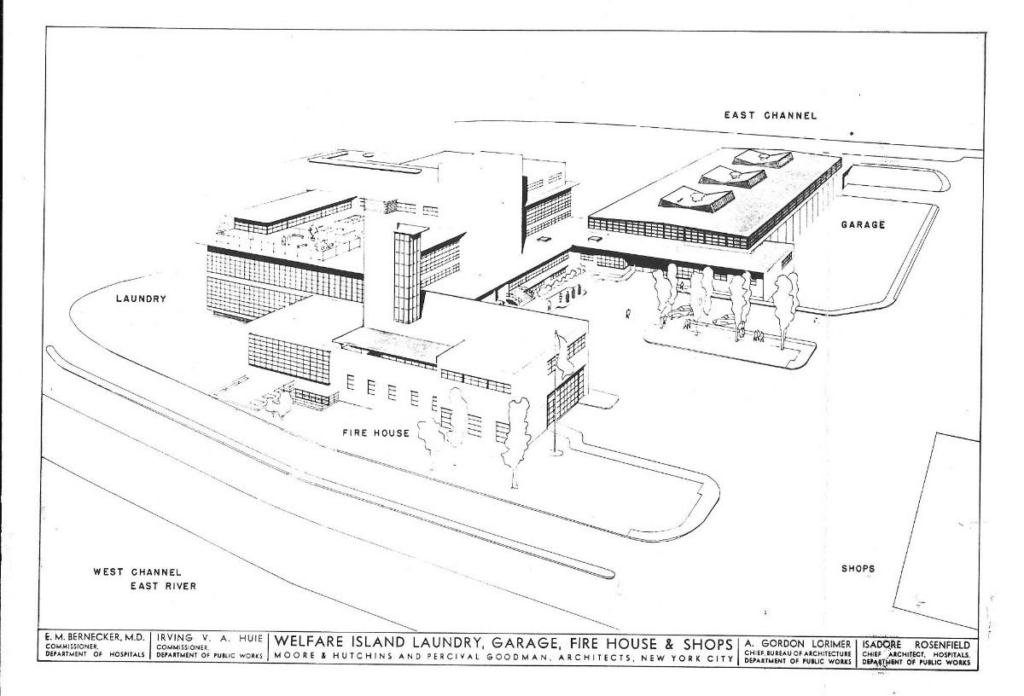
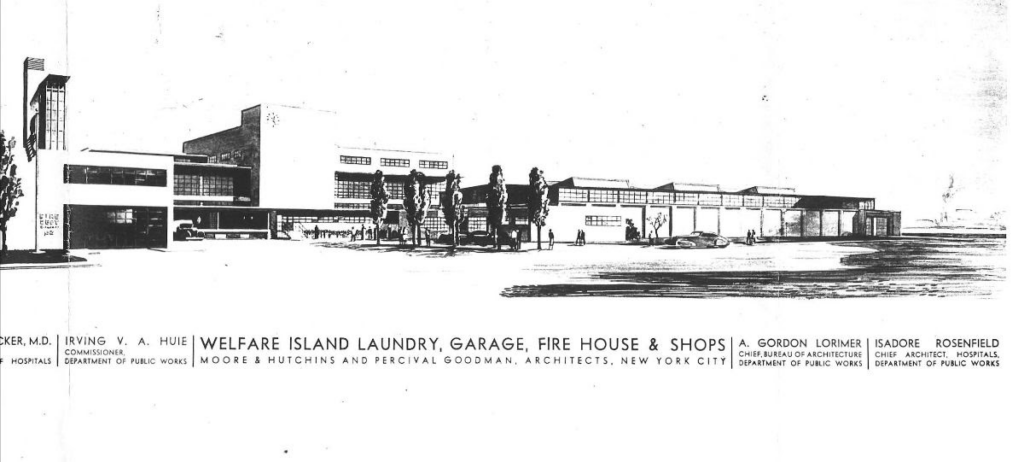
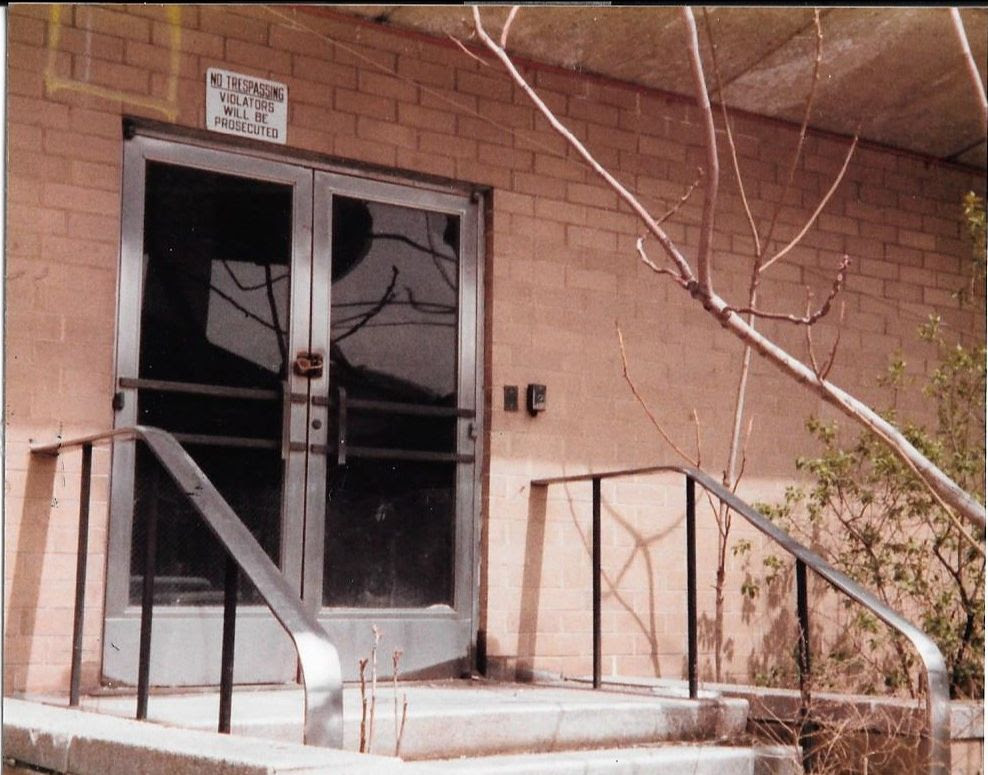
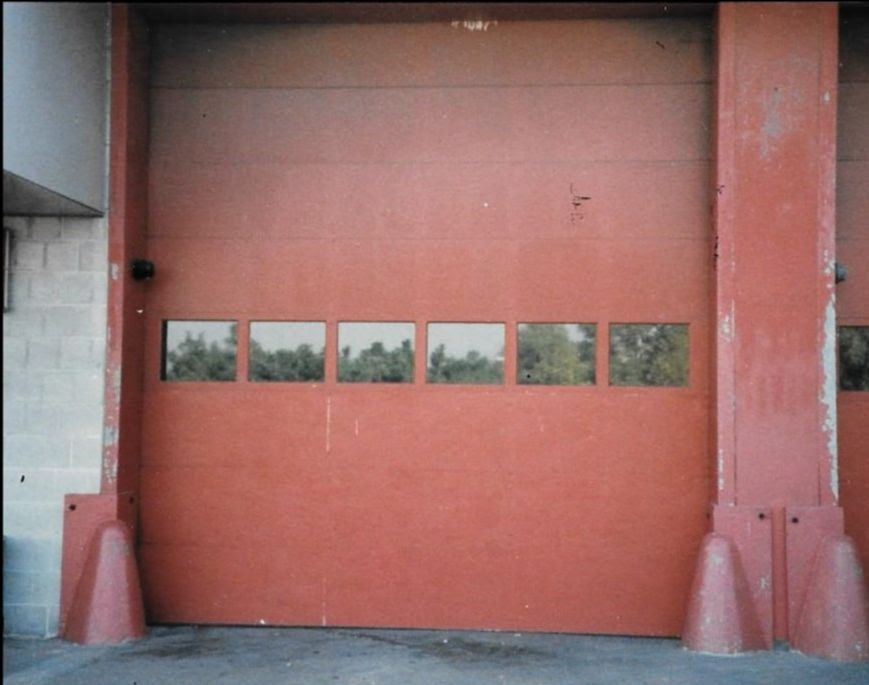
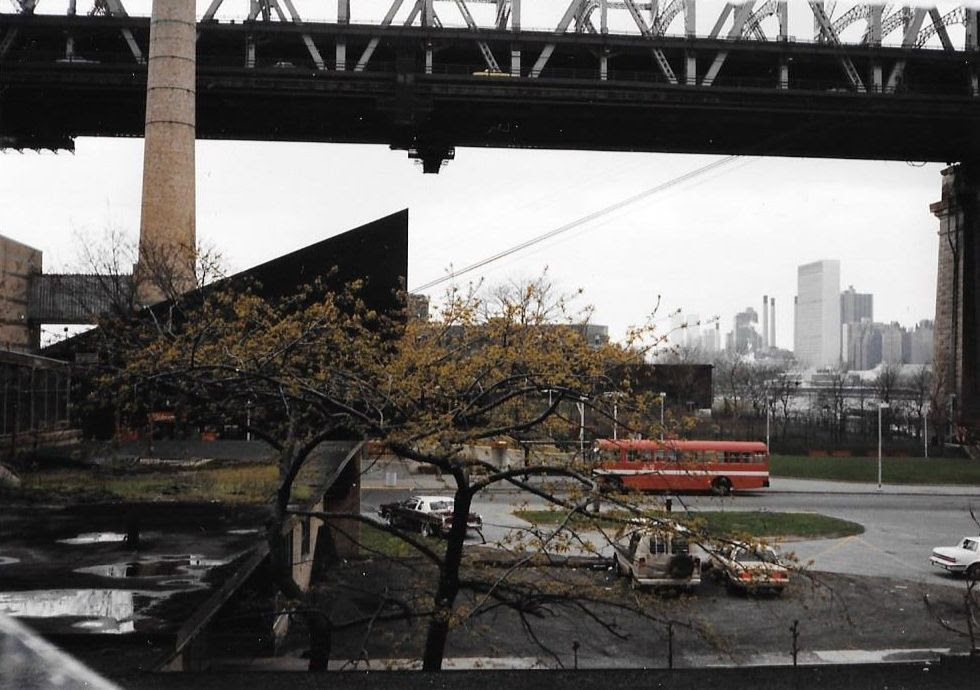
When I moved onto the island in 1977, the laundry was closed, the garage closed and only the firehouse was being used by the FDNY Mask Unit. This is a unit that would deploy canisters of supplemental air to firefighters on scene. Eventually, the Mask Unit left and it became the home of the tram office.
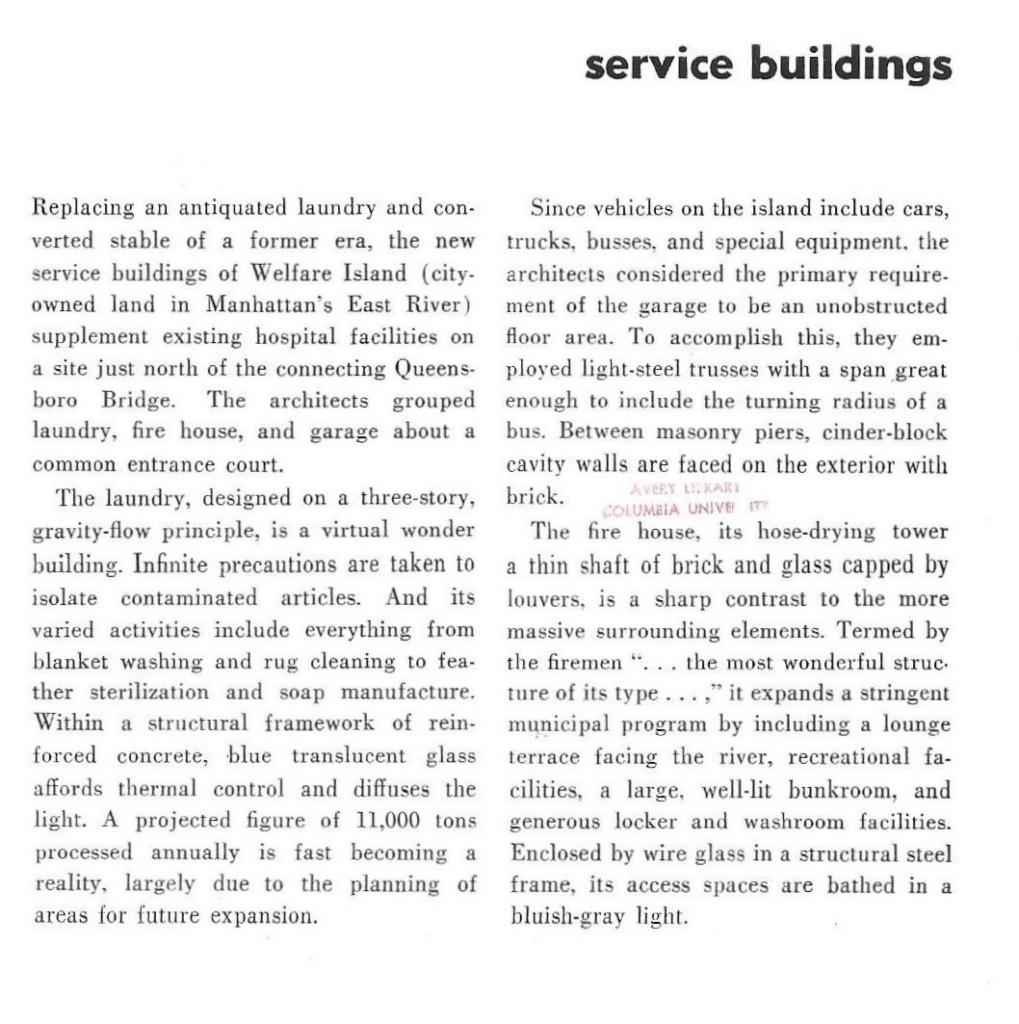
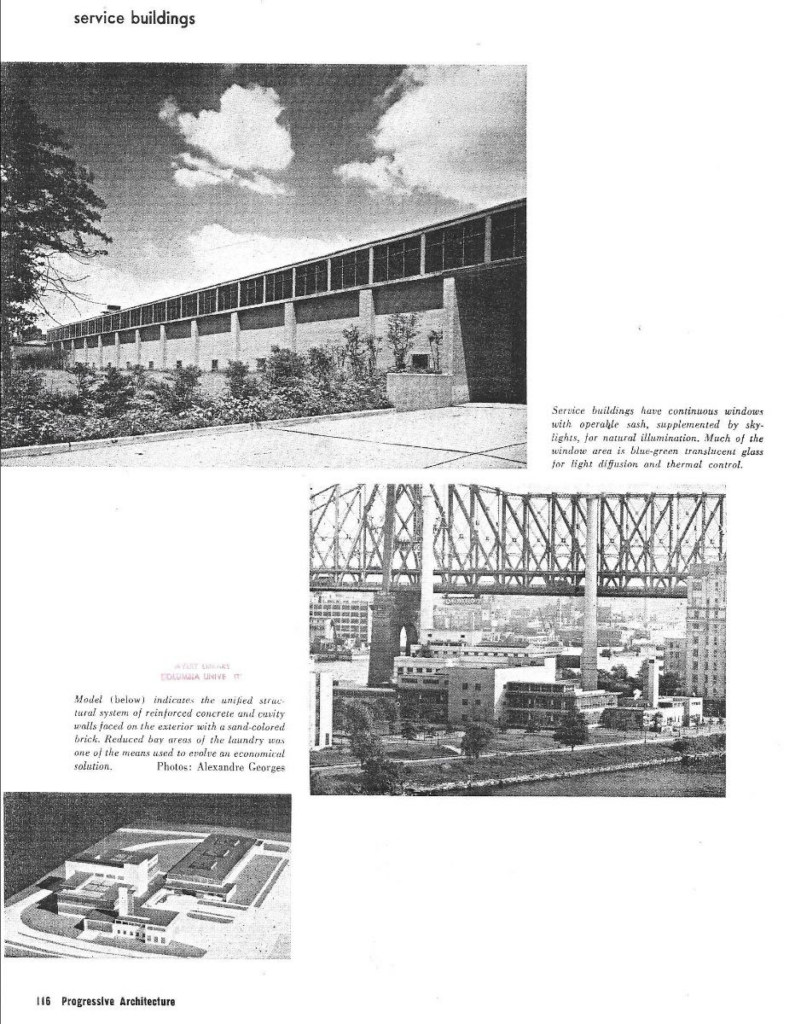
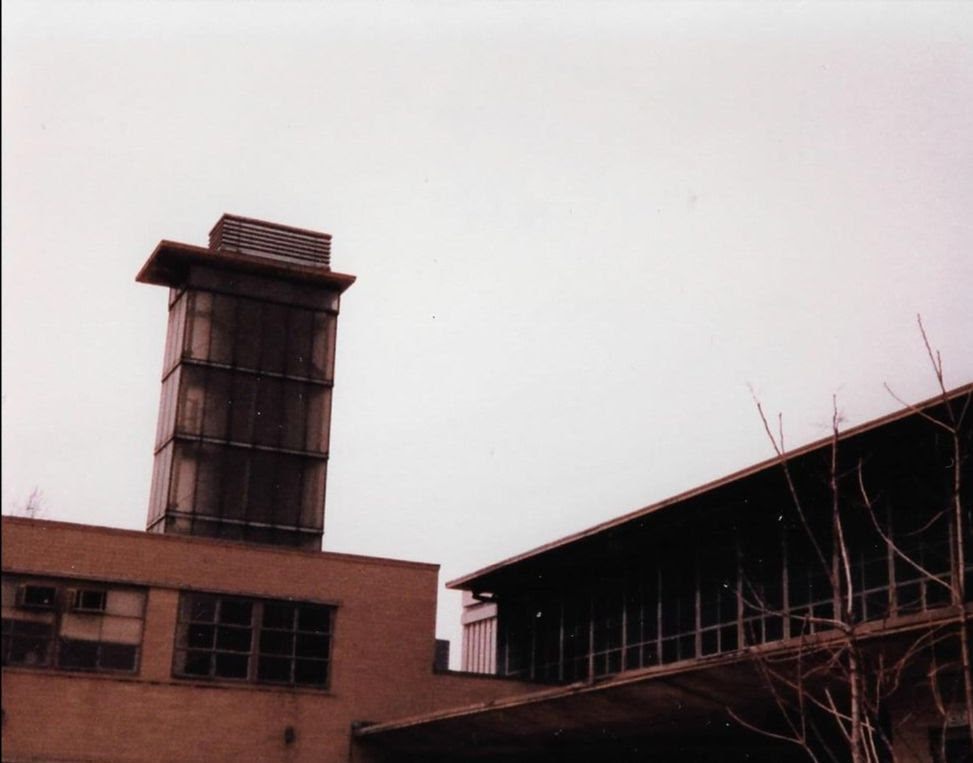
I always admired the building with the blue glass and the tower. It turns out the tower was for drying fire hoses. There was a terrace on the second floor overlooking the rivers.
I wondered why no entrepreneur came and made a destination restaurant there, with its light architecture and tinted blue windows. The window diffused the sunlight and gave a blue glow inside. The low slung look reminded me of mid-century and Frank Lloyd Wright architecture.
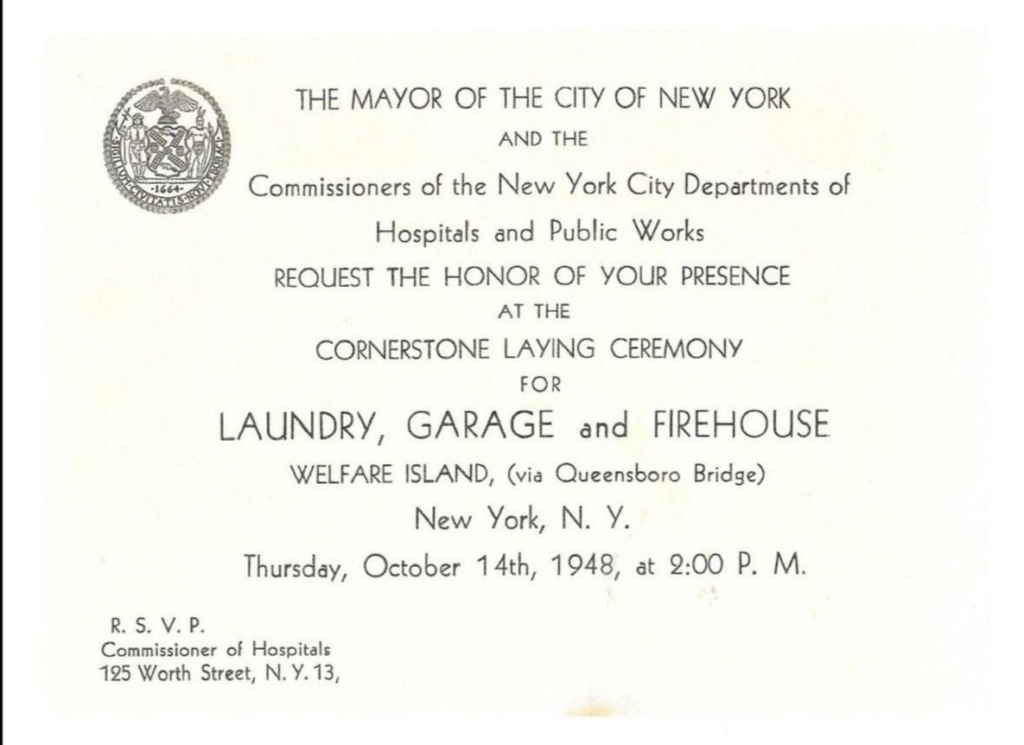
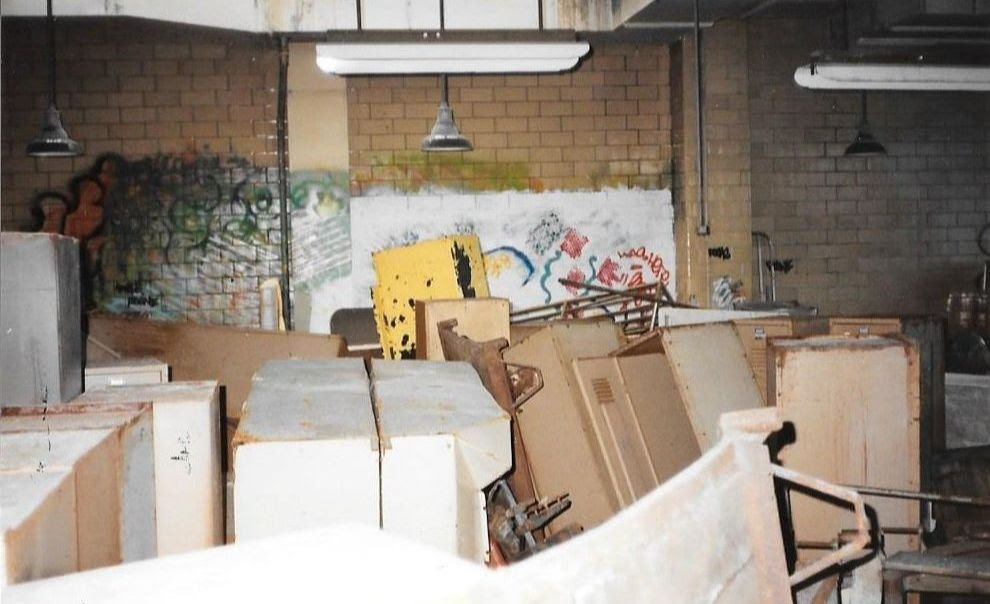
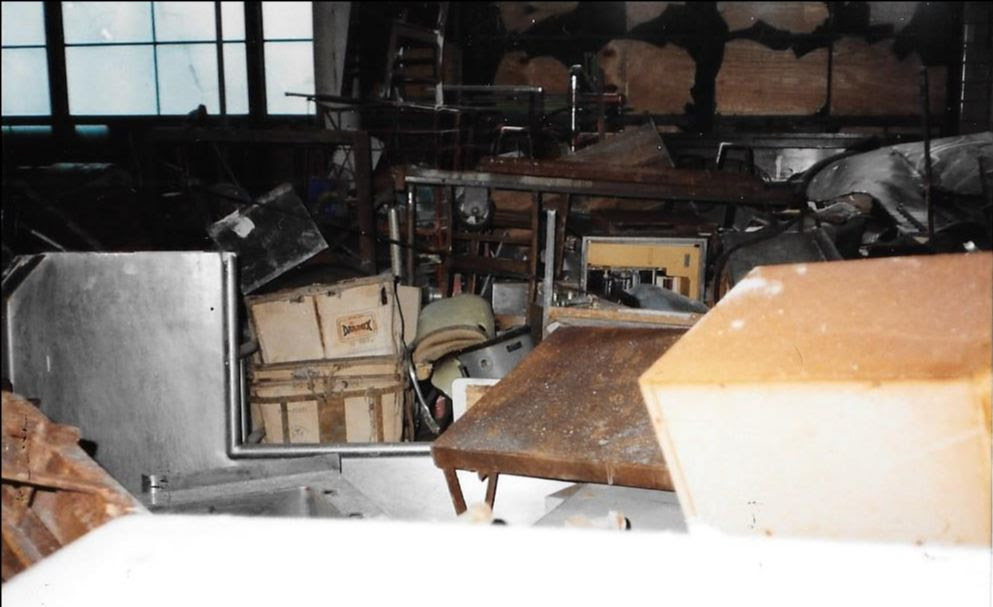
I photographed the cornerstone and wanted to see the interior. In the true spirit of the island I asked some teen age friends to show me around. It was pretty empty when I was upstairs, the laundry machinery gone. There were holes in the floors where the laundry chutes had been.
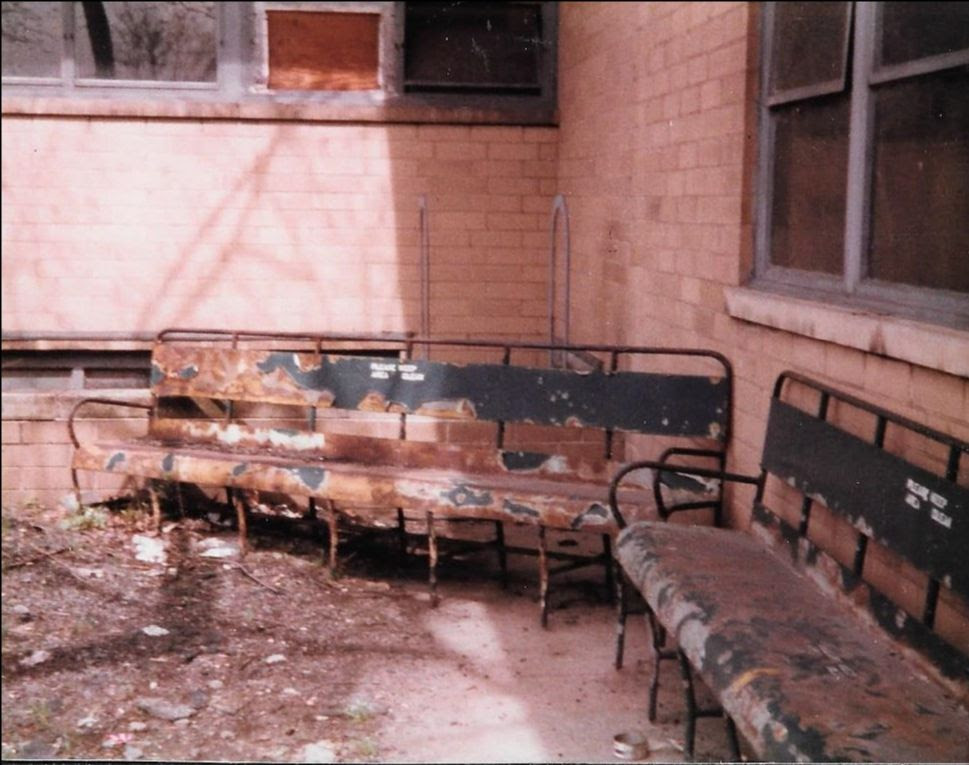
One of floor the walls were spray painted. It took many years to put together the story of Arthur Tress and his constructions from hospital furniture was what I was looking at.
A few years later I bought on E-bay the ceremonial trowel used to place the cornerstone and somewhere I located an invitation to cornerstone laying.
From the article in Wikipedia and books on Percival Goodman, I did not find any reference to this project. He did one more project on Welfare Island. It was to build over the island and call it Terrace Island. He is known for the modernist synagogues he designed in suburbs after World War II
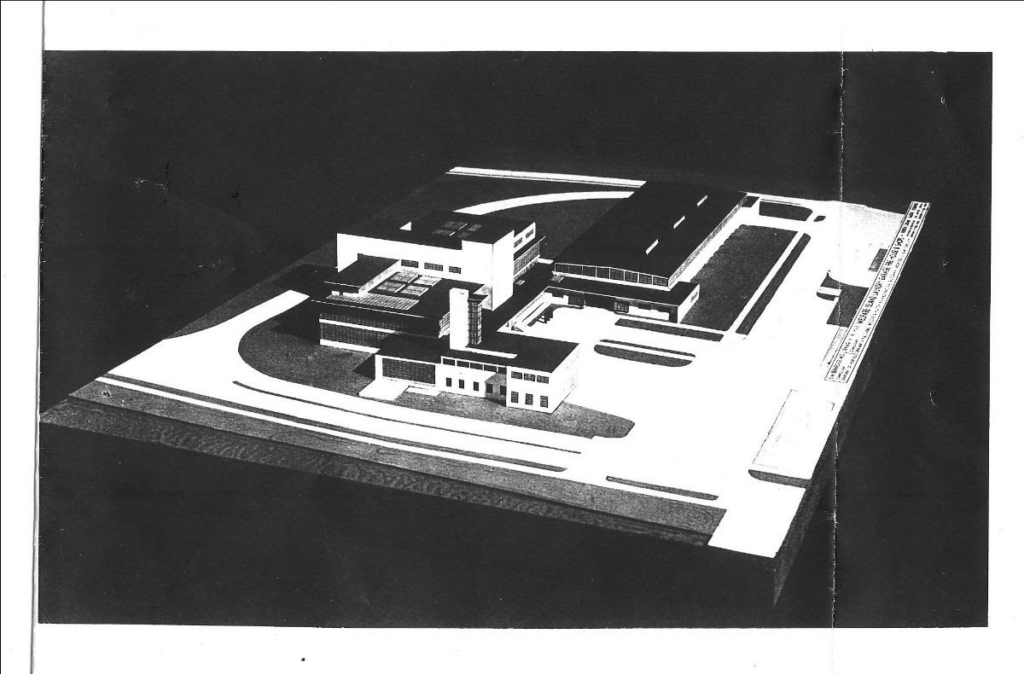
The plans for Terrace Island and the laundry are at Avery Library at Columbia University.
Judith Berdy
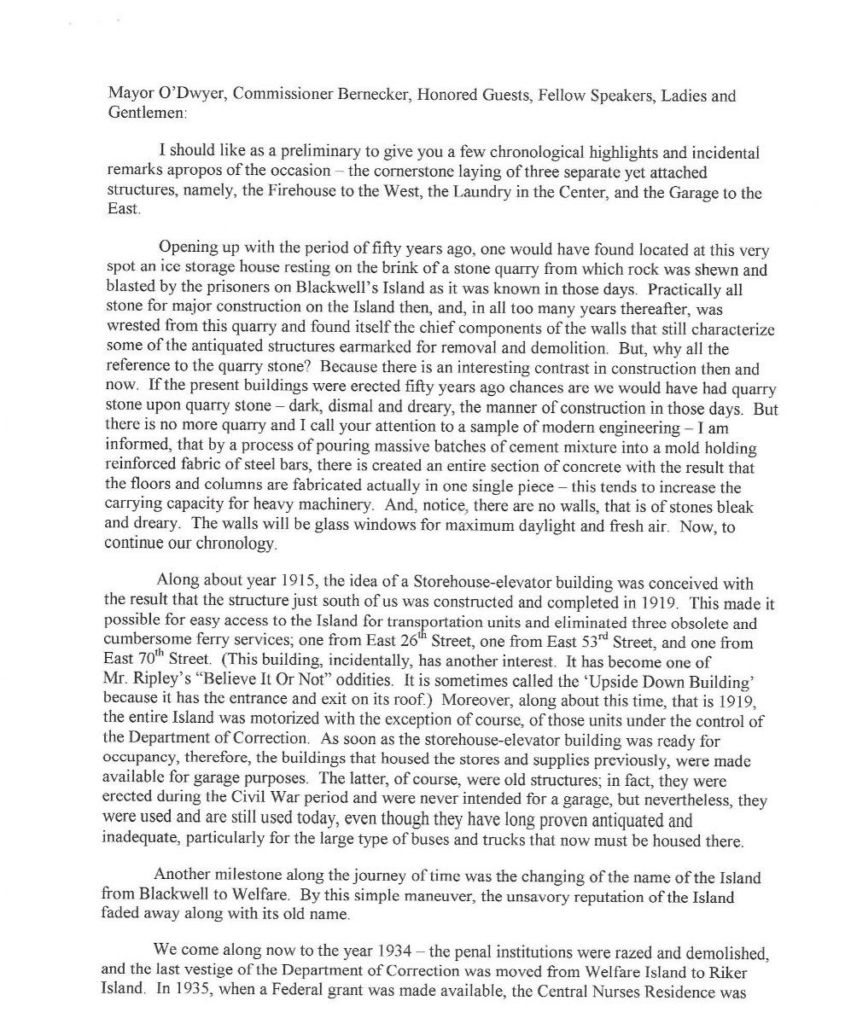
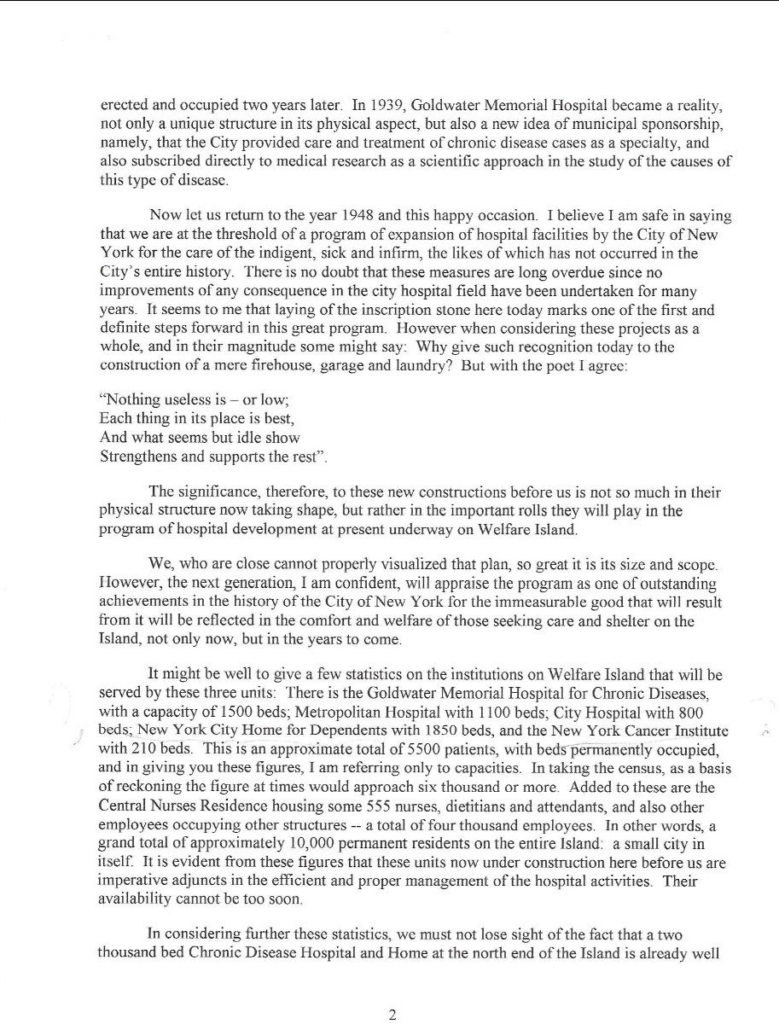
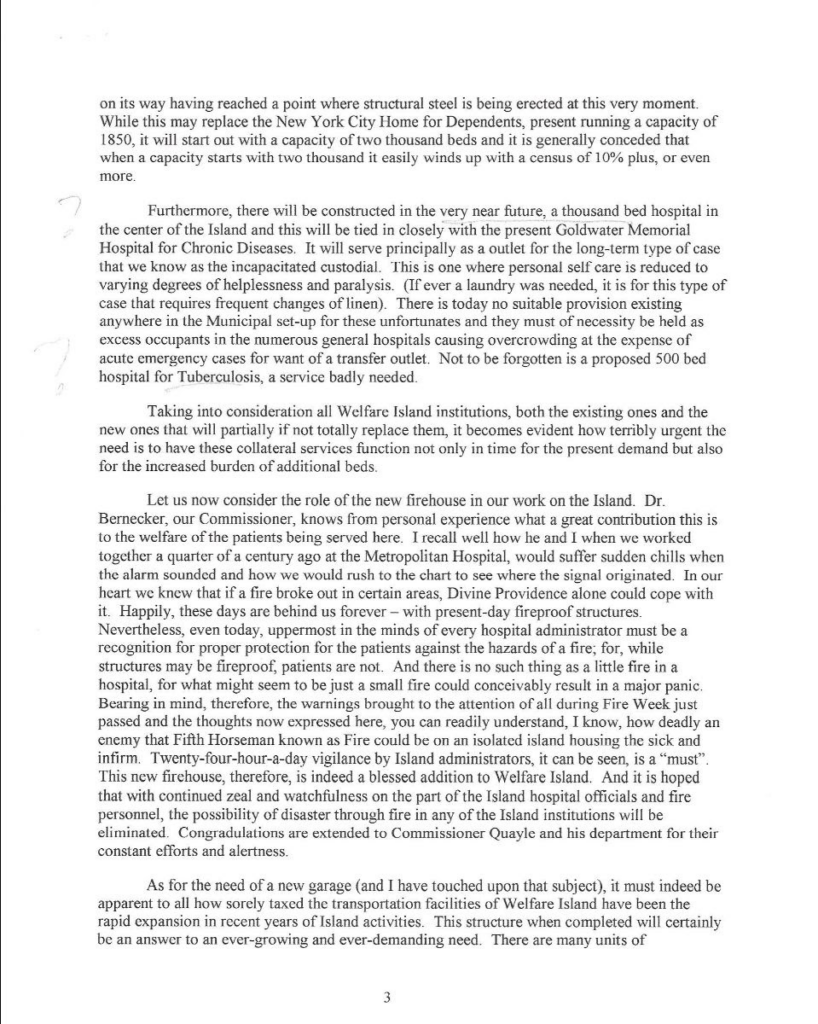
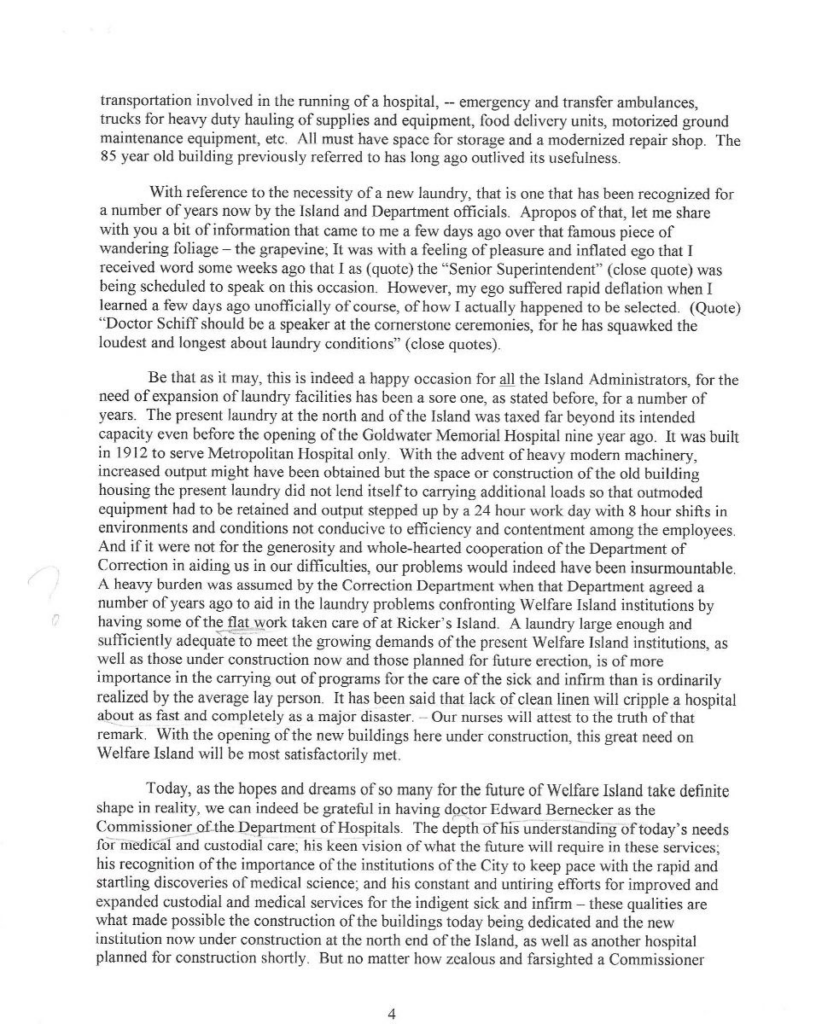
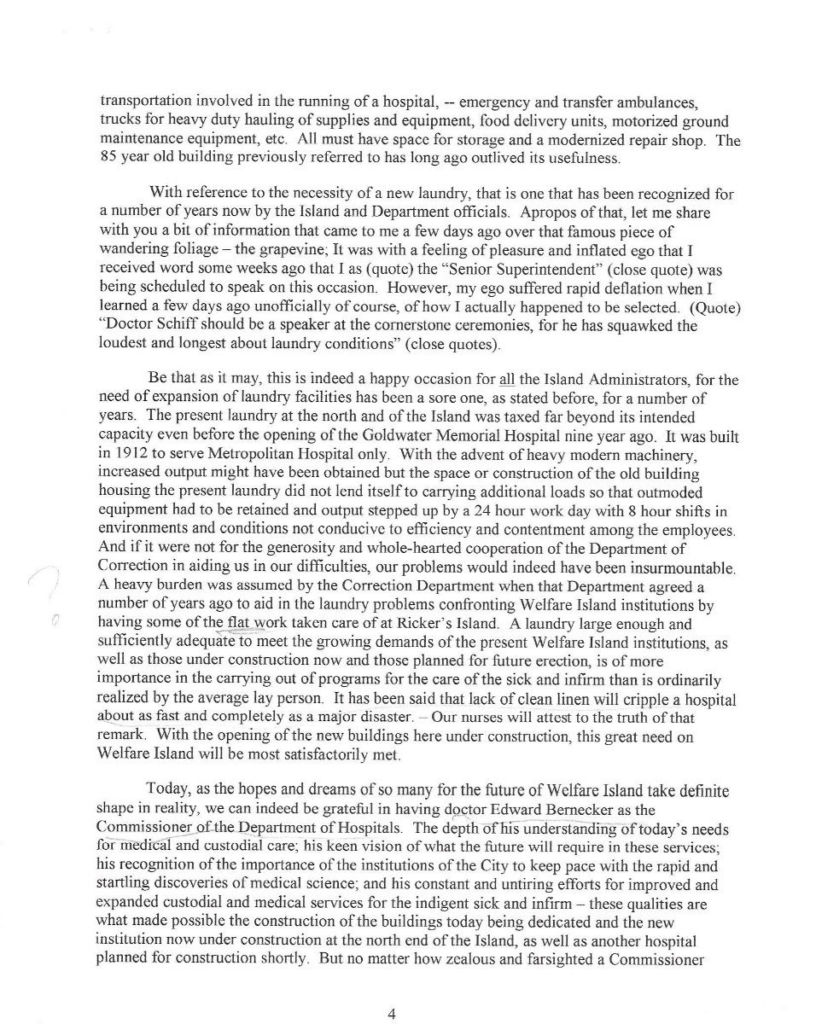
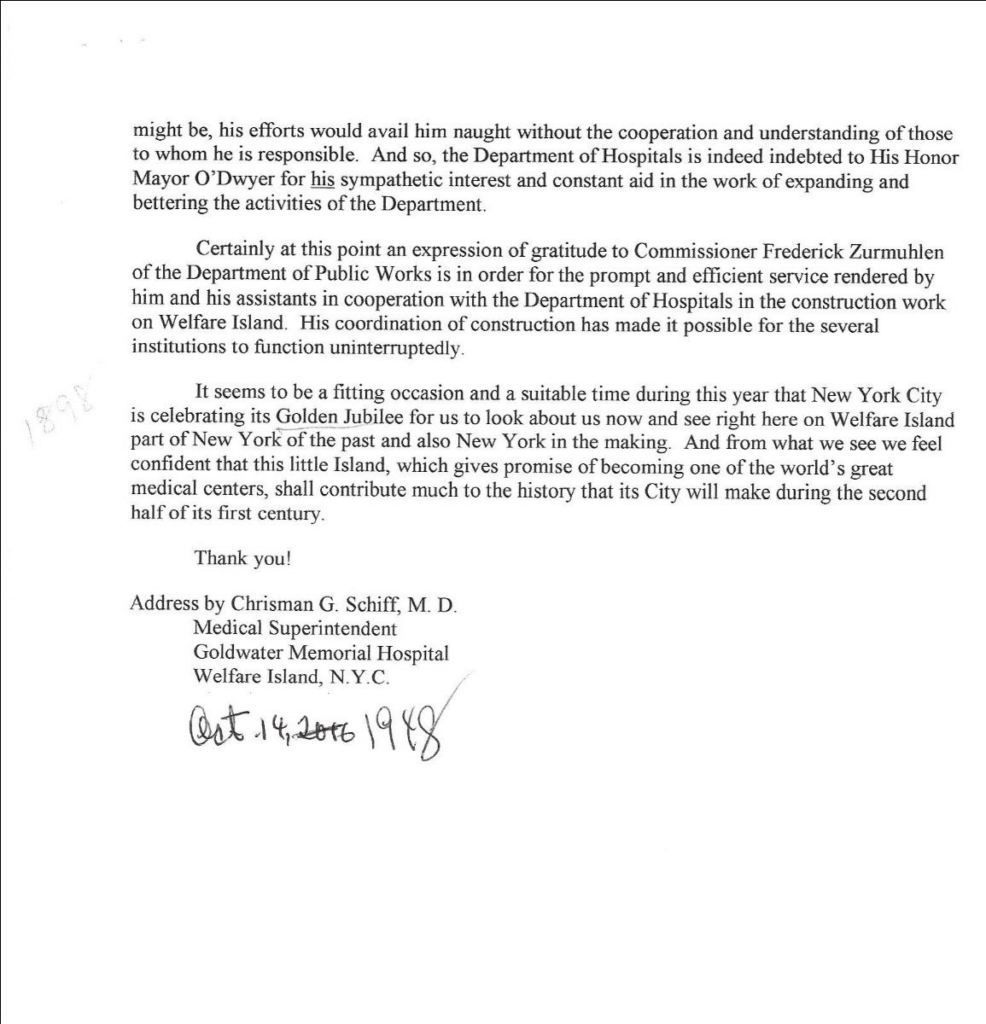
On October 14th, 1948 Chrisman Schiff, Medical Superintendent of Goldwater Memorial Hospital delivered a speech at the dedication of the Laundry, Garage and Firehouse on Welfare Island.
At that time the Island had many institutions including: Goldwater Hospital 1500 beds Metropolitan Hospital 1100 beds City Hospital 800 beds City Home 1850 beds Cancer Institute 219 beds Central Nurses Residence 555 beds
Below is the text of his speech:
Scale model of building
ABANDONMENT
EDITORIAL
Why am I reprinting this article 5 years after it was published?
Looking at the architecture and design of the Laundry building are similiar to that of the Steam Plant.
The low slung look with great moderne features were not recognized and building was uncerimoniously demolished in the late 1990’s
Saving a building is saving history.
Text by Judith Berdy Thanks to Bobbie Slonevsky for her dedication to Blackwell’s Almanac and the RIHS Thanks to Deborah Dorff for maintaining our website Edited by Melanie Colter and Dottie Jeffries
I’ll be bringing this feature back once in a while, because there are dozens more nightclubs, saloons and speakeasies of the past just waiting to be explored. And what a better choice to restart than the dance hall known as the Moulin Rouge of New York, a lively, brightly lit cabaret with debauchery for everyone — the Haymarket.
The Tenderloin district of Manhattan hosted the city’s biggest assortment of vice industries in the late 19th/early 20th century. Sure, Five Points gets all the press, but this vast area — approximately everything between 23rd and 42nd streets, and 6th and 9th avenues — was the more likely destination for regular New Yorkers who wanted to dally in illicit entertainment.
It was at the edge of more fashionable districts (Broadway to its east, Ladies Mile south) and many of its more successful ventures drew respectable gentlemen looking for respite from Gilded Age propriety.
Haymarket was the Tenderloin jewel, a three-story dance hall illuminated (disguised?) like a legitimate Broadway theatre and named for an even more legitimate British theater district. New York’s chief of police in 1887 described it as “animate with the licentious life of the avenue.”
Briefly, it really was a theater, called the Argyle, originally opening in 1872, before its owner got wise and reopened in 1878 as a saucier and more profitable dance hall. Its location, on 66 West 30th Street at Sixth Avenue, placed it just a few blocks from legitimate society, but its bevy of scintillating options were miles outside New York’s traditional morals.
With bands playing and high kicking saloon girls swirling about the floor, owner Edward Corey maintained his club was legally ‘above board’. In a quote from Timothy Gilfoyle’s A Pickpocket’s Tale, “An innocent man and his wife could have wandered into the Haymarket and been entirely unconscious of what was going on around them.”
In fact, those girls were most often prostitutes. Nicknamed ‘the prostitutes’ market’, the Haymarket was a veritable sin shopping mall, ladies luring men to tables to buy them champagne, shower them with presents and quite often making their way to curtained rooms in the balcony and upper floors.
If you preferred male prostitutes, you simply made your way to the back entrance. And although girls and boys were strictly forbidden by management to rob their clientele, the Haymarket nonetheless became a paradise for thievery.
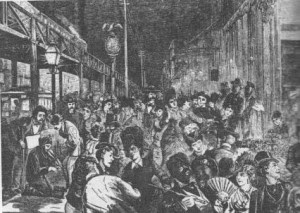
Below: the crowded late night streets of the Tenderloin (picture courtesy Ephemeral NY)
Even still, its reputation grew as New York’s liveliest party in the 1890s, a flashy, fleshy dive thumbing its nose at society. Women drank for free and were allowed to carouse and drink freely with men, who paid a one-quarter entrance fee for the privilege of joining them.
Respectable gentlemen joined riff-raff from local opium dens on the dance floor, their arms around painted, corseted ladies. Naturally, the Haymarket thrived with the help of police corruption and bribery: $250 a week greased the palms of law enforcement who looked the other way. When it actually was closed during rare moments of police reform, it simply re-opened under different names.
Its abandon inspired writers like Stephen Crane and even Eugene O’Neill, who wrote of the club:
The music blares into a rag-time tune — The dancers while around the polished floor; Each powdered face a set expression wore Of dull satiety, and wan smiles swoon
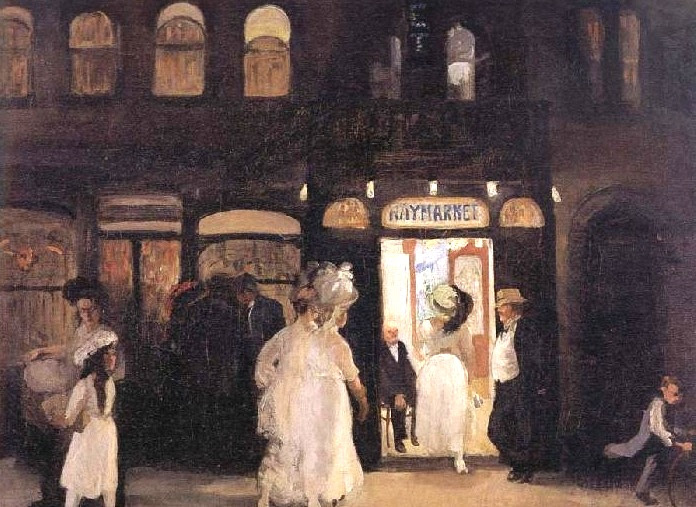
John Sloan painted the Haymarket in 1907, still lively in his depiction though in its waning days by the time he put paint to canvas. (The painting currently hangs at the Brooklyn Museum). The hall even became the subject of a 1903 silent film A Night At The Tenderloin.
The Haymarket finally shut down for good in 1911, just as the neighborhood was itself transforming, with the construction of Penn Station and the development of Times Square clearing away much of the Tenderloin’s vice.
Standing at Sixth Avenue and 30th Street today, you’d have no idea that one of New York City’s biggest parties once raged here.
Support the RIHS
With Your Membership Fill out form below or join online at: RIHS.US with Paypal
CREDITS
Bowery Boys Podcast Great Listening to New York history tales Free on Apple Podcasts
All image are copyrighted (c) Roosevelt Island Historical Society unless otherwise indicated THIS PUBLICATION FUNDED BY DISCRETIONARY FUNDS FROM CITY COUNCIL MEMBER JULIE MENIN & ROOSEVELT ISLAND OPERATING CORPORATION PUBLIC PURPOSE FUNDS.

 North Brother Island has been off-limits for more than 60 years.