Archive
You are currently browsing the archives for the Uncategorized category.
Nov
8
Oct
11
Monday, October 11, 2021 – THERE ARE LOTS OF STORIES IN THAT PLACE ACROSS THE RIVER….LONG ISLAND CITY


FROM THE ARCHIVES
MONDAY, OCTOBER 11, 2021
THE 491st EDITION
LONG ISLAND CITY
STEPHEN BLANK
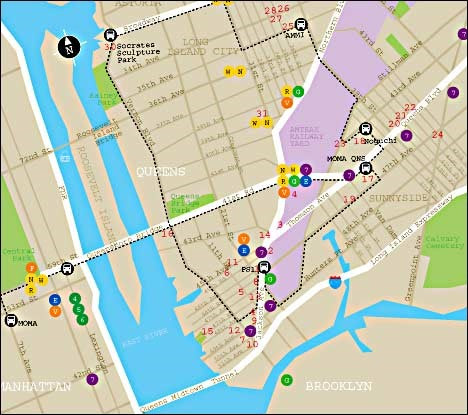
Long Island City
Stephen Blank
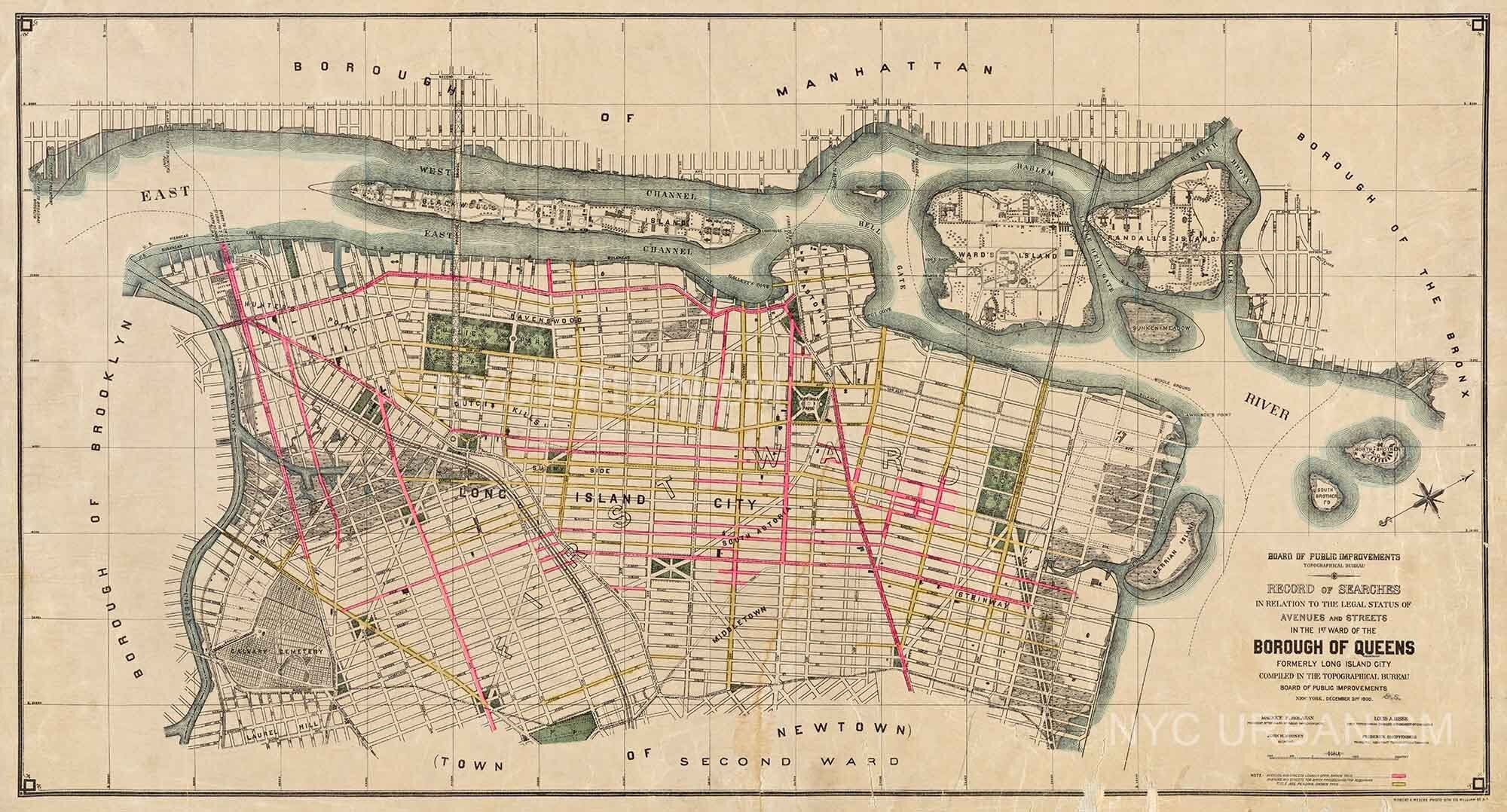
Let’s talk about our neighbor across the river, Long Island City. But first, what is Long Island City? Today, LIC faces us, bordered by Astoria (at Steinway Street) to north and Newtown Creek to the south.
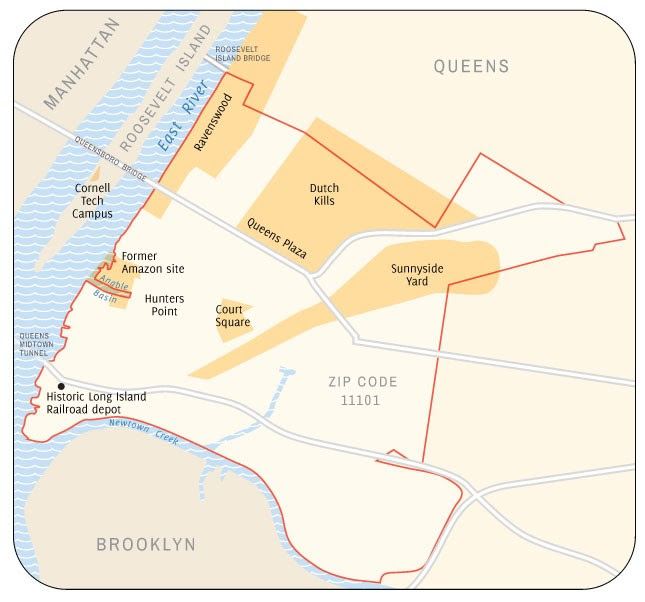
Some maps label part (or even all) of this region Hunters Point, and the huge development our fine ferry calls Long Island City is officially named Hunters Point Park.
So, clearly, we need a little historical context here. (This is a story largely about infrastructure, how infrastructure drove and hindered development.)
The Dutch government at New Amsterdam chartered townships in what became Long Island City, including Newtown, on Long Island’s western shore; Hallett’s Point, a squarish peninsula that sticks into the East River just across from Roosevelt Island’s north end (the new tall glassy apartments are “Hallett’s Point”); Hunters Point; and Dutch Kills. Hallett did well: His 2,200 acres included his original property and the lands of current Astoria and Steinway. Following the English capture of New Amsterdam, Hallett’s estate was confirmed in a patent dated April 8, 1668 and called the Hell Gate Neck tract.
In November 1683, now under British rule, the Colonial Assembly organized Queens County as one of the twelve original counties of the Province of New York (named for Queen Catherine of Braganza, wife of King Charles II). Queens was later subdivided into the townships of Flushing, Hempstead, Jamaica, Oyster Bay and Newtown (which included all of what became Long Island City).
Between 1835 and 1841, streets in the townships along the coast were laid out and houses and stores erected. The first major roads were the Hallett’s Cove and Flushing Turnpike, today’s Astoria Boulevard, and the Ravenswood, Hallett’s Cove and Williamsburgh Turnpike and Bridge, today’s Vernon Avenue. Stephen Halsey, a settler in Hallett’s community involved in infrastructure construction, founded a new village in 1839 which he named Astoria in the hope of gaining the interest – and financial aid – of the wealthiest man in the country. By this time, ferries connected with Manhattan.
Soon, these coastal areas would become refuges for wealthy New Yorkers, particularly Astoria and Ravenswood. Country estates with names like Bodine Castle and Mount Bonaparte served as getaways for rich Manhattanites. The Jacob Blackwell family lived there early on, during the Revolution, in a large house at 37th Avenue overlooking the river. It is said that the family in the 1830s owned much of Hallett’s Point.
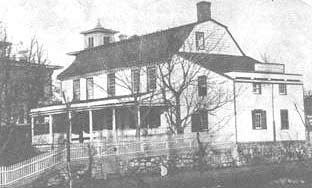
The Blackwell Mansion, ca. 1900 https://forgotten-ny.com/2008/01/behind-the-gray-door-historic-relic-at-greater-astoria/
In 1852, the New York Times urged New Yorkers to take a day trip to the countryside: Queens was underrated, fancier than Broadway, a great place to explore, and worth the trip from Brooklyn. “There are charming residences and delightful lawns at Ravenswood and Astoria,” said the paper as it urged people to take long walks to Astoria. “It is lamentable that with such fine weather and pleasant country promenades at hand, our fair friends, especially of Brooklyn and Williamsburg, do not avail themselves of their privileges. They would find an agreeable change from the usual hackneyed routes…Throw off this deathly indolence that is benumbing your physical and spiritual faculties”
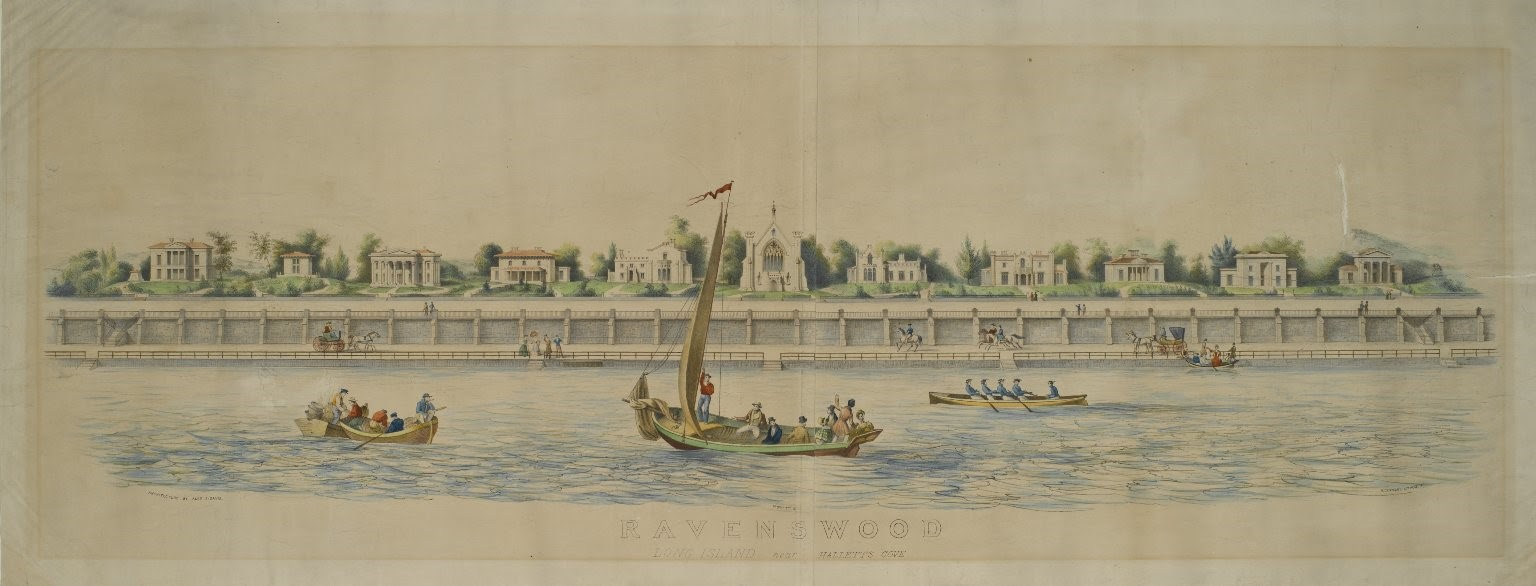
Century Currier and Ives print depicts mansions on the Long Island City waterfront. https://www.gothamcenter.org
Astoria developed as a port, and coal and lumber yards and shipyards grew up along the shore of Hallett’s Cove where products could move readily by barge. In 1854, rail arrived with the New York & Flushing Railroad’s new terminus in Hunters Point. Ferry service remained the only way for travelers to get to Manhattan.
LIC’s big chance came when Brooklyn banned steam locomotives in 1861 and the Long Island Railroad moved its terminus to Hunters Point, where it connected with the 34th Street ferry. LIRR purchased the New York & Flushing Railroad in 1867 and in a few years, would own or control most of the rail traffic in Long Island, centered now in LIC. Sunnyside Yards opened in 1910, the year that the Pennsylvania Railroad began running trains under the East River. Located just east of Queensboro Plaza, it would become the world’s largest rail yard (and a constant temptation to be decked over and developed).
The creation of the LIRR terminus led to an explosion of industry, commerce and entertainment sites. LIC became a hub for produce from Long Island’s farms headed to Manhattan. Factories, tanneries and gas plants sprang up along the waterfront. Hotels and taverns opened and the breweries and bars became destinations themselves, and soon the Times commented that “Hunters Point has gained an unenviable notoriety.” The Queens waterfront was no longer a quiet oasis for the rich. By the turn of the century, many of Astoria’s estates had been torn down as New York’s aristocrats moved to Long Island’s Gold Coast.
In the 1860s, development in Hunters Point and Astoria was the catalyst for the consolidation of neighboring communities into Long Island City. In 1870, Steinway, Astoria, Hunters Point, Newtown, Ravenswood, Blissville, and Dutch Kills, joined to form LIC. By this time, the area was an urban center with industry and a growing population. Even so, LIC remained short on paved roads and water. In 1871, a revised charter mandated a police force of 30 men, but the city lacked the revenue to hire them. No adequate fire department existed until 1893.
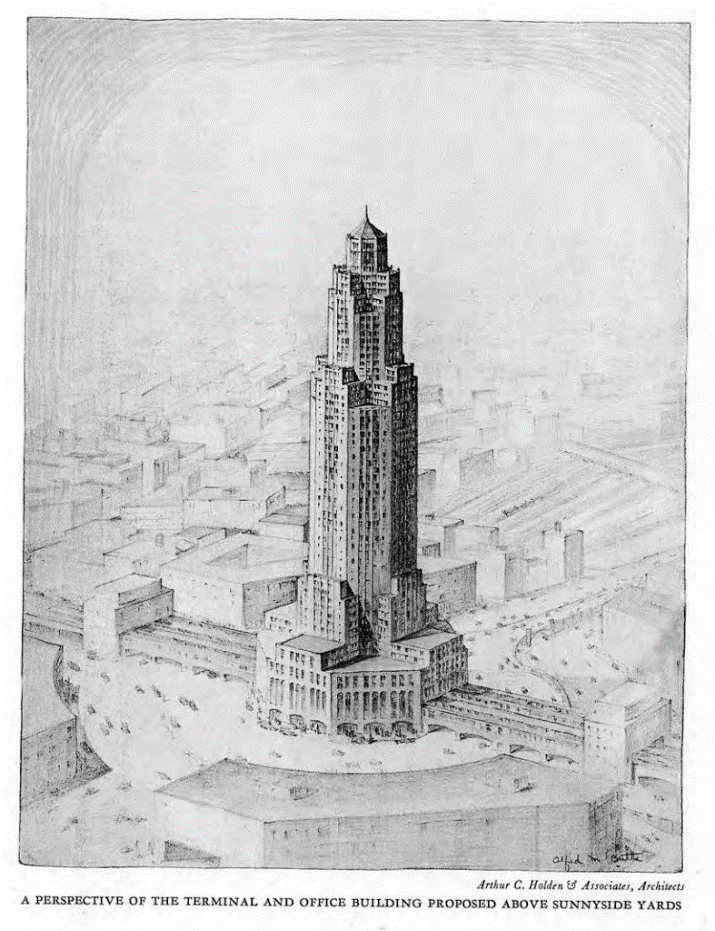
A 1929 plan for decking over Sunnyside Yards.
The one grand idea to transform Long Island City was to make Sunnyside a mega-project deck over the railyard. A modern, streamlined “Skyscraper Terminal” would consolidate access to the region’s twisted network of subway and rail lines, and serve as an anchor for growing neighborhood. The Great Depression paused these plans. And the deterioration of LIC continued.
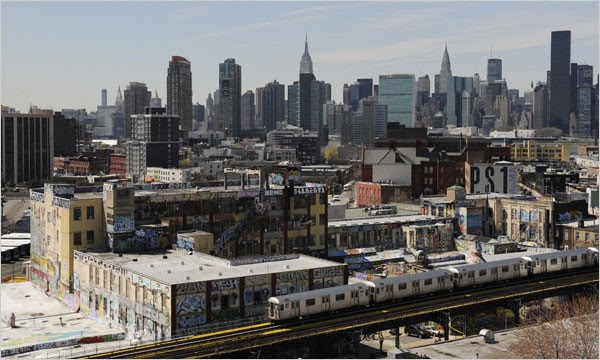
Robert Stolarik for The New York Times
When I arrived here 40-some years ago, I might have titled this essay “The Rise and Fall of LIC”. But look across the river now. “The Rise and Fall and Rise Again”! More to come. Thanks for reading. Stephen Blank RIHS October 1, 2021
MONDAY PHOTO OF THE DAY
Send you answer to:
Rooseveltlslandhistory@gmail.com
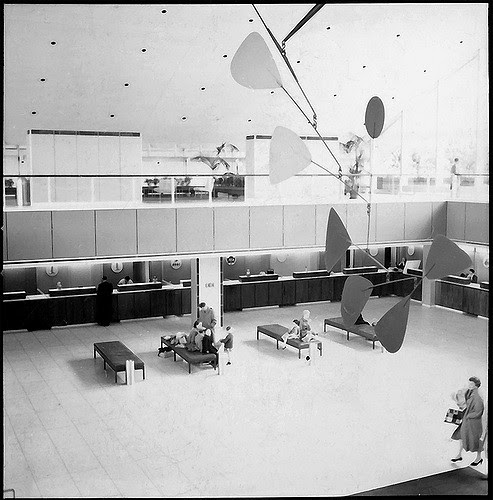
WEEKEND PHOTO
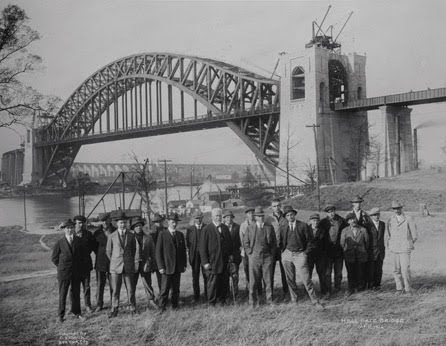
HELLGATE BRIDGE STILL UNDER CONSTRUCTION, 1916
ANDY SPARBERG, HARA REISER BOTH GOT IT RIGHT
ED LITCHER ADDED THE FOLLOWING:
Hell Gate Bridge engineers, in front of the bridge they designed and built. At centre is the bridge’s designer, Austrian-US engineer Gustav Lindenthal (1850-1935, white beard). To his right is his chief assistant Othmar Hermann Ammann (1879-1965, moustache). This steel through-arch railroad bridge, built from 1912, was opened in September 1916.
It spans 310 meters, crossing Hell Gate, a tidal strait in New York’s East River. At the time, it was the world’s longest steel arch bridge. This view looks north, with the approach viaduct curving away to the right in the background. Photographed on 11 October 1916. Although this bridge is a beautiful structure and an important part of the Astoria landscape, when I think of this bridge I see it as the endpoint of an Inclined Plane that begins in the Sunny Side Yards, goes through Maspeth and ends up in Astoria. A “Simple Machine” whose only task is to slowly lift millions of tons of freight and passengers from the ground to a point more than 100 feet in the air, before the train safely accesses the bridge or crosses the river.
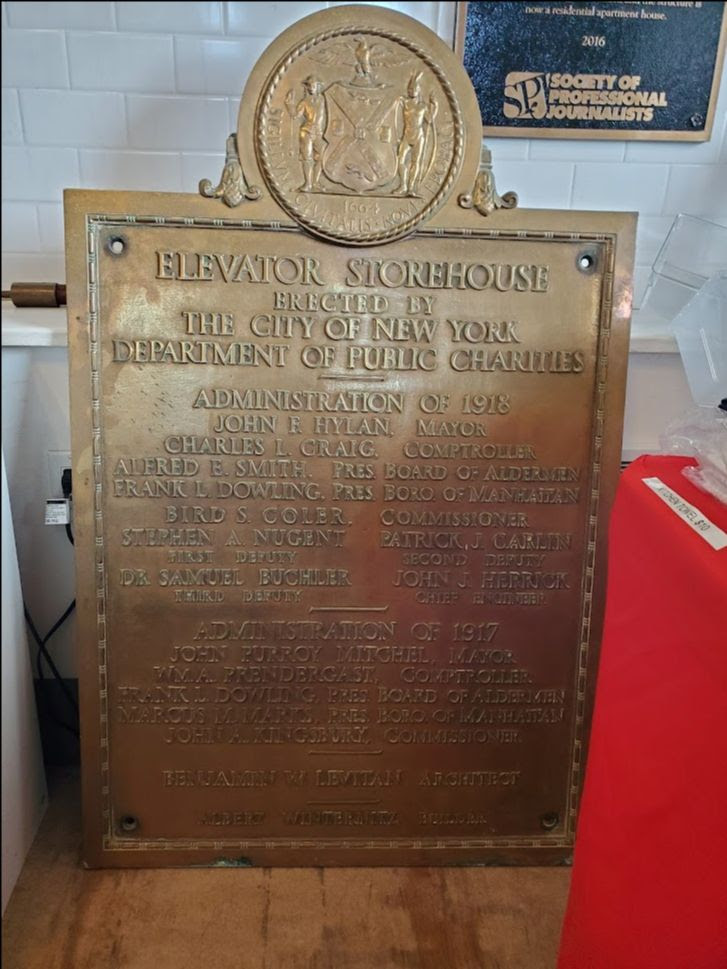
HELP US MOUNT THIS HISTORIC PLAQUE IN THE KIOSK
We have just acquired this wonderful plaque from the Elevator Storehouse Building. We need your help to pay for the mounting of this 130 pound bronze tablet in the kiosk
To donate online go to www.rihs.us, choose donations and select amount.
You can send us a check to: R.I.H.S., P.O. BOX 5, NY NY 10044
TUESDAY, OCTOBER 19th PROGRAM AT THE RI NYPL BRANCH
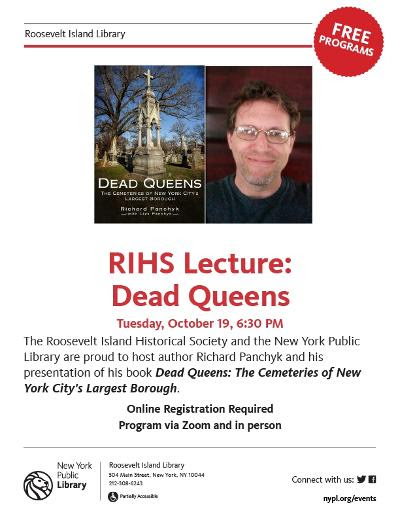
Here is the flyer and registration link.
https://www.nypl.org/events/programs/2021/10/19/rihs-lecture-dead-queens
Text by Judith Berdy
Thanks to Bobbie Slonevsky for her dedication to Blackwell’s Almanac and the RIHS
Thanks to Deborah Dorff for maintaining our website
Edited by Deborah Dorff
All image are copyrighted (c)
Text by Judith Berdy
Thanks to Bobbie Slonevsky for her dedication to Blackwell’s Almanac and the RIHS
Thanks to Deborah Dorff for maintaining our website
Edited by Deborah Dorff
All image are copyrighted (c)
Sources
https://ny.curbed.com/2018/11/16/18097555/amazon-hq2-long-island-city-nyc-history
https://www.gothamcenter.org/blog/when-long-island-city-was-the-next-big-thing
https://ny.curbed.com/2018/11/16/18097555/amazon-hq2-long-island-city-nyc-history
FUNDING PROVIDED BY ROOSEVELT ISLAND OPERATING CORPORATION PUBLIC PURPOSE GRANTS CITY COUNCIL REPRESENTATIVE BEN KALLOS DISCRETIONARY FUNDING THRU DYCD

Copyright © 2021 Roosevelt Island Historical Society, All rights reserved.Our mailing address is:
rooseveltislandhistory@gmail.com
Aug
4
Wednesday, August 4, 2021 – TWO SITES THAT ENDED WITH BULLDOZERS
FROM THE ARCHIVES
WEDNESDAY, AUGUST 4, 2021
433rd ISSUE
Two Mystery Gargoyles
on a
57th Street Building
FROM EPHEMERAL NEW YORK
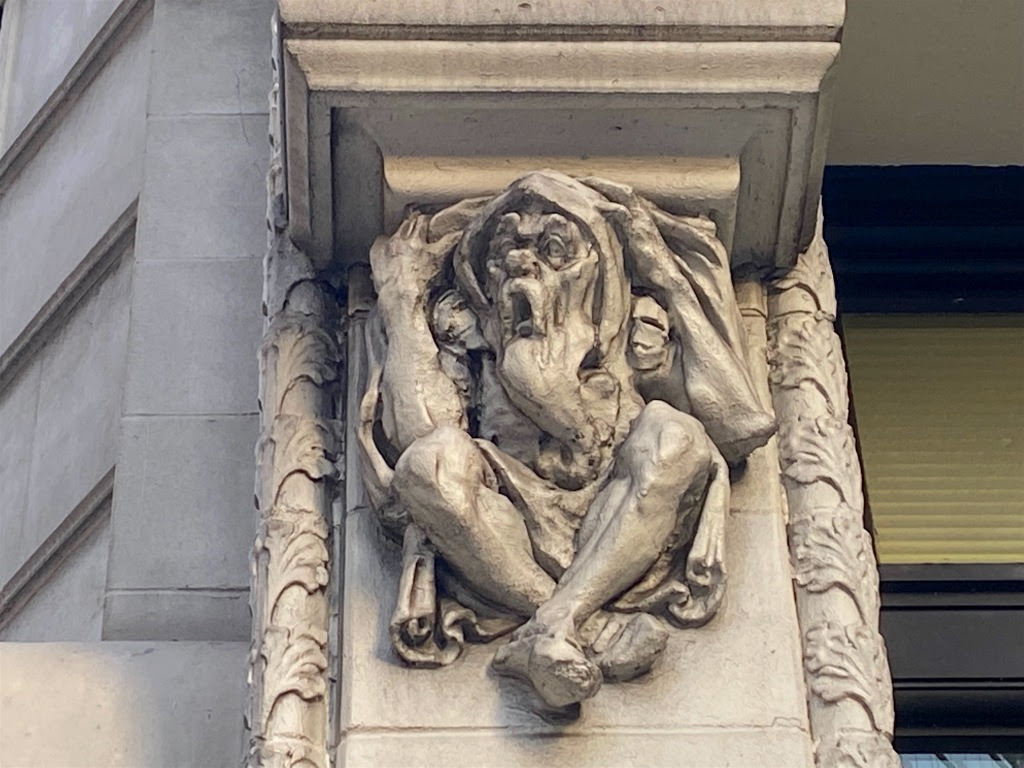
Two mystery gargoyles on a 57th Street building
When you walk along New York City streets, you never know who is looking down at you. And on a busy corner at West 57th Street and Broadway, you’re getting the evil eye from two mysterious grotesques.
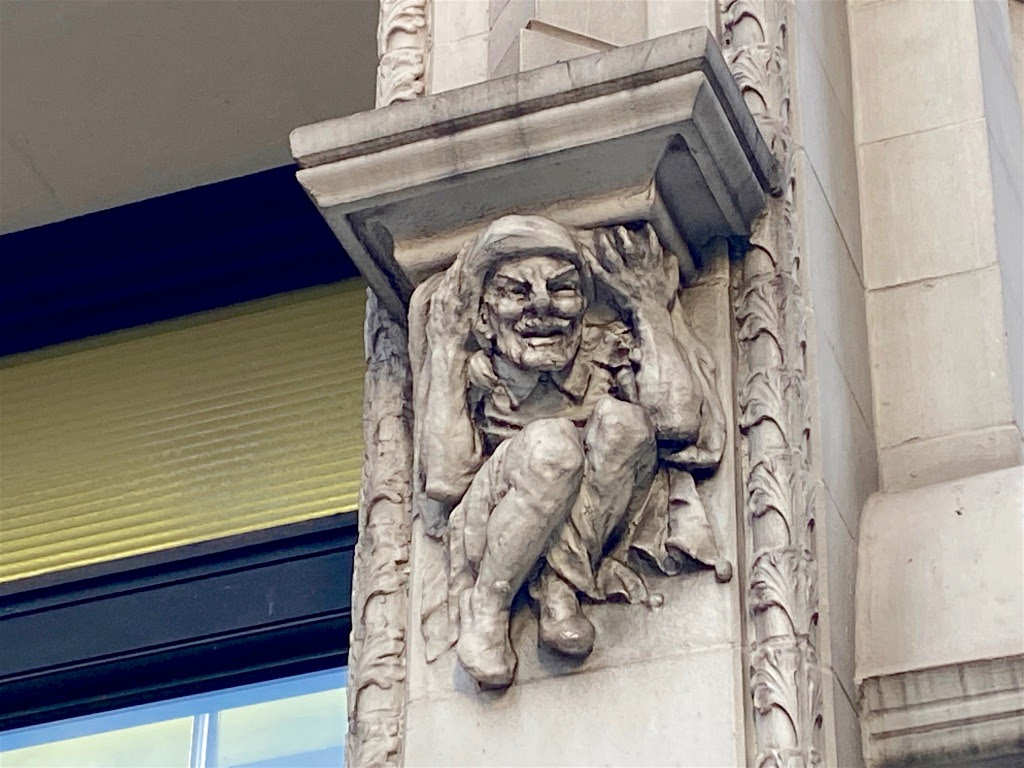
June 27, 2021
Back then, the building was the showroom for the Peerless Motor Car Company, a long-defunct carriage and car manufacturer that vacated the premises in the 1910s. This stretch of Broadway near Columbus Circle was known as Automobile Row, thanks to all the car showrooms that popped up there in the early 20th century.
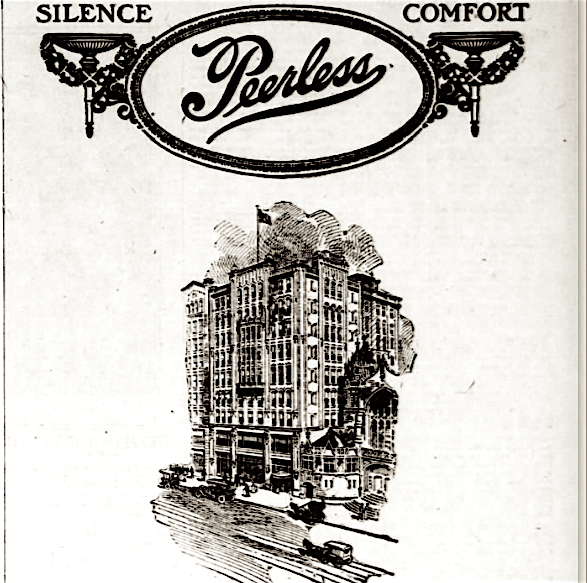
After Peerless (above, in a 1909 ad) left, General Motors took it over. Eventually the building was renovated and converted to office use. The Hearst company bought it and based many of their consumer magazines here through the 2000s.
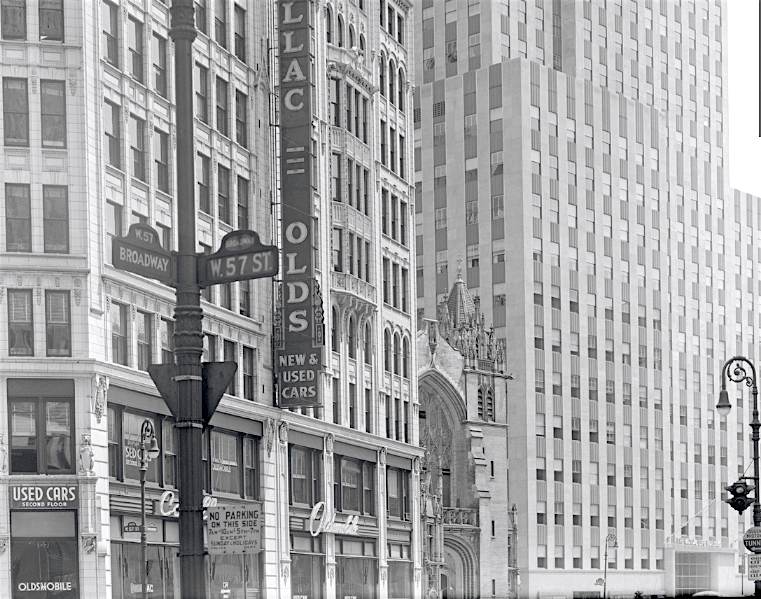
When it was important to have a presence in this car-showroom neighborhood, Peerless made sure they occupied prime real estate.
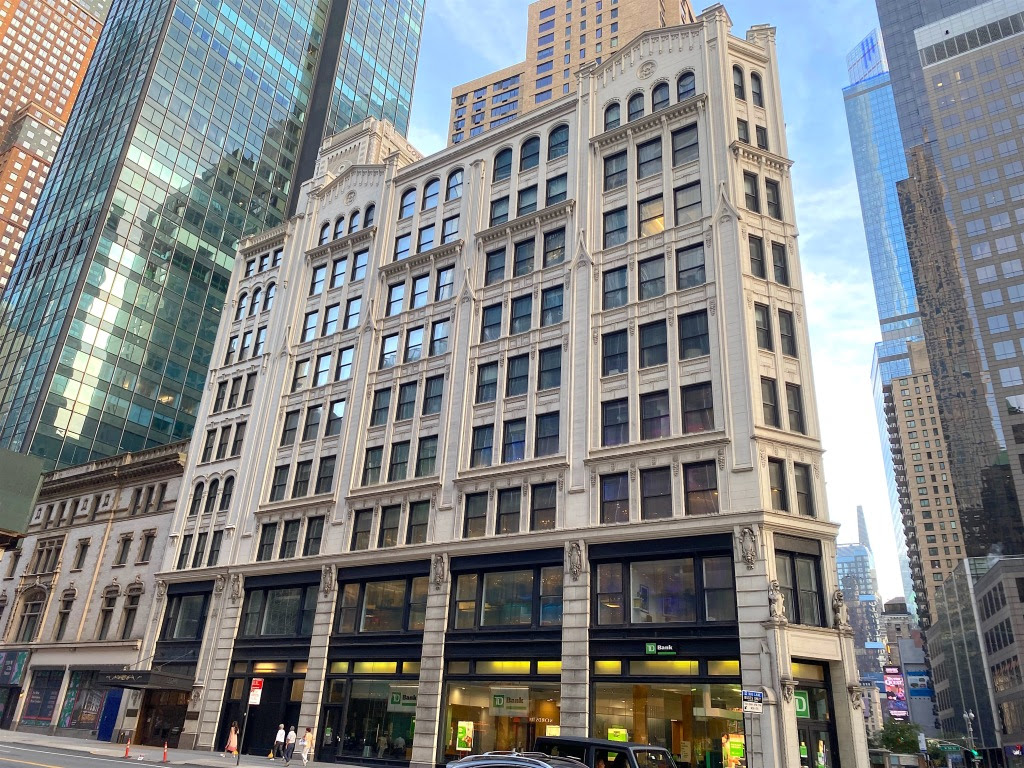
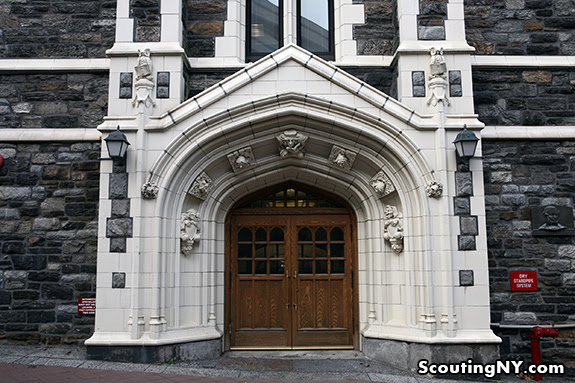
But they also designed the building to fit into the corner, which explains why it has the Gothic look of the Broadway Tabernacle Church, which held court on Broadway and 56th Street (above photo, likely from the 1940s)
But back to the grotesques. Spooky and sly, laughing or crying out, they’re either holding up the building or hiding under it with sinister intentions. Shrouded in what looks like robes and slip-on shoes, they’ve been with the building since the beginning…and are apparently here to stay.
[Third image: New-York Tribune, December 12, 1909; fourth image: NYPL Digital Collection]
WEDNESDAY PHOTO OF THE DAY
SEND OUR SUBMISSION TO
ROOSEVELTISLANDHISTORY@GMAIL.COM
TUESDAY PHOTO OF THE DAY
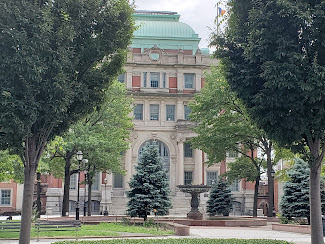
QUEENS COUNTY COURTHOUSE
COURTHOUSE SQUARE AND JACKSON AVENUE
LONG ISLAND CITY
None of our readers got this one.
There is a great new Trader Joe’s a block away!!
Text by Judith Berdy
Thanks to Bobbie Slonevsky for her dedication to Blackwell’s Almanac and the RIHS
Thanks to Deborah Dorff for maintaining our website
Edited by Melanie Colter and Deborah Dorff
All image are copyrighted (c) Roosevelt Island
Historical Society unless otherwise indicated
EPHEMERAL NEW YORK
FUNDING PROVIDED BY ROOSEVELT ISLAND OPERATING CORPORATION PUBLIC PURPOSE GRANTS CITY COUNCIL REPRESENTATIVE BEN KALLOS DISCRETIONARY FUNDING THRU DYCD
Copyright © 2021 Roosevelt Island Historical Society, All rights reserved.Our mailing address is:
rooseveltislandhistory@gmail.com
Aug
1
August 2021 Edition of Blackwell’s Almanac
Click the link above to view the latest Blackwell’s Almanac or click the button to download.
Jul
31
Weekend, July 31- August 1, 2021 – THESE BUILDINGS ARE MADE OF STEEL AND LAST WELL OVER THE DECADES
JULY 31- AUGUST 1, 2021
OUR 430th EDITION
NEW TREASURE TROVE
OF PHOTOS OF
NEW YORK’S CAST IRON
ARCHITECTURE
FROM UNTAPPED NEW YORK
ALL PHOTOS COURTESY OF VILLAGE PRESERVATION

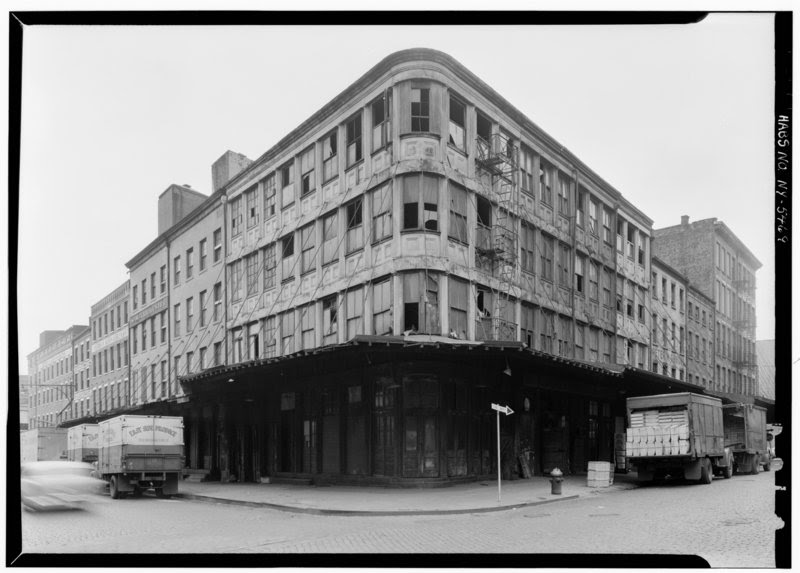
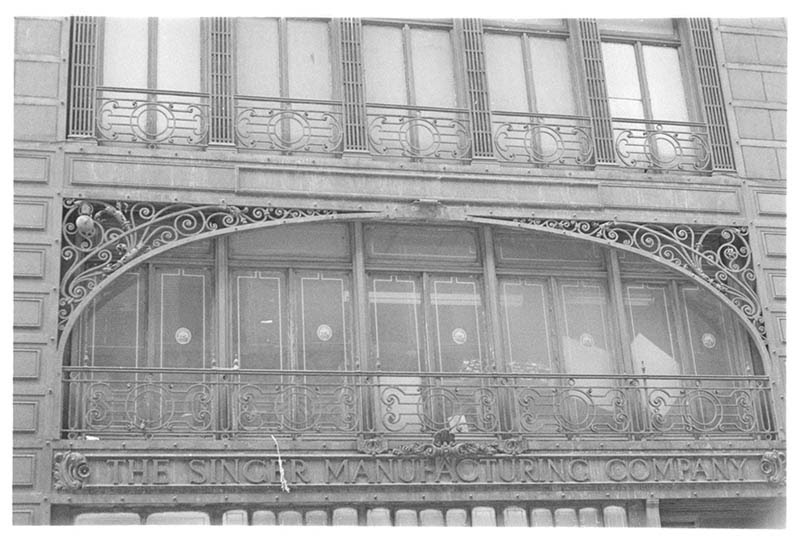
Village Preservation, short for Greenwich Village Society for Historic Preservation, is a non-profit membership organization that documents, honors and preserves the architectural heritage and cultural history of several neighborhoods in Lower Manhattan. Village Preservation recently received a treasure trove of donated photos of SoHo and Cast Iron New York taken by Edward LaGrassa in 1969, before cast-iron architecture was widely appreciated and rediscovered. These photos also date back to a time when neighborhoods with the greatest concentration of such architecture were either being bulldozed or slated to be by Robert Moses.
The organization painstakingly identified each site and location (where possible) of the unlabeled photos, given to them in support of their fight against a proposed SoHo/NoHo Upzoning plan. They have examined the beautiful black and white photographs taken by a student doing an architectural survey at the time and have analyzed the competing and contradictory forces at play on this part of Lower Manhattan at the time.
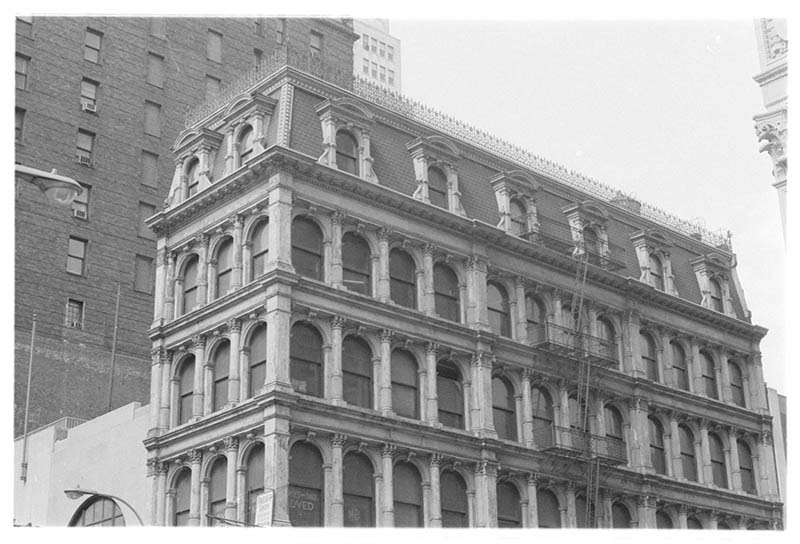
287 Broadway. Photo by Edward LaGrassa courtesy Village Preservation
One of the many buildings included in LaGrassa’s collection is the Little Singer Building, at 561 Broadway, designed by Ernest Flagg, the same architect as the the Singer Building in Lower Manhattan which was once the world’s tallest building. It still stands today and its ornamented facade makes it a unique presence in Soho.
The E.V. Haughwout Building is a five-story commercial loft at the corner of Broome Street and Broadway. Built in 1857 with cast-iron facades, it originally housed Eder V. Haughwout’s fashionable emporium, which sold imported cut glass, silverware, handpainted china, and chandeliers. Mary Todd Lincoln actually had new official White House china painted here. The building was also the site of the world’s first successful passenger elevator.
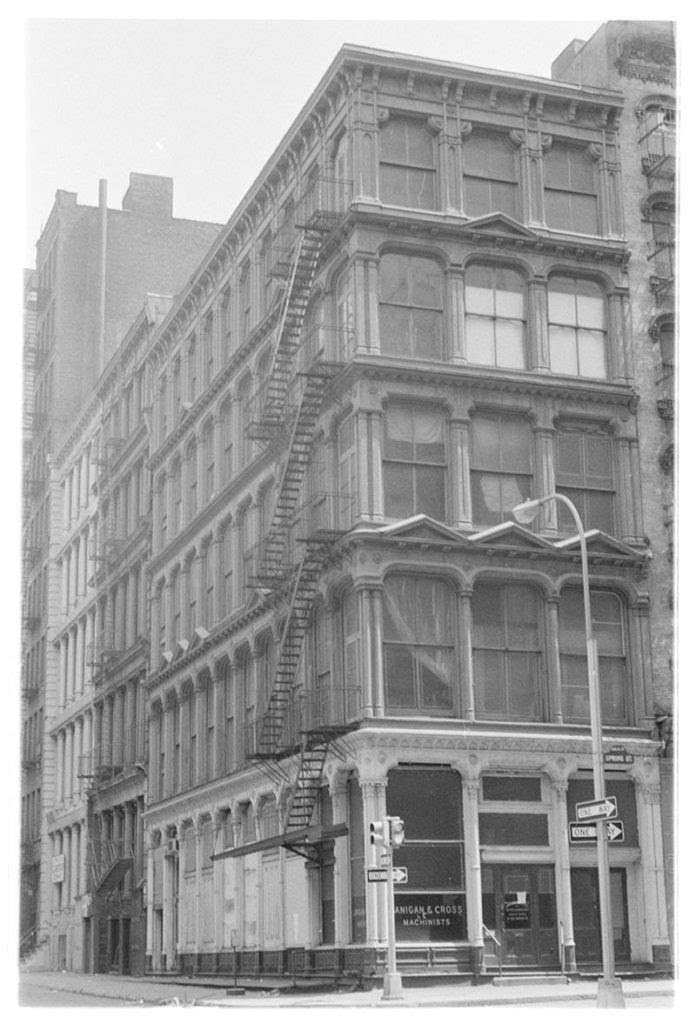
At 101 Spring Street is the Judd Foundation Building, a five story cast-iron building located at the corner of Spring Street and Mercer Street. Constructed in 1870, it was the first building owned by Donald Judd, an American artist associated with the minimalist movement. The building also served as Judd’s studio, where he developed the belief that the placement of a work of art was as critical to its understanding as the work itself. Judd’s installations balance his respect for the historic nature of the landmark cast-iron building and his approach to architecture and design.
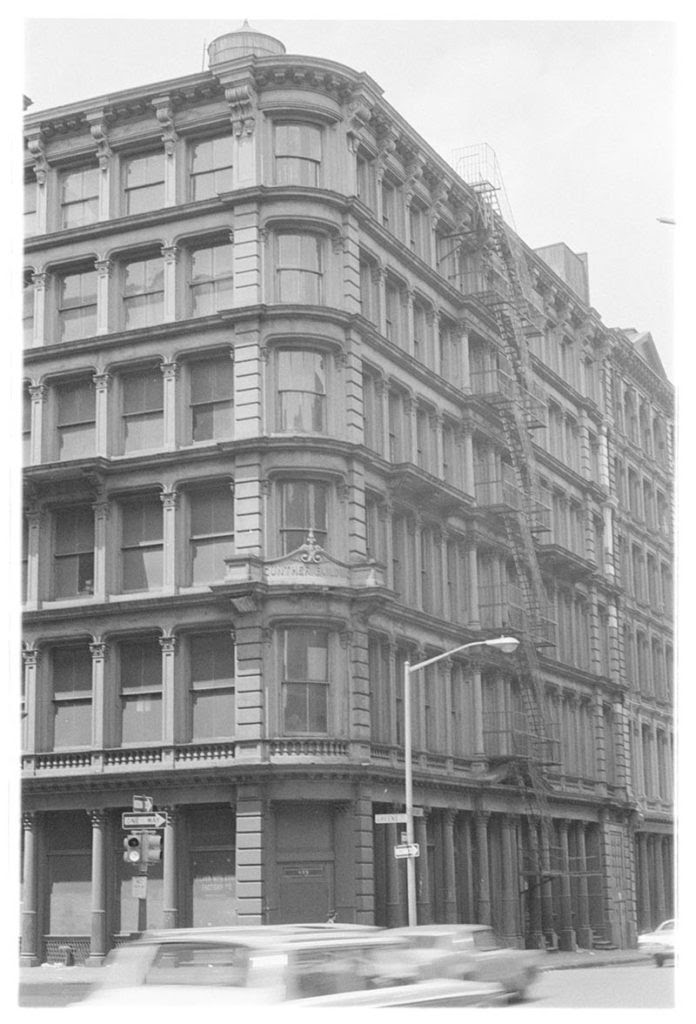
The Gunther Building at 473 Broome Street was designed by Griffith Thomas in 1871, distinguished from its cast-iron neighbors by its bright white facade, Corinthian columns, and its curved glass corner. Gunther was a prominent 19th century furrier, with the building originally used as a warehouse for textiles and furs. Lenny Kravitz was once a resident of the building, which now serves as an artist co-op.
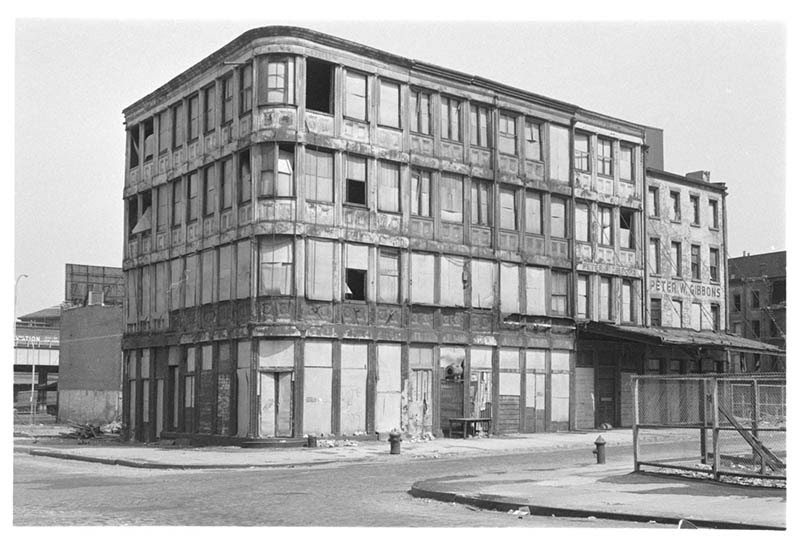
The Bogardus Building was one of the most fascinating buildings in New York’s history, since the remains of it were mysteriously stolen and sold twice. The Bogardus Building/Edward Laing Stores stood at the intersection of Washington and Murray Streets in the Washington Market area. It was one of the first cast-iron buildings in the city, with prefabricated and interchangeable parts. The speed in which the building was constructed–just two months–was related directly with the technological advancements utilized and was certainly a key moment in the evolution of the skyscraper in the late 19th century. However, the Landmarks Preservation Commission recommended that the entire building, particularly the facade, be dismantled and “re-erected as an integral part of a new building,” later determined to be the Manhattan Borough Community College. The townhouses were moved in one piece, to a new location, but the Bogardus building was in such poor shape, it had to be taken down in parts, catalogued, and stored in a vacant lot, all which took place in 1971.
Manhattan Borough Community College would not begin construction until 1974, so the Bogardus building remained in pieces during the interim. Yet the building contractor noticed that people had actually stole some of these remaining pieces. The contractor told police that the perpetrators stole 20 to 30 panels, 2/3 of the facade, over the previous several weeks–22 broken pieces were subsequently found in a Bronx junkyard for $90 a truckload. The rest of the panels were then designated to be included in a building at South Street Seaport, and the rest of the Bogardus building panels were moved to a secret location in a city-owned building on 52nd Street, off 10th Avenue. When architects went to measure the panels with the Commission in June 1977, though, the hidden storage unit was missing all of the panels.
Andrew Berman has been the Executive Director of Village Preservation since 2002. During that time, the group, the largest neighborhood preservation organization in New York City, has secured landmark designation of more than 1,250 buildings, including 11 new historic districts and historic district extensions and dozens of individual landmarks, and zoning protections for nearly 100 blocks to help preserve the scale and character of historic neighborhoods. Prior to Village Preservation Berman worked in both city and state government, and has a background in architectural history.
WEEKEND PHOTO OF THE DAY
SEND YOUR SUBMISSION TO:
ROOSEVELTISLANDHISTORY@GMAIL.COM
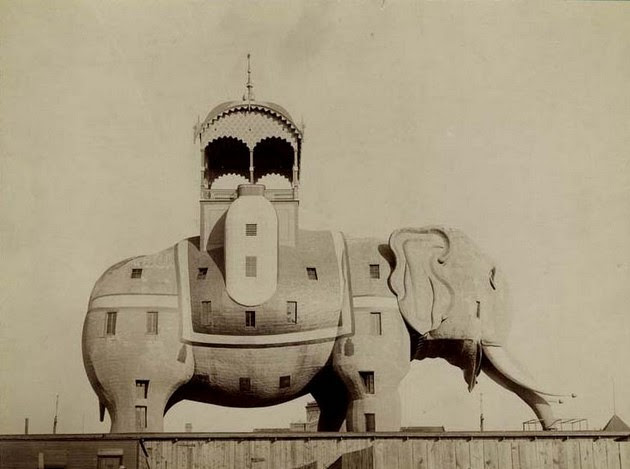
FRIDAY PHOTO OF THE DAY
BLACKWELL’S ISLAND PENITENTIARY
UNDER DEMOLITION IN 1936

Text by Judith Berdy
Thanks to Bobbie Slonevsky for her dedication to Blackwell’s Almanac and the RIHS
Thanks to Deborah Dorff for maintaining our website
Edited by Melanie Colter and Deborah Dorff
All image are copyrighted (c) Roosevelt Island Historical Society unless otherwise indicated
IMAGES AND TEXT COURTESY
UNTAPPED NEW YORK (C)
FUNDING PROVIDED BY ROOSEVELT ISLAND OPERATING CORPORATION PUBLIC PURPOSE GRANTS CITY COUNCIL REPRESENTATIVE BEN KALLOS DISCRETIONARY FUNDING THRU DYCD
Copyright © 2021 Roosevelt Island Historical Society, All rights reserved.Our mailing address is:
rooseveltislandhistory@gmail.com
Jul
26
Monday, July 26, 2021 – ALL KINDS OF STEAMERS TRAVERSED THE EAST RIVER
FROM THE ARCHIVES
MONDAY, JULY 26, 2021
THE
425th EDITION
STEAMING
THE EAST RIVER
STEPHEN BLANK
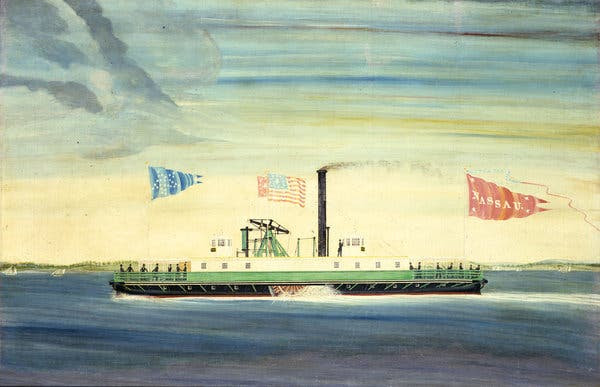
The Nassau, a twin-hulled boat, was the first regularly scheduled steam-powered ferry from Brooklyn to Manhattan. Credit…Brooklyn Historical Society
Steaming on the East River
Stephen Blank
The East River has long been a key thoroughfare for profit and pleasure. A big change, of course, was the advent of steam propulsion. Bigger craft, more people, more business. We’ve seen many pictures of great steamships on the Hudson. But our river, too, had some glorious steamers. So join me for a trip down memory lane, steaming on the East River.
Talking steamboats, begin with Fulton, inventor of the first successful steamboat and the first to put a steamboat on the East River. In 1814, Robert Fulton and William Cutting, his brother-in-law, formed the New York & Brooklyn Steamboat Ferry Association and obtained a lease from the City to establish a steam-powered ferry to cross the river. Fulton’s ferry crossed at the its narrowest point, some 700 yards between what is now Fulton Street in Brooklyn and Fulton Street in Manhattan, between where the River Café is today, beneath the Brooklyn Bridge, and the South Street Seaport. The first ferry was named Nassau. The twin-hulled boat carried 549 passengers, one wagon and three horses. The trip took 5 to 12 minutes and was no longer subject to the mercy of the winds and the East River’s punishing tides. The Nassau was captained by Peter Coffee, who would remain with the company that operated the vessel for 50 years.
Yes, I know this is not really glam travel, it’s commuting.
So how about the fine line of “Sylvan” steamboats which raced up and down the East River from Peck’s Slip (just south of the Brooklyn Bridge, which didn’t exist) to 120th and 130th Streets in Harlem via a stop in Astoria and through Hell Gate?
Why Harlem? For pleasure and profit. The flat, rich, eastern portion of Harlem was fertile farmland, and some of New York’s most illustrious early families, like the Delanceys, Bleekers, Rikers, Beekmans, and Hamiltons kept large estates in the high western section. Harlem recovered slowly from the Revolutionary war struggles that took place there and remained largely rural through the early 19th century. Some of the estates were available at knockdown prices, and Harlem also attracted new immigrants to the City. Undeveloped, but not poor. It is said that Harlem was “a synonym for elegant living through a good part of the nineteenth century.”
To reach Harlem from lower Manhattan Island by stagecoach and later by horse car took a hard hour and a half to two hour ride. But by boat, there was no lovelier vista than the banks of the East River from Jones’ Wood north, where the shore was dotted by splendid country homes with large grounds of well-to-do New Yorkers – except when steaming past Blackwell’s Island.
The Harlem and New York Navigation Company was incorporated in 1856 and the “Sylvan Shore,” the first of this company’s line of “Sylvan” boats, was built that year. Four more “Sylvans” would appear over the next dozen years. The steamboats did the Harlem run on weekdays and excursions to points along the Sound on Sundays.
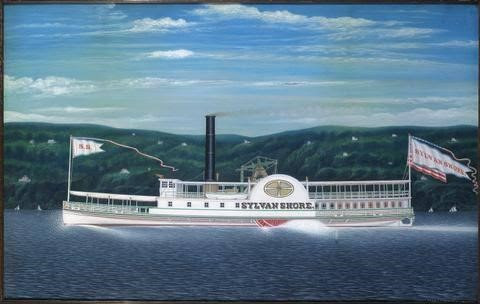
Steamboat “Sylvan Shore”, James Bard (1815–1897), New York Historical Society
The business went well. Not only did the Sylvan boats grow in number, but another line, the Morrisania steamboat line, joined in as a competitor. Their steamship “Shady Side” carried passengers to upper Manhattan and the Bronx. The Shady Side was the fastest Morrisania boat and frequently raced against the Harlem Line’s swiftest ship, the Sylvan Dell – much to the distress at times of the police. The Sylvan Dell carried on her bow mast an unusual but significant flag – a race horse with a jockey instead of the name of the boat.

By 1867 the elevated railroads were being talked of seriously, experiments projected, and in 1875 the Legislature favored granting a franchise for the elevated roads. The elevated opened for operations in 1876, but it was not until after 1880 that the elevated lines on both sides of the city were extended to Harlem. Simultaneously with that accomplishment the patronage of the Harlem and Morrisania declined.
They were attractive but fairly small sidewheel steamboats. We assume they were nicely fitted out with comfortable lounges but no overnight facilities, but we really don’t know the details. We know more about the spectacular vessels that sailed past our Island in the high age of East River steamboating. Stately sidewheelers connected Peck’s Slip with Hartford, Boston and locations between. One author rhapsodizes “These Long Island Sound steamers, unlike the tubby, wedding cake dowagers of Western waters, were long, sleek craft, with sharp prows cutting a neat wake as they cruised along. Departing each afternoon from State Street or Talcott Street wharf in Hartford, the ‘night boats’ reached New York at daybreak, inaugurating a pattern of city commuting that continues to this day.“
Other destinations were reached by a water-rail combination. The Old Colony Railroad developed a network of railroad lines extending from New York to Boston and southeastern Massachusetts. Steamers connected the railroad lines at various points. Established in 1847, the line was originally owned by the Bay State Steamboat Company.
The classic example was The Fall River Line, a combination steamboat and railroad connection between New York City and Boston that operated between 1847 and 1937. Sailing from New York, the Fall River boats paddled up the East River in the early evenings of dusk; up to Hell Gate then down the Long Island sound; calling at Newport in the middle of the night and the morning they landed at the Fall River dock. Boston was just a train ride away with connections north to Maine’s major cities and resorts.
For many years, this was the preferred route for travel between the two major cities. The Long Island Sound steamboats became firmly established with the public as the safe and comfortable way for New Yorkers to go to Boston since they avoided the long, hazardous water route around Cape Cod and the longer crowded train trip all the way from New York. The line was extremely popular, and its steamboats were among the most advanced and luxurious of their day. Everyone from presidents to swindlers sailed the Sound on “Mammoth Palace Steamers” in the heyday of the side-wheelers.

Big paddle steamers, gleaming white, ornamental and luxurious, touched all the islands and reached up the long tidal rivers, carrying “The Four Hundred” – New York’s Gilded Age High Society. Nineteenth Century steamboat men looked down on the railroads as mere “feeders,” and even later through trains ran rapidly along the shore from Boston to New York they maintained, for some time, the favorite of travelers. Old Commodore Vanderbilt and Daniel Drew struggled for power on the Sound before they began to battle for greater prizes among the railroads; its waters were controlled in turn by Jim Fisk and J. P. Morgan, who eventually brought almost all the various steamboat lines under control of his New Haven Railroad. The star of the Fall River Line was the steamship Priscilla.
Judy Berdy has written about the Priscilla in an earlier number of the Almanac but I will tell you more about the Fall River Line and its rivals in my next essay.
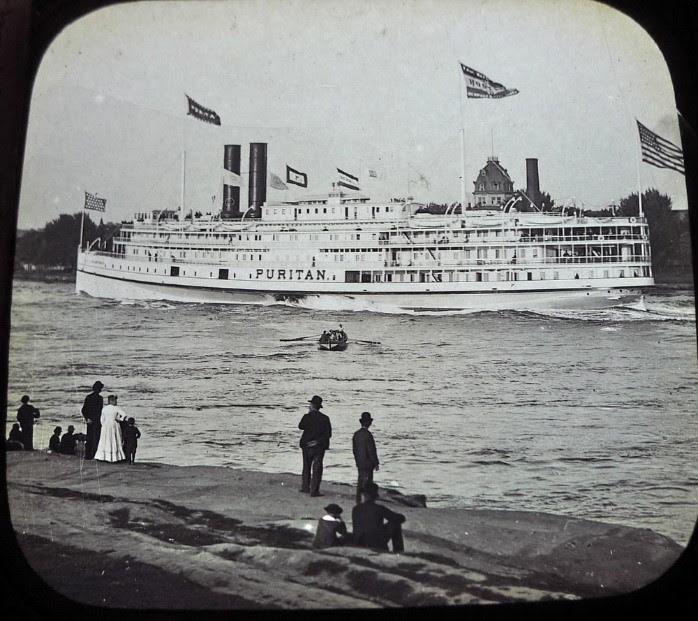
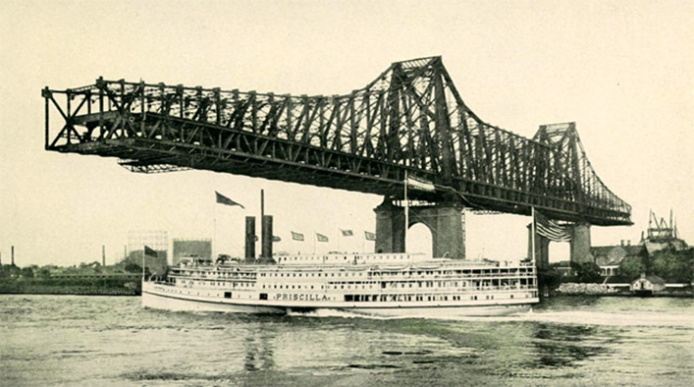
Fall River Line ships Priscilla and Puritan steaming under the abuilding Queensboro Bridge and past the Octagon on Blackwell’s Island
Competition on these routes grew. The Lexington was a paddlewheel steamboat that provided service between New York City and Providence, Rhode Island. It was commissioned by Cornelius Vanderbilt in 1835, and at 220 feet in length was considered one of the most luxurious steamers in operation. In 1837, the Lexington switched to the route between New York and Stonington, Connecticut, to connect with the newly built Old Colony railroad to Boston.
And dangers too. On the night of January 13, 1840, midway through the ship’s voyage through the Sound, the casing around the ship’s smokestack caught fire and ignited 150 bales of cotton that were stored on deck aft of the smokestack. The fire was out of control and the order was given to abandon ship. The ships’ overcrowded lifeboats sank almost immediately, leaving the ship’s passengers and crew to drown in the freezing water. Rough water, poor visibility, the frigid cold and the wind made rescue attempts impossible. Of the 143 people on board the Lexington that night, only 4 survived.
Thanks for reading. I’ll be back soon with more on the East River steamboat business, its pleasures and perils.
Stephen Blank
RIHS
July 11, 2021
THANKS TO GLORIA HERMAN AND HER GRANDKIDS FOR HELPING WEEDING AND FIXING UP THE KIOSK GARDEN TODAY.
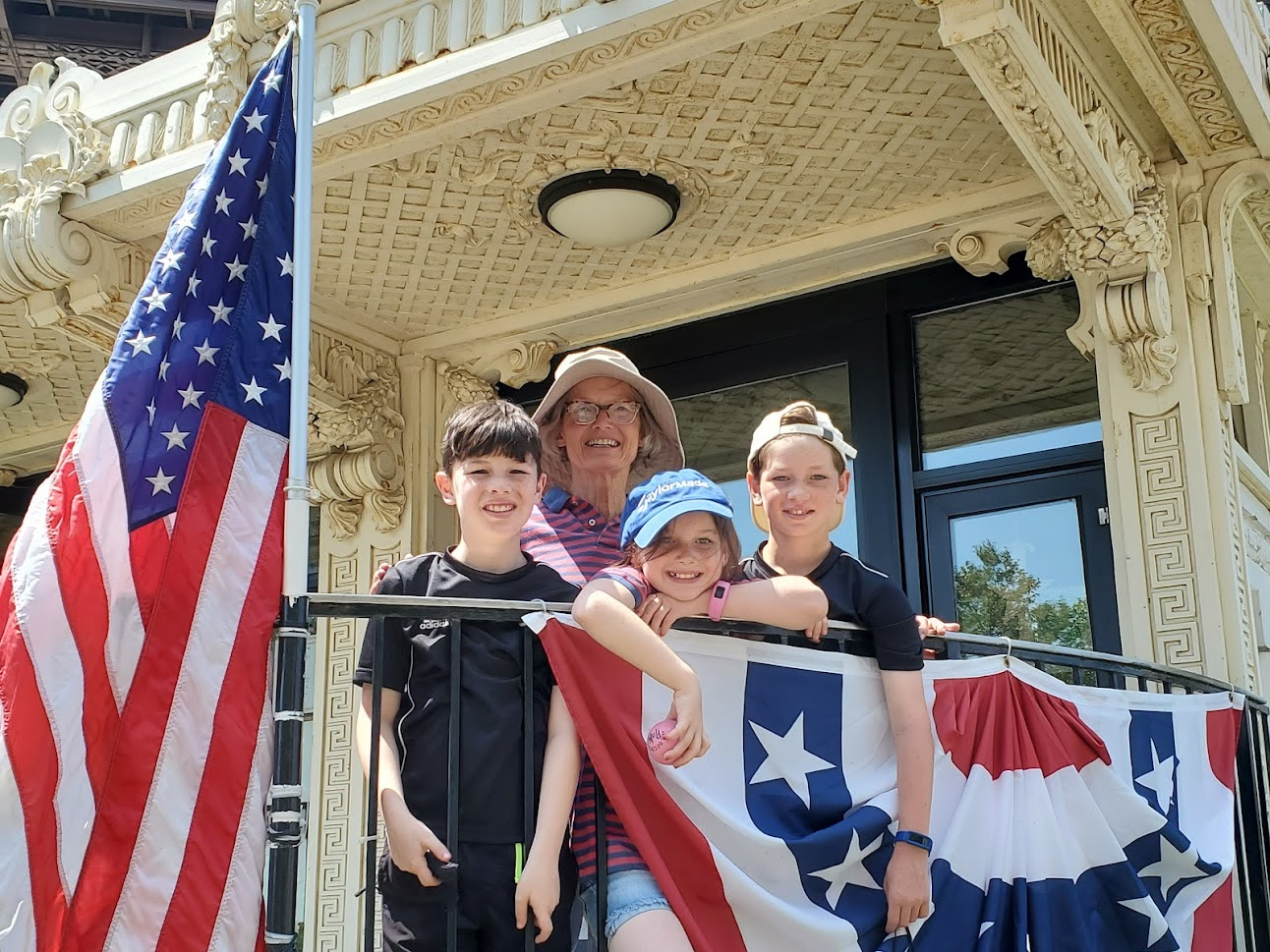
Elijah (Eli) and Thomson (Sonny) are 11 and Eadie is 9.
MONDAY PHOTO OF THE DAY
SEND YOUR RESPONSE TO:
ROOSEVELTISLANDHISTORY@GMAIL.COM
WEEKEND PHOTOS
ONE OF THE DECORATED WALLS AND
MOTIFS OUTSIDE “THE SANCTUARY” IS THIS GREAT
GREETING FROM ROOSEVELT ISLAND
MURAL AND SPOT FOR A PHOTO.

WEEKEND PHOTO OF THE DAY #2
(SOMEONE FORGOT TO POST ONE OF THESE ANSWERS)
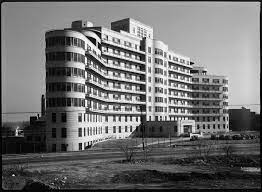
FORMER TRIBORO HOSPITAL NOW UNDER RESTORATION INTO AFFORDABLE HOUSING IN JAMAICA, QUEENS.
Ed Litcher, Andy Sparberg and Harriet Lieber got it right

Text by Judith Berdy
Thanks to Bobbie Slonevsky for her dedication to Blackwell’s Almanac and the RIHS
Thanks to Deborah Dorff for maintaining our website
Edited by Deborah Dorff
All image are copyrighted (c)
Stephen Blank
RIHS
July 11, 2021
Sources
A.J.Wall, “The Sylvan Steamboats on the East River, New York to Harlem”, THE NEW-YORK HISTORICAL SOCIETY QUARTERLY BULLETIN VOL. VIII OCTOBER, 1924 No. 3
FUNDING PROVIDED BY ROOSEVELT ISLAND OPERATING CORPORATION PUBLIC PURPOSE GRANTS
CITY COUNCIL REPRESENTATIVE BEN KALLOS DISCRETIONARY FUNDING THRU DYCD
Copyright © 2021 Roosevelt Island Historical Society, All rights reserved.Our mailing address is:
rooseveltislandhistory@gmail.com
Jul
24
Weekend, July 24-25, 2021 – ON THE HALL IN QUEENS HOSPITAL CENTER IS ANOTHER WPA ARTPIECE
JULY 24-25, 2021
OUR 424TH EDITION
ANOTHER WPA
MURAL
REVEALED
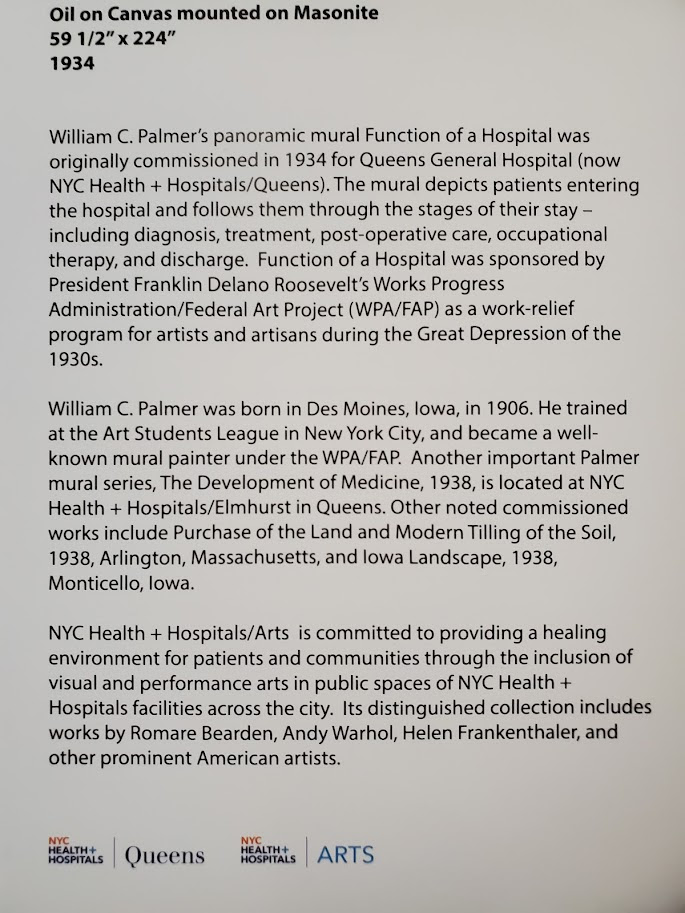
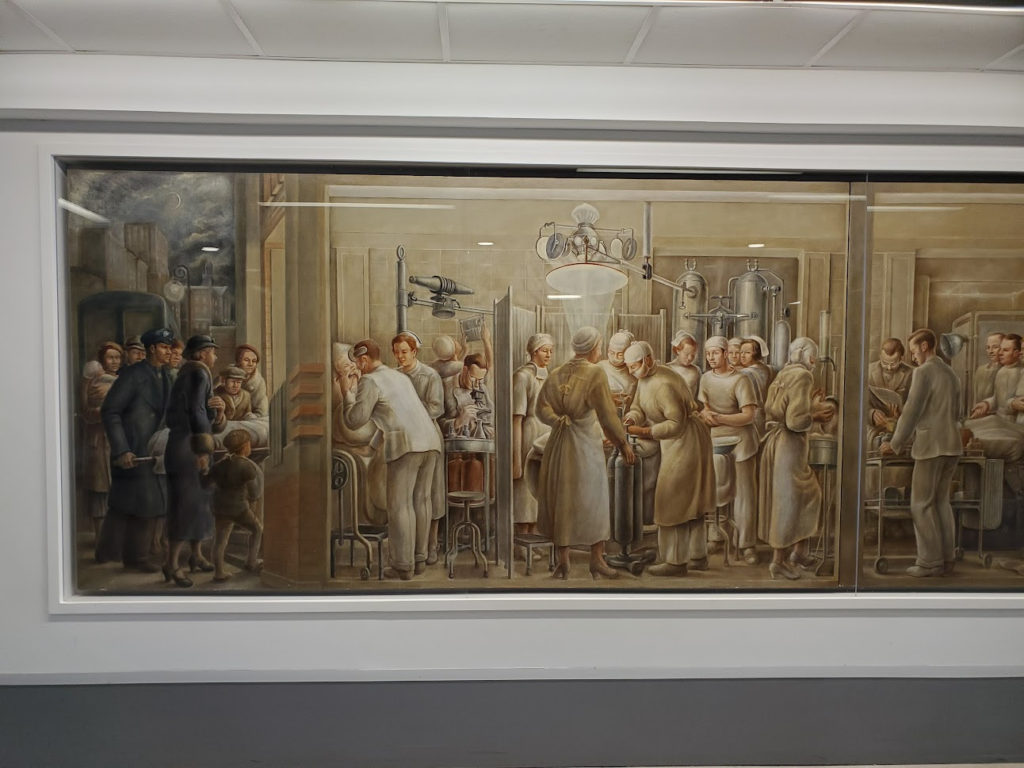
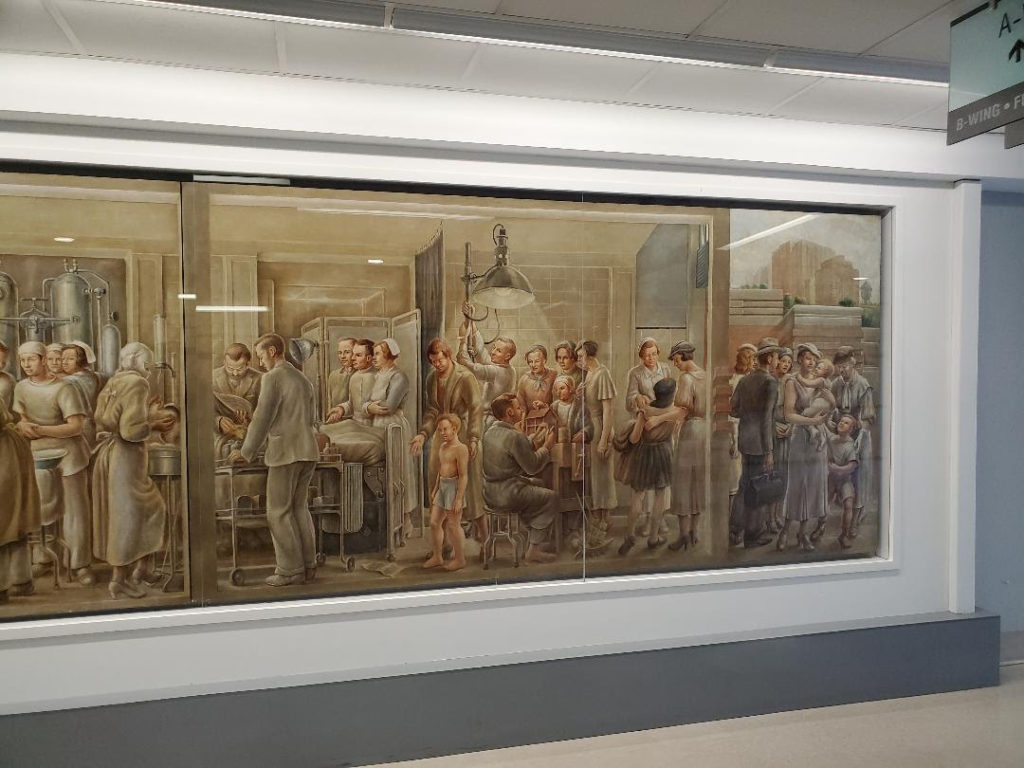
WPA MURAL DISCOVERED ON A TRIP TO QUEENS HOSPITAL
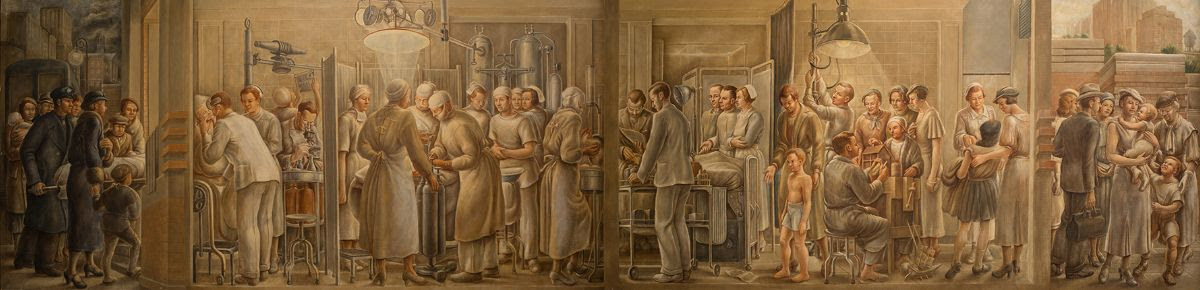
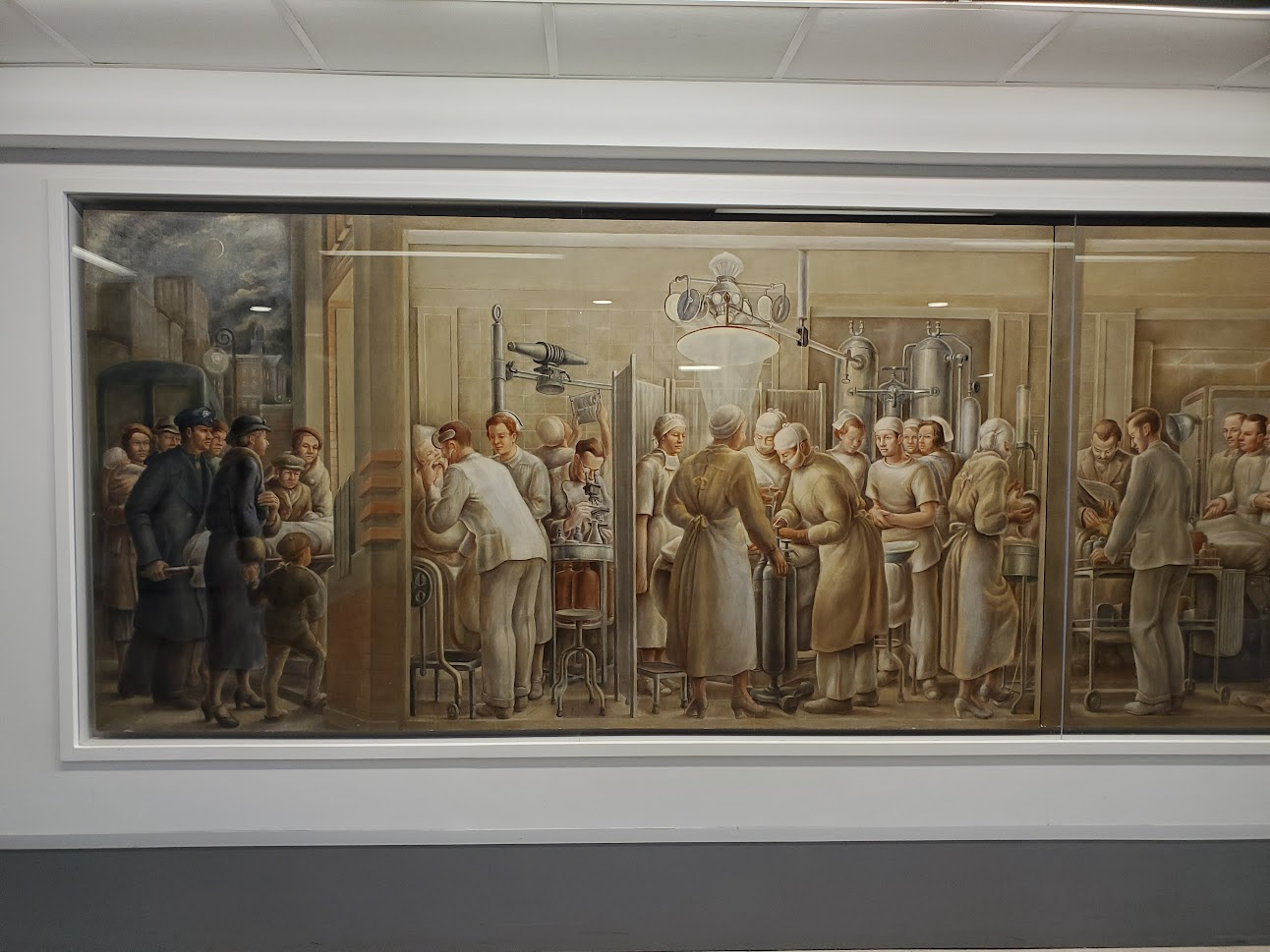
FUNCTION OF A HOSPITAL
WEEKEND PHOTO OF THE DAY
SEND YOUR SUBMISSION TO:
ROOSEVELTISLANDHISTORY@GMAIL.COM
FRIDAY PHOTO OF THE DAY
CUNARD LINE PIER NOW CHELSEA PIERS
Guy Ludwig and Ed Lticher added great history Thanks
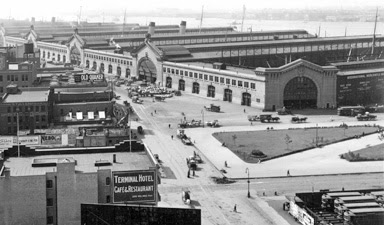
| I believe today’s historic photograph is of the White Star Line’s pier complex on the Hudson river. This is where the Titanic would have tied up had she made it. The Titanic (and her sisters the Olympic and the Gigantic – no kidding, but she was renamed Britannic) flew the flag of White Star Lines, a company controlled by J.P. Morgan. Following the Titanic disaster, White Star became an easy target for acquisition by the most powerful transatlantic line, Cunard. Four years after Titanic sank, the Britannic went to the bottom of the Aegean Sea after hitting a mine. It took until the 1930’s but eventually Cunard did merge with White Star, and in 1949 bought out firm completely and retired its name. Guy Ludwig Westview |
| Chelsea PiersDesigned by the architectural firm of Warren and Wetmore, which was also designing Grand Central Terminal at the same time, the Chelsea Piers replaced a hodgepodge of run-down waterfront structures with a magnificent row of grand buildings embellished with pink granite facades.In 1910, the opening of the Chelsea Piers was marked with a ribbon cutting and speeches, including lots of back-patting after 30 long years of talk and 8 years of construction. In 1907, even before the piers were completed, the first of the new luxury liners, the Lusitania and Mauretania, docked there. The man responsible for the completion of the piers, Mayor George B. McClellan, wasn’t even in office when the liner Oceanic broke through a colorful wide ribbon to signal the official opening of the Chelsea Piers. The next day The New York Times called them “the most remarkable urban design achievement of their day.”For the next 50 years, the Chelsea Piers served the needs of the New York port: first, as the city’s premier passenger ship terminal; then as an embarkation point for soldiers departing for the battlefields of World Wars I and II; and finally, during the late 1950s and early 1960s, as a cargo terminal.After that, the Chelsea Piers, like much of Manhattan’s waterfront, became neglected maritime relics, made obsolete by the jet plane that whisked passengers across the Atlantic and the large container ships that required dock facilities and truck linkages that Manhattan could never provide. |
https://www.chelseapiers.com/company/history/
Ed Litcher
Text by Judith Berdy
Thanks to Bobbie Slonevsky for her dedication to Blackwell’s Almanac and the RIHS
Thanks to Deborah Dorff for maintaining our website
Edited by Deborah Dorff
Roosevelt Island Historical Society
NYC HEALTH + HOSPITALS
FUNDING PROVIDED BY ROOSEVELT ISLAND OPERATING CORPORATION PUBLIC PURPOSE GRANTS CITY COUNCIL REPRESENTATIVE BEN KALLOS DISCRETIONARY FUNDING THRU DYCD

I had the honor to receive a Marjorie Matthews Award today for service with the Coler Community Advisory Board and the Coler Auxiliary. The ceremony was held at the Queens Hospital Center.
There are over 500 volunteers who work on these committees to make our municipal hospitals better serve all the residents of New York City,
Of course being there, I had to find out about the wonderful WPA mural that is in the main corridor and the progress of converting Triboro Hospital into affordable housing.
Soon we will update you on our visit to the site.
Copyright © 2021 Roosevelt Island Historical Society, All rights reserved.Our mailing address is:
rooseveltislandhistory@gmail.com
Jul
23
Friday, July 23, 2021 – YOU DO NOT HAVE TO BE ON THE HIGH SEAS TO BE IN PERIL
FRIDAY, JULY 23, 2021
The
423rd Edition
EAST RIVER
MARITIME
DISASTERS
STEPHEN BLANK
East River Maritime Disasters
Stephen Blank
OK. By popular demand, one more – but only one more – East River ship story.
How about East River Maritime disasters? Turns out the East River has been a pretty dangerous place. Many serious shipping accidents have occurred in this short non-river (tidal estuary, to be precise).
The most famous was the terrible General Slocum fire in 1904. Most of us have heard the name but don’t really know much about it.
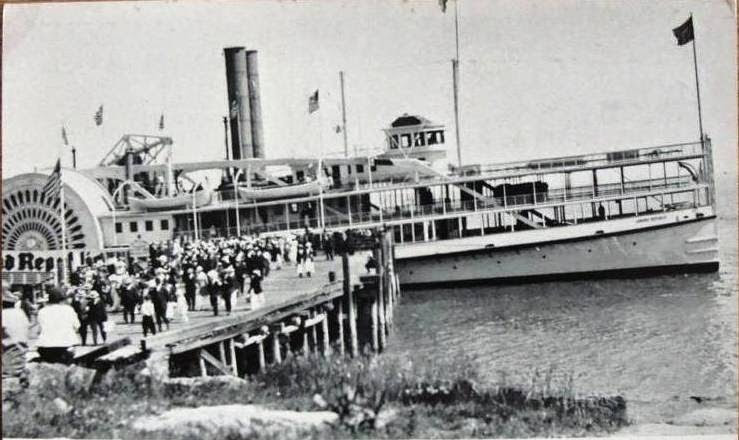
General Slocum was a triple-decker wooden side paddler that took folks on excursions around New York City. On Wednesday, June 15, 1904, the ship was chartered for $350 by St. Mark’s Evangelical Lutheran Church. The Church’s parish drew on German immigrants in the Lower East Side and East Village (then known as “Little Germany”). This was the trip’s 17th consecutive year, during a period when German settlers moved out of Little Germany for the Upper East and West Sides. Almost 1,400 passengers, mostly women and children (fewer than 150 were adult males) boarded General Slocum, which was to sail up the East River and then across the Long Island Sound to Locust Grove, a picnic site in Eatons Neck, Long Island.
But the steamboat caught fire and sank. In just 20 minutes, more than 1,000 people died. Prior to 9-11, the burning of the General Slocum had the highest death toll of any disaster in New York City history. It is the worst maritime disaster in the city’s history, and the second worst maritime disaster on United States waterways.
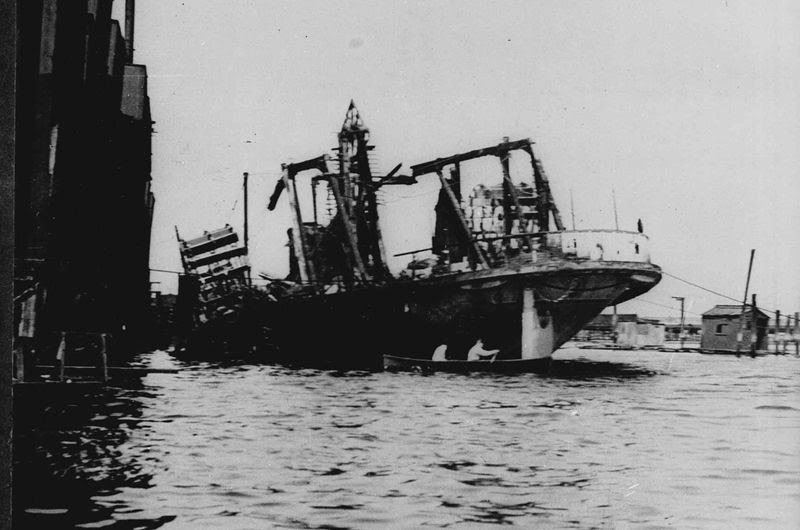
The excursion boat General Slocum lies beached off North Brother Island New York City’s East River, following a fire and resulting panic. The disaster cost the lives of 1,030 mostly German immigrants, June 15, 1904. (AP)
It was a preventable disaster. The crew was inexperienced and never conducted a fire drill. Some passengers jumped overboard but most of the ship’s lifejackets proved worthless because the cork then used for buoyancy, had turned to dust. Even worse, investigations discovered that Nonpareil Cork Works, supplier of cork for the life preservers, had placed 8 once iron bars inside the cork materials to meet minimum content requirements (6 pounds of “good cork” for each lifejacket) at the time. As the ship raced to shallow water the crew tried to fight the blaze, but the elderly fire hoses burst under the pressure. The Captain decided to continue his course rather than run the ship aground or stop at a nearby landing. By going into headwinds and failing to immediately ground the ship, he fanned the fire and promoted its spread from fore to aft. And he jumped ship as soon as he could. ‘
The Slocum disaster may have been the worst on the East River. But there were more.
The steamship caught fire just as it was in Hell Gate, the turbulent waters north of Blackwell’s (Roosevelt) Island, a particularly wicked part of the East River. Many tales have been told about the hundreds – even thousands – of ships sunk or damaged making this treacherous passage.
Indeed, histories repeat the same refrain: “Hundreds of ships have sunk into Hell Gate” “By the 1850s, one in fifty ships passing through the Hell Gate were either damaged or sunk—an annual average of 1,000 ships ran aground in the strait.” This is found again and again in the literature.
No less interesting than this Hell Gate horror story is the finding that while this liturgy is often repeated, evidence of these many maritime calamities never appears. (Where sources are indicated – rarely – they quote each other.) A thousand ships a year run aground just north of our island?? Why the north end of our island should have been littered in wreckage and bodies. The picture that these tales create was well captured by this dramatic painting of chaos in Hell Gate. (So many ships are waiting to run the gauntlet!) I suspect the reality of the numbers is as true as the reality of this image.

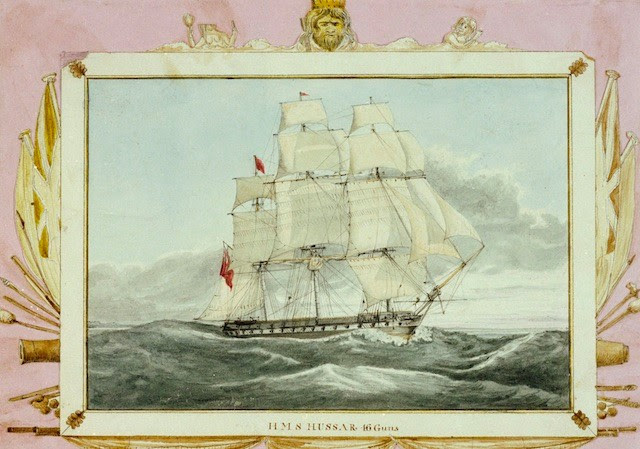
However, we know of one famous victim of Hell Gate, H.M.S. Hussar. She was a 28-gun, 6th-rate, Mermaid Class Frigate of the British Royal Navy with a crew of over one hundred. Built in 1763, the ship fought in sea battles off the coasts of Ireland and Portugal before being dispatched to New York in November 1780 to fight the colonists.
On 23 November 1780, against his pilot’s better judgment, Hussar’s captain decided to sail from the East River through the treacherous waters of Hell Gate between Randall’s Island and Astoria. Just before reaching Long Island Sound, Hussar was swept onto Pot Rock and began sinking. Pole was unable to run her aground and she sank in 96 feet of water.
What makes this loss of a relatively minor ship so interesting is that the British army’s payroll was to be moved to Gardiners Bay – aboard, of course, H.M.S. Hussar. The Brits owed a lot of back pay to its soldiers, and Hussar arrived in Manhattan with wages and 70 American prisoners of war. The exact amount is under dispute, but some say it might have been 960,000 British pounds in gold, worth roughly $576 million at the time. Various accounts of the tragedy emerged, but the British immediately denied that any payroll of gold guineas or sterling silver was consigned on the voyage. The survivors never mentioned a valuable cargo, nor was there any listed on the cargo manifest. The best bet is that the gold and silver was offloaded before the accident. The Brits denied the payroll delivery, but were suspect when they conducted extensive salvage efforts.
Occasional efforts are still made to find the treasure on the bottom of Hell Gate. A NY Times reporter in 2013 wrote, “The Hussar is the ship that got away. It has long been part of the lore of a South Bronx community that is among the poorest in the nation, promising untold riches for anyone with the imagination and courage to pluck it from the mud and trash of the East River. Its call has enthralled generations of residents and historians, and lured numerous fortune seekers.”
Two other East River maritime catastrophes are remembered today, probably because of the graphic images created at the time.
On October 7, 1833 steamship New England ploughed up the East River, destined for Hartford. Arriving off Essex at 3:00 am, the engine was stopped but both boilers exploded “with a noise like heavy cannon. The shock was dreadful; and the scene which followed … [w]as awful and heart-rending beyond description.”
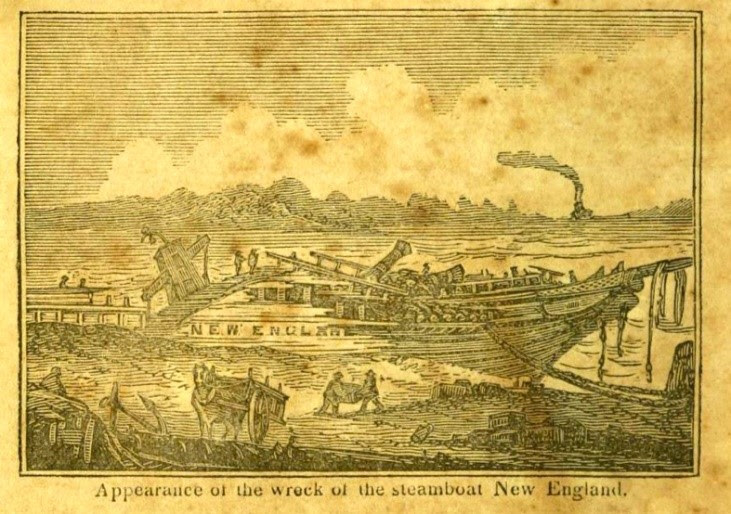
New England burst its boilers off Essex, October 8, 1833, killing 13 people. Woodcut from Steamboat Disasters and Railroad Accidents in the United States by Warren Lazell, 1846
The ladies’ cabin suffered the worst: “Those who on first alarm, sprang from their berths, were more or less scalded. All who were on deck abaft the boilers, were either killed or wounded….Thirteen people perished, including five crewmen.
And mentioned in an earlier essay, Lexington was a paddlewheel steamboat servicing New York City and Providence. Commissioned by Cornelius Vanderbilt in 1835, it was considered one of the most luxurious steamers in operation. In 1837, the Lexington switched to the route between New York and Stonington, Connecticut, to connect with the newly built Old Colony railroad to Boston.
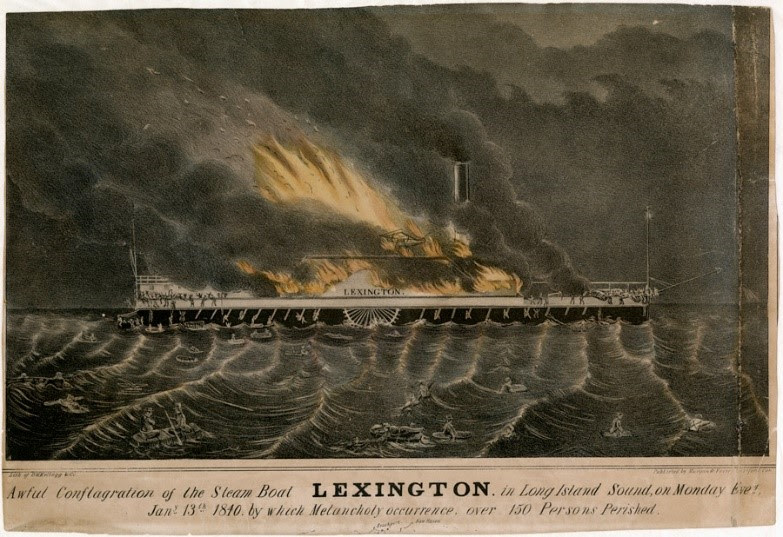
Hartford lithographers D. W. Kellogg & Co. published this view of the doomed Lexington sometime after Nathaniel Currier’s print was released. Survivors can be seen clinging to floating debris in the foreground. 2003.263.0
On the night of January 13, 1840, midway through the ship’s voyage through the Sound, a fire ignited bales of cotton that were stored (illegally) on deck. The fire went out of control and the order was given to abandon ship. The ships’ overcrowded lifeboats sank almost immediately, leaving the ship’s passengers and crew to drown in the freezing water. Rough water, poor visibility, the frigid cold and the wind made rescue attempts impossible. Of the 143 people on board the Lexington that night, only 4 survived.
These are the East River maritime disasters we remember. Over the years, there were many more incidents and even sinkings – if not hundreds or thousands. The East River was a turbulent and troubled and extraordinarily busy waterway. And as we see every day, it still is.
Thanks for reading.
Stephen Blank
RIHS
July 20, 2021
FRIDAY PHOTO OF THE DAY
SEND YOUR SUBMISSION
TO ROOSEVELTISLANDHISTORY@GMAIL.COM
THURSDAY PHOTO OF THE DAY
NEW MURAL AT THE SANCTUARY
GLORIA HERMAN, ALEXIS VILLAFANE, AND LAURA HUSSEY GOT IT RIGHT
Text by Judith Berdy
Thanks to Bobbie Slonevsky for her dedication to Blackwell’s Almanac and the RIHS
Thanks to Deborah Dorff for maintaining our website
Edited by Melanie Colter and Deborah Dorff
All image are copyrighted (c)
Sources
All image are copyrighted (c) Roosevelt Island Historical Society unless otherwise indicated
https://gothamist.com/news/the-strange-history-of-nycs-mighty-hell-gate
https://www.nydailynews.com/new-york/tragedy-east-river-general-slocum-disaster-article-1.787322
https://www.nan.usace.army.mil/Portals/37/docs/history/hellgate.pdf
https://www.nytimes.com/2013/09/04/nyregion/finding-trash-and-worse-but-so-far-no-ship-with-treasure.html https://connecticuthistory.org/the-steamboat-new-england-the-shock-was-dreadful-today-in-history/FUNDING PROVIDED BY ROOSEVELT ISLAND OPERATING CORPORATION PUBLIC PURPOSE GRANTS CITY COUNCIL REPRESENTATIVE BEN KALLOS DISCRETIONARY FUNDING THRU DYCD
Copyright © 2021 Roosevelt Island Historical Society, All rights reserved.Our mailing address is:
rooseveltislandhistory@gmail.com
Jul
10
Weekend, July10-11, 2021 – A WPA ARTIST WHOSE JOYFUL ART IS MEMORABLE
JULY 10-11, 2021
OUR 412TH EDITION
JOSEPHINE JOY
ARTIST

- Josephine Joy, Irish Cottage, ca. 1935-1938, oil on canvas, Smithsonian American Art Museum, Transfer from the Newark Museum, 1966.31.8
- This quaint Irish cottage was probably inspired by romantic illustrations of Ireland that appeared in American travel brochures and books. The lady playing a harp, however, is based on the symbol of the Society of United Irishmen, an organization formed in 1791 to rebel against British control. Their badge combined a harp (Ireland’s national icon), with the motto: “It is new strung and shall be heard.”
Josephine Hiett Joy was born near Harpers Ferry, West Virginia, in 1869 and soon thereafter her family moved to Peoria, Illinois. After an early marriage that ended in divorce, she went to Chicago and subsequently married Frank Joy. She became interested in painting after they moved to San Diego. A prolific worker, she became a WPA artist in the late 1930s, which led to her first solo exhibition at the Galerie St. Etienne in New York City in 1943. Joy died in Peoria in 1948.
Josephine Joy was born Sally Hiett, but changed her name when she was sixteen years old. As a young woman, she lived in Chicago and Denver before settling in San Diego, California, with her husband. It was there that she began to paint, creating images of flowers and landscapes, and she particularly enjoyed sketching animals at the San Diego Zoo. During the Great Depression, Joy worked with the California Art Project of the Works Progress Administration (WPA), which helped bring national attention to her work. In the spring of 1943, she held her first one-woman show at the Galerie St. Etienne in New York, which received considerable praise from critics.
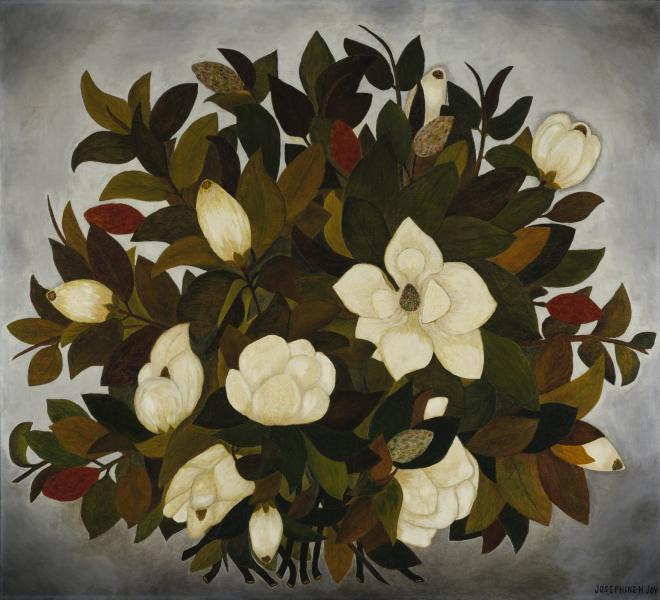
Josephine Joy, Magnolia Blossoms, ca. 1935-1941, oil on canvas, Smithsonian American Art Museum, Transfer from General Services Administration, 1971.447.44
Josephine Joy grew up on an Illinois farm, where she loved to sketch birds, trees, and flowers. Circumstances prevented her from following her artistic calling until 1927, after her children were grown and her husband had died. Joy lived in California then, and the WPA’s California Art Project afforded her the opportunity to work gainfully as an artist. In the 1930s, “non-academic” painters were increasingly celebrated alongside their professional peers. By the early 1940s, Joy was a nationally acclaimed painter whose work had been featured in a solo exhibition at the Museum of Modern Art in New York.
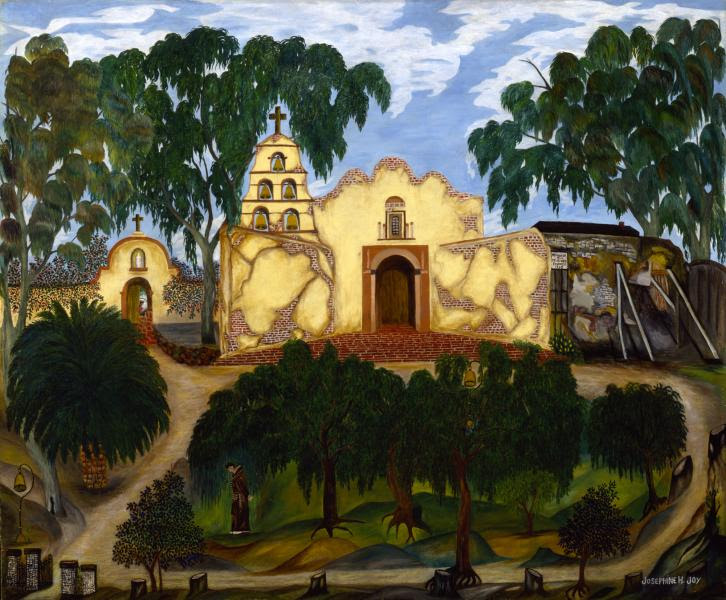
- Josephine Joy, San Diego Mission, ca. 1935-1939, oil on fiberboard, Smithsonian American Art Museum, Transfer from General Services Administration, 1971.447.45
- Josephine Joy’s paintings combine direct observation and imaginative design. This is especially evident in this painting of the Mission San Diego de Alcala, the first of California’s twenty-one missions. Founded in 1769, the building underwent renovations in 1931. Certain features of San Diego Mission are drawn from the renovation, while others appear much older. The newly built bell tower contrasts with the cracked and exposed brick and the aged building to the right. Joy painted San Diego Mission while working with the WPA’s Southern California Art Project in Los Angeles from 1936 to 1939.
“I love to paint in the open, sitting in some beautiful garden, hillside or remote place or in Balboa Park [in San Diego], where I had sketched many pictures … I paint from nature but occasionally I find myself designing.” The artist, quoted in Cat and a Ball on a Waterfall: 200 Years of California Folk Painting and Sculpture, 1986

- Josephine Joy, Trysting at Evening, ca. 1935-1939, oil on fiberboard, Smithsonian American Art Museum, Transfer from General Services Administration, 1971.447.39
- This painting may have been inspired by a sketch Josephine Joy made on one of her trips to the San Diego Zoo. The bench and railing in the image imply that this scene is a part of some man-made environment. The two peacocks in the foreground spread their trains to the fullest, displaying the bright colors of their plumage, and lift their chins in an attempt to attract a mate. The three birds perched on the railing and in the tree, however, ignore this elaborate show. In nature, the male peacocks are more brightly colored than female peahens, but here the artist shows them all to be more similarly colored.

Josephine Joy, Waterbirds Nesting, ca. 1935-1939, oil on canvas, Smithsonian American Art Museum, Transfer from General Services Administration, 1971.447.42

Josephine Joy, Moufflon–Bobtailed Sheep, ca. 1935-1939, oil on canvas, Smithsonian American Art Museum, Transfer from General Services Administration, 1971.447.40
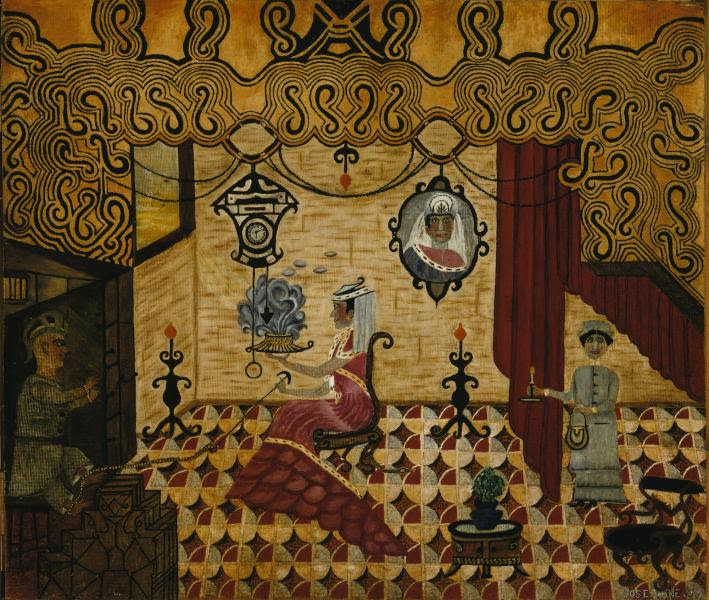
Josephine Joy, Prisoner’s Plea, ca. 1935-1937, oil on fiberboard, Smithsonian American Art Museum, Transfer from General Services Administration, 1971.447.38
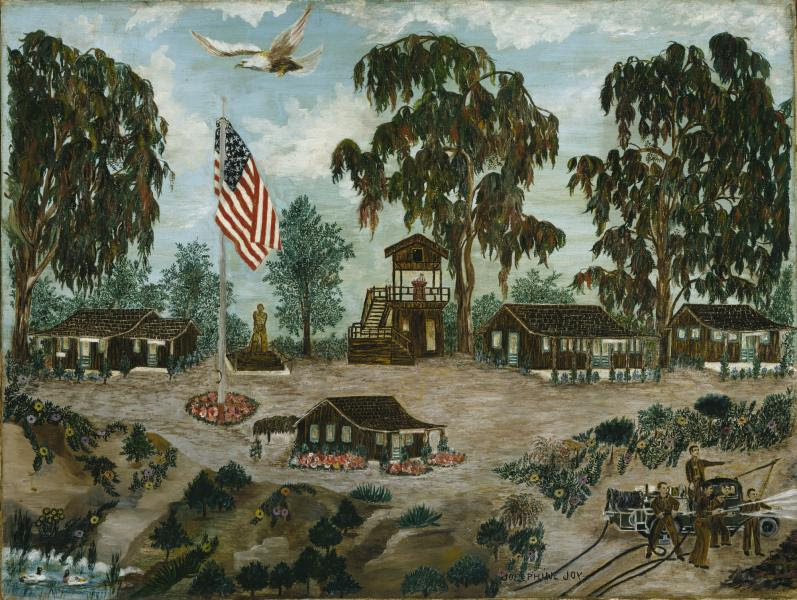
Josephine Joy, CCC Camp Balboa Park, ca. 1933-1937, oil on canvas, Smithsonian American Art Museum, Transfer from General Services Administration, 1971.447.41
WEEKEND PHOTO OF THE DAY
SEND YOUR SUBMISSION TO:
ROOSEVELTISLANDHISTORY@GMAIL.COM
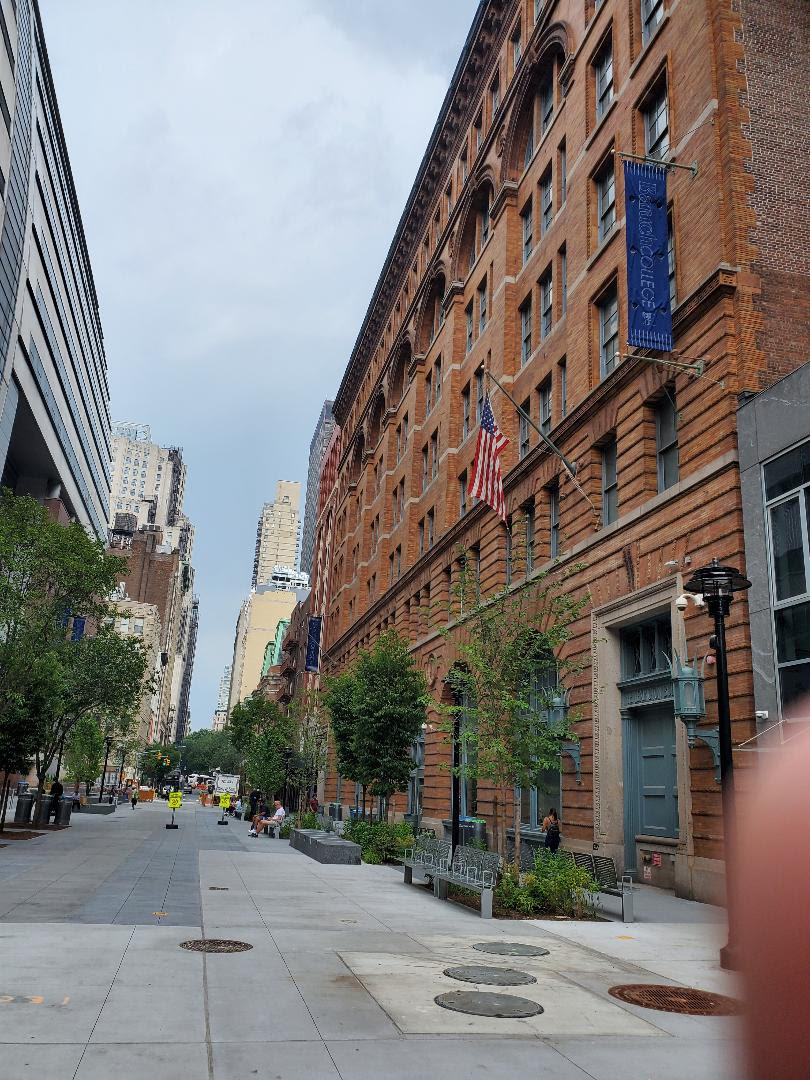
FRIDAY PHOTO OF THE DAY
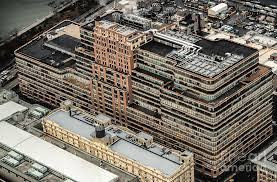
STARRETT – LEHIGH BUILDING
The Starrett–Lehigh Building at 601 West 26th Street, between Eleventh and Twelfth Avenues and between 26th and 27th Streets in Chelsea, Manhattan, New York City, is a full-block freight terminal, warehouse and office building. It was built in 1930–31 as a joint venture of the Starrett Corporation and the Lehigh Valley Railroad on a lot where the railroad had its previous freight terminal, and was designed by the firm of (Russell G.) Cory & (Walter M.) Cory, with Yasuo Matsui the associate architect and the firm of Purdy & Henderson the consulting, structural engineers. When William A. Starrett died in 1932, the Lehigh Valley Railroad bought the building outright, but by 1933 it was a losing proposition, with a net loss that year of $300,000. The Starrett–Lehigh Building was named a New York City landmark in 1986,[1] and is part of the West Chelsea Historic District, designated in 2008
NINA LUBLIN, ROBIN LYNN, ARON EISENPREISS, ANDY SPARBERG,
ED LITCHER (WHO SENT THE HISTORY),
Text by Judith Berdy
Thanks to Bobbie Slonevsky for her dedication to Blackwell’s Almanac and the RIHS
Thanks to Deborah Dorff for maintaining our website
Edited by Deborah Dorff
Roosevelt Island Historical Society
All image are copyrighted (c) Roosevelt Island Historical Society unless otherwise indicated
SMITHSONIAN AMERICAN ART MUSEUM
FUNDING PROVIDED BY ROOSEVELT ISLAND OPERATING CORPORATION PUBLIC PURPOSE GRANTS CITY COUNCIL REPRESENTATIVE BEN KALLOS DISCRETIONARY FUNDING THRU DYCD
Copyright © 2021 Roosevelt Island Historical Society, All rights reserved.Our mailing address is:
rooseveltislandhistory@gmail.com
Jun
29
Tuesday, June 29, 2021 – SEE WHAT HAPPENED DURING A HEAT WAVE IN 1901
TUESDAY, JUNE 29, 2021
The
402nd Edition
From the Archives
Rocking Chair Riots
of 1901 in
Madison Square Park
PortableNYC – New York history, architecture and secrets
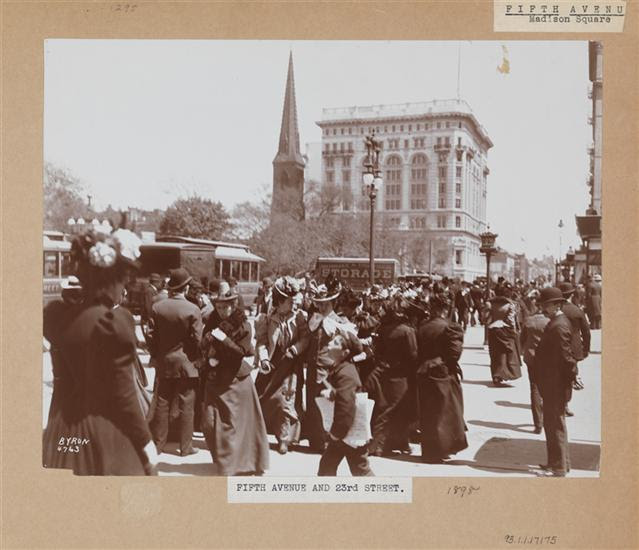
New York City has seen its fair share of civil unrest. One of them, however unlikely, was caused by rocking chairs and took place in Madison Square Park.
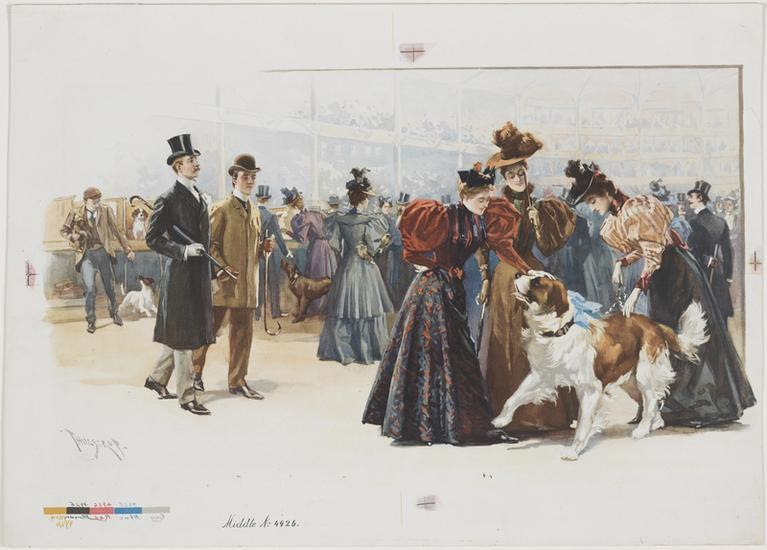
The upscale Madison Square Park neighborhood, located in front of the posh Fifth Avenue Hotel, teamed with elegantly dressed and well heeled elites. One day in 1901, a businessmen named Oscar F. Spate saw an opportunity for procuring a buck. The idea was based both on the natural human desire to rest one’s tired body in a comfortable chair combined with the lack of an equal desire to share seating arrangements with lower-ranking members of society.
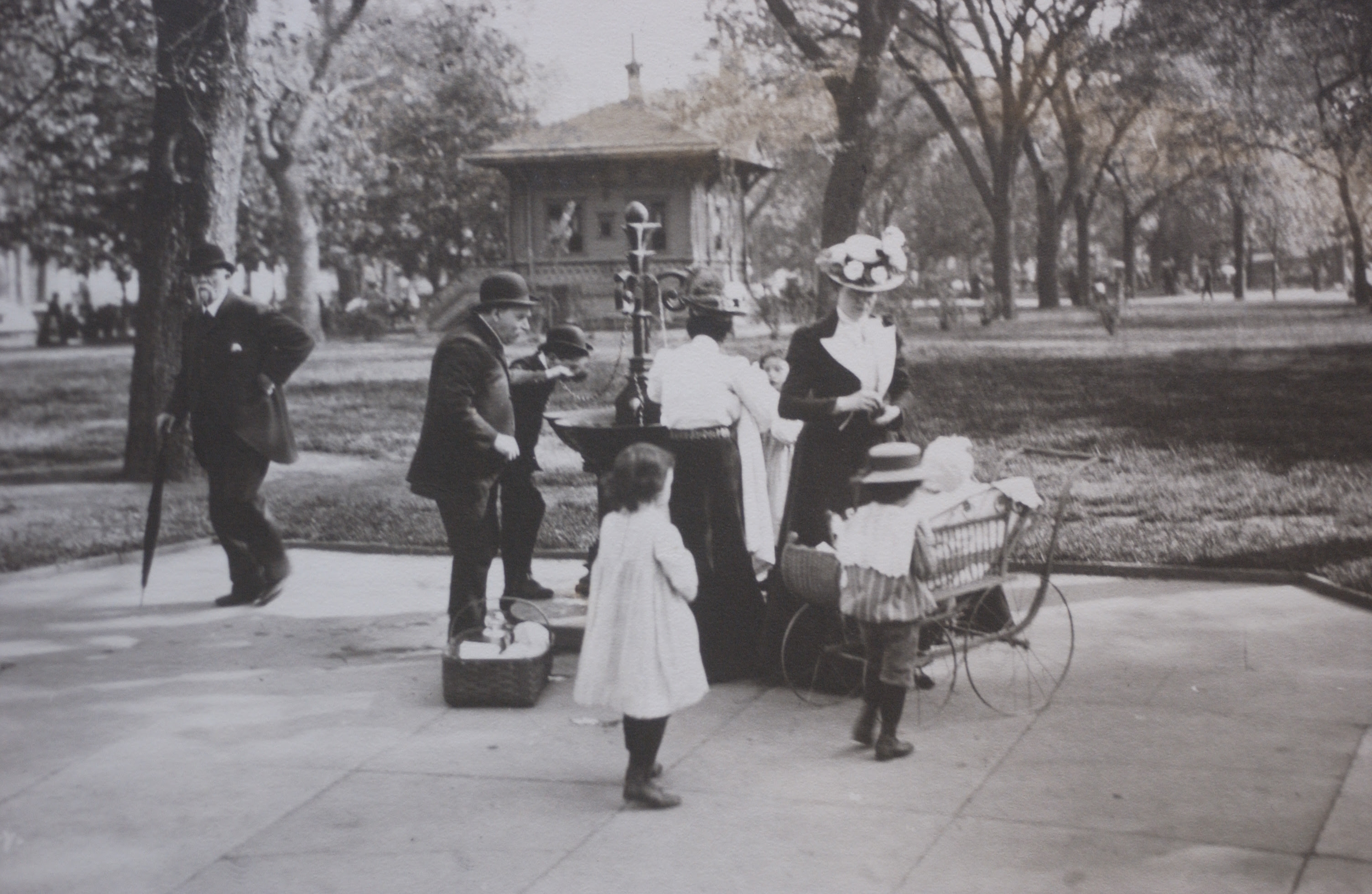
Mr. Spate arranged a deal with the city to place comfy rocking chairs in Central Park and Madison Square Park that would be made available for a modest fee of five cents per sitting body. This highly undemocratic concept was met with resentment and righteous indignation by those who happened to lack the proper means to afford the chairs but nevertheless desired to be seated just as much as the next person. In order to protect the chairs from un-paying public, Spate hired special attendants—a move which led to clashes between the hired hands and unruly citizens attempting to sit for free.
The problem was compounded by the heat wave of 1901—one of the longest the city had ever experienced—during whichthe temperature in Manhattan hit at least 99 degrees every day for over a week straight. Prior to air-conditioning, public parks were the only places where citizens could cool down and regain strength. Problematically, not only did parks not have enough public benches, but most of those benches in Madison Square Park were located in the open sun while the desirable shady spots were occupied by Spate’s paid chairs.
As an act of protest, some people actually went so far as paying for a chair, only to immediately break it down to pieces. One of the attendants, after attempting to remove a non-paying boy from a chair, had to run for his life to the safety of the Fifth Avenue Hotel when a mob of one-thousand men proceeded to chase the poor soul with the war-like cries of “Lynch him!”
The situation escalated two days later when the chair skirmishes erupted into a full-on rocking chair riot. It all started with one weary, overheated young man who refused to yield to the demand to either pay or vacate his comfortable, shady place of rest. His right to stay seated was vocally supported by a sizable, irritable, overheated crowd demanding equal sitting rights, free of charge. The struggle got physical as unruly members of the crowd started expropriating the chairs and threatening attendants. The police rushed over, but to no avail—the crowd was too large to handle. The uprising soon ended in the complete and utter success of the public: the Parks Commissioner canceled the five-year contract with Spate. A 10,000-person celebration ensued, with victory being sealed when the NY Supreme Court issued an injunction forbidding anyone to charge money for park seating.
In a final attempt to monetize his chairs, the relentless Spate sold some of them to Wanamaker’s Department Store under the label of “Historic Chairs.” The rest of the chairs were left in the parks with the humane and democratic sign, “FREE.”
As for Oscar F. Spate—the chair riot apparently wasn’t the most colorful episode of his life. Prior to the “chair” saga, he divorced his wife on the grounds that she turned out to be a man and later ended up in jail for some of his shady “business deals.” What a shame it was for him to find out, while incarcerated, that after his mother’s death he had inherited more than a million.
TUESDAY PHOTO OF THE DAY
SEND TO ROOSEVELTISLANDHISTORY@GMAIL.COM
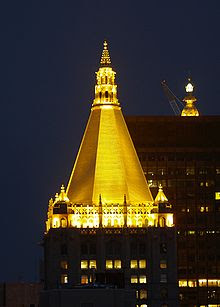
MONDAY PHOTO OF THE DAY
OLD METROPOLITAN OPERA HUSE AT 39 STREET
NO ONE GUESSED THE OLD MET!!

Text by Judith Berdy
Thanks to Bobbie Slonevsky for her dedication to Blackwell’s Almanac and the RIHS
Thanks to Deborah Dorff for maintaining our website
Edited by Melanie Colter and Deborah Dorff
Sources
PortableNYC – New York history, architecture and secrets
FUNDING PROVIDED BY ROOSEVELT ISLAND OPERATING CORPORATION PUBLIC PURPOSE GRANTS CITY COUNCIL REPRESENTATIVE BEN KALLOS DISCRETIONARY FUNDING THRU DYCD
Copyright © 2021 Roosevelt Island Historical Society, All rights reserved.Our mailing address is:
rooseveltislandhistory@gmail.com