The Establishment of the Postal Service in New York
Thursday, July 17, 2025 New York Almanack Issue # 1487
The Establishment of Postal Service in New York
July 16, 2025
What follows is excerpted from “The New York Post Office in Olden Times, by W.B.,Taylor, a paper read before the New York Historical Society on October 7, 1851.
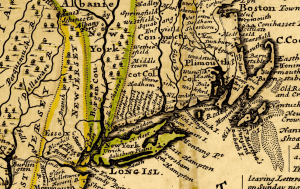
The first regulation providing for the transmission of letters by post in the Province of New York, bears [the] date 10 December, 1672, when Governor [Francis] Lovelace [ca. 1621-1675] established “a post to go monthly” from New York to Boston and back again.
This regulation purported to be in obedience to his Majesty’s [King Charles II] commands, “who enjoynes all his subjects, in their distinct colonies, to enter into a strict allyance and correspondency with each other, as likewise for the Advancement of Negotiation, Trade, and Civil Commerce, and for the speedy intelligence and Dispatch of affayres.”
It gave notice that a messenger should start on 1st January, 1672-3:
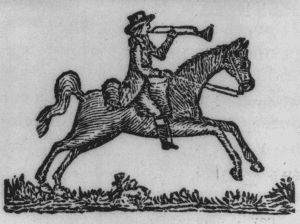
“If any, therefore, have any small letters or portable goods, to be conveyed to Hartford, Connecticut, Boston, or other parts on the road, they shall be carefully delivered according to the directions by a sworne Messenger and Post, who is purposely employed in that affayre.
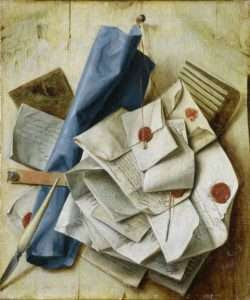
“In the interim, those that bee disposed to send letters, lett them bring them to the Secretary’s office, where, in a lockt Box, they shall be preserv’d till the Messenger calls for them. All persons paying the Post before the bag bee sealed up.”
In various patents granted subsequently for lands along this route, a condition was inserted, obliging the patentees to ferry the postman over gratis. Matters continued in this position until [Royal Governor Thomas] Dongan‘s arrival [in 1683], when he recommended setting up post houses along the coast, from Carolina to Nova Scotia.
He was authorized to farm the privilege to any undertaker for three or five years, the profits from all the post offices within his Majesties dominions, whether foreign plantations or in Europe, being claimed by the Duke of York.
Accordingly, an order in Council was passed on the 2d March, 1684-5, establishing a post office “for the better correspondence between the Colonies of America.”
The rates for riding post were fixed at 3d. per mile; the postage on every single letter not above 100 miles was to be 3d., if more proportionally.
In 1686, 14 September, an order was made for the delivery of ship letter[s] in these words:
“That no letters he delivered in any place whatsoever except the Custom House of this City; paying for every packett or double letter nine pence, for every single letter four pence half-penny; the one moyety [one half] of which moneys shall be given to such poor as shall be nominated by the Capt. General and Council, the other half to the officer of the Custom House, which is to continue until further order.”
In January, 1691-2, letters patent were issued under the great seal, granting unto ‘Thomas Neal, his executors and assigns, authority to erect post offices in America for the period of twenty-one years. He appointed Colonel Andrew Hamilton, of New Jersey, Postmaster General for the colonies.
Andrew Hamilton was the colonial governor of East and West New Jersey from 1692 to 1697 and again from 1699 to 1703. He also served as Deputy Governor of the neighboring Province of Pennsylvania. He died in 1703.]
In 1692 the latter brought the subject before the Council at New York, and the consequence was an act establishing a post office in that city. The rates established were: For every single letter to New York, 9d.; from Virginia to New York, 12d.; and for eighty miles and under, four pence halfpenny.
The charge was found, in the following year, to exceed the profits fourfold, and an aid of 50 pounds was voted, which was renewed in 1695.
The above act was renewed by the Legislature from time to time, yet for ten years after this the post from New York went eastward no further than Boston, and westward only to Philadelphia.
“There is no other post upon all this continent,” writes Lord Cornbury, in 1704.
“If I have any letters to send to Virginia or to Maryland, I must either send an express, who is often retarded for want of boats to cross those great rivers they must go over, or else for want of horses; or else I must send them by some passengers who are going thither.
“The least I have known any express take from hence to Virginia, has been three weeks. Coll. Nicholson and Coll. Seymour have wrote me word they will be here in September, and I do then intend to propose to them the settling of a Post to go through to Virginia.”
In 1710, Hamilton having sold his privilege to the Crown, the post office of Great Britain, Ireland, and America were placed under one direction, by the 9th [year] of Queen Anne [‘s rule].
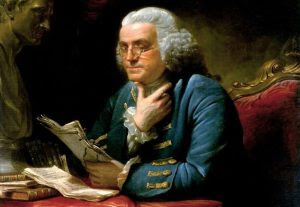
The department of America was put under a Deputy Post Master General, to which office Benjamin Franklin was appointed in 1753 [alongside William Hunter].
The books of the Department were then kept by Benjamin Franklin himself, and are still preserved among the archives of the department [of the U.S. Post Office], in his own hand writing, when the whole force of the department was the Postmaster General, at a salary of $1,000 per annum.
[On July 26, 1775 the Second Continental Congress created the United States Post Office in Philadelphia under Benjamin Franklin.]
The present [in 1851] Postmaster General is assisted by nearly two hundred subordinates in the department, and nearly thirty thousand scattered throughout the country.
From all this it is plain that New York was the first colony in America that made legal provision for the transmission of letters by post.
All image are copyrighted (c) Roosevelt Island Historical Society unless otherwise indicated THIS PUBLICATION FUNDED BY DISCRETIONARY FUNDS FROM CITY COUNCIL MEMBER JULIE MENIN & ROOSEVELT ISLAND OPERATING CORPORATION PUBLIC PURPOSE FUNDS.
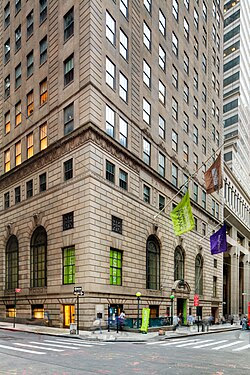
Bank of New York & Trust Company Building 48 Wall Street
Wednesday, July 16, 2025 New York Municipal Archives Ken Cobb, Director Brian Ferree, Archivist Issue # 1486
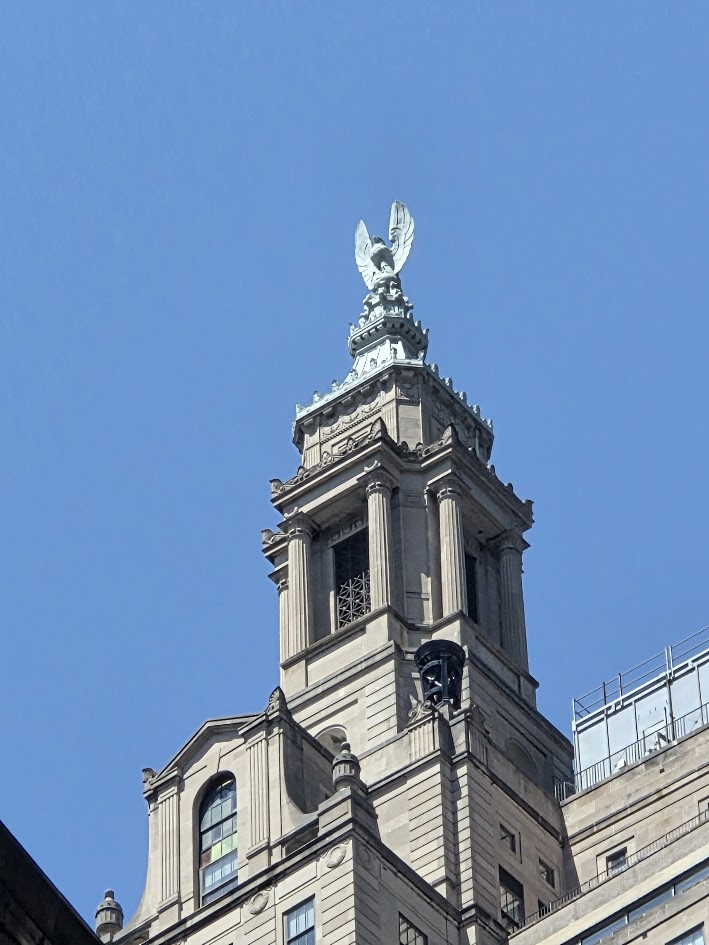
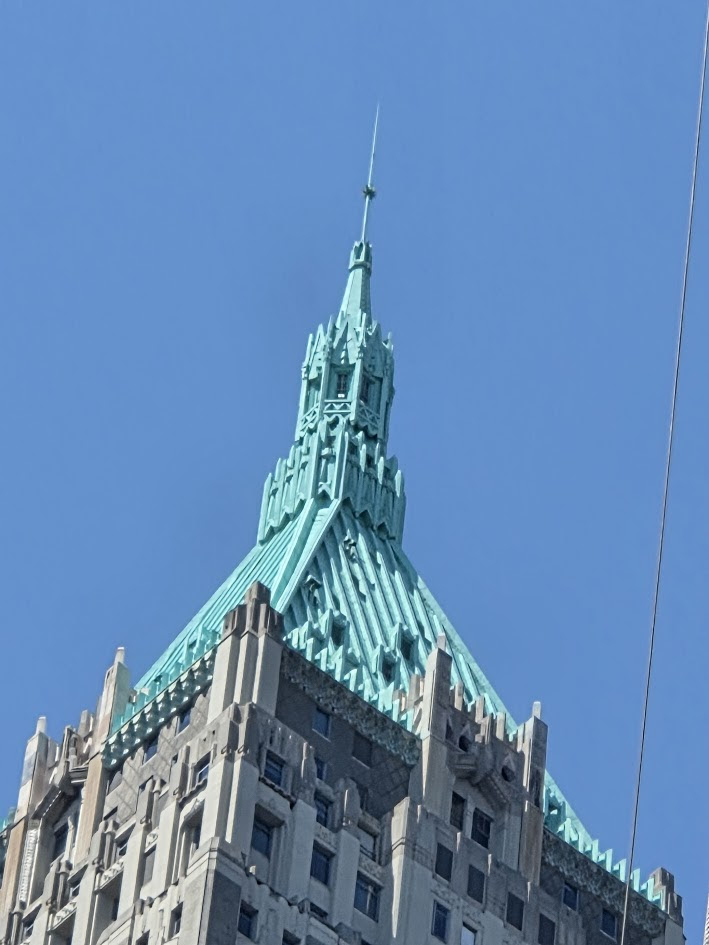
I took this photo last week and could not find out what building this artwork was atop it’s roof. I turned to the Municipal Archives, who identified the building as 48 Wall Street.
Landmarks Preservation Commission October 13, 1998; Designation List 298 LP-2025 (FORMER) BANK OF NEW YORK & TRUST COMPANY BUILDING, 48 Wall Street (aka 48-50 Wall Street and 46-48 William Street), Manhattan. Built 1927-29, Benjamin Wistar Morris, architect.
Landmark Site: Borough of Manhattan Tax Map Block 40, Lot 14.
On August 4, 1998, the Landmarks Preservation Commission held a public hearing on the proposed designation as a Landmark of the (Former) Bank of New York & Trust Company Building and the proposed designation of the related Landmark Site (Item No. 1). The hearing had been duly advertised in accordance with the provisions of law. Three witnesses spoke in favor of designation including a representative of the Historic Districts Council who also read a statement in support of the designation from the Municipal Art Society. A representative of the owner indicated the owner’s willingness to work with the Commission in adapting the building to new uses.
Summary This thirty-two-story neo-Georgian skyscraper,with its distinctive setback tower, was erected by the Bank of New York & Trust Company in 1927-29 to the plans of Benjamin Wistar Morris, a prominent designer of business and institutional buildings. Established in 1784, the Bank of New York was the second bank in the nation and is New York’s oldest financial institution. In 1796, it became the first bank to erect a building on Wall Street, setting a precedent for the future development of the street as New York’s financial center. The present building, the bank’s third on the site, was erected when the banking industry was taking a leadership role in the redevelopment of downtown with large new skyscrapers. An elegant steel-framed, limestone-clad structure, with a series of graceful setbacks, the building is decorated with large scale neo-Georgian details that reinforce the building’s picturesque qualities. The impressive three-story rusticated base, which housed the main banking floors, incorporates a raised basement, pedimented doorways, and large arched second-story windows. The building is a notable presence on Wall Street, while its setback tower, culminating in a Federal-style cupola crowned by an American eagle, contributes a striking and highly recognizable element to the skyline of Lower Manhattan.
The building was occupied by The Museum of Finance for a few years. The lower public spaces are now used as entertainment venues. About the Eagle from Wikipedia: The section above the 30th story forms a lantern-like cupola with four layers. The lowest layer is composed of the 31st and 32nd stories: the former has rectangular windows and the latter has square windows. Both stories measure three by three bays wide, with round-arched, gabled wings to the south and north. The second layer is a windowless octagonal section with niches cut into each corner.The third layer is cruciform-shaped, with rectangular openings on each of four sides flanked by a pair of columns, forming a colonnade. The top layer is a windowless square mass, topped by a pyramidal roof.[ The lantern is designed in the Federal style.
The pyramidal roof is capped by a 11-foot-tall (3.4 m) representation of an eagle on a globe, which represented New York state.] The eagle is located 513 feet (156 m) above the ground, and is gilded. The eagle was restored in 2008.
PHOTO OF THE DAY
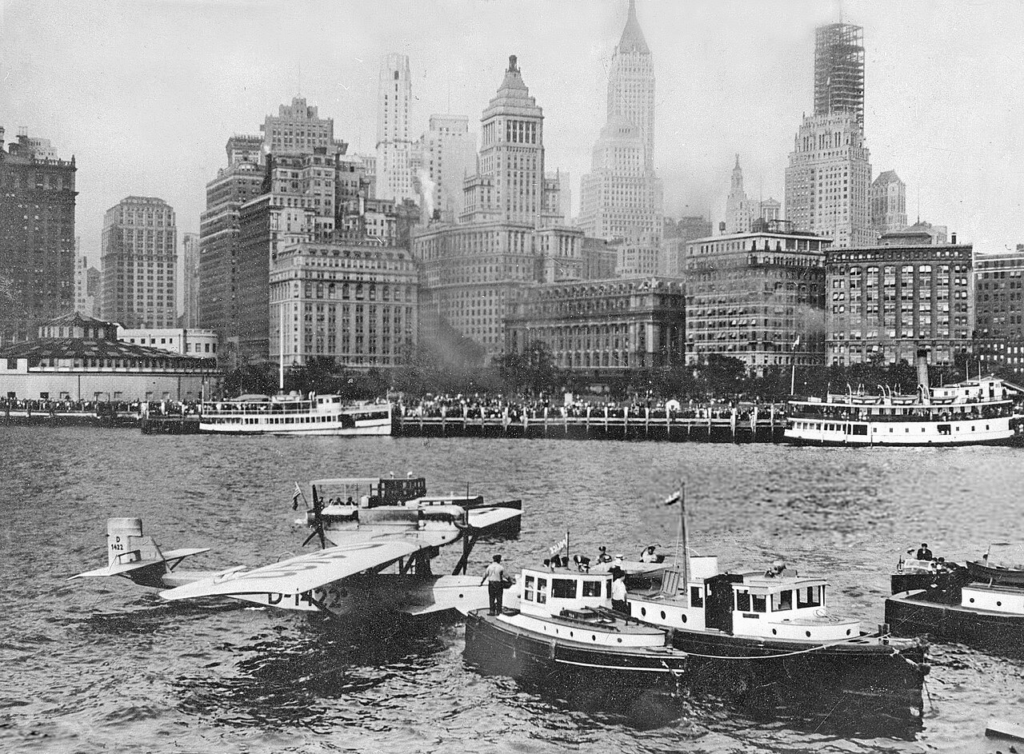
How many structures can you identify from this 1930 photo? Click reply to Mailchimp
CREDIT TO
New York Landmarks Preservation Commission New York Municipal Archives Wikipedia JUDITH BERDY
All image are copyrighted (c) Roosevelt Island Historical Society unless otherwise indicated THIS PUBLICATION FUNDED BY DISCRETIONARY FUNDS FROM CITY COUNCIL MEMBER JULIE MENIN & ROOSEVELT ISLAND OPERATING CORPORATION PUBLIC PURPOSE FUNDS.
Social Realism as a movement in art and fiction emerged between the World Wars in response to the political and socio-economic turmoil of the period. To create in the 1930s, both in Europe and the United States, meant making an ideological choice.
The direction might be reactionary or revolutionary, it could be religious or materialist – the routes had in common a shift away from the experimentation of previous decades towards tradition, from individualism towards shared views.
Painters and authors turned to realism in order to make their work accessible to a wider public, portraying their subjects as victims of developments beyond their control. By calling attention to the miserable condition of working classes, they challenged the powers that were held responsible for the slump in conditions and standards.
Social consciousness in the arts originated in the dire consequences of the Industrial Revolution and the subsequent “rationalization” of the workplace. Artistic and economic history run parallel in this context and in some cases seem to overlap.
Migrant Family
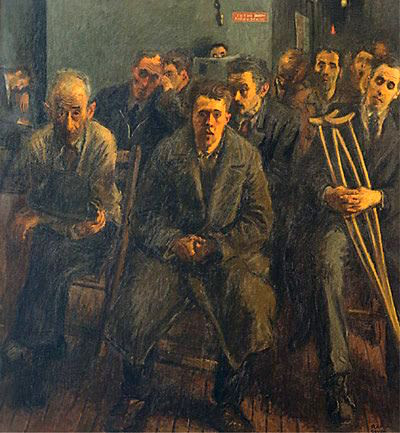
Painter and printmaker Raphael Soyer (1899-1987) was born Raphael Zalman Schoar in Borisoglebsk, a Russian town on the left bank of the Vorona River.
His father was a Hebrew scholar; his mother worked as an embroiderer. In a family of six children (Raphael’s identical twin Moses was a painter as well) much emphasis was placed on intellectual and artistic pursuits.
Under pressure of relentless Tsarist pogroms, the exodus of Jews from the Russian Empire started in the 1880s and continued into the first decades of the twentieth century. In 1912, Raphael’s parents packed their bags and took their kids to America, changing their name in the process. They would eventually settle in Brooklyn.
Raphael had the good fortune of attending the free school of the Cooper Union. Between 1914 and 1917 he and his brother were educated at that great Manhattan institution.
His mentor at the League was French-born Guy Pène du Bois who encouraged him to explore his own style rather than adhere to “external” demands. His contacts with painters of New York’s Ashcan School proved inspirational. He shared their preference for gritty urban themes.
Du Bois advised him to show his work to Charles Daniel, owner of the Daniel Gallery at 2 West 47th Street. His first exhibition took place in 1929 and was well-received.
Selling a number of works emboldened him to dump his day job, rent a studio on the Lower East Side, and pursue painting as a career. In October that same year Wall Street’s Stock Market crashed.
Poverty & Depression
During the tumultuous years following Black Thursday, a great need emerged to provide millions of jobless people with meaningful employment. In esthetics, the theme of social engagement re-entered the debate. Many artists conceived creativity as an act of political participation.
Raphael became associated with painters of the Fourteenth Street grouping who worked from studios near Union Square. They depicted “rough” scenes from this district that was known as a hotbed of radicalism.
As economic decline began to impact people’s lives, Soyer portrayed local down-and-outs. Many of his works came to embody the Great Depression, but his approach differed from more politically motivated left-wing artists.
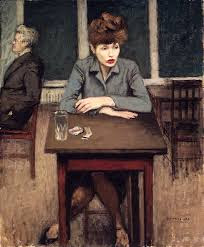
Soyer painted men and women in contemporary settings of subways and bars of the city’s East Side, parts of which had become dens of deprivation. His images of drifters and derelicts reveal a timeless vision of the human condition rather than the immediacy of social protest.
There was no attempt to propaganda or commentary in his work. He conveyed the plight of poverty without falling into the traps of melodrama. He remained what he set out to be as an artist: both a realist and a humanist.
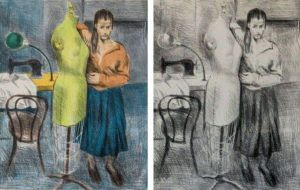
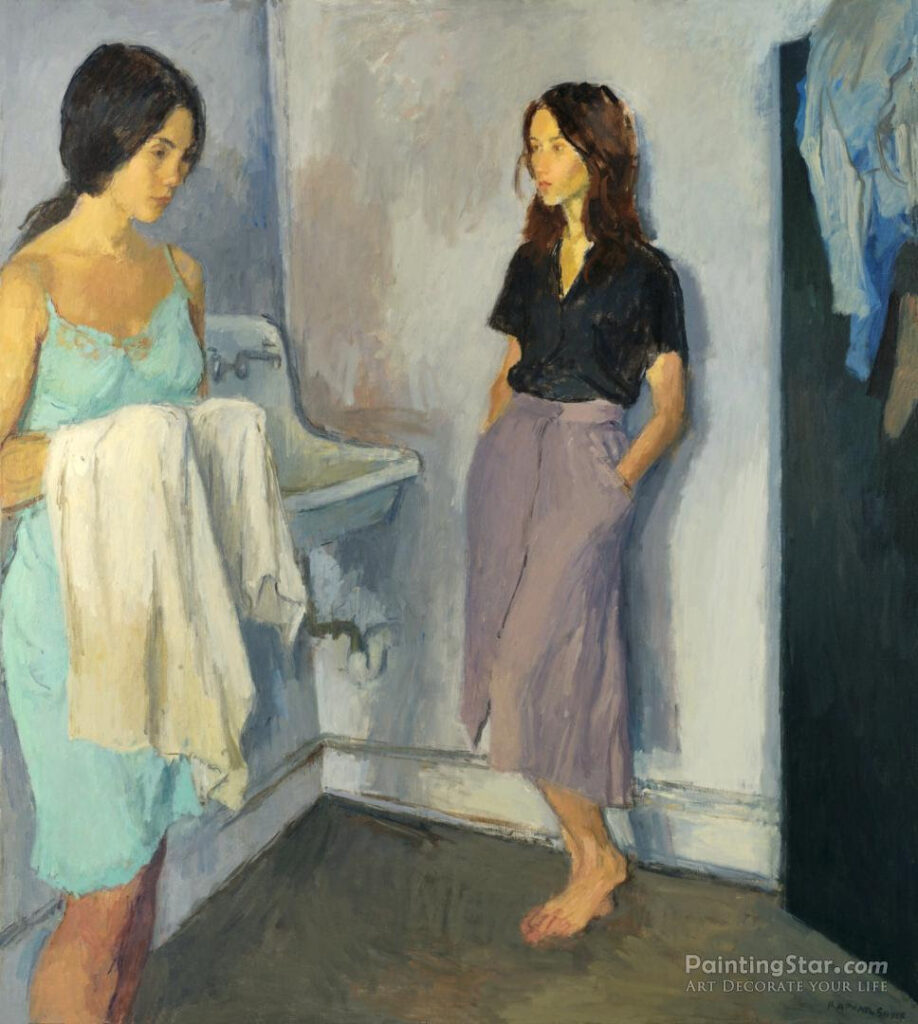
Manhattan’s working-class girls were amongst his favorite subjects. The seamstress stands out as an iconic figure of whom he produced various images throughout his career (his mother being an embroiderer, he was used to pins and needles in his childhood home).
He depicted her as a slave of the trade, living in squalor and working against the clock. No finished products leave her hands; there is no pride in her labor. She is a piece worker; her life reduced to bits.
Soyer’s intuitive understanding of suffering may strike the viewer as highly personal and distinctive artistic quality. Yet, the painter’s seamstress is far from unique.
In art, tradition always intervenes – whatever the condition or locality of creation. The needlewoman has a long history, both in literature and in painting.
Division of Labor
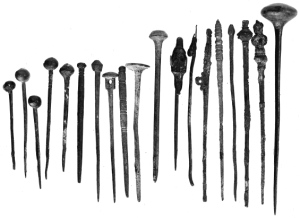
Pins have always been around. Prehistoric people used thorns; in ancient Egypt, pins were crafted of bronze with decorative heads; in the Roman era, they were used to hold pieces of clothing together. Medieval Europeans produced pins from bone, ivory or gold. By then pin-making had become a bustling trade.
The textile industry and the associated production of pins and needles were important economic activities during the eighteenth century, both in England and France.
In 1755, an article on “Épingles” by Alexandre Deleyre included in Denis Diderot’s Encyclopédie (vol. 5) sparked interest in the manufacturing process of pins. In 1761, Henri-Louis Duhamel du Monceau published a study on L’art de l’épinglier in which he broke down the production process into a sequence of seventeen separate stages.
In The Wealth of Nations (1776: first chapter) Adam Smith promoted the concept of division of labor by pointing at the work of pin-makers. He distinguished eighteen distinct steps in the manufacturing cycle.
Production numbers were bound to be low if the complete process was handled by a single person. Divide these operations between ten separate workers and the output would increase dramatically.
As Smith burned his papers before he died, it is difficult to trace his research sources. He followed French intellectual developments and would have been familiar with relevant texts on the subject.
Duhamel’s study on pin-making was acquired by the library of Glasgow University where Adam Smith held a professorship. The library also subscribed to the Journal des Sçavans which, in November 1761, published an extensive review of the book. These sources were within his immediate reach.
The phrase “division of labor” however, had not been employed previously. Smith suggested the term in order to communicate his ideas concerning specialization in manufacture.
He predicted that the process would raise standards of living and increase the wealth of the nation, provided that the monotony of work be compensated by educational diversification. This proviso was soon forgotten as the concept of “productivity” became the sole criterion of economic success.
Birmingham in UK & USA
Pin-making went through the various steps of wire redrawing, straightening, cutting, sharpening the point, attaching the head and polishing. As a consequence, automation also happened in stages. Mass production started in 1828 once the first pin-making machine had been patented.
In a parallel process, the introduction of power-driven mechanical frames had sparked off protests amongst skilled workers. Taking their name from the legendary rebel Ned Ludd in 1811/2, “Luddites” began wrecking machines until the British Army intervened at the behest of factory owners. Dozens of protesters were executed or exiled to Australia.
Until the 1830s, the American market was supplied with mass produced pins from Birmingham in the West Midlands, England. A century later that situation was reversed.
Born at Jamestown in March 1792, Samuel Slocum had been engaged in construction work in various parts of Rhode Island. Around 1830 he took his family to London, later moving to Newport on the Isle of Wight where he became involved in the manufacture of pins.
In 1835, Slocum patented a machine for making pins with solid flat heads. Unable to find financial backing for his project, he returned to the United States.
Having settled in Poughkeepsie, he founded the manufacturing company Slocum & Jillson. Business flourished. In September 1841, he also designed a “machine for sticking pins into paper” which is often described as the first stapler.
Physician John Ireland Howe was working as a medic at the New York Almshouse where inmates produced pins by a laborious manual process. In June 1832 he exhibited a prize-winning machine at the American Institute Fair in the City of New York.
Soon after he established the Howe Manufacturing Company. Having moved the firm to the Birmingham, Connecticut, it became America’s largest pin manufacturer, incorporating Slocum & Jilllson in the meantime.
Birmingham in Connecticut out-produced British Birmingham. The American success story resulted in the demise of the English pin industry. By 1939 there were only a handful manufacturers left in the United Kingdom.
Art & Fiction
In Britain and France, cheap production methods led to the collapse of the cottage industry. It harmed dressmakers and milliners in particular. For these workers, mainly young women with little income or family support, there were few alternatives.
Lack of opportunities left them vulnerable to abuse and exploitation. They were reduced to “slopwork,” producing parts of garments that would subsequently be turned into dresses that were sold at considerable profit in fashion shops.
The overworked seamstress became the focus of considerable philanthropic attention. In London, the “Association for the Aid and Benefit of Dressmakers and Milliners” was the first charitable institution founded in March 1843, followed by “The Distressed Needlewomen’s Society” in 1847. She also entered art and literature.
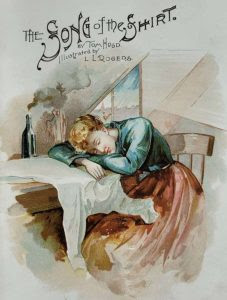
Thomas Hood’s “The Song of the Shirt” was published in 1843 in the Christmas issue of the magazine Punch.
The poet highlighted the inhumane conditions under which needlewomen struggled to get by: “With fingers weary and worn, / With eyelids heavy and red. / A woman sat, in unwomanly rags, / Plying her needle and thread – / Stitch! Stitch! Stitch!”
The poem struck a chord amongst its readers.
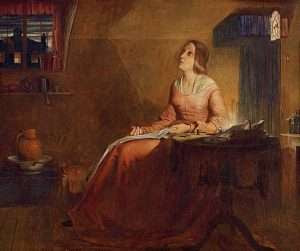
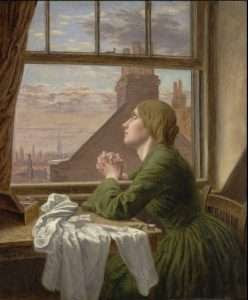
Less than six months later – using a motto taken from Hood’s song – Richard Redgrave exhibited “The Sempstress” at the Royal Academy’s annual summer show.
In a review in The Times of London on May 8, 1844, its art critic argued that by exposing the miserable life of the needlewoman, the painting’s subject was “peculiarly of our time.”
By the time that George W. M. Reynold published his novel The Seamstress, or The White Slave of England (1853), the fate of the exploited dressmaker had entered the collective consciousness of the Victorian populace (with spoonfuls of sugary sentimentality).
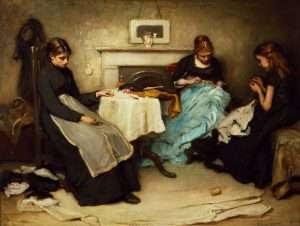
In French academic art, needlework and femininity were fused. Time and again, the seamstress was portrayed as a young woman working from home, her hands occupied with needlework, her head bowed in silent concentration.
Paintings by Millet, Renoir or Pissarro evoke similar images of modesty and domesticity. The seamstress was a paragon of virtue. Needlework as a profession was appreciated as a respectable career.
Mechanization deprived skilled artisans of their jobs and pride. In textile centers such as Rouen, the gentle seamstress of old was turned into a low class “slopworker,” often with questionable morals.
As (rampant) prostitution was a far more profitable trade, it took moral strength to resist the temptation. In painting and fiction, the figure of the prostitute hovered behind the poverty-stricken seamstress. In stories by Guy de Maupassant and others, she represented two halves of the same whole.
Specialization and division of labor became central topics of social criticism. Pin-making functioned as a metaphor for the dehumanizing effect of modern manufacture.
Pins no longer implied progress as imagined by Adam Smith, but represented the worker’s degradation. “He who passes his life in making pin’s heads will never have a head worth anything more,” Francis Palgrave wrote in 1840.
Authors and artists focused their creative attention on the young woman who professionally handled pins and needles. With the emergence of social realism, the needlewoman appeared as the archetypal victim who had been robbed of her livelihood in process of mass production.
Raphael Soyer’s seamstress-images were hard-hitting portrayals of New York City’s Great Crash. At the same time, these depictions were a continuation of and a variation on Franco-British themes that had emerged in painting during earlier periods of economic upheaval.
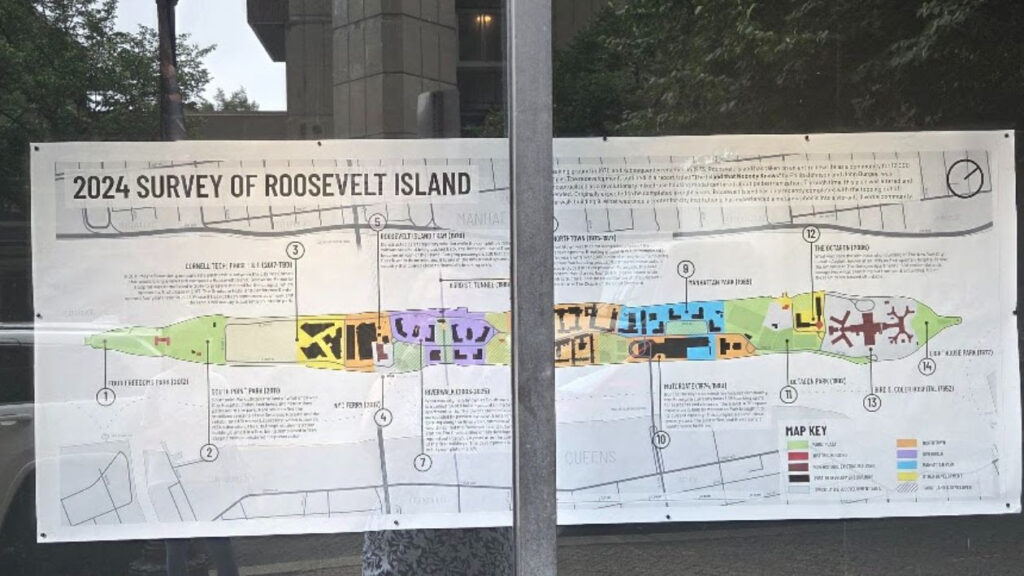
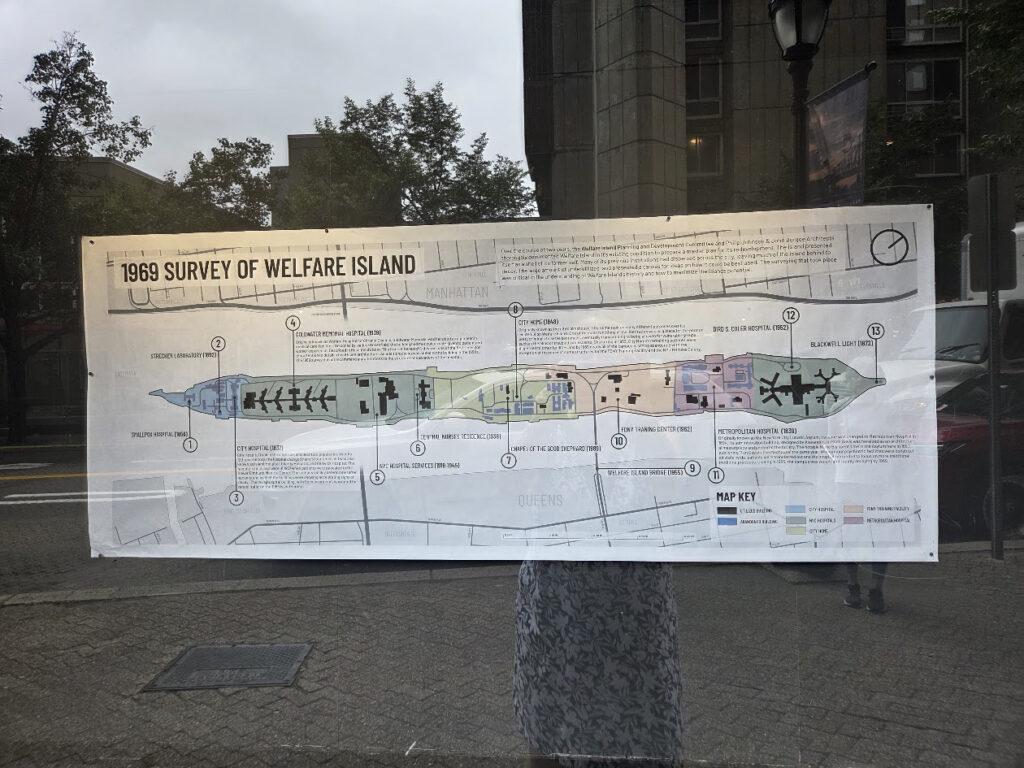
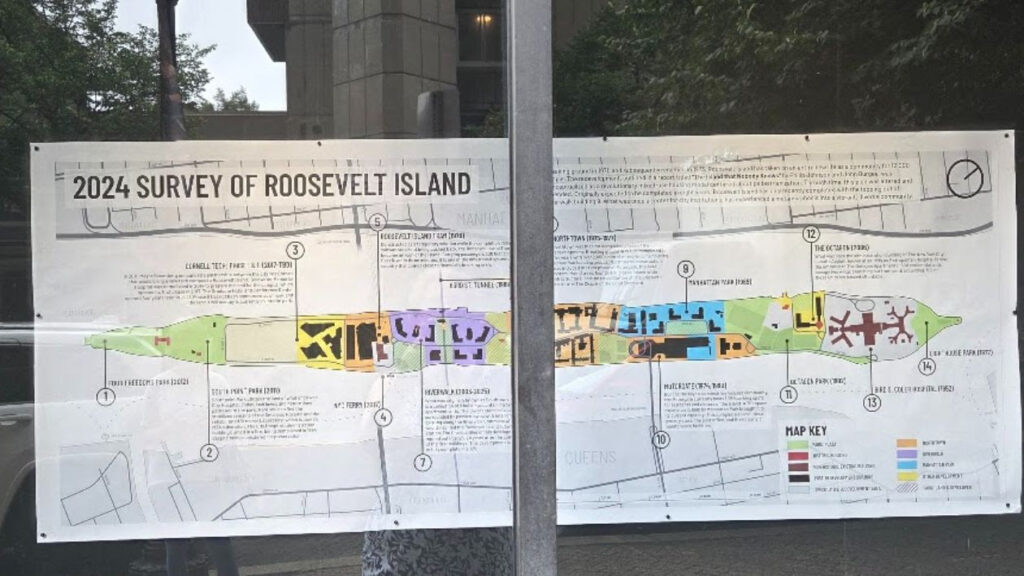
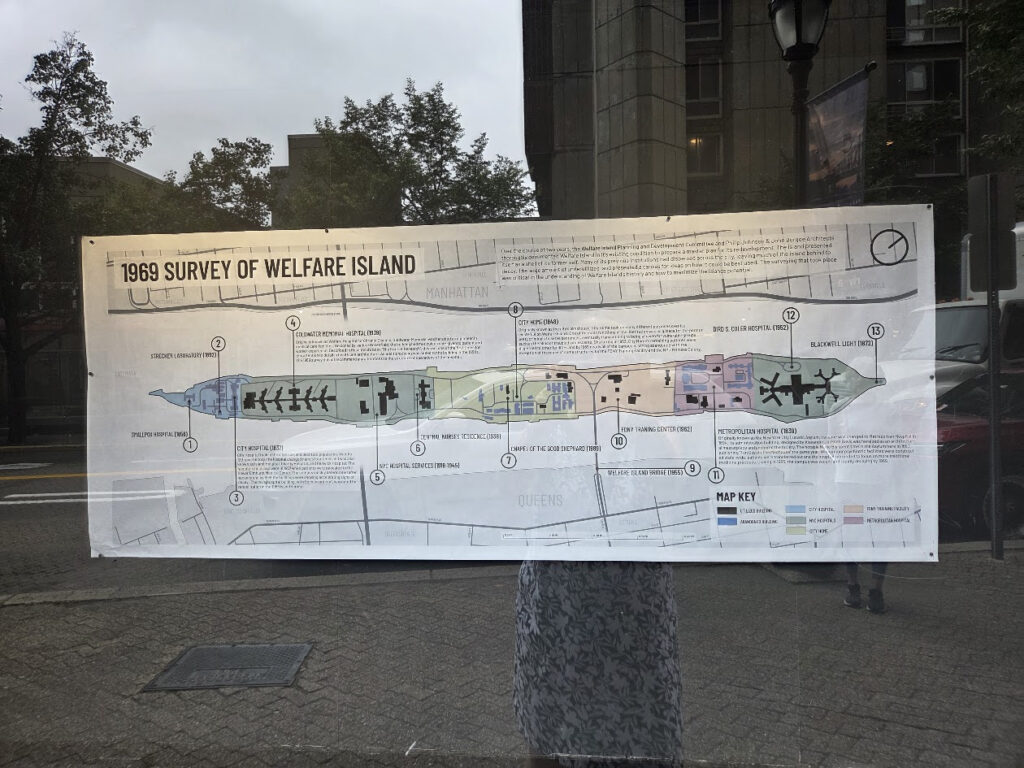
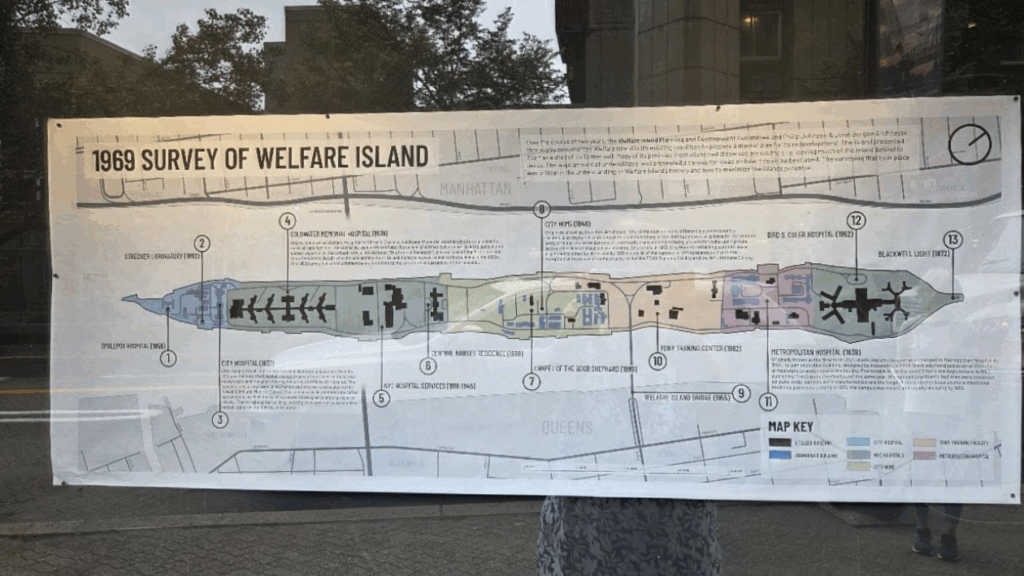
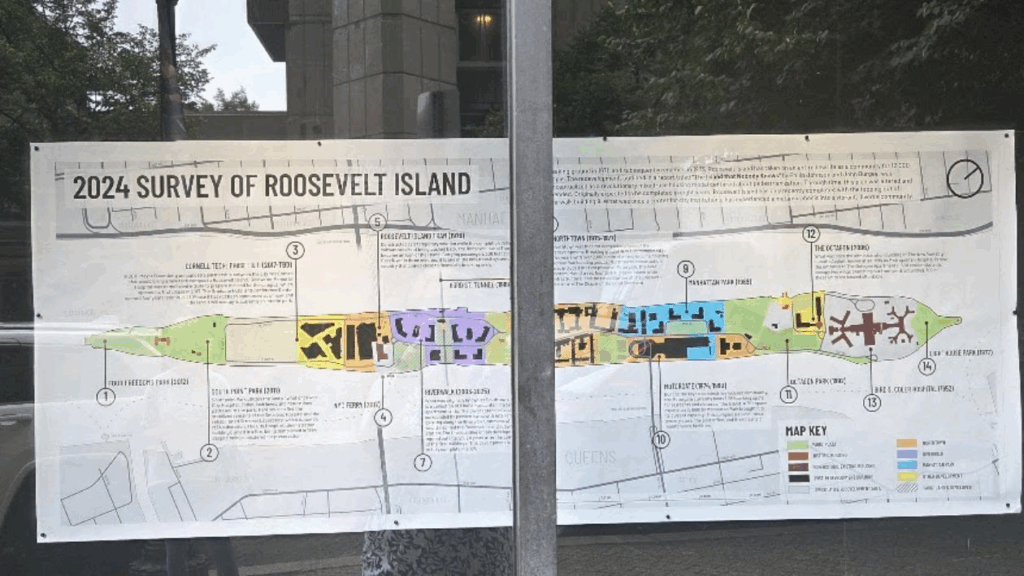
DYLAN BROWN THE CREATOR OF THESE MAPS NOW ON DISPLAY IN THE RIVERCROSS DISPLAY WINDOW. HIS WORK HAS ADDED MORE PERSPECTIVES INTO THE DEVELOPMENT OF OUR ISLAND.
JUDITH BERDY
CREDIT TO
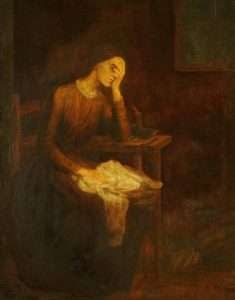
New York Almanack Jaap Harskamp Illustrations, from above: Richard Redgrave’s “The Sempstress,” 1846 (Tate Gallery, London); Raphael Soyer’s “Seamstress,” 1972; G.F. Watts’ “Song of the Shirt,” ca. 1847 (Watts Gallery Trust, Surrey); Roman pins made of metal; Anna Elizabeth Blunden’s “The Seamstress,” 1854 (Yale Center for British Art); illustration from 1893 edition of Thomas Hood’s “Song of the Shirt” published on behalf of the New Home Sewing Company, Massachusetts; and Frank Holl’s “Seamstresses,” 1875 (Royal Albert Memorial Museum, Exeter).
JUDITH BERDY
All image are copyrighted (c) Roosevelt Island Historical Society unless otherwise indicated THIS PUBLICATION FUNDED BY DISCRETIONARY FUNDS FROM CITY COUNCIL MEMBER JULIE MENIN & ROOSEVELT ISLAND OPERATING CORPORATION PUBLIC PURPOSE FUNDS.
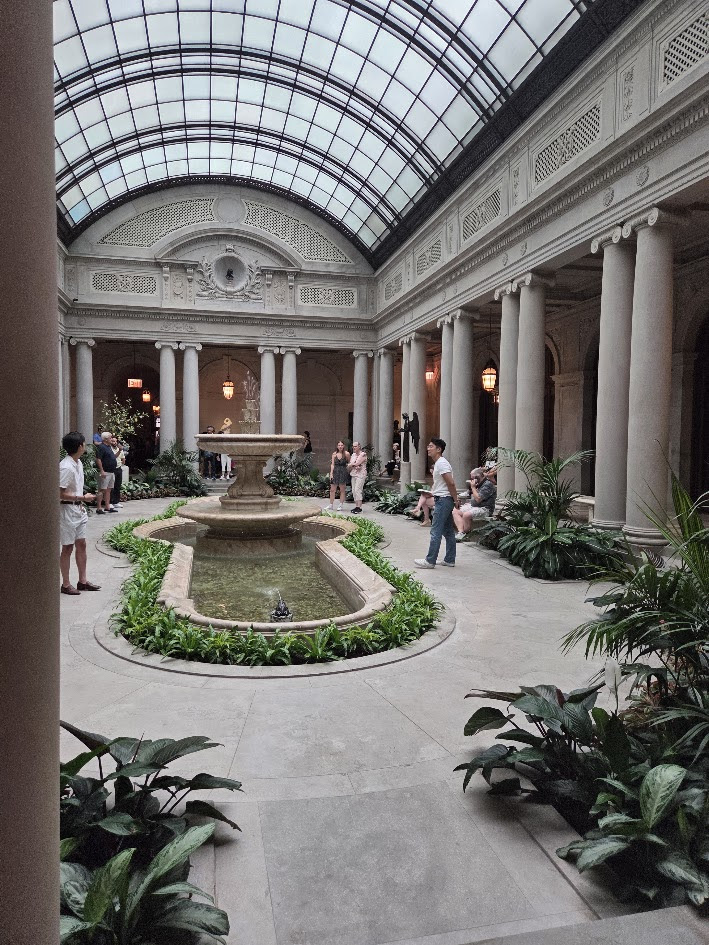
This afternoon I visited the Frick Collection, recently reopened,after being enlarged and restored for 5 years. The restoration and new areas are tasteful and give you a more spacious area to see the artwork.
There is a new gift shop, a restaurant overlooking the garden and contemporatry staircase leading to new areas.
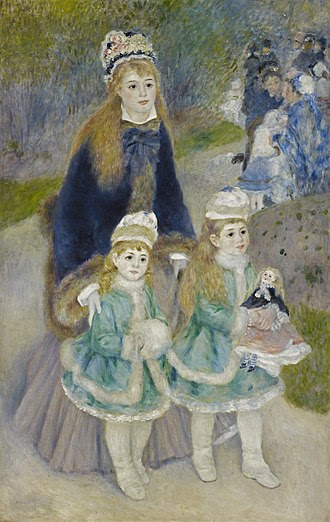
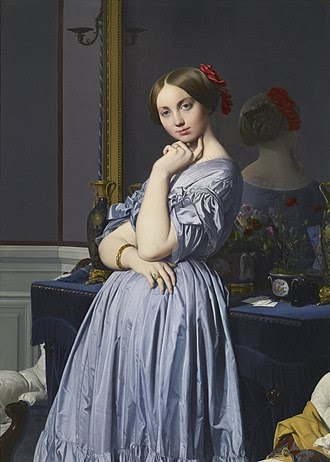
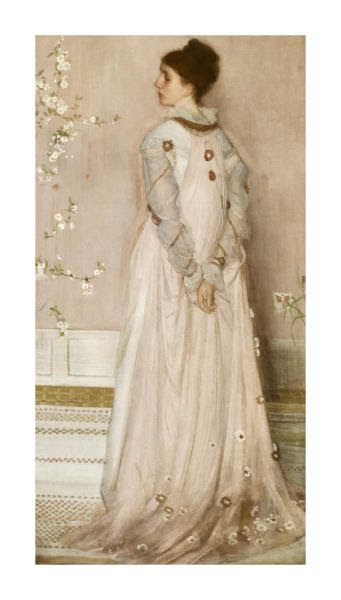
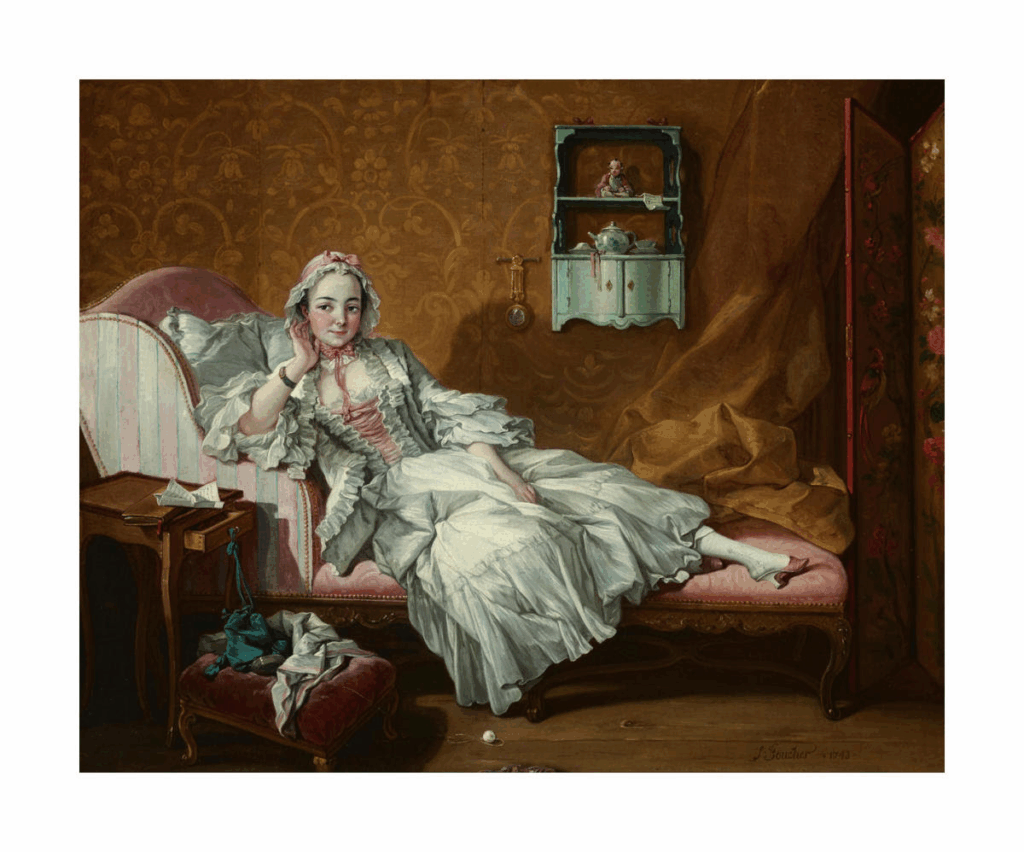
Here are a few of our old friends who are now on exhibit at the Frick. The images of the artwork are from the internet.
Mother and Children (also known as La Promenade) is an Impressionist painting by Pierre-Auguste Renoir that is housed in the Frick Collection.[1] Although the painting is most commonly known as Mother and Children, Renoir presented it with the title La Promenade in 1876.[2] The painting is displayed in an alcove under a set of stairs at the Frick.[3] For years, this painting was barely visible in an alcove. Now it is on full view on the balcony of the second floor.
Frances Dawson (1834–1910) married in 1855 Frederick R. Leyland, a major Liverpool shipowner, telephone magnate, and art collector, who was one of Whistler’s chief patrons before the two quarreled bitterly over the decoration of the famous Peacock Room, once the dining room of the Leylands’ London townhouse and now in the Freer Gallery of Art in Washington.
Commissioned in the fall of 1871, this portrait was exhibited at Whistler’s first one-man exhibition in 1874 (an event sponsored by Leyland), but was never considered by the artist to be totally finished. Within its predominantly pink color scheme, intended to set off Mrs. Leyland’s red hair, the subject is depicted wearing a multi-layered gown designed by the artist. The abstract, basketweave patterns of the matting at the base are repeated on the frame, also designed by the artist; they offset the naturalistic flowering almond branches at the left, which suggest Whistler’s deep interest in Japanese art at this time. Like the portrait of Montesquiou, that of Mrs. Leyland is signed at mid-right with Whistler’s emblematic butterfly, a pattern based on his initials JMW and imbued with the formalistic preoccupations of the nineteenth-century aesthetic movement. The portrait is in fact so totally a work of exquisite design that Whistler’s contemporary Dante Gabriel Rossetti wrote of it, with some reason: “I cannot see that it is at all a likeness.”
Source: Art in The Frick Collection: Paintings, Sculpture, Decorative Arts, New York: Harry N. Abrams, 1996.
When Marie-Jeanne Buzeau (1716–after 1786) posed so pertly for this informal portrait ten years after her marriage to Boucher, she was twenty-seven and the mother of three children. She frequently served as model for her husband, and in later life she painted miniature reproductions of his more popular pictures and made engravings after his drawings. Besides offering such a candid image of the artist’s wife, the portrait provides a fascinating glimpse of a room in the apartment to which Boucher had moved the year before he signed this canvas on the rue de Grenelle-Saint-Honoré. The porcelain figurine and tea service on the hanging étagère reflect Boucher’s taste for the Oriental bric-a-brac so fashionable throughout the eighteenth century. In its composition the portrait is a witty parody of the classical Renaissance depictions of Venus by Giorgione and Titian, and as such the picture has acquired the sobriquet “Boucher’s Untidy Venus.”
Source: Art in The Frick Collection: Paintings, Sculpture, Decorative Arts, New York: Harry N. Abrams, 1996.
PHOTO OF THE DAY
The only area where photography is permitted at the Frick.
DYLAN BROWN THE CREATOR OF THESE MAPS NOW ON DISPLAY IN THE RIVERCROSS DISPLAY WINDOW. HIS WORK HAS ADDED MORE PERSPECTIVES INTO THE DEVELOPMENT OF OUR ISLAND.
JUDITH BERDY
The fenced in garden is restored and faces 70th Street.
CREDIT TO
THE FRICK COLLECTION JUDITH BERDY
All image are copyrighted (c) Roosevelt Island Historical Society unless otherwise indicated THIS PUBLICATION FUNDED BY DISCRETIONARY FUNDS FROM CITY COUNCIL MEMBER JULIE MENIN & ROOSEVELT ISLAND OPERATING CORPORATION PUBLIC PURPOSE FUNDS.
On a warm summer morning, you’re sitting in your yard enjoying a slow moment, when a flash of color catches your eye. Bright orange and black wings dance through the air before alighting on a purple coneflower.
There’s a good chance your first thought is “monarch butterfly.” After looking at the butterfly more closely, however, you realize it’s not quite right for a monarch. It’s a bit too small, and there’s a black line bisecting the black veins on both hind wings. This is no monarch: this is a viceroy butterfly.
When I first learned about the viceroy, it was presented as a (literal) textbook example of Batesian mimicry. Batesian mimicry is when a harmless species copies the appearance or behavior – or both – of another species that is distasteful or dangerous to predators.
The story goes: monarch butterflies are noxious to potential predators because of the cardenolide toxins lacing their body, courtesy of the milkweed plants the larvae fed on. Viceroy butterflies have no such defenses, so they act as a copy-cat, disguising themselves as monarchs.
This often-repeated tale of the viceroy and monarch, made famous in Intro to Ecology textbooks, is incorrect. Research conducted in the 1990s indicated that the viceroy is itself distasteful to predators, perhaps even more so than the monarch.
The viceroy caterpillar feeds on the leaves of willows and members of the aspen family, and the leaves of these plants contain salicin, a precursor to salicylic acid which is the active ingredient in aspirin.
If you’ve ever mistakenly chewed on an aspirin, you know it is a very bitter pill to swallow. The viceroy caterpillar sequesters the salicylic acid into its tissue, thereby rendering the caterpillar (and butterfly) unappetizing.
As a result of this finding, the viceroy and monarch now are considered to be Müllerian mimics: two species that have evolved to look like each other to reinforce the message of unpalatability to predators.
This two-way mimicry is specific to the adult phase of the butterflies’ life cycles; larvae (the caterpillars) and pupae (chrysalises) are quite distinct from each other. The monarch butterfly is boldly colored both as an adult and a caterpillar, using a type of signaling known as aposematism, in which conspicuous colors and patterns warn possible predators that the signaler is toxic.
In contrast, the viceroy butterfly employs a more subtle strategy prior to metamorphosis: it mimics plant galls and bird poop.
The eggs, which are deposited on host plants such as willows (favored), poplars, cottonwoods, or aspens, resemble small galls, while the caterpillar and chrysalis stages look a lot like bird droppings. Not many animals have an interest in consuming bird droppings, so this tactic should help reduce rates of predation by visually oriented hunters such as birds.
The question is: if both species of butterfly consume and sequester noxious chemicals, why does the viceroy caterpillar adopt a strategy of cryptic mimicry while the monarch caterpillar proclaims its presence via aposematic coloration?
The answer may come down to host plant specificity. Viceroys prefer to lay their eggs on willows, but can use a variety of other host plants, some of which contain salicin and some that don’t, whereas the monarch uses only species of milkweed (Asclepias spp.) as host plants, all of which contain cardenolides (although in differing concentrations).
The cryptic mimicry of the viceroy may also protect individual caterpillars from predators who might cause lethal damage to the larva before realizing it is distasteful.
While the eastern and central North American populations of monarchs are famous for their migratory journey to Mexico, the viceroy is non-migratory and instead overwinters as a caterpillar, rolled up tight in a leaf. The caterpillar emerges in the spring and commences foraging on the leaves and catkins of the host plant.
PHOTO OF THE DAY
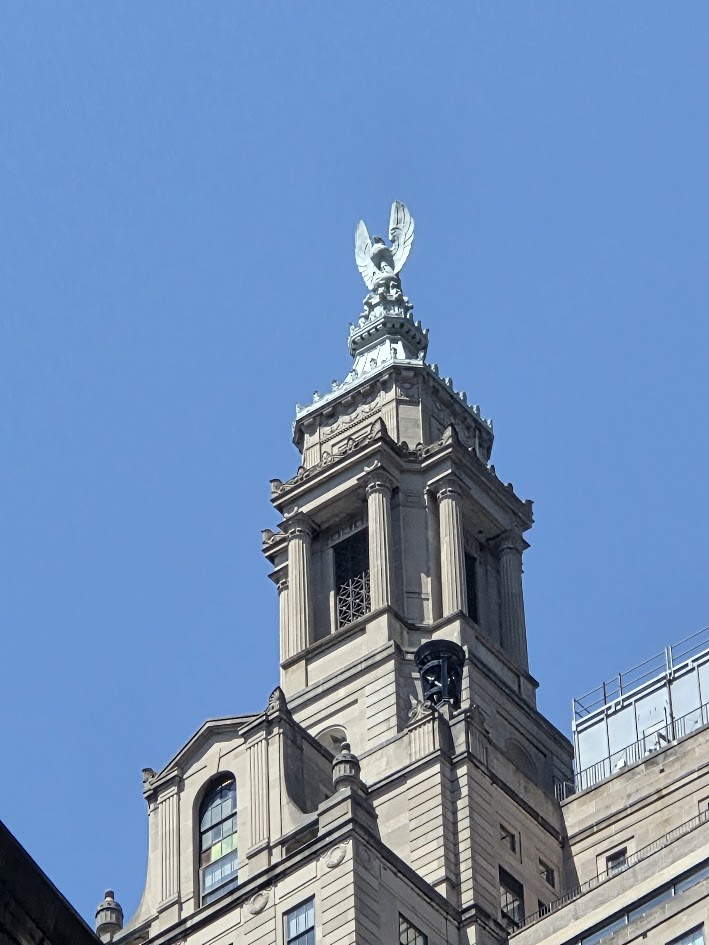
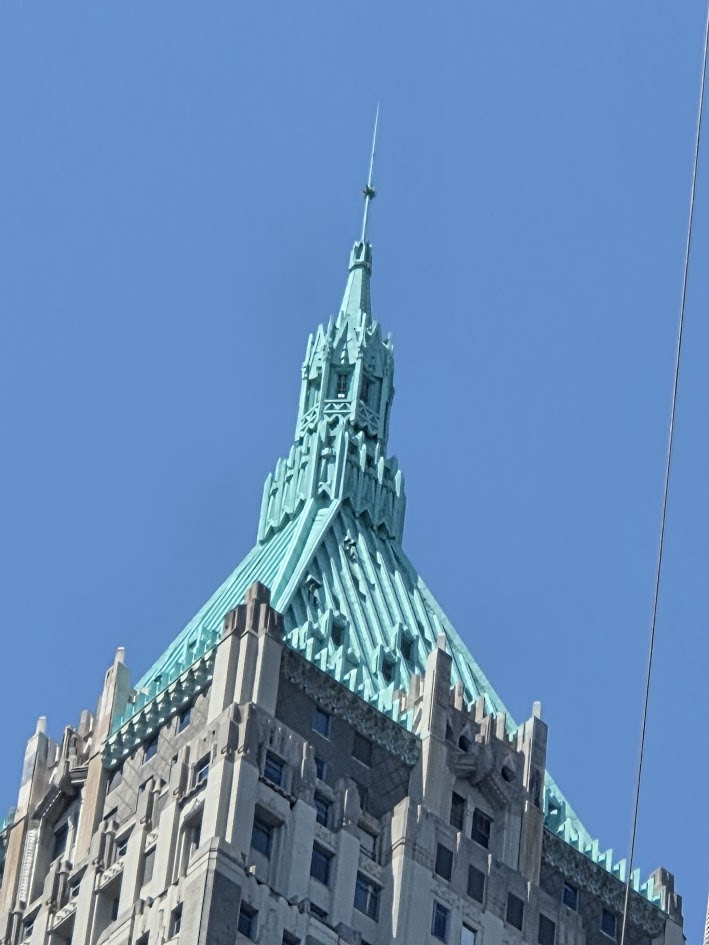
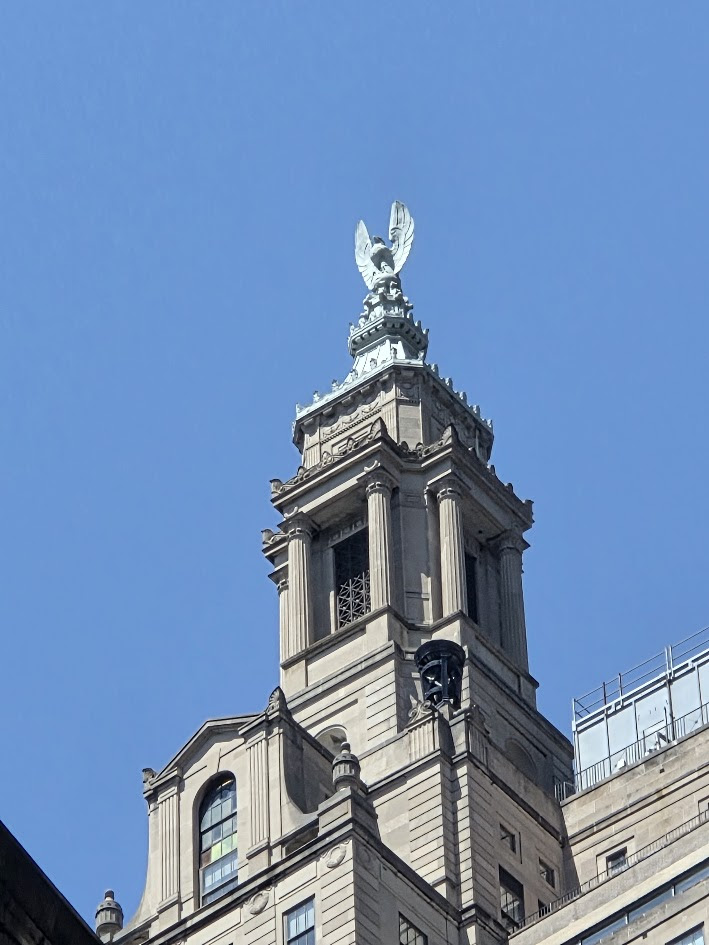
TWO GREAT ROOFTOPS NEAR WALL STREET. SPOTTED WHILE WALKING IN THE AREA, I CANNOT IDENTIFY THE BUILDINGS, BUT THE GRAND ART ON THE TOPS ARE MOST IMPRESSIVE.
CREDIT TO
NEW YORK ALMANACK Loren Merrill is a writer and photographer with a PhD in ecology. Illustration by Adelaide Murphy Tyrol. The Outside Story is assigned and edited by Northern Woodlands magazine and sponsored by the Wellborn Ecology Fund of New Hampshire Charitable Foundation: nhcf.org. JUDITH BERDY
All image are copyrighted (c) Roosevelt Island Historical Society unless otherwise indicated THIS PUBLICATION FUNDED BY DISCRETIONARY FUNDS FROM CITY COUNCIL MEMBER JULIE MENIN & ROOSEVELT ISLAND OPERATING CORPORATION PUBLIC PURPOSE FUNDS.
In 1912, Margaret Sanger was living in Manhattan with her husband Bill and their three children. She and Bill dabbled in radical politics, inviting socialists, anarchists, Wobblies, and intellectuals into their home. They debated issues with the likes of Big Bill Haywood, Emma Goldman, and Jack Reed. Arguing fiercely, they were all so determined to change the world in those days.
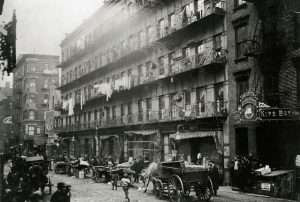
Sanger worked as a nurse, specializing in obstetrics. She visited her pregnant patients in their homes, a woman’s bedroom being much preferred for lying in than a hospital. Many were middle-class wives of lawyers, salesmen, and clerks, but calls from the tenements of the Lower East Side drew her as if by some magnetic force.
There she saw the wretchedness and hopelessness of the poor. She saw how pregnancy was a chronic condition for these women, and an impoverishing and debilitating one. Hearing a nurse was in the building, other wives congregated around her. “Tell me something to keep from having another baby,” each one begged. “We cannot afford another one yet.”
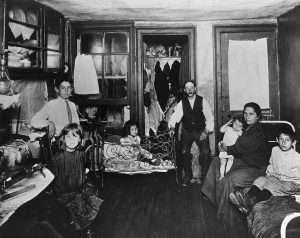
One evening a summons to Grand Street transformed Sanger’s life. The patient was a twenty-eight year old Russian woman named Mrs. Sacks. Her husband Jake was a helpful and loving man, but his trifling earnings could hardly support the three children the couple already had, the youngest only one year old.
Desperate to prevent the fourth child growing in her belly, Mrs. Sacks had tried to stop it with drugs and purgatives neighbors suggested. Finally a sharp instrument did the job. Now septicemia had set in. With Sanger nursing her tirelessly for three weeks, Mrs. Sacks recovered. But when Sanger told a visiting doctor how worried the woman was about another pregnancy, he turned to Mrs. Sacks and said, “Tell Jake to sleep on the roof.”
“He can’t understand,” Mrs. Sacks said to Sanger afterward. “He’s only a man. But you know, don’t you? Please tell me the secret, and I’ll never breathe it to a soul. Please!”
But how could Sanger tell the poor woman something she didn’t know herself? Three months later, Jake Sacks phoned Sanger, begging her to return. Sanger climbed the dingy stairs of the tenement once again to find Mrs. Sacks in a coma. She had tried to terminate another pregnancy. Ten minutes later she died.
Sanger folded the woman’s hands across her breast, drew a sheet over her pallid face as Jake wailed, “My God! My God!” Sanger left the desperate man pacing and walked home through hushed streets. She contemplated the women she had seen writhing in pain, the babies naked and hungry and wrapped in newspapers for warmth, the children with pinched faces and scrawny hands crouched on stone floors. And the coffins, white coffins, black coffins, coffins passing endlessly.
So much suffering. Her nursing delivered only palliatives to ease the suffering. Her treatment did nothing to prevent it. Sanger vowed no more. She was finished with nursing. From then on she would seek out the root of the evil, the endless cycle of pregnancies that brought to mothers miseries as vast as the sky. And so began the battle she would wage for the rest of her life.
For six months Sanger searched for an answer to the question so many women had asked: “How can I keep from having another baby?” She visited dozens of libraries, read volumes from Thomas Malthus on population to Havelock Ellis on sexuality. She spoke to physicians, who gave her useless information. She sought out progressives, socialists, others concerned for the poor.
They only warned her about the laws against distributing contraceptive information. “Comstock’ll get you,” they told her, referring to the notorious vice hunter. “Wait for the vote,” suffragists said. And from others “Wait until women have more education.” Or wait until the socialists are in power, or wait for this or for that. “Wait! Wait! Wait!”
At times, the only words of encouragement came from her Wobbly friend, Big Bill Haywood. When she concluded that no practical contraceptive information could be found in America, he told her to look in Europe.
In October 1913, she took her family, researching in England, France, and Holland. She learned much about European contraceptive methods over two months. Then she returned home with her children, leaving husband Bill behind to pursue his art career in Paris.
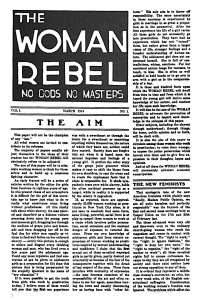
Through it all, Sanger embraced what she took to be a woman’s duty: “To look the world in the face with a go-to-hell look in the eyes; to have an idea; to speak and act in defiance of convention.” And back in New York, she did. From her small Manhattan apartment she launched her journal The Woman Rebel.
“Because I believe that woman is enslaved by the world machine, by sex conventions, by motherhood and its present necessary childrearing, by wage-slavery, by middle-class morality, by customs, laws and superstition,” she explained in the inaugural issue of March 1914.
Within days, newspapers reported The Woman Rebel had been barred from the U.S. mail under the Comstock law and that Anthony Comstock was on her trail. Thus began the war between Sanger and Comstock that would last until Comstock died in 1915, days after convicting Sanger’s estranged husband Bill of handing his agent a pamphlet on birth control.
PHOTO OF THE DAY
TWO GREAT ROOFTOPS NEAR WALL STREET. SPOTTED WHILE WALKING IN THE AREA, I CANNOT IDENTIFY THE BUILDINGS, BUT THE GRAND ART ON THE TOPS ARE MOST IMPRESSIVE.
CREDIT TO
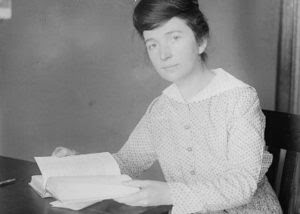
NEW YORK ALMANACK Illustrations, from above: Margaret Sanger in 1916 (Library of Congress); Jacob Riis photo “A Family In Its Tenement Apartment, 1910; Lewis Hine’s “View of Tenement Life on Elizabeth Street, Lower East Side,” ca. 1910 (Library of Congress); and the inaugural issue of Margaret Sanger’s The Woman Rebel. JUDITH BERDY
All image are copyrighted (c) Roosevelt Island Historical Society unless otherwise indicated THIS PUBLICATION FUNDED BY DISCRETIONARY FUNDS FROM CITY COUNCIL MEMBER JULIE MENIN & ROOSEVELT ISLAND OPERATING CORPORATION PUBLIC PURPOSE FUNDS.
Walk through a trippy mirrored maze in Rockefeller Center this month
See if you can make find your way through this
Midtown maze
Thursday, July 10, 2025
TIMEOUT NEW YORK
Issue # 1481
Photograph: By Collin Hughes
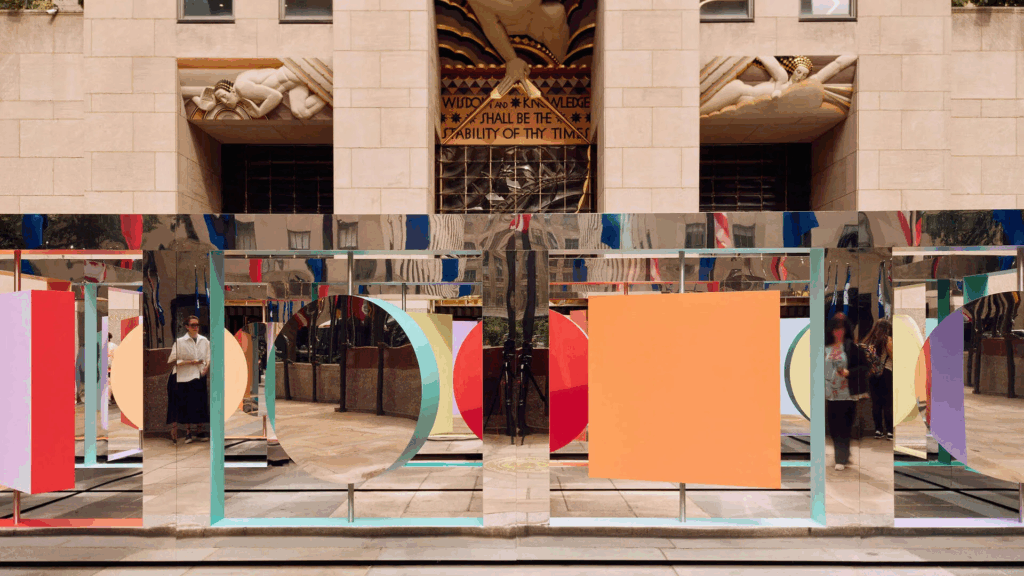
Walking through Midtown can feel like a maze, but at this trippy mirrored art installation, that’s exactly the point. You’ll lose your bearings and find yourself again inside this immersive art installation where space feels endless and ever-changing.
Called Reflection Point, the piece by Brooklyn-based artist duo Wade and Leta (Wade Jeffree and Leta Sobierajski) is on view for free at Rockefeller Center until July 20. Take a moment to stroll through its shifting pathways and definitely snap a few photos while you’re there. As you walk through the colorful maze, you’ll spot bold, graphic shapes that function as doors, welcoming visitors to push through and uncover new routes for some playful exploration. Color guides the eye through certain passages, while reflection and refraction conceal others, inviting constant reevaluation of direction and experience.
“The piece is an immersive, kinetic environment of color and mirrored surfaces, inviting viewers to move, reflect, and participate in the iconic location,” artists Wade and Leda said in a statement. “It’s a work about perception, process, and the shifting relationship between technology and art.”
To create the larger-than-life installation, the artist duo used Whisk, a Google Labs AI experiment that enables fast, visual ideation and brainstorming. Then, they combined mirrored aluminum composite panel, plywood, stainless steel, vinyl, and rubber to take the ideas off the screen and into reality.
Though the artists have created participatory artwork in places like London, Tokyo and Beijing, this is their first large-scale outdoor artwork in NYC.
“The installation marks a personal milestone for us after 15 years of living and working in New York,” they said.
PHOTO OF THE DAY
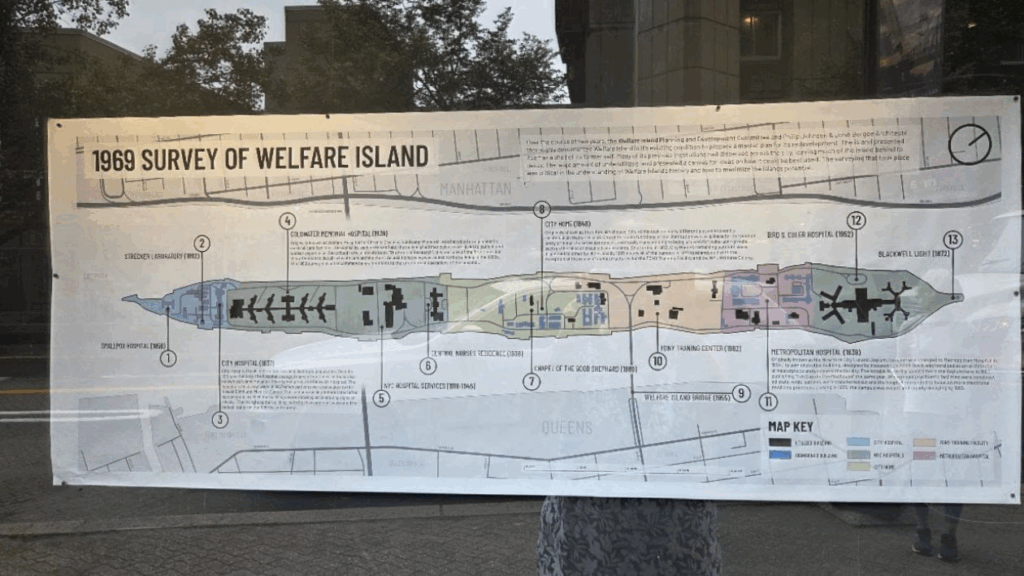
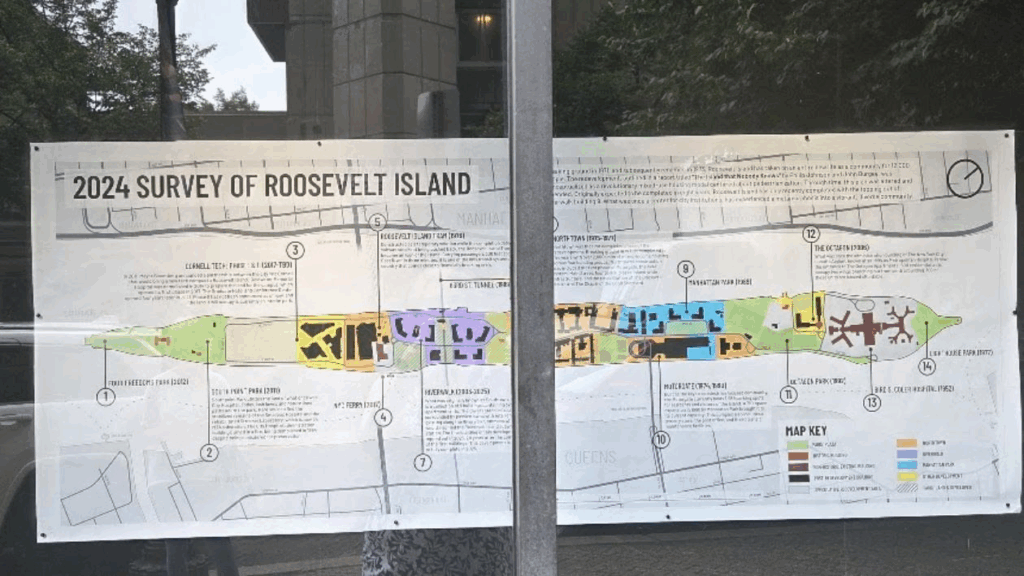
CHECK OUT THE RIVERCROSS DISPLAY WINDOW WITH 2 MAPS SHOWING THE DEVELOPMENT OF THE ISLAND AS IT WAS IN 1969 AND HOW IT IS TODAY.
MAPPING BY DYLAN BROWN, GRADUATE STUDENT AT HUNTER SCHOOL OF URBAN PLANNING AND RIHS INTERN.
CREDITS
6 SQFT JUDITH BERDY
All image are copyrighted (c) Roosevelt Island Historical Society unless otherwise indicated THIS PUBLICATION FUNDED BY DISCRETIONARY FUNDS FROM CITY COUNCIL MEMBER JULIE MENIN & ROOSEVELT ISLAND OPERATING CORPORATION PUBLIC PURPOSE FUNDS.
The Pergola at Wave Hill in the Bronx frames stunning views of the Hudson River and the Palisades. Photo courtesy of Wave Hill
When the sun comes out, so do the people. The energy of New York City is palpable on the warm days of late spring and early summer. After a long winter spent inside apartments, museums, and restaurants, New Yorkers crave sunshine and nature this time of year. And while that’s a beautiful thing, it can make it difficult to escape crowds. If you’re looking for a little relaxation in the great outdoors, we’ve rounded up 10 tranquil spots perfect for an afternoon with a book, a picnic, or just your thoughts.
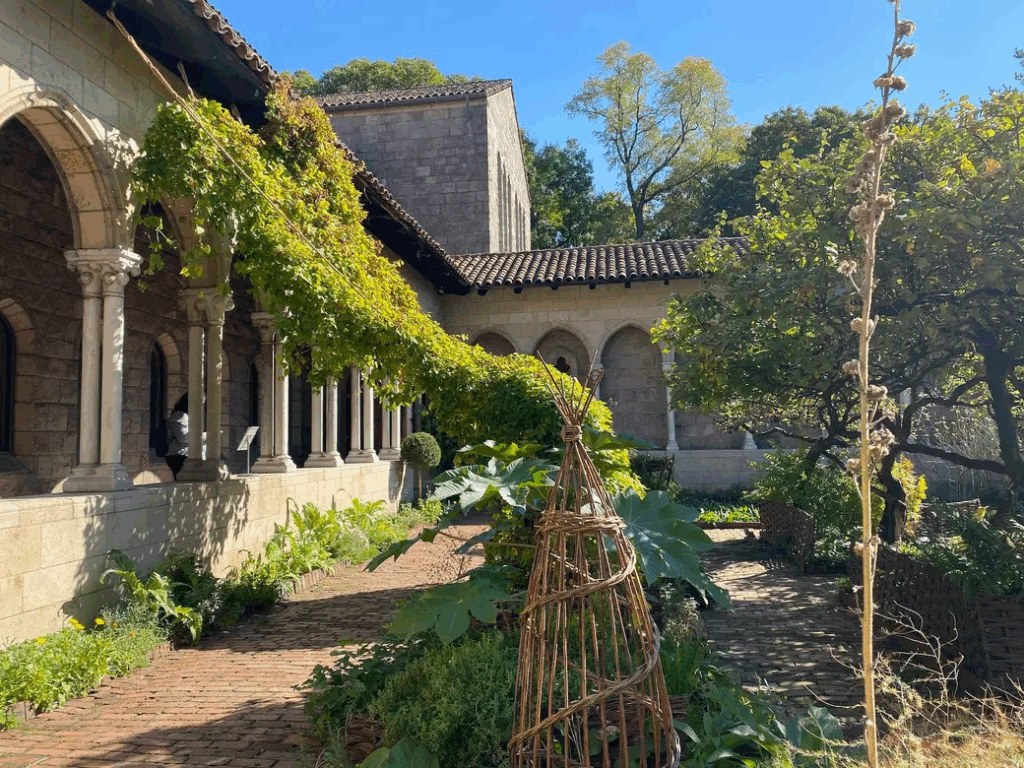
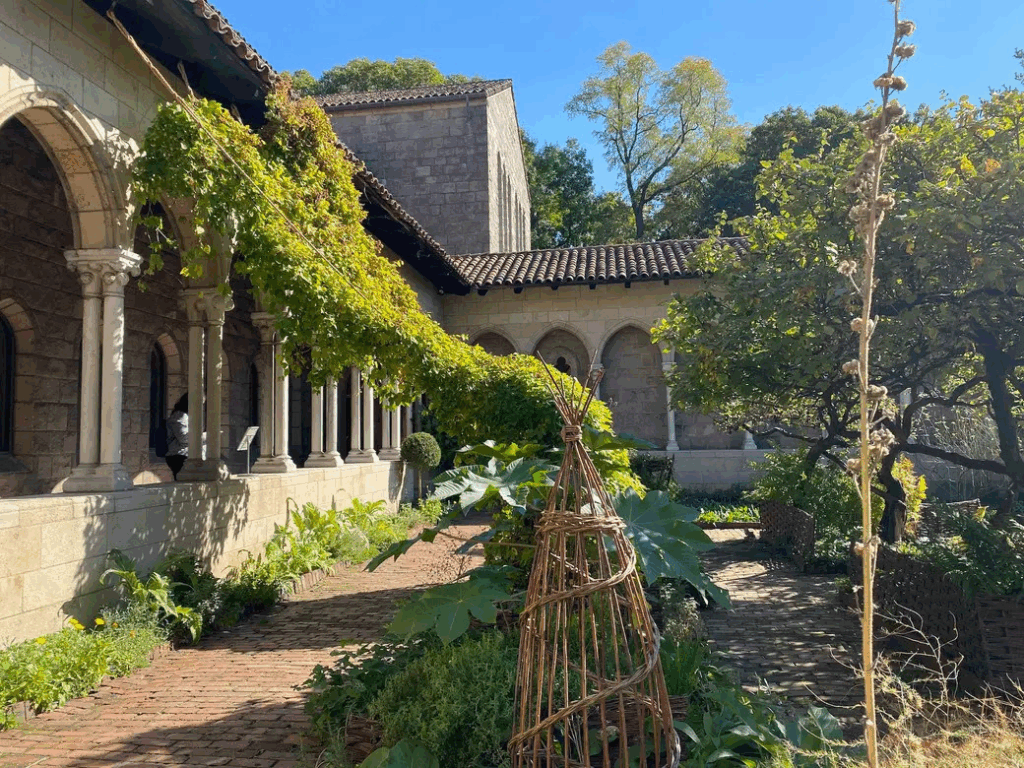
1. The Met Cloisters
Fort Tryon Park, 99 Margaret Corbin Drive, Upper Manhattan Located in picturesque Fort Tryon Park with views of the Hudson, the Met Cloisters feels like stepping into Medieval Europe — not only because of the art and artifacts of that time but because of the beautiful architecture and gardens. Escape the bustle of city life and tour the museum grounds yourself, or take the Mindfulness at the Met Cloisters tour.
“Take a moment to tune into your senses and practice mindfulness in this guided session. Throughout the Middle Ages, people from all walks of life retreated to monasteries to contemplate the spiritual and experience inner calm. Taking inspiration from global contemplative practices, as well as the unique art, atmosphere, and gardens of The Met Cloisters, you are invited to take a break from the usual pace of life and connect with the beauty that surrounds us,” the description reads.
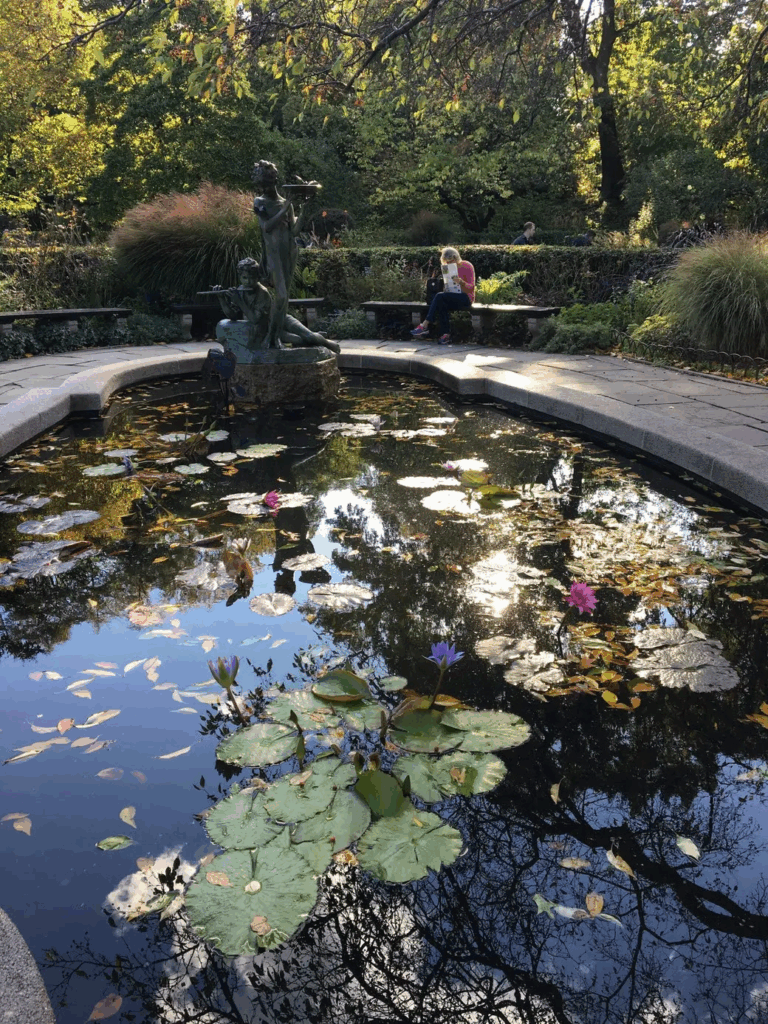
1233 5th Avenue, Manhattan On 105th Street in Central Park, you’ll find the park’s only formal garden. It’s a small gem that not too many people make their way to. While it does not have the sprawling fields and picnic areas that the rest of Central Park has, it’s the perfect quiet spot to sit and read, write, or do some sketching. The garden, constructed in 1937, recently underwent a restoration, so it’s in tip-top shape. Repairs included replacing pavements, upgrading the central fountain’s infrastructure, reconstructing the Vanderbilt steps, and replacing rows of 44 crabapple trees in the Italianate Center Garden.
3. Prospect Park Lake
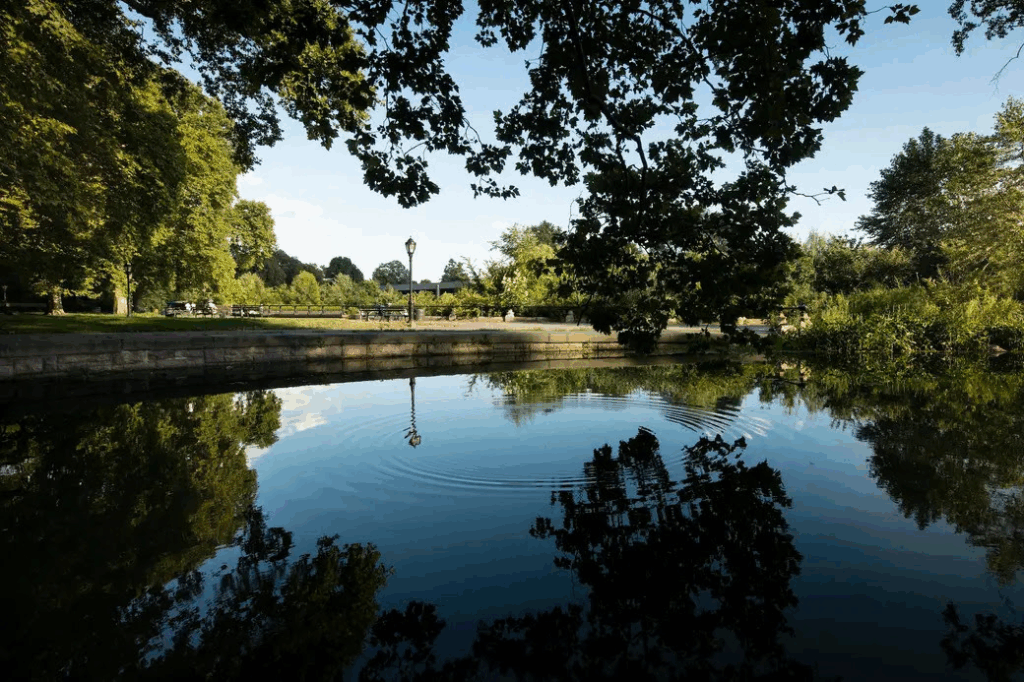
101 East Drive, Brooklyn Prospect Park, in general, is not exactly an unpopular destination in the warm months, but you can find a little corner of the park by the lake for a quiet moment. The 55-acre lake allows fishing and is home to Largemouth bass, black crappie, yellow perch, chain pickerel, bluegill, pumpkinseed, common carp, and golden shiner, according to the Department of Environmental Conservation. There’s also plenty of birding to be done on the lake, and architecture buffs can feast their eyes on the beautiful Beaux-Arts boathouse, which is used for special events.
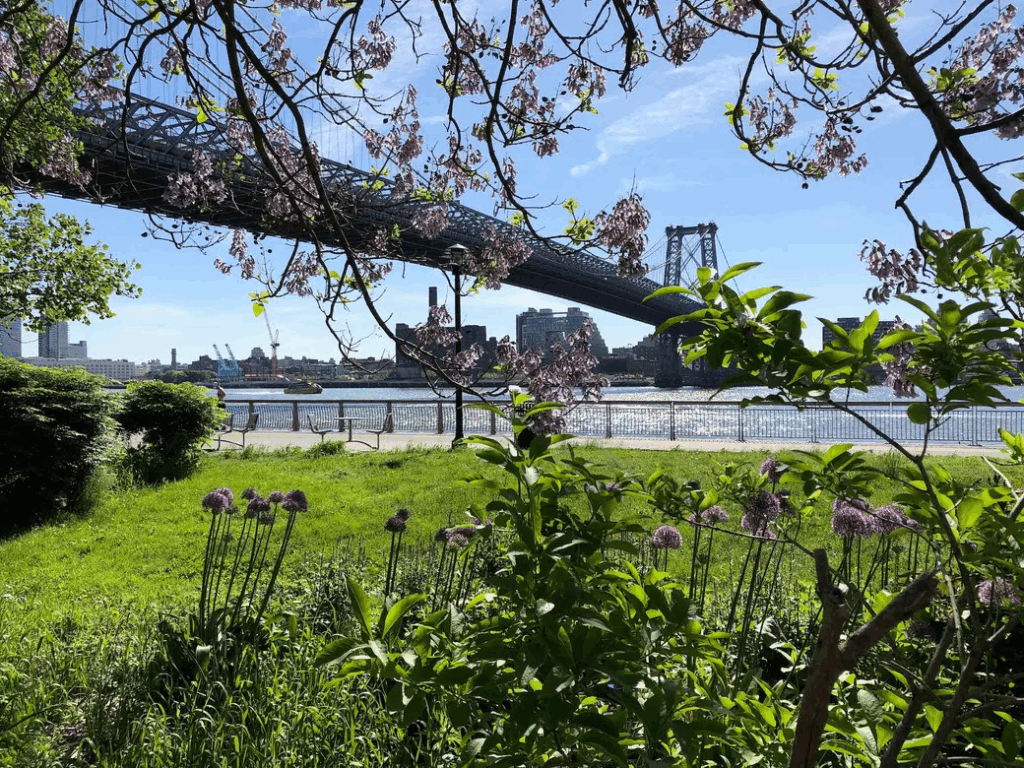
FDR Drive, Manhattan The John V. Lindsay East River Park spans lower Manhattan on the East Side. Though popular for runners, bikers, kids, and dogs, there’s always a quiet moment to be had along the river banks at this neighborhood park. Whether taking a morning stroll with the sun shining on the water or an evening jog lit up by the Williamsburg Bridge, it’s a magical corner of the city. In the spring and summer, steal away into the gardens and watch butterflies and bumble bees enjoy an oasis in the concrete jungle. The nearly 46-acre East River Park is currently undergoing a renovation to become more resilient to climate change, as part of the city’s East Side Coastal Resiliency project. The first new area of East River Park opened in 2024, and the second new section, including a sprawling public lawn, picnic area, and basketball and tennis courts, opened at the end of May.
990 Washington Avenue, Crown Heights, Brooklyn New York has two stunning botanical gardens, and both are an escape, but a trip to the Brooklyn Botanic Garden can be a two-for-one, as the Brooklyn Museum is right next door. June is the month of the rose, and the Cranford Rose Garden will be in full bloom with thousands of blossoms. According to the BBG, it’s one of the largest collections of roses in North America.
Photo by Jacki Maynard
Though worth a visit, the Rose Garden is popular and can get crowded. For a peaceful moment, the Japanese-Hill-and-Pond Garden can’t be beat. It’s one of the oldest Japanese-inspired gardens outside of Japan, according to the BBG.
Photo by Maike Schulz
6. Green-Wood Cemetery
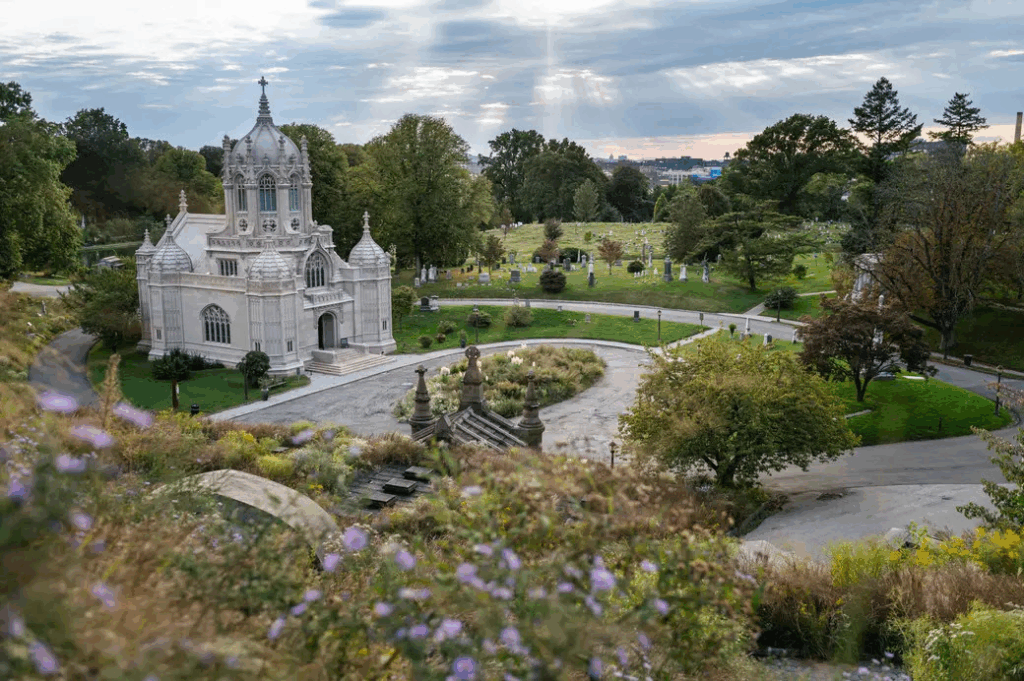
500 25th Street, Greenwood Heights, Brooklyn Some people may associate a cemetery with the creepy or macabre. But on a lovely spring or summer day, cemeteries are beautiful, quiet spots for contemplation. At 478 acres, Green-Wood Cemetery in Brooklyn is among the biggest and most well-known in the city. Founded in 1838, the historic landmark was one of the first rural cemeteries in America. According to the cemetery, by the early 1860s, “it had earned an international reputation for its magnificent beauty and became the prestigious place to be buried, attracting 500,000 visitors a year, second only to Niagara Falls as the nation’s greatest tourist attraction.” From flowering trees, rolling green hills, walking paths, and birding opportunities, it’s a lovely place to spend a tranquil afternoon
Photo by Joshua Bright
7. Wave Hill Public Garden & Cultural Center
4900 Independence Avenue, Riverdale, The Bronx “The most tranquil time to visit Wave Hill is weekdays right after it opens at 10 a.m.,” a spokesperson for the Bronx garden, which turns 60 this year, said. “Thursdays are free and tend to draw larger crowds, but it is never really hard to find a quiet spot.”
Photo courtesy of Wave Hill
Some suggested spots:
Wild Garden’s gazebo, at the highest point of the grounds
A hidden bench among the Conifer Slope
The Secret Garden
The Shade Border in Wave Hill’s northeast corner is considered a meditative garden
The American elm, one of the oldest trees in New York City
Photo by Don Riepe
8. Jamaica Bay Wildlife Refuge
175-10 Cross Bay Boulevard, Broad Channel, Queens Without actually leaving the city, you can’t get much farther from the hustle and bustle of city life than Jamaica Bay Wildlife Refuge. It feels like a world of its own with the distant skyline peeking over the horizon. The refuge includes 9,000 acres of open bay, salt marsh, mudflats, upland field, and woods, and two man-made brackish ponds. It’s an especially good spot for anyone into birding, with 332 bird species passing through.
PHOTO OF THE DAY
CHECK OUT THE RIVERCROSS DISPLAY WINDOW WITH 2 MAPS SHOWING THE DEVELOPMENT OF THE ISLAND AS IT WAS IN 1969 AND HOW IT IS TODAY.
MAPPING BY DYLAN BROWN, GRADUATE STUDENT AT HUNTER SCHOOL OF URBAN PLANNING AND RIHS INTERN.
CREDITS
6 SQFT JUDITH BERDY
All image are copyrighted (c) Roosevelt Island Historical Society unless otherwise indicated THIS PUBLICATION FUNDED BY DISCRETIONARY FUNDS FROM CITY COUNCIL MEMBER JULIE MENIN & ROOSEVELT ISLAND OPERATING CORPORATION PUBLIC PURPOSE FUNDS.
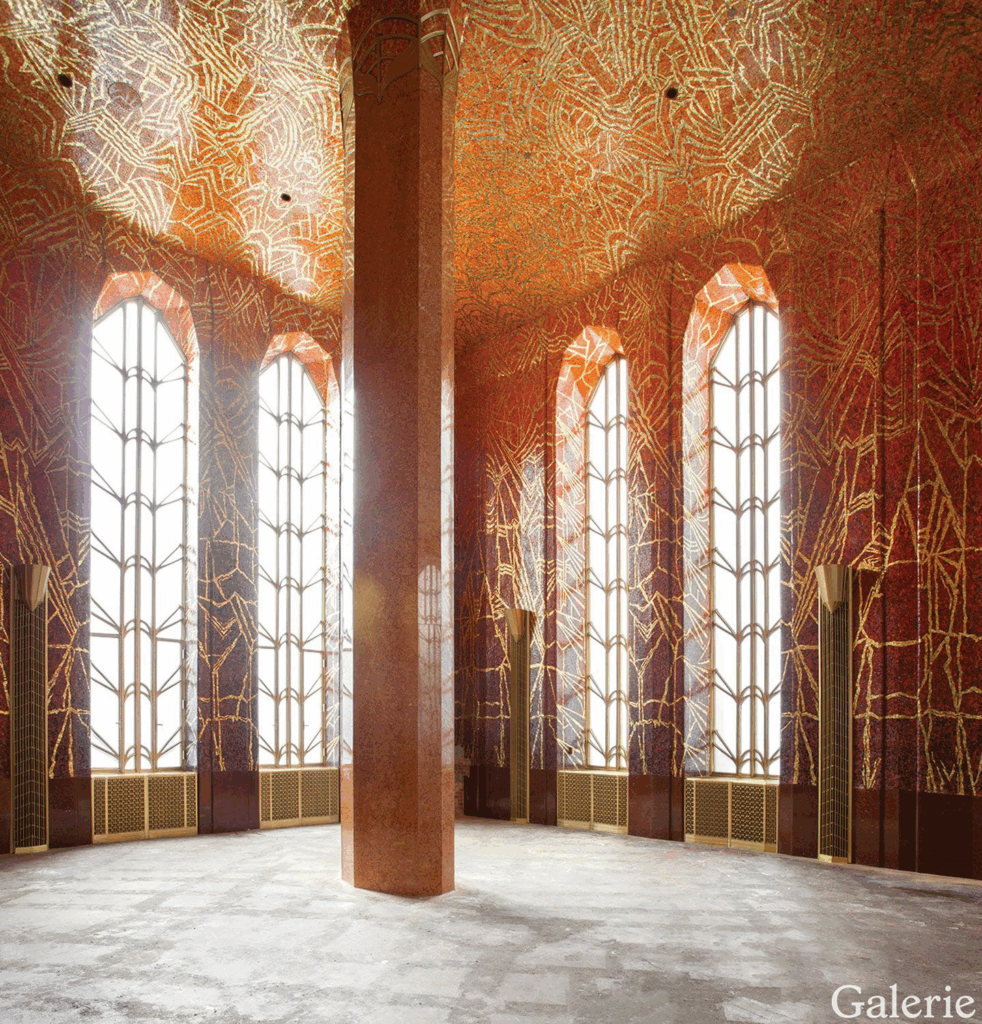
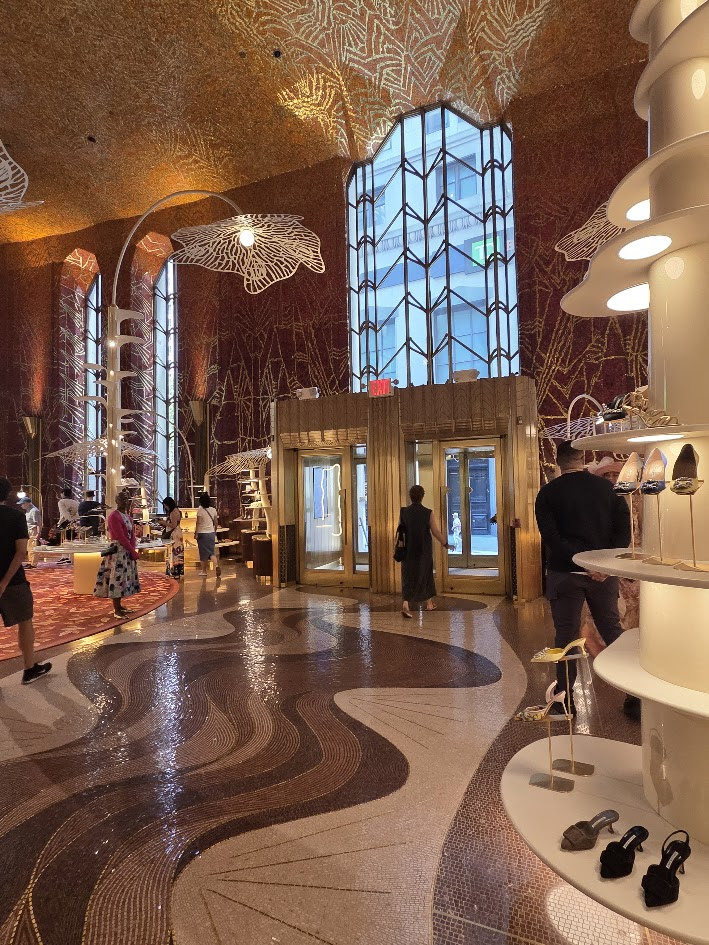
The 1 Wall Street Banking Room interior of the Irving Trust and Bank Company is best known as the Red Room for the glorious and electrifying abstract mosaic decoration, designed by Hildreth Meiere, which defines the space. Meiere, who was recognized by her colleagues at the AIA as a Master of Murals, undertook over 100 such projects throughout her life.
The mosaic design is meant to mimic the curved stone facades of 1 Wall Street, one of the earliest Art Deco skyscrapers in New York City. According to the Landmarks Preservation Commission press release “The room’s walls, ceiling, and columns sparkle with mosaic tile in warm colors that fade from red to orange across the ceiling, and gilded tiles create web-like designs that glitter on the red background and draw the eye up – an elaborate style that presents a dramatic departure from more typical classically-inspired stone banking halls of the era.”
The Red Room, completed in 1931, stands out as one of Meiere’s only abstract designs, and also as her first collaborative project with Ralph Walker. The two would next work together on the ATT Long Distance Building at 32 6th Avenue, which has been both an individual and interior landmark since 1991, though the designation report for that interior does not mention Meiere’s work. We are thrilled that Meiere’s contribution is being recognized here.
After Irving Trust moved out of the building the developer of the condominums in the building had the Red Room restored to it’s original state. After being used as a sales salon for the condos the space was rented to Printemps as part of their store.
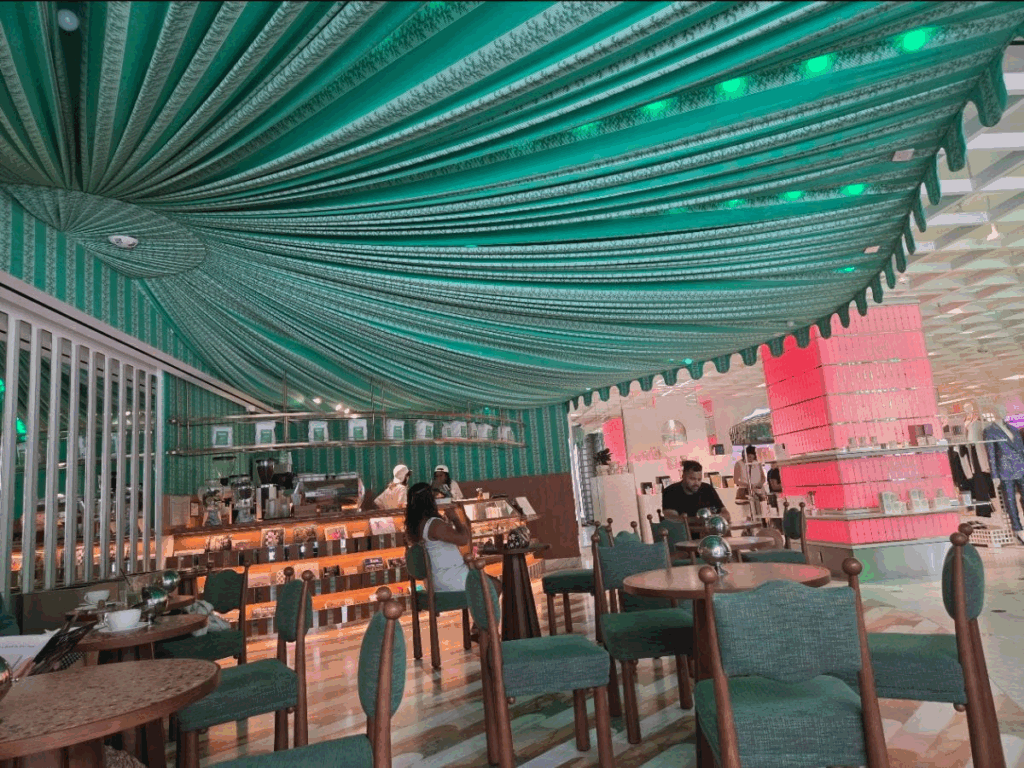
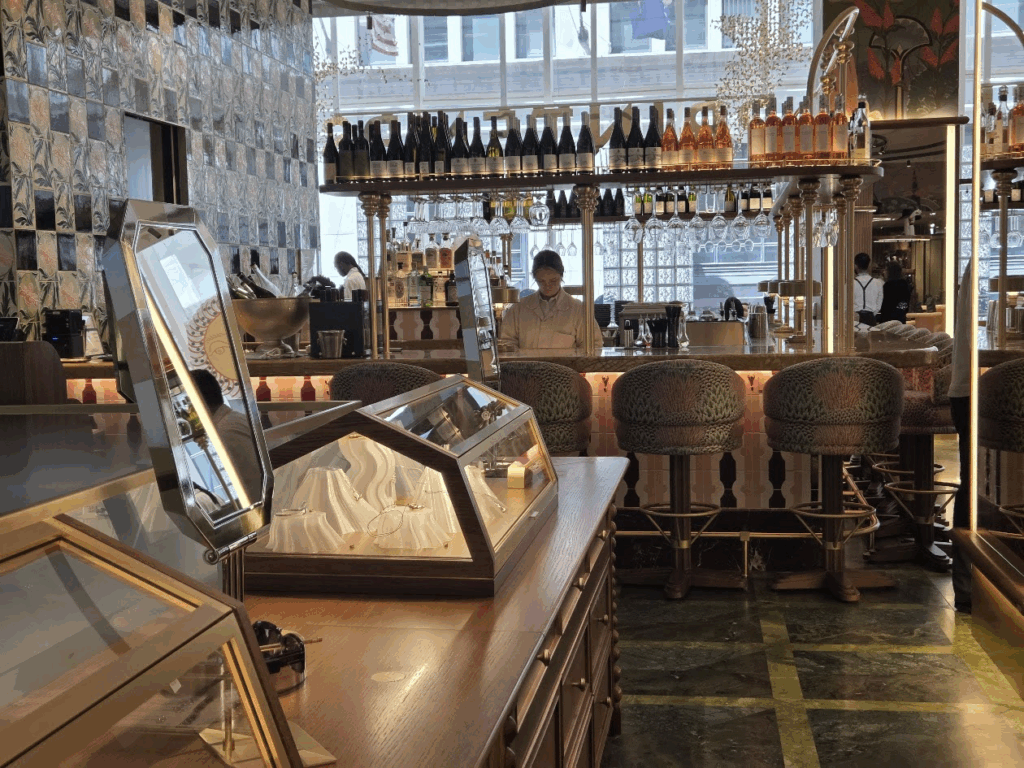
Upon entering the Broadway entrance is a petit cafe to enjoy refreshments before or after shopping. On the Main Floor there is a selection of small gift items including home decor, shoes and handbags. All the staff are welcoming and friendly
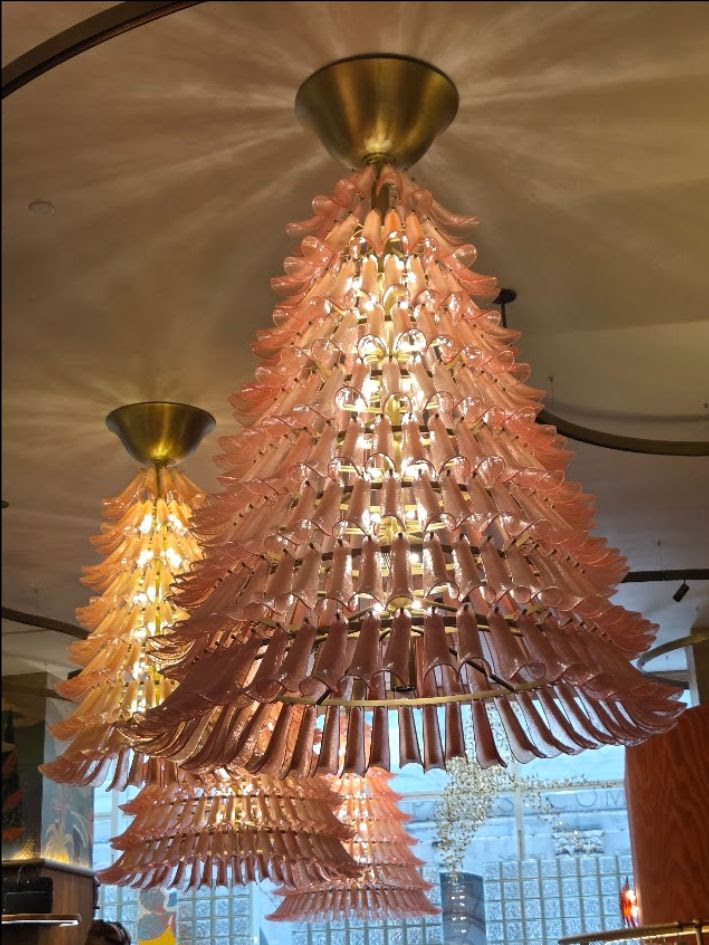
All the lighting in the store is unique and this salon is furnished all in pink
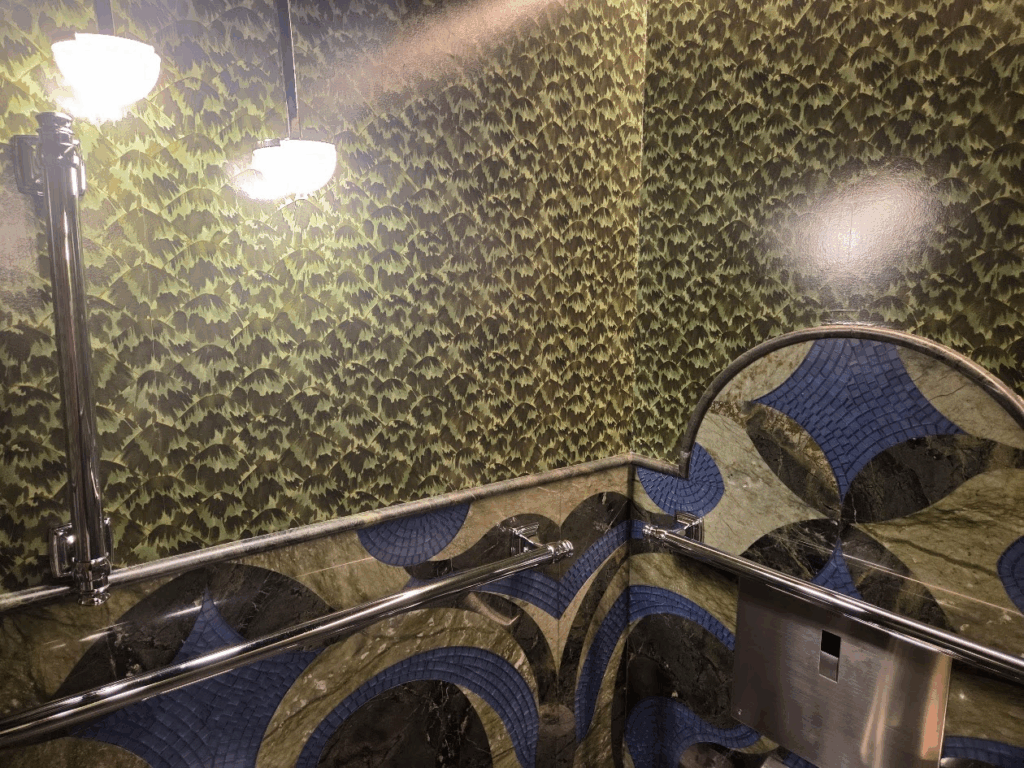
Even the ladies room was so unique that it was worth a photo.
Step up to the bar for a quick glass of Champagne while shoping, conveniently locate next to the jewelry showcases.
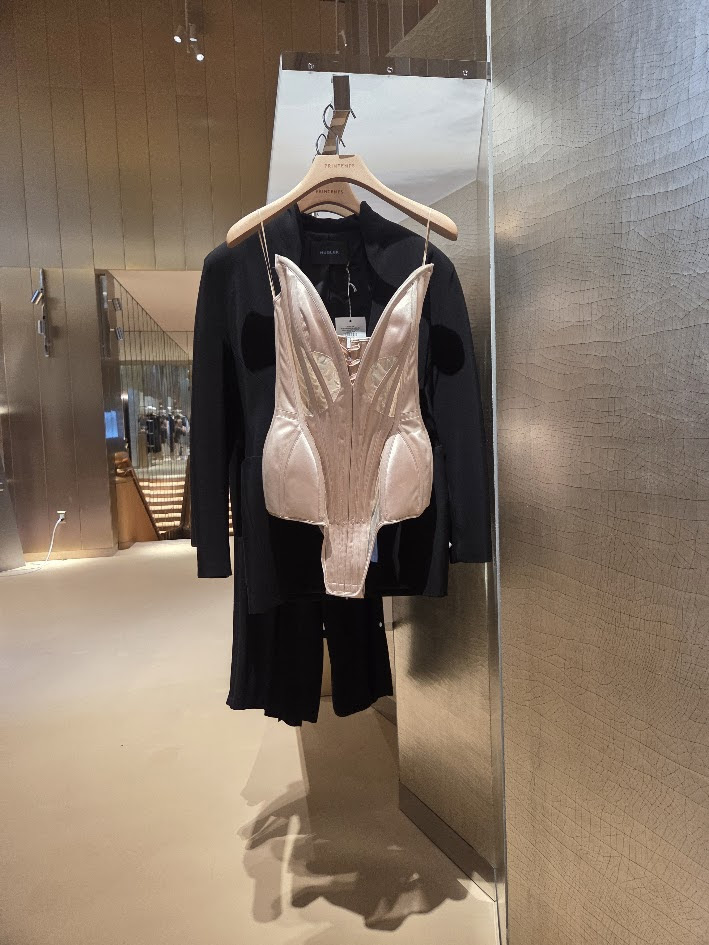
There is a large selection of designer vintage items. Was this Madonnas?
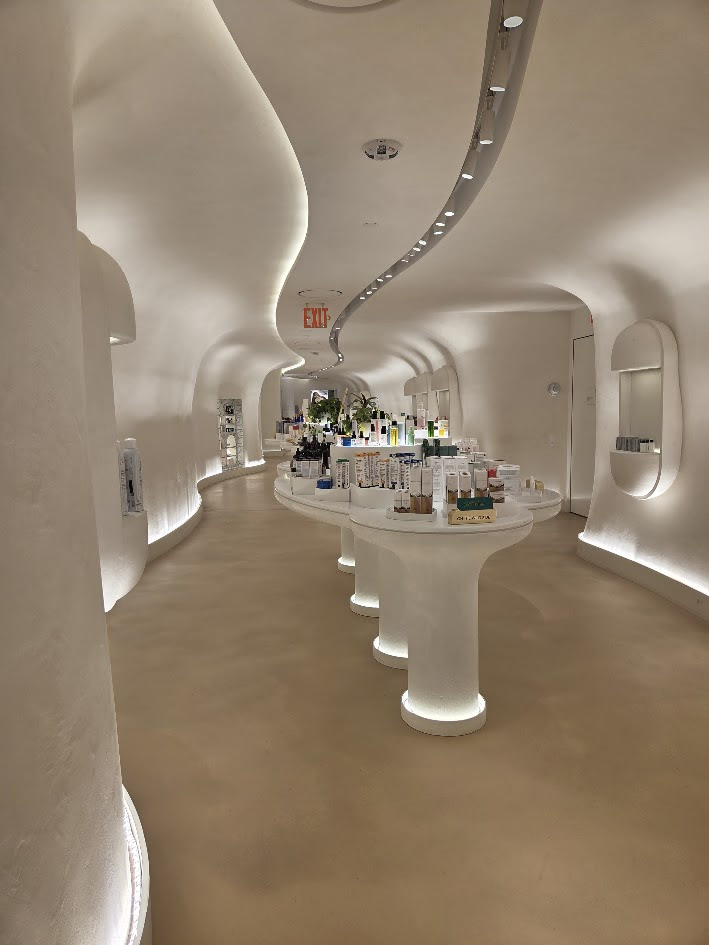
A passage of beauty products lead to an area for your makeover.
The Red Room is now the entrance from Wall Street. You may need a great Wall Street investment for some of these shoes on display. The wonderful floor is new but all the room is the original. Being an interior landmark, nothing is attached to the walls.
I could not tempt Gloria to bring home some new heels!!
PHOTO OF THE DAY
Sometimes the best plans go awry. Eager to see the new Printemps store last Thurday, I was heading across Broadway at Wall Street. Suddendly, I was face down on the pavement. I had tripped over the support for a lane divider. With a bleeding lip two wonderful women came to my aid. They called 911 and waited until the NYU Ambulance arrived. I had a cut lip bruised chin and sore shoulder. Luckily there was no damage to my new hip. Patched up, Gloria Herman and I ventured back to see the landmark Red Room and the new Paris based Printemps department store yesterday.
CREDIT TO
JUDITH BERDY
All image are copyrighted (c) Roosevelt Island Historical Society unless otherwise indicated THIS PUBLICATION FUNDED BY DISCRETIONARY FUNDS FROM CITY COUNCIL MEMBER JULIE MENIN & ROOSEVELT ISLAND OPERATING CORPORATION PUBLIC PURPOSE FUNDS.
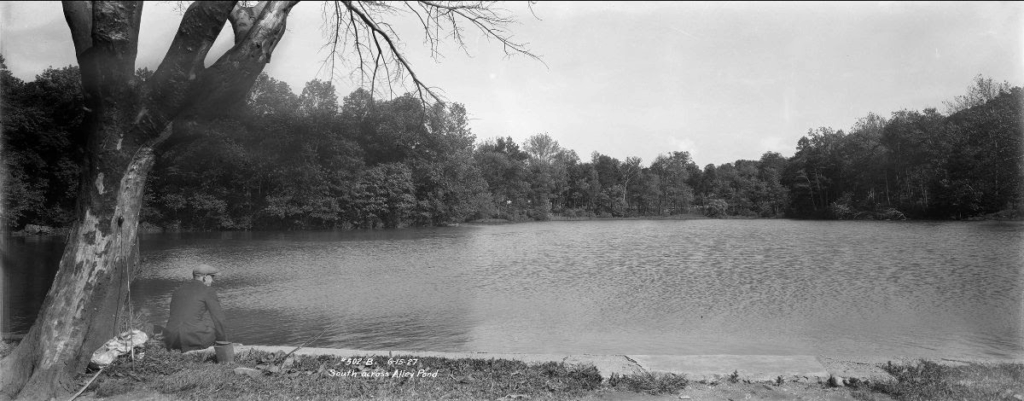
Alley Pond, Queens, June 15, 1927. Borough President Queens Collection, NYC Municipal Archives.
Staff at the Municipal Archives continue to digitize the historical collections including paper records, books, motion pictures, maps, plans, and photographs. My current assignment is the Queens Borough President photograph collection. The thousands of fascinating pictures includes a series of panoramic images. They were taken mostly during the 1920s and 1930s by the Topographical Bureau in the Borough President’s office, under the direction of the Engineer in Charge, Charles Underhill Powell.
Powell’s tenure coincided with a time of rapid change in Queens. A borough that had long been mostly sparsely populated farmland was quickly becoming a diverse urban landscape. This required a drastic overhaul of the borough’s infrastructure, and engineers like Powell went out to survey, document, design, and plan.
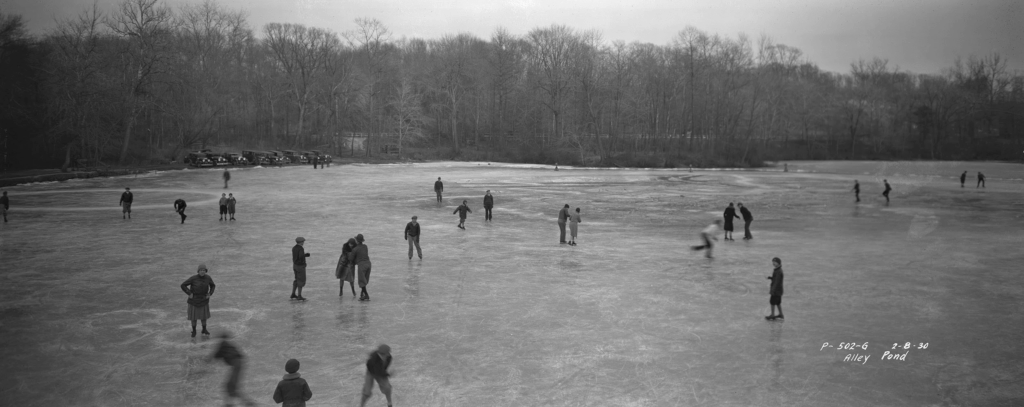
Skaters on Alley Pond, Queens, February 8, 1930. Borough President Queens Collection, NYC Municipal Archives.
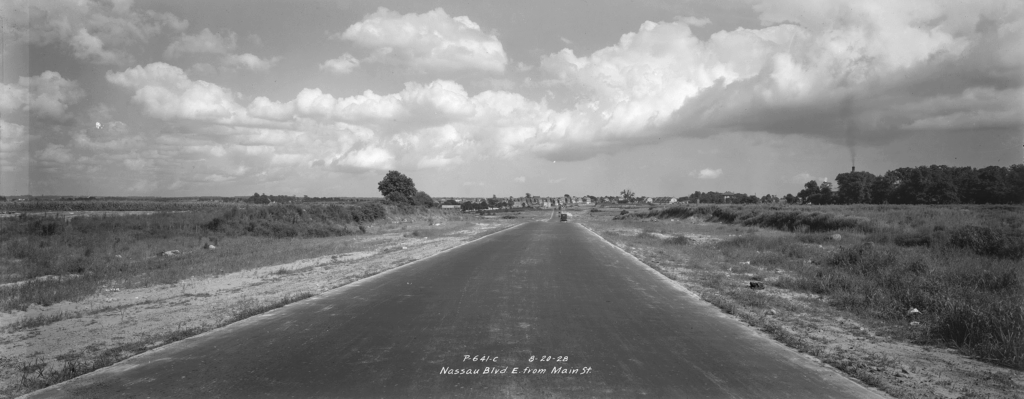
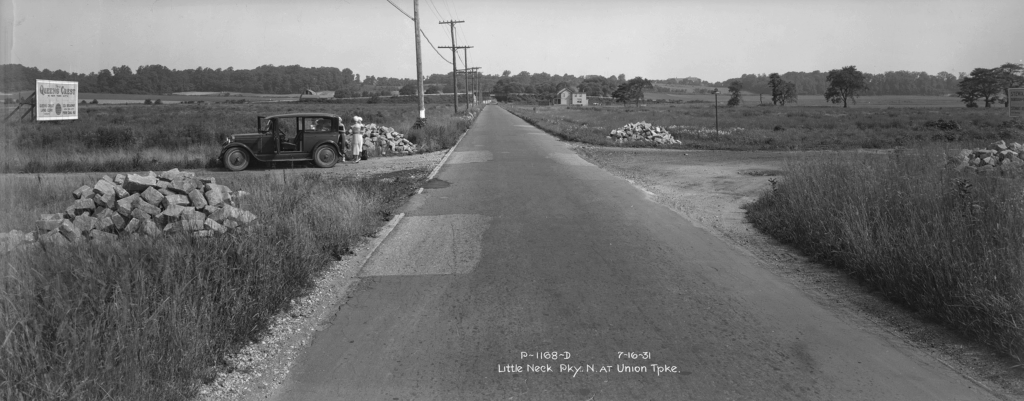
The photographers generally used standard 8×10 inch sheet film, a format still popular for the high resolution it provides. Sometimes, though, an 8×10 negative just wasn’t good enough. In these situations, the photographers turned to what is known as a banquet camera. Originally intended for photographing large groups of people, the wide negatives (usually either 7×17″ or 12×20″) offered a lot of space to squeeze an entire crowd or banquet hall into one frame. Banquet cameras fell out of favor when medium format and other roll film formats were invented, allowing more flexibility and ease of use in event photography. But landscape and architectural photographers adopted the banquet camera for the precision, resolution, and wide angle of view it offered.
Nassau Boulevard, looking east from Main Street, Queens, August 20, 1928. Borough President Queens Collection, NYC Municipal Archives.
The Queens panoramic negatives (which are all 7×17″) present a digitization challenge. Because of their width, they cannot be captured at high resolution in one shot with an overhead camera and they are too fragile for a flatbed scanner. There is an alternative: stitching. I photographed each negative in three shots, which partially overlap with each other. I then ran a Photoshop script to stitch them together. This has worked surprisingly well, even on the most deteriorated negatives. These advancing technologies and workflows allow us to make these beautiful images, which document an important period in New York City history, available to the pu
Little Neck Parkway, looking north at Union Turnpike, Queens, July 16, 1931. Borough President Queens Collection, NYC Municipal Archives.
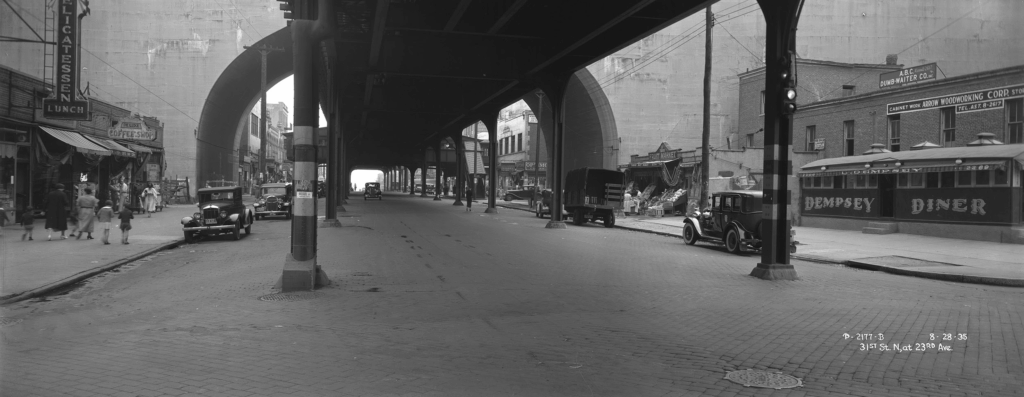
Under the elevated train, 31st Street, looking north at 23rd Avenue, Queens, August 28, 1935. Borough President Queens Collection, NYC Municipal Archive
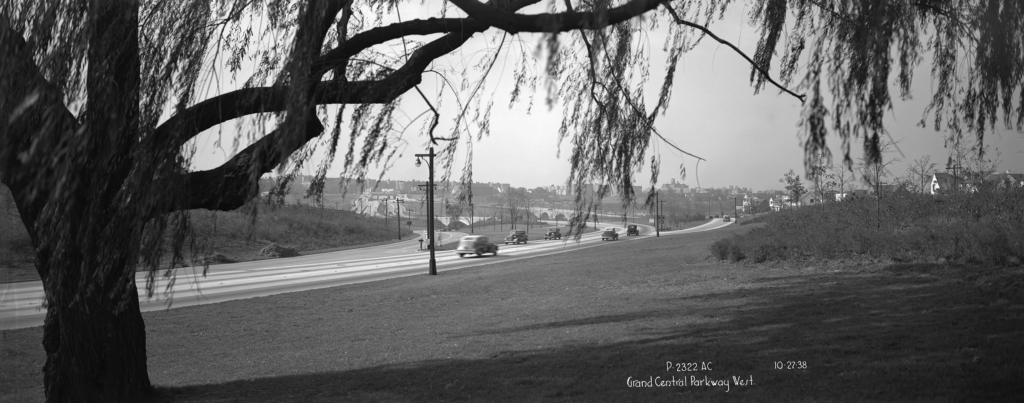
Grand Central Parkway, looking west, Queens, October 27, 1938. Borough President Queens Collection, NYC Municipal Archives.
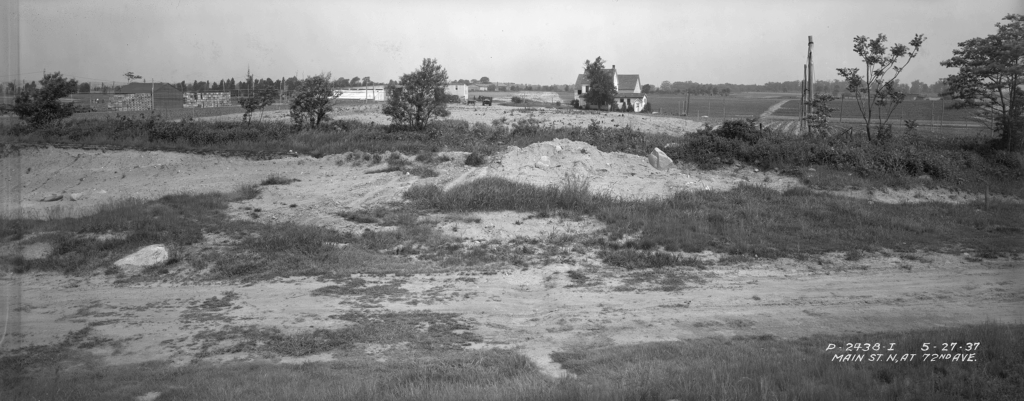
Main Street, looking north at 72nd Avenue, Queens, May 27, 1937. Borough President Queens Collection, NYC Municipal Archives.
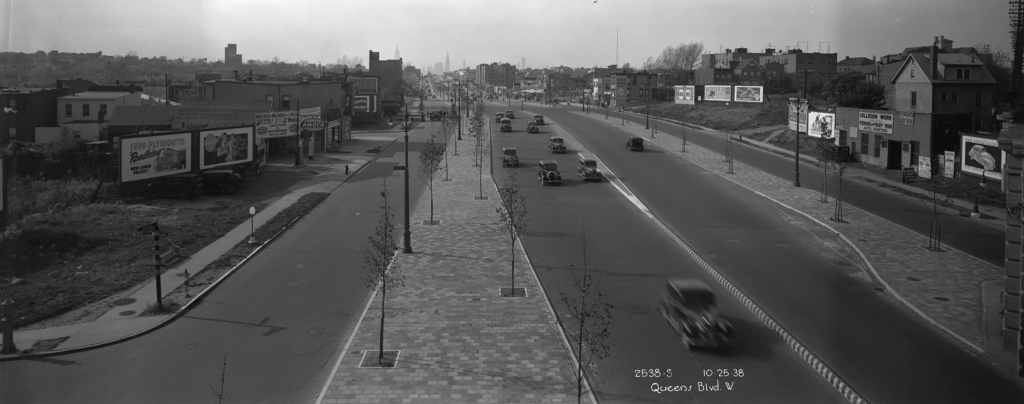
Queens Boulevard, looking west, October 25, 1938. Borough President Queens Collection, NYC Municipal Archives
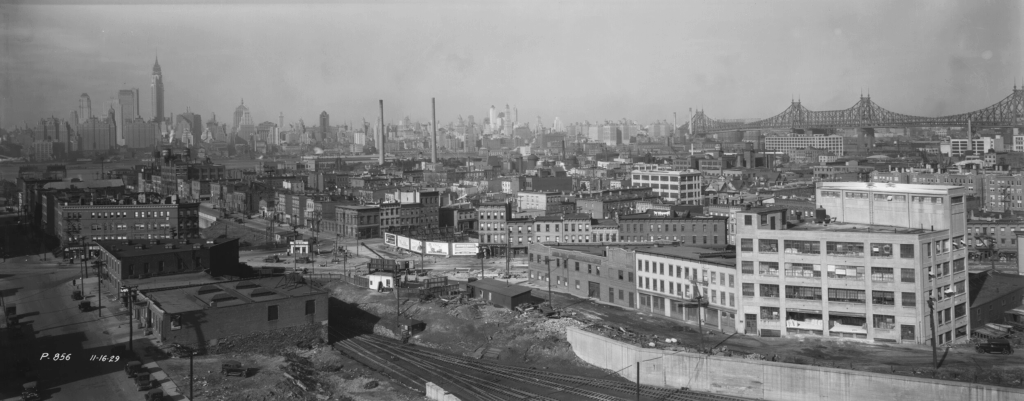
P-856: Elevated view of Long Island City south of the Queensboro Bridge (visible at right), looking toward Manhattan, November 16, 1929. Borough President Queens Collection, NYC Municipal Archives.
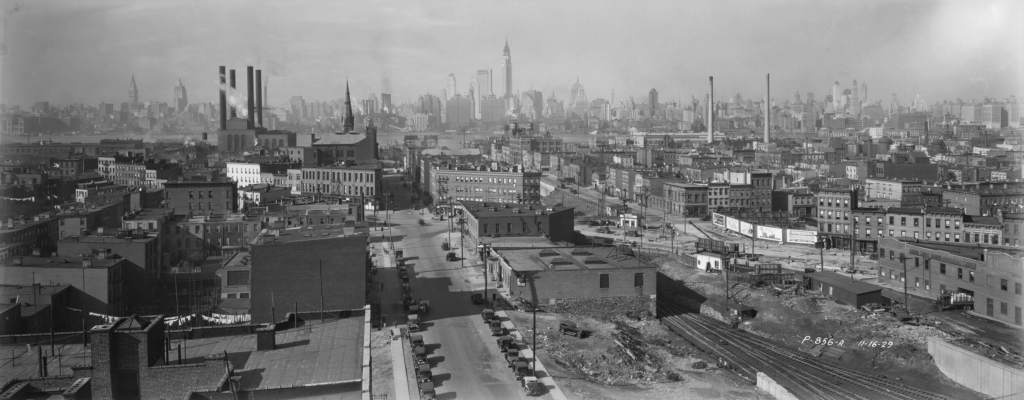
P-856-a: Elevated view of Long Island City, November 16, 1929. The Chrysler Building is at the center of the Manhattan skyline. Borough President Queens Collection, NYC Municipal Archives.
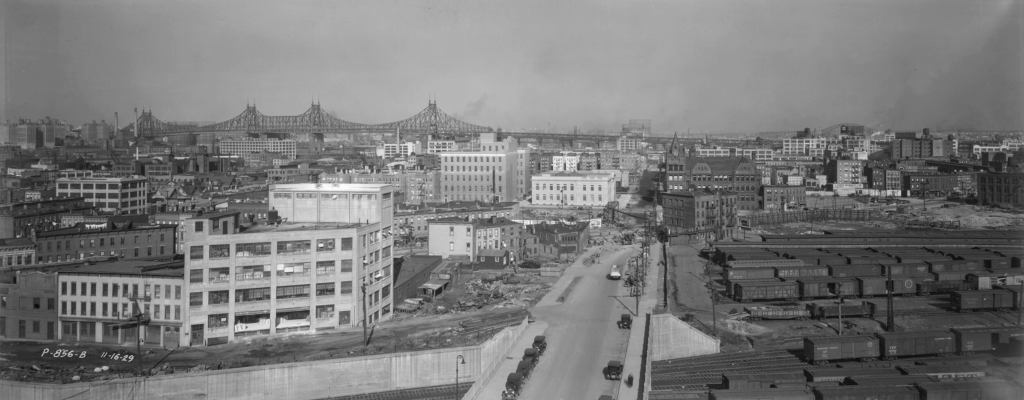
P-856-b: Elevated view of Long Island City, looking north towards the Queensboro Bridge, November 16, 1929. The school that would later become MoMA PS1 is just beyond the rail yards. Borough President Queens Collection, NYC Municipal Archives.
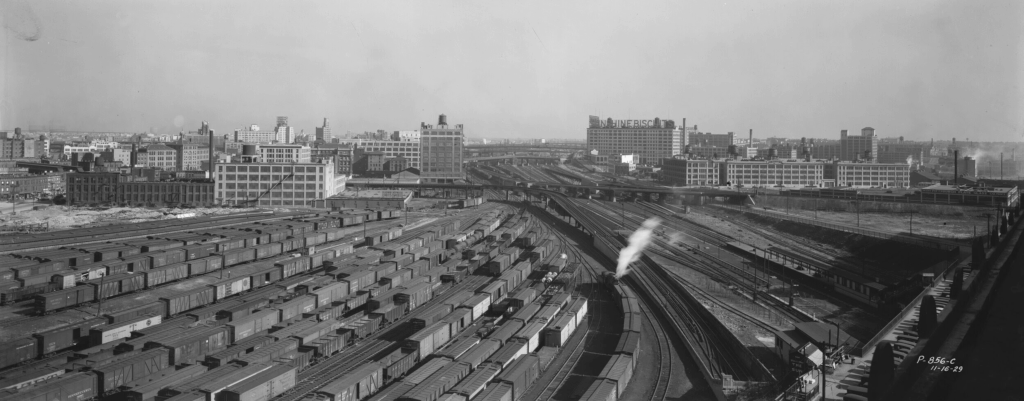
P-856-c: Elevated view of the Sunnyside train yards, November 16, 1929. Borough President Queens Collection, NYC Municipal Archives.
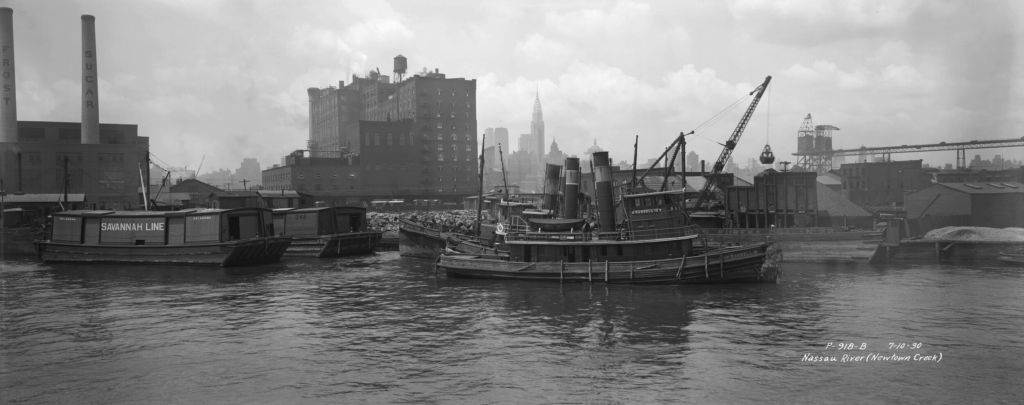
P-918-b: Nassau River (Newtown Creek), July 10, 1930. The Chrysler Building is visible in the distant Manhattan skyline. Borough President Queens Collection, NYC Municipal Archives.
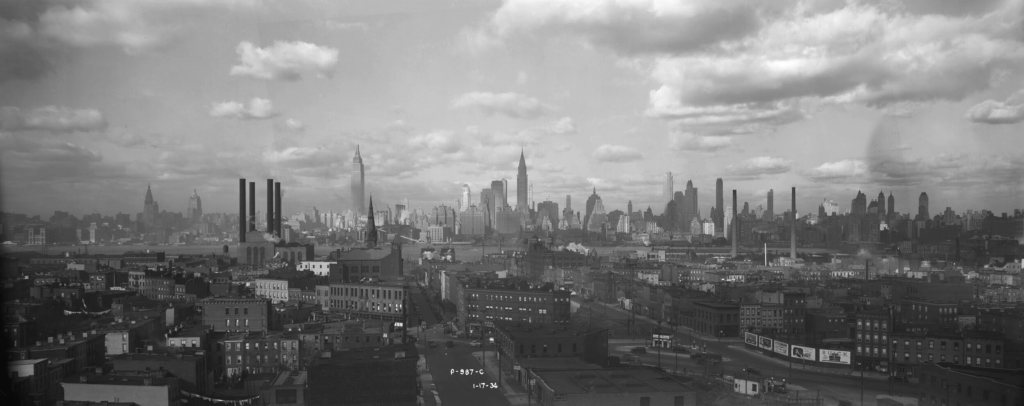
P-987-c: View of Manhattan skyline from Long Island City, January 1, 1934. Borough President Queens Collection, NYC Municipal Archives.
Visible buildings include the Vanderbilt Hotel, Empire State, 10 East 40th Street, Daily News, Chanin, Lincoln, Chrysler, 500 Fifth Avenue, New York Central, Grand Central Palace, RCA, Waldorf Astoria, General Electric, River House, Savoy Plaza, Ritz Towers, Sherry Netherlands.
PHOTO OF THE DAY
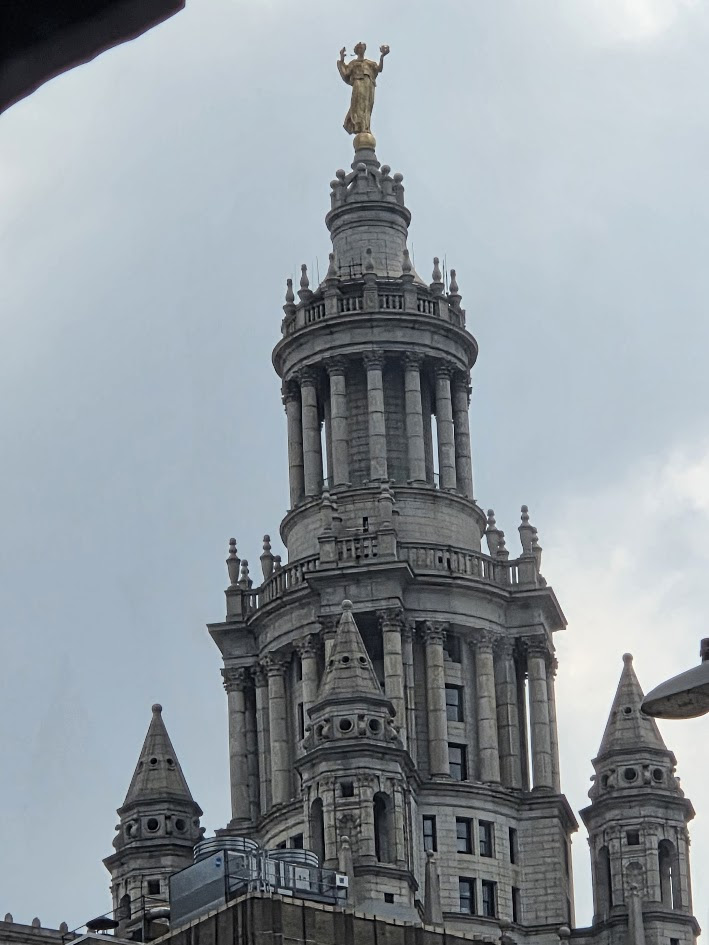
Sitting at lunch on lower Broadway, I was able to see to top of the Municipal Building, with Civic Fame. It is a 25 foot gilded statue of a woman designed by Adolph Alexander Weinman.
CREDIT TO
NEW YORK MUNICIPAL ARCHIVES
JUDITH BERDY
All image are copyrighted (c) Roosevelt Island Historical Society unless otherwise indicated THIS PUBLICATION FUNDED BY DISCRETIONARY FUNDS FROM CITY COUNCIL MEMBER JULIE MENIN & ROOSEVELT ISLAND OPERATING CORPORATION PUBLIC PURPOSE FUNDS.