Thursday, August 7, 2025 – A WEEKLY SOURCE OF ALL KINDS OF INFORMATION AND HISTORY

About Ephemeral New York
Thursday, August 7, 2025
EPHEMERAL NEW YORK
Issue # 1505
Every Monday, I find two articles from “Ephemeral New York” in my in-box. Many times we adopt the stories for From the Archive and give credit to Ephemeral New York.” There are so many sources of information and artiicles that further the knowledge including New York Almanack, NYHIstorical Blog, NYC Municipal Archives Blog and many more sources.
About Ephemeral New York
Ephemeral New York, founded and edited by native New Yorker Esther Crain, chronicles a constantly reinvented city through photos, newspaper archives, and other scraps and artifacts that have been edged into New York’s collective remainder bin. Here we remember forgotten people, places, and relics of the way New Yorkers used to live. We get a big kick out of present-day urban weirdness and idiosyncrasies too.
This site has given rise to two books, 2014’s New York City in 3D in the Gilded Age and The Gilded Age in New York, 1870-1910. The years between the Civil War and World War I were the most dynamic in the city’s history, and this is a favorite time period for readers of Ephemeral New York as well as the site’s creator.
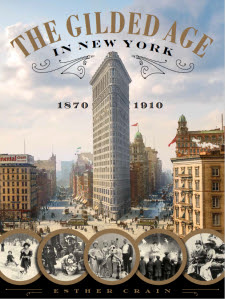
The Gilded Age is when the physical city we view and experience today came together: five boroughs sharing a magnificent waterfront, threaded by bridges and subway lines, with an urban landscape marked by skyscrapers, parks, and brownstones.
The contradictions and extremes of the Gilded Age also make it such a fascinating era. Marble mansions lined Fifth Avenue a streetcar ride away from the airless flats of East Side slums. Upstate water piped into the receiving reservoir in Central Park offered fresh running water, yet it wasn’t until 1901 when tenements were required to have bathrooms in each apartment. Votes were purchased, prostitution was out in the open, and despite the wealth and glamour of Caroline Astor’s fabled 400, two brutal recessions made the Gilded Age one of bracing hardship for thousands.
The Gilded Age in New York, 1870-1910 is available on various book sites. Find out more about the book and Esther Crain on Amazon and Goodreads.
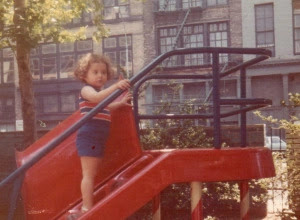
[Washington Square Village, 1970s. That slide is no longer there.]
Ephemeral New York focuses on all eras of the city’s history, but Crain herself vividly recalls the mid-1970s, when daily life for a kid in Greenwich Village meant stepping over winos to enter the Grand Union on Bleecker Street, a happily chaotic class packed with 35 other first graders at PS 41, and that Mays, not Whole Foods, was once the flagship shopping destination of Union Square. Sometimes wry and often wistful, she feels the presence of the city’s ghosts everywhere.
All comments and suggestions are welcome.
PHOTO OF THE DAY
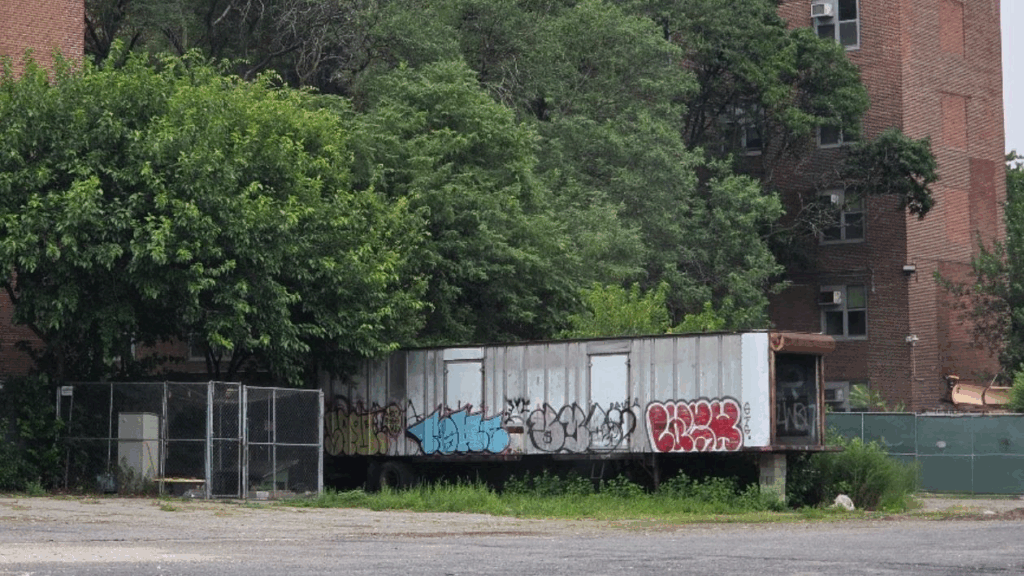
Eyesore abandoned truck soon to be removed from in back of Coler. Hopefully, more old equipment will soon be cleared from the area. The area is RIOC property and working with Coler should make the back of the hospital be cleaned up soon.
CREDIT TO:
EPHEMERAL NEW YORK
All image are copyrighted (c) Roosevelt Island Historical Society unless otherwise indicated
THIS PUBLICATION FUNDED BY DISCRETIONARY FUNDS FROM CITY COUNCIL MEMBER JULIE MENIN & ROOSEVELT ISLAND OPERATING CORPORATION PUBLIC PURPOSE FUNDS.


Copyright © 2025 Roosevelt Island Historical Society, All rights reserved.Our mailing address is:
rooseveltislandhistory@gmail.com
Leave a comment