Weekend, October 17-18, 2026 – Journey Back in Time: The Lost Graving Dock Awaits!

Ghostly Remnants of the Nation’s First Graving Dock in Brooklyn
If you know where to look, you’ll find traces of a
lost ship repair site in Red Hook.
Weekend, October17-18, 2026
Untapped New York
Issue # 1767

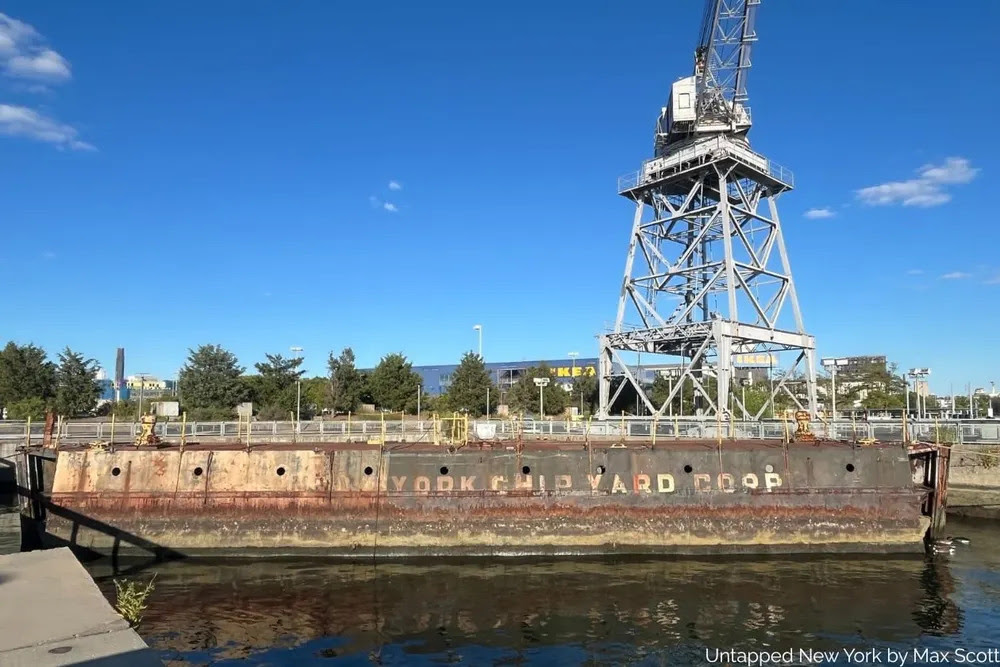
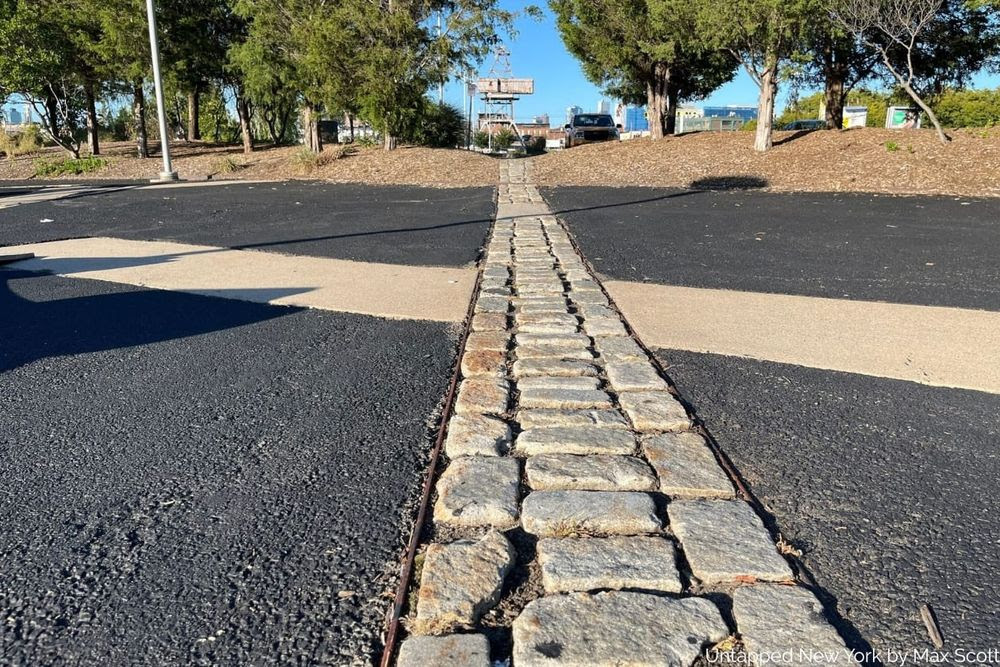
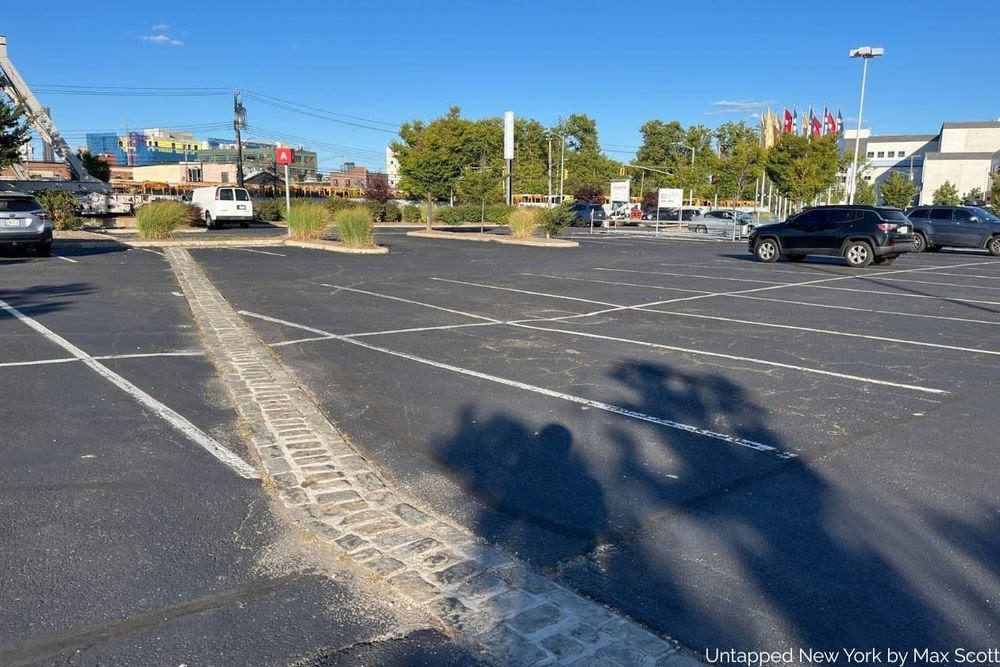
Red Hook’s IKEA is one of the neighborhood’s local landmarks. The store’s giant blue and yellow letters are visible for blocks around, and its free ferry service provides a vital link to Wall Street. But did you know that beneath IKEA’s parking lot, and still outlined in cobblestones that trace its former edges, lies the first graving dock in the United States?
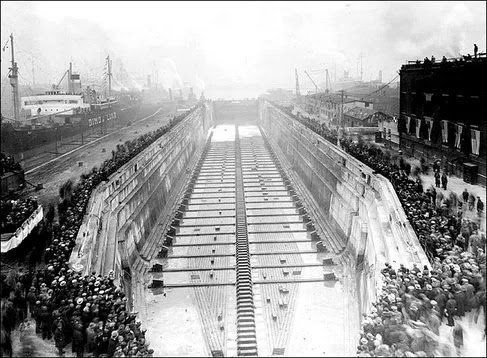
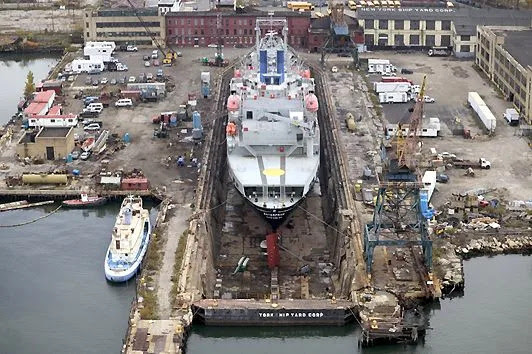
A graving dock is a type of dry dock where ships go for repairs, without having to be hauled onto land. These docks function like giant bathtubs; ships maneuver in, the gates are closed and the water is drained, leaving the ship exposed to the air and easily accessible for exterior repairs. New York City still has a working dry dock in the Brooklyn Navy Yard, but the Erie Basin dry dock in Red Hook was the city’s, and the country’s, first.
Image via Wikipedia
Erie Basin History
In 1864, William Beard—for whom Red Hook’s Beard Street is named—bought land along the Red Hook waterfront and built the Erie Basin. This was one of the first European-style, artificially-enclosed harbors in the city. The Erie Basin was originally built to capitalize on the storage and shipment of grain that flowed into New York from the Erie Canal.
The canal opened in 1825 and transformed the New York City into the nation’s most important port. Along with building dozens of grain warehouses, Beard also invested in the construction of two graving docks. These opened in 1866 and were in use for almost 150 years.
Soon after its construction, William Beard sold the graving docks to the Robins family, who operated it as the Robins Dry Dock and Repair Company for the rest of the 19th century. In 1916, the docks were sold to William Todd, an employee at the Robins docks who ended up forming a small shipbuilding empire as demand for shipyards and repair docks spiked during the First and Second World Wars.
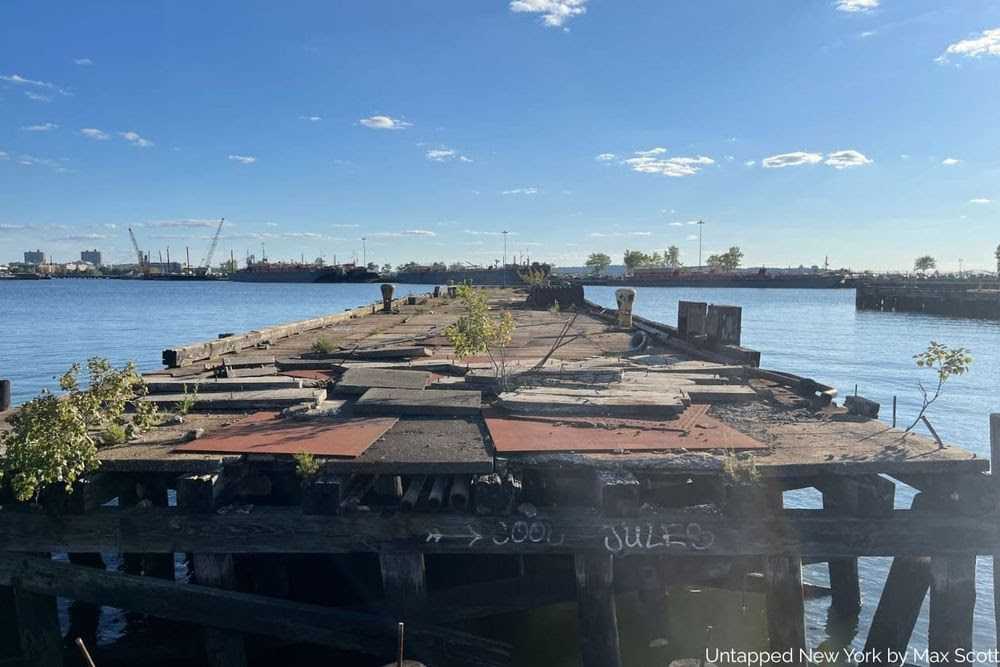
The World Wars were the high-water mark of the shipbuilding and repair industry in New York, and nowhere was that felt more strongly than in Red Hook’s Erie Basin. In a 1920 Port of New York Annual report on the state of New York’s waterfront industry, the Todd Shipyards are described as being places of intense industry and round-the-clock work during World War I:
“No night nor day was known there, the twenty-four hours passed being met by the twenty-four coming with large forces of employees. Some great work was done there, such as lengthening some steamers and rebuilding others which were war damaged.”
After the end of World War II, Todd Shipyards continued to operate its graving dock on the Red Hook waterfront, but a changing local economy and new marine technologies meant that by the 1980s, business was drying up. Todd Shipyards closed its Red Hook docks in 1986. The docks were then sold to another owner, who leased it to different operators. All operations at the docks and adjacent piers finally ceased in 2005.
In 2006, IKEA proposed a flagship store on the site of the derelict Todd Shipyards. The plan included demolition of the piers and buildings adjacent to the old graving dock, replacing them with IKEA, and filling in the graving dock for a large surface parking lot. Despite attempts from the Municipal Arts Society, local preservationists, and even the comptroller to preserve the Civil War-era docks, the plan was approved and construction started in 2007. By 2008, the graving dock was filled in and paved over with a parking lot.
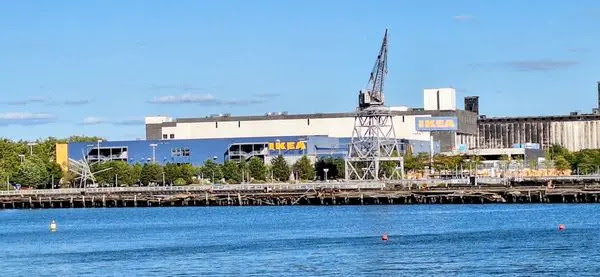
As a small gesture to the history of the site, the outline of the edges of the graving dock were preserved by a line of cobblestones that, when viewed from above, make the shape of a ship.
Input caption text here. Use the block’s Settings tab to change the caption position and set other styles.
About (from ATLAS OBSCURA)
Buried under the vast 1400-space parking lot of Ikea, a major fixture of waterfront industry was lost after 120 years of continuous operation. The Red Hook Graving Dock employed 20,000 workers in its heyday and was one of the few places in the New York Harbor where the biggest ships could be repaired.
A graving dock, named for its coffin-like shape, allows boats to float in it while draining the water, exposing the hull for repair. 540 feet long when it was constructed in 1886, the Red Hook Graving Dock was extended twice in coming decades to its final length of 730 feet, earning it the designation by Scientific American as the longest dry dock in the country and possibly the world. It took 15 million gallons of water to fill it up.
In the mid-1880s, Red Hook was a natural site for such a massive maritime facility. At the junction of the Erie Canal and the Atlantic ocean, Red Hook could provide shipping traffic with repair services and a population to attend to the laborious tasks.
The terms under which Ikea got permission to pave over the dock met with great contestation from community groups and preservationists. The Swedish big-box retailer bought the property for 30 million dollars in 2005 and ignored alternative plans to save the graving docks from destruction. At the time of purchase, the dock was the only one big enough in New York to service some of the city’s own sanitation and sludge vessels. The paving over of the dock met with additional criticism in 2008 when the city released a report that New York’s maritime industry needed up to seven more graving docks to meet existing demand for big-boat repair services.

THE ANNUAL TRIBA EVENT IS COMING UP….STAY TUNED FOR REGISTRATION INFO.
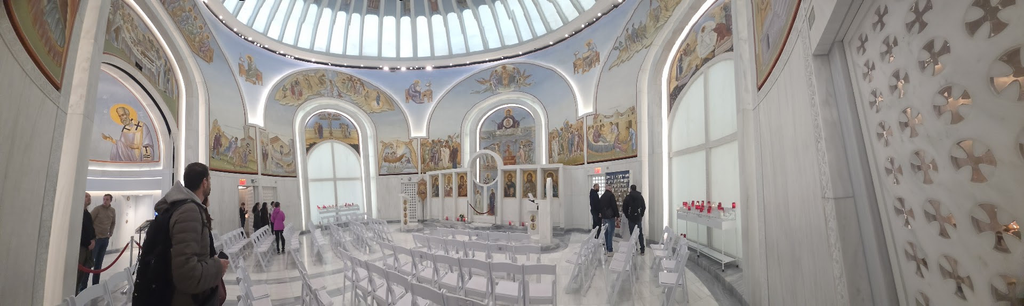
PHOTO OF THE DAY
St Nichola National Shrine
Liberty Streert
Designed by Santiago Calatrava
CREDIT
Untapped New York
Atlas Obscura
All image are copyrighted (c) Roosevelt Island Historical Society unless otherwise indicated
THIS PUBLICATION FUNDED BY DISCRETIONARY FUNDS FROM CITY COUNCIL MEMBER JULIE MENIN & ROOSEVELT ISLAND OPERATING CORPORATION PUBLIC PURPOSE FUNDS.

Copyright © 2026 Roosevelt Island Historical Society, All rights reserved.Our mailing address is:
rooseveltislandhistory@gmail.com
Leave a comment