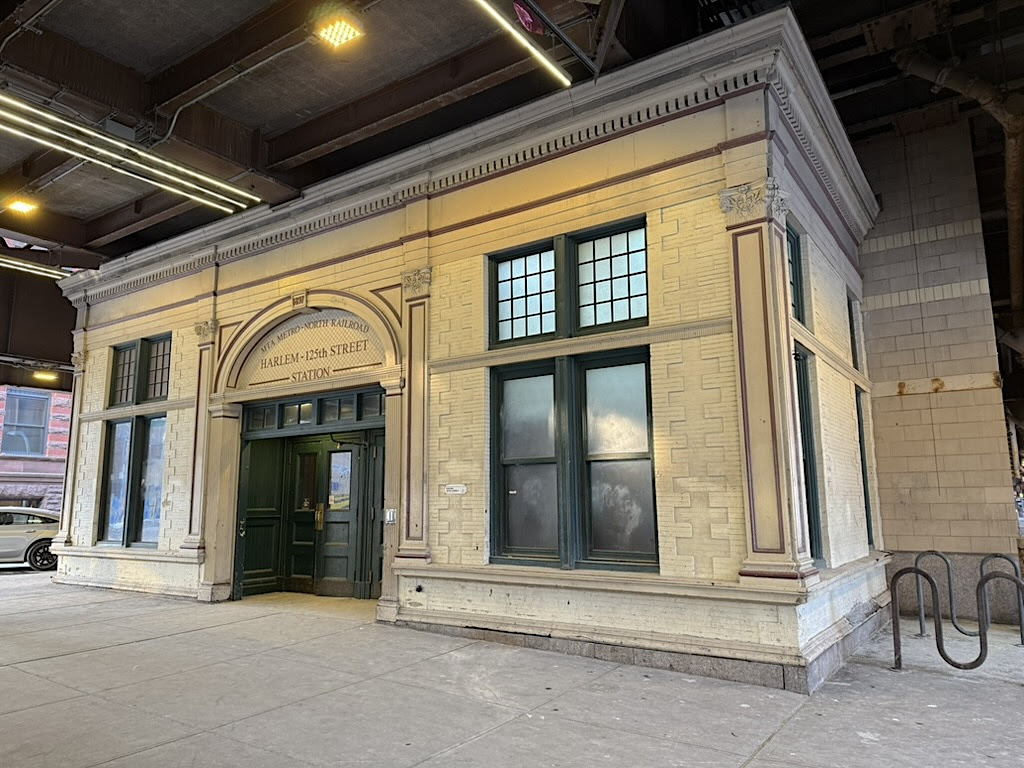
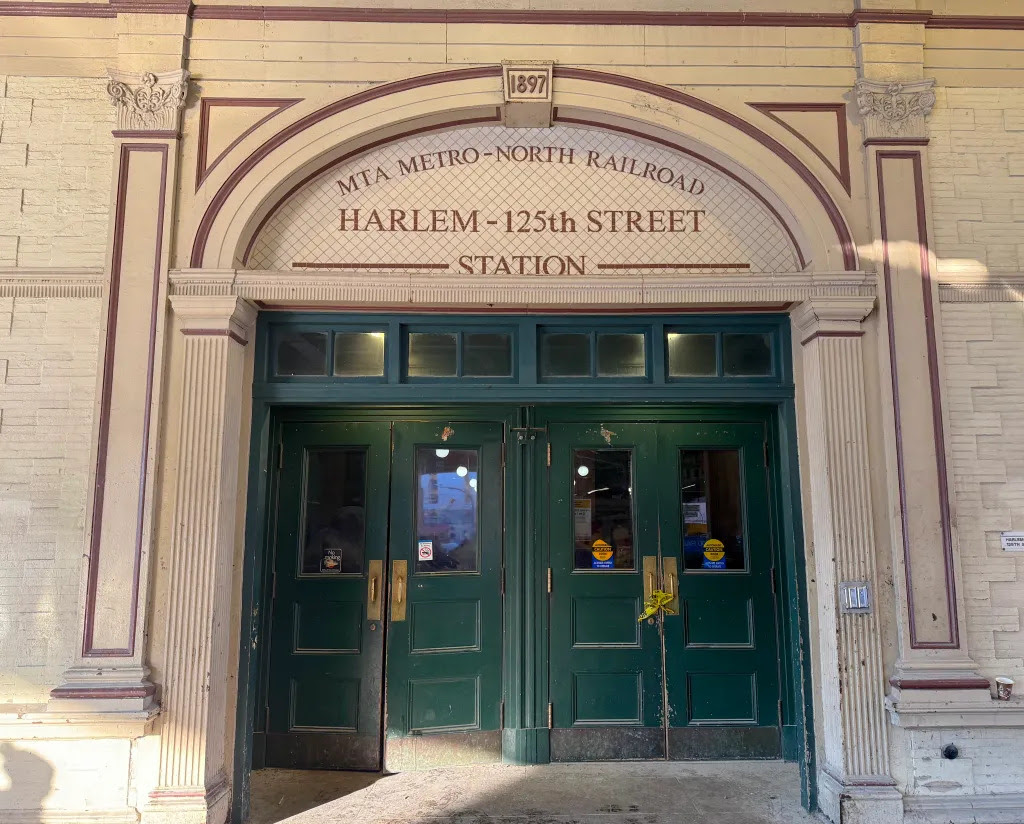
On busy 125th Street, it’s a lilliputian train depot, with a delicate blond-brick facade and a white cornice trimmed in terra cotta.
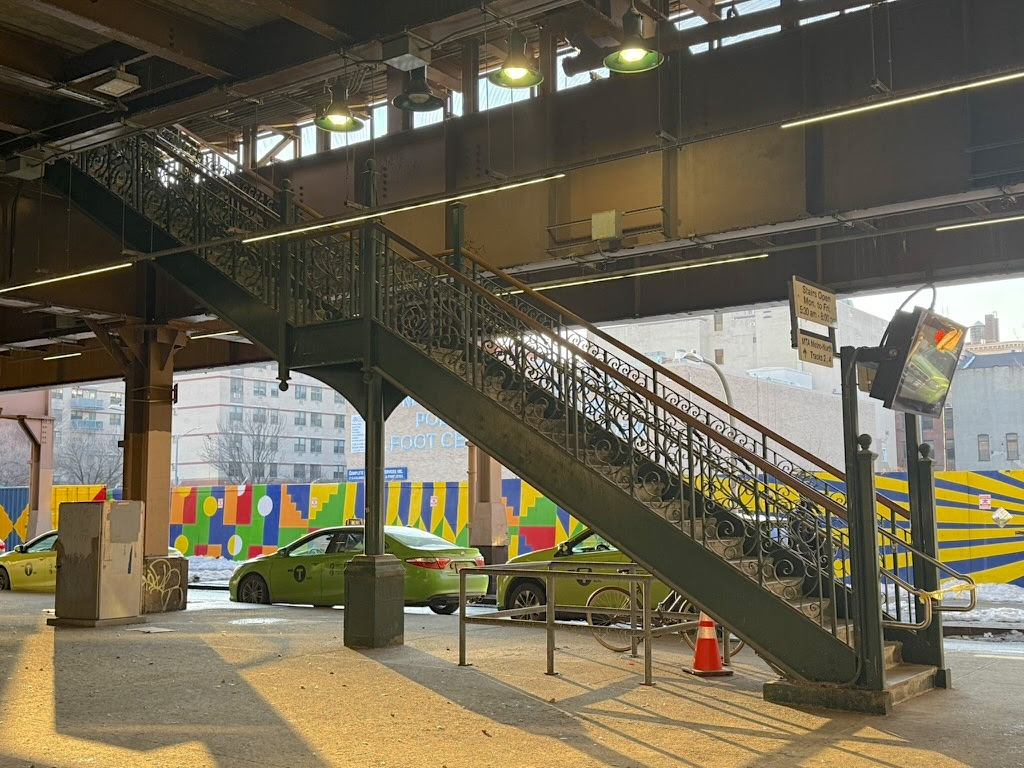
It’s so small, it looks like it’s hiding under the massive steel viaduct that carries Metro-North rail cars above Park Avenue to Grand Central Terminal in one direction and beyond Manhattan to Westchester in the other.
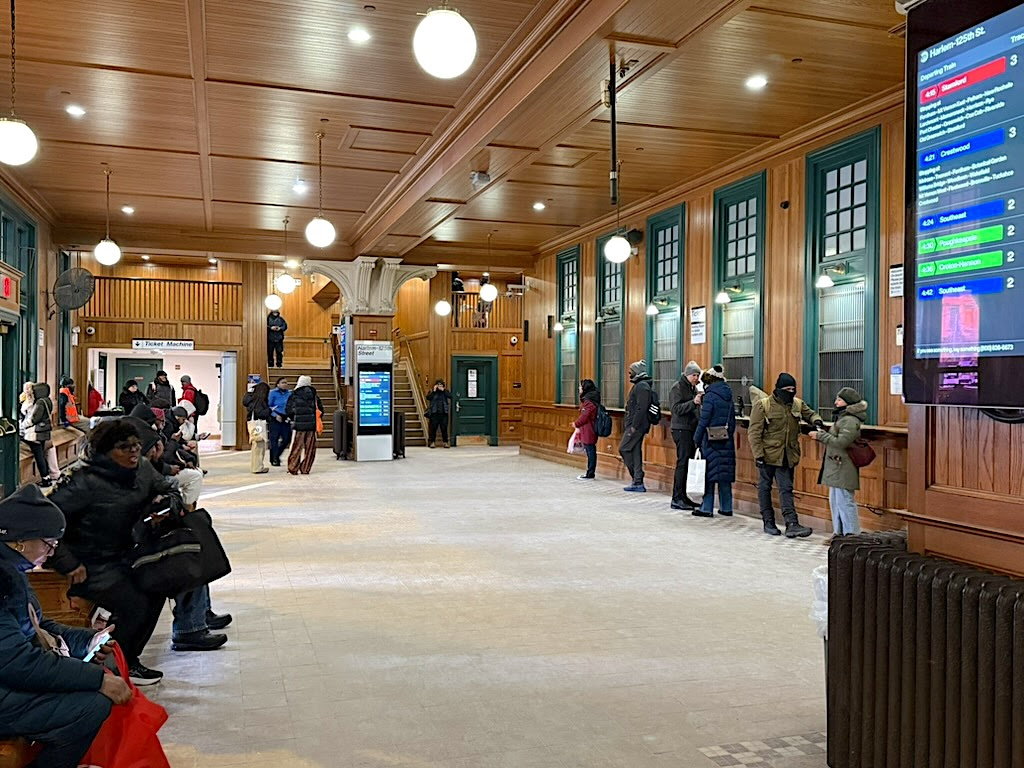
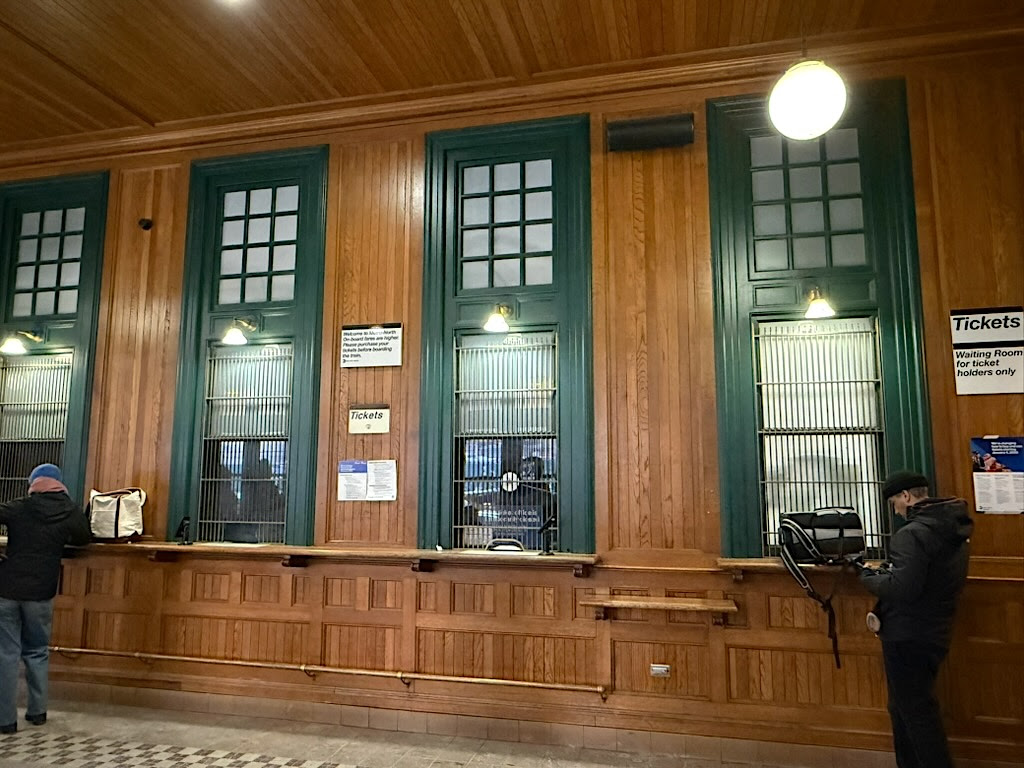
But once you walk inside, you’ll find yourself in a roomy rail station with a wall of ticket counters and a spacious waiting room straight out of the Gilded Age.
Oak paneling covers the walls, soft globes glow with light overhead, and the tiled floor and antique iron radiators give the feel of a late 19th century depot in a small village, not a major city.
The interesting thing is, despite the date “1897” carved into the entryway, what’s now known as the Metro North Harlem-125th Street station is not an actual relic dating back to the Gilded Age—not exactly.
Though some of its components are original, it’s considered a 1990s “replica” of the train station built by the New York Central and Hudson River Railroads on this spot in 1897—when Harlem was shaking off its agrarian village past and joining the urban city.
In a review just before the 1897 station opened, The New York Times deemed it a big plus for Harlem residents.
“Passing through the tiled vestibule, one enters a spacious waiting room, 40 feet broad by 70 feet long, containing comfortable benches,” wrote The Times. “In one corner of the room is an information bureau, parcel room, and bicycle rack, while in the opposite corner is the telegraph and telephone office.”
“Back of the waiting room is a gentlemen’s smoking room and toilet, fitted with marble basins and plumbing of the latest approved pattern,” continued the Times.
The smoking room is gone, alas. But this recreation of the 1897 station is the latest in a series of railroad stops or actual stations at Park Avenue and 125th Street.
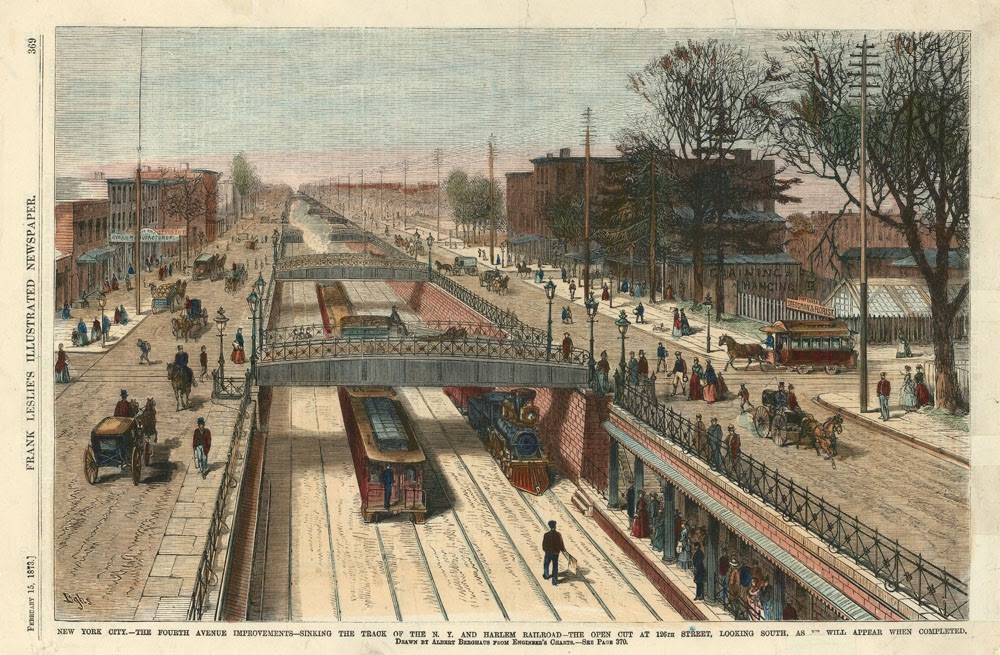
Park Avenue, then known as Fourth Avenue, had train tracks running at street level through lower Manhattan since 1831. Besides being noisy and unsightly, the street-grade tracks were extremely dangerous to pedestrians.
“The tracks extended north to Harlem at street level in 1837, and by 1860 trains struck a person or an animal almost every week, according to news reports of the time,” wrote Tina Kelley in a 1999 New York Times article. “The tracks were then lowered below street level north of 116th Street.”
To accommodate passengers getting on the sub-level trains at 125th Street, a new station was constructed in 1874, according to Joseph Brennan of Columbia University’s Abandoned Stations website. (The fourth image, above, shows what the new station was supposed to look like.)
The New York Times article from 1897 described that station as small and dingy, “down in the old Park Avenue cut.”
Harlem’s population was booming, but it was the opening of the Ship Canal connecting the Hudson River to the Harlem River that necessitated a second station, one that needed to be elevated.
“After a navigable connection was cut from the Hudson River to the Harlem River in the 1890s, allowing boats from upstate to travel down the East Side, the railroad bridge across the Harlem River needed to be raised, so the steel viaduct was built,” wrote Kelley.
For decades, the 125th Street station and its steel viaduct transported passengers in and out of the city. But years of neglect in the later 20th century—resulting in boarded-up windows and water damage—took a toll.
By the time Metro-North considered renovating it, much of the original details were beyond repair—hence the careful replication rather than renovation.
These days, it’s a bustling station filled with commuters, day trippers, and time travelers who appreciate the opportunity to wander through a Gilded Age-style jewel box with a platform offering views of Upper Manhattan.
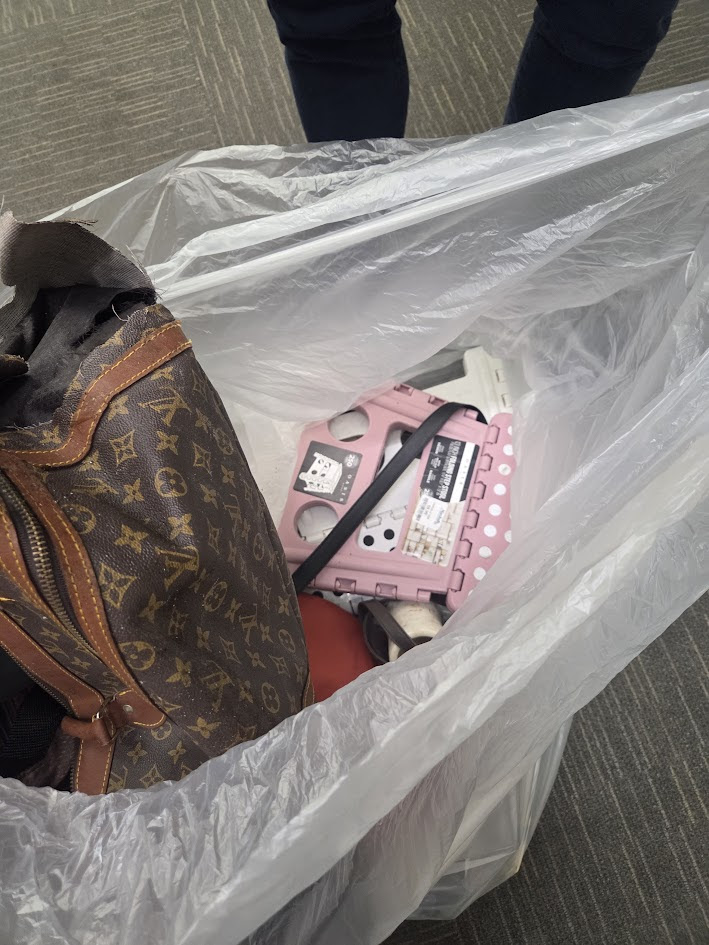
FOR THREE WEEKS ONE OF THE AVAC TUBES WERE CLOGGED WITH LARGE ITEMS THAT HAD TO BE EXTRACTED. THIS LARGE SIZE DUFFEL BAG AND TWO STEP STOOLS CERTAINLY SHOULD NEVER BE PLACE IN THE AVAC CHUTE IF THE ITEM IS LARGE LEAVE IT FOR STAFF TO REMOVE IT FROM AVAC ROOM AND DO NOT STUFF IT IN THE CHUTE.
All image are copyrighted (c) Roosevelt Island Historical Society unless otherwise indicated THIS PUBLICATION FUNDED BY DISCRETIONARY FUNDS FROM CITY COUNCIL MEMBER JULIE MENIN & ROOSEVELT ISLAND OPERATING CORPORATION PUBLIC PURPOSE FUNDS.
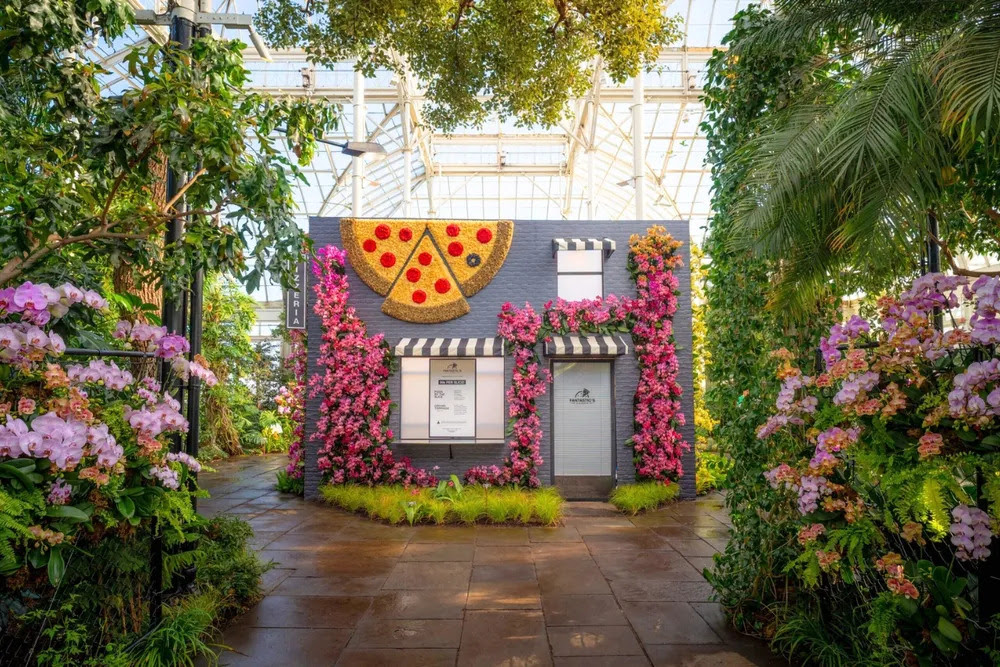
Photo Courtesy of the New York Botanical GardenMr. Flower Fantastic’s Concrete Jungle Orchid Show exhibition turns ordinary urban scenes into extraordinary floral arrangements! We got a sneak peek at the newly opened exhibit, which features iconic scenes of NYC recreated as bountiful floral displays at the New York Botanical Garden:
See the city’s urban spaces transformed by lively bursts of flowers!
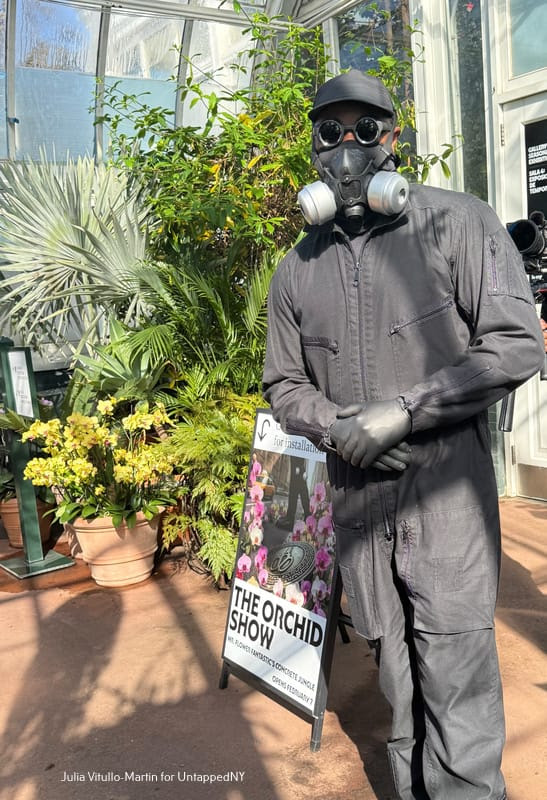
But then Alicia Keys and Jay-Z in their song, Empire State of Mind, called New York the “concrete jungle where dreams are made of,” a place where anything is possible for the talented and the ambitious. “These streets will make you feel brand new, big lights will inspire you.”Now the New York Botanical Garden, in its glorious 23rd annual orchid show, introduces New Yorkers to Mr. Flower Fantastic’s Concrete Jungle. And what a gorgeous, innovative, endearing jungle it is. MFF, as Mr. Flower Fantastic prefers to be called, maintains his anonymity with a cap, dark glasses, rubber gloves, and the gas mask that he needs for his severe pollen allergies. A self-taught floral artist, MFF developed his love for flowers growing up in Queens, tending to his mother’s garden.
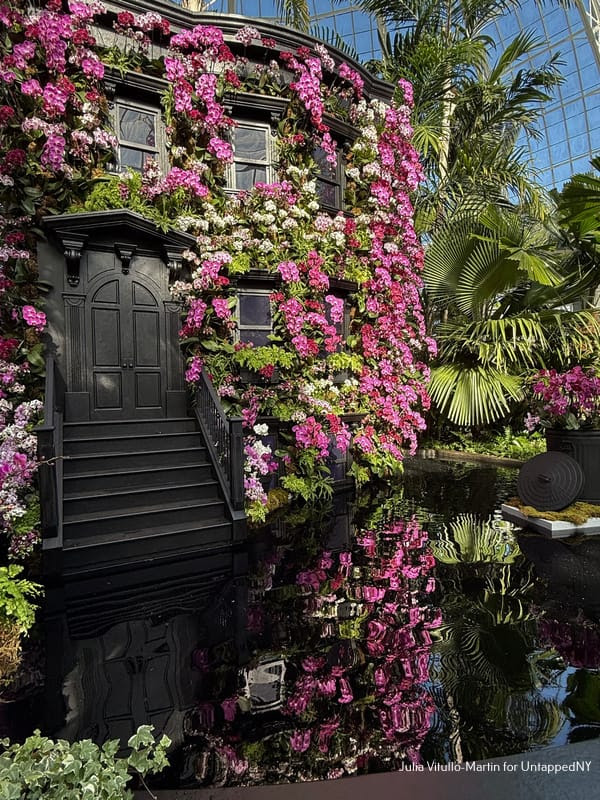
Mr. Flower Fantastic’s Brownstone
The first art you’ll see on entering the Enid A. Haupt Conservatory is a brownstone, covered in pink, fuchsia, and white orchids of the genus Phalaenopsis, says the NYBG. Frequently called the moth orchid, this flower that many of us have in our homes should not be disdained, says Marc Hachadourian, curator and manager of the garden’s Nolen Greenhouses. It likes the conditions we like—moderate light, humidity, and temperature—making it easy to grow and thrive. And thrive it certainly does in this orchid’s show. Hachadourian also says that the living orchids are not harmed by their lavish display over Mr. Flower’s “icons of everyday” New York life.
Mr. Flower Fantastic’s Trash Can
It may not be an object of beauty to you, but to Mr. Flower Fantastic, the classic New York trash can is to be cherished and planted with orchids.
How could New York function without the dumpster, that ubiquitous receptacle for construction debris and household trash?
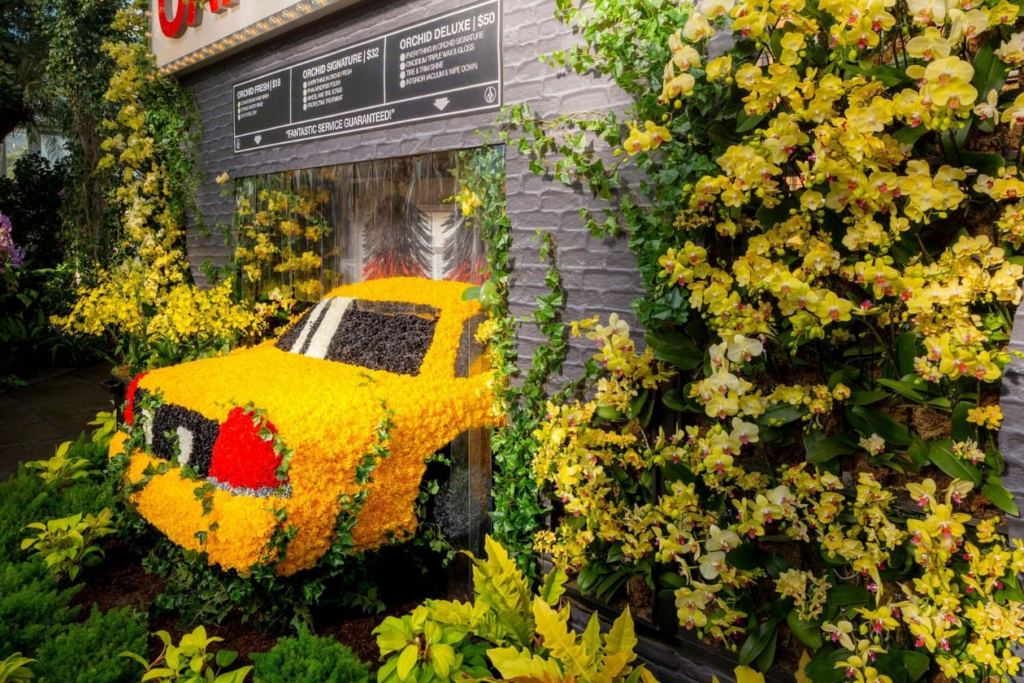
Mr. Flower Fantastic’s Car Wash with Yellow Taxi
This is one adorable car wash, with an adorable, carnation-covered yellow taxi pushing in to be washed. The current taxi was inspired by a previous installation, Taxi!!!, at the Queens Botanical Garden. MFF says that his tribute to the yellow cab “embodies diversity, tenacity, imagination, and brilliance.”
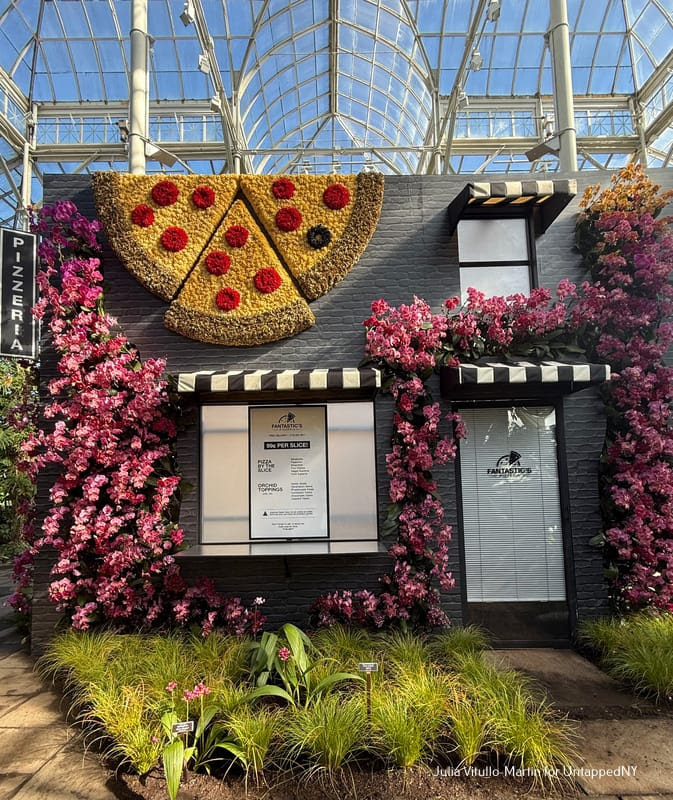
What can one say? Without their neighborhood pizzeria, many New Yorkers would starve. Here, for 99 cents a slice, you can get a Margherita, Pepperoni, or Neapolitan pizza with orchid toppings.
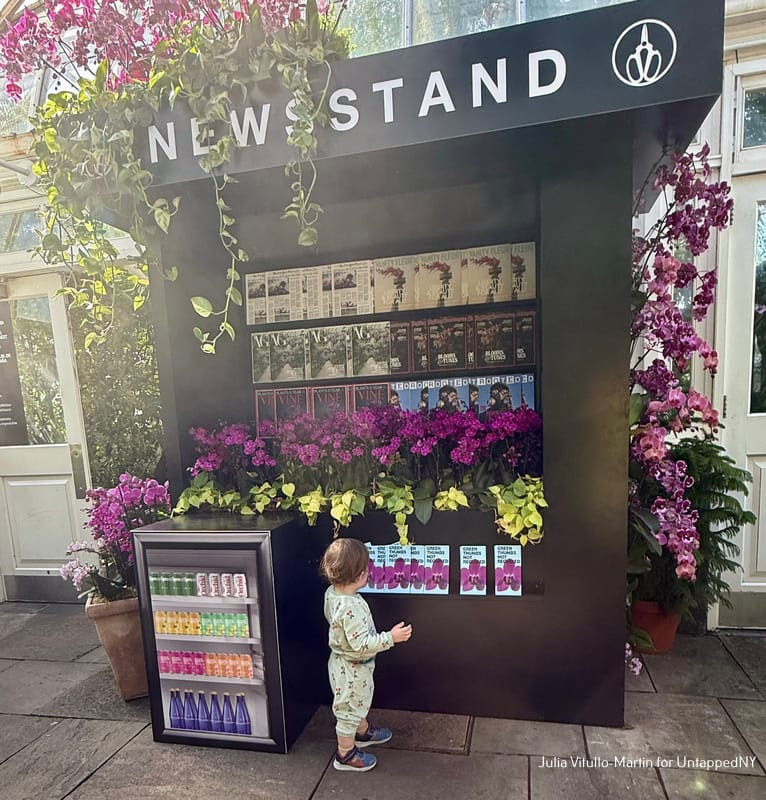
Mr. Flower Fantastic’s Newsstand
Reflecting the turmoil in the newspaper industry, newsstands are closing all over New York. But Mr. Flower Fantastic’s orchid-covered newsstand has a customer who is pondering picking up one of the guides to orchid care.
Lauren Fuller, NYBG Cultivator
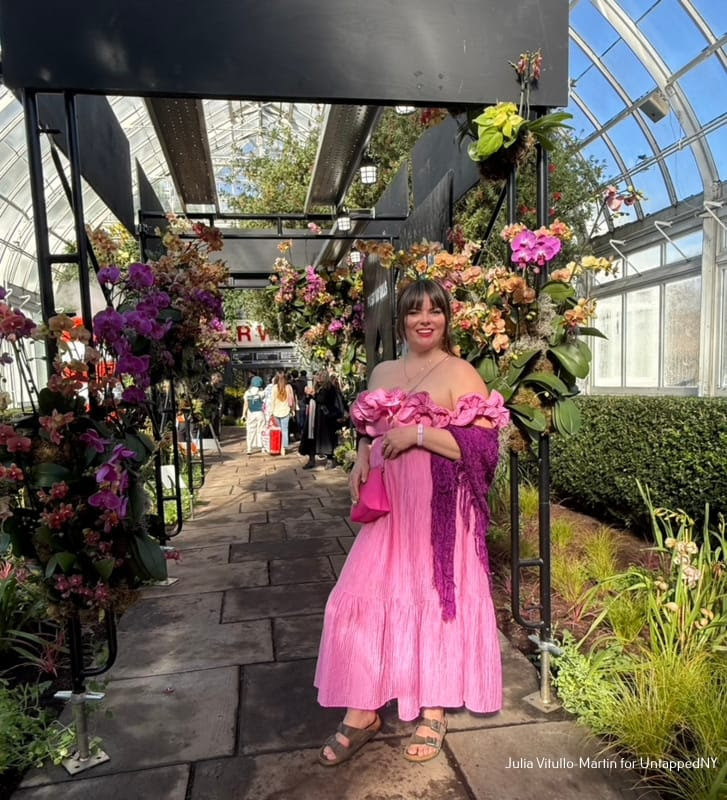
One of the many joys of the annual orchid show is that regulars often dress up for the event. Here, Lauren Fuller, a social media influencer with the handle @node.mama, poses beautifully with cascading orchids. Lauren began her career in NYBG’s cultivators program, which gives social media influencers access to the garden’s grounds, as well as behind-the-scene tours. “Then we put everything up on social media,” says Lauren, “to get everyone excited about NYBG.
The mysterious Mr. Flowes know as MFF
CREDITS
Julia Vitullo-Martin
NEW YORK BOTANICAL GARDEN
All image are copyrighted (c) Roosevelt Island Historical Society unless otherwise indicated THIS PUBLICATION FUNDED BY DISCRETIONARY FUNDS FROM CITY COUNCIL MEMBER JULIE MENIN & ROOSEVELT ISLAND OPERATING CORPORATION PUBLIC PURPOSE FUNDS.
Artist Augusta Savage overcame poverty, racism, and sexual discrimination to become one of America’s most influential 20th-century artists. (More on her career in an upcoming issue)
Artist Augusta Savage and the Tragic Story of Her Lost Masterwork
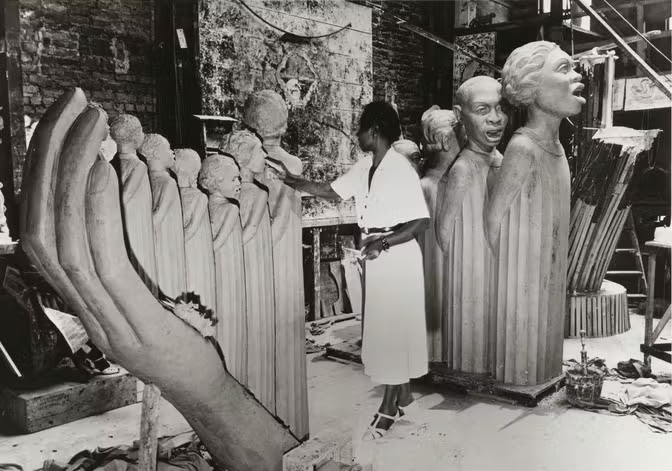
The photo of Savage working on ‘Lift Every Voice and Sing’ that was blown-up to life-size in the New-York Historical exhibition (Manuscripts and Archives Division, the New York Public Library)
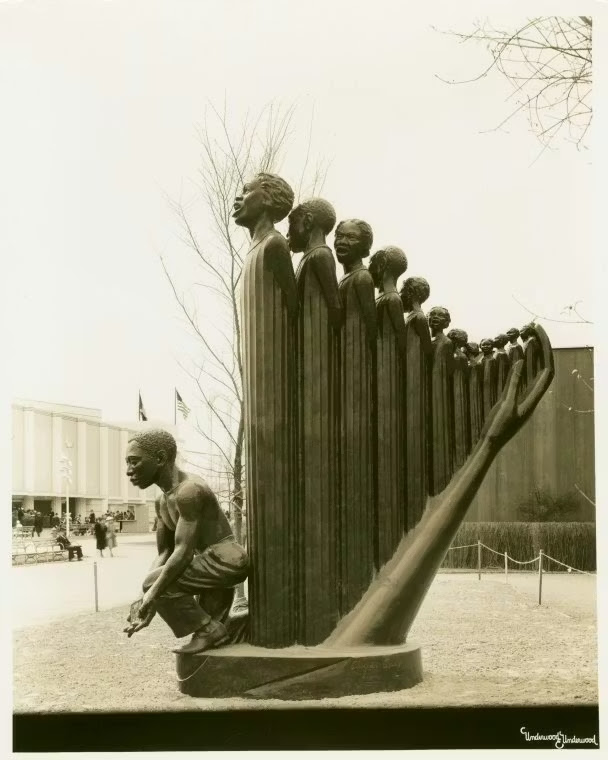
An estimated 44 million people attended the 1939 New York World’s Fair in Flushing Meadows-Corona Park, Queens, and witnessed its vision for a shimmering, Art Deco “World of Tomorrow.” Some five million of those visitors got a chance to behold Lift Every Voice and Sing. A sculpture by artist Augusta Savage, it stood at a towering 16 feet tall and was mounted in the courtyard of the Contemporary Arts Building near one of the Fair’s gates. Also called The Harp (a name Savage reportedly hated), the piece depicted a kneeling Black man holding a bar of music and 12 Black chorus singers representing strings on a harp, the sounding board of which was no less than the hand of God.
The piece represented the pinnacle of Savage’s career, and the fascinating story behind it was part of New-York Historical’s exhibition Augusta Savage: Renaissance Woman. Born in Green Cove Springs, FL, in 1892, Savage had already faced a lifetime’s worth of adversary, from her minister father who almost “whipped all the art out of me,” as she once said, to an American art world that could not and would not support the work of an African American woman. (Just one example: In 1923, she won a scholarship to study at the Fontainebleau School in Paris, an award that was revoked when the committee learned she was Black.) Savage persevered, and by 1937, she was a graduate of Cooper Union who had studied and exhibited in Paris, received commissions for busts of W.E.B. DuBois and Marcus Garvey, and founded the Savage Studio of Arts and Crafts in New York, one of the centers of the Harlem Renaissance. She was the director of the WPA-funded Harlem Community Arts Center in 1937, when she received a commission for a piece from the World’s Fair board, the only Black woman to receive that honor. The president of the Fair Corporation told the New York Times that they would have “no such segregation of this country’s different racial groups as had marked other American expositions.”
The piece—for which Savage was paid $360—was intended to celebrate African Americans’ contributions to the music of the world, and Savage already had a personal connection that lent itself to the theme. She had been friends with writer and activist James Weldon Johnson, whose poem “Lift Ev’ry Voice and Sing” was set to music and later adopted as the “Black National Anthem” by the NAACP.
Little is known about the creation of the piece, but Savage left her job at the Harlem Community Arts Center and worked on it for two years. The finished work was made of plaster that was lacquered to look like black basalt. This attention to the medium of her message is a running theme: Always short of funding, she often sculpted in fragile, but cheap, plaster or clay and rarely had the means to get her pieces cast in bronze.
The Fair opened in April 1939, and Lift Every Voice got its spot on a main stage of one of the biggest events in the world. “Miss Savage’s creation stands in a niche at the focal point of the building front and is commented upon by practically everyone who passes,” wrote The Afro-American, a Baltimore newspaper, at the time. In her essay on Savage in Women Artists of the Harlem Renaissance, art history professor Theresa Leininger-Miller notes that Savage certainly created more radical pieces in her life, like the figures of lithe modern dancers and fierce African Amazons she sculpted during her time in Paris in 1929 and 1930. But Wendy N.E. Ikemoto, the New-York Historical curator behind the exhibition, argues that the piece is ambitious even in the crowd-pleasing context of the World’s Fair. “It’s an inventive, gorgeous sculpture in many ways,” she says. “On the World’s Fair stage, it still communicates Savage’s mission: to promote Black arts and the Black community. In that sense, it’s an activist sculpture.”
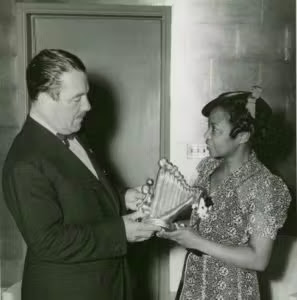
Savage presenting a replica of the piece to the President of the World’s Fair, Grover Whelan (Manuscripts and Archives Division, the New York Public Library)
Small, metal replicas of the piece were sold as souvenirs, and images of it were reproduced on postcards. But what became of the work itself? Sadly, it was destroyed by a bulldozer after the Fair’s close in the fall of 1940. World’s Fairs were meant to be temporary and ephemeral, and it wasn’t shocking for structures or artworks to be demolished at the end.
But the destruction of Lift Every Voice speaks to the larger tragedy of Savage’s work and how little of it survives today. Leininger-Miller—who’s working on a biography of Savage—now estimates that of the approximately 160 documented works by Savage, about 70 have been lost, mostly because Savage never had the means or support to cast them in more durable material.
This was true of Lift Every Voice, as well. The common assumption is that Savage wanted it preserved, but wouldn’t have been able to pay for storing it or casting it. So, all we have left are the small, imperfect replicas, one of which is part of Renaissance Woman, along with a blown-up, life-sized photo of Savage and her work-in-progress, just to give a measure of what was lost
The statue on display at the World’s Fair (Manuscripts and Archives Division, the New York Public Library)
Thwarted by never-ending racism and poverty, Savage left New York City in the 1940s for a rural life in Saugerties, NY, withdrawing from the art scene before her death in 1962. She’s best remembered today as a key mentor and educator in the Harlem Renaissance, and one of her often-repeated quotes takes pride in that, while betraying a heartbreaking resignation about her work. “I have created nothing really beautiful, really lasting, but if I can inspire one of these youngsters to develop the talent I know they possess, then my monument will be in their work,” she said in a 1953 interview. Still, who knows what new attention to Savage’s life and career might bring? In 2017, a New York Times op-ed called for the full-scale re-creation of Lift Every Voice as a public work of art. Maybe one day, Savage’s monument will be her own.
CREDITS
Written by Kerrie Mitchell, Content Editor New York Historical Society Blog
All image are copyrighted (c) Roosevelt Island Historical Society unless otherwise indicated THIS PUBLICATION FUNDED BY DISCRETIONARY FUNDS FROM CITY COUNCIL MEMBER JULIE MENIN & ROOSEVELT ISLAND OPERATING CORPORATION PUBLIC PURPOSE FUNDS.
At present, politicians London and Washington are alert to Beijing’s attempts to exploit Anglo-American technology. They are weary of China stealing trade secrets, copying methodologies, or obtaining sensitive business data, whilst Western companies continue to seek admission to the Chinese market.
Over time, Britain and America themselves have been involved in acts of intellectual property theft. In fact, the United States accuses China of similar illicit practices that helped its nascent industry leapfrog that of European rivals and come out as an industrial giant. The means used today may be more sophisticated, but the purpose of gaining a competitive edge remains the same.
Fears of Espionage
Platform eleven at London’s Paddington Station hosts a tavern named the Isambard. This public house at one of the city’s main stations celebrates the genius of engineer Isambard Kingdom Brunel (1806-1859). Father and son Brunel are notable examples of the contribution European migrants have made to Britain’s technological development.
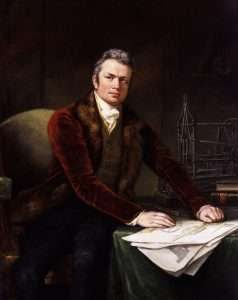
Educated in England and France, young Brunel was by far the most versatile engineer of the nineteenth century, responsible for the design of tunnels, bridges, railways, and ships. His father, Marc Isambard Brunel (1769-1849), had fled his native country during the French Revolution, but experienced plenty of adversity in his early career.
Having accumulated heavy debts in London, he was sent to prison. With no prospect of release, Marc let it be known that he considered accepting an offer of employment by the Tsar of Russia. In August 1821, facing the prospect of losing an able engineer and fearing industrial espionage, the government cleared Marc’s debts in exchange for his continued service. By any government’s standards, it proved to be a wise decision.
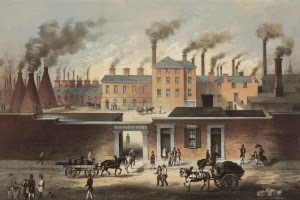
In the age of Brunel, British authorities feared that foreign intruders were out to steal the secrets of the nation’s industrial success. Ironically, many prominent tool and instrument makers were immigrants themselves who had traveled from German-speaking states or the Swiss – Italian Como district and settled in British cities to contribute to the industrial miracle of the nineteenth century.
The names of John Weiss, John Henry Dallmeyer, Francis Amadio, Martinelli & Co., Ronchetti Brothers, or Negretti & Zamba deserve a special place in the history of London instrument makers.
One would assume that unease about commercial espionage only became an issue at the time of the Industrial Revolution in Britain. That is not the case. Fears of losing production “secrets” were expressed earlier, leading to legal steps to prevent this from happening.
Danish Intruders
There is a tendency to associate migration with the movement of people from poor countries to more developed ones. The arrival of Flemish and Dutch nationals during the sixteenth and early seventeenth centuries in England proves that this is not the case.
Strangers from the Low Countries were either welcomed as (Protestant) refugees or invited to settle because of their technical skill and commercial competence. Professional craftsmen such as weavers, gardeners, painters, stone masons, and musicians (instrument makers) were encouraged to cross the Channel. English ambassadors in the Low Countries functioned as industrial and artistic “spies.”
As British technology surged forward, industrial (or economic) espionage became a topic that was new to the debate on international relations and migration. The illegal acquisition of trade secrets was a by-product of mechanization.
Industrialists tried to keep hold of their tools, manufacturing processes, and research data to protect their market share against competitors. The government passed an act banning the foreign sale of knitting frames as early as 1696. Other legislation would follow to prohibit the export of machinery and prevent skilled workers from leaving the country.
Despite restrictions, many machine makers and operatives were tempted to emigrate, whilst foreign visitors managed to smuggle drawings of machinery out of the country for replication at home.
In 1777, Thomas Bugge (1740-1815) became Professor of Mathematics and Astronomy at the University of Copenhagen. Keen to modernize the observatory on top of the city’s Round Tower (Rundetaarn, Europe’s oldest functioning observatory), and promote Denmark’s industry, he sent his student Jesper Bidstrup to London in 1787 to learn about the latest technological advances. Bugge recommended Bidstrup to his influential friend Joseph Banks who introduced the young man to leading instrument makers.
These masters ran a “closed shop.” They charged high fees for training apprentices, and their output was protected by the 1790 Tools Acts. Getting access to Jesse Ramsden’s famous dividing engine, a tool employed in making scientific instruments, was open solely to British traders.
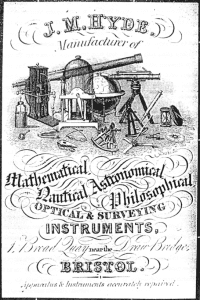
With the help of a network of Masonic brethren, Bidstrup set up a workshop at 36 St Martin’s Lane, just off Leicester Square (where Isaac Newton once lived). Around 1793, he published a sale catalogue of “optical, mathematical and philosophical instruments made and sold by J. Bidstrup.” It was a perfect cover.
He spent ten years in London copying models, buying tube glass cutting machines and a dividing engine, before planning his return in 1797. Dismantled machines were loaded on board separate ships destined for Cuxhaven and Copenhagen. Bidstrup did not live to enjoy the fruits of his activities. He died in 1802. His machinery was impounded as state property and handed to other Danish instrument makers.
Den of Piracy
For eighteenth century America to build its economy, it needed skilled workers able to assemble machines acquired overseas (by whatever means). The young United States began as a “pirate nation,” getting hold illicitly of European technology to fuel its Industrial Revolution. Lacking a manufacturing base, America relied on theft.
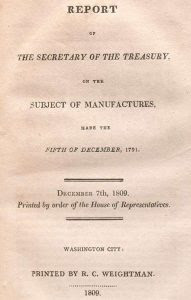
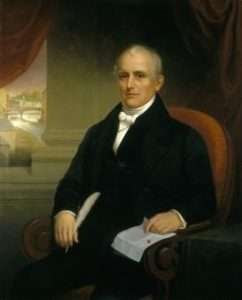
The nation’s first Treasury Secretary Alexander Hamilton aimed at jump-starting industrialization and advocated a system that would reward those who brought “secrets of extraordinary value” into the country. The acquisition of technology was essential for transforming the United States from an agrarian economy into a manufacturing power. In 1791, he set out his strategy to Congress in the seminal “Report on Manufactures.”
Hamilton argued that procuring European machinery was vital to the American economy. With Britain as a prime target, he and his assistant Tench Coxe encouraged state-sponsored theft of trade secrets, blueprints, and industrial tools, as well as recruiting mechanics. They supported individuals who engaged in these actions.
Marylander Thomas Digges was an illicit agent encouraging English and Irish textile workers to emigrate to the United States. George Washington praised him for his efforts to send “artisans and machines of public utility” to America. Federal patents were granted to individuals for technological inventions pirated from abroad. The upstart country was a den of piracy, a rogue nation.
The British government introduced restrictions on the export of technology and limit the migration of innovators or skilled workers. Foreign head-hunters were threatened with a year in prison for every Brit they recruited to work overseas, but the authorities proved unable to stop the flow of skills.
The brain drain had started long before invention of the term. The creative mind is not and will never be state-owned. The most telling case of a British entrepreneurial exodus was that of Samuel Slater (1768-1835), the “Father of the American Industrial Revolution.”
Slater the Traitor
Although cotton was grown in the United States, the country had no domestic textile manufacturing industry. The technology was British and remained closely guarded. In 1733, Lancashire-born John Kay had patented the “flying shuttle,” allowing a single weaver to work at much higher speeds.
Half a century later (1785), Nottinghamshire-born Edmund Cartwright invented the mechanical “power loom,” moving production from homes to factories. Skilled workers and tool makers stood in the vanguard of the Industrial Revolution. They were forbidden to leave the country.
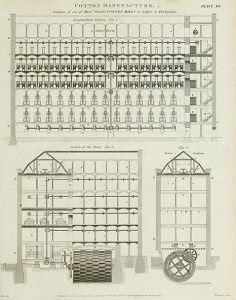
Samuel Slater was born on June 9, 1768, in Belper, Derbyshire, into a farming family. Aged ten, he began work at a local cotton mill recently opened by Jedediah Strutt, using the water frame pioneered by Richard Arkwright. By the age of twenty-one, he had gained a thorough knowledge of the cotton spinning process.
He embodied skills the British government wanted to hold onto, but Slater learned of American interest in developing similar machines and was tempted by the generous financial rewards on offer. He was also aware of the legal ban on exporting designs and blueprints. He memorized all vital details of Arkwright’s operation, before leaving for the city of New York in 1789.
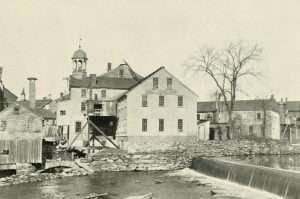
Having secured the backing of Rhode Island merchant Moses Brown, he constructed America’s first water-powered cotton spinning mill in 1790. Three years later, Slater and Brown opened their first textile factory at Pawtucket, Providence County.
Domestic textile manufacture grew rapidly, becoming America’s most important pre-Civil War industry. Cotton production became a central part of the nation’s early economy. It marked the beginning of a manufacturing boom for New England.
In the South, cotton became the chief crop (both for export and domestic use); the increase in production was stunning: from about 3,000 bales in 1793 to over 175,000 bales by 1800. Vast demand for cotton shaped the region’s harsh slave labor economy.
Slater eventually owned thirteen spinning mills, developing settlements of working families around them (child labor at the mills was a standard practice). One of these towns was Slatersville, Rhode Island. In Derbyshire people named him “Slater the Traitor,” as textile workers considered his move a betrayal that threatened their mills and livelihoods.
Slater’s extraordinary power of recollection was equaled by the Massachusetts industrialist Francis Cabot Lowell who, in 1812, toured England and Scotland. Visiting various textile mills, he closely observed their design and operations.
On his return journey, Lowell’s ship was searched by British customs officers on suspicion that he was in possession of industrial designs. They found nothing as Lowell had memorized the blueprints of Cartwright’s power loom. He built the first integrated textile mill in Massachusetts.
Intelligence Services
During the First World War, industrial espionage became state-sponsored economic warfare, disrupting supply chains, gathering intelligence on weaponry and shipbuilding, and sabotaging munitions production. As the battlefield had become mechanized, both the Allied and Central Powers faced the challenge of destroying the enemy’s manufacturing capacity.
The war compelled the creation of professional intelligence services. The post-war focus shifted towards stealing data related to aeronautics, electronics, or chemicals. Cold War espionage became a systematic effort to narrow (nuclear) research gaps, involving attempts by the Soviet Union and its allies to get hold of American atomic, military, and industrial secrets.
Japan’s rise as a global powerhouse started during the Meiji Restoration Era and was driven by technology acquisition, either by legal means or through espionage. The aim was to catch up with the West. The government sent students and officials to Europe and America to infiltrate universities and gather data.
The country’s rapid ascent (an “Economic Miracle”) during the 1970s and 1980s was fueled by espionage, particularly targeting Silicon Valley.
Industries closed the gap by obtaining (stealing) trade secrets in sectors such as semi-conductors and computing (in the 1982 “Japanscam,” employees from Hitachi and Mitsubishi were caught buying stolen IBM secrets). As Japanese companies evolved from copyists to innovators, they were forced to find ways of protecting their own intellectual property.
Today, China is the primary actor in the theater of espionage. The “China Threat” (in terms of the FBI) consists of spying efforts pursued by the Communist government. The country is competing with the United States to become the world’s superpower by supporting predatory business deals, theft of intellectual property, and aggressive cyber intrusions.
Economic and national security can no longer be separated. Some American analysts label China a “rogue state.” The irony is that the practice was justified in black and white by Alexander Hamilton in his 1791 report to Congress.
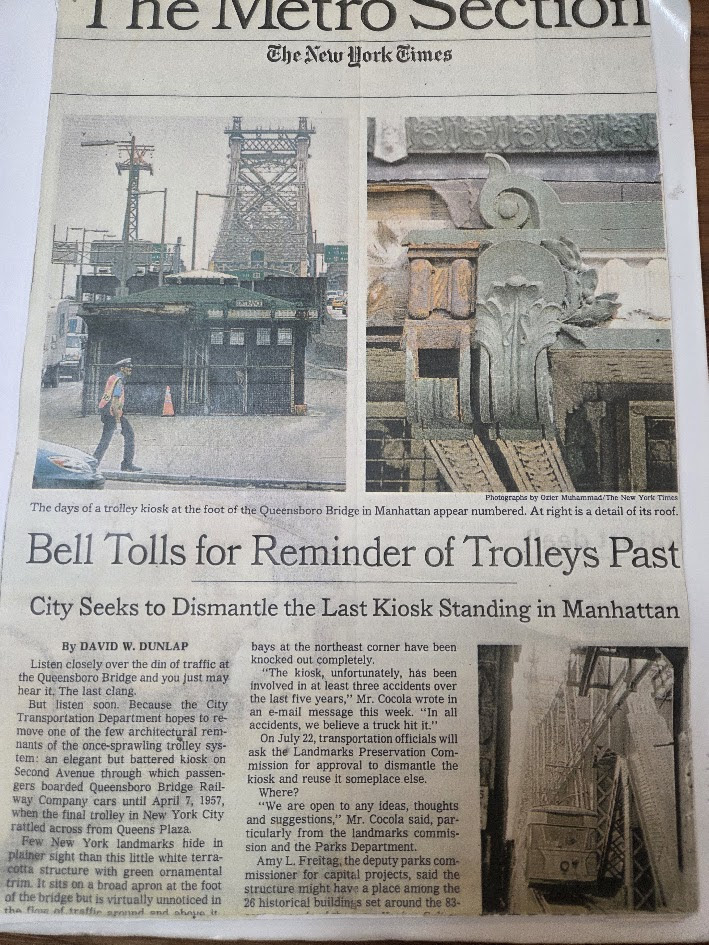
This article in the New York Times Started the 4 year process of Bringing the kiosk to the Island.
All image are copyrighted (c) Roosevelt Island Historical Society unless otherwise indicated THIS PUBLICATION FUNDED BY DISCRETIONARY FUNDS FROM CITY COUNCIL MEMBER JULIE MENIN & ROOSEVELT ISLAND OPERATING CORPORATION PUBLIC PURPOSE FUNDS.
Monday, February 9, 2026 Ephemeral New York ISSUE #1624
Though its roots stretch all the way back to the Roman era, Valentine’s Day as a cultural holiday celebrating romantic love was firmly established by the 19th century.
New Yorkers at the time could honor the day by exchanging love letters, mailing cards decorated with hearts and cupids, or buying small gifts as tokens of affection. (Chocolate didn’t become a Valentine Day’s staple until 1861, when British chocolatier and marketing genius Richard Cadbury invented the heart-shaped box.)
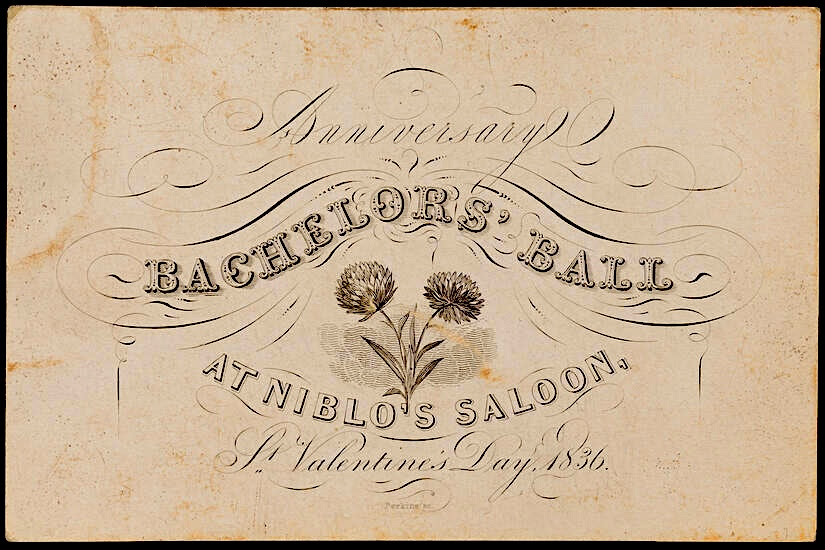
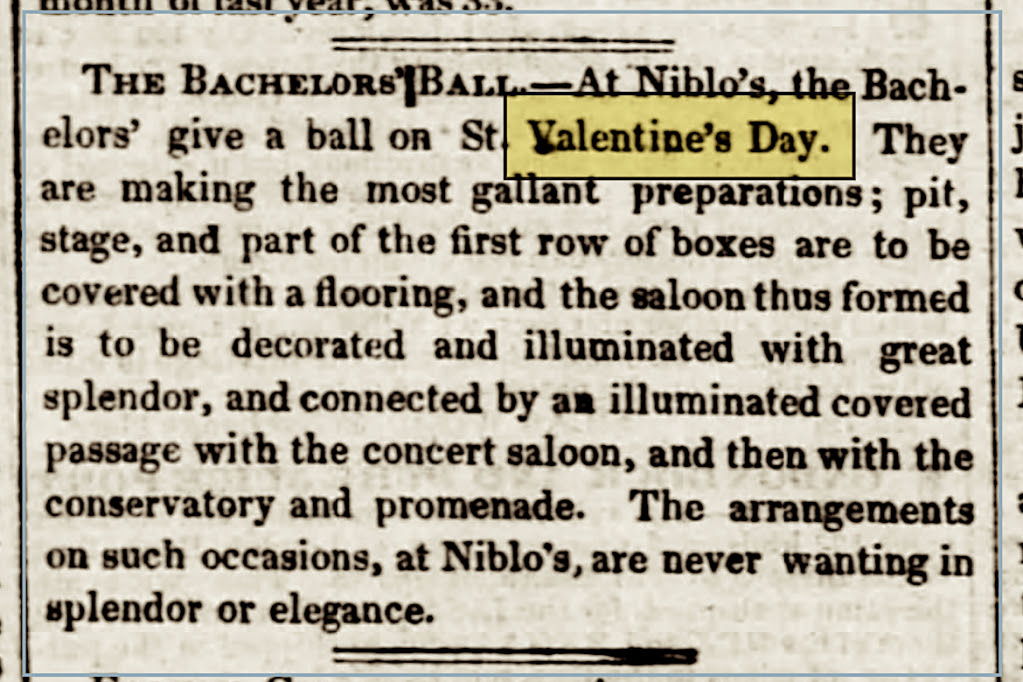
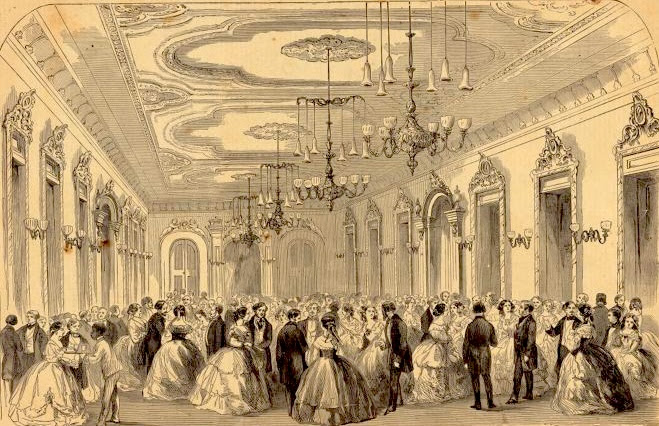
Another way to honor the day was to attend Gotham’s annual Bachelors’ Ball.
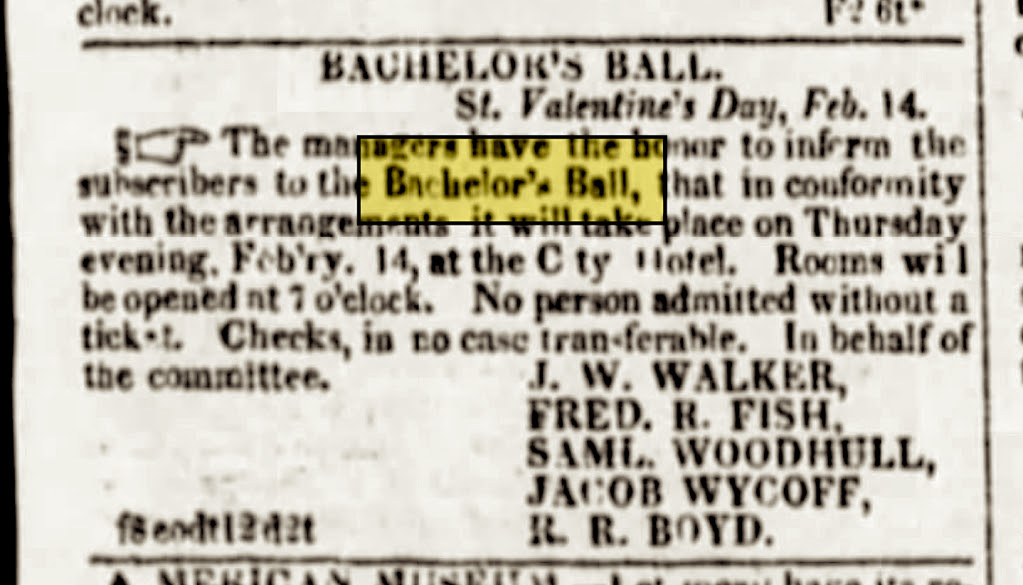
This swanky event was held every February 13th or 14th, first at the posh City Hotel beginning in the 1820s and then a decade later at Niblo’s Saloon—a theater that was part of the popular Niblo’s Garden pleasure ground at today’s Broadway and Prince Street.
The purpose of these invitation-only events—put on by one or more clubs made up of actual bachelors—seems to be for elite unmarried men to meet and potentially match with eligible women of high social class.
Holding the balls on Valentine’s Day really underlines the ultimate goal of turning single men into husbands. In an article about the Bachelors’ Ball of 1842, the New-York Mirror weirdly summed up the yearly event this way:
The balls were not “to confirm bachelors in single wretchedness, but to lead them into the silken chains of matrimony gradually—imperceptibly—sweetly—like a midsummer’s night dream—only to awaken to the realities of a sober, happy, married life.”
“These are the results of the Bachelors’ Ball; therefore, sweet ladies, prepare your brightest smiles for St. Valentine’s Eve, and be determined, on this jocund and interesting occasion, to select, cautiously but firmly, the men worthy of your hearts and hands, for, on that night, many are the contracts made, which last for life, for weal or woe.”
There may have been interruptions that prevented the Bachelors’ Ball from being held every year. But they seemed to have lasted into the early 20th century, subsumed into the Gilded Age social world with an invite list of Vanderbilts and other young eligibles.
Is there a modern equivalent of the Bachelors’ Balls? With so many people unhappy with dating apps, maybe it’s time to put them back on the calendar and open them up to every love-seeking New Yorker.
CREDITS
[Top image: MCNY, 49.268.1; second image: Wikipedia; third image: The Evening Post, 1828; fourth image: The Evening Post, 1842; fifth image: NYPL Digital Collections]
All image are copyrighted (c) Roosevelt Island Historical Society unless otherwise indicated THIS PUBLICATION FUNDED BY DISCRETIONARY FUNDS FROM CITY COUNCIL MEMBER JULIE MENIN & ROOSEVELT ISLAND OPERATING CORPORATION PUBLIC PURPOSE FUNDS.
Weekend, February 7-8, 2026 Judith Berdy ISSUE #1623
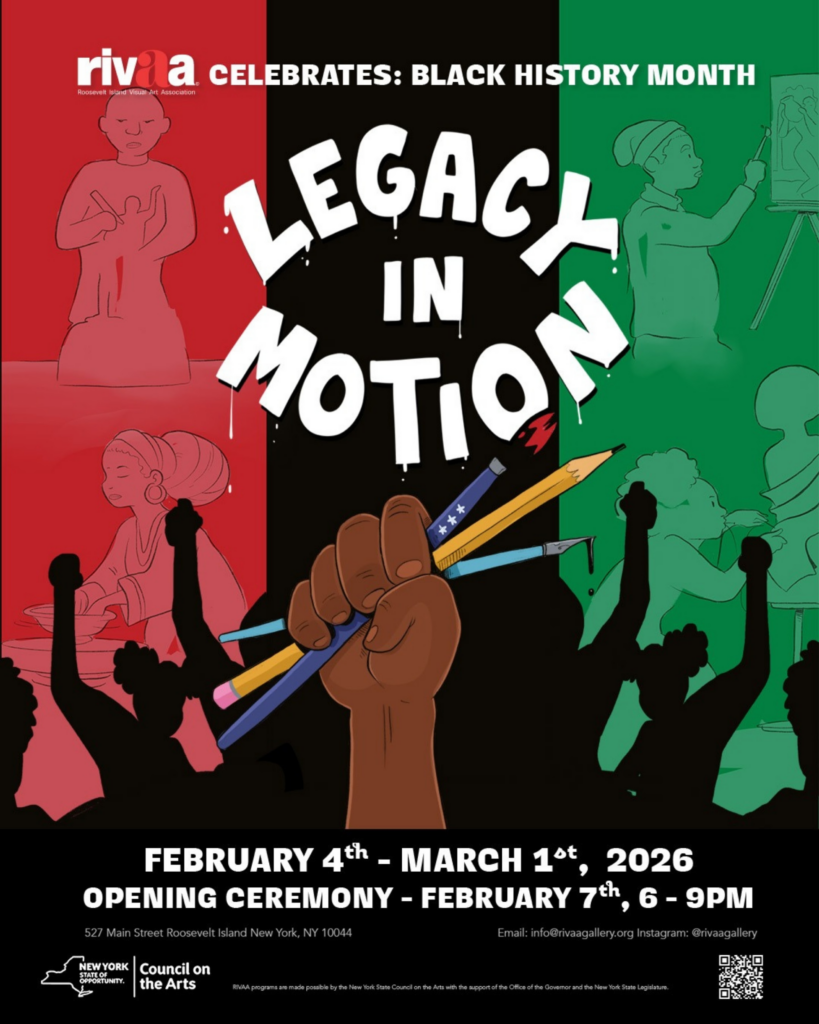
Legacy in Motion
Presented in celebration of Black History Month
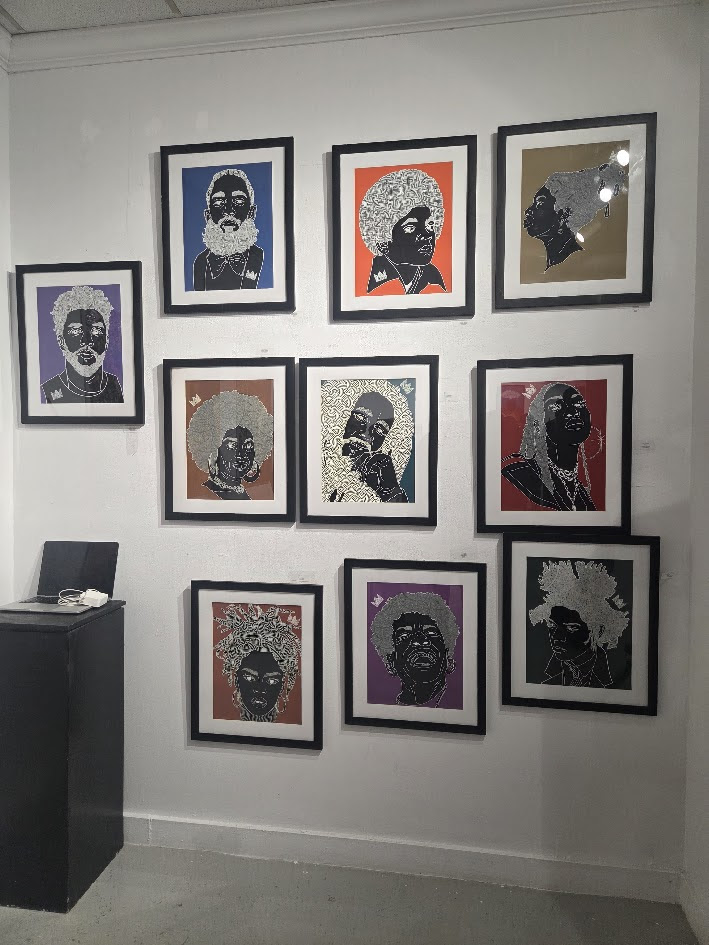
Exhibition on view: February 4 – March 1, 2026
Opening Reception: Saturday, February 7, 6–9 PM
Location: RIVAA Gallery, 527 Main Street, Roosevelt Island, NY 10044
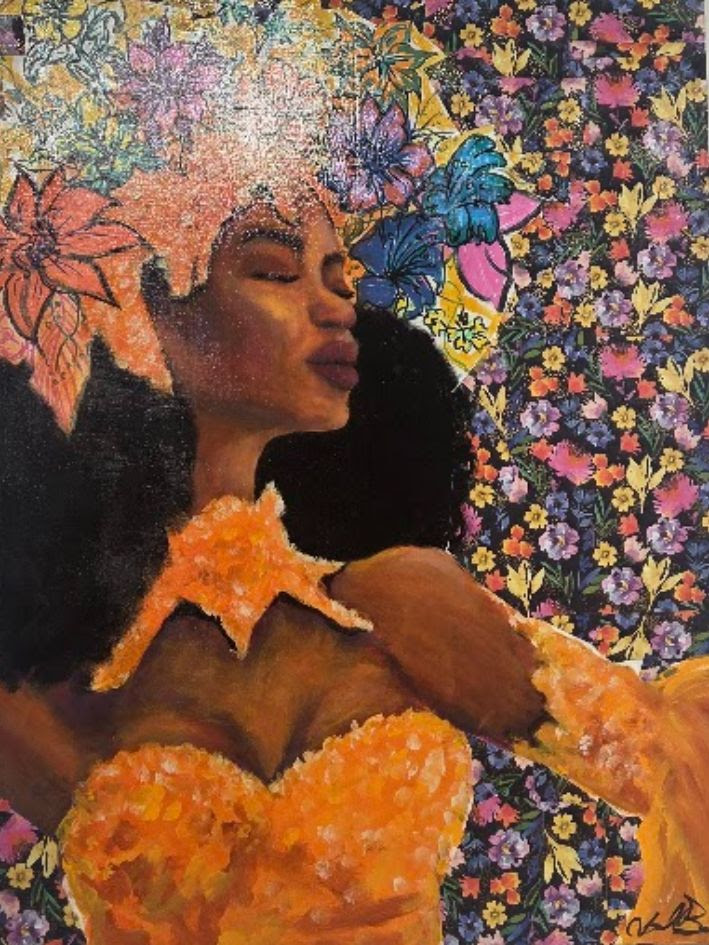
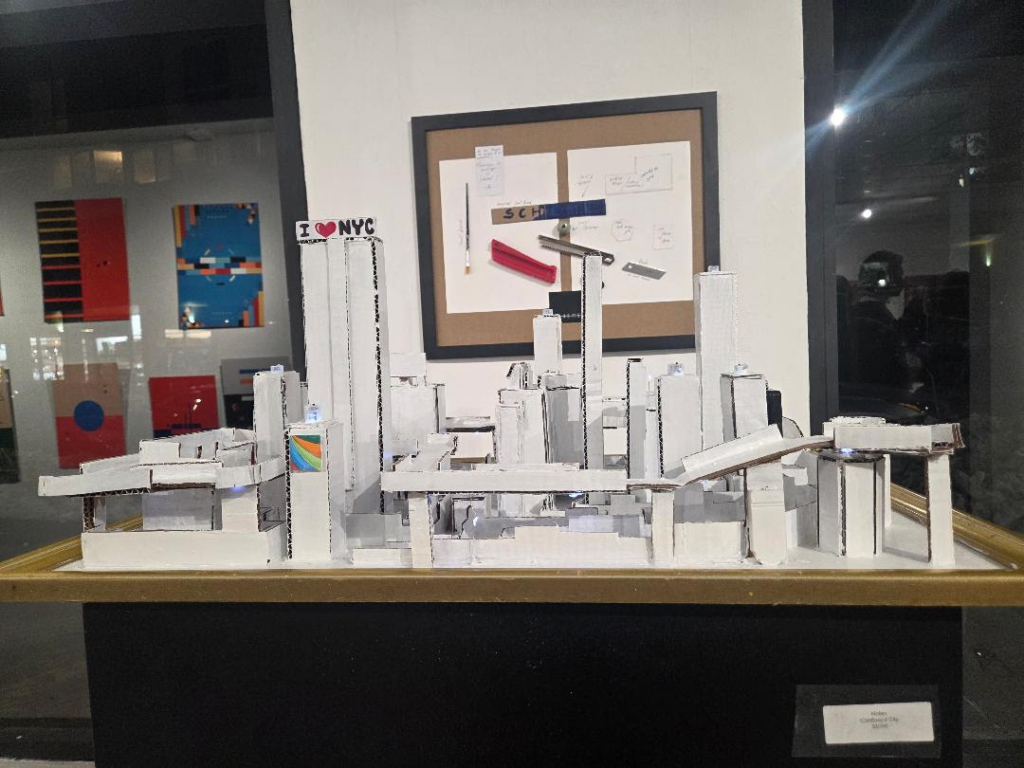
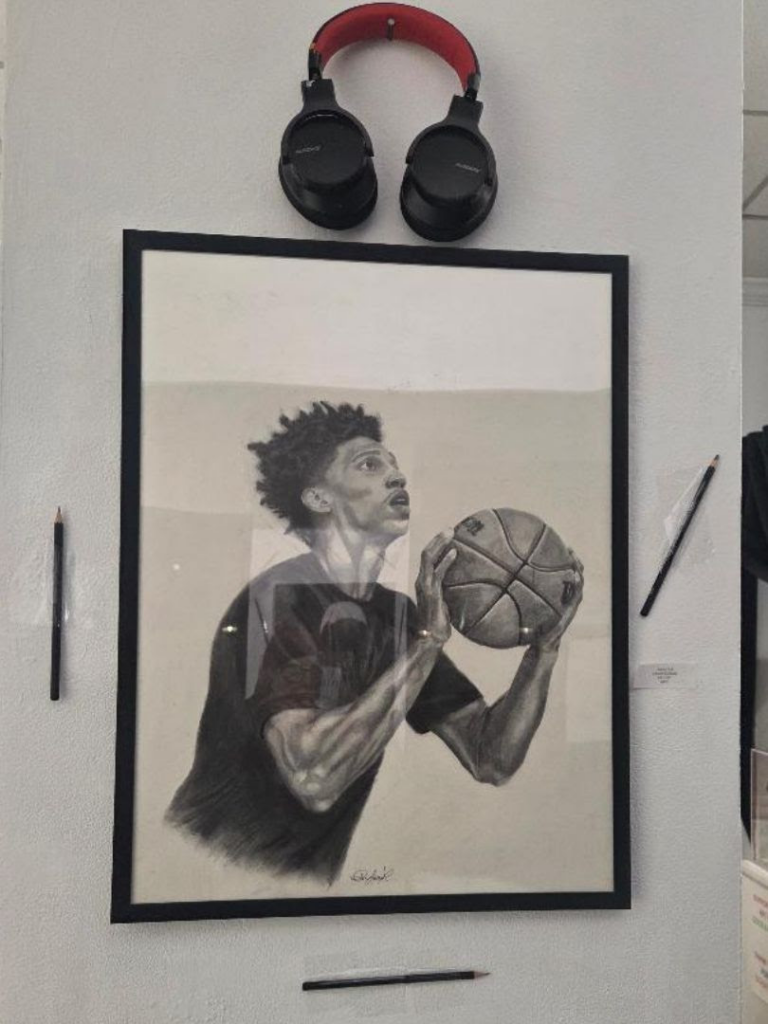
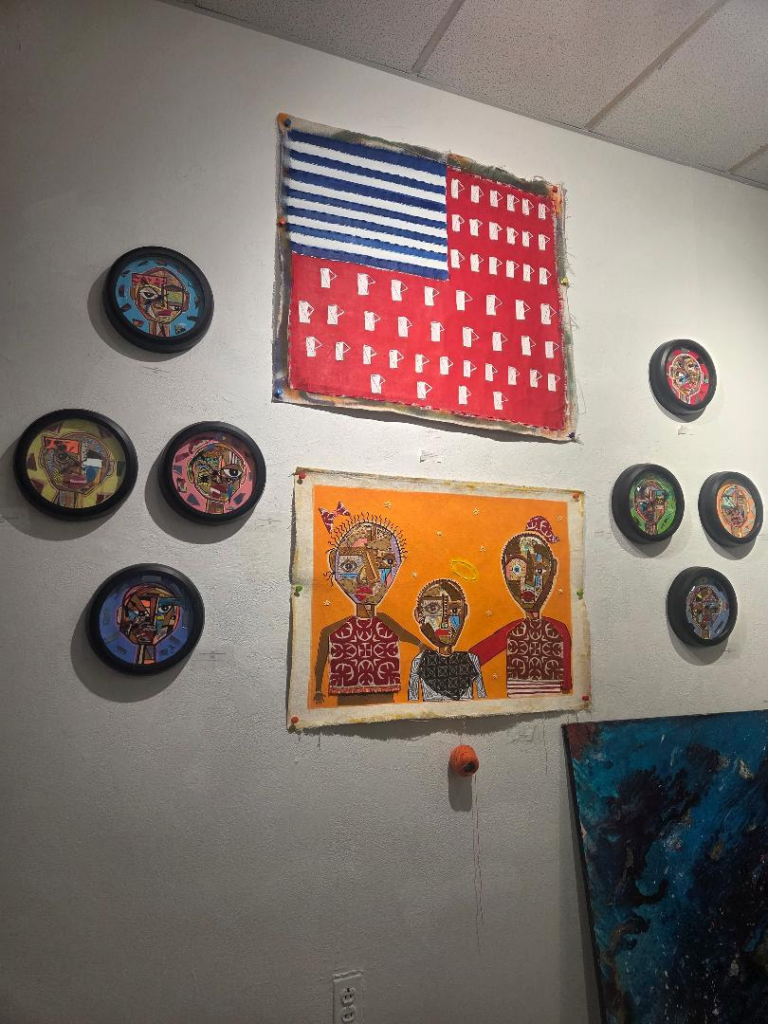
Legacy in Motion offers a glimpse into the work, process, and innovation behind the craft, seen through the lens of Black creators and artists. This exhibition highlights the tools shaped by Black hands, the techniques refined through lived experience, and the creative labor that has often gone unseen. While masterpieces born from Black artistry are too often overlooked, the recognition of the tools, methods, and makers behind those works is acknowledged even less.
This exhibition brings that history forward, honoring both the creations and the creators, and illuminating the foundational contributions that have given rise to so many of the artistic mediums we celebrate today.
RIVAA’s programs are made possible by the New York State Council on the Arts with the support of the Office of the Governor and the New York State Legislature.
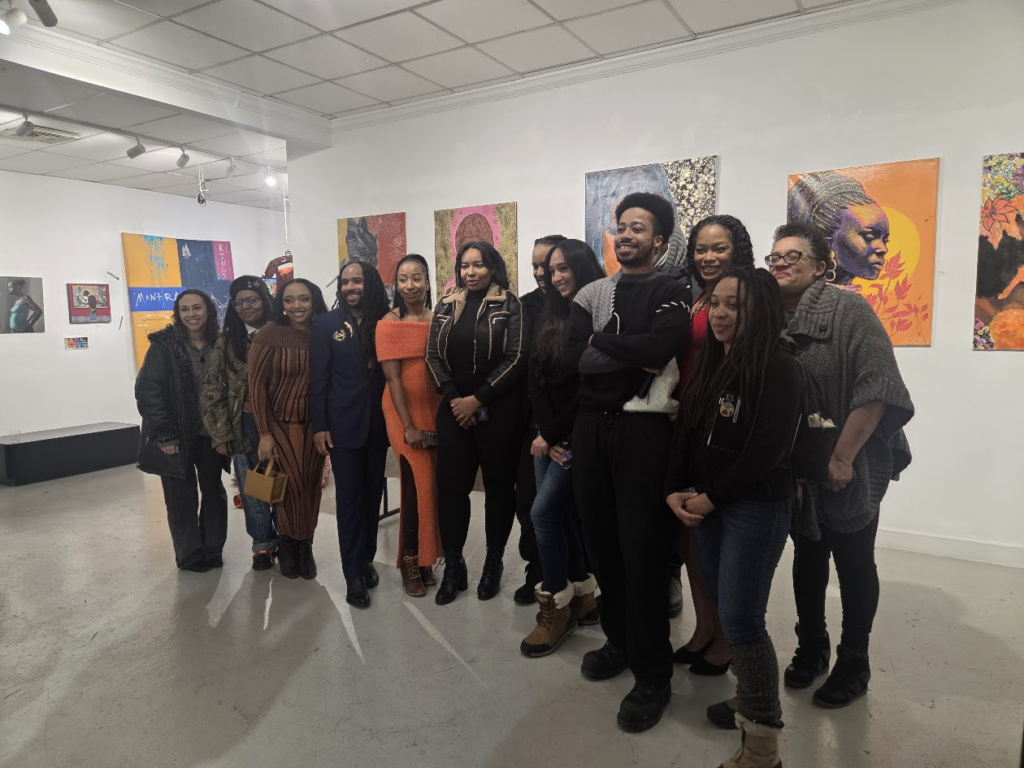
The artists gather to celebrate the exhibit opening featuring a Performance Artwork and Panel Dicussion.
K_N-_IFE Camp Sesame Street
NOLAN Cardboard City
Mercy K. Edwards
1080p
1080p Big Perp
CREDITS
JUDITH BERDY
PHOTO OF THE DAY
THINK 10 WEEKS FROM NOW
All image are copyrighted (c) Roosevelt Island Historical Society unless otherwise indicated THIS PUBLICATION FUNDED BY DISCRETIONARY FUNDS FROM CITY COUNCIL MEMBER JULIE MENIN & ROOSEVELT ISLAND OPERATING CORPORATION PUBLIC PURPOSE FUNDS.
I decided to try something new for lunch today, since the cold weather has been wearing on ability to get to the City safely.
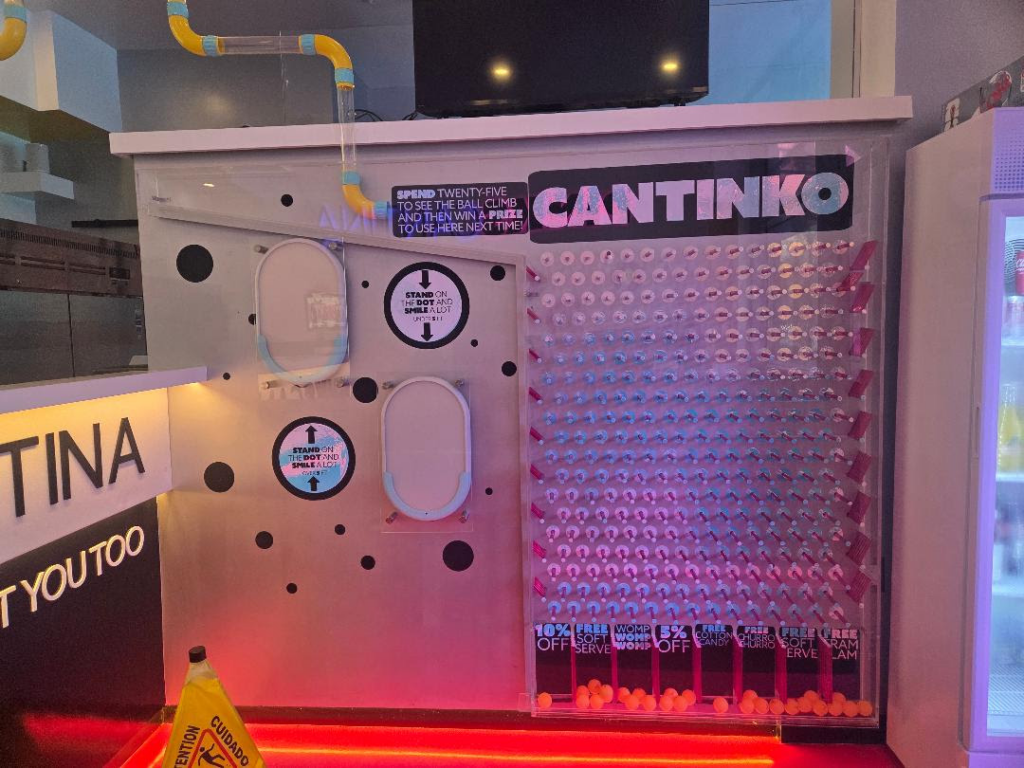
I chose the new restaurant, PINKS CANTINA. Located in back of Starbucks the shop is brightl, cheerful and Alex the proprietor is most welcoming.
The restaurant is bright, cheerful and seats about 12 persons comfortably, The menu above the counter is clear and easy to understand, It is easy to use tbe monitor to choose your items and pay for your dinner.
The Menu Board closeup
After you place your order the server puts a ping pong type ball in a tube and it proceeds thru a tube around the walls and ends up on a Cantinko board (sort of Pancinko board) where it lands on different gifts, you get at your next visit. This reminds me of pneumatic tubes of the olden days and the modern AVAC tubes.
Stop by for a delicious meal and enjoy the fun atmospher for kids and adults.
CREDITS
JUDITH BERDY
PHOTO OF THE DAY
TIME TO CLEAR ALL THE BUS STOPS SO IT IS SAFE TO ENTER AND EXIT THRU THE REAR DOORS.
All image are copyrighted (c) Roosevelt Island Historical Society unless otherwise indicated THIS PUBLICATION FUNDED BY DISCRETIONARY FUNDS FROM CITY COUNCIL MEMBER JULIE MENIN & ROOSEVELT ISLAND OPERATING CORPORATION PUBLIC PURPOSE FUNDS.
On December 24, 1920, the young fireman and future fire chief Richard Norris, who had recently returned from World War One, was nearly permanently injured trying to extinguish the last broom factory fire recorded in the history of Plattsburgh, NY.
Broom making was introduced to the Mohawk Valley in the 1830s, and a broom factory existed in Plattsburgh in Clinton County in the 1840s. Brooms were just another necessary consumer item that area entrepreneurs provided to the regional market.
Broom corn was used in making these brooms. It’s not actually corn, but a variety of sorghum used primarily to make brooms. Although Benjamin Franklin has often been given credit for introducing broom corn to America, recent research suggest the seed arrived with a ship of enslaved people from Africa.
In the 1820s many Clinton County farmers produced broom corn. In 1821 Robert Platt of the town of Peru, Nathaniel Nichols of Champlain and Benona Ladd of Chazy were recognized at the Clinton County Fair for their broom corn harvest. That year Levi Marshall from Beekmantown had the best broom corn acreage.
To win this award one only had to produce 10 rods of a high quality product. Awards for other crops were for .5 or 1 full acre. In 1845, New York State Agricultural Society was still offering recognition for the best broom corn acreage but crops appear to have been more substantial in southern and mid-western states.
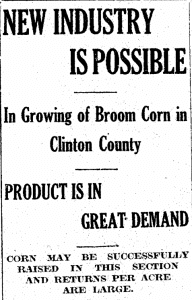
Interest in raising broom corn appeared again in 1916. In March, the County Fair management, through the Clinton County Agricultural Society’s office of their President E. F. Botsford, offered free broom corn seeds to those interested in growing what was suggested to be not only a lucrative crop, but a crop with a local market.
The local market was notably the Plattsburgh Broom Company, which offered 1st and 2nd prizes at the fair for the top bundles. They promoted a US Department of Agriculture booklet on how to grow broom corn and provided seeds for 150 farmers.
That April, an article in the Plattsburgh Sentinel promoted the planting of broom corn with the Clinton County Agricultural Society distributing seeds to anyone interested. In the fall, at the fair, only the Valley Grange of Ellenburg offered a showing of broom corn. There is no record about a prize.
The traditional broom was constructed from a bundle of twigs tied to a stout pole. In the 19th century larger corn broom operations were operated by broom makers, as Henry Rozier, a black Canadian prisoner in Dannemora Prison, was identified in the 1880 census. He was the only broom maker in the prison.
The 1920 census pointed out that Plattsburgh had many broom makers with 15 families connected to the broom manufacturing industry. Some worked on the handles and some on the machines. Nineteen-year-old Harvey Bullis was a corn sorter.
Frank and Louis Fifield were identified as owners of a broom factory in 1920, but this is difficult to confirm elsewhere. Frank Fifield was involved in a tragic accident at the Caroline Street broom factory in August of 1920 when an elevator he was taking down from the 3rd floor badly crushed a man who mistakenly was retrieving broom corn seed for his chickens from the elevator shaft. Alvin Martin died from his injuries in December and is buried in Plattsburgh’s Riverside Cemetery.
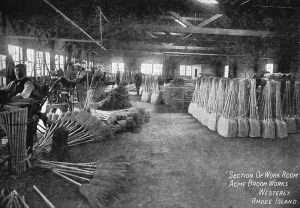
The Plattsburgh Broom Company of the 1840s on Oak Street burned in 1915 and then moved to Caroline Street. When they reopened they boasted having improved machinery, making a higher level of broom and employing from 30 to 50 people.
Francis Sargent had a broom factory on Bridge Street in November of 1867. He purchased his broom corn from the south. In 1868 his factory offered “worked up” broom corn for sale.
In May of 1868, Mr. P. Girard, advertised that he had formerly worked with Francis Sargent, and that he and L. Chauvin had opened a broom and brush factory in Walkers & Co Planing Mill, also on Bridge Street called the “Union Broom Factory.” Girard appears to have had access to local supplies of broom corn which could be made up quickly into brooms and at a reasonable cost.
The last broom factory in Plattsburgh was on Peru Street – it burned in December of 1920 and was owned by the Stower Brothers.
There was certainly a market for brooms in Plattsburgh. In November 1827, Edwards & Campbell sold corn brooms, “large and small,” along with a myriad of other products such as fabrics, artist supplies and groceries. In 1849, Nichols & Lynde advertised a stock of 50 dozen brooms and a stock of 100 dozen in 1854. And like any market, prices depended on availability.
It was reported in 1875 that the price of broom corn fluctuated more than any other crop, and in 1910 the cost of broom corn was making brooms very expensive. In May 1920 there was an article in the Plattsburgh Daily Republican about how “club girls” (members of local women’s clubs) could make money making brooms from the broom corn which grew so well in the southern states.
This program, under the supervision of the United States Department of Agriculture, suggested that communities would buy machines for the young women to use. After they paid for the use of the machines, they could profit from their work.
Broom factory fires seemed to be as common as starch factory fires. Elizabethtown lost their broom factory in 1879. The Plattsburgh factory first burned in 1915 and burned again in 1920.
Local investors encouraged them to continue, but the December 1920 fire ended large scale broom making in Plattsburgh. In 1933, broom corn was promoted as a decorative plan with a tropical air, or in a broom, sturdy with a lacquered handle on sale for $1.
It was still grown elsewhere and a new high price for a ton was set in California. Our local newspapers stopped referencing broom corn brooms in the early 1990s.
CREDITS
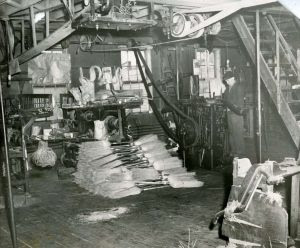
New York Almanack Photos, from above: Workers pose with brooms they made at the Range Broom Factory in Minnesota in the 1930s (courtesy Minnesota Museum of Mining); A broom corn revival article in the Plattsburgh Sentinel, April 21, 1916; The Acme Broom Works on Margin Street in Westerly, Rhode Island, which operated in the early 20th century; and inside the Whitmyer Broom Factory in Schenectady, 1947. Harvey Whitmyer was the sole operator of the factory (Grems-Doolittle Library, Union College).
PHOTO OF THE DAY
Spotted from the Octagon Love from the Tennis Court
All image are copyrighted (c) Roosevelt Island Historical Society unless otherwise indicated THIS PUBLICATION FUNDED BY DISCRETIONARY FUNDS FROM CITY COUNCIL MEMBER JULIE MENIN & ROOSEVELT ISLAND OPERATING CORPORATION PUBLIC PURPOSE FUNDS.
Sugar Hill raised historical figures including Babe Ruth and Duke Ellington, with some of the best-preserved architecture in Manhattan.
Wednesday February 4, 2026 Untapped New York ISSUE #1620
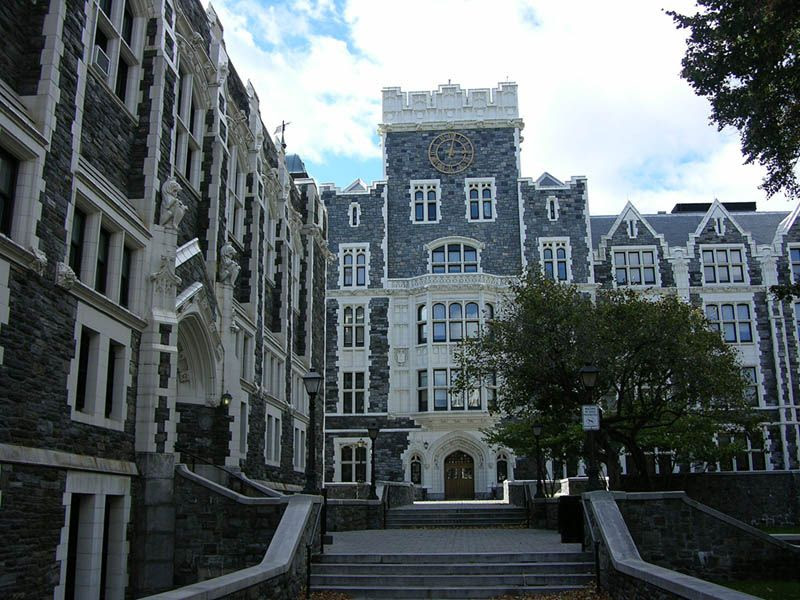
City College of New York‘s stunning Late Gothic structures rise above the surrounding residential neighborhood at the southwest edge of Sugar Hill. Built in the first decade of the 1900s, the university’s Shepherd Hall building —flanking the campus’ quadrangle courtyard — stands complete with architectural flourishes such as grotesques and gargoyles. The stone and terracotta building, built by legendary architect George Browne Post, has received a Lucy G. Moses Preservation Award from the New York Landmarks Conservancy. The entire span of the City College of New York campus spreads between St. Nicholas Park and Amsterdam Avenue.
City College holds particular significance for New York City’s Jewish community as several pivotal figures graduated from the institution including esteemed Jewish theologian Louis Finkelstein. This “Harvard-on-the-Hudson” also produced renowned American politicians such as the New York Senator and labor reformer Robert Wagner, and even the late Secretary of State Colin Powell. Additionally, two time capsules, along with a slightly more arcane “century box,” are buried at prominent positions across the grounds. For time capsule enthusiasts, set your calendars to 2047 and 2050 when the two proper time capsules will be opened. As for the retrieval of the century box, only the gargoyles and grotesques perched across the college’s historic buildings know the secret.
Trish Mayo, Courtesy of Morris-Jumel Mansion
For many New York history buffs, the Morris-Jumel mansion needs no introduction. The oldest extant residence in Manhattan, the structure dates back to 1765 and played a significant role in early New York City. The property served as a summer home for British Colonel Roger Morris and his wife Mary Philipse. A significantly sized property at the time, the entire property stretched 135 acres across what is now known as Mount Morris. The mansion stands just north of Sugar Hill, rising above the Jumel Terrace Historic District west of the mansion. The mansion was also a key site during the nearby Battle of Harlem Heights.
Many may not know that a special colonial milestone resides on the property. Hearkening back to early wayfinding along the colonial-era Albany Post Road, this mile marker records “Mile 11” on the historic trail and is one of only five remaining in New York City. The home is reportedly haunted, with multiple television personalities and paranormal programs such as “Ghost Adventures” and the “Holzer Files” trying to uncover the mysteries of the mansion’s historic phantoms. One such haunt is wealthy former resident Eliza Jumel, a 19th-century real estate impresario who made the stately residence her home with her first husband Stephen Jumel before his death, after which she lived here with her second husband of one year Aaron Burr.
The rich cultural heritage and legacy of Strivers Row along Sugar Hill’s Eastern edge have captivated architecture fans and New York history buffs for decades. The pride of the district, this line of row houses became a major stepping stone in American culture when it was home to several renowned Black American music legends of the 20th century. Residents of Strivers Row have included W.C. Handy, Will Marion Cook, Noble Sissle, and many more.
Part of the designated St. Nicholas Historic District, Strivers Row was originally known as the King Model Houses. It serves as a cultural and architectural touchstone for those seeking to learn more about how this area of Harlem served as a key player in the birth of American pop music. From blues musicians to jazz legends, iconic cultural legacies form the foundation of Strivers Row’s impact and enduring significance to this day.
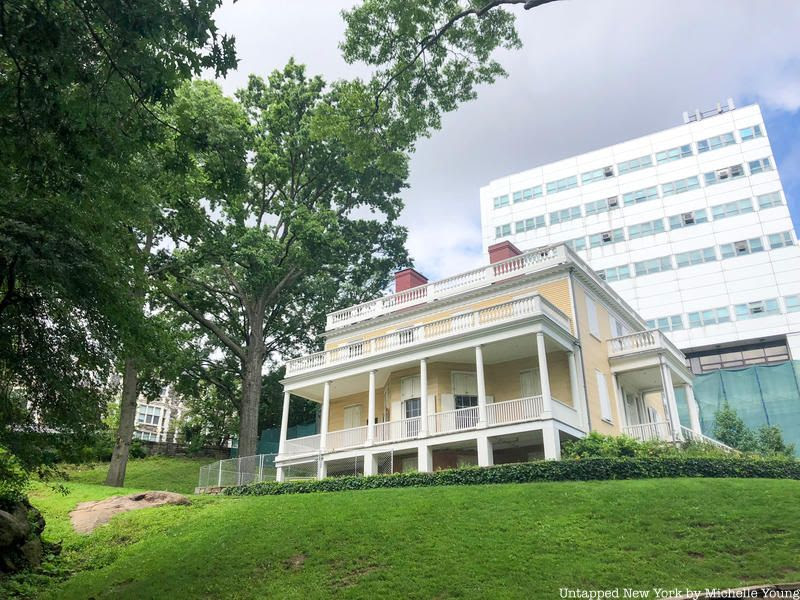
The historic Hamilton Grange National Memorial, the site of Alexander Hamilton‘s only residence that heowned, is currently located at the northern tip of St. Nicholas Park. While the location seems abrupt for the historic home — it was moved to its current location near a corner of St. Nicholas Avenue just below the City College of New York campus — the home itself dates back to 1802. Hamilton prized it as his residence, honoring the Hamilton family home in Scotland. He commissioned it just north of the city as a residence for himself and his family while he conducted political business for New York.
While Hamilton took great pride in his home, he resided there for only two years before his death in his infamous duel with Aaron Burr. Many of the home’s original features remain intact, including some surprising colonial-era artifacts such as a cooler gifted to him by George Washington. Without the intervention of nearby St. Luke’s Episcopal Church, the home would have likely been bulldozed in the 19th century. Through dedication and perseverance, the church gave Hamilton Grange a lift — literally. The entire residence had to be lifted over the church in order to make it to safety and eventually become the revered national memorial it is today. Today, there are 13 sweetgum trees on the property to represent the 13 colonies. The National Park Service offices are now in the home’s private chambers.
The famous Tenenbaum house in Sugar Hill, Harlem.
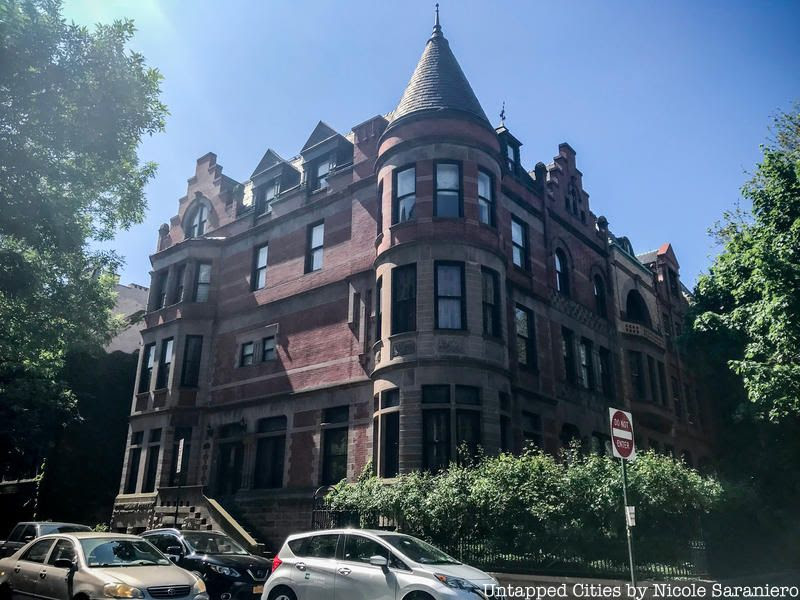
A few short blocks north of City College on Convent Avenue stands a magnificent red brick building. Imposing and glamorous, the Flemish Revival mansion might look vaguely familiar. The impressive structure, which is over 6,000 square feet with more than 50 windows throughout, is known to fans of Wes Anderson, who recognize the stately townhouse as the home of the surviving Tenenbaum family members from the much-loved film “The Royal Tenenbaums.”
Developed by Jacob D. Butler and designed by Adolph Hoak, the townhouse served as home to U.S. Attorney Charles H. Tuttle, who lived here in the early 20th century. Several prestigious lawmakers and government officials have visited the home, including Fiorello LaGuardia, during Tuttle’s time in residence. Passersby can get a glimpse of the home on the Southeast corner of 144th Street and Convent Avenue.
Audubon Terrace, named for John James Audubon.
On the far western edge of Sugar Hill toward Washington Heights lies the historic Trinity Cemetery and the Church of the Intercession. Dating from the 19th century, the church and graveyard are situated on land that belonged to the venerated artist and naturalist John James Audubon. Not only did Audubon previously own the land which was converted into this churchyard, but he is also buried on the property. Dedicated historians and nature lovers can find their way to his gravesite by wandering onto the grounds at 155th Street and Broadway.
Another little-known fact? This Trinity Cemetery is related to the historic Trinity Church in Lower Manhattan, which counted among its members a certain George Washington. By the early 1800s, the popular churchyard at its downtown location was too crowded, so church leaders sought a location farther uptown to offer as a burial ground. Architect James Renwick Jr. was hired to complete the task, and the rest is history.
CREDITS
Untapped New York
PHOTO OF THE DAY
FOUR STUDENTS FROM KOREAN UNIVERSITY VISIT THE CBN OLDER ADULT CENTER’ THE TEAM IS DOING RESEARCH ON CLOTHING THAT IS DESIRED BY SENIORS AND PERSONS WITH DISABILITIES
All image are copyrighted (c) Roosevelt Island Historical Society unless otherwise indicated THIS PUBLICATION FUNDED BY DISCRETIONARY FUNDS FROM CITY COUNCIL MEMBER JULIE MENIN & ROOSEVELT ISLAND OPERATING CORPORATION PUBLIC PURPOSE FUNDS.
In October 1977, the 59-story Citicorp Center (now known as the Citigroup Center) made its debut on a shabby stretch of East Midtown marked by aging apartment houses, massage parlors, and hair salons.
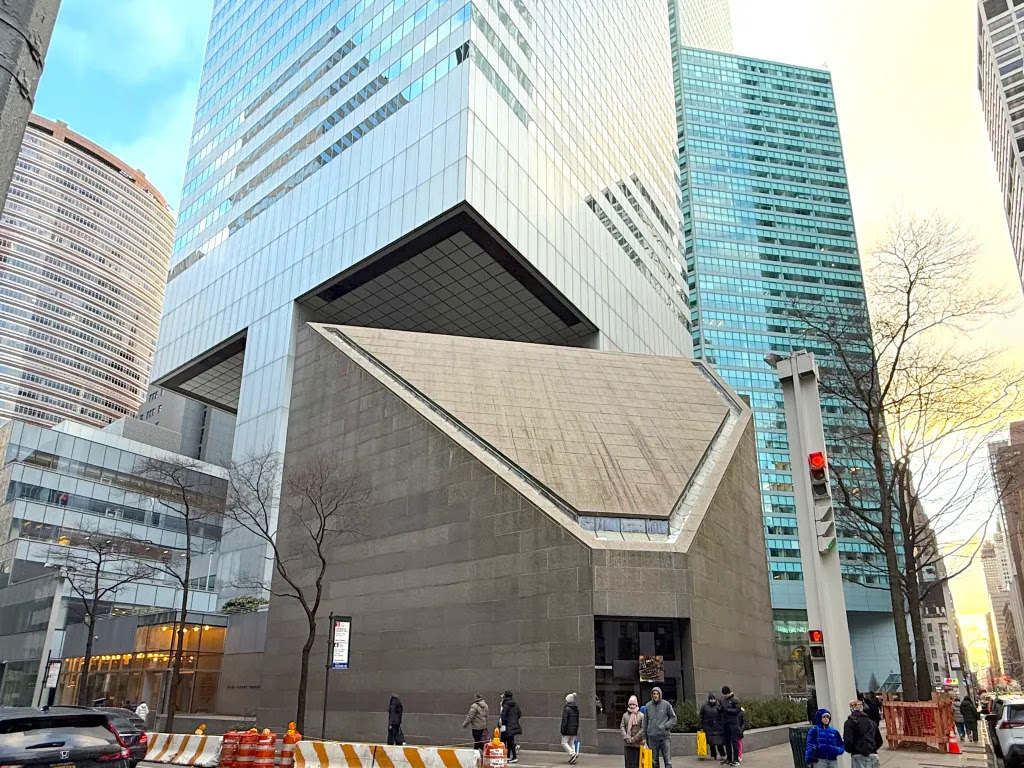
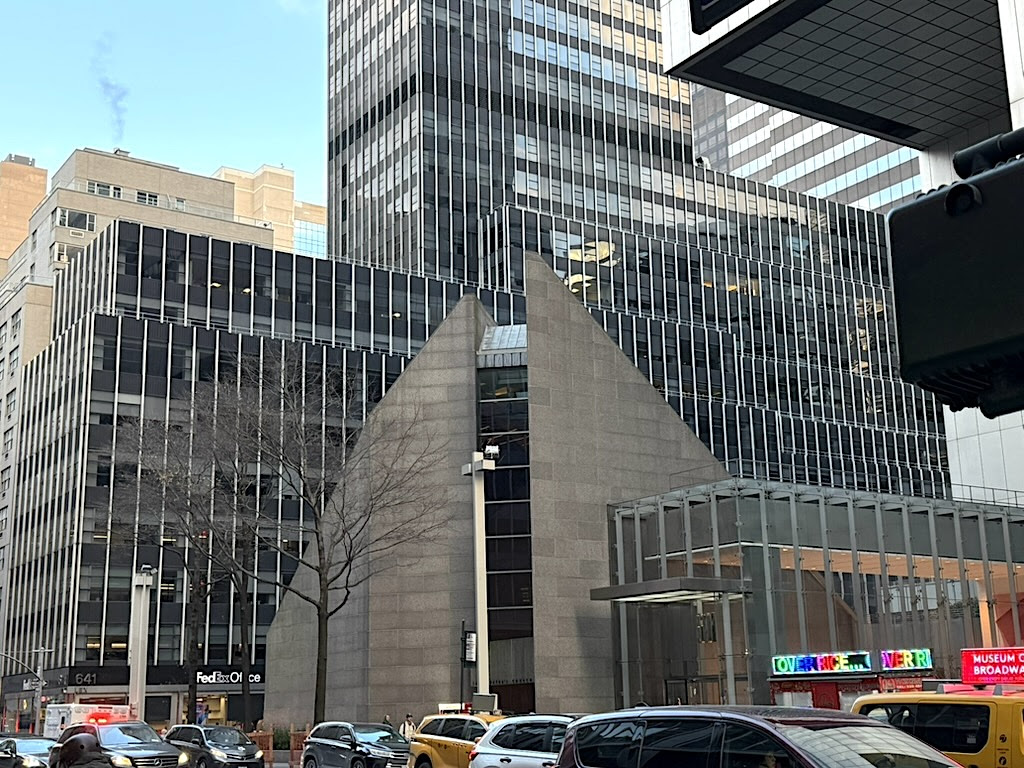
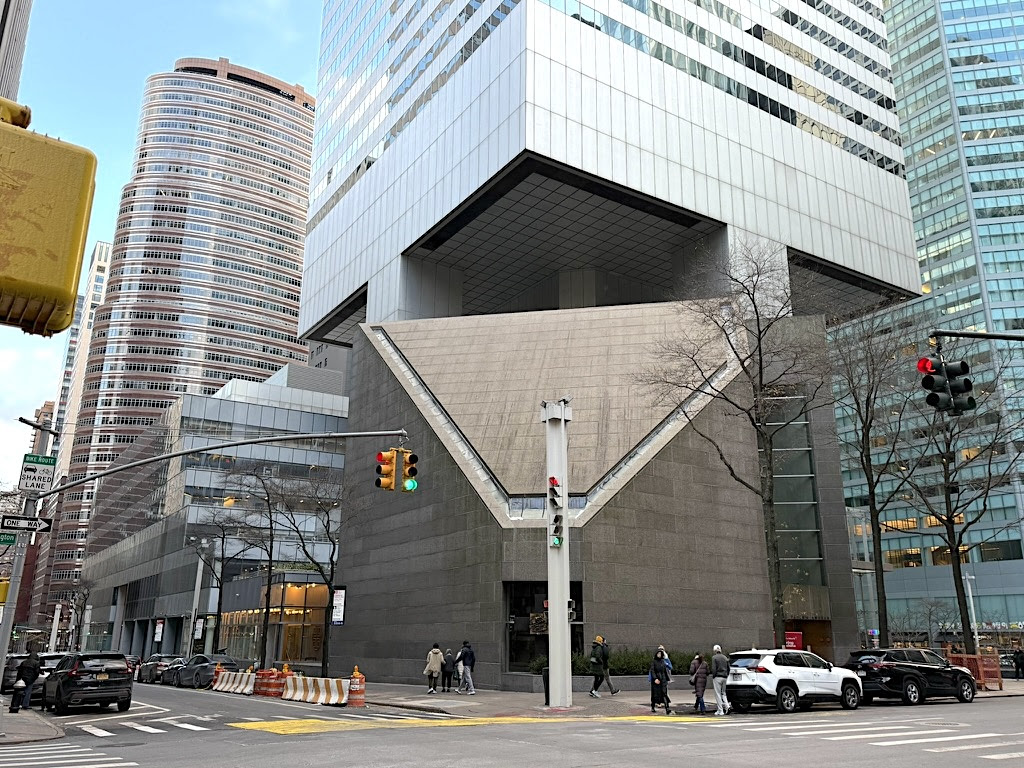
Hugh Stubbins’ cantilevered design spanned Lexington Avenue between East 53rd and East 54th Streets. It included a sunken plaza, new subway station access, retail shops, and an iconoclastic triangular roof that sloped at a 45 degree angle (below photo).
The bold design, plus the four raised columns located in the center of the building’s base rather than the corners, awed many architectural critics.
“The building starts nine stories above ground, raised on four colossal square columns and a central core in one of the most impressive—if somewhat disquieting—architectural acrobatic acts in the world,” wrote Ada Louise Huxtable in the New York Times, four months before the tower officially opened.
“I am not ever going to ask what Citicorp’s steel cost,” continued Huxtable. “But all that brute strength is now encased in the thinnest, flattest, sleekest panels of softly glistening, silvery aluminum, alternating with horizontal bands of glass. It is steel muscle in a silken glove.”
Not everyone loved the design. But at a time when the city almost went bankrupt and few skyscrapers were being built to reshape the skyline, Citicorp Center could be viewed in hindsight as a sign that New York City was not down for the count.
Yet the Citicorp Center wasn’t all about the new. Nestled amid all this steel and glass is a remnant of the New York of old.
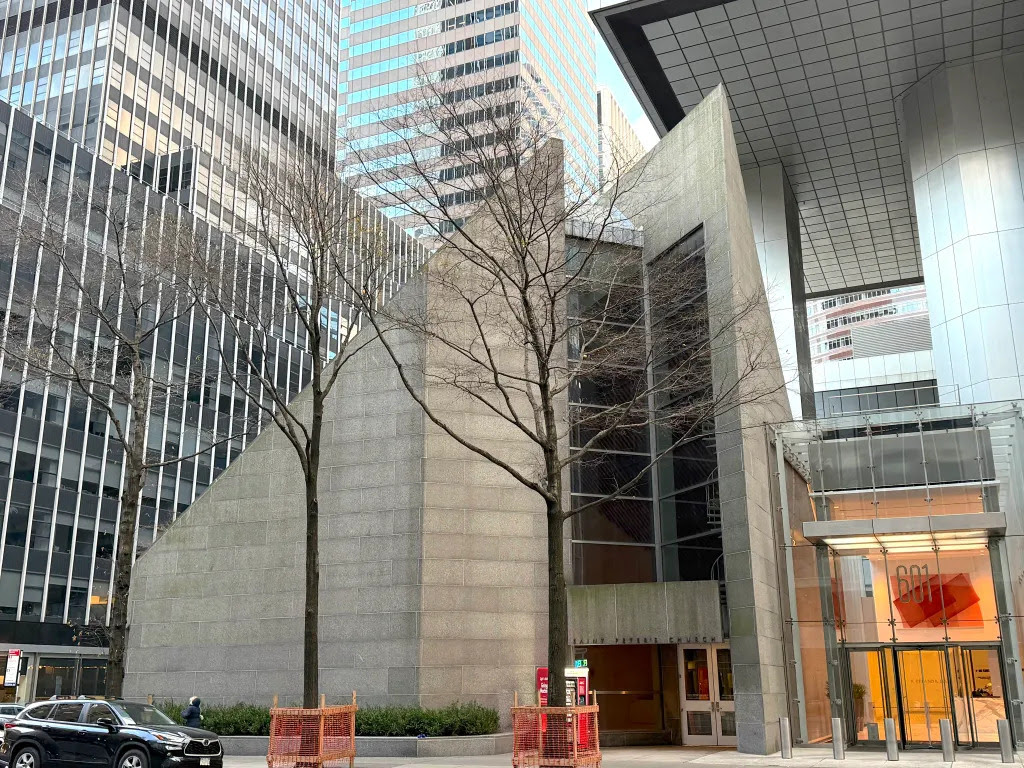
Beneath the mid-wall columns that hold up the tower sits St. Peter’s Church. Clad in granite at the corner of East 54th Street, it’s an unorthodox surprise in the sleek skyscraper canyon that Lexington Avenue has become.
The story of how this Modernist church ended up here has to do with a 19th century German congregation, the value of land in postwar East Midtown, and an unusual agreement that resulted in part of a skyscraper overhanging a brand-new church sanctuary.
Dial back to 1862 with the founding of St. Peter’s German Lutheran Church five blocks to the south. “Worship services in the German language began in a loft above a feed and grocery store at the corner of 49th Street and Lexington Avenue,” states nycago.org.
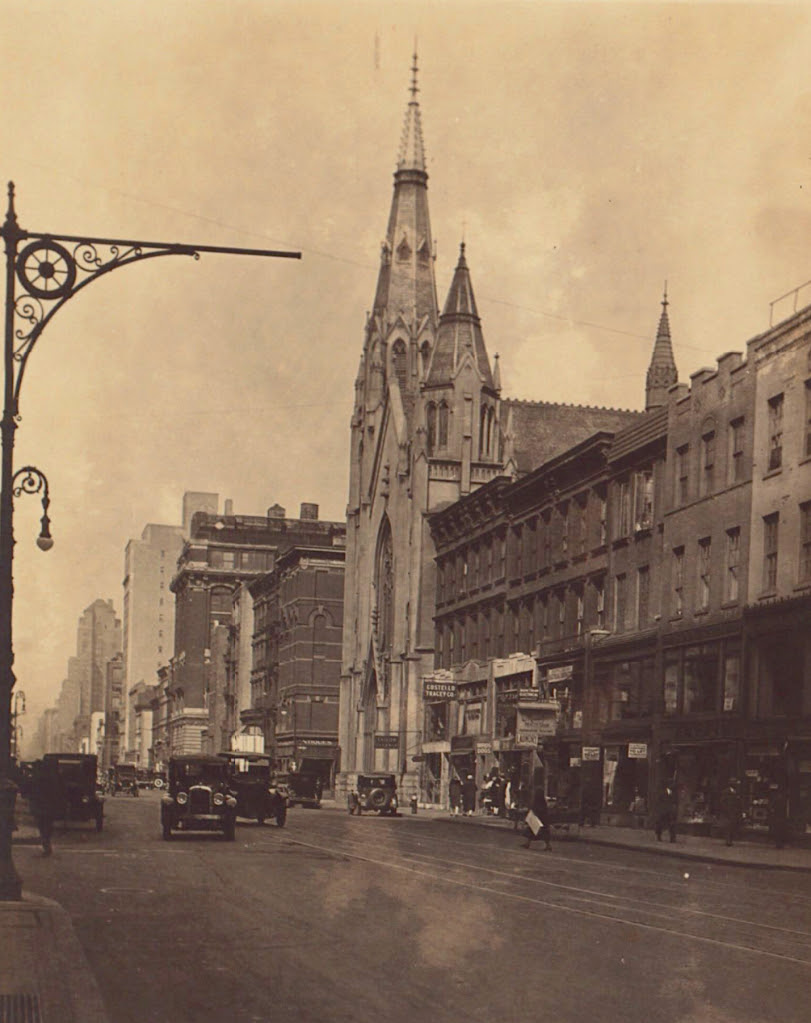
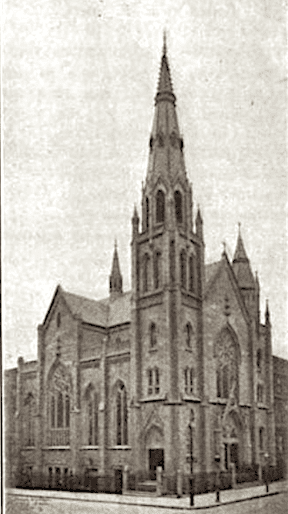
The congregation moved to a vacated church building on Lexington Avenue and 49th Street in the 1890s. That church was soon purchased by the New York Central Railroad and marked for demolition to make way for Grand Central Terminal. The congregation then built a new Gothic-style church on Lexington Avenue and 54th Street (above, in 1928), which opened in 1905.
Over the decades, the church evolved, adding English-language sermons. More than a thousand people belonged to St. Peter’s earlier in the 20th century, but in the postwar years the congregation faced a more commercial Lexington Avenue and a dwindling number of parishioners.
Then in 1969, church leaders were approached by a real estate broker who was buying up nearby parcels of land along Lexington Avenue to offer as a whole for development.
St. Peter’s, now a church that welcomed a more artistic group of parishioners—including the jazz musicians at the clubs along 52nd Street—struck a deal. The congregation would vacate the Gothic building, which would be demolished. In exchange, a new church would be built beside any new development, of which the congregation would be given partial ownership.
The congregation approved the sale in 1971, and ground broke on Citicorp Center in 1974. “St. Peter’s was promised that ‘at least 63 percent of the perimeter’ of the church would be ‘freestanding—that is, with nothing built above it,’” states the Landmarks Preservation Commission (LPC) report.
“This was accomplished by raising the office tower above the ground and by placing it far from the corner, where the [new] church was built,” continued the LPC report.
The new St. Peter’s opened in December 1977, two months after the opening of Citicorp Center, which hangs over the church on the northwest corner.
During the dedication ceremony, Stubbins, who was the architect of the church as well, compared the steel-framed structure to “hands held up in prayer,” according to the LPC report. New York Times architecture critic Paul Goldberger called it a “great granite tent sitting beneath the Citicorp tower.”
The stone and geometric exterior belies the warmth of St. Peter’s Modernist sanctuary. While it looks like a gray jewel box from 54th Street, the space rises to two triangular points joined by a walls of windows on Lexington Avenue.
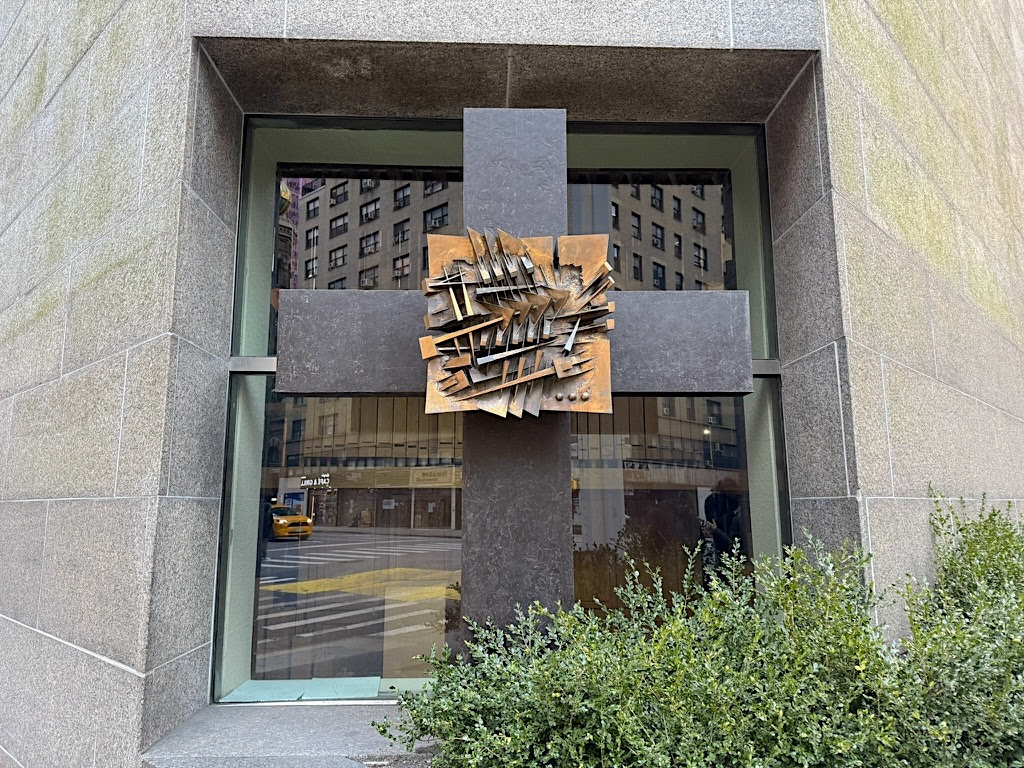
The unique Chapel of the Good Shepherd was designed by Louise Nevelson, who created a peaceful “sculptural environment” within St. Peter’s. And the exterior of the church is marked by the untraditional Cross of the Resurrection (above), by Italian sculptor Arnaldo Pomodoro.
In the past half-century, Citicorp Center has undergone transformations. Less than a year after it opened, a design flaw was discovered that put the tower at risk of toppling over due to high winds, which set off a panicked effort to stabilize the tower before hurricane season without alarming tenants.
The switch to a new name, Citigroup Center, and then landmark designation followed in the new century. In 2021, a fashionable food hall—er, “culinary collective”—and event space debuted on the lower level of the tower.
It’s appropriately named The Hugh, after the architect of both the tower and the sacred space that sits beneath it.
CREDITS
The switch to a new name, Citigroup Center, and then landmark designation followed in the new century. In 2021, a fashionable food hall—er, “culinary collective”—and event space debuted on the lower level of the tower.
It’s appropriately named The Hugh, after the architect of both the tower and the sacred space that sits beneath it.
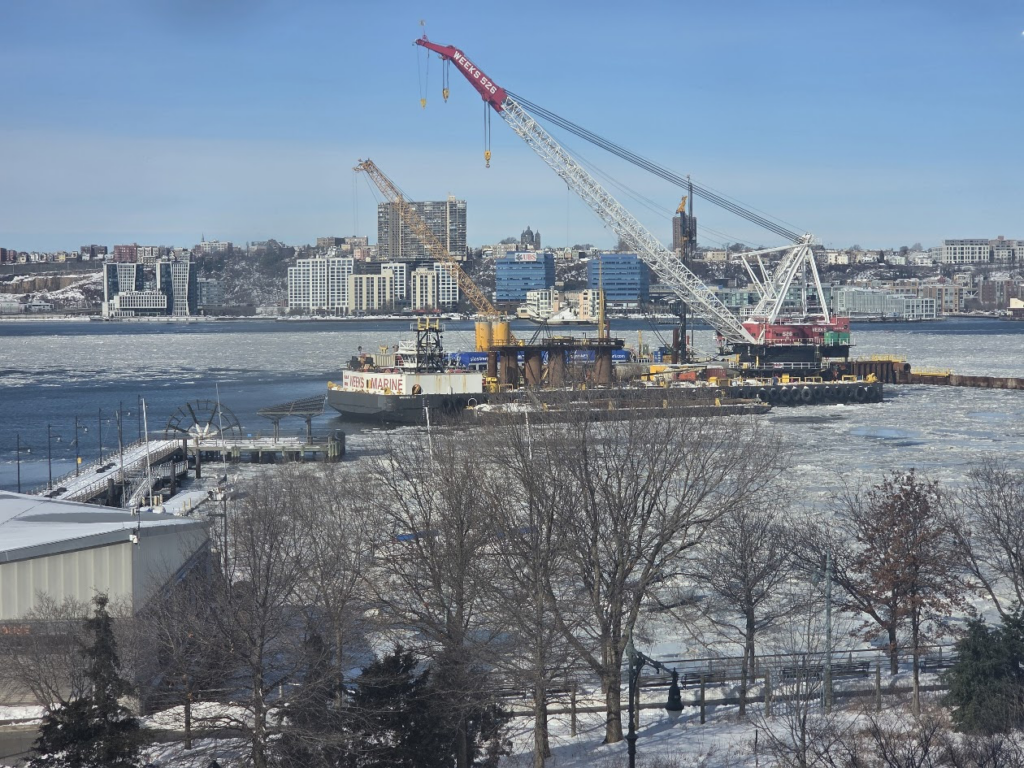
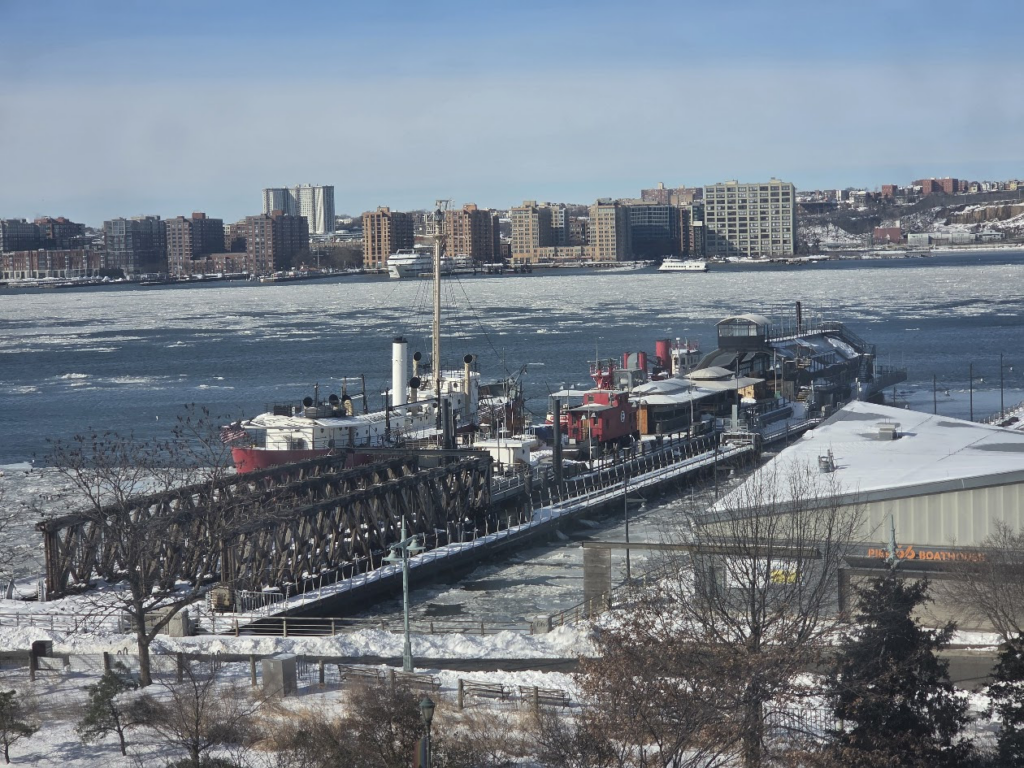
THE VIEW FROM 12th AVENUE OF THE FROZEN HUDSON RIVER. THE CONSTRUCTION IS THE TUNNEL FOR AMTRAK AND OTHER RAIL TRAFFIC
All image are copyrighted (c) Roosevelt Island Historical Society unless otherwise indicated THIS PUBLICATION FUNDED BY DISCRETIONARY FUNDS FROM CITY COUNCIL MEMBER JULIE MENIN & ROOSEVELT ISLAND OPERATING CORPORATION PUBLIC PURPOSE FUNDS.



 Mr. Flower Fantastic’s Concrete Jungle Orchid Show exhibition turns ordinary urban scenes into extraordinary floral arrangements!