Emily Post (1872-1960), one of America’s most influential figures in the field of etiquette, lived a life that combined a deep understanding of social protocol with the pulse of New York City’s energetic, ever-changing culture.
Though most famous for her book Etiquette in Society, in Business, in Politics, and at Home (1922), her personal life and experiences — particularly during her time living in Greenwich Village — revealed a complex, multi-dimensional woman who balanced the traditional with the modern.
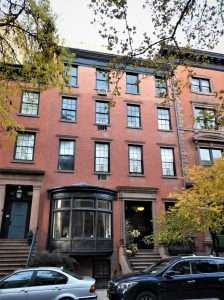
Emily Post was born into the well-established, socially prominent Price family in Baltimore, Maryland, on October 27, 1872, and educated at home in Baltimore and New York. At the age of 8, her family moved to Greenwich Village, where they resided at 12 West 10th Street.
Her father was Bruce Price (1845-1903), the architect behind Pierre Lorillard IV’s development, Tuxedo Park. This first-of-its-kind exclusive community development outside New York City eventually became known as the birthplace of that eternally fashionable garment, the Tuxedo.
Price also planned the American Surety Building on the corner of Wall Street and Pine in lower Manhattan, at the time the tallest building in America and an early example of the steel framing and curtain wall construction that paved the way for the modern skyscraper.
He is perhaps best known as the architect of a series of Chateauesque railroad stations and grand hotels for the Canadian Railway, and his signature project, the Chateau Frontenac, which defines the skyline of Quebec City to this day.
While Bruce Price designed the buildings, his wife Josephine, née Lee, the daughter of Wilkes-Barre coal baron Washington Lee and, by all accounts, a practical businesswoman, ran the enterprise.
By the end of Bruce’s career, with Josephine as his partner, Price had built a summer palace for the Emperor of Japan and the Georgian Court in New Jersey for George Jay Gould. Bruce Price was also a Fellow of the American Institute of Architects (1890) and belonged to the Architectural League of New York.
While Emily Price Post’s life began in the rather conventional manner of a young woman in New York’s high society, she ultimately defied the traditional expectations of that set. The season of her debut, Emily Price met Edwin Post, her husband-to-be, at a ball in one of Fifth Avenue’s elegant mansions.
Following a fashionable wedding and a honeymoon tour of Europe, Mrs. Post’s first home with her new husband was near Washington Square. When her two sons were old enough to attend boarding school, she turned her attention to her passion: writing. Her romantic stories of European and American society were serialized in several popular magazines, and many were successfully published in book form.
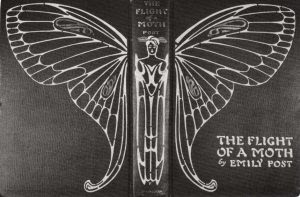
Around the time her first novel, The Flight of the Moth (1904), was published, Emily’s marriage began to falter and she found herself in the middle of a scandalous divorce, its humiliating details splashed across the front pages of New York newspapers for months.
Traumatic though it was, the end of her marriage in 1905 forced Post to become her own person, and she turned her passion for writing into a profession. She would spend the next fifteen years as a published and prolific writer.
She became a “traveling correspondent,” crossing the United States by car and touring Europe on the eve of World War I. Her stories were published in Vanity Fair, Collier’s, and McCall’s. In the process, she also became part of a burgeoning cultural transformation in New York City.
Greenwich Village during the early 20th century had become known for its embrace of artistic freedom and progressive ideas, and a bohemian haven. Post was somewhat of an anomaly within this crowd.
While the Village was often associated with avant-garde art, free love, and defiance of societal norms, Post was rooted in more traditional values. Yet, she was not out of place in the Village.
Her strong connection to the arts and literature brought her into proximity with some of the most notable figures of the time. Writers and artists frequented the neighborhood, and the post-Victorian, socially conscious Post was able to engage with a world that was increasingly interested in redefining what constituted proper behavior.
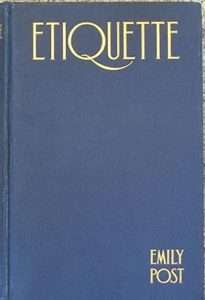
In 1922, Post wrote her most famous work, Etiquette, a comprehensive guide that not only offered advice on proper behavior for individuals and families, but also captured the essence of early 20th-century American society.
While it may seem paradoxical that someone with Post’s focus on manners and decorum lived in the Village — an area known for its intellectual and cultural rebellion — the book’s publication in 1922 coincided with a time when society itself was undergoing significant change.
The rise of the flapper, the shift toward more casual lifestyles, and the opening up of social spheres were all elements that Post had to reckon with while maintaining her steadfast belief in the importance of manners.
At her Greenwich Village home, Post would have witnessed the burgeoning of the Jazz Age, the early feminist movement, and the redefinition of what it meant to be a modern woman.
The world she inhabited was one of tension between established social rules and the desire for personal freedom — something reflected in the nuanced way Post balanced tradition with the evolving social landscape.
Emily Post’s life in Greenwich Village is a reminder of the personal and cultural intersections that influenced her work and legacy. Though she would go on to achieve international fame and her name would become synonymous with proper etiquette, her Greenwich Village years reveal the complexity behind the polished image she later projected.
Her life in the Village was not just about writing a book on etiquette; it was about engaging with the world and observing the social changes of her time.
Whether in her Village home, surrounded by her books and thoughts on civility, or in her public life as a consultant to high society, Post’s voice was always rooted in a belief that manners were a way to bring harmony to a rapidly changing world
PHOTO OF THE DAY
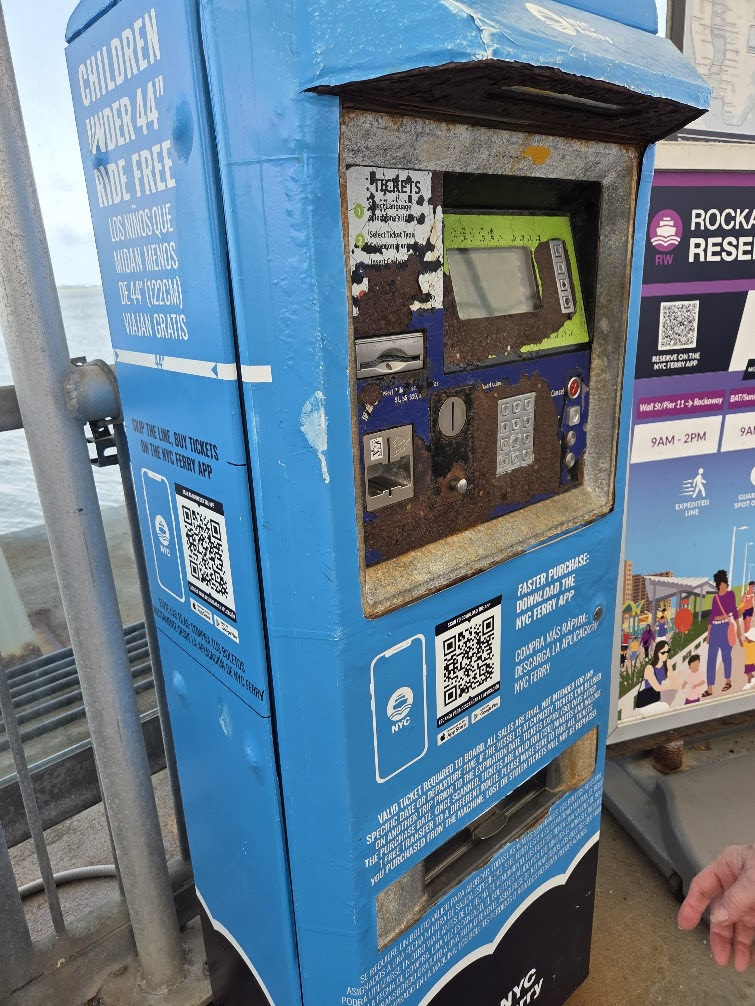
TIME FOR NEW TICKET VENDING MACHINES. THIS ONE AT ROCKAWAY PIER, IS IN SHODDY CONDITION AND CREDIT CARD VENDING DOES NOT FUNCTION
CREDITS
NEW YORK ALMANACK A version of the essay by Lannyl Stephens first appeared in Village Preservation’s Off the Grid Preservation Blog.
Founded in 1980, Village Preservation works to document, celebrate, and preserve the special architectural and cultural heritage of Greenwich Village, the East Village, and NoHo. Learn more about them at their website villagepresevation.org
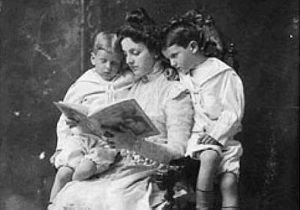
Illustrations, from above: Emily Post and her two sons, ca. 1897; 12 West 10th Street, Greenwich Village, home of Emily Post (courtesy Village Preservation); a black and white photo of illustrator C B Falls’ case stamp design for the binding of The Flight of a Moth, 1904; and Etiquette by Emily Post (1922).
All image are copyrighted (c) Roosevelt Island Historical Society unless otherwise indicated THIS PUBLICATION FUNDED BY DISCRETIONARY FUNDS FROM CITY COUNCIL MEMBER JULIE MENIN & ROOSEVELT ISLAND OPERATING CORPORATION PUBLIC PURPOSE FUNDS.
Art that captures a single moment of beauty and activity on New York’s streets is always captivating. But there’s something to be said for images that reveal something about Manhattan from a far away vantage point, showing a city not in the center but on the sideline
Leon Kroll, born in New York in 1884 and a contemporary of George Bellows, Robert Henri, and other social realists, gives us that sidelined city.
Kroll, who studied at the Art Students League and exhibited at the famous 1913 Armory Show, was known for his nudes and country or seaside landscapes, and he also painted Central Park, Broadway, and other city locations.
But he also depicted New York in the early 20th century from the outside in, illustrating the city’s rhythms from across the East and Hudson Rivers.
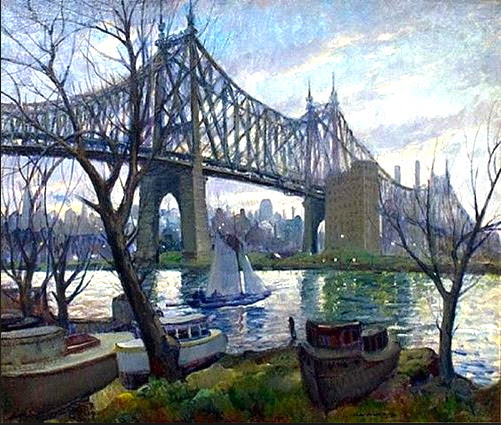
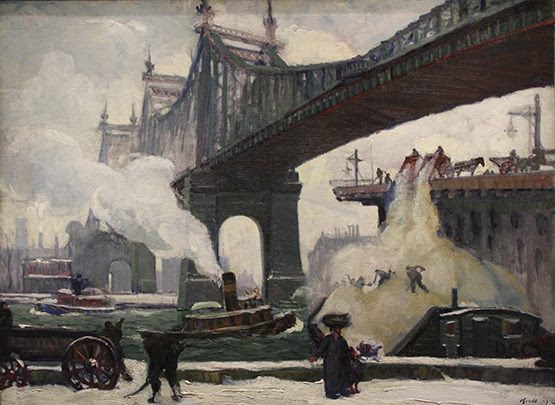
“Queensboro Bridge,” from 1912, the painting at the top of the page, is one such example. The majesty of the relatively new bridge (only three years old here) takes center stage, but the monolithic city looms behind it.
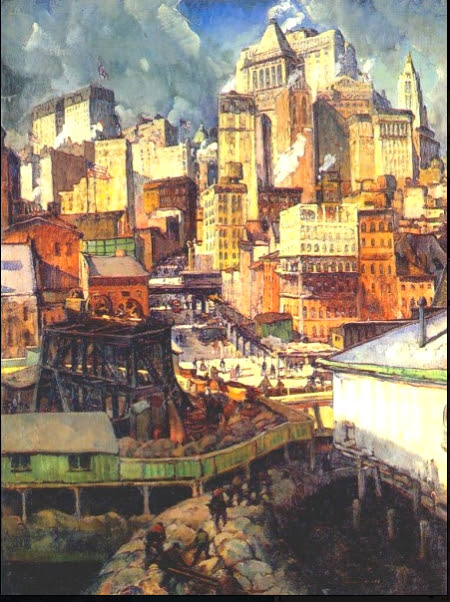
I’m not exactly sure where Kroll was when he painted the second image, 1920’s “Manhattan Rhythms,” the second image.
He presents us with a solid, impenetrable city high above the wharves and docks of the river, a metropolis that dwarfs the men who work there.
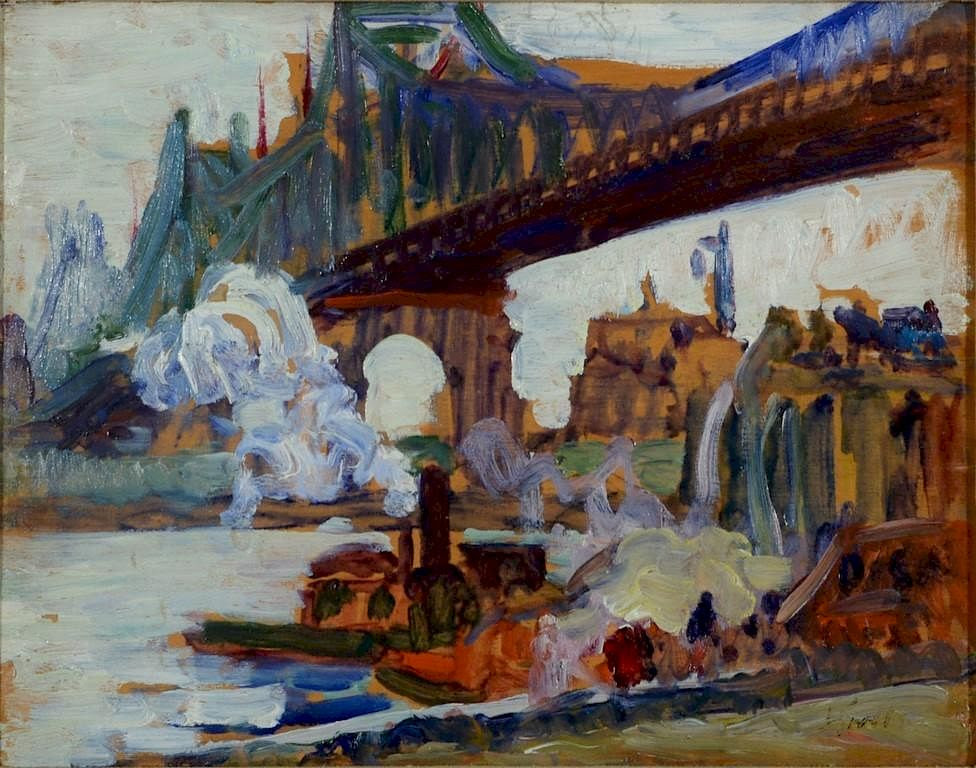
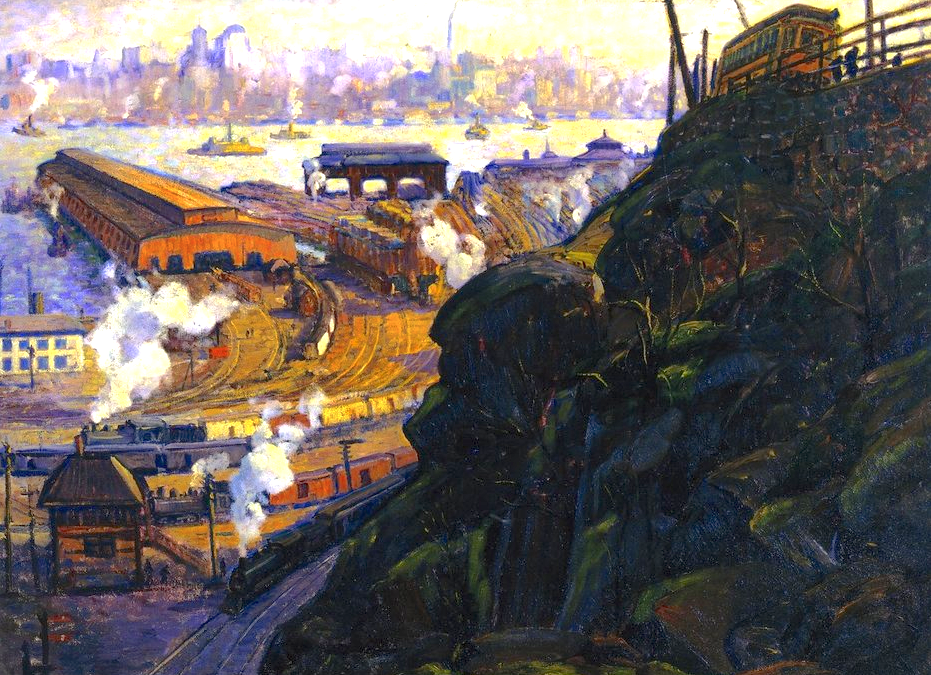
“View of Manhattan Terminal Yards From Weehawken” (1913) puts industry and commerce on display. The train tracks may be on the New Jersey side of the Hudson River, but they and the boats sending smoke into the sky work to enrich Manhattan across the water.
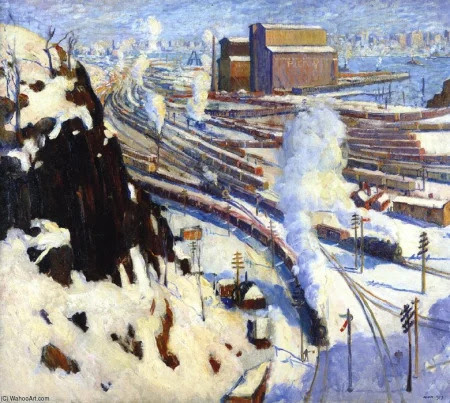
“Terminal Yards,” the fourth painting (also 1913) gives us another, snow-covered view.
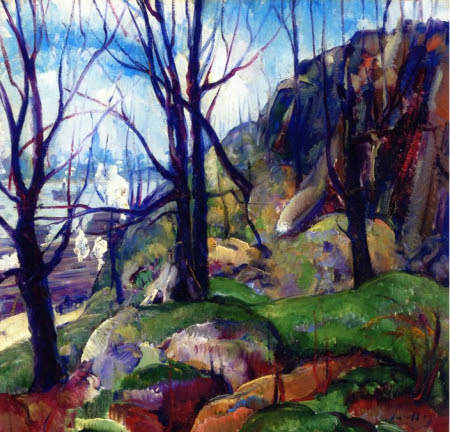
I love that the city skyline is barely in “Manhattan From Hoboken” (1915), another painting of the metropolis from the heights of New Jersey.
The vibrant colors and web of tree branches—not to mention the thick clouds and smoke coming from boats and trains beside the river—almost obscure the Empire State Building and the rest of the cityscape.
If you’re not there in the middle of it, New York is far enough away to feel like another country.
PHOTO OF THE DAY
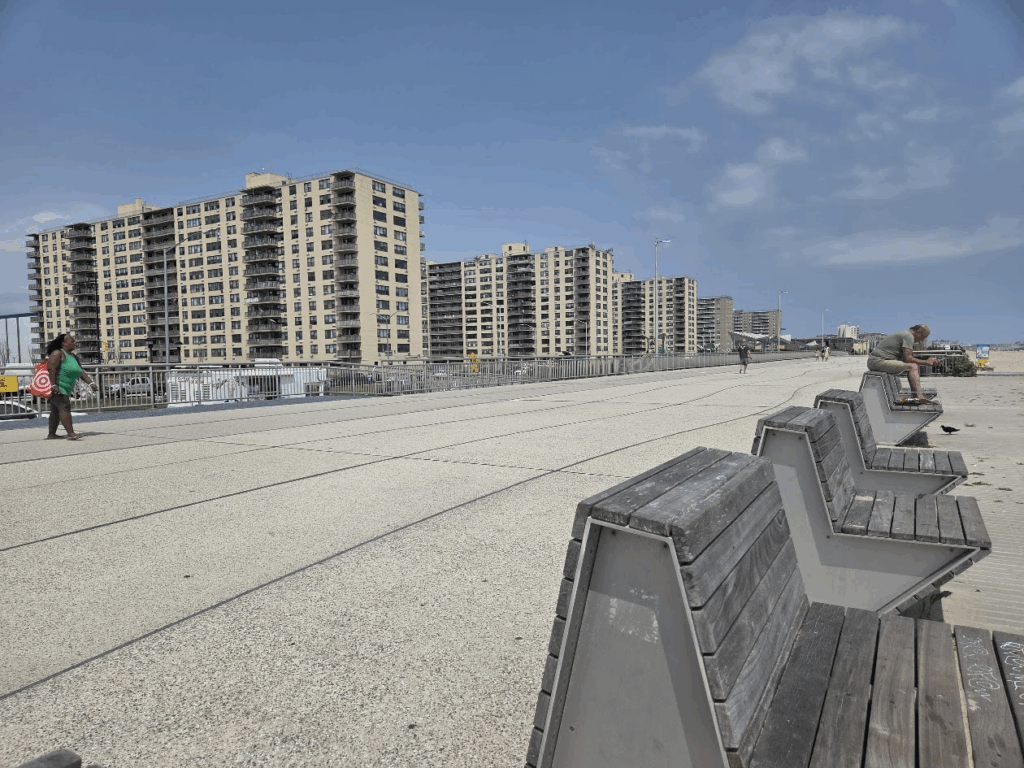
ROCKAWAY BOARDWALK AT BEACH 108 ST 4 BLOCKS FROM NYC FERRY
All image are copyrighted (c) Roosevelt Island Historical Society unless otherwise indicated THIS PUBLICATION FUNDED BY DISCRETIONARY FUNDS FROM CITY COUNCIL MEMBER JULIE MENIN & ROOSEVELT ISLAND OPERATING CORPORATION PUBLIC PURPOSE FUNDS.
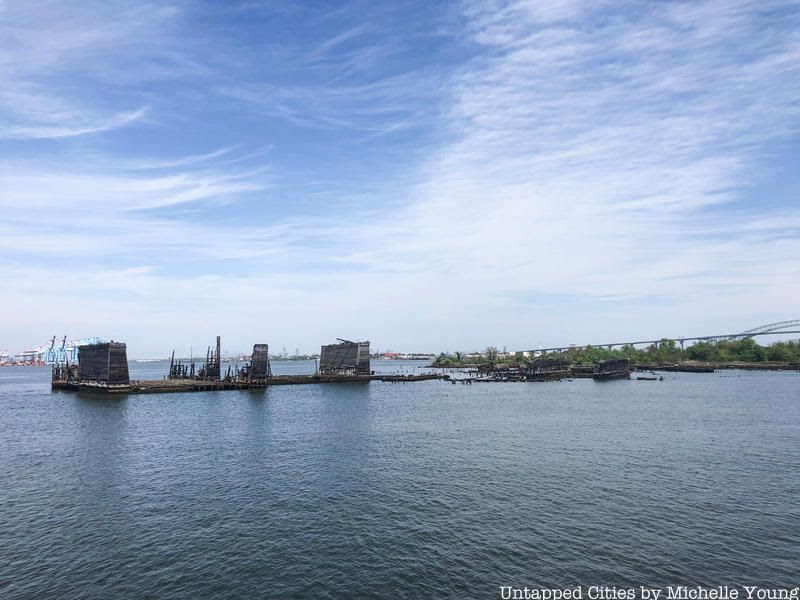
This 43-acre island straddles the border between New York and New Jersey and derives its name from the hunting activities that took place here during the Colonial Era. As New York grew into an industrial port, the island accommodated an oil refinery and shipyard during the 19th century.
Today, the island is owned by the Department of Parks and Recreation, with the Audubon Society managing wildlife research. Many prominent historical figures from George Washington to Theodore Roosevelt and Prince Henry of Prussia once made use of the island, with the former utilizing it as a location to drop off covert messages during the Revolutionary War.
Hoffman & Swinburne Islands
(Lower New York Bay)
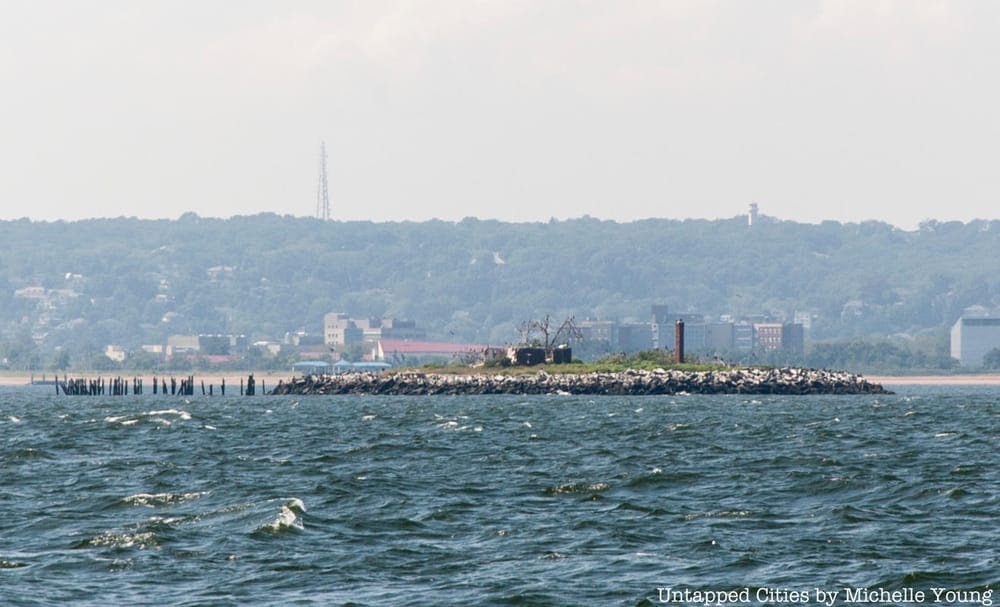
This duo of artificial islands rests close enough to Staten Island’s shore that a proposal once existed to fill the gap between the landmasses to create a park. Such a proposal might not have existed if the planners had known that the islands originally hosted quarantine stations during the height of immigration into the U.S. in the late 19th/early 20th centuries.
Constructed entirely of iron in order to keep the structures as airtight as possible, the facilities on the islands included a crematory and a mortuary for the less fortunate patients. Advances in the medical treatment of infectious diseases led to the decline of such facilities, with these two closing in 1923. Having been owned by the Department of Parks and Recreation since 1966, the islands were ironically preserved in order to maintain the “natural” topography of New York Bay.
North & South Brother Islands (East River)
Another duo of islands, these brothers are common in name only. North Brother‘s backstory features elements that have become typical for the avid New York historian, with a history of housing the sick, the addicted, and the condemned in confined spaces away from the public. The tuberculosis pavilion has been documented by photographer Christopher Payne, and much literature has been written about the site.
For what South Brother lacks in foreboding tales of the infirm, it makes up for in humorous eyebrow-raising real estate ventures. Originally the property of Jacob Ruppert–the owner of the Yankees largely responsible for bringing Babe Ruth to New York–the island’s only structure burned down in 1909. After Rupper sold the island, the real estate transactions went something like this: private ownership to public ownership to private again to public again, with prices ranging from $10 from an investment firm in 1975 to $2 million of Federal Grant money in 2007.
Ellis Island’s Abandoned Southside Hospitals
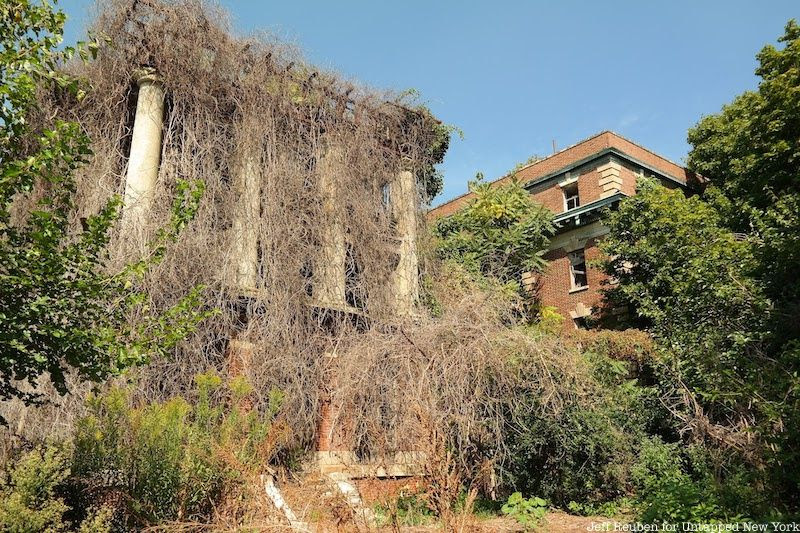
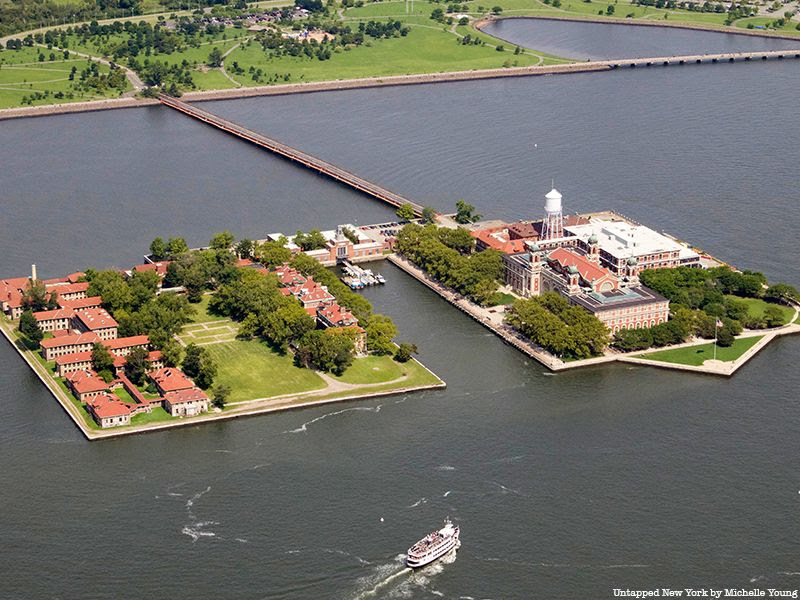
While Ellis Island has become one of New York City’s top tourist attractions, drawing over two million visitors per year, the 22-building South Side hospital complex is hidden in plain sight, just to the left of disembarking passengers headed towards the Great Hall. Looking at its desolate, skeletal frame now, it’s difficult to imagine its backstory as one of the largest public health undertakings in American history.
Mau Mau Island (Mill Basin)
Islands have historically played strategic roles for nations and their militaries, and those in New York City are no exception. While the battles on Long Island and Manhattan have been well documented, the naval skirmish that took place on Mau Mau is a little less well-known. That might have had more to do with the post-battle bar hop, though.
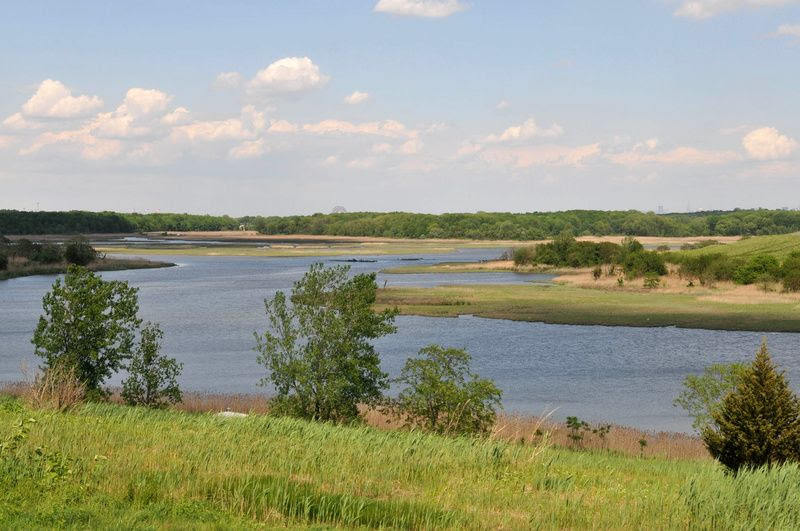
r. The manmade island sits across from Marine Park golf course and has attracted little media attention–save for the construction of a bird sanctuary–since.
High Island (City Island Harbor)
A stone’s throw from New York City’s most treasured obscure landmass, City Island, High Island has also proved a cozy home, first for sharks and then for humans. The bungalow dwellers were kicked out in 1962 to make way for a radio transmission tower, which was hit by a small plane just one day before owner WCBS switched to an all-news format. A new tower has stood in place since the incident and has a daytime broadcast frequency range from Cape Cod to Cape May.
Isle of Meadows (Fresh Kills)
Image courtesy The City of New York and Freshkills Park by Daniel Avila
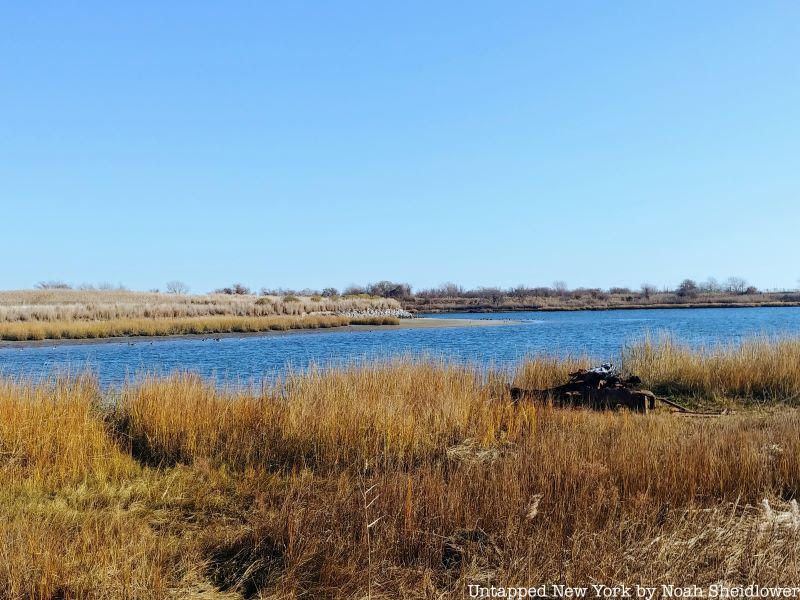
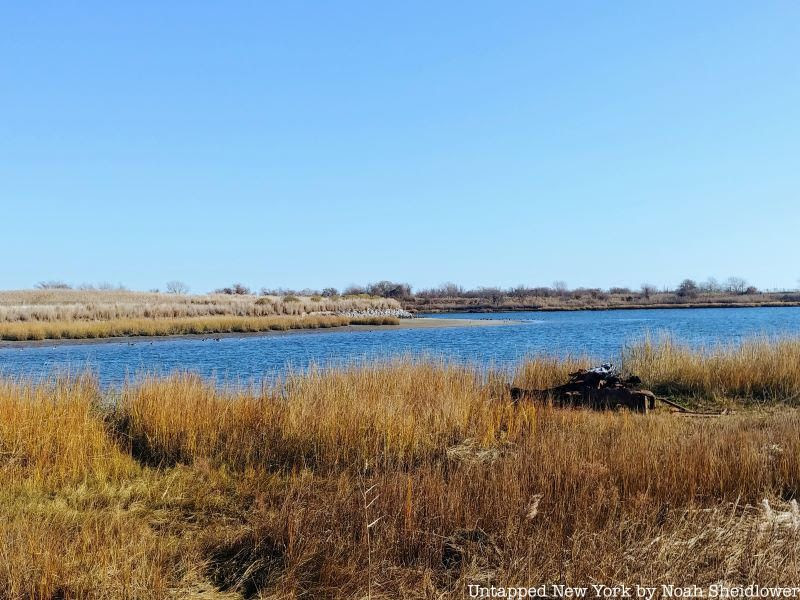
This 100-acre plot of land is as natural as they come, which is why the Audubon Society has fought so hard for its preservation over the years. Plans for its inclusion in the Fresh Kills Landfill were met with volatile opposition in the early 1990s, and today the island consists entirely of a nature preserve. Once declining populations of herons, ibis, and egrets now call the island home, and it has been considered one of the most crucial such refuges in the New York area.
PHOTO OF THE DAY
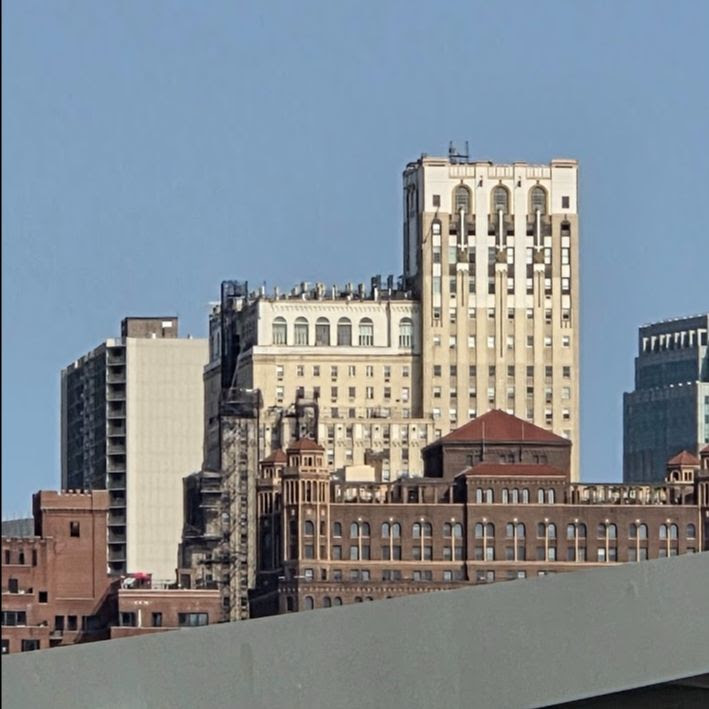
HOTEL ST. GEORGE, BROOKLYN, MORE NEXT WEEK
CREDIT TO
UNTAPPED NEW YORK
All image are copyrighted (c) Roosevelt Island Historical Society unless otherwise indicated THIS PUBLICATION FUNDED BY DISCRETIONARY FUNDS FROM CITY COUNCIL MEMBER JULIE MENIN & ROOSEVELT ISLAND OPERATING CORPORATION PUBLIC PURPOSE FUNDS.
Every Monday, I find two articles from “Ephemeral New York” in my in-box. Many times we adopt the stories for From the Archive and give credit to Ephemeral New York.” There are so many sources of information and artiicles that further the knowledge including New York Almanack, NYHIstorical Blog, NYC Municipal Archives Blog and many more sources.
About Ephemeral New York
Ephemeral New York, founded and edited by native New Yorker Esther Crain, chronicles a constantly reinvented city through photos, newspaper archives, and other scraps and artifacts that have been edged into New York’s collective remainder bin. Here we remember forgotten people, places, and relics of the way New Yorkers used to live. We get a big kick out of present-day urban weirdness and idiosyncrasies too.
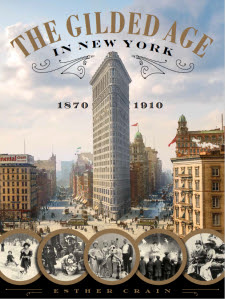
This site has given rise to two books, 2014’s New York City in 3D in the Gilded Age and The Gilded Age in New York, 1870-1910.The years between the Civil War and World War I were the most dynamic in the city’s history, and this is a favorite time period for readers of Ephemeral New York as well as the site’s creator.
The Gilded Age is when the physical city we view and experience today came together: five boroughs sharing a magnificent waterfront, threaded by bridges and subway lines, with an urban landscape marked by skyscrapers, parks, and brownstones.
The contradictions and extremes of the Gilded Age also make it such a fascinating era. Marble mansions lined Fifth Avenue a streetcar ride away from the airless flats of East Side slums. Upstate water piped into the receiving reservoir in Central Park offered fresh running water, yet it wasn’t until 1901 when tenements were required to have bathrooms in each apartment. Votes were purchased, prostitution was out in the open, and despite the wealth and glamour of Caroline Astor’s fabled 400, two brutal recessions made the Gilded Age one of bracing hardship for thousands.
The Gilded Age in New York, 1870-1910 is available on various book sites. Find out more about the book and Esther Crain on Amazon and Goodreads.
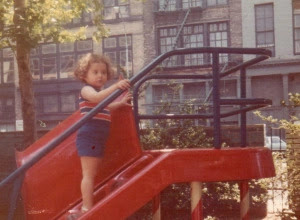
[Washington Square Village, 1970s. That slide is no longer there.]
Ephemeral New York focuses on all eras of the city’s history, but Crain herself vividly recalls the mid-1970s, when daily life for a kid in Greenwich Village meant stepping over winos to enter the Grand Union on Bleecker Street, a happily chaotic class packed with 35 other first graders at PS 41, and that Mays, not Whole Foods, was once the flagship shopping destination of Union Square. Sometimes wry and often wistful, she feels the presence of the city’s ghosts everywhere.
All comments and suggestions are welcome.
PHOTO OF THE DAY
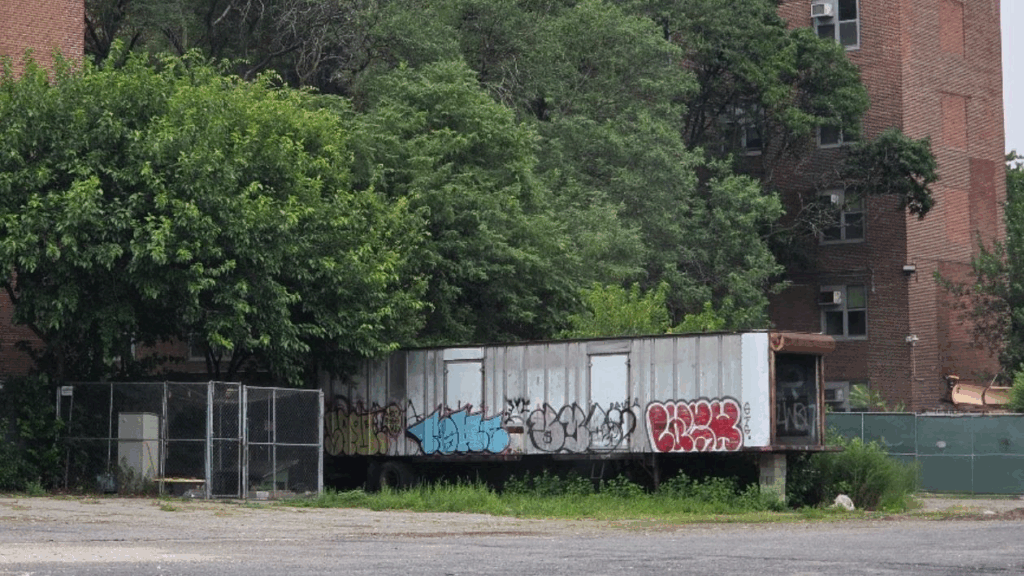
Eyesore abandoned truck soon to be removed from in back of Coler. Hopefully, more old equipment will soon be cleared from the area. The area is RIOC property and working with Coler should make the back of the hospital be cleaned up soon.
CREDIT TO:
EPHEMERAL NEW YORK
All image are copyrighted (c) Roosevelt Island Historical Society unless otherwise indicated THIS PUBLICATION FUNDED BY DISCRETIONARY FUNDS FROM CITY COUNCIL MEMBER JULIE MENIN & ROOSEVELT ISLAND OPERATING CORPORATION PUBLIC PURPOSE FUNDS.
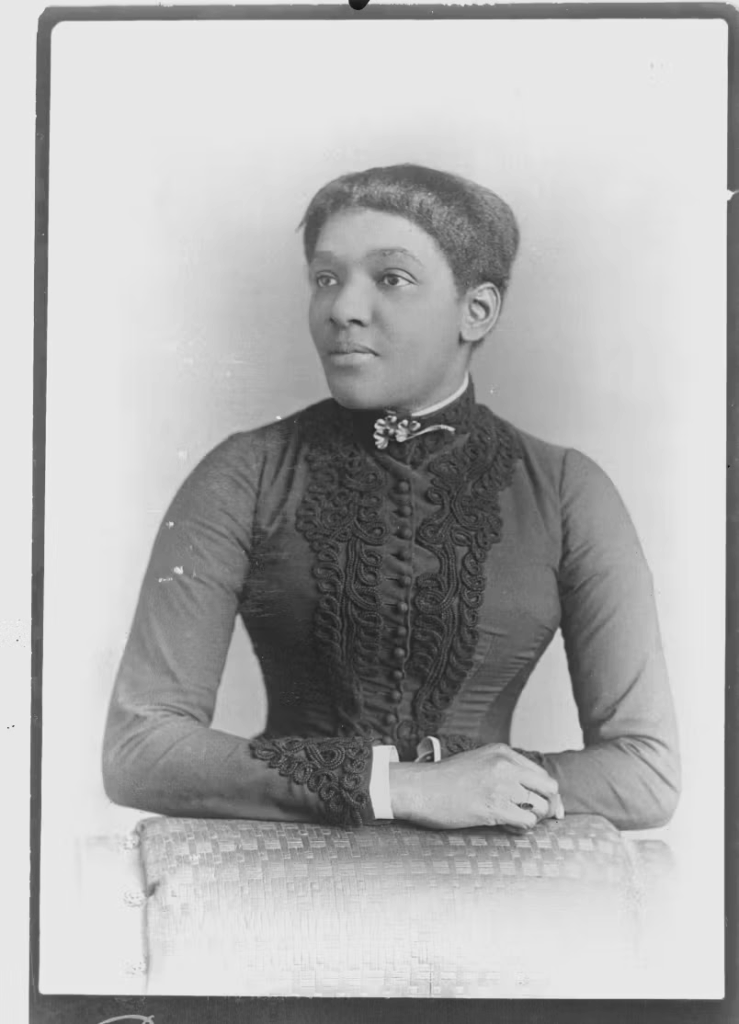
William Davis Hassler, photographer. “Copy photo of an unidentified African American Woman,” undated. New-York Historical Society
Part of researching women’s history is learning how to navigate incomplete finding aids and descriptors. For example, the image below—from the Patricia D. Klingenstein Library’s William David Hassler Photograph Collection—shows a woman, arms resting on the back of a chair. She gazes intently beyond the camera lens, and invites a host of questions. The photograph is labeled as an “unidentified African American woman” and offers little else for us: Where did the image come from? What clues can we discern from the photograph? If this is a copy, where is the original? Most of all, can we puzzle out the identity of the woman pictured? It turns out, we can. Thanks to an abundance of newly digitized archives, photographs, and manuscripts, we now know this likeness is of Mary E. Shaw, an activist, philanthropist, and school principal who lived in Flushing, Queens. In fact, this very photograph hung for years in the Flushing branch of the Queensborough Public Library system. Finding the connection between these two copies of the same image, however, has only been made possible through recent efforts to make archival and library collections more widely available and accessible. This push to digitize archival collections—efforts which have accelerated as a result of the COVID-19 pandemic—offers new possibilities for historians and researchers and especially for those studying the experiences of women. This new landscape of digitized records also provides a rich pool of documents from which we can begin to reconstruct and understand the life of Mary Shaw, who at one point was one of Flushing’s most famous residents.
Mary Ann Elizabeth Hood appears in the historical record under several different name variations. She is sometimes listed in newspapers and other documents as Mary E., Mary Elizabeth, Mary Ann, and even Mary Ann E., reflecting a common challenge faced by researchers tracing the lives of 19th-century figures. Mary was born in Pennsylvania around 1852. She was the daughter of Lewis A. and Sarah A. Hood. Her father was actively involved in the Free Mason movement in Pennsylvania.
By the time she was 21 years old, Mary was working as a school teacher in New York City at a school supervised by prominent scholar and activist Charles L. Reason. Reason was the first African American college professor in the United States, a distinction he already held by the time Mary arrived at the school in 1873. As a working woman, Mary saved up enough money to open a bank account in the U.S. Freedman’s Savings Bank’s New York City branch that same year. It was during this time that she likely met her future husband.
In December of 1874, Mary Hood married John William A. (who often went by John W. A.) Shaw in New York City. By 1880, after spending some time in Washington, D.C., the couple had settled in Flushing—at that time an independent city—with their daughter, Ethel. The Shaw family flourished in Queens, where Mary worked as a teacher and John edited a newspaper. By 1887, Mary had become “head teacher” of the School for African American students. By the next year, she had succeeded Charles H. Thomas in the position of principal of the Colored School in that city. According to the Queens Public Library, the school was located at 86 State Street.
In Flushing, the Shaws became part of, and prominent in, a vibrant African American community–a community that was one of the earliest free Black settlements in what would eventually become New York City. The Flushing Free Library, which became a free circulating library in 1884, played an important part in supporting and nourishing the growing community, as various residents used it as a space for gathering, meetings, and lectures. For example, in September of 1887, the Lyceum Association, which consisted of young African American people, “filled the meeting room of the Flushing Free Library,” according to a Brooklyn paper. The group had connections to the A.M.E. Church, of which John Shaw was a minister. Both young men and young women participated. Mary and John Shaw likely had other connections to the library beyond what comes down to us in extant paper records, as the institution played a large enough role in their lives in Flushing to warrant a bequest of money upon Mary’s passing.
Mary was also active in the Queens County Teachers Institute. For example, in 1889, she sat in the audience and listened to Mr. Isaac H. Stout lecture on the best methods of teaching, noting that “male teachers seemed to be running out and their places filling up with women.” Mary Shaw was living proof of this observation. She worked tirelessly in her many roles as an educator in Flushing. At one Grammar School No. 2 graduation, a member of the Board of Education recognized her achievements, and said he “hoped she would remain as teacher in Flushing as long as she lived.”
Like his wife, John Shaw also cut an interesting and complex historical profile. Born in 1849 in Antigua, the British colony infamous for its sugar plantations and deadly labor conditions, he likely descended from formerly enslaved people. The British emancipated the people they enslaved there 15 years prior to John Shaw’s birth. Shaw immigrated to the United States when he was seven, and applied to be naturalized as a U.S. citizen 16 years later at the age of 23. At the time, he worked as a clerk and lived on Mulberry Street in lower Manhattan.
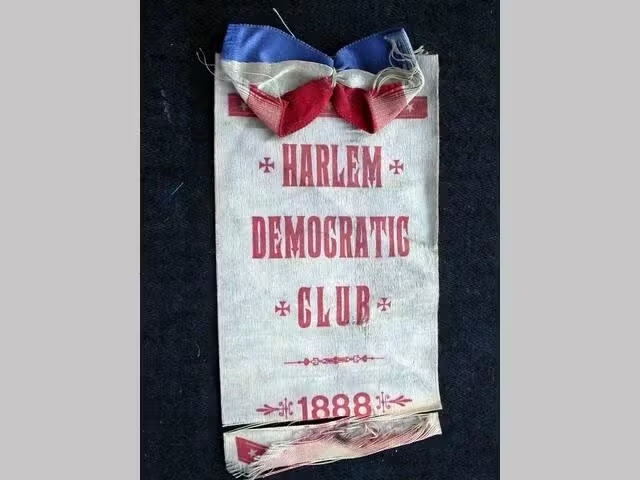
Democratic Clubs were a ubiquitous form of political organizing and partisan infrastructure at the local level. This ribbon marked membership of its wearer in the Harlem Democratic Club.
Ribbon, 1888. New-York Historical Society.
Writing in 1903, John Shaw argued that the claims and needs of African Americans received “scant consideration” from both political parties and that in both the South and in the North “there is there was “a revulsion of sentiment… against the negro,” which rendered African American men politically powerless. Nevertheless, he wrote, “the negro must fight on.” John Shaw recognized, and was not afraid to point out, the hollowness of Northern claims to equality. In some ways, Shaw’s criticism foreshadowed the sentiments that activists and radicals like Malcolm X, James Baldwin, and Stokely Carmichael would also make. For Shaw, the future lay in the young African Americans people of the early 20th century who were the “sophisticated product of the schools with his awakened consciousness, involving social and political recognition.”
Mary Shaw, too, believed in the promise of racial uplift through education and “awakened consciousness.” However, unlike her husband who used politics to advance this vision, Mary pursued this goal through a lifelong commitment to teaching and education—amassing a small fortune for herself along the way. Her teaching resume included schools in White Plains, Delaware, New York City, South Carolina, Georgia, Indiana, and, finally, Flushing. By the mid-1880s, Mary already had years of teaching experience to qualify her for an administrative role in the town’s school system.
Mary passed her love of education and pursuit of teaching to her daughter. Ethel was born in September of 1874, while the family was living in Washington, D.C. She later attended the West Newton English and Classical School (sometimes referred to as the Allen School), a model school in Massachusetts that, unique for this time, educated a racially integrated and co-ed student population. At the closing exercises, Ethel performed a piano solo. After graduating in 1891, she gained employment as a teacher at the prestigious Tuskegee Institute in Alabama. Newspapers in Ohio, Missouri, and Illinois printed the news and celebrated her appointment on the board of instructors, describing Ethel as “universally loved by teachers and fellow students.”
Ethel’s employment at Booker T. Washington’s Institute was just one of the ways that the family was deeply connected to Tuskegee and its mission. Both Mary and John were proponents of the kind of education that provided skills for economic, social, and moral development and uplift that was the ethos of Tuskegee under Washington’s leadership. John even composed a lecture titled, “A Tangled Skein,” which he called a “vindication of Booker T. Washington and his work.”
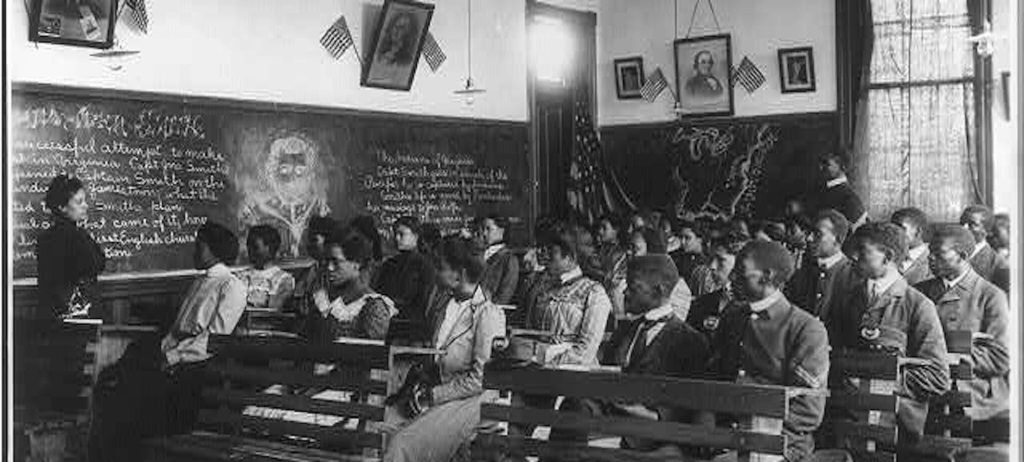
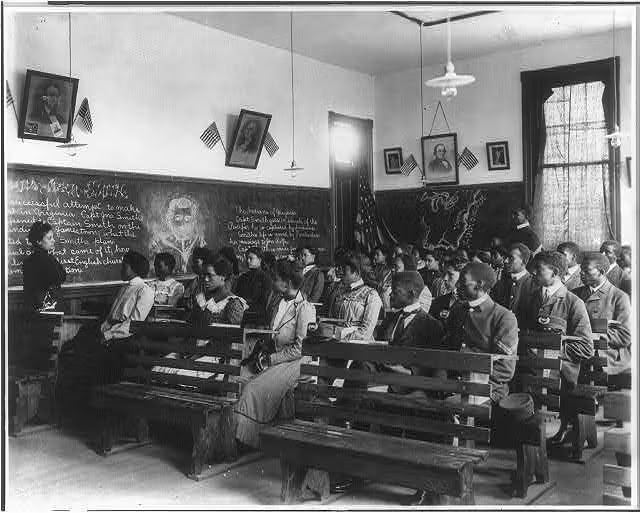
Frances Benjamin Johnston, photographer. History class, Tuskegee Institute. Tuskegee, Alabama, c.1902, around the time that Ethel Shaw was teaching at the school. Image courtesy of the Library of Congress.
The small Shaw family experienced a devastating loss when Ethel passed away while teaching in Tuskegee. The exact date of her death is currently unknown, but it was likely between 1892 and 1903. While we don’t have records of how this loss impacted Mary, her actions in the years before her own death indicate that she was profoundly saddened and felt deeply the loss of her only daughter, of whom she was extremely proud.
Mary Shaw resigned from her role as Principal in 1894, and died 11 years later in March 1905 at the age of 53 in Philadelphia. Her funeral took place at the historic St. Philip’s P. E. Church on 25th Street in Manhattan. We can in some ways understand Mary Shaw’s worldview more fully through a particularly detailed and, luckily for us, digitized document: her will. In 1903, Mary drew up a thoughtful, practical, and comprehensive will in which she delineated where and how she wanted her estate distributed—in effect, constructing her own legacy
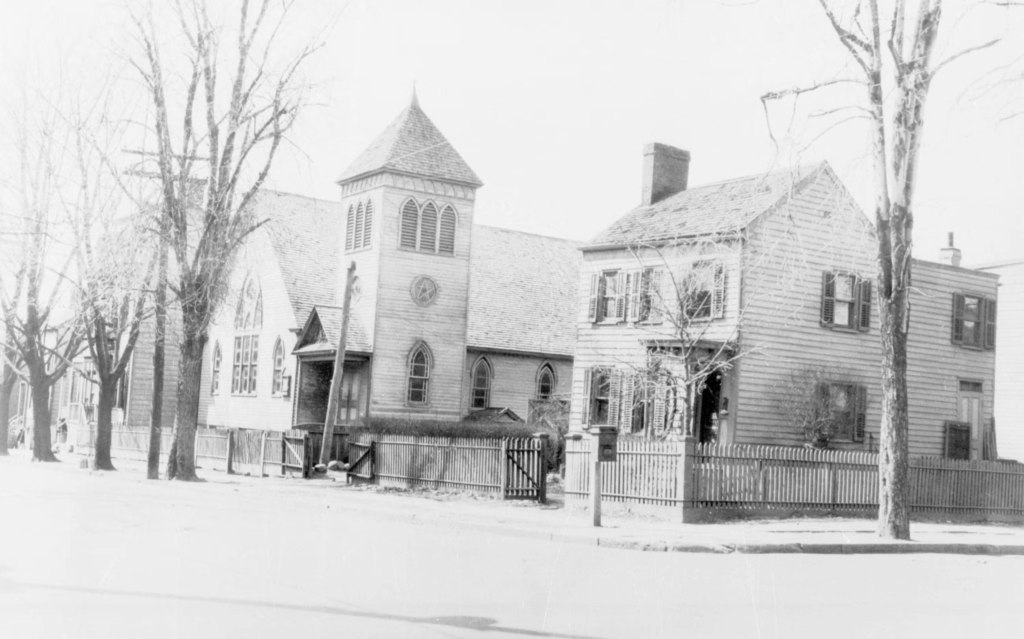
Eugene L. Armbruster, photographer. Image of Macedonia A.M.E. Church in Flushing. Image Courtesy of Queens Public Library.
The most striking detail to emerge from Mary Shaw’s will was her sizable bequest to the Tuskegee Institute. She bequeathed a total of $36,000 (though some sources say $33,000, and some even $50,000) to the Institute, specifying the amount be used to establish a scholarship fund for female students in memory of her daughter. According to the Boston Globe, it was the “largest bequest ever made by a colored person to Tuskegee Institute.” Mary Shaw’s generosity made national news, as editors reprinted the story across the states from South Carolina to Massachusetts to Indiana, from Florida to Illinois. This impressive sum spoke to both the capital that Mary had amassed as her own propertyby virtue of her status in the Flushing community and through years of teaching, the importance of Tuskegee and its mission to Mary, and her dreams for African American women. So noteworthy was Mary Shaw’s gift that a group of relations contested Shaw’s last will and testament, claiming that she was not of sound mind when making the generous bequest. Booker T. Washington sat in court the day Mary Shaw’s will was upheld. The New York Sun reported that he left the courtroom “very much pleased” at the decision to honor Shaw’s wishes.
It is clear from the contents of her will that Mary Shaw hoped to construct alternative futures to the women who, like her daughter, devoted themselves to betterment through education. In addition to her donation to the Tuskegee Institute, Shaw invested her money and legacy in the community of women around her. She left considerable sums of money to her mother and her “dear friend,” Annie Johnson, with whom she resided at the time of her death. Among the other female family and friends included in her generosity were Ada Fisher, Helen Ethelda Smith, Kate Smith, and Bella Warick. The will stipulated that an additional $1,000 go to what was then the Flushing Free Public Library, which might explain why Mary Shaw’s portrait hung there for so many years. With the money, the library purchased books for a reference section, some of which still exist there today. Boundless in her philanthropy, she gave another $1,000 to the Hospital and Dispensary of the Town of Flushing and $2,000 to St. Philips Parish Home. To her husband who survived her, she left 50 dollars.
John Shaw lived a widower for four years. At the time of his death in July of 1909, he was living in Cambridge, Massachusetts, just down the street from Harvard’s campus, working primarily as an author.
Though overlooked in histories of women activists, Mary Shaw committed herself to the work of social and educational activism. Her Flushing community has not forgotten her for it: the library also formed a “Mary Ann Shaw Society,” that builds on Mary Shaw’s legacy of investing in education, books, and community. In 2018, the Queens Borough Public Library commissioned and revealed a portrait of Mary Shaw by artist Eddie Abrams. Like the 1890 photograph, the portrait of Mary Ann Shaw now lives in the Flushing Library, where a new generation of readers will soon recognize her familiar face.
To learn more about the history of women’s involvement in the creation and expansion of public libraries, check out the Center for Women’s History’s upcoming special exhibition, Circulating Control: Women’s Book Battles, 1880-1930 (July 26, 2024-November 30, 2025.)
PHOTO OF THE DAY
NEW FOOD OPERATOR AT CORNELL TECH WITH A LARGE MENU SELECTION OF PREPARED, SALAD & SANDWICH ITEMS.
CREDIT TO:
NEW YORK HISTORICAL Written by Hope McCaffrey, Mellon Foundation Predoctoral Fellow at the Center for Women’s History, with special thanks to Lori Rothsteinandthe Queens Memory Project.
All image are copyrighted (c) Roosevelt Island Historical Society unless otherwise indicated THIS PUBLICATION FUNDED BY DISCRETIONARY FUNDS FROM CITY COUNCIL MEMBER JULIE MENIN & ROOSEVELT ISLAND OPERATING CORPORATION PUBLIC PURPOSE FUNDS.
About 11,500 Americans lost their lives aboard British prison ships from 1776 to 1783. More soldiers, sailors and civilians died aboard the prison ships than in all of the Revolutionary War battles combined. It started with the Battle of Brooklyn (the Battle of Long Island).
The City of New York played an important role throughout the American Revolution. Not only was the city an important port of commerce, providing supplies and food to the Continental Army, but it served as a central communications route between the northern and southern states.
Without a large naval military, the Continental Army used privately owned ships to advance the patriotic cause, carrying supplies and messages from Boston to New York and down to the southern colonies.
New York’s importance as a strategic location during the American Revolution was not lost on either the British or the American patriots and would become the location of the first military engagement following the signing of the Declaration of Independence.
On August 27, 1776, just eight weeks after the colonies declared their independence from England, the Battle of Brooklyn began.
Although George Washington and his army were able to retreat and escape capture, an estimated 1,300 prisoners of war would remain in British custody. Continental soldiers only comprised a portion of the prisoners held captive by the British during the American Revolution however.
Civilians and privateers commissioned by the Continental Army who refused to pledge allegiance to the Crown of England were also arrested and held in New York’s two jails.
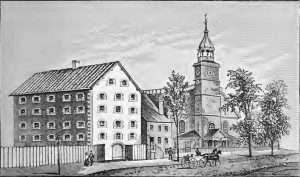
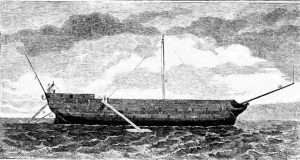
The number of prisoners held captive by the British quickly outgrew the jails, leading the British to use abandoned churches, warehouses, and ultimately decommissioned war ships known as “hulks” anchored off the Brooklyn coast.
During the war, at least 16 hulks, including the infamous HMS Jersey (a former warship built in 1736 and converted to a hospital ship before becoming a prison hulk), were placed by British authorities in the waters of Wallabout Bay.
Living conditions in the British prisons were unbearable, but none as much as on the prison ships. The ships were overcrowded; the prisoners were tortured; and, if fed, prisoners were given rancid food and unclean water.
In 1778, Robert Sheffield, one of 350 prisoners held in a compartment below the decks, escaped and told his story in the Connecticut Gazette:
“The heat was so intense that (the hot sun shining all day on deck) they were all naked, which also served well to get rid of vermin, but the sick were eaten up alive.
“Their sickly countenances, and ghastly looks were truly horrible; some swearing and blaspheming; others crying, praying, and wringing their hands; and stalking about like ghosts; others delirious, raving and storming, — all panting for breath; some dead, and corrupting [decomposing].
“The air was so foul that at times a lamp could not be kept burning, because of which the bodies were not missed until they had been dead ten days.”
Diseases, including smallpox and yellow fever, ran rampant on the ships. Captives on the ships died from malnutrition and disease at alarming rates of 10-12 prisoners a day. Their bodies were either thrown overboard or buried in shallow graves along the banks of the bay.
Historian Edwin G. Burrows writes that “by the end of 1776, disease and starvation had killed at least half of those taken on Long Island and perhaps two-thirds of those captured at Fort Washington – somewhere between 2,000 and 2,500 men in the space of two months.”
Christopher Vail, who was held aboard HMS Jersey five years later in 1781, wrote:
“When a man died he was carried up on the forecastle and laid there until the next morning at 8 o’clock when they were all lowered down the ship sides by a rope round them in the same manner as tho’ they were beasts.
“There was 8 died of a day while I was there. They were carried on shore in heaps and hove out the boat on the wharf, then taken across a hand barrow, carried to the edge of the bank, where a hole was dug 1 or 2 feet deep and all hove in together.”
The prison ships held captives until 1783 when the British occupation of New York ended. It is estimated that approximately 11,500 soldiers, sailors, and civilians lost their lives aboard the prison ships from 1776 to 1783. More Americans died aboard the prison ships than in all of the Revolutionary War battles combined.
In the years following the war, the bodies of the prison ship martyrs would wash up on the shores of Brooklyn. Remains were collected and held in a small crypt near what is now the Brooklyn Navy Yard.
In 1808 that burial vault collapsed and the remains of those that died aboard the prison ships were re-interred in Fort Greene Park, on which a part of the Battle of Long Island had been fought.
A monument to memorialize the martyrs was created, but by the mid-1800s, the monument had fallen into disrepair and plans for a new monument to be located in the newly created Washington Park (now Fort Greene Park) were conceived.
The Prison Ship Martyrs Memorial
In 1867, Frederick Law Olmsted and Calvert Vaux were hired to create a new design for what would become Fort Greene Park. At the insistence of The Martyrs’ Memorial Association, the large city park was to include a burial site and permanent monument for the remains of the prison ship martyrs.
Olmsted and Vaux’s design included a large crypt and elaborate memorial set into the stepped hillside in the northwest corner of the park.
The park entrance on the intersection of Canton Street and Myrtle Avenue opened onto a large public gathering space designed for public meetings and political speeches. From the open space, a tiered staircase would lead up the steep hillside to a saluting battery, refreshment house, observatory, and a set of open playing fields.
The design also included an elaborate monument for the prison ship martyrs halfway up the grand staircase with a crypt being located beneath the monument.
Construction on the Olmsted and Vaux plans began in 1868, but an economic downturn caused the Olmsted and Vaux’s elaborate plans to be cut short.
The open space and tiered staircase would be completed, along with a vault for the remains of the martyrs, but the monument itself and the observatory were never created. In 1873, 22 boxes containing the remains of the prisoners were interred into the vault.
In 1899, construction of new facilities at the Brooklyn Navy Yard uncovered additional remains and sparked new interest in creating a more significant monument to the prison ship martyrs and a new campaign for funding was initiated.
On June 30, 1902, Congress passed an act (32 Stat. 747) that provided $100,000 towards designing and constructing a large commemorative structure in Fort Greene Park to memorialize the martyrs. The act provided specifically that the contribution of the federal government was contingent upon the raising of a like sum by private subscription and by the State and City of New York.
In 1905, the architectural firm of McKim, Mead, and White was hired to design a new entrance to the existing vault and a permanent monument to the prison ship martyrs.
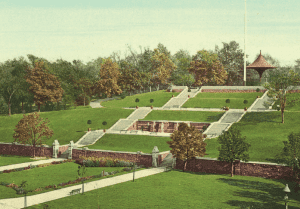
The McKim, Mead, and White design transformed the existing grand staircase into a 100-foot wide staircase broken into three flights. The entrance to the crypt, located in the center of the middle flight of stairs, is a single bronze door. At the top of the staircase sits a large plaza with four bronze eagles set at each of the four corners.
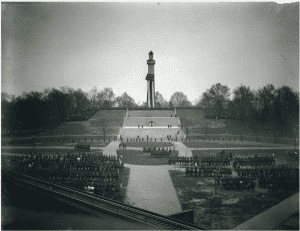
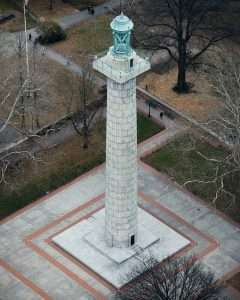
The Prison Ship Martyrs’ Monument, a 149-foot Doric column, is centered on the plaza on top of a two-tiered square base. The base of the column includes two bronze doors, identical to the crypt door and the column is topped with a 22-foot bronze lantern designed by Adolph Alexander Weinman (who also designed the plaza’s four eagles).
The McKim, Mead, and White design also modified several other areas of the original Olmsted and Vaux plan including the addition of a small comfort station to the north of the upper plaza and a redesign of the lower plaza (which was never fully implemented).
The McKim, Mead, and White Prison Ship Martyrs’ Monument was completed and dedicated in a ceremony attended by President-elect William H. Taft in 1908.
Since the dedication ceremony, the Monument, grand staircase, and upper and lower plazas have been modified. Some alterations to the Monument, such as the construction of an interior elevator, were subsequently removed.
The upper and lower plazas have been modified twice since 1908: once in 1936 with a design by Gilmore Clarke, and the second through a 1972 design by A. E. Bye.
The upper plaza was expanded, branching out to the north and south, while the lower plaza was transformed to include a set of smaller open spaces including playgrounds, a comfort station, and seating areas.
The grand stair case retains its McKim, Mead, and White three-tiered layout, but has been modified with tree wells and planting beds. The underground crypt remains in its original location.
“Not of National Significance” Finding
In 2021, after a study and analysis of the Prison Ship Martyrs’ Memorial in order to have the site named a National Historic Landmark, the National Park Service determined that the site “does not meet the criteria for national significance for cultural resources through the application of national historic landmark criteria.”
NPS argued that while the monument is indirectly associated with a historic event, it did not exist during the time of the historic event and it memorializes a phase of history not associated with the site.
The criteria for National Park Service designation requires that sites not only have historical or cultural significance, but also a high degree of integrity of location, design, and setting.
Cemeteries and other properties that are commemorative of events unrelated to their sites, such as the Prison Ship Martyrs’ Monument, do not ordinarily qualify for designation.
NPS also determined that the Memorial did not possess national significance based on its own architectural or design values because it does not represent an exceptionally important design of either Olmsted and Vaux or McKim, Mead and White.
Visiting Fort Greene Park and the Prison Ship Martyrs’ Monument
Fort Greene Park and the Prison Ship Martyrs’ Monument are owned and operated by the New York City Department of Parks and Recreation. The park is open daily from 6:00 a.m. to 1:00 a.m. unless otherwise posted.
A staffed visitor center is located to the north of the Prison Ship Martyrs’ Monument and includes an exhibit on the prison ship martyrs’ and the history of Fort Greene Park within the context of the Revolutionary War. Restrooms are located within the visitor center and in a small comfort station on the lower plaza. Neither the Monument nor the crypt are open for public access.
PHOTO OF THE DAY
THE EAST COMMONS ARE SOON TO OPEN
CREDIT TO
NEW YORK ALMANACK Judith Berdy
All image are copyrighted (c) Roosevelt Island Historical Society unless otherwise indicated THIS PUBLICATION FUNDED BY DISCRETIONARY FUNDS FROM CITY COUNCIL MEMBER JULIE MENIN & ROOSEVELT ISLAND OPERATING CORPORATION PUBLIC PURPOSE FUNDS.
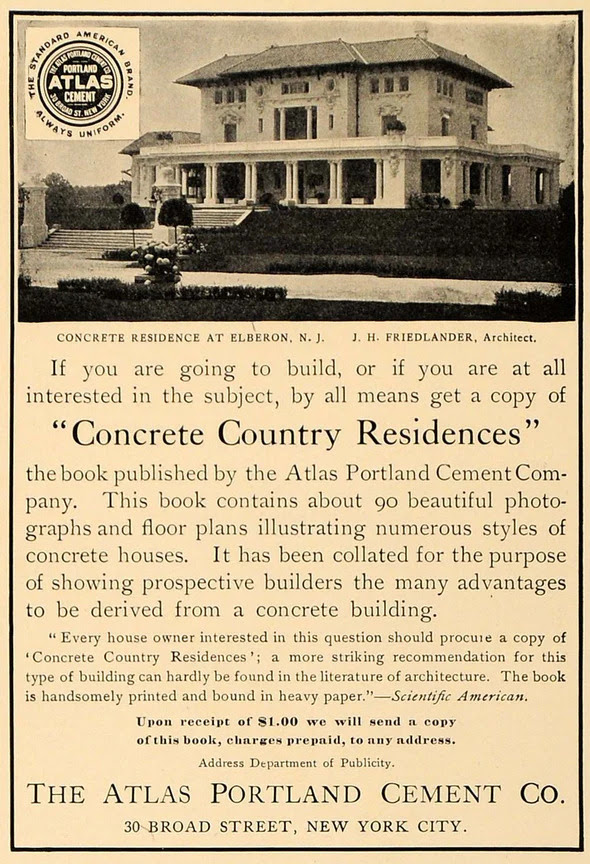
This year I wrote about the Lampposts designed by Jsoseph H. Freedlander. It turns out there was much more to the story about Freedlander.
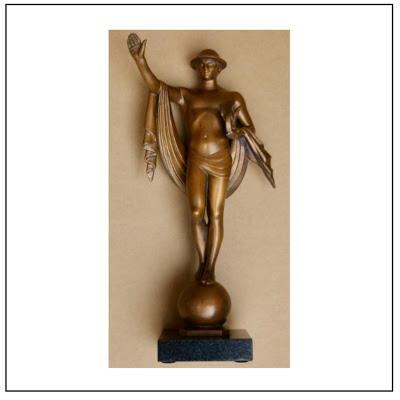
Joseph Freedlander (1870 – 1943) Mercury 18 x 9 x 6 inches Created 1931 Bronze on a marble base
In the late 1920s, Joseph Freedlander was asked by the City of New York to design a series of bronze light posts for Fifth Avenue. The first, completed in 1931, was installed at 41st and Fifth, and 103 others followed between 8th and 59th Streets.
Each traffic light was topped by a bronze statuette of Mercury. In the late 20th century, only several survived, two at the Museum of the City of New York, one in the offices of the Fifth Avenue Association, and a few in private collections.
If you go to the New York Times site and plug in “Joseph Freelander Mercury,” a detailed story by Christopher Gray will come up. The provenance of the sculpture is extraordinary.
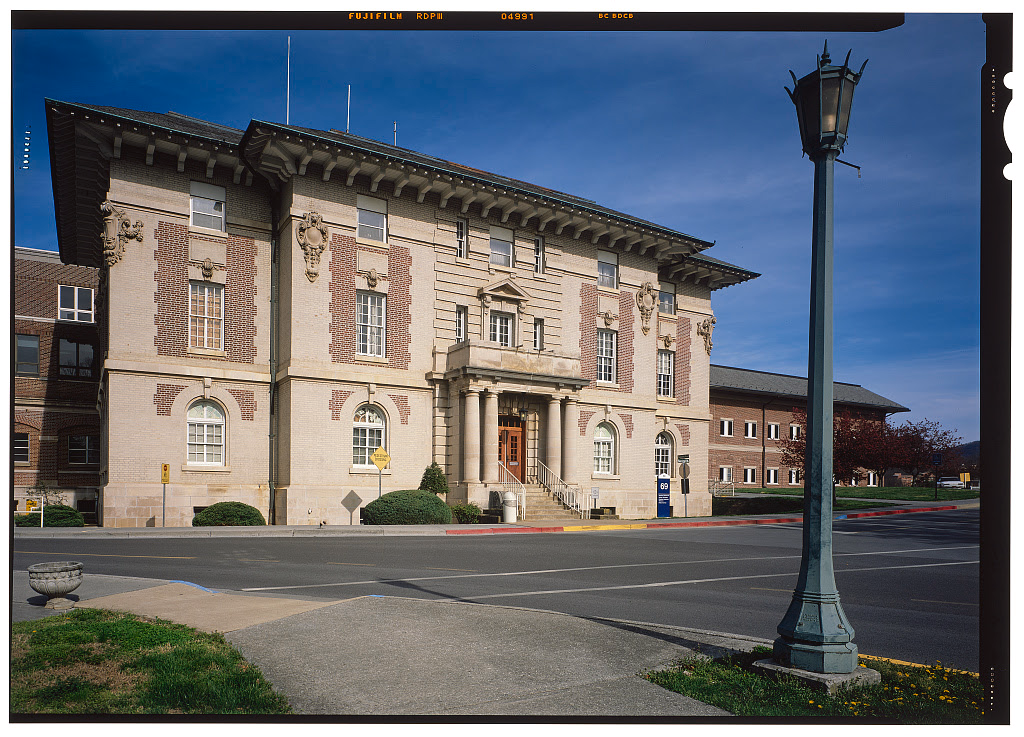
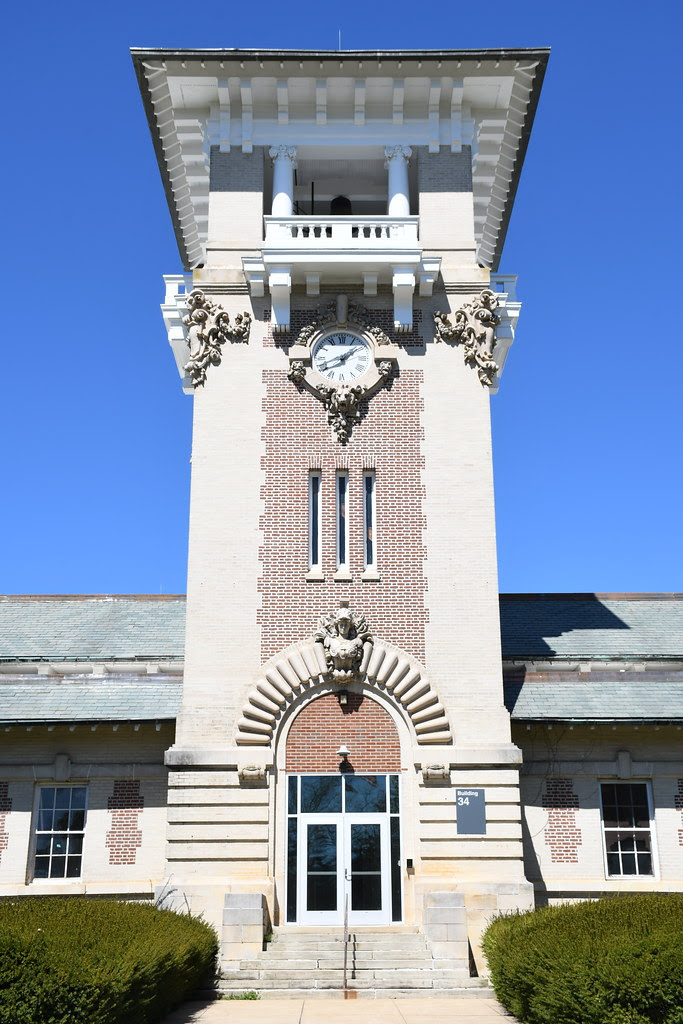
NATIONAL HOME FOR DISABLED VOLUNTEER SOLDIERS JOHNSON CITY, TENNESSEE
VA History Tidbit – Joseph H. Freedlander, Architect – Beaux Artss architecture
– Mountain Home In celebration of National Preservation Month
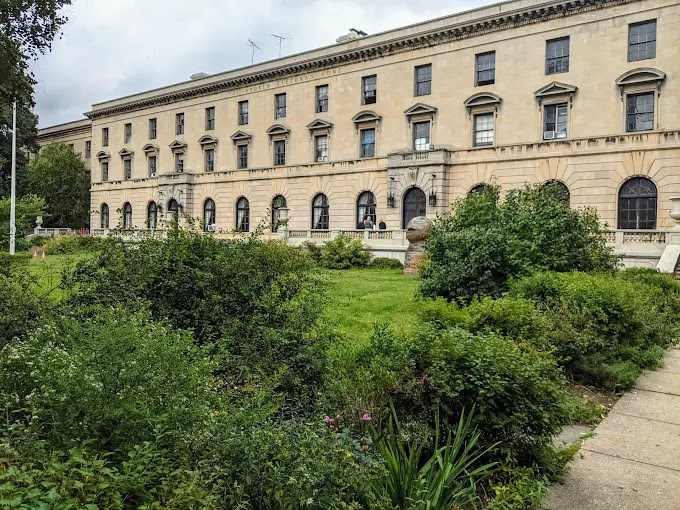
VA’s earliest hospitals were built as branches of the National Home for Disabled Volunteers Soldiers. In the aftermath of the American Civil War, Congress established the National Homes to provide medical care, rehabilitation, and a “real home” for thousands of Union veterans who survived the war, but whose disabilities or lack of family prevented them from finding suitable jobs and housing. The National Homes were purposely designed to be beautiful and welcoming and many notable architects were involved in creating that first generation of national veterans hospitals and homes. They were built in spacious, park-like settings which provided lots of opportunities for veterans to take relaxing strolls, get fresh air, and commune with nature. The National Home’s Mountain Branch, which opened in Johnson City, Tennessee, in 1903, was designed by renowned Beaux Arts architect, Joseph H. Freedlander, and is unique among VA’s early hospitals.
Joseph Henry Freedlander was born on August 18, 1870 in New York City to Jewish immigrants who migrated from Germany. His father was a hat wholesaler and his mother was a homemaker. He attended public schools and was later accepted at the Massachusetts Institute of Technology where he graduated in 1891 with a degree in architecture at the age of 20. He then became one of the first Americans to attend the prestigious Écoles des Beaux Arts in Paris and graduated in 1895. Beaux Arts was a distinctive design style that embellished classical revival architecture with lavish and ornate details. The Écoles des Beaux Arts was regarded as one of the superior fine arts school in the world, at the time, and its artistic influences spanned from the early 19th century until the mid-1930s.
After graduation, Freedlander returned to New York where he set up his private practice as a Beaux Arts atelier. In 1897 he was selected to design the St. Louis Club in St. Louis, Missouri—it was his first major work. In 1901 a national competition was announced by the National Home for Disabled Volunteer Soldiers’ Board of Managers for someone to design their new branch which was to be built in Tennessee. Out of six designs submitted, Freedlander’s design was selected in July 1901. He was 30 years old and newly married at the time and one of the youngest architects in the country.
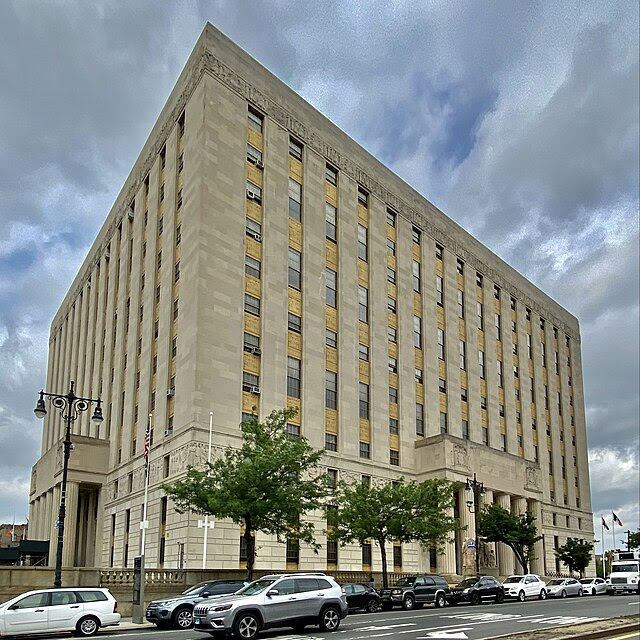
In 1914 Freedlander was selected as Chevalier (Knight) of the Legion of Honor by the French Government—a distinctive order established by Napoleon Bonaparte in 1802. During his career he was president of the Société des Architectes Diplomés’ American group, the Fine Arts Federation of New York, chairman of the annual Paris prize committee for the Society of Beaux-Arts Architects, trustee of the Museum of French Art, and associate of the National Academy of Design. He was an active and distinguished member of architecture circles, including the American Institute of Architects and National Sculpture Society, where helped to promote and expand the presence of Beaux Arts architecture in America. He went on to design other significant public buildings including the Harlem Hospital in New York (1907), the Perry Memorial in Put-in-Bay, Ohio (1912), the French Institute (1929), the Fifth Avenue traffic towers (1929), Museum of the City of New York (1930), and the Bronx County Courthouse (1934). He also designed numerous private residences. He died of a heart attack near Madison Square Garden on November 23, 1943 at the age of 73.
Joseph H. Freedlander’s magnificent work from 112 years ago still stands at the former National Home’s Mountain Branch, which today is known as the James H. Quillen VA Medical Center. Its unique architecture and significant role in our country’s history earned its designation by the Secretary of the Interior in 2011 as one of America’s National Historic Landmarks. Please enjoy these images of Freedlander’s beautiful work at Mountain Home:
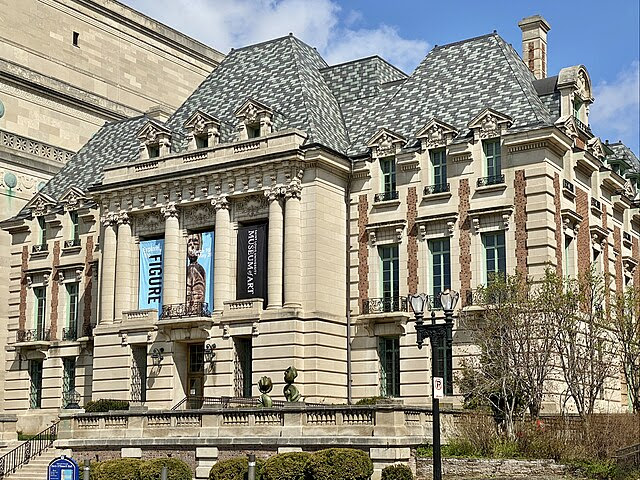
Built in 1900, this Beaux Arts-style building was designed by Arthur Dillon of Friedlander and Dillon to serve as the home of the exclusive St. Louis Club, which remained in the building until 1925.
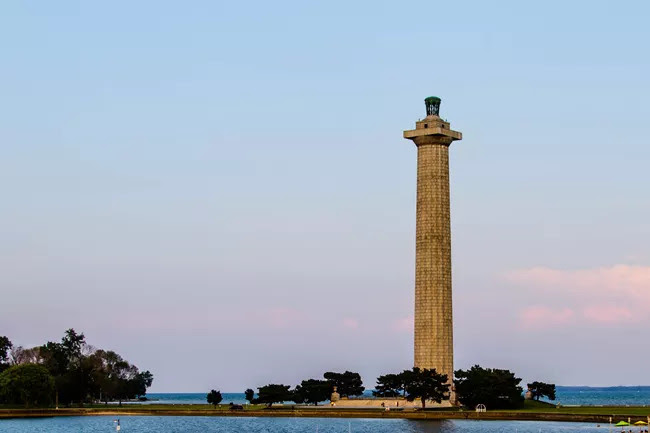
PERRY MEMORIAL PUT-IN-BAY, OHIO
In October 1911, a “Program of a Competition” was announced and 147 architects and firms submitted designs. The winning drawing was awarded to Joseph H. Freelander and Alexander D. Seymour Jr. of New York City.
The History of the Monument
“Don’t Give Up The Ship.” Spoken by Commodore Oliver Hazard Perry to his troops as they defended this area against the British in the Battle of Lake Erie, this words remain stirring to this day. Despite being heavily unnumbered, Perry was victorious in taking control of Lake Erie. This was a crucial turning point for the War of 1812 and the US went on to win the war. The British fleet fought the Battle of Lake Erie in the waters near South Bass Island. Soon after, Oliver Hazard Perry sent the fleet back to Great Britain and celebrated the American victory.
Buried at the base of the column are six soldiers who perished during the batter. Both American officers and British officers are remembered at Perry’s Monument. The names of all the soldiers slain in the battle including Commodore Perry are also etched inside the grand rotunda.
After this war, relations between the US and England remained peaceful ever since. The monument is a symbol of this lasting peace, its construction a multi-state effort to “inculcate the lessons of international peace by arbitration and disarmament.”
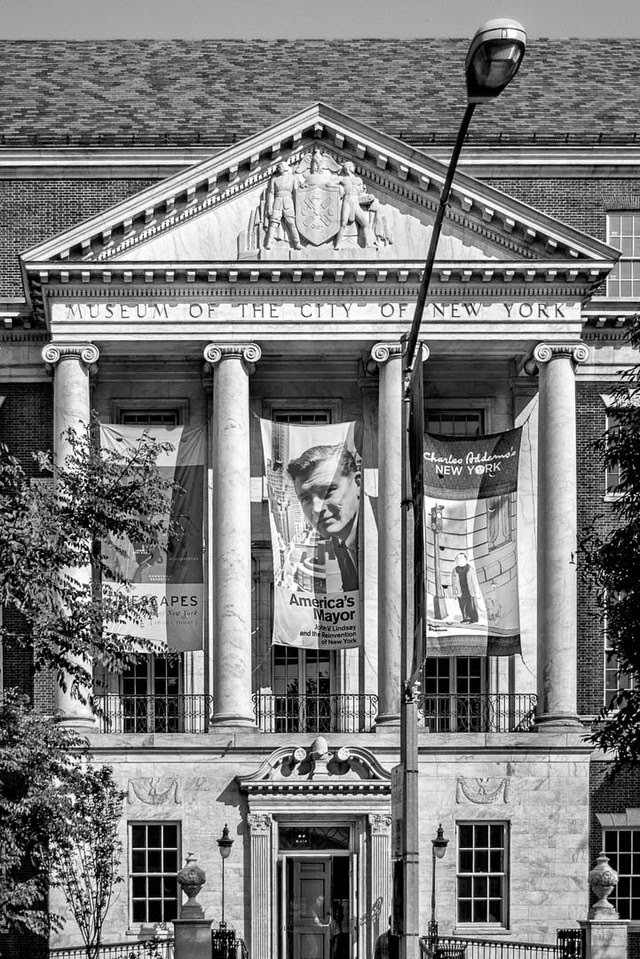
The Museum of the City of New York (MCNY) is a history and art museum in Manhattan, New York City, New York. It was founded by Henry Collins Brown, in 1923 to preserve and present the history of New York City, and its people. It is located at 1220–1227 Fifth Avenue between East 103rd to 104th Streets, across from Central Park on Manhattan’s Upper East Side, at the northern end of the Museum Mile section of Fifth Avenue.
The red brick with marble trim museum was built in 1929–30 and was designed by Joseph H. Freedlander in the neo-Georgian style, with statues of Alexander Hamilton and DeWitt Clinton by sculptor Adolph Alexander Weinman facing Central Park from niches in the facade.The museum is a private non-profit organization which receives government support as a member of New York City’s Cultural Institutions Group, commonly known as “CIG”s. Its other sources of income are endowments, admission fees, and contributions.[Wikipedia]
The Bronx County Courthouse, as seen from the south end of the Grand Concourse on a June 2022 afternoon. Architects Max Hausle and Joseph H. Freedlander collaborated with a bevy of noted artists and sculptors (Charles Keck, Adolf A. Weinman, James Monroe Hewlett, and Joseph Kiselewski were among those who contributed works) on this massive civic temple that was built over three years beginning in 1931 as a prominent local example of the large-scale public works projects that provided welcome job opportunities to designers and builders during the Great Depression, and of which then-New York mayor Fiorello LaGuardia was especially fond. The building’s Monumental Neoclassical style has been described by the New York City Landmarks Preservation Commission as “a characteristically American version of a style which was also popular in Europe, seen for example in the new section of Rome” in which “bold, simple geometric massing… is combined with ornamental detail and sculpture which derive inspiration primarily from ancient Greek and Roman models”. This, however, is combined with subtle but timely Art Deco flourishes such as the streamlined aesthetic that’s noticeable especially in and around the entrance porticos. Belying its name, the building houses not only the judiciary but all organs of the borough government, and its inauguration in 1934 coincided with the the 20th anniversary of the splitting off of the Bronx as a separate county. The dedication ceremonies included speeches, a military parade and band concert, and luncheons at the nearby Concourse Plaza Hotel. It was nominated as a New York City Landmark in 1976, and is listed on the National Register of Historic Places both in its own right (1983) and as a contributing property to the Grand Concourse Historic District (19
ANDREW FREEMAN HOME
The Andrew Freedman Home is a historic building in the Bronx, New York City. Constructed by the estate of the millionaire Andrew Freedman, it has been renovated into an artists’ hub consisting of an interdisciplinary artist residency, an incubator space, workforce development and community services.[1] It is a New York City designated landmark. The money to build it was bequeathed by Freedman. Located at 1125 Grand Concourse in the Concourse neighborhood, the Andrew Freedman Home was designed as a retirement home for wealthy individuals who had lost their fortunes.
The trust that operated the Andrew Freedman Home ran out of money in the 1960s. The home was reopened in 1983 for all elderly individuals, regardless of past financial status. As of 2012, the Andrew Freedman Home serves as a day-care center and event space
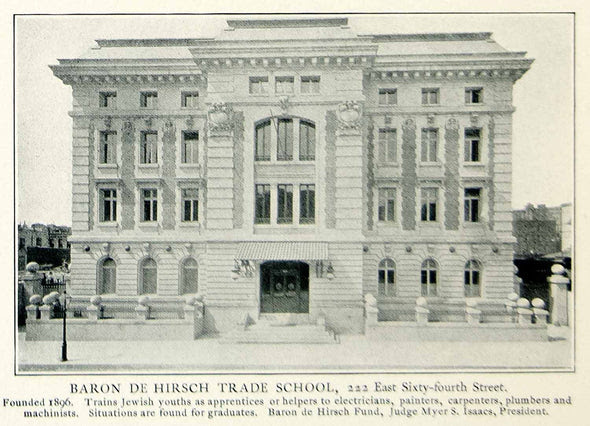
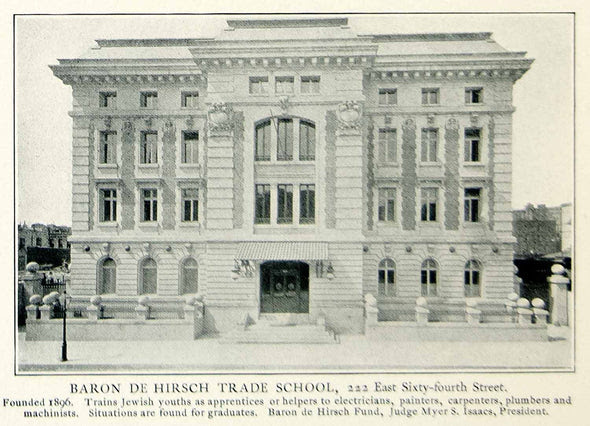
BARON DE HIRSCH TRADE SCHOOL (?)
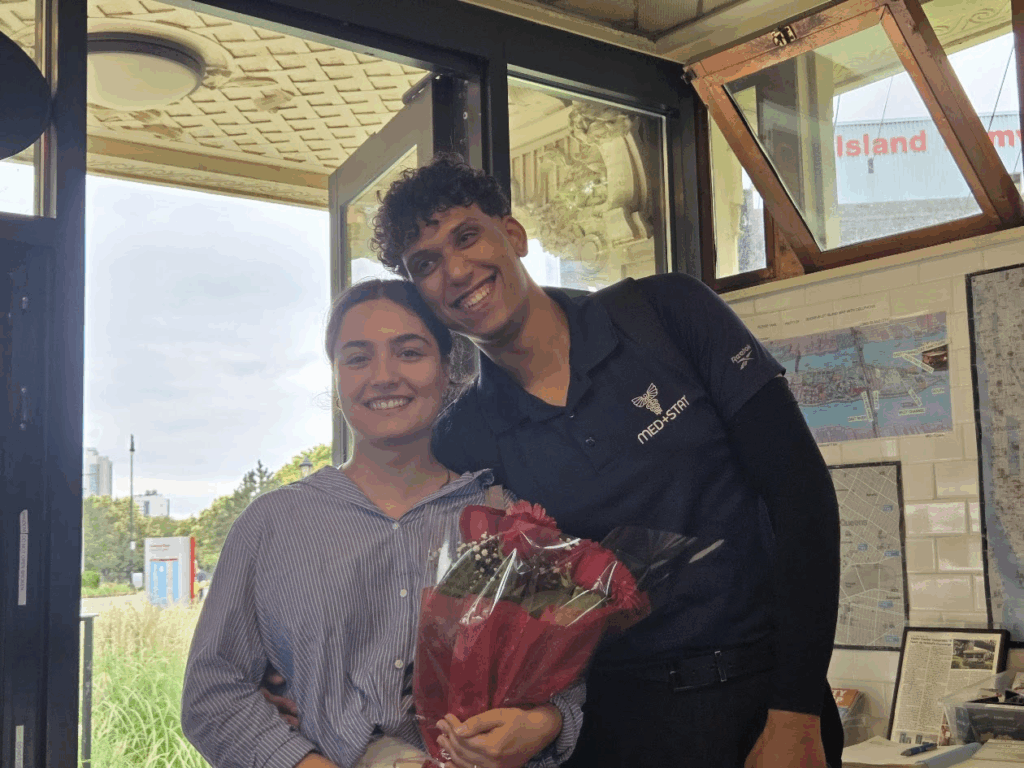
PHOTO OF THE DAY HONEYMOONERS VISIT KIOSK CONGRATULATIONS TO JAVIER AND EYLUL ON YOUR MARRIAGE
CREDIT TO
NATIONAL PARK SERVICE WIKIMEDIA COMMONS Judith Berdy
All image are copyrighted (c) Roosevelt Island Historical Society unless otherwise indicated THIS PUBLICATION FUNDED BY DISCRETIONARY FUNDS FROM CITY COUNCIL MEMBER JULIE MENIN & ROOSEVELT ISLAND OPERATING CORPORATION PUBLIC PURPOSE FUNDS.
Elevated by 10 feet, Battery Park City’s Wagner Park Reopens with New Flood Protection
Friday, August 1, 2025
6sqft
Issue # 1500
AUG. 1, 2025 TODAY IS OUR 1,500th EDITION SINCE APRIL 2020, WE HAVE PUBLISHED 1,500 EDITIONS IN 1928 DAYS.
All images courtesy of Battery Park City
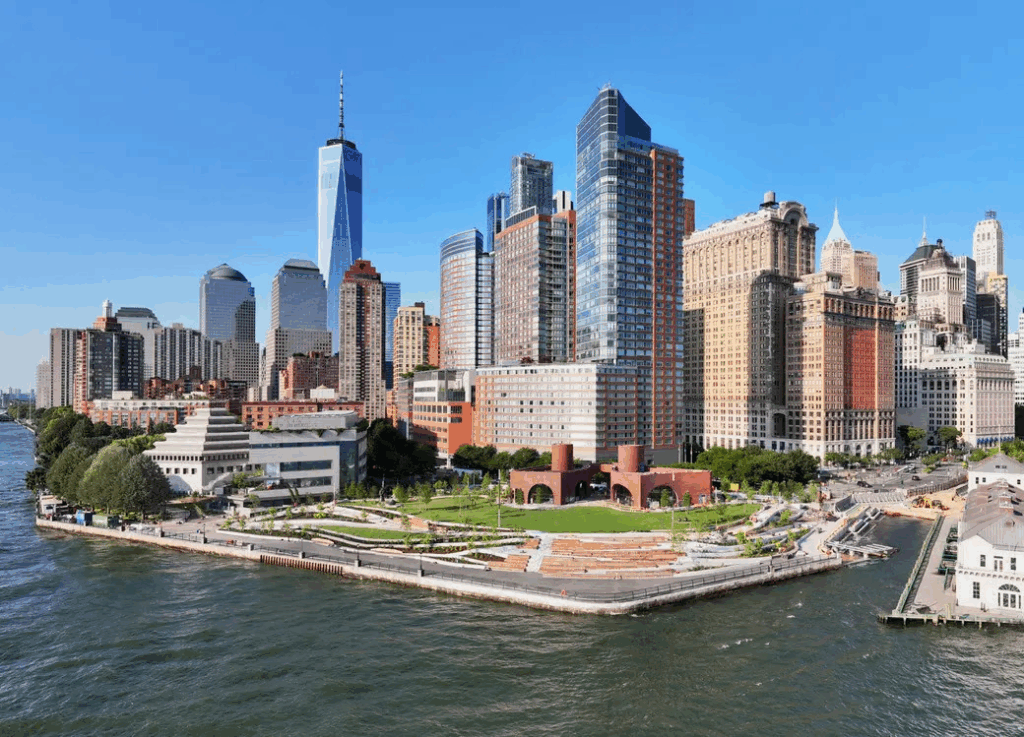
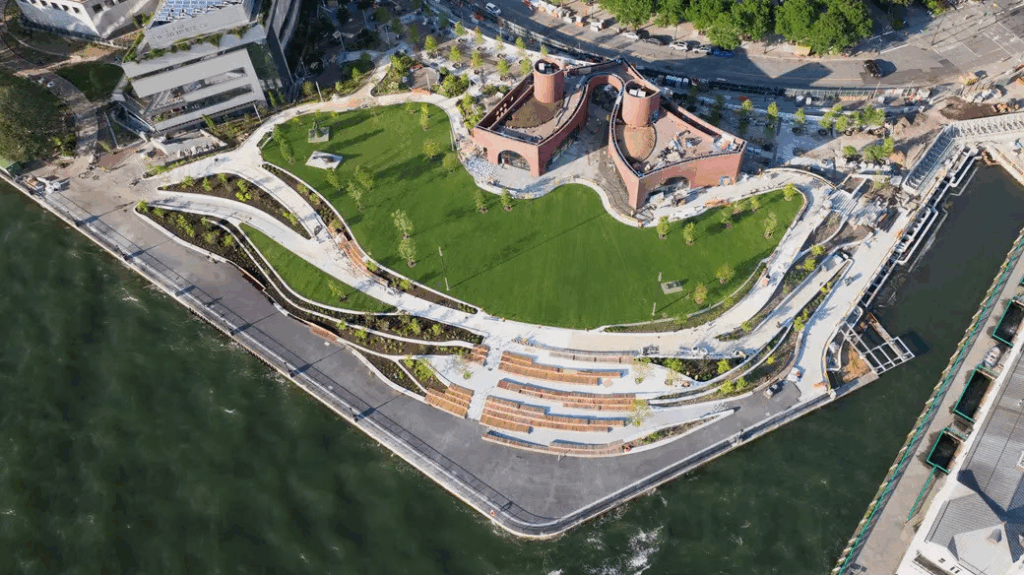
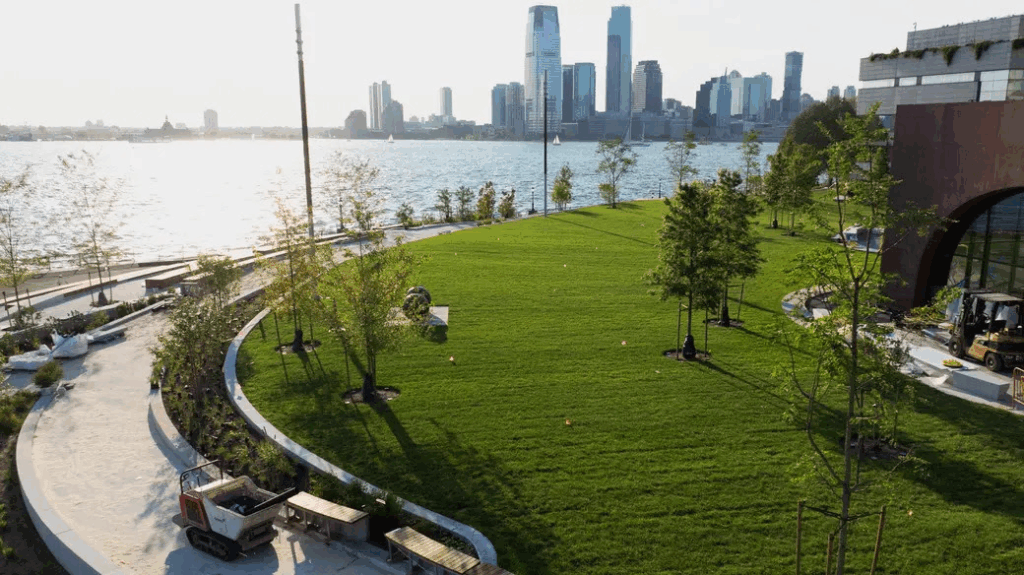
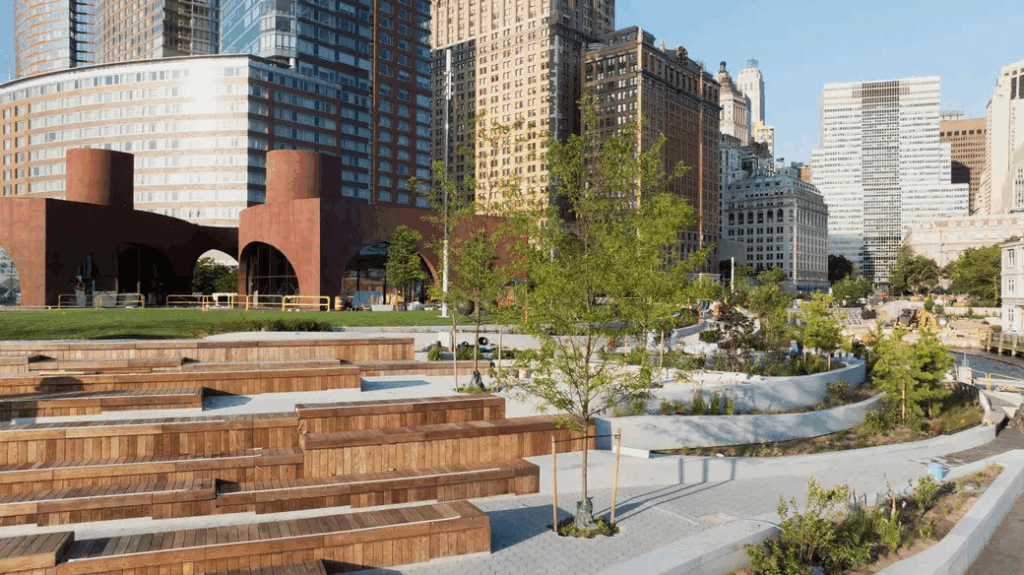
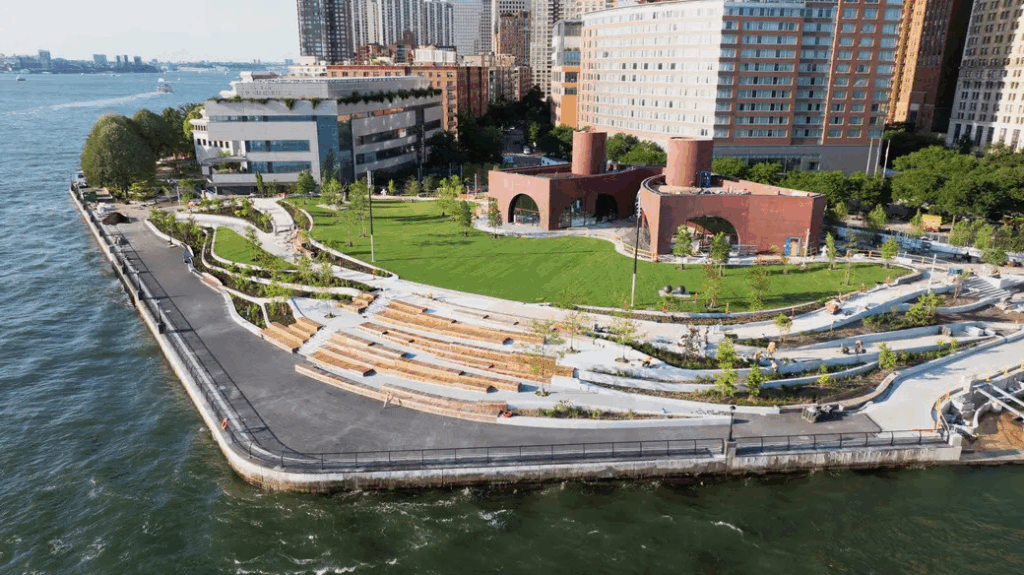
Wagner Park in Battery Park City reopened on Tuesday after a two-year overhaul to better protect the park and Lower Manhattan from coastal flooding. As part of the Battery Coastal Resilience Project, much of the 3.5-acre park was elevated by 10 feet to hide a buried floodwall under the central lawn that will protect against storm surge. There’s a 63,000-gallon underground cistern for rainwater reuse and lush gardens planted with native, salt-resistant species. The park’s flood risk reduction system includes both passive and deployable measures, designed to withstand a 100-year storm and projected to protect from severe storms through the 2050s based on anticipated sea level rise.
“The Battery Park City Authority is thrilled to deliver Wagner Park back to the public with this environmentally sustainable, downtown destination featuring expansive lawns and gardens, programming spaces, beautiful views, and universal accessibility,” BPCA Chairman Don Capoccia said.
“Let this magnificent public space overlooking the Statue of Liberty and Ellis Island serve as testament to the resilient spirit of New York.”
Designed by AECOM in partnership with the Battery Park City Authority, Wagner Park now features an integrated flood barrier system seamlessly built into the landscape to guard against future storm surges and sea level rise.
The park also has an upgraded stormwater management system that uses grading and directs water into a system that maximizes rainwater capture and reuse.
Sustainable materials such as salvaged stone, wood, and trench drains from the original park were reused in the reconstruction. New paving materials were chosen to reduce heat island effects, and energy-efficient, solar-powered lighting enhances nighttime visibility while minimizing glare.
The park now includes four planted regional ecosystems: a tidal estuary, maritime meadow, maritime forest, and upland woodland. These native landscapes reduce water use, require less maintenance, and support local biodiversity.
An upgraded subsurface irrigation system cuts turfgrass water consumption by more than 30 percent. Additionally, a new area at the Pier A inlet encourages marine growth and offers space for environmental education and marine awareness.
Designed by Thomas Phifer and Partners, the new Pavilion is accessible from Battery Place via two sloped gardens, or from the waterside esplanade using accessible ramps and stairs, offering multiple entry points for visitors. Arched vaults lead to an entry piazza, where sweeping views of the green space, harbor, the Statue of Liberty, and Ellis Island take form.
The Pavilion will open in phases, with a classroom scheduled to debut this fall and a new restaurant expected in 2026. The new dining replaces the Italian restaurant Gigino at Wagner Park, which has operated there since 1999.
Pursuing Living Future Institute’s Zero Carbon Certification, the Pavilion is fully electric and free of any on-site combustion. The building will also include public restrooms and a spacious rooftop terrace open to the public, offering sweeping views of the harbor.
Wagner Park will continue to host public art and free community programming. Alongside temporary installations, the park will serve as the permanent home for three major sculptures: “Resonating Bodies” by Tony Cragg, “Eyes” by Louise Bourgeois, and the “Mother Cabrini Memorial” by Jill Burkee and Giancarlo Biagi.
Wagner Park closed in March 2023 for construction. In April 2024, the BPCA issued a request for proposals (RFP) for the planned restaurant within the Pavilion.
The Battery Coastal Resilience project is one component of the larger $1.7 billion Lower Manhattan Coastal Resiliency (LMCR) initiative, which aims to protect Lower Manhattan from future flooding and sea level rise. The larger plan includes raising waterfront infrastructure and enhancing the area’s rainwater management systems.
In May 2024, city officials broke ground on the $200 million Battery Coastal project. Scheduled for completion in 2026, the project aims to protect 100,000 residents, 300,000 jobs, and 12,000 businesses in the area.
Other components of the Lower Manhattan Coastal Resiliency (LMCR) initiative include the Brooklyn Bridge-Montgomery Coastal Resilience project, which began construction in fall 2022, and the $1.45 billion East Side Coastal Resiliency project, with its first two public areas opened in 2022 and 2023.
Later this year, work will begin on the North/West Battery Park City Resiliency Project, an interconnected network of fixed flood barriers and deployable measures designed to protect the remaining areas of Battery Park City and western Tribeca from flooding.
“More than a decade after Superstorm Sandy, our climate adaptation work continues with the return of a beautiful new Wagner Park,” BPCA President & CEO Raju Mann said. “Today’s reopening marks another step in our collective efforts to build a more resilient Lower Manhattan. We have a lot of work ahead, but today is a day to celebrate what we can do when we work together.”
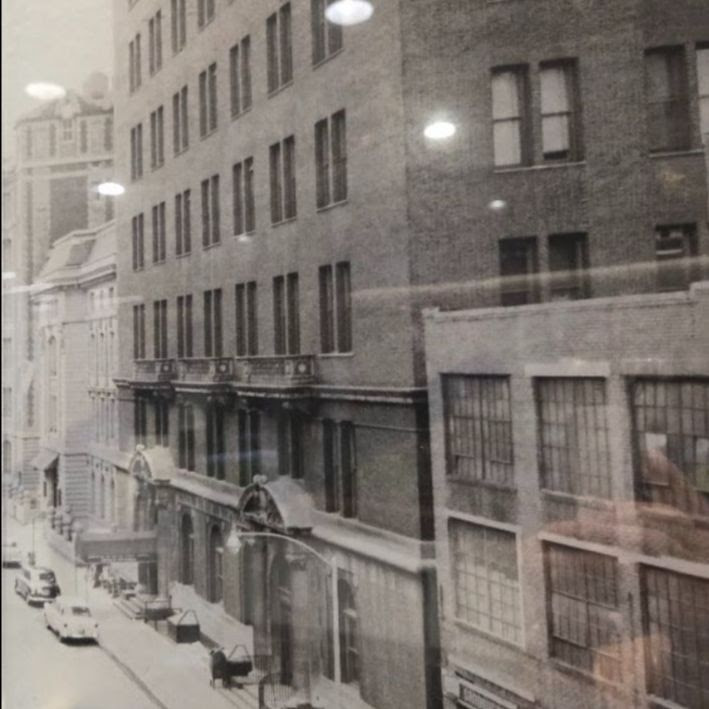
The other day we wrote about the Baron Hirsch Trade School at 222 East 64th Street in 1903. Today, while at Manhattan, Eye, Ear and Throat Hospital, (MEETH)I discovered a photo of the former school in a photo of the hospital in the early 1900’s. MEETH is located adjacent to site.
Note the building with round bollards in front. MEETH Archives
CREDIT TO
6sqft
Aarron Ginsburg MEETH Archive Judith Berdy
All image are copyrighted (c) Roosevelt Island Historical Society unless otherwise indicated THIS PUBLICATION FUNDED BY DISCRETIONARY FUNDS FROM CITY COUNCIL MEMBER JULIE MENIN & ROOSEVELT ISLAND OPERATING CORPORATION PUBLIC PURPOSE FUNDS.
Photos and text by Guglielmo Mattioli for NYC Urbanism. Cover image: Michael Young
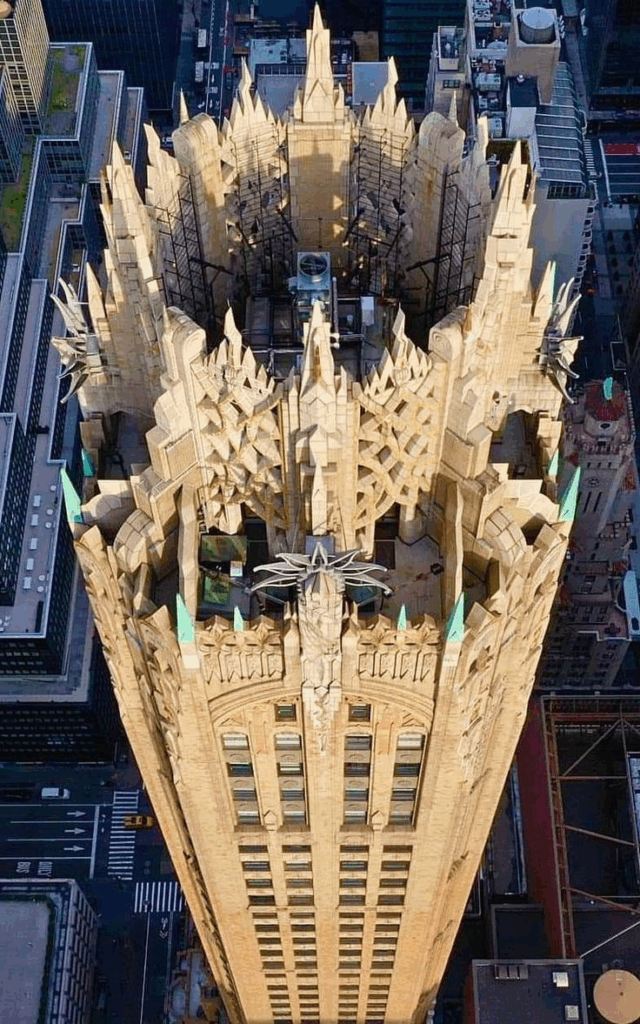
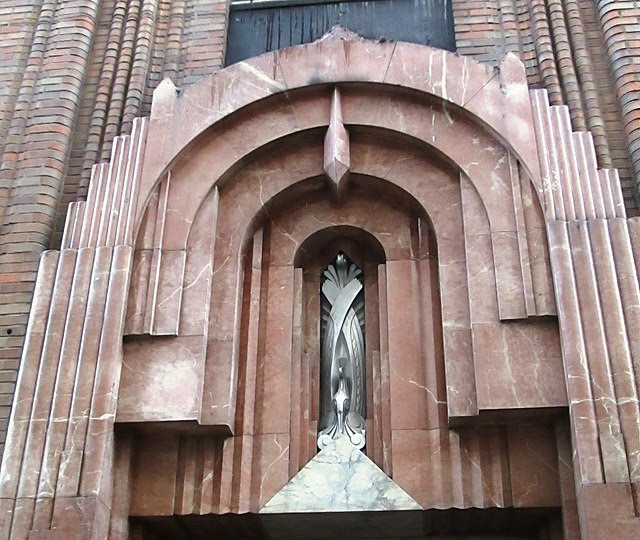
It is one of the most embellished midtown skyscrapers. The crowning crest of the 1930s General Electric Building (originally the RCA Victor Building) is a triumph of metal lightning bolts, art deco ornamentation and terracotta work that masterfully concludes what is already one of the most eclectic and electric skyscrapers in the Manhattan skyline.
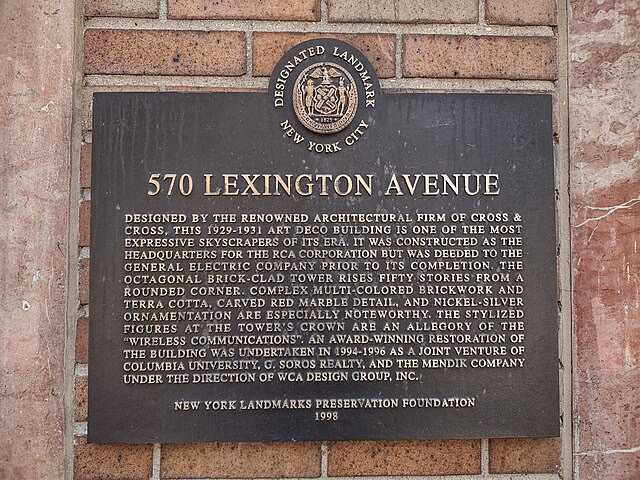
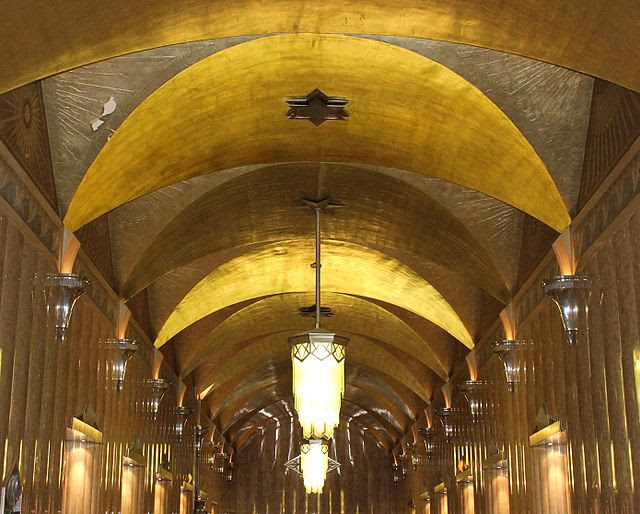
The building was designed in 1931 by two brothers, Cross & Cross, who also designed FiDi’s 20 Exchange Place, another art-deco gem that opened the same year. Along with Raymond Hood (link) and JER Carpenter (link), the two brothers attended the school of Beaux-Art in Paris, absorbed the Art Decoratif lesson and masterfully deployed it throughout the tower, mixing it with gothic revival elements. The result is a neo-gothic tower in its vertical development featuring buttresses and piers, and art-deco ornamentation.
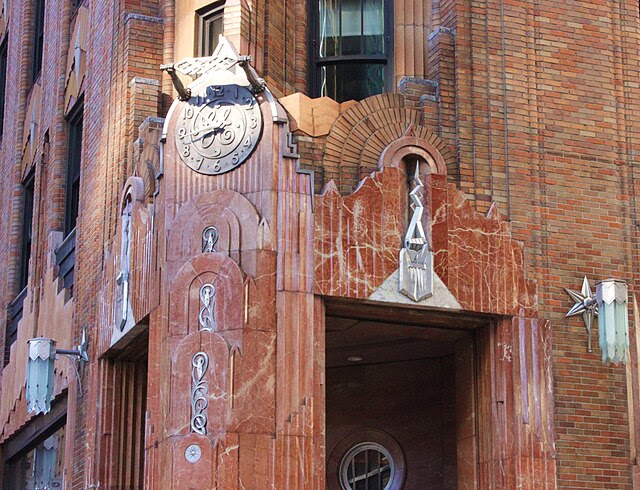
From the ground up, the tower is scattered with symbolism, recalling radio waves, energy, and electricity. Cross & Cross used the ornamentation apparatus to reflect their client’s mission, using architecture as a vessel for prestige and corporate visibility.
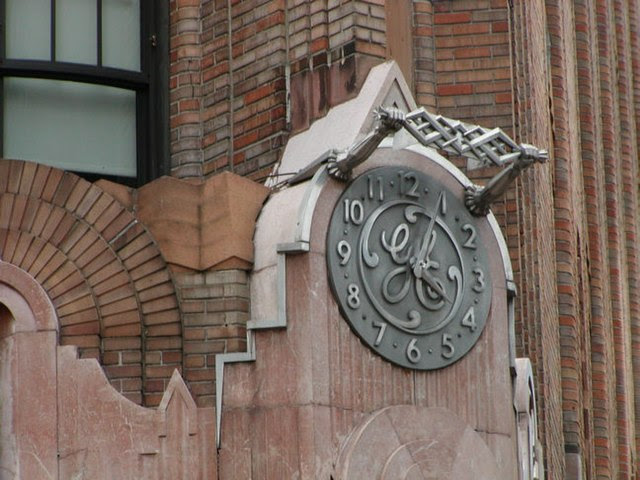
The original commissioner was the Radio Victor Corporation of America (RCA), a subsidiary of General Electric, that sold radio devices and electronics and pioneered radio and television transmissions. It was RCA that created NBC, the National Broadcasting Company. When RCA decided to separate from General Electric, part of the agreement was to cede the new tower then under construction, to GE. The metal, round clock on Lexington and 51st reflects the new ownership and displays the GE logo, surmounted by two metal hands holding a lightning bolt or what could be a symbolic representation of electricity generated by the two hands.
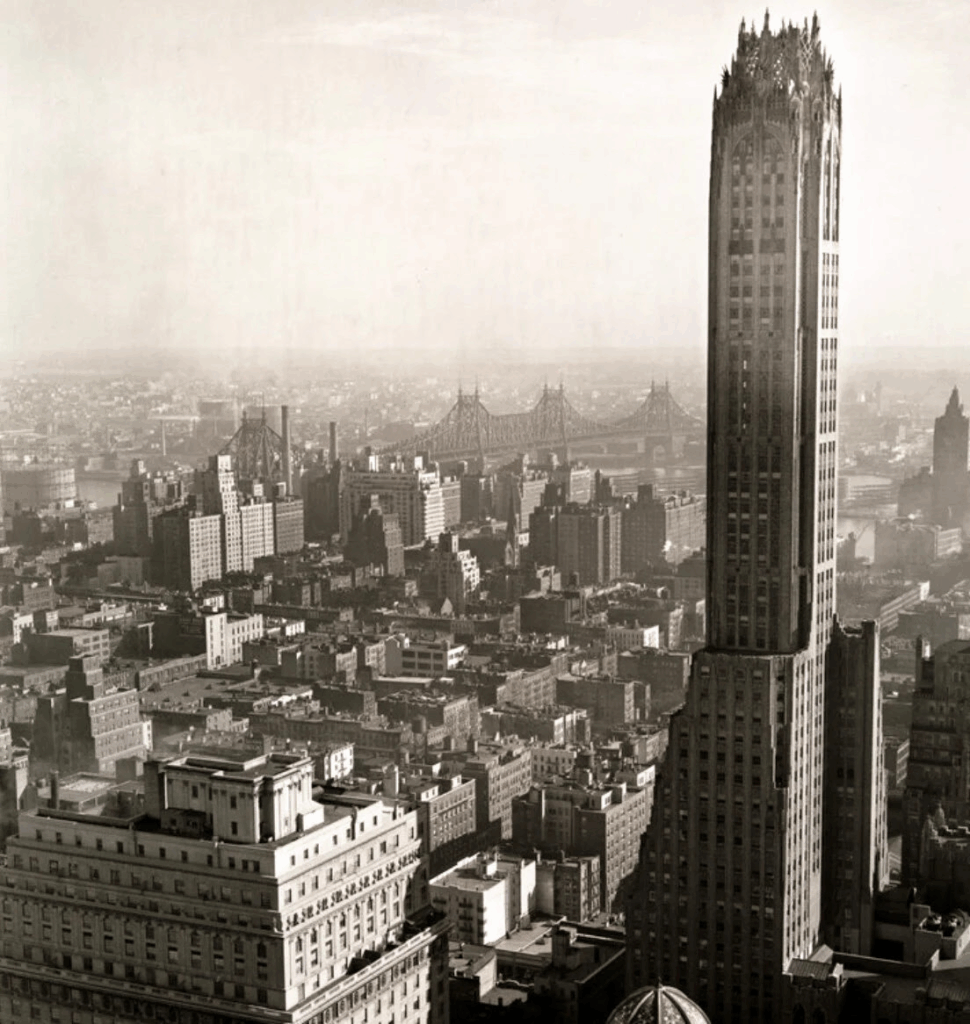
Note: Queensboro Bridge in background with original spires
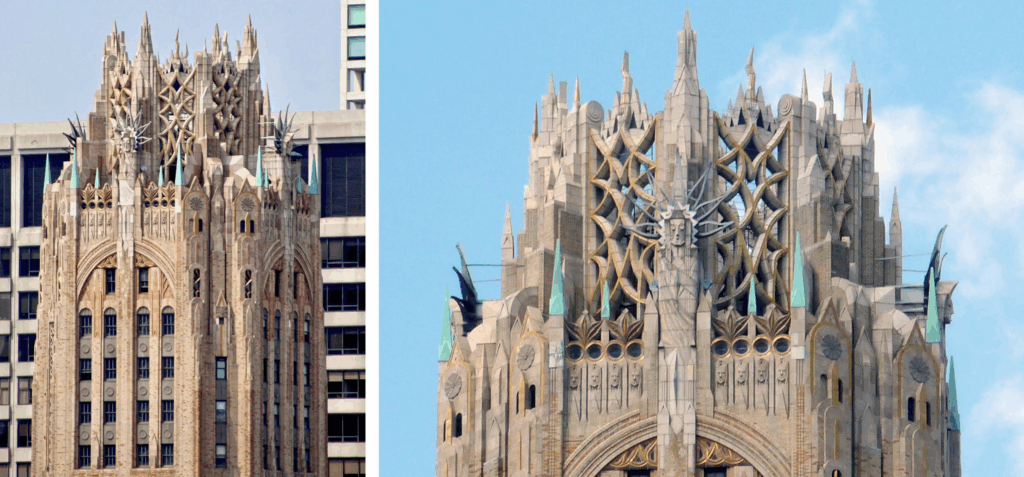
One element that sets Cross & Cross’s design aside is the use of mysterious anthropomorphic figures, reminiscent of what one could find on a byzantine style building, like the church next door. At 570 Lexington, they incorporated dozens of herm figures on the building’s facade; guardians some holding lightning bolts, or spreading their wings to mark a corner or a setback.
But it’s at the very top that the duo fully released their imagination. Four gigantic electric deities on each side of the building, look down on the city below—their faces framed by lightning bolts forged in metal. Connecting the four is an elaborate circular crown, a masterpiece of tracery that looks like a piece of cloth lace made of terracotta. Spikes and pinnacles add to the drama. At night, backlights project the supernatural crown into the sky.
Despite being one of the least visible parts of a tall building, architects, especially in the 1930s, focused their attention on it. The level of details and design stratagem deployed for sections that most will ever see is quite revealing of how designers saw their buildings, not just mere envelopes hosting various functions, but wholesome artistic creations in which every part has its own dignity and expression. The top of a building, therefore, becomes the most crucial component, deserving of the highest attention; ultimately it’s where the work of an architect meets the sky.
All image are copyrighted (c) Roosevelt Island Historical Society unless otherwise indicated THIS PUBLICATION FUNDED BY DISCRETIONARY FUNDS FROM CITY COUNCIL MEMBER JULIE MENIN & ROOSEVELT ISLAND OPERATING CORPORATION PUBLIC PURPOSE FUNDS.
If you spent the first weekend of October hoisting lager and Oomph-ing it up for Oktoberfest, then you joined a long and proud tradition of German beer production and consumption in New York City. In fact, New York’s German-owned breweries were once the largest beer-making operations in the country, and the brewers themselves grew into regional and national power-players, transforming Major League Baseball, holding elected office, and, perhaps most importantly, sponsoring goat beauty pageants in Central Park. While brewing flourished in both Manhattan and Brooklyn throughout the 19th century, the city’s largest breweries were clustered in Yorkville. In fact, much of the neighborhood’s storied German cultural history can be traced to the rise of brewing in the area, and the German-language shops, cultural institutions and social halls that sprang up to cater to the brewery workers.
New York’s first City Hall, the Dutch Stadt Huys, was built in 1642 as the Stadt Herbert, or the City Tavern, which sold Ale. In fact, Ale was the standard variety of beer sold in New York City until the mid-19th century (consider that Civil-War-era McSorley’s is an Ale House). Why? It was German immigrants who introduced lager to NYC.
Large-scale German immigration to New York City began in the 1840s. By 1855, New York City was home to the world’s third-largest German-speaking population behind Berlin and Vienna. According to FRIENDS of the Upper East Side Historic Districts, and their book, “Shaped by Immigrants: A History of Yorkville,” New York’s German community, which had first congregated in “Klein Deutchland” in today’s East Village, began moving to Yorkville in the 1860s and 1870s, drawn by new housing and improved transportation.
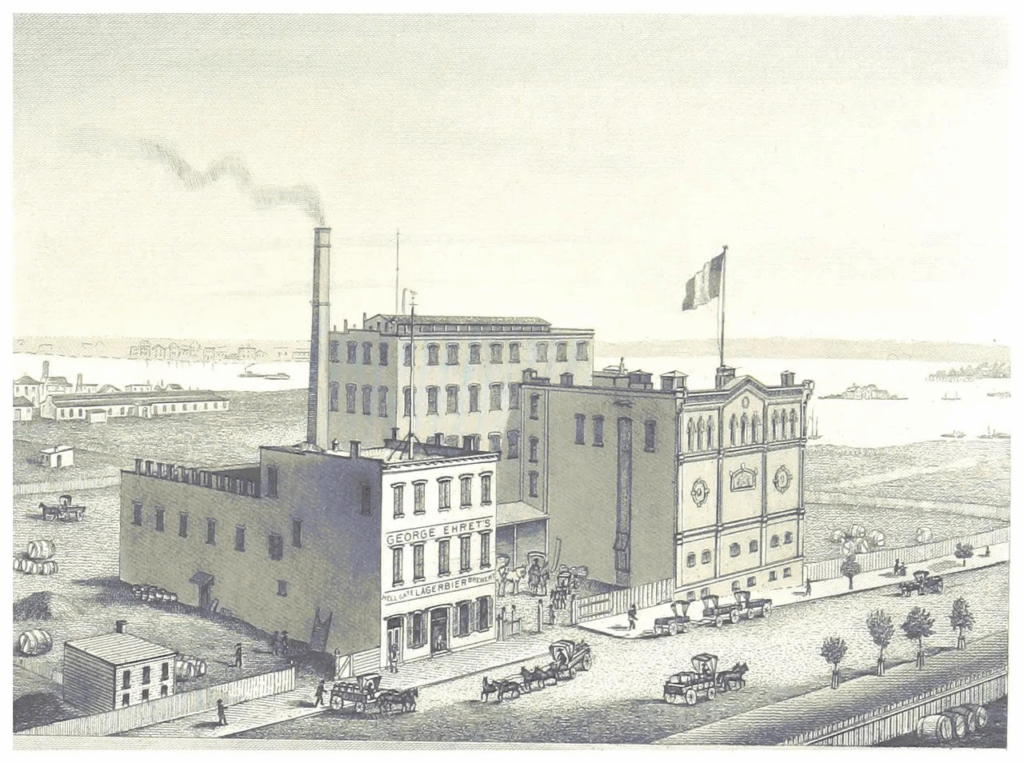
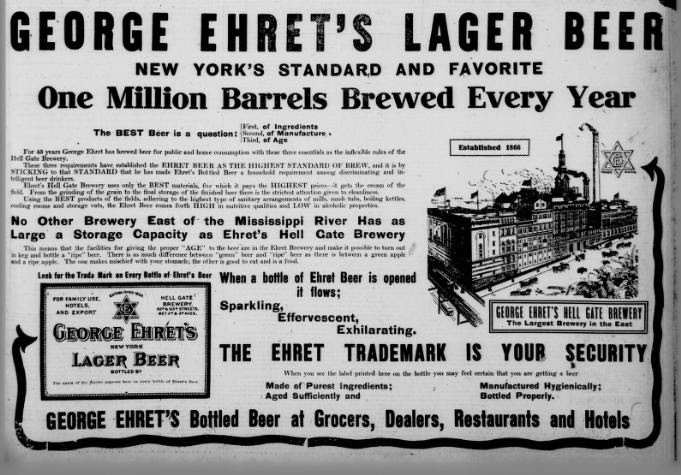
As New York’s German community moved uptown, so did New York’s Breweries. In 1866, George Ehret founded his Hell Gate Brewery between 92nd and 93rd Streets and Second and Third Avenues. Ehret’s brewery was so large, he built his own well to pump 50,000 gallons of fresh water every day and turned to the East River for 1,000,000 daily gallons of saltwater.
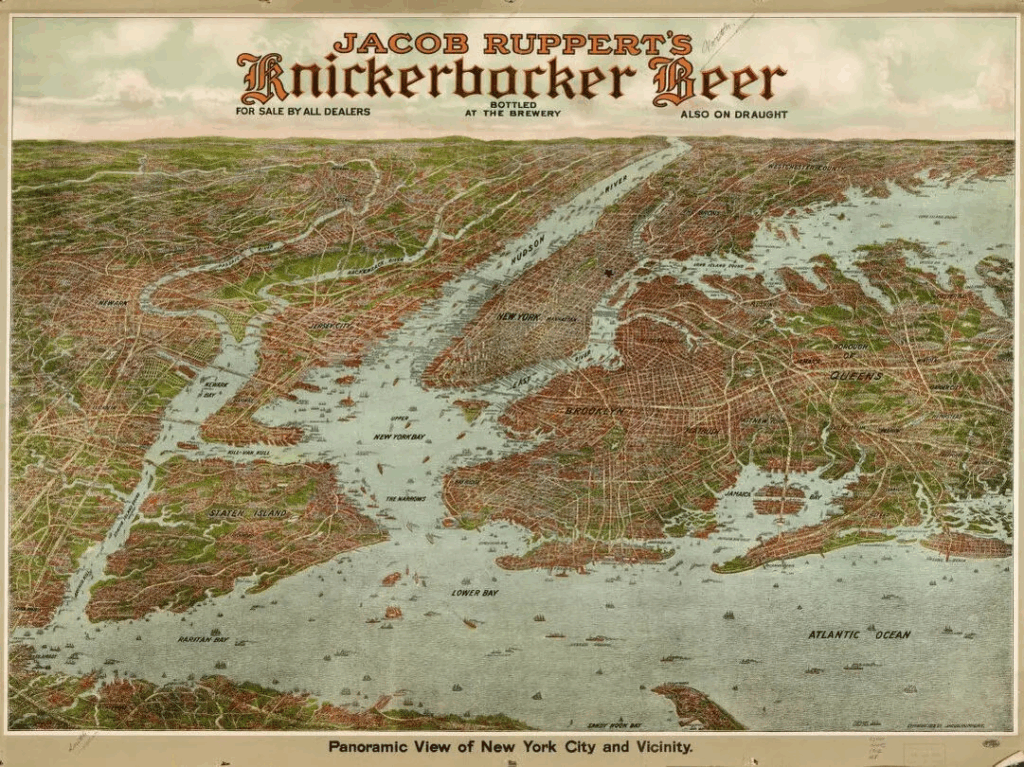
Though Ehert presided over the largest brewery in the nation, he was not the only brewer on the block. The year after Ehret’s Hell Gate Brewery opened, Jacob Ruppert opened a rival brewery across the street. His operation sprawled between 91st and 92nd Streets and Second and Third Avenues. Ruppert also celebrated his local bonafides, calling his most popular beer Ruppert’s “Knickerbocker Beer.”
Lest the two biggest names in beer not be enough for one street corner, the George Ringler Brewery posted up at 92nd Street and Third Avenue in 1872. And the parade of suds did not end there. According to the 1911 Yearbook of the United States Brewers Association, the John Eichler Brewing Co. sat at 128th Street and Third Avenue. Central Brewing Company packed the pints at 68th Street and the East River. Peter Doelger, who’s signage you can still see at Teddy’s Bar in Williamsburg, was on 55th Street east of First Avenue. Elias Henry Brewing presided over 54th Street, and of course, F. M. Shaefer stood tall at 114 East 54th Street.
According to FRIENDS of the Upper East Side, by the 1880s, nearly 72 percent of all New York brewery workers were of German heritage. Accordingly, New York’s brewing culture was based on the systems and traditions that had prevailed in Germany since the Middle Ages. For example, German breweries traditionally required their employees to live in brewery-owned housing, known as Brauerherberge, or “brewer hostels,” which were overseen by brew-masters and company foreman. The same was true for employees in Yorkville, who lived close to their breweries. Since most of the workers living in brewer hostels were single men, employees with families in Yorkville were usually given accommodations in brewery-owned tenements in the neighborhood. And the brewers didn’t just own the hostels, they owned almost all aspects of their businesses. In fact, Jacob Ruppert owned an ice factory, stables, a barrel-making outfit, and a chain of banks.
But nothing brought beer to market better than owning the saloon itself. Here was the deal: the brewers would own the bars, and lease them to saloon-keepers; in return, the spot would sell only the owner’s beer. (There was no such thing as ‘100 beers on tap’ it was Ruppert’s or Hell Gate or Schaefer etc.) Ruppert was famous for his Knickerbocker Inn, but Ehret was “the king of beer corners:” He owned a whopping 42 saloons in New York by 1899.
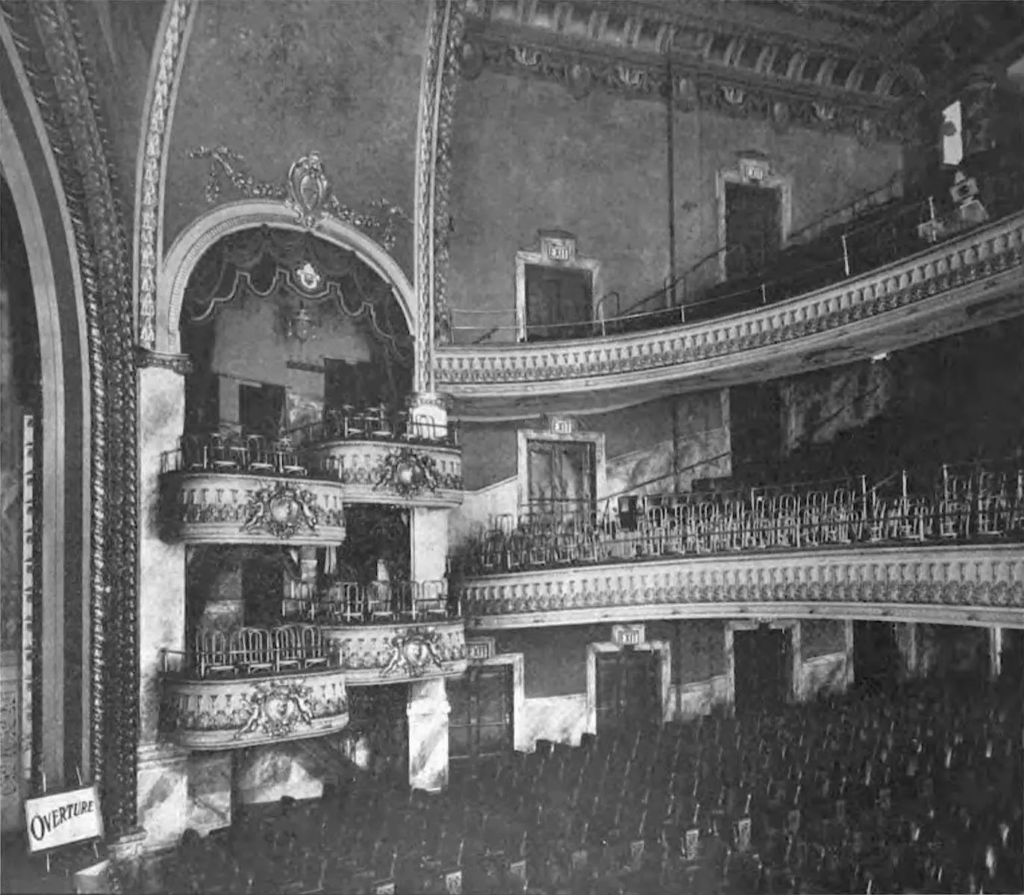
Yorkville Theater, 86th St. between Lexington and Third, via Wikimedia Commons
But the brewers didn’t just build beer corners. Because breweries required such close consolidation of life and work, a full brewing community flourished in Yorkville. Beer halls, beer gardens, and saloons became centers of social life, and hosted all kinds of cultural and professional activities, from vaudeville revues to union meetings.
Meanwhile, 86th street grew into the neighborhood’s main drag, earning the moniker “German Broadway,” providing everything from cabaret to cabbage, lined with German-language shops, restaurants, and theaters. For example, The Doelger Building, built by the Doelger brewing family, and still standing at 1491 Third Avenue at 86th Street, was built as a music hall, with space for stores, a cabaret, office space, and a “hall for public assembly.”
In fact, German life was so intimately tied to the brewers, that the neighborhood got its news from Ruppert. He published the German-language newspaper New Yorker Staats-Zeitung.
That intimacy prevailed among the brewers themselves: For example, Ehert and Ruppert jointly owned a silk mill, they vacationed together, their families intermarried, and they were both loyal members of the Arion Society of New York, a German-American musical society. Like the Arion Society, many of the breweries in Yorkville were felled by the anti-German sentiment in America during and after WWI, and many more were shuttered during Prohibition.
Here is where the fates of Ehert and Ruppert diverge (and converge again). Ehret had gone to Germany in 1914 to recover from an illness, thinking the Alpine air might do him good. But WWI broke out while he was overseas, and he was stranded in Germany during the war, unable to return to the United States until mid-1918. In the meantime, Ehert’s business and property were seized by the US Government as “alien property,” even though Ehert was a naturalized citizen.
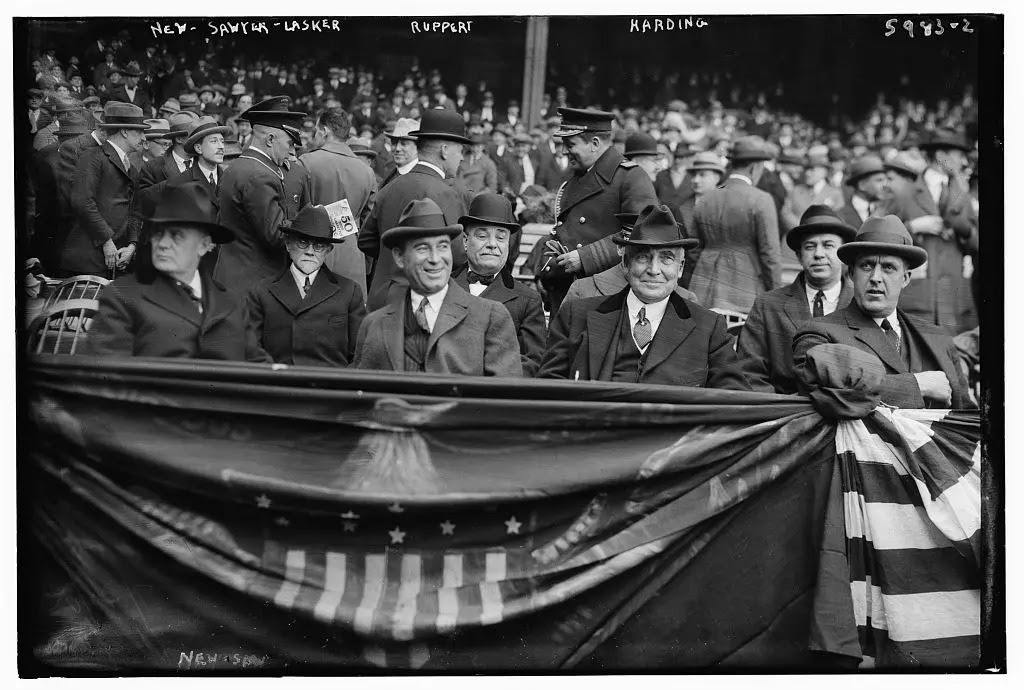
Bain News Service, P. (1923) Harry New Postmaster General, Dr. Chas. Sawyer President’s physician, Albert Lasker, Jacob Ruppert & Pres. Warren Harding at Yankee Stadium, 4/24/23 baseball. 1923 The Library of Congress.
Conversely, Jacob Ruppert Jr. was as All-American as it gets. By the time his father, the founder, Jacob Ruppert Sr., died in 1915, Ruppert Jr. had already served four terms in the House of Representatives and was part-owner of the Yankees. As president of that ball club, he was responsible for signing Babe Ruth in 1919, and for building Yankee Stadium in 1922.
Ehert regained control of the Hell Gate Brewery after WWI, but Prohibition hit him hard. Though he was determined to hang on until the Volstead Act was repealed and keep his workers on for the duration, Ehert died in 1927. When the Act finally was repealed in 1933, Ruppert expanded his own Brewery with 300 additional workers and bought Hell Gate in 1935.
Ruppert Jr. himself died in 1939, but the Brewery that bore his name survived, sending the scent of barley and hops through the streets of Yorkville until 1965. In the 70s, the site of Ruppert’s Brewery became an urban renewal project known as Ruppert Towers and is now a 4-building condo complex called Ruppert Yorkville Towers.
But, in 2014 the red brick of Ruppert’s brewery once again made an appearance in Yorkville. That March, workmen were excavating Ruppert Playground on East 92nd Street as developers prepared to turn the community space into a 35-story apartment building. Serendipitously, the bulldozers unearthed two underground brick archways that had been part of the brewery. For a brief moment, the Brew Man was back in town.
ENJOY A COLD ONE ON A HOT SUMMER DAY!!
CREDIT TO
6sqft Lucie Levine is the founder of Archive on Parade, a local tour and event company that aims to take New York’s fascinating history out of the archives and into the streets. She’s a Native New Yorker, and licensed New York City tour guide, with a passion for the city’s social, political and cultural history. She has collaborated with local partners including the New York Public Library, The 92nd Street Y, The Brooklyn Brainery, The Society for the Advancement of Social Studies and Nerd Nite to offer exciting tours, lectures and community events all over town. Follow her on Twitter and Instagram.
All image are copyrighted (c) Roosevelt Island Historical Society unless otherwise indicated THIS PUBLICATION FUNDED BY DISCRETIONARY FUNDS FROM CITY COUNCIL MEMBER JULIE MENIN & ROOSEVELT ISLAND OPERATING CORPORATION PUBLIC PURPOSE FUNDS.