Evacuation Day, New York City’s Forgotten November Holiday
Tuesday, Nov. 25, 2025
Issue #1581
Untapped New York
This now-obscure holiday was once bigger than Thanksgiving…and the 4th of July!
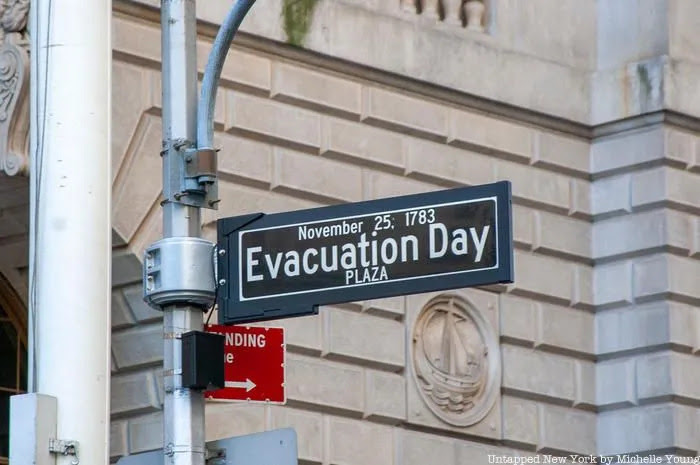
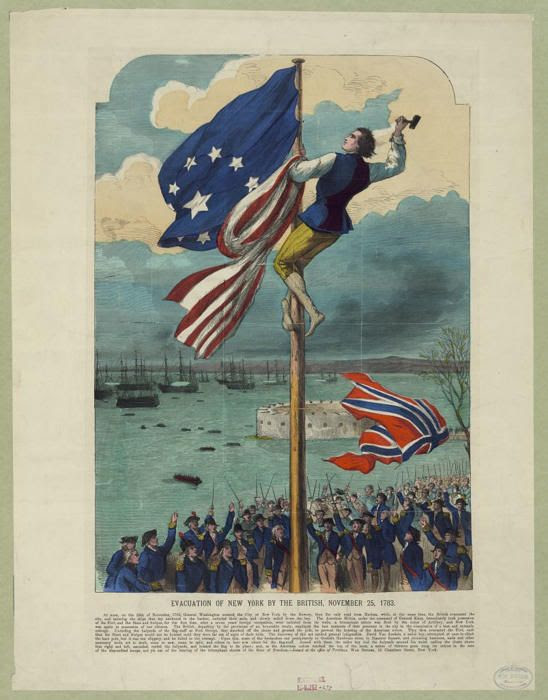
Forget Thanksgiving; in post-Revolution New York City, the biggest November celebration was Evacuation Day. Observed on November 25th, this early American holiday marked the date on which the last British soldiers left Manhattan after the Revolutionary War in 1783. Once the British were out, triumphant Americans marched through the streets and raised the new flag, though not without some difficulty. For more than a century, Evacuation Day overshadowed Thanksgiving and was celebrated more fervently than the Fourth of July in New York City. Today, while our fall festivities are more concerned with feasting on turkey rather than expressing our patriotism, many New Yorkers still honor the memory of Evacuation Day.
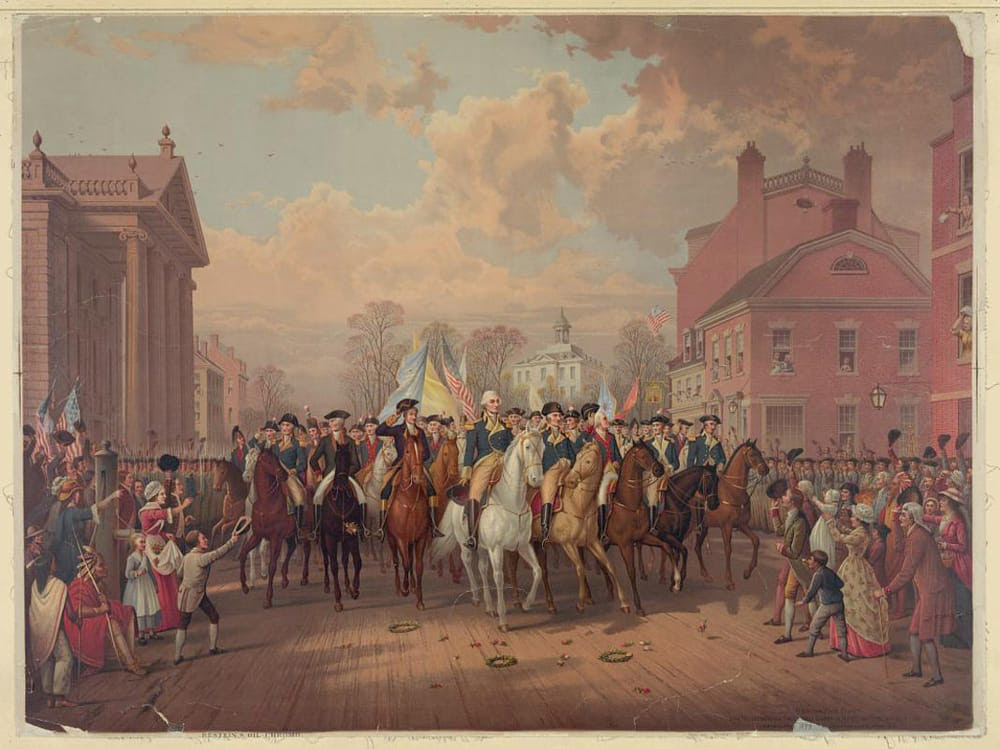
On that joyous Tuesday in 1783, New Yorkers welcomed the new American regime. New York Governor Clinton and the victorious General George Washington paraded through the streets of Lower Manhattan. Accompanied by an array of soldiers and officials, and surrounded by throngs of excited onlookers, Clinton and Washington marched from Bull’s Head Tavern in the Bowery to Cape’s Tavern on Broadway and Wall Street. Troops continued marching to Fort George to take down the British flag and raise the American one
At Fort George, the celebrations hit a snag. Before the British made their departure, someone had the idea to grease the flagpole and remove the halyards, the ropes used to raise and lower the flag. Many failed attempts were made to bring the British flag down, and there were cries to cut down the flagpole. Finally, Sergeant John Van Arsdale had a clever idea that saved the day. The story goes that Van Arsdale fashioned himself a pair of wooden cleats and climbed the pole. Upon reaching just high enough, he tore down the Union Jack and replaced it with Betsy Ross’s stars and stripes. While he did use some inventive techniques to get to the top, an account of the day’s events written by Van Arsdale’s grandson notes that he had at least a little bit of help from a ladder that was eventually brought to the site. The Alexander Hamilton Custom House, home to the National Museum of the American Indian, now stands at the old Fort George site.
Evacuation Day celebrations raged on for days as the American flag waved over Manhattan. After the parade on the first day, Governor Clinton hosted a 120-person dinner at Fraunces Tavern, where many toasts were made in honor of Washington and his men. The party didn’t stop until Washington left New York City on December 4th. On that day, Washington said farewell to his troops at Fraunces Tavern then headed to Whitehall Wharf to catch a barge across the river to Paulus Hook, (now Jersey City) New Jersey. From there, he traveled on to Annapolis to meet the Continental Congress.
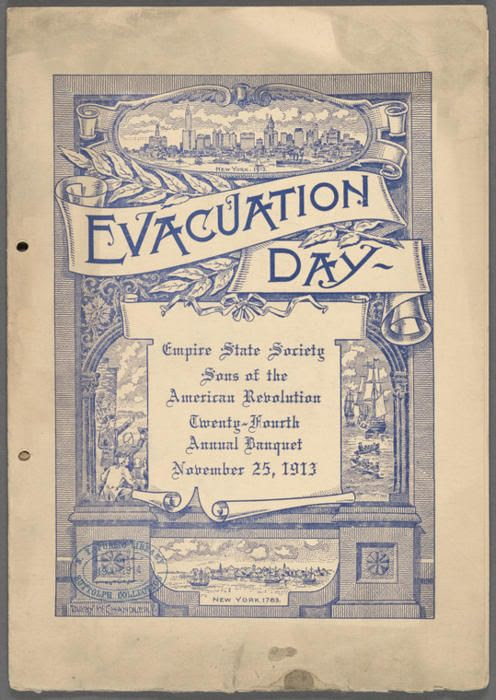
An enthusiastic observance of Evacuation Day in New York City continued through the early 20th century. In the early 1800s, November 25th was an official school holiday. Throughout the city, November 25th was celebrated with parades, fireworks, military drills, lavish dinners, recreations of Van Arsdale’s flagpole climb, and flag-raising ceremonies often led by Van Arsdale’s descendants. In the New York Public Library archives, you can see banquet menus for Evacuation Day dinners hosted by organizations like the Sons of the American Revolution at iconic New York hotels such as the Waldorf Astoria and the Plaza. The revelry rivaled that of the Fourth of July.
As the 19th century drew to a close, however, observance of Evacuation Day began to wane. By the late 1800s, those who had witnessed the first Evacuation Day celebrations were no longer around, and subsequent generations didn’t uphold the tradition. That duty fell mostly to veteran groups. This holiday wasn’t celebrated anywhere else in the United States except New York City (though Massachusetts has its own Evacuation Day in March), so it never gained national support. Another contributing factor to the decline of Evacuation Day was the advent of World War I. Britain was our ally in that conflict, and many considered it poor taste to continue celebrating their defeat as our enemy. With the dawning of a new century, new traditions began to take hold. Another November holiday, Thanksgiving, became the dominant November holiday and the Fourth of July served as a day to express our patriotism.
.The last grand Evacuation Day celebration took place on its centennial in 1883. The celebrations included a parade of 20,000 marchers, ships in the Hudson and East Rivers, banquets at Madison Square Garden and Delmonico’s Restaurant, and fireworks. On this occasion, a statue of George Washington was unveiled on the steps of Federal Hall. The last official Evacuation Day was celebrated in 1916. In 2023, Untapped New York’s Chief Experience Officer Justin Rivers took members on a live-streamed walk around Lower Manhattan to visit Revolutionary sights connected to this forgotten holiday. Check out the video below and discover 300+ more recorded virtual events in our on-demand archive!
PHOTO OF THE DAY
Time for shopping for your stocking stuffers at the RIHS Visitor Kiosk
Credits
Untapped New York
All image are copyrighted (c) Roosevelt Island Historical Society unless otherwise indicated THIS PUBLICATION FUNDED BY DISCRETIONARY FUNDS FROM CITY COUNCIL MEMBER JULIE MENIN & ROOSEVELT ISLAND OPERATING CORPORATION PUBLIC PURPOSE FUNDS.
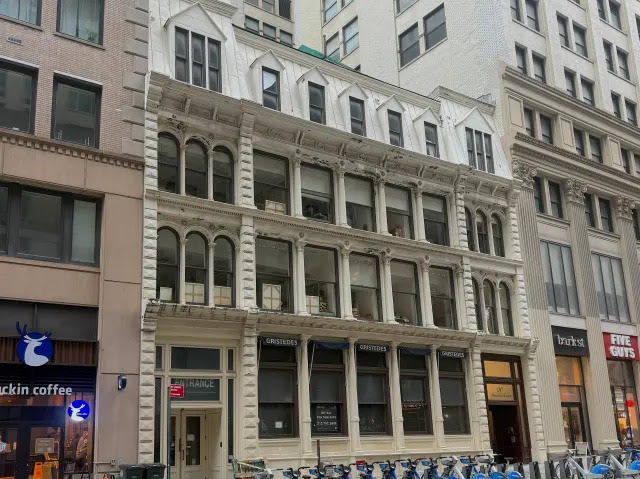
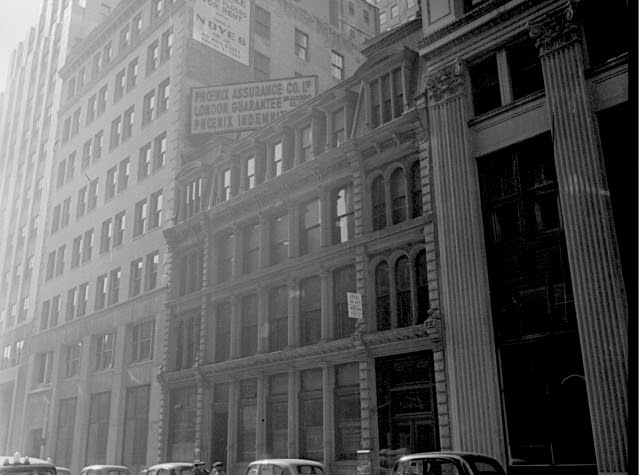
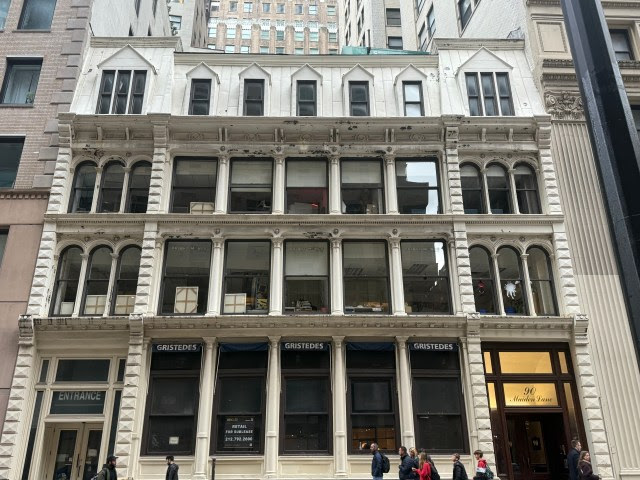
It’s a curious sight nestled amid layers of downtown loft buildings and skyscrapers: a delicate four-story stunner with a cast-iron front, pilasters framing great bay windows, and residential-style dormers on the top floor.
This building, done in the fanciful Second French Empire style popular in the mid- to late-19th century, is about 150 years out of place architecturally in today’s Financial District. But such a holdout must contain some fascinating secrets.
What secrets are part of 90-94 Maiden Lane’s backstory? Though it looks like one united structure reflecting cast iron’s use as a post-Civil War construction material, this jewel box actually combines four adjoining mercantile buildings, one of which dates back to 1810.
The story of 90-94 Maiden Lane starts in the 1790s. That’s when this former colonial path connecting Broadway and the waterfront was “lined with the houses and stores of prosperous merchants,” states the Landmarks Preservation Commission (LPC) in a 1989 report.
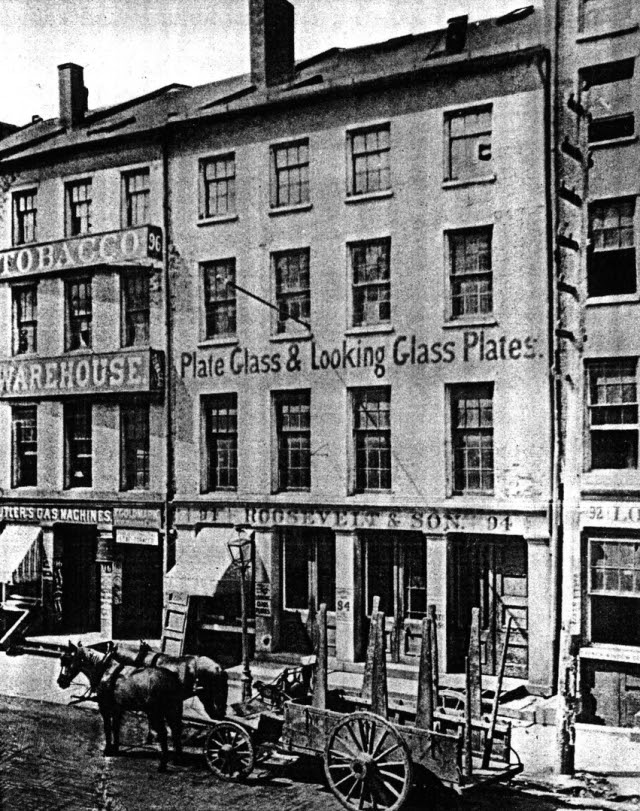
One of those merchants was James Roosevelt, a descendant of the prominent Knickerbocker family. Roosevelt opened a hardware store on the site and in 1809-1810 built a new store, which was partially replaced a decade later with a Greek Revival-style building.
“His business quickly became a large-scale operation supplying imported hardware, mostly Dutch, to a burgeoning building trade,” according to the LPC report.
Roosevelt refocused his business on imported British and French plate glass, then expanded to adjacent buildings as his fortunes grew. His son, Cornelius Van Schaack “C.V.S.” Roosevelt, joined what was now called Roosevelt & Son. Soon, C.V.S.’s sons also came aboard—one of whom was the father of future president Theodore Roosevelt.
By 1870, Roosevelt & Son purchased adjoining land at 90-92 Maiden Lane and filed plans to combine their four adjacent mercantile buildings under one mansard roof and with a new cast-iron front.
Strong, fireproof, and relatively inexpensive, cast iron was introduced in New York City as a building material around 1850. Through the next decades, hundreds of cast-iron manufacturing buildings and commercial structures went up across the city, with many concentrated in today’s Soho.
But cast-iron structures also appeared in the Financial District. According to the LPC report, “at least 38 cast-iron-fronted buildings were located in the downtown area of Manhattan from Fulton Street to the Battery by the mid-1880s.”
Today, few New Yorkers think of the Financial District as a cast-iron enclave—largely because most of these buildings eventually fell to the wrecking ball. According to the LPC report, only seven cast-iron structures still stand between Fulton Street and the Battery, including 90-94 Maiden Lane.
Not long after its 1870 conversion from four buildings to one, 90-94 Maiden Lane was vacated by Roosevelt & Son. An importer arrived in the early 20th century, and through the next decades alterations changed the arrangement of first-floor windows and doors. It’s hard to imagine that remnants of the original four buildings made it through the renovations.
The mansard roof was altered in the 1960s, according to Barbaralee Diamonstein-Spielvogel in her 2011 book, The Landmarks of New York, Fifth Edition. The building’s last occupant was a Gristede’s, and today it appears to sit empty.
The lack of store signage and commercial activity seem to enhance its status as a outlier—the last of a once-popular style of building that would be endangered if not for historic preservationists.
“This building is the sole remaining example of the French Second Empire style in a post-Civil War commercial building constructed in the Financial District,” states Diamonstein-Spielvogel.
Besides that, 90-94 Maiden Lane also takes the honor as “the southernmost cast-iron building in Manhattan,” she adds. Let’s hope it keeps that designation.
PHOTO OF THE DAY
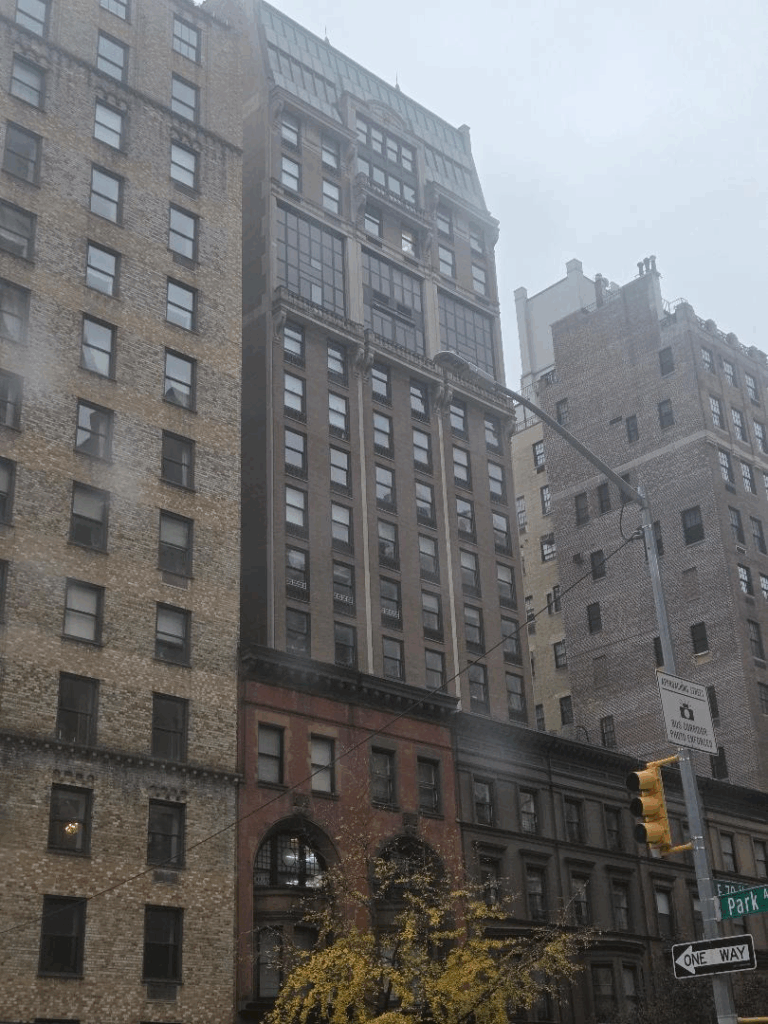
In contrast the graceful building above, I spotted this hodge podge on the Upper East Side.
All image are copyrighted (c) Roosevelt Island Historical Society unless otherwise indicated THIS PUBLICATION FUNDED BY DISCRETIONARY FUNDS FROM CITY COUNCIL MEMBER JULIE MENIN & ROOSEVELT ISLAND OPERATING CORPORATION PUBLIC PURPOSE FUNDS.
THE RIHS STAFF WILL BE ONSITE WITH A GREAT SELECTION OF HOLIDAY GIFTS
SATURDAY, NOV.22
AT THE SENIOR CENTER
546 MAIN STREET
(CENTER OPEN FOR BLOOD DONATIONS)
Friday, Nov. 21, 2025
Issue #1579
Judith Berdy
GRADUATE HOTEL CLOSING
We have been informed that the Graduate Hotel will be closing this weekend/ The restaurant and Panorama Room will also be closing
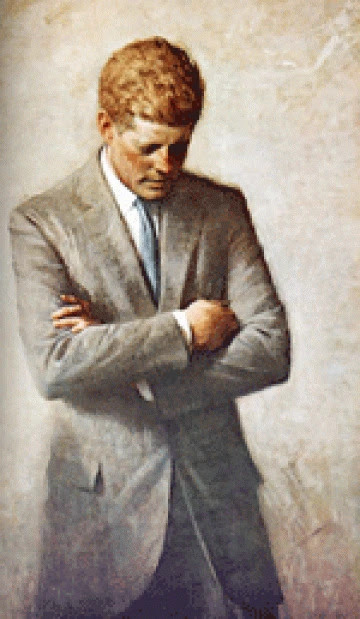
JFK- ALWAYS REMEMBERED
PHOTO OF THE DAY
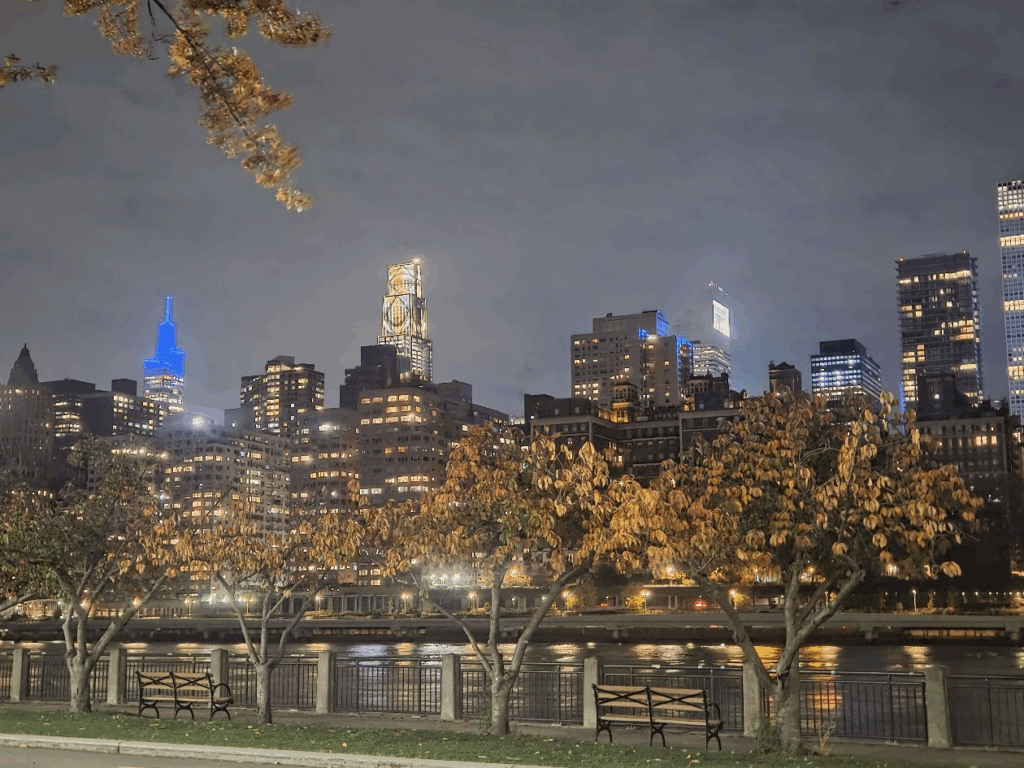
Last evening the new JP Moragan Chase building was celebrating something British!!
CREDITS
Judith Berdy
All image are copyrighted (c) Roosevelt Island Historical Society unless otherwise indicated THIS PUBLICATION FUNDED BY DISCRETIONARY FUNDS FROM CITY COUNCIL MEMBER JULIE MENIN & ROOSEVELT ISLAND OPERATING CORPORATION PUBLIC PURPOSE FUNDS.
THE PERSON MUST BE FAMILIAR WITH QUICK-BOOKS, PAYPAL, SQUARE ACCOUNTING AND PAYMENT SYSTEMS
PLEASE SEND RESUME TO JBIRD134@AOLCOM
All image are copyrighted (c) Roosevelt Island Historical Society unless otherwise indicated THIS PUBLICATION FUNDED BY DISCRETIONARY FUNDS FROM CITY COUNCIL MEMBER JULIE MENIN & ROOSEVELT ISLAND OPERATING CORPORATION PUBLIC PURPOSE FUNDS.
All image are copyrighted (c) Roosevelt Island Historical Society unless otherwise indicated THIS PUBLICATION FUNDED BY DISCRETIONARY FUNDS FROM CITY COUNCIL MEMBER JULIE MENIN & ROOSEVELT ISLAND OPERATING CORPORATION PUBLIC PURPOSE FUNDS.
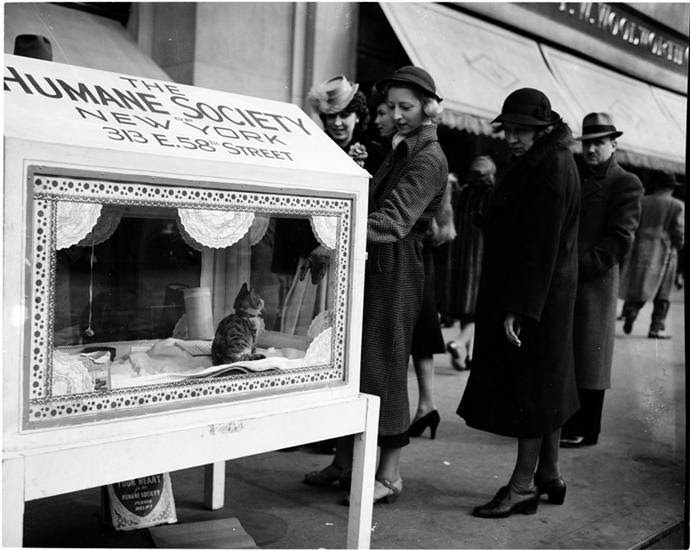
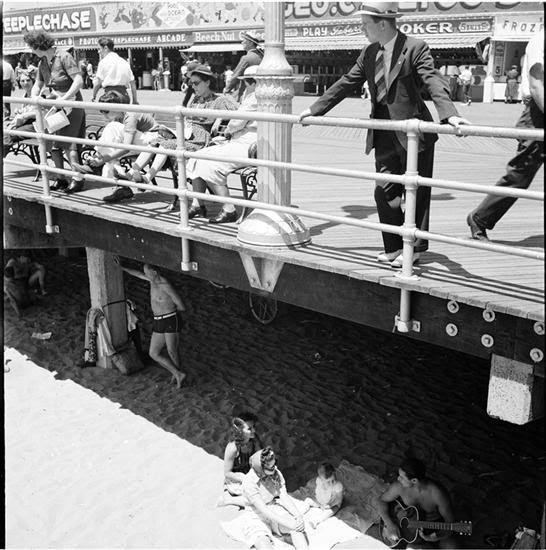
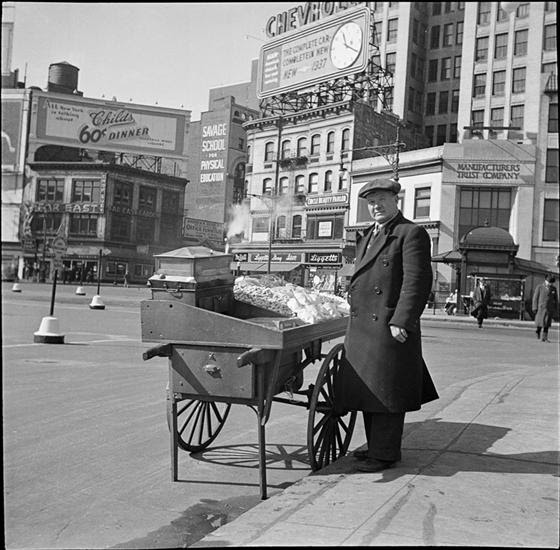
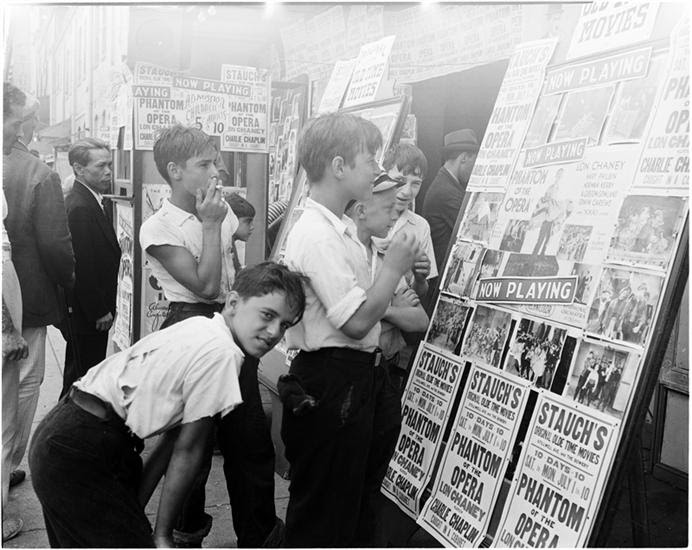
The Works Progress Administration was created by FDR in 1935 as part of the New Deal. All images (c) Museum of the City of New York
Be Kind to Animals. Photographer Andrew Herman Creator Federal Art Project Accession number 43.131.8.25 Unique identifier M2Y31899 Dated 1940 (C) MCNY
Under the Boardwalk. Photographer Andrew Herman Creator Federal Art Project Accession number 43.131.5.62 Unique identifier MNY423 Dated July 1939 (C) MCNY
Man Selling Peanuts. Photographer George Herlick Creator Federal Art Project Accession number 2003.25.99 Unique identifier MNY805 Dated ca. 1935 (C) MCNY
Stauch’s Movies. Photographer Andrew Herman Creator Federal Art Project Accession number 43.131.5.29 Unique identifier MNY1240 Dated July 1939
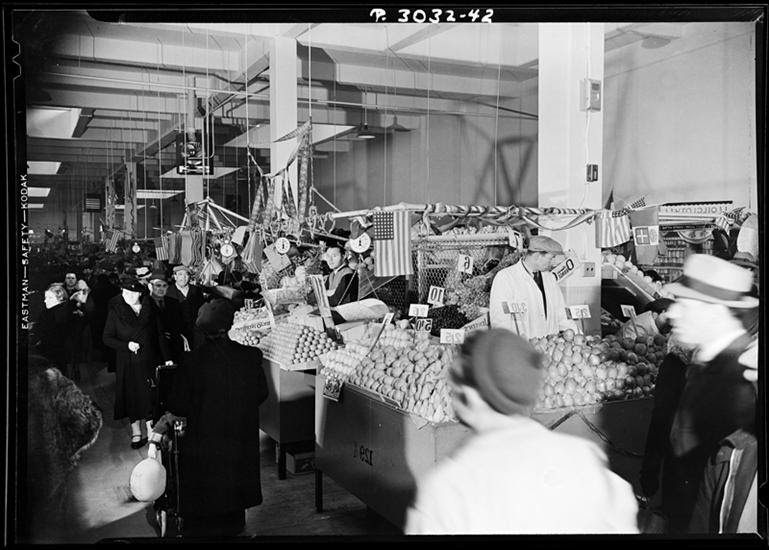
Interior of the First Avenue & 10th Street Market. Photographer Sol Libsohn (1914-2001) Creator Federal Art Project Accession number 43.131.6.42 Unique identifier MNY2007 Dated 1938 (C) MCNY
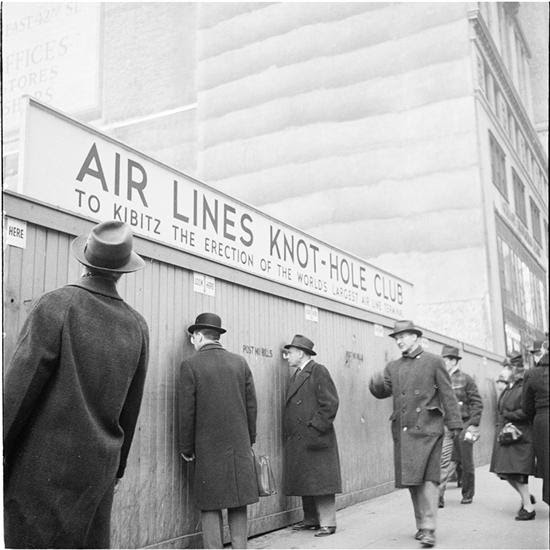
Air Lines Knot Hole Club. Photographer Andrew Herman Creator Federal Art Project Accession number 43.131.8.11 Unique identifier MNY3108 Dated 1940 (C) MCNY
WEEKEND NEWS FROM RIOC
WEDNESDAY, NOV. 19th
COMMUNITY BOARD 8 Full Board Meeting PUBLIC HEARING Wednesday, November 19, 2025 – 6:30 PM This meeting will be conducted hybrid in person and via Zoom Marymount Manhattan College, Regina Peruggi Room 221 East 71st Street (Between Third and Second Avenues)
Public Session – Those who wish to speak during the Public Session must register to do so by 6:45 PM.
Adoption of the Agenda
Adoption of the Minutes
Manhattan Borough President’s Report
Elected Officials’ Reports
Chair’s Report – Valerie S. Mason
District Manager’s Report – Ian McKnight
Election of Board Officers
Chair
First Vice-Chair
Second Vice Chair
Secretary
Committee Reports and Action Items
Old Business
New Business
Valerie S. Mason, Chair
There is only one opportunity for the public to speak at this meeting. You must be on the website and register to speak by 6:45 p.m.
The issue of the proposed cannabis dispensary will be under Committee Reports, item 9 on the Agenda.
THURSDAY, NOV. 20th
This is the first of many community conversations. The future of Coler is being possibly being considered for redevelopment, though no options have been publicly discussed.
It is important the residents of Roosevelt Island be involved in making Coler remain on the island. You are welcome to attend this meeting at Coler on Thursday at 11 a.m.
PHOTO OF THE DAY
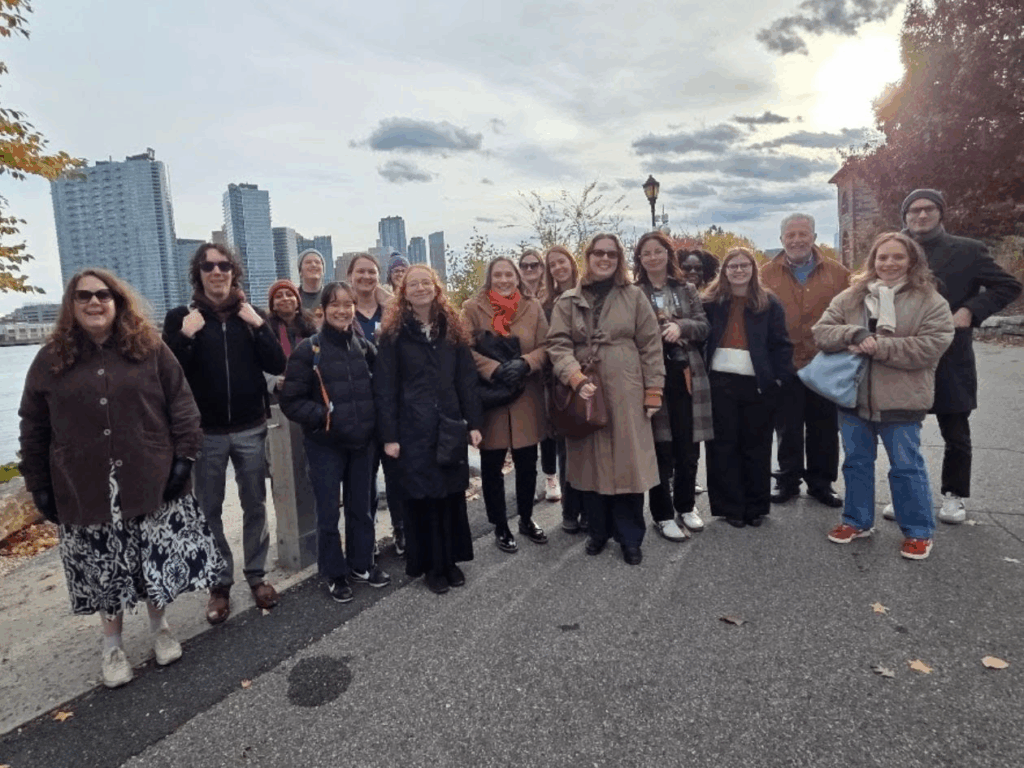
Members if the Association of Health Care Journalists toured the south end of the Island on Friday. These RIHS lead tours are most popular for groups. Plan now for a spring tour for your group.
CREDITS
MUSEUM OF THE CITY OF NEW YORK (C) RIOC NYC Health+Hospitals COLER Judith Berdy
All image are copyrighted (c) Roosevelt Island Historical Society unless otherwise indicated THIS PUBLICATION FUNDED BY DISCRETIONARY FUNDS FROM CITY COUNCIL MEMBER JULIE MENIN & ROOSEVELT ISLAND OPERATING CORPORATION PUBLIC PURPOSE FUNDS.
A fire on the 7th floor of 560 Main Street took the life of a senior resident on Saturday evening. The firefighters were also injured at the fire.
The length of the hallway on the 7th floor goes from Main Street to the eastern end of the building, almost at the Eastern access road.
There are many questions about fighting fires in these 50 year old buildings. There are questions about many access points for vehicles have been closed off due to the building resurfacing project.
There was a battery fire in the easternmost hallway of a neighboring building last year and there were challenges getting to the site.
Time for building management and RIOC to consider and to enforce all safety rules and not let a construction project block access to all the 1003 apartments in The Landings aka Eastwood.
I was a 19 year resident of 580 Main Street.
WEEKEND NEWS FROM RIOC
TONIGHT
WEDNESDAY, NOV. 19th
COMMUNITY BOARD 8 Full Board Meeting PUBLIC HEARING Wednesday, November 19, 2025 – 6:30 PM This meeting will be conducted hybrid in person and via Zoom Marymount Manhattan College, Regina Peruggi Room 221 East 71st Street (Between Third and Second Avenues)
Public Session – Those who wish to speak during the Public Session must register to do so by 6:45 PM.
Adoption of the Agenda
Adoption of the Minutes
Manhattan Borough President’s Report
Elected Officials’ Reports
Chair’s Report – Valerie S. Mason
District Manager’s Report – Ian McKnight
Election of Board Officers
Chair
First Vice-Chair
Second Vice Chair
Secretary
Committee Reports and Action Items
Old Business
New Business
Valerie S. Mason, Chair
There is only one opportunity for the public to speak at this meeting. You must be on the website and register to speak by 6:45 p.m.
The issue of the proposed cannabis dispensary will be under Committee Reports, item 9 on the Agenda.
THURSDAY, NOV. 20th
This is the first of many community conversations. The future of Coler is being possibly being considered for redevelopment, though no options have been publicly discussed.
It is important the residents of Roosevelt Island be involved in making Coler remain on the island. You are welcome to attend this meeting at Coler on Thursday at 11 a.m.
PHOTO OF THE DAY
Alyssa and Rohan stopped in the kiosk on Sunday with three painting base on the HBO series “Problemista.” The pink egg is LEVITATING EGG The blue egg is SHY EGG The red eff is DARING AND BOLD EGG
These eggs many be hidden on the island now.
Credits
RIOC NYC Health+Hospitals COLER Judith Berdy
All image are copyrighted (c) Roosevelt Island Historical Society unless otherwise indicated THIS PUBLICATION FUNDED BY DISCRETIONARY FUNDS FROM CITY COUNCIL MEMBER JULIE MENIN & ROOSEVELT ISLAND OPERATING CORPORATION PUBLIC PURPOSE FUNDS.
Full Board Meeting PUBLIC HEARING Wednesday, November 19, 2025 – 6:30 PM This meeting will be conducted hybrid in person and via Zoom Marymount Manhattan College, Regina Peruggi Room 221 East 71st Street (Between Third and Second Avenues)
Public Session – Those who wish to speak during the Public Session must register to do so by 6:45 PM.
Adoption of the Agenda
Adoption of the Minutes
Manhattan Borough President’s Report
Elected Officials’ Reports
Chair’s Report – Valerie S. Mason
District Manager’s Report – Ian McKnight
Election of Board Officers
Chair
First Vice-Chair
Second Vice Chair
Secretary
Committee Reports and Action Items
Old Business
New Business
Valerie S. Mason, Chair
There is only one opportunity for the public to speak at this meeting. You must be on the website and register to speak by 6:45 p.m.
The issue of the proposed cannabis dispensary will be under Committee Reports, item 9 on the Agenda.
THURSDAY
This is the first of many community conversations. The future of Coler is being possibly being considered for redevelopment, though no options have been publicly discussed.
It is important the residents of Roosevelt Island be involved in making Coler remain on the island. You are welcome to attend this meeting at Coler on Thursday at 11 a.m.
PHOTO OF THE DAY
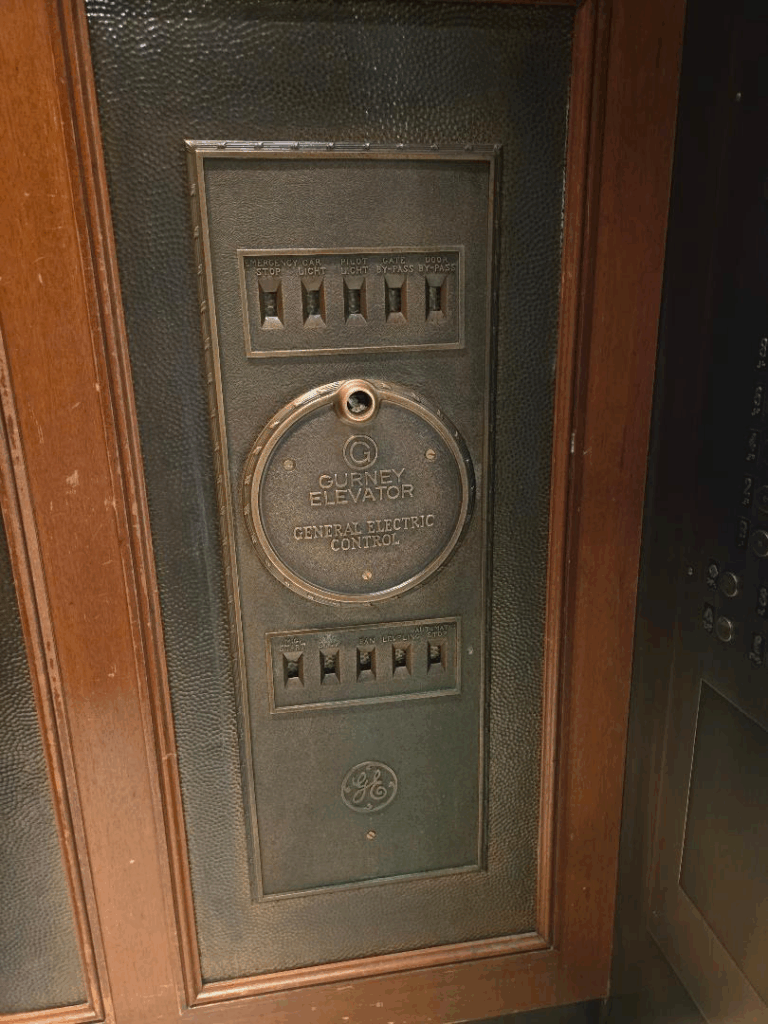
I was in Macy’s today and used this elevator on the 35th Street side of the Broadway building….”going up”. Seems that some things (such as the escalators with wooden steps) are to good to replace.
CREDITS
RIOC NYC Health+Hospitals COLER Judith Berdy
All image are copyrighted (c) Roosevelt Island Historical Society unless otherwise indicated THIS PUBLICATION FUNDED BY DISCRETIONARY FUNDS FROM CITY COUNCIL MEMBER JULIE MENIN & ROOSEVELT ISLAND OPERATING CORPORATION PUBLIC PURPOSE FUNDS.
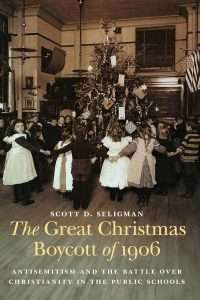
Today’s battle over Christianity in American public schools has deep roots. In the nineteenth century it was an intramural struggle between Protestants and later-arriving Catholics.
But at Christmastime in 1905, when the Presbyterian principal of a Brooklyn elementary school urged his Jewish students to be more like Jesus Christ, Jews entered the fray in a big way.
It was just the trigger Jewish activist Albert Lucas had been waiting for. Fresh from battling Christian settlement houses brazen about their intent to convert Jewish children, Lucas accused the public schools of proselytizing and demanded limits on religious content in the schools.
After the Board of Education let the principal off with a slap on the wrist and declined to clarify the rules governing religion in the schools, the New York Jewish community staged a boycott of the 1906 school Christmas pageants, prompting widespread student absences.
The protest elicited policy changes, but the board’s concessions generated an enormous antisemitic public backlash. Jews were accused of waging war on Christmas and of being less than true Americans, and warned not to push the issue, lest it arouse more prejudice against them.
The Great Christmas Boycott of 1906: Antisemitism and the Battle over Christianity in the Public Schools (University of Nebraska Press, 2025) by Scott D. Seligman traces the Christmas celebration dispute to the present day and describes how Jewish organizations of the twenty-first century, persuaded that politics are unlikely ever to permit a victory, seem to have reconciled themselves to the status quo and moved on to other, more winnable issues.
Even as Hitler and his Nazi regime ran roughshod over Germany and Europe in the 1930s, there were those in America who championed their rise. And nowhere so much as on Long Island.
Camp Siegfried in Yaphank (a community in the south part of the Town of Brookhaven, Suffolk County) became a focal point for certain German Americans to gather and espouse the Nazi cause.
Building on racial and ethnic biases, lack of trust in government and a dose of conspiracies, the German American Bund was able to contribute to a growing American fascist movement promoting antisemitism, isolationism, and even the overthrow of the United States government.
Fueled partially by Nazi Germany’s financing of propaganda, thousands of New Yorkers embraced the ideals of an American Reich through retreats such as Camp Siegfried, which groomed Nazi sympathizers to be ready for the fascist overthrow of the American republic.
In opposition to Nazism, multiple local citizen groups fought to combat the Bund’s organized efforts to undermine America.
On the latest episode of the Long Island History Project podcast, Christopher Verga untangles the history of the German American Bund, Father Coughlin, the America First movement, and more.
His book documents a time of unrest in the country when militias, foreign agents, and even elected officials actively opposed the American government.
The Long Island History Project is an independent podcast featuring stories and interviews with people passionate about Long Island history. It is hosted by academic librarian Chris Kretz.
Soon after its unveiling, Upper Room was described by The New York Times as “one of the city’s most popular works of public art. A magnet for Wall Street brown-baggers, it is also a favorite resting place for strollers along the esplanade, one of the choicest waterfront walks in the city.”
Progressive Era Arts and Crafts Communities
In response to the trauma of industrialization and urbanization in the late-nineteenth century, the Arts and Crafts Movement took America by storm. Art exhibits, workshops, and societies dedicated to handicraft, worker dignity, and the production of beautiful art for the masses sprouted from California to Boston.
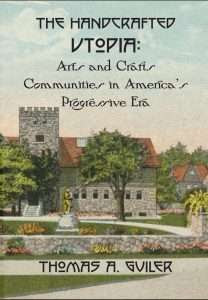
The Handcrafted Utopia: Arts and Crafts Communities in America’s Progressive Era (Couper Press, 2025) examines these utopian communities in the Arts and Crafts Movement.
Ralph Radcliffe Whitehead, Elbert Hubbard, and William Lightfoot Price were so enamored with the movement that they decided to build entirely new worlds — intentional communities — dedicated to pursuing those ideals.
Englishman Whitehead founded an art colony named Byrdcliffe in the Catskill Mountains. Hubbard, a former soap salesman, established an Arts and Crafts community business, Roycroft, outside Buffalo. Price, an architect, built the Rose Valley Association outside Philadelphia.
They endeavored to reform the economic and social inequalities of industrial capitalism through communal living, artistic development, craft, and the sale of finely crafted furniture, architecture, metalwork, and more. This was what they believed was living “the art that is life.”
For these community members, this meant producing and selling art with a social message as well as living everyday life as if it was a work of art.
In imagining a compromise between machine-dominated industry and handicraft, these artisans sought to critique industrial capitalism and carve out a space where craftspeople could once again flourish in community.
Rose Valley, Byrdcliffe, and Roycroft were total sensory installations of the Arts and Crafts Movement that stood as community-workshops that were an alternative to brutal industrialization.
Author Thomas A. Guiler (Ph.D., Syracuse University) is the director of museum affairs at the Oneida Community Mansion House in Oneida, New York. He was assistant professor of history and public humanities at the Winterthur Museum, Garden & Library in Wilmington, Delaware.
He also served at the president of the Communal Studies Association. He has published on the history and material culture of intentional communities such as Oneida and of the Arts and Crafts Movement
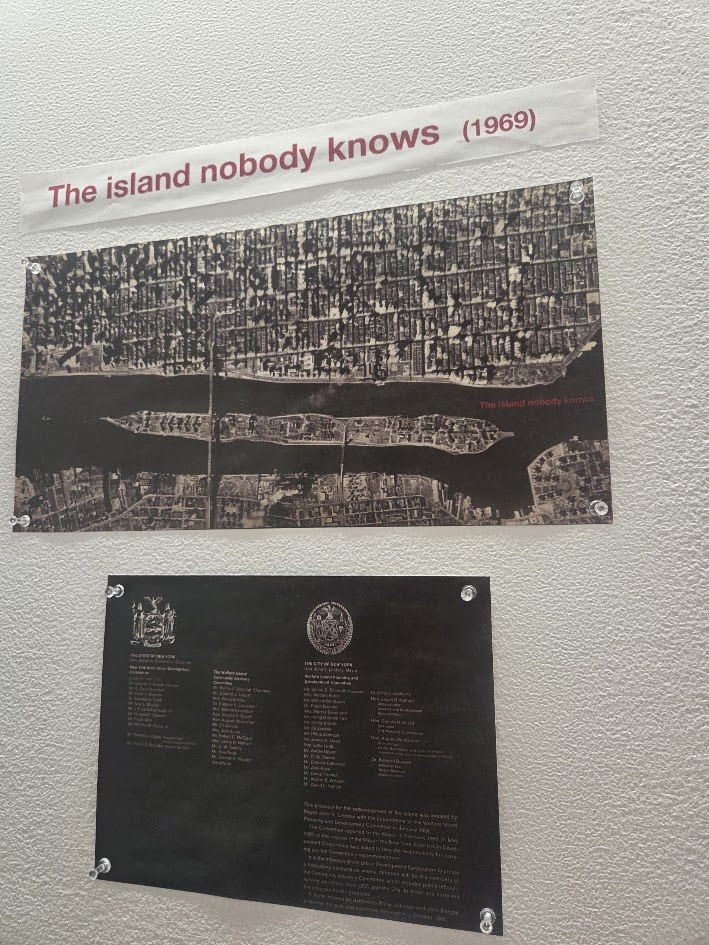
The 1969 publication that laid out the master plan is on one wall, showing how a master plan was developed by this first step.
PHOTO OF THE DAY
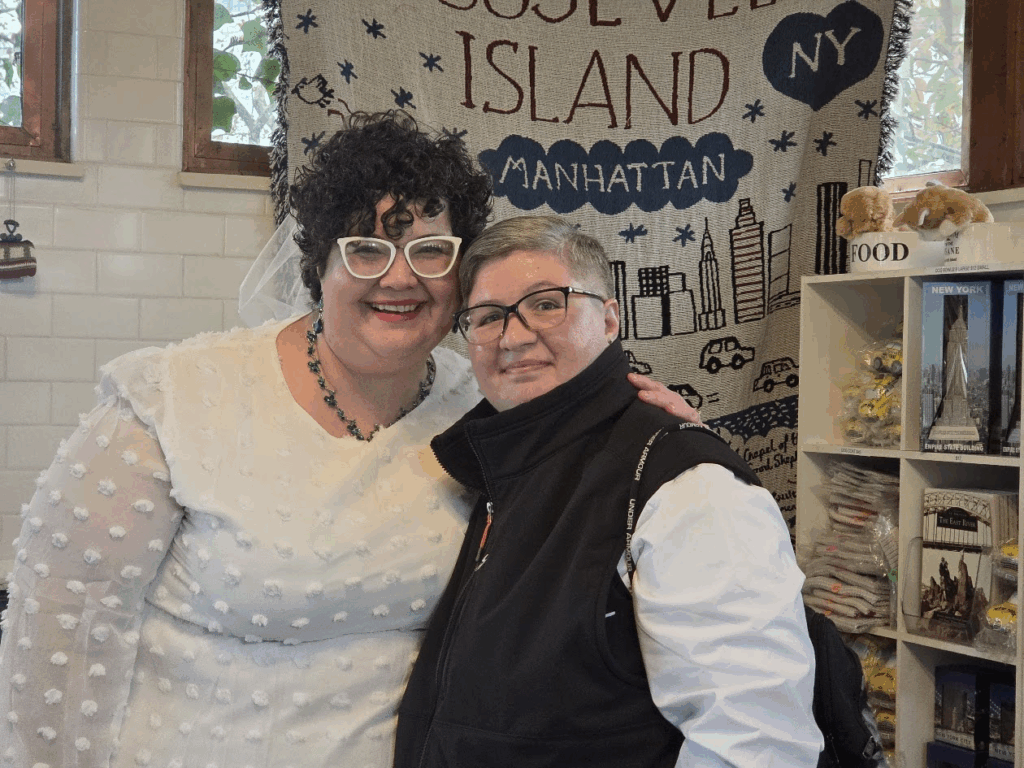
SONIA AND NADINE YEAGER WERE AT THE KIOSK TODAY ON THEIR WAY TO THE MARRIAGE LICENSE BUREAU, FOR THEIR WEDDING CEREMONY!
CREDITS
NEW YORK ALMANACK Judith Berdy
All image are copyrighted (c) Roosevelt Island Historical Society unless otherwise indicated THIS PUBLICATION FUNDED BY DISCRETIONARY FUNDS FROM CITY COUNCIL MEMBER JULIE MENIN & ROOSEVELT ISLAND OPERATING CORPORATION PUBLIC PURPOSE FUNDS.
Tonight was my first opportunity to see the new Cornell AAP (Architecture, Art & Planning) space at Tata Innovation Center on the Cornell Tech Campus.
I saw the empty space this summer and today is a thriving architecture school with grand new facilities and walls full of maps, charts, designs, projects and ideas.
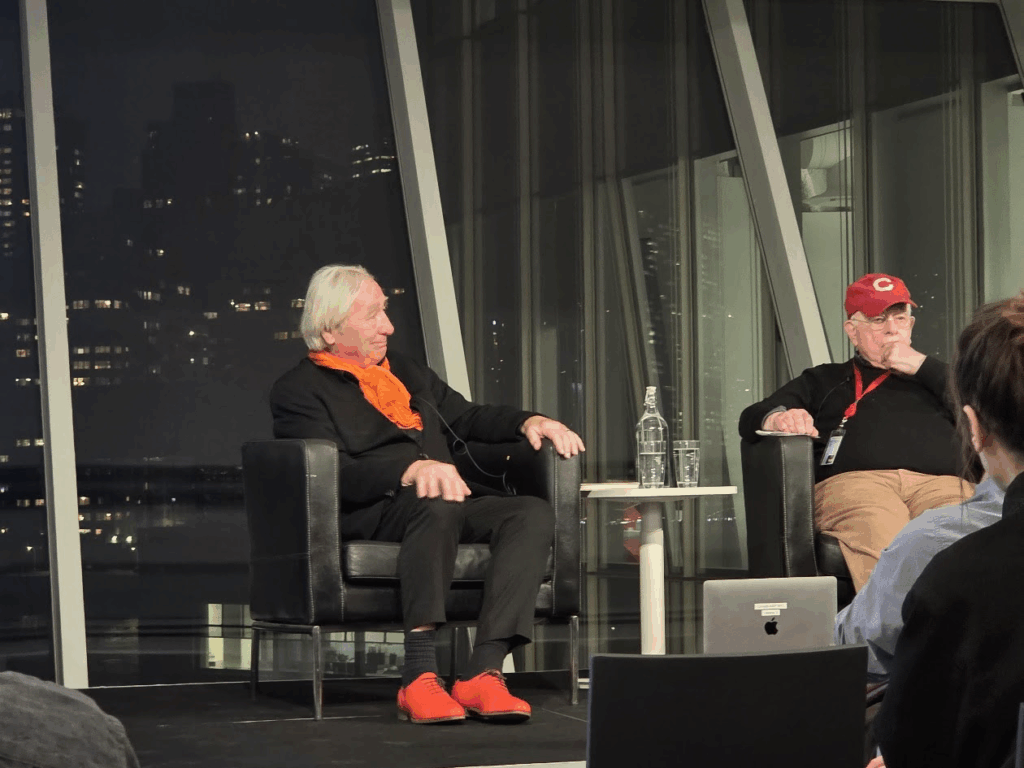
The discussion this evening was architects Peter Eisenman and Steven Holl. Both have long histories of contemporary design starting in the 1970’s.
Holl and Eisenman with the skyline background.
The event was a sell out (reserve on line for the next program on Dec. 2nd.)
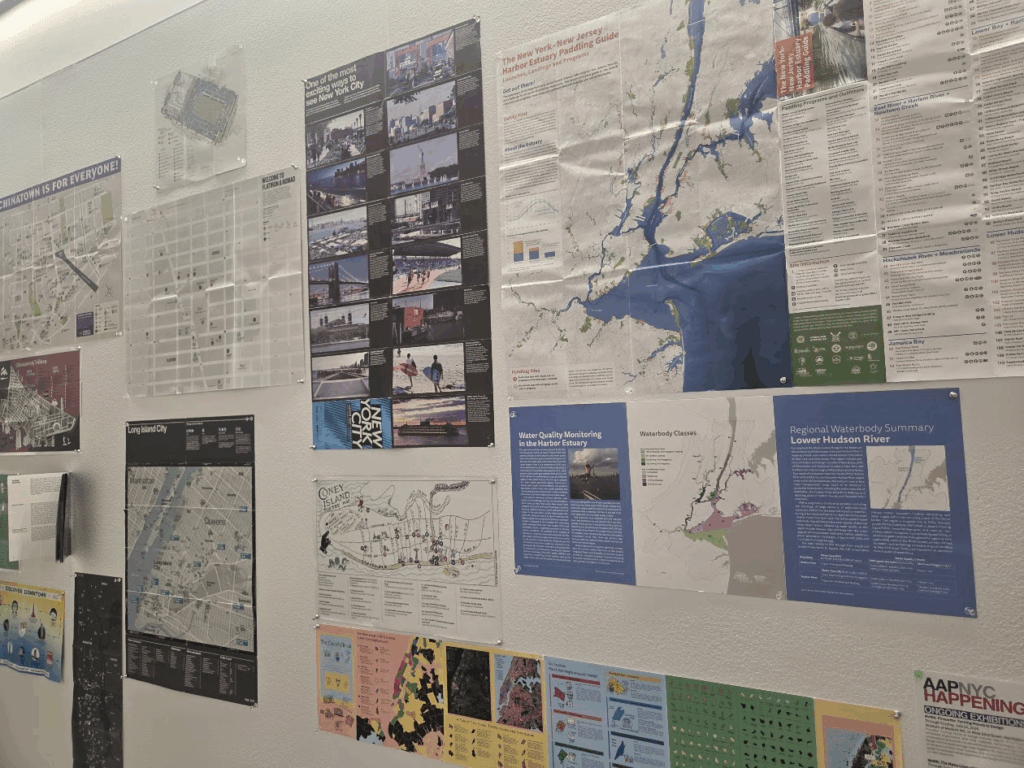
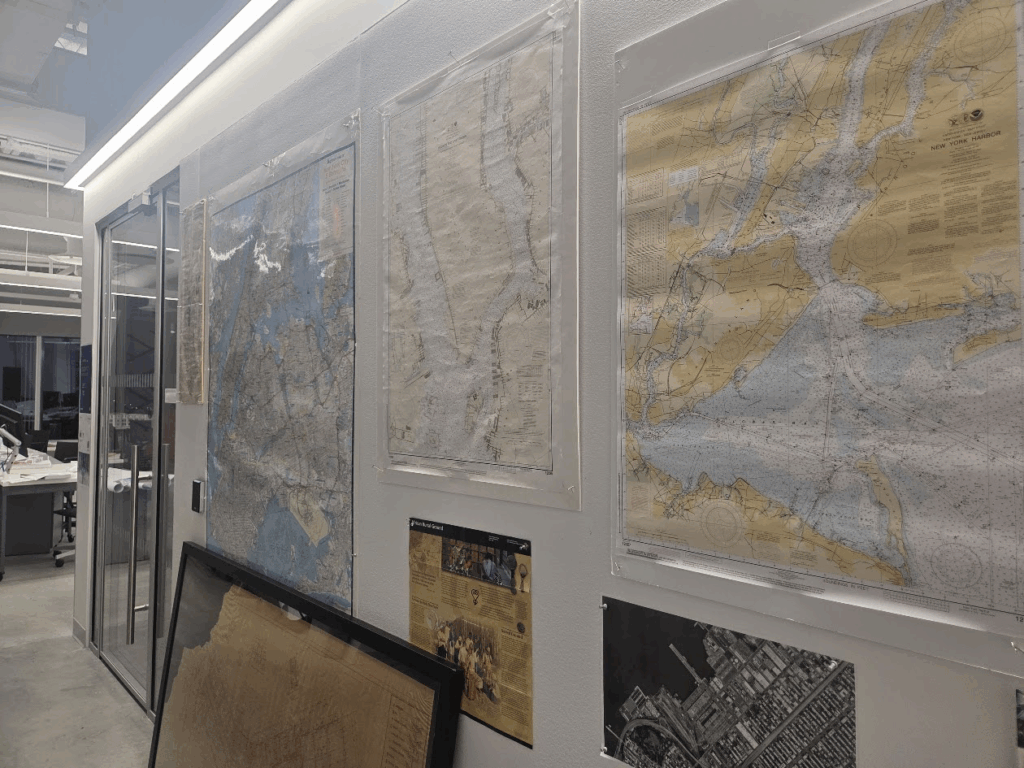
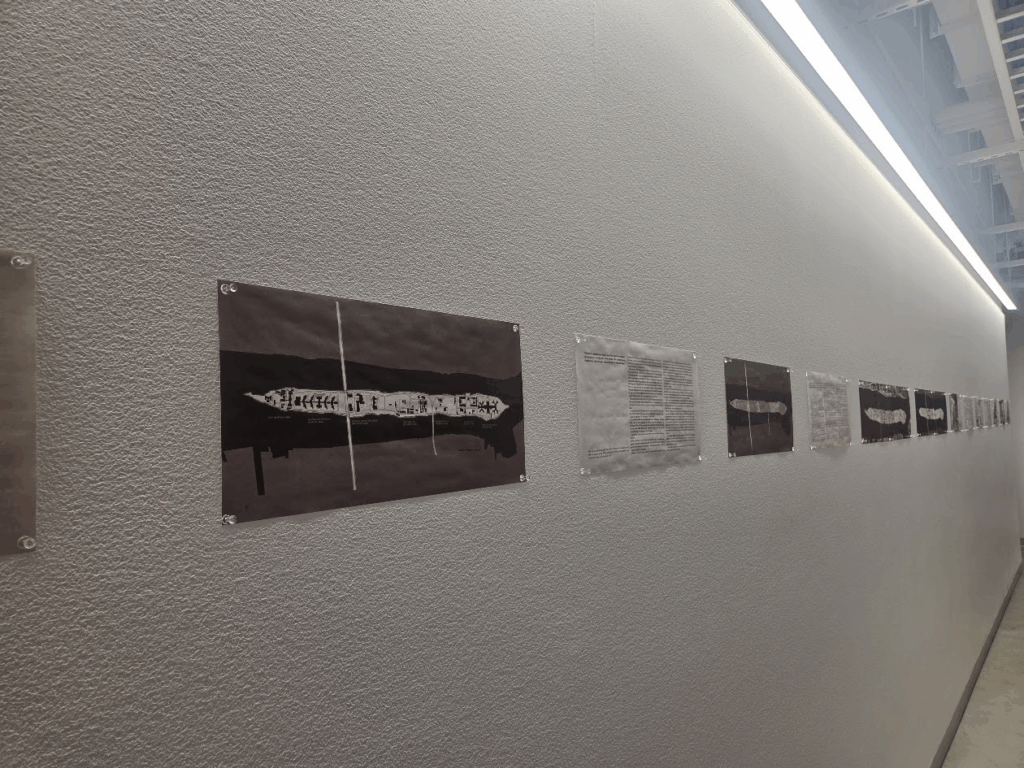
The walls are filled with all sorts of reference materials, including vintage maps, nautical charts and so much more.
The 1969 publication that laid out the master plan is on one wall, showing how a master plan was developed by this first step.
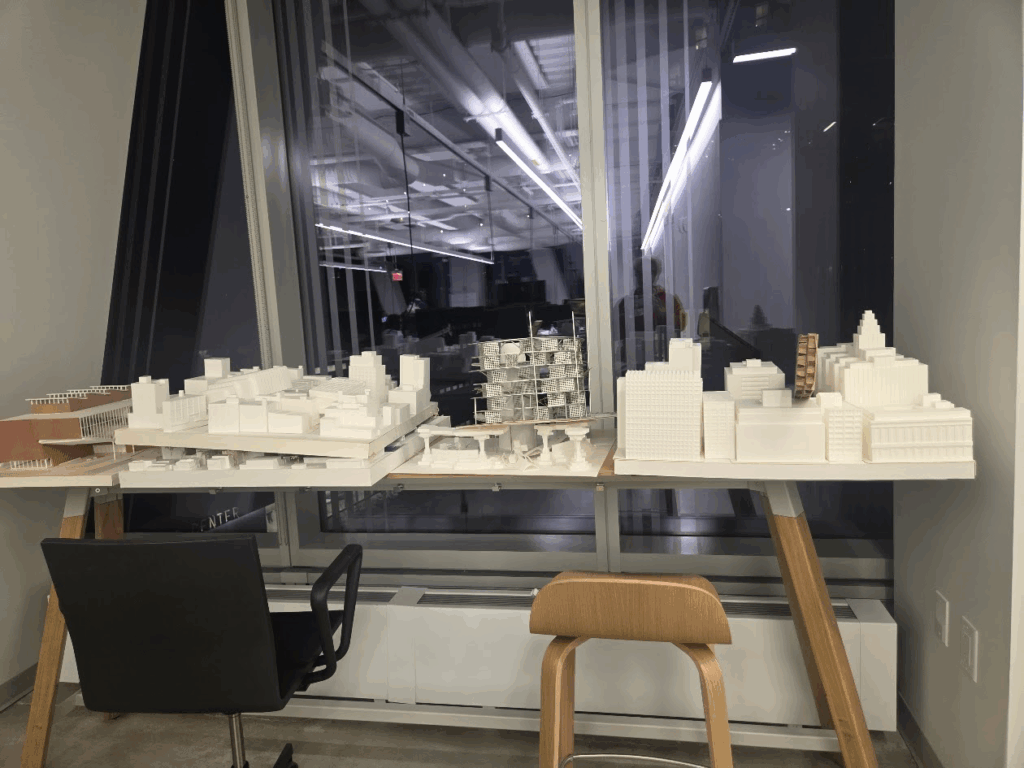
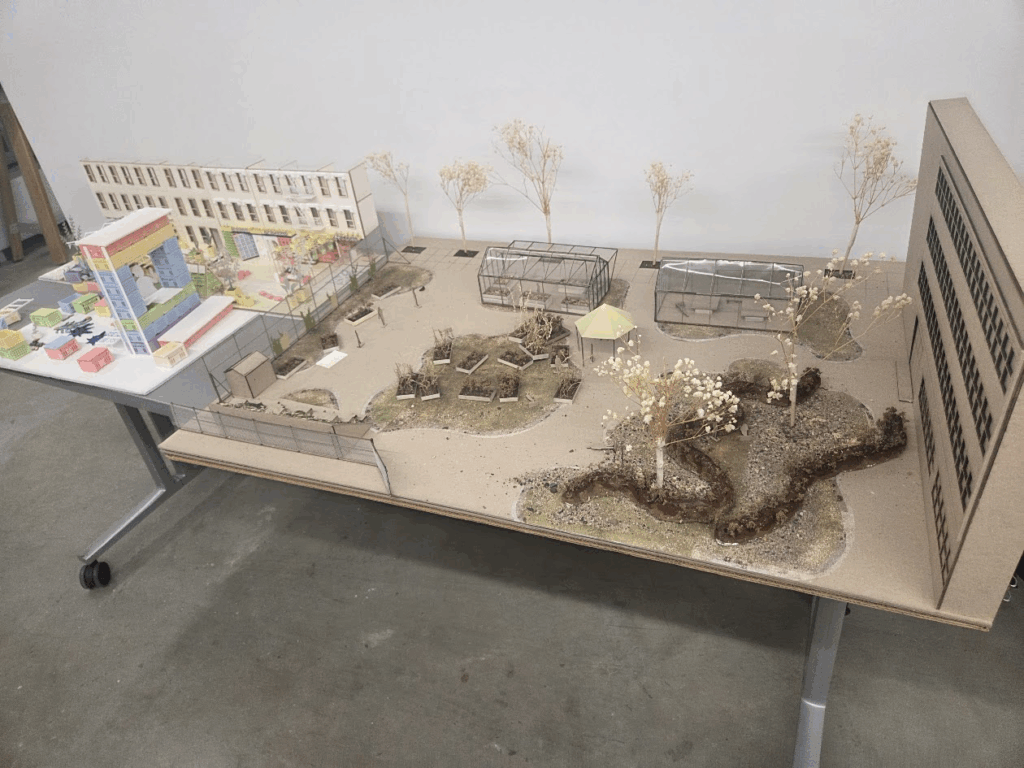
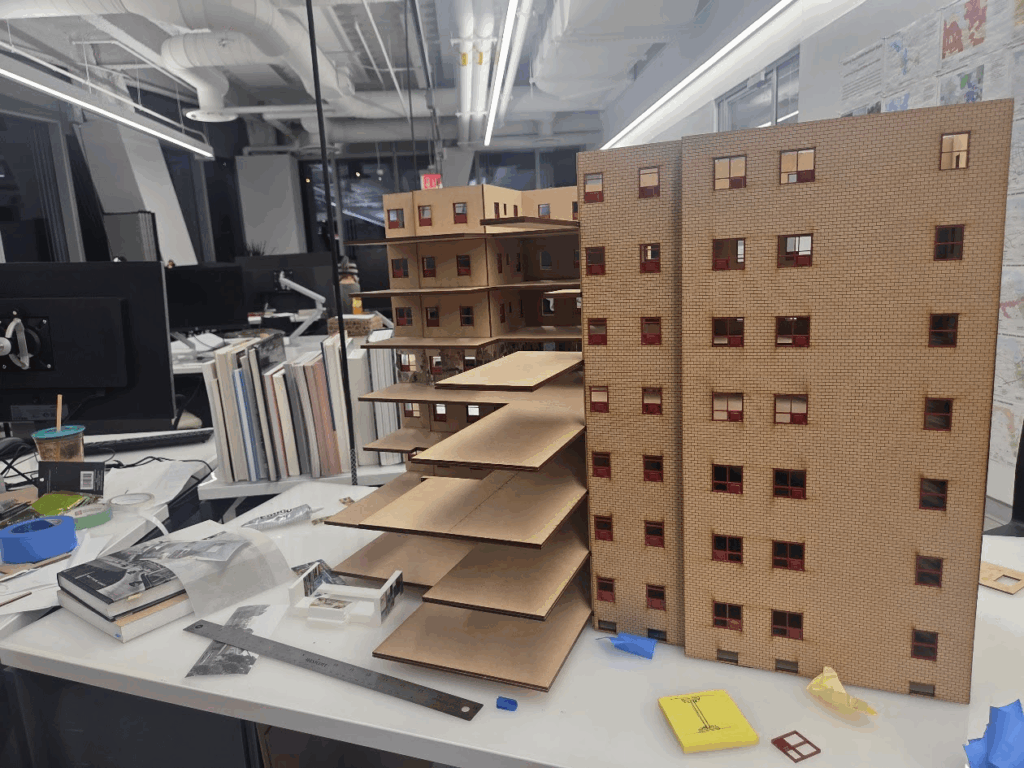
Student models are in many parts of the space.
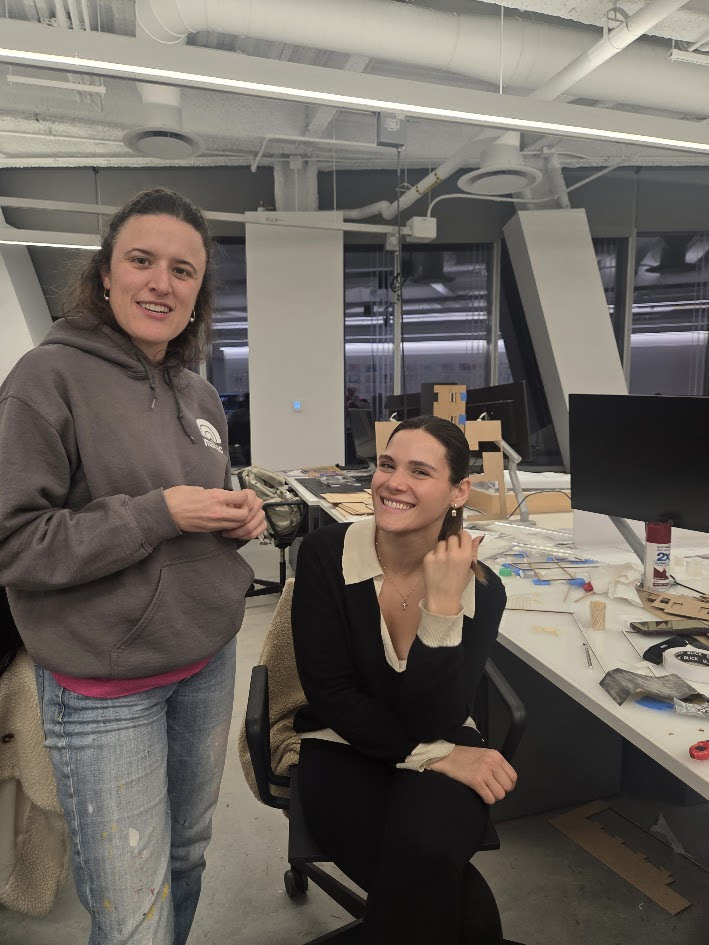
Two third year students were working on a project to reimagine the Sotomayor Houses, located in the Soundview section of the Bronx.
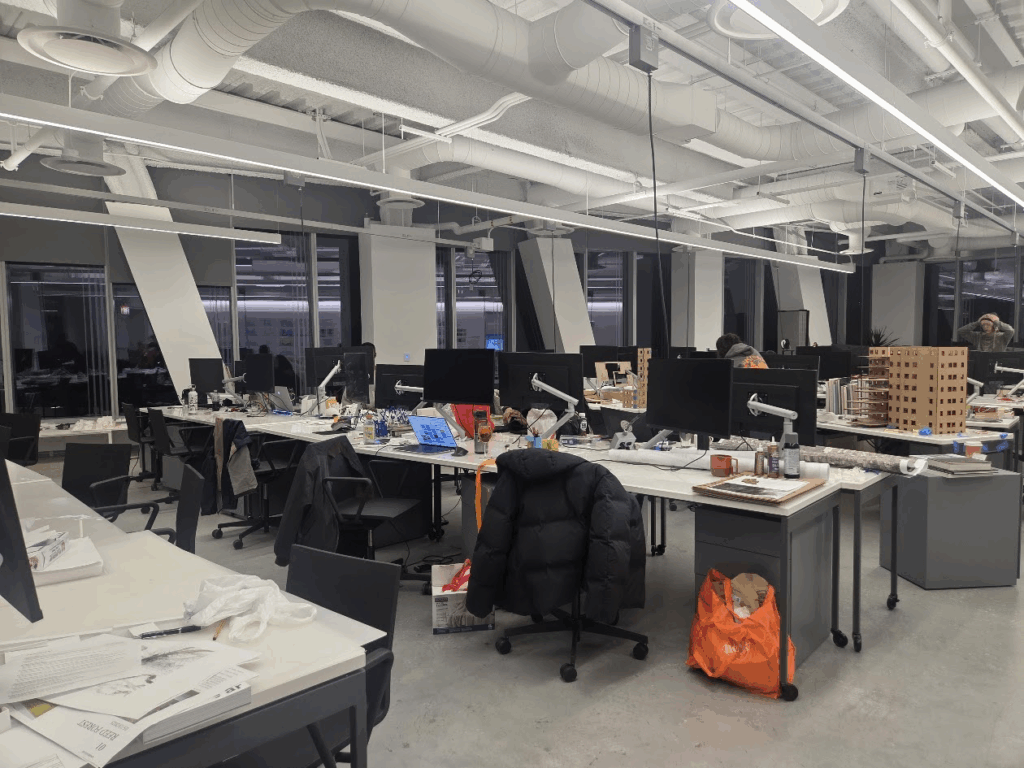
The students have spacious desks and work areas, all with great view to work in.
A COMMENT
Cornell AAP brings the right brained to Cornell Tech. The vibrant collaborative atmosphere was evident with the students. I look forward to introducing them to the rest of our Island.
AAP is a great addition to Roosevelt Island. Thanks Bob Balder for introducing me to AAP!
Judith Berdy
CREDITS Judith Berdy
Credits
All image are copyrighted (c) Roosevelt Island Historical Society unless otherwise indicated THIS PUBLICATION FUNDED BY DISCRETIONARY FUNDS FROM CITY COUNCIL MEMBER JULIE MENIN & ROOSEVELT ISLAND OPERATING CORPORATION PUBLIC PURPOSE FUNDS.